Blog

  • Intracranial Hemorrhage Devices Industry Insights: Market Forecast to 2029

    Intracranial Hemorrhage Devices Industry Insights: Market Forecast to 2029

    Unlock Global Insights – Save 20% on Market Reports with Code ONLINE20

    How Is The Intracranial Hemorrhage Devices Market Size Likely To Evolve From 2025 Through 2034?

    The valuation of the intracranial hemorrhage devices sector has experienced consistent upward movement throughout the recent past, projected to increase from a figure of $1.71 billion in the year 2024 to reach $1.79 billion by 2025, reflecting a compounded annual expansion rate (CAGR) of 4.4%. This momentum observed during the historical timeframe is largely attributable to several contributing factors, including a higher frequency of bleeding-related medical events, favorable governmental support programs, proactive healthcare regulations, the escalating occurrence of conditions linked to modern lifestyles, and an expansion in specialized neurology centers.

    Anticipated to experience substantial expansion in the ensuing years, the market for intracranial hemorrhage devices is projected to reach a valuation of $2.17 billion by 2029, exhibiting a compound annual growth rate (CAGR) of 5.0%; this upward trajectory throughout the projection timeframe is fueled by the increasing incidence of head trauma, concentrated efforts to shorten inpatient hospital durations, greater uptake of wearable health monitors, escalating requirements for tailored medical treatments, and the wider deployment of robotic systems, while key shifts shaping the market involve the innovation of transportable equipment, progress in sophisticated imaging apparatus, enhancements in continuous surveillance tools, the introduction of three-dimensional printing methodologies, and the incorporation of machine learning capabilities within medical diagnostic imagery.

    Unlock Your Free Sample Report for Exclusive Market Data:

    https://www.thebusinessresearchcompany.com/sample.aspx?id=20855&type=smp

    Which Industry Drivers Are Expected To Accelerate The Intracranial Hemorrhage Devices Market From 2025 To 2029?

    Anticipated escalation in instances of neurological ailments is projected to fuel the expansion of the market for intracranial hemorrhage devices in the future. These brain disorders encapsulate a broad spectrum of ailments impacting the brain’s architecture, operation, or biochemical makeup, resulting in interruptions to typical cerebral functions. The surge in brain disorder occurrences is attributable to several elements, including advancements in diagnostic capabilities, demographic shifts toward older ages, alterations in daily living habits, heightened societal consciousness, and increasing levels of mental strain. Devices designed for intracranial hemorrhage management serve the purpose of recognizing, observing, and therapeutically intervening in brain conditions characterized by bleeding; this is achieved through hemorrhage identification, pressure regulation, and the elimination of blood clots to avert additional harm to the brain tissue. To illustrate this trend, data from the National Institutes of Health, a governmental organization in the United States, indicated that the projected count of new primary brain and other central nervous system tumor diagnoses within the US reached 93,470 during 2022, subsequently increasing to 94,390 by 2023. Consequently, the uptrend in brain disorder prevalence acts as a primary impetus for the advancement of the intracranial hemorrhage devices industry.

    What Are The Major Segments Identified In The Intracranial Hemorrhage Devices Market?

    The intracranial hemorrhage devicesmarket covered in this report is segmented –

    1) By Product Type: Diagnosis, Treatment

    2) By Devices: Invasive, Non-Invasive

    3) By End Users: Hospitals, Ambulatory Surgical Centres, Other End Users

    Subsegments:

    1) By Diagnosis: MRI (Magnetic Resonance Imaging) Devices, CT (Computed Tomography) Scanners, Ultrasound Devices, EEG (Electroencephalogram) Devices, Intracranial Pressure Monitors, Blood Gas Analyzers

    2) By Treatment: Surgical Instruments (Craniotomy Instruments), Drainage Devices (Ventriculostomy Catheters), Embolization Devices, Hemostatic Agents, Coagulation Devices, Neurostimulation Devices

    What Are The Latest Industry Trends Transforming The Intracranial Hemorrhage Devices Market?

    Leading enterprises engaged in the intracranial hemorrhage device sector are intently concentrating efforts on engineering novel solutions, particularly sophisticated neuro access instruments, aiming to significantly boost the accuracy and effectiveness of identifying and addressing cerebral trauma. These sophisticated neuro access tools represent specialized medical apparatus and methodologies intended to provide exact entry points into the brain or central nervous system for subsequent diagnostic examination, surgical intervention, or therapeutic application. As an illustration, in the month of June in 2024, Penumbra Inc., a medical technology firm situated in the United States, publicized the introduction across Europe of its cutting-edge neuro access devices, namely the BMX81 and BMX96 models. Engineered specifically for the management of strokes resulting from blockages or bleeding, these particular tools utilize breakthrough laser-cut stainless steel hypotube construction to achieve superior navigational control and structural rigidity, all while accommodating greater internal bore sizes, thus underscoring Penumbra’s dedication to advancing stroke treatment capabilities throughout the European continent.

    Which Major Industry Participants Are Leading The Intracranial Hemorrhage Devices Market Growth?

    Major companies operating in the intracranial hemorrhage devices market are Johnson & Johnson Services Inc., Medtronic Inc., Siemens Healthcare GmbH, Stryker Corporation, General Electric Company, Terumo Corporation, Canon Medical Systems Corporation, Penumbra Inc., MicroPort Scientific Corporation, Aidoc Medical Ltd., Viz.ai Inc., Phenox GmbH, RAPID AI Inc., Acandis GmbH, Kaneka Medix Corporation, Hyperfine Inc., ClearMind Biomedical Inc., InfraScan Inc., Schindler Endoskopie Technologie GmbH, Sense Neuro Diagnostics Inc., MaxQ AI Inc., Invamed Inc.

    Download The Full Report For Exclusive Market Findings:

    https://www.thebusinessresearchcompany.com/report/intracranial-hemorrhage-devices-global-market-report

    How Do Regional Market Performances Compare Within The Intracranial Hemorrhage Devices Industry?

    North America was the largest region in the intracranial hemorrhage devices market in 2024. The regions covered in the intracranial hemorrhage devices market report are Asia-Pacific, Western Europe, Eastern Europe, North America, South America, Middle East, Africa.

    Request A Customized Version Of The Intracranial Hemorrhage Devices Market Report:

    https://www.thebusinessresearchcompany.com/customise?id=20855&type=smp

    Browse Through More Reports Similar to the Global Intracranial Hemorrhage Devices Market 2025, By The Business Research Company

    Intracranial Stents Global Market Report 2025

    https://www.thebusinessresearchcompany.com/report/intracranial-stents-global-market-report

    Cranial Implants Global Market Report 2025

    https://www.thebusinessresearchcompany.com/report/cranial-implants-global-market-report

    Transcranial Magnetic Stimulator Global Market Report 2025

    https://www.thebusinessresearchcompany.com/report/transcranial-magnetic-stimulator-global-market-report

    Get in touch with us:

    The Business Research Company: https://www.thebusinessresearchcompany.com/

    Americas +1 310-496-7795

    Asia +44 7882 955267 & +91 8897263534

    Europe +44 7882 955267

    Email us at info@tbrc.info

    Follow us on:

    LinkedIn: https://in.linkedin.com/company/the-business-research-company

    YouTube: https://www.youtube.com/channel/UC24_fI0rV8cR5DxlCpgmyFQ

    Global Market Model: https://www.thebusinessresearchcompany.com/global-market-model
  • Health Check-Up Market Forecast: What to Expect by 2029

    Health Check-Up Market Forecast: What to Expect by 2029

    Unlock Global Insights – Save 20% on Market Reports with Code ONLINE20

    What Is The Predicted Market Size Trajectory For The Health Check-Up Market From 2025 To 2034?

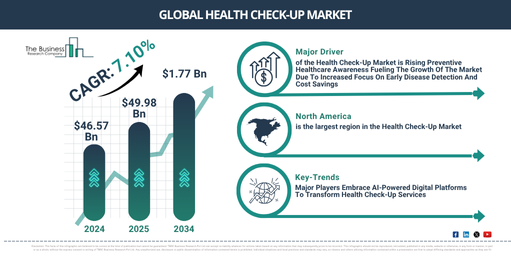
    The health check-up market has experienced robust expansion in recent years. Its valuation is projected to increase from $46.57 billion in 2024 to $49.98 billion in 2025, demonstrating a compound annual growth rate (CAGR) of 7.3%. Historically, this growth has been driven by factors such as a rise in chronic disease prevalence, government-led screening programs, the proliferation of private diagnostic networks, greater health insurance coverage, and enhanced health consciousness among the urban middle class.

    The health check-up market is anticipated to experience substantial expansion over the upcoming years. It is projected to reach $65.63 billion by 2029, demonstrating a compound annual growth rate (CAGR) of 7.1%. This projected growth stems from several factors, including the increasing prevalence of preventive genetic testing, the enforcement of mandatory occupational health regulations, the broadening scope of the digital health ecosystem, a rising demand for proactive healthcare measures, and the growing adoption of telemedicine services. Key developments expected during this forecast period involve the integration of these services with telehealth platforms, the utilization of AI-driven risk prediction tools, the widespread use of wearable devices for remote monitoring, the advancement of diagnostic technologies, the creation of robust digital health platforms, and the embrace of health tracking technologies.

    Unlock Your Free Sample Report for Exclusive Market Data:

    https://www.thebusinessresearchcompany.com/sample.aspx?id=25774&type=smp

    Which Drivers Are Shaping The Health Check-Up Industry’s Market Share?

    The expanding need for proactive health measures is anticipated to drive the health check-up market’s expansion in the future. Preventive healthcare encompasses proactive strategies such as medical screenings, immunizations, and lifestyle adjustments, aimed at averting diseases or identifying them early for enhanced health results. This demand for prevention is on the rise as individuals increasingly recognize that prompt disease identification can substantially better treatment results and lower sustained healthcare expenditures. Health check-ups contribute to preventive healthcare by enabling the early discovery of potential health problems prior to symptom manifestation, thereby diminishing the likelihood of severe ailments and fostering improved long-term well-being. For example, as reported by the UK Health Security Agency, a UK-based government department, by 2025, the 12-month coverage for the 6-in-1 vaccine in England saw an increase of 0.1 percentage points, reaching 91.2%, and similarly, MenB vaccine coverage also climbed by 0.1 percentage points to 91%. This data points to positive strides in preventive healthcare initiatives. Consequently, the heightened need for preventive healthcare is fueling the expansion of the health check-up market.

    What Are The Major Segment Categories Driving The Health Check-Up Market Growth?

    The health check-up market covered in this report is segmented –

    1) By Type: General Health Check-Up, Preventive Health Check-Up, Specialized Health Check-Up, Routine And Wellness Health Check-Up

    2) By Age Group: 0-18 Years, 19-30 Years, 31-45 Years, 46-60 Years, 61 Years And Above

    3) By Technology: Automated Analyzers, Imaging Systems, Biomarkers

    4) By Application: Cardiovascular Diseases, Metabolic Disorders, Cancer, Inflammatory Conditions, Musculoskeletal Disorders, Neurological Conditions, Other Applications

    5) By End-User: Hospital-Based Laboratories, Standalone Laboratories, Central Laboratories, Ambulatory Care Centers, Other End-Users

    Subsegments:

    1) By General Health Check-Up: Basic Physical Examination, Vital Signs Monitoring, Blood Tests, Urine Analysis, Chest X-Ray, ECG (Electrocardiogram)

    2) By Preventive Health Check-Up: Cancer Screenings, Cardiovascular Risk Assessment, Diabetes Screening, Hypertension Screening, Obesity And BMI Evaluation, Immunization And Vaccination Review

    3) By Specialized Health Check-Up: Cardiac Health Check-Up, Neurological Health Check-Up, Renal Function Check-Up, Gastrointestinal Health Check-Up, Pulmonary Function Tests, Women’s And Men’s Health Packages

    4) By Routine And Wellness Health Check-Up: Annual Health Check-Up, Executive Health Packages, Corporate Or Employee Wellness Check-Up, Lifestyle Disease Screening, Nutritional Assessment, Fitness And Stress Assessment

    How Are Trends Influencing The Health Check-Up Market?

    Major companies engaged in the health check-up market are concentrating on creating inventive solutions, including AI-powered digital health checkup platforms, with the goal of improving diagnostic accuracy, streamlining testing processes, and delivering personalized health assessments. AI-powered digital health checkup platforms refer to intelligent systems that utilize artificial intelligence for analyzing medical data, thereby facilitating faster, more accurate, and individualized health evaluations. For instance, in March 2024, Ubie Inc., a US-based health tech startup, launched its Checkup platform, an AI-driven digital health tool designed to aid patients in self-monitoring their health, managing medications, and enhancing communication with healthcare providers. This platform enables users to track symptoms, vital signs, and condition-specific metrics (starting with asthma), receive automated reminders for medications and appointments, and share health updates directly with their care teams. By centralizing health data and integrating with Ubie’s broader ecosystem, Checkup aims to simplify self-care management, reduce fragmentation among health tools, and support improved health outcomes for both patients and providers.

    Who Are The Top Performing Companies In The Health Check-Up Market In Recent Years?

    Major companies operating in the health check-up market are Kaiser Foundation Health Plan Inc., Niva Bupa Health Insurance Company Limited, Laboratory Corporation of America Holdings, Quest Diagnostics Incorporated, Eurofins Scientific SE, SYNLAB International GmbH, Nuffield Health, Unilabs International S.A., Raffles Medical Group Ltd., ARUP Laboratories, Max Healthcare Institute Limited, Samsung Medical Center, Thyrocare Technologies Limited, Dr. Lal PathLabs Limited, Acu-Med Medical Group Inc., Metropolis Healthcare Limited, The Cooper Clinic Inc., Healthway Medical Group Limited, Mediway Medical Group, Sun Medical Center, Tokyo Midtown Medical Corporation

    Download The Full Report For Exclusive Market Findings:

    https://www.thebusinessresearchcompany.com/report/health-check-up-global-market-report

    Which Geographies Are Emerging As Strong Markets For The Health Check-Up Industry?

    North America was the largest region in the health check-up market in 2024. Asia-Pacific is expected to be the fastest-growing region in the forecast period. The regions covered in the health check-up market report are Asia-Pacific, Western Europe, Eastern Europe, North America, South America, Middle East, Africa.

    Request A Customized Version Of The Health Check-Up Market Report:

    https://www.thebusinessresearchcompany.com/customise?id=25774&type=smp

    Browse Through More Reports Similar to the Global Health Check-Up Market 2025, By The Business Research Company

    Health And Wellness Global Market Report 2025

    https://www.thebusinessresearchcompany.com/report/health-and-wellness-global-market-report

    Health Sensors Global Market Report 2025

    https://www.thebusinessresearchcompany.com/report/health-sensors-global-market-report

    Digital Health Global Market Report 2025

    https://www.thebusinessresearchcompany.com/report/digital-health-global-market-report

    Get in touch with us:

    The Business Research Company: https://www.thebusinessresearchcompany.com/

    Americas +1 310-496-7795

    Asia +44 7882 955267 & +91 8897263534

    Europe +44 7882 955267

    Email us at info@tbrc.info

    Follow us on:

    LinkedIn: https://in.linkedin.com/company/the-business-research-company

    YouTube: https://www.youtube.com/channel/UC24_fI0rV8cR5DxlCpgmyFQ

    Global Market Model: https://www.thebusinessresearchcompany.com/global-market-model
  • Insufflation Devices Market Size and Growth Forecast for Businesses 2025–2029

    Insufflation Devices Market Size and Growth Forecast for Businesses 2025–2029

    Unlock Global Insights – Save 20% on Market Reports with Code ONLINE20

    What Are The Growth Projections For The Insufflation Devices Market Size During 2025–2029?

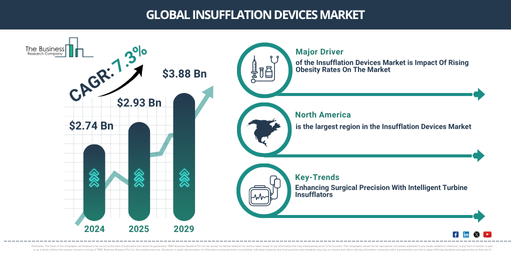
    The financial valuation of the insufflation devices sector has experienced robust expansion recently, projected to advance from a market valuation of $2.74 billion in the year 2024 to $2.93 billion by 2025, reflecting a consistent compound annual growth rate (CAGR) of 6.8%. This historical upward trajectory stems from several key factors, including the proliferation of laparoscopic surgical techniques, escalating consumer and provider desire for procedures that minimize invasiveness, the proliferation of outpatient surgical facilities, a heightened emphasis on minimizing complications during operations, and the growing requirement for high-precision instruments utilized in oncology interventions.

    Projections indicate that the market for insufflation devices is slated for considerable expansion over the coming years, reaching a valuation of $3.88 billion by 2029, driven by a consistent compound annual growth rate (CAGR) of 7.3%. This anticipated upswing in the forecasted duration is underpinned by several key factors, such as a heightened need for procedures utilizing robotic assistance, the aging demographic profile globally, a surge in cosmetic and aesthetic operations, expanding educational initiatives and awareness campaigns, alongside a greater incidence of long-term health conditions. During this same period, principal market movements will involve the refinement of endoscopic surgical approaches, greater utilization of remote healthcare services, innovations focused on methods for preserving and reusing CO2, progress in insufflation apparatus engineering, and the incorporation of artificial intelligence and machine learning capabilities.

    Unlock Your Free Sample Report for Exclusive Market Data:

    https://www.thebusinessresearchcompany.com/sample.aspx?id=20852&type=smp

    What Are The Top Growth Drivers Impacting The Insufflation Devices Market Outlook?

    The continuous increase in the prevalence of obesity globally is anticipated to be a major catalyst for expansion within the market for insufflation apparatuses; this escalating obesity, which is typically quantified by a Body Mass Index (BMI) at or exceeding 30 within a population segment, stems mainly from the proliferation of unfavorable dietary practices, insufficient engagement in physical exercise, higher intake of factory-prepared foodstuffs, and more sedentary ways of living. These critical insufflation tools find application in managing obesity, specifically facilitating operations such as weight-loss surgeries by expanding the abdominal space to enhance operative visualization and reach; consider the data shared in March 2023 by the World Heart Foundation, a Switzerland-located international non-governmental body focused on cardiovascular health, which indicated that the global count of adults and youngsters who are either overweight or obese presently stands near 2.3 billion, a figure forecast to climb to 2.7 billion by the year 2025 given current trends, thus cementing the link between the surge in obesity statistics and the subsequent upward momentum for the insufflation devices sector.

    What Are The Emerging Segments Gaining Attention In The Insufflation Devices Market?

    The insufflation devicesmarket covered in this report is segmented –

    1) By Type: Disposable, Reusable

    2) By Application: Laparoscopic Surgery, Bariatric Surgery, Cardiac Surgery

    3) By End-Use: Hospitals, Clinics, Ambulatory Surgical Centers

    Subsegments:

    1) By Disposable: Single-Use Insufflation Devices, Disposable Insufflation Tubes

    2) By Reusable: Reusable Insufflation Devices (Manual Or Electronic), Reusable Insufflation Tubes

    What Trends Are Redefining The Insufflation Devices Market Dynamics?

    Leading firms within the insufflation devices sector are directing their efforts toward crafting groundbreaking solutions, notably smart turbine insufflators, with the aim of boosting accuracy, lessening surgical risks, and elevating the results for patients undergoing minimally invasive interventions. An intelligent turbine insufflator represents a crucial piece of medical apparatus engineered to deliver regulated, high-pressure gas flow necessary for distension during keyhole operations, incorporating sophisticated functionalities for both exacting control and heightened safety. As an illustration, in October of 2024, the University of Politecnico di Milano, situated in Italy, entered into a collaborative agreement with the Erasmus Medical Center, located in the Netherlands, specifically to pioneer insufflator technology designed to refine complex surgical field visualization by generating an artificially maintained space inside the body via compressed gas. This technological leap successfully addresses the shortcomings present in existing insufflation equipment through its capacity to dynamically modulate gas pressure according to the unique physical and respiratory profiles of the individual undergoing surgery. The resulting patented intelligent turbine insufflation not only optimizes the surrounding surgical environment but also contributes to superior patient recovery profiles, cutting down on the necessity for extensive incisions while simultaneously affording finer regulation throughout the operative phase.

    Who Are The Prominent Global Companies Shaping The Insufflation Devices Market?

    Major companies operating in the insufflation devices market are Cardinal Health Inc., Johnson & Johnson, Medtronic plc, Fujifilm Holdings Corporation, Becton Dickinson and Company, Stryker Corporation, Olympus Corporation, Hoya Corporation, Smith & Nephew PLC, Mindray Medical International Limited, STERIS Corporation, CooperSurgical Inc., Teleflex Incorporated, Karl Storz SE & Co. KG, ConMed Corporation, Applied Medical Resources Corporation, Richard Wolf GmbH, B. Braun Melsungen AG, Pennine Healthcare Limited, Micro-Tech Endoscopy Co. Ltd.

    Download The Full Report For Exclusive Market Findings:

    https://www.thebusinessresearchcompany.com/report/insufflation-devices-global-market-report

    Which Region Currently Holds The Largest Share Of The Insufflation Devices Market?

    North America is the largest region in the insufflation devices market in 2024. Asia-Pacific is expected to be the fastest-growing region in the forecast period. The regions covered in the insufflation devices market report are Asia-Pacific, Western Europe, Eastern Europe, North America, South America, Middle East, Africa.

    Request A Customized Version Of The Insufflation Devices Market Report:

    https://www.thebusinessresearchcompany.com/customise?id=20852&type=smp

    Browse Through More Reports Similar to the Global Insufflation Devices Market 2025, By The Business Research Company

    Minimal Invasive Surgery Devices Global Market Report 2025

    https://www.thebusinessresearchcompany.com/report/minimal-invasive-surgery-devices-global-market-report

    Minimally Invasive Surgery Global Market Report 2025

    https://www.thebusinessresearchcompany.com/report/minimally-invasive-surgery-global-market-report

    Trauma Fixation Devices And Equipment Global Market Report 2025

    https://www.thebusinessresearchcompany.com/report/trauma-fixation-devices-and-equipment-global-market-report

    Get in touch with us:

    The Business Research Company: https://www.thebusinessresearchcompany.com/

    Americas +1 310-496-7795

    Asia +44 7882 955267 & +91 8897263534

    Europe +44 7882 955267

    Email us at info@tbrc.info

    Follow us on:

    LinkedIn: https://in.linkedin.com/company/the-business-research-company

    YouTube: https://www.youtube.com/channel/UC24_fI0rV8cR5DxlCpgmyFQ

    Global Market Model: https://www.thebusinessresearchcompany.com/global-market-model

  • Gonadotropin-Releasing Hormone (GnRH) Receptor Antagonists Industry Insights: Market Forecast to 2029

    Gonadotropin-Releasing Hormone (GnRH) Receptor Antagonists Industry Insights: Market Forecast to 2029

    Unlock Global Insights – Save 20% on Market Reports with Code ONLINE20

    How Much Larger Is The Gonadotropin-Releasing Hormone (GnRH) Receptor Antagonists Market Expected To Become By 2029 Compared With Its 2025 Level?

    The gonadotropin-releasing hormone (GnRH) receptor antagonists market has shown strong expansion in recent years. It is anticipated to increase from $1.46 billion in 2024 to $1.59 billion in 2025, achieving a compound annual growth rate (CAGR) of 8.8%. This historical growth is attributable to the rising occurrence of prostate and breast cancers, increased understanding of hormone-dependent conditions, a greater emphasis on minimally invasive treatments, enhanced government support for reproductive health, and growing investments in the development of oncology medications.

    The market for gonadotropin-releasing hormone (GnRH) receptor antagonists is anticipated to experience substantial expansion over the upcoming years. This sector is projected to reach $2.20 billion by 2029, demonstrating an 8.5% compound annual growth rate (CAGR). This projected increase is largely due to factors such as the increasing embrace of targeted and individualized medical treatments, a surge in demand from developing economies, heightened attention on female reproductive health conditions, a growing move towards treatments administered outside of hospitals, and an expanding volume of clinical trials yielding favorable results. Key developments anticipated during this period encompass the creation of biosimilars to offer more affordable access, the incorporation of digital therapeutic solutions alongside drug regimens, their inclusion in various cancer treatment approaches, advancements in molecular design to enhance specificity, and new applications for pediatric and adolescent patients.

    Unlock Your Free Sample Report for Exclusive Market Data:

    https://www.thebusinessresearchcompany.com/sample.aspx?id=25773&type=smp

    What Are The Drivers Pushing New Developments In The Gonadotropin-Releasing Hormone (GnRH) Receptor Antagonists Market?

    The rising occurrence of hormone-related conditions is anticipated to drive the future expansion of the gonadotropin-releasing hormone (GnRH) receptor antagonists market. These disorders are defined as medical states resulting from an imbalance or malfunction in the body’s hormone creation, release, or effect, impacting various physiological processes such as metabolism, growth, reproduction, and mood. The growing frequency of hormone-related disorders primarily stems from lifestyle changes, including poor diet, lack of physical activity, stress, and disrupted sleep patterns, all of which can significantly affect hormonal balance. GnRH receptor antagonists help manage these conditions by directly obstructing gonadotropin-releasing hormone receptors, thereby decreasing the synthesis of sex hormones that contribute to disease progression. For instance, in February 2025, according to the World Health Organization, a Switzerland-based intergovernmental organization, polycystic ovary syndrome, recognized as one of the most common hormonal disorders in women of reproductive age, affects an estimated 6–13% women each year, with up to 70% of cases remaining undiagnosed. Thus, the increasing prevalence of hormone-related disorders is fueling the growth of the gonadotropin-releasing hormone (GnRH) receptor antagonists market.

    How Is The Gonadotropin-Releasing Hormone (GnRH) Receptor Antagonists Market Segmented?

    The gonadotropin-releasing hormone (gnrh) receptor antagonists market covered in this report is segmented –

    1) By Type: Peptide Gonadotropin-Releasing Hormone Receptor Antagonists, Non-Peptide Gonadotropin-Releasing Hormone Receptor Antagonists

    2) By Route Of Administration: Oral, Injectable, Transdermal

    3) By Patient Demographics: Adult Males, Adult Females, Pediatric Patients

    4) By Application: Prostate Cancer, Breast Cancer, Endometriosis, Uterine Fibroids, Precocious Puberty

    5) By Distribution Channel: Hospital Pharmacies, Retail Pharmacies, Online Pharmacies, Other Distribution Channels

    Subsegments:

    1) By Peptide Gonadotropin-Releasing Hormone Receptor Antagonists: Cetrorelix, Ganirelix, Degarelix

    2) By Non-Peptide Gonadotropin-Releasing Hormone Receptor Antagonists: Elagolix, Relugolix, Linzagolix

    What Key Innovation Trends Are Fueling Advancements In The Gonadotropin-Releasing Hormone (GnRH) Receptor Antagonists Market?

    Companies operating in the GnRH receptor antagonist market are concentrating on developing advanced products, such as flexible oral dosing options with and without hormonal add-back therapy, to meet diverse patient requirements and improve therapeutic outcomes in women’s health. This flexibility in oral dosing facilitates tailored treatment regimens, enabling patients to manage symptoms of uterine fibroids either with hormonal support for long-term use or without it, providing alternatives for those with contraindications to hormonal therapy. As an illustration, in June 2022, ObsEva SA, a Switzerland-based biopharmaceutical company, collaborated with Theramex, a UK-based pharmaceutical company, to launch Yselty (linzagolix), a once-daily oral GnRH antagonist approved in the European Union (EU). This innovative therapy offers multiple dosing regimens: 100 milligrams (mg) or 200 milligrams (mg) with hormonal therapy for unrestricted duration, 100 milligrams (mg) without hormonal therapy for women who prefer to avoid hormones, and 200 milligrams (mg) for short-term use when clinical reduction of fibroid volume is desired. These adaptable regimens are designed to reduce heavy menstrual bleeding and uterine volume, offering a non-surgical solution for moderate to severe uterine fibroid symptoms.

    Which Leading Companies Dominate The Gonadotropin-Releasing Hormone (GnRH) Receptor Antagonists Market Share?

    Major companies operating in the gonadotropin-releasing hormone (gnrh) receptor antagonists market are Pfizer Inc, AbbVie Inc., Bayer AG, Novartis AG, Takeda Pharmaceutical Company Limited., Merck KGaA, Astellas Pharma Inc., Intas Pharmaceuticals Ltd., Organon And Co., Sun Pharmaceutical Industries Ltd., Jiangsu Hengrui Medicine Co. Ltd., Dr. Reddy’s Laboratories Ltd., Zydus Lifesciences Limited., Gland Pharma Limited., Bachem Holding AG, Kissei Pharmaceutical Co. Ltd., Myovant Sciences GmbH, Ferring International Center S.A., Theramex HQ UK Limited, Veru Inc

    Download The Full Report For Exclusive Market Findings:

    https://www.thebusinessresearchcompany.com/report/gonadotropin-releasing-hormone-gnrh-receptor-antagonists-global-market-report

    Which Region Is Projected To Lead The Gonadotropin-Releasing Hormone (GnRH) Receptor Antagonists Market During The Forecast Period?

    North America was the largest region in the gonadotropin-releasing hormone (GnRH) receptor antagonists receptor antagonists market in 2024. Asia-Pacific is expected to be the fastest-growing region in the forecast period. The regions covered in the gonadotropin-releasing hormone (gnrh) receptor antagonists market report are Asia-Pacific, Western Europe, Eastern Europe, North America, South America, Middle East, Africa.

    Request A Customized Version Of The Gonadotropin-Releasing Hormone (GnRH) Receptor Antagonists Market Report:

    https://www.thebusinessresearchcompany.com/customise?id=25773&type=smp

    Browse Through More Reports Similar to the Global Gonadotropin-Releasing Hormone (GnRH) Receptor Antagonists Market 2025, By The Business Research Company

    Gonadotropin Releasing Hormone Gnrh Agonist Global Market Report 2025

    https://www.thebusinessresearchcompany.com/report/gonadotropin-releasing-hormone-gnrh-agonist-global-market-report

    Hormone Therapy Global Market Report 2025

    https://www.thebusinessresearchcompany.com/report/hormone-therapy-global-market-report

    Human Chorionic Gonadotropin Global Market Report 2025

    https://www.thebusinessresearchcompany.com/report/human-chorionic-gonadotropin-global-market-report

    Get in touch with us:

    The Business Research Company: https://www.thebusinessresearchcompany.com/

    Americas +1 310-496-7795

    Asia +44 7882 955267 & +91 8897263534

    Europe +44 7882 955267

    Email us at info@tbrc.info

    Follow us on:

    LinkedIn: https://in.linkedin.com/company/the-business-research-company

    YouTube: https://www.youtube.com/channel/UC24_fI0rV8cR5DxlCpgmyFQ

    Global Market Model: https://www.thebusinessresearchcompany.com/global-market-model

  • Global Infusion Therapy Devices Market Overview: Trends Shaping Growth to 2029

    Global Infusion Therapy Devices Market Overview: Trends Shaping Growth to 2029

    Unlock Global Insights – Save 20% on Market Reports with Code ONLINE20

    What Is The Global Market Value Of The Infusion Therapy Devices Industry In 2025?

    The market for infusion therapy apparatus has experienced swift expansion lately, projected to escalate from a valuation of $12.1 billion in 2024 to $13.33 billion by the subsequent year, reflecting a compounded annual growth trajectory of 10.2%; this upswing during the past timeframe is fundamentally linked to a rise in patient admissions to healthcare facilities, advancements in medical groundwork, supportive governmental programs, the expansion of medical travel, and supportive mechanisms for reimbursement.

    Projections indicate that the market for infusion therapy devices is poised for swift expansion in the years ahead, reaching a valuation of $19.82 billion by 2029, driven by a compound annual growth rate (CAGR) of 10.4%.This upward trajectory throughout the projected timeframe is largely fueled by developments in personalized medical treatments, ongoing efforts in pandemic readiness and reaction, the emergence of wearable infusion apparatuses, a noticeable movement favoring infusion-based care, and broader healthcare digitization initiatives.Key developments anticipated to shape this period involve the adoption of 5G network capabilities, the advent of quantum computing, the integration of the Internet of Things (IoT), advancements in wearable health technology, and the utilization of voice assistants alongside natural language processing.

    Unlock Your Free Sample Report for Exclusive Market Data:

    https://www.thebusinessresearchcompany.com/sample.aspx?id=20849&type=smp

    Which Major Market Drivers Are Shaping The Future Of The Infusion Therapy Devices Market?

    The escalating incidence of conditions categorized as long-term ailments—health issues persisting over a year that necessitate continuous medical management or restrict everyday functioning—is anticipated to fuel the expansion of the infusion therapy devices sector moving ahead. This heightened frequency of persistent diseases stems from diverse elements, including suboptimal lifestyle decisions, inactivity, poor eating patterns, and environmental factors, compounded by the proliferation of risk elements like obesity, tobacco use, and elevated stress levels. Infusion therapy apparatus plays a critical role in managing these protracted conditions through the accurate, regulated administration of therapeutic agents and fluids right into the circulatory system, thereby guaranteeing uniform and efficacious care for ailments such as diabetes, immune system dysfunctions, and malignancies, which ultimately leads to superior patient results, increased ease of use, and fewer mandatory hospital admissions. Illustratively, data from the US National Center for Biotechnology Information (NCBI) indicated in January 2023 an expectation that the population aged 50 and older suffering from a minimum of one chronic ailment will almost double by 2050, jumping from 71.522 million in 2020 to an estimated 142.66 million; consequently, the burgeoning rate of chronic illnesses stands as a key impetus for the market growth of infusion therapy equipment.

    What Are The Major Segment Types Covered In The Infusion Therapy Devices Market?

    The infusion therapy devicesmarket covered in this report is segmented –

    1) By Product: Infusion Pumps, Intravenous (Iv) Sets, Cannulas, Needleless Connectors

    2) By Mobility: Portable Infusion Pumps, Stationary Pumps

    3) By Application: Oncology, Diabetes, Pain Management, Other Applications

    4) By End-User: Hospitals And Clinics, Ambulatory Surgical Centers, Homecare, Other End-Users

    Subsegments:

    1) By Infusion Pumps: Volumetric Infusion Pumps, Syringe Infusion Pumps, Ambulatory Infusion Pumps, Insulin Infusion Pumps

    2) By Intravenous (IV) Sets: Standard IV Sets, Extension IV Sets, IV Administration Sets with Filters

    3) By Cannulas: Peripheral Intravenous (PIV) Cannulas, Central Venous Cannulas, Butterfly Cannulas

    4) By Needleless Connectors: Positive Pressure Needleless Connectors, Neutral Pressure Needleless Connectors, Negative Pressure Needleless Connectors

    How Are Emerging Market Trends Shaping The Infusion Therapy Devices Industry Landscape?

    Key players within the infusion therapy devices sector are prioritizing the creation of novel approaches, such as pressure-enabled drug delivery (PEDD) technology, aimed at augmenting the therapeutic management of malignancies affecting the liver and pancreas. PEDD denotes a method of administering therapeutic agents where mechanical pressure facilitates their introduction into target tissues or organs, especially overcoming obstacles encountered with standard infusion techniques. As an illustration, in the month of November in 2024, TriSalus Life Sciences, a medical technology firm situated in the United States, introduced both the TriNav LV Infusion System and the TriGuide Guiding Catheters, thereby broadening their suite utilizing PEDD technology to refine the infusion of treatments, thus improving therapeutic choices and possibly yielding better results for individuals requiring care. The TriNav LV Infusion System boasts distinct attributes, including suitability for larger blood vessels ranging from 3.5 to 5.0 mm, which broadens the applicability of TriSalus’ Pressure-Enabled Drug Delivery (PEDD) method across a larger cohort of patients, extending its device compatibility for PEDD from vessels measuring 1.5 mm up to 5.0 mm and furnishing interventional radiologists with increased procedural selections. Furthermore, the TriGuide Guiding Catheters are equipped with a wider internal bore, a low-friction internal coating, and an inverted curve architecture engineered to simplify access via the femoral artery and boost the efficiency of procedures; initial feedback from practitioners indicates a satisfaction level of 97 percent, underscoring the apparatus’s efficacy and user-friendliness in cancer therapy applications.

    Which Key Players Are Driving Competition In The Infusion Therapy Devices Market?

    Major companies operating in the infusion therapy devices market are Roche Holding AG, Fresenius Kabi AG, Medtronic plc, Medline Industries Inc., Baxter International Inc., Terumo Corporation, Mindray Medical International Limited, Nipro Corporation, ICU Medical Inc., Cook Medical, Acelity L.P Inc., LivaNova PLC, Vygon S.A., AngioDynamics Inc., B. Braun Melsungen AG, Moog Medical Devices Group, Kangaroo, Vantage Medical Technologies, Alaris Medical Systems Inc., AccuVein Inc.

    Download The Full Report For Exclusive Market Findings:

    https://www.thebusinessresearchcompany.com/report/infusion-therapy-devices-global-market-report

    What Regional Growth Trends Are Shaping The Infusion Therapy Devices Market Outlook?

    North America was the largest region in the infusion therapy devices market in 2024. Asia-Pacific is expected to be the fastest-growing region in the forecast period. The regions covered in the infusion therapy devices market report are Asia-Pacific, Western Europe, Eastern Europe, North America, South America, Middle East, Africa.

    Request A Customized Version Of The Infusion Therapy Devices Market Report:

    https://www.thebusinessresearchcompany.com/customise?id=20849&type=smp

    Browse Through More Reports Similar to the Global Infusion Therapy Devices Market 2025, By The Business Research Company

    Intravenous Infusion Pumps Global Market Report 2025

    https://www.thebusinessresearchcompany.com/report/intravenous-infusion-pumps-global-market-report

    Ambulatory Iv Infusion Pumps Global Market Report 2025

    https://www.thebusinessresearchcompany.com/report/ambulatory-iv-infusion-pumps-global-market-report

    Implantable Infusion Pumps Global Market Report 2025

    https://www.thebusinessresearchcompany.com/report/implantable-infusion-pumps-global-market-report

    Get in touch with us:

    The Business Research Company: https://www.thebusinessresearchcompany.com/

    Americas +1 310-496-7795

    Asia +44 7882 955267 & +91 8897263534

    Europe +44 7882 955267

    Email us at info@tbrc.info

    Follow us on:

    LinkedIn: https://in.linkedin.com/company/the-business-research-company

    YouTube: https://www.youtube.com/channel/UC24_fI0rV8cR5DxlCpgmyFQ

    Global Market Model: https://www.thebusinessresearchcompany.com/global-market-model

  • Gonadotropin-Releasing Hormone (GnRH) Agonists And Antagonists Drugs Market Size and Growth Forecast for Businesses 2025–2029

    Gonadotropin-Releasing Hormone (GnRH) Agonists And Antagonists Drugs Market Size and Growth Forecast for Businesses 2025–2029

    Unlock Global Insights – Save 20% on Market Reports with Code ONLINE20

    #What Are The Current (2025) And Forecast (2029) Sizes Of The Gonadotropin-Releasing Hormone (GnRH) Agonists And Antagonists Drugs Market?

    The gonadotropin-releasing hormone (GnRH) agonists and antagonists drugs market size has seen significant expansion in recent years. Its value is forecast to increase from $1.57 billion in 2024 to $1.73 billion in 2025, reflecting a compound annual growth rate (CAGR) of 9.8%. The growth observed in previous periods stems from factors including the rising prevalence of hormone-related disorders, an increase in cases of prostate and breast cancer, enhanced awareness concerning reproductive health, greater demand for assisted reproductive technologies, and the growing application of hormone therapies for conditions like endometriosis and uterine fibroids.

    The gonadotropin-releasing hormone (GnRH) agonists and antagonists drugs market size is set for significant expansion over the next few years. It is projected to climb to $2.49 billion by 2029, growing at a compound annual growth rate (CAGR) of 9.5%. This anticipated growth during the forecast period is driven by an increasing preference for minimally invasive treatments, greater awareness of women’s health issues, the expanding availability of combination therapies, improved healthcare access in developing regions, and a growing pipeline of innovative formulations. Prominent trends for the forecast period include advancements in oral GnRH antagonist formulations, novel developments in combination therapies with hormonal add-back, the integration of digital health tools for monitoring reproductive treatments, progress in clinical trial designs to accelerate approvals, and the incorporation of telemedicine into hormone therapy.

    Unlock Your Free Sample Report for Exclusive Market Data:

    https://www.thebusinessresearchcompany.com/sample.aspx?id=25772&type=smp

    What Are The Emerging Market Drivers Creating New Opportunities In The Gonadotropin-Releasing Hormone (GnRH) Agonists And Antagonists Drugs Industry?

    The rising incidence of ovarian and prostate cancers is anticipated to drive the expansion of the gonadotropin-releasing hormone (GnRH) agonists and antagonists drugs market in the future. These cancers, specifically ovarian and prostate, are hormone-sensitive malignancies responsive to estrogen and testosterone, frequently managed with hormone-modulating treatments like GnRH agonists or antagonists. The uptick in ovarian and prostate cancer cases is linked to an extended life expectancy, given that the likelihood of developing these age-dependent, hormone-sensitive cancers increases with advancing age. GnRH agonists and antagonists play a role in managing ovarian and prostate cancers by inhibiting the generation of sex hormones like estrogen and testosterone, which are known to promote the progression of these hormone-responsive tumors. For example, Cancer Australia, a government agency, projected that around 1,786 new ovarian cancer diagnoses would occur in Australia in 2023. Furthermore, women face an approximate 1 in 87 chance (equivalent to a 1.2% risk) of receiving an ovarian cancer diagnosis by the time they reach 85 years old. Consequently, the growing prevalence of ovarian and prostate cancers is fueling the expansion of the gonadotropin-releasing hormone (GnRH) agonists and antagonists drugs market.

    What Are The Key Segments In The Gonadotropin-Releasing Hormone (GnRH) Agonists And Antagonists Drugs Market?

    The gonadotropin-releasing hormone (gnrh) agonists and antagonists drugs market covered in this report is segmented –

    1) By Drug Type: GnRH Agonists, Leuprorelin, Goserelin, Triptorelin, Histrelin, Buserelin, GnRH Antagonists, Degarelix, Abarelix, Other Drug Types

    2) By Application: Gynecology, Oncology, Other Applications

    3) By End-User: Hospitals, Specialty Clinics, Other End-Users

    Subsegments:

    1) By GnRH Agonists: Deslorelin, Gonadorelin, Zoladex Long-Acting Goserelin Variant, Lupron Depot-Ped, Sustained-Release Microsphere Formulations

    2) By Leuprorelin: Depot Injection, Implant, Combination Therapy Formulations

    3) By Goserelin: Subcutaneous Implant, Oncology-Specific Formulation, Gynecology-Specific Formulation

    4) By Triptorelin: Intramuscular Injection, Long-Acting (1-, 3-, 6-Month) Depot, Fertility Treatment Formulation

    5) By Histrelin: Subcutaneous Implant, Pediatric (Precocious Puberty) Formulation, Adult Prostate Cancer-Specific Version

    6) By Buserelin: Nasal Spray, Subcutaneous Injection, In Vitro Fertilization And Fertility Cycle Formulations

    7) By GnRH Antagonists: Teverelix DP, Elagolix, Relugolix, Ganirelix, Linzagolix

    8) By Degarelix: Subcutaneous Injection, Monthly Dosing, Prostate Cancer-Specific Formulation

    9) By Abarelix: Intramuscular Injection, Advanced Prostate Cancer, Short-Acting Formulation

    10) By Other Drug Types: Subcutaneous Injection, In Vitro Fertilization-Specific Use, Multiple Dosing Regimens

    Which Ongoing Trends Are Expected To Shape The Gonadotropin-Releasing Hormone (GnRH) Agonists And Antagonists Drugs Market Outlook?

    Leading companies operating in the gonadotropin-releasing hormone (GnRH) agonists and antagonists drugs market are prioritizing the development of innovative solutions, such as oral gonadotropin-releasing hormone (GnRH) receptor antagonists, aiming to enhance patient convenience, improve treatment adherence, and lessen the reliance on injectable therapies. An oral gonadotropin-releasing hormone (GnRH) receptor antagonist is an oral medication designed to block GnRH receptors, thereby rapidly lowering sex hormone levels, which assists in treating hormone-related conditions like prostate cancer and endometriosis. As an example, in March 2024, Sumitomo Pharma Co. Ltd., a Japan-based pharmaceutical company, announced that ORGOVYX (relugolix), the first and only oral androgen deprivation therapy (ADT) for advanced prostate cancer, is now available in Canada following Health Canada’s approval. ORGOVYX functions as a once-daily oral gonadotropin-releasing hormone (GnRH) receptor antagonist that suppresses testosterone production, a key driver of prostate cancer progression. Its approval was founded on the Phase 3 HERO study, which showcased effective and sustained testosterone suppression, a reduction in major cardiovascular events, and comparable castration resistance-free survival to standard injectable therapies.

    Who Are The Major Companies Operating In The Gonadotropin-Releasing Hormone (GnRH) Agonists And Antagonists Drugs Market?

    Major companies operating in the gonadotropin-releasing hormone (gnrh) agonists and antagonists drugs market are Pfizer Inc., AbbVie Inc., AstraZeneca plc, Takeda Pharmaceutical Company Limited, Merck KGaA, Intas Pharmaceuticals Limited, Sumitomo Pharma Co. Ltd., Ipsen S.A., Dr. Reddy’s Laboratories Limited, Cipla Limited, Gedeon Richter Plc, Lupin Limited, Zydus Lifesciences Limited, Gland Pharma Limited, Bachem Holding AG, Kissei Pharmaceutical Co. Ltd., Aska Pharmaceutical Co. Ltd., Ferring International Center S.A., Tolmar Inc., Debiopharm International SA, TerSera Therapeutics LLC, TiumBio Co. Ltd.

    Download The Full Report For Exclusive Market Findings:

    https://www.thebusinessresearchcompany.com/report/gonadotropin-releasing-hormone-gnrh-agonists-and-antagonists-drugs-global-market-report

    What Are The Key Regional Factors Influencing The Gonadotropin-Releasing Hormone (GnRH) Agonists And Antagonists Drugs Market Growth?

    North America was the largest region in the gonadotropin-releasing hormone (GnRH) agonists and antagonists drugs market in 2024. Asia-Pacific is expected to be the fastest-growing region in the forecast period. The regions covered in the gonadotropin-releasing hormone (gnrh) agonists and antagonists drugs market report are Asia-Pacific, Western Europe, Eastern Europe, North America, South America, Middle East, Africa.

    Request A Customized Version Of The Gonadotropin-Releasing Hormone (GnRH) Agonists And Antagonists Drugs Market Report:

    https://www.thebusinessresearchcompany.com/customise?id=25772&type=smp

    Browse Through More Reports Similar to the Global Gonadotropin-Releasing Hormone (GnRH) Agonists And Antagonists Drugs Market 2025, By The Business Research Company

    Gonadotropin Releasing Hormone Gnrh Agonist Global Market Report 2025

    https://www.thebusinessresearchcompany.com/report/gonadotropin-releasing-hormone-gnrh-agonist-global-market-report

    Hormone Therapy Global Market Report 2025

    https://www.thebusinessresearchcompany.com/report/hormone-therapy-global-market-report

    Gynecology Drugs Global Market Report 2025

    https://www.thebusinessresearchcompany.com/report/gynecology-drugs-global-market-report

    Get in touch with us:

    The Business Research Company: https://www.thebusinessresearchcompany.com/

    Americas +1 310-496-7795

    Asia +44 7882 955267 & +91 8897263534

    Europe +44 7882 955267

    Email us at info@tbrc.info

    Follow us on:

    LinkedIn: https://in.linkedin.com/company/the-business-research-company

    YouTube: https://www.youtube.com/channel/UC24_fI0rV8cR5DxlCpgmyFQ

    Global Market Model: https://www.thebusinessresearchcompany.com/global-market-model

  • Implantable Collamer Lens Market Growth Opportunities: Insights from 2025–2029

    Implantable Collamer Lens Market Growth Opportunities: Insights from 2025–2029

    Unlock Global Insights – Save 20% on Market Reports with Code ONLINE20

    By How Much Is The Implantable Collamer Lens Market Expected To Expand Between 2025 And 2029?

    The impressive expansion observed recently in the market for implantable collamer lenses shows a robust trajectory, projected to increase its valuation from $19.53 billion in 2024 to $20.77 billion the following year, reflecting a compound annual growth rate of 6.3% across this period. This upward trend during the past few years has been fueled by several contributing factors, including heightened public understanding regarding various sight correction alternatives, the expanding acceptance of surgical procedures that require less invasion, a growing incidence of refractive vision problems, supportive policies in established territories that cover the costs, and greater capital allocation toward eye health studies.

    Anticipating substantial expansion, the market dedicated to implantable collamer lenses is projected to reach a valuation of $27 billion by the year 2029, achieving this through a compound annual growth rate (CAGR) of 6.8% throughout the projection timeframe; this upward trajectory is fueled by several key factors, such as the escalating desire for enduring vision correction methods, the increasing incidence of both myopia and astigmatism, a heightened emphasis on developing implants tailored precisely to individual patients, the needs arising from an aging populace requiring more eye care, and the proliferation of surgical facilities operating on an outpatient basis.Contemporary significant developments shaping this era involve the incorporation of artificial intelligence within the processes of planning before surgery, ongoing research resulting in implantable lens materials that are both foldable and fully compatible with biological systems, partnerships forming between those who produce the lenses and the entities providing healthcare, continuous technological breakthroughs concerning the composition and configuration of these lenses, alongside progress in the broader field of implantable lens technology itself.

    Unlock Your Free Sample Report for Exclusive Market Data:

    https://www.thebusinessresearchcompany.com/sample.aspx?id=20840&type=smp

    What Are The Main Drivers Boosting The Implantable Collamer Lens Industry’s Expansion?

    The increasing frequency of visual impairments is projected to fuel the expansion of the market centered on implantable collamer lenses. These disorders, which involve a progressive deterioration in visual sharpness and ocular well-being, hinder the capacity for clear sight. Factors such as an aging demographic, elevated exposure to digital screens, and the growing incidence rates of conditions like nearsightedness and age-related macular degeneration are contributing to the global surge in vision problems. Implantable Collamer Lenses (ICLs) deliver an efficacious remedy for correcting refractive errors such as myopia, hyperopia, and astigmatism, presenting a secure, reversible option compared to older refractive procedures like LASIK. Illustratively, data from the World Health Organization, a United Nations specialized body situated in Switzerland, indicated in August 2023 that worldwide, more than 2.2 billion individuals experience vision impairment either up close or at a distance, with one billion of these instances being conditions that could be prevented or remain unmanaged. Furthermore, in July 2023, the Welsh Government, an agency of the UK administration, reported that approximately 1,563 new certificates of vision impairment (CVI) were granted during 2021-22, marking a significant 49.1 percent jump from the preceding fiscal year. Consequently, the escalating rate of vision disorders serves as a catalyst for the upward trajectory of the implantable collamer lens market.

    What Are The Major Segment Categories Driving The Implantable Collamer Lens Market Growth?

    The implantable collamer lensmarket covered in this report is segmented –

    1) By Type: Visian Implantable Collamer Lens (ICL), EVO Implantable Collamer Lens (ICL)

    2) By Technology Adoption: Laser-Assisted Techniques, Traditional Techniques

    3) By Application: Myopia, Hyperopia, Astigmatism

    4) By End User: Ophthalmic Clinics, Hospitals, Ambulatory Surgical Center, Other End User

    Subsegments:

    1) By Visian Implantable Collamer Lens (ICL): Visian ICL for Myopia, Visian ICL For Hyperopia, Visian ICL For Astigmatism, Visian ICL For Presbyopia

    2) By EVO Implantable Collamer Lens (ICL): EVO ICL For Myopia, EVO ICL For Hyperopia, EVO ICL For Astigmatism, EVO ICL For Presbyopia

    Which Key Trends Are Expected To Influence The Implantable Collamer Lens Market In The Coming Years?

    Key players within the implantable collamer lens sector are prioritizing enhancements in lens design and securing regulatory clearances to bolster their standing against competitors. This specific type of lens, the Implantable Collamer Lens, functions as a method to rectify visual defects stemming from refractive errors, presenting a less invasive alternative for individuals dealing with nearsightedness and astigmatism. A notable example occurred in April 2022 when STAAR Surgical Company, an American entity specializing in the production and sales of implantable ocular lenses and associated delivery mechanisms, announced that the U.S. Food and Drug Administration (FDA) had granted clearance for its EVO/EVO+ Visian Implantable Collamer Lens (EVO) to treat both myopia and myopia complicated by astigmatism. Specifically tailored to amend or alleviate myopia within the range of minus three point zero diopters to minus twenty point zero diopters, the EVO Visian ICL lens is also capable of addressing astigmatism levels spanning from one point zero diopter up to four point zero diopters.

    Who Are The Top Performing Companies In The Implantable Collamer Lens Market In Recent Years?

    Major companies operating in the implantable collamer lens market are STAAR Surgical Company

    Download The Full Report For Exclusive Market Findings:

    https://www.thebusinessresearchcompany.com/report/implantable-collamer-lens-global-market-report

    Which Regional Markets Are Contributing Most To The Implantable Collamer Lens Industry Expansion?

    North America was the largest region in the implantable collamer lens market in 2024. Asia-Pacific is expected to be the fastest-growing region in the forecast period. The regions covered in the implantable collamer lens market report are Asia-Pacific, Western Europe, Eastern Europe, North America, South America, Middle East, Africa.

    Request A Customized Version Of The Implantable Collamer Lens Market Report:

    https://www.thebusinessresearchcompany.com/customise?id=20840&type=smp

    Browse Through More Reports Similar to the Global Implantable Collamer Lens Market 2025, By The Business Research Company

    Optical Instrument And Lens Global Market Report 2025

    https://www.thebusinessresearchcompany.com/report/optical-instrument-and-lens-global-market-report

    Intraocular Lens Global Market Report 2025

    https://www.thebusinessresearchcompany.com/report/intraocular-lens-global-market-report

    Coloured Contact Lenses Global Market Report 2025

    https://www.thebusinessresearchcompany.com/report/coloured-contact-lenses-global-market-report

    Get in touch with us:

    The Business Research Company: https://www.thebusinessresearchcompany.com/

    Americas +1 310-496-7795

    Asia +44 7882 955267 & +91 8897263534

    Europe +44 7882 955267

    Email us at info@tbrc.info

    Follow us on:

    LinkedIn: https://in.linkedin.com/company/the-business-research-company

    YouTube: https://www.youtube.com/channel/UC24_fI0rV8cR5DxlCpgmyFQ

    Global Market Model: https://www.thebusinessresearchcompany.com/global-market-model

  • Global Generic Pharmaceuticals Contract Manufacturing Market Overview: Trends Shaping Growth to 2029

    Global Generic Pharmaceuticals Contract Manufacturing Market Overview: Trends Shaping Growth to 2029

    Unlock Global Insights – Save 20% on Market Reports with Code ONLINE20

    What Market Value Is The Generic Pharmaceuticals Contract Manufacturing Industry Expected To Reach By 2029, Starting From 2025 Levels?

    The generic pharmaceuticals contract manufacturing market size has shown robust expansion over recent years. It is anticipated to expand from $62.30 billion in 2024 to $66.82 billion in 2025, recording a compound annual growth rate (CAGR) of 7.3%. This historical growth can be linked to several factors, including an elevated demand for affordable medicines, an increase in healthcare spending across developing nations, the expiry of patents for branded drugs, a rise in outsourcing activities by pharmaceutical companies, and the escalating prevalence of chronic conditions.

    The generic pharmaceuticals contract manufacturing market is projected to experience substantial growth over the coming years. This market is set to reach a valuation of $87.59 billion by 2029, expanding at a compound annual growth rate (CAGR) of 7.0%. Factors driving this expansion during the projected period include an increasing emphasis on specialty generics, enhanced government backing for generic medication usage, broader healthcare accessibility in developing economies, escalating investments in contract manufacturing sites, and a rising demand for adaptable and scalable production methods. Key developments anticipated during the forecast timeframe encompass improvements in manufacturing automation, sophisticated quality control techniques, the creation of intricate generic formulations, breakthroughs in drug delivery systems, and progress in continuous manufacturing processes.

    Unlock Your Free Sample Report for Exclusive Market Data:

    https://www.thebusinessresearchcompany.com/sample.aspx?id=25771&type=smp

    Which Drivers Are Impacting The Generic Pharmaceuticals Contract Manufacturing Market?

    The expanding need for biosimilars is projected to fuel the advancement of the generic pharmaceuticals contract manufacturing market. These products are biologic medical treatments closely resembling established reference biologics, possessing no notable clinical variances in terms of safety, purity, or effectiveness. This increasing demand stems largely from their capacity to offer economical substitutes for costly biologic medications, thereby enhancing access to sophisticated treatments for both patients and healthcare providers. Contract manufacturing in generic pharmaceuticals facilitates biosimilar development by offering efficient, high-volume production and essential regulatory knowledge, which helps speed up market introduction and maintain uniform quality. For illustration, in February 2022, Cardinal Health Inc., a healthcare firm based in the US, reported that by January 2022, the US Food and Drug Administration (FDA) had approved 33 biosimilar products, with 21 of these accessible in the market. Moreover, by January 2023, the count of FDA-approved biosimilars climbed to 40, with 25 becoming commercially accessible within 2023. Consequently, the growing need for biosimilars is stimulating the expansion of the generic pharmaceuticals contract manufacturing market.

    What Are The Leading Segments Analyzed In The Generic Pharmaceuticals Contract Manufacturing Market?

    The generic pharmaceuticals contract manufacturing market covered in this report is segmented –

    1) By Drug Type: Branded Generics, Unbranded Generics

    2) By Product Type: Pharmaceutical Active Pharmaceutical Ingredients, Formulations, Capsules, Tablets, Injectables

    3) By Route Of Administration: Oral, Parenteral, Topical, Other Routes Of Administration

    4) By Application: Oncology, Immunology, Antidiabetic, Neurology, Anticoagulants, Cardiovascular, Respiratory, Pain, Human Immunodeficiency Virus Antivirals

    5) By End-User Industry: Pharmaceutical Companies, Contract Research Organizations, Biotechnology Companies, Generic Drug Manufacturers

    Subsegments:

    1) Branded Generics: Contract Development of Branded Formulations, Branded Generic Tablet Manufacturing, Branded Injectable Manufacturing, Packaging and Labeling for Branded Generics, Regulatory Support For Branded Generics

    2) By Unbranded Generics: Bulk Manufacturing of Off-Patent Active Pharmaceutical Ingredients, Generic Tablet Or Capsule Production, Parenteral Or Injectable Generic Manufacturing, Cost-Efficient Packaging for Unbranded Products, Licensing And Tech Transfer for Generic Products

    Which Competitive Trends Are Defining The Generic Pharmaceuticals Contract Manufacturing Market Structure?

    Leading companies in the generic pharmaceutical contract manufacturing market are broadening their service offerings by establishing dedicated subsidiaries, addressing the increasing demand for outsourced development and manufacturing. This deliberate move to create specialized subdivisions enables organizations to streamline the production of active pharmaceutical ingredients (APIs), ensuring compliance, scalability, and operational efficiency across the entire drug development lifecycle. For example, in July 2025, Lupin, an India-based generic pharmaceutical company, unveiled its new subsidiary, Lupin Manufacturing Solutions (LMS), specifically to enter the contract development and manufacturing organization (CDMO) market. This specialized division is focused on supporting the development, manufacturing, and sale of APIs for global pharmaceutical partners. Guided by a leadership team with extensive experience in biotech and pharma, the subsidiary is well-positioned to deliver premium contract services, helping pharmaceutical companies accelerate their time-to-market while upholding regulatory standards and cost-effectiveness.

    Which Global Market Leaders Are Shaping The Future Of The Generic Pharmaceuticals Contract Manufacturing Sector?

    Major companies operating in the generic pharmaceuticals contract manufacturing market are Teva Pharmaceutical Industries Ltd., Sandoz International GmbH, Fresenius Kabi AG, WuXi AppTec Co. Ltd., Aurobindo Pharma, Cipla Limited, Recipharm AB, Siegfried Holding AG, Curia Global Inc., Torrent Pharmaceuticals Limited., Piramal Pharma Solutions, Laurus Labs Limited., Cambrex Corp., Pfizer CentreOne, Syngene International Ltd., Wockhardt Ltd., Alcami Corp. Inc, Neuland Laboratories Limited., Panacea Biotec Ltd., Jubilant Generics Ltd.

    Download The Full Report For Exclusive Market Findings:

    https://www.thebusinessresearchcompany.com/report/generic-pharmaceuticals-contract-manufacturing-global-market-report

    How Do Regional Market Performances Compare Within The Generic Pharmaceuticals Contract Manufacturing Industry?

    North America was the largest region in the generic pharmaceuticals contract manufacturing market in 2024. Asia-Pacific is expected to be the fastest-growing region in the forecast period. The regions covered in the generic pharmaceuticals contract manufacturing market report are Asia-Pacific, Western Europe, Eastern Europe, North America, South America, Middle East, Africa.

    Request A Customized Version Of The Generic Pharmaceuticals Contract Manufacturing Market Report:

    https://www.thebusinessresearchcompany.com/customise?id=25771&type=smp

    Browse Through More Reports Similar to the Global Generic Pharmaceuticals Contract Manufacturing Market 2025, By The Business Research Company

    Pharmaceutical Contract Developments And Manufacturing Organization Cmo Global Market Report 2025

    https://www.thebusinessresearchcompany.com/report/pharmaceutical-contract-developments-and-manufacturing-organization-cmo-global-market-report

    Biopharmaceuticals Contract Manufacturing Global Market Report 2025

    https://www.thebusinessresearchcompany.com/report/biopharmaceuticals-contract-manufacturing-global-market-report

    Pharmaceutical Contract Packaging Global Market Report 2025

    https://www.thebusinessresearchcompany.com/report/pharmaceutical-contract-packaging-global-market-report

    Get in touch with us:

    The Business Research Company: https://www.thebusinessresearchcompany.com/

    Americas +1 310-496-7795

    Asia +44 7882 955267 & +91 8897263534

    Europe +44 7882 955267

    Email us at info@tbrc.info

    Follow us on:

    LinkedIn: https://in.linkedin.com/company/the-business-research-company

    YouTube: https://www.youtube.com/channel/UC24_fI0rV8cR5DxlCpgmyFQ

    Global Market Model: https://www.thebusinessresearchcompany.com/global-market-model

  • Hemodynamic Flow Alteration Devices Market Expansion Outlook: $1.21 Billion by 2029 Forecast

    Hemodynamic Flow Alteration Devices Market Expansion Outlook: $1.21 Billion by 2029 Forecast

    Unlock Global Insights – Save 20% on Market Reports with Code ONLINE20

    #What Is The Projected Market Size Of The Hemodynamic Flow Alteration Devices Market By 2029?

    Recent years have witnessed robust expansion within the market for devices designed to modify hemodynamic flow, projecting an increase from its 2024 valuation of $0.82 billion to $0.88 billion by 2025, reflecting a compound annual growth rate (CAGR) of 7.9%; this historical growth trajectory has been fueled by several factors, including the expanding elderly demographic, escalating healthcare spending, a higher incidence of cardiovascular ailments, the proliferation of risk factors like obesity, diabetes, and hypertension, and augmented investment in research and development activities.

    Anticipation surrounds the hemodynamic flow alteration devices sector, projecting robust expansion ahead, with market valuation set to reach $1.21 billion by 2029, driven by an 8.1% compound annual growth rate throughout the projection timeframe; this upward trajectory stems from the surging incidence of central nervous system vascular disorders, a growing preference for less invasive neurosurgical techniques, a swelling elderly population demographic, the elevated probability of blood clot formation, and expanding personal wealth across regions. Key developments shaping this market during the forecast window involve a movement towards non-intrusive surgical methods, innovations in materials suitable for biological interfacing, the emergence of portable patient observation setups, the incorporation of artificial intelligence and machine learning capabilities, and the linkage of these devices with established cardiac surveillance infrastructure.

    Unlock Your Free Sample Report for Exclusive Market Data:

    https://www.thebusinessresearchcompany.com/sample.aspx?id=20831&type=smp

    Which Factors And Drivers Are Influencing The Hemodynamic Flow Alteration Devices Market In 2025?

    Anticipated growth in the incidence of heart and circulatory problems is set to boost the market for devices designed to modify hemodynamic flow. This broad category of cardiovascular ailments, which affects both the heart and the circulatory network, is expanding due to several contributing elements, including an aging global demographic, suboptimal eating patterns, insufficient physical activity, and escalating occurrences of illnesses like high blood pressure and diabetes. The rising burden of these conditions necessitates the use of hemodynamic flow alteration equipment, which serves to regulate and improve blood circulation for individuals suffering from issues such as cardiac insufficiency, hypertension, and arterial obstructions. To illustrate this trend, data from the British Heart Foundation in September 2024 revealed that about 7.6 million people in the United Kingdom currently cope with heart and circulatory diseases, split between 4 million males and 3.6 million females, with projections indicating a further escalation of one million cases by 2030 and an additional two million above current numbers by 2040. Consequently, the expanding footprint of cardiovascular disease is the primary impetus propelling the hemodynamic flow alteration devices market onward.

    How Is The Hemodynamic Flow Alteration Devices Market Segmented?

    The hemodynamic flow alteration devicesmarket covered in this report is segmented –

    1) By Type: Embolic Protection Device, Chronic Total Occlusion Device

    2) By Application: Cardiovascular Diseases, Neurological Disorders, Renal Disorders, Respiratory Disorders

    3) By End User: Hospitals, Clinics, Ambulatory Care Centre, Home Care Setting, Other End Users

    Subsegments:

    1) By Embolic Protection Device: Distal Embolic Protection Devices, Proximal Embolic Protection Devices, Filter-Based Embolic Protection Devices, Balloon-Based Embolic Protection Devices, Mesh Or Cage-Based Embolic Protection Devices

    2) By Chronic Total Occlusion Device: Crossing Guidewires For CTO, CTO Balloon Catheters, CTO Microcatheters, Re-Entry Devices For CTO, CTO Support Catheters

    What Are The Major Trends Driving The Growth Of The Hemodynamic Flow Alteration Devices Market?

    Within the market for hemodynamic flow alteration devices, leading corporations are focused on creating novel technologies, such as left ventricular assist devices, with the objectives of bolstering cardiac function, achieving superior patient results, and confronting the increasing worldwide incidence of heart failure. A left ventricular assist device (LVAD), fundamentally a mechanical pump, is surgically placed within individuals experiencing advanced stages of heart failure. Illustratively, the government research body, Indian Institute of Technology-Kanpur from India, commenced a notable undertaking in January 2022, establishing the Hridyantra project to engineer a cutting-edge artificial heart, specifically an LVAD. This endeavor is specifically designed to cater to the requirements of individuals in end-stage heart failure by engineering a complex cardiac support mechanism capable of functioning either as a temporary measure preceding a heart transplant or as a permanent therapeutic option for those ineligible for the transplant procedure.

    Which Leading Companies Dominate The Hemodynamic Flow Alteration Devices Market Share?

    Major companies operating in the hemodynamic flow alteration devices market are Cardinal Health Inc., Abbott Laboratories, Medtronic plc, Siemens Healthcare GmbH, Becton Dickinson and Company, Stryker Corporation, Boston Scientific Corporation, Edwards Lifesciences Corporation, W. L. Gore & Associates Inc., ZOLL Medical Corporation, Getinge AB, Lepu Medical Technology (Beijing) Co. Ltd., Abiomed Inc., LivaNova PLC, Cordis US Corp., Silk Road Medical Inc., Berlin Heart GmbH, CorWave SA, Jarvik Heart Inc., CARMAT SA

    Download The Full Report For Exclusive Market Findings:

    https://www.thebusinessresearchcompany.com/report/hemodynamic-flow-alteration-devices-global-market-report

    How Does The Hemodynamic Flow Alteration Devices Market Perform Across Key Geographic Regions?

    North America was the largest region in the hemodynamic flow alteration devices market in 2024. The regions covered in the hemodynamic flow alteration devices market report are Asia-Pacific, Western Europe, Eastern Europe, North America, South America, Middle East, Africa.

    Request A Customized Version Of The Hemodynamic Flow Alteration Devices Market Report:

    https://www.thebusinessresearchcompany.com/customise?id=20831&type=smp

    Browse Through More Reports Similar to the Global Hemodynamic Flow Alteration Devices Market 2025, By The Business Research Company

    Hemodynamic Monitoring Systems Global Market Report 2025

    https://www.thebusinessresearchcompany.com/report/hemodynamic-monitoring-systems-global-market-report

    Vascular Grafts Global Market Report 2025

    https://www.thebusinessresearchcompany.com/report/vascular-grafts-global-market-report

    Vascular Endothelial Growth Factor Inhibitors Global Market Report 2025

    https://www.thebusinessresearchcompany.com/report/vascular-endothelial-growth-factor-inhibitors-global-market-report

    Get in touch with us:

    The Business Research Company: https://www.thebusinessresearchcompany.com/

    Americas +1 310-496-7795

    Asia +44 7882 955267 & +91 8897263534

    Europe +44 7882 955267

    Email us at info@tbrc.info

    Follow us on:

    LinkedIn: https://in.linkedin.com/company/the-business-research-company

    YouTube: https://www.youtube.com/channel/UC24_fI0rV8cR5DxlCpgmyFQ

    Global Market Model: https://www.thebusinessresearchcompany.com/global-market-model

  • Gene-Editing Transfection Chemicals Market Growth Opportunities: Insights from 2025–2029

    Gene-Editing Transfection Chemicals Market Growth Opportunities: Insights from 2025–2029

    Unlock Global Insights – Save 20% on Market Reports with Code ONLINE20

    What Is The Anticipated Size Of The Gene-Editing Transfection Chemicals Market Over The Five-Year Period 2025–2029?

    The gene-editing transfection chemicals market has seen substantial growth recently. It is forecast to expand from $0.99 billion in 2024 to $1.07 billion in 2025, exhibiting a compound annual growth rate (CAGR) of 8.0%. The growth observed in the past can be attributed to the early adoption of CRISPR-Cas9 systems, growing focus on cancer and genetic disorder research, initial demand from academic and research institutions, availability of basic chemical transfection reagents, and the rapid rise of cell biology and molecular diagnostics.

    The gene-editing transfection chemicals market is projected to experience robust expansion over the coming years. This market is forecast to reach $1.45 billion by 2029, achieving a compound annual growth rate (CAGR) of 7.8%. Several factors are expected to drive this growth during the forecast period, including the increased application of gene editing in clinical treatments, a rise in investments within the biotechnology and pharmaceutical sectors, an escalating need for non-viral delivery methods, the increasing occurrence of rare and inherited conditions, a worldwide focus on personalized medicine, and an increase in regenerative therapies. Key trends anticipated during the forecast period involve a move towards nanoparticle and lipid-based delivery mechanisms, the embrace of automation and high-throughput platforms, the development of microfluidic and single-cell delivery technologies, the incorporation of nanotechnology, and the use of core-shell silica nanoparticle systems.

    Unlock Your Free Sample Report for Exclusive Market Data:

    https://www.thebusinessresearchcompany.com/sample.aspx?id=25770&type=smp

    Which Industry Drivers Are Expected To Accelerate The Gene-Editing Transfection Chemicals Market From 2025 To 2029?

    The gene-editing transfection chemicals market is expected to expand moving forward, propelled by the rapid advancements in gene therapy research. Gene therapy is a method focused on treating or preventing illnesses by directly altering or repairing faulty genes within a patient’s cells. The acceleration in gene therapy research is attributed to breakthroughs in gene-editing technologies like CRISPR, which allow scientists to accurately target and modify genes responsible for genetic disorders. Gene-editing transfection chemicals are indispensable tools in gene therapy research and development, as they enable the effective delivery of genetic material, such as CRISPR-Cas9 components, mRNA, and plasmid DNA, into human cells. For instance, according to PartnerRe, a Switzerland-based insurance company, in August 2024, the FDA had approved 7 gene therapies by the end of 2023, and 2024 is on track to establish a new record with seven additional approvals in just the first half of the year. Currently, more than 500 gene therapies are under development, and the FDA anticipates approving another 10 to 20 gene and cell therapies by 2025. Consequently, the intensified research in gene therapy is driving the growth of the gene-editing transfection chemicals market.

    What Are The Segment Types Shaping The Gene-Editing Transfection Chemicals Market?

    The gene-editing transfection chemicals market covered in this report is segmented –

    1) By Chemical Type: Lipid-Based, Polymer-Based, Peptide-Based, Other Chemical Types

    2) By Delivery Mechanism: Non-Viral, Viral

    3) By Application: Biomedical Research, Drug Discovery, Disease Modeling, Agricultural Biotechnology, Vaccine Development, Other Applications

    4) By End-User: Academic And Research Institutes, Biotechnology Companies, Pharmaceutical Companies, Other End-Users

    Subsegments:

    1) By Lipid-Based: Cationic Lipids, Neutral Lipids, Ionizable Lipids

    2) By Polymer-Based: Polyethyleneimine (PEI), Poly(L-Lysine) (PLL), Dendrimers

    3) By Peptide-Based: Cell-Penetrating Peptides (CPPs), Amphipathic Peptides, Targeting Peptides

    4) By Other Chemical Types: Inorganic Nanoparticles, Hybrid Nanoparticles

    What Are The Latest Industry Trends Transforming The Gene-Editing Transfection Chemicals Market?

    Major companies in the gene-editing transfection chemicals market are focusing on introducing innovative solutions, such as lipid nanoparticle (LNP) starter kits, to streamline gene therapy and mRNA delivery workflows. Lipid nanoparticle (LNP) starter kits are ready-to-use formulations or toolkits that include pre-optimized lipid components and protocols designed to facilitate the development and testing of LNP-based delivery systems. For instance, in February 2024, CordenPharma, a Switzerland-based pharmaceutical company, launched Lipid NanoParticle (LNP) Starter Kits, intended to support researchers and developers in formulating and optimizing mRNA-based therapeutics, including vaccines and gene therapies. These kits contain four key lipids, such as ionizable lipids, helper lipids, sterols, and PEGylated lipids, obtained from commercial-scale, high-purity materials to ensure batch-to-batch consistency and reduce the risk of losing valuable payloads during development. By offering a reliable and scalable lipid platform, CordenPharma aims to accelerate the gene editing and mRNA therapeutic development process while safeguarding high-value genetic payloads.

    Which Industry Leaders Are Driving Innovation Across The Gene-Editing Transfection Chemicals Market?

    Major companies operating in the gene-editing transfection chemicals market are Thermo Fisher Scientific Inc., Merck KGaA, Agilent Technologies Inc., Lonza Group AG, Sartorius AG, Bio-Rad Laboratories Inc., Takara Bio Inc., GenScript Biotech Corporation, Integrated DNA Technologies Inc., Promega Corporation, Eurogentec S.A., Horizon Discovery Group plc, OriGene Technologies Inc., Enzo Life Sciences Inc., Apollo Scientific Ltd., Mirus Bio LLC, OZ Biosciences SAS, Genlantis Inc., Polyplus-Transfection SA, Altogen Biosystems LLC, Canvax Biotech S.L., EZ Biosystems LLC, SignaGen Laboratories.

    Download The Full Report For Exclusive Market Findings:

    https://www.thebusinessresearchcompany.com/report/gene-editing-transfection-chemicals-global-market-report

    Which Region Currently Holds The Largest Share Of The Gene-Editing Transfection Chemicals Market?

    North America was the largest region in the gene-editing transfection chemicals market in 2024. The regions covered in the gene-editing transfection chemicals market report are Asia-Pacific, Western Europe, Eastern Europe, North America, South America, Middle East, Africa.

    Request A Customized Version Of The Gene-Editing Transfection Chemicals Market Report:

    https://www.thebusinessresearchcompany.com/customise?id=25770&type=smp

    Browse Through More Reports Similar to the Global Gene-Editing Transfection Chemicals Market 2025, By The Business Research Company

    Gene Editing Global Market Report 2025

    https://www.thebusinessresearchcompany.com/report/gene-editing-global-market-report

    Crispr Gene Editing Global Market Report 2025

    https://www.thebusinessresearchcompany.com/report/crispr-gene-editing-global-market-report

    Genome Editing Or Genome Engineering Global Market Report 2025

    https://www.thebusinessresearchcompany.com/report/genome-editing-or-genome-engineering-global-market-report

    Get in touch with us:

    The Business Research Company: https://www.thebusinessresearchcompany.com/

    Americas +1 310-496-7795

    Asia +44 7882 955267 & +91 8897263534

    Europe +44 7882 955267

    Email us at info@tbrc.info

    Follow us on:

    LinkedIn: https://in.linkedin.com/company/the-business-research-company

    YouTube: https://www.youtube.com/channel/UC24_fI0rV8cR5DxlCpgmyFQ

    Global Market Model: https://www.thebusinessresearchcompany.com/global-market-model