Blog

  • Sildenafil Drug Market Growth Outlook For 2026: Drivers, Trends And Future Opportunities

    Sildenafil Drug Market Growth Outlook For 2026: Drivers, Trends And Future Opportunities

    Featuring market attractiveness scoring, total addressable market sizing, company benchmarking matrices, interactive Excel dashboards, deeper supply chain intelligence, emerging startup tracking, and granular product-level insights, The Business Research Company’s 2026 market reports are built to deliver research that is both more actionable and more strategically valuable.

    Sildenafil Drug Market Revenue Growth On Track For A 8.3% CAGR Through 2030

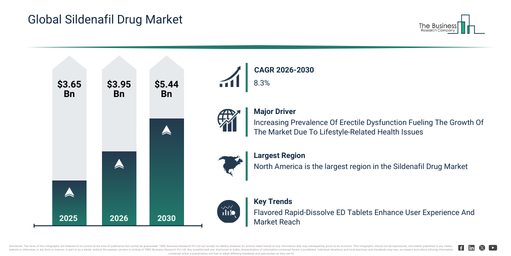
    The sildenafil drug market size has experienced significant expansion in recent years. This market is expected to increase from $3.65 billion in 2025 to $3.95 billion in 2026, showing a compound annual growth rate (CAGR) of 8.3%. The historic growth in this sector can be linked to the high prevalence of erectile dysfunction, an aging male demographic, the strong presence of generic drugs, established physician prescribing trends, and hospital-based pediatric hypertension care.

    The sildenafil drug market is projected to experience robust expansion over the coming years. Its valuation is anticipated to reach $5.44 billion by 2030, demonstrating a compound annual growth rate (CAGR) of 8.3%. This expansion during the forecast period is primarily driven by factors such as the rise of telemedicine, the increasing prevalence of cardiovascular diseases, the proliferation of online pharmacies, heightened awareness concerning men’s health, and regulatory endorsements for over-the-counter (OTC) applications. Key developments expected within this period encompass a growing demand for erectile dysfunction treatments, the widespread availability of generic sildenafil products, an uptick in online and telemedicine-based sales, its escalating utilization in pulmonary hypertension, and the broader acceptance of OTC sexual wellness solutions.

    Get A Free Sample Report With In-Depth Market Insights:

    https://thebusinessresearchcompany.com/sample_request?id=49490873&type=smp&name=Sildenafil%20Drug%20Market%20Report%202026&utm_source=Blogs&utm_medium=Paid&utm_campaign=Oct_PR

    Sildenafil Drug Market Growth Factors: What’s Supporting Expansion?

    The growing incidence of erectile dysfunction is anticipated to drive expansion in the sildenafil drug market moving ahead. This medical condition, erectile dysfunction, is defined by a persistent or recurring difficulty in achieving or sustaining an erection adequate for satisfactory sexual activity. Its increasing occurrence stems from health problems linked to lifestyle, including obesity, diabetes, and cardiovascular disease, which disrupt blood flow and hormone balance. The sildenafil drug addresses erectile dysfunction by boosting blood circulation to the penis, thereby facilitating enhanced sexual function. This medication provides a swift, non-surgical remedy, improving both confidence and overall quality of life for those experiencing erectile dysfunction. For example, in January 2024, data from the National Library of Medicine, a US-based government biomedical information agency, indicated that global epidemiological forecasts project that erectile dysfunction will impact around 322 million men worldwide by 2025. Consequently, the expanding prevalence of erectile dysfunction is fueling the growth of the sildenafil drug market.

    Sildenafil Drug Market Segment Analysis And Revenue Potential

    The sildenafil drug market covered in this report is segmented –

    1) By Drug Type: Branded Drugs, Generic Drugs, Over The Counter Drugs

    2) By Dosage Form: Tablets, Oral Suspension, Topical Gel, Injectable

    3) By Distribution Channel: Hospital Pharmacies, Retail Pharmacies, Online Pharmacies, Other Distribution Channels

    4) By Application: Erectile Dysfunction Treatment, Pulmonary Arterial Hypertension (PAH) Treatment, Other Sexual Dysfunction, Off-Label Uses

    5) By End-User: Men, Women

    Subsegments:

    1) By Branded Drugs: Film-Coated Formulations, Orodispersible Films, Sublingual Strips, Chewable Tablets

    2) By Generic Drugs: Bioequivalent Formulations, Fixed-Dose Combinations, Compounded Sildenafil Variants, Alternate Salt Forms

    3) By Over The Counter Drugs: Herbal-Sildenafil Blends, Sildenafil-Based Supplements, Low-Dose Non-Prescription Formulations, Sexual Wellness Combo Packs

    Sildenafil Drug Market Industry Trends: What’s Reshaping Demand?

    Leading companies operating in the sildenafil drug market are concentrating on developing innovative products with advanced drug delivery systems, such as flavored rapid-dissolve erectile dysfunction (ED) tablets, to enhance user experience and expand market reach within the erectile dysfunction treatment segment. A flavored rapid-dissolve ED tablet is a fast-dissolving formulation crafted for quick absorption, providing a convenient and discreet alternative to traditional erectile dysfunction (ED) tablets, with added flavors for improved taste. For example, in August 2023, Mangoceuticals, Inc., a US-based health and wellness company, unveiled a new sildenafil-based erectile dysfunction (ED) product, branded as Mango. This groundbreaking formulation combines sildenafil with proprietary compounds such as oxytocin and L-arginine in a mango-flavored, rapid-dissolve tablet (RDT) engineered for faster onset and increased convenience. It offers a discreet, user-friendly experience and is distributed through a secure telemedicine platform, allowing for easy access to consultations and prescriptions.

    Sildenafil Drug Market Key Players Shaping Industry Direction

    Major companies operating in the sildenafil drug market are Pfizer Inc., Teva Pharmaceutical Industries Ltd., Macleods Pharmaceuticals Ltd., Sun Pharmaceutical Industries Ltd., Aurobindo Pharma Ltd., Hikma Pharmaceuticals plc, Dr. Reddy’s Laboratories Ltd., Cipla Ltd., Lupin Ltd., Zydus Lifesciences, Hetero Drugs Ltd., Glenmark Pharmaceuticals Ltd., Viatris Inc., Apotex Inc., Sandoz Group AG, Intas Pharmaceuticals Ltd., Wockhardt Ltd., Alembic Pharmaceuticals Ltd., Natco Pharma Ltd., MSN Laboratories Pvt. Ltd., Micro Labs Ltd., Strides Pharma Science Ltd., FDC Limited, Unichem Laboratories Ltd., Emcure Pharmaceuticals Ltd.

    View The Full Sildenafil Drug Market Report:

    https://thebusinessresearchcompany.com/report/sildenafil-drug-global-market-report?utm_source=Blogs&utm_medium=Paid&utm_campaign=Oct_PR

    Sildenafil Drug Market Geographic Distribution And Regional Opportunities

    North America was the largest region in the sildenafil drug market in 2025. Asia-Pacific is expected to be the fastest-growing region in the forecast period. The regions covered in the sildenafil drug market report are Asia-Pacific, South East Asia, Western Europe, Eastern Europe, North America, South America, Middle East, Africa.

    Reach Out To Our Team:

    The Business Research Company: https://www.thebusinessresearchcompany.com/

    Americas: +1 310-496-7795

    Asia: +44 7882 955267 & +91 8897263534

    Europe: +44 7882 955267

    Email us at: marketing@tbrc.info

    Follow us on:

    LinkedIn: https://in.linkedin.com/company/the-business-research-company

    YouTube: https://www.youtube.com/channel/UC24_fI0rV8cR5DxlCpgmyFQ

    Global Market Model: https://www.thebusinessresearchcompany.com/global-market-model

  • Short-Acting Insulin Market Size Forecast From 2026 To 2030: Key Industry Trends

    Short-Acting Insulin Market Size Forecast From 2026 To 2030: Key Industry Trends

    Built to provide research that’s more actionable and strategically valuable, The Business Research Company’s 2026 market reports include market attractiveness analysis, total addressable market sizing, company benchmarking matrices, interactive Excel dashboards, broader supply chain intelligence, emerging startup tracking, and in-depth product insights.

    Short-Acting Insulin Market Value Growth And Long-Term Outlook

    The short-acting insulin market size has demonstrated robust growth in recent years. It is anticipated to increase from $11.54 billion in 2025 to $12.14 billion in 2026, recording a compound annual growth rate (CAGR) of 5.3%. Historically, this expansion has been driven by the elevated prevalence of diabetes, the extensive adoption of insulin therapy, hospital-based management of diabetes, the broadening of insulin access programs, and improved rates of diabetes diagnosis.

    The short-acting insulin market size is projected to experience robust expansion over the coming years. It will grow to $14.87 billion in 2030 at a compound annual growth rate (CAGR) of 5.2%. This anticipated increase during the forecast period is due to factors such as the rising occurrence of type 2 diabetes, growing reliance on insulin, the expansion of home-based diabetes management, advancements in insulin delivery methods, and an escalating need for fast-acting insulin. Key developments expected in the forecast period encompass a growing need for post-meal blood glucose management, increased utilization of rapid-acting insulin analogues, wider acceptance of pre-filled insulin pens, the broadening of intensive insulin therapy protocols, and a heightened emphasis on precise glycemic control.

    Get A Free Sample Report With In-Depth Market Insights:

    https://thebusinessresearchcompany.com/sample_request?id=79113975&type=smp&name=Short-Acting%20Insulin%20Market%20Report%202026&utm_source=Blogs&utm_medium=Paid&utm_campaign=Oct_PR

    Short-Acting Insulin Market Demand Drivers: What’s Powering Industry Growth?

    The growing incidence of type 1 diabetes is projected to propel expansion in the short-acting insulin market moving ahead. Type 1 diabetes is characterized as an autoimmune disorder in which the body’s immune system attacks and eliminates insulin-producing cells, necessitating continuous insulin treatment. The escalation in Type 1 diabetes cases stems from genetic predispositions, environmental factors, and an uptick in autoimmune conditions. Short-acting insulin aids in the management of type 1 diabetes by offering swift regulation of blood sugar and emulating the body’s natural insulin functions. As an illustration, in December 2023, data from Diabetes Australia, an Australian organization dedicated to diabetes awareness, indicated that around 134,000 Australians had Type 1 diabetes in 2022. This number subsequently rose to 135,423 by 2023. Consequently, the rising occurrence of type 1 diabetes is fostering the expansion of the short-acting insulin market.

    Short-Acting Insulin Market Segmentation And Category Overview

    The short-acting insulin market covered in this report is segmented –

    1) By Formulation: Regular Insulin, Rapid-Acting Insulin

    2) By Dosage Form: Vials, Pre-filled Pens, Cartridges

    3) By Route Of Administration: Subcutaneous, Intravenous

    4) By Patient Type: Type 1 Diabetes, Type 2 Diabetes

    5) By Distribution Channel: Pharmacies, Hospital Pharmacies, Online Pharmacies

    Subsegments:

    1) By Regular Insulin: Human Regular Insulin, Animal-Derived Regular Insulin, Other Regular Insulin

    2) By Rapid-Acting Insulin: Insulin Lispro, Insulin Aspart, Insulin Glulisine

    Short-Acting Insulin Market Innovation Trends: What Developments Are Reshaping The Industry?

    Leading companies within the short-acting insulin market are prioritizing groundbreaking products, specifically interchangeable rapid-acting insulin biologic, to enhance patients’ glycemic control and provide versatile substitution possibilities. An interchangeable rapid-acting insulin biologic is defined as a biologically derived insulin formulation designed to quickly reduce blood glucose levels post-meals. It has regulatory approval for direct substitution with an equivalent insulin product, eliminating the need for a new prescription, thereby facilitating adaptable diabetes management and maintaining stable glycemic control. For instance, in July 2025, Biocon Biologics, a biosimilars company headquartered in both India and the U.S., secured FDA clearance for Kirsty (insulin aspart xjhz), marking it as the inaugural and sole interchangeable rapid-acting insulin aspart available in the United States. Kirsty functions as a biosimilar to NovoLog (insulin aspart), supported by clinical and analytical data that confirm its equivalence in terms of safety, efficacy, purity, and potency. This product is supplied as a 100 units/mL formulation, offered both in a single-patient-use prefilled pen for subcutaneous administration and a multi-dose vial suitable for both subcutaneous and intravenous use, with the objective of enhancing glycemic control for adults and children diagnosed with diabetes mellitus.

    Short-Acting Insulin Market Competitive Analysis Of Leading Industry Participants

    Major companies operating in the short-acting insulin market are Sanofi S.A., Eli Lilly and Company, Novo Nordisk A/S, Biocon Limited, Lupin Limited, Wockhardt Ltd., Julphar (Gulf Pharmaceutical Industries), Geropharm LLC, Bioton S.A., Gan & Lee Pharmaceuticals Co. Ltd., Lannett Company Inc., MannKind Corporation, ADOCIA S.A.S., Baxter International Inc., Tonghua Dongbao Pharmaceutical Co. Ltd., United Laboratories International Holdings Ltd., Bharat Biotech International Ltd., Shanghai Fosun Pharmaceutical Group Co. Ltd., Dongbao Enterprise Group Co. Ltd., Aspen Pharmacare Holdings Limited

    View The Full Short-Acting Insulin Market Report:

    https://thebusinessresearchcompany.com/report/short-acting-insulin-global-market-report?utm_source=Blogs&utm_medium=Paid&utm_campaign=Oct_PR

    Short-Acting Insulin Market Largest Region By Revenue And Market Share

    North America was the largest region in the short-acting insulin market in 2025. Asia-Pacific is expected to be the fastest-growing region in the forecast period. The regions covered in the short-acting insulin market report are Asia-Pacific, South East Asia, Western Europe, Eastern Europe, North America, South America, Middle East, Africa.

    Reach Out To Our Team:

    The Business Research Company: https://www.thebusinessresearchcompany.com/

    Americas: +1 310-496-7795

    Asia: +44 7882 955267 & +91 8897263534

    Europe: +44 7882 955267

    Email us at: marketing@tbrc.info

    Follow us on:

    LinkedIn: https://in.linkedin.com/company/the-business-research-company

    YouTube: https://www.youtube.com/channel/UC24_fI0rV8cR5DxlCpgmyFQ

    Global Market Model: https://www.thebusinessresearchcompany.com/global-market-model

  • Short-Acting B2 Agonists Market 2026: Market Size, Growth Drivers And Emerging Opportunities

    Short-Acting B2 Agonists Market 2026: Market Size, Growth Drivers And Emerging Opportunities

    Backed by market attractiveness analysis, total addressable market sizing, company benchmarking matrices, interactive Excel dashboards, wider supply chain intelligence, emerging startup coverage, and detailed product-level insights, The Business Research Company’s 2026 market reports are designed to offer research that is more actionable and strategically valuable than ever.

    Short-Acting B2 Agonists Market Poised To Hit $5.39 Billion By 2030 With A 4.2% CAGR

    The short-acting b2 agonists market size has shown consistent growth over recent years. This market is forecasted to increase from $4.4 billion in 2025 to $4.58 billion in 2026, achieving a compound annual growth rate (CAGR) of 4.1%. Historically, this expansion has been driven by factors including high asthma prevalence, the requirement for emergency respiratory care, the demand for rapid-acting bronchodilators, established hospital treatment protocols, and the accessibility of generic medications.

    The short-acting b2 agonists market size is anticipated to experience steady expansion in the upcoming years. It will grow to $5.39 billion in 2030 at a compound annual growth rate (CAGR) of 4.2%. This growth during the forecast period is driven by factors such as increasing air pollution, the escalating burden of urban respiratory diseases, a rise in home inhaler usage, more pediatric asthma cases, and the expansion of outpatient respiratory care. Key trends for the forecast period include their continued role as first-line rescue medication, the increasing prevalence of asthma and COPD, a preference for inhalation-based delivery, the growth of homecare respiratory treatment, and the expansion of generic SABA products.

    Get A Free Sample Report With In-Depth Market Insights:

    https://thebusinessresearchcompany.com/sample_request?id=98893790&type=smp&name=Short-Acting%20B2%20Agonists%20Market%20Report%202026&utm_source=Blogs&utm_medium=Paid&utm_campaign=Oct_PR

    Short-Acting B2 Agonists Market Growth Drivers: What’s Behind The Acceleration?

    The growing incidence of chronic obstructive pulmonary disease (COPD) is anticipated to drive the expansion of the short-acting B2 agonists market in the future. COPD is a chronic respiratory condition characterized by breathing difficulties and diminished airflow, primarily resulting from extended exposure to detrimental gases or cigarette smoke. The uptick in chronic obstructive pulmonary disease (COPD) cases stems from greater exposure to air pollution, given that persistent inhalation of contaminants such as particulate matter and toxic gases can damage lung tissue and hasten the disease’s progression. Short-acting ß2-agonists (SABAs) provide rapid relief for COPD symptoms such as breathlessness by relaxing muscles in the airways. These serve as emergency drugs during exacerbations but are not intended for ongoing management. For example, in December 2023, a study published in JAMA Network Open, a medical journal from the American Medical Association, indicated that the worldwide prevalence of chronic obstructive pulmonary disease (COPD) could reach almost 600 million cases by 2050, representing a 23% rise in its occurrence. Consequently, the expanding incidence of chronic obstructive pulmonary disease is set to enhance the expansion of the short-acting B2 agonists market.

    Short-Acting B2 Agonists Market Segment Outlook: Which Categories Are Growing Fastest?

    The short-acting b2 agonists market covered in this report is segmented –

    1) By Type: Albuterol, Levalbuterol, Metaproterenol, Other Types

    2) By Indication: Asthama, Chronic Obstructive Pulmonary Disease (COPD), Exercise-Induced Bronchospasm

    3) By Administration Route: Inhalation, Oral, Injection

    4) By End User: Hospitals, Clinics, Home Healthcare Settings

    Subsegments:

    1) By Albuterol: Inhalers, Nebulizers, Tablets, Syrups

    2) By Levalbuterol: Inhalers, Nebulizers, Oral Solutions

    3) By Metaproterenol: Inhalers, Syrups

    4) By Other Types: Terbutaline, Pirbuterol, Salbutamol

    Short-Acting B2 Agonists Market Trends: What’s Defining The Industry’s Next Phase?

    Leading companies within the short-acting B2 agonists market are concentrating on the development of advanced technological products, such as pressurized metered-dose inhalers (pMDI), aimed at effectively managing acute symptoms. Pressurized metered-dose inhalers (pMDIs) are portable devices designed to deliver a precise dose of medicine to the lungs as an aerosol, propelled by a spray, and are commonly utilized for addressing respiratory conditions like asthma and COPD. An illustrative example occurred in January 2023 when AstraZeneca, a pharmaceutical and biotechnology company based in the UK, announced that Airsupra (albuterol/budesonide) had received approval from the US Food and Drug Administration (FDA). Airsupra represents a novel, first-in-class pressurized metered-dose inhaler (pMDI) that combines two active components in a fixed-dose formulation. It incorporates albuterol, a short-acting beta2-agonist (SABA), to facilitate rapid bronchodilation, alongside budesonide, an inhaled corticosteroid (ICS), which acts to diminish inflammation. This distinct combination is sanctioned for use in the US for the on-demand treatment and prevention of bronchoconstriction in adult asthma patients. Furthermore, it contributes to lessening the likelihood of exacerbations, thereby offering a holistic method for asthma care.

    Short-Acting B2 Agonists Market Leading Companies And Competitive Benchmarking

    Major companies operating in the short-acting b2 agonists market are AstraZeneca plc, Novartis AG, GlaxoSmithKline plc, Teva Pharmaceutical Industries Ltd., Apotex Inc., Perrigo Company plc, Aurobindo Pharma Ltd., Chiesi Farmaceutici S.p.A., Cipla Limited, Hikma Pharmaceuticals PLC, Amneal Pharmaceuticals Inc., Lupin Limited, Orion Corporation, Beximco Pharmaceuticals Ltd., Micro Labs Limited, Neuland Laboratories Limited, Vectura Group plc, Nephron Pharmaceuticals Corporation, AdvaCare Pharma USA LLC, Midas Care Pharmaceuticals Pvt Ltd.

    View The Full Short-Acting B2 Agonists Market Report:

    https://thebusinessresearchcompany.com/report/short-acting-b2-agonists-global-market-report?utm_source=Blogs&utm_medium=Paid&utm_campaign=Oct_PR

    Short-Acting B2 Agonists Market Regional Analysis And Leading Geography

    North America was the largest region in the short-acting B2 agonists market in 2025. The regions covered in the short-acting b2 agonists market report are Asia-Pacific, South East Asia, Western Europe, Eastern Europe, North America, South America, Middle East, Africa.

    Reach Out To Our Team:

    The Business Research Company: https://www.thebusinessresearchcompany.com/

    Americas: +1 310-496-7795

    Asia: +44 7882 955267 & +91 8897263534

    Europe: +44 7882 955267

    Email us at: marketing@tbrc.info

    Follow us on:

    LinkedIn: https://in.linkedin.com/company/the-business-research-company

    YouTube: https://www.youtube.com/channel/UC24_fI0rV8cR5DxlCpgmyFQ

    Global Market Model: https://www.thebusinessresearchcompany.com/global-market-model
  • Shingles Vaccine Market Set To Expand From $10.96 Billion In 2026: Growth Outlook Through 2030

    Shingles Vaccine Market Set To Expand From $10.96 Billion In 2026: Growth Outlook Through 2030

    Featuring market attractiveness scoring, total addressable market sizing, company benchmarking matrices, interactive Excel dashboards, deeper supply chain intelligence, emerging startup tracking, and granular product-level insights, The Business Research Company’s 2026 market reports are built to deliver research that is both more actionable and more strategically valuable.

    Shingles Vaccine Market Size And Revenue Outlook Through 2030

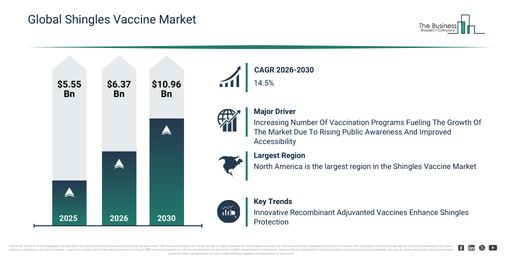
    The shingles vaccine market has experienced swift expansion in recent years. This market is projected to increase from $5.55 billion in 2025 to $6.37 billion in 2026, achieving a compound annual growth rate (CAGR) of 14.8%. The historical growth was driven by factors such as the limited availability of shingles vaccines, a reliance on live attenuated vaccines, an expanding elderly population, the rising incidence of herpes zoster, and growing awareness regarding the benefits of immunization.

    The shingles vaccine market size is set to undergo significant expansion over the next few years, with projections indicating it will reach $10.96 billion in 2030, growing at a compound annual growth rate (CAGR) of 14.5%. This anticipated growth is primarily fueled by the progression of recombinant and subunit vaccine development, the spread of both public and private vaccination drives, the increasing preference for online and retail pharmacy distribution, a rise in government and healthcare programs for elderly immunization, and the integration of digital health monitoring to support vaccination adherence. Noteworthy trends for the forecast period include the growing adoption of recombinant and subunit shingles vaccines, a heightened understanding of shingles prevention among older adults, the expansion of vaccination initiatives through hospital and retail pharmacies, the proliferation of online pharmacies and e-commerce in vaccine distribution, and a strategic emphasis on age-specific immunization for the population aged 50 and over.

    Get A Free Sample Report With In-Depth Market Insights:

    https://thebusinessresearchcompany.com/sample_request?id=20846479&type=smp&name=Shingles%20Vaccine%20Market%20Report%202026&utm_source=Blogs&utm_medium=Paid&utm_campaign=Oct_PR

    Shingles Vaccine Market Growth Factors Behind Sustained Expansion

    The increasing prevalence of vaccination programs is projected to boost the expansion of the shingles vaccine market going forward. Vaccination programs are defined as structured public health initiatives aimed at systematically delivering vaccines to populations to curb the spread of infectious diseases. The rise in these programs is due to growing recognition of preventive healthcare, encouraging more people to get vaccinated to avoid illnesses. These initiatives enhance the uptake of shingles vaccines by elevating public awareness and improving accessibility, making them particularly suitable for older adults and other vulnerable groups. They effectively lower the risk of shingles and associated complications by promoting widespread and timely immunization, thereby contributing to better overall community health. For instance, in July 2025, the World Health Organization, a Switzerland-based intergovernmental body, noted that the coverage for the first dose of the human papillomavirus (HPV) vaccine in girls increased from 27% in 2023 to 31% in 2024. Consequently, the growing number of vaccination programs is a key driver for the growth of the shingles vaccine market.

    Shingles Vaccine Market Segment Landscape: Which Areas Lead Development?

    The shingles vaccine market covered in this report is segmented –

    1) By Vaccine Type: Live Attenuated Vaccine, Recombinant Vaccine, Subunit Vaccine

    2) By Product: Shingrix, Zostavax, Skyzoster

    3) By Age Group: 50-59 Years, 60-69 Years, 70 Years And Above

    4) By Distribution Channel: Hospital Pharmacies, Online Pharmacies, Retail Pharmacies

    5) By End User: Hospitals, Clinics, Pharmacies

    Subsegments:

    1) By Live Attenuated Vaccine: Virus Strain A, Virus Strain B, Virus Strain C

    2) By Recombinant Vaccine: Recombinant Protein Vaccine, Recombinant Vector Vaccine, Recombinant Deoxyribonucleic Acid Vaccine

    3) By Subunit Vaccine: Protein Subunit Vaccine, Conjugate Subunit Vaccine

    Shingles Vaccine Market Industry Trends Fueling Future Revenue Growth

    Leading companies operating within the shingles vaccine market are concentrating on developing innovative vaccine formulations, such as recombinant adjuvanted vaccines, aiming to enhance immune response and provide sustained protection against shingles. These recombinant adjuvanted vaccines utilize laboratory-produced viral proteins combined with substances known as adjuvants to boost the body’s immune system, leading to improved and longer-lasting defense. For instance, in April 2023, GlaxoSmithKline Pharmaceuticals Ltd., an India-based pharmaceutical company, launched Shingrix, a vaccine targeting shingles. Shingrix is a non-live, recombinant adjuvanted subunit vaccine administered intramuscularly in two doses for adults aged 50 and above, specifically designed to prevent shingles (herpes zoster) and its related complication, post-herpetic neuralgia. This highly effective vaccine offers over 90% protection against shingles, establishing strong and sustained immunity for at least 10 years, even in older adults and individuals with compromised immune systems.

    Shingles Vaccine Market Industry Leaders And Competitive Landscape

    Major companies operating in the shingles vaccine market are Merck & Co. Inc., GSK plc, SK bioscience, Pfizer Inc, GeneOne Life Science, Curevo Inc, Novavax Inc

    View The Full Shingles Vaccine Market Report:

    https://thebusinessresearchcompany.com/report/shingles-vaccine-global-market-report?utm_source=Blogs&utm_medium=Paid&utm_campaign=Oct_PR

    Shingles Vaccine Market Geographic Analysis: Where Is Demand Accelerating Fastest?

    North America was the largest region in the shingles vaccine market in 2025. Asia-Pacific is expected to be the fastest-growing region in the forecast period. The regions covered in the shingles vaccine market report are Asia-Pacific, South East Asia, Western Europe, Eastern Europe, North America, South America, Middle East, Africa.

    Reach Out To Our Team:

    The Business Research Company: https://www.thebusinessresearchcompany.com/

    Americas: +1 310-496-7795

    Asia: +44 7882 955267 & +91 8897263534

    Europe: +44 7882 955267

    Email us at: marketing@tbrc.info

    Follow us on:

    LinkedIn: https://in.linkedin.com/company/the-business-research-company

    YouTube: https://www.youtube.com/channel/UC24_fI0rV8cR5DxlCpgmyFQ

    Global Market Model: https://www.thebusinessresearchcompany.com/global-market-model

  • Shigella Diarrhoea Prophylaxis Market Size And Growth In 2026: Key Factors Shaping Future Demand

    Shigella Diarrhoea Prophylaxis Market Size And Growth In 2026: Key Factors Shaping Future Demand

    Built to provide research that’s more actionable and strategically valuable, The Business Research Company’s 2026 market reports include market attractiveness analysis, total addressable market sizing, company benchmarking matrices, interactive Excel dashboards, broader supply chain intelligence, emerging startup tracking, and in-depth product insights.

    Shigella Diarrhoea Prophylaxis Market Growth From $2.29 Billion In 2026 To $3.1 Billion By 2030 At A CAGR Of 7.9%

    The shigella diarrhoea prophylaxis market size has experienced robust growth recently. This market is projected to expand from $2.12 billion in 2025 to $2.29 billion in 2026, demonstrating a compound annual growth rate (CAGR) of 8.2%. Historically, this growth was influenced by factors such as limited vaccine access in developing areas, the frequent occurrence of shigella outbreaks, inadequate knowledge of hygiene practices, underdeveloped water and sanitation infrastructure, and a dependency on conventional antibiotic treatments.

    The shigella diarrhoea prophylaxis market size is anticipated to experience substantial expansion over the upcoming years. It is projected to reach $3.11 billion in 2030, exhibiting a compound annual growth rate (CAGR) of 7.9%. This growth throughout the forecast period can be attributed to several factors, including the advancement of novel oral and injectable vaccines, the broadening of global immunization programs, increasing governmental efforts for public health, the implementation of sophisticated hygiene education initiatives, and the incorporation of digital surveillance and outbreak monitoring systems. Key developments expected during this period encompass a greater uptake of oral and injectable vaccines, an increase in the deployment of antibiotic prophylaxis programs, the expansion of community health campaigns alongside public awareness efforts, a sharpened focus on enhancements in water, sanitation, and waste management, and the proliferation of hygiene education and practices for safe food handling.

    Get A Free Sample Report With In-Depth Market Insights:

    https://thebusinessresearchcompany.com/sample_request?id=34319902&type=smp&name=Shigella%20Diarrhoea%20Prophylaxis%20Market%20Report%202026&utm_source=Blogs&utm_medium=Paid&utm_campaign=Oct_PR

    Shigella Diarrhoea Prophylaxis Market Demand Drivers Opening New Revenue Streams

    The shigella diarrhoea prophylaxis market is expected to expand going forward, driven by an increasing understanding of hygiene and sanitation. These refer to practices and environmental conditions that promote health and reduce disease transmission through cleanliness and appropriate waste management. The improvement in hygiene and sanitation is fueled by a heightened awareness of health risks, with more people recognizing how crucial cleanliness is in preventing the spread of infectious diseases. This awareness supports Shigella diarrhoea prophylaxis by reducing person-to-person transmission, as individuals who understand and apply proper handwashing and waste disposal significantly lower the risk of spreading the bacteria within communities. For instance, in March 2024, the World Health Organization, a Switzerland-based intergovernmental organization, reported that 57% of the global population, or 4.6 billion people, had access to safely managed sanitation services. Among these, 33%, or 2.7 billion people, used private sanitation facilities connected to sewers where wastewater was treated, while 21%, or 1.7 billion people, used toilets or latrines that safely disposed of waste on-site. Therefore, the increasing awareness of hygiene and sanitation will stimulate the growth of the shigella diarrhoea prophylaxis market.

    Shigella Diarrhoea Prophylaxis Market Segments: Where Is Growth Concentrated?

    The shigella diarrhoea prophylaxis market covered in this report is segmented –

    1) By Type: Vaccination, Antibiotic Prophylaxis, Public Health Measures, Hygiene Education

    2) By Route of Administration: Oral, Parenteral, Other Administrations

    3) By End User: Healthcare Facilities, Travel Clinics, Pharmacies, Government Health Programs

    Subsegments:

    1) By Vaccination: Oral Vaccines, Injectable Vaccines, Combination Vaccines

    2) By Antibiotic Prophylaxis: Ciprofloxacin, Azithromycin, Ceftriaxone, Ampicillin, Levofloxacin

    3) By Public Health Measures: Water And Sanitation Improvements, Improved Waste Management, Community Health Campaigns

    4) By Hygiene Education: Handwashing Campaigns, Safe Food Handling And Preparation Practices, Personal Hygiene Education, Public Awareness Programs

    Shigella Diarrhoea Prophylaxis Market Trends Powering Strategic Industry Growth

    Major companies operating in the shigella diarrhoea prophylaxis market are focusing on the development of advanced solutions, such as tetravalent bioconjugate shigellosis vaccines, to enhance the immune response. Tetravalent bioconjugate shigellosis vaccines are sophisticated immunizations designed to provide protection against four major Shigella serotypes by linking bacterial polysaccharides to a carrier protein, thereby boosting the immune response. For instance, in November 2024, Valneva SE, a France-based biotech company, and LimmaTech Biologics AG, a Switzerland-based clinical-stage biotech firm, declared that the first participant had been vaccinated in a Phase 2 infant safety and immunogenicity study for Shigella4V2 (S4V2), which is currently considered the world’s most clinically advanced tetravalent bioconjugate vaccine candidate targeting shigellosis. This development represents a significant milestone in the global effort to create a vaccine against Shigella, a leading cause of severe diarrheal disease in children. S4V2 is scheduled to undergo testing for safety and preliminary efficacy in approximately 120 healthy adults aged 18 to 50, who have no prior exposure to Shigella, at three locations in the United States.

    Shigella Diarrhoea Prophylaxis Market Key Participants And Competitive Landscape

    Major companies operating in the shigella diarrhoea prophylaxis market are Pfizer Inc., Merck & Co. Inc., GlaxoSmithKline plc, Viatris Inc., Chongqing Zhifei Biological Products Co. Ltd., Macleods Pharmaceuticals Limited, Alkem Laboratories Limited, Alembic Pharmaceuticals Limited, Vaxcyte Inc., Valneva SE, Sanaria Inc., Intravacc B.V., LimmaTech Biologics AG, Intralytix Inc., Immuron Limited, Institut Pasteur, Hetero Drugs Limited, Bharat Biotech International Limited, Serum Institute of India Pvt. Ltd., Takeda Pharmaceutical Company Limited, Janssen Pharmaceuticals (Johnson & Johnson), Sanofi Pasteur, Biological E Limited, Sinovac Biotech Ltd., Bharat Immunologicals and Biologicals Corporation Limited (BIBCOL), Emergent BioSolutions Inc., Codagenix Inc., Indian Immunologicals Limited.

    View The Full Shigella Diarrhoea Prophylaxis Market Report:

    https://thebusinessresearchcompany.com/report/shigella-diarrhoea-prophylaxis-global-market-report?utm_source=Blogs&utm_medium=Paid&utm_campaign=Oct_PR

    Shigella Diarrhoea Prophylaxis Market Global Footprint: Which Region Leads The Industry?

    North America was the largest region in the shigella diarrhoea prophylaxis market in 2025. The regions covered in the shigella diarrhoea prophylaxis market report are Asia-Pacific, South East Asia, Western Europe, Eastern Europe, North America, South America, Middle East, Africa.

    Reach Out To Our Team:

    The Business Research Company: https://www.thebusinessresearchcompany.com/

    Americas: +1 310-496-7795

    Asia: +44 7882 955267 & +91 8897263534

    Europe: +44 7882 955267

    Email us at: marketing@tbrc.info

    Follow us on:

    LinkedIn: https://in.linkedin.com/company/the-business-research-company

    YouTube: https://www.youtube.com/channel/UC24_fI0rV8cR5DxlCpgmyFQ

    Global Market Model: https://www.thebusinessresearchcompany.com/global-market-model
  • Sexually Transmitted Disease (STD) Self-Testing Market Forecast 2026–2030: Market Size, Trends And Growth Opportunities

    Sexually Transmitted Disease (STD) Self-Testing Market Forecast 2026–2030: Market Size, Trends And Growth Opportunities

    Backed by market attractiveness analysis, total addressable market sizing, company benchmarking matrices, interactive Excel dashboards, wider supply chain intelligence, emerging startup coverage, and detailed product-level insights, The Business Research Company’s 2026 market reports are designed to offer research that is more actionable and strategically valuable than ever.

    Sexually Transmitted Disease (STD) Self-Testing Market Expansion Outlook: What Revenue Opportunities Are Ahead?

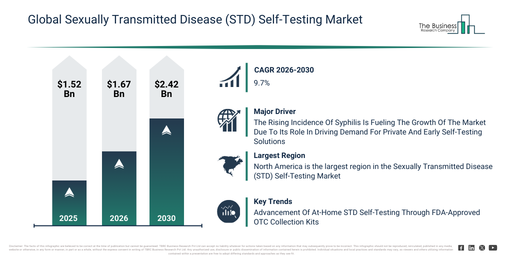
    The sexually transmitted disease (std) self-testing market size has experienced robust growth in recent years. It is projected to increase from $1.52 billion in 2025 to $1.67 billion in 2026, growing at a compound annual growth rate (CAGR) of 9.9%. The market’s expansion in the past can be attributed to several factors, including insufficient awareness regarding STD testing, the social stigma linked to visiting clinics, a reliance on hospital-based testing, a scarcity of convenient testing alternatives, and the rising incidence of sexually transmitted diseases.

    The sexually transmitted disease (std) self-testing market size is projected to experience robust expansion over the coming years. This market is set to reach $2.42 billion in 2030, showing a compound annual growth rate (CAGR) of 9.7%. This projected growth is primarily driven by the increasing adoption of digital health platforms, the integration of multi-sample at-home testing kits, escalating government awareness initiatives, a rise in telehealth consultations, and the ongoing development of rapid and accurate diagnostic technologies. Key trends during this forecast period include a growing demand for at-home std testing kits, heightened awareness of sexual health and the benefits of early diagnosis, an expansion in telehealth and remote consultation services, the broadening of online and retail pharmacy distribution channels, and the integration of multi-sample testing solutions (blood, urine, oral).

    Get A Free Sample Report With In-Depth Market Insights:

    https://thebusinessresearchcompany.com/sample_request?id=56817556&type=smp&name=Sexually%20Transmitted%20Disease%20%28STD%29%20Self-Testing%20Market%20Report%202026&utm_source=Blogs&utm_medium=Paid&utm_campaign=Oct_PR

    Sexually Transmitted Disease (STD) Self-Testing Market Growth Backed By Core Demand Fundamentals

    The sexually transmitted disease (STD) self-testing market is anticipated to expand due to the increasing occurrence of syphilis. Syphilis, a sexually transmitted infection, manifests as body sores and can result in severe health problems if left untreated. Its rise is linked to reduced consistent condom usage, particularly among populations engaging in high-risk sexual behaviors. At-home STD self-testing offers a discreet and convenient method for syphilis screening, facilitating prompt identification. Such early detection ensures timely treatment, thereby lessening complications and hindering its continued transmission. For example, data from the Centers for Disease Control and Prevention, a US-based government agency, indicated around 209,253 syphilis cases in 2023, marking a 1% rise from 207,269 cases in 2022, according to figures released in September 2025. Consequently, the increasing prevalence of syphilis is a key factor propelling the expansion of the sexually transmitted disease (STD) self-testing market.

    Sexually Transmitted Disease (STD) Self-Testing Market Segment Analysis: What Are The Core Market Categories?

    The sexually transmitted disease (std) self-testing market covered in this report is segmented –

    1) By Sample Type: Blood Based Test, Urine Based Test, Oral Based Test

    2) By Distribution Channel: Hospital Pharmacies, Online Pharmacies, Retail Pharmacies

    3) By Application: Chlamydia trachomatis (CT) Or Neisseria gonorrhoeae (NG) Testing, Syphilis Testing, Human Immunodeficiency Virus (HIV) Testing, Other Applications

    Subsegments:

    1) By Blood-Based Test: Fingerstick Blood Sample, Dried Blood Spot (DBS) Sample, Capillary Blood Collection Device

    2) By Urine-Based Test: First-Catch Urine Sample, Midstream Urine Sample, Preservative-Added Urine Collection

    3) By Oral-Based Test: Oral Swab Sample, Oral Fluid Collection Device, Gumline Swab Collection

    Sexually Transmitted Disease (STD) Self-Testing Market Growth Trends Reshaping The Competitive Landscape

    Key entities within the STD self-testing market are prioritizing the development of advanced offerings, such as over-the-counter (OTC) sample collection kits, to encourage early identification and timely management of infections. Over-the-counter sample collection kits function as home diagnostic tools, enabling individuals to gather samples like urine or swabs without needing a prescription. They provide a convenient and private means for early infection detection, facilitating prompt treatment. For instance, in August 2023, iHealth Labs Inc., a US-based digital health company, introduced the CheckMeSafe home collection kit for HIV and syphilis testing. This FDA-approved kit permits individuals aged 18 and older to collect blood samples for HIV (I, II, P24 antigen) and syphilis testing from the convenience and privacy of their homes. Users are able to mail their samples to the laboratory using a prepaid overnight label and receive confidential, reliable results in as little as two days. The kit offers highly accurate results, demonstrating sensitivity rates of up to 99.9% for HIV and 99.5% for syphilis. All samples undergo analysis in a CLIA-certified and CAP-accredited laboratory, which ensures adherence to rigorous federal and state quality benchmarks through consistent inspections.

    Sexually Transmitted Disease (STD) Self-Testing Market Top Companies Driving Competitive Growth

    Major companies operating in the sexually transmitted disease (std) self-testing market are Abbott Laboratories, Viatris Inc., Hologic Inc., OraSure Technologies Inc., LifeCell International, LetsGetChecked Health Inc., Visby Medical Inc., Everlywell Inc., Guangzhou Wondfo Biotech Co. Ltd., NOWDiagnostics Inc., bioLytical Laboratories Inc., Atomo Diagnostics Limited, myLAB Box Inc., BioSure UK Ltd., JAL Medical (S) Pte Ltd., TBD Health Inc., Recombigen Laboratories Private Limited, Alpine Biomedicals Pvt. Ltd., Homed-IQ B.V., Newfoundland Diagnostics Pvt. Ltd.

    View The Full Sexually Transmitted Disease (STD) Self-Testing Market Report:

    https://thebusinessresearchcompany.com/report/sexually-transmitted-disease-std-self-testing-global-market-report?utm_source=Blogs&utm_medium=Paid&utm_campaign=Oct_PR

    Sexually Transmitted Disease (STD) Self-Testing Market Regional Distribution: Which Areas Power Market Growth?

    North America was the largest region in the sexually transmitted disease (STD) self-testing market in 2025. Asia-Pacific is expected to be the fastest-growing region in the forecast period. The regions covered in the sexually transmitted disease (std) self-testing market report are Asia-Pacific, South East Asia, Western Europe, Eastern Europe, North America, South America, Middle East, Africa.

    Reach Out To Our Team:

    The Business Research Company: https://www.thebusinessresearchcompany.com/

    Americas: +1 310-496-7795

    Asia: +44 7882 955267 & +91 8897263534

    Europe: +44 7882 955267

    Email us at: marketing@tbrc.info

    Follow us on:

    LinkedIn: https://in.linkedin.com/company/the-business-research-company

    YouTube: https://www.youtube.com/channel/UC24_fI0rV8cR5DxlCpgmyFQ

    Global Market Model: https://www.thebusinessresearchcompany.com/global-market-model

  • Sexual Health Products Market Size Reaches $145.72 Billion In 2026: What Is Driving Growth?

    Sexual Health Products Market Size Reaches $145.72 Billion In 2026: What Is Driving Growth?

    Featuring market attractiveness scoring, total addressable market sizing, company benchmarking matrices, interactive Excel dashboards, deeper supply chain intelligence, emerging startup tracking, and granular product-level insights, The Business Research Company’s 2026 market reports are built to deliver research that is both more actionable and more strategically valuable.

    Sexual Health Products Market Growth Potential: How Will Market Size Shift Through 2030?

    The sexual health products market has experienced substantial growth in recent years. The market is projected to expand, reaching $145.73 billion in 2026 from $132.77 billion in 2025, with a compound annual growth rate (CAGR) of 9.8%. Factors contributing to its historical growth include the social stigma associated with sexual wellness, scarce specialized sexual health products, reliance on conventional retail channels, inadequate knowledge of contraception options, and a lack of significant government initiatives in the sexual health sector.

    The sexual health products market is projected to experience substantial expansion over the upcoming years, forecast to reach $208.77 billion in 2030 at a compound annual growth rate (CAGR) of 9.4%. This anticipated growth during the forecast period can be attributed to several factors, including a rise in sexual health awareness initiatives, the expansion of e-commerce platforms, advancements in sex toys and lubricants, the increasing embrace of herbal and natural sexual wellness supplements, and the wider availability of telemedicine and confidential delivery options. Key trends anticipated within this period involve a heightened demand for sex toys and intimate wellness devices, the increasing uptake of over-the-counter sexual health supplements, a growing preference for female contraceptives and emergency pills, the broadening of online retail avenues for sexual health items, and greater public awareness and acceptance of sexual wellness and hygiene products.

    Get A Free Sample Report With In-Depth Market Insights:

    https://thebusinessresearchcompany.com/sample_request?id=23385328&type=smp&name=Sexual%20Health%20Products%20Market%20Report%202026&utm_source=Blogs&utm_medium=Paid&utm_campaign=Oct_PR

    Sexual Health Products Market Growth Catalysts And Demand Drivers

    Rising consciousness regarding human immunodeficiency virus (HIV) infections is anticipated to boost the expansion of the sexual health products market in the future. HIV, a virus, progressively weakens and eradicates CD4 cells within the immune system. Initiatives to raise awareness concentrate on informing the public about how HIV is transmitted, ways to prevent it, testing procedures, and the critical role of treatment. These products, encompassing condoms and HIV self-test kits, contribute to averting HIV infections through encouraging safer sexual behaviors and enabling prompt identification. As an illustration, in December 2023, the National HIV/AIDS Strategy (2022-2025) report, released by the White House Office of National AIDS, a US-based Domestic Policy Council, stated that its goal for 2030 is to achieve a 90% reduction in new HIV infections. This objective exceeds the 75% reduction target established for 2025, thereby showing a strong dedication to considerably decreasing the occurrence of HIV. Consequently, heightened understanding of human immunodeficiency virus (HIV) infections is fueling the expansion of the sexual health products market.

    Sexual Health Products Market Segment Breakdown: Which Categories Lead On Revenue?

    The sexual health products market covered in this report is segmented –

    1) By Type: Sex Toys, Condoms, Lubricants, Female Contraceptives (OTC), Sexual Wellness Supplements (OTC), Performance Enhancement Products, Intimate Hygiene Products, Other Types

    2) By Distribution Channel: Supermarkets And Hypermarkets, Pharmacies, Specialty Stores, Online Retailers

    3) By Application: Woman, Man

    Subsegments:

    1) By Sex Toys: Vibrators, Dildos, Couples’ Toys, Anal Toys, BDSM Gear, Masturbation Sleeves

    2) By Condoms: Latex Condoms, Non-Latex Condoms (Polyurethane, Polyisoprene), Ribbed Or Textured Condoms, Flavored Condoms, Extra-Thin Condoms

    3) By Lubricants: Water-Based Lubricants, Silicone-Based Lubricants, Oil-Based Lubricants, Flavored Lubricants, Aloe Vera Or Natural Lubricants

    4) By Female Contraceptives (OTC): Contraceptive Pills, Emergency Contraceptive Pills, Contraceptive Patches, Vaginal Rings

    5) By Sexual Wellness Supplements (OTC): Herbal Supplements, Vitamins and Minerals for Sexual Health, Libido Enhancers, Aphrodisiacs

    6) By Performance Enhancement Products: Male Enhancement Pills, Testosterone Boosters, Libido Enhancers for Men, Supplements For Erectile Function

    7) By Intimate Hygiene Products: Feminine Washes, Intimate Wipes, pH-Balanced Cleansers, Deodorizing Products

    8) By Other Types: Sexual Health Books And Guides, Educational Kits, Safety And Protection Products, Other Wellness Devices

    Sexual Health Products Market Trends Shaping Long-Term Demand

    Major companies operating in the sexual health products market are focusing on developing innovative product offerings, such as graphene thinnest condoms, to enhance the user experience and meet growing consumer demand for high-performance, discreet, and comfortable products. Graphene-thinnest condoms refer to condoms made with graphene, a revolutionary material that allows for ultra-thin yet strong and durable protection, enhancing sensitivity and comfort for users. For instance, in October 2023, ONE Condoms, a US-based premium condoms and lubricants manufacturer, launched the world’s first graphene condom, named ONE Flex, designed to be one of the thinnest condoms available, offering 85% more body heat transfer compared to standard latex condoms. ONE Flex’s unique hybrid construction combines graphene with natural rubber latex, offering enhanced sensation and comfort. Clinical trials show a two-to-one preference for ONE Flex over standard latex condoms, suggesting improved user satisfaction. FDA-cleared for preventing STIs and unintended pregnancies, these condoms are available online and at select Walgreens stores.

    Sexual Health Products Market Leading Players And Competitive Positioning

    Major companies operating in the sexual health products market are Reckitt Benckiser Group plc, Church & Dwight Co. Inc., Mankind Pharma Ltd., LELO Ltd., Doc Johnson Enterprises Inc., Karex Berhad, FUJI LATEX CO. LTD., DKT International Inc., Lovehoney Group Ltd., BioFilm Inc., Lifestyles Healthcare Pte Ltd., Standard Innovation Corp., Intimina AB, HLL Lifecare Limited, pjur group Luxembourg S.A., Bijoux Indiscrets SL, BMS Factory S.L., Condom Depot Inc., FUN FACTORY GmbH, Hot Octopuss Ltd., Pharmactive Biotech Products S.L., WOW Tech Group, Bold Care Pvt. Ltd

    View The Full Sexual Health Products Market Report:

    https://thebusinessresearchcompany.com/report/sexual-health-products-global-market-report?utm_source=Blogs&utm_medium=Paid&utm_campaign=Oct_PR

    Sexual Health Products Market Leading Geography: Which Region Contributes The Most Revenue?

    North America was the largest region in the sexual health products market in 2025. Asia-Pacific is expected to be the fastest-growing region in the forecast period. The regions covered in the sexual health products market report are Asia-Pacific, South East Asia, Western Europe, Eastern Europe, North America, South America, Middle East, Africa.

    Reach Out To Our Team:

    The Business Research Company: https://www.thebusinessresearchcompany.com/

    Americas: +1 310-496-7795

    Asia: +44 7882 955267 & +91 8897263534

    Europe: +44 7882 955267

    Email us at: marketing@tbrc.info

    Follow us on:

    LinkedIn: https://in.linkedin.com/company/the-business-research-company

    YouTube: https://www.youtube.com/channel/UC24_fI0rV8cR5DxlCpgmyFQ

    Global Market Model: https://www.thebusinessresearchcompany.com/global-market-model
  • Serum Market Valued At $2.55 Billion In 2026: Key Trends And Growth Drivers

    Serum Market Valued At $2.55 Billion In 2026: Key Trends And Growth Drivers

    Built to provide research that’s more actionable and strategically valuable, The Business Research Company’s 2026 market reports include market attractiveness analysis, total addressable market sizing, company benchmarking matrices, interactive Excel dashboards, broader supply chain intelligence, emerging startup tracking, and in-depth product insights.

    Serum Market Value Analysis: What Growth Lies Ahead Over The Forecast Period?

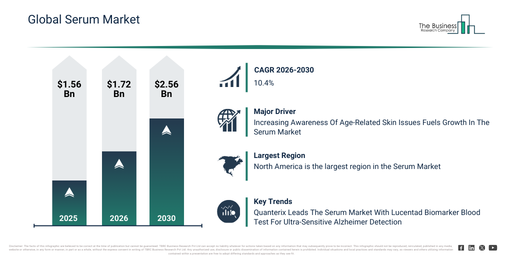
    The serum market has seen rapid expansion in recent years. It is forecast to rise from $1.56 billion in 2025 to $1.72 billion in 2026, exhibiting a compound annual growth rate (CAGR) of 10.5%. In the preceding period, this growth was primarily due to increased academic research funding, the wider adoption of cell culture techniques, an uptick in the use of bovine serum within laboratories, a rise in diagnostic testing volumes, and the initial emergence of biopharmaceutical manufacturing.

    The serum market is projected to experience substantial expansion in the coming years, reaching $2.56 billion by 2030, driven by a compound annual growth rate (CAGR) of 10.4%. This anticipated growth during the forecast period is fueled by several factors, including a surge in the production of vaccines and biologics, the growing uptake of precision medicine, the expansion of research pipelines focused on cell-based therapies, an increased need for high-purity serum grades, and the overall growth in global biopharmaceutical manufacturing capacity. Key developments expected during this period include an escalating demand for serum in cell culture media, a move towards greater standardization of serum quality, an increase in the utilization of heat-inactivated serum products, broader applications of serum in vaccine development, and a stronger preference for serum sources that are traceable and certified.

    Get A Free Sample Report With In-Depth Market Insights:

    https://thebusinessresearchcompany.com/sample_request?id=17685384&type=smp&name=Serum%20Market%20Report%202026&utm_source=Blogs&utm_medium=Paid&utm_campaign=Oct_PR

    Serum Market Opportunity Drivers: What’s Unlocking New Revenue Potential?

    Increased understanding of age-associated dermatological concerns is projected to fuel the expansion of the serum market in the future. These issues encompass skin conditions prevalent in older individuals, including wrinkles, expression lines, and similar concerns. Serums address various age-related skin problems like dullness, hyperpigmentation, dehydration, wrinkles, and decreased firmness, while also unifying skin tone, brightening it, diminishing visible imperfections, and providing nourishment. As an illustration, in 2023, Cancer Australia, a government agency based in Australia, reported that around 8,257 new melanoma of the skin cases were diagnosed, which represented 2.6% of total cancer-related fatalities. Consequently, heightened awareness regarding age-associated skin conditions is propelling the growth of the serum market.

    Serum Market Segmentation: How Does The Market Break Down By Category?

    The serum market covered in this report is segmented –

    1) By Type: Bovine Serum, Fetal bovine serum (FBS), Other Types

    2) By Inactivation Technique: Heat Inactivated, Non-Heat Inactivated

    3) By Application: Biological Products, Research, Cell Culture, Biopharmaceutical Drugs, Vaccine Products, Diagnostic Products, Other Applications

    Subsegments:

    1) By Bovine Serum: Raw Bovine Serum, Processed Bovine Serum, Fetal Bovine Serum (FBS)

    2) By Fetal Bovine Serum (FBS): FBS (Heat-Inactivated), FBS (Non-Heat-Inactivated)

    3) By Other Types: Equine Serum, Porcine Serum, Human Serum

    Serum Market Innovation Trends Shaping Future Development

    Leading companies in the serum market are concentrating on introducing advanced solutions, such as ultrasensitive biomarker detection, to gain a competitive advantage. Ultrasensitive biomarker detection refers to the capability to identify and measure biomarkers at exceptionally low concentrations, enabling earlier disease detection. For example, in July 2023, Quanterix, a US-based company providing digitizing biomarker analysis, launched the LucentAD Biomarker Blood Test. This test measures an isoform of phosphorylated tau protein in plasma, designed to assist physicians in diagnosing Alzheimer’s disease in patients. The test uses a serum sample, and its results are interpreted alongside other diagnostic tools. This innovation enhances the accuracy and efficiency of Alzheimer’s disease diagnosis, ultimately providing benefits to both patients and healthcare providers.

    Serum Market Competitive Overview And Top Companies

    Major companies operating in the serum market are Merck Group, Thermo Fisher Scientific Inc., Danaher Corp, Corning Incorporated, Sartorius AG, Bio-Techne Corporation, Takara Bio Inc., Atlas Biologicals Inc., Proliant Health & Biologicals, Seracare Life Sciences Inc., Lampire Biological Labs Inc., Altogen Labs, Innovative Research Inc., Lee Biosolutions Inc., Bovogen Biologicals Pty. Ltd., Caisson Labs Inc., Gemini BioProducts Holding Inc., Valley Biomedical Products & Services Inc., Equitech-Bio Inc., Rocky Mountain Biologicals, PAN-Biotech GmbH, BIOWEST SAS, Moregate Biotech, Tissue Culture Biologicals, Kerafast Inc., Access Biologicals LLC, Animal Technologies Inc., Cell Applications Inc., Cell Sciences Inc.

    View The Full Serum Market Report:

    https://thebusinessresearchcompany.com/report/serum-global-market-report?utm_source=Blogs&utm_medium=Paid&utm_campaign=Oct_PR

    Serum Market Regional Outlook: Where Is Opportunity Concentrated?

    North America was the largest region in the serum market in 2025. The regions covered in the serum market report are Asia-Pacific, South East Asia, Western Europe, Eastern Europe, North America, South America, Middle East, Africa.

    Reach Out To Our Team:

    The Business Research Company: https://www.thebusinessresearchcompany.com/

    Americas: +1 310-496-7795

    Asia: +44 7882 955267 & +91 8897263534

    Europe: +44 7882 955267

    Email us at: marketing@tbrc.info

    Follow us on:

    LinkedIn: https://in.linkedin.com/company/the-business-research-company

    YouTube: https://www.youtube.com/channel/UC24_fI0rV8cR5DxlCpgmyFQ

    Global Market Model: https://www.thebusinessresearchcompany.com/global-market-model

  • Sensorineural In Hearing Loss Disease Treatment Market Size In 2026: Growth Outlook And Forecast Through 2030

    Sensorineural In Hearing Loss Disease Treatment Market Size In 2026: Growth Outlook And Forecast Through 2030

    Backed by market attractiveness analysis, total addressable market sizing, company benchmarking matrices, interactive Excel dashboards, wider supply chain intelligence, emerging startup coverage, and detailed product-level insights, The Business Research Company’s 2026 market reports are designed to offer research that is more actionable and strategically valuable than ever.

    Sensorineural In Hearing Loss Disease Treatment Market Size Forecast: How Big Could The Market Get By 2030?

    The sensorineural in hearing loss disease treatment market size has demonstrated significant expansion in recent years. This market is expected to grow from $7.38 billion in 2025 to $8.03 billion in 2026, registering a compound annual growth rate (CAGR) of 8.7%. The increase observed in the historic period can be linked to factors such as the limited availability of advanced hearing devices, a rising elderly population, insufficient awareness of sensorineural hearing loss treatments, a reliance on conventional corticosteroid therapy, and the growing number of otology clinics.

    The sensorineural in hearing loss disease treatment market size is anticipated to expand significantly over the next few years. It is projected to reach $11.09 billion in 2030, demonstrating a compound annual growth rate (CAGR) of 8.4%. This expansion during the forecast period is primarily driven by the development of pediatric and adult cochlear implants, alongside technological advancements in hearing aids. Further contributing factors include increasing research into stem cell therapies, the broadening scope of mobile and app-based tinnitus management, and the integration of digital and AI-enabled hearing healthcare solutions. Dominant trends within this forecast period comprise the rising adoption of hearing aids and cochlear implants, the escalating prevalence of age-related and noise-induced hearing loss, enhanced research in stem cell therapy for sensorineural hearing loss, progress in tinnitus management tools and mobile applications, and the expansion of ambulatory and otology clinic services.

    Get A Free Sample Report With In-Depth Market Insights:

    https://thebusinessresearchcompany.com/sample_request?id=76817118&type=smp&name=Sensorineural%20In%20Hearing%20Loss%20Disease%20Treatment%20Market%20Report%202026&utm_source=Blogs&utm_medium=Paid&utm_campaign=Oct_PR

    Sensorineural In Hearing Loss Disease Treatment Market Growth Momentum: What Factors Are Shaping Demand?

    An increase in noise pollution is projected to advance the growth of the sensorineural hearing loss disease treatment market in the coming years. Noise pollution signifies the presence of excessive or bothersome sound in the surroundings, adversely affecting human health, wildlife, and overall quality of life. This escalation in noise pollution is attributed to accelerated urbanization, alongside a surge in transportation and industrial endeavors. As urban centers expand, the proliferation of vehicles, construction projects, and manufacturing facilities leads to elevated noise levels. Treatment for sensorineural hearing loss disease aims to alleviate the detrimental impacts of noise pollution by reinstating auditory function and diminishing the long-term repercussions of environmental noise on hearing health. For instance, in 2023, the Environmental Protection Department, a US-based federal agency tasked with environmental protection, reported an increase in noise pollution complaints from 5,590 in 2022 to 5,858 in 2023, signifying a 5% rise specifically in noise pollution-related grievances. Consequently, the escalating noise pollution is stimulating the growth of the sensorineural hearing loss disease treatment market.

    Sensorineural In Hearing Loss Disease Treatment Market Segment Trends And Revenue Contributors

    The sensorineural in hearing loss disease treatment market covered in this report is segmented –

    1) By Treatment Type: Hearing Aids, Cochlear Implants, Corticosteroids, Stem Cell Therapy, Tinnitus Management Tools

    2) By Application: Age-Related Hearing Loss (Presbycusis), Noise-Induced Hearing Loss, Sudden Sensorineural Hearing Loss (SSNHL), Congenital Sensorineural Hearing Loss, Ototoxicity-Induced Hearing Loss

    3) By End Use: Hospitals, Otology Clinics, Ambulatory Clinics

    Subsegments:

    1) By Hearing Aids: Behind-The-Ear (BTE), In-The-Ear (ITE), In-The-Canal (ITC), Completely-In-Canal (CIC), Receiver-In-Canal (RIC), Invisible-In-Canal (IIC)

    2) By Cochlear Implants: Unilateral Cochlear Implants, Bilateral Cochlear Implants, Adult Cochlear Implants, Pediatric Cochlear Implants

    3) By Corticosteroids: Oral Corticosteroids, Intratympanic Corticosteroids, Intravenous Corticosteroids

    4) By Stem Cell Therapy: Embryonic Stem Cells, Adult Stem Cells, Induced Pluripotent Stem Cells (iPSCs)

    5) By Tinnitus Management Tools: Sound Therapy Devices, Cognitive Behavioral Therapy (CBT) Programs, Tinnitus Maskers, Biofeedback Tools, Mobile App-Based Tinnitus Management Systems

    Sensorineural In Hearing Loss Disease Treatment Market Trends Redefining Industry Growth

    Leading companies within the sensorineural hearing loss disease treatment market are focusing their efforts on conducting clinical trials to develop innovative products, such as oral anti-inflammatory capsules, aiming to enhance hearing restoration and reduce inner ear inflammation. These oral anti-inflammatory capsules are orally administered medications that work to diminish inflammation throughout the body, including within the inner ear. They aid in treating sensorineural hearing loss by targeting and reducing inflammation-related damage to auditory cells, which could potentially improve hearing function and prevent further hearing deterioration. For instance, in December 2024, Sound Pharmaceuticals, Inc., a US-based pharmaceutical company, announced the successful completion of its Phase 3 clinical trial for SPI-1005, an oral anti-inflammatory capsule containing ebselen, which demonstrated significant improvements in hearing restoration and speech discrimination in patients with Meniere’s disease, a form of sensorineural hearing loss. The trial, known as STOPMD-3, enrolled 221 patients in a randomized, double-blind, placebo-controlled study and achieved its co-primary efficacy endpoints, showing statistically significant improvement in low-frequency hearing thresholds and word recognition in noise.

    Sensorineural In Hearing Loss Disease Treatment Market Competitive Landscape: Which Companies Lead The Industry?

    Major companies operating in the sensorineural in hearing loss disease treatment market are Novartis AG, Astellas Pharma Inc., Contineum Therapeutics, Akouos Inc., Frequency Therapeutics, Sensorion, Myrtelle Inc., Heyu (Suzhou) Pharmaceutical Technology, Otonomy Inc., Acousia Therapeutics, Audion Therapeutics BV, Sound Pharmaceuticals Inc., Cilcare, Autifony Therapeutics Ltd., NeurAegis Inc., Prime Medicine Inc., ReNeuron Group Plc, AudioCure Pharma, Cochlear Limited, MED-EL Elektromedizinische Geräte GmbH, Advanced Bionics AG, Sonova Holding AG, GN Hearing A/S, Starkey Laboratories Inc., Oticon Medical, Envoy Medical Corporation, Eargo Inc.

    View The Full Sensorineural In Hearing Loss Disease Treatment Market Report:

    https://thebusinessresearchcompany.com/report/sensorineural-in-hearing-loss-disease-treatment-global-market-report?utm_source=Blogs&utm_medium=Paid&utm_campaign=Oct_PR

    Sensorineural In Hearing Loss Disease Treatment Market Geographic Landscape: Which Region Leads Industry Growth?

    North America was the largest region in the sensorineural in hearing loss disease treatment market in 2025. Asia-Pacific is expected to be the fastest-growing region in the forecast period. The regions covered in the sensorineural in hearing loss disease treatment market report are Asia-Pacific, South East Asia, Western Europe, Eastern Europe, North America, South America, Middle East, Africa.

    Reach Out To Our Team:

    The Business Research Company: https://www.thebusinessresearchcompany.com/

    Americas: +1 310-496-7795

    Asia: +44 7882 955267 & +91 8897263534

    Europe: +44 7882 955267

    Email us at: marketing@tbrc.info

    Follow us on:

    LinkedIn: https://in.linkedin.com/company/the-business-research-company

    YouTube: https://www.youtube.com/channel/UC24_fI0rV8cR5DxlCpgmyFQ

    Global Market Model: https://www.thebusinessresearchcompany.com/global-market-model

  • Sensitive Tooth Serum Market Trends Supporting 9.8% CAGR Growth Through 2030

    Sensitive Tooth Serum Market Trends Supporting 9.8% CAGR Growth Through 2030

    Featuring market attractiveness scoring, total addressable market sizing, company benchmarking matrices, interactive Excel dashboards, deeper supply chain intelligence, emerging startup tracking, and granular product-level insights, The Business Research Company’s 2026 market reports are built to deliver research that is both more actionable and more strategically valuable.

    Sensitive Tooth Serum Market Revenue Outlook: What CAGR Lies Ahead Through 2030?

    The sensitive tooth serum market has witnessed substantial growth in recent years. This market is projected to expand from $1.24 billion in 2025 to $1.37 billion in 2026, exhibiting a compound annual growth rate (CAGR) of 10.1%. Historically, this expansion has been propelled by factors such as the increasing occurrence of tooth sensitivity, enhanced awareness regarding oral hygiene, the broadening availability of over-the-counter dental care products, the presence of fluoride-based formulations, and a rise in consumer spending on oral health.

    The sensitive tooth serum market is projected to experience substantial expansion over the upcoming years. It is anticipated to reach $1.99 billion by 2030, exhibiting a compound annual growth rate (CAGR) of 9.8%. This expansion during the forecast period is propelled by factors such as a rise in demand for non-invasive dental care, an increasing inclination towards natural oral care items, the growth of online oral care retail, a heightened emphasis on enamel remineralization, and a greater awareness of preventive dental health. Key developments expected during this period involve a surge in demand for enamel-strengthening products, a growing embrace of natural and herbal components, a rising preference for home-based sensitivity treatments, the proliferation of multi-action oral care serums, and an intensified focus on proactive dental care.

    Get A Free Sample Report With In-Depth Market Insights:

    https://thebusinessresearchcompany.com/sample_request?id=45672491&type=smp&name=Sensitive%20Tooth%20Serum%20Market%20Report%202026&utm_source=Blogs&utm_medium=Paid&utm_campaign=Oct_PR

    Sensitive Tooth Serum Market Expansion Drivers: What’s Shaping Future Growth?

    The anticipated expansion of the sensitive tooth serum market is linked to the growing expenditure on dental care. This spending encompasses all funds allocated by individuals or households for oral health goods and services, including various treatments, preventative measures, and hygiene items. The primary factor behind the surge in dental-care spending is heightened consciousness regarding oral health and proactive care. Greater investment in preventive oral health products through increased dental-care spending boosts the acceptance of sensitive tooth serums. This trend fuels the need for sophisticated products like enamel-repair and sensitivity-relief serums, leading to improved dental care results. For example, in December 2024, the American Dental Association (ADA), a US-based professional organization, reported that U.S. dental expenditures rose by $4 billion, marking a 2.5% year-over-year growth from 2022 to 2023. Consequently, the uptick in dental-care spending is a key contributor to the expansion of the sensitive tooth serum market.

    Sensitive Tooth Serum Market Segment Analysis Spotlighting Growth Areas

    The sensitive tooth serum market covered in this report is segmented –

    1) By Product Type: Whitening Serum, Repair Serum, Herbal Or Natural Serum, Fluoride-Based Serum, Other Product Types

    2) By Ingredient Type: Potassium Nitrate, Stannous Fluoride, Herbal Extracts, Other Ingredient Types

    3) By Distribution Channel: Online Retail, Pharmacies Or Drug Stores, Supermarkets Or Hypermarkets, Other Distribution Channels

    4) By Application: Home Use, Dental Clinics, Other Applications

    Subsegments:

    1) By Whitening Serum: Enamel-Safe Whitening Serum, Nano-Hydroxyapatite Whitening Serum, Herbal Whitening Serum

    2) By Repair Serum: Enamel Repair Serum, Dentin Tubule Sealing Serum, Calcium And Phosphate Remineralizing Serum

    3) By Herbal Or Natural Serum: Aloe Vera-Based Serum, Chamomile Extract Serum, Green Tea Extract Serum, Ayurvedic Or Traditional Herbal Serum

    4) By Fluoride-Based Serum: Sodium Fluoride Serum, Stannous Fluoride Serum, Amine Fluoride Serum

    5) By Other Product Types: Multi-Action Serum, Enzyme-Based Serum, Probiotic Oral Serum

    Sensitive Tooth Serum Market Strategic Trends: What Defines The Next Growth Phase?

    Leading companies in the sensitive tooth serum market are concentrating on developing innovative products, such as hydroxyapatite-based serum, to effectively restore enamel, alleviate tooth sensitivity, and improve overall oral health. A hydroxyapatite-based serum is a dental care formulation containing hydroxyapatite, a biomimetic mineral that assists in remineralizing tooth enamel, reducing sensitivity, and protecting teeth from decay. For example, in July 2024, Enlighten Smiles, a UK-based company specializing in professional teeth whitening products, introduced Enlighten Serum, a dental sensitivity serum positioned as an enamel repair toothpaste. This product is specifically designed to target dentin hypersensitivity, restore enamel integrity, and support improved whitening outcomes. It is formulated with hydroxyapatite, a biomimetic compound that makes up 97% of natural tooth enamel, and it encourages the repair of enamel wear, erosion, and micro-damage while offering targeted sensitivity relief and sustained enamel strengthening.

    Sensitive Tooth Serum Market Leading Companies: Who Holds The Strongest Market Presence?

    Major companies operating in the sensitive tooth serum market are Colgate-Palmolive Company, Sunstar Suisse S.A., Win Medicare Ltd., BioMin Technologies Ltd., SDI Limited, S4S Dental Design Co. Ltd., GC Corporation, Smile Brilliant LLC, Sensodyne, White Wash Laboratories Ltd., Crest, PerioSciences Inc., Enlighten Global Pty Ltd, Lumineux Global Inc., Moon Oral Care LLC, Auraglow LLC, CosmoLab Ltd., MySweetSmile LLC, Chipper Consumer Private Limited, Purexa Global Private Limited, Bio-Atoms Co. Ltd., Molar Values Private Limited

    View The Full Sensitive Tooth Serum Market Report:

    https://thebusinessresearchcompany.com/report/sensitive-tooth-serum-global-market-report?utm_source=Blogs&utm_medium=Paid&utm_campaign=Oct_PR

    Sensitive Tooth Serum Market Largest Region: Which Geography Holds The Biggest Share?

    North America was the largest region in the sensitive tooth serum market in 2025. Asia-Pacific is expected to be the fastest-growing region in the forecast period. The regions covered in the sensitive tooth serum market report are Asia-Pacific, South East Asia, Western Europe, Eastern Europe, North America, South America, Middle East, Africa.

    Reach Out To Our Team:

    The Business Research Company: https://www.thebusinessresearchcompany.com/

    Americas: +1 310-496-7795

    Asia: +44 7882 955267 & +91 8897263534

    Europe: +44 7882 955267

    Email us at: marketing@tbrc.info

    Follow us on:

    LinkedIn: https://in.linkedin.com/company/the-business-research-company

    YouTube: https://www.youtube.com/channel/UC24_fI0rV8cR5DxlCpgmyFQ

    Global Market Model: https://www.thebusinessresearchcompany.com/global-market-model