Blog

  • What Key Growth Drivers Are Shaping The Candesartan Cilexetil Drug Market Forecast Toward $2.04 Billion?

    What Key Growth Drivers Are Shaping The Candesartan Cilexetil Drug Market Forecast Toward $2.04 Billion?

    Claim 30% Off Global Market Reports With Code ONLINE30 – Insights on Tariff Effects, Global Trade, and Industry Disruptors

    What Are The Market Size Estimates For The Candesartan Cilexetil Drug Market?

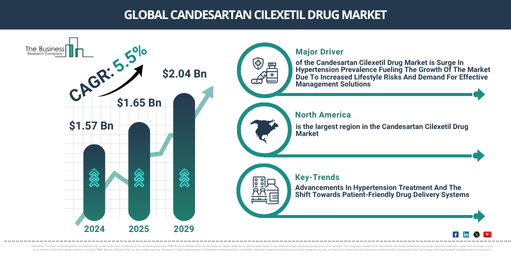
    The market for the drug candesartan cilexetil has seen consistent growth over the recent years. It’s projected to increase in size from $1.57 billion in 2024 to $1.65 billion in 2025, with a compound annual growth rate (CAGR) of 5.0%. Factors like the rising numbers of hypertension cases, increase in the elderly population, growing rates of chronic diseases, an uplifted emphasis on preventative care and increased healthcare spending contributed to the growth in the historic period.

    Projected to see vigorous expansion in the coming years, the candesartan cilexetil drug market is expected to hit a value of “$2.04 billion by 2029, growing at a compound annual growth rate (CAGR) of 5.5%. The impetus for this growth during the forecasted period includes factors such as an increase in accessibility of generic drugs, rising occurrences of diseases associated with lifestyle, government-led initiatives to make hypertension care more affordable, heightened occurrence of cardiovascular diseases, and increased adoption of combination therapy treatments. The forecast period will also witness influential trends such as a gravitation towards generic candesartan formulations, the introduction of fixed-dose combination drugs, the integration of digital health solutions for hypertension monitoring, amplified emphasis on patient adherence, and escalating research into innovative delivery methods.

    Get A Free Sample Of The Report:

    https://www.thebusinessresearchcompany.com/sample.aspx?id=24183&type=smp

    What Growth-Enabling Forces Are Impacting The Candesartan Cilexetil Drug Market?

    The growing incidence of hypertension is predicted to boost the expansion of the candesartan cilexetil drug market. Hypertension, also recognized as elevated blood pressure, is a health condition in which the force of blood against artery walls is persistently too excessive, usually registered as a reading of 130/80 mmHg or more. The high prevalence of hypertension is attributed to increasingly unhealthy lifestyle habits, such as bad diet, inadequate exercise, and stress. The candesartan cilexetil drug aids in hypertension control by impeding the effects of angiotensin II, a hormone responsible for narrowing blood vessels. This relaxation of blood vessels curtails blood pressure. For example, the Centers for Disease Control and Prevention, a government institution in the US, reported in October 2024 that the prevalence of hypertension had significantly increased by 124.48% transitioning from the 18–39 age group to the 40–59 age group, and by 36.38% in the shift from the 40–59 age group to individuals aged 60 and over, between August 2021 and August 2023. Consequently, the heavy burden of rising hypertension is driving demand for the candesartan cilexetil drug market.

    Which Segments Define The Structure Of The Candesartan Cilexetil Drug Market?

    The candesartan cilexetil drug market covered in this report is segmented –

    1) By Product Type: Tablets, Capsules, Other Product Types

    2) By Indication: Hypertension, Heart Failure, Diabetic Nephropathy, Left Ventricular Hypertrophy

    3) By Dosage Strength: 4 MG, 8 MG, 16 MG, 32 MG

    4) By Distribution Channel: Hospital Pharmacies, Retail Pharmacies, Online Pharmacies, Healthcare Facilities

    5) By Application: Adult, Children And Adolescent

    Subsegments:

    1) By Tablets: Immediate-Release Tablets, Extended-Release Tablets, Dispersible Tablets, Chewable Tablets

    2) By Capsules: Hard Gelatin Capsules, Soft Gelatin Capsules, Modified-Release Capsules

    3) By Other Product Types: Oral Suspensions, Injectable Formulations, Combination Drug Formulations

    What Strategic Shifts And Innovations Are Influencing The Candesartan Cilexetil Drug Market?

    Leading corporations in the candesartan cilexetil drug industry are concentrating their efforts on creating novel formulations such as hypertension treatments, combined therapies with different antihypertensive medicines, and prolonged-release versions to improve patient compliance and optimize therapeutic results. Hypertension treatment encompasses the use of medicines, lifestyle adjustments, and additional tactics to control and decrease high blood pressure, thus mitigating the risk of severe complications like heart diseases, stroke, and kidney damage. For instance, Scienture Inc., an American pharmaceutical corporation, was granted approval from the US Food & Drug Administration (USFDA) for its New Drug Application (NDA) for SCN-102, marketed as Arbli, a losartan potassium oral suspension (10 mg/mL), in March 2025. This angiotensin II receptor blocker (ARB) formulation serves as a substitute for patients having trouble ingesting tablets, especially in the pediatric and elderly demographics. This unveiling underscores the escalating interest in different dosage options in the antihypertensive industry and highlights the trend towards customized, patient-centered drug delivery systems.

    Who Are The Most Influential Companies In The Candesartan Cilexetil Drug Market?

    Major companies operating in the candesartan cilexetil drug market are Merck & Co. Inc., Bayer AG, Novartis AG, AstraZeneca plc, GSK plc, Takeda Pharmaceutical Company Limited, Teva Pharmaceutical Industries Ltd., Boehringer Ingelheim International GmbH, Sandoz Group AG, Viatris Inc., Sun Pharmaceutical Industries Limited, Aurobindo Pharma Limited, Dr. Reddy’s Laboratories Limited, Cipla Limited, Zydus Lifesciences Ltd., Hetero Drugs Limited, Torrent Pharmaceuticals Limited, Macleods Pharmaceuticals Ltd., Alembic Pharmaceuticals Limited, Oubari Pharmaceutical Co.

    Access The Complete Report Here:

    https://www.thebusinessresearchcompany.com/report/candesartan-cilexetil-drug-global-market-report

    Which Region Is Forecasted To Lead The Candesartan Cilexetil Drug Market In The Coming Years?

    North America was the largest region in the candesartan cilexetil drug market in 2024. Asia-Pacific is expected to be the fastest-growing region in the forecast period. The regions covered in the candesartan cilexetil drug market report are Asia-Pacific, Western Europe, Eastern Europe, North America, South America, Middle East, Africa.

    Customize Your Report Here:

    https://www.thebusinessresearchcompany.com/customise?id=24183&type=smp

    About The Business Research Company:

    With over 15000+ reports from 27 industries covering 60+ geographies, The Business Research Company has built a reputation for offering comprehensive, data-rich research and insights. Armed with 1,500,000 datasets, the optimistic contribution of in-depth secondary research, and unique insights from industry leaders, you can get the information you need to stay ahead in the game.

    Get in touch with us:

    The Business Research Company: https://www.thebusinessresearchcompany.com/

    Americas +1 310-496-7795

    Asia +44 7882 955267 & +91 8897263534

    Europe +44 7882 955267

    Email us at info@tbrc.info

    Follow us on:

    LinkedIn: https://in.linkedin.com/company/the-business-research-company

    YouTube: https://www.youtube.com/channel/UC24_fI0rV8cR5DxlCpgmyFQ

    Global Market Model: https://www.thebusinessresearchcompany.com/global-market-model
  • How Will The Calcitonin Gene-Related Peptide (CGRP) Inhibitors Market Expand At A CAGR Of 9.9% Through 2029?

    How Will The Calcitonin Gene-Related Peptide (CGRP) Inhibitors Market Expand At A CAGR Of 9.9% Through 2029?

    Claim 30% Off Global Market Reports With Code ONLINE30 – Insights on Tariff Effects, Global Trade, and Industry Disruptors

    How Is The Calcitonin Gene-Related Peptide (CGRP) Inhibitors Market Expected To Grow In Terms Of Size?

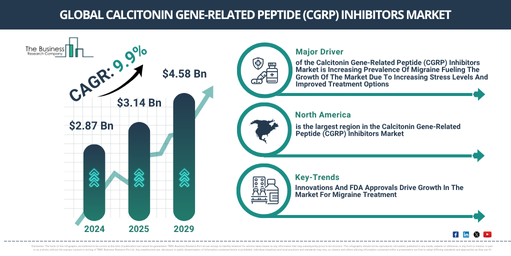
    The market size for inhibitors of the calcitonin gene-related peptide (CGRP) has seen robust growth in the past few years. Projected growth is from $2.87 billion in 2024 to $3.14 billion in 2025, with a Compound Annual Growth Rate (CAGR) of 9.6%. The expansion during the historic period is due to factors such as greater investments in research and development, approval of more new drugs, a rise in demand for non-opioid analgesics, and an increased emphasis on personalized medicine.

    Over the coming years, the market size for inhibitors of the calcitonin gene-related peptide (cgrp) is predicted to experience robust expansion, reaching a value of “$4.58 billion in 2029” with a compound annual growth rate (CAGR) of 9.9%. This anticipated growth for the forecasted period is ascribable to several factors such as the increasing incidence of migraines, expanded use of preventative migraine treatments, improved patient knowledge, and heightened healthcare spending. Key future trends include improvements in drug formulation technology, the incorporation of digital health resources, advancements in precision medicine, and tech upgrades in biosimilars.

    Get A Free Sample Of The Report:

    https://www.thebusinessresearchcompany.com/sample.aspx?id=24182&type=smp

    Which Factors Are Steering Growth In The Calcitonin Gene-Related Peptide (CGRP) Inhibitors Market?

    The growth of the calcitonin gene-related peptide (CGRP) inhibitors market is anticipated to be driven by the rising incidence of migraines. Migraines, which are severe headaches often causing pulsating pain on one side of the head, come with symptoms like nausea, vomiting, and pronounced sensitivity to light and sound. The rising occurrence of these headaches can be attributed to increasing stress levels, which trigger neural pathways. CGRP inhibitors play a crucial role in managing migraines by providing a focused preventative approach and compatibility with both immediate and long-term treatment plans. They lessen the frequency and intensity of these headaches by successfully blocking CGRP receptors, which in turn enhances patient comfort and everyday functionality. For example, a report by the National Library of Medicine, a health information institution based in the US, stated in January 2023 that the global frequency of migraines ranges between 14% and 15%, accounting for 4.9% of the global disease burden. Consequently, the rising incidence of migraines is propelling the growth of the CGRP inhibitors market.

    What Are The Primary Segmentation Parameters In The Calcitonin Gene-Related Peptide (CGRP) Inhibitors Market?

    The calcitonin gene-related peptide (cgrp) inhibitors market covered in this report is segmented –

    1) By Type Of Inhibitor: Monoclonal Antibodies, Small Molecules, Peptides

    2) By Mechanism Of Action: Anti-Calcitonin Gene-Related Peptide (CGRP) Ligand, Calcitonin Gene-Related Peptide (CGRP) Receptor Antagonist

    3) By Route of Administration: Oral, Nasal, Intravenous

    4) By Treatment: Preventive Migraine Treatment, Acute Migraine Treatment

    5) By End User: Hospitals, Specialty Clinics, Mail Order Pharmacies, Retail Pharmacies

    Subsegments:

    1) By Monoclonal Antibodies: Erenumab (Aimovig), Eptinezumab (Vyepti), Fremanezumab (Ajovy), Galcanezumab (Emgality)

    2) By Small Molecules: Ubrogepant, Rimegepant, Atogepant, Zavegepant

    3) By Peptides: Calcitonin Gene-Related Peptide (CGRP) Antagonist Peptides, Modified Calcitonin Gene-Related Peptide (CGRP) Analogs, Intranasal Peptide Formulations, Peptide-Based Delivery Systems

    Which Emerging Trends Are Reshaping The Calcitonin Gene-Related Peptide (CGRP) Inhibitors Market Landscape?

    Leading organizations in the CGRP inhibitors market are concentrating on creating advanced products to obtain relevant approvals, like CGRP receptor antagonists to increase the effectiveness of migraine treatments, broaden therapeutic applications, and provide more user-friendly methods of administration like oral and intranasal formulations. CGRP receptor antagonists are medications designed to inhibit the CGRP receptor and prevent the signal transmission of migraine-related pain. In April 2023, for instance, AbbVie Inc., a biotech company from the United States, earned approval from the U.S. Food and Drug Administration (FDA) for QULIPTA (atogepant), a treatment for chronic migraines in adults. QULIPTA is an orally administered CGRP receptor antagonist that functions by inhibiting CGRP receptors involved in triggering migraines and thus aids in preventing migraines from occurring.

    Who Are The Dominant Players In The Calcitonin Gene-Related Peptide (CGRP) Inhibitors Market Today?

    Major companies operating in the calcitonin gene-related peptide (CGRP) inhibitors market are Pfizer Inc., F. Hoffmann-La Roche AG, Merck & Co. Inc., AbbVie Inc., Bristol Myers Squibb Company, AstraZeneca plc, Novartis AG, Eli Lilly and Company, Amgen Inc., Otsuka Holdings Co. Ltd., Teva Pharmaceutical Industries Ltd., H. Lundbeck A/S, Kissei Pharmaceutical Co. Ltd., Shanghai Junshi Biosciences Co. Ltd., Shin Nippon Biomedical Laboratories Ltd., Sosei Group Corporation, Nuvie Bio Inc., Vaxxinity Inc., Acherx LLC, AfaSci Inc.

    Access The Complete Report Here:

    https://www.thebusinessresearchcompany.com/report/calcitonin-gene-related-peptide-cgrp-inhibitors-global-market-report

    What Are The Emerging Regional Trends Driving The Calcitonin Gene-Related Peptide (CGRP) Inhibitors Market?

    North America was the largest region in the calcitonin gene-related peptide (CGRP) inhibitors market in 2024. Asia-Pacific is expected to be the fastest-growing region in the forecast period. The regions covered in the calcitonin gene-related peptide (CGRP) inhibitors market report are Asia-Pacific, Western Europe, Eastern Europe, North America, South America, Middle East, Africa.

    Customize Your Report Here:

    https://www.thebusinessresearchcompany.com/customise?id=24182&type=smp

    About The Business Research Company:

    With over 15000+ reports from 27 industries covering 60+ geographies, The Business Research Company has built a reputation for offering comprehensive, data-rich research and insights. Armed with 1,500,000 datasets, the optimistic contribution of in-depth secondary research, and unique insights from industry leaders, you can get the information you need to stay ahead in the game.

    Get in touch with us:

    The Business Research Company: https://www.thebusinessresearchcompany.com/

    Americas +1 310-496-7795

    Asia +44 7882 955267 & +91 8897263534

    Europe +44 7882 955267

    Email us at info@tbrc.info

    Follow us on:

    LinkedIn: https://in.linkedin.com/company/the-business-research-company

    YouTube: https://www.youtube.com/channel/UC24_fI0rV8cR5DxlCpgmyFQ

    Global Market Model: https://www.thebusinessresearchcompany.com/global-market-model
  • What Is The Forecast Valuation Of The Budesonide Inhaler Market Projected To Reach $9.47 Billion By 2029?

    What Is The Forecast Valuation Of The Budesonide Inhaler Market Projected To Reach $9.47 Billion By 2029?

    Claim 30% Off Global Market Reports With Code ONLINE30 – Insights on Tariff Effects, Global Trade, and Industry Disruptors

    What Is The Projected Valuation Of The Budesonide Inhaler Market In The Coming Years?

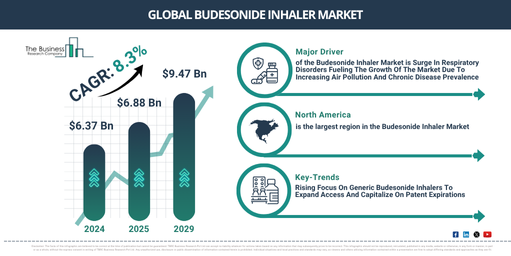
    Over the past few years, the budesonide inhaler market has seen significant growth. The market size is expected to increase from $6.37 billion in 2024 to $6.88 billion in 2025, representing a compound annual growth rate (CAGR) of 8.0%. The expansion during the historic period can be associated with an increased understanding of inhalation therapies, growing acceptance of corticosteroid treatments, rising levels of air pollution leading to respiratory problems, a surge in demand for minimally invasive drug delivery, and a heightened emphasis on home healthcare solutions.

    In the coming years, a robust growth is forecasted for the budesonide inhaler market, which is projected to reach $9.47 billion in 2029 with a compound annual growth rate (CAGR) of 8.3%. This growth during the forecast period is likely to be driven by factors such as increased investments in the development of respiratory drugs, growing demand for custom-tailored medicine in respiratory care, the surge in utilization of telemedicine and e-prescriptions, increased awareness regarding early detection and treatment, and growing preference for combined inhaler therapies. The main trends anticipated during this period feature the advancement in formulation methods for improved drug delivery, innovation in intelligent inhalers featuring digital tracking, incorporation of Artificial Intelligence (AI) and Internet of Things (IoT) in managing respiratory health, progress in patient-oriented drug creation, and the usage of mobile applications for monitoring adherence.

    Get A Free Sample Of The Report:

    https://www.thebusinessresearchcompany.com/sample.aspx?id=24181&type=smp

    What Core Drivers Are Expected To Influence The Budesonide Inhaler Market?

    The growing occurrence of respiratory ailments is set to incite the expansion of the budesonide inhaler market. Respiratory disorders involve medical complications that impact the lung functioning and air pathways, leading to trouble breathing and typically manifesting symptoms like coughing, wheezing, and breathlessness. Asthma, chronic obstructive pulmonary disease (COPD), pneumonia, bronchitis, and lung infections fall under this category. The upsurge in these disorders can be attributed largely to escalating air pollution, which heightens exposure to detrimental pollutants causing airway irritation and deterioration of lung function. Through direct anti-inflammatory medication to the lungs, budesonide inhalers effectively manage respiratory disorders, providing long-lasting relief. These inhalers’ convenience in terms of usage and portability reduces potential flare-ups and enhances respiratory wellness. For example, the Australian Bureau of Statistics reported in December 2023 that the occurrence of COPD experienced an ascension from 2.4% in 2021 to 2.5% in 2022. Thus, the escalating occurrence of respiratory disorders is fuelling the budesonide inhaler market’s growth.

    How Is The Budesonide Inhaler Market Segmented Across Key Categories?

    The budesonide inhaler market covered in this report is segmented –

    1) By Product Type: Metered-Dose Inhalers (MDIs), Dry Powder Inhalers (DPIs), Nebulizers, Combination Inhalers

    2) By Dosage Form: Aerosols, Dry Powder, Suspension, Spray

    3) By Indication: Asthma, Chronic Obstructive Pulmonary Disease, Allergic Rhinitis

    4) By End User: Hospitals, Outpatient Clinics, Homecare Settings, Pharmacies

    Subsegments:

    1) Metered-Dose Inhalers: Pressurized Metered-Dose Inhalers, Breath-Actuated Metered-Dose Inhalers, Spacer-Compatible Metered-Dose Inhalers, Hydrofluoroalkane Propellant-Based Metered-Dose Inhalers

    2) Dry Powder Inhalers: Single-Dose Dry Powder Inhalers, Multi-Dose Dry Powder Inhalers, Capsule-Based Dry Powder Inhalers, Reservoir-Based Dry Powder Inhalers

    3) Nebulizers: Jet Nebulizers, Ultrasonic Nebulizers, Mesh Nebulizers, Homecare Nebulizers, Hospital-Use Nebulizers

    4) Combination Inhalers: Budesonide And Formoterol Inhalers, Budesonide And Salmeterol Inhalers, Budesonide, Glycopyrrolate, And Formoterol Inhalers, Budesonide And Vilanterol Inhalers

    What Key Trends Are Driving Growth In The Budesonide Inhaler Market?

    In the budesonide inhaler market, leading corporations are concentrating on creating innovative offerings, for example, generic products for better affordability and broader treatment accessibility for respiratory illnesses. Generic inhalation items denote non-branded versions of inhaled drugs that provide identical active ingredients, dosage, and therapeutic benefits as their branded competitors, typically at a reduced price. As an example, in July 2023, Viatris Inc., a pharmaceutical firm based in the US, together with Kindeva Drug Delivery L.P., a pharmaceutical manufacturing organization based in the US, introduced Breyna (budesonide and formoterol fumarate dihydrate) inhalation aerosol, the first generic version of Symbicort approved by the Food and Drug Administration (FDA), a federal agency in the US. This combination of drug-device is engineered for the treatment of asthma and chronic obstructive pulmonary disease (COPD), by lessening inflammation in the airways by using budesonide and relaxing the muscles around the airways using formoterol, thus offering a more cost-effective alternative for patients.

    Which Companies Are Contributing Significantly To The Budesonide Inhaler Market Growth?

    Major companies operating in the budesonide inhaler market are AstraZeneca plc, GSK plc, Takeda Pharmaceutical Company Limited, Viatris Inc., Teva Pharmaceutical Industries Ltd., Boehringer Ingelheim International GmbH, Sandoz International GmbH, Bausch Health Companies Inc., Sun Pharmaceutical Industries Ltd., Synmosa Biopharma Corporation, Chiesi Farmaceutici S.p.A., Aurobindo Pharma Limited, Cipla Limited, Hikma Pharmaceuticals PLC, Lupin Limited, Orion Corporation, Nephron Pharmaceuticals Corporation, Curia Global Inc., Kindeva Drug Delivery L.P., Minakem SAS, Axplora Group GmbH, Cosmo Pharmaceuticals N.V., Manus Aktteva Biopharma LLP, Tovec Pharma Pvt. Ltd., Nutra Respiro Healthcare Pvt. Ltd.

    Access The Complete Report Here:

    https://www.thebusinessresearchcompany.com/report/budesonide-inhaler-global-market-report

    Which Region Dominates The Budesonide Inhaler Market Today?

    North America was the largest region in the budesonide inhaler market in 2024. Asia-Pacific is expected to be the fastest-growing region in the forecast period. The regions covered in the budesonide inhaler market report are Asia-Pacific, Western Europe, Eastern Europe, North America, South America, Middle East, Africa.

    Customize Your Report Here:

    https://www.thebusinessresearchcompany.com/customise?id=24181&type=smp

    About The Business Research Company:

    With over 15000+ reports from 27 industries covering 60+ geographies, The Business Research Company has built a reputation for offering comprehensive, data-rich research and insights. Armed with 1,500,000 datasets, the optimistic contribution of in-depth secondary research, and unique insights from industry leaders, you can get the information you need to stay ahead in the game.

    Get in touch with us:

    The Business Research Company: https://www.thebusinessresearchcompany.com/

    Americas +1 310-496-7795

    Asia +44 7882 955267 & +91 8897263534

    Europe +44 7882 955267

    Email us at info@tbrc.info

    Follow us on:

    LinkedIn: https://in.linkedin.com/company/the-business-research-company

    YouTube: https://www.youtube.com/channel/UC24_fI0rV8cR5DxlCpgmyFQ

    Global Market Model: https://www.thebusinessresearchcompany.com/global-market-model
  • Blood Based Biomarkers Market – Opportunities, Share, Growth and Competitive Analysis and Forecast 2029

    Blood Based Biomarkers Market – Opportunities, Share, Growth and Competitive Analysis and Forecast 2029

    Claim 30% Off Global Market Reports With Code ONLINE30 – Insights on Tariff Effects, Global Trade, and Industry Disruptors

    How Much Will The Blood Based Biomarkers Market Be Worth By 2029?

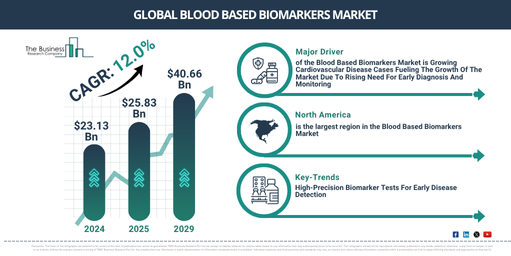
    The market size for blood-based biomarkers has seen a substantial increase in the recent past. It is projected to expand from $23.13 billion in 2024 to $25.83 billion in 2025, marking a compound annual growth rate (CAGR) of 11.6%. The remarkable growth over the historical period can be credited to a global surge in cancer cases, the expanding adoption of personalized medicine, a boost in biomarker research funding, the broadening of clinical trials involving biomarkers, and an increase in the approval of companion diagnostics.

    The market size of blood-based biomarkers is anticipated to experience swift expansion in the coming years, reaching “$40.66 billion in 2029 with a Compound Annual Growth Rate (CAGR) of 12.0%. This surge projected in the forecast period is linked to the growth of AI and machine learning in biomarker analysis, a heightened demand for early disease detection, advancement in telemedicine and remote diagnostics, increasing cases of chronic diseases, and an upsurge in consumer health consciousness. Noteworthy trends forecasted for this period include discoveries in AI-guided biomarkers, advancements in liquid biopsy, integration of multi-omics, development of point-of-care (POC) testing devices, and innovations in next-generation sequencing (NGS).

    Get A Free Sample Of The Report:

    https://www.thebusinessresearchcompany.com/sample.aspx?id=24176&type=smp

    Which Industry Forces Are Driving The Blood Based Biomarkers Market Forward?

    The increase in cardiovascular diseases is predicted to drive the expansion of the blood-based biomarkers market. Cardiovascular diseases, which encompass issues pertaining to the heart and blood vessels such as heart failure, coronary artery disease, and stroke, are primarily attributed to the increase in risk factors like poor dietary habits and escalating obesity rates. The utility of blood-based biomarkers lies in their ability to diagnose and track cardiovascular diseases, offering insight into the progression of the disease, risk evaluation, and treatment response through substances detectable in the blood. For example, the National Center for Biotechnology Information, a US-based government body, reported a health research initiative in September 2024 that predicts a 90% surge in cardiovascular disease incidence from 2025 to 2050. It also projected cardiovascular fatalities to touch 35.6 million by 2050. Consequently, the escalation in cardiovascular disease instances is fueling the expansion of the blood-based biomarkers market.

    How Is The Global Blood Based Biomarkers Market Broken Down By Segment?

    The blood based biomarkers market covered in this report is segmented –

    1) By Type: Genetic Biomarkers, Protein Biomarkers, Metabolic Biomarkers, Cell-Based Biomarkers, Epigenetic Biomarkers

    2) By Technology: Next-Generation Sequencing, Polymerase Chain Reaction, Immunoassays, Mass Spectrometry, Other Technologies

    3) By Application: Cancer, Cardiovascular Diseases, Neurological Diseases, Immunological Diseases, Other Applications

    4) By End Users: Hospitals And Clinics, Diagnostic Laboratories, Research And Academic Institutes, Other End Users

    Subsegments:

    1) By Genetic Biomarkers: Deoxyribonucleic Acid (DNA) Mutations, Ribonucleic Acid (RNA) Expression Profiles, Single Nucleotide Polymorphisms (SNPs), Copy Number Variations (CNVs), Gene Fusions

    2) By Protein Biomarkers: Enzymes, Hormones, Cytokines, Tumor Markers, Acute Phase Proteins

    3) By Metabolic Biomarkers: Lipid Profiles, Amino Acid Levels, Glucose And Lactate Levels, Organic Acids, Metabolite Panels

    4) By Cell-Based Biomarkers: Circulating Tumor Cells (CTCs), Immune Cell Profiling, Stem Cells, Platelets, Endothelial Cells

    5) By Epigenetic Biomarkers: Deoxyribonucleic Acid (DNA) Methylation Patterns, Histone Modifications, Non-Coding Ribonucleic Acid (RNA), Chromatin Accessibility, Epigenetic Enzyme Activity

    Which Trends Are Likely To Redefine Growth Paths In The Blood Based Biomarkers Market?

    In an effort to improve Alzheimer’s disease diagnosis, major corporations in the blood-based biomarkers sector are prioritizing advancements in technology, particularly in the development of highly accurate blood biomarker tests. This type of diagnostic tool leverages specific biomarkers found in the blood to detect diseases or monitor health conditions, thus ensuring remarkable precision and dependability. For example, Quanterix, a U.S. life sciences firm, unveiled a highly accurate blood biomarker test – LucentAD p-Tau 217 – in October 2023, designed to assist physicians in diagnosing Alzheimer’s disease in cognitively impaired adults. The test quantifies phosphorylated tau protein at threonine 217 (p-Tau 217), a biomarker closely tied to Alzheimer’s disease pathology, notably amyloid accumulation in the brain. With an efficacy of over 90%, the LucentAD p-Tau 217 test meets strict diagnostic standards and is devised to complement other diagnostic instruments rather than replace them.

    Who Are The Primary Market Leaders In The Blood Based Biomarkers Market?

    Major companies operating in the blood based biomarkers market are Siemens Healthineers AG, Agilent Technologies Inc, Eisai Co Ltd, Sysmex Corporation, Exact Sciences Corporation, Guardant Health, Quanterix Corporation, Illumina Inc, QIAGEN NV, GENFIT, Foundation Medicine Inc, Adaptive Biotechnologies Corporation, GRAIL LLC, Biodesix Inc, Cleveland Diagnostics Inc, Creative Diagnostics, Epigenomics AG, C2N Diagnostics, Diadem srl, Proteomedix AG

    Access The Complete Report Here:

    https://www.thebusinessresearchcompany.com/report/blood-based-biomarkers-global-market-report

    Which Regional Markets Are Emerging As Key Hubs For The Blood Based Biomarkers Market?

    North America was the largest region in the blood-based biomarkers market in 2024. Asia-Pacific is expected to be the fastest-growing region in the forecast period. The regions covered in the blood based biomarkers market report are Asia-Pacific, Western Europe, Eastern Europe, North America, South America, Middle East, Africa.

    Customize Your Report Here:

    https://www.thebusinessresearchcompany.com/customise?id=24176&type=smp

    About The Business Research Company:

    With over 15000+ reports from 27 industries covering 60+ geographies, The Business Research Company has built a reputation for offering comprehensive, data-rich research and insights. Armed with 1,500,000 datasets, the optimistic contribution of in-depth secondary research, and unique insights from industry leaders, you can get the information you need to stay ahead in the game.

    Get in touch with us:

    The Business Research Company: https://www.thebusinessresearchcompany.com/

    Americas +1 310-496-7795

    Asia +44 7882 955267 & +91 8897263534

    Europe +44 7882 955267

    Email us at info@tbrc.info

    Follow us on:

    LinkedIn: https://in.linkedin.com/company/the-business-research-company

    YouTube: https://www.youtube.com/channel/UC24_fI0rV8cR5DxlCpgmyFQ

    Global Market Model: https://www.thebusinessresearchcompany.com/global-market-model
  • Bismuth Subsalicylate Market Trends 2025–2029: Regional Outlook and Sizing Analysis

    Bismuth Subsalicylate Market Trends 2025–2029: Regional Outlook and Sizing Analysis

    Claim 30% Off Global Market Reports With Code ONLINE30 – Insights on Tariff Effects, Global Trade, and Industry Disruptors

    What Is The Present And Forecasted Size Of The Bismuth Subsalicylate Market?

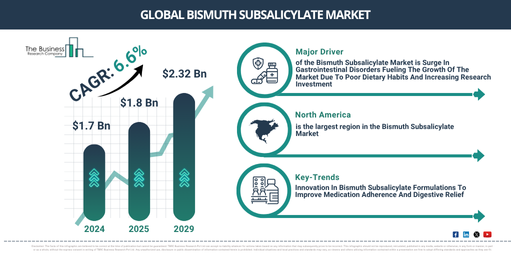
    The market for bismuth subsalicylate has witnessed robust growth in recent years. This market stands to increase from a value of $1.7 billion in 2024 to about $1.8 billion in 2025, demonstrating a compound annual growth rate (CAGR) of 6.3%. The previous growth rate owes much to factors like an aging population, enhanced disposable income, a rise in consumer propensity for self-medication, an upsurge in gastrointestinal problems related to travel, and the growing intake of processed foods, which lead to digestive complications.

    The market for bismuth subsalicylate is set to experience robust growth in the coming years, reaching an estimated $2.32 billion by 2029, with a compound annual growth rate (CAGR) of 6.6%. This increase in the prediction period can be accredited to the rising occurrences of gastrointestinal problems, a surge in demand for over-the-counter (OTC) drugs, increased consciousness about digestive health, pharmaceutical sector expansion, and growing healthcare infrastructure in newer markets. Key trends for the forecast period encompass the popularity of antacid and anti-nausea drugs, the presence of bismuth subsalicylate in liquid and tablet formats, advancements in drug formulation to ensure better patient compliance, strategic partnerships among pharmaceutical companies, and the creation of brand formulations based on bismuth subsalicylate.

    Get A Free Sample Of The Report:

    https://www.thebusinessresearchcompany.com/sample.aspx?id=24173&type=smp

    What Are The Primary Factors Supporting The Bismuth Subsalicylate Market Expansion?

    The increasing frequency of gastrointestinal disorders is projected to stimulate the expansion of the bismuth subsalicylate market in the upcoming years. These disorders impact the digestive tract, including the stomach, intestines, and other related organs, causing symptoms such as pain, bloating, and altered bowel movements. The escalation of these disorders is largely attributed to unhealthy eating habits, with an overconsumption of processed foods and inadequate fiber disrupting the balance in gut microbiota and negatively affecting digestion. Bismuth subsalicylate is employed in the treatment of these disorders as it helps alleviate diarrhea by reducing gut inflammation and suppressing the growth of specific bacteria responsible for digestive disorders. For example, a study from ScienceDirect, an American bibliographic database, stated in May 2025 that about 23.5 million gastrointestinal endoscopies were conducted in 2022, marking a 6% rise from the year before. Consequently, the increasing emergence of gastrointestinal disorders will likely catalyze the growth of the bismuth subsalicylate market.

    Which Segmentation Factors Are Critical In The Bismuth Subsalicylate Market Analysis?

    The bismuth subsalicylate market covered in this report is segmented –

    1) By Product: Bismuth Subsalicylate Tablets, Bismuth Subsalicylate Suspension, Bismuth Subsalicylate Chewable Tablets

    2) By Distribution Channel: Online Pharmacies, Retail Pharmacies, Supermarkets Or Hypermarkets, Health And Wellness Stores

    3) By Application: Gastrointestinal Disorders, Diarrhea, Nausea, Heartburn, Indigestion

    4) By End-User: Adult Consumers, Pediatric Consumers, Healthcare Professionals, Caretakers And Guardians

    Subsegments:

    1) By Bismuth Subsalicylate Tablets: Prescription Tablets, Over-The-Counter (OTC) Tablets, Coated Tablets, Uncoated Tablets

    2) By Bismuth Subsalicylate Suspension: Flavored Suspension, Unflavored Suspension, Alcohol-Free Suspension, Sugar-Free Suspension

    3) By Bismuth Subsalicylate Chewable Tablets: Adult Chewable Tablets, Pediatric Chewable Tablets, Mint-Flavored Chewable Tablets, Fruit-Flavored Chewable Tablets

    What Are The Dominant Trends Currently Seen In The Bismuth Subsalicylate Market?

    Top firms in the bismuth subsalicylate market are emphasizing the development of sophisticated products like chewable tablets to facilitate improved compliance with medicinal or supplement schedules. Chewable tablets signify solid medicines or supplements designed to be masticated prior to swallowing, making them more digestible and leading to faster uptake. For example, in May 2025, an American pharmaceutical firm named Wonderbelly introduced a Dye-Free Alternative to Pepto-Bismol (Bismuth Subsalicylate). These chewable tablets for multi-symptom relief can help manage upset stomach, diarrhea, indigestion, and nausea. They preserve the identical active composition as Pepto-Bismol (bismuth subsalicylate) but are composed without the use of dyes or talc.

    Which Organizations Are At The Forefront Of The Bismuth Subsalicylate Market?

    Major companies operating in the bismuth subsalicylate market are Procter & Gamble, GlaxoSmithKline Plc, Perrigo Company Plc, Siegfried AG, Laboratorios Imperiales S.A. de C.V., Shandong Xinhua Pharmaceutical Co. Ltd., Alpha Chemika, JQC (Huayin) Pharmaceutical Co. Ltd., Chr. Olesen Group, Vital Materials Co. Ltd., Shanpar Industries Pvt. Ltd., OCB Pharmaceutical, Muby Chemicals, A. B. Enterprises, Samuh Laxmi, Lumax Pharmaceutical Labs Pvt. Ltd., GB Nitrochem Pvt. Ltd., Indian Platinum Private Limited, Organs Bio Lab Private Limited, Maan Medex Private Limited

    Access The Complete Report Here:

    https://www.thebusinessresearchcompany.com/report/bismuth-subsalicylate-global-market-report

    Which Region Is Leading Innovation In The Bismuth Subsalicylate Market?

    North America was the largest region in the bismuth subsalicylate market in 2024. Asia-Pacific is expected to be the fastest-growing region in the forecast period. The regions covered in the bismuth subsalicylate market report are Asia-Pacific, Western Europe, Eastern Europe, North America, South America, Middle East, Africa.

    Customize Your Report Here:

    https://www.thebusinessresearchcompany.com/customise?id=24173&type=smp

    About The Business Research Company:

    With over 15000+ reports from 27 industries covering 60+ geographies, The Business Research Company has built a reputation for offering comprehensive, data-rich research and insights. Armed with 1,500,000 datasets, the optimistic contribution of in-depth secondary research, and unique insights from industry leaders, you can get the information you need to stay ahead in the game.

    Get in touch with us:

    The Business Research Company: https://www.thebusinessresearchcompany.com/

    Americas +1 310-496-7795

    Asia +44 7882 955267 & +91 8897263534

    Europe +44 7882 955267

    Email us at info@tbrc.info

    Follow us on:

    LinkedIn: https://in.linkedin.com/company/the-business-research-company

    YouTube: https://www.youtube.com/channel/UC24_fI0rV8cR5DxlCpgmyFQ

    Global Market Model: https://www.thebusinessresearchcompany.com/global-market-model
  • Bipolar Disorder Drugs And Treatment Market 2025–2029: Unveiling Growth Developments with the Latest Updates

    Bipolar Disorder Drugs And Treatment Market 2025–2029: Unveiling Growth Developments with the Latest Updates

    Claim 30% Off Global Market Reports With Code ONLINE30 – Insights on Tariff Effects, Global Trade, and Industry Disruptors

    How Big Is The Bipolar Disorder Drugs And Treatment Market Today And What Is Its Future Size?

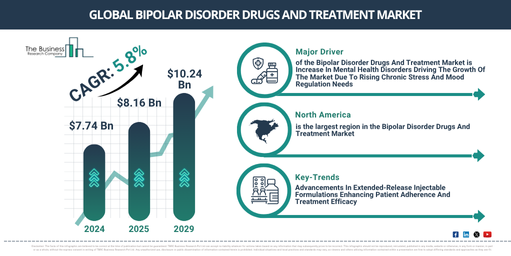
    Over the past few years, there has been a significant increase in the market size of drugs and treatment for bipolar disorder. It is projected to rise from $7.74 billion in 2024 to an impressive $8.16 billion in 2025, recording a compound annual growth rate (CAGR) of 5.4%. This surge during the historic duration can be traced back to escalated healthcare spending, a rise in research and funding for mental health, an increase in healthcare specialists focusing on mental health, better early diagnosis of bipolar disorder patients, and a heightened demand for outpatient psychiatric treatment.

    The market for bipolar disorder medications and therapies is predicted to demonstrate robust growth in the upcoming years, reaching a value of $10.24 billion in 2029 with a compound annual growth rate (CAGR) of 5.8%. This projected increase during the forecast period is largely due to factors such as the rising global incidence of bipolar disorder, heightened consciousness about mental health disorders, the increasing acceptance of mental health care, the broadening of insurance provisions for mental health treatments, and the implementation of government initiatives aimed at enhancing mental health services. Key trends expected to shape the forecast period include progress in the development of medications for bipolar disorder, advancements in diagnostic techniques and tools, the launch of innovative and novel drug formulations, ongoing research and clinical trials for new drugs, and the availability of generic medications for bipolar disorder.

    Get A Free Sample Of The Report:

    https://www.thebusinessresearchcompany.com/sample.aspx?id=24171&type=smp

    Which Growth Drivers Are Shaping The Bipolar Disorder Drugs And Treatment Market Outlook?

    The growing prevalence of mental health disorders is expected to propel the expansion of the bipolar disorder drugs and treatment market in upcoming years. These disorders, which impact an individual’s thought processes, emotions, behavior, or state of mind, can disrupt daily life and overall well-being. The rise in mental health disorders stems from the escalating chronic stress engendered by contemporary lifestyles, where persistent stressors from work, financial matters, and societal expectations can diminish emotional well-being and result in enduring psychological problems. Drugs and treatments for bipolar disorder are effective in managing mental health disorders as they serve to balance mood swings, thereby enhancing emotional control and mitigating the regularity and intensity of disruptive episodes linked with these conditions. For example, in September 2024, the National Institute of Mental Health (NIMH), a federal agency in the US, reported that any mental illness (AMI) impacted more than 59.3 million American adults in 2022, representing 23.1% of the adult population. The report also highlighted that women were more susceptible than men to AMI, with a prevalence of 26.4% vs 19.7%. Consequently, the escalating prevalence of mental health disorders will stimulate the growth of the bipolar disorder drugs and treatment market.

    What Are The Key Segment Trends Observed In The Bipolar Disorder Drugs And Treatment Market?

    The bipolar disorder drugs and treatment market covered in this report is segmented –

    1) By Types: Mood Stabilizers, Anticonvulsants, Antipsychotic Drugs, Antidepressant Drugs, Anti-Anxiety Drugs

    2) By Route Of Administration: Oral, Parenteral, Other Routes Of Administration

    3) By Bipolar Disorder: Bipolar I Disorder, Bipolar II Disorder, Cyclothymic Disorder

    4) By Distribution Channel: Hospital Pharmacies, Retail Pharmacies, Online Pharmacies

    Subsegments:

    1) By Mood Stabilizers: Lithium Carbonate, Lamotrigine, Valproate

    2) By Anticonvulsants: Carbamazepine, Oxcarbazepine, Topiramate

    3) By Antipsychotic Drugs: Olanzapine, Risperidone, Quetiapine, Aripiprazole

    4) By Antidepressant Drugs: Selective Serotonin Reuptake Inhibitors (SSRIs), Serotonin-Norepinephrine Reuptake Inhibitors (SNRIs), Tricyclic Antidepressants (TCAs)

    5) By Anti-Anxiety Drugs: Benzodiazepines, Buspirone

    Which Disruptive Trends Are Driving Change Across The Bipolar Disorder Drugs And Treatment Market?

    Key players in the market for bipolar disorder drugs and treatments are striving to innovate advanced solutions like extended-release injectable formulations which offer uniform and prolonged therapeutic benefits. Extended-release injectable formulations deliver medication into the bloodstream gradually, eliminating the necessity for daily dosage and ensuring constant therapeutic results. For example, in January 2023, Luye Pharma, a pharmaceutical company based in China, received approval from the U.S. Food and Drug Administration (FDA) for Rykindo (risperidone), a long-lasting injectable suspension designed for the treatment of adult schizophrenia and to be used alone or combined with lithium or valproate to treat adult bipolar I disorder. The drug employs a distinctive microsphere technology platform formulated by Luye Pharma, and is given through an intramuscular injection every fortnight for lasting effects. The medication’s main ingredient, risperidone, is released over an extended period due to the microsphere technology, guaranteeing sustained release.

    Who Are The Major Stakeholders Operating In The Bipolar Disorder Drugs And Treatment Market?

    Major companies operating in the bipolar disorder drugs and treatment market are Pfizer Inc., Johnson & Johnson, Merch & Co. Inc., AbbVie Inc., Novartis AG, Sanofi S.A., Bristol-Myers Squibb Company, AstraZeneca PLC, GSK PLC, Takeda Pharmaceutical Company Limited, Eli Lilly and Company, Teva Pharmaceutical Industries Ltd., Boehringer Ingelheim International GmbH, Otsuka Holdings Co. Ltd., Astellas Pharma Inc., Sumitomo Pharma America Inc., Dr. Reddy’s Laboratories Ltd., H. Lundbeck A/S, Cipla Limited, Gedeon Richter Plc, Lupin Limited, Neurocrine Biosciences Inc., Alkermes Plc.

    Access The Complete Report Here:

    https://www.thebusinessresearchcompany.com/report/bipolar-disorder-drugs-and-treatment-global-market-report

    What Regional Factors Are Accelerating Growth In The Bipolar Disorder Drugs And Treatment Market?

    North America was the largest region in the bipolar disorder drugs and treatment market in 2024. Asia-Pacific is expected to be the fastest-growing region in the forecast period. The regions covered in the bipolar disorder drugs and treatment market report are Asia-Pacific, Western Europe, Eastern Europe, North America, South America, Middle East, Africa.

    Customize Your Report Here:

    https://www.thebusinessresearchcompany.com/customise?id=24171&type=smp

    About The Business Research Company:

    With over 15000+ reports from 27 industries covering 60+ geographies, The Business Research Company has built a reputation for offering comprehensive, data-rich research and insights. Armed with 1,500,000 datasets, the optimistic contribution of in-depth secondary research, and unique insights from industry leaders, you can get the information you need to stay ahead in the game.

    Get in touch with us:

    The Business Research Company: https://www.thebusinessresearchcompany.com/

    Americas +1 310-496-7795

    Asia +44 7882 955267 & +91 8897263534

    Europe +44 7882 955267

    Email us at info@tbrc.info

    Follow us on:

    LinkedIn: https://in.linkedin.com/company/the-business-research-company

    YouTube: https://www.youtube.com/channel/UC24_fI0rV8cR5DxlCpgmyFQ

    Global Market Model: https://www.thebusinessresearchcompany.com/global-market-model
  • Bioconvergence Market Emerging Trends and Growth Drivers Through 2029 | Reach USD $238.15 Billion

    Bioconvergence Market Emerging Trends and Growth Drivers Through 2029 | Reach USD $238.15 Billion

    Claim 30% Off Global Market Reports With Code ONLINE30 – Insights on Tariff Effects, Global Trade, and Industry Disruptors

    How Will The Bioconvergence Market Valuation Change Between Now And 2029?

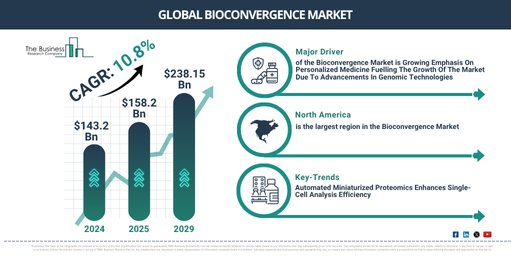
    The bioconvergence marketplace has seen a swift expansion in recent times. Its projected growth will see an increase from $143.2 billion in 2024 to $158.2 billion in 2025, with a compound annual growth rate (CAGR) of 10.5%. The growth seen in the historic period is thanks to factors like the emergence of personalized medicine, advancements in biomedical engineering, the rise in digitization within the healthcare sector, progress in bioinformatics, and the synergistic collaboration between the biotech and tech industries.

    The size of the bioconvergence market is predicted to experience swift expansion in the forthcoming years, with projections valuing it at $238.15 billion in 2029 and a compound annual growth rate (CAGR) of 10.8%. This anticipated augmentation in the forecast period can be ascribable to the expansion of regenerative medicine applications, escalating incidences of chronic illnesses, utilization of bioelectronics and biosensors, advancement in engineered living materials, and an upsurge in investments in biotechnology research and development. Some significant trends anticipated in the forecast period encompass the incorporation of artificial intelligence into drug discovery, advancement in lab-on-a-chip technologies, expansion of wearable biosensor market, proliferation of three-dimensional (3d) bioprinting applications, targeted therapies using nanorobotics, implementation of organ-on-a-chip models, and progress in gene editing techniques.

    Get A Free Sample Of The Report:

    https://www.thebusinessresearchcompany.com/sample.aspx?id=24168&type=smp

    What Market Forces Are Contributing To The Growth Of The Bioconvergence Market?

    The increasing focus on personalized medicine is anticipated to boost bioconvergence market expansion in the future. This medical strategy, which is based on a patient’s environmental, genetic, and lifestyle factors, aims to enhance results and quality of care through individualized treatment. Genomic technology advancements are driving the demand for personalized medicine, as they allow the accurate detection of genetic variations and the creation of customized treatments. The integration of advanced technology and biological research through bioconvergence enhances personalized medicine, leading to more accurate, custom treatment plans based on a patient’s molecular and genetic profile. It not only boosts health outcomes by enabling targeted therapies but also minimizes adverse effects. As per the Personalized Medicine Coalition (PMC), a nonprofit organization based in the US, the U.S. Food and Drug Administration (FDA) greenlit 26 new personalized medicines in 2023, a significant leap from the 12 approved the previous year. Hence, the emphasis on personalized medicine underscores the bioconvergence market’s growth.

    How Is The Bioconvergence Market Categorized Across Applications And Types?

    The bioconvergence market covered in this report is segmented –

    1) By Component: Devices, Software, Services, Platforms

    2) By Technology: Artificial Intelligence, Robotics, Three-Dimensional (3D) Printing, Nanotechnology, Synthetic Biology, Bioinformatics, Wearable Devices

    3) By Application: Drug Discovery, Regenerative Medicine, Optogenetics, Nanorobotics For Drug Discovery, Diagnostic And Biological Sensors, Bioelectronics, Precision Medicine

    4) By End-User: Pharmaceutical And Biotechnology Industry, Contract Research Organization, Other End Users

    Subsegments:

    1) By Devices: Diagnostic Devices, Therapeutic Devices, Wearable Medical Devices, Implantable Devices, Robotic Surgical Systems

    2) By Software: Bioinformatics Software, Clinical Decision Support Systems, Genomic Data Analysis Tools, Imaging And Diagnostic Software, Laboratory Information Management Systems (LIMS)

    3) By Services: Contract Research Services, Consulting And Integration Services, Data Management And Analysis Services, Custom Software Development, Regulatory And Compliance Services

    4) By Platforms: Artificial Intelligence Platforms, Omics Integration Platforms, Digital Health Platforms, Personalized Medicine Platforms, Cloud-Based Analytics Platforms

    How Are Market Trends Influencing Competition In The Bioconvergence Market?

    Leading firms in the bioconvergence market are channelling their efforts towards creating groundbreaking products such as automated miniaturized single-cell proteomics sample preparation. This innovation is geared towards facilitating accurate protein analysis, minimizing sample loss, and enhancing efficiency in single-cell research. This process leverages automation for the handling and preparation of proteins from individual cells in extremely low volumes. Scienion GmbH, a biotech firm headquartered in Germany, launched the proteochip LF 48 in September 2022. This exceptional bioconvergence tool facilitates on-chip lysis and protein digestion of individual cells, aiding researchers in minimizing sample loss, improving workflows, and obtaining more in-depth biological insights through effective mass spectrometry analysis. The proteochip LF 48 exhibits high versatility, providing efficient sample preparation for a wide range of single-cell proteomics applications. This is achieved by integrating precise cell handling with on-chip lysis and protein digestion, leading to augmented workflow efficiency and data quality.

    Which Firms Are Making The Biggest Impact In The Bioconvergence Market?

    Major companies operating in the bioconvergence market are Pfizer Inc., Johnson & Johnson, Merck & Co. Inc., Veolia Environnement S.A, Novartis AG, Eli Lilly and Company, Amgen Inc., HDR Inc., Ginkgo Bioworks, BICO Group AB, MeMed Diagnostics Ltd., Anima Biotech, Singota Solutions LLC, SetPoint Medical Corporation, Galvani Bioelectronics, Ezassi Inc., Tissue Dynamics Ltd., Sanara Ventures Ltd., BioConvergent Health LLC, Gradiant Bioconvergence Center

    Access The Complete Report Here:

    https://www.thebusinessresearchcompany.com/report/bioconvergence-global-market-report

    Which Region Holds The Greatest Opportunity For Bioconvergence Market Expansion?

    North America was the largest region in the bioconvergence market in 2024. Asia-Pacific is expected to be the fastest-growing region in the forecast period. The regions covered in the bioconvergence market report are Asia-Pacific, Western Europe, Eastern Europe, North America, South America, Middle East, Africa.

    Customize Your Report Here:

    https://www.thebusinessresearchcompany.com/customise?id=24168&type=smp

    About The Business Research Company:

    With over 15000+ reports from 27 industries covering 60+ geographies, The Business Research Company has built a reputation for offering comprehensive, data-rich research and insights. Armed with 1,500,000 datasets, the optimistic contribution of in-depth secondary research, and unique insights from industry leaders, you can get the information you need to stay ahead in the game.

    Get in touch with us:

    The Business Research Company: https://www.thebusinessresearchcompany.com/

    Americas +1 310-496-7795

    Asia +44 7882 955267 & +91 8897263534

    Europe +44 7882 955267

    Email us at info@tbrc.info

    Follow us on:

    LinkedIn: https://in.linkedin.com/company/the-business-research-company

    YouTube: https://www.youtube.com/channel/UC24_fI0rV8cR5DxlCpgmyFQ

    Global Market Model: https://www.thebusinessresearchcompany.com/global-market-model
  • Behcets disease Market Size, Share & Trends Analysis Report By Product | Forecast to 2029

    Behcets disease Market Size, Share & Trends Analysis Report By Product | Forecast to 2029

    Claim 30% Off Global Market Reports With Code ONLINE30 – Insights on Tariff Effects, Global Trade, and Industry Disruptors

    What Are The Future Growth Projections For The Behcets disease Market Size?

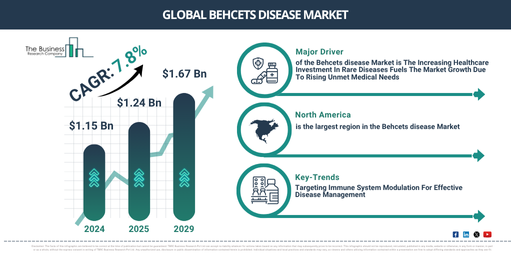
    In the past few years, the market size for Behcets disease has seen a significant increase. The market value is predicted to surge from $1.15 billion in 2024 to $1.24 billion in 2025, with a Compound Annual Growth Rate (CAGR) of 7.3%. Factors such as growing awareness towards rare diseases, the accessibility of biologic treatments, enhancements in healthcare infrastructure, an increase in autoimmune diseases cases, and a bigger inclination towards biologic therapies have contributed to the growth experienced in the historical period.

    Predictions point towards robust expansion of the behcets disease market in the future, as it is anticipated to reach a value of $1.67 billion by 2029, with a CAGR of 7.8%. This upward trajectory in the forecast period can be credited to numerous factors such as the rise in research related to autoimmune and inflammatory illnesses, the increasing number of clinical exams and studies, the progression of individualized treatment methods, broadening healthcare accessibility in upcoming markets, and a rising emphasis on patient-focused care models. Noteworthy trends predicted in the forecast period encompass progress in diagnostic methods, advancement in precision therapeutics, a swing towards telemedicine and digital health technologies, the expanding partnerships between pharmaceutical corporations and research institutes, and the emergence of innovative combo therapies for treatment.

    Get A Free Sample Of The Report:

    https://www.thebusinessresearchcompany.com/sample.aspx?id=24167&type=smp

    What Drivers Are Accelerating Expansion Of The Behcets disease Market?

    The behcets disease market is anticipating substantial growth as a consequence of rising healthcare investments in rare diseases. The term rare diseases refers to conditions which afflict fewer than 1 out of every 2000 people, and commonly involve complicated symptoms and limited therapeutic avenues. The escalation in healthcare investments in these diseases can be attributed mostly to the increased recognition of unmet medical needs; a significant number of patients do not have access to effective treatments, stimulating governments and pharmaceutical firms to place greater emphasis on research, funding, and development in this domain. Behçet’s disease is an example of the extensive impact that focused research and advocacy for a single rare disease can have on generating comprehensive investment for rare diseases in general, illustrating how concentrated efforts can promote substantial progress in comprehension, treatment, and policies for the whole rare disease community. For example, figures from Global Genes, a nonprofit organization based in the US, reveal that in the first quarter of 2024, corporations developing drugs for rare diseases gathered $7.1 billion via public equity and debt financing- a 307% increase from the $1.8 billion amassed in the identical period of 2023. As a result, the escalation in healthcare investment in rare diseases is bolstering the growth of the behcets disease market.

    Which Sub-Segments Are Driving Growth Within The Behcets disease Market?

    The behcets disease market covered in this report is segmented –

    1) By Treatment Type: Corticosteroids, Immunosuppressants, Biologics, Other Treatments

    2) By Route Of Administration: Oral, Injectable, Topical

    3) By Type of Disease: Non-Ocular Behcet’s Disease, Ocular Behcet’s Disease

    4) By Distribution Channel: Hospital Pharmacies, Retail Pharmacies, Online Pharmacies, Other Distribution Channels

    5) By End User: Hospitals, Clinics, Ambulatory Surgical Centers

    Subsegments:

    1) By Corticosteroids: Oral Corticosteroids, Topical Corticosteroids, Intravenous Corticosteroids

    2) By Immunosuppressants: Methotrexate, Azathioprine, Cyclophosphamide, Mycophenolate Mofetil, Cyclosporine

    3) By Biologics: Tumor Necrosis Factor (TNF) Inhibitors, Interleukin Inhibitors

    4) By Other Treatments: Colchicine, Thalidomide, Hydroxychloroquine, Corticosteroid-Sparing Agents

    What Future-Focused Trends Are Anticipated In The Behcets disease Market?

    Leading companies in the behcets disease market are concentrating their efforts on conducting clinical experiments to create innovative products like innate defense regulator (IDR) that could improve immune system modulation and provide more efficient treatments for inflammation and other symptoms linked with this illness. Innate defense regulators (IDRs) are man-made peptides that control the innate immune response by improving the body’s natural defensive measures. In Behcets disease scenario, they assist by managing the immune system to lessen excessive inflammation, which could possibly alleviate symptoms and control disease outbreaks. For instance, in November 2024, Soligenix, Inc., a Biopharmaceutical firm based in the US, started enrolling patients for its Phase 2 trial (protocol number DUS-AUBD-01) to evaluate the efficiency of SGX945 (dusquetide) in treating Behcet’s disease. This study’s aim is to investigate the potential of SGX945, being an innate defense regulator (IDR), to modulate the immune system and lessen inflammation, thereby introducing a new therapeutic strategy to manage the symptoms and outbreaks related to behcet’s disease.

    Which Players Are Shaping The Competitive Landscape Of The Behcets disease Market?

    Major companies operating in the behcets disease market are AbbVie Inc., AstraZeneca PLC, GlaxoSmithKline PLC, Amgen Inc., Teva Pharmaceutical Industries Ltd., Sandoz International GmbH, Chugai Pharmaceutical Co. Ltd, Sun Pharmaceutical Industries Limite, Eisai Co. Ltd, Pharmascience Inc, Samsung Bioepis Co. Ltd., Maxivision Eye Hospitals Pvt. Ltd, Ainos Inc., Soligenix Inc, XOMA Corporation, Creabilis S.A., Iltoo Pharma S.A.S., Ganzhou Hemay Pharmaceutical Co. Ltd., Sanguine Biosciences Inc., NYU Langone Health

    Access The Complete Report Here:

    https://www.thebusinessresearchcompany.com/report/behcets-disease-global-market-report

    How Do Regional Dynamics Influence The Behcets disease Market Performance?

    North America was the largest region in the behcets disease market in 2024. Asia-Pacific is expected to be the fastest-growing region in the forecast period. The regions covered in the behcets disease market report are Asia-Pacific, Western Europe, Eastern Europe, North America, South America, Middle East, Africa.

    Customize Your Report Here:

    https://www.thebusinessresearchcompany.com/customise?id=24167&type=smp

    About The Business Research Company:

    With over 15000+ reports from 27 industries covering 60+ geographies, The Business Research Company has built a reputation for offering comprehensive, data-rich research and insights. Armed with 1,500,000 datasets, the optimistic contribution of in-depth secondary research, and unique insights from industry leaders, you can get the information you need to stay ahead in the game.

    Get in touch with us:

    The Business Research Company: https://www.thebusinessresearchcompany.com/

    Americas +1 310-496-7795

    Asia +44 7882 955267 & +91 8897263534

    Europe +44 7882 955267

    Email us at info@tbrc.info

    Follow us on:

    LinkedIn: https://in.linkedin.com/company/the-business-research-company

    YouTube: https://www.youtube.com/channel/UC24_fI0rV8cR5DxlCpgmyFQ

    Global Market Model: https://www.thebusinessresearchcompany.com/global-market-model
  • What Are The Strategic Insights Behind The Autoimmune Monoclonal Antibody Market Expansion To $96.74 Billion?

    What Are The Strategic Insights Behind The Autoimmune Monoclonal Antibody Market Expansion To $96.74 Billion?

    Claim 30% Off Global Market Reports With Code ONLINE30 – Insights on Tariff Effects, Global Trade, and Industry Disruptors

    What Is The Current Size And Growth Outlook For The Autoimmune Monoclonal Antibody Market?

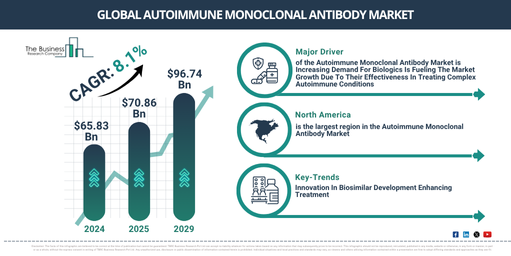
    In recent times, the autoimmune monoclonal antibody market has seen considerable growth. Its expansion is projected to continue, with an increase from $65.83 billion in 2024 to $70.86 billion in 2025. This represents a compound annual growth rate (CAGR) of 7.6%. This robust growth in the historical context is due to several factors such as a rising prevalence of autoimmune diseases, increased adoption of biologics for treatment, heightened awareness of targeted therapies, expeditious approvals for monoclonal antibody drugs, and the enhancement of healthcare accessibility in developed nations.

    The market size of autoimmune monoclonal antibodies is projected to experience significant expansion in the coming years, set to reach “$96.74 billion in 2029, featuring a compound annual growth rate (CAGR) of 8.1%. This growth in the projected timeline is likely due to an increase in the need for personalized healthcare, rising acceptance of biosimilars, escalated clinical trials related to autoimmune therapies, an expanding elderly population, and increasing instances of chronic immune disorders. Enumerated trends for the forecast period encompass advancements in antibody engineering, the evolution of bispecific antibodies, the augmented usage of artificial intelligence in drug discovery, the integration of genomics in treatment strategies, and innovative drug delivery systems.

    Get A Free Sample Of The Report:

    https://www.thebusinessresearchcompany.com/sample.aspx?id=24162&type=smp

    Which Key Factors Are Fueling Growth In The Autoimmune Monoclonal Antibody Market?

    The growth of the autoimmune monoclonal antibody market is anticipated to be propelled by the escalating demand for biologics. Biologics are medicinal products obtained from living organisms or their components, utilized for the treatment, prevention, or diagnosis of various diseases. This rising demand is predominantly driven by their efficacy in treating complex diseases like cancer, autoimmune disorders, and genetic conditions, where conventional therapies might not be as effective. Autoimmune monoclonal antibodies enhance these biologic therapies by providing targeted immune modulation, thereby making them efficient in handling hyperactive immune responses. They limit the requirement of widespread immunosuppressants by offering accurate treatment, enhancing patient results, and reducing side effects. For example, Cardinal Health Inc., a healthcare company based in the U.S., reported in June 2024 that the Food and Drug Administration (FDA) approved 40 biosimilar products in 2023, a rise from 33 in 2022, and out of these, 25 are available commercially in the U.S. market. Consequently, the mounting demand for biologics is fueling the expansion of the autoimmune monoclonal antibody market.

    What Segmentation Insights Are Provided In The Autoimmune Monoclonal Antibody Market Research?

    The autoimmune monoclonal antibody market covered in this report is segmented –

    1) By Type: Immunoglobulin G Monoclonal Antibodies, Immunoglobulin M Monoclonal Antibodies, Chimeric Monoclonal Antibodies, Fully Human Monoclonal Antibodies

    2) By  Route Of Administration: Subcutaneous, Intravenous, Intramuscular

    3) By Application: Rheumatoid Arthritis, Multiple Sclerosis, Systemic Lupus Erythematosus, Psoriasis, Inflammatory Bowel Disease

    4) By Distribution Channel: Hospital Pharmacy, Online Pharmacy, Retail Pharmacy

    5) By End User: Hospitals, Outpatient Clinics, Homecare Settings, Research Institutions

    Subsegments:

    1) By Immunoglobulin G (IgG) Monoclonal Antibodies: Immunoglobulin G1 (IgG1), Immunoglobulin G2 (IgG2), Immunoglobulin G3 (IgG3), Immunoglobulin G4 (IgG4)

    2) By Immunoglobulin M (IgM) Monoclonal Antibodies: Pentameric Immunoglobulin M (IgM), Hexameric Immunoglobulin M (IgM)

    3) By Chimeric Monoclonal Antibodies: Murine Variable Region + Human Constant Region, Humanized Variable Region + Murine Constant Region

    4) By Fully Human Monoclonal Antibodies: Phage Display-Derived, Transgenic Mouse-Derived, Fully Human Hybridoma-Derived

    Which Notable Trends Are Transforming The Autoimmune Monoclonal Antibody Market Outlook?

    Leading enterprises in the autoimmune monoclonal antibody market are concentrating their efforts on crafting innovative solutions such as biosimilar development, aiming to augment safety, quality, and efficacy. The process of biosimilar development involves creating biological products that are extremely similar, safe, and effective when compared to currently approved biologics. This process employs advanced biotechnology, rigorous analytical testing, and clinical studies to establish a comparable level of quality, efficacy, and safety for regulatory sanction. For instance, in February 2025, Biocon Biologics Limited, a biopharmaceutical company based in India, launched a biosimilar named YESINTEK. This product is used to treat autoimmune ailments like Crohn’s disease, ulcerative colitis, and psoriasis by specifically targeting and suppressing the actions of interleukin-12 and interleukin-23 in order to control inflammation and oversee the immune reaction. YESINTEK, by imitating the reference product Stelara, aids in managing these diseases in the long term while extending patient access to biologic therapies.

    Who Are The Leading Companies Driving The Autoimmune Monoclonal Antibody Market?

    Major companies operating in the autoimmune monoclonal antibody market are Johnson & Johnson, F. Hoffmann-La Roche Ltd, Pfizer Inc., Merck & Co. Inc., AbbVie Inc., Novartis AG, Sanofi S.A., Bristol-Myers Squibb Company, AstraZeneca PLC, Eli Lilly and Company, Amgen Inc., Teva Pharmaceutical Industries Ltd., Regeneron Pharmaceuticals Inc., UCB S.A., Genmab A/S, Zymeworks Inc., Xencor Inc., Immutep Limited, Cue Biopharma Inc., Santa Ana Bio Inc.

    Access The Complete Report Here:

    https://www.thebusinessresearchcompany.com/report/autoimmune-monoclonal-antibody-global-market-report

    Which Geographic Regions Are Creating Strong Demand In The Autoimmune Monoclonal Antibody Market?

    North America was the largest region in the autoimmune monoclonal antibody market in 2024. Asia-Pacific is expected to be the fastest-growing region in the forecast period. The regions covered in the autoimmune monoclonal antibody market report are Asia-Pacific, Western Europe, Eastern Europe, North America, South America, Middle East, Africa.

    Customize Your Report Here:

    https://www.thebusinessresearchcompany.com/customise?id=24162&type=smp

    About The Business Research Company:

    With over 15000+ reports from 27 industries covering 60+ geographies, The Business Research Company has built a reputation for offering comprehensive, data-rich research and insights. Armed with 1,500,000 datasets, the optimistic contribution of in-depth secondary research, and unique insights from industry leaders, you can get the information you need to stay ahead in the game.

    Get in touch with us:

    The Business Research Company: https://www.thebusinessresearchcompany.com/

    Americas +1 310-496-7795

    Asia +44 7882 955267 & +91 8897263534

    Europe +44 7882 955267

    Email us at info@tbrc.info

    Follow us on:

    LinkedIn: https://in.linkedin.com/company/the-business-research-company

    YouTube: https://www.youtube.com/channel/UC24_fI0rV8cR5DxlCpgmyFQ

    Global Market Model: https://www.thebusinessresearchcompany.com/global-market-model
  • How Will The Autoimmune Hemolytic Anemia Treatment Market Reach $1.95 Billion By 2029 Amid Global Shifts?

    How Will The Autoimmune Hemolytic Anemia Treatment Market Reach $1.95 Billion By 2029 Amid Global Shifts?

    Claim 30% Off Global Market Reports With Code ONLINE30 – Insights on Tariff Effects, Global Trade, and Industry Disruptors

    What Is The Predicted Market Size Of The Autoimmune Hemolytic Anemia Treatment Industry By 2029?

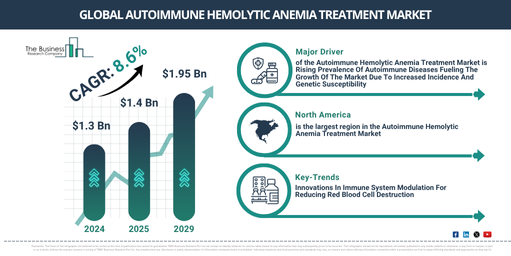
    The market size for autoimmune hemolytic anemia treatment has experienced robust development in the preceding years. It is projected to increase from $1.3 billion in 2024 to $1.4 billion in 2025, with a compound annual growth rate (CAGR) of 8.0%. Several factors contribute to this growth during the historical period, including enhanced disease understanding among healthcare professionals, a surge in autoimmune disorders, expansion in hospital facilities, a growing number of clinical studies, and an uptick in infection rates.

    The market for autoimmune hemolytic anemia treatment is predicted to experience substantial growth in the forthcoming years. Its value is projected to reach “$1.95 billion in 2029 with a compound annual growth rate (CAGR) of 8.6%. This expansion during the forecast period is linked to several factors such as the escalating occurrence of AIHA around the globe, a surging demand for targeted treatments, a rising emphasis on individualized medication, amplified funding for research into autoimmune diseases, and enhanced healthcare access in burgeoning regions. Notable future trends encompass breakthroughs in diagnostic technologies, the blending of digital health and telemedicine, developments in targeted treatment methods, AI-driven diagnostics and drug discovery, and innovative immunosuppressive strategies.

    Get A Free Sample Of The Report:

    https://www.thebusinessresearchcompany.com/sample.aspx?id=24161&type=smp

    Which Market Dynamics Are Playing A Critical Role In The Growth Of The Autoimmune Hemolytic Anemia Treatment Market?

    The escalation in the occurrence of autoimmune diseases is set to stimulate the expansion of the autoimmune hemolytic anemia treatment market. Autoimmune diseases encompass conditions where the immune system erroneously assaults the body’s own cells, leading to inflammation and harm. A significant factor behind the surge in autoimmune diseases is genetic pre-disposition, heightening the risk of these conditions in certain individuals. Crucial to the management of autoimmune disease complications, treatment of autoimmune hemolytic anemia focuses on minimizing the demolition of red blood cells instigated by the immune system. For example, the UK’s National Institute for Health and Care Research (NIHR) – a body that financially backs, encourages and executes health research for enhancing public health and welfare, revealed in May 2023 that autoimmune diseases affect nearly one in ten people, referencing a study of 22 million individuals. With 19 distinct autoimmune diseases touching about 10% of the population – 13% women and 7% men. Subsequently, the escalating occurrence of autoimmune diseases is set to fuel the expansion of the autoimmune hemolytic anemia treatment market.

    How Does The Autoimmune Hemolytic Anemia Treatment Market Differ By Segment?

    The autoimmune hemolytic anemia treatment market covered in this report is segmented –

    1) By Type: Warm Autoimmune Hemolytic Anemia, Cold Autoimmune Hemolytic Anemia, Other Types

    2) By Drug Class: Corticosteroids, Immunosuppressive Agents, Other Drug Classes

    3) By Route Of Administration: Injectable, Oral, Other Route Of Administrations

    4) By Distribution Channel: Hospital Pharmacy, Retail Pharmacy, Online Pharmacy

    Subsegments:

    1) By Warm Autoimmune Hemolytic Anemia: Primary Warm Autoimmune Hemolytic Anemia, Secondary Warm Autoimmune Hemolytic Anemia

    2) By Cold Autoimmune Hemolytic Anemia: Primary Cold Agglutinin Disease (CAD), Secondary Cold Autoimmune Hemolytic Anemia

    3) By Other Types: Mixed-Type Autoimmune Hemolytic Anemia, Paroxysmal Cold Hemoglobinuria (PCH), Drug-Induced Autoimmune Hemolytic Anemia

    What New Opportunities Are Emerging From Trends In The Autoimmune Hemolytic Anemia Treatment Market?

    Major firms engaged in the autoimmune hemolytic anemia treatment marketplace are turning their attention to the development of advanced targeted treatments, including unique monoclonal antibodies known as first-in-class. These therapies specifically block certain immune pathways, such as the classical complement system, thus reducing the destruction of red blood cells while minimizing side effects. The benefit of first-in-class monoclonal antibodies is their ability to target unique mechanisms or pathways within the body that have not been targeted by any existing approved medications. For example, in November 2022, the French healthcare giant, Sanofi S.A., gained marketing approval from the European Commission for its monoclonal antibody drug, Enjaymo (sutimlimab), designed to target and inhibit the C1s protein within the classical complement pathway. The medication is used to treat adults suffering from hemolytic anemia brought about by Cold Agglutinin Disease (CAD) – a rare, chronic autoimmune disorder that mistakenly leads the immune system to destroy healthy red blood cells, causing hemolysis. Enjaymo works by limiting the destruction of red blood cells, providing a focused treatment for CAD, a subtype of autoimmune hemolytic anemia (AIHA).

    Who Are The Global Leaders Steering The Autoimmune Hemolytic Anemia Treatment Market Forward?

    Major companies operating in the autoimmune hemolytic anemia treatment market are Johnson & Johnson, F. Hoffmann-La Roche Ltd., AbbVie Inc., Sanofi SA, Novartis AG, Amgen Inc., Incyte Corporation, Alexion Pharmaceuticals Inc., Hutchison China MediTech Limited, BioCryst Pharmaceuticals Inc., Annexon Inc., Rigel Pharmaceuticals Inc., Nanjing IASO Biotherapeutics Co. Ltd., Apellis Pharmaceuticals Inc., Momenta Pharmaceuticals Inc., Zenas BioPharma Inc., Immunovant Sciences GmbH, Alpine Immune Sciences Inc., Agios Pharmaceuticals Inc., Kezar Life Sciences Inc.

    Access The Complete Report Here:

    https://www.thebusinessresearchcompany.com/report/autoimmune-hemolytic-anemia-treatment-global-market-report

    Which Region Is Likely To Register The Fastest Growth In The Autoimmune Hemolytic Anemia Treatment Market?

    North America was the largest region in the autoimmune hemolytic anemia treatment market in 2024. Asia-Pacific is expected to be the fastest-growing region in the forecast period. The regions covered in the autoimmune hemolytic anemia treatment market report are Asia-Pacific, Western Europe, Eastern Europe, North America, South America, Middle East, Africa.

    Customize Your Report Here:

    https://www.thebusinessresearchcompany.com/customise?id=24161&type=smp

    About The Business Research Company:

    With over 15000+ reports from 27 industries covering 60+ geographies, The Business Research Company has built a reputation for offering comprehensive, data-rich research and insights. Armed with 1,500,000 datasets, the optimistic contribution of in-depth secondary research, and unique insights from industry leaders, you can get the information you need to stay ahead in the game.

    Get in touch with us:

    The Business Research Company: https://www.thebusinessresearchcompany.com/

    Americas +1 310-496-7795

    Asia +44 7882 955267 & +91 8897263534

    Europe +44 7882 955267

    Email us at info@tbrc.info

    Follow us on:

    LinkedIn: https://in.linkedin.com/company/the-business-research-company

    YouTube: https://www.youtube.com/channel/UC24_fI0rV8cR5DxlCpgmyFQ

    Global Market Model: https://www.thebusinessresearchcompany.com/global-market-model