Blog

  • What Is The Long-Term Forecast For The Testosterone Booster Market Growing At 6.2% CAGR?

    What Is The Long-Term Forecast For The Testosterone Booster Market Growing At 6.2% CAGR?

    Claim 20% Off Global Market Reports With Code ONLINE20 – Insights on Tariff Effects, Global Trade, and Industry Disruptors

    What Is The Current Size And Growth Outlook For The Testosterone Booster Market?

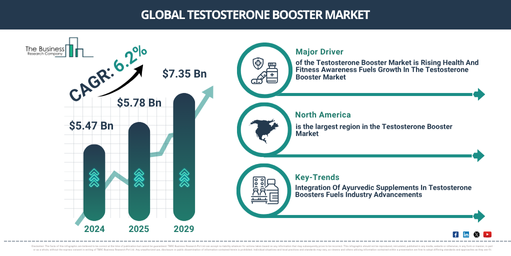
    The market size for testosterone boosters has significantly expanded in the past few years. The forecast suggests an increase from $5.47 billion in 2024 to $5.78 billion in 2025, demonstrating a compound annual growth rate (CAGR) of 5.7%. Factors like support from healthcare professionals, evolution in beauty norms, exposure through fitness publications and media, the spread of fitness culture due to globalization, and evolving views on masculinity have contributed to this growth during the historic period.

    The market size of testosterone boosters is predicted to experience robust expansion in the forthcoming years, reaching “$7.35 billion in 2029” with a Compound Annual Growth Rate (CAGR) of 6.2%. This projected growth within the forecasted timeline can be accredited to the rising focus on preventive healthcare, the surge in e-commerce, increased knowledge about hormonal health, creative marketing tactics, and tailored treatments. Key trends during this predicted phase comprise an upsurge in the popularity of online distribution channels, the evolution of delivery methods, incorporation of technological advancements, widespread global market penetration, along with collaborations and alliances.

    Get A Free Sample Of The Report:

    https://www.thebusinessresearchcompany.com/sample.aspx?id=13942&type=smp

    Which Industry Forces Are Driving The Testosterone Booster Market Forward?

    The rise in health and fitness consciousness is anticipated to drive the expansion of the testosterone booster market. Health and fitness imply a state of complete physical, mental, and social well-being, with a focus on maintaining or enhancing one’s physical state. Testosterone boosters, by boosting muscle mass and strength, can improve athletic performances and overall body strength. For example, a ukactive survey of 2,271 UK adults conducted in September 2023 revealed that 54% were motivated to stay physically active mainly for mental health benefits, and 49% for fitness improvement. Furthermore, 86% agreed that regular physical activity can help prevent various ailments and injuries. Hence, the rising awareness of health and fitness is propelling the testosterone booster market’s growth.

    Which Segment Accounts For The Largest Share In The Testosterone Booster Market?

    The testosterone booster market covered in this report is segmented –

    1) By Component: Vitamins, D-Aspartic Acid, Zinc Component

    2) By Source: Mucuna Pruriens, Ginseng, Oyster Extract, Fenugreek

    3) By Application: Hospitals, Retail Pharmacies

    Subsegments:

    1) By Vitamins: Vitamin D, Vitamin B6, Vitamin B12

    2) By D-Aspartic Acid: D-Aspartic Acid Powder, D-Aspartic Acid Capsules

    3) By Zinc Component: Zinc Citrate, Zinc Monomethionine, Zinc Aspartate

    Which Long-Term Trends Will Play A Crucial Role In The Testosterone Booster Market?

    Leading corporations in the testosterone booster market are innovating advanced product formulations, such as incorporating ayurvedic supplements, to fortify their market standing. Ayurvedic supplements provide unique advantages to testosterone boosters by offering a natural, comprehensive, and tried-and-tested method that appeals to consumers seeking alternatives to synthetic products. For example, in November 2023, Jagat Pharma Pvt Ltd., an Indian Ayurvedic firm, brought to market a potent testosterone booster crafted to augment energy levels, amplify endurance, and increase muscle power. The firm’s recently introduced product is blended with essential Ayurvedic elements, including Ginseng Root Extract, Gokhru, Ashwagandha, Fenugreek, Safed Musli, and Kawach Beej. The contents of the product are engineered to enhance strength, power, and stamina, which leads to better physical performance and endurance.

    Which Companies Hold A Competitive Edge In The 383 Market?

    Major companies operating in the testosterone booster market report are GNC Holdings LLC, Evolution Nutrition LLC, Iron Brothers Supplements, Musclepro Nutrition Pvt Ltd., Nutrabolt, Alpha Pro Tech Ltd., MuscleTech, Performance Lab, Hybrid Nutraceuticals LLC, Optimum Nutrition, Vita Balance Inc., JYM Supplement Science, VH Nutrition LLC, SMP Nutra LLC, Roar Ambition Ltd, Ultra Testo Rush, BL Bio Lab LLC, Pharmgrade, Zenith Nutrition, CrazyBulk NZ, Nugenix, Lipocine Inc., TestoTEK, Invictus Labs, Zoic Pharmaceuticals

    Access The Complete Report Here:

    https://www.thebusinessresearchcompany.com/report/testosterone-booster-global-market-report

    Which Region Is Forecasted To Lead The Testosterone Booster Market In The Coming Years?

    North America was the largest region in the testosterone booster market in 2024. The regions covered in the testosterone booster market report are Asia-Pacific, Western Europe, Eastern Europe, North America, South America, Middle East, Africa.

    Customize Your Report Here:

    https://www.thebusinessresearchcompany.com/customise?id=13942&type=smp

    About The Business Research Company:

    With over 15000+ reports from 27 industries covering 60+ geographies, The Business Research Company has built a reputation for offering comprehensive, data-rich research and insights. Armed with 1,500,000 datasets, the optimistic contribution of in-depth secondary research, and unique insights from industry leaders, you can get the information you need to stay ahead in the game.

    Get in touch with us:

    The Business Research Company: https://www.thebusinessresearchcompany.com/

    Americas +1 310-496-7795

    Asia +44 7882 955267 & +91 8897263534

    Europe +44 7882 955267

    Email us at info@tbrc.info

    Follow us on:

    LinkedIn: https://in.linkedin.com/company/the-business-research-company

    YouTube: https://www.youtube.com/channel/UC24_fI0rV8cR5DxlCpgmyFQ

    Global Market Model: https://www.thebusinessresearchcompany.com/global-market-model
  • Which Emerging Trends Are Driving The TCR Therapy Market Toward $0.85 Billion By 2029?

    Which Emerging Trends Are Driving The TCR Therapy Market Toward $0.85 Billion By 2029?

    Claim 20% Off Global Market Reports With Code ONLINE20 – Insights on Tariff Effects, Global Trade, and Industry Disruptors

    What Is The Predicted Market Size Of The TCR Therapy Industry By 2029?

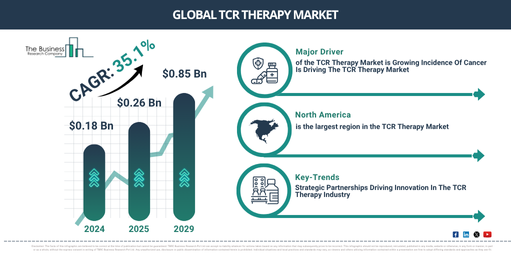
    Over the past years, there has been a massive growth in the TCR therapy market size. It is projected to inflate from $0.18 billion in 2024 to about $0.26 billion in 2025, with an impressive compound annual growth rate (CAGR) of 39.3%. This remarkable growth during the historic era is primarily due to the escalating cancer cases, increased focus on immunotherapy, promising outcomes from clinical trials, and ample funding from investors.

    The size of the TCR therapy market is projected to undergo considerable growth in the upcoming years and it is expected to reach “$0.85 billion by 2029” with a Compound Annual Growth Rate (CAGR) of 35.1%. The predicted growth within the forecast period can be linked to a surge in ongoing clinical trials, the advent of cutting-edge technologies in healthcare, broadening use in managing solid tumors, regulatory assistance and streamlined sanction procedures, and integration with supplemental therapies. Key projected trends in the forecast period include spreading to solid tumors, advanced TCR engineering, increasing individualization and neoantigen identification, international collaborations and tactical alliances, and ongoing investigation in immunology and tumor biology.

    Get A Free Sample Of The Report:

    https://www.thebusinessresearchcompany.com/sample.aspx?id=14517&type=smp

    What Are The Primary Factors Supporting The TCR Therapy Market Expansion?

    The increasing prevalence of cancer is set to stimulate expansion of the TCR therapy market. Cancer, defined by the uninhibited growth and distribution of abnormal bodily cells, has the capacity to invade and ruin healthy tissues, compromising the effectiveness of organs and bodily systems. It results from factors such as lifestyle, aging population, obesity epidemic and genetic predispositions. T-cell receptor (TCR) therapy, by leveraging the strength of the immune system to specifically aim at and heighten the efficiency of TCR treatment, holds promise as a game-changing method for future cancer care. For example, Macmillan Cancer Support, a healthcare charity based in the UK, projected in October 2022 that while there were 3 million cancer patients in 2020, the numbers could escalate to 3.5 million by 2025, 4 million by 2030, and 5.3 million by 2040. Consequently, an uptick in cancer rates is providing a boost to the TCR therapy market.

    What Are The Main Segment Classifications In The TCR Therapy Market?

    The tcr therapy market covered in this report is segmented –

    1) By Product Type: Infusions, Injectables, Other Product Types

    2) By Indication: Leukemia, Lymphoma, Myeloma, Other Indication

    3) By Distribution Channel: Online, Offline

    4) By End-User: Hospital Pharmacy, Retail Pharmacy, Specialty Clinics

    Subsegments:

    1) By Infusions: Autologous TCR Infusions, Allogeneic TCR Infusions

    2) By Injectables: TCR-based Injectable Formulations, Injectable TCR Gene Therapies

    3) By Other Product Types: TCR-Engineered Cell Therapies, TCR Combination Therapies with Other Immunotherapies, TCR-Based Biologics

    How Are Industry Trends Steering The Expansion Of The TCR Therapy Market?

    Top firms in the TCR therapy industry, for their part, are opting for strategic collaborations in order to provide necessary therapies to patients and secure a competitive advantage in the market. These strategic alliances are a process whereby companies utilize each other’s strengths and resources for mutual success and benefits. For example, in December 2023, ImmunoScape, a biotech firm based in the US, formed a partnership with the Experimental Drug Development Centre (EDDC), a pharmaceutical company based in Singapore. The collaboration was to create new TCR-focused bispecific molecules for solid tumors. The goal of this partnership is to use ImmunoScape’s skills in systems immunology and computational biology, along with EDDC’s capabilities, to boost research in this field and build a strategic partnership that capitalizes on their distinctive strengths to speed up the development of more affordable and potentially more effective cancer therapies.

    Which Firms Are Driving Innovation Within The TCR Therapy Market?

    Major companies operating in the TCR therapy market are Pfizer Inc., Johnson & Johnson Services Inc., Novartis AG, Bristol Myers Squibb Company, GlaxoSmithKline PLC, Gilead Sciences Inc., Bluebird bio Inc., Immunocore Limited, Immatics N.V., Poseida Therapeutics Inc., Fate Therapeutics Inc., Atara Biotherapeutics Inc., Intellia Therapeutics Inc., Precision Biosciences Inc., Takara Bio Inc., Tessa Therapeutics, Adaptimmune Therapeutics plc, Cellectis S.A., Zelluna Immunotherapy AS, Cellular Biomedicine Group Inc., Lion TCR Pte Ltd., TCRCure Biopharma Corp., Asher Biotherapeutics Inc., Be Biopharma Inc., Alaunos Therapeutics Inc., China Immunotech Inc.

    Access The Complete Report Here:

    https://www.thebusinessresearchcompany.com/report/tcr-therapy-global-market-report

    What Are The Emerging Regional Trends Driving The TCR Therapy Market?

    North America was the largest region in the TCR therapy market in 2024. Asia-Pacific is expected to be the fastest-growing region in the forecast period. The regions covered in the TCR therapy market report are Asia-Pacific, Western Europe, Eastern Europe, North America, South America, Middle East, Africa.

    Customize Your Report Here:

    https://www.thebusinessresearchcompany.com/customise?id=14517&type=smp

    About The Business Research Company:

    With over 15000+ reports from 27 industries covering 60+ geographies, The Business Research Company has built a reputation for offering comprehensive, data-rich research and insights. Armed with 1,500,000 datasets, the optimistic contribution of in-depth secondary research, and unique insights from industry leaders, you can get the information you need to stay ahead in the game.

    Get in touch with us:

    The Business Research Company: https://www.thebusinessresearchcompany.com/

    Americas +1 310-496-7795

    Asia +44 7882 955267 & +91 8897263534

    Europe +44 7882 955267

    Email us at info@tbrc.info

    Follow us on:

    LinkedIn: https://in.linkedin.com/company/the-business-research-company

    YouTube: https://www.youtube.com/channel/UC24_fI0rV8cR5DxlCpgmyFQ

    Global Market Model: https://www.thebusinessresearchcompany.com/global-market-model
  • What Is The Predicted Revenue Outlook For The Synthetic Hormones Market To Surpass $7.98 Billion?

    What Is The Predicted Revenue Outlook For The Synthetic Hormones Market To Surpass $7.98 Billion?

    Claim 20% Off Global Market Reports With Code ONLINE20 – Insights on Tariff Effects, Global Trade, and Industry Disruptors

    What CAGR And Valuation Are Anticipated For The Synthetic Hormones Market?

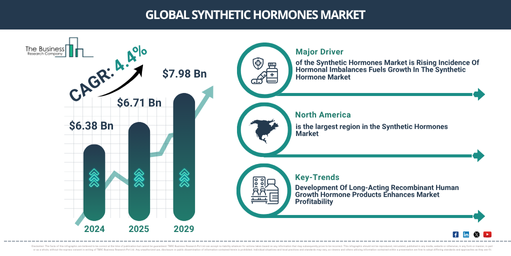
    In the last few years, the synthetic hormones market has seen substantial growth. The market size is projected to increase from $6.38 billion in 2024 to $6.71 billion in 2025, showing a compound annual growth rate (CAGR) of 5.1%. The past growth can be linked to factors such as animal growth enhancement, performance improvement, environmental impact, fertility therapies, and management of menopausal symptoms.

    The market for synthetic hormones is projected to experience a consistent expansion in the upcoming years, reaching “$7.98 billion in 2029”, with a Compound Annual Growth Rate (CAGR) of 4.4%. This projected growth within the forecast period is largely due to the increasing expansion of the transgender healthcare market, escalating healthcare expenses and insurance coverage, established regulatory approvals, and the widening application scope of synthetic hormones. Noteworthy trends expected over the forecast period incorporate the popularity of plant-based hormone therapy, the incorporation of hormone therapy in anti-aging regimens, advancements in technology for drug delivery, as well as an increased focus on hormone-free methods of birth control.

    Get A Free Sample Of The Report:

    https://www.thebusinessresearchcompany.com/sample.aspx?id=14515&type=smp

    Which Growth Drivers Are Shaping The Synthetic Hormones Market Outlook?

    Rising cases of hormonal imbalances are anticipated to fuel the expansion of the synthetic hormones market in the future. Hormonal imbalance, characterized by having excessive or insufficient levels of a hormone in the bloodstream, can stem from stress, aging, medical issues, or lifestyle habits, interfering with the body’s normal production and control of hormones. Synthetic hormones serve to supplement or substitute natural hormones when hormonal imbalances occur, helping to govern physical functions and mitigate symptoms linked to deficiencies or surpluses. For example, data from the NHS Business Services Authority, a non-departmental public body in the UK, indicates that around 7.80 million hormone replacement therapy (HRT) items were prescribed in England in 2022, signifying a 35.0% rise from the previous year. Hence, the escalating prevalence of hormonal imbalances is propelling the expansion of the synthetic hormones market.

    How Is The Synthetic Hormones Market Organized By Different Segments?

    The synthetic hormones market covered in this report is segmented –

    1) By Product Type: Steroid Hormones, Peptide Hormone, Amino Acid Derivatives, Other Product Types

    2) By Route of Administration: Oral, Nasal, Topical, Intravenous

    3) By Application: Growth Hormone Deficiency, Thyroid Hormone Deficiency, Menopause, Male Hypogonadism, Other Applications

    4) By End User: Hospital Pharmacies, Retail Pharmacies, Online Pharmacies

    Subsegments:

    1) By Steroid Hormones: Corticosteroids, Estrogens and Progesterone, Androgens, Progestins

    2) By Peptide Hormones: Insulin, Growth Hormones, Thyroid Stimulating Hormones, Leptin

    3) By Amino Acid Derivatives: Thyroxine (T4), Epinephrine (Adrenaline), Melatonin, Serotonin

    4) By Other Product Types: Vitamin D Derivatives, Prostaglandins, Gonadotropins

    What Current And Upcoming Trends Are Shaping The Synthetic Hormones Market?

    Leading businesses in the synthetic hormone market are prioritizing the development of novel products, such as the recombinant human growth hormone, to boost their market profitability. The recombinant human growth hormone is a man-made hormone used in the treatment of growth hormone deficiencies in both children and adults, as well as some medical conditions associated with this deficiency. For example, Pfizer Inc., an American pharmaceutical company, and OPKO Health Inc., an American medical testing and medication enterprise, got approval in February 2022 to market once-weekly NGENLA (somatrogon) injections in the European Union. These injections are designed to address pediatric growth hormone deficiency in children and adolescents aged three years and above. This new long-lasting injection offers an option for individuals suffering from growth disorders due to inadequate growth hormone production. NGENLA is delivered through subcutaneous injection and remains in the system longer than daily growth hormone injections, thus requiring only once-a-week administration.

    Who Are The Most Influential Companies In The Synthetic Hormones Market?

    Major companies operating in the synthetic hormones market are Pfizer Inc., Johnson & Johnson, AbbVie Inc., Bristol Myers Squibb Company, Sanofi SA, AstraZeneca PLC, Novartis AG, GlaxoSmithKline PLC, Gilead Sciences Inc., Boehringer Ingelheim International GmbH, Novo Nordisk A/S, Merck & Co. Inc., Teva Pharmaceutical Industries Ltd., Ferring B.V., Endo Pharmaceuticals Inc., Lupin Pharmaceuticals Inc., IBSA Institute Biochimique SA, American Regent Inc., McGuff Pharmaceuticals Inc., Anhui Anke Biotechnology Co.Ltd., Lyndra Therapeutics Inc., Acerus Pharmaceuticals Corporation, Arch BioPartners Inc., Slayback Pharma LLC

    Access The Complete Report Here:

    https://www.thebusinessresearchcompany.com/report/synthetic-hormones-global-market-report

    Which Region Dominates The Synthetic Hormones Market Today?

    North America was the largest region in the synthetic hormones market in 2024. Asia-Pacific is expected to be the fastest-growing region in the forecast period. The regions covered in the synthetic hormones market report are Asia-Pacific, Western Europe, Eastern Europe, North America, South America, Middle East, Africa.

    Customize Your Report Here:

    https://www.thebusinessresearchcompany.com/customise?id=14515&type=smp

    About The Business Research Company:

    With over 15000+ reports from 27 industries covering 60+ geographies, The Business Research Company has built a reputation for offering comprehensive, data-rich research and insights. Armed with 1,500,000 datasets, the optimistic contribution of in-depth secondary research, and unique insights from industry leaders, you can get the information you need to stay ahead in the game.

    Get in touch with us:

    The Business Research Company: https://www.thebusinessresearchcompany.com/

    Americas +1 310-496-7795

    Asia +44 7882 955267 & +91 8897263534

    Europe +44 7882 955267

    Email us at info@tbrc.info

    Follow us on:

    LinkedIn: https://in.linkedin.com/company/the-business-research-company

    YouTube: https://www.youtube.com/channel/UC24_fI0rV8cR5DxlCpgmyFQ

    Global Market Model: https://www.thebusinessresearchcompany.com/global-market-model
  • How Is The Small Molecule Injectable Drugs Market Expected To Grow At 11.4% CAGR Over 2025–2029?

    How Is The Small Molecule Injectable Drugs Market Expected To Grow At 11.4% CAGR Over 2025–2029?

    Claim 20% Off Global Market Reports With Code ONLINE20 – Insights on Tariff Effects, Global Trade, and Industry Disruptors

    What Are The Market Size Estimates For The Small Molecule Injectable Drugs Market?

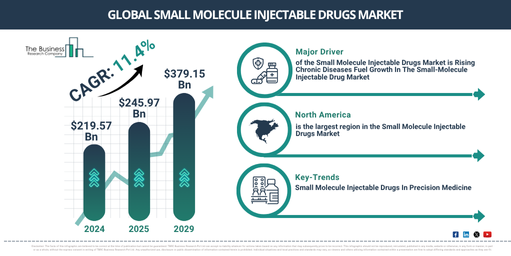
    The market size for small molecule injectable drugs has notably expanded in the past few years. Predictions indicate an increase from $219.57 billion in 2024 up to $245.97 billion in 2025, showcasing an impressive compound annual growth rate (CAGR) of 12.0%. Factors contributing to this robust growth during the historical period include the escalating prevalence of chronic diseases, a growing aging population, government policies, upsurge in healthcare spending, and the betterment of manufacturing processes.

    The market size for injectable drugs composed of small molecules is predicted to expand swiftly in the following years. It is projected to burgeon to a size of $379.15 billion in 2029, boasting a compound annual growth rate (CAGR) of 11.4%. Factors such as customised healthcare, integration of digital health, optimised supply chains, reliance on real-world evidence, and a preference for outpatient care all contribute to this predicted growth during the forecast period. Noteworthy trends within this timeframe include advances in systems for drug delivery, technological progress, concentrated efforts in research and development, innovations in injectable therapies, and expedited approvals of new drug formulation.

    Get A Free Sample Of The Report:

    https://www.thebusinessresearchcompany.com/sample.aspx?id=14998&type=smp

    What Market Forces Are Contributing To The Growth Of The Small Molecule Injectable Drugs Market?

    The surge in chronic illnesses is anticipated to drive the growth of the small-molecule injectable drug market. Chronic diseases are marked by their long-term presence and typically gradual progression. The increase in such conditions can be attributed to a blend of factors including inactive lifestyles, poor eating habits, consumption of tobacco, and elevated stress levels. All these lifestyle options potentially lead to the formation of diseases like obesity, diabetes, cardiovascular diseases, and some kinds of cancer. Small-molecule injectable medicines are extremely useful in managing chronic diseases as they provide targeted therapy, better patient adherence, disease modification, a variety of combination therapies, and chances for therapeutic assessment. For instance, in September 2023, the World Health Organization, a specialized agency of the United Nations based in Switzerland, reported that there were 41 million deaths, representing 74% of deaths worldwide brought on by non-communicable diseases (NCDs) or chronic diseases annually. This included 17.9 million deaths from cardiovascular diseases, 9.3 million deaths related to cancer, 4.1 million deaths from chronic respiratory diseases, and 2.0 million deaths from diabetes. Thus, the escalating chronic diseases are fueling the small-molecule injectable drug market.

    Which Segmentation Categories Are Highlighted In The Small Molecule Injectable Drugs Market Analysis?

    The small molecule injectable drugs market covered in this report is segmented –

    1) By Drug Class: Small Molecule Antibiotics, Analgesics, Chemotherapy, Antivirals, Anticoagulant, Skeletal Muscle Relaxants, Anticonvulsants, Other Drug Class

    2) By Indication: Pain Management, Oncology, Infectious Diseases, Cardiovascular Diseases, CNS Diseases, Other Indications

    3) By Mode of Delivery: IV Set, Intravenous Injection, Infusion Pump, Intramuscular Injection, Subcutaneous Injection

    4) By End User: Hospitals, Ambulatory Clinics, Outpatient Facility, Infusion Therapy Center, Home Care, Other End Users

    Subsegments:

    1) By Small Molecule Antibiotics: Penicillin-Based Antibiotics, Cephalosporins, Aminoglycosides, Macrolides, Tetracyclines

    2) By Analgesics: Nonsteroidal Anti-inflammatory Drugs (NSAIDs), Opioids, Acetaminophen

    3) By Chemotherapy: Alkylating Agents, Antimetabolites, Mitotic Inhibitors, Topoisomerase Inhibitors

    4) By Antivirals: Nucleoside Analogues, Protease Inhibitors, Reverse Transcriptase Inhibitors

    5) By Anticoagulant: Heparin, Low Molecular Weight Heparins, Direct Oral Anticoagulants (DOACs)

    6) By Skeletal Muscle Relaxants: Baclofen, Cyclobenzaprine, Methocarbamol

    7) By Anticonvulsants: Benzodiazepines, Phenytoin, Carbamazepine

    8) By Other Drug Class: Immunosuppressants, Biologic Agents, Hormonal Therapies

    Which Market Trends Are Expected To Define The Future Of The Small Molecule Injectable Drugs Market?

    Focus within the small-molecule injectable drug business is on the forging of new technologies, like microparticle technology, to improve the solubility of active pharmaceutical ingredients within oral drugs. Microparticle technology is related to the development, manufacture, and use of microscale-level particles whose size varies from nanometers to micrometers. A range of materials, including polymers, metals, ceramics, and composites can be used for the engineering of such particles. As an example, in March 2022, Evonik Industries AG, a German specialty chemicals firm, debuted EUDRATEC SoluFlow, a novel technology that uses microparticles to boost the solubility of active pharmaceutical ingredients in oral drugs. This innovative method uses an emulsion-based process to tackle solubility issues that older manufacturing techniques find difficult, particularly where more than 70% of the compounds in new small-molecule therapeutics are insoluble. EUDRATEC SoluFlow leads to the creation of new oral therapies for various conditions such as heart disease, cancer, infectious diseases and diabetes by converting drugs with poor solubility into amorphous solid dispersion (ASD) powders that can flow freely.

    Who Are The Dominant Players In The Small Molecule Injectable Drugs Market Today?

    Major companies operating in the small molecule injectable drugs market are Pfizer Inc., Johnson & Johnson Services Inc., F. Hoffmann-La Roche AG, Merck & Co. Inc., AbbVie Inc., Sanofi S.A., Bristol-Myers Squibb Company, AstraZeneca plc, Abbott Laboratories, Novartis AG, Fresenius Kabi AG, GlaxoSmithKline plc, Eli Lilly and Company, Gilead Sciences Inc., Amgen Inc., Becton Dickinson and Company, Teva Pharmaceutical Industries Ltd., Baxter International Inc., Sun Pharmaceutical Industries Ltd., Aurobindo Pharma Ltd., Dr. Reddy’s Laboratories Ltd., Cipla Limited, Hikma Pharmaceuticals plc, BioCryst Pharmaceuticals Inc., Mylan N.V.

    Access The Complete Report Here:

    https://www.thebusinessresearchcompany.com/report/small-molecule-injectable-drugs-global-market-report

    Which Regional Markets Are Emerging As Key Hubs For The Small Molecule Injectable Drugs Market?

    North America was the largest region in the small molecule injectable drugs market in 2024. Europe is expected to be the fastest-growing region in the forecast period. The regions covered in the small molecule injectable drugs market report are Asia-Pacific, Western Europe, Eastern Europe, North America, South America, Middle East, Africa.

    Customize Your Report Here:

    https://www.thebusinessresearchcompany.com/customise?id=14998&type=smp

    About The Business Research Company:

    With over 15000+ reports from 27 industries covering 60+ geographies, The Business Research Company has built a reputation for offering comprehensive, data-rich research and insights. Armed with 1,500,000 datasets, the optimistic contribution of in-depth secondary research, and unique insights from industry leaders, you can get the information you need to stay ahead in the game.

    Get in touch with us:

    The Business Research Company: https://www.thebusinessresearchcompany.com/

    Americas +1 310-496-7795

    Asia +44 7882 955267 & +91 8897263534

    Europe +44 7882 955267

    Email us at info@tbrc.info

    Follow us on:

    LinkedIn: https://in.linkedin.com/company/the-business-research-company

    YouTube: https://www.youtube.com/channel/UC24_fI0rV8cR5DxlCpgmyFQ

    Global Market Model: https://www.thebusinessresearchcompany.com/global-market-model
  • Which Factors Will Push The Small Molecule CMO/CDMO Market To Achieve $72.9 Billion By 2029?

    Which Factors Will Push The Small Molecule CMO/CDMO Market To Achieve $72.9 Billion By 2029?

    Claim 20% Off Global Market Reports With Code ONLINE20 – Insights on Tariff Effects, Global Trade, and Industry Disruptors

    How Is The Small Molecule CMO/CDMO Market Expected To Grow In Terms Of Size?

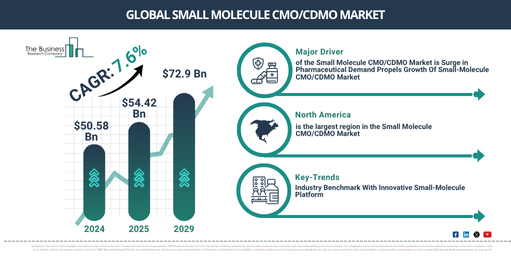
    The CMO/CDMO market for small molecules has seen a significant increase in recent years. The market, which is valued at $50.58 billion in 2024, is projected to reach $54.42 billion in 2025, reflecting a compound annual growth rate (CAGR) of 7.6%. The expansion in the past timeframe is associated with positive governmental backing, economic solutions, escalating complexity in drug creation, industry merging and focus on essential skillsets.

    There is a prediction of robust expansion for the small molecule CMO/CDMO market in the upcoming years. An expected growth to “$72.9 billion in 2029 with a compound annual growth rate (CAGR) of 7.6%” is projected. The growth during the prediction period can be credited to the upsurge in drug pipelines, the worldwide operations of pharmaceuticals, the demand for adaptable manufacturing, biopharmaceutical convergence, and the expertise in regulatory compliance. Key trends during this period are anticipated to be sustainable and eco-friendly manufacturing practices, escalating collaboration and partnerships, customised medicine and niche treatments, growth in virtual and virtual-to-reality companies, incorporation of digital technologies, and swift response manufacturing.

    Get A Free Sample Of The Report:

    https://www.thebusinessresearchcompany.com/sample.aspx?id=13733&type=smp

    What Drivers Are Accelerating Expansion Of The Small Molecule CMO/CDMO Market?

    The surge in the need for pharmaceuticals is projected to fuel the expansion of the small-molecule CMO/CDMO market in the future. The pharmaceutical sector, which encompasses the invention, production, and implementation of drugs and medications by both governmental and non-governmental bodies, utilizes small-molecule CMO/CDMO. This allows for the outsourcing of services such as the creation, production, and packaging of small-molecule medications, and aids pharmaceutical firms in reducing expenses, conserving time, and enhancing procedures. For example, domestic pharmaceutical industry exports rose to 9.59 billion USD (12.79 billion CAD) in 2022, an increase from 10.71 billion CAD in 2021, as reported by the Government of Canada in August 2024. Imports also saw growth, reaching 30.21 billion CAD, up from 26.63 billion CAD in 2021. Hence, the escalating demand for pharmaceuticals is prompting the growth of the small-molecule CMO/CDMO market.

    What Is The Segment Breakdown Of The Small Molecule CMO/CDMO Market?

    The small molecule cmo/cdmo market covered in this report is segmented –

    1) By Product: Small Molecule Drug Product, Small Molecule API

    2) By Stage Type: Clinical, Commercial, Preclinical

    3) By Therapeutic Area: Oncology, Neurology, Infectious Disease, Cardiovascular Disease, Respiratory Disorders, Metabolic Disorders, Other Therapeutics

    4) By Application: Cardiovascular, Oncology, Diabetes, Immunological Disorders

    Subsegments:

    1) By Small Molecule Drug Product: Solid Dosage Forms (Tablets, Capsules), Liquid Dosage Forms (Injectables, Solutions), Topical Dosage Forms

    2) By Small Molecule API (Active Pharmaceutical Ingredient): Generic APIs, Branded APIs, Custom Synthesis APIs

    How Are Global Trends Impacting The Development Of The Small Molecule CMO/CDMO Market?

    Leading firms in the small-molecule CMO/CDMO market are turning their attention to groundbreaking technologies, including the cutting-edge small-molecule platform in Shanghai, to enhance their CDMO offerings. This platform signifies the pinnacle of tech advancements aimed at producing small-molecule drugs and crafting more secure, effective, and efficiently manufactured medicinal compounds. For example, in June 2023, Porton Pharma Solutions Ltd., a pharmaceutical enterprise based in China, unveiled a sophisticated small-molecule platform in Shanghai, thereby enhancing CDMO services. This platform exemplifies a comprehensive approach, blending innovative technologies and methods to propel the complete lifecycle of small molecule pharmaceuticals, providing end-to-end solutions and greater flexibility and availability, enabled by digital transformation.

    Which Companies Are Contributing Significantly To The Small Molecule CMO/CDMO Market Growth?

    Major companies operating in the small molecule CMO/CDMO market report are Patheon NV (Thermo Fisher Scientific), GlaxoSmithKline, Johnson Matthey PLC, Lonza Group Ltd., WuXi AppTec, Catalent Inc., Aurobindo Pharma, Fareva, Aesica Pharmaceuticals Limited, Siegfried holdings AG, Recipharm AB, Jubilant Life Sciences Limited, Almac Group, Piramal Pharma Solutions, Oxford Chemicals Inc., Syngene International Limited, Novasep, Pfizer CentreOne, GVK Biosciences, ChemPartner, Avid Bioservices Inc., Dishman Carbogen Amcis Ltd., ProChem Inc., Metrics Contract Services

    Access The Complete Report Here:

    https://www.thebusinessresearchcompany.com/report/small-molecule-cmo-or-cdmo-global-market-report

    Which Region Is Leading Innovation In The Small Molecule CMO/CDMO Market?

    North America was the largest region in the small molecule CMO/CDMO market in 2024. The regions covered in the small molecule CMO/CDMO market report are Asia-Pacific, Western Europe, Eastern Europe, North America, South America, Middle East, Africa.

    Customize Your Report Here:

    https://www.thebusinessresearchcompany.com/customise?id=13733&type=smp

    About The Business Research Company:

    With over 15000+ reports from 27 industries covering 60+ geographies, The Business Research Company has built a reputation for offering comprehensive, data-rich research and insights. Armed with 1,500,000 datasets, the optimistic contribution of in-depth secondary research, and unique insights from industry leaders, you can get the information you need to stay ahead in the game.

    Get in touch with us:

    The Business Research Company: https://www.thebusinessresearchcompany.com/

    Americas +1 310-496-7795

    Asia +44 7882 955267 & +91 8897263534

    Europe +44 7882 955267

    Email us at info@tbrc.info

    Follow us on:

    LinkedIn: https://in.linkedin.com/company/the-business-research-company

    YouTube: https://www.youtube.com/channel/UC24_fI0rV8cR5DxlCpgmyFQ

    Global Market Model: https://www.thebusinessresearchcompany.com/global-market-model
  • What Key Growth Drivers Are Shaping The Small Cell Lung Cancer Therapeutics Market Forecast Toward $12.2 Billion?

    What Key Growth Drivers Are Shaping The Small Cell Lung Cancer Therapeutics Market Forecast Toward $12.2 Billion?

    Claim 20% Off Global Market Reports With Code ONLINE20 – Insights on Tariff Effects, Global Trade, and Industry Disruptors

    What Is The Projected Valuation Of The Small Cell Lung Cancer Therapeutics Market In The Coming Years?

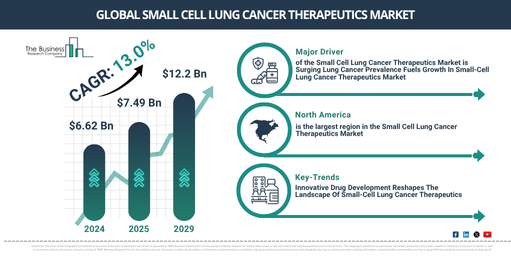
    The market size for therapeutics related to small cell lung cancer has experienced substantial growth over recent years. A rise from $6.62 billion in 2024 to $7.49 billion in 2025 is projected, with a compound annual growth rate (CAGR) of 13.2%. Factors contributing to this historical growth include the escalating prevalence of small cell lung cancer, amplified awareness about the disease, increased demand for efficient and manageable treatments, in addition to government initiatives.

    The market for therapeutics in small cell lung cancer is anticipated to experience significant expansion in the coming years, with projections indicating it will reach “$12.2 billion by 2029, boasting a compound annual growth rate (CAGR) of 13.0%. This growth during the forecast period is likely due to contributing factors such as increased investments in research and developmental activities concerning small cell lung cancer treatments, a rise in tobacco smoking, the expansion of chemotherapy, and growing healthcare expenditures. Key trends expected during this period include the progression in early detection and screening techniques, the broadening of clinical trials, developments in radiation therapy, and advancements in immunotherapy.

    Get A Free Sample Of The Report:

    https://www.thebusinessresearchcompany.com/sample.aspx?id=12912&type=smp

    Which Key Factors Are Fueling Growth In The Small Cell Lung Cancer Therapeutics Market?

    The escalation in the occurrence of lung cancer is predicted to stimulate the expansion of the small-cell lung cancer therapeutics market in the future. Lung cancer is recognized as a malicious disease characterized by uncontrolled growth of irregular cells in lung tissues, exhibiting symptoms like coughing, chest pain, and breathing difficulties. Typically, the treatment for lung cancer, including small cell lung cancer, encompasses a blend of chemotherapy, radiation therapy, and occasionally, targeted therapies. These therapies contribute to extended survival and enhanced life quality for those with lung cancer. As reported by the American Cancer Society, a government organization based in the US, in January 2023, about 238,340 new lung cancer cases were recorded (117,550 in men and 120,790 in women). The organization also reported a staggering 127,070 deaths due to lung cancer (67,160 in men and 59,910 in women) in 2022. Consequently, the mounting occurrence of lung cancer is propelling the growth of the small-cell lung cancer therapeutics market.

    Which Segments Define The Structure Of The Small Cell Lung Cancer Therapeutics Market?

    The small cell lung cancer therapeutics market covered in this report is segmented –

    1) By Drug Type: Atezolizumab, Topotecan, Lurbinectedin, Durvalumab, Methotrexate, Pembrolizumab

    2) By Treatment Type: Chemotherapy, Targeted Therapy, Other Treatment Types

    3) By Route Of Administration: Oral, Parenteral, Other Routes Of Administrations

    4) By End-Users: Hospitals, Cancer Therapy Centers, Other End-Users

    What Strategic Shifts And Innovations Are Influencing The Small Cell Lung Cancer Therapeutics Market?

    Leading corporations in the small-cell lung cancer therapeutics market are prioritizing the development of innovative products like monoclonal antibodies, aiming to improve the effectiveness of targeted treatments and enhance patient prognosis. Monoclonal antibodies are molecules developed in a laboratory to attach themselves to specific antigens, offering uniformity and specificity drawn from a singular clone of immune cells. Their targeted action makes them highly effective in treating cancer and autoimmune diseases. As an illustration, PT Kalbe Farma Tbk, a health service provider based in Indonesia, introduced Serplulimab to lung cancer patients in March 2024. Serplulimab, an entirely humanized anti-PD-1 monoclonal antibody, has proven itself highly effective in first-line treatment for extensive-stage small cell lung cancer (ES-SCLC), increasing median survival rates to 15.4 months from 10.9 months with chemotherapy alone13. Clinical trials also revealed improved progression-free survival and greater objective response rates, confirming its potential as a valuable treatment option for patients not previously treated for this aggressive type of cancer.

    Who Are The Primary Market Leaders In The Small Cell Lung Cancer Therapeutics Market?

    Major companies operating in the small cell lung cancer therapeutics market are Pfizer Inc., Johnson and Johnson Private Limited, F. Hoffmann-La Roche AG, AbbVie Inc., Bayer AG, Janssen Pharmaceuticals, Novartis AG, Merck and Co. Inc., Sanofi S.A, Bristol-Myers Squibb Company, Astrazeneca PLC, GSK PLC, Medtronic PLC, Eli Lilly and Company, Gilead Sciences Inc., Boehringer Ingelheim International GmbH, Otsuka Pharmaceutical Co. Ltd., Teva Pharmaceutical Industries Ltd., Regeneron Pharmaceuticals, Mylan N.V., Astellas Pharma Inc., Daiichi Sankyo Company Ltd., Vertex Pharmaceuticals, Aurobindo Pharma Limited, Kyowa Kirin Co. Ltd.

    Access The Complete Report Here:

    https://www.thebusinessresearchcompany.com/report/small-cell-lung-cancer-therapeutics-global-market-report

    What Regional Factors Are Accelerating Growth In The Small Cell Lung Cancer Therapeutics Market?

    North America was the largest region in the small cell Lung cancer therapeutics market in 2024. Asia-Pacific is expected to be the fastest-growing region in the forecast period. The regions covered in small cell lung cancer therapeutics market report are Asia-Pacific, Western Europe, Eastern Europe, North America, South America, Middle East and Africa.

    Customize Your Report Here:

    https://www.thebusinessresearchcompany.com/customise?id=12912&type=smp

    About The Business Research Company:

    With over 15000+ reports from 27 industries covering 60+ geographies, The Business Research Company has built a reputation for offering comprehensive, data-rich research and insights. Armed with 1,500,000 datasets, the optimistic contribution of in-depth secondary research, and unique insights from industry leaders, you can get the information you need to stay ahead in the game.

    Get in touch with us:

    The Business Research Company: https://www.thebusinessresearchcompany.com/

    Americas +1 310-496-7795

    Asia +44 7882 955267 & +91 8897263534

    Europe +44 7882 955267

    Email us at info@tbrc.info

    Follow us on:

    LinkedIn: https://in.linkedin.com/company/the-business-research-company

    YouTube: https://www.youtube.com/channel/UC24_fI0rV8cR5DxlCpgmyFQ

    Global Market Model: https://www.thebusinessresearchcompany.com/global-market-model
  • How Will The Respiratory Disease Vaccine Market Expand At A CAGR Of 2.6% Through 2029?

    How Will The Respiratory Disease Vaccine Market Expand At A CAGR Of 2.6% Through 2029?

    Claim 20% Off Global Market Reports With Code ONLINE20 – Insights on Tariff Effects, Global Trade, and Industry Disruptors

    How Much Will The Respiratory Disease Vaccine Market Be Worth By 2029?

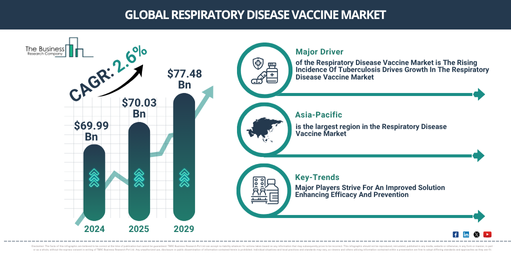
    The market size for vaccines for respiratory diseases has observed a slight increase in the past few years. The market is projected to expand from $69.99 billion in 2024 to $70.03 billion in 2025, exhibiting a compound annual growth rate (CAGR) of 0.1%. The growth during the historical period is a result of the escalating occurrence of respiratory infections, heightened awareness about vaccinations in the public sector, initiatives in public health, and an upswing in the demand for more potent and better-tolerable vaccines.

    The market size of the respiratory disease vaccine is projected to experience consistent expansion in the coming years. It is forecasted to augment to “$77.48 billion by 2029, with a compound annual growth rate (CAGR) of 2.6%. The escalation anticipated during this forecast period can be credited to the aging demographic, surge in healthcare expenditure, investment in vaccines, and readiness for pandemics. Key tendencies to watch in the forecast period encompass vaccine innovation, co-operative scientific research, progression in vaccine formulation, and endorsement of drugs.

    Get A Free Sample Of The Report:

    https://www.thebusinessresearchcompany.com/sample.aspx?id=12924&type=smp

    Which Market Dynamics Are Playing A Critical Role In The Growth Of The Respiratory Disease Vaccine Market?

    The respiratory disease vaccine market is projected to grow due to the rising prevalence of tuberculosis. Tuberculosis (TB) is an infectious respiratory condition caused by Mycobacterium tuberculosis bacteria, primarily attacking the lungs and other organs leading to various health complications. The uptick in tuberculosis rates might incentivize the development and distribution of vaccines for the respiratory disease in a bid to curb its spread. For example, the Centers for Disease Control and Prevention, a governmental organization in the US, stated in November 2023 that there were 8,331 reported tuberculosis cases in the United States in 2022, a 5.9% surge from the previous year. The infection rate jumped to 2.5 cases per 100,000 individuals, a 5.5% growth from the previous year. Therefore, the escalating rates of tuberculosis will stimulate the growth of the respiratory disease vaccine market.

    What Are The Primary Segmentation Parameters In The Respiratory Disease Vaccine Market?

    The respiratory disease vaccine market covered in this report is segmented –

    1) By Type: Viral Vaccine, Bacterial Vaccine, Combination Vaccine

    2) By Infection: COVID-19, Influenza, Respiratory Syncytial Virus (RSV), Pneumonia, Other Infections

    3) By Age: Infant, Adolescent, Adult

    4) By End-User: Clinic, Hospital, Other End-Users

    Subsegments:

    1) By Viral Vaccine: Influenza Vaccine, Respiratory Syncytial Virus (RSV) Vaccine, Coronavirus Vaccine

    2) By Bacterial Vaccine: Pneumococcal Vaccine, Haemophilus Influenzae Type B (Hib) Vaccine, Pertussis Vaccine

    3) By Combination Vaccine: DTaP With Hib And IPV, Pneumococcal Conjugate Vaccine With Influenza Vaccine, MMRV

    Which Emerging Trends Are Reshaping The Respiratory Disease Vaccine Market Landscape?

    Key players in the respiratory disease vaccine market are focusing their efforts on the development of cutting-edge products to enhance their effectiveness and provide advanced solutions for the prevention and treatment of respiratory diseases. For example, Pfizer Inc., a pharmaceutical firm based in the United States, received approval from the Food and Drug Administration (FDA) in May 2023 for ABRYSVO (Respiratory Syncytial Virus Vaccine). This is a bivalent respiratory syncytial virus prefusion F (RSVpreF) vaccine aimed at preventing lower respiratory tract problems caused by the respiratory syncytial virus in those aged 60 and over. ABRYSVO comprises two preF proteins specifically designed to optimize immunity against RSV A and B strains and has been clinically demonstrated to be safe and effective.

    Which Organizations Are At The Forefront Of The Respiratory Disease Vaccine Market?

    Major companies operating in the respiratory disease vaccine market are Pfizer Inc., Johnson & Johnson Ltd., Merck & Co. Inc., Sanofi SA, AstraZeneca PLC, GlaxoSmithKline PLC, Sinovac Biotech Co. Ltd., Moderna Inc., BioNTech SE, CSL Limited, Daiichi Sankyo Company Limited, Mitsubishi Tanabe Pharma Corporation, Novavax Inc., Emergent BioSolutions Inc., Seqirus, Bio Farma, Dynavax Technologies Corporation, Hualan Biological Bacterin Co. Ltd., Serum Institute of India Pvt. Ltd., Bavarian Nordic A/S, Valneva SE, Biological E. Limited, CanSino Biologics Inc., Bharat Biotech International Limited, Medicago Inc., CureVac N.V., Incepta Vaccine Ltd., Inovio Pharmaceuticals Inc., Ology Bioservices, VBI Vaccines Inc.

    Access The Complete Report Here:

    https://www.thebusinessresearchcompany.com/report/respiratory-disease-vaccine-global-market-report

    Which Region Holds The Greatest Opportunity For Respiratory Disease Vaccine Market Expansion?

    Asia-Pacific was the largest region in the respiratory disease vaccine market in 2024. North America is expected to be the fastest-growing region in the forecast period. The regions covered in respiratory diseases vaccine market report are Asia-Pacific, Western Europe, Eastern Europe, North America, South America, Middle East and Africa.

    Customize Your Report Here:

    https://www.thebusinessresearchcompany.com/customise?id=12924&type=smp

    About The Business Research Company:

    With over 15000+ reports from 27 industries covering 60+ geographies, The Business Research Company has built a reputation for offering comprehensive, data-rich research and insights. Armed with 1,500,000 datasets, the optimistic contribution of in-depth secondary research, and unique insights from industry leaders, you can get the information you need to stay ahead in the game.

    Get in touch with us:

    The Business Research Company: https://www.thebusinessresearchcompany.com/

    Americas +1 310-496-7795

    Asia +44 7882 955267 & +91 8897263534

    Europe +44 7882 955267

    Email us at info@tbrc.info

    Follow us on:

    LinkedIn: https://in.linkedin.com/company/the-business-research-company

    YouTube: https://www.youtube.com/channel/UC24_fI0rV8cR5DxlCpgmyFQ

    Global Market Model: https://www.thebusinessresearchcompany.com/global-market-model
  • What Is The Forecast Valuation Of The Process Analytical Technology Market Projected To Reach $5 Billion By 2029?

    What Is The Forecast Valuation Of The Process Analytical Technology Market Projected To Reach $5 Billion By 2029?

    Claim 20% Off Global Market Reports With Code ONLINE20 – Insights on Tariff Effects, Global Trade, and Industry Disruptors

    What Is The Present And Forecasted Size Of The Process Analytical Technology Market?

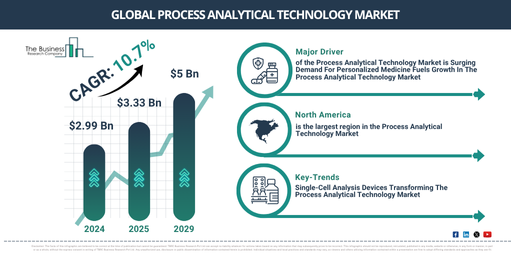
    In recent years, there has been a swift expansion in the size of the process analytical technology market. It’s projected to escalate from $2.99 billion in 2024 to $3.33 billion in 2025, with a compound annual growth rate (CAGR) of 11.3%. This remarkable growth during the historical period can be ascribed to factors such as compliance with regulations, demands for quality control, initiatives to cut costs, globalization of supply chains, and market rivalry.

    Predicted swift expansion is in store for the process analytical technology market in the forthcoming years, with an estimated growth to “$5 billion in 2029”, manifesting a compound annual growth rate (CAGR) of 10.7%. Factors contributing to this growth within the forecasted period include initiatives towards sustainability, the rise of personalized medicine, incorporation of industry 4.0, expansion into emerging markets, and a transition towards continuous manufacturing. Notable trends within this same period involve increased utilization of remote monitoring technologies, heightened attention to data analytics and ai, the spread of digital twins, inclusion of blockchain for supply chain visibility, and the emergence of personalized manufacturing.

    Get A Free Sample Of The Report:

    https://www.thebusinessresearchcompany.com/sample.aspx?id=14777&type=smp

    What External And Internal Drivers Are Influencing The Process Analytical Technology Market?

    The growth of the process analytical technology market is expected to be fueled by the increasing need for personalized medicine. Personalized medicine is a medical treatment approach that takes into account each individual’s unique genetic make-up, environment, and lifestyle. Innovations in genomics have led to a surge in demand for personalized medicine, as these advances enable treatment plans to be adjusted according to the specific genetic profiles and disease traits of individual patients. Process analytical technology plays a key role in personalized medicine, as it is used to observe and evaluate crucial factors in the creation of bespoke treatments such as gene therapies or customized drugs. This tight control of the production process ensures the quality and uniformity of the personalized therapies. For instance, the Center for Drug Evaluation and Research (CDER), a critical division of the U.S. Food and Drug Administration which is tasked with ensuring safe and efficacious drugs are accessible to promote American public health, approved 37 new molecular entities (NMEs) in 2022. Out of these NMEs, around 34% or 12 are categorized as personalized medicine. This shows that the upswing in demand for personalized medicine is a key driver for the growth of the process analytical technology market.

    How Is The Process Analytical Technology Market Segmented Across Key Categories?

    The process analytical technology market covered in this report is segmented –

    1) By Product: Analyzers, Sensors And Probes, Samplers, Software And Services

    2) By Technique: Spectroscopy, Chromatography, Particle Size Analysis, Electrophoresis, Other Techniques

    3) By Application: Small Molecules, Large Molecules, Manufacturing Applications, Other Applications

    4) By End-User: Pharmaceutical Companies, Biotechnology Companies, Other End-Users

    Subsegments:

    1) By Analyzers: Gas Analyzers, Liquid Analyzers, Particle Size Analyzers, Spectrometers, Chromatographs, Others (Moisture Analyzers, PH Meters)

    2) By Sensors And Probes: Temperature Sensors, Pressure Sensors, pH Sensors, Conductivity Sensors, Optical Sensors, Others (Flow Sensors, Humidity Sensors)

    3) By Samplers: Manual Samplers, Automated Samplers, Online Samplers, Batch Samplers

    4) By Software And Services: Software (Data Analytics, Process Control Software), Cloud-based Solutions, Support And Maintenance Services, Consulting Services, Installation And Integration Services

    What Key Trends Are Driving Growth In The Process Analytical Technology Market?

    Top firms in the process analytical technology market are venturing into the creation of groundbreaking products like new compact radiance instruments, aiming to capture a dominant position in the market. These novel compact radiance instruments can analyze single cells within a population, which allows for a detailed study of cellular diversity, responses, and behaviour in manufacturing processes in real time. In a specific case, LumaCyte Inc., a biotech company from the US, rolled out a new compact radiance instrument particularly crafted for advanced therapy biomanufacturing and quality control settings in October 2023. This radiance gadget is a high-content, label-free microfluidic cell scrutinizer and separator capable of doing single-cell analysis and sorting. Remarkably, despite its advanced technological features, this cutting-edge device is compact, taking a mere 16 inches of bench space. Its accuracy and efficiency in analytical capabilities make it a crucial technology for use in biomanufacturing and quality control contexts.

    Who Are The Major Stakeholders Operating In The Process Analytical Technology Market?

    Major companies operating in the process analytical technology market are Siemens AG, Thermo Fisher Scientific Inc., Danaher Corporation, ABB Ltd., GE Healthcare, Emerson Electric Co., Agilent Technologies Inc., Teledyne Technologies Incorporated, Sartorius AG, Mettler-Toledo, PerkinElmer Inc., Shimadzu Corporation, Waters Corporation, Bruker Corporation, HORIBA Ltd., Carl Zeiss AG, Nova Biomedical, TECAN Group Ltd., Repligen Corporation, Hamilton Company, Oxford Instruments plc, Malvern Panalytical, Hitachi High-Tech Analytical Science, JEOL Ltd., Yokogawa Electric Corporation

    Access The Complete Report Here:

    https://www.thebusinessresearchcompany.com/report/process-analytical-technology-global-market-report

    How Do Regional Dynamics Influence The Process Analytical Technology Market Performance?

    North America was the largest region in the process analytical technology market in 2024. Asia-Pacific is expected to be the fastest-growing region in the forecast period. The regions covered in the process analytical technology market report are Asia-Pacific, Western Europe, Eastern Europe, North America, South America, Middle East and Africa.

    Customize Your Report Here:

    https://www.thebusinessresearchcompany.com/customise?id=14777&type=smp

    About The Business Research Company:

    With over 15000+ reports from 27 industries covering 60+ geographies, The Business Research Company has built a reputation for offering comprehensive, data-rich research and insights. Armed with 1,500,000 datasets, the optimistic contribution of in-depth secondary research, and unique insights from industry leaders, you can get the information you need to stay ahead in the game.

    Get in touch with us:

    The Business Research Company: https://www.thebusinessresearchcompany.com/

    Americas +1 310-496-7795

    Asia +44 7882 955267 & +91 8897263534

    Europe +44 7882 955267

    Email us at info@tbrc.info

    Follow us on:

    LinkedIn: https://in.linkedin.com/company/the-business-research-company

    YouTube: https://www.youtube.com/channel/UC24_fI0rV8cR5DxlCpgmyFQ

    Global Market Model: https://www.thebusinessresearchcompany.com/global-market-model

  • Preeclampsia Drugs Market – Opportunities, Share, Growth and Competitive Analysis and Forecast 2029

    Preeclampsia Drugs Market – Opportunities, Share, Growth and Competitive Analysis and Forecast 2029

    Claim 20% Off Global Market Reports With Code ONLINE20 – Insights on Tariff Effects, Global Trade, and Industry Disruptors

    How Big Is The Preeclampsia Drugs Market Today And What Is Its Future Size?

    The market size for preeclampsia drugs has witnessed considerable growth in the last few years. Projected growth is from $1.25 billion in 2024 to $1.37 billion in 2025, representing a compound annual growth rate (CAGR) of 9.6%. Factors contributing to this growth during the historic period include enhanced maternal health awareness, intensified research and development, concerns surrounding neonatal health, and advancements in early detection.

    Rapid expansion is predicted for the preeclampsia drugs market in the coming years. The market is projected to reach “$2.1 billion in 2029 with a compound annual growth rate (CAGR) of 11.2%. The projected growth during this prediction period can be accredited to personalized medicine, non-invasive diagnostic instruments, targeted treatments, and health equality initiatives. Preventive strategies, patient-focused care, continuous supervision, and regulatory emphasis are among the significant trends anticipated during the forecast period.

    Get A Free Sample Of The Report:

    https://www.thebusinessresearchcompany.com/sample.aspx?id=13025&type=smp

    What Underlying Factors Are Supporting The Preeclampsia Drugs Market Growth?

    Anticipated market growth for preeclampsia drugs is closely linked to the increase in diabetes incidents among expectant mothers. Diabetes, a chronic metabolic disorder, is often marked by heightened blood sugar levels. Preeclampsia, another severe condition frequently experienced during pregnancy, is associated with raised blood pressure and organ damage. Pregnant women with preterm preeclampsia often take Metformin, a drug used to treat this condition. In December 2022, records from the National Library of Medicine, a renowned US-based biomedical library and hub for biomedical informatics, showed an increase of 6.56% in Gestational Diabetes Mellitus (GDM) cases with an absolute number of 20,865 recorded incidents for the year. As such, the increasing occurrence of diabetes among pregnant women presents a significant driving force for the preeclampsia drug market.

    How Is The Global Preeclampsia Drugs Market Broken Down By Segment?

    The preeclampsia drugs market covered in this report is segmented –

    1) By Type: Mild Preeclampsia, Severe Preeclampsia

    2) By Treatment: Medication to Lower Hypertension (B.P), Corticosteroids, Anticonvulsants Medication

    3) By Route of Administration: Oral, Parenteral, Other Route of Administration

    4) By Distribution Channel: Hospital Pharmacy, Retail Pharmacy, Online Pharmacies, Other Distribution Channels

    5) By End-User: Hospitals, Specialty Clinics, Diagnostic Centers, Other End-Users

    Subsegments:

    1) By Mild Preeclampsia: Blood Pressure Management, Proteinuria Monitoring, Lifestyle Modifications

    2) By Severe Preeclampsia: Antihypertensive Medications, Magnesium Sulfate Therapy, Emergency Delivery Management

    Which Trends Are Likely To Redefine Growth Paths In The Preeclampsia Drugs Market?

    Leading players in the preeclampsia medicine market are concentrating on the development of advanced drug solutions to strengthen their market standing. For example, Comanche Biopharma Corp., an American biopharmaceutical company, announced in March 2023 that their unique siRNA treatment, CBP-4888 for preeclampsia, had received approval for an investigational new drug (IND) application by the Food and Drug Administration (FDA). Administered subcutaneously, CBP-4888 is a siRNA therapy that diminishes the production of soluble fms-like tyrosine kinase-1 (sFLT1) in the placenta. The overproduction of the sFLT1 protein by the placenta, which then enters the maternal bloodstream, is primarily responsible for preeclampsia. Symptoms of preeclampsia such as elevated blood pressure and organ damage can be mitigated by CBP-4888, potentially allowing for a safe extension of the pregnancy period.

    Which Firms Are Making The Biggest Impact In The Preeclampsia Drugs Market?

    Major companies operating in the preeclampsia drugs market are AbbVie Inc., Pfizer Inc., Johnson & Johnson Co, F. Hoffmann-La Roche Ltd., Merck & Co. Inc., Novartis AG, Sanofi S.A., Celgene Corp, Thermo Fisher Scientific Inc., AstraZeneca PLC, Abbott Laboratories, GlaxoSmithKline PLC, Takeda Pharmaceuticals Company Limited, Eli Lilly and Company, Gilead Sciences Inc., Amgen Inc., Siemens Healthcare GmbH, Boehringer Ingelheim Group, Viatris Inc., Baxter International Inc., Teva Pharmaceutical Industries Ltd., Union Chimique Belge SA, Otsuka Pharmaceutical Co. Ltd., Kyowa Kirin Co Ltd., Mallinckrodt Pharmaceuticals Limited, Comanche Biopharma Corp, Genentech Inc., Diabetomics Inc.

    Access The Complete Report Here:

    https://www.thebusinessresearchcompany.com/report/preeclampsia-drugs-global-market-report

    Which Geographic Regions Are Creating Strong Demand In The Preeclampsia Drugs Market?

    North America was the largest region in the preeclampsia drugs market in 2024. The regions covered in preeclampsia drugs market report are Asia-Pacific, Western Europe, Eastern Europe, North America, South America, Middle East and Africa.

    Customize Your Report Here:

    https://www.thebusinessresearchcompany.com/customise?id=13025&type=smp

    About The Business Research Company:

    With over 15000+ reports from 27 industries covering 60+ geographies, The Business Research Company has built a reputation for offering comprehensive, data-rich research and insights. Armed with 1,500,000 datasets, the optimistic contribution of in-depth secondary research, and unique insights from industry leaders, you can get the information you need to stay ahead in the game.

    Get in touch with us:

    The Business Research Company: https://www.thebusinessresearchcompany.com/

    Americas +1 310-496-7795

    Asia +44 7882 955267 & +91 8897263534

    Europe +44 7882 955267

    Email us at info@tbrc.info

    Follow us on:

    LinkedIn: https://in.linkedin.com/company/the-business-research-company

    YouTube: https://www.youtube.com/channel/UC24_fI0rV8cR5DxlCpgmyFQ

    Global Market Model: https://www.thebusinessresearchcompany.com/global-market-model
  • Pharmaceutical Supply Chain Management Market Trends 2025–2029: Regional Outlook and Sizing Analysis

    Pharmaceutical Supply Chain Management Market Trends 2025–2029: Regional Outlook and Sizing Analysis

    Claim 20% Off Global Market Reports With Code ONLINE20 – Insights on Tariff Effects, Global Trade, and Industry Disruptors

    How Will The Pharmaceutical Supply Chain Management Market Valuation Change Between Now And 2029?

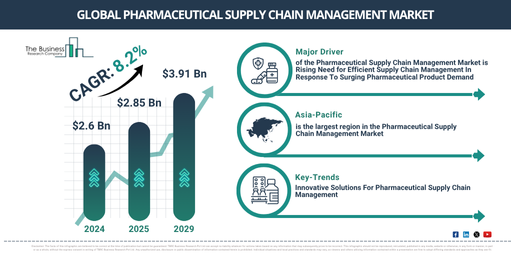
    In recent times, the market size of the pharmaceutical supply chain management has seen considerable growth. The market, which is expected to expand from $2.6 billion in 2024 to $2.85 billion in 2025, will do so at a Compound Annual Growth Rate (CAGR) of 9.6%. Factors like regulatory compliance, globalization, risk management, demand for personalized medicine, and sustainability have contributed to the growth during the historic period.

    The market size for pharmaceutical supply chain management is projected to experience robust expansion in the coming years. The market is predicted to surge to “$3.91 billion by 2029, growing at a compound annual growth rate (CAGR) of 8.2%. The anticipated growth in the forecast period can be linked to factors such as precision medicine, resilience planning, data security, integration of e-commerce, real-time monitoring, visibility, and circular economy initiatives. Key trends expected during this forecast period encompass digital transformation, technological progression, collaboration, visibility, environmental sustainability, integration of advanced analytics and AI, and the adoption of blockchain technology.

    Get A Free Sample Of The Report:

    https://www.thebusinessresearchcompany.com/sample.aspx?id=13508&type=smp

    Which Demand Drivers Are Strengthening The Pharmaceutical Supply Chain Management Market?

    The pharmaceutical supply chain management market is predicted to flourish due to the escalating demand for pharmaceutical products. These products, which include medications and drugs, are created, manufactured, and disseminated to help prevent, treat, or manage numerous medical conditions and illnesses. The efficient production, distribution, and oversight of these medications are ensured through pharmaceutical supply chain management, providing timely accessibility to vital healthcare products. For example, as reported by the European Federation of Pharmaceutical Industries and Associations in June 2023, a trade association and lobbying group based in Belgium, the production value of pharmaceuticals in Europe saw an increase from 347.31 billion USD (323,950 million euros) in 2021 to 364.26 billion USD (340,000 million euros) in 2022, reflecting a growth of 4.88%. As a result, the escalating demand for pharmaceutical products is expected to boost the growth of the pharmaceutical supply chain management market.

    Which Segmentation Factors Are Critical In The Pharmaceutical Supply Chain Management Market Analysis?

    The pharmaceutical supply chain management market covered in this report is segmented –

    1) By Component: Solution, Service

    2) By Deployment Mode: On-Premise, Cloud Based

    3) By End-Use: Healthcare Manufacturers, Healthcare Providers, Distributors, Logistics

    Subsegments:

    1) By Solution: Supply Chain Management Software, Inventory Management Systems, Order Management Systems, Transportation Management Solutions, Warehouse Management Solutions, Track And Trace Solutions, Demand Forecasting Solutions, Cold Chain Monitoring Solutions

    2) By Service: Consulting Services, Integration And Implementation Services, Managed Services, Support And Maintenance Services, Logistics And Distribution Services, Training And Education Services

    What Are The Dominant Trends Currently Seen In The Pharmaceutical Supply Chain Management Market?

    Leaders in the pharmaceutical supply chain management market, such as TraceLink Inc., are creating innovative products like multi-enterprise supply chain work management solutions to optimize processes and promote collaboration within the pharmaceutical supply chain. This type of solution is a dedicated software or platform intended to enhance various supply chain processes for numerous organizations in the pharmaceutical industry. As an example, TraceLink Inc., an American company known for providing these kinds of solutions, launched a multi-enterprise solution for the healthcare and life science sectors in April 2022. This solution aims to foster collaborative networks among businesses and their trade partners while boosting the effectiveness of integrated supply planning and execution processes by proficiently managing supply chain challenges like material shortages, short shipments, and fluctuating forecasts. Accordingly, it provides clear, actionable visibility and adaptable business process templates for managing supply chains, resulting in better fill rates, lowering costs, and improved supply plan performance.

    Which Players Are Shaping The Competitive Landscape Of The Pharmaceutical Supply Chain Management Market?

    Major companies operating in the pharmaceutical supply chain management market report are McKesson Corporation, AmerisourceBergen Corporation, Cardinal Health Inc., Oracle Corporation, SAP SE, DSV Panalpina, UPS Healthcare, Parexel International Corporation, Spectrum Health Medical Group, Vizient Inc., Catalent Inc., Infor Inc., Epicor Software Corporation, Alvogen Inc., Vetter Pharma International GmbH, Almac Group, Manhattan Associates Inc., Global Healthcare Exchange LLC, CryoPDP, Tecsys Inc., Arvato Supply Chain Solutions, Terso Solution, Logitag Systems, Jump Technologies, Chain.io Inc.

    Access The Complete Report Here:

    https://www.thebusinessresearchcompany.com/report/pharmaceutical-supply-chain-management-global-market-report

    Which Region Is Likely To Register The Fastest Growth In The Pharmaceutical Supply Chain Management Market?

    Asia-Pacific was the largest region in the pharmaceutical supply chain management market in 2024. Asia-Pacific is expected to be the fastest-growing region in the forecast period. The regions covered in the pharmaceutical supply chain management market report are Asia-Pacific, Western Europe, Eastern Europe, North America, South America, Middle East, Africa.

    Customize Your Report Here:

    https://www.thebusinessresearchcompany.com/customise?id=13508&type=smp

    About The Business Research Company:

    With over 15000+ reports from 27 industries covering 60+ geographies, The Business Research Company has built a reputation for offering comprehensive, data-rich research and insights. Armed with 1,500,000 datasets, the optimistic contribution of in-depth secondary research, and unique insights from industry leaders, you can get the information you need to stay ahead in the game.

    Get in touch with us:

    The Business Research Company: https://www.thebusinessresearchcompany.com/

    Americas +1 310-496-7795

    Asia +44 7882 955267 & +91 8897263534

    Europe +44 7882 955267

    Email us at info@tbrc.info

    Follow us on:

    LinkedIn: https://in.linkedin.com/company/the-business-research-company

    YouTube: https://www.youtube.com/channel/UC24_fI0rV8cR5DxlCpgmyFQ

    Global Market Model: https://www.thebusinessresearchcompany.com/global-market-model