Blog

  • 2025 Analysis: Opportunities and Risks in the Evolving Sacroiliitis Treatment Market

    2025 Analysis: Opportunities and Risks in the Evolving Sacroiliitis Treatment Market

    Claim your 30% discount on Global Market Reports with code ONLINE30. Limited time only.

    What Is the Outlook for the Sacroiliitis Treatment Market Heading Into 2029?

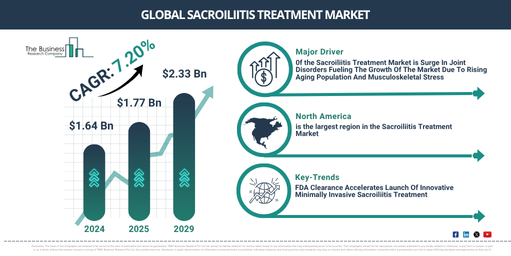
    In recent times, the sacroiliitis treatment market has witnessed robust growth. It is projected to augment from $1.64 billion in 2024 to about $1.77 billion in 2025, adhering to a compound annual growth rate (CAGR) of 7.5%. The significant growth observed in the historic period is credited to factors such as a spike in lower back pain cases, heightened interest in early detection, increase in pelvic injuries associated with sports, growing application of sophisticated imaging modalities, and a mounting emphasis on minimally invasive therapies.

    Expectations are high for robust growth in the sacroiliitis treatment market as it is predicted to reach a value of $2.33 billion by 2029, with a compound annual growth rate (CAGR) of 7.2%. Factors contributing to this projected growth include an increase in R&D investments for unique therapies, a higher adoption rate of telemedicine for managing chronic pain, rising occurrences of autoimmune diseases, more accessible targeted biologic treatments, and a growing demand for bespoke medicine strategies. The forecast period also highlights several key trends such as the progression of targeted drug delivery systems, the creation of personalized treatment models, breakthroughs in regenerative medicinal therapies, advancements in robot-assisted surgical processes, and the development of combined therapy procedures.

    Download The Free Sample Report Here:

    https://www.thebusinessresearchcompany.com/sample.aspx?id=24688&type=smp

    Which Factors Are Pushing The Sacroiliitis Treatment Market Forward?

    The rising instances of joint ailments are anticipated to boost the sacroiliitis treatment market’s expansion. Joint disorders, which cause discomfort, inflammation, rigidity, and compromised mobility due to factors such as injury, ageing, autoimmune conditions, or infections, are conditions affecting the joints. The predominance of joint disorders is primarily amplified because elderly groups suffer natural degradation of their joints, hence escalating the occurrence of conditions like osteoarthritis and other degenerative joint diseases. Sacroiliitis treatment helps manage joint disorders by alleviating inflammation and discomfort in the sacroiliac joints, enhancing mobility and overall joint function, potentially providing relief from symptoms and forestalling further joint deterioration. For example, the Australian Institute of Health and Welfare, a government organisation based in Australia, stated in June 2024 that osteoarthritis, a long-term condition typified by joint cartilage degradation, had an impact on approximately 2.1 million Australians (8.3%) in 2022, including 10% of women and 6.1% of men. Consequently, the escalating instances of joint disorders are stimulating the growth of the sacroiliitis treatment market.

    Which Segment Held The Largest Share In The Sacroiliitis Treatment Market In 2025?

    The sacroiliitis treatment market covered in this report is segmented –

    1) By Type: Medications, Joint Injections, Joint Fusion, Radiofrequency Denervation, Electrical Stimulation

    2) By Diagnosis: Imaging Tests, Physical Examination, Laboratory Tests, Other Diagnosis

    3) By Route Of Administration: Oral, Injectable, Topical

    4) By End-User: Hospitals, Specialty Clinics, Ambulatory Surgical Centers, Home Care Settings

    Subsegments:

    1) By Medications: NSAIDs (Nonsteroidal Anti-Inflammatory Drugs), Corticosteroids, Disease-Modifying Antirheumatic Drugs (DMARDs), Biologic Agents, Analgesics

    2) By Joint Injections: Corticosteroid Injections, Platelet-Rich Plasma (PRP) Injections, Hyaluronic Acid Injections, Prolotherapy

    3) By Joint Fusion: Minimally Invasive SI Joint Fusion, Open SI Joint Fusion, Robotic-Assisted Fusion Techniques, Posterior Approach Fusion, Lateral Approach Fusion

    4) By Radiofrequency Denervation: Conventional Radiofrequency Ablation, Cooled Radiofrequency Ablation, Pulsed Radiofrequency Ablation

    5) By Electrical Stimulation: Transcutaneous Electrical Nerve Stimulation (TENS), Spinal Cord Stimulation (SCS), Peripheral Nerve Stimulation (PNS)

    How Are Key Trends Driving Expansion In The Sacroiliitis Treatment Industry?

    To hastily introduce innovative remedies, secure access to the market, and boost their competitive stance, leading organizations in the sacroiliitis treatment industry make regulatory approvals a priority. These permissions are essentially an affirmation from government health bodies that a medical treatment is both safe and effective for the general public. An example of this occurred in December 2023 when Spinal Simplicity, an American medical equipment production firm, obtained FDA 510(k) clearance for their Liberty-SI Lateral Implant System. This system, designed for sacroiliac joint fusion in patients with sacroiliac disturbances and degenerative sacroiliitis, utilizes a minimal invasive approach. One or two titanium implants are inserted through the ilium and across the SI joint into the sacrum, thereby offering stabilization and fusion. The implants have a central threaded body with deployable wings and compressive elements and come in various sizes. They are also coated with hydroxyapatite to facilitate integration. The procedure is geared to be safer and less invasive, potentially lessening anesthesia duration and enhancing patient results.

    Which Organizations Are Driving Progress In The Sacroiliitis Treatment Industry?

    Major companies operating in the sacroiliitis treatment market are Pfizer Inc., Johnson & Johnson, AbbVie Inc., Novartis AG, Eli Lilly and Company, Boehringer Ingelheim International GmbH, Amgen Inc., Biogen Inc., Sandoz Group AG, UCB S.A., Hikma Pharmaceuticals PLC, Samsung Bioepis Co. Ltd., Lupin Limited, Zydus Lifesciences Limited, Celltrion Healthcare Co. Ltd., Torrent Pharmaceuticals Limited, Globus Medical, Fortis Healthcare, Orthofix Medical Inc., Coherus BioSciences Inc., SI-BONE Inc.

    Get The Full Report Here:

    https://www.thebusinessresearchcompany.com/report/sacroiliitis-treatment-global-market-report

    Which Region Is Expected To Experience The Highest Growth In The Sacroiliitis Treatment Industry?

    North America was the largest region in the sacroiliitis treatment market in 2024. Asia-Pacific is expected to be the fastest-growing region in the forecast period. The regions covered in the sacroiliitis treatment market report are Asia-Pacific, Western Europe, Eastern Europe, North America, South America, Middle East, Africa.

    Request For A Customized Report:

    https://www.thebusinessresearchcompany.com/customise?id=24688&type=smp

    About The Business Research Company:

    With over 15000+ reports from 27 industries covering 60+ geographies, The Business Research Company has built a reputation for offering comprehensive, data-rich research and insights. Armed with 1,500,000 datasets, the optimistic contribution of in-depth secondary research, and unique insights from industry leaders, you can get the information you need to stay ahead in the game.

    Get in touch with us:

    The Business Research Company: https://www.thebusinessresearchcompany.com/

    Americas +1 310-496-7795

    Asia +44 7882 955267 & +91 8897263534

    Europe +44 7882 955267

    Email us at info@tbrc.info

    Follow us on:

    LinkedIn: https://in.linkedin.com/company/the-business-research-company

    YouTube: https://www.youtube.com/channel/UC24_fI0rV8cR5DxlCpgmyFQ

    Global Market Model: https://www.thebusinessresearchcompany.com/global-market-model
  • In-Depth Rotator Cuff Repair Market Report: Business Trends, Growth Factors, and Forecast to 2029

    Claim your 30% discount on Global Market Reports with code ONLINE30. Limited time only.

    What Does the Forecast Indicate for the Rotator Cuff Repair Market From 2025 to 2029?

    There has been robust growth in the rotator cuff repair market size over the past few years. The market is expected to escalate from $1.47 billion in 2024 to $1.57 billion in 2025, showing a compound annual growth rate (CAGR) of 6.3%. The impressive growth during the historic period is due to factors like a surged demand for outpatient surgical procedures, increased acceptance of robot-assisted operations, enhanced availability of sophisticated imaging technologies, heightened focus on individualized treatment options, and an uptick in awareness about advanced therapeutic choices.

    The market size of rotator cuff repair is anticipated to experience significant growth in the forthcoming years, reaching an estimated $1.98 billion by 2029, growing at a compound annual growth rate (CAGR) of 6.0%. This expected growth in the market during the forecast period is due to factors such as the escalating occurrence of shoulder injuries associated with work, the augmented number of elderly patients choosing shoulder surgery, an increasing inclination towards comprehensive rehabilitation methods, the emphasis on healthcare improvement from government components, and growing accessibility of personalized medicinal therapies and treatment plans. Notable developments expected within the forecast period encompass the progression of arthroscopic surgical procedures, the incorporation of AI within diagnostic imaging, advancement in post-surgical rehabilitation mechanisms, the introduction of tele-rehabilitation platforms, and the evolution of 3D printing for personalized implants.

    Download The Free Sample Report Here:

    https://www.thebusinessresearchcompany.com/sample.aspx?id=24687&type=smp

    What Elements Are Contributing To Growth In The Rotator Cuff Repair Market?

    The escalating frequency of sports-related injuries is predicted to spur the expansion of the rotator cuff repair market in the future. These injuries, which typically affect muscles, bones and joints, occur during athletic activities or exercises. The increasing occurrence of such injuries is largely attributable to the rising participation in intense and competitive sports. Rotator cuff repair serves to restore shoulder strength and stability in cases of sports injuries by fixing torn tendons resulting from repetitive motion or sudden trauma. For example, data from the National Safety Council, a non-profit public service organization in the U.S. focused on promoting health and safety, revealed that in 2023 about 3.7 million people sought emergency department treatment for injuries connected to sports and recreational equipment. This marked a 2% increase in such incidents year over year. As such, the escalating prevalence of sports-related injuries is anticipated to fuel the expansion of the rotator cuff repair market.

    Which Segments Are Detailed In The Global Rotator Cuff Repair Market Report?

    The rotator cuff repair market covered in this report is segmented –

    1) By Type: Surgery, Preventive Treatment, Physiotherapy Or Palliative Treatment, Orthobiologics

    2) By Surgical Techniques: Arthroscopic Rotator Cuff Repair, Open Rotator Cuff Repair, Mini-Open Rotator Cuff Repair

    3) By Injury Severity: Partial Thickness, Full Thickness

    4) By Application: Sports Injuries, Age-Related Degeneration, Traumatic Injuries

    5) By End-User: Hospitals, Ambulatory Surgical Centers (ASCs), Orthopedic Clinics

    Subsegment:

    1) By Surgery: Arthroscopic Rotator Cuff Repair, Open Rotator Cuff Repair, Mini-Open Rotator Cuff Repair, Revision Rotator Cuff Surgery, Robotic-Assisted Rotator Cuff Surgery

    2) By Preventive Treatment: Activity Modification Programs, Ergonomic Training And Workplace Adjustments, Strengthening And Conditioning Programs, Patient Education And Lifestyle Counseling, Early Screening And Diagnostic Assessments

    3) By Physiotherapy Or Palliative Treatment: Manual Therapy, Therapeutic Ultrasound, Cryotherapy And Heat Therapy, Electrical Stimulation, Guided Range Of Motion (ROM) Exercises

    4) By Orthobiologics: Platelet-Rich Plasma (PRP) Therapy, Stem Cell Therapy, Hyaluronic Acid Injections, Bone Morphogenetic Proteins (BMPs), Amniotic Tissue And Allograft Products

    Which Emerging Trends And Strategic Shifts Are Shaping The Rotator Cuff Repair Market?

    Many leading businesses in the rotator cuff repair market are prioritizing ground-breaking developments such as the integrity implant system, designed to enhance tendon recovery, boost regenerative tissue repair, and optimize surgical results with minimally invasive methods. The integrity implant system is a specially designed hyaluronic acid-based, PET-reinforced structure that helps in promoting regenerative recovery and tendon repair during rotator cuff surgeries. Take the case of Anika Therapeutics Inc., a US-based joint preservation company that, in February 2024, unveiled the RevoMotion Reverse Shoulder Arthroplasty System, created to restore shoulder mobility and conserve bone structure. The system includes the industry’s tiniest diameter threaded baseplate and is augmented by the AIM surgical planning software, enabling personal preoperative planning to enhance implant position and range of motion outcomes. This system is particularly crafted to handle severe conditions like cuff tear arthropathy, where the rotator cuff is heavily damaged or beyond repair.

    Who Are The Key Contributors To Growth In The Rotator Cuff Repair Market?

    Major companies operating in the rotator cuff repair market are Johnson And Johnson, Stryker Corporation, Zimmer Biomet Holdings Inc., Smith And Nephew plc, Arthrex Inc., CONMED Corporation, Bioventus LLC, Organogenesis Inc., Breg Inc., Exactech Inc., Paragon 28 Inc., Acumed LLC, Anika Therapeutics Inc., Xiros Ltd., Pega Medical Inc., Sawbones Worldwide, Biotek Orthopaedics Pvt. Ltd., Shoulder Innovations Inc., Atreon Orthopedics Inc., Regenexx LLC, Embody Inc.

    Get The Full Report Here:

    https://www.thebusinessresearchcompany.com/report/rotator-cuff-repair-global-market-report

    Which Region Is Projected To Lead The Rotator Cuff Repair Market By 2025?

    North America was the largest region in the rotator cuff repair market in 2024. Asia-Pacific is expected to be the fastest-growing region in the forecast period. The regions covered in the rotator cuff repair market report are Asia-Pacific, Western Europe, Eastern Europe, North America, South America, Middle East, Africa.

    Request For A Customized Report:

    https://www.thebusinessresearchcompany.com/customise?id=24687&type=smp

    About The Business Research Company:

    With over 15000+ reports from 27 industries covering 60+ geographies, The Business Research Company has built a reputation for offering comprehensive, data-rich research and insights. Armed with 1,500,000 datasets, the optimistic contribution of in-depth secondary research, and unique insights from industry leaders, you can get the information you need to stay ahead in the game.

    Get in touch with us:

    The Business Research Company: https://www.thebusinessresearchcompany.com/

    Americas +1 310-496-7795

    Asia +44 7882 955267 & +91 8897263534

    Europe +44 7882 955267

    Email us at info@tbrc.info

    Follow us on:

    LinkedIn: https://in.linkedin.com/company/the-business-research-company

    YouTube: https://www.youtube.com/channel/UC24_fI0rV8cR5DxlCpgmyFQ

    Global Market Model: https://www.thebusinessresearchcompany.com/global-market-model
  • Rotator Cuff Injuries Industry Poised for Rapid Expansion, Projected to Hit $3.42 Billion by 2029

    Claim your 30% discount on Global Market Reports with code ONLINE30. Limited time only.

    How Much Is the Global Rotator Cuff Injuries Market Valued at Present and by 2029?

    The market for rotator cuff injuries has seen vigorous growth in recent years and is projected to further expand from $2.41 billion in 2024 to $2.59 billion in 2025, representing a compound annual growth rate (CAGR) of 7.6%. Factors contributing to the growth during the historic period include an increase in injuries related to sports, a surge in the aging population, heightened awareness of musculoskeletal conditions, a need for effective pain control, and the proliferation of orthopedic surgical procedures.

    Anticipated to exhibit solid expansion in the approaching years, the market size of rotator cuff injuries is projected to escalate to $3.42 billion by 2029, with a compound annual growth rate (CAGR) of 7.2%. Factors contributing to the growth during the predicted period include an expanding aging population, an increase in outpatient orthopedic procedures, wider health insurance coverage, the requirement for patient-tailored implants, and a rise in fitness and sports activities. Major forecast period trends encompass the incorporation of robotic-assisted operations, customization of treatment regimens, advancements in stem cell therapies, the use of AI in diagnostic imaging, the emergence of hybrid rehabilitation models, and innovative developments in bioresorbable implants.

    Download The Free Sample Report Here:

    https://www.thebusinessresearchcompany.com/sample.aspx?id=24686&type=smp

    #What Drivers Are Influencing Growth In The Rotator Cuff Injuries Market?

    The escalation in instances of injuries incurred from sports and exercise activities is predicted to stimulate growth in the rotator cuff injuries market. Injuries sustained from sports or physical activity involve damage to muscles, bones or soft tissues from mild to severe degrees, during workouts or athletics. The risk of these injuries is escalating due to increased participation in strenuous workouts without proper training or recovery periods, thus increasing the likelihood of rotator cuff injuries. Activities that necessitate repetitive overhead movements like tennis, swimming, or lifting frequently cause such injuries because they continuously stress and damage shoulder tendons. For example, Insideworldfootball, a UK-based online news service, reported in October 2024 that sports-related injuries climbed to 4,123 in the 2023-24 season – a 4% rise over the 2022-23 season. Consequently, the rising frequency of injuries from sports and physical activity fuels the expansion of the rotator cuff injuries market.

    What Are The Main Segments Identified In The Rotator Cuff Injuries Market Research?

    The rotator cuff injuries market covered in this report is segmented –

    1) By Product Type: Mono, Combination

    2) By Molecule Type: Recombinant Fusion Proteins, Small Molecule, Monoclonal Antibody, Peptide, Polymer, Gene Therapy

    3) By Route Of Administration: Oral, Intravenous, Subcutaneous, Parenteral, Topical

    4) By End-User: Hospitals, Orthopedic Clinics, Ambulatory Surgical Centers (ASCs), Rehabilitation Centers, Sports Medicine Centers

    Subsegments:

    1) By Mono: Corticosteroids, Platelet-Rich Plasma (PRP), Stem Cell Therapy, Collagen-Based Implants, Pain Management Drugs

    2) By Combination: Platelet-Rich Plasma (PRP) + Stem Cells, Corticosteroids + Physical Therapy, Collagen Implants + Biologics, Analgesics + Anti-Inflammatory Drugs, Surgical Repair + Biologic Therapy

    What Are The Leading Trends And Opportunities In The Rotator Cuff Injuries Sector?

    Firms dominating the rotator cuff injuries market are concentrating on producing innovative products like bio-integrative collagen implant-based structures to facilitate tendon healing and boost durable functional results. A bio-integrative collagen implant-based structure is a collagen-derived mechanism that promotes tissue revival, serving as a framework for new tissue growth. It merges naturally with the body and dissolves over time without leaving any permanent substance. For example, Embody, Inc., a US soft tissue recovery company, launched a system called TAPESTRY RC in May 2022, which obtained U.S. Food and Drug Administration (FDA) 510(k) clearance for rotator cuff repair. With a design suitable for arthroscopic procedures, this offering pairs a bio-integrative collagen implant with user-friendly delivery system and completely bio-absorbable fixation components, with an ultimate goal to enhance healing results in rotator cuff surgeries via both biological and mechanical backing to the repaired tendon.

    Which Companies Play A Key Role In The Development Of The Rotator Cuff Injuries Market?

    Major companies operating in the rotator cuff injuries market are Stryker Corporation, Zimmer Biomet Holdings Inc., Smith And Nephew, Arthrex Inc., Karl Storz SE & Co. KG, Integra LifeSciences Holdings Corporation, Ottobock, CONMED Corporation, Orthofix, Bioventus, ExacTech, Acumed LLC, Anika Therapeutics Inc., Auxein, Ortho Regenerative Technologies Inc., Atreon Orthopedics, Wright’s Wellness Clinic, Tensor Surgical Inc., VNC Orthopaedic Clinic, MinInvasive Ltd.

    Get The Full Report Here:

    https://www.thebusinessresearchcompany.com/report/rotator-cuff-injuries-global-market-report

    What Are The Key Regional Developments Shaping The Rotator Cuff Injuries Market?

    North America was the largest region in the rotator cuff injuries market in 2024. Asia-Pacific is expected to be the fastest-growing region in the forecast period. The regions covered in the rotator cuff injuries market report are Asia-Pacific, Western Europe, Eastern Europe, North America, South America, Middle East, Africa.

    Request For A Customized Report:

    https://www.thebusinessresearchcompany.com/customise?id=24686&type=smp

    About The Business Research Company:

    With over 15000+ reports from 27 industries covering 60+ geographies, The Business Research Company has built a reputation for offering comprehensive, data-rich research and insights. Armed with 1,500,000 datasets, the optimistic contribution of in-depth secondary research, and unique insights from industry leaders, you can get the information you need to stay ahead in the game.

    Get in touch with us:

    The Business Research Company: https://www.thebusinessresearchcompany.com/

    Americas +1 310-496-7795

    Asia +44 7882 955267 & +91 8897263534

    Europe +44 7882 955267

    Email us at info@tbrc.info

    Follow us on:

    LinkedIn: https://in.linkedin.com/company/the-business-research-company

    YouTube: https://www.youtube.com/channel/UC24_fI0rV8cR5DxlCpgmyFQ

    Global Market Model: https://www.thebusinessresearchcompany.com/global-market-model
  • Global Rosai-Dorfman Disease Market Forecast to Reach $0.71 Billion by 2029, Driven by 7.3% CAGR

    Global Rosai-Dorfman Disease Market Forecast to Reach $0.71 Billion by 2029, Driven by 7.3% CAGR

    Claim your 30% discount on Global Market Reports with code ONLINE30. Limited time only.

    What Is the Current and Projected Market Size of the Rosai-Dorfman Disease Industry?

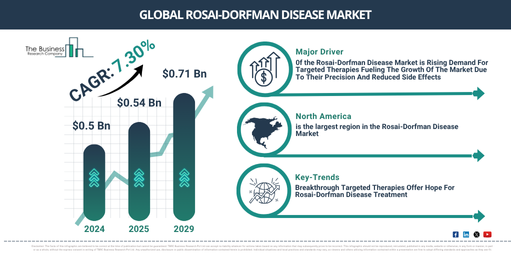
    The market size for the Rosai-Dorfman disease has seen robust growth in the past years. The expectation is for it to rise from $0.5 billion in 2024 to $0.54 billion in 2025, with a compound annual growth rate (CAGR) of 7.6%. The expansion in the historical period has been driven by a surge in diagnostic awareness, an increase in clinical misdiagnosis, a growing dependency on invasive biopsy, a broadening pool of undiagnosed patients, and an escalating unmet demand for specialized treatments.

    Over the coming years, the Rosai-Dorfman disease market will experience robust expansion, with projections sitting at $0.71 billion in 2029, reflecting a compound annual growth rate (CAGR) of 7.3%. Factors contributing to this forecasted growth include the growing use of molecular diagnostics, enhanced rare diseases awareness, burgeoning clinical trial efforts, broader access to healthcare services, increased utilization of telehealth, and the discovery of more genetic biomarkers. Looking ahead, forecast trends encompass the incorporation of artificial intelligence into diagnostics, embracing digital health instruments, affiliations between academia and industry, devising guidelines tailored to the disease, and the execution of genomic profiling.

    Download The Free Sample Report Here:

    https://www.thebusinessresearchcompany.com/sample.aspx?id=24685&type=smp

    #Which Factors Are Currently Driving The Growth Of The Rosai-Dorfman Disease Market?

    The escalating demand for bespoke therapies is speculated to accelerate the progress of the rosai-dorfman disease market in the future. These precision drugs singularly target specific genetic abnormalities or cellular processes to inhibit tumor growth, avoiding damage to wholesome cells. The high demand is due to their specificity in combating disease-inflicting cells, thereby minimizing harm to beneficial tissues. This results in a significant enhancement in treatment success and lesser side effects compared to more conventional therapies. Specific treatments for rosai-dorfman disease obstruct crucial mechanisms like MAPK/ERK, controlling the abnormal proliferation of histiocytes, thus effectively managing the disease and causing fewer side effects. For instance, the American Society of Gene & Cell Therapy (ASGCT) reported an increase of 5% from the second to the third quarter of 2023, totaling 247 gene therapies that specifically targeted the disease. Hence, the in-demand targeted therapies are fueling the rosai-dorfman disease market’s growth. The escalation of immunity-related complications is rapidly stimulating the rosai-dorfman disease market due to an increase in immune dysregulation inciting the disease. Immune-related complications are harmful conditions, which occur due to a hyper or dysfunctional reaction of the immune system. Such complications are often associated with infections, autoimmune diseases or immune-based treatments. A surge in these complications is occurring due to increasing use of immunotherapy, which can excessively stimulate the immune system, causing inflammation, or damaging wholesome tissues. Rosai-Dorfman disease is connected with immune system dysregulation and surges in immune-related complications are linked to autoimmune conditions, infections or immunotherapies. These factors are leading to heightened diagnosis, research focus, and treatment development for the disease. For instance, according to Versorgungsatlas.de, a Germany-based organization, out of 73,241,305 insured individuals in 2022, as many as 6,304,340 were diagnosed with at least one autoimmune disease, reflecting a raw prevalence rate of 8.61%. Consequently, the surge in immunity-related complications is contributing to the expansion of the Rosai-Dorfman disease market.

    How Is The Global Rosai-Dorfman Disease Market Structured In Terms Of Segments?

    The rosai-dorfman disease market covered in this report is segmented –

    1) By Type: Classic (Nodal) Rosai-Dorfman Disease, Extranodal Rosai-Dorfman Disease

    2) By Procedure Type: Diagnosis, Treatment

    3) By Route Of Administration: Oral, Parenteral, Sublingual, Nasal

    4) By Age: Children, Adults

    5) By End-User: Hospitals, Diagnostics, Cancer Centers, Other End-Users

    Subsegments:

    1) By Classic (Nodal) Rosai-Dorfman Disease: Cervical Lymph Node Involvement, Axillary Lymph Node Involvement, Inguinal Lymph Node Involvement, Mediastinal Lymph Node Involvement, Generalized Lymphadenopathy

    2) By Extranodal Rosai-Dorfman Disease: Cutaneous Or Subcutaneous Rosai-Dorfman Disease, Central Nervous System (CNS) Rosai-Dorfman Disease, Orbital Or Ocular Rosai-Dorfman Disease, Bone And Skeletal Rosai-Dorfman Disease, Nasal Or Sinus Rosai-Dorfman Disease, Renal Rosai-Dorfman Disease, Pulmonary Rosai-Dorfman Disease, Hepatic Or Splenic Rosai-Dorfman Disease, Breast Rosai-Dorfman Disease

    What Trends Are Currently Influencing Growth In The Rosai-Dorfman Disease Market?

    Key market players in the rosai-dorfman disease industry are strategizing on the production of advanced products such as specialized drugs aiming to obstruct specific molecular routes pertinent to atypical histiocyte proliferation, thereby mitigating the illness’s severity. These targeted medicines serve to take effect on unique molecules triggering the disease like certain proteins or genes. They enhance treatment precision by exclusively invading the diseased cells whilst sparing the healthy tissues. As an example, in October 2022, cobimetinib (Cotellic), a form of therapy for adult patients with Rosai-Dorfman and other types of histiocytosis, was introduced by Memorial Sloan Kettering, a cancer treatment and research institution based in the USA. This was consequently endorsed by the U.S. Food and Drug Administration (FDA). This novel treatment method caters to the substantial unfulfilled requirements of individuals suffering from these unusual blood illnesses. It further presents a targeted and less harmful treatment alternative in comparison to conventional chemotherapy, thereby enhancing patient’s life quality and proffering the potential for improved long-term disease management.

    Who Are The Main Participants Shaping The Rosai-Dorfman Disease Market Landscape?

    Major companies operating in the rosai-dorfman disease market are Pfizer Inc., Johnson And Johnson, F. Hoffmann-La Roche AG, Merck And Co. Inc., Bristol Myers Squibb Company, Novartis AG, Canon Inc., Siemens Healthineers, GE HealthCare, Viatris Inc., Teva Pharmaceutical Industries Ltd., Memorial Sloan Kettering Cancer Center, Dr. Reddy’s Laboratories Ltd., Aurobindo Pharma, Mayo Foundation for Medical Education and Research, Zydus Pharmaceuticals Inc., SternMed GmbH, LGM Pharma, Niksan Pharmaceutical, Herbert Irving Cancer Center

    Get The Full Report Here:

    https://www.thebusinessresearchcompany.com/report/rosai-dorfman-disease-global-market-report

    Which Region Currently Holds The Largest Share In The Rosai-Dorfman Disease Market?

    North America was the largest region in the rosai-dorfman disease market in 2024. Asia-Pacific is expected to be the fastest-growing region in the forecast period. The regions covered in the rosai-dorfman disease market report are Asia-Pacific, Western Europe, Eastern Europe, North America, South America, Middle East, Africa.

    Request For A Customized Report:

    https://www.thebusinessresearchcompany.com/customise?id=24685&type=smp

    About The Business Research Company:

    With over 15000+ reports from 27 industries covering 60+ geographies, The Business Research Company has built a reputation for offering comprehensive, data-rich research and insights. Armed with 1,500,000 datasets, the optimistic contribution of in-depth secondary research, and unique insights from industry leaders, you can get the information you need to stay ahead in the game.

    Get in touch with us:

    The Business Research Company: https://www.thebusinessresearchcompany.com/

    Americas +1 310-496-7795

    Asia +44 7882 955267 & +91 8897263534

    Europe +44 7882 955267

    Email us at info@tbrc.info

    Follow us on:

    LinkedIn: https://in.linkedin.com/company/the-business-research-company

    YouTube: https://www.youtube.com/channel/UC24_fI0rV8cR5DxlCpgmyFQ

    Global Market Model: https://www.thebusinessresearchcompany.com/global-market-model
  • 2025–2029 Reusable Laparoscopic Instruments Market Outlook: Regional Trends and Growth Forecast

    2025–2029 Reusable Laparoscopic Instruments Market Outlook: Regional Trends and Growth Forecast

    Claim your 30% discount on Global Market Reports with code ONLINE30. Limited time only.

    What Are the Latest Market Insights for the Reusable Laparoscopic Instruments Industry?

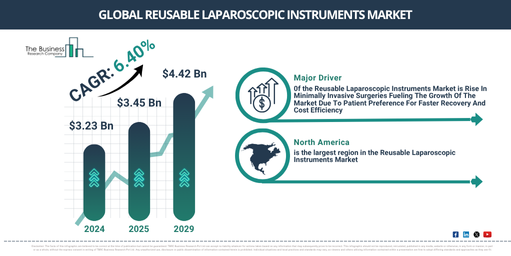
    The market for reusable laparoscopic instruments has experienced robust growth in the past few years. The market value is projected to increase from $3.23 billion in 2024 to $3.45 billion in 2025, with a compound annual growth rate (CAGR) of 6.7%. Factors such as the increase in minimally invasive surgeries, the escalating number of laparoscopic procedures, the transition from open to laparoscopic surgeries, benevolent reimbursement protocols in advanced countries, and the rise in surgeries related to obesity can be credited for the growth experienced during the historical period.

    The market size for reusable laparoscopic instruments is anticipated to experience significant expansion in the coming years, with predictions anticipating growth to $4.42 billion by 2029 at a compound annual growth rate (CAGR) of 6.4%. The projected growth within this period is due to a number of factors including an increase in the aging population, broader access to healthcare in evolving economies, a rise in outpatient procedures and ambulatory surgery centers, regulatory backing for reprocessing surgical tools, and augmented investment in healthcare facilities. Key trends for the forecast period encompass technological integration within surgical equipment, the production of ergonomic laparoscopic devices, a movement towards greener surgical practices, synergy with robot-assisted surgical systems, and personalized instrument packages.

    Download The Free Sample Report Here:

    https://www.thebusinessresearchcompany.com/sample.aspx?id=24684&type=smp

    What Forces Are Driving The Growth Of The Reusable Laparoscopic Instruments Industry?

    The growth of the reusable laparoscopic instruments market is expected to be driven by the rising popularity of minimally invasive surgeries. These surgeries are characterized by small incisions, the use of advanced surgical tools, quick recovery periods, less discomfort, and a lower risk of complications, making them preferable to traditional open surgeries. Since reusable laparoscopic instruments are specially designed for these less invasive procedures, they foster precision and minimize equipment expenses and medical waste, enhancing their efficiency and cost-effectiveness for recurrent use. For instance, the Aesthetic Society, a US-based organization specializing in plastic surgery and cosmetic medicine, reported in August 2023 that Americans spent over $11.8 billion on aesthetic procedures in 2022, marking a 2% increase from the year before. Thus, the growing predilection for minimally invasive surgeries is expected to fuel the expansion of the reusable laparoscopic instruments market. Additionally, the steady increase in healthcare expenditure is likely to spur the growth of the reusable laparoscopic instruments market. The term “healthcare expenditure” denotes the total expenditures on health services, treatments, and medical resources over a specific time frame. This surge in spending can be attributed to the aging population, which necessitates more medical services, long-term care, and treatments for age-related conditions thereby putting more financial stress on healthcare systems. This growing expenditure serves to encourage the adoption of reusable laparoscopic instruments by making it feasible to invest in cost-effective, sustainable surgical solutions and the essential sterilization infrastructure for their repeated safe use. As an example, the American Medical Association, a US-based professional association, reported in April 2025 that U.S. health spending increased by 7.5% in 2023 to $4.9 trillion, or $14,570 per person, indicating a notable growth from the 4.6% increase recorded in the previous year. Hence, the rising healthcare expenditure is set to boost the growth of the reusable laparoscopic instruments market.

    What Is The Overview Of Market Segmentation In The Reusable Laparoscopic Instruments Industry?

    The reusable laparoscopic instruments market covered in this report is segmented –

    1) By Product Type: Graspers, Scissors, Needle Holders, Electrosurgical Instruments, Trocar And Cannula Systems, Other Accessories

    2) By Material Type: Stainless Steel, Aluminum, Plastic, Other Advanced Materials

    3) By Distribution Channel: Direct Sales, Distributors Or Wholesalers, Online Sales, Other Distribution Channels

    4) By Application: General Surgery, Gynecological Surgery, Urological Surgery, Colorectal Surgery, Other Surgical Applications

    5) By End User: Hospitals, Ambulatory Surgical Centers, Specialty Clinics, Academic And Research Institutions

    Subsegments:

    1) By Graspers: Atraumatic Graspers, Traumatic Graspers, Fenestrated Graspers, Babcock Graspers

    2) By Scissors: Metzenbaum Scissors, Hook Scissors, Maryland Scissors, Straight Scissors

    3) By Needle Holders: Curved Needle Holders, Straight Needle Holders, Micro Needle Holders

    4) By Electrosurgical Instruments: Monopolar Instruments, Bipolar Instruments, Electrosurgical Forceps, Electrosurgical Electrodes

    5) By Trocar And Cannula Systems: Bladed Trocars, Bladeless Trocars, Optical Trocars, Reusable Cannulas

    6) By Other Accessories: Laparoscopic Clips And Clip Appliers, Specimen Retrieval Bags, Laparoscopic Camera Holders

    Who Are The Primary Players Operating Across The Global Reusable Laparoscopic Instruments Market?

    Major companies operating in the reusable laparoscopic instruments market are Medtronic plc, Stryker Corporation, Olympus Corporation, Shenzhen Mindray Bio-Medical Electronics Co. Ltd., Teleflex Incorporated, Cook Medical Inc., Karl Storz SE & Co. KG, CONMED Corporation, Applied Medical Resources Corporation, Aesculap Inc., Richard Wolf GmbH, Peters Surgical, Sejong Medical Co., Ltd., Unimax Medical Systems Inc., Gimmi GmbH, Unimed S.A., Victor Medical Instruments Co., Ltd., Trokamed GmbH, Wexler Surgical, Genicon Inc., Tiansong Medical Instrument Co. Ltd., Hospiinz International, Grena Ltd., Silex Medical

    Get The Full Report Here:

    https://www.thebusinessresearchcompany.com/report/reusable-laparoscopic-instruments-global-market-report

    Which Region Offers The Most Growth Potential For The Reusable Laparoscopic Instruments Market Through 2029?

    North America was the largest region in the reusable laparoscopic instruments market in 2024. Asia-Pacific is expected to be the fastest-growing region in the forecast period. The regions covered in the reusable laparoscopic instruments market report are Asia-Pacific, Western Europe, Eastern Europe, North America, South America, Middle East, Africa.

    Request For A Customized Report:

    https://www.thebusinessresearchcompany.com/customise?id=24684&type=smp

    About The Business Research Company:

    With over 15000+ reports from 27 industries covering 60+ geographies, The Business Research Company has built a reputation for offering comprehensive, data-rich research and insights. Armed with 1,500,000 datasets, the optimistic contribution of in-depth secondary research, and unique insights from industry leaders, you can get the information you need to stay ahead in the game.

    Get in touch with us:

    The Business Research Company: https://www.thebusinessresearchcompany.com/

    Americas +1 310-496-7795

    Asia +44 7882 955267 & +91 8897263534

    Europe +44 7882 955267

    Email us at info@tbrc.info

    Follow us on:

    LinkedIn: https://in.linkedin.com/company/the-business-research-company

    YouTube: https://www.youtube.com/channel/UC24_fI0rV8cR5DxlCpgmyFQ

    Global Market Model: https://www.thebusinessresearchcompany.com/global-market-model
  • Latest Market Developments in Renal Medical Devices Service Industry: Forecast 2025–2029

    Latest Market Developments in Renal Medical Devices Service Industry: Forecast 2025–2029

    Claim your 30% discount on Global Market Reports with code ONLINE30. Limited time only.

    What Are the Forecasted Growth Rate and Market Size of the Renal Medical Devices Service Market?

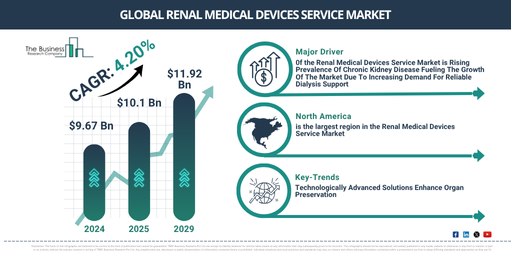
    The market size for renal medical devices has been following a consistent growth trend in the past few years. It is expected to increase from $9.67 billion in 2024 to $10.1 billion in 2025, with a compound annual growth rate (CAGR) of 4.5%. The historical growth can be credited to several factors such as the increased occurrence of chronic kidney diseases, the rise in the elderly population, the growth in the number of dialysis centers and clinics, the upsurge in the acceptance of home dialysis, and a heightened emphasis on patient safety and the reliability of the device.

    Expectations of consistent growth for the renal medical devices service market project its size to reach $11.92 billion by 2029, with a compound annual growth rate (CAGR) of 4.2%. The anticipated growth during the forecasted period can be attributed to factors such as an increase in home dialysis and telemedicine solutions, a rise in the aging population with various health complications, a surge in healthcare providers outsourcing device servicing, wider adoption of preventive and predictive maintenance models, as well as increased awareness and screening programs. Key trends for the projected period include the integration of telehealth and remote servicing, a shift towards preventive and predictive maintenance, advancements in renal device technology, incorporation of automation and robotics in servicing procedures, and stricter regulatory scrutiny on device servicing.

    Download The Free Sample Report Here:

    https://www.thebusinessresearchcompany.com/sample.aspx?id=24683&type=smp

    Which Factor Is Shaping The Future Of The Renal Medical Devices Service Market?

    The renal medical devices service market anticipates significant growth, attributed to the escalated prevalence of chronic kidney disease (CKD). This medical condition progressively impairs kidney function, preventing the effective removal of waste products from the blood and inducing other health complications. The rise in CKD cases is particularly associated with diabetes, as elevated blood sugar can compromise the kidney’s ability to filtrate waste materials efficiently. Services provided by renal medical devices aid in the management of CKD by guaranteeing optimal operation of dialysis equipment and related devices. This is achieved by minimizing system downtime through regular maintenance and expert technical assistance, thereby increasing the dependability of treatments and the quality of patient care. For instance, as per the Australian Institute of Health and Welfare statistics from December 2024, roughly 22,000 fatalities occurred in 2022 as a result of CKD. Also, the mortality rate showed an upward trend, rising from 56.7 per 100,000 in 2021 to 60.3 per 100,000 in 2022. Thus, these factors underline the importance of CKD in bolstering the growth of the renal medical devices service market. Moreover, expected growth in the renal medical devices service market owes much to the soaring expenditure in healthcare. This expenditure represents the cumulative sum of monetary resources allocated for medical services, treatments, infrastructure, research initiatives, and public health campaigns to maintain or enhance health conditions. The increased healthcare expenditure, largely driven by the growing burden of chronic ailments that necessitate continuous treatment and management, leads to a steady increase in medical costs. This increase favors renal medical device services by facilitating larger investments in sophisticated dialysis technologies and their maintenance. This, in essence, ensures wider access to superior healthcare services, improved efficiency of treatment, and enhanced outcomes for patients suffering from CKD. As an example, in December 2024, the Centers for Medicare and Medicaid Services (CMS) confirmed that the national health expenditures (NHE) surged by 7.5% to $4.9 trillion in 2023, which represented 17.6% of the country’s GDP. Furthermore, projections suggest that the NHE will grow by an average of 5.6% annually between 2023 and 2032, raising the health-sector’s GDP share from 17.3% in 2022 to 19.7% in 2032. Consequently, the projected increase in healthcare expenditure presents a favorable scenario for the growth of the renal medical devices service market.

    What Is The Segment-Wise Breakdown Of The Renal Medical Devices Service Market?

    The renal medical devices service market covered in this report is segmented –

    1) By Type: Dialysis Devices, Catheters, Kidney Monitoring Devices, Kidney Transplant Devices

    2) By Usage: Invasive, Non-Invasive

    3) By Application: Kidney Failure, Chronic Kidney Disease, End-Stage Kidney Disease, Renal Kidney Stone Disease, Hypertension, Diabetes

    4) By End User: Hospitals, Dialysis Centers, Home Healthcare

    Subsegments:

    1) By Dialysis Devices: Hemodialysis Machines, Peritoneal Dialysis Equipment, Dialysis Filters And Membranes, Dialysis Fluid Delivery Systems, Portable Dialysis Devices, Dialysis Consumables And Accessories

    2) By Catheters: Temporary Hemodialysis Catheters, Permanent Hemodialysis Catheters, Peritoneal Dialysis Catheters, Vascular Access Catheters, Central Venous Catheters For Renal Care

    3) By Kidney Monitoring Devices: Creatinine Monitoring Devices, Glomerular Filtration Rate (GFR) Monitoring Devices, Blood Urea Nitrogen (BUN) Monitoring Devices, Electrolyte Monitoring Devices, Continuous Renal Function Monitors

    4) By Kidney Transplant Devices: Organ Preservation Systems, Transplant Surgery Instruments, Immunosuppressant Delivery Devices, Kidney Perfusion Systems, Post-Transplant Monitoring Devices

    Which Trends Are Redefining The Future Landscape Of The Renal Medical Devices Service Industry?

    Key corporations in the renal medical devices service market are directing their efforts towards creating technologically advanced products, like hypothermic perfusion technology, to enhance organ sustainability and the quality of patient care. This particular technology is a preservation technique for organs where a chilled, oxygen-enriched solution is continuously circulated through the donor organs at lower temperatures, typically between 0-12°C, to keep them viable before transplantation. A case in point is Paragonix Technologies Inc., a medical device firm based in the US, which obtained the US Food and Drug Administration (FDA) green light for its KidneyVault transportable renal perfusion system in January 2025. This system is a device designed to extend the life of kidneys during transportation utilizing hypothermic machine perfusion and SherpaCool phase-change cooling, maintaining a temperature of 4–8°C, eliminating the need for ice. The incorporated digital platform enables monitoring of temperature, pressure, flow and resistance in real-time, providing remote management of organ preservation.

    Which Companies Hold The Largest Market Share In The Renal Medical Devices Service Sector?

    Major companies operating in the renal medical devices service market are Abbott Laboratories, Medtronic plc, Fresenius Medical Care AG & Co. KGaA, Asahi Kasei Medical Co Ltd., Toray Medical Co Ltd., Boston Scientific Corporation, DaVita Inc., Terumo Corporation, Nipro Corporation, Teleflex Incorporated, ConvaTec Group Plc, Nikkiso Co Ltd., Japan Medical Supply Co Ltd., NxStage Medical Inc., B. Braun Melsungen AG, Outset Medical Inc., Rockwell Medical Inc., Quanta Dialysis Technologies Ltd., AWAK Technologies Pte Ltd., Dialife SA.

    Get The Full Report Here:

    https://www.thebusinessresearchcompany.com/report/renal-medical-devices-service-global-market-report

    How Does Regional Performance Compare Across The Renal Medical Devices Service Industry?

    North America was the largest region in the renal medical devices service market in 2024. The regions covered in the renal medical devices service market report are Asia-Pacific, Western Europe, Eastern Europe, North America, South America, Middle East, Africa.

    Request For A Customized Report:

    https://www.thebusinessresearchcompany.com/customise?id=24683&type=smp

    About The Business Research Company:

    With over 15000+ reports from 27 industries covering 60+ geographies, The Business Research Company has built a reputation for offering comprehensive, data-rich research and insights. Armed with 1,500,000 datasets, the optimistic contribution of in-depth secondary research, and unique insights from industry leaders, you can get the information you need to stay ahead in the game.

    Get in touch with us:

    The Business Research Company: https://www.thebusinessresearchcompany.com/

    Americas +1 310-496-7795

    Asia +44 7882 955267 & +91 8897263534

    Europe +44 7882 955267

    Email us at info@tbrc.info

    Follow us on:

    LinkedIn: https://in.linkedin.com/company/the-business-research-company

    YouTube: https://www.youtube.com/channel/UC24_fI0rV8cR5DxlCpgmyFQ

    Global Market Model: https://www.thebusinessresearchcompany.com/global-market-model
  • Emerging Trends and Growth Drivers in the Remote Patient Monitoring System Market Through 2029

    Emerging Trends and Growth Drivers in the Remote Patient Monitoring System Market Through 2029

    Claim your 30% discount on Global Market Reports with code ONLINE30. Limited time only.

    What Is the Estimated Industry Valuation for the Remote Patient Monitoring System Sector?

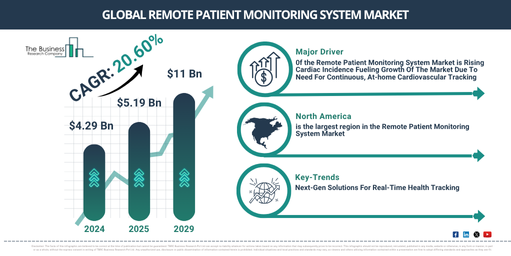
    The market size for remote patient monitoring systems has experienced significant growth in the past few years. It is predicted to rise from $4.29 billion in 2024 to $5.19 billion in 2025, representing a compound annual growth rate (CAGR) of 20.9%. Factors that contributed to growth during the historic period include increased cases of chronic diseases, heightened use of telehealth and telemedicine services, growing need for home healthcare, the increasing cost of healthcare necessitating affordable monitoring solutions, and a globally aging population.

    The market size of the remote patient monitoring system is anticipated to experience a significant increase in the forthcoming years, reaching $11 billion by 2029 with a compound annual growth rate of 20.6%. The growth in this timeframe is anticipated to result from a heightened focus on personalized and value-oriented care models, increased uptake of 5G technology allowing instantaneous data transmission, growth in investments in healthcare IT infrastructure, rising alliances among technology companies, and the spread of hospital-at-home programs. During the projection period, key market trends will include the application of AI and machine learning, integration with telehealth platforms, management of data via cloud, progressive battery technology, and the implementation of home healthcare services.

    Download The Free Sample Report Here:

    https://www.thebusinessresearchcompany.com/sample.aspx?id=24682&type=smp

    What Forces Are Driving The Growth Of The Remote Patient Monitoring System Market?

    The escalation in the prevalence of heart-related disorders is anticipated to fuel the expansion of the remote patient monitoring system market in the future. Diseases or disorders that influence the structure, function, or rhythm of the heart, such as coronary artery disease, heart failure, and arrhythmias, constitute cardiac conditions. These are chiefly due to unhealthy lifestyle choices. Remote patient monitoring systems play a crucial role in mitigating the occurrence of cardiac conditions by constantly overseeing vital signs like heart rate, blood pressure, and electrocardiogram (ECG) beyond clinical facilities. This facilitates early identification, prompt intervention, and better adherence to treatment, thus reducing hospitalisations and slowing the disease’s progression. For example, a report by the American Heart Association, a US-based nonprofit organisation, stated that the total deaths in the cardiovascular sector had a slight increase to 931,578 this year, an increase of less than 3,000 fatalities from 928,741 the previous year. Thus, the heightened prevalence of cardiac conditions propels the remote patient monitoring system market.

    How Is The Remote Patient Monitoring System Industry Segmented Across Key Parameters?

    The remote patient monitoring system market covered in this report is segmented –

    1) By Product: Vital Sign Monitor, Specialized Monitor

    2) By Component: Devices, Software, Services

    3) By Application: Cancer, Cardiovascular Diseases, Diabetes, Sleep Disorder, Weight Management And Fitness Monitoring, Bronchitis, Infections, Other Applications

    4) By End-User: Hospitals, Home Care Settings, Ambulatory Care Centers, Other End-User

    Subsegments:

    1) By Vital Sign Monitor: Heart Rate Monitor, Blood Pressure Monitor, Respiratory Rate Monitor, Temperature Monitor, Pulse Oximeter

    2) By Specialized Monitor: Glucose Monitor, ECG Monitor, Weight Management Monitor, Sleep Disorder Monitor, Respiratory Monitor, Other Specialized Devices

    What Notable Trends Are Shaping The Direction Of The Remote Patient Monitoring System Market?

    Prominent firms in the remote patient monitoring system market are striving to implement advancements in medical technology, such as wearable sensors, to elevate real-time health data collection, boost patient involvement, and augment proactive clinical decision-making. Wearable sensors are minor electronic devices placed on the body that continuously track and collect health-related data, like heart rate, temperature, blood oxygen levels, and activity, facilitating real-time monitoring of an individual’s health condition. For example, in October 2024, BioIntelliSense, Inc., a US corporation specializing in continuous health tracking and clinical intelligence, gained FDA approval for its BioButton Multi-Patient wearable and BioDashboard system, enhancing their remote monitoring range. The reusable gadget provides continuous vital sign tracking across diverse hospital environments and aids hospital-at-home care. The BioDashboard’s AI-guided exception management enables a single medical practitioner to observe hundreds of patients, promoting early intervention via real-time trend examination and enhancing clinical outcomes on a large scale.

    Which Companies Currently Dominate The Competitive Landscape In The Remote Patient Monitoring System Industry?

    Major companies operating in the remote patient monitoring system market are Johnson & Johnson, Abbott Laboratories, Honeywell International Inc., Medtronic plc, Koninklijke Philips N.V., GE Healthcare Technologies Inc., Boston Scientific Corporation, Resideo Life Care Solutions, Omron Corporation, Shenzhen Mindray Bio-Medical Electronics Co. Ltd., Drägerwerk AG & Co. KGaA, Teladoc Health Inc., Masimo Corporation, Biotronik SE & Co. KG, Nihon Kohden Corporation, OSI Systems Inc., iRhythm Technologies Inc., Health Recovery Solutions Inc., LifeWatch AG, VitalConnect Inc., Vivify Health Inc., Welch Allyn Inc., Vitls Inc., Bio-Beat Technologies Ltd.

    Get The Full Report Here:

    https://www.thebusinessresearchcompany.com/report/remote-patient-monitoring-system-global-market-report

    Which Geographic Regions Are Driving Demand In The Remote Patient Monitoring System Market?

    North America was the largest region in the remote patient monitoring system market in 2024. Asia-Pacific is expected to be the fastest-growing region in the forecast period. The regions covered in the remote patient monitoring system market report are Asia-Pacific, Western Europe, Eastern Europe, North America, South America, Middle East, Africa.

    Request For A Customized Report:

    https://www.thebusinessresearchcompany.com/customise?id=24682&type=smp

    About The Business Research Company:

    With over 15000+ reports from 27 industries covering 60+ geographies, The Business Research Company has built a reputation for offering comprehensive, data-rich research and insights. Armed with 1,500,000 datasets, the optimistic contribution of in-depth secondary research, and unique insights from industry leaders, you can get the information you need to stay ahead in the game.

    Get in touch with us:

    The Business Research Company: https://www.thebusinessresearchcompany.com/

    Americas +1 310-496-7795

    Asia +44 7882 955267 & +91 8897263534

    Europe +44 7882 955267

    Email us at info@tbrc.info

    Follow us on:

    LinkedIn: https://in.linkedin.com/company/the-business-research-company

    YouTube: https://www.youtube.com/channel/UC24_fI0rV8cR5DxlCpgmyFQ

    Global Market Model: https://www.thebusinessresearchcompany.com/global-market-model
  • Comprehensive Forecast: Ursodeoxycholic Acid Market Share, Growth, and Opportunities Through 2029

    Comprehensive Forecast: Ursodeoxycholic Acid Market Share, Growth, and Opportunities Through 2029

    Claim your 30% discount on Global Market Reports with code ONLINE30. Limited time only.

    What Is the Estimated Industry Valuation for the Ursodeoxycholic Acid Sector?

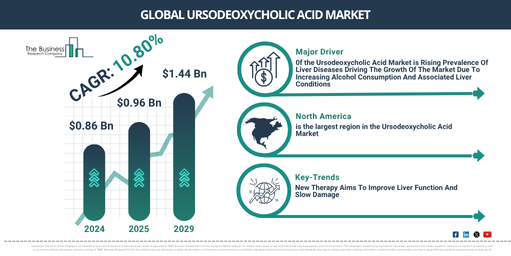
    The market size for ursodeoxycholic acid has seen a quick escalation in the past few years. It is projected to increase from $0.86 billion in 2024 to $0.96 billion in 2025, representing a compound annual growth rate (CAGR) of 11.1%. The growth experienced during the historical period can be linked to the rise in gallstone disease incidents, heightened consciousness about liver health, increased detection rates of primary biliary cholangitis, the expanded use of non-invasive liver function assessments, along with a growing senior citizen demographic.

    Expectations indicate a swift expansion of the ursodeoxycholic acid market in the coming years, with the market predicted to reach a value of $1.44 billion by 2029, growing at a compound annual growth rate (CAGR) of 10.8%. Several factors contribute to this predicted growth, including a rise in lifestyle-related ailments, increased demand for liver-protective drugs, a growing need for treatments for chronic liver diseases, a broadening clinical trial pipeline for bile acid derivatives, and the escalating demand for minimally invasive surgeries. The forecast period also anticipates significant trends like the development of targeted drug delivery systems, the incorporation of ursodeoxycholic acid with other hepatoprotective compounds, drug formulation innovation, the creation of new bile acid analogs, and the advancement of RNA-based therapies aimed at liver regeneration.

    Download The Free Sample Report Here:

    https://www.thebusinessresearchcompany.com/sample.aspx?id=24734&type=smp

    What Forces Are Driving The Growth Of The Ursodeoxycholic Acid Market?

    An uptick in incidences of liver conditions is anticipated to stimulate the ascension of the ursodeoxycholic acid market. Liver conditions encompass a wide range of health issues that hinder the liver’s functionality, including infections, inflammation, fatty liver, cirrhosis, and liver cancer. The increased consumption of alcohol is seen as the primary cause of escalated liver diseases prevalence since continuous heavy drinking significantly impairs the liver. Ursodeoxycholic acid plays a critical role in treating liver diseases by enhancing bile flow and curtailing the production of harmful bile acids, thus proving efficient for conditions such as primary biliary cholangitis. It facilitates improved patient results by decelerating the progression of liver damage and assisting in the dissolution of cholesterol gallstones, therefore maximizing treatment efficacy. For instance, the Office for Health Improvement and Disparities, a government department based in the UK, reported in April 2024 that there were 6,664 premature deaths from liver disease in males and 3,929 in females, representing a 22.8% increase for males and a 33.1% surge for females compared to past years. Hence, the increasing occurrences of liver diseases are stimulating the growth of the ursodeoxycholic acid market.

    How Is The Ursodeoxycholic Acid Industry Segmented Across Key Parameters?

    The ursodeoxycholic acid market covered in this report is segmented –

    1) By Type: Synthetic Ursodeoxycholic Acid, Extraction Ursodeoxycholic Acid

    2) By Route Of Administration: Oral, Intravenous, Subcutaneous

    3) By Application: Gallstones, Primary Biliary Cholangitis, Primary Sclerosing Cholangitis, Non-Alcoholic Fatty Liver Disease, Other Liver And Biliary Diseases

    4) By Distribution Channel: Hospital Pharmacies, Retail Pharmacies, Online Pharmacies, Other Distribution Channels

    5) By End User: Hospitals, Specialty Clinics, Research Institutions, Other End Users

    Subsegments:

    1) By Synthetic Ursodeoxycholic Acid: Chemically Synthesized Ursodeoxycholic Acid, Biosynthetic Ursodeoxycholic Acid, Enzymatically Synthesized Ursodeoxycholic Acid

    2) By Extraction Ursodeoxycholic Acid: Animal-Derived Ursodeoxycholic Acid, Bile Extracted Ursodeoxycholic Acid, Natural Source Extracted Ursodeoxycholic Acid

    What Notable Trends Are Shaping The Direction Of The Ursodeoxycholic Acid Market?

    Companies leading the market for ursodeoxycholic acid (UDCA) are honing in on creating modern therapies like bile acid derivatives, designed to boost the treatment of liver disorders, particularly cholestatic liver ailments. Bile acid derivatives are essentially altered forms of bile acids, employed in medical treatments to enhance liver function and manage liver diseases. An example of this is seen in November 2024 when Nora Pharma Inc., a pharmaceutical enterprise based in Canada, unveiled a generic version of Ursodiol (ursodeoxycholic acid) aimed towards treating cholestatic liver diseases such as primary biliary cholangitis (PBC). This pharmaceutical is primarily utilized to boost liver function and decelerate liver damage, especially when introduced early in the disease’s cycle. It also helps in dissolving and preventing cholesterol gallstones by modifying bile composition and reducing the presence of harmful bile acids.

    Which Companies Currently Dominate The Competitive Landscape In The Ursodeoxycholic Acid Industry?

    Major companies operating in the ursodeoxycholic acid market are Mankind Pharma Pvt. Ltd, Abbott Healthcare Pvt. Ltd., Shandong Octagon Chemicals Limited, J.S.C. Grindeks, Arch Pharmalabs, Ind Swift Laboratories Ltd., Symbiotec Pharmalab, Suzhou Tianlu Bio-pharmaceutical Co. Ltd, Zeal MediPharma, Prodotti Chimici e Alimentari S.P.A., Mitsubishi Tanabe Pharma Corporation, ICE Pharma Inc, Xi’an Tian Guangyuan Biotech Co. Ltd, Aamorb Pharmaceuticals Inc., Axplora Inc, Octavius Pharma Pvt. Ltd, Sichuan Elixir Pharmaceutical Co. Ltd, Signova Pharma Pvt. Ltd., Sinoway Industrial Co. Ltd, Valence Labs Pvt. Ltd.

    Get The Full Report Here:

    https://www.thebusinessresearchcompany.com/report/ursodeoxycholic-acid-global-market-report

    Which Geographic Regions Are Driving Demand In The Ursodeoxycholic Acid Market?

    North America was the largest region in the ursodeoxycholic acid market in 2024. Asia-Pacific is expected to be the fastest-growing region in the forecast period. The regions covered in the ursodeoxycholic acid market report are Asia-Pacific, Western Europe, Eastern Europe, North America, South America, Middle East, Africa.

    Request For A Customized Report:

    https://www.thebusinessresearchcompany.com/customise?id=24734&type=smp

    About The Business Research Company:

    With over 15000+ reports from 27 industries covering 60+ geographies, The Business Research Company has built a reputation for offering comprehensive, data-rich research and insights. Armed with 1,500,000 datasets, the optimistic contribution of in-depth secondary research, and unique insights from industry leaders, you can get the information you need to stay ahead in the game.

    Get in touch with us:

    The Business Research Company: https://www.thebusinessresearchcompany.com/

    Americas +1 310-496-7795

    Asia +44 7882 955267 & +91 8897263534

    Europe +44 7882 955267

    Email us at info@tbrc.info

    Follow us on:

    LinkedIn: https://in.linkedin.com/company/the-business-research-company

    YouTube: https://www.youtube.com/channel/UC24_fI0rV8cR5DxlCpgmyFQ

    Global Market Model: https://www.thebusinessresearchcompany.com/global-market-model

  • Future Demand and Leading Companies Shaping the Urine Test Strips Market to 2029

    Future Demand and Leading Companies Shaping the Urine Test Strips Market to 2029

    Claim your 30% discount on Global Market Reports with code ONLINE30. Limited time only.

    How Large Is the Urine Test Strips Market Expected to Be in 2029?

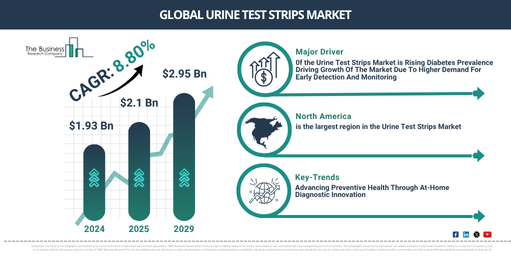
    There has been significant growth in the urine test strips market in the past few years. The market value is expected to increase from $1.93 billion in 2024 to $2.1 billion in 2025, displaying a compound annual growth rate (CAGR) of 9.1%. The expansion during the historic period stems from factors such as increased consciousness about routine health examinations, escalating healthcare expenses, a surge in urinary tract infections, growing needs for personalized medicine, and an increase in transplant surgeries.

    Anticipations indicate a robust growth trajectory for the urine test strips market in the forthcoming years. The market is projected to inflate to a valuation of $2.95 billion in 2029, charting a compound annual growth rate (CAGR) of 8.8%. The predicted expansion during the forecast span can be ascribed to the increasing instances of chronic diseases, surge in the aging population, mounting focus on preventive healthcare, growth in point-of-care testing adoption, and escalating demand for home-based testing kits. Key trends to look out for in the forecast period encompass progressions in sensor technology, incorporation with digital health frameworks, the creation of smartphone-compatible test kits, incorporations of IoT in diagnostic tools, and the launch of multiparameter strips.

    Download The Free Sample Report Here:

    https://www.thebusinessresearchcompany.com/sample.aspx?id=24733&type=smp

    What Are The Contributors To Demand In The Urine Test Strips Market?

    The surge in diabetes cases is anticipated to drive the expansion of the urine test strips market. Due to either inadequate insulin production or insulin resistance, diabetes, a chronic disease, hampers the body’s ability to effectively manage blood sugar. The rise in diabetes is linked to unhealthy eating habits and a lack of physical activity. These urine test strips aid with diabetes regulation by identifying high glucose or ketone levels in urine, which signals elevated blood sugar levels or the potential for diabetic complications. For example, in June 2023, the Institute for Health Metrics and Evaluation, a public health research institute based in the US, reported that over 500 million people worldwide have diabetes. This figure is projected to more than double, reaching 1.3 billion individuals by 2050. As a result, the burgeoning issue of diabetes is promoting the growth of the urine test strips market.

    What Segmentation Categories Are Included In The Urine Test Strips Market Analysis?

    The urine test strips market covered in this report is segmented –

    1) By Type: Protein Testing, Haemoglobin, Myoglobin Testing, Glucose Testing, Nitrites Testing, Other Types

    2) By Function: Automated Test Strips, Visual Test Strips

    3) By Distribution Channel: Online Retail, Pharmacies, Supermarkets Or Hypermarkets

    4) By Application: Urinary Tract Infection, Diabetes, Liver Disease, Kidney, Pregnancy

    5) By End User: Institutes, Research Laboratories, Hospitals And Clinics, Diagnostic Laboratories, Consumers

    Subsegments:

    1) By Protein Testing: Albumin, Total Protein, Microalbumin

    2) By Haemoglobin Testing: Hematuria Detection, Occult Blood Detection

    3) By Myoglobin Testing: Rhabdomyolysis Monitoring, Cardiac Event Screening

    4) By Glucose Testing: Diabetes Monitoring, Gestational Diabetes Screening

    5) By Nitrites Testing: Urinary Tract Infection (UTI) Detection, Bacterial Infection Screening

    6) By Other Types: Ketone Testing, Bilirubin Testing, pH Level Testing

    What Upcoming Trends Are Expected To Impact The Urine Test Strips Market Globally?

    Leading businesses in the urine test strip market are pioneering fresh products such as at-home urine test strips, aiming to improve customer convenience, encourage preventive healthcare, offer immediate diagnostic insights, and satisfy the increasing demand for tailored health and wellness solutions. At-home urine test strips serve as diagnostic tools enabling individuals to examine their urine for multiple health parameters like hydration, pH, and nutrient levels right from the confines of their homes. For example, in September 2024, the Japan-based Otsuka Pharmaceutical Co. Ltd. collaborated with the American company Vivosens Inc., to bring the US-originated nutrition tracking service, Vivoo, to Japan. This partnership combines Otsuka’s medical expertise with Vivosens’s state-of-the-art technology to devise a unique health solution based on at-home urine test strips. Using Vivoo, people can conduct a urine test at home and scan the test strip with the Vivoo application. The application employs proprietary artificial intelligence and image recognition to provide instant nutritional insights. Resulting from the test outcomes, users get personal dietary and lifestyle guidance from professional dieticians.

    Who Are The Top-Ranked Companies In The Urine Test Strips Market Today?

    Major companies operating in the urine test strips market are Cardinal Health Inc., F. Hoffmann-La Roche AG, Bayer AG, Thermo Fisher Scientific Inc., Abbott Laboratories, Siemens Healthineers AG, Henry Schein Inc., Quidel Corporation, Sysmex Corporation, Beckman Coulter, Eiken Chemical Co. Ltd., Ascensia Diabetes Care Holdings AG, Trividia Health Inc., MACHEREY-NAGEL GmbH & Co. KG, Acon Laboratories Inc., ARKRAY Inc., Teco Diagnostics, Clarity Diagnostics LLC, Analyticon Biotechnologies AG, Bioway Biological Technology Co. Ltd.

    Get The Full Report Here:

    https://www.thebusinessresearchcompany.com/report/urine-test-strips-global-market-report

    How Is Urine Test Strips Market Adoption Varying Across Different Regions And Sectors?

    North America was the largest region in the urine test strips market in 2024. Asia-Pacific is expected to be the fastest-growing region in the forecast period. The regions covered in the urine test strips market report are Asia-Pacific, Western Europe, Eastern Europe, North America, South America, Middle East, Africa.

    Request For A Customized Report:

    https://www.thebusinessresearchcompany.com/customise?id=24733&type=smp

    About The Business Research Company:

    With over 15000+ reports from 27 industries covering 60+ geographies, The Business Research Company has built a reputation for offering comprehensive, data-rich research and insights. Armed with 1,500,000 datasets, the optimistic contribution of in-depth secondary research, and unique insights from industry leaders, you can get the information you need to stay ahead in the game.

    Get in touch with us:

    The Business Research Company: https://www.thebusinessresearchcompany.com/

    Americas +1 310-496-7795

    Asia +44 7882 955267 & +91 8897263534

    Europe +44 7882 955267

    Email us at info@tbrc.info

    Follow us on:

    LinkedIn: https://in.linkedin.com/company/the-business-research-company

    YouTube: https://www.youtube.com/channel/UC24_fI0rV8cR5DxlCpgmyFQ

    Global Market Model: https://www.thebusinessresearchcompany.com/global-market-model

  • 2025–2029 Tumor Microenvironment Market Outlook: Regional Trends and Growth Forecast

    2025–2029 Tumor Microenvironment Market Outlook: Regional Trends and Growth Forecast

    Claim your 30% discount on Global Market Reports with code ONLINE30. Limited time only.

    What Is the Outlook for the Tumor Microenvironment Market Heading Into 2029?

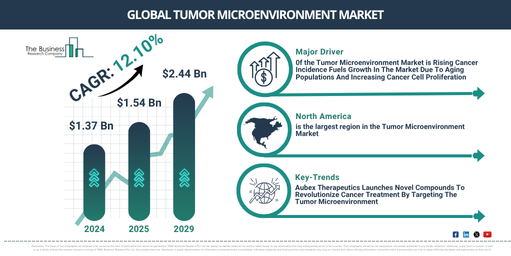
    Over the recent years, the size of the tumor microenvironment market has seen a swift expansion. The market is predicted to increase from $1.37 billion in 2024 to $1.54 billion in 2025, exhibiting a compound annual growth rate (CAGR) of 12.4%. The prior period’s growth can be credited to the enhanced understanding amongst oncologists and researchers, a surge in clinical trials conducted, the expanded use of single-cell sequencing technologies, the rise in collaborations between pharmaceutical and biotech firms, and amplified regulatory backing for pioneering oncology treatments.

    Over the next several years, the tumor microenvironment market size is predicted to experience significant growth, escalating to $2.44 billion by 2029 with a compound annual growth rate (CAGR) of 12.1%. Factors contributing to this growth in the forecasted period encompass an increased emphasis on precision oncology, bolstered investments in cancer immunotherapy research, rising prevalence of cancer, augmented implementation of personalized medication, and a growing interest in utilizing 3D tumor models and organoids. Upcoming trends in this projection period are improvements in immunotherapy technologies, developments in 3D tumor models and organoids, the merging of artificial intelligence and machine learning, the advancement of multiplex imaging technologies, and progress in spatial transcriptomics.

    Download The Free Sample Report Here:

    https://www.thebusinessresearchcompany.com/sample.aspx?id=24732&type=smp

    Which Factors Are Pushing The Tumor Microenvironment Market Forward?

    The tumor microenvironment market is expected to experience significant growth due to the increasing prevalence of cancer. Typically, cancer is a collective term for various diseases that are marked by unregulated cell growth and the dissemination of these abnormal cells within the body. The spike in cancer cases is often tied to an aging population, as the likelihood of cancer increases with age due to a longer exposure to environmental factors and a decrease in the body’s capacity for cell damage repair. A tumor’s microenvironment (TME) enhances the progression of cancer by providing nutrients, promoting immune evasion, increasing cancer cell proliferation, and facilitating metastasis via interactions with neighboring cells, signaling pathways, and the extracellular matrix. For instance, in 2024, per the Australian Institute of Health and Welfare, a governmental body based in Australia, there was a considerable increase in diagnosed cancer cases in Australia, from 160,570 in 2022 to 164,694 in 2023. Therefore, the mounting incidence of cancer is a key driving factor for the expansion of the tumor microenvironment market.

    Which Segment Held The Largest Share In The Tumor Microenvironment Market In 2025?

    The tumor microenvironment market covered in this report is segmented –

    1) By Cancer Type: Lung Cancer, Colorectal Cancer, Breast Cancer, Prostate Cancer, Bladder Cancer, Kidney Cancer, Other Cancer Types

    2) By Target: T Cells, Tumor-Associated Macrophages (TAMs), Myeloid-Derived Suppressor Cells (MDSCs), Cancer-Associated Fibroblasts (CAFs), Regulatory T Cells (Tregs), Other Targets

    3) By Therapy: Monoclonal Antibodies, Cytokines, Cancer Vaccines, Oncolytic Viruses, Adoptive Cell Therapies, Other Therapies

    4) By End User: Biopharmaceutical Companies, Hospitals, Diagnostic Laboratories, Research Institutes, Contract Research Organizations, Other End Users

    Subsegments

    1) By Lung Cancer: Non-Small Cell Lung Cancer (NSCLC), Small Cell Lung Cancer (SCLC)

    2) By Colorectal Cancer: Colon Cancer, Rectal Cancer

    3) By Breast Cancer: Hormone Receptor Positive Breast Cancer, Triple-Negative Breast Cancer, HER2-Positive Breast Cancer

    4) By Prostate Cancer: Hormone-Sensitive Prostate Cancer, Castration-Resistant Prostate Cancer

    5) By Bladder Cancer: Non-Muscle Invasive Bladder Cancer (NMIBC), Muscle Invasive Bladder Cancer (MIBC)

    6) By Kidney Cancer: Renal Cell Carcinoma (RCC), Urothelial Carcinoma of the Renal Pelvis

    7) By Other Cancer Types: Pancreatic Cancer, Head and Neck Cancer, Ovarian Cancer

    How Are Key Trends Driving Expansion In The Tumor Microenvironment Industry?

    Leading firms in the tumor microenvironment market are concentrating their efforts on the creation of innovative treatment methods that raise efficacy and conquer resistance mechanisms, such as targeted treatments. These therapies are specially formulated to detect and eliminate cancer cells based on distinct molecular markers, without causing harm to most healthy cells. For example, in April 2024, Aubex Therapeutics Inc., a biotechnology company based in the United States, introduced a novel category of substances with the aim to revolutionize cancer treatment by specifically focusing on the tumor microenvironment (TME). These innovative substances are designed to interact with the complex interplay within the TME, which involves cancer cells, immune cells, blood vessels, and stromal elements. With Aubex’s method, the immune system’s capability to tackle tumors is amplified and the processes that encourage tumor growth and metastasis are disrupted. This approach aims to defeat resistance to traditional therapies, providing a new promising alternative for patients unresponsive to current treatments.

    Which Organizations Are Driving Progress In The Tumor Microenvironment Industry?

    Major companies operating in the tumor microenvironment market are Pfizer Inc., Johnson & Johnson, Merck & Co. Inc., AbbVie Inc., Bayer AG, Sanofi S.A., AstraZeneca plc, Novartis International AG, GlaxoSmithKline plc, Takeda Pharmaceutical Company Limited, Eli Lilly and Company, Gilead Sciences Inc., Amgen Inc., Boehringer Ingelheim GmbH, Regeneron Pharmaceuticals Inc., Genentech Inc., BeiGene Ltd., MacroGenics Inc., Arcus Biosciences Inc., Adaptimmune Therapeutics plc

    Get The Full Report Here:

    https://www.thebusinessresearchcompany.com/report/tumor-microenvironment-global-market-report

    Which Region Is Expected To Experience The Highest Growth In The Tumor Microenvironment Industry?

    North America was the largest region in the tumor microenvironment market in 2024. Asia-Pacific is expected to be the fastest-growing region in the forecast period. The regions covered in the tumor microenvironment market report are Asia-Pacific, Western Europe, Eastern Europe, North America, South America, Middle East, Africa.

    Request For A Customized Report:

    https://www.thebusinessresearchcompany.com/customise?id=24732&type=smp

    About The Business Research Company:

    With over 15000+ reports from 27 industries covering 60+ geographies, The Business Research Company has built a reputation for offering comprehensive, data-rich research and insights. Armed with 1,500,000 datasets, the optimistic contribution of in-depth secondary research, and unique insights from industry leaders, you can get the information you need to stay ahead in the game.

    Get in touch with us:

    The Business Research Company: https://www.thebusinessresearchcompany.com/

    Americas +1 310-496-7795

    Asia +44 7882 955267 & +91 8897263534

    Europe +44 7882 955267

    Email us at info@tbrc.info

    Follow us on:

    LinkedIn: https://in.linkedin.com/company/the-business-research-company

    YouTube: https://www.youtube.com/channel/UC24_fI0rV8cR5DxlCpgmyFQ

    Global Market Model: https://www.thebusinessresearchcompany.com/global-market-model