Blog

  • Latest Market Developments in Janus Kinases (JAKs) Inhibitor Drug Industry: Forecast 2025–2029

    Latest Market Developments in Janus Kinases (JAKs) Inhibitor Drug Industry: Forecast 2025–2029

    Claim your 30% discount on Global Market Reports with code ONLINE30. Limited time only.

    How Much Is the Global Janus Kinases (JAKs) Inhibitor Drug Market Valued at Present and by 2029?

    The market size for janus kinases (jaks) inhibitor drugs has seen a steep expansion in the last few years. The market, valued at $5.74 billion in 2024, is projected to climb to $6.42 billion in 2025, marking a compound annual growth rate (CAGR) of 11.9%. Factors contributing to this significant growth during the historical period include an increase in autoimmune conditions, expansion of uses beyond treating rheumatoid arthritis, a growing prevalence of autoimmune diseases, an aging population, and supportive reimbursement policies.

    Over the coming years, the market size for Janus Kinases (JAKs) inhibitor drugs is projected to expand swiftly, reaching $9.93 billion in 2029 with a compound annual growth rate (CAGR) of 11.5%. This boost during the prediction period can be traced back to the escalation of immunological disease treatment options, a rise in approved indications, enhanced patient awareness and education, increased accessibility to treatment, and a heightened emphasis on immunotherapy. Key trend movements anticipated during this period include a transition towards oral therapies, integration of digital therapeutics, strategic alliances and partnerships, progress in combination therapies, and increased investment in R&D.

    Download The Free Sample Report Here:

    https://www.thebusinessresearchcompany.com/sample.aspx?id=24578&type=smp

    #What Drivers Are Influencing Growth In The Janus Kinases (JAKs) Inhibitor Drug Market?

    The escalating incidence of autoimmune conditions is poised to stimulate the growth trajectory of the janus kinases (JAKs) inhibitor drug market. Autoimmune disorders occur when the immune system erroneously damages the body’s healthy cells and tissues. This surge in autoimmune disorders is rooted in genetic factors, since certain genetic predispositions can heighten an individual’s vulnerability to a malfunctioning immune system. For autoimmune conditions, Janus kinase (JAK) inhibitors prove effective as they target and obstruct certain enzymes that are integral to the immune response, thereby reducing inflammation and shielding the body’s tissues from the immune system’s assault. For example, a report released in June 2024 by the Australian Institute of Health and Welfare, a governmental organization based out of Australia, showed that in 2021–22, there were 10,000 hospital admissions for rheumatoid arthritis, marking a 25% increase from the previous year’s 8,000, which translates into 39 hospitalizations per 100,000 people. Thus, the escalating incidence of autoimmune disorders propels the growth of the janus kinases JAKs inhibitor drug market.

    What Are The Main Segments Identified In The Janus Kinases (JAKs) Inhibitor Drug Market Research?

    The janus kinases (JAKs) inhibitor drug market covered in this report is segmented –

    1) By Type: JAK1 Inhibitor, JAK2 Inhibitor, JAK3 Inhibitor, Other Types

    2) By Drug Type: Selective JAK Inhibitors, Non-Selective JAK Inhibitors, Oral JAK Inhibitors, Other Drug Types

    3) By Route of Administration: Oral, Injectable, Topical

    4) By Application: Rheumatoid Arthritis, Psoriatic Arthritis, Inflammatory Bowel Disease, Atopic Dermatitis, Ulcerative Colitis

    5) By End User: Hospitals, Homecare, Specialty Clinics, Other End Users

    Subsegments:

    1) By JAK1 Inhibitor: Filgotinib, Upadacitinib, Itacitinib, Abrocitinib, Brepocitinib

    2) By JAK2 Inhibitor: Fedratinib, Pacritinib, Momelotinib, Gandotinib, NS-018

    3) By JAK3 Inhibitor: Tofacitinib, PF-06651600, Ritlecitinib

    4) By Other Types: Baricitinib, Ruxolitinib, Oclacitinib, Delgocitinib, Peficitinib

    What Are The Leading Trends And Opportunities In The Janus Kinases (JAKs) Inhibitor Drug Sector?

    Top players in the market of Janus Kinases (JAKs) inhibitor drugs are keen on procuring regulatory certifications to magnify their therapeutic uses, speed up their market entry, and fortify their competitive standing. These regulatory certifications are official permissions given by health regulatory bodies that enable pharmaceutical companies to market and trade a drug once it affirms its safety and effectiveness for specific medical issues. For example, in April 2025, AbbVie Inc., a biopharmaceutical organization based in the US, obtained approval from the Food and Drug Administration (FDA) for RINVOQ (upadacitinib), a orally administered Janus kinase (JAK) suppressor, intended for adults dealing with giant cell arteritis (GCA). This tackles JAK1 and upadacitinib and impairs the JAK-STAT signaling pathway, which is imperative for communicating signals from pro-inflammatory cytokines playing a role in immune-mediated and inflammatory diseases. This approval presents a precious new method of treatment that could cut down reliance on glucocorticoids that have notable side effects, thereby addressing a significant gap in GCA management and enhancing care outcomes for patients.

    Which Companies Play A Key Role In The Development Of The Janus Kinases (JAKs) Inhibitor Drug Market?

    Major companies operating in the janus kinases (JAKs) inhibitor drug market are Pfizer Inc., Johnson & Johnson, Merck & Co. Inc., AbbVie Inc., Sanofi S.A., Bristol-Myers Squibb Company, AstraZeneca PLC, GlaxoSmithKline plc, Takeda Pharmaceutical Company Limited, Eli Lilly and Company, Amgen Inc., Regeneron Pharmaceuticals Inc., Astellas Pharma Inc., Vertex Pharmaceuticals Incorporated, Incyte Corporation, Galapagos NV, Theravance Biopharma Inc., Celon Pharma S.A., Aclaris Therapeutics Inc., Arcutis Biotherapeutics Inc., Dizal (Jiangsu) Pharmaceutical Co. Ltd., Reistone Biopharma Co. Ltd.

    Get The Full Report Here:

    https://www.thebusinessresearchcompany.com/report/janus-kinases-jaks-inhibitor-drug-global-market-report

    What Are The Key Regional Developments Shaping The Janus Kinases (JAKs) Inhibitor Drug Market?

    North America was the largest region in the janus kinases (JAKs) inhibitor market in 2024. The regions covered in the janus kinases (JAKs) inhibitor drug market report are Asia-Pacific, Western Europe, Eastern Europe, North America, South America, Middle East, Africa.

    Request For A Customized Report:

    https://www.thebusinessresearchcompany.com/customise?id=24578&type=smp

    About The Business Research Company:

    With over 15000+ reports from 27 industries covering 60+ geographies, The Business Research Company has built a reputation for offering comprehensive, data-rich research and insights. Armed with 1,500,000 datasets, the optimistic contribution of in-depth secondary research, and unique insights from industry leaders, you can get the information you need to stay ahead in the game.

    Get in touch with us:

    The Business Research Company: https://www.thebusinessresearchcompany.com/

    Americas +1 310-496-7795

    Asia +44 7882 955267 & +91 8897263534

    Europe +44 7882 955267

    Email us at info@tbrc.info

    Follow us on:

    LinkedIn: https://in.linkedin.com/company/the-business-research-company

    YouTube: https://www.youtube.com/channel/UC24_fI0rV8cR5DxlCpgmyFQ

    Global Market Model: https://www.thebusinessresearchcompany.com/global-market-model

  • Emerging Trends and Growth Drivers in the Isocitrate Dehydrogenase (IDH) Inhibitors Market Through 2029

    Claim your 30% discount on Global Market Reports with code ONLINE30. Limited time only.

    What Is the Current and Projected Market Size of the Isocitrate Dehydrogenase (IDH) Inhibitors Industry?

    In recent times, the market size of isocitrate dehydrogenase (idh) inhibitors has experienced an unprecedented growth. The market, which was valued at $1.94 billion in 2024, is projected to reach $2.46 billion in 2025, growing at a compound annual growth rate (CAGR) of 27.0%. This remarkable growth during the historic period is owed to factors such as an increased prevalence of hematologic malignancies, advancements in genetic profiling for cancer, successful results of targeted therapies, initiatives in precision medicine, and an increased expenditure on healthcare in the field of oncology.

    In the near future, the isocitrate dehydrogenase (idh) inhibitors market is speculated to witness significant growth. It’s predicted to increase to a value of $6.34 billion by the year 2029, at a compound annual growth rate (CAGR) of 26.7%. The anticipated growth during the forecast period is due to factors such as favorable reimbursement policies, an upswing in cases of blood cancers, heightened awareness of the disease among oncologists, increased use of precision medicine, and the expansion of healthcare infrastructure and specialized oncology centers. Key trends that are forecasted to shape the market include progress in genomic and molecular diagnostics, striking partnerships and licensing agreements, advancement in the technology used for drug delivery, enhancement in diagnostic tools, and the development of combination therapies.

    Download The Free Sample Report Here:

    https://www.thebusinessresearchcompany.com/sample.aspx?id=24577&type=smp

    #Which Factors Are Currently Driving The Growth Of The Isocitrate Dehydrogenase (IDH) Inhibitors Market?

    The expected rise in acute myeloid leukemia instances is believed to spur the expansion of the isocitrate dehydrogenase (IDH) inhibitors market. Acute myeloid leukemia (AML) is a quick-developing blood and bone marrow cancer, signified by the accelerated generation of abnormal white blood cells that hamper the formation of normal blood cells. The aging population’s growth contributes to the ascending incidence of acute myeloid leukemia as older individuals have an elevated risk for this aggressive form of blood cancer due to alterations in their bone marrow and immune system linked with aging. Isocitrate dehydrogenase (IDH) inhibitors aid in acute myeloid leukemia treatment by inhibiting mutant IDH enzymes, thereby reinstating normal blood cell growth and inhibiting leukemia cell proliferation. For example, a report released by the Leukaemia Foundation, an Australia-based non-profit organization, in February 2023 stated that over 7,000 children, 6,000 young adults, and 108,000 adults aged between 25–65 are predicted to be diagnosed with blood cancers, mainly acute lymphoblastic leukemia (ALL), acute myeloid leukemia (AML), and non-Hodgkin lymphoma (NHL) from 2022 to 2035. Hence, the frequency augmentation of acute myeloid leukemia is expected to accelerate the growth of the isocitrate dehydrogenase (IDH) inhibitors market.

    How Is The Global Isocitrate Dehydrogenase (IDH) Inhibitors Market Structured In Terms Of Segments?

    The isocitrate dehydrogenase (IDH) inhibitors market covered in this report is segmented –

    1) By Type: IDH1 Mutant Medullary Malignant Tumor, IDH2 Mutant Medullary Malignant Tumor, Other Types

    2) By Molecule Type: Monoclonal Antibodies, Peptides, Small Molecules, Other Molecule Types

    3) By Route Of Administration: Oral, Parenteral, Subcutaneous, Topical

    4) By Application: FLT3 Inhibitor, DH Inhibitor, Hedgehog Pathway Inhibitor, Other Applications

    Subsegments:

    1) By IDH1 Mutant Medullary Malignant Tumor: Acute Myeloid Leukemia (AML), Glioma Or Glioblastoma, Cholangiocarcinoma, Chondrosarcoma

    2) By IDH2 Mutant Medullary Malignant Tumor: Acute Myeloid Leukemia (AML), Myelodysplastic Syndromes (MDS), Angioimmunoblastic T-Cell Lymphoma (AITL)

    3) By Other Types: Solid Tumors With IDH Mutations, Metastatic Cancers With IDH Alterations, Experimental Or Off-Label Uses In Rare Cancers

    What Trends Are Currently Influencing Growth In The Isocitrate Dehydrogenase (IDH) Inhibitors Market?

    Leading firms in the isocitrate dehydrogenase (IDH) inhibitors market are striving to receive regulatory approvals as a strategy to broaden the clinical application of their therapies, expedite their entry into the market, and gain an edge in treating IDH-mutant cancers. Regulatory approval is given by health departments and it gives a green light for a drug to be marketed and used once its safety and efficacy have been validated. For instance, in August 2024, the France-based pharmaceutical firm, Servier Laboratoires, obtained FDA approval for its VORANIGO (vorasidenib) tablets, which is the first targeted treatment for Grade 2 IDH-mutant glioma patients. The patients include those with astrocytoma and oligodendroglioma carrying IDH1 or IDH2 mutations. This orally administered therapy has been proven to significantly extend progression-free survival, as evidenced in the Phase 3 INDIGO trial. In the trial, patients showed a median progression-free survival rate of 27.7 months as compared to 11.1 months for the placebo group. VORANIGO provides a manageable, well-tolerated option with manageable side-effects, thereby marking a major breakthrough for a patient group that had few preceding treatment alternatives.

    Who Are The Main Participants Shaping The Isocitrate Dehydrogenase (IDH) Inhibitors Market Landscape?

    Major companies operating in the isocitrate dehydrogenase (IDH) inhibitors market are Roche Holding AG, Merck & Co., Inc., Bristol-Myers Squibb Company, Novartis AG, GlaxoSmithKline plc, Eli Lilly and Company, Daiichi Sankyo Company Limited, Les Laboratoires Servier, Evotec SE, HUTCHMED (China) Limited, Rigel Pharmaceuticals Inc., CStone Pharmaceuticals, Forma Therapeutics Holdings Inc., Philogen S.p.A., Kura Oncology, Inc., Philogen S.p.A., Agios Pharmaceuticals Inc., Adooq Bioscience LLC, Taiho Pharmaceutical Co. Ltd., Celgene Corporation, Focus Biomolecules LLC, InvivoChem LLC

    Get The Full Report Here:

    https://www.thebusinessresearchcompany.com/report/isocitrate-dehydrogenase-idh-inhibitors-global-market-report

    Which Region Currently Holds The Largest Share In The Isocitrate Dehydrogenase (IDH) Inhibitors Market?

    North America was the largest region in the isocitrate dehydrogenase (IDH) inhibitors market in 2024. Asia-Pacific is expected to be the fastest-growing region in the forecast period. The regions covered in the isocitrate dehydrogenase (IDH) inhibitors market report are Asia-Pacific, Western Europe, Eastern Europe, North America, South America, Middle East, Africa.

    Request For A Customized Report:

    https://www.thebusinessresearchcompany.com/customise?id=24577&type=smp

    About The Business Research Company:

    With over 15000+ reports from 27 industries covering 60+ geographies, The Business Research Company has built a reputation for offering comprehensive, data-rich research and insights. Armed with 1,500,000 datasets, the optimistic contribution of in-depth secondary research, and unique insights from industry leaders, you can get the information you need to stay ahead in the game.

    Get in touch with us:

    The Business Research Company: https://www.thebusinessresearchcompany.com/

    Americas +1 310-496-7795

    Asia +44 7882 955267 & +91 8897263534

    Europe +44 7882 955267

    Email us at info@tbrc.info

    Follow us on:

    LinkedIn: https://in.linkedin.com/company/the-business-research-company

    YouTube: https://www.youtube.com/channel/UC24_fI0rV8cR5DxlCpgmyFQ

    Global Market Model: https://www.thebusinessresearchcompany.com/global-market-model

  • CAGR of 6.6% Projected for Iron Chelation Therapy Market From 2025 to 2029

    CAGR of 6.6% Projected for Iron Chelation Therapy Market From 2025 to 2029

    Claim your 30% discount on Global Market Reports with code ONLINE30. Limited time only.

    How Will the Iron Chelation Therapy Market Evolve in Terms of Growth and Size by 2029?

    The market size for iron chelation therapy has been experiencing substantial growth in recent times. The market value is forecasted to increase from $2.51 billion in 2024 to $2.68 billion in 2025 at a compound annual growth rate (CAGR) of 6.8%. This growth during the historic period can be traced back to an escalating demand for more secure iron removal treatments, a surge in global rates of blood transfusion, an increase in chronic anemia cases because of genetic disorders, an upswing in healthcare spending in developing economies, as well as a rise in clinical research concerning iron chelation therapy.

    In the coming years, the iron chelation therapy market is projected to experience significant growth, with its size anticipated to reach $3.46 billion by 2029, growing at a compound annual growth rate (CAGR) of 6.6%. Factors contributing to this predicted growth include the heightened use of oral chelation drugs, increased funding towards research in rare diseases, the emerging focus on personalized medicine, rising approval of novel therapies by regulatory bodies, and improved healthcare accessibility in developing regions. The period of prediction is expected to witness key trends like advancements in the formulation of oral chelation drugs, evolution of combination therapy techniques, breakthroughs in targeted drug delivery systems, cutting-edge tools for detecting iron overload, and the formulation of treatment models centered around patients.

    Download The Free Sample Report Here:

    https://www.thebusinessresearchcompany.com/sample.aspx?id=24576&type=smp

    What factors are expected to fuel Iron Chelation Therapy market growth in the coming years?

    The surge in the number of blood transfusions is predicted to boost the growth of the iron chelation therapy market. Blood transfusion is characterized by the procedure wherein a patient receives donated blood to replenish blood volume or address specific medical conditions such as anemia or blood loss. The escalation in blood transfusions is a consequence of the rising frequency of intricate surgeries, which often result in considerable blood loss necessitating transfusion to preserve hemodynamic stability and bolster patient recuperation. Iron chelation therapy aids in the elimination of surplus iron accumulated in the body due to regular blood transfusions. For example, as per the American Red Cross, a non-profit organization based in the U.S., approximately 16 million blood components are transfused annually in the country. Sickle cell disease impacts between 90,000 and 100,000 individuals, with approximately 1,000 infants diagnosed with it each year, and a significant number of patients require ongoing blood transfusions. Consequently, the surge in blood transfusions is fostering the growth of the iron chelation therapy market.

    What Are The Key Findings From The Segmentation Analysis Of The Iron Chelation Therapy Market?

    The iron chelation therapy market covered in this report is segmented –

    1) By Type: Deferasirox, Deferoxamine, Deferiprone

    2) By Route Of Administration: Oral Chelators, Parenteral Chelators, Intravenous Administration, Subcutaneous Delivery

    3) By Indication: Thalassemia, Sickle Cell Disease, Myelodysplastic Syndromes (MDS), Non-Transfusion-Dependent Thalassemia (NTDT)

    4) By Patient Demographics: Pediatric Patients, Adult Patients, Elderly Patients, Gender-Specific (Male, Female)

    5) By End-User: Hospitals, Specialty Clinics, Homecare Settings, Other End User

    Subsegments:

    1) By Deferasirox: Dispersible Tablets (DT), Film-Coated Tablets (FCT), Oral Suspension

    2) By Deferoxamine: Injectable Solution, Subcutaneous Infusion, Intramuscular Injection, Intravenous Infusion

    3) By Deferiprone: Oral Solution, Oral Tablets, Modified-Release Tablets

    Which Trends Are Expected To Shape The Future Of The Iron Chelation Therapy Market?

    The iron chelation therapy market is seeing major players concentrating on the production of next-gen chelators that present improved bioavailability. This strategic move aims to enhance treatment efficiency, reduce negative side effects, and boost patient consistency. By incorporating such chelators with superior bioavailability, these companies aspire to advance the absorption and productivity of iron chelation therapies. Consequently, they hope to streamline dosing plans and improve patient compliance in contending with iron overload disorders. For instance, in March 2023, approval was granted to Chiesi Farmaceutici S.p.A., a pharmaceutical enterprise from Italy, by Health Canada for FERRIPROX MR. This twice-daily, extended-release iron chelator aims to treat iron overload in patients with thalassemia, sickle cell disease, and other types of anemia, promising improved accessibility and ongoing assistance for rare disease treatment. Clinical data substantiates that FERRIPROX MR 1,000 mg is efficacious and safe for the intended clientele, with an acceptable safety profile for patients suffering from iron overload.

    What Are The Most Active Companies In The Iron Chelation Therapy Market Today?

    Major companies operating in the iron chelation therapy market are Pfizer Inc., Bayer AG, Sanofi S.A., Novartis AG, GlaxoSmithKline plc, Teva Pharmaceutical Industries Ltd., Sun Pharmaceutical Industries Ltd., Aurobindo Pharma Ltd., Dr. Reddy’s Laboratories Ltd., Cipla Ltd., Zydus Cadila, Balchem, Piramal Pharma Solutions, Vifor Pharma Group, MSN Laboratories, Natco Pharma Ltd., CTX Lifesciences, Nouryon, Tivan Sciences, Synnat Pharma.

    Get The Full Report Here:

    https://www.thebusinessresearchcompany.com/report/iron-chelation-therapy-global-market-report

    Which Regional Markets Are Attracting The Most Investment In Iron Chelation Therapy?

    North America was the largest region in the iron chelation therapy market in 2024. Asia-Pacific is expected to be the fastest-growing region in the forecast period. The regions covered in the iron chelation therapy market report are Asia-Pacific, Western Europe, Eastern Europe, North America, South America, Middle East, Africa.

    Request For A Customized Report:

    https://www.thebusinessresearchcompany.com/customise?id=24576&type=smp

    About The Business Research Company:

    With over 15000+ reports from 27 industries covering 60+ geographies, The Business Research Company has built a reputation for offering comprehensive, data-rich research and insights. Armed with 1,500,000 datasets, the optimistic contribution of in-depth secondary research, and unique insights from industry leaders, you can get the information you need to stay ahead in the game.

    Get in touch with us:

    The Business Research Company: https://www.thebusinessresearchcompany.com/

    Americas +1 310-496-7795

    Asia +44 7882 955267 & +91 8897263534

    Europe +44 7882 955267

    Email us at info@tbrc.info

    Follow us on:

    LinkedIn: https://in.linkedin.com/company/the-business-research-company

    YouTube: https://www.youtube.com/channel/UC24_fI0rV8cR5DxlCpgmyFQ

    Global Market Model: https://www.thebusinessresearchcompany.com/global-market-model

  • Industry Forecast: Ion Chromatography Market to Generate $3.58 Billion Revenue by 2029

    Industry Forecast: Ion Chromatography Market to Generate $3.58 Billion Revenue by 2029

    Claim your 30% discount on Global Market Reports with code ONLINE30. Limited time only.

    What CAGR Is Anticipated for the Ion Chromatography Market Through 2029?

    In the recent past, there has been a robust increase in the size of the ion chromatography market. The market, currently valued at $2.38 billion in 2024, is estimated to ascend to an impressive $2.59 billion in 2025 at a compound annual growth rate (CAGR) of 8.8%. The historical growth is due to several factors such as the necessity for reliable quality assurance and control, the need for precise and reproducible analytical outcomes, the range expansion of pharmaceutical applications, the escalating use in food and beverage testing, and the burgeoning environmental tests for pollutants and ions.

    There is an expectation for the market size of ion chromatography to experience robust growth in the coming years, eventually reaching a valuation of $3.58 billion by 2029, with an 8.4% compound annual growth rate. The expansion over this period can be linked to increased needs in the chemical and petrochemical sectors, contributions to power and energy production, progress in forensic and toxicology studies, quality checks in the fertilizer and agrochemical sector, and the boom in R&D activity in the field of biopharmaceuticals. The growth in this period is also marked by significant trends such as the emergence of superior IC systems, breakthroughs in column chemistry and materials, the merger of IC with mass spectrometry, the automation and shrinking size of IC tools, and state-of-the-art data analysis software for IC.

    Download The Free Sample Report Here:

    https://www.thebusinessresearchcompany.com/sample.aspx?id=24575&type=smp

    What Market Forces Are Driving The Ion Chromatography Sector In 2025 And Beyond?

    As investments in pharmaceutical research and development continue to increase, it is expected that the ion chromatography market will experience correspondingly robust growth. Pharmaceutical research and development involve the scientific procedures of finding, creating, experimenting, and introducing new drugs to the market which can effectively treat or prevent diseases. This increased investment comes as a response to the growing prevalence of chronic and complex diseases like cancer, diabetes, and neurodegenerative disorders, thereby highlighting the urgent need for more efficient treatment methods. Ionic compounds such as active pharmaceutical ingredients (APIs), excipients, and impurities can be precisely detected and measured through ion chromatography, augmenting its indispensability in the pharmaceutical sector. For example, in July 2024, the business enterprise sector in the UK undertook £9.0 billion ($12.1 billion) worth of research and development (R&D) in the pharmaceutical industry, equivalent to 0.36% of the country’s GDP, as reported by the Department for Science, Innovation, and Technology, a government department based in the UK. Therefore, the notable rise in pharmaceutical research and development investments is likely to drive the expansion of the ion chromatography market.

    How Is The Global Ion Chromatography Market Categorized By Segments?

    The ion chromatography market covered in this report is segmented –

    1) By Product Type: Ion Chromatographs, Ion Chromatography Supplies, Ion Exchange Resins, Sample Preparation Systems

    2) By Technique Type: Suppressed Ion Chromatography, Non-Suppressed Ion Chromatography, Capillary Ion Chromatography

    3) By Application: Environmental Testing, Pharmaceutical Industry, Food Industry, Chemical Industry, Other Applications

    Subsegments:

    1) By Ion Chromatographs: Benchtop Ion Chromatographs, Portable Ion Chromatographs, High-Pressure Ion Chromatographs, Capillary Ion Chromatographs

    2) By Ion Chromatography Supplies: Columns, Eluents and Reagents, Suppressors, Detectors, Tubing And Fittings

    3) By Ion Exchange Resins: Cation Exchange Resins, Anion Exchange Resins, Mixed Bed Resins, Specialty Resins

    4) By Sample Preparation Systems: Filtration Units, Solid Phase Extraction (SPE) Systems, Liquid-Liquid Extraction Systems, Automated Sample Preparation Workstations

    What Long-Term Trends Are Likely To Affect The Ion Chromatography Market?

    Leading corporations in the ion chromatography market are concentrating their efforts on the creation of advanced solutions, like state-of-the-art next-generation instruments, to improve accuracy, productivity, and versatile applicability in labs across different sectors. An example of such an instrument is one that incorporates the latest technological breakthroughs for exceptional performance, accuracy, and adaptability. Take for example Thermo Fisher Scientific, an American biotech firm, which in February 2024 released the Thermo Scientific Dionex Inuvion Ion Chromatography (IC) system. This system is equipped with avant-garde pump technology to boost operational speed, enhance data precision, and provide consistent reproducibility. System setup and routine maintenance are made easy by its user-friendly design which allows simple access to inner parts. The system supports reagent-free ion chromatography (RFIC) with an automatic eluent generation feature, thus saving time and ensuring reliable functioning. It also offers a choice of chemical or electrolytic suppression methods to adjust sensitivity according to application needs. The adaptable nature of its customizable and modular structure allows for the accommodation of user-added accessories, making it flexible to meet evolving analytical needs. Designed with space-saving considerations and an advanced software interface, the system offers robust functionality and delivers consistent, superior quality results across different sectors.

    Which Firms Are Considered Leaders In The Ion Chromatography Market Space?

    Major companies operating in the ion chromatography market are Thermo Fisher Scientific, Mitsubishi Chemical Corporation, Danaher Corporation, GE Healthcare, Agilent Technologies Inc., Cytiva, Sartorius AG, PerkinElmer Inc., Tosoh Bioscience LLC, Shimadzu Corporation, Waters Corporation, Bio-Rad Laboratories, SCIEX, Metrohm AG, Hitachi High-Tech Corporation, Sykam Chromatography, Qingdao Shenghan Chromatograph Technology Co. Ltd., Resonac, Buck Scientific, MembraPure GmbH

    Get The Full Report Here:

    https://www.thebusinessresearchcompany.com/report/ion-chromatography-global-market-report

    What Role Do Regional Policies And Investments Play In Ion Chromatography Market Expansion?

    North America was the largest region in the ion chromatography market in 2024. Asia-Pacific is expected to be the fastest-growing region in the forecast period. The regions covered in the ion chromatography market report are Asia-Pacific, Western Europe, Eastern Europe, North America, South America, Middle East, Africa.

    Request For A Customized Report:

    https://www.thebusinessresearchcompany.com/customise?id=24575&type=smp

    About The Business Research Company:

    With over 15000+ reports from 27 industries covering 60+ geographies, The Business Research Company has built a reputation for offering comprehensive, data-rich research and insights. Armed with 1,500,000 datasets, the optimistic contribution of in-depth secondary research, and unique insights from industry leaders, you can get the information you need to stay ahead in the game.

    Get in touch with us:

    The Business Research Company: https://www.thebusinessresearchcompany.com/

    Americas +1 310-496-7795

    Asia +44 7882 955267 & +91 8897263534

    Europe +44 7882 955267

    Email us at info@tbrc.info

    Follow us on:

    LinkedIn: https://in.linkedin.com/company/the-business-research-company

    YouTube: https://www.youtube.com/channel/UC24_fI0rV8cR5DxlCpgmyFQ

    Global Market Model: https://www.thebusinessresearchcompany.com/global-market-model

  • Invasive Ductal Carcinoma Therapeutics Market Revenue Outlook: Strategic Insights and Forecast to 2029

    Invasive Ductal Carcinoma Therapeutics Market Revenue Outlook: Strategic Insights and Forecast to 2029

    Claim your 30% discount on Global Market Reports with code ONLINE30. Limited time only.

    What Are the Latest Market Insights for the Invasive Ductal Carcinoma Therapeutics Industry?

    There has been a significant increase in the size of the invasive ductal carcinoma therapeutics market in the past few years. Forecasts indicate an escalation from $8.3 billion in 2024 to around $9.03 billion in 2025 at a Compound Annual Growth Rate (CAGR) of 8.9%. The previous growth has been tied to the rising number of breast cancer cases, increased use of combined therapies, growing rates of obesity and aging population, amplified usage of hormone receptor testing, and an upsurge in government backing for cancer research.

    The market for invasive ductal carcinoma therapies is predicted to experience notable expansion in the coming years, reaching $12.55 billion by 2029, with a compound annual growth rate (CAGR) of 8.6%. The expected growth within the projected period can be credited to the growing inclination towards tailor-made treatment methods, intensified demand for fewer invasive surgical procedures, escalating approvals for biosimilar monoclonal antibodies, expanding clinical pipeline for antibody-drug conjugates, and increased focus on value-focused cancer care models. Key trends projected for this period include the advancement of immune checkpoint inhibitors, the integration of imaging and treatment systems, the incorporation of digital health platforms into patient care, innovation in microRNA modulators, and amelioration in nanoparticle drug delivery systems.

    Download The Free Sample Report Here:

    https://www.thebusinessresearchcompany.com/sample.aspx?id=24574&type=smp

    What Forces Are Driving The Growth Of The Invasive Ductal Carcinoma Therapeutics Industry?

    The escalating cases of breast cancer are projected to fuel the growth of the market for invasive ductal carcinoma therapeutics. Breast cancer is a condition in which cells in the breast multiply excessively, creating a malignant tumor capable of invading neighboring tissues or metastasizing to different body parts. The surge in breast cancer cases is attributed to lifestyle-linked elements, such as obesity and lack of physical activity, elevating the risk of malignant tumor formation in breast tissue. Therapies for invasive ductal carcinoma address breast cancer by providing specific and effective treatments, and are indispensable in managing the most frequent type of breast cancer. They minimize tumor enlargement and metastasis through precision medications, enhancing patient outcomes and life quality. For example, as per the American Cancer Society Facts and Figures, a nonprofit organization based in the US, the count of new breast cancer instances augmented from 300,590 in 2023 to 313,510 in 2024. Thus, the escalating incidence of breast cancer is pushing the growth of the market for invasive ductal carcinoma therapeutics.

    What Is The Overview Of Market Segmentation In The Invasive Ductal Carcinoma Therapeutics Industry?

    The invasive ductal carcinoma therapeutics market covered in this report is segmented –

    1) By Drug Type: Targeted Therapy, Hormone Therapy

    2) By Type: Hormone Receptor, Human Epidermal Growth Factor Receptor 2 (HER2+), Triple-Negative Breast

    3) By End Use: Hospitals, Oncology Clinics, Other End Uses

    Subsegments:

    1) By Targeted Therapy: Monoclonal Antibodies, Tyrosine Kinase Inhibitors, Poly ADP Ribose Polymerase (PARP) Inhibitors, Proteasome Inhibitors

    2) By Hormone Therapy: Aromatase Inhibitors, Selective Estrogen Receptor Modulators, Estrogen Receptor Downregulators, Luteinizing Hormone-Releasing Hormone Agonists

    What Future Market Trends Are Projected For The Invasive Ductal Carcinoma Therapeutics Industry?

    Major players in the therapeutics market for invasive ductal carcinoma (IDC) are concentrating their efforts on the creation of innovative treatments like antibody-drug conjugates with the aim to enhance the efficacy of targeted treatments and decrease the adverse effects. Antibody-drug conjugates (ADCs), a form of targeted cancer therapy, consist of an antibody attached to a cytotoxic medicine, engineered to deliver the medicine straight to the cancer cells, thereby reducing any harm to healthy tissues. For example, in January 2024, an antibody-drug conjugate therapy, trastuzumab deruxtecan, was introduced by India’s pharmaceutical entity, AstraZeneca Pharma India Limited, in partnership with Japan’s pharmaceutical firm, Daiichi Sankyo Company, Limited. This therapy was specifically designed for adult patients suffering from unresectable or metastatic HER2-positive breast cancer. The mechanism of its function is by routing a strong topoisomerase I inhibitor (deruxtecan) directly to HER2-expressing cancer cells, which leads to targeted DNA damage and subsequent cell death.

    Who Are The Primary Players Operating Across The Global Invasive Ductal Carcinoma Therapeutics Market?

    Major companies operating in the invasive ductal carcinoma therapeutics market are Pfizer Inc., F. Hoffmann-La Roche AG, Merck And Co. Inc., AbbVie Inc., Bayer AG, Novartis International AG, AstraZeneca plc, Sanofi S.A., Bristol-Myers Squibb Company, Takeda Pharmaceutical Company Limited, Eli Lilly and Company, Gilead Sciences Inc., Amgen Inc., Boehringer Ingelheim, Mylan N.V., Daiichi Sankyo, Astellas Pharma Inc., Eisai Co. Ltd., BeiGene Ltd, Dr. Reddy’s Laboratories, Cipla Limited, Seagen Inc., Glenmark Pharmaceuticals, Olema Pharmaceuticals Inc.

    Get The Full Report Here:

    https://www.thebusinessresearchcompany.com/report/invasive-ductal-carcinoma-therapeutics-global-market-report

    Which Region Offers The Most Growth Potential For The Invasive Ductal Carcinoma Therapeutics Market Through 2029?

    North America was the largest region in the invasive ductal carcinoma therapeutics market in 2024. The regions covered in the invasive ductal carcinoma therapeutics market report are Asia-Pacific, Western Europe, Eastern Europe, North America, South America, Middle East, Africa.

    Request For A Customized Report:

    https://www.thebusinessresearchcompany.com/customise?id=24574&type=smp

    About The Business Research Company:

    With over 15000+ reports from 27 industries covering 60+ geographies, The Business Research Company has built a reputation for offering comprehensive, data-rich research and insights. Armed with 1,500,000 datasets, the optimistic contribution of in-depth secondary research, and unique insights from industry leaders, you can get the information you need to stay ahead in the game.

    Get in touch with us:

    The Business Research Company: https://www.thebusinessresearchcompany.com/

    Americas +1 310-496-7795

    Asia +44 7882 955267 & +91 8897263534

    Europe +44 7882 955267

    Email us at info@tbrc.info

    Follow us on:

    LinkedIn: https://in.linkedin.com/company/the-business-research-company

    YouTube: https://www.youtube.com/channel/UC24_fI0rV8cR5DxlCpgmyFQ

    Global Market Model: https://www.thebusinessresearchcompany.com/global-market-model

  • Future Projections: Intelligent Pills Market to Reach $7.66 Billion by 2029 at 13.2% CAGR

    Future Projections: Intelligent Pills Market to Reach $7.66 Billion by 2029 at 13.2% CAGR

    Claim your 30% discount on Global Market Reports with code ONLINE30. Limited time only.

    What Are the Forecasted Growth Rate and Market Size of the Intelligent Pills Market?

    In recent times, there has been a significant expansion in the intelligent pills market. The market which was valued at $4.11 billion in 2024, is projected to increase to $4.66 billion in 2025, demonstrating a compound annual growth rate (CAGR) of 13.5%. The soaring growth during the historical period is traced back to the escalating demand for personalized medicine, the widespread acceptance of smart healthcare apparatus, the increasing occurrences of chronic ailments, rising investments in the healthcare sector for digital technologies, as well as the augmented need for remote monitoring of patients.

    Expectations are high for a rapid growth in the intelligent pills market size over the next few years. By 2029, it is projected to reach $7.66 billion, experiencing a compound annual growth rate (CAGR) of 13.2%. Factors contributing to this growth during the projected period include increased demand for real-time health data, growing adoption of the internet of medical things, rising count of health-aware consumers, enhanced capabilities in managing healthcare data, and a growing endorsement of telemedicine. The forecasted period is also likely to witness significant trends such as development of artificial intelligence-enabled pills, creation of self-regulating pills, compatibility with mobile health applications, association with wearable tech gadgets, and advancements in bio-sensing.

    Download The Free Sample Report Here:

    https://www.thebusinessresearchcompany.com/sample.aspx?id=24573&type=smp

    Which Factor Is Shaping The Future Of The Intelligent Pills Market?

    The increase in lifestyle-related diseases is anticipated to drive the expansion of the intelligent pills market. These are non-communicable diseases largely influenced or instigated by individuals’ daily routines, behaviors, and life choices. The rise in these disorders is largely due to unhealthy eating patterns, leading to conditions like obesity, heart ailments, diabetes, and other chronic diseases. Intelligent pills offer a customized treatment approach for these disorders by providing immediate health surveillance and data-backed learnings, enhancing the adherence to medication and maximizing healing results. For example, in 2023, the Centers for Disease Control and Prevention, a government agency in the US, reported that in 2022, adult obesity rates were 35% or higher in 22 states, up from 19 states in 2021. Hence, the increasing instances of lifestyle-related diseases are fueling the growth of the intelligent pills market.

    What Is The Segment-Wise Breakdown Of The Intelligent Pills Market?

    The intelligent pills market covered in this report is segmented –

    1) By Type: Occult GI Bleeding, Chron’s Disease, Small Bowel Tumors, Celiac Disease, Inherited Polyposis Syndromes, Neurological Disorder

    2) By Target Area: Esophagus, Stomach, Small Intestine, Large Intestine

    3) By Application: Capsule Endoscopy, Drug Delivery, Patient Monitoring

    4) By End-User: Hospital Pharmacy, Clinics, Research Institutes, Home Healthcare

    Subsegments

    1) By Occult GI Bleeding: Detection Of Hidden Gastrointestinal Bleeding, Non-Invasive Diagnosis Of Occult Blood Loss

    2) By Crohn’s Disease: Monitoring Disease Progression, Assessment Of Intestinal Inflammation

    3) By Small Bowel Tumors: Tumor Identification In The Small Intestine, Tumor Monitoring And Diagnosis

    4) By Celiac Disease: Detection Of Gluten-Induced Damage In The Intestine, Monitoring Adherence To Gluten-Free Diet

    5) By Inherited Polyposis Syndromes: Detection Of Polyps In The Gastrointestinal Tract, Risk Assessment And Monitoring For Genetic Polyposis

    6) By Neurological Disorders: Monitoring Gut-Brain Interactions, Diagnosis Of Gastrointestinal Symptoms In Neurological Diseases

    Which Trends Are Redefining The Future Landscape Of The Intelligent Pills Industry?

    Notable corporations active in the intelligent pills sector are concentrating their efforts on innovating technologically progressive solutions such as digital health products. These advancements aim to amplify patient surveillance and step up the adherence to medication. Digital health products are often technology-supportive tools and platforms including mobile health applications, wearable gadgets, smart pills, and telemedicine setups. These tools aid in tracking, handling, and enhancing health results, usually instantly. For example, HealthBeacon plc, a therapeutic company from Ireland, launched the HB Smart Pills Management System in September 2022. This system is designed to improve medication management for patients dealing with complex pill routines. It provides reminders for medication, alerts for refills, uses visual images of pill containers to verify adherence, and supplies practical data to patients and clinicians for superior medication administration. The system is purposely created to help patients coping with intricate medication timings, leading to a decrease in skipped doses and improving overall treatment results.

    Which Companies Hold The Largest Market Share In The Intelligent Pills Sector?

    Major companies operating in the intelligent pills market are Medtronic plc, FUJIFILM Holdings Corporation, Koninklijke Philips N.V., Otsuka Pharmaceutical Co. Ltd., Lonza Group AG, Olympus Corporation, Lloyds Pharmacy Limited, STRATACACHE Inc., Check-Cap Ltd., Proteus Digital Health Inc., CapsoVision Inc., Medisafe Inc., IntroMedic Co. Ltd., Jinshan Science And Technology (Group) Co. Ltd., Innurvation Inc., AARDEX Group SA, BodyCap SAS, AnX Robotica Corp., EtectRx Inc., Given Imaging Ltd.

    Get The Full Report Here:

    https://www.thebusinessresearchcompany.com/report/intelligent-pills-global-market-report

    How Does Regional Performance Compare Across The Intelligent Pills Industry?

    North America was the largest region in the intelligent pills market in 2024. The regions covered in the intelligent pills market report are Asia-Pacific, Western Europe, Eastern Europe, North America, South America, Middle East, Africa.

    Request For A Customized Report:

    https://www.thebusinessresearchcompany.com/customise?id=24573&type=smp

    About The Business Research Company:

    With over 15000+ reports from 27 industries covering 60+ geographies, The Business Research Company has built a reputation for offering comprehensive, data-rich research and insights. Armed with 1,500,000 datasets, the optimistic contribution of in-depth secondary research, and unique insights from industry leaders, you can get the information you need to stay ahead in the game.

    Get in touch with us:

    The Business Research Company: https://www.thebusinessresearchcompany.com/

    Americas +1 310-496-7795

    Asia +44 7882 955267 & +91 8897263534

    Europe +44 7882 955267

    Email us at info@tbrc.info

    Follow us on:

    LinkedIn: https://in.linkedin.com/company/the-business-research-company

    YouTube: https://www.youtube.com/channel/UC24_fI0rV8cR5DxlCpgmyFQ

    Global Market Model: https://www.thebusinessresearchcompany.com/global-market-model
  • 2025 Insulin Aspart Market Outlook: Opportunities, Growth Trends, and Strategic Analysis

    2025 Insulin Aspart Market Outlook: Opportunities, Growth Trends, and Strategic Analysis

    Claim your 30% discount on Global Market Reports with code ONLINE30. Limited time only.

    What Is the Estimated Industry Valuation for the Insulin Aspart Sector?

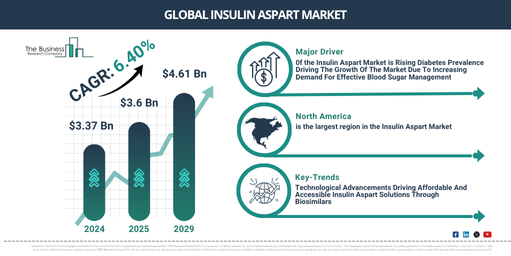
    In recent times, the insulin aspart market has experienced robust growth. The market, which was valued at $3.37 billion in 2024, is projected to expand to $3.6 billion in 2025, indicating a compound annual growth rate (CAGR) of 6.7%. The growth during the historic period was primarily driven by increased global prevalence of diabetes, improved awareness of diabetes control, higher uptake of sophisticated insulin delivery devices, increased global healthcare spending, and a rising preference for quick-acting insulins.

    Expectations are high for the insulin aspart market, with forecasts predicting robust growth in the coming years. By 2029, the market value is projected to reach $4.61 billion, exhibiting a compound annual growth rate (CAGR) of 6.4%. This anticipated growth over the forecast period can be credited to a surge in funding for diabetes research and development activities, an ageing population, enhanced healthcare facilities, an increasing number of type 2 diabetes cases, and a growing preference among patients for tailor-made diabetes management strategies. Other significant trends for the forecast period encompass strides in insulin formulation technologies, the merging of insulin aspart with intelligent insulin delivery equipment, technological breakthroughs in continuous glucose monitoring systems, advancements in personalized medicine, and the evolution of digital health platforms.

    Download The Free Sample Report Here:

    https://www.thebusinessresearchcompany.com/sample.aspx?id=24572&type=smp

    What Forces Are Driving The Growth Of The Insulin Aspart Market?

    The increasing incidence of diabetes is anticipated to spur the insulin aspart market’s growth in the coming times. Diabetes is a long-lasting health condition defined by heightened blood sugar (glucose) levels, resulting from the body’s inability to manufacture or utilize insulin efficiently. The amplified incidence of diabetes can be attributed to inactive lifestyles and unhealthy diets inundated with sugar and processed foods, leading to obesity and insulin resistance. Insulin aspart provides a solution to this growing diabetes problem by offering fast-acting insulin, capably controlling blood sugar surges after meals, and improving overall blood sugar regulation in individuals living with diabetes. For instance, a report released by the Office for Health Improvement and Disparities, a UK government department, in March 2025, revealed that the recorded incidence of type 2 diabetes among adults aged 17 and older in England had increased to 7.0% in March 2024, from 6.8% in March 2023. Thus, the escalating diabetes incidence is propelling the insulin aspart market.

    How Is The Insulin Aspart Industry Segmented Across Key Parameters?

    The insulin aspart market covered in this report is segmented –

    1) By Insulin Type: Human Insulin, Analog Insulin

    2) By Product Type: Vials, Pre-Filled Pens, Cartridges

    3) By Application: Type 1 Diabetes, Type 2 Diabetes, Gestational Diabetes

    4) By End User: Hospitals, Home Care, Specialty Clinics, Diabetes Care Centers, Other End Users

    Subsegments:

    1) By Human Insulin: Regular Insulin, Neutral Protamine Hagedorn (NPH) Insulin, Other Human Insulin Types

    2) By Analog Insulin: Rapid-Acting Analog Insulin, Long-Acting Analog Insulin, Other Analog Insulin Types

    What Notable Trends Are Shaping The Direction Of The Insulin Aspart Market?

    Top firms in the insulin aspart market are emphasizing the development of creative products, such as biosimilars, in order to offer affordable substitutes and widen patient access to superior insulin treatments. A biosimilar is a bio-medical product that closely resembles an already approved reference biologic, and provides no substantial differences in safety, purity, or effectiveness. For example, in November 2023, the India-based pharmaceutical corporation, USV Pvt Ltd, introduced INSUQUICK, the country’s first biosimilar insulin aspart, marking a significant advancement in the nation’s diabetes care. INSUQUICK, a fast-acting insulin analog, is completely made in India leveraging 100% indigenous technology and has faced a thorough clinical program to match international quality criteria. The pens for this product have a clear scale and audible clicks to ensure accurate dosing, and it’s easily available across all major cities and tier I and II towns. By providing a high-quality, domestically produced, and more cost-effective fast-acting insulin alternative, INSUQUICK aims to amplify the treatment accessibility for India’s extensive diabetic populace, signifying a notable stride in boosting diabetes care in the nation.

    Which Companies Currently Dominate The Competitive Landscape In The Insulin Aspart Industry?

    Major companies operating in the insulin aspart market are Sanofi S.A., AstraZeneca plc, Novo Nordisk A/S, Cipla Limited, Lupin Limited, Zhejiang Hisun Pharmaceutical Co Ltd., Biocon Limited, Amphastar Pharmaceuticals Inc., Civica Inc., Wockhardt Limited, Gulf Pharmaceutical Industries PSC (Julphar), GEROPHARM LLC, HEC Pharm Co Ltd., USV Private Limited, Aqlivia Private Limited, Gan & Lee Pharmaceuticals Co Ltd., GeneSys Biologics Private Limited, Biogenomics Limited, MJ Biopharma Private Limited, Paras Biopharmaceuticals Finland Oy.

    Get The Full Report Here:

    https://www.thebusinessresearchcompany.com/report/insulin-aspart-global-market-report

    Which Geographic Regions Are Driving Demand In The Insulin Aspart Market?

    North America was the largest region in the insulin aspart market in 2024. Asia-Pacific is expected to be the fastest-growing region in the forecast period. The regions covered in the insulin aspart market report are Asia-Pacific, Western Europe, Eastern Europe, North America, South America, Middle East, Africa.

    Request For A Customized Report:

    https://www.thebusinessresearchcompany.com/customise?id=24572&type=smp

    About The Business Research Company:

    With over 15000+ reports from 27 industries covering 60+ geographies, The Business Research Company has built a reputation for offering comprehensive, data-rich research and insights. Armed with 1,500,000 datasets, the optimistic contribution of in-depth secondary research, and unique insights from industry leaders, you can get the information you need to stay ahead in the game.

    Get in touch with us:

    The Business Research Company: https://www.thebusinessresearchcompany.com/

    Americas +1 310-496-7795

    Asia +44 7882 955267 & +91 8897263534

    Europe +44 7882 955267

    Email us at info@tbrc.info

    Follow us on:

    LinkedIn: https://in.linkedin.com/company/the-business-research-company

    YouTube: https://www.youtube.com/channel/UC24_fI0rV8cR5DxlCpgmyFQ

    Global Market Model: https://www.thebusinessresearchcompany.com/global-market-model

  • Emerging Trends and Growth Drivers in the Influenza Vaccines Market Through 2029

    Claim your 30% discount on Global Market Reports with code ONLINE30. Limited time only.

    Claim your 30% discount on Global Market Reports with code ONLINE30. Limited time only.

    How Much Is the Global Influenza Vaccines Market Valued at Present and by 2029?

    In recent times, the influenza vaccines market size has seen robust growth. The market, which is set to expand from $8.5 billion in 2024 to $9.04 billion in 2025, will have a compound annual growth rate (CAGR) of 6.3%. A few contributing factors to this growth during the historic period have been the readiness for pandemics, initiatives in public health, studies on the effectiveness of vaccines, recommendations from healthcare professionals, and worldwide surveillance of influenza.

    Strong expansion is anticipated in the influenza vaccines market in the upcoming years. The market is predicted to ascend to “$12.13 billion in 2029, experiencing a compound annual growth rate (CAGR) of 7.6%. The projected growth during this period can be ascribed to factors such as climate and environmental changes, enhancements in healthcare accessibility, the emergence of new influenza strains, adjuvants and delivery systems innovations, and an increase in healthcare spending. Forecast trends include the broader application of mRNA vaccine technology, a concentration on pediatric immunization, measures to control seasonal influenza, improved vaccination coverage in underdeveloped countries, and custom vaccination strategies.

    Download The Free Sample Report Here:

    https://www.thebusinessresearchcompany.com/sample.aspx?id=11935&type=smp

    #What Drivers Are Influencing Growth In The Influenza Vaccines Market?

    The influenza vaccine market’s expansion is anticipated to be spurred by increasing occurrences of seasonal influenza. This respiratory illness, typically rampant during certain periods of the year, especially the colder months, is brought about by influenza viruses. The emergence of this shift can be attributed to antigenic drift, environmental factors, population vulnerability, suboptimal vaccine coverage, and an absence of universal vaccination. Influenza vaccines play a crucial role in decreasing the incidents of seasonal influenza by providing immunity against the active strains of the virus. For instance, the US government agency, the Centers for Disease Control and Prevention (CDC), in November 2023, revealed that there were roughly 31 million instances of flu-related illnesses, 14 million flu-related clinical visits, 360,000 flu-related hospital stays, and 21,000 flu-related fatalities during the 2022-2023 flu season. Consequently, the escalating occurrences of influenza seasons are fuelling the growth of the influenza vaccines market.

    The influenza vaccines market covered in this report is segmented –

    1) By Vaccine Type: Inactivated, Live Attenuated

    2) By Valency: Quadrivalent, Trivalent

    3) By Route Of Administration: Injection, Nasal Spray

    4) By Age Group: Pediatric, Adult

    5) By Distribution Channel: Hospitals And Pharmacies, Government And Institutional Supply, Other Distribution Channels

    Subsegments:

    1) By Inactivated: Trivalent Inactivated Vaccines (TIV), Quadrivalent Inactivated Vaccines (QIV)

    2) By Live Attenuated: Live Attenuated Influenza Vaccines (LAIV), Quadrivalent Live Attenuated Influenza Vaccines (QLAIV)

    What Trends Are Currently Influencing Growth In The Influenza Vaccines Market?

    The growing trend of utilizing cutting-edge technologies for vaccine production has been observed in the influenza vaccine market. To maintain their market stance, firms involved in influenza vaccine production are embracing these advanced manufacturing techniques. Take for example GlaxoSmithKline PLC., a pharmaceutical and biotechnology firm based in the UK, which initiated the Multiple Antigen Presenting System (MAPS) for vaccine creation in January 2023. This pioneering technique offers a new approach to build potent vaccines against bacteria and viruses. It can be particularly effective for swift vaccine development during outbreaks of epidemics or pandemics.

    Which Companies Play A Key Role In The Development Of The Influenza Vaccines Market?

    Major companies operating in the influenza vaccines market include Pfizer Inc., F. Hoffmann-La Roche Ltd., Merck & Co. Inc., Novartis AG, Sanofi-Aventis LLC., AstraZeneca PLC, GlaxoSmithKline plc., Serum Institute of India Private Limited, Takeda Pharmaceutical Company Limited, Moderna Inc., Viatris Inc., CSL Limited, Seqirus Inc., Daiichi Sankyo Company Limited, China National Pharmaceutical Group Corporation, Shanghai Fosun Pharmaceutical Group Co. Ltd., Mitsubishi Tanabe Pharma Corporation, Shionogi & Co. Ltd., Liaoning Cheng Da Biotechnology Co. Ltd., Novavax AB, Sinovac Biotech Co. Ltd., Green Cross Corporation, Emergent BioSolutions Inc., Walvax Biotechnology Co. Ltd., Hualan Biological Engineering Inc., Valneva SE, Bharat Biotech International Limited, Vaxess Technologies Inc., Osivax, Gamma Vaccines Pty. Ltd.

    https://www.thebusinessresearchcompany.com/report/influenza-vaccines-global-market-report

    What Are The Key Regional Developments Shaping The Influenza Vaccines Market?

    North America was the largest region in the influenza vaccines market in 2024. Asia-Pacific is expected to be the fastest-growing region in the forecast period. The regions covered in the influenza vaccines market report are Asia-Pacific, Western Europe, Eastern Europe, North America, South America, Middle East, Africa.

    Request For A Customized Report:

    https://www.thebusinessresearchcompany.com/customise?id=11935&type=smp

    About The Business Research Company:

    With over 15000+ reports from 27 industries covering 60+ geographies, The Business Research Company has built a reputation for offering comprehensive, data-rich research and insights. Armed with 1,500,000 datasets, the optimistic contribution of in-depth secondary research, and unique insights from industry leaders, you can get the information you need to stay ahead in the game.

    Get in touch with us:

    The Business Research Company: https://www.thebusinessresearchcompany.com/

    Americas +1 310-496-7795

    Asia +44 7882 955267 & +91 8897263534

    Europe +44 7882 955267

    Email us at info@tbrc.info

    Follow us on:

    LinkedIn: https://in.linkedin.com/company/the-business-research-company

    YouTube: https://www.youtube.com/channel/UC24_fI0rV8cR5DxlCpgmyFQ

    Global Market Model: https://www.thebusinessresearchcompany.com/global-market-model

  • CAGR of 5.7% Projected for Immunohematology Market From 2025 to 2029

    Claim your 30% discount on Global Market Reports with code ONLINE30. Limited time only.

    Claim your 30% discount on Global Market Reports with code ONLINE30. Limited time only.

    What Is the Current and Projected Market Size of the Immunohematology Industry?

    The size of the immunohematology market has consistently expanded in the past few years. The market value is forecasted to surge from $2.46 billion in 2024 to $2.55 billion in 2025, representing a compound annual growth rate (CAGR) of 3.6%. The positive growth observed in the historical period is linked to developments in blood transfusion technology, the incidence of blood-related disorders, the broadening scope of blood banks, governmental initiatives promoting blood safety, a rise in surgical procedures, and an increased understanding of risks associated with transfusion.

    The market for immunohematology is projected to exhibit robust growth in the coming years. The market’s size is expected to expand to “$3.17 billion by 2029 with a compound annual growth rate (CAGR) of 5.7%. The predicted growth during the forecast period is due to factors such as the growing need for point-of-care testing, the introduction of new blood products, enhancement in healthcare infrastructure, blood compatibility genetic testing, and regulatory backing for blood safety. Key trends during the forecast period will include automated and high-output systems, modern blood typing techniques, methods for antibody detection, patient blood management initiatives, and the application of artificial intelligence in analysis, as well as the integration of telemedicine.

    Download The Free Sample Report Here:

    https://www.thebusinessresearchcompany.com/sample.aspx?id=10295&type=smp

    #Which Factors Are Currently Driving The Growth Of The Immunohematology Market?

    Increasing incidences of hematological disorders are anticipated to fuel the expansion of the immunohematology market in the future. Hematological disorders represent a wide array of conditions impacting the blood and its components, such as red cells, white cells, platelets, and plasma. Immunohematology plays a crucial role in carrying out secure and effective blood transfusions, as it helps avert transfusion reactions instigated by incompatible blood types or the existence of antibodies in the recipient’s blood. Techniques used in immunohematology are also utilized to diagnose and treat diseases linked to the immune system which could influence the hematological system. For example, according to Cancer Research UK, a research organization based in the UK, it’s expected that the average number of new leukemia cases arising from hematological disorders in the UK will rise from approximately 12,400 cases in 2023-2025 to roughly 14,500 cases in 2038-2040. Therefore, the increasing incidence rate of hematological disorders is propelling the expansion of the immunohematology market.

    The immunohematology market covered in this report is segmented –

    1) By Product: Analyzers And Systems, Reagents

    2) By Technology: Biochips, Erythrocyte-Magnetized Technology (Met), Gel Cards, Microplates, Polymerase Chain Reaction (PCR)

    3) By Disease: Blood-Related Diseases, HIV, Hepatitis

    4) By Application: Pretransfusion Testing, Investigation Of Immune Hemolysis, Perinatal Testing, Blood Group Phenotyping, Leucocyte And Platelet Serology

    5) By End User: Blood Banks, Diagnostic And Reference Laboratories, Hospitals, Academic And Research Institutes

    Subsegments:

    1) By Analyzers And Systems: Blood Typing Analyzers, Cross-Matching Analyzers, Gel Card Systems

    2) By Reagents: Blood Grouping Reagents, Antisera, Control Serum

    What Long-Term Trends Are Likely To Affect The Immunohematology Market?

    Many of the leading players in the immunohematology market are zeroing in on the creation of cutting-edge diagnostic tools, such as soluble recombinant proteins, which are geared towards offsetting the disruptive effects of daratumumab, a cancer treatment strategy. Soluble recombinant proteins, generated through the application of recombinant DNA methodology, hold their structures and functionality in a soluble form in host cells or solutions, making them beneficial for therapeutic and research purposes. For illustration, Grifols, S.A., a pharmaceutical entity based in Spain, introduced Grifols sCD38, a novel soluble recombinant protein-based solution in November 2023. Constructed to manage the disruptions daratumumab causes on important transfusion compatibility tests, Grifols’sCD38 is a pioneering solution that stops daratumumab from sticking to CD38 proteins on red blood cells, guaranteeing precise pre-transfusion test outcomes. Tailored explicitly for multiple myeloma patients, this solution boosts transfusion protocols and lessens the chances of delay in administering urgent transfusions, by ensuring a more streamlined procedure for crossmatching, identification, and screening.

    Who Are The Main Participants Shaping The Immunohematology Market Landscape?

    Major companies operating in the immunohematology market include Ortho Clinical Diagnostics Inc., Immunocor Inc., Abbott Laboratories, Siemens Healthineers AG, Grifols S.A., Beckman Coulter Inc., Thermo Fisher Scientific Inc., Becton Dickinson and Company, Merck Co. & KGaA, Bio-Rad Laboratories, Sysmex Corporation, Danaher Corporation, Biosystems S.A., Roche Holdings AG, Mindray Medical International Limited, F.Hoffmann La-Roche Ltd., Biotest AG, Cardinal Health Inc., Quotient Limited, DiaSorin S.p.A., Lorne Laboratories Ltd., Biokit S.A., Avox Technologies, Diagnostic Automation/Cortez Diagnostics Inc., Inno-train Diagnostik GmbH, Drucker Diagnostics Inc., Immundia Diagnostics Pvt. Ltd.

    https://www.thebusinessresearchcompany.com/report/immunohematology-global-market-report

    Which Region Currently Holds The Largest Share In The Immunohematology Market?

    North America was the largest region in the immunohematology market in 2024. Asia-Pacific is expected to be the fastest-growing region in the global immunohematology market during the forecast period. The regions covered in the immunohematology market report are Asia-Pacific, Western Europe, Eastern Europe, North America, South America, Middle East, Africa

    Request For A Customized Report:

    https://www.thebusinessresearchcompany.com/customise?id=10295&type=smp

    About The Business Research Company:

    With over 15000+ reports from 27 industries covering 60+ geographies, The Business Research Company has built a reputation for offering comprehensive, data-rich research and insights. Armed with 1,500,000 datasets, the optimistic contribution of in-depth secondary research, and unique insights from industry leaders, you can get the information you need to stay ahead in the game.

    Get in touch with us:

    The Business Research Company: https://www.thebusinessresearchcompany.com/

    Americas +1 310-496-7795

    Asia +44 7882 955267 & +91 8897263534

    Europe +44 7882 955267

    Email us at info@tbrc.info

    Follow us on:

    LinkedIn: https://in.linkedin.com/company/the-business-research-company

    YouTube: https://www.youtube.com/channel/UC24_fI0rV8cR5DxlCpgmyFQ

    Global Market Model: https://www.thebusinessresearchcompany.com/global-market-model