Blog

  • Key Factors Fueling the Growth of the Postpartum Depression Market in 2025: Rising Postpartum Depression Cases Fueling Growth In The Postpartum Depression Market

    Claim your 30% discount on Global Market Reports with code ONLINE30. Limited time only.

    What Are the Key Projections for the CAGR of the Postpartum Depression Market Size From 2025 to 2034?

    In recent times, the market size of postpartum depression has experienced significant growth. It is predicted to expand from $12.15 billion in 2024 to $16.05 billion in 2025, witnessing a compound annual growth rate (CAGR) of 32.1%. This growth during the historic period is linked to factors such as heightened awareness about maternal mental health, advancements in research, public health interventions, and a rise in screenings.

    The market size for postpartum depression is projected to experience a massive increase in the coming years, swelling to$49.49 billion in 2029 with a compound annual growth rate (CAGR) of 32.5%. This expected expansion during the forecast period can be linked to the rise of telehealth services, advancements in pharmacology, legislation relating to maternal mental health, and an increase in the mental health workforce. Key trends during this period are anticipated to include integrated care models, peer support initiatives, applications for perinatal mental health, and mental health screening instruments.

    Download a free sample to assess the report’s scope and structure:

    https://www.thebusinessresearchcompany.com/sample.aspx?id=13024&type=smp

    What are the Fundamental Drivers and Innovations Shaping the Postpartum Depression Market?

    The postpartum depression market is predicted to thrive due to the projected rise in cases of postpartum depression. This condition, characterized by excessive worry following childbirth, may also present physical symptoms. The presence of postnatal depression and postpartum anxiety often coexist and symptoms can appear at any juncture in the year following delivery. The frequent use of psychotherapy, known as talk therapy or mental health counselling, medicine, or a combination of both, bolsters the market’s expansion. For instance, a survey conducted in February 2022 by the University of Virginia School of Medicine (UVA SoM), a medical school based in the US, of 1.1 million mothers revealed that the risk of postpartum depression was most prevalent in first-time mothers, those under 25 years, and mothers of twins. In terms of age groups, the highest self-reported postpartum depression symptom rate was 10% amongst 18-24-year-old women. Mothers of twins exhibited higher postpartum depression rates, with symptoms apparent in 11.3% of respondents, compared to only 8.3% of mothers with a single child. As such, the expected increase in cases of postpartum depression is set to stimulate the postpartum depression market.

    How Is the Postpartum Depression Market Segmented?

    The postpartum depressionmarket covered in this report is segmented –

    1) By Types: Postpartum Blues; Postpartum Anxiety; Postpartum Obsessive Compulsive Disorder; Postpartum Panic Disorder; Postpartum Post-Traumatic Stress Disorder; Postpartum Psychosis; Other Types

    2) By Treatment: Psychotherapy; Medication; Supplements; Other Treatments

    3) By Route of Administration: Oral; Parenteral; Other Route Of Administration

    4) By Distribution Channel: Hospital Pharmacy; Retail Pharmacy; Online Pharmacy; Other Distribution Channels

    5) End-Users: Hospitals; Specialty Clinics; Homecare; Other End-Users

    Subsegments:

    1) By Postpartum Blues: Mild Emotional Disturbances; Short-term Mood Swings

    2) By Postpartum Anxiety: Generalized Anxiety Disorder (GAD); Panic Attacks

    3) By Postpartum Obsessive Compulsive Disorder: Intrusive Thoughts; Compulsive Behaviors

    4) By Postpartum Panic Disorder: Sudden Panic Attacks; Physical Symptoms

    5) By Postpartum Post-Traumatic Stress Disorder (PTSD): Trauma Response To Childbirth; Flashbacks And Anxiety

    6) By Postpartum Psychosis: Hallucinations; Severe Mood Swings

    7) By Other Types: Mixed Mood Disorders; Comorbid Conditions With Postpartum

    Request customized data on this market:

    https://www.thebusinessresearchcompany.com/customise?id=13024&type=smp

    Which Regions Are Driving the Next Phase of the Postpartum Depression Market Growth?

    North America was the largest region in the postpartum depression market in 2024. The regions covered in postpartum depression market report are Asia-Pacific, Western Europe, Eastern Europe, North America, South America, Middle East and Africa.

    What Key Trends Are Shaping the Future of the Postpartum Depression Market?

    Firms active in the postpartum depression sector are concentrating on novel product innovations to maintain their market position. The scarcity of treatment options has boosted the urgency for quicker acting therapies and inventive care delivery methods for postpartum depression. For example, in February 2023, Biogen Inc., a biotechnology firm based in the US, partnered with Sage Therapeutics Inc., a US-based biopharmaceutical company, to announce that the United States Food and Drug Administration (FDA) approved the filing of a new drug application (NDA) for the use of zuranolone in treating major depressive disorder (MDD) and postpartum depression (PPD). Zuranolone, an experimental drug, is under trial as a rapid, once-daily, 14-day oral treatment for individuals affected by MDD and PPD. Zuranolone, a type of neuroactive steroid, functions as a positive allosteric modulator of GABA-A receptors, providing a unique mechanism of action. It is believed to function in individuals suffering from depression by quickly correcting dysfunctional neural networks in order to restore brain function optimally. Zuranolone impacts the brain networks that regulate mood, stimulation, conduct, and even cognitive capacities.

    View the full report here:

    https://www.thebusinessresearchcompany.com/report/postpartum-depression-global-market-report

    How Is the Postpartum Depression Market Defined and What Are Its Core Parameters?

    Postpartum depression (PPD) refers to a condition, which is a type of mood disorder that affects some women after giving birth and can remain undiagnosed for long periods of time. It is characterized by feelings of sadness, hopelessness and a lack of interest or pleasure in once-enjoyable activities.

    Purchase the full report and get a swift delivery:

    https://www.thebusinessresearchcompany.com/purchaseoptions.aspx?id=13024

    About The Business Research Company:

    With over 15000+ reports from 27 industries covering 60+ geographies, The Business Research Company has built a reputation for offering comprehensive, data-rich research and insights. Armed with 1,500,000 datasets, the optimistic contribution of in-depth secondary research, and unique insights from industry leaders, you can get the information you need to stay ahead in the game.

    Get in touch with us:

    The Business Research Company: https://www.thebusinessresearchcompany.com/

    Americas +1 310-496-7795

    Europe +44 7882 955267

    Asia & Others +44 7882 955267 & +91 8897263534

    Email us at info@tbrc.info

    Follow us on:

    LinkedIn: https://in.linkedin.com/company/the-business-research-company

    YouTube: https://www.youtube.com/channel/UC24_fI0rV8cR5DxlCpgmyFQ

    Global Market Model: https://www.thebusinessresearchcompany.com/global-market-model
  • Major Trends and Emerging Patterns in the Point of Care Ultrasound Market: Increasing Focus On Innovative Products To Gain A Competitive Edge In The Market

    Claim your 30% discount on Global Market Reports with code ONLINE30. Limited time only.

    How Has The Point of Care Ultrasound Market Growth Evolved From 2024 To 2025, And What’s Ahead?

    The market size for point of care ultrasound has seen robust growth in the past few years. The market is expected to expand from $4.25 billion in 2024 to $4.54 billion in 2025, yielding a compound annual growth rate (CAGR) of 7.0%. The historical growth of the market is linked to the increase in point-of-care testing, amplified clinical utility, compact and mobile devices, training and education initiatives, and cost-effectiveness.

    The market size of point of care ultrasound is predicted to witness robust growth in the coming years, expanding to a scale of$6.08 billion in 2029″ with a compound annual growth rate (CAGR) of 7.5%. Factors contributing to this growth in the projected period include its integration with artificial intelligence, increasing use in primary care, initiatives in the global health sector, availability in remote and rural healthcare settings, and the development of customized and specialized probes. Key trends in the forecast period involve technological advancements, miniaturization and portability, wireless connectivity and integration with the cloud, widening applications beyond radiology, and improved access to healthcare in remote and rural areas.

    Download a free sample to assess the report’s scope and structure:

    https://www.thebusinessresearchcompany.com/sample.aspx?id=13723&type=smp

    What Are the Primary Drivers Supporting the Market Growth of the Point of Care Ultrasound Market?

    The growth of the point-of-care ultrasound market is anticipated to be stimulated by the increasing occurrence of chronic diseases. Chronic or non-communicable diseases (NCDs) are long-term medical conditions that develop over a lengthy period and typically progress slowly. The capacity of POCUS (point of care ultrasound) to aid early detection, tailor treatments, and allow remote patient monitoring gives it a crucial role in managing chronic conditions and enhancing patient outcomes. For example, the National Institutes of Health, a US government agency, forecasted in January 2023 that by 2035, 35.66% (range: 33.36–36.04) of adults aged 50 and above are predicted to suffer from at least a single chronic illness, a number expected to surge to 47.81% (range: 46.09–49.71) by 2050. Therefore, the escalating frequency of chronic illnesses fuels the point-of-care ultrasound market.

    Which Primary Segments of the Point of Care Ultrasound Market Are Driving Growth and Industry Transformations?

    The point of care ultrasoundmarket covered in this report is segmented –

    1) By Type: Diagnostic Devices; Therapeutic Devices

    2) By Portability: Trolley Based Devices; Handheld Devices

    3) By Application: Emergency Medicine; Cardiology; Obstetrics And Gynecology; Urology; Vascular Surgery; Musculoskeletal; Other Applications

    4) By End-User: Hospitals; Clinics; Maternity Centers; Ambulatory Surgical Centers (ASCs); Other End Users

    Subsegments:

    1) By Diagnostic Devices: Portable Ultrasound Systems; Handheld Ultrasound Devices; Cart-Based Ultrasound Machines

    2) By Therapeutic Devices: Ultrasound-Guided Injection Systems; Ultrasound Therapy Devices; Ablation Devices

    Request customized data on this market:

    https://www.thebusinessresearchcompany.com/customise?id=13723&type=smp

    Which Regions Are Key Players in the Growth of the #What Are the Primary Drivers Supporting the Market Growth of the Point of Care Ultrasound Market?# Market?

    North America was the largest region in the point of care ultrasound market in 2024. Asia-Pacific is expected to be the fastest-growing region in the forecast period. The regions covered in the point of care ultrasound market report are Asia-Pacific, Western Europe, Eastern Europe, North America, South America, Middle East, Africa.

    What Are the Most Significant Market Trends in the Point of Care Ultrasound Market?

    Leading businesses in the point-of-care ultrasound market are concentrating their efforts on creating state-of-the-art products, such as ultrasound-on-chip technology, to improve imaging functions and spark innovation in the field of medical diagnostics. This technology allows for the miniaturization of ultrasound elements onto a solitary chip, paving the way for compact and portable ultrasound devices for various medical imaging applications. This breakthrough improves the accessibility of ultrasound diagnostics, potentially encouraging advancements in point-of-care and wearable healthcare gadgets. For instance, Butterfly Network Inc., a medical imaging device manufacturer based in the US, launched the Butterfly iQ3 in February 2024. This latest version of the handheld point-of-care ultrasound (POCUS) system uses P4.3 ultrasound-on-chip technology, which offers the quickest digital data transfer rate in the world. The system is specially designed to offer high-resolution imaging and portable ultrasound imaging with advanced 3D capabilities and delivers twice the processing power of its predecessor, the Butterfly iQ+.

    View the full report here:

    https://www.thebusinessresearchcompany.com/report/point-of-care-ultrasound-global-market-report

    What Parameters Are Used to Define the Point of Care Ultrasound Market?

    Point-of-care ultrasound (POCUS) refers to using portable ultrasound devices at the bedside or in a clinical setting for immediate diagnostic and therapeutic purposes. This approach offers several advantages, including real-time assessment, immediate feedback, and the potential to expedite clinical decision-making.

    Purchase the full report and get a swift delivery:

    https://www.thebusinessresearchcompany.com/purchaseoptions.aspx?id=13723

    About The Business Research Company:

    With over 15000+ reports from 27 industries covering 60+ geographies, The Business Research Company has built a reputation for offering comprehensive, data-rich research and insights. Armed with 1,500,000 datasets, the optimistic contribution of in-depth secondary research, and unique insights from industry leaders, you can get the information you need to stay ahead in the game.

    Get in touch with us:

    The Business Research Company: https://www.thebusinessresearchcompany.com/

    Americas +1 310-496-7795

    Europe +44 7882 955267

    Asia & Others +44 7882 955267 & +91 8897263534

    Email us at info@tbrc.info

    Follow us on:

    LinkedIn: https://in.linkedin.com/company/the-business-research-company

    YouTube: https://www.youtube.com/channel/UC24_fI0rV8cR5DxlCpgmyFQ

    Global Market Model: https://www.thebusinessresearchcompany.com/global-market-model

  • Key Developments and Trends Steering the Platelet Shaker Market Forward: Advancements in Blood Component Quality Monitoring: The Role of High-Performance Imaging Tools in the Platelet Shaker Market

    Claim your 30% discount on Global Market Reports with code ONLINE30. Limited time only.

    What is the Projected CAGR for the Platelet Shaker Market Size from 2025 to 2034?

    In recent times, the market size of the platelet shaker has seen considerable growth. It is projected to expand from $3.11 billion in 2024 to $3.32 billion in 2025, with a compound annual growth rate (CAGR) of 6.8%. The notable growth observed in the past can be linked to factors such as the advancement in biomedical and life sciences research, clinical diagnostics, blood testing, and an increased occurrence of hematological disorders.

    In the coming years, the market size of the platelet shaker is forecasted to witness robust growth to reach$4.5 billion by 2029 at a compound annual growth rate (CAGR) of 7.8%. This anticipated growth during the forecast period is due to factors such as the expansion of the biotechnology and pharmaceutical sectors, increasing demand in clinical and pathology laboratories, growth in point-of-care testing, a concentrated emphasis on personalized medicine, and the emergence of academic and research collaborations. Noteworthy trends going forward in the forecast period are research needs customization, sustainability and energy efficiency, collaborations to accelerate technological growth, expansion of biopharmaceutical research, and market penetration in emerging economies.

    Download a free sample to assess the report’s scope and structure:

    https://www.thebusinessresearchcompany.com/sample.aspx?id=13140&type=smp

    How Are Key Drivers in the Industry Acting as Catalysts for the Growth of thePlatelet Shaker Market?

    The surge in blood-related disorders is set to catalyze the expansion of the platelet shaker market in the future. Blood-related diseases usually interfere with the standard functionality of blood by affecting its components. Platelet shakers play a crucial role in maintaining the suspension of the platelets and distributing them evenly throughout the blood transfusion process while managing or inhibiting blood-related illnesses in patients. For example, a study by the Leukemia & Lymphoma Society, a non-profit health organization based in the US, forecasts that approximately 184,720 individuals will be diagnosed with leukemia, lymphoma, or myeloma in 2023. Furthermore, it’s estimated that around 1,958,310 new cancer cases will be registered in the US in 2023, with leukemia, lymphoma, and myeloma diagnoses accounting for 9.4% of these cases and resulting in 57,380 fatalities in the US in the same year. Hence, the escalating occurrence of blood-related disorders is propelling the growth of the platelet shaker market.

    Which Segments in the Platelet Shaker Offer the Most Growth?

    The platelet shakermarket covered in this report is segmented –

    1) By Product Type: Benchtop Platelet Shakers; Floor-Standing Platelet Shakers; Portable Platelet Shakers

    2) By Capacity: Small; Medium; Large

    3) By Application: Blood Banks; Hospitals And Diagnostic Centers; Academic And Research Institutes; Other Applications

    Subsegments:

    1) By Benchtop Platelet Shakers: Small Benchtop Models; High-Capacity Benchtop Models; Digital Benchtop Platelet Shakers

    2) By Floor-Standing Platelet Shakers: Standard Floor-Standing Models; High-Capacity Floor-Standing Models; Automated Floor-Standing Platelet Shakers

    3) By Portable Platelet Shakers: Battery-Operated Portable Models; Compact Portable Models; Multi-Functional Portable Shakers

    Request customized data on this market:

    https://www.thebusinessresearchcompany.com/customise?id=13140&type=smp

    What Are the Fastest-Growing Geographies in the #How Are Key Drivers in the Industry Acting as Catalysts for the Growth of thePlatelet Shaker Market?# Market?

    North America was the largest region in the platelet shaker market in 2024. The regions covered in the platelet shaker market report are Asia-Pacific, Western Europe, Eastern Europe, North America, South America, Middle East, Africa

    What Are the Current Market Growth and Trends in the Platelet Shaker Industry?

    The leading corporations in the platelet shaker market are channeling their energy into constructing state-of-the-art technologies such as high-performance imaging tools. These tools endeavor to augment the monitoring of blood component quality and boost storage effectiveness. High-performance imaging tools encompass advanced devices and technologies specifically engineered to procure, dissect, and handle images with unparalleled clarity, resolution, and velocity. They frequently make use of intricate sensors, algorithms, and software to step up image quality and offer profound insights. For instance, Tomocube, Inc., headquartered in South Korea and a trailblazer in its field, rolled out the HT-X1 microscope in July 2022, marking a notable milestone in bioimaging technology. This revolutionary system facilitates label-free 3D and 4D live cell imaging, proving particularly valuable for higher-throughput and automated screening applications. The HT-X1 employs incoherent light to seize holographic images of unlabeled live cells, enabling scientists to investigate cellular dynamics devoid of any need for sample preparation.

    View the full report here:

    https://www.thebusinessresearchcompany.com/report/platelet-shaker-global-market-report

    What Are the Key Elements That Define the Platelet Shaker Market?

    Platelets are tiny, transparent cell fragments in the bloodstream that assist in clot formation to halt bleeding. A platelet shaker refers to laboratory equipment that gently agitates the platelet concentrates to ensure they are continuously oxygenated and prevent the platelets from clotting. It delivers controlled agitation to maintain the survival and functionality of platelets, which are microscopic discoid anucleate blood cells.

    Purchase the full report and get a swift delivery:

    https://www.thebusinessresearchcompany.com/purchaseoptions.aspx?id=13140

    About The Business Research Company:

    With over 15000+ reports from 27 industries covering 60+ geographies, The Business Research Company has built a reputation for offering comprehensive, data-rich research and insights. Armed with 1,500,000 datasets, the optimistic contribution of in-depth secondary research, and unique insights from industry leaders, you can get the information you need to stay ahead in the game.

    Get in touch with us:

    The Business Research Company: https://www.thebusinessresearchcompany.com/

    Americas +1 310-496-7795

    Europe +44 7882 955267

    Asia & Others +44 7882 955267 & +91 8897263534

    Email us at info@tbrc.info

    Follow us on:

    LinkedIn: https://in.linkedin.com/company/the-business-research-company

    YouTube: https://www.youtube.com/channel/UC24_fI0rV8cR5DxlCpgmyFQ

    Global Market Model: https://www.thebusinessresearchcompany.com/global-market-model

  • Market Trends Influencing Strategic Decisions in the Pituitary Dwarf Treatment Industry: Market Focus On Innovative Products Drives Growth In Pituitary Dwarf Treatment

    Claim your 30% discount on Global Market Reports with code ONLINE30. Limited time only.

    What Is the Current and Projected Market Size of the Pituitary Dwarf Treatment Market Through 2034?

    The market size for pituitary dwarfism treatment has experienced significant expansion in recent years. It is projected to rise from $5.52 billion in 2024 to $6.37 billion in 2025, demonstrating a compound annual growth rate (CAGR) of 15.3%. The surge during the historical period can be traced back to a heightened demand for pituitary dwarf treatment medications, an increasing occurrence of pituitary dwarfism and growing awareness of this condition.

    Expectations indicate that the market for pituitary dwarf treatment will experience substantial growth in the coming years. It is projected to hit a size of$10.77 billion in 2029, with a compound annual growth rate (CAGR) of 14.0%. Factors including an increase in the elderly population, growth in healthcare expenditure, the use of growth hormone treatments, and a burgeoning demand for prescription treatments for pituitary dwarfism are behind the forecasted growth rate. The period will also see significant trends such as advancements in medical studies, approval of new drugs, improvements in drug delivery systems, innovation in growth hormone formulations, and genetic testing.

    Download a free sample to assess the report’s scope and structure:

    https://www.thebusinessresearchcompany.com/sample.aspx?id=12923&type=smp

    What Are the Major Market Drivers Behind the Rising Adoption of Pituitary Dwarf Treatment Market?

    The escalating incidence of growth hormone deficiency is predicted to instigate the expansion of the pituitary dwarf treatment market in the future. Growth hormone deficiency (GHD) is a health disorder wherein the pituitary gland fails to produce or secrete enough growth hormone (GH). Hormonal therapies offered by pituitary dwarf treatment augment growth and bone health, control metabolism and enhance the quality-of-life for those afflicted with dwarfism and growth hormone deficiency. For instance, the Council of Health Insurance, a local government office based in Saudi Arabia, reported in November 2023 that the overall instance of short stature in Saudi Arabia was 33.68% as of 2022. Growth hormone deficiency emerged as the primary reason for these endocrinological cases, constituting 9.7%. Thus, the escalating incidence of growth hormone deficiency catalyzes the expansion of the pituitary dwarf treatment market.

    Which Key Market Segments Comprise the Pituitary Dwarf Treatment Market and Drive Its Revenue Growth?

    The pituitary dwarf treatmentmarket covered in this report is segmented –

    1) By Type: Pituitary Dwarfism Type I; Pituitary Dwarfism Type II; Pituitary Dwarfism Type III; Pituitary Dwarfism Type IV; Other Types

    2) By Treatment: Surgery; Additional Therapy; Drugs; Other Treatments

    3) By Route Of Administration: Parenteral; Other Routes Of Administrations

    4) By End User: Hospitals; Homecare; Specialty Clinics; Other End Users

    Subsegments:

    1) By Pituitary Dwarfism Type I: Growth Hormone Deficiency; Hypopituitarism

    2) By Pituitary Dwarfism Type II: Isolated Growth Hormone Deficiency; Combined Pituitary Hormone Deficiency

    3) By Pituitary Dwarfism Type III: Congenital Anomalies; Genetic Disorders

    4) By Pituitary Dwarfism Type IV: Acquired Causes; Other Hormonal Imbalances

    5) By Other Types: Idiopathic Dwarfism; Syndromic Dwarfism

    Request customized data on this market:

    https://www.thebusinessresearchcompany.com/customise?id=12923&type=smp

    Which Areas Are Leading Regions in the Pituitary Dwarf Treatment Market Expansion Across the Globe?

    North America was the largest region in the pituitary dwarf treatment market in 2024. The regions covered in pituitary dwarf treatment market report are Asia-Pacific, Western Europe, Eastern Europe, North America, South America, Middle East and Africa.

    What Are the Strategic Trends Steering thePituitary Dwarf Treatment Market Direction?

    Leading corporations in the pituitary dwarf treatment market are concentrating on the creation of novel products to maintain their competitive edge. As an example, Novo Nordisk A/S, a pharmaceutical firm hailing from Denmark, launched Sogroya (somapacitan-beco) injections in three variations: 5 mg, 10 mg, and 15 mg in April 2023. These were authorized by the Food and Drug Administration (FDA), a government agency from the US. The indication for Sogroya is to treat children starting from 2.5 years of age suffering from growth deficiencies due to a lack of sufficient endogenous growth hormone. The introduction of this indicated usage elevates Sogroya to being the only GH medication that can be administered once weekly, suitable for both children and adults.

    View the full report here:

    https://www.thebusinessresearchcompany.com/report/pituitary-dwarf-treatment-global-market-report

    How Is the Pituitary Dwarf Treatment Market Conceptually Defined?

    Pituitary dwarf is a medical condition in which the pituitary gland fails to produce sufficient growth hormone (GH). This deficiency leads to impaired growth and development in affected individuals, resulting in short stature or dwarfism. The pituitary dwarf treatment stimulates the growth of bones, muscles and other tissues, which can cause a noticeable increase in height and overall physical development.

    Purchase the full report and get a swift delivery:

    https://www.thebusinessresearchcompany.com/purchaseoptions.aspx?id=12923

    About The Business Research Company:

    With over 15000+ reports from 27 industries covering 60+ geographies, The Business Research Company has built a reputation for offering comprehensive, data-rich research and insights. Armed with 1,500,000 datasets, the optimistic contribution of in-depth secondary research, and unique insights from industry leaders, you can get the information you need to stay ahead in the game.

    Get in touch with us:

    The Business Research Company: https://www.thebusinessresearchcompany.com/

    Americas +1 310-496-7795

    Europe +44 7882 955267

    Asia & Others +44 7882 955267 & +91 8897263534

    Email us at info@tbrc.info

    Follow us on:

    LinkedIn: https://in.linkedin.com/company/the-business-research-company

    YouTube: https://www.youtube.com/channel/UC24_fI0rV8cR5DxlCpgmyFQ

    Global Market Model: https://www.thebusinessresearchcompany.com/global-market-model

  • Top Trends Driving Innovation and Change in the Physiotherapy And Rehabilitation Products And Services Market: Innovative Technologies Revolutionize Physiotherapy And Rehabilitation

    Top Trends Driving Innovation and Change in the Physiotherapy And Rehabilitation Products And Services Market: Innovative Technologies Revolutionize Physiotherapy And Rehabilitation

    Claim your 30% discount on Global Market Reports with code ONLINE30. Limited time only.

    What is the Anticipated CAGR of the Physiotherapy And Rehabilitation Products And Services Market, and What Factors Will Drive It?

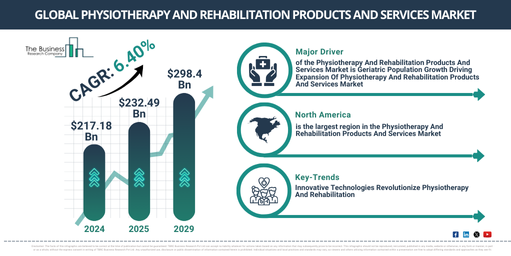
    The market size for products and services related to physiotherapy and rehabilitation has experienced significant growth in the past years. Its expansion from $217.18 billion in 2024 to $232.49 billion in 2025 implies a compound annual growth rate (CAGR) of 7.1%. Factors such as an aging population, increased awareness and acceptance of physiotherapy, the transition to outpatient care and home-based rehabilitation, along with regulatory and reimbursement policies, fueled the observed growth during the historic period.

    The market size of physiotherapy and rehabilitation products and services is projected to witness significant growth in the coming years, escalating to a value of$298.4 billion by 2029 with a compound annual growth rate (CAGR) of 6.4%. The surge during the forecast period is linked to the increasing prevalence of chronic diseases, the transition to outpatient care, heightened awareness and accessibility, and technological advancements. Key trends during this forecast period encompass the ongoing fusion of technologies like virtual reality (VR), augmented reality (AR), and artificial intelligence (AI) into the sector. The shift towards preventive care and wellness, tailoring of treatments to individual patients, and the breakthroughs in assistive devices and robotics also contribute to this projection.

    Download a free sample to assess the report’s scope and structure:

    https://www.thebusinessresearchcompany.com/sample.aspx?id=14976&type=smp

    What External and Internal Drivers Are Contributing to the Growth of thePhysiotherapy And Rehabilitation Products And Services Market?

    The increase in the population of older adults, or those aged 65 years and above, is predicted to significantly propel the market for physiotherapy and rehabilitation products and services. This demographic group, which is characterized by specific health concerns and requirements related to aging, generates a high demand for such services and products. Elderly individuals typically need specialized aids and equipment to tackle age-related mobility challenges and maintain overall health – this opens up growth avenues for businesses targeting this aging demographic. For example, data from the US-based non-profit organization, the Population Reference Bureau (PRB), projected in January 2024 that the American population of those aged 65 and over could rise from 58 million in 2022 to 82 million in 2050 (an increase of 47%). Their share in the total population is also set to increase from 17% to 23%. Consequently, this booming geriatric population is a major driver in the growth of the market for physiotherapy and rehabilitation products and services.

    What Segment Types Define the Physiotherapy And Rehabilitation Products And Services Market Structure?

    The physiotherapy and rehabilitation products and servicesmarket covered in this report is segmented –

    1) By Product Type: Physiotherapy; Rehabilitation

    2) By Gender: Male; Female

    3) By Income Group: Low; Middle; High

    4) By Payment Mode: Out-Of-Pocket; Insurance Payers

    5) By End User: Hospitals; Physiotherapy Centers Or Clinics; Rehabilitation Centers; Home Care Settings; Physician Offices; Nursing And Residential Homes; Other End-users

    Subsegments:

    1) By Physiotherapy: Manual Therapy Equipment; Exercise Therapy Equipment; Electrotherapy Equipment; Hydrotherapy Equipment; Posture Correctors And Braces

    2) By Rehabilitation: Mobility Aids; Orthopedic Braces And Supports; Continuous Passive Motion (CPM) Devices; Neurorehabilitation Devices; Prosthetics And Orthotics

    Request customized data on this market:

    https://www.thebusinessresearchcompany.com/customise?id=14976&type=smp

    Which Geographic Areas Hold the Strongest Growth Potential in the Physiotherapy And Rehabilitation Products And Services Market?

    North America was the largest region in the physiotherapy and rehabilitation products and services market in 2024. Asia Pacific is expected to be the fastest-growing region in the forecast period. The regions covered in the physiotherapy and rehabilitation products and services market report are Asia-Pacific, Western Europe, Eastern Europe, North America, South America, Middle East, Africa.

    What Long-Term Trends Are Transforming the Competitive Landscape of the Physiotherapy And Rehabilitation Products And Services Market?

    Major firms in the market for physiotherapy and rehabilitation products and services are concentrating on the evolution of new technologies like virtual reality platforms to increase their market revenue. Such advanced platforms offer immersive and interactive experiences to therapy patients. A notable example is the US-based medical device manufacturer, Penumbra Inc., which unveiled the REAL y-Series, an immersive healthcare technology for rehabilitation that does not require any physical tethering, in November 2022. This technology leverages sensors on the upper and lower body to monitor entire body movements and development in real-time thereby creating a hands-free, sensor-based virtual reality (VR) platform that allows therapists to tailor exercises and tasks to encourage and involve their patients. This pioneering technology aims to overcome obstacles faced in rehabilitation such as engagement and motivation of patients, by amplifying therapy benefits through greater involvement and intensity, potentially enhancing patient results.

    View the full report here:

    https://www.thebusinessresearchcompany.com/report/physiotherapy-and-rehabilitation-products-and-services-global-market-report

    What Is the Definition of the Physiotherapy And Rehabilitation Products And Services Market?

    Physiotherapy and rehabilitation products and services refer to a range of equipment, tools, and treatments designed to aid in the recovery and improvement of physical function and mobility in individuals with physical impairments or injuries. These include exercise equipment, assistive devices, therapeutic modalities, and personalized treatment plans tailored to each patient’s needs.

    Purchase the full report and get a swift delivery:

    https://www.thebusinessresearchcompany.com/purchaseoptions.aspx?id=14976

    About The Business Research Company:

    With over 15000+ reports from 27 industries covering 60+ geographies, The Business Research Company has built a reputation for offering comprehensive, data-rich research and insights. Armed with 1,500,000 datasets, the optimistic contribution of in-depth secondary research, and unique insights from industry leaders, you can get the information you need to stay ahead in the game.

    Get in touch with us:

    The Business Research Company: https://www.thebusinessresearchcompany.com/

    Americas +1 310-496-7795

    Europe +44 7882 955267

    Asia & Others +44 7882 955267 & +91 8897263534

    Email us at info@tbrc.info

    Follow us on:

    LinkedIn: https://in.linkedin.com/company/the-business-research-company

    YouTube: https://www.youtube.com/channel/UC24_fI0rV8cR5DxlCpgmyFQ

    Global Market Model: https://www.thebusinessresearchcompany.com/global-market-model

  • $175.92 Billion Forecast for Physiological Monitors Market by 2029, Backed by Demand and Innovation

    Claim your 30% discount on Global Market Reports with code ONLINE30. Limited time only.

    What Are the Key Milestones in the Physiological Monitors Market’s Growth Trajectory From 2025 To 2034?

    The market size of physiological monitors has experienced swift growth lately. It is predicted to increase from $103.11 billion in 2024 to reach $114 billion in 2025, with a compound annual growth rate (CAGR) of 10.6%. The prior period’s growth can be traced back to factors such as the aging population, management of chronic diseases, focus on patient-centric healthcare, incorporation with electronic health records (EHR), as well as advancements in IoT and connectivity.

    The market size for physiological monitors is predicted to witness swift expansion in the coming years. It’s projected to reach a value of$175.92 billion by 2029 at a compound annual growth rate (CAGR) of 11.5%. The anticipated rise during the forecast period can be linked to the integration of AI and data analytics, enhanced focus on preventive healthcare, expansion of telehealth, trends in home healthcare, and global health challenges. Key trends expected during this period are adoption of wearable technology, miniaturization of technology, remote patient monitoring, advancements in healthcare technology, and the use of non-invasive monitoring technologies.

    Download a free sample to assess the report’s scope and structure:

    https://www.thebusinessresearchcompany.com/sample.aspx?id=13722&type=smp

    What Are the Core Market Drivers Propelling Growth in the Physiological Monitors Industry?

    The increasing incidence of long-term health issues is anticipated to boost the physiological monitors market’s expansion. Chronic diseases are health problems or conditions that manifest persistent symptoms for a minimum of one year. Physiological monitors play a pivotal role in controlling the spread of chronic diseases by offering instant health information, which facilitates prompt interventions and customized care for people suffering from chronic maladies. In January 2023, data from the National Institutes of Health, a US government organization, forecasted that by 2035, at least one chronic ailment will afflict 35.66% (range: 33.36–36.04) of adults aged fifty and over. This estimate is speculated to increase to 47.81% (range: 46.09–49.71) by 2050. Hence, the escalating incidence of chronic diseases is a driving factor for the growth of the physiological monitors market.

    How Is the Physiological Monitors Market Segmented?

    The physiological monitorsmarket covered in this report is segmented –

    1) By Type: Hemodynamic Monitoring Devices; Neuromonitoring Devices; Cardiac Monitoring Devices; Respiratory Monitoring Devices; Other Types

    2) By Application: Cardiology; Neurology; Respiratory; Fetal And Neonatal; Weight Management And Fitness Monitoring; Other Applications

    3) By End User: Hospital; Clinic; Other End Users

    Subsegments:

    1) By Hemodynamic Monitoring Devices: Invasive Hemodynamic Monitors; Non-Invasive Hemodynamic Monitors

    2) By Neuromonitoring Devices: EEG Monitors; Intracranial Pressure Monitors; Brain Function Monitors

    3) By Cardiac Monitoring Devices: ECG Monitors; Holter Monitors; Implantable Cardiac Monitors

    4) By Respiratory Monitoring Devices: Pulse Oximeters; Capnometers; Spirometers

    5) By Other Types: Temperature Monitors; Blood Glucose Monitors; Multivariable Monitors

    Request customized data on this market:

    https://www.thebusinessresearchcompany.com/customise?id=13722&type=smp

    Which Regions Are Driving the Next Phase of the Physiological Monitors Market Growth?

    North America was the largest region in the physiological monitors market in 2024. Asia-Pacific is expected to be the fastest-growing region in the forecast period. The regions covered in the physiological monitors market report are Asia-Pacific, Western Europe, Eastern Europe, North America, South America, Middle East, Africa.

    What Key Market Trends and Innovations Are Shaping the Future of the Physiological Monitors Industry?

    Prominent entities in the physiological monitors market are concentrating on the innovation of superior solutions, like wireless patient monitoring systems, to boost their market standing. A wireless patient monitoring system is a significant technological breakthrough that mitigates the need for cables or wires to persistently monitor the patient’s crucial signs, comprising blood pressure, heart rate, oxygen levels, among others. To illustrate, in June 2022, GE Healthcare Technologies Inc., a medical technology firm based in the US, introduced a new system, Portrait Mobile. This system is specifically crafted to assist healthcare professionals in identifying patient deterioration at an early stage and enhancing patient results. Portrait Mobile operates using wearable sensors placed on the patient’s body, which collect data pertaining to the vital signs such as heart rate, blood pressure, oxygen levels, and respiration rate. By providing continuous monitoring of a patient’s vital signs, it enables clinicians to promptly identify changes in the patient’s state.

    View the full report here:

    https://www.thebusinessresearchcompany.com/report/physiological-monitors-global-market-report

    How Is the Physiological Monitors Market Defined and What Are Its Core Parameters?

    Physiological monitors are devices that track and measure vital signs or bodily functions to assess and monitor an individual’s health status. These monitors are used to inform clinicians of changes in a patient’s condition by continuously monitoring vital sign parameters and providing alerts through the use of alarms, enabling early detection of vital sign deterioration.

    Purchase the full report and get a swift delivery:

    https://www.thebusinessresearchcompany.com/purchaseoptions.aspx?id=13722

    About The Business Research Company:

    With over 15000+ reports from 27 industries covering 60+ geographies, The Business Research Company has built a reputation for offering comprehensive, data-rich research and insights. Armed with 1,500,000 datasets, the optimistic contribution of in-depth secondary research, and unique insights from industry leaders, you can get the information you need to stay ahead in the game.

    Get in touch with us:

    The Business Research Company: https://www.thebusinessresearchcompany.com/

    Americas +1 310-496-7795

    Europe +44 7882 955267

    Asia & Others +44 7882 955267 & +91 8897263534

    Email us at info@tbrc.info

    Follow us on:

    LinkedIn: https://in.linkedin.com/company/the-business-research-company

    YouTube: https://www.youtube.com/channel/UC24_fI0rV8cR5DxlCpgmyFQ

    Global Market Model: https://www.thebusinessresearchcompany.com/global-market-model

  • Physical Therapy Supplies Market 2025-2034: Key Highlights, Growth Dynamics, and Emerging Trends

    Claim your 30% discount on Global Market Reports with code ONLINE30. Limited time only.

    How Has The Physical Therapy Supplies Market Size Shifted, And What Is the Outlook Through 2034?

    Accelerated growth has been noticed in the domain of the physical therapy supplies market in the last few years. Predictions suggest an upsurge from $14.96 billion in 2024 to $15.86 billion in 2025, marking a compound annual growth rate (CAGR) of 6.0%. Factors contributing to this growth during the historic period include a surge in chronic diseases, an increase in healthcare spending, more involvement in sports and recreational pursuits, and a heightened understanding of the advantages associated with physical therapy.

    Strong expansion is projected for the physical therapy supplies market in the coming years. It is forecasted to reach$19.65 billion in 2029″, maintaining a compound annual growth rate (CAGR) of 5.5%. Factors contributing to this growth in forecasting period include a rising trend of home-based healthcare and remote monitoring, increased emphasis on preventative care, growing number of elderly people, development of healthcare infrastructure, and the proliferation of telemedicine and digital health platforms. The forecast period will also witness some key trends such as the adoption of artificial intelligence in telerehabilitation solutions, application of virtual reality in rehabilitation programs, technological advancements in physical therapy equipment, increasing use of robotics and automated systems in physical therapy, the application of sensor technology in movement analysis, and the spread of remote rehabilitation apps and platforms.

    Download a free sample to assess the report’s scope and structure:

    https://www.thebusinessresearchcompany.com/sample.aspx?id=14975&type=smp

    Which Primay Drivers Are Accelerating Growth in the Physical Therapy Supplies Market?

    The physical therapy supplies market is anticipated to be buoyed by the escalating occurrence of sport-related injuries. Such injuries usually occur during physical activities or workouts, primarily due to sudden impact, overexertion, or incorrect execution. The increase in such injuries can be traced back to greater participation, lack of adequate training, and issues related to equipment usage. Physical therapy supplies play a pivotal role in rehabilitation from sports injuries, enabling specific workouts, reinforcing muscles, and assisting in restoring mobility and functionality. This aids athletes in quicker recovery and secure return to their chosen sports. To illustrate, a report released in August 2023 by the National Safety Council (NSC), a US-based nonprofit dedicated to encouraging health and safety through education and advocacy, revealed that injuries from exercise and exercise equipment saw a marginal increase of about 8.9% in 2022 (equating to 445,642 injuries as opposed to 409,224 injuries in 2021). Similarly, bicycle-related injuries rose by 7.9%, from 375,798 in 2021 to 405,411 in 2022. Thus, the escalating occurrence of sports injuries is fueling the growth of the physical therapy supplies market.

    Which Primary Segments of the Physical Therapy Supplies Market Are Driving Growth and Industry Transformations?

    The physical therapy suppliesmarket covered in this report is segmented –

    1) By Type: Hydrotherapy; Cryotherapy; Continuous Passive Motion; Ultrasound; Electric Stimulation; Heat Therapy; Therapeutic Exercise; Other Types

    2) By Demographics: Non-Geriatric Population; Geriatric Population

    3) By Application: Neurology; Musculoskeletal; Pediatrics; Cardiovascular And Pulmonary; Other Applications

    4) By End Use: Hospitals And Clinics; Rehabilitation Centers; Other End-Uses

    Subsegments:

    1) By Hydrotherapy: Aquatic Therapy Equipment; Whirlpool Baths; Hydrocollator Packs

    2) By Cryotherapy: Ice Packs And Wraps; Cryo Machines; Cold Compression Therapy Devices

    3) By Continuous Passive Motion: CPM Machines For Joint Rehabilitation; Hand And Knee CPM Devices

    4) By Ultrasound: Therapeutic Ultrasound Machines; Ultrasound Gel And Accessories

    5) By Electric Stimulation: TENS Units; EMS Devices; Iontophoresis Devices

    6) By Heat Therapy: Heating Pads; Heat Wraps; Hot Packs

    7) By Therapeutic Exercise: Resistance Bands; Exercise Balls; Foam Rollers

    8) By Other Types: Posture Correctors; Orthotics And Braces; Supportive Tapes And Bandages

    Request customized data on this market:

    https://www.thebusinessresearchcompany.com/customise?id=14975&type=smp

    Which Regions Are Key Players in the Growth of the #Which Primay Drivers Are Accelerating Growth in the Physical Therapy Supplies Market?# Market?

    North America was the largest region in the physical therapy supplies market in 2024. The regions covered in the physical therapy supplies market report are Asia-Pacific, Western Europe, Eastern Europe, North America, South America, Middle East, Africa.

    Which Technological Trends Are Reshaping the Physical Therapy Supplies Industry Dynamics?

    Key companies in the physical therapy supply market are prioritizing the creation of innovative therapy solutions, such as remote physical therapy, as a means to enhance patient care, boost treatment accessibility, and optimize patient outcomes. These solutions apply telecommunication technologies like video calls, mobile apps, and wearable gadgets to support virtual communication between therapists and patients. For example, in May 2023, Sword Health, a healthcare company based in the United States, introduced its digital platform which aims to predict, prevent, and treat pain. The platform offers digital physical therapy where the doctor, along with an AI digital therapist, can design a personalized treatment plan based on the individual’s condition. Furthermore, Sword Health provides Bloom on this platform, a service for women facing pelvic health issues. Leveraging clinical-grade technology, Bloom uses an innovative intravaginal pod to deliver comprehensive therapy for women.

    View the full report here:

    https://www.thebusinessresearchcompany.com/report/physical-therapy-supplies-global-market-report

    What Parameters Are Used to Define the Physical Therapy Supplies Market?

    Physical therapy supplies refer to a broad range of products and equipment used in the field of physical therapy to aid in the treatment, rehabilitation, and management of various musculoskeletal and neurological conditions. It plays a integral for delivering effective treatment interventions and promoting patient well-being and functional independence.

    Purchase the full report and get a swift delivery:

    https://www.thebusinessresearchcompany.com/purchaseoptions.aspx?id=14975

    About The Business Research Company:

    With over 15000+ reports from 27 industries covering 60+ geographies, The Business Research Company has built a reputation for offering comprehensive, data-rich research and insights. Armed with 1,500,000 datasets, the optimistic contribution of in-depth secondary research, and unique insights from industry leaders, you can get the information you need to stay ahead in the game.

    Get in touch with us:

    The Business Research Company: https://www.thebusinessresearchcompany.com/

    Americas +1 310-496-7795

    Europe +44 7882 955267

    Asia & Others +44 7882 955267 & +91 8897263534

    Email us at info@tbrc.info

    Follow us on:

    LinkedIn: https://in.linkedin.com/company/the-business-research-company

    YouTube: https://www.youtube.com/channel/UC24_fI0rV8cR5DxlCpgmyFQ

    Global Market Model: https://www.thebusinessresearchcompany.com/global-market-model

  • Physical Therapy Rehabilitation Growth Trajectory: Key Forecasts and Strategic Insights

    Claim your 30% discount on Global Market Reports with code ONLINE30. Limited time only.

    How Has the Physical Therapy Rehabilitation Market Growth Performance Trended Historically, And What Lies Ahead?

    Over the past few years, the physical therapy rehabilitation market has exhibited robust growth. The market size, which is projected to be $25.17 billion in 2024, is anticipated to surge to $27.58 billion in 2025, implying a compound annual growth rate (CAGR) of 9.6%. The notable growth during the historic period can be credited to factors such as heightened consciousness about preventive healthcare, advancements in technology, an aging demographic, a surge in chronic disease cases, and wider insurance coverage.

    Anticipations reveal a robust escalation in the physical therapy rehabilitation market size in the forthcoming years. The market is set to expand to $38.62 billion by 2029, encapsulating a compound annual growth rate (CAGR) of 8.8%. Multiple factors like growing healthcare needs, advancements in technology, the rise in the elderly population, insurance coverage, and changes in regulations all contribute to the expansion in the forecast period. The prevailing trend throughout this period is the surge in demand for telerehabilitation services, a consequence of the restrictions on physical meetings due to the pandemic. Other trends include the heightened integration of AI and wearable technology, an expanding elderly population, an increase in sports-related injuries, and an increased focus on preventive care and wellness.

    Download a free sample to assess the report’s scope and structure:

    https://www.thebusinessresearchcompany.com/sample.aspx?id=14974&type=smp

    Which Factors and External Forces Are Driving Demand in the Physical Therapy Rehabilitation Market?

    The physical therapy rehabilitation market is anticipated to expand owing to the increasing incidence of accidents and injuries. This rise can be attributed to factors like distracted driving, insufficient safety precautions, and an increase in risky behaviors. Physical therapy rehabilitation plays a vital role in assisting recovery and re-establishing mobility for those affected by accidents and injuries. For example, a report by the European Commission, a Belgium-based body of the executive arm of the European Union, highlighted that in October 2023, there were 20,640 fatalities on EU roads, which was a 4% inflation compared to 2021 due to the traffic rebound post-pandemic. Consequently, the growing number of accidents and incidents of injury is fuelling the growth of the physical therapy rehabilitation market.

    Which Segments in the Physical Therapy Rehabilitation Offer the Most Growth?

    The physical therapy rehabilitationmarket covered in this report is segmented –

    1) By Solution: Software; Hardware

    2) By Application: Hip Joint; Spinal Cord Injuries; Forearms And Wrist Joints; Shoulder And Elbow Joint; Knee Joint; Other Applications

    3) By End User: Ambulatory Surgical Centre; Self-insured Employer; Healthcare IDN (Integrated Delivery Network); Commercial Payer; Government Organization; Physiotherapy Clinics; Hospitals; Homecare And Rehabilitation Centers

    Subsegments:

    1) By Software: Rehabilitation Management Software; Electronic Health Records (EHR) Software; Patient Monitoring Software; Tele-Rehabilitation Software

    2) By Hardware: Therapeutic Equipment; Exercise Equipment; Mobility Devices; Therapeutic Robots And Devices

    Request customized data on this market:

    https://www.thebusinessresearchcompany.com/customise?id=14974&type=smp

    What Are the Fastest-Growing Geographies in the #Which Factors and External Forces Are Driving Demand in the Physical Therapy Rehabilitation Market?# Market?

    North America was the largest region in the physical therapy rehabilitation market in 2024. Asia Pacific is expected to be the fastest-growing region in the forecast period. The regions covered in the physical therapy rehabilitation market report are Asia-Pacific, Western Europe, Eastern Europe, North America, South America, Middle East, Africa.

    Which Cutting-Edge Market Trends Are Expected to Drive thePhysical Therapy Rehabilitation Market’s Growth?

    Prominent entities in the physical therapy rehabilitation market are concentrating on integrating cutting-edge technology, like artificial intelligence-driven physical therapy rehabilitation solutions, in an attempt to maintain competitiveness. Such AI-powered solutions augment patient care, refine therapy sessions, and bolster treatment results. This is accomplished by using machine learning methods to examine patient information, monitor advancement, personalize treatment strategies, and proffer immediate feedback to therapists and patients. For instance, in December 2023, the SIGNA Champion AI-facilitated MRI System was launched by GE HealthCare Technologies, Inc., a medical technology venture based in the US. The system boasts various AI functionalities such as AIR Recon DL and Sonic DL, which bolster efficiency and produce superior image quality. SIGNA Champion is a 1.5T broad-bore MRI system equipped with GE HealthCare’s AIR Coils.

    View the full report here:

    https://www.thebusinessresearchcompany.com/report/physical-therapy-rehabilitation-global-market-report

    What Are the Key Elements That Define the Physical Therapy Rehabilitation Market?

    Physical therapy rehabilitation refers to the systematic process of restoring function, mobility, and strength to individuals recovering from injury, illness, or surgery. Physical therapists use specialized exercises, manual therapy, and other treatments to improve patients’ general well-being and help them regain independence in their everyday lives.

    Purchase the full report and get a swift delivery:

    https://www.thebusinessresearchcompany.com/purchaseoptions.aspx?id=14974

    About The Business Research Company:

    With over 15000+ reports from 27 industries covering 60+ geographies, The Business Research Company has built a reputation for offering comprehensive, data-rich research and insights. Armed with 1,500,000 datasets, the optimistic contribution of in-depth secondary research, and unique insights from industry leaders, you can get the information you need to stay ahead in the game.

    Get in touch with us:

    The Business Research Company: https://www.thebusinessresearchcompany.com/

    Americas +1 310-496-7795

    Europe +44 7882 955267

    Asia & Others +44 7882 955267 & +91 8897263534

    Email us at info@tbrc.info

    Follow us on:

    LinkedIn: https://in.linkedin.com/company/the-business-research-company

    YouTube: https://www.youtube.com/channel/UC24_fI0rV8cR5DxlCpgmyFQ

    Global Market Model: https://www.thebusinessresearchcompany.com/global-market-model

  • Next-Gen Physical Therapy : Market Forecast, Transformation, and Long-Term Trajectories

    Claim your 30% discount on Global Market Reports with code ONLINE30. Limited time only.

    What Are the Projected Market Size and Growth Rates for the Physical Therapy Market From 2025 To 2029?

    Recent years have seen robust growth in the physical therapy market size. Expected to expand from $27.89 billion in 2024 to $29.9 billion in 2025, it will have a compound annual growth rate (CAGR) of 7.2%. Factors that contributed to this growth during the historic period include an aging population, the occurrence of chronic diseases, injuries sustained during occupational and sports activities, a focus on preventive healthcare, and an extended scope in healthcare settings.

    The market size for physical therapy is predicted to exhibit substantial growth in the coming years, expanding to $37.45 billion by 2029 with a compound annual growth rate (CAGR) of 5.8%. The surge within the projected period can be associated with the incorporation of telehealth services, increased understanding of physical activity benefits, emphasis on strategies for aging in place, tailored treatment plans, and comprehensive healthcare strategies. Key trends anticipated during the forecast period encompass technological breakthroughs in rehabilitation, improvements in rehabilitation technologies, integration of digital health systems, orthopedic and sports rehabilitation, and technology-assisted rehabilitation.

    Download a free sample to assess the report’s scope and structure:

    https://www.thebusinessresearchcompany.com/sample.aspx?id=13512&type=smp

    Which Major Market Drivers Are Expected to Boost the Growth Potential of the Physical Therapy Market?

    The physical therapy market’s expansion is anticipated to be driven by the rise in musculoskeletal disorders. These disorders, known as MSDs, are medical conditions that impact the musculoskeletal system, including the muscles, bones, tendons, and ligaments. The necessity of physical therapy in preventing, treating, and managing MSDs arises from its concentration on education, ergonomic instruction, improvements to workplace safety, in-the-moment therapy, and reentry into the workforce programs. For example, in July 2022, the World Health Organization, a United Nations agency located in Switzerland, reported that there are approximately 1.71 billion individuals suffering from musculoskeletal conditions globally. Additionally, in March 2022, a study in PubMed Central (PMC) analyzed 282 student responses on their usage of digital devices, their physical activity levels, the time they spent sitting, walking frequency, and ergonomics. The report revealed an increase in device usage and sitting time, coupled with decreased physical activity and walking during the pandemic. A noteworthy finding was that 75.9% reported musculoskeletal pain, primarily located in the neck and shoulders (65%). Furthermore, 46% of the participating students who coded at home via laptops or phones experienced text neck syndrome. Consequently, the surge in musculoskeletal disorders is predicted to foster the growth of the physical therapy market.

    Which Key Market Segments Comprise the Physical Therapy Market and Drive Its Revenue Growth?

    The physical therapymarket covered in this report is segmented –

    1) By Type: Orthopedic Physical Therapy; Geriatric Physical Therapy; Neurological Physical Therapy; Cardiopulmonary and Pulmonary Physical Therapy; Other Types

    2) By Age Group: Pediatrics; Adults; Elderly

    3) By End-Use: Hospitals And Clinics; Community Centers; Sports Centers; Convalescent Homes; Schools And Sports Academies; Other End-Uses

    Subsegments:

    1) By Orthopedic Physical Therapy: Post-Surgical Rehabilitation; Sports Injury Rehabilitation; Joint And Muscle Pain Management; Fracture And Trauma Recovery

    2) By Geriatric Physical Therapy: Fall Prevention And Balance Training; Arthritis And Osteoporosis Management; Mobility And Strength Training; Neuromuscular Disorders Treatment

    3) By Neurological Physical Therapy: Stroke Rehabilitation; Parkinson’s Disease Therapy; Spinal Cord Injury Rehabilitation; Multiple Sclerosis Therapy; Traumatic Brain Injury (TBI) Recovery

    4) By Cardiopulmonary And Pulmonary Physical Therapy: Cardiovascular Rehabilitation; Pulmonary Rehabilitation (COPD, Asthma); Post-Heart Surgery Rehabilitation; Breathing Exercises And Techniques

    5) By Other Types: Pediatric Physical Therapy; Women’s Health Physical Therapy; Vestibular Therapy; Occupational Therapy And Pain Management

    Request customized data on this market:

    https://www.thebusinessresearchcompany.com/customise?id=13512&type=smp

    Which Areas Are Leading Regions in the Physical Therapy Market Expansion Across the Globe?

    North America was the largest region in the physical therapy market in 2024. Asia-Pacific is expected to be the fastest-growing region in the forecast period. The regions covered in the physical therapy market report are Asia-Pacific, Western Europe, Eastern Europe, North America, South America, Middle East, Africa.

    What Are the Key Market Trends in thePhysical Therapy Market Over the Coming Years?

    Notable corporations within the physical therapy market are merging digital and traditional care, aimed at uplifting the patient experience. By encompassing this innovative approach, patients can receive bespoke, direct care, with added benefits from digital support and accessibility. For instance, Hinge Health, known for their provision of physical therapy services in the U.S., initiated a domiciliary physical therapy service in January 2023. Initially launched in Chicago, the company plans on a nationwide implementation. The goal is to provide in-person physical therapy services which coincide with Hinge Health’s current digital care facilities. This empowers patients to access therapy from the comfort of their home or office. The service comes with the added flexibility of scheduling, including appointments for the very next day or over the weekend. The duration of each a session is about 45 minutes and comprises a meticulous evaluation of the patient’s physical ability, and their home setting. The core idea is to enrich patient experience through the fusion of online and offline care, addressing hurdles like transport and technological accessibility, aiming to ultimately promote health equity.

    View the full report here:

    https://www.thebusinessresearchcompany.com/report/physical-therapy-global-market-report

    How Is the Physical Therapy Market Conceptually Defined?

    Physical therapy is a healthcare profession and rehabilitation specialty that focuses on helping individuals recover from injuries, surgeries, illnesses, or physical disabilities. The primary goal of the therapy is to restore and improve a person’s physical function, mobility, and overall quality of life.

    Purchase the full report and get a swift delivery:

    https://www.thebusinessresearchcompany.com/purchaseoptions.aspx?id=13512

    About The Business Research Company:

    With over 15000+ reports from 27 industries covering 60+ geographies, The Business Research Company has built a reputation for offering comprehensive, data-rich research and insights. Armed with 1,500,000 datasets, the optimistic contribution of in-depth secondary research, and unique insights from industry leaders, you can get the information you need to stay ahead in the game.

    Get in touch with us:

    The Business Research Company: https://www.thebusinessresearchcompany.com/

    Americas +1 310-496-7795

    Europe +44 7882 955267

    Asia & Others +44 7882 955267 & +91 8897263534

    Email us at info@tbrc.info

    Follow us on:

    LinkedIn: https://in.linkedin.com/company/the-business-research-company

    YouTube: https://www.youtube.com/channel/UC24_fI0rV8cR5DxlCpgmyFQ

    Global Market Model: https://www.thebusinessresearchcompany.com/global-market-model

  • Pheochromocytoma Market Overview 2025: Competitive Shifts, Forecast Models, and Emerging Opportunities

    Claim your 30% discount on Global Market Reports with code ONLINE30. Limited time only.

    What Is the Estimated Market Size of the Pheochromocytoma Market In 2029?

    The size of the pheochromocytoma market has seen a consistent increase in recent years. Expected to expand from a value of $3.03 billion in 2024, it is predicted to reach $3.13 billion by 2025, displaying a compound annual growth rate (CAGR) of 3.3%. The escalation witnessed in the past can be associated with factors such as increased spending on healthcare, heightened levels of diagnosis and awareness, advancements in genetic research, and government-driven initiatives.

    The future of the pheochromocytoma market looks promising, with a steady increase predicted over the coming years. Its size is expected to reach$3.67 billion by 2029,” growing at a compound annual growth rate (CAGR) of 4.0%. Factors contributing to this forecasted expansion encompass the need for combination therapies, investments in pheochromocytoma research and development, preference for minimally invasive treatments for pheochromocytoma, and significant undertakings in rare disease research. Future trends to look for include an upsurge in the number of drugs undergoing clinical trials, breakthroughs in diagnosis and treatment alternatives, a deeper understanding of gene therapy, and enhancements in medical imaging.

    Download a free sample to assess the report’s scope and structure:

    https://www.thebusinessresearchcompany.com/sample.aspx?id=12909&type=smp

    What Are the Core Growth Drivers Propelling the Pheochromocytoma Market Forward?

    The escalating occurrence rate of tumors is foreseen to stimulate the expansion of the pheochromocytoma market in the future. Tumors, which can be benign (non-cancerous) or malignant (cancerous), are irregular cell growths. The surging cases of tumors and cancer underline the importance of increased medical cognizance, precise diagnosis, and individualized treatment methods to effectively manage desmoid pheochromocytoma. For example, in January 2023, the American Cancer Society, a US-based non-profit cancer advocacy group, reported that the quantity of cancer cases surged to 1,958,310 in 2023, signifying a 3.16% growth from 1,898,160 in 2021. Thus, the escalating occurrence rate of tumors will steer the expansion of the pheochromocytoma market in the future.

    What Segment Types Define the Pheochromocytoma Market Structure?

    The pheochromocytomamarket covered in this report is segmented –

    1) By Type: Adrenal Pheochromocytoma; Extra-Adrenal Pheochromocytoma

    2) By Treatment: Medication; Surgery; Radionuclide Treatment; Other Treatments

    3) By Diagnosis: Laboratory Tests; Imaging Tests; Genetic Testing

    4) By End Users: Hospitals; Clinics; Research And Academic Institutes; Other End Users

    Subsegments:

    1) By Adrenal Pheochromocytoma: Unilateral Adrenal Pheochromocytoma; Bilateral Adrenal Pheochromocytoma

    2) By Extra-Adrenal Pheochromocytoma: Paraganglioma; Paraganglioma; Paraganglioma

    Request customized data on this market:

    https://www.thebusinessresearchcompany.com/customise?id=12909&type=smp

    Which Geographic Areas Hold the Strongest Growth Potential in the Pheochromocytoma Market?

    North America was the largest region in the pheochromocytoma market in 2024. Asia-Pacific is expected to be the fastest-growing region in the forecast period. The regions covered in pheochromocytoma market report are Asia-Pacific, Western Europe, Eastern Europe, North America, South America, Middle East and Africa.

    Which Emerging Trends that Are Influencing thePheochromocytoma Industry Evolution?

    Leading firms in the pheochromocytoma market are conducting numerous clinical trials to explore new treatments, therapies, and medications. This effort is aimed at devising more targeted and efficient treatments and enhancing patient results. For example, in August 2022, pharmaceutical giant Novartis AG, based in Switzerland, began Phase 2 of a widespread open-label study. The study’s main goal is to evaluate the safety and dosimetry of Lutathera in teenagers aged between 12 to under 18 diagnosed with somatostatin receptor-positive gastroenteropancreatic neuroendocrine tumors (GEP-NETs) and pheochromocytoma and paragangliomas (PPGL). The research employs a multicenter, open-label, single-arm method, specifically an exploratory PPGL cohort endeavouring to recruit as many PPGL adolescents as they can.

    View the full report here:

    https://www.thebusinessresearchcompany.com/report/pheochromocytoma-global-market-report

    What Is the Definition of the Pheochromocytoma Market?

    Pheochromocytoma is a rare tumor that forms in the center of one or both adrenal glands. These tumors arise from the adrenal medulla cells, which are responsible for producing hormones such as adrenaline (epinephrine) and noradrenaline (norepinephrine). Pheochromocytomas can lead to excessive secretion of these hormones, causing symptoms like high blood pressure, rapid heartbeat, anxiety and related effects.

    Purchase the full report and get a swift delivery:

    https://www.thebusinessresearchcompany.com/purchaseoptions.aspx?id=12909

    About The Business Research Company:

    With over 15000+ reports from 27 industries covering 60+ geographies, The Business Research Company has built a reputation for offering comprehensive, data-rich research and insights. Armed with 1,500,000 datasets, the optimistic contribution of in-depth secondary research, and unique insights from industry leaders, you can get the information you need to stay ahead in the game.

    Get in touch with us:

    The Business Research Company: https://www.thebusinessresearchcompany.com/

    Americas +1 310-496-7795

    Europe +44 7882 955267

    Asia & Others +44 7882 955267 & +91 8897263534

    Email us at info@tbrc.info

    Follow us on:

    LinkedIn: https://in.linkedin.com/company/the-business-research-company

    YouTube: https://www.youtube.com/channel/UC24_fI0rV8cR5DxlCpgmyFQ

    Global Market Model: https://www.thebusinessresearchcompany.com/global-market-model