Blog

  • Comprehensive Forecast: Non Hodgkin Lymphoma (NHL) Market Share, Growth, and Opportunities Through 2029

    Comprehensive Forecast: Non Hodgkin Lymphoma (NHL) Market Share, Growth, and Opportunities Through 2029

    Claim your 30% discount on Global Market Reports with code ONLINE30. Limited time only.

    Claim your 30% discount on Global Market Reports with code ONLINE30. Limited time only.

    What Are the Forecasted Growth Rate and Market Size of the Non Hodgkin Lymphoma (NHL) Market?

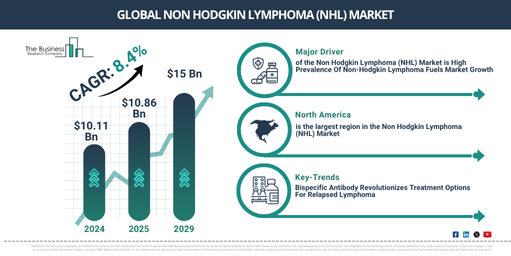
    The market size of non-hodgkin lymphoma (NHL) has seen significant growth in the recent past. It is projected to increase from $10.11 billion in 2024 to $10.86 billion in 2025, reflecting a compound annual growth rate (CAGR) of 7.5%. This growth during the historic period is due to factors such as a higher frequency of NHL cases, advancements in detection methods including chemotherapy and immunotherapy, clinical research, drug development, and enhanced survival rates.

    Anticipated to experience robust expansion in the coming years, the market for non hodgkin lymphoma (NHL) is predicted to extend to “$15 billion by 2029, achieving a compound annual growth rate (CAGR) of 8.4%. Factors contributing to the growth within the forecasted period encompass escalating elderly population, advancements in targeted treatments, breakthroughs in immunotherapy, strategies in precision medicine, enhanced awareness, and early detection. Upcoming trends within the forecast timeline involve the emergence of biosimilars, the incorporation of next-generation sequencing, the utilization of car-t cell therapies, new chemotherapy agents, as well as real-world evidence and progress in outcomes research.

    Download The Free Sample Report Here:

    https://www.thebusinessresearchcompany.com/sample.aspx?id=10676&type=smp

    Which Factor Is Shaping The Future Of The Non Hodgkin Lymphoma (NHL) Market?

    The growth of the non-Hodgkin lymphoma market is anticipated to be driven by the high prevalence of the disease. Non-Hodgkin lymphoma is a cancer that originates within the lymphatic system, an integral part of the body’s immune response. When we discuss the prevalence of non-Hodgkin lymphoma, we refer to the count of individuals in a population who are either recently diagnosed or are currently living with the disease. The treatment available for non-Hodgkin lymphoma plays a crucial role in enhancing life outcomes for those diagnosed by promoting the management and containment of cancer cells. For example, the American Cancer Society, a leading cancer health organization based in the US, stated in January 2023 that non-Hodgkin lymphoma constitutes 4% of all cancer cases. In 2023, around 80,550 Americans, including 44,880 men and 35,670 women, are projected to be impacted by it. The organization also predicts that 20,180 individuals will succumb to the disease in 2023. In May 2022, the Canadian Cancer Society, a prominent national cancer charity in Canada, forecasted that 11,400 Canadians would be diagnosed with non-Hodgkin lymphoma in the year 2022 and that it would lead to the deaths of 3,000 Canadians. Hence, it is the high prevalence of non-Hodgkin lymphoma that is fuelling the growth of the non-Hodgkin lymphoma market.

    The non hodgkin lymphoma (nhl) market covered in this report is segmented –

    1) By Type: B-Cell Lymphoma, T-Cell Lymphoma

    2) By Treatment: Surgery, Stem Cell Transplant, Chemotherapy, Immunotherapy, Targeted Therapy, Radiation Therapy

    3) By Route of Administration: Oral, Parenteral, Other Routes of Administration

    4) By Distribution Channel: Hospital Pharmacy, Retail Pharmacy, Online Pharmacy, Other Distribution Channels

    5) By End-Users: Hospitals, Homecare, Specialty Centers, Other End Users

    Subsegments:

    1) By B-Cell Lymphoma: Diffuse Large B-Cell Lymphoma (DLBCL), Follicular Lymphoma, Chronic Lymphocytic Leukemia (CLL), Mantle Cell Lymphoma, Burkitt Lymphoma, Marginal Zone Lymphoma, Primary Mediastinal B-Cell Lymphoma

    2) By T-Cell Lymphoma: Peripheral T-Cell Lymphoma (PTCL), Anaplastic Large Cell Lymphoma (ALCL), Cutaneous T-Cell Lymphoma (CTCL), T-Cell Lymphoblastic Lymphoma, Adult T-Cell Leukemia/Lymphoma (ATLL)

    What Future Market Trends Are Projected For The Non Hodgkin Lymphoma (NHL) Industry?

    The rise of advancements in drug innovations is a significant trend that is becoming increasingly prevalent in the non-Hodgkin lymphoma market. Companies active in the non-Hodgkin market are putting a strong emphasis on the creation of new products to maintain their market standing. In December 2022, for example, Genentech Inc., a biotechnology firm from the United States, gained FDA approval for Lunsumio, a groundbreaking bispecific antibody used for the treatment of relapsed or refractory follicular lymphoma. This antibody, a novel class of immunotherapy providing fixed-duration cancer treatment, is readily accessible and does not require waiting to receive the treatment. The FDA’s endorsement of Lunsumio is based on the successful results from Phase II GO29781 research involving patients with extensively pretreated FL who are at a high risk of disease progression or unresponsive to previous treatments.

    Which Companies Hold The Largest Market Share In The Non Hodgkin Lymphoma (NHL) Sector?

    Major companies operating in the non hodgkin lymphoma (NHL) market include Bayer AG, Teva Pharmaceutical Industries Ltd., F. Hoffmann La Roche Ltd., Merck & Co. Inc., Eli Lilly and Co., Novartis AG, GlaxoSmithKline plc, AbbVie Inc., AstraZeneca plc, Takeda Pharmaceutical Company Limited, Bristol Myers Squibb Co., Pfizer Inc., Celgene Corporation, Sanofi S.A., Janssen Pharmaceuticals Inc., Johnson & Johnson, Biogen Idec, Boehringer Ingelheim GmbH, Eisai Co. Ltd., Gilead Sciences, Incyte Corporation, Karyopharm Therapeutics, Kite Pharma Inc., Kyowa Hakko Kirin Co. Ltd., MorphoSys AG, Nordic Nanovector ASA, Ono Pharmaceutical Co. Ltd., Seattle Genetics Inc., Spectrum Pharmaceuticals Inc.

    https://www.thebusinessresearchcompany.com/report/non-hodgkin-lymphoma-nhl-global-market-report

    How Does Regional Performance Compare Across The Non Hodgkin Lymphoma (NHL) Industry?

    North America was the largest region in the non-Hodgkin lymphoma (NHL) market in 2024.Asia-Pacific is expected to be the fastest-growing region in the global non-Hodgkin lymphoma (NHL) market report during the forecast period. The regions covered in the non-Hodgkin lymphoma (NHL) market report are Asia-Pacific, Western Europe, Eastern Europe, North America, South America, Middle East, Africa

    Request For A Customized Report:

    https://www.thebusinessresearchcompany.com/customise?id=10676&type=smp

    About The Business Research Company:

    With over 15000+ reports from 27 industries covering 60+ geographies, The Business Research Company has built a reputation for offering comprehensive, data-rich research and insights. Armed with 1,500,000 datasets, the optimistic contribution of in-depth secondary research, and unique insights from industry leaders, you can get the information you need to stay ahead in the game.

    Get in touch with us:

    The Business Research Company: https://www.thebusinessresearchcompany.com/

    Americas +1 310-496-7795

    Asia +44 7882 955267 & +91 8897263534

    Europe +44 7882 955267

    Email us at info@tbrc.info

    Follow us on:

    LinkedIn: https://in.linkedin.com/company/the-business-research-company

    YouTube: https://www.youtube.com/channel/UC24_fI0rV8cR5DxlCpgmyFQ

    Global Market Model: https://www.thebusinessresearchcompany.com/global-market-model
  • Future Demand and Leading Companies Shaping the Neurotoxin Market to 2029

    Future Demand and Leading Companies Shaping the Neurotoxin Market to 2029

    Claim your 30% discount on Global Market Reports with code ONLINE30. Limited time only.

    Claim your 30% discount on Global Market Reports with code ONLINE30. Limited time only.

    What Is the Estimated Industry Valuation for the Neurotoxin Sector?

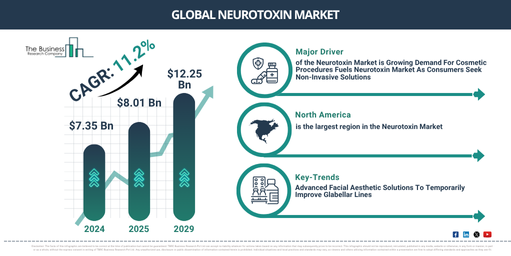
    In the recent past, the neurotoxin market has experienced significant growth. With an increase from $7.35 billion in 2024 to a projected $8.01 billion in 2025, the compound annual growth rate (CAGR) is set at 9.1%. The historic period of growth can be attributed to factors such as an uptick in aesthetic procedures, therapeutic applications, progress in the cosmetic industry, a rise in the aging population, and a growing acceptance of non-invasive procedures.

    The market for neurotoxins is likely to experience substantial expansion in the upcoming years and it is projected to reach “$12.25 billion by 2029 with a compound annual growth rate (CAGR) of 11.2%. This growth in the projected timeframe is due to several factors like the expanded use of neurotoxins in neurology, sustained interest in aesthetic procedures, innovative neurotoxin formulations, heightened consumer consciousness, and growth in cosmetic tourism. The period’s prevailing trends will be the enhancement of drug delivery methods, partnerships for researching and developing neurotoxins, the market’s reaction to regulatory adjustments in the neurotoxin field, the incorporation of neurotoxins in multimodal therapy regimens, emphasis on long-term effects, and patient satisfaction.

    Download The Free Sample Report Here:

    https://www.thebusinessresearchcompany.com/sample.aspx?id=11899&type=smp

    What Forces Are Driving The Growth Of The Neurotoxin Market?

    The neurotoxin market is anticipated to experience significant growth due to the increasing popularity of cosmetic procedures aimed at enhancing appearance. Cosmetic procedures encompass numerous medical treatments and interventions primarily designed to modify or improve one’s physical looks. The cause of this shift can be attributed to societal, technological, and cultural influences as well as awareness of the benefits of undergoing cosmetic procedures. Neurotoxins are commonly utilized in these procedures to relax specific muscles, thereby reducing wrinkles and fine lines. For example, in August 2022, a cosmetic surgery survey by the American Society of Plastic Surgeons, a non-profit plastic surgery specialty organization in the US, indicated that a substantial number of Americans are investing in cosmetic procedures. According to the study, 75% of plastic surgeons in the US have seen an increase in demand for cosmetic procedures and 30% have witnessed their cosmetic procedure businesses doubling in size. As a result, the increased interest in cosmetic procedures for appearance enhancement is fueling the growth of the neurotoxin market.

    The neurotoxin market covered in this report is segmented –

    1) By Product Type: Botox, Dysport, Xeomin, Other Products

    2) By Application: Therapeutic, Aesthetic

    3) By End User: Hospitals, Specialty Clinics, Dermatology Clinics, Other End Users

    Subsegments:

    1) By Botox: Cosmetic Uses, Therapeutic Uses

    2) By Dysport: Cosmetic Applications, Medical Indications

    3) By Xeomin: Cosmetic Treatments, Therapeutic Applications

    4) By Other Products: Jeuveau, Any Emerging Neurotoxins

    Which Trends Are Redefining The Future Landscape Of The Neurotoxin Industry?

    The advancements in facial aesthetic products have emerged as a significant trend in the neurotoxins market. Market players are focusing on the innovation of these aesthetic products to maintain their market presence. To illustrate, Evolus Inc., a medical aesthetics firm based in the US, received endorsement from the Australian Therapeutic Goods Administration (TGA) for Nuceiva (prabotulinumtoxinA) in January 2023. Nuceiva (prabotulinumtoxinA) is a neurotoxin employed for aesthetic purposes, particularly for non-permanent enhancement of moderate glabellar lines in adult patients. It operates by hindering the nerve signals of facial muscles, causing them to relax, thereby diminishing wrinkles caused by facial expressions such as squinting and frowning.

    Which Companies Currently Dominate The Competitive Landscape In The Neurotoxin Industry?

    Major companies operating in the neurotoxin market include AbbVie Inc., Galderma Inc., Ipsen SA, Daewoong Pharmaceutical Co. Ltd., Supernus Pharmaceuticals, Merz Pharma GmbH & Co KGaA, Hugel Inc., Evolus Inc., Medytox Inc., Croma-Pharma GmbH, Revance Therapeutics Inc., US WorldMeds, Gufic Biosciences Ltd., Hironic Co. Ltd., Allergan, List Biological Laboratories, Lanzhou Institute of Biological Products Co. Ltd., Sinclair Pharma, Vida Aesthetics, Aquavit Holdings LLC, PharmaResearch Products Co.Ltd, Entod Pharmaceuticals, Object Pharma Inc.

    https://www.thebusinessresearchcompany.com/report/neurotoxin-global-market-report

    Which Geographic Regions Are Driving Demand In The Neurotoxin Market?

    North America was the largest region in the neurotoxin market in 2024. Asia-Pacific is expected to be the fastest-growing region in the forecast period. The regions covered in the neurotoxin market report are Asia-Pacific, Western Europe, Eastern Europe, North America, South America, Middle East, Africa.

    Request For A Customized Report:

    https://www.thebusinessresearchcompany.com/customise?id=11899&type=smp

    About The Business Research Company:

    With over 15000+ reports from 27 industries covering 60+ geographies, The Business Research Company has built a reputation for offering comprehensive, data-rich research and insights. Armed with 1,500,000 datasets, the optimistic contribution of in-depth secondary research, and unique insights from industry leaders, you can get the information you need to stay ahead in the game.

    Get in touch with us:

    The Business Research Company: https://www.thebusinessresearchcompany.com/

    Americas +1 310-496-7795

    Asia +44 7882 955267 & +91 8897263534

    Europe +44 7882 955267

    Email us at info@tbrc.info

    Follow us on:

    LinkedIn: https://in.linkedin.com/company/the-business-research-company

    YouTube: https://www.youtube.com/channel/UC24_fI0rV8cR5DxlCpgmyFQ

    Global Market Model: https://www.thebusinessresearchcompany.com/global-market-model
  • 2025–2029 Nephrology Drugs Market Outlook: Regional Trends and Growth Forecast

    2025–2029 Nephrology Drugs Market Outlook: Regional Trends and Growth Forecast

    Claim your 30% discount on Global Market Reports with code ONLINE30. Limited time only.

    Claim your 30% discount on Global Market Reports with code ONLINE30. Limited time only.

    How Large Is the Nephrology Drugs Market Expected to Be in 2029?

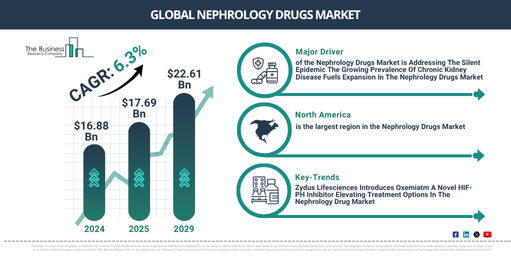
    In recent times, the nephrology drugs market has been experiencing a consistent growth. The market size, which was at $16.88 billion in 2024, is predicted to increase to $17.69 billion in 2025, representing a compound annual growth rate (CAGR) of 4.8%. The growth during the historical period can be linked to the rising occurrence of chronic kidney diseases (CKD), progress in drug development, higher levels of awareness and diagnosis, government interventions, and health policies, along with a growing number of diabetes incidents.

    In the coming years, the nephrology drugs market is anticipated to experience robust growth, increasing to “$22.61 billion by 2029 with a compound annual growth rate (CAGR) of 6.3%. The predicted expansion during this forecast period can be linked to the emergence of new therapies and drug developments, precision and personalized treatment methods, a rise in healthcare spending, the utilization of telehealth and remote patient monitoring, as well as global health endeavors. Key trends expected during this period include strategic alliances and partnerships, innovations in dialysis technology, progress in treatment methodologies, an intensified focus on early detection and intervention, and the adoption of technology in nephrology management.

    Download The Free Sample Report Here:

    https://www.thebusinessresearchcompany.com/sample.aspx?id=10076&type=smp

    What Are The Contributors To Demand In The Nephrology Drugs Market?

    The increasing incidents of chronic kidney disease (CKD) are set to fuel the advancement of the nephrology drugs market, as CKD signifies kidney damage preventing efficient blood filtration. This damage, which tends to develop over a long duration, could lead to wastage accumulation in the body. Nephrology drugs play a key role in CKD treatment to improve kidney functionality and retard the disease, thus keeping it from inflicting further damage. Such factors enhance the appeal of the nephrology drugs market. For instance, the Centers for Disease Control and Prevention (CDC), a health protection agency based in the US, reported in July 2022 that over 37 million people in the US were afflicted with chronic kidney disease, especially prevalent in those aged 65 years or more (38 percent). Similarly, the Kidney Foundation of Canada, a non-profit organization, stated that 4 million Canadians suffer from kidney diseases, with diabetic patients constituting about 35 percent of the cases leading to kidney failure. It’s anticipated that these statistics will increase in the future, which further highlights the potential of chronic kidney disease as a key growth driver for the nephrology drug market.

    The nephrology drugs market covered in this report is segmented –

    1) By Drugs: Antihypertensive Agents, Erythropoiesis-Stimulating Agents, Diuretics, ACE Inhibitors, Antidiabetic Agents, Other Drugs

    2) By Route Of Administration: Oral, Parenteral, Other Route Of Administration

    3) By Distribution Channel: Hospital Pharmacy, Online Pharmacy, Retail Pharmacy

    4) By End User: Hospitals, Homecare, Specialty Clinics, Other End Users

    Subsegments:

    1) By Antihypertensive Agents: Calcium Channel Blockers, Beta-Blockers, Angiotensin II Receptor Blockers (ARBs)

    2) By Erythropoiesis-Stimulating Agents: Epoetin Alfa, Darbepoetin Alfa

    3) By Diuretics: Loop Diuretics, Thiazide Diuretics, Potassium-Sparing Diuretics

    4) By ACE Inhibitors: Lisinopril, Enalapril

    5) By Antidiabetic Agents: Metformin, Insulin

    6) By Other Drugs: Phosphate Binders, Vitamin D Analogues, Renin Inhibitors

    What Notable Trends Are Shaping The Direction Of The Nephrology Drugs Market?

    In the nephrology drug market, the key trend that is rapidly gaining traction is product innovation. To maintain their significant market positions, major companies within this industry are developing new products and drugs. Take for example, in March 2022, India’s pharmaceutical firm Zydus Lifesciences Limited released Oxemia (desidustat) for the treatment of chronic kidney disease (CKD). This drug, an orally administered small-molecule hypoxia-inducible factor-prolyl hydroxylase (HIF-PH) inhibitor, provides a convenient treatment option for anemia and has been approved by India’s Drug Controller General. In phase III clinical trials, it showed promising safety profiles, downregulation of hepcidin, improved iron mobilization and a decrease in LDL-C for patients with chronic kidney disease. Furthermore, its affordable price and ability to improve the patient’s quality of life can potentially alleviate the disease’s impact.

    Who Are The Top-Ranked Companies In The Nephrology Drugs Market Today?

    Major companies operating in the nephrology drugs market include AstraZeneca plc, AbbVie Inc., Akebia Therapeutics Inc., Amgen Inc., F. Hoffmann-La Roche AG, FibroGen Inc., Johnson And Johnson, Pfizer Inc., GlaxoSmithKline plc, Teva Pharmaceutical Industries Limited, Boehringer Ingelheim International GmbH, Reata Pharmaceuticals Inc., Ardelyx Inc., Novo Nordisk A/S, Novartis AG, Baxter International Inc., Bristol Myers Squibb Company, Kissei Pharmaceutical Co. Ltd., Kyowa Kirin Co. Ltd., Mallinckrodt Pharmaceuticals, OPKO Health Inc., Sanofi S.A., Takeda Pharmaceutical Company Limited, Vifor Pharma Group, Bayer AG, Amicus Therapeutics, Chugai Pharmaceutical Co. Ltd., Otsuka Pharmaceutical Co. Ltd., Mylan N.V., Endo Pharmaceuticals plc

    https://www.thebusinessresearchcompany.com/report/nephrology-drugs-global-market-report

    How Is Nephrology Drugs Market Adoption Varying Across Different Regions And Sectors?

    North America was the largest region in the nephrology drug market in 2024.Europe will be the second-largest growing region in the nephrology drug market in 2024. The regions covered in the nephrology drugs market report are Asia-Pacific, Western Europe, Eastern Europe, North America, South America, Middle East, Africa

    Request For A Customized Report:

    https://www.thebusinessresearchcompany.com/customise?id=10076&type=smp

    About The Business Research Company:

    With over 15000+ reports from 27 industries covering 60+ geographies, The Business Research Company has built a reputation for offering comprehensive, data-rich research and insights. Armed with 1,500,000 datasets, the optimistic contribution of in-depth secondary research, and unique insights from industry leaders, you can get the information you need to stay ahead in the game.

    Get in touch with us:

    The Business Research Company: https://www.thebusinessresearchcompany.com/

    Americas +1 310-496-7795

    Asia +44 7882 955267 & +91 8897263534

    Europe +44 7882 955267

    Email us at info@tbrc.info

    Follow us on:

    LinkedIn: https://in.linkedin.com/company/the-business-research-company

    YouTube: https://www.youtube.com/channel/UC24_fI0rV8cR5DxlCpgmyFQ

    Global Market Model: https://www.thebusinessresearchcompany.com/global-market-model
  • Latest Market Developments in Nanotechnology-Based Medical Devices Industry: Forecast 2025–2029

    Latest Market Developments in Nanotechnology-Based Medical Devices Industry: Forecast 2025–2029

    Claim your 30% discount on Global Market Reports with code ONLINE30. Limited time only.

    Claim your 30% discount on Global Market Reports with code ONLINE30. Limited time only.

    What Is the Outlook for the Nanotechnology-Based Medical Devices Market Heading Into 2029?

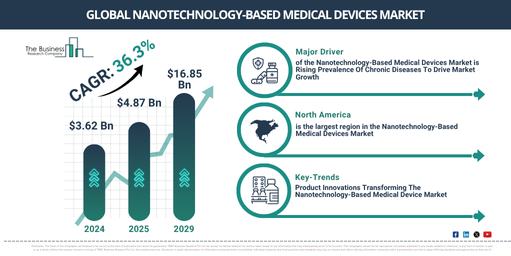
    The market size for nanotechnology-focused medical devices has experienced significant expansion in the previous years. It is projected to increase from $3.62 billion in 2024 to $4.87 billion in 2025, with a compound annual growth rate (CAGR) of 34.6%. The growth observed in the historical period is due to the miniaturization of devices, advancements in materials science, advancements in diagnostic technology, improved imaging methods, and the evolution of personalized medicine.

    The market for nanotechnology-based medical devices is projected to experience immense growth in the coming years, escalating to “$16.85 billion in 2029 at a Compound Annual Growth Rate (CAGR) of 36.3%”. The growth during the prediction period can be linked to factors such as the rise in chronic disease prevalence, improved drug delivery systems, expansion of telemedicine, increase in minimally invasive operations, and emphasis on point-of-care devices. Key trends during the same projection period encompass implantable nanosystems, nano-enabled tissue regeneration, nanoparticle contrast agents for imaging, 3D printing utilizing nanomaterials, and environmentally friendly nanotechnology.

    Download The Free Sample Report Here:

    https://www.thebusinessresearchcompany.com/sample.aspx?id=12268&type=smp

    Which Factors Are Pushing The Nanotechnology-Based Medical Devices Market Forward?

    The growth of the nanotechnology-based medical device market is predicted to be fueled by the escalating prevalence of chronic diseases. Chronic diseases are considered lasting health conditions that require ongoing medical attention and often limit daily activities. They are diagnosed and treated using nanotechnology-based medical devices, which offer enhanced optical strength, antibacterial and antimicrobial functions, bioavailability, surface conjugation, and biocompatibility. For example, the World Health Organization, a specialized agency of the United Nations based in Switzerland, reported that in September 2022, there were 41 million deaths worldwide, or 74% from non-communicable or chronic diseases. These include 17.9 million deaths due to cardiovascular diseases, 9.3 million from cancer, 4.1 million from chronic respiratory diseases, and 2.0 million from diabetes. Therefore, as the prevalence of chronic diseases rises, so does the demand for nanotechnology-based medical devices.

    The nanotechnology-based medical devices market covered in this report is segmented –

    1) By Product: Active Implantable Devices, Biochips, Implantable Materials, Medical Textiles And Wound Dressings, Other Products

    2) By Application: Therapeutic Applications, Diagnostic Applications, Research Applications

    3) By End-Users: Hospitals, Clinics, Other End-Users

    Subsegments:

    1) By Active Implantable Devices: Cardiac Pacemakers, Neurostimulators, Implantable Drug Delivery Systems

    2) By Biochips: Lab-On-A-Chip Devices: DNA Microarrays, Protein Microarrays

    3) By Implantable Materials: Nanocomposite Materials, Biodegradable Polymers, Coatings For Implants

    4) By Medical Textiles And Wound Dressings: Nanofiber Dressings, Antimicrobial Textiles, Smart Textiles For Monitoring

    5) By Other Products: Nanoparticles For Imaging, Diagnostic Devices Incorporating Nanotechnology

    What Upcoming Trends Are Expected To Impact The Nanotechnology-Based Medical Devices Market Globally?

    One defining trend rising in prominence in the nanotechnology-infused medical device market is that of product innovation. Key players in the market are focusing their resources on developing novel products to solidify their market standing. For example, in January 2023, Ended Pharmaceuticals, a pharmaceutical firm based in India, partnered with Nonskin London, a cosmetic research lab located in the UK, to create a nanotechnology-derived eye gel serum under the brand name Eyecare. These products are gel serums utilizing nanotechnology with a nanotechnology-initiated bio-cellular formulation carrying scientifically substantiated, safety-verified, and meticulously selected natural ingredients.

    Which Organizations Are Driving Progress In The Nanotechnology-Based Medical Devices Industry?

    Major companies operating in the nanotechnology-based medical devices market include Johnson & Johnson, General Electric Company, Thermo Fisher Scientific Inc., Abbott Laboratories, 3M Company, Medtronic PLC, Stryker Corporation, DuPont de Nemours Inc., Boston Scientific Corporation, Arkema Group, Zimmer Biomet, Smith And Nephew PLC, Sonova Holding AG, Dentsply Sirona Inc., Perkinelmer Inc., Bruker Corporation, Biotrinik SE & Co. KG, LivaNova Plc, MED-EL, Keystone Nano, Nanonics Imaging Ltd., Imina Technologies SA, Hummingbird Scientific, Blueberry Therapeutics, Cello Therapeutics

    https://www.thebusinessresearchcompany.com/report/nanotechnology-based-medical-devices-global-market-report

    Which Region Is Expected To Experience The Highest Growth In The Nanotechnology-Based Medical Devices Industry?

    North America was the largest region in the nanotechnology-based medical devices market in 2024. Asia-Pacific is expected to be the fastest-growing region in the forecast period. The regions covered in the nanotechnology-based medical devices market report are Asia-Pacific, Western Europe, Eastern Europe, North America, South America, Middle East, Africa.

    Request For A Customized Report:

    https://www.thebusinessresearchcompany.com/customise?id=12268&type=smp

    About The Business Research Company:

    With over 15000+ reports from 27 industries covering 60+ geographies, The Business Research Company has built a reputation for offering comprehensive, data-rich research and insights. Armed with 1,500,000 datasets, the optimistic contribution of in-depth secondary research, and unique insights from industry leaders, you can get the information you need to stay ahead in the game.

    Get in touch with us:

    The Business Research Company: https://www.thebusinessresearchcompany.com/

    Americas +1 310-496-7795

    Asia +44 7882 955267 & +91 8897263534

    Europe +44 7882 955267

    Email us at info@tbrc.info

    Follow us on:

    LinkedIn: https://in.linkedin.com/company/the-business-research-company

    YouTube: https://www.youtube.com/channel/UC24_fI0rV8cR5DxlCpgmyFQ

    Global Market Model: https://www.thebusinessresearchcompany.com/global-market-model
  • Emerging Trends and Growth Drivers in the Myeloproliferative Disorders Drugs Market Through 2029

    Emerging Trends and Growth Drivers in the Myeloproliferative Disorders Drugs Market Through 2029

    Claim your 30% discount on Global Market Reports with code ONLINE30. Limited time only.

    Claim your 30% discount on Global Market Reports with code ONLINE30. Limited time only.

    What Does the Forecast Indicate for the Myeloproliferative Disorders Drugs Market From 2025 to 2029?

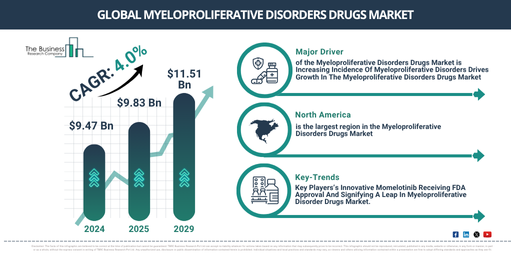
    In recent times, the market for drugs treating myeloproliferative disorders has consistently expanded. It’s projected to increase from $9.47 billion in 2024 to $9.83 billion in 2025, translating to a compound annual growth rate (CAGR) of 3.8%. Factors such as a rise in the occurrence of myeloproliferative disorders, advancements in the knowledge of disease mechanisms, progression in clinical research and drug synthesis, enhancements in diagnosis methods and screening procedures, and patient advocacy and public awareness have spurred growth during the historic period.

    In the coming years, the market for drugs treating myeloproliferative disorders is anticipated to experience consistant growth. It is expected to balloon to “$11.51 billion by 2029 with a 4.0% compound annual growth rate (CAGR). This upward trend in the forecast period can be linked to factors such as an aging population, advancements in precision medicine, the development of new treatment methods, a global interest in rare diseases, government actions, and health care policies. Precision medical approaches, investigational therapy clinical trials, improved symptom management, the growing use of ruxolitinib, and a focus on disease biomarkers are some key trends to be observed in the forecast period.

    Download The Free Sample Report Here:

    https://www.thebusinessresearchcompany.com/sample.aspx?id=10681&type=smp

    What Elements Are Contributing To Growth In The Myeloproliferative Disorders Drugs Market?

    An increase in the number of cases of myeloproliferative disorders is projected to fuel the expansion of the market for drugs targeting these conditions. One or more hematologic cell lines in peripheral blood experience uncontrolled cellular growth in myeloproliferative disorders, setting them apart from acute leukemia. The predominant causes of myeloproliferative disorders are genetic abnormalities, excessive exposure to radiation, electrical wiring, or chemicals, along with the aging population. Drugs for treating myeloproliferative diseases work by blocking the BCR-ABL protein. They achieve this by latching onto the ATP pocket in the active site, which inhibits the downstream phosphorylation of the target protein and aids in the management of the myeloproliferative disorder. For example, the National Institute of Health, a medical research organization based in the US, reported in August 2022 that chronic myelogenous leukemia diagnoses in 2022 were more common in males, with roughly 2.4 new cases per 100,000, as opposed to 1.4 new cases per 100,000 in females. This a notable increase compared to 1.7 new cases per 100,000 population for both genders annually in 2020. Consequently, the upsurge in myeloproliferative disorder cases is influencing the growth of the market for drugs treating these diseases.

    The myeloproliferative disorders drugs market covered in this report is segmented –

    1) By Type: Primary Myelofibrosis, Polycythemia Vera (PV), Essential Thrombocythemia (ET), Chronic Eosinophilic Leukemia Or Hyper eosinophilic Syndrome (HES), Systemic Masto cytosis (SM)

    2) By Drug Type: JAK2 Inhibitors, Anti-Neoplastics, Demethylation Agents, Imatinib Mesylate, Other Drug Types

    3) By Route Of Administration: Oral, Parenteral, Other Routes Of Administration

    4) By Distribution Channel: Hospital Pharmacy, Retail Stores, Drug Stores

    Subsegments:

    1) By Primary Myelofibrosis: JAK Inhibitors, Immunomodulatory Agents, Supportive Care

    2) By Polycythemia Vera (PV): JAK Inhibitors, Hydroxyurea, Phlebotomy, Interferon-alpha

    3) By Essential Thrombocythemia (ET): JAK Inhibitors, Hydroxyurea, Anagrelide, Interferon-alpha

    4) By Chronic Eosinophilic Leukemia or Hyper Eosinophilic Syndrome (HES): Tyrosine Kinase Inhibitors, Corticosteroids, Interferon-alpha

    5) By Systemic Mastocytosis (SM): Tyrosine Kinase Inhibitors, Corticosteroids, Antihistamines, Immunotherapy

    How Are Key Trends Driving Expansion In The Myeloproliferative Disorders Drugs Industry?

    The market for myeloproliferative disorder drugs is witnessing a key trend in product innovation, with leading companies focusing on developing innovative products to consolidate their market presence. Take for example GSK PLC, a pharmaceutical and biotechnology firm hailing from the UK. They announced the FDA’s approval for the drug momelotinib, used for treating primary myelofibrosis, an MPD type, in September 2023. This potentially groundbreaking medication operates uniquely by blocking three pivotal pathways – activin A receptor type I (ACVR1), Janus kinase (JAK) 1, and JAK2. This inhibition of JAK1 and JAK2 might relieve splenomegaly and constitutional symptoms. Moreover, it reduces the elevated circulating hepcidin in myelofibrosis, a contributor to anemia, through the direct inhibition of ACVR1.

    Who Are The Key Contributors To Growth In The Myeloproliferative Disorders Drugs Market?

    Major companies operating in the myeloproliferative disorders drugs market include Novartis AG, Bristol-Myers Squibb Company, Pfizer Inc., Takeda Pharmaceutical Company Limited, Teva Pharmaceutical Industries Ltd., Incyte Corporation, Eli Lilly and Co, F Hoffmann-La Roche Ltd., Mylan NV, Fresenius Kabi AG, Hikma Pharmaceuticals plc, GSK plc, Bayer AG, Sun Pharmaceutical Industries Ltd., Boehringer Ingelheim International Gmbh, Sanofi Aventis Inc., AstraZeneca AB, Apotex Inc, Celgene Co., Gamida Cell Ltd., Geron Co., Promedior Inc., Johnson & Johnson Private Limited, AbbVie Inc., AOP Orphan Pharmaceuticals AG, Astellas Pharma Inc., Biogen Inc., Daiichi Sankyo Chemical Pharma Co. Ltd., Eisai Pharmaceuticals India Pvt. Ltd.

    https://www.thebusinessresearchcompany.com/report/myeloproliferative-disorders-drugs-global-market-report

    Which Region Is Projected To Lead The Myeloproliferative Disorders Drugs Market By 2025?

    North America was the largest region in the myeloproliferative disorder drugs market in 2024.Asia-Pacific is expected to be the fastest-growing region in the global myeloproliferative disorder drugs market report during the forecast period. The regions covered in the myeloproliferative disorders drugs market report are Asia-Pacific, Western Europe, Eastern Europe, North America, South America, Middle East, Africa.

    Request For A Customized Report:

    https://www.thebusinessresearchcompany.com/customise?id=10681&type=smp

    About The Business Research Company:

    With over 15000+ reports from 27 industries covering 60+ geographies, The Business Research Company has built a reputation for offering comprehensive, data-rich research and insights. Armed with 1,500,000 datasets, the optimistic contribution of in-depth secondary research, and unique insights from industry leaders, you can get the information you need to stay ahead in the game.

    Get in touch with us:

    The Business Research Company: https://www.thebusinessresearchcompany.com/

    Americas +1 310-496-7795

    Asia +44 7882 955267 & +91 8897263534

    Europe +44 7882 955267

    Email us at info@tbrc.info

    Follow us on:

    LinkedIn: https://in.linkedin.com/company/the-business-research-company

    YouTube: https://www.youtube.com/channel/UC24_fI0rV8cR5DxlCpgmyFQ

    Global Market Model: https://www.thebusinessresearchcompany.com/global-market-model
  • CAGR of 9.3% Projected for Myelodysplastic Syndrome Drugs Market From 2025 to 2029

    CAGR of 9.3% Projected for Myelodysplastic Syndrome Drugs Market From 2025 to 2029

    Claim your 30% discount on Global Market Reports with code ONLINE30. Limited time only.

    Claim your 30% discount on Global Market Reports with code ONLINE30. Limited time only.

    How Much Is the Global Myelodysplastic Syndrome Drugs Market Valued at Present and by 2029?

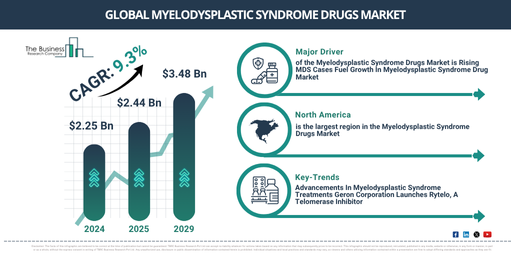
    The market size for drugs treating myelodysplastic syndrome has witnessed robust growth in the recent past. The market is projected to expand from $2.25 billion in 2024 to $2.44 billion in 2025, registering a compound annual growth rate (CAGR) of 8.3%. Several factors have contributed to the growth seen during the historic period, including an aging population, medical advancements in diagnostics, cases of MDS related to chemotherapy, a rise in cancer survivors, and progress in clinical research and drug development.

    In the forthcoming years, the market for myelodysplastic syndrome drugs is predicted to experience robust expansion. It is projected to reach “$3.48 billion by 2029 with a compound annual growth rate (CAGR) of 9.3%. This projected expansion in the forecast period can be ascribed to factors such as increasing elderly population, advancement in target treatments, improved comprehension of disease mechanisms, heightened awareness and early detection, and broadening scope in oncology research. Key developments anticipated during the forecast period encompass optimization of erythropoiesis-stimulating agents, combined therapies, growing emphasis on iron chelation therapy, regulatory approvals and access to the market, as well as patient-centered care models.

    Download The Free Sample Report Here:

    https://www.thebusinessresearchcompany.com/sample.aspx?id=10675&type=smp

    #What Drivers Are Influencing Growth In The Myelodysplastic Syndrome Drugs Market?

    The growth of the myelodysplastic syndrome (MDS) drug market is anticipated to skyrocket in the upcoming years with the rise in MDS incidence. MDS poses as a collective of disorders, characterized by irregular formation and maturation of blood cells within the bone marrow, a type of blood cancer majorly impacting the manufacturing of healthy blood cells. Drugs for myelodysplastic syndrome play a significant role in MDS treatment and include medications that can either suppress or modulate the immune system, reducing the necessity for red blood cell transfusions. As an example, the American Journal of Managed Care, a US-centric magazine, estimated in October 2022, that MDS prevalence in America ranges from 60,000 to 175,000 cases. Thus, the surge in myelodysplastic syndrome incidence is fueling the expansion of the MDS drug market.

    The myelodysplastic syndrome drugs market covered in this report is segmented –

    1) By Therapeutic Class: Immunomodulatory Drugs, Hypomethylating Agents, Anti-anemics

    2) By Type of Syndrome: Refractory Cytopenia With Multilineage Dysplasia, Refractory Anemia, Refractory Anemia With Excess Blasts, Refractory Anemia With Ringed Sideroblasts

    3) By Route of Administration: Oral, Parenteral

    4) By Applications: Original, Generics

    5) By End-User: Hospitals, Clinics, Ambulatory Surgical Centers

    Subsegments:

    1) By Immunomodulatory Drugs: Thalidomide, Lenalidomide, Pomalidomide

    2) By Hypomethylating Agents: Azacitidine, Decitabine, Guadecitabine

    3) By Anti-anemics: Erythropoiesis-Stimulating Agents (ESAs), Iron Supplements, Blood Transfusion Products

    Which Emerging Trends And Strategic Shifts Are Shaping The Myelodysplastic Syndrome Drugs Market?

    Leading businesses in the myelodysplastic syndrome drugs market are focusing on the development of telomerase inhibitors to target the telomerase enzyme. The aim is to decelerate the disease progression by restraining the unregulated division of abnormal cells. The significance of telomerase inhibitors in myelodysplastic syndrome drugs is due to their function – they inhibit the telomerase enzyme, thus curbing the spread of irregular cells, potentially enhancing patient results. For instance, Geron Corporation, an American biotech firm, introduced rytelo (imetelstat), a telomerase inhibitor approved by the FDA for intravenous use in adults diagnosed with low to intermediate-1 risk myelodysplastic syndromes (LR-MDS) and transfusion dependent anemia who are not responding or unsuitable for ESA in June 2024. Rytelo not only provides enduring transfusion independence and elevated hemoglobin levels but also caters to a previously unaddressed need within the myelodysplastic syndrome drugs market, all while maintaining a manageable safety profile.

    Which Companies Play A Key Role In The Development Of The Myelodysplastic Syndrome Drugs Market?

    Major companies operating in the myelodysplastic syndrome drugs market include Amgen Inc., Celgene Corporation, Otsuka Pharmaceutical Co. Ltd., Takeda Pharmaceutical Company Limited, Cipla Limited, Dr. Reddy’s Laboratories Ltd., Lupin Ltd., Onconova Therapeutics Inc., Sun Pharmaceutical Industries Limited, FibroGen Inc., Aprea Therapeutics, Bayer AG, Bristol Myers Squibb, Celator Pharmaceuticals, Crystal Genomics Inc., AbbVie Inc., Astex Pharmaceuticals Inc., Geron Co., Hikma Pharmaceuticals plc, Jazz Pharmaceuticals Inc., Mylan NV, Novartis AG, Sandoz Inc., Syros Pharmaceuticals, Teva Pharmaceutical Industries Ltd., Acceleron Pharma Inc., Agios Pharmaceuticals Inc., Incyte Corporation, Array Biopharma Inc., MEI Pharma Inc.

    https://www.thebusinessresearchcompany.com/report/myelodysplastic-syndrome-drugs-global-market-report

    What Are The Key Regional Developments Shaping The Myelodysplastic Syndrome Drugs Market?

    North America was the largest region in the Myelodysplastic syndrome drugs market in 2024.Asia-Pacific is expected to be the fastest growing region in the global myelodysplastic syndrome drugs market report during the forecast period. The regions covered in the myelodysplastic syndrome drugs market report are Asia-Pacific, Western Europe, Eastern Europe, North America, South America, Middle East, Africa.

    Request For A Customized Report:

    https://www.thebusinessresearchcompany.com/customise?id=10675&type=smp

    About The Business Research Company:

    With over 15000+ reports from 27 industries covering 60+ geographies, The Business Research Company has built a reputation for offering comprehensive, data-rich research and insights. Armed with 1,500,000 datasets, the optimistic contribution of in-depth secondary research, and unique insights from industry leaders, you can get the information you need to stay ahead in the game.

    Get in touch with us:

    The Business Research Company: https://www.thebusinessresearchcompany.com/

    Americas +1 310-496-7795

    Asia +44 7882 955267 & +91 8897263534

    Europe +44 7882 955267

    Email us at info@tbrc.info

    Follow us on:

    LinkedIn: https://in.linkedin.com/company/the-business-research-company

    YouTube: https://www.youtube.com/channel/UC24_fI0rV8cR5DxlCpgmyFQ

    Global Market Model: https://www.thebusinessresearchcompany.com/global-market-model
  • Industry Forecast: Multiple Myeloma Drugs Market to Generate $29.44 Billion Revenue by 2029

    Industry Forecast: Multiple Myeloma Drugs Market to Generate $29.44 Billion Revenue by 2029

    Claim your 30% discount on Global Market Reports with code ONLINE30. Limited time only.

    Claim your 30% discount on Global Market Reports with code ONLINE30. Limited time only.

    What Is the Current and Projected Market Size of the Multiple Myeloma Drugs Industry?

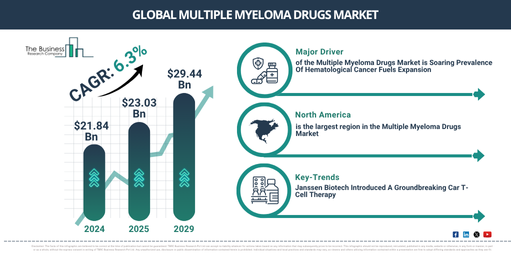
    The market size for multiple myeloma drugs has seen substantial growth in recent times. It is projected to increase from $21.84 billion in 2024 to $23.03 billion in 2025, with a compound annual growth rate (CAGR) of 5.4%. Numerous factors have contributed to this growth in the past, including enhanced diagnostic techniques, successful clinical trials, better understanding of the disease, advancements in healthcare infrastructure, patient activism, and increased awareness.

    The market size for multiple myeloma drugs is slated to witness robust expansion in the upcoming years, swelling to “$29.44 billion in 2029 with a compound annual growth rate (CAGR) of 6.3%.” Contributing factors to this projected growth during the forecast period encompass advancements in immunotherapy, the proliferation of targeted therapies, the utilisation of liquid biopsy, the rise of car-t cell therapy, and the breakthroughs in biomarker identification. Key trends during this period are expected to revolve around the emphasis on long-term survivorship, the investigation into epigenetic treatments, the increased use of telemedicine, broader availability of innovative therapies, and maintenance of myeloma care sustainability.

    Download The Free Sample Report Here:

    https://www.thebusinessresearchcompany.com/sample.aspx?id=11943&type=smp

    #Which Factors Are Currently Driving The Growth Of The Multiple Myeloma Drugs Market?

    The expanding incidence of blood-related cancers is predicted to boost the multiple myeloma drugs market’s growth. These types of cancers originate in blood-forming tissues, such as bone marrow, or in white blood cells. This includes diseases like leukemia, lymphoma, multiple myeloma and others. Multiple myeloma drugs are commonly used to manage multiple myeloma by eliminating and controlling the expansion of cancer cells, reducing the rate of cell division, stimulating various enzymatic functions, and helping maintain bone strength and alleviating pain from weakened bones. For instance, the American Cancer Society (ACS) reported in January 2023 that there were roughly 59,610 newly diagnosed leukemia cases and approximately 20,380 cases of acute myeloid leukemia (AML). Furthermore, the total deaths attributed to leukemia were around 23,710. Thus, the rising occurrence of hematological cancer is propelling the growth of the multiple myeloma drugs market.

    The multiple myeloma drugs market covered in this report is segmented –

    1) By Drug Type: Immunomodulatory Drugs, Proteasome Inhibitors, Histone Deacetylase Inhibitors, Monoclonal Antibody Drugs, Steroids, Other Drug Types

    2) By Therapy: Targeted Therapy, Biologic Therapy, Chemotherapy, Other Therapies

    3) By Distribution Channel: Hospital Pharmacies, Retail Pharmacies, Online Pharmacies, Other Distribution Channels

    4) By End-User: Men, Women

    Subsegments:

    1) By Immunomodulatory Drugs: Lenalidomide, Thalidomide, Pomalidomide

    2) By Proteasome Inhibitors: Bortezomib, Carfilzomib, Ixazomib

    3) By Histone Deacetylase Inhibitors: Panobinostat, Romidepsin

    4) By Monoclonal Antibody Drugs: Daratumumab, Elotuzumab, Isatuximab

    5) By Steroids: Dexamethasone, Prednisone

    6) By Other Drug Types: Alkylating Agents, Antimetabolites, New Experimental Drugs

    What Are The Leading Trends And Opportunities In The Multiple Myeloma Drugs Sector?

    In the multiple myeloma drugs market, product innovation is becoming increasingly popular as a key trend. To solidify their market standing and carve out a competitive edge, top players in this market are placing great emphasis on the development of innovative products. In a notable move in March 2022, Janssen Biotech Inc., a biotech firm based in Japan, won approval from the United States Food and Drug Administration for Carvykti, its CAR T-Cell therapy (a form of personalized immunotherapy) targeting multiple myeloma. CARVYKTI, or ciltacabtagene autoleucel, is an autologous cell-based product that has undergone genetic modification. It utilizes T cells that have been transduced ex vivo with a replication-incompetent lentiviral vector responsible for encoding an anti-B cell maturation antigen (BCMA) chimeric antigen receptor (CAR), comprised of two single domain antibodies tied to a 4-1BB costimulatory domain and a CD3-zeta signaling domain. Only patients who have undergone four or more therapy lines, comprising treatment with three crucial types of multiple myeloma drugs (an immunomodulating agent, a proteasome inhibitor, and an anti-CD38 monoclonal antibody), are considered qualified recipients for its use in the treatment of relapsed conditions.

    Who Are The Main Participants Shaping The Multiple Myeloma Drugs Market Landscape?

    Major companies operating in the multiple myeloma drugs market include Pfizer Inc., Johnson & Johnson Pvt. Ltd, Merck & Co. Inc., AbbVie Inc., Bayer AG., Roche Holding AG, Novartis AG, Sanofi S.A., Bristol-Myers Squibb Company, GlaxoSmithKline Plc, Takeda Pharmaceutical Company Limited, Eli Lilly and Company, Kite Pharma Inc, Amgen Inc., AstraZeneca plc, Teva Pharmaceutical Industries Ltd., Regeneron Pharmaceuticals Inc., Daiichi Sankyo Company, Daiichi Sankyo Co. Ltd., Lonza Group AG, Cipla Ltd., ONO Pharmaceutical Co. Ltd., BieGene Ltd., Biotest AG, Onyx Pharmaceuticals Inc., PharmaMar SA, Karyopharm Therapeutics Inc., Poseida Therapeutics Inc., ImmunoGen Inc., Oncopetides AB

    https://www.thebusinessresearchcompany.com/report/multiple-myeloma-drugs-global-market-report

    Which Region Currently Holds The Largest Share In The Multiple Myeloma Drugs Market?

    North America was the largest region in the multiple myeloma drugs market in 2024. The regions covered in the multiple myeloma drugs market report are Asia-Pacific, Western Europe, Eastern Europe, North America, South America, Middle East, Africa.

    Request For A Customized Report:

    https://www.thebusinessresearchcompany.com/customise?id=11943&type=smp

    About The Business Research Company:

    With over 15000+ reports from 27 industries covering 60+ geographies, The Business Research Company has built a reputation for offering comprehensive, data-rich research and insights. Armed with 1,500,000 datasets, the optimistic contribution of in-depth secondary research, and unique insights from industry leaders, you can get the information you need to stay ahead in the game.

    Get in touch with us:

    The Business Research Company: https://www.thebusinessresearchcompany.com/

    Americas +1 310-496-7795

    Asia +44 7882 955267 & +91 8897263534

    Europe +44 7882 955267

    Email us at info@tbrc.info

    Follow us on:

    LinkedIn: https://in.linkedin.com/company/the-business-research-company

    YouTube: https://www.youtube.com/channel/UC24_fI0rV8cR5DxlCpgmyFQ

    Global Market Model: https://www.thebusinessresearchcompany.com/global-market-model
  • mTOR Inhibitors Market Revenue Outlook: Strategic Insights and Forecast to 2029

    mTOR Inhibitors Market Revenue Outlook: Strategic Insights and Forecast to 2029

    Claim your 30% discount on Global Market Reports with code ONLINE30. Limited time only.

    Claim your 30% discount on Global Market Reports with code ONLINE30. Limited time only.

    How Will the mTOR Inhibitors Market Evolve in Terms of Growth and Size by 2029?

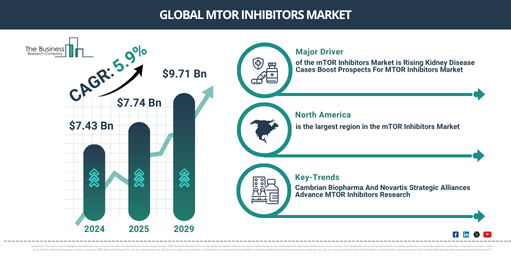
    There has been consistent growth in the mTOR inhibitors market size over the past few years. The market is expected to expand from $7.43 billion in 2024 to $7.74 billion in 2025, with a compound annual growth rate (CAGR) of 4.2%. The observed growth in the historic period can be ascribed to progress in oncology treatment, treatment of renal cell carcinoma, transplant medicine, clinical studies and drug development, and immunosuppressive applications.

    In the coming years, the mTOR inhibitors market size is predicted to experience robust growth, expanding to “$9.71 billion in 2029 with a compound annual growth rate (CAGR) of 5.9%.” The growth during this forecast period can be credited to multiple factors such as the growing oncology indications, advancements in precision medicine, rise in transplantation cases, management of chronic diseases and an increasing ageing population. The forecast period will also witness significant trends such as the exploration of neuroprotective effects, application in transplant medicine, growing interest in metabolic disorders, partnerships for drug development and global health initiatives tackling rare diseases.

    Download The Free Sample Report Here:

    https://www.thebusinessresearchcompany.com/sample.aspx?id=10860&type=smp

    What factors are expected to fuel mTOR Inhibitors market growth in the coming years?

    The escalating incidence of kidney diseases is set to catalyze the expansion of the mTOR inhibitors market. mTOR inhibitors serve as a therapeutic solution for various kidney conditions, with kidney disease referring to a disorder eliciting a gradual diminishing of organ functionality. Sirolimus and everolimus, both immunosuppressive treatment forms that belong to mTOR inhibitors, are used to ward off renal allograft rejection. As kidney diseases become increasingly prevalent worldwide, the need for mTOR inhibitors grows considerably. A case in point, statistics from the International Society of Nephrology in the US indicate that as of April 2022, 843.6 million people globally are grappling with stages 1 to 5 kidney diseases. More than 800 million or roughly 10% of the worldwide population is afflicted with chronic renal disease, a potentially deteriorative disorder. Consequently, the mounting incidence of kidney diseases stands to stimulate the mTOR inhibitors market’s progression.

    The mtor inhibitors market covered in this report is segmented –

    1) By Product Type: Rapamune, Afinitor, Torisel, Zortress, Other Product Types

    2) By Indication: Oncology, Immunosuppressant, Organ Transplantation, Other Indications

    3) By Route of Administration: Oral, Intravenous

    4) By Application: Tumor Treatment, Kidney Transplant, Other Applications

    5) By Distribution Channel: Hospital Pharmacies, Retail Pharmacies, Online Pharmacies

    Subsegments:

    1) By Rapamune: Dosage Forms, Indications

    2) By Afinitor: Dosage Forms, Indications

    3) By Torisel: Dosage Forms, Indications

    4) By Zortress: Dosage Forms, Indications

    5) By Other Product Types: Experimental MTOR Inhibitors, Generic Versions of MTOR Inhibitors, Combination Therapies with MTOR Inhibitors

    What Trends Are Currently Influencing Growth In The mTOR Inhibitors Market?

    The mTOR inhibitors market is seeing a rise in partnerships and collaborations as a predominant trend. Firms are joining forces to get an edge over the competition in this market. In a case in point, Mirati Therapeutics, Inc., an American clinical-stage targeted oncology company, teamed up with Aadi Bioscience, Inc. in October 2022, with the financial details being undisclosed. The objective of this collaboration is to utilize the combination of each company’s drug to provide a potentially increased benefit to patients suffering from KRAS G12C mutant NSCLC and various other cancers. Aadi Bioscience, Inc., a commercial-stage biopharmaceutical firm based in the US, is committed to creating precision treatments for genetically identified cancers. Their ambition is to offer therapy to cancer patients with mTOR pathway driver alterations. Furthermore, in February 2022, Cambrian Biopharma, a US longevity biotech firm with several assets, entered a licensing agreement with Novartis, once again for an undisclosed sum. The contained aim of this agreement is to promote a series of unique and specific compounds that Novartis has developed and characterized. These compounds have been purposely created to target the mechanistic target of the rapamycin (mTOR) pathway. Novartis, based in Switzerland, works in the research, development, production, and marketing of healthcare products, focusing specifically on oncology and other rare illnesses.

    What Are The Most Active Companies In The mTOR Inhibitors Market Today?

    Major companies operating in the mTOR inhibitors market include Novartis AG, Pfizer Inc., Teva Pharmaceutical Industries Ltd., Hikma Pharmaceuticals plc, LC Laboratories, Exelixis Inc., Dr. Reddy’s Laboratories Ltd., Zydus Lifesciences Limited, Accord Healthcare Inc., Par Pharmaceutical, AbbVie Inc., GlaxoSmithKline plc, Biocon Limited, Alkem Laboratories Ltd., Gland Pharma Ltd., Apotex Inc., Glenmark Pharmaceuticals Ltd., AstraZeneca plc, Bristol-Myers Squibb Company, Eli Lilly and Company, Merck & Co. Inc., AmpliPhi Biosciences Corporation, Melinta Therapeutics Inc., Aduro Biotech Inc., Cumberland Pharmaceuticals Inc., Nabriva Therapeutics plc, Paratek Pharmaceuticals Inc., Bayer AG, Boehringer Ingelheim International GmbH

    https://www.thebusinessresearchcompany.com/report/mtor-inhibitors-global-market-report

    Which Regional Markets Are Attracting The Most Investment In mTOR Inhibitors?

    North America was the largest region in the mTOR inhibitors market in 2024.Asia-Pacific is expected to be the fastest-growing region in the forecast period. The regions covered in the mTOR inhibitors market report are Asia-Pacific, Western Europe, Eastern Europe, North America, South America, Middle East, Africa.

    Request For A Customized Report:

    https://www.thebusinessresearchcompany.com/customise?id=10860&type=smp

    About The Business Research Company:

    With over 15000+ reports from 27 industries covering 60+ geographies, The Business Research Company has built a reputation for offering comprehensive, data-rich research and insights. Armed with 1,500,000 datasets, the optimistic contribution of in-depth secondary research, and unique insights from industry leaders, you can get the information you need to stay ahead in the game.

    Get in touch with us:

    The Business Research Company: https://www.thebusinessresearchcompany.com/

    Americas +1 310-496-7795

    Asia +44 7882 955267 & +91 8897263534

    Europe +44 7882 955267

    Email us at info@tbrc.info

    Follow us on:

    LinkedIn: https://in.linkedin.com/company/the-business-research-company

    YouTube: https://www.youtube.com/channel/UC24_fI0rV8cR5DxlCpgmyFQ

    Global Market Model: https://www.thebusinessresearchcompany.com/global-market-model
  • Future Projections: Mid-Size Pharmaceuticals Market to Reach $983.81 Million by 2029 at 6.6% CAGR

    Future Projections: Mid-Size Pharmaceuticals Market to Reach $983.81 Million by 2029 at 6.6% CAGR

    Claim your 30% discount on Global Market Reports with code ONLINE30. Limited time only.

    Claim your 30% discount on Global Market Reports with code ONLINE30. Limited time only.

    What CAGR Is Anticipated for the Mid-Size Pharmaceuticals Market Through 2029?

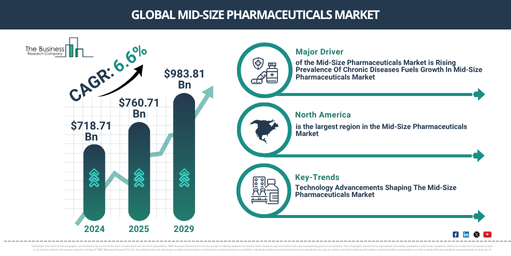
    There has been a noticeable surge in the market size of mid-size pharmaceuticals in recent times. The market which is projected to climb from $718.71 billion in 2024 to $760.71 billion in 2025, boasts a compound annual growth rate (CAGR) of 5.8%. Factors like growth of the generic drug market, expiration of patents for blockbuster drugs, measures to contain the cost of healthcare, the widening scope of biotechnology and regulatory alterations promoting innovation are responsible for this impressive growth in the historical phase.

    In the ensuing years, a robust expansion is anticipated in the mid-size pharmaceuticals market, growing to “$983.81 billion in 2029 with a 6.6% compound annual growth rate (CAGR).” This expected growth in the forecast period can be credited to the rising shift towards value-based healthcare models, streamlined regulatory pathways, enhanced health consciousness and patient empowerment, demand surge for generic and biosimilar drugs, and the advent of digital therapeutics. Some major trends anticipated during the forecast period encompass an amplified emphasis on patient-centric methodologies, the incorporation of artificial intelligence (AI), strategies for global market expansion, initiatives for environmental sustainability, telemedicine and remote patient monitoring.

    Download The Free Sample Report Here:

    https://www.thebusinessresearchcompany.com/sample.aspx?id=12045&type=smp

    What Market Forces Are Driving The Mid-Size Pharmaceuticals Sector In 2025 And Beyond?

    The growth in the mid-size pharmaceuticals market is anticipated to be spurred by the rising occurrence of chronic or non-communicable diseases. These are long-term health issues that necessitate continuous care and treatment, thus leading to a surge in the demand for medicines. Mass spectrometry methods are employed for the detection, measurement, and examination of biomarkers and metabolites related to chronic diseases. The mid-size pharmaceuticals market is set to grow in tandem with the escalating prevalence of chronic diseases. For instance, the World Health Organization, a UN specialized agency based in Switzerland, reported in September 2023 that 41 million deaths or 74% of global deaths are attributed to non-communicable diseases or chronic diseases every year. Consequently, the increasing incidence of chronic diseases is fueling the expansion of the mid-size pharmaceuticals market.

    The mid-size pharmaceuticals market covered in this report is segmented –

    1) By Drug Development Type: In-House, Outsource

    2) By Type: Prescription, Over The Counter

    3) By Formulation: Tablets, Capsules, Injectables, Sprays, Other Formulations

    4) By Application: Cardiovascular Diseases, Pain Management, Diabetes, Cancer, Other Conditions

    Subsegments:

    1) By In-House: Research And Development (R&D) Departments, Clinical Trials Management

    2) By Outsource: Contract Research Organizations (CROs), Contract Manufacturing Organizations (CMOs)

    What Long-Term Trends Are Likely To Affect The Mid-Size Pharmaceuticals Market?

    The advancement of technology is a notable trend that is making waves in the mid-size pharmaceuticals market. Primarily driven by major firms, technology helps maintain their industry positions. For example, Google Cloud – a set of cloud computing services provided by Google – in May 2023, launched AI-equipped tools to speed up drug discovery and precision medicine. Their tool, Target and Lead Identification Suite, enables companies to predict and understand protein structure which is essential in drug research. Also, their Multiomics Suite aids researchers in handling, storing, evaluating, and disseminating large amounts of genetic data.

    Which Firms Are Considered Leaders In The Mid-Size Pharmaceuticals Market Space?

    Major companies operating in the mid-size pharmaceuticals market include Baxter International Inc., Teva Pharmaceutical Industries Ltd., Otsuka Pharmaceutical Co Ltd., Astellas Pharma Inc., Daiichi Sankyo Co. Ltd., Alexion Pharmaceuticals Inc., UCB S.A., Sun Pharmaceutical Industries Ltd., Eisai Co. Ltd., Wuxi AppTec co. Ltd., Les Laboratoires Servier S.A., Hospira Inc., Perrigo Co Plc, Aurobindo Pharma Lmited., Cipla Limited, Hikma Pharmaceuticals, Endo International plc, Taisho Pharmaceutical Holdings Co. Ltd., BioMarin Pharmaceutical Inc., Mallinckrodt Plc, Exelixis Inc., Mylan Pharmaceuticals Inc., Neurocrine Biosciences Inc., Kyowa Kirin Co. Ltd., Emergent BioSolutions Inc.

    https://www.thebusinessresearchcompany.com/report/mid-size-pharmaceuticals-global-market-report

    What Role Do Regional Policies And Investments Play In Mid-Size Pharmaceuticals Market Expansion?

    North America was the largest region in the mid-size pharmaceutical market in 2024. Asia-Pacific is expected to be the fastest-growing region in the forecast period. The regions covered in the mid-size pharmaceuticals market report are Asia-Pacific, Western Europe, Eastern Europe, North America, South America, Middle East, Africa.

    Request For A Customized Report:

    https://www.thebusinessresearchcompany.com/customise?id=12045&type=smp

    About The Business Research Company:

    With over 15000+ reports from 27 industries covering 60+ geographies, The Business Research Company has built a reputation for offering comprehensive, data-rich research and insights. Armed with 1,500,000 datasets, the optimistic contribution of in-depth secondary research, and unique insights from industry leaders, you can get the information you need to stay ahead in the game.

    Get in touch with us:

    The Business Research Company: https://www.thebusinessresearchcompany.com/

    Americas +1 310-496-7795

    Asia +44 7882 955267 & +91 8897263534

    Europe +44 7882 955267

    Email us at info@tbrc.info

    Follow us on:

    LinkedIn: https://in.linkedin.com/company/the-business-research-company

    YouTube: https://www.youtube.com/channel/UC24_fI0rV8cR5DxlCpgmyFQ

    Global Market Model: https://www.thebusinessresearchcompany.com/global-market-model
  • 2025 Methicillin-Resistant Staphylococcus Aureus (MRSA) Drugs Market Outlook: Opportunities, Growth Trends, and Strategic Analysis

    2025 Methicillin-Resistant Staphylococcus Aureus (MRSA) Drugs Market Outlook: Opportunities, Growth Trends, and Strategic Analysis

    Claim your 30% discount on Global Market Reports with code ONLINE30. Limited time only.

    Claim your 30% discount on Global Market Reports with code ONLINE30. Limited time only.

    What Are the Latest Market Insights for the Methicillin-Resistant Staphylococcus Aureus (MRSA) Drugs Industry?

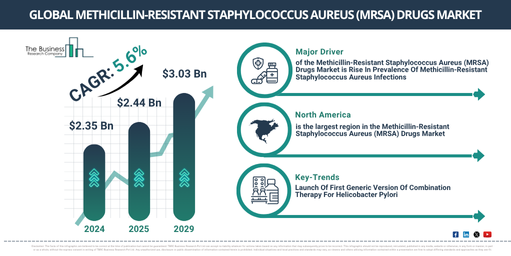
    The market size for methicillin-resistant staphylococcus aureus (MRSA) drugs has been witnessing consistent growth in the recent past. The market is predicted to rise from $2.35 billion in 2024 to $2.44 billion in 2025 with a compound annual growth rate (CAGR) of 3.9%. Factors such as rising concerns over antibiotic resistance, the prevalence of hospital-acquired infections, surgical procedures, global surge in MRSA cases, and high mortality rates have contributed to the growth during the historic period.

    Significant growth is anticipated in the methicillin-resistant staphylococcus aureus (MRSA) drugs market in the coming years, with expectations that it will escalate to $3.03 billion by 2029, maintaining a compound annual growth rate (CAGR) of 5.6%. This projected expansion in the forecast period can be credited to persisting issues with antibiotic resistance, advancements in MRSA diagnostic techniques, worldwide healthcare-related infections, surgical preventive measures, and increasing instances of MRSA acquired in the community. Key trends for the forecast period consist of the investigation into immunomodulators, forming strategic alliances for drug development, tailored therapies based on the particulars of the strain, a targeted approach on formulations specific for children, and international health initiatives tackling antibiotic resistance.

    Download The Free Sample Report Here:

    https://www.thebusinessresearchcompany.com/sample.aspx?id=10859&type=smp

    What Forces Are Driving The Growth Of The Methicillin-Resistant Staphylococcus Aureus (MRSA) Drugs Industry?

    The growth of the methicillin-resistant Staphylococcus aureus (MRSA) drugs market is projected to be fueled by the surge in Hospital Acquired Infections (HAIs). HAIs, infections that patients get while being treated at a healthcare facility and that appear 48 hours or more after being admitted, are linked to factors such as polluted medical devices, improper hand sanitation by healthcare workers, overreliance on antibiotics, extended hospitalization, and patients’ compromised immune systems. MRSA drugs, which are used to tackle these hospital-acquired infections, focus on eradicating MRSA strains that have developed resistance to conventional antibiotics, thus contributing to the decrease in the transmission and harshness of these infections in healthcare establishments. The World Health Organization, a Switzerland-based intergovernmental body, reported in 2023 that there are approximately 136 million cases of healthcare-related antibiotic-resistant infections globally every year. Therefore, the increasing frequency of methicillin-resistant Staphylococcus aureus infections is propelling the development of the methicillin-resistant Staphylococcus aureus drugs market.

    The methicillin-resistant staphylococcus aureus (mrsa) drugs market covered in this report is segmented –

    1) By Drug Class: Lipopeptides, Oxazolidinones, Cephalosporin, Tetracycline, Folate Antagonist, Lipoglycopeptide, Other Drug Classes

    2) By Indication: Skin Infections, Bone and Joint Infections, Bacteremia, Animal Infections

    3) By MRSA Type: Hospital-Acquired (HA-MRSA), Community-Acquired (CA-MRSA)

    4) By Route of Administration: Oral Administration, Parenteral Administration

    5) By End User: Hospitals and Clinics, Research and Academic Institutes, Other End-Users

    Subsegments:

    1) By Lipopeptides: Daptomycin

    2) By Oxazolidinones: Linezolid, Tedizolid

    3) By Cephalosporin: Ceftaroline

    4) By Tetracycline: Minocycline, Doxycycline

    5) By Folate Antagonist: Trimethoprim Or Sulfamethoxazole

    6) By Lipoglycopeptide: Telavancin, Dalbavancin, Oritavancin

    7) By Other Drug Classes: Vancomycin, Clindamycin, Quinupristin Or Dalfopristin

    What Future Market Trends Are Projected For The Methicillin-Resistant Staphylococcus Aureus (MRSA) Drugs Industry?

    In the Methicillin-Resistant Staphylococcus aureus (MRSA) drug market, the dominant trend is product innovation. The key players in the Methicillin-Resistant Staphylococcus Aureus (MRSA) drug market are striving to create new products, with an aim to strengthen their observatory capacity and maintain their market position. For example, in March 2023, Endo, an American biopharmaceutical corporation, introduced the initial generic version of Pylera (bismuth subcitrate potassium, metronidazole, tetracycline hydrochloride) capsules. This provided a less expensive treatment alternative for patients afflicted with Helicobacter pylori infections. The launch’s core objective was to improve the availability of effective gastric ulcer treatments, thus offering significant healthcare cost savings, and ultimately enabling more patients to get the essential treatment for managing their issues effectively.

    Who Are The Primary Players Operating Across The Global Methicillin-Resistant Staphylococcus Aureus (MRSA) Drugs Market?

    Major companies operating in the methicillin-resistant staphylococcus aureus (MRSA) drugs market include Basilea Pharmaceutica Ltd., Merck & Co Inc., Pfizer Inc., Theravance Biopharma Inc., Allergan plc, Cumberland Pharmaceuticals Inc., Debiopharm International S.A., AbbVie Inc., Innovation Pharmaceuticals Inc., Melinta Therapeutics Inc., Nabriva Therapeutics plc, Paratek Pharmaceuticals Inc., Teva Pharmaceutical Industries Ltd., AmpliPhi Biosciences Corporation, AstraZeneca plc, Meiji Seika Kaisha Ltd., GlaxoSmithKline plc, Johnson & Johnson, Sanofi S.A., Novartis, Wockhardt, Sun Pharmaceutical Industries Ltd., Lupin Limited, Glenmark Pharmaceuticals, Dr. Reddy’s Laboratories Ltd., Eli Lilly and Company, Astellas Pharma Inc.

    https://www.thebusinessresearchcompany.com/report/methicillin-resistant-staphylococcus-aureus-mrsa-drugs-global-market-report

    Which Region Offers The Most Growth Potential For The Methicillin-Resistant Staphylococcus Aureus (MRSA) Drugs Market Through 2029?

    North America was the largest region in the global methicillin-resistant staphylococcus aureus drugs market in 2024.Asia-Pacific is expected to be the fastest-growing region in the forecast period. The regions covered in the methicillin-resistant staphylococcus aureus (MRSA) drugs market report are Asia-Pacific, Western Europe, Eastern Europe, North America, South America, Middle East, Africa

    Request For A Customized Report:

    https://www.thebusinessresearchcompany.com/customise?id=10859&type=smp

    About The Business Research Company:

    With over 15000+ reports from 27 industries covering 60+ geographies, The Business Research Company has built a reputation for offering comprehensive, data-rich research and insights. Armed with 1,500,000 datasets, the optimistic contribution of in-depth secondary research, and unique insights from industry leaders, you can get the information you need to stay ahead in the game.

    Get in touch with us:

    The Business Research Company: https://www.thebusinessresearchcompany.com/

    Americas +1 310-496-7795

    Asia +44 7882 955267 & +91 8897263534

    Europe +44 7882 955267

    Email us at info@tbrc.info

    Follow us on:

    LinkedIn: https://in.linkedin.com/company/the-business-research-company

    YouTube: https://www.youtube.com/channel/UC24_fI0rV8cR5DxlCpgmyFQ

    Global Market Model: https://www.thebusinessresearchcompany.com/global-market-model