Blog

  • Competitive and Market Trend Analysis of Gene Synthesis Industry Through 2029

    Competitive and Market Trend Analysis of Gene Synthesis Industry Through 2029

    Claim your 30% discount on Global Market Reports with code ONLINE30. Limited time only.

    Claim your 30% discount on Global Market Reports with code ONLINE30. Limited time only.

    What Are the Forecasted Growth Rate and Market Size of the Gene Synthesis Market?

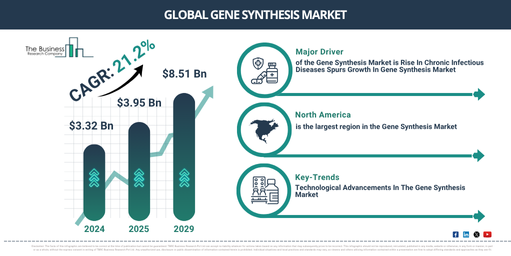
    In recent times, there’s been a quick expansion in the gene synthesis market size. This market is projected to increase from $3.32 billion in 2024 to $3.95 billion in 2025, showing a compound annual growth rate (CAGR) of 18.7%. The growth witnessed during the historic period can be credited to advancements in genetic study, the rise of personalized medicine, more emphasis on biotechnology, expansion in the biopharmaceutical industry, and evolving technology platforms for synthesis.

    Expectations are high for the gene synthesis market to experience a considerable increase in size over the next several years. Projections suggest it could escalate to “$8.51 billion by 2029, with a compound annual growth rate (CAGR) of 21.2%. Such growth within the forecast period could be credited to the swift advancement of synthetic biology and the arrival of CRISPR technology. Other contributing factors include increased demand for custom-made genes coupled with advancements in gene editing and therapy, as well as the growing use in agricultural applications. Noteworthy trends for the forecast period encompass improved accessibility via cost-cutting measures, tailor-made gene libraries suited for functional genomics, automated processes, and high-output synthesis. Additionally, partnerships within biotechnology and pharmaceutical sectors and a keen focus on ethical and regulatory factors further propel the market’s expansion.

    Download The Free Sample Report Here:

    https://www.thebusinessresearchcompany.com/sample.aspx?id=10084&type=smp

    Which Factor Is Shaping The Future Of The Gene Synthesis Market?

    The rise in chronic infectious diseases is predicted to fuel the expansion of the gene synthesis market. Chronic infectious diseases are ailments induced by pathogens that reside in the body over an extended period, often lasting for several years or possibly a lifetime. Gene synthesis holds the potential to mitigate infectious diseases by promoting the creation of novel vaccines, diagnostics, and treatments catered to specific pathogens. This technique could prove to be quicker, more efficient, and more focused compared to conventional methods, and possesses the ability to aid in managing infectious disease outbreaks. For example, in November 2023, the World Health Organization, a health agency based in Switzerland, calculated from data obtained in 2022 that 10.6 million individuals worldwide were suffering from tuberculosis (TB), including 5.8 million men, 3.5 million women, and 1.3 million children. Therefore, the growing cases of chronic infectious diseases are amplifying the progression of the gene synthesis market.

    The gene synthesis market covered in this report is segmented –

    1) By Method: Solid-Phase Synthesis, Chip-Based Synthesis, PR-Based Enzyme Synthesis

    2) By Service: Antibody DNA Synthesis, Viral DNA Synthesis, Other Services

    3) By Application: Gene And Cell Therapy Development, Vaccine Development, Disease Diagnosis, Other Applications

    4) By End-User: Biotechnology And Pharmaceutical Companies, Academic And Government Research Institutes, Contract Research Organizations

    Subsegments:

    1) By Solid-Phase Synthesis: Phosphoramidite Method, H-phosphonate Method

    2) By Chip-Based Synthesis: Microarray Technology, Light-Directed Synthesis

    3) By PCR-Based Enzyme Synthesis: Polymerase Chain Reaction (PCR), Reverse Transcription PCR (RT-PCR)

    How Are Key Trends Driving Expansion In The Gene Synthesis Industry?

    The gene synthesis market is seeing a surge in popularity due to technological advancements. To maintain their market position, companies in this field are embracing cutting-edge technologies. An example of this is GenScript Biotech Corporation, a US-based biotech firm. In June 2024, the company introduced the FLASH Gene service, a super-speedy sequence-to-plasmid (S2P) service created to cater to the expanding need for swift gene synthesis and plasmid preparation. This innovative service enables researchers to obtain their plasmid constructs in a mere four business days, a significant improvement over conventional methods.

    Which Companies Hold The Largest Market Share In The Gene Synthesis Sector?

    Major companies operating in the gene synthesis market market include Genscript Biotech Corporation, Brooks Automation Inc., Boster Biological Technology Ltd., Twist Bioscience Corp., ProteoGenix Inc., Biomatik Corporation, ProMab Biotechnologies Inc., Thermo Fisher Scientific Inc., Integrated DNA Technologies Inc., OriGene Technologies Inc., GenScript Corp., Eurofins Scientific SE, Merck KGaA, Codex DNA Inc., Genewiz Inc., Eurofins Genomics LLC, BioCat GmbH, Bioneer Pacific Co. Ltd., Bio Basic Inc., Beijing SBS Genetech Co. Ltd, Creative Biogene Inc, Exonbio LLC., Trenzyme GmbH, AddLife AB, Polygen GmbH, MACROGEN CO. LTD., Synbio Technologies LLC

    https://www.thebusinessresearchcompany.com/report/gene-synthesis-global-market-report

    How Does Regional Performance Compare Across The Gene Synthesis Industry?

    North America was the largest region in the gene synthesis market in 2024.Asia-Pacific is expected to be the fastest-growing region in the global gene synthesis market report during the forecast period. The regions covered in the gene synthesis market report are Asia-Pacific, Western Europe, Eastern Europe, North America, South America, Middle East, Africa

    Request For A Customized Report:

    https://www.thebusinessresearchcompany.com/customise?id=10084&type=smp

    About The Business Research Company:

    With over 15000+ reports from 27 industries covering 60+ geographies, The Business Research Company has built a reputation for offering comprehensive, data-rich research and insights. Armed with 1,500,000 datasets, the optimistic contribution of in-depth secondary research, and unique insights from industry leaders, you can get the information you need to stay ahead in the game.

    Get in touch with us:

    The Business Research Company: https://www.thebusinessresearchcompany.com/

    Americas +1 310-496-7795

    Asia +44 7882 955267 & +91 8897263534

    Europe +44 7882 955267

    Email us at info@tbrc.info

    Follow us on:

    LinkedIn: https://in.linkedin.com/company/the-business-research-company

    YouTube: https://www.youtube.com/channel/UC24_fI0rV8cR5DxlCpgmyFQ

    Global Market Model: https://www.thebusinessresearchcompany.com/global-market-model
  • Global Gastroesophageal Reflux Disease Therapeutics Market Landscape: Trends and Market Share to 2029

    Global Gastroesophageal Reflux Disease Therapeutics Market Landscape: Trends and Market Share to 2029

    Claim your 30% discount on Global Market Reports with code ONLINE30. Limited time only.

    Claim your 30% discount on Global Market Reports with code ONLINE30. Limited time only.

    What Is the Estimated Industry Valuation for the Gastroesophageal Reflux Disease Therapeutics Sector?

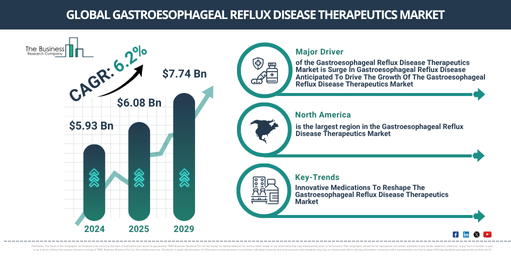
    Over the past few years, the market size for therapeutics in gastroesophageal reflux disease has seen consistent growth. It is anticipated to increase from $5.93 billion in 2024 to $6.08 billion in 2025, experiencing a compound annual growth rate (CAGR) of 2.5%. Factors such as lifestyle and dietary changes, an aging populace, heightened awareness and diagnosis, prevalent stressful lifestyles, and a surge in obesity rates are all contributing to the growth seen during this historic period.

    Anticipated to witness robust growth in the coming years, the therapeutics market for gastroesophageal reflux disease is predicted to expand to “$7.74 billion in 2029 with a compound annual growth rate (CAGR) of 6.2%. This projected growth trajectory during the forecast period can be associated with the rising demand for innovative therapies, aging population, tailored medication strategies, emphasis on non-drug interventions, and the advent of biological and pioneering therapies. Some major trends to watch out for during this period encompass alternative therapies, mind-body practices, extensive gut health research, the emergence of patient-oriented care models, GERD awareness through targeted marketing, and the incorporation of digital health technologies.

    Download The Free Sample Report Here:

    https://www.thebusinessresearchcompany.com/sample.aspx?id=12058&type=smp

    What Forces Are Driving The Growth Of The Gastroesophageal Reflux Disease Therapeutics Market?

    The anticipated increase in cases of gastroesophageal reflux disease (GERD) is projected to fuel the expansion of the GERD therapeutics market. GERD is a persistent ailment marked by the reverse flow of stomach acid into the esophagus, leading to symptoms like heartburn, regurgitation, and potential complications. GERD therapeutics are designed to manage these symptoms, neutralizing the gastric pH, reducing inflammation, and enhancing the function of the esophagus. For instance, a September 2022 article by WebMed, a US-based online health information publisher, reported that over 60 million American adults experience heartburn at least once a month, and over 15 million have daily occurrences. Further data shared by the National Library of Medicine in July 2022, a US federal medical library, stated that GERD is one of the most commonly diagnosed gastrointestinal disorders in the US, with a 20% prevalence. This scenario leads to significant economic implications due to the direct and indirect costs involved and negatively affects the quality of life. Hence, the rising prevalence of GERD is expected to catalyze the expansion of the GERD therapeutics market.

    The gastroesophageal reflux disease therapeutics market covered in this report is segmented –

    1) By Type: Branded, Generic

    2) By Drug Class: Antacids, Proton Pump Inhibitors, Histamine Blockers, Pro-Kinetic Agents, Other Drugs Class

    3) By Distribution Channel: Hospital Pharmacy, Drug Stores, General Stores, Supermarkets

    4) By Application: Crohn’s Disease, Gastroesophageal Reflux Disease (GERD), Ulcerative Colitis

    Subsegments:

    1) By Branded: Proton Pump Inhibitors (PPIs), H2-Receptor Antagonists, Antacids, Coating Agents

    2) By Generic: Generic Proton Pump Inhibitors (PPIs), Generic H2-Receptor Antagonists, Generic Antacids, Generic Coating Agents

    Which Emerging Trends And Strategic Shifts Are Shaping The Gastroesophageal Reflux Disease Therapeutics Market?

    One conspicuous trend in the gastroesophageal reflux disease therapeutics market is the importance of product innovations. To stay competitive in the market, major companies are focusing on the development of novel treatments. For example, Phathom Pharmaceuticals, a biopharmaceutical enterprise based in the US, introduced VOQUEZNA (vonoprazan) in the market in November 2023. This medication is a potassium-competitive acid blocker, approved for treating all grades of erosive esophagitis and relief from heartburn in both erosive and non-erosive GERD. Clinical studies revealed impressive results, with a 93% healing rate observed in patients who took a 20 mg dosage, which is higher than the 85% healing rate observed in patients using the conventional proton pump inhibitor, lansoprazole.

    Which Companies Currently Dominate The Competitive Landscape In The Gastroesophageal Reflux Disease Therapeutics Industry?

    Major companies operating in the gastroesophageal reflux disease therapeutics market include Pfizer Inc., Johnson and Johnson, Novartis AG, Sanofi S.A., AstraZeneca plc, Medtronic PLC, GlaxoSmithKline plc, Eisai Co. Ltd., Takeda Pharmaceutical Company Limited, bioMerieux SA, Teva Pharmaceutical Industries, Dr. Reddy’s Laboratories Ltd., Amneal Pharmaceuticals LLC, CHEPLAPHARM Arzneimittel GmbH, Daewoong Pharmaceutical Co. Ltd, Ironwood Pharmaceuticals Inc., Sebela Pharmaceuticals Inc., Camber Pharmaceuticals Inc., Sun Pharmaceutical Industries Ltd., EndoGastric Solutions, RaQualia Pharma Inc, TWi Pharmaceuticals Inc., Astellas Pharma Inc., SFJ Pharmaceuticals Group, Boehringer Ingelheim International GmbH, Cadila Pharmaceuticals Limited

    https://www.thebusinessresearchcompany.com/report/gastroesophageal-reflux-disease-therapeutics-global-market-report

    Which Geographic Regions Are Driving Demand In The Gastroesophageal Reflux Disease Therapeutics Market?

    North America was the largest region in the gastroesophageal reflux disease therapeutics market in 2024. Asia-Pacific is expected to be the fastest-growing region in the forecast period. The regions covered in the gastroesophageal reflux disease therapeutics market report are Asia-Pacific, Western Europe, Eastern Europe, North America, South America, Middle East, Africa.

    Request For A Customized Report:

    https://www.thebusinessresearchcompany.com/customise?id=12058&type=smp

    About The Business Research Company:

    With over 15000+ reports from 27 industries covering 60+ geographies, The Business Research Company has built a reputation for offering comprehensive, data-rich research and insights. Armed with 1,500,000 datasets, the optimistic contribution of in-depth secondary research, and unique insights from industry leaders, you can get the information you need to stay ahead in the game.

    Get in touch with us:

    The Business Research Company: https://www.thebusinessresearchcompany.com/

    Americas +1 310-496-7795

    Asia +44 7882 955267 & +91 8897263534

    Europe +44 7882 955267

    Email us at info@tbrc.info

    Follow us on:

    LinkedIn: https://in.linkedin.com/company/the-business-research-company

    YouTube: https://www.youtube.com/channel/UC24_fI0rV8cR5DxlCpgmyFQ

    Global Market Model: https://www.thebusinessresearchcompany.com/global-market-model
  • Comprehensive Forecast: Follicular Lymphoma Treatment Market Share, Growth, and Opportunities Through 2029

    Comprehensive Forecast: Follicular Lymphoma Treatment Market Share, Growth, and Opportunities Through 2029

    Claim your 30% discount on Global Market Reports with code ONLINE30. Limited time only.

    Claim your 30% discount on Global Market Reports with code ONLINE30. Limited time only.

    How Large Is the Follicular Lymphoma Treatment Market Expected to Be in 2029?

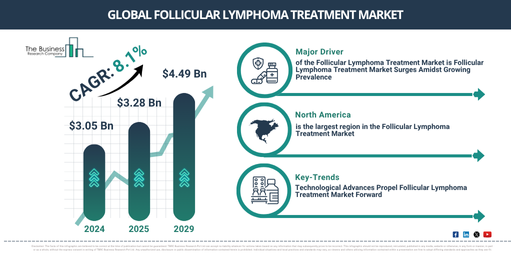
    The market for treating follicular lymphoma has witnessed robust growth in the past few years. The market size is projected to escalate from $3.05 billion in 2024 to $3.28 billion in 2025, recording a compound annual growth rate (CAGR) of 7.5%. The significant progression in the historic period can be linked to the rising prevalence of follicular lymphoma, breakthroughs in cancer detection methods, growing elderly population, clinical studies and progress in drug development, coupled with cooperative efforts in cancer research.

    The market for follicular lymphoma treatments is projected to experience substantial expansion in the coming years, growing to “$4.49 billion in 2029 with a compound annual growth rate (CAGR) of 8.1%. This predicted increase over the forecasted period can be linked to the development of personalized medicine techniques, advancements in immunotherapy, wider access to groundbreaking therapies, an emphasis on quality of life, and worldwide collaborations in oncology. Key trends anticipated during this forecast period include the continuance of clinical trials and research initiatives, the investigation into epigenetic modifiers, advancements in radioimmunotherapy, the use of artificial intelligence (AI), and worldwide partnerships to facilitate access to treatments.

    Download The Free Sample Report Here:

    https://www.thebusinessresearchcompany.com/sample.aspx?id=10758&type=smp

    What Are The Contributors To Demand In The Follicular Lymphoma Treatment Market?

    The follicular lymphoma treatment market is predicted to grow due to the increasing incidence of follicular lymphoma. The incidence refers to the total count or rate of individuals in a particular population diagnosed with follicular lymphoma during a specific time or over a certain period. Factors such as an aging population, genetic tendencies, enhanced diagnostic methods, and heightened consciousness and screening have contributed to this shift. The treatment for follicular lymphoma caters to different stages of the illness, aiding in its management and progression, thus contributing to reducing its incidence. Consequently, the follicular lymphoma treatment market is benefitting from an increased occurrence of the disease. For example, the American Cancer Society, a voluntary organization based in the U.S., reported in January 2023 that non-Hodgkin lymphoma, an indolent form of follicular lymphoma, accounts for approximately 4% of all cancers in the U.S., being the most common form. They estimate a diagnosis in roughly 80,550 individuals, including 44,880 men and 35,670 women, which includes both adults and children. Hence, the escalating incidence of follicular lymphoma is fueling the expansion of the follicular lymphoma treatment market.

    The follicular lymphoma treatment market covered in this report is segmented –

    1) By Treatment: Monoclonal Antibodies, Targeted Therapy, Chemotherapy, Radiation Therapy, Stem Cell Transplant, Alkylating Agents, Nucleoside Analogues, Anthracycline Derivatives, Other Treatments

    2) By Product Type: Tablets, Capsules, Injectables, Other Product Types

    3) By Route of Administration: Oral, Parenteral, Other Route of Administration

    4) By End Use: Hospitals, Oncology Centers, Ambulatory Care Centers, Academic Research Institutes, Other End Users

    Subsegments:

    1) By Monoclonal Antibodies: Rituximab, Obinutuzumab, Ofatumumab

    2) By Targeted Therapy: PI3K Inhibitors, BTK Inhibitors, BCL-2 Inhibitors

    3) By Chemotherapy: CHOP Regimen, Bendamustine, Fludarabine

    4) By Radiation Therapy: External Beam Radiation Therapy (EBRT), Radioimmunotherapy

    5) By Stem Cell Transplant: Autologous Stem Cell Transplant, Allogeneic Stem Cell Transplant

    6) By Alkylating Agents: Cyclophosphamide, Ifosfamide

    What Are The Leading Trends And Opportunities In The Follicular Lymphoma Treatment Sector?

    Advancements in technology related to the diagnosis and treatment of follicular lymphoma represent a significant growth trend in the follicular lymphoma treatment market. To maintain their market position, businesses in this sector are turning to more advanced techniques for the diagnosis and treatment of follicular lymphoma. For instance, Genentech Inc., a biotech firm from the United States, got FDA approval in December 2022 for Lunsumio, a ground-breaking bispecific antibody used to treat refractory or recurrent follicular lymphoma. This novel class of immunotherapy offers a fixed-duration cancer treatment that is readily available and doesn’t require patients to wait for treatment. The FDA’s approval was based on positive outcomes from the Phase II GO29781 study of Lunsumio in patients with extensively pretreated FL, particularly those at high risk of disease progression or those unresponsive to previous treatments.

    Who Are The Top-Ranked Companies In The Follicular Lymphoma Treatment Market Today?

    Major companies operating in the follicular lymphoma treatment market include AbbVie Inc., Bayer AG, Bristol Myers Squibb Company, F. Hoffmann-La Roche Ltd., Johnson and Johnson Services Inc., GlaxoSmithKline plc, Novartis AG, Merck & Co. Inc., EpiZyme Inc., Boehringer Ingelheim GmbH, CTI BioPharma Corp., Spectrum Pharmaceuticals Inc., Seattle Genetics Inc., Applied Molecular Genetics Inc., Daiichi Sankyo Company Ltd., Pfizer Inc., Incyte Corporation, MorphoSys AG, Regeneron Pharmaceuticals Inc., Eli Lilly and Company, Seagen Inc., Takeda Pharmaceutical Company, Nordic Nanovector ASA, ADC Therapeutics SA, MEI Pharma Inc., BeiGene Inc., TG Therapeutics Inc., Amgen Inc., Dr. Reddy’s Laboratories Ltd.

    https://www.thebusinessresearchcompany.com/report/follicular-lymphoma-treatment-global-market-report

    How Is Follicular Lymphoma Treatment Market Adoption Varying Across Different Regions And Sectors?

    North America was the largest region in the follicular lymphoma treatment market in 2024. The regions covered in the follicular lymphoma treatment market report are Asia-Pacific, Western Europe, Eastern Europe, North America, South America, Middle East, Africa

    Request For A Customized Report:

    https://www.thebusinessresearchcompany.com/customise?id=10758&type=smp

    About The Business Research Company:

    With over 15000+ reports from 27 industries covering 60+ geographies, The Business Research Company has built a reputation for offering comprehensive, data-rich research and insights. Armed with 1,500,000 datasets, the optimistic contribution of in-depth secondary research, and unique insights from industry leaders, you can get the information you need to stay ahead in the game.

    Get in touch with us:

    The Business Research Company: https://www.thebusinessresearchcompany.com/

    Americas +1 310-496-7795

    Asia +44 7882 955267 & +91 8897263534

    Europe +44 7882 955267

    Email us at info@tbrc.info

    Follow us on:

    LinkedIn: https://in.linkedin.com/company/the-business-research-company

    YouTube: https://www.youtube.com/channel/UC24_fI0rV8cR5DxlCpgmyFQ

    Global Market Model: https://www.thebusinessresearchcompany.com/global-market-model
  • Future Demand and Leading Companies Shaping the Follicle Stimulating Hormone Market to 2029

    Future Demand and Leading Companies Shaping the Follicle Stimulating Hormone Market to 2029

    Claim your 30% discount on Global Market Reports with code ONLINE30. Limited time only.

    Claim your 30% discount on Global Market Reports with code ONLINE30. Limited time only.

    What Is the Outlook for the Follicle Stimulating Hormone Market Heading Into 2029?

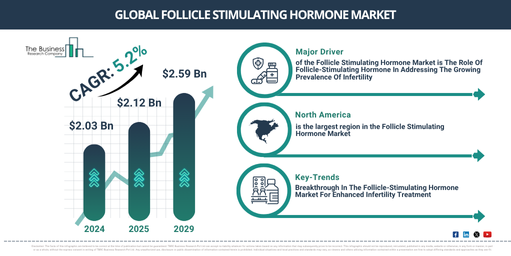
    There has been a consistent increase in the market size of follicle stimulating hormone in the past few years. It is projected to escalate from $2.03 billion in 2024, to $2.12 billion by 2025, growing at a compound annual growth rate (CAGR) of 4.4%. The growth noted in the historic period has been due to factors such as a rise in hormonal disorder incidences, an expanded need for fertility treatments, increased FSH indications, the introduction of new FSH products into the market, and a surge in demand for secure and effective contraceptive alternatives.

    In the coming years, the market for follicle stimulating hormone is predicted to experience substantial growth, reaching $2.59 billion by 2029 with a compound annual increase of 5.2%. This projected growth within the given forecast period can be traced back to a variety of factors including the expanding therapeutic applications, increasing need for combination therapy, and a rising demand for effective contraceptive solutions. Additionally, the aging population’s healthcare requirements and market expansion in key areas also contribute to the growth. Key trends emerging in the forecast period are evolved biosimilar FSH products, approval from regulatory authorities and gaining market access, advancements in the production and distribution of FSH technology, and an escalating necessity for effective contraceptive solutions.

    Download The Free Sample Report Here:

    https://www.thebusinessresearchcompany.com/sample.aspx?id=12486&type=smp

    Which Factors Are Pushing The Follicle Stimulating Hormone Market Forward?

    The follicle-stimulating hormone market is poised for growth, spurred by the escalating instances of infertility. This condition, which involves an inability in the male or female reproductive system to conceive after 12 months or more of regular unprotected sexual activity, is on the rise. The follicle-stimulating hormone plays a key role in egg development in ovaries and the regulation of menstrual cycles in women, and it fosters testicular growth and the production of a significant protein for male fertility by encouraging the growth of healthy sperm cells. The World Health Organization, a specialized agency of the United Nations based in Switzerland, reported in April 2023 that 1 in 6 adults globally, or approximately 17.5% of the adult population, were impacted by infertility. In October 2023, the Australian Bureau of Statistics, an independent statutory organization in Australia tasked with gathering and analyzing information with the obligation to make evidence-based recommendations to the national, state, and territory governments, stated that recorded births in 2022 were 300,684, marking a 3% decline from 2021. The fertility rate for all Australian women was reported to be 1.63 births per woman. Consequently, this heightened incidence of infertility is fueling the rise of the follicle-stimulating hormone market.

    The follicle stimulating hormone market covered in this report is segmented –

    1) By Type: Recombinant FSH, Urinary FSH

    2) By Application: Infertility Treatment, Assisted Reproductive Technology (ART), Other Applications

    3) By End-Users: Infertility Center, Hospitals, Other End-Users

    Subsegments:

    1) By Recombinant FSH: Pure Recombinant FSH, Mixed Recombinant FSH Formulations

    2) By Urinary FSH: Purified Urinary FSH, Urinary FSH Combined With Other Hormones

    What Trends Are Currently Influencing Growth In The Follicle Stimulating Hormone Market?

    One prominent trend in the follicle-stimulating hormone market is the emphasis on product innovations. Key players in this market are increasingly focusing on the development of novel products to solidify their market position. For example, in July 2024, Proov, an American company specializing in women’s health, introduced the Proov Empower Perimenopause Testing System to the market. The Proov Empower system offers a comprehensive and personalized view on how a woman’s fluctuating hormones impact her overall well-being. This nonintrusive, multi-time point urine test assesses four essential hormones – FSH, E1G as the estrogen marker, PdG as the progesterone marker, and LH, all that play a role in shaping the symptoms and experience of perimenopause. By enabling regular retesting, Proov Empower assists women in monitoring hormone variances and related symptoms, providing a meaningful guide during their transition to menopause.

    Which Organizations Are Driving Progress In The Follicle Stimulating Hormone Industry?

    Major companies operating in the follicle stimulating hormone market include Pfizer Inc., Novartis AG, Abbott Laboratories, Sanofi S.A., Boehringer Ingelheim GmbH, Merck KGaA, Teva Pharmaceutical Industries Ltd., Sun Pharmaceutical Industries Ltd., Intas Pharmaceuticals Ltd., Cipla Ltd., Ferring Pharmaceuticals Inc., Lupin Limited, Zydus Lifesciences Limited, Livzon Pharmaceutical Group Inc., Emcure Pharmaceuticals Ltd., LG Chem’s life sciences, IBSA Group, Bharat Serums and Vaccines Limited, Anhui Anke Biotechnology Group Co. Ltd., Taj Pharmaceuticals Ltd., Genpharm Inc., Cadwell Laboratories Inc., Creative BioMart, Lee Biosolutions Inc., Trumac Healthcare, Midas Pharma GmbH, Biogenix Inc. Pvt. Ltd., Shanghai Techwell Biopharmaceutical Co. Ltd.

    https://www.thebusinessresearchcompany.com/report/follicle-stimulating-hormone-global-market-report

    Which Region Is Expected To Experience The Highest Growth In The Follicle Stimulating Hormone Industry?

    North America was the largest region in the follicle stimulating hormone market in 2024. Asia-Pacific is expected to be the fastest-growing region in the forecast period. The regions covered in the follicle stimulating hormone market report are Asia-Pacific, Western Europe, Eastern Europe, North America, South America, Middle East, Africa

    Request For A Customized Report:

    https://www.thebusinessresearchcompany.com/customise?id=12486&type=smp

    About The Business Research Company:

    With over 15000+ reports from 27 industries covering 60+ geographies, The Business Research Company has built a reputation for offering comprehensive, data-rich research and insights. Armed with 1,500,000 datasets, the optimistic contribution of in-depth secondary research, and unique insights from industry leaders, you can get the information you need to stay ahead in the game.

    Get in touch with us:

    The Business Research Company: https://www.thebusinessresearchcompany.com/

    Americas +1 310-496-7795

    Asia +44 7882 955267 & +91 8897263534

    Europe +44 7882 955267

    Email us at info@tbrc.info

    Follow us on:

    LinkedIn: https://in.linkedin.com/company/the-business-research-company

    YouTube: https://www.youtube.com/channel/UC24_fI0rV8cR5DxlCpgmyFQ

    Global Market Model: https://www.thebusinessresearchcompany.com/global-market-model
  • 2025–2029 Fill-Finish Pharmaceutical Contract Manufacturing Market Outlook: Regional Trends and Growth Forecast

    2025–2029 Fill-Finish Pharmaceutical Contract Manufacturing Market Outlook: Regional Trends and Growth Forecast

    Claim your 30% discount on Global Market Reports with code ONLINE30. Limited time only.

    Claim your 30% discount on Global Market Reports with code ONLINE30. Limited time only.

    What Does the Forecast Indicate for the Fill-Finish Pharmaceutical Contract Manufacturing Market From 2025 to 2029?

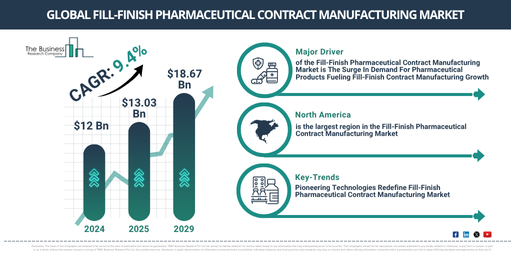
    The market size for pharmaceutical contract manufacturing with a focus on fill-finish has been on a robust growth trajectory in the past years. The market will expand from a valuation of $12 billion in 2024 to reach $13.03 billion in 2025, reflecting a compound annual growth rate (CAGR) of 8.6%. This significant growth during the historic era can be linked to factors such as the bolstering demand for biologics, the trend towards outsourcing, globalization of medicine supply chains, the focus on quality assurance and the implementation of cost containment strategies.

    The market for fill-finish pharmaceutical contract manufacturing is predicted to witness significant expansion in the coming years, reaching “$18.67 billion in 2029 with a CAGR of 9.4%.” The potential growth within the projected time can be ascribed to emergent market prospects, preparedness for pandemics, digital evolution, green and sustainable initiatives, and the extension of personalized medication. Key trends anticipated within this timeframe encompass adaptable manufacturing solutions, alliances and cooperation, strict adherence to regulatory measures and serialization, focus on sustainable and green strategies, along with the embracement of automation and robotic integration.

    Download The Free Sample Report Here:

    https://www.thebusinessresearchcompany.com/sample.aspx?id=12056&type=smp

    What Elements Are Contributing To Growth In The Fill-Finish Pharmaceutical Contract Manufacturing Market?

    The fill-finish pharmaceutical contract manufacturing market’s growth is expected to be fueled by the rising need for pharmaceutical products. These products, including medications and drugs, are designed to diagnose, prevent, treat, or cure diseases or medical conditions in humans or animals. A vital service is fill-finish pharmaceutical contract manufacturing, ensuring accuracy, regulatory adherence, and efficient manufacturing processes while sustaining product quality for the aseptic filling of injectables, biologics, and other pharmaceutical products. For example, the European pharmaceutical drug industry saw a substantial surge from $352.48 billion to $369.95 billion in production between 2021 and 2022, as stated by the European Federation of Pharmaceutical Industries and Associations (EFPIA), a Belgium-based industry organization that represents pharmaceutical companies, in June 2023. Hence, the rising need for pharmaceutical products is pushing the expansion of the fill-finish pharmaceutical contract manufacturing market.

    The fill-finish pharmaceutical contract manufacturing market covered in this report is segmented –

    1) By Product Type: Prefilled Syringes, Vials, Cartridges, Other Products

    2) By Molecule Type: Large Molecules, Small Molecules

    3) By End-User: Biopharmaceutical Companies, Pharmaceutical Companies

    Subsegments:

    1) By Prefilled Syringes: Glass Prefilled Syringes, Plastic Prefilled Syringes

    2) By Vials: Glass Vials, Plastic Vials

    3) By Cartridges: Glass Cartridges, Plastic Cartridges

    4) By Other Products: Ampoules, Blisters, Pouches

    What Long-Term Trends Are Likely To Affect The Fill-Finish Pharmaceutical Contract Manufacturing Market?

    Technological progress is a significant trend becoming increasingly prevalent in the fill-finish pharmaceutical contract manufacturing market. Firms in this niche sector employ pioneering technologies to improve their product’s quality and adhere to strict regulatory standards to preserve their market standing. Steriline s.r.l., an Italian firm specializing in aseptic solutions, exemplifies this trend; in January 2023, they introduced robot technology especially suited to aseptic filling of small batches. This improvement provides heightened safety and flexibility in the manufacture of both toxic and non-toxic pharmaceutical products. The benefits of these state-of-the-art robotic systems include a heightened reduction in errors made by humans, an enhancement of the overall quality of the product, and the increase of operational efficiency.

    Who Are The Key Contributors To Growth In The Fill-Finish Pharmaceutical Contract Manufacturing Market?

    Major companies operating in the fill-finish pharmaceutical contract manufacturing market include AbbVie Inc., Novartis AG, Thermo Fisher Scientific Inc., Fresenius Kabi, Abbott Laboratories, Eurofins Scientific SE, Lonza Group Ltd., Catalent Inc., Sun Pharmaceutical Industries Limited, West Pharmaceutical Services Inc., Patheon, Samsung Biologics Co.Ltd., WuXi Biologics, Piramal Pharma Solutions, Pfizer CentreOne, Recipharm AB, Emergent BioSolutions Inc., Boehringer Ingelheim BioXcellence, Corden Pharma GmbH, Aenova Group, Baxter BioPharma Solutions, FUJIFILM Diosynth Biotechnologies, AGC Biologics, Rentschler Biopharma SE, Recro Pharma Inc., Cobra Biologics Limited, Grand River Aseptic Manufacturing (GRAM), MabPlex International Ltd., Cerbios-Pharma SA, Symbiosis Pharmaceutical Services Limited

    https://www.thebusinessresearchcompany.com/report/fill-finish-pharmaceutical-contract-manufacturing-global-market-report

    Which Region Is Projected To Lead The Fill-Finish Pharmaceutical Contract Manufacturing Market By 2025?

    North America was the largest region in the fill-finish pharmaceutical contract manufacturing market in 2024. Asia-Pacific is expected to be the fastest-growing region in the forecast period. The regions covered in the fill-finish pharmaceutical contract manufacturing market report are Asia-Pacific, Western Europe, Eastern Europe, North America, South America, Middle East, Africa.

    Request For A Customized Report:

    https://www.thebusinessresearchcompany.com/customise?id=12056&type=smp

    About The Business Research Company:

    With over 15000+ reports from 27 industries covering 60+ geographies, The Business Research Company has built a reputation for offering comprehensive, data-rich research and insights. Armed with 1,500,000 datasets, the optimistic contribution of in-depth secondary research, and unique insights from industry leaders, you can get the information you need to stay ahead in the game.

    Get in touch with us:

    The Business Research Company: https://www.thebusinessresearchcompany.com/

    Americas +1 310-496-7795

    Asia +44 7882 955267 & +91 8897263534

    Europe +44 7882 955267

    Email us at info@tbrc.info

    Follow us on:

    LinkedIn: https://in.linkedin.com/company/the-business-research-company

    YouTube: https://www.youtube.com/channel/UC24_fI0rV8cR5DxlCpgmyFQ

    Global Market Model: https://www.thebusinessresearchcompany.com/global-market-model
  • Latest Market Developments in Fibrate Drugs Industry: Forecast 2025–2029

    Latest Market Developments in Fibrate Drugs Industry: Forecast 2025–2029

    Claim your 30% discount on Global Market Reports with code ONLINE30. Limited time only.

    Claim your 30% discount on Global Market Reports with code ONLINE30. Limited time only.

    How Much Is the Global Fibrate Drugs Market Valued at Present and by 2029?

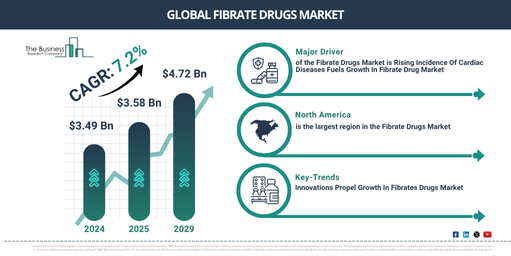
    The market size for fibrate drugs has been experiencing constant growth over the past few years. The market is projected to increase from $3.49 billion in 2024 to $3.58 billion in 2025, with a compound annual growth rate (CAGR) of 2.8%. The historical growth has been influenced by factors such as focus on lipid and cholesterol management, extensive clinical research and trials, reduction in cardiovascular risks, and the use of combination therapies.

    The market size of fibrates drugs is projected to witness robust growth in the coming years, swelling to “$4.72 billion in 2029 with a compound annual growth rate (CAGR) of 7.2%.” This projected growth during the forecast period can be credited to ongoing updates in treatment protocols, an emphasis on residual risk, advancements in precision medicine, and innovation in drug distribution methods. Key future trends include the exploration of alternative drug formulations, the integration of telemedicine, the use of fibrates in high-risk groups, efforts to target triglyceride levels, and an enhanced focus on increasing HDL levels.

    Download The Free Sample Report Here:

    https://www.thebusinessresearchcompany.com/sample.aspx?id=11932&type=smp

    #What Drivers Are Influencing Growth In The Fibrate Drugs Market?

    The escalating occurrences of cardiac diseases are anticipated to fuel the progression of the fibrate drug market. Cardiac diseases comprise a variety of conditions that impact the heart and blood vessels, including congenital heart disease, coronary heart disease, and more. Fibrates act as a preventative measure against further heart attacks and strokes in individuals who already have a circulatory system condition, which contributes to the advancement of the fibrate drug market. For example, the Singapore Heart Foundation (SHF) reported that ischemic heart diseases caused 5,302 deaths in May 2024, a minor increase from 5,290 deaths in 2022. Moreover, the overall death rate due to hypertensive diseases rose to 3.7% in 2022 from 3.4% the previous year. Consequently, the rising prevalence of cardiac diseases is propelling the fibrate drug market’s expansion.

    The fibrate drugs market covered in this report is segmented –

    1) By Drug Type: Clofibrate, Fenofibrates, Fenofibric Acids, Gemfibrozil, Other Drugs

    2) By Indication: Hypercholesterolemia, Heart Attacks, Other Indications

    3) By Distribution Channel: Hospital Pharmacy, Online Pharmacy, Retail Pharmacy

    4) By End User: Hospitals, Homecare, Specialty Clinics, Other End Users

    Subsegments:

    1) By Clofibrate: Standard Clofibrate, Combination Products

    2) By Fenofibrates: Fenofibrate Capsules, Fenofibrate Tablets, Combination Products

    3) By Fenofibric Acids: Fenofibric Acid Capsules, Combination Products

    4) By Gemfibrozil: Standard Gemfibrozil, Combination Products

    5) By Other Drugs: Other Fibrate Formulations, Emerging Fibrate Drugs

    What Future Market Trends Are Projected For The Fibrate Drugs Industry?

    Major players in the fibrate drugs market are concentrating their efforts on the advancement of new solutions like fixed-dose combinations to retain their market dominance. A fixed-dose combination is defined as a single dose formulation containing more than one active ingredient, which simplifies the administration process and potentially enhances the therapeutic results. For example, in May 2023, Intercept Pharmaceuticals Inc., a US-based biopharmaceutical company, earned the U.S. Food and Drug Administration (FDA) approval for an orphan drug designation for the fixed-dose combination of obeticholic acid (OCA) and bezafibrate. The combination, which is a peroxisome proliferator-activated receptor (PPAR) agonist, is under investigation for the potential treatment of individuals with primary biliary cholangitis (PBC). OCA, a farnesoid X receptor (FXR) agonist, is currently being marketed as Ocaliva by Intercept in the United States for PBC treatment, whereas bezafibrate, a pan-PPAR agonist, does not have approval in the United States for any indication at present.

    Which Companies Play A Key Role In The Development Of The Fibrate Drugs Market?

    Major companies operating in the fibrate drugs market include Pfizer Inc., F. Hoffmann-La Roche AG, Merck & Co Inc., AbbVie Inc., Bayer AG, Novartis AG, Sanofi SA, Kowa Company Ltd., Bristol-Myers Squibb Co, Abbott Laboratories, AstraZeneca plc, GlaxoSmithKline Plc, Takeda Pharmaceutical Company, Boehringer Ingelheim International GmbH, Teva Pharmaceutical Industries Ltd., Mylan N.V., Daiichi Sankyo Co Ltd., Macleods Pharmaceuticals Ltd., Sun Pharmaceutical Industries Ltd., Dr. Reddy’s Laboratories Ltd., Aurobindo Pharma Limited, Cipla Inc., Zydus Lifesciences Ltd, Lupin Limited, Glenmark Pharmaceuticals, Torrent Pharmaceuticals Ltd., Natco Pharma, Hetero Drugs Ltd

    https://www.thebusinessresearchcompany.com/report/fibrate-drugs-global-market-report

    What Are The Key Regional Developments Shaping The Fibrate Drugs Market?

    North America was the largest region in the fibrate drugs market in 2024. The regions covered in the fibrate drugs market report are Asia-Pacific, Western Europe, Eastern Europe, North America, South America, Middle East, Africa.

    Request For A Customized Report:

    https://www.thebusinessresearchcompany.com/customise?id=11932&type=smp

    About The Business Research Company:

    With over 15000+ reports from 27 industries covering 60+ geographies, The Business Research Company has built a reputation for offering comprehensive, data-rich research and insights. Armed with 1,500,000 datasets, the optimistic contribution of in-depth secondary research, and unique insights from industry leaders, you can get the information you need to stay ahead in the game.

    Get in touch with us:

    The Business Research Company: https://www.thebusinessresearchcompany.com/

    Americas +1 310-496-7795

    Asia +44 7882 955267 & +91 8897263534

    Europe +44 7882 955267

    Email us at info@tbrc.info

    Follow us on:

    LinkedIn: https://in.linkedin.com/company/the-business-research-company

    YouTube: https://www.youtube.com/channel/UC24_fI0rV8cR5DxlCpgmyFQ

    Global Market Model: https://www.thebusinessresearchcompany.com/global-market-model
  • Emerging Trends and Growth Drivers in the Extended-Release Drugs Market Through 2029

    Emerging Trends and Growth Drivers in the Extended-Release Drugs Market Through 2029

    Claim your 30% discount on Global Market Reports with code ONLINE30. Limited time only.

    Claim your 30% discount on Global Market Reports with code ONLINE30. Limited time only.

    What Is the Current and Projected Market Size of the Extended-Release Drugs Industry?

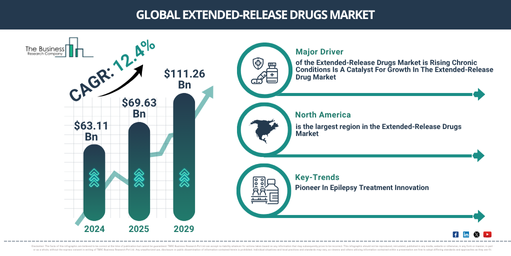
    The size of the market for extended-release drugs has seen a fast-paced growth in the recent past. A surge from $63.11 billion in 2024 to $69.63 billion in 2025, registering a compound annual growth rate (CAGR) of 10.3% is projected. The historical growth is linked to factors such as better patient compliance, increased prevalence of chronic diseases, enhanced efficacy, patent protection strategies, and the adoption of biodegradable implants.

    Predictions indicate a swift expansion in the extended-release drugs market in the forthcoming years. An anticipated increase to “$111.26 billion by 2029 with a compound annual growth rate (CAGR) of 12.4%” is expected. The escalation during the forecast period is likely due to factors such as the adoption of personalized medicine strategies, patient-focused drug creation, an increase in lifestyle diseases, drug repurposing, and worldwide access to extended-release treatments. Key trends over the forecast period are predicted to be pharmaceutical innovation, progress in drug delivery methods, advancements in nanotechnology, the application of 3D printing in drug formulations, usage of artificial intelligence, and environmental sustainability.

    Download The Free Sample Report Here:

    https://www.thebusinessresearchcompany.com/sample.aspx?id=12675&type=smp

    #Which Factors Are Currently Driving The Growth Of The Extended-Release Drugs Market?

    The anticipated growth of the extended-release drug market is primarily due to the rising prevalence of chronic diseases. Chronic diseases are typically prolonged conditions that require continuous medical attention and may limit daily activities, such as heart disease, cancer, obesity, and diabetes. Extended-release drug delivery systems are intended to keep a consistent level of medication in the body over a more extended period, ensuring a steady therapeutic effect, unlike immediate-release medicines which can cause fluctuations in drug levels. For example, the US-based National Library of Medicine, National Center for Biotechnology Information (NCBI), predicted in January 2023 that by 2050, the number of people aged 50 and above suffering from at least one chronic disease will increase by 99.5%, reaching 142.66 million. Consequently, the mounting cases of chronic ailments are propelling the growth of the extended-release drug market.

    The extended-release drugs market covered in this report is segmented –

    1) By Type: Sustained Release Drug, Controlled Release Drug

    2) By Mode: Over-The-Counter, Prescription

    3) By Distribution Channel: Hospital Pharmacies, Retail Pharmacies, Mail Order Pharmacies, Drug Stores

    Subsegments:

    1) By Sustained Release Drug: Matrix Systems, Coating Systems

    2) By Controlled Release Drug: Osmotic Systems, Microencapsulation Systems, Targeted Delivery Systems

    Which Trends Are Redefining The Future Landscape Of The Extended-Release Drugs Industry?

    The increasing trend in the extended-release drug market is product innovation. Pioneering products are being cultivated by top companies in order to maintain their market position. As a case in point, Zydus Pharmaceuticals (USA) Inc., which is a generic pharmaceutical manufacturer based in the United States, introduced Topiramate extended-release capsules for the treatment of epilepsy in July 2022. The US Food and Drug Administration (USFDA) had previously granted approval to the company to take Topiramate extended-release capsules, USP 25 mg, 50 mg, and 100 mg to market. This marks the company as the first in the nation to receive final approval and launch Topiramate extended-release capsules. Such tablets have dual approval for those dealing with partial onset or primary generalized tonic-clinic seizures.

    Who Are The Main Participants Shaping The Extended-Release Drugs Market Landscape?

    Major companies operating in the extended-release drugs market include Pfizer Inc., AbbVie Inc., Novartis AG, Sanofi SA, GlaxoSmithKline PLC, AstraZeneca Plc, Gilead Sciences Inc., Boehringer Ingelheim International GmbH, Viatris Inc., Teva Pharmaceuticals Inc., Eastman Chemical Company, Catalent Pharma Solutions Inc., Sun Pharmaceutical Industries Limited, Purdue Pharma LP, Amneal Pharmaceuticals Inc., Endo Pharmaceuticals Inc., Mallinckrodt LLC, Allergan plc, Hisamitsu Pharmaceutical Co. Inc., Janssen Pharmaceuticals Inc., Noven Pharmaceuticals Inc., Mayne Pharma Group Ltd., Neos Therapeutics Inc., Ardena Holding NV, UPM Pharmaceuticals Inc., Oakwood Laboratories LLC, Roxane Laboratories Inc., Lavipharm Laboratories Inc., Watson Pharmaceuticals Inc.

    https://www.thebusinessresearchcompany.com/report/extended-release-drugs-global-market-report

    Which Region Currently Holds The Largest Share In The Extended-Release Drugs Market?

    North America was the largest region in the extended-release drugs market in 2024. Asia-Pacific is expected to be the fastest-growing region in the forecast period. The regions covered in the extended-release drugs market report are Asia-Pacific, Western Europe, Eastern Europe, North America, South America, Middle East, Africa

    Request For A Customized Report:

    https://www.thebusinessresearchcompany.com/customise?id=12675&type=smp

    About The Business Research Company:

    With over 15000+ reports from 27 industries covering 60+ geographies, The Business Research Company has built a reputation for offering comprehensive, data-rich research and insights. Armed with 1,500,000 datasets, the optimistic contribution of in-depth secondary research, and unique insights from industry leaders, you can get the information you need to stay ahead in the game.

    Get in touch with us:

    The Business Research Company: https://www.thebusinessresearchcompany.com/

    Americas +1 310-496-7795

    Asia +44 7882 955267 & +91 8897263534

    Europe +44 7882 955267

    Email us at info@tbrc.info

    Follow us on:

    LinkedIn: https://in.linkedin.com/company/the-business-research-company

    YouTube: https://www.youtube.com/channel/UC24_fI0rV8cR5DxlCpgmyFQ

    Global Market Model: https://www.thebusinessresearchcompany.com/global-market-model
  • CAGR of 9.0% Projected for Enzyme Replacement Therapy Market From 2025 to 2029

    CAGR of 9.0% Projected for Enzyme Replacement Therapy Market From 2025 to 2029

    Claim your 30% discount on Global Market Reports with code ONLINE30. Limited time only.

    Claim your 30% discount on Global Market Reports with code ONLINE30. Limited time only.

    How Will the Enzyme Replacement Therapy Market Evolve in Terms of Growth and Size by 2029?

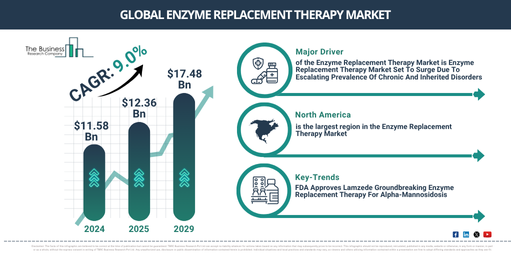
    The market size for enzyme replacement therapy has witnessed significant expansion in the past few years. The market valuation will elevate from $11.58 billion in 2024 to $12.36 billion in 2025, manifesting a compound annual growth rate (CAGR) of 6.7%. The progression during the historical period is linked to the advancements in early-stage therapeutic discoveries, groundbreaking treatment approvals, enhanced disease comprehension, clinical achievements, as well as supportive regulatory policies and incentives.

    Expectations are high for the enzyme replacement therapy market to experience significant expansion in the coming years. The market size is projected to reach “$17.48 billion by 2029”, increasing at a compound annual growth rate (CAGR) of “9.0%”. This anticipated growth during the forecast period can be ascribed to factors such as improved patient accessibility to healthcare, the development of customized therapies and precision medicine, alterations in the regulatory environment, and heightened awareness among patient populations. Key trends projected to be prevalent in the future include the integration of digital health, a concentration on patient-focused solutions, the rise of biomarker research, and the approach towards precision medicine.

    Download The Free Sample Report Here:

    https://www.thebusinessresearchcompany.com/sample.aspx?id=10512&type=smp

    What factors are expected to fuel Enzyme Replacement Therapy market growth in the coming years?

    The escalating incidence of uncommon, long-term and genetically transmitted diseases is projected to stimulate the expansion of the enzyme replacement therapy market in the future. A chronic disease is a type of illness that persists for more than three months and may progressively worsen. Older individuals are more often affected by these conditions which can typically be managed but not eliminated. For example, according to the American Lung Association, a non-profit organization based in the US, it was reported in July 2024 that in 2022, 44.2 million Americans, representing 13.5% of the population, had been diagnosed with asthma by a medical practitioner, a rise from 12.9% in 2021. Thus, the increasing incidence of uncommon, chronic and genetically transmitted diseases are key in promoting the growth of the enzyme replacement therapy market.

    The enzyme replacement therapy market covered in this report is segmented –

    1) By Enzyme Type: Agalsidase Alfa, Agalsidase Beta, Galsulfase, Other Enzyme Types

    2) By Route Of Administration: Oral, Parenteral

    3) By Application: Gaucher Disease, Pompe Disease, Fabry Disease, Other Applications

    4) By End-Users: Hospitals, Infusion Centers, Other End-Users

    Subsegments:

    1) By Agalsidase Alfa: Fabry Disease Treatment

    2) By Agalsidase Beta: Fabry Disease Treatment

    3) By Galsulfase: Mucopolysaccharidosis VI (MPS VI) Treatment

    4) By Other Enzyme Types: Alglucosidase Alfa, Idursulfase, Velaglucerase Alfa

    What Notable Trends Are Shaping The Direction Of The Enzyme Replacement Therapy Market?

    The surge in product approvals has become a significant trend in the enzyme replacement therapy market. Many enzyme replacement therapies developed by major industry players are receiving endorsements. For instance, Lamzede (velmanase alfa) was sanctioned by the Food and Drug Administration, an agency under the United States’ Department of Health, in February 2023. This particular therapy is the inaugural one to be approved in the U.S. for treating non-central neurological indications of alpha-mannosidosis, a rare genetic condition defined by the body’s lack of the alpha-mannosidase enzyme. Lamzede operates in a way similar to the alpha-mannosidase enzyme in patients’ bodies, thereby normalizing cellular functions. It is delivered to patients as a 10mg injection once weekly.

    What Are The Most Active Companies In The Enzyme Replacement Therapy Market Today?

    Major companies operating in the enzyme replacement therapy market include Biomarin Pharmaceutical Inc., Leadiant Biosciences Inc., Pfizer Inc., Sanofi S.A., AbbVie Inc., Johnson & Johnson Services Inc., Alexion Pharmaceuticals Inc., Recordati Rare Diseases Inc., Sangamo Therapeutics Inc., JCR Pharmaceuticals Co. Ltd., Horizon Pharma Public Limited Company, Protalix Biotherapeutics Ltd., Amicus Therapeutics Inc., AstraZeneca plc, Novartis AG, Roche Holding AG, GlaxoSmithKline plc, Merck & Co. Inc., Eli Lilly and Company, Bristol-Myers Squibb Company, Retrophin Inc., Abeona Therapeutics Inc., Orchard Therapeutics plc, Ultragenyx Pharmaceutical Inc.

    https://www.thebusinessresearchcompany.com/report/enzyme-replacement-therapy-global-market-report

    Which Regional Markets Are Attracting The Most Investment In Enzyme Replacement Therapy?

    North America was the largest region in the enzyme replacement therapy market in 2024.Asia-Pacific is expected to be the fastest-growing region in the global enzyme replacement therapy market report during the forecast period. The regions covered in the enzyme replacement therapy market report are Asia-Pacific, Western Europe, Eastern Europe, North America, South America, Middle East, Africa

    Request For A Customized Report:

    https://www.thebusinessresearchcompany.com/customise?id=10512&type=smp

    About The Business Research Company:

    With over 15000+ reports from 27 industries covering 60+ geographies, The Business Research Company has built a reputation for offering comprehensive, data-rich research and insights. Armed with 1,500,000 datasets, the optimistic contribution of in-depth secondary research, and unique insights from industry leaders, you can get the information you need to stay ahead in the game.

    Get in touch with us:

    The Business Research Company: https://www.thebusinessresearchcompany.com/

    Americas +1 310-496-7795

    Asia +44 7882 955267 & +91 8897263534

    Europe +44 7882 955267

    Email us at info@tbrc.info

    Follow us on:

    LinkedIn: https://in.linkedin.com/company/the-business-research-company

    YouTube: https://www.youtube.com/channel/UC24_fI0rV8cR5DxlCpgmyFQ

    Global Market Model: https://www.thebusinessresearchcompany.com/global-market-model
  • Industry Forecast: Endometrial Cancer Treatment Market to Generate $40.45 Billion Revenue by 2029

    Industry Forecast: Endometrial Cancer Treatment Market to Generate $40.45 Billion Revenue by 2029

    Claim your 30% discount on Global Market Reports with code ONLINE30. Limited time only.

    Claim your 30% discount on Global Market Reports with code ONLINE30. Limited time only.

    What CAGR Is Anticipated for the Endometrial Cancer Treatment Market Through 2029?

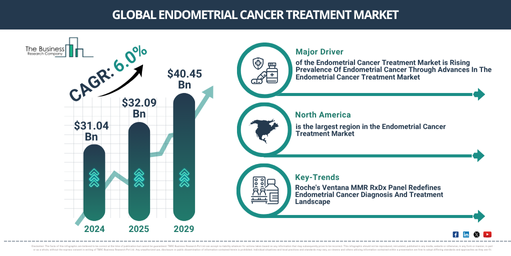
    The market for endometrial cancer treatment has seen consistent growth in the past few years. Predictions state that its value will escalate from $31.04 billion in 2024 to $32.09 billion in 2025, with a compound annual growth rate (CAGR) of 3.4%. Factors such as demographic shifts, advances in diagnostic devices, improved treatment guidelines and procedures, public consciousness and screening initiatives, and the progression of the healthcare infrastructure are responsible for its historical growth.

    In the coming years, the size of the endometrial cancer treatment market is predicted to increase substantially. It’s expected to reach “$40.45 billion in 2029 with a compound annual growth rate (CAGR) of 6.0%. The expected growth can be attributed to various factors such as the increase in cases of endometrial cancer, individualized treatment plans, advancements in immunotherapy, expansion of targeted therapies, and support from government initiatives and funding. During the forecast period, major trends will include the concoction of hormone therapies, incorporation of artificial intelligence (AI) in the planning of treatments, research on new chemotherapeutic agents, advancement in supportive care, and clinical studies on new treatment methods.

    Download The Free Sample Report Here:

    https://www.thebusinessresearchcompany.com/sample.aspx?id=10735&type=smp

    What Market Forces Are Driving The Endometrial Cancer Treatment Sector In 2025 And Beyond?

    The escalating instance of endometrial cancer is predicted to catalyze the expansion of the market for its treatment. The term ‘prevalence’ in this context refers to the surge in endometrial cancer cases within a specified demographic or timeframe. This change has arisen due to modifications in risk factors, enhanced recognition and diagnostic techniques, heightened awareness, and a maturing populace. Therapies for endometrial cancer aid in early identification, offer targeted remedies, inhibit relapse, and facilitate clinical experiments and scholarly pursuits to better treatment modalities. As the incidences of endometrial cancer become more frequent and as medicinal innovations broaden, the market for endometrial cancer treatment is projected to grow. For instance, Cancer.Net, a site that offers information about cancer approved by oncologists, predicted that in 2023, approximately 66,200 individuals in the United States would be diagnosed with uterine or endometrial cancer. Hence, the escalating frequency of endometrial cancer is fuelling the expansion of the market for its treatment.

    The endometrial cancer treatment market covered in this report is segmented –

    1) By Type: Adenocarcinoma, Uterine Carcinosarcoma, Squamous Cell Carcinoma, Small Cell Carcinoma, Transitional Carcinoma, Serous Carcinoma, Other Types

    2) By Diagnosis Method: Biopsy, Pelvic Ultrasound, Hysteroscopy, CT Scan, Other Diagnosis Methods

    3) By Route Of Administration: Oral, Intravenous

    4) By Distribution Channel: Hospital Pharmacies, Retail Pharmacies, Online Pharmacies

    Subsegments:

    1) By Adenocarcinoma: Endometrioid Adenocarcinoma, Non-Endometrioid Adenocarcinoma

    2) By Uterine Carcinosarcoma: High-Grade Uterine Carcinosarcoma, Low-Grade Uterine Carcinosarcoma

    3) By Squamous Cell Carcinoma: Keratinizing Squamous Cell Carcinoma, Non-Keratinizing Squamous Cell Carcinoma

    4) By Small Cell Carcinoma: Small Cell Neuroendocrine Carcinoma

    5) By Transitional Carcinoma: Transitional Cell Carcinoma Of The Uterus

    6) By Serous Carcinoma: High-Grade Serous Carcinoma, Low-Grade Serous Carcinoma

    7) By Other Types: Mixed Cell Type Carcinomas, Undifferentiated Carcinoma, Other Rare Histological Types

    What Upcoming Trends Are Expected To Impact The Endometrial Cancer Treatment Market Globally?

    Advances in technology for diagnosing and treating endometrial cancer stand as a significant trend in the endometrial cancer treatment market. Businesses active in this market have been introducing more sophisticated solutions for diagnosing and treating endometrial cancer in order to maintain their market standing. In April 2022, for instance, Roche Holding AG received FDA clearance for its VENTANA MMR RxDx Panel, a diagnostic kit for endometrial cancer, designed to identify patients who are fit for anti-PD1 immunotherapy using JEMPERLI (dostarlimab-gxly) monotherapy. This test presents a potent resource for healthcare professionals in diagnosing patients and offering new treatment alternatives to women with MMR-deficient endometrial cancer who are undergoing or have completed chemotherapy.

    Which Firms Are Considered Leaders In The Endometrial Cancer Treatment Market Space?

    Major companies operating in the endometrial cancer treatment market include Abbott Laboratories, Novartis AG, GlaxoSmithKline plc, F. Hoffmann-La Roche AG, Merck & Co. Inc., Sanofi-Aventis, Becton Dickinson And Company, Teva Pharmaceutical Industries Limited, AstraZeneca plc, Pfizer Inc., Bristol-Myers Squibb Company, Eisai Co. Ltd., AbbVie Inc., Roche Holding AG, Janssen Biotech Inc., Takeda Pharmaceutical Company Limited, Amgen Inc., Bayer AG, Eli Lilly and Company, Varian Medical Systems Inc., Seattle Genetics Inc., Spectrum Pharmaceuticals Inc., Stemline Therapeutics Inc., Syros Pharmaceuticals Inc., Novocure Ltd.

    https://www.thebusinessresearchcompany.com/report/endometrial-cancer-treatment-global-market-report

    What Role Do Regional Policies And Investments Play In Endometrial Cancer Treatment Market Expansion?

    North America was the largest region in the endometrial cancer treatment market in 2024. Asia-Pacific is expected to be the fastest-growing region in the global endometrial cancer treatment market report during the forecast period. The regions covered in the endometrial cancer treatment market report are Asia-Pacific, Western Europe, Eastern Europe, North America, South America, Middle East, Africa

    Request For A Customized Report:

    https://www.thebusinessresearchcompany.com/customise?id=10735&type=smp

    About The Business Research Company:

    With over 15000+ reports from 27 industries covering 60+ geographies, The Business Research Company has built a reputation for offering comprehensive, data-rich research and insights. Armed with 1,500,000 datasets, the optimistic contribution of in-depth secondary research, and unique insights from industry leaders, you can get the information you need to stay ahead in the game.

    Get in touch with us:

    The Business Research Company: https://www.thebusinessresearchcompany.com/

    Americas +1 310-496-7795

    Asia +44 7882 955267 & +91 8897263534

    Europe +44 7882 955267

    Email us at info@tbrc.info

    Follow us on:

    LinkedIn: https://in.linkedin.com/company/the-business-research-company

    YouTube: https://www.youtube.com/channel/UC24_fI0rV8cR5DxlCpgmyFQ

    Global Market Model: https://www.thebusinessresearchcompany.com/global-market-model
  • Emphysema Treatment Market Revenue Outlook: Strategic Insights and Forecast to 2029

    Emphysema Treatment Market Revenue Outlook: Strategic Insights and Forecast to 2029

    Claim your 30% discount on Global Market Reports with code ONLINE30. Limited time only.

    Claim your 30% discount on Global Market Reports with code ONLINE30. Limited time only.

    What Are the Latest Market Insights for the Emphysema Treatment Industry?

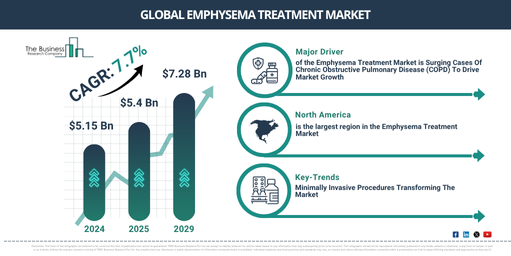
    The size of the market for emphysema treatment has been progressively expanding in the past few years. It’s projected that this growth will progress from $5.15 billion in 2024 to $5.4 billion in 2025, representing a compound annual growth rate (CAGR) of 5.0%. The expansion during the historic period can be accredited to factors like the impact of the smoking epidemic, progress in medicinal treatments, the implementation of pulmonary rehabilitation programs, enhancement in diagnostic tools, as well as increased awareness and education.

    A significant increase is expected to be noted in the size of the emphysema treatment market in the coming years. It is projected to expand to “$7.28 billion in 2029 at a compound annual growth rate (CAGR) of 7.7%. Several factors, such as the aging population, personalized treatment methods, improved access to treatments, emphasis on managing symptoms, and cooperative healthcare systems, contribute to this predicted growth. Key emerging patterns within the forecast period encompass the development of gene therapy, patient knowledge and empowerment, the introduction of artificial intelligence (AI), enhanced treatment accessibility, and development of long-acting drugs.

    Download The Free Sample Report Here:

    https://www.thebusinessresearchcompany.com/sample.aspx?id=10807&type=smp

    What Forces Are Driving The Growth Of The Emphysema Treatment Industry?

    The growing number of chronic obstructive pulmonary disease (COPD) cases is anticipated to boost the emphysema treatment market’s expansion in the future. COPD is a collection of ailments that impede airflow and cause breathing difficulties, which includes conditions like emphysema and chronic bronchitis. Treatments for emphysema are crucial in slowing down the progression of COPD because they concentrate on symptom management, lung function restoration, and disease advancement delay. For example, the Australian Institute of Health and Welfare (AIHW) revealed in June 2024 that around 638,000 individuals in Australia, or 2.5% of the country’s population, were living with COPD in 2022. By 2023, COPD had accounted for 3.6% of the total disease burden, making up 50% of the respiratory conditions-related burden. Further, in 2022, COPD was the root cause of 7,691 deaths, translating to 29.6 deaths per 100,000 people and comprising 4.0% of all the country’s deaths. Thus, the increasing prevalence of COPD cases serves as a driving force for the expansion of the emphysema treatment market.

    The emphysema treatment market covered in this report is segmented –

    1) By Treatment: Smoking Cessation, Bronchodilators, Steroids, Leukotriene Modifiers, Supplemental Oxygen, Antibiotics, Gene Therapy, Surgery Transplant, Other Treatments

    2) By Distribution Channel: Online Providers, Drug Stores and Retail Pharmacies, Hospital Pharmacies

    3) By End-User: Clinics, Surgical Centre, Other End-Users

    Subsegments:

    1) By Smoking Cessation: Nicotine Replacement Therapy (NRT), Prescription Medications, Behavioral Therapy Programs

    2) By Bronchodilators: Short-Acting Beta-Agonists (SABAs), Long-Acting Beta-Agonists (LABAs), Anticholinergics

    3) By Steroids: Inhaled Corticosteroids (ICS), Oral Corticosteroids, Combination Inhalers

    4) By Leukotriene Modifiers: Montelukast, Zafirlukast

    5) By Supplemental Oxygen: Portable Oxygen Concentrators, Continuous Flow Oxygen Systems, Pulse Dose Oxygen Systems

    6) By Antibiotics: Macrolides, Fluoroquinolones, Tetracyclines

    7) By Gene Therapy: Gene Replacement Therapy, Antisense Oligonucleotides

    8) By Surgery Transplant: Lung Volume Reduction Surgery (LVRS), Lung Transplantation

    9) By Other Treatments: Pulmonary Rehabilitation Programs, Nutritional Support, Palliative Care

    How Are Key Trends Driving Expansion In The Emphysema Treatment Industry?

    Major businesses in the emphysema market are innovating minimally invasive techniques for patients suffering from emphysema as a way to gain a competitive advantage in the market. Minimally invasive procedures encompass medical actions or surgical operations that constrain the disruption to the body’s regular structures. For example, Adena Health System, a healthcare company from the United States, introduced the Zephyr Valve surgery in January 2022. This progressive procedure, designed as an alternative to the traditional lung volume reduction surgery, addresses the common issue of lung hyperinflation found in emphysema and COPD patients. This unique strategy involves inserting tiny Zephyr Valves into the air passages of the lungs using a bronchoscope. These valves play a critical role in expelling confined air, hindering future buildup, and facilitating the expansion of healthier areas of the lungs, thereby enhancing breathing.

    Who Are The Primary Players Operating Across The Global Emphysema Treatment Market?

    Major companies operating in the emphysema treatment market include AstraZeneca PLC, Teva Pharmaceutical Industries Ltd., Novartis AG, GlaxoSmithKline PLC, Hikma Pharmaceuticals PLC, Boehringer Ingelheim GmbH, Mylan N.V., Pfizer Inc., Orion Oyj, Verona Pharma PLC, Pulmonx Corporation, Emphasys Medical Inc., Halozyme Therapeutics Inc., Mariposa Health Limited, Uptake Technologies Inc., Respinova Ltd, Gala Therapeutics Inc., Pulmatrix Inc., Broncus Medical Inc., Holaira Inc., PneumRx Inc., Spiration Inc., Aeris Therapeutics Inc., CSA Medical Inc., Olympus Corporation

    https://www.thebusinessresearchcompany.com/report/emphysema-treatment-global-market-report

    Which Region Offers The Most Growth Potential For The Emphysema Treatment Market Through 2029?

    North America was the largest region in the emphysema treatment market in 2024. The regions covered in the emphysema treatment market report are Asia-Pacific, Western Europe, Eastern Europe, North America, South America, Middle East, Africa

    Request For A Customized Report:

    https://www.thebusinessresearchcompany.com/customise?id=10807&type=smp

    About The Business Research Company:

    With over 15000+ reports from 27 industries covering 60+ geographies, The Business Research Company has built a reputation for offering comprehensive, data-rich research and insights. Armed with 1,500,000 datasets, the optimistic contribution of in-depth secondary research, and unique insights from industry leaders, you can get the information you need to stay ahead in the game.

    Get in touch with us:

    The Business Research Company: https://www.thebusinessresearchcompany.com/

    Americas +1 310-496-7795

    Asia +44 7882 955267 & +91 8897263534

    Europe +44 7882 955267

    Email us at info@tbrc.info

    Follow us on:

    LinkedIn: https://in.linkedin.com/company/the-business-research-company

    YouTube: https://www.youtube.com/channel/UC24_fI0rV8cR5DxlCpgmyFQ

    Global Market Model: https://www.thebusinessresearchcompany.com/global-market-model