Blog

  • Global Immunochemistry Diagnostic Devices And Equipment Market Projected to Reach $5.89 Billion by 2029 at a CAGR of 12.6%

    Global Immunochemistry Diagnostic Devices And Equipment Market Projected to Reach $5.89 Billion by 2029 at a CAGR of 12.6%

    Claim your 30% discount on Global Market Reports with code ONLINE30. Limited time only.

    What Are the Projected Market Size and Growth Rates for the Immunochemistry Diagnostic Devices And Equipment Market From 2025 To 2029?

    The market size for immunochemistry diagnostic devices and equipment has seen a significant increase lately. It is expected to expand from $3.27 billion in 2024 to $3.67 billion in 2025, demonstrating a compound annual growth rate (CAGR) of 12.2%. The expansion during the historical phase can be credited to disease detection, advancements in healthcare, on-the-spot testing, and therapeutic monitoring.

    Expectations are high for the immunochemistry diagnostic devices and equipment market, as it is projected to experience rapid expansion in the coming years. By 2029, it’s estimated to reach a worth of $5.89 billion, driven by a compound annual growth rate (CAGR) of 12.6%. This anticipated growth in the forecast period can be associated with factors like the aging population, companion diagnostics, telemedicine and remote monitoring, and biomarker discovery. Trends to watch for during the forecast period include miniaturization and portability, multiplex testing, the use of automated systems, and biosensor integration.

    Download a free sample to assess the report’s scope and structure:

    https://www.thebusinessresearchcompany.com/sample.aspx?id=2547&type=smp

    What are the Fundamental Drivers and Innovations Shaping the Immunochemistry Diagnostic Devices And Equipment Market?

    The surging instances of specific diseases are driving the demand for immunochemistry diagnostic devices and equipment in the market significantly. There is a global uptick in the occurrence of diseases such as viral infections, cardiovascular diseases, cancer, and hormonal disorders, primarily as a result of unhealthy lifestyle habits. For instance, data from the American Heart Association highlights that cardiovascular disease is currently the top cause of death worldwide, responsible for over 17.6 million fatalities annually. Predictions suggest that these figures will escalate to more than 23.6 million by 2030.

    How Is the Immunochemistry Diagnostic Devices And Equipment Market Segmented?

    The immunochemistry diagnostic devices and equipmentmarket covered in this report is segmented –

    1) By Product Type: Immunochemistry Analyzers, Immunochemistry Stainers, Incubators, Microscopes, Centrifuges, Autoclaves, Consumables

    2) By Consumables: Antibodies, Antigens, Enzymes, Reagents, Stains, Buffers, Disposables, Other Consumables

    3) By Application: Endocrinology, Oncology, Cardiology, Therapeutic Drug Development And Monitoring, Infectious Disease Testing, Drugs Of Abuse Testing, Other Applications

    4) By End Users: Hospitals And Clinics, Diagnostic Laboratories, Research Labs And Institutes, Biopharmaceutical And Biotechnology Companies, Other End Users

    Subsegments:

    1) By Immunochemistry Analyzers: Chemiluminescence Immunoassay (CLIA) Analyzers, Enzyme-Linked Immunosorbent Assay (ELISA) Analyzers, Radioimmunoassay (RIA) Analyzers, Fluorescence Immunoassay (FIA) Analyzers

    2) By Immunochemistry Stainers: Automated Stainers, Manual Stainers

    3) By Incubators: CO2 Incubators, Shaking Incubators, Heated Incubators

    4) By Microscopes: Light Microscopes, Fluorescence Microscopes, Electron Microscopes

    5) By Centrifuges: Microcentrifuges, Refrigerated Centrifuges, Ultracentrifuges

    6) By Autoclaves: Tabletop Autoclaves, Vertical Autoclaves, Horizontal Autoclaves

    7) By Consumables: Reagents and Kits, Test Plates, Filters and Membranes, Microplates and Accessories

    Request customized data on this market:

    https://www.thebusinessresearchcompany.com/customise?id=2547&type=smp

    Which Regions Are Driving the Next Phase of the Immunochemistry Diagnostic Devices And Equipment Market Growth?

    North America was the largest region in the global immunochemistry diagnostic devices and equipment market in 2024. Asia-Pacific was the second-largest region in the immunochemistry diagnostic devices and equipment market. The regions covered in the immunochemistry diagnostic devices and equipment market report are Asia-Pacific, Western Europe, Eastern Europe, North America, South America, Middle East, and Africa.

    What Key Trends Are Shaping the Future of the Immunochemistry Diagnostic Devices And Equipment Market?

    In the immunochemistry diagnostic devices and equipment market, there’s an escalating trend of companies investing in automated immunoassay systems. This is primarily due to the increased capabilities of diagnostic devices enabled by automation to test larger amounts of patient specimens. Moreover, the advent of numerous integrated clinical chemistry systems has significantly enhanced the efficiency of the analytical phase of clinical chemistry laboratory testing, leading to additional automation. For instance, Boditech Med Inc’s automatic immunoassay analyzer, ichroma-50, is able to measure the concentration of targeted analytes in body fluids like blood and urine along with other samples within minutes, thus minimizing labor costs and the potential of human errors in the process.

    View the full report here:

    https://www.thebusinessresearchcompany.com/report/immunochemistry-diagnostic-devices-and-equipment-global-market-report

    How Is the Immunochemistry Diagnostic Devices And Equipment Market Defined and What Are Its Core Parameters?

    Immunochemistry diagnostic devices and equipment refer to medical tools used to detect and measure specific proteins, hormones, or other substances in the body by leveraging immune reactions. These devices are used for diagnosing diseases, monitoring treatment, and assessing health conditions through tests like hormone assays, cancer markers, and infectious disease detection. Immunochemistry equipment is crucial in laboratories and healthcare settings for accurate and efficient diagnostic testing.

    Purchase the full report and get a swift delivery:

    https://www.thebusinessresearchcompany.com/purchaseoptions.aspx?id=2547

    About The Business Research Company:

    With over 15000+ reports from 27 industries covering 60+ geographies, The Business Research Company has built a reputation for offering comprehensive, data-rich research and insights. Armed with 1,500,000 datasets, the optimistic contribution of in-depth secondary research, and unique insights from industry leaders, you can get the information you need to stay ahead in the game.

    Get in touch with us:

    The Business Research Company: https://www.thebusinessresearchcompany.com/

    Americas +1 310-496-7795

    Europe +44 7882 955267

    Asia & Others +44 7882 955267 & +91 8897263534

    Email us at info@tbrc.info

    Follow us on:

    LinkedIn: https://in.linkedin.com/company/the-business-research-company

    YouTube: https://www.youtube.com/channel/UC24_fI0rV8cR5DxlCpgmyFQ

    Global Market Model: https://www.thebusinessresearchcompany.com/global-market-model

  • Bioabsorbable Stents Market Forecast 2025–2034: Trends Reshaping Demand, Investment, and Innovation

    Bioabsorbable Stents Market Forecast 2025–2034: Trends Reshaping Demand, Investment, and Innovation

    Claim your 30% discount on Global Market Reports with code ONLINE30. Limited time only.

    How Has The Brain And Neuroimaging Devices Market Size Shifted, And What Is the Outlook Through 2034?

    The market for brain and neuroimaging devices has seen robust growth in recent years. The market size is projected to increase from $41.76 billion in 2024 to $44.1 billion in 2025, demonstrating a Compound Annual Growth Rate (CAGR) of 5.6%. Factors contributing to this expansion during the historical period include the diagnosis and treatment of neurological disorders, an aging population, research in brain mapping and connectivity, as well as growth in emerging markets.

    The market size for brain and neuroimaging devices is anticipated to witness robust expansion in upcoming years, with an estimated valuation of $55.72 billion by 2029, growing at a compound annual growth rate (CAGR) of 6.0%. The forecasted growth in this period can be linked to factors like regulatory support, personalized medication, targeted therapies and value-oriented healthcare. Key trends expected during this forecast period involve high-resolution imaging, multimodal imaging, wearable neuroimaging, connectivity and functional imaging.

    Download a free sample to assess the report’s scope and structure:

    https://www.thebusinessresearchcompany.com/sample.aspx?id=3290&type=smp

    What Are the Primary Drivers Supporting the Market Growth of the Brain And Neuroimaging Devices Market?

    The brain and neuroimaging devices market is anticipated to be fueled by a rise in the occurrence of neurological disorders. As per the studies by the European Academy of Neurology, it’s predicted that in 2022, every third individual will be suffering from a neurological disease, and there has been an almost 40% escalation in deaths due to such disorders in the past three decades. The use of brain and neuroimaging devices for the diagnosis of these ailments is increasing the survival rate and aiding in disease management. This surge in the rate of incidences is likely to stimulate the growth of the brain and neuroimaging devices market.

    Which Primary Segments of the Brain And Neuroimaging Devices Market Are Driving Growth and Industry Transformations?

    The brain and neuroimaging devicesmarket covered in this report is segmented –

    1) By Imaging Type: Functional Magnetic Resonance Imaging (FMRI), Computed Tomography (CT), Positron Emission Tomography (PET), Electroencephalography (EEG), Magneto Encephalography (MEG), Other Imaging Types

    2) By Application: Parkinson’s Disease, Traumatic Brain Injury, Epilepsy, Dementia, Sleep Disorders, Other Applications

    3) By End-User: Hospitals, Diagnostic Centres, Ambulatory Surgical Centres

    Subsegments:

    1) By Functional Magnetic Resonance Imaging (FMRI): Resting-State FMRI, Task-Based FMRI, Diffusion Tensor Imaging (DTI) With FMRI

    2) By Computed Tomography (CT): X-ray CT, Positron Emission Tomography (PET) Or CT Hybrid Imaging, Multi-Slice CT

    3) By Positron Emission Tomography (PET): PET Or CT, PET Or MRI

    4) By Electroencephalography (EEG): Conventional EEG, Ambulatory EEG, High-Density EEG

    5) By Magnetoencephalography (MEG): Whole-Head MEG, Electromagnetic Source Imaging (ESI) With MEG

    6) By Other Imaging Types: Near-Infrared Spectroscopy (NIRS), Transcranial Magnetic Stimulation (TMS), Optical Coherence Tomography (OCT)

    Request customized data on this market:

    https://www.thebusinessresearchcompany.com/customise?id=3290&type=smp

    Which Regions Are Key Players in the Growth of the #What Are the Primary Drivers Supporting the Market Growth of the Brain And Neuroimaging Devices Market?# Market?

    Western Europe was the largest region in the brain and neuroimaging devices market in 2024. North America was the second-largest region in the global brain and neuroimaging devices market report. Africa. was the smallest region in the brain and neuroimaging devices market. The regions covered in the brain and neuroimaging devices market report are Asia-Pacific, Western Europe, Eastern Europe, North America, South America, Middle East, and Africa.

    What Are the Most Significant Market Trends in the Brain And Neuroimaging Devices Market?

    With a view of transforming brain imaging, firms and scientific researchers are now shifting their focus to the creation of portable brain scanners. This advancement aims at not only decreasing the cost of these devices, but also making them readily available, hence extending their accessibility to a wider population. A case in point is the revolutionary portable brain scanner technology conceived by EMVision Medical Devices and scientists from Queensland University. They made it possible for brain scanning procedures to be conducted in nearly any setting. Concurrently, scientists at University College London have successfully developed a lightweight portable MEG brain scanner. This wearable helmet-like scanner enables the measurement of brain activity even during spontaneous movements, offering enhanced imaging options particularly for patients suffering from involuntary movement disorders like epilepsy.

    View the full report here:

    https://www.thebusinessresearchcompany.com/report/brain-and-neuroimaging-devices-global-market-report

    What Parameters Are Used to Define the Brain And Neuroimaging Devices Market?

    Brain and neuroimaging devices are medical devices used to capture the structure, function, or pharmacology of the brain and locate areas affected by neurological disorders. They are used to study cognitive processes and diagnose neurological conditions.

    Purchase the full report and get a swift delivery:

    https://www.thebusinessresearchcompany.com/purchaseoptions.aspx?id=3290

    About The Business Research Company:

    With over 15000+ reports from 27 industries covering 60+ geographies, The Business Research Company has built a reputation for offering comprehensive, data-rich research and insights. Armed with 1,500,000 datasets, the optimistic contribution of in-depth secondary research, and unique insights from industry leaders, you can get the information you need to stay ahead in the game.

    Get in touch with us:

    The Business Research Company: https://www.thebusinessresearchcompany.com/

    Americas +1 310-496-7795

    Europe +44 7882 955267

    Asia & Others +44 7882 955267 & +91 8897263534

    Email us at info@tbrc.info

    Follow us on:

    LinkedIn: https://in.linkedin.com/company/the-business-research-company

    YouTube: https://www.youtube.com/channel/UC24_fI0rV8cR5DxlCpgmyFQ

    Global Market Model: https://www.thebusinessresearchcompany.com/global-market-model

  • Bioabsorbable Stents Market 2025-2034: Key Highlights, Growth Dynamics, and Emerging Trends

    Bioabsorbable Stents Market 2025-2034: Key Highlights, Growth Dynamics, and Emerging Trends

    Claim your 30% discount on Global Market Reports with code ONLINE30. Limited time only.

    How Has the Bioabsorbable Stents Market Growth Performance Trended Historically, And What Lies Ahead?

    The market for bioabsorbable stents has seen a robust growth rate in the past few years. The market is set to expand from a valuation of $0.37 billion in 2024 to $0.41 billion in 2025, marking a compound annual growth rate (CAGR) of 9.2%. Factors contributing to this growth in the prior years include an increase in cases of cardiovascular diseases, a rising preference for minimally invasive procedures, an enhanced consciousness about bioabsorbable stents, an uptick in disposable incomes and considerable investments made in the industry.

    Anticipated to witness robust growth in the coming years, the bioabsorbable stents market is projected to expand to $0.59 billion in 2029, with a Compound Annual Growth Rate (CAGR) of 9.9%. It’s expected growth in the forecast period can be ascribed to numerous factors such as broadened clinical indications, customization and personalization, worldwide expansion, and its appeal as a patient-friendly option. Noteworthy trends in the forecast period encompass advancements in bioabsorbable materials, clinical breakthroughs, extensive clinical data and research, more enduring absorption periods, hybrid stent designs, in addition to collaborations and partnerships.

    Download a free sample to assess the report’s scope and structure:

    https://www.thebusinessresearchcompany.com/sample.aspx?id=3269&type=smp

    How Are Key Drivers in the Industry Acting as Catalysts for the Growth of theBioabsorbable Stents Market?

    The bioabsorbable stents market’s growth is anticipated to be fueled by the rising prevalence of heart failure. Heart failure, defined by a decreased capability of the heart muscle to effectively pump blood leading to an excess fluid buildup within the body, can be managed using bioabsorbable stents to improve cardiac performance and alleviate symptoms. For example, the Heart and Stroke Foundation of Canada, a leading informational resource on heart diseases, surgeries, strokes, and treatments, reported that as of February 2022, there are around 750,000 persons diagnosed with heart failure, with an additional 100,000 new cases annually of this incurable ailment. Future estimates suggest that by 2030, the annual healthcare costs related to heart failure in Canada are projected to hit $2.8 billion. As a result, the escalating occurrence of heart failure is likely to spur the expansion of the bioabsorbable stents market.

    Which Segments in the Bioabsorbable Stents Offer the Most Growth?

    The bioabsorbable stentsmarket covered in this report is segmented –

    1) By Product Type: Polymer-Based Bioabsorbable Stents, Metal-Based Bioabsorbable Stents

    2) By Absorption Rate: Slow- Absorption Stents, Fast- Absorption Stents

    3) By Applications: Coronary Artery Diseases, Peripheral Artery Diseases

    Subsegments:

    1) By Polymer-Based Bioabsorbable Stents: PLGA (Poly(Lactic-Co-Glycolic Acid)) Stents, PGA (Polyglycolic Acid) Stents, PLLA (Poly(L-Lactic Acid)) Stents, Other Biodegradable Polymer Stents

    2) By Metal-Based Bioabsorbable Stents: Magnesium-Based Stents, Iron-Based Stents, Zinc-Based Stents, Other Metal-Based Bioabsorbable Stents

    Request customized data on this market:

    https://www.thebusinessresearchcompany.com/customise?id=3269&type=smp

    What Are the Fastest-Growing Geographies in the #How Are Key Drivers in the Industry Acting as Catalysts for the Growth of theBioabsorbable Stents Market?# Market?

    North America was the largest region in the bioabsorbable stents market in 2024. Western Europe was the second-largest region in the bioabsorbable stents market report. The regions covered in the bioabsorbable stents market report are Asia-Pacific, Western Europe, Eastern Europe, North America, South America, Middle East, and Africa.

    What Are the Current Market Growth and Trends in the Bioabsorbable Stents Industry?

    Key players in the bioabsorbable stents market are driving their growth by introducing innovative developments, such as the latest generation of Bioresorbable Cardiac Stents, to increase their market profitability. The new generation of bioresorbable cardiac stents includes cutting-edge medical apparatus which are used in the treatment of coronary artery disease, manufactured from biodegradable materials that gradually dissolve after fulfilling their purpose of maintaining the artery open. For instance, MicroPort Scientific Corporation, a medical device company based in China, got the approval for the first next-generation fully bioresorbable cardiac stent globally from the National Medical Products Administration (NMPA) in China during July 2024. This stent, Firesorb, also developed by MicroPort Scientific Corporation, is expected to fully dissolve within three years, thereby significantly decreasing long-term issues such as thrombosis. Clinical trials involving 1,468 patients delivered impressive findings, including a thrombosis rate as low as 0.32% and only a 4.3% rate of target lesion failure in four years. The stent’s innovative design featuring thin struts and superior endothelial coverage, as compared to previous stent generations, has received commendations from top medical experts.

    View the full report here:

    https://www.thebusinessresearchcompany.com/report/bioabsorbable-stents-global-market-report

    What Are the Key Elements That Define the Bioabsorbable Stents Market?

    Bioabsorbable stents are tubes inserted into blood vessels to unblock passageways and dissolve in the body after a period of time.

    Purchase the full report and get a swift delivery:

    https://www.thebusinessresearchcompany.com/purchaseoptions.aspx?id=3269

    About The Business Research Company:

    With over 15000+ reports from 27 industries covering 60+ geographies, The Business Research Company has built a reputation for offering comprehensive, data-rich research and insights. Armed with 1,500,000 datasets, the optimistic contribution of in-depth secondary research, and unique insights from industry leaders, you can get the information you need to stay ahead in the game.

    Get in touch with us:

    The Business Research Company: https://www.thebusinessresearchcompany.com/

    Americas +1 310-496-7795

    Europe +44 7882 955267

    Asia & Others +44 7882 955267 & +91 8897263534

    Email us at info@tbrc.info

    Follow us on:

    LinkedIn: https://in.linkedin.com/company/the-business-research-company

    YouTube: https://www.youtube.com/channel/UC24_fI0rV8cR5DxlCpgmyFQ

    Global Market Model: https://www.thebusinessresearchcompany.com/global-market-model
  • Hemostasis Diagnostic Devices And Equipment Market Forecast 2025–2034: Trends Reshaping Demand, Investment, and Innovation

    Hemostasis Diagnostic Devices And Equipment Market Forecast 2025–2034: Trends Reshaping Demand, Investment, and Innovation

    Claim your 30% discount on Global Market Reports with code ONLINE30. Limited time only.

    What Is the Estimated Market Size of the Hospital Supplies Market In 2029?

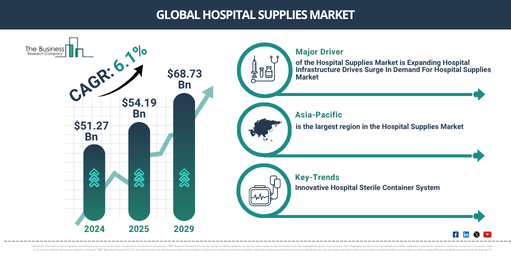
    The size of the hospital supplies market has seen considerable expansion in the preceding years. The market will rise from $51.27 billion in 2024 to $54.19 billion in 2025, exhibiting a compound annual growth rate (CAGR) of 5.7%. The historical growth can be linked to the development of healthcare infrastructure, the increase in elderly population, adherence to regulatory compliance, economic expansion, and the advancements in the technology of medical devices and supplies.

    The growth forecast for the hospital supplies market size looks promising in the coming years, with anticipations of reaching $68.73 billion in 2029 at a compound annual growth rate (CAGR) of 6.1%. Factors contributing to this growth include readiness for pandemics, advancements in telemedicine and remote monitoring, initiatives for sustainability, value-driven care and growth in emerging markets. The forecast period will also likely witness trends like single-use medical devices, distance-based supply chain management, 3D printing for medical supplies, intelligent hospital supplies, and personalized supplies.

    Download a free sample to assess the report’s scope and structure:

    https://www.thebusinessresearchcompany.com/sample.aspx?id=1973&type=smp

    What Are the Primary Drivers Supporting the Market Growth of the Hospital Supplies Market?

    The proliferation of hospitals is anticipated to stimulate the expansion of the hospital supplies market in the future. Hospitals are institutions designed to offer medical or surgical care for patients who are sick or injured. To provide their patients with top-notch care, these hospitals depend heavily on a wide selection of medical supplies and goods. For example, in line with a report by the American Hospital Association (AHA), a healthcare trade organization in the United States representing hospitals and healthcare networks, the total hospital count surged to 6,129 in May 2023, a rise from 6,093 in 2022. Additionally, the total number of admissions across all U.S. hospitals peaked at 34,011,386, as compared to 33,356,853 in 2022. Thus, the burgeoning number of hospitals is projected to augment the growth of the hospital supplies market.

    Which Primary Segments of the Hospital Supplies Market Are Driving Growth and Industry Transformations?

    The hospital suppliesmarket covered in this report is segmented –

    1) By Type: Disposable Hospital Supplies, Sterilization Equipment And Disinfectants, Mobility Aids And Transportation Equipment, Operating Room Equipment

    2) By End User: Hospitals And Clinics, Diagnostic Laboratories, Other End Users

    3) By Type of Expenditure: Public, Private

    4) By Product: Instruments Or Equipment, Disposables

    Subsegments:

    1) By Disposable Hospital Supplies: Surgical Masks, Gloves, Drapes And Gowns, IV Consumables, Wound Care Products

    2) By Sterilization Equipment And Disinfectants: Sterilizers (Autoclaves), Disinfectants Andsanitizers, Sterilization Indicators, UV Sterilizers

    3) By Mobility Aids And Transportation Equipment: Wheelchairs, Walkers, Crutches, Patient Lifts, Stretchers

    4) By Operating Room Equipment: Surgical Tables, Operating Room Lights, Surgical Instruments, Anesthesia Machines, Patient Monitors

    Request customized data on this market:

    https://www.thebusinessresearchcompany.com/customise?id=1973&type=smp

    Which Regions Are Key Players in the Growth of the #What Are the Primary Drivers Supporting the Market Growth of the Hospital Supplies Market?# Market?

    Asia-Pacific was the largest region in the global hospital supplies market in 2024. North America was the second largest region in the global hospital supplies market. The regions covered in the hospital supplies market report are Asia-Pacific, Western Europe, Eastern Europe, North America, South America, Middle East, and Africa.

    What Are the Most Significant Market Trends in the Hospital Supplies Market?

    Prominent businesses in the Hospital Supplies market, like Aesculap Inc., are concentrating on the development of innovative products including the AESCULAP Aicon Sterile Container System to enhance their market profitability. This system, which was launched by Aesculap Inc in March 2022, is designed to optimize processes and limit the probability of dampness. The US-based surgical instruments creator designed the container system to ease procedures and reduce the threat of surgical sets becoming moist. This sterile container system ensures complete sterilization and reduces the potential for surgical postponements in the operating room due to sets not being prepared.

    View the full report here:

    https://www.thebusinessresearchcompany.com/report/hospital-supplies-global-market-report

    What Parameters Are Used to Define the Hospital Supplies Market?

    Hospital supplies include essential products and equipment used in healthcare settings to support patient care and medical procedures. They are critical for ensuring efficient, safe, and effective medical services in hospitals and healthcare facilities.

    Purchase the full report and get a swift delivery:

    https://www.thebusinessresearchcompany.com/purchaseoptions.aspx?id=1973

    About The Business Research Company:

    With over 15000+ reports from 27 industries covering 60+ geographies, The Business Research Company has built a reputation for offering comprehensive, data-rich research and insights. Armed with 1,500,000 datasets, the optimistic contribution of in-depth secondary research, and unique insights from industry leaders, you can get the information you need to stay ahead in the game.

    Get in touch with us:

    The Business Research Company: https://www.thebusinessresearchcompany.com/

    Americas +1 310-496-7795

    Europe +44 7882 955267

    Asia & Others +44 7882 955267 & +91 8897263534

    Email us at info@tbrc.info

    Follow us on:

    LinkedIn: https://in.linkedin.com/company/the-business-research-company

    YouTube: https://www.youtube.com/channel/UC24_fI0rV8cR5DxlCpgmyFQ

    Global Market Model: https://www.thebusinessresearchcompany.com/global-market-model

  • Benign Prostatic Hyperplasia (BPH) Treatment Devices And Equipment Market Trends 2025-2034: Growth, Strategic Insights, and Opportunities Ahead

    Claim your 30% discount on Global Market Reports with code ONLINE30. Limited time only.

    What Are the Projected Market Size and Growth Rates for the Benign Prostatic Hyperplasia (BPH) Treatment Devices And Equipment Market From 2025 To 2029?

    The market size for devices and equipment used in the treatment of benign prostatic hyperplasia (BPH) has notably surged in the past few years. The market, valued at $1.27 billion in 2024, is projected to reach $1.34 billion in 2025, recording a compound annual growth rate (CAGR) of 5.9%. Factors contributing to the historic growth include an aging population, increased awareness and diagnosis, healthcare accessibility, and personalized treatment solutions.

    The market for devices and equipment used in the treatment of benign prostatic hyperplasia (bph) is projected to witness substantial expansion in the upcoming years. The market value is predicted to reach $1.74 billion in 2029, growing at a compound annual growth rate (CAGR) of 6.6%. Factors contributing to this growth over the forecast period include the use of minimally invasive techniques, increased growth in emerging markets, regulatory backing, and value-driven healthcare. Moreover, the forecast period will see trends such as non-invasive and in-office procedures, utilization of laser and radiofrequency technologies, implementation of telemedicine and remote consultations, along with educational initiatives to engage patients.

    Download a free sample to assess the report’s scope and structure:

    https://www.thebusinessresearchcompany.com/sample.aspx?id=2431&type=smp

    What Are the Major Market Drivers Behind the Rising Adoption of Benign Prostatic Hyperplasia (BPH) Treatment Devices And Equipment Market?

    The growth of the benign prostatic hyperplasia market is projected to be fueled by the rising number of prostate cancer instances. Prostate cancer, a disease that originates in the prostate gland—a tiny gland the size of a walnut situated just beneath the bladder in males, can cause an influx of older males seeking medical advice for prostate-related problems. This, in turn, facilitates the detection and management of benign prostatic hyperplasia. To illustrate, the American Society of Clinical Oncology (ASCO), a US-based professional body that disseminates patient data on the cancer.net website, reported in February 2023 that an estimated 288,300 men in the United States were diagnosed with prostate cancer in the same year. Moreover, there were 268,490 fresh cases and 34,500 deaths due to prostate cancer in the prior year, 2022. Consequently, the surge in the number of prostate cancer patients propels the expansion of the benign prostatic hyperplasia market.

    Which Key Market Segments Comprise the Benign Prostatic Hyperplasia (BPH) Treatment Devices And Equipment Market and Drive Its Revenue Growth?

    The benign prostatic hyperplasia (bph) treatment devices and equipmentmarket covered in this report is segmented –

    1) By Product: Resectoscopes, Radiofrequency Ablation Device, Urology Lasers, Prostatic Stents, Implants

    2) By Procedure Type: Transurethral Needle Ablation (TUNA), Transurethral Resection Of Prostate (TURP), Transurethral Incision Of Prostate (TUIP), Transurethral Microwave Thermotherapy (TUMT), Laser Surgery, Other Procedure Types

    3) By End-User: Hospitals, Ambulatory Surgical Centres (ASC), Clinics, Home

    Subsegments:

    1) By Resectoscopes: Bipolar Resectoscopes, Monopolar Resectoscopes, High-Performance Resectoscopes

    2) By Radiofrequency Ablation Device: Single-Needle Radiofrequency Ablation, Multi-Needle Radiofrequency Ablation

    3) By Urology Lasers: Holmium Lasers, Diode Lasers, Green Light Lasers

    4) By Prostatic Stents: Temporary Prostatic Stents, Permanent Prostatic Stents

    5) By Implants: Prostatic Urethral Lift (PUL) Implants, Balloon-Expandable Stents, Permanent Implants for BPH Treatment

    Request customized data on this market:

    https://www.thebusinessresearchcompany.com/customise?id=2431&type=smp

    Which Areas Are Leading Regions in the Benign Prostatic Hyperplasia (BPH) Treatment Devices And Equipment Market Expansion Across the Globe?

    North America was the largest region in the benign prostatic hyperplasia (BPH) treatment devices and equipment market in 2024. Western Europe was the second-largest region in the global benign prostatic hyperplasia (BPH) treatment devices and equipment market. The regions covered in the benign prostatic hyperplasia (BNH) treatment devices and equipment market report are Asia-Pacific, Western Europe, Eastern Europe, North America, South America, Middle East, and Africa.

    What Are the Strategic Trends Steering theBenign Prostatic Hyperplasia (BPH) Treatment Devices And Equipment Market Direction?

    Leading businesses within the benign prostatic hyperplasia market are striving to pioneer new products, such as the UroLift 2 System and UroLift ATC advanced tissue control system, in an effort to provide trustworthy solutions to the market. Both the UroLift 2 System and the UroLift ATC advanced tissue control system have been introduced for addressing the symptoms associated with lower urinary tract due to benign prostatic hyperplasia (BPH). For instance, Teleflex Incorporated, a medical device establishment based in the US, introduced the UroLift 2 System and UroLift ATC to the market in May 2022. The UroLift 2 System has been engineered as a delivery system to reach the prostatic urethra and implant permanent UroLift implants through the prostate’s lobes. Conversely, the UroLift ATC advanced tissue control system offers a minor invasive technique to manage symptoms of an enlarged prostate. Representing an advanced approach to benign prostatic hyperplasia (BPH) treatment, it lifts and supports large prostate tissue, thereby relieving blockage of the urethra.

    View the full report here:

    https://www.thebusinessresearchcompany.com/report/benign-prostatic-hyperplasia-bph-treatment-devices-and-equipment-global-market-report

    How Is the Benign Prostatic Hyperplasia (BPH) Treatment Devices And Equipment Market Conceptually Defined?

    Benign prostatic hyperplasia or benign prostatic hypertrophy is a condition of prostate gland enlargement which causes blockade of urethra, the tube that carries urine from the bladder.

    Purchase the full report and get a swift delivery:

    https://www.thebusinessresearchcompany.com/purchaseoptions.aspx?id=2431

    About The Business Research Company:

    With over 15000+ reports from 27 industries covering 60+ geographies, The Business Research Company has built a reputation for offering comprehensive, data-rich research and insights. Armed with 1,500,000 datasets, the optimistic contribution of in-depth secondary research, and unique insights from industry leaders, you can get the information you need to stay ahead in the game.

    Get in touch with us:

    The Business Research Company: https://www.thebusinessresearchcompany.com/

    Americas +1 310-496-7795

    Europe +44 7882 955267

    Asia & Others +44 7882 955267 & +91 8897263534

    Email us at info@tbrc.info

    Follow us on:

    LinkedIn: https://in.linkedin.com/company/the-business-research-company

    YouTube: https://www.youtube.com/channel/UC24_fI0rV8cR5DxlCpgmyFQ

    Global Market Model: https://www.thebusinessresearchcompany.com/global-market-model

  • Hemostasis Diagnostic Devices And Equipment Market 2025-2034: Key Highlights, Growth Dynamics, and Emerging Trends

    Claim your 30% discount on Global Market Reports with code ONLINE30. Limited time only.

    How Fast Is The Hemostasis Diagnostic Devices And Equipment Market Expected to Grow Between 2025 And 2029?

    The market size of hemostasis diagnostic devices and equipment has experienced a quick expansion in the last few years. An impressive increase from $4.94 billion in 2024 to $5.66 billion in 2025 is projected, boasting a compound annual growth rate (CAGR) of 14.7%. This substantial growth during the historical period can be linked to factors like clinical diagnostics, surgical operations, monitoring of anticoagulant therapy, and the management of hemophilia and bleeding conditions.

    The market size for hemostasis diagnostic devices and equipment is projected to manifest significant expansion in the upcoming years, reaching $9.46 billion by 2029 with a compound annual growth rate (CAGR) of 13.7%. The predicted rise during the forecast period can be linked to factors such as an aging population, the prevalence of cardiovascular and chronic illnesses, advances in personalized medicine, and an increase in surgical procedures. Noteworthy developments expected during the forecast period consist of point-of-care testing, the integration of automation and robotics, the discovery of new biomarkers, as well as the introduction of telemedicine and remote surveillance.

    Download a free sample to assess the report’s scope and structure:

    https://www.thebusinessresearchcompany.com/sample.aspx?id=2598&type=smp

    How Are Key Drivers in the Industry Acting as Catalysts for the Growth of theHemostasis Diagnostic Devices And Equipment Market?

    The rise in disease diagnosis among the elderly is contributing to the increased use of hemostasis devices in cardiovascular disease (CVD) surgeries. The natural consequence of aging brings about a higher incidence of disease, hence, surgeries among older patients are more common these days. Hemostasis devices play an essential role in advancing the natural blood clotting process and they can govern anticoagulation and transfusion therapy in surgical procedures. Based on a report by the American Heart Association, there’s a significant risk for Americans aged more than 80 to develop CVD, with about 83% of men and 87.1% of women likely to contract the disease. Consequently, to afford the patients more comfort and boost the surgeries’ success rates, the application of the hemostasis device has become extensive.

    Which Segments in the Hemostasis Diagnostic Devices And Equipment Offer the Most Growth?

    The hemostasis diagnostic devices and equipmentmarket covered in this report is segmented –

    1) By Product: Analyzers, Coagulation Instrument, Other Hemostasis Instruments, Reagents and Kits

    2) By Device Technology: Automated, Semi-Automated, Manual

    3) By End User: Hospitals, Clinics, Independent Diagnostic, Laboratories, Other End Users

    Subsegments:

    1) By Analyzers: Hematology Analyzers, Platelet Function Analyzers, Thromboelastography (TEG) Analyzers

    2) By Coagulation Instruments: Prothrombin Time (PT) Instruments, Activated Partial Thromboplastin Time (aPTT) Instruments, Fibrinogen Testing Instruments, Thrombin Time (TT) Instruments

    3) By Other Hemostasis Instruments: Blood Clotting Time (BCT) Instruments, Bleeding Time (BT) Test Devices, Hemostatic Forceps and Clips

    4) By Reagents and Kits: Coagulation Reagents, Blood Collection Kits, Point-of-care Testing Kits, Thrombosis Kits

    Request customized data on this market:

    https://www.thebusinessresearchcompany.com/customise?id=2598&type=smp

    What Are the Fastest-Growing Geographies in the #How Are Key Drivers in the Industry Acting as Catalysts for the Growth of theHemostasis Diagnostic Devices And Equipment Market?# Market?

    North America was the largest region in the global hemostasis diagnostic devices and equipment market in 2024. Asia-Pacific was the second-largest region in the hemostasis diagnostic devices and equipment market. The regions covered in the hemostasis diagnostic devices and equipment market report are Asia-Pacific, Western Europe, Eastern Europe, North America, South America, Middle East, and Africa.

    What Are the Current Market Growth and Trends in the Hemostasis Diagnostic Devices And Equipment Industry?

    In the hemostasis diagnostic device and equipment market, the introduction of innovative and enhanced technology has been observed. For instance, collagen vascular hemostasis devices are being utilized to boost the effectiveness and quality of surgical procedures. Collagen, the primary structural protein in skin and other connective tissues, which is commonly employed in a purified state for beauty surgical treatments, has now found application in the hemostasis diagnostic device industry. Collagen-based closure devices have been introduced, considering that patients may experience immobility and heightened discomfort post femoral surgery. A study by the American Journal of Neuroradiology on 698 Angio-Seal closures indicated that the application of Angio seal lessened the average mobilization delay by nearly 15 minutes, without causing any significant complications. Angio seal, a specific collagen hemostasis device, reduces the average hemostasis time and improves patient’s mobility.

    View the full report here:

    https://www.thebusinessresearchcompany.com/report/hemostasis-diagnostic-devices-and-equipment-global-market-report

    What Are the Key Elements That Define the Hemostasis Diagnostic Devices And Equipment Market?

    Hemostasis diagnostic devices and equipment are specialized tools used to assess the blood clotting process and diagnose bleeding disorders. These devices help healthcare professionals monitor and evaluate various aspects of hemostasis, such as clot formation and dissolution.

    Purchase the full report and get a swift delivery:

    https://www.thebusinessresearchcompany.com/purchaseoptions.aspx?id=2598

    About The Business Research Company:

    With over 15000+ reports from 27 industries covering 60+ geographies, The Business Research Company has built a reputation for offering comprehensive, data-rich research and insights. Armed with 1,500,000 datasets, the optimistic contribution of in-depth secondary research, and unique insights from industry leaders, you can get the information you need to stay ahead in the game.

    Get in touch with us:

    The Business Research Company: https://www.thebusinessresearchcompany.com/

    Americas +1 310-496-7795

    Europe +44 7882 955267

    Asia & Others +44 7882 955267 & +91 8897263534

    Email us at info@tbrc.info

    Follow us on:

    LinkedIn: https://in.linkedin.com/company/the-business-research-company

    YouTube: https://www.youtube.com/channel/UC24_fI0rV8cR5DxlCpgmyFQ

    Global Market Model: https://www.thebusinessresearchcompany.com/global-market-model
  • Arthroscopy Devices And Equipment Market Insights: In-Depth Look at Growth Trends, Market Size, and Opportunities for 2025-2034

    Arthroscopy Devices And Equipment Market Insights: In-Depth Look at Growth Trends, Market Size, and Opportunities for 2025-2034

    Claim your 30% discount on Global Market Reports with code ONLINE30. Limited time only.

    What Is the Estimated Market Size of the Arthroscopy Devices And Equipment Market In 2029?

    The size of the arthroscopy devices and equipment market has seen a robust expansion in the past few years. It is predicted to rise from $5.83 billion in 2024 to $6.23 billion in 2025, representing a compound annual growth rate (CAGR) of 6.7%. The upward trend during the historic period can be linked to a surge in orthopedic conditions, the preference for minimally invasive surgery, an aging demographic, and the field of sports medicine.

    The market size of arthroscopy devices and equipment is predicted to experience significant expansion in the coming years, reaching a value of $8.42 billion by 2029 with a compound annual growth rate (CAGR) of 7.8%. The increase during the projection period can be linked to the development of emerging markets, regulatory assistance, and reimbursements, the use of telehealth and remote consultation, as well as value-based healthcare. Additionally, major trends advancing in the forecast period encompass augmented reality (ar) and virtual reality (vr), 3D imaging and printing, artificial intelligence (ai), and the implementation of sustainable practices.

    Download a free sample to assess the report’s scope and structure:

    https://www.thebusinessresearchcompany.com/sample.aspx?id=2405&type=smp

    What External and Internal Drivers Are Contributing to the Growth of theArthroscopy Devices And Equipment Market?

    The rise in the aged population is anticipated to propel the progression of the arthroscopy devices and equipment market in the future. Elderly people are more susceptible to various orthopedic diseases, such as arthritis, rheumatoid arthritis, and osteoarthritis. With the increase in people reaching old age, the odds of illnesses like osteoarthritis and similar joint conditions also increase, often requiring arthroscopic procedures for their diagnosis and treatment. For instance, the World Health Organization, a US-based specialized health agency, stated in October 2022, that globally, by 2030, one out of six people will be 60 or above and by 2050, this age group’s population would double to 2.1 billion. Consequently, the growing older population is forecasted to fuel the market in the forthcoming period.

    What Segment Types Define the Arthroscopy Devices And Equipment Market Structure?

    The arthroscopy devices and equipmentmarket covered in this report is segmented –

    1) By Product: Arthroscopes, Arthroscopy Shavers, Arthroscopy Fluid Management System, Arthroscopy Radiofrequency System, Arthroscopy Visualization System, Arthroscopy Implants

    2) By Application: Knee Arthroscopy, Hip Arthroscopy, Spine Arthroscopy, Foot & Ankle Arthroscopy, Shoulder & Elbow Arthroscopy, Other Applications

    3) By End User: Hospitals, Ambulatory Care, Trauma Centers

    Subsegments:

    1) By Arthroscopes: Rigid Arthroscopes, Flexible Arthroscopes

    2) By Arthroscopy Shavers: Electric Arthroscopy Shavers, Pneumatic Arthroscopy Shavers

    3) By Arthroscopy Fluid Management System: Gravity-Based Fluid Management Systems, Pump-Based Fluid Management Systems

    4) By Arthroscopy Radiofrequency System: Monopolar Radiofrequency Systems, Bipolar Radiofrequency Systems

    5) By Arthroscopy Visualization System: Video Arthroscopy Systems, High-Definition Visualization Systems

    6) By Arthroscopy Implants: Knee Arthroscopy Implants, Shoulder Arthroscopy Implants, Hip Arthroscopy Implants

    Request customized data on this market:

    https://www.thebusinessresearchcompany.com/customise?id=2405&type=smp

    Which Geographic Areas Hold the Strongest Growth Potential in the Arthroscopy Devices And Equipment Market?

    North America was the largest region in global arthroscopy devices and equipment market in 2024. Western Europe was the second-largest region in global arthroscopy devices and equipment market. The regions covered in the arthroscopy devices and equipment market report are Asia-Pacific, Western Europe, Eastern Europe, North America, South America, Middle East, and Africa.

    What Long-Term Trends Are Transforming the Competitive Landscape of the Arthroscopy Devices And Equipment Market?

    Key players in the arthroscopy devices and equipment market are shifting their focus towards the creation of pioneering devices, for example, the Single-Use, 4K, Battery Operated Cordless Arthroscope. The aim is to augment surgical accuracy, heighten patient outcomes, mitigate infection risks, and offer more adaptability and ease during minimally invasive operations. The Single-Use, 4K, Battery Operated Cordless Arthroscope is a specialized instrument used for less invasive joint surgeries, intended to deliver high-definition live imaging for surgeons. To illustrate, in November 2022, Integrated Endoscopy, a medical device manufacturer based in the US, introduced the Gen II NUVIS Single-Use, 4K, Battery Operated Cordless Arthroscope. This groundbreaking device signifies a considerable leap forward in arthroscopic surgical technology, intended to overcome the limitations associated with conventional reusable arthroscopes by improving image quality and streamlining operations.

    View the full report here:

    https://www.thebusinessresearchcompany.com/report/arthroscopy-devices-and-equipment-global-market-report

    What Is the Definition of the Arthroscopy Devices And Equipment Market?

    Arthroscopy devices and equipment are used in arthroscopy procedures (a minimally invasive procedure) for the diagnosis and treatment of joint problems such as torn cartilage, ACL, and sports-related injuries of the hip, knee, shoulder, spine, ankle, wrist, and elbow.

    Purchase the full report and get a swift delivery:

    https://www.thebusinessresearchcompany.com/purchaseoptions.aspx?id=2405

    About The Business Research Company:

    With over 15000+ reports from 27 industries covering 60+ geographies, The Business Research Company has built a reputation for offering comprehensive, data-rich research and insights. Armed with 1,500,000 datasets, the optimistic contribution of in-depth secondary research, and unique insights from industry leaders, you can get the information you need to stay ahead in the game.

    Get in touch with us:

    The Business Research Company: https://www.thebusinessresearchcompany.com/

    Americas +1 310-496-7795

    Europe +44 7882 955267

    Asia & Others +44 7882 955267 & +91 8897263534

    Email us at info@tbrc.info

    Follow us on:

    LinkedIn: https://in.linkedin.com/company/the-business-research-company

    YouTube: https://www.youtube.com/channel/UC24_fI0rV8cR5DxlCpgmyFQ

    Global Market Model: https://www.thebusinessresearchcompany.com/global-market-model
  • Hematology Diagnostic Devices And Equipment Market Trends 2025-2034: Growth, Strategic Insights, and Opportunities Ahead

    Hematology Diagnostic Devices And Equipment Market Trends 2025-2034: Growth, Strategic Insights, and Opportunities Ahead

    Claim your 30% discount on Global Market Reports with code ONLINE30. Limited time only.

    What Are the Key Projections for the CAGR of the Hematology Diagnostic Devices And Equipment Market Size From 2025 to 2034?

    The size of the hematology diagnostic devices and equipment market has seen substantial growth lately. The market’s estimated value is set to increase from $7.42 billion in 2024 to $8.29 billion in 2025, indicating a compound annual growth rate (CAGR) of 11.7%. The historic period growth is tied to clinical diagnostics, blood banking, oncology, hematological disorders, and tracking disease progression.

    The market size for hematology diagnostic tools and equipment is anticipated to experience swift escalation over the upcoming years, reaching a value of $12.37 billion in 2029 with a 10.5% compound annual growth rate (CAGR). This growth in the projected period is due to factors such as an increasing geriatric population, tailored medical treatments, the prevalence of blood-related diseases, and hematological biomarkers. The period of forecast is expected to see major trends like technological progression, point-of-care hematology testing, automation and amalgamation, as well as telemedical services and remote surveillance.

    Download a free sample to assess the report’s scope and structure:

    https://www.thebusinessresearchcompany.com/sample.aspx?id=2536&type=smp

    What Are the Major Market Drivers Behind the Rising Adoption of Hematology Diagnostic Devices And Equipment Market?

    The surge in blood disorders has led to a rise in the use of hematology diagnostic devices. These devices have become widely popular for pinpointing the exact type of blood disorder a patient has. Blood disorders, which can impact the count of various blood cells such as red and white blood cells, platelets etc., affect numerous people globally, every year, regardless of their age, gender, or race. As an example, Hemoglobin disorder, according to the World Health Organization, affects 75% of the world’s births and Anemia has a prevalence rate of 12.7% among men.

    Which Key Market Segments Comprise the Hematology Diagnostic Devices And Equipment Market and Drive Its Revenue Growth?

    The hematology diagnostic devices and equipmentmarket covered in this report is segmented –

    1) By Product: Instruments, Consumables

    2) By Instruments: Analyzers, Flow cytometers, Other Instruments

    3) By Consumables: Reagents, Stains, Other Consumables

    4) By Application: Drug Testing, Auto-Immune Disease, Cancer, Diabetes Mellitus, Infectious Disease, Other Applications

    5) By End User: Hospitals, Specialized Diagnostic Centers, Specialized Research Institutes

    Subsegments:

    1) By Instruments: Hematology Analyzers, Flow Cytometers, Coagulation Analyzers, Hemoglobin Analyzers, Blood Gas Analyzers

    2) By Consumables: Reagents, Test Strips, Blood Collection Tubes, Slides and Cover Slips, Others (calibration and quality control materials)

    Request customized data on this market:

    https://www.thebusinessresearchcompany.com/customise?id=2536&type=smp

    Which Areas Are Leading Regions in the Hematology Diagnostic Devices And Equipment Market Expansion Across the Globe?

    North America was the largest region in the global hematology diagnostics devices and equipment market in 2024. Asia-Pacific was the second-largest region in the hematology diagnostics devices and equipment market. The regions covered in the hematology diagnostic devices and equipment market report are Asia-Pacific, Western Europe, Eastern Europe, North America, South America, Middle East, and Africa.

    What Are the Strategic Trends Steering theHematology Diagnostic Devices And Equipment Market Direction?

    Automation technology is seeing an increased level of investment from firms in the hematology diagnostic devices sector. The growing sophistication of this technology is resulting in elevated demand for hematology analyzers, with the automation minimizing errors typically made via manual procedures in diagnostic centers. For instance, Sysmex, a leading company, has obtained a CLIA waiver for a newly automated hematology analyzer. With this product’s launch, Sysmex is enabling clinical facilities to conduct hematology tests sans any manual mistakes. CLIA regulations set the quality benchmark for lab tests carried out on human samples like blood, body fluids, and tissues for diagnosing, preventing diseases, or evaluating health conditions.

    View the full report here:

    https://www.thebusinessresearchcompany.com/report/hematology-diagnostic-devices-and-equipment-global-market-report

    How Is the Hematology Diagnostic Devices And Equipment Market Conceptually Defined?

    Hematology diagnostic devices and equipment are essential tools used in the medical field to analyze blood samples for various conditions and diseases. These devices help in diagnosing disorders such as anemia, leukemia, and other blood-related conditions. The advancement of these devices has improved the accuracy, speed, and efficiency of hematological testing, aiding healthcare professionals in making timely and informed clinical decisions.

    Purchase the full report and get a swift delivery:

    https://www.thebusinessresearchcompany.com/purchaseoptions.aspx?id=2536

    About The Business Research Company:

    With over 15000+ reports from 27 industries covering 60+ geographies, The Business Research Company has built a reputation for offering comprehensive, data-rich research and insights. Armed with 1,500,000 datasets, the optimistic contribution of in-depth secondary research, and unique insights from industry leaders, you can get the information you need to stay ahead in the game.

    Get in touch with us:

    The Business Research Company: https://www.thebusinessresearchcompany.com/

    Americas +1 310-496-7795

    Europe +44 7882 955267

    Asia & Others +44 7882 955267 & +91 8897263534

    Email us at info@tbrc.info

    Follow us on:

    LinkedIn: https://in.linkedin.com/company/the-business-research-company

    YouTube: https://www.youtube.com/channel/UC24_fI0rV8cR5DxlCpgmyFQ

    Global Market Model: https://www.thebusinessresearchcompany.com/global-market-model

  • Anesthesia Monitoring Devices Market Outlook 2025–2034: Identifying Growth Drivers, Technology Trends, and Policy Impact

    Anesthesia Monitoring Devices Market Outlook 2025–2034: Identifying Growth Drivers, Technology Trends, and Policy Impact

    Claim your 30% discount on Global Market Reports with code ONLINE30. Limited time only.

    How Fast Is The Anesthesia Monitoring Devices Market Expected to Grow Between 2025 And 2029?

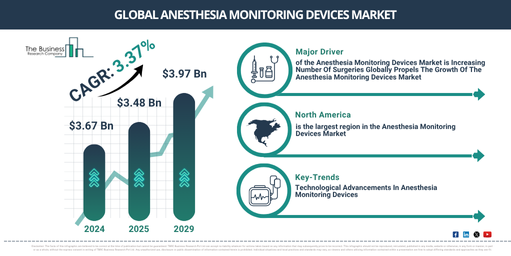
    In the past few years, the market size for anesthesia monitoring devices has experienced a sharp drop. The market is projected to decrease from a value of $3.67 billion in 2024 to approximately $3.48 billion in 2025, reflecting a compound annual growth rate (CAGR) of -5.3%. Elements such as the elevated cost of these monitoring devices, their expensive maintenance, and the impact of the COVID pandemic can explain the decline during the historic period.

    The market size of anesthesia monitoring devices is predicted to experience consistent growth in the coming few years, and it’s projected to expand to $3.97 billion in 2029, with a compound annual growth rate (CAGR) of 3.4%. The increased healthcare spending, the advent of remote monitoring and telemedicine, the upsurge in minimally invasive surgeries, and rising economic growth contribute to this forecasted growth. Key trends anticipated during this forecast period are the incorporation with electronic health records (EHR), the use of artificial intelligence (AI) and machine learning, the prevalence of mobile apps and wearable devices, the development of advanced sensors and connectivity, and the use of non-invasive monitoring technologies.

    Download a free sample to assess the report’s scope and structure:

    https://www.thebusinessresearchcompany.com/sample.aspx?id=5972&type=smp

    What Are the Core Market Drivers Propelling Growth in the Anesthesia Monitoring Devices Industry?

    The steady rise in surgical procedures around the world is anticipated to stimulate the expansion of the anesthesia monitoring devices market. As surgeries such as hip fracture fixes, neurosurgical operations, cesarean sections, and other procedures continue to rise, the demand for anesthesia monitoring devices similarly continues to grow. For example, the International Society of Aesthetic Plastic Surgery (ISAPS), a U.S.-based association of qualified aesthetic plastic surgeons, disclosed in June 2024 that there was a 3.4% increase in the total count of surgical and non-surgical processes in 2023, adding up to 34.9 million. As such, the burgeoning number of surgeries is set to fuel the growth of the anesthesia monitoring device market.

    How Is the Anesthesia Monitoring Devices Market Segmented?

    The anesthesia monitoring devicesmarket covered in this report is segmented –

    1) By Product: Advanced Anesthesia Monitors, Basic Anesthesia Monitors, Integrated Anesthesia Workstation

    2) By Application: Cardiology, Neurology, Dental, Ophthalmology, Urology, Orthopedics, Other Applications

    3) By End User: Hospitals, Ambulatory Surgical Centers, Clinics, Nursing Homes

    Subsegments:

    1) By Advanced Anesthesia Monitors: Multi-parameter Monitors, EEG Monitors, Gas Analyzers

    2) By Basic Anesthesia Monitors: Pulse Oximeters, Blood Pressure Monitors, Capnometers

    3) By Integrated Anesthesia Workstation: Anesthesia Delivery Systems, Ventilation Systems, Monitoring Systems

    Request customized data on this market:

    https://www.thebusinessresearchcompany.com/customise?id=5972&type=smp

    Which Regions Are Driving the Next Phase of the Anesthesia Monitoring Devices Market Growth?

    North America was the largest region in the anesthesia monitoring devices market in 2024. Asia-Pacific is expected to be the fastest-growing region in the forecast period. The regions covered in the anesthesia monitoring devices market report include Asia-Pacific, Western Europe, Eastern Europe, North America, South America, Middle East and Africa.

    What Key Market Trends and Innovations Are Shaping the Future of the Anesthesia Monitoring Devices Industry?

    The ongoing rise in technological improvement is a major trend captivating popularity within the anesthesia monitoring devices market. Numerous firms are initiating the introduction of innovative, technologically enhanced products to the industry of anesthesia monitoring devices. For instance, in April 2022, SCHILLER, originating from Switzerland, unveiled the MRI-compatible patient monitor, known as MAGLIFE RT-1. The device facilitates patient supervision in an MRI setting, including all vital parameters required during anesthesia. The MAGLIFE RT-1 ensures detailed observation during the assessment and is capable of complete control from beyond the Faraday cage via the MAGSCREEN RT-1. The design of the system accommodates all patient categories: adults, children, and neonates.

    View the full report here:

    https://www.thebusinessresearchcompany.com/report/anesthesia-monitoring-devices-global-market-report

    How Is the Anesthesia Monitoring Devices Market Defined and What Are Its Core Parameters?

    Anesthesia monitoring devices are the instruments that are used to assess a patient’s response towards anesthetic drugs during a surgical procedure. They help the anesthetist to monitor and display the dose of anesthetic drugs used on the patient.

    Purchase the full report and get a swift delivery:

    https://www.thebusinessresearchcompany.com/purchaseoptions.aspx?id=5972

    About The Business Research Company:

    With over 15000+ reports from 27 industries covering 60+ geographies, The Business Research Company has built a reputation for offering comprehensive, data-rich research and insights. Armed with 1,500,000 datasets, the optimistic contribution of in-depth secondary research, and unique insights from industry leaders, you can get the information you need to stay ahead in the game.

    Get in touch with us:

    The Business Research Company: https://www.thebusinessresearchcompany.com/

    Americas +1 310-496-7795

    Europe +44 7882 955267

    Asia & Others +44 7882 955267 & +91 8897263534

    Email us at info@tbrc.info

    Follow us on:

    LinkedIn: https://in.linkedin.com/company/the-business-research-company

    YouTube: https://www.youtube.com/channel/UC24_fI0rV8cR5DxlCpgmyFQ

    Global Market Model: https://www.thebusinessresearchcompany.com/global-market-model

  • Hearing Implants Market Insights: In-Depth Look at Growth Trends, Market Size, and Opportunities for 2025-2034

    Hearing Implants Market Insights: In-Depth Look at Growth Trends, Market Size, and Opportunities for 2025-2034

    Claim your 30% discount on Global Market Reports with code ONLINE30. Limited time only.

    How Has The Hearing Implants Market Growth Evolved From 2024 To 2025, And What’s Ahead?

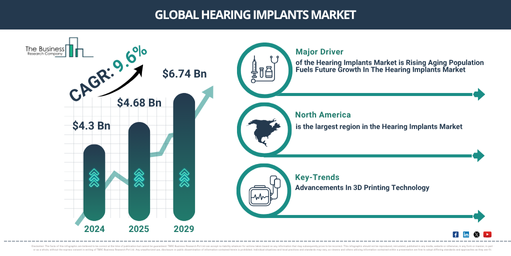
    The market size of hearing implants has witnessed a significant surge in recent times. The projection indicates an increase from $4.3 billion in 2024 to $4.68 billion in 2025, implying a compound annual growth rate (CAGR) of 8.8%. The historic period’s growth is due to factors such as the prevalence of hearing loss, heightened consciousness and diagnosis, along with a rise in the pediatric population.

    The market size for hearing implants is predicted to witness significant expansion in the upcoming years, reaching a value of $6.74 billion in 2029 with a compound annual growth rate (CAGR) of 9.6%. The anticipated growth during the forecast period can be credited to factors such as enhanced quality of life, less invasive implantation methods, supportive regulations and reimbursements, telehealth services, and remote monitoring, as well as value-based healthcare. Key trends expected to shape the growth of this period involve advancements in sound processing, the use of biocompatible materials, the introduction of hybrid implants, and the integration of wearable technology.

    Download a free sample to assess the report’s scope and structure:

    https://www.thebusinessresearchcompany.com/sample.aspx?id=2445&type=smp

    What External and Internal Drivers Are Contributing to the Growth of theHearing Implants Market?

    The rise in the elderly population is a global phenomenon and among common health issues encountered due to aging is hearing impairment, predominantly in those over 60 years old. For example, as per a forecast made by the Switzerland-based World Health Organization in October 2022, it is predicted that the worldwide demographic of individuals aged 60 years or more will double by 2050, hitting the 2.1 billion mark. Additionally, they anticipate a threefold increase in the population aged 80 years and above by 2050, meeting a total of 426 million. Hence, such an escalation in the elderly population is likely to boost the hearing implants market in the future.

    What Segment Types Define the Hearing Implants Market Structure?

    The hearing implantsmarket covered in this report is segmented –

    1) By Type: Cochlear Implants, Middle Ear Implants, Bone Conduction Implants, Auditory Brainstem Implant

    2) By Age: Adult, Pediatric

    3) By End-User: Hospitals, ENT clinics, Ambulatory Surgical Centres

    Subsegments:

    1) By Cochlear Implants: Conventional Cochlear Implants, Hybrid Cochlear Implants

    2) By Middle Ear Implants: Active Middle Ear Implants, Passive Middle Ear Implants

    3) By Bone Conduction Implants: Softband Bone Conduction Implants, Surgically Implanted Bone Conduction Devices

    4) By Auditory Brainstem Implants: Implantable Auditory Brainstem Implants (ABI), Non-Implantable Auditory Brainstem Devices

    Request customized data on this market:

    https://www.thebusinessresearchcompany.com/customise?id=2445&type=smp

    Which Geographic Areas Hold the Strongest Growth Potential in the Hearing Implants Market?

    North America was the largest region in the global hearing implants devices and equipment market in 2024. Asia-Pacific was the second-largest region in the hearing implants devices and equipment market. The regions covered in the hearing implants market report are Asia-Pacific, Western Europe, Eastern Europe, North America, South America, Middle East, and Africa.

    What Long-Term Trends Are Transforming the Competitive Landscape of the Hearing Implants Market?

    Businesses operating within the hearing implants market are utilizing 3D printing technology for binaural cochlear procedures. The technique emphasizes the production of personalized 3D-printed implants, made from materials compatible with biological tissues, designed to rectify anatomical flaws using stem cells. The company Sonova produces binaural cochlear implants, which employ dual methods of stimulation – electrical and acoustic – aiming to improve hearing and increase clarity of speech. In addition, scientists have created a 3D-micro scaffold cochlear implant, featuring a 3D printed steroid reservoir, designed to minimize damage to remaining hearing due to trauma from electrode insertion. Before receiving FDA approval to sell these implants in the USA, cochlear implant manufacturers are required to provide information about the materials used, the results taken from clinical trials, and any adverse effects.

    View the full report here:

    https://www.thebusinessresearchcompany.com/report/hearing-implants-global-market-report

    What Is the Definition of the Hearing Implants Market?

    Hearing implants refer to surgically implanted devices designed to improve hearing for individuals with significant hearing loss or deafness. These devices bypass damaged parts of the ear and directly stimulate the auditory nerve or the skull to transmit sound signals to the brain. Hearing implants aim to restore some degree of hearing, enabling users to perceive sounds and engage more effectively in communication and daily activities.

    Purchase the full report and get a swift delivery:

    https://www.thebusinessresearchcompany.com/purchaseoptions.aspx?id=2445

    About The Business Research Company:

    With over 15000+ reports from 27 industries covering 60+ geographies, The Business Research Company has built a reputation for offering comprehensive, data-rich research and insights. Armed with 1,500,000 datasets, the optimistic contribution of in-depth secondary research, and unique insights from industry leaders, you can get the information you need to stay ahead in the game.

    Get in touch with us:

    The Business Research Company: https://www.thebusinessresearchcompany.com/

    Americas +1 310-496-7795

    Europe +44 7882 955267

    Asia & Others +44 7882 955267 & +91 8897263534

    Email us at info@tbrc.info

    Follow us on:

    LinkedIn: https://in.linkedin.com/company/the-business-research-company

    YouTube: https://www.youtube.com/channel/UC24_fI0rV8cR5DxlCpgmyFQ

    Global Market Model: https://www.thebusinessresearchcompany.com/global-market-model