Blog

  • Self-Expanding Stents Market Forecast 2025–2034: Trends Reshaping Demand, Investment, and Innovation

    Self-Expanding Stents Market Forecast 2025–2034: Trends Reshaping Demand, Investment, and Innovation

    Claim your 30% discount on Global Market Reports with code ONLINE30. Limited time only.

    What is the Projected CAGR for the Sequencing Consumables Market Size from 2025 to 2034?

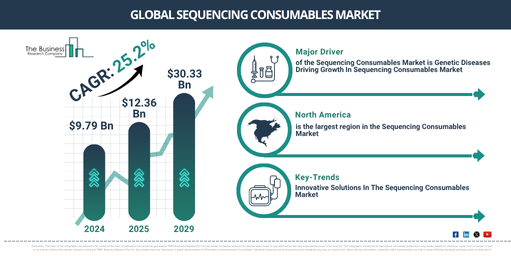
    The market size for sequencing consumables has seen explosive growth recently. Projections forecast it to expand from $9.79 billion in 2024 to $12.36 billion in 2025, boasting a compound annual growth rate (CAGR) of 26.2%. Several factors contributed to this growth during the historical period, including a rise in drug development activities, an increase in the occurrence of genetic disorders and targeted diseases, higher utilization of compact, portable instruments, an escalated use of biomarker profiling, a surge in demand for personalized medicine, and a rise in cancer patients.

    In the forthcoming years, a surge in the sequencing consumables market size is anticipated, with projections estimating growth to $30.33 billion in 2029 at a compound annual growth rate (CAGR) of 25.2%. Factors contributing to this projected growth during the forecast period include an increased requirement for quick and accurate disease diagnostic methods, rising adoption of real-time polymerase chain reaction, growing demand for immediate and site-specific diagnostic testing, intensification in infectious disease occurrences, and a surge in the demand for companion diagnostics. Forecast period trends are expected to showcase advanced disease detection and observation methodologies, breakthroughs in drug discovery, enhancements in target approval, biomarker discovery, state-of-the-art DNA sequencing technologies, diagnostic testing improvements, next-generation sequencing (NGS), lab-on-a-chip platforms, and advancements in molecular diagnostic solution development.

    Download a free sample to assess the report’s scope and structure:

    https://www.thebusinessresearchcompany.com/sample.aspx?id=15924&type=smp

    What Are the Primary Drivers Supporting the Market Growth of the Sequencing Consumables Market?

    An increase in the incidence of genetic disorders is projected to drive the expansion of the sequencing consumables market. Genetic disorders arise from anomalies in an individual’s genes or DNA, often passed down through generations. The escalating incidence of genetic disorders can be ascribed to factors like heightened awareness, enhanced diagnostics, and evolving environmental conditions. Sequencing consumables play a critical role in the management of genetic diseases by facilitating DNA extraction, library preparation, sequencing, and analysis to pinpoint disease-associated genetic variations. For example, the Centers for Disease Control and Prevention, a government agency based in the US, reported in April 2024 that out of the 6,000 babies born in the United States each year with Down syndrome, one occurs in every set of 700 babies. Therefore, the escalating incidence of genetic disorders is fueling the expansion of the sequencing consumables market.

    Which Primary Segments of the Sequencing Consumables Market Are Driving Growth and Industry Transformations?

    The sequencing consumablesmarket covered in this report is segmented –

    1) By Product: Kits, Reagents, Accessories

    2) By Platform: 1st Generation Sequencing Consumables, 2nd Generation Sequencing Consumables, 3rd Generation Sequencing Consumables

    3) By Application: Cancer Diagnostics, Infectious Disease Diagnostics, Reproductive Health Diagnostics, Pharmacogenomics, Agrigenomics, Others Application

    4) By End-Use: Pharmaceutical And Biotechnology Companies, Hospitals And Laboratories, Academic Research Institutes, Other End-Uses

    Subsegments:

    1) By Kits: Library Preparation Kits, DNA Or RNA Amplification Kits, Sequencing Kits

    2) By Reagents: PCR Reagents, DNA Or RNA Reagents, Enzymes

    3) By Accessories: Sequencing Chips, Primers And Probes, Sample Preparation Tools

    Request customized data on this market:

    https://www.thebusinessresearchcompany.com/customise?id=15924&type=smp

    Which Regions Are Key Players in the Growth of the #What Are the Primary Drivers Supporting the Market Growth of the Sequencing Consumables Market?# Market?

    North America was the largest region in the sequencing consumables market in 2024. Asia-Pacific is expected to be the fastest-growing region in the forecast period. The regions covered in the sequencing consumables market report are Asia-Pacific, Western Europe, Eastern Europe, North America, South America, Middle East and Africa.

    What Are the Most Significant Market Trends in the Sequencing Consumables Market?

    Key players in the sequencing consumables industry are prioritizing the development of novel solutions like human whole-genome sequencing (WGS) assays. These enhance the precision, efficiency, and speed of genomic analysis. Human whole-genome sequencing (WGS) assays allow a complete examination of an individual’s whole genome, including every bit of their DNA, to pinpoint genetic alterations, mutations, and biomarkers linked to health, disease susceptibility, and response to treatment. For example, in March 2023, U.S.-based biotech firm Illumina Inc. introduced the Illumina Complete Long Read Prep- Human, a high-quality, extended-read, human whole-genome sequencing (WGS) assay. The Illumina Complete Long Read Prep, Human is compatible with Illumina NovaSeq X Plus, NovaSeq X, and NovaSeq 6000 Sequencing Systems. For the first time, this allows users to obtain both long- and short-read data using one Illumina unit. It not only eases workflows but also significantly brings down DNA input requirements compared to other extended-read alternatives.

    View the full report here:

    https://www.thebusinessresearchcompany.com/report/sequencing-consumables-global-market-report

    What Parameters Are Used to Define the Sequencing Consumables Market?

    Sequencing consumables refer to the various reagents, kits, and materials used during the DNA or RNA sequencing. These consumables are essential for preparing, amplifying, and analyzing genetic samples in sequencing workflows. Sequencing consumables are designed to work with specific sequencing platforms and technologies, ensuring genomic data generation’s accuracy, efficiency, and reliability.

    Purchase the full report and get a swift delivery:

    https://www.thebusinessresearchcompany.com/purchaseoptions.aspx?id=15924

    About The Business Research Company:

    With over 15000+ reports from 27 industries covering 60+ geographies, The Business Research Company has built a reputation for offering comprehensive, data-rich research and insights. Armed with 1,500,000 datasets, the optimistic contribution of in-depth secondary research, and unique insights from industry leaders, you can get the information you need to stay ahead in the game.

    Get in touch with us:

    The Business Research Company: https://www.thebusinessresearchcompany.com/

    Americas +1 310-496-7795

    Europe +44 7882 955267

    Asia & Others +44 7882 955267 & +91 8897263534

    Email us at info@tbrc.info

    Follow us on:

    LinkedIn: https://in.linkedin.com/company/the-business-research-company

    YouTube: https://www.youtube.com/channel/UC24_fI0rV8cR5DxlCpgmyFQ

    Global Market Model: https://www.thebusinessresearchcompany.com/global-market-model
  • Self-Expanding Stents Market 2025-2034: Key Highlights, Growth Dynamics, and Emerging Trends

    Self-Expanding Stents Market 2025-2034: Key Highlights, Growth Dynamics, and Emerging Trends

    Claim your 30% discount on Global Market Reports with code ONLINE30. Limited time only.

    What Is the Current and Projected Market Size of the Self-Expanding Stents Market Through 2034?

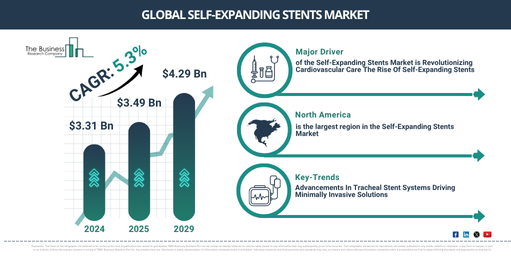
    The market for self-expanding stents has seen robust growth in recent years, with its market size set to increase from $3.31 billion in 2024 to $3.49 billion in 2025, reflecting a compound annual growth rate (CAGR) of 5.2%. Factors that drove growth during the historical period include an increase in awareness, a burgeoning aging population, an expansion of applications for stent usage beyond just coronary arteries, a rise in disposable income levels, and the growing acceptance of minimally invasive procedures.

    Anticipated robust expansion can be seen in the self-expanding stents market in the ensuing years. Approximately a 5.3% compound annual growth rate (CAGR) will propel it to a market size of $4.29 billion by 2029. Spike in cardiovascular diseases, enhancement in healthcare facilities, broadening of telemedicine services for distant consultations, a rise in cases of peripheral arterial disease, and escalating chronic disease prevalence contribute to this growth in the projected period. Key trends to look out for include advancements in technology, bioresorbable stents, drug-eluting stents, the practice of minimally invasive procedures, and the adoption of artificial intelligence.

    Download a free sample to assess the report’s scope and structure:

    https://www.thebusinessresearchcompany.com/sample.aspx?id=15667&type=smp

    How Are Key Drivers in the Industry Acting as Catalysts for the Growth of theSelf-Expanding Stents Market?

    The self-expanding stents market is expected to grow due to the increasing incidence of cardiovascular diseases. These heart and blood vessel abnormalities are becoming more common due to obesity, an aging demographic, and genetic factors. As effective, minimally invasive treatment options for urgent and long-term needs, self-expanding stents play a crucial role in the treatment of cardiovascular ailments. For example, data provided by the UK’s cardiovascular research charity, the British Heart Foundation, in September 2024 revealed that approximately 7.6 million people in the UK suffer from heart and circulatory diseases. Of these, around 4 million are men and about 3.6 million are women. These illnesses account for 27% of all fatalities in the UK, resulting in over 170,000 deaths per year, or approximately 480 deaths each day – one every three minutes. As a result, the self-expanding stents market is set to grow due to the increasing prevalence of cardiovascular diseases.

    Which Segments in the Self-Expanding Stents Offer the Most Growth?

    The self-expanding stentsmarket covered in this report is segmented –

    1) By Product Type: Gastrointestinal Self-Expanding Stents, Carotid Self-Expanding Stents, Endovascular Self-Expandable Stents, Other Product Types

    2) By Applications: Fem-Pop Artery Stents, Iliac Artery Stents, Carotid Artery Stents, Biliary Stents, Other Applications

    3) By End-Users: Hospitals, Ambulatory Surgical Centers, Other End-Users

    Subsegments:

    1) By Gastrointestinal Self-Expanding Stents: Esophageal Stents, Duodenal Stents, Colonic Stents

    2) By Carotid Self-Expanding Stents: Balloon-Expandable Carotid Stents, Self-Expanding Carotid Stents

    3) By Endovascular Self-Expandable Stents: Aortic Stents, Renal Artery Stents, Peripheral Artery Stents

    4) By Other Product Types: Biliary Self-Expanding Stents, Urological Self-Expanding Stents

    Request customized data on this market:

    https://www.thebusinessresearchcompany.com/customise?id=15667&type=smp

    What Are the Fastest-Growing Geographies in the #How Are Key Drivers in the Industry Acting as Catalysts for the Growth of theSelf-Expanding Stents Market?# Market?

    North America was the largest region in the self-expanding stents market in 2024. Asia-Pacific is expected to be the fastest-growing region in the forecast period. The regions covered in the self-expanding stents market report are Asia-Pacific, Western Europe, Eastern Europe, North America, South America, Middle East, Africa.

    What Are the Current Market Growth and Trends in the Self-Expanding Stents Industry?

    Leading firms in the self-expanding stents market are concentrating on developing solutions like tracheal stent systems to diminish the necessity for invasive surgeries and establish a competitive market position. Tracheal stent systems, medical devices utilized to support and preserve tracheal openness, are typically used to treat tracheal narrowing or collapse. An example of this occurred in February 2022 when Micro-Tech Endoscopy Inc., an American medical technology organization, unveiled a tracheobronchial nitinol y-stent. This flexible, self-expanding stent, made from a nitinol alloy, features a subtle delivery mechanism, silicone coating to impede tumor growth, and repositionable sutures for modification or extraction. This stent alleviates symptoms in individuals with tracheobronchial strictures by widening the air passage and enhancing air circulation.

    View the full report here:

    https://www.thebusinessresearchcompany.com/report/self-expanding-stents-global-market-report

    What Are the Key Elements That Define the Self-Expanding Stents Market?

    Self-expanding stents are medical devices designed to open and maintain the patency (openness) of narrowed or blocked blood vessels or tubular structures within the body. These stents are made of flexible materials, often metal alloys such as nitinol, which have the property of self-expansion when deployed in the body. The purpose of self-expanding stents is to treat various medical conditions characterized by the narrowing or occlusion of blood vessels or other tubular structures.

    Purchase the full report and get a swift delivery:

    https://www.thebusinessresearchcompany.com/purchaseoptions.aspx?id=15667

    About The Business Research Company:

    With over 15000+ reports from 27 industries covering 60+ geographies, The Business Research Company has built a reputation for offering comprehensive, data-rich research and insights. Armed with 1,500,000 datasets, the optimistic contribution of in-depth secondary research, and unique insights from industry leaders, you can get the information you need to stay ahead in the game.

    Get in touch with us:

    The Business Research Company: https://www.thebusinessresearchcompany.com/

    Americas +1 310-496-7795

    Europe +44 7882 955267

    Asia & Others +44 7882 955267 & +91 8897263534

    Email us at info@tbrc.info

    Follow us on:

    LinkedIn: https://in.linkedin.com/company/the-business-research-company

    YouTube: https://www.youtube.com/channel/UC24_fI0rV8cR5DxlCpgmyFQ

    Global Market Model: https://www.thebusinessresearchcompany.com/global-market-model
  • Sacral Nerve Stimulation Devices Market Trends 2025-2034: Growth, Strategic Insights, and Opportunities Ahead

    Sacral Nerve Stimulation Devices Market Trends 2025-2034: Growth, Strategic Insights, and Opportunities Ahead

    Claim your 30% discount on Global Market Reports with code ONLINE30. Limited time only.

    What is the Anticipated CAGR of the Sacral Nerve Stimulation Devices Market, and What Factors Will Drive It?

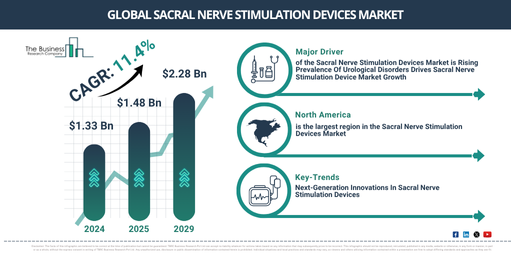
    The market for sacral nerve stimulation devices has seen a pronounced upsurge in the past few years. The market value, which stood at $1.33 billion in 2024, is projected to increase to $1.48 billion in 2025, reflecting a compound annual growth rate (CAGR) of 11.1%. Several factors have contributed to this historical growth, including a higher frequency of urinary and fecal incontinence, improvements in neuromodulation technology, a heightened sense of awareness around non-invasive treatment options, beneficial reimbursement policies, an aging population, an increased occurrence of neurological disorders, and a rise in healthcare expenditure.

    The market for sacral nerve stimulation devices is set to experience a significant surge in the coming years, with projections of it growing to a value of $2.28 billion in 2029 at a compound annual growth rate (CAGR) of 11.4%. This growth in the forecast period is primarily due to enhancement in reimbursement policies, wider approval of neuromodulation therapies, a rising incline for non-invasive or minimally invasive medical procedures, the investigation of sacral nerve stimulation devices, an increasing trend among patients and healthcare providers, favorable regulatory circumstances, and an increase in healthcare spending worldwide. Key trends within the forecast period encompass breakthroughs in miniaturization and implantable technologies, investigation of sacral nerve stimulation devices, the progression of external sacral nerve stimulation devices, patient education and consciousness, regulatory progress, market accessibility, spinal cord stimulation, or peripheral nerve stimulation.

    Download a free sample to assess the report’s scope and structure:

    https://www.thebusinessresearchcompany.com/sample.aspx?id=18458&type=smp

    What Are the Major Market Drivers Behind the Rising Adoption of Sacral Nerve Stimulation Devices Market?

    The augmenting occurrences of urological issues are anticipated to fuel the expansion of the sacral nerve stimulation devices market in the future. Such disorders incorporate a variety of health problems that impact the urinary tract, kidneys, bladder, and prostate, with varying durations from acute to chronic conditions. The genesis of urological disorders can originate from different causative agents, impacting the urinary tract and reproductive organs. Moreover, factors linked to lifestyle choices, such as a substandard diet, lack of hydration, and insufficient physical activity, might heighten the risk of developing renal calculi, a condition that causes severe pain in the urinary tract. Sacral nerve stimulation devices act as a minimally intrusive treatment alternative that can effectively control urological challenges, such as fecal and urinary incontinence. For example, data supplied by the National Institute of Diabetes and Digestive and Kidney Diseases in April 2024 indicate that in the United States, an average of 651,446 elders aged 65 or more, of which 212,875 are men and 438,572 are women got diagnosed with some form of urinary incontinence each year. Consequently, the escalating incidence of urological disorders is likely to stimulate the growth of the sacral nerve stimulation devices market.

    Which Key Market Segments Comprise the Sacral Nerve Stimulation Devices Market and Drive Its Revenue Growth?

    The sacral nerve stimulation devicesmarket covered in this report is segmented –

    1) By Type: Electrical Muscle Stimulation, Transcutaneous Electrical Nerve Stimulation

    2) By Product: External Sacral Nerve Stimulation (SNS) Devices, Implantable Sacral Nerve Stimulation (SNS) Devices

    3) By Age: Pediatrics, Adults, Geriatrics

    4) By Application: Urinary Incontinence, Fecal Incontinence, Other Applications

    5) By End User: Hospital, Ambulatory Surgical Centers, Specialty Clinics

    Subsegments:

    1) By Electrical Muscle Stimulation: Surface Electrical Muscle Stimulation, Implantable Electrical Muscle Stimulation

    2) By Transcutaneous Electrical Nerve Stimulation: Conventional TENS, Burst Mode TENS, Modulated TENS

    Request customized data on this market:

    https://www.thebusinessresearchcompany.com/customise?id=18458&type=smp

    Which Areas Are Leading Regions in the Sacral Nerve Stimulation Devices Market Expansion Across the Globe?

    North America was the largest region in the sacral nerve stimulation devices market in 2024. Asia-Pacific is expected to be the fastest-growing region in the forecast period. The regions covered in the sacral nerve stimulation devices market report are Asia-Pacific, Western Europe, Eastern Europe, North America, South America, Middle East, Africa.

    What Are the Strategic Trends Steering theSacral Nerve Stimulation Devices Market Direction?

    Key players in the sacral nerve stimulation devices market are focusing on the creation of innovative offerings such as next-generation sacral neuromodulation appliances in order to improve patient results, boost device effectiveness, and minimize negative side effects. These next-generation tools are at the forefront of technology, offering improved command and efficiency in sacral nerve stimulation. For example, in February 2022, Medtronic plc. An Ireland-based company specializing in medical devices, introduced the InterStim X. This advanced device is devised for sacral neuromodulation therapy, primarily used in treating conditions like overactive bladder (OAB), chronic fecal incontinence, and non-obstructive urinary retention. InterStim X provides a long-lasting, personalized treatment that does not require recharging. Being recharge-free, the device offers patients prolonged therapy of a decade or more, ensuring improved comfort and adherence.

    View the full report here:

    https://www.thebusinessresearchcompany.com/report/sacral-nerve-stimulation-devices-global-market-report

    How Is the Sacral Nerve Stimulation Devices Market Conceptually Defined?

    A sacral nerve stimulation device is a medical implant that uses electrical impulses to modulate nerves in the sacral area. It’s used to treat conditions such as urinary incontinence and an overactive bladder by regulating nerve activity. This technology aims to improve bladder function and quality of life for patients through targeted neurological intervention.

    Purchase the full report and get a swift delivery:

    https://www.thebusinessresearchcompany.com/purchaseoptions.aspx?id=18458

    About The Business Research Company:

    With over 15000+ reports from 27 industries covering 60+ geographies, The Business Research Company has built a reputation for offering comprehensive, data-rich research and insights. Armed with 1,500,000 datasets, the optimistic contribution of in-depth secondary research, and unique insights from industry leaders, you can get the information you need to stay ahead in the game.

    Get in touch with us:

    The Business Research Company: https://www.thebusinessresearchcompany.com/

    Americas +1 310-496-7795

    Europe +44 7882 955267

    Asia & Others +44 7882 955267 & +91 8897263534

    Email us at info@tbrc.info

    Follow us on:

    LinkedIn: https://in.linkedin.com/company/the-business-research-company

    YouTube: https://www.youtube.com/channel/UC24_fI0rV8cR5DxlCpgmyFQ

    Global Market Model: https://www.thebusinessresearchcompany.com/global-market-model
  • Robot Assisted Endoscope Market Insights: In-Depth Look at Growth Trends, Market Size, and Opportunities for 2025-2034

    Robot Assisted Endoscope Market Insights: In-Depth Look at Growth Trends, Market Size, and Opportunities for 2025-2034

    Claim your 30% discount on Global Market Reports with code ONLINE30. Limited time only.

    What Are the Key Milestones in the Robot Assisted Endoscope Market’s Growth Trajectory From 2025 To 2034?

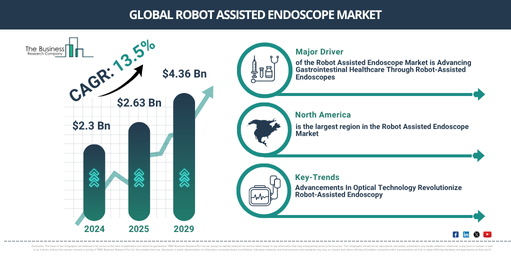
    The market for robot-aided endoscopes has seen considerable growth in recent times. Anticipated to rise from a value of $2.3 billion in 2024, it is expected to reach $2.63 billion in 2025, with a compound annual growth rate (CAGR) of 14.1%. Factors contributing to this historical growth pattern include the increased incidences of gastrointestinal diseases, heightened interest in robot-assisted procedures within healthcare settings, heightened consciousness among healthcare practitioners and patients, healthcare structural development in upcoming markets, as well as upsurge in policy approvals and reimbursements.

    The market for robot-assisted endoscopes is slated for accelerated expansion in the upcoming years, with projections of its worth reaching $4.36 billion by 2029, courtesy of a compound annual growth rate (CAGR) of 13.5%. Various factors contributing to this predicted growth encompass the rise in the geriatric demographic and the frequency of chronic illnesses, an upsurge in health care spending and investments, an increasing trend towards telemedicine and remote surgical operations, transition towards value-focused healthcare provision, and the broadening scope of uses for robot-assisted endoscopes. Some key trends observed for the forecast period are: advancements in imaging technology, downscaling of endoscopic tools and equipment, the evolution of flexible and maneuverable endoscopes, incorporation of augmented reality (AR) and virtual reality (VR) technologies, and the adoption of cloud technologies for remote surveillance, data analysis, and collective decision-making.

    Download a free sample to assess the report’s scope and structure:

    https://www.thebusinessresearchcompany.com/sample.aspx?id=15920&type=smp

    What External and Internal Drivers Are Contributing to the Growth of theRobot Assisted Endoscope Market?

    The growth of the robot-assisted endoscope market has been anticipated to surge due to the rising occurrence of gastrointestinal maladies. These refer to a range of disorders impacting the digestive system, encompassing the stomach, intestines, liver, and pancreas. The rise in gastrointestinal diseases could be attributed to alterations in food habits, intake of infected food or water, pathogen-induced infections, and lifestyle attributes like inactivity, smoking, and alcohol use. Robot-assisted endoscopes enhance the capacity to diagnose and treat these disorders, offering medical personnel improved visibility and control in procedures, augmenting patient results and facilitating early detection and response. For example, the American Cancer Society (ACS), an American health body committed to eradicating cancer, indicated that in January 2023, gastrointestinal cancers in the United States saw a 3.18% surge to 348,840 from 338,090 in 2021. Hence, the escalating occurrences of gastrointestinal illnesses are fuelling the expansion of the robot-assisted endoscope market.

    What Segment Types Define the Robot Assisted Endoscope Market Structure?

    The robot assisted endoscopemarket covered in this report is segmented –

    1) By Product: Diagnostic, Therapeutic

    2) By Application: Laparoscopy, Bronchoscopy, Colonoscopy

    3) By End- User: Hospitals, Ambulatory Surgical Centers, Other End-User

    Subsegments:

    1) By Diagnostic: Laparoscopy Endoscopes, Bronchoscopy Endoscopes, Colonoscopy Endoscopes, Cystoscopy Endoscopes

    2) By Therapeutic: Robotic-Assisted Surgical Endoscopes, Endoscopic Surgery Instruments

    Request customized data on this market:

    https://www.thebusinessresearchcompany.com/customise?id=15920&type=smp

    Which Geographic Areas Hold the Strongest Growth Potential in the Robot Assisted Endoscope Market?

    North America was the largest region in the robot assisted endoscope market in 2024. The regions covered in the robot assisted endoscope market report are Asia-Pacific, Western Europe, Eastern Europe, North America, South America, Middle East and Africa.

    What Long-Term Trends Are Transforming the Competitive Landscape of the Robot Assisted Endoscope Market?

    In the robot-assisted endoscope market, major businesses are placing a strong emphasis on adopting groundbreaking medical technologies such as aspherical lenses, which can enhance visualization and minimize distortion. The adoption of aspherical lens technology results in enhanced image quality, resolution, and fewer optical artifacts in optical systems, offering a more accurate and precise visualization of internal structures and therefore boosting diagnostic capabilities during medical procedures. For example, in February 2023, the US-based medical device company AnX Robotica Corporation, known for using artificial intelligence and robotics technology, introduced the NaviCam Small Bowel System. This system represents a significant progression in endoscopic technology, specifically tailored to detect minor bowel diseases. It features innovative attributes such as aspherical lens technology to minimize distortion and broaden the field of vision, a critical aspect for accurate diagnoses. Furthermore, the system provides increased efficiencies for clinicians and patients by radically reducing download and processing time, which enables swift analysis and diagnosis.

    View the full report here:

    https://www.thebusinessresearchcompany.com/report/robot-assisted-endoscope-global-market-report

    What Is the Definition of the Robot Assisted Endoscope Market?

    Robot-assisted endoscope refers to the use of robotic technology to assist in performing endoscopic procedures, allowing for more precise control and maneuverability during diagnostic or therapeutic interventions within the body. Robot-assisted endoscopy represents a significant advancement in medical technology, combining robotics and endoscopic techniques to improve the diagnosis and treatment of various gastrointestinal and other internal conditions

    Purchase the full report and get a swift delivery:

    https://www.thebusinessresearchcompany.com/purchaseoptions.aspx?id=15920

    About The Business Research Company:

    With over 15000+ reports from 27 industries covering 60+ geographies, The Business Research Company has built a reputation for offering comprehensive, data-rich research and insights. Armed with 1,500,000 datasets, the optimistic contribution of in-depth secondary research, and unique insights from industry leaders, you can get the information you need to stay ahead in the game.

    Get in touch with us:

    The Business Research Company: https://www.thebusinessresearchcompany.com/

    Americas +1 310-496-7795

    Europe +44 7882 955267

    Asia & Others +44 7882 955267 & +91 8897263534

    Email us at info@tbrc.info

    Follow us on:

    LinkedIn: https://in.linkedin.com/company/the-business-research-company

    YouTube: https://www.youtube.com/channel/UC24_fI0rV8cR5DxlCpgmyFQ

    Global Market Model: https://www.thebusinessresearchcompany.com/global-market-model
  • Respiratory Oxygen Delivery Devices Market Outlook 2025–2034: Identifying Growth Drivers, Technology Trends, and Policy Impact

    Respiratory Oxygen Delivery Devices Market Outlook 2025–2034: Identifying Growth Drivers, Technology Trends, and Policy Impact

    Claim your 30% discount on Global Market Reports with code ONLINE30. Limited time only.

    How Has The Respiratory Oxygen Delivery Devices Market Size Shifted, And What Is the Outlook Through 2034?

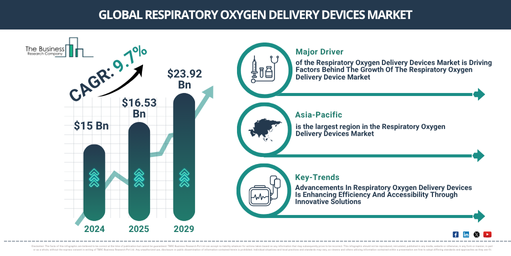
    In recent years, there has been a swift expansion in the market size of respiratory oxygen delivery devices. This market is set to grow from $15 billion in 2024 to $16.53 billion in 2025, displaying a compound annual growth rate (CAGR) of 10.1%. Factors such as an increased occurrence of respiratory conditions like chronic obstructive pulmonary disease (COPD), asthma and cystic fibrosis, a globally growing aging populace, increased understanding of the significance of respiratory health, expansion of healthcare spending in developing economies, and the rising preference for homecare settings for respiratory therapy, have all contributed to this growth during the historic period.

    Strong growth is expected for the respiratory oxygen delivery devices market, which is expected to reach $23.92 billion in 2029 with a compound annual growth rate (CAGR) of 9.7%. The likely growth drivers could be a rise in the demand for precision and personalized medicine in respiratory care, expansion of home healthcare services and telemonitoring of patients, increased R&D investments, and a heightened emphasis on preventive healthcare and early intervention strategies. Key trends for the forecast period are technological developments, a shift towards patient-focused and value-based care models, incorporation of telehealth and remote monitoring into respiratory treatment platforms, the usage of wearable technology and mobile apps for managing respiratory conditions, and the adoption of 3D printing and digital manufacturing technologies.

    Download a free sample to assess the report’s scope and structure:

    https://www.thebusinessresearchcompany.com/sample.aspx?id=15662&type=smp

    What Are the Core Market Drivers Propelling Growth in the Respiratory Oxygen Delivery Devices Industry?

    The respiratory oxygen delivery device market is anticipated to experience significant growth due to a rise in the occurrence of asthma. Asthma is a long-lasting respiratory illness defined by the swelling and constricting of the air passages, resulting in repeated bouts of wheezing, coughing, a tight feeling in the chest, and breathlessness. The incidence of asthma is rising due to factors like air pollution, exposure to allergens, genetic factors, alterations in lifestyle and eating habits, and urbanization. Respiratory oxygen delivery devices are crucial for the management of asthma, offering additional oxygen therapy to patients amid exacerbations. This ensures adequate oxygenation, reduces symptoms, improves respiratory function, and enhances the quality of life for asthma sufferers. For example, data released in May 2024 by the National Center for Health Statistics (NCHS), a health statistics agency based in the U.S., showed that the prevalence of current asthma in adults aged 18 and above in the U.S. went up from 8.4% in 2021 to 8.7% in 2022. Besides, the frequency of asthma attacks in adults of the same age category in the previous year increased from 3.3% in 2021 to 3.7% in 2022. Therefore, the escalating occurrence of asthma is fueling the demand for respiratory oxygen delivery devices.

    How Is the Respiratory Oxygen Delivery Devices Market Segmented?

    The respiratory oxygen delivery devicesmarket covered in this report is segmented –

    1) By Product: Oxygen Masks, Nasal Cannula, Venturi Masks, Non-rebreather Masks, Bag Valve Masks, Continuous Positive Airway Pressure (CPAP) Masks, Other Products

    2) By Application: Chronic Obstructive Pulmonary Disease (COPD), Asthma, Cystic Fibrosis, Respiratory Distress Syndrome, Pneumonia, Other Disease Applications

    3) By End-Use: Hospitals, Outpatient Facilities, Home Care

    Subsegments:

    1) By Oxygen Masks: Simple Oxygen Masks, Partial Rebreather Masks

    2) By Nasal Cannula: Standard Nasal Cannula, High-Flow Nasal Cannula

    3) By Venturi Masks: Fixed Venturi Masks, Adjustable Venturi Masks

    4) By Non-Rebreather Masks: Adult Non-Rebreather Masks, Pediatric Non-Rebreather Masks

    5) By Bag Valve Masks: Adult Bag Valve Masks, Pediatric Bag Valve Masks

    6) By Continuous Positive Airway Pressure (Cpap) Masks: Full-Face Cpap Masks, Nasal Cpap Masks

    7) By Other Products: Oxygen Concentrators, Oxygen Cylinders

    Request customized data on this market:

    https://www.thebusinessresearchcompany.com/customise?id=15662&type=smp

    Which Regions Are Driving the Next Phase of the Respiratory Oxygen Delivery Devices Market Growth?

    Asia-Pacific was the largest region in the respiratory oxygen delivery devices market in 2024. The regions covered in the respiratory oxygen delivery devices market report are Asia-Pacific, Western Europe, Eastern Europe, North America, South America, Middle East, Africa.

    What Key Market Trends and Innovations Are Shaping the Future of the Respiratory Oxygen Delivery Devices Industry?

    Firms in the respiratory oxygen delivery device market are concentrating on integrating high-tech sensor control systems and interconnected connectivity features into oxygen concentrator devices, like pressure swing adsorption (PSA) technology. This effort aims to bolster patient supervision, augment treatment results, and simplify healthcare delivery mechanisms. Oxygen concentrators utilizing pressure swing adsorption (PSA) technology effectively divide oxygen from nitrogen present in the surrounding air, providing a steady and dependable oxygen stream for patients requiring respiratory aid. For instance, in July 2022, a medical device manufacturer based in Japan, OMRON Healthcare Co. Ltd., introduced a portable medical molecular sieve oxygen concentrator. This device is engineered to offer a persistent supply of highly pure oxygen. The concentrator uses pressure swing adsorption (PSA) technology to separate nitrogen, oxygen, and other components from the surrounding air, which ensures efficiency and quality while keeping the device portable. It’s designed to meet the treatment and lifestyle requirements of patients suffering from chronic obstructive pulmonary disease (COPD) and respiratory issues, delivering a manageable solution for home care providers and extremely active users. The concentrator emphasizes mobility and durability, boasting features such as a 360-degree silent wear-resistant universal caster wheel and a design robust against impact.

    View the full report here:

    https://www.thebusinessresearchcompany.com/report/respiratory-oxygen-delivery-devices-global-market-report

    How Is the Respiratory Oxygen Delivery Devices Market Defined and What Are Its Core Parameters?

    Respiratory oxygen delivery devices are medical tools designed to deliver oxygen to patients who require supplemental oxygen therapy to support their breathing. They are utilized to provide oxygen therapy to individuals with respiratory conditions such as chronic obstructive pulmonary disease (COPD), pneumonia, and other lung diseases, as well as those experiencing hypoxemia (low oxygen levels in the blood) due to various medical conditions or environmental factors.

    Purchase the full report and get a swift delivery:

    https://www.thebusinessresearchcompany.com/purchaseoptions.aspx?id=15662

    About The Business Research Company:

    With over 15000+ reports from 27 industries covering 60+ geographies, The Business Research Company has built a reputation for offering comprehensive, data-rich research and insights. Armed with 1,500,000 datasets, the optimistic contribution of in-depth secondary research, and unique insights from industry leaders, you can get the information you need to stay ahead in the game.

    Get in touch with us:

    The Business Research Company: https://www.thebusinessresearchcompany.com/

    Americas +1 310-496-7795

    Europe +44 7882 955267

    Asia & Others +44 7882 955267 & +91 8897263534

    Email us at info@tbrc.info

    Follow us on:

    LinkedIn: https://in.linkedin.com/company/the-business-research-company

    YouTube: https://www.youtube.com/channel/UC24_fI0rV8cR5DxlCpgmyFQ

    Global Market Model: https://www.thebusinessresearchcompany.com/global-market-model
  • Emerging Growth Drivers in the Remote Cardiac Monitoring Market Landscape: Rising Prevalence Of Cardiovascular Diseases Fuels Growth In Remote Cardiac Monitoring Market

    Emerging Growth Drivers in the Remote Cardiac Monitoring Market Landscape: Rising Prevalence Of Cardiovascular Diseases Fuels Growth In Remote Cardiac Monitoring Market

    Claim your 30% discount on Global Market Reports with code ONLINE30. Limited time only.

    How Has the Remote Cardiac Monitoring Market Growth Performance Trended Historically, And What Lies Ahead?

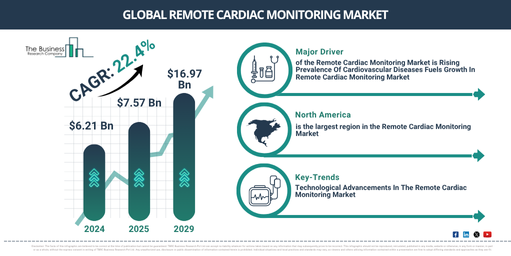
    The market size for remote cardiac monitoring has seen an explosively increase in the past years. The market, which is projected to rise from $6.21 billion in 2024 to $7.57 billion in 2025, is expected to witness a compound annual growth rate (CAGR) of 21.9%. Forces driving this growth during the historical period include a rising incidence of heart diseases, a worldwide growth in the aging population, supportive regulatory clearances, heightened awareness of preventive healthcare, and substantial investments and financial backing in health-tech startups.

    Expectations are high for the remote cardiac monitoring market to experience prodigious expansion in the approaching years with an estimated value of $16.97 billion in 2029 and a compound annual growth rate (CAGR) of 22.4%. Factors contributing to the predicted growth during the period include enhancements in healthcare framework, raised awareness in budding economies, the rising dominance of telehealth services, amplified interest from consumers in wearable health technology, and attempts to cut healthcare expenses by mitigating rehospitalization rates. The forecasted tenure is expected to be characterized by perfect integration of AI and machine learning with telehealth platforms, improved data security and privacy, evolution of bespoke monitoring solutions, growing adoption of cloud-based platforms for data storage and analytics, and ongoing technological progressions.

    Download a free sample to assess the report’s scope and structure:

    https://www.thebusinessresearchcompany.com/sample.aspx?id=17243&type=smp

    Which Primay Drivers Are Accelerating Growth in the Remote Cardiac Monitoring Market?

    The surge in cardiovascular illnesses is anticipated to drive the development of the remote cardiac monitoring market. Cardiovascular disorders consist of a variety of conditions affecting the heart and blood vessels, including coronary artery disease, heart failure, arrhythmias, and hypertension. The rise in such diseases is attributed to factors like unhealthy eating habits, lack of physical activity, increasing obesity and diabetes, and aging populations. Continuous, real-time heart health tracking provided by remote cardiac monitoring is crucial for managing these diseases, allowing for early identification and prompt treatment. For instance, a report released by the American College of Cardiology in August 2022, a non-profit medical association in the US, predicted substantial increases in cardiovascular risk factors in America by 2060, with diabetes expected to rise by 39.3% to 55 million individuals and stroke to increase by 33.8% to 15 million cases. As a result, the swelling prevalence of cardiovascular diseases will stimulate the advancement of the remote cardiac monitoring market.

    Which Primary Segments of the Remote Cardiac Monitoring Market Are Driving Growth and Industry Transformations?

    The remote cardiac monitoringmarket covered in this report is segmented –

    1) By Type: Devices, Software, Services

    2) By Indication: Bradycardia, Tachycardia, Atrial And Ventricular Fibrillation, Other Indications

    3) By End User: Hospitals And Clinics, Emergency Settings, Homecare Settings, Other End Users

    Subsegments:

    1) By Devices: Wearable ECG Monitors, Implantable Loop Recorders (ILRs), Mobile Cardiac Telemetry Devices, Cardiac Event Monitors, Smartwatches With Heart Monitoring Capabilities

    2) By Software: Cardiac Monitoring and Analysis Software, Data Management Software, Cloud-Based Remote Monitoring Platforms, Mobile Applications For Patient Monitoring

    3) By Services: Remote Cardiac Monitoring Services, Data Interpretation And Reporting Services, Telehealth Consultation Services, Device Maintenance And Technical Support Services

    Request customized data on this market:

    https://www.thebusinessresearchcompany.com/customise?id=17243&type=smp

    Which Regions Are Key Players in the Growth of the #Which Primay Drivers Are Accelerating Growth in the Remote Cardiac Monitoring Market?# Market?

    North America was the largest region in the remote cardiac monitoring market in 2024. Asia-Pacific is expected to be the fastest-growing region in the forecast period. The regions covered in the remote cardiac monitoring market report are Asia-Pacific, Western Europe, Eastern Europe, North America, South America, Middle East, Africa.

    Which Technological Trends Are Reshaping the Remote Cardiac Monitoring Industry Dynamics?

    Prominent corporations in the remote cardiac monitoring market are focusing on the creation of advanced technological utilities, such as ultrasound units, to improve the precision and suitability of heart health surveillance. An ultrasound unit is a medical tool utilized for conducting ultrasound imaging processes. For example, in December 2022, Royal Philips introduced the Ultrasound Compact System 5000 Series, which offers top-tier diagnostic quality, portability, compatibility with EPIQ Elite and Affiniti transducers, and includes Collaboration Live telemedicine software for instantaneous remote consultations. This series provides an avenue to superior cart-based diagnostic quality, highlighting its portability and flexibility, while upkeeping top-notch image fidelity and performance.

    View the full report here:

    https://www.thebusinessresearchcompany.com/report/remote-cardiac-monitoring-global-market-report

    What Parameters Are Used to Define the Remote Cardiac Monitoring Market?

    Remote cardiac monitoring involves the use of technology to continuously monitor a patient’s heart activity from a distance, typically through wearable devices or implanted monitors. This technology transmits real-time data on heart rhythms and other vital signs to healthcare providers for analysis and timely intervention. The purpose of remote cardiac monitoring is to provide ongoing, accurate cardiac care, allowing for early detection of arrhythmias, heart attacks, and other cardiovascular issues, ultimately improving patient outcomes and reducing the need for frequent in-person visits.

    Purchase the full report and get a swift delivery:

    https://www.thebusinessresearchcompany.com/purchaseoptions.aspx?id=17243

    About The Business Research Company:

    With over 15000+ reports from 27 industries covering 60+ geographies, The Business Research Company has built a reputation for offering comprehensive, data-rich research and insights. Armed with 1,500,000 datasets, the optimistic contribution of in-depth secondary research, and unique insights from industry leaders, you can get the information you need to stay ahead in the game.

    Get in touch with us:

    The Business Research Company: https://www.thebusinessresearchcompany.com/

    Americas +1 310-496-7795

    Europe +44 7882 955267

    Asia & Others +44 7882 955267 & +91 8897263534

    Email us at info@tbrc.info

    Follow us on:

    LinkedIn: https://in.linkedin.com/company/the-business-research-company

    YouTube: https://www.youtube.com/channel/UC24_fI0rV8cR5DxlCpgmyFQ

    Global Market Model: https://www.thebusinessresearchcompany.com/global-market-model
  • Strategic Growth Drivers Shaping the Refurbished MRI Systems Market Outlook 2025- 2034:The Increasing Demand For Healthcare Services Drives The Refurbished MRI Systems Market

    Strategic Growth Drivers Shaping the Refurbished MRI Systems Market Outlook 2025- 2034:The Increasing Demand For Healthcare Services Drives The Refurbished MRI Systems Market

    Claim your 30% discount on Global Market Reports with code ONLINE30. Limited time only.

    What Are the Projected Market Size and Growth Rates for the Refurbished MRI Systems Market From 2025 To 2029?

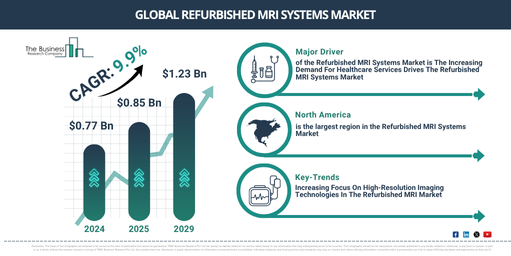
    The market for refurbished MRI systems has seen significant growth in recent years. The market is projected to increase from $0.77 billion in 2024 to $0.85 billion in 2025, with a compound annual growth rate (CAGR) of 9.7%. This growth during the historic period is due to various factors including the need for cost-effective solutions, constraints in healthcare budgets, an increase in overall healthcare spending, a growing incidence of chronic illnesses, and the demand for advanced diagnostic equipment.

    The market size for renovated MRI systems is forecasted to experience significant growth in the upcoming years, predicted to reach $1.23 billion by 2029, with a 9.9% Compound Annual Growth Rate (CAGR). This growth during the forecast period can be credited to factors such as the rising need for budget-friendly medical devices, increased consciousness about the advantages of healthcare, a growing age population profile, governmental undertakings for healthcare enhancement, and initiatives to expand healthcare accessibility. Other important trends in this period involve advances in refitting processes, an increased supply of approved secondary market MRI systems, the rise of independent retrofitting firms, growing focus on green and sustainable practices, and the increase in online sales outlets and platforms.

    Download a free sample to assess the report’s scope and structure:

    https://www.thebusinessresearchcompany.com/sample.aspx?id=15916&type=smp

    Which Factors and External Forces Are Driving Demand in the Refurbished MRI Systems Market?

    The refurbished MRI systems market is anticipated to witness significant growth due to the growing need for healthcare services. These services encapsulate a variety of medical and wellness treatments that include preventive, diagnostic, therapeutic, and palliative care, all aimed at maintaining or enhancing individual health. The escalation in healthcare service demand results from an aging population, higher chronic illness incidence, medical technology advancements, and broader healthcare access. Refurbished MRI systems contribute to fulfilling this healthcare service demand by offering affordable and high-quality imaging solutions, thereby improving diagnostic proficiency and access. For example, according to a prediction by Health Affairs, a U.S.-based scholarly journal, the national healthcare spending in the U.S. is forecasted to grow from $4,799.3 billion in 2023 to $5,048.8 billion in 2024, marking an increase of roughly $249.5 billion. Hence, the escalating need for healthcare services is stimulating the refurbished MRI systems market’s growth.

    Which Segments in the Refurbished MRI Systems Offer the Most Growth?

    The refurbished mri systemsmarket covered in this report is segmented –

    1) By Architecture: Closed System, Open System

    2) By Field Strength: Low Field Strength, Mid Field Strength, High Field Strength

    3) By End Use: Hospitals, Imaging Centers, Ambulatory Surgical Centers, Other End Users

    Subsegments:

    1) By Closed System: Superconducting MRI Systems, Permanent Magnet MRI Systems, Resistive Magnet MRI Systems

    2) By Open System: Open-High Field MRI Systems, Open-Low Field MRI Systems

    Request customized data on this market:

    https://www.thebusinessresearchcompany.com/customise?id=15916&type=smp

    What Are the Fastest-Growing Geographies in the #Which Factors and External Forces Are Driving Demand in the Refurbished MRI Systems Market?# Market?

    North America was the largest region in the refurbished MRI systems market in 2024. Asia-Pacific is expected to be the fastest-growing region in the forecast period. The regions covered in the refurbished MRI systems market report are Asia-Pacific, Western Europe, Eastern Europe, North America, South America, Middle East and Africa.

    Which Cutting-Edge Market Trends Are Expected to Drive theRefurbished MRI Systems Market’s Growth?

    Leading firms in the refurbished MRI systems market are progressively concentrating on creating advanced high-resolution imaging technologies, such as gradient technology, to outperform competitors. In MRI, the gradient technology plays a crucial role in producing highly detailed images by creating controlled changes in the magnetic field. For instance, Arnica HealthTech, an MRI system provider from India, launched the Avanto Refurbished Siemens MRI Machine in March 2024, with a commitment to provide top-quality medical imaging at economically feasible rates. Synonymous with superior imaging quality and patient-oriented design, the Avanto unit incorporates Tim technology enabling quicker scans, Magnetom gradients to deliver high-resolution imaging, along with innovative features such as diffusion-weighted and perfusion imaging. Additionally, it focuses on enhancing the patient experience by offering a broad bore, noise reduction, and ambient lighting for a soothing ambiance.

    View the full report here:

    https://www.thebusinessresearchcompany.com/report/refurbished-mri-systems-global-market-report

    What Are the Key Elements That Define the Refurbished MRI Systems Market?

    Refurbished magnetic resonance imaging (MRI) systems refer to previously owned MRI machines that have undergone maintenance and upgrades to ensure optimal functionality. These systems are utilized for diagnostic imaging in medical facilities seeking cost-effective solutions for upgrading their imaging capabilities.

    Purchase the full report and get a swift delivery:

    https://www.thebusinessresearchcompany.com/purchaseoptions.aspx?id=15916

    About The Business Research Company:

    With over 15000+ reports from 27 industries covering 60+ geographies, The Business Research Company has built a reputation for offering comprehensive, data-rich research and insights. Armed with 1,500,000 datasets, the optimistic contribution of in-depth secondary research, and unique insights from industry leaders, you can get the information you need to stay ahead in the game.

    Get in touch with us:

    The Business Research Company: https://www.thebusinessresearchcompany.com/

    Americas +1 310-496-7795

    Europe +44 7882 955267

    Asia & Others +44 7882 955267 & +91 8897263534

    Email us at info@tbrc.info

    Follow us on:

    LinkedIn: https://in.linkedin.com/company/the-business-research-company

    YouTube: https://www.youtube.com/channel/UC24_fI0rV8cR5DxlCpgmyFQ

    Global Market Model: https://www.thebusinessresearchcompany.com/global-market-model
  • Major Drivers Propelling the Growth oh theRefurbished Medical Imaging Devices Market Forward: Increasing Number Of Diagnostic Imaging Procedures Driving The Growth Of The Refurbished Medical Imaging Device

    Major Drivers Propelling the Growth oh theRefurbished Medical Imaging Devices Market Forward: Increasing Number Of Diagnostic Imaging Procedures Driving The Growth Of The Refurbished Medical Imaging Device

    Claim your 30% discount on Global Market Reports with code ONLINE30. Limited time only.

    What Is the Estimated Market Size of the Refurbished Medical Imaging Devices Market In 2029?

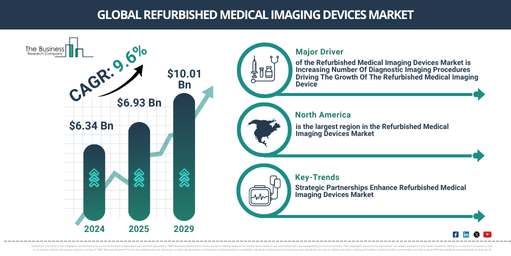
    In the previous years, the market size for refurbished medical imaging devices has considerably expanded. It is projected to surge from $6.34 billion in 2024 to $6.93 billion in 2025, experiencing a compound annual growth rate (CAGR) of 9.4%. Factors contributing to this growth during the historic period include healthcare reimbursement policies, clinical necessities and demands, support from vendors and their services, patient safety and the quality of care, alongside the dynamics and service quality of the vendors.

    The market for refurbished medical imaging devices is anticipated to experience robust expansion in the coming years, reaching an estimated value of $10.01 billion by 2029 at a compound annual growth rate (CAGR) of 9.6%. This projected rise within the forecast period is believed to be due to the development of healthcare infrastructure, the increased obsolescence, growing necessity for diagnostic services, the ongoing demand for specialized imaging systems, and device replacement cycles. Key trends predicted for this period include improved connectivity and interoperability, the adoption of portable and point-of-care solutions, emphasis on cost-efficiency and sustainability, the ability to upgrade and modify, and the importance of compliance and quality assurance.

    Download a free sample to assess the report’s scope and structure:

    https://www.thebusinessresearchcompany.com/sample.aspx?id=15915&type=smp

    Which Major Market Drivers Are Expected to Boost the Growth Potential of the Refurbished Medical Imaging Devices Market?

    The refurbished medical imaging device market is poised to grow, powered by the surge in the number of diagnostic imaging procedures. These procedures, used to view the body’s internal structures for diagnosis, are on the rise owing to the increasing acceptance of proactive health care measures that enable early detection and treatment of health conditions. Refurbished medical machines are widely utilized for a host of diagnostic purposes including fracture detection, lung examinations, and abnormality detection in the abdomen. For example, a report by the Canadian Agency for Drugs and Technologies in Healthcare, a Canadian professional non-profit organization, highlighted a 30.8% surge in the number of MRI units available across all provinces and one territory, from 308 units in 2021 to 403 units in 2022. Moreover, a study done by the same Canadian government agency on 56 privately owned Canadian imaging facilities showed the average number of MRI scans, a diagnostic imaging procedure type, performed in a single Canadian private facility increased from 4,703 in 2021-2022 to 5,178, with the range extending from 569 to 12,389 scans. Consequently, the surge in the number of diagnostic imaging procedures is fueling the refurbished medical imaging device market’s expansion.

    Which Key Market Segments Comprise the Refurbished Medical Imaging Devices Market and Drive Its Revenue Growth?

    The refurbished medical imaging devicesmarket covered in this report is segmented –

    1) By Product: X-Ray Machines, Magnetic Resonance Imaging (MRI) Systems, Ultrasound Systems, Computed Tomography Scanners, Nuclear Imaging Systems, Other Products

    2) By Application: Diagnostic, Therapeutic

    3) By End Users: Hospitals, Clinics, Diagnostic Centers, Other End Users

    Subsegments:

    1) By X-Ray Machines: Analog X-Ray Machines, Digital X-Ray Machines

    2) By Magnetic Resonance Imaging (MRI) Systems: Closed MRI Systems, Open MRI Systems

    3) By Ultrasound Systems: Portable Ultrasound Systems, Cart-Based Ultrasound Systems

    4) By Computed Tomography Scanners: Single Slice CT Scanners, Multi-Slice CT Scanners

    5) By Nuclear Imaging Systems: PET Scanners, SPECT Scanners

    6) By Other Products: Mammography Machines, C-Arms

    Request customized data on this market:

    https://www.thebusinessresearchcompany.com/customise?id=15915&type=smp

    Which Areas Are Leading Regions in the Refurbished Medical Imaging Devices Market Expansion Across the Globe?

    North America was the largest region in the refurbished medical imaging devices market in 2024. Asia-Pacific is expected to be the fastest-growing region in the forecast period. The regions covered in the refurbished medical imaging devices market report are Asia-Pacific, Western Europe, Eastern Europe, North America, South America, Middle East, Africa.

    What Are the Key Market Trends in theRefurbished Medical Imaging Devices Market Over the Coming Years?

    Renowned corporations in the refurbished medical imaging devices realm are concentrated on forging strategic collaborations to maintain their competitive advantage. These kinds of collaborations typically encompass partnerships between healthcare facilities and suppliers of medical equipment to provide overhauled imaging equipment. For instance, in October 2023, a US-based firm, AA Medical known for its sustainable solutions, declared strategic alliances with Tekyard, a US-based company known for specializing in utilized, refurbished technology and medical tools, Zantek Medical, another US-based provider of overhauled and biomed-certified medical devices and, MED-SELL.COM, a US-based company involved in buying and selling of used medical equipment. This move is aimed to boost its competencies in healthcare asset management, recycled medical device processing, and optimal disposal. These coalitions are expected to widen the reach of AA Medical’s product and service provision worldwide, fortifying its stand in the second-hand medical equipment space. The partnerships will exploit Tekyard’s optimal disposal solutions, Zantek’s refurbished biomedical instruments, and the competent disposal services of MED-SELL.COM.

    View the full report here:

    https://www.thebusinessresearchcompany.com/report/refurbished-medical-imaging-devices-global-market-report

    How Is the Refurbished Medical Imaging Devices Market Conceptually Defined?

    Refurbished medical imaging devices refer to pre-owned medical imaging equipment that has been restored to a condition that meets manufacturer specifications or industry standards for quality and performance. These devices are utilized to optimize asset utilization, improve efficiency, and cost-effectively provide high-quality patient care.

    Purchase the full report and get a swift delivery:

    https://www.thebusinessresearchcompany.com/purchaseoptions.aspx?id=15915

    About The Business Research Company:

    With over 15000+ reports from 27 industries covering 60+ geographies, The Business Research Company has built a reputation for offering comprehensive, data-rich research and insights. Armed with 1,500,000 datasets, the optimistic contribution of in-depth secondary research, and unique insights from industry leaders, you can get the information you need to stay ahead in the game.

    Get in touch with us:

    The Business Research Company: https://www.thebusinessresearchcompany.com/

    Americas +1 310-496-7795

    Europe +44 7882 955267

    Asia & Others +44 7882 955267 & +91 8897263534

    Email us at info@tbrc.info

    Follow us on:

    LinkedIn: https://in.linkedin.com/company/the-business-research-company

    YouTube: https://www.youtube.com/channel/UC24_fI0rV8cR5DxlCpgmyFQ

    Global Market Model: https://www.thebusinessresearchcompany.com/global-market-model
  • Critical Market Drivers Shaping the Outlook for Pulmonology Lasers Market from 2025-2034: Chronic Respiratory Diseases Propels Growth Of The Pulmonology Laser Market

    Claim your 30% discount on Global Market Reports with code ONLINE30. Limited time only.

    How Fast Is The Pulmonology Lasers Market Expected to Grow Between 2025 And 2029?

    The market size of pulmonology lasers has substantially expanded over the last few years. The market, which was valued at $5.06 billion in 2024, is predicted to surge to $5.52 billion in 2025, showing a compound annual growth rate (CAGR) of 9.1%. The notable increase during the historic period is mainly due to the emergence of laser technology, the early applications of lasers in pulmonology, the use of carbon dioxide lasers, advances in delivery systems, and methodology enhancements such as laser bronchoscopy.

    The market size for pulmonology lasers is projected to witness significant growth in the upcoming years, reaching $7.78 billion by 2029 at a Compound Annual Growth Rate (CAGR) of 9.0%. Factors contributing to this growth during the forecast period include clinical efficiency, advancements in laser equipment miniaturization, training, education, efficient regulatory procedures and approvals, and patients’ tendency towards less invasive treatment methods. Key trends for the forecast period encompass precision medicine, affordability and accessibility, progress in immunotherapy and combined treatments, regulatory and moral considerations, and less invasive procedures.

    Download a free sample to assess the report’s scope and structure:

    https://www.thebusinessresearchcompany.com/sample.aspx?id=16773&type=smp

    What Are the Core Growth Drivers Propelling the Pulmonology Lasers Market Forward?

    The increase in chronic respiratory conditions is projected to stimulate the expansion of the pulmonology laser market. These diseases are prolonged ailments that damage the airways and lungs, resulting in breathing challenges and significant harm to quality of life. The prevalence of these respiratory diseases is largely attributed to elements such as air pollution, smoking habits, an older demographic, fast-paced urbanization, and shifts in the climate. Pulmonology lasers play a crucial role in diagnosing chronic respiratory diseases through bronchoscopy and intervening therapeutically, such as by treating airway blockages or tumors. For instance, the Australian Institute of Health and Welfare, a government agency in Australia, reported in June 2024 that about 2.8 million Australians, or 11% of the population, were believed to be asthmatic (a chronic respiratory condition), while approximately 638,000 individuals, or around 2.5% of the population, were living with chronic obstructive pulmonary disease (COPD). In fact, COPD was identified as a primary cause of death that year, responsible for 4.0% of deaths in Australia. Consequently, the escalation in chronic respiratory diseases is fuelling the growth of the pulmonology laser market.

    What Segment Types Define the Pulmonology Lasers Market Structure?

    The pulmonology lasersmarket covered in this report is segmented –

    1) By Type: Neodymium-Doped Yttrium Aluminum Garnet (Nd-YAG Laser), Photodynamic Laser

    2) By Indication: Bronchogenic Carcinoma, Malignant Lesions, Benign Tumors, Neoplasms, Hemorrhage, Tracheal Stenosis

    3) By End-Users: Specialty Care Centers, Hospitals, Academic Centers, Research Organizations

    Subsegments:

    1) By Nd-YAG Laser: Continuous Wave Nd-YAG Laser, Pulsed Nd-YAG Laser

    2) By Photodynamic Laser: Low-Level Photodynamic Laser, High-Intensity Photodynamic Laser

    Request customized data on this market:

    https://www.thebusinessresearchcompany.com/customise?id=16773&type=smp

    Which Geographic Areas Hold the Strongest Growth Potential in the Pulmonology Lasers Market?

    North America was the largest region in the pulmonology lasers market in 2024. The regions covered in the pulmonology lasers market report are Asia-Pacific, Western Europe, Eastern Europe, North America, South America, Middle East, Africa.

    Which Emerging Trends that Are Influencing thePulmonology Lasers Industry Evolution?

    The key players in the pulmonology laser market are concentrating on the creation of cutting-edge technologies such as next-generation integrated laser technology to enhance diagnostic accuracy and therapeutic precision. These advanced systems unite laser devices with sophisticated hardware and software advancements to raise precision, efficiency, and medical application capabilities. For example, Lumibird Medical, a French ophthalmic and medical equipment producer, introduced the Capsulo Nd: YAG laser in September 2022. It offers medical professionals improved precision, safety, and efficiency. This revolutionary device combines advanced Nd laser technology with precision engineering, suitable for a range of medical procedures. Designed for adaptability, it guarantees precise tissue interaction while reducing thermal damage, establishing a new standard in laser technology for superior functionality and enhanced patient results.

    View the full report here:

    https://www.thebusinessresearchcompany.com/report/pulmonology-lasers-global-market-report

    What Is the Definition of the Pulmonology Lasers Market?

    Pulmonology lasers are specialized medical devices used in the treatment of various respiratory conditions, for diagnostic and therapeutic purposes. These lasers emit high-energy light beams that can precisely target and vaporize abnormal or diseased tissue in the lungs. The purpose of pulmonology lasers is to provide minimally invasive treatment options for respiratory diseases, reducing the need for traditional surgery and improving patient outcomes.

    Purchase the full report and get a swift delivery:

    https://www.thebusinessresearchcompany.com/purchaseoptions.aspx?id=16773

    About The Business Research Company:

    With over 15000+ reports from 27 industries covering 60+ geographies, The Business Research Company has built a reputation for offering comprehensive, data-rich research and insights. Armed with 1,500,000 datasets, the optimistic contribution of in-depth secondary research, and unique insights from industry leaders, you can get the information you need to stay ahead in the game.

    Get in touch with us:

    The Business Research Company: https://www.thebusinessresearchcompany.com/

    Americas +1 310-496-7795

    Europe +44 7882 955267

    Asia & Others +44 7882 955267 & +91 8897263534

    Email us at info@tbrc.info

    Follow us on:

    LinkedIn: https://in.linkedin.com/company/the-business-research-company

    YouTube: https://www.youtube.com/channel/UC24_fI0rV8cR5DxlCpgmyFQ

    Global Market Model: https://www.thebusinessresearchcompany.com/global-market-model

  • Key Factors Fueling the Growth of the Pulmonology Devices Market in 2025: Respiratory Disease Prevalence Drives Pulmonology Devices Market Growth

    Key Factors Fueling the Growth of the Pulmonology Devices Market in 2025: Respiratory Disease Prevalence Drives Pulmonology Devices Market Growth

    Claim your 30% discount on Global Market Reports with code ONLINE30. Limited time only.

    What Are the Key Projections for the CAGR of the Pulmonology Devices Market Size From 2025 to 2034?

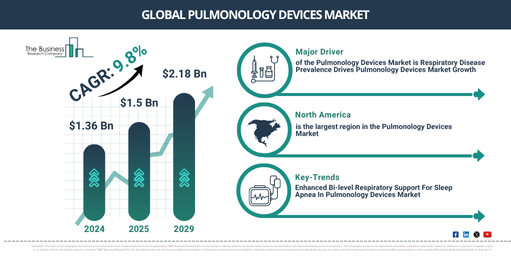
    The market size for pulmonology devices has seen accelerated expansion lately. It is forecasted to expand from $1.36 billion in 2024 to $1.5 billion in 2025, with a compound annual growth rate (CAGR) of 10.4%. The historical growth is due to various factors such as an upsurge in chronic respiratory diseases, a swing towards preventive healthcare, a rise in the utilization of pulmonology devices, an increase in ailments needing endoscopic ultrasound procedures, and a growth in the elderly population.

    In the coming years, there is an anticipation for substantial growth in the size of the pulmonology devices market. It’s projected to escalate to $2.18 billion by 2029, with a compound annual growth rate (CAGR) of 9.8%. Factors contributing to this growth for the forecasted period include an increase in respiratory diseases, elevation in air pollution, expansion in home healthcare, enhanced awareness and early detection, and improvement in healthcare infrastructure. The forthcoming period is set to witness significant trends such as the inclusion of artificial intelligence, growth of telehealth and remote patient monitoring, advancements in portable and wearable technology, the use of robotic technology in non-invasive diagnostic procedures, and a rise in home care services.

    Download a free sample to assess the report’s scope and structure:

    https://www.thebusinessresearchcompany.com/sample.aspx?id=16772&type=smp

    What are the Fundamental Drivers and Innovations Shaping the Pulmonology Devices Market?

    The escalating number of respiratory diseases is anticipated to foster the expansion of the pulmonology devices market. Respiratory diseases are medical disorders affecting breathing organs and tissues, including the airways, lungs, and respiratory muscles. These disorders are emerging due to the increase in air pollution, smoking, and workplace hazards. Pulmonology devices contribute to managing respiratory diseases by ensuring precise diagnosis, ongoing monitoring, and effective treatment with tools like spirometers, inhalers, pulse oximeters, and ventilators, thus enhancing patient outcomes and quality of life. For example, the Australian Institute of Health and Welfare reported in June 2024 that around 8.5 million people in Australia, which constitutes 34% of the population, were believed to have chronic respiratory conditions. Within this group, about 2.8 million people or 11% of the population, were living with asthma, and 638,000 people, or 2.5% of the population, were living with chronic obstructive pulmonary disease (COPD). Hence, the escalating number of respiratory diseases is fueling the expansion of the pulmonology devices market.

    How Is the Pulmonology Devices Market Segmented?

    The pulmonology devicesmarket covered in this report is segmented –

    1) By Product Type: Endobronchial Ultrasound (EBUS) Needles, Pulmonary Biopsy Devices, Airway Stents, Single-Use Bronchoscopes, Other Product Types

    2) By Indication: Chronic Obstructive Pulmonary Disease (COPD), Lung Cancer, Tracheal And Bronchial Stenosis, Foreign Body Extraction, Other Indications

    3) By End-User: Pulmonology Clinics, Hospitals, Ambulatory Surgical Centers

    Subsegments:

    1) By Endobronchial Ultrasound (EBUS) Needles: Radial EBUS Needles, Linear EBUS Needles, Biopsy EBUS Needles, EBUS Needles With Safety Features, EBUS Needles For Peripheral Lung Lesions

    2) By Pulmonary Biopsy Devices: Core Biopsy Needles, Fine Needle Aspiration (FNA) Biopsy Devices, Vacuum-Assisted Biopsy Devices, Transthoracic Biopsy Devices, Endoscopic Pulmonary Biopsy Devices

    3) By Airway Stents: Self-Expanding Airway Stents, Balloon-Expandable Airway Stents, Silicone Airway Stents, Metal Airway Stents, Hybrid Airway Stents (Silicone + Metal)

    4) By Single-Use Bronchoscopes: Single-Use Flexible Bronchoscopes, Single-Use Rigid Bronchoscopes, Single-Use Pediatric Bronchoscopes, Single-Use Disposable Video Bronchoscopes, Single-Use Bronchoscopes With Integrated Suction

    5) By Other Product Types: Pulmonary Function Testing Devices, Nebulizers For Pulmonary Disease Treatment, Spirometers, Pulmonary Inhalation Devices, Non-Invasive Ventilation (NIV) Devices

    Request customized data on this market:

    https://www.thebusinessresearchcompany.com/customise?id=16772&type=smp

    Which Regions Are Driving the Next Phase of the Pulmonology Devices Market Growth?

    North America was the largest region in the pulmonology devices market in 2024. The regions covered in the pulmonology devices market report are Asia-Pacific, Western Europe, Eastern Europe, North America, South America, Middle East, Africa.

    What Key Trends Are Shaping the Future of the Pulmonology Devices Market?

    Leading firms in the pulmonology devices marketplace are evolving their product line by incorporating advanced technologies such as bilevel positive airway pressure (BiPAP) technology. This development is targeted at augmenting patient comfort, refining treatment effectiveness, and addressing varied respiratory complications. BiPAP technology employs two different pressure settings – one for inhalation (IPAP) and another for exhalation (EPAP) – to make constant pressure more tolerable for users. For instance, in February 2024, ResMed, a US company that offers cloud-connected devices, unveiled the AirCurve 11 bilevel sleep apnea devices. This high-level BiPAP machine range is designed to heighten comfort and acceptance for individuals battling sleep apnea and other breathing conditions. The AirCurve 11 VAuto variant adjusts pressure during exhalation in harmony with the patient’s natural breath cycle. The AirCurve 11 ASV operates as an adaptive servo-ventilation (ASV) device monitoring 13 points in each breath cycle, 50 times every second, to stabilize the user’s ventilation.

    View the full report here:

    https://www.thebusinessresearchcompany.com/report/pulmonology-devices-global-market-report

    How Is the Pulmonology Devices Market Defined and What Are Its Core Parameters?

    Pulmonology devices are medical instruments and equipment used in the diagnosis, treatment, and management of respiratory system conditions and diseases. These devices play a crucial role in assessing lung function, monitoring respiratory health, providing therapeutic interventions, and supporting patients with respiratory disorders.

    Purchase the full report and get a swift delivery:

    https://www.thebusinessresearchcompany.com/purchaseoptions.aspx?id=16772

    About The Business Research Company:

    With over 15000+ reports from 27 industries covering 60+ geographies, The Business Research Company has built a reputation for offering comprehensive, data-rich research and insights. Armed with 1,500,000 datasets, the optimistic contribution of in-depth secondary research, and unique insights from industry leaders, you can get the information you need to stay ahead in the game.

    Get in touch with us:

    The Business Research Company: https://www.thebusinessresearchcompany.com/

    Americas +1 310-496-7795

    Europe +44 7882 955267

    Asia & Others +44 7882 955267 & +91 8897263534

    Email us at info@tbrc.info

    Follow us on:

    LinkedIn: https://in.linkedin.com/company/the-business-research-company

    YouTube: https://www.youtube.com/channel/UC24_fI0rV8cR5DxlCpgmyFQ

    Global Market Model: https://www.thebusinessresearchcompany.com/global-market-model