Blog

  • Oxygen Conservers Outlook 2034: Key Drivers, Trends, and Market Frontiers

    Oxygen Conservers Outlook 2034: Key Drivers, Trends, and Market Frontiers

    Claim your 30% discount on Global Market Reports with code ONLINE30. Limited time only.

    How Has The Oxygen Conservers Market Growth Evolved From 2024 To 2025, And What’s Ahead?

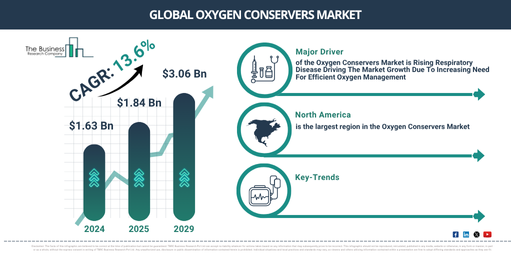
    In recent times, the oxygen conservers market has seen a swift expansion. Its growth is projected to continue from $1.63 billion in 2024 to $1.84 billion in 2025, boasting a compound annual growth rate (CAGR) of 12.7%. Several reasons account for this historical period growth, including increasing cases of chronic obstructive pulmonary disease (COPD), expanded use of oxygen therapy at home, escalating government backing for oxygen therapy plans, a growth in the aging demographic and a surge in healthcare spending.

    Over the forthcoming years, the oxygen conservers market is anticipated to undergo rapid growth, resulting in a market size of $3.06 billion in 2029 with a compound annual growth rate (CAGR) of 13.6%. This growth within the upcoming period is due to the escalating demand for advanced oxygen equipment, the increasing focus towards eco-friendly medical devices, the heightened prevalence of breathing disorders, improved reimbursement schemes for home-oriented oxygen therapy, and a growing inclination towards adaptive oxygen supply systems. The key trends expected to shape the market in the forecast period encompass the use of artificial intelligence (AI) in adaptive oxygen delivery, Internet of Things (IoT) facilitated remote monitoring, extremely low-energy consumption designs, wireless charging mechanisms, and intelligent breath detection sensors.

    Download a free sample to assess the report’s scope and structure:

    https://www.thebusinessresearchcompany.com/sample.aspx?id=23467&type=smp

    How Are Key Drivers in the Industry Acting as Catalysts for the Growth of theOxygen Conservers Market?

    The growing occurrence of respiratory illnesses is anticipated to push the advancement of the oxygen conservers market. These medical conditions affect the lungs and airways, leading to difficulty breathing and symptoms like breathlessness. As air pollution rises, so does the prevalence of respiratory diseases, since pollutants can damage lung tissue, weaken the immune system, and lead to chronic conditions. Oxygen conservers are beneficial for those with chronic lung complications as they enhance care by improving oxygen delivery. By releasing oxygen only during inhalation, they prolong the supply, enhance therapy effectiveness, and boost patient mobility. For example, the Australian Institute of Health and Welfare reported in November 2024 that 2.8 million individuals (11%) were living with asthma in 2022, contributing to 35% of the respiratory disease burden and 2.5% of the total disease burden in 2023. Additionally, 467 deaths (1.8 per 100,000 population) were recorded in 2022, representing 0.2% of all deaths. Consequently, the growing incidence of respiratory diseases is promoting the expansion of the oxygen conservers market.

    Which Segments in the Oxygen Conservers Offer the Most Growth?

    The oxygen conserversmarket covered in this report is segmented –

    1) By Product Type: Continuous Flow Oxygen Conservers, Pulse Dose Oxygen Conservers, Wall-Mount Oxygen Conservers, Portable Oxygen Conservers

    2) By Technology: Electronic Oxygen Conservers, Mechanical Oxygen Conservers, Integrated Systems with Nebulizers

    3) By Application: Respiratory Diseases, Chronic Obstructive Pulmonary Disease (COPD), Liquid Oxygen Systems, Fitness And Sports Applications

    4) By End-User: Hospitals, Clinics, Nursing Homes, HomeCare, Other End-Users

    Subsegments:

    1) By Continuous Flow Oxygen Conservers: High-Flow Continuous Oxygen Conservers, Low-Flow Continuous Oxygen Conservers, Dual-Mode Continuous Flow Oxygen Conservers, Pediatric Continuous Flow Oxygen Conservers, Stationary Continuous Flow Oxygen Conservers

    2) By Pulse Dose Oxygen Conservers: Adjustable Pulse Dose Oxygen Conservers, Fixed-Setting Pulse Dose Oxygen Conservers, Smart Sensor Pulse Dose Oxygen Conservers, High-Volume Pulse Dose Oxygen Conservers, Battery-Operated Pulse Dose Oxygen Conservers

    3) By Wall-Mount Oxygen Conservers: Hospital Room Wall-Mount Oxygen Conservers, Intensive Care Unit (ICU) Wall-Mount Oxygen Conservers, Emergency Department Wall-Mount Oxygen Conservers, Modular Wall-Mount Oxygen Conservers, High-Capacity Wall-Mount Oxygen Conservers

    4) By Portable Oxygen Conservers: Wearable Portable Oxygen Conservers, Compact Travel-Friendly Oxygen Conservers, Rechargeable Battery-Powered Oxygen Conservers, Hybrid Portable And Stationary Oxygen Conservers, Lightweight Backpack Oxygen Conservers

    Request customized data on this market:

    https://www.thebusinessresearchcompany.com/customise?id=23467&type=smp

    What Are the Fastest-Growing Geographies in the #How Are Key Drivers in the Industry Acting as Catalysts for the Growth of theOxygen Conservers Market?# Market?

    North America was the largest region in the oxygen conservers market in 2024. Asia-Pacific is expected to be the fastest-growing region in the forecast period. The regions covered in the oxygen conservers market report are Asia-Pacific, Western Europe, Eastern Europe, North America, South America, Middle East, Africa.

    View the full report here:

    https://www.thebusinessresearchcompany.com/report/oxygen-conservers-global-market-report

    What Are the Key Elements That Define the Oxygen Conservers Market?

    Oxygen conservers are medical devices that efficiently regulate oxygen flow from a cylinder or concentrator, delivering it only during inhalation. It uses pulse-dose technology, which minimizes oxygen waste, extends equipment longevity, and enhances patient mobility with lighter, more efficient systems.

    Purchase the full report and get a swift delivery:

    https://www.thebusinessresearchcompany.com/purchaseoptions.aspx?id=23467

    About The Business Research Company:

    With over 15000+ reports from 27 industries covering 60+ geographies, The Business Research Company has built a reputation for offering comprehensive, data-rich research and insights. Armed with 1,500,000 datasets, the optimistic contribution of in-depth secondary research, and unique insights from industry leaders, you can get the information you need to stay ahead in the game.

    Get in touch with us:

    The Business Research Company: https://www.thebusinessresearchcompany.com/

    Americas +1 310-496-7795

    Europe +44 7882 955267

    Asia & Others +44 7882 955267 & +91 8897263534

    Email us at info@tbrc.info

    Follow us on:

    LinkedIn: https://in.linkedin.com/company/the-business-research-company

    YouTube: https://www.youtube.com/channel/UC24_fI0rV8cR5DxlCpgmyFQ

    Global Market Model: https://www.thebusinessresearchcompany.com/global-market-model
  • Global Orthopedic Trauma Devices Market Trends: Regional Breakdowns and Strategic Insights

    Global Orthopedic Trauma Devices Market Trends: Regional Breakdowns and Strategic Insights

    Claim your 30% discount on Global Market Reports with code ONLINE30. Limited time only.

    What is the Projected CAGR for the Orthopedic Trauma Devices Market Size from 2025 to 2034?

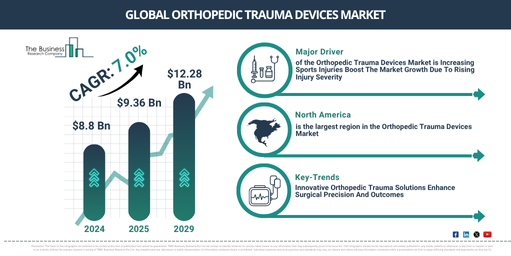
    There has been a substantial growth in the orthopedic trauma devices market in the past few years. The market that was valued at $8.8 billion in 2024 is predicted to rise to $9.36 billion in 2025, with a compound annual growth rate (CAGR) of 6.3%. The development in the past era is linked to factors such as a burgeoning elderly population, greater healthcare spending, more awareness and education, an escalating request for minimally invasive surgeries, along with a mounting occurrence of orthopedic injuries.

    In the coming years, the market for orthopedic trauma devices is predicted to undergo substantial expansion. The market is projected to reach a value of $12.28 billion by 2029, with a compound annual growth rate (CAGR) of 7.0%. Factors contributing to this growth throughout the prediction period include an increased incidence of injuries, a rise in disposable income, greater involvement in athletic activities, heightened awareness of health, and a larger number of roadway incidents. Observing trends for the forecast period, developments include the incorporation of digital imaging, advances in medical technology, strategic alliances, progressive orthopedic surgeries, and improvements in smart implant technology.

    Download a free sample to assess the report’s scope and structure:

    https://www.thebusinessresearchcompany.com/sample.aspx?id=23466&type=smp

    What Are the Major Market Drivers Behind the Rising Adoption of Orthopedic Trauma Devices Market?

    An increase in sports-associated injuries is projected to drive the expansion of the orthopedic trauma devices market. These injuries, which usually affect the muscles, joints, or bones, are sustained during athletic activities. The rise in sports-related injuries can be attributed to improper techniques or insufficient equipment used by many athletes, causing undue bodily strain and heightening the likelihood of injury. Orthopedic trauma devices are beneficial in the treatment of these injuries as they stabilize fractures,correct bone alignment, and speed up recovery. As per the data released in January 2025 by the National Institutes of Health (NIH), a US government agency, there is a predicted 119% spike in sports-related injuries among the elderly, with numbers estimated to hit 111,245 by 2040 as compared to 2021. Consequently, the rise in sports-related injuries is catapulting the growth of the orthopedic trauma devices market.

    Which Key Market Segments Comprise the Orthopedic Trauma Devices Market and Drive Its Revenue Growth?

    The orthopedic trauma devicesmarket covered in this report is segmented –

    1) By Product: Internal Fixators, External Fixators

    2) By Material Type: Bioabsorbable Materials, Non-Absorbable Materials, Other Material Types

    3) By Application: Fractures, Soft Tissue Injuries, Joint Reconstruction, Spinal Injuries, Arthroplasty

    4) By End-Users: Hospitals And Clinics, Ambulatory Surgical Centers, Orthopedic Centers, Emergency Departments, Other End-Users

    Subsegments:

    1) By Internal Fixators: Screws, Plates, Intramedullary Nails, Other Internal Fixators

    2) By External Fixators: Unilateral Fixators, Circular Fixators, Hybrid Fixators

    Request customized data on this market:

    https://www.thebusinessresearchcompany.com/customise?id=23466&type=smp

    Which Areas Are Leading Regions in the Orthopedic Trauma Devices Market Expansion Across the Globe?

    North America was the largest region in the orthopedic trauma devices market in 2024. Asia-Pacific is expected to be the fastest-growing region in the forecast period. The regions covered in the orthopedic trauma devices market report are Asia-Pacific, Western Europe, Eastern Europe, North America, South America, Middle East, Africa.

    What Are the Strategic Trends Steering theOrthopedic Trauma Devices Market Direction?

    Leading businesses active in the orthopedic trauma devices sector are concentrating their efforts on inventing novel orthopedic trauma treatments to improve fracture stabilization, gain better surgical results, and achieve operational efficacy. These cutting-edge solutions entail the usage of progressive medical techniques and devices intended to enhance bone and joint injury treatments through superior surgical accuracy, more rapid recovery, and enhanced patient outcomes. For instance, in October 2024, a leading American orthopedic medical device firm, Globus Medical Inc., unveiled a new variety of orthopedic trauma solutions, augmenting its trauma care product range. The launch included the TENSOR Suture Button System, the company’s premier suture-based device specifically created for single-incision syndesmotic repair. These items aspire to enhance surgical outcomes by incorporating advanced elements like polyaxial locking technology, efficient suture management, and exact fixation for small bone fractures. The product range likewise incorporates PRECICE limb-lengthening nail technologies for handling complicated trauma instances.

    View the full report here:

    https://www.thebusinessresearchcompany.com/report/orthopedic-trauma-devices-global-market-report

    How Is the Orthopedic Trauma Devices Market Conceptually Defined?

    Orthopedic trauma devices are specialized medical tools and implants designed to treat injuries to the musculoskeletal system, particularly bones and joints, resulting from traumatic incidents such as accidents or falls. These devices play a critical role in stabilizing the injured area, maintaining proper alignment, and promoting effective healing and functional recovery.

    Purchase the full report and get a swift delivery:

    https://www.thebusinessresearchcompany.com/purchaseoptions.aspx?id=23466

    About The Business Research Company:

    With over 15000+ reports from 27 industries covering 60+ geographies, The Business Research Company has built a reputation for offering comprehensive, data-rich research and insights. Armed with 1,500,000 datasets, the optimistic contribution of in-depth secondary research, and unique insights from industry leaders, you can get the information you need to stay ahead in the game.

    Get in touch with us:

    The Business Research Company: https://www.thebusinessresearchcompany.com/

    Americas +1 310-496-7795

    Europe +44 7882 955267

    Asia & Others +44 7882 955267 & +91 8897263534

    Email us at info@tbrc.info

    Follow us on:

    LinkedIn: https://in.linkedin.com/company/the-business-research-company

    YouTube: https://www.youtube.com/channel/UC24_fI0rV8cR5DxlCpgmyFQ

    Global Market Model: https://www.thebusinessresearchcompany.com/global-market-model
  • Orthopedic Splints Market Outlook 2025: Mapping Growth, Innovation, and Regional Shifts

    Orthopedic Splints Market Outlook 2025: Mapping Growth, Innovation, and Regional Shifts

    Claim your 30% discount on Global Market Reports with code ONLINE30. Limited time only.

    What Is the Current and Projected Market Size of the Orthopedic Splints Market Through 2034?

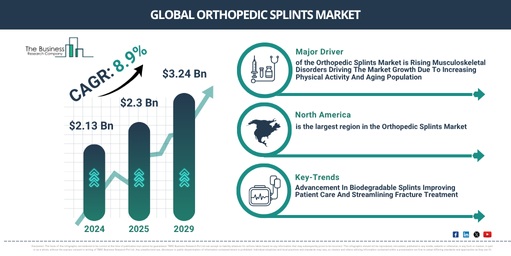
    There has been a substantial growth in the orthopedic splints market size in the past few years. The market is projected to escalate from a valuation of $2.13 billion in 2024 to $2.3 billion in 2025, with a compound annual growth rate (CAGR) of 8.1%. The upswing during the historical phase can be credited to various factors such as the embracing of pioneering technologies, surging demand for custom-made solutions, escalated investment in research and development activities, expansion of healthcare infrastructure, and the rise in government initiatives.

    The market for orthopedic splints is predicted to experience noteworthy expansion in the coming years, rising to a total market valuation of $3.24 billion by 2029, with a compound annual growth rate (CAGR) of 8.9%. This projected growth throughout the forecast period can be credited to various factors such as the rising uptake of high-end technologies, increasing demand for customized solutions, escalating investments in research and development, advancing healthcare infrastructures, and supportive governmental initiatives. Key trends during the forecast span are expected to include the incorporation of artificial intelligence, advancements in 3D printing technology, the utilization of wearable sensors, the production of smart materials, and improved data analytics along with predictive modeling.

    Download a free sample to assess the report’s scope and structure:

    https://www.thebusinessresearchcompany.com/sample.aspx?id=23465&type=smp

    What External and Internal Drivers Are Contributing to the Growth of theOrthopedic Splints Market?

    The orthopedic splints market is anticipated to grow due to the increasing prevalence of musculoskeletal disorders. These disorders, which affect the muscles, bones, joints, tendons, and ligaments, result in pain, stiffness, and limited movement. Sedentary lifestyles are contributing significantly to the rise of these conditions, as inactivity weakens the muscles, lessens flexibility, and escalates the possibility of joint and bone complications. Orthopedic splints aid in relieving these issues by providing specific support, stabilizing the impacted areas, reducing strain to lessen pain, and enhancing joint alignment, ultimately improving overall mobility and speeding up recovery. In a report by the UK-based government agency, Gov.UK, in January 2024, it was noted that the occurrence of long-term musculoskeletal conditions in people aged 16 and over had gone up from 17.6% in 2022 to 18.4% in 2023, with a higher prevalence in females (20.9%) compared to males (15.8%). As a result, the increasing prevalence of musculoskeletal disorders is driving the expansion of the orthopedic splints market.

    What Segment Types Define the Orthopedic Splints Market Structure?

    The orthopedic splintsmarket covered in this report is segmented –

    1) By Product: Fiberglass Splints, Plastic Splints, Tools And Accessories, Other Products

    2) By Application: Lower Extremity, Upper Extremity, Spinal

    3) By End-User: Hospitals, Specialty Centers, Other End-User

    Subsegments:

    1) By Fiberglass Splints: Pre-Cut Fiberglass Splints, Roll Fiberglass Splints, Waterproof Fiberglass Splints, Padded Fiberglass Splints

    2) By Plastic Splints: Rigid Plastic Splints, Moldable Plastic Splints, Transparent Plastic Splints, Perforated Plastic Splints

    3) By Tools And Accessories: Splint Rollers, Splint Padding, Fasteners And Straps, Cutting Tools

    4) By Other Products: Hybrid Splints, Inflatable Splints, Metal Reinforced Splints, Custom Splints

    Request customized data on this market:

    https://www.thebusinessresearchcompany.com/customise?id=23465&type=smp

    Which Geographic Areas Hold the Strongest Growth Potential in the Orthopedic Splints Market?

    North America was the largest region in the orthopedic splints market in 2024. Asia-Pacific is expected to be the fastest-growing region in the forecast period. The regions covered in the orthopedic splints market report are Asia-Pacific, Western Europe, Eastern Europe, North America, South America, Middle East, Africa.

    What Long-Term Trends Are Transforming the Competitive Landscape of the Orthopedic Splints Market?

    Leading players in the orthopedic splints market are turning towards the manufacture of innovative products such as environmentally-friendly lightweight biodegradable splints, in efforts to promote sustainability in medical environments. Lightweight biodegradable splints are a type of green medical aid that provides secure immobilization, reduces waste, and eliminates the requirement for removal. For example, Dassiet, a medical technology enterprise based in Finland, launched the biodegradable and lightweight UCAST splints designed for usage in hospitals and healthcare facilities in January 2022. These UCAST splints, constructed from thermoplastic wood cast material and cushioned fabric, provide a quicker application procedure, enhance patient comfort, promote eco-friendliness through biodegradability and recyclability, and simplify the process of fracture treatment by reducing patient waiting times and cutting out the necessity for extra casting materials.

    View the full report here:

    https://www.thebusinessresearchcompany.com/report/orthopedic-splints-global-market-report

    What Is the Definition of the Orthopedic Splints Market?

    Orthopedic splints are medical devices designed to support, stabilize, or immobilize injured bones, joints, or soft tissues to promote proper healing. They are commonly used to reduce movement and provide structural support during the healing process. Depending on the injury, they can be custom-molded or prefabricated to ensure a secure and comfortable fit.

    Purchase the full report and get a swift delivery:

    https://www.thebusinessresearchcompany.com/purchaseoptions.aspx?id=23465

    About The Business Research Company:

    With over 15000+ reports from 27 industries covering 60+ geographies, The Business Research Company has built a reputation for offering comprehensive, data-rich research and insights. Armed with 1,500,000 datasets, the optimistic contribution of in-depth secondary research, and unique insights from industry leaders, you can get the information you need to stay ahead in the game.

    Get in touch with us:

    The Business Research Company: https://www.thebusinessresearchcompany.com/

    Americas +1 310-496-7795

    Europe +44 7882 955267

    Asia & Others +44 7882 955267 & +91 8897263534

    Email us at info@tbrc.info

    Follow us on:

    LinkedIn: https://in.linkedin.com/company/the-business-research-company

    YouTube: https://www.youtube.com/channel/UC24_fI0rV8cR5DxlCpgmyFQ

    Global Market Model: https://www.thebusinessresearchcompany.com/global-market-model
  • Orthopedic 3D Printing Devices Market in Focus: Forecasting Growth Drivers, Scaling Potential, and Global Opportunities

    Orthopedic 3D Printing Devices Market in Focus: Forecasting Growth Drivers, Scaling Potential, and Global Opportunities

    Claim your 30% discount on Global Market Reports with code ONLINE30. Limited time only.

    What is the Anticipated CAGR of the Orthopedic 3D Printing Devices Market, and What Factors Will Drive It?

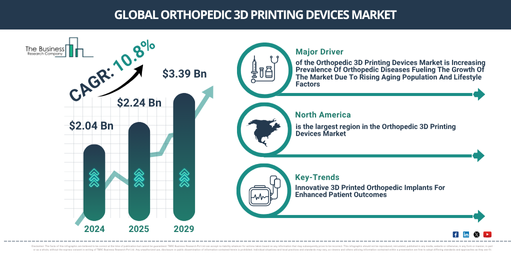
    The market for 3D printed orthopedic devices has recently seen a significant surge in size. Expected to climb from $2.04 billion in 2024 to $2.24 billion in 2025, it presents a compound annual growth rate (CAGR) of 10.0%. This impressive growth during the historic period can be tied back to a rise in the occurrence of orthopedic conditions, an increase in musculoskeletal disease cases, a hike in surgical procedures, a growing elderly population, and a heightened occurrence of osteoarthritis.

    In the coming years, the orthopedic 3D printing devices market is anticipated to experience a swift expansion, with an estimation to reach $3.39 billion in 2029, growing at a compound annual growth rate (CAGR) of 10.8%. Factors contributing to this growth during the projected period include enhancements in healthcare infrastructure, increased investments in healthcare amenities, a rising trend of adopting 3D printing technologies, escalating research, and development opportunities, with an increased need for personalized implants. The upcoming trends during this interval are predicted to consist of improvements in 3D printing technology, the incorporation of artificial intelligence (AI), progress in material sciences, invention in biocompatible materials, and advancements in various other medical fields.

    Download a free sample to assess the report’s scope and structure:

    https://www.thebusinessresearchcompany.com/sample.aspx?id=23464&type=smp

    What Are the Core Market Drivers Propelling Growth in the Orthopedic 3D Printing Devices Industry?

    The growth of the orthopedic 3D printing devices market is likely to be fueled by the rising incidence of orthopedic ailments. These ailments are defined as those affecting the bones, joints, ligaments, tendons, and muscles, often causing pain, impairment, and reduced mobility. Much of the increased incidence of these disorders can be attributed to an aging population, as age-related ailments such as osteoarthritis and osteoporosis become increasingly prevalent with advancing age, contributing to higher incidences of musculoskeletal problems. By creating customized implants, prosthetics, and surgical guides, orthopedic 3D printing devices serve as valuable tools for orthopedic ailments, enhancing precision, speeding up recovery, and offering patient-specific solutions for intricate musculoskeletal disorders. For example, in March 2023, the UK’s Office for Health Improvement and Disparities reported that the rate of musculoskeletal-related problems had grown to 12.8% in 2022, up from 12.1% in 2021. This growing incidence of orthopedic diseases is thereby fueling the expansion of the orthopedic 3D printing devices market.

    How Is the Orthopedic 3D Printing Devices Market Segmented?

    The orthopedic 3d printing devicesmarket covered in this report is segmented –

    1) By Product Type: Printers, Materials, Software, Services

    2) By Technology: Stereolithography, Fused Deposition Modeling, Selective Laser Sintering, Other Technologies

    3) By Application: Joint Replacement, Spinal Implants, Craniomaxillofacial Implants, Dental Implants, Other Applications

    4) By End-User: Hospitals, Ambulatory Surgical Centers, Specialty Clinics, Other End-Users

    Subsegments:

    1) By Printers: Desktop 3D Printers, Industrial 3D Printers

    2) By Materials: Metals, Polymers, Ceramics, Biomaterials, Composites

    3) By Software: Design Software, Printing Software, Simulation Software

    4) By Services: Printing Services, Post-processing Services, Consulting Services, Maintenance Services

    Request customized data on this market:

    https://www.thebusinessresearchcompany.com/customise?id=23464&type=smp

    Which Regions Are Driving the Next Phase of the Orthopedic 3D Printing Devices Market Growth?

    North America was the largest region in the orthopedic 3D printing devices market in 2024. Asia-Pacific is expected to be the fastest-growing region in the forecast period. The regions covered in the orthopedic 3d printing devices market report are Asia-Pacific, Western Europe, Eastern Europe, North America, South America, Middle East, Africa.

    What Key Market Trends and Innovations Are Shaping the Future of the Orthopedic 3D Printing Devices Industry?

    Leading firms in the orthopedic 3D printing devices industry are putting resources into strategic partnerships to boost their product offerings, increase their geographical footprint, and solidify their position in the market. These strategic collaborations involve formal affiliations between companies with the goal of amalgamating resources, know-how, or technology to stimulate innovation, broaden market influence, or enhance product development. For instance, in May 2022, Sculpteo, a 3D printing in the cloud specialist based in France, joined forces with a Switzerland-based technical orthopedics specialist, Daniel Robert Orthopedie, to create the first fully customizable, eco-friendly 3D-printed orthopedic orthosis. This progressive device utilizes polyamide 11 (PA11), a biodegradable and recyclable material extracted from castor oil, offering a more environmentally-friendly substitute to conventional materials. This partnership facilitates the prompt manufacturing of bespoke orthoses that are not only lightweight and breathable but also customizable to different pathologies for patients of every age.

    View the full report here:

    https://www.thebusinessresearchcompany.com/report/orthopedic-3d-printing-devices-global-market-report

    How Is the Orthopedic 3D Printing Devices Market Defined and What Are Its Core Parameters?

    Orthopedic 3D printing devices refer to medical devices created using three-dimensional printing technology specifically for orthopedic applications. These devices enable the customization of implants and prosthetics to fit individual patient’s anatomy with high precision, enhancing surgical outcomes and patient comfort. Additionally, it allows for the rapid prototyping of surgical instruments and models, improving preoperative planning and reducing surgery time.

    Purchase the full report and get a swift delivery:

    https://www.thebusinessresearchcompany.com/purchaseoptions.aspx?id=23464

    About The Business Research Company:

    With over 15000+ reports from 27 industries covering 60+ geographies, The Business Research Company has built a reputation for offering comprehensive, data-rich research and insights. Armed with 1,500,000 datasets, the optimistic contribution of in-depth secondary research, and unique insights from industry leaders, you can get the information you need to stay ahead in the game.

    Get in touch with us:

    The Business Research Company: https://www.thebusinessresearchcompany.com/

    Americas +1 310-496-7795

    Europe +44 7882 955267

    Asia & Others +44 7882 955267 & +91 8897263534

    Email us at info@tbrc.info

    Follow us on:

    LinkedIn: https://in.linkedin.com/company/the-business-research-company

    YouTube: https://www.youtube.com/channel/UC24_fI0rV8cR5DxlCpgmyFQ

    Global Market Model: https://www.thebusinessresearchcompany.com/global-market-model
  • Strong CAGR to Propel in the Medical Stick-To-Skin Adhesives Market and Beyond upto $4.57 Billion by 2029

    Strong CAGR to Propel in the Medical Stick-To-Skin Adhesives Market and Beyond upto $4.57 Billion by 2029

    Claim your 30% discount on Global Market Reports with code ONLINE30. Limited time only.

    What Are the Key Milestones in the Medical Stick-To-Skin Adhesives Market’s Growth Trajectory From 2025 To 2034?

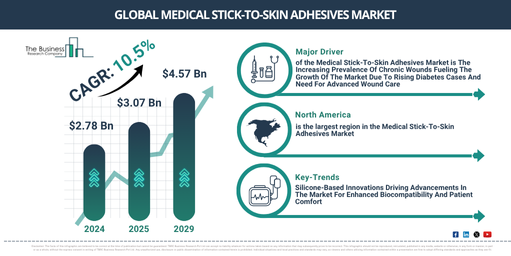
    The industry for medical stick-to-skin adhesives has seen significant expansion recently. The market is projected to surge from $2.78 billion in 2024 to $3.07 billion in 2025, boasting a compound annual growth rate (CAGR) of 10.3%. The historic period growth can be credited to the rising demand for wound care products, an increase in chronic disease cases, the expansion of surgical procedures, growth in the elderly population, and a boost in the adoption of wearable medical devices.

    In the upcoming years, the market size for medical stick-to-skin adhesives is predicted to experience swift expansion. The growth rate is expected to reach $4.57 billion by 2029, with a compound annual growth rate (CAGR) of 10.5%. The predicted growth during the forecast period is believed to be due to the rising demand for minimally invasive procedures, amplified focus on patient-oriented care, an upsurge in the usage of adhesives in remote patient monitoring tools, increased investment in health care infrastructure, and a higher prevalence of chronic ailments needing prolonged adhesion. Key trends for the projected period include progress in adhesive technologies, technical advancements in long-lasting adhesives, production of skin-friendly and hypoallergenic adhesives, incorporation of adhesives in wearable biosensors, and a shift towards silicone-based adhesives.

    Download a free sample to assess the report’s scope and structure:

    https://www.thebusinessresearchcompany.com/sample.aspx?id=23449&type=smp

    Which Primay Drivers Are Accelerating Growth in the Medical Stick-To-Skin Adhesives Market?

    The escalating instances of chronic wounds are anticipated to fuel the expansion of the medical stick-to-skin adhesives market in the future. Chronic wounds, which fail to heal in a structured and prompt manner over a usual healing period of 4 to 6 weeks, are increasingly common among the diabetic population. When diabetes disrupts normal blood flow and slows down healing processes, stubborn wounds like diabetic foot ulcers often become a problem. Medical stick-to-skin adhesives play an important role in fastening dressings and protecting wounds from possible infection. Consequently, as more patients need routine and prolonged treatment, the need for these adhesives continues to grow. For example, Cambridge Media, a specialist publisher based in Australia that does not rely on government funding, reported that in 2023, their clinical representatives treated 57,932 wounds throughout Australia, marking an increase of 8% from the previous year. Hence, the growing frequency of chronic wounds is a major contributor to the expansion of the medical stick-to-skin adhesives market.

    Which Primary Segments of the Medical Stick-To-Skin Adhesives Market Are Driving Growth and Industry Transformations?

    The medical stick-to-skin adhesivesmarket covered in this report is segmented –

    1) By Product: Acrylic-Based, Silicone-Based, Rubber-Based, Hydrogel-based, Other Products

    2) By Backing Material: Paper, Fabric, Plastic, Other Materials

    3) By Material Type: Electrode Adhesives, Transdermal Drug Delivery Adhesives, Specialized Adhesives

    4) By Application: Surgery, Wound Dressing, Ostomy Seals, Other Applications

    5) By End User: Hospitals And Clinics, Home Care Settings, Other End Users

    Subsegments:

    1) By Acrylic-Based Adhesives: Long-Wear Medical Patches, Transdermal Drug Delivery Systems, Post-Operative Bandages, Diagnostic Device Adhesives

    2) By Silicone-Based Adhesives: Adhesives For Fragile And Sensitive Skin, Wound Dressing Adhesives, Wearable Medical Sensor Adhesives, Ostomy Care Applications

    3) By Rubber-Based Adhesives: Surgical Tapes, Compression Therapy Wraps, Short-Term Medical Patches, Elastic Medical Bandage Adhesives

    4) By Hydrogel-Based Adhesives: Cooling Wound Dressings, Moist Wound Care Adhesives, Electrotherapy Electrode Gels, Burn Treatment Pads

    5) By Other Products: Polyurethane-Based Adhesives, Bio-Based Or Organic Adhesives, Smart Patch Adhesives, Customized Hybrid Adhesives For Niche Applications

    Request customized data on this market:

    https://www.thebusinessresearchcompany.com/customise?id=23449&type=smp

    Which Regions Are Key Players in the Growth of the #Which Primay Drivers Are Accelerating Growth in the Medical Stick-To-Skin Adhesives Market?# Market?

    North America was the largest region in the medical stick-to-skin adhesives market in 2024. Asia-Pacific is expected to be the fastest-growing region in the forecast period. The regions covered in the medical stick-to-skin adhesives market report are Asia-Pacific, Western Europe, Eastern Europe, North America, South America, Middle East, Africa.

    Which Technological Trends Are Reshaping the Medical Stick-To-Skin Adhesives Industry Dynamics?

    Key players in the medical stick-to-skin adhesives market are concentrating on the development of cutting-edge products like silicone-based adhesives, in order to improve biocompatibility, provide superior stickiness, and guarantee comfort and safety for patients in various medical settings. These silicone adhesives, made from silicone polymers, offer unparalleled flexibility, durability, as well as resistance to water, chemical agents, and extreme heat. Illustrating this trend, DuPont de Nemours Inc., an American chemicals firm, debuted its Liveo MG 7-9960 Soft Skin Adhesive in October 2023. This innovative low-cyclic silicone adhesive is specially designed for advanced wound dressings and medical device fixation. Its high-adhesion soft skin adhesive (SSA) achieves a balance between long-lasting usage and easy removal, making it perfectly suited for both sensitive skin and prolonged medical use.

    View the full report here:

    https://www.thebusinessresearchcompany.com/report/medical-stick-to-skin-adhesives-global-market-report

    What Parameters Are Used to Define the Medical Stick-To-Skin Adhesives Market?

    Medical stick-to-skin adhesives are specially formulated materials that securely attach medical devices, dressings, or other healthcare products to the skin. These adhesives are designed with biocompatibility, ensuring they are safe, gentle, and non-irritating, even for sensitive or compromised skin. Medical stick-to-skin adhesives are used for securing wound dressings, intravenous lines, catheters, and wearable medical devices such as glucose monitors or ECG sensors.

    Purchase the full report and get a swift delivery:

    https://www.thebusinessresearchcompany.com/purchaseoptions.aspx?id=23449

    About The Business Research Company:

    With over 15000+ reports from 27 industries covering 60+ geographies, The Business Research Company has built a reputation for offering comprehensive, data-rich research and insights. Armed with 1,500,000 datasets, the optimistic contribution of in-depth secondary research, and unique insights from industry leaders, you can get the information you need to stay ahead in the game.

    Get in touch with us:

    The Business Research Company: https://www.thebusinessresearchcompany.com/

    Americas +1 310-496-7795

    Europe +44 7882 955267

    Asia & Others +44 7882 955267 & +91 8897263534

    Email us at info@tbrc.info

    Follow us on:

    LinkedIn: https://in.linkedin.com/company/the-business-research-company

    YouTube: https://www.youtube.com/channel/UC24_fI0rV8cR5DxlCpgmyFQ

    Global Market Model: https://www.thebusinessresearchcompany.com/global-market-model
  • Next-Gen Implantable Pulse Generator : Market Forecast, Transformation, and Long-Term Trajectories

    Next-Gen Implantable Pulse Generator : Market Forecast, Transformation, and Long-Term Trajectories

    Claim your 30% discount on Global Market Reports with code ONLINE30. Limited time only.

    What is the Projected CAGR for the Implantable Pulse Generator Market Size from 2025 to 2034?

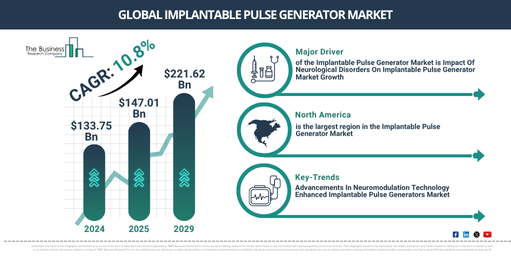
    The market size for implantable pulse generators has seen robust growth in the past few years. The market is projected to expand from $133.75 billion in 2024 to $147.01 billion in 2025, exhibiting a compound annual growth rate (CAGR) of 9.9%. The significant growth during the historical period is attributed to the surge in home healthcare facilities, more widespread use of neuromodulation for disease management, an increased rate of patient diagnosis, the growing utilization of medical devices, and heightened patient awareness.

    Predicted rapid expansion is on the horizon for the implantable pulse generator market, with projections suggesting a growth to $221.62 billion by 2029. This represents a compound annual growth rate (CAGR) of 10.8%. Several factors are expected to drive this growth within the forecasted period, including an increase in healthcare spending, patients favoring less invasive procedures, advantageous reimbursement policies, wider application areas, and the growing usage of these implants in different therapies. Key trends for this forecasted period include the downsizing of devices, improvement in battery longevity, wireless connectivity development, smart implantable gadgets and the incorporation of artificial intelligence and machine learning.

    Download a free sample to assess the report’s scope and structure:

    https://www.thebusinessresearchcompany.com/sample.aspx?id=18639&type=smp

    Which Major Market Drivers Are Expected to Boost the Growth Potential of the Implantable Pulse Generator Market?

    The increasing prevalence of neurological disorders is projected to fuel the expansion of the implantable pulse generator market. Neurological disorders encompass conditions that impact the brain, spinal cord, and nervous system, affecting aspects like motion, sensation, and cognition. The rise in neurological disorders is often linked to factors such as aging demographics, lifestyle shifts, environmental factors, and enhanced diagnostic methods. Implantable pulse generators assist in handling neurological disorders by delivering specific electrical impulses to regulate abnormal neural activity and relieve symptoms. For instance, the Parkinson Foundation, a non-profit organisation based in the US, reported in December 2022 that by 2020, 930,000 individuals in the U.S had Parkinson’s disease (PD), with forecasts suggesting this figure will increase to 1.2 million by 2030. Hence, the increasing prevalence of neurological disorders is a significant factor contributing to the expansion of the implantable pulse generator market.

    Which Key Market Segments Comprise the Implantable Pulse Generator Market and Drive Its Revenue Growth?

    The implantable pulse generatormarket covered in this report is segmented –

    1) By Product: Implantable Cardiac Pacemakers, Implantable Defibrillators, Cochlear Implants, Implantable Nerve Stimulators (Fes), Implantable Infusion Pumps, Implantable Active Monitoring Devices

    2) By Charging Type: Rechargeable, Non Rechargeable

    3) By Application: Cardiovascular Diseases, Movement Disorders, Orthopedic Diseases, Other Applications

    4) By End User: Hospitals, Ambulatory Surgical Centers, Home Care Settings, Clinics

    Subsegments:

    1) By Implantable Cardiac Pacemakers: Single-Chamber Pacemakers, Dual-Chamber Pacemakers, Biventricular Pacemakers

    2) By Implantable Defibrillators: Implantable Cardioverter Defibrillators (ICD), Subcutaneous Implantable Defibrillators (S-ICD)

    3) By Cochlear Implants: Single-Channel Cochlear Implants, Multi-Channel Cochlear Implants

    4) By Implantable Nerve Stimulators (Fes): Functional Electrical Stimulation (FES) Devices For Motor Function Restoration, Spinal Cord Stimulation Devices

    5) By Implantable Infusion Pumps: Insulin Pumps, Pain Management Pumps, Intrathecal Drug Delivery Pumps

    6) By Implantable Active Monitoring Devices: Continuous Glucose Monitoring Systems, Cardiac Monitoring Devices, Neurological Monitoring Devices

    Request customized data on this market:

    https://www.thebusinessresearchcompany.com/customise?id=18639&type=smp

    Which Areas Are Leading Regions in the Implantable Pulse Generator Market Expansion Across the Globe?

    North America was the largest region in the implantable pulse generator market in 2024. The regions covered in the implantable pulse generator market report are Asia-Pacific, Western Europe, Eastern Europe, North America, South America, Middle East, Africa.

    What Are the Key Market Trends in theImplantable Pulse Generator Market Over the Coming Years?

    Large corporations in the implantable pulse generator market are shifting their attention to the creation of innovative neuromodulation devices, with the goal of improving the quality and results of treatments, as well as making these devices applicable to a wider variety of neurological conditions. A neuromodulation device is a specifically designed medical device that changes nerve activity by delivering electrical impulses or pharmaceutical agents to designated areas of the nervous system. For example, CVRx Inc., a medical device firm based in the United States, introduced the new Barostim NEO2 IPG, an implantable pulse generator designed for patients undergoing therapy, in November 2022. The Barostim system uses neuromodulation to alleviate symptoms of heart failure by sending electrical impulses to the baroreceptors in the wall of the carotid artery. This stimulation activates the body’s baroreflex, which in turn triggers a response in the heart from the autonomic system. The goal of this therapy is to bring equilibrium to the autonomic nervous system and relieve symptoms of heart failure.

    View the full report here:

    https://www.thebusinessresearchcompany.com/report/implantable-pulse-generator-global-market-report

    How Is the Implantable Pulse Generator Market Conceptually Defined?

    An implantable pulse generator (IPG) refers to a medical device used to deliver electrical impulses to specific nerves or muscles within the body. It is commonly used in neuromodulation therapies to manage conditions such as chronic pain or movement disorders. The IPG is surgically implanted under the skin and can be programmed to adjust stimulation levels as needed.

    Purchase the full report and get a swift delivery:

    https://www.thebusinessresearchcompany.com/purchaseoptions.aspx?id=18639

    About The Business Research Company:

    With over 15000+ reports from 27 industries covering 60+ geographies, The Business Research Company has built a reputation for offering comprehensive, data-rich research and insights. Armed with 1,500,000 datasets, the optimistic contribution of in-depth secondary research, and unique insights from industry leaders, you can get the information you need to stay ahead in the game.

    Get in touch with us:

    The Business Research Company: https://www.thebusinessresearchcompany.com/

    Americas +1 310-496-7795

    Europe +44 7882 955267

    Asia & Others +44 7882 955267 & +91 8897263534

    Email us at info@tbrc.info

    Follow us on:

    LinkedIn: https://in.linkedin.com/company/the-business-research-company

    YouTube: https://www.youtube.com/channel/UC24_fI0rV8cR5DxlCpgmyFQ

    Global Market Model: https://www.thebusinessresearchcompany.com/global-market-model
  • Image Intensifier Market Overview 2025: Competitive Shifts, Forecast Models, and Emerging Opportunities

    Image Intensifier Market Overview 2025: Competitive Shifts, Forecast Models, and Emerging Opportunities

    Claim your 30% discount on Global Market Reports with code ONLINE30. Limited time only.

    What Is the Current and Projected Market Size of the Image Intensifier Market Through 2034?

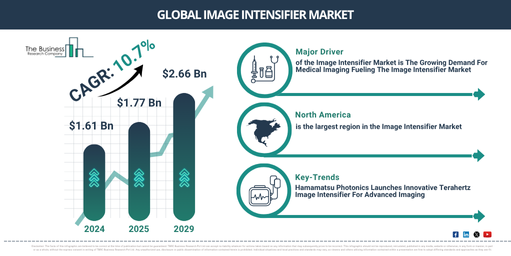
    The value of the image intensifier industry has seen significant upturn in a short span of time. It was valued at $1.61 billion in 2024 and is predicted to increase to $1.77 billion by 2025, boasting a compound annual growth rate (CAGR) of 10.2%. This historical growth is credited to a variety of factors including the expansion of the aerospace and aviation sectors, an upswing in non-communicable diseases, greater utilization of image intensifiers in the field of astronomy, surging investments towards the infrastructure of smart cities, and a heightened preference for non-destructive testing.

    The market for image intensifiers is predicted to experience accelerated expansion in the coming years, with expectations to reach a market valuation of $2.66 billion in 2029, translating to a compound annual growth rate (CAGR) of 10.7%. The swift growth projected within this period can be traced back to the rising demands for fraud detection and prevention measures, an expanding population, burgeoning urbanization, elevation in military spending, and the growing necessity for surgical imaging apparatuses. Notable trends anticipated to influence the market in the forecast period involve the use of imaging technology in the medical sector, night vision technology, x-ray detectors, improved durability and dependability, and generation advancements.

    Download a free sample to assess the report’s scope and structure:

    https://www.thebusinessresearchcompany.com/sample.aspx?id=17176&type=smp

    What Are the Core Growth Drivers Propelling the Image Intensifier Market Forward?

    The growth of the image intensifier market is expected to be driven by the rising demand for medical imaging tests. These non-invasive tests create visual representations of the body’s internal structure, aiding clinical analysis and medical intervention. The surge in demand for medical imaging can be attributed to advancements in health care, improved clinical decision-making capabilities, and the progression of medical research and innovation. Image intensifiers, crucial for improving the quality and functionality of fluoroscopic imaging, have become critical in a variety of diagnostic and interventional procedures. They enhance the visibility of low-intensity X-ray images, enabling real-time visualization and accurate guidance during procedures such as angiography, vascular interventions, orthopedic surgeries, and gastrointestinal examinations. For example, the National Health Service, a UK government department, reported 45.0 million imaging tests in England in November 2023 compared to 44.0 million in 2022, marking an increase of 2.2%. As a result, the escalating demand for medical imaging serves as a catalyst for the image intensifier market’s growth.

    What Segment Types Define the Image Intensifier Market Structure?

    The image intensifiermarket covered in this report is segmented –

    1) By Diameter: Less Than 18mm, 18mm, 25mm, More Than 25mm, Less Than 6inch, 6inch, 9inch, 12inch, 16inch

    2) By Application: Cameras, Scopes, Goggles, X-Ray Detectors

    3) By End User: Medical, Industrial, Defense and Surveillance, Other End Users

    Subsegments:

    1) By Less Than 18mm: 12mm Image Intensifiers, 16mm Image Intensifiers

    2) By 18mm: 18mm Image Intensifiers (Standard Size)

    3) By 25mm: 25mm Image Intensifiers (Standard Size)

    4) By More Than 25mm: 30mm Image Intensifiers, 40mm Image Intensifiers, 50mm Image Intensifiers

    5) By Less Than 6inch: 4-inch Image Intensifiers, 5-inch Image Intensifiers

    6) By 6inch: 6-inch Image Intensifiers

    7) By 9inch: 9-inch Image Intensifiers

    8) By 12inch: 12-inch Image Intensifiers

    9) By 16inch: 16-inch Image Intensifiers

    Request customized data on this market:

    https://www.thebusinessresearchcompany.com/customise?id=17176&type=smp

    Which Geographic Areas Hold the Strongest Growth Potential in the Image Intensifier Market?

    North America was the largest region in the image intensifier market in 2024. The regions covered in the image intensifier market report are Asia-Pacific, Western Europe, Eastern Europe, North America, South America, Middle East, Africa.

    Which Emerging Trends that Are Influencing theImage Intensifier Industry Evolution?

    Key players within the image intensifier market are endeavouring to launch cutting-edge products such as advanced imaging devices, which aid in boosting and viewing electromagnetic waves in the terahertz frequency stretch. The term advanced imaging device pertains to high-tech equipment fashioned to seize, manage, and exhibit intricate visual data beyond the capacity of traditional imaging practices. For example, in March 2022, the Japan-originated electronics manufacturing company Hamamatsu Photonics K.K. introduced its first terahertz image intensifier, also known as THz image intensifier, or just THz-I.I. This innovative apparatus allows for real-time, non-invasive imaging at terahertz frequencies, drastically enhancing proficiencies in the inspection of foreign substances in food items and body scans. The THz image intensifier possesses several distinctive capabilities, as it proficiently functions within the terahertz scope, permitting accurate imaging of items and materials commonly difficult to scrutinize with standard techniques. Plus, its real-time functions amplify productivity in inspection procedures, providing prompt responses and facilitating swift decision-making.

    View the full report here:

    https://www.thebusinessresearchcompany.com/report/image-intensifier-global-market-report

    What Is the Definition of the Image Intensifier Market?

    An image intensifier is a device that enhances the visibility of images in low-light conditions. It amplifies the available light, including near-infrared light, to produce a brighter and clearer image. Image intensifiers are commonly used in night vision equipment, medical imaging, and other applications requiring enhanced vision in low-light environments.

    Purchase the full report and get a swift delivery:

    https://www.thebusinessresearchcompany.com/purchaseoptions.aspx?id=17176

    About The Business Research Company:

    With over 15000+ reports from 27 industries covering 60+ geographies, The Business Research Company has built a reputation for offering comprehensive, data-rich research and insights. Armed with 1,500,000 datasets, the optimistic contribution of in-depth secondary research, and unique insights from industry leaders, you can get the information you need to stay ahead in the game.

    Get in touch with us:

    The Business Research Company: https://www.thebusinessresearchcompany.com/

    Americas +1 310-496-7795

    Europe +44 7882 955267

    Asia & Others +44 7882 955267 & +91 8897263534

    Email us at info@tbrc.info

    Follow us on:

    LinkedIn: https://in.linkedin.com/company/the-business-research-company

    YouTube: https://www.youtube.com/channel/UC24_fI0rV8cR5DxlCpgmyFQ

    Global Market Model: https://www.thebusinessresearchcompany.com/global-market-model
  • From Insight to Impact: Strategic Growth Mapping in the Iliac Stent Market

    From Insight to Impact: Strategic Growth Mapping in the Iliac Stent Market

    Claim your 30% discount on Global Market Reports with code ONLINE30. Limited time only.

    What is the Anticipated CAGR of the Iliac Stent Market, and What Factors Will Drive It?

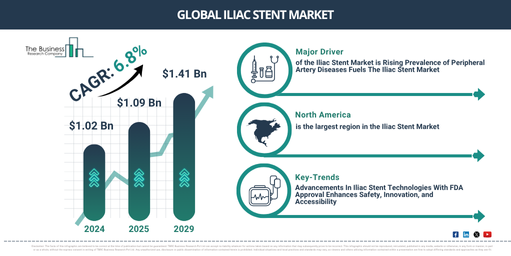
    The market size for iliac stents has been experiencing robust growth in the past few years. The market is expected to increase from $1.02 billion in 2024 to $1.09 billion in 2025, with a compound annual growth rate (CAGR) of 6.5%. Factors such as the expansion of the worldwide healthcare sector, heightened awareness about minimal invasive procedures, amplified demand for stenting procedures, increased occurrences of iliac artery ailments, and enhanced healthcare infrastructure have all contributed to growth during the historic period.

    In the coming years, the market size of iliac stents is projected to experience robust growth, reaching $1.41 billion in 2029 with a composite annual growth rate (CAGR) of 6.8%. This anticipated growth can be credited to the rising prevalence of peripheral artery diseases, an increasing elderly population, an escalation in the number of angioplasty procedures, a heightened demand for less invasive procedures, and a surge in diabetes incidences. Key trends during the projection period encompass advancements in iliac stent technology, an increase in product approvals, progress in medical technology, the expansion of distribution networks, and the employment of iliac stents in outpatient facilities.

    Download a free sample to assess the report’s scope and structure:

    https://www.thebusinessresearchcompany.com/sample.aspx?id=15827&type=smp

    What are the Fundamental Drivers and Innovations Shaping the Iliac Stent Market?

    The rise in the number of peripheral artery diseases is anticipated to fuel the expansion of the iliac stent market in the future. Peripheral artery disease (PAD) is a vascular disorder marked by the constriction or obstruction of arteries outside the heart and brain. The rise in peripheral artery diseases can be attributed to factors such as smoking, the aging demographic, high blood pressure, and diabetes. Iliac stenting serves as an efficient treatment approach for PAD patients. It not only enhances blood circulation, but also provides relief from symptoms, prevents complications, and is minimally invasive with a high rate of success. As per the Society For Cardiovascular Angiography And Interventions, a US-based organization, in July 2023, PAD is projected to affect 8-10 million Americans annually, and around 19 million Americans are expected to have PAD by 2050. Thus, the rising prevalence of peripheral artery diseases is what’s driving the growth of the iliac stent market.

    How Is the Iliac Stent Market Segmented?

    The iliac stentmarket covered in this report is segmented –

    1) By Type: Self-Expandable Stents, Balloon-Expandable Stents, Other Types

    2) By Artery Lesions: Common Iliac Artery Lesions, Severe Calcified Lesions, Complete Obstructive Lesions

    3) By End-Users: Hospitals, Outpatient Facilities, Other End-Users

    Subsegments:

    1) By Self-Expandable Stents: Nitinol Self-Expandable Stents, Polymer-Coated Self-Expandable Stents

    2) By Balloon-Expandable Stents: Bare-Metal Balloon-Expandable Stents, Drug-Eluting Balloon-Expandable Stents

    3) By Other Types: Covered Stents, Hybrid Stents

    Request customized data on this market:

    https://www.thebusinessresearchcompany.com/customise?id=15827&type=smp

    Which Regions Are Driving the Next Phase of the Iliac Stent Market Growth?

    North America was the largest region in the iliac stent market in 2024. Asia-Pacific is expected to be the fastest-growing region in the forecast period. The regions covered in the iliac stent market report are Asia-Pacific, Western Europe, Eastern Europe, North America, South America, Middle East and Africa.

    What Key Trends Are Shaping the Future of the Iliac Stent Market?

    Key players in the iliac stent market, such as iCast, are focusing on the development of pioneering products to enhance patient results and lessen complication risks. The iCast-covered stent system embodies a revolutionary method for the treatment of iliac artery occlusive disease, providing superior performance and a lower risk of complications compared to conventional bare-metal stents. In October 2023, Getinge, a healthcare firm based in Sweden, unveiled the commercial availability of the iCast-covered stent system, approved by the FDA for the treatment of iliac arterial occlusive disease in the USA. This development underscores Getinge’s dedication to delivering high-quality products and support to US clinicians and hospital systems for managing this serious condition.

    View the full report here:

    https://www.thebusinessresearchcompany.com/report/iliac-stent-global-market-report

    How Is the Iliac Stent Market Defined and What Are Its Core Parameters?

    Iliac stents are specialized medical devices designed to treat atherosclerosis in the iliac arteries, which are located in the pelvic region. These stents are deployed through minimally invasive procedures such as angioplasty to expand and support narrowed or blocked arteries.

    Purchase the full report and get a swift delivery:

    https://www.thebusinessresearchcompany.com/purchaseoptions.aspx?id=15827

    About The Business Research Company:

    With over 15000+ reports from 27 industries covering 60+ geographies, The Business Research Company has built a reputation for offering comprehensive, data-rich research and insights. Armed with 1,500,000 datasets, the optimistic contribution of in-depth secondary research, and unique insights from industry leaders, you can get the information you need to stay ahead in the game.

    Get in touch with us:

    The Business Research Company: https://www.thebusinessresearchcompany.com/

    Americas +1 310-496-7795

    Europe +44 7882 955267

    Asia & Others +44 7882 955267 & +91 8897263534

    Email us at info@tbrc.info

    Follow us on:

    LinkedIn: https://in.linkedin.com/company/the-business-research-company

    YouTube: https://www.youtube.com/channel/UC24_fI0rV8cR5DxlCpgmyFQ

    Global Market Model: https://www.thebusinessresearchcompany.com/global-market-model
  • Hyperbaric Oxygen Therapy DevicesMarket Overview 2025–2034: CAGR Trends, Long-Term Growth Paths, and Business Implications

    Hyperbaric Oxygen Therapy DevicesMarket Overview 2025–2034: CAGR Trends, Long-Term Growth Paths, and Business Implications

    Claim your 30% discount on Global Market Reports with code ONLINE30. Limited time only.

    What Are the Key Milestones in the Hyperbaric Oxygen Therapy Devices Market’s Growth Trajectory From 2025 To 2034?

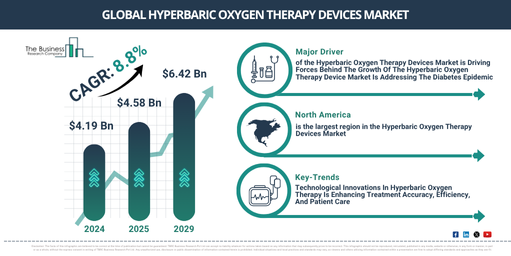
    The market size of hyperbaric oxygen therapy devices has seen a robust growth in the recent past. The market is forecasted to expand from $4.19 billion in 2024 to $4.58 billion in 2025, with a significant compound annual growth rate (CAGR) of 9.2%. Factors such as an increased frequency of chronic wounds, diabetic ulcers, and other health concerns, adoption of hyperbaric oxygen therapy (HBOT) for managing decompression illness, enhanced understanding of HBOT’s neurotherapeutic advantages, development of medical facilities, and increased government efforts and funding for research and development have all contributed to this historical growth.

    The market for hyperbaric oxygen therapy devices is anticipated to experience significant growth in the coming years, with the market size set to hit $6.42 billion by 2029, reflecting a compound annual growth rate (CAGR) of 8.8%. The growth in the predicted period can be ascribed to factors like the rising elderly population, growing diabetes incidences, increased funding for research and clinical trials for identifying new applications and refining HBOT procedures, the escalating demand for mobile and transferrable hyperbaric chambers, and increased healthcare spending and HBOT insurance coverage. Key market trends for the projected period include the implementation of artificial intelligence (AI) and machine learning algorithms, the creation of apps and software platforms for hyperbaric oxygen therapy, the application of hyperbaric oxygen therapy alongside other regenerative medicine methods, the launch of wearable hyperbaric oxygen devices, and the employment of hyperbaric chambers in optimizing sports performance and facilitating recovery programs for athletes, coaches, and fitness aficionados.

    Download a free sample to assess the report’s scope and structure:

    https://www.thebusinessresearchcompany.com/sample.aspx?id=15589&type=smp

    What Are the Primary Drivers Supporting the Market Growth of the Hyperbaric Oxygen Therapy Devices Market?

    Anticipated growth in the hyperbaric oxygen therapy device market is being driven by increasing levels of diabetes. Diabetes is defined as a collection of long-lasting metabolic disorders typified by extended durations of elevated blood sugar levels. A combination of factors such as inactive lifestyles, poor eating habits, obesity, genetic predisposition, elderly demographics, urban growth, and socioeconomic implications are causing diabetes numbers to rise. Hyperbaric oxygen therapy devices form a supplementary treatment strategy for diabetes by promoting the healing of wounds and the repair of tissues via delivery of oxygen at high pressure, which could potentially lower the possibility of complications such as diabetic foot ulcers and enhance overall results for diabetic patients. For instance, the Institute for Health Metrics and Evaluation (IHME), an independent health research center based in the USA, published data in June 2023 predicting that the number of global diabetes cases would climb from 529 million in 2023 to 1.3 billion by 2050. The worldwide prevalence rate, presently at 6.1%, is anticipated to rise dramatically. The highest prevalence rate at a super-regional level, currently recorded at 9.3% in North Africa and the Middle East, is expected to surge to 16.8% by 2050. Consequently, the hyperbaric oxygen therapy device market is expected to grow due to the rise in diabetes prevalence.

    Which Primary Segments of the Hyperbaric Oxygen Therapy Devices Market Are Driving Growth and Industry Transformations?

    The hyperbaric oxygen therapy devicesmarket covered in this report is segmented –

    1) By Type: Monoplace Hyperbaric Oxygen Therapy Devices, Multiplace Hyperbaric Oxygen Therapy Devices, Topical Hyperbaric Oxygen Therapy Devices

    2) By Application: Wound Healing, Decompression Sickness, Infection Treatment, Gas Embolism, Other Applications

    3) By End User: Hospitals, Home Care, Other End Users

    Subsegments:

    1) By Monoplace Hyperbaric Oxygen Therapy Devices: Single-Person Chamber Systems, Portable Monoplace Hbot Devices, Fixed Monoplace Hbot Chambers, Affordable Monoplace Hbot Solutions, High-Pressure Monoplace Oxygen Chambers

    2) By Multiplace Hyperbaric Oxygen Therapy Devices: Two-Person Multiplace Chambers, Multi-Person Chamber Systems (4-10 Persons), Large Multiplace Hyperbaric Chambers, Multiplace Chambers With Enhanced Safety Features, High-Capacity Multiplace Hbot Devices, Advanced Multiplace Oxygen Chambers (With Entertainment And Monitoring Systems)

    3) By Topical Hyperbaric Oxygen Therapy Devices: Wound Healing Topical Hbot Devices, Portable Topical Oxygen Therapy Units, Localized Hyperbaric Therapy Systems For Skin And Wounds, Topical Oxygen Therapy For Facial Treatments, Pneumatic Oxygen Therapy Devices For Skin Conditions, Handheld Topical Oxygen Devices For Minor Injuries

    Request customized data on this market:

    https://www.thebusinessresearchcompany.com/customise?id=15589&type=smp

    Which Regions Are Key Players in the Growth of the #What Are the Primary Drivers Supporting the Market Growth of the Hyperbaric Oxygen Therapy Devices Market?# Market?

    North America was the largest region in the hyperbaric oxygen therapy devices market in 2024. Asia-Pacific is expected to be the fastest-growing region in the forecast period. The regions covered in the hyperbaric oxygen therapy devices market report are Asia-Pacific, Western Europe, Eastern Europe, North America, South America, Middle East, Africa.

    What Are the Most Significant Market Trends in the Hyperbaric Oxygen Therapy Devices Market?

    Leading corporations in the hyperbaric oxygen therapy device market are incorporating automated logging software in their hyperbaric chambers, a move that bolsters treatment accuracy, streamlines operations, and prioritizes patient safety. This software integration into hyperbaric chambers allows medics to accurately track and monitor treatment parameters in live-time, guaranteeing meticulous documentation, streamlined reports, and increased patient safety during hyperbaric therapy procedures. A case in point is the January 2024 introduction of the 3300 HM Hyperbaric Chamber and the eHEAL System by Sechrist Industries Inc., a renowned American manufacturer of hyperbaric oxygen chambers and respiratory equipment. The 3300 HM Hyperbaric Chamber is designed to maximize patient comfort and safety with its avant-garde approach and unique Patient Step-in Entry, making a hyperbaric stretcher obsolete. The chamber features advanced safety measures, easy-to-use breathing systems, and flexible compression choices to suit a wide range of medical requirements. In parallel, the eHEAL System enhances hyperbaric treatment logging with its user-friendly design, automated data collection, compatibility with multiple chambers, and expansive logging capabilities. This system reinforces accuracy, productivity, and safety in keeping treatment records, and complements existing systems effortlessly.

    View the full report here:

    https://www.thebusinessresearchcompany.com/report/hyperbaric-oxygen-therapy-devices-global-market-report

    What Parameters Are Used to Define the Hyperbaric Oxygen Therapy Devices Market?

    Hyperbaric oxygen therapy (HBOT) devices are specialized medical equipment used to administer hyperbaric oxygen therapy. HBOT involves breathing pure oxygen in a pressurized chamber, allowing the lungs to gather more oxygen than would be possible at normal air pressure. The oxygen supply is delivered to the body’s tissues and organs, promoting various therapeutic effects.

    Purchase the full report and get a swift delivery:

    https://www.thebusinessresearchcompany.com/purchaseoptions.aspx?id=15589

    About The Business Research Company:

    With over 15000+ reports from 27 industries covering 60+ geographies, The Business Research Company has built a reputation for offering comprehensive, data-rich research and insights. Armed with 1,500,000 datasets, the optimistic contribution of in-depth secondary research, and unique insights from industry leaders, you can get the information you need to stay ahead in the game.

    Get in touch with us:

    The Business Research Company: https://www.thebusinessresearchcompany.com/

    Americas +1 310-496-7795

    Europe +44 7882 955267

    Asia & Others +44 7882 955267 & +91 8897263534

    Email us at info@tbrc.info

    Follow us on:

    LinkedIn: https://in.linkedin.com/company/the-business-research-company

    YouTube: https://www.youtube.com/channel/UC24_fI0rV8cR5DxlCpgmyFQ

    Global Market Model: https://www.thebusinessresearchcompany.com/global-market-model
  • Hospital Gowns Outlook 2034: Key Drivers, Trends, and Market Frontiers

    Hospital Gowns Outlook 2034: Key Drivers, Trends, and Market Frontiers

    Claim your 30% discount on Global Market Reports with code ONLINE30. Limited time only.

    How Has The Hospital Gowns Market Size Shifted, And What Is the Outlook Through 2034?

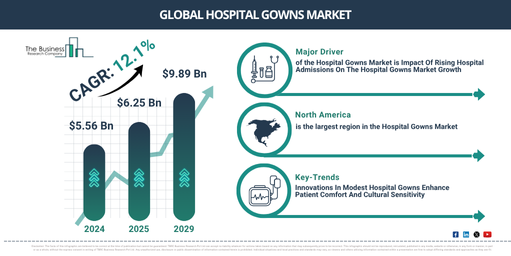
    The market size of hospital gowns has seen a significant increase in the past few years. The size of the market is projected to rise from $5.56 billion in 2024 to $6.25 billion in 2025, with a compound annual growth rate (CAGR) of 12.4%. The historic growth can be traced back to factors such as control of infection and hygiene, infections acquired in hospitals, respects to patient rights and comfort, usage of disposable gowns, and the implementation of aseptic techniques.

    Expectations are high for a significant expansion in the hospital gowns market in the coming years, with a projected worth of $9.89 billion by 2029 and a CAGR of 12.1%. The forecasted growth during this period is supported by a variety of factors including regulatory modifications, the evolution of healthcare infrastructure, improved design and comfort of the gowns, the threat of new infectious diseases, and increased patient awareness and advocacy. The market will also be shaped by key trends such as the inclusion of antimicrobial features in gowns, the development of technologically advanced ‘smart’ hospital gowns, a focus on sustainability, breakthroughs in fabric materials, and the application of nanotechnology.

    Download a free sample to assess the report’s scope and structure:

    https://www.thebusinessresearchcompany.com/sample.aspx?id=15823&type=smp

    How Are Key Drivers in the Industry Acting as Catalysts for the Growth of theHospital Gowns Market?

    The escalation in the number of admissions to hospitals is predicted to spur the expansion of the hospital gown market. The term hospital admissions implies the acceptance of a patient into a hospital for medical attention or treatment. The rise in hospital admissions is attributable to increasing population size, aging demographics, advancements in medical technology resulting in more sophisticated treatments, and higher incidences of chronic diseases necessitating hospital stays. Hospital gowns contribute to hospital admissions by offering infection control, easy access for medical assessments, patient comfort, and operational competence while maintaining strict safety and hygiene measures. For example, as per the data shared by the Australian Institute of Health and Welfare, a government entity based in Australia, in May 2024, a sum of 735,500 patients, reflecting an 18.1% increase from 2021–2022, were taken in for surgery from waiting lists for elective surgery at public hospitals. Hence, the burgeoning hospital admissions are propelling the expansion of the hospital gown market.

    Which Segments in the Hospital Gowns Offer the Most Growth?

    The hospital gownsmarket covered in this report is segmented –

    1) By Type: Surgical Gowns, Non-Surgical Gowns, Patient Gowns

    2) By Usability: Disposable, Reusable

    3) By Distribution Channel: Online Sales, Retail Pharmacies, Direct Sales

    4) By End User: Hospital, Specialty Clinic, Other End Users

    Subsegments:

    1) By Surgical Gowns: Disposable Surgical Gowns, Reusable Surgical Gowns

    2) By Non-Surgical Gowns: Disposable Non-Surgical Gowns, Reusable Non-Surgical Gowns

    3) By Patient Gowns: Disposable Patient Gowns, Reusable Patient Gowns

    Request customized data on this market:

    https://www.thebusinessresearchcompany.com/customise?id=15823&type=smp

    What Are the Fastest-Growing Geographies in the #How Are Key Drivers in the Industry Acting as Catalysts for the Growth of theHospital Gowns Market?# Market?

    North America was the largest region in the hospital gowns market in 2024. Asia-Pacificis expected to be the fastest-growing region in the forecast period. The regions covered in the hospital gowns market report are Asia-Pacific, Western Europe, Eastern Europe, North America, South America, Middle East, Africa.

    What Are the Current Market Growth and Trends in the Hospital Gowns Industry?

    Major firms active in the hospital gown market are innovating and producing more demure hospital gowns that prioritise the comfort and dignity of patients during their hospitalisation. These gowns, known as modest hospital gowns, are medical clothing items thoughtfully designed with additional coverage to preserve the modesty and privacy of patients, particularly in various cultural and social settings where modesty is valued. One such example occurred in March 2024 when Children’s Minnesota, a healthcare provider from the United States, introduced a revolutionary modest hospital gown. This new design prioritizes inclusivity and sensitivity to the cultural needs of pediatric patients. The features of these gowns include a removable hijab for head covering, quarter-length sleeves, adaptable fastenings in the front or back enabling easy medical access while preserving modesty, collar buttons for attaching a head covering, and the option of fastening it along the back using buttons. These gowns are tailor-made based on the insights and opinions from healthcare professionals, such as doctors, nurses, the hospital’s clinical team, and the patients, ensuring the gowns meet their medical requirements whilst also ensuring their comfort and dignity.

    View the full report here:

    https://www.thebusinessresearchcompany.com/report/hospital-gowns-global-market-report

    What Are the Key Elements That Define the Hospital Gowns Market?

    Hospital gowns are specialized garments worn by patients and healthcare professionals in medical settings. They are designed to provide comfort, ease of access for medical examinations and procedures, and maintain hygiene standards. These gowns are crucial for maintaining hygiene, safety, and comfort in medical settings, supporting both patient care and healthcare worker protection.

    Purchase the full report and get a swift delivery:

    https://www.thebusinessresearchcompany.com/purchaseoptions.aspx?id=15823

    About The Business Research Company:

    With over 15000+ reports from 27 industries covering 60+ geographies, The Business Research Company has built a reputation for offering comprehensive, data-rich research and insights. Armed with 1,500,000 datasets, the optimistic contribution of in-depth secondary research, and unique insights from industry leaders, you can get the information you need to stay ahead in the game.

    Get in touch with us:

    The Business Research Company: https://www.thebusinessresearchcompany.com/

    Americas +1 310-496-7795

    Europe +44 7882 955267

    Asia & Others +44 7882 955267 & +91 8897263534

    Email us at info@tbrc.info

    Follow us on:

    LinkedIn: https://in.linkedin.com/company/the-business-research-company

    YouTube: https://www.youtube.com/channel/UC24_fI0rV8cR5DxlCpgmyFQ

    Global Market Model: https://www.thebusinessresearchcompany.com/global-market-model