Blog

  • Key Developments and Trends Steering the Optogenetics Market Forward: Innovative 3D Holographic Stimulation Systems Propel Optogenetics Market

    Key Developments and Trends Steering the Optogenetics Market Forward: Innovative 3D Holographic Stimulation Systems Propel Optogenetics Market

    Claim your 30% discount on Global Market Reports with code ONLINE30. Limited time only.

    How Has the Optogenetics Market Growth Performance Trended Historically, And What Lies Ahead?

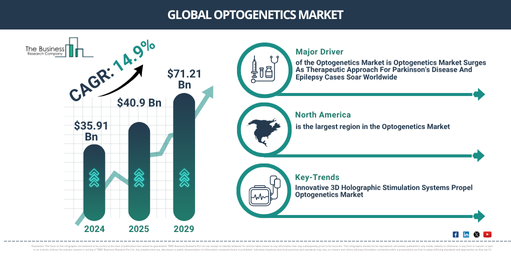
    The market for optogenetics has seen significant expansion in the past few years. Its size is projected to increase from $35.91 billion in 2024 to $40.9 billion in 2025, representing a compound annual growth rate (CAGR) of 13.9%. This historical growth can be attributed to the surge in neurological diseases, increased investments in life sciences and drug discovery and development, advancements in mapping neural circuits, the use of optogenetics in drug screening, and progress in neurophotonics.

    In the coming years, the optogenetics market is anticipated to witness significant growth, ballooning to $71.21 billion in 2029 at a compound annual growth rate (CAGR) of 14.9%. This projected growth during the forecast period is due to various factors such as its therapeutic uses, clinical testing and translation, broadening its reach to non-neuronal cells, and the application of optogenetics in the development of brain-machine interfaces and new light-sensitive proteins. The forecast period will also see significant trends such as the enhancement of optogenetic tools and techniques, partnerships with pharmaceutical companies, the use of optogenetics in drug discovery and development, the expansion to non-neural cell categories, and its integration with other imaging technologies.

    Download a free sample to assess the report’s scope and structure:

    https://www.thebusinessresearchcompany.com/sample.aspx?id=9009&type=smp

    How Are Key Drivers in the Industry Acting as Catalysts for the Growth of theOptogenetics Market?

    Expectations for the expansion of the optogenetics market are driven by the escalating incidences of conditions like Parkinson’s disease and epilepsy throughout the world. Parkinson’s disease is identified as a degenerative brain disorder that triggers motor symptoms such as slowness of motion, shakes, stiffness, and imbalance alongside issues like cognitive impairment, mental health disorders, sleep difficulties, pain, and sensory disruptions. Similarly, epilepsy is a medical condition of the brain that prompts seizures. Optogenetic therapy, which utilizes proteins responsive to particular light wavelengths to treat Parkinson’s disease, plays a significant role in this scenario. Generated through gene therapy techniques, these proteins either activate or deactivate when exposed to specific light types, ultimately facilitating normal brain functioning in Parkinson’s disease. The Parkinson’s Foundation, a US entity dedicated to ameliorating the lives of those impacted by Parkinson’s disease, reported a drastic increase in yearly Parkinson’s disease diagnoses in December 2022, shooting up to nearly 90,000 from an earlier estimate of 60,000. Furthermore, the population living with Parkinson’s disease in the U.S. is projected to surge from 930,000 in 2020 to 1.2 million by 2030. Thus, the escalating instances of Parkinson’s disease and epilepsy globally are propelling the acceleration of the optogenetics market.

    Which Segments in the Optogenetics Offer the Most Growth?

    The optogeneticsmarket covered in this report is segmented –

    1) By Product: Lasers, Actuators, Sensors

    2) By Application: Neuroscience, Behavioral Tracking, Retinal Disease Treatment, Other Applications

    3) By End User: Hospitals And Clinics, Diagnostics Centers, Research Centers, Other End Users

    Subsegments:

    1) By Lasers: Continuous Wave Lasers, Pulsed Lasers, Fiber-Coupled Lasers

    2) By Actuators: Channelrhodopsins, Halorhodopsins, Opto-xRs

    3) By Sensors: Calcium Sensors, Voltage Sensors, Genetically Encoded Indicators

    Request customized data on this market:

    https://www.thebusinessresearchcompany.com/customise?id=9009&type=smp

    What Are the Fastest-Growing Geographies in the #How Are Key Drivers in the Industry Acting as Catalysts for the Growth of theOptogenetics Market?# Market?

    North America was the largest region in the optogenetics market in 2024. The regions covered in the optogenetics market report are Asia-Pacific, Western Europe, Eastern Europe, North America, South America, Middle East, Africa

    What Are the Current Market Growth and Trends in the Optogenetics Industry?

    The creation of novel systems is a principal trend gaining traction in the optogenetics market. Main players in the optogenetics sector are fabricating advanced optogenetics tools and systems using state-of-the-art technologies to maintain their market reputation. For instance, in June 2022, Bruker Corporation, an optogenetics tool manufacturer based in the US, rolled out the NeuraLight 3D Ultra, an improved 3D holographic stimulation for optogenetics modules, meant to support complex neuroscience and optogenetics research activities on Bruker’s Ultima 2Pplus Multiphoton Microscope. NeuraLight 3D Ultra provides state-of-the-art 3D holographic photostimulation designed for comprehensive functional research on neural networks and brain computation.

    View the full report here:

    https://www.thebusinessresearchcompany.com/report/optogenetics-global-market-report

    What Are the Key Elements That Define the Optogenetics Market?

    Optogenetics is a comprehensive technique that uses optical systems and genetic engineering technologies to accurately regulate and monitor the biological processes of a cell, group of cells, tissues, or organ with high temporal and spatial resolution. Optogenetics is to monitor and control the physiological activity of neurons and other cell types that include light sensors frequently employed to identify the underlying causes of ailments such as Parkinson’s, memory illnesses, anxiety, addiction issues, mood swings, and other conditions.

    Purchase the full report and get a swift delivery:

    https://www.thebusinessresearchcompany.com/purchaseoptions.aspx?id=9009

    About The Business Research Company:

    With over 15000+ reports from 27 industries covering 60+ geographies, The Business Research Company has built a reputation for offering comprehensive, data-rich research and insights. Armed with 1,500,000 datasets, the optimistic contribution of in-depth secondary research, and unique insights from industry leaders, you can get the information you need to stay ahead in the game.

    Get in touch with us:

    The Business Research Company: https://www.thebusinessresearchcompany.com/

    Americas +1 310-496-7795

    Europe +44 7882 955267

    Asia & Others +44 7882 955267 & +91 8897263534

    Email us at info@tbrc.info

    Follow us on:

    LinkedIn: https://in.linkedin.com/company/the-business-research-company

    YouTube: https://www.youtube.com/channel/UC24_fI0rV8cR5DxlCpgmyFQ

    Global Market Model: https://www.thebusinessresearchcompany.com/global-market-model
  • Market Trends Influencing Strategic Decisions in the Optical Imaging Industry: Pioneering Technologies Transforming The Landscape Of The Optical Imaging Market

    Market Trends Influencing Strategic Decisions in the Optical Imaging Industry: Pioneering Technologies Transforming The Landscape Of The Optical Imaging Market

    Claim your 30% discount on Global Market Reports with code ONLINE30. Limited time only.

    What Are the Projected Market Size and Growth Rates for the Optical Imaging Market From 2025 To 2029?

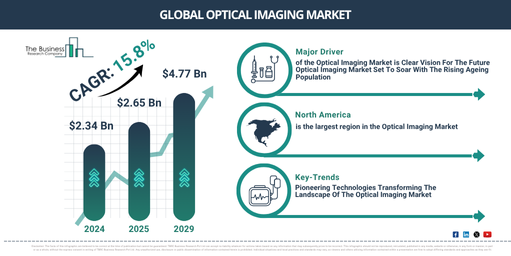
    The size of the optical imaging market has seen substantial expansion in the recent past. It is projected that it will escalate from a value of $2.34 billion in 2024 to $2.65 billion by 2025, increasing at a compound annual growth rate (CAGR) of 12.9%. Factors such as data analytics and image processing, integration with consumer electronics, reduced costs and improved accessibility, as well as involvement of academic and research institutions and its application in industries have been instrumental in the growth witnessed during the historic period.

    The market size for optical imaging is predicted to experience swift expansion in the coming years, reaching a worth of $4.77 billion by 2029, expanding at a compound annual growth rate (CAGR) of 15.8%. The development in this projected period can be credited to the progression of the healthcare industry, increase in chronic and age-related ailments, demand for non-invasive and minimally invasive imaging, and progress in biophotonics. The forecast period will see key trends such as regulatory adjustments, investments in research and development, incorporation of consumer electronics, affordability and cost-efficiency, as well as improved endoscopic imaging.

    Download a free sample to assess the report’s scope and structure:

    https://www.thebusinessresearchcompany.com/sample.aspx?id=8360&type=smp

    What Are the Major Market Drivers Behind the Rising Adoption of Optical Imaging Market?

    The growth of the optical imaging market is predicted to be driven by the increasing elderly population. The term ‘geriatric population’ is defined as individuals who are 65 years and older. Optical imaging, with its superior resolution and multispectral capabilities, offers significant flexibility which aids in diagnosing and treating atherosclerosis and related ailments within the elder demographic. The utilization of non-ionizing radiation in optical imaging methods minimizes potential harmful effects of radiation, resulting in their growing usage in hospitals for the treatment of senior patients. For instance, the World Trade Organization, a US-based international entity, reported in October 2022 that by 2050, the global population of individuals aged 60 and above is set to double to 2.1 billion. Furthermore, the population of people over 80 years of age is predicted to triple from 2020 to 2050, reaching a staggering 426 million. Therefore, the optical imaging market is anticipated to grow significantly due to the rise in the ageing population.

    Which Key Market Segments Comprise the Optical Imaging Market and Drive Its Revenue Growth?

    The optical imagingmarket covered in this report is segmented –

    1) By Product: Imaging Systems, Cameras, Software, Other Products

    2) By Application: Pathological Imaging, Intra-operative Imaging

    3) By End-User: Hospitals And Clinics, Research Laboratories, Pharmaceutical And Biotechnology Industry

    Subsegments:

    1) By Imaging Systems: Fluorescence Imaging Systems, Multispectral Imaging Systems, Hyperspectral Imaging Systems

    2) By Cameras: CCD Cameras, CMOS Cameras, Scientific Cameras

    3) By Software: Image Analysis Software, Visualization Software, Processing Software

    4) By Other Products: Light Sources, Optical Filters, Lenses And Accessories

    Request customized data on this market:

    https://www.thebusinessresearchcompany.com/customise?id=8360&type=smp

    Which Areas Are Leading Regions in the Optical Imaging Market Expansion Across the Globe?

    North America was the largest region in the optical imaging market in 2024. The regions covered in the optical imaging market report are Asia-Pacific, Western Europe, Eastern Europe, North America, South America, Middle East, Africa.

    What Are the Strategic Trends Steering theOptical Imaging Market Direction?

    Technological advancements are becoming a popular trend in the optical imaging market, driving leading players to launch sophisticated products to stay competitive and capture a significant market share. In September 2023, for example, Exo, a US-based medical optical imaging start-up, introduced its latest imaging device, Exo Iris. This portable ultrasound device merges point-of-care imaging with artificial intelligence and health information technology (IT) systems. As a recent addition to Exo’s ecosystem, Exo Iris functions to boost the adoption of POCUS (Point-of-Care Ultrasound) on a system-wide scale by utilizing imaging, workflow software, and artificial intelligence (AI). Exo Iris provides various healthcare professionals such as doctors, nurses, EMTs (Emergency Medical Technicians), and clinicians working in emergency, inpatient, outpatient, and home environments with a means to quickly visualize the human body for instant diagnosis at the point of care.

    View the full report here:

    https://www.thebusinessresearchcompany.com/report/optical-imaging-global-market-report

    How Is the Optical Imaging Market Conceptually Defined?

    Optical imaging refers to a method for non-invasive investigation of cellular and molecular structures in the living body. The exceptional characteristics of photons help the imaging process generate comprehensive and precise images of smaller structures, from cells and molecules to bigger structures like tissues and organs.

    Purchase the full report and get a swift delivery:

    https://www.thebusinessresearchcompany.com/purchaseoptions.aspx?id=8360

    About The Business Research Company:

    With over 15000+ reports from 27 industries covering 60+ geographies, The Business Research Company has built a reputation for offering comprehensive, data-rich research and insights. Armed with 1,500,000 datasets, the optimistic contribution of in-depth secondary research, and unique insights from industry leaders, you can get the information you need to stay ahead in the game.

    Get in touch with us:

    The Business Research Company: https://www.thebusinessresearchcompany.com/

    Americas +1 310-496-7795

    Europe +44 7882 955267

    Asia & Others +44 7882 955267 & +91 8897263534

    Email us at info@tbrc.info

    Follow us on:

    LinkedIn: https://in.linkedin.com/company/the-business-research-company

    YouTube: https://www.youtube.com/channel/UC24_fI0rV8cR5DxlCpgmyFQ

    Global Market Model: https://www.thebusinessresearchcompany.com/global-market-model
  • Top Trends Driving Innovation and Change in the Optical Coherence Tomography Market: Technological Advancements Driving Innovation In Optical Coherence Tomography Market

    Top Trends Driving Innovation and Change in the Optical Coherence Tomography Market: Technological Advancements Driving Innovation In Optical Coherence Tomography Market

    Claim your 30% discount on Global Market Reports with code ONLINE30. Limited time only.

    What Is the Estimated Market Size of the Optical Coherence Tomography Market In 2029?

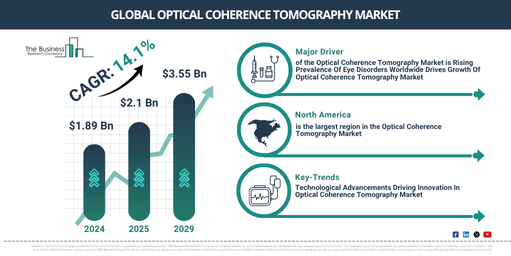
    In recent years, the optical coherence tomography market has seen a swift expansion. This growth is projected to continue, accelerating from a value of $1.89 billion in 2024 to an estimated $2.1 billion in 2025, translating to a compound annual growth rate (CAGR) of 11.1%. Several factors have driven this growth during the historic period, including the impact of the global pandemic, patient preferences, a competitive landscape, rapid strides in research and development, regulatory backing, and the shrinking size of devices.

    The market size of optical coherence tomography is predicted to experience a swift expansion in the upcoming years, reaching a value of $3.55 billion in 2029, with a compound annual growth rate (CAGR) of 14.1%. Several attributes that contribute to this projected growth include an increase in healthcare spending, a focus on patient-centric care, and a higher occurrence of eye disorders. Significant market trends anticipated for this period consist of the integration of OCT in surgical procedures, regulatory environment alterations, the adoption of telemedicine and remote patient consultations, and competitive market innovation.

    Download a free sample to assess the report’s scope and structure:

    https://www.thebusinessresearchcompany.com/sample.aspx?id=8231&type=smp

    What External and Internal Drivers Are Contributing to the Growth of theOptical Coherence Tomography Market?

    The increase in eye-related disorders is projected to fuel the expansion of the optical coherence tomography market. Cataract, glaucoma, diabetic retinopathy, and age-related macular degeneration (AMD) are among the primary causes of vision loss and blindness worldwide, thereby driving the demand for advanced diagnostic tools like optical coherence tomography systems. The World Health Organization, United Nations’ specialized agency based in Switzerland, reports that more than 2.2 billion people around the globe suffer from near-or vision problems caused by conditions like refractive error, cataract, glaucoma, diabetic retinopathy, among others. AMD stands as the third leading cause of blindness worldwide, following cataracts and glaucoma. In the European Union, around 34 million individuals, including 22 million from the five most populous nations, are affected by AMD. It is forecasted that the patient count for AMD will surge by 25% by 2050 due to population increase and ageing. Primary open-angle glaucoma (POAG) is estimated to impair 7.32 million Americans by 2050. As such, the mounting prevalence of eye disorders is set to bolster the growth of the optical coherence tomography market.

    What Segment Types Define the Optical Coherence Tomography Market Structure?

    The optical coherence tomographymarket covered in this report is segmented –

    1) By Type: Catheter-Based OCT Devices, Doppler OCT Devices, Handheld OCT Devices, Tabletop OCT Devices

    2) By Technology: Time Domain OCT (TDOCT), Frequency Domain OCT (FD-OCT), Spatial Encoded Frequency Domain OCT

    3) By Application: Ophthalmology, Cardiovascular, Oncology, Dermatology, Other Applications

    Subsegments:

    1) By Catheter-Based OCT Devices: Intracoronary OCT, Intravenous OCT

    2) By Doppler OCT Devices: Time-Domain Doppler OCT, Frequency-Domain Doppler OCT

    3) By Handheld OCT Devices: Portable Retinal OCT, Portable Cardiovascular OCT

    4) By Tabletop OCT Devices: Optical Coherence Tomography Angiography (OCTA), High-Resolution OCT For Research Applications

    Request customized data on this market:

    https://www.thebusinessresearchcompany.com/customise?id=8231&type=smp

    Which Geographic Areas Hold the Strongest Growth Potential in the Optical Coherence Tomography Market?

    North America was the largest region in the optical coherence tomography market in 2024. Asia-Pacific is expected to be the fastest-growing region in the forecast period. The regions covered in the optical coherence tomography market report are Asia-Pacific, Western Europe, Eastern Europe, North America, South America, Middle East, Africa.

    What Long-Term Trends Are Transforming the Competitive Landscape of the Optical Coherence Tomography Market?

    The progression of technology is a dominant trend in the optical coherence tomography market. Leading companies in the sector are launching products with advanced features and implementing high-end technologies to increase their market shares and remain competitive. For instance, Abbott Laboratories, a medical device firm based in the US, unveiled its newest vascular imaging platform in India in October 2023. The platform comes equipped with Ultreon 1.0 Software, which incorporates optical coherence tomography (OCT) and artificial intelligence (AI), offering doctors a detailed evaluation of blood circulation and obstructions in coronary arteries. This sophisticated imaging software is designed to distinguish between calcified and non-calcified blockages, evaluate the severity of calcium-based obstructions, and measure vessel diameter. Additionally, it aids doctors in accurately deploying stents, ensuring proper expansion and apposition, with a real-time outcome display for increased accuracy in coronary stenting procedures. The OCT technology from Abbott uses near-infrared light to deliver high-definition, precise imaging within blood vessels, which helps doctors to gather detailed data even in intricate patient anatomical structures.

    View the full report here:

    https://www.thebusinessresearchcompany.com/report/optical-coherence-tomography-global-market-report

    What Is the Definition of the Optical Coherence Tomography Market?

    Optical coherence tomography (OCT) is an optical biopsy and effective imaging technology for medical diagnostics that provides images of tissue in situ and in real-time. Optical coherence tomography is used for high-resolution cross-sectional imaging.

    Purchase the full report and get a swift delivery:

    https://www.thebusinessresearchcompany.com/purchaseoptions.aspx?id=8231

    About The Business Research Company:

    With over 15000+ reports from 27 industries covering 60+ geographies, The Business Research Company has built a reputation for offering comprehensive, data-rich research and insights. Armed with 1,500,000 datasets, the optimistic contribution of in-depth secondary research, and unique insights from industry leaders, you can get the information you need to stay ahead in the game.

    Get in touch with us:

    The Business Research Company: https://www.thebusinessresearchcompany.com/

    Americas +1 310-496-7795

    Europe +44 7882 955267

    Asia & Others +44 7882 955267 & +91 8897263534

    Email us at info@tbrc.info

    Follow us on:

    LinkedIn: https://in.linkedin.com/company/the-business-research-company

    YouTube: https://www.youtube.com/channel/UC24_fI0rV8cR5DxlCpgmyFQ

    Global Market Model: https://www.thebusinessresearchcompany.com/global-market-model
  • Emerging Trends Redefining the Non-Alcoholic Steatohepatitis Biomarkers Market Landscape: Advancements In Technology Propel The Evolution Of Non-Invasive Brain Trauma Monitoring Devices

    Emerging Trends Redefining the Non-Alcoholic Steatohepatitis Biomarkers Market Landscape: Advancements In Technology Propel The Evolution Of Non-Invasive Brain Trauma Monitoring Devices

    Claim your 30% discount on Global Market Reports with code ONLINE30. Limited time only.

    How Fast Is The Non-Invasive Brain Trauma Monitoring Devices Market Expected to Grow Between 2025 And 2029?

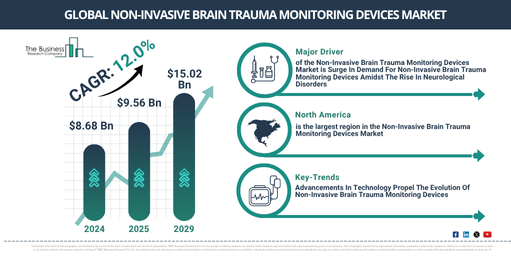
    The market size for non-invasive brain trauma monitoring devices has seen substantial growth in recent years. Originally valued at $8.68 billion in 2024, it is projected to reach $9.56 billion in 2025, marking a compound annual growth rate (CAGR) of 10.1%. This historic growth can be credited to several factors such as a focus on personalized medical procedures, an emphasis on prolonged monitoring, the prevalent use of wearable technology, enhancements in signal sensitivity, and the integration of multimodal monitoring.

    In the coming years, the market for non-invasive brain trauma monitoring devices is set to experience significant growth, with projections suggesting that it will reach a value of $15.02 billion by 2029, representing a Compound Annual Growth Rate (CAGR) of 12.0%. A combination of factors can account for this growth during the forecast period, including increased awareness and diagnosis, joint research initiatives, the need for long-term monitoring systems, innovations in signal processing, and progress in remote connectivity. Notable trends anticipated during the forecast period encompass the development of compact and wearable devices, strides in sensor technology, emphasis on real-time monitoring, monitoring of remote patients, and non-invasive imaging methods.

    Download a free sample to assess the report’s scope and structure:

    https://www.thebusinessresearchcompany.com/sample.aspx?id=8325&type=smp

    What Are the Core Market Drivers Propelling Growth in the Non-Invasive Brain Trauma Monitoring Devices Industry?

    The escalation in the occurrence of neurological disorders and diseases is anticipated to fuel the need for non-invasive brain trauma monitoring devices. Neurological disorders are among the significant non-communicable diseases (NCDs) influencing people’s thoughts, emotions, behavior, and injuries such as brain, spinal cord, or nerve injuries. Non-invasive brain trauma monitoring devices assist in persistent monitoring and permit doctors to discern the critical level of patients and the necessary measures to mitigate the patients’ critical trauma state. For example, the American Cancer Society, a US-based nonprofit cancer advocacy organization, projected in January 2024 that new instances of brain cancer would number 25,400 in 2024, up from 24,810 in 2023. Therefore, the surge in neurological disorders and diseases will stimulate the market for non-invasive brain trauma monitoring devices.

    How Is the Non-Invasive Brain Trauma Monitoring Devices Market Segmented?

    The non-invasive brain trauma monitoring devicesmarket covered in this report is segmented –

    1) By Type: Non-invasive Intracranial Pressure Monitor, Non-invasive Cerebral Edema Dynamic Monitor, Other Types

    2) By Application: Cardiology, Urology And Nephrology, Oncology, Gastroenterology, Other Applications

    3) By End-User: Hospitals, Neurological Centers, Other End Users

    Subsegments:

    1) By Non-invasive Intracranial Pressure Monitor: Transcranial Doppler (TCD) Devices, Near-Infrared Spectroscopy (NIRS) Devices

    2) By Non-invasive Cerebral Edema Dynamic Monitor: Electrical Impedance Tomography (EIT), Magnetic Resonance Imaging (MRI)-Based Monitors

    3) By Other Types: Ultrasound-Based Monitors, Bioelectrical Signal Monitors

    Request customized data on this market:

    https://www.thebusinessresearchcompany.com/customise?id=8325&type=smp

    Which Regions Are Driving the Next Phase of the Non-Invasive Brain Trauma Monitoring Devices Market Growth?

    North America was the largest region in the non-invasive brain trauma monitoring devices market share in 2024. The regions covered in the non-invasive brain trauma monitoring devices market report are Asia-Pacific, Western Europe, Eastern Europe, North America, South America, Middle East, Africa.

    What Key Market Trends and Innovations Are Shaping the Future of the Non-Invasive Brain Trauma Monitoring Devices Industry?

    The influence of technological innovation is increasingly shaping the non-invasive brain trauma monitoring device market. This trend is driven by leading enterprises in the field who are leveraging advanced technologies to reinforce their market standing. An illustrative example is Canon Medical Systems, a medical imaging and healthcare tech firm based in Japan, which, in May 2024, introduced the first Aquilion Serve SP CT scanner to the U.S market. This scanner, equipped with INSTINX, an AI-powered workflow automation system, is constructed to boost imaging capabilities and enhance patient care. The INSTINX system, being highly driven by AI, automates workflow, providing streamlined imaging processes that promote efficiency and precision in a clinical environment.

    View the full report here:

    https://www.thebusinessresearchcompany.com/report/non-invasive-brain-trauma-monitoring-devices-global-market-report

    How Is the Non-Invasive Brain Trauma Monitoring Devices Market Defined and What Are Its Core Parameters?

    The term non-invasive brain trauma monitoring devices refers to devices that aid in monitoring neural and electrical activity and the pressure surrounding the brain. These devices help analyze the blood flow rate in the brain’s arteries and veins in cases of brain death, trauma-related brain injury, epilepsy, and other conditions of this nature.

    Purchase the full report and get a swift delivery:

    https://www.thebusinessresearchcompany.com/purchaseoptions.aspx?id=8325

    About The Business Research Company:

    With over 15000+ reports from 27 industries covering 60+ geographies, The Business Research Company has built a reputation for offering comprehensive, data-rich research and insights. Armed with 1,500,000 datasets, the optimistic contribution of in-depth secondary research, and unique insights from industry leaders, you can get the information you need to stay ahead in the game.

    Get in touch with us:

    The Business Research Company: https://www.thebusinessresearchcompany.com/

    Americas +1 310-496-7795

    Europe +44 7882 955267

    Asia & Others +44 7882 955267 & +91 8897263534

    Email us at info@tbrc.info

    Follow us on:

    LinkedIn: https://in.linkedin.com/company/the-business-research-company

    YouTube: https://www.youtube.com/channel/UC24_fI0rV8cR5DxlCpgmyFQ

    Global Market Model: https://www.thebusinessresearchcompany.com/global-market-model
  • Non-Alcoholic Steatohepatitis Biomarkers Market 2025-2034: Key Highlights, Growth Dynamics, and Emerging Trends

    Non-Alcoholic Steatohepatitis Biomarkers Market 2025-2034: Key Highlights, Growth Dynamics, and Emerging Trends

    Claim your 30% discount on Global Market Reports with code ONLINE30. Limited time only.

    What Are the Key Projections for the CAGR of the Non-Alcoholic Steatohepatitis Biomarkers Market Size From 2025 to 2034?

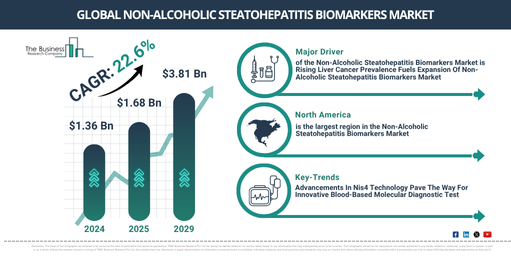
    In recent times, there has been remarkable growth in the market size of non-alcoholic steatohepatitis biomarkers. The market, which was valued at $1.36 billion in 2024, is predicted to reach $1.68 billion in 2025, reflecting a compound annual growth rate (CAGR) of 23.9%. Factors such as diabetes and metabolic syndrome, awareness and screening initiatives, drawbacks of liver biopsy, regulatory endorsements, a move towards personalized healthcare, and clinical trials focussed on NASH have contributed to the growth observed in the historic timeframe.

    In the upcoming years, substantial expansion is anticipated in the non-alcoholic steatohepatitis biomarkers market, which is predicted to surge to $3.81 billion in 2029, with a compound annual growth rate (CAGR) of 22.6%. Factors contributing to the projected growth extend from the advent of innovative therapies and expansion of precision medicine approaches to patient advocacy initiatives, incorporation of multi-omics data and improved patient involvement. The forecast period also sees trends like telemedicine and remote monitoring, groundbreaking diagnostic platforms, international research collaborations, technological advancements in the field of biomarker discovery and the utilization of artificial intelligence (AI) along with the inclusion of imaging biomarkers.

    Download a free sample to assess the report’s scope and structure:

    https://www.thebusinessresearchcompany.com/sample.aspx?id=9002&type=smp

    Which Primay Drivers Are Accelerating Growth in the Non-Alcoholic Steatohepatitis Biomarkers Market?

    The rise in liver cancer cases is anticipated to drive the expansion of the non-alcoholic steatohepatitis biomarkers market. Liver cancer involves the growth of malignant tumors in the liver, which can originate in the liver itself (primary liver cancer) or could be a result of metastasis from other parts of the body (secondary or metastatic liver cancer). Biomarkers for non-alcoholic steatohepatitis (NASH) are employed in the early diagnosis, tracking of disease development, and assessment of treatment response in liver cancer. They provide essential prognostic information and can aid in minimizing the necessity for invasive procedures. For example, in 2022, the World Cancer Research Fund, a non-profit organization based in the UK, reported approximately 866,136 fresh cases of liver cancer around the globe, making liver cancer the 6th most prevalent cancer worldwide. Consequently, the surge in liver cancer instances is driving the expansion of the non-alcoholic steatohepatitis biomarkers market.

    Which Primary Segments of the Non-Alcoholic Steatohepatitis Biomarkers Market Are Driving Growth and Industry Transformations?

    The non-alcoholic steatohepatitis biomarkersmarket covered in this report is segmented –

    1) By Type: Hepatic Fibrosis Biomarkers, Serum Biomarkers, Oxidative Stress Biomarkers, Apoptosis Biomarkers, Other Types

    2) By Disease: Hypertension, Heart Disease, High Blood Lipid, Type 2 Diabetes, Obesity

    3) By End Use: Research Institutes And Academics, Diagnostic Centers, Pharmaceutical Companies And Pharmaceutical Companies And Contract Research Organizations (CROs), Hospitals And Clinics, Other End-Uses

    Subsegments:

    1) By Hepatic Fibrosis Biomarkers: Hyaluronic Acid, Procollagen III N-terminal Propeptide (PIIINP), Fibrosis-4 (FIB-4) Index

    2) By Serum Biomarkers: Alanine Aminotransferase (ALT), Aspartate Aminotransferase (AST), Adiponectin

    3) By Oxidative Stress Biomarkers: Malondialdehyde (MDA), 8-Isoprostane, Advanced Oxidation Protein Products (AOPP)

    4) By Apoptosis Biomarkers: Caspase-3, Cytochrome c, Liver Inhibitory Protein (LIP)

    5) By Other Types: Metabolomic Biomarkers, Genetic Biomarkers, Inflammatory Biomarkers

    Request customized data on this market:

    https://www.thebusinessresearchcompany.com/customise?id=9002&type=smp

    Which Regions Are Key Players in the Growth of the #Which Primay Drivers Are Accelerating Growth in the Non-Alcoholic Steatohepatitis Biomarkers Market?# Market?

    North America was the largest region in the non-alcoholic steatohepatitis biomarkers market in 2024. Asia-Pacific is expected to be the fastest-growing region in the non-alcoholic steatohepatitis biomarkers market during the forecast period. The regions covered in the non-alcoholic steatohepatitis biomarkers market report are Asia-Pacific, Western Europe, Eastern Europe, North America, South America, Middle East, Africa

    Which Technological Trends Are Reshaping the Non-Alcoholic Steatohepatitis Biomarkers Industry Dynamics?

    One significant trend in the non-alcoholic steatohepatitis biomarkers market is the role of progressive technologies. Prevalent organizations in this market are leveraging innovation to reinforce their market stance. For example, in October 2022, France’s late-stage biopharmaceutical firm, GENFIT partnered with LabCorp, an American life sciences enterprise, for an exclusive five-year license of GENFIT’s NIS4 technology. This technology was created to single out patients with non-alcoholic steatohepatitis-at-risk (NASH), specifically those with significant or advanced fibrosis (F > 2) otherwise known as at-risk NASH. As part of this agreement, LabCorp will create and market a blood-based molecular diagnostic test using NIS4 technology across the United States and Canada, greatly extending its availability to healthcare professionals.

    View the full report here:

    https://www.thebusinessresearchcompany.com/report/non-alcoholic-steatohepatitis-biomarkers-global-market-report

    What Parameters Are Used to Define the Non-Alcoholic Steatohepatitis Biomarkers Market?

    Non-alcoholic steatohepatitis (NASH) is a type of liver inflammation and damage caused by a build-up of fat in the liver. NASH biomarkers are used as diagnostic tools to assess the severity of non-alcoholic steatohepatitis and to assess liver damage. This damages the liver cells and inflames the liver, which can result in cirrhosis (liver scarring) and liver failure. Biomarkers refer to a particular quality that can be tested to reveal pathogenic processes, healthy biological processes, or reactions to exposure or treatment.

    Purchase the full report and get a swift delivery:

    https://www.thebusinessresearchcompany.com/purchaseoptions.aspx?id=9002

    About The Business Research Company:

    With over 15000+ reports from 27 industries covering 60+ geographies, The Business Research Company has built a reputation for offering comprehensive, data-rich research and insights. Armed with 1,500,000 datasets, the optimistic contribution of in-depth secondary research, and unique insights from industry leaders, you can get the information you need to stay ahead in the game.

    Get in touch with us:

    The Business Research Company: https://www.thebusinessresearchcompany.com/

    Americas +1 310-496-7795

    Europe +44 7882 955267

    Asia & Others +44 7882 955267 & +91 8897263534

    Email us at info@tbrc.info

    Follow us on:

    LinkedIn: https://in.linkedin.com/company/the-business-research-company

    YouTube: https://www.youtube.com/channel/UC24_fI0rV8cR5DxlCpgmyFQ

    Global Market Model: https://www.thebusinessresearchcompany.com/global-market-model

  • Nitrile Gloves Growth Trajectory: Key Forecasts and Strategic Insights

    Nitrile Gloves Growth Trajectory: Key Forecasts and Strategic Insights

    Claim your 30% discount on Global Market Reports with code ONLINE30. Limited time only.

    How Has The Nitrile Gloves Market Growth Evolved From 2024 To 2025, And What’s Ahead?

    In recent times, the market size for nitrile gloves has seen a robust increase. The upscale is predicted to move from $16.25 billion in 2024 to $17.57 billion in 2025, noting a compound annual growth rate (CAGR) of 8.2%. Factors such as advancements in healthcare, a surge in healthcare spending, establishment of occupational safety norms, heightened pandemic readiness, and the globalization of supply chains are attributable to the momentum gained over the historical period.

    The market size for nitrile gloves is predicted to experience substantial expansion in the coming years. By 2029, it’s expected to increase to $26.99 billion, with a Compound Annual Growth Rate (CAGR) of 11.3%. Factors contributing to this growth during the projected period include education of consumers and industry, geopolitical and economic facets, green-friendly solutions, penetration into new sectors, and economic performance and accessibility. Key trends that will shape the forecast period are demand in the healthcare sector, demand driven by the pandemic, the preference for nitrile over latex, evolving regulatory norms, and heightened focus on hygiene post-pandemic.

    Download a free sample to assess the report’s scope and structure:

    https://www.thebusinessresearchcompany.com/sample.aspx?id=8475&type=smp

    Which Factors and External Forces Are Driving Demand in the Nitrile Gloves Market?

    The upward trajectory of healthcare costs is predicted to stimulate the nitrile gloves market. Healthcare expenses encompass spending on family planning, nutrition programs, emergency medical assistance, and health services. This increase in expenditure in healthcare will facilitate more investment in healthcare products and safety solutions, contributing to the market’s expansion. For instance, the CIHI, an independent, non-profit organization in Canada, stated in November 2023 that Canada’s total health expenditure is forecasted to hit $344 billion in 2023, equating to $8,740 for each Canadian and accounting for 12.1% of the nation’s GDP. This represents a 2.8% growth in 2023 after a moderate rise of 1.5% in 2022. Consequently, the growing healthcare expenditure is fueling the nitrile gloves market.

    Which Segments in the Nitrile Gloves Offer the Most Growth?

    The nitrile glovesmarket covered in this report is segmented –

    1) By Type: Powder-Free Nitrile Gloves, Powder-Coated Nitrile Gloves

    2) By Texture: Smooth, Micro Roughened, Aggressively Textured

    3) By Grade: Medical Grade, Industrial Grade, Food Grade

    4) By End-Use: Healthcare, Food And Beverage, Automotive, Construction, Oil And Gas, Pharmaceutical, Chemical, Metal And Machinery, Cleanrooms, Other End Uses

    Subsegments:

    1) By Powder-Free Nitrile Gloves: Medical-Grade Powder-Free Nitrile Gloves, Industrial-Grade Powder-Free Nitrile Gloves

    2) By Powder-Coated Nitrile Gloves: Medical-Grade Powder-Coated Nitrile Gloves, Industrial-Grade Powder-Coated Nitrile Gloves

    Request customized data on this market:

    https://www.thebusinessresearchcompany.com/customise?id=8475&type=smp

    What Are the Fastest-Growing Geographies in the #Which Factors and External Forces Are Driving Demand in the Nitrile Gloves Market?# Market?

    North America was the largest region in the nitrile gloves market in 2024. The regions covered in the nitrile gloves market report are Asia-Pacific, Western Europe, Eastern Europe, North America, South America, Middle East, Africa.

    Which Cutting-Edge Market Trends Are Expected to Drive theNitrile Gloves Market’s Growth?

    One major trend growing in prominence within the nitrile gloves market is product innovation. Big players in this market are striving to devise novel technological solutions to consolidate their market status. For example, in March 2022, Kimtech, an enterprise based in Georgia that provides contamination control solutions and industrial safety products, rolled out a new prizm multi-layered neoprene nitrile glove. These gloves offer protection against an array of chemicals and provide superior fingertip grip, even under wet conditions. They come in dark violet and dark magenta designs, which allow users to easily identify any mechanical ruptures. Additionally, they are designed to minimize the potential for allergic reactions by utilizing a layer that’s free from accelerators for donning.

    View the full report here:

    https://www.thebusinessresearchcompany.com/report/nitrile-gloves-global-market-report

    What Are the Key Elements That Define the Nitrile Gloves Market?

    Nitrile gloves refer to synthetic rubber that is formed with acrylonitrile and butadiene molecules combined and it is commonly used as a material for the disposable glove. These gloves are mainly used to handle chemicals in laboratories.

    Purchase the full report and get a swift delivery:

    https://www.thebusinessresearchcompany.com/purchaseoptions.aspx?id=8475

    About The Business Research Company:

    With over 15000+ reports from 27 industries covering 60+ geographies, The Business Research Company has built a reputation for offering comprehensive, data-rich research and insights. Armed with 1,500,000 datasets, the optimistic contribution of in-depth secondary research, and unique insights from industry leaders, you can get the information you need to stay ahead in the game.

    Get in touch with us:

    The Business Research Company: https://www.thebusinessresearchcompany.com/

    Americas +1 310-496-7795

    Europe +44 7882 955267

    Asia & Others +44 7882 955267 & +91 8897263534

    Email us at info@tbrc.info

    Follow us on:

    LinkedIn: https://in.linkedin.com/company/the-business-research-company

    YouTube: https://www.youtube.com/channel/UC24_fI0rV8cR5DxlCpgmyFQ

    Global Market Model: https://www.thebusinessresearchcompany.com/global-market-model

  • Next-Gen Newborn Eye Imaging Systems : Market Forecast, Transformation, and Long-Term Trajectories

    Next-Gen Newborn Eye Imaging Systems : Market Forecast, Transformation, and Long-Term Trajectories

    Claim your 30% discount on Global Market Reports with code ONLINE30. Limited time only.

    What is the Projected CAGR for the Newborn Eye Imaging Systems Market Size from 2025 to 2034?

    The market for newborn eye imaging systems has enjoyed robust growth recently and is expected to expand from $2.08 billion in 2024 to $2.19 billion in 2025, exhibiting a compound annual growth rate (CAGR) of 5.5%. The historical growth can be linked to multiple factors such as greater accessibility to healthcare, heightened awareness, initiatives for early disease detection, advancements in neonatal healthcare, clinical research and studies, and the influence of regulatory frameworks and guidelines.

    Anticipated to witness substantial growth in the impending years, the market size of newborn eye imaging systems is projected to reach $2.95 billion by 2029, expanding at a compound annual growth rate (CAGR) of 7.7%. The expansion during the forecast period is attributed to factors such as the rising occurrence of prematurity, emphasis on early intervention, telemedicine and remote consultations, investment in research and development, and increased awareness and education. The major trends during the forecast period include collaborations and partnerships, ongoing research and clinical studies, personalized imaging and treatment plans, improved connectivity and data sharing, as well as remote monitoring and telemedicine.

    Download a free sample to assess the report’s scope and structure:

    https://www.thebusinessresearchcompany.com/sample.aspx?id=9933&type=smp

    Which Major Market Drivers Are Expected to Boost the Growth Potential of the Newborn Eye Imaging Systems Market?

    The newborn eye imaging systems market is projected to grow significantly due to the increasing number of babies experiencing eye issues. These issues encompass various types of vision loss, from total blindness to partial vision loss, and can include common eye defects. Newborn eye impairments may be in-born due to genetic abnormalities or injury within the womb, or they may be acquired after birth. Diabetes in mothers and cocaine use could lead to eye abnormalities in children, causing superficial and profound hemorrhages as well as vascular disruption in the newborn retina. This generates the need for diagnosis and treatment of newborn eye diseases, thus boosting the demand for newborn eye imaging systems. In April 2022, the International Agency for the Prevention of Blindness (IAPB), an American international alliance striving to advance eye health, reported that 448 million children and teenagers aged from 0 to 19 were dealing with refractive errors. Out of these, 90 million possessed varying levels of vision impairment. Of these, 2 million were completely blind, 30 million had moderate to severe impairment, and 58 million showed mild impairment. Accordingly, the increasing count of babies with eye issues is stimulating the growth of the newborn eye imaging systems market.

    Which Key Market Segments Comprise the Newborn Eye Imaging Systems Market and Drive Its Revenue Growth?

    The newborn eye imaging systemsmarket covered in this report is segmented –

    1) By Disease Type: Retinopathy Of Prematurity (ROP), Retinal Disease, Strabismus, Refractive Error, Color Blindness, Other Disease Types

    2) By Device Type: Basic Device, Wireless Device

    3) By End User: Hospitals, Ophthalmology Diagnosis Centers, Ambulatory Surgical Centers, Other End Users

    Subsegments:

    1) By Retinopathy Of Prematurity (ROP): Screening And Diagnosis, Treatment Monitoring

    2) By Retinal Disease: Retinal Detachment, Diabetic Retinopathy

    3) By Strabismus: Diagnostic Imaging, Treatment Assessment

    4) By Refractive Error: Myopia, Hyperopia, Astigmatism

    5) By Color Blindness: Diagnostic Testing, Screening Tools

    6) By Other Disease Types: Congenital Eye Disorders, Ocular Infections

    Request customized data on this market:

    https://www.thebusinessresearchcompany.com/customise?id=9933&type=smp

    Which Areas Are Leading Regions in the Newborn Eye Imaging Systems Market Expansion Across the Globe?

    North America was the largest region in the newborn eye imaging systems market in 2024. The regions covered in the newborn eye imaging systems market report are Asia-Pacific, Western Europe, Eastern Europe, North America, South America, Middle East, Africa

    What Are the Key Market Trends in theNewborn Eye Imaging Systems Market Over the Coming Years?

    The escalation in technological developments is a primary trend that is increasingly recognized within the newborn eye imaging systems market. Innovation in technology is the main focus for leading companies in the newborn eye imaging systems market, to maintain their market share. To illustrate, in December 2022, NeoLight Newborn Care, a medical device firm specializing in newborn treatment from the USA, unveiled the ready availability of a retinopathy of prematurity progression (ROP) Check software. It is utilized in digitally coordinated pediatric retinal screening to identify and monitor the progression of retinopathy of prematurity (ROP). The software, ROP Check, ensures that all infants who are eligible in the neonatal intensive care unit (NICU) get their eye examinations as required and as per predetermined standards, while simultaneously sharing the same exam schedules and procedures in both inpatient and outpatient scenarios. ROP Check possesses a unique and seamless capability for managing patients or parents, NICUs, NICU ROP coordinators, in-house or visiting ophthalmology experts, billing specialists, discharge leaders, and doctors in post-discharge outpatient settings.

    View the full report here:

    https://www.thebusinessresearchcompany.com/report/newborn-eye-imaging-systems-global-market-report

    How Is the Newborn Eye Imaging Systems Market Conceptually Defined?

    Newborn eye imaging systems refers to medical systems that aid to detect congenital ocular defects as soon as possible after birth of babies and help prevent long-term vision loss in a variety of disorders. The new-born eye imaging systems are used for various tests such as the external eye examination, red reflex test, and fundus imaging using a wide-field digital retinal imaging system by an experienced ophthalmologist.

    Purchase the full report and get a swift delivery:

    https://www.thebusinessresearchcompany.com/purchaseoptions.aspx?id=9933

    About The Business Research Company:

    With over 15000+ reports from 27 industries covering 60+ geographies, The Business Research Company has built a reputation for offering comprehensive, data-rich research and insights. Armed with 1,500,000 datasets, the optimistic contribution of in-depth secondary research, and unique insights from industry leaders, you can get the information you need to stay ahead in the game.

    Get in touch with us:

    The Business Research Company: https://www.thebusinessresearchcompany.com/

    Americas +1 310-496-7795

    Europe +44 7882 955267

    Asia & Others +44 7882 955267 & +91 8897263534

    Email us at info@tbrc.info

    Follow us on:

    LinkedIn: https://in.linkedin.com/company/the-business-research-company

    YouTube: https://www.youtube.com/channel/UC24_fI0rV8cR5DxlCpgmyFQ

    Global Market Model: https://www.thebusinessresearchcompany.com/global-market-model

  • Multi-Parameter Patient Monitoring Equipment Market Overview 2025: Competitive Shifts, Forecast Models, and Emerging Opportunities

    Multi-Parameter Patient Monitoring Equipment Market Overview 2025: Competitive Shifts, Forecast Models, and Emerging Opportunities

    Claim your 30% discount on Global Market Reports with code ONLINE30. Limited time only.

    What Is the Current and Projected Market Size of the Multi-Parameter Patient Monitoring Equipment Market Through 2034?

    The market size for multi-parameter patient monitoring equipment has seen consistent growth in previous years. The market is projected to increase from $9.14 billion in 2024 to $9.57 billion in 2025, exhibiting a compound annual growth rate (CAGR) of 4.7%. The acceleration in the past period is due to the surge in chronic illnesses, increased elderly population, concerns regarding patient safety, expansion of hospitals and healthcare facilities, emphasis on the early detection of diseases, as well as rising consumer awareness and demand.

    The market size for multi-parameter patient monitoring equipment is predicted to experience significant growth in the coming years, expanding to be worth $13.01 billion in 2029, with a compound annual growth rate (CAGR) of 8.0%. This anticipated growth during the forecast period can be linked to factors such as the expansion of telemedicine, increased interest in home healthcare, readiness for global health emergencies, a focus on preventative healthcare, the integration of connected health ecosystems, and public health initiatives occurring globally. Key trends expected during this forecast period include the incorporation of wireless technologies, telehealth, remote patient monitoring, digital health platforms, smart alert systems, artificial intelligence (AI), machine learning (ML), and interoperability standards.

    Download a free sample to assess the report’s scope and structure:

    https://www.thebusinessresearchcompany.com/sample.aspx?id=9097&type=smp

    What Are the Core Growth Drivers Propelling the Multi-Parameter Patient Monitoring Equipment Market Forward?

    The rising prevalence of chronic diseases is seen as a catalyst for the expansion of the multi-parameter patient monitoring equipment market. Chronic ailments denote diseases that demand extensive medical care. Multi-parameter patient monitoring apparatus plays a crucial role in chronic patients in evaluating essential signals such as the respiration rate, electrocardiograph, and blood pressure. For example, in July 2022, the US-based national public health agency, the Centers for Disease Control and Prevention, reported that six out of every ten Americans are living with chronic diseases, and four out of every ten adults are managing more than two chronic diseases like chronic lung cancer, heart disease, stroke, and diabetes. Furthermore, the United Nations anticipates that by 2030, chronic diseases should be responsible for roughly 70% of all deaths and roughly 56% of total diseases globally. Therefore, the rising occurrences of chronic diseases are fuelling the expansion of the multi-parameter patient monitoring equipment market.

    What Segment Types Define the Multi-Parameter Patient Monitoring Equipment Market Structure?

    The multi-parameter patient monitoring equipmentmarket covered in this report is segmented –

    1) By Product Type: High-Acuity Monitors, Critical Care Monitors, Magnetic Resonance Imaging (MRI) Compatible Monitors, Perioperative Monitor, Mid-Acuity Monitors, Low-Acuity Monitors

    2) By Application: Cardiology, Neurology, Respiratory, Fetal And Neonatal, Other Applications

    3) By End User: Hospitals, Clinics, Ambulatory Surgical Centers, Home Healthcare

    Subsegments:

    1) By High-Acuity Monitors: Multi-Parameter High-Acuity Monitors, Advanced Monitoring Systems, Critical Care Monitors

    2) By ICU Monitors: Bedside Monitors, Magnetic Resonance Imaging (MRI) Compatible Monitors

    3) By MRI-Compatible Monitors: MRI-Compatible Multi-Parameter Monitors, MRI-Compatible Cardiac Monitors

    4) By Perioperative Monitors: Anesthesia Monitors, Surgical Monitors

    5) By Mid-Acuity Monitors: General Ward Monitors, Step-Down Unit Monitors

    6) By Low-Acuity Monitors: Vital Signs Monitors, Basic Patient Monitors

    Request customized data on this market:

    https://www.thebusinessresearchcompany.com/customise?id=9097&type=smp

    Which Geographic Areas Hold the Strongest Growth Potential in the Multi-Parameter Patient Monitoring Equipment Market?

    North America was the largest region in the multi-parameter patient monitoring equipment market in 2024. Asia-Pacific is expected to be the fastest-growing region in the multi-parameter patient monitoring equipment market during the forecast period. The regions covered in the multi-parameter patient monitoring equipment market report are Asia-Pacific, Western Europe, Eastern Europe, North America, South America, Middle East, Africa

    Which Emerging Trends that Are Influencing theMulti-Parameter Patient Monitoring Equipment Industry Evolution?

    The emergence of technological innovations is becoming a crucial trend in the multi-parameter patient monitoring equipment market. Dominant corporations in this market are creating groundbreaking technologies to fortify their market standing. For example, in December 2022, Mindray, a firm based in China that operates within the multi-parameter patient monitoring equipment market, unveiled a novel wearable patient monitoring product, the mWear system. The innovative attributes of the mWear system encompass accurate patient status assessment, featuring wireless monitoring technologies that cover six essential vital signs driven by the Anti-Motion Algorithm, specific health parameters, status markers, and temporal analysis. The system is engineered to perpetually monitor patient conditions.

    View the full report here:

    https://www.thebusinessresearchcompany.com/report/multi-parameter-patient-monitoring-equipment-global-market-report

    What Is the Definition of the Multi-Parameter Patient Monitoring Equipment Market?

    Multi-parameter patient monitoring equipment refers to equipment that displays a variety of information sets on a single screen by accessing the vital signs of patients to help the patient comprehend her status.

    Purchase the full report and get a swift delivery:

    https://www.thebusinessresearchcompany.com/purchaseoptions.aspx?id=9097

    About The Business Research Company:

    With over 15000+ reports from 27 industries covering 60+ geographies, The Business Research Company has built a reputation for offering comprehensive, data-rich research and insights. Armed with 1,500,000 datasets, the optimistic contribution of in-depth secondary research, and unique insights from industry leaders, you can get the information you need to stay ahead in the game.

    Get in touch with us:

    The Business Research Company: https://www.thebusinessresearchcompany.com/

    Americas +1 310-496-7795

    Europe +44 7882 955267

    Asia & Others +44 7882 955267 & +91 8897263534

    Email us at info@tbrc.info

    Follow us on:

    LinkedIn: https://in.linkedin.com/company/the-business-research-company

    YouTube: https://www.youtube.com/channel/UC24_fI0rV8cR5DxlCpgmyFQ

    Global Market Model: https://www.thebusinessresearchcompany.com/global-market-model
  • From Insight to Impact: Strategic Growth Mapping in the Minimally Invasive And Non Invasive Product And Service Market

    From Insight to Impact: Strategic Growth Mapping in the Minimally Invasive And Non Invasive Product And Service Market

    Claim your 30% discount on Global Market Reports with code ONLINE30. Limited time only.

    What is the Anticipated CAGR of the Minimally Invasive And Non Invasive Product And Service Market, and What Factors Will Drive It?

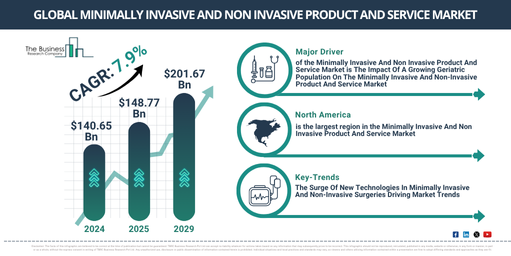
    In recent times, the market size for minimally invasive and non invasive products and services has seen robust growth. Its growth is predicted to rise from $140.65 billion in 2024 to $148.77 billion in 2025, exhibiting a compound annual growth rate (CAGR) of 5.8%. Factors contributing to the growth during the historical period include early adopter influence, collaborations within the industry, changes and approvals in regulations, along with changing patient expectations.

    The market size for minimally invasive and non-invasive products and services is forecasted to witness significant expansion going forward, reaching a size of $201.67 billion by 2029 and growing at a compound annual growth rate (CAGR) of 7.9%. This growth during the anticipated period can be credited to factors such as increasing healthcare expenses, changes in consumer preferences, regulatory alterations and approvals, consolidation and competition within the market, and provisions for training and education. Key trends surfacing during this forecast period encompass the increasing number of cosmetic and aesthetic procedures, the rise of personalized medicine, the emphasis on outpatient services, the broadening of applications, as well as the integration of artificial intelligence and robotics.

    Download a free sample to assess the report’s scope and structure:

    https://www.thebusinessresearchcompany.com/sample.aspx?id=9313&type=smp

    What are the Fundamental Drivers and Innovations Shaping the Minimally Invasive And Non Invasive Product And Service Market?

    The growth of the minimally invasive and non-invasive product and service market is expected to be driven by the increasing geriatric population. This population constitutes individuals aged 65 and older, who are no longer part of the workforce. As this demographic ages, there is a higher demand for non-invasive procedures and products such as hearing aids and external splints. The World Health Organization, a Switzerland-based international public health organization, reported in October 2022 that the global population of those 60 years and older is anticipated to escalate from 1 billion in 2020 to 1.4 billion by 2022. In addition to this, by 2030, one in every six individuals globally will be over 60 years of age. Consequently, the escalating geriatric population is contributing significantly to the expansion of the minimally invasive and non-invasive product and service market.

    How Is the Minimally Invasive And Non Invasive Product And Service Market Segmented?

    The minimally invasive and non invasive product and servicemarket covered in this report is segmented –

    1) By Type: Surgical Devices, Electrosurgical Devices, Imaging Devices, Robotic Systems, Other types

    2) By Technology: Non-Visual imaging, Transcatheter Surgery, Laparoscopic Surgery

    3) By Application: Cardio Thoracic Surgery, Vascular Surgery, Neurological Surgery, Cosmetic Surgery, Gastrointestinal Surgery, Dental Surgery

    4) By End-User: Hospital Surgical Departments, Outpatient Surgical Centers, Group Practices, Individual Surgeons, Medical Schools, Other End-Users

    Subsegments:

    1) By Surgical Devices: Endoscopes, Laparoscopic Instruments, Trocars, Surgical Staplers

    2) By Electrosurgical Devices: Monopolar Electrosurgical Devices, Bipolar Electrosurgical Devices, Electrosurgical Generators

    3) By Imaging Devices: Ultrasound Machines, MRI Machines, CT Scanners, X-ray Machines

    4) By Robotic Systems: Surgical Robotic Systems, Robotic-Assisted Laparoscopic Systems, Robotic Rehabilitation Devices

    5) By Other Types: Non-Invasive Monitoring Devices, Drug Delivery Systems, Wound Care Products

    Request customized data on this market:

    https://www.thebusinessresearchcompany.com/customise?id=9313&type=smp

    Which Regions Are Driving the Next Phase of the Minimally Invasive And Non Invasive Product And Service Market Growth?

    North America was the largest region in the minimally invasive and non invasive product and service market in 2024. The regions covered in the minimally invasive and non invasive product and service market report are Asia-Pacific, Western Europe, Eastern Europe, North America, South America, Middle East, Africa

    What Key Trends Are Shaping the Future of the Minimally Invasive And Non Invasive Product And Service Market?

    Emerging technologies in surgical procedures represent a significant trend in the sector of minimally invasive and non-invasive products and services, with a steady rise in popularity. Key players in the market are focusing on innovative advancements to maintain their market position. For example, in December 2022, Abbott Laboratories, an American multinational corporation specializing in medical devices and healthcare, introduced its newest transcatheter aortic valve implantation (TAVI) system. The Navitor valve, which is unique in its design preventing blood leakage around it, has improved TAVI treatments. This addition to Abbott’s suite of transcatheter solutions provides physicians and patients with more options for less invasive heart condition treatments.

    View the full report here:

    https://www.thebusinessresearchcompany.com/report/minimally-invasive-and-non-invasive-product-and-service-global-market-report

    How Is the Minimally Invasive And Non Invasive Product And Service Market Defined and What Are Its Core Parameters?

    Minimally invasive and non-invasive products and services refer to medical devices and therapeutics that don’t enter the body, and such procedures do not use instruments that directly penetrate the body or breach the skin. These products and services are used to make several surgeries dramatically safer and more tolerable.

    Purchase the full report and get a swift delivery:

    https://www.thebusinessresearchcompany.com/purchaseoptions.aspx?id=9313

    About The Business Research Company:

    With over 15000+ reports from 27 industries covering 60+ geographies, The Business Research Company has built a reputation for offering comprehensive, data-rich research and insights. Armed with 1,500,000 datasets, the optimistic contribution of in-depth secondary research, and unique insights from industry leaders, you can get the information you need to stay ahead in the game.

    Get in touch with us:

    The Business Research Company: https://www.thebusinessresearchcompany.com/

    Americas +1 310-496-7795

    Europe +44 7882 955267

    Asia & Others +44 7882 955267 & +91 8897263534

    Email us at info@tbrc.info

    Follow us on:

    LinkedIn: https://in.linkedin.com/company/the-business-research-company

    YouTube: https://www.youtube.com/channel/UC24_fI0rV8cR5DxlCpgmyFQ

    Global Market Model: https://www.thebusinessresearchcompany.com/global-market-model

  • Microelectronic Medical ImplantsMarket Overview 2025–2034: CAGR Trends, Long-Term Growth Paths, and Business Implications

    Microelectronic Medical ImplantsMarket Overview 2025–2034: CAGR Trends, Long-Term Growth Paths, and Business Implications

    Claim your 30% discount on Global Market Reports with code ONLINE30. Limited time only.

    What Are the Key Milestones in the Microelectronic Medical Implants Market’s Growth Trajectory From 2025 To 2034?

    In recent years, there has been a robust expansion in the market size of microelectronic medical implants. The market is anticipated to rise from $44.35 billion in 2024 to $48.23 billion in 2025, with a compound annual growth rate (CAGR) of 8.7%. Several factors contributed to this growth during the historic period including the cost-effectiveness and accessibility of the devices, an increase in chronic diseases, downsizing of devices, regulatory endorsements and set standards, as well as growing acceptance and public awareness.

    The market size for microelectronic medical implants is predicted to experience substantial growth in the upcoming years, expanding to a valuation of $71.99 billion by 2029 at a compound annual growth rate (CAGR) of 10.5%. The expansion during this forecast period is notably due to the increase in lifestyle diseases, regulatory backing and standards, the preference of patients for implantable remedies, affordability and accessibility, the growing elderly population, and the rise of chronic illnesses. Key market trends expected during this period consist of device miniaturization and compact design, wireless connectivity and remote supervision, advancements in sensor technology, emphasis on device durability and trustworthiness, and use of biocompatible materials.

    Download a free sample to assess the report’s scope and structure:

    https://www.thebusinessresearchcompany.com/sample.aspx?id=8992&type=smp

    What Are the Primary Drivers Supporting the Market Growth of the Microelectronic Medical Implants Market?

    The growing incidence of hearing disabilities is anticipated to propel the microelectronic medical implants market. Hearing disability refers to an individual’s inability to hear as effectively as a person with standard hearing, usually defined by hearing thresholds of 20 dB or better in both ears. Microelectronic medical implants have the potential to enhance hearing in those with serious hearing loss who can no longer benefit from hearing aids, thus they will stimulate the microelectronic medical implants market. For example, in February 2024, the World Health Organization (WHO), a Switzerland-based intergovernmental organization that leads on worldwide health issues, projected that over 5% of the world’s population, or 430 million people, including 34 million children, would require rehabilitation for disabling hearing loss. This figure is anticipated to rise to over 700 million by 2050. Hence, the increasing incidence of hearing issues is fueling the expansion of the microelectronic medical implant market.

    Which Primary Segments of the Microelectronic Medical Implants Market Are Driving Growth and Industry Transformations?

    The microelectronic medical implantsmarket covered in this report is segmented –

    1) By Product: Neurostimulators, Drug Infusion Pumps, Pacemakers, Defibrillators, Spinal Fusion Stimulators, Implantable Drug Pumps, Hearing Implants, Eye Implants, Ocular Implants, Other Products

    2) By Technology: Radiofrequency, Sensors, Other Technologies

    3) By Material: Metals, Titanium, Stainless Steel, Platinum, Gold Brazed Alloys, Polymers, Ceramics, Other Materials

    4) By Application: Cardiology, Neurology, Ophthalmology, Oncology, Other Applications

    5) By End-Users: Hospitals And Clinics, Ambulatory Surgical Centers

    Subsegments:

    1) By Neurostimulators: Deep Brain Stimulators, Peripheral Nerve Stimulators

    2) By Drug Infusion Pumps: Insulin Pumps, Pain Management Pumps

    3) By Pacemakers: Single-Chamber Pacemakers, Dual-Chamber Pacemakers, Biventricular Pacemakers

    4) By Defibrillators: Implantable Cardioverter Defibrillators (ICDs), Automated External Defibrillators (AEDs)

    5) By Spinal Fusion Stimulators: Bone Growth Stimulators, Electrical Stimulation Devices

    6) By Implantable Drug Pumps: Intrathecal Drug Delivery Systems, Programmable Pumps

    7) By Hearing Implants: Cochlear Implants, Bone-Anchored Hearing Aids

    8) By Eye Implants: Retinal Implants, Glaucoma Implants

    9) By Ocular Implant: Intraocular Lenses, Sustained-Release Drug Delivery Implants

    10) By Other Products: Bioelectronic Implants: Wireless Monitoring Devices

    Request customized data on this market:

    https://www.thebusinessresearchcompany.com/customise?id=8992&type=smp

    Which Regions Are Key Players in the Growth of the #What Are the Primary Drivers Supporting the Market Growth of the Microelectronic Medical Implants Market?# Market?

    North America was the largest region in the microelectronic medical implants market share in 2024. Asia-Pacific is expected to be the fastest-growing region in the microelectronic medical implants market during the forecast period. The regions covered in the microelectronic medical implants market report are Asia-Pacific, Western Europe, Eastern Europe, North America, South America, Middle East, Africa

    What Are the Most Significant Market Trends in the Microelectronic Medical Implants Market?

    The microelectronic medical implant market is majorly influenced by technological advancements, a trend gaining traction amongst big players in the market who are striving to fortify their market position with innovative technologies. To cite an example, Cochlear Limited, an Australian microelectronic medical implant and medical device firm, announced in November 2022 that its Cochlear Nucleus 8 Sound Processor had received the green light from the U.S. Food and Drug Administration (FDA). The Nucleus 8 Sound Processor integrates the most up-to-date and sophisticated hearing technology by Cochlear, which can sense environmental changes and automatic adjustment of listening settings. It also includes an enhanced ForwardFocus+ feature, useful in mitigating distracting ambient noise and enhancing the clarity of one-on-one communication, even in crowded environments.

    View the full report here:

    https://www.thebusinessresearchcompany.com/report/microelectronic-medical-implants-global-market-report

    What Parameters Are Used to Define the Microelectronic Medical Implants Market?

    Microelectronic medical implants refer to devices that work with incredibly tiny and microscopic elements to create electronic components. These are used for monitoring, diagnosis, and therapy for a variety of medical problems.

    Purchase the full report and get a swift delivery:

    https://www.thebusinessresearchcompany.com/purchaseoptions.aspx?id=8992

    About The Business Research Company:

    With over 15000+ reports from 27 industries covering 60+ geographies, The Business Research Company has built a reputation for offering comprehensive, data-rich research and insights. Armed with 1,500,000 datasets, the optimistic contribution of in-depth secondary research, and unique insights from industry leaders, you can get the information you need to stay ahead in the game.

    Get in touch with us:

    The Business Research Company: https://www.thebusinessresearchcompany.com/

    Americas +1 310-496-7795

    Europe +44 7882 955267

    Asia & Others +44 7882 955267 & +91 8897263534

    Email us at info@tbrc.info

    Follow us on:

    LinkedIn: https://in.linkedin.com/company/the-business-research-company

    YouTube: https://www.youtube.com/channel/UC24_fI0rV8cR5DxlCpgmyFQ

    Global Market Model: https://www.thebusinessresearchcompany.com/global-market-model