Blog

  • Protein Expression Market Trends 2025-2034: Growth, Strategic Insights, and Opportunities Ahead

    Protein Expression Market Trends 2025-2034: Growth, Strategic Insights, and Opportunities Ahead

    Claim your 30% discount on Global Market Reports with code ONLINE30. Limited time only.

    How Has The Protein Expression Market Growth Evolved From 2024 To 2025, And What’s Ahead?

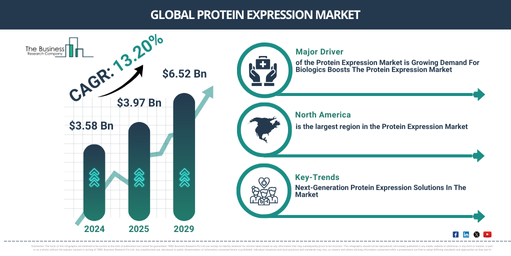
    In recent years, the size of the protein expression market has experienced swift expansion. Projections forecast an increase from $3.58 billion in 2024 to $3.97 billion in 2025, showcasing a compound annual growth rate (CAGR) of 10.8%. Factors responsible for this growth in the historic period include advancements in scientific research, biopharmaceutical development, biotechnology, drug discovery and development, as well as the expansion of the healthcare industry.

    In the forthcoming years, the market size of protein expression is predicted to experience swift expansion. It is projected to reach$6.52 billion by 2029 with a compound annual growth rate (CAGR) of 13.2%. The surge in growth during the forecast period can be ascribed to a variety of factors such as personalized medicine, biosimilars market, drug repurposing, regulatory support, and precision agriculture. Significant trends expected in the forecast period encompass cell-free expression systems, use of crispr-cas9 for gene editing, sustainable bioprocessing, contract-based research and manufacturing, along with multi-modal expression platforms.

    Download a free sample to assess the report’s scope and structure:

    https://www.thebusinessresearchcompany.com/sample.aspx?id=2493&type=smp

    What Are the Major Market Drivers Behind the Rising Adoption of Protein Expression Market?

    The surge in demand for biologics in response to an array of genetic conditions and chronic illnesses is a significant factor propelling the research and sales in the protein expression market. Biologics are medicines concocted from living organisms or include components of these organisms like proteins, tissues, genes, allergens, cells, blood components, blood, and vaccines. The escalating use of biologics, including therapeutic proteins and others, in the treatment of chronic diseases such as cancer, cardiovascular disorders and genetic conditions is fueling the demand for protein expression devices and equipment. For example, in September 2022, as per the World Health Organization, a specialised UN agency based in Switzerland, 41 million deaths globally, or 74% of total deaths, were caused by non-communicable diseases or chronic illnesses each year. Therefore, the rising demand for biologics is pushing the growth of the protein expression market.

    Which Key Market Segments Comprise the Protein Expression Market and Drive Its Revenue Growth?

    The protein expressionmarket covered in this report is segmented –

    1) By Protein Expression: Yeast Expression; Mammalian Expression; Algae Expression; Insect Expression; Bacterial Expression; Cell-free Expression

    2) By Product: Reagents; Competent Cells; Expression vectors; Services; Instruments

    3) By Application: Therapeutic; Industrial; Research

    4) By End Use: Pharmaceutical And Biotechnological Companies; Academic Research; Contract Research Organizations

    Subsegments:

    1) By Yeast Expression: Saccharomyces Cerevisiae; Pichia Pastoris; Kluyveromyces Lactis

    2) By Mammalian Expression: Chinese Hamster Ovary (CHO) Cells; Human Embryonic Kidney (HEK) Cells; Vero Cells

    3) By Algae Expression: Green Algae; Blue-green Algae (Cyanobacteria)

    4) By Insect Expression: Sf9 Cells; Hi5 Cells

    5) By Bacterial Expression: Escherichia Coli (E. coli); Bacillus Subtilis

    6) By Cell-free Expression: Wheat germ Extract; Rabbit Reticulocyte Lysate

    Request customized data on this market:

    https://www.thebusinessresearchcompany.com/customise?id=2493&type=smp

    Which Areas Are Leading Regions in the Protein Expression Market Expansion Across the Globe?

    North America was the largest region in the protein expression market in 2024. Western Europe was the second largest region in the protein expression market. The regions covered in the protein expression market report are Asia-Pacific, Western Europe, Eastern Europe, North America, South America, Middle East, Africa

    What Are the Strategic Trends Steering theProtein Expression Market Direction?

    Leading firms in the protein expression market are increasing their emphasis on developing next-generation offerings, such as the Visium CytAssist Gene and Protein Expression Assay, in order to boost their market earnings. Next-generation offerings refer to the adoption of cutting-edge technologies and methods designed to enhance the efficiency, precision, and expedience of protein expression. For example, in May 2023, 10x Genomics Inc., a biotech firm based in the United States, debuted the Visium CytAssist Gene and Protein Expression Assay. This launch empowers scientists to analyze relative expression patterns of proteins in the human immune system. Visium’s unique approach, characterized by emphasizing morphology first, allows Hematoxylin and Eosin staining to be carried out before introducing any chemical treatments to the tissue section. This facilitates a three-dimensional spatial examination on the identical sample, allowing scientists to explore their tissue’s morphology using the same slice they employ for in-depth spatial multiomic studies. The Visium CytAssist Gene and Protein Expression Assay uses a sequencing-based readout to collect data on protein and complete transcriptome gene expression, along with histological analysis, in a single experiment from a single tissue section.

    View the full report here:

    https://www.thebusinessresearchcompany.com/report/protein-expression-global-market-report

    How Is the Protein Expression Market Conceptually Defined?

    Protein expression is a process in which proteins are synthesized, modified, regulated, and controlled in living organisms according to the host cell. Protein expression in the context of protein research can now also refer to the application of lab procedures necessary for protein production.

    Purchase the full report and get a swift delivery:

    https://www.thebusinessresearchcompany.com/purchaseoptions.aspx?id=2493

    About The Business Research Company:

    With over 15000+ reports from 27 industries covering 60+ geographies, The Business Research Company has built a reputation for offering comprehensive, data-rich research and insights. Armed with 1,500,000 datasets, the optimistic contribution of in-depth secondary research, and unique insights from industry leaders, you can get the information you need to stay ahead in the game.

    Get in touch with us:

    The Business Research Company: https://www.thebusinessresearchcompany.com/

    Americas +1 310-496-7795

    Europe +44 7882 955267

    Asia & Others +44 7882 955267 & +91 8897263534

    Email us at info@tbrc.info

    Follow us on:

    LinkedIn: https://in.linkedin.com/company/the-business-research-company

    YouTube: https://www.youtube.com/channel/UC24_fI0rV8cR5DxlCpgmyFQ

    Global Market Model: https://www.thebusinessresearchcompany.com/global-market-model

  • Prenatal Testing & Newborn Screening Market Insights: In-Depth Look at Growth Trends, Market Size, and Opportunities for 2025-2034

    Prenatal Testing & Newborn Screening Market Insights: In-Depth Look at Growth Trends, Market Size, and Opportunities for 2025-2034

    Claim your 30% discount on Global Market Reports with code ONLINE30. Limited time only.

    What is the Projected CAGR for the Prenatal Testing & Newborn Screening Market Size from 2025 to 2034?

    In recent times, the market size for prenatal testing & newborn screening has experienced a swift expansion. There will be a growth from $6.24 billion in 2024 to $6.98 billion in 2025, representing a compound annual growth rate (CAGR) of 11.8%. This growth during the historical period is the result of advancements in genetic testing, escalation in maternal age, elevated awareness and education, along with healthcare policy and regulations.

    In the coming years, a swift expansion is predicted in the prenatal testing & newborn screening market. The market is forecasted to reach a value of$10.99 billion in 2029, expanding at a compound annual growth rate (CAGR) of 12.0%. Factors such as genetic counseling, cutting-edge technology, point-of-care testing, telehealth and remote monitoring are leading the growth in the forecast period. Key trends for this period include non-invasive prenatal testing (nipt), preimplantation genetic testing (pgt), telemedicine consultations, maternal blood testing, hemoglobinopathies, and sickle cell screening.

    Download a free sample to assess the report’s scope and structure:

    https://www.thebusinessresearchcompany.com/sample.aspx?id=3350&type=smp

    What External and Internal Drivers Are Contributing to the Growth of thePrenatal Testing & Newborn Screening Market?

    The escalation in the occurrences of genetic illnesses in infants has fostered the expansion of the prenatal testing & newborn screening market. Diseases such as Thalassemia, Sickle Cell Anemia, Hemophilia, Cystic Fibrosis, Tay Sachs disease, Fragile X Syndrome, and Huntington’s disease are included in genetic diseases as per the World Health Organization. Sickle cell anemia, a genetic disease, is widespread, affecting millions globally, especially those with ancestors from Africa, America, Cuba, Central America, Saudi Arabia, and India. A study undertaken at Rady Children’s Hospital by the US-based Rady Children’s Institute for Genomic Medicine, in February 2023, highlighted that 41% of infant fatalities were due to single-locus (Mendelian) genetic diseases. This significant rate of genetic diseases in infants has driven the demand for growth in the prenatal testing and newborn screening market.

    What Segment Types Define the Prenatal Testing & Newborn Screening Market Structure?

    The prenatal testing & newborn screeningmarket covered in this report is segmented –

    1) By Diagnostic Type: Non-Invasive; Invasive

    2) By Technology: Screening Technology; Diagnostic Technology

    3) By End user: Hospitals; Diagnostic centers

    Subsegments:

    1) By Non-Invasive: Blood Tests (Cell-Free DNA Testing); Ultrasound; Maternal Serum Screening

    2) By Invasive: Amniocentesis; Chorionic Villus Sampling (CVS); Cordocentesis

    Request customized data on this market:

    https://www.thebusinessresearchcompany.com/customise?id=3350&type=smp

    Which Geographic Areas Hold the Strongest Growth Potential in the Prenatal Testing & Newborn Screening Market?

    North America was the largest region in the prenatal testing & newborn screening market in 2024. Western Europe was the second largest region in the prenatal testing and newborn screening market. The regions covered in the prenatal testing & newborn screening market report are Asia-Pacific, Western Europe, Eastern Europe, North America, South America, Middle East, Africa

    What Long-Term Trends Are Transforming the Competitive Landscape of the Prenatal Testing & Newborn Screening Market?

    Leading firms engaged in the prenatal testing & neonatal screening market are concentrating on launching innovative systems that use rWGS (rapid Whole Genome Sequencing) technology for swift and precise detection of genetic disorders in newborns, thereby facilitating early detection and intervention for better health outcomes. rWGS technology is a state-of-the-art genomic method that instantaneously sequences the whole genome of a person. It is different from conventional genetic testing techniques that focus on distinct genes or regions as rWGS identifies all DNA in a person’s genome to recognize genetic discrepancies linked to diseases or disorders. For example, in June 2022, BeginNGS, a new program, was initiated by Rady Children’s Institute for Genomic Medicine, a firm based in the US. This endeavor aims at identifying and diagnosing about 400 genetic disorders that have recognizable treatment options before symptoms occur. BeginNGS is working on enhancing genomic sequencing procedures with strategies to increase testing competencies to include roughly 1,000 disorders. The long-term objective is to facilitate screening for around 3.7 million newborns every year, aiming to standardize this practice in hospitals all over the country.

    View the full report here:

    https://www.thebusinessresearchcompany.com/report/prenatal-testing-and-newborn-screening-global-market-report

    What Is the Definition of the Prenatal Testing & Newborn Screening Market?

    Prenatal testing and newborn screening refer to the combined medical practices aimed at assessing the health of both the fetus during pregnancy and the newborn after birth. Prenatal testing includes various assessments, such as blood tests and ultrasounds, to identify potential genetic or developmental disorders in the fetus. Newborn screening involves conducting tests shortly after birth to detect metabolic, genetic, and endocrine disorders, allowing for early intervention and treatment to improve health outcomes for infants.

    Purchase the full report and get a swift delivery:

    https://www.thebusinessresearchcompany.com/purchaseoptions.aspx?id=3350

    About The Business Research Company:

    With over 15000+ reports from 27 industries covering 60+ geographies, The Business Research Company has built a reputation for offering comprehensive, data-rich research and insights. Armed with 1,500,000 datasets, the optimistic contribution of in-depth secondary research, and unique insights from industry leaders, you can get the information you need to stay ahead in the game.

    Get in touch with us:

    The Business Research Company: https://www.thebusinessresearchcompany.com/

    Americas +1 310-496-7795

    Europe +44 7882 955267

    Asia & Others +44 7882 955267 & +91 8897263534

    Email us at info@tbrc.info

    Follow us on:

    LinkedIn: https://in.linkedin.com/company/the-business-research-company

    YouTube: https://www.youtube.com/channel/UC24_fI0rV8cR5DxlCpgmyFQ

    Global Market Model: https://www.thebusinessresearchcompany.com/global-market-model

  • Polycystic Ovarian Syndrome Treatment Market Outlook 2025–2034: Identifying Growth Drivers, Technology Trends, and Policy Impact

    Polycystic Ovarian Syndrome Treatment Market Outlook 2025–2034: Identifying Growth Drivers, Technology Trends, and Policy Impact

    Claim your 30% discount on Global Market Reports with code ONLINE30. Limited time only.

    What Is the Current and Projected Market Size of the Polycystic Ovarian Syndrome Treatment Market Through 2034?

    The market for treating polycystic ovarian syndrome has seen consistent expansion over the past few years. It is projected to progress from a size of $4.78 billion in 2024 to $5.01 billion in 2025, indicating a compound annual growth rate (CAGR) of 4.9%. This growth in the past can be ascribed to factors including heightened awareness, advancements in medical technology, changes to people’s lifestyle, innovative pharmaceutical solutions, and government action.

    The market size for polycystic ovarian syndrome treatment is set to experience significant growth in the upcoming years, with projections indicating an increase to$6.75 billion by 2029. This will take place at a compound annual growth rate (CAGR) of 7.7%. The anticipated growth during this period is linked to factors such as personalized medicine, telemedicine and remote monitoring, research and development, a mounting prevalence, and a supportive regulatory landscape. Key trends expected to contribute to this growth during the forecast period include a holistic approach, patient-centered care, the implementation of digital health solutions, multidisciplinary care facilities, and the enhancement of patient education.

    Download a free sample to assess the report’s scope and structure:

    https://www.thebusinessresearchcompany.com/sample.aspx?id=2827&type=smp

    What Are the Core Market Drivers Propelling Growth in the Polycystic Ovarian Syndrome Treatment Industry?

    The upward trend of genetic and hormonal conditions worldwide is a significant element propelling the polycystic ovarian syndrome (PCOS) treatment market. PCOS, a common hormonal disorder among premenopausal women globally, features reproductive, endocrine, and metabolic irregularities. The global prevalence of PCOS varies greatly, from 2.2% to 26%. In China, prevalence rates range from 2% to 7.5%, while in Sri Lanka, it’s at 6.3%, south India at 9.13%, and Maharashtra at 22.5%. The escalating number of genetic and hormonal disorders worldwide is projected to catalyze the expansion of the polycystic ovarian syndrome treatment market.

    How Is the Polycystic Ovarian Syndrome Treatment Market Segmented?

    The polycystic ovarian syndrome treatmentmarket covered in this report is segmented –

    1) By Drug Type: Oral Contraceptives; Ornithine Decarboxylase Inhibitors; Insulin-Sensitizing Agents; Anti-Depressants; Diuretics; Aromatase Inhibitors

    2) By Surgery Type: Ovarian Wedge Resection; Laparoscopic Ovarian Drilling

    3) By End User: Hospitals And Clinics, Ambulatory Surgical Centers, Diagnostic Centers, Gynecology Centers, Feminist Health Centers

    Subsegments:

    1) By Oral Contraceptives: Combined Oral Contraceptives (COCs); Progestin-Only Pills

    2) By Ornithine Decarboxylase Inhibitors: Drugs Targeting Ovarian Androgen Production; Inhibitors Targeting Polyamine Synthesis

    3) By Insulin-Sensitizing Agents: Metformin; Thiazolidinediones (TZDs)

    4) By Anti-Depressants: Selective Serotonin Reuptake Inhibitors (SSRIs); Serotonin-Norepinephrine Reuptake Inhibitors (SNRIs)

    5) By Diuretics: Spironolactone; Furosemide

    6) By Aromatase Inhibitors: Letrozole; Anastrozole

    Request customized data on this market:

    https://www.thebusinessresearchcompany.com/customise?id=2827&type=smp

    Which Regions Are Driving the Next Phase of the Polycystic Ovarian Syndrome Treatment Market Growth?

    North America was the largest region in the polycystic ovarian syndrome treatment market in 2024. Western Europe was the second largest region in the polycystic ovarian syndrome treatment market. The regions covered in the polycystic ovarian syndrome treatment market report are Asia-Pacific, Western Europe, Eastern Europe, North America, South America, Middle East, Africa

    What Key Market Trends and Innovations Are Shaping the Future of the Polycystic Ovarian Syndrome Treatment Industry?

    Prominent businesses in the polycystic ovarian syndrome treatment market are intentionally forming strategic alliances to devise complete diagnostic test kits. The objective is to enhance early detection and ensure prompt treatment, thereby augmenting therapeutic results and catering to the increasing demand for precise and readily available diagnostic instruments. Diagnostic test kits are essentially used to identify diseases or conditions by examining bodily samples like blood or urine. For example, Veera Health, a wellness and fitness service firm in India, collaborated with Tata 1mg, an Indian healthcare firm, in October 2022, to introduce a thorough test for PCOS diagnosis. The PCOS diagnostic test kit plays a crucial role in early identification of the disorder, facilitating customised and targeted treatment plans. These kits offer an extensive approach, providing information on hormonal levels, metabolic indicators, and other pertinent factors. This guarantees accurate diagnosis, an essential aspect for effective PCOS management.

    View the full report here:

    https://www.thebusinessresearchcompany.com/report/polycystic-ovarian-syndrome-treatment-global-market-report

    How Is the Polycystic Ovarian Syndrome Treatment Market Defined and What Are Its Core Parameters?

    Polycystic ovarian syndrome is a disorder in which hormones are out of control for females and they have male hormones that are higher than normal, which causes them to skip menstrual periods and makes pregnancy more difficult for them.

    Purchase the full report and get a swift delivery:

    https://www.thebusinessresearchcompany.com/purchaseoptions.aspx?id=2827

    About The Business Research Company:

    With over 15000+ reports from 27 industries covering 60+ geographies, The Business Research Company has built a reputation for offering comprehensive, data-rich research and insights. Armed with 1,500,000 datasets, the optimistic contribution of in-depth secondary research, and unique insights from industry leaders, you can get the information you need to stay ahead in the game.

    Get in touch with us:

    The Business Research Company: https://www.thebusinessresearchcompany.com/

    Americas +1 310-496-7795

    Europe +44 7882 955267

    Asia & Others +44 7882 955267 & +91 8897263534

    Email us at info@tbrc.info

    Follow us on:

    LinkedIn: https://in.linkedin.com/company/the-business-research-company

    YouTube: https://www.youtube.com/channel/UC24_fI0rV8cR5DxlCpgmyFQ

    Global Market Model: https://www.thebusinessresearchcompany.com/global-market-model

  • Small Lymphocytic Lymphoma Market Trends 2025-2034: Growth, Strategic Insights, and Opportunities Ahead

    Small Lymphocytic Lymphoma Market Trends 2025-2034: Growth, Strategic Insights, and Opportunities Ahead

    Claim your 30% discount on Global Market Reports with code ONLINE30. Limited time only.

    What Are the Projected Market Size and Growth Rates for the Small Lymphocytic Lymphoma Market From 2025 To 2029?

    The market value of small lymphocytic lymphoma has been on a progressive upturn. The growth is projected to go up from $3.12 billion in 2024 to $3.23 billion in 2025 with a Compound Annual Growth Rate (CAGR) of 3.5%. Factors such as heightened awareness and early diagnosis, regulatory approvals, increased clinical trial expansion, growing consciousness regarding SLL, and greater involvement in clinical studies have all contributed to the growth in the historical period.

    In the upcoming years, the market for small lymphocytic lymphoma is anticipated to experience a consistent expansion. By 2029, it is projected to reach a value of$3.8 billion”, growing at a compound annual growth rate (CAGR) of 4.1%. Elements contributing to this growth across the predicted span include escalating attention towards immunotherapies, intensifying research in targeted therapies, precision medicine development, the rise in investment for cancer research, and an increase in clinical trials. The forecast period is also likely to witness trends such as progress in targeted therapies, novelty in immunotherapies, combined therapy approaches, digital health solutions incorporation, and enhancements in supportive care therapies.

    Download a free sample to assess the report’s scope and structure:

    https://www.thebusinessresearchcompany.com/sample.aspx?id=20957&type=smp

    What Are the Major Market Drivers Behind the Rising Adoption of Small Lymphocytic Lymphoma Market?

    The advancement of individualized medicine is predicted to fuel the expansion of the small lymphocytic lymphoma market. This therapeutic approach takes personal factors such as genetics, environment, and lifestyle into account when making healthcare decisions and proposing treatments. The rise of personalized medicine stems from progress in genomics, biotechnology, and data analysis, enabling more targeted, efficient, and customized treatments. The role of Small lymphocytic lymphoma (SLL) in personalized medicine is to provide detailed information about specific genetic changes and biomarkers, which in turn aids in the development of targeted therapies and customized treatment plans. For instance, in 2024, the Personalized Medicine Coalition, a non-profit organization based in the U.S., reported that the FDA approved 16 novel individualized treatments for rare diseases in 2023, reflecting a substantial rise from the six authorized in 2022. As such, the advancement of personalized medicine will spur the expansion of the small lymphocytic lymphoma market.

    Which Key Market Segments Comprise the Small Lymphocytic Lymphoma Market and Drive Its Revenue Growth?

    The small lymphocytic lymphomamarket covered in this report is segmented –

    1) By Product: Capsules; Tablets; Injections; Other Products

    2) By Route of Administration: Oral; Parenteral; Other Route of Administrations

    3) By Treatment: Chemotherapy; Targeted Therapy; Stem Cell Transplant; Monoclonal antibody therapy; Other Treatments

    4) By Distribution Channel: Hospital Pharmacy; Retail Pharmacy; Online Pharmacy; Other Distribution Channels

    5) By End-Users: Hospitals; Specialty Clinics; Homecare; Other End Users

    Subsegments:

    1) By Capsules: Oral Chemotherapy Capsules; Targeted Therapy Capsules; Immunomodulatory Capsules

    2) By Tablets: Oral Chemotherapy Tablets; Targeted Therapy Tablets; Immunotherapy Tablets

    3) By Injections: Chemotherapy Injections; Monoclonal Antibody Injections; Immunotherapy Injections; Biologic Injections

    4) By Other Products: Topical Medications; Infusion Therapies; Biosimilars For SLL; Radiopharmaceuticals

    Request customized data on this market:

    https://www.thebusinessresearchcompany.com/customise?id=20957&type=smp

    Which Areas Are Leading Regions in the Small Lymphocytic Lymphoma Market Expansion Across the Globe?

    North America was the largest region in the small lymphocytic lymphoma market in 2024. Asia-Pacific is expected to be the fastest-growing region in the forecast period. The regions covered in the small lymphocytic lymphoma market report are Asia-Pacific, Western Europe, Eastern Europe, North America, South America, Middle East, Africa.

    What Are the Strategic Trends Steering theSmall Lymphocytic Lymphoma Market Direction?

    In the small lymphocytic lymphoma market, significant players are innovating and launching new products, such as non-covalent BTK inhibitors. These developments aim to enhance treatment effectiveness, combat resistance to existing treatments, and boost patient recovery rates. Non-covalent BTK inhibitors make up a drug class that binds reversibly to the Bruton’s tyrosine kinase (BTK) enzyme, target B-cell cancers and mitigate resistance and side effects linked with covalent inhibitors. For example, in December 2023, the U.S. based pharmaceutical organization Eli Lilly and Company announced the U.S. Food and Drug Administration (FDA) approval for its drug Jaypirca (pirtobrutinib) for adults affected by chronic lymphocytic leukemia or small lymphocytic lymphoma (CLL/SLL). This approval stands out for its emphasis on patients having received at least two rounds of therapy, including a Bruton’s Tyrosine Kinase (BTK) inhibitor and a BCL-2 inhibitor. The decision addresses a significant unfulfilled need in patients who have been heavily treated earlier. The pill’s oral administration makes it convenient for patients while ensuring powerful, targeted treatment effectiveness.

    View the full report here:

    https://www.thebusinessresearchcompany.com/report/small-lymphocytic-lymphoma-global-market-report

    How Is the Small Lymphocytic Lymphoma Market Conceptually Defined?

    Small lymphocytic lymphoma (SLL) is a type of cancer that primarily affects the lymphocytes, a subset of white blood cells, and typically occurs in the lymph nodes. Its purpose of treatment is to control the growth of abnormal lymphocytes, alleviate symptoms, and improve the patient’s quality of life by targeting the cancerous cells with therapies such as chemotherapy, immunotherapy, or targeted treatments.

    Purchase the full report and get a swift delivery:

    https://www.thebusinessresearchcompany.com/purchaseoptions.aspx?id=20957

    About The Business Research Company:

    With over 15000+ reports from 27 industries covering 60+ geographies, The Business Research Company has built a reputation for offering comprehensive, data-rich research and insights. Armed with 1,500,000 datasets, the optimistic contribution of in-depth secondary research, and unique insights from industry leaders, you can get the information you need to stay ahead in the game.

    Get in touch with us:

    The Business Research Company: https://www.thebusinessresearchcompany.com/

    Americas +1 310-496-7795

    Europe +44 7882 955267

    Asia & Others +44 7882 955267 & +91 8897263534

    Email us at info@tbrc.info

    Follow us on:

    LinkedIn: https://in.linkedin.com/company/the-business-research-company

    YouTube: https://www.youtube.com/channel/UC24_fI0rV8cR5DxlCpgmyFQ

    Global Market Model: https://www.thebusinessresearchcompany.com/global-market-model

  • Sleep Apnea Diagnostic Systems Market Insights: In-Depth Look at Growth Trends, Market Size, and Opportunities for 2025-2034

    Sleep Apnea Diagnostic Systems Market Insights: In-Depth Look at Growth Trends, Market Size, and Opportunities for 2025-2034

    Claim your 30% discount on Global Market Reports with code ONLINE30. Limited time only.

    What Is the Estimated Market Size of the Sleep Apnea Diagnostic Systems Market In 2029?

    A significant growth has been observed in recent years in the market size of sleep apnea diagnostic systems. It is projected to escalate from $6.28 billion in 2024 to $6.78 billion in 2025, showcasing a compound annual growth rate (CAGR) of 8.0%. Factors contributing to the growth during this historical period include increased awareness about sleep disorders, a surge in obesity and aging populations, a rise in the use of home sleep testing devices, favorable healthcare policies, and expanded healthcare infrastructure in developing economies.

    The market for sleep apnea diagnostic systems is projected to experience significant growth in the upcoming years, expanding to$9.16 billion in 2029″ with a compound annual growth rate (CAGR) of 7.8%. Factors contributing to this projected growth during the forecast period include the surge in the use of at-home sleep testing devices, heightened awareness about sleep disorders and the health complications they can cause, supportive government, and insurance policies, the growing number of obese and aging people, as well as the expansion of telemedicine. The prediction period will also see major trends such as the introduction of portable diagnostic devices, the utilization of cloud-based data management systems, progress in polysomnography technology, integration with smart home ecosystems, enhancements to home sleep testing devices, and the employment of AI for improved data review and diagnosis.

    Download a free sample to assess the report’s scope and structure:

    https://www.thebusinessresearchcompany.com/sample.aspx?id=20956&type=smp

    What External and Internal Drivers Are Contributing to the Growth of theSleep Apnea Diagnostic Systems Market?

    The escalating trend of inactive living habits is projected to catalyze the growth of the market for sleep apnea diagnostic systems. Inactivity in lifestyle refers to a mode of life typified by lack of adequate physical activity, and extended times of sitting or lying. This kind of lifestyle is on the rise given factors such as dependence on technology, urbanization, amenity-based lifestyle and prolonged working hours. Sleep apnea diagnostic systems are instrumental in countering health problems related to sedentary living by identifying and tracking sleep disturbances early, thus facilitating timely interventions to enhance sleep quality and alleviate related problems such as obesity, heart distress, and fatigue. For instance, in June 2024, the Australian Institute of Health and Welfare, a governmental agency in Australia, revealed in 2022 through self-reported ABS National Health Survey (NHS) data, that 83% of adolescents aged 15-17 and nearly 37% of adults aged 18-64 were not sufficiently active to meet the suggested levels. Additionally, in December 2022, according to statistics from the UK’s Office for National Statistics, between April 2021 and March 2022, 15.8% of people aged 50-54, 24.1% aged 55-59, 43.4% aged 60-64, and 89.3% aged 65 and above were categorized as inactive. Hence, the surge in sedentary ways of living is directing the growth of the sleep apnea diagnostic systems market.

    What Segment Types Define the Sleep Apnea Diagnostic Systems Market Structure?

    The sleep apnea diagnostic systemsmarket covered in this report is segmented –

    1) By Product: Polysomnography Devices; Nasal Flow Sensors; Peripheral Capillary Oxygen Saturation; Actigraphy Monitoring Devices

    2) By Technology: Non-Invasive Technology; Invasive Technology; Wearable Technology; Diagnostic Software

    3) By End Users: Home Care Settings; Hospitals; Sleep Centers And Clinics

    Subsegments:

    1) By Polysomnography Devices: Full-Polysomnography Systems; Portable Polysomnography Devices; Wireless Polysomnography Devices

    2) By Nasal Flow Sensors: Single-Channel Nasal Flow Sensors; Multi-Channel Nasal Flow Sensors; Wireless Nasal Flow Sensors

    3) By Peripheral Capillary Oxygen Saturation (SpO2) Monitors: Finger Pulse Oximeters; Wrist Pulse Oximeters; Fingertip Pulse Oximeters

    4) By Actigraphy Monitoring Devices: Wrist-Worn Actigraphs; Chest-Worn Actigraphs; Smartwatch-Based Actigraphy Systems

    Request customized data on this market:

    https://www.thebusinessresearchcompany.com/customise?id=20956&type=smp

    Which Geographic Areas Hold the Strongest Growth Potential in the Sleep Apnea Diagnostic Systems Market?

    North America was the largest region in the sleep apnea diagnostic systems market in 2024. Asia-Pacific is expected to be the fastest-growing region in the forecast period. The regions covered in the sleep apnea diagnostic systems market report are Asia-Pacific, Western Europe, Eastern Europe, North America, South America, Middle East, Africa.

    What Long-Term Trends Are Transforming the Competitive Landscape of the Sleep Apnea Diagnostic Systems Market?

    Key industry players in the sleep apnea diagnostic systems market are concentrating their efforts on technological innovation, especially in areas like pneumatic sensors, to elevate efficiency, precision, and user comfort in sleep apnea detection and monitoring. This innovation not only enhances patient outcomes but also amplifies their market footprint. Pneumatic sensors work by tracking variations in airflow and pressure within the respiratory system, assisting in identifying abnormal respiration, a key characteristic of sleep apnea. To illustrate, in September 2024, French electronics firm, Withings Inc., achieved U.S. Food and Drug Administration approval for its diagnostic tool, the Sleep Rx Mat. This contact-free device for diagnosing sleep apnea monitors sleep, detects apnea incidents, and suggests actionable insights to enhance sleep health. The sophisticated sleep monitoring device comes equipped with a pneumatic sensor that observes respiratory rate, movements of the body, and a continuous heart rate. The design of this discreet mat requires only a one-time setup and can be easily slipped under any mattress, doing away with the need for masks or cumbersome equipment. Once in place, it offers in-depth analyses of sleep patterns, breath, and cardiovascular activity throughout the sleeping duration.

    View the full report here:

    https://www.thebusinessresearchcompany.com/report/sleep-apnea-diagnostic-systems-global-market-report

    What Is the Definition of the Sleep Apnea Diagnostic Systems Market?

    Sleep apnea diagnostic systems refer to medical technologies and devices designed to detect, monitor, and evaluate sleep-related breathing disorders, particularly sleep apnea. It is used for assessing physiological parameters such as airflow, oxygen saturation, heart rate, and brain activity during sleep to identify disruptions, enabling accurate diagnosis and effective management of the condition.

    Purchase the full report and get a swift delivery:

    https://www.thebusinessresearchcompany.com/purchaseoptions.aspx?id=20956

    About The Business Research Company:

    With over 15000+ reports from 27 industries covering 60+ geographies, The Business Research Company has built a reputation for offering comprehensive, data-rich research and insights. Armed with 1,500,000 datasets, the optimistic contribution of in-depth secondary research, and unique insights from industry leaders, you can get the information you need to stay ahead in the game.

    Get in touch with us:

    The Business Research Company: https://www.thebusinessresearchcompany.com/

    Americas +1 310-496-7795

    Europe +44 7882 955267

    Asia & Others +44 7882 955267 & +91 8897263534

    Email us at info@tbrc.info

    Follow us on:

    LinkedIn: https://in.linkedin.com/company/the-business-research-company

    YouTube: https://www.youtube.com/channel/UC24_fI0rV8cR5DxlCpgmyFQ

    Global Market Model: https://www.thebusinessresearchcompany.com/global-market-model

  • Single Tooth Implants And Dental Bridges Market Outlook 2025–2034: Identifying Growth Drivers, Technology Trends, and Policy Impact

    Single Tooth Implants And Dental Bridges Market Outlook 2025–2034: Identifying Growth Drivers, Technology Trends, and Policy Impact

    Claim your 30% discount on Global Market Reports with code ONLINE30. Limited time only.

    How Fast Is The Single Tooth Implants And Dental Bridges Market Expected to Grow Between 2025 And 2029?

    The market size of individual tooth implants and dental bridges has witnessed a significant boost in the past years. The market, which stood at $6.22 billion in 2024, is anticipated to escalate to $6.76 billion in 2025, attributing to a compound annual growth rate (CAGR) of 8.7%. Factors such as enhancement in implant technology, an expanding elderly demographic, greater dental insurance schemes, better longevity of materials, and an increase in awareness about dental beauty contribute to the growth during the historical period.

    The market for single tooth implants and dental bridges is projected to experience a robust expansion in the forthcoming years. The estimated growth is to reach$9.44 billion in 2029″, with a compound annual growth rate (CAGR) of 8.7%. This anticipated growth can be attributed to advancements in 3D printing technology, the increasing popularity of minimally invasive surgeries, heightened consciousness about oral health, an aging populace, and the burgeoning dental healthcare infrastructure. Predominant trends encompass the implementation of artificial intelligence in treatment strategies, the surge in tailored dental solutions, increasing preference for metal-free implants, advancements in the technology of implant surfaces, and a shift toward more cost-effective dental care alternatives.

    Download a free sample to assess the report’s scope and structure:

    https://www.thebusinessresearchcompany.com/sample.aspx?id=20955&type=smp

    What Are the Core Market Drivers Propelling Growth in the Single Tooth Implants And Dental Bridges Industry?

    The surge in dental conditions is predicted to drive the expansion of the single tooth implants and dental bridges market. Dental problems encompass a variety of issues that impact the teeth, gums, and oral cavity, undermining oral health and function. The escalating prevalence of these conditions can be attributed to factors such as increased intake of sugar-rich diets, neglect of oral hygiene, aging demographics, and the rise of lifestyle-related diseases such as diabetes. Single tooth implants and dental bridges offer effective remedies by replacing missing or damaged teeth, enhancing oral function, improving aesthetic value, and increasing overall self-esteem. This solution also helps avoid issues such as shifting teeth and degradation of the jawbone. For instance, the National Board of Health and Welfare, a government agency in Sweden, reported in May 2024 that roughly 3.9 million individuals aged 24 or older sought dental care in Sweden in 2023, a rise from the previous year. Therefore, the growing occurrence of dental conditions is spurring the expansion of the single tooth implants and dental bridges market.

    How Is the Single Tooth Implants And Dental Bridges Market Segmented?

    The single tooth implants and dental bridgesmarket covered in this report is segmented –

    1) By Type: 3-Unit Bridges; 4-Unit Bridges; Titanium Bridges; Silicone Bridges; Maryland Bridges; Cantilever Bridges; Partial Bridges

    2) By Material: Porcelain-Fused-To-Metal (PFM); All Ceramics; Metal Alloys

    3) By Application: Hospitals; Density; Ambulatory Surgical Centers; Organ Transplant Centers; Orthopedic And Traumas Centers

    Subsegments:

    1) By 3-Unit Bridges: Fixed 3-Unit Bridges; Resin-Bonded 3-Unit Bridges

    2) By 4-Unit Bridges: Fixed 4-Unit Bridges; Cantilever 4-Unit Bridges

    3) By Titanium Bridges: Titanium-Alloy Bridges; Titanium-Based Fixed Bridges

    4) By Silicone Bridges: Flexible Silicone Bridges; Temporary Silicone Bridges

    5) By Maryland Bridges: Resin-Bonded Maryland Bridges; Metallic Framework Maryland Bridges

    6) By Cantilever Bridges: Single Cantilever Bridges; Multiple Cantilever Bridges

    7) By Partial Bridges: Partial Fixed Bridges; Removable Partial Bridges

    Request customized data on this market:

    https://www.thebusinessresearchcompany.com/customise?id=20955&type=smp

    Which Regions Are Driving the Next Phase of the Single Tooth Implants And Dental Bridges Market Growth?

    North America was the largest region in the single tooth implants and dental bridges market in 2024. Asia-Pacific is expected to be the fastest-growing region in the forecast period. The regions covered in the single tooth implants and dental bridges market report are Asia-Pacific, Western Europe, Eastern Europe, North America, South America, Middle East, Africa.

    What Key Market Trends and Innovations Are Shaping the Future of the Single Tooth Implants And Dental Bridges Industry?

    Prominent players in the market of single tooth implants and dental bridges are introducing innovative product developments such as tapered implant technology, aimed at enhancing osseointegration, stability, and patient recovery times. Tapered implant technology is a unique design feature of dental implants, possessing a conical or tapered shape which mirrors the natural root structure of a tooth. This particular technology serves to enhance primary stability by providing a secure fit within the jawbone, especially in areas with reduced bone density or volume. For example, ZimVie Inc., a dental implant manufacturer based in the US, unveiled its T3 PRO Tapered Implant and Encode System utilizing tapered implant technology in June 2022. The tapered shape of the implant facilitates simpler placement across various bone types and augments primary stability, especially in softer bone. It employs an exclusive surface treatment which encourages osseointegration, thereby expediting healing times and enhancing long-term results.

    View the full report here:

    https://www.thebusinessresearchcompany.com/report/single-tooth-implants-and-dental-bridges-global-market-report

    How Is the Single Tooth Implants And Dental Bridges Market Defined and What Are Its Core Parameters?

    Single Tooth Implants and Dental Bridges refer to advanced dental prosthetic solutions designed to replace missing teeth. They are used for restoring oral functionality, enhancing aesthetics, and preventing further dental complications by filling gaps caused by tooth loss. Single tooth implants are individual, standalone replacements anchored in the jawbone, while dental bridges involve multiple connected prosthetic teeth supported by adjacent natural teeth or implants.

    Purchase the full report and get a swift delivery:

    https://www.thebusinessresearchcompany.com/purchaseoptions.aspx?id=20955

    About The Business Research Company:

    With over 15000+ reports from 27 industries covering 60+ geographies, The Business Research Company has built a reputation for offering comprehensive, data-rich research and insights. Armed with 1,500,000 datasets, the optimistic contribution of in-depth secondary research, and unique insights from industry leaders, you can get the information you need to stay ahead in the game.

    Get in touch with us:

    The Business Research Company: https://www.thebusinessresearchcompany.com/

    Americas +1 310-496-7795

    Europe +44 7882 955267

    Asia & Others +44 7882 955267 & +91 8897263534

    Email us at info@tbrc.info

    Follow us on:

    LinkedIn: https://in.linkedin.com/company/the-business-research-company

    YouTube: https://www.youtube.com/channel/UC24_fI0rV8cR5DxlCpgmyFQ

    Global Market Model: https://www.thebusinessresearchcompany.com/global-market-model
  • Emerging Growth Drivers in the Robotic Radiotherapy Market Landscape: Advancing Precision In Minimally Invasive Treatments

    Emerging Growth Drivers in the Robotic Radiotherapy Market Landscape: Advancing Precision In Minimally Invasive Treatments

    Claim your 30% discount on Global Market Reports with code ONLINE30. Limited time only.

    What Are the Key Projections for the CAGR of the Robotic Radiotherapy Market Size From 2025 to 2034?

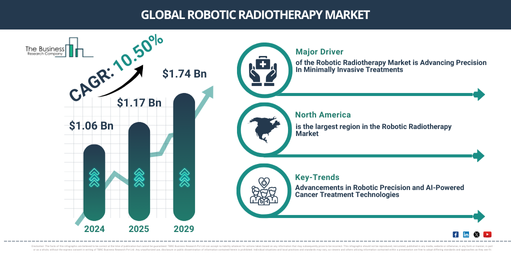
    In recent times, there has been a swift expansion in the size of the robotic radiotherapy market. Its anticipated growth is from $1.06 billion in 2024 to $1.17 billion in 2025, with a compound annual growth rate (CAGR) registering at 10.1%. The significant growth observed in the historical period is due to the surge in the precision of the robotic systems, the incorporation of Artificial Intelligence in treatment planning, the enhancement of healthcare accessibility, a rising emphasis on personalised patient treatments, and an increase in the private healthcare sector’s investments.

    In the coming years, the robotic radiotherapy market is projected to experience speedy expansion, escalating to$1.74 billion in 2029 at a compound annual growth rate of 10.5%. Factors such as the surge in the elderly population globally, advancements in machine learning for treatment planning, increasing inclination towards outpatient treatments, expansion of robotic-assisted surgical systems, and collaboration between healthcare providers and tech firms contribute to the projected growth. Noteworthy trends include the development in motion management systems, expansion of cloud-based radiotherapy platforms, the incorporation of wearable technology for patient monitoring, the creation of more compact and efficient robotic systems, and the escalating use of stereotactic radiosurgery techniques.

    Download a free sample to assess the report’s scope and structure:

    https://www.thebusinessresearchcompany.com/sample.aspx?id=20946&type=smp

    Which Primay Drivers Are Accelerating Growth in the Robotic Radiotherapy Market?

    The escalating demand for minimally invasive procedures is anticipated to drive the growth of the robotic radiotherapy market in the future. Medical technology advancements, increased patient preference for fewer complications and shorter recovery periods, and heightened readiness by healthcare providers for cost-effective treatments with enhanced clinical results fuel minimally invasive procedures. Robotic radiotherapy, by delivering highly specific radiation doses to tumors and minimizing harm to adjacent healthy tissues, amplifies the accuracy and efficiency of minimally invasive procedures. This reduces complications, betters recovery spans, and aligns with the rising demand for sophisticated, patient-focused treatment alternatives. For instance, a US-based medication company reported a 7% growth in minimally invasive procedures in 2023 compared to the prior year, as per the American Society of Plastic Surgeons’ June 2024 data. Therefore, the increasing demand for minimally invasive procedures is facilitating the expansion of the robotic radiotherapy market.

    Which Primary Segments of the Robotic Radiotherapy Market Are Driving Growth and Industry Transformations?

    The robotic radiotherapymarket covered in this report is segmented –

    1) By Product: Radiotherapy Systems; Softwares; 3D Cameras (Surface Guided)

    2) By Technology: Linear Accelerators; Conventional Linear Accelerators; Magnetic Resonance Imaging (MRI) – Linear Accelerators; Stereotactic Radiation Therapy Systems; Cyberknife; Gamma Knife; Particle Therapy; Proton Beam Therapy

    3) By Application: Prostate Cancer; Breast Cancer; Lung Cancer; Head & Neck Cancer; Colorectal Cancer

    4) By End User: Hospitals; Independent Radiotherapy Centers

    Subsegments:

    1) By Radiotherapy Systems: Robotic Linear Accelerators; Proton Therapy Systems; Stereotactic Radiosurgery Systems; Image-Guided Radiotherapy (IGRT) Systems; Intensity-Modulated Radiotherapy (IMRT) Systems

    2) By Softwares: Treatment Planning Software; Radiation Therapy Management Software; Robotic Radiotherapy Control Software; Integration Software For Robotic Systems

    3) By 3D Cameras (Surface Guided): 3D Optical Surface Imaging Systems; 3D Camera Systems For Patient Positioning; 3D Motion Tracking Cameras For Radiotherapy; Real-Time 3D Surface Imaging For Tumor Localization

    Request customized data on this market:

    https://www.thebusinessresearchcompany.com/customise?id=20946&type=smp

    Which Regions Are Key Players in the Growth of the #Which Primay Drivers Are Accelerating Growth in the Robotic Radiotherapy Market?# Market?

    North America was the largest region in the robotic radiotherapy market in 2024. Asia-Pacific is expected to be the fastest-growing region in the forecast period. The regions covered in the robotic radiotherapy market report are Asia-Pacific, Western Europe, Eastern Europe, North America, South America, Middle East, Africa.

    Which Technological Trends Are Reshaping the Robotic Radiotherapy Industry Dynamics?

    Major players in the robotic radiotherapy market are emphasizing on creating innovative products with cutting-edge technologies like artificial intelligence (AI) for precision in executing tasks with incredible accuracy, consistency, and least errors. Robotic precision boosts accuracy, diminishes human mistakes, adds to consistency, limits tissue harm, and speeds up recovery thanks to sensors, actuators, and algorithms. For example, Tampa General Hospital, a cancer institute based in the US, unveiled CyberKnife S7, a radiosurgery tool powered by AI, in January 2024. This vital development in the cancer care field offers a precise, non-invasive treatment alternative for patients suffering from a range of conditions, inclusive of both benign and malignant tumors, and neurological conditions. CyberKnife S7 facilitates targeted radiation delivery, sparing damage to the healthy tissues surrounding and providing a less invasive option compared to conventional surgical techniques.

    View the full report here:

    https://www.thebusinessresearchcompany.com/report/robotic-radiotherapy-global-market-report

    What Parameters Are Used to Define the Robotic Radiotherapy Market?

    Robotic radiotherapy is an advanced cancer treatment method that combines robotic technology with precision radiation delivery to target tumors with sub-millimeter accuracy. It uses real-time imaging and motion tracking to adapt to tumor movement, such as that caused by breathing, ensuring minimal damage to surrounding healthy tissues. This approach allows for non-invasive, highly personalized treatments, improving patient outcomes and reducing side effects.

    Purchase the full report and get a swift delivery:

    https://www.thebusinessresearchcompany.com/purchaseoptions.aspx?id=20946

    About The Business Research Company:

    With over 15000+ reports from 27 industries covering 60+ geographies, The Business Research Company has built a reputation for offering comprehensive, data-rich research and insights. Armed with 1,500,000 datasets, the optimistic contribution of in-depth secondary research, and unique insights from industry leaders, you can get the information you need to stay ahead in the game.

    Get in touch with us:

    The Business Research Company: https://www.thebusinessresearchcompany.com/

    Americas +1 310-496-7795

    Europe +44 7882 955267

    Asia & Others +44 7882 955267 & +91 8897263534

    Email us at info@tbrc.info

    Follow us on:

    LinkedIn: https://in.linkedin.com/company/the-business-research-company

    YouTube: https://www.youtube.com/channel/UC24_fI0rV8cR5DxlCpgmyFQ

    Global Market Model: https://www.thebusinessresearchcompany.com/global-market-model
  • Strategic Growth Drivers Shaping the Robotic Dentistry Market Outlook 2025- 2034:Rising Demand For Minimally Invasive Procedures Driving Market Growth

    Strategic Growth Drivers Shaping the Robotic Dentistry Market Outlook 2025- 2034:Rising Demand For Minimally Invasive Procedures Driving Market Growth

    Claim your 30% discount on Global Market Reports with code ONLINE30. Limited time only.

    How Has The Robotic Dentistry Market Growth Evolved From 2024 To 2025, And What’s Ahead?

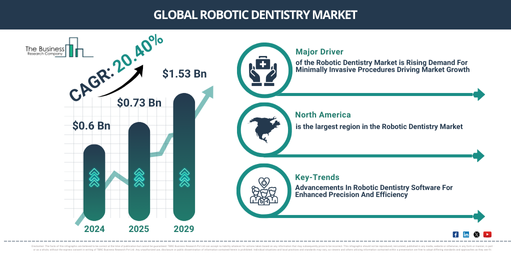
    In recent times, the market size for robotic dentistry has seen rapid expansion. The market, which is anticipated to escalate from $0.6 billion in 2024 to $0.73 billion in 2025, is projected to witness a compound annual growth rate (CAGR) of 21.4%. The surge in growth during the historic period is largely owing to the widespread application of robotics in pediatric dental care, advancements in conducting intricate oral surgeries, heightened emphasis on patient safety, digitization in dental processes, and the surging demand for time-efficient dental solutions.

    The market size of robotic dentistry is anticipated to experience substantial expansion in the upcoming years. We can expect an escalation to $1.53 billion by 2029, with a Compound Annual Growth Rate (CAGR) of 20.4%. The predicted growth during this period can be linked to factors such as expansion in the tele-industry, an increase in the usage of robotic technology in orthodontics, a rise in dental tourism, investments in healthcare innovation, and an uptick in patient-centered dental solutions. Significant trends projected for this forecast period incorporate the creation of portable instruments, the design of compact robotic dental devices, advancements in haptic technology, the integration of Augmented Reality (AR) in training exercises, and the improvement in precision-related gadgetry.

    Download a free sample to assess the report’s scope and structure:

    https://www.thebusinessresearchcompany.com/sample.aspx?id=20945&type=smp

    Which Factors and External Forces Are Driving Demand in the Robotic Dentistry Market?

    The increasing preference for minimally invasive medical procedures is anticipated to fuel the growth of the robotic dentistry market. Minimally invasive techniques are medical practices that limit or avoid making incisions, resulting in less tissue damage, quicker healing, and fewer hazards than traditional surgical procedures. Factors such as expedited recovery periods, decreased likelihood of complications, and enhanced patient comfort are propelling the demand for these procedures. Robotic dentistry systems enhance dental operations by offering better accuracy, facilitating smaller cuts, reducing tissue harm, lowering risks, and contributing to more successful outcomes overall. For instance, the British Association of Aesthetic Plastic Surgeons, a surgical organization based in the UK, reported that 31,057 cosmetic surgeries took place in 2022 in the UK, indicating a significant 102% growth from 2022. Hence, the escalating demand for minimally invasive techniques is stimulating the robotic dentistry market.

    Which Segments in the Robotic Dentistry Offer the Most Growth?

    The robotic dentistrymarket covered in this report is segmented –

    1) By Products And Services: Standalone Robots; Robot-Assisted System; Services

    2) By Applications: Implantology; Endodontics; Other Applications

    3) By End-Users: Dental Hospitals And Clinics; Dental Academics; Other End-Users

    Subsegments:

    1) By Standalone Robots: Robotic Surgery Systems; Robotic Tooth Restoration Systems; Robotic Implant Placement Systems; Robotic Orthodontic Systems

    2) By Robot-Assisted Systems: Image-Guided Robotic Systems; Dental Navigation Systems; Robotic-Assisted Drilling And Cutting Systems; Robotic-Assisted Endodontic Systems; Robotic-Assisted Tooth Extraction Systems

    3) By Services: Installation Services; Maintenance And Repair Services; Training And Support Services; Consulting Services For Robotic Integration; Software Upgrades And Customization Services

    Request customized data on this market:

    https://www.thebusinessresearchcompany.com/customise?id=20945&type=smp

    What Are the Fastest-Growing Geographies in the #Which Factors and External Forces Are Driving Demand in the Robotic Dentistry Market?# Market?

    North America was the largest region in the robotic dentistry market in 2024. Asia-Pacific is expected to be the fastest-growing region in the forecast period. The regions covered in the robotic dentistry market report are Asia-Pacific, Western Europe, Eastern Europe, North America, South America, Middle East, Africa.

    Which Cutting-Edge Market Trends Are Expected to Drive theRobotic Dentistry Market’s Growth?

    The key players in the robotic dentistry market are concentrating their efforts on the creation of advanced dental robotic software suites in order to offer patients more tailored care. These state-of-the-art platforms are designed to fine-tune dental robotics systems, incorporating features that enable precise, efficient, and minimally invasive dental procedures for improved patient results. In line with this, Neocis, a medical equipment manufacturer from the United States, introduced its YomiPlan Go Workflow for commercial use in August 2023. This revolutionary software suite enables medical professionals to carry out implant surgeries without the need for preoperative scans, dramatically improving the speed and accuracy of the procedures. With the use of the Yomi robotic system, surgeons can establish implant positioning and angulation in real-time during the surgery, perfectly merging freehand and robotic guided techniques for superior precision.

    View the full report here:

    https://www.thebusinessresearchcompany.com/report/robotic-dentistry-global-market-report

    What Are the Key Elements That Define the Robotic Dentistry Market?

    Robotic dentistry refers to the application of robotic systems and technologies to assist or automate dental procedures, enhancing precision, efficiency, and patient outcomes. These systems often incorporate advanced imaging, navigation, and artificial intelligence to aid in tasks such as implant placements, orthodontics, and minimally invasive surgeries. Robotic dentistry aims to improve treatment accuracy, reduce recovery times, and provide a better overall patient experience.

    Purchase the full report and get a swift delivery:

    https://www.thebusinessresearchcompany.com/purchaseoptions.aspx?id=20945

    About The Business Research Company:

    With over 15000+ reports from 27 industries covering 60+ geographies, The Business Research Company has built a reputation for offering comprehensive, data-rich research and insights. Armed with 1,500,000 datasets, the optimistic contribution of in-depth secondary research, and unique insights from industry leaders, you can get the information you need to stay ahead in the game.

    Get in touch with us:

    The Business Research Company: https://www.thebusinessresearchcompany.com/

    Americas +1 310-496-7795

    Europe +44 7882 955267

    Asia & Others +44 7882 955267 & +91 8897263534

    Email us at info@tbrc.info

    Follow us on:

    LinkedIn: https://in.linkedin.com/company/the-business-research-company

    YouTube: https://www.youtube.com/channel/UC24_fI0rV8cR5DxlCpgmyFQ

    Global Market Model: https://www.thebusinessresearchcompany.com/global-market-model

  • Major Drivers Propelling the Growth oh theRenal Cell Carcinoma Market Forward: Impact Of The Growing Geriatric Population On Healthcare Demands

    Major Drivers Propelling the Growth oh theRenal Cell Carcinoma Market Forward: Impact Of The Growing Geriatric Population On Healthcare Demands

    Claim your 30% discount on Global Market Reports with code ONLINE30. Limited time only.

    What is the Projected CAGR for the Renal Cell Carcinoma Market Size from 2025 to 2034?

    In the past few years, a steady increase has been observed in the market size of renal cell carcinoma. The market, which is currently valued at $4.81 billion in 2024, is expected to escalate to $4.96 billion by 2025, exhibiting a compound annual growth rate (CAGR) of 3.0%. The significant expansion during the historical period is predominantly driven by several factors, such as the rising frequency of kidney cancer, a growing aging population, escalated adoption of targeted therapies, increased awareness about cancer screening, upgraded healthcare facilities, and augmented investments in research and development in oncology.

    Over the coming years, a consistent growth rate is predicted for the renal cell carcinoma market. This sector is projected to reach $5.84 billion in 2029, with a Compound Annual Growth Rate (CAGR) of 4.2%. The expected growth during the forecast period can be ascribed to factors such as the increased acceptance of personalized medicine, heightened awareness surrounding early cancer detection, growing investments in oncology in the healthcare sector, improved healthcare access, and enlarged clinical trials and research into new therapies. The forecast period will also see trends like the use of AI in precision diagnostics, creation of targeted therapies, advancements in immunotherapy, progress in biomarker identification, the use of minimally invasive surgical procedures, and advancements in imaging technology.

    Download a free sample to assess the report’s scope and structure:

    https://www.thebusinessresearchcompany.com/sample.aspx?id=20944&type=smp

    Which Major Market Drivers Are Expected to Boost the Growth Potential of the Renal Cell Carcinoma Market?

    The growth of the renal cell carcinoma market is anticipated to be propelled by the increasing geriatric population. This population comprises individuals typically 65 years and older, with distinctive healthcare and societal needs. Factors such as advancements in healthcare, improved nutrition, and increased life expectancy are contributing to the expansion of the elderly population. Renal cell carcinoma (RCC) is seen more frequently in older individuals, underscoring the importance of unique screening and treatment plans for this age group. For example, a study issued by the Population Reference Bureau, a US-based organization committed to collating data for research and scholarly purposes, stated in January 2024 that there would be a growth in Americans aged 65 and older from 58 million in 2022 to 82 million by 2050, a surge of 47%. Hence, the increase in the elderly population is fostering the expansion of the renal cell carcinoma market.

    Which Key Market Segments Comprise the Renal Cell Carcinoma Market and Drive Its Revenue Growth?

    The renal cell carcinomamarket covered in this report is segmented –

    1) By Type: Clear Cell Renal Cell Carcinoma (RCC); Papillary Renal Cell Carcinoma (RCC); Chromophobe Renal Cell Carcinoma (RCC)

    2) By Diagnosis: Urine Tests; Computed Tomography (CT) Scan; Nephrectomy; Blood Tests; Ultrasound; Biopsy

    3) By Treatment: Medication; Ablation; Targeted Therapy; Chemotherapy; Surgery; Other Treatments

    4) By End-Users: Hospitals; Specialty Clinics; Homecare; Other End-Users

    Subsegments:

    1) By Clear Cell Renal Cell Carcinoma (RCC): Sporadic Clear Cell RCC; Hereditary Clear Cell RCC

    2) By Papillary Renal Cell Carcinoma (RCC): Type 1 Papillary RCC; Type 2 Papillary RCC

    3) By Chromophobe Renal Cell Carcinoma (RCC): Classic Chromophobe RCC; Hybrid Chromophobe RCC

    Request customized data on this market:

    https://www.thebusinessresearchcompany.com/customise?id=20944&type=smp

    Which Areas Are Leading Regions in the Renal Cell Carcinoma Market Expansion Across the Globe?

    North America was the largest region in the renal cell carcinoma market in 2024. Asia-Pacific is expected to be the fastest-growing region in the forecast period. The regions covered in the renal cell carcinoma market report are Asia-Pacific, Western Europe, Eastern Europe, North America, South America, Middle East, Africa.

    What Are the Key Market Trends in theRenal Cell Carcinoma Market Over the Coming Years?

    Major players in the renal cell carcinoma market are making strides to produce technology-forward products such as AI-powered solutions devised for kidney biopsy analysis. These innovations aim to augment diagnostic precision, streamline methodologies, and enhance patient prognosis. AI-powered solutions are tech-savvy applications that utilize machine learning algorithms and computer vision to help pathologists and nephrologists evaluate kidney tissue specimens. They endeavor to boost accuracy, efficacy, and uniformity in kidney disease diagnosis and renal health assessment. For example, in March 2024, Aiosyn, a software firm based in the Netherlands, introduced the NephroPath platform. This cutting-edge AI solution is specifically engineered to evaluate kidney biopsies. It employs computational pathology algorithms to scrutinize histological biomarkers in kidney biopsies, from identifying tissue types to exact glomeruli counting and evaluation of interstitial fibrosis. This algorithm-based approach enables consistent, comprehensive, and repeatable scoring of renal pathology biomarkers, surmounting the limitations and subjectivity of conventional scoring techniques.

    View the full report here:

    https://www.thebusinessresearchcompany.com/report/renal-cell-carcinoma-global-market-report

    How Is the Renal Cell Carcinoma Market Conceptually Defined?

    Renal cell carcinoma (RCC) is a form of kidney cancer originating in the renal tubules, the structures in the kidneys responsible for filtering waste and producing urine. This cancer begins when cells in the kidney become abnormal and grow uncontrollably, forming a tumor. This can disrupt the kidney’s function, including its ability to filter waste from the blood and produce urine.

    Purchase the full report and get a swift delivery:

    https://www.thebusinessresearchcompany.com/purchaseoptions.aspx?id=20944

    About The Business Research Company:

    With over 15000+ reports from 27 industries covering 60+ geographies, The Business Research Company has built a reputation for offering comprehensive, data-rich research and insights. Armed with 1,500,000 datasets, the optimistic contribution of in-depth secondary research, and unique insights from industry leaders, you can get the information you need to stay ahead in the game.

    Get in touch with us:

    The Business Research Company: https://www.thebusinessresearchcompany.com/

    Americas +1 310-496-7795

    Europe +44 7882 955267

    Asia & Others +44 7882 955267 & +91 8897263534

    Email us at info@tbrc.info

    Follow us on:

    LinkedIn: https://in.linkedin.com/company/the-business-research-company

    YouTube: https://www.youtube.com/channel/UC24_fI0rV8cR5DxlCpgmyFQ

    Global Market Model: https://www.thebusinessresearchcompany.com/global-market-model

  • Key Factors Fueling the Growth of the Radiation Shielding Material Market in 2025: Rising Medical Imaging Procedures Fuel Growth In The Market

    Key Factors Fueling the Growth of the Radiation Shielding Material Market in 2025: Rising Medical Imaging Procedures Fuel Growth In The Market

    Claim your 30% discount on Global Market Reports with code ONLINE30. Limited time only.

    What is the Anticipated CAGR of the Radiation Shielding Material Market, and What Factors Will Drive It?

    The market size for radiation shielding materials has seen substantial growth in the past few years. It is projected to expand from $0.67 billion in 2024 to $0.72 billion in 2025, achieving a compound annual growth rate (CAGR) of 7.2%. Factors contributing to the growth during this historical period include a surge in the use of ionizing radiation in medical imaging, a rise in demand for radiotherapy procedures, a growing incidence of cancer, heightened consciousness about radiation safety, and an increment in healthcare expenditure.

    Expectations are high for the radiation shielding material market as it is projected to experience significant expansion in the upcoming years. The market value could reach $0.92 billion in 2029 with a compound annual growth rate (CAGR) of 6.4%. Multiple factors will contribute to the growth, including an increase in nuclear medicine use, diagnostic imaging procedures, the prevalence of diseases demanding radiation treatment, a surge in interest in medical imaging, and increased investment in health infrastructure. Key trends anticipated during the forecast period are diagnostic and therapeutic technologies, advancements in medical and material sciences, incorporating nanotechnology, and the use of advanced composites for lightweight solutions.

    Download a free sample to assess the report’s scope and structure:

    https://www.thebusinessresearchcompany.com/sample.aspx?id=20941&type=smp

    What are the Fundamental Drivers and Innovations Shaping the Radiation Shielding Material Market?

    The escalating number of medical imaging procedures is anticipated to fuel the expansion of the radiation shielding material market. Medical imaging procedures, diagnostic techniques employing technologies like X-rays, MRI, and ultrasound to capture visuals of the body’s interior for disease detection and health monitoring, are on the rise. This surge is due to progress in imaging technology, increasing prevalence of chronic illnesses, expanded accessibility and awareness, as well as regulatory backing for cutting-edge health technologies. To shield patients and medical professionals from harmful radiation while facilitating high-quality imaging, radiation shielding materials like lead and lead-free alloys are utilized. As an example, the National Health Service, a government department in the UK, reported in November 2023 that England had witnessed 45.0 million imaging tests in the year ending March 2023, indicating a 2.2% augmentation from 44.0 million the prior year. Hence, the burgeoning number of medical imaging procedures is propelling the radiation shielding material market.

    How Is the Radiation Shielding Material Market Segmented?

    The radiation shielding materialmarket covered in this report is segmented –

    1) By Type: Electromagnetic Radiation; Particle Radiation

    2) By Material: Lead Shielding; Lead Composite Shielding; Non-Lead And Lead Free Shielding

    3) By Form: Sheets; Blocks; Bricks; Panels; Castings

    4) By Application: Diagnostic X-Ray Room Shielding; CT Scanner Shielding Facility; MRI Room Shielding; Nuclear Medicine Imagingshielding; Radiotherapy Shielding; Radiation Protection Safety Aprons And Apparel And Equipments

    5) By End User: Healthcare; Manufacturing; Construction; Energy; Research

    Subsegments:

    1) By Electromagnetic Radiation: X-Rays; Gamma Rays; Ultraviolet (UV) Radiation; Microwaves; Radiofrequency (RF) Radiation

    2) By Particle Radiation: Neutron Radiation; Alpha Particles; Beta Particles; Heavy Ions

    Request customized data on this market:

    https://www.thebusinessresearchcompany.com/customise?id=20941&type=smp

    Which Regions Are Driving the Next Phase of the Radiation Shielding Material Market Growth?

    North America was the largest region in the radiation shielding material market in 2024. Asia-Pacific is expected to be the fastest-growing region in the forecast period. The regions covered in the radiation shielding material market report are Asia-Pacific, Western Europe, Eastern Europe, North America, South America, Middle East, Africa.

    What Key Trends Are Shaping the Future of the Radiation Shielding Material Market?

    Major organizations active in the radiation shielding material market are concentrating on the creation of inventive products, such as polymer tungsten for radiation shielding. This approach is aimed at enhancing radiation protection and boosting its durability, all while cutting down on weight for diverse industrial uses. Polymer tungsten, used for radiation shielding, is essentially a composite material that results from mixing tungsten with a polymer matrix, providing an effective, lighter substitute to traditional lead-based shielding. In a noteworthy development, Stanford Advanced Materials (SAM), a manufacturing company based in the US, unveiled Polymer Tungsten in November 2024 – a ground-breaking radiation shielding material that merges tungsten powder alongside polymer resins. This innovative product provides a flexible and eco-friendly replacement to the traditional lead-based shielding, notorious for its toxic health effects. Polymer tungsten, while maintaining its high resistance to radiation, is easier to mold and handle, thus making it appropriate for use in medical devices like X-ray machines and computed tomography (CT) scanners.

    View the full report here:

    https://www.thebusinessresearchcompany.com/report/radiation-shielding-material-global-market-report

    How Is the Radiation Shielding Material Market Defined and What Are Its Core Parameters?

    Radiation shielding materials refer to substances designed to protect individuals, equipment, or environments from harmful ionizing radiation, such as X-rays, gamma rays, and neutron radiation. These materials work by absorbing or scattering radiation, thereby reducing its intensity and mitigating its potential effects.

    Purchase the full report and get a swift delivery:

    https://www.thebusinessresearchcompany.com/purchaseoptions.aspx?id=20941

    About The Business Research Company:

    With over 15000+ reports from 27 industries covering 60+ geographies, The Business Research Company has built a reputation for offering comprehensive, data-rich research and insights. Armed with 1,500,000 datasets, the optimistic contribution of in-depth secondary research, and unique insights from industry leaders, you can get the information you need to stay ahead in the game.

    Get in touch with us:

    The Business Research Company: https://www.thebusinessresearchcompany.com/

    Americas +1 310-496-7795

    Europe +44 7882 955267

    Asia & Others +44 7882 955267 & +91 8897263534

    Email us at info@tbrc.info

    Follow us on:

    LinkedIn: https://in.linkedin.com/company/the-business-research-company

    YouTube: https://www.youtube.com/channel/UC24_fI0rV8cR5DxlCpgmyFQ

    Global Market Model: https://www.thebusinessresearchcompany.com/global-market-model