Blog

  • Interstitial Cystitis Drugs Market Set To Expand From $1.81 Billion In 2026: Growth Outlook Through 2030

    Interstitial Cystitis Drugs Market Set To Expand From $1.81 Billion In 2026: Growth Outlook Through 2030

    Featuring market attractiveness scoring, total addressable market sizing, company benchmarking matrices, interactive Excel dashboards, deeper supply chain intelligence, emerging startup tracking, and granular product-level insights, The Business Research Company’s 2026 market reports are built to deliver research that is both more actionable and more strategically valuable.

    Interstitial Cystitis Drugs Market Forecast: What Value Will The Market Reach By 2030?

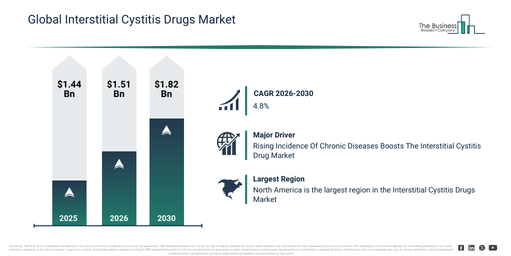
    The interstitial cystitis drugs market size has experienced consistent growth in recent years. This market is projected to expand from $1.44 billion in 2025 to $1.51 billion in 2026, exhibiting a compound annual growth rate (CAGR) of 4.8%. Historically, the market’s expansion was influenced by factors such as limited awareness of ic, reliance on conventional therapies, high prevalence of misdiagnosis, restricted r&d funding, and low adoption of intravesical therapy.

    The interstitial cystitis drugs market is projected to experience consistent expansion over the upcoming years. Its valuation is anticipated to reach $1.82 billion in 2030, exhibiting a compound annual growth rate (CAGR) of 4.8%. This expansion during the projection period stems from factors such as the increasing embrace of targeted therapies, greater investment in IC research, a rise in bladder disorder prevalence, innovations in drug delivery technology, and the development of healthcare infrastructure. Key trends anticipated during this period encompass individualized treatment methods, non-invasive drug delivery solutions, the evolution of combination therapies, improved bladder lining repair interventions, and a heightened emphasis on symptom control.

    Get A Free Sample Report With In-Depth Market Insights:

    https://thebusinessresearchcompany.com/sample_request?id=51888144&type=smp&name=Interstitial%20Cystitis%20Drugs%20Market%20Report%202026&utm_source=Blogs&utm_medium=Paid&utm_campaign=Oct_PR

    Interstitial Cystitis Drugs Market Expansion Drivers: What’s Shaping Future Growth?

    The interstitial cystitis drug market is anticipated to expand due to the increasing prevalence of chronic diseases. These long-term health conditions typically last for a person’s entire life. Medications for cystitis work by identifying and eradicating the bacteria that cause urinary tract infections. These treatments resolve the core infection in the urinary tract, thereby easing symptoms like painful urination, frequent urination, and urgency, which are often associated with various chronic conditions such as urinary tract infections (UTIs). As an illustration, data from the National Institute of Health, a US-based public health research agency, revealed that in January 2023, urinary tract infections led to over 1 million emergency department visits in the US, ranking as the seventh most frequent cause. Among these, 22% (220,000) were classified as complicated urinary tract infections (UTIs), with approximately 100,000 patients requiring annual hospital admissions. Consequently, the increasing occurrence of chronic diseases is fueling the expansion of the interstitial cystitis drug market. Increased pharmaceutical drug production is projected to boost the interstitial cystitis drug market in the future. This production involves the entire manufacturing journey of pharmaceutical items, including the creation, formulation, and packaging of medicines intended for therapeutic use. Various elements contribute to the heightened demand for drug manufacturing within the pharmaceutical sector, such as an aging demographic, ongoing research and development, public health campaigns, and the need for generic drugs. Enhanced drug production improves treatment choices for interstitial cystitis by fostering the creation of new therapies that address the rising demand for effective medications, spurred by greater understanding and detection of the condition. Better manufacturing capacities allow for quick adjustments to market requirements, ensuring patients can access the most current treatments. For instance, in June 2023, the European Federation of Pharmaceutical Industries and Associations (EFPIA), a Belgium-based trade association representing the European pharmaceutical industry, reported that Europe’s overall pharmaceutical output was €390,000 million ($422,803 million) in 2023, an increase from €363,300 million ($393,857 million) in 2022. Therefore, the rising incidence of chronic diseases is driving the growth of the interstitial cystitis drug market.

    Interstitial Cystitis Drugs Market Segment Landscape And Growth Outlook

    The interstitial cystitis drugs market covered in this report is segmented –

    1) By Drugs: Pentosan Polysulfate Sodium, Dimethyl Sulfoxide, Other Drugs

    2) By Type: Oral Therapy, Intravesical Therapy

    3) By Distribution Channel: Hospital Pharmacies, Retail Pharmacies, Online Pharmacies

    Subsegments:

    1) By Pentosan Polysulfate Sodium: Oral Pentosan Polysulfate Sodium, Injectable Pentosan Polysulfate Sodium

    2) By Dimethyl Sulfoxide (DMSO): Intravesical DMSO (Bladder Instillation)

    3) By Other Drugs: Amitriptyline, Hydroxyzine, Cimetidine, Gabapentin

    Interstitial Cystitis Drugs Market Competitive Landscape: Who Leads The Industry?

    Major companies operating in the interstitial cystitis drugs market are Pfizer Inc., Johnson & Johnson , Merck & Co. Inc., AbbVie Inc., Bayer AG, Novartis AG, Sanofi SA, GlaxoSmithKline PLC, Eli Lilly and Company, Amgen Inc., Viatris Inc., Teva Pharmaceutical Industries Ltd., Astellas Pharma Inc., Boehringer Ingelheim International GmbH, UCB S.A., Sun Pharmaceutical Industries Ltd., Perrigo Company PLC, Cipla Limited, Ferring B.V., Grunenthal Pharma, Kyorin Pharmaceutical Co. Ltd, Seikagaku Corporation, UroGen Pharma, Alivio Therapeutics, Lipella Pharmaceuticals, GlycoMira Therapeutics Inc.

    View The Full Interstitial Cystitis Drugs Market Report:

    https://thebusinessresearchcompany.com/report/interstitial-cystitis-drugs-global-market-report?utm_source=Blogs&utm_medium=Paid&utm_campaign=Oct_PR

    Interstitial Cystitis Drugs Market Regional Analysis And Top Geography

    North America was the largest region in the interstitial cystitis drugs market in 2025. Asia-Pacific is expected to be the fastest-growing region in the forecast period. The regions covered in the interstitial cystitis drugs market report are Asia-Pacific, South East Asia, Western Europe, Eastern Europe, North America, South America, Middle East, Africa.

    Reach Out To Our Team:

    The Business Research Company: https://www.thebusinessresearchcompany.com/

    Americas: +1 310-496-7795

    Asia: +44 7882 955267 & +91 8897263534

    Europe: +44 7882 955267

    Email us at: marketing@tbrc.info

    Follow us on:

    LinkedIn: https://in.linkedin.com/company/the-business-research-company

    YouTube: https://www.youtube.com/channel/UC24_fI0rV8cR5DxlCpgmyFQ

    Global Market Model: https://www.thebusinessresearchcompany.com/global-market-model

  • InterLeukin6 IL6 Inhibitor Market Size And Growth In 2026: Key Factors Shaping Future Demand

    InterLeukin6 IL6 Inhibitor Market Size And Growth In 2026: Key Factors Shaping Future Demand

    Built to provide research that’s more actionable and strategically valuable, The Business Research Company’s 2026 market reports include market attractiveness analysis, total addressable market sizing, company benchmarking matrices, interactive Excel dashboards, broader supply chain intelligence, emerging startup tracking, and in-depth product insights.

    InterLeukin6 IL6 Inhibitor Market Size Outlook: How Quickly Will Revenue Expand Through 2030?

    The interleukin6 il6 inhibitor market has experienced swift expansion in recent years. This market is projected to expand from $35.77 billion in 2025 to $39.44 billion in 2026, exhibiting a compound annual growth rate (CAGR) of 10.3%. Factors contributing to its historical growth include an increase in rheumatoid arthritis prevalence, advancements in monoclonal antibody development, expansion of biologics manufacturing, improved diagnosis of inflammatory diseases, and the growth of specialty pharmacies.

    The interleukin6 (IL-6) inhibitor market is anticipated to experience substantial growth over the coming years, with projections indicating it will reach a value of $58.33 billion by 2030, exhibiting a compound annual growth rate (CAGR) of 10.3%. This expansion during the forecast period is primarily driven by the increasing occurrence of autoimmune disorders, broader applications within oncology, a rise in biologics approvals, augmented healthcare spending, and the adoption of personalized immunotherapy. Key trends influencing this period include the rising acceptance of targeted immunotherapies, an increased utilization of IL-6 inhibitors in autoimmune conditions, the expansion of biologic drug development pipelines, growing clinical applications in inflammatory and cytokine-driven conditions, and an elevated demand for advanced injectable biologics.

    Get A Free Sample Report With In-Depth Market Insights:

    https://thebusinessresearchcompany.com/sample_request?id=52658888&type=smp&name=InterLeukin6%20IL6%20Inhibitor%20Market%20Report%202026&utm_source=Blogs&utm_medium=Paid&utm_campaign=Oct_PR

    InterLeukin6 IL6 Inhibitor Market Development Factors: What’s Supporting Demand?

    An anticipated expansion of the interleukin-6 (IL-6) inhibitor market is linked to the growing occurrence of neurological disorders. These disorders encompass conditions impacting the brain, spinal cord, and peripheral nerves, thereby affecting cognitive, motor, and sensory capabilities. Factors contributing to this increase include an aging demographic, advancements in diagnostic methods, and lifestyle elements like persistent stress and inactive habits. The interleukin-6 (IL-6) inhibitor market aids neurological patient care through its ability to diminish inflammation and irregular immune responses within the central nervous system, which assists in relieving symptoms and impeding disease progression. For example, data from March 2023, sourced from the US-based National Library of Medicine, indicated approximately 0.0067 billion Americans aged 65 and older had Alzheimer’s dementia in 2023, with projections suggesting a potential increase to 0.0138 billion by 2060. Consequently, the expanding incidence of neurological conditions is fueling the expansion of the interleukin-6 (IL-6) inhibitor market.

    InterLeukin6 IL6 Inhibitor Market Breakdown By Product Type And Application

    The interleukin6 il6 inhibitor market covered in this report is segmented –

    1) By Drug Type: Tocilizumab, Siltuximab, Sylvant

    2) By Route Of Administration: Intravenous (IV), Subcutaneous (SC), Other Route Of Administration

    3) By Indication: Rheumatoid Arthritis, Oncology, Systemic Juvenile Idiopathic Arthritis, Giant Cell Arteritis, COVID-19-Related Cytokine Storm, Other Indications

    4) By Distribution Channel: Retail Pharmacies, Hospital Pharmacies, Specialty Pharmacies, Online Pharmacies, Other Distribution Channels

    Subsegments:

    1) By Tocilizumab: Injectable Tocilizumab, Intravenous Tocilizumab, Subcutaneous Tocilizumab

    2) By Siltuximab: Injectable Siltuximab, Monotherapy Siltuximab, Combination Therapy Siltuximab

    3) By Sylvant: Injectable Sylvant, Sylvant For Multicentric Castleman Disease, Sylvant In Combination Treatments

    InterLeukin6 IL6 Inhibitor Market Transformation Trends: What Innovations Are Driving Change?

    Major companies in the interleukin-6 (IL-6) inhibitor market are concentrating on developing advanced solutions, such as the first approved tocilizumab biosimilar, to expand treatment options, improve accessibility, and enhance patient outcomes. This initial approved tocilizumab biosimilar is a highly similar version of the reference biologic Actemra, engineered to block the IL-6 receptor and reduce inflammation in conditions like rheumatoid arthritis and juvenile idiopathic arthritis, while providing comparable safety, efficacy, and quality at a more affordable cost. For instance, in November 2023, Fresenius Kabi, a Germany-based healthcare company, launched Tyenne, a tocilizumab biosimilar for various inflammatory and immune-mediated conditions. It features flexible administration options, including subcutaneous delivery through prefilled syringes and autoinjectors, as well as intravenous administration via vials, offering clinicians customizable treatment choices and providing European patients with a high-quality, accessible alternative to the originator therapy.

    InterLeukin6 IL6 Inhibitor Market Company Landscape And Competitive Strategy

    Major companies operating in the interleukin6 il6 inhibitor market are F. Hoffmann-La Roche Ltd, Genentech Inc., Chugai Pharmaceutical Co. Ltd., Johnson & Johnson, Regeneron Pharmaceuticals Inc., Sanofi S.A., Celltrion Inc., Novartis AG, GlaxoSmithKline plc, Amgen Inc., Merck KGaA, Astellas Pharma Inc., Galapagos N.V., AbbVie Inc., Bristol Myers Squibb Company, Eli Lilly and Company, Pfizer Inc., AstraZeneca PLC, Takeda Pharmaceutical Company Limited, Kyowa Kirin Co. Ltd.

    View The Full InterLeukin6 IL6 Inhibitor Market Report:

    https://thebusinessresearchcompany.com/report/interleukin6-il6-inhibitor-global-market-report?utm_source=Blogs&utm_medium=Paid&utm_campaign=Oct_PR

    InterLeukin6 IL6 Inhibitor Market Geographic Analysis: Where Is Demand Rising Fastest?

    Asia-Pacific was the largest region in the interleukin6 IL6 inhibitor market in 2025. North America is expected to be the fastest-growing region in the forecast period. The regions covered in the interleukin6 il6 inhibitor market report are Asia-Pacific, South East Asia, Western Europe, Eastern Europe, North America, South America, Middle East, Africa.

    Reach Out To Our Team:

    The Business Research Company: https://www.thebusinessresearchcompany.com/

    Americas: +1 310-496-7795

    Asia: +44 7882 955267 & +91 8897263534

    Europe: +44 7882 955267

    Email us at: marketing@tbrc.info

    Follow us on:

    LinkedIn: https://in.linkedin.com/company/the-business-research-company

    YouTube: https://www.youtube.com/channel/UC24_fI0rV8cR5DxlCpgmyFQ

    Global Market Model: https://www.thebusinessresearchcompany.com/global-market-model
  • Organ Transplant Immunosuppressant Drugs Market 2026 Market Size And Growth Forecast: Key Trends To Watch

    Organ Transplant Immunosuppressant Drugs Market 2026 Market Size And Growth Forecast: Key Trends To Watch

    Backed by market attractiveness analysis, total addressable market sizing, company benchmarking matrices, interactive Excel dashboards, wider supply chain intelligence, emerging startup coverage, and detailed product-level insights, The Business Research Company’s 2026 market reports are designed to offer research that is more actionable and strategically valuable than ever.

    Organ Transplant Immunosuppressant Drugs Market Value Growth And Long-Term Outlook

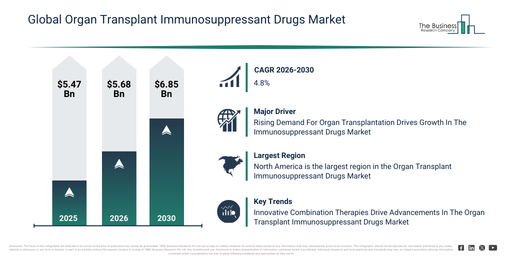
    The market size for organ transplant immunosuppressant drugs has demonstrated consistent expansion in recent years. It is projected to increase from $5.47 billion in 2025 to $5.68 billion in 2026, exhibiting a compound annual growth rate (CAGR) of 3.9%. This historical growth can be attributed to several factors including an increase in organ transplant procedures, advancements in calcineurin inhibitor therapies, the rising prevalence of end-stage organ failure, improved post-transplant survival rates, and the expansion of transplant centers.

    The organ transplant immunosuppressant drugs market size is anticipated to expand consistently over the coming years. This sector is projected to attain a valuation of $6.85 billion by 2030, exhibiting a compound annual growth rate (CAGR) of 4.8%. The observed expansion within the forecast timeframe stems from advancements in precision immunosuppression protocols, the growing acceptance of biologic-based therapies, increasing healthcare expenditure across emerging markets, the extended reach of online pharmacy distribution channels, and innovative developments in low-toxicity immunosuppressant drugs. Significant trends expected during this period include a move towards targeted immunosuppressive treatments, a heightened preference for combination drug regimens, the emergence and growth of generic and biosimilar immunosuppressants, a stronger focus on achieving long-term graft survival, and the broadening of hospital-centric transplant care models.

    Get A Free Sample Report With In-Depth Market Insights:

    https://thebusinessresearchcompany.com/sample_request?id=75273995&type=smp&name=Organ%20Transplant%20Immunosuppressant%20Drugs%20Market%20Report%202026&utm_source=Blogs&utm_medium=Paid&utm_campaign=Oct_PR

    Organ Transplant Immunosuppressant Drugs Market Industry Drivers: What’s Behind The Revenue Growth?

    Growing requirements for organ transplantation are expected to propel the organ transplant immunosuppressant drugs market. Organ transplantation involves a life-saving surgical intervention where a diseased or damaged organ in an individual is substituted with a healthy one from a donor. Immunosuppressant medications are vital for preventing the body’s rejection of transplanted organs, a process that could result in organ failure, and their presence and efficacy are critical for successful transplantation outcomes. As an illustration, in 2023, data from the Organ Procurement and Transplantation Network (OPTN), a US-based public-private partnership, indicated that approximately 16,335 individuals donated one or multiple organs posthumously. This marked the first instance of exceeding 15,000 deceased donors in a single year, signifying a 9.6% rise compared to 2022. Consequently, the rising need for organ transplantation is set to stimulate growth in the organ transplant immunosuppressant drugs market.

    Organ Transplant Immunosuppressant Drugs Market Segment Analysis: What Are The Core Market Categories?

    The organ transplant immunosuppressant drugs market covered in this report is segmented –

    1) By Drug Class: Calcineurin Inhibitors, Antiproliferative Agents, mTOR Inhibitor, Steroids, Other Drug Classes

    2) By Transplant Type: Heart, Kidney, Liver, Lung, Pancreas, Other Transplant Types

    3) By Distribution Channel: Hospital Pharmacies, Retail Pharmacies, Online Pharmacies

    Subsegments:

    1) By Calcineurin Inhibitors: Cyclosporine, Tacrolimus

    2) By Antiproliferative Agents: Azathioprine, Mycophenolate Mofetil, Mycophenolic Acid

    3) By MTOR Inhibitor: Sirolimus, Everolimus

    4) By Steroids: Prednisone, Methylprednisolone

    5) By Other Drug Classes: Costimulation Blockers, Sodium Channel Blockers, Antibody-Based Therapies

    #Organ Transplant Immunosuppressant Drugs Market Growth Trends: What’s Shaping The Future Outlook?

    Product innovation represents a significant trend in the organ transplant immunosuppressant drugs market. Major companies involved in organ transplant immunosuppressant drugs are concentrating on developing creative solutions, such as combination therapy, to maintain their market presence. Combination therapy, involving two or more immunosuppressant drugs, is gaining prevalence because it can deliver greater immunosuppression while simultaneously lowering the risk of side effects. For example, in March 2024, Johnson & Johnson, a US-based pharmaceutical and biotechnology company, secured U.S. Food and Drug Administration (FDA) approval for OPSYNVI. OPSYNVI serves as a single-tablet combination of tadalafil, a phosphodiesterase 5 (PDE5) inhibitor, and macitentan, an endothelin receptor antagonist (ERA), intended for the long-term management of pulmonary arterial hypertension (PAH). Patients with PAH who are either new to treatment or are currently using an ERA, PDE5 inhibitor, or both are eligible for OPSYNVI. Furthermore, OPSYNVI may be prescribed to patients who are already receiving consistent doses of macitentan 10 mg and tadalafil 40 mg (20 mg x 2) in separate tablet forms.

    Organ Transplant Immunosuppressant Drugs Market Top Companies Driving Competitive Growth

    Major companies operating in the organ transplant immunosuppressant drugs market are Astellas Pharma Inc., F. Hoffmann-La Roche AG, Novartis AG, Accord Healthcare Limited, Pfizer Inc., Sanofi S.A., Neovii Pharmaceuticals AG, Zydus Lifesciences Limited, Dr. Reddy’s Laboratories Ltd., Lupin Limited, Mylan N.V., Strides Pharma Global Pte Ltd., Bristol-Myers Squibb Company, Veloxis Pharmaceuticals A/S, Viatris Inc., Janssen Pharmaceuticals Inc., AbbVie Inc., Wockhardt Ltd, Glenmark Pharmaceuticals Ltd., Biocon Ltd., Hikma Pharmaceuticals PLC, Teva Pharmaceutical Industries Ltd., Cipla Ltd., Sun Pharmaceutical Industries Ltd., Aurobindo Pharma Limited, Intas Pharmaceuticals Limited, Alkem Laboratories Limited, Torrent Pharmaceuticals Limited

    View The Full Organ Transplant Immunosuppressant Drugs Market Report:

    https://thebusinessresearchcompany.com/report/organ-transplant-immunosuppressant-drugs-global-market-report?utm_source=Blogs&utm_medium=Paid&utm_campaign=Oct_PR

    Organ Transplant Immunosuppressant Drugs Market Geographic Landscape: Which Region Dominates Industry Growth?

    North America was the largest region in the organ transplant immunosuppressant drugs market in 2025.Asia-Pacific is expected to be the fastest-growing region in the global organ transplant immunosuppressant drugs market report during the forecast period. The regions covered in the organ transplant immunosuppressant drugs market report are Asia-Pacific, South East Asia, Western Europe, Eastern Europe, North America, South America, Middle East, Africa.

    Reach Out To Our Team:

    The Business Research Company: https://www.thebusinessresearchcompany.com/

    Americas: +1 310-496-7795

    Asia: +44 7882 955267 & +91 8897263534

    Europe: +44 7882 955267

    Email us at: marketing@tbrc.info

    Follow us on:

    LinkedIn: https://in.linkedin.com/company/the-business-research-company

    YouTube: https://www.youtube.com/channel/UC24_fI0rV8cR5DxlCpgmyFQ

    Global Market Model: https://www.thebusinessresearchcompany.com/global-market-model

  • Orencia Abatacept Drug Market Size Forecast: How The Industry Is Expected To Grow From 2026 To 2030

    Orencia Abatacept Drug Market Size Forecast: How The Industry Is Expected To Grow From 2026 To 2030

    Featuring market attractiveness scoring, total addressable market sizing, company benchmarking matrices, interactive Excel dashboards, deeper supply chain intelligence, emerging startup tracking, and granular product-level insights, The Business Research Company’s 2026 market reports are built to deliver research that is both more actionable and more strategically valuable.

    Orencia Abatacept Drug Market Poised To Hit $5.27 Billion By 2030 With A 6.1% CAGR

    The orencia abatacept drug market has experienced significant growth in recent times. It is projected to expand from $3.92 billion in 2025 to $4.17 billion in 2026, at a compound annual growth rate (CAGR) of 6.2%. Historically, this expansion has been driven by factors such as the increasing prevalence of autoimmune diseases, the success of biologic DMARDs, greater adoption by rheumatology specialists, enhanced autoimmune diagnostics, and an expansion of biologic reimbursement coverage.

    The orencia abatacept drug market is projected to experience substantial expansion over the upcoming years, reaching a valuation of $5.28 billion by 2030, driven by a compound annual growth rate (CAGR) of 6.1%. This anticipated growth can be attributed to several factors, including the increasing demand for biologic immunotherapy, the greater availability of home-based biologic administration, a growing prevalence of autoimmune diseases, heightened patient inclination for targeted treatments, and ongoing advancements in immune modulation techniques. Key trends observed during this period are expected to involve the broader application of targeted immunomodulatory therapies, a rise in their use for rheumatoid and psoriatic arthritis, the development of more biologic disease-modifying treatments, an increase in subcutaneous self-administration options, and an enhanced emphasis on managing autoimmune conditions long-term.

    Get A Free Sample Report With In-Depth Market Insights:

    https://thebusinessresearchcompany.com/sample_request?id=78820463&type=smp&name=Orencia%20Abatacept%20Drug%20Market%20Report%202026&utm_source=Blogs&utm_medium=Paid&utm_campaign=Oct_PR

    Orencia Abatacept Drug Market Growth Factors: What’s Supporting Expansion?

    The increasing incidence of autoimmune diseases is anticipated to boost the growth of the orencia abatacept drug market in the coming years. Autoimmune diseases manifest when the body’s immune system erroneously attacks its own healthy cells and tissues. The rise in autoimmune diseases can be attributed to a combination of genetic, environmental, and lifestyle factors. The orencia (abatacept) drug aids patients suffering from autoimmune conditions by specifically modulating T-cell activation, thereby reducing inflammation and preventing joint damage. This mechanism helps to control disease progression, enhance the quality of life, and minimize the need for other immunosuppressive treatments in conditions such as rheumatoid arthritis and psoriatic arthritis. For example, in February 2025, the Australian Broadcasting Corporation, an Australia-based national public broadcaster, stated that inflammatory bowel disease currently impacts almost 180,000 Australians, with Crohn’s Disease affecting 93,700 and Ulcerative Colitis affecting 80,430 individuals, and this total is expected to reach 200,000 in the next 10 years. Hence, the growing prevalence of autoimmune diseases is a key driver for the orencia abatacept drug market.

    Orencia Abatacept Drug Market Segment Breakdown: Which Categories Lead On Revenue?

    The orencia abatacept drug market covered in this report is segmented –

    1) By Product Type: Subcutaneous Injection, Intravenous Infusion

    2) By Application: Rheumatoid Arthritis, Juvenile Idiopathic Arthritis, Psoriatic Arthritis, Other Applications

    3) By Distribution Channel: Hospital Pharmacies, Retail Pharmacies, Online Pharmacies, Other Distribution Channels

    Subsegments:

    1) By Subcutaneous Injection: Prefilled Syringes, Auto-Injector Pens

    2) By Intravenous Infusion: Hospital-Administered Infusion, Outpatient Infusion Center Administration

    Orencia Abatacept Drug Market Leading Players And Competitive Positioning

    Major companies operating in the orencia abatacept drug market are Bristol-Myers Squibb Company

    View The Full Orencia Abatacept Drug Market Report:

    https://thebusinessresearchcompany.com/report/orencia-abatacept-drug-global-market-report?utm_source=Blogs&utm_medium=Paid&utm_campaign=Oct_PR

    Orencia Abatacept Drug Market Largest Region: Which Geography Holds The Highest Market Share?

    North America was the largest region in the orencia abatacept drug market in 2025. Asia-Pacific is expected to be the fastest-growing region in the forecast period. The regions covered in the orencia abatacept drug market report are Asia-Pacific, South East Asia, Western Europe, Eastern Europe, North America, South America, Middle East, Africa.

    Reach Out To Our Team:

    The Business Research Company: https://www.thebusinessresearchcompany.com/

    Americas: +1 310-496-7795

    Asia: +44 7882 955267 & +91 8897263534

    Europe: +44 7882 955267

    Email us at: marketing@tbrc.info

    Follow us on:

    LinkedIn: https://in.linkedin.com/company/the-business-research-company

    YouTube: https://www.youtube.com/channel/UC24_fI0rV8cR5DxlCpgmyFQ

    Global Market Model: https://www.thebusinessresearchcompany.com/global-market-model

  • Orally Disintegrating Tablet Market Reaches $24.43 Billion In 2026: Forecast And Growth Opportunities

    Orally Disintegrating Tablet Market Reaches $24.43 Billion In 2026: Forecast And Growth Opportunities

    Built to provide research that’s more actionable and strategically valuable, The Business Research Company’s 2026 market reports include market attractiveness analysis, total addressable market sizing, company benchmarking matrices, interactive Excel dashboards, broader supply chain intelligence, emerging startup tracking, and in-depth product insights.

    Orally Disintegrating Tablet Market Size And Revenue Outlook Through 2030

    The orally disintegrating tablet market has demonstrated robust growth in recent years. It is forecast to rise from $16.2 billion in 2025 to $17.62 billion by 2026, achieving a compound annual growth rate (CAGR) of 8.8%. The historical period’s expansion was influenced by limited familiarity with orally disintegrating tablets, the dominance of traditional tablets, inadequate targeting for pediatric and geriatric populations, reliance on hospital pharmacy avenues, and a slow pace in adopting specialty drug formulations.

    The orally disintegrating tablet market is projected to witness significant expansion in the coming years. Its valuation is expected to reach $24.43 billion in 2030, exhibiting a compound annual growth rate (CAGR) of 8.5%. The expansion during this forecast period can be attributed to technological breakthroughs in ODT formulation, an increasing patient preference for convenience and adherence, the development of online and retail pharmacy networks, a rising incidence of central nervous system and gastrointestinal disorders, and augmented research and development in antipsychotics and antiepileptics. Key trends anticipated in the forecast period include a growing demand for easy-to-swallow and patient-friendly dosage forms, an expansion in targeting pediatric and geriatric patient populations, growth in hospital and retail pharmacy distribution channels, an increased focus on rapid-onset therapeutics, and the rising adoption of specialty drug classes in ODT formulations.

    Get A Free Sample Report With In-Depth Market Insights:

    https://thebusinessresearchcompany.com/sample_request?id=58407271&type=smp&name=Orally%20Disintegrating%20Tablet%20Market%20Report%202026&utm_source=Blogs&utm_medium=Paid&utm_campaign=Oct_PR

    Orally Disintegrating Tablet Market Demand Drivers: What’s Powering Industry Growth?

    The escalating occurrence of neurological disorders is set to fuel the growth of the orally disintegrating tablet market in the future. Neurological disorders are health conditions impacting the nervous system, encompassing the brain and peripheral nerves, which disrupt its normal functioning. The rise in these conditions is largely due to longer lifespans, as ailments like Alzheimer’s and Parkinson’s become more common with advancing age, leading to an overall increase in cases. Orally disintegrating tablets assist in managing neurological disorders by enabling simpler and quicker medication administration, especially for patients facing swallowing difficulties (dysphagia) or cognitive impairments, thereby improving treatment adherence, ensuring timely dosing, and enhancing the overall efficacy of therapy. For instance, in March 2023, the Alzheimer’s Association, a US-based nonprofit voluntary health organization, stated that in 2023, approximately 6.7 million Americans aged 65 and older are living with Alzheimer’s dementia, with projections indicating a surge to 13.8 million by 2060. Consequently, the increasing incidence of neurological disorders is propelling the expansion of the orally disintegrating tablet market.

    Orally Disintegrating Tablet Market Segmentation: How Does The Market Break Down By Category?

    The orally disintegrating tablet market covered in this report is segmented –

    1) By Drug Class: Anti-Psychotics, Anti-Epileptics, Central Nervous System Stimulants, Anxiolytics, Anti-Parkinsonian Drugs, Anti-Hypertensives, Non-Steroidal Anti-Inflammatory Drugs, Anti-Allergy Drugs, Proton Pump Inhibitors, Other Drug Classes

    2) By Disease Indication: Central Nervous System Disease, Gastrointestinal Disease, Cardiovascular System Disorders, Allergy, Other Disease Indications

    3) By Distribution Channel: Hospital Pharmacies, Online Pharmacies, Retail Pharmacies, Drug Stores

    4) By Consumer Type: Pediatric, Adult, Geriatric

    Subsegments:

    1) By Anti-Psychotics: Atypical Anti-Psychotics, Typical Anti-Psychotics

    2) By Anti-Epileptics: Sodium Channel Blockers, GABA Analogs, Other Anti-Epileptics

    3) By Central Nervous System Stimulants: Amphetamine Derivatives, Methylphenidate, Other CNS Stimulants

    4) By Anxiolytics: Benzodiazepines, Non-Benzodiazepine Anxiolytics

    5) By Anti-Parkinsonian Drugs: Dopamine Agonists, MAO-B Inhibitors, Other Anti-Parkinsonian Drugs

    6) By Anti-Hypertensives: Beta-Blockers, Calcium Channel Blockers, ACE Inhibitors, Other Anti-Hypertensives

    7) By Non-Steroidal Anti-Inflammatory Drugs (NSAIDs): Ibuprofen, Diclofenac, Other NSAIDs

    8) By Anti-Allergy Drugs: Antihistamines, Corticosteroids

    9) By Proton Pump Inhibitors: Omeprazole, Esomeprazole

    10) By Other Drug Classes: Antiemetics, Antimigraine Drugs, Other Therapeutic Classes

    Orally Disintegrating Tablet Market Innovation Trends: What Developments Are Reshaping The Industry?

    Leading companies in the orally disintegrating tablet market are concentrating on innovating drug formulations, particularly patient-centric drug delivery systems, to bolster treatment adherence and improve patient outcomes. A patient-centric drug delivery system involves creating and administering medicines in a way that is easier and more comfortable for patients, consequently enhancing their treatment experience and compliance. For example, in May 2025, Viatris Inc., a US-based healthcare company, launched Gen-Clozapine orally disintegrating tablets (ODT) in Canada, introducing a novel treatment choice for treatment-resistant schizophrenia. It provides several distinctive attributes, positioning it as a significant contribution to the management of treatment-resistant schizophrenia in Canada. As the first clozapine orally disintegrating tablet (ODT) accessible in the country, it presents a patient-friendly alternative that quickly dissolves in the mouth without water, assisting individuals with swallowing difficulties or adherence issues. The product is offered in various strengths (12.5 mg, 25 mg, 50 mg, 100 mg, and 200 mg), allowing for flexible and precise dose titration based on a patient’s specific requirements. By incorporating clozapine, which is the only approved antipsychotic for treatment-resistant schizophrenia, the ODT formulation supports alignment with established treatment protocols.

    Orally Disintegrating Tablet Market Competitive Overview And Top Companies

    Major companies operating in the orally disintegrating tablet market are Pfizer Inc., Merck & Co Inc., Bayer AG, Novartis AG, GlaxoSmithKline plc, Takeda Pharmaceutical Company Limited, Viatris Inc., Teva Pharmaceutical Industries Ltd., Otsuka Pharmaceutical Co Ltd., Astellas Pharma Inc., Daiichi Sankyo Company Limited, Sun Pharmaceutical Industries Limited, Aurobindo Pharma USA Inc., Dr. Reddy’s Laboratories Limited, Cadila Healthcare Limited, Torrent Pharmaceuticals Limited, Adare Pharma Solutions.

    View The Full Orally Disintegrating Tablet Market Report:

    https://thebusinessresearchcompany.com/report/orally-disintegrating-tablet-global-market-report?utm_source=Blogs&utm_medium=Paid&utm_campaign=Oct_PR

    Orally Disintegrating Tablet Market Regional Analysis: Which Region Leads By Revenue?

    North America was the largest region in the orally disintegrating tablet market in 2025. Asia-Pacific is expected to be the fastest-growing region in the forecast period. The regions covered in the orally disintegrating tablet market report are Asia-Pacific, South East Asia, Western Europe, Eastern Europe, North America, South America, Middle East, Africa.

    Reach Out To Our Team:

    The Business Research Company: https://www.thebusinessresearchcompany.com/

    Americas: +1 310-496-7795

    Asia: +44 7882 955267 & +91 8897263534

    Europe: +44 7882 955267

    Email us at: marketing@tbrc.info

    Follow us on:

    LinkedIn: https://in.linkedin.com/company/the-business-research-company

    YouTube: https://www.youtube.com/channel/UC24_fI0rV8cR5DxlCpgmyFQ

    Global Market Model: https://www.thebusinessresearchcompany.com/global-market-model

  • Oral Vaccine Market Growth In 2026: Market Size, Key Drivers And Future Outlook

    Oral Vaccine Market Growth In 2026: Market Size, Key Drivers And Future Outlook

    Backed by market attractiveness analysis, total addressable market sizing, company benchmarking matrices, interactive Excel dashboards, wider supply chain intelligence, emerging startup coverage, and detailed product-level insights, The Business Research Company’s 2026 market reports are designed to offer research that is more actionable and strategically valuable than ever.

    Oral Vaccine Market Growth From $4.34 Billion In 2026 To $6.28 Billion By 2030 At A CAGR Of 9.7%

    The oral vaccine market has demonstrated strong growth in recent years. It is projected to increase from $3.95 billion in 2025 to $4.35 billion in 2026, exhibiting a compound annual growth rate (CAGR) of 10.0%. This historical expansion can be linked to the prevalence of vaccine-preventable diseases, a growing understanding of immunization benefits, governmental vaccination programs, the development of oral polio and cholera vaccines, and the expansion of hospital and clinic vaccination initiatives.

    The oral vaccine market is projected to experience robust expansion over the coming years. This market is anticipated to reach $6.29 billion in 2030, exhibiting a compound annual growth rate (CAGR) of 9.7%. Factors contributing to this growth during the forecast period include the introduction of innovative oral vaccines (such as DNA, RNA, and VLP types), the broadening of worldwide immunization initiatives, the incorporation of digital health and monitoring solutions, increased funding for vaccine research and development, and a heightened emphasis on vaccinations for adults and travelers. Key trends anticipated during the forecast period involve the growing acceptance of oral vaccines for childhood immunization, a greater focus on preventative healthcare and large-scale vaccination efforts, the creation of live attenuated and subunit oral vaccines, the scaling up of government-supported immunization campaigns, and the incorporation of cold chain and logistics advancements for vaccine delivery.

    Get A Free Sample Report With In-Depth Market Insights:

    https://thebusinessresearchcompany.com/sample_request?id=78426271&type=smp&name=Oral%20Vaccine%20Market%20Report%202026&utm_source=Blogs&utm_medium=Paid&utm_campaign=Oct_PR

    Oral Vaccine Market Growth Drivers: What’s Behind The Acceleration?

    The increasing occurrence of infectious diseases is anticipated to fuel the expansion of the oral vaccine market in the future. These diseases are conditions resulting from detrimental microorganisms, including bacteria, viruses, fungi, or parasites, capable of spreading among people or via environmental pathways. The surge in infectious diseases stems from heightened global travel, facilitating the swift translocation of individuals and disease-causing agents across national boundaries, thus hastening the global dissemination of infections. Oral vaccines prove advantageous against infectious diseases by stimulating mucosal immunity within the gut, a critical entry point for numerous pathogens, consequently providing robust protection directly where infections begin. For example, as reported by the UK-based government body, the Health Security Agency, in May 2025, England experienced an 11.0% rise in reported tuberculosis (TB) cases in 2023 compared to the previous year, 2022. Consequently, the escalating incidence of infectious diseases is indeed stimulating the expansion of the oral vaccine market.

    Oral Vaccine Market Segment Trends And Revenue Contributors

    The oral vaccine market covered in this report is segmented –

    1) By Vaccine Type: Live Attenuated Vaccines, Inactivated Vaccines, Subunit Vaccines, Other Vaccine Types

    2) By Application: Polio, Cholera, Other Applications

    3) By End-User: Hospital , Clinics, Government Organization, Other End-Users

    Subsegments:

    1) By Live Attenuated Vaccines: Oral Polio Vaccine (OPV), Rotavirus Vaccine, Oral Typhoid Vaccine, Oral Cholera Vaccine

    2) By Inactivated Vaccines: Inactivated Polio Vaccine (IPV), Inactivated Cholera Vaccine, Inactivated Hepatitis A Vaccine

    3) By Subunit Vaccines: Protein Subunit Vaccines, Polysaccharide Vaccines, Conjugate Vaccines

    4) By Other Vaccine Types: Virus-Like Particle (VLP) Vaccines, Recombinant Vector Vaccines

    Oral Vaccine Market Trends: What’s Defining The Industry’s Next Phase?

    Major companies operating in the oral vaccine market are actively developing innovative solutions, such as advanced oral pill vaccines, to elevate immune responses and simplify delivery. A second-generation pill-based oral vaccine is engineered to improve its ability to provoke an immune response, broaden the scope of protection, and streamline large-scale immunization efforts, removing the need for injections or refrigerated storage. For instance, in March 2025, Vaxart Inc., a U.S.-based biotechnology company, announced the commencement of a Phase 1 clinical trial for its second-generation oral norovirus vaccine, delivered in a pill formulation. This trial will assess the enhanced immune responses and safety features of the updated formulations, aiming to meet the ongoing global demand for accessible and effective norovirus immunization. The pill format overcomes obstacles associated with injectable vaccines and supports rapid, extensive distribution, particularly during outbreaks.

    Oral Vaccine Market Competitive Landscape: Which Companies Lead The Industry?

    Major companies operating in the oral vaccine market are Panacea Biotec Ltd., Zydus Lifesciences, Serum Institute of India Pvt. Ltd., Bharat Biotech Ltd., Haffkine Biopharmaceutical Co. Ltd., Medigen Vaccine Biologics Corp., BlueWillow Biologics Inc.

    View The Full Oral Vaccine Market Report:

    https://thebusinessresearchcompany.com/report/oral-vaccine-global-market-report?utm_source=Blogs&utm_medium=Paid&utm_campaign=Oct_PR

    Oral Vaccine Market Geographic Distribution And Regional Opportunities

    North America was the largest region in the oral vaccine market in 2025. Asia-Pacific is expected to be the fastest-growing region in the forecast period. The regions covered in the oral vaccine market report are Asia-Pacific, South East Asia, Western Europe, Eastern Europe, North America, South America, Middle East, Africa.

    Reach Out To Our Team:

    The Business Research Company: https://www.thebusinessresearchcompany.com/

    Americas: +1 310-496-7795

    Asia: +44 7882 955267 & +91 8897263534

    Europe: +44 7882 955267

    Email us at: marketing@tbrc.info

    Follow us on:

    LinkedIn: https://in.linkedin.com/company/the-business-research-company

    YouTube: https://www.youtube.com/channel/UC24_fI0rV8cR5DxlCpgmyFQ

    Global Market Model: https://www.thebusinessresearchcompany.com/global-market-model

  • Oral Transmucosal Drugs Market Size And Forecast 2026–2030: Trends Driving Industry Expansion

    Oral Transmucosal Drugs Market Size And Forecast 2026–2030: Trends Driving Industry Expansion

    Featuring market attractiveness scoring, total addressable market sizing, company benchmarking matrices, interactive Excel dashboards, deeper supply chain intelligence, emerging startup tracking, and granular product-level insights, The Business Research Company’s 2026 market reports are built to deliver research that is both more actionable and more strategically valuable.

    Oral Transmucosal Drugs Market Expansion Outlook: What Revenue Opportunities Are Ahead?

    The oral transmucosal drugs market has experienced substantial expansion in recent years. It will grow from $43.21 billion in 2025 to $47.18 billion in 2026 at a compound annual growth rate (CAGR) of 9.2%. Historically, this growth has been driven by the need for rapid onset pain management solutions, limitations of oral swallowing in critical patients, established clinical use of sublingual tablets, growth in opioid dependence treatments, and the preference for bypassing first-pass metabolism.

    The oral transmucosal drugs market size is projected to undergo significant growth in the upcoming years. It is forecast to reach $63.76 billion in 2030, demonstrating a compound annual growth rate (CAGR) of 7.8%. This expansion during the forecast period is attributable to an increased focus on fast-acting drug delivery, a rise in neurological and chronic pain incidents, a growing need for patient-centric dosage forms, innovations in mucoadhesive technologies, and the expansion of home-based and emergency care treatments. Key trends for the forecast period include the increasing adoption of rapid-acting drug delivery systems, greater utilization of sublingual and buccal films, a rising demand for non-invasive alternatives to injections, the broader application of transmucosal therapies for pain and neurological disorders, and enhanced patient compliance through user-friendly formats.

    Get A Free Sample Report With In-Depth Market Insights:

    https://thebusinessresearchcompany.com/sample_request?id=44963244&type=smp&name=Oral%20Transmucosal%20Drugs%20Market%20Report%202026&utm_source=Blogs&utm_medium=Paid&utm_campaign=Oct_PR

    Oral Transmucosal Drugs Market Growth Factors Behind Sustained Expansion

    The increasing occurrence of Parkinson’s disease is anticipated to drive the expansion of the oral transmucosal drug market moving forward. This condition, Parkinson’s disease, is a progressive neurological ailment marked by tremors, stiffness, and reduced movement, resulting from the deterioration of dopamine-generating neurons within the brain. The growth in Parkinson’s diagnoses stems from an aging demographic, environmental factors, genetic predispositions, and enhanced diagnostic methods facilitating earlier discovery. Oral transmucosal drug delivery aids in managing Parkinson’s disease by allowing quick absorption via the oral mucosa, bypassing digestive system delays, and offering quicker symptom alleviation during “off” periods when standard oral tablets might be less effective. As an illustration, in January 2023, data from the American Parkinson Disease Association (APDA), a U.S.-based non-profit entity, indicated that a recent epidemiological study found almost 90,000 new Parkinson’s diagnoses each year in the United States, representing a 50% surge from 2022. Consequently, the escalating incidence of Parkinson’s disease is fueling the advancement of the oral transmucosal drug market.

    Oral Transmucosal Drugs Market Segment Analysis Spotlighting Growth Areas

    The oral transmucosal drugs market covered in this report is segmented –

    1) By Product Type: Tablets, Films, Liquid And Spray, Other Product Types

    2) By Indication: Opioid Dependence, Nausea And Vomiting, Erectile Dysfunction, Neurological Disorders, Other Indications

    3) By Route Of Administration: Sublingual Mucosa, Buccal Mucosa, Other Routes Of Administration

    4) By Distribution Channel: Hospital Pharmacies, Retail Pharmacies, Online Pharmacies

    Subsegments:

    1) By Tablets: Buccal Tablets, Sublingual Tablets, Effervescent Tablets

    2) By Films: Buccal Films, Sublingual Films, Mucoadhesive Films

    3) By Liquid And Spray: Sublingual Liquid Solutions, Oral Sprays (Pain Relief, Sleep Aids), Mucosal Gels

    4) By Other Product Types: Lozenges, Pastilles, Chewing Gums

    Oral Transmucosal Drugs Market Industry Trends Fueling Future Revenue Growth

    Prominent companies in the oral transmucosal drug market are concentrating on developing innovative solutions like sublingual tablets to boost rapid drug absorption and improve treatment adherence. These tablets are designed to dissolve under the tongue, facilitating direct absorption of the drug into the bloodstream for a quicker impact. For example, in June 2024, Aquestive Therapeutics Inc., a US-based pharmaceutical company, obtained approval from the U.S. Food and Drug Administration (FDA) for Libervant (diazepam) Buccal Film. This product is indicated for the acute management of intermittent, stereotypic episodes of frequent seizure activity (seizure clusters) in epilepsy patients aged 2 to 5 years. It is a thin, rapidly dissolving film positioned inside the cheek, where it adheres securely and provides a consistent dose of diazepam both swiftly and reliably. This convenient, noninvasive treatment option offers enhanced usability and rapid absorption, presenting an effective and discreet method to manage acute repetitive seizures in young pediatric patients.

    Oral Transmucosal Drugs Market Leading Companies: Who Holds The Strongest Market Presence?

    Major companies operating in the oral transmucosal drugs market are Pfizer Inc., Merck & Co. Inc., AbbVie Inc., Sanofi-Aventis LLC, AstraZeneca PLC, Abbott Laboratories, Novartis AG, GlaxoSmithKline plc, Eli Lilly & Company Ltd., Boehringer Ingelheim International GmbH, Viatris Inc., Teva Pharmaceutical Industries Ltd., Biogen Inc., Actavis Pharma Inc., Sun Pharmaceutical Industries Limited, Dr. Reddy’s Laboratories Ltd., Endo Pharmaceuticals Inc., Lupin Limited, Zydus Lifesciences Limited, Mallinckrodt Pharmaceuticals Plc, Glenmark Pharmaceuticals Limited, Jubilant Life Sciences Limited, Torrent Pharmaceuticals Ltd., Alembic Pharmaceuticals Ltd, Wockhardt Ltd.

    View The Full Oral Transmucosal Drugs Market Report:

    https://thebusinessresearchcompany.com/report/oral-transmucosal-drugs-global-market-report?utm_source=Blogs&utm_medium=Paid&utm_campaign=Oct_PR

    Oral Transmucosal Drugs Market Largest Region By Revenue And Market Share

    North America was the largest region in the oral transmucosal drugs market in 2025. Asia-Pacific is expected to be the fastest-growing region in the forecast period. The regions covered in the oral transmucosal drugs market report are Asia-Pacific, South East Asia, Western Europe, Eastern Europe, North America, South America, Middle East, Africa.

    Reach Out To Our Team:

    The Business Research Company: https://www.thebusinessresearchcompany.com/

    Americas: +1 310-496-7795

    Asia: +44 7882 955267 & +91 8897263534

    Europe: +44 7882 955267

    Email us at: marketing@tbrc.info

    Follow us on:

    LinkedIn: https://in.linkedin.com/company/the-business-research-company

    YouTube: https://www.youtube.com/channel/UC24_fI0rV8cR5DxlCpgmyFQ

    Global Market Model: https://www.thebusinessresearchcompany.com/global-market-model

  • Oral Solid Dosage Pharmaceutical Formulation Market 2026 Outlook: Market Size, CAGR And Key Growth Opportunities

    Oral Solid Dosage Pharmaceutical Formulation Market 2026 Outlook: Market Size, CAGR And Key Growth Opportunities

    Built to provide research that’s more actionable and strategically valuable, The Business Research Company’s 2026 market reports include market attractiveness analysis, total addressable market sizing, company benchmarking matrices, interactive Excel dashboards, broader supply chain intelligence, emerging startup tracking, and in-depth product insights.

    Oral Solid Dosage Pharmaceutical Formulation Market Growth Potential: How Will Market Size Shift Through 2030?

    The oral solid dosage pharmaceutical formulation market size has shown significant growth in recent years. It is anticipated to expand from $653.26 billion in 2025 to $692.14 billion in 2026, achieving a compound annual growth rate (CAGR) of 6.0%. The expansion observed historically can be attributed to factors such as the broad acceptance of oral drug delivery, a well-established manufacturing infrastructure for tablets and capsules, the increasing prevalence of chronic diseases, the cost-effectiveness of oral solid dosage forms, and strong regulatory familiarity with oral formulations.

    The oral solid dosage pharmaceutical formulation market size is anticipated to experience robust expansion in the coming years. It is projected to reach $846.38 billion in 2030, exhibiting a compound annual growth rate (CAGR) of 5.2%. This projected expansion during the forecast period is driven by several factors, including the escalating demand for long-acting oral drugs, a heightened emphasis on patient compliance and ease of use, the increasing scope of pharmaceutical outsourcing and CDMO services, the global rise in generic drug manufacturing, and advancements in excipients and formulation techniques. Key trends anticipated during this period encompass the increasing integration of controlled and modified-release dosage forms, a surging preference for convenient oral solid formats for patients, the expansion of both generic and branded solid dosage production, a heightened concentration on formulations with high bioavailability, and a move towards more cost-effective and scalable oral dosage manufacturing methods.

    Get A Free Sample Report With In-Depth Market Insights:

    https://thebusinessresearchcompany.com/sample_request?id=72540105&type=smp&name=Oral%20Solid%20Dosage%20Pharmaceutical%20Formulation%20Market%20Report%202026&utm_source=Blogs&utm_medium=Paid&utm_campaign=Oct_PR

    Oral Solid Dosage Pharmaceutical Formulation Market Demand Drivers Opening New Revenue Streams

    The rising occurrence of chronic illnesses is anticipated to boost the expansion of the oral solid dosage pharmaceutical formulation market in the future. These enduring health conditions are defined as ailments that persist over an extended duration, usually for at least three months. Their increase can be attributed to elements like an aging demographic, inactive routines, inadequate eating patterns, environmental influences, and enhanced methods of identification and diagnosis. Oral solid dosage pharmaceutical formulations play a crucial role in managing chronic diseases and fostering compliance with extended treatment plans, owing to their ease of use, stability, and accurate dosage. For example, in February 2024, the World Health Organization, an intergovernmental body situated in Switzerland, estimated that more than 35 million new cancer diagnoses are expected by 2050, marking a 77% rise from the approximately 20 million cases reported in 2022. Consequently, the growing frequency of chronic health conditions stimulates the growth of the oral solid dosage pharmaceutical formulation market.

    Oral Solid Dosage Pharmaceutical Formulation Market Segment Performance And Emerging Opportunities

    The oral solid dosage pharmaceutical formulation market covered in this report is segmented –

    1) By Dosage Form: Tablets, Capsules, Powders And Granules, Lozenges And Pastilles, Gummies

    2) By Mechanism: Controlled-Release, Immediate-Release, Delayed-Release

    3) By Distribution Channel: Hospital Pharmacies, Retail Pharmacies, Drug Stores, Online Pharmacies, Hypermarkets Or Supermarkets

    4) By End-User: Large-Size Companies, Medium And Small-Size Companies, Other End-Users

    Subsegments:

    1) By Tablets: Immediate-Release Tablets, Extended-Release Tablets, Controlled-Release Tablets, Effervescent Tablets, Chewable Tablets, Sublingual Tablets

    2) By Capsules: Hard Gelatin Capsules, Soft Gel Capsules, Liquid-Filled Capsules, Delayed-Release Capsules

    3) By Powders And Granules: Oral Powders (Reconstitution), Granules (Oral Suspension Or Dispersible Granules)

    4) By Lozenges And Pastilles: Medicinal Lozenges, Herbal Lozenges, Sugar-Free Lozenges, Pastilles ( Throat Or Cough Relief)

    5) By Gummies: Vitamin Gummies, Herbal And Nutritional Supplement Gummies, Pharmaceutical Gummies ( Pain Relief Or Sleep Aids)

    Oral Solid Dosage Pharmaceutical Formulation Market Trends Powering Strategic Industry Growth

    Leading firms within the Oral Solid Dosage (OSD) pharmaceutical market are concentrating on creating novel approaches, including fixed dose combinations, to boost effectiveness, patient adherence, and safety. A fixed dose combination (FDC) refers to a drug product comprising two or more active pharmaceutical ingredients integrated into one dosage unit, aiming to streamline therapy and increase patient compliance. As an illustration, in February 2025, Ono Pharmaceutical Co. Ltd., a pharmaceutical entity based in Japan, obtained authorization from the U.S. Food and Drug Administration (FDA) for its Journavex (suzetrigine) 50 mg oral tablets, intended for managing moderate to severe acute pain in adults. This medication functions by specifically impeding NaV1.8 sodium channels situated in the peripheral nervous system, thereby intercepting pain signals prior to their transmission to the brain, providing efficacious pain alleviation free from risks of dependence. Trials conducted clinically showed a notable decrease in pain when contrasted with a placebo, accompanied by a well-received safety record featuring minor adverse effects like itching and muscle spasms.

    Oral Solid Dosage Pharmaceutical Formulation Market Key Players: Which Companies Lead Industry Competition?

    Major companies operating in the oral solid dosage pharmaceutical formulation market are Pfizer Inc., Johnson & Johnson, Merck & Co. Inc., AbbVie Inc., Bayer AG, Bristol-Myers Squibb Company, AstraZeneca Plc., Novartis AG, Hoffman-La-Roche Ltd., Takeda Pharmaceutical Company Limited, Eli Lilly and Company, Boehringer Ingelheim GmbH, Gilead Sciences, Amgen Inc., Teva Pharmaceuticals, Otsuka Pharmaceutical Co. Ltd., Astellas Pharma Inc., Biogen Inc., Lonza Group, Catalent Inc., Ashland Inc., Piramal Pharma Solutions, Jubilant Pharmova, CordenPharma International

    View The Full Oral Solid Dosage Pharmaceutical Formulation Market Report:

    https://thebusinessresearchcompany.com/report/oral-solid-dosage-pharmaceutical-formulation-global-market-report?utm_source=Blogs&utm_medium=Paid&utm_campaign=Oct_PR

    Oral Solid Dosage Pharmaceutical Formulation Market Regional Analysis And Leading Geography

    North America was the largest region in the oral solid dosage pharmaceutical formulation market in 2025. Asia-Pacific is expected to be the fastest-growing region in the forecast period. The regions covered in the oral solid dosage pharmaceutical formulation market report are Asia-Pacific, South East Asia, Western Europe, Eastern Europe, North America, South America, Middle East, Africa.

    Reach Out To Our Team:

    The Business Research Company: https://www.thebusinessresearchcompany.com/

    Americas: +1 310-496-7795

    Asia: +44 7882 955267 & +91 8897263534

    Europe: +44 7882 955267

    Email us at: marketing@tbrc.info

    Follow us on:

    LinkedIn: https://in.linkedin.com/company/the-business-research-company

    YouTube: https://www.youtube.com/channel/UC24_fI0rV8cR5DxlCpgmyFQ

    Global Market Model: https://www.thebusinessresearchcompany.com/global-market-model
  • Oral Rehydration Solution Market Size Growth: From $4.83 Billion In 2026 To $6.91 Billion By 2030

    Oral Rehydration Solution Market Size Growth: From $4.83 Billion In 2026 To $6.91 Billion By 2030

    Backed by market attractiveness analysis, total addressable market sizing, company benchmarking matrices, interactive Excel dashboards, wider supply chain intelligence, emerging startup coverage, and detailed product-level insights, The Business Research Company’s 2026 market reports are designed to offer research that is more actionable and strategically valuable than ever.

    Oral Rehydration Solution Market Value Analysis: What Growth Lies Ahead Over The Forecast Period?

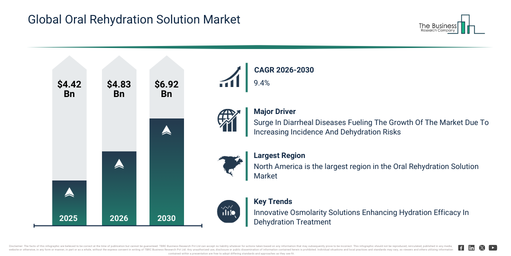
    The market size for oral rehydration solutions has demonstrated strong growth in recent years. It is projected to increase from $4.42 billion in 2025 to $4.83 billion in 2026, achieving a compound annual growth rate (CAGR) of 9.3%. Historically, this expansion has been driven by the high prevalence of diarrheal diseases, global public health programs, the widespread utilization of ORS in low-resource environments, the broadening of pharmacy distribution, and heightened child healthcare initiatives.

    The oral rehydration solution market is projected to experience substantial expansion in the coming years. This market is forecast to reach $6.92 billion in 2030, exhibiting a compound annual growth rate (CAGR) of 9.4%. Factors driving this growth during the forecast period include enhanced awareness of preventive healthcare, a rise in climate-related dehydration risks, an expanding pediatric population in developing regions, broadened access to healthcare in rural areas, and advancements in oral rehydration solution formulations. Key trends anticipated over the forecast timeframe encompass a surging demand for ready-to-use oral rehydration solution items, increased uptake of pediatric oral rehydration solution formulations, heightened emphasis on managing dehydration at the community level, the introduction of more flavored and improved oral rehydration solution varieties, and wider distribution through online retail platforms.

    Get A Free Sample Report With In-Depth Market Insights:

    https://thebusinessresearchcompany.com/sample_request?id=81866983&type=smp&name=Oral%20Rehydration%20Solution%20Market%20Report%202026&utm_source=Blogs&utm_medium=Paid&utm_campaign=Oct_PR

    Oral Rehydration Solution Market Growth Backed By Core Demand Fundamentals

    The rising occurrence of diarrheal diseases is set to drive the expansion of the oral rehydration solution market. This condition is marked by frequent, loose, or watery bowel movements, often leading to abdominal cramps and dehydration. The surge in diarrheal diseases is primarily fueled by inadequate sanitation, as insufficient waste disposal and a lack of clean water contribute to the spread of pathogens causing gastrointestinal infections. Oral rehydration solution is crucial in treating dehydration resulting from diarrheal diseases by restoring lost fluids and electrolytes, thereby averting serious complications and fatalities. For example, the World Health Organization reported in March 2024 that diarrhea accounts for the deaths of approximately 443,832 children under the age of 5, in addition to 50,851 children aged 5 to 9 annually. Consequently, the increasing prevalence of diarrheal diseases is a significant factor propelling the growth of the oral rehydration solution market.

    Oral Rehydration Solution Market Segment Landscape And Growth Outlook

    The oral rehydration solution market covered in this report is segmented –

    1) By Product Type: Ready-To-Use Oral Rehydration Solution Packets, Oral Rehydration Solution Powder For Reconstitution

    2) By Indication: Diarrhea, Gastroenteritis, Electrolyte Imbalance, Other Indications

    3) By Packaging Type: Pouches, Bottles, Bulk Packages, Single-Serve Sachets, Cans

    4) By Distribution Channel: Online Stores, Pharmacies, Supermarkets OR Hypermarkets, Specialty Stores, Other Distribution Channels

    5) By End-User: Children, Adults, Elderly

    Subsegments:

    1) By Ready-To-Use Oral Rehydration Solution Packets: Flavored Oral Rehydration Solution Liquids, Unflavored Oral Rehydration Solution Liquids, Pediatric Formulations, Adult Formulations

    2) By Oral Rehydration Solution Powder For Reconstitution: Sachets For Pediatric Use, Sachets For Adult Use, Glucose-Based Oral Rehydration Solution Powders, Rice-Based Oral Rehydration Solution Powders

    Oral Rehydration Solution Market Growth Trends Reshaping The Competitive Landscape

    Major companies operating in the oral rehydration solution market are focusing on technological innovations, such as accurate osmolarity, to enhance hydration efficacy, ensure optimal electrolyte balance, and improve treatment outcomes for dehydration-related conditions. Accurate osmolarity refers to maintaining the correct concentration of solutes (like salts and sugars) in a solution, matching the body’s natural fluid balance. For instance, in January 2025, Kenvue Inc., a US-based consumer health company, launched WHO ORS, a ready-to-drink oral rehydration solution to support effective treatment of diarrhea-led dehydration. This innovative oral rehydration solution features optimized electrolytes and balanced osmolarity, improving hydration, accelerating recovery, and enhancing outcomes in diarrhea treatment. WHO ORS is effective, providing optimal hydration for diarrhea-led dehydration with balanced electrolytes and osmolarity for faster recovery.

    Oral Rehydration Solution Market Competitive Landscape: Who Leads The Industry?

    Major companies operating in the oral rehydration solution market are Abbott Laboratories, Otsuka Pharmaceutical Co. Ltd., Intas Pharmaceuticals Ltd., Zydus Cadila Healthcare Ltd., Mankind Pharma Limited, Cipla Limited, Dr. Reddy’s Laboratories Ltd., Sun Pharmaceutical Industries Ltd., Lupin Limited, Alkem Laboratories Limited, Ajanta Pharma Limited, Shreya Life Sciences Pvt. Ltd., Renata Limited, FDC Limited, ACME Laboratories Ltd., Wallace Pharmaceuticals Pvt. Ltd., Halewood Laboratories Pvt. Ltd., Cian Healthcare Limited, Ziska Pharmaceuticals Ltd., Torrent Pharmaceuticals Ltd.

    View The Full Oral Rehydration Solution Market Report:

    https://thebusinessresearchcompany.com/report/oral-rehydration-solution-global-market-report?utm_source=Blogs&utm_medium=Paid&utm_campaign=Oct_PR

    Oral Rehydration Solution Market Geographic Analysis: Where Is Demand Accelerating Fastest?

    North America was the largest region in the oral rehydration solution market in 2025. Asia-Pacific is expected to be the fastest-growing region in the forecast period. The regions covered in the oral rehydration solution market report are Asia-Pacific, South East Asia, Western Europe, Eastern Europe, North America, South America, Middle East, Africa.

    Reach Out To Our Team:

    The Business Research Company: https://www.thebusinessresearchcompany.com/

    Americas: +1 310-496-7795

    Asia: +44 7882 955267 & +91 8897263534

    Europe: +44 7882 955267

    Email us at: marketing@tbrc.info

    Follow us on:

    LinkedIn: https://in.linkedin.com/company/the-business-research-company

    YouTube: https://www.youtube.com/channel/UC24_fI0rV8cR5DxlCpgmyFQ

    Global Market Model: https://www.thebusinessresearchcompany.com/global-market-model

  • Oral Proteins And Peptides Market Analysis 2026: Market Size, Growth Trends And Industry Outlook

    Oral Proteins And Peptides Market Analysis 2026: Market Size, Growth Trends And Industry Outlook

    Featuring market attractiveness scoring, total addressable market sizing, company benchmarking matrices, interactive Excel dashboards, deeper supply chain intelligence, emerging startup tracking, and granular product-level insights, The Business Research Company’s 2026 market reports are built to deliver research that is both more actionable and more strategically valuable.

    Oral Proteins And Peptides Market Size Forecast: How Big Could The Market Get By 2030?

    The oral proteins and peptides market size has seen significant expansion in recent years. This market is projected to increase from $1.56 billion in 2025 to $1.91 billion in 2026, demonstrating a compound annual growth rate (CAGR) of 22.5%. The historical growth experienced by this market can be attributed to factors such as limited oral bioavailability of proteins and peptides, reliance on injectable formulations, growing prevalence of diabetes and gastrointestinal disorders, increasing research in peptide therapeutics, and regulatory approvals for early oral peptide drugs.

    The oral proteins and peptides market is anticipated to experience substantial growth in the upcoming years. It is projected to expand to $4.26 billion by 2030, exhibiting a compound annual growth rate (CAGR) of 22.2%. This growth over the forecast period is fueled by the advancement of innovative delivery technologies for oral proteins, the expansion of chronic disease management initiatives, the increasing embrace of personalized and combination therapies, higher healthcare spending on metabolic and hormonal disorders, and the integration of digital tools for adherence and monitoring. Significant trends for this period encompass the rising adoption of oral insulin and other therapeutic peptides, the evolution of personalized medicine and targeted oral protein treatments, an increased focus on therapies for gastrointestinal disorders, the broader availability of oral protein formulations for diabetes and metabolic conditions, and innovations in long-acting and combination oral protein products.

    Get A Free Sample Report With In-Depth Market Insights:

    https://thebusinessresearchcompany.com/sample_request?id=44278343&type=smp&name=Oral%20Proteins%20And%20Peptides%20Market%20Report%202026&utm_source=Blogs&utm_medium=Paid&utm_campaign=Oct_PR

    Oral Proteins And Peptides Market Growth Catalysts And Demand Drivers

    The expansion of the biopharmaceutical sector is projected to drive the future development of the oral proteins and peptides market. This industry segment, part of the wider pharmaceutical field, is dedicated to the creation, manufacture, and sale of medications originating from biological sources. This sector’s expansion stems from progress in biotechnology, a rising need for personalized treatments, a greater incidence of chronic illnesses, and increased spending on research and development initiatives. Within biopharmaceuticals, oral proteins and peptides present an opportunity for administering therapies without invasion, thereby improving patient adherence and lessening the requirement for injections. They are capable of targeting particular ailments, exhibiting better stability and uptake within the digestive system. As an illustration, in October 2025, data from the Bioscience and Health Technology Sector, a source of UK government statistics, indicated that during 2023/2024, the UK life sciences industry contained 6,170 businesses spanning 7,320 companies. These operations provided employment for 359,600 individuals and achieved a turnover of £146.9 ($169.69) billion. Consequently, the expanding biopharmaceutical industry is serving as a catalyst for the growth of the oral proteins and peptides market.

    Oral Proteins And Peptides Market Breakdown By Product Type And Application

    The oral proteins and peptides market covered in this report is segmented –

    1) By Drug Type: Linaclotide, Calcitonin, Insulin, Plecanatide, Octreotide

    2) By Biological Target: Guanylate Cyclase-C (GC-C), Insulin Receptor, Other Biological Targets

    3) By Mechanism Of Action: Receptor Stimulation, Substrate Degradation, Other Mechanisms Of Action

    4) By Application: Gastrointestinal Disorders, Bone Disease, Neurological Disorders, Diabetes, Metabolic Disorders, Hormonal Disorder, Cancer

    Subsegments:

    1) By Linaclotide: Indications For Irritable Bowel Syndrome (IBS), Indications For Chronic Idiopathic Constipation (CIC)

    2) By Calcitonin: Calcitonin-Salmon, Synthetic Calcitonin, Calcitonin for Osteoporosis Treatment

    3) By Insulin: Long-Acting Insulin, Combination Insulin Products, Oral Insulin Formulations

    4) By Plecanatide: Indications For Chronic Idiopathic Constipation (CIC), Indications For Irritable Bowel Syndrome With Constipation (IBS-C)

    5) By Octreotide: Long-Acting Octreotide Formulations, Short-Acting Octreotide Formulations, Indications For Acromegaly And Neuroendocrine Tumors

    Oral Proteins And Peptides Market Trends Shaping Long-Term Demand

    Major companies operating in the oral proteins and peptides market are focusing on developing innovative formulation technologies to enhance peptide stability, permeability, and bioavailability in oral dosage forms. These advancements aim to overcome traditional challenges such as enzymatic degradation and poor absorption in the gastrointestinal tract. For instance, in August 2025, BioMed X, a Germany-based biomedical research institute, launched a new collaboration with Novo Nordisk, a Denmark-based pharmaceutical company, to accelerate the development of next-generation oral peptide delivery technologies. The partnership will explore novel molecular strategies and delivery mechanisms to enable safe, effective, and patient-friendly oral peptide therapeutics. By integrating BioMed X’s early-stage research capabilities with Novo Nordisk’s expertise in peptide-based medicines, the collaboration aims to advance breakthrough oral drug delivery solutions and expand the therapeutic potential of peptide medicines across metabolic and chronic diseases.

    Oral Proteins And Peptides Market Company Landscape And Competitive Strategy

    Major companies operating in the oral proteins and peptides market are Pfizer Inc., Merck & Co. Inc., AbbVie Inc., Sanofi S.A., AstraZeneca PLC, Eli Lilly and Company, Novo Nordisk A/S, Ipsen S.A., Biocon Limited, Xeris Pharmaceuticals Inc., Adocia S.A., Zealand Pharma A/S, Diabetology Ltd., Oramed Pharmaceuticals Inc., Palatin Technologies Inc., Entera Bio Ltd.

    View The Full Oral Proteins And Peptides Market Report:

    https://thebusinessresearchcompany.com/report/oral-proteins-and-peptides-global-market-report?utm_source=Blogs&utm_medium=Paid&utm_campaign=Oct_PR

    Oral Proteins And Peptides Market Global Footprint: Which Region Leads The Industry?

    North America was the largest region in the oral proteins and peptides market in 2025. Asia-Pacific is expected to be the fastest-growing region in the forecast period. The regions covered in the oral proteins and peptides market report are Asia-Pacific, South East Asia, Western Europe, Eastern Europe, North America, South America, Middle East, Africa.

    Reach Out To Our Team:

    The Business Research Company: https://www.thebusinessresearchcompany.com/

    Americas: +1 310-496-7795

    Asia: +44 7882 955267 & +91 8897263534

    Europe: +44 7882 955267

    Email us at: marketing@tbrc.info

    Follow us on:

    LinkedIn: https://in.linkedin.com/company/the-business-research-company

    YouTube: https://www.youtube.com/channel/UC24_fI0rV8cR5DxlCpgmyFQ

    Global Market Model: https://www.thebusinessresearchcompany.com/global-market-model