Blog

  • Strong CAGR to Propel in the Resorbable Vascular Scaffolds Market and Beyond upto $0.82 Billion by 2029

    Strong CAGR to Propel in the Resorbable Vascular Scaffolds Market and Beyond upto $0.82 Billion by 2029

    Claim your 30% discount on Global Market Reports with code ONLINE30. Limited time only.

    What Are the Projected Market Size and Growth Rates for the Resorbable Vascular Scaffolds Market From 2025 To 2029?

    The market size for resorbable vascular scaffolds has seen a swift expansion in recent years. The market growth is projected to rise from $0.46 billion in 2024 to $0.51 billion in 2025, with a compound annual growth rate (CAGR) of 12.6%. The historical growth pattern is due to an increase in cardiovascular diseases, heightened awareness of health among consumers, a surge in cases of coronary artery disease (CAD), a growing preference for minimally invasive procedures, and a rise in diabetes cases.

    In the coming years, the size of the resorbable vascular scaffolds market is set for a significant expansion. It is anticipated to surge to$0.82 billion by 2029, with an impressive compound annual growth rate (CAGR) of 12.5%. This predicted growth during the forecast period is likely a result of the rising incidence of coronary artery disease (CAD) and peripheral artery disease (PAD) among the elderly community, the increased funding for surgical procedures research and development (R&D), an ageing demographic, amplified expenditure in healthcare, and a prevalence of coronary artery disease. The major trends to watch out for during this period include a preference for drug-eluting devices used in angioplasty, innovative technological advances and product enhancements, advancements in stent technology, and progressive diagnostic functionalities.

    Download a free sample to assess the report’s scope and structure:

    https://www.thebusinessresearchcompany.com/sample.aspx?id=21272&type=smp

    Which Primay Drivers Are Accelerating Growth in the Resorbable Vascular Scaffolds Market?

    The growth of the resorbable vascular scaffolds market is anticipated to be fuelled by the rising prevalence of cardiovascular diseases. Factors such as unhealthy lifestyle choices, age, high blood pressure, increased cholesterol, diabetes, tobacco usage, and genetic makeup contribute to these diseases. The innovation of resorbable vascular scaffolds is transforming cardiovascular disease treatments by offering temporary structural support to restore blood flow while they slowly dissolve. This reduces the long-term complications linked with permanent implants and stimulates natural healing and functionality of the vessel. For example, the Minnesota Department of Health, an agency based in the US, reported in September 2024 that 4% of Minnesota adults, or approximately 180,000 individuals, had a heart attack in 2023. Furthermore, heart disease caused about 17% of all deaths in the state, resulting in 8,972 fatalities in 2022. The growing prevalence of cardiovascular diseases, therefore, propels the expansion of the resorbable vascular scaffolds market.

    Which Primary Segments of the Resorbable Vascular Scaffolds Market Are Driving Growth and Industry Transformations?

    The resorbable vascular scaffoldsmarket covered in this report is segmented –

    1) By Product Design: Multilumen; Single Lumen

    2) By Material Type: Poly-Glycolic Acid; Poly-L-Lactic Acid; Poly-L-Lactic-Co-Glycolic Acid

    3) By Deployment Technique: Balloon-Expandable; Self-Expandable

    4) By Application: Coronary Artery Disease; Peripheral Vascular Disease; Pulmonary Artery Disease

    5) By End User: Ambulatory Surgical Centers; Hospitals; Specialty Clinics

    Subsegments:

    1) By Multilumen: Helical Design; Braided Design; Other Multilumen Designs

    2) By Single Lumen: Straight Tube Design; Corrugated Tube Design; Other Single Lumen Designs

    Request customized data on this market:

    https://www.thebusinessresearchcompany.com/customise?id=21272&type=smp

    Which Regions Are Key Players in the Growth of the #Which Primay Drivers Are Accelerating Growth in the Resorbable Vascular Scaffolds Market?# Market?

    North America was the largest region in the resorbable vascular scaffolds market in 2024. Asia-Pacific is expected to be the fastest-growing region in the forecast period. The regions covered in the resorbable vascular scaffolds market report are Asia-Pacific, Western Europe, Eastern Europe, North America, South America, Middle East, Africa.

    Which Technological Trends Are Reshaping the Resorbable Vascular Scaffolds Industry Dynamics?

    Leading enterprises in the field of resorbable vascular scaffolds are pioneering the use of magnesium scaffolds to bolster biocompatibility and offer superior mechanical support. With an ability to catalyze the natural healing of vessels while mitigating inflammation and complications tied to traditional polymer-based scaffolds, magnesium scaffolds are seen as a significant innovation. As a case in point, Biotronik, hailing from Germany and expanding into medical devices, got the green light from the US Food and Drug Administration (FDA) for their breakthrough device – the Freesolve below-the-knee resorbable magnesium scaffold (BTK RMS) in March 2024. Geared towards those suffering from chronic limb-threatening ischemia (CLTI), the Freesolve RMS paves the way for advanced treatment strategies for below-the-knee (BTK) interventions. The scaffold incorporates BIOmag magnesium alloy and Orsiro drug-eluting stent (DES) coating technology – enhancing safety, deliverability, and vessel support all in one. The apparatus acts as a short-term support structure,-upholding vessel recoil during the course of healing.

    View the full report here:

    https://www.thebusinessresearchcompany.com/report/resorbable-vascular-scaffolds-global-market-report

    What Parameters Are Used to Define the Resorbable Vascular Scaffolds Market?

    Resorbable vascular scaffolds are medical devices used to treat vascular diseases by providing temporary structural support to blood vessels. Resorbable vascular scaffolds gradually dissolve after fulfilling their purpose, reducing the risks associated with permanent implants. By promoting natural vessel healing and restoring normal blood flow, they offer a safer and more effective alternative to traditional stents.

    Purchase the full report and get a swift delivery:

    https://www.thebusinessresearchcompany.com/purchaseoptions.aspx?id=21272

    About The Business Research Company:

    With over 15000+ reports from 27 industries covering 60+ geographies, The Business Research Company has built a reputation for offering comprehensive, data-rich research and insights. Armed with 1,500,000 datasets, the optimistic contribution of in-depth secondary research, and unique insights from industry leaders, you can get the information you need to stay ahead in the game.

    Get in touch with us:

    The Business Research Company: https://www.thebusinessresearchcompany.com/

    Americas +1 310-496-7795

    Europe +44 7882 955267

    Asia & Others +44 7882 955267 & +91 8897263534

    Email us at info@tbrc.info

    Follow us on:

    LinkedIn: https://in.linkedin.com/company/the-business-research-company

    YouTube: https://www.youtube.com/channel/UC24_fI0rV8cR5DxlCpgmyFQ

    Global Market Model: https://www.thebusinessresearchcompany.com/global-market-model
  • Top Trends Driving Innovation and Change in the Actinic Keratosis Market: Advancements In Topical Therapies For Precancerous Skin Lesions

    Top Trends Driving Innovation and Change in the Actinic Keratosis Market: Advancements In Topical Therapies For Precancerous Skin Lesions

    Claim your 30% discount on Global Market Reports with code ONLINE30. Limited time only.

    What Are the Key Projections for the CAGR of the Actinic Keratosis Market Size From 2025 to 2034?

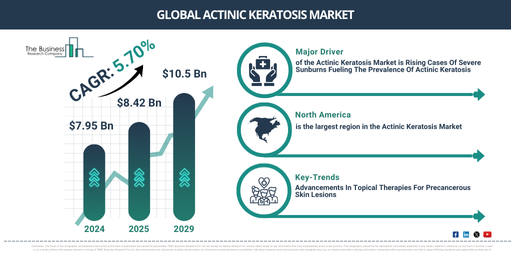
    The market size for actinic keratosis has seen robust growth lately. It’s expected to expand from $7.95 billion in 2024 to $8.42 billion in 2025, generating a compound annual growth rate (CAGR) of 5.8%. This historic growth can be linked to factors such as an increase in UV radiation exposure, a growing elderly population, heightened awareness about skin cancer, a rising number of actinic keratosis cases, growth in healthcare infrastructure, increased disposable incomes, governmental support and prevention-focused skincare initiatives.

    In the coming years, the actinic keratosis market is poised for robust growth, and it’s anticipated to reach$10.5 billion in 2029 with a compound annual growth rate (CAGR) of 5.7%. The growth factors during the predicted period include the development of ground-breaking treatments, progress in AI-empowered diagnostic tools, a surge in the acceptance of comprehensive therapies, increased interest in non-invasive methods, an expanding use of tele dermatology, a larger use of photodynamic therapy, enhanced cosmetic outcome awareness, the establishment of targeted biologic treatments, a rising investment in healthcare in emergent markets and a shift towards early detection and prevention. Noteworthy trends in the forecast period include diagnostic tools accelerated by AI, lesion analysis through machine learning, sophisticated photodynamic therapy systems, wearable UV monitoring gadgets, nanotechnology-oriented drug delivery, 3D imaging for individualized treatments, transportable home-based phototherapy tools, early detection biosensors, automated lesion categorization software, and hydrogel-infused therapeutic systems.

    Download a free sample to assess the report’s scope and structure:

    https://www.thebusinessresearchcompany.com/sample.aspx?id=21077&type=smp

    What External and Internal Drivers Are Contributing to the Growth of theActinic Keratosis Market?

    The actinic keratosis market is set to thrive due to an uptick in severe sunburn incidences. Severe sunburns, a kind of acute skin burn brought about by overexposure to ultraviolet (UV) radiation results in symptoms like redness, swelling, pain, and potentially blisters. These sunburns are typically caused by prolonged UV exposure, inadequate sun protection, increased outdoor activities at peak UV hours and heightened temperatures attributed to climate change. Actinic keratosis arises from sunburns damaging skin cells’ DNA via UV radiation, leading to mutations that interrupt the normal functioning of cells. This eventually results in the formation of pre-cancerous lesions, especially with extended or repeated sun exposure. Case in point, Melanoma Focus, a UK charity, stated in May 2024 that in the span of 2022-23, 201 hospital admissions were due to sunburn, involving 89 children and 25 babies under one year old. The charity further discovered that 66% of UK adults aged 16-65 recollected being sunburnt as kids, with 65% of them having experienced severe blisters due to sunburn at least once. This figure increased to 77% for individuals with light, pale, or white skin. Hence, the escalation in severe sunburn cases is bolstering the actinic keratosis market’s growth.

    What Segment Types Define the Actinic Keratosis Market Structure?

    The actinic keratosismarket covered in this report is segmented –

    1) By Treatment Type: Topical Treatment; Surgical Procedure; Photodynamic Therapy; Other Treatment Types

    2) By Distribution Channels: Hospital Pharmacies; Drug Stores And Retail Pharmacies; Online Providers

    3) By End-User: Hospitals; Dermatology Clinics; Spas And Rejuvenation Centers; Homecare Settings; Other End-Users

    Subsegments:

    1) By Topical Treatment: 5-Fluorouracil (5-FU); Imiquimod; Diclofenac; Ingenol Mebutate; Retinoids

    2) By Surgical Procedure: Cryotherapy; Curettage And Electrodessication; Excision

    3) By Photodynamic Therapy: Aminolevulinic Acid (ALA) Plus Light Therapy; Methyl Aminolevulinate (MAL) Plus Light Therapy

    4) By Other Treatment Types: Laser Therapy; Chemical Peels; Combination Therapies

    Request customized data on this market:

    https://www.thebusinessresearchcompany.com/customise?id=21077&type=smp

    Which Geographic Areas Hold the Strongest Growth Potential in the Actinic Keratosis Market?

    North America was the largest region in the actinic keratosis market in 2024. Asia-Pacific is expected to be the fastest-growing region in the forecast period. The regions covered in the actinic keratosis market report are Asia-Pacific, Western Europe, Eastern Europe, North America, South America, Middle East, Africa.

    What Long-Term Trends Are Transforming the Competitive Landscape of the Actinic Keratosis Market?

    Major players in the actinic keratosis market are concentrating their efforts on innovating topical ointments. The goal is to successfully target and eradicate precancerous lesions, decrease the likelihood of reoccurrence, and increase patient satisfaction by reducing the length of treatment and improving safety profiles. These topical ointments are medicated gels or creams that are applied to the impacted skin, consisting of active components like tirbanibulin that target abnormal keratinocytes and treat precancerous lesions. For example, in June 2024, Almirall SA, a biopharmaceutical company based in Spain, received approval from the US Food and Drug Administration (FDA) for supplemental new drug application (sNDA) to increase its drug, Klisyri, usage area to up to 100 cm2. Klisyri (tirbanibulin) 1% ointment, a microtubule inhibitor, is intended to hinder the growth of abnormal keratinocytes, hence effectively reducing the quantity and size of precancerous lesions in treating actinic keratosis (AK) on the face or scalp.

    View the full report here:

    https://www.thebusinessresearchcompany.com/report/actinic-keratosis-global-market-report

    What Is the Definition of the Actinic Keratosis Market?

    Actinic keratosis (AK), also known as solar keratosis, is a common precancerous skin condition that occurs due to prolonged exposure to ultraviolet (UV) radiation from the sun or artificial sources leading to rough, scaly or crusty patches on sun-exposed areas of the skin such as the face, scalp, hands and arms. It is considered an early stage of squamous cell carcinoma (SCC) and requires treatment to prevent progression. Regular skin checks and protection from sun exposure are essential for managing and preventing the development of actinic keratosis.

    Purchase the full report and get a swift delivery:

    https://www.thebusinessresearchcompany.com/purchaseoptions.aspx?id=21077

    About The Business Research Company:

    With over 15000+ reports from 27 industries covering 60+ geographies, The Business Research Company has built a reputation for offering comprehensive, data-rich research and insights. Armed with 1,500,000 datasets, the optimistic contribution of in-depth secondary research, and unique insights from industry leaders, you can get the information you need to stay ahead in the game.

    Get in touch with us:

    The Business Research Company: https://www.thebusinessresearchcompany.com/

    Americas +1 310-496-7795

    Europe +44 7882 955267

    Asia & Others +44 7882 955267 & +91 8897263534

    Email us at info@tbrc.info

    Follow us on:

    LinkedIn: https://in.linkedin.com/company/the-business-research-company

    YouTube: https://www.youtube.com/channel/UC24_fI0rV8cR5DxlCpgmyFQ

    Global Market Model: https://www.thebusinessresearchcompany.com/global-market-model
  • $18.41 Billion Forecast for Bioreactors Market by 2029, Backed by Demand and Innovation

    $18.41 Billion Forecast for Bioreactors Market by 2029, Backed by Demand and Innovation

    Claim your 30% discount on Global Market Reports with code ONLINE30. Limited time only.

    What Are the Key Milestones in the Bioreactors Market’s Growth Trajectory From 2025 To 2034?

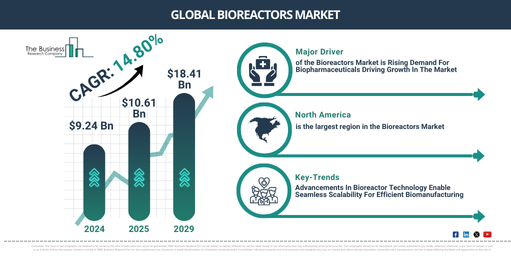
    In the past few years, the bioreactors market has experienced swift expansion. The market, which sat at $9.24 billion in 2024, is projected to rise to $10.61 billion in 2025 with a compound annual growth rate (CAGR) of 14.8%. The significant growth in the historic period is due to factors such as a surge in biopharmaceutical demand, an increase in cell and gene therapy studies, a blossoming interest in personalized medicine, the incorporation of single-use bioreactor technology, and a necessity for more effective manufacturing processes.

    In the coming years, the bioreactors market is anticipated to experience swift expansion, with projections estimating a value of $18.41 billion by 2029 and a compound annual growth rate (CAGR) of 14.8%. This substantial growth during the prediction period can be ascribed to factors such as an escalation in biotechnology research investment, an increased occurrence of chronic diseases, higher demand for vaccines and therapeutic proteins, a surge in regulatory support for biomanufacturing, and a rise in the application of advanced therapies. Key trends expected during the prediction period consist of breakthroughs in biotechnology, enhancements in automation and control systems, growth in bioprocess development, improvements in manufacturing efficiency, and a rising requirement for scalable production solutions.

    Download a free sample to assess the report’s scope and structure:

    https://www.thebusinessresearchcompany.com/sample.aspx?id=20721&type=smp

    What Are the Core Market Drivers Propelling Growth in the Bioreactors Industry?

    The bioreactors market is anticipated to expand owing to the rising need for biopharmaceuticals. Biopharmaceuticals are medicinal substances obtained from biological origins, such as cells, proteins, and living entities, utilized to prevent, cure, or manage various diseases. The surge in demand for biopharmaceuticals can be attributed to progress in medical research, personalized medicine, and the requirement for inventive treatments, which contribute to improved global health outcomes. Bioreactors play a crucial role in biopharmaceuticals by enabling effective and scalable production of therapeutic products. This ensures constant quality, lowers production expenses, and aids in the creation of revolutionary and life-improving medicines. For example, as per the Pharmaceutical Research and Manufacturers of America, a trade organization based in the US, the US biopharmaceutical industry’s total output outpaced $1.65 trillion in 2022, with direct production accounting for $800 billion and an additional $800 billion coming from suppliers and other sectors, making up 3.6% of the US economy. Thus, the escalating need for biopharmaceuticals is propelling the bioreactors market’s growth.

    How Is the Bioreactors Market Segmented?

    The bioreactorsmarket covered in this report is segmented –

    1) By Type Of Bioprocess: Batch And Fed-Batch; Continuous

    2) By Cell: Mammalian Cells; Bacterial Cells; Yeast Cells; Other Cells

    3) By Control: Manual; Automated

    4) By Usage: Lab Scale Production; Pilot Scale Production; Full Scale Production

    5) By End-Use: Research And Development (R&D) Organizations; Biopharmaceutical (Biopharma) Manufacturers; Contract Manufacturing Organizations (CMOS)

    Subsegments:

    1) By Batch And Fed-Batch: Traditional Batch Bioreactors; Fed-Batch Bioreactors

    2) By Continuous: Perfusion Bioreactors; Continuous Stirred Tank Bioreactors (CSTR)

    Request customized data on this market:

    https://www.thebusinessresearchcompany.com/customise?id=20721&type=smp

    Which Regions Are Driving the Next Phase of the Bioreactors Market Growth?

    North America was the largest region in the bioreactors market in 2024. Asia-Pacific is expected to be the fastest-growing region in the forecast period. The regions covered in the bioreactors market report are Asia-Pacific, Western Europe, Eastern Europe, North America, South America, Middle East, Africa.

    What Key Market Trends and Innovations Are Shaping the Future of the Bioreactors Industry?

    Bioreactors market key players are heavily investing in the innovation of sophisticated products like the fixed-bed bioreactors to facilitate the growth of more intricate biological cultures. Fixed-bed bioreactors are a variety of bioreactors where biological organisms settle on a rigid support, often made from porous materials like fibers, beads, or granules. This design enhances mass transfer, reduces shear stress and allows superior control of biological procedures. For instance, Univercells Technologies, a Biotechnology firm based in Belgium, unveiled the Scale-X Nexo bioreactor in October 2024. This state-of-the-art bioreactor, characterized by a 0.5 m² growth surface, is tailor-made to enhance cell culture process development, offering substantial advantages for biopharmaceutical corporations and research establishments. The scale-X nexo enables effortless scalability to larger models, minimizes media and reagent usage, and has the potential to cut operational expenditures by as much as 60% when compared to conventional entry-level bioreactors. Moreover, it amalgamates with the Skaia Vision application software to further spike productivity by providing accurate cell count calculations without the requirement of direct sampling.

    View the full report here:

    https://www.thebusinessresearchcompany.com/report/bioreactors-global-market-report

    How Is the Bioreactors Market Defined and What Are Its Core Parameters?

    A bioreactor is a controlled system designed to support biological processes by providing a suitable environment for cells, microorganisms, or enzymes to grow and function. It maintains optimal conditions such as temperature, pH, oxygen, and nutrient supply to facilitate desired biochemical reactions. Bioreactors are widely used in pharmaceuticals, food production, and wastewater treatment.

    Purchase the full report and get a swift delivery:

    https://www.thebusinessresearchcompany.com/purchaseoptions.aspx?id=20721

    About The Business Research Company:

    With over 15000+ reports from 27 industries covering 60+ geographies, The Business Research Company has built a reputation for offering comprehensive, data-rich research and insights. Armed with 1,500,000 datasets, the optimistic contribution of in-depth secondary research, and unique insights from industry leaders, you can get the information you need to stay ahead in the game.

    Get in touch with us:

    The Business Research Company: https://www.thebusinessresearchcompany.com/

    Americas +1 310-496-7795

    Europe +44 7882 955267

    Asia & Others +44 7882 955267 & +91 8897263534

    Email us at info@tbrc.info

    Follow us on:

    LinkedIn: https://in.linkedin.com/company/the-business-research-company

    YouTube: https://www.youtube.com/channel/UC24_fI0rV8cR5DxlCpgmyFQ

    Global Market Model: https://www.thebusinessresearchcompany.com/global-market-model

  • Biometric As A Service In Healthcare Market 2025-2034: Key Highlights, Growth Dynamics, and Emerging Trends

    Biometric As A Service In Healthcare Market 2025-2034: Key Highlights, Growth Dynamics, and Emerging Trends

    Claim your 30% discount on Global Market Reports with code ONLINE30. Limited time only.

    How Has The Biometric As A Service In Healthcare Market Size Shifted, And What Is the Outlook Through 2034?

    The market size for biometric services in healthcare has seen a significant expansion in the recent past. Its growth trajectory is projected to move from a value of $1.3 billion in 2024, soaring to $1.61 billion in 2025, marking a compound annual growth rate (CAGR) of 23.5%. This augmented growth during the historic period is owed to factors such as heightened demand for secure handling of patient data, increasing investment in healthcare infrastructure, the rise of wearable biometric devices for health tracking, the expansion of digital health solutions and mobile health apps, as well as an increasing inclination for individualized healthcare experiences.

    Over the coming years, the biometric as a service in healthcare market is projected to experience substantial growth, swelling to a size of$3.62 billion by 2029. This represents an impressive compound annual growth rate (CAGR) of 22.5%. This growth during the forecast period can be traced back to several factors including the rise in digital transformation within the healthcare sector, increasing adoption of wearable technologies, high rates of identity theft, escalating prevalence of chronic diseases, and an emphasis on avoiding prescription fraud. In the same forecast period, major trends are expected to surface, including the incorporation of artificial intelligence (AI) into biometric systems, advanced iris scanning technology, the use of blockchain in biometric verification, cutting-edge biometric cloud solutions, and touchless biometric systems for healthcare.

    Download a free sample to assess the report’s scope and structure:

    https://www.thebusinessresearchcompany.com/sample.aspx?id=20720&type=smp

    Which Primay Drivers Are Accelerating Growth in the Biometric As A Service In Healthcare Market?

    The anticipated advancement of the biometric as a service sector in the healthcare industry is linked to the growing utilization of mobile devices. These portable electronic gadgets, such as smartphones, tablets, and smartwatches, facilitate wireless communication, provide internet accessibility, and allow for the usage of numerous apps. This escalation in mobile device use can be credited to developments in wireless technology, more cost-effective smartphones, improved internet capability, and the emergence of healthcare-specific mobile apps. Biometric as a Service (BaaS) in healthcare is made possible through mobile devices, which offer a secure, immediate connection to confidential health information and patient documents via sophisticated biometric verification, ensuring not only convenience but also adherence to healthcare rules and regulations. For example, the global smartphone subscriptions in 2023 reached a staggering 6,930 million units as per the Mobility Report by Ericsson, a telecommunications company based in Sweden. Furthermore, this figure rose to 7,160 million units in the following year, 2024. Hence, the rising use of mobile gadgets is evidently contributing to the expansion of the biometric as a service in the healthcare sector.

    Which Primary Segments of the Biometric As A Service In Healthcare Market Are Driving Growth and Industry Transformations?

    The biometric as a service in healthcaremarket covered in this report is segmented –

    1) By Modility: Unimodal; Multimodal

    2) By Component: Software; Services

    3) By Scanner Type: Fingerprint Recognition; Iris Recognition; Palm Recognition; Facial Recognition; Voice Recognition; Other Scanner Types

    4) By Application: Pharmacy Dispensing; Care Provider Authentication; Medical Record Security And Data Centre Security; Patient Identification And Tracking; Home Or Remote Patient Access; Narcotic Security; Counter Insurance Frauds; Other Applications

    5) By End Use: Hospitals; Long Term Care Centers; Ambulatory Surgical Centers; Other End-Users

    Subsegments:

    1) By Unimodal: Fingerprint Recognition; Facial Recognition; Iris Recognition; Voice Recognition; Hand Geometry Recognition

    2) By Multimodal: Fingerprint And Facial Recognition; Fingerprint And Iris Recognition; Facial And Voice Recognition; Multi-Factor Biometric Systems

    Request customized data on this market:

    https://www.thebusinessresearchcompany.com/customise?id=20720&type=smp

    Which Regions Are Key Players in the Growth of the #Which Primay Drivers Are Accelerating Growth in the Biometric As A Service In Healthcare Market?# Market?

    North America was the largest region in the biometric as a service in healthcare market in 2024. Asia-Pacific is expected to be the fastest-growing region in the forecast period. The regions covered in the biometric as a service in healthcare market report are Asia-Pacific, Western Europe, Eastern Europe, North America, South America, Middle East, Africa.

    Which Technological Trends Are Reshaping the Biometric As A Service In Healthcare Industry Dynamics?

    Leading enterprises in the healthcare biometric-as-a-service sector are concentrating on developing novel solutions like facial recognition system to bolster patient identification, ensure smooth access control, and secure healthcare premises. Facial recognition solutions refer to technological platforms that confirm or ascertain people’s identities by examining and comparing facial characteristics from videos or images, typically utilized for authentication, security, or surveillance purposes. For example, Imprivata Inc., a software firm headquartered in the US, introduced Imprivata Biometric Patient Identity, a ground-breaking solution deploying facial recognition technology in February 2024. Through the utilization of advanced biometric technologies, such as facial and fingerprint identification, this solution guarantees accurate patient identification across different healthcare environments. It flawlessly integrates with existing Electronic Health Records (EHR) systems, facilitating immediate authentication whilst strictly adhering to healthcare privacy laws such as HIPAA.

    View the full report here:

    https://www.thebusinessresearchcompany.com/report/biometric-as-a-service-in-healthcare-global-market-report

    What Parameters Are Used to Define the Biometric As A Service In Healthcare Market?

    Biometric as a Service (BaaS) in healthcare refers to the delivery of biometric authentication and monitoring services via the cloud, enabling healthcare providers to access, store, and analyze patient biometric data securely. It is used for patient identification, remote monitoring, and access control, enhancing security and improving patient care by enabling accurate, real-time health data collection, such as heart rate, blood pressure, and other vital signs, while ensuring compliance with healthcare regulations like HIPAA.

    Purchase the full report and get a swift delivery:

    https://www.thebusinessresearchcompany.com/purchaseoptions.aspx?id=20720

    About The Business Research Company:

    With over 15000+ reports from 27 industries covering 60+ geographies, The Business Research Company has built a reputation for offering comprehensive, data-rich research and insights. Armed with 1,500,000 datasets, the optimistic contribution of in-depth secondary research, and unique insights from industry leaders, you can get the information you need to stay ahead in the game.

    Get in touch with us:

    The Business Research Company: https://www.thebusinessresearchcompany.com/

    Americas +1 310-496-7795

    Europe +44 7882 955267

    Asia & Others +44 7882 955267 & +91 8897263534

    Email us at info@tbrc.info

    Follow us on:

    LinkedIn: https://in.linkedin.com/company/the-business-research-company

    YouTube: https://www.youtube.com/channel/UC24_fI0rV8cR5DxlCpgmyFQ

    Global Market Model: https://www.thebusinessresearchcompany.com/global-market-model
  • Renal Insufficiency Market Valuation Expected To Reach $18.52 Billion By 2029, Growing At A Rate Of 11.2%

    Renal Insufficiency Market Valuation Expected To Reach $18.52 Billion By 2029, Growing At A Rate Of 11.2%

    Claim your 30% discount on Global Market Reports with code ONLINE30. Limited time only.

    What Is the Estimated Market Size of the Renal Insufficiency Market In 2029?

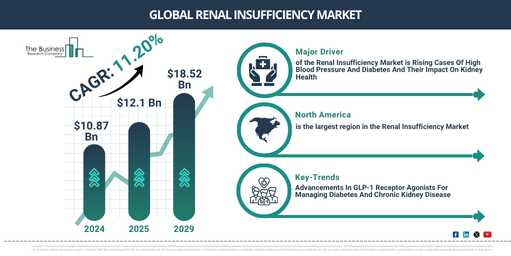
    The market for renal insufficiency has seen a swift expansion in recent times. Predictions show it evolving from a worth of $10.87 billion in 2024, to attain a valuation of $12.1 billion in 2025, signaling a compound annual growth rate (CAGR) of 11.4%. The historical growth trajectory can be traced back to increased incidents of hypertension and diabetes, escalating diagnosis rates of chronic kidney disease (CKD), a higher occurrence of obstructions in the urinary system, an aging demographic, coupled with a rising consciousness and knowledge about kidney wellness.

    The market size of renal insufficiency is projected to significantly expand in the upcoming years, reaching$18.52 billion by 2029 with a compound annual growth rate (CAGR) of 11.2%. This anticipated growth within the projection period can be linked to a rise in cases of acute kidney injuries (AKI), increased preference for home-based treatment alternatives, escalation in healthcare spending, and investments in research and development. Dominant trends for the forecasting period comprise progress in medical technology, further advancement in treatment methods and technology, the inclusion of personalized medicine, developments in dialysis technology, and the creation of innovative and new medications.

    Download a free sample to assess the report’s scope and structure:

    https://www.thebusinessresearchcompany.com/sample.aspx?id=21271&type=smp

    Which Factors and External Forces Are Driving Demand in the Renal Insufficiency Market?

    The renal insufficiency market can expect to see growth, given the rising frequency of high blood pressure and diabetes diagnoses. Factors such as poor nutrition, insufficient physical exercise, obesity, genetic susceptibility, and an aging populace contribute to these health conditions. Both high blood pressure and diabetes can result in kidney damage, with high blood pressure leading to scarred, less functional kidney blood vessels, and diabetes causing thickened and strained kidney vessels due to elevated blood sugar. Take, for example, the data from December 2023, released by the National Health Service in the UK in May 2024, which showed an increase in high blood pressure diagnoses in the South East by 71,120 patients — a 5.4% increase compared to the previous year. The British Diabetic Association also reported in April 2023 that there were 4.3 million people with a diabetes diagnosis in the UK. As such, the surge of high blood pressure and diabetes cases is contributing to the expansion of the renal insufficiency market.

    Which Segments in the Renal Insufficiency Offer the Most Growth?

    The renal insufficiencymarket covered in this report is segmented –

    1) By Treatment Type: Medications; Dialysis; Kidney Transplantation; Other Treatment Types

    2) By Disease Stage: Chronic Kidney Disease (CKD) Stages; End-Stage Renal Disease (ESRD)

    3) By Distribution Channel: Hospital Pharmacies; Retail Pharmacies; Online Pharmacies

    4) By End-User: Dialysis Centers; Hospital And Clinics; Research And Academic Institutes

    Subsegments:

    1) By Medications: Angiotensin-Converting Enzyme (ACE) Inhibitors; Angiotensin II Receptor Blockers (ARBs); Diuretics; Erythropoiesis-Stimulating Agents (ESAs); Phosphate Binders; Sodium Bicarbonate

    2) By Dialysis: Hemodialysis; Peritoneal Dialysis; Home Dialysis; Continuous Renal Replacement Therapy (CRRT)

    3) By Kidney Transplantation: Living Donor Kidney Transplant; Deceased Donor Kidney Transplant; Kidney Transplant Immunosuppressive Therapy

    4) By Other Treatment Types: Lifestyle And Dietary Modifications; Stem Cell Therapy; Gene Therapy

    Request customized data on this market:

    https://www.thebusinessresearchcompany.com/customise?id=21271&type=smp

    What Are the Fastest-Growing Geographies in the #Which Factors and External Forces Are Driving Demand in the Renal Insufficiency Market?# Market?

    North America was the largest region in the renal insufficiency market in 2024. The regions covered in the renal insufficiency market report are Asia-Pacific, Western Europe, Eastern Europe, North America, South America, Middle East, Africa.

    Which Cutting-Edge Market Trends Are Expected to Drive theRenal Insufficiency Market’s Growth?

    The renal insufficiency market is seeing a surge in the development of glucagon-like peptide-1 receptor agonists (GLP-1 RAs) by major companies. These innovations address renal and cardiovascular complications in individuals suffering from diabetes and chronic kidney disease (CKD). GLP-1 RAs aid in controlling glucose, reducing inflammation, and minimizing oxidative stress in kidneys, which in turn decelerates the progress of renal insufficiency. In January 2025, an example of such advancement was seen when the Denmark-based pharmaceutical firm, Novo Nordisk, was granted approval by the Food and Drug Administration (FDA) for Ozempic (semaglutide). This product reduces the risk of kidney failure, worsening kidney disease, and cardiovascular mortality in adults with type 2 diabetes and CKD. This accreditation underscores the increased focus on GLP-1 RAs as a comprehensive strategy to tackle diabetes and renal insufficiency concurrently, addressing pressing needs in patients with advanced CKD.

    View the full report here:

    https://www.thebusinessresearchcompany.com/report/renal-insufficiency-global-market-report

    What Are the Key Elements That Define the Renal Insufficiency Market?

    Renal insufficiency refers to the reduced ability of the kidneys to filter waste products and maintain fluid and electrolyte balance in the body. It can result from chronic conditions such as diabetes, hypertension, or acute kidney injury, leading to the accumulation of toxins in the blood. If left untreated, renal insufficiency may progress to chronic kidney disease (CKD) or kidney failure, requiring dialysis or transplantation.

    Purchase the full report and get a swift delivery:

    https://www.thebusinessresearchcompany.com/purchaseoptions.aspx?id=21271

    About The Business Research Company:

    With over 15000+ reports from 27 industries covering 60+ geographies, The Business Research Company has built a reputation for offering comprehensive, data-rich research and insights. Armed with 1,500,000 datasets, the optimistic contribution of in-depth secondary research, and unique insights from industry leaders, you can get the information you need to stay ahead in the game.

    Get in touch with us:

    The Business Research Company: https://www.thebusinessresearchcompany.com/

    Americas +1 310-496-7795

    Europe +44 7882 955267

    Asia & Others +44 7882 955267 & +91 8897263534

    Email us at info@tbrc.info

    Follow us on:

    LinkedIn: https://in.linkedin.com/company/the-business-research-company

    YouTube: https://www.youtube.com/channel/UC24_fI0rV8cR5DxlCpgmyFQ

    Global Market Model: https://www.thebusinessresearchcompany.com/global-market-model
  • Emerging Trends Redefining the Acne Vulgaris Market Landscape: Innovative Long-Acting Injectable Therapies Revolutionizing HIV Treatment for Improved Adherence

    Claim your 30% discount on Global Market Reports with code ONLINE30. Limited time only.

    How Has The Acquired Immunodeficiency Syndrome (AIDS) Market Growth Evolved From 2024 To 2025, And What’s Ahead?

    Strong growth has been observed lately in the acquired immunodeficiency syndrome (aids) market. The market, valued at $32.09 billion in 2024, is projected to further increase to $33.75 billion in 2025 with a compound annual growth rate (CAGR) of 5.2%. Factors such as a hike in HIV infection rates, augmented government funding towards HIV treatment, proliferation of worldwide awareness programs, enhancement in diagnostic facilities, and increased aid from non-governmental organizations have contributed to the notable growth in the past.

    The market for acquired immunodeficiency syndrome (aids) is projected to experience robust expansion in the imminent years. The market is anticipated to escalate to$41.28 billion in 2029, charting a compound annual growth rate (CAGR) of 5.2%. The augmentation in the stipulated period is credited to the escalating requirements for durable injectable treatments, the burgeoning adoption of pre-exposure prophylaxis (PrEP), elevated funding in HIV remedy investigations, the proliferation of telemedicine provisions for HIV care, heightened emphasis on personalized medication, and burgeoning cognizance about early HIV diagnosis. Predominant tendencies forecasted for this period comprise a shift towards single-tablet routines, a rising predilection for injectable and implantable HIV therapies, accelerated demand for digital health solutions in HIV administration, developing curiosity in functional HIV cure strategies, and the enlarging influence of artificial intelligence in drug discovery.

    Download a free sample to assess the report’s scope and structure:

    https://www.thebusinessresearchcompany.com/sample.aspx?id=21076&type=smp

    What Are the Core Market Drivers Propelling Growth in the Acquired Immunodeficiency Syndrome (AIDS) Industry?

    The escalation in HIV infection rates is projected to fuel the expansion of the acquired immunodeficiency syndrome (AIDS) market. HIV infections are conditions instigated by the human immunodeficiency virus (HIV), a virus that weakens and attacks the immune system, limiting its ability to combat infections and diseases. The uptick in HIV infection rates can be attributed to unsafe sexual practices with an infected partner, using shared needles or syringes, exposure to contaminated blood products, engaging in sexual activities with multiple partners, and a compromised immune or sexually transmitted infections. Management strategies for AIDS play a crucial role in assisting HIV-infected patients by encouraging early detection, increasing access to potent antiretroviral therapies, improving prevention methods, and reinforcing healthcare systems that help manage the viral spread effectively. For example, in November 2024, data released by the Sweden-based European Centre for Disease Prevention and Control (ECDC) indicated that 112,883 HIV diagnoses were made in 2023 across 47 of the 53 countries in the region, with 24,731 instances identified in the European Union/European Economic Area (EU/EEA). The total crude HIV diagnosis rate stood at 12.7 per 100,000 population, marking a 2.4% surge compared to the 12.4 per 100,000 rates detected in 2022. Thus, the rise in HIV infections constitutes a significant driver for the AIDS market.

    How Is the Acquired Immunodeficiency Syndrome (AIDS) Market Segmented?

    The acquired immunodeficiency syndrome (aids)market covered in this report is segmented –

    1) By Type: Human Immunodeficiency Virus 1; Human Immunodeficiency Virus 2

    2) By Drug Type: Nucleoside-Analog Reverse Transcriptase Inhibitors; Non-Nucleoside Reverse Transcriptase Inhibitors; Fusion Inhibitors; CCR5 Anatagonists And Post-Attachment Inhibitors; Protease Inhibitors; Integrase Inhibitors; Pre-Exposure Prophylaxis And Post-Exposure Prophylaxis

    3) By Route Of Administration: Oral; Parenteral

    4) By Application: Hospital Pharmacy; Retail Pharmacy; Other Applications

    5) By Distribution Channel: Offline; Online

    Subsegments:

    1) By Human Immunodeficiency Virus 1 (HIV-1): Antiretroviral Therapy (ART); Pre-Exposure Prophylaxis (PrEP); Post-Exposure Prophylaxis (PEP); HIV-1 Diagnostic Tests; HIV-1 Vaccine Development; HIV-1 Opportunistic Infection Management

    2) By Human Immunodeficiency Virus 2 (HIV-2): Antiretroviral Therapy (ART) For HIV-2; HIV-2 Diagnostic Tests; HIV-2 Surveillance And Epidemiology; HIV-2 Vaccine Research; Management Of HIV-2 Co-Infections

    Request customized data on this market:

    https://www.thebusinessresearchcompany.com/customise?id=21076&type=smp

    Which Regions Are Driving the Next Phase of the Acquired Immunodeficiency Syndrome (AIDS) Market Growth?

    North America was the largest region in the acquired immunodeficiency syndrome (AIDS) market in 2024. Asia-Pacific is expected to be the fastest-growing region in the forecast period. The regions covered in the acquired immunodeficiency syndrome (AIDS) market report are Asia-Pacific, Western Europe, Eastern Europe, North America, South America, Middle East, Africa.

    What Key Market Trends and Innovations Are Shaping the Future of the Acquired Immunodeficiency Syndrome (AIDS) Industry?

    Leading firms in the acquired immunodeficiency syndrome (AIDS) market are putting their efforts into bringing forth groundbreaking treatments such as long-acting injectables. These injectables can enhance patient adherence, diminish the regularity of dosage, and present a more agreeable alternative to daily oral antiretroviral therapies. Long-acting injectables, medications dispensed through injection, are purposed to gradually release active components over a longer duration, thereby demanding less frequent administration than standard oral drugs. To illustrate, in January 2025, GSK plc., a pharmaceutical corporation based in the UK, received approval from the European Commission for its long-acting injectable treatment, Vocabria (cabotegravir) and Rekambys (rilpivirine). This treatment is authorised for adolescents 12 years or older living with HIV and is administered through an intramuscular injection, typically once or twice a month, based on the individual treatment strategy. The long-acting characteristic of these injections may enhance compliance rates among teenagers who find daily pill routines problematic.

    View the full report here:

    https://www.thebusinessresearchcompany.com/report/acquired-immunodeficiency-syndrome-aids-global-market-report

    How Is the Acquired Immunodeficiency Syndrome (AIDS) Market Defined and What Are Its Core Parameters?

    Acquired immunodeficiency syndrome (AIDS) is a chronic, life-threatening condition caused by the human immunodeficiency virus (HIV), which progressively weakens the immune system by destroying CD4 T cells, leaving the body vulnerable to opportunistic infections, severe illnesses, and certain cancers in the absence of effective antiretroviral treatment. It is managed by a combination of antiretroviral therapy (ART), regular monitoring of immune function, prevention of opportunistic infections, and comprehensive healthcare support to improve patient outcomes and quality of life.

    Purchase the full report and get a swift delivery:

    https://www.thebusinessresearchcompany.com/purchaseoptions.aspx?id=21076

    About The Business Research Company:

    With over 15000+ reports from 27 industries covering 60+ geographies, The Business Research Company has built a reputation for offering comprehensive, data-rich research and insights. Armed with 1,500,000 datasets, the optimistic contribution of in-depth secondary research, and unique insights from industry leaders, you can get the information you need to stay ahead in the game.

    Get in touch with us:

    The Business Research Company: https://www.thebusinessresearchcompany.com/

    Americas +1 310-496-7795

    Europe +44 7882 955267

    Asia & Others +44 7882 955267 & +91 8897263534

    Email us at info@tbrc.info

    Follow us on:

    LinkedIn: https://in.linkedin.com/company/the-business-research-company

    YouTube: https://www.youtube.com/channel/UC24_fI0rV8cR5DxlCpgmyFQ

    Global Market Model: https://www.thebusinessresearchcompany.com/global-market-model

  • BCL-2 Inhibitors Growth Trajectory: Key Forecasts and Strategic Insights

    Claim your 30% discount on Global Market Reports with code ONLINE30. Limited time only.

    How Has the BCL-2 Inhibitors Market Growth Performance Trended Historically, And What Lies Ahead?

    The market for bcl-2 inhibitors has seen a swift expansion in recent years. The market size is set to rise from $2.1 billion in 2024 to $2.46 billion in 2025, reflecting a compound annual growth rate (CAGR) of 17.3%. The substantial growth during the historical period is due to elements such as the emphasis on mitigating chemotherapy side effects, increasing incidence of chronic diseases, enhanced healthcare accessibility in burgeoning markets, the development of dual-targeted therapies, a surge in individualized cancer treatments, and rising focus on maintenance therapies.

    Rapid expansion is anticipated in the bcl-2 inhibitors market over the upcoming years, with the market predicted to reach$4.63 billion in 2029, reflecting a compound annual growth rate (CAGR) of 17.1%. The market growth during this forecasted time can be linked to the increased uptake of immuno-oncology treatments, heightened concentration on combination therapies, and growth of healthcare amenities in emerging regions. Significant trends during this forecasted period are expected to be the execution of strategies targeting resistance, amplified global market penetration of Veneto lax, advancements in precision oncology and drug delivery systems, and planned partnerships between pharmaceutical firms.

    Download a free sample to assess the report’s scope and structure:

    https://www.thebusinessresearchcompany.com/sample.aspx?id=20719&type=smp

    Which Factors and External Forces Are Driving Demand in the BCL-2 Inhibitors Market?

    The growth of the BCL-2 inhibitors market is predicted to be fueled by an increasing incidence of blood cancers. These cancers, which disrupt regular blood cell production and function, affect the blood, bone marrow, or lymphatic system. The uptick in blood cancer rates can be attributed to aging populations, improved diagnostic methods, and lifestyle shifts, all contributing to higher detection rates globally. BCL-2 inhibitors serve as a potent weapon against these diseases by reinstating apoptosis in cancer cells, enhancing the treatment results in maladies such as leukemia and lymphoma. For example, Blood Cancer UK, a community based in the UK committed to conquering all forms of blood cancer, reported in August 2022 that blood cancer ranks as the fifth most prevalent cancer in the UK, with over 41,000 new diagnoses each year and roughly 250,000 individuals suffering from the disease. Consequently, the surging incidence of blood cancers is propelling the BCL-2 inhibitors market’s expansion.

    Which Segments in the BCL-2 Inhibitors Offer the Most Growth?

    The bcl-2 inhibitorsmarket covered in this report is segmented –

    1) By Product: Combination Therapy; Monotherapy

    2) By Distribution Channel: Hospital Pharmacies; Retail Pharmacies; Online Pharmacies; Other Distribution Channels

    3) By Application: Chronic Lymphocytic Leukemia; Acute Myeloid Leukemia; Multiple Myeloma; Other Applications

    4) By End-User: Hospitals; Ambulatory Surgical Centers; Pharmacies

    Subsegments:

    1) By Combination Therapy: BCL-2 Inhibitor + Chemotherapy; BCL-2 Inhibitor + Targeted Therapy; BCL-2 Inhibitor + Immunotherapy; BCL-2 Inhibitor + Other Drug Combinations

    2) By Monotherapy: Single-Agent BCL-2 Inhibitor (Venetoclax)

    Request customized data on this market:

    https://www.thebusinessresearchcompany.com/customise?id=20719&type=smp

    What Are the Fastest-Growing Geographies in the #Which Factors and External Forces Are Driving Demand in the BCL-2 Inhibitors Market?# Market?

    North America was the largest region in the BCL-2 inhibitors market in 2024. Asia-Pacific is expected to be the fastest-growing region in the forecast period. The regions covered in the BCL-2 inhibitors market report are Asia-Pacific, Western Europe, Eastern Europe, North America, South America, Middle East, Africa.

    Which Cutting-Edge Market Trends Are Expected to Drive theBCL-2 Inhibitors Market’s Growth?

    Leading businesses in the BCL-2 inhibitors market are working to create novel solutions like selective BCL-2 inhibitors to more efficiently target cancer cells and decrease off-target impacts. A selective BCL-2 inhibitor is a medication that targets and restricts the B-cell lymphoma 2 (BCL-2) protein, a regulator of cell survival that averts cell death or apoptosis. For example, in May 2024, Eilean Therapeutics LLC, a US-based firm specializing in small molecule oncology drug research, initiated a clinical trial for eiletoclax, a selective BCL2 inhibitor intended for treating hematological malignancies including acute myeloid leukemia (AML) and chronic lymphocytic leukemia (CLL). This Phase 1 clinical trial, sanctioned by the Australian Human Research Ethics Committee, is designed to assess the safety and effectiveness of eiletoclax. Preliminary studies have hinted that it has a better safety profile than existing treatments like venetoclax, with less effects on non-malignant immune cells which could possibly enable outpatient therapy and enhance patient tolerability.

    View the full report here:

    https://www.thebusinessresearchcompany.com/report/bcl-2-inhibitors-global-market-report

    What Are the Key Elements That Define the BCL-2 Inhibitors Market?

    BCL-2 inhibitors are drugs that block the BCL-2 protein, which helps cancer cells avoid apoptosis or programmed cell death. These drugs promote cancer cell death, particularly in cancers such as leukemia and lymphoma, where BCL-2 is overexpressed.

    Purchase the full report and get a swift delivery:

    https://www.thebusinessresearchcompany.com/purchaseoptions.aspx?id=20719

    About The Business Research Company:

    With over 15000+ reports from 27 industries covering 60+ geographies, The Business Research Company has built a reputation for offering comprehensive, data-rich research and insights. Armed with 1,500,000 datasets, the optimistic contribution of in-depth secondary research, and unique insights from industry leaders, you can get the information you need to stay ahead in the game.

    Get in touch with us:

    The Business Research Company: https://www.thebusinessresearchcompany.com/

    Americas +1 310-496-7795

    Europe +44 7882 955267

    Asia & Others +44 7882 955267 & +91 8897263534

    Email us at info@tbrc.info

    Follow us on:

    LinkedIn: https://in.linkedin.com/company/the-business-research-company

    YouTube: https://www.youtube.com/channel/UC24_fI0rV8cR5DxlCpgmyFQ

    Global Market Model: https://www.thebusinessresearchcompany.com/global-market-model

  • Acne Vulgaris Market 2025-2034: Key Highlights, Growth Dynamics, and Emerging Trends

    Acne Vulgaris Market 2025-2034: Key Highlights, Growth Dynamics, and Emerging Trends

    Claim your 30% discount on Global Market Reports with code ONLINE30. Limited time only.

    What is the Projected CAGR for the Acne Vulgaris Market Size from 2025 to 2034?

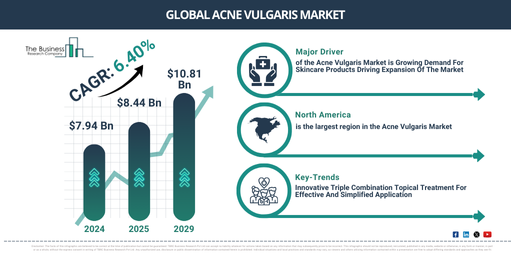
    The market size of acne vulgaris has been experiencing considerable expansion in the recent past. It is projected to escalate from $7.94 billion in 2024 to $8.44 billion in 2025, displaying a compound annual growth rate (CAGR) of 6.4%. Factors causing growth during the historical period include an increasing incidence of acne, consumer inclination towards natural components, broadening of online retail platforms, funding poured into research and development, and a surge in the accessibility of over-the-counter products.

    In the coming years, the acne vulgaris market is predicted to experience substantial growth, with a projected valuation of$10.81 billion by 2029.” This target is forecasted with a compound annual growth rate (CAGR) of 6.4%. The projected surge in this period can be linked to increased skincare awareness, a growing teenage population, emphasis on self-care and wellness, an uptick in adult acne cases, telemedicine, and advancements in e-commerce. Key trends within this projected period comprise technological breakthroughs, the debut of sophisticated medications, inventive product offerings, an increase in clinical approvals, and breakthroughs in unique medical procedures.

    Download a free sample to assess the report’s scope and structure:

    https://www.thebusinessresearchcompany.com/sample.aspx?id=21075&type=smp

    Which Primay Drivers Are Accelerating Growth in the Acne Vulgaris Market?

    The acne vulgaris market is set to expand due to the burgeoning demand for skincare products. Designed to improve skin health and aesthetics, skincare products come in a broad spectrum to suit varying skin needs, including cleansing, moisturizing, and protection. The spiked interest in skincare products is a result of social media influence, heightened dermatological issues, innovative products, and a preventative skincare mindset. Skincare products that specifically target the underlying causes of acne vulgaris, such as excess oil production, blocked pores, and bacterial overgrowth, fortify the treatment of this condition. Key ingredients like salicylic acid, benzoyl peroxide, and retinoids aid in skin exfoliation, inflammation reduction, and promotion of a healthier skin complexion. The Cosmetic, Toiletry and Perfumery Association (CTPA), a UK-based not-for-profit entity, reported in August 2024 that the European cosmetics market in 2023 was valued at €96 billion (around $105 billion) at retail sales price (RSP), positioning it among the global top-tier markets, a notch up from €88 billion (nearly $93 billion) RSP in 2022. Thus, growing skin health consciousness is fuelling the acne vulgaris market.

    Which Primary Segments of the Acne Vulgaris Market Are Driving Growth and Industry Transformations?

    The acne vulgarismarket covered in this report is segmented –

    1) By Type: Systemic Therapy; Hormonal Therapy; Physical Treatment; Topical Combination Therapy; Other Types

    2) By Age Group: 10 To 17 Years; 18 To 44 Years; 45 To 64 Years; 65 Years And Above

    3) By Distribution Channel: Hospital Pharmacies; Online Pharmacies

    Subsegments:

    1) By Systemic Therapy: Oral Antibiotics; Oral Retinoids; Oral Anti-Inflammatory Agents

    2) By Hormonal Therapy: Oral Contraceptives; Androgen Receptor Inhibitors

    3) By Physical Treatment: Laser Therapy; Light-Based Therapy; Chemical Peels; Microdermabrasion

    4) By Topical Combination Therapy: Retinoid And Antibiotic Combinations; Benzoyl Peroxide And Antibiotic Combinations; Retinoid And Benzoyl Peroxide Combinations

    5) By Other Types: Herbal And Natural Remedies; Biologic Therapies; Emerging Therapies

    Request customized data on this market:

    https://www.thebusinessresearchcompany.com/customise?id=21075&type=smp

    Which Regions Are Key Players in the Growth of the #Which Primay Drivers Are Accelerating Growth in the Acne Vulgaris Market?# Market?

    North America was the largest region in the acne vulgaris market in 2024. Asia-Pacific is expected to be the fastest-growing region in the forecast period. The regions covered in the acne vulgaris market report are Asia-Pacific, Western Europe, Eastern Europe, North America, South America, Middle East, Africa.

    Which Technological Trends Are Reshaping the Acne Vulgaris Industry Dynamics?

    Leading enterprises in the acne vulgaris market are prioritizing the development of innovative solutions such as the triple-combination topical treatment. This new approach offers a simplified, once-daily method for managing acne vulgaris through an amalgamation of three crucial ingredients. The aim is to target multiple aspects of skin disorders like acne or psoriasis to amplify therapeutic effectiveness. For example, in October 2023, Bausch Health Companies Inc, a pharmaceutical organization based in Canada, received approval from the Food and Drug Administration (FDA) for their product, Cabtreo, which contains clindamycin phosphate, adapalene, and benzoyl peroxide. The topical gel is developed specifically for the treatment of acne vulgaris in patients who are 12 years and older. This revolutionary formulation amalgamates an antibiotic, a retinoid, and an antibacterial agent to effectively tackle acne lesions and impede potential future outbreaks. The application process of Cabtreo is straightforward, and it exhibits a promising safety record for a diverse range of patients.

    View the full report here:

    https://www.thebusinessresearchcompany.com/report/acne-vulgaris-global-market-report

    What Parameters Are Used to Define the Acne Vulgaris Market?

    Acne vulgaris is a common chronic inflammatory skin condition primarily affecting the pilosebaceous units, characterized by the formation of comedones, papules, pustules, nodules, and cysts, often triggered by factors such as excess sebum production, follicular hyperkeratinization, Cutibacterium acnes proliferation, and inflammation, typically occurring on the face, chest, and back, with varying severity and potential for scarring.

    Purchase the full report and get a swift delivery:

    https://www.thebusinessresearchcompany.com/purchaseoptions.aspx?id=21075

    About The Business Research Company:

    With over 15000+ reports from 27 industries covering 60+ geographies, The Business Research Company has built a reputation for offering comprehensive, data-rich research and insights. Armed with 1,500,000 datasets, the optimistic contribution of in-depth secondary research, and unique insights from industry leaders, you can get the information you need to stay ahead in the game.

    Get in touch with us:

    The Business Research Company: https://www.thebusinessresearchcompany.com/

    Americas +1 310-496-7795

    Europe +44 7882 955267

    Asia & Others +44 7882 955267 & +91 8897263534

    Email us at info@tbrc.info

    Follow us on:

    LinkedIn: https://in.linkedin.com/company/the-business-research-company

    YouTube: https://www.youtube.com/channel/UC24_fI0rV8cR5DxlCpgmyFQ

    Global Market Model: https://www.thebusinessresearchcompany.com/global-market-model

  • Renal Fanconi Syndrome Market Forecast Reaching $0.63 Billion by 2029 at 3.6% CAGR

    Renal Fanconi Syndrome Market Forecast Reaching $0.63 Billion by 2029 at 3.6% CAGR

    Claim your 30% discount on Global Market Reports with code ONLINE30. Limited time only.

    How Fast Is The Renal Fanconi Syndrome Market Expected to Grow Between 2025 And 2029?

    The market size for renal fanconi syndrome has been experiencing consistent growth over the past few years. It is expected to expand from $0.53 billion in 2024 to $0.55 billion in 2025, with a compound annual growth rate (CAGR) of 3.7%. The growth throughout the historic period was spurred by factors such as the high rate of blood disorder prevalence, an uptick in kidney disease incidences, escalating use of erythropoiesis-stimulating agents (ESAs), a rising proportion of the older population, and an increase in acute kidney injury (AKI) cases.

    Stable expansion is predicted for the renal fanconi syndrome market over the coming years, with an estimated value of$0.63 billion by 2029,” indicating a compound annual growth rate (CAGR) of 3.6%. This expected progress during the forecast period can be credited to the escalating incidence of renal syndromes, an increase in fanconi-bickel syndrome cases, the growing occurrence of chronic kidney disease (CKD), a rise in research and development activities, and a burgeoning amount of clinical trials. The times to come will witness several trends such as advancements in innovative therapies, technological progressions, enhancements in technology, novel treatment options, and diagnostic advancements.

    Download a free sample to assess the report’s scope and structure:

    https://www.thebusinessresearchcompany.com/sample.aspx?id=21270&type=smp

    Which Major Market Drivers Are Expected to Boost the Growth Potential of the Renal Fanconi Syndrome Market?

    The anticipated escalation in the incidence of renal syndrome is predicted to fuel the expansion of the renal fanconi syndrome market in the future. Renal syndrome, a collection of kidney diseases, results in diminished kidney function, causing irregularities in filtration, reabsorption, and electrolyte stability. Factors propelling the rise of renal syndromes include a growing incidence of chronic kidney disease, aging demographics, unhealthy habits, and environmental impacts. The syndrome often encompasses underlying conditions or complications that hinder kidney function, heightening the chance of proximal tubular dysfunction. This necessitates a greater need for diagnosis tools, treatments, and therapies designed to control and alleviate the impacts of renal Fanconi syndrome. For example, a report by Kidney Research UK, a UK-based charitable organization, in June 2023 pointed out that roughly 7.2 million people, over 10% of the UK’s population, are living with chronic kidney disease. Among them, 3.25 million are in serious stages, and a further 3.9 million are in initial stages. Chronic kidney disease’s affected population is estimated to increase to 7.61 million by 2033. Hence, the escalating incidence of renal syndrome is fostering the growth of the renal fanconi syndrome market.

    Which Key Market Segments Comprise the Renal Fanconi Syndrome Market and Drive Its Revenue Growth?

    The renal fanconi syndromemarket covered in this report is segmented –

    1) By Disease Type: Inherited (Genetic); Acquired

    2) By Treatment: Cystinosis Treatment; Symptomatic Management; Dietary Changes And Adjustments; Antibiotics; Kidney Transplantation; Supplements

    3) By Route Of Administration: Oral; Intravenous

    4) By Distribution Channel: Hospital Pharmacy; Retail Pharmacy; Online Pharmacy; Other Distribution Channels

    5) By End-User: Hospitals; Specialty Clinics; Homecare; Other End-Users

    Subsegments:

    1) By Inherited (Genetic): Cystinosis; Wilson Disease; Lowe Syndrome; Dent Disease

    2) By Acquired: Drug-Induced Fanconi Syndrome; Heavy Metal Toxicity; Multiple Myeloma-Associated Fanconi Syndrome; Other Acquired Conditions

    Request customized data on this market:

    https://www.thebusinessresearchcompany.com/customise?id=21270&type=smp

    Which Areas Are Leading Regions in the Renal Fanconi Syndrome Market Expansion Across the Globe?

    North America was the largest region in the renal fanconi syndrome market in 2024. Asia-Pacific is expected to be the fastest-growing region in the forecast period. The regions covered in the renal fanconi syndrome market report are Asia-Pacific, Western Europe, Eastern Europe, North America, South America, Middle East, Africa.

    View the full report here:

    https://www.thebusinessresearchcompany.com/report/renal-fanconi-syndrome-global-market-report

    How Is the Renal Fanconi Syndrome Market Conceptually Defined?

    Renal fanconi syndrome is a disorder of the kidneys characterized by a dysfunction in the proximal tubules, which are responsible for reabsorbing important substances from urine into the bloodstream. This condition leads to the excessive loss of essential substances such as glucose, amino acids, phosphate, bicarbonate, and potassium through urine, despite their normal levels in the blood.

    Purchase the full report and get a swift delivery:

    https://www.thebusinessresearchcompany.com/purchaseoptions.aspx?id=21270

    About The Business Research Company:

    With over 15000+ reports from 27 industries covering 60+ geographies, The Business Research Company has built a reputation for offering comprehensive, data-rich research and insights. Armed with 1,500,000 datasets, the optimistic contribution of in-depth secondary research, and unique insights from industry leaders, you can get the information you need to stay ahead in the game.

    Get in touch with us:

    The Business Research Company: https://www.thebusinessresearchcompany.com/

    Americas +1 310-496-7795

    Europe +44 7882 955267

    Asia & Others +44 7882 955267 & +91 8897263534

    Email us at info@tbrc.info

    Follow us on:

    LinkedIn: https://in.linkedin.com/company/the-business-research-company

    YouTube: https://www.youtube.com/channel/UC24_fI0rV8cR5DxlCpgmyFQ

    Global Market Model: https://www.thebusinessresearchcompany.com/global-market-model

  • Next-Gen B-Cell Maturation Antigen (BCMA) Targeted Therapies : Market Forecast, Transformation, and Long-Term Trajectories

    Next-Gen B-Cell Maturation Antigen (BCMA) Targeted Therapies : Market Forecast, Transformation, and Long-Term Trajectories

    Claim your 30% discount on Global Market Reports with code ONLINE30. Limited time only.

    What Are the Projected Market Size and Growth Rates for the B-Cell Maturation Antigen (BCMA) Targeted Therapies Market From 2025 To 2029?

    The market size for therapies targeting b-cell maturation antigen (bcma) has seen significant expansion in recent years. It’s projected to rise from $12.17 billion in 2024 to $15.09 billion in 2025, with a compound annual growth rate (CAGR) of 24.0%. This growth during the historical period can be attributed to various factors such as increasing attention towards hematologic malignancies, escalating investments in oncology research, a burgeoning demand for personalized treatments, a growing preference for CAR-T cell therapies, and an increase in healthcare spending.

    The market size for b-cell maturation antigen (bcma) targeted therapies is forecast to experience a surge in the subsequent years, growing to$35.81 billion in 2029 with a compound annual growth rate (CAGR) of 24.1%. The driving forces behind the predicted growth in the forecast period are due to an increased focus on cancer research, a shift towards specific molecular markers, a rising incidence of cancers, a surge in biotech investments, and a climbing utilization of cell and gene therapies. In the forecast period, the main market trends are anticipated to be innovations like CRISPR technology, progress in gene-editing technologies, advancements in next-generation car-t cell therapies, improved targeted antibody-drug conjugates, and the evolution of ready-made treatments.

    Download a free sample to assess the report’s scope and structure:

    https://www.thebusinessresearchcompany.com/sample.aspx?id=20718&type=smp

    Which Major Market Drivers Are Expected to Boost the Growth Potential of the B-Cell Maturation Antigen (BCMA) Targeted Therapies Market?

    The upward trajectory of multiple myeloma incidents is anticipated to stimulate the development of the market for b-cell maturation antigen (BCMA) targeted therapies. Multiple myeloma, a type of cancer that predominantly impacts plasma cells – vital elements of the immune system for antibody production – has seen an increase in its incidence. Factors such as an aging global populace, advancements in diagnostic procedures, and healthcare accessibility variances contribute to this increment. BCMA targeted therapies mark a significant milestone in multiple myeloma treatment by focussing on malignant plasma cells expressing BCMA, paving the way for more efficient and specific treatment. For instance, in 2024, the American Cancer Society reported an estimated 35,780 new instances of multiple myeloma in the United States, including 19,520 in men and 16,260 in women. Furthermore, a projected 12,540 deaths were recorded, consisting of 7,020 males and 5,520 females. Hence, the escalating incidence of multiple myeloma is a significant driver for the growth of the BCMA targeted therapies market.

    Which Key Market Segments Comprise the B-Cell Maturation Antigen (BCMA) Targeted Therapies Market and Drive Its Revenue Growth?

    The b-cell maturation antigen (bcma) targeted therapiesmarket covered in this report is segmented –

    1) By Product Type: Antibody Drug Conjugates; Chimeric Antigen Receptor T (CAR-T)-Cell Therapy; Bispecific Antibodies

    2) By Indication Type: Acute Lymphoblastic Leukemia; Multiple Myeloma

    3) By End User: Hospitals; Specialty Clinics; Home Care Settings

    Subsegments:

    1) By Antibody Drug Conjugates: BCMA-Targeted ADCs (Antibody-Drug Conjugates); Linker-Payload Technology-Based BCMA ADCs

    2) By Chimeric Antigen Receptor T (CAR-T)-Cell Therapy: BCMA CAR-T Cells (Autologous); Allogeneic BCMA CAR-T Cells

    3) By Bispecific Antibodies: BCMA x CD3 Bispecific Antibodies; BCMA x CD28 Bispecific Antibodies

    Request customized data on this market:

    https://www.thebusinessresearchcompany.com/customise?id=20718&type=smp

    Which Areas Are Leading Regions in the B-Cell Maturation Antigen (BCMA) Targeted Therapies Market Expansion Across the Globe?

    North America was the largest region in the B-cell maturation antigen (BCMA) targeted therapies market in 2024. The regions covered in the B-cell maturation antigen (BCMA) targeted therapies market report are Asia-Pacific, Western Europe, Eastern Europe, North America, South America, Middle East, Africa.

    What Are the Key Market Trends in theB-Cell Maturation Antigen (BCMA) Targeted Therapies Market Over the Coming Years?

    Prominent firms functioning in the B-cell maturation antigen (BCMA) targeted therapies industry are directing their efforts toward the development of groundbreaking treatments such as CAR-T cell therapy to heighten the accuracy and effectiveness of cancer cell targeting. This type of immunotherapy adjusts the patient’s T cells to convey chimeric antigen receptors (CARs) specifically intended to identify and eradicate cancer cells. For instance, Johnson & Johnson, a pharmaceutical titan based in the US, was granted approval by the U.S. Food and Drug Administration (FDA) for its CARVYKTI in April 2024. CARVYKTI (ciltacabtagene autoleucel) is a BCMA-oriented, genetically altered autologous T-cell immunotherapy prescribed for adult patients suffering from relapse or unresponsive multiple myeloma that have undergone at least one previous line of therapy and are resistant to lenalidomide.

    View the full report here:

    https://www.thebusinessresearchcompany.com/report/b-cell-maturation-antigen-bcma-targeted-therapies-global-market-report

    How Is the B-Cell Maturation Antigen (BCMA) Targeted Therapies Market Conceptually Defined?

    B-cell maturation antigen (BCMA) targeted therapies refer to a class of treatments designed to specifically target BCMA, a protein expressed on the surface of mature B-cells and plasma cells. BCMA is a member of the tumor necrosis factor (TNF) receptor superfamily and plays a key role in B-cell development, survival, and differentiation into plasma cells. BCMA-targeted therapies represent a significant advancement in the treatment of multiple myeloma, offering effective options for patients with relapsed or refractory disease.

    Purchase the full report and get a swift delivery:

    https://www.thebusinessresearchcompany.com/purchaseoptions.aspx?id=20718

    About The Business Research Company:

    With over 15000+ reports from 27 industries covering 60+ geographies, The Business Research Company has built a reputation for offering comprehensive, data-rich research and insights. Armed with 1,500,000 datasets, the optimistic contribution of in-depth secondary research, and unique insights from industry leaders, you can get the information you need to stay ahead in the game.

    Get in touch with us:

    The Business Research Company: https://www.thebusinessresearchcompany.com/

    Americas +1 310-496-7795

    Europe +44 7882 955267

    Asia & Others +44 7882 955267 & +91 8897263534

    Email us at info@tbrc.info

    Follow us on:

    LinkedIn: https://in.linkedin.com/company/the-business-research-company

    YouTube: https://www.youtube.com/channel/UC24_fI0rV8cR5DxlCpgmyFQ

    Global Market Model: https://www.thebusinessresearchcompany.com/global-market-model