Blog

  • Occupational Medicines Market Forecast To Reach $7.61 Billion By 2030: Key Trends Explained

    Occupational Medicines Market Forecast To Reach $7.61 Billion By 2030: Key Trends Explained

    Featuring market attractiveness scoring, total addressable market sizing, company benchmarking matrices, interactive Excel dashboards, deeper supply chain intelligence, emerging startup tracking, and granular product-level insights, The Business Research Company’s 2026 market reports are built to deliver research that is both more actionable and more strategically valuable.

    Occupational Medicines Market Size Outlook: How Quickly Will Revenue Expand Through 2030?

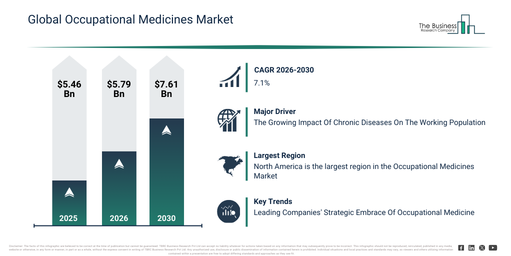
    The occupational medicines market size has experienced significant expansion in recent years. It is projected to increase from $5.46 billion in 2025 to $5.79 billion in 2026, demonstrating a compound annual growth rate (CAGR) of 6.2%. The past growth in this market can be linked to factors such as industrial workplace accidents, an expanding workforce in manufacturing and mining sectors, a greater understanding of occupational diseases, government regulations concerning workplace safety, and the growth of health programs sponsored by employers.

    The occupational medicines market is projected to experience substantial expansion in the coming years. Its valuation is set to reach $7.61 billion in 2030, exhibiting a compound annual growth rate (CAGR) of 7.1%. This anticipated growth over the forecast period is primarily driven by factors such as an aging workforce within high-risk sectors, the increasing incidence of work-related mental health concerns, more rigorous occupational health compliance regulations, the expansion of industries dealing with hazardous materials, and enhanced employer spending on employee well-being initiatives. Key trends expected during this period encompass a growing emphasis on preventive occupational healthcare, the broadening of workplace mental health programs, an uptick in regulatory adherence and safety inspections, an increase in occupational disease screening and surveillance activities, and a rising demand for tailored, industry-specific occupational therapies.

    Get A Free Sample Report With In-Depth Market Insights:

    https://thebusinessresearchcompany.com/sample_request?id=68494681&type=smp&name=Occupational%20Medicines%20Market%20Report%202026&utm_source=Blogs&utm_medium=Paid&utm_campaign=Oct_PR

    Occupational Medicines Market Growth Factors Behind Sustained Expansion

    The growing incidence of chronic diseases within the workforce is anticipated to fuel the expansion of the occupational medicines market. A chronic disease refers to a health condition or illness characterized by enduring symptoms that persist for at least one year. Such conditions necessitate ongoing medical attention, restrict daily routines, or both. Occupational medicine plays a crucial role in managing these long-term illnesses at work by providing specialized healthcare for job-related issues and partnering with various stakeholders like employers, employees, regulators, insurers, public health organizations, and other safety professionals to enhance workplace safety. For instance, in September 2025, the British Heart Foundation, a UK-based charity, reported that across the UK, more than 7.6 million people, comprising over 4 million men and more than 3.6 million women, are living with cardiovascular disease. Furthermore, projections suggest that due to an aging population and better survival rates, the number of affected individuals could increase by approximately 1 million by 2030 and about 2 million by 2040. Consequently, the rising occurrence of chronic diseases among the working population is propelling the development of the occupational medicines market.

    Occupational Medicines Market Segmentation: How Does The Market Break Down By Category?

    The occupational medicines market covered in this report is segmented –

    1) By Application: Chemical Poisoning, Psychological Disorder, Non-Induced Hearing Loss And Vibration, Skin Disorder, Chronic Respiratory Disease, Pneumoconiosis, Musculoskeletal Disorder, Cancer, Other Applications

    2) By Industry: Agriculture And Forestry, Construction, Manufacturing, Petroleum And Mining, Transportation, Other Industries

    3) By End-User: Employers, Professionals

    Subsegments:

    1) By Chemical Poisoning: Acute Chemical Exposure, Chronic Chemical Exposure

    2) By Psychological Disorder: Stress And Anxiety, Depression, Work-Related Mental Health Issues

    3) By Non-Induced Hearing Loss And Vibration: Noise-Induced Hearing Loss, Vibration-Related Disorders

    4) By Skin Disorder: Dermatitis, Eczema, Allergic Reactions

    5) By Chronic Respiratory Disease: Asthma, Chronic Obstructive Pulmonary Disease (COPD), Other Respiratory Conditions

    6) By Pneumoconiosis: Asbestosis, Silicosis, Coal Workers Pneumoconiosis

    7) By Musculoskeletal Disorder: Repetitive Strain Injuries, Back Pain, Joint Disorders

    8) By Cancer: Occupational Carcinogens, Specific Cancer Types Related To Occupation

    9) By Other Applications: Infectious Diseases, Fatigue And Sleep Disorders

    Occupational Medicines Market Industry Trends Fueling Future Revenue Growth

    Major companies within the occupational medicines market are prioritizing product introductions, such as occupational medicine solutions for employers, to embed occupational medicine into the broader health strategy for employees. Occupational medicine is a specialized medical field focused on the health, well-being, and safety of workers, addressing health issues related to the workplace and fostering a healthy and productive work environment. For example, in December 2023, Crossover Health, a US-based primary care medical group providing affordable, fixed-cost healthcare, launched a new Occupational Medicine offering designed to supplement its existing Primary Health service for employers. This new offering is notable for its integrated and comprehensive care model, which merges Occupational Medicine with Primary Care, Physical Medicine, Mental Health, and Health Coaching to deliver a holistic approach consistent with company goals. This innovative strategy, coupled with adaptable care, a proactive member engagement plan, and national availability, contributes significantly to the occupational medicines market by addressing evolving employer requirements, improving clinical results, and enhancing the overall well-being and productivity of workers.

    Occupational Medicines Market Competitive Overview And Top Companies

    Major companies operating in the occupational medicines market are Johnson & Johnson, Pfizer Inc., Novartis AG, GlaxoSmithKline plc, Sanofi S.A., AstraZeneca PLC, Bayer AG, Merck & Co. Inc., Boehringer Ingelheim GmbH, F. Hoffmann-La Roche Ltd, Takeda Pharmaceutical Company Limited, Teva Pharmaceutical Industries Ltd., AbbVie Inc., Eli Lilly and Company, Bristol-Myers Squibb Company, Daiichi Sankyo Company Limited, UCB S.A., Lundbeck A/S, Allergan plc, Astellas Pharma Inc., Hikma Pharmaceuticals PLC, Sun Pharmaceutical Industries Ltd., Cipla Inc., Mallinckrodt Pharmaceuticals

    View The Full Occupational Medicines Market Report:

    https://thebusinessresearchcompany.com/report/occupational-medicines-global-market-report?utm_source=Blogs&utm_medium=Paid&utm_campaign=Oct_PR

    Occupational Medicines Market Geographic Analysis: Where Is Demand Accelerating Fastest?

    North America was the largest region in the occupational medicines market in 2025. Asia-Pacific is expected to be the fastest-growing region in the forecast period. The regions covered in the occupational medicines market report are Asia-Pacific, South East Asia, Western Europe, Eastern Europe, North America, South America, Middle East, Africa.

    Reach Out To Our Team:

    The Business Research Company: https://www.thebusinessresearchcompany.com/

    Americas: +1 310-496-7795

    Asia: +44 7882 955267 & +91 8897263534

    Europe: +44 7882 955267

    Email us at: marketing@tbrc.info

    Follow us on:

    LinkedIn: https://in.linkedin.com/company/the-business-research-company

    YouTube: https://www.youtube.com/channel/UC24_fI0rV8cR5DxlCpgmyFQ

    Global Market Model: https://www.thebusinessresearchcompany.com/global-market-model
  • Obeticholic Acid Market Analysis: Understanding The Drivers Behind 12.7% CAGR Through 2030 Growth

    Obeticholic Acid Market Analysis: Understanding The Drivers Behind 12.7% CAGR Through 2030 Growth

    Built to provide research that’s more actionable and strategically valuable, The Business Research Company’s 2026 market reports include market attractiveness analysis, total addressable market sizing, company benchmarking matrices, interactive Excel dashboards, broader supply chain intelligence, emerging startup tracking, and in-depth product insights.

    Obeticholic Acid Market Size, Value And Growth Trajectory Through 2030

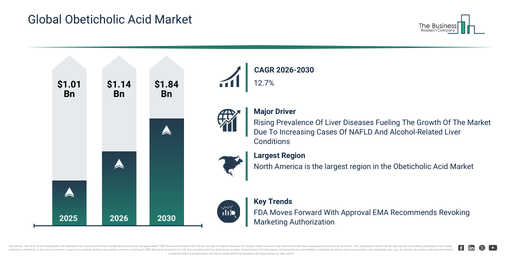
    The obeticholic acid market size has seen significant expansion in recent years. It is anticipated to increase from $1.01 billion in 2025 to $1.14 billion in 2026, at a compound annual growth rate (CAGR) of 12.9%. The growth witnessed in prior periods can be attributed to factors such as clinical approval for primary biliary cholangitis treatment, a rise in liver disease diagnoses, the proliferation of hepatology clinics, heightened awareness regarding bile acid regulation therapies, and an increase in specialty liver drugs.

    The obeticholic acid market is anticipated to experience significant expansion over the coming years. This market is projected to reach a value of $1.84 billion by 2030, exhibiting a compound annual growth rate (CAGR) of 12.7%. Key drivers for this growth during the forecast period include a rising NASH patient demographic, the broadening of liver disease drug development pipelines, enhanced uptake of diagnostic screening methods, increased funding for hepatology research, and the worldwide proliferation of oral liver treatments. Noteworthy trends anticipated during the same period encompass the growing incidence of chronic liver conditions, greater acceptance of FXR agonist treatments, an intensified emphasis on liver drugs that modify disease progression, the widening scope of nonalcoholic steatohepatitis investigations, and the increased application of oral hepatology interventions.

    Get A Free Sample Report With In-Depth Market Insights:

    https://thebusinessresearchcompany.com/sample_request?id=26912476&type=smp&name=Obeticholic%20Acid%20Market%20Report%202026&utm_source=Blogs&utm_medium=Paid&utm_campaign=Oct_PR

    Obeticholic Acid Market Demand Drivers Opening New Revenue Streams

    The increasing incidence of liver ailments is anticipated to drive the expansion of the obeticholic acid market moving ahead. Liver diseases are conditions that impair the liver’s ability to function properly. This surge in liver diseases stems from excessive alcohol consumption, which damages liver cells and compromises the organ’s proper operation, potentially resulting in liver inflammation, cirrhosis, and liver failure. Obeticholic acid aids individuals with liver disease by stimulating the farnesoid X receptor (FXR), thereby decreasing bile acid accumulation, mitigating liver inflammation, and retarding the advancement of fibrosis, leading to enhanced liver function. As an illustration, the Office for Health Improvement and Disparities, a UK-based government department, stated in December 2024 that premature deaths from alcoholic liver disease rose by 3.6% in 2023, totaling 5,984, an increase from 5,776 in 2022. Consequently, the growing occurrence of liver diseases is fueling the development of the obeticholic acid market.

    Obeticholic Acid Market Segment Trends And Revenue Contributors

    The obeticholic acid market covered in this report is segmented –

    1) By Product Type: Immediate-Release Tablets, Modified-Release Tablets, Film-Coated Tablets

    2) By Distribution Channel: Hospital Pharmacies, Retail Pharmacies, Online Pharmacies

    3) By Application: Primary Biliary Cholangitis, Nonalcoholic Steatohepatitis, Other Applications

    Subsegments:

    1) By Immediate-Release Tablets: Standard Oral Tablets, Low-Dose Strength Tablets

    2) By Modified-Release Tablets: Controlled Exposure Tablets, Once-Daily Optimized Release Tablets

    3) By Film-Coated Tablets: Taste-Masked Tablets, Gastrointestinal-Tolerant Tablets

    Obeticholic Acid Market Trends Powering Strategic Industry Growth

    Major companies active in the obeticholic acid market are engaged in creating innovative products, including farnesoid X receptor (FXR) agonists, to enhance liver disease treatment and improve patient outcomes. A farnesoid X receptor (FXR) agonist is a compound that activates the FXR, which is a nuclear receptor instrumental in regulating bile acid metabolism, inflammation, and fibrosis in the liver. Farnesoid X receptor (FXR) agonists contribute to better liver function and are employed in addressing conditions such as primary biliary cholangitis (PBC) and nonalcoholic steatohepatitis (NASH). For example, in February 2024, Intercept Pharmaceuticals Inc., a US-based biopharmaceutical company, disclosed that the U.S. Food and Drug Administration (FDA) had accepted its supplemental New Drug Application (sNDA) for Ocaliva, aimed at treating individuals with primary biliary cholangitis (PBC). The FDA’s acceptance of the supplemental New Drug Application (sNDA) for obeticholic acid (Ocaliva) signifies notable regulatory progress in validating its clinical benefits for PBC treatment.

    Obeticholic Acid Market Competitive Landscape: Which Companies Lead The Industry?

    Major companies operating in the obeticholic acid market are Intercept Pharmaceuticals Inc., Genfit, Gilead Sciences Inc., Pfizer Inc., Bayer AG, Sumitomo Dainippon Pharma Co. Ltd., Horizon Therapeutics, Alembic Pharmaceuticals Ltd., Dr. Reddy’s Laboratories Ltd., Lupin Limited, Zydus Cadila, Teva Pharmaceutical Industries Ltd., WuXi AppTec, Viva Life Sciences, Omgene Life Sciences Pvt. Ltd., Enanta Pharmaceuticals, Novo Nordisk A/S, AstraZeneca plc, Roche Holding AG, Sanofi S.A.

    View The Full Obeticholic Acid Market Report:

    https://thebusinessresearchcompany.com/report/obeticholic-acid-global-market-report?utm_source=Blogs&utm_medium=Paid&utm_campaign=Oct_PR

    Obeticholic Acid Market Global Footprint: Which Region Leads The Industry?

    North America was the largest region in the Obeticholic Acid market in 2025. Asia-Pacific is expected to be the fastest-growing region in the forecast period. The regions covered in the obeticholic acid market report are Asia-Pacific, South East Asia, Western Europe, Eastern Europe, North America, South America, Middle East, Africa.

    Reach Out To Our Team:

    The Business Research Company: https://www.thebusinessresearchcompany.com/

    Americas: +1 310-496-7795

    Asia: +44 7882 955267 & +91 8897263534

    Europe: +44 7882 955267

    Email us at: marketing@tbrc.info

    Follow us on:

    LinkedIn: https://in.linkedin.com/company/the-business-research-company

    YouTube: https://www.youtube.com/channel/UC24_fI0rV8cR5DxlCpgmyFQ

    Global Market Model: https://www.thebusinessresearchcompany.com/global-market-model
  • Nutritional Supplements Market Growth To $635.58 Billion By 2030: What’s Driving The Expansion?

    Nutritional Supplements Market Growth To $635.58 Billion By 2030: What’s Driving The Expansion?

    Backed by market attractiveness analysis, total addressable market sizing, company benchmarking matrices, interactive Excel dashboards, wider supply chain intelligence, emerging startup coverage, and detailed product-level insights, The Business Research Company’s 2026 market reports are designed to offer research that is more actionable and strategically valuable than ever.

    Nutritional Supplements Market CAGR Outlook And Future Development

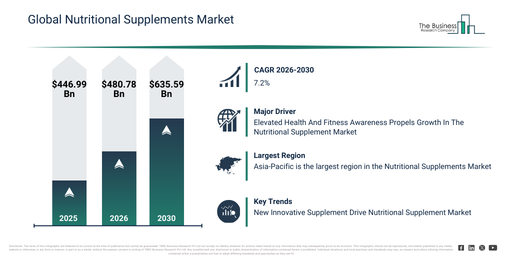
    The nutritional supplements market has experienced substantial expansion in recent years. It is projected to increase from $446.99 billion in 2025 to $480.78 billion in 2026, at a compound annual growth rate (CAGR) of 7.6%. The growth observed in the historical period can be linked to escalating health awareness among consumers, the growing incidence of nutrient deficiencies, the proliferation of retail pharmacy networks, the expansion of e-commerce platforms, and increasing disposable income in emerging markets.

    The nutritional supplements market is projected to experience robust expansion over the coming years. Its valuation is anticipated to reach $635.59 billion by 2030, exhibiting a compound annual growth rate (CAGR) of 7.2%. This expected growth during the forecast period stems from factors such as the increasing demand for personalized nutrition, the rise in plant-based diets, innovations in supplement formulations, a heightened emphasis on preventive healthcare, and the adoption of direct-to-consumer subscription models. Significant trends influencing this period encompass personalized nutrition offerings, plant-based and natural supplements, the incorporation of functional foods, a focus on preventive health, and formulations with improved bioavailability.

    Get A Free Sample Report With In-Depth Market Insights:

    https://thebusinessresearchcompany.com/sample_request?id=8162&type=smp&name=Nutritional%20Supplements%20Market%20Report%202026&utm_source=Blogs&utm_medium=Paid&utm_campaign=Oct_PR

    Nutritional Supplements Market Growth Backed By Core Demand Fundamentals

    Enhanced understanding of health and fitness is anticipated to stimulate the expansion of the nutritional supplement market. Health and fitness collectively denote a holistic state of well-being, encompassing physical, mental, and social dimensions. Nutritional supplements are widely employed in the pursuit of health and fitness to elevate performance by boosting muscle strength, power, and endurance. For instance, in 2024, the International Food Information Council, a US-based nonprofit organization, observed a steady increase in the proportion of consumers actively seeking to raise their protein intake, rising from 59% in 2022 to 67% in 2023 and reaching 71% in 2024. Thus, the escalating awareness surrounding health and fitness is propelling the growth of the nutritional supplement market.

    Nutritional Supplements Market Segment Analysis Spotlighting Growth Areas

    The nutritional supplements market covered in this report is segmented –

    1) By Type: Vegan Sport Nutrition, Meal Replacement Shakes, Food Supplements, Other Types

    2) By Formulation: Tablets, Capsules, Powder, Soft gels, Liquid, Other Formulations

    3) By Ingredient: Botanicals, Vitamins, Minerals, Proteins & Amino Acids, Fish Oils, Fibers & Specialty Carbohydrates, Enzymes, Other Ingredients

    4) By Distribution Channel: Supermarket/Hypermarket, Retail Pharmacies, Direct Selling, Drug Stores, E-Commerce

    5) By End User: Infant, Children, Adults, Pregnant Women, Elderly

    Subsegments:

    1) By Vegan Sport Nutrition: Plant-Based Protein Powders, Vegan Pre-Workout Supplements, Vegan Recovery Supplements, BCAAs (Branched-Chain Amino Acids) For Vegans

    2) By Meal Replacement Shakes: Protein Meal Replacement Shakes, Low-Calorie Meal Replacement Shakes, Nutrient-Dense Meal Replacement Shakes, Vegan Meal Replacement Shakes

    3) By Food Supplements: Vitamins And Minerals, Herbal Supplements, Omega-3 And Fatty Acid Supplements, Probiotics And Digestive Aids

    4) By Other Types: Performance Enhancers, Weight Management Supplements, Specialty Supplements, Dietary Fiber Supplements

    Nutritional Supplements Market Growth Trends Reshaping The Competitive Landscape

    Major companies in the nutritional supplements market are concentrating on developing innovative formulations aimed at specific health concerns such as gut health, skin well-being, and immune support. These advanced supplements leverage scientifically-backed ingredients to enhance bioavailability, efficacy, and the overall consumer experience. For instance, in November 2025, AxisBiotix, an India-based nutraceutical company, introduced Skin Clear, a next-generation gut-skin supplement designed for acne and blemishes. The product combines gut-friendly probiotics with skin-supporting nutrients, promoting healthy skin by addressing underlying gut imbalances. This launch illustrates the increasing consumer demand for holistic, science-driven solutions that connect internal wellness to visible skin benefits.

    Nutritional Supplements Market Leading Companies: Who Holds The Strongest Market Presence?

    Major companies operating in the nutritional supplements market are Bayer AG, Abbott Laboratories, GlaxoSmithKline plc, Otsuka Pharmaceutical Co Ltd., Amway Corporation, Nutrilite Products Inc., Nestlé Health Science SA, Glanbia plc, Herbalife Nutrition Ltd., GNC Holdings Inc., Nu Skin Enterprises Inc., USANA Health Sciences Inc., Arkopharma Laboratories Company Limited, Iovate Health Sciences International Inc., Now Health Group Inc., Xango LLC, Garden of Life LLC, Pharmavite LLC, Nature’s Bounty Co, Herb Pharm LLC, American Health Formulations Inc., Ayanda GmbH, BioTech USA, Himalaya Global Holdings, MegaFoods Products Madras Private Limited, MusclePharm Corporation, SmartyPants Vitamins Inc., Thorne Research Inc., Vitabiotics Ltd., Vitacost.com Inc.

    View The Full Nutritional Supplements Market Report:

    https://thebusinessresearchcompany.com/report/nutritional-supplements-global-market-report?utm_source=Blogs&utm_medium=Paid&utm_campaign=Oct_PR

    Nutritional Supplements Market Regional Distribution: Which Areas Power Market Growth?

    Asia-Pacific was the largest region in the nutritional supplements market in 2025. Latin America is expected to be the fastest-growing region in the forecast period. The regions covered in the nutritional supplements market report are Asia-Pacific, South East Asia, Western Europe, Eastern Europe, North America, South America, Middle East, Africa.

    Reach Out To Our Team:

    The Business Research Company: https://www.thebusinessresearchcompany.com/

    Americas: +1 310-496-7795

    Asia: +44 7882 955267 & +91 8897263534

    Europe: +44 7882 955267

    Email us at: marketing@tbrc.info

    Follow us on:

    LinkedIn: https://in.linkedin.com/company/the-business-research-company

    YouTube: https://www.youtube.com/channel/UC24_fI0rV8cR5DxlCpgmyFQ

    Global Market Model: https://www.thebusinessresearchcompany.com/global-market-model
  • Nutritional Serum Market Trends Reshaping Industry Growth Through 2030

    Nutritional Serum Market Trends Reshaping Industry Growth Through 2030

    Featuring market attractiveness scoring, total addressable market sizing, company benchmarking matrices, interactive Excel dashboards, deeper supply chain intelligence, emerging startup tracking, and granular product-level insights, The Business Research Company’s 2026 market reports are built to deliver research that is both more actionable and more strategically valuable.

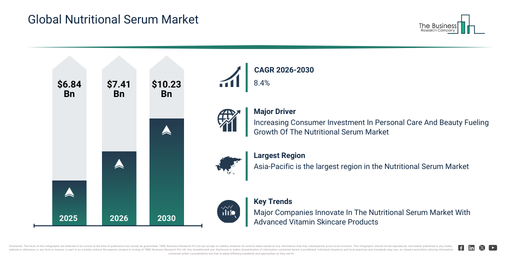
    Nutritional Serum Market Set To Climb From $7.41 Billion In 2026 To $10.23 Billion By 2030

    The nutritional serum market has demonstrated robust expansion in recent years. It is anticipated to increase from $6.84 billion in 2025 to $7.41 billion in 2026, achieving a compound annual growth rate (CAGR) of 8.4%. This historical growth can be attributed to heightened awareness of skin nutrition and topical supplementation, a rise in skin dehydration and nutrient deficiencies, the growth of urban lifestyles and pollution exposure, the expansion of the cosmetic and personal care industries, and a greater consumer focus on preventive skin care.

    The nutritional serum market is anticipated to experience substantial growth over the coming years, with its value projected to reach $10.23 billion in 2030, reflecting a compound annual growth rate (CAGR) of 8.4%. This expansion during the forecast period is largely driven by the increasing need for tailored skincare solutions, the growing influence of clinical skincare and cosmeceuticals, the proliferation of e-commerce beauty platforms, a rise in consumer spending on high-end skincare products, and the wider embrace of topically applied formulations enriched with nutrients. Prominent trends for this period include an increasing demand for serums rich in vitamins and antioxidants, a growing preference for multi-functional and customized serum formulations, the expanding use of serums designed for specific skin types and conditions, the broadening availability of premium and dermatologist-recommended serum products, and a movement towards clean-label and ingredient-transparent serums.

    Get A Free Sample Report With In-Depth Market Insights:

    https://thebusinessresearchcompany.com/sample_request?id=97895957&type=smp&name=Nutritional%20Serum%20Market%20Report%202026&utm_source=Blogs&utm_medium=Paid&utm_campaign=Oct_PR

    Nutritional Serum Market Growth Catalysts And Demand Drivers

    The increasing focus on personal care and beauty is anticipated to stimulate the expansion of the nutritional serum market in the future. Personal care and beauty pertain to items and routines aimed at enhancing physical appearance, skin well-being, and overall health. The heightened expenditure in personal care and beauty is fueled by growing awareness regarding wellness, a demand for effective and natural skincare, and consumers’ inclination towards products that show clear improvements in skin health. Nutritional serums contribute to this movement by offering potent vitamins, antioxidants, and nutrients that enhance skin hydration, luminosity, and texture, while also addressing issues like lack of radiance and premature aging. For instance, in March 2024, as per the U.S. Census Bureau, a US-based government agency, in the United States, retail sales for health and personal care stores saw an increase of 8.7% (±0.5%) in December 2023 compared to December 2022. Thus, the growing consumer spending in personal care and beauty is propelling the growth of the nutritional serum market.

    Nutritional Serum Market Segment Performance And Emerging Opportunities

    The nutritional serum market covered in this report is segmented –

    1) By Type: Parenteral Nutrition Serums, Enteral Nutrition Serums, Amino Acid Serums, Lipid Emulsion Serums, Electrolyte and Fluid Nutrition Serums, Combination Nutritional Serums

    2) By Indication: Malnutrition, Post-Surgical Recovery, Critical Care and ICU Nutrition, Oncology Support, Gastrointestinal Disorders, Renal Disorders, Hepatic Disorders, Burns and Trauma, Geriatric Nutrition, Other Indications

    3) By Route of Administration: Intravenous, Enteral Tube Feeding, Other Assisted Feeding Routes

    4) By Distribution Channel: Hospital Pharmacies, Institutional Supply, Retail Pharmacies, Online Medical Supply Channels, Other Distribution Channels

    5) By End Use: Hospitals, Specialty Clinics, Home Healthcare, Long-Term Care Facilities, Rehabilitation Centers

    Subsegments:

    1) By Parenteral Nutrition Serums: Total Parenteral Nutrition (TPN), Peripheral Parenteral Nutrition (PPN), Ready-to-Use Multi-Chamber Bags, Customized Compounded Parenteral Serums

    2) By Enteral Nutrition Serums: Standard Enteral Nutrition Serums, High-Protein Enteral Serums, High-Calorie Enteral Serums, Fiber-Enriched Enteral Serums, Disease-Specific Enteral Serums

    3) By Amino Acid Serums: Essential Amino Acid Serums, Branched-Chain Amino Acid (BCAA) Serums, Pediatric Amino Acid Serums, Renal-Specific Amino Acid Serums

    4) By Lipid Emulsion Serums: Soybean Oil–Based Lipid Emulsions, Medium-Chain Triglyceride (MCT) Lipid Emulsions, Fish Oil–Based Lipid Emulsions, Mixed Oil Lipid Emulsions

    5) By Electrolyte and Fluid Nutrition Serums: Sodium and Potassium Serums, Calcium and Magnesium Serums, Balanced Electrolyte Solutions, Maintenance Fluid Serums

    6) By Combination Nutritional Serums: Multi-Nutrient Total Nutrition Serums, Disease-Specific Combination Serums, Patient-Specific Customized Nutrition Serums

    Nutritional Serum Market Trends Shaping Long-Term Demand

    Key players in the nutritional serum market are concentrating on crafting innovative skincare products, including Vitamin serums, to cater to the increasing consumer desire for specific skincare solutions. Vitamin serums are defined as skincare items formulated with high levels of vitamins such as Vitamin C, Vitamin E, or Vitamin A, aimed at addressing particular skin concerns like brightening, anti-aging, and moisture retention. For example, in July 2024, Galderma S.A., a pharmaceutical company based in Switzerland, unveiled its Cetaphil Vitamin C Serum and Cetaphil Ceramide Serum. The Cetaphil Vitamin C Serum features 3-O-ethyl ascorbic acid for antioxidant defense and reducing dark spots, while the Ceramide Serum incorporates ceramide, Centella Asiatica, and allantoin to mend and reinforce the skin barrier, offering 48-hour hydration and refining skin texture.

    Nutritional Serum Market Key Players: Which Companies Lead Industry Competition?

    Major companies operating in the nutritional serum market are Baxter International Inc., Fresenius Kabi AG, B. Braun Melsungen AG, Danone S.A., Nestlé Health Science, Abbott Laboratories, Pfizer Inc., Otsuka Pharmaceutical Co. Ltd., Grifols S.A., ICU Medical Inc., Fresenius SE & Co. KGaA, Vifor Pharma, Aculife Healthcare Pvt. Ltd., Olimel (Baxter brand), Kabiven (Fresenius Kabi brand), Claris Lifesciences Limited, JW Pharmaceutical Corporation, Kelun Pharmaceutical Co. Ltd., Baxter Healthcare India Pvt. Ltd., Fresenius Kabi India Pvt. Ltd.

    View The Full Nutritional Serum Market Report:

    https://thebusinessresearchcompany.com/report/nutritional-serum-global-market-report?utm_source=Blogs&utm_medium=Paid&utm_campaign=Oct_PR

    Nutritional Serum Market Leading Geography: Which Region Contributes The Most Revenue?

    Asia-Pacific was the largest region in the nutritional serum market in 2025. The regions covered in the nutritional serum market report are Asia-Pacific, South East Asia, Western Europe, Eastern Europe, North America, South America, Middle East, Africa.

    Reach Out To Our Team:

    The Business Research Company: https://www.thebusinessresearchcompany.com/

    Americas: +1 310-496-7795

    Asia: +44 7882 955267 & +91 8897263534

    Europe: +44 7882 955267

    Email us at: marketing@tbrc.info

    Follow us on:

    LinkedIn: https://in.linkedin.com/company/the-business-research-company

    YouTube: https://www.youtube.com/channel/UC24_fI0rV8cR5DxlCpgmyFQ

    Global Market Model: https://www.thebusinessresearchcompany.com/global-market-model
  • Nutraceutical Excipients Market Growth To $5.77 Billion Creates New Opportunities Across The Industry

    Nutraceutical Excipients Market Growth To $5.77 Billion Creates New Opportunities Across The Industry

    Built to provide research that’s more actionable and strategically valuable, The Business Research Company’s 2026 market reports include market attractiveness analysis, total addressable market sizing, company benchmarking matrices, interactive Excel dashboards, broader supply chain intelligence, emerging startup tracking, and in-depth product insights.

    Nutraceutical Excipients Market Forecast: Value Set To Climb From $4.56 Billion To $5.77 Billion

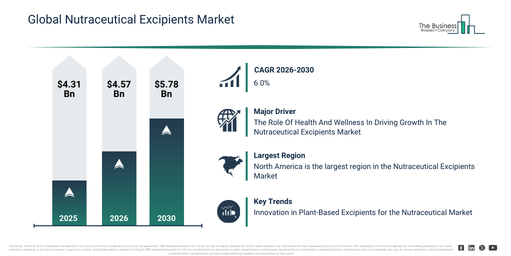
    The nutraceutical excipients market has experienced robust growth over recent years. Its value is anticipated to rise from $4.31 billion in 2025 to $4.57 billion in 2026, achieving a compound annual growth rate (CAGR) of 6.2%. This market’s historical expansion is largely due to increased consumption of dietary supplements, heightened health awareness among consumers, an increase in nutraceutical manufacturing capacity, the growing occurrence of lifestyle-related conditions, and favorable regulatory frameworks for nutraceutical products.

    The nutraceutical excipients market is anticipated to experience robust expansion over the coming years. Its value is projected to reach $5.78 billion by 2030, exhibiting a compound annual growth rate (CAGR) of 6.0%. This anticipated growth during the forecast period stems from factors such as advancements in multifunctional excipients, the increasing need for tailored nutrition options, the rise of plant-based and vegan supplement consumption, heightened investment in nutraceutical research and development, and the widening reach of nutraceutical markets in developing regions. Key trends expected within this period encompass the increased adoption of clean-label and natural excipients, a rising imperative for improved bioavailability, the broadening scope of functional food and dietary supplement uses, a greater emphasis on taste modification and sensory refinement, and a push for standardization and consistent quality in product formulations.

    Get A Free Sample Report With In-Depth Market Insights:

    https://thebusinessresearchcompany.com/sample_request?id=11255762&type=smp&name=Nutraceutical%20Excipients%20Market%20Report%202026&utm_source=Blogs&utm_medium=Paid&utm_campaign=Oct_PR

    Nutraceutical Excipients Market Opportunity Drivers: What’s Unlocking New Revenue Potential?

    The increasing need for health and wellness is projected to drive the expansion of the nutraceutical excipients market in the future. Health and wellness covers a comprehensive condition of physical, mental, and social well-being, demonstrating the balanced interplay of lifestyle choices, preventative actions, and beneficial habits that support an individual’s complete flourishing and best possible quality of life. Nutraceutical excipients are vital ingredients utilized to enhance the bioavailability, stability, delivery, taste, and adherence to regulations for nutraceutical products, thereby boosting their efficacy in promoting general health and wellness. As an illustration, in September 2025, the Australian Bureau of Statistics, an Australia-based government agency, indicated that in 2023, roughly one in three individuals (33.6%) stated they used a dietary supplement. The rate of usage was significantly greater among adult females (43.7%) when contrasted with adult males (30.8%). Consequently, the expanding need for health and wellness is fueling the development of the nutraceutical excipients market.

    Nutraceutical Excipients Market Segment Landscape And Growth Outlook

    The nutraceutical excipients market covered in this report is segmented –

    1) By Product Type: Fillers And Diluents, Binders, Disintegrants, Coating agent, Flavoring Agents, Lubricants

    2) By Form: Dry, Liquid

    3) By End Use: Protein And Amino Acids, Prebiotics and Probiotics, Vitamins, Other End Uses

    Subsegments:

    1) By Fillers And Diluents: Microcrystalline Cellulose, Lactose, Starch, Dicalcium Phosphate

    2) By Binders: Gelatin, Polyvinylpyrrolidone (PVP), Hydroxypropyl Methylcellulose (HPMC), Starch-Based Binders

    3) By Disintegrants: Sodium Starch Glycolate, Croscarmellose Sodium, Microcrystalline Cellulose, Pregelatinized Starch

    4) By Coating Agents: Hydroxypropyl Methylcellulose (HPMC), Polyvinyl Alcohol (PVA), Shellac, Enteric Coatings

    5) By Flavoring Agents: Natural Flavoring Agents, Artificial Flavoring Agents, Sweeteners

    6) By Lubricants: Magnesium Stearate, Stearic Acid, Talc, Silicon Dioxide

    Nutraceutical Excipients Market Innovation Trends Shaping Future Development

    Within the nutraceutical excipients market, major companies are concentrating on developing innovative products like plant-based excipients to fulfill the increasing demand for natural and sustainable ingredients. Plant-based excipients are natural substances derived from plants, utilized as inactive ingredients in dietary supplements and functional foods. They serve to improve stability, bioavailability, and effectiveness, encompassing fillers, binders, and stabilizers such as cellulose and gum arabic, which support nutrient delivery and maintain product consistency. For instance, in May 2023, Roquette Frères, a France-based food company, launched PEARLITOL ProTec. PEARLITOL ProTec is a new excipient formulated to enhance the stability of probiotic supplements. This plant-based co-processed blend of mannitol and maize starch effectively shields moisture-sensitive active ingredients, providing an extended shelf life and broad compatibility for various consumer-friendly dosage formats.

    Nutraceutical Excipients Market Competitive Landscape: Who Leads The Industry?

    Major companies operating in the nutraceutical excipients market are Cargill Incorporated, BASF SE, CJ CheilJedang Corporation, Evonik Industries AG, Associated British Foods plc, Dow DuPont Inc., International Flavors And Fragrances Inc, Kerry Group plc, Ingredion, Givaudan, Lonza Group, Sensient Technologies Corporation, Azelis Group, Ashland Inc., Hawkins Inc., Innophos, SPI Pharma Inc., Nexira, Pfanstiehl Inc., Biogrund GmbH

    View The Full Nutraceutical Excipients Market Report:

    https://thebusinessresearchcompany.com/report/nutraceutical-excipients-global-market-report?utm_source=Blogs&utm_medium=Paid&utm_campaign=Oct_PR

    Nutraceutical Excipients Market Regional Outlook: Where Is Opportunity Concentrated?

    North America was the largest region in the nutraceutical excipients market in 2025. Asia-Pacific is expected to be the fastest-growing region in the forecast period. The regions covered in the nutraceutical excipients market report are Asia-Pacific, South East Asia, Western Europe, Eastern Europe, North America, South America, Middle East, Africa.

    Reach Out To Our Team:

    The Business Research Company: https://www.thebusinessresearchcompany.com/

    Americas: +1 310-496-7795

    Asia: +44 7882 955267 & +91 8897263534

    Europe: +44 7882 955267

    Email us at: marketing@tbrc.info

    Follow us on:

    LinkedIn: https://in.linkedin.com/company/the-business-research-company

    YouTube: https://www.youtube.com/channel/UC24_fI0rV8cR5DxlCpgmyFQ

    Global Market Model: https://www.thebusinessresearchcompany.com/global-market-model
  • Nucleotides Supplements Market Forecast: Breaking Down The Numbers Behind Future Expansion

    Nucleotides Supplements Market Forecast: Breaking Down The Numbers Behind Future Expansion

    Backed by market attractiveness analysis, total addressable market sizing, company benchmarking matrices, interactive Excel dashboards, wider supply chain intelligence, emerging startup coverage, and detailed product-level insights, The Business Research Company’s 2026 market reports are designed to offer research that is more actionable and strategically valuable than ever.

    Nucleotides Supplements Market Revenue Growth On Track For A 11.2% CAGR Through 2030

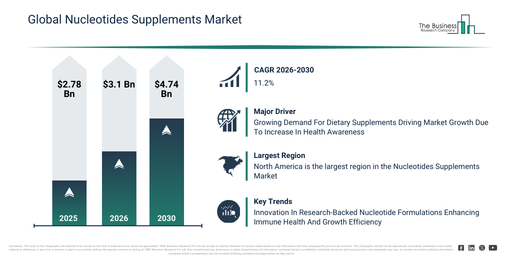
    The nucleotides supplements market size has experienced swift growth in recent years. Its expansion is projected to be from $2.78 billion in 2025 to $3.1 billion in 2026, achieving a compound annual growth rate (CAGR) of 11.4%. The market’s historic growth can be attributed to a growing awareness of cellular nutrition benefits, the expansion of nutraceutical manufacturing capabilities, increased utilization of nucleotides in infant and clinical nutrition, advancements in nucleotide purification techniques, and rising demand from animal feed industries.

    The nucleotides supplements market is projected to experience substantial expansion in the coming years. This market is set to reach $4.74 billion in 2030, demonstrating a compound annual growth rate (CAGR) of 11.2%. The growth during this forecast period can be attributed to the increasing integration of nucleotides in personalized nutrition, the rise in pharmaceutical research applications, the expansion of immune health supplements, growing regulatory approvals for functional ingredients, and an increasing demand for high-purity nucleotide products. Major trends expected within the forecast timeframe include the increasing adoption of targeted nucleotide formulations, a rising demand for immune-supporting nutritional compounds, the growing use of pharmaceutical-grade nucleotides, the expansion of nucleotide applications in animal nutrition, and an enhanced focus on bioavailability and purity standards.

    Get A Free Sample Report With In-Depth Market Insights:

    https://thebusinessresearchcompany.com/sample_request?id=53730495&type=smp&name=Nucleotides%20Supplements%20Market%20Report%202026&utm_source=Blogs&utm_medium=Paid&utm_campaign=Oct_PR

    Nucleotides Supplements Market Growth Momentum: What Factors Are Shaping Demand?

    The increasing consumer interest in dietary supplements is anticipated to drive expansion within the nucleotide supplements market in the coming years. Dietary supplements include a diverse array of items such as vitamins, minerals, amino acids, and other nutritional components, which are formulated to complement one’s diet and foster general well-being. This heightened demand stems from consumers’ growing health consciousness, prompting a stronger emphasis on proactive health management and overall wellness. Nucleotide supplements represent a particular category of dietary supplements intended to aid cellular restoration, bolster immune responses, and enhance general metabolic health. For example, data released by the Australian Bureau of Statistics in September 2025 indicated that around one in three individuals (33.6%) consumed a dietary supplement in 2023, with usage significantly elevated among adult females (43.7%) versus adult males (30.8%). Consequently, the escalating enthusiasm for dietary supplements is a key factor in the expansion of the nucleotide supplements market.

    Nucleotides Supplements Market Breakdown By Product Type And Application

    The nucleotides supplements market covered in this report is segmented –

    1) By Product Type: DNA Nucleotides, RNA Nucleotides, Other Product Types

    2) By Nitrogenous Base: Pyrimidine, Purine

    3) By Distribution Channel: Online Stores, Supermarkets Or Hypermarkets, Specialty Stores, Other Distribution Channels

    4) By Application: Pharmaceutical, Food, Animal Feed Additives, Drug Discovery

    5) By End-User: Health And Wellness Sector, Pharmaceutical Industry, Nutraceutical Companies, Food And Beverage Industry

    Subsegments:

    1) By DNA Nucleotides: Deoxyadenosine Monophosphate (dAMP), Deoxyguanosine Monophosphate (dGMP), Deoxycytidine Monophosphate (dCMP), Deoxythymidine Monophosphate (dTMP), Deoxynucleotide Blends Or Complexes, Modified Or Deoxy-Modified Nucleotides, Natural, Synthetic

    2) By RNA Nucleotides: Adenosine Monophosphate (AMP), Guanosine Monophosphate (GMP), Cytidine Monophosphate (CMP), Uridine Monophosphate (UMP), Ribonucleotide Blends Or Complexes, Modified Ribonucleotides, Natural, Synthetic

    3) By Other Product Types: Nucleosides, Nucleotide Di- Or Tri-Phosphates, Nucleotide Precursors, Modified Or Labeled Nucleotides, Blended Formulation, Animal Feed Grade Nucleotides, Pharmaceutical Grade Nucleotides

    Nucleotides Supplements Market Trends Redefining Industry Growth

    Leading businesses within the nucleotide supplements market are prioritizing the expansion of their product offerings to include advanced, scientifically supported formulations that boost immune function, promote growth, and improve the general health of animals. An example of this trend is seen in October 2025, when Bioiberica, a pharmaceutical firm based in Spain, broadened its Nucleoforce range by introducing three novel nucleotide-derived components: Nucleoforce Immunity, Nucleoforce Performance, and Nucleoforce High Flowability (HF). These were specifically formulated to bolster immune wellness, encourage development, and optimize production effectiveness across pets, farm animals, and aquatic species. These concentrates, naturally sourced from yeast, provide assistance to animals during stressful periods, times of rapid development, or when experiencing inadequate nutrition. Initial studies suggest that Nucleoforce has the potential to enhance growth and bolster resistance to diseases, especially when administered alongside bioactive elements like seaweed meal and olive extract.

    Nucleotides Supplements Market Company Landscape And Competitive Strategy

    Major companies operating in the nucleotides supplements market are Cargill Incorporated, BASF SE, Merck KGaA, Thermo Fisher Scientific Inc., Evonik Industries AG, Lallemand Inc., Integrated DNA Technologies Inc., Promega Corporation, Takara Bio Inc., GenScript Biotech Corporation, Bioiberica S.A.U., Bluebonnet Nutrition Corporation, Elysium Health Inc., Ajinomoto Health & Nutrition North America Inc., InVite Health Inc., Leiber GmbH, TriLink BioTechnologies LLC, Bio Basic Inc., Creative Biogene Inc., Jena Bioscience GmbH, GeneCopoeia Inc., Quantum Nutrition Labs LLC, GMPriority Pharma Inc.

    View The Full Nucleotides Supplements Market Report:

    https://thebusinessresearchcompany.com/report/global-nucleotides-supplements-market-report?utm_source=Blogs&utm_medium=Paid&utm_campaign=Oct_PR

    Nucleotides Supplements Market Geographic Landscape: Which Region Leads Industry Growth?

    North America was the largest region in the nucleotide supplements market in 2025. Asia-Pacific is expected to be the fastest-growing region in the forecast period. The regions covered in the nucleotides supplements market report are Asia-Pacific, South East Asia, Western Europe, Eastern Europe, North America, South America, Middle East, Africa.

    Reach Out To Our Team:

    The Business Research Company: https://www.thebusinessresearchcompany.com/

    Americas: +1 310-496-7795

    Asia: +44 7882 955267 & +91 8897263534

    Europe: +44 7882 955267

    Email us at: marketing@tbrc.info

    Follow us on:

    LinkedIn: https://in.linkedin.com/company/the-business-research-company

    YouTube: https://www.youtube.com/channel/UC24_fI0rV8cR5DxlCpgmyFQ

    Global Market Model: https://www.thebusinessresearchcompany.com/global-market-model

  • Nucleic Acid Therapeutics Market Expected To Grow At 15.1% CAGR Through 2030: What Businesses Need To Know

    Nucleic Acid Therapeutics Market Expected To Grow At 15.1% CAGR Through 2030: What Businesses Need To Know

    Featuring market attractiveness scoring, total addressable market sizing, company benchmarking matrices, interactive Excel dashboards, deeper supply chain intelligence, emerging startup tracking, and granular product-level insights, The Business Research Company’s 2026 market reports are built to deliver research that is both more actionable and more strategically valuable.

    Nucleic Acid Therapeutics Market Value Growth And Long-Term Outlook

    The nucleic acid therapeutics market has experienced significant growth in recent years. It is anticipated to expand from $6.94 billion in 2025 to $8.01 billion in 2026, with a compound annual growth rate (CAGR) of 15.4%. Historically, this growth can be attributed to factors such as the limited availability of nucleic acid therapeutics, a reliance on traditional small molecule therapies, the increasing demand for precision medicine, regulatory approvals for early gene therapies, and a rise in academic research focusing on gene modulation.

    The nucleic acid therapeutics market is projected to expand significantly over the coming years, with its size forecast to reach $14.07 billion by 2030, exhibiting a compound annual growth rate (CAGR) of 15.1%. This anticipated growth during the forecast period is driven by factors such as advancements in CRISPR and other gene-editing technologies, the broader application of lipid nanoparticle (LNP) delivery systems, the increasing acceptance of personalized nucleic acid therapies, growing partnerships between pharmaceutical and biotechnology companies, and increased investment in RNA-based therapeutics. Key trends emerging over the forecast period encompass the growing use of antisense oligonucleotides (ASOs) and siRNA treatments, the wider application of CRISPR-based and gene-editing therapeutics, an increase in targeted therapies for neuromuscular, metabolic, and oncological conditions, greater investment in both non-viral and viral delivery methods, and the rise of long non-coding RNA (lncRNA) and microRNA (miRNA) therapeutics.

    Get A Free Sample Report With In-Depth Market Insights:

    https://thebusinessresearchcompany.com/sample_request?id=37616990&type=smp&name=Nucleic%20Acid%20Therapeutics%20Market%20Report%202026&utm_source=Blogs&utm_medium=Paid&utm_campaign=Oct_PR

    Nucleic Acid Therapeutics Market Expansion Drivers: What’s Shaping Future Growth?

    The rising prevalence of genetic and chronic ailments is anticipated to fuel the expansion of the nucleic acid therapeutics market in the future. Genetic and chronic diseases describe conditions where inherited genetic elements influence the onset, advancement, or susceptibility to persistent health issues like diabetes, heart disease, cancer, and autoimmune conditions. This increase in genetics-related and chronic diseases can be largely attributed to enhancements in diagnostic tools, enabling more precise and earlier identification of these conditions. Nucleic acid therapeutics are valuable in addressing genetic and chronic diseases as they can precisely target and alter the fundamental genetic roots of these conditions through the regulation, repair, or silencing of particular genes, thereby providing exact and tailored treatment alternatives. For example, as reported by the Cystic Fibrosis Trust, a UK-based charity supporting individuals with cystic fibrosis, in October 2024, patient registrations for cystic fibrosis saw an increase from 11,148 in 2022 to 11,318 in 2023, marking a 1.5% year-over-year rise in patient numbers. Consequently, the growing incidence of genetic and chronic diseases is a key factor propelling the expansion of the nucleic acid therapeutics market.

    Nucleic Acid Therapeutics Market Segment Analysis And Revenue Potential

    The nucleic acid therapeutics market covered in this report is segmented –

    1) By Therapy Type: Antisense Oligonucleotides (ASOs), Small Interfering RNA (siRNA), Gene Therapies, Aptamers, Other Therapy Types

    2) By Therapeutic Area: Neuromuscular Disorder, Metabolic Disorders, Cardiovascular Disorders, Ophthalmological Disorders, Oncological Disorders, Other Therapeutic Areas

    3) By Route Of Administration: Intravenous, Subcutaneous, Other Route Of Administrations

    4) By Delivery Method: Viral Vector-Based Delivery Systems, Non-Viral Delivery Systems

    5) By End-Use: Pharmaceutical Companies, Government And Academic Research Institutes, Biotech Companies

    Subsegments:

    1) By Antisense Oligonucleotides (ASOs): Phosphorothioate ASOs, 2’-O-Methyl ASOs, Locked Nucleic Acid (LNA) ASOs, Gapmer ASOs, Morpholino ASOs

    2) By Small Interfering RNA (siRNA): Lipid Nanoparticle (LNP) Formulated siRNA, GalNAc-Conjugated siRNA, Chemically Modified siRNA, Naked siRNA

    3) By Gene Therapies: Viral Vector-Based Gene Therapy, Non-Viral Vector-Based Gene Therapy, CRISPR-Based Gene Therapy, Zinc Finger Nucleases (ZFNs), TALENs

    4) By Aptamers: Ribonucleic Acid (RNA) Aptamers, Deoxyribonucleic Acid (DNA) Aptamers, Spiegelmers, Pegylated Aptamers

    5) By Others Therapy Types: MicroRNA (miRNA) Therapeutics, Long Non-Coding RNA (lncRNA) Therapeutics, Ribonucleic Acid (RNA) Editing Therapies, Ribozymes

    Nucleic Acid Therapeutics Market Strategic Trends: What Defines The Next Growth Phase?

    Leading firms within the nucleic acid therapeutics market are concentrating on creating novel therapies, like antisense oligonucleotide therapy, to target and deactivate particular disease-inducing genes, thereby providing precise therapeutic solutions for genetic conditions and rare illnesses. This particular therapy employs brief, manufactured strands of deoxyribonucleic acid (DNA) or ribonucleic acid (RNA) to either inhibit or alter the manifestation of specific genes implicated in disease processes. As an illustration, during December 2024, Ionis Pharmaceuticals Inc., a biotechnology company based in the US, secured U.S. Food and Drug Administration (FDA) approval for TRYNGOLZ (olezarsen). This approval was for its use as an additional therapy to diet for reducing triglyceride levels in adults with a diagnosis of familial chylomicronemia syndrome (FCS), which is a rare genetic condition marked by severe hypertriglyceridemia (sHTG) and an elevated risk of acute pancreatitis (AP). This treatment stands as the inaugural FDA-approved option providing substantial and lasting triglyceride reduction for this group of patients, coupled with a clinically significant reduction in AP incidence when paired with a low-fat diet. It is engineered for convenient self-application through a once-monthly auto-injector.

    Nucleic Acid Therapeutics Market Key Players Shaping Industry Direction

    Major companies operating in the nucleic acid therapeutics market are Pfizer Inc., Novartis AG, Moderna Inc., BioNTech SE, Alnylam Pharmaceuticals Inc., Sarepta Therapeutics Inc., Arrowhead Pharmaceuticals Inc., Arcturus Therapeutics Holdings Inc., CureVac SE, Sangamo Therapeutics Inc., Beam Therapeutics Inc., Arbutus Biopharma Corporation, Silence Therapeutics plc, Copernicus Therapeutics Inc.

    View The Full Nucleic Acid Therapeutics Market Report:

    https://thebusinessresearchcompany.com/report/nucleic-acid-therapeutics-global-market-report?utm_source=Blogs&utm_medium=Paid&utm_campaign=Oct_PR

    Nucleic Acid Therapeutics Market Largest Region: Which Geography Holds The Biggest Share?

    North America was the largest region in the nucleic acid therapeutics market in 2025. Asia-Pacific is expected to be the fastest-growing region in the forecast period. The regions covered in the nucleic acid therapeutics market report are Asia-Pacific, South East Asia, Western Europe, Eastern Europe, North America, South America, Middle East, Africa.

    Reach Out To Our Team:

    The Business Research Company: https://www.thebusinessresearchcompany.com/

    Americas: +1 310-496-7795

    Asia: +44 7882 955267 & +91 8897263534

    Europe: +44 7882 955267

    Email us at: marketing@tbrc.info

    Follow us on:

    LinkedIn: https://in.linkedin.com/company/the-business-research-company

    YouTube: https://www.youtube.com/channel/UC24_fI0rV8cR5DxlCpgmyFQ

    Global Market Model: https://www.thebusinessresearchcompany.com/global-market-model

  • Nuclear Medicine Radioisotopes Market Forecast To Reach $12.75 Billion By 2030: Key Trends Explained

    Nuclear Medicine Radioisotopes Market Forecast To Reach $12.75 Billion By 2030: Key Trends Explained

    Built to provide research that’s more actionable and strategically valuable, The Business Research Company’s 2026 market reports include market attractiveness analysis, total addressable market sizing, company benchmarking matrices, interactive Excel dashboards, broader supply chain intelligence, emerging startup tracking, and in-depth product insights.

    Nuclear Medicine Radioisotopes Market Poised To Hit $12.75 Billion By 2030 With A 7.4% CAGR

    The nuclear medicine radioisotopes market size has demonstrated robust expansion in recent years. This market is expected to expand from $8.85 billion in 2025 to $9.58 billion in 2026, achieving a compound annual growth rate (CAGR) of 8.2%. The past growth can be ascribed to several factors, including the extensive application of technetium-99m in diagnostic imaging, the increasing uptake of nuclear cardiology procedures, the rising incidence of cancer and thyroid disorders, the growth of hospital-based nuclear medicine departments, and the early favorable outcomes of radioisotope-based therapies.

    The nuclear medicine radioisotopes market size is anticipated to experience robust expansion over the coming years. This market is projected to reach $12.75 billion by 2030, exhibiting a compound annual growth rate (CAGR) of 7.4%. The projected growth during this period is primarily driven by several factors, including the increasing need for personalized cancer treatments, a surge in the application of lutetium-177 and actinium-225 therapies, the expanding infrastructure for PET imaging, rising investments in cyclotron and reactor facilities, and the increasing integration of nuclear medicine in developing countries. Key trends expected within this forecast timeframe encompass the increasing implementation of theranostics in cancer care, a growing demand for PET and SPECT imaging techniques, enhanced utilization of targeted alpha and beta emitters, the broadening application of nuclear medicine in cardiology and neurology, and a reinforced emphasis on localized radioisotope manufacturing.

    Get A Free Sample Report With In-Depth Market Insights:

    https://thebusinessresearchcompany.com/sample_request?id=56236388&type=smp&name=Nuclear%20Medicine%20Radioisotopes%20Market%20Report%202026&utm_source=Blogs&utm_medium=Paid&utm_campaign=Oct_PR

    Nuclear Medicine Radioisotopes Market Development Factors: What’s Supporting Demand?

    The increasing incidence of cardiovascular ailments is projected to drive the expansion of the nuclear medicine radioisotope market in the foreseeable future. These conditions encompass various illnesses impacting the heart and blood vessel system. The surge in cardiovascular disease cases is linked to inactive lifestyles, unhealthy eating patterns, growing obesity prevalence, and an aging demographic. Nuclear medicine radioisotopes play a crucial role in the diagnosis, assessment, and management of cardiovascular diseases, offering comprehensive data on cardiac function, blood flow, and tissue health, which is vital for precise diagnosis and successful treatment strategies. As an illustration, the American Heart Association, a US-based non-profit organization, reported in January 2024 that the age-adjusted mortality rate from cardiovascular disease escalated to 233.3 per 100,000 in 2024, representing a 4.0% rise from 224.4 per 100,000 in 2023. Consequently, the growing number of cardiovascular disease instances is fueling the expansion of the nuclear medicine radioisotope market.

    Nuclear Medicine Radioisotopes Market Segmentation And Category Overview

    The nuclear medicine radioisotopes market covered in this report is segmented –

    1) By Type: Technetium-99m (Tc-99m), Thallium-201 (Tl-201), Iodine (I-123), Fluorine-18, Rubidium-82 (Rb-82), Iodine-131 (I-131), Lutetium-177 (Lu-177), Radium-223 (Ra-223) And Alpharadin, Other Types

    2) By Application: Oncology, Cardiology, Thyroid, Neurology, Other Applications

    3) By End-User: Hospitals, Diagnostic Centers, Specialty Clinics, Education And Research Institutes, Other End-Users

    Subsegments:

    1) By Technetium-99m (Tc-99m): Sodium Pertechnetate Tc-99m, Tc-99m MDP (Methylene Diphosphonate), Tc-99m HMPAO (Hexamethylpropyleneamine oxime)

    2) By Thallium-201 (Tl-201): Thallous Chloride Tl-201, Thallium-201 for Cardiac Imaging

    3) By Iodine-123 (I-123): Iodine-123 Sodium Iodide, Iodine-123 Ioflupane (DaTscan)

    4) By Fluorine-18: FDG (Fluorodeoxyglucose) F-18, Fluoride-18 For Bone Imaging

    5) By Rubidium-82 (Rb-82): Rb-82 For PET (Positron Emission Tomography) Imaging, Rb-82 For Cardiac Imaging

    6) By Iodine-131 (I-131): I-131 Sodium Iodide, I-131 For Thyroid Cancer Treatment, I-131 For Hyperthyroidism Treatment

    7) By Lutetium-177 (Lu-177): Lu-177-DOTATATE, Lu-177 For Prostate Cancer Treatment

    8) By Radium-223 (Ra-223): Ra-223 Dichloride (Xofigo), Alpharadin For Bone Metastasis Treatment

    9) By Alpharadin (Radium-223 Alpha Emitters): Ac-225 For Targeted Alpha Therapy (TAT), Ac-225 For Cancer Treatment, Gallium-68 (Ga-68), Copper-64 (Cu-64), Yttrium-90 (Y-90)

    10) By Other Types: Ac-225 For Targeted Alpha Therapy (TAT), Ac-225 For Cancer Treatment, Gallium-68 (Ga-68), Copper-64 (Cu-64), Yttrium-90 (Y-90)

    Nuclear Medicine Radioisotopes Market Transformation Trends: What Innovations Are Driving Change?

    Leading companies within the nuclear medicine radioisotopes market are concentrating on creating novel solutions, such as next-generation theranostic radiopharmaceuticals, aimed at improving precision imaging and targeted treatment. These advanced radioactive agents are engineered to both detect and precisely address diseases by accurately targeting particular cells within the body. For instance, in November 2025, the University of California, a US-based research university, established a fully autonomous Department of Nuclear Medicine & Theranostics, separating nuclear medicine from its previous inclusion under a wider radiology department. The purpose of this new department is to expedite the incorporation of sophisticated imaging techniques and targeted radiopharmaceutical treatments, while also reinforcing research, educational, and clinical initiatives to further precision medicine and foster advancements in theranostic therapies.

    Nuclear Medicine Radioisotopes Market Competitive Analysis Of Leading Industry Participants

    Major companies operating in the nuclear medicine radioisotopes market are Cardinal Health Inc., Bayer AG, Siemens Healthineers AG, GE HealthCare Technologies, BWX Technologies Inc., Mallinckrodt Pharmaceuticals, Bracco Imaging S.p.A., Lantheus Holdings Inc., Curium Pharma, Australian Nuclear Science and Technology Organisation (ANSTO) Health, Eckert & Ziegler Strahlen, NorthStar Medical Radioisotopes, NTP Radioisotopes, Shine Medical Technologies Inc., Jubilant DraxImage Inc., Isotopia Molecular Imaging Ltd., Eczacibasi-Monrol Nuclear Products, International Isotopes Inc., Polatom Sp. z o.o., Radiomedix Inc., Positron Corporation

    View The Full Nuclear Medicine Radioisotopes Market Report:

    https://thebusinessresearchcompany.com/report/nuclear-medicine-radioisotopes-global-market-report?utm_source=Blogs&utm_medium=Paid&utm_campaign=Oct_PR

    Nuclear Medicine Radioisotopes Market Regional Analysis: Which Geography Leads On Revenue?

    North America was the largest region in the nuclear medicine radioisotopes market in 2025. Asia-Pacific is expected to be the fastest-growing region in the forecast period. The regions covered in the nuclear medicine radioisotopes market report are Asia-Pacific, South East Asia, Western Europe, Eastern Europe, North America, South America, Middle East, Africa.

    Reach Out To Our Team:

    The Business Research Company: https://www.thebusinessresearchcompany.com/

    Americas: +1 310-496-7795

    Asia: +44 7882 955267 & +91 8897263534

    Europe: +44 7882 955267

    Email us at: marketing@tbrc.info

    Follow us on:

    LinkedIn: https://in.linkedin.com/company/the-business-research-company

    YouTube: https://www.youtube.com/channel/UC24_fI0rV8cR5DxlCpgmyFQ

    Global Market Model: https://www.thebusinessresearchcompany.com/global-market-model

  • Norovirus Treatment Market Analysis Through 2030: Market Size, Growth Trends And Industry Outlook

    Norovirus Treatment Market Analysis Through 2030: Market Size, Growth Trends And Industry Outlook

    Backed by market attractiveness analysis, total addressable market sizing, company benchmarking matrices, interactive Excel dashboards, wider supply chain intelligence, emerging startup coverage, and detailed product-level insights, The Business Research Company’s 2026 market reports are designed to offer research that is more actionable and strategically valuable than ever.

    Norovirus Treatment Market Size And Revenue Outlook Through 2030

    The norovirus treatment market has experienced swift expansion recently. It is projected to expand from $1.94 billion in 2025 to $2.15 billion in 2026, at a compound annual growth rate (CAGR) of 10.9%. The expansion observed in the historic period is attributable to limited awareness of norovirus management, a reliance on hospital-based treatments, insufficient homecare infrastructure, the absence of standardized symptom management protocols, and low adoption of probiotics and zinc supplementation.

    The norovirus treatment market size is expected to experience significant expansion in the coming years, projected to reach $3.22 billion in 2030, growing at a compound annual growth rate (CAGR) of 10.6%. This growth during the forecast period can be attributed to factors such as increasing demand for oral rehydration solutions, the expansion of homecare services and telemedicine, a heightened focus on pediatric and elderly populations, the development of targeted supportive care therapies, rising healthcare expenditure, and awareness campaigns. Major trends anticipated during this period include the increasing adoption of oral rehydration therapies, a rise in the use of intravenous fluids for severe cases, the growth of homecare and remote treatment options, an expanded use of anti-diarrheal and symptom management drugs, and a specific focus on pediatric and geriatric norovirus care.

    Get A Free Sample Report With In-Depth Market Insights:

    https://thebusinessresearchcompany.com/sample_request?id=15507317&type=smp&name=Norovirus%20Treatment%20Market%20Report%202026&utm_source=Blogs&utm_medium=Paid&utm_campaign=Oct_PR

    Norovirus Treatment Market Industry Drivers: What’s Behind The Revenue Growth?

    The growing incidence of infectious diseases is anticipated to drive the expansion of the norovirus treatment market. Such diseases are ailments resulting from bacteria, viruses, fungi, or parasites that can spread among individuals, encompassing conditions like influenza, tuberculosis, HIV/AIDS, malaria, and norovirus. The rise in infectious diseases stems from urban population density, which aids in the quicker spread of pathogens within crowded communities. Norovirus treatment plays a role in mitigating the effects of infectious diseases by effectively addressing symptoms and curbing dissemination through appropriate hydration, hygiene, and isolation techniques. For instance, in March 2025, the World Health Organization, a Switzerland-based intergovernmental organization, reported that approximately 10.8 million individuals, including 6.0 million men, 3.6 million women, and 1.3 million children, were affected by tuberculosis worldwide in 2023. Consequently, the heightened occurrence of infectious disease is stimulating the growth of the norovirus treatment market.

    Norovirus Treatment Market Segment Outlook: Which Categories Are Growing Fastest?

    The norovirus treatment market covered in this report is segmented –

    1) By Treatment: Electrolytes, Intravenous Fluids, Antipyretics, Analgesics, Anti-Diarrheal, Other Treatments

    2) By Diagnosis: Bacteria Culture Test, Stool Tests, Other Diagnosis

    3) By Route Of Administration: Oral, Intravenous

    4) By End User: Hospitals, Clinics, Homecare Settings

    Subsegments:

    1) By Electrolytes: Oral Rehydration Salts (ORS), Sports Drinks, Pediatric Electrolyte Solutions

    2) By Intravenous Fluids: Crystalloids, Colloids, Lactated Ringer’s Solution

    3) By Antipyretics: Acetaminophen (Paracetamol), Ibuprofen, Aspirin

    4) By Analgesics: Nonsteroidal Anti-Inflammatory Drugs (NSAIDs), Opioid Analgesics, Acetaminophen-Based Analgesics

    5) By Anti-Diarrheal: Loperamide, Bismuth Subsalicylate, Diphenoxylate-Atropine

    6) By Other Treatments: Antiemetics, Probiotics, Zinc Supplements

    #Norovirus Treatment Market Growth Trends: What’s Shaping The Future Outlook?

    Leading companies active in the norovirus treatment market are concentrating on developing innovative solutions, such as advanced mRNA vaccines, with the goal of accelerating the creation of targeted immunization, boosting protection against severe infections, and reducing the global impact of norovirus-related illnesses. Advanced mRNA vaccines are a new generation of immunizations that employ specially engineered messenger RNA to instruct cells to synthesize specific proteins, thereby triggering a focused immune response with enhanced stability, effectiveness, and adaptability against various infectious diseases. For example, in October 2024, Moderna Inc., a US-based biotechnology company, collaborated with the UK Health Security Agency (UKHSA), a UK-based government agency, to commence the world’s first Phase 3 trial of an mRNA norovirus vaccine (mRNA-1403) in the UK. This trial introduces a vaccine intended to combat the highly contagious norovirus by instructing the body to produce viral proteins that stimulate a strong immune response, without utilizing the live virus. Noteworthy aspects of the launch include its application of stabilized mRNA for improved durability, its potential for rapid development in response to evolving strains, and its capacity to induce both antibody and T-cell responses.

    Norovirus Treatment Market Leading Companies And Competitive Benchmarking

    Major companies operating in the norovirus treatment market are Abbott Laboratories, Reckitt Benckiser Group plc, Nestlé Health Science, Otsuka Pharmaceutical Co. Ltd., Dr. Reddy’s Laboratories Ltd., Cipla Limited, Sun Pharmaceutical Industries Ltd., Aurobindo Pharma Limited, Lupin Limited, Mylan (Viatris Inc.), Perrigo Company plc, Haleon plc, Church & Dwight Co. Inc., GlaxoSmithKline Consumer Healthcare, Sanofi Consumer Healthcare, Pfizer Consumer Healthcare, Ferring Pharmaceuticals, Fresenius Kabi AG, Baxter International Inc., B. Braun Melsungen AG, Hikma Pharmaceuticals PLC, Torrent Pharmaceuticals Ltd., Alkem Laboratories Ltd., Zydus Lifesciences Ltd., Glenmark Pharmaceuticals Ltd., Pfizer Healthcare India Pvt. Ltd., Mead Johnson Nutrition (Reckitt), Danone Nutricia, Amneal Pharmaceuticals Inc., Ajanta Pharma Ltd.

    View The Full Norovirus Treatment Market Report:

    https://thebusinessresearchcompany.com/report/norovirus-treatment-global-market-report?utm_source=Blogs&utm_medium=Paid&utm_campaign=Oct_PR

    Norovirus Treatment Market Geographic Spread And Regional Opportunities

    North America was the largest region in the norovirus treatment market in 2025. The regions covered in the norovirus treatment market report are Asia-Pacific, South East Asia, Western Europe, Eastern Europe, North America, South America, Middle East, Africa.

    Reach Out To Our Team:

    The Business Research Company: https://www.thebusinessresearchcompany.com/

    Americas: +1 310-496-7795

    Asia: +44 7882 955267 & +91 8897263534

    Europe: +44 7882 955267

    Email us at: marketing@tbrc.info

    Follow us on:

    LinkedIn: https://in.linkedin.com/company/the-business-research-company

    YouTube: https://www.youtube.com/channel/UC24_fI0rV8cR5DxlCpgmyFQ

    Global Market Model: https://www.thebusinessresearchcompany.com/global-market-model

  • Non-Viral Gene Delivery Technologies Market Outlook From 2026 To 2030: Key Growth Factors And Future Opportunities

    Non-Viral Gene Delivery Technologies Market Outlook From 2026 To 2030: Key Growth Factors And Future Opportunities

    Featuring market attractiveness scoring, total addressable market sizing, company benchmarking matrices, interactive Excel dashboards, deeper supply chain intelligence, emerging startup tracking, and granular product-level insights, The Business Research Company’s 2026 market reports are built to deliver research that is both more actionable and more strategically valuable.

    Non-Viral Gene Delivery Technologies Market Growth From $5.28 Billion In 2026 To $9.26 Billion By 2030 At A CAGR Of 15.1%

    The market size for non-viral gene delivery technologies has expanded rapidly in recent years. It will grow from $4.57 billion in 2025 to $5.28 billion in 2026 at a compound annual growth rate (CAGR) of 15.5%. The historical growth of this market can be attributed to factors such as reliance on viral delivery methods, limited availability of non-viral transfection reagents, increasing interest in gene therapy research, growing use of plasmid dna and mrna delivery kits, and the adoption of electroporation and physical delivery techniques.

    The non-viral gene delivery technologies market is anticipated to undergo significant expansion over the next few years. It is projected to attain a value of $9.26 billion by 2030, demonstrating a compound annual growth rate (CAGR) of 15.1%. This expected growth throughout the forecast period can be attributed to several factors, including the advancement of lipid and polymer nanoparticles, the proliferation of pre-formulated nanoparticle technologies, increased investment in gene editing and RNAi therapeutics, a growing demand for personalized gene therapy solutions, and the integration of high-throughput and automated delivery platforms. Key trends foreseen during this period encompass the rising adoption of lipid-based and polymer-based non-viral delivery systems, an expansion in CRISPR and Cas9 gene editing applications, heightened demand for RNAi and DNA vaccine delivery platforms, the growth of ex-vivo and in-vivo gene therapy research, and the development of cell-specific and targeted gene delivery reagents.

    Get A Free Sample Report With In-Depth Market Insights:

    https://thebusinessresearchcompany.com/sample_request?id=87042395&type=smp&name=Non-Viral%20Gene%20Delivery%20Technologies%20Market%20Report%202026&utm_source=Blogs&utm_medium=Paid&utm_campaign=Oct_PR

    Non-Viral Gene Delivery Technologies Market Growth Factors: What’s Supporting Expansion?

    The market for non-viral gene delivery technologies is anticipated to grow due to the rising demand for personalized medicine. This medical strategy involves tailoring prevention, diagnosis, and treatment according to an individual’s distinct genetic profile, lifestyle, and environmental factors. The growing need for personalized medicine stems from progress in genomic sequencing technologies, which enable more precise diagnoses, specific therapies, and better patient outcomes customized for each person. This increasing emphasis on personalized medicine is boosting the need for non-viral gene delivery technologies because they provide safer and more flexible ways to administer therapeutic genes aligned with a person’s genetic makeup, without the dangers linked to viral vectors. For example, data from February 2024, provided by the US-based non-profit organization, the Personalized Medicine Coalition, indicates that the Food and Drug Administration (FDA) sanctioned 16 new personalized therapies for individuals with rare diseases in 2023, an increase from 6 in 2022. Consequently, the rising demand for personalized medicine is fueling the expansion of the non-viral gene delivery technologies market.

    Non-Viral Gene Delivery Technologies Market Segment Landscape: Which Areas Lead Development?

    The non-viral gene delivery technologies market covered in this report is segmented –

    1) By Product: Reagents And Kits, Delivery Devices, Pre-Formulated Nanoparticles

    2) By Delivery: In-Vitro, In-Vivo, Ex-Vivo

    3) By Technology: Electroporation, Lipid-Based Transfection, Polymer-Based Transfection, Physical Methods (Microinjection, Gene Gun), Nanoparticles

    4) By Application: Gene Therapy, Deoxyribonucleic Acid (DNA) Vaccines, Ribonucleic Acid Interference (RNAi), Clustered Regularly Interspaced Short Palindromic Repeats (CRISPR) Or Cas9 Gene Editing, Protein Expression

    5) By End-Use: Biotechnology And Biopharmaceutical Companies, Research And Academic Institutes, Other End-Uses

    Subsegments:

    1) By Reagents And Kits: Transfection Reagents, Plasmid Deoxyribonucleic Acid (DNA) Kits, Messenger Ribonucleic Acid (RNA) Delivery Kits, Small Interfering Ribonucleic Acid (RNA) Delivery Kits, Clustered Regularly Interspaced Short Palindromic Repeats Associated Protein Reagents, Cell-Specific Delivery Reagents

    2) By Delivery Devices: Electroporation Systems, Microinjection Systems, Gene Guns Or Biolistic Delivery Devices, Ultrasound-Mediated Delivery Devices, Hydrodynamic Gene Delivery Systems

    3) By Pre-Formulated Nanoparticles: Lipid-Based Nanoparticles, Polymer-Based Nanoparticles, Gold-Based Nanoparticles, Dendrimer-Based Nanoparticles, Carbon Nanotube-Based Nanoparticles, Inorganic Compound-Based Nanoparticles

    Non-Viral Gene Delivery Technologies Market Industry Trends: What’s Reshaping Demand?

    Companies operating in the non-viral gene delivery market are concentrating on developing advanced solutions, such as non-viral genetic medicine platforms, to enhance the safety and efficiency of gene therapies. A non-viral genetic medicine platform utilizes technology to introduce therapeutic genes or nucleic acids into cells without viruses, thereby reducing immune reactions and safety concerns, and facilitating precise and controlled gene therapy delivery for various diseases. For example, in October 2023, Generation Bio Co., a US-based biotechnology company focused on genetic medicines, introduced immune-quiet DNA (iqDNA). This novel DNA is an optimized version of their closed-ended DNA (ceDNA) designed to evade innate immune detection, exhibiting cytokine levels and tolerability comparable to chemically modified mRNA in mice and non-human primates when delivered through their lipid nanoparticle (LNP) system. Given iqDNA’s superior tolerability, Generation Bio is progressing this as the primary DNA cargo across all its programs, including its leading hemophilia A program.

    Non-Viral Gene Delivery Technologies Market Industry Leaders And Competitive Landscape

    Major companies operating in the non-viral gene delivery technologies market are Thermo Fisher Scientific Inc., Danaher Corporation, Merck KGaA, Evonik Industries AG, Moderna Inc., Lonza Group AG, Bio-Rad Laboratories Inc., Takara Bio Inc., GenScript Biotech Corporation, ReCode Therapeutics Inc., Altogen Biosystems Inc., Generation Bio, Indee Labs Inc.

    View The Full Non-Viral Gene Delivery Technologies Market Report:

    https://thebusinessresearchcompany.com/report/non-viral-gene-delivery-technologies-global-market-report?utm_source=Blogs&utm_medium=Paid&utm_campaign=Oct_PR

    Non-Viral Gene Delivery Technologies Market Top Region By Revenue And Market Share

    North America was the largest region in the non-viral gene delivery technologies market in 2025. Asia-Pacific is expected to be the fastest-growing region in the forecast period. The regions covered in the non-viral gene delivery technologies market report are Asia-Pacific, South East Asia, Western Europe, Eastern Europe, North America, South America, Middle East, Africa.

    Reach Out To Our Team:

    The Business Research Company: https://www.thebusinessresearchcompany.com/

    Americas: +1 310-496-7795

    Asia: +44 7882 955267 & +91 8897263534

    Europe: +44 7882 955267

    Email us at: marketing@tbrc.info

    Follow us on:

    LinkedIn: https://in.linkedin.com/company/the-business-research-company

    YouTube: https://www.youtube.com/channel/UC24_fI0rV8cR5DxlCpgmyFQ

    Global Market Model: https://www.thebusinessresearchcompany.com/global-market-model