Blog

  • Key Developments and Trends Steering the Bioprocess Analyzers Market Forward: Advancements In Real-Time Monitoring Platforms For Bioprocess Analyzers

    Key Developments and Trends Steering the Bioprocess Analyzers Market Forward: Advancements In Real-Time Monitoring Platforms For Bioprocess Analyzers

    Claim your 30% discount on Global Market Reports with code ONLINE30. Limited time only.

    What Is the Estimated Market Size of the Bioprocess Analyzers Market In 2029?

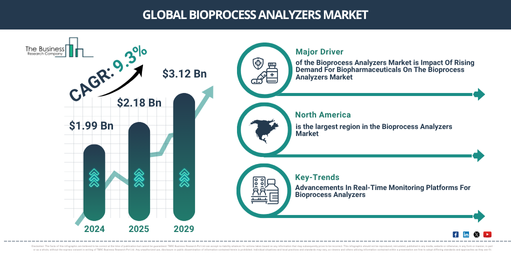
    The market size for bioprocess analyzers has experienced significant growth in the past few years. It is projected that it will increase from $1.99 billion in 2024 to $2.18 billion in 2025, indicating a compound annual growth rate (CAGR) of 9.7%. This growth during the historic period is largely due to the increasing demand for personalized medicine and the escalating complexity of bioprocesses.

    In the following years, a significant expansion is expected within the bioprocess analyzers market which is forecasted to reach $3.12 billion in 2029, growing at an annual compounded rate of 9.3%. The anticipated growth during this period can be attributed to the emergence of biosimilar and bio better products, expansion of the bioprocessing industry, and increased funding towards research and development. The expansion of real-time monitoring, incorporation of sophisticated sensors, and emphasis on automation and connectivity will be key trends to note during the forecast period.

    Download a free sample to assess the report’s scope and structure:

    https://www.thebusinessresearchcompany.com/sample.aspx?id=14865&type=smp

    How Are Key Drivers in the Industry Acting as Catalysts for the Growth of theBioprocess Analyzers Market?

    The surge in need for biopharmaceuticals, pharmaceuticals derived from biological entities or their constituents, is anticipated to stimulate an upward trend in the bioprocess analyzer market. The burgeoning biopharmaceutical industry can be largely attributed to innovative research and development initiatives, giving rise to an array of new biologics and biosimilars. These bioprocess analyzers play a crucial role in maintaining a check on various factors during the manufacture of biopharmaceuticals, including cell replication, protein synthesis, and product cleanliness. For example, IQVIA, a biopharmaceutical development service provider based in the US, projected in January 2024, that global biotech expenditure is predicted to surpass $892 billion by 2028. Thus, the escalating demand for biopharmaceuticals will act as the catalyst in propelling the growth of the bioprocess analyzer market.

    Which Segments in the Bioprocess Analyzers Offer the Most Growth?

    The bioprocess analyzers market covered in this report is segmented –

    1) By Product: Instruments, Consumables

    2) By Application: Antibiotics, Recombinant Proteins, Biosimilars, Other Applications

    3) By End-User: Biopharmaceutical Companies, Contract Manufacturing Organizations, Contract Research Organizations, Other End Users

    Subsegments:

    1) By Instruments: Spectrometers, Chromatographs, pH Or DO Analyzers, Gas Analyzers, Flow Cytometers, Offline Analyzers

    2) By Consumables: Reagents, Sensors, Calibration Kits, Culture Media, Filters

    Request customized data on this market:

    https://www.thebusinessresearchcompany.com/customise?id=14865&type=smp

    What Are the Fastest-Growing Geographies in the #How Are Key Drivers in the Industry Acting as Catalysts for the Growth of theBioprocess Analyzers Market?# Market?

    North America was the largest region in the bioprocess analyzers market in 2024. Asia-Pacific is expected to be the fastest-growing region in the forecast period. The regions covered in the bioprocess analyzers market report are Asia-Pacific, Western Europe, Eastern Europe, North America, South America, Middle East, Africa.

    What Are the Current Market Growth and Trends in the Bioprocess Analyzers Industry?

    Major firms within the bioprocess analyzer sector are concentrating on the development of innovative solutions like optical in-line analyzers to secure a competitive advantage. These analyzers use optical technology for real-time analysis and monitoring of vital parameters in bioprocessing. Consider the example of 908 Devices Inc., an American chemical and biochemical analysis company which unveiled MAVERICK, an advanced optical in-line analyzer, in September 2023. This device offers real-time oversight and control on crucial elements such as glucose, lactate, and total biomass in mammalian cell cultures. The comprehensive process fingerprint data from MAVERICK allows biopharmaceutical experts to refine large-scale bioprocesses. Its user-friendly design streamlines tasks for scientists and engineers, expediting the development of cell culture media as well as devising effective feeding and control plans. It employs Raman spectroscopy for real-time measurement of key process parameters, like glucose, lactate, and biomass, in bioreactors. MAVERICK is aimed at improving process understanding, optimizing performance, and ensuring uniformity across batches in cell culture automation for biologic production with the CHO (Chinese hamster ovary) or HEK293 (human embryonic kidney 293) mammalian cell lines and various medium types.

    View the full report here:

    https://www.thebusinessresearchcompany.com/report/bioprocess-analyzers-global-market-report

    What Are the Key Elements That Define the Bioprocess Analyzers Market?

    Bioprocess analyzers refer to analytical devices or systems designed to track, examine, and regulate a range of factors and procedures related to the manufacturing of biopharmaceuticals, bioprocessing, and biotechnology. These analyzers are used in various sectors to guarantee the effectiveness and quality of bioprocessing activities and allow for real-time monitoring and control of critical parameters.

    Purchase the full report and get a swift delivery:

    https://www.thebusinessresearchcompany.com/purchaseoptions.aspx?id=14865

    About The Business Research Company:

    With over 15000+ reports from 27 industries covering 60+ geographies, The Business Research Company has built a reputation for offering comprehensive, data-rich research and insights. Armed with 1,500,000 datasets, the optimistic contribution of in-depth secondary research, and unique insights from industry leaders, you can get the information you need to stay ahead in the game.

    Get in touch with us:

    The Business Research Company: https://www.thebusinessresearchcompany.com/

    Americas +1 310-496-7795

    Europe +44 7882 955267

    Asia & Others +44 7882 955267 & +91 8897263534

    Email us at info@tbrc.info

    Follow us on:

    LinkedIn: https://in.linkedin.com/company/the-business-research-company

    YouTube: https://www.youtube.com/channel/UC24_fI0rV8cR5DxlCpgmyFQ

    Global Market Model: https://www.thebusinessresearchcompany.com/global-market-model
  • Market Trends Influencing Strategic Decisions in the Biologics CDMO Industry: Advancements In Biologics CDMO

    Market Trends Influencing Strategic Decisions in the Biologics CDMO Industry: Advancements In Biologics CDMO

    Claim your 30% discount on Global Market Reports with code ONLINE30. Limited time only.

    How Fast Is The Biologics CDMO Market Expected to Grow Between 2025 And 2029?

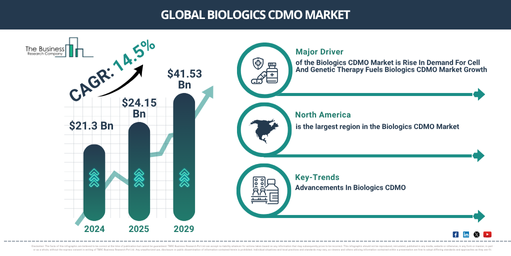
    The market size for biologics CDMO has seen a rapid surge in growth in the past years. It is projected to expand from a value of $21.3 billion in 2024 to a figure of $24.15 billion in 2025, at a compound annual growth rate (CAGR) of 13.4%. The growth witnessed in the past can be credited to factors like an increase in the development of biologics, cost-effectiveness and flexibility, focus on core competencies, regulatory compliance and quality assurance, as well as the globalization of pharmaceutical supply chains.

    The biologics CDMO market is projected to experience accelerated growth over the coming years, with the size potentially reaching a staggering $41.53 billion by 2029, reflecting a compound annual growth rate (CAGR) of 14.5%. This growth expected in the forecast period can be linked to factors like the burgeoning demand for biologic therapies, the rise of biosimilars and biobetters, infusion of capital in biomanufacturing infrastructure, the shift towards outsourcing intricate processes, emphasis on building resilient supply chains and risk management, harmonization of regulatory mandates, and faster approval procedures. The forecast period is likely to be characterized by key trends such as the expansion in capabilities to provide comprehensive solutions, the appropriation of single-use technologies, integrating continuous manufacturing processes, and the surfacing of specialized CDMOs.

    Download a free sample to assess the report’s scope and structure:

    https://www.thebusinessresearchcompany.com/sample.aspx?id=14056&type=smp

    What Are the Major Market Drivers Behind the Rising Adoption of Biologics CDMO Market?

    The escalating need for cell and gene therapy is set to turbocharge the expansion of the biologic CDMO market. These novel medical methods use live cells or genetic components to tackle the root causes of diseases at the cellular or genetic tier, offering potential remedies for disorders that are hard to control or incurable with conventional drugs. The appeal for cell and gene therapy is on the upswing due to their ability to present groundbreaking treatments for diseases by tackling the fundamental genetic or cellular triggers. Biologic CDMOs have proficiency in managing live cells, viral vectors, and genetic elements, promoting safe and effective production of cell and gene therapies. They also support biopharmaceutical firms to traverse regulatory stipulations and technical obstacles, thus easing the transition from research to clinical use. For example, The American Society of Gene & Cell Therapy (ASGCT), a leading professional organization in the US, reported that as of January 2023, the gene, cell, and RNA therapy pipeline witnessed a 7% increase in 2022, totalling 3,726 therapies under development. Among these, gene therapies account for 55%, non-genetically modified cell therapies contribute 22%, and RNA therapies make up 23%. Thus, the soaring demand for cell and genetic therapy is fuelling the expansion of the biologic CDMO market.

    Which Key Market Segments Comprise the Biologics CDMO Market and Drive Its Revenue Growth?

    The biologics cdmo market covered in this report is segmented –

    1) By Cell Type: Mammalian, Non-Mammalian

    2) By Product Type: Biologics, Biosimilars

    Subsegments:

    1) By Mammalian: Chinese Hamster Ovary (CHO) Cells, Human Embryonic Kidney (HEK) Cells, Other Mammalian Cells

    2) By Non-Mammalian: Yeast Cells, Bacterial Cells, Insect Cells, Other Non-Mammalian Cells

    Request customized data on this market:

    https://www.thebusinessresearchcompany.com/customise?id=14056&type=smp

    Which Areas Are Leading Regions in the Biologics CDMO Market Expansion Across the Globe?

    North America was the largest region in the biologics CDMO market in 2024. Asia-Pacific is expected to be the fastest-growing region in the forecast period. The regions covered in the biologics CDMO market report are Asia-Pacific, Western Europe, Eastern Europe, North America, South America, Middle East, Africa.

    What Are the Strategic Trends Steering theBiologics CDMO Market Direction?

    Leading firms in the biologics CDMO market are designing cutting-edge solutions, including new cell lines, to improve efficiency and capabilities in biopharmaceutical development and manufacturing. These advances enable the production of therapeutic antibodies with superior effectiveness, addressing R&D obstacles in immunotherapy. For instance, in November 2023, Lonza Group, a Swiss manufacturer specializing in pharmaceuticals and biotechnology, unveiled GS Effex cell lines. These cell lines are designed to generate antibodies completely devoid of the sugar molecule fucose, thereby demonstrating enhanced potency without trading off other performance characteristics. This innovation solves immunotherapy R&D hurdles associated with the necessity for increased potency in antibody therapeutics. It is a robust, expandable, and efficient cell line that offers a lasting solution for therapeutic development, spanning from initial discovery research to commercial production.

    View the full report here:

    https://www.thebusinessresearchcompany.com/report/biologics-cdmo-global-market-report

    How Is the Biologics CDMO Market Conceptually Defined?

    A biologics contract development and manufacturing organization (CDMO) is a service provider that supports pharmaceutical companies in the development and production of biologic drugs, which include vaccines, blood and blood components, allergens, somatic cells, gene therapies, tissues, and recombinant therapeutic proteins.

    Purchase the full report and get a swift delivery:

    https://www.thebusinessresearchcompany.com/purchaseoptions.aspx?id=14056

    About The Business Research Company:

    With over 15000+ reports from 27 industries covering 60+ geographies, The Business Research Company has built a reputation for offering comprehensive, data-rich research and insights. Armed with 1,500,000 datasets, the optimistic contribution of in-depth secondary research, and unique insights from industry leaders, you can get the information you need to stay ahead in the game.

    Get in touch with us:

    The Business Research Company: https://www.thebusinessresearchcompany.com/

    Americas +1 310-496-7795

    Europe +44 7882 955267

    Asia & Others +44 7882 955267 & +91 8897263534

    Email us at info@tbrc.info

    Follow us on:

    LinkedIn: https://in.linkedin.com/company/the-business-research-company

    YouTube: https://www.youtube.com/channel/UC24_fI0rV8cR5DxlCpgmyFQ

    Global Market Model: https://www.thebusinessresearchcompany.com/global-market-model

  • Top Trends Driving Innovation and Change in the Automated Liquid Handling Systems Market: Advancements In Automated Liquid Handling

    Top Trends Driving Innovation and Change in the Automated Liquid Handling Systems Market: Advancements In Automated Liquid Handling

    Claim your 30% discount on Global Market Reports with code ONLINE30. Limited time only.

    What Are the Key Projections for the CAGR of the Automated Liquid Handling Systems Market Size From 2025 to 2034?

    The market size for automated liquid handling systems has seen significant expansion in recent years. It is projected to increase from $3.92 billion in 2024 to $4.19 billion in 2025, achieving a compound annual growth rate (CAGR) of 6.9%. The historic growth can be credited to an amplified demand for high-throughput screening, expansion in the pharmaceutical and biotechnology sectors, the requirement for precision and accuracy in liquid handling, escalated laboratory automation, growing acceptance of personalized medicine, broadening of drug discovery and development, and improved cost and time efficiency.

    In the foreseeable future, a promising escalation is projected in the market size of automated liquid handling systems, which is estimated to reach a value of $5.44 billion by 2029, growing at a compound annual growth rate (CAGR) of 6.8%. The growth during the projected period will be driven by the expediting of drug finding processes, expansion of genomics and proteomics research, a surge in high-throughput diagnostics demand, market penetration in emerging economies, a shift towards miniaturization, and a laser-focus on enhancing reproducibility along with data quality. Key trends set to frame the forecast period encompass the adoption of high-capacity systems, pharmaceutical industries’ growth, integration of robotic arms, the advent of miniature systems, collaboration between service providers and labs, diagnostic laboratories enlarging their operations, the acceptance of hands-free technologies, and a heightened focus on adherence to regulations.

    Download a free sample to assess the report’s scope and structure:

    https://www.thebusinessresearchcompany.com/sample.aspx?id=14850&type=smp

    What External and Internal Drivers Are Contributing to the Growth of theAutomated Liquid Handling Systems Market?

    The escalating occurrence of chronic illnesses is anticipated to fuel the expansion of the automated liquid handling systems market. Chronic diseases are long-term conditions that can be controlled but most likely cannot be fully cured. Their rising occurrence is bound to unhealthy dietary patterns, sedentary behavior characterized by prolonged sitting, and a decline in physical activity. Automated liquid handling systems provide increased accuracy, repeatability, and flow rate when compared to manual pipetting, making them crucial in the pharmaceutical and biotech sectors. For example, a report by the American College of Cardiology, a non-profit medical organization based in the US, in August 2022, projected significant increases across all four key cardiovascular risk factors from 2025 to 2060 in the US. Diabetes will see the greatest percentage increase, with a hike of 39.3% reaching 55 million individuals, followed by dyslipidemia (27.6% to 126 million), hypertension (25.1% to 162 million), and obesity (18.3% to 126 million). Additionally, strokes (33.8% to 15 million) and heart failure (33.4% to 13 million) are predicted to rise significantly, with ischemic heart disease (30.7% to 29 million) and heart attack (16.9% to 16 million) trailing closely behind. Consequently, the amplifying prevalence of chronic diseases is catalyzing the expansion of the automated liquid handling systems market.

    What Segment Types Define the Automated Liquid Handling Systems Market Structure?

    The automated liquid handling systems market covered in this report is segmented –

    1) By Type: Automated Liquid Handling System, Semi-automated Liquid Handling System

    2) By Application: Drug Discovery And ADME-Tox Research, Cancer And Genomic Research, Bioprocessing Or Biotechnology, Other Applications

    3) By End User: Contract Research Organizations, Pharmaceutical And Biotechnology, Academic And Research Institutes

    Subsegments:

    1) By Automated Liquid Handling System: Single-Channel Automated Systems, Multi-Channel Automated Systems, Integrated Liquid Handling Systems, Robotic Liquid Handling Systems

    2) By Semi-Automated Liquid Handling System: Manual-Supported Semi-Automated Systems, Partially Automated Pipetting Systems, Semi-Automated Dispensing Systems

    Request customized data on this market:

    https://www.thebusinessresearchcompany.com/customise?id=14850&type=smp

    Which Geographic Areas Hold the Strongest Growth Potential in the Automated Liquid Handling Systems Market?

    North America was the largest region in the automated liquid handling systems market in 2024. Asia Pacific is expected to be the fastest-growing region in the forecast period. The regions covered in the automated liquid handling systems market report are Asia-Pacific, Western Europe, Eastern Europe, North America, South America, Middle East, Africa.

    What Long-Term Trends Are Transforming the Competitive Landscape of the Automated Liquid Handling Systems Market?

    Firms that part of the automated liquid handling systems industry are concentrating on advancing dual-core pipetting technology offerings in order to solidify their market standing. Dual-core pipetting technology is a high-end liquid handling mechanism that is engineered to deliver precise and accurate liquid dispensing in lab conditions. For instance, SPT Labtech, an automated liquid handling producer and creator situated in the UK, unveiled the apricot DC1 at SLAS 2022 in Boston in February 2022. This compact automated liquid handling system, regulated via software, enhances the throughput, standardization, and quality of data for a variety of applications. It merges four separate pipetting tools into a single compact device, making it ideal for large-scale and small-scale single- and multichannel pipetting activities.

    View the full report here:

    https://www.thebusinessresearchcompany.com/report/automated-liquid-handling-systems-global-market-report

    What Is the Definition of the Automated Liquid Handling Systems Market?

    Automated liquid handling systems refer to computerized devices that perform liquid transfers in laboratory settings. These systems utilize software to execute various protocols, offering precise sample preparation for high-throughput sequencing, screening, bioassays, and more. They can include components such as heating or cooling, shaking, and centrifugal force for contactless liquid removal.

    Purchase the full report and get a swift delivery:

    https://www.thebusinessresearchcompany.com/purchaseoptions.aspx?id=14850

    About The Business Research Company:

    With over 15000+ reports from 27 industries covering 60+ geographies, The Business Research Company has built a reputation for offering comprehensive, data-rich research and insights. Armed with 1,500,000 datasets, the optimistic contribution of in-depth secondary research, and unique insights from industry leaders, you can get the information you need to stay ahead in the game.

    Get in touch with us:

    The Business Research Company: https://www.thebusinessresearchcompany.com/

    Americas +1 310-496-7795

    Europe +44 7882 955267

    Asia & Others +44 7882 955267 & +91 8897263534

    Email us at info@tbrc.info

    Follow us on:

    LinkedIn: https://in.linkedin.com/company/the-business-research-company

    YouTube: https://www.youtube.com/channel/UC24_fI0rV8cR5DxlCpgmyFQ

    Global Market Model: https://www.thebusinessresearchcompany.com/global-market-model

  • Emerging Trends Redefining the Artificial Tears Market Landscape: Leading Companies Innovate With Over-The-Counter (OTC) Digital Therapeutics For ADHD In The US Market

    Emerging Trends Redefining the Artificial Tears Market Landscape: Leading Companies Innovate With Over-The-Counter (OTC) Digital Therapeutics For ADHD In The US Market

    Claim your 30% discount on Global Market Reports with code ONLINE30. Limited time only.

    How Has The Attention Deficit Hyperactivity Disorder (ADHD) Therapeutics Market Growth Evolved From 2024 To 2025, And What’s Ahead?

    The market size for therapeutics in attention deficit hyperactivity disorder (adhd) has seen a robust growth in the past few years. It is set to expand from $13.21 billion in 2024 to hit $13.97 billion in 2025, marking a compound annual growth rate (CAGR) of 5.7%. The historical growth in this field is due to factors like increased awareness and diagnostic screenings, a rising number of ADHD cases, advancements in treatment methods, development in healthcare infrastructure, and the broadening of health insurance coverage.

    In the coming years, the market for therapeutics in attention deficit hyperactivity disorder (ADHD) is forecasted to experience significant expansion, reaching a valuation of $17 billion in 2029, flaunting a compound annual growth rate (CAGR) of 5.0%. This projected growth in the specified period can be credited to factors such as genetic research and personalized medicine, a rise in mental health consciousness, mental health drives on a global and national level, the growth of telehealth, and the incorporation of behavioral therapies. The prediction period is also likely to witness an array of trends like advancements in treatment technology, research and development efforts, inclusion of digital therapeutics, adoption of precision medicine techniques and novel developments in drug delivery systems.

    Download a free sample to assess the report’s scope and structure:

    https://www.thebusinessresearchcompany.com/sample.aspx?id=14042&type=smp

    What Are the Core Market Drivers Propelling Growth in the Attention Deficit Hyperactivity Disorder (ADHD) Therapeutics Industry?

    The growth of the attention-deficit hyperactivity disorder (ADHD) therapeutic market is anticipated to be fueled by the escalating incidence of ADHD. The surging incidence refers to a rising number of people diagnosed with this neurodevelopmental disorder. ADHD therapeutics are designed to address the complex nature of the disorder with the goal to enhance symptom control, functional disability, quality of life, and general well-being for those living with ADHD. For example, as reported by the Guardian, a US-based news publisher, in January 2023, around 170,000 identified patients were recommended ADHD therapeutics in 2022, marking a 20.4% surge from the 141,000 diagnosed patients in the same span in 2021. Thus, the escalating incidence of ADHD is boosting the growth of the ADHD therapeutic market.

    How Is the Attention Deficit Hyperactivity Disorder (ADHD) Therapeutics Market Segmented?

    The attention deficit hyperactivity disorder (adhd) therapeutics market covered in this report is segmented –

    1) By Drug Type: Stimulants, Non-Stimulants

    2) By Psychotherapy: Behavior Therapy, Cognitive Behavioral Therapy, Interpersonal Psychotherapy, Family Therapy

    3) By Age Group: Pediatric And Adolescent, Adult

    4) By Distribution Channel: Hospital Pharmacies, Specialty Clinics, Retail Pharmacies, E-Commerce

    Subsegments:

    1) By Stimulants: Amphetamine-Based Stimulants, Methylphenidate-Based Stimulants

    2) By Non-Stimulants: Atomoxetine, Guanfacine, Clonidine

    Request customized data on this market:

    https://www.thebusinessresearchcompany.com/customise?id=14042&type=smp

    Which Regions Are Driving the Next Phase of the Attention Deficit Hyperactivity Disorder (ADHD) Therapeutics Market Growth?

    North America was the largest region in the attention deficit hyperactivity disorder (ADHD) therapeutic market in 2024. Asia-Pacific is expected to be the fastest-growing region in the forecast period. The regions covered in the attention deficit hyperactivity disorder (ADHD) therapeutics market report are Asia-Pacific, Western Europe, Eastern Europe, North America, South America, Middle East, Africa.

    What Key Market Trends and Innovations Are Shaping the Future of the Attention Deficit Hyperactivity Disorder (ADHD) Therapeutics Industry?

    Key players in the ADHD therapeutics market are increasingly putting their attention towards the creation of digital advancements such as Endeavor over-the-counter (OTC) versions of digital therapeutics for ADHD. This move is due to the escalating demand for digital solutions and a surge in the need for remote healthcare. Digital therapeutics are evidence-based treatments propelled by high-grade software that aim to prevent, manage, or cure medical disorders or diseases. These treatments can be used standalone or with conventional medical methods. For example, in June 2023, Akili, an American digital health firm, unveiled an over-the-counter (OTC) version of its videogame-centered digital therapy for adults with ADHD named EndeavorOTC. This OTC version aims to enhance attention, time managing, and organizing skills in adults. This followed the positive outcome from Akili’s FDA-approved prescription video game treatment, EndeavorRx, for children with ADHD. The OTC alternative offers adults a non-drug method to control their ADHD symptoms.

    View the full report here:

    https://www.thebusinessresearchcompany.com/report/attention-deficit-hyperactivity-disorder-adhd-therapeutics-global-market-report

    How Is the Attention Deficit Hyperactivity Disorder (ADHD) Therapeutics Market Defined and What Are Its Core Parameters?

    Attention deficit hyperactivity disorder (ADHD) therapeutics refers to the range of treatments and interventions aimed at managing the symptoms and improving the functioning of individuals diagnosed with ADHD. ADHD is a neurodevelopmental disorder characterized by symptoms such as inattention, hyperactivity, and impulsivity that significantly interfere with daily functioning and development. The primary objective of ADHD therapeutics is to enhance attention, impulse control, and overall functioning in daily activities, thereby improving the quality of life for individuals affected by ADHD.

    Purchase the full report and get a swift delivery:

    https://www.thebusinessresearchcompany.com/purchaseoptions.aspx?id=14042

    About The Business Research Company:

    With over 15000+ reports from 27 industries covering 60+ geographies, The Business Research Company has built a reputation for offering comprehensive, data-rich research and insights. Armed with 1,500,000 datasets, the optimistic contribution of in-depth secondary research, and unique insights from industry leaders, you can get the information you need to stay ahead in the game.

    Get in touch with us:

    The Business Research Company: https://www.thebusinessresearchcompany.com/

    Americas +1 310-496-7795

    Europe +44 7882 955267

    Asia & Others +44 7882 955267 & +91 8897263534

    Email us at info@tbrc.info

    Follow us on:

    LinkedIn: https://in.linkedin.com/company/the-business-research-company

    YouTube: https://www.youtube.com/channel/UC24_fI0rV8cR5DxlCpgmyFQ

    Global Market Model: https://www.thebusinessresearchcompany.com/global-market-model
  • Artificial Tears Market 2025-2034: Key Highlights, Growth Dynamics, and Emerging Trends

    Artificial Tears Market 2025-2034: Key Highlights, Growth Dynamics, and Emerging Trends

    Claim your 30% discount on Global Market Reports with code ONLINE30. Limited time only.

    What is the Projected CAGR for the Artificial Tears Market Size from 2025 to 2034?

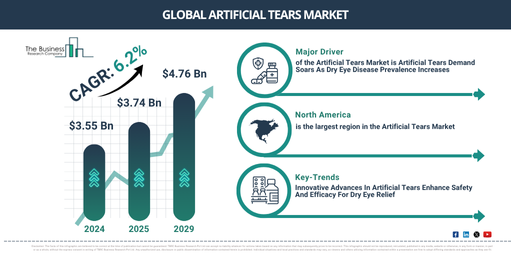
    In the past few years, the market size for artificial tears has seen robust growth. This market, which is set to raise from a value of $3.55 billion in 2024 to $3.74 billion in 2025, will expand at a compound annual growth rate (CAGR) of 5.5%. The notable growth witnessed in the historical period is mainly due to factors such as an increase in the aged population, extended screen usage, expenditure on healthcare, a shift from prescription to over-the-counter products and changes in regulatory landscape.

    We predict a robust expansion in the artificial tears market in the forthcoming years, ultimately growing to approximately $4.76 billion in 2029. This increase represents a compound annual growth rate (CAGR) of 6.2%. This anticipated growth during this predicative period is primarily due to the rise in occurrences of dry eye syndrome, an escalation in the usage of contact lenses, rapid urbanisation worldwide, a surge in pollution, and an increase in e-commerce. Key trends for this future period are technological progress, the synthesis of AI and technology, collaboration with healthcare providers, the inclusion of natural ingredients, advancements in product development, the evolution of drug delivery systems, and the creation of sustainable and environmentally-friendly products.

    Download a free sample to assess the report’s scope and structure:

    https://www.thebusinessresearchcompany.com/sample.aspx?id=13799&type=smp

    Which Primay Drivers Are Accelerating Growth in the Artificial Tears Market?

    The anticipated growth of the artificial tear market is largely due to the increasing incidents of dry eye disease. This eye condition, characterized by inadequate tear production or substandard tear quality resulting in discomfort and irritation, is becoming more prevalent. Artificial tears are used to augment the natural tear production, providing lubrication and customary relief for dry eyes. For example, in March 2022, Macquarie University in Australia conducted a survey involving 5,000 participants. The results showed that out of individuals over the age of 50, 13% (15 out of 120) presented clinical evidence of dry eye disease (DED). This 13% was further classified as 8.2% mild, 2.5% moderate, and 1.6% severe. In addition, a report from Eyes On Eyecare, a digital ophthalmology news source based in the US, stated that in March 2022, the employment of prescription and in-office therapies for dry eye disease saw an increase from 5.8% in 2021 to 7.56% in 2022. During the same period, the use of prescription treatments like topical steroids saw a notable increase from 0.9% to 9.1%. This growing occurrence of dry eye disease is, therefore, a significant factor contributing to the expansion of the artificial tear market.

    Which Primary Segments of the Artificial Tears Market Are Driving Growth and Industry Transformations?

    The artificial tears market covered in this report is segmented –

    1) By Type: Glycerin Tears, Cellulose Tears, Oil-Based Emulsion Tears, Polyethylene Glycol-based Tears, Sodium Hyaluronate Based Artificial Tears, Propylene Glycol-based Tears

    2) By Dosage: Suspensions, Solution, Ointment, Emulsion, Gel, Spray

    3) By Indication: Dry Eye Syndrome, Allergies, Infections, UV And Blue Light Protection, Contact Lens Moisture Retention, Other Indications

    4) By Distribution: Retail Pharmacies, Hospital Pharmacies, Online Pharmacies, Ophthalmic Stores

    Subsegments:

    1) By Glycerin Tears: Preserved Glycerin Tears, Preservative-Free Glycerin Tears

    2) By Cellulose Tears: Hydroxypropyl Methylcellulose (HPMC) Tears, Carboxymethylcellulose (CMC) Tears

    3) By Oil-Based Emulsion Tears: Mineral Oil-based Tears, Castor Oil-based Tears

    4) By Polyethylene Glycol-based Tears: PEG 400 Tears, PEG 3350 Tears

    5) By Sodium Hyaluronate Based Artificial Tears: Low Molecular Weight Sodium Hyaluronate Tears, High Molecular Weight Sodium Hyaluronate Tears

    6) By Propylene Glycol-based Tears: Preserved Propylene Glycol Tears, Preservative-Free Propylene Glycol Tears

    Request customized data on this market:

    https://www.thebusinessresearchcompany.com/customise?id=13799&type=smp

    Which Regions Are Key Players in the Growth of the #Which Primay Drivers Are Accelerating Growth in the Artificial Tears Market?# Market?

    North America was the largest region in the artificial tears market in 2024. Asia-Pacific is expected to be the fastest-growing region in the forecast period. The regions covered in the artificial tears market report are Asia-Pacific, Western Europe, Eastern Europe, North America, South America, Middle East, Africa.

    Which Technological Trends Are Reshaping the Artificial Tears Industry Dynamics?

    Large corporations in the artificial tears market are optimizing their products by incorporating cutting-edge technologies, including patented pureflow technology, to increase their safety and user-friendly aspects. This patented pureflow method is a unique delivery system employing a one-directional valve to enable sterile dispensing of preservative-free eye drops, and it prevents contamination while securing product purity. For example, Alcon Inc., a Swiss-based pharmaceutical and medical device firm, unveiled its Systane Complete Preservative-Free Lubricant Eye Drops in January 2022. These progressive artificial tears are specially crafted to alleviate symptoms related to all major dry eye variants, such as evaporative dry eye and aqueous tear deficiency. Being free from preservatives, they afford up to eight hours of sustained relief by moisturizing and shielding each layer of the tear film. Through the application of nano-droplet technology, these drops facilitate speedy hydration to the eye surface, preventing tear evaporation and providing immediate and efficient comfort. Packaged in an easily portable multi-dose bottle equipped with PureFlow technology, the design safeguards users by preventing contamination, thus making it an ideal selection for frequent users and individuals with sensitive eyes.

    View the full report here:

    https://www.thebusinessresearchcompany.com/report/artificial-tears-global-market-report

    What Parameters Are Used to Define the Artificial Tears Market?

    Artificial tears are eye drops, gels, or ointments that are used to relieve dryness and irritation of the ocular surface. It is commonly used to treat dry eye syndrome, a condition caused by reduced tear production or increased tear evaporation.

    Purchase the full report and get a swift delivery:

    https://www.thebusinessresearchcompany.com/purchaseoptions.aspx?id=13799

    About The Business Research Company:

    With over 15000+ reports from 27 industries covering 60+ geographies, The Business Research Company has built a reputation for offering comprehensive, data-rich research and insights. Armed with 1,500,000 datasets, the optimistic contribution of in-depth secondary research, and unique insights from industry leaders, you can get the information you need to stay ahead in the game.

    Get in touch with us:

    The Business Research Company: https://www.thebusinessresearchcompany.com/

    Americas +1 310-496-7795

    Europe +44 7882 955267

    Asia & Others +44 7882 955267 & +91 8897263534

    Email us at info@tbrc.info

    Follow us on:

    LinkedIn: https://in.linkedin.com/company/the-business-research-company

    YouTube: https://www.youtube.com/channel/UC24_fI0rV8cR5DxlCpgmyFQ

    Global Market Model: https://www.thebusinessresearchcompany.com/global-market-model
  • Artificial Intelligence (AI) In Predictive Toxicology Growth Trajectory: Key Forecasts and Strategic Insights

    Artificial Intelligence (AI) In Predictive Toxicology Growth Trajectory: Key Forecasts and Strategic Insights

    Claim your 30% discount on Global Market Reports with code ONLINE30. Limited time only.

    What Is the Current and Projected Market Size of the Artificial Intelligence (AI) In Predictive Toxicology Market Through 2034?

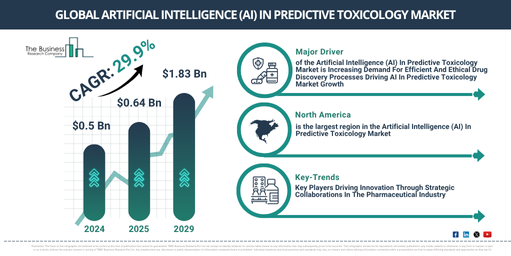
    The market size of artificial intelligence (AI) in predictive toxicology has seen a rapid expansion in recent times. The market which was valued at $0.5 billion in 2024 is projected to increase to $0.64 billion in 2025, showcasing a compound annual growth rate (CAGR) of 29.5%. Factors driving this growth during the previous period include heightened regulatory demands related to toxicity evaluation, escalating apprehensions about chemical safety, the existence of extensive datasets for model training, increasing expenses and ethical issues linked to animal testing, and the requirement for swifter, more cost-efficient toxicity screening procedures.

    In the coming years, the artificial intelligence (AI) market in predictive toxicology is set to experience a significant surge in size, escalating to a market value of $1.83 billion in 2029, with a compound annual growth rate (CAGR) of 29.9%. This anticipated expansion in the forecast period is largely due to factors such as the rise of explainable AI technology for toxicity predictions, an increasing demand for tailored toxicity assessments, recognition and standardization of AI-enabled toxicity predictions by regulatory bodies, an upswing in outsourced predictive toxicology services, and a broadened utility of AI in the sectors of drug discovery and development. The forecasting period will also witness several key trends, such as a shift towards using 3D cell culture models for toxicity tests, the emergence of federated learning strategies for joint toxicity prediction, the use of generative models for mapping out chemical toxicity pathways, the application of natural language processing to extract toxicity information from written sources, and increased precedence of virtual screening platforms to prioritize chemical testing.

    Download a free sample to assess the report’s scope and structure:

    https://www.thebusinessresearchcompany.com/sample.aspx?id=14253&type=smp

    Which Factors and External Forces Are Driving Demand in the Artificial Intelligence (AI) In Predictive Toxicology Market?

    The escalating need for efficient and morally acceptable drug discovery processes is anticipated to fuel the expansion of the artificial intelligence (AI) in predictive toxicology market in the future. The complexity and fluidity of drug discovery, a process involving the careful investigation, creation, and assessment of chemical compounds to unearth potential therapeutic agents for disease relief and overall health improvement is noteworthy. Efficient and ethical drug discovery calls for the adoption of superior technologies and an emphasis on conscientious research to generate new therapeutic agents. The rising instances of chronic diseases, the burgeoning move towards personalized medicine, and the growing prevalence of aging-related diseases fuel the demand for such efficient and ethical drug discovery. AI’s role in predictive toxicology boosts drug discovery by adeptly analyzing huge datasets to forecast possible toxicological outcomes, thus accelerating drug development while adhering to ethical norms. For example, the European Federation of Pharmaceutical Industries and Associations (EFPIA), a trade body based in Belgium, representing the pharmaceutical sector, reported that in June 2023, the overall pharmaceutical R&D expenditure in Europe reached $49,500 million (€44,500 million) in 2022, a climb of about 6.45% from $46,500 million (€42,533 million) in 2021. Hence, the mounting demand for such efficient and morally sound drug discovery processes fuels the expansion of the AI in predictive toxicology market.

    Which Segments in the Artificial Intelligence (AI) In Predictive Toxicology Offer the Most Growth?

    The artificial intelligence (ai) in predictive toxicology market covered in this report is segmented –

    1) By Component: Solution, Services

    2) By Technology: Machine Learning, Natural Language Processing, Computer Vision, Other Technologies

    3) By Toxicity Endpoints: Genotoxicity, Hepatotoxicity, Neurotoxicity, Cardiotoxicity, Other Toxicity Endpoints

    4) By End User: Pharmaceutical And Biotechnology Companies, Chemical And Cosmetics, Contract Research Organizations, Other End Users

    Subsegments:

    1) By Solution: Software Platforms, Data Analysis Tools, Predictive Modeling Solutions, Database And Information Systems

    2) By Services: Consulting Services, Training And Support Services, Data Management And Integration Services, Research And Development Services

    Request customized data on this market:

    https://www.thebusinessresearchcompany.com/customise?id=14253&type=smp

    What Are the Fastest-Growing Geographies in the #Which Factors and External Forces Are Driving Demand in the Artificial Intelligence (AI) In Predictive Toxicology Market?# Market?

    North America was the largest region in the artificial intelligence (AI) in predictive toxicology market in 2024. Asia-Pacific is expected to be the fastest-growing region in the forecast period. The regions covered in the artificial intelligence (AI) in predictive toxicology market report are Asia-Pacific, Western Europe, Eastern Europe, North America, South America, Middle East, Africa.

    Which Cutting-Edge Market Trends Are Expected to Drive theArtificial Intelligence (AI) In Predictive Toxicology Market’s Growth?

    Companies that are significant players in the AI predictive toxicology market are using collaborative strategies to expand their market reach and spur innovation. This cooperation aims to employ AI and machine learning methods to better predict and evaluate the toxicity of chemical compounds and drugs. For instance, SyntheticGestalt, a UK-based company specializing in AI research and development with a focus on AI drug discovery solutions, teamed up with Ukraine-based Enamine, a supplier of chemical building blocks, screening compounds, and all-in-one drug discovery services, in January 2024. Their goal was to create a series of AI models to streamline the production of biologically active compounds that can be synthesized easily, and to optimize their physical and chemical, and ADME or Tox (Absorption, Distribution, Metabolism, and Excretion or Toxicity) characteristics. These models will be used in SyntheticGestalt’s endeavors to discover compounds, providing a service both to academia and pharmaceutical firms. Enamine has given access to its vast Enamine REAL database, which houses 38 billion molecules. The data will be incorporated into SyntheticGestalt’s Drug Discovery Service, where it will use distinct AI models to predict the physical and chemical, and ADME or Tox features of compounds. This service will quickly propose enhanced replacement compounds for those that present problems.

    View the full report here:

    https://www.thebusinessresearchcompany.com/report/artificial-intelligence-ai-in-predictive-toxicology-global-market-report

    What Are the Key Elements That Define the Artificial Intelligence (AI) In Predictive Toxicology Market?

    Artificial intelligence (AI) in predictive toxicology refers to the use of artificial intelligence techniques to analyze biological, chemical, and environmental data to predict the potential toxicity of chemicals and compounds. It is used to expedite chemical safety assessments, predict drug toxicity, and prioritize chemicals for further testing.

    Purchase the full report and get a swift delivery:

    https://www.thebusinessresearchcompany.com/purchaseoptions.aspx?id=14253

    About The Business Research Company:

    With over 15000+ reports from 27 industries covering 60+ geographies, The Business Research Company has built a reputation for offering comprehensive, data-rich research and insights. Armed with 1,500,000 datasets, the optimistic contribution of in-depth secondary research, and unique insights from industry leaders, you can get the information you need to stay ahead in the game.

    Get in touch with us:

    The Business Research Company: https://www.thebusinessresearchcompany.com/

    Americas +1 310-496-7795

    Europe +44 7882 955267

    Asia & Others +44 7882 955267 & +91 8897263534

    Email us at info@tbrc.info

    Follow us on:

    LinkedIn: https://in.linkedin.com/company/the-business-research-company

    YouTube: https://www.youtube.com/channel/UC24_fI0rV8cR5DxlCpgmyFQ

    Global Market Model: https://www.thebusinessresearchcompany.com/global-market-model

  • Next-Gen Artificial Intelligence (AI) In Biopharmaceuticals : Market Forecast, Transformation, and Long-Term Trajectories

    Next-Gen Artificial Intelligence (AI) In Biopharmaceuticals : Market Forecast, Transformation, and Long-Term Trajectories

    Claim your 30% discount on Global Market Reports with code ONLINE30. Limited time only.

    What is the Anticipated CAGR of the Artificial Intelligence (AI) In Biopharmaceuticals Market, and What Factors Will Drive It?

    The market size of artificial intelligence (AI) in biopharmaceuticals has experienced a tremendous increase recently. The projection is that it will rise from $1.59 billion in 2024 to $2.1 billion in 2025, demonstrating a compound annual growth rate (CAGR) of 32.2%. The substantial expansion during the historical period can be linked to developments in computational capabilities, the surge of biomedical data, paradigm of precision medicine, as well as regulatory assistance and direction.

    The market size for artificial intelligence (AI) in biopharmaceuticals is projected to witness a substantial increase in the forthcoming years, reaching $6.58 billion by 2029 with a compound annual growth rate (CAGR) of 33.0%. The expected expansion during the forecast period can be credited to advancements in computational biology, the harmonizing of multi-modal data, the meeting point of ai and life sciences, supportive regulatory frameworks, and just and ethical ai principles. Major trends anticipated during the forecast span include the unification of multi-omics data, drug design, and discovery driven by AI, understandable AI and regulatory approval, advancements in technology, evolutions in regulations, and burgeoning opportunities.

    Download a free sample to assess the report’s scope and structure:

    https://www.thebusinessresearchcompany.com/sample.aspx?id=14251&type=smp

    Which Major Market Drivers Are Expected to Boost the Growth Potential of the Artificial Intelligence (AI) In Biopharmaceuticals Market?

    The escalating incidence of chronic diseases is anticipated to spur the expansion of the artificial intelligence (AI) in biopharmaceuticals market in the future. These long-term conditions progress at a slow rate and can endure for many years or even a person’s entire lifespan. They occur due to factors such as lifestyle choices, an aging populace, genetic tendencies, and environmental conditions. AI in biopharmaceuticals is now being increasingly employed to handle these chronic conditions as it can process large quantities of diverse data, detect patterns and customize treatment methods. For example, the Department of Health and Human Services reported in November 2023 that there was an 11 percent rise in new cases of chronic hepatitis B in the United States in 2022 compared to 2021. Consequently, the accelerating prevalence of chronic diseases is fueling the growth of the AI sector in the biopharmaceuticals market.

    Which Key Market Segments Comprise the Artificial Intelligence (AI) In Biopharmaceuticals Market and Drive Its Revenue Growth?

    The artificial intelligence (ai) in biopharmaceuticals market covered in this report is segmented –

    1) By Offering: Hardware, Software, Services

    2) By Deployment: Cloud, On-Premises

    3) By Technology: Machine Learning, Natural Language Processing, Deep Learning, Other Technologies

    4) By Application: Business Process And Supply Chain, Drug Discovery, Medical Imaging And Diagnostics, Precision Medicine

    5) By End-Users: Manufacturers, Contract Research Organizations, Academic And Government Research Institutes

    Subsegments:

    1) By Hardware: High-Performance Computing Systems, AI-Enabled Laboratory Equipment, Data Storage Solutions

    2) By Software: Drug Discovery Platforms, Clinical Trial Management Software, Predictive Analytics Tools, Natural Language Processing Solutions

    3) By Services: Consulting Services, Implementation And Integration Services, Data Management And Analytics Services, Training And Support Services

    Request customized data on this market:

    https://www.thebusinessresearchcompany.com/customise?id=14251&type=smp

    Which Areas Are Leading Regions in the Artificial Intelligence (AI) In Biopharmaceuticals Market Expansion Across the Globe?

    North America was the largest region in the artificial intelligence (AI) in biopharmaceuticals market in 2024. Asia-Pacific is expected to be the fastest-growing region in the forecast period. The regions covered in the artificial intelligence (AI) in biopharmaceuticals market report are Asia-Pacific, Western Europe, Eastern Europe, North America, South America, Middle East, Africa.

    What Are the Key Market Trends in theArtificial Intelligence (AI) In Biopharmaceuticals Market Over the Coming Years?

    Top-tier firms involved in the field of AI within biopharmaceuticals are prioritizing the creation of revolutionary improvements such as the target and lead identification suite AI-driven systems. These systems are aimed at speeding up the discovery of drugs and precision medicine, essentially changing the game within the field of life sciences. These tech-enabled improvements for the rapid discovery of drugs and precision medicine have a wide range of unique techniques for creating new drugs and personalizing therapy for patients. For example, Google LLC, an American-based cloud computing service provider, rolled out two new AI-driven tools – target and lead identification suites – in May 2023. These tools are meant to aid researchers in fortelling and comprehending protein structures, a vital aspect of drug creation. Additionally, this suite will assist researchers in absorbing, retaining, scrutinizing, and sharing vast amounts of genomic data, which is key to precision medicine. Moreover, these instruments aspire to simplify the drug discovery process, lessen expenses, and hasten the availability of new treatments in the market. By offering efficient data management, precise projections of protein structures, and superior genomic analysis capabilities, these tools hope to revolutionize drug development procedures and enhance patient outcomes.

    View the full report here:

    https://www.thebusinessresearchcompany.com/report/artificial-intelligence-ai-in-biopharmaceuticals-global-market-report

    How Is the Artificial Intelligence (AI) In Biopharmaceuticals Market Conceptually Defined?

    Artificial intelligence (AI) in biopharmaceuticals refers to applying various AI techniques to analyze complex biological data and improve various aspects of drug discovery, development, and delivery within the pharmaceutical industry. AI in biopharmaceuticals holds great promise for revolutionizing drug discovery, development, and delivery processes by accelerating timelines, reducing costs, and improving the efficiency and effectiveness of treatments.

    Purchase the full report and get a swift delivery:

    https://www.thebusinessresearchcompany.com/purchaseoptions.aspx?id=14251

    About The Business Research Company:

    With over 15000+ reports from 27 industries covering 60+ geographies, The Business Research Company has built a reputation for offering comprehensive, data-rich research and insights. Armed with 1,500,000 datasets, the optimistic contribution of in-depth secondary research, and unique insights from industry leaders, you can get the information you need to stay ahead in the game.

    Get in touch with us:

    The Business Research Company: https://www.thebusinessresearchcompany.com/

    Americas +1 310-496-7795

    Europe +44 7882 955267

    Asia & Others +44 7882 955267 & +91 8897263534

    Email us at info@tbrc.info

    Follow us on:

    LinkedIn: https://in.linkedin.com/company/the-business-research-company

    YouTube: https://www.youtube.com/channel/UC24_fI0rV8cR5DxlCpgmyFQ

    Global Market Model: https://www.thebusinessresearchcompany.com/global-market-model

  • Antiparasitic Drugs Market Overview 2025: Competitive Shifts, Forecast Models, and Emerging Opportunities

    Claim your 30% discount on Global Market Reports with code ONLINE30. Limited time only.

    What Are the Key Milestones in the Antiparasitic Drugs Market’s Growth Trajectory From 2025 To 2034?

    The market size of antiparasitic drugs has seen a strong surge in recent times. It is projected to expand from $24.06 billion in 2024 to $25.58 billion in 2025, displaying a compound annual growth rate (CAGR) of 6.3%. The growth seen in the historic period is a result of an increased incidence of parasitic infections, resilience to prevailing treatments, and worldwide health initiatives.

    Over the coming years, the antiparasitic drugs market is forecasted to witness a robust increase in its size. It is predicted to reach a value of $33.29 billion by 2029, expanding at a compound annual growth rate (CAGR) of 6.8%. The escalation in the forthcoming period can be credited to the rise of new parasitic dangers, climate change, vector-borne diseases, and a heightened global emphasis on health security and healthcare accessibility. The forthcoming period anticipates a surge in trends such as advancements in the development of drugs, targeted treatments, combination therapies, collaborations between private and public sectors, telemedicine, and remote diagnostics.

    Download a free sample to assess the report’s scope and structure:

    https://www.thebusinessresearchcompany.com/sample.aspx?id=12927&type=smp

    What Are the Core Growth Drivers Propelling the Antiparasitic Drugs Market Forward?

    Growth in the antiparasitic drugs market is anticipated to be driven by the escalating occurrence of vector-borne diseases. These infectious maladies, which include malaria, dengue, and yellow fever, are transmitted to humans or other animals by arthropods, predominantly mosquitoes, ticks, and flies. Antiparasitic medications are instrumental in thwarting the transmission of these diseases, as they eliminate the parasites responsible. Malaria, for example, is often treated with antiparasitic drugs like chloroquine, doxycycline, and atovaquone-proguanil. An illustration of the escalating infection rates is seen in data from the US Centers for Disease Control and Prevention in June 2024, revealing that over 9.7 million dengue cases were recorded across the Americas between January to June 2024, more than doubling the 4.6 million cases reported in 2023. Furthermore, Puerto Rico reported 1,498 dengue cases in the United States, with an additional 745 cases detected among U.S. travelers returning from affected regions. Consequently, this rising prevalence of vector-borne diseases is stimulating the growth of the antiparasitic drugs market.

    What Segment Types Define the Antiparasitic Drugs Market Structure?

    The antiparasitic drugs market covered in this report is segmented –

    1) By Product Type: Anthelmintics, Antiprotozoals, Ectoparasiticide, Other Products

    2) By Treatment: Avermectins, Bezimidazoles, Pyrimidines, Organophosphates, Imidazolesthiazoles

    3) By Route of Administration: Oral, Injectable, Topical

    4) By End User: Hospitals, Homecare, Specialty Clinics, Other End Users

    Subsegments:

    1) By Anthelmintics: Benzimidazoles, Ivermectin, Pyrantel Pamoate, Praziquantel

    2) By Antiprotozoals: Metronidazole, Tinidazole, Nitazoxanide, Pentamidine

    3) By Ectoparasiticides: Permethrin, Malathion, Lindane, Fipronil

    4) By Other Products: Combination Antiparasitic Drugs, Novel Antiparasitic Agents

    Request customized data on this market:

    https://www.thebusinessresearchcompany.com/customise?id=12927&type=smp

    Which Geographic Areas Hold the Strongest Growth Potential in the Antiparasitic Drugs Market?

    North America was the largest region in the antiparasitic drugs market in 2024. Asia-Pacific is expected to be the fastest-growing region in the forecast period. The regions covered in antiparasitic drugs market report are Asia-Pacific, Western Europe, Eastern Europe, North America, South America, Middle East and Africa.

    Which Emerging Trends that Are Influencing theAntiparasitic Drugs Industry Evolution?

    Key players in the antiparasitic drugs market are prioritizing the creation of innovative solutions such as chewable veterinary drugs to boost ease of use and enhance pet adherence. Chewable veterinary drugs are tasty, simple to administer tablets or treats specifically created to deliver medication to pets. They improve pet adherence by making the treatment more enjoyable and less stressful. For instance, in April 2024, C.H. Boehringer Sohn AG and Co. KG, a pharmaceutical company based in Germany, rolled out NexGard Spectra for comprehensive parasite regulation. NexGard SPECTRA is a soft, chewable treat with a pleasing flavor that provides an all-round internal and external parasite control for dogs, effectively combating fleas, ticks, heartworms, and various intestinal worms in just a single monthly dosage. It shows fast action by eliminating fleas within four hours after administration and reaches over 99% effectiveness against multiple parasites shortly after.

    View the full report here:

    https://www.thebusinessresearchcompany.com/report/antiparasitic-drugs-global-market-report

    What Is the Definition of the Antiparasitic Drugs Market?

    Antiparasitic drugs are medications used to treat infections caused by various parasites that can infect humans, animals, or plants. Parasites are organisms that live on or within a host organism and derive their nutrients from it, often causing harm to the host in the process. Antiparasitic drugs target these parasites to either kill them or inhibit their growth.

    Purchase the full report and get a swift delivery:

    https://www.thebusinessresearchcompany.com/purchaseoptions.aspx?id=12927

    About The Business Research Company:

    With over 15000+ reports from 27 industries covering 60+ geographies, The Business Research Company has built a reputation for offering comprehensive, data-rich research and insights. Armed with 1,500,000 datasets, the optimistic contribution of in-depth secondary research, and unique insights from industry leaders, you can get the information you need to stay ahead in the game.

    Get in touch with us:

    The Business Research Company: https://www.thebusinessresearchcompany.com/

    Americas +1 310-496-7795

    Europe +44 7882 955267

    Asia & Others +44 7882 955267 & +91 8897263534

    Email us at info@tbrc.info

    Follow us on:

    LinkedIn: https://in.linkedin.com/company/the-business-research-company

    YouTube: https://www.youtube.com/channel/UC24_fI0rV8cR5DxlCpgmyFQ

    Global Market Model: https://www.thebusinessresearchcompany.com/global-market-model

  • From Insight to Impact: Strategic Growth Mapping in the Anti-Neoplastic Agents Market

    From Insight to Impact: Strategic Growth Mapping in the Anti-Neoplastic Agents Market

    Claim your 30% discount on Global Market Reports with code ONLINE30. Limited time only.

    How Has The Anti-Neoplastic Agents Market Size Shifted, And What Is the Outlook Through 2034?

    The market for anti-neoplastic agents has been witnessing robust growth in recent years. It is projected to expand from $130.01 billion in 2024 to $140.9 billion in 2025, marking a compound annual growth rate (CAGR) of 8.4%. Factors contributing to the growth trend in the past have been a rise in the prevalence of cancer, increasing demand for treatments, escalating preference for minimally invasive procedures in cancer therapy, and the necessity for cost-effective anti-neoplastic treatment options.

    The market for anti-neoplastic agents is projected to experience robust growth over the coming years, with an expected valuation of $197.68 billion by 2029, fueled by a compound annual growth rate (CAGR) of 8.8%. Factors contributing to this projected expansion during the predicted period include increased patient education and awareness, government initiatives, a rising demand for individualized cancer therapies, and a heightened emphasis on the quality of life during cancer treatment. Key trends to watch for during the forecast period encompass progress in oncology research, the creation of targeted therapies, innovations in biotechnology, and advancements in diagnostic tools.

    Download a free sample to assess the report’s scope and structure:

    https://www.thebusinessresearchcompany.com/sample.aspx?id=12901&type=smp

    What are the Fundamental Drivers and Innovations Shaping the Anti-Neoplastic Agents Market?

    The rising incidence of cancer is likely to fuel the expansion of the antineoplastic agent market. Essentially, cancer is a collection of diseases with the potential to occur in virtually any organ or tissue when rogue cells proliferate uncontrollably, exceed their usual boundaries, and either metastasize to other organs or infiltrate adjacent body parts. Antineoplastic agents are vital in combating cancer, limiting the growth and division of cancerous cells through multiple strategies, such as causing DNA damage, hindering the cell cycle, and disrupting crucial cellular pathways. For example, the International Agency for Research on Cancer (IARC), based in France and dedicated to fostering international cooperation in cancer research, reported in February 2024 that the cancer burden is anticipated to rise to over 35 million by 2050, marking a 77% increase from the estimated 20 million in 2022. Therefore, the sharp rise in cancer diagnoses is propelling the antineoplastic agent market’s expansion.

    How Is the Anti-Neoplastic Agents Market Segmented?

    The anti-neoplastic agents market covered in this report is segmented –

    1) By Type: Alkylating Agents, Antimetabolites, Hormones And Antagonists, Miscellaneous

    2) By Disease Type: Gastrointestinal Cancer, Prostate Cancer, Lung Cancer, Breast Cancer, Other Disease Types

    3) By End User: Hospitals, Clinics, Cancer Rehabilitation Centers, Ambulatory Surgical Centers

    Subsegments:

    1) By Alkylating Agents: Nitrogen Mustards, Alkyl Sulfonates, Nitrosoureas, Triazines

    2) By Antimetabolites: Purine Analogues, Pyrimidine Analogues, Folate Antagonists

    3) By Hormones and Antagonists: Estrogens and Antiestrogens, Androgens and Antiandrogens, Glucocorticoids

    4) By Miscellaneous: Vinca Alkaloids, Taxanes, Antibiotic Antineoplastics, Targeted Therapy Agents

    Request customized data on this market:

    https://www.thebusinessresearchcompany.com/customise?id=12901&type=smp

    Which Regions Are Driving the Next Phase of the Anti-Neoplastic Agents Market Growth?

    North America was the largest region in the anti-neoplastic agents market in 2024. Asia-Pacific is expected to be the fastest-growing region in the forecast period. The regions covered in anti-neoplastic agents market report are Asia-Pacific, Western Europe, Eastern Europe, North America, South America, Middle East and Africa.

    What Key Trends Are Shaping the Future of the Anti-Neoplastic Agents Market?

    Leading firms in the anti-neoplastic agent market are striving to innovate clinical methods to maintain their market standing. For instance, Novartis AG, a pharmaceutical corporation based in Switzerland, declared in March 2022 that it received the Food and Drug Administration’s (FDA) approval for Pluvicto, which is the first-ever targeted radioligand treatment for progressive, PSMA positive metastatic castration-resistant prostate cancer (mCRPC). It is advised to administer 7.4 GBq (200 mCi) of Pluvicto intravenously every six weeks, up to a maximum of six doses, or until the disease progression becomes unbearable or toxicity levels peak. The selection of patients with previously treated mCRPC for treatment with Pluvicto should be based on the expression of PSMA in tumors, using Locametz or another authorized PSMA-11 imaging agent.

    View the full report here:

    https://www.thebusinessresearchcompany.com/report/anti-neoplastic-agents-global-market-report

    How Is the Anti-Neoplastic Agents Market Defined and What Are Its Core Parameters?

    Anti-neoplastic agents refer to drugs that inhibit or destroy abnormal tissue growth, specifically targeting and combating cancerous cells in the body. They have a vital role in cancer treatment by disrupting the processes involved in tumor development and progression.

    Purchase the full report and get a swift delivery:

    https://www.thebusinessresearchcompany.com/purchaseoptions.aspx?id=12901

    About The Business Research Company:

    With over 15000+ reports from 27 industries covering 60+ geographies, The Business Research Company has built a reputation for offering comprehensive, data-rich research and insights. Armed with 1,500,000 datasets, the optimistic contribution of in-depth secondary research, and unique insights from industry leaders, you can get the information you need to stay ahead in the game.

    Get in touch with us:

    The Business Research Company: https://www.thebusinessresearchcompany.com/

    Americas +1 310-496-7795

    Europe +44 7882 955267

    Asia & Others +44 7882 955267 & +91 8897263534

    Email us at info@tbrc.info

    Follow us on:

    LinkedIn: https://in.linkedin.com/company/the-business-research-company

    YouTube: https://www.youtube.com/channel/UC24_fI0rV8cR5DxlCpgmyFQ

    Global Market Model: https://www.thebusinessresearchcompany.com/global-market-model

  • Anti-Inflammatory TherapeuticsMarket Overview 2025–2034: CAGR Trends, Long-Term Growth Paths, and Business Implications

    Anti-Inflammatory TherapeuticsMarket Overview 2025–2034: CAGR Trends, Long-Term Growth Paths, and Business Implications

    Claim your 30% discount on Global Market Reports with code ONLINE30. Limited time only.

    How Has the Anti-Inflammatory Therapeutics Market Growth Performance Trended Historically, And What Lies Ahead?

    The market size of anti-inflammatory therapeutics has shown consistent growth in the past few years. It is projected to elevate from $114.71 billion in 2024 to $117.28 billion in 2025, witnessing a compound annual growth rate (CAGR) of 2.2%. Factors contributing to growth during the historical period include the widespread occurrence of chronic diseases, an aging population, heightened awareness, and government intervention.

    The market size for anti-inflammatory therapeutics is predicted to grow at a steady pace in the upcoming years, reaching a value of $142.15 billion by 2029 with a compound annual growth rate (CAGR) of 4.9%. This anticipated growth during the forecast period is as a result of innovative treatment methods, heightened healthcare spending, emphasis on curing rare illnesses, biologics and biosimilars. Key advancements expected to make a significant impact in this period include progress in immunotherapy, the incorporation of artificial intelligence (AI) and machine learning (ML) in drug discovery, and the broadening of indications.

    Download a free sample to assess the report’s scope and structure:

    https://www.thebusinessresearchcompany.com/sample.aspx?id=12861&type=smp

    What Are the Primary Drivers Supporting the Market Growth of the Anti-Inflammatory Therapeutics Market?

    The escalating incidence of inflammatory bowel disease (IBD) is anticipated to fuel the expansion of the market for anti-inflammatory therapeutics. IBD, a persistent disease, triggers inflammation in the digestive tract. Anti-inflammatory therapeutics are pivotal in treating Crohn’s disease by lessening inflammation, managing the disease’s symptoms, and lowering the risk of surgical intervention. For example, the Oxford University Press (OUP), the university press of the University of Oxford, reported in July 2023 the IBD incidence rate at 10.9 per 100,000 person-years, and a prevalence rate of 721 per 100,000 individuals. Hence, this rising prevalence of IBD is propelling the expansion of the anti-inflammatory therapeutics market.

    Which Primary Segments of the Anti-Inflammatory Therapeutics Market Are Driving Growth and Industry Transformations?

    The anti-inflammatory therapeutics market covered in this report is segmented –

    1) By Drug Class: Nonsteroidal Anti-Inflammatory Drugs (NSAIDs), Corticosteroids, Anti-Inflammatory Biologics

    2) By Indication: Arthritis, Respiratory Diseases, Multiple Sclerosis, Psoriasis, Inflammatory Bowel Diseases, Other Inflammatory Diseases

    3) By Distribution Channel: Retail Pharmacies, Hospital Pharmacies, Online Distribution

    Subsegments:

    1) By Nonsteroidal Anti-Inflammatory Drugs (NSAIDs): Ibuprofen, Aspirin, Naproxen, Diclofenac, Celecoxib, Indomethacin, Ketoprofen

    2) By Corticosteroids: Prednisone, Dexamethasone, Hydrocortisone, Methylprednisolone, Triamcinolone, Betamethasone

    3) By Anti-Inflammatory Biologics: Tumor Necrosis Factor (TNF) Inhibitors, Interleukin Inhibitors, Janus Kinase (JAK) Inhibitors, Monoclonal Antibodies, Recombinant Proteins, Fusion Proteins

    Request customized data on this market:

    https://www.thebusinessresearchcompany.com/customise?id=12861&type=smp

    Which Regions Are Key Players in the Growth of the #What Are the Primary Drivers Supporting the Market Growth of the Anti-Inflammatory Therapeutics Market?# Market?

    North America was the largest region in the anti-inflammatory therapeutics market in 2024. Europe is expected to be the fastest-growing region in the forecast period. The regions covered in the anti-inflammatory therapeutics market report are Asia-Pacific, Western Europe, Eastern Europe, North America, South America, Middle East and Africa.

    What Are the Most Significant Market Trends in the Anti-Inflammatory Therapeutics Market?

    Leading firms in the anti-inflammatory therapeutics market are innovating and launching new drugs to reinforce their market presence. As an example, in February 2023, Regeneron Pharmaceuticals Inc. from the U.S., a firm specializing in biotechnology, along with France-based pharmaceutical and healthcare company Sanofi, introduced a new drug named Kevzara (sarilumab). This drug is unique as it’s the only anti-inflammatory biologic recommended for adult patients suffering from polymyalgia rheumatic (PMR), a type of inflammatory rheumatic disorder. It is specifically suggested for those patients who do not show adequate response to corticosteroids or those who cannot tolerate corticosteroid tapering.

    View the full report here:

    https://www.thebusinessresearchcompany.com/report/anti-inflammatory-therapeutics-global-market-report

    What Parameters Are Used to Define the Anti-Inflammatory Therapeutics Market?

    Anti-inflammatory therapeutics refer to prescription medications that treat pain, lessen inflammation, and lower a high body temperature. It acts as a host response modifier and plays a crucial role in managing acute and chronic headaches, painful phases, sprains, and strain problems.

    Purchase the full report and get a swift delivery:

    https://www.thebusinessresearchcompany.com/purchaseoptions.aspx?id=12861

    About The Business Research Company:

    With over 15000+ reports from 27 industries covering 60+ geographies, The Business Research Company has built a reputation for offering comprehensive, data-rich research and insights. Armed with 1,500,000 datasets, the optimistic contribution of in-depth secondary research, and unique insights from industry leaders, you can get the information you need to stay ahead in the game.

    Get in touch with us:

    The Business Research Company: https://www.thebusinessresearchcompany.com/

    Americas +1 310-496-7795

    Europe +44 7882 955267

    Asia & Others +44 7882 955267 & +91 8897263534

    Email us at info@tbrc.info

    Follow us on:

    LinkedIn: https://in.linkedin.com/company/the-business-research-company

    YouTube: https://www.youtube.com/channel/UC24_fI0rV8cR5DxlCpgmyFQ

    Global Market Model: https://www.thebusinessresearchcompany.com/global-market-model