Blog

  • Major Trends and Emerging Patterns in the Blood Based Biomarkers Market: High-Precision Biomarker Tests For Early Disease Detection

    Major Trends and Emerging Patterns in the Blood Based Biomarkers Market: High-Precision Biomarker Tests For Early Disease Detection

    Claim your 30% discount on Global Market Reports with code ONLINE30. Limited time only.

    What Are the Key Milestones in the Blood Based Biomarkers Market’s Growth Trajectory From 2025 To 2034?

    The market for blood-based biomarkers has seen swift advancement in the past few years. The market’s scale is projected to amplify from $23.13 billion in 2024 to hit $25.83 billion in 2025, with a compound annual growth rate (CAGR) of 11.6%. The surge experienced in the historical timeframe can be accredited to the escalating incidence of cancer globally, the growing uptake of personalized treatment, augmented investments in biomarker studies, the broadening of clinical trials centered on biomarkers, and the escalating approvals for companion diagnostics.

    The market size of blood-based biomarkers is anticipated to experience a swift expansion in the coming years, escalating to $40.66 billion by 2029 at a compound annual growth rate (CAGR) of 12.0%. This expected growth during the forecast period can be credited to the broadening of AI and machine learning in biomarker studies, a surge in the necessity for early disease identification, expansion of telemedicine and remote diagnostics, a growing incidence of chronic ailments, and a boost in health awareness among consumers. Key trends to watch during this projected period encompass AI-aided biomarker discovery, advancements in liquid biopsy, incorporation of multi-omics, the emergence of point-of-care (POC) testing devices and innovations in next-generation sequencing (NGS).

    Download a free sample to assess the report’s scope and structure:

    https://www.thebusinessresearchcompany.com/sample.aspx?id=24176&type=smp

    What Are the Primary Drivers Supporting the Market Growth of the Blood Based Biomarkers Market?

    The escalation in instances of cardiovascular ailments is predicted to invigorate the expansion of the blood-based biomarkers domain. These cardiovascular issues represent a cluster of maladies impacting the heart and circulatory system, encompassing maladies like coronary artery disease, heart failure, and stroke. The surge in these diseases broadly stems from the upswing in risk factors such as unhealthy nutrition and mounting obesity statistics. Blood-based biomarkers contribute to the identification and monitoring of cardiovascular conditions by offering an understanding of disease progression, risk evaluation, and response to treatment via detectable substances in the bloodstream. For instance, the National Center for Biotechnology Information, a government entity based in the U.S., declared a worldwide health study enterprise in September 2024. The forecasts signified a 90% swell in cardiovascular disease prevalence from 2025 until 2050, with the conjectured cardiovascular casualties touching the 35.6 million mark by 2050. Consequently, the escalating instances of cardiovascular disorders are steering the expansion of blood-based biomarkers.

    Which Primary Segments of the Blood Based Biomarkers Market Are Driving Growth and Industry Transformations?

    The blood based biomarkers market covered in this report is segmented –

    1) By Type: Genetic Biomarkers, Protein Biomarkers, Metabolic Biomarkers, Cell-Based Biomarkers, Epigenetic Biomarkers

    2) By Technology: Next-Generation Sequencing, Polymerase Chain Reaction, Immunoassays, Mass Spectrometry, Other Technologies

    3) By Application: Cancer, Cardiovascular Diseases, Neurological Diseases, Immunological Diseases, Other Applications

    4) By End Users: Hospitals And Clinics, Diagnostic Laboratories, Research And Academic Institutes, Other End Users

    Subsegments:

    1) By Genetic Biomarkers: Deoxyribonucleic Acid (DNA) Mutations, Ribonucleic Acid (RNA) Expression Profiles, Single Nucleotide Polymorphisms (SNPs), Copy Number Variations (CNVs), Gene Fusions

    2) By Protein Biomarkers: Enzymes, Hormones, Cytokines, Tumor Markers, Acute Phase Proteins

    3) By Metabolic Biomarkers: Lipid Profiles, Amino Acid Levels, Glucose And Lactate Levels, Organic Acids, Metabolite Panels

    4) By Cell-Based Biomarkers: Circulating Tumor Cells (CTCs), Immune Cell Profiling, Stem Cells, Platelets, Endothelial Cells

    5) By Epigenetic Biomarkers: Deoxyribonucleic Acid (DNA) Methylation Patterns, Histone Modifications, Non-Coding Ribonucleic Acid (RNA), Chromatin Accessibility, Epigenetic Enzyme Activity

    Request customized data on this market:

    https://www.thebusinessresearchcompany.com/customise?id=24176&type=smp

    Which Regions Are Key Players in the Growth of the #What Are the Primary Drivers Supporting the Market Growth of the Blood Based Biomarkers Market?# Market?

    North America was the largest region in the blood-based biomarkers market in 2024. Asia-Pacific is expected to be the fastest-growing region in the forecast period. The regions covered in the blood based biomarkers market report are Asia-Pacific, Western Europe, Eastern Europe, North America, South America, Middle East, Africa.

    What Are the Most Significant Market Trends in the Blood Based Biomarkers Market?

    Leading enterprises in the market for blood-based biomarkers are concentrating on enhancing their technologies, specifically in the development of high-precision blood biomarker exams to support physicians in diagnosing Alzheimer’s disease. A blood biomarker test with high accuracy is a diagnostic instrument that uses distinct biomarkers from the blood to detect diseases or observe health conditions with superior precision and dependability. For example, Quanterix, a life sciences organization based in the US, launched a high-accuracy blood biomarker test, LucentAD p-Tau 217, in October 2023. This test is designed to aid doctors in diagnosing Alzheimer’s disease in adults demonstrating cognitive impairment. The test measures the p-Tau 217, a phosphorylated tau protein that is a biomarker linked strongly to Alzheimer’s disease pathology, especially in regard to amyloid accumulation in the brain. The LucentAD p-Tau 217 test has an accuracy above 90%, making it meet the strict diagnostic criteria. However, it should be applied alongside other diagnostic instruments, not as an individual test.

    View the full report here:

    https://www.thebusinessresearchcompany.com/report/blood-based-biomarkers-global-market-report

    What Parameters Are Used to Define the Blood Based Biomarkers Market?

    Blood-based biomarkers are measurable substances in the blood that indicate the presence or progression of a disease, as well as an individual’s response to treatment. Their primary purpose is to enable early disease detection, guide personalized treatment decisions, and monitor treatment efficacy with minimal invasiveness.

    Purchase the full report and get a swift delivery:

    https://www.thebusinessresearchcompany.com/purchaseoptions.aspx?id=24176

    About The Business Research Company:

    With over 15000+ reports from 27 industries covering 60+ geographies, The Business Research Company has built a reputation for offering comprehensive, data-rich research and insights. Armed with 1,500,000 datasets, the optimistic contribution of in-depth secondary research, and unique insights from industry leaders, you can get the information you need to stay ahead in the game.

    Get in touch with us:

    The Business Research Company: https://www.thebusinessresearchcompany.com/

    Americas +1 310-496-7795

    Europe +44 7882 955267

    Asia & Others +44 7882 955267 & +91 8897263534

    Email us at info@tbrc.info

    Follow us on:

    LinkedIn: https://in.linkedin.com/company/the-business-research-company

    YouTube: https://www.youtube.com/channel/UC24_fI0rV8cR5DxlCpgmyFQ

    Global Market Model: https://www.thebusinessresearchcompany.com/global-market-model
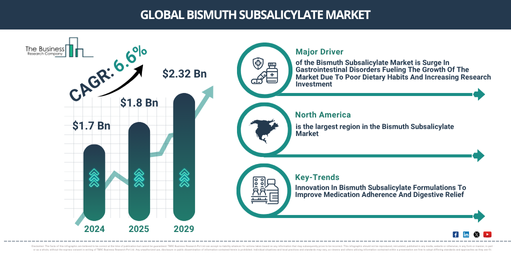
  • Key Developments and Trends Steering the Bismuth Subsalicylate Market Forward: Innovation In Bismuth Subsalicylate Formulations To Improve Medication Adherence And Digestive Relief

    Key Developments and Trends Steering the Bismuth Subsalicylate Market Forward: Innovation In Bismuth Subsalicylate Formulations To Improve Medication Adherence And Digestive Relief

    Claim your 30% discount on Global Market Reports with code ONLINE30. Limited time only.

    How Has The Bismuth Subsalicylate Market Size Shifted, And What Is the Outlook Through 2034?

    The market size for bismuth subsalicylate has been expanding significantly in the past few years. It’s projected to escalate from $1.7 billion in 2024 to $1.8 billion in 2025, reflecting a compound annual growth rate (CAGR) of 6.3%. Factors behind this growth during the historic period include an increase in the elderly population, a rise in the level of disposable income, a surge in the preference for self-medication among consumers, an upswing in gastrointestinal problems related to travel, and a growing trend of consuming processed foods, leading to digestive issues.

    The market size of bismuth subsalicylate is predicted to experience robust expansion in the coming years. It is set to reach $2.32 billion by 2029, with a compound annual growth rate (CAGR) of 6.6%. This growth during the forecast period can be credited to a rise in gastrointestinal disorder cases, escalating demand for over-the-counter (OTC) drugs, increasing consciousness about digestive health, and growth of the pharmaceutical industry. Furthermore, the enhancement of healthcare infrastructure in emerging markets is also a contributing factor. Notable trends throughout the forecast period encompass the increasing popularity of antacid and anti-nausea drugs, the presence of bismuth subsalicylate in liquid and tablet forms, advances in medicine formulation leading to better patient compliance, strategic partnerships among pharmaceutical firms, and the creation of bismuth subsalicylate-based branded formulations.

    Download a free sample to assess the report’s scope and structure:

    https://www.thebusinessresearchcompany.com/sample.aspx?id=24173&type=smp

    How Are Key Drivers in the Industry Acting as Catalysts for the Growth of theBismuth Subsalicylate Market?

    The expected increase in gastrointestinal disorders is predicted to drive the expansion of the bismuth subsalicylate market in future years. Gastrointestinal disorders, or issues affecting the digestive system including the stomach, intestines, and related organs, can cause symptoms like discomfort, bloating, and altered bowel habits. This surge in gastrointestinal illnesses is largely caused by poor eating patterns, where an overconsumption of processed foods and lack of sufficient fiber can result in gut microbiota imbalances and hindered digestion. Bismuth subsalicylate is employed to manage gastrointestinal disorders by alleviating diarrhea through lowering inflammation within the gut and stalling the growth of certain bacteria known to cause digestive discomfort. For example, as per a report by the US-based bibliographic database, ScienceDirect, in May 2025, there were around 23.5 million gastrointestinal endoscopies performed in 2022, marking a rise of 6% from the year before. Hence, the increasing occurrence of gastrointestinal disorders is set to stimulate the expansion of the bismuth subsalicylate market.

    Which Segments in the Bismuth Subsalicylate Offer the Most Growth?

    The bismuth subsalicylate market covered in this report is segmented –

    1) By Product: Bismuth Subsalicylate Tablets, Bismuth Subsalicylate Suspension, Bismuth Subsalicylate Chewable Tablets

    2) By Distribution Channel: Online Pharmacies, Retail Pharmacies, Supermarkets Or Hypermarkets, Health And Wellness Stores

    3) By Application: Gastrointestinal Disorders, Diarrhea, Nausea, Heartburn, Indigestion

    4) By End-User: Adult Consumers, Pediatric Consumers, Healthcare Professionals, Caretakers And Guardians

    Subsegments:

    1) By Bismuth Subsalicylate Tablets: Prescription Tablets, Over-The-Counter (OTC) Tablets, Coated Tablets, Uncoated Tablets

    2) By Bismuth Subsalicylate Suspension: Flavored Suspension, Unflavored Suspension, Alcohol-Free Suspension, Sugar-Free Suspension

    3) By Bismuth Subsalicylate Chewable Tablets: Adult Chewable Tablets, Pediatric Chewable Tablets, Mint-Flavored Chewable Tablets, Fruit-Flavored Chewable Tablets

    Request customized data on this market:

    https://www.thebusinessresearchcompany.com/customise?id=24173&type=smp

    What Are the Fastest-Growing Geographies in the #How Are Key Drivers in the Industry Acting as Catalysts for the Growth of theBismuth Subsalicylate Market?# Market?

    North America was the largest region in the bismuth subsalicylate market in 2024. Asia-Pacific is expected to be the fastest-growing region in the forecast period. The regions covered in the bismuth subsalicylate market report are Asia-Pacific, Western Europe, Eastern Europe, North America, South America, Middle East, Africa.

    What Are the Current Market Growth and Trends in the Bismuth Subsalicylate Industry?

    In an effort to improve adherence to medication and supplement schedules, industry heavyweights in the bismuth subsalicylate market are zeroing in on the production of refined products, including chewable tablets. These chewable tablets are solid medications designed to be chewed prior to swallowing, which simplifies consumption and accelerates absorption. For instance, Wonderbelly, a pharmaceutical firm based in the US, unveiled the Dye-Free Alternative to Pepto-Bismol (Bismuth Subsalicylate) in May 2025. These innovative chewable tablets for multi-symptom relief target ailments such as upset stomach, diarrhea, indigestion, and nausea. The tablets feature bismuth subsalicylate—also found in Pepto-Bismol—as the active ingredient, but are unique in that they’re made without dyes or talc.

    View the full report here:

    https://www.thebusinessresearchcompany.com/report/bismuth-subsalicylate-global-market-report

    What Are the Key Elements That Define the Bismuth Subsalicylate Market?

    Bismuth subsalicylate is an over-the-counter medication that relieves digestive symptoms by coating the stomach lining to protect it from acid, reducing inflammation and exhibiting mild antibacterial properties. It helps combat bacteria and soothe irritation, while the subsalicylate (a compound related to aspirin) helps reduce inflammation and intestinal discomfort.

    Purchase the full report and get a swift delivery:

    https://www.thebusinessresearchcompany.com/purchaseoptions.aspx?id=24173

    About The Business Research Company:

    With over 15000+ reports from 27 industries covering 60+ geographies, The Business Research Company has built a reputation for offering comprehensive, data-rich research and insights. Armed with 1,500,000 datasets, the optimistic contribution of in-depth secondary research, and unique insights from industry leaders, you can get the information you need to stay ahead in the game.

    Get in touch with us:

    The Business Research Company: https://www.thebusinessresearchcompany.com/

    Americas +1 310-496-7795

    Europe +44 7882 955267

    Asia & Others +44 7882 955267 & +91 8897263534

    Email us at info@tbrc.info

    Follow us on:

    LinkedIn: https://in.linkedin.com/company/the-business-research-company

    YouTube: https://www.youtube.com/channel/UC24_fI0rV8cR5DxlCpgmyFQ

    Global Market Model: https://www.thebusinessresearchcompany.com/global-market-model

  • Market Trends Influencing Strategic Decisions in the Bipolar Disorder Drugs And Treatment Industry: Advancements In Extended-Release Injectable Formulations Enhancing Patient Adherence And Treatment Efficacy

    Market Trends Influencing Strategic Decisions in the Bipolar Disorder Drugs And Treatment Industry: Advancements In Extended-Release Injectable Formulations Enhancing Patient Adherence And Treatment Efficacy

    Claim your 30% discount on Global Market Reports with code ONLINE30. Limited time only.

    How Has the Bipolar Disorder Drugs And Treatment Market Growth Performance Trended Historically, And What Lies Ahead?

    The market for bipolar disorder medications and therapies has seen robust growth lately. It is projected to expand from $7.74 billion in 2024 to $8.16 billion in 2025, recording a compound annual growth rate (CAGR) of 5.4%. Factors such as higher healthcare spending, increased investment and research in mental health, the rising number of healthcare practitioners focusing on mental health, the upward trend in early diagnoses of bipolar disorder and the growing demand for outpatient psychiatric services, have all contributed to the growth in recent years.

    The market for drugs and treatment for bipolar disorder is predicted to experience substantial growth in the coming years. The market is projected to expand to $10.24 billion in 2029, advancing at a compound annual growth rate (CAGR) of 5.8%. The expected growth in the market during the forecast period could be due to factors like an increased global incidence of bipolar disorder, heightened awareness of mental health conditions, greater acceptance of mental health treatments, broadening of insurance coverage for mental health interventions, and governmental efforts to enhance mental health care. Key trends during the forecast period are expected to be breakthroughs in the development of medicine for bipolar disorder, enhancements in diagnostic procedures and tools, the launch of new and innovative medication formulas, continuation of clinical trials and research on ground-breaking drugs, and the availability of generic medicine for bipolar disorder.

    Download a free sample to assess the report’s scope and structure:

    https://www.thebusinessresearchcompany.com/sample.aspx?id=24171&type=smp

    What Are the Major Market Drivers Behind the Rising Adoption of Bipolar Disorder Drugs And Treatment Market?

    The growth of the bipolar disorder drugs and treatment market is expected to be spurred by the rising occurrence of mental health disorders in the near future. Such disorders, which can harm a person’s thoughts, feelings, behaviour, or mood, often interfere with everyday activities and happiness. External stresses from modern living, such as job-related stress, financial pressures, and societal expectations, contribute to the increase in mental health disorders as they degrade emotional health and lead to enduring mental struggles. Drugs and treatments for bipolar disorder are beneficial for managing these mental conditions, as they assist in regulating mood variations, which is crucial in enhancing emotional control and reducing the frequency and intensity of disruptive episodes. For example, the National Institute of Mental Health (NIMH), a federal agency based in the US, reported in September 2024 that over 59.3 million adults, or 23.1% of the adult population, in the US in 2022 were affected by any mental illness (AMI). The report further revealed that women were much more likely than men to have AMI, with 26.4% compared to 19.7%. Consequently, the expanding incidence of mental health disorders is expected to drive the growth of the market for bipolar disorder drugs and treatments.

    Which Key Market Segments Comprise the Bipolar Disorder Drugs And Treatment Market and Drive Its Revenue Growth?

    The bipolar disorder drugs and treatment market covered in this report is segmented –

    1) By Types: Mood Stabilizers, Anticonvulsants, Antipsychotic Drugs, Antidepressant Drugs, Anti-Anxiety Drugs

    2) By Route Of Administration: Oral, Parenteral, Other Routes Of Administration

    3) By Bipolar Disorder: Bipolar I Disorder, Bipolar II Disorder, Cyclothymic Disorder

    4) By Distribution Channel: Hospital Pharmacies, Retail Pharmacies, Online Pharmacies

    Subsegments:

    1) By Mood Stabilizers: Lithium Carbonate, Lamotrigine, Valproate

    2) By Anticonvulsants: Carbamazepine, Oxcarbazepine, Topiramate

    3) By Antipsychotic Drugs: Olanzapine, Risperidone, Quetiapine, Aripiprazole

    4) By Antidepressant Drugs: Selective Serotonin Reuptake Inhibitors (SSRIs), Serotonin-Norepinephrine Reuptake Inhibitors (SNRIs), Tricyclic Antidepressants (TCAs)

    5) By Anti-Anxiety Drugs: Benzodiazepines, Buspirone

    Request customized data on this market:

    https://www.thebusinessresearchcompany.com/customise?id=24171&type=smp

    Which Areas Are Leading Regions in the Bipolar Disorder Drugs And Treatment Market Expansion Across the Globe?

    North America was the largest region in the bipolar disorder drugs and treatment market in 2024. Asia-Pacific is expected to be the fastest-growing region in the forecast period. The regions covered in the bipolar disorder drugs and treatment market report are Asia-Pacific, Western Europe, Eastern Europe, North America, South America, Middle East, Africa.

    What Are the Strategic Trends Steering theBipolar Disorder Drugs And Treatment Market Direction?

    Improvement of advanced solution, like extended-release injectable formats, are at the focal attention of major ventures operating in the treatment and drugs for bipolar disorder. These treatments slowly introduce medicine into the bloodstream over an extended period, eliminating the necessity for daily dosages and ensuring a continuous therapeutic effect. An example of this is when Luye Pharma, a pharma enterprise established in China, received approval from the U.S. Food and Drug Administration (FDA) in January 2023 for their product – Rykindo (risperidone). This long-lasting injectable suspension is used in the management of adult schizophrenia or as a singular treatment or combined with lithium or valproate for adult bipolar I disorder. The drug uses innovative microsphere technology crafted by Luye Pharma and requires an intramuscular injection every fortnight to provide long-lasting results. The primary component, risperidone, is dispensed through extended-release microsphere technology to ensure regular release over a sustained period of time.

    View the full report here:

    https://www.thebusinessresearchcompany.com/report/bipolar-disorder-drugs-and-treatment-global-market-report

    How Is the Bipolar Disorder Drugs And Treatment Market Conceptually Defined?

    Bipolar disorder drugs and treatment refer to a comprehensive approach designed to manage extreme mood shifts and support long-term mental stability. It focuses on regulating brain activity to minimize the intensity and recurrence of mood episodes while addressing co-occurring issues such as disrupted sleep, anxiety, or concentration difficulties.

    Purchase the full report and get a swift delivery:

    https://www.thebusinessresearchcompany.com/purchaseoptions.aspx?id=24171

    About The Business Research Company:

    With over 15000+ reports from 27 industries covering 60+ geographies, The Business Research Company has built a reputation for offering comprehensive, data-rich research and insights. Armed with 1,500,000 datasets, the optimistic contribution of in-depth secondary research, and unique insights from industry leaders, you can get the information you need to stay ahead in the game.

    Get in touch with us:

    The Business Research Company: https://www.thebusinessresearchcompany.com/

    Americas +1 310-496-7795

    Europe +44 7882 955267

    Asia & Others +44 7882 955267 & +91 8897263534

    Email us at info@tbrc.info

    Follow us on:

    LinkedIn: https://in.linkedin.com/company/the-business-research-company

    YouTube: https://www.youtube.com/channel/UC24_fI0rV8cR5DxlCpgmyFQ

    Global Market Model: https://www.thebusinessresearchcompany.com/global-market-model
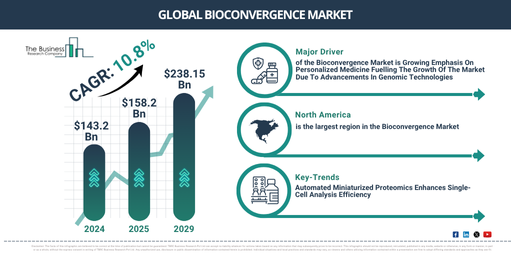
  • Top Trends Driving Innovation and Change in the Bioconvergence Market: Automated Miniaturized Proteomics Enhances Single-Cell Analysis Efficiency

    Top Trends Driving Innovation and Change in the Bioconvergence Market: Automated Miniaturized Proteomics Enhances Single-Cell Analysis Efficiency

    Claim your 30% discount on Global Market Reports with code ONLINE30. Limited time only.

    What Are the Projected Market Size and Growth Rates for the Bioconvergence Market From 2025 To 2029?

    The expansion of the bioconvergence industry has been swift in recent years. The market valuation is projected to rise from $143.2 billion in 2024 to $158.2 billion in 2025, with a compound annual growth rate (CAGR) of 10.5%. The prior growth period has seen substantial progress, driven by the burgeoning field of personalized medicine, advancements in biomedical engineering, the escalation of healthcare digitization, the evolution of bioinformatics, and synergies between the technology and biotech sectors.

    In the upcoming years, the bioconvergence market is anticipated to undergo swift expansion, reaching a staggering $238.15 billion in 2029 with a compound annual growth rate (CAGR) of 10.8%. This predicted growth spurt over the period is primarily due to increased applications of regenerative medicine, the growing incidence of chronic illnesses, the implementation of bioelectronics and biosensors, advancements in engineered living materials, and a rise in investment towards biotechnology R&D. The forecast period will also witness significant trends such as the integration of artificial intelligence in drug discovery, the emergence of lab-on-a-chip technologies, the growth of wearable biosensors, expansion in three-dimensional (3D) bioprinting applications, the use of nanorobotics for precisely targeted treatments, the adoption of organ-on-a-chip models, and advancements in gene-editing techniques.

    Download a free sample to assess the report’s scope and structure:

    https://www.thebusinessresearchcompany.com/sample.aspx?id=24168&type=smp

    What External and Internal Drivers Are Contributing to the Growth of theBioconvergence Market?

    The accelerated focus on personalized medicine is projected to fuel the expansion of the bioconvergence market. Personalized medicine revolves around customizing medical treatments to individual patients based on their genetic information, environmental attributes, and lifestyle characteristics to enhance the effectiveness and quality of care. Developments in genomic technologies, facilitating accurate identification of genetic variations and bespoke treatments for people, are causing a surge in demand for personalized medicine. Bioconvergence promotes personalized medicine by fusing advanced technologies with biological research. This fusion allows for more precise, individualized treatment plans rooted in a patient’s genetic and molecular makeup, thereby improving healthcare outcomes through targeted therapies and lessening the possibility of undesirable effects. Case in point, the Personalized Medicine Coalition (PMC), a nonprofit organization based in the U.S., stated that in February 2024, the U.S. Food and Drug Administration (FDA) granted approval to 26 new personalized medicines in 2023, a considerable jump from the 12 given the green light in 2022. As a result, the mounting focus on personalized medicine is catalyzing the growth of the bioconvergence market.

    What Segment Types Define the Bioconvergence Market Structure?

    The bioconvergence market covered in this report is segmented –

    1) By Component: Devices, Software, Services, Platforms

    2) By Technology: Artificial Intelligence, Robotics, Three-Dimensional (3D) Printing, Nanotechnology, Synthetic Biology, Bioinformatics, Wearable Devices

    3) By Application: Drug Discovery, Regenerative Medicine, Optogenetics, Nanorobotics For Drug Discovery, Diagnostic And Biological Sensors, Bioelectronics, Precision Medicine

    4) By End-User: Pharmaceutical And Biotechnology Industry, Contract Research Organization, Other End Users

    Subsegments:

    1) By Devices: Diagnostic Devices, Therapeutic Devices, Wearable Medical Devices, Implantable Devices, Robotic Surgical Systems

    2) By Software: Bioinformatics Software, Clinical Decision Support Systems, Genomic Data Analysis Tools, Imaging And Diagnostic Software, Laboratory Information Management Systems (LIMS)

    3) By Services: Contract Research Services, Consulting And Integration Services, Data Management And Analysis Services, Custom Software Development, Regulatory And Compliance Services

    4) By Platforms: Artificial Intelligence Platforms, Omics Integration Platforms, Digital Health Platforms, Personalized Medicine Platforms, Cloud-Based Analytics Platforms

    Request customized data on this market:

    https://www.thebusinessresearchcompany.com/customise?id=24168&type=smp

    Which Geographic Areas Hold the Strongest Growth Potential in the Bioconvergence Market?

    North America was the largest region in the bioconvergence market in 2024. Asia-Pacific is expected to be the fastest-growing region in the forecast period. The regions covered in the bioconvergence market report are Asia-Pacific, Western Europe, Eastern Europe, North America, South America, Middle East, Africa.

    What Long-Term Trends Are Transforming the Competitive Landscape of the Bioconvergence Market?

    Leading enterprises active in the bioconvergence marketplace are concentrating on the creation of pioneering products such as automated miniaturized single-cell proteomics sample preparation. This enables accurate protein investigation, curtails sample loss, and simplifies processes in single-cell research. This method leverages automation to manage and ready proteins from single cells in ultra-minimal volumetrics. For example, Scienion GmbH, a Biotechnology firm based out of Germany, introduced proteochip LF 48 in September 2022. This is designed to standardize and miniaturize procedures for mass spectrometry-based single-cell proteomics analysis. This novel bioconvergence instrument allows for on-chip lysis and protein digestion of individual cells. As a result, investigators can limit sample waste, streamline procedures, and obtain more profound biological comprehension through efficient mass spectrometry assessment. The proteochip LF 48 is immensely adaptable as it delivers an effective sample readiness for a multitude of single-cell proteomics uses. This is achieved by merging precise individual cell management with on-chip lysis and protein digestion, thereby enhancing process effectiveness and data integrity.

    View the full report here:

    https://www.thebusinessresearchcompany.com/report/bioconvergence-global-market-report

    What Is the Definition of the Bioconvergence Market?

    Bioconvergence is the integration of biology with engineering, data science, and advanced technologies to drive innovation in healthcare, biotechnology, and life sciences. Its main goal is to develop smarter, more personalized, and more efficient solutions such as precision medicine, advanced diagnostics, and bioengineered products. Bioconvergence fosters the creation of faster, cheaper, and more effective novel therapies, devices, and platforms.

    Purchase the full report and get a swift delivery:

    https://www.thebusinessresearchcompany.com/purchaseoptions.aspx?id=24168

    About The Business Research Company:

    With over 15000+ reports from 27 industries covering 60+ geographies, The Business Research Company has built a reputation for offering comprehensive, data-rich research and insights. Armed with 1,500,000 datasets, the optimistic contribution of in-depth secondary research, and unique insights from industry leaders, you can get the information you need to stay ahead in the game.

    Get in touch with us:

    The Business Research Company: https://www.thebusinessresearchcompany.com/

    Americas +1 310-496-7795

    Europe +44 7882 955267

    Asia & Others +44 7882 955267 & +91 8897263534

    Email us at info@tbrc.info

    Follow us on:

    LinkedIn: https://in.linkedin.com/company/the-business-research-company

    YouTube: https://www.youtube.com/channel/UC24_fI0rV8cR5DxlCpgmyFQ

    Global Market Model: https://www.thebusinessresearchcompany.com/global-market-model
  • Emerging Trends Redefining the Autoimmune Monoclonal Antibody Market Landscape: Targeting Immune System Modulation For Effective Disease Management

    Emerging Trends Redefining the Autoimmune Monoclonal Antibody Market Landscape: Targeting Immune System Modulation For Effective Disease Management

    Claim your 30% discount on Global Market Reports with code ONLINE30. Limited time only.

    What Is the Estimated Market Size of the Behcets disease Market In 2029?

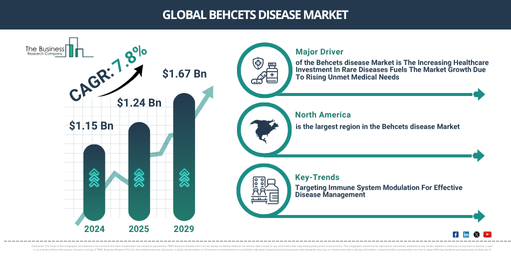
    The market for behcets disease has witnessed robust growth in recent years. The market size is projected to expand from $1.15 billion in 2024 to $1.24 billion in 2025, with a compound annual growth rate (CAGR) of 7.3%. The growth during the historical period can be associated with several factors such as greater awareness about rare diseases, access to biologic treatments, development in healthcare infrastructure, an increase in the frequency of autoimmune diseases, and a rising inclination towards biologic therapies.

    Expectations are high for substantial growth in the Behcets disease market over the coming years, with projections reaching $1.67 billion by 2029, equating to a compound annual growth rate (CAGR) of 7.8%. The projected growth can be linked to several factors, including the escalation of research into autoimmune and inflammatory diseases, the increase in clinical trials and research studies, the evolution of personalized therapies and the expanded access to healthcare in developing markets, coupled with a heightened emphasis on patient-focused care models. Key upcoming trends include advances in diagnostic methodologies, precision medicine enhancements, the transition towards telemedicine and digital health solutions, a rising collaborative trend between pharma firms and research organizations, and innovative combination therapies in treatment.

    Download a free sample to assess the report’s scope and structure:

    https://www.thebusinessresearchcompany.com/sample.aspx?id=24167&type=smp

    What Are the Core Market Drivers Propelling Growth in the Behcets disease Industry?

    The escalation of healthcare funding on rare diseases is predicted to catalyze the expansion of the Behcet’s disease market in the future. This term applies to conditions impacting fewer than 1 in 2,000 individuals, usually accompanied by intricate symptoms and fewer treatment alternatives. The primary boost for enhancing healthcare investment in rare diseases comes from the growing understanding of the medical necessities yet to be fulfilled. Numerous patients do not have effective therapies, which urges both the government and pharmaceutical firms to focus on research, development, and financial contributions to this particular field. The case of Behçet’s disease is a perfect illustration of how dedicated research and promotion of a sole rare condition can initiate extensive investment in rare diseases. It exhibits that determined initiatives can foster considerable progress in the comprehension, therapy, and policy associated with the entire rare disease society. To exemplify, in April 2024, according to Global Genes, a US-based not-for-profit institution, during the initial quarter of 2024, corporations developing medications for rare diseases accumulated $7.1 billion through public equity and debt funding, a staggering 307% rise compared to the $1.8 billion generated in the equivalent timeframe in 2023. Consequently, the amplified healthcare funding in rare diseases is contributing to the expansion of the Behcet’s disease market.

    How Is the Behcets disease Market Segmented?

    The behcets disease market covered in this report is segmented –

    1) By Treatment Type: Corticosteroids, Immunosuppressants, Biologics, Other Treatments

    2) By Route Of Administration: Oral, Injectable, Topical

    3) By Type of Disease: Non-Ocular Behcet’s Disease, Ocular Behcet’s Disease

    4) By Distribution Channel: Hospital Pharmacies, Retail Pharmacies, Online Pharmacies, Other Distribution Channels

    5) By End User: Hospitals, Clinics, Ambulatory Surgical Centers

    Subsegments:

    1) By Corticosteroids: Oral Corticosteroids, Topical Corticosteroids, Intravenous Corticosteroids

    2) By Immunosuppressants: Methotrexate, Azathioprine, Cyclophosphamide, Mycophenolate Mofetil, Cyclosporine

    3) By Biologics: Tumor Necrosis Factor (TNF) Inhibitors, Interleukin Inhibitors

    4) By Other Treatments: Colchicine, Thalidomide, Hydroxychloroquine, Corticosteroid-Sparing Agents

    Request customized data on this market:

    https://www.thebusinessresearchcompany.com/customise?id=24167&type=smp

    Which Regions Are Driving the Next Phase of the Behcets disease Market Growth?

    North America was the largest region in the behcets disease market in 2024. Asia-Pacific is expected to be the fastest-growing region in the forecast period. The regions covered in the behcets disease market report are Asia-Pacific, Western Europe, Eastern Europe, North America, South America, Middle East, Africa.

    What Key Market Trends and Innovations Are Shaping the Future of the Behcets disease Industry?

    Key establishments in the behcets disease market, such as Soligenix, Inc., are concentrating on innovative product development through clinical trials, such as the innate defense regulator (IDR). This is with the intent to boost the modulation of the immune system and provide superior therapies for inflammation and other symptoms related to the disorder. Innate defense regulators (IDRs), which are artificially created peptides, work towards boosting the body’s inbuilt defense systems. In the context of Behçet’s disease, they assist by keeping a check on the immune system to lower undue inflammation. This could potentially ease symptoms and manage flare-ups. For instance, Soligenix, Inc., a biopharmaceutical organization based in the US, started patient enrollment for its Protocol DUS-AUBD-01, a phase 2 study in November 2024 focused on evaluating SGX945 (dusquetide) for treating Behçet’s disease. The intent of this study is to measure the potentiality of SGX945, an innate defense regulator (IDR), to modulate the immune system and reduce inflammation, thus implying a new therapeutic strategy for managing the signs and flare-ups related to behçet’s disease.

    View the full report here:

    https://www.thebusinessresearchcompany.com/report/behcets-disease-global-market-report

    How Is the Behcets disease Market Defined and What Are Its Core Parameters?

    Behçet’s disease is a rare, chronic, and multisystem inflammatory disorder characterized by recurrent episodes of inflammation in various parts of the body, particularly the eyes, mouth, skin, and genitals. It is classified as a vasculitis, meaning it involves inflammation of blood vessels, and can affect both large and small blood vessels.

    Purchase the full report and get a swift delivery:

    https://www.thebusinessresearchcompany.com/purchaseoptions.aspx?id=24167

    About The Business Research Company:

    With over 15000+ reports from 27 industries covering 60+ geographies, The Business Research Company has built a reputation for offering comprehensive, data-rich research and insights. Armed with 1,500,000 datasets, the optimistic contribution of in-depth secondary research, and unique insights from industry leaders, you can get the information you need to stay ahead in the game.

    Get in touch with us:

    The Business Research Company: https://www.thebusinessresearchcompany.com/

    Americas +1 310-496-7795

    Europe +44 7882 955267

    Asia & Others +44 7882 955267 & +91 8897263534

    Email us at info@tbrc.info

    Follow us on:

    LinkedIn: https://in.linkedin.com/company/the-business-research-company

    YouTube: https://www.youtube.com/channel/UC24_fI0rV8cR5DxlCpgmyFQ

    Global Market Model: https://www.thebusinessresearchcompany.com/global-market-model

  • Autoimmune Monoclonal Antibody Market 2025-2034: Key Highlights, Growth Dynamics, and Emerging Trends

    Autoimmune Monoclonal Antibody Market 2025-2034: Key Highlights, Growth Dynamics, and Emerging Trends

    Claim your 30% discount on Global Market Reports with code ONLINE30. Limited time only.

    How Fast Is The Autoimmune Monoclonal Antibody Market Expected to Grow Between 2025 And 2029?

    In recent times, the autoimmune monoclonal antibody market has been experiencing robust growth. The market size is projected to expand from $65.83 billion in 2024 to $70.86 billion in 2025, reflecting a compound annual growth rate (CAGR) of 7.6%. Factors contributing to this growth during the historic period include a higher incidence of autoimmune diseases, increasing utilization of biologics for treatment, growing awareness about targeted therapies, early authorization of monoclonal antibody drugs, and the enlargement of healthcare systems in developed nations.

    In the coming years, the autoimmune monoclonal antibody sector is set to experience robust growth. It is expected to expand to a market size of $96.74 billion by 2029, with an 8.1% compound annual growth rate (CAGR). Key contributors to this anticipated growth during the forecast period are the growing demand for personalized medicine, rising use of biosimilars, increase in autoimmune therapy clinical trials, aging human population, and a surge in chronic immune disorders’ occurrence. Some major future trends include advancements in antibody engineering, the progression of bispecific antibodies, increased utilization of AI in drug discovery, the incorporation of genomics in treatment strategies, and introduction of new drug delivery systems.

    Download a free sample to assess the report’s scope and structure:

    https://www.thebusinessresearchcompany.com/sample.aspx?id=24162&type=smp

    Which Primay Drivers Are Accelerating Growth in the Autoimmune Monoclonal Antibody Market?

    The rise in demand for biological treatment is anticipated to spur the expansion of the autoimmune monoclonal antibody marketplace. Biologics, products derived from living organisms, are employed in the treatment, prevention, or diagnosis of ailments. The escalating requirement for these products is principally due to their proficiency in dealing with challenging illnesses, such as cancer, autoimmune diseases, and genetic disorders, where conventional therapies may fall short. Autoimmune monoclonal antibodies bolster biologic procedures by providing focused immune modulation. They curtail the necessity for extensive immunosuppressants by presenting accurate treatments, enhancing patient outcomes, and mitigating side effects. For example, in June 2024, Cardinal Health Inc., an American healthcare company, reported that the Food and Drug Administration (FDA) approved 40 biosimilar items in 2023, with 25 being commercially accessible in the US market, a progression from the 33 biosimilar products in 2022. Consequently, the mounting appeal for biologics is contributing to the progression of the autoimmune monoclonal antibody market.

    Which Primary Segments of the Autoimmune Monoclonal Antibody Market Are Driving Growth and Industry Transformations?

    The autoimmune monoclonal antibody market covered in this report is segmented –

    1) By Type: Immunoglobulin G Monoclonal Antibodies, Immunoglobulin M Monoclonal Antibodies, Chimeric Monoclonal Antibodies, Fully Human Monoclonal Antibodies

    2) By  Route Of Administration: Subcutaneous, Intravenous, Intramuscular

    3) By Application: Rheumatoid Arthritis, Multiple Sclerosis, Systemic Lupus Erythematosus, Psoriasis, Inflammatory Bowel Disease

    4) By Distribution Channel: Hospital Pharmacy, Online Pharmacy, Retail Pharmacy

    5) By End User: Hospitals, Outpatient Clinics, Homecare Settings, Research Institutions

    Subsegments:

    1) By Immunoglobulin G (IgG) Monoclonal Antibodies: Immunoglobulin G1 (IgG1), Immunoglobulin G2 (IgG2), Immunoglobulin G3 (IgG3), Immunoglobulin G4 (IgG4)

    2) By Immunoglobulin M (IgM) Monoclonal Antibodies: Pentameric Immunoglobulin M (IgM), Hexameric Immunoglobulin M (IgM)

    3) By Chimeric Monoclonal Antibodies: Murine Variable Region + Human Constant Region, Humanized Variable Region + Murine Constant Region

    4) By Fully Human Monoclonal Antibodies: Phage Display-Derived, Transgenic Mouse-Derived, Fully Human Hybridoma-Derived

    Request customized data on this market:

    https://www.thebusinessresearchcompany.com/customise?id=24162&type=smp

    Which Regions Are Key Players in the Growth of the #Which Primay Drivers Are Accelerating Growth in the Autoimmune Monoclonal Antibody Market?# Market?

    North America was the largest region in the autoimmune monoclonal antibody market in 2024. Asia-Pacific is expected to be the fastest-growing region in the forecast period. The regions covered in the autoimmune monoclonal antibody market report are Asia-Pacific, Western Europe, Eastern Europe, North America, South America, Middle East, Africa.

    Which Technological Trends Are Reshaping the Autoimmune Monoclonal Antibody Industry Dynamics?

    Main players in the autoimmune monoclonal antibody sector are emphasizing the development of innovative treatments, like biosimilar development, which are designed to boost safety, quality, and effectiveness. Biosimilar development involves the generation of bio-products similar to, and as safe and effective as, pre-existing approved biologics, employing sophisticated biotechnology, meticulous analytical examinations, and clinical trials to prove their safety, quality, and effectiveness for regulatory endorsement. One such example occurred on February 2025, when Biocon Biologics Limited, a bioscience firm based in India, introduced YESINTEK, a biosimilar targeting autoimmune ailments like Crohn’s disease, ulcerative colitis, and psoriasis by modulating the activities of interleukin-12 and interleukin-23, therefore reducing inflammation and managing immune responses. By emulating the referential product stelara, Yesintek aids in long-term disease control while enhancing patient accessibility to biologic treatments.

    View the full report here:

    https://www.thebusinessresearchcompany.com/report/autoimmune-monoclonal-antibody-global-market-report

    What Parameters Are Used to Define the Autoimmune Monoclonal Antibody Market?

    Autoimmune monoclonal antibodies are lab-made proteins designed to target specific components of the immune system involved in autoimmune diseases. These antibodies help regulate or block abnormal immune responses that mistakenly attack the body’s own tissues. Their main purpose is to reduce inflammation and prevent the immune system from attacking the body’s own tissues, thereby minimizing damage and maintaining normal physiological function.

    Purchase the full report and get a swift delivery:

    https://www.thebusinessresearchcompany.com/purchaseoptions.aspx?id=24162

    About The Business Research Company:

    With over 15000+ reports from 27 industries covering 60+ geographies, The Business Research Company has built a reputation for offering comprehensive, data-rich research and insights. Armed with 1,500,000 datasets, the optimistic contribution of in-depth secondary research, and unique insights from industry leaders, you can get the information you need to stay ahead in the game.

    Get in touch with us:

    The Business Research Company: https://www.thebusinessresearchcompany.com/

    Americas +1 310-496-7795

    Europe +44 7882 955267

    Asia & Others +44 7882 955267 & +91 8897263534

    Email us at info@tbrc.info

    Follow us on:

    LinkedIn: https://in.linkedin.com/company/the-business-research-company

    YouTube: https://www.youtube.com/channel/UC24_fI0rV8cR5DxlCpgmyFQ

    Global Market Model: https://www.thebusinessresearchcompany.com/global-market-model
  • Autoimmune Hemolytic Anemia Treatment Growth Trajectory: Key Forecasts and Strategic Insights

    Autoimmune Hemolytic Anemia Treatment Growth Trajectory: Key Forecasts and Strategic Insights

    Claim your 30% discount on Global Market Reports with code ONLINE30. Limited time only.

    What Are the Key Projections for the CAGR of the Autoimmune Hemolytic Anemia Treatment Market Size From 2025 to 2034?

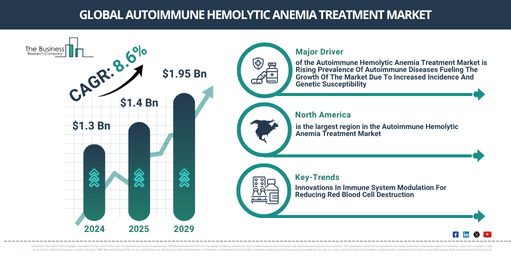
    The market valuation of autoimmune hemolytic anemia treatment has witnessed commendable growth in recent times. The estimated value of $1.3 billion in 2024 is projected to increase to $1.4 billion in 2025, reflecting a compound annual growth rate (CAGR) of 8.0%. The previous growth of this market can be ascribed to several factors including heightened understanding of the disease among healthcare professionals, an uptick in cases of autoimmune diseases, improvement in hospital facilities, an increase in the number of clinical studies being published, and a surge in infection rates.

    In the coming years, substantial expansion is projected for the autoimmune hemolytic anemia treatment market. With a compound annual growth rate (CAGR) of 8.6%, it is expected to swell to $1.95 billion by 2029. This predicted growth during the forecast period could be due to a rising global prevalence of AIHA, escalating demand for targeted treatments, an increasing emphasis on individualized medication, a surge in research expenditure on autoimmune disorders, and the expansion of healthcare accessibility in emerging areas. Anticipated trends during this period feature technological upgrades in diagnostics, the incorporation of digital health and telemedicine, advancements in specific therapies, artificial intelligence-enabled diagnostics and drug searches, and new immunosuppressive strategies.

    Download a free sample to assess the report’s scope and structure:

    https://www.thebusinessresearchcompany.com/sample.aspx?id=24161&type=smp

    Which Factors and External Forces Are Driving Demand in the Autoimmune Hemolytic Anemia Treatment Market?

    The increase in occurrences of autoimmune diseases is anticipated to boost the autoimmune hemolytic anemia treatment market’s growth. These autoimmune disorders, wherein the body’s immune mechanism mistakenly strikes its own tissue, leading to inflammation and harm, are growing. Genetic predisposition largely fuels this increase, making individuals more prone to developing these disorders. The treatment of autoimmune hemolytic anemia is critical in managing the complications of autoimmune diseases by focusing on and diminishing the eradication of red blood cells instigated by the immune system. For instance, a study conducted by the National Institute for Health and Care Research (NIHR), a UK-based organization, in May 2023 involving 22 million people, disclosed that approximately one in ten individuals are now affected by autoimmune disorders. This represents 19 autoimmune diseases affecting approximately 10% of the populace, with 13% females and 7% males. Therefore, the escalating prevalence of autoimmune diseases will stimulate the growth of the autoimmune hemolytic anemia treatment market.

    Which Segments in the Autoimmune Hemolytic Anemia Treatment Offer the Most Growth?

    The autoimmune hemolytic anemia treatment market covered in this report is segmented –

    1) By Type: Warm Autoimmune Hemolytic Anemia, Cold Autoimmune Hemolytic Anemia, Other Types

    2) By Drug Class: Corticosteroids, Immunosuppressive Agents, Other Drug Classes

    3) By Route Of Administration: Injectable, Oral, Other Route Of Administrations

    4) By Distribution Channel: Hospital Pharmacy, Retail Pharmacy, Online Pharmacy

    Subsegments:

    1) By Warm Autoimmune Hemolytic Anemia: Primary Warm Autoimmune Hemolytic Anemia, Secondary Warm Autoimmune Hemolytic Anemia

    2) By Cold Autoimmune Hemolytic Anemia: Primary Cold Agglutinin Disease (CAD), Secondary Cold Autoimmune Hemolytic Anemia

    3) By Other Types: Mixed-Type Autoimmune Hemolytic Anemia, Paroxysmal Cold Hemoglobinuria (PCH), Drug-Induced Autoimmune Hemolytic Anemia

    Request customized data on this market:

    https://www.thebusinessresearchcompany.com/customise?id=24161&type=smp

    What Are the Fastest-Growing Geographies in the #Which Factors and External Forces Are Driving Demand in the Autoimmune Hemolytic Anemia Treatment Market?# Market?

    North America was the largest region in the autoimmune hemolytic anemia treatment market in 2024. Asia-Pacific is expected to be the fastest-growing region in the forecast period. The regions covered in the autoimmune hemolytic anemia treatment market report are Asia-Pacific, Western Europe, Eastern Europe, North America, South America, Middle East, Africa.

    Which Cutting-Edge Market Trends Are Expected to Drive theAutoimmune Hemolytic Anemia Treatment Market’s Growth?

    Key players in the autoimmune hemolytic anemia treatment market are turning their attention towards the development of more advanced therapies, particularly first-in-class monoclonal antibodies. These therapies are pioneering in their specific and precise inhibition of certain immune pathways — for instance, the classical complement system — to reduce the destruction of red blood cells and manage side effects. Contrary to traditional treatments, first-in-class monoclonal antibodies offer new targeting mechanisms or pathways. Sanofi S.A., a health care company based in France, is an example of this pioneering approach. In November 2022, the company gained marketing approval from the European Commission for its monoclonal antibody, Enjaymo (sutimlimab), which impressively targets and restricts the C1s protein in the classical complement pathway. This antibody is used to treat adults suffering from hemolytic anemia caused by Cold Agglutinin Disease (CAD), a rare autoimmune condition in which the immune system mistakenly eliminates healthy red blood cells, leading to hemolysis. Enjaymo’s unique mechanism significantly reduces red blood cell destruction, providing a much-needed specific treatment for CAD, a variant of autoimmune hemolytic anemia (AIHA).

    View the full report here:

    https://www.thebusinessresearchcompany.com/report/autoimmune-hemolytic-anemia-treatment-global-market-report

    What Are the Key Elements That Define the Autoimmune Hemolytic Anemia Treatment Market?

    Autoimmune Hemolytic Anemia (AIHA) treatment involves the use of medications and therapies to stop the immune system from attacking the body’s own red blood cells. The main purpose of treatment is to reduce red blood cell destruction, manage anemia symptoms, and prevent complications.

    Purchase the full report and get a swift delivery:

    https://www.thebusinessresearchcompany.com/purchaseoptions.aspx?id=24161

    About The Business Research Company:

    With over 15000+ reports from 27 industries covering 60+ geographies, The Business Research Company has built a reputation for offering comprehensive, data-rich research and insights. Armed with 1,500,000 datasets, the optimistic contribution of in-depth secondary research, and unique insights from industry leaders, you can get the information you need to stay ahead in the game.

    Get in touch with us:

    The Business Research Company: https://www.thebusinessresearchcompany.com/

    Americas +1 310-496-7795

    Europe +44 7882 955267

    Asia & Others +44 7882 955267 & +91 8897263534

    Email us at info@tbrc.info

    Follow us on:

    LinkedIn: https://in.linkedin.com/company/the-business-research-company

    YouTube: https://www.youtube.com/channel/UC24_fI0rV8cR5DxlCpgmyFQ

    Global Market Model: https://www.thebusinessresearchcompany.com/global-market-model
  • Next-Gen Autoimmune Gastrointestinal Dysmotility : Market Forecast, Transformation, and Long-Term Trajectories

    Next-Gen Autoimmune Gastrointestinal Dysmotility : Market Forecast, Transformation, and Long-Term Trajectories

    Claim your 30% discount on Global Market Reports with code ONLINE30. Limited time only.

    How Has The Autoimmune Gastrointestinal Dysmotility Market Growth Evolved From 2024 To 2025, And What’s Ahead?

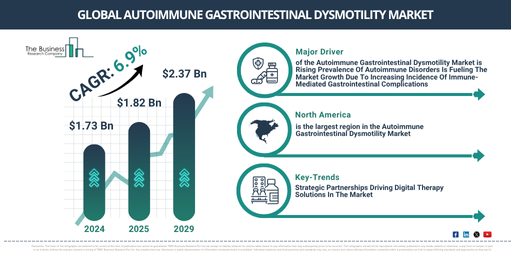
    The market size for autoimmune gastrointestinal dysmotility has been experiencing consistent growth in the most recent years. The market, which is projected to expand from $1.73 billion in 2024 to $1.82 billion in 2025, will do so at a compound annual growth rate (CAGR) of 5.0%. The growth witnessed during the historic period can be tied to a rise in ignorance about rare diseases, an increase in inadequate diagnostic procedures, a surge in instances of misdiagnosis with other gastro-intestinal disorders, a lack of targeted therapies, and significant delays in research advancement.

    The market size for autoimmune gastrointestinal dysmotility is slated for robust expansion in the upcoming years. Forecasts predict a growth to $2.37 billion by 2029, with a compound annual growth rate (CAGR) of 6.9%. Factors contributing to the growth during the forecast period include the increasing incidence of autoimmune diseases, enhancements in diagnostic techniques, expansion in healthcare spending, the rise in rare disease registries, and improved medical practitioner education. Key trends for the forecast period involve advancements in diagnostic technology, breakthroughs in immunotherapy, progress in neurogastroenterology research, research, and development of motility modulators, along with personalizing treatment strategies.

    Download a free sample to assess the report’s scope and structure:

    https://www.thebusinessresearchcompany.com/sample.aspx?id=24160&type=smp

    Which Major Market Drivers Are Expected to Boost the Growth Potential of the Autoimmune Gastrointestinal Dysmotility Market?

    The growth of the autoimmune gastrointestinal dysmotility market is anticipated to surge due to the ever-increasing incidence of autoimmune disorders. These medical conditions happen when the body’s immune system unintentionally attacks its own healthy cells, tissues, or organs instead of shielding them from infections and alien substances. A blend of genetic susceptibility and environmental instigator is the principal reason for the increased incidence of autoimmune disorders. This mix perturbs the regulation of the immune system and augments the chances of the body targeting its own tissues. Autoimmune gastrointestinal dysmotility assists in detecting and controlling autoimmune disorders through illustrating immune-mediated harm to the enteric nervous system, tying gastrointestinal symptoms to systemic autoimmune activity. For instance, a survey study conducted by Versorgungsatlas.de, a Germany-based organization, in November 2024 found that out of 73,241,305 surveyed in 2022, about 6,304,340 were diagnosed with a minimum of one autoimmune disease, resulting in a raw prevalence rate of 8.61. Accordingly, the ascending occurrence of autoimmune disorders is stimulating the growth of the autoimmune gastrointestinal dysmotility market.

    Which Key Market Segments Comprise the Autoimmune Gastrointestinal Dysmotility Market and Drive Its Revenue Growth?

    The autoimmune gastrointestinal dysmotility market covered in this report is segmented –

    1) By Treatment Type: Medications, Surgical Interventions, Dietary Management, Physical Therapy

    2) By Drug Class: Prokinetic Agents, Anti-Inflammatory Drugs, Immunosuppressive Drugs, Antibiotics

    3) By Disease Type: Gastroparesis, Chronic Intestinal Pseudo-Obstruction (Cipo), Functional Dyspepsia, Irritable Bowel Syndrome (Ibs), Celiac Disease

    4) By Distribution Channel: Hospital Pharmacy, Retail Pharmacy, Online Pharmacies, Other Distribution Channels

    5) By End User: Hospitals, Clinics, Home Care Settings, Research Institutions

    Subsegments:

    1) By Medications: Immunosuppressants, Corticosteroids, Prokinetic Agents, Antiemetics, Antispasmodics, Antibiotics

    2) By Surgical Interventions: Gastrostomy, Jejunostomy, Colostomy, Ileostomy, Pyloroplasty, Colectomy

    3) By Dietary Management: Enteral Nutrition, Parenteral Nutrition, Gluten-Free Diet, Elemental Diet, Small Frequent Meals

    4) By Physical Therapy: Pelvic Floor Therapy, Abdominal Massage Therapy, Neuromuscular Electrical Stimulation (NMES), Biofeedback Therapy, Respiratory Muscle Training, Postural Training

    Request customized data on this market:

    https://www.thebusinessresearchcompany.com/customise?id=24160&type=smp

    Which Areas Are Leading Regions in the Autoimmune Gastrointestinal Dysmotility Market Expansion Across the Globe?

    North America was the largest region in the autoimmune gastrointestinal dysmotility market in 2024. The regions covered in the autoimmune gastrointestinal dysmotility market report are Asia-Pacific, Western Europe, Eastern Europe, North America, South America, Middle East, Africa.

    What Are the Key Market Trends in theAutoimmune Gastrointestinal Dysmotility Market Over the Coming Years?

    Leading firms in the autoimmune gastrointestinal dysmotility market are directing their efforts towards forging strategic alliances to deliver digital therapy solutions for managing autoimmune gastrointestinal dysmotility conditions. These partnerships not only enhance care but also offer unified, predominantly virtual healthcare with multidisciplinary teams, thus bolstering symptom management, access to care, and cost efficiency. To illustrate, in March 2022, Solera Health, a digital health firm from the US, entered into a partnership with Oshi Health, a virtual gastrointestinal care company, and Vivante Health, another US-based digital health organization. This partnership will facilitate the delivery of enhanced digital therapy solutions to assist in the management and treatment of autoimmune gastrointestinal dysmotility. The aim of this collaboration is to augment patient access to specialized care and boost overall treatment efficiency for individuals suffering from gastrointestinal disorders.

    View the full report here:

    https://www.thebusinessresearchcompany.com/report/autoimmune-gastrointestinal-dysmotility-global-market-report

    How Is the Autoimmune Gastrointestinal Dysmotility Market Conceptually Defined?

    Autoimmune gastrointestinal dysmotility (AGID) is a rare disorder where the immune system attacks the nerves controlling digestive tract movement. This disorder leads to slowed or abnormal motility, causing symptoms such as nausea, bloating, constipation, or intestinal blockage. Autoimmune gastrointestinal dysmotility (AGID) is often associated with autoimmune conditions or may occur as a paraneoplastic syndrome.

    Purchase the full report and get a swift delivery:

    https://www.thebusinessresearchcompany.com/purchaseoptions.aspx?id=24160

    About The Business Research Company:

    With over 15000+ reports from 27 industries covering 60+ geographies, The Business Research Company has built a reputation for offering comprehensive, data-rich research and insights. Armed with 1,500,000 datasets, the optimistic contribution of in-depth secondary research, and unique insights from industry leaders, you can get the information you need to stay ahead in the game.

    Get in touch with us:

    The Business Research Company: https://www.thebusinessresearchcompany.com/

    Americas +1 310-496-7795

    Europe +44 7882 955267

    Asia & Others +44 7882 955267 & +91 8897263534

    Email us at info@tbrc.info

    Follow us on:

    LinkedIn: https://in.linkedin.com/company/the-business-research-company

    YouTube: https://www.youtube.com/channel/UC24_fI0rV8cR5DxlCpgmyFQ

    Global Market Model: https://www.thebusinessresearchcompany.com/global-market-model

  • Autacoids And Related Drug Market Overview 2025: Competitive Shifts, Forecast Models, and Emerging Opportunities

    Autacoids And Related Drug Market Overview 2025: Competitive Shifts, Forecast Models, and Emerging Opportunities

    Claim your 30% discount on Global Market Reports with code ONLINE30. Limited time only.

    What is the Projected CAGR for the Autacoids And Related Drug Market Size from 2025 to 2034?

    The market for autacoids and related drugs has experienced robust growth in recent times. The market size, which is expected to grow from $50.15 billion in 2024 to $52.81 billion in 2025, is set for a compound annual growth rate (CAGR) of 5.3%. The notable expansion during the historical period can be credited to the rising instances of inflammatory diseases, increased utilization of prostaglandins in obstetrics, an upsurge in prescribed antihistamines, the expanded use of serotonin agonists, and the intensifying need for medications to alleviate migraines.

    Predictions show robust surge in the autacoids and related drug market in the following years, expanding to a worth of $66.2 billion by 2029 with a compound annual growth rate (CAGR) of 5.8%. This prospective upswing during the forecast interval is linked to factors such as an increase in the elderly population, escalating incidences of chronic respiratory conditions, uptake of personalized medicines, wider healthcare reach in developing economies, and a growing number of cardiovascular disorders. The forecast period will be characterized by key trends such as the inclusion of artificial intelligence in drug development, production of dual-action autacoid medicines, use of biosimilars in autacoid remedies, expansion in self-medication and over-the-counter products, along with the application of nanotechnology in drug composition.

    Download a free sample to assess the report’s scope and structure:

    https://www.thebusinessresearchcompany.com/sample.aspx?id=24159&type=smp

    What Are the Core Growth Drivers Propelling the Autacoids And Related Drug Market Forward?

    The escalating occurrence of heart-related diseases is predicted to fuel the expansion of the autacoids and associated drugs market. The term ‘cardiovascular diseases’ encompasses a collection of ailments that impact the heart and blood vessels, such as coronary artery disease, heart failure, stroke, and hypertension. The rise in these illnesses is mainly due to unhealthy food habits. Consuming excessive amounts of saturated fats, trans fats, added sugars, and sodium can lead to issues such as high blood pressure, obesity, and increased cholesterol levels, significantly increasing the risk for heart diseases. Autacoids and their related drugs improve heart health by managing vascular tone and inflammation, vital for conditions like heart failure and hypertension. These drugs act by targeting pathways associated with nitric oxide, endothelin, and prostacyclin to enhance endothelial function, encourage vasodilation, and decrease vascular resistance. For instance, in December 2023, the Australian Institute of Health and Welfare, a government agency in Australia, reported an increase in deaths caused by coronary heart disease (CHD), rising from 14,100 in 2021 to 14,900 in 2022. Hence, the escalating occurrence of cardiovascular diseases is encouraging the growth of the autacoids and related drugs market.

    What Segment Types Define the Autacoids And Related Drug Market Structure?

    The autacoids and related drug market covered in this report is segmented –

    1) By Type: Histamines, Prostaglandins, Leukotrienes, Serotonin, Bradykinin

    2) By Administration: Oral, Injectable, Topical, Intranasal, Inhalation

    3) By Application: Cardiovascular Disorders, Inflammatory Diseases, Respiratory Disorders, Allergies, Gastrointestinal Disorders

    4) By End User: Hospitals, Clinics, Homecare, Pharmacies

    Subsegments:

    1) By Histamines: H1 Receptor Antagonists, H2 Receptor Antagonists, H3 Receptor Antagonists, H4 Receptor Antagonists, Histamine Agonists

    2) By Prostaglandins: Prostaglandin E1 (PGE1) Analogs, Prostaglandin E2 (PGE2) Analogs, Prostaglandin F2α (PGF2α) Analogs, Prostaglandin I2 (PGI2) Analogs, Prostaglandin D2 (PGD2) Analogs

    3) By Leukotrienes: Leukotriene Receptor Antagonists (LTRAs), 5-Lipoxygenase Inhibitors, Leukotriene Synthesis Inhibitors

    4) By Serotonin: 5-HT1 Receptor Agonists, 5-HT2 Receptor Antagonists, 5-HT3 Receptor Antagonists, 5-HT4 Receptor Agonists, 5-HT6 And 5-HT7 Modulators

    5) By Bradykinin: Bradykinin B1 Receptor Antagonists, Bradykinin B2 Receptor Antagonists, Bradykinin Receptor Agonists

    Request customized data on this market:

    https://www.thebusinessresearchcompany.com/customise?id=24159&type=smp

    Which Geographic Areas Hold the Strongest Growth Potential in the Autacoids And Related Drug Market?

    North America was the largest region in the autacoids and related drug market in 2024. Asia-Pacific is expected to be the fastest-growing region in the forecast period. The regions covered in the autacoids and related drug market report are Asia-Pacific, Western Europe, Eastern Europe, North America, South America, Middle East, Africa.

    Which Emerging Trends that Are Influencing theAutacoids And Related Drug Industry Evolution?

    Firms leading the market in autacoids and associated drugs are striving to produce innovative products, including antihistamines, that enhance treatment effectiveness, minimize side effects and address evolving allergic and inflammatory conditions with a higher level of safety and accuracy. Antihistamines are drugs that neutralize the impact of histamine, a compound produced by the immune system during an allergic response. For example, in March 2023, Bilastine was launched as an over-the-counter medicine by Tiefenbacher Pharmaceuticals, a pharmaceutical company based in Germany. This is a major progress in making effective allergy therapies more accessible. The 20 mg Bilastine tablets provide a second-generation, non-sedating antihistamine option for patients dealing with allergic reactions like hay fever and urticaria.

    View the full report here:

    https://www.thebusinessresearchcompany.com/report/autacoids-and-related-drug-global-market-report

    What Is the Definition of the Autacoids And Related Drug Market?

    Autacoids and related drugs are biologically active substances produced by the body that act locally to regulate physiological functions, typically within a specific tissue or organ. They are involved in inflammation, smooth muscle contraction, immune responses, and blood flow regulation. Autacoids exert their effects by binding specific receptors on target cells, initiating signaling pathways that influence cellular activity.

    Purchase the full report and get a swift delivery:

    https://www.thebusinessresearchcompany.com/purchaseoptions.aspx?id=24159

    About The Business Research Company:

    With over 15000+ reports from 27 industries covering 60+ geographies, The Business Research Company has built a reputation for offering comprehensive, data-rich research and insights. Armed with 1,500,000 datasets, the optimistic contribution of in-depth secondary research, and unique insights from industry leaders, you can get the information you need to stay ahead in the game.

    Get in touch with us:

    The Business Research Company: https://www.thebusinessresearchcompany.com/

    Americas +1 310-496-7795

    Europe +44 7882 955267

    Asia & Others +44 7882 955267 & +91 8897263534

    Email us at info@tbrc.info

    Follow us on:

    LinkedIn: https://in.linkedin.com/company/the-business-research-company

    YouTube: https://www.youtube.com/channel/UC24_fI0rV8cR5DxlCpgmyFQ

    Global Market Model: https://www.thebusinessresearchcompany.com/global-market-model

  • From Insight to Impact: Strategic Growth Mapping in the Atypical Hemolytic Uremic Syndrome Treatment Market

    From Insight to Impact: Strategic Growth Mapping in the Atypical Hemolytic Uremic Syndrome Treatment Market

    Claim your 30% discount on Global Market Reports with code ONLINE30. Limited time only.

    What Is the Current and Projected Market Size of the Atypical Hemolytic Uremic Syndrome Treatment Market Through 2034?

    The market for treatment of atypical hemolytic uremic syndrome has experienced significant expansion in the past few years. Its value is expected to increase from $1.63 billion in 2024 to $1.73 billion in 2025, showcasing a compound annual growth rate (CAGR) of 6.7%. The historical growth can be traced back to factors such as a rise in clinical trials, heightened awareness of the disease, governmental support for research, enhanced diagnostic abilities, and a surge in disease incidence.

    In the forthcoming years, the market size for atypical hemolytic uremic syndrome treatment is projected to experience significant expansion. It is estimated to rise to $2.29 billion in 2029 with a 7.2% compound annual growth rate (CAGR). The growth during the predicted period can be associated with several factors such as government backing initiatives, concentration on complement dysregulation, heightened patient consciousness, expanded availability of treatments, and improved diagnostics. Key trends expected within the forecast period include next-generation complement inhibitors, digital health surveillance and AI instruments, AI-powered drug discovery, individualized medicine, in addition to genotyping and biomarker-based diagnostics.

    Download a free sample to assess the report’s scope and structure:

    https://www.thebusinessresearchcompany.com/sample.aspx?id=24156&type=smp

    What are the Fundamental Drivers and Innovations Shaping the Atypical Hemolytic Uremic Syndrome Treatment Market?

    The atypical hemolytic uremic syndrome treatment market is predicted to flourish due to increasing demand for targeted therapies. These therapies specifically interfere with molecular pathways that affect the progression and spread of diseases. Their popularity has soared because of their precision, lesser side effects, enhancement of patient outcomes, and because they provide alternatives to traditional therapies with less specificity. They can offer targeted support for atypical hemolytic uremic syndrome (aHUS) treatment by precisely blocking the over-activation of the complement system. This is the primary cause of the disease and the therapy helps prevent damage to blood vessels and kidneys. NHS England, a UK-based government agency, reported in October 2023 that hormone replacement therapy (HRT) items prescribed in England surged by 47% from 2021–22 to 11 million, with approximately 2.3 million patients receiving prescriptions. This represents a year-on-year increase of 29%. This rising demand for targeted therapies is boosting growth in the atypical hemolytic uremic syndrome treatment market.

    How Is the Atypical Hemolytic Uremic Syndrome Treatment Market Segmented?

    The atypical hemolytic uremic syndrome treatment market covered in this report is segmented –

    1) By Treatment Type: Complement Inhibitors, Plasma Exchange Therapy, Supportive Care, Antibiotics

    2) By Route of Administration: Intravenous, Subcutaneous, Oral

    3) By Technology: Genetic Testing And Diagnostic Tools, Realtime Monitoring And Complement Activation Technologies, Treatment Delivery Systems, Digital Health Solutions

    4) By End User: Hospital, Speciality Clinics, Home care Settings, Ambulatory Care Centres

    Subsegments:

    1) By Complement Inhibitors: Eculizumab, Ravulizumab, C5 Inhibitors, Factor H Inhibitors, Other Complement Inhibitors

    2) By Plasma Exchange Therapy: Fresh Frozen Plasma (FFP) Exchange, Therapeutic Plasma Exchange (TPE), Plasma Filtration, Other Plasma Exchange Techniques

    3) By Supportive Care: Dialysis, Kidney Transplantation, Red Blood Cell Transfusions, Platelet Transfusions, Anticoagulants, Other Supportive Therapies

    4) By Antibiotics: Broad-Spectrum Antibiotics, Targeted Antibiotics, Prophylactic Antibiotics, Other Antibiotic Treatments

    Request customized data on this market:

    https://www.thebusinessresearchcompany.com/customise?id=24156&type=smp

    Which Regions Are Driving the Next Phase of the Atypical Hemolytic Uremic Syndrome Treatment Market Growth?

    North America was the largest region in the atypical hemolytic uremic syndrome treatment market in 2024. Asia-Pacific is expected to be the fastest-growing region in the forecast period. The regions covered in the atypical hemolytic uremic syndrome treatment market report are Asia-Pacific, Western Europe, Eastern Europe, North America, South America, Middle East, Africa.

    What Key Trends Are Shaping the Future of the Atypical Hemolytic Uremic Syndrome Treatment Market?

    Significant corporations functioning in the atypical hemolytic uremic syndrome treatment domain are concentrating on the creation of innovative treatments, including monoclonal antibody drugs, to augment targeted complement inhibition and ameliorate patient health results. These drugs are synthetically produced proteins that resemble the immune system’s capacities to combat harmful pathogens by particularly focusing on and binding to specific proteins involved in disease progression. For instance, in January 2025, AstraZeneca Pharma India Limited, a biopharmaceutical firm based in India, gained authorization from the Central Drugs Standard Control Organisation (CDSCO) to import, market, and distribute eculizumab (branded as Soliris) in India. These particular monoclonal antibodies bind to complement protein C5, preventing its division, and consequently hindering the creation of the terminal complement complex implicated in immune-mediated cellular destruction. This drug is employed to manage rare and severe disorders such as paroxysmal nocturnal hemoglobinuria (PNH), atypical hemolytic uremic syndrome (aHUS), generalized myasthenia gravis, and neuromyelitis optica spectrum disorder, by mitigating complement-induced damage.

    View the full report here:

    https://www.thebusinessresearchcompany.com/report/atypical-hemolytic-uremic-syndrome-treatment-global-market-report

    How Is the Atypical Hemolytic Uremic Syndrome Treatment Market Defined and What Are Its Core Parameters?

    Atypical hemolytic uremic syndrome (aHUS) refers to a rare, life-threatening condition characterized by abnormal blood clotting, leading to damage in small blood vessels and resulting in hemolytic anemia, low platelet count, and kidney injury. It is typically caused by genetic mutations or dysregulation in the complement system, which can lead to uncontrolled inflammation and vascular damage.

    Purchase the full report and get a swift delivery:

    https://www.thebusinessresearchcompany.com/purchaseoptions.aspx?id=24156

    About The Business Research Company:

    With over 15000+ reports from 27 industries covering 60+ geographies, The Business Research Company has built a reputation for offering comprehensive, data-rich research and insights. Armed with 1,500,000 datasets, the optimistic contribution of in-depth secondary research, and unique insights from industry leaders, you can get the information you need to stay ahead in the game.

    Get in touch with us:

    The Business Research Company: https://www.thebusinessresearchcompany.com/

    Americas +1 310-496-7795

    Europe +44 7882 955267

    Asia & Others +44 7882 955267 & +91 8897263534

    Email us at info@tbrc.info

    Follow us on:

    LinkedIn: https://in.linkedin.com/company/the-business-research-company

    YouTube: https://www.youtube.com/channel/UC24_fI0rV8cR5DxlCpgmyFQ

    Global Market Model: https://www.thebusinessresearchcompany.com/global-market-model