Blog

  • Emerging Trends and Growth Drivers in the Medical Health Screening Market Through 2029

    Emerging Trends and Growth Drivers in the Medical Health Screening Market Through 2029

    Claim your 30% discount on Global Market Reports with code ONLINE30. Limited time only.

    Claim your 30% discount on Global Market Reports with code ONLINE30. Limited time only.

    What Are the Forecasted Growth Rate and Market Size of the Medical Health Screening Market?

    The market size for medical health screening has seen robust growth in recent years. From 2024 to 2025, the market is anticipated to swell from $18.50 billion to $19.74 billion, presenting a compound annual growth rate (CAGR) of 6.7%. This growth in the historic period can be ascribed to factors such as the increasing prevalence of chronic conditions, government-initiated health prevention programs, an aging worldwide population, widening of insurance coverage, and a rise in the regularity of health check-ups.

    Expectations suggest robust expansion for the medical health screening market in the forthcoming years. A projected rise to $25.36 billion by 2029 at a compound annual growth rate (CAGR) of 6.5% is anticipated. The surge in this forecast period is linked to the enhancement in personalized healthcare, increasing funds in digital health technology, the escalating crisis of non-communicable diseases (NCDs), the burgeoning middle-class population in budding markets, and a surge in health-related vigilance. Significant trends during the forecast period highlight the utilization of artificial intelligence in diagnostic readings, wearable health tracking devices, screening tools integrated with telehealth, portable and handheld screening instruments, assimilation of AI in screening procedures, and implementation of blockchain to ensure health data protection.

    Download The Free Sample Report Here:

    https://www.thebusinessresearchcompany.com/sample.aspx?id=25824&type=smp

    Which Factor Is Shaping The Future Of The Medical Health Screening Market?

    The medical health screening market is anticipated to grow due to the increasing incidents of chronic illnesses. Chronic diseases such as diabetes, heart disease, and asthma, persist for a year or longer, typically requiring ongoing medical attention and impeding routine daily activities. Sedentary lifestyles contribute to the rise of these diseases as prolonged inactivity can deteriorate holistic health and escalate the susceptibility to long-term health problems. Medical health screenings are crucial for these chronic illnesses since they facilitate early detection of threatening factors and symptoms. This allows for immediate intervention and control, which helps to avert complications, enhance life quality, and lessen the overall impact of these lasting conditions. For example, the International Diabetes Federation, a non-profit organization based in Belgium, reported in April 2025 that 589 million adults aged 20-79 around the globe are currently suffering from diabetes, a number anticipated to increase to 853 million by 2050. Consequently, the escalating occurrence of chronic diseases is fuelling the expansion of the medical health screening market.

    What Is The Segment-Wise Breakdown Of The Medical Health Screening Market?

    The medical health screening market covered in this report is segmented –

    1) By Test Type: Routine Tests, Non-Routine Tests, Cancer Screening Tests, Specialty Tests, Other Test Types

    2) By Sample Type: Blood, Urine, Saliva, Other Sample Types

    3) By End User: Hospitals Or Clinics Diagnostic Laboratories, Workplaces, Research Institutes, Other End Users

    Subsegments:

    1) By Routine Tests: Blood Pressure Monitoring, Blood Glucose Testing, Lipid Profile, Complete Blood Count (CBC), Urinalysis

    2) By Non-Routine Tests: Genetic Testing, Hormonal Testing, Allergy Testing, Infectious Disease Testing

    3) By Cancer Screening Tests: Mammography, Pap Smear Test, Colonoscopy, Prostate-Specific Antigen (PSA) Test, Low-Dose CT Scan For Lung Cancer

    4) By Specialty Tests: Cardiovascular Screening, Neurological Screening, Pulmonary Function Tests, Bone Density Test

    5) By Other Test Types: Wellness Tests, Executive Health Checkups, Prenatal Screening, Occupational Health Screening

    Which Trends Are Redefining The Future Landscape Of The Medical Health Screening Industry?

    Prominent businesses in the medical health screening market are concentrating on bringing forth cutting-edge solutions like radiology informatics powered by artificial intelligence and cancer screening to improve early recognition, heighten diagnostic precision, and make clinical procedures more efficient. Radiology informatics and cancer screenings that utilize AI consist of utilizing advanced technologies for medical image data analysis and detecting cancer signs or other abnormalities more quickly and accurately. For example, DeepHealth, a healthcare informatics firm from the United States, in February 2025, initiated a new set of radiology informatics and cancer screening solutions driven by artificial intelligence through their cloud-based operating system, DeepHealth OS. This includes the Diagnostic Suite – a cohesive workspace for AI-based diagnostics and sophisticated AI tools for lung, prostate, and brain health screening. These groundbreaking advancements are aimed at improving clinical preciseness, simplifying workflows, and enhancing operational effectiveness in various healthcare environments.

    Which Companies Hold The Largest Market Share In The Medical Health Screening Sector?

    Major companies operating in the medical health screening market are Abbott Laboratories, Siemens Healthineers AG, Labcorp Holdings Inc., Quest Diagnostics Incorporated, Eurofins Scientific SE, QuidelOrtho Corporation, Teladoc Health Inc., Exact Sciences Corporation, Unilabs AB, LifeLabs LP, ARUP Laboratories, BioReference Health LLC, Guardant Health Inc., DDRC Agilus Diagnostics Limited, Clinical Reference Laboratory Inc., Freenome Holdings Inc., Genova Diagnostics Inc., Cerba Healthcare SAS, DELFI Diagnostics Inc., Truvian Sciences Inc., ACM Medical Laboratory Inc., LabPlus, BlueHive Health.

    Get The Full Report Here:

    https://www.thebusinessresearchcompany.com/report/medical-health-screening-global-market-report

    How Does Regional Performance Compare Across The Medical Health Screening Industry?

    North America was the largest region in the medical health screening market in 2024. The regions covered in the medical health screening market report are Asia-Pacific, Western Europe, Eastern Europe, North America, South America, Middle East, Africa.

    Request For A Customized Report:

    https://www.thebusinessresearchcompany.com/customise?id=25824&type=smp

    About The Business Research Company:

    With over 15000+ reports from 27 industries covering 60+ geographies, The Business Research Company has built a reputation for offering comprehensive, data-rich research and insights. Armed with 1,500,000 datasets, the optimistic contribution of in-depth secondary research, and unique insights from industry leaders, you can get the information you need to stay ahead in the game.

    Get in touch with us:

    The Business Research Company: https://www.thebusinessresearchcompany.com/

    Americas +1 310-496-7795

    Asia +44 7882 955267 & +91 8897263534

    Europe +44 7882 955267

    Email us at info@tbrc.info

    Follow us on:

    LinkedIn: https://in.linkedin.com/company/the-business-research-company

    YouTube: https://www.youtube.com/channel/UC24_fI0rV8cR5DxlCpgmyFQ

    Global Market Model: https://www.thebusinessresearchcompany.com/global-market-model
  • CAGR of 6.9% Projected for Medical Digital Imaging System Market From 2025 to 2029

    CAGR of 6.9% Projected for Medical Digital Imaging System Market From 2025 to 2029

    Claim your 30% discount on Global Market Reports with code ONLINE30. Limited time only.

    Claim your 30% discount on Global Market Reports with code ONLINE30. Limited time only.

    What Is the Estimated Industry Valuation for the Medical Digital Imaging System Sector?

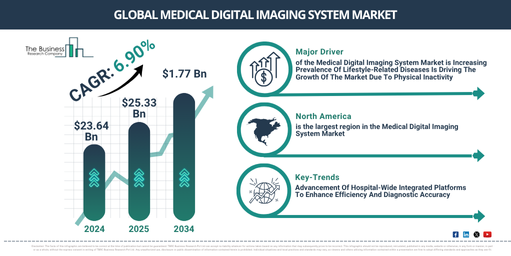
    The market size for the medical digital imaging system has seen substantial growth in recent years. The value is expected to increase from $23.64 billion in 2024 to $25.33 billion in 2025, with a compound annual growth rate (CAGR) of 7.2%. Reasons for this growth during the historic period include the shift from analog to digital imaging, the enlargement of healthcare infrastructure in developing markets, initiatives and funding from government entities, heightened awareness and screening programs, as well as the incorporation of picture archiving and communication systems (PACS).

    The market for medical digital imaging systems is anticipated to witness considerable expansion in the upcoming years, projected to reach $33.13 billion by 2029 at a CAGR of 6.9%. The predicted growth during this forecasted timeframe is due to several factors, including the transition towards portable imaging and point-of-care, escalating requisition for advanced imaging modalities, the rising inclination towards minimally invasive and image-guided techniques, the requirement for personalized medicine and early detection, and the advent of hybrid and multi-modality systems. Reputed future trends over this forecasted period encompass AI-driven image analysis, mobile point-of-care imaging tools, photon-counting CT technology, as well as 3D and 4D imaging and amalgamated imaging modalities.

    Download The Free Sample Report Here:

    https://www.thebusinessresearchcompany.com/sample.aspx?id=25823&type=smp

    What Forces Are Driving The Growth Of The Medical Digital Imaging System Market?

    The growth of the medical digital imaging system market is predicted to be fueled by the escalating occurrence of lifestyle-related illnesses. These diseases are primarily a consequence of unhealthy lifestyle choices, including a poor diet, lack of physical activity, smoking, and overconsumption of alcohol. The rise in such diseases is largely attributed to physical inactivity, characterized by extended periods of sitting, minimal physical labor, and less movement on a regular basis. Medical digital imaging systems come in handy with these diseases through early and precise identification of conditions like heart diseases, complications associated with diabetes, and complications resulting from obesity. This aids in providing timely interventions and improved control of the disease. As per the National Health Service, a government department based in the UK, 3,615,330 GP-registered individuals were diagnosed with non-diabetic hyperglycemia, or pre-diabetes, in June 2024, a significant 18% hike from the 3,065,825 cases in 2022. Hence, the growth of the medical digital imaging system market is being driven by the rise in the occurrence of lifestyle-related diseases.

    How Is The Medical Digital Imaging System Industry Segmented Across Key Parameters?

    The medical digital imaging system market covered in this report is segmented –

    1) By Component: Hardware, Software, Service

    2) By Deployment Mode: On-Premises, Cloud-Based, Hybrid

    3) By Modality: X-ray, Computed Tomography (CT), Magnetic Resonance Imaging (MRI), Ultrasound, Nuclear Imaging (PET Or SPECT), Mammography

    4) By Application: Diagnostic Imaging, Therapeutic Imaging, Research And Training

    5) By End User: Hospitals, Diagnostic Imaging Centers, Other End Users

    Subsegments:

    1) By Hardware, Detectors And Sensors, Workstations, Display Monitors, PACS Servers

    2) By Software, Image Processing Software, PACS Software, RIS Software, Visualization And 3D Reconstruction Software, AI-Based Diagnostic Software

    3) By Service, Installation And Integration Services, Maintenance And Support Services, Software Upgradation Services, Training And Education Services, Remote Monitoring Services

    What Notable Trends Are Shaping The Direction Of The Medical Digital Imaging System Market?

    Significant medical digital imaging system market players are paying attention to technological evolution, such as integrated platforms on a hospital-wide scale, with the goal to augment diagnostic precision, diminish patient waiting hours, and bolster workflow proficiency throughout medical institutions. Integrated platforms on a hospital-wide scale pertain to systems which link and administer every department and service within a hospital via a single digital platform, thereby facilitating effortless data exchange and workflow all around the hospital. For example, in May 2023, Niagara Health, a healthcare network based in Canada, rolled out a fresh digital imaging system projected to notably enhance patient care and results across all its healthcare centers. This novel sophisticated digital imaging system brings together imaging processes onto a single digital platform, allowing for accelerated image capturing and transmission, safe storage, and superior quality imaging for X-rays, CT scans, and MRIs. It brings down the time patients have to wait and permits doctors from various departments to concurrently access images, thereby augmenting diagnostic precision through instantaneous digital workflows. The system furthermore enables secure exchange with primary healthcare providers and specialists, thus enhancing teamwork and the planning of treatments.

    Which Companies Currently Dominate The Competitive Landscape In The Medical Digital Imaging System Industry?

    Major companies operating in the medical digital imaging system market are Hitachi Limited, Canon Medical Systems Corporation, Siemens Healthineers AG, FUJIFILM Holdings Corporation, Koninklijke Philips N.V., General Electric Healthcare, Konica Minolta Incorporated, Hologic Incorporated, Shenzhen Mindray Bio-Medical Electronics Co Ltd., Dentsply Sirona Inc., Shimadzu Corporatio, Carestream Health Inc., Agfa-Gevaert NV, Planmeca Oy, Varex Imaging Corporation, Samsung Medison Co Ltd., Esaote S.p.A. , Ziehm Imaging GmbH, Shenzhen Anke High-tech Co Ltd., Shanghai United Imaging Healthcare Co Ltd.

    Get The Full Report Here:

    https://www.thebusinessresearchcompany.com/report/medical-digital-imaging-system-global-market-report

    Which Geographic Regions Are Driving Demand In The Medical Digital Imaging System Market?

    North America was the largest region in the medical digital imaging system market in 2024. Asia-Pacific is expected to be the fastest-growing region in the forecast period. The regions covered in the medical digital imaging system market report are Asia-Pacific, Western Europe, Eastern Europe, North America, South America, Middle East, Africa.

    Request For A Customized Report:

    https://www.thebusinessresearchcompany.com/customise?id=25823&type=smp

    About The Business Research Company:

    With over 15000+ reports from 27 industries covering 60+ geographies, The Business Research Company has built a reputation for offering comprehensive, data-rich research and insights. Armed with 1,500,000 datasets, the optimistic contribution of in-depth secondary research, and unique insights from industry leaders, you can get the information you need to stay ahead in the game.

    Get in touch with us:

    The Business Research Company: https://www.thebusinessresearchcompany.com/

    Americas +1 310-496-7795

    Asia +44 7882 955267 & +91 8897263534

    Europe +44 7882 955267

    Email us at info@tbrc.info

    Follow us on:

    LinkedIn: https://in.linkedin.com/company/the-business-research-company

    YouTube: https://www.youtube.com/channel/UC24_fI0rV8cR5DxlCpgmyFQ

    Global Market Model: https://www.thebusinessresearchcompany.com/global-market-model
  • Industry Forecast: Medical Device Distribution Services Market to Generate $263.60  Billion Revenue by 2029

    Industry Forecast: Medical Device Distribution Services Market to Generate $263.60 Billion Revenue by 2029

    Claim your 30% discount on Global Market Reports with code ONLINE30. Limited time only.

    Claim your 30% discount on Global Market Reports with code ONLINE30. Limited time only.

    How Large Is the Medical Device Distribution Services Market Expected to Be in 2029?

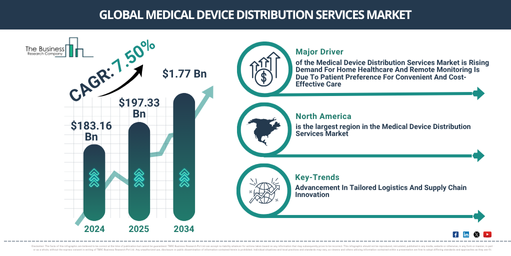
    There has been a substantial expansion in the size of the medical device distribution services market in the past few years. The market is expected to swell from $183.16 billion in 2024 to $197.33 billion in 2025, with a compound annual growth rate (CAGR) of 7.7%. Factors contributing to this growth during the historical period include a surge in the demand for healthcare services, an escalating incidence of chronic diseases, expansion in hospital infrastructure, the growth of home healthcare, and heightened consciousness about medical devices.

    The sector for distributing medical devices is projected to significantly expand in the coming years, reaching a market cap of $263.60 billion in 2029, fueled by a compound annual growth rate (CAGR) of 7.5%. Factors leading to such growth during this predicted timeline include the rising prevalence of telehealth, remote patient monitoring, increased funding in healthcare amenities, an aging population, the development of medical device offerings, and a heightened emphasis on streamlined supply chains. Leading trends for this period include technological upgrades in the logistics of medical supply, advances in preserving the cold chain, progress in digital tracking systems, the introduction of artificial intelligence, and innovative green and sustainable distribution methods.

    Download The Free Sample Report Here:

    https://www.thebusinessresearchcompany.com/sample.aspx?id=25822&type=smp

    What Are The Contributors To Demand In The Medical Device Distribution Services Market?

    The growth of the medical device distribution services market is set to be fueled by the increasing need for home healthcare and remote monitoring. Home healthcare provides patients with medical care in their own homes, while remote monitoring employs digital technology for continuous health status tracking. The surge in demand for these services is a result of patients’ preference for convenient, affordable care options that offer ongoing health management and timely medical intervention in their home setting. The distribution services of medical devices facilitate home healthcare and remote monitoring by ensuring quick delivery of necessary medical equipment to patients’ homes, endorsing seamless and effective care. For example, a recent survey conducted in August 2023 by Vivalink, a digital healthcare firm based in the U.S., showed that 81% of clinicians have adopted remote patient monitoring (RPM), reflecting a substantial 305% increase from just 20% in 2021. Additionally, 84% of current RPM users are planning to widen their usage of this technology in 2024. Consequently, the field of medical device distribution services is witnessing growth, majorly propelled by the escalating demand for home healthcare and remote monitoring.

    What Segmentation Categories Are Included In The Medical Device Distribution Services Market Analysis?

    The medical device distribution services market covered in this report is segmented –

    1) By Product Type: Diagnostic Devices, Therapeutic Devices, Patient Monitoring Devices, Home Healthcare Devices, Other Product Types

    2) By Distribution Channel: Direct Distribution, Third-Party Logistics Providers, Distributors Or Wholesalers, E-Commerce Or Online Medical Marketplaces

    3) By End Use: Hospitals And Clinics, Diagnostic Centers, Ambulatory Surgical Centers, Long-Term Care Facilities, Homecare Settings

    Subsegments:

    1) By Diagnostic Devices: Imaging Devices, In Vitro Diagnostic Devices, Molecular Diagnostics, Point Of Care Testing Devices, Laboratory Equipment

    2) By Therapeutic Devices: Surgical Instruments, Infusion Pumps, Respiratory Therapy Devices, Orthopedic Devices, Wound Care Devices

    3) By Patient Monitoring Devices: Cardiac Monitors, Vital Signs Monitors, Remote Patient Monitoring Devices, Wearable Health Devices, Neonatal Monitors

    4) By Home Healthcare Devices: Mobility Aids, Home Diagnostic Devices, Respiratory Care Devices, Personal Care Devices, Medication Management Devices

    5) By Other Product Types: Sterilization Equipment, Medical Consumables, Medical Furniture, Hospital Supplies, Infection Control Devices

    What Upcoming Trends Are Expected To Impact The Medical Device Distribution Services Market Globally?

    Key players in the market for medical device distribution services are concentrating their efforts on creating bespoke logistical innovations, such as dedicated MedTech cross-docks, to guarantee secure, effective, and high-quality transit of delicate medical technologies. Dedicated MedTech cross-docks are specially designed logistics hubs that focus on enhanced safety, temperature regulation, and tailored handling procedures for medical technology shipments, complying with the sensitive nature of these devices. For instance, in May 2024, Kuehne + Nagel International AG, a Swiss transport and logistics firm, introduced a specialized road freight service to facilitate the movement of high-value and sensitive medical technology devices across crucial European nations. This unique service, offering customized handling, centralized support, and white glove delivery options for consolidated shipments, is engineered to fulfill the stringent safety and quality prerequisites of the MedTech sector without the necessity for complete GxP compliance. It ensures effective, secure, and transparent logistics for medical devices.

    Who Are The Top-Ranked Companies In The Medical Device Distribution Services Market Today?

    Major companies operating in the medical device distribution services market are McKesson Corporation, AmerisourceBergen Corporation, Cencora Inc., Cardinal Health Inc., Henry Schein Inc., Owens & Minor Inc., B. Braun Melsungen AG, Nipro Corporation, Southmedic Inc., Master Medical Equipment LLC, Mercedes Scientific LLC, Asian Medical Inc., Contego Medical, Meditek Inc., Soquelec Limited, Stat Medical Inc., The Stevens Company Limited, Clock Medical Supply Inc., Merit Pharmaceutical Company Inc., Multi-Medical Equipment & Supplies Inc.

    Get The Full Report Here:

    https://www.thebusinessresearchcompany.com/report/medical-device-distribution-services-global-market-report

    How Is Medical Device Distribution Services Market Adoption Varying Across Different Regions And Sectors?

    North America was the largest region in the medical device distribution services market in 2024. The regions covered in the medical device distribution services market report are Asia-Pacific, Western Europe, Eastern Europe, North America, South America, Middle East, Africa.

    Request For A Customized Report:

    https://www.thebusinessresearchcompany.com/customise?id=25822&type=smp

    About The Business Research Company:

    With over 15000+ reports from 27 industries covering 60+ geographies, The Business Research Company has built a reputation for offering comprehensive, data-rich research and insights. Armed with 1,500,000 datasets, the optimistic contribution of in-depth secondary research, and unique insights from industry leaders, you can get the information you need to stay ahead in the game.

    Get in touch with us:

    The Business Research Company: https://www.thebusinessresearchcompany.com/

    Americas +1 310-496-7795

    Asia +44 7882 955267 & +91 8897263534

    Europe +44 7882 955267

    Email us at info@tbrc.info

    Follow us on:

    LinkedIn: https://in.linkedin.com/company/the-business-research-company

    YouTube: https://www.youtube.com/channel/UC24_fI0rV8cR5DxlCpgmyFQ

    Global Market Model: https://www.thebusinessresearchcompany.com/global-market-model
  • Global Rhinoplasty Implants Market Landscape: Trends and Market Share to 2029

    Global Rhinoplasty Implants Market Landscape: Trends and Market Share to 2029

    Claim your 30% discount on Global Market Reports with code ONLINE30. Limited time only.

    Claim your 30% discount on Global Market Reports with code ONLINE30. Limited time only.

    What Are the Latest Market Insights for the Rhinoplasty Implants Industry?

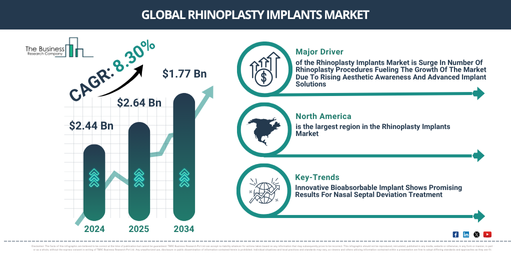
    There has been a significant growth in the rhinoplasty implants market in recent years, expanding from $2.44 billion in 2024 to an expected $2.64 billion in 2025, with a compound annual growth rate of 8.5%. Multiple factors have contributed to this historic growth, including a surge in demand for cosmetic enhancement procedures, an increase in nasal trauma and congenital deformities, growth in medical tourism related to aesthetic surgeries, enhanced accessibility to modern implant materials, and the powerful impact of celebrities and social media trends.

    Expectations are high for robust expansion in the rhinoplasty implants market in the coming years, with projections suggesting that it will reach the $3.63 billion mark by 2029, reflecting a compound annual growth rate (CAGR) of 8.3%. This anticipated growth within the specified period is influenced by factors such as the increasing inclination towards less invasive rhinoplasty processes, a heightened understanding of facial aesthetics amongst the younger audience, rising acceptance of personalized and 3D-printed implants, an expanding number of globally certified cosmetic surgeons, and a boost in disposable income facilitating elective surgeries. Noteworthy trends anticipated for the forecast period are innovations in implant production technologies, the emergence of superior biomaterials offering enhanced biocompatibility, progression in 3D printing for individual-specific implants, the utilization of augmented reality in surgical planning, and advancements in non-surgical rhinoplasty methods.

    Download The Free Sample Report Here:

    https://www.thebusinessresearchcompany.com/sample.aspx?id=25895&type=smp

    What Forces Are Driving The Growth Of The Rhinoplasty Implants Industry?

    The growth of the rhinoplasty implants market is anticipated to accelerate, propelled by an increase in rhinoplasty procedures. These procedures involve the surgical reshaping or reconstruction of the nose, either for aesthetic or functional reasons. This surge is largely due to growing aesthetic consciousness, with many people striving for facial balance and a boosted self-image, shaped by beauty standards and the influence of social media. Versatile, safe, and customizable, rhinoplasty implants are aiding this growth by providing surgeons an effective tool to improve the nasal structure. This results in better surgical outcomes and greater patient satisfaction. For example, the British Association of Aesthetic Plastic Surgeons, a UK-based surgical body, reported a 102% increase in cosmetic surgeries in 2022, up to 31,057 in total. Rhinoplasty procedures were up 67% at 2,220 cases in March 2023. As such, the surge in rhinoplasty procedures is fueling the expansion of the rhinoplasty implants market.

    What Is The Overview Of Market Segmentation In The Rhinoplasty Implants Industry?

    The rhinoplasty implants market covered in this report is segmented –

    1) By Product Type: Silicone Rhinoplasty Implants, Medpor Implants, Gore-Tex Implants, Human Cartilage Implants

    2) By Procedure Type: Surgical, Non-Surgical

    3) By Surgical Approach: Open Rhinoplasty, Closed Rhinoplasty, Endonasal Rhinoplasty

    4) By End User: Hospitals, Plastic Surgery Clinics, Ambulatory Surgical Centers

    Subsegments:

    1) By Silicone Rhinoplasty Implants: Solid Silicone Implants, Carved Silicone Implants, Preformed Silicone Implants, Customized Silicone Implants

    2) By Medpor Implants: Porous Polyethylene Nasal Implants, Pre-Shaped Medpor Nasal Dorsal Implants, Medpor Extended Columellar Strut Implants, Medpor Lateral Crura Implants

    3) By Gore-Tex Implants: Expanded Polytetrafluoroethylene Nasal Implants, Dorsal Augmentation Gore-Tex Implants, Soft Tissue Gore-Tex Sheets, Composite Gore-Tex with Cartilage Implants

    4) By Human Cartilage Implants: Autologous Cartilage, Homologous Cadaveric Cartilage, Fresh Frozen Allograft Cartilage, Processed Cartilage Paste

    What Upcoming Trends Are Expected To Impact The Rhinoplasty Implants Market Globally?

    Leading enterprises in the rhinoplasty implant industry are concentrating on creating innovative items, like bioabsorbable nasal implants, to offer effective treatments for issues like nasal septal deviation and obstruction that spare cartilage. Bioabsorbable nasal implants utilize dissolvable, medical-grade implants to aid in the alignment of the nasal septum and naturally dissolve in the body over a set period. This eliminates surgical removal and minimizes structural disturbance. For example, in June 2025, Spirair Inc., an American company specializing in minimally invasive solutions, reported optimistic 12-month results from their initial clinical trial of SeptAlign implant, a type of bioabsorbable nasal implant. The trial showcased a significant reduction in nasal obstruction symptoms for patients with nasal septal deviation (NSD), a fairly common condition afflicting millions globally. This implant provides a less intrusive solution by bolstering the nasal septum without removing cartilage. The promising results emphasize the device’s potential to enhance the standard of living for individuals undergoing treatment for nasal septal deviation. Based on these results, Spirair is planning further research and commercial deployment.

    Who Are The Primary Players Operating Across The Global Rhinoplasty Implants Market?

    Major companies operating in the rhinoplasty implants market are Johnson & Johnson, Medtronic PLC, Stryker Corporation, Zimmer Biomet, Smith & Nephew plc, W. L. Gore & Associates, Integra LifeSciences, Globus Medical, KLS Martin Group, Medartis AG, Acumed, Koken Co. Ltd., GC Aesthetics, HansBiomed Co. Ltd., Polytech Health & Aesthetics, Implantech Associates Inc., Surgiform Technology Ltd., Xilloc Medical, Poriferous LLC, Hanson Medical.

    Get The Full Report Here:

    https://www.thebusinessresearchcompany.com/report/rhinoplasty-implants-global-market-report

    Which Region Offers The Most Growth Potential For The Rhinoplasty Implants Market Through 2029?

    North America was the largest region in the rhinoplasty implants market in 2024. Asia-Pacific is expected to be the fastest-growing region in the forecast period. The regions covered in the rhinoplasty implants market report are Asia-Pacific, Western Europe, Eastern Europe, North America, South America, Middle East, Africa.

    Request For A Customized Report:

    https://www.thebusinessresearchcompany.com/customise?id=25895&type=smp

    About The Business Research Company:

    With over 15000+ reports from 27 industries covering 60+ geographies, The Business Research Company has built a reputation for offering comprehensive, data-rich research and insights. Armed with 1,500,000 datasets, the optimistic contribution of in-depth secondary research, and unique insights from industry leaders, you can get the information you need to stay ahead in the game.

    Get in touch with us:

    The Business Research Company: https://www.thebusinessresearchcompany.com/

    Americas +1 310-496-7795

    Asia +44 7882 955267 & +91 8897263534

    Europe +44 7882 955267

    Email us at info@tbrc.info

    Follow us on:

    LinkedIn: https://in.linkedin.com/company/the-business-research-company

    YouTube: https://www.youtube.com/channel/UC24_fI0rV8cR5DxlCpgmyFQ

    Global Market Model: https://www.thebusinessresearchcompany.com/global-market-model
  • Comprehensive Forecast: Refurbished Dental Equipment And Maintenance Market Share, Growth, and Opportunities Through 2029

    Comprehensive Forecast: Refurbished Dental Equipment And Maintenance Market Share, Growth, and Opportunities Through 2029

    Claim your 30% discount on Global Market Reports with code ONLINE30. Limited time only.

    Claim your 30% discount on Global Market Reports with code ONLINE30. Limited time only.

    What Are the Forecasted Growth Rate and Market Size of the Refurbished Dental Equipment And Maintenance Market?

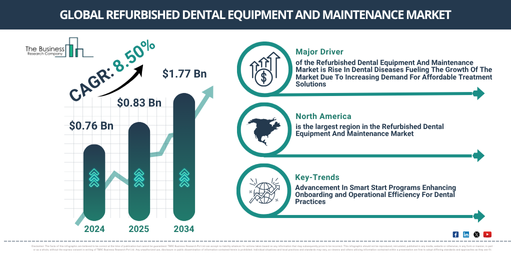
    There has been a robust growth in the market size of refurbished dental equipment and maintenance in the past few years. It’s projected to expand from $0.76 billion in 2024 to about $0.83 billion in 2025, with a compound annual growth rate (CAGR) of 8.8%. The historical growth is credited to the upsurge in small and independent dental practices, increased oral health screening initiatives, expansion in dental education, increased sales of refurbished digital diagnostic devices, and the escalating demand for mobile dental clinics.

    In the coming years, a significant increase is anticipated in the market size of refurbished dental equipment and maintenance, projected to reach $1.15 billion in 2029 with a compound annual growth rate (CAGR) of 8.5%. The expansion in the geriatric population, escalating healthcare costs, rising adoption of refurbished medical appliances, increase in dental clinics, and growth of dental tourism can be credited for this uptick during the forecasted period. Key market trends for this duration include improvements in refurbishment technology, advanced integration of sterilization and hygiene, innovation in digitized dental equipment, introduction of AI in dental diagnostics, and progress in environmentally friendly packaging and logistics.

    Download The Free Sample Report Here:

    https://www.thebusinessresearchcompany.com/sample.aspx?id=25894&type=smp

    Which Factor Is Shaping The Future Of The Refurbished Dental Equipment And Maintenance Market?

    The increasing occurrences of dental health issues are set to amplify the expansion of the refurbished dental equipment and maintenance market. Dental diseases negatively impact the teeth, gums, and other oral tissues and are characterized by conditions such as tooth decay and gum disease. The escalation in dental health issues is predominantly triggered by the increased intake of processed and sugary foods which encourage plaque accumulation and acid generation, resulting in tooth decay and gum issues. The refurbished dental equipment and maintenance market aids in the control of dental diseases by offering cost-effective access to critical diagnostic and treatment equipment thereby improving patient care and outcomes. For instance, the British Dental Association reported in March 2023, that the rate of dental decay among 5-year-olds was 35.1% in deprived regions and 13.5% in affluent regions in 2022, indicating over 21.6% disparity in oral health. Hence, the escalating prevalence of dental diseases is fuelling the growth of the refurbished dental equipment and maintenance market. There is an upward trend in healthcare expenses that is predicted to stimulate the growth of the refurbished dental equipment and maintenance market. Healthcare spending pertains to the cumulative outlay on health services, healthcare products, and public health initiatives in a country or area. The increasing burden of prolonged diseases is leading to higher healthcare costs as managing such conditions involves ongoing treatment, diagnostics, and monitoring. An increase in healthcare expenditure promotes cost-effective alternatives, thereby encouraging dental clinics to invest in refurbished devices and maintenance services to manage costs while maintaining quality care. In April 2025, the American Medical Association reported that the U.S health expenditure had increased by 7.5% to reach $4.9 trillion in 2023, or $14,570 per person. This was a significant rise over the 4.6% growth recorded in 2022. Therefore, the rise in healthcare costs is facilitating the growth of the refurbished dental equipment and maintenance market.

    What Is The Segment-Wise Breakdown Of The Refurbished Dental Equipment And Maintenance Market?

    The refurbished dental equipment and maintenance market covered in this report is segmented –

    1) By Product: Specialized Dental Equipment, Intraoral Cameras, Chairside Computer-Aided Design Or Computer-Aided Manufacturing Systems, 3D Imaging Systems, Surgical Microscopes, Dental Lasers, Endodontic Equipment, Cone Beam Computed Tomography, Systems, Other Products

    2) By Service Type: Preventive Maintenance, Corrective Maintenance, Emergency Repairs, Routine Check-Ups

    3) By Application: Dental Chairs, X-Ray Machines, Ultrasonic Scalers, Suction Units

    4) By End User: Hospitals, Independent Dental Clinics, Ambulatory Surgical Centers, Other End Users

    Subsegments:

    1) By Specialized Dental Equipment: Operatory Lights, Dental Chairs and Stools, Delivery Systems, Cuspidors, Compressors and Vacuum Systems

    2) By Intraoral Cameras: Universal Serial Bus Intraoral Cameras, Wireless Intraoral Cameras, Handheld Intraoral Cameras, High Definition Intraoral Cameras, Autofocus Intraoral Cameras

    3) By Chairside Computer-Aided Design or Computer-Aided Manufacturing Systems: Scanners, Milling Machines, Design Software, Integrated Workstations

    4) By 3D Imaging Systems: Intraoral Three-Dimensional Scanners, Extraoral Three-Dimensional Scanners, Three-Dimensional Facial Scanners, Optical Impression Systems

    5) By Surgical Microscopes: Floor-Mounted Microscopes, Wall-Mounted Microscopes, Ceiling-Mounted Microscopes, Tabletop Microscopes

    6) By Dental Lasers: Diode Lasers, Carbon Dioxide Lasers, Erbium-Doped Yttrium Aluminum Garnet Lasers, Neodymium-Doped Yttrium Aluminum Garnet Lasers, Soft Tissue Lasers, Hard Tissue Lasers

    7) By Endodontic Equipment: Apex Locators, Endodontic Motors, Obturation Units, Rotary Endodontic Systems, Irrigation Devices

    8) By Cone Beam Computed Tomography Systems: Standalone Cone Beam Computed Tomography Units, Integrated Cone Beam Computed Tomography with Panoramic X-ray, Mobile Cone Beam Computed Tomography Units, Medium and Large Field-of-View Cone Beam Computed Tomography Systems

    9) By Systems: Refurbished Dental Radiology Systems, Refurbished Dental Laser Systems, Refurbished Dental Chairs and Delivery Systems, Refurbished Dental Suction and Compressor Systems, Refurbished Sterilization and Infection Control Systems, Refurbished Digital Imaging and Sensor Systems, Refurbished Dental Milling Systems

    10) By Other Products: Autoclaves and Sterilizers, Ultrasonic Cleaners, Amalgamators, High-Speed and Low-Speed Handpieces, Suction Units, X-ray Film Processors

    How Are Key Trends Driving Expansion In The Refurbished Dental Equipment And Maintenance Industry?

    Major firms in the market for maintenance and refurbished dental equipment are emphasizing on the creation of innovative platforms such as smart start programs. These are aimed at improving customer introduction, guaranteeing top-notch equipment functionality from the start, and offering extensive training and assistance for their smooth incorporation into dental practices. Smart Start initiatives are structured guiding solutions tailored to assist dental practices in the efficient set up and management of refurnished equipment through professional support and guidance. For example, A-dec Inc., a dental apparatus firm based in the United States, unveiled a certified pre-owned equipment platform in February 2024, which permits dental practices to acquire certified, refurbished apparatus directly from authorized sellers. This program entails a thorough multi-point check-up and refurbishing process implemented by A-dec experts who replace high-wear elements with new, genuine components to assure quality and dependability. Each certified piece is supplemented with brand-new upholstery available in a variety of color options. It also comes with a three-year parts warranty and unrestricted access to A-dec customer care and assistance.

    Which Companies Hold The Largest Market Share In The Refurbished Dental Equipment And Maintenance Sector?

    Major companies operating in the refurbished dental equipment and maintenance market are Henry Schein Inc., DentalEZ Inc., DuraPro Health, Aseptico Inc., Renew Digital LLC, Independent Dental Inc., A & K Dental Equipment, Capital Dental Equipment, Dental Equipment Liquidators Inc., SPS Dental Inc., Superior DDS, ABC Dentalworks Inc., Collins Dental Equipment Inc., Dental Planet LLC, Sunrise Dental Equipment Inc., American Dental Refurbishment Inc., Pre-Owned Dental Inc., Bimedis Inc., KB Dental Consulting Inc., DIV Dental Equipments

    Get The Full Report Here:

    https://www.thebusinessresearchcompany.com/report/refurbished-dental-equipment-and-maintenance-global-market-report

    How Does Regional Performance Compare Across The Refurbished Dental Equipment And Maintenance Industry?

    North America was the largest region in the refurbished dental equipment and maintenance market in 2024. The regions covered in the refurbished dental equipment and maintenance market report are Asia-Pacific, Western Europe, Eastern Europe, North America, South America, Middle East, Africa.

    Request For A Customized Report:

    https://www.thebusinessresearchcompany.com/customise?id=25894&type=smp

    About The Business Research Company:

    With over 15000+ reports from 27 industries covering 60+ geographies, The Business Research Company has built a reputation for offering comprehensive, data-rich research and insights. Armed with 1,500,000 datasets, the optimistic contribution of in-depth secondary research, and unique insights from industry leaders, you can get the information you need to stay ahead in the game.

    Get in touch with us:

    The Business Research Company: https://www.thebusinessresearchcompany.com/

    Americas +1 310-496-7795

    Asia +44 7882 955267 & +91 8897263534

    Europe +44 7882 955267

    Email us at info@tbrc.info

    Follow us on:

    LinkedIn: https://in.linkedin.com/company/the-business-research-company

    YouTube: https://www.youtube.com/channel/UC24_fI0rV8cR5DxlCpgmyFQ

    Global Market Model: https://www.thebusinessresearchcompany.com/global-market-model
  • Medical Crutches Market Revenue Outlook: Strategic Insights and Forecast to 2029

    Medical Crutches Market Revenue Outlook: Strategic Insights and Forecast to 2029

    Claim your 30% discount on Global Market Reports with code ONLINE30. Limited time only.

    Claim your 30% discount on Global Market Reports with code ONLINE30. Limited time only.

    What Is the Outlook for the Medical Crutches Market Heading Into 2029?

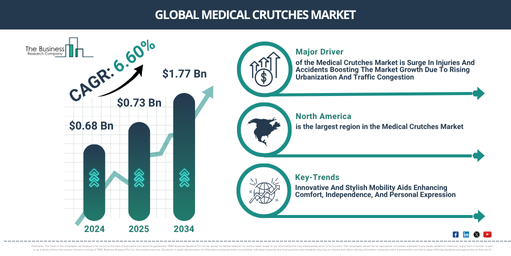
    In recent times, the market size for medical crutches has experienced significant growth. It is predicted to increase from $0.68 billion in 2024 to $0.73 billion in 2025, with a compound annual growth rate (CAGR) of 6.8%. The historic period’s growth can be credited to the escalating demand for home healthcare solutions, augmentation in healthcare expenditure, a surge in sports-related injuries, an intensified focus on rehabilitation and physical therapy, and an increasing rate of disabilities due to chronic diseases.

    Over the next few years, the market size for medical crutches is anticipated to experience significant growth, reaching $0.94 billion by 2029 with a compound annual growth rate (CAGR) of 6.6%. The projected increase during the forecasted period can be linked to several factors: a rise in musculoskeletal injuries, an aging population, increased frequency of orthopedic conditions, improved awareness of mobility aids, and an uptick in trauma and accident cases. Prominent trends for the forecast period comprise of the technological advancement in the design of crutches, the addition of smart sensors, enhancements in shock absorption systems, progress in foldable and adjustable crutches, and the development of wearable healthcare devices.

    Download The Free Sample Report Here:

    https://www.thebusinessresearchcompany.com/sample.aspx?id=25821&type=smp

    Which Factors Are Pushing The Medical Crutches Market Forward?

    The escalating instances of injuries and accidents are set to champion the expansion of the medical crutches market for the foreseeable future. These injuries and accidents involve unforeseen events that lead to bodily damage requiring medical care, frequently. The surge in these mishaps is predominantly linked to increasing urbanization and traffic congestion, as they significantly raise the threat of accidents, slips, and other perils in densely populated areas. Medical crutches provide support and stability for individuals affected by injuries and accidents, relieving weight on the injured limb, and allowing safe and efficient movement during the recovery process. Specifically, records from the Transport Accident Commission, a government agency in Australia, showed that December 2024 witnessed 267 fatal accidents on Victorian roads, which is a rise of 20 compared to the 247 fatal accidents documented in the previous 12 months ending June 2023. Hence, the escalating cases of injuries and accidents are fuelling the expansion of the medical crutches market. Influence Of Rising Healthcare Expenditure On Market Expansion Due To Aging Demographic And Need for Affordable Mobility Solutions

    Which Segment Held The Largest Share In The Medical Crutches Market In 2025?

    The medical crutches market covered in this report is segmented –

    1) By Product: Underarm Crutch, Forearm Crutch, Tetrapod Crutch, Leg Support Crutch, Platform Crutch, Other Types

    2) By Material: Wood, Metal Alloys, Carbon Or Glass Fiber Reinforced Composites, Thermoplastic, Carbon Fiber Reinforced Polymer

    3) By Distribution Channel: Hospital Pharmacies, Retail Pharmacies, Online Stores

    4) By Application: Post-Operative Recovery, Chronic Conditions, Short-Term Use, Long-Term Use

    5) By End User: Home Healthcare, Hospitals And Clinics, Rehabilitation Centers, Nursing Homes

    Subsegments:

    1) By Underarm Crutch: Adjustable Underarm Crutch, Padded Underarm Crutch, Non-Adjustable Underarm Crutch

    2) By Forearm Crutch: Open Cuff Forearm Crutch,, Ergonomic Grip Forearm Crutch, Closed Cuff Forearm Crutch

    3) By Tetrapod Crutch: Fixed Base Tetrapod Crutch, Offset Handle Tetrapod Crutch, Adjustable Height Tetrapod Crutch

    4) By Leg Support Crutch: Hands-Free Leg Support Crutch, Platform Leg Support Crutch, Knee Crutch

    5) By Platform Crutch: Adjustable Platform Crutch, Padded Platform Crutch, Fixed Platform Crutch

    6) By Other Types: Smart Crutches, Pediatric Crutches, Foldable Crutches

    How Are Key Trends Driving Expansion In The Medical Crutches Industry?

    Key players in the medical crutches market are concentrating on designing innovative products such as personal mobility aids, with the objective of increasing user comfort, promoting better mobility, and facilitating rapid recovery for individuals grappling with temporary or chronic mobility issues. Personal mobility aids entail assistive tools developed to aid persons with mobility restrictions in moving independently and securely. These tools encompass products like crutches, canes, walkers, wheelchairs, and mobility scooters. For example, Cool Crutches Ltd., a medical device firm headquartered in the UK, introduced a glitter assortment of walking sticks and crutches in October 2022. These are designed not only for functionality but with an aesthetic appeal that enhances user confidence and help mitigate pain and blisters, thereby making the use of mobility aids more pleasurable and empowering for individuals with disabilities or other injuries. The aim is to provide practical and sturdy support, allowing users to express their personality, especially during celebratory instances like Christmas.

    Which Organizations Are Driving Progress In The Medical Crutches Industry?

    Major companies operating in the medical crutches market are Cardinal Health Inc., Walgreens Boots Alliance, Medline Industries LP, Ottobock SE & Co. KGaA, Invacare Corporation, Drive Medical, Sunrise Medical, GF Health Products Inc., Breg Inc., Drive DeVilbiss Healthcare, Vive Health, AMG Medical Inc., Aidacare, Carex Health Brands, Nova Medical Products, Tynor Orthotics Pvt. Ltd., Chinesport S.p.A., Ergoactives Inc., iWALKFree Inc., Ossenberg GmbH, MABIS Healthcare, Millennial Medical LLC.

    Get The Full Report Here:

    https://www.thebusinessresearchcompany.com/report/medical-crutches-global-market-report

    Which Region Is Expected To Experience The Highest Growth In The Medical Crutches Industry?

    North America was the largest region in the medical crutches market in 2024. Asia-Pacific is expected to be the fastest-growing region in the forecast period. The regions covered in the medical crutches market report are Asia-Pacific, Western Europe, Eastern Europe, North America, South America, Middle East, Africa.

    Request For A Customized Report:

    https://www.thebusinessresearchcompany.com/customise?id=25821&type=smp

    About The Business Research Company:

    With over 15000+ reports from 27 industries covering 60+ geographies, The Business Research Company has built a reputation for offering comprehensive, data-rich research and insights. Armed with 1,500,000 datasets, the optimistic contribution of in-depth secondary research, and unique insights from industry leaders, you can get the information you need to stay ahead in the game.

    Get in touch with us:

    The Business Research Company: https://www.thebusinessresearchcompany.com/

    Americas +1 310-496-7795

    Asia +44 7882 955267 & +91 8897263534

    Europe +44 7882 955267

    Email us at info@tbrc.info

    Follow us on:

    LinkedIn: https://in.linkedin.com/company/the-business-research-company

    YouTube: https://www.youtube.com/channel/UC24_fI0rV8cR5DxlCpgmyFQ

    Global Market Model: https://www.thebusinessresearchcompany.com/global-market-model
  • Future Projections: Medical Case Management Market to Reach $6.99  Billion by 2029 at 5.9% CAGR

    Future Projections: Medical Case Management Market to Reach $6.99 Billion by 2029 at 5.9% CAGR

    Claim your 30% discount on Global Market Reports with code ONLINE30. Limited time only.

    Claim your 30% discount on Global Market Reports with code ONLINE30. Limited time only.

    What Does the Forecast Indicate for the Medical Case Management Market From 2025 to 2029?

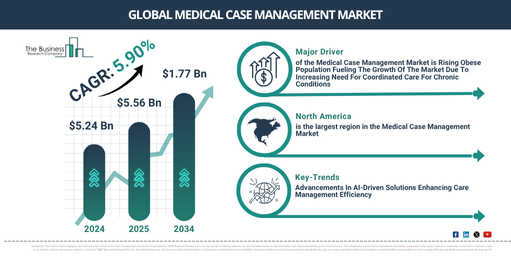
    In recent times, there has been a significant increase in the size of the medical case management market. It is projected to rise from $5.24 billion in 2024 to $5.56 billion in 2025, reflecting a compound annual growth rate (CAGR) of 6.2%. This growth during the historic period is due to factors such as escalating rates of cancer, an increase in post-surgery complications, surging birth rates which demand neonatal case management, a rise in life expectancy, and an upswing in the number of multi-morbidity instances among the elderly.

    The market size for medical case management is set to witness significant expansion in the coming years, with predictions stating it will surge to $6.99 billion by 2029, with a compound annual growth rate (CAGR) of 5.9%. This projected growth throughout the forecasted period can be associated with factors like a growing elderly population, an upsurge in chronic diseases, increasing instances of obesity, a higher ratio of disability and accident-related incidents, and a rise in mental health conditions. Key trends expected during this forecasted timeframe include telehealth integration and remote case management, utilization of artificial intelligence and machine learning for improving care coordination, embracement of electronic health records, the advent of mobile applications for care tracking, and the application of wearable devices for health monitoring.

    Download The Free Sample Report Here:

    https://www.thebusinessresearchcompany.com/sample.aspx?id=25820&type=smp

    What Elements Are Contributing To Growth In The Medical Case Management Market?

    The escalating number of obese individuals is predicted to stimulate the expansion of the medical case management market. Obese individuals refer to those with an excessive amount of body fat, usually indicated by a body mass index (BMI) of 30 or above. The surge in the obese population is caused by excessive consumption of high-calorie and processed foods, which promotes overconsumption of energy leading to continual weight gain. The obese population necessitates medical case management as they frequently endure multiple chronic diseases such as diabetes and hypertension that require continuous monitoring and coordinated treatment plans. As an example, a report issued by the World Obesity Federation, a non-profit organization based in the UK, claimed in March 2023 that by 2025, obesity is expected to affect 1.25 billion people worldwide, constituting 17% of the global population. This projection is anticipated to increase to 1.91 billion or 24% of the world population by 2035. Consequently, the escalating number of obese individuals is propelling the expansion of the medical case management market.

    Which Segments Are Detailed In The Global Medical Case Management Market Report?

    The medical case management market covered in this report is segmented –

    1) By Type: Web-Based Case Management, Telephonic Case Management, Field Case Management, Bilingual Field Case Management

    2) By Application: Chronic Pain Case Management, Catastrophic Case Management, Independent Medical Examinations, Short-Term Disability, Long-Term Disability, Other Applications

    3) By End-User: Hospitals , Home Care Settings, Other End Users

    Subsegments:

    1) By Web-Based Case Management: Cloud-Based Platforms, On-Premises Solutions, Mobile-Enabled Case Management, Integrated EHR Systems, Real-Time Reporting Dashboards

    2) By Telephonic Case Management: Inbound Case Management, Outbound Case Management, 24/7 Nurse Triage Services, Chronic Disease Management Support, Post-Discharge Follow-Up Calls

    3) By Field Case Management: Catastrophic Injury Management, Workers’ Compensation Field Visits, Return-To-Work Assessments, Home Environment Evaluations, Rehabilitation Progress Monitoring

    4) By Bilingual Field Case Management: Spanish-English Case Coordination, Multilingual Cultural Competency Support, Translation And Interpretation Services, Immigration Case Support, Cross-Border Patient Navigation

    Which Emerging Trends And Strategic Shifts Are Shaping The Medical Case Management Market?

    Major companies in the medical case management market are concentrating on the development of cutting-edge solutions, such as AI-powered care management solutions, to enhance operational effectiveness. These solutions are smart digital toolkits that utilize artificial intelligence to scrutinize patient data, spot potential health risks, and aid in the creation and management of bespoke care plans. For instance, Innovaccer Inc., a healthcare technology firm based in the United States, introduced the Care Management Copilot in September 2024. It integrates Innovaccer’s healthcare-specific AI model, Sara, into its care management platform to streamline documentation tasks and enable care managers to engage with 30-40% more patients. It boasts AI-driven patient summaries that extract essential data in line with care protocols, identify severe problems, and offer a rundown of previous interactions to prepare for patient engagement. The system facilitates real-time documentation by recording conversations, automatically filling out care plans and assessments, and providing suggestions based on protocols. Additionally, it seamlessly integrates with major EHRs, removing unnecessary entries and ensuring all team members have access to up-to-date patient records.

    Who Are The Key Contributors To Growth In The Medical Case Management Market?

    Major companies operating in the medical case management market are McKesson Corporation, Cigna Group, Optum Inc., Aetna Inc., Medtronic Plc., CorVel Corporation, Genex Services LLC, EK Health Services Inc., AXIOM MEDICAL CONSULTING LLC, Coventry Health Care, TRIUNE Health Group, EagleOne Case Management Solutions Inc., The Alaris Group Inc., Healthcare Solutions Inc., PayerFusion Holdings LLC, GMMI Inc., Sierra Nevada Administrators, Medical Case Management Group, Anthem Inc., and Managed Medical Review Organization Inc.

    Get The Full Report Here:

    https://www.thebusinessresearchcompany.com/report/medical-case-management-global-market-report

    Which Region Is Projected To Lead The Medical Case Management Market By 2025?

    North America was the largest region in the medical case management market in 2024. Asia-Pacific is expected to be the fastest-growing region in the forecast period. The regions covered in the medical case management market report are Asia-Pacific, Western Europe, Eastern Europe, North America, South America, Middle East, Africa.

    Request For A Customized Report:

    https://www.thebusinessresearchcompany.com/customise?id=25820&type=smp

    About The Business Research Company:

    With over 15000+ reports from 27 industries covering 60+ geographies, The Business Research Company has built a reputation for offering comprehensive, data-rich research and insights. Armed with 1,500,000 datasets, the optimistic contribution of in-depth secondary research, and unique insights from industry leaders, you can get the information you need to stay ahead in the game.

    Get in touch with us:

    The Business Research Company: https://www.thebusinessresearchcompany.com/

    Americas +1 310-496-7795

    Asia +44 7882 955267 & +91 8897263534

    Europe +44 7882 955267

    Email us at info@tbrc.info

    Follow us on:

    LinkedIn: https://in.linkedin.com/company/the-business-research-company

    YouTube: https://www.youtube.com/channel/UC24_fI0rV8cR5DxlCpgmyFQ

    Global Market Model: https://www.thebusinessresearchcompany.com/global-market-model
  • Future Demand and Leading Companies Shaping the Rare Cell Isolation Market to 2029

    Future Demand and Leading Companies Shaping the Rare Cell Isolation Market to 2029

    Claim your 30% discount on Global Market Reports with code ONLINE30. Limited time only.

    Claim your 30% discount on Global Market Reports with code ONLINE30. Limited time only.

    What Is the Estimated Industry Valuation for the Rare Cell Isolation Sector?

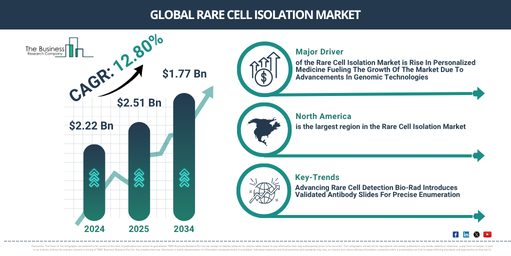
    The market size for rare cell isolation has experienced rapid expansion in recent years. It is projected to surge from $2.22 billion in 2024 to $2.51 billion in 2025, translating to a compound annual growth rate (CAGR) of 13.0%. This growth during the historical period can be credited to its early utilization in research related to cancer, increased financial backing in scholarly life science research, initial progression in immunomagnetic separation, a surge in demand for prenatal genetic testing, and the rise of stem cell research in the healthcare sector.

    In the forthcoming years, a swift expansion is anticipated in the rare cell isolation market, elevating its worth to about $4.06 billion by 2029 with a compound annual growth rate (CAGR) of 12.8%. This considerable increase during the prediction phase is largely due to the upswing in liquid biopsy-based diagnostics, substantial expansion in precision oncology programs, the rise in circulating tumor cell analyses, an escalating need for non-invasive testing procedures, and the emerging use in cell therapy development. Significant trends during this anticipated period would include developments in 3D microfluidic isolation systems, advanced isolation techniques that prioritize cell viability, comprehensive platforms for downstream analysis, the application of artificial intelligence and machine learning in rare cell isolation, along with the emergence of point-of-care rare cell isolation devices.

    Download The Free Sample Report Here:

    https://www.thebusinessresearchcompany.com/sample.aspx?id=25893&type=smp

    What Forces Are Driving The Growth Of The Rare Cell Isolation Market?

    Expectations are high that the rising demand for personalized medicine will spur the growth of the rare cell isolation market in the upcoming years. Personalized medicine is a medical model that tailors care and treatment to an individual’s specific genetic makeup, lifestyle, and environmental factors. This surge in the adoption of personalized medicine can be attributed to advancements in genomic technologies, which have expedited genetic testing and made it more economically viable. Rare cell isolation plays a crucial role in personalized medicine as it facilitates the accurate analysis of individual patients’ circulating tumor cells, fetal cells, or immune cells. This allows medical practitioners to customize treatment strategies based on the unique molecular and genetic profiles of these cells. For instance, the Personalized Medicine Coalition, a US-based professional membership organization, revealed that in February 2024, the Food and Drug Administration (FDA) approved 16 new personalized medicines in 2023, a significant rise from the 6 approved in 2022. Consequently, the increasing demand for personalized medicine is significantly influencing the growth of the rare cell isolation market.

    How Is The Rare Cell Isolation Industry Segmented Across Key Parameters?

    The rare cell isolation market covered in this report is segmented –

    1) By Product: Reagents And Kits, Instruments

    2) By Technology: Magnetic Bead Separation, Fluorescence-Activated Cell Sorting

    3) By Cell Type: Circulating Tumor Cells, Stem Cells, Fetal Cells

    Subsegments:

    1) By Reagents And Kits: Antibodies And Magnetic Beads, Microfluidic Reagents, Density Gradient Media, Cell Separation Buffers, Staining And Labeling Reagents, Nucleic Acid Isolation Kits, Consumables

    2) By Instruments: Magnetic-Activated Cell Sorting (MACS) Systems, Fluorescence-Activated Cell Sorting (FACS) Instruments, Microfluidic-Based Cell Isolation Devices, High-Throughput Cell Sorters, Automated Cell Analyzers, Centrifuges For Cell Isolation, Dielectrophoresis-Based Instruments

    Which Trends Are Expected To Shape The Future Of The Rare Cell Isolation Market?

    In the rare cell isolation industry, predominant players are shifting their focus towards groundbreaking advancements like rare cell and circulating tumor cell enumeration. This shift is to improve the accuracy, effectiveness, and scalability of identifying rare cells in cancer diagnostics and customized medical applications. Rare cell and circulating tumor cell enumeration is a technique to find and calculate rare cells, such as cancer cells, in blood or other specimens for disease observance and studies. For instance, in March 2024, Celselect Slides Validated Antibodies, a pioneering solution for rare cell and circulating tumour cell enumeration, was launched by Bio-Rad Laboratories, an American life sciences company. This solution offers unique characteristics like pre confirmed antibody panels intended especially for Celselect Slides, ensuring uniform staining quality and suitability with the Celselect platform for rare cell capturing. It cater to high-content imaging, regulated enumeration, and variable panel design, promoting applications in cancer studies and liquid biopsy workflows. This invention simplifies rare cell-analysis by decrementing assay development time and adding to reliability in downstream single-cell analysis workflows.

    Which Companies Currently Dominate The Competitive Landscape In The Rare Cell Isolation Industry?

    Major companies operating in the rare cell isolation market are F. Hoffmann-La Roche Ltd, Thermo Fisher Scientific Inc., Danaher Corporation, Merck KGaA , GE Healthcare Technologies Inc., Corning Incorporated, Lonza Group AG, Terumo BCT Inc., Bio-Rad Laboratories Inc., QIAGEN N.V., PerkinElmer Inc. , Bio-Techne Corporation, STEMCELL Technologies Inc., Miltenyi Biotec B.V. & Co KG, Izon Science Limited, RareCyte Inc., Akadeum Life Sciences Inc., NanoCellect Biomedical Inc., CELLENION SASU, Applied Cells Inc.

    Get The Full Report Here:

    https://www.thebusinessresearchcompany.com/report/rare-cell-isolation-global-market-report

    Which Geographic Regions Are Driving Demand In The Rare Cell Isolation Market?

    North America was the largest region in the rare cell isolation market in 2024. Asia-Pacific is expected to be the fastest-growing region in the forecast period. The regions covered in the rare cell isolation market report are Asia-Pacific, Western Europe, Eastern Europe, North America, South America, Middle East, Africa.

    Request For A Customized Report:

    https://www.thebusinessresearchcompany.com/customise?id=25893&type=smp

    About The Business Research Company:

    With over 15000+ reports from 27 industries covering 60+ geographies, The Business Research Company has built a reputation for offering comprehensive, data-rich research and insights. Armed with 1,500,000 datasets, the optimistic contribution of in-depth secondary research, and unique insights from industry leaders, you can get the information you need to stay ahead in the game.

    Get in touch with us:

    The Business Research Company: https://www.thebusinessresearchcompany.com/

    Americas +1 310-496-7795

    Asia +44 7882 955267 & +91 8897263534

    Europe +44 7882 955267

    Email us at info@tbrc.info

    Follow us on:

    LinkedIn: https://in.linkedin.com/company/the-business-research-company

    YouTube: https://www.youtube.com/channel/UC24_fI0rV8cR5DxlCpgmyFQ

    Global Market Model: https://www.thebusinessresearchcompany.com/global-market-model
  • Outlook for Tumor Necrosis Factor Inhibitor Drugs Market: Key Developments and Future Strategies to 2029

    Claim your 30% discount on Global Market Reports with code ONLINE30. Limited time only.

    Claim your 30% discount on Global Market Reports with code ONLINE30. Limited time only.

    How Large Is the Tumor Necrosis Factor Inhibitor Drugs Market Expected to Be in 2029?

    The market for tumor necrosis factor inhibitor drugs has seen a slight increase in size over the past few years. Its growth is projected to increase from $42.22 billion in 2024 to $42.47 billion in 2025, with a compound annual growth rate (CAGR) of 0.6%. Factors that have contributed to this growth during the historic period include clinical effectiveness, FDA approvals, a rise in disease prevalence, ongoing clinical research and trials, physician endorsement and suggestions, as well as patient demand and satisfaction levels.

    The market size of tumor necrosis factor inhibitor drugs is predicted to experience a constant expansion in the upcoming years. The market is anticipated to escalate to $47.15 billion in 2029, with a compound annual growth rate (CAGR) of 2.6%. The growth during the forecast period can be credited to the proliferation of new markets, shifts and approvals in regulations, personalized medication strategies, heightened awareness and accessibility to healthcare, and advancements in biological therapies. The forecast period will also see significant trends like patient-focused solutions, real-world evidence and data, emphasis on safety and adverse effects, advanced drug delivery systems, and broadened clinical applications.

    Download The Free Sample Report Here:

    https://www.thebusinessresearchcompany.com/sample.aspx?id=9383&type=smp

    What Are The Contributors To Demand In The Tumor Necrosis Factor Inhibitor Drugs Market?

    The escalating occurrence of autoimmune diseases is anticipated to fuel the growth of the tumor necrosis factor inhibitor drugs sector. Autoimmune disorders stem from the body’s immune system inadvertently damaging healthy tissue. In such conditions, tumor necrosis factor inhibitor drugs are utilized to halt inflammation that could result in pain, swelling, or illness, by inhibiting its action. These drugs enhance and stabilize the immune system, safeguarding the body against inflammation. For example, in June 2022, according to the Autoimmune Association, a non-profit organization in the USA committed to spreading awareness of autoimmune diseases, 4.7 million American males had an autoimmune disease in 2022, accounting for 20% of all diagnosed cases of autoimmune diseases. 31 million Americans are suffering from 80 to 150 differing forms of autoimmune diseases in 2022, a number that is expected to rise in the future. Hence, the escalating occurrence of autoimmune disorders is stimulating the growth of the tumor necrosis factor inhibitor drugs sector.

    What Segmentation Categories Are Included In The Tumor Necrosis Factor Inhibitor Drugs Market Analysis?

    The tumor necrosis factor inhibitor drugs market covered in this report is segmented –

    1) By Product Type: Humira, Enbrel, Remicade, Simponi Or Simponi Aria, Cimzia, Biosimilars

    2) By Route Of Administration: Subcutaneous Injection, Intravenous Injection

    3) By Distribution Channel: Hospital Pharmacies, Retail Pharmacies, Online Pharmacies

    4) By Application: Rheumatoid Arthritis, Psoriasis, Psoriatic Arthritis, Crohn’s Disease, Ulcerative Colitis, Ankylosing Spondylitis, Juvenile Idiopathic Arthritis, Hidradenitis Suppurativa, Other Applications

    Subsegments:

    1) By Humira: Humira (adalimumab)

    2) By Enbrel: Enbrel (etanercept)

    3) By Remicade: Remicade (infliximab)

    4) By Simponi Or Simponi Aria: Simponi (golimumab), Simponi Aria

    5) By Cimzia: Cimzia (certolizumab pegol)

    6) By Biosimilars: Biosimilars Of Humira, Biosimilars Of Enbrel, Biosimilars Of Remicade, Biosimilars Of Simponi, Biosimilars Of Cimzia

    What Upcoming Trends Are Expected To Impact The Tumor Necrosis Factor Inhibitor Drugs Market Globally?

    In the tumor necrosis factor inhibitor drugs market, a key trend gaining traction is product innovations. Major corporations operating in this sector are concentrating their efforts on the invention of new products to solidify their market presence. For example, Teva Pharmaceuticals, a pharmaceutical company headquartered in the US, formed a partnership with Alvotech, a biotech company from Luxembourg in May 2024. They launched SIMLANDI (adalimumab-ryvk) injection in the U.S. market, an interchangeable biosimilar to Humira, to treat several conditions including adult rheumatoid arthritis, juvenile idiopathic arthritis, adult psoriatic arthritis, ankylosing spondylitis in adults, Crohn’s disease, adult ulcerative colitis, adult plaque psoriasis, adult hidradenitis suppurativa, and adult uveitis.

    Who Are The Top-Ranked Companies In The Tumor Necrosis Factor Inhibitor Drugs Market Today?

    Major companies operating in the tumor necrosis factor inhibitor drugs market include AbbVie Inc., Amgen Inc., Johnson & Johnson Services Inc., UCB S.A., Novartis International AG, Pfizer Inc., Samsung Bioepis Co. Ltd., Sanofi SA, Merck & Co. Inc., Boehringer Ingelheim Pharmaceuticals, Lupin Ltd., F. Hoffmann-La Roche AG, Cadila Healthcare Ltd., Aryogen Biopharma, Casi Pharmaceuticals, Celltrion Inc., Bristol-Myers Squibb, Dexa Medica, Epirus Biopharmaceuticals, Glaxosmithkline plc, Hanall Biopharma, Intas Pharmaceuticals, Leo Pharma AS, Biogen Inc.

    Get The Full Report Here:

    https://www.thebusinessresearchcompany.com/report/tumor-necrosis-factor-inhibitor-drugs-global-market-report

    How Is Tumor Necrosis Factor Inhibitor Drugs Market Adoption Varying Across Different Regions And Sectors?

    North America was the largest region in the tumor necrosis factor inhibitor drugs market in 2024. Asia-Pacific is expected to be the fastest-growing region in the tumor necrosis factor (TNF) inhibitors drugs market report during the forecast period. The regions covered in the tumor necrosis factor inhibitor drugs market report are Asia-Pacific, Western Europe, Eastern Europe, North America, South America, Middle East, Africa

    Request For A Customized Report:

    https://www.thebusinessresearchcompany.com/customise?id=9383&type=smp

    About The Business Research Company:

    With over 15000+ reports from 27 industries covering 60+ geographies, The Business Research Company has built a reputation for offering comprehensive, data-rich research and insights. Armed with 1,500,000 datasets, the optimistic contribution of in-depth secondary research, and unique insights from industry leaders, you can get the information you need to stay ahead in the game.

    Get in touch with us:

    The Business Research Company: https://www.thebusinessresearchcompany.com/

    Americas +1 310-496-7795

    Asia +44 7882 955267 & +91 8897263534

    Europe +44 7882 955267

    Email us at info@tbrc.info

    Follow us on:

    LinkedIn: https://in.linkedin.com/company/the-business-research-company

    YouTube: https://www.youtube.com/channel/UC24_fI0rV8cR5DxlCpgmyFQ

    Global Market Model: https://www.thebusinessresearchcompany.com/global-market-model

  • 2025–2029 Rapid Tests Market Outlook: Regional Trends and Growth Forecast

    2025–2029 Rapid Tests Market Outlook: Regional Trends and Growth Forecast

    Claim your 30% discount on Global Market Reports with code ONLINE30. Limited time only.

    Claim your 30% discount on Global Market Reports with code ONLINE30. Limited time only.

    How Large Is the Rapid Tests Market Expected to Be in 2029?

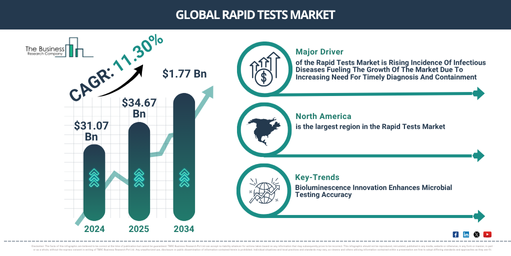
    The market size for rapid tests has experienced a significant expansion in the past few years. The market, which was worth $31.07 billion in 2024, is forecasted to reach $34.67 billion in 2025, witnessing a compound annual growth rate (CAGR) of 11.6%. The historical growth can be credited to factors such as the increasing instances of infectious diseases, the escalating demand for point-of-care diagnostics, the heightened awareness around early disease identification, the growing necessity for swift and precise test results, and the rise in healthcare expenditure and its accessibility.

    The market size for rapid tests is projected to witness substantial growth in the ensuing years, with an estimated valuation of $53.17 billion in 2029 and a compound annual growth rate (CAGR) of 11.3%. The growth during the anticipated period is largely due to the increased usage of home-based testing kits, a heightened focus on tailor-made medicine, a surge in the demand for fast testing in emerging markets, and a broadening application of rapid tests in unconventional environments. Key trends expected throughout this period include advancements in microfluidic technologies, enhanced biosensor incorporation in test kits, innovations in multiplex rapid test platforms, the utilisation of artificial intelligence (AI) in diagnostic processes, and progress in portable diagnostic device technology.

    Download The Free Sample Report Here:

    https://www.thebusinessresearchcompany.com/sample.aspx?id=25892&type=smp

    What Are The Contributors To Demand In The Rapid Tests Market?

    The escalating occurrence of contagious illnesses is projected to boost the expansion of the rapid tests market in the future. These diseases are typically brought on by damaging microorganisms like bacteria, viruses, fungi, or parasites and can be directly or indirectly transmitted from one individual to another. The travel-associated escalation in these diseases’ prevalence contributes to the swift cross-border circulation of pathogens. Rapid tests play a crucial role in curbing infectious maladies by offering immediate and precise detection at care points, which paves the way for prompt treatment and segregation. They bolster public health initiatives by shortening diagnostic lags, enhancing disease control, and curtailing infectious dispersion. For example, the UK Health Security Agency, a government body based in the UK, reported in February 2024 that tuberculosis cases in England (a transmittable bacterial infection largely affecting the lungs) had risen by 10.7%, from 4,380 in 2022 to 4,850 in 2023. As such, the managing of infectious diseases propels the rapid tests market’s growth.

    What Segmentation Categories Are Included In The Rapid Tests Market Analysis?

    The rapid tests market covered in this report is segmented –

    1) By Product: Instruments, Consumables, Other Products

    2) By Contaminants: Pathogens, Allergens, Meat Speciation, Pesticides, Other Contaminants

    3) By Technology: Polymerase Chain Reaction (PCR)-Based, Immunoassay-Based, Chromatography-Based, Spectroscopy-Based

    4) By Application: Cardiology, Oncology, Pregnancy And Fertility, Toxicology, Glucose Monitoring, Infectious Disease, Other Applications

    5) By End User: Hospitals And Clinics, Diagnostic Laboratories, Home Care, Other End-Users

    Subsegments:

    1) By Instruments: Portable Analyzers, Benchtop Analyzers, Handheld Devices, Readers Or Scanners, Multiplex Analyzers

    2) By Consumables: Test Strips, Test Cassettes Or Cartridges, Reagents, Sample Collection Devices, Control And Calibration Materials

    3) By Other Products: Software And Data Management Systems, Accessories, Maintenance And Service Kits, Packaging Materials, Training And Support Materials

    What Long-Term Trends Are Likely To Affect The Rapid Tests Market?

    The focus of major corporations in the rapid tests market is to devise technologically superior solutions like advanced bioluminescence technology, to expedite and improve the precision and sensitivity of pathogen discovery. Advanced bioluminescence technology involves the application of luminescent biochemical reactions, often with luciferase enzymes and substrates, to identify the existence of microorganisms or biological markers. For instance, in March 2025, Nelson Labs, a provider of testing services based in the US, introduced a rapid sterility testing method. This novel testing method shortens the conventional 14-day incubation phase to as few as six days by leveraging advanced bioluminescence technology. This system identifies microbial adenosine triphosphate (ATP), an indicator of living organisms, by gauging the light produced during the bioluminescent reaction. The detection of microbial contamination is automated, precision is increased, and regulatory conformity is assured, making way for quicker, dependable product launch without sacrificing safety.

    Who Are The Top-Ranked Companies In The Rapid Tests Market Today?

    Major companies operating in the rapid tests market are Pfizer Inc., F. Hoffmann-La Roche AG, Abbott Laboratories, Thermo Fisher Scientific Inc., Siemens Healthineers, BioMérieux SA, Quidel Corporation, Bio‑Rad Laboratories Inc., PerkinElmer Inc., OraSure Technologies Inc., SEKISUI Diagnostics LLC, Trivitron Healthcare Pvt. Ltd., Ellume Limited, Access Bio Inc., ACON Laboratories Inc., CTK Biotech Inc., iHealth Labs Inc., Wondfo USA Co. Ltd., InBios International Inc., Lab Care Diagnostics India Pvt. Ltd., Immunostics Inc., Aptitude Medical Systems Inc., Nano-Ditech Corporation, Azure Biotech Inc., Beijing Hotgen Biotech Co. Ltd., CorDx Inc., Genabio Diagnostics Inc., Maxim Biomedical Inc., OSANG LLC, Watmind USA.

    Get The Full Report Here:

    https://www.thebusinessresearchcompany.com/report/rapid-tests-global-market-report

    How Is Rapid Tests Market Adoption Varying Across Different Regions And Sectors?

    North America was the largest region in the rapid tests market in 2024. Asia-Pacific is expected to be the fastest-growing region in the forecast period. The regions covered in the rapid tests market report are Asia-Pacific, Western Europe, Eastern Europe, North America, South America, Middle East, Africa.

    Request For A Customized Report:

    https://www.thebusinessresearchcompany.com/customise?id=25892&type=smp

    About The Business Research Company:

    With over 15000+ reports from 27 industries covering 60+ geographies, The Business Research Company has built a reputation for offering comprehensive, data-rich research and insights. Armed with 1,500,000 datasets, the optimistic contribution of in-depth secondary research, and unique insights from industry leaders, you can get the information you need to stay ahead in the game.

    Get in touch with us:

    The Business Research Company: https://www.thebusinessresearchcompany.com/

    Americas +1 310-496-7795

    Asia +44 7882 955267 & +91 8897263534

    Europe +44 7882 955267

    Email us at info@tbrc.info

    Follow us on:

    LinkedIn: https://in.linkedin.com/company/the-business-research-company

    YouTube: https://www.youtube.com/channel/UC24_fI0rV8cR5DxlCpgmyFQ

    Global Market Model: https://www.thebusinessresearchcompany.com/global-market-model