Blog

  • Future Demand and Leading Companies Shaping the Wearable Cardiac Devices Market to 2029

    Future Demand and Leading Companies Shaping the Wearable Cardiac Devices Market to 2029

    Claim your 30% discount on Global Market Reports with code ONLINE30. Limited time only.

    Claim your 30% discount on Global Market Reports with code ONLINE30. Limited time only.

    What Are the Latest Market Insights for the Wearable Cardiac Devices Industry?

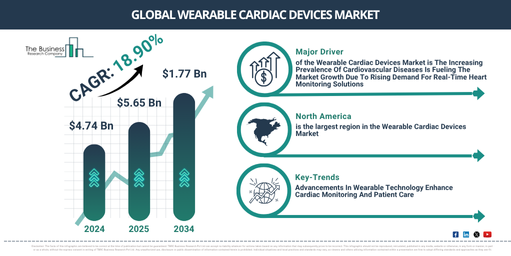
    The market for wearable cardiac devices has witnessed a swift expansion in its size over the past few years. The market is expected to rise from a size of $4.74 billion in 2024 to a size of $5.65 billion in 2025 with a compound annual growth rate (CAGR) of 19.3%. Factors contributing to this growth in the historical period include an increase in cardiovascular disease incidents, greater awareness around preventive healthcare, incorporation of ECG technology into consumer electronics, a surge in usage of fitness tracking devices and a growing demand for remote patient monitoring.

    The market for wearable cardiac devices is projected to experience swift expansion in the coming years, rising to $11.31 billion by 2029 with a compound annual growth rate (CAGR) of 18.9%. This projected increase during the forecast period can be ascribed to a surge in the use of telehealth services, an ageing population, incorporation with smartphone health applications, an increased demand for round-the-clock heart health monitoring, and the broadening scope of telehealth and digital health platforms. Key trends anticipated during the forecast period comprise the downsizing of cardiac monitoring devices, compatibility with smartphones and mobile applications, the creation of wearables that can monitor multiple parameters, wearable ECG for identifying arrhythmia, and subscription-oriented health monitoring services.

    Download The Free Sample Report Here:

    https://www.thebusinessresearchcompany.com/sample.aspx?id=25935&type=smp

    What Forces Are Driving The Growth Of The Wearable Cardiac Devices Industry?

    The escalating occurrence of cardiovascular ailments is predicted to fuel the augmentation of the wearable cardiac devices industry in the near future. These maladies denote a range of disorders that impact the heart and blood vessels, encompassing conditions such as coronary artery disease, heart failure, stroke, and hypertension. The rising occurrence of cardiovascular afflictions is principally tied to numerous risk elements, such as excessive alcohol consumption, which can elevate blood pressure, contribute to inconsistent heart rhythms, and augment the risk of heart failure and stroke. Wearable cardiac gadgets facilitate heart activity monitoring in real-time, promoting early identification and control of cardiovascular ailments to avert severe health issues by continuously observing crucial parameters like heart rate, rhythm, and electrical signals, thus facilitating prompt medical intervention and enhancing patient results. As an illustration, the Australian Institute of Health and Welfare, an Australia-based government body, reported in December 2023, that in 2021, there were 14,100 doctor-verified fatalities owing to coronary heart disease (CHD), which surged to 14,900 in 2022. Consequently, the untamed escalation of cardiovascular disorders is stimulating the expansion of the wearable cardiac devices industry.

    What Is The Overview Of Market Segmentation In The Wearable Cardiac Devices Industry?

    The wearable cardiac devices market covered in this report is segmented –

    1) By Product: Holter Monitors, Smartwatches, Patch, Defibrillators, Pulse Oximeters, Other Products

    2) By Application: Arrhythmia Detection, Heart Rate Monitoring, Heart Disease Management

    3) By Distribution Channel: Online, Offline

    4) By End User: Hospitals, Clinics, Individual Consumers, Fitness Centers

    Subsegments:

    1) By Holter Monitors: Single-Channel Holter Monitors, Multi-Channel Holter Monitors, Wireless Holter Monitors

    2) By Smartwatches: Fitness And Wellness Smartwatches, Medical-Grade Smartwatches, Electrocardiogram (ECG)-Enabled Smartwatches

    3) By Patch: Adhesive Cardiac Monitoring Patches, Rechargeable Patch Monitors, Disposable Patch Monitors

    4) By Defibrillators: Wearable Cardioverter Defibrillators (WCDs), Automated External Defibrillators (AEDs) With Wearable Integration

    5) By Pulse Oximeters: Fingertip Wearable Oximeters, Wrist-Worn Oximeters, Ring-Type Oximeters

    6) By Other Products: Chest Straps, Smart Clothing, Portable Electrocardiogram (ECG) Monitors

    Which Trends Are Expected To Shape The Future Of The Wearable Cardiac Devices Market?

    Leading firms in the wearable cardiac device market are prioritizing the creation of novel products like medical-grade smartwatches to enhance constant cardiac monitoring and early identification of heart diseases. These smartwatches are wearable gadgets that come loaded with sophisticated health tracking sensors and meet the clinical accuracy prerequisites for monitoring essential signs such as heart rate, ECG, blood oxygen levels, and sleep routines. These tools enable users and healthcare providers to keep a check on chronic diseases, detect any irregularities early on and take health decisions based on real-time information. For instance, Xplore Lifestyle Solutions Pvt Ltd, an Indian manufacturer, joined forces with CardiacSense, an Israeli firm, in July 2022 to introduce the CardiacSense medical watch, which holds the title of being the world’s first medically-approved smartwatch for heart monitoring. The gadget comes with FDA-approved PPG (photoplethysmography) and ECG sensors, ensuring hospital-grade precision in detecting heart arrhythmias, atrial fibrillation, and other heart irregularities. The device’s exclusive algorithms offer continuous blood pressure tracking without the need for calibration, and the stylish design that can be worn round-the-clock includes fall detection as well as emergency SOS alerts.

    Who Are The Primary Players Operating Across The Global Wearable Cardiac Devices Market?

    Major companies operating in the wearable cardiac devices market are Apple Inc., Samsung Electronics Co. Ltd., Abbott Laboratories, Medtronic plc, Garmin Ltd., Masimo Corporation, Nihon Kohden Corporation, iRhythm Technologies Inc., Biofourmis, Bittium Corporation, BPL Medical Technologies Pvt. Ltd., NeuroSky Inc., Bionet Co. Ltd., AliveCor Inc., Qardio Inc., Empatica Inc., VitalConnect Inc., Lifesignals Group, Biotricity Inc., Shimmer Research

    Get The Full Report Here:

    https://www.thebusinessresearchcompany.com/report/wearable-cardiac-devices-global-market-report

    Which Region Offers The Most Growth Potential For The Wearable Cardiac Devices Market Through 2029?

    North America was the largest region in the wearable cardiac devices market in 2024. Asia-Pacific is expected to be the fastest-growing region in the forecast period. The regions covered in the wearable cardiac devices market report are Asia-Pacific, Western Europe, Eastern Europe, North America, South America, Middle East, Africa.

    Request For A Customized Report:

    https://www.thebusinessresearchcompany.com/customise?id=25935&type=smp

    About The Business Research Company:

    With over 15000+ reports from 27 industries covering 60+ geographies, The Business Research Company has built a reputation for offering comprehensive, data-rich research and insights. Armed with 1,500,000 datasets, the optimistic contribution of in-depth secondary research, and unique insights from industry leaders, you can get the information you need to stay ahead in the game.

    Get in touch with us:

    The Business Research Company: https://www.thebusinessresearchcompany.com/

    Americas +1 310-496-7795

    Asia +44 7882 955267 & +91 8897263534

    Europe +44 7882 955267

    Email us at info@tbrc.info

    Follow us on:

    LinkedIn: https://in.linkedin.com/company/the-business-research-company

    YouTube: https://www.youtube.com/channel/UC24_fI0rV8cR5DxlCpgmyFQ

    Global Market Model: https://www.thebusinessresearchcompany.com/global-market-model
  • 2025–2029 Wearable Bioelectronic Skin Patches Market Outlook: Regional Trends and Growth Forecast

    2025–2029 Wearable Bioelectronic Skin Patches Market Outlook: Regional Trends and Growth Forecast

    Claim your 30% discount on Global Market Reports with code ONLINE30. Limited time only.

    Claim your 30% discount on Global Market Reports with code ONLINE30. Limited time only.

    What Are the Forecasted Growth Rate and Market Size of the Wearable Bioelectronic Skin Patches Market?

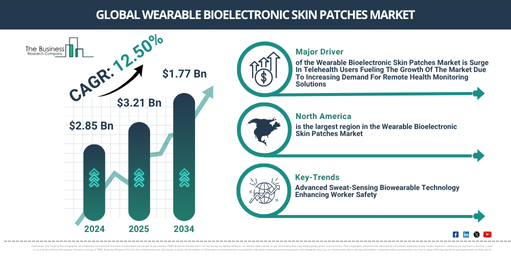
    The market for wearable bioelectronic skin patches has seen significant growth in recent years, with projections indicating that it is set to increase in size from $2.85 billion in 2024 to $3.21 billion in 2025. This translates to a compound annual growth rate (CAGR) of 12.7%. The expansion experienced during the historic period is a result of several key factors such as: an increase in demand for remote health monitoring, a higher adoption rate of flexible electronics, an upsurge in the prevalence of chronic diseases, ongoing advancements in sensor technology, and heightened awareness about personalized healthcare.

    In the coming years, the market for wearable bioelectronic skin patches is projected to experience significant growth, escalating to a value of $5.15 billion in 2029 with a compound annual growth rate (CAGR) of 12.5%. The projected growth during the forecast period can be credited to the expanding integration of artificial intelligence, a growing emphasis on real-time health analytics, an increasing need for non-invasive monitoring, a rise in investment in wearable healthcare technologies, and a higher adaptation rate of wireless connectivity in patches. The forecast period also sees key trends such as development in flexible and stretchable materials, advanced biosensor integration, new innovations in energy harvesting technologies, an amalgamation of AI and machine learning, as well as progress in real-time data processing.

    Download The Free Sample Report Here:

    https://www.thebusinessresearchcompany.com/sample.aspx?id=25934&type=smp

    Which Factor Is Shaping The Future Of The Wearable Bioelectronic Skin Patches Market?

    The anticipated increase in the number of individuals using telehealth services is predicted to boost the expansion of the wearable bioelectronic skin patches market. These users engage digital communication technology, like video chats, phone calls, and applications, to get accessible healthcare from anywhere, which eliminates the need to travel. The rising popularity of such services is credited to the convenience it offers. By continually tracking vital signs and sending immediate health information to health professionals, wearable bioelectronic skin patches significantly improve remote healthcare, enabling prompt responses, accurate diagnoses, and tailored patient care. As cited in a March 2024 report from Australia’s Department of Health and Aged Care, the use of telehealth services peaked in the year 2022–23, notably among general practitioners (20%) and allied health (12%), with 75% and 48% of all virtual consultations being conducted by general practitioners and non-general practitioners respectively. Hence, the swelling numbers of telehealth users are fueling the wearable bioelectronic skin patches market’s expansion.

    What Is The Segment-Wise Breakdown Of The Wearable Bioelectronic Skin Patches Market?

    The wearable bioelectronic skin patches market covered in this report is segmented –

    1) By Type: Electrochemical Sensors, Electrocardiogram Sensors, Temperature Sensors, Electromyography Sensors, Other Types

    2) By Application: Fitness And Wellness, Medical Monitoring, Other Applications

    3) By End Use: Hospitals And Clinics, Home Care Settings, Other End Uses

    Subsegments:

    1) By Electrochemical Sensors: Glucose Monitoring Sensors, Lactate Monitoring Sensors, Potential of Hydrogen Sensors, Electrolyte Sensors, Cortisol Detection Sensors

    2) By Electrocardiogram (ECG) Sensors: Single-Lead Electrocardiogram Sensors, Multi-Lead Electrocardiogram Sensors, Dry Electrode Sensors, Wet Electrode Sensors, Wireless Electrocardiogram Patches

    3) By Temperature Sensors: Skin Surface Temperature Sensors, Core Body Temperature Sensors, Infrared Thermography Patches, Thermistor-Based Sensors, Phase Change Material (PCM) Sensors

    4) By Electromyography (EMG) Sensors: Surface Electromyography Patches, Wireless Electromyography Patches, Multi-Channel Electromyography Sensors, Dry Electrode Electromyography Sensors, Textile-Embedded Electromyography Sensors

    5) By Other Types: Optical Sensors, Mechanical Strain Sensors, Hydration Monitoring Sensors, Sweat Rate Sensors, Blood Pressure Sensors

    What Long-Term Trends Are Likely To Affect The Wearable Bioelectronic Skin Patches Market?

    Leading corporations in the wearable bioelectronic skin patch sector are focusing on the advancement of modern technologies such as multi-sensor sweat-tracking platforms, aimed at providing personalized monitoring of hydration levels and predictive health analysis for industrial laborers. A multi-sensor sweat detection system uses biosensors to track parameters like sweat production, electrolyte loss, skin temperature, and motion to provide real-time data that can help prevent issues like dehydration and heat exhaustion. For example, in April 2024, Epicore Biosystems, an American digital health enterprise, introduced the Connected Hydration platform – a biowearable patch and a mobile app. This skin-friendly device, built to track sweat volume, electrolyte loss, body temperature, and movement, employs multiple biosensors and machine learning algorithms that have been trained using over 420,000 data points. The patch gives immediate dehydration signals through tactile feedback and allows monitoring of fluid intake through an integrated mobile app. It boasts a battery life of more than 1,000 hours, does not need to be charged, and adheres to a safe design standard (CLASS I, DIV 2). Such technology paves the way for predictive analytics in dangerous industrial settings.

    Which Companies Hold The Largest Market Share In The Wearable Bioelectronic Skin Patches Sector?

    Major companies operating in the wearable bioelectronic skin patches market are Abbott Laboratories, Medtronic plc, Dexcom Inc., Interuniversity Microelectronics Centre, iRhythm Technologies Inc., Biolinq Inc., Profusa Inc., VitalConnect Inc., Blue Spark Technologies Inc., Epicore Biosystems Inc., BioIntelliSense Inc., Gentag Inc., VivaLNK Inc., PKvitality S.A.S., G-Tech Medical Inc., Biobeat Technologies Ltd., Zansors Inc., Nemaura Medical Inc., QT Medical Inc., Cardiomo Care Inc.

    Get The Full Report Here:

    https://www.thebusinessresearchcompany.com/report/wearable-bioelectronic-skin-patches-global-market-report

    How Does Regional Performance Compare Across The Wearable Bioelectronic Skin Patches Industry?

    North America was the largest region in the wearable bioelectronic skin patches market in 2024. Asia-Pacific is expected to be the fastest-growing region in the forecast period. The regions covered in the wearable bioelectronic skin patches market report are Asia-Pacific, Western Europe, Eastern Europe, North America, South America, Middle East, Africa.

    Request For A Customized Report:

    https://www.thebusinessresearchcompany.com/customise?id=25934&type=smp

    About The Business Research Company:

    With over 15000+ reports from 27 industries covering 60+ geographies, The Business Research Company has built a reputation for offering comprehensive, data-rich research and insights. Armed with 1,500,000 datasets, the optimistic contribution of in-depth secondary research, and unique insights from industry leaders, you can get the information you need to stay ahead in the game.

    Get in touch with us:

    The Business Research Company: https://www.thebusinessresearchcompany.com/

    Americas +1 310-496-7795

    Asia +44 7882 955267 & +91 8897263534

    Europe +44 7882 955267

    Email us at info@tbrc.info

    Follow us on:

    LinkedIn: https://in.linkedin.com/company/the-business-research-company

    YouTube: https://www.youtube.com/channel/UC24_fI0rV8cR5DxlCpgmyFQ

    Global Market Model: https://www.thebusinessresearchcompany.com/global-market-model
  • Latest Market Developments in Water For Injection Industry: Forecast 2025–2029

    Claim your 30% discount on Global Market Reports with code ONLINE30. Limited time only.

    Claim your 30% discount on Global Market Reports with code ONLINE30. Limited time only.

    What Is the Estimated Industry Valuation for the Water For Injection Sector?

    The market size for injectable water has seen significant expansion in the past few years. The market is projected to increase from $27.79 billion in 2024 to $30.45 billion in 2025, witnessing a compound annual growth rate (CAGR) of 9.6%. Factors contributing to this growth during the historic period include an augmented demand for parenteral drugs, heightened enforcement of GMP standards worldwide, surge in biologics production, growth of contract manufacturing, broadening of hospital-based manufacture, and an increase in aseptic packaging.

    The market for injectable water is anticipated to witness robust expansion in the coming years, with its valuation surging to $43.60 billion in 2029, complemented by a compound annual growth rate (CAGR) of 9.4%. The factors influencing this boom during the projected timeline can be linked to escalating regulatory authorizations for non-distillation approaches, the surging production of biopharmaceuticals in developing markets, the increased need for easily installable plug-and-play water, growing demand from sophisticated therapy medicinal products, and the emergence of personalized medicine. The expected trends throughout the forecast duration encompass advancements in decentralized generation systems, application of IoT in injectable water systems, integration of AI and machine learning in the production of injectable water, concurrent use of vapor compression distillation, and the embracement of ground-breaking technologies.

    Download The Free Sample Report Here:

    https://www.thebusinessresearchcompany.com/sample.aspx?id=25933&type=smp

    What Forces Are Driving The Growth Of The Water For Injection Market?

    The escalating occurrences of diabetes are set to boost the water for injection market advancement in the future. Diabetes is a chronic health disorder characterized by the body’s inability to control blood sugar levels satisfactorily, either because of inadequate insulin production or ineffectual insulin usage. This upsurge in diabetes occurrences largely results from the rising global obesity rates, as surplus body fat hampers the body’s capacity to use insulin efficiently, thus leading to improper blood sugar regulation and increased susceptibility to the ailment. Water for injection plays a pivotal role in diabetes control, as it’s typically used to mix or dilute injectable medicines like insulin, assuring that these medications are dispensed in a sterile and secure way to maintain their efficacy and avoid infections. For instance, the Health Professional Academy, a customized health professional study platform based in the UK, stated in February 2025 that the count of those diagnosed with diabetes in the UK had escalated to a record 4.6 million, an increase from 4.4 million in the previous year. Consequently, the rising occurrences of diabetes are fuelling the expansion of the water for injection market.

    How Is The Water For Injection Industry Segmented Across Key Parameters?

    The water for injection market covered in this report is segmented –

    1) By Type: Single-Distilled Water For Injection, Double-Distilled Water For Injection, Sterile Water For Injection, Purified Water For Injection

    2) By Packaging: Vial And Ampule, Bottle, Drums And Bulk Container, Other Packaging

    3) By Production Technology: Distillation, Membrane Based Reverse Osmosis

    4) By Applications: Solvents And Diluents, Culture Media, Equipment Cleaning, Other Applications

    5) By End User: Pharmaceutical And Biotechnology Companies , Hospitals And Other Healthcare Facilities, Contract Research And Manufacturing Organizations, Other End Users

    Subsegments:

    1) By Single-Distilled Water For Injection: Glass Ampoules, Plastic Vials, Bulk Packaging For Manufacturing Use, Laboratory Use Packaging

    2) By Double-Distilled Water For Injection: Pharmaceutical Manufacturing, Biotechnology Applications, Injectable Formulation Processing, Analytical Testing Laboratories

    3) By Sterile Water For Injection: Prefilled Syringes, IV Infusion Bags, Vials For Reconstitution, Inhalation And Irrigation Uses

    4) By Purified Water For Injection: Bulk Supply For Pharmaceutical Manufacturing, Custom Formulations, Equipment Cleaning And Preparation, Research And Laboratory Use

    What Future Market Trends Are Projected For The Water For Injection Industry?

    Major firms operating in the water for injection market are placing their focus on creating technologically-forward solutions. They aim to decrease energy usage and operational expenses while staying aligned with regulatory standards. One such innovation is cold water for injection technology, a method of producing water for injection at room temperature using membrane-based purification. This technique removes the necessity for distillation while sticking to pharmacopeial norms. For example, CN Water Systems Pvt. Ltd., a pharmaceutical firm based in India, unveiled its advanced OSMOTRON Cold/Ambient Water for Injection (WFI) technology in December 2024. This technology significantly lowers energy use and operational expenses as compared to traditional distillation methods. Also, it allows WFI to be produced directly from drinkable water, negating the need for water softening or dechlorination. It utilizes a triple-membrane barrier to provide increased safety and effectiveness.

    Which Companies Currently Dominate The Competitive Landscape In The Water For Injection Industry?

    Major companies operating in the water for injection market are Pfizer Inc., Veolia Water Technologies Inc., Thermo Fisher Scientific Inc., GlaxoSmithKline plc, Eli Lilly and Co., Boehringer Ingelheim, Amgen Inc., Merck KGaA, Fresenius SE and Co. KGaA, Asahi Kasei Medical Co. Ltd., Sandoz International GmbH, Baxter International Inc., B. Braun Melsungen AG, Lonza Group AG, Apotex Inc., BWT AG, Sartorius AG, Wuxi Biologics Cayman Inc., ICU Medical Inc., Evoqua Water Technologies, Cambrex Corporation.

    Get The Full Report Here:

    https://www.thebusinessresearchcompany.com/report/water-for-injection-global-market-report

    Which Geographic Regions Are Driving Demand In The Water For Injection Market?

    North America was the largest region in the water for injection market in 2024. Asia-Pacific is expected to be the fastest-growing region in the forecast period. The regions covered in the water for injection market report are Asia-Pacific, Western Europe, Eastern Europe, North America, South America, Middle East, Africa.

    Request For A Customized Report:

    https://www.thebusinessresearchcompany.com/customise?id=25933&type=smp

    About The Business Research Company:

    With over 15000+ reports from 27 industries covering 60+ geographies, The Business Research Company has built a reputation for offering comprehensive, data-rich research and insights. Armed with 1,500,000 datasets, the optimistic contribution of in-depth secondary research, and unique insights from industry leaders, you can get the information you need to stay ahead in the game.

    Get in touch with us:

    The Business Research Company: https://www.thebusinessresearchcompany.com/

    Americas +1 310-496-7795

    Asia +44 7882 955267 & +91 8897263534

    Europe +44 7882 955267

    Email us at info@tbrc.info

    Follow us on:

    LinkedIn: https://in.linkedin.com/company/the-business-research-company

    YouTube: https://www.youtube.com/channel/UC24_fI0rV8cR5DxlCpgmyFQ

    Global Market Model: https://www.thebusinessresearchcompany.com/global-market-model
  • Emerging Trends and Growth Drivers in the Visual Impairment Market Through 2029

    Emerging Trends and Growth Drivers in the Visual Impairment Market Through 2029

    Claim your 30% discount on Global Market Reports with code ONLINE30. Limited time only.

    Claim your 30% discount on Global Market Reports with code ONLINE30. Limited time only.

    How Large Is the Visual Impairment Market Expected to Be in 2029?

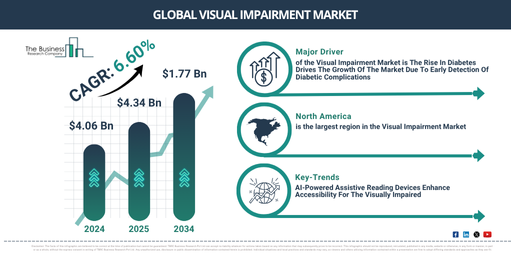
    In recent times, the market size for visual impairment has seen robust growth. It is projected to increase from $4.06 billion in 2024 to $4.34 billion in 2025, marking this growth with a compound annual growth rate (CAGR) of 6.8%. Numerous factors have contributed to this development during the historic period, including the rising incidences of eye disorders related to aging, the ongoing increase in diabetic retinopathy cases among the elderly, escalating incidences of glaucoma and macular degeneration worldwide, school-based vision screening initiatives’ evolving popularity, along with an increasing incidence of work-related eye injuries within the industrial sectors.

    The market size of visual impairment is anticipated to witness robust growth in the upcoming years, reaching $5.60 billion by 2029 with a compound annual growth rate (CAGR) of 6.6%. This growth during the projected period can be ascribed to a variety of factors such as the rise in older population prone to vision problems, elevated demand for electronic visual aids for low vision, increased healthcare expenditure in developing countries, mounting occurrence of myopia in youngsters and teenagers, and enhanced accessibility of wearable devices for vision improvement. Among the significant trends for the predicted period are the development of multilingual voice assistants, creation of mobile-based navigation applications, incorporation of haptic feedback systems, application of machine learning algorithms, and innovation in voice-controlled devices.

    Download The Free Sample Report Here:

    https://www.thebusinessresearchcompany.com/sample.aspx?id=25932&type=smp

    What Are The Contributors To Demand In The Visual Impairment Market?

    The growing occurrences of diabetes are anticipated to drive advances in the visual impairment market. This enduring metabolic disorder, which is identified by heightened blood glucose levels, results from malfunctions in insulin production, its function, or both. The increase in diabetes incidences is mainly related to unhealthy lifestyles like poor nutrition, lack of exercise, and elevated stress, leading to weight gain and insulin resistance. Signs of visual impairment can act as early indicators of diabetes complications, encouraging prompt detection and treatment, thereby averting further health complications. Notably, conditions such as diabetic retinopathy often manifest before any other visible symptoms, facilitating earlier medical intervention and improved disease control. For example, in April 2023, Diabetes UK (a UK-based British Diabetic Association) reported that 4.3 million individuals in the UK have now been diagnosed with diabetes, equating to a nearly 149,000 increase from the prior year. Additionally, more than 2.4 million people across the country are now recognized as having a high risk of developing type 2 diabetes. Hence, the escalating prevalence of diabetes is catalyzing the expansion of the visual impairment market.

    What Segmentation Categories Are Included In The Visual Impairment Market Analysis?

    The visual impairment market covered in this report is segmented –

    1) By Type: Educational Devices And Software, Mobility Devices, Low Vision Devices, Other Types

    2) By Product Type: Assistive Technologies, Optical Devices, Non-Optical Devices, Other Product Types

    3) By Application: Blind Schools, Enterprises And Social Organizations, Personal Use, Hospitals, Other Applications

    4) By Distribution Channel: Online Stores, Specialty Stores, Retail Pharmacies, Other Distribution Channel

    Subsegments:

    1) By Educational Devices And Software: Screen Readers, Braille Displays, Braille Notetakers, Accessible Learning Platforms, Tactile Graphics Tools

    2) By Mobility Devices: White Canes, Smart Canes, Guide Robots, Wearable Mobility Assistants, Electronic Travel Aids

    3) By Low Vision Devices: Optical Magnifiers, Video Magnifiers, Screen Magnification Software, Telescopic Glasses, Wearable Low Vision Glasses

    4) By Other Types: Smart Home Assistive Devices, Voice-Activated Assistants, Vision Therapy Tools, Accessibility Apps, Braille Printers And Embossers

    Which Trends Are Redefining The Future Landscape Of The Visual Impairment Industry?

    In the visual impairment market, leading corporations are concentrating on forming cutting-edge solutions including artificial intelligence-assisted reading tools to increase readability and autonomy for those with vision loss. These tools, assisted by artificial intelligence, use technologies like text recognition and speech synthesis to support individuals with visual impairments to articulate printed or digital text audibly. For example, in August 2023, OrCam Technologies Ltd., a company based in Israel specializing in assistive technology, introduced OrCam Read 3. This unique all-in-one device aims to assist people suffering from vision loss or reading exhaustion. The innovative device rapidly vocalizes printed, handwritten, and digital text, recognizes faces, and scans barcodes, providing users with enhanced independence. It also functions as an intelligent magnifier and fixed reader, integrating advanced operations such as text summarization, smart navigation, and hands-free usage for a fluid and all-encompassing reading encounter.

    Who Are The Top-Ranked Companies In The Visual Impairment Market Today?

    Major companies operating in the visual impairment market are Eschenbach Optik GmbH, OrCam Technologies Ltd., NV Access Limited, Vispero Holdings Inc., HumanWare Group Inc., Freedom Scientific Inc., Aira Tech Corp., Enhanced Vision Systems Inc., MeiraGTx Holdings plc, Dolphin Computer Access Ltd., IrisVision Global Inc., Zoomax Technology Co. Limited, Ablenet Inc., HIMS Inc., Sight and Sound Technology, Bionic Vision Technologies Pty Ltd, Optelec U.S. Inc., Pixium-Vision, Low Vision International AB, Envision Technologies B.V.

    Get The Full Report Here:

    https://www.thebusinessresearchcompany.com/report/visual-impairment-global-market-report

    How Is Visual Impairment Market Adoption Varying Across Different Regions And Sectors?

    North America was the largest region in the visual impairment market in 2024. Asia-Pacific is expected to be the fastest-growing region in the forecast period. The regions covered in the visual impairment market report are Asia-Pacific, Western Europe, Eastern Europe, North America, South America, Middle East, Africa.

    Request For A Customized Report:

    https://www.thebusinessresearchcompany.com/customise?id=25932&type=smp

    About The Business Research Company:

    With over 15000+ reports from 27 industries covering 60+ geographies, The Business Research Company has built a reputation for offering comprehensive, data-rich research and insights. Armed with 1,500,000 datasets, the optimistic contribution of in-depth secondary research, and unique insights from industry leaders, you can get the information you need to stay ahead in the game.

    Get in touch with us:

    The Business Research Company: https://www.thebusinessresearchcompany.com/

    Americas +1 310-496-7795

    Asia +44 7882 955267 & +91 8897263534

    Europe +44 7882 955267

    Email us at info@tbrc.info

    Follow us on:

    LinkedIn: https://in.linkedin.com/company/the-business-research-company

    YouTube: https://www.youtube.com/channel/UC24_fI0rV8cR5DxlCpgmyFQ

    Global Market Model: https://www.thebusinessresearchcompany.com/global-market-model
  • CAGR of 8.9% Projected for Vision Impairment Devices Market From 2025 to 2029

    CAGR of 8.9% Projected for Vision Impairment Devices Market From 2025 to 2029

    Claim your 30% discount on Global Market Reports with code ONLINE30. Limited time only.

    Claim your 30% discount on Global Market Reports with code ONLINE30. Limited time only.

    What Is the Outlook for the Vision Impairment Devices Market Heading Into 2029?

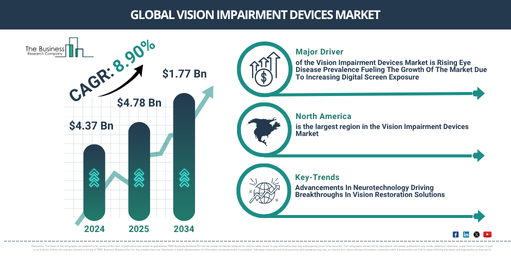
    There has been a significant increase in the size of the market for vision impairment devices in recent years. The market, projected to expand from $4.37 billion in 2024 to $4.78 billion in 2025, is expected to see an annual compound growth rate (CAGR) of 9.2%. Factors contributing to this growth in the historical period include government funding for the development of assistive technology, insurance and reimbursement benefits for low-vision aids, advancements in healthcare infrastructure and expenditure, the incorporation of vision aids into public health initiatives and disability programs, plus the endorsement of international disability rights agreements that inspire innovation.

    The market size for vision impairment devices is predicted to experience substantial growth in the forthcoming years, expanding to a worth of $6.71 billion in 2029, with a compound annual growth rate (CAGR) of 8.9%. Numerous factors are expected to drive growth during the forecast period, such as the growing demand for self-reliance among individuals with visual impairments, an increase in consumer preference for non-invasive support solutions, the popularity of assistive wearables amongst younger individuals, customization and personalization of devices for user ease, and the proliferation of e-commerce platforms for assistive technology. Key trends during this period encompass the evolution of AI-enabled visual aids, the development in wearable vision augmentation technologies, the incorporation of AR/VR into vision devices, advancements in portable optical character recognition (OCR) tools, and enhancements in mobile app-driven assistive technologies.

    Download The Free Sample Report Here:

    https://www.thebusinessresearchcompany.com/sample.aspx?id=25931&type=smp

    Which Factors Are Pushing The Vision Impairment Devices Market Forward?

    The increasing occurrence of eye diseases is expected to propel the expansion of the vision impairment devices market in the future. Eye conditions, which interfere with the eyes’ normal structure or function, could lead to partial or total vision loss if not effectively treated. These conditions are growing due to the extended use of digital devices, resulting in continuous eye strain and speeding up the onset of conditions such as digital eye fatigue and myopia, particularly in the younger generation. Vision impairment devices empower those with eye diseases by increasing accessibility, enhancing daily functionality, and promoting autonomy through cutting-edge assistive technologies. For example, a report by the World Health Organization in August 2024, revealed that the population with presbyopia is projected to reach 2.1 billion by 2030, while myopia cases are expected to rise to approximately 3.36 billion globally. Thus, the increasing occurrence of eye diseases will drive the expansion of the vision impairment devices market.

    Which Segment Held The Largest Share In The Vision Impairment Devices Market In 2025?

    The vision impairment devices market covered in this report is segmented –

    1) By Product Type: Educational Devices And Software, Mobility Devices, Low Vision Devices, Other Product Types

    2) By Distribution Channel: Online Retail, Offline Retail, Direct Sales, Pharmacies And Optical Stores

    3) By End-User: Blind Schools Or Educational Institutions, Enterprises And Social Organizations, Personal Use Or Individuals, Hospitals And Federations, Other End-Users

    Subsegments:

    1) By Educational Devices And Software: Screen Readers, Magnifying Software, Braille Translators, Educational Apps For Visually Impaired

    2) By Mobility Devices: Smart Canes, GPS-Based Navigation Aids, Electronic Travel Aids, Wearable Mobility Trackers

    3) By Low Vision Devices: Video Magnifiers, Telescopic Glasses, Magnifying Lenses, Text-To-Speech Devices

    4) By Other Product Types: Smart Glasses, Braille Watches, Accessible Home Devices, Tactile Displays

    What Notable Trends Are Shaping The Direction Of The Vision Impairment Devices Market?

    In the vision impairment devices market, some of the leading corporations have been focusing on the innovation of advanced tools such as microelectrode arrays, that aim to provide minimum invasiveness. These arrays take the form of tiny devices that are fitted with numerous microelectrodes, devised to deliver or detect electrical signals within neural or cellular networks with acute spatial resolution. For instance, in September 2024, Neuralink, a neurotechnology company based in the U.S., announced that they received approval from the U.S. Food and Drug Administration for Blindsight, a device constructed to restore visual perception in individuals who have lost their ability to see and that is surgically inserted into the body. The integration of a microelectrode array into the brain’s visual cortex is part of the procedure to stimulate neurons that are accountable for visual processing. This process enables the creation of visual sensations without the need for functional eyes or optic nerves. The unique feature of this device is its ability to aid individuals who are completely blind or those with non-functional optic nerves, as long as their visual cortex remains healthy. The device could also potentially provide visual perception to those people who have been blind from birth.

    Which Organizations Are Driving Progress In The Vision Impairment Devices Industry?

    Major companies operating in the vision impairment devices market are Carl Zeiss Meditec AG, Amedia, HumanWare Ltd., Freedom Scientific Inc., NeoLight, Dolphin Computer Access Ltd., Access Ingenuity, Adaptica SRL, Ambutech Inc., American Thermoform Corp., Analab Scientific Inst Pvt. Ltd., Biotech Healthcare Ltd., Carroll Store, En-Vision America Inc., LVI Low Vision International, NIDEK CO. LTD., Ocutech Inc., Beyond Sight, Blaxall Optics Ltd., Telesensory Corporation

    Get The Full Report Here:

    https://www.thebusinessresearchcompany.com/report/vision-impairment-devices-global-market-report

    Which Region Is Expected To Experience The Highest Growth In The Vision Impairment Devices Industry?

    North America was the largest region in the vision impairment devices market in 2024. Asia-Pacific is expected to be the fastest-growing region in the forecast period. The regions covered in the vision impairment devices market report are Asia-Pacific, Western Europe, Eastern Europe, North America, South America, Middle East, Africa.

    Request For A Customized Report:

    https://www.thebusinessresearchcompany.com/customise?id=25931&type=smp

    About The Business Research Company:

    With over 15000+ reports from 27 industries covering 60+ geographies, The Business Research Company has built a reputation for offering comprehensive, data-rich research and insights. Armed with 1,500,000 datasets, the optimistic contribution of in-depth secondary research, and unique insights from industry leaders, you can get the information you need to stay ahead in the game.

    Get in touch with us:

    The Business Research Company: https://www.thebusinessresearchcompany.com/

    Americas +1 310-496-7795

    Asia +44 7882 955267 & +91 8897263534

    Europe +44 7882 955267

    Email us at info@tbrc.info

    Follow us on:

    LinkedIn: https://in.linkedin.com/company/the-business-research-company

    YouTube: https://www.youtube.com/channel/UC24_fI0rV8cR5DxlCpgmyFQ

    Global Market Model: https://www.thebusinessresearchcompany.com/global-market-model
  • Industry Forecast: Virtual Care Market to Generate $50.28  Billion Revenue by 2029

    Industry Forecast: Virtual Care Market to Generate $50.28 Billion Revenue by 2029

    Claim your 30% discount on Global Market Reports with code ONLINE30. Limited time only.

    Claim your 30% discount on Global Market Reports with code ONLINE30. Limited time only.

    What Does the Forecast Indicate for the Virtual Care Market From 2025 to 2029?

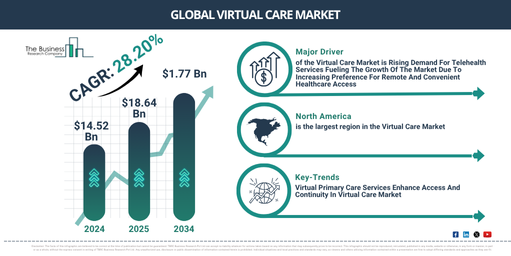
    There has been substantial growth in the size of the virtual care market in the past few years. Its projected increase from $14.52 billion in 2024 to $18.64 billion in 2025, which represents a compound annual growth rate (CAGR) of 28.4%, is indicative of this trend. Factors contributing to growth during the historical period include heightened use of telemedicine, an upswing in chronic disease incidence, escalating patient preference for distant care, costly healthcare services, and growing utilization of smartphones and internet.

    Projected to experience significant expansion in the coming years, the size of the virtual care market is anticipated to reach $50.28 billion by 2029, with a compound annual growth rate (CAGR) of 28.2%. This growth throughout the predicted period can be attributed to several factors including an increased demand for accessible healthcare, growing support and funding from governments, an enhanced focus on patient-centric care, greater adoption of remote monitoring, and higher investments in healthcare. The forecast period will witness major trends such as the evolution of digital health platforms, the integration of diagnostics powered by artificial intelligence, remote monitoring enabled by technology, advancements in hybrid care models, and the development of wearable health devices.

    Download The Free Sample Report Here:

    https://www.thebusinessresearchcompany.com/sample.aspx?id=25930&type=smp

    What Elements Are Contributing To Growth In The Virtual Care Market?

    The escalating necessity for telehealth solutions is projected to boost the expansion of the virtual care market in the future. Telehealth solutions involve the utilization of digital tools for the distant delivery of healthcare, establishing a virtual connection between patients and care providers for consultations, diagnoses, supervision, and treatment. The growing acceptance of telehealth solutions stems from the desire of individuals for quick, more accessible, and safer means to healthcare services for online consultations, continuous monitoring, and travel reduction. Through telehealth services, virtual care facilitates patients in remotely accessing medical professionals, enhancing the access, ease, and ongoing treatment, and diminishing the necessity for face-to-face meetings. For instance, as per the study published by Rock Health, a venture capital firm based in the US, in February 2023, 80% of all the participants declared the usage of telemedicine services somewhen in their lifetime, an escalation of 8 percentage points (PP) from 72% in 2021. Hence, the escalating necessity for telehealth solutions is propelling the expansion of the virtual care market.

    Which Segments Are Detailed In The Global Virtual Care Market Report?

    The virtual care market covered in this report is segmented –

    1) By Component: Hardware, Software, Services

    2) By Consultation Type: Video Consultation, Audio Consultation, Messaging

    3) By Technology Type: Video Conferencing, Wearable Devices, Mobile Health Applications, Health Information Systems, Remote Monitoring Devices

    4) By Application: Diagnostics, Therapeutics, Monitoring And Consultation, Preventive Care, Rehabilitation Services, Other Applications

    5) By End User: Patients, Healthcare Providers, Government Organizations, Corporate Wellness Programs, Other End Users

    Subsegments:

    1) By Hardware: Wearable Devices, Remote Patient Monitoring Devices, Telecommunication Devices, Diagnostic Devices

    2) By Software: Telehealth Platforms, Mobile Health Applications, Virtual Consultation Software, Remote Monitoring Software

    3) By Services: Remote Patient Monitoring Services, Teleconsultation Services, Technical Support And Maintenance, Training And Implementation Services

    What Upcoming Trends Are Expected To Impact The Virtual Care Market Globally?

    Leading businesses in the virtual care market are prioritizing the launch of cutting-edge solutions like virtual primary care services in order to improve care quality, foster better patient involvement and widen the scope of healthcare services. The term ‘virtual primary care service’ signifies the distant provision of ordinary healthcare services such as routine check-ups and chronic disease management, facilitated through digital modes of communication like video or phone consultations. For example, in January 2023, CVS Health, a healthcare firm based in the US, unveiled Virtual Primary Care. This is a digital health platform that provides virtual primary care consultations and around-the-clock on-demand care, focusing on improving access, convenience and care continuity for patients across the country. This ingenious virtual care platform offers instant access to primary care and smooth coordination between virtual and traditional face-to-face services. The platform exhibits great versatility and is effective in managing a diverse range of health conditions, ranging from regular check-ups to chronic illness care, by capitalizing on digital connectivity and synchronized care teams to ensure enhanced access and continuity of care.

    Who Are The Key Contributors To Growth In The Virtual Care Market?

    Major companies operating in the virtual care market are Medtronic plc, Siemens Healthcare GmbH, Koninklijke Philips N.V., GE Healthcare Limited, Teladoc Health Inc., Comarch S.A., American Well Corporation, MDLive Inc., Doctor on Demand Inc., Talkspace Inc., AMC Health Inc., 98point6 Technologies, Altibbi Inc., GlobalMed Inc., Binah.ai Ltd., InTouch Health Inc., Vivify Health Inc., VSee Lab Inc., Biotricity Inc., eVisit Inc., Aerotel Medical Systems Ltd., Chiron Health Inc.

    Get The Full Report Here:

    https://www.thebusinessresearchcompany.com/report/virtual-care-global-market-report

    Which Region Is Projected To Lead The Virtual Care Market By 2025?

    North America was the largest region in the virtual care market in 2024. Asia-Pacific is expected to be the fastest-growing region in the forecast period. The regions covered in the virtual care market report are Asia-Pacific, Western Europe, Eastern Europe, North America, South America, Middle East, Africa.

    Request For A Customized Report:

    https://www.thebusinessresearchcompany.com/customise?id=25930&type=smp

    About The Business Research Company:

    With over 15000+ reports from 27 industries covering 60+ geographies, The Business Research Company has built a reputation for offering comprehensive, data-rich research and insights. Armed with 1,500,000 datasets, the optimistic contribution of in-depth secondary research, and unique insights from industry leaders, you can get the information you need to stay ahead in the game.

    Get in touch with us:

    The Business Research Company: https://www.thebusinessresearchcompany.com/

    Americas +1 310-496-7795

    Asia +44 7882 955267 & +91 8897263534

    Europe +44 7882 955267

    Email us at info@tbrc.info

    Follow us on:

    LinkedIn: https://in.linkedin.com/company/the-business-research-company

    YouTube: https://www.youtube.com/channel/UC24_fI0rV8cR5DxlCpgmyFQ

    Global Market Model: https://www.thebusinessresearchcompany.com/global-market-model
  • Veterinary Ophthalmology Equipment Market Revenue Outlook: Strategic Insights and Forecast to 2029

    Claim your 30% discount on Global Market Reports with code ONLINE30. Limited time only.

    Claim your 30% discount on Global Market Reports with code ONLINE30. Limited time only.

    How Much Is the Global Veterinary Ophthalmology Equipment Market Valued at Present and by 2029?

    Recent years have witnessed robust growth in the size of the veterinary ophthalmology equipment market. Forecast suggests a growth from $0.68 billion in 2024 to $0.73 billion in 2025, projecting a compound annual growth rate (CAGR) of 7.9%. Factors contributing to this historical growth trend include a surge in pet ownership worldwide, enhanced consciousness about animal eye health, increased veterinary clinic visits, more urban dwellers adopting companion animals, and a rise in the occurrence of animal eye disorders.

    In the coming years, the market for veterinary ophthalmology equipment is predicted to experience substantial growth, expanding to $0.98 billion by 2029 at a compound annual growth rate (CAGR) of 7.6%. The expected growth during this period can be linked to a greater focus on the eye care of equine and exotic animals, an increase in eye clinics and specialists for animals, an increased understanding of eye-affecting zoonotic diseases, a rising demand for less intrusive ophthalmic procedures, and a surge in investments by manufacturers of veterinary equipment. The period of forecast will also see significant trends such as the development of less intrusive surgical techniques, the creation of diagnostic protocols designed specifically for animals, the implementation of telemedicine in eye examinations, the integration of electronic health records, and advancements in multimodal ophthalmic imaging.

    Download The Free Sample Report Here:

    https://www.thebusinessresearchcompany.com/sample.aspx?id=25929&type=smp

    #What Drivers Are Influencing Growth In The Veterinary Ophthalmology Equipment Market?

    The surge in pet adoption is expected to fuel the expansion of the veterinary ophthalmology equipment market. Having and taking care of domestic creatures, like dogs, cats, birds, or other companion creatures, and giving them sustenance, shelter, medical care, and emotional backing, is what we mean by pet ownership. This dramatic rise in pet owners is mostly due to the strengthening emotional connection between individuals and animals, with pets increasingly viewed as companions and family members. The increased demand for professional ophthalmology equipment for pets comes from the need for sophisticated eye care solutions to ensure animal health. For example, according to the US-based non-profit organization Shelter Animals Count, in 2024, total adoptions of dogs and cats reached 4,192,443, including 2 million dogs and 2 million cats, exhibiting a minor increase of 0.4%, or 17,153 more adoptions, compared to 2023. Consequently, the rise in pet ownership accelerates the growth of the veterinary ophthalmology equipment market.

    What Are The Main Segments Identified In The Veterinary Ophthalmology Equipment Market Research?

    The veterinary ophthalmology equipment market covered in this report is segmented –

    1) By Type: Diagnostic Devices, Surgical Equipment, Other Types

    2) By Technology: Optical Coherence Tomography, Digital Imaging Systems, Fluorescein Angiography, Ultrasound Imaging, Electroretinography

    3) By Animal: Equine, Canine, Feline, Bovine

    4) By Application: Diagnosis Of Ocular Diseases, Routine Eye Examinations, Surgical Procedures For Eye Disorders, Emergency Eye Care, Vision Rehabilitation

    5) By End-User: Animal Hospitals, Veterinary Clinics, Research Institutions, Veterinary Universities, Mobile Veterinary Services

    Subsegments:

    1) By Diagnostic Devices: Optical Coherence Tomography, Digital Imaging Systems, Fluorescein Angiography, Ultrasound Imaging, Electroretinography

    2) By Surgical Equipment: Ophthalmic Microscopes, Phacoemulsification Systems, Microsurgical Instruments, Ophthalmic Lasers, Cryotherapy Units

    3) By Other Types: Eye Speculums, Eye Irrigation Systems, Eye Drapes And Surgical Packs, Veterinary Ophthalmic Drugs Administration Tools, Protective Eye Wear For Animals

    How Are Key Trends Driving Expansion In The Veterinary Ophthalmology Equipment Industry?

    Key corporations in the veterinary ophthalmology equipment market are gearing their focus towards the development of more technologically sophisticated solutions, like ophthalmic surgical tools, with a goal to boost accuracy and results in animal eye surgeries. These ophthalmic surgical tools are specialized devices employed by veterinarians to carry out nuanced surgical operations on animal eyes, such as the removal of cataracts or the repair of corneas. As an example, Mount Laurel Veterinary Services LLC, an animal hospital based in the US, in April 2024, unveiled endolaser cyclophotocoagulation machinery specifically created for veterinary ophthalmology. This innovative technology incorporates an endoscopic probe that merges illumination, visualization, and laser delivery all in one gadget. This setup allows veterinarians to address the eye internally, thereby improving accuracy and reducing tissue injury. The system is capable of real-time feedback, it’s versatile across various species, and is particularly efficacious for pet animals like cats and dogs.

    Which Companies Play A Key Role In The Development Of The Veterinary Ophthalmology Equipment Market?

    Major companies operating in the veterinary ophthalmology equipment market are Bausch And Lomb Incorporated, HEINE Optotechnik GmbH And Co. KG, Revenio Group Oyj, Tomey Corporation, IRIDEX Corporation, Reichert Inc, GerVetUSA, Eickemeyer, Optomed Plc, United States Intraocular Lens Inc., AJL Ophthalmic S.A., Domes Pharma Inc., iCare Finland Oy, LKC Technologies Inc., AN-VISION GmbH, Biovision Veterinary Endoscopy LLC, Dan Scott And Associates Inc, I-MED Pharma Inc, Kowa American Corporation, Ocularvision Inc.

    Get The Full Report Here:

    https://www.thebusinessresearchcompany.com/report/veterinary-ophthalmology-equipment-global-market-report

    What Are The Key Regional Developments Shaping The Veterinary Ophthalmology Equipment Market?

    North America was the largest region in the veterinary ophthalmology equipment market in 2024. Asia-Pacific is expected to be the fastest-growing region in the forecast period. The regions covered in the veterinary ophthalmology equipment market report are Asia-Pacific, Western Europe, Eastern Europe, North America, South America, Middle East, Africa.

    Request For A Customized Report:

    https://www.thebusinessresearchcompany.com/customise?id=25929&type=smp

    About The Business Research Company:

    With over 15000+ reports from 27 industries covering 60+ geographies, The Business Research Company has built a reputation for offering comprehensive, data-rich research and insights. Armed with 1,500,000 datasets, the optimistic contribution of in-depth secondary research, and unique insights from industry leaders, you can get the information you need to stay ahead in the game.

    Get in touch with us:

    The Business Research Company: https://www.thebusinessresearchcompany.com/

    Americas +1 310-496-7795

    Asia +44 7882 955267 & +91 8897263534

    Europe +44 7882 955267

    Email us at info@tbrc.info

    Follow us on:

    LinkedIn: https://in.linkedin.com/company/the-business-research-company

    YouTube: https://www.youtube.com/channel/UC24_fI0rV8cR5DxlCpgmyFQ

    Global Market Model: https://www.thebusinessresearchcompany.com/global-market-model
  • Future Projections: Vaccine Storage And Packaging Market to Reach $31.82  Billion by 2029 at 7.5% CAGR

    Future Projections: Vaccine Storage And Packaging Market to Reach $31.82 Billion by 2029 at 7.5% CAGR

    Claim your 30% discount on Global Market Reports with code ONLINE30. Limited time only.

    Claim your 30% discount on Global Market Reports with code ONLINE30. Limited time only.

    What Is the Current and Projected Market Size of the Vaccine Storage And Packaging Industry?

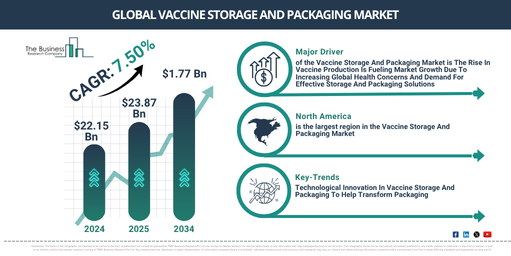
    The market size for vaccine storage and packaging has witnessed robust expansion in the past few years. The expected growth is estimated to be from $22.15 billion in 2024 to $23.87 billion in 2025, indicating a compound annual growth rate (CAGR) of 7.8%. The escalation during the historical period comes due to factors such as escalating immunization ventures, a surge in vaccine production, widening of cold chain logistics, enhanced government funding in healthcare sectors, and a heightened prevalence of infectious diseases.

    In the coming years, the market size for vaccine storage and packaging is anticipated to experience a robust growth, expanding to $31.82 billion by 2029, with a compound annual growth rate (CAGR) of 7.5%. This predicted growth during the forecast period is due to factors such as the increased demand for mRNA and biologics-based vaccines, the rising necessity for ultra-cold storage solutions, the globalization of vaccine distribution networks, regulatory emphasis on compliance with quality and safety, and advancements in temperature-monitoring technologies. The forecast period is also likely to witness major trends like the adoption of smart packaging featuring real-time tracking, a shift towards environmentally-friendly and sustainable packaging materials, integration of IoT and AI into cold chain management, an increase in outsourcing packaging services to expert companies, and the rise of modular and portable storage units for last-mile delivery.

    Download The Free Sample Report Here:

    https://www.thebusinessresearchcompany.com/sample.aspx?id=25928&type=smp

    #Which Factors Are Currently Driving The Growth Of The Vaccine Storage And Packaging Market?

    The growth of the vaccine storage and packaging market is expected to accelerate due to the rise in vaccine production. A vaccine is a special formulation designed to help the immune system create defenses against specific diseases by reproducing the body’s natural response to an infection. The surge in vaccine production is largely a result of the escalating prevalence of infectious diseases, thereby increasing the worldwide requirement for preventive health approaches to control epidemics and ensure public health. Vaccine production necessitates effective storage and packaging solutions since vaccines are significantly susceptible to temperature variations and contamination, therefore they require specialist packaging and cold chain logistics to maintain their efficacy and safety during handling and distribution. The World Health Organization, a Switzerland-based intergovernmental organization, estimated in February 2025 that the worldwide vaccine production capacity for seasonal influenza vaccines was around 1.53 billion doses per year. Hence, the rise in vaccine production is fuelling the expansion of the vaccine storage and packaging market.

    How Is The Global Vaccine Storage And Packaging Market Structured In Terms Of Segments?

    The vaccine storage and packaging market covered in this report is segmented –

    1) By Type: Vaccine Storage, Vaccine Packaging

    2) By Material: Plastic, Glass, Paper And Paperboard, Other Materials

    3) By Vaccine Type: Messenger Ribonucleic Acid (mRNA) Vaccine, Deoxyribonucleic Acid Vaccine, Protein-based vaccine, Viral Vector Vaccine

    4) By Application: Human Vaccine, Animal Vaccine

    5) By End User: Pharma And Biotech Companies, Diagnostic Centers, Clinical Research Organization, Other Healthcare Facilities

    Subsegments:

    1) By Vaccine Storage: Refrigerators, Freezers, Cold Boxes, Vaccine Carriers, Ultra-Low Temperature Storage Units

    2) By Vaccine Packaging: Vials, Ampoules, Prefilled Syringes, Blister Packs, Cartons And Labels

    Which Trends Are Expected To Shape The Future Of The Vaccine Storage And Packaging Market?

    Leading firms in the vaccine storage and packaging market are concentrating on creating unique products utilizing cutting-edge technologies, like direct-to-fill technology, to promote more efficient vaccine production and mitigate possibilities of contamination. The implementation of direct-to-fill procedures can dramatically lessen contamination risks, shorten processing times, and uphold the stability and integrity of vaccines, therefore ensuring improved efficiency and safety throughout production. As an example, Nipro PharmaPackaging, a medical equipment manufacturing company based in Belgium, unveiled their D2 (Direct-to-Fill) glass vials in October 2024. This ready-to-use (RTU) solution incorporates EZ-fill technology. The D2F vials, which are pre-cleaned, depyrogenated, sterilized, and ready for immediate usage in aseptic fill-finish lines, have been engineered to work well with a variety of machines. The vials amplify efficiency, minimize both breakages and defects, and provide increased durability and cost-effectiveness courtesy of their nest and tub packaging system.

    Who Are The Main Participants Shaping The Vaccine Storage And Packaging Market Landscape?

    Major companies operating in the vaccine storage and packaging market are McKesson Corporation, AmerisourceBergen Corporation, DHL International GmbH, United Parcel Service Inc. (UPS), FedEx Corporation, PHCbi (Panasonic Healthcare Co. Ltd.), Thermo Fisher Scientific Inc., DB Schenker, Corning Incorporated, STERIS plc, NIPRO Corporation, AptarGroup Inc., Schott AG, Gerresheimer AG, Thermo King Corporation, Lineage Inc., Stevanato Group S.p.A., Eppendorf SE, Haier Biomedical, Cole-Parmer Instrument Company LLC, Cardinal Logistics LLC, DWK Life Sciences, B Medical Systems, Helmer Scientific Inc., Arctiko A/S, American Biotech Supply LLC, The Cool Ice Box Company Ltd., Expedite International

    Get The Full Report Here:

    https://www.thebusinessresearchcompany.com/report/vaccine-storage-and-packaging-global-market-report

    Which Region Currently Holds The Largest Share In The Vaccine Storage And Packaging Market?

    North America was the largest region in the vaccine storage and packaging market in 2024. Asia-Pacific is expected to be the fastest-growing region in the forecast period. The regions covered in the vaccine storage and packaging market report are Asia-Pacific, Western Europe, Eastern Europe, North America, South America, Middle East, Africa.

    Request For A Customized Report:

    https://www.thebusinessresearchcompany.com/customise?id=25928&type=smp

    About The Business Research Company:

    With over 15000+ reports from 27 industries covering 60+ geographies, The Business Research Company has built a reputation for offering comprehensive, data-rich research and insights. Armed with 1,500,000 datasets, the optimistic contribution of in-depth secondary research, and unique insights from industry leaders, you can get the information you need to stay ahead in the game.

    Get in touch with us:

    The Business Research Company: https://www.thebusinessresearchcompany.com/

    Americas +1 310-496-7795

    Asia +44 7882 955267 & +91 8897263534

    Europe +44 7882 955267

    Email us at info@tbrc.info

    Follow us on:

    LinkedIn: https://in.linkedin.com/company/the-business-research-company

    YouTube: https://www.youtube.com/channel/UC24_fI0rV8cR5DxlCpgmyFQ

    Global Market Model: https://www.thebusinessresearchcompany.com/global-market-model

  • 2025 Treatment Planning Systems And Advanced Image Processing Market Outlook: Opportunities, Growth Trends, and Strategic Analysis

    2025 Treatment Planning Systems And Advanced Image Processing Market Outlook: Opportunities, Growth Trends, and Strategic Analysis

    Claim your 30% discount on Global Market Reports with code ONLINE30. Limited time only.

    Claim your 30% discount on Global Market Reports with code ONLINE30. Limited time only.

    How Will the Treatment Planning Systems And Advanced Image Processing Market Evolve in Terms of Growth and Size by 2029?

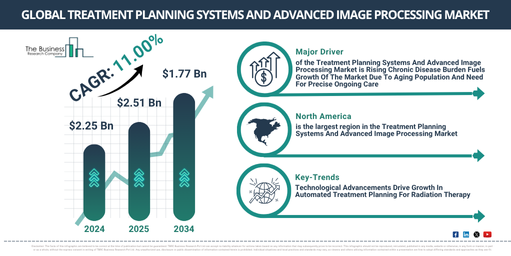
    In recent times, the market size for treatment planning systems and advanced image processing has seen rapid expansion. The projected growth is from $2.25 billion in 2024 to $2.51 billion in 2025, indicating a compound annual growth rate (CAGR) of 11.3%. Factors contributing to this progression during the historical period include a growing inclination towards non-invasive treatment methods, increased healthcare funding in cancer-related infrastructure, a higher demand for automated treatment planning systems, accelerated adoption of adaptive radiotherapy, and an increasing uptake of cloud-based treatment planning solutions.

    Anticipated to experience exponential expansion in the coming years, the market size of advanced image processing and treatment planning systems is projected to reach $3.81 billion by 2029, boasting a compound annual growth rate (CAGR) of 11.0%. Factors propelling this growth during the predicted period include the surging prevalence of cancer, enhanced utilization of radiation therapy methods, increasing demand for personalized medicine, evolving incorporation of artificial intelligence in imaging and planning, and heightened awareness regarding early detection and cure. Key trends marking this period encompass progress in cloud-based treatment planning systems, increased application of digital doubles in customized radiotherapy, creation of hybrid ecosystems for imaging and planning, advents in neuro-oncology-specific planning modules, and sophisticated incorporation of radiomics into planning processes.

    Download The Free Sample Report Here:

    https://www.thebusinessresearchcompany.com/sample.aspx?id=25927&type=smp

    What factors are expected to fuel Treatment Planning Systems And Advanced Image Processing market growth in the coming years?

    The growth of the treatment planning systems and advanced image processing market is expected to be propelled by the rising prevalence of chronic diseases. These are long-lasting, non-transmissible diseases that necessitate continuous medical care and can potentially hinder day-to-day activities. As the elderly population increases, the prevalence of such health conditions is becoming more common because older people are more susceptible to chronic diseases. Advanced image processing and treatment planning systems can assist in managing these diseases by providing accurate diagnosis, personalized treatment planning, and live monitoring. This enhances treatment precision and leads to better results for patients. For example, data from the Centers for Disease Control and Prevention reveal that in 2025, 76.4% of US residents reported having at least one chronic condition in 2023, an increase from 59.5% in younger adults to 93.0% in older individuals. Hence, the burgeoning presence of chronic diseases is boosting the expansion of the treatment planning systems and advanced image processing market.

    What Are The Key Findings From The Segmentation Analysis Of The Treatment Planning Systems And Advanced Image Processing Market?

    The treatment planning systems and advanced image processing market covered in this report is segmented –

    1) By Component: Advanced Image Processing Software, Treatment Planning Software

    2) By Technique: 3D Image Reconstruction, In-Room Imaging, Image Registration Using Graphics Processor Unit

    3) By Technology: Magnetic Resonance Imaging-Based Planning, Computed Tomography-Based Planning, Radiation Therapy

    4) By Application: Online Monitoring, Dose Accumulation, Tracking, Adaptive Radiotherapy, Validation Of Image Registration, Other Applications

    5) By End-User: Hospitals, Cancer Research Institute, Diagnostic And Treatment Centers, Other End-Users

    Subsegments:

    1) By Advanced Image Processing Software: 3d Image Reconstruction, Image Registration Using Graphics Processor Unit (Gpu), In-Room Imaging

    2) By Treatment Planning Software: Magnetic Resonance Imaging-Based Planning, Radiation Therapy, Computed Tomography-Based Planning

    What Long-Term Trends Are Likely To Affect The Treatment Planning Systems And Advanced Image Processing Market?

    In the market for treatment planning systems and advanced image processing, leading businesses are striving to create technological improvements such as automated treatment planning. This aims to increase accuracy, decrease the time required for planning, and enhance the results for patients undergoing radiation therapy. Automated treatment planning encompasses the use of advanced software algorithms and AI to create optimized radiation therapy plans with little manual intervention. This increases efficiency, consistency, and precision in cancer treatments. For instance, in May 2025, RaySearch Laboratories, a medical technology firm based in Sweden, introduced RayStation v2025. This platform was designed to better support adaptive therapy, providing swift, automated radiation therapy planning through advanced machine learning and support for upright treatments. This enhances the consistency, efficiency, and personalization of cancer treatment.

    What Are The Most Active Companies In The Treatment Planning Systems And Advanced Image Processing Market Today?

    Major companies operating in the treatment planning systems and advanced image processing market are Hitachi Ltd., Siemens Healthineers AG, Koninklijke Philips N.V., GE HealthCare Technologies Inc., Zimmer Biomet, Dentsply Sirona, Institut Straumann AG, Varian Medical Systems, Elekta AB, Agfa-Gevaert Group, Nobel Biocare, Accuray Incorporated, Brainlab AG, Canon Medical Systems Corporation, ViewRay Inc., MIM Software, C-RAD AB, IBA Radiopharma Solutions, IntraOp Medical Corporation, DOSIsoft SA, Mercurius Health, Mirada Medical Limited.

    Get The Full Report Here:

    https://www.thebusinessresearchcompany.com/report/treatment-planning-systems-and-advanced-image-processing-global-market-report

    Which Regional Markets Are Attracting The Most Investment In Treatment Planning Systems And Advanced Image Processing?

    North America was the largest region in the treatment planning systems and advanced image processing market in 2024. Asia-Pacific is expected to be the fastest-growing region in the forecast period. The regions covered in the treatment planning systems and advanced image processing market report are Asia-Pacific, Western Europe, Eastern Europe, North America, South America, Middle East, Africa.

    Request For A Customized Report:

    https://www.thebusinessresearchcompany.com/customise?id=25927&type=smp

    About The Business Research Company:

    With over 15000+ reports from 27 industries covering 60+ geographies, The Business Research Company has built a reputation for offering comprehensive, data-rich research and insights. Armed with 1,500,000 datasets, the optimistic contribution of in-depth secondary research, and unique insights from industry leaders, you can get the information you need to stay ahead in the game.

    Get in touch with us:

    The Business Research Company: https://www.thebusinessresearchcompany.com/

    Americas +1 310-496-7795

    Asia +44 7882 955267 & +91 8897263534

    Europe +44 7882 955267

    Email us at info@tbrc.info

    Follow us on:

    LinkedIn: https://in.linkedin.com/company/the-business-research-company

    YouTube: https://www.youtube.com/channel/UC24_fI0rV8cR5DxlCpgmyFQ

    Global Market Model: https://www.thebusinessresearchcompany.com/global-market-model

  • Global Insights: Topical Hemostat Market Expected to Surpass $7.81  Billion by 2029

    Global Insights: Topical Hemostat Market Expected to Surpass $7.81 Billion by 2029

    Claim your 30% discount on Global Market Reports with code ONLINE30. Limited time only.

    Claim your 30% discount on Global Market Reports with code ONLINE30. Limited time only.

    What CAGR Is Anticipated for the Topical Hemostat Market Through 2029?

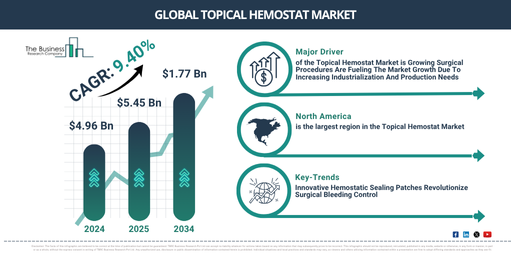
    In the past few years, the topical hemostat market has exhibited significant growth. The market, which is projected to escalate from $4.96 billion in 2024 to $5.45 billion in 2025, will do so at a compound annual growth rate (CAGR) of 9.8%. The expansion seen in the previous period can be associated with factors such as accelerated healthcare investment, an upswing in minimally invasive medical procedures, a rise in chronic disease cases, an increased demand for surgical volume, and a surge in demand for biodegradable products.

    In the coming years, the market for topical hemostats is anticipated to experience significant expansion. It’s projected to reach a valuation of $7.81 billion in 2029, with a CAGR of 9.4%. Factors such as the growing global elderly populace, the proliferation of ambulatory surgical centers, an increased emphasis on patient outcomes, a rise in adhesive-hemostat combinations, and escalated usage of bio-based materials are propelling this growth during the estimated timeframe. The period will also witness key trends including progress in hemostatic technologies, the incorporation of digital health technologies, improved delivery systems, the introduction of combination products, and the implementation of robotics in the management of hemostasis.

    Download The Free Sample Report Here:

    https://www.thebusinessresearchcompany.com/sample.aspx?id=25926&type=smp

    What Market Forces Are Driving The Topical Hemostat Sector In 2025 And Beyond?

    The topical hemostat market’s expansion is likely to be driven by the rising number of surgical procedures. Surgical procedures are interventions involving specialized techniques and tools used by surgeons to diagnose and treat injuries, diseases, or body abnormalities. The rapidly aging global population and the consequent increase in age-related health conditions that necessitate surgical procedures are leading to a significant rise in the number of such operations. Topical hemostats are crucial in surgery, helping control bleeding at the surgical site, ensuring better visibility, reducing blood loss, and mitigating the risk of postoperative complications. As an example, in 2022, according to the International Society of Aesthetic Plastic Surgery (ISAPS), an American NGO, there was an 11.2% rise in the number of procedures executed by plastic surgeons compared to 2021, totaling over 14.9 million surgical and 18.8 million non-surgical procedures worldwide. Consequently, the rising number of surgical procedures is fueling the topical hemostat market’s growth. The forthcoming growth of the topical hemostat market is also expected to be driven by the increasing healthcare expenditure, which could lead to greater investments in advanced surgical solutions. Healthcare expenditure involves the overall amount spent on healthcare services, treatments, and related resources over a specific period. The increasing healthcare expenditure, particularly due to the rising aging population, results in a greater need for medical services, long-term care, and age-related treatments, collectively imposing more financial pressure on healthcare systems. The escalating healthcare expenditure spurs the demand for topical hemostats, promotes the adoption of innovative medical technologies, and enhances healthcare accessibility worldwide. Rising funds permit hospitals to invest in effective bleeding control solutions, primarily for minimally invasive and outpatient surgeries. According to the American Medical Association, a U.S-based professional association, in 2023, U.S. health spending increased by 7.5%, reaching $4.9 trillion or $14,570 per person – a remarkable rise compared to the 4.6% growth observed in 2022. Hence, the growing healthcare expenditure stimulates the expansion of the topical hemostat market.

    How Is The Global Topical Hemostat Market Categorized By Segments?

    The topical hemostat market covered in this report is segmented –

    1) By Type: Fibrin, Thrombin, Cellulose, Collagen, Gelatin, Adhesives, Other Types

    2) By Distribution Channel: Direct Sales, Distributors, Hospital Pharmacies, Online

    3) By Application: General Surgery, Neurosurgery, Vascular Surgery, Cardiovascular Surgery, Other Applications

    4) By End-Use: Hospitals, Ambulatory Surgical Centers, Other End-Uses

    Subsegments:

    1) By Fibrin: Fibrin Sealants, Fibrin Patches

    2) By Thrombin: Human Thrombin, Bovine Thrombin, Recombinant Thrombin

    3) By Cellulose: Oxidized Regenerated Cellulose, Oxidized Non-Regenerated Cellulose, Microfibrillar Cellulose

    4) By Collagen: Microfibrillar Collagen, Collagen Sponges, Collagen Fleece

    5) By Gelatin: Gelatin Sponges, Gelatin Foams, Gelatin Powder

    6) By Adhesives: Cyanoacrylate-Based Adhesives, Polyethylene Glycol Based Sealants, Albumin And Glutaraldehyde-Based Adhesives

    7) By Other Types: Combination Hemostats, Polysaccharide-Based Hemostats, Chitosan-Based Hemostats

    What Future Market Trends Are Projected For The Topical Hemostat Industry?

    Leading businesses in the topical hemostat market are committing their efforts to create unique products, such as hemostatic sealing patches, which improve the efficiency of bleeding control during surgeries by providing quicker, more potent, and targeted hemostasis at the site of the wound. A hemostatic sealing patch, a medical tool made from materials like collagen or fibrin, swiftly brings bleeding to a halt by adhering to the tissue and promoting clot formation during surgical procedures. For example, in November 2023, Ethicon, Inc., a company in the US specializing in surgical technologies and solutions, launched the ETHIZIA Hemostatic Sealing Patch. This ground-breaking synthetic polymer-based supplementary hemostat has been clinically validated to quickly halt serious internal organ bleeding. According to clinical studies, ETHIZIA managed to stop bleeding within 30 seconds in 80% of patients, a speed that’s six times faster than leading fibrin sealant patches. The patch is specially designed to be equally effective on both sides and extremely flexible, allowing it to be customised, rolled, separated, or adapted for both open and minimally invasive surgeries. It expedites coagulation and removes moisture from the blood through a gelatin carrier imbued with polyoxazoline polymer, forming a strong adhesive hydrogel that bonds securely with tissue.

    Which Firms Are Considered Leaders In The Topical Hemostat Market Space?

    Major companies operating in the topical hemostat market are Pfizer Inc., Johnson & Johnson, Medtronic Plc, Medline Industries, Becton Dickinson and Company, Stryker Corporation, Baxter International, Meril Life Sciences Pvt. Ltd., Teleflex Incorporated, Samyang Holdings, Integra LifeSciences, Medicom Group, B. Braun SE, Advanced Medical Solutions Group Plc, Axio Biosolutions, Marine Polymer Technologies Inc, Hangzhou Singclean Medical Products, Neo Modulus Medical Sci-Tech, Tricol Biomedical, HemCon Medical Technologies Inc., Hemostasis LLC, KATSAN Medical Devices, Zhejiang Perfectseal New Materials

    Get The Full Report Here:

    https://www.thebusinessresearchcompany.com/report/topical-hemostat-global-market-report

    What Role Do Regional Policies And Investments Play In Topical Hemostat Market Expansion?

    North America was the largest region in the topical hemostat market in 2024. Asia-Pacific is expected to be the fastest-growing region in the forecast period. The regions covered in the topical hemostat market report are Asia-Pacific, Western Europe, Eastern Europe, North America, South America, Middle East, Africa.

    Request For A Customized Report:

    https://www.thebusinessresearchcompany.com/customise?id=25926&type=smp

    About The Business Research Company:

    With over 15000+ reports from 27 industries covering 60+ geographies, The Business Research Company has built a reputation for offering comprehensive, data-rich research and insights. Armed with 1,500,000 datasets, the optimistic contribution of in-depth secondary research, and unique insights from industry leaders, you can get the information you need to stay ahead in the game.

    Get in touch with us:

    The Business Research Company: https://www.thebusinessresearchcompany.com/

    Americas +1 310-496-7795

    Asia +44 7882 955267 & +91 8897263534

    Europe +44 7882 955267

    Email us at info@tbrc.info

    Follow us on:

    LinkedIn: https://in.linkedin.com/company/the-business-research-company

    YouTube: https://www.youtube.com/channel/UC24_fI0rV8cR5DxlCpgmyFQ

    Global Market Model: https://www.thebusinessresearchcompany.com/global-market-model