Blog

  • Hyaluronic Acid Supplement Market Set To Expand From $4.54 Billion In 2026: Growth Outlook Through 2030

    Hyaluronic Acid Supplement Market Set To Expand From $4.54 Billion In 2026: Growth Outlook Through 2030

    Backed by market attractiveness analysis, total addressable market sizing, company benchmarking matrices, interactive Excel dashboards, wider supply chain intelligence, emerging startup coverage, and detailed product-level insights, The Business Research Company’s 2026 market reports are designed to offer research that is more actionable and strategically valuable than ever.

    Hyaluronic Acid Supplement Market Growth Analysis: How Will Revenue Trend Over The Forecast Period?

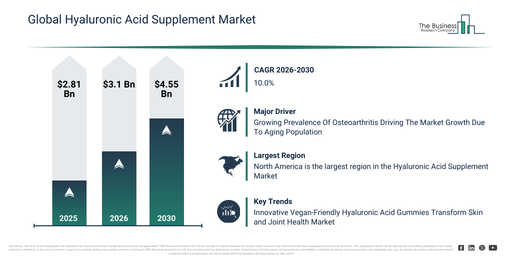
    The market for hyaluronic acid supplements has experienced significant expansion recently. This market is projected to expand from $2.81 billion in 2025 to reach $3.1 billion by 2026, demonstrating a compound annual growth rate (CAGR) of 10.3%. Historically, this growth can be linked to factors such as consumers’ heightened interest in anti-aging products, the increased adoption of dietary supplements, the emerging beauty-from-within movement, greater understanding of joint health advantages, and the wide array of available supplement formats.

    The hyaluronic acid supplement market is projected to experience substantial expansion over the upcoming years. This market is set to reach $4.55 billion by 2030, exhibiting a compound annual growth rate (CAGR) of 10.0%. This growth during the projected period stems from factors such as increasing consumer demand for clean-label beauty products, greater incorporation into functional foods, the widening reach of e-commerce distribution networks, a burgeoning aging demographic, and continuous improvements in bioavailable formulation techniques. Noteworthy trends for the forecast duration encompass a rising interest in supplements targeting skin and joint well-being, increased uptake of hyaluronic acid produced through fermentation, a developing inclination towards multi-functional beauty supplements, the broadening of oral and functional food applications, and a heightened emphasis on optimizing bioavailability.

    Get A Free Sample Report With In-Depth Market Insights:

    https://thebusinessresearchcompany.com/sample_request?id=35375326&type=smp&name=Hyaluronic%20Acid%20Supplement%20Market%20Report%202026&utm_source=Blogs&utm_medium=Paid&utm_campaign=Oct_PR

    Hyaluronic Acid Supplement Market Industry Drivers: What’s Behind The Revenue Growth?

    The increasing occurrence of osteoarthritis is anticipated to fuel the expansion of the hyaluronic acid supplement market in the future. This condition is a progressive joint ailment marked by cartilage deterioration, resulting in discomfort, rigidity, and restricted movement in the affected joints. The uptick in osteoarthritis cases is largely attributable to an aging populace, given that the likelihood of developing the condition escalates with advancing age, owing to the progressive degradation of joint cartilage over time. Hyaluronic acid supplements assist in managing osteoarthritis through several mechanisms: restoring natural joint fluid, enhancing lubrication and shock absorption, mitigating cartilage breakdown, which collectively helps to ease pain and improve joint movement. A notable example is found in February 2024, where according to Arthritis Australia, an Australia-based non-profit organization, osteoarthritis (OA) is projected to affect 2.35 million Australians in 2025, representing 57% of the total arthritis population and establishing it as the most common form of arthritis in the country. Furthermore, by 2040, the count of Australians suffering from OA is anticipated to climb to 3.11 million, indicating a 32% growth compared to 2025. This translates to an extra 762,515 individuals in Australia living with OA by 2040 relative to 2025. Consequently, the expanding occurrence of osteoarthritis is a key factor propelling the growth of the hyaluronic acid supplement market.

    Hyaluronic Acid Supplement Market Segment Analysis Spotlighting Growth Areas

    The hyaluronic acid supplement market covered in this report is segmented –

    1) By Product Form: Capsules, Tablets, Powder, Liquid, Gummies, Other Product Forms

    2) By Source: Biotic, Synthetic, Plant Based

    3) By Distribution Channel: Online Stores, Pharmacies Or Drug Stores, Supermarkets Or Hypermarkets, Specialty Stores, Other Distribution Channels

    4) By Application: Joint Health, Skin Care, Eye Health, Hair Health, Other Applications

    5) By End-User: Adults, Geriatric, Athletes, General Populations, Other End-Users

    Subsegments:

    1) By Capsules: Standard Hyaluronic Acid Capsules, Extended-Release Hyaluronic Acid Capsules, Combination Hyaluronic Acid Capsules, Vegan Hyaluronic Acid Capsules

    2) By Tablets: Chewable Hyaluronic Acid Tablets, Effervescent Hyaluronic Acid Tablets, Coated Hyaluronic Acid Tablets, Multi-Ingredient Hyaluronic Acid Tablets

    3) By Powder: Pure Hyaluronic Acid Powder, Flavored Hyaluronic Acid Powder, Soluble Hyaluronic Acid Powder, Multi-Compound Hyaluronic Acid Powder

    4) By Liquid: Ionic Hyaluronic Acid Liquid, Concentrated Hyaluronic Acid Drops, Flavored Hyaluronic Acid Liquid, Bioavailable Hyaluronic Acid Solution

    5) By Gummies: Fruit-Flavored Hyaluronic Acid Gummies, Vegan Hyaluronic Acid Gummies, Multi-Vitamin Hyaluronic Acid Gummies, Chewable Hyaluronic Acid Gummies

    6) By Other Product Forms: Topical Hyaluronic Acid Gels, Injectable Hyaluronic Acid Formulations, Hyaluronic Acid Lozenges, Functional Food Hyaluronic Acid Products

    #Hyaluronic Acid Supplement Market Growth Trends: What’s Shaping The Future Outlook?

    Leading companies within the hyaluronic acid supplement market are concentrating on developing innovative products, such as vegan-friendly hyaluronic acid gummies, to satisfy the increasing demand for convenient, clean-label solutions for skin and joint health. Vegan-friendly hyaluronic acid gummies are plant-based supplements that provide hyaluronic acid without animal-derived ingredients, assisting in supporting skin hydration, improving elasticity, and promoting joint health when consumed orally. For example, in February 2023, Elemis Ltd., a UK-based wellness supplement company, introduced its Pro-Collagen Skin Future Supplements, an ingestible dietary skincare product, exclusively available at QVC. This supplement features hyaluronic acid, an antioxidant blend, chlorella, and vitamins A and C to support enhanced skin hydration, luminosity, firmness, elasticity, and the reduction of fine lines and wrinkles. The hyaluronic acid in the formula contributes to increased skin hydration and elasticity, addressing visible signs of aging for a more youthful look. The encapsulated antioxidant blend is formulated to stabilize and augment collagen production, while chlorella encourages overall skin health. Furthermore, vitamins A and C support collagen formation and maintain normal skin function.

    Hyaluronic Acid Supplement Market Leading Companies: Who Holds The Strongest Market Presence?

    Major companies operating in the hyaluronic acid supplement market are Elemis Ltd., NOW Health Group Inc. (NOW Foods), Nature’s Truth Inc., Nutricost LLC, Jarrow Formulas Inc., Life Extension Foundation Buyers Club Inc., Bioiberica S.A., Contipro a.s., Makers Nutrition LLC, GMP Laboratories of America Inc., NeoCell Inc., Titan Biotech Ltd., SMP Nutra Inc., Chambio Inc., Supplement Factory LLC, A&A Pharmachem Inc., BioCell Technology LLC, NatureBell Inc., TCI Co. Ltd., The Hyalogic Inc.

    View The Full Hyaluronic Acid Supplement Market Report:

    https://thebusinessresearchcompany.com/report/global-hyaluronic-acid-supplement-market-report?utm_source=Blogs&utm_medium=Paid&utm_campaign=Oct_PR

    Hyaluronic Acid Supplement Market Geographic Landscape: Which Region Dominates Industry Growth?

    North America was the largest region in the hyaluronic acid supplement market in 2025. Asia-Pacific is expected to be the fastest-growing region in the forecast period. The regions covered in the hyaluronic acid supplement market report are Asia-Pacific, South East Asia, Western Europe, Eastern Europe, North America, South America, Middle East, Africa.

    Reach Out To Our Team:

    The Business Research Company: https://www.thebusinessresearchcompany.com/

    Americas: +1 310-496-7795

    Asia: +44 7882 955267 & +91 8897263534

    Europe: +44 7882 955267

    Email us at: marketing@tbrc.info

    Follow us on:

    LinkedIn: https://in.linkedin.com/company/the-business-research-company

    YouTube: https://www.youtube.com/channel/UC24_fI0rV8cR5DxlCpgmyFQ

    Global Market Model: https://www.thebusinessresearchcompany.com/global-market-model
  • Hyaluronic Acid Market Size And Growth In 2026: Key Factors Shaping Future Demand

    Hyaluronic Acid Market Size And Growth In 2026: Key Factors Shaping Future Demand

    Featuring market attractiveness scoring, total addressable market sizing, company benchmarking matrices, interactive Excel dashboards, deeper supply chain intelligence, emerging startup tracking, and granular product-level insights, The Business Research Company’s 2026 market reports are built to deliver research that is both more actionable and more strategically valuable.

    Hyaluronic Acid Market Forecast: What Value Will The Market Reach By 2030?

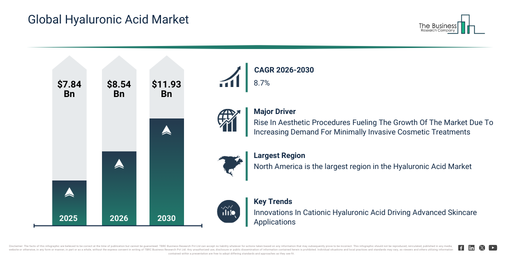
    The hyaluronic acid market has shown significant expansion in recent years. Its valuation is projected to increase from $7.84 billion in 2025 to $8.54 billion in 2026, demonstrating a compound annual growth rate (CAGR) of 9.0%. This historical growth can be linked to the rise in cosmetic and dermatology procedures, a greater incidence of osteoarthritis, improvements in biopolymer production methods, growing consumer understanding of skincare benefits, and the proliferation of minimally invasive treatments.

    The hyaluronic acid market is projected to experience substantial growth over the coming years, reaching a valuation of $11.93 billion by 2030, driven by a compound annual growth rate (CAGR) of 8.7%. This anticipated expansion during the forecast period is primarily attributed to factors such as the increasing demand for anti-aging solutions, the rising adoption of regenerative medicine applications, the broadening use of pharmaceutical-grade hyaluronic acid, a growing emphasis on sustainable sourcing, and increased investments in advanced formulation technologies. Key trends influencing the market in this period include the rising demand for injectable aesthetic treatments, the expanding application of hyaluronic acid in osteoarthritis care, the increasing adoption of microbial fermentation for production, the development of multi-application formulations, and a heightened focus on high-purity grades.

    Get A Free Sample Report With In-Depth Market Insights:

    https://thebusinessresearchcompany.com/sample_request?id=45260451&type=smp&name=Hyaluronic%20Acid%20Market%20Report%202026&utm_source=Blogs&utm_medium=Paid&utm_campaign=Oct_PR

    Hyaluronic Acid Market Growth Factors: What’s Supporting Expansion?

    The increasing volume of aesthetic procedures is anticipated to fuel the expansion of the hyaluronic acid market in the future. Aesthetic procedures encompass treatments and interventions designed to enhance appearance, improve features, and revitalize the skin or body for a younger, more balanced look. The rise in aesthetic procedures is attributed to technological progress, which has made these treatments safer, less intrusive, and more potent, prompting a greater number of individuals to opt for them. Hyaluronic acid plays a beneficial role in aesthetic procedures by assisting in the restoration of facial volume, the reduction of wrinkles, and the improvement of skin hydration, contributing to a smoother, more youthful appearance. For example, in June 2025, data from the American Society of Plastic Surgeons, a US-based Plastic Surgery Foundation, indicated that in 2024, over 800,000 aesthetic patients utilized these procedures for their health objectives. Tummy tucks were the second most popular, demonstrating a 1% rise from 2023, and both facelifts and forehead lifts also experienced a 1% increase. Consequently, the growing prevalence of aesthetic procedures is propelling the expansion of the hyaluronic acid market.

    Hyaluronic Acid Market Segment Performance And Emerging Opportunities

    The hyaluronic acid market covered in this report is segmented –

    1) By Product: Multiple Injection Dose, Single Injection Dose

    2) By Grade: Pharmaceutical Grade Hyaluronic Acid, Cosmetic Grade Hyaluronic Acid

    3) By Source: Microbial Fermentation, Animal Based, Plant Based

    4) By Application: Pharmaceutical Active Pharmaceutical Ingredient, Aesthetics, Osteoarthritis, Cosmetics, Ophthalmology, Dietary Supplements

    5) By End User: Dermatology Clinics, Cosmetic Surgery Centers, Medical Spas And Beauty Centers, Other End Users

    Subsegments:

    1) By Multiple Injection Dose: Pre-Filled Syringes, Vials With Reconstitution Kits, Combination Therapy Formats, Extended-Release Formulations

    2) By Single Injection Dose: Pre-Filled Single-Use Syringes, Ampoules, Cartridges, Ready-To-Inject Pens

    Hyaluronic Acid Market Industry Trends: What’s Reshaping Demand?

    Leading companies in the hyaluronic acid market are concentrating on developing innovative products, such as novel cationic hyaluronic acid, to improve skin adhesion, enhance hydration performance, and broaden their applications in rinse-off formulations. Novel cationic hyaluronic acid is a positively charged, chemically altered form of hyaluronic acid crafted to boost adhesion, cellular interaction, and stability for advanced medical and cosmetic uses. For example, in March 2023, Givaudan S.A., a Switzerland-based chemicals company, introduced PrimalHyal Hydra, a novel cationic hyaluronic acid created using white biotechnology, establishing a new high standard for skin hydration. This cutting-edge active ingredient provides immediate hydration after just one use and sustains moisturization for up to four days, outperforming standard hyaluronic acid by at least a factor of two. It functions effectively in both rinse-off and leave-on cosmetic formulations and also strengthens the skin barrier by stimulating lipid and protein production. The ingredient is clinically tested and engineered for wide-ranging application in skincare categories, including lotions, shower gels, and masks, delivering long-lasting hydration and skin barrier advantages along with improved skin adhesion properties.

    Hyaluronic Acid Market Key Players: Which Companies Lead Industry Competition?

    Major companies operating in the hyaluronic acid market are AbbVie Inc., L’Oréal S.A., LG Chem Ltd., Shiseido Company Limited, Givaudan SA, Zimmer Biomet Holdings Inc., Grifols S.A., Smith & Nephew plc, Kikkoman Biochemifa Company Ltd., Galderma S.A., Kewpie Corporation, Merz Pharma GmbH & Co. KGaA, Fidia Farmaceutici S.p.A., Anika Therapeutics Inc., Lifecore Biomedical Inc., Croma-Pharma GmbH, Contipro a.s., Seikagaku Corporation, HTL Biotechnology SAS, Altergon Italia S.r.l., Bloomage Biotechnology Corporation Limited.

    View The Full Hyaluronic Acid Market Report:

    https://thebusinessresearchcompany.com/report/hyaluronic-acid-global-market-report?utm_source=Blogs&utm_medium=Paid&utm_campaign=Oct_PR

    Hyaluronic Acid Market Largest Region: Which Geography Holds The Highest Market Share?

    North America was the largest region in the hyaluronic acid market in 2025. Asia-Pacific is expected to be the fastest-growing region in the forecast period. The regions covered in the hyaluronic acid market report are Asia-Pacific, South East Asia, Western Europe, Eastern Europe, North America, South America, Middle East, Africa.

    Reach Out To Our Team:

    The Business Research Company: https://www.thebusinessresearchcompany.com/

    Americas: +1 310-496-7795

    Asia: +44 7882 955267 & +91 8897263534

    Europe: +44 7882 955267

    Email us at: marketing@tbrc.info

    Follow us on:

    LinkedIn: https://in.linkedin.com/company/the-business-research-company

    YouTube: https://www.youtube.com/channel/UC24_fI0rV8cR5DxlCpgmyFQ

    Global Market Model: https://www.thebusinessresearchcompany.com/global-market-model
  • Huoxiang Zhengqi For Covid 19 Market Forecast 2026–2030: Market Size, Trends And Growth Opportunities

    Huoxiang Zhengqi For Covid 19 Market Forecast 2026–2030: Market Size, Trends And Growth Opportunities

    Built to provide research that’s more actionable and strategically valuable, The Business Research Company’s 2026 market reports include market attractiveness analysis, total addressable market sizing, company benchmarking matrices, interactive Excel dashboards, broader supply chain intelligence, emerging startup tracking, and in-depth product insights.

    Huoxiang Zhengqi For Covid 19 Market Size Outlook: How Quickly Will Revenue Expand Through 2030?

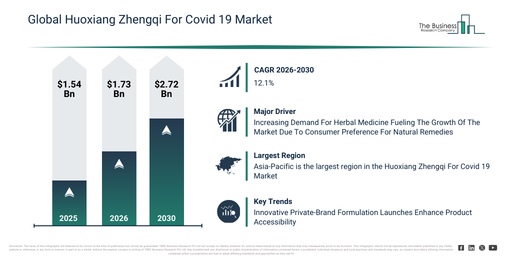
    The huoxiang zhengqi for covid 19 market size has experienced rapid growth in recent years. It is projected to expand from $1.54 billion in 2025 to $1.73 billion in 2026, demonstrating a compound annual growth rate (CAGR) of 12.1%. This historical expansion can be attributed to factors such as a strong reliance on traditional medicine during health emergencies, government endorsement of Traditional Chinese Medicine (TCM) during the COVID-19 pandemic, limited early pharmaceutical choices, a cultural preference for herbal remedies, and a rapid increase in demand during pandemic waves.

    The huoxiang zhengqi for covid 19 market size is projected to experience substantial expansion over the upcoming years. It is anticipated to attain a value of $2.72 billion in 2030, demonstrating a compound annual growth rate (CAGR) of 12.1%. This growth during the forecast period can be attributed to a sustained interest in immune-supportive therapies, the expansion of integrative medicine practices, an increasing base of health-conscious consumers, growth within herbal pharmaceutical manufacturing, and intensified research into traditional formulations. Prominent trends throughout this period include the rising acceptance of traditional Chinese medicine, greater utilization of herbal preparations for immune support, an expansion of preventive healthcare applications, increasing integration with conventional COVID-19 treatments, and a growing demand for digestive and immune health remedies.

    Get A Free Sample Report With In-Depth Market Insights:

    https://thebusinessresearchcompany.com/sample_request?id=14802385&type=smp&name=Huoxiang%20Zhengqi%20For%20Covid%2019%20Market%20Report%202026&utm_source=Blogs&utm_medium=Paid&utm_campaign=Oct_PR

    Huoxiang Zhengqi For Covid 19 Market Demand Drivers: What’s Powering Industry Growth?

    The growing consumer desire for herbal medicine is anticipated to fuel the expansion of the Huoxiang Zhengqi for COVID-19 market in the future. Herbal medicine involves utilizing plants or substances derived from plants for healing or medicinal purposes, addressing health conditions. This surge in demand primarily stems from consumers favoring natural, plant-based solutions over synthetic medications, citing perceived safety, fewer adverse effects, and comprehensive health advantages. Huoxiang Zhengqi for COVID-19 supports the application of herbal medicine by offering a traditional treatment that enhances immune response, eases symptoms, and aids recovery, highlighting the potential contribution of herbal therapies in combating viral infections. For example, data from September 2024, released by HerbalGram, a US-based nonprofit, showed that the total annual sales of herbal dietary supplements climbed from $12.018 billion in 2022 to $12.551 billion in 2023, representing a 4.4% increase. Consequently, the rising preference for herbal medicine is stimulating the growth of the Huoxiang Zhengqi for COVID-19 market.

    Huoxiang Zhengqi For Covid 19 Market Segment Landscape And Growth Outlook

    The huoxiang zhengqi for covid 19 market covered in this report is segmented –

    1) By Product Type: Liquid, Pills, Granules, Other Product Types

    2) By Consumers: Health-Conscious Consumers, Individuals Seeking Immunity Support, Alternative Medicine Enthusiasts, Parents Purchasing For Children

    3) By Usage Occasions: Preventive Health Use, During COVID 19 Symptoms, Post-Recovery Health Management, Seasonal Illness Protection

    4) By Application: Hospitals, Clinics, Home Care, Other Applications

    5) By Distribution Chanel: Online Pharmacies, Retail Pharmacies, Hospital Pharmacies, Other Distribution Chanels

    Subsegments:

    1) By Liquid: Oral Liquid, Injectable Liquid

    2) By Pills: Tablets, Capsules

    3) By Granules: Single-Dose Granules, Multi-Dose Granules

    4) By Other Product Types: Syrup, Powder For Solution

    Huoxiang Zhengqi For Covid 19 Market Innovation Trends: What Developments Are Reshaping The Industry?

    Companies operating within the Huoxiang Zhengqi for COVID-19 market are prioritizing the introduction of innovative private-brand formulations, such as Huoxiang Zhengqi oral liquid products. These are modernized liquid preparations of the traditional Huoxiang Zhengqi herbal formula, engineered to improve convenience, enhance dosage accuracy, and facilitate rapid absorption. Illustratively, in June 2024, YSB Inc., a China-based pharmaceutical retail and healthcare services company, launched the Leyaoshi Huoxiang Zhengqi Oral Liquid. This product featured a ready-to-drink, single-dose liquid format, offered rapid-onset digestive and anti-dampness support, and its formulation was optimized for seasonal gastrointestinal discomfort.

    Huoxiang Zhengqi For Covid 19 Market Competitive Landscape: Who Leads The Industry?

    Major companies operating in the huoxiang zhengqi for covid 19 market are Yunnan Baiyao Group Co. Ltd., Beijing Tongrentang Co. Ltd., Taiji Group Chongqing Fuling Pharmaceutical Factory Co. Ltd., Tasly Pharmaceutical Group Co. Ltd., Harbin Pharmaceutical Group Co. Ltd., Guizhou Sanli Pharmaceutical Co. Ltd., China Shineway Pharmaceutical Group Limited, Zhangzhou Pientzehuang Pharmaceutical Co. Ltd., Wuhu Zhanghengchun Medicine Co. Ltd., Tonghua Dongbao Pharmaceutical Co. Ltd., Guangzhou Baiyunshan Pharmaceutical Holdings Co. Ltd., Sichuan Neo-Green Pharmaceutical Technology Co. Ltd., Hutchison China MediTech Limited, Shijiazhuang Yiling Pharmaceutical Co. Ltd., Jilin Aodong Pharmaceutical Group Co. Ltd., Livzon Pharmaceutical Group Inc., China Traditional Chinese Medicine Holdings Co. Ltd., Kunming Pharmaceutical Corp., Guangdong Yifang Pharmaceutical Co. Ltd., Jiangyin Tianjiang Pharmaceutical Co. Ltd.

    View The Full Huoxiang Zhengqi For Covid 19 Market Report:

    https://thebusinessresearchcompany.com/report/huoxiang-zhengqi-for-covid-19-global-market-report?utm_source=Blogs&utm_medium=Paid&utm_campaign=Oct_PR

    Huoxiang Zhengqi For Covid 19 Market Regional Analysis: Which Region Leads By Revenue?

    Asia-Pacific was the largest region in the Huoxiang Zhengqi for COVID-19 market in 2025. North America is expected to be the fastest-growing region in the forecast period. The regions covered in the huoxiang zhengqi for covid 19 market report are Asia-Pacific, South East Asia, Western Europe, Eastern Europe, North America, South America, Middle East, Africa.

    Reach Out To Our Team:

    The Business Research Company: https://www.thebusinessresearchcompany.com/

    Americas: +1 310-496-7795

    Asia: +44 7882 955267 & +91 8897263534

    Europe: +44 7882 955267

    Email us at: marketing@tbrc.info

    Follow us on:

    LinkedIn: https://in.linkedin.com/company/the-business-research-company

    YouTube: https://www.youtube.com/channel/UC24_fI0rV8cR5DxlCpgmyFQ

    Global Market Model: https://www.thebusinessresearchcompany.com/global-market-model
  • Huntington’s Disease Treatment Market Size Reaches $0.92 Billion In 2026: What Is Driving Growth?

    Huntington’s Disease Treatment Market Size Reaches $0.92 Billion In 2026: What Is Driving Growth?

    Backed by market attractiveness analysis, total addressable market sizing, company benchmarking matrices, interactive Excel dashboards, wider supply chain intelligence, emerging startup coverage, and detailed product-level insights, The Business Research Company’s 2026 market reports are designed to offer research that is more actionable and strategically valuable than ever.

    Huntington’s Disease Treatment Market Size, Value And Growth Trajectory Through 2030

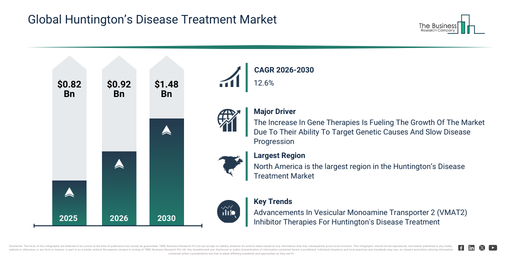
    The huntington’s disease treatment market size has experienced rapid growth in recent years. It is anticipated to expand from $0.82 billion in 2025 to $0.92 billion in 2026, at a compound annual growth rate (CAGR) of 12.6%. This historical growth can be attributed to several factors including limited treatment options for neurodegenerative disorders, an increasing diagnosis of genetic neurological diseases, early reliance on symptomatic management, the expansion of neurology specialty care, and growth in hospital-based neurological treatments.

    The huntington’s disease treatment market is projected for significant expansion in the coming years. It is anticipated to reach $1.48 billion by 2030, demonstrating a compound annual growth rate (CAGR) of 12.6%. This expansion throughout the forecast period can be attributed to several factors, including breakthroughs in gene therapy technologies, increased investment in rare disease research, a rise in orphan drug designations, the growing acceptance of precision medicine, and a broader pipeline of disease-modifying therapies. Key trends expected during this period involve an increasing focus on disease-modifying treatments, wider adoption of gene and RNA-based therapies, the expansion of combination therapy strategies, a heightened emphasis on developing symptom-specific drugs, and a surge in clinical trial activities for rare neurological conditions.

    Get A Free Sample Report With In-Depth Market Insights:

    https://thebusinessresearchcompany.com/sample_request?id=24273179&type=smp&name=Huntington%E2%80%99s%20Disease%20Treatment%20Market%20Report%202026&utm_source=Blogs&utm_medium=Paid&utm_campaign=Oct_PR

    Huntington’s Disease Treatment Market Growth Drivers: What’s Behind The Acceleration?

    The rising prevalence of gene therapies is anticipated to significantly advance the Huntington’s disease treatment market in the coming years. Gene therapies are therapeutic approaches designed to modify or substitute impaired genes, aiming to alleviate or avert diseases at their fundamental genetic origin. Their expansion is fueled by advancements in precision medicine, allowing for direct targeting of genetic anomalies and yielding superior results compared to conventional remedies. For Huntington’s disease, gene therapies function by silencing the malfunctioning HTT gene, which is responsible for producing detrimental proteins, thereby safeguarding nerve cells from damage. This methodology contributes to decelerating disease progression, preserving brain function, and offers prospects for sustained management. As an illustration, data from July 2023, compiled by the American Society of Gene & Cell Therapy (ASGCT), a US-based professional membership organization, and Citeline, a US-based provider of drugs and devices, indicated that 247 gene therapies were in phase II at the close of Q1 2023. This figure subsequently increased by 5%, reaching 260 by the conclusion of Q2. Consequently, the expanding landscape of gene therapies is serving as a key impetus for the expansion of the Huntington’s disease treatment market.

    Huntington’s Disease Treatment Market Breakdown By Product Type And Application

    The huntington’s disease treatment market covered in this report is segmented –

    1) By Treatment: Symptomatic Treatment, Disease-Modifying Therapies

    2) By Administration Type: Oral, Intravenous, Subcutaneous, Topical

    3) By Therapeutic: Genetic Disorders, Neurological Disorders, Psychiatric Disorders

    4) By Distribution Channel: Hospital Pharmacies, Retail Pharmacies, Online Pharmacies

    5) By End-User: Hospitals, Clinics, Homecare Settings, Research Centers

    Subsegments:

    1) By Symptomatic Treatment: Antidepressants, Antipsychotics, Mood Stabilizers, Chorea Medications, Cognitive Enhancers

    2) By Disease-Modifying Therapies: Gene Therapy, Neuroprotective Agents, RNA-Based Therapies, Stem Cell Therapy, Protein-Targeting Therapies

    Huntington’s Disease Treatment Market Trends: What’s Defining The Industry’s Next Phase?

    Leading companies within the Huntington’s disease treatment market are concentrating on developing innovative therapies, including selective vesicular monoamine transporter 2 (VMAT2) inhibitor capsules, with the goal of potentially enhancing patient quality of life and slowing disease progression. Selective VMAT2 inhibitor capsules are medicines that work by blocking vesicular monoamine transporter 2, a protein responsible for packaging neurotransmitters for release in the brain. These drugs contribute to reducing neurotransmitter release, which helps in managing involuntary movements and related symptoms. For example, in August 2023, Neurocrine Biosciences, Inc., a US-based biotech company, secured approval from the U.S. Food and Drug Administration (FDA) for its Ingrezza (valbenazine) capsules, intended for treating chorea associated with Huntington’s disease (HD) in adults. These capsules represent a once-daily oral VMAT2 inhibitor that functions by diminishing excessive dopamine signaling in the brain to help regulate involuntary movements. The medication is provided in various capsule strengths and can be consumed either with or without food, presenting a flexible dosing solution for patients.

    Huntington’s Disease Treatment Market Company Landscape And Competitive Strategy

    Major companies operating in the huntington’s disease treatment market are F. Hoffmann-La Roche Ltd., Novartis AG, Teva Pharmaceutical Industries Ltd., H. Lundbeck A/S, Neurocrine Biosciences Inc., Wave Life Sciences Ltd., PTC Therapeutics Inc., Ionis Pharmaceuticals Inc., uniQure N.V., Prilenia Therapeutics B.V., Sage Therapeutics Inc., Annexon Inc., Alnylam Pharmaceuticals Inc., Sun Pharmaceutical Industries Inc., Dr. Reddy’s Laboratories Ltd., Lupin Limited, Hikma Pharmaceuticals plc, Astellas Pharma Inc., Otsuka Pharmaceutical Co. Ltd., AbbVie Inc.

    View The Full Huntington’s Disease Treatment Market Report:

    https://thebusinessresearchcompany.com/report/huntingtons-disease-treatment-global-market-report?utm_source=Blogs&utm_medium=Paid&utm_campaign=Oct_PR

    Huntington’s Disease Treatment Market Geographic Distribution And Regional Opportunities

    North America was the largest region in the Huntington’s disease treatment market in 2025. Asia-Pacific is expected to be the fastest-growing region in the forecast period. The regions covered in the huntington’s disease treatment market report are Asia-Pacific, South East Asia, Western Europe, Eastern Europe, North America, South America, Middle East, Africa.

    Reach Out To Our Team:

    The Business Research Company: https://www.thebusinessresearchcompany.com/

    Americas: +1 310-496-7795

    Asia: +44 7882 955267 & +91 8897263534

    Europe: +44 7882 955267

    Email us at: marketing@tbrc.info

    Follow us on:

    LinkedIn: https://in.linkedin.com/company/the-business-research-company

    YouTube: https://www.youtube.com/channel/UC24_fI0rV8cR5DxlCpgmyFQ

    Global Market Model: https://www.thebusinessresearchcompany.com/global-market-model
  • Humira Drug Market Valued At $15.22 Billion In 2026: Key Trends And Growth Drivers

    Humira Drug Market Valued At $15.22 Billion In 2026: Key Trends And Growth Drivers

    Featuring market attractiveness scoring, total addressable market sizing, company benchmarking matrices, interactive Excel dashboards, deeper supply chain intelligence, emerging startup tracking, and granular product-level insights, The Business Research Company’s 2026 market reports are built to deliver research that is both more actionable and more strategically valuable.

    Humira Drug Market CAGR Outlook And Future Development

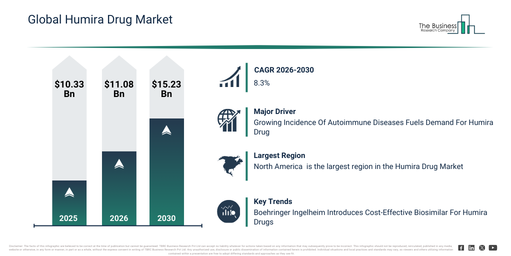
    The scale of the humira drug market has expanded considerably in recent years. Forecasts indicate it will expand from $10.33 billion in 2025 to $11.08 billion in 2026, showing a compound annual growth rate (CAGR) of 7.3%. Historically, this expansion has been driven by factors such as the increasing prevalence of arthritis, greater awareness of biologics, humira’s patent exclusivity, the establishment of specialty clinics, regulatory approvals for rheumatoid arthritis, rising healthcare spending, limited biosimilar market penetration, advancements in injection technology, increased hospital adoption, and significant unmet medical needs.

    The humira drug market size is projected to experience substantial growth in the coming years. Its value is set to reach $15.23 billion in 2030, at a compound annual growth rate (CAGR) of 8.3%. This expansion during the forecast period is attributable to factors such as the proliferation of biosimilars, increasing patient inclination for self-administration, rising adoption of telemedicine, an expanding geriatric population, greater penetration into emerging markets, advancements in pre-filled pen delivery, enhanced governmental support for biologics, integration with digital health platforms, evolving personalized medicine trends, and improved insurance coverage. Key developments anticipated in the forecast period include tailored arthritis treatments, a broader embrace of biologic therapies, the availability of home-based injection solutions, novel combination therapy approaches, and increased integration of telemedicine.

    Get A Free Sample Report With In-Depth Market Insights:

    https://thebusinessresearchcompany.com/sample_request?id=39481105&type=smp&name=Humira%20Drug%20Market%20Report%202026&utm_source=Blogs&utm_medium=Paid&utm_campaign=Oct_PR

    Humira Drug Market Growth Factors Behind Sustained Expansion

    The growing incidence rate of autoimmune disease is anticipated to propel the Humira drug market forward. Autoimmune disease describes a condition where the body’s immune system attacks and harms its own healthy cells and tissues. Given that Humira drug is employed to manage pain and inflammation caused by various autoimmune diseases, a rise in their incidence naturally leads to increased demand for the drug. For instance, in February 2024, Arthritis Australia reported that by 2025, around 562,378 Australians are predicted to be living with rheumatoid arthritis (RA), making up 14% of the total arthritis population. Therefore, the increase in the incidence rate of autoimmune disease will drive the HUMIRA drug market.

    Humira Drug Market Segment Analysis And Revenue Potential

    The humira drug market covered in this report is segmented –

    1) By Type: Humira Syringe, Humira Pen

    2) By Application: Ankylosing Spondylitis, Rheumatoid Arthritis, Crohn’s Disease, Other Applications

    3) By End-Users: Hospitals, Specialty Clinics, Other End-Users

    Subsegments:

    1) By Humira Syringe: Pre-Filled Syringe, Disposable Syringe

    2) By Humira Pen: Auto-Injector Pen, Pre-Filled Injection Pen

    Humira Drug Market Industry Trends Fueling Future Revenue Growth

    Major companies active in the himra drug market are primarily focused on the development of biosimilar versions for humira drugs. These companies are committed to enhancing the cost-efficiency of humira drugs by producing specialty biosimilars specifically designed for them. For instance, in October 2023, Boehringer Ingelheim, a Germany-based pharmaceutical firm, launched a biosimilar of Humira. The only exact copies of Humira approved by the US Food and Drug Administration as interchangeable are those manufactured by Boehringer, which means they can be used in place of the original drug without requiring a prescription.

    Humira Drug Market Key Players Shaping Industry Direction

    Major companies operating in the humira drug market are AbbVie Inc., Amgen Inc., Sandoz International GmbH, Viatris Inc., Samsung Bioepis Co Ltd., Coherus BioSciences Inc., Celltrion Healthcare Co Ltd., Alvotech Holdings S.A, Biocad Biopharmaceutical Company, Fujifilm Kyowa Kirin Biologics Co Ltd, Alteogen Inc, Bio-Thera Solutions Ltd, Momenta Pharmaceuticals Inc, Innovent Biologics Inc, CinnaGen Co, Hetero Healthcare Ltd, Glenmark Pharmaceuticals Ltd, Torrent Pharmaceuticals Ltd, Cadila Pharmaceuticals Ltd, Mochida Pharmaceutical Co Ltd

    View The Full Humira Drug Market Report:

    https://thebusinessresearchcompany.com/report/humira-drug-global-market-report?utm_source=Blogs&utm_medium=Paid&utm_campaign=Oct_PR

    Humira Drug Market Largest Region By Revenue And Market Share

    North America was the largest region in the humira drug market in 2025. Asia Pacific is expected to be the fastest-growing region in the forecast period. The regions covered in the humira drug market report are Asia-Pacific, South East Asia, Western Europe, Eastern Europe, North America, South America, Middle East, Africa.

    Reach Out To Our Team:

    The Business Research Company: https://www.thebusinessresearchcompany.com/

    Americas: +1 310-496-7795

    Asia: +44 7882 955267 & +91 8897263534

    Europe: +44 7882 955267

    Email us at: marketing@tbrc.info

    Follow us on:

    LinkedIn: https://in.linkedin.com/company/the-business-research-company

    YouTube: https://www.youtube.com/channel/UC24_fI0rV8cR5DxlCpgmyFQ

    Global Market Model: https://www.thebusinessresearchcompany.com/global-market-model
  • Humanoid Healthcare Assistive Robot Market Size In 2026: Growth Outlook And Forecast Through 2030

    Humanoid Healthcare Assistive Robot Market Size In 2026: Growth Outlook And Forecast Through 2030

    Built to provide research that’s more actionable and strategically valuable, The Business Research Company’s 2026 market reports include market attractiveness analysis, total addressable market sizing, company benchmarking matrices, interactive Excel dashboards, broader supply chain intelligence, emerging startup tracking, and in-depth product insights.

    Humanoid Healthcare Assistive Robot Market Set To Climb From $1.7 Billion In 2026 To $4.4 Billion By 2030

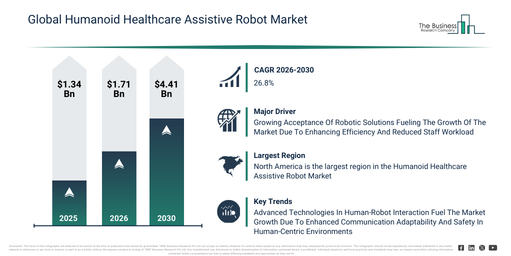
    The humanoid healthcare assistive robot market size has witnessed substantial expansion in recent years. This market is projected to grow from $1.34 billion in 2025 to $1.71 billion in 2026, achieving a compound annual growth rate (CAGR) of 27.1%. The historical increase can be attributed to several factors, including a shortage of healthcare professionals, an aging global population, advancements in robotics technology, increased automation in hospitals, and a rising demand for patient monitoring solutions.

    The humanoid healthcare assistive robot market size is anticipated to experience substantial growth over the next few years. It is forecast to achieve a valuation of $4.41 billion by 2030, demonstrating a compound annual growth rate (CAGR) of 26.8%. This expansion during the projection period stems from several factors, including the development of smart hospitals, increasing investments in healthcare robotics, a growing need for homecare automation, improvements in human-robot interaction, and the wider application of AI-based clinical assistance. Significant trends for the forecast duration involve the increased utilization of robots in elderly and assisted care, the rising adoption of AI-enabled patient interaction robots, the broadened scope of robotic support in hospital operations, a heightened demand for contactless healthcare assistance, and the integration of sophisticated sensors and computer vision.

    Get A Free Sample Report With In-Depth Market Insights:

    https://thebusinessresearchcompany.com/sample_request?id=32081730&type=smp&name=Humanoid%20Healthcare%20Assistive%20Robot%20Market%20Report%202026&utm_source=Blogs&utm_medium=Paid&utm_campaign=Oct_PR

    Humanoid Healthcare Assistive Robot Market Demand Drivers Opening New Revenue Streams

    The increased adoption of robotic technologies is anticipated to fuel expansion within the humanoid healthcare assistive robot market in the future. Robotic solutions encompass the deployment of robotic systems and related technologies to automate processes, improve operational efficiency, and address intricate challenges across diverse sectors and uses. This rising acceptance stems from their capability to ease the workload on healthcare personnel by effectively managing routine tasks, thereby enabling professionals to dedicate more attention to essential patient care. Humanoid healthcare assistive robots augment these robotic solutions by delivering tailored support in areas like caregiving, rehabilitation, and patient engagement, utilizing their human-like attributes and adaptable assistance. As an illustration, in September 2023, data from the International Federation of Robotics (IFR), a Germany-based non-profit organization focused on robotics industry research, indicated that 553,052 industrial robot installations took place in factories globally, representing a 5% growth rate in 2022, year-on-year. Consequently, the expanding adoption of robotic solutions is a significant factor propelling the expansion of the humanoid healthcare assistive robot market.

    Humanoid Healthcare Assistive Robot Market Segmentation And Category Overview

    The humanoid healthcare assistive robot market covered in this report is segmented –

    1) By Type: Surveillance Healthcare Assistive Robot, Security Healthcare Assistive Robot

    2) By Component: Hardware, Software, Services

    3) By Technology: Artificial Intelligence, Machine learning, Natural Language Processing, Robotic Process Automation, Computer Vision

    4) By Application: Elderly Care, Rehabilitation, Surgery Assistance, Patient Monitoring, Other Applications

    5) By End-User: Hospitals, Clinics, Home Care Settings, Rehabilitation Centers, Other End-Users

    Subsegments:

    1) By Surveillance Healthcare Assistive Robot: Remote Monitoring Robots, Diagnostic Assistance Robots, Patient Interaction Robots, Vital Signs Monitoring Robots, Surveillance And Security Monitoring Robots

    2) By Security Healthcare Assistive Robot: Patient Safety Robots, Emergency Response Robots, Intruder Detection Robots

    Humanoid Healthcare Assistive Robot Market Trends Powering Strategic Industry Growth

    Leading companies operating within the humanoid healthcare assistive robot market are concentrating on developing advanced solutions, such as human-robot interaction, to facilitate more impactful and empathetic engagements with individuals. Human-robot interaction (HRI) pertains to the discipline dedicated to the study and creation of systems that enable robots to communicate, collaborate, and interact with humans in an organic and intuitive manner. This involves comprehending how people perceive, manage, and cooperate with robots, with the goal of establishing fluid and efficient interactions. For instance, in March 2024, Toyota Research Institute, a US-based company specializing in artificial intelligence-driven research and robotics innovation, introduced its Punyo robots. These robots feature a distinct legless design, emphasizing adaptability, gentleness, and security for routine human activities. They incorporate tactile sensors that conform to objects, airbags in their limbs for regulating pressure to control firmness and pliancy, and sophisticated learning methodologies. By merging compliant materials with internal structural components, Punyo is engineered to observe and replicate human behaviors, allowing it to execute diverse household chores and enhance its utility in everyday settings.

    Humanoid Healthcare Assistive Robot Market Competitive Analysis Of Leading Industry Participants

    Major companies operating in the humanoid healthcare assistive robot market are Ubtech Robotics Inc., SoftBank Robotics Corp, Fourier Intelligence Co. Ltd., Hanson Robotics Limited, PAL Robotics, F&P Robotics AG, Diligent Robotics Inc., Neura Robotics GmbH, Apptronik, 1X Technologies, Kinova Robotics Inc., Hocoma AG, Ekso Bionics, ReWalk Robotics, Agility Robotics, Rainbow Robotics, Engineered Arts, Focal Meditech, Toyota Motor Corporation, Honda Motor Co. Ltd.

    View The Full Humanoid Healthcare Assistive Robot Market Report:

    https://thebusinessresearchcompany.com/report/humanoid-healthcare-assistive-robot-global-market-report?utm_source=Blogs&utm_medium=Paid&utm_campaign=Oct_PR

    Humanoid Healthcare Assistive Robot Market Regional Analysis And Leading Geography

    North America was the largest region in the humanoid healthcare assistive robot market in 2025. Asia-Pacific is expected to be the fastest-growing region in the forecast period. The regions covered in the humanoid healthcare assistive robot market report are Asia-Pacific, South East Asia, Western Europe, Eastern Europe, North America, South America, Middle East, Africa.

    Reach Out To Our Team:

    The Business Research Company: https://www.thebusinessresearchcompany.com/

    Americas: +1 310-496-7795

    Asia: +44 7882 955267 & +91 8897263534

    Europe: +44 7882 955267

    Email us at: marketing@tbrc.info

    Follow us on:

    LinkedIn: https://in.linkedin.com/company/the-business-research-company

    YouTube: https://www.youtube.com/channel/UC24_fI0rV8cR5DxlCpgmyFQ

    Global Market Model: https://www.thebusinessresearchcompany.com/global-market-model
  • Human Serum Albumin Market Trends Supporting 7% CAGR Growth Through 2030

    Human Serum Albumin Market Trends Supporting 7% CAGR Growth Through 2030

    Backed by market attractiveness analysis, total addressable market sizing, company benchmarking matrices, interactive Excel dashboards, wider supply chain intelligence, emerging startup coverage, and detailed product-level insights, The Business Research Company’s 2026 market reports are designed to offer research that is more actionable and strategically valuable than ever.

    Human Serum Albumin Market Forecast: Value Set To Climb From $6.21 Billion To $8.15 Billion

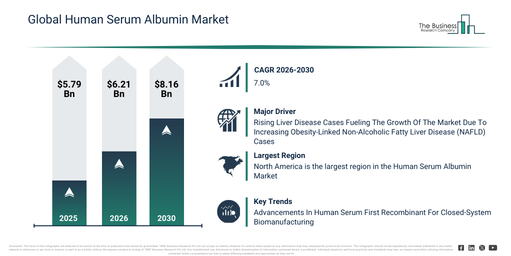
    The human serum albumin market size has experienced robust expansion in recent years. It is projected to increase from $5.79 billion in 2025 to $6.21 billion in 2026, at a compound annual growth rate (CAGR) of 7.3%. The market’s historical growth can be attributed to the limited availability of recombinant hsa, reliance on plasma-derived hsa, growing hospital and clinical demand, increasing use in diagnostic and therapeutic applications, and the adoption of standard injection solutions.

    The human serum albumin market size is anticipated to experience robust expansion in the coming years. It is projected to reach $8.16 billion in 2030, exhibiting a compound annual growth rate (CAGR) of 7.0%. This predicted growth is primarily driven by factors such as the advancements in yeast, bacterial, and plant-based recombinant hsa development, an increasing need for fatty acid-free formulations, the broadening scope of drug delivery and nutrition enhancement uses, greater investments in research laboratories, and increased procurement by hospitals and blood banks. Key trends anticipated during this period encompass a heightened demand for both plasma-derived and recombinant human serum albumin, an expanded application of hsa in volume expanders and drug delivery systems, the growing preference for lyophilized powder and injection solutions, wider use in hospital and research laboratory settings, and a particular emphasis on fatty acid-free and specialized hsa preparations.

    Get A Free Sample Report With In-Depth Market Insights:

    https://thebusinessresearchcompany.com/sample_request?id=27310&type=smp&name=Human%20Serum%20Albumin%20Market%20Report%202026&utm_source=Blogs&utm_medium=Paid&utm_campaign=Oct_PR

    Human Serum Albumin Market Growth Backed By Core Demand Fundamentals

    The human serum albumin market is anticipated to expand due to the rising occurrence of liver ailments. These conditions encompass a range of issues that compromise liver function, such as hepatitis, fatty liver disease, cirrhosis, and liver cancer. A key contributor to the surge in liver diseases is the growing rate of obesity, with surplus abdominal fat often resulting in non-alcoholic fatty liver disease (NAFLD), which involves fat buildup, inflammation, and can potentially lead to liver failure. Human serum albumin offers therapeutic benefits for liver disease patients by restoring blood volume, mitigating fluid accumulation, safeguarding kidney function, and enhancing prognoses for complications like ascites and hepatorenal syndrome. As an illustration, a report issued by the Office for Health Improvement and Disparities, a UK-based government body, indicated in December 2024 that premature fatalities from alcoholic liver disease saw a 3.6% rise in 2023, totaling 5,984 cases, up from 5,776 in 2022. Consequently, the expanding incidence of liver diseases is a significant impetus behind the growth of the human serum albumin market.

    Human Serum Albumin Market Segment Outlook: Which Categories Are Growing Fastest?

    The human serum albumin market covered in this report is segmented –

    1) By Type Of Preparation: Recombinant Human Serum Albumin, Plasma-Derived Human Serum Albumin

    2) By Formulation Type: Injection Solutions, Lyophilized Powder

    3) By Distribution Channel: Direct Sales, Online Pharmacies, Third-party Distributors, Hospital Pharmacies

    4) By Application: Volume Expanders, Drug Delivery Systems, Nutrition Enhancement, Diagnostic Agents

    5) By End-User: Hospitals, Research Laboratories, Pharmaceutical Companies, Blood Banks

    Subsegments:

    1) By Recombinant Human Serum Albumin: Yeast-Based Recombinant Human Serum Albumin, Bacterial-Based Recombinant Human Serum Albumin, Plant-Based Recombinant Human Serum Albumin, Mammalian Cell-Based Recombinant Human Serum Albumin, Insect Cell-Based Recombinant Human Serum Albumin

    2) By Plasma-Derived Human Serum Albumin: 5% Human Serum Albumin Solution, 20% Human Serum Albumin Solution, 25% Human Serum Albumin Solution, Lyophilized Human Serum Albumin, Fatty Acid-Free Human Serum Albumin

    Human Serum Albumin Market Growth Trends Reshaping The Competitive Landscape

    Leading companies within the human serum albumin market are prioritizing the development of innovative solutions, such as animal-free recombinant excipients. This focus aims to bolster product safety, enhance scalability, and ensure compliance with regulatory standards across biomanufacturing applications. An animal-free recombinant excipient is defined as a biologically engineered inactive substance, synthesized using recombinant DNA technology, that is entirely free from animal or human-derived components, thereby guaranteeing high purity and safety in both pharmaceutical and biomanufacturing contexts. As an example, in April 2025, InVitri Inc., a US-based provider specializing in animal-free recombinant proteins and excipients, introduced Optibumin 25. This product marks the first recombinant 25% human serum albumin specifically formulated for closed-system biomanufacturing. It has been optimized for various workflows including downstream processing, formulation, and cryopreservation, and is currently supplied in 100 mL single-use bags. Its chemically defined and animal-origin-free composition assures superior purity, consistency, and reduced risks of contamination. Furthermore, it is GMP-ready, capable of scaling to commercial production volumes, and delivers a stable, sterile solution that seamlessly integrates into critical applications such as viral vector manufacturing, stem cell preservation, vaccine formulation, and regenerative medicine.

    Human Serum Albumin Market Leading Companies And Competitive Benchmarking

    Major companies operating in the human serum albumin market are Thermo Fisher Scientific Inc., Takeda Pharmaceutical Company Limited, Merck KGaA, CSL Behring (CSL), Baxter International Inc., Grifols SA, Sartorius AG, Octapharma AG, Kedrion Biopharma, Shanghai RAAS Blood Products Co Ltd., Biotest Aktiengesellschaft, LFB Group, Hualan Biological Engineering Inc., Taibang Biologic Group, Kamada Ltd., InVitria Inc., Reliance Life Sciences, Bio Products Laboratory, Mitsubishi Tanabe Pharma, Sichuan Yuanda Shuyang Pharmaceutical Co Ltd.

    View The Full Human Serum Albumin Market Report:

    https://thebusinessresearchcompany.com/report/human-serum-albumin-global-market-report?utm_source=Blogs&utm_medium=Paid&utm_campaign=Oct_PR

    Human Serum Albumin Market Geographic Analysis: Where Is Demand Accelerating Fastest?

    North America was the largest region in the human serum albumin market in 2025. Asia-Pacific is expected to be the fastest-growing region in the forecast period. The regions covered in the human serum albumin market report are Asia-Pacific, South East Asia, Western Europe, Eastern Europe, North America, South America, Middle East, Africa.

    Reach Out To Our Team:

    The Business Research Company: https://www.thebusinessresearchcompany.com/

    Americas: +1 310-496-7795

    Asia: +44 7882 955267 & +91 8897263534

    Europe: +44 7882 955267

    Email us at: marketing@tbrc.info

    Follow us on:

    LinkedIn: https://in.linkedin.com/company/the-business-research-company

    YouTube: https://www.youtube.com/channel/UC24_fI0rV8cR5DxlCpgmyFQ

    Global Market Model: https://www.thebusinessresearchcompany.com/global-market-model
  • Human Papillomavirus (HPV) Vaccine Market Forecast Highlights A $12.17 Billion Opportunity For Industry Participants

    Human Papillomavirus (HPV) Vaccine Market Forecast Highlights A $12.17 Billion Opportunity For Industry Participants

    Featuring market attractiveness scoring, total addressable market sizing, company benchmarking matrices, interactive Excel dashboards, deeper supply chain intelligence, emerging startup tracking, and granular product-level insights, The Business Research Company’s 2026 market reports are built to deliver research that is both more actionable and more strategically valuable.

    Human Papillomavirus (HPV) Vaccine Market Revenue Growth On Track For A 13.2% CAGR Through 2030

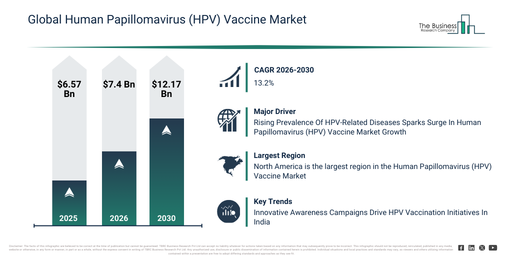
    Recent years have witnessed substantial growth in the human papillomavirus (hpv) vaccine market size. The market is expected to increase from $6.57 billion in 2025 to $7.4 billion in 2026, achieving a compound annual growth rate (CAGR) of 12.7%. The increase witnessed in the past can be linked to the high prevalence of cervical cancer, a lack of awareness regarding hpv vaccination, government funding for immunization, the presence of tetravalent and bivalent vaccines, and growing healthcare infrastructure in developed regions.

    The human papillomavirus (HPV) vaccine market size is set for significant expansion in the upcoming years. It is forecast to reach $12.17 billion by 2030, demonstrating a compound annual growth rate (CAGR) of 13.2%. This anticipated growth during the forecast period can be attributed to the rising adoption of nonavalent vaccines, an increase in public-private healthcare partnerships, the proliferation of awareness campaigns, advancements in vaccine delivery technology, and growing investments in preventive healthcare. Significant trends expected in this period include heightened awareness of HPV vaccination, government-led immunization initiatives, market expansion into emerging regions, the development of next-generation HPV vaccines, and collaborations between pharmaceutical companies and healthcare providers.

    Get A Free Sample Report With In-Depth Market Insights:

    https://thebusinessresearchcompany.com/sample_request?id=80497915&type=smp&name=Human%20Papillomavirus%20%28HPV%29%20Vaccine%20Market%20Report%202026&utm_source=Blogs&utm_medium=Paid&utm_campaign=Oct_PR

    Human Papillomavirus (HPV) Vaccine Market Growth Catalysts And Demand Drivers

    The rising occurrence of HPV-related diseases is anticipated to drive the future expansion of the human papillomavirus (HPV) vaccine market. These conditions are viral infections often leading to the formation of warts on the skin or mucous membranes. The HPV vaccine specifically targets the HPV subtypes and aids in managing the risk of HPV infection and subsequent recurrent diseases. For example, data from the National Cancer Institute, a US-based Department of Health and Human Services, indicated in February 2023 that approximately 13,960 American women were projected to receive an aggressive cervical cancer diagnosis, with 4,310 fatalities from this illness expected in 2023 in the US. Additionally, new cases of cervical cancer were diagnosed at a rate of 7.7 per 100,000 women per year, alongside an annual mortality rate of 2.2 per 100,000 females. Consequently, the increased prevalence of HPV-related diseases is fueling the growth of the human papillomavirus (HPV) vaccine market.

    Human Papillomavirus (HPV) Vaccine Market Segment Landscape: Which Areas Lead Development?

    The human papillomavirus (hpv) vaccine market covered in this report is segmented –

    1) By Type: Tetravalent, Nonavalent, Bivalent

    2) By Disease Indication: Cervical Cancer, Anal Cancer, Vulvar And Vaginal Cancer, Penile Cancer, Oropharyngeal Cancer, Other Indications

    3) By Distribution Channel: Hospital And Retail Pharmacies, Government Suppliers, Other Channels

    4) By Industry Vertical: Public And Private Alliance, Government Entities, Physicians, Other Industries

    Human Papillomavirus (HPV) Vaccine Market Trends Shaping Long-Term Demand

    Leading entities within the human papillomavirus (HPV) vaccine market are prioritizing innovative strategies, including public awareness initiatives, to inform communities regarding the advantages of vaccination. These campaigns represent deliberate actions crafted to instruct and enlighten either a targeted demographic or the broader populace concerning a specific subject, purpose, offering, or utility. An illustrative example occurred in January 2023 when the Family Planning Association of India, an Indian charitable organization, commenced a vaccination program aimed at combating cervical cancer, specifically for girls between 9 and 14 years old. Currently, a national HPV immunization effort is in progress across the country, intending to safeguard girls and women from cervical cancer. This particular initiative will utilize a quadrivalent vaccine designed to address the primary strains of the virus. With a goal of immunizing approximately 50 million girls, this undertaking emphasizes increasing public understanding and enhancing availability in both urban and rural regions.

    Human Papillomavirus (HPV) Vaccine Market Industry Leaders And Competitive Landscape

    Major companies operating in the human papillomavirus (hpv) vaccine market are Merck & Co Inc, GlaxoSmithKline plc, Serum Institute of India Pvt Ltd, Walvax Biotechnology Co Ltd, Beijing Wantai Biological Pharmacy Enterprise Co Ltd, Xiamen Innovax Biotech Co Ltd, Bharat Biotech International Ltd, Shanghai Zerun Biotech Co Ltd, Recbio Biotech, Yuxi Zerun Biotechnology Co Ltd, Innovax, Biofarma Co, Incepta Pharmaceuticals, PT Bio Farma, Instituto Butantan, Sinergium Biotech, BioMed Vaccine Technologies, Vaxart Inc., GeoVax, Recbio

    View The Full Human Papillomavirus (HPV) Vaccine Market Report:

    https://thebusinessresearchcompany.com/report/human-papillomavirus-HPV-vaccine-global-market-report?utm_source=Blogs&utm_medium=Paid&utm_campaign=Oct_PR

    Human Papillomavirus (HPV) Vaccine Market Global Footprint: Which Region Leads The Industry?

    North America was the largest region in the human papillomavirus (HPV) vaccine market in 2025. The regions covered in the human papillomavirus (hpv) vaccine market report are Asia-Pacific, South East Asia, Western Europe, Eastern Europe, North America, South America, Middle East, Africa.

    Reach Out To Our Team:

    The Business Research Company: https://www.thebusinessresearchcompany.com/

    Americas: +1 310-496-7795

    Asia: +44 7882 955267 & +91 8897263534

    Europe: +44 7882 955267

    Email us at: marketing@tbrc.info

    Follow us on:

    LinkedIn: https://in.linkedin.com/company/the-business-research-company

    YouTube: https://www.youtube.com/channel/UC24_fI0rV8cR5DxlCpgmyFQ

    Global Market Model: https://www.thebusinessresearchcompany.com/global-market-model
  • Human Epidermal Growth Factor Receptor 2 (HER2)-Positive Gastric Cancer Market Analysis: How The Industry Is Evolving Toward A $1.64 Billion Future

    Human Epidermal Growth Factor Receptor 2 (HER2)-Positive Gastric Cancer Market Analysis: How The Industry Is Evolving Toward A $1.64 Billion Future

    Built to provide research that’s more actionable and strategically valuable, The Business Research Company’s 2026 market reports include market attractiveness analysis, total addressable market sizing, company benchmarking matrices, interactive Excel dashboards, broader supply chain intelligence, emerging startup tracking, and in-depth product insights.

    Human Epidermal Growth Factor Receptor 2 (HER2)-Positive Gastric Cancer Market Value Growth And Long-Term Outlook

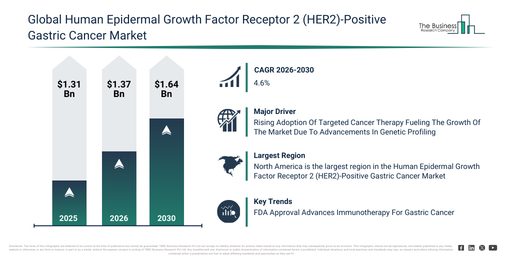
    The human epidermal growth factor receptor 2 (her2)-positive gastric cancer market has experienced consistent expansion in recent years. Its value is projected to increase from $1.31 billion in 2025 to $1.37 billion in 2026, exhibiting a compound annual growth rate (CAGR) of 4.6%. Historically, this growth has stemmed from factors such as a scarcity of targeted treatments, a dependence on traditional chemotherapy and radiation, insufficient knowledge of her2-positive gastric cancer, limited access to specialized medical facilities, and the gradual integration of immunotherapy.

    The market size for human epidermal growth factor receptor 2 (her2)-positive gastric cancer is anticipated to show steady growth over the next few years. It is projected to expand to $1.64 billion in 2030, achieving a compound annual growth rate (CAGR) of 4.6%. This growth during the forecast period can be linked to the creation of new antibody-drug conjugates, a rise in clinical trials for her2-targeted therapies, improvements in healthcare infrastructure in developing markets, an increase in precision medicine and biomarker testing, and the proliferation of ambulatory surgery centers and specialized oncology clinics. Noteworthy trends for the forecast period include a greater embrace of her2-targeted therapies, increasing knowledge of gastric cancer subtypes, the wider use of immunotherapy and monoclonal antibodies, an expansion of personalized treatment methods, and a sharpened focus on early detection and diagnostic testing.

    Get A Free Sample Report With In-Depth Market Insights:

    https://thebusinessresearchcompany.com/sample_request?id=99475165&type=smp&name=Human%20Epidermal%20Growth%20Factor%20Receptor%202%20%28HER2%29-Positive%20Gastric%20Cancer%20Market%20Report%202026&utm_source=Blogs&utm_medium=Paid&utm_campaign=Oct_PR

    Human Epidermal Growth Factor Receptor 2 (HER2)-Positive Gastric Cancer Market Opportunity Drivers: What’s Unlocking New Revenue Potential?

    Increased utilization of targeted cancer treatment is anticipated to drive expansion in the human epidermal growth factor receptor 2 (HER2)-positive gastric cancer market in the coming years. This therapy, also referred to as personalized medicine, involves a treatment strategy employing specific medications or agents to inhibit cancer cell proliferation by targeting distinct molecules crucial for tumor progression. Its increased application stems primarily from progress in genetic profiling, enabling more accurate treatments tailored to a patient’s unique tumor characteristics, thereby enhancing efficacy and reducing adverse effects. Specifically for HER2-positive gastric cancer, targeted therapy functions by directly assailing the HER2 protein, which is excessively present in these tumors, thereby decelerating disease advancement and improving patient results. As an illustration, in February 2024, the Personalized Medicine Coalition, a US-based professional membership body, reported that the Food and Drug Administration (FDA) sanctioned 16 novel personalized medicines in 2023, comprising 7 cancer drugs and 3 for diverse other ailments and conditions, marking a rise from 6 approvals in 2022. Consequently, the growing acceptance of targeted cancer therapy is fueling the expansion of the human epidermal growth factor receptor 2 (HER2)-positive gastric cancer market.

    Human Epidermal Growth Factor Receptor 2 (HER2)-Positive Gastric Cancer Market Segments: Where Is Growth Concentrated?

    The human epidermal growth factor receptor 2 (her2)-positive gastric cancer market covered in this report is segmented –

    1) By Therapy: Chemotherapy, Immunotherapy, Radiation Therapy, Targeted Therapy

    2) By Stage: Stage I, Stage II, Stage III, Stage IV

    3) By End-User: Ambulatory Surgery Centers, Hospitals And Specialty Clinics, Other End-Users

    Subsegments:

    1) By Chemotherapy: Fluoropyrimidines, Platinum-Based Agents, Taxanes, Irinotecan, Anthracyclines

    2) By Immunotherapy: Immune Checkpoint Inhibitors, Monoclonal Antibodies, Cancer Vaccines, Cytokine-Based Therapies

    3) By Radiation Therapy: External Beam Radiation Therapy, Intensity-Modulated Radiation Therapy, Stereotactic Body Radiation Therapy, 3D Conformal Radiation Therapy

    4) By Targeted Therapy: HER2-Targeted Therapies, Tyrosine Kinase Inhibitors, Antibody-Drug Conjugates, mTOR Inhibitors, PI3K/AKT/mTOR Pathway Inhibitors

    Human Epidermal Growth Factor Receptor 2 (HER2)-Positive Gastric Cancer Market Innovation Trends Shaping Future Development

    Leading companies within the human epidermal growth factor receptor 2 (HER2)-positive gastric cancer market are concentrating on securing regulatory approvals for novel treatments, such as sophisticated immunotherapy-enhanced combination regimens, which integrate immune checkpoint inhibitors with targeted therapy and chemotherapy, aiming to significantly enhance patient outcomes in initial treatment settings. This advanced immunotherapy-enhanced combination strategy utilizes the body’s immune system by disrupting programmed death (PD)-1 or programmed death (PD)-L1 interaction, concurrently targeting HER2 receptors, and employing chemotherapeutic agents, thereby boosting anti-tumor activity and improving survival rates. A notable example occurred in March 2025, when Merck & Co., Inc., a US-based biopharmaceutical company, gained approval from the U.S. Food and Drug Administration (FDA) for pembrolizumab (Keytruda), combined with trastuzumab and chemotherapy, for the first-line treatment of adults facing HER2-positive unresectable or metastatic gastric or gastroesophageal junction (GEJ) adenocarcinoma where tumors express programmed death (PD)-L1. This recently approved combination regimen showed substantial improvements in both median progression-free survival and overall survival when benchmarked against conventional treatments. Achieving a superior overall response rate of 73% and a prolonged median duration of response, this therapy signifies a fundamental shift in the management of advanced HER2-positive gastric cancers.

    Human Epidermal Growth Factor Receptor 2 (HER2)-Positive Gastric Cancer Market Key Participants And Competitive Landscape

    Major companies operating in the human epidermal growth factor receptor 2 (her2)-positive gastric cancer market are Pfizer Inc., Roche Holding AG, Merck & Co Inc., Bayer Aktiengesellschaft, Eli Lilly and Company, Bristol-Myers Squibb Company, AstraZeneca PLC, Novartis AG, Amgen Inc., Astellas Pharma Inc., Daiichi Sankyo Company Limited, Genentech Inc., Ono Pharmaceutical Co Ltd., Shanghai Henlius Biotech Inc., MacroGenics Inc., Hutchison Medipharma Limited , ALX Oncology Holdings Inc., Taiho Pharmaceutical Co Ltd., Ambrx Biopharma Inc., LintonPharm Co Ltd.

    View The Full Human Epidermal Growth Factor Receptor 2 (HER2)-Positive Gastric Cancer Market Report:

    https://thebusinessresearchcompany.com/report/human-epidermal-growth-factor-receptor-2-her2-positive-gastric-cancer-global-market-report?utm_source=Blogs&utm_medium=Paid&utm_campaign=Oct_PR

    Human Epidermal Growth Factor Receptor 2 (HER2)-Positive Gastric Cancer Market Regional Distribution: Which Areas Power Market Growth?

    North America was the largest region in the human epidermal growth factor receptor 2 (HER2)-positive gastric cancer market in 2025. Asia-Pacific is expected to be the fastest-growing region in the forecast period. The regions covered in the human epidermal growth factor receptor 2 (her2)-positive gastric cancer market report are Asia-Pacific, South East Asia, Western Europe, Eastern Europe, North America, South America, Middle East, Africa.

    Reach Out To Our Team:

    The Business Research Company: https://www.thebusinessresearchcompany.com/

    Americas: +1 310-496-7795

    Asia: +44 7882 955267 & +91 8897263534

    Europe: +44 7882 955267

    Email us at: marketing@tbrc.info

    Follow us on:

    LinkedIn: https://in.linkedin.com/company/the-business-research-company

    YouTube: https://www.youtube.com/channel/UC24_fI0rV8cR5DxlCpgmyFQ

    Global Market Model: https://www.thebusinessresearchcompany.com/global-market-model
  • HPV Associated Disorders Market Outlook Through 2030: Understanding The Growth Opportunity

    HPV Associated Disorders Market Outlook Through 2030: Understanding The Growth Opportunity

    Backed by market attractiveness analysis, total addressable market sizing, company benchmarking matrices, interactive Excel dashboards, wider supply chain intelligence, emerging startup coverage, and detailed product-level insights, The Business Research Company’s 2026 market reports are designed to offer research that is more actionable and strategically valuable than ever.

    HPV Associated Disorders Market Poised To Hit $30.97 Billion By 2030 With A 6.9% CAGR

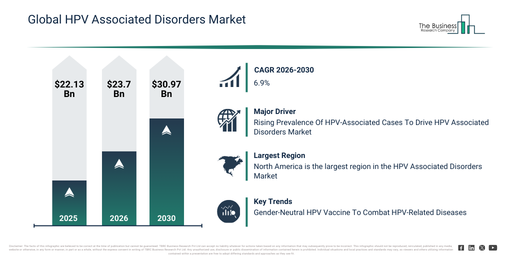
    The hpv associated disorders market size has experienced robust growth in recent years. This market is anticipated to expand from $22.13 billion in 2025 to $23.7 billion in 2026, demonstrating a compound annual growth rate (CAGR) of 7.1%. The historical growth of the market can be ascribed to several factors, including the high prevalence of hpv infections, the introduction of prophylactic hpv vaccines, the expansion of cervical cancer screening programs, increasing healthcare expenditure in oncology, and rising public health awareness campaigns.

    The hpv associated disorders market size is anticipated to experience substantial growth in the forthcoming years. It is projected to expand to $30.97 billion in 2030, demonstrating a compound annual growth rate (CAGR) of 6.9%. This expansion during the forecast period can be attributed to several factors such as the broadening of gender-neutral vaccination policies, advancements in molecular diagnostics, a rising incidence of hpv-linked oropharyngeal cancers, enhanced access to healthcare services in emerging economies, and the development of therapeutic hpv vaccines in the pipeline. Significant trends expected during this period include the expansion of hpv vaccination programs, an increasing adoption of early screening and diagnostic methods, a heightened focus on non-invasive treatment alternatives, greater public awareness of hpv-related cancers, and a shift towards integrated prevention and treatment strategies.

    Get A Free Sample Report With In-Depth Market Insights:

    https://thebusinessresearchcompany.com/sample_request?id=60744200&type=smp&name=HPV%20Associated%20Disorders%20Market%20Report%202026&utm_source=Blogs&utm_medium=Paid&utm_campaign=Oct_PR

    HPV Associated Disorders Market Growth Momentum: What Factors Are Shaping Demand?

    The rising occurrence of HPV instances is projected to drive expansion within the HPV-associated disorders market moving ahead. These disorders encompass conditions such as benign verrucae vulgates, condylomas acuminata, and cancers affecting the cervix, vulva, anus, and penis, alongside anogenital warts, recurrent respiratory papillomatosis, and both anogenital and oropharyngeal cancers. HPV infection demonstrates substantial global prevalence, particularly prominent among females. As an illustration, in June 2025, data from the Centers for Disease Control and Prevention, a government agency located in the US, indicated that annually in the United States, roughly 13,000 women receive a diagnosis of cervical cancer, with approximately 4,000 fatalities from the condition occurring each year. Consequently, the escalation in HPV cases is fueling the expansion of the HPV-associated disorders market.

    HPV Associated Disorders Market Segment Analysis: What Are The Core Market Categories?

    The hpv associated disorders market covered in this report is segmented –

    1) By Indication: Cervical Intraepithelial Neoplasia (CIN), Cervical Cancer, Anal Intraepithelial Neoplasia (AIN), Anal Cancer, Genital Warts, Other Indications

    2) By Therapy: Prevention, Treatment

    3) By Distribution Channel: Hospital Pharmacies, Retail Pharmacies, Online Pharmacies

    Subsegments:

    1) By Cervical Intraepithelial Neoplasia (CIN): CIN 1, CIN 2, CIN 3

    2) By Cervical Cancer: Squamous Cell Carcinoma, Adenocarcinoma

    3) By Anal Intraepithelial Neoplasia (AIN): AIN 1, AIN 2, AIN 3

    4) By Anal Cancer: Squamous Cell Carcinoma, Other Types

    5) By Genital Warts: Condylomata Acuminata

    6) By Other Indications: Oropharyngeal Cancer, Vulvar and Vaginal Cancers, Other HPV-Related Conditions

    HPV Associated Disorders Market Trends Redefining Industry Growth

    Prominent companies within the HPV associated disorders market are introducing HPV vaccines to tackle HPV-related illnesses. These vaccines are crucial for public health, as they lower the incidence of HPV-related diseases and bolster efforts in cervical cancer screening and prevention. For example, in January 2023, the Serum Institute of India, an India-based institute, launched CERVAVAC, the first indigenously developed human papillomavirus (HPV) vaccine specifically designed to prevent cervical cancer in women. This vaccine employs L1 virus-like particles (VLPs) to trigger an immune response without causing an infection. This mechanism efficiently readies the immune system to identify and counter HPV if future exposure occurs.

    HPV Associated Disorders Market Top Companies Driving Competitive Growth

    Major companies operating in the hpv associated disorders market are AstraZeneca plc, F. Hoffmann-La Roche Ltd, Biocon Ltd, GlaxoSmithKline plc, Merck & Co Inc., Pfizer Inc., Sanofi S. A., Novartis AG, Bristol-Myers Squibb Company, Johnson & Johnson Inc., Takeda Pharmaceutical Company Limited, Amgen Inc., Bayer AG, Eisai Co. Ltd., Genentech Inc., MSD Pharmaceuticals, Seqirus, Bavarian Nordic, Serum Institute of India, Moderna Inc

    View The Full HPV Associated Disorders Market Report:

    https://thebusinessresearchcompany.com/report/HPV-associated-disorders-global-market-report?utm_source=Blogs&utm_medium=Paid&utm_campaign=Oct_PR

    HPV Associated Disorders Market Leading Geography: Which Region Contributes The Most Revenue?

    North America was the largest region in the HPV associated disorders market in 2025. Asia-Pacific is expected to be the fastest-growing region in the forecast period. The regions covered in the hpv associated disorders market report are Asia-Pacific, South East Asia, Western Europe, Eastern Europe, North America, South America, Middle East, Africa.

    Reach Out To Our Team:

    The Business Research Company: https://www.thebusinessresearchcompany.com/

    Americas: +1 310-496-7795

    Asia: +44 7882 955267 & +91 8897263534

    Europe: +44 7882 955267

    Email us at: marketing@tbrc.info

    Follow us on:

    LinkedIn: https://in.linkedin.com/company/the-business-research-company

    YouTube: https://www.youtube.com/channel/UC24_fI0rV8cR5DxlCpgmyFQ

    Global Market Model: https://www.thebusinessresearchcompany.com/global-market-model