Blog

  • In Vitro Fertilization (IVF) Devices And Consumables Market Trends Report 2025 – For Business Development and Strategy Teams

    Claim your 30% discount on Global Market Reports with code ONLINE30. Limited time only.

    How Has the In Vitro Fertilization (IVF) Devices And Consumables Market Growth Performance Trended Historically, And What Lies Ahead?

    The market size of in vitro fertilization (IVF) devices and consumables has witnessed a speedy expansion in the recent past. Its growth is projected to rise from $2.66 billion in 2024 to $3.1 billion in 2025, marking a compound annual growth rate (CAGR) of 16.7%. The historical growth can be ascribed to factors like rising infertility rates, expanding awareness and acceptance of in vitro fertilization (IVF) procedures, growing gamete donations, escalating government backing and financial aid for infertility treatments, and the increasing occurrence of delayed pregnancies.

    What Is the Forecast for the In Vitro Fertilization (IVF) Devices And Consumables Market Size Through 2029?

    Over the coming years, the market size for in vitro fertilization (IVF) devices and consumables is anticipated to experience significant growth. It is projected to escalate to $5.67 billion in 2029, with a compound annual growth rate (CAGR) of 16.3%. Factors contributing to the growth during the forecast period include the increased acceptance of minimally invasive procedures, enhanced healthcare infrastructure, the proliferation of fertility clinics, the prevalence of personalized and precision medicine in reproductive health, and a rise in disposable income. Key trends for the forecast period encompass the incorporation of artificial intelligence and machine learning, the creation of novel in vitro fertilization (IVF) consumables and devices, progress in in vitro fertilization (IVF) technology such as preimplantation genetic testing and cryopreservation methods, improvement in infertility treatments, and heightened genetic screening.

    Download The Free Sample Report Here:

    https://www.thebusinessresearchcompany.com/sample.aspx?id=19521&type=smp

    What are the Key Market Players in In Vitro Fertilization (IVF) Devices And Consumables Market and How They’re Evolving?

    Major companies operating in the in vitro fertilization (IVF) devices and consumables market are Thermo Fisher Scientific Inc., Merck KGaA, FUJIFILM Holdings Corporation, CooperSurgical Inc., Cook Medical Inc., Progyny Inc., Vitrolife AB, Esco Micro Pte. Ltd., Hamilton Thorne Ltd., Nantong Egens Biotechnology Co. Ltd., Genea Biomedx Pty Ltd., Kitazato Corporation, Fertility Center of Illinois, Rocket Medical PLC, Gynemed GmbH & Co. KG, Gynotek Ltd., Biocell Enterprise LLC, Laboratoire CCD, Invitrocare Ltd., Nidacon International AB

    What Are the Primary Growth Drivers in the In Vitro Fertilization (IVF) Devices And Consumables Market?

    The escalating rates of infertility are expected to fuel the expansion of the in vitro fertilization (IVF) devices and consumables market. Infertility is characterized as the inability to conceive after a year of regular, unprotected sexual intercourse, or the failure to maintain a pregnancy to term. The increased prevalence of infertility can be attributed to lifestyle changes, delaying pregnancies, and increasing stress levels. IVF devices and consumables, part of assisted reproductive technologies, assist in the fertilization process by including equipment used in egg retrieval, embryo culture and transfer, and address infertility issues by promoting successful conception and pregnancy. For example, the World Health Organization (WHO), a UN agency based in Switzerland, reported in April 2023 that about 17.5% of the global adult population, or one in six individuals, experience infertility at some stage in their lives. In addition, in the US, approximately 11% of women and 9% of men of reproductive age are reported to struggle with infertility. Particularly, about 19% of heterosexual women aged between 15 and 49, who have never had children, face infertility, while 6% of married women in this age group struggle with infertility. As a result, the increasing infertility rates are propelling the growth of the in vitro fertilization (IVF) devices and consumables market.

    Request For A Customized Report:

    https://www.thebusinessresearchcompany.com/customise?id=19521&type=smp

    What Are the Leading Segments in the Global In Vitro Fertilization (IVF) Devices And Consumables Industry?

    The in vitro fertilization (IVF) devices and consumables market covered in this report is segmented –

    1) By Product: Instruments, Accessories And Disposables, Reagents And Media

    2) By Technology: Fresh Embryo In Vitro Fertilization (IVF), Frozen Embryo In Vitro Fertilization (IVF), Donor Egg In Vitro Fertilization (IVF)

    3) By End User: Fertility Clinics, Hospitals, Surgical Centers, Clinical Research Institutes

    Subsegments:

    1) By Instruments: IVF Microscopes, Incubators, Sperm Analyzers, Embryo Transfer Catheters

    2) By Accessories and Disposables: Petri Dishes, Pipettes, Culture Plates, Cryopreservation Vials

    3) By Reagents and Media: Culture Media, Cryopreservation Media, Sperm Wash Solutions, Ovum Retrieval Solutions

    What Are the Key Market Trends in the In Vitro Fertilization (IVF) Devices And Consumables Industry?

    Top firms active in the in vitro fertilization (IVF) devices and consumables arena are prioritizing the development of novel products, like benchtop incubators for IVF clinics, in order to boost the effectiveness and success rates of embryo culture and consequently, enhance patient results. A benchtop incubator for IVF clinics is a particular type of equipment constructed to sustain a controlled ambiance for cultivating and maturing embryos throughout in vitro fertilization (IVF) procedures. These vital incubators maintain exact conditions necessary for embryo expansion, which includes temperature, humidity, and the composition of gases, like levels of oxygen and carbon dioxide. For instance, Cook Group Incorporated, a medical device firm based in the US, launched the MINC+TM Benchtop Incubator in May 2022. Acting as the advanced version of the widely used MINC Mini Incubator, it was released for IVF clinics in the US and Canada. The MINC+ incorporates recent features guided by user feedback to enhance the experience of clinical embryologists. It comes with the DishTrace platform that blends touchscreen and PC software functionalities to offer comprehensive dish-data management. This system facilitates tracking of culture dishes as they are logged in and out of the incubator, allowing for the simultaneous monitoring of up to 50 MINC+ incubators, as well as creating graphic histories and reports about MINC+ activity.

    Access The Full Report Here:

    https://www.thebusinessresearchcompany.com/report/in-vitro-fertilization-ivf-devices-and-consumables-global-market-report

    What Is the Regional Outlook for the In Vitro Fertilization (IVF) Devices And Consumables Market?

    North America was the largest region in the in vitro fertilization (IVF) devices and consumables market in 2024. Asia-Pacific is expected to be the fastest-growing region in the forecast period. The regions covered in the in vitro fertilization (IVF) devices and consumables market report are Asia-Pacific, Western Europe, Eastern Europe, North America, South America, Middle East, Africa.

    Purchase The Full Report Today:

    https://www.thebusinessresearchcompany.com/purchaseoptions.aspx?id=19521

    This Report Delivers Insight On:

    1. How big is the in vitro fertilization (ivf) devices and consumables market, and how is it changing globally?

    2. Who are the major companies in the in vitro fertilization (ivf) devices and consumables market, and how are they performing?

    3. What are the key opportunities and risks in the in vitro fertilization (ivf) devices and consumables market right now?

    4. Which products or customer segments are growing the most in the in vitro fertilization (ivf) devices and consumables market?

    5. What factors are helping or slowing down the growth of the in vitro fertilization (ivf) devices and consumables market?

    About The Business Research Company:

    With over 15000+ reports from 27 industries covering 60+ geographies, The Business Research Company has built a reputation for offering comprehensive, data-rich research and insights. Armed with 1,500,000 datasets, the optimistic contribution of in-depth secondary research, and unique insights from industry leaders, you can get the information you need to stay ahead in the game.

    Get in touch with us:

    The Business Research Company: https://www.thebusinessresearchcompany.com/

    Americas +1 310-496-7795

    Asia +44 2071930708

    Europe +44 7882 955267

    Email us at info@tbrc.info

    Follow us on:

    LinkedIn: https://in.linkedin.com/company/the-business-research-company

    YouTube: https://www.youtube.com/channel/UC24_fI0rV8cR5DxlCpgmyFQ

    Global Market Model: https://www.thebusinessresearchcompany.com/global-market-model
  • Adstiladrin Industry Insights 2025 – Market Forecast for Executives and Planners

    Adstiladrin Industry Insights 2025 – Market Forecast for Executives and Planners

    Claim your 30% discount on Global Market Reports with code ONLINE30. Limited time only.

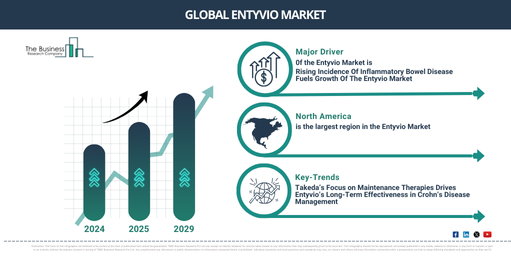
    #How Has The Entyvio Market Size Shifted, And What Is the Outlook Through 2034?

    The market size for Entyvio has witnessed a health compound annual growth rate (HCAGR) of XX% in the past few years. It is projected that the market will expand from a value of $XX million in 2024 to $XX million in 2025, with a compound annual growth rate (CAGR) of XX%. This market expansion during the historic period can be linked to an increase in inflammatory bowel disease cases, heightened knowledge about biologic therapies, broadened use of vedolizumab, a preference for gut-selective therapies, and augmented healthcare spending.

    How Much Will the Entyvio Market Be Worth in 2029?

    The market size of entyvio is projected to witness XX (FCAGR) growth in the upcoming years, reaching a value of $XX million by 2029, with a compound annual growth rate (CAGR) of XX%. The expected growth in this forecast period can be credited to the approval of subcutaneous formulations, the increasing implementation of maintenance therapy, positive clinical guidelines, restricted systemic immunosuppression, and beneficial insurance and reimbursement policies. The main tendencies during the forecast period are expected to be advancements in pipelines and technology, product innovations, strategic partnerships, and rising investments.

    Download The Free Sample Report Here:

    https://www.thebusinessresearchcompany.com/sample.aspx?id=19901&type=smp

    Which is the Largest Company in the Entyvio Market?

    Major companies operating in the entyvio market include Takeda Pharmaceutical Company Limited

    What Are the Main Market Drivers in the Entyvio Industry?

    The anticipated escalation in the number of inflammatory bowel disease cases is likely to catalyze the expansion of the entyvio market. Inflammatory bowel disease (IBD) is a collection of chronic inflammatory conditions of the gastrointestinal tract with recurring episodes, caused by immune system irregularities resulting in prolonged inflammation and tissue damage. The surge in inflammatory bowel disease prevalence can be attributed to factors like genetic predisposition, lifestyle modifications such as increased stress levels, environmental influences including diet and urbanization, and variations in gut microbiota due to antibiotic utilization and less exposure to natural microbes. Entyvio, which targets and blocks the alpha4beta7 integrin, therefore hindering the flow of inflammatory cells to the gut, is useful in treating inflammatory bowel disease (IBD). For instance, the Centre for Disease Control and Prevention estimated in June 2024 that the U.S. has between 2.4 and 3.1 million people living with inflammatory bowel disease (IBD). Hence, the escalating prevalence of inflammatory bowel disease propels the expansion of the entyvio market. An upsurge in healthcare spending is projected to further fuel the growth of the entyvio market. Healthcare spending pertains to the overall monetary resources utilized on health goods and services aimed at preserving or boosting the health of individuals and communities. Factors contributing to this rise include an increase in chronic disease incidence, medical technology advancements, an aging demographic requiring more intensive care, escalating costs of prescription medications and special treatments, and broader healthcare access in both developed and developing regions. Healthcare spending enhances the integration of entyvio into treatment procedures by ensuring funding for research, development, and distribution, providing access to advanced biologic therapies for patients with inflammatory bowel diseases like Crohn’s Disease and ulcerative colitis, and endorsing better patient results and healthcare system efficacy. As per a report by the Office for National Statistics in May 2023, healthcare spending in the UK saw a rise of 5.6% between 2022 and 2023, compared to a 0.9% growth in 2022, reaching approximately $317.63 billion (£292 billion) in 2023. Consequently, the escalating healthcare spending propels the growth of the entyvio market.

    Request For A Customized Report:

    https://www.thebusinessresearchcompany.com/customise?id=19901&type=smp

    How Is the Entyvio Market Segments Structured?

    The entyviomarket covered in this report is segmented –

    1) By Route Of Administration: Subcutaneous Injection; Intravenous Infusion

    2) By Treatment Line: First-Line Therapy; Second-Line Therapy

    3) By Indication: Ulcerative Colitis (UC); Crohn’s Disease (CD)

    4) By End Use: Hospitals; Clinics; Ambulatory Care; Home Care

    What Strategic Trends Are Transforming the Entyvio Market?

    A major trend in the Entyvio market is the emphasis on creating maintenance therapies to enhance long-term control of inflammatory bowel disease (IBD). Such therapies refer to consistent treatments that manage persistent conditions, prevent disease progression, and maintain a steady or better health state after reaching primary treatment objectives. These strategies aim to minimize the possibility of recurrences, complications, or symptoms over time, ensuring better disease management for extended periods and an enhanced quality of life for patients. For instance, in April 2024, Takeda pharmaceutical, a US-based pharmaceutical firm, got approved from the Food and Drug Administration, a US-based federal agency, for the subcutaneous (SC) use for maintaining therapy in adults with moderately to severely active Crohn’s disease (CD) post induction treatment with intravenous (IV) Entyvio. This SC option permits self-administration via a pre-filled pen, enabling patients to handle their own treatment at home after an initial IV infusion during the induction stage. Clinical trials revealed that Entyvio significantly boosts symptoms and triggers remission in patients with Crohn’s disease compared to a placebo.

    Access The Full Report Here:

    https://www.thebusinessresearchcompany.com/report/entyvio-global-market-report

    Which Global Regions Offer the Highest Growth in the Entyvio Market?

    North America was the largest region in the Entyvio market in 2024. Asia-Pacific is expected to be the fastest-growing region in the forecast period. The regions covered in the entyvio market report are Asia-Pacific, Western Europe, Eastern Europe, North America, South America, Middle East, Africa.

    Purchase The Full Report Today:

    https://www.thebusinessresearchcompany.com/purchaseoptions.aspx?id=19901

    This Report Delivers Insight On:

    1. How big is the entyvio market, and how is it changing globally?

    2. Who are the major companies in the entyvio market, and how are they performing?

    3. What are the key opportunities and risks in the entyvio market right now?

    4. Which products or customer segments are growing the most in the entyvio market?

    5. What factors are helping or slowing down the growth of the entyvio market?

    About The Business Research Company:

    With over 15000+ reports from 27 industries covering 60+ geographies, The Business Research Company has built a reputation for offering comprehensive, data-rich research and insights. Armed with 1,500,000 datasets, the optimistic contribution of in-depth secondary research, and unique insights from industry leaders, you can get the information you need to stay ahead in the game.

    Get in touch with us:

    The Business Research Company: https://www.thebusinessresearchcompany.com/

    Americas +1 310-496-7795

    Asia +44 2071930708

    Europe +44 7882 955267

    Email us at info@tbrc.info

    Follow us on:

    LinkedIn: https://in.linkedin.com/company/the-business-research-company

    YouTube: https://www.youtube.com/channel/UC24_fI0rV8cR5DxlCpgmyFQ

    Global Market Model: https://www.thebusinessresearchcompany.com/global-market-model
  • Market Analysis on Implantable Neurostimulation Devices Industry – Insights for Corporate Strategy and R&D

    Market Analysis on Implantable Neurostimulation Devices Industry – Insights for Corporate Strategy and R&D

    Claim your 30% discount on Global Market Reports with code ONLINE30. Limited time only.

    What Are the Projected Market Size and Growth Rates for the Implantable Neurostimulation Devices Market From 2025 To 2029?

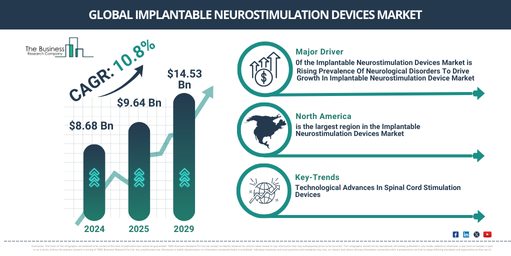
    The market for implantable neurostimulation devices has seen substantial growth recently. The market value is projected to increase from $8.68 billion in 2024 to $9.64 billion in 2025, representing a compound annual growth rate (CAGR) of 11.1%. This significant growth in the past can be linked to a rise in the demand for non-drug treatments, an increase in the preference for minimally invasive procedures, an expanding elderly population, a growing array of psychiatric disorders, and a heightened instance of chronic diseases.

    What Is the Projected Market Size of the Implantable Neurostimulation Devices Market?

    Expectations are high for a swift expansion in the implantable neurostimulation devices market within the coming years. Forecasts predict an upswing to $14.53 billion by 2029, indicative of a compound annual growth rate (CAGR) of 10.8%. Factors contributing to this projected growth during the forecast period are the increasing occurrence of neurological disorders, a surge in lifestyle diseases, escalating awareness, an upward trend in spinal cord injuries, and augmented healthcare expenditure. Some significant trends anticipated during the forecast period include the incorporation of sensing technology, progression in neurostimulation technologies, highly evolved product offerings, the inclusion of closed-loop systems, and the integration of wireless technology.

    Download The Free Sample Report Here:

    https://www.thebusinessresearchcompany.com/sample.aspx?id=19520&type=smp

    Who are the Major Competitors in the Implantable Neurostimulation Devices Market Outlook?

    Major companies operating in the implantable neurostimulation devices market are Abbott Laboratories, Medtronic PLC, Boston Scientific Corporation, Dignity Health, St. Jude Medical LLC, LivaNova PLC, Nevro Corp., Axonics Inc., NeuroPace Inc., Bioness Inc., Saluda Medical Pty Ltd., SceneRay Co. Ltd., NeuroMetrix Inc., CURE Epilepsy, Synapse Biomedical Inc., NeuroSigma Inc., Nuvectra Corporation, MicroTransponder Inc., Pain Management NYC, Curonix LLC

    What Is Fueling Growth in the Implantable Neurostimulation Devices Market?

    The growth of the implantable neurostimulation device market is set to be driven by the increasing incidence of neurological disorders. These disorders, which can impact the structure or function of the nervous system, lead to a range of symptoms, including paralysis, seizures, and cognitive impairments. Greater detection rates of neurological disorders are being attributed to a higher exposure to risk factors such as high blood pressure, developmental anomalies, and trauma or injury. When other treatments prove insufficient or ineffective, implantable neurostimulation devices are used to moderate nerve activity and ease symptoms associated with neurological disorders. For instance, data from the Alzheimer’s Association, a non-profit health organization based in the US, suggests that around 6.9 million American seniors aged 65 and older are living with Alzheimer’s disease in 2024. Furthermore, 73% of this figure represents individuals aged 75 or older. This statistic is predicted to rise to 12.7 million by 2050. Hence, the increasing incidence of neurological disorders is expected to be a driving factor for the implantable neurostimulation device market.

    Request For A Customized Report:

    https://www.thebusinessresearchcompany.com/customise?id=19520&type=smp

    Which Implantable Neurostimulation Devices Market Segments Are Growing the Fastest?

    The implantable neurostimulation devicesmarket covered in this report is segmented –

    1) By Type: Spinal Cord Stimulation (SCS), Gastric Electric Stimulation (GES), Deep Brain Stimulation (DBS), Sacral Nerve Stimulation (SNS), Vagus Nerve Stimulation (VNS), Other Types

    2) By Application: Pain Management, Parkinson’s Disease, Urinary And Fecal Incontinence, Epilepsy, Gastroparesis, Other Applications

    3) By End-User: Hospitals, Clinics, Ambulatory Surgical Centers

    Subsegments:

    1) By Spinal Cord Stimulation (SCS): Rechargeable SCS Devices, Non-Rechargeable SCS Devices

    2) By Gastric Electric Stimulation (GES): Implantable Gastric Stimulators, Adjustable Gastric Stimulators

    3) By Deep Brain Stimulation (DBS): DBS Devices for Movement Disorders, DBS Devices for Psychiatric Disorders

    4) By Sacral Nerve Stimulation (SNS): SNS Devices for Urinary Incontinence, SNS Devices for Fecal Incontinence

    5) By Vagus Nerve Stimulation (VNS): VNS Devices for Epilepsy, VNS Devices for Depression

    6) By Other Types: Peripheral Nerve Stimulation (PNS), Cortical Stimulation Devices, Novel Neurostimulation Technologies

    Which Industry Trends Are Shaping the Future of the Implantable Neurostimulation Devices Market?

    Leading firms in the implantable neurostimulation devices market are striving to produce highly innovative products like spinal cord stimulation (SCS) systems to mitigate chronic pain. SCS systems are medical devices that employ electric impulses to control nerve activity in the spinal cord, which can alleviate persistent discomfort and enhance patients’ quality of life when other methods have failed. For example, in December 2022, U.S.-based medical device firm, Abbott, secured approval from the U.S. Food and Drug Administration (FDA) for its Eterna spinal cord stimulation (SCS) system. The Eterna SCS is currently the smallest implantable and rechargeable spinal cord stimulator in the market, designed for utmost daily ease. It incorporates Abbott’s unique BurstDR stimulation technology, believed to replicate natural brain firing sequences for enhanced pain relief and preferred by 87% of users over traditional tingling stimulation methods. With the fewest recharging necessities—requiring as little as five recharges per year due to Xtend energy technology, Eterna ensures ease of use. It is compatible with full-body MRI scans thanks to TotalScan technology and can adjust to future technological developments without the need for replacement. Additionally, Abbott’s integration of a mobile app allows for live monitoring of battery life and charging status on iPhone devices.

    Access The Full Report Here:

    https://www.thebusinessresearchcompany.com/report/implantable-neurostimulation-devices-global-market-report

    Which Countries Are Leading the Implantable Neurostimulation Devices Market?

    North America was the largest region in the implantable neurostimulation devices market in 2024. Asia-Pacific is expected to be the fastest-growing region in the forecast period. The regions covered in the implantable neurostimulation devices market report are Asia-Pacific, Western Europe, Eastern Europe, North America, South America, Middle East, Africa.

    Purchase The Full Report Today:

    https://www.thebusinessresearchcompany.com/purchaseoptions.aspx?id=19520

    This Report Delivers Insight On:

    1. How big is the implantable neurostimulation devices market, and how is it changing globally?

    2. Who are the major companies in the implantable neurostimulation devices market, and how are they performing?

    3. What are the key opportunities and risks in the implantable neurostimulation devices market right now?

    4. Which products or customer segments are growing the most in the implantable neurostimulation devices market?

    5. What factors are helping or slowing down the growth of the implantable neurostimulation devices market?

    About The Business Research Company:

    With over 15000+ reports from 27 industries covering 60+ geographies, The Business Research Company has built a reputation for offering comprehensive, data-rich research and insights. Armed with 1,500,000 datasets, the optimistic contribution of in-depth secondary research, and unique insights from industry leaders, you can get the information you need to stay ahead in the game.

    Get in touch with us:

    The Business Research Company: https://www.thebusinessresearchcompany.com/

    Americas +1 310-496-7795

    Asia +44 2071930708

    Europe +44 7882 955267

    Email us at info@tbrc.info

    Follow us on:

    LinkedIn: https://in.linkedin.com/company/the-business-research-company

    YouTube: https://www.youtube.com/channel/UC24_fI0rV8cR5DxlCpgmyFQ

    Global Market Model: https://www.thebusinessresearchcompany.com/global-market-model
  • Admelog Market Trends Report 2025 – For Business Development and Strategy Teams

    Admelog Market Trends Report 2025 – For Business Development and Strategy Teams

    Claim your 30% discount on Global Market Reports with code ONLINE30. Limited time only.

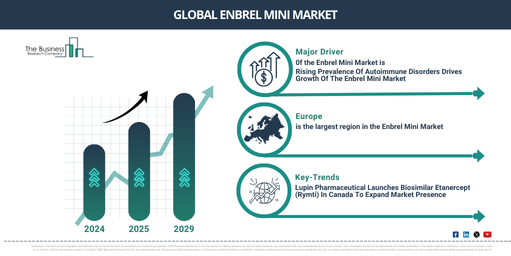
    #How Has the Enbrel Mini Market Growth Performance Trended Historically, And What Lies Ahead?

    The market size of enbrel mini has experienced an XX (HCAGR) surge in recent times. This market is slated to escalate from a value of $XX million in 2024, to approximately $XX million in 2025, growing at a compound annual growth rate (CAGR) of XX%. Contributing factors for this expansion during the historical period include an upswing in the incidence of autoimmune diseases, an escalating prevalence of chronic and lifestyle-associated disorders, heightened production of coronavirus vaccines, improved patient safety measures, enhanced accessibility to healthcare, alongside a greater focus on personalized medicine.

    What Is the Forecast for the Enbrel Mini Market Size Through 2029?

    The forecast for the enbrel mini market size suggests notable growth, anticipated to experience an XX (FCAGR) over the next several years. The market is predicted to expand to a value of $XX million by 2029 with a compound annual growth rate (CAGR) of XX%. This escalation throughout the forecast period can be linked to an increasing need for affordable and effective healthcare provisions, an upsurge in chronic diseases, burgeoning popularity of biosimilar biologics, and a heightened rate of autoimmune disorders. Additionally, a growing demand for biological medications and an increase in the requirement for drugs are also contributing factors. Key market trends in this predicative period include advancements in biomanufacturing technologies, the introduction of innovative treatments, technological progression, new product releases, and novel therapeutic procedures.

    Download The Free Sample Report Here:

    https://www.thebusinessresearchcompany.com/sample.aspx?id=19900&type=smp

    What are the Key Market Players in Enbrel Mini Market and How They’re Evolving?

    Major companies operating in the enbrel mini market include Amgen Inc.

    What Are the Primary Growth Drivers in the Enbrel Mini Market?

    The rise in autoimmune disorders, diseases where the immune system unintentionally attacks its cells, tissues, or organs, is anticipated to spur the enbrel mini market’s growth. These disorders’ increased prevalence can be attributed to genetic elements, environmental factors, and changes in lifestyle, such as improper eating habits and heightened stress levels. Enbrel Mini, a subcutaneous injection, treats autoimmune diseases by targeting tumor necrosis factor (TNF), a protein essential in inflammation processes. It aids in managing ailments like rheumatoid arthritis, psoriatic arthritis, and ankylosing spondylitis. For instance, the Australian Institute of Health and Welfare, a governmental organization based in Australia, reported in June 2024 that in 2021-22, rheumatoid arthritis hospitalizations reached 10,000, a 25% spike from the previous year’s 8,000 – translating into a rate of 39 hospitalizations per 100,000 population. Consequently, the mounting incidence of autoimmune disorders is fuelling the expansion of the enbrel mini market.

    Request For A Customized Report:

    https://www.thebusinessresearchcompany.com/customise?id=19900&type=smp

    What Are the Leading Segments in the Global Enbrel Mini Industry?

    The enbrel minimarket covered in this report is segmented –

    1) By Product: Brands Drugs; Biosimilar Drugs

    2) By Distribution Channel: Hospital Pharmacies; Retail Pharmacies; Online Pharmacies; Other Distribution Channels

    3) By Application: Rheumatoid Arthritis; Psoriatic Arthritis; Ankylosing Spondylitis; Juvenile Idiopathic Arthritis

    What Are the Key Market Trends in the Enbrel Mini Industry?

    A major shift in the enbrel mini market is the journey towards creating groundbreaking solutions like biosimilar etanercept, to increase their market presence and offer more economical treatment choices. Biosimilar etanercept is a biological drug similar in nature to the original etanercept (Enbrel), primarily used for treating autoimmune conditions such as rheumatoid arthritis, psoriasis, and ankylosing spondylitis. For instance, in May 2024, Lupin Pharmaceutical Limited, an India-based pharmaceutical firm, in collaboration with Sandoz Group AG, a Swiss pharmaceutical company, introduced their etanercept biosimilar product, Rymti, in Canada. This marked Lupin’s inaugural venture into the Canadian biosimilar market, with the approval of Health Canada, a Canadian health organization. Rymti is recommended for numerous autoimmune diseases, including rheumatoid arthritis and psoriasis, and is offered as an injectable solution in pre-loaded pens and syringes. This launch is aimed at providing an affordable substitute to the reference product, Enbrel, increasing patient’s access to efficient treatments and highlighting Lupin’s dedication to broadening its biosimilar range worldwide.

    Access The Full Report Here:

    https://www.thebusinessresearchcompany.com/report/enbrel-mini-global-market-report

    What Is the Regional Outlook for the Enbrel Mini Market?

    Europe was the largest region in the enbrel mini market in 2024. Asia-Pacific is expected to be the fastest-growing region in the forecast period. The regions covered in the enbrel mini market report are Asia-Pacific, Western Europe, Eastern Europe, North America, South America, Middle East, Africa.

    Purchase The Full Report Today:

    https://www.thebusinessresearchcompany.com/purchaseoptions.aspx?id=19900

    This Report Delivers Insight On:

    1. How big is the enbrel mini market, and how is it changing globally?

    2. Who are the major companies in the enbrel mini market, and how are they performing?

    3. What are the key opportunities and risks in the enbrel mini market right now?

    4. Which products or customer segments are growing the most in the enbrel mini market?

    5. What factors are helping or slowing down the growth of the enbrel mini market?

    About The Business Research Company:

    With over 15000+ reports from 27 industries covering 60+ geographies, The Business Research Company has built a reputation for offering comprehensive, data-rich research and insights. Armed with 1,500,000 datasets, the optimistic contribution of in-depth secondary research, and unique insights from industry leaders, you can get the information you need to stay ahead in the game.

    Get in touch with us:

    The Business Research Company: https://www.thebusinessresearchcompany.com/

    Americas +1 310-496-7795

    Asia +44 2071930708

    Europe +44 7882 955267

    Email us at info@tbrc.info

    Follow us on:

    LinkedIn: https://in.linkedin.com/company/the-business-research-company

    YouTube: https://www.youtube.com/channel/UC24_fI0rV8cR5DxlCpgmyFQ

    Global Market Model: https://www.thebusinessresearchcompany.com/global-market-model
  • Implantable Cardiac Devices Forecast Report – Designed for Decision Makers and Product Teams

    Implantable Cardiac Devices Forecast Report – Designed for Decision Makers and Product Teams

    Claim your 30% discount on Global Market Reports with code ONLINE30. Limited time only.

    What Is the Estimated Market Size of the Implantable Cardiac Devices Market In 2029?

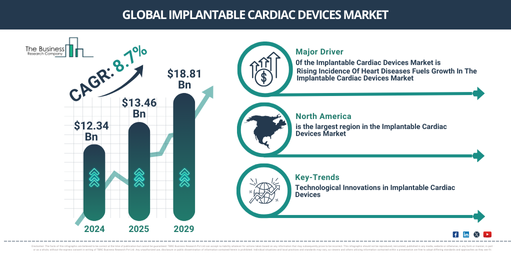
    The market for implantable cardiac devices has experienced substantial growth in recent years. The sector is set to expand from a value of $12.34 billion in 2024 to $13.46 billion in 2025, reflecting a compound annual growth rate (CAGR) of 9.1%. This notable rise during the historical period can be traced back to factors such as advancements in medical technology, increased incidences of cardiovascular diseases, augmented elderly population, enhancements in the dependability and lifespan of devices, escalated awareness, and prompt detection of cardiac conditions.

    What Growth Rate Is Forecasted for the Implantable Cardiac Devices Market by 2029?

    Expectations are high for the implantable cardiac devices market, with a robust expansion in sight for the coming years. By 2029, it’s predicted the market will hit $18.81 billion, with a compound annual growth rate (CAGR) of 8.7%. This projected growth throughout the forecast period can be traced back to various factors such as technological progression in device functionality, a rise in demand for minimally invasive procedures, a growing elderly population, escalating healthcare costs, and the development of healthcare infrastructure in up-and-coming markets. Key trends during this forecast period are predicted to include the integration of digital health and remote monitoring, the creation of technologically advanced devices with enhanced features, a surge in customized cardiac solutions, a focus on cost-effectiveness and value in healthcare, a growing interest in preventative cardiology, and the emphasis on early intervention.

    Download The Free Sample Report Here:

    https://www.thebusinessresearchcompany.com/sample.aspx?id=19097&type=smp

    Which Key Companies Are Shaping the Future of the Implantable Cardiac Devices Market?

    Major companies operating in the implantable cardiac devices market are Johnson & Johnson, Abbott Laboratories, Medtronic plc, Koninklijke Philips N.V., Stryker Corporation, Boston Scientific Corporation, B. Braun Melsungen AG, Edwards Lifesciences Corporation, Biotronik SE & Co. KG, Zoll Medical Corporation, Nihon Kohden Corporation, LivaNova plc, Lepu Medical Technology, MicroPort Scientific Corporation, AtriCure Inc., LifeTech Scientific Corporation, Berlin Heart GmbH, EBR Systems Inc., Defibtech LLC, CVRx Inc., Progetti Srl, Endotronix Inc., Jarvik Heart Inc., Xeltis AG, Carmat SA, Windmill Cardiovascular Systems Inc

    Which Factors Are Driving Demand in the Implantable Cardiac Devices Industry?

    The growing number of heart disease cases is predicted to fuel the expansion of the market for implantable cardiac devices. The escalation in heart diseases can be traced back to the rising occurrence of risks like poor diet, inactive lifestyle, obesity, and persistent conditions such as hypertension and diabetes. Moreover, elderly populations and increasing stress levels also contribute to the amplified incidence of cardiovascular disorders. Implantable cardiac devices are employed to manage and treat conditions like heart failure, arrhythmias, and coronary artery ailments. This escalating requirement promotes innovation and investment in creating new and better cardiac devices to cater to the burgeoning patient population and enhance treatment results. For example, as per the Singapore Heart Foundation (SHF), a non-profit organization based in Singapore, ischemic heart diseases caused 5,302 deaths in May 2024, showing a minor rise from 5,290 deaths in 2022. Hence, the growing incidence of heart diseases is fueling the growth of the implantable cardiac devices market.

    Request For A Customized Report:

    https://www.thebusinessresearchcompany.com/customise?id=19097&type=smp

    How Is the Implantable Cardiac Devices Market Segmented by Several Divisions?

    The implantable cardiac devicesmarket covered in this report is segmented –

    1) By Type: Pacemaker, Implantable Cardioverter Defibrillator (ICD), Biventricular Implantable Cardioverter Defibrillator (BI-V ICD)

    2) By Application: Bradycardia, Tachycardia, Heart Failure, Other Applications

    3) By End User: Hospitals, Specialty Clinics, Other End Users

    Subsegments:

    1) By Pacemaker: Single-Chamber Pacemakers, Dual-Chamber Pacemakers, Rate-Responsive Pacemakers

    2) By Implantable Cardioverter Defibrillator (ICD): Transvenous ICDs, Subcutaneous ICDs, Wearable Cardioverter Defibrillators

    3) By Biventricular Implantable Cardioverter Defibrillator (BI-V ICD): Standard BI-V ICDs, Advanced BI-V ICDs with Cardiac Resynchronization Therapy (CRT)

    What are the Emerging Market Trends Driving the Growth of the Implantable Cardiac Devices Industry?

    Leading companies in the implantable cardiac devices market strive to increase compatibility with diagnostic instruments like AutoMRI to prolong the device lifespan and enhance patient safety. The AutoMRI feature in implantable cardiac defibrillators self-regulates the device settings, providing safe operation during MRI scans, improving patient care, and allowing the usage of sophisticated imaging technology. For example, in October 2023, MicroPort CRM, a medical device company based in France, introduced the ULYS implantable cardioverter defibrillator (ICD) and INVICTA defibrillation leads in Japan. These tools offer cutting-edge technology with minimal current usage for increased device lifespan and MRI compatibility. The ULYS ICD includes the PARAD+ arrhythmia discrimination algorithm and AutoMRI functionality, while the INVICTA lead offers precise pacing and defibrillation treatment with a 100% successful implantation rate and 97.4% rate free of complications during clinical trials.

    Access The Full Report Here:

    https://www.thebusinessresearchcompany.com/report/implantable-cardiac-devices-global-market-report

    Which Regions Are Driving Growth in the Implantable Cardiac Devices Market?

    North America was the largest region in the implantable cardiac devices market in 2024. Asia-Pacific is expected to be the fastest-growing region in the forecast period. The regions covered in the implantable cardiac devices market report are Asia-Pacific, Western Europe, Eastern Europe, North America, South America, Middle East, Africa.

    Purchase The Full Report Today:

    https://www.thebusinessresearchcompany.com/purchaseoptions.aspx?id=19097

    This Report Delivers Insight On:

    1. How big is the implantable cardiac devices market, and how is it changing globally?

    2. Who are the major companies in the implantable cardiac devices market, and how are they performing?

    3. What are the key opportunities and risks in the implantable cardiac devices market right now?

    4. Which products or customer segments are growing the most in the implantable cardiac devices market?

    5. What factors are helping or slowing down the growth of the implantable cardiac devices market?

    About The Business Research Company:

    With over 15000+ reports from 27 industries covering 60+ geographies, The Business Research Company has built a reputation for offering comprehensive, data-rich research and insights. Armed with 1,500,000 datasets, the optimistic contribution of in-depth secondary research, and unique insights from industry leaders, you can get the information you need to stay ahead in the game.

    Get in touch with us:

    The Business Research Company: https://www.thebusinessresearchcompany.com/

    Americas +1 310-496-7795

    Asia +44 2071930708

    Europe +44 7882 955267

    Email us at info@tbrc.info

    Follow us on:

    LinkedIn: https://in.linkedin.com/company/the-business-research-company

    YouTube: https://www.youtube.com/channel/UC24_fI0rV8cR5DxlCpgmyFQ

    Global Market Model: https://www.thebusinessresearchcompany.com/global-market-model
  • Hysteroscopy Instruments Market Outlook 2025 – Insights for Executive and Strategic Planning

    Hysteroscopy Instruments Market Outlook 2025 – Insights for Executive and Strategic Planning

    Claim your 30% discount on Global Market Reports with code ONLINE30. Limited time only.

    How Fast Is The Hysteroscopy Instruments Market Expected to Grow Between 2025 And 2029?

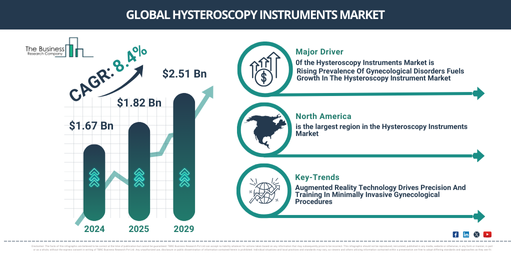
    In recent years, there has been substantial growth in the hysteroscopy instruments market. The market, which was valued at $1.67 billion in 2024, is projected to rise to $1.82 billion in 2025, reflecting a compound annual growth rate (CAGR) of 8.7%. This historical growth pattern is primarily attributable to increasing cases of gynecological conditions, advancements in hysteroscope design technology, enhanced awareness of early detection methods and minimally invasive treatments. Improvement in healthcare infrastructure across emerging regions, government and insurance companies’ favorable reimbursement policies, and a high rate of infertility and reproductive health issues have also contributed to this growth.

    What Growth Rate Is Anticipated for the Hysteroscopy Instruments Market in the Coming Years?

    Strong expansion is anticipated in the hysteroscopy instruments market over the upcoming years, with its value projected to reach $2.51 billion in 2029, marking a compound annual growth rate (CAGR) of 8.4%. This growth throughout the forecasted period could be attributed to factors such as the rising preference for minimally invasive techniques, a heightened demand for diagnostic and operative hysteroscopy procedures, increased spending on healthcare in developing nations, and a surge in gynecological procedures. The forecast period is expected to witness some significant trends, including the shift towards disposable hysteroscopy tools, an increase in office-based hysteroscopy procedures, evolving imaging and visualization technologies, establishment of more ambulatory surgery centers for hysteroscopy procedures, and a focus on early diagnosis and preventive healthcare.

    Download The Free Sample Report Here:

    https://www.thebusinessresearchcompany.com/sample.aspx?id=19518&type=smp

    Who Are the Leading Companies in the Hysteroscopy Instruments Market?

    Major companies operating in the hysteroscopy instruments market are Medtronic Plc, Fujifilm Holdings Corporation, Stryker Inc., Boston Scientific Corporation, B. Braun Melsungen AG, Olympus Corporation, Smith & Nephew Plc, Ethicon Inc., Hologic Inc., STERIS plc, CooperSurgical Inc., Teleflex Incorporated, Karl Storz GmbH & Co. KG, ConMed Corporation, Pentax of America Inc., Aesculap Inc., Lumenis Ltd., Richard Wolf GmbH, CMR Surgical, AtriCure Inc., Gynesonics Inc., Invuity Inc., MedGyn Products Inc., DYSIS Medical, Ameda Inc., UroViu Corp.

    What Are the Key Drivers of the Hysteroscopy Instruments Market?

    The escalating instances of gynecological conditions are anticipated to stimulate the expansion of the hysteroscopy instrument market. Such conditions, impacting the female reproductive system including the uterus, ovaries, fallopian tubes, and vagina, are seeing a rise. This upswing is attributed to lifestyle alterations, elevated stress levels, and postponed childbearing which lead to hormonal imbalance and issues in reproductive health. Additionally, heightened awareness and improved diagnostics are resulting in better detection, thereby shedding light on more cases. Hysteroscopy tools are employed in the handling of gynecological disorders to identify and address issues such as uterine fibroids, polyps, odd bleeding, and endometrial hyperplasia by facilitating direct visualization and action within the uterine cavity. To illustrate, in January 2024, the American Cancer Society, a US-based non-profit cancer advocacy group, reported an increase in female genital cancer cases from 114,810 in 2023 to 116,930 in 2024, indicating a growth of 1.85%. Thus, the climbing prevalence of gynecological disorders is fuelling the expansion of the hysteroscopy instrument market.

    Request For A Customized Report:

    https://www.thebusinessresearchcompany.com/customise?id=19518&type=smp

    What Are the Key Market Segments in the Hysteroscopy Instruments Industry?

    The hysteroscopy instrumentsmarket covered in this report is segmented –

    1) By Type: Hysteroscopes, Resectoscopes, Fluid Management Systems, Handheld Instruments, Hysterosheaths, Hysteroscopic Tissue Removal Systems

    2) By Usability: Reusable, Disposable

    3) By Application: Diagnostic Hysteroscopy, Operative Hysteroscopy

    4) By End-User: Hospitals, Ambulatory Surgery Centers, Other End-Users

    Subsegments:

    1) By Hysteroscopes: Rigid Hysteroscopes, Flexible Hysteroscopes

    2) By Resectoscopes: Monopolar Resectoscopes, Bipolar Resectoscopes

    3) By Fluid Management Systems: Continuous Flow Systems, Pressure Regulating Systems

    4) By Handheld Instruments: Scissors, Forceps, Graspers

    5) By Hysterosheaths: Disposable Hysterosheaths, Reusable Hysterosheaths

    6) By Hysteroscopic Tissue Removal Systems: Morcellators, Thermal Ablation Systems, Mechanical Tissue Removal Devices

    What Are the Latest Trends in the Hysteroscopy Instruments Market?

    Leading corporations in the hysteroscopy instrument market are directing their focus towards simulation technologies like augmented reality for heightened accuracy, better patient results, and the optimization of minimally invasive techniques. Augmented reality used in hysteroscopes improves visualization and instruction by overlaying digital data on real-time images inside the uterus, enhancing precision and learning interaction. For example, Inovus Medical, an American company producing surgical training technologies, in January 2022 introduced the HystAR. This is a high-fidelity hysteroscopy simulator that merges augmented reality technology with cloud-based education to provide realistic, scalable skill training for hysteroscopy procedures. The simulator improves surgical instruction by enabling performance monitoring, distant faculty feedback, and adaptability with various hysteroscopic instruments.

    Access The Full Report Here:

    https://www.thebusinessresearchcompany.com/report/hysteroscopy-instruments-global-market-report

    What Are the Key Regional Markets in the Hysteroscopy Instruments Industry?

    North America was the largest region in the hysteroscopy instruments market in 2024. Asia-Pacific is expected to be the fastest-growing region in the forecast period. The regions covered in the hysteroscopy instruments market report are Asia-Pacific, Western Europe, Eastern Europe, North America, South America, Middle East, Africa.

    Purchase The Full Report Today:

    https://www.thebusinessresearchcompany.com/purchaseoptions.aspx?id=19518

    This Report Delivers Insight On:

    1. How big is the hysteroscopy instruments market, and how is it changing globally?

    2. Who are the major companies in the hysteroscopy instruments market, and how are they performing?

    3. What are the key opportunities and risks in the hysteroscopy instruments market right now?

    4. Which products or customer segments are growing the most in the hysteroscopy instruments market?

    5. What factors are helping or slowing down the growth of the hysteroscopy instruments market?

    About The Business Research Company:

    With over 15000+ reports from 27 industries covering 60+ geographies, The Business Research Company has built a reputation for offering comprehensive, data-rich research and insights. Armed with 1,500,000 datasets, the optimistic contribution of in-depth secondary research, and unique insights from industry leaders, you can get the information you need to stay ahead in the game.

    Get in touch with us:

    The Business Research Company: https://www.thebusinessresearchcompany.com/

    Americas +1 310-496-7795

    Asia +44 2071930708

    Europe +44 7882 955267

    Email us at info@tbrc.info

    Follow us on:

    LinkedIn: https://in.linkedin.com/company/the-business-research-company

    YouTube: https://www.youtube.com/channel/UC24_fI0rV8cR5DxlCpgmyFQ

    Global Market Model: https://www.thebusinessresearchcompany.com/global-market-model
  • Hyperuricemia Drugs Market Projected at $7.07 Billion by 2029 | Strategic Insights and Forecast Data

    Hyperuricemia Drugs Market Projected at $7.07 Billion by 2029 | Strategic Insights and Forecast Data

    Claim your 30% discount on Global Market Reports with code ONLINE30. Limited time only.

    How Has The Hyperuricemia Drugs Market Size Shifted, And What Is the Outlook Through 2034?

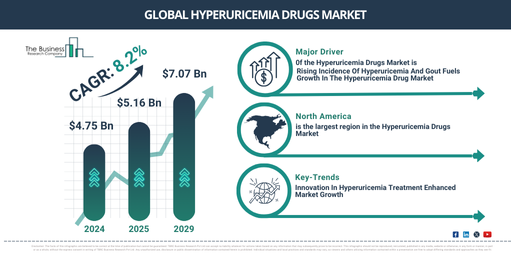
    The market size for drugs addressing hyperuricemia has experienced robust growth in the past few years. Its size is predicted to surge from $4.75 billion in 2024 to $5.16 billion in 2025, boasting a Compound Annual Growth Rate (CAGR) of 8.5%. The historic growth of this market can be linked to the escalating incidence of gout, restricted therapeutic choices, an expanding aging population, inactive lifestyles, and an increased public consciousness about hyperuricemia.

    How Much Will the Hyperuricemia Drugs Market Be Worth in 2029?

    In the coming years, the market for hyperuricemia drugs is predicted to witness robust expansion. It is projected to reach a worth of $7.07 billion in 2029, with a compound annual growth rate (CAGR) of 8.2%. The expansion during the projection period can be associated with the escalating occurrences of chronic kidney diseases, heightened focus on preliminary diagnosis, amplified demand for customized medicine, creation of innovative drug formulations, and growth in healthcare spending. Significant trends during the future period encompass an increased emphasis on precision medicine, a rise in the acceptance of combination therapies, progression of non-invasive treatments, a growing stress on drug safety and effectiveness, and strides in pharmacogenomics.

    Download The Free Sample Report Here:

    https://www.thebusinessresearchcompany.com/sample.aspx?id=19517&type=smp

    Which is the Largest Company in the Hyperuricemia Drugs Market?

    Major companies operating in the hyperuricemia drugs market are Pfizer Inc., Merck & Co., Bayer AG, Sanofi SA, Myers Squibb Bristol Company, AstraZeneca plc, Novartis AG, GlaxoSmithKline PLC, Roche Holdings Inc., Amgen Inc., Boehringer Ingelheim International GmbH, Teva Pharmaceuticals, Regeneron Pharmaceuticals Inc., Teijin Pharma Limited, Sun Pharmaceutical Industries Ltd., Dr. Reddy’s Laboratories Ltd., Hikma Pharmaceuticals PLC, Amneal Pharmaceuticals Inc., Glenmark Pharmaceuticals Ltd., Kissei Pharmaceutical Co. Ltd., Himalaya Wellness Company, Fuji Yakuhin Co. Ltd.

    What Are the Main Market Drivers in the Hyperuricemia Drugs Industry?

    The escalating occurrence of hyperuricemia and gout is anticipated to boost the progress of the hyperuricemia drug market. Hyperuricemia, characterized by a high concentration of uric acid in the bloodstream, could manifest gout, a painful arthritis variant resulting from urate crystals accumulating in the joints. Contributing factors to hyperuricemia and gout include genetic predisposition, dietary trends such as high purine ingestion, obesity, kidney functionality, lifestyle choices such as alcohol intake and dehydration, specific medications, and chronic illness like hypertension and diabetes. Medications for hyperuricemia play a critical role in maintaining uric acid balance, which prevents the onset and exacerbation of hyperuricemia and gout by curbing uric acid accumulation and easing related symptoms. For instance, data from The Lancet, a reputable UK-based general medical periodical, indicated in July 2024 that gout was 3.26 times more common in men than women in 2020 and tended to increase with age, projecting roughly 95.8 million prevalent cases by 2050. Consequently, the escalating occurrence of hyperuricemia and gout is stimulating growth in the hyperuricemia drug market.

    Request For A Customized Report:

    https://www.thebusinessresearchcompany.com/customise?id=19517&type=smp

    How Is the Hyperuricemia Drugs Market Segments Structured?

    The hyperuricemia drugsmarket covered in this report is segmented –

    1) By Type: Asymptomatic Hyperuricemia, Symptomatic Hyperuricemia, Other Types

    2) By Drugs: Nonsteroidal Anti-Inflammatory Drugs, Xanthine Oxidase Inhibitors, Selective Uric Acid Reabsorption Inhibitor (SURI), Uricosuric Agents, Other Drugs

    3) By Diseases: Gout, Kidney Stone, Other Diseases

    4) By End-User: Hospitals, Homecare, Specialty Clinics, Other End-Users

    Subsegments:

    1) By Asymptomatic Hyperuricemia: Uric Acid Lowering Agents, Lifestyle Modification Supplements

    2) By Symptomatic Hyperuricemia: Anti-Inflammatory Drugs, Uric Acid Inhibitors, Corticosteroids

    3) By Other Types: Combination Therapy, Supportive Care Medications, Dietary Supplements

    What Strategic Trends Are Transforming the Hyperuricemia Drugs Market?

    Key players in the hyperuricemia drug market, such as Lupin, are focusing on the development of novel products, including therapeutic equivalent generic drugs, to offer more affordable alternatives to patients in need of gout treatment. Therapeutic equivalent generic versions, defined as drugs offering the same active ingredient, dosage form, clinical effect, and safety profile as their branded counterparts, are gaining traction. For instance, in January 2024, Lupin, a prominent Indian pharmaceutical firm, was granted approval by the US health regulator for Febuxostat Tablets (40 mg and 80 mg) and Varenicline Tablets (0.5 mg and 1 mg). These generic drugs aim to offer cost-effective solutions for patients needing hyperuricemia treatment (Febuxostat) and smoking cessation aid (Varenicline). Lupin’s goal is to enhance accessibility to crucial medicines, gain a portion of the US pharmaceutical market, and assist patients with more affordable health care solutions.

    Access The Full Report Here:

    https://www.thebusinessresearchcompany.com/report/hyperuricemia-drugs-global-market-report

    Which Global Regions Offer the Highest Growth in the Hyperuricemia Drugs Market?

    North America was the largest region in the hyperuricemia drugs market in 2024. The regions covered in the hyperuricemia drugs market report are Asia-Pacific, Western Europe, Eastern Europe, North America, South America, Middle East, Africa.

    Purchase The Full Report Today:

    https://www.thebusinessresearchcompany.com/purchaseoptions.aspx?id=19517

    This Report Delivers Insight On:

    1. How big is the hyperuricemia drugs market, and how is it changing globally?

    2. Who are the major companies in the hyperuricemia drugs market, and how are they performing?

    3. What are the key opportunities and risks in the hyperuricemia drugs market right now?

    4. Which products or customer segments are growing the most in the hyperuricemia drugs market?

    5. What factors are helping or slowing down the growth of the hyperuricemia drugs market?

    About The Business Research Company:

    With over 15000+ reports from 27 industries covering 60+ geographies, The Business Research Company has built a reputation for offering comprehensive, data-rich research and insights. Armed with 1,500,000 datasets, the optimistic contribution of in-depth secondary research, and unique insights from industry leaders, you can get the information you need to stay ahead in the game.

    Get in touch with us:

    The Business Research Company: https://www.thebusinessresearchcompany.com/

    Americas +1 310-496-7795

    Asia +44 2071930708

    Europe +44 7882 955267

    Email us at info@tbrc.info

    Follow us on:

    LinkedIn: https://in.linkedin.com/company/the-business-research-company

    YouTube: https://www.youtube.com/channel/UC24_fI0rV8cR5DxlCpgmyFQ

    Global Market Model: https://www.thebusinessresearchcompany.com/global-market-model
  • Hydrophilic Angiographic Catheters Industry Growth Expected to Reach $17.88 Billion by 2029 at a CAGR of 7.2% | Segmentation and Growth Opportunities

    Hydrophilic Angiographic Catheters Industry Growth Expected to Reach $17.88 Billion by 2029 at a CAGR of 7.2% | Segmentation and Growth Opportunities

    Claim your 30% discount on Global Market Reports with code ONLINE30. Limited time only.

    How Has the Hydrophilic Angiographic Catheters Market Growth Performance Trended Historically, And What Lies Ahead?

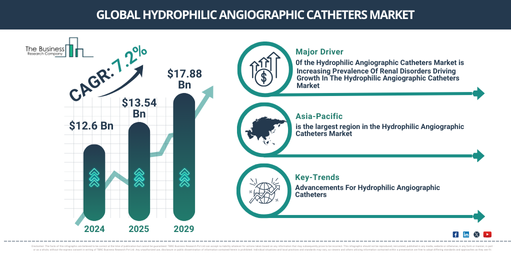
    In recent times, the market size for hydrophilic angiographic catheters has seen significant growth. The market is expected to expand from $12.6 billion in 2024 to $13.54 billion in 2025, reflecting a compounded annual growth rate (CAGR) of 7.5%. A surge in cases of cardiovascular diseases, peripheral vascular diseases alongside a rise in diagnostic and interventional procedures have contributed to this historic growth period. Furthermore, the increasing awareness towards early diagnosis and an uptick in healthcare spending play key roles in this market progression.

    What Is the Forecast for the Hydrophilic Angiographic Catheters Market Size Through 2029?

    Expectations are high for robust expansion in the hydrophilic angiographic catheters market over the upcoming years. The market is projected to reach a value of $17.88 billion by 2029, with a compound annual growth rate (CAGR) of 7.2%. This significant rise for the forecast period can be linked to several factors, such as an increasing elderly population, a burgeoning preference for less invasive medical procedures, a surge in diabetes cases, and amplified cardiovascular research funding. Emerging trends for the forecast period encompass technological progress, market expansion into developing regions, advancements in imaging technology, increased application in oncology, and an emphasis on minimally invasive procedures.

    Download The Free Sample Report Here:

    https://www.thebusinessresearchcompany.com/sample.aspx?id=19515&type=smp

    What are the Key Market Players in Hydrophilic Angiographic Catheters Market and How They’re Evolving?

    Major companies operating in the hydrophilic angiographic catheters market are Cardinal Health Inc., Abbott Laboratories, Medtronic plc, Koninklijke Philips N.V., Becton Dickinson and Company, Boston Scientific Corporation, B. Braun Melsungen AG, Terumo Corporation, Nipro Corporation, Cook Medical Inc., Teleflex Incorporated, BIOTRONIK SE & Co. KG, Lepu Medical Technology (Beijing) Co Ltd., Merit Medical Systems Inc., Cordis Corporation, MicroPort Scientific Corporation, Asahi Intecc Co Ltd., AngioDynamics Inc., Biosensors International Group Ltd., Alvimedica Medical Technologies, BrosMed Medical Co Ltd., iVascular SLU, Reva Medical Inc., Hexacath, Translumina Therapeutics LLP, Eurocor Tech GmbH, Invamed Group

    What Are the Primary Growth Drivers in the Hydrophilic Angiographic Catheters Market?

    The hydrophilic angiographic catheters market is poised for growth, propelled by the increasing occurrence of renal disorders. Renal disorders encompass a wide array of conditions affecting the kidneys’ functionality, including their ability to filter blood, expel waste, balance fluids and electrolytes, and regulate blood pressure. The growth in renal disorders is mainly due to the rising prevalence of risk factors such as diabetes, hypertension, and an aging population. Hydrophilic angiographic catheters are employed in managing renal disorders, providing accurate and smooth navigation during diagnostic and interventional procedures like renal artery angiography and stenting. For example, a report from Kidney Research UK, a non-profit organization from the UK, stated in June 2023 that approximately 7.2 million people, or over 10% of the population, are living with chronic kidney disease. Among them, 3.25 million are in the disease’s advanced stages, with an additional 3.9 million in the early stages. By 2033, the number of individuals affected by chronic kidney disease is expected to increase to 7.61 million. Consequently, the rise in the prevalence of renal disorders is fueling the growth of the hydrophilic angiographic catheters market.

    Request For A Customized Report:

    https://www.thebusinessresearchcompany.com/customise?id=19515&type=smp

    What Are the Leading Segments in the Global Hydrophilic Angiographic Catheters Industry?

    The hydrophilic angiographic cathetersmarket covered in this report is segmented –

    1) By Type: Selective Type Angiographic Catheters, Non-Selective Type Angiographic Catheters

    2) By Application: Heart Disease Treatment, Kidney Disease Treatment, Other Applications

    3) By End User: Hospitals, Diagnostic And Imaging Centers, Other End-Users

    Subsegments:

    1) By Selective Type Angiographic Catheters: Coronary Selective Catheters, Peripheral Selective Catheters, Neuro Selective Catheters

    2) By Non-Selective Type Angiographic Catheters: Non-Selective Coronary Catheters, Non-Selective Peripheral Catheters, Non-Selective Neuro Catheters

    What Are the Key Market Trends in the Hydrophilic Angiographic Catheters Industry?

    In an effort to remain competitive, leading players in the hydrophilic angiographic catheters market are prioritising the creation of innovative products, such as catheters featuring a variety of curve configurations. These specifically engineered medical devices are configured differently to navigate complex anatomical structures effectively. As an illustration, in January 2024, Cook Group Incorporated, a medical device firm based in the US, rolled out its Slip-Cath Beacon Tip hydrophilic selective catheter in the USA and Canada. This catheter, which is engineered for use in both vascular and non-vascular angiographic procedures, boasts more than 30 curve configurations and is packed in protective foil to ensure it maintains extended durability and a shelf life of three years. The catheter’s advanced technology improves its application during procedures, and it is designed to work flawlessly alongside vascular access sheaths, wire guides, and other treatment instruments.

    Access The Full Report Here:

    https://www.thebusinessresearchcompany.com/report/hydrophilic-angiographic-catheters-global-market-report

    What Is the Regional Outlook for the Hydrophilic Angiographic Catheters Market?

    Asia-Pacific was the largest region in the hydrophilic angiographic catheters market in 2024. The regions covered in the hydrophilic angiographic catheters market report are Asia-Pacific, Western Europe, Eastern Europe, North America, South America, Middle East, Africa.

    Purchase The Full Report Today:

    https://www.thebusinessresearchcompany.com/purchaseoptions.aspx?id=19515

    This Report Delivers Insight On:

    1. How big is the hydrophilic angiographic catheters market, and how is it changing globally?

    2. Who are the major companies in the hydrophilic angiographic catheters market, and how are they performing?

    3. What are the key opportunities and risks in the hydrophilic angiographic catheters market right now?

    4. Which products or customer segments are growing the most in the hydrophilic angiographic catheters market?

    5. What factors are helping or slowing down the growth of the hydrophilic angiographic catheters market?

    About The Business Research Company:

    With over 15000+ reports from 27 industries covering 60+ geographies, The Business Research Company has built a reputation for offering comprehensive, data-rich research and insights. Armed with 1,500,000 datasets, the optimistic contribution of in-depth secondary research, and unique insights from industry leaders, you can get the information you need to stay ahead in the game.

    Get in touch with us:

    The Business Research Company: https://www.thebusinessresearchcompany.com/

    Americas +1 310-496-7795

    Asia +44 2071930708

    Europe +44 7882 955267

    Email us at info@tbrc.info

    Follow us on:

    LinkedIn: https://in.linkedin.com/company/the-business-research-company

    YouTube: https://www.youtube.com/channel/UC24_fI0rV8cR5DxlCpgmyFQ

    Global Market Model: https://www.thebusinessresearchcompany.com/global-market-model
  • Market Analysis on Humalog (Insulin Lispro) Industry – Insights for Corporate Strategy and R&D

    Market Analysis on Humalog (Insulin Lispro) Industry – Insights for Corporate Strategy and R&D

    Claim your 30% discount on Global Market Reports with code ONLINE30. Limited time only.

    What Are the Projected Market Size and Growth Rates for the Humalog (Insulin Lispro) Market From 2025 To 2029?

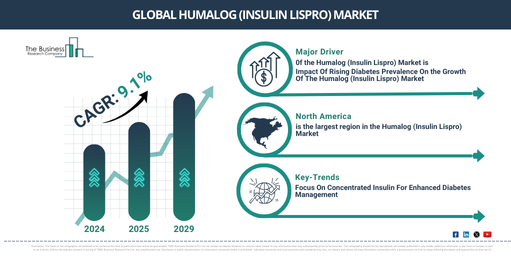
    The market for Humalog (insulin lispro) has seen robust growth in the recent years. The market valuation will increase from $8,472.22 million in 2024 to $9,271.45 million in 2025, showing an annual compound growth rate (CAGR) of 9.4%. Factors such as biosimilars, patent expirations, urbanization, regulatory approvals, and increased expenditures on chronic illnesses have contributed towards growth during the historical period.

    What Is the Projected Market Size of the Humalog (Insulin Lispro) Market?

    The market for humalog (insulin lispro) is predicted to experience robust growth in the forthcoming years, surging to a value of $13,118.74 million in 2029 with a compound annual growth rate (CAGR) of 9.1%. The projected expansion in the forecast period can be ascribed to factors such as personalized medicine, insurance backing, strategic partnerships, linkage with digital health instruments, and growth in emerging markets. Further, the forecast period is expected to see major trends such as initiatives for price reduction and affordability, the introduction of biosimilar competition, improvements in insulin delivery devices, regulatory alterations influencing pricing, and the growth of telemedicine and digital health.

    Download The Free Sample Report Here:

    https://www.thebusinessresearchcompany.com/sample.aspx?id=19904&type=smp

    Who are the Major Competitors in the Humalog (Insulin Lispro) Market Outlook?

    Major companies operating in the humalog (insulin lispro) market include Eli Lilly and Company

    What Is Fueling Growth in the Humalog (Insulin Lispro) Market?

    The humalog (insulin lispro) market is anticipated to expand due to the escalating prevalence of diabetes, a long-term metabolic disturbance identified by elevated blood glucose levels resulting from inadequate insulin production or ineffective insulin activity, or a combination of both. Factors such as increasing obesity rates, inactive lifestyles, poor diets, an older population, urbanization, genetic susceptibility, and enhanced awareness and diagnosis of the condition contribute to the high prevalence of diabetes. Humalog (Insulin Lispro) is a crucial part of diabetes care as it rapidly controls post-meal blood sugar surge, circumvents complications, and ensures efficient glucose management. For example, the Office for Health Improvement and Disparities, a UK government department, reported in March 2024 that in 2023, the percentage of people with type 1 diabetes in England given 8 care processes at GP practices participating in the NDA increased to 43.8%, a rise from 35.2% in 2022. As a result, the escalating prevalence of diabetes fuels the growth of the humalog (insulin lispro) market. The burgeoning healthcare expenditure is set to boost the development of the humalog (insulin lispro) market in the future. Healthcare expenditure implies the comprehensive financial resources allocated by individuals, governments, private insurers, and other parties for the delivery of healthcare services and products. This growth in healthcare expenditure can be credited to the older population, advances in medical technology, the rising prevalence of chronic diseases, and a heightened demand for healthcare services. Healthcare expenditure is critical in enhancing accessibility and affordability of humalog (insulin lispro) as increased financial contributions to healthcare initiatives and resources encourage broader distribution, lower patient costs, and improved diabetes management, ultimately facilitating optimal health outcomes and easing the long-term financial stress on healthcare systems. For instance, according to the Office for National Statistics, a UK governmental institution, reported in May 2024 that healthcare expenditure in the UK surged by 5.6% between 2022 and 2023, in contrast to a growth of 0.9% in 2022, with the UK healthcare expenditure standing around $317.63 billion (£292 billion) in 2023. Hence, the rise in healthcare expenditure is stimulating the humalog (insulin lispro) market’s growth.

    Request For A Customized Report:

    https://www.thebusinessresearchcompany.com/customise?id=19904&type=smp

    Which Humalog (Insulin Lispro) Market Segments Are Growing the Fastest?

    The humalog (insulin lispro)market covered in this report is segmented –

    1) By Product Type: Insulin Lipro Prefilled Pen; Insulin Lipro Solution Vials; Insulin Lipro Solution Cartridges

    2) By Drug Class: Humalog; Admelog; Other Drug Class

    3) By Indication: Type 1 Diabetes; Type 2 Diabetes; Gestational Diabetes; Other Indications

    4) By Age Group: Pediatric Patients; Adult Patients; Geriatric Patients

    5) By Distribution Channel: Hospital Pharmacies; Retail Pharmacies; Online Pharmacies

    Which Industry Trends Are Shaping the Future of the Humalog (Insulin Lispro) Market?

    A prominent trend within the Humalog (insulin lispro) marketplace involves the concentration on cultivating enhanced products. Examples include rapid-acting analogue insulin with enriched formulations, faster initiation periods, and superior dosing accuracy to better control blood sugar levels in individuals with diabetes. Rapid-acting analogue insulin is a man-made version of insulin that functions to swiftly reduce blood sugar levels post meals. This by emulating the body’s natural insulin reaction but with a quicker commencement and shorter active period compared to standard insulin. For illustration, in November 2022, Healthcare Pharmaceuticals Ltd., a pharmaceutical corporation based in Bangladesh, introduced Eli Lilly’s Humalog 200 (Insulin Lispro 200 Units/ml) KwikPen into the Bangladesh market. Humalog 200 represents a concentrated, rapid-action analogue insulin, devised to better manage blood sugar levels in adults with both Type 1 and Type 2 diabetes. The Humalog 200 KwikPen is easy to use and offers an economical solution, carrying twice the quantity of insulin units and necessitating fewer pen changes each month.

    Access The Full Report Here:

    https://www.thebusinessresearchcompany.com/report/humalog-insulin-lispro-global-market-report

    Which Countries Are Leading the Humalog (Insulin Lispro) Market?

    North America was the largest region in the humalog (insulin lispro) market in 2024. The regions covered in the humalog (insulin lispro) market report are Asia-Pacific, Western Europe, Eastern Europe, North America, South America, Middle East, Africa.

    Purchase The Full Report Today:

    https://www.thebusinessresearchcompany.com/purchaseoptions.aspx?id=19904

    This Report Delivers Insight On:

    1. How big is the humalog (insulin lispro) market, and how is it changing globally?

    2. Who are the major companies in the humalog (insulin lispro) market, and how are they performing?

    3. What are the key opportunities and risks in the humalog (insulin lispro) market right now?

    4. Which products or customer segments are growing the most in the humalog (insulin lispro) market?

    5. What factors are helping or slowing down the growth of the humalog (insulin lispro) market?

    About The Business Research Company:

    With over 15000+ reports from 27 industries covering 60+ geographies, The Business Research Company has built a reputation for offering comprehensive, data-rich research and insights. Armed with 1,500,000 datasets, the optimistic contribution of in-depth secondary research, and unique insights from industry leaders, you can get the information you need to stay ahead in the game.

    Get in touch with us:

    The Business Research Company: https://www.thebusinessresearchcompany.com/

    Americas +1 310-496-7795

    Asia +44 2071930708

    Europe +44 7882 955267

    Email us at info@tbrc.info

    Follow us on:

    LinkedIn: https://in.linkedin.com/company/the-business-research-company

    YouTube: https://www.youtube.com/channel/UC24_fI0rV8cR5DxlCpgmyFQ

    Global Market Model: https://www.thebusinessresearchcompany.com/global-market-model

  • Hormonal Intrauterine Devices (IUDs)  Industry Valued at $4.34 Billion by 2029 With CAGR of 10.7% | Size and Share Insights

    Hormonal Intrauterine Devices (IUDs) Industry Valued at $4.34 Billion by 2029 With CAGR of 10.7% | Size and Share Insights

    Claim your 30% discount on Global Market Reports with code ONLINE30. Limited time only.

    What Are the Projected Market Size and Growth Rates for the Hormonal Intrauterine Devices (IUDs) Market From 2025 To 2029?

    The market size of hormonal intrauterine devices (IUDs) has seen impressive growth recently. The market, which was worth $2.61 billion in 2024, is expected to increase to $2.89 billion in 2025 with a compound annual growth rate (CAGR) of 11.0%. This substantial growth during the historic period can be accredited to the evolution of safer and more efficient hormonal formulations, an upsurge in the demand for long-term contraception solutions, an increase in healthcare provider recommendations, heightened public understanding of birth control options, and progress in medical technology and device design.

    What Is the Projected Market Size of the Hormonal Intrauterine Devices (IUDs) Market?

    The market for hormonal intrauterine devices (IUDs) is predicted to undergo substantial expansion in the coming years. The market will escalate to $4.34 billion by 2029, with a compound annual growth rate (CAGR) of 10.7%. Factors such as increasing consciousness about birth control options, a growing fondness for durable reversible contraception, progress in device reliability and effectiveness, a heightened focus on individualized healthcare and broader access via healthcare professionals, all contribute to this expected growth in the forecast period. Crucial trends during this period will comprise of technological advancements in devices, personalized contraception choices, the surge of patient-oriented healthcare strategies, an increased call for green and eco-friendly products and creation of novel contraceptive items.

    Download The Free Sample Report Here:

    https://www.thebusinessresearchcompany.com/sample.aspx?id=19091&type=smp

    Who are the Major Competitors in the Hormonal Intrauterine Devices (IUDs) Market Outlook?

    Major companies operating in the hormonal intrauterine devices (IUDs) market are Merck & Co. Inc., AbbVie Inc., Bayer AG, Organon & Companies, Gedeon Richter Plc, Meril Life Science Pvt Ltd., Bharat Serums and Vaccines Limited, Teva UK Limited, EurimPharm Produktions GmbH, HRA Pharma SAS, Medicines360, Hll Lifecare Limited, Pregna International Ltd., Allergan plc, Actavis Inc., DKT WomanCare Global, CrossBay Medical Inc., SMB Corporation of India, Oy Leiras, OCON Healthcare

    What Is Fueling Growth in the Hormonal Intrauterine Devices (IUDs) Market?

    The hormonal intrauterine devices market is expected to grow due to a rise in unwanted pregnancies. Unwanted pregnancies are those that were unplanned or not wanted at the time they were conceived. Reasons for such pregnancies include contraceptive failure, limited access to birth control methods, misuse of contraception, and incidents of sexual violence. Lack of access to effective contraception methods makes more people prone to unwanted pregnancies as it diminishes their ability to manage their reproductive choices effectively. Hormonal IUDs are lauded for their efficacy in preventing pregnancies, boasting a failure rate of less than 1%. They offer long-lasting protection that can last between 3 and 7 years, depending on the type of IUD, proving them a dependable choice for those wanting to prevent unwanted pregnancies. For example, in August 2023, the Office for Health Improvement & Disparities, a governmental organization in the UK under the Department of Health and Social Care, reported that from January to June 2022, there were 123,219 abortions performed in England and Wales, indicating a 17% rise compared to the same timeframe in 2021. Consequently, the growth of the hormonal intrauterine devices market is being spurred by the rise in unwanted pregnancies.

    Request For A Customized Report:

    https://www.thebusinessresearchcompany.com/customise?id=19091&type=smp

    Which Hormonal Intrauterine Devices (IUDs) Market Segments Are Growing the Fastest?

    The hormonal intrauterine devices (IUDs) market covered in this report is segmented –

    1) By Type: 13 Milligram Hormonal Intrauterine Devices, 19 Milligram Hormonal Intrauterine Devices, 52 Milligram Hormonal Intrauterine Devices

    2) By Device Design: Framed Intrauterine Devices, Frameless Intrauterine Devices

    3) By Hormone Type: Levonorgestrel Releasing Intrauterine Devices, Progesterone Releasing Intrauterine Devices

    4) By Application: Age 20-24, Age 25-34, Age 35-44, Other Applications

    Subsegments:

    1) By 13 Milligram Hormonal Intrauterine Devices: Low-Dose 13 Mg IUDs, Specialty 13 Mg IUDs For Specific Conditions

    2) By 19 Milligram Hormonal Intrauterine Devices: Low-Dose 19 Mg IUDs, Specialty 19 Mg IUDs For Specific Conditions

    3) By 52 Milligram Hormonal Intrauterine Devices: Standard 52 Mg IUDs, Extended-Release 52 Mg IUDs, Specialty 52 Mg IUDs For Heavy Menstrual Bleeding Or Endometriosis

    Which Industry Trends Are Shaping the Future of the Hormonal Intrauterine Devices (IUDs) Market?

    Key players in the hormonal intrauterine devices sector are concentrating on the creation of cutting-edge goods such as levonorgestrel-releasing intrauterine systems to provide more tailored contraceptive choices for women. These systems, also known as LNG-IUS, are hormonal intrauterine devices that consistently deliver levonorgestrel, an artificial progestin, to the uterus, thickening cervical mucus and transforming the uterine lining to hinder sperm from contacting the egg. For example, Medicines360, a pharmaceutical firm in the United States dedicated to enhancing women’s access to critical medicines and healthcare products, launched LILETTA, approved by the U.S. Food and Drug Administration (FDA) in November 2022. LILETTA is among the most durable hormonal IUDs available in the United States, with approval for up to 8 years of contraception and up to 5 years for addressing heavy menstrual bleeding. The device has an approximately 99% success rate in preventing pregnancy among various populations. It comes with a user-friendly inserter for ease of fitting on the day of consultation and can be removed at any point by a healthcare professional. It can be obtained via prescription and is offered at a lower price through the 340B drug pricing scheme, reflecting Medicines360’s commitment to improving access to women’s healthcare.

    Access The Full Report Here:

    https://www.thebusinessresearchcompany.com/report/hormonal-intrauterine-devices-iuds-global-market-report

    Which Countries Are Leading the Hormonal Intrauterine Devices (IUDs) Market?

    North America was the largest region in the hormonal intrauterine devices (IUDs) market in 2024. Asia-Pacific is expected to be the fastest-growing region in the forecast period. The regions covered in the hormonal intrauterine devices (IUDs) market report are Asia-Pacific, Western Europe, Eastern Europe, North America, South America, Middle East, Africa.

    Purchase The Full Report Today:

    https://www.thebusinessresearchcompany.com/purchaseoptions.aspx?id=19091

    This Report Delivers Insight On:

    1. How big is the hormonal intrauterine devices (iuds) market, and how is it changing globally?

    2. Who are the major companies in the hormonal intrauterine devices (iuds) market, and how are they performing?

    3. What are the key opportunities and risks in the hormonal intrauterine devices (iuds) market right now?

    4. Which products or customer segments are growing the most in the hormonal intrauterine devices (iuds) market?

    5. What factors are helping or slowing down the growth of the hormonal intrauterine devices (iuds) market?

    About The Business Research Company:

    With over 15000+ reports from 27 industries covering 60+ geographies, The Business Research Company has built a reputation for offering comprehensive, data-rich research and insights. Armed with 1,500,000 datasets, the optimistic contribution of in-depth secondary research, and unique insights from industry leaders, you can get the information you need to stay ahead in the game.

    Get in touch with us:

    The Business Research Company: https://www.thebusinessresearchcompany.com/

    Americas +1 310-496-7795

    Asia +44 2071930708

    Europe +44 7882 955267

    Email us at info@tbrc.info

    Follow us on:

    LinkedIn: https://in.linkedin.com/company/the-business-research-company

    YouTube: https://www.youtube.com/channel/UC24_fI0rV8cR5DxlCpgmyFQ

    Global Market Model: https://www.thebusinessresearchcompany.com/global-market-model