Blog

  • Cardiovascular Monitoring And Diagnostic Devices And Equipment Industry Insights 2025 – Market Forecast for Executives and Planners

    Cardiovascular Monitoring And Diagnostic Devices And Equipment Industry Insights 2025 – Market Forecast for Executives and Planners

    Claim your 30% discount on Global Market Reports with code ONLINE30. Limited time only.

    #How Has The Cardiovascular Monitoring And Diagnostic Devices And Equipment Market Size Shifted, And What Is the Outlook Through 2034?

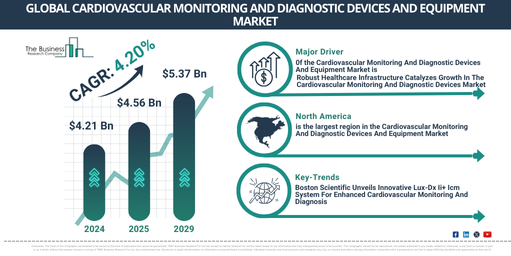
    The market for cardiovascular monitoring and diagnostic devices and equipment has shown robust growth in the recent past. It is projected to expand from $4.21 billion in 2024 to $4.56 billion in 2025, exhibiting a compound annual growth rate (CAGR) of 8.4%. This considerable growth in the past years can be ascribed to factors such as the rising prevalence of cardiovascular diseases, an aging population, emphasis on preventive healthcare, and the integration of telemedicine.

    How Much Will the Cardiovascular Monitoring And Diagnostic Devices And Equipment Market Be Worth in 2029?

    Expectations indicate a consistent expansion in the cardiovascular monitoring and diagnostic devices and equipment market, with its value projected to rise to $5.37 billion by 2029, reflecting a compound annual growth rate (CAGR) of 4.2%. This growth expediency over the predicted period could be a consequence of factors such as personalized medicine, digital health, management of chronic diseases, and remote patient monitoring. Notable trends within this forecast period are likely to comprise of wearable and mobile monitoring, AI-improved diagnostics, point-of-care testing, and remote cardiac rehabilitation.

    Download The Free Sample Report Here:

    https://www.thebusinessresearchcompany.com/sample.aspx?id=2423&type=smp

    Which is the Largest Company in the Cardiovascular Monitoring And Diagnostic Devices And Equipment Market?

    Major companies operating in the cardiovascular monitoring and diagnostic devices and equipment market include Medtronic PLC, Boston Scientific Corporation, GE Healthcare, Johnson & Johnson, Philips Healthcare, Siemens Healthcare, St. Jude MedicalInc, Nihon Kohden Corporation, Fukuda Denshi Co. Ltd., Sorin Group, Welch Allyn Inc., LivaNova PLC, Spacelabs Healthcare, Opto Circuits India Ltd., BPL Health Management Solutions, OSI Systems Inc., Hill-Rom Holdings Inc., Schiller AG, Abbott Cardiovascular, Accellent Inc., Aerotel medical systems Ltd., Asahi Kasei Corporation, Bioheart Inc., Biosensors international group Ltd, Cook group incorporated, Dräger Medical AG & Co. KGaA., Molecular devices LLC, Edwards Lifesciences Corp., Biotronik Inc., Koninklijke Philips N.V., Endotronix Inc., Smartcardia, Personal Safety Corporation, Ivy Biomedical Systems Inc., Cardio Diagnostics Holdings Inc., ECG Excellence BV, Aktiia SA, HD Medical, HeartFlow Inc., VPG Medical, BioTelemetry Inc., Preventice Solutions, Mortara Instrument Inc., GetemedMedizin-Und Informationstechnik Ag, LifeWatch Technologies Ltd., QRS Diagnostic

    What Are the Main Market Drivers in the Cardiovascular Monitoring And Diagnostic Devices And Equipment Industry?

    The expansion of healthcare infrastructure is set to stimulate the growth of the cardiovascular monitoring and diagnostic devices and equipment market. The term healthcare infrastructure encompasses the physical spaces, people, structures, and systems necessary to provide healthcare services to cater to the health requirements of specific populations. The necessary facilities, equipment, staff, and policies to enable access to safe, effective, and superior medical devices for preventing, diagnosing, and treating cardiovascular ailments are supplied by this healthcare infrastructure. For example, the National Health Expenditure Account (NHEA) released by the Centers for Medicare and Medicaid Services, a federal agency based in the U.S, reports that U.S. healthcare expenditure increased by 2.7% in 2021, hitting $4.3 trillion, or $12,914 per person. Health expenditure made up 18.3% of the country’s Gross Domestic Product. Therefore, the enhanced healthcare infrastructure is a key factor driving up the growth of the cardiovascular monitoring and diagnostic devices and equipment market.

    Request For A Customized Report:

    https://www.thebusinessresearchcompany.com/customise?id=2423&type=smp

    How Is the Cardiovascular Monitoring And Diagnostic Devices And Equipment Market Segments Structured?

    The cardiovascular monitoring and diagnostic devices and equipment market covered in this report is segmented –

    1) By Product Type: Cardiopulmonary Stress Testing Systems, ECG Data Management Systems, ECG Monitoring Equipment, ECG Stress Testing Systems, Event Monitoring Systems, Holter Monitoring Systems

    2) By Type: Heart Disease, Coronary Heart Disease

    3) By End-Use: Hospitals Or Physician Clinic (Continuous Glucose Monitors), Home Or Emergency, Research and Development (Clinical Trials, Universities, CRO)

    Subsegments:

    1) By Cardiopulmonary Stress Testing Systems: Treadmill Stress Testing Systems, Ergometer Stress Testing Systems, Respiratory Gas Exchange Systems, Other Cardiopulmonary Stress Testing Systems

    2) By ECG Data Management Systems: Cloud-Based ECG Data Management Systems, On-Premise ECG Data Management Systems, ECG Software For Data Analysis, Other ECG Data Management Systems

    3) By ECG Monitoring Equipment: Continuous ECG Monitors, Wireless ECG Monitors, Handheld ECG Monitors, Other ECG Monitoring Equipment

    4) By ECG Stress Testing Systems: Treadmill ECG Stress Testing Systems, Cycle Ergometer ECG Stress Testing Systems, Automated ECG Stress Testing Systems, Other ECG Stress Testing Systems

    5) By Event Monitoring Systems: Mobile Event Monitors, Wireless Event Monitors, Holter Or Event Monitor Hybrid Systems, Other Event Monitoring Systems

    6) By Holter Monitoring Systems: 24-Hour Holter Monitors, 48-Hour Holter Monitors, 7-Day Holter Monitors, Other Holter Monitoring Systems

    What Strategic Trends Are Transforming the Cardiovascular Monitoring And Diagnostic Devices And Equipment Market?

    Key players in the cardiovascular diagnostic and monitoring devices sector are making strides in product innovation, including the LUX-Dx II+ to better cater to patient needs. This new-generation insertable cardiac monitor (ICM) has reshaped the options available to doctors for diagnostic assessment and prolonged monitoring of patients suffering from irregular heart rhythms. Boston Scientific, a U.S. manufacturing company, ushered in the LUX-Dx II+ in October 2023. The ICM system boasts features like dual-stage algorithms, superior S-ECG signal clarity, remote programming capability, wireless connectivity, an accompanying patient app, and compact form factor.

    Access The Full Report Here:

    https://www.thebusinessresearchcompany.com/report/cardiovascular-monitoring-and-diagnostic-devices-and-equipment-global-market-report

    Which Global Regions Offer the Highest Growth in the Cardiovascular Monitoring And Diagnostic Devices And Equipment Market?

    North America was the largest region in global cardiovascular monitoring and diagnostic devices and equipment market in 2023. Western Europe was the second-largest region in cardiovascular monitoring and diagnostic devices and equipment market. The regions covered in the cardiovascular monitoring and diagnostic devices and equipment market report are Asia-Pacific, Western Europe, Eastern Europe, North America, South America, Middle East, and Africa.

    Purchase The Full Report Today:

    https://www.thebusinessresearchcompany.com/purchaseoptions.aspx?id=2423

    This Report Delivers Insight On:

    1. How big is the cardiovascular monitoring and diagnostic devices and equipment market, and how is it changing globally?

    2. Who are the major companies in the cardiovascular monitoring and diagnostic devices and equipment market, and how are they performing?

    3. What are the key opportunities and risks in the cardiovascular monitoring and diagnostic devices and equipment market right now?

    4. Which products or customer segments are growing the most in the cardiovascular monitoring and diagnostic devices and equipment market?

    5. What factors are helping or slowing down the growth of the cardiovascular monitoring and diagnostic devices and equipment market?

    About The Business Research Company:

    With over 15000+ reports from 27 industries covering 60+ geographies, The Business Research Company has built a reputation for offering comprehensive, data-rich research and insights. Armed with 1,500,000 datasets, the optimistic contribution of in-depth secondary research, and unique insights from industry leaders, you can get the information you need to stay ahead in the game.

    Get in touch with us:

    The Business Research Company: https://www.thebusinessresearchcompany.com/

    Americas +1 310-496-7795

    Asia +44 2071930708

    Europe +44 7882 955267

    Email us at info@tbrc.info

    Follow us on:

    LinkedIn: https://in.linkedin.com/company/the-business-research-company

    YouTube: https://www.youtube.com/channel/UC24_fI0rV8cR5DxlCpgmyFQ

    Global Market Model: https://www.thebusinessresearchcompany.com/global-market-model
  • Cardiovascular Medical Lasers Market Trends Report 2025 – For Business Development and Strategy Teams

    Cardiovascular Medical Lasers Market Trends Report 2025 – For Business Development and Strategy Teams

    Claim your 30% discount on Global Market Reports with code ONLINE30. Limited time only.

    #How Has the Cardiovascular Medical Lasers Market Growth Performance Trended Historically, And What Lies Ahead?

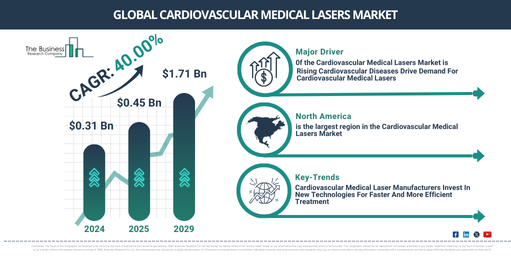
    The market for cardiovascular medical lasers has seen a significant increase in recent years. The market is forecasted to grow from $0.31 billion in 2024 to $0.45 billion in 2025, with a compound annual growth rate (CAGR) of 45.6%. The surge during the historic period can be attributed to several factors. An increased demand for less invasive cardiovascular procedures, a rising number of cardiovascular diseases, increased disposable income, and a growing acceptance of telemedicine in cardiology have all significantly affected this growth.

    What Is the Forecast for the Cardiovascular Medical Lasers Market Size Through 2029?

    Expectations are high for a significant expansion in the cardiovascular medical lasers market in the forthcoming years. Predictions estimate that the market will reach an impressive $1.71 billion by 2029, marking a compound annual growth rate (CAGR) of 40.0%. This projected growth during the forecast period is attributed to various factors including advancements in robotics, cardiovascular research, an aging population, personalization in cardiovascular care, and the increasing scope of interventional cardiology. The trending components in this forecast period encompass enhanced laser fiber technology, AI-driven telehealth, intelligent laser systems, laser propelled regeneration, sustainable laser methodologies, and the inclusion of advanced imaging.

    Download The Free Sample Report Here:

    https://www.thebusinessresearchcompany.com/sample.aspx?id=3368&type=smp

    What are the Key Market Players in Cardiovascular Medical Lasers Market and How They’re Evolving?

    Major companies operating in the cardiovascular medical lasers market include Boston Scientific Corporation, Cardiovascular Systems Inc., AngioDynamics Inc., Koninklijke Philips N.V., RA Medical Systems Inc., Abbott Laboratories Inc., Alma Lasers Inc., B. Braun Melsungen AG, Bausch + Lomb Incorporated, Biolase Inc., Candela Medical Corporation, Cutera Inc., DEKA Research & Development Corporation, Edwards Lifesciences Corporation, EUFOTON S.P.A., Fotonad.d., Gigaa Laser Group, IRIDEX Corporation, Lumenis Ltd., Medtronic Inc., Novartis AG, PhotoMedex Inc., Quanta System S.p.A, Sciton Inc., Stryker Corporation, Terumo Corporation, TransEnterix Inc., Vascular Solutions Inc., Zimmer Biomet Holdings Inc.

    What Are the Primary Growth Drivers in the Cardiovascular Medical Lasers Market?

    The escalating incidence of heart-related disorders is anticipated to propel the cardiovascular medical laser industry. The surge in cases related to heart diseases can be ascribed to the augmentation in unhealthy lifestyle habits such as smoking, sedentary behavior, and imbalanced diet. To exemplify, the Centers for Disease Control and Prevention, a public agency based in the USA, reported in May 2023 that coronary artery disease (CAD) claimed the lives of 375,476 individuals in 2021, with about 1 in 20 adults aged 20 and over suffering from CAD. Furthermore, almost 2 in 10 fatalities from CAD occur in adults under the age of 65. Consequently, the surge in incidence of heart-related ailments is projected to fuel the expansion of the cardiovascular medical laser sector.

    Request For A Customized Report:

    https://www.thebusinessresearchcompany.com/customise?id=3368&type=smp

    What Are the Leading Segments in the Global Cardiovascular Medical Lasers Industry?

    The cardiovascular medical lasers market covered in this report is segmented –

    1) By Type: Excimer Laser, Carbon Dioxide Laser

    2) By Application: Laser Vascular Anastomosis, Transmyocardial Laser Revascularization, Laser Angioplasty For Peripheral Arterial Diseases

    3) By End Use: Hospitals, Specialty Clinics, Ambulatory Surgery Centers

    Subsegments:

    1) By Excimer Laser: Ultraviolet Excimer Lasers, Pulsed Excimer Lasers, Other Excimer Lasers

    2) By Carbon Dioxide Laser: Continuous Wave CO2 Lasers, Pulsed CO2 Lasers, Super Pulsed CO2 Lasers, Other Carbon Dioxide Lasers

    What Are the Key Market Trends in the Cardiovascular Medical Lasers Industry?

    Manufacturers of cardiovascular medical lasers are constantly funneling resources into accelerated diagnosis and more effective heart disease treatment technologies. These advancements encompass the discovery of new wavelengths, the development of more robust configurations, the reduction of system costs, and other improvements that are integrated with minimally invasive procedures. The FDA has granted clearance to Ra Medical’s vascular products, which include cardiovascular lasers capable of treating peripheral arteries and veins. Operating at a 308-nanometer wavelength, the laser is able to fragment chemical bonds and disintegrate the blockage into its components, thereby diminishing patient risk.

    Access The Full Report Here:

    https://www.thebusinessresearchcompany.com/report/cardiovascular-medical-lasers-global-market-report

    What Is the Regional Outlook for the Cardiovascular Medical Lasers Market?

    North America was the largest region in the cardiovascular medical lasers market in 2023. Asia-Pacific was the second-largest region in the global cardiovascular medical lasers market report. The regions covered in the cardiovascular medical lasers market report are Asia-Pacific, Western Europe, Eastern Europe, North America, South America, Middle East, and Africa.

    Purchase The Full Report Today:

    https://www.thebusinessresearchcompany.com/purchaseoptions.aspx?id=3368

    This Report Delivers Insight On:

    1. How big is the cardiovascular medical lasers market, and how is it changing globally?

    2. Who are the major companies in the cardiovascular medical lasers market, and how are they performing?

    3. What are the key opportunities and risks in the cardiovascular medical lasers market right now?

    4. Which products or customer segments are growing the most in the cardiovascular medical lasers market?

    5. What factors are helping or slowing down the growth of the cardiovascular medical lasers market?

    About The Business Research Company:

    With over 15000+ reports from 27 industries covering 60+ geographies, The Business Research Company has built a reputation for offering comprehensive, data-rich research and insights. Armed with 1,500,000 datasets, the optimistic contribution of in-depth secondary research, and unique insights from industry leaders, you can get the information you need to stay ahead in the game.

    Get in touch with us:

    The Business Research Company: https://www.thebusinessresearchcompany.com/

    Americas +1 310-496-7795

    Asia +44 2071930708

    Europe +44 7882 955267

    Email us at info@tbrc.info

    Follow us on:

    LinkedIn: https://in.linkedin.com/company/the-business-research-company

    YouTube: https://www.youtube.com/channel/UC24_fI0rV8cR5DxlCpgmyFQ

    Global Market Model: https://www.thebusinessresearchcompany.com/global-market-model
  • Market Analysis on Cardiovascular Devices Industry – Insights for Corporate Strategy and R&D

    Market Analysis on Cardiovascular Devices Industry – Insights for Corporate Strategy and R&D

    Claim your 30% discount on Global Market Reports with code ONLINE30. Limited time only.

    What Are the Projected Market Size and Growth Rates for the Cardiovascular Devices Market From 2025 To 2029?

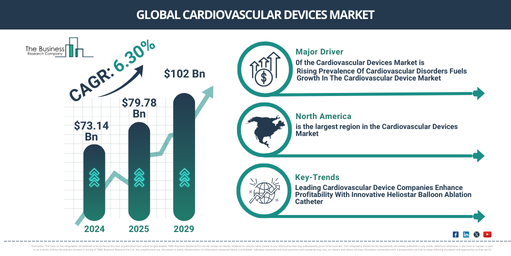
    In recent times, there has been substantial growth in the cardiovascular devices market. The market worth, projected to climb from $73.14 billion in 2024 to $79.78 billion in 2025, is set to experience a compound annual growth rate (CAGR) of 9.1%. Factors such as diseases related to lifestyle, an aging demographic, the use of minimally invasive and implantable devices, access to healthcare, and regulatory approvals have contributed to the growth noticed during the historic period.

    What Is the Projected Market Size of the Cardiovascular Devices Market?

    In the coming years, the market size for cardiovascular devices is projected to experience significant expansion. It is anticipated to increase to $102 billion by 2029, with a compound annual growth rate (CAGR) of 6.3%. The growth during the forecast period can be attributed to factors such as personalized medicine, remote monitoring, heightened growth in emerging markets, integration with artificial intelligence (AI), and a shift towards value-based healthcare. In the forecast period, leading trends will include wearable cardiovascular devices, minimally invasive methodologies, bioresorbable devices, remote consultation and tele-surgical procedures, and sustainable, eco-friendly devices.

    Download The Free Sample Report Here:

    https://www.thebusinessresearchcompany.com/sample.aspx?id=1972&type=smp

    Who are the Major Competitors in the Cardiovascular Devices Market Outlook?

    Major companies operating in the cardiovascular devices market include Medtronic plc, Boston Scientific Corporation, Abbott Laboratories, Edwards Lifesciences Corporation, Johnson & Johnson, Terumo Corporation, Getinge AB, Teleflex Incorporated, Becton, Dickinson and Company, Siemens Healthineers AG, Fresenius SE & Co. KGaA, GE HealthCare Technologie Inc., Stryker Corporation, B. Braun Medical Pvt. Ltd., Baxter International Inc., Danaher Corporation, Fujifilm Holdings Corporation, Canon Medical Systems Corporation, MicroPort Scientific America Inc., W L Gore & Associates Inc., AngioDynamics Inc., CryoLife Inc., Endologix LLC, Lombard Medical Limited, Avinger Inc., Abiomed Inc., Biosensors International Group Ltd., Biotronik SE and Co. KG, CeloNovaBioSciences Inc., LeMaitre Vascular Inc., Nano Therapeutics Pvt. Ltd.

    What Is Fueling Growth in the Cardiovascular Devices Market?

    The escalation in cases of cardiovascular conditions contributes to the expansion of the cardiovascular device market. Cardiovascular conditions encompass a variety of health issues that impact the heart and blood vessels, including a multitude of diseases and disorders related to the circulatory system. A cardiovascular device aids in heart function and blood flow for individuals with poor or deteriorating heart health. For example, as per the Immigration and Checkpoints Authority, a governmental agency based in Singapore, in June 2023, heart-related and hypertensive diseases were responsible for 6,884 deaths in 2022, a 10.35% increase compared to 6,238 deaths documented in 2021. Consequently, the rise in cardiovascular disorder cases is anticipated to fuel the cardiovascular device market’s expansion.

    Request For A Customized Report:

    https://www.thebusinessresearchcompany.com/customise?id=1972&type=smp

    Which Cardiovascular Devices Market Segments Are Growing the Fastest?

    The cardiovascular devices market covered in this report is segmented –

    1) By Type: Cardiovascular Surgery Devices And Equipment, Cardiac Rhythm Management (CRM) Devices And Equipment, Interventional Cardiology Devices And Equipment, Defibrillator Devices And Equipment, Peripheral Vascular Devices And Equipment, Prosthetic Heart Valve Devices And Equipment, Electrophysiology Devices And Equipment, Cardiac Assist Devices And Equipment

    2) By End User: Hospitals And Clinics, Diagnostic Laboratories, Other End Users

    3) By Type of Expenditure: Public, Private

    4) By Product: Instruments Or Equipment, Disposables

    Subsegments:

    1) By Cardiovascular Surgery Devices And Equipment: Coronary Artery Bypass Graft (CABG) Equipment, Heart Valve Repair And Replacement Devices, Aortic Aneurysm Repair Devices, Cardiopulmonary Bypass Equipment, Other Cardiovascular Surgery Devices

    2) By Cardiac Rhythm Management (CRM) Devices And Equipment: Pacemakers, Defibrillators, Cardiac Resynchronization Therapy (CRT) Devices

    3) By Interventional Cardiology Devices And Equipment: Stents (Drug-Eluting, Bare-Metal), Catheters (Balloon, Diagnostic, Guiding), Angioplasty Equipment, Guidewires, Other Interventional Cardiology Devices

    4) By Defibrillator Devices And Equipment: Implantable Cardioverter Defibrillators (ICDs), Automated External Defibrillators (AEDs), Wearable Defibrillators, External Defibrillators

    5) By Peripheral Vascular Devices And Equipment: Peripheral Stents, Balloons (Peripheral Angioplasty), Embolic Protection Devices, Endovenous Laser Devices, Other Peripheral Vascular Devices

    6) By Prosthetic Heart Valve Devices And Equipment: Mechanical Heart Valves, Biological Heart Valves, Transcatheter Heart Valves (TAVR), Other Prosthetic Heart Valve Devices

    7) By Electrophysiology Devices And Equipment: Ablation Catheters, Electrophysiology Mapping Systems, ECG And EKG Systems, Cardiac Mapping And Navigation Systems, Other Electrophysiology Devices

    8) By Cardiac Assist Devices And Equipment: Ventricular Assist Devices (LVADs), Intra-Aortic Balloon Pumps, Total Artificial Heart, Extracorporeal Membrane Oxygenation (ECMO), Other Cardiac Assist Devices

    Which Industry Trends Are Shaping the Future of the Cardiovascular Devices Market?

    Major firms active in the cardiovascular devices market are introducing new products like the balloon ablation catheter as a strategy to boost their market profitability. The balloon ablation catheter stands out as the first RF balloon ablation catheter engineered for catheter-based cardiac electrophysiological mapping, which includes both atrial stimulation and recording. To provide a case in point, Biosense Webster, an American firm that specializes in the diagnosis and treatment of heart rhythm abnormalities, in October 2022, rolled out the HELIOSTAR Balloon Ablation Catheter. The said catheter comes with an exclusive one-shot balloon technology that enables pulmonary vein isolation in a mere 12 seconds, complemented with customized energy delivery and an embedded 3D mapping solution.

    Access The Full Report Here:

    https://www.thebusinessresearchcompany.com/report/cardiovascular-devices-global-market-report

    Which Countries Are Leading the Cardiovascular Devices Market?

    North America was the largest region in the global cardiovascular devices market in 2023. Western Europe was the second largest region in the global cardiovascular devices market. Africa. was the smallest region in the global cardiovascular devices market. The regions covered in the cardiovascular devices market report are Asia-Pacific, Western Europe, Eastern Europe, North America, South America, Middle East, and Africa.

    Purchase The Full Report Today:

    https://www.thebusinessresearchcompany.com/purchaseoptions.aspx?id=1972

    This Report Delivers Insight On:

    1. How big is the cardiovascular devices market, and how is it changing globally?

    2. Who are the major companies in the cardiovascular devices market, and how are they performing?

    3. What are the key opportunities and risks in the cardiovascular devices market right now?

    4. Which products or customer segments are growing the most in the cardiovascular devices market?

    5. What factors are helping or slowing down the growth of the cardiovascular devices market?

    About The Business Research Company:

    With over 15000+ reports from 27 industries covering 60+ geographies, The Business Research Company has built a reputation for offering comprehensive, data-rich research and insights. Armed with 1,500,000 datasets, the optimistic contribution of in-depth secondary research, and unique insights from industry leaders, you can get the information you need to stay ahead in the game.

    Get in touch with us:

    The Business Research Company: https://www.thebusinessresearchcompany.com/

    Americas +1 310-496-7795

    Asia +44 2071930708

    Europe +44 7882 955267

    Email us at info@tbrc.info

    Follow us on:

    LinkedIn: https://in.linkedin.com/company/the-business-research-company

    YouTube: https://www.youtube.com/channel/UC24_fI0rV8cR5DxlCpgmyFQ

    Global Market Model: https://www.thebusinessresearchcompany.com/global-market-model
  • Cardiac Rhythm Management (CRM) Devices And Equipment Forecast Report – Designed for Decision Makers and Product Teams

    Cardiac Rhythm Management (CRM) Devices And Equipment Forecast Report – Designed for Decision Makers and Product Teams

    Claim your 30% discount on Global Market Reports with code ONLINE30. Limited time only.

    What Is the Estimated Market Size of the Cardiac Rhythm Management (CRM) Devices And Equipment Market In 2029?

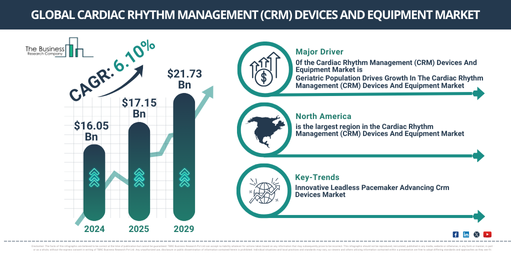
    Over the years, the market size for cardiac rhythm management (CRM) devices and equipment has seen considerable growth. The market is likely to expand from $16.05 billion in 2024 to $17.15 billion in 2025, projecting a compound annual growth rate (CAGR) of 6.8%. Various factors like the outbreak of arrhythmias, technological progress, an older population, and chronic disease management are the key contributors to the growth in the preceding periods.

    What Growth Rate Is Forecasted for the Cardiac Rhythm Management (CRM) Devices And Equipment Market by 2029?

    The market for cardiac rhythm management (CRM) devices and equipment is anticipated to witness substantial growth in the upcoming years, with projected expansion to $21.73 billion by 2029, at a compound annual growth rate (CAGR) of 6.1%. The forecasted growth for this period is due largely to factors such as personalization in medicine, technological advances, telehealth incorporation, and worldwide healthcare accessibility. Leading trends for the projected period encompass leadless CRM devices, biodegradable devices, remote monitoring, and combined therapies.

    Download The Free Sample Report Here:

    https://www.thebusinessresearchcompany.com/sample.aspx?id=2548&type=smp

    Which Key Companies Are Shaping the Future of the Cardiac Rhythm Management (CRM) Devices And Equipment Market?

    Major companies operating in the cardiac rhythm management (CRM) devices and equipment market include Abbott Laboratories, Medtronic plc, Biotronik SE & Co KG, Cardiac Science Corporation, Schiller AG, Hill-Rom Holdings Inc., GE Healthcare, Integer Holdings, Neovasc Inc., Philips Healthcare, Stryker Corporation, Rochling Medical, CCC Medical Devices, LivaNova plc, ZOLL Medical Corporation, Koninklijke Philips N.V, Applied Cardiac System, Cook Medical, Abiomed Inc., Berlin Heart GmbH, Brotionik SE and Co. KG, Jarvik Hearth Inc., MicroPort Scientific Corp, ReliantHeart Inc., Shree Pacetronix Ltd., Shaanxi Qinming Medical Instrument Co. Ltd., AtriCure Inc., Boston Scientific Corporation, Edwards Lifesciences Corporation, ProgettiSrl

    Which Factors Are Driving Demand in the Cardiac Rhythm Management (CRM) Devices And Equipment Industry?

    The cardiac rhythm management (CRM) devices and equipment market is anticipated to expand due to the increasing geriatric population. People who are aged 65 and over comprise the geriatric demographic. As this population segment grows, so does the prevalence of cardiovascular diseases. This in turn, boosts the demand for CRM devices which are vital in managing heart rhythm disorders like arrhythmias and enhancing the quality of life for elderly individuals. For example, the Administration for Community Living, a governmental department in the US, reported that the older population hit 55.8 million in 2021. This figure is expected to escalate to 80.8 million by 2040, and further rise to 94.7 million by 2060. Consequently, the increasing geriatric population serves as a key driver for the growth of the cardiac rhythm management (CRM) devices and equipment market.

    Request For A Customized Report:

    https://www.thebusinessresearchcompany.com/customise?id=2548&type=smp

    How Is the Cardiac Rhythm Management (CRM) Devices And Equipment Market Segmented by Several Divisions?

    The cardiac rhythm management (CRM) devices and equipment market covered in this report is segmented –

    1) By Product: Pacemakers, Defibrillators, Cardiac Resynchronization Therapy (CRT)

    2) By Application: Bradycardia, Tachycardia, Heart Failure, Other Applications

    3) By End User: Hospitals, Ambulatory Surgical Centers, Physicians Clinics

    Subsegment:

    1) By Pacemakers: Single-Chamber Pacemakers, Dual-Chamber Pacemakers, Biventricular Pacemakers, Implantable Pacemakers

    2) By Defibrillators: Implantable Cardioverter Defibrillators (ICDs), External Defibrillators, Wearable Defibrillators, Automated External Defibrillators (AEDs)

    3) By Cardiac Resynchronization Therapy (CRT): CRT-P (Pacemaker), CRT-D (Defibrillator), Bi-Ventricular Pacemakers

    What are the Emerging Market Trends Driving the Growth of the Cardiac Rhythm Management (CRM) Devices And Equipment Industry?

    Key players in the cardiac rhythm management (CRM) devices and equipment sector are forging ahead with the development of novel products such as the single-chamber (VR) leadless pacemaker. This advanced device aids in the management of heart rhythm disorders and enhances patient health outcomes. By virtue of a minimally invasive procedure, the leadless pacemaker is directly inserted into the right ventricle of the heart, making cardiac leads unnecessary. For example, Abbott Laboratories, a medical device company based in the US, was granted FDA approval in April 2022 for their Aveir single-chamber (VR) leadless pacemaker. This device is designed to treat patients dealing with slow heart rhythms, offers deep insights into patients’ health and heart function, thereby informing treatment choices and augmenting health results. The Aveir VR leadless pacemaker’s software has been crafted with expandability in mind, potentially giving rise to additional treatment possibilities in the future.

    Access The Full Report Here:

    https://www.thebusinessresearchcompany.com/report/cardiac-rhythm-management-crm-devices-and-equipment-global-market-report

    Which Regions Are Driving Growth in the Cardiac Rhythm Management (CRM) Devices And Equipment Market?

    North America was the largest region in the global cardiac rhythm management (CRM) devices and equipment market in 2023. Western Europe was the second-largest region in the cardiac rhythm management (CRM) devices and equipment market. The regions covered in the cardiac rhythm management (CRM) devices and equipment market report are Asia-Pacific, Western Europe, Eastern Europe, North America, South America, Middle East, and Africa.

    Purchase The Full Report Today:

    https://www.thebusinessresearchcompany.com/purchaseoptions.aspx?id=2548

    This Report Delivers Insight On:

    1. How big is the cardiac rhythm management (crm) devices and equipment market, and how is it changing globally?

    2. Who are the major companies in the cardiac rhythm management (crm) devices and equipment market, and how are they performing?

    3. What are the key opportunities and risks in the cardiac rhythm management (crm) devices and equipment market right now?

    4. Which products or customer segments are growing the most in the cardiac rhythm management (crm) devices and equipment market?

    5. What factors are helping or slowing down the growth of the cardiac rhythm management (crm) devices and equipment market?

    About The Business Research Company:

    With over 15000+ reports from 27 industries covering 60+ geographies, The Business Research Company has built a reputation for offering comprehensive, data-rich research and insights. Armed with 1,500,000 datasets, the optimistic contribution of in-depth secondary research, and unique insights from industry leaders, you can get the information you need to stay ahead in the game.

    Get in touch with us:

    The Business Research Company: https://www.thebusinessresearchcompany.com/

    Americas +1 310-496-7795

    Asia +44 2071930708

    Europe +44 7882 955267

    Email us at info@tbrc.info

    Follow us on:

    LinkedIn: https://in.linkedin.com/company/the-business-research-company

    YouTube: https://www.youtube.com/channel/UC24_fI0rV8cR5DxlCpgmyFQ

    Global Market Model: https://www.thebusinessresearchcompany.com/global-market-model
  • Cardiac Assist Devices And Equipment Market Outlook 2025 – Insights for Executive and Strategic Planning

    Cardiac Assist Devices And Equipment Market Outlook 2025 – Insights for Executive and Strategic Planning

    Claim your 30% discount on Global Market Reports with code ONLINE30. Limited time only.

    How Fast Is The Cardiac Assist Devices And Equipment Market Expected to Grow Between 2025 And 2029?

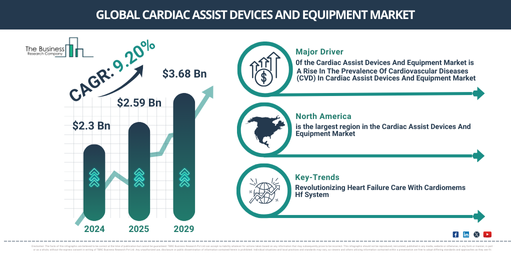
    In recent times, there has been substantial growth in the size of the cardiac assist devices and equipment market. The market value will escalate from $2.3 billion in 2024 to $2.59 billion in 2025, with a compound annual growth rate (CAGR) of 12.8%. Factors contributing to this growth during the historical period include the prevalence of cardiac arrhythmias, an aging population, clinical guidelines and research, and the shift towards minimally invasive procedures.

    What Growth Rate Is Anticipated for the Cardiac Assist Devices And Equipment Market in the Coming Years?

    The size of the cardiac assist devices and equipment market is projected to expand significantly in the upcoming years, reaching a value of $3.68 billion in 2029 at a compound annual growth rate (CAGR) of 9.2%. Factors contributing to this growth in the forecast period include the prevalence of personalized medicine, global healthcare accessibility, the use of electrophysiology devices in the management of heart failure, and hybrid procedures. Concurrent trends in the forecast period encompass 4D mapping and visualization, the application of artificial intelligence (AI) in electrophysiology, regenerative medicine approaches, and leadless cardiac pacing.

    Download The Free Sample Report Here:

    https://www.thebusinessresearchcompany.com/sample.aspx?id=2401&type=smp

    Who Are the Leading Companies in the Cardiac Assist Devices And Equipment Market?

    Major companies operating in the cardiac assist devices and equipment market include Abbot Laboratories, Berlin Heart GmbH, Abiomed Inc., Bivacor Pvt Ltd., Calon Cardio-Technology Ltd., Cardiobridge GmbH, Balton Sp. Z O.O, Cardiac Assist Inc., Braile Biomedica Ltd., Circulite Inc., Cardiokinetix Inc., Evaheart Inc., Fineheart Sarl, Fresenius Medical Care Ag & Co. KGaA, Getinge Ab, GPB Life Science Holdings Llc, Jarvik Heart Inc., Medtronic plc, OregonHeart, Mitiheart Corporation, Procyrion Inc., Relianthreat Inc., Scandinavian Real Heart AB, Senko Medical Instrument Mfg. Co. Ltd., Syncardia Systems LLC, HeartWare International Inc., Cardiac Dimensions Inc., Cardiac Power Innovations, Cardiac Science Corporation, Cardionomic Inc., Carmat SA, CorWave SA, Edwards Lifesciences Corporation, Leviticus Cardio Ltd., LivaNova PLC, MicroMed Cardiovascular Inc., MyoCardioCare Inc., Novacor SA, Orqis Medical Corporation, Terumo Corporation, Thoratec Corporation, Ventracor Limited

    What Are the Key Drivers of the Cardiac Assist Devices And Equipment Market?

    The growing occurrence of cardiovascular diseases (CVD) is leading to an increased demand for cardiac assist devices and equipment in developed and developing countries. The escalating necessity for diagnosis, monitoring, preemptive treatment and prevention of these potentially fatal diseases propels the need for these devices. For instance, the American Heart Association, a non-profit organization based in the US, predicts that by 2035, almost half of the US population, 45.1%, will be affected by some form of CVD. The total expenses associated with CVD are projected to rise to $1.1 trillion by 2035, with direct medical expenses expected to be about $748.7 billion and indirect costs calculated to be around $368 billion. Hence, the growing prevalence of cardiovascular diseases is fueling the expansion of the cardiac assist devices and equipment market.

    Request For A Customized Report:

    https://www.thebusinessresearchcompany.com/customise?id=2401&type=smp

    What Are the Key Market Segments in the Cardiac Assist Devices And Equipment Industry?

    The cardiac assist devices and equipment market covered in this report is segmented –

    1) By Type: Ventricular Assist Devices (LVAD), Intra-Aotic Baloon Pumps, Total Artificial Heart

    2) By Modality: Transcutaneous, Implantable

    3) By Application: Hospital Pharmacies, Ambulatory Surgical Centres, Emergency Services

    Subsegments:

    1) By Ventricular Assist Devices (LVAD): Implantable LVADs, Externally Powered LVADs, Pediatric LVADs, Other LVADs

    2) By Intra-Aortic Balloon Pumps: Disposable Intra-Aortic Balloon Pumps, Reusable Intra-Aortic Balloon Pumps

    3) By Total Artificial Heart: Pneumatically Powered Total Artificial Heart, Electrically Powered Total Artificial Heart, Other Total Artificial Heart Types

    What Are the Latest Trends in the Cardiac Assist Devices And Equipment Market?

    Prominent enterprises in the cardiac assistance devices and equipment field, such as Abbott Laboratories, are creating groundbreaking products like the CardioMEMS HF System. This venture is aimed at providing better care for an increasingly large population suffering from heart failures. Introduced in February 2022, the CardioMEMS HF System, approved by the US FDA, is a diminutive implantable sensor for heart failures that can wirelessly monitor and measure pulmonary artery pressure along with heart rate. This data proves valuable for healthcare professionals, assisting them in formulating treatment plans and managing heart failure in patients. Consequently, patients can potentially receive care earlier and prevent hospitalizations related to heart failures.

    Access The Full Report Here:

    https://www.thebusinessresearchcompany.com/report/cardiac-assist-devices-and-equipment-global-market-report

    What Are the Key Regional Markets in the Cardiac Assist Devices And Equipment Industry?

    North America was the largest region in global cardiac assist devices and equipment market in 2023. Western Europe was the second-largest region in cardiac assist devices and equipment market. The regions covered in the cardiac assist devices and equipment market report are Asia-Pacific, Western Europe, Eastern Europe, North America, South America, Middle East, and Africa.

    Purchase The Full Report Today:

    https://www.thebusinessresearchcompany.com/purchaseoptions.aspx?id=2401

    This Report Delivers Insight On:

    1. How big is the cardiac assist devices and equipment market, and how is it changing globally?

    2. Who are the major companies in the cardiac assist devices and equipment market, and how are they performing?

    3. What are the key opportunities and risks in the cardiac assist devices and equipment market right now?

    4. Which products or customer segments are growing the most in the cardiac assist devices and equipment market?

    5. What factors are helping or slowing down the growth of the cardiac assist devices and equipment market?

    About The Business Research Company:

    With over 15000+ reports from 27 industries covering 60+ geographies, The Business Research Company has built a reputation for offering comprehensive, data-rich research and insights. Armed with 1,500,000 datasets, the optimistic contribution of in-depth secondary research, and unique insights from industry leaders, you can get the information you need to stay ahead in the game.

    Get in touch with us:

    The Business Research Company: https://www.thebusinessresearchcompany.com/

    Americas +1 310-496-7795

    Asia +44 2071930708

    Europe +44 7882 955267

    Email us at info@tbrc.info

    Follow us on:

    LinkedIn: https://in.linkedin.com/company/the-business-research-company

    YouTube: https://www.youtube.com/channel/UC24_fI0rV8cR5DxlCpgmyFQ

    Global Market Model: https://www.thebusinessresearchcompany.com/global-market-model
  • Cancer Diagnostics Market Projected at $40.82 Billion by 2029 | Strategic Insights and Forecast Data

    Cancer Diagnostics Market Projected at $40.82 Billion by 2029 | Strategic Insights and Forecast Data

    Claim your 30% discount on Global Market Reports with code ONLINE30. Limited time only.

    #How Has The Cancer Diagnostics Market Size Shifted, And What Is the Outlook Through 2034?

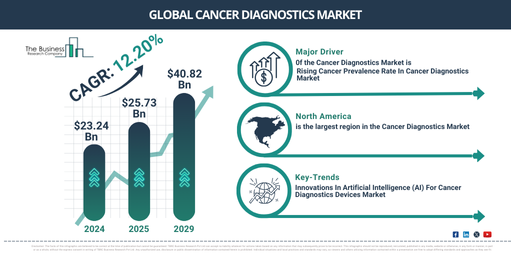
    In recent years, the cancer diagnostics market has experienced a significant growth spurt. Its size is predicted to expand from $23.24 billion in 2024, to $25.73 billion in the following year, with a compound annual growth rate (CAGR) of 10.7%. The growth observed during the historical period is due to factors such as a rise in the number of cancer cases, cancer screening initiatives, the rise of personalized medication, and increased public awareness.

    How Much Will the Cancer Diagnostics Market Be Worth in 2029?

    The market for cancer diagnostics is anticipated to witness a swift expansion in the forthcoming years, reaching a market value of $40.82 billion by 2029, growing at a compound annual growth rate (CAGR) of 12.2%. The prediction for such accelerated growth during the forecast period can be credited to factors such as the expansion of emerging markets, regulatory backing, the utilization of artificial intelligence (AI) and machine learning, and early detection initiatives. The forecast period also suggests significant trends like the use of liquid biopsies, multi-omics methods, point-of-care testing, and the proliferation of screening and early intervention campaigns.

    Download The Free Sample Report Here:

    https://www.thebusinessresearchcompany.com/sample.aspx?id=2570&type=smp

    Which is the Largest Company in the Cancer Diagnostics Market?

    Major companies operating in the cancer diagnostics market include Abbott Laboratories, Becton Dickinson and Company, Hologic, GE Healthcare Ltd., Thermo Fisher Scientific, Siemens Healthcare GmbH, Accuray, Elekta AB, C.R. BardInc., Biogenex Laboratories, Eckert & Ziegler BEBIG, Veracyte, PathAI, Bio-Rad Laboratories, Biochain, DiagnoCure, Illumina, Myriad Genetics, CompanionDx, Epic Sciences, Eli Lilly and Co, Genomic Health, Affymetrix, Agilent Technologies, Adaptive Biotechnologies, Biocartis, Biocept, Cancer Genetics Inc., Caris Life Sciences, Cepheid, Epigenomics AG, Exact Sciences, Foundation Medicine, GenMark Diagnostics, Guardant Health, HalioDX, IBA group, Invitae Corporation, Medtronic plc, NanoString Technologies, Natera, NeoGenomics, Oncura Inc., PerkinElmer, Personal Genome Diagnostics, Qiagen, Roche Diagnostics, Theragenics Corporation, Varian Medical SystemsInc.

    What Are the Main Market Drivers in the Cancer Diagnostics Industry?

    The surge in different types of cancers is one of the primary reasons propelling the cancer diagnostics market. The reason being that the escalation in instances of different kinds of cancer cases results in an increased number of individuals seeking diagnosis and treatment. Moreover, the World Health Organization (WHO) has ranked cancer as the second main reason for deaths worldwide. Estimations from the National Cancer Institute (NCI) point to an expected rise in new cancer cases per year, projecting a total of 23.6 million by 2030.

    Request For A Customized Report:

    https://www.thebusinessresearchcompany.com/customise?id=2570&type=smp

    How Is the Cancer Diagnostics Market Segments Structured?

    The cancer diagnostics market covered in this report is segmented –

    1) By Products: Companion Diagnostics, Molecular Diagnostics

    2) By Method: Biopsy, Endoscopy, Tumor Biomarker Tests, Imaging

    3) By Application: Cervical Cancer, Breast Cancer, Liver Cancer, Blood Cancer, Kidney Cancer, Colorectal Cancer, Pancreatic Cancer, Ovarian Cancer, Melanoma, Other Applications

    4) By End-User: Cancer Research Institutes, Diagnostic Laboratories, Hospitals, Other End Users

    Subsegments:

    1) By Companion Diagnostics: Biomarker-Based Companion Diagnostics, Genetic Testing-Based Companion Diagnostics, Immunohistochemistry-Based Companion Diagnostics, PCR-Based Companion Diagnostics, Other Companion Diagnostics,

    2) By Molecular Diagnostics: Polymerase Chain Reaction (PCR) Diagnostics, Next-Generation Sequencing (NGS) Diagnostics, In Situ Hybridization Diagnostics, Microarray-Based Diagnostics, DNA Or RNA Extraction Kits, Other Molecular Diagnostics

    What Strategic Trends Are Transforming the Cancer Diagnostics Market?

    AI-based systems for detecting cancer are gaining traction in the field of cancer diagnostics. Through enhancing the precision of image recognition during diagnostic procedures such as for breast and lung cancers, AI supports early-stage cancer spotting. It also decreases the occurrence of false positives during lung cancer screening, thereby enhancing the detection accuracy. For example, a trustworthy solution comprising of cancer-detecting algorithms for the independent assessment of lymph node biopsies has been invented by the Naval Medical Center San Diego and Google’s AI research arm, Google AI. This AI intervention has amplified the accuracy of metastatic breast cancer detection to 99%.

    Access The Full Report Here:

    https://www.thebusinessresearchcompany.com/report/cancer-diagnostics-global-market-report

    Which Global Regions Offer the Highest Growth in the Cancer Diagnostics Market?

    North America was the largest region in the cancer diagnostics market in 2023. Asia-Pacific was the second-largest region in the global cancer diagnostics market. The regions covered in the cancer diagnostics market report are Asia-Pacific, Western Europe, Eastern Europe, North America, South America, Middle East, and Africa.

    Purchase The Full Report Today:

    https://www.thebusinessresearchcompany.com/purchaseoptions.aspx?id=2570

    This Report Delivers Insight On:

    1. How big is the cancer diagnostics market, and how is it changing globally?

    2. Who are the major companies in the cancer diagnostics market, and how are they performing?

    3. What are the key opportunities and risks in the cancer diagnostics market right now?

    4. Which products or customer segments are growing the most in the cancer diagnostics market?

    5. What factors are helping or slowing down the growth of the cancer diagnostics market?

    About The Business Research Company:

    With over 15000+ reports from 27 industries covering 60+ geographies, The Business Research Company has built a reputation for offering comprehensive, data-rich research and insights. Armed with 1,500,000 datasets, the optimistic contribution of in-depth secondary research, and unique insights from industry leaders, you can get the information you need to stay ahead in the game.

    Get in touch with us:

    The Business Research Company: https://www.thebusinessresearchcompany.com/

    Americas +1 310-496-7795

    Asia +44 2071930708

    Europe +44 7882 955267

    Email us at info@tbrc.info

    Follow us on:

    LinkedIn: https://in.linkedin.com/company/the-business-research-company

    YouTube: https://www.youtube.com/channel/UC24_fI0rV8cR5DxlCpgmyFQ

    Global Market Model: https://www.thebusinessresearchcompany.com/global-market-model
  • Breast Cancer Drugs Industry Growth Expected to Reach $58.23 Billion by 2029 at a CAGR of 7.8% | Segmentation and Growth Opportunities

    Breast Cancer Drugs Industry Growth Expected to Reach $58.23 Billion by 2029 at a CAGR of 7.8% | Segmentation and Growth Opportunities

    Claim your 30% discount on Global Market Reports with code ONLINE30. Limited time only.

    #How Has the Breast Cancer Drugs Market Growth Performance Trended Historically, And What Lies Ahead?

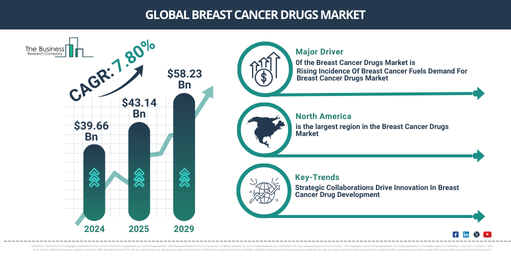
    Recent years have seen a robust expansion of the breast cancer drugs market size. This market is projected to augment from a value of $39.66 billion in 2024 to an increased worth of $43.14 billion in 2025, showcasing a compound annual growth rate (CAGR) of 8.8%. Factors contributing to growth during the historical period include a rise in breast cancer cases, progress in research and development initiatives, improvements in screening and early diagnosis, changes in treatment guidelines, and the advancement of healthcare infrastructure.

    What Is the Forecast for the Breast Cancer Drugs Market Size Through 2029?

    The market size for breast cancer drugs is anticipated to witness robust expansion in the upcoming years. The projections show that it will reach a value of $58.23 billion in 2029, growing at a compound annual growth rate (CAGR) of 7.8%. Factors contributing to the growth during the forecast period encompass a growing aging population, emerging markets, supportive policies and regulations, and enhanced patient advocacy and awareness. Key trends during the forecast period range from personalized medicine, targeted therapies and immunotherapies, to ongoing clinical trials and drug pipeline development, combined therapies, treatments driven by biomarkers, and the application of telemedicine and remote monitoring.

    Download The Free Sample Report Here:

    https://www.thebusinessresearchcompany.com/sample.aspx?id=2566&type=smp

    What are the Key Market Players in Breast Cancer Drugs Market and How They’re Evolving?

    Major companies operating in the breast cancer drugs market include F. Hoffmann-La Roche Ltd., Novartis AG, AstraZeneca PLC, Eli Lilly and Company Inc., Biocon Limited, Merck & Co. Inc., Genzyme Corporation, Johnson & Johnson, MacroGenics Inc., Celldex Therapeutics Inc., Onyx Pharmaceuticals Inc., BioNumerik Pharmaceuticals Inc., AbbVie Inc., Pfizer Inc., OncoGenex Pharmaceuticals Inc., Astellas Pharma Inc., Bristol-Myers Squibb Company, Bayer AG, GlaxoSmithKline plc, Teva Pharmaceutical Industries Ltd., Abbott Laboratories, Apthera Inc., Oncothyreon Inc., BiPar Sciences Inc., Puma Biotechnology Inc., Sanofi S.A., Genentech Inc., Sun Pharmaceutical Industries Ltd., Takeda Pharmaceutical Company Limited, Eisai Co. Ltd., Mylan N.V., Dr. Reddy’s Laboratories Ltd., Accord Healthcare Limited, Alkem Laboratories Limited, Natco Pharma Limited, Fresenius Kabi AG, Lupin Limited, Glenmark Pharmaceuticals Limited

    What Are the Primary Growth Drivers in the Breast Cancer Drugs Market?

    The escalating incidence of breast cancer is propelling the growth of the breast cancer drug market. Breast cancer develops from cells in the breast, usually when these cells start proliferating uncontrollably to develop a tumor that is frequently noticeable as a lump or identifiable via imaging tests. Factors such as an aging population, changing lifestyles, genetic susceptibility, and enhanced detection strategies contribute to the escalating incidence of this cancer. Breast cancer drugs augment cancer treatment by targeting the cancer cells, curbing tumor growth, preventing cancer proliferation, and enhancing patient survival rates via personalized therapy approaches. For example, data from the National Center for Biotechnology Information, a US government agency, in September 2022 suggests that by 2040 the annual number of newly diagnosed breast cancer cases will catapult by over 40%, equating to roughly 3 million cases. Elements such as heredity, age, and lifestyle are responsible for breast cancer, which is more prevalent in developed nations. As the population diagnosed with breast cancer ascends, so does the demand for breast cancer drugs, in turn, driving the surge of the breast cancer drug market.

    Request For A Customized Report:

    https://www.thebusinessresearchcompany.com/customise?id=2566&type=smp

    What Are the Leading Segments in the Global Breast Cancer Drugs Industry?

    The breast cancer drugs market covered in this report is segmented –

    1) By Type: Metastatic Breast Cancer, Triple Negative Breast Cancer, Others (Ductal Carcinoma Insitu, Invasive Ductal Carcinoma, Inflammatory Breast Cancer, Breast Cancer During Pregnancy, Others)

    2) By Distribution Channel: Hospital Pharmacies, Retail Pharmacies/ Drug Stores, Other Distribution Channels

    3) By End User: Ambulatory, Hospitals, Clinics, Other End-Users

    Subsegments:

    1) By Metastatic Breast Cancer: Hormone Receptor Positive Metastatic Breast Cancer, HER2 Positive Metastatic Breast Cancer, Triple Negative Metastatic Breast Cancer

    2) By Triple Negative Breast Cancer: Chemotherapy-Based Treatments, Immunotherapy-Based Treatments, Targeted Therapy

    3) By Others: Ductal Carcinoma In Situ (DCIS), Invasive Ductal Carcinoma (IDC), Inflammatory Breast Cancer (IBC), Breast Cancer During Pregnancy, Other Subtypes (Lobular Carcinoma, Paget’s Disease of the Breast)

    What Are the Key Market Trends in the Breast Cancer Drugs Industry?

    Breast cancer drug producers are demonstrating an escalating trend in alliances or partnerships with other firms to exchange technology, resources, and product information, and accentuate company growth. For example, AstraZeneca has entered into a collaboration agreement valued at $6.9 billion for the production of a breast cancer medication. As per the agreement, the development of trastuzumab deruxtecan would be a combined effort and the costs for its development and commercialization globally would be shared. Similarly, IBM Watson Health and Novartis have partnered to devise a solution capable of optimizing patient outcomes by determining drug combinations and sequences.

    Access The Full Report Here:

    https://www.thebusinessresearchcompany.com/report/breast-cancer-drugs-global-market-report

    What Is the Regional Outlook for the Breast Cancer Drugs Market?

    North America was the largest region in the breast cancer drugs market in 2023. The Middle East is expected to be the fastest-growing region in the breast cancer drugs market during the forecast period. The regions covered in the breast cancer drugs market report are Asia-Pacific, Western Europe, Eastern Europe, North America, South America, Middle East, Africa

    Purchase The Full Report Today:

    https://www.thebusinessresearchcompany.com/purchaseoptions.aspx?id=2566

    This Report Delivers Insight On:

    1. How big is the breast cancer drugs market, and how is it changing globally?

    2. Who are the major companies in the breast cancer drugs market, and how are they performing?

    3. What are the key opportunities and risks in the breast cancer drugs market right now?

    4. Which products or customer segments are growing the most in the breast cancer drugs market?

    5. What factors are helping or slowing down the growth of the breast cancer drugs market?

    About The Business Research Company:

    With over 15000+ reports from 27 industries covering 60+ geographies, The Business Research Company has built a reputation for offering comprehensive, data-rich research and insights. Armed with 1,500,000 datasets, the optimistic contribution of in-depth secondary research, and unique insights from industry leaders, you can get the information you need to stay ahead in the game.

    Get in touch with us:

    The Business Research Company: https://www.thebusinessresearchcompany.com/

    Americas +1 310-496-7795

    Asia +44 2071930708

    Europe +44 7882 955267

    Email us at info@tbrc.info

    Follow us on:

    LinkedIn: https://in.linkedin.com/company/the-business-research-company

    YouTube: https://www.youtube.com/channel/UC24_fI0rV8cR5DxlCpgmyFQ

    Global Market Model: https://www.thebusinessresearchcompany.com/global-market-model
  • Breast Cancer Diagnostics Industry Valued at $6.91 Billion by 2029 With CAGR of 8.2% | Size and Share Insights

    Breast Cancer Diagnostics Industry Valued at $6.91 Billion by 2029 With CAGR of 8.2% | Size and Share Insights

    Claim your 30% discount on Global Market Reports with code ONLINE30. Limited time only.

    What Are the Projected Market Size and Growth Rates for the Breast Cancer Diagnostics Market From 2025 To 2029?

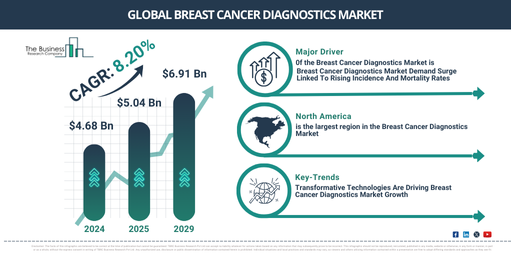
    The market size for breast cancer diagnostics has seen a robust expansion in past years. The projected growth is from $4.68 billion in 2024 to $5.04 billion in 2025, with a compound annual growth rate (CAGR) of 7.9%. The growth seen in the historical period can be tied back to factors such as heightened awareness and screening promotions, uses of mammography for screening, advancements in technology, genetic tests, and a multidisciplinary methodology.

    What Is the Projected Market Size of the Breast Cancer Diagnostics Market?

    Significant expansion is anticipated in the breast cancer diagnostics market in the succeeding years. The projections suggest that the market will reach a value of $6.91 billion by 2029, growing at a compound annual growth rate (CAGR) of 8.2%. The predicted growth can be credited to various factors like personalized medicine, liquid biopsies, 3D mammography (tomosynthesis), artificial intelligence, and machine learning, as well as the advent of telemedicine and remote consultations. The forecast period also promises significant trends such as improvements in imaging technologies, increased focus on personalized medicine, the use of liquid biopsies, and the rise of AI and machine learning.

    Download The Free Sample Report Here:

    https://www.thebusinessresearchcompany.com/sample.aspx?id=3284&type=smp

    Who are the Major Competitors in the Breast Cancer Diagnostics Market Outlook?

    Major companies operating in the breast cancer diagnostics market include Abbott Laboratories, Myriad Genetics Inc., Hologic Inc., Koninklijke Philips N.V., Fujifilm Holdings Corporation, GE Healthcare, Thermo Fisher Scientific Inc., Siemens AG, NanoString Technologies Inc., Gamma Medica Inc., Aurora Imaging Technology Inc., Dilon Technologies Inc., Exact Sciences Corporation, F. Hoffmann-La Roche Ltd, Micrima Limited, Provista Diagnostics Inc., Leica Biosystems Nussloch GmbH, bioTheranostics Inc., Bio-Rad Laboratories Inc., Illumina Inc., Biocept Inc., Epigenomics AG, AstraZeneca plc, Quest Diagnostics Incorporated, Agilent Technologies Inc., Cepheid, Guardant Health Inc., Invitae Corporation, Natera Inc., NeoGenomics Laboratories Inc., Oncocyte Corporation, PerkinElmer Inc., Sysmex Corporation, Veracyte Inc.

    What Is Fueling Growth in the Breast Cancer Diagnostics Market?

    The rise in breast cancer cases necessitates additional diagnostic equipment, thereby boosting the breast cancer diagnostics market’s demand. With breast cancer being the leading type of cancer, it affects around 2.1 million women annually and is the primary cause of cancer-related deaths among women. The primary aim of early diagnosis is to increase the detection rate of breast cancer in its early stages, allowing for more effective treatment and a decreased mortality risk. In January 2022, the American Cancer Society, a health organization from the US focused on cancer eradication, estimated that around 287,850 new cases of invasive breast cancer and 51,400 instances of DCIS would be diagnosed in American women that year, expecting about 43,250 deaths due to breast cancer. As such, the surge in breast cancer cases is predicted to propel the growth of the breast cancer diagnostics market.

    Request For A Customized Report:

    https://www.thebusinessresearchcompany.com/customise?id=3284&type=smp

    Which Breast Cancer Diagnostics Market Segments Are Growing the Fastest?

    The breast cancer diagnostics market covered in this report is segmented –

    1) By Type: Imaging, Biopsy, Genomic Tests, Blood Tests, Other Types

    2) By Technology: Fluorescent In Situ Hybridization (FISH), Comparative Genomic Hybridization (CGH), Immunohistochemical (IHC), Other Technologies

    3) By Cancer Type: BRCA Breast Cancer, ER And PR Breast Cancer, HER 2 Breast Cancer, EGFR Mutation Test Breast Cancer, Other Cancer Types

    4) By Diagnostic Type: Ionizing Breast Imaging Technologies, Non-ionizing Imaging Technologies

    5) By End Users: Hospitals And Clinics, Cancer Research Centers, Diagnostic Laboratories, Ambulatory Surgical Centers

    Subsegments:

    1) By Imaging: Mammography, Ultrasound Imaging, Magnetic Resonance Imaging (MRI), Positron Emission Tomography (PET), Tomosynthesis

    2) By Biopsy: Needle Biopsy, Core Needle Biopsy, Fine Needle Aspiration Biopsy (FNA), Stereotactic Biopsy

    3) By Genomic Tests: Oncotype DX, MammaPrint, PAM50, BRCA1 Or 2 Testing

    4) By Blood Tests: Liquid Biopsy, Circulating Tumor DNA (ctDNA) Tests, Circulating Tumor Cells (CTCs) Tests

    5) By Other Types: Hormone Receptor Tests, HER2 Tests, Genetic Mutation Testing

    Which Industry Trends Are Shaping the Future of the Breast Cancer Diagnostics Market?

    The progression in technology is a crucial trend within the breast cancer diagnostics market. Numerous innovative methods for diagnosing and treating breast cancer have been created. Breast tomosynthesis, also known as 3D mammography, captures images of the breast from different angles and converts them into a 3D representation. In September 2022, Niramai, a Health-Tech firm from India, unveiled a unique solution named Thermalytix. It is an automatic tool for breast cancer screening and diagnosis that merges thermal imaging with AI.

    Access The Full Report Here:

    https://www.thebusinessresearchcompany.com/report/breast-cancer-diagnostics-global-market-report

    Which Countries Are Leading the Breast Cancer Diagnostics Market?

    North America was the largest region in the breast cancer diagnostics market in 2023. Asia-Pacific was the second largest region in the breast cancer diagnostics industry. The regions covered in the breast cancer diagnostics market report are Asia-Pacific, Western Europe, Eastern Europe, North America, South America, Middle East, Africa

    Purchase The Full Report Today:

    https://www.thebusinessresearchcompany.com/purchaseoptions.aspx?id=3284

    This Report Delivers Insight On:

    1. How big is the breast cancer diagnostics market, and how is it changing globally?

    2. Who are the major companies in the breast cancer diagnostics market, and how are they performing?

    3. What are the key opportunities and risks in the breast cancer diagnostics market right now?

    4. Which products or customer segments are growing the most in the breast cancer diagnostics market?

    5. What factors are helping or slowing down the growth of the breast cancer diagnostics market?

    About The Business Research Company:

    With over 15000+ reports from 27 industries covering 60+ geographies, The Business Research Company has built a reputation for offering comprehensive, data-rich research and insights. Armed with 1,500,000 datasets, the optimistic contribution of in-depth secondary research, and unique insights from industry leaders, you can get the information you need to stay ahead in the game.

    Get in touch with us:

    The Business Research Company: https://www.thebusinessresearchcompany.com/

    Americas +1 310-496-7795

    Asia +44 2071930708

    Europe +44 7882 955267

    Email us at info@tbrc.info

    Follow us on:

    LinkedIn: https://in.linkedin.com/company/the-business-research-company

    YouTube: https://www.youtube.com/channel/UC24_fI0rV8cR5DxlCpgmyFQ

    Global Market Model: https://www.thebusinessresearchcompany.com/global-market-model
  • Brain And Neuroimaging Devices Market to Reach $54.73 Billion by 2029 | Key Drivers and Future Outlook

    Brain And Neuroimaging Devices Market to Reach $54.73 Billion by 2029 | Key Drivers and Future Outlook

    Claim your 30% discount on Global Market Reports with code ONLINE30. Limited time only.

    What Is the Estimated Market Size of the Brain And Neuroimaging Devices Market In 2029?

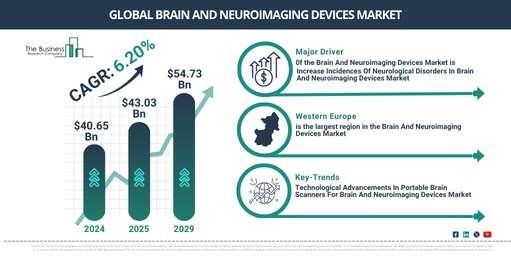
    Recent years have seen a robust growth in the market size for brain and neuroimaging devices. The market, which is projected to expand from $40.65 billion in 2024 to $43.03 billion in 2025, anticipates a compound annual growth rate (CAGR) of 5.8%. The historical growth of the market is due to factors like the diagnosis and treatment of neurological disorders, the aging population, research in brain mapping and connectivity, along with the growth of emerging markets.

    What Growth Rate Is Forecasted for the Brain And Neuroimaging Devices Market by 2029?

    Expectations are high for noticeable expansion in the brain and neuroimaging devices market in the coming years. With a compound annual growth rate (CAGR) of 6.2%, it is projected to reach a market value of $54.73 billion by 2029. Factors contributing to the expected growth in the forecasted period include regulatory backing, bespoke medication, targeted treatments, and value-driven healthcare. Dominant trends for the same period are anticipated to incorporate high-definition imaging, multi-faceted imaging, wearable neuroimaging, as well as connectivity and functional imaging.

    Download The Free Sample Report Here:

    https://www.thebusinessresearchcompany.com/sample.aspx?id=3290&type=smp

    Which Key Companies Are Shaping the Future of the Brain And Neuroimaging Devices Market?

    Major companies operating in the brain and neuroimaging devices market include GE HealthCare, Siemens AG, Koninklijke Philips, Canon Medical Systems Corporation, Hitachi Medical Systems, Medtronic Plc., EB Neuro S.p.A., Neurosoft, MinFound Medical Systems Co. Ltd., Elekta, Varian Medical Systems, Toshiba Corporation, Shimadzu Corporation, Agilent Technologies Inc., Waters Corporation, Bruker Corporation, PerkinElmer Inc., Luminex Corporation, Bio-Rad Laboratories Inc., Carl Zeiss Meditec AG, Fujifilm Holdings Corporation, Hologic Inc., Nihon Kohden Corporation, Natus Medical Incorporated, RIMED Ltd., Advanced Brain Monitoring Inc., Intranerve Neuroscience Holdings LLC., Nuvasive Inc., SpecialtyCare Inc.

    Which Factors Are Driving Demand in the Brain And Neuroimaging Devices Industry?

    The expansion of the brain and neuroimaging devices market is predicted due to a rise in the occurrence of neurological diseases. Based on the European Academy of Neurology study, neurological conditions affected one in three individuals in 2022 and fatalities caused by neurological disorders surged nearly 40% over the past three decades. Brain and neuroimaging equipment are utilized in determining neurological diseases, consequently enhancing the survival rate and disease management. This escalating occurrence rate is anticipated to propel the growth of the brain and neuroimaging devices market.

    Request For A Customized Report:

    https://www.thebusinessresearchcompany.com/customise?id=3290&type=smp

    How Is the Brain And Neuroimaging Devices Market Segmented by Several Divisions?

    The brain and neuroimaging devices market covered in this report is segmented –

    1) By Imaging Type: Functional Magnetic Resonance Imaging (FMRI), Computed Tomography (CT), Positron Emission Tomography (PET), Electroencephalography (EEG), Magneto Encephalography (MEG), Other Imaging Types

    2) By Application: Parkinson’s Disease, Traumatic Brain Injury, Epilepsy, Dementia, Sleep Disorders, Other Applications

    3) By End-User: Hospitals, Diagnostic Centres, Ambulatory Surgical Centres

    Subsegments:

    1) By Functional Magnetic Resonance Imaging (FMRI): Resting-State FMRI, Task-Based FMRI, Diffusion Tensor Imaging (DTI) With FMRI

    2) By Computed Tomography (CT): X-ray CT, Positron Emission Tomography (PET) Or CT Hybrid Imaging, Multi-Slice CT

    3) By Positron Emission Tomography (PET): PET Or CT, PET Or MRI

    4) By Electroencephalography (EEG): Conventional EEG, Ambulatory EEG, High-Density EEG

    5) By Magnetoencephalography (MEG): Whole-Head MEG, Electromagnetic Source Imaging (ESI) With MEG

    6) By Other Imaging Types: Near-Infrared Spectroscopy (NIRS), Transcranial Magnetic Stimulation (TMS), Optical Coherence Tomography (OCT)

    What are the Emerging Market Trends Driving the Growth of the Brain And Neuroimaging Devices Industry?

    Corporations and scholars are channeling their efforts into creating affordable and readily available portable brain scanners, anticipated to bring about a major shift in the field of brain imaging by considerably reducing costs. EMVision Medical Devices has collaborated with academics at Queensland University to create a compact brain scanning technology suitable for use in nearly any location. Additionally, at University College London, researchers have introduced a lightweight, helmet-like portable MEG brain scanner. This device offers the advantage of recording brain activity even as individuals move naturally, providing enhanced imaging benefits for patients with conditions that instigate involuntary body movements, such as epilepsy.

    Access The Full Report Here:

    https://www.thebusinessresearchcompany.com/report/brain-and-neuroimaging-devices-global-market-report

    Which Regions Are Driving Growth in the Brain And Neuroimaging Devices Market?

    Western Europe was the largest region in the brain and neuroimaging devices market in 2023. North America was the second-largest region in the global brain and neuroimaging devices market report. Africa. was the smallest region in the brain and neuroimaging devices market. The regions covered in the brain and neuroimaging devices market report are Asia-Pacific, Western Europe, Eastern Europe, North America, South America, Middle East, and Africa.

    Purchase The Full Report Today:

    https://www.thebusinessresearchcompany.com/purchaseoptions.aspx?id=3290

    This Report Delivers Insight On:

    1. How big is the brain and neuroimaging devices market, and how is it changing globally?

    2. Who are the major companies in the brain and neuroimaging devices market, and how are they performing?

    3. What are the key opportunities and risks in the brain and neuroimaging devices market right now?

    4. Which products or customer segments are growing the most in the brain and neuroimaging devices market?

    5. What factors are helping or slowing down the growth of the brain and neuroimaging devices market?

    About The Business Research Company:

    With over 15000+ reports from 27 industries covering 60+ geographies, The Business Research Company has built a reputation for offering comprehensive, data-rich research and insights. Armed with 1,500,000 datasets, the optimistic contribution of in-depth secondary research, and unique insights from industry leaders, you can get the information you need to stay ahead in the game.

    Get in touch with us:

    The Business Research Company: https://www.thebusinessresearchcompany.com/

    Americas +1 310-496-7795

    Asia +44 2071930708

    Europe +44 7882 955267

    Email us at info@tbrc.info

    Follow us on:

    LinkedIn: https://in.linkedin.com/company/the-business-research-company

    YouTube: https://www.youtube.com/channel/UC24_fI0rV8cR5DxlCpgmyFQ

    Global Market Model: https://www.thebusinessresearchcompany.com/global-market-model

  • Adbry/Adtralza Market Outlook 2025 – Insights for Executive and Strategic Planning

    Claim your 30% discount on Global Market Reports with code ONLINE30. Limited time only.

    How Fast Is The Abecma Market Expected to Grow Between 2025 And 2029?

    In recent times, the abecma market size has seen a growth of XX (HCAGR). Its growth projected to expand from $XX million in 2024 to $XX million in 2025, demonstrating a compound annual growth rate (CAGR) of XX%. This expansion during the historic period can be traced back to the approval of abecma for relapsed/refractory multiple myeloma and impressive progress in car t-cell therapy. Other significant factors contributing to the growth include the rising prevalence of multiple myeloma, high effectiveness in cases resistant to treatment, and increased investment in research and development.

    What Growth Rate Is Anticipated for the Abecma Market in the Coming Years?

    In the coming years, the abcema market is projected to see an increase of XX (FCAGR). By the year 2029, the market is expected to reach $XX million, showing a compound annual growth rate (CAGR) of XX%. This growth during the forecast period is anticipated due to increasing incidents of multiple myeloma, broader approved indications, advancements in personalized medicine, global market growth, better production processes, and cost cutting measures. Key trends during this forecast period are likely to be a greater uptake in early treatment stages, geographical market growth, technological progression in car t-cell therapy, strategies for combination therapy, personalized and precision medicine, and a heightened emphasis on relapsed/refractory multiple myeloma.

    Download The Free Sample Report Here:

    https://www.thebusinessresearchcompany.com/sample.aspx?id=19847&type=smp

    Who Are the Leading Companies in the Abecma Market?

    Major companies operating in the abecma market include Bristol-Myers Squibb

    What Are the Key Drivers of the Abecma Market?

    The abecma market is anticipated to gain momentum, spurred by the growing incidence of multiple myeloma. This form of blood cancer impacts plasma cells, which are a subset of white blood cells residing in the bone marrow. The aging population, enhanced diagnostic strategies, and growing disease awareness contribute to the increasing occurrence of multiple myeloma. Abecma, a unique CAR T-cell therapy, serves as an effective treatment for multiple myeloma. It deploys genetically altered immune cells to identify and eradicate cancerous plasma cells, presenting a new treatment route for those patients grappling with recurrent or refractory disease forms. For example, projections from the American Cancer Society, a not-for-profit organization committed to cancer elimination, noted in January 2024 that there will likely be 35,780 myeloma cases, an increase from 34,470 in 2022. Consequently, the escalating prevalence of multiple myeloma serves as a key driver for the abecma market’s growth.

    Request For A Customized Report:

    https://www.thebusinessresearchcompany.com/customise?id=19847&type=smp

    What Are the Key Market Segments in the Abecma Industry?

    The abecmamarket covered in this report is segmented –

    1) By Indication: Multiple Myeloma; B-Cell Lymphoma (BCL); Acute Lymphoblastic Leukemia (ALL)

    2) By End User: Adult; Geriatric

    3) By Distribution Channel: Hospitals And clinics; Retail And Speciality Pharmacies; Online Pharmacies

    What Are the Latest Trends in the Abecma Market?

    A primary trend arising in the abecma market includes the development and focusing on cutting-edge and inventive treatments like chimeric antigen receptor T cell therapy (CAR T). The aim is to improve the results of patients, target certain types of cancer more efficiently, and broaden the treatment alternatives for those suffering from intractable or recurrent multiple myeloma. Utilized mainly for treating specific cancers like lymphoma and leukemia, chimeric antigen receptor T cell therapy (CAR T) is an evolved form of immunotherapy. This therapy involves the genetic modification of a patient’s own T cells (a variant of white blood cells) to enhance their ability to detect and destroy cancer cells. For example, in March 2024, the European Commission (EC) gave Bristol Myers Squibb – a pharmaceutical company based in the US, the approval for their CAR T-cell therapy innovatively developed to treat abecma (idecabtagene vicleucel; ide-cel). This treatment specifically aims adult patients with recurring and refractory multiple myeloma, and who have undergone at least two previous therapies including an immunomodulatory agent (IMiD), a proteasome inhibitor (PI), and an anti-CD38 antibody, and whose disease has progressed post their last treatment.

    Access The Full Report Here:

    https://www.thebusinessresearchcompany.com/report/abecma-global-market-report

    What Are the Key Regional Markets in the Abecma Industry?

    North America was the largest region in the abecma market in 2024. The regions covered in the abecma market report are Asia-Pacific, Western Europe, Eastern Europe, North America, South America, Middle East, Africa.

    Purchase The Full Report Today:

    https://www.thebusinessresearchcompany.com/purchaseoptions.aspx?id=19847

    This Report Delivers Insight On:

    1. How big is the abecma market, and how is it changing globally?

    2. Who are the major companies in the abecma market, and how are they performing?

    3. What are the key opportunities and risks in the abecma market right now?

    4. Which products or customer segments are growing the most in the abecma market?

    5. What factors are helping or slowing down the growth of the abecma market?

    About The Business Research Company:

    With over 15000+ reports from 27 industries covering 60+ geographies, The Business Research Company has built a reputation for offering comprehensive, data-rich research and insights. Armed with 1,500,000 datasets, the optimistic contribution of in-depth secondary research, and unique insights from industry leaders, you can get the information you need to stay ahead in the game.

    Get in touch with us:

    The Business Research Company: https://www.thebusinessresearchcompany.com/

    Americas +1 310-496-7795

    Asia +44 2071930708

    Europe +44 7882 955267

    Email us at info@tbrc.info

    Follow us on:

    LinkedIn: https://in.linkedin.com/company/the-business-research-company

    YouTube: https://www.youtube.com/channel/UC24_fI0rV8cR5DxlCpgmyFQ

    Global Market Model: https://www.thebusinessresearchcompany.com/global-market-model