Blog

  • Market Analysis on Pharmaceutical Sterility Testing Industry – Insights for Corporate Strategy and R&D

    Market Analysis on Pharmaceutical Sterility Testing Industry – Insights for Corporate Strategy and R&D

    Claim your 30% discount on Global Market Reports with code ONLINE30. Limited time only.

    What Are the Projected Market Size and Growth Rates for the Pharmaceutical Sterility Testing Market From 2025 To 2029?

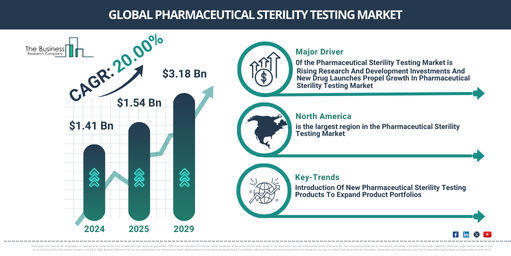
    The size of the pharmaceutical sterility testing market has seen significant expansion in the past few years. It is anticipated to escalate from $1.41 billion in 2024 to $1.54 billion in 2025, reflecting a compound annual growth rate (CAGR) of 9.0%. Factors that have contributed to growth during the historic period encompass an increased demand for high-quality pharmaceutical products, a heightened focus on the safety and effectiveness of drugs, a surge in the demand for biologics and biosimilar drugs, growing occurrence of infectious diseases, and an increase in investments within the realm of life science research.

    What Is the Projected Market Size of the Pharmaceutical Sterility Testing Market?

    In the coming years, the market size for pharmaceutical sterility testing is projected to experience a swift expansion. With a compound annual growth rate (CAGR) of 20.0%, it is anticipated to reach $3.18 billion by 2029. Factors contributing to the predicted growth during this period include the development of biopharmaceuticals, personalized medicine, an increasing trend towards outsourcing, an emphasis on quality assurance, and preparedness for pandemics. Key trends likely to shape the forecast period are fast microbiological methods, combination products, the importance of data integrity and digitization, automation and robotics, alongside advanced analytical techniques.

    Download The Free Sample Report Here:

    https://www.thebusinessresearchcompany.com/sample.aspx?id=2826&type=smp

    Who are the Major Competitors in the Pharmaceutical Sterility Testing Market Outlook?

    Major companies operating in the pharmaceutical sterility testing market include Pacific Biolabs Inc., STERIS Corporation, Boston Analytical Inc., Gibraltar Laboratories Inc., Sartorius AG, Solvias AG, SGS S.A., Toxikon Inc., Pace Analytical Services LLC, Charles River Laboratories International Inc., Nelson Laboratories Inc., Rapid Micro Biosystems Inc., bioMérieux Inc., Merck KGaA, WuXi AppTec, Sotera Health LLC, Dynalabs LLC, Infinity Laboratories, Eurofins Scientific SE, Avomeen Analytical Services, Microbac Laboratories Inc., Analytical Lab Group LLC, North American Science Associates Inc., Medical Device Testing Services Inc., Microtest Laboratories Inc., BioScreen Testing Services Inc., Microchem Laboratory Inc., Bactolac Pharmaceutical Inc., Micro Quality Labs Inc., Boston Microfluidics Inc., BioPharma Services Inc., Microbiology Research Associates, BioScience Laboratories Inc.

    What Is Fueling Growth in the Pharmaceutical Sterility Testing Market?

    The growth in the pharmaceutical sterility testing market can be attributed to the increase in drug launches and a surge in R&D investments. Sterility plays a crucial role in drug manufacturing to prevent product contamination and ensure they are devoid of any viable microorganisms. For instance, Pharmaceutical Technology, an independent US-based source for information, insight, and analysis on bio/pharmaceutical formulation, reported in March 2022 that the UK government committed £260 million ($347 million) to escalate R&D and create innovative treatments, diagnostics, and tools. Similarly, a report by IQVIA, a US-based provider of advanced analytics, technology solutions, and clinical research services in December 2021, predicted that 300 new medicines are expected to be launched over the next five years until 2026. This represents a significant increase over the average number launched over the prior ten years and these drugs are predicted to gear towards specialty, niche, and orphan drugs. The next five years should see new product spending increase by $196 billion, which will be approximately balanced by a $188 billion reduction in brand spending due to loss of exclusivity.

    Request For A Customized Report:

    https://www.thebusinessresearchcompany.com/customise?id=2826&type=smp

    Which Pharmaceutical Sterility Testing Market Segments Are Growing the Fastest?

    The pharmaceutical sterility testing market covered in this report is segmented –

    1) By Sample: Sterile Drugs, Medical Devices, Biologics and Therapeutics

    2) By Product Type: Instruments, Kits and Reagents, Services

    3) By Type: In- house, Outsourcing

    4) By Test Type: Sterility Testing, Bioburden Testing, Bacterial Endotoxin Testing

    5) By End- User: Compounding Pharmacies, Medical Devices Companies, Pharmaceutical Companies

    Subsegments:

    1) By Sterile Drugs: Injectable Drugs, Infusion Solutions, Ophthalmic Solutions

    2) By Medical Devices: Surgical Instruments, Implants, Catheters

    3) By Biologics And Therapeutics: Vaccines, Gene Therapies, Cell Therapies

    Which Industry Trends Are Shaping the Future of the Pharmaceutical Sterility Testing Market?

    Firms within the pharmaceutical testing industry are unveiling innovative pharmaceutical sterility testing products and facilities to diversify their product range and strengthen their market foothold. These companies are bringing to the market advanced solutions and well-furnished services to tap into the burgeoning expansion potential of the pharmaceutical sterility testing market. For example, in June 2022, STEMart, a US-based firm specializing in integrated medical device CRO services, rolled out extensive microbiology and sterility testing for sterile, non-pyrogenic items. Comprehensive microbiology and sterility testing encompass a range of services, including the Antibiotic Potency Test, which assesses the bioactivity or potency of particular antibiotics for medical apparatuses.

    Access The Full Report Here:

    https://www.thebusinessresearchcompany.com/report/pharmaceutical-sterility-testings-global-market-report

    Which Countries Are Leading the Pharmaceutical Sterility Testing Market?

    The countries covered in the pharmaceutical sterility testing market report are Australia, Brazil, China, France, Germany, India, Indonesia, Japan, Russia, South Korea, UK, USA, Italy, Spain, Canada.

    Purchase The Full Report Today:

    https://www.thebusinessresearchcompany.com/purchaseoptions.aspx?id=2826

    This Report Delivers Insight On:

    1. How big is the pharmaceutical sterility testing market, and how is it changing globally?

    2. Who are the major companies in the pharmaceutical sterility testing market, and how are they performing?

    3. What are the key opportunities and risks in the pharmaceutical sterility testing market right now?

    4. Which products or customer segments are growing the most in the pharmaceutical sterility testing market?

    5. What factors are helping or slowing down the growth of the pharmaceutical sterility testing market?

    About The Business Research Company:

    With over 15000+ reports from 27 industries covering 60+ geographies, The Business Research Company has built a reputation for offering comprehensive, data-rich research and insights. Armed with 1,500,000 datasets, the optimistic contribution of in-depth secondary research, and unique insights from industry leaders, you can get the information you need to stay ahead in the game.

    Get in touch with us:

    The Business Research Company: https://www.thebusinessresearchcompany.com/

    Americas +1 310-496-7795

    Asia +44 2071930708

    Europe +44 7882 955267

    Email us at info@tbrc.info

    Follow us on:

    LinkedIn: https://in.linkedin.com/company/the-business-research-company

    YouTube: https://www.youtube.com/channel/UC24_fI0rV8cR5DxlCpgmyFQ

    Global Market Model: https://www.thebusinessresearchcompany.com/global-market-model
  • Pharma Microbiology Testing Kits Forecast Report – Designed for Decision Makers and Product Teams

    Pharma Microbiology Testing Kits Forecast Report – Designed for Decision Makers and Product Teams

    Claim your 30% discount on Global Market Reports with code ONLINE30. Limited time only.

    What Is the Estimated Market Size of the Pharma Microbiology Testing Kits Market In 2029?

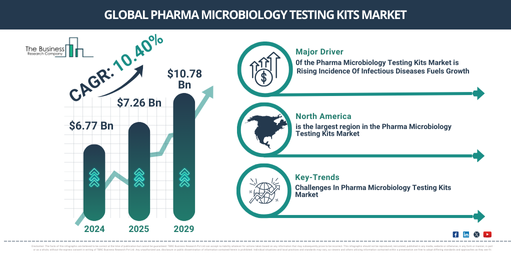
    In recent times, there has been a robust growth in the market size of pharma microbiology testing kits. The market, which was valued at $6.77 billion in 2024, is projected to escalate to $7.26 billion in 2025, indicating a Compound Annual Growth Rate (CAGR) of 7.2%. Factors contributing to this growth during the historical period include the burgeoning demand for pharmaceuticals, an increase in the cases of infectious diseases, the rise of globalization, a heightened understanding of the significance of pharma microbiology testing, and the globalization of pharmaceutical production.

    What Growth Rate Is Forecasted for the Pharma Microbiology Testing Kits Market by 2029?

    The market size for pharma microbiology testing kits is anticipated to undergo swift expansion in the coming years. The market is projected to rise to $10.78 billion in 2029, with a compound annual growth rate (CAGR) of 10.4%. Trigger factors for this expansion during the forecast period include a surge in the utilization of automation in pharma microbiology testing, an increase in investment towards research and development in this field, and the growing use of innovative technologies in biopharmaceutical manufacturing and personalized medicine. Key emerging trends throughout the forecast period consist of quick microbial testing, point-of-care testing, single-use systems, digital integration, as well as biosafety and biosecurity.

    Download The Free Sample Report Here:

    https://www.thebusinessresearchcompany.com/sample.aspx?id=2487&type=smp

    Which Key Companies Are Shaping the Future of the Pharma Microbiology Testing Kits Market?

    Major companies operating in the pharma microbiology testing kits market include F. Hoffmann-La Roche AG, Becton Dickinson and Company, Abbott Laboratories, ThermoFisher Scientific, SGS SA, Toxikon Corp., Pace Analytical Services, Boston Analytics, Charles River Laboratories International, Nelson Laboratories, Siemens healthcare AG, Hologic Inc., Neogen Corporation, Shimadzu Corporation, Merck KGaA, Agilent TechnologiesInc., QIAGEN N.V., Bruker Corporation, bioMérieux SA, Lucideon, Lonza Group AG, MilliporeSigma, Hardy Diagnostics, Sartorius AG, 3M Company, Waters Corporation, PerkinElmer Inc., Luminex Corporation

    Which Factors Are Driving Demand in the Pharma Microbiology Testing Kits Industry?

    One of the primary growth factors for the pharma microbiology testing kits market is the increasing occurrence of infectious diseases. The global prevalence of diseases such as Hepatitis A, B, and C, sexually transmitted diseases (STDs), and human immunodeficiency virus (HIV) is on the rise, as indicated by CDC (Centre for Disease Control and Prevention). According to a report from the WHO, around 1.4 million Hepatitis A cases are reported worldwide each year. Therefore, the escalating count of infectious disease cases resulting from factors such as infected needle injections, unprotected sex, homelessness, unavailability of medical care, and other socioeconomic issues propels the growth of the pharma microbiology testing kits market.

    Request For A Customized Report:

    https://www.thebusinessresearchcompany.com/customise?id=2487&type=smp

    How Is the Pharma Microbiology Testing Kits Market Segmented by Several Divisions?

    The pharma microbiology testing kits market covered in this report is segmented –

    1) By Product: Consumables, Equipment

    2) By Test: Endotoxin Testing, Sterility Testing, Microbial Examination, Environmental Monitoring, Other Tests

    3) By End User: Hospitals & Diagnostic Centers, Custom Lab Service Providers, Academic & Research Institutes

    Subsegments:

    1) By Consumables: Media and Reagents, Test Kits, Sample Collection Containers

    2) By Equipment: Incubators, Autoclaves, Microbial Identification Systems

    What are the Emerging Market Trends Driving the Growth of the Pharma Microbiology Testing Kits Industry?

    One of the significant challenges the pharma microbiology testing kits market faces is the constrained shelf life of microorganisms and microbiology reagents. Shelf life pertains to the duration a product can remain useable following its production. The duration for which microbiology reagents can remain viable often relies on their exposure to atmospheric conditions. With microorganisms like bacteria having an incredibly brief lifespan of just 12 hours, the window for microbiological research is severely limited. As these microorganisms worsen in quality and become unfit for use, they can result in erroneous findings from pharma microbiology testing kits. This short or constrained shelf life of microbiology reagents could potentially escalate costs and deter growth in the pharma microbiology testing kits market.

    Access The Full Report Here:

    https://www.thebusinessresearchcompany.com/report/pharma-microbiology-testing-kits-global-market-report

    Which Regions Are Driving Growth in the Pharma Microbiology Testing Kits Market?

    The countries covered in the pharma microbiology testing kits market report are Australia, Brazil, China, France, Germany, India, Indonesia, Japan, Russia, South Korea, UK, USA, Italy, Spain, Canada.

    Purchase The Full Report Today:

    https://www.thebusinessresearchcompany.com/purchaseoptions.aspx?id=2487

    This Report Delivers Insight On:

    1. How big is the pharma microbiology testing kits market, and how is it changing globally?

    2. Who are the major companies in the pharma microbiology testing kits market, and how are they performing?

    3. What are the key opportunities and risks in the pharma microbiology testing kits market right now?

    4. Which products or customer segments are growing the most in the pharma microbiology testing kits market?

    5. What factors are helping or slowing down the growth of the pharma microbiology testing kits market?

    About The Business Research Company:

    With over 15000+ reports from 27 industries covering 60+ geographies, The Business Research Company has built a reputation for offering comprehensive, data-rich research and insights. Armed with 1,500,000 datasets, the optimistic contribution of in-depth secondary research, and unique insights from industry leaders, you can get the information you need to stay ahead in the game.

    Get in touch with us:

    The Business Research Company: https://www.thebusinessresearchcompany.com/

    Americas +1 310-496-7795

    Asia +44 2071930708

    Europe +44 7882 955267

    Email us at info@tbrc.info

    Follow us on:

    LinkedIn: https://in.linkedin.com/company/the-business-research-company

    YouTube: https://www.youtube.com/channel/UC24_fI0rV8cR5DxlCpgmyFQ

    Global Market Model: https://www.thebusinessresearchcompany.com/global-market-model
  • Market Analysis on Neutropenia Biologic Drug Treatment Industry – Insights for Corporate Strategy and R&D

    Market Analysis on Neutropenia Biologic Drug Treatment Industry – Insights for Corporate Strategy and R&D

    Claim your 30% discount on Global Market Reports with code ONLINE30. Limited time only.

    What Are the Projected Market Size and Growth Rates for the Neutropenia Biologic Drug Treatment Market From 2025 To 2029?

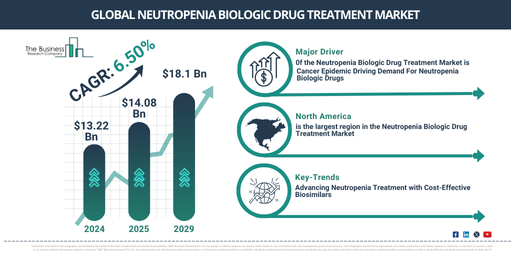
    The market for biologic drugs treating neutropenia has significantly expanded in the recent past. The market, valued at $13.22 billion in 2024, is forecasted to increase to $14.08 billion in 2025, representing a compound annual growth rate (CAGR) of 6.5%. Factors contributing to the growth during the historic period include market accessibility and reimbursement practices, efforts towards patient advocacy and awareness, education and training of physicians, as well as successful biological drug development and clinical trials.

    What Is the Projected Market Size of the Neutropenia Biologic Drug Treatment Market?

    The market size for biologic drug treatment of neutropenia is projected to experience a significant surge in the coming years. By 2029, the valuation is estimated to reach $18.1 billion, growing at a compound annual growth rate (CAGR) of 6.5%. The predicted growth during the forecast period can be linked to several factors such as the management of healthcare costs, patient-oriented care plans, development of combination therapies, regulatory alterations and approvals, as well as approaches involving personalized medicine. Major trends expected within the forecast period encompass accessibility to the global market, enhancements in manufacturing methods, streamlining of treatment protocols, adoption of biosimilars, and establishment of long-acting formulations.

    Download The Free Sample Report Here:

    https://www.thebusinessresearchcompany.com/sample.aspx?id=3456&type=smp

    Who are the Major Competitors in the Neutropenia Biologic Drug Treatment Market Outlook?

    Major companies operating in the neutropenia biologic drug treatment market include Amgen Inc., Pfizer Inc., Novartis AG, Teva Pharmaceutical Industries Ltd., Sanofi S.A., GlaxoSmithKline plc, F. Hoffmann-La Roche Ltd, Merck & Co. Inc., Johnson & Johnson, Baxter International Inc., Mylan N.V., Celgene Corporation, Biogen Inc., AbbVie Inc., Regeneron Pharmaceuticals Inc., AstraZeneca plc, Eli Lilly and Company, Takeda Pharmaceutical Company Limited, Bayer AG, Sun Pharmaceutical Industries Ltd., Lupin Limited, Fresenius SE & Co. KGaA, Gilead Sciences Inc., Daiichi Sankyo Company, Kyowa Kirin Co. Ltd., CSL Limited, Dr. Reddy’s Laboratories Ltd., Bristol-Myers Squibb Company, Astellas Pharma Inc., Otsuka Pharmaceutical Co. Ltd.

    What Is Fueling Growth in the Neutropenia Biologic Drug Treatment Market?

    The global increase in cancer cases is expected to stimulate the expansion of the neutropenia biologic drugs market. The growing incidence of cancer, coupled with more people choosing chemotherapy, has led to a rise in neutropenia sufferers. For example, the American Cancer Society reported in January 2022 that there will likely be 1.9 million fresh cancer cases and 609,360 cancer-related death in the U.S., equating to about 1,670 deaths per day. Lung, prostate, bowel, and female breast cancer, the four most prevalent types globally, represent 43% of all new cancer cases. Consequently, the global uptick in cancer rates is predicted to spur demand for the neutropenia biologic drug treatment market in the near future.

    Request For A Customized Report:

    https://www.thebusinessresearchcompany.com/customise?id=3456&type=smp

    Which Neutropenia Biologic Drug Treatment Market Segments Are Growing the Fastest?

    The neutropenia biologic drug treatment market covered in this report is segmented –

    1) By Drug Type: Filgrastim, Pegfilgrastim, Lenograstim, Lipegfilgrastim, Sargramostim

    2) By Treatment Type: Antibiotic Drugs, Granulocyte-Colony-Stimulating Factor (G-CSF), Antifungal Drugs, Other Treatment Types

    3) By Distribution Channel: Retail Pharmacies, Hospital Pharmacies, Online Pharmacies

    Subsegments:

    1) By Filgrastim: Brand Name Examples: Neupogen, Indications And Usage

    2) By Pegfilgrastim: Brand Name Examples: Neulasta, Indications And Usage

    3) By Lenograstim: Brand Name Examples: Granocyte, Indications And Usage

    4) By Lipegfilgrastim: Brand Name Examples: Lonquex, Indications And Usage

    5) By Sargramostim: Brand Name Examples: Leukine, Indications And Usage

    Which Industry Trends Are Shaping the Future of the Neutropenia Biologic Drug Treatment Market?

    Leading corporations in the neutropenia biologic drug treatment market are innovating biosimilars as a more affordable alternative to existing biologics. Biosimilars are a type of biologic drug intended to be almost identical to a previously approved biologic drug, with no significant variations in safety or efficacy. For instance, Fylnetra (pegfilgrastim-pbbk), an analogue of Neulasta, was launched by US-based Amneal Pharmaceuticals in May 2023 to prevent and treat febrile neutropenia in chemotherapy patients. It functions by binding to specific receptors on hematopoietic cells and encouraging the growth and differentiation of precursors of neutrophils in the bone marrow. This process boosts the production of neutrophils, vital in fighting infections, particularly in patients subjected to myelosuppressive chemotherapy, hence minimizing the occurrence of febrile neutropenia linked to cancer therapies.

    Access The Full Report Here:

    https://www.thebusinessresearchcompany.com/report/neutropenia-biologic-drug-treatments-global-market-report

    Which Countries Are Leading the Neutropenia Biologic Drug Treatment Market?

    The countries covered in the neutropenia biologic drug treatment market report are Australia, Brazil, China, France, Germany, India, Indonesia, Japan, Russia, South Korea, UK, USA, Canada, Italy, Spain

    Purchase The Full Report Today:

    https://www.thebusinessresearchcompany.com/purchaseoptions.aspx?id=3456

    This Report Delivers Insight On:

    1. How big is the neutropenia biologic drug treatment market, and how is it changing globally?

    2. Who are the major companies in the neutropenia biologic drug treatment market, and how are they performing?

    3. What are the key opportunities and risks in the neutropenia biologic drug treatment market right now?

    4. Which products or customer segments are growing the most in the neutropenia biologic drug treatment market?

    5. What factors are helping or slowing down the growth of the neutropenia biologic drug treatment market?

    About The Business Research Company:

    With over 15000+ reports from 27 industries covering 60+ geographies, The Business Research Company has built a reputation for offering comprehensive, data-rich research and insights. Armed with 1,500,000 datasets, the optimistic contribution of in-depth secondary research, and unique insights from industry leaders, you can get the information you need to stay ahead in the game.

    Get in touch with us:

    The Business Research Company: https://www.thebusinessresearchcompany.com/

    Americas +1 310-496-7795

    Asia +44 2071930708

    Europe +44 7882 955267

    Email us at info@tbrc.info

    Follow us on:

    LinkedIn: https://in.linkedin.com/company/the-business-research-company

    YouTube: https://www.youtube.com/channel/UC24_fI0rV8cR5DxlCpgmyFQ

    Global Market Model: https://www.thebusinessresearchcompany.com/global-market-model
  • Market Analysis on Cardiovascular Devices Industry – Insights for Corporate Strategy and R&D

    Market Analysis on Cardiovascular Devices Industry – Insights for Corporate Strategy and R&D

    Claim your 30% discount on Global Market Reports with code ONLINE30. Limited time only.

    What Are the Projected Market Size and Growth Rates for the Cardiovascular Devices Market From 2025 To 2029?

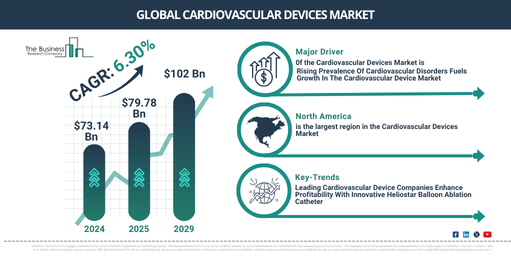
    In recent times, there has been substantial growth in the cardiovascular devices market. The market worth, projected to climb from $73.14 billion in 2024 to $79.78 billion in 2025, is set to experience a compound annual growth rate (CAGR) of 9.1%. Factors such as diseases related to lifestyle, an aging demographic, the use of minimally invasive and implantable devices, access to healthcare, and regulatory approvals have contributed to the growth noticed during the historic period.

    What Is the Projected Market Size of the Cardiovascular Devices Market?

    In the coming years, the market size for cardiovascular devices is projected to experience significant expansion. It is anticipated to increase to $102 billion by 2029, with a compound annual growth rate (CAGR) of 6.3%. The growth during the forecast period can be attributed to factors such as personalized medicine, remote monitoring, heightened growth in emerging markets, integration with artificial intelligence (AI), and a shift towards value-based healthcare. In the forecast period, leading trends will include wearable cardiovascular devices, minimally invasive methodologies, bioresorbable devices, remote consultation and tele-surgical procedures, and sustainable, eco-friendly devices.

    Download The Free Sample Report Here:

    https://www.thebusinessresearchcompany.com/sample.aspx?id=1972&type=smp

    Who are the Major Competitors in the Cardiovascular Devices Market Outlook?

    Major companies operating in the cardiovascular devices market include Medtronic plc, Boston Scientific Corporation, Abbott Laboratories, Edwards Lifesciences Corporation, Johnson & Johnson, Terumo Corporation, Getinge AB, Teleflex Incorporated, Becton, Dickinson and Company, Siemens Healthineers AG, Fresenius SE & Co. KGaA, GE HealthCare Technologie Inc., Stryker Corporation, B. Braun Medical Pvt. Ltd., Baxter International Inc., Danaher Corporation, Fujifilm Holdings Corporation, Canon Medical Systems Corporation, MicroPort Scientific America Inc., W L Gore & Associates Inc., AngioDynamics Inc., CryoLife Inc., Endologix LLC, Lombard Medical Limited, Avinger Inc., Abiomed Inc., Biosensors International Group Ltd., Biotronik SE and Co. KG, CeloNovaBioSciences Inc., LeMaitre Vascular Inc., Nano Therapeutics Pvt. Ltd.

    What Is Fueling Growth in the Cardiovascular Devices Market?

    The escalation in cases of cardiovascular conditions contributes to the expansion of the cardiovascular device market. Cardiovascular conditions encompass a variety of health issues that impact the heart and blood vessels, including a multitude of diseases and disorders related to the circulatory system. A cardiovascular device aids in heart function and blood flow for individuals with poor or deteriorating heart health. For example, as per the Immigration and Checkpoints Authority, a governmental agency based in Singapore, in June 2023, heart-related and hypertensive diseases were responsible for 6,884 deaths in 2022, a 10.35% increase compared to 6,238 deaths documented in 2021. Consequently, the rise in cardiovascular disorder cases is anticipated to fuel the cardiovascular device market’s expansion.

    Request For A Customized Report:

    https://www.thebusinessresearchcompany.com/customise?id=1972&type=smp

    Which Cardiovascular Devices Market Segments Are Growing the Fastest?

    The cardiovascular devices market covered in this report is segmented –

    1) By Type: Cardiovascular Surgery Devices And Equipment, Cardiac Rhythm Management (CRM) Devices And Equipment, Interventional Cardiology Devices And Equipment, Defibrillator Devices And Equipment, Peripheral Vascular Devices And Equipment, Prosthetic Heart Valve Devices And Equipment, Electrophysiology Devices And Equipment, Cardiac Assist Devices And Equipment

    2) By End User: Hospitals And Clinics, Diagnostic Laboratories, Other End Users

    3) By Type of Expenditure: Public, Private

    4) By Product: Instruments Or Equipment, Disposables

    Subsegments:

    1) By Cardiovascular Surgery Devices And Equipment: Coronary Artery Bypass Graft (CABG) Equipment, Heart Valve Repair And Replacement Devices, Aortic Aneurysm Repair Devices, Cardiopulmonary Bypass Equipment, Other Cardiovascular Surgery Devices

    2) By Cardiac Rhythm Management (CRM) Devices And Equipment: Pacemakers, Defibrillators, Cardiac Resynchronization Therapy (CRT) Devices

    3) By Interventional Cardiology Devices And Equipment: Stents (Drug-Eluting, Bare-Metal), Catheters (Balloon, Diagnostic, Guiding), Angioplasty Equipment, Guidewires, Other Interventional Cardiology Devices

    4) By Defibrillator Devices And Equipment: Implantable Cardioverter Defibrillators (ICDs), Automated External Defibrillators (AEDs), Wearable Defibrillators, External Defibrillators

    5) By Peripheral Vascular Devices And Equipment: Peripheral Stents, Balloons (Peripheral Angioplasty), Embolic Protection Devices, Endovenous Laser Devices, Other Peripheral Vascular Devices

    6) By Prosthetic Heart Valve Devices And Equipment: Mechanical Heart Valves, Biological Heart Valves, Transcatheter Heart Valves (TAVR), Other Prosthetic Heart Valve Devices

    7) By Electrophysiology Devices And Equipment: Ablation Catheters, Electrophysiology Mapping Systems, ECG And EKG Systems, Cardiac Mapping And Navigation Systems, Other Electrophysiology Devices

    8) By Cardiac Assist Devices And Equipment: Ventricular Assist Devices (LVADs), Intra-Aortic Balloon Pumps, Total Artificial Heart, Extracorporeal Membrane Oxygenation (ECMO), Other Cardiac Assist Devices

    Which Industry Trends Are Shaping the Future of the Cardiovascular Devices Market?

    Major firms active in the cardiovascular devices market are introducing new products like the balloon ablation catheter as a strategy to boost their market profitability. The balloon ablation catheter stands out as the first RF balloon ablation catheter engineered for catheter-based cardiac electrophysiological mapping, which includes both atrial stimulation and recording. To provide a case in point, Biosense Webster, an American firm that specializes in the diagnosis and treatment of heart rhythm abnormalities, in October 2022, rolled out the HELIOSTAR Balloon Ablation Catheter. The said catheter comes with an exclusive one-shot balloon technology that enables pulmonary vein isolation in a mere 12 seconds, complemented with customized energy delivery and an embedded 3D mapping solution.

    Access The Full Report Here:

    https://www.thebusinessresearchcompany.com/report/cardiovascular-devices-global-market-report

    Which Countries Are Leading the Cardiovascular Devices Market?

    North America was the largest region in the global cardiovascular devices market in 2023. Western Europe was the second largest region in the global cardiovascular devices market. Africa. was the smallest region in the global cardiovascular devices market. The regions covered in the cardiovascular devices market report are Asia-Pacific, Western Europe, Eastern Europe, North America, South America, Middle East, and Africa.

    Purchase The Full Report Today:

    https://www.thebusinessresearchcompany.com/purchaseoptions.aspx?id=1972

    This Report Delivers Insight On:

    1. How big is the cardiovascular devices market, and how is it changing globally?

    2. Who are the major companies in the cardiovascular devices market, and how are they performing?

    3. What are the key opportunities and risks in the cardiovascular devices market right now?

    4. Which products or customer segments are growing the most in the cardiovascular devices market?

    5. What factors are helping or slowing down the growth of the cardiovascular devices market?

    About The Business Research Company:

    With over 15000+ reports from 27 industries covering 60+ geographies, The Business Research Company has built a reputation for offering comprehensive, data-rich research and insights. Armed with 1,500,000 datasets, the optimistic contribution of in-depth secondary research, and unique insights from industry leaders, you can get the information you need to stay ahead in the game.

    Get in touch with us:

    The Business Research Company: https://www.thebusinessresearchcompany.com/

    Americas +1 310-496-7795

    Asia +44 2071930708

    Europe +44 7882 955267

    Email us at info@tbrc.info

    Follow us on:

    LinkedIn: https://in.linkedin.com/company/the-business-research-company

    YouTube: https://www.youtube.com/channel/UC24_fI0rV8cR5DxlCpgmyFQ

    Global Market Model: https://www.thebusinessresearchcompany.com/global-market-model
  • Cardiac Rhythm Management (CRM) Devices And Equipment Forecast Report – Designed for Decision Makers and Product Teams

    Cardiac Rhythm Management (CRM) Devices And Equipment Forecast Report – Designed for Decision Makers and Product Teams

    Claim your 30% discount on Global Market Reports with code ONLINE30. Limited time only.

    What Is the Estimated Market Size of the Cardiac Rhythm Management (CRM) Devices And Equipment Market In 2029?

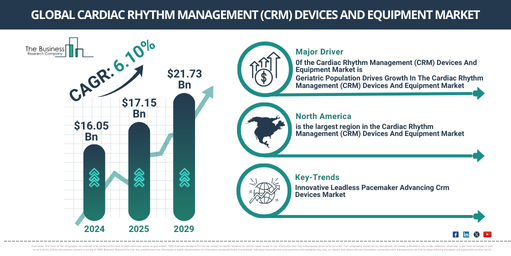
    Over the years, the market size for cardiac rhythm management (CRM) devices and equipment has seen considerable growth. The market is likely to expand from $16.05 billion in 2024 to $17.15 billion in 2025, projecting a compound annual growth rate (CAGR) of 6.8%. Various factors like the outbreak of arrhythmias, technological progress, an older population, and chronic disease management are the key contributors to the growth in the preceding periods.

    What Growth Rate Is Forecasted for the Cardiac Rhythm Management (CRM) Devices And Equipment Market by 2029?

    The market for cardiac rhythm management (CRM) devices and equipment is anticipated to witness substantial growth in the upcoming years, with projected expansion to $21.73 billion by 2029, at a compound annual growth rate (CAGR) of 6.1%. The forecasted growth for this period is due largely to factors such as personalization in medicine, technological advances, telehealth incorporation, and worldwide healthcare accessibility. Leading trends for the projected period encompass leadless CRM devices, biodegradable devices, remote monitoring, and combined therapies.

    Download The Free Sample Report Here:

    https://www.thebusinessresearchcompany.com/sample.aspx?id=2548&type=smp

    Which Key Companies Are Shaping the Future of the Cardiac Rhythm Management (CRM) Devices And Equipment Market?

    Major companies operating in the cardiac rhythm management (CRM) devices and equipment market include Abbott Laboratories, Medtronic plc, Biotronik SE & Co KG, Cardiac Science Corporation, Schiller AG, Hill-Rom Holdings Inc., GE Healthcare, Integer Holdings, Neovasc Inc., Philips Healthcare, Stryker Corporation, Rochling Medical, CCC Medical Devices, LivaNova plc, ZOLL Medical Corporation, Koninklijke Philips N.V, Applied Cardiac System, Cook Medical, Abiomed Inc., Berlin Heart GmbH, Brotionik SE and Co. KG, Jarvik Hearth Inc., MicroPort Scientific Corp, ReliantHeart Inc., Shree Pacetronix Ltd., Shaanxi Qinming Medical Instrument Co. Ltd., AtriCure Inc., Boston Scientific Corporation, Edwards Lifesciences Corporation, ProgettiSrl

    Which Factors Are Driving Demand in the Cardiac Rhythm Management (CRM) Devices And Equipment Industry?

    The cardiac rhythm management (CRM) devices and equipment market is anticipated to expand due to the increasing geriatric population. People who are aged 65 and over comprise the geriatric demographic. As this population segment grows, so does the prevalence of cardiovascular diseases. This in turn, boosts the demand for CRM devices which are vital in managing heart rhythm disorders like arrhythmias and enhancing the quality of life for elderly individuals. For example, the Administration for Community Living, a governmental department in the US, reported that the older population hit 55.8 million in 2021. This figure is expected to escalate to 80.8 million by 2040, and further rise to 94.7 million by 2060. Consequently, the increasing geriatric population serves as a key driver for the growth of the cardiac rhythm management (CRM) devices and equipment market.

    Request For A Customized Report:

    https://www.thebusinessresearchcompany.com/customise?id=2548&type=smp

    How Is the Cardiac Rhythm Management (CRM) Devices And Equipment Market Segmented by Several Divisions?

    The cardiac rhythm management (CRM) devices and equipment market covered in this report is segmented –

    1) By Product: Pacemakers, Defibrillators, Cardiac Resynchronization Therapy (CRT)

    2) By Application: Bradycardia, Tachycardia, Heart Failure, Other Applications

    3) By End User: Hospitals, Ambulatory Surgical Centers, Physicians Clinics

    Subsegment:

    1) By Pacemakers: Single-Chamber Pacemakers, Dual-Chamber Pacemakers, Biventricular Pacemakers, Implantable Pacemakers

    2) By Defibrillators: Implantable Cardioverter Defibrillators (ICDs), External Defibrillators, Wearable Defibrillators, Automated External Defibrillators (AEDs)

    3) By Cardiac Resynchronization Therapy (CRT): CRT-P (Pacemaker), CRT-D (Defibrillator), Bi-Ventricular Pacemakers

    What are the Emerging Market Trends Driving the Growth of the Cardiac Rhythm Management (CRM) Devices And Equipment Industry?

    Key players in the cardiac rhythm management (CRM) devices and equipment sector are forging ahead with the development of novel products such as the single-chamber (VR) leadless pacemaker. This advanced device aids in the management of heart rhythm disorders and enhances patient health outcomes. By virtue of a minimally invasive procedure, the leadless pacemaker is directly inserted into the right ventricle of the heart, making cardiac leads unnecessary. For example, Abbott Laboratories, a medical device company based in the US, was granted FDA approval in April 2022 for their Aveir single-chamber (VR) leadless pacemaker. This device is designed to treat patients dealing with slow heart rhythms, offers deep insights into patients’ health and heart function, thereby informing treatment choices and augmenting health results. The Aveir VR leadless pacemaker’s software has been crafted with expandability in mind, potentially giving rise to additional treatment possibilities in the future.

    Access The Full Report Here:

    https://www.thebusinessresearchcompany.com/report/cardiac-rhythm-management-crm-devices-and-equipment-global-market-report

    Which Regions Are Driving Growth in the Cardiac Rhythm Management (CRM) Devices And Equipment Market?

    North America was the largest region in the global cardiac rhythm management (CRM) devices and equipment market in 2023. Western Europe was the second-largest region in the cardiac rhythm management (CRM) devices and equipment market. The regions covered in the cardiac rhythm management (CRM) devices and equipment market report are Asia-Pacific, Western Europe, Eastern Europe, North America, South America, Middle East, and Africa.

    Purchase The Full Report Today:

    https://www.thebusinessresearchcompany.com/purchaseoptions.aspx?id=2548

    This Report Delivers Insight On:

    1. How big is the cardiac rhythm management (crm) devices and equipment market, and how is it changing globally?

    2. Who are the major companies in the cardiac rhythm management (crm) devices and equipment market, and how are they performing?

    3. What are the key opportunities and risks in the cardiac rhythm management (crm) devices and equipment market right now?

    4. Which products or customer segments are growing the most in the cardiac rhythm management (crm) devices and equipment market?

    5. What factors are helping or slowing down the growth of the cardiac rhythm management (crm) devices and equipment market?

    About The Business Research Company:

    With over 15000+ reports from 27 industries covering 60+ geographies, The Business Research Company has built a reputation for offering comprehensive, data-rich research and insights. Armed with 1,500,000 datasets, the optimistic contribution of in-depth secondary research, and unique insights from industry leaders, you can get the information you need to stay ahead in the game.

    Get in touch with us:

    The Business Research Company: https://www.thebusinessresearchcompany.com/

    Americas +1 310-496-7795

    Asia +44 2071930708

    Europe +44 7882 955267

    Email us at info@tbrc.info

    Follow us on:

    LinkedIn: https://in.linkedin.com/company/the-business-research-company

    YouTube: https://www.youtube.com/channel/UC24_fI0rV8cR5DxlCpgmyFQ

    Global Market Model: https://www.thebusinessresearchcompany.com/global-market-model
  • Cardiac Assist Devices And Equipment Market Outlook 2025 – Insights for Executive and Strategic Planning

    Cardiac Assist Devices And Equipment Market Outlook 2025 – Insights for Executive and Strategic Planning

    Claim your 30% discount on Global Market Reports with code ONLINE30. Limited time only.

    How Fast Is The Cardiac Assist Devices And Equipment Market Expected to Grow Between 2025 And 2029?

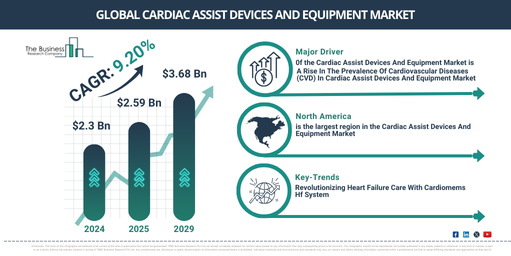
    In recent times, there has been substantial growth in the size of the cardiac assist devices and equipment market. The market value will escalate from $2.3 billion in 2024 to $2.59 billion in 2025, with a compound annual growth rate (CAGR) of 12.8%. Factors contributing to this growth during the historical period include the prevalence of cardiac arrhythmias, an aging population, clinical guidelines and research, and the shift towards minimally invasive procedures.

    What Growth Rate Is Anticipated for the Cardiac Assist Devices And Equipment Market in the Coming Years?

    The size of the cardiac assist devices and equipment market is projected to expand significantly in the upcoming years, reaching a value of $3.68 billion in 2029 at a compound annual growth rate (CAGR) of 9.2%. Factors contributing to this growth in the forecast period include the prevalence of personalized medicine, global healthcare accessibility, the use of electrophysiology devices in the management of heart failure, and hybrid procedures. Concurrent trends in the forecast period encompass 4D mapping and visualization, the application of artificial intelligence (AI) in electrophysiology, regenerative medicine approaches, and leadless cardiac pacing.

    Download The Free Sample Report Here:

    https://www.thebusinessresearchcompany.com/sample.aspx?id=2401&type=smp

    Who Are the Leading Companies in the Cardiac Assist Devices And Equipment Market?

    Major companies operating in the cardiac assist devices and equipment market include Abbot Laboratories, Berlin Heart GmbH, Abiomed Inc., Bivacor Pvt Ltd., Calon Cardio-Technology Ltd., Cardiobridge GmbH, Balton Sp. Z O.O, Cardiac Assist Inc., Braile Biomedica Ltd., Circulite Inc., Cardiokinetix Inc., Evaheart Inc., Fineheart Sarl, Fresenius Medical Care Ag & Co. KGaA, Getinge Ab, GPB Life Science Holdings Llc, Jarvik Heart Inc., Medtronic plc, OregonHeart, Mitiheart Corporation, Procyrion Inc., Relianthreat Inc., Scandinavian Real Heart AB, Senko Medical Instrument Mfg. Co. Ltd., Syncardia Systems LLC, HeartWare International Inc., Cardiac Dimensions Inc., Cardiac Power Innovations, Cardiac Science Corporation, Cardionomic Inc., Carmat SA, CorWave SA, Edwards Lifesciences Corporation, Leviticus Cardio Ltd., LivaNova PLC, MicroMed Cardiovascular Inc., MyoCardioCare Inc., Novacor SA, Orqis Medical Corporation, Terumo Corporation, Thoratec Corporation, Ventracor Limited

    What Are the Key Drivers of the Cardiac Assist Devices And Equipment Market?

    The growing occurrence of cardiovascular diseases (CVD) is leading to an increased demand for cardiac assist devices and equipment in developed and developing countries. The escalating necessity for diagnosis, monitoring, preemptive treatment and prevention of these potentially fatal diseases propels the need for these devices. For instance, the American Heart Association, a non-profit organization based in the US, predicts that by 2035, almost half of the US population, 45.1%, will be affected by some form of CVD. The total expenses associated with CVD are projected to rise to $1.1 trillion by 2035, with direct medical expenses expected to be about $748.7 billion and indirect costs calculated to be around $368 billion. Hence, the growing prevalence of cardiovascular diseases is fueling the expansion of the cardiac assist devices and equipment market.

    Request For A Customized Report:

    https://www.thebusinessresearchcompany.com/customise?id=2401&type=smp

    What Are the Key Market Segments in the Cardiac Assist Devices And Equipment Industry?

    The cardiac assist devices and equipment market covered in this report is segmented –

    1) By Type: Ventricular Assist Devices (LVAD), Intra-Aotic Baloon Pumps, Total Artificial Heart

    2) By Modality: Transcutaneous, Implantable

    3) By Application: Hospital Pharmacies, Ambulatory Surgical Centres, Emergency Services

    Subsegments:

    1) By Ventricular Assist Devices (LVAD): Implantable LVADs, Externally Powered LVADs, Pediatric LVADs, Other LVADs

    2) By Intra-Aortic Balloon Pumps: Disposable Intra-Aortic Balloon Pumps, Reusable Intra-Aortic Balloon Pumps

    3) By Total Artificial Heart: Pneumatically Powered Total Artificial Heart, Electrically Powered Total Artificial Heart, Other Total Artificial Heart Types

    What Are the Latest Trends in the Cardiac Assist Devices And Equipment Market?

    Prominent enterprises in the cardiac assistance devices and equipment field, such as Abbott Laboratories, are creating groundbreaking products like the CardioMEMS HF System. This venture is aimed at providing better care for an increasingly large population suffering from heart failures. Introduced in February 2022, the CardioMEMS HF System, approved by the US FDA, is a diminutive implantable sensor for heart failures that can wirelessly monitor and measure pulmonary artery pressure along with heart rate. This data proves valuable for healthcare professionals, assisting them in formulating treatment plans and managing heart failure in patients. Consequently, patients can potentially receive care earlier and prevent hospitalizations related to heart failures.

    Access The Full Report Here:

    https://www.thebusinessresearchcompany.com/report/cardiac-assist-devices-and-equipment-global-market-report

    What Are the Key Regional Markets in the Cardiac Assist Devices And Equipment Industry?

    North America was the largest region in global cardiac assist devices and equipment market in 2023. Western Europe was the second-largest region in cardiac assist devices and equipment market. The regions covered in the cardiac assist devices and equipment market report are Asia-Pacific, Western Europe, Eastern Europe, North America, South America, Middle East, and Africa.

    Purchase The Full Report Today:

    https://www.thebusinessresearchcompany.com/purchaseoptions.aspx?id=2401

    This Report Delivers Insight On:

    1. How big is the cardiac assist devices and equipment market, and how is it changing globally?

    2. Who are the major companies in the cardiac assist devices and equipment market, and how are they performing?

    3. What are the key opportunities and risks in the cardiac assist devices and equipment market right now?

    4. Which products or customer segments are growing the most in the cardiac assist devices and equipment market?

    5. What factors are helping or slowing down the growth of the cardiac assist devices and equipment market?

    About The Business Research Company:

    With over 15000+ reports from 27 industries covering 60+ geographies, The Business Research Company has built a reputation for offering comprehensive, data-rich research and insights. Armed with 1,500,000 datasets, the optimistic contribution of in-depth secondary research, and unique insights from industry leaders, you can get the information you need to stay ahead in the game.

    Get in touch with us:

    The Business Research Company: https://www.thebusinessresearchcompany.com/

    Americas +1 310-496-7795

    Asia +44 2071930708

    Europe +44 7882 955267

    Email us at info@tbrc.info

    Follow us on:

    LinkedIn: https://in.linkedin.com/company/the-business-research-company

    YouTube: https://www.youtube.com/channel/UC24_fI0rV8cR5DxlCpgmyFQ

    Global Market Model: https://www.thebusinessresearchcompany.com/global-market-model
  • Immunosuppressants Market Outlook 2025 – Insights for Executive and Strategic Planning

    Immunosuppressants Market Outlook 2025 – Insights for Executive and Strategic Planning

    Claim your 30% discount on Global Market Reports with code ONLINE30. Limited time only.

    How Fast Is The Immunosuppressants Market Expected to Grow Between 2025 And 2029?

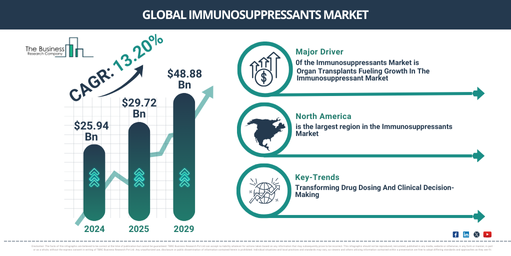
    There has been a swift expansion in the size of the immunosuppressants market in the previous few years. Its value is set to increase from $25.94 billion in 2024 to $29.72 billion in 2025, exhibiting a compound annual growth rate (CAGR) of 14.6%. Factors such as advancements in transplant medicine, innovative drug development, regulatory clearances, increased transplant operations, and improved clinical efficacy and safety have contributed to the growth during the historic period.

    What Growth Rate Is Anticipated for the Immunosuppressants Market in the Coming Years?

    The market size of immunosuppressants is anticipated to significantly expand in the upcoming years, potentially reaching a value of $48.88 billion in 2029, with a 13.2% compound annual growth rate (CAGR). This expected increase during the forecast period can be linked to the development of targeted therapies and precision medicine, enhancement in biologics and biosimilars, combinations of immunotherapy, gene therapy and immunomodulation, and advancements in drug delivery. Additionally, the projected trends in this period include the extension of indications, regulatory and safety considerations, approaches to precision medicine, telehealth, remote monitoring, and the emergence of biosimilars and generic versions.

    Download The Free Sample Report Here:

    https://www.thebusinessresearchcompany.com/sample.aspx?id=3467&type=smp

    Who Are the Leading Companies in the Immunosuppressants Market?

    Major companies operating in the immunosuppressants market include Pfizer Inc., Johnson & Johnson Services Inc., F Hoffmann La Roche Ltd., AbbVie Inc., Novartis AG, Sanofi SA, Bristol-Myers Squibb Co., Mylan Laboratories Inc., Teva Pharmaceuticals USA Inc., Astellas Pharma Inc., Sandoz Inc., Aurobindo Pharma Limited, Hikma Pharmaceuticals plc, Intas Pharmaceuticals Ltd., Zydus Lifesciences Limited, Glenmark Pharmaceuticals Ltd., Fresenius Kabi USA, Lupin Pharmaceuticals Inc., Strides Pharma Inc., Accord Healthcare Ltd., RPG Life Sciences Limited, Genzyme Transgenics Corp., Apotex Inc.

    What Are the Key Drivers of the Immunosuppressants Market?

    The immunosuppressant market is experiencing significant growth primarily due to the rising trend of organ transplant surgeries such as kidney and liver, which is a consequence of increasing instances of organ failure. For example, the American Kidney Fund, a reputable health institution in the US, projects that over 106,000 individuals will be on the national transplant waiting list by June 2022, with 92,000 (or 87%) of them requiring a kidney transplant within the country. As a result, the rise in organ transplant cases coupled with the escalating rates of organ failure among patients is anticipated to propel the expansion of the immunosuppressant market.

    Request For A Customized Report:

    https://www.thebusinessresearchcompany.com/customise?id=3467&type=smp

    What Are the Key Market Segments in the Immunosuppressants Industry?

    The immunosuppressants market covered in this report is segmented –

    1) By Drug Class: Corticosteroids, Monoclonal Antibodies (mAbs), Calcineurin Inhibitors, mTOR Inhibitors, Anti-Proliferative Agents, Other Drug Classes

    2) By Indication: Organ Transplantation, Autoimmune Disorders, Non-Autoimmune Inflammatory Diseases

    3) By Distribution Channel: Hospital Pharmacies, Retail Pharmacies, Online Pharmacies

    Subsegments:

    1) By Corticosteroids: Prednisone, Methylprednisolone, Dexamethasone

    2) By Monoclonal Antibodies (mAbs): Anti-TNF Agents, Anti-CD20 Agents, Anti-IL-6 Agents

    3) By Calcineurin Inhibitors: Cyclosporine, Tacrolimus

    4) By mTOR Inhibitors: Sirolimus, Everolimus

    5) By Anti-Proliferative Agents: Azathioprine, Mycophenolate Mofetil

    6) By Other Drug Classes: Co-Stimulation Blockers, JAK Inhibitors

    What Are the Latest Trends in the Immunosuppressants Market?

    An innovative approach to addressing the problems associated with immunosuppressants, such as the widely used Tacrolimus for patients undertaking organ transplants, is the utilization of Phenotypic Personalized Medicine (PPM). This approach amalgamates artificial intelligence and physician intervention. Frequent checks and modifications to Tacrolimus immunosuppressant levels are imperative when the patient is admitted in the hospital, and to ease this issue, a computational platform-based PPM approach is leveraged. The resultant data from this PPM system comprises the patient’s past drug-response, his/her concurrent medication, and present liver and kidney stats. Consequently, physicians are enabled to select the most suitable drug and dosage combination amongst various options by using PPM. Thus, it is perceived that artificial intelligence is pioneering a way towards not only dutiful personalization and efficacy in drug dosage but also towards amplifying doctors’ decision-making skills by delivering clinical data instead of mere predictable responses.

    Access The Full Report Here:

    https://www.thebusinessresearchcompany.com/report/immunosuppressant-global-market-report

    What Are the Key Regional Markets in the Immunosuppressants Industry?

    The countries covered in the immunosuppressants market report are Australia, Brazil, China, France, Germany, India, Indonesia, Japan, Russia, South Korea, UK, USA, Canada, Italy, Spain

    Purchase The Full Report Today:

    https://www.thebusinessresearchcompany.com/purchaseoptions.aspx?id=3467

    This Report Delivers Insight On:

    1. How big is the immunosuppressants market, and how is it changing globally?

    2. Who are the major companies in the immunosuppressants market, and how are they performing?

    3. What are the key opportunities and risks in the immunosuppressants market right now?

    4. Which products or customer segments are growing the most in the immunosuppressants market?

    5. What factors are helping or slowing down the growth of the immunosuppressants market?

    About The Business Research Company:

    With over 15000+ reports from 27 industries covering 60+ geographies, The Business Research Company has built a reputation for offering comprehensive, data-rich research and insights. Armed with 1,500,000 datasets, the optimistic contribution of in-depth secondary research, and unique insights from industry leaders, you can get the information you need to stay ahead in the game.

    Get in touch with us:

    The Business Research Company: https://www.thebusinessresearchcompany.com/

    Americas +1 310-496-7795

    Asia +44 2071930708

    Europe +44 7882 955267

    Email us at info@tbrc.info

    Follow us on:

    LinkedIn: https://in.linkedin.com/company/the-business-research-company

    YouTube: https://www.youtube.com/channel/UC24_fI0rV8cR5DxlCpgmyFQ

    Global Market Model: https://www.thebusinessresearchcompany.com/global-market-model
  • Cancer Diagnostics Market Projected at $40.82 Billion by 2029 | Strategic Insights and Forecast Data

    Cancer Diagnostics Market Projected at $40.82 Billion by 2029 | Strategic Insights and Forecast Data

    Claim your 30% discount on Global Market Reports with code ONLINE30. Limited time only.

    #How Has The Cancer Diagnostics Market Size Shifted, And What Is the Outlook Through 2034?

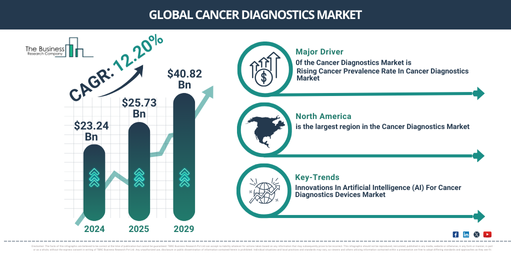
    In recent years, the cancer diagnostics market has experienced a significant growth spurt. Its size is predicted to expand from $23.24 billion in 2024, to $25.73 billion in the following year, with a compound annual growth rate (CAGR) of 10.7%. The growth observed during the historical period is due to factors such as a rise in the number of cancer cases, cancer screening initiatives, the rise of personalized medication, and increased public awareness.

    How Much Will the Cancer Diagnostics Market Be Worth in 2029?

    The market for cancer diagnostics is anticipated to witness a swift expansion in the forthcoming years, reaching a market value of $40.82 billion by 2029, growing at a compound annual growth rate (CAGR) of 12.2%. The prediction for such accelerated growth during the forecast period can be credited to factors such as the expansion of emerging markets, regulatory backing, the utilization of artificial intelligence (AI) and machine learning, and early detection initiatives. The forecast period also suggests significant trends like the use of liquid biopsies, multi-omics methods, point-of-care testing, and the proliferation of screening and early intervention campaigns.

    Download The Free Sample Report Here:

    https://www.thebusinessresearchcompany.com/sample.aspx?id=2570&type=smp

    Which is the Largest Company in the Cancer Diagnostics Market?

    Major companies operating in the cancer diagnostics market include Abbott Laboratories, Becton Dickinson and Company, Hologic, GE Healthcare Ltd., Thermo Fisher Scientific, Siemens Healthcare GmbH, Accuray, Elekta AB, C.R. BardInc., Biogenex Laboratories, Eckert & Ziegler BEBIG, Veracyte, PathAI, Bio-Rad Laboratories, Biochain, DiagnoCure, Illumina, Myriad Genetics, CompanionDx, Epic Sciences, Eli Lilly and Co, Genomic Health, Affymetrix, Agilent Technologies, Adaptive Biotechnologies, Biocartis, Biocept, Cancer Genetics Inc., Caris Life Sciences, Cepheid, Epigenomics AG, Exact Sciences, Foundation Medicine, GenMark Diagnostics, Guardant Health, HalioDX, IBA group, Invitae Corporation, Medtronic plc, NanoString Technologies, Natera, NeoGenomics, Oncura Inc., PerkinElmer, Personal Genome Diagnostics, Qiagen, Roche Diagnostics, Theragenics Corporation, Varian Medical SystemsInc.

    What Are the Main Market Drivers in the Cancer Diagnostics Industry?

    The surge in different types of cancers is one of the primary reasons propelling the cancer diagnostics market. The reason being that the escalation in instances of different kinds of cancer cases results in an increased number of individuals seeking diagnosis and treatment. Moreover, the World Health Organization (WHO) has ranked cancer as the second main reason for deaths worldwide. Estimations from the National Cancer Institute (NCI) point to an expected rise in new cancer cases per year, projecting a total of 23.6 million by 2030.

    Request For A Customized Report:

    https://www.thebusinessresearchcompany.com/customise?id=2570&type=smp

    How Is the Cancer Diagnostics Market Segments Structured?

    The cancer diagnostics market covered in this report is segmented –

    1) By Products: Companion Diagnostics, Molecular Diagnostics

    2) By Method: Biopsy, Endoscopy, Tumor Biomarker Tests, Imaging

    3) By Application: Cervical Cancer, Breast Cancer, Liver Cancer, Blood Cancer, Kidney Cancer, Colorectal Cancer, Pancreatic Cancer, Ovarian Cancer, Melanoma, Other Applications

    4) By End-User: Cancer Research Institutes, Diagnostic Laboratories, Hospitals, Other End Users

    Subsegments:

    1) By Companion Diagnostics: Biomarker-Based Companion Diagnostics, Genetic Testing-Based Companion Diagnostics, Immunohistochemistry-Based Companion Diagnostics, PCR-Based Companion Diagnostics, Other Companion Diagnostics,

    2) By Molecular Diagnostics: Polymerase Chain Reaction (PCR) Diagnostics, Next-Generation Sequencing (NGS) Diagnostics, In Situ Hybridization Diagnostics, Microarray-Based Diagnostics, DNA Or RNA Extraction Kits, Other Molecular Diagnostics

    What Strategic Trends Are Transforming the Cancer Diagnostics Market?

    AI-based systems for detecting cancer are gaining traction in the field of cancer diagnostics. Through enhancing the precision of image recognition during diagnostic procedures such as for breast and lung cancers, AI supports early-stage cancer spotting. It also decreases the occurrence of false positives during lung cancer screening, thereby enhancing the detection accuracy. For example, a trustworthy solution comprising of cancer-detecting algorithms for the independent assessment of lymph node biopsies has been invented by the Naval Medical Center San Diego and Google’s AI research arm, Google AI. This AI intervention has amplified the accuracy of metastatic breast cancer detection to 99%.

    Access The Full Report Here:

    https://www.thebusinessresearchcompany.com/report/cancer-diagnostics-global-market-report

    Which Global Regions Offer the Highest Growth in the Cancer Diagnostics Market?

    North America was the largest region in the cancer diagnostics market in 2023. Asia-Pacific was the second-largest region in the global cancer diagnostics market. The regions covered in the cancer diagnostics market report are Asia-Pacific, Western Europe, Eastern Europe, North America, South America, Middle East, and Africa.

    Purchase The Full Report Today:

    https://www.thebusinessresearchcompany.com/purchaseoptions.aspx?id=2570

    This Report Delivers Insight On:

    1. How big is the cancer diagnostics market, and how is it changing globally?

    2. Who are the major companies in the cancer diagnostics market, and how are they performing?

    3. What are the key opportunities and risks in the cancer diagnostics market right now?

    4. Which products or customer segments are growing the most in the cancer diagnostics market?

    5. What factors are helping or slowing down the growth of the cancer diagnostics market?

    About The Business Research Company:

    With over 15000+ reports from 27 industries covering 60+ geographies, The Business Research Company has built a reputation for offering comprehensive, data-rich research and insights. Armed with 1,500,000 datasets, the optimistic contribution of in-depth secondary research, and unique insights from industry leaders, you can get the information you need to stay ahead in the game.

    Get in touch with us:

    The Business Research Company: https://www.thebusinessresearchcompany.com/

    Americas +1 310-496-7795

    Asia +44 2071930708

    Europe +44 7882 955267

    Email us at info@tbrc.info

    Follow us on:

    LinkedIn: https://in.linkedin.com/company/the-business-research-company

    YouTube: https://www.youtube.com/channel/UC24_fI0rV8cR5DxlCpgmyFQ

    Global Market Model: https://www.thebusinessresearchcompany.com/global-market-model
  • Breast Cancer Drugs Industry Growth Expected to Reach $58.23 Billion by 2029 at a CAGR of 7.8% | Segmentation and Growth Opportunities

    Breast Cancer Drugs Industry Growth Expected to Reach $58.23 Billion by 2029 at a CAGR of 7.8% | Segmentation and Growth Opportunities

    Claim your 30% discount on Global Market Reports with code ONLINE30. Limited time only.

    #How Has the Breast Cancer Drugs Market Growth Performance Trended Historically, And What Lies Ahead?

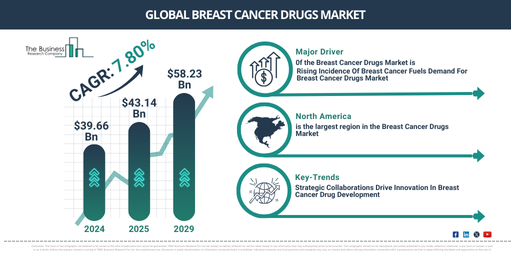
    Recent years have seen a robust expansion of the breast cancer drugs market size. This market is projected to augment from a value of $39.66 billion in 2024 to an increased worth of $43.14 billion in 2025, showcasing a compound annual growth rate (CAGR) of 8.8%. Factors contributing to growth during the historical period include a rise in breast cancer cases, progress in research and development initiatives, improvements in screening and early diagnosis, changes in treatment guidelines, and the advancement of healthcare infrastructure.

    What Is the Forecast for the Breast Cancer Drugs Market Size Through 2029?

    The market size for breast cancer drugs is anticipated to witness robust expansion in the upcoming years. The projections show that it will reach a value of $58.23 billion in 2029, growing at a compound annual growth rate (CAGR) of 7.8%. Factors contributing to the growth during the forecast period encompass a growing aging population, emerging markets, supportive policies and regulations, and enhanced patient advocacy and awareness. Key trends during the forecast period range from personalized medicine, targeted therapies and immunotherapies, to ongoing clinical trials and drug pipeline development, combined therapies, treatments driven by biomarkers, and the application of telemedicine and remote monitoring.

    Download The Free Sample Report Here:

    https://www.thebusinessresearchcompany.com/sample.aspx?id=2566&type=smp

    What are the Key Market Players in Breast Cancer Drugs Market and How They’re Evolving?

    Major companies operating in the breast cancer drugs market include F. Hoffmann-La Roche Ltd., Novartis AG, AstraZeneca PLC, Eli Lilly and Company Inc., Biocon Limited, Merck & Co. Inc., Genzyme Corporation, Johnson & Johnson, MacroGenics Inc., Celldex Therapeutics Inc., Onyx Pharmaceuticals Inc., BioNumerik Pharmaceuticals Inc., AbbVie Inc., Pfizer Inc., OncoGenex Pharmaceuticals Inc., Astellas Pharma Inc., Bristol-Myers Squibb Company, Bayer AG, GlaxoSmithKline plc, Teva Pharmaceutical Industries Ltd., Abbott Laboratories, Apthera Inc., Oncothyreon Inc., BiPar Sciences Inc., Puma Biotechnology Inc., Sanofi S.A., Genentech Inc., Sun Pharmaceutical Industries Ltd., Takeda Pharmaceutical Company Limited, Eisai Co. Ltd., Mylan N.V., Dr. Reddy’s Laboratories Ltd., Accord Healthcare Limited, Alkem Laboratories Limited, Natco Pharma Limited, Fresenius Kabi AG, Lupin Limited, Glenmark Pharmaceuticals Limited

    What Are the Primary Growth Drivers in the Breast Cancer Drugs Market?

    The escalating incidence of breast cancer is propelling the growth of the breast cancer drug market. Breast cancer develops from cells in the breast, usually when these cells start proliferating uncontrollably to develop a tumor that is frequently noticeable as a lump or identifiable via imaging tests. Factors such as an aging population, changing lifestyles, genetic susceptibility, and enhanced detection strategies contribute to the escalating incidence of this cancer. Breast cancer drugs augment cancer treatment by targeting the cancer cells, curbing tumor growth, preventing cancer proliferation, and enhancing patient survival rates via personalized therapy approaches. For example, data from the National Center for Biotechnology Information, a US government agency, in September 2022 suggests that by 2040 the annual number of newly diagnosed breast cancer cases will catapult by over 40%, equating to roughly 3 million cases. Elements such as heredity, age, and lifestyle are responsible for breast cancer, which is more prevalent in developed nations. As the population diagnosed with breast cancer ascends, so does the demand for breast cancer drugs, in turn, driving the surge of the breast cancer drug market.

    Request For A Customized Report:

    https://www.thebusinessresearchcompany.com/customise?id=2566&type=smp

    What Are the Leading Segments in the Global Breast Cancer Drugs Industry?

    The breast cancer drugs market covered in this report is segmented –

    1) By Type: Metastatic Breast Cancer, Triple Negative Breast Cancer, Others (Ductal Carcinoma Insitu, Invasive Ductal Carcinoma, Inflammatory Breast Cancer, Breast Cancer During Pregnancy, Others)

    2) By Distribution Channel: Hospital Pharmacies, Retail Pharmacies/ Drug Stores, Other Distribution Channels

    3) By End User: Ambulatory, Hospitals, Clinics, Other End-Users

    Subsegments:

    1) By Metastatic Breast Cancer: Hormone Receptor Positive Metastatic Breast Cancer, HER2 Positive Metastatic Breast Cancer, Triple Negative Metastatic Breast Cancer

    2) By Triple Negative Breast Cancer: Chemotherapy-Based Treatments, Immunotherapy-Based Treatments, Targeted Therapy

    3) By Others: Ductal Carcinoma In Situ (DCIS), Invasive Ductal Carcinoma (IDC), Inflammatory Breast Cancer (IBC), Breast Cancer During Pregnancy, Other Subtypes (Lobular Carcinoma, Paget’s Disease of the Breast)

    What Are the Key Market Trends in the Breast Cancer Drugs Industry?

    Breast cancer drug producers are demonstrating an escalating trend in alliances or partnerships with other firms to exchange technology, resources, and product information, and accentuate company growth. For example, AstraZeneca has entered into a collaboration agreement valued at $6.9 billion for the production of a breast cancer medication. As per the agreement, the development of trastuzumab deruxtecan would be a combined effort and the costs for its development and commercialization globally would be shared. Similarly, IBM Watson Health and Novartis have partnered to devise a solution capable of optimizing patient outcomes by determining drug combinations and sequences.

    Access The Full Report Here:

    https://www.thebusinessresearchcompany.com/report/breast-cancer-drugs-global-market-report

    What Is the Regional Outlook for the Breast Cancer Drugs Market?

    North America was the largest region in the breast cancer drugs market in 2023. The Middle East is expected to be the fastest-growing region in the breast cancer drugs market during the forecast period. The regions covered in the breast cancer drugs market report are Asia-Pacific, Western Europe, Eastern Europe, North America, South America, Middle East, Africa

    Purchase The Full Report Today:

    https://www.thebusinessresearchcompany.com/purchaseoptions.aspx?id=2566

    This Report Delivers Insight On:

    1. How big is the breast cancer drugs market, and how is it changing globally?

    2. Who are the major companies in the breast cancer drugs market, and how are they performing?

    3. What are the key opportunities and risks in the breast cancer drugs market right now?

    4. Which products or customer segments are growing the most in the breast cancer drugs market?

    5. What factors are helping or slowing down the growth of the breast cancer drugs market?

    About The Business Research Company:

    With over 15000+ reports from 27 industries covering 60+ geographies, The Business Research Company has built a reputation for offering comprehensive, data-rich research and insights. Armed with 1,500,000 datasets, the optimistic contribution of in-depth secondary research, and unique insights from industry leaders, you can get the information you need to stay ahead in the game.

    Get in touch with us:

    The Business Research Company: https://www.thebusinessresearchcompany.com/

    Americas +1 310-496-7795

    Asia +44 2071930708

    Europe +44 7882 955267

    Email us at info@tbrc.info

    Follow us on:

    LinkedIn: https://in.linkedin.com/company/the-business-research-company

    YouTube: https://www.youtube.com/channel/UC24_fI0rV8cR5DxlCpgmyFQ

    Global Market Model: https://www.thebusinessresearchcompany.com/global-market-model

  • Hand Cream and Hand Lotion Industry Growth Expected to Reach $13.3 Billion by 2029 at a CAGR of 11.7% | Segmentation and Growth Opportunities

    Claim your 30% discount on Global Market Reports with code ONLINE30. Limited time only.

    #How Has the Hand Cream and Hand Lotion Market Growth Performance Trended Historically, And What Lies Ahead?

    In the past few years, the hand cream and hand lotion market has undergone significant growth. It’s projected to increase from $7.8 billion in 2024 to $8.53 billion in 2025, with a Compound Annual Growth Rate (CAGR) of 9.4%. Factors that have contributed to this growth in the historic period include increasing skin health consciousness, evolving customer preferences, periodic demand fluctuations, trends in fashion and beauty, advice from healthcare professionals, and strategic marketing and branding.

    What Is the Forecast for the Hand Cream and Hand Lotion Market Size Through 2029?

    The market size of hand creams and lotions is set to experience swift expansion in the incoming years. By 2029, it’s projected to reach a value of $13.3 billion with a compound annual growth rate (CAGR) of 11.7%. Numerous factors like transparency of ingredients, sustainability, customized and personalized offerings, natural and clean beauty trends, awareness about hygiene and health issues, and packaging and sustainability solutions are credited for this anticipated growth. The forecast period is also expected to see significant trends such as the use of CBD and botanical extracts, innovative application methods, multi-functional products, diversity in aromatherapy and fragrances, as well as targeted solutions.

    Download The Free Sample Report Here:

    https://www.thebusinessresearchcompany.com/sample.aspx?id=3454&type=smp

    What are the Key Market Players in Hand Cream and Hand Lotion Market and How They’re Evolving?

    Major companies operating in the hand cream and hand lotion market include Johnson & Johnson, Procter & Gamble Company, Unilever plc, L’Oréal SA, Henkel AG & Co. KGaA., Colgate-Palmolive Company., Estée Lauder Companies Inc., Kao Corporation, Beiersdorf Ag, Amway Corporation, Shiseido Company Limited, Natura & Co Holding SA, LG Household & Health Care Ltd., Coty Inc., Neutrogena Corporation, Galderma SA, Amorepacific Corporation, Avon Products Inc., Mary Kay Inc., Yves Rocher International, Revlon Inc., Jahwa Group Co. Ltd., Oriflame Holding AG, Whealthfields Lohmann GmbH & Co. KG, Body Shop International Limited, Weleda AG, LYNX International Ltd., Burt’s Bees Inc., Clarins Group, Jurlique International Pty Ltd., Crabtree & Evelyn Ltd., Aveeno, O’Keeffe’s Company

    What Are the Primary Growth Drivers in the Hand Cream and Hand Lotion Market?

    The rise in habitual handwashing to guard against diseases plays a critical role in propelling the hand cream and hand lotion market. Proper and recurrent handwashing is an effective strategy to mitigate COVID – 19 spread, as fingers are frequently the conveyors of harmful bacteria to our respiratory tract. Even though washing hands and utilizing strong sanitizers are both crucial to curb the infection’s proliferation, they could have adverse effects on the skin, leading to feelings of dryness, chapped conditions, and irritation. Thus, medical professionals advise applying hand moisturizers that not only nourish hands but also alleviate any dry patches and diminish skin inflammation. Therefore, the skin parching due to consistent handwashing is foreseen to fuel the growth of the hand cream and hand lotion market.

    Request For A Customized Report:

    https://www.thebusinessresearchcompany.com/customise?id=3454&type=smp

    What Are the Leading Segments in the Global Hand Cream and Hand Lotion Industry?

    The hand cream and hand lotion market covered in this report is segmented –

    1) By Type: Moisturizing Hand Lotion, Protective Hand Lotion, Repair Hand Crème, Other Types

    2) By Application: Adult, Baby

    3) By Distribution Channel: Super market/Hyper market, Specialty Store, Beauty Salon, Pharma & Drug Store, Online Store

    Subsegments:

    1) By Moisturizing Hand Lotion: Hydrating Lotions, Daily Moisturizers, Lightweight Formulas

    2) By Protective Hand Lotion: Barrier Lotions, Anti-Bacterial Lotions, SPF-Infused Lotions

    3) By Repair Hand Crème: Intensive Repair Crèmes, Healing Crèmes For Damaged Skin, Crèmes For Cracked Or Dry Hands

    4) By Other Types: Anti-Aging Hand Lotions, Scented Hand Lotions, Natural Or Organic Hand Lotions

    What Are the Key Market Trends in the Hand Cream and Hand Lotion Industry?

    A significant trend in the hand cream and hand lotion industry is the use of healthful constituents like essential oils and herbs, which have the capacity to heal and rejuvenate the skin. Take for instance, hand repair creams composed of 60% aloe gel, they not only nourish the skin deeply making hands soft and comfortable but also mend cracked and dry skin. Further, they can be applied to highly dry skin areas like elbows and knees. Additionally, the faint fragrance of these natural components boosts the regular usage of these creams.

    Access The Full Report Here:

    https://www.thebusinessresearchcompany.com/report/hand-cream-and-hand-lotions-global-market-report

    What Is the Regional Outlook for the Hand Cream and Hand Lotion Market?

    The countries covered in the hand cream and hand lotion market report are Australia, Brazil, China, France, Germany, India, Indonesia, Japan, Russia, South Korea, UK, USA, Canada, Italy, Spain

    Purchase The Full Report Today:

    https://www.thebusinessresearchcompany.com/purchaseoptions.aspx?id=3454

    This Report Delivers Insight On:

    1. How big is the hand cream and hand lotion market, and how is it changing globally?

    2. Who are the major companies in the hand cream and hand lotion market, and how are they performing?

    3. What are the key opportunities and risks in the hand cream and hand lotion market right now?

    4. Which products or customer segments are growing the most in the hand cream and hand lotion market?

    5. What factors are helping or slowing down the growth of the hand cream and hand lotion market?

    About The Business Research Company:

    With over 15000+ reports from 27 industries covering 60+ geographies, The Business Research Company has built a reputation for offering comprehensive, data-rich research and insights. Armed with 1,500,000 datasets, the optimistic contribution of in-depth secondary research, and unique insights from industry leaders, you can get the information you need to stay ahead in the game.

    Get in touch with us:

    The Business Research Company: https://www.thebusinessresearchcompany.com/

    Americas +1 310-496-7795

    Asia +44 2071930708

    Europe +44 7882 955267

    Email us at info@tbrc.info

    Follow us on:

    LinkedIn: https://in.linkedin.com/company/the-business-research-company

    YouTube: https://www.youtube.com/channel/UC24_fI0rV8cR5DxlCpgmyFQ

    Global Market Model: https://www.thebusinessresearchcompany.com/global-market-model