Blog

  • Artificial Intelligence (AI) In Remote Patient Monitoring Industry Growth Expected to Reach $6.58 Billion by 2029 at a CAGR of 23.7% | Segmentation and Growth Opportunities

    Artificial Intelligence (AI) In Remote Patient Monitoring Industry Growth Expected to Reach $6.58 Billion by 2029 at a CAGR of 23.7% | Segmentation and Growth Opportunities

    Claim your 30% discount on Global Market Reports with code ONLINE30. Limited time only.

    What Is the Forecast for the Artificial Intelligence (AI) In Remote Patient Monitoring Market Growth in 2025?

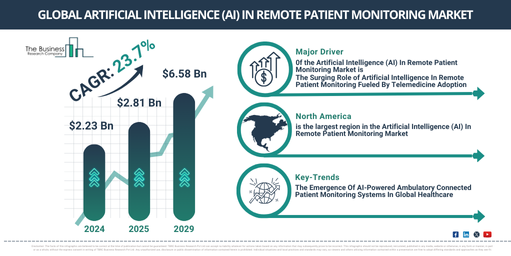
    In recent times, the market size for artificial intelligence (AI) in remote patient monitoring has experienced a phenomenal growth. It’s predicted that the growth will rise from $2.23 billion in 2024 to $2.81 billion in 2025, boasting a compound annual growth rate (CAGR) of 26.0%. The historical growth can be traced back to factors such as the surge in chronic diseases, advancement in data security, the development of AI-based applications aimed at boosting patient engagement, incorporation of electronic health records (EHR), and the increasing need to cut down healthcare expenses.

    What Is the Forecast for the Artificial Intelligence (AI) In Remote Patient Monitoring Market Size Through 2029?

    The market size of artificial intelligence (AI) in remote patient monitoring is predicted to experience remarkable growth over the years to come. It is anticipated to expand to $6.58 billion by 2029, with a compound annual growth rate (CAGR) of 23.7%. This projected rise in the upcoming period can be linked to global health issues, support from regulatory bodies, the ongoing advancement of AI-based diagnostic tools, telehealth implementation, and potential growth in predictive analytics. The forecast period will also see major trends such as wearable technology, advancements in AI algorithms and machine learning methods, cybersecurity and data protection, as well as individualized medicine and treatment strategies.

    Download The Free Sample Report Here:

    https://www.thebusinessresearchcompany.com/sample.aspx?id=13791&type=smp

    What are the Key Market Players in Artificial Intelligence (AI) In Remote Patient Monitoring Market and How They’re Evolving?

    Major companies operating in the artificial intelligence (AI) in remote patient monitoring market report are Medtronic plc, Siemens Healthineers, Koninklijke Philips N.V., GE Healthcare, DexCom Inc, Cerner Corporation, Infosys BPM, Tunstall Healthcare, Connect America LLC, American Well, Biofourmis, Tempus, Merative L.P., Vivify Health, Clarify Health Solutions, Current Health, BioIntelliSense, Preventice Solutions, AiCure LLC, Orbita, MobileHelp, EarlySense, Gyant, Myia Labs, Sentrian, Biobeat, ChroniSense Medical Ltd., Somatix Inc., Twistle, HealthWatch Technologies

    What Are the Primary Growth Drivers in the Artificial Intelligence (AI) In Remote Patient Monitoring Market?

    The surge in telemedicine usage is anticipated to fuel the expansion of artificial intelligence (AI) in the remote patient monitoring market in the forthcoming years. Telemedicine involves the employment of telecommunications technology, such as online messaging, phone and video calls, to deliver medical services from distance. Telemedicine, when paired with AI in remote patient monitoring, examines the data in real time, recognizing minute variations and notifying healthcare providers of potential problems before they escalate into emergencies. For example, in a 2022 study conducted by Rock Health, a non-profit organization based in the US, it was found that in February 2023, 80% of the participants reported having utilized telemedicine services at least once in their life, marking an 8% increase from the previous 72% in 2021. As a result, the widespread uptake of telemedicine is expected to boost the evolution of AI in the remote patient monitoring market.

    Request For A Customized Report:

    https://www.thebusinessresearchcompany.com/customise?id=13791&type=smp

    What Are the Leading Segments in the Global Artificial Intelligence (AI) In Remote Patient Monitoring Industry?

    The artificial intelligence (AI) in remote patient monitoring market covered in this report is segmented –

    1) By Solution: Software, Hardware, Services

    2) By Product: Vital Monitors, Special Monitors, Other Products

    3) By Technology: Natural Language Processing, Machine Learning, Querying Method, Speech Recognition

    4) By Application: Diabetes, Respiratory Issues, Weight Management And Fitness Monitoring, Cancer, Dehydration, Cardiovascular Diseases, Sleep Disorder, Viral Infection, Other Applications

    Subsegments:

    1) By Software: Predictive Analytics, Data Management, Monitoring Platforms, Mobile Applications

    2) By Hardware: Wearable Devices, Sensors, Medical Devices

    3) By Services: Implementation Services, Training And Education Services, Support And Maintenance Services

    What Are the Key Market Trends in the Artificial Intelligence (AI) In Remote Patient Monitoring Industry?

    The artificial intelligence (AI) in remote patient monitoring market is experiencing shifts as important players, focus on melding AI with wearable devices—a strategy intended to provide an edge in a competitive market and enhance healthcare services. Specifically, they are bringing into play AI-enabled ambulatory patient monitoring systems, allowing healthcare professionals to monitor patients’ health indicators persistently and in real-time. An illustration of this is from October 2023, when India’s medical equipment producer, Dozee, introduced the ‘Dozee Pro Ex;’ a groundbreaking ambulatory patient monitoring system crafted for a global customer base. A product of perfection engineered in India, it integrates wearable wireless sensors that continuously monitor essential parameters such as ECG rhythm, blood pressure, heart rate, oxygen saturation, respiratory rate, and temperature. The ‘Dozee Pro Ex’ stands out with its AI-run early warning system, set up to analyze trends in vital parameters, and provide timely notifications of potential health deteriorations. This revolutionary product is poised to reshape conventional healthcare by providing around-the-clock monitoring options for patients regardless of their location—be it a hospital bed, healthcare facility, or their residence.

    Access The Full Report Here:

    https://www.thebusinessresearchcompany.com/report/artificial-intelligence-ai-in-remote-patient-monitoring-global-market-report

    What Is the Regional Outlook for the Artificial Intelligence (AI) In Remote Patient Monitoring Market?

    North America was the largest region in the artificial intelligence (AI) in remote patient monitoring market in 2024. Asia-Pacific is expected to be the fastest-growing region in the forecast period. The regions covered in the artificial intelligence (AI) in remote patient monitoring market report are Asia-Pacific, Western Europe, Eastern Europe, North America, South America, Middle East, Africa.

    Purchase The Full Report Today:

    https://www.thebusinessresearchcompany.com/purchaseoptions.aspx?id=13791

    This Report Delivers Insight On:

    1. How big is the artificial intelligence (ai) in remote patient monitoring market, and how is it changing globally?

    2. Who are the major companies in the artificial intelligence (ai) in remote patient monitoring market, and how are they performing?

    3. What are the key opportunities and risks in the artificial intelligence (ai) in remote patient monitoring market right now?

    4. Which products or customer segments are growing the most in the artificial intelligence (ai) in remote patient monitoring market?

    5. What factors are helping or slowing down the growth of the artificial intelligence (ai) in remote patient monitoring market?

    About The Business Research Company:

    With over 15000+ reports from 27 industries covering 60+ geographies, The Business Research Company has built a reputation for offering comprehensive, data-rich research and insights. Armed with 1,500,000 datasets, the optimistic contribution of in-depth secondary research, and unique insights from industry leaders, you can get the information you need to stay ahead in the game.

    Get in touch with us:

    The Business Research Company: https://www.thebusinessresearchcompany.com/

    Americas +1 310-496-7795

    Asia +44 2071930708

    Europe +44 7882 955267

    Email us at info@tbrc.info

    Follow us on:

    LinkedIn: https://in.linkedin.com/company/the-business-research-company

    YouTube: https://www.youtube.com/channel/UC24_fI0rV8cR5DxlCpgmyFQ

    Global Market Model: https://www.thebusinessresearchcompany.com/global-market-model
  • Digital Genome Forecast Report – Designed for Decision Makers and Product Teams

    Digital Genome Forecast Report – Designed for Decision Makers and Product Teams

    Claim your 30% discount on Global Market Reports with code ONLINE30. Limited time only.

    What Is the Growth Rate of the Digital Genome Market?

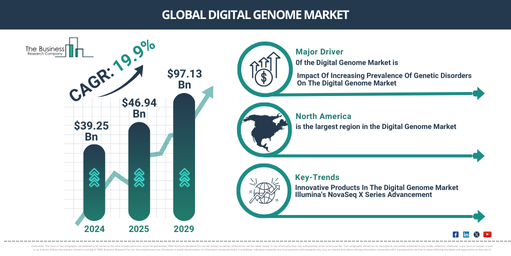
    The size of the digital genome market has seen a swift expansion in recent times. A rise from $39.25 billion in 2024 to $46.94 billion in 2025 is projected, exhibiting a compound annual growth rate (CAGR) of 19.6%. Factors such as increased finances for genomics, decrease in DNA sequencing costs and its rapid process, the introduction of fresh competitors and startups in emerging markets, a surge in drug discoveries, and the expansion of the biotech sector can be attributed to the substantial growth during the historical period.

    What Growth Rate Is Forecasted for the Digital Genome Market by 2029?

    In the coming years, the digital genome market size is anticipated to experience swift expansion. It is forecasted to surge to $97.13 billion by 2029, growing at a compound annual growth rate (CAGR) of 19.9%. The expected growth during the projection period is largely attributed to the growing occurrence of genetic disorders, increased research and development in digital genome, the increased use of personalized medicine, advancements in biotechnology, and the mounting prevalence of chronic diseases. Key trends for the forecast period encompass the escalating adoption of next-generation sequencing technologies, advanced technological developments, the widespread use of microorganisms in the diagnostics sector, the increasing need for personalized medication, and the accelerated adoption of digital genomic technology in hospitals and clinics.

    Download The Free Sample Report Here:

    https://www.thebusinessresearchcompany.com/sample.aspx?id=14086&type=smp

    Which Key Companies Are Shaping the Future of the Digital Genome Market?

    Major companies operating in the digital genome market are Roche Holding AG, Thermo Fisher Scientific Inc., GE HealthCare Technologies Inc., Quest Diagnostics, Eurofins Scientific SE, Agilent Technologies Inc., Illumina Inc., bioMerieux SA, PerkinElmer Inc., Bio-Rad Laboratories Inc., Qiagen N.V., BGI Genomics, Myriad Genetics Inc., Foundation Medicine Inc., ArcherDx Inc., Invitae Corporation, Oxford Nanopore Technologies Ltd., Luminex Corporation, GenMark Diagnostics Inc., NanoString Technologies Inc., Pacific Biosciences of California Inc., Genewiz, Inscripta Inc., Genomic Health Inc., Becton Dickinson and Company, GenomeMe, Regeneron Pharmaceuticals Inc.

    Which Factors Are Driving Demand in the Digital Genome Industry?

    The digital genome market is expected to expand due to the rising occurrence of genetic abnormalities. These disorders, brought about by irregularities or mutations in a person’s DNA – the genetic blueprint for body growth and functionality – are typically passed down through generations. Digital genome technologies make it possible to pinpoint these genetic alterations and disparities linked to genetic disorders. Such details facilitate the precise and early detection of these disorders, permitting immediate intervention and management. For example, statistics from the National Library of Medicine revealed in August 2023 that about 1 in 500 African Americans in the United States suffer from the genetic disorder known as sickle cell anemia. Furthermore, approximately 1 in 12 African Americans possesses the autosomal recessive mutation causing the disease, and an estimated 300,000 infants contract sickle cell anemia each year. Owing to these alarming statistics regarding genetic abnormalities, the digital genome market is set to grow significantly.

    Request For A Customized Report:

    https://www.thebusinessresearchcompany.com/customise?id=14086&type=smp

    How Is the Digital Genome Market Segmented by Several Divisions?

    The digital genome market covered in this report is segmented –

    1) By Type: Sequencing And Analyzer Instruments, Data Analysis And Management Tools

    2) By Application: Diagnostics, Agriculture And Animal Research, Personalized Medicine, Drug Discovery, Treatment Analysis

    3) By End User: Research Centers And Government Institutes, Academic Institutions, Pharmaceutical And Biotechnology Industries, Hospitals, Diagnostic Centers

    Subsegments:

    1) By Sequencing And Analyzer Instruments: Next-Generation Sequencing (NGS) Systems, Sanger Sequencing Systems, Single-Cell Sequencing Instruments, Third-Generation Sequencing Instruments

    2) By Data Analysis And Management Tools: Bioinformatics Software, Data Management Platforms, Cloud-Based Analysis Solutions, Workflow Management Tools

    What are the Emerging Market Trends Driving the Growth of the Digital Genome Industry?

    Key enterprises in the digital genome industry are advancing with novel products like the NovaSeq X Series to enhance disease comprehension and ultimately revolutionize patient healthcare. The NovaSeq X Series encompasses the NovaSeq X and NovaSeq X Plus devices, with the latter capable of performing over 128 genome sequencing per run and over 20,000 whole genomes annually. For example, Illumina, Inc., a biotech corporation based in the US, unveiled the NovaSeq X Series in September 2022, marking a significant leap in whole-genome sequencing technology. This system integrates cost-efficiency, simplified informatics, operational ease, sustainability improvements, and world-class support. It further facilitates comprehensive and more profound sequencing, thereby enabling users to upscale applications including more samples and efficient data analysis. The NovaSeq X Series is engineered to be the most powerful and cost-effective sequencing system, featuring enhanced reagent stability and swift data transfers due to optimized genomics data compression. The system is intentionally built for better sustainability, minimizing the data footprint that cuts down on storage and energy costs.

    Access The Full Report Here:

    https://www.thebusinessresearchcompany.com/report/digital-genome-global-market-report

    Which Regions Are Driving Growth in the Digital Genome Market?

    North America was the largest region in the digital genome market in 2024. Asia-Pacific is expected to be the fastest-growing region in the forecast period. The regions covered in the digital genome market report are Asia-Pacific, Western Europe, Eastern Europe, North America, South America, Middle East, Africa.

    Purchase The Full Report Today:

    https://www.thebusinessresearchcompany.com/purchaseoptions.aspx?id=14086

    This Report Delivers Insight On:

    1. How big is the digital genome market, and how is it changing globally?

    2. Who are the major companies in the digital genome market, and how are they performing?

    3. What are the key opportunities and risks in the digital genome market right now?

    4. Which products or customer segments are growing the most in the digital genome market?

    5. What factors are helping or slowing down the growth of the digital genome market?

    About The Business Research Company:

    With over 15000+ reports from 27 industries covering 60+ geographies, The Business Research Company has built a reputation for offering comprehensive, data-rich research and insights. Armed with 1,500,000 datasets, the optimistic contribution of in-depth secondary research, and unique insights from industry leaders, you can get the information you need to stay ahead in the game.

    Get in touch with us:

    The Business Research Company: https://www.thebusinessresearchcompany.com/

    Americas +1 310-496-7795

    Asia +44 2071930708

    Europe +44 7882 955267

    Email us at info@tbrc.info

    Follow us on:

    LinkedIn: https://in.linkedin.com/company/the-business-research-company

    YouTube: https://www.youtube.com/channel/UC24_fI0rV8cR5DxlCpgmyFQ

    Global Market Model: https://www.thebusinessresearchcompany.com/global-market-model
  • Artificial Intelligence (AI) In Predictive Toxicology Industry Valued at $1.84 Billion by 2029 With CAGR of 30% | Size and Share Insights

    Artificial Intelligence (AI) In Predictive Toxicology Industry Valued at $1.84 Billion by 2029 With CAGR of 30% | Size and Share Insights

    Claim your 30% discount on Global Market Reports with code ONLINE30. Limited time only.

    What Is the Forecast for the Artificial Intelligence (AI) In Predictive Toxicology Market from 2024 to 2025?

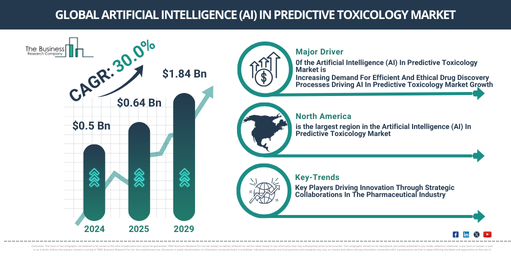
    There has been significant growth in recent years in the size of the market for artificial intelligence (AI) in predictive toxicology. It is predicted to expand from $0.5 billion in 2024 to $0.64 billion in 2025, representing a compound annual growth rate (CAGR) of 30.0%. The increase during the historical period can be linked to amplified regulatory scrutiny regarding toxicity evaluation, heightened worries about the safety of chemicals, access to extensive datasets for model training, the rising expense and ethical questions around animal testing, and the need for quicker and more economical methods of toxicity screening.

    What Is the Projected Market Size of the Artificial Intelligence (AI) In Predictive Toxicology Market?

    Predictions anticipate a significant increase in the size of the artificial intelligence (AI) market in predictive toxicology. In the coming years, the market could reach a whopping $1.84 billion in 2029, growing at a compound annual growth rate (CAGR) of 30.0%. Numerous factors, such as the advent of explainable AI in toxicology predictions, the need for personalized toxicity evaluations, the standardization and regulatory approval of AI-based toxicity expectations, the increase in outsourcing services for predictive toxicology, and the widening applications of AI in drug discovery and development, contribute to growth during the forecast period. The era is marked by noticeable trends such as the convergence towards 3D cell culture models for toxicity testing, the emergence of federated learning methods for cooperative toxicity prediction, the utilization of generative models for forecasting chemical toxicity pathways, the integration of natural language processing for toxicity data extraction from literature, and the growth of virtual screening platforms for prioritizing chemical testing.

    Download The Free Sample Report Here:

    https://www.thebusinessresearchcompany.com/sample.aspx?id=14253&type=smp

    Who are the Major Competitors in the Artificial Intelligence (AI) In Predictive Toxicology Market Outlook?

    Major companies operating in the artificial intelligence (AI) in predictive toxicology market are Laboratory Corporation of America Holdings (LabCorp), Eurofins Scientific SE, Wuxi AppTec, Charles River Laboratories International, Medidata Solutions Inc., Certara Inc., Schrödinger, Merative L.P., Molecular Devices LLC, Envigo (Inotiv Inc.), Instem plc, Simulations Plus, Cyprotex, Recursion Pharmaceuticals, Exscientia PLC, BIOVIA Corporation, Lhasa Limited, Chemaxon Ltd., Insilico Medicine Inc., Algorithme Pharma, CiToxLAB, ArisGlobal, Benevolent AI, Berg Health, Cyclica Therapeutics Inc., Celsius Therapeutics, Biovista Inc., BioTeam Inc.

    What Is Fueling Growth in the Artificial Intelligence (AI) In Predictive Toxicology Market?

    The surge in demand for more effective and ethical procedures in drug discovery is predicted to stimulate the expansion of the artificial intelligence (AI) in predictive toxicology market. The intricate and evolving nature of drug discovery, which includes comprehensive examinations, creation, and testing of chemical compounds to identify potential treatment agents to combat diseases and improve overall health, triggers the requirement for efficient and ethical drug discovery processes. The said processes employ cutting-edge tech and conscientious research methods to manufacture new medicinal agents. The growing incidents of chronic illnesses, the increasing inclination towards personalized treatment, and higher prevalence of illnesses related to aging drive the demand for these processes. Predictive toxicology powered by AI boosts the drug discovery systems by competently scrutinizing extensive data sets, which helps to foresee possible toxicological outcomes. This hastens the drug development process while also maintaining ethical standards. For example, the Belgium-based European Federation of Pharmaceutical Industries and Associations (EFPIA) reported in June 2023 that Europe’s total pharmaceutical R&D expenditure amounted to $49,500 million (€44,500 million) in 2022, which marks an increase of roughly 6.45% from $46,500 million (€42,533 million) in 2021. As a result, the booming demand for efficient and ethical processes in drug discovery is propelling the growth of the AI in predictive toxicology market.

    Request For A Customized Report:

    https://www.thebusinessresearchcompany.com/customise?id=14253&type=smp

    Which Artificial Intelligence (AI) In Predictive Toxicology Market Segments Are Growing the Fastest?

    The artificial intelligence (AI) in predictive toxicology market covered in this report is segmented –

    1) By Component: Solution, Services

    2) By Technology: Machine Learning, Natural Language Processing, Computer Vision, Other Technologies

    3) By Toxicity Endpoints: Genotoxicity, Hepatotoxicity, Neurotoxicity, Cardiotoxicity, Other Toxicity Endpoints

    4) By End User: Pharmaceutical And Biotechnology Companies, Chemical And Cosmetics, Contract Research Organizations, Other End Users

    Subsegments:

    1) By Solution: Software Platforms, Data Analysis Tools, Predictive Modeling Solutions, Database And Information Systems

    2) By Services: Consulting Services, Training And Support Services, Data Management And Integration Services, Research And Development Services

    Which Industry Trends Are Shaping the Future of the Artificial Intelligence (AI) In Predictive Toxicology Market?

    A trend in the AI predictive toxicology market is for major industry players to boost their market share and spur innovation through strategic collaborations. These partnerships aim to elevate the prediction and analysis of chemical and pharmaceutical toxicity through the use of artificial intelligence and machine learning. For instance, a UK-based AI research and development firm, SyntheticGestalt, known for its AI drug discovery solutions, fused its operations with Enamine, a Ukraine-based company supplying chemical building blocks and drug discovery services, in January 2024. They then jointly developed AI models designed to generate synthetically accessible biologically active compounds and optimize their physicochemical and ADME/Tox (Absorption, Distribution, Metabolism, and Excretion or Toxicity) attributes. These models will be used in SyntheticGestalt’s compound discovery work, for the benefit of both academic researchers and pharmaceutical companies. Enamine has made their extensive Enamine REAL database, complete with 38 billion molecules, available as part of this partnership. This database will be incorporated into SyntheticGestalt’s Drug Discovery Service, wherein their proprietary AI models will predict the physicochemical and ADME or Tox properties of compounds. This service promises to offer enhanced alternative compounds swiftly for those with complications.

    Access The Full Report Here:

    https://www.thebusinessresearchcompany.com/report/artificial-intelligence-ai-in-predictive-toxicology-global-market-report

    Which Countries Are Leading the Artificial Intelligence (AI) In Predictive Toxicology Market?

    North America was the largest region in the artificial intelligence (AI) in predictive toxicology market in 2024. Asia-Pacific is expected to be the fastest-growing region in the forecast period. The regions covered in the artificial intelligence (AI) in predictive toxicology market report are Asia-Pacific, Western Europe, Eastern Europe, North America, South America, Middle East, Africa.

    Purchase The Full Report Today:

    https://www.thebusinessresearchcompany.com/purchaseoptions.aspx?id=14253

    This Report Delivers Insight On:

    1. How big is the artificial intelligence (ai) in predictive toxicology market, and how is it changing globally?

    2. Who are the major companies in the artificial intelligence (ai) in predictive toxicology market, and how are they performing?

    3. What are the key opportunities and risks in the artificial intelligence (ai) in predictive toxicology market right now?

    4. Which products or customer segments are growing the most in the artificial intelligence (ai) in predictive toxicology market?

    5. What factors are helping or slowing down the growth of the artificial intelligence (ai) in predictive toxicology market?

    About The Business Research Company:

    With over 15000+ reports from 27 industries covering 60+ geographies, The Business Research Company has built a reputation for offering comprehensive, data-rich research and insights. Armed with 1,500,000 datasets, the optimistic contribution of in-depth secondary research, and unique insights from industry leaders, you can get the information you need to stay ahead in the game.

    Get in touch with us:

    The Business Research Company: https://www.thebusinessresearchcompany.com/

    Americas +1 310-496-7795

    Asia +44 2071930708

    Europe +44 7882 955267

    Email us at info@tbrc.info

    Follow us on:

    LinkedIn: https://in.linkedin.com/company/the-business-research-company

    YouTube: https://www.youtube.com/channel/UC24_fI0rV8cR5DxlCpgmyFQ

    Global Market Model: https://www.thebusinessresearchcompany.com/global-market-model
  • Central Precocious Puberty Market Outlook 2025 – Insights for Executive and Strategic Planning

    Central Precocious Puberty Market Outlook 2025 – Insights for Executive and Strategic Planning

    Claim your 30% discount on Global Market Reports with code ONLINE30. Limited time only.

    How Has the Central Precocious Puberty Market Grown from 2024 to 2025?

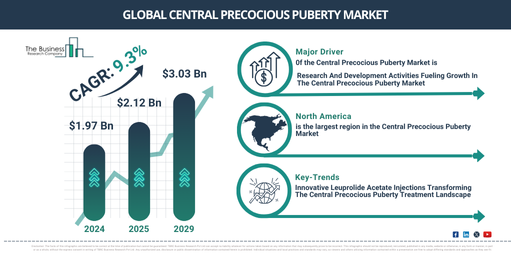
    Over the past few years, there has been a considerable increase in the market size of central precocious puberty. The market value, which is projected to be $1.97 billion in 2024, is expected to escalate to $2.12 billion in 2025, boasting a compound annual growth rate (CAGR) of 7.8%. This significant growth during the historical period can be accredited to the rising incidence of central precocious puberty, better treatment strategies, influence of environmental factors, expanded pediatric endocrinology services, heightened parental concerns leading to medical consultations, and patient advocacy initiatives.

    What Growth Rate Is Anticipated for the Central Precocious Puberty Market in the Coming Years?

    Predictions for the central precocious puberty market size indicate robust expansion in the upcoming years, with estimates predicting growth up to $3.03 billion in 2029, reflecting a compound annual growth rate (CAGR) of 9.3%. This projected growth for the forecast period is primarily due to the integration of pediatric healthcare and a trend towards personalized healthcare, along with initiatives focused on parent education and awareness, the development of longer-lasting treatment options, and early diagnosis and intervention. Other notable trends during the forecast period encompass long-lasting formulations, patient-focused practices, telehealth and remote supervision, individualized treatments, collaborative healthcare models, and the use of digital health instruments for monitoring.

    Download The Free Sample Report Here:

    https://www.thebusinessresearchcompany.com/sample.aspx?id=13184&type=smp

    Who Are the Leading Companies in the Central Precocious Puberty Market?

    Major companies operating in the central precocious puberty market report are Cipla Limited, Cigna Group, Pfizer Inc., AbbVie Inc., Sanofi S.A., AstraZeneca PLC, Abbott Laboratories, Molina Healthcare Inc., Sun Pharmaceutical Industries Ltd., Ipsen Ltd., Ferring Pharmaceuticals Private Limited, Endo Pharmaceuticals Inc., Amneal Pharmaceuticals Inc., Piramal Enterprises Limited, Livzon Pharmaceutical Group Inc., Salvavidas Pharmaceutical Pvt. Ltd., Actiza Pharmaceutical Private Limited, The Bachem Group, Arbor Pharmaceuticals LLC, Genentech Inc., Antares Pharma Inc., Tolmar Pharmaceuticals Inc., Debiopharm Group, AmbioPharm Inc., Foresee Pharmaceuticals Co. Ltd., Manus Aktteva Biopharma LLP, Midas Pharma GmbH, LGM Pharma LLC, Varian Pharmed Group, Shenzhen JYMed Technology Co. Ltd.

    What Are the Key Drivers of the Central Precocious Puberty Market?

    The central precocious puberty market’s forward momentum is predicted to be driven by a surge in research and development activities. These activities, encompassing the formation of new knowledge, services, products, or procedures or the advancement of existing ones, play a fundamental role in central precocious puberty (CPP) by expanding the comprehension of the ailment, refining diagnosis, and treatment methodologies, and enhancing general care for individuals with central precocious puberty. For example, in August 2023, Eurostat, a non-profit organization based in Luxembourg, disclosed that the European government set aside about $126,153 million (€117,368 million) for R&D in 2022 which is a 5.4% increase compared to the $119,730 million (€111,393 million) allocated in 2021. Thus, the amplified research and development efforts are fueling the development of the central precocious puberty market.

    Central Precocious Puberty Market Driver: Amplified Healthcare Expenditure Bolstering Central Precocious Puberty Market Growth


    Request For A Customized Report:

    https://www.thebusinessresearchcompany.com/customise?id=13184&type=smp

    What Are the Key Market Segments in the Central Precocious Puberty Industry?

    The central precocious puberty market covered in this report is segmented –

    1) By Drug: Leuprolide Acetate, Triptorelin, Histrelin Acetate, Nafarelin

    2) By Route Of Administration: Parenteral, Subcutaneous, Intramuscular, Other Routes Of Administrations

    3) By Distribution Channel: Hospital Pharmacy, Retail Pharmacy, Online Pharmacy

    4) By End-Users: Hospitals, Specialty Clinics, Homecare, Other End-Users

    Subsegments:

    1) By Leuprolide Acetate: Injectable Formulations, Depot Formulations

    2) By Triptorelin: Injectable Formulations, Long-acting Formulations

    3) By Histrelin Acetate: Implant Formulations, Injectable Formulations

    4) By Nafarelin: Nasal Spray Formulations, Injectable Formulations

    What Are the Latest Trends in the Central Precocious Puberty Market?

    Leading businesses in the central precocious puberty market are concentrating their efforts on creating unique injections like leuprolide acetate injections to secure a competitive advantage. These injections are artificial hormones that function similar to natural hormones, treating a variety of ailments including advanced prostate cancer and early onset of puberty. For example, in November 2022, India’s pharmaceutical firm, Cipla Limited, introduced the Leuprolide Acetate Injection Depot 22.5 mg, a treatment for central precocious puberty and advanced prostate cancer. This depot is a single-dose injection mechanism containing 22.5 mg of leuprolide acetate, sufficient for three months of therapy. The product is supplied as lyophilized microspheres in a single-use vial, forming part of a kit that incorporates a convenient MIXJECT transfer system and a pre-loaded syringe containing 2 mL of a 0.8% mannitol solution.

    Access The Full Report Here:

    https://www.thebusinessresearchcompany.com/report/central-precocious-puberty-global-market-report

    What Are the Key Regional Markets in the Central Precocious Puberty Industry?

    North America was the largest region in the central precocious puberty market in 2024. The regions covered in the central precocious puberty market report are Asia-Pacific, Western Europe, Eastern Europe, North America, South America, Middle East, Africa

    Purchase The Full Report Today:

    https://www.thebusinessresearchcompany.com/purchaseoptions.aspx?id=13184

    This Report Delivers Insight On:

    1. How big is the central precocious puberty market, and how is it changing globally?

    2. Who are the major companies in the central precocious puberty market, and how are they performing?

    3. What are the key opportunities and risks in the central precocious puberty market right now?

    4. Which products or customer segments are growing the most in the central precocious puberty market?

    5. What factors are helping or slowing down the growth of the central precocious puberty market?

    About The Business Research Company:

    With over 15000+ reports from 27 industries covering 60+ geographies, The Business Research Company has built a reputation for offering comprehensive, data-rich research and insights. Armed with 1,500,000 datasets, the optimistic contribution of in-depth secondary research, and unique insights from industry leaders, you can get the information you need to stay ahead in the game.

    Get in touch with us:

    The Business Research Company: https://www.thebusinessresearchcompany.com/

    Americas +1 310-496-7795

    Asia +44 2071930708

    Europe +44 7882 955267

    Email us at info@tbrc.info

    Follow us on:

    LinkedIn: https://in.linkedin.com/company/the-business-research-company

    YouTube: https://www.youtube.com/channel/UC24_fI0rV8cR5DxlCpgmyFQ

    Global Market Model: https://www.thebusinessresearchcompany.com/global-market-model
  • Market Analysis on Ostomy Devices Industry – Insights for Corporate Strategy and R&D

    Market Analysis on Ostomy Devices Industry – Insights for Corporate Strategy and R&D

    Claim your 30% discount on Global Market Reports with code ONLINE30. Limited time only.

    #What Is the Forecast for the Ostomy Devices Market from 2024 to 2025?#_x000D_

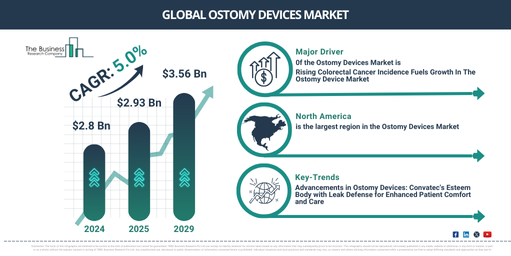
    Over recent years, the market size for ostomy devices has seen consistent growth. From a value of $2.8 billion in 2024, it is projected to expand to $2.93 billion in 2025, showing a compound annual growth rate (CAGR) of 4.8%. The historic growth in the market is linked to several factors. These include an increasing frequency of gastrointestinal illnesses, a rise in incidences of colorectal cancer, advancements in surgical procedures, better quality of ostomy products, an increase in awareness and patient education, as well as beneficial healthcare policies._x000D_

    _x000D_

    #What Is the Projected Market Size of the Ostomy Devices Market?#_x000D_

    It is anticipated that the market size for ostomy devices will experience robust expansion in the forthcoming years, reaching a value of $3.56 billion by 2029. This represents a compound annual growth rate (CAGR) of 5.0%. Various factors are contributing to this growth projection for the given period, such as an older demographic and the prevalence of chronic diseases, the development of products geared towards the needs of the patient, improvements in materials and design techniques, increased global awareness of ostomy care, the use of telehealth and patient-monitoring technologies, and the modernization of the healthcare system. Significant trends projected for this period encompass eco-friendly products, customization, and personalization, initiatives for education and awareness, efforts to control healthcare expenditure, and expansion and improved accessibility of the global market._x000D_

    _x000D_

    #Download The Free Sample Report Here:#_x000D_

    https://www.thebusinessresearchcompany.com/sample.aspx?id=13139&type=smp_x000D_

    _x000D_

    #Who are the Major Competitors in the Ostomy Devices Market Outlook?#_x000D_

    Major companies operating in the ostomy devices market report are 3M Company, Henkel AG And Co. KGaA, Avery Dennison Corporation, B. Braun Melsungen AG, Smith & Nephew PLC, Coloplast Corp., ConvaTec Group PLC, Hollister Incorporated, Porex Corporation, Perma-Type Company Inc., Dansac UK, Salts Healthcare, Zhejiang Longterm Medical Technology Co. Ltd., Vonco Products LLC, Angiplast Pvt. Ltd., Scapa Healthcare Ltd., Welland Medical Limited, Flexicare (Group) Limited, Marlen Manufacturing And Development Company, Advacare Pharma USA LLC., Nu-Hope Laboratories Inc., Torbot Group Inc., Genairex Inc., ALCARE Co. Ltd., OxMed International GmbH, Cymed Inc., Schena Ostomy Technologies Inc., Sarasota Medical Products, Safe N’ Simple LLC, Wuhan Sitaili Medical Apparatus Development Co. Ltd_x000D_

    _x000D_

    #What Is Fueling Growth in the Ostomy Devices Market?#_x000D_

    The ostomy device market’s expansion is likely to be fueled by the increasing prevalence of colorectal cancer. This type of cancer forms in the tissue of the colon or rectum characterized by abnormal cell growth in these areas that can result in tumors and if not treated promptly, may metastasize to other body parts. This increase in colorectal cancer leads to a greater demand for ostomy surgeries. Ostomy devices are crucial for patients who have colorectal cancer surgery as it aids in waste collection and successful management of bodily functions post-surgery by connecting to the stoma. For example, the American Cancer Society, a nonprofit cancer advocacy organization based in the US, reported in January 2023 that colorectal cancer cases rose from 149,500 in 2021 to 153,020 in 2023, a growth of 2.35%. Hence, the high prevalence of colorectal cancer is anticipated to fuel the ostomy device market’s growth. It is predicted that the ostomy devices market will grow due to the increasing instances of urology diseases. These illnesses affect the urinary and male reproductive systems. Ostomy devices are instrumental in managing specific urological conditions or complications by facilitating the diversion of urine away from the bladder or urinary tract. For example, the Centers for Disease Control and Prevention (CDC), a public health agency in the US, estimated in May 2024 that approximately 14% of U.S. adults, or around 35.5 million people, are living with chronic kidney diseases. Consequently, the growing prevalence of urological diseases is contributing to the growth of the ostomy devices market._x000D_

    _x000D_

    #Request For A Customized Report:#_x000D_

    https://www.thebusinessresearchcompany.com/customise?id=13139&type=smp_x000D_

    _x000D_

    #Which Ostomy Devices Market Segments Are Growing the Fastest?#_x000D_

    The ostomy devices market covered in this report is segmented –_x000D_

    _x000D_

    1) By Product: Bags, Accessories_x000D_

    2) By System Type: One-Piece System, Two-Piece System_x000D_

    3) By Surgery Type: Colostomy, Urostomy, Ileostomy_x000D_

    4) By End Users: Ambulatory Surgical Centers, Hospitals, Home Care, Other End-Users_x000D_

    _x000D_

    Subsegments:_x000D_

    1) By Bags: Colostomy Bags, Ileostomy Bags, Urostomy Bags_x000D_

    2) By Accessories: Skin Barriers, Adhesives And Pastes, Deodorants And Cleansing Products, Belts And Support Garments_x000D_

    _x000D_

    _x000D_

    #Which Industry Trends Are Shaping the Future of the Ostomy Devices Market?#_x000D_

    Major operators in the ostomy device market are adopting strategic developments, by embracing innovative components like materials that are friendly to the skin. This aids in decreasing potential skin complications caused by extended device contact, thereby providing a strategic edge in the market. The inclusion of these materials into ostomy instruments entails embedding non-aggravating components to mitigate skin irritation risk and discomfort that may arise from persistent device contact. For instance, in February 2024, Onvatec Group plc, a firm based in the UK that offers medical goods and technology, unveiled Esteem Body with Leak Defense, a distinctive one-piece soft convex ostomy mechanism intended to enhance patient healthcare and relaxation. This merchandise tackles substantial obstacles encountered by ostomy patients, notably with the escalating international obesity prevalence. The groundbreaking one-piece model comprises of superior adhesives and complies with diverse body forms, greatly lowering the likelihood of leakages, which is a prevalent worry for consumers. Moreover, the system boasts a contemporary 8-shaped pouch that diminishes sagging and is fabricated from materials that repel water, ensuring modesty when undertaking activities such as swimming._x000D_

    _x000D_

    #Access The Full Report Here:#_x000D_

    https://www.thebusinessresearchcompany.com/report/ostomy-devices-global-market-report_x000D_

    _x000D_

    #Which Countries Are Leading the Ostomy Devices Market?#_x000D_

    North America was the largest region in the ostomy devices market in 2024. The regions covered in the ostomy devices market report are Asia-Pacific, Western Europe, Eastern Europe, North America, South America, Middle East, Africa_x000D_

    _x000D_

    #Purchase The Full Report Today:#_x000D_

    https://www.thebusinessresearchcompany.com/purchaseoptions.aspx?id=13139_x000D_

    _x000D_

    #This Report Delivers Insight On: #_x000D_

    1. How big is the ostomy devices market, and how is it changing globally?_x000D_

    2. Who are the major companies in the ostomy devices market, and how are they performing?_x000D_

    3. What are the key opportunities and risks in the ostomy devices market right now?_x000D_

    4. Which products or customer segments are growing the most in the ostomy devices market?_x000D_

    5. What factors are helping or slowing down the growth of the ostomy devices market?_x000D_

    _x000D_

    #About The Business Research Company:#_x000D_

    With over 15000+ reports from 27 industries covering 60+ geographies, The Business Research Company has built a reputation for offering comprehensive, data-rich research and insights. Armed with 1,500,000 datasets, the optimistic contribution of in-depth secondary research, and unique insights from industry leaders, you can get the information you need to stay ahead in the game._x000D_

    _x000D_

    #Get in touch with us:#_x000D_

    The Business Research Company: https://www.thebusinessresearchcompany.com/_x000D_

    Americas +1 310-496-7795_x000D_

    Asia +44 2071930708_x000D_

    Europe +44 7882 955267_x000D_

    Email us at info@tbrc.info_x000D_

    _x000D_

    #Follow us on:#_x000D_

    _x000D_

    LinkedIn: https://in.linkedin.com/company/the-business-research-company_x000D_

    YouTube: https://www.youtube.com/channel/UC24_fI0rV8cR5DxlCpgmyFQ_x000D_

    Global Market Model: https://www.thebusinessresearchcompany.com/global-market-model

  • Artificial Intelligence (AI) In Biopharmaceuticals Market to Reach $6.67 Billion by 2029 | Key Drivers and Future Outlook

    Artificial Intelligence (AI) In Biopharmaceuticals Market to Reach $6.67 Billion by 2029 | Key Drivers and Future Outlook

    Claim your 30% discount on Global Market Reports with code ONLINE30. Limited time only.

    What Is the Growth Rate of the Artificial Intelligence (AI) In Biopharmaceuticals Market?

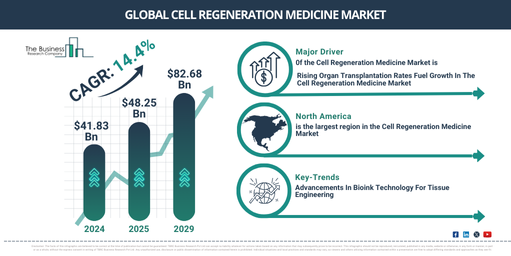
    The market size of artificial intelligence (AI) in biopharmaceuticals has seen substantial growth in recent times. The size is projected to rise from $1.59 billion in 2024 to $2.12 billion in 2025, demonstrating a compound annual growth rate (CAGR) of 33.1%. The growth witnessed in the historical period is mainly due to developments in computational ability, growth in biomedical data, shifts towards precision medicine, and regulatory guidance and support.

    What Growth Rate Is Forecasted for the Artificial Intelligence (AI) In Biopharmaceuticals Market by 2029?

    In the coming years, the market size for artificial intelligence (AI) in biopharmaceuticals is projected to experience significant expansion. The market is forecasted to increase to $6.67 billion in 2029, with a compound annual growth rate (CAGR) of 33.2%. This upward trend during the predicted period can be credited to the progress in computational biology, the integration of multi-modal data, the synergy between AI and life sciences, favorable regulatory environments, and the adoption of ethical AI principles. Key trends for the forecast period embrace the incorporation of multi-omics data, the use of AI in drug creation and discovery, the understanding and acceptance of AI in regulatory circles, technological progress, regulatory advancements, and fresh emerging opportunities.

    Download The Free Sample Report Here:

    https://www.thebusinessresearchcompany.com/sample.aspx?id=14251&type=smp

    Which Key Companies Are Shaping the Future of the Artificial Intelligence (AI) In Biopharmaceuticals Market?

    Major companies operating in the artificial intelligence (AI) in biopharmaceuticals market are Apple Inc., Google LLC, Microsoft Corporation, Tencent Holdings Limited, Amazon Web Services Inc., International Business Machines Corporation, Exscientia Limited, NVIDIA Corporation, Amgen Inc., DeepMind Technologies Limited, Schrödinger Inc., XtalPi Inc., ConcertAI Inc., Insilico Medicine Inc., Recursion Pharmaceuticals, BenevolentAI, BioXcel Therapeutics, Atomwise Inc., BioAge Labs Inc., GNS Healthcare, Berg Health, Deep 6 AI Inc., Cloud Pharmaceuticals Inc., Numerate Inc., AI Therapeutics, Envisagenics, twoXAR Inc., Cyclica Inc.

    Which Factors Are Driving Demand in the Artificial Intelligence (AI) In Biopharmaceuticals Industry?

    The escalating occurrence of persistent illnesses is projected to stimulate the development of artificial intelligence (AI) in the biopharmaceuticals market. Chronic illnesses are enduring conditions that typically advance gradually and can last for several years or even a lifetime. The triggers primarily include lifestyle habits, an elderly population, genetic factors, and environmental elements. AI used in biopharmaceuticals is progressively being employed to control chronic diseases since it is capable of analyzing vast quantities of varied data, pinpointing patterns, and customizing treatment strategies. A case in point, in November 2023, the Department of Health and Human Services, a US government department, reported an increase of 11 percent in new cases of chronic hepatitis B in 2022 compared to 2021. Hence, the escalating occurrence of chronic diseases is fueling the growth of artificial intelligence (AI) in the biopharmaceuticals market.

    Request For A Customized Report:

    https://www.thebusinessresearchcompany.com/customise?id=14251&type=smp

    How Is the Artificial Intelligence (AI) In Biopharmaceuticals Market Segmented by Several Divisions?

    The artificial intelligence (AI) in biopharmaceuticals market covered in this report is segmented –

    1) By Offering: Hardware, Software, Services

    2) By Deployment: Cloud, On-Premises

    3) By Technology: Machine Learning, Natural Language Processing, Deep Learning, Other Technologies

    4) By Application: Business Process And Supply Chain, Drug Discovery, Medical Imaging And Diagnostics, Precision Medicine

    5) By End-Users: Manufacturers, Contract Research Organizations, Academic And Government Research Institutes

    Subsegments:

    1) By Hardware: High-Performance Computing Systems, AI-Enabled Laboratory Equipment, Data Storage Solutions

    2) By Software: Drug Discovery Platforms, Clinical Trial Management Software, Predictive Analytics Tools, Natural Language Processing Solutions

    3) By Services: Consulting Services, Implementation And Integration Services, Data Management And Analytics Services, Training And Support Services

    What are the Emerging Market Trends Driving the Growth of the Artificial Intelligence (AI) In Biopharmaceuticals Industry?

    The primary focus for leading companies in the biopharmaceutical artificial intelligence (AI) industry is the creation of cutting-edge advancements such as the AI-powered solutions for target and lead identification suites. These are designed to expedite drug discovery processes and precision medicine, fundamentally reshaping life sciences organizations. These advancements, dedicated to drug discovery and precision medicine, provide an array of novel methodologies for developing new drugs and personalizing treatment plans. Google LLC, a US-based cloud computing service provider, launched two innovative AI-powered tools – the target and lead identification suites – in May 2023. These tools are designed to assist researchers in predicting and understanding protein structures, a fundamental aspect of drug creation. Additionally, this suite allows researchers to consume, stockpile, examine, and distribute vast amounts of genomic data, vital for precision medicine. These platforms intend to streamline drug discovery, cut down expenses, and expedite the delivery of new treatments to the market. By offering efficient data management, precise protein structure predictions, and progressive genomic analysis abilities, these tools aim to transform drug development processes and enhance patient outcomes.

    Access The Full Report Here:

    https://www.thebusinessresearchcompany.com/report/artificial-intelligence-ai-in-biopharmaceuticals-global-market-report

    Which Regions Are Driving Growth in the Artificial Intelligence (AI) In Biopharmaceuticals Market?

    North America was the largest region in the artificial intelligence (AI) in biopharmaceuticals market in 2024. Asia-Pacific is expected to be the fastest-growing region in the forecast period. The regions covered in the artificial intelligence (AI) in biopharmaceuticals market report are Asia-Pacific, Western Europe, Eastern Europe, North America, South America, Middle East, Africa.

    Purchase The Full Report Today:

    https://www.thebusinessresearchcompany.com/purchaseoptions.aspx?id=14251

    This Report Delivers Insight On:

    1. How big is the artificial intelligence (ai) in biopharmaceuticals market, and how is it changing globally?

    2. Who are the major companies in the artificial intelligence (ai) in biopharmaceuticals market, and how are they performing?

    3. What are the key opportunities and risks in the artificial intelligence (ai) in biopharmaceuticals market right now?

    4. Which products or customer segments are growing the most in the artificial intelligence (ai) in biopharmaceuticals market?

    5. What factors are helping or slowing down the growth of the artificial intelligence (ai) in biopharmaceuticals market?

    About The Business Research Company:

    With over 15000+ reports from 27 industries covering 60+ geographies, The Business Research Company has built a reputation for offering comprehensive, data-rich research and insights. Armed with 1,500,000 datasets, the optimistic contribution of in-depth secondary research, and unique insights from industry leaders, you can get the information you need to stay ahead in the game.

    Get in touch with us:

    The Business Research Company: https://www.thebusinessresearchcompany.com/

    Americas +1 310-496-7795

    Asia +44 2071930708

    Europe +44 7882 955267

    Email us at info@tbrc.info

    Follow us on:

    LinkedIn: https://in.linkedin.com/company/the-business-research-company

    YouTube: https://www.youtube.com/channel/UC24_fI0rV8cR5DxlCpgmyFQ

    Global Market Model: https://www.thebusinessresearchcompany.com/global-market-model
  • Difficile-Associated Diarrhea Treatment Market Outlook 2025 – Insights for Executive and Strategic Planning

    Difficile-Associated Diarrhea Treatment Market Outlook 2025 – Insights for Executive and Strategic Planning

    Claim your 30% discount on Global Market Reports with code ONLINE30. Limited time only.

    How Has the Difficile-Associated Diarrhea Treatment Market Grown from 2024 to 2025?

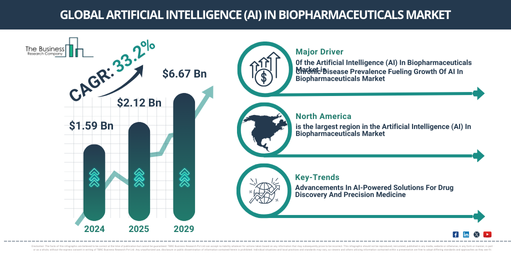
    In recent times, the market size of treatments for difficile-associated diarrhea has seen a swift increase. Projected to expand from $3.27 billion in 2024 to $3.7 billion in 2025, it anticipates a compound annual growth rate (CAGR) of 13.2%. The market’s growth during the historical period is attributable to factors such as the widespread occurrence of hospital-acquired infections, an older population, a rise in cases of clostridium difficile infections, and increasing urbanization.

    What Growth Rate Is Anticipated for the Difficile-Associated Diarrhea Treatment Market in the Coming Years?

    Over the next few years, the market for treatment of difficile-associated diarrhea is poised for swift expansion. Predictions suggest it will escalate to $5.8 billion by 2029, with a compound annual growth rate (CAGR) of 11.9%. This projected growth can be ascribed to several factors such as patient awareness, the emergence of new therapeutic strategies, global health efforts, increasing demand for antimicrobial therapy, climate change, and a rise in self-administered treatments. The future market is expected to be shaped by trends such as individualized care, the use of telemedicine for follow-up, research into innovative therapies, and advancements in diagnostic techniques.

    Download The Free Sample Report Here:

    https://www.thebusinessresearchcompany.com/sample.aspx?id=12930&type=smp

    Who Are the Leading Companies in the Difficile-Associated Diarrhea Treatment Market?

    Major companies operating in the difficile-associated diarrhea treatment market are Pfizer Inc., F. Hoffmann-La Roche AG, Merck & Co. Inc., AbbVie Inc., Novartis AG, Sanofi S.A., Bristol-Myers Squibb Company, AstraZeneca PLC, Abbott Laboratories, GlaxoSmithKline PLC, Takeda Pharmaceutical Company Limited, Boehringer Ingelheim International GmbH, Teva Pharmaceutical Industries Ltd., Mylan N.V., Astellas Pharma Inc., Bausch Health Companies Inc., UCB S.A., Sun Pharmaceutical Industries Ltd., Perrigo Company PLC, Dr. Reddy’s Laboratories Ltd., Aurobindo Pharma Limited, Cipla Limited, Ferring B.V., Hikma Pharmaceuticals PLC, Amneal Pharmaceuticals LLC, Zydus Lifesciences Ltd., Lupin Limited, Torrent Pharmaceuticals Ltd., Salix Pharmaceuticals Inc., Almirall S.A.

    What Are the Key Drivers of the Difficile-Associated Diarrhea Treatment Market?

    The escalating rates of digestive disorders are anticipated to fuel the expansion of the difficile-associated diarrhea treatment market. Digestive disorders comprise a collection of medical ailments hampering the regular functionality of the digestive system tasked with the breakdown of food and nutrient absorption. Infections from Clostridium difficile, or C. diff, have been linked to these disorders, specifically diarrhea and colitis. This bacterium can invade the bowel leading to the production of toxins that cause inflammation and damage to the intestinal lining. The rise in diagnoses for digestive disorders leads to an equally growing demand for effective treatments for symptoms such as difficile-associated diarrhea. For example, Crohn’s and Colitis Canada, a non-profit organization based in Canada, estimated in June 2023, that over 322,600 Canadians were living with inflammatory bowel diseases (IBD) in 2023, roughly 0.82% of the population. Moreover, predictions further estimate that around 470,000 Canadians will live with IBD by 2035. This accounts for about 1.1% of the population or 1 out of every 91 people in the country. Thus, the escalating prevalence of digestive disorders is predicted to stimulate the growth of the difficile-associated diarrhea treatment market.

    Difficile-Associated Diarrhea Treatment Market Driver: Influence Of Clostridium Difficile Infection On The Difficile-Associated Diarrhea Treatment Market


    Request For A Customized Report:

    https://www.thebusinessresearchcompany.com/customise?id=12930&type=smp

    What Are the Key Market Segments in the Difficile-Associated Diarrhea Treatment Industry?

    The difficile-associated diarrhea treatment market covered in this report is segmented –

    1) By Type: Narrow Spectrum Antibiotics, Broad Spectrum Antibiotics

    2) By Distribution Channel: Hospital Pharmacy, Online Pharmacy, Retail Pharmacy

    3) By End User: Hospitals, Homecare, Specialty Clinics, Other End-Users

    Subsegments:

    1) By Narrow Spectrum Antibiotics: Vancomycin, Fidaxomicin, Metronidazole

    2) By Broad Spectrum Antibiotics: Ampicillin, Ciprofloxacin, Clindamycin

    What Are the Latest Trends in the Difficile-Associated Diarrhea Treatment Market?

    Key players in the difficile-associated diarrhea treatment market are dedicating their efforts to the creation of innovative drugs and securing approval for them to ensure their stand in the market stays strong. Rising drug approvals in this sector are often due to the demand for more robust and safer treatments, like SER-109, which carves a fresh path in treating difficile-associated diarrhea. For example, in April 2023, the U.S. Food and Drug Administration, an American federal agency, gave their approval for SER-109. A product of Seres Therapeutics, a biotech company from the US, SER-109 is the first fecal microbiota product that can be orally administered, and is aimed at preventing a reoccurrence of Clostridioides difficile diarrhea. SER-109, a live, spore-form probiotic taken orally via a capsule, consists of Firmicutes bacteria typically found in the human gut. By helping reestablish bacterial balance in the stomach, SER-109 can prevent C. diff infections from coming back. This type of medication is effective in stopping the reoccurrence of Clostridioides difficile (C. diff) infection in individuals 18 years or older who have undergone antibacterial treatment.

    Access The Full Report Here:

    https://www.thebusinessresearchcompany.com/report/difficile-associated-diarrhea-treatment-global-market-report

    What Are the Key Regional Markets in the Difficile-Associated Diarrhea Treatment Industry?

    North America was the largest region in the difficile-associated diarrhea treatment market in 2024. The regions covered in difficile-associated diarrhea treatment market report are Asia-Pacific, Western Europe, Eastern Europe, North America, South America, Middle East and Africa.

    Purchase The Full Report Today:

    https://www.thebusinessresearchcompany.com/purchaseoptions.aspx?id=12930

    This Report Delivers Insight On:

    1. How big is the difficile-associated diarrhea treatment market, and how is it changing globally?

    2. Who are the major companies in the difficile-associated diarrhea treatment market, and how are they performing?

    3. What are the key opportunities and risks in the difficile-associated diarrhea treatment market right now?

    4. Which products or customer segments are growing the most in the difficile-associated diarrhea treatment market?

    5. What factors are helping or slowing down the growth of the difficile-associated diarrhea treatment market?

    About The Business Research Company:

    With over 15000+ reports from 27 industries covering 60+ geographies, The Business Research Company has built a reputation for offering comprehensive, data-rich research and insights. Armed with 1,500,000 datasets, the optimistic contribution of in-depth secondary research, and unique insights from industry leaders, you can get the information you need to stay ahead in the game.

    Get in touch with us:

    The Business Research Company: https://www.thebusinessresearchcompany.com/

    Americas +1 310-496-7795

    Asia +44 2071930708

    Europe +44 7882 955267

    Email us at info@tbrc.info

    Follow us on:

    LinkedIn: https://in.linkedin.com/company/the-business-research-company

    YouTube: https://www.youtube.com/channel/UC24_fI0rV8cR5DxlCpgmyFQ

    Global Market Model: https://www.thebusinessresearchcompany.com/global-market-model
  • Cell Regeneration Medicine Market Projected at $82.68 Billion by 2029 | Strategic Insights and Forecast Data

    Cell Regeneration Medicine Market Projected at $82.68 Billion by 2029 | Strategic Insights and Forecast Data

    Claim your 30% discount on Global Market Reports with code ONLINE30. Limited time only.

    How Has the Cell Regeneration Medicine Market Size Changed, over the years?

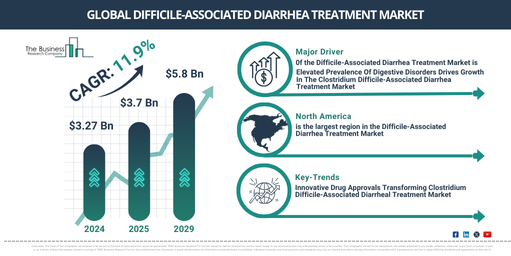
    Over the past few years, the cell regeneration medicine market has seen significant enlargement. It is projected to expand from being a $41.83 billion industry in 2024 to a $48.25 billion one in 2025, manifesting a compound annual growth rate (CAGR) of 15.4%. Factors contributing to this historic period growth include the aging population, the rise of chronic diseases, increased governmental and corporate financial support, and an escalating demand for functional regenerative medicine products.

    How Much Will the Cell Regeneration Medicine Market Be Worth in 2029?

    Predictions indicate a swift expansion of the cell regeneration medicine market in the forthcoming years. By 2029, a market worth of $82.68 billion is anticipated, correlating to a compound annual growth rate (CAGR) of 14.4%. This projected growth within the forecasted period is primarily due to factors like an increased demand for regenerative medicine products in the horeca sector, organ transplant scarcity, an increase in research and development activities, and a heightened demand for gene therapies. During the forecast period, major trends expected to shape the market include advanced therapies, clinical trial expansion, tissue engineering and 3d bioprinting, exosome-based therapies, and personalized medicine.

    Download The Free Sample Report Here:

    https://www.thebusinessresearchcompany.com/sample.aspx?id=12884&type=smp

    Which is the Largest Company in the Cell Regeneration Medicine Market?

    Major companies operating in the cell regeneration medicine market are Pfizer Inc., Johnson & Johnson, F.Hoffman-La Roche Ltd., AbbVie Inc., Bayer AG, Novartis AG, Bristol-Myers Squibb Company, Medtronic PLC, Eli Lilly and Company, Boehringer Ingelheim International GmbH, Amgen Inc., ViaCord LLC, Stryker Corporation, Zimmer Biomet Holdings Inc., Cook Biotech Inc., Integra LifeSciences Holdings Corporation, NuVasive Inc., Organogenesis Holdings Inc., AMAG Pharmaceuticals Inc., Takara Bio Inc., MiMedx Group Inc., Vericel Corporation, Mesoblast Limited, Osiris Therapeutics Inc., Guanhao Biotech Co. Ltd., CordLife Group Limited, FUJIFILM Cellular Dynamics Inc., Cesca Therapeutics Inc., U.S. Stem Cell Inc., Cytori Therapeutics Inc.

    What Are the Main Market Drivers in the Cell Regeneration Medicine Industry?

    The cell regeneration medicine market is likely to be fuelled by the growing acceptance of organ transplantation. This medical practice, which involves transplanting an organ from one body to another to replace a damaged or missing part, has been gaining traction as it contributes towards longer lifespans and can prevent the need for medical interventions like dialysis. Cell regeneration medicine, with its focus on regenerating and repairing damaged tissues or organs, holds the potential to bring significant advancements to organ transplantation. As an illustration, data from the scientific and educational organization United Network for Organ Sharing based in the US reveals that approximately 42,887 organ transplants took place in the country in 2022, marking a 3.7% rise from 2021. Hence, the maturing organ transplant practice will create a drive in the cell regeneration medicine market. Cell Regeneration Medicine’s Crucial Part in Managing Chronic Illnesses: Cell Regeneration Medicine Market Driver

    Request For A Customized Report:

    https://www.thebusinessresearchcompany.com/customise?id=12884&type=smp

    How Is the Cell Regeneration Medicine Market Segments Structured?

    The cell regeneration medicine market covered in this report is segmented –

    1) By Product: Therapeutics, Tools, Banks, Services

    2) By Therapeutic Category: Dermatology, Musculoskeletal, Immunology And Inflammation, Oncology, Cardiovascular, Ophthalmology, Other Therapeutic Categories

    3) By End-User: Hospitals And Clinics, Commercial Industries, Government And Academic Research Institutes

    Subsegments:

    1) By Therapeutics: Stem Cell Therapies, Gene Therapies, Tissue Engineering Products

    2) By Tools: Cell Culture Equipment, Bioreactors, Imaging Systems

    3) By Banks: Stem Cell Banks, Tissue Banks, Cord Blood Banks

    4) By Services: Cell Processing Services, Research And Development Services, Clinical Trial Services

    What Strategic Trends Are Transforming the Cell Regeneration Medicine Market?

    Leading firms in the cell regeneration medicine market are concentrating their efforts in the creation of medical-grade bioink to strengthen their competitive positions. The mention of medical-grade bioink encompasses a specifically tailored ink used in bioprinting that complies with strict regulatory safety and biocompatibility criteria. This makes it appropriate for tissue engineering, regenerative medicine, and the formation of biological structures for medical purposes. For instance, CELLINK, a Sweden-based firm known for its cell regeneration medicine products and technologies, unveiled CELLINK Vivoink in October 2023. This product is the first-ever medical-grade bioink formulated for clinical usage in regenerative medicine and tissue engineering, with a focus on top-notch printability, mechanical stability, and cell viability.

    Access The Full Report Here:

    https://www.thebusinessresearchcompany.com/report/cell-regeneration-medicine-global-market-report

    Which Global Regions Offer the Highest Growth in the Cell Regeneration Medicine Market?

    North America was the largest region in the cell regeneration medicine market in 2024. The regions covered in cell regeneration medicine market report are Asia-Pacific, Western Europe, Eastern Europe, North America, South America, Middle East and Africa.

    Purchase The Full Report Today:

    https://www.thebusinessresearchcompany.com/purchaseoptions.aspx?id=12884

    This Report Delivers Insight On:

    1. How big is the cell regeneration medicine market, and how is it changing globally?

    2. Who are the major companies in the cell regeneration medicine market, and how are they performing?

    3. What are the key opportunities and risks in the cell regeneration medicine market right now?

    4. Which products or customer segments are growing the most in the cell regeneration medicine market?

    5. What factors are helping or slowing down the growth of the cell regeneration medicine market?

    About The Business Research Company:

    With over 15000+ reports from 27 industries covering 60+ geographies, The Business Research Company has built a reputation for offering comprehensive, data-rich research and insights. Armed with 1,500,000 datasets, the optimistic contribution of in-depth secondary research, and unique insights from industry leaders, you can get the information you need to stay ahead in the game.

    Get in touch with us:

    The Business Research Company: https://www.thebusinessresearchcompany.com/

    Americas +1 310-496-7795

    Asia +44 2071930708

    Europe +44 7882 955267

    Email us at info@tbrc.info

    Follow us on:

    LinkedIn: https://in.linkedin.com/company/the-business-research-company

    YouTube: https://www.youtube.com/channel/UC24_fI0rV8cR5DxlCpgmyFQ

    Global Market Model: https://www.thebusinessresearchcompany.com/global-market-model
  • Artificial Intelligence (AI) In Animal Health Market Size to Exceed $3.57 Billion by 2029 | Growth and Industry Trends

    Claim your 30% discount on Global Market Reports with code ONLINE30. Limited time only.

    How Has the Artificial Intelligence (AI) In Animal Health Market Grown from 2024 to 2025?

    The market size for artificial intelligence (AI) in animal health has expanded quickly in the past few years. A rise from $1.45 billion in 2024 to $1.74 billion in 2025 is expected, demonstrating a compound annual growth rate (CAGR) of 19.8%. The notable growth during the bygone period is tied to a surge in AI applications, the accessibility of AI-oriented solutions, key company initiatives, amplified spending on animals, and the incorporation of AI into veterinary diagnostics.

    What Growth Rate Is Anticipated for the Artificial Intelligence (AI) In Animal Health Market in the Coming Years?

    The AI in animal health market size is anticipated to experience significant growth in the upcoming years, projected to increase to $3.57 billion by 2029, with a CAGR of 19.7%. The expected growth within the forecast period is due to factors like precision management of livestock, veterinary healthcare improvements, incorporations of data-centric strategies and advanced solutions, remote health monitoring, early detection of diseases, and the identification of irregularities enabling proactive healthcare and personalized medicines. The forecast period will also witness key trends like advancements in veterinary diagnostics, growing adoption of AI technologies, improved disease detection and monitoring, and a heightened focus on animal welfare and conservation.

    Download The Free Sample Report Here:

    https://www.thebusinessresearchcompany.com/sample.aspx?id=14250&type=smp

    Who Are the Leading Companies in the Artificial Intelligence (AI) In Animal Health Market?

    Major companies operating in the artificial intelligence (AI) in animal health market are Microsoft Corporation, International Business Machines Corporation, Zoetis Inc., VCA Animal Hospitals Inc., IVC Evidensia, IDEXX Laboratories Inc., Merck Animal Health, Heska Corporation, Agria Pet Insurance, PrecisionHawk, SignalPET, ImpriMed Inc., PetPace Ltd., VetNOW, Shenzhen Mindray Animal Medical Technology Co. Ltd., EIO Diagnostics Inc., Connecterra, GuardianVets, Halter USA Inc., Petriage Inc., Moichor Inc., OneCup Al, AgGenetics Inc., IMV Technologies, Felcana, Vet-Al, Alpha Phenomics Inc.

    What Are the Key Drivers of the Artificial Intelligence (AI) In Animal Health Market?

    The growth of the artificial intelligence (AI) in the animal health market is anticipated to be driven by escalating expenses on animal health. The term refers to the total funds utilized for maintaining and enhancing the health and well-being of animals. There’s a rise in animal health expense due to increased awareness, the trend of humanizing pets, and the growing demand for sophisticated veterinary care services, which include cutting-edge technologies like artificial intelligence. Pet owners holding high-spending capacity can afford AI-enabled telehealth services and remote tracking solutions. These conveniences provide consistent monitoring of pets’ health and make online consultations with veterinarians feasible. For example, based on data from the American Pet Products Association, an American trade organization in the pet sector, the spending on pet health by Americans was $136.8 billion in 2022, marking an increase of 10.68% from the prior year’s $123.6 billion. In addition, $35.9 billion was directed toward Vet Care services. Thus, the surge in expenses on animal health is contributing to the growth of the AI in animal health market.

    Request For A Customized Report:

    https://www.thebusinessresearchcompany.com/customise?id=14250&type=smp

    What Are the Key Market Segments in the Artificial Intelligence (AI) In Animal Health Industry?

    The artificial intelligence (AI) in animal health market covered in this report is segmented –

    1) By Solution: Hardware, Software And Services

    2) By Technology: Machine Learning, Natural Language Processing (NLP), Computer Vision, Other Technologies

    3) By Animal Type: Companion Animals, Production Animals

    4) By Application: Diagnostics, Identification, Tracking, And Monitoring, Other Applications

    5) By End-Use: Veterinary Clinics And Hospitals, Research Institutions, Farms And Livestock Producers

    Subsegments:

    1) By Hardware: Diagnostic Devices, Wearable Health Monitoring Devices, Automated Feeding Systems

    2) By Software And Services: AI-Powered Diagnostic Tools, Predictive Analytics Software, Health Management Platforms, Consulting Services, Implementation And Integration Services, Maintenance And Support Services, Training And Educational Programs

    What Are the Latest Trends in the Artificial Intelligence (AI) In Animal Health Market?

    Major companies in the artificial intelligence (AI) animal health market are advancing their technologies to include features such as feed suggestions for cattle, aimed at enhancing livestock nutrition and farming management systems. This innovative technology is designed to boost the productivity of livestock farms by creating feeding schedules tailored to meet the unique requirements of each animal or group, taking into account their age, weight, health condition, and dietary needs. For example, Precision Livestock Technologies, an American firm specializing in software and hardware solutions for livestock feeding and health, launched the first AI-based system for predicting cattle feed intake and offer feeding advice in January 2024. This unique system produces daily numerical feeding projections using a plethora of data collected from Precision Livestock Technologies’ machine vision bunk management system and other external data sources. The system considers factors like feeding frequency, meal times, feeding cycles, cattle habits, type of feed, climate conditions, among others.

    Access The Full Report Here:

    https://www.thebusinessresearchcompany.com/report/artificial-intelligence-ai-in-animal-health-global-market-report

    What Are the Key Regional Markets in the Artificial Intelligence (AI) In Animal Health Industry?

    North America was the largest region in the artificial intelligence (AI) in animal health market in 2024. Asia-Pacific is expected to be the fastest-growing region in the forecast period. The regions covered in the artificial intelligence (AI) in animal health market report are Asia-Pacific, Western Europe, Eastern Europe, North America, South America, Middle East, Africa.

    Purchase The Full Report Today:

    https://www.thebusinessresearchcompany.com/purchaseoptions.aspx?id=14250

    This Report Delivers Insight On:

    1. How big is the artificial intelligence (ai) in animal health market, and how is it changing globally?

    2. Who are the major companies in the artificial intelligence (ai) in animal health market, and how are they performing?

    3. What are the key opportunities and risks in the artificial intelligence (ai) in animal health market right now?

    4. Which products or customer segments are growing the most in the artificial intelligence (ai) in animal health market?

    5. What factors are helping or slowing down the growth of the artificial intelligence (ai) in animal health market?

    About The Business Research Company:

    With over 15000+ reports from 27 industries covering 60+ geographies, The Business Research Company has built a reputation for offering comprehensive, data-rich research and insights. Armed with 1,500,000 datasets, the optimistic contribution of in-depth secondary research, and unique insights from industry leaders, you can get the information you need to stay ahead in the game.

    Get in touch with us:

    The Business Research Company: https://www.thebusinessresearchcompany.com/

    Americas +1 310-496-7795

    Asia +44 2071930708

    Europe +44 7882 955267

    Email us at info@tbrc.info

    Follow us on:

    LinkedIn: https://in.linkedin.com/company/the-business-research-company

    YouTube: https://www.youtube.com/channel/UC24_fI0rV8cR5DxlCpgmyFQ

    Global Market Model: https://www.thebusinessresearchcompany.com/global-market-model

  • Cell Lysis And Fractionation Industry Growth Expected to Reach $4.89 Billion by 2029 at a CAGR of 7% | Segmentation and Growth Opportunities

    Claim your 30% discount on Global Market Reports with code ONLINE30. Limited time only.

    What Is the Forecast for the Cell Lysis And Fractionation Market Growth in 2025?

    The market size of cell lysis and fractionation has seen a robust growth in the last few years. Projected to increase from $3.42 billion in 2024 to $3.72 billion in 2025, the market will experience a compound annual growth rate (CAGR) of 8.8%. The historical growth is linked to factors such as heightened investment in life science research, a growing emphasis on personalized medicine, a high incidence of diseases, advancements in cell lysis and fractionation technologies, as well as an increased demand for both biopharmaceuticals and biotechnology products.

    What Is the Forecast for the Cell Lysis And Fractionation Market Size Through 2029?

    The market for cell lysis and fractionation is anticipated to experience robust growth in the coming years, with its market size estimated to reach $4.89 billion in 2029, expanding at a compound annual growth rate (CAGR) of 7.0%. This growth during the forecast period is ascribed to factors like the rising emphasis on personalized medicine, increased government backing for research, a strong demand for effective cell lysis and fractionation techniques, advancements in the realm of genomics and proteomics, and the increasing incidence of chronic and infectious diseases. Trends expected to shape the industry’s forecast period include sustained growth in the utilization of personalized medicine methodologies, growing incorporation of automation and robotics in lysis and fractionation procedures, widening of applications in clinical diagnostics and drug discovery, progress in microfluidics and lab-on-chip technologies for cell examination, and an increased focus on point-of-care and decentralized testing options.

    Download The Free Sample Report Here:

    https://www.thebusinessresearchcompany.com/sample.aspx?id=14064&type=smp

    What are the Key Market Players in Cell Lysis And Fractionation Market and How They’re Evolving?

    Major companies operating in the cell lysis and fractionation market are Hoffmann-La Roche Ltd, Merck & Co. Inc., Thermo Fisher Scientific Inc., Danaher Corporation, Becton, Dickinson and Company, Lonza Group AG, Illumina Inc., Beckman Coulter Inc., PerkinElmer Inc., IDEX Corporation, Bio-Rad Laboratories Inc., QIAGEN NV, Eppendorf AG, Miltenyi Biotec B.V. & Co. KG, Promega Corporation, Takara Bio Inc., Abcam plc, Cell Signaling Technology Inc., BioVision Inc., Diagenode LLC, Claremont BioSolutions LLC, Norgen Biotek Corp., Qsonica LLC, Labfreez Instruments Group Co. Ltd.

    What Are the Primary Growth Drivers in the Cell Lysis And Fractionation Market?

    The increasing emphasis on personalized medicine is anticipated to drive the expansion of the cell lysis and fractionation markets in the future. Personalized medicine, a budding field in medical practice, utilizes a person’s genetic background for disease detection and treatment. This entails adapting healthcare decisions and treatments specifically to each patient, primarily based on their genetic composition. Cell lysis and fractionation are instrumental in precision medicine by facilitating the separation and examination of individual subcellular components from patient specimens, such as proteins, organelles, and nucleic acids. This allows scientists and healthcare experts to explore the molecular mechanisms that trigger disease and develop tailored treatments corresponding to each patient’s unique molecular characteristics. For example, as per the Personalized Medicine Coalition (PMC) – a U.S.-based association advocating for the comprehension and embracement of personalized medicine, over 75,000 genetic testing products and 300 personalized medicines specifically designed for individuals with diverse cancer types, rare genetic diseases, and a variety of chronic and infectious diseases, will be available on the market as of October 2022. Thus, the escalation in the emphasis on personalized medicine is fueling the expansion of the cell lysis and fractionation markets.

    Request For A Customized Report:

    https://www.thebusinessresearchcompany.com/customise?id=14064&type=smp

    What Are the Leading Segments in the Global Cell Lysis And Fractionation Industry?

    The cell lysis and fractionation market covered in this report is segmented –

    1) By Type: Mammalian Cells, Microbial Cells

    2) By Application: Nucleic Acid Purification And Isolation, Protein Purification And Isolation

    3) By End-User: Research Laboratories And Institutes, Biopharmaceutical, Biotechnology Companies

    Subsegments:

    1) By Mammalian Cells: Adherent Mammalian Cells, Suspension Mammalian Cells, Primary Cells, Cell Lines

    2) By Microbial Cells: Bacterial Cells, Yeast Cells, Fungal Cells, Algal Cells

    What Are the Key Market Trends in the Cell Lysis And Fractionation Industry?

    The primary businesses within the cell lysis and fractionation market are innovating and presenting state-of-the-art solutions like CGT (cell and gene therapy) viral vector lysis kits, in an effort to outdo competitors. These kits provide a simpler AAV (Adeno-associated virus) lysis process that enhances standard operating procedures, safety measures, and quality checks while harmonizing bioprocessing operations. For example, in July 2023, QIAGEN, a leading sample and assay technology firm in Germany, introduced a new CGT Viral Vector Lysis Kit. This innovation enables the measurement of virus titers for multiple serotypes through a precise and consistent process utilizing cell lysates. The recent CGT viral vector lysis kit supplements QIAGEN’s swiftly growing digital PCR range for the biopharma sector. This range already includes three QIAcuity Residual DNA Quantification Kits that tests for the presence of host cell DNA residue and ten QIAcuity Cell and Gene Therapy (CGT) dPCR Assays, utilized for adeno-associated virus (AAV) titer quantification.

    Access The Full Report Here:

    https://www.thebusinessresearchcompany.com/report/cell-lysis-and-fractionation-global-market-report

    What Is the Regional Outlook for the Cell Lysis And Fractionation Market?

    North America was the largest region in the cell lysis and fractionation market in 2024. The regions covered in the cell lysis and fractionation market report are Asia-Pacific, Western Europe, Eastern Europe, North America, South America, Middle East, Africa.

    Purchase The Full Report Today:

    https://www.thebusinessresearchcompany.com/purchaseoptions.aspx?id=14064

    This Report Delivers Insight On:

    1. How big is the cell lysis and fractionation market, and how is it changing globally?

    2. Who are the major companies in the cell lysis and fractionation market, and how are they performing?

    3. What are the key opportunities and risks in the cell lysis and fractionation market right now?

    4. Which products or customer segments are growing the most in the cell lysis and fractionation market?

    5. What factors are helping or slowing down the growth of the cell lysis and fractionation market?

    About The Business Research Company:

    With over 15000+ reports from 27 industries covering 60+ geographies, The Business Research Company has built a reputation for offering comprehensive, data-rich research and insights. Armed with 1,500,000 datasets, the optimistic contribution of in-depth secondary research, and unique insights from industry leaders, you can get the information you need to stay ahead in the game.

    Get in touch with us:

    The Business Research Company: https://www.thebusinessresearchcompany.com/

    Americas +1 310-496-7795

    Asia +44 2071930708

    Europe +44 7882 955267

    Email us at info@tbrc.info

    Follow us on:

    LinkedIn: https://in.linkedin.com/company/the-business-research-company

    YouTube: https://www.youtube.com/channel/UC24_fI0rV8cR5DxlCpgmyFQ

    Global Market Model: https://www.thebusinessresearchcompany.com/global-market-model