Blog

  • Biobased Disinfectant Market Forecast To Reach $9.45 Billion By 2030: Key Trends Explained

    Biobased Disinfectant Market Forecast To Reach $9.45 Billion By 2030: Key Trends Explained

    Featuring market attractiveness scoring, total addressable market sizing, company benchmarking matrices, interactive Excel dashboards, deeper supply chain intelligence, emerging startup tracking, and granular product-level insights, The Business Research Company’s 2026 market reports are built to deliver research that is both more actionable and more strategically valuable.

    Biobased Disinfectant Market Growth Potential: How Will Market Size Shift Through 2030?

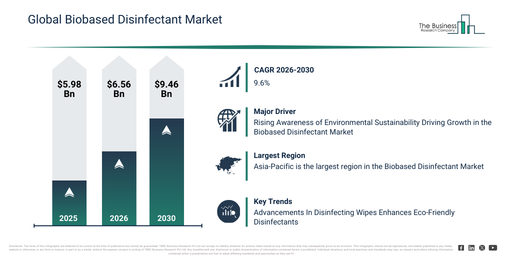
    The market for biobased disinfectants has experienced robust growth in recent years. This sector is forecast to expand from $5.98 billion in 2025 to $6.56 billion in 2026, achieving a compound annual growth rate (CAGR) of 9.7%. Historically, this growth can be attributed to rising environmental awareness among consumers, the expansion of green cleaning initiatives, the increased adoption of disinfectants in healthcare settings, the availability of renewable raw materials, and supportive regulatory frameworks for eco-friendly products.

    The biobased disinfectant market is projected to experience substantial expansion over the upcoming years. This market is forecast to reach $9.46 billion by 2030, exhibiting a compound annual growth rate (CAGR) of 9.6%. Key drivers for this anticipated growth include a rising need for eco-friendly hygiene products, broader application of biobased disinfectants in the food processing sector, increased financial commitments to green chemistry, expanded usage in water purification processes, and a growing consumer preference for disinfectants with reduced toxicity. Significant developments expected during this timeframe involve the wider acceptance of disinfectant formulas derived from plants, a heightened call for surface sanitizers free from harmful chemicals, the proliferation of bio-enzymatic cleaning agents, an increasing emphasis on biodegradable disinfectant items, and enhanced effectiveness of natural antimicrobial mixtures.

    Get A Free Sample Report With In-Depth Market Insights:

    https://www.thebusinessresearchcompany.com/sample.aspx?id=20510&type=smp&utm_source=Blogs&utm_medium=Paid&utm_campaign=Oct_PR

    Biobased Disinfectant Market Growth Factors: What’s Supporting Expansion?

    The increasing focus on environmental sustainability is projected to drive the expansion of the biobased disinfectant market moving forward. Environmental sustainability encompasses the responsible stewardship and conservation of natural resources, aiming to maintain the health and stability of the environment for both current and future generations. Its growing importance stems from rising global concerns regarding climate change, resource depletion, and the long-term vitality of ecosystems. Biobased disinfectants contribute to environmental sustainability by lessening dependence on synthetic chemicals sourced from nonrenewable materials, mitigating adverse environmental consequences, and encouraging the adoption of natural ingredients. For instance, in April 2024, figures from the NYU Stern Center for Sustainable Business, a US-based academic and research institution, indicated that the proportion of sustainability-marketed products grew from 17.3% in 2022 to 18.5% in 2023. Thus, the enhanced awareness of environmental sustainability is fueling the development of the biobased disinfectant market.

    Biobased Disinfectant Market Segmentation And Category Overview

    The biobased disinfectant market covered in this report is segmented –

    1) By Product Type: Essential Oil-Based Disinfectants, Citric Acid-Based Disinfectants, Hydrogen Peroxide-Based Disinfectants, Vinegar-Based Disinfectants, Bio-Enzymatic Disinfectants, Other Product Types

    2) By Category: Liquid Disinfectants, Gel Disinfectants, Spray Disinfectants, Other Categories

    3) By End-User Industry: Healthcare, Food And Beverage, Pharmaceutical, Home Care, Water Treatment, Other End-User Industries

    Subsegments:

    1) By Essential Oil-Based Disinfectants: Tea Tree Oil Disinfectants, Lavender Oil Disinfectants, Eucalyptus Oil Disinfectants, Citrus Oil Disinfectants

    2) By Citric Acid-Based Disinfectants: Liquid Citric Acid Disinfectants, Citric Acid Sprays, Citric Acid Wipes

    3) By Hydrogen Peroxide-Based Disinfectants: Standard Hydrogen Peroxide Solutions, Stabilized Hydrogen Peroxide Formulations, Hydrogen Peroxide Wipes

    4) By Vinegar-Based Disinfectants: White Vinegar Disinfectant Solutions, Apple Cider Vinegar Disinfectants, Vinegar Cleaning Sprays

    5) By Bio-Enzymatic Disinfectants: Protease-Based Disinfectants, Amylase-Based Disinfectants, Lipase-Based Disinfectants

    6) By Other Product Types: Plant Extract-Based Disinfectants, Organic Acid-Based Disinfectants, Multi-Surface Biobased Disinfectants

    Biobased Disinfectant Market Industry Trends: What’s Reshaping Demand?

    Leading companies active in the biobased disinfectant market are developing plant-based disinfectants to satisfy the increasing consumer need for environmentally friendly and efficient cleaning solutions. Plant-based disinfectants are cleaning agents created from natural ingredients sourced from plants, specifically designed to destroy or hinder the proliferation of harmful microorganisms. As an illustration, in August 2024, The Clorox Company, a manufacturing entity based in the US, unveiled Clorox EcoClean Disinfecting Wipes. These wipes are intended for cleaning professionals and are constructed with a 100% plant-based substrate, incorporating naturally derived citric acid as their active ingredient. They effectively eliminate 99.9% of germs without the inclusion of bleach, ammonia, or alcohol, thereby providing a safer choice for various surfaces. The wipes have received certification from the Design for the Environment (DfE) program, highlighting their eco-conscious formulation. Additionally, their packaging uses 38% less plastic than traditional alternatives, supporting sustainability goals.

    Biobased Disinfectant Market Competitive Analysis Of Leading Industry Participants

    Major companies operating in the biobased disinfectant market are BASF SE, The Dow Chemical Company, 3M Company, Ecolab Inc., The Clorox Company, Clariant AG, Diversey Holdings Ltd., GOJO Industries Inc., Betco Corporation, Contec Inc., Seventh Generation Inc., Earth Friendly Products LLC (ECOS), Spartan Chemical Company Inc., Method Products PBC, Virox Technologies Inc., Bio Veda Action Research Pvt Ltd. (Biotique), CleanWell LLC, BioSafe Systems LLC, Bioclean Technologies LLC, Thymox Technology (Laboratoire M2 Inc.)

    View The Full Biobased Disinfectant Market Report:

    https://www.thebusinessresearchcompany.com/report/biobased-disinfectant-global-market-report?utm_source=Blogs&utm_medium=Paid&utm_campaign=Oct_PR

    Biobased Disinfectant Market Geographic Distribution And Regional Opportunities

    Asia-Pacific was the largest region in the biobased disinfectant market in 2025. The regions covered in the biobased disinfectant market report are Asia-Pacific, South East Asia, Western Europe, Eastern Europe, North America, South America, Middle East, Africa.

    Reach Out To Our Team:

    The Business Research Company: https://www.thebusinessresearchcompany.com/

    Americas: +1 310-496-7795

    Asia: +44 7882 955267 & +91 8897263534

    Europe: +44 7882 955267

    Email us at: marketing@tbrc.info

    Follow us on:

    LinkedIn: https://in.linkedin.com/company/the-business-research-company

    YouTube: https://www.youtube.com/channel/UC24_fI0rV8cR5DxlCpgmyFQ

    Global Market Model: https://www.thebusinessresearchcompany.com/global-market-model
  • Biguanides Market Analysis Through 2030: Market Size, Growth Trends And Industry Outlook

    Biguanides Market Analysis Through 2030: Market Size, Growth Trends And Industry Outlook

    Built to provide research that’s more actionable and strategically valuable, The Business Research Company’s 2026 market reports include market attractiveness analysis, total addressable market sizing, company benchmarking matrices, interactive Excel dashboards, broader supply chain intelligence, emerging startup tracking, and in-depth product insights.

    Biguanides Market Value Analysis: What Growth Lies Ahead Over The Forecast Period?

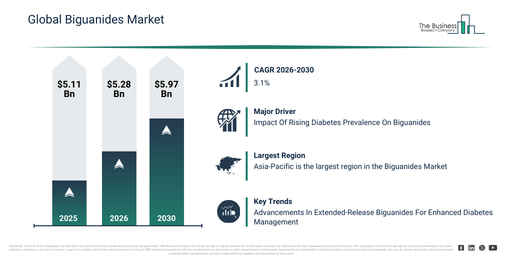
    The biguanides market has experienced consistent expansion in its size over recent years. It is projected to increase from $5.11 billion in 2025 to $5.28 billion in 2026, registering a compound annual growth rate (CAGR) of 3.4%. Historically, this expansion is linked to factors such as the rising incidence of type 2 diabetes, greater understanding of metabolic conditions, an increase in the availability of generic biguanides, the uptake of oral antidiabetic treatments, and breakthroughs in liver-focused therapies.

    The biguanides market size is anticipated to see consistent growth in the coming years, with an expected increase to $5.97 billion in 2030, exhibiting a compound annual growth rate (CAGR) of 3.1%. This projected growth during the forecast period stems from factors such as the increasing demand for personalized medicine, the expansion of telemedicine services for diabetes care, a rising incidence of pcOS, the development of combination therapies, and government initiatives that promote chronic disease management. Key trends identified for the forecast period include the advent of personalized diabetes management solutions, ongoing combination therapy development, expanded indications extending beyond type 2 diabetes, the adoption of home healthcare and remote patient monitoring, and the availability of cost-effective generic biguanides.

    Get A Free Sample Report With In-Depth Market Insights:

    https://www.thebusinessresearchcompany.com/sample.aspx?id=15735&type=smp&utm_source=Blogs&utm_medium=Paid&utm_campaign=Oct_PR

    Biguanides Market Demand Drivers: What’s Powering Industry Growth?

    The biguanides market is anticipated to grow significantly in the future due to the increasing incidence of diabetes. Diabetes is a chronic metabolic disorder defined by elevated blood glucose levels, stemming from either inadequate insulin production or impaired insulin function. This increase in diabetes cases is primarily fueled by shifts in lifestyle, an aging global population, and enhanced diagnostic awareness. The biguanides market contributes to diabetes management through improving insulin sensitivity, decreasing glucose production in the liver, and aiding in the reduction of blood sugar levels for individuals with type 2 diabetes. A relevant example shows that in March 2024, the Office for Health Improvement & Disparities (OHID), a UK-based government department, reported that between March 2022 and March 2023, the percentage of individuals with type 1 diabetes receiving all eight recommended care processes increased by 22%, while for type 2 diabetes it increased by 21%, and the proportion achieving target HbA1c levels reached 37.9%, representing the highest value ever reported. Consequently, the rising prevalence of diabetes is a significant driver for the growth of the biguanides market.

    Biguanides Market Segment Outlook: Which Categories Are Growing Fastest?

    The biguanides market covered in this report is segmented –

    1) By Type: Metformin, Phenformin, Other Types

    2) By Dosage Form: Tablets, Oral Solutions

    3) By Formulation: Immediate Release, Extended Release

    4) By Distribution Channel: Hospital Pharmacies, Retail Pharmacies, Online Pharmacies

    Subsegments:

    1) By Metformin: Immediate-Release Metformin, Extended-Release Metformin

    2) By Phenformin: Phenformin Hydrochloride

    3) By Other Types: Buformin, Metformin Combinations

    Biguanides Market Innovation Trends: What Developments Are Reshaping The Industry?

    Entities operating within the biguanide market are prioritizing the development of advanced remedies like extended-release biguanide formulations to enhance patient compliance, optimize glycemic control, and mitigate gastrointestinal side effects. Extended-release biguanide formulations are pharmaceutical products engineered to release their active component gradually over time, thereby maintaining stable blood concentrations, improving tolerability, and fostering better long-term adherence for individuals managing diabetes. For example, in August 2023, Dr. Reddy’s Laboratories, an India-based biotechnology company, launched saxagliptin and metformin hydrochloride extended-release tablets. This USFDA-approved generic version of KOMBIGLYZE XR integrates saxagliptin, a DPP-4 inhibitor, with metformin, a biguanide, providing adults with type 2 diabetes mellitus an effective once-daily treatment option that supports improved glycemic control when used in conjunction with diet and exercise, while also enhancing adherence through its extended-release design.

    Biguanides Market Leading Companies And Competitive Benchmarking

    Major companies operating in the biguanides market are Pfizer Inc., Sanofi-Aventis LLC, Viatris Inc., Aurobindo Pharma Ltd., Cipla Ltd, Dr. Reddy’s Laboratories, Lupin Limited, Zydus Lifesciences Limited, Torrent Pharmaceuticals Limited, Intas Pharmaceuticals Ltd., Apotex Inc, Sun Pharmaceutical Industries Ltd., Glenmark Pharmaceuticals Ltd., Mylan Laboratories Ltd., Teva Pharmaceutical Industries Ltd., Alkem Laboratories Ltd., Panacea Biotech Ltd., Wanbury Ltd, USV Private Limited, Abbott Laboratories

    View The Full Biguanides Market Report:

    https://www.thebusinessresearchcompany.com/report/biguanides-global-market-report?utm_source=Blogs&utm_medium=Paid&utm_campaign=Oct_PR

    Biguanides Market Largest Region By Revenue And Market Share

    Asia-Pacific was the largest region in the biguanides market in 2025. Middle East And Africa is expected to be the fastest-growing region in the forecast period. The regions covered in the biguanides market report are Asia-Pacific, South East Asia, Western Europe, Eastern Europe, North America, South America, Middle East, Africa.

    Reach Out To Our Team:

    The Business Research Company: https://www.thebusinessresearchcompany.com/

    Americas: +1 310-496-7795

    Asia: +44 7882 955267 & +91 8897263534

    Europe: +44 7882 955267

    Email us at: marketing@tbrc.info

    Follow us on:

    LinkedIn: https://in.linkedin.com/company/the-business-research-company

    YouTube: https://www.youtube.com/channel/UC24_fI0rV8cR5DxlCpgmyFQ

    Global Market Model: https://www.thebusinessresearchcompany.com/global-market-model
  • Bevacizumab Biosimilars Market Outlook From 2026 To 2030: Key Growth Factors And Future Opportunities

    Bevacizumab Biosimilars Market Outlook From 2026 To 2030: Key Growth Factors And Future Opportunities

    Backed by market attractiveness analysis, total addressable market sizing, company benchmarking matrices, interactive Excel dashboards, wider supply chain intelligence, emerging startup coverage, and detailed product-level insights, The Business Research Company’s 2026 market reports are designed to offer research that is more actionable and strategically valuable than ever.

    Bevacizumab Biosimilars Market Size Forecast: How Big Could The Market Get By 2030?

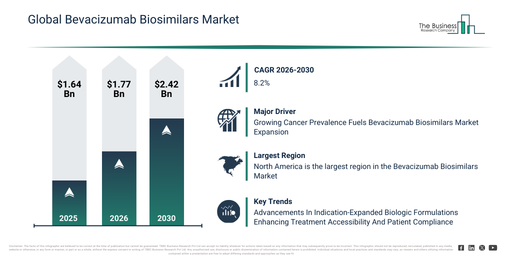
    The bevacizumab biosimilars market size has demonstrated significant expansion in recent years. This market is set to increase from $1.64 billion in 2025 to $1.77 billion in 2026, achieving a compound annual growth rate (CAGR) of 7.5%. Historically, this growth can be attributed to several factors, including the patent expiry of reference bevacizumab, the rising prevalence of cancer, a growing demand for cost-effective biologics, government incentives supporting biosimilars, and advancements in recombinant DNA technology.

    The bevacizumab biosimilars market is poised for significant expansion in the coming years. Its valuation is projected to reach $2.42 billion by 2030, exhibiting a compound annual growth rate (CAGR) of 8.2%. This expansion during the forecast period is driven by factors such as a rise in biosimilar approvals, the penetration into developing markets, the incorporation of AI into drug discovery, a heightened demand for outpatient oncology services, and strategic alliances among pharmaceutical entities. Key developments anticipated during the forecast span involve a greater uptake of biosimilars in cancer treatment, the availability of more economical therapeutic options, an increase in regulatory clearances for biosimilars, the broadening of hospital and retail pharmacy infrastructures, and the proliferation of specialized cancer treatment facilities.

    Get A Free Sample Report With In-Depth Market Insights:

    https://www.thebusinessresearchcompany.com/sample.aspx?id=10848&type=smp&utm_source=Blogs&utm_medium=Paid&utm_campaign=Oct_PR

    Bevacizumab Biosimilars Market Growth Drivers: What’s Behind The Acceleration?

    An increasing occurrence of cancer cases is projected to boost the expansion of the bevacizumab biosimilar market in the future. Cancer incidence quantifies the new cancer cases observed within a particular population over a specified timeframe. Bevacizumab, a biologic, works by inhibiting tumor angiogenesis, thereby facilitating tumor shrinkage and hindering growth, demonstrating similar efficacy and safety to reference biologics for patients with advanced non-small cell lung cancer or metastatic colorectal cancer. For example, the NHS England, a UK-based government department, reported in October 2025 that England saw 354,820 new cancer diagnoses in 2023, marking an increase of 8,605 from 2022. Consequently, the growing prevalence of cancer cases fuels the bevacizumab biosimilars market.

    Bevacizumab Biosimilars Market Segment Landscape: Which Areas Lead Development?

    The bevacizumab biosimilars market covered in this report is segmented –

    1) By Product: Avastin, Mvasi, Zirabev, Aybintio, Other Products

    2) By Distribution Channel: Hospital Pharmacy, Online Pharmacy, Retail Pharmacy, Other Distribution Channels

    3) By Application: Colorectal Cancer, Non-small Cell Lung Cancer, Glioblastoma, Renal Cell Carcinoma, Cervical Cancer, Ovarian Cancer

    Bevacizumab Biosimilars Market Trends: What’s Defining The Industry’s Next Phase?

    Major companies in the bevacizumab biosimilars market are prioritizing technological advancements, such as next-generation indication-expanded formulations, to address the growing need for more adaptable and cost-effective biologic therapies across both oncology and non-oncology indications. These sophisticated formulations modify the core bevacizumab antibody for novel administration methods or new indications, allowing for non-oncologic applications (e.g., ophthalmology) or more patient-compliant dosing, all while maintaining the identical VEGF-neutralizing mechanism utilized by traditional intravenous bevacizumab. For example, in March 2024, Dr. Reddy’s Laboratories, an India-based pharmaceutical firm, introduced Versavo (bevacizumab) in the UK. This high-quality biosimilar of Avastin (bevacizumab) is produced for oncology applications, making treatments for metastatic colorectal cancer, lung cancer, glioblastoma, renal cell carcinoma, cervical cancer, ovarian cancer, and breast cancer more accessible for a wider patient population. Versavo is provided in 100 mg and 400 mg single-use vials, consistent with standard bevacizumab dosages, and offers a biosimilar cost benefit that helps reduce the financial strain on healthcare systems and individuals relying on anti-VEGF therapy.

    Bevacizumab Biosimilars Market Industry Leaders And Competitive Landscape

    Major companies operating in the bevacizumab biosimilars market are Cipla Limited, Reliance lifesciences Pvt. Ltd., Fujifilm Kyowa Kirin Biologics Co. Ltd., Pfizer Inc., F. Hoffmann-La Roche Ltd., Teva Pharmaceutical Industries Ltd., Mylan Inc., Daiichi Sankyo Company Limited, Beaconpharma Ltd., Innovent Biologics Inc., STADA Arzneimittel AG, Shanghai Henlius Biotech Inc., Aurobindo Pharma Ltd., Dr. Reddy’s Laboratories Ltd., Biocon Ltd., Intas Pharmaceuticals Ltd., Amneal Pharmaceuticals LLC, Samsung Bioepis Co. Ltd., Celltrion Inc., Coherus BioSciences Inc., Hetero Drugs Ltd., Apotex Inc., BioXpress Therapeutics SA, mAbxience SA

    View The Full Bevacizumab Biosimilars Market Report:

    https://www.thebusinessresearchcompany.com/report/bevacizumab-biosimilars-global-market-report?utm_source=Blogs&utm_medium=Paid&utm_campaign=Oct_PR

    Bevacizumab Biosimilars Market Regional Analysis And Leading Geography

    North America was the largest region in the bevacizumab biosimilars market in 2025. The regions covered in the bevacizumab biosimilars market report are Asia-Pacific, South East Asia, Western Europe, Eastern Europe, North America, South America, Middle East, Africa.

    Reach Out To Our Team:

    The Business Research Company: https://www.thebusinessresearchcompany.com/

    Americas: +1 310-496-7795

    Asia: +44 7882 955267 & +91 8897263534

    Europe: +44 7882 955267

    Email us at: marketing@tbrc.info

    Follow us on:

    LinkedIn: https://in.linkedin.com/company/the-business-research-company

    YouTube: https://www.youtube.com/channel/UC24_fI0rV8cR5DxlCpgmyFQ

    Global Market Model: https://www.thebusinessresearchcompany.com/global-market-model
  • Beta Blockers Market Growth Forecast: Market Size, Key Trends And Emerging Opportunities Through 2030

    Beta Blockers Market Growth Forecast: Market Size, Key Trends And Emerging Opportunities Through 2030

    Featuring market attractiveness scoring, total addressable market sizing, company benchmarking matrices, interactive Excel dashboards, deeper supply chain intelligence, emerging startup tracking, and granular product-level insights, The Business Research Company’s 2026 market reports are built to deliver research that is both more actionable and more strategically valuable.

    Beta Blockers Market Revenue Outlook: What CAGR Lies Ahead Through 2030?

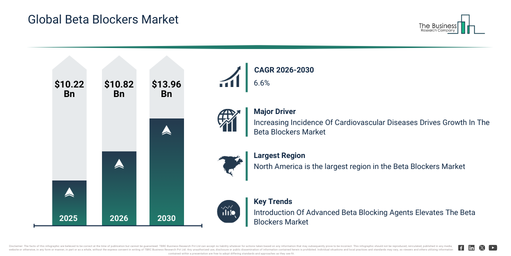
    The beta blockers market has experienced substantial expansion in recent years. It is anticipated to expand from $10.22 billion in 2025 to $10.82 billion in 2026, demonstrating a compound annual growth rate (CAGR) of 5.8%. This historical growth can be linked to factors such as an escalating prevalence of cardiovascular diseases, the launch of generic beta blockers, a developing healthcare infrastructure, enhanced physician awareness, and changes associated with urbanization and lifestyles.

    The beta blockers market is poised for significant expansion in the coming years. Its valuation is projected to reach $13.96 billion by 2030, demonstrating a compound annual growth rate (CAGR) of 6.6%. This anticipated growth during the forecast period is driven by factors such as progress in precision medicine, the integration of digital health solutions, the expansion into emerging markets, new drug delivery technologies, and customized treatment strategies. Key developments anticipated in this period encompass the increased use of beta blockers for managing cardiovascular conditions, enhanced public understanding of preventative cardiac care, the broadening of hospital and retail pharmacy networks, the creation of innovative beta blocker formulations, and the growing elderly demographic suffering from hypertension and heart ailments.

    Get A Free Sample Report With In-Depth Market Insights:

    https://www.thebusinessresearchcompany.com/sample.aspx?id=10684&type=smp&utm_source=Blogs&utm_medium=Paid&utm_campaign=Oct_PR

    Beta Blockers Market Growth Factors Behind Sustained Expansion

    The increasing prevalence of cardiovascular diseases is expected to drive the growth of the beta blockers market. Cardiovascular diseases (CVDs) are conditions impacting the heart and blood vessels. The rise in these diseases is primarily linked to factors such as poor diets, sedentary lifestyles, insufficient exercise, tobacco consumption, and obesity. Beta blockers can aid in reducing cardiovascular cases by exerting various beneficial effects on the heart and blood vessels. Hence, the growing incidence of cardiovascular diseases significantly contributes to the beta blockers market expansion. For instance, in January 2024, the American Heart Association, a US-based non-profit organization, reported an increase in the age-adjusted death rate from cardiovascular disease to 233.3 per 100,000 in 2024, marking a 4.0% rise from 224.4 per 100,000 in 2023. Consequently, the escalating incidence of cardiovascular diseases will fuel the beta blockers market growth.

    Beta Blockers Market Segments: Where Is Growth Concentrated?

    The beta blockers market covered in this report is segmented –

    1) By Type: Non-selective Agents, Selective Agents

    2) By Indication: Angina Pectoris, Heart Failure, High Blood Pressure, Other Indications

    3) By Drugs: Betaxolol, Acebutolol, Esmolol, Other Drugs

    4) By Distribution Channel: Hospital Pharmacy, Retail Pharmacy, Online Pharmacy

    5) By Application: Cardiac Diseases, Hypertension, Glaucoma, Other Applications

    Subsegments:

    1) By Non-Selective Agents: Propranolol, Nadolol, Timolol

    2) By Selective Agents: Atenolol, Metoprolol, Bisoprolol, Nebivolol

    Beta Blockers Market Industry Trends Fueling Future Revenue Growth

    Companies operating in the beta blockers market are prioritizing the introduction of advanced beta-blocking agents designed to manage severe hypertension and reduce blood pressure, seeking a competitive edge. Beta-blockers play a vital role in addressing severe hypertension and lowering blood pressure by blocking peripheral arteriolar alpha-adrenoceptors, which diminishes peripheral resistance, while concurrent beta-blockade protects the heart from reflex sympathetic drives. For instance, in March 2023, Hikma Pharmaceuticals PLC, a UK-based pharmaceutical company, launched Labetalol Hydrochloride (Labetalol HCl) Injection, USP, in a prefilled syringe (PFS) form in the US, specifically for treating severe hypertension and lowering blood pressure. Labetalol features a combination of selective, competitive, alpha1-adrenergic blocking and nonselective, competitive, beta-adrenergic blocking activity within a single substance. It primarily functions by blocking peripheral arteriolar alpha-adrenoceptors, thereby reducing peripheral resistance and decreasing blood pressure. Labetalol is distinctly classified as a non-selective beta-adrenergic receptor antagonist, indicating its ability to block both beta-1 and beta-2 receptors throughout the body.

    Beta Blockers Market Key Participants And Competitive Landscape

    Major companies operating in the beta blockers market are Pfizer Inc., Novartis AG, Merck & Co. Inc., AstraZeneca plc, Johnson and Johnson, Eli Lilly and Company, Sanofi SA, Bristol-Myers Squibb Company, Bayer AG, GlaxoSmithKline plc, Teva Pharmaceutical Industries Ltd., Sun Pharmaceutical Industries Ltd., Amneal Pharmaceuticals LLC, Abbott Laboratories, Eagle Pharmaceuticals Inc., Neon Healthcare Ltd., Midas Pharma GmbH, AbbVie Inc., Mylan N.V., Boehringer Ingelheim International GmbH, Aspen Pharmacare Holdings Limited, Lupin Limited, Torrent Pharmaceuticals Ltd., Dr. Reddy’s Laboratories Ltd., Cipla Ltd., Sandoz International GmbH, Wockhardt Ltd., Endo Pharmaceuticals Inc., Apotex Inc.

    View The Full Beta Blockers Market Report:

    https://www.thebusinessresearchcompany.com/report/beta-blockers-global-market-report?utm_source=Blogs&utm_medium=Paid&utm_campaign=Oct_PR

    Beta Blockers Market Geographic Analysis: Where Is Demand Accelerating Fastest?

    North America was the largest region in the beta blockers market in 2025. Asia-Pacific is expected to be the fastest-growing region in the global beta-blockers market report during the forecast period. The regions covered in the beta blockers market report are Asia-Pacific, South East Asia, Western Europe, Eastern Europe, North America, South America, Middle East, Africa.

    Reach Out To Our Team:

    The Business Research Company: https://www.thebusinessresearchcompany.com/

    Americas: +1 310-496-7795

    Asia: +44 7882 955267 & +91 8897263534

    Europe: +44 7882 955267

    Email us at: marketing@tbrc.info

    Follow us on:

    LinkedIn: https://in.linkedin.com/company/the-business-research-company

    YouTube: https://www.youtube.com/channel/UC24_fI0rV8cR5DxlCpgmyFQ

    Global Market Model: https://www.thebusinessresearchcompany.com/global-market-model
  • Benzodiazepine Market CAGR Forecast Through 2030: Key Trends Shaping Industry Expansion

    Benzodiazepine Market CAGR Forecast Through 2030: Key Trends Shaping Industry Expansion

    Built to provide research that’s more actionable and strategically valuable, The Business Research Company’s 2026 market reports include market attractiveness analysis, total addressable market sizing, company benchmarking matrices, interactive Excel dashboards, broader supply chain intelligence, emerging startup tracking, and in-depth product insights.

    Benzodiazepine Drugs Market Growth Analysis: How Will Revenue Trend Over The Forecast Period?

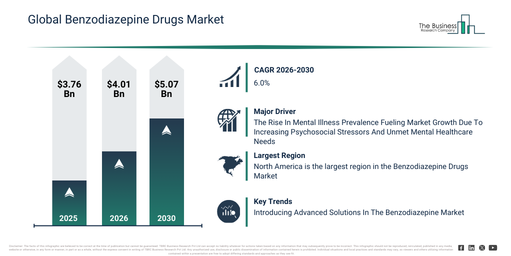
    The benzodiazepine drugs market has experienced substantial growth in recent years. It is anticipated to increase from $3.76 billion in 2025 to $4.01 billion in 2026, achieving a compound annual growth rate (CAGR) of 6.8%. This historical growth can be attributed to several factors, including the rising prevalence of anxiety disorders and insomnia, enhanced awareness of mental health conditions, the introduction of new benzodiazepine formulations, the expansion of hospital and clinical services, and the growing demand for muscle relaxants in neurology.

    The benzodiazepine drugs market size is expected to experience significant expansion over the next few years. It is projected to grow to $5.07 billion by 2030, achieving a compound annual growth rate (CAGR) of 6.0%. This growth in the forecast period is attributable to an increased embrace of precision medicine, the integration of artificial intelligence and digital tools in drug development, the expansion of homecare services for mental health, a rising geriatric population requiring sedatives, and increasing investments in telehealth and remote monitoring. Key trends in the forecast period include the adoption of personalized medicine, AI-powered drug discovery, remote patient monitoring, the integration of digital therapeutics, and smart drug delivery systems.

    Get A Free Sample Report With In-Depth Market Insights:

    https://www.thebusinessresearchcompany.com/sample.aspx?id=15519&type=smp&utm_source=Blogs&utm_medium=Paid&utm_campaign=Oct_PR

    Benzodiazepine Drugs Market Demand Drivers Opening New Revenue Streams

    The market for benzodiazepine drugs is anticipated to expand due to the increasing incidence of mental illness. Mental illness encompasses diverse conditions impacting an individual’s thoughts, feelings, or actions, frequently leading to substantial difficulties in everyday activities. This rise in mental illness prevalence stems from elements like increased psychosocial stress, demands of modern lifestyles, genetic predispositions, and insufficient access to prompt mental health support. Benzodiazepines aid in managing mental health by quickly easing symptoms associated with anxiety, panic disorders, and intense stress reactions, providing immediate, temporary comfort to those undergoing significant psychological suffering. These drugs are particularly efficacious in addressing sudden panic attacks, diminishing manifestations like trembling, sweating, and shortness of breath. For instance, in November 2023, according to NHS England, a UK-based executive non-departmental public body, 20.3% of eight- to 16-year-olds were found to have a probable mental disorder. Consequently, the growing occurrence of mental illness is fueling the expansion of the benzodiazepine drugs market.

    Benzodiazepine Drugs Market Segment Analysis: What Are The Core Market Categories?

    The benzodiazepine drugs market covered in this report is segmented –

    1) By Product: Alprazolam, Diazepam, Lorazepam, Clonazepam, Temazepam, Oxazepam, Chlordiazepoxide, Other Products

    2) By Route Of Administration: Oral, Parenteral, Other Routes Of Administration

    3) By Application: Anxiety Disorders, Seizures, Insomnia, Alcohol Withdrawal, Other Applications

    4) By End User: Hospitals, Homecare, Specialty Clinics, Other End Users

    Benzodiazepine Drugs Market Trends Powering Strategic Industry Growth

    Leading firms within the benzodiazepine drugs market are intensifying their efforts to create sophisticated solutions, like prefilled syringe injections, aimed at improving dosing accuracy and reducing the potential for medication errors. A prefilled syringe injection is a pharmaceutical product format where a precise dose of a benzodiazepine drug is pre-packaged and pre-measured in a syringe, ready for immediate application. As an example, in May 2024, Hikma Pharmaceuticals plc, a pharmaceutical company based in the UK, introduced Midazolam Injection, USP, available in dosages of 2 mg/2 mL and 10 mg/2 mL. This introduction offers exact dosing choices, various ways of administration, and safety details concerning respiratory depression and risks associated with opioid interactions. The launch of Midazolam Injection in a prefilled syringe represents a considerable step forward in drug delivery methods within the benzodiazepine drugs market, providing greater ease of use, precise measurement, sustained sterility, and improved safety, consequently fostering better patient care, broader market reach, and adherence to regulations.

    Benzodiazepine Drugs Market Top Companies Driving Competitive Growth

    Major companies operating in the benzodiazepine drugs market are Pfizer Inc., Johnson & Johnson, Roche Holding AG, Merck & Co. Inc., Bayer AG, Sanofi S.A., Novartis AG, GlaxoSmithKline plc, Eli Lilly and Company, Boehringer Ingelheim International GmbH, Teva Pharmaceutical Industries Ltd., Otsuka Pharmaceutical Co. Ltd, Bausch Health Companies Inc., Sun Pharmaceutical Industries Ltd., Aurobindo Pharma, Dr. Reddy’s Laboratories Ltd., Apotex Inc., Hikma Pharmaceuticals, Endo International plc, Amneal Pharmaceuticals LLC, Lupin Limited, Zydus Lifesciences Limited, Mallinckrodt Pharmaceuticals, Torrent Pharmaceuticals Ltd., Alvogen, Actavis Laboratories FL Inc., Sandoz International GmbH

    View The Full Benzodiazepine Drugs Market Report:

    https://www.thebusinessresearchcompany.com/report/benzodiazepine-drugs-global-market-report?utm_source=Blogs&utm_medium=Paid&utm_campaign=Oct_PR

    Benzodiazepine Drugs Market Global Footprint: Which Region Leads The Industry?

    North America was the largest region in the benzodiazepine drugs market in 2025. Asia-Pacific is expected to be the fastest-growing region in the forecast period. The regions covered in the benzodiazepine drugs market report are Asia-Pacific, South East Asia, Western Europe, Eastern Europe, North America, South America, Middle East, Africa.

    Reach Out To Our Team:

    The Business Research Company: https://www.thebusinessresearchcompany.com/

    Americas: +1 310-496-7795

    Asia: +44 7882 955267 & +91 8897263534

    Europe: +44 7882 955267

    Email us at: marketing@tbrc.info

    Follow us on:

    LinkedIn: https://in.linkedin.com/company/the-business-research-company

    YouTube: https://www.youtube.com/channel/UC24_fI0rV8cR5DxlCpgmyFQ

    Global Market Model: https://www.thebusinessresearchcompany.com/global-market-model
  • Benchtop Bioreactors Market To Witness 10.1% CAGR Growth Through 2030: Key Industry Drivers

    Benchtop Bioreactors Market To Witness 10.1% CAGR Growth Through 2030: Key Industry Drivers

    Backed by market attractiveness analysis, total addressable market sizing, company benchmarking matrices, interactive Excel dashboards, wider supply chain intelligence, emerging startup coverage, and detailed product-level insights, The Business Research Company’s 2026 market reports are designed to offer research that is more actionable and strategically valuable than ever.

    Benchtop Bioreactors Market Forecast: What Value Will The Market Reach By 2030?

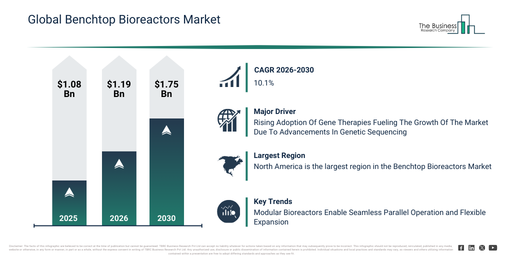
    The benchtop bioreactors market has seen swift expansion in recent years. Its valuation is expected to rise from $1.08 billion in 2025 to $1.19 billion in 2026, registering a compound annual growth rate (CAGR) of 10.2%. The previous period’s growth was primarily due to increased funding in life sciences research, the expansion of academic and research institutions, the reliance on small-scale fermentation systems, a rise in pharmaceutical R&D endeavors, and the escalating need for regulated laboratory settings.

    The benchtop bioreactors market size is anticipated to experience substantial expansion over the upcoming years. It is projected to reach $1.75 billion in 2030 at a compound annual growth rate (CAGR) of 10.1%. This projected growth during the forecast period is fueled by several factors, including the increasing development of biologics and biosimilars, the embrace of automated and continuous bioreactors, a heightened emphasis on personalized medicine research, growing partnerships with Contract Research Organizations (CROs), and innovations in bioprocessing technologies. Key developments expected in this period encompass the increasing integration of benchtop bioreactors into research and development activities, a surge in demand for single-use and modular bioreactor systems, a concentrated effort on refining processes and boosting yield, an expansion of cell culture and microbial fermentation investigations, and a growing application of benchtop bioreactors in educational and academic settings.

    Get A Free Sample Report With In-Depth Market Insights:

    https://www.thebusinessresearchcompany.com/sample.aspx?id=27220&type=smp&utm_source=Blogs&utm_medium=Paid&utm_campaign=Oct_PR

    Benchtop Bioreactors Market Growth Backed By Core Demand Fundamentals

    The increasing integration of gene therapies is anticipated to drive expansion within the benchtop bioreactors market in the future. Gene therapy is defined as a medical approach where faulty genes are altered or substituted to address or avert illnesses. Growing interest in gene therapy stems from progress in genetic sequencing and diagnostics, facilitating accurate detection of disease-related genes for focused interventions. Benchtop bioreactors enhance gene therapies by providing precise regulation and effective manufacturing of cells modified by genes. These devices facilitate quick research and limited-scale production, thereby boosting operational speed and uniformity. As an illustration, data from December 2024, supplied by the American Society of Gene & Cell Therapy (ASGCT), a non-profit medical and scientific body based in the US, showed that the Food and Drug Administration (FDA) gave its approval to six gene therapy products in 2023, an increase from five approvals recorded in 2022. Consequently, the expanding use of gene therapies is stimulating the development of the benchtop bioreactors market.

    Benchtop Bioreactors Market Segment Breakdown: Which Categories Lead On Revenue?

    The benchtop bioreactors market covered in this report is segmented –

    1) By Type: Swing-Style Bioreactors, Stirred-Tank Bioreactors, Wave-Mixed Bioreactors, Airlift Bioreactors, Bubble Column Bioreactors

    2) By Control Type: Automated Bioreactors, Manual Bioreactors, Continuous Bioreactors, Batch Bioreactors

    3) By Material: Stainless Steel, Glass, Plastic, Composite Materials

    4) By Application: Research And Development, Process Development, Bioproduction, Quality Control, Training And Education

    5) By End User: Pharmaceutical Companies, Biotechnology Companies, Academic And Research Institutes, Contract Research Organizations (CROs), Food And Beverage Industry

    Subsegments:

    1) By Swing-Style Bioreactors: Single-Use Swing Bioreactors, Multi-Use Swing Bioreactors, Compact Swing Bioreactors, Automated Swing Bioreactors

    2) By Stirred-Tank Bioreactors: Single-Use Stirred-Tank Bioreactors, Glass Stirred-Tank Bioreactors, Stainless-Steel Stirred-Tank Bioreactors, Modular Stirred-Tank Bioreactors, Automated Stirred-Tank Bioreactors

    3) By Wave-Mixed Bioreactors: Single-Use Wave-Mixed Bioreactors, Dual-Motion Wave-Mixed Bioreactors, Automated Wave-Mixed Bioreactors, Compact Wave-Mixed Bioreactors

    4) By Airlift Bioreactors: Internal Loop Airlift Bioreactors, External Loop Airlift Bioreactors, Single-Use Airlift Bioreactors

    5) By Bubble Column Bioreactors: Vertical Bubble Column Bioreactors, Single-Use Bubble Column Bioreactors, Gas-Lift Bubble Column Bioreactors, Automated Bubble Column Bioreactors

    Benchtop Bioreactors Market Growth Trends Reshaping The Competitive Landscape

    Leading companies within the benchtop bioreactors market are focusing on creating innovative solutions, such as benchtop fermenters, to enhance precise control and scalability for research and small-scale production. Benchtop fermenters are compact, laboratory-scale bioreactors designed for the controlled cultivation of microorganisms or cells, supporting both research and limited production needs. For instance, in September 2024, VFL Sciences Private Limited, an India-based biotechnology equipment manufacturer, introduced the GreatFlo range of benchtop fermenters or bioreactors. This versatile and modular product line is engineered to allow easy scale-up and consistent reproducibility in fermentation and cell culture applications. These fermenters support seamless parallel operation with flexible expansion options, ranging from 2 to 16 vessels, each providing a working volume of 200-500 ml. They are equipped with Peltier-controlled heating and cooling, exhaust condensers, and software that complies with 21 CFR Part 11, offering precise regulation of agitation, pH, dissolved oxygen, and individual gas mixing.

    Benchtop Bioreactors Market Leading Players And Competitive Positioning

    Major companies operating in the benchtop bioreactors market are Thermo Fisher Scientific Inc., Danaher Corporation, Merck KGaA, GE Healthcare, Sartorius AG, Eppendorf AG, Solaris Biotech Solutions, IKA-Werke GmbH And Co. KG, GPC Bio USA, Praj HiPurity Systems Limited., PBS Biotech Inc., Bioengineering AG, Broadley-James Ltd., Infors HT, Solida Biotech, Bbi-biotech GmbH, Applikon Biotechnology B.V., Labfirst Scientific Instruments Co. Ltd, Pharsol Ltd., Uma Pharmatech Machinery

    View The Full Benchtop Bioreactors Market Report:

    https://www.thebusinessresearchcompany.com/report/benchtop-bioreactors-global-market-report?utm_source=Blogs&utm_medium=Paid&utm_campaign=Oct_PR

    Benchtop Bioreactors Market Regional Distribution: Which Areas Power Market Growth?

    North America was the largest region in the benchtop bioreactors market in 2025. Asia-Pacific is expected to be the fastest-growing region in the forecast period. The regions covered in the benchtop bioreactors market report are Asia-Pacific, South East Asia, Western Europe, Eastern Europe, North America, South America, Middle East, Africa.

    Reach Out To Our Team:

    The Business Research Company: https://www.thebusinessresearchcompany.com/

    Americas: +1 310-496-7795

    Asia: +44 7882 955267 & +91 8897263534

    Europe: +44 7882 955267

    Email us at: marketing@tbrc.info

    Follow us on:

    LinkedIn: https://in.linkedin.com/company/the-business-research-company

    YouTube: https://www.youtube.com/channel/UC24_fI0rV8cR5DxlCpgmyFQ

    Global Market Model: https://www.thebusinessresearchcompany.com/global-market-model
  • Behcets disease Market Projected For Strong Expansion Through 2030: Key Trends And Future Outlook

    Behcets disease Market Projected For Strong Expansion Through 2030: Key Trends And Future Outlook

    Featuring market attractiveness scoring, total addressable market sizing, company benchmarking matrices, interactive Excel dashboards, deeper supply chain intelligence, emerging startup tracking, and granular product-level insights, The Business Research Company’s 2026 market reports are built to deliver research that is both more actionable and more strategically valuable.

    Behcets disease Market Size Outlook: How Quickly Will Revenue Expand Through 2030?

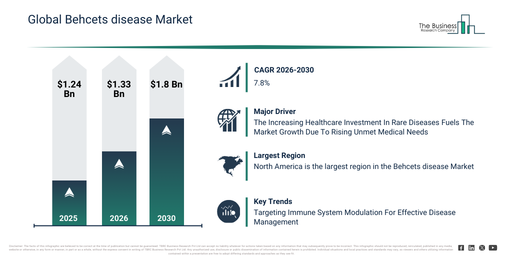
    The behcets disease market has experienced substantial expansion in recent years. Its valuation is predicted to rise from $1.24 billion in 2025 to $1.33 billion in 2026, at a compound annual growth rate (CAGR) of 7.9%. This historical growth can be linked to heightened rare disease awareness, advancements in inflammatory disorder treatments, the application of corticosteroids, the availability of hospital rheumatology services, and the adoption of immunosuppressants.

    The behcets disease market size is anticipated to undergo substantial expansion over the next few years. It is projected to reach $1.8 billion in 2030, growing at a compound annual growth rate (CAGR) of 7.8%. This expansion during the forecast period is primarily driven by innovations in biologic therapy, targeted immune modulation, the introduction of early diagnostic tools, personalized treatment protocols, and global rare disease initiatives. Significant trends expected in the forecast period include an increased application of biologic therapies, a heightened focus on early disease diagnosis, the broader availability of corticosteroid-sparing treatments, a rising requirement for long-term disease management, and more refined multispecialty treatment approaches.

    Get A Free Sample Report With In-Depth Market Insights:

    https://www.thebusinessresearchcompany.com/sample.aspx?id=24167&type=smp&utm_source=Blogs&utm_medium=Paid&utm_campaign=Oct_PR

    Behcets disease Market Growth Catalysts And Demand Drivers

    Future expansion of the behcets disease market is anticipated due to rising healthcare funding directed towards rare diseases. These rare conditions are defined as illnesses impacting less than 1 in 2,000 individuals, typically characterized by intricate symptoms and a scarcity of available treatments. The primary catalyst for increased healthcare investment in rare diseases stems from the escalating acknowledgment of unaddressed medical requirements, as numerous patients lack successful therapies, compelling governments and pharmaceutical firms to prioritize research, development, and financial backing for these conditions. Behçet’s disease serves as an illustration of how concentrated research and dedicated advocacy for one specific rare disorder can stimulate wider investment across the spectrum of rare diseases, showing that precise initiatives can lead to substantial progress in comprehension, therapy, and policy benefiting the entire rare disease community. As an example, in April 2024, Global Genes, a US-based nonprofit organization, reported that during the first quarter of 2024, companies engaged in developing rare disease medications secured $7.1 billion via public equity and debt financing, representing a significant 307% increase from the $1.8 billion acquired during the corresponding period in 2023. Consequently, the expanding healthcare investment into rare diseases is fueling the development of the behcets disease market.

    Behcets disease Market Segmentation: How Does The Market Break Down By Category?

    The behcets disease market covered in this report is segmented –

    1) By Treatment Type: Corticosteroids, Immunosuppressants, Biologics, Other Treatments

    2) By Route Of Administration: Oral, Injectable, Topical

    3) By Type of Disease: Non-Ocular Behcet’s Disease, Ocular Behcet’s Disease

    4) By Distribution Channel: Hospital Pharmacies, Retail Pharmacies, Online Pharmacies, Other Distribution Channels

    5) By End User: Hospitals, Clinics, Ambulatory Surgical Centers

    Subsegments:

    1) By Corticosteroids: Oral Corticosteroids, Topical Corticosteroids, Intravenous Corticosteroids

    2) By Immunosuppressants: Methotrexate, Azathioprine, Cyclophosphamide, Mycophenolate Mofetil, Cyclosporine

    3) By Biologics: Tumor Necrosis Factor (TNF) Inhibitors, Interleukin Inhibitors

    4) By Other Treatments: Colchicine, Thalidomide, Hydroxychloroquine, Corticosteroid-Sparing Agents

    Behcets disease Market Trends Shaping Long-Term Demand

    Key companies in the behcets disease market are prioritizing clinical trials to develop innovative products, such as innate defense regulator (IDR) therapies, aimed at improving immune system modulation and providing more effective treatments for inflammation and other symptoms linked to the condition. Innate defense regulators (IDRs) are synthetic peptides designed to modulate the innate immune response by bolstering the body’s natural defense mechanisms; for Behçet’s disease, they function by regulating the immune system to diminish excessive inflammation, potentially easing symptoms and managing flare-ups. For instance, in November 2024, Soligenix, Inc., a US-based biopharmaceutical company, commenced patient enrollment for its Phase 2 study (protocol number DUS-AUBD-01), which is evaluating SGX945 (dusquetide) as a treatment for Behçet’s disease. This research seeks to assess SGX945, an innate defense regulator (IDR), for its capacity to modulate the immune system and reduce inflammation, offering a new therapeutic method for controlling the symptoms and flare-ups associated with behçet’s disease.

    Behcets disease Market Competitive Overview And Top Companies

    Major companies operating in the behcets disease market are AbbVie Inc., AstraZeneca PLC, GlaxoSmithKline PLC, Amgen Inc., Teva Pharmaceutical Industries Ltd., Sandoz International GmbH, Chugai Pharmaceutical Co. Ltd, Sun Pharmaceutical Industries Limited, Eisai Co. Ltd, Pharmascience Inc, Samsung Bioepis Co. Ltd., Maxivision Eye Hospitals Pvt. Ltd, Ainos Inc., Soligenix Inc, XOMA Corporation, Creabilis S.A., Iltoo Pharma S.A.S., Ganzhou Hemay Pharmaceutical Co. Ltd., Sanguine Biosciences Inc., NYU Langone Health

    View The Full Behcets disease Market Report:

    https://www.thebusinessresearchcompany.com/report/behcets-disease-global-market-report?utm_source=Blogs&utm_medium=Paid&utm_campaign=Oct_PR

    Behcets disease Market Leading Geography: Which Region Contributes The Most Revenue?

    North America was the largest region in the behcets disease market in 2025. Asia-Pacific is expected to be the fastest-growing region in the forecast period. The regions covered in the behcets disease market report are Asia-Pacific, South East Asia, Western Europe, Eastern Europe, North America, South America, Middle East, Africa.

    Reach Out To Our Team:

    The Business Research Company: https://www.thebusinessresearchcompany.com/

    Americas: +1 310-496-7795

    Asia: +44 7882 955267 & +91 8897263534

    Europe: +44 7882 955267

    Email us at: marketing@tbrc.info

    Follow us on:

    LinkedIn: https://in.linkedin.com/company/the-business-research-company

    YouTube: https://www.youtube.com/channel/UC24_fI0rV8cR5DxlCpgmyFQ

    Global Market Model: https://www.thebusinessresearchcompany.com/global-market-model

  • Barrier Packaging Materials For Pharmaceuticals Market Outlook 2026–2030: Growth Trends, Market Dynamics And Emerging Opportunities

    Barrier Packaging Materials For Pharmaceuticals Market Outlook 2026–2030: Growth Trends, Market Dynamics And Emerging Opportunities

    Built to provide research that’s more actionable and strategically valuable, The Business Research Company’s 2026 market reports include market attractiveness analysis, total addressable market sizing, company benchmarking matrices, interactive Excel dashboards, broader supply chain intelligence, emerging startup tracking, and in-depth product insights.

    Barrier Packaging Materials For Pharmaceuticals Market Size, Value And Growth Trajectory Through 2030

    The market size for barrier packaging materials for pharmaceuticals has experienced significant growth in recent years. This market is anticipated to expand from $33.07 billion in 2025 to $36.23 billion in 2026, exhibiting a compound annual growth rate (CAGR) of 9.5%. Historically, this expansion has been propelled by factors such as the increase in solid oral dosage manufacturing, the extensive utilization of aluminum foil barriers, regulatory mandates for drug stability, the rise in generic drug production, and the consistent reliance on traditional blister formats.

    The barrier packaging materials for pharmaceuticals market is anticipated to show substantial growth in the upcoming period. This market is set to reach $51.61 billion by 2030, exhibiting a compound annual growth rate (CAGR) of 9.2%. This expansion during the projection period stems from factors such as the increasing requirements for biologics and biosimilar packaging, a heightened need for sustainable barrier materials, the broadening of cold-chain pharmaceutical distribution, greater uptake of intelligent packaging solutions, and advancements in bio-based barrier films. Key trends identified for the forecast timeframe involve a growing appetite for high-barrier blister packaging, increased use of multi-layer laminates, an intensified focus on safeguarding against moisture and oxygen, the broadening of packaging solutions for biologics, and a stronger commitment to regulatory adherence.

    Get A Free Sample Report With In-Depth Market Insights:

    https://www.thebusinessresearchcompany.com/sample.aspx?id=28955&type=smp&utm_source=Blogs&utm_medium=Paid&utm_campaign=Oct_PR

    Barrier Packaging Materials For Pharmaceuticals Market Opportunity Drivers: What’s Unlocking New Revenue Potential?

    The expanding availability of biologic drugs is anticipated to drive an increase in the demand for barrier packaging materials within the pharmaceuticals market. These therapeutic products, known as biologic drugs, are developed from living cells or organisms to treat illnesses that traditional chemical medications cannot effectively manage. A growing need for biologic drugs is observed, stemming from the increasing occurrence of chronic and intricate diseases that necessitate precise and potent treatment approaches. Pharmaceutical barrier packaging materials improve the safety and stability of medications by safeguarding biologic drugs against elements such as moisture, oxygen, light, and potential microbial contamination. These materials help minimize product degradation and prolong shelf life, thereby boosting product effectiveness and contributing to patient safety. For example, in August 2024, data from the National Library of Medicine (NLM), a US-based biomedical library, indicated that in 2024, the FDA granted authorization for 50 new molecular entities, with 16 being biologics, and remarkably, six biologic therapies received approval within only the initial six months of the year. Consequently, the expansion of biologic drugs is fueling the expansion of the barrier packaging materials for the pharmaceuticals market.

    Barrier Packaging Materials For Pharmaceuticals Market Segment Trends And Revenue Contributors

    The barrier packaging materials for pharmaceuticals market covered in this report is segmented –

    1) By Material Type: Aluminum Foil Barrier Materials, Polymer Film Barrier Materials, Multi-Layer Barrier Systems, Advanced Barrier Technologies

    2) By Packaging Format: Blister Packaging, Flexible Packaging, Rigid Packaging, Specialized Packaging Formats

    3) By Application: Solid Dosage Forms, Liquid And Semi-Solid Formulations, Biologics And Biosimilar

    4) By End-User: Branded Drug Manufacturers, Generic Drug Companies, Contract Development And Manufacturing Organizations (CDMOs)

    Subsegments:

    1) By Aluminum Foil Barrier Materials: Blister Foil, Cold Form Foil, Laminated Foil

    2) By Polymer Film Barrier Materials: Polyethylene (PE), Polypropylene (PP), Polyvinylidene Chloride (PVDC)

    3) By Multi-Layer Barrier Systems: Aluminum Polymer Laminates, Co-Extruded Films, Metallized Films

    4) By Advanced Barrier Technologies: Nanocomposite Films, Bio-Based Barrier Materials, Active And Intelligent Packaging Materials

    Barrier Packaging Materials For Pharmaceuticals Market Innovation Trends Shaping Future Development

    Key companies operating in the barrier packaging materials for pharmaceuticals market are concentrating on developing advanced solutions, including innovative pharmaceutical packaging approaches, to enhance drug stability, extend shelf life, and ensure patient safety. Innovative pharmaceutical packaging solutions refer to modern packaging methods that improve drug safety, maintain product integrity, and optimize storage and transportation, frequently incorporating barrier materials, tamper-evident features, or digital tracking technologies. For instance, in February 2025, LOG Pharma Primary Packaging, an Israel-based manufacturing company, unveiled a new barrier eco line at Pharmapack Europe to provide sustainable, high-performance packaging solutions that safeguard pharmaceuticals. This line reduces bottle weight by up to 30% while sustaining superior moisture and oxygen barrier protection to ensure drug stability. It employs advanced pharma-grade HEALTH+ resins from Dow, offering sustainable, cost-effective packaging that lowers environmental impact without compromising performance. This innovation supports pharmaceutical companies in meeting sustainability objectives and reducing packaging expenses while preserving product efficacy.

    Barrier Packaging Materials For Pharmaceuticals Market Competitive Landscape: Which Companies Lead The Industry?

    Major companies operating in the barrier packaging materials for pharmaceuticals market are BASF SE, Honeywell International Inc., 3M Company, Amcor plc, DuPont de Nemours Inc., Toppan Printing Co. Ltd., Dai Nippon Printing Co. Ltd., Mondi Group, Sealed Air Corporation, AptarGroup Inc., West Pharmaceutical Services Inc., Gerresheimer AG, ProAmpac Holdings LLC, UFlex Limited, SCHOTT AG, Toray Plastics (America) Inc., Cosmo Films Limited, Sonoco Products Company, Glenroy Inc., Cadillac Products Packaging Company, Origin Pharma Packaging Ltd., Neelam Global Pvt. Ltd., Vishakha Polyfab Private Limited

    View The Full Barrier Packaging Materials For Pharmaceuticals Market Report:

    https://www.thebusinessresearchcompany.com/report/barrier-packaging-materials-for-pharmaceuticals-global-market-report?utm_source=Blogs&utm_medium=Paid&utm_campaign=Oct_PR

    Barrier Packaging Materials For Pharmaceuticals Market Regional Outlook: Where Is Opportunity Concentrated?

    North America was the largest region in the barrier packaging materials for pharmaceuticals market in 2025. Asia-Pacific is expected to be the fastest-growing region in the forecast period. The regions covered in the barrier packaging materials for pharmaceuticals market report are Asia-Pacific, South East Asia, Western Europe, Eastern Europe, North America, South America, Middle East, Africa.

    Reach Out To Our Team:

    The Business Research Company: https://www.thebusinessresearchcompany.com/

    Americas: +1 310-496-7795

    Asia: +44 7882 955267 & +91 8897263534

    Europe: +44 7882 955267

    Email us at: marketing@tbrc.info

    Follow us on:

    LinkedIn: https://in.linkedin.com/company/the-business-research-company

    YouTube: https://www.youtube.com/channel/UC24_fI0rV8cR5DxlCpgmyFQ

    Global Market Model: https://www.thebusinessresearchcompany.com/global-market-model
  • Bakuchiol Market Growth Outlook From $1.12 Billion In 2026 To $1.62 Billion By 2030

    Bakuchiol Market Growth Outlook From $1.12 Billion In 2026 To $1.62 Billion By 2030

    Backed by market attractiveness analysis, total addressable market sizing, company benchmarking matrices, interactive Excel dashboards, wider supply chain intelligence, emerging startup coverage, and detailed product-level insights, The Business Research Company’s 2026 market reports are designed to offer research that is more actionable and strategically valuable than ever.

    Bakuchiol Market CAGR Outlook And Future Development

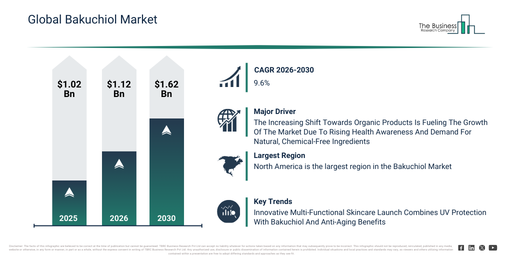
    The bakuchiol market has shown strong expansion in recent years. Its projected growth is from $1.02 billion in 2025 to $1.12 billion in 2026, at a compound annual growth rate (CAGR) of 9.9%. Historically, this growth can be ascribed to factors like the utilization of herbal cosmetics, adverse effects associated with retinol, the incorporation of ayurvedic ingredients, increased awareness regarding skincare, and prevailing natural beauty trends.

    The bakuchiol market size is anticipated to undergo significant expansion over the next few years. It is projected to reach $1.62 billion by 2030, exhibiting a compound annual growth rate (CAGR) of 9.6%. This growth throughout the forecast period is primarily fueled by the clean beauty movement, a heightened focus on sustainability, the emergence of dermatology-backed cosmetics, the demand for premium skincare products, and enhanced ingredient transparency. Key trends influencing this period include the increasing consumer demand for plant-based skincare ingredients, its rising adoption as a retinol alternative, the proliferation of clean label cosmetic products, the broader availability of natural anti-aging solutions, and its integration into sensitive skin formulations.

    Get A Free Sample Report With In-Depth Market Insights:

    https://www.thebusinessresearchcompany.com/sample.aspx?id=24477&type=smp&utm_source=Blogs&utm_medium=Paid&utm_campaign=Oct_PR

    Bakuchiol Market Growth Momentum: What Factors Are Shaping Demand?

    The increasing shift towards organic products is expected to propel the growth of the bakuchiol market going forward. Organic products are derived from naturally grown ingredients, free from synthetic chemicals, fertilizers, and genetically modified organisms (GMOs). Rising demand for organic products is due to increasing consumer awareness about health and environmental benefits, resulting people to prefer natural and chemical-free options for a safer lifestyle. Bakuchiol, a plant-based alternative to retinol, supports organic products by aligning with clean beauty standards through its natural origin and gentle, non-synthetic formulation. For instance, in August 2024, according to the United States Department of Agriculture, a US-based government agency, the agency awarded nearly $10 million in organic development grants, driving a total investment of $85 million to grow US organic products. Additionally, in 2023, consumer demand for organic products in the united states exceeded $69 billion, representing approximately 4% of the overall food sales in the country. Therefore, the increasing shift towards organic products is driving the growth of the bakuchiol market.

    Bakuchiol Market Segment Analysis Spotlighting Growth Areas

    The bakuchiol market covered in this report is segmented –

    1) By Product Type: Serums, Oils, Creams, Other Types

    2) By Source: Natural, Synethetic

    3) By Distribution Channel: Online Retail, Supermarkets Or Hypermarkets, Specialty Stores, Other Distribution Channels

    4) By Application: Skincare, Haircare, Cosmetics, Pharmaceuticals, Food And Beverages

    5) By End-User: Individuals, Professional Use, Commercial Brands

    Subsegments:

    1) By Serums: Anti-Aging Serums, Brightening Serums, Hydrating Serums, Acne Control Serums

    2) By Oils: Facial Oils, Body Oils, Scalp Oils, Multi-Purpose Oils

    3) By Creams: Day Creams, Night Creams, Eye Creams, Moisturizing Creams

    4) By Other Types: Lotions, Gels, Balms, Masks

    Bakuchiol Market Trends Redefining Industry Growth

    Prominent companies operating in the bakuchiol market are concentrating on developing advanced products, such as multi-functional skincare formulations, to meet consumer demand for clean beauty and offer effective, non-irritating alternatives to retinol. A multi-functional skincare formulation is crafted to address multiple skin concerns simultaneously. It integrates several active ingredients to provide benefits like hydration, anti-aging, brightening, and sun protection in a single product. For instance, in April 2024, Wishtrend, a South Korea-based personal care product manufacturing company, launched the Fore Smoothing Bakuchiol Sun Stick, a high-performance skincare item engineered to improve UV protection and skin texture. This innovative sun stick features SPF50+ PA++++ and includes 10,000 ppm of bakuchiol, a plant-derived alternative to retinol valued for its anti-aging properties. Additionally, it contains niacinamide and peptides to boost skin elasticity and texture. The product’s primer capability aids in correcting pores and skin irregularities, delivering a smooth finish even when applied over makeup.

    Bakuchiol Market Leading Companies: Who Holds The Strongest Market Presence?

    Major companies operating in the bakuchiol market are Trilogy Limited, Paula’s Choice, Revolution Beauty Limited, Kora Organics, DIME Beauty, Juicy Chemistry, Herbivore Botanicals, True Botanicals, The INKEY List, Minimalist, Pacifica Beauty, Cocokind, Youth To The People, Versed Skincare, Biossance (Bakuchiol + Squalane line), BYBI Beauty (Bakuchiol Booster), Good Molecules (Bakuchiol Oil Blend), Alpyn Beauty (Bakuchiol Serum), Oskia Skincare (Rest Day Bakuchiol Cream), REN Clean Skincare (Bakuchiol Moisturizer), Naturium (Bakuchiol Retinol Alternative Serum)

    View The Full Bakuchiol Market Report:

    https://www.thebusinessresearchcompany.com/report/bakuchiol-global-market-report?utm_source=Blogs&utm_medium=Paid&utm_campaign=Oct_PR

    Bakuchiol Market Geographic Landscape: Which Region Leads Industry Growth?

    North America was the largest region in the bakuchiol market in 2025. Asia-Pacific is expected to be the fastest-growing region in the forecast period. The regions covered in the bakuchiol market report are Asia-Pacific, South East Asia, Western Europe, Eastern Europe, North America, South America, Middle East, Africa.

    Reach Out To Our Team:

    The Business Research Company: https://www.thebusinessresearchcompany.com/

    Americas: +1 310-496-7795

    Asia: +44 7882 955267 & +91 8897263534

    Europe: +44 7882 955267

    Email us at: marketing@tbrc.info

    Follow us on:

    LinkedIn: https://in.linkedin.com/company/the-business-research-company

    YouTube: https://www.youtube.com/channel/UC24_fI0rV8cR5DxlCpgmyFQ

    Global Market Model: https://www.thebusinessresearchcompany.com/global-market-model

  • Bacterial Cell Culture Market Forecast To Reach $5.05 Billion By 2030: Key Growth Drivers And Industry Trends

    Bacterial Cell Culture Market Forecast To Reach $5.05 Billion By 2030: Key Growth Drivers And Industry Trends

    Featuring market attractiveness scoring, total addressable market sizing, company benchmarking matrices, interactive Excel dashboards, deeper supply chain intelligence, emerging startup tracking, and granular product-level insights, The Business Research Company’s 2026 market reports are built to deliver research that is both more actionable and more strategically valuable.

    Bacterial Cell Culture Market Set To Climb From $3.72 Billion In 2026 To $5.05 Billion By 2030

    The bacterial cell culture market has demonstrated robust expansion in recent years. This market is projected to increase from $3.44 billion in 2025 to $3.73 billion in 2026, showing a compound annual growth rate (CAGR) of 8.2%. The growth experienced in the past can be credited to the expansion of microbiology research laboratories, routine use in clinical diagnostics, rising food safety testing requirements, adoption in academic research settings, and standardized bacterial growth protocols.

    The bacterial cell culture market is projected to experience substantial expansion over the next few years. This market is anticipated to reach $5.05 billion by 2030, exhibiting a compound annual growth rate (CAGR) of 7.9%. Key drivers for this growth during the forecast period include the escalating demand for rapid microbial diagnostics, the expansion of biopharmaceutical fermentation processes, a heightened emphasis on antimicrobial resistance research, the development of environmental testing initiatives, and the incorporation of automated laboratory workflows. Significant trends expected within this period involve a surge in the need for high-purity culture media, the increasing embrace of automated microbial culturing systems, broader application in biopharmaceutical manufacturing, the growth of food and water safety testing, and a stronger focus on quick pathogen detection.

    Get A Free Sample Report With In-Depth Market Insights:

    https://www.thebusinessresearchcompany.com/sample.aspx?id=28952&type=smp&utm_source=Blogs&utm_medium=Paid&utm_campaign=Oct_PR

    Bacterial Cell Culture Market Expansion Drivers: What’s Shaping Future Growth?

    An increase in infectious disease occurrences is projected to drive the expansion of the bacterial cell culture market moving forward. Infectious diseases are ailments originating from microorganisms such as bacteria, viruses, fungi, or parasites, capable of transmission between individuals or organisms. The uptick in infectious illnesses stems from heightened global travel, facilitating the swift dissemination of pathogens across areas and groups previously unexposed. Bacterial cell culture assists in combating infectious illnesses by enabling researchers to cultivate and study bacteria within regulated environments, thereby supporting accurate identification and the development of specific therapies. As an illustration, in October 2024, data from the Center for Infectious Disease Research and Policy, a US-based public organization, indicated that the estimated count of individuals who contracted TB, including unconfirmed instances, rose to 10.8 million in 2023, up from 10.7 million in 2022. Consequently, the growing frequency of infectious diseases is fueling the expansion of the bacterial cell culture market.

    Bacterial Cell Culture Market Segment Performance And Emerging Opportunities

    The bacterial cell culture market covered in this report is segmented –

    1) By Product Type: Media, Reagents, Sera, Consumables, Other Product Types

    2) By Cell Type: Gram-Positive Bacteria, Gram-Negative Bacteria, Anaerobic Bacteria, Thermophilic Bacteria, Other Cell Types

    3) By Application: Disease Diagnosis, Food Testing, Water Testing, Biopharmaceutical Production, Research Laboratories, Other Applications

    4) By End User: Diagnostic Centers, Food Industry, Other End-Users

    Subsegments:

    1) By Media: Liquid Media, Solid Media, Selective Media, Differential Media, Enriched Media

    2) By Reagents: Antibiotics, Buffers, Stains And Dyes, Enzymes, Growth Factors

    3) By Sera: Fetal Bovine Sera, Newborn Calf Sera, Horse Sera, Human Sera

    4) By Consumables: Petri Dishes, Flasks And Bottles, Pipettes And Tips, Microplates, Tubes And Vials

    5) By Other Product Types: Kits, Supplements, Additives, Standards And Controls

    Bacterial Cell Culture Market Strategic Trends: What Defines The Next Growth Phase?

    Key players in the bacterial cell culture market are concentrating on developing advanced solutions, such as automated culturing technology, to enable high-throughput experiments. Automated culturing technology involves systems that employ machines and software to efficiently grow and monitor cell or microbial cultures with minimal human input. For example, in September 2023, OGI Bio, a biotechnology firm located in Scotland, introduced the Mk2 Microbial Culturing System, representing the next generation of automated cell culturing technology. Expanding on the successes of earlier models, the Mk2 provides greater performance, improved features, and user-friendly operation to meet the requirements of modern research laboratories. It offers enhanced efficiency, reliability, and flexibility for automating microbial culture experiments. This system allows scientists to track microbial growth, dissolved oxygen, and fluorescent signals, while the Turbidostat pump uniquely provides precise control over these parameters. With these advancements, the Mk2 stands as a powerful tool for progressing research in microbiology, biotechnology, and synthetic biology.

    Bacterial Cell Culture Market Key Players: Which Companies Lead Industry Competition?

    Major companies operating in the bacterial cell culture market are Danaher Corporation, Thermo Fisher Scientific Inc., Merck KGaA, Corning Incorporated, Lonza Group AG, Avantor Inc., Cytiva, Sartorius AG, FUJIFILM Irvine Scientific, Bio-Techne Corporation, Repligen Corporation, Takara Bio Inc., Becton Dickinson and Company, HiMedia Laboratories Pvt. Ltd., Capricorn Scientific GmbH, Athena Environmental Services Inc., Genexis Biotech Pvt. Ltd., BioProcess Technologies Ltd., Athena Medical Products Inc., Jin Kairui Biotechnology Co. Ltd.

    View The Full Bacterial Cell Culture Market Report:

    https://www.thebusinessresearchcompany.com/report/bacterial-cell-culture-global-market-report?utm_source=Blogs&utm_medium=Paid&utm_campaign=Oct_PR

    Bacterial Cell Culture Market Largest Region: Which Geography Holds The Biggest Share?

    North America was the largest region in the bacterial cell culture market in 2025. Asia-Pacific is expected to be the fastest-growing region in the forecast period. The regions covered in the bacterial cell culture market report are Asia-Pacific, South East Asia, Western Europe, Eastern Europe, North America, South America, Middle East, Africa.

    Reach Out To Our Team:

    The Business Research Company: https://www.thebusinessresearchcompany.com/

    Americas: +1 310-496-7795

    Asia: +44 7882 955267 & +91 8897263534

    Europe: +44 7882 955267

    Email us at: marketing@tbrc.info

    Follow us on:

    LinkedIn: https://in.linkedin.com/company/the-business-research-company

    YouTube: https://www.youtube.com/channel/UC24_fI0rV8cR5DxlCpgmyFQ

    Global Market Model: https://www.thebusinessresearchcompany.com/global-market-model