Blog

  • From Insight to Impact: Strategic Growth Mapping in the Automatic Pill Dispenser Market

    From Insight to Impact: Strategic Growth Mapping in the Automatic Pill Dispenser Market

    Discover trends, market shifts, and competitive outlooks for the automatic pill dispenser industry through 2025-2034 with The Business Research Company’s reliable data and in-depth research

    What is the Anticipated CAGR of the Automatic Pill Dispenser Market, and What Factors Will Drive It?

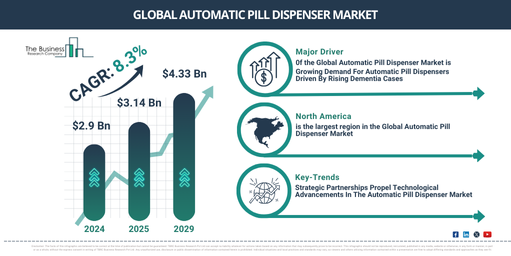
    There has been significant growth in the automatic pill dispenser market size in the recent past. The market is projected to expand from $2.9 billion in 2024 to $3.14 billion in 2025, reflecting a compound annual growth rate (CAGR) of 8.5%. Several factors have contributed to its growth during the historic period, including an aging population, lack of adherence to medication, a rise in chronic diseases, regulatory backing, and widespread awareness campaigns.

    The market encompassing automatic pill dispensers is anticipated to achieve substantial development in the forthcoming years, surging to a size of $4.33 billion in 2029 with a compound annual growth rate (CAGR) of 8.3%. This rise during the forecast period is attributed to factors such as advancements in AI and robotics, tailored healthcare solutions, a rise in remote patient supervision, the growth of digital health startups, and broadening of telehealth services. Noteworthy trends that will be observed during this forecast period encapsulate integration with intelligent home systems, AI-powered customization, the incorporation of telemedicine, voice assistant features, and capabilities for remote tracking.

    Download a free sample to assess the report’s scope and structure:

    https://www.thebusinessresearchcompany.com/sample.aspx?id=18233&type=smp

    What are the Fundamental Drivers and Innovations Shaping the Automatic Pill Dispenser Market?

    The continual rise in dementia cases is predicted to fuel the expansion of the automatic pill dispenser industry. Dementia is characterized by a group of symptoms that cause severe impairment to memory, cognitive function, and social abilities, limiting everyday activities. It stems from various conditions such as Alzheimer’s disease, vascular complications, and Lewy body dementia. The surge in dementia cases can be primarily linked to an aging demographic, heightened awareness about the disease, and enhanced diagnostic practices. Automatic pill dispensers are used in dementia care to ensure that medication is administered accurately and at the appropriate time, thus reducing the likelihood of missed or incorrect dosages. As an example, the National Health Service England, a government department in the UK, reported in October 2022 that 451,992 individuals were diagnosed with dementia in September 2022, an increase of 1,450 from August 2022. Of the estimated individuals aged 65 and above thought to have dementia, 62.2% had been diagnosed by the end of September 2022, a minor rise from 62.1% in August 2022. Hence, the escalating instances of dementia are boosting the rise of the automatic pill dispenser industry.

    How Is the Automatic Pill Dispenser Market Segmented?

    The automatic pill dispenser market covered in this report is segmented –

    1) By Type: Centralized Automatic Dispenser, Decentralized Automatic Dispenser, Other Types

    2) By Indication: Physical Disability, Neurodegenerative Disorders And Dementia, Other Indications

    3) By Application: Hospital Pharmacy, Retail Pharmacy, Home Healthcare

    Subsegments:

    1) By Centralized Automatic Dispenser: Hospital-Based Pill Dispensers, Pharmacy-Based Pill Dispensers, Large-Scale Healthcare Facility Dispensers

    2) By Decentralized Automatic Dispenser: Home-Based Pill Dispensers, Nursing Home-Based Pill Dispensers, Point-Of-Care Dispensers (Clinics, Small Healthcare Units)

    3) By Other Types: Mobile Pill Dispensers, Pill Dispensers With Medication Tracking Features, Custom-Designed Dispensers For Specific Applications

    Request customized data on this market:

    https://www.thebusinessresearchcompany.com/customise?id=18233&type=smp

    Which Regions Are Driving the Next Phase of the Automatic Pill Dispenser Market Growth?

    North America was the largest region in the automatic pill dispenser market in 2023. Asia-Pacific is expected to be the fastest-growing region in the forecast period. The regions covered in the automatic pill dispenser market report are Asia-Pacific, Western Europe, Eastern Europe, North America, South America, Middle East, Africa.

    Which Technological Trends Are Reshaping the Automatic Pill Dispenser Industry Dynamics?

    In an effort to boost their technology skills and broaden their market influence, prominent organizations at the forefront of the automatic pill dispenser market are turning to strategic partnerships. Such partnerships function as a system where firms utilize each other’s unique abilities and resources for mutual benefit and successful outcomes. For instance, Dignio AS, a dealer in digital remote care solutions based in Norway, teamed up with AceAge Inc., a Canadian healthcare technology firm, in February 2022, to distribute the Karie smart pill dispenser in Norway. The Karie smart pill helper is developed to deliver, remind, connect, and safeguard medication, contributing to patients’ medication adherence and independence. This collaboration is incorporated into Dignio’s connected care solution that features web-enabled software and patient-friendly applications.

    View the full report here:

    https://www.thebusinessresearchcompany.com/report/automatic-pill-dispenser-global-market-report

    How Is the Automatic Pill Dispenser Market Defined and What Are Its Core Parameters?

    An automatic pill dispenser is a device designed to organize and dispense medication dosages at scheduled times. It helps users manage their medication regimen, reducing the risk of missed or incorrect doses. These dispensers often feature alarms or notifications to remind users when it’s time to take their pills.

    Purchase the full report and get a swift delivery:

    https://www.thebusinessresearchcompany.com/purchaseoptions.aspx?id=18233

    About The Business Research Company:

    With over 15000+ reports from 27 industries covering 60+ geographies, The Business Research Company has built a reputation for offering comprehensive, data-rich research and insights. Armed with 1,500,000 datasets, the optimistic contribution of in-depth secondary research, and unique insights from industry leaders, you can get the information you need to stay ahead in the game.

    Get in touch with us:

    The Business Research Company: https://www.thebusinessresearchcompany.com/

    Americas +1 3156230293

    Asia +44 2071930708

    Europe +44 2071930708

    Email us at info@tbrc.info

    Follow us on:

    LinkedIn: https://in.linkedin.com/company/the-business-research-company

    YouTube: https://www.youtube.com/channel/UC24_fI0rV8cR5DxlCpgmyFQ

    Global Market Model: https://www.thebusinessresearchcompany.com/global-market-model
  • Automated Suturing Devices Market Outlook 2025: Mapping Growth, Innovation, and Regional Shifts

    Automated Suturing Devices Market Outlook 2025: Mapping Growth, Innovation, and Regional Shifts

    Discover trends, market shifts, and competitive outlooks for the automated suturing devices industry through 2025-2034 with The Business Research Company’s reliable data and in-depth research

    What Are the Projected Market Size and Growth Rates for the Automated Suturing Devices Market From 2025 To 2029?

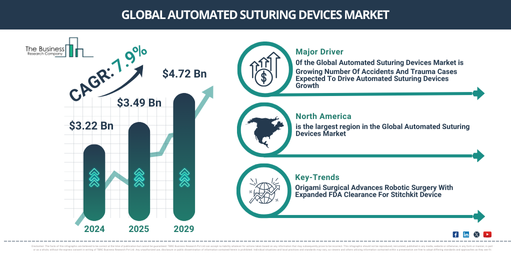
    There has been robust growth in recent years in the market size for automated suturing devices. It is projected to expand from a value of $3.22 billion in 2024 to $3.49 billion in 2025, maintaining a compound annual growth rate (CAGR) of 8.2%. Factors contributing to this growth in the historic period include an increase in surgical procedures, progress in minimally invasive surgeries, a growing incidence of chronic diseases, technological breakthroughs, an aging population, enhanced healthcare infrastructure, and an upsurge in cosmetic surgeries.

    The market for automated suturing devices is anticipated to witness robust growth in the upcoming years, predicated to expand to a value of $4.72 billion by 2029, exhibiting a Compound Annual Growth Rate (CAGR) of 7.9%. This projected expansion can be credited to a multitude of factors such as an increase in accidents and trauma cases, the growing acceptance of robotic surgery, an emphasis on minimizing surgical risks, heightened expenditure in healthcare, a rise in outpatient surgical procedures, government-led initiatives, and burgeoning awareness and training programs. Key trends that will mark this forecast period include merging with robotic systems, the inception of intelligent suturing tools, shrinking device sizes, use of biodegradable sutures, integration of AI and machine learning, improvement in ergonomics and user-friendliness of designs, and branching out into budding markets.

    Download a free sample to assess the report’s scope and structure:

    https://www.thebusinessresearchcompany.com/sample.aspx?id=18781&type=smp

    What External and Internal Drivers Are Contributing to the Growth of the Automated Suturing Devices Market?

    The automated suturing devices market is likely to expand due to the accelerating number of accidents and trauma incidents. Such incidents cause unforeseen physical damage or harm and are linked to growing urbanization, an increase in vehicle use, dangerous work environments, and risky behaviors. Automated suturing devices significantly improve surgical procedures for trauma and accidents, resulting in better patient results, shorter surgery time and a lowered risk of complications. In May 2023, the Bureau of Infrastructure and Transport Research Economics (BITRE), based in Australia, released a report stating that fatalities due to road accidents had risen to 1,194 in 2022, a 5.8 percent surge from 2021. Consequently, the escalating number of trauma and accident incidents is boosting the growth of the automated suturing devices market.

    What Segment Types Define the Automated Suturing Devices Market Structure?

    The automated suturing devices market covered in this report is segmented –

    1) By Type: Reusable, Disposable

    2) By Application: Open Heart Surgery, Minimally Invasive Surgery, Trauma, Other Applications

    3) By End Use: Hospitals, Ambulatory Surgical Centers, Other End Uses

    Subsegments:

    1) By Reusable: Handheld Reusable Suturing Devices, Automated Stapling Devices (Reusable)

    2) By Disposable: Handheld Disposable Suturing Devices, Disposable Stapling Devices, Disposable Surgical Suturing Kits

    Request customized data on this market:

    https://www.thebusinessresearchcompany.com/customise?id=18781&type=smp

    Which Geographic Areas Hold the Strongest Growth Potential in the Automated Suturing Devices Market?

    North America was the largest region in the automated suturing devices market in 2024. Asia-Pacific is expected to be the fastest-growing region in the forecast period. The regions covered in the automated suturing devices market report are Asia-Pacific, Western Europe, Eastern Europe, North America, South America, Middle East, Africa.

    What Key Trends Are Shaping the Future of the Automated Suturing Devices Market?

    Firms with a significant presence in the automated suturing devices market are concentrating their efforts on creating products that leverage advanced technology, like suture delivery canisters, to improve surgical safety and efficiency. One of the benefits of a suture delivery canister is the prevention of needle loss, coupled with enhanced overall safety due to secure containment of disposed needles and reduced manual intervention. As a case in point, Origami Surgical Inc., a medical devices manufacturer from the US, obtained additional FDA clearance for its StitchKit device in Feb 2023. The updated approval empowers the StitchKit device to be used through an 8mm trocar incision, a more frequently used size in robotic-assisted surgeries, suggesting a trend towards smaller port sizes. The device is furnished with everything required, which includes sutures, a SHARPS container for safe needle disposal, thus preventing needles from getting lost and reducing the potential risks with exposed needle transfers. At the end of a surgical procedure, StitchKit along with the trocar can be conveniently removed by pulling a retrieval string, which enhances surgical outcomes and simplifies the process.

    View the full report here:

    https://www.thebusinessresearchcompany.com/report/automated-suturing-devices-global-market-report

    What Is the Definition of the Automated Suturing Devices Market?

    Automated suturing devices are advanced surgical instruments designed to perform suturing tasks with minimal manual intervention. They utilize automated mechanisms to place and secure sutures, enhancing precision, efficiency, and consistency during surgical procedures. These devices are employed to streamline suturing processes, reduce operation time, and improve overall patient outcomes by minimizing human error and optimizing suture placement.

    Purchase the full report and get a swift delivery:

    https://www.thebusinessresearchcompany.com/purchaseoptions.aspx?id=18781

    About The Business Research Company:

    With over 15000+ reports from 27 industries covering 60+ geographies, The Business Research Company has built a reputation for offering comprehensive, data-rich research and insights. Armed with 1,500,000 datasets, the optimistic contribution of in-depth secondary research, and unique insights from industry leaders, you can get the information you need to stay ahead in the game.

    Get in touch with us:

    The Business Research Company: https://www.thebusinessresearchcompany.com/

    Americas +1 3156230293

    Asia +44 2071930708

    Europe +44 2071930708

    Email us at info@tbrc.info

    Follow us on:

    LinkedIn: https://in.linkedin.com/company/the-business-research-company

    YouTube: https://www.youtube.com/channel/UC24_fI0rV8cR5DxlCpgmyFQ

    Global Market Model: https://www.thebusinessresearchcompany.com/global-market-model
  • Global Automated Immunoassay Analyzers Market Projected to Reach $39.97 Billion by 2029 at a CAGR of 14.5%

    Global Automated Immunoassay Analyzers Market Projected to Reach $39.97 Billion by 2029 at a CAGR of 14.5%

    Discover trends, market shifts, and competitive outlooks for the automated immunoassay analyzers industry through 2025-2034 with The Business Research Company’s reliable data and in-depth research

    What Is the Current and Projected Market Size of the Automated Immunoassay Analyzers Market Through 2034?

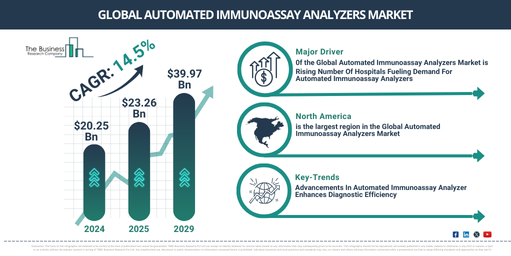
    There has been a swift expansion in the market size of automated immunoassay analyzers in recent years. The market is anticipated to escalate from $20.25 billion in 2024 to $23.26 billion in 2025, demonstrating a compound annual growth rate (CAGR) of 14.9%. Factors contributing to the growth during the historical period include the escalating requirement for swift and precise diagnostic examinations, the increasing incidence of chronic ailments such as cancer and diabetes which necessitates constant monitoring, advancements in immunoassay technologies boosting testing accuracy and efficiency, enlargement of the healthcare infrastructure within emerging economies, enhanced accessibility to diagnostic instruments, and escalating investments in R&D by leading healthcare corporations to innovate and elevate diagnostic solutions.

    In the coming years, the market size of automated immunoassay analyzers is anticipated to experience robust growth, reaching $39.97 billion by 2029 with a compound annual growth rate (CAGR) of 14.5%. This forecasted growth can be linked to advances in automation technologies which are encouraging the use of more precise and productive analyzers, an increasing prevalence of infectious diseases, an intensified focus on individualized medicine requiring advanced immunoassay solutions, amplified worldwide health expenditure making high-level diagnostic tools more affordable and accessible, and the incorporation of technology with digital health solutions enhancing the performance and data management of analyzers. Key trends for the period of prediction include a surge in adoption of multiplex immunoassays for concurrent detection of numerous analytes, advancement in point-of-care testing (POCT) technologies enabling on-site and quick diagnostic capacities, the role of artificial intelligence and machine learning in improving accuracy and predictive analytics in immunoassays, expanded use of forward-thinking bioinformatics tools for analyzing and interpreting data in immunoassay testing, and an increasing market presence of portable, easy-to-use analyzers suitable for diverse healthcare scenarios and purposes.

    Download a free sample to assess the report’s scope and structure:

    https://www.thebusinessresearchcompany.com/sample.aspx?id=18232&type=smp

    What are the Fundamental Drivers and Innovations Shaping the Automated Immunoassay Analyzers Market?

    The automated immunoassay analyzers market is set for expansion, spurred by the rising number of hospitals. This is attributed to the escalating healthcare needs of an increasing and aging population. By expeditiously processing substantial numbers of diagnostic tests for various diseases and conditions, automated immunoassay analyzers bring about efficiency and precision in hospitals. Evidence of this growth is showcased by the American Health Care Association, a US-based nonprofit organization, which recorded an uptick in the number of US hospitals from 6,093 in 2022 to 6,129 in May 2023, marking a growth of 0.59%. Consequently, the growth of the automated immunoassay analyzers market is propelled by the surging number of hospitals.

    How Is the Automated Immunoassay Analyzers Market Segmented?

    The automated immunoassay analyzers market covered in this report is segmented –

    1) By Product: Immunofluorescence, Chemiluminescence, Enzyme Linked Fluorescent System (ELISA), Multiplexed Assay System, Radioimmunoassay

    2) By Application: Infectious Diseases, Endocrinology, Drug Monitoring, Cardiology, Oncology, Allergy Testing, Other Applications

    3) By End-User: Hospitals, Diagnostic Laboratories, Research And Academic Laboratories, Pharmaceutical And Biotechnology Companies, Other End-Users

    Subsegments:

    1) By Immunofluorescence: Fluorescent Labeling Kits, Fluorescent Detectors And Readers, Immunofluorescence Reagents

    2) By Chemiluminescence: Chemiluminescent Labels And Reagents, Chemiluminescence Detectors And Readers, Chemiluminescent Assay Kits

    3) By Enzyme Linked Fluorescent System (ELISA): ELISA Kits (Capture And Detection Kits), ELISA Microplates And Plates Coating Systems, Enzyme Substrates And Detection Reagents

    4) By Multiplexed Assay System: Multiplexed Assay Kits, Multi-Analyte Detection Systems, Multiplexing Software And Data Analysis Tools

    5) By Radioimmunoassay (RIA): Radioactive Isotope Kits, Gamma Counters, Radiolabeled Reagents

    Request customized data on this market:

    https://www.thebusinessresearchcompany.com/customise?id=18232&type=smp

    Which Regions Are Driving the Next Phase of the Automated Immunoassay Analyzers Market Growth?

    North America was the largest region in the automated immunoassay analyzer market in 2023. Asia-Pacific is expected to be the fastest-growing region in the forecast period. The regions covered in the automated immunoassay analyzers market report are Asia-Pacific, Western Europe, Eastern Europe, North America, South America, Middle East, Africa.

    Which Technological Trends Are Reshaping the Automated Immunoassay Analyzers Industry Dynamics?

    Leading firms in the automated immunoassay analyzers market are concentrating on the creation of novel products, like compact immunoassay analyzers, to establish a competitive edge. Compact immunoassay analyzers, which are smaller, carry-friendly devices designed for performing immunoassay exams that identify specific biomarkers in biological specimens, are seen as offering practicality and productivity in various healthcare environments, particularly those with space and mobility constraints. For example, in July 2023, Siemens Healthineers, a healthcare firm originating from Germany, introduced the Atellica CI Analyzer, a compact lab testing system designed to enhance productivity in immunoassay as well as clinical chemistry testing. The Atellica CI Analyzer, which integrates these two testing techniques into a single platform, addresses the rising need for multifunctional systems capable of efficiently conducting a variety of tests. The product’s characteristics are in perfect synchronization with existing market trends, effectively tackling the hurdles laboratories are faced with when delivering quick, precise diagnostic results. Features such as random access sampling, micro-volume aspiration, and automatic maintenance and quality control scheduling help laboratories achieve more dependable and foreseeable sample processing times.

    View the full report here:

    https://www.thebusinessresearchcompany.com/report/automated-immunoassay-analyzers-global-market-report

    How Is the Automated Immunoassay Analyzers Market Defined and What Are Its Core Parameters?

    Automated immunoassay analyzers refer to advanced laboratory instruments designed to perform immunoassays with minimal human intervention. These analyzers utilize automated processes to detect and measure specific proteins, hormones, and other substances in biological samples, improving accuracy and efficiency in diagnostic testing. They are widely used in clinical laboratories for disease diagnosis, monitoring, and research applications.

    Purchase the full report and get a swift delivery:

    https://www.thebusinessresearchcompany.com/purchaseoptions.aspx?id=18232

    About The Business Research Company:

    With over 15000+ reports from 27 industries covering 60+ geographies, The Business Research Company has built a reputation for offering comprehensive, data-rich research and insights. Armed with 1,500,000 datasets, the optimistic contribution of in-depth secondary research, and unique insights from industry leaders, you can get the information you need to stay ahead in the game.

    Get in touch with us:

    The Business Research Company: https://www.thebusinessresearchcompany.com/

    Americas +1 3156230293

    Asia +44 2071930708

    Europe +44 2071930708

    Email us at info@tbrc.info

    Follow us on:

    LinkedIn: https://in.linkedin.com/company/the-business-research-company

    YouTube: https://www.youtube.com/channel/UC24_fI0rV8cR5DxlCpgmyFQ

    Global Market Model: https://www.thebusinessresearchcompany.com/global-market-model
  • Automated Compounding Devices Market Forecast 2025–2034: Trends Reshaping Demand, Investment, and Innovation

    Automated Compounding Devices Market Forecast 2025–2034: Trends Reshaping Demand, Investment, and Innovation

    Discover trends, market shifts, and competitive outlooks for the automated hospital beds industry through 2025-2034 with The Business Research Company’s reliable data and in-depth research

    What is the Anticipated CAGR of the Automated Hospital Beds Market, and What Factors Will Drive It?

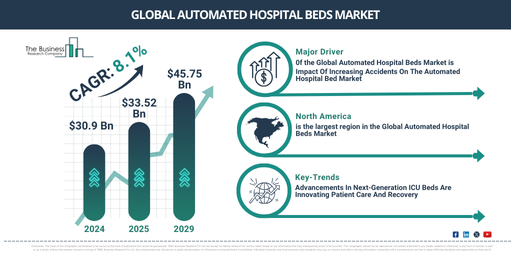
    There has been a robust growth in the market size of automated hospital beds in recent years. The size of this market is projected to inflate from $30.9 billion in 2024 to $33.52 billion in 2025, exhibiting a compound annual growth rate (CAGR) of 8.5%. Factors such as an increase in the elderly population base, escalated demand for home healthcare services, escalating incidence rates of chronic diseases, the emergence of telemedicine, and a growth in surgical procedures have catalyzed the growth during the historic period.

    The market for automated hospital beds is projected to witness significant expansion in the upcoming years, reaching a market value of $45.75 billion in 2029, with a compound annual growth rate (CAGR) of 8.1%. This promising growth prediction during the forecast period is largely due to an increase in accident rates, the rising importance placed on patient-oriented care, the increasing elderly population across the globe, escalated healthcare expenditure, and a notable shift towards home healthcare. The forecast period also expects trends such as advancements in technology, integration of the Internet of Things (IoT), the penetration of AI and machine learning, improved remote monitoring capabilities, telemedicine integration, and the utilisation of robotics for patient transfer support.

    Download a free sample to assess the report’s scope and structure:

    https://www.thebusinessresearchcompany.com/sample.aspx?id=16594&type=smp

    What Are the Primary Drivers Supporting the Market Growth of the Automated Hospital Beds Market?

    The growth of the automated hospital bed market is set to be stimulated by the escalating rates of road accidents. Traffic congestion, distractions from mobile devices while driving, poor infrastructure upkeep, and non-compliance to traffic rules contribute to increasing road mishaps. In terms of accident response, automated hospital beds play a crucial role by improving patient care and safety via features like adjustable bed height for easier patient care and movement, automatic positioning to prevent pressure ulcers, and remote controls for quick adjustments to enhance immediate medical care and patient comfort. For example, statistics from the Bureau of Infrastructure and Transport Research Economic (BITRE), a department based in Australia that focuses on infrastructure, transport, and regional development, show that there was a somber increase in Australian road fatalities with 1,266 lives lost in 2023, marking a 7.3% uptick compared with the 12 months ended in December 2022. Consequently, the rising number of road accidents is propelling the automated hospital bed market.

    Which Primary Segments of the Automated Hospital Beds Market Are Driving Growth and Industry Transformations?

    The automated hospital beds market covered in this report is segmented –

    1) By Type: Semi-Automatic Hospital Beds, Fully Automatic Hospital Beds

    2) By Technology: Basic Automated Hospital Beds, Smart Automated Hospital Beds

    3) By Application: Critical Care, Acute Care, Long Term Care

    4) By End User: Hospitals And Clinics, Reproductive Care Centers, Dentistry, Home Care, Other End-Users

    Subsegments:

    1) By Semi-Automatic Hospital Beds: Electric-Spring Hybrid Beds, Manual Adjustment With Electric Controls, Beds With Adjustable Backrests And Leg Supports, Semi-automatic Icu Beds

    2) By Fully Automatic Hospital Beds: Fully Electric Icu Beds, Fully Electric Critical Care Beds, Advanced Pressure Relief Beds, High-End Electric Beds With Zero Gravity Function, Fully Adjustable Pediatric And Geriatric Beds

    Request customized data on this market:

    https://www.thebusinessresearchcompany.com/customise?id=16594&type=smp

    Which Regions Are Key Players in the Growth of the Automated Hospital Beds Market?

    North America was the largest region in the automated hospital beds market in 2024. The regions covered in the automated hospital beds market report are Asia-Pacific, Western Europe, Eastern Europe, North America, South America, Middle East, Africa.

    Which Cutting-Edge Market Trends Are Expected to Drive the Automated Hospital Beds Market’s Growth?

    Leading players in the automated hospital beds industry are innovating next-generation Intensive Care Unit (ICU) beds to enhance patient care and cater to the burgeoning need for cutting-edge medical technology. These new-age ICU beds are sophisticated medical beds engineered to upgrade patient outcomes and simplify care in intensive care units. For example, in May 2023, Baxter International Inc., an American healthcare firm, introduced an innovative Hillrom Progressa+ bed for the ICU. The Progressa+ is a state-of-the-art hospital bed conceived to augment patient care and facilitate recovery. It provides superior pulmonary aid with in-bed percussion, vibration, and continuous lateral rotation therapies to mitigate complications from lack of movement. The bed also affords enhanced access for intubation and procedures. In addition, it promotes early patient mobility with a built-in lift system, and a one-button FullChair to enable safe and easy patient movement, thereby lessening the chances of clinician injury.

    View the full report here:

    https://www.thebusinessresearchcompany.com/report/automated-hospital-beds-global-market-report

    What Parameters Are Used to Define the Automated Hospital Beds Market?

    Automated hospital beds are advanced medical beds equipped with motorized mechanisms for adjustments such as height, backrest angle, and leg elevation. They often featured with remote controls for easy operation, enhancing patient comfort and caregiver efficiency. These beds may include additional functions such as integrated scales, bed exit alarms, and pressure redistribution systems to improve patient care and safety. Automated hospital beds are designed to support medical treatments and enhance the overall hospital experience.

    Purchase the full report and get a swift delivery:

    https://www.thebusinessresearchcompany.com/purchaseoptions.aspx?id=16594

    About The Business Research Company:

    With over 15000+ reports from 27 industries covering 60+ geographies, The Business Research Company has built a reputation for offering comprehensive, data-rich research and insights. Armed with 1,500,000 datasets, the optimistic contribution of in-depth secondary research, and unique insights from industry leaders, you can get the information you need to stay ahead in the game.

    Get in touch with us:

    The Business Research Company: https://www.thebusinessresearchcompany.com/

    Americas +1 3156230293

    Asia +44 2071930708

    Europe +44 2071930708

    Email us at info@tbrc.info

    Follow us on:

    LinkedIn: https://in.linkedin.com/company/the-business-research-company

    YouTube: https://www.youtube.com/channel/UC24_fI0rV8cR5DxlCpgmyFQ

    Global Market Model: https://www.thebusinessresearchcompany.com/global-market-model
  • Automated Compounding Devices Market 2025-2034: Key Highlights, Growth Dynamics, and Emerging Trends

    Automated Compounding Devices Market 2025-2034: Key Highlights, Growth Dynamics, and Emerging Trends

    Discover trends, market shifts, and competitive outlooks for the automated compounding devices industry through 2025-2034 with The Business Research Company’s reliable data and in-depth research

    What Are the Key Milestones in the Automated Compounding Devices Market’s Growth Trajectory From 2025 To 2034?

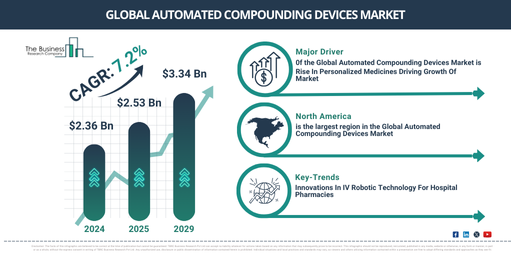
    There has been a considerable growth in the size of the automated compounding devices market in the recent past. The market, which was worth $2.36 billion in 2024, is projected to increase to $2.53 billion in 2025, recording a compound annual growth rate (CAGR) of 7.4%. Factors contributing to this growth during the historic period include the increase in chronic disease incidences, an aging demographic, enhancements in healthcare infrastructure, regulatory stipulations, and the rise in medication mistakes.

    The market for automated compounding devices is predicted to experience a substantial growth in the coming years, increasing to $3.34 billion by 2029 with a 7.2% compound annual growth rate (CAGR). This predicted growth in the forecast period can be credited to the escalating incidence of cancer, the worldwide healthcare growth, a greater emphasis on patient security, regulatory approval, and a heightened focus on sustainability. Key trends for the forecast period encompass telemedicine, remote healthcare, artificial intelligence development, digitization in healthcare, and real-time monitoring.

    Download a free sample to assess the report’s scope and structure:

    https://www.thebusinessresearchcompany.com/sample.aspx?id=18231&type=smp

    How Are Key Drivers in the Industry Acting as Catalysts for the Growth of the Automated Compounding Devices Market?

    The rise in the number of tailored medical treatments is anticipated to propel the growth of the automated compounding devices market. Personalized medicine is a medical strategy that customizes healthcare decisions, practices, procedures, and interventions based on each patient’s specific characteristics. The advancement in the number of individualized medicines is attributed to improved comprehension of genetics, patient-centric data, and regulatory backing. Automated compounding devices are vital instruments that ensure accurate and exact composition of tailor-made medication prescriptions suited to every individual’s needs. These appliances streamline the process of merging various pharmaceutical constituents in precise proportions, a necessary aspect of developing personalized therapies. To illustrate, the Personalized Medicine Coalition, a US-based non-profit organization, pointed out in February 2024 that the FDA approved sixteen new personalized treatments for rare disease patients in 2023 versus just six in 2022. Hence, the surge in the number of tailor-made medicines is assisting in driving the automated compounding devices market’s expansion.

    Which Segments in the Automated Compounding Devices Offer the Most Growth?

    The automated compounding devices market covered in this report is segmented –

    1) By Component: Automated Compounding Systems Equipment, Automated Compounding Systems Software

    2) By Product Type: Intravenous Compounding Systems, Oral Compounding Systems, Total Parenteral Nutrition (TPN) Compounding Systems

    3) By Mode Of Operation: Fully Automated Compounding Systems, Semi-Automated Compounding Systems

    4) By End-User: Hospitals, Ambulatory Surgical Centers, Other End Users

    Subsegments:

    1) By Automated Compounding Systems Equipment: Compounding Workstations, Compounding Pumps, Mixing Chambers, Scales And Balances, Dispensing Units, Vial And Syringe Filling Systems, Other Related Equipment (Filtration Devices)

    2) By Automated Compounding Systems Software: Prescription Management Software, Workflow Management Software, Monitoring And Control Software, Data Analytics And Reporting Software, Safety And Compliance Software, Integration Software For Hospital Or Pharmacy Management Systems

    Request customized data on this market:

    https://www.thebusinessresearchcompany.com/customise?id=18231&type=smp

    What Are the Fastest-Growing Geographies in the Automated Compounding Devices Market?

    North America was the largest region in the automated compounding devices market in 2023. Asia-Pacific is expected to be the fastest-growing region in the forecast period. The regions covered in the automated compounding devices market report are Asia-Pacific, Western Europe, Eastern Europe, North America, South America, Middle East, Africa.

    What Are the Key Market Trends in the Automated Compounding Devices Market Over the Coming Years?

    Leading firms in the automated compounding device sector are striving to decrease medication errors and boost patient safety via cutting-edge technologies like robotic compounding, with an eye to increasing client confidence, achieving regulatory compliance, and securing an edge in the competition. Robotic compounding technology automates the careful preparation and blending of pharmaceutical compounds using sophisticated robotic systems, thereby improving precision, efficiency, and safety in the preparation of medications. To provide an example, in March 2022, Omnicell Inc., a healthcare technology firm based in the United States, introduced the IVX Station, a novel automated compounding device. With this innovative solution, the company hopes to widen the availability of IV robotic technology in the larger market, promoting patient safety, precision, cost-effectiveness, supply chain management, and regulatory conformity. The IVX Station has a throughput speed three times faster than existing IV robotic systems, features a robust design to reduce downtime, and retains a compact size perfect for pharmacy operations.

    View the full report here:

    https://www.thebusinessresearchcompany.com/report/automated-compounding-devices-global-market-report

    What Are the Key Elements That Define the Automated Compounding Devices Market?

    Automated compounding devices refer to specialized equipment designed to automate the preparation of medications, including intravenous (IV) solutions, in healthcare settings. These devices ensure precise and efficient compounding, enhancing patient safety and reducing the risk of human error in medication preparation.

    Purchase the full report and get a swift delivery:

    https://www.thebusinessresearchcompany.com/purchaseoptions.aspx?id=18231

    About The Business Research Company:

    With over 15000+ reports from 27 industries covering 60+ geographies, The Business Research Company has built a reputation for offering comprehensive, data-rich research and insights. Armed with 1,500,000 datasets, the optimistic contribution of in-depth secondary research, and unique insights from industry leaders, you can get the information you need to stay ahead in the game.

    Get in touch with us:

    The Business Research Company: https://www.thebusinessresearchcompany.com/

    Americas +1 3156230293

    Asia +44 2071930708

    Europe +44 2071930708

    Email us at info@tbrc.info

    Follow us on:

    LinkedIn: https://in.linkedin.com/company/the-business-research-company

    YouTube: https://www.youtube.com/channel/UC24_fI0rV8cR5DxlCpgmyFQ

    Global Market Model: https://www.thebusinessresearchcompany.com/global-market-model
  • Autologous Stem Cell And Non-Stem Cell Based Therapies Market Outlook 2025–2034: Identifying Growth Drivers, Technology Trends, and Policy Impact

    Autologous Stem Cell And Non-Stem Cell Based Therapies Market Outlook 2025–2034: Identifying Growth Drivers, Technology Trends, and Policy Impact

    Discover trends, market shifts, and competitive outlooks for the autologous stem cell and non-stem cell based therapies industry through 2025-2034 with The Business Research Company’s reliable data and in-depth research

    What Are the Projected Market Size and Growth Rates for the Autologous Stem Cell And Non-Stem Cell Based Therapies Market From 2025 To 2029?

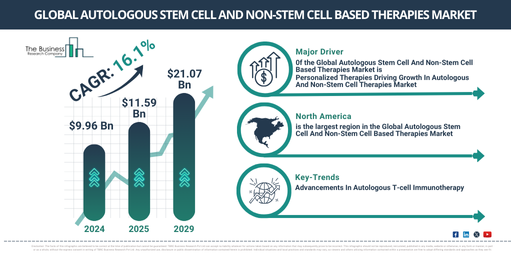
    In recent times, the market size for autologous stem cell and non-stem cell-based therapies has seen swift expansion. The growth is projected to increase from $9.96 billion in 2024 to $11.59 billion in 2025, experiencing a compound annual growth rate (CAGR) of 16.5%. This surge during the historic period is principally due to a rise in cancer and diabetes cases, an ageing population, heightened healthcare awareness, escalated research and development efforts, more clinical trials being conducted, and an increase in regulatory approvals.

    In the coming years, the market for autologous stem cell and non-stem cell based therapies is set to experience robust expansion, reaching a valuation of $21.07 billion by 2029. This represents a compound annual growth rate (CAGR) of 16.1%. This anticipated growth is attributed to an increase in the occurrence of targeted diseases, an aging population, a rise in neurodegenerative diseases, a growing number of cancer patients, a surge in demand for skin transplantation, heightened consciousness about regenerative medicine, and key player collaborations and partnerships, as well as improved reimbursement for approved therapies. A number of key trends have emerged for the forecast period: the incorporation of artificial intelligence and machine learning, the production of off-the-shelf allogeneic stem cell products, the widening of reimbursement policies, use of innovative biomaterials, advances in cell manufacturing technologies, the adoption of autologous stem cell therapies and the implementation of gene editing technologies.

    Download a free sample to assess the report’s scope and structure:

    https://www.thebusinessresearchcompany.com/sample.aspx?id=15729&type=smp

    What Are the Core Market Drivers Propelling Growth in the Autologous Stem Cell And Non-Stem Cell Based Therapies Industry?

    As personalized treatments gain popularity, the autologous stem cell and non-stem cell-based therapies market is predicted to experience robust growth. Personalized treatments, which are customized to suit an individual’s unique genetic, lifestyle, and preferences, offer maximized benefits with minimized side effects. The increasing prominence of these individual-based therapies is largely due to factors such as advancements in genetic technology that enable more accurate and efficient treatments with fewer side effects, a growing patient preference for custom care, and potential savings in healthcare costs. They enhance the utilization of autologous stem cell and non-stem cell-based treatments by modifying them to fit a person’s unique health and genetic traits, resulting in enhanced outcomes and reduced complications. For example, the US-based Personalized Medicine Coalition reported that in 2022, the authorization of 12 new personalized medications accounted for roughly 34% of all newly approved therapies, marking a significant increase from earlier years. Consequently, the growing demand for personalized treatments is propelling the autologous stem cell and non-stem cell-based therapies market.

    How Is the Autologous Stem Cell And Non-Stem Cell Based Therapies Market Segmented?

    The autologous stem cell and non-stem cell based therapies market covered in this report is segmented –

    1) By Type: Autologous Stem Cells, Autologous Non-Stem Cells, Other Types

    2) By Application: Cancer, Neurodegenerative Disorders, Cardiovascular Disease, Orthopedic Diseases, Other Applications

    3) By End-User: Hospitals, Ambulatory Surgical Centers, Research Facilities, Other End Users

    Subsegments:

    1) By Autologous Stem Cells: Hematopoietic Stem Cells, Mesenchymal Stem Cells, Neural Stem Cells, Endothelial Stem Cells

    2) By Autologous Non-Stem Cells: Platelet-Rich Plasma (Prp), Adipose-Derived Cells, Peripheral Blood Cells

    3) By Other Types: Exosome-Based Therapies, Tissue-Engineered Constructs

    Request customized data on this market:

    https://www.thebusinessresearchcompany.com/customise?id=15729&type=smp

    Which Regions Are Driving the Next Phase of the Autologous Stem Cell And Non-Stem Cell Based Therapies Market Growth?

    North America was the largest region in the autologous stem cell and non-stem cell based therapies market in 2023. Asia-Pacific is expected to be the fastest-growing region in the forecast period. The regions covered in the autologous stem cell and non-stem cell based therapies market report are Asia-Pacific, Western Europe, Eastern Europe, North America, South America, Middle East and Africa.

    What Are the Most Significant Market Trends in the Autologous Stem Cell And Non-Stem Cell Based Therapies Market?

    Notable players in the market for autologous stem cell and non-stem cell-based therapies are exploring the potential of tumor-derived autologous T cell immunotherapy as they seek to advance personalized cancer treatment strategies. The therapy operates by removing T cells from the patient’s tumor, invigorating and activating them in a lab setting, before reintroducing them to the patient’s body to bolster the immune system’s power to uniquely target and eradicate cancerous cells. For example, Iovance Biotherapeutics, an American biotech firm, was granted fast-tracked approval from the US-based Food and Drug Administration in February 2024 for the use of Amtagvi (lifileucel), the inaugural cellular therapy designed for adults with melanoma. Lifileucel is representative of tumor-derived autologous T-cell immunotherapy and is made up of the patient’s own naturally-occurring immune cells known as tumor-infiltrating lymphocytes (TILs). The advantage is that it equips the patient’s immune system to identify and combat the cancer more efficiently.

    View the full report here:

    https://www.thebusinessresearchcompany.com/report/autologous-stem-cell-and-non-stem-cell-based-therapies-global-market-report

    How Is the Autologous Stem Cell And Non-Stem Cell Based Therapies Market Defined and What Are Its Core Parameters?

    Autologous stem cell and non-stem cell-based therapies refer to treatments that use a patient’s own cells to repair, replace, or regenerate damaged tissues and organs. Autologous stem cell therapies involve extracting stem cells from the patient, expanding or modifying them, and then reinfusing them to promote healing and regeneration. Non-stem cell-based therapies use other types of cells, such as immune cells or tissue-specific cells, to achieve similar therapeutic goals. These personalized approaches aim to minimize the risk of immune rejection and enhance the efficacy of treatments for various conditions, including cancer, autoimmune diseases, and degenerative disorders.

    Purchase the full report and get a swift delivery:

    https://www.thebusinessresearchcompany.com/purchaseoptions.aspx?id=15729

    About The Business Research Company:

    With over 15000+ reports from 27 industries covering 60+ geographies, The Business Research Company has built a reputation for offering comprehensive, data-rich research and insights. Armed with 1,500,000 datasets, the optimistic contribution of in-depth secondary research, and unique insights from industry leaders, you can get the information you need to stay ahead in the game.

    Get in touch with us:

    The Business Research Company: https://www.thebusinessresearchcompany.com/

    Americas +1 3156230293

    Asia +44 2071930708

    Europe +44 2071930708

    Email us at info@tbrc.info

    Follow us on:

    LinkedIn: https://in.linkedin.com/company/the-business-research-company

    YouTube: https://www.youtube.com/channel/UC24_fI0rV8cR5DxlCpgmyFQ

    Global Market Model: https://www.thebusinessresearchcompany.com/global-market-model
  • Emerging Growth Drivers in the Autism Spectrum Disorder Diagnostics Market Landscape: Growth In Specialized Diagnostic Centers Drives Expansion Of Autism Spectrum Disorders Diagnostic Market

    Emerging Growth Drivers in the Autism Spectrum Disorder Diagnostics Market Landscape: Growth In Specialized Diagnostic Centers Drives Expansion Of Autism Spectrum Disorders Diagnostic Market

    Discover trends, market shifts, and competitive outlooks for the autism spectrum disorder diagnostics industry through 2025-2034 with The Business Research Company’s reliable data and in-depth research

    What Is the Estimated Market Size of the Autism Spectrum Disorder Diagnostics Market In 2029?

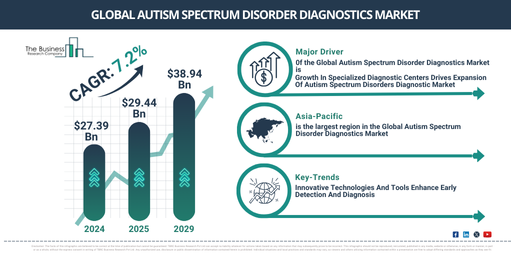
    The market size for diagnosing autism spectrum disorders has seen a robust growth in the past few years. With an increase from $27.39 billion in 2024 to $29.44 billion in 2025, the market is set to rise at a compound annual growth rate (CAGR) of 7.5%. The past growth can be accredited to a rise in awareness and recognition of ASD, enlargement of diagnostic criteria, development in diagnostic instruments, enhancements in the healthcare system, and public health initiatives.

    In the coming years, the market for autism spectrum disorder diagnostics is forecasted to witness robust growth. The market is predicted to reach $38.94 billion by 2029, with a compound annual growth rate (CAGR) of 7.2%. Factors contributing to this growth during the forecast period include a rising incidence of autism spectrum disorder, increased awareness and early screening programs, and a focus on precision medicine and biomarkers. Some major trends forecasted during this period include the continuous development of innovative technologies, heightened interest in adult diagnosis, growing demand for point-of-care testing, the integration of artificial intelligence (AI) and machine learning, and increased research activities.

    Download a free sample to assess the report’s scope and structure:

    https://www.thebusinessresearchcompany.com/sample.aspx?id=16593&type=smp

    Which Primay Drivers Are Accelerating Growth in the Autism Spectrum Disorder Diagnostics Market?

    The expansion of specialized diagnostic centers is anticipated to fuel the development of the market for diagnosing Autism Spectrum Disorders (ASD) in the future. An autism-specialized diagnostic center employs health professionals, psychologists, and experts who conduct thorough evaluations and tests to provide a diagnosis for autism spectrum disorder. The growth of these specialized diagnostic centers is a result of diagnostic developments, need for comprehensive healthcare, professional education, research, and the identification of autism as a public health concern. These centers play a key role in improving diagnostic accuracy, encouraging early intervention, and boosting results for ASD individuals by offering specialized knowledge, advanced diagnostic equipment, comprehensive evaluations, individualized treatment plans, family assistance, and research collaboration chances. For instance, Autism Speaks, a US non-profit autism awareness organization, recognized an increase in autism care networks from 20 to 25 across North America from 2021 to 2022. Thus, the rise in specialized diagnostic centers is contributing to the expansion of the autism spectrum disorders diagnostic market.

    Which Primary Segments of the Autism Spectrum Disorder Diagnostics Market Are Driving Growth and Industry Transformations?

    The autism spectrum disorder diagnostics market covered in this report is segmented –

    1) By Type: Autistic Disorder, Asperger Syndrome, Pervasive Development Disorder (PDD), Other Types

    2) By Service: Behavioral Approaches, Early Intervention, Medication, Other Services

    3) By Distribution Channel: Hospital Pharmacies, Drug Stores And Retail Pharmacies, Online Pharmacies

    Subsegments:

    1) By Autistic Disorder: Classic Autism, Severe Autism, Mild Autism

    2) By Asperger Syndrome: High Functioning Asperger Syndrome, Low Functioning Asperger Syndrome

    3) By Pervasive Developmental Disorder (PDD): PDD-NOS, Childhood Disintegrative Disorder: Rett Syndrome

    4) By Other Types: Childhood Autism Spectrum Disorder, Atypical Autism, Other Related Developmental Disorders

    Request customized data on this market:

    https://www.thebusinessresearchcompany.com/customise?id=16593&type=smp

    Which Regions Are Key Players in the Growth of the Autism Spectrum Disorder Diagnostics Market?

    Asia-Pacific was the largest region in the autism spectrum disorder diagnostics market in 2024. The regions covered in the autism spectrum disorder diagnostics market report are Asia-Pacific, Western Europe, Eastern Europe, North America, South America, Middle East, Africa.

    What Are the Current Market Growth and Trends in the Autism Spectrum Disorder Diagnostics Industry?

    Leading businesses in the autism spectrum disorder diagnostics market place are innovating solutions such as Dynamic Quantification of Social-Visual Engagement (DQSVE) oriented devices to remain competitive. These devices record and assess children’s looking behavior by the second, with a frequency of 120 times. For instance, in September 2023, the US nonprofit healthcare and research institution, Marcus Autism Center, introduced the EarliPoint™ Evaluation, a cutting-edge FDA-approved device particularly engineered for the premature diagnosis of autism spectrum disorder (ASD) in young children between the ages of 16 and 30 months. This avant-garde tool employs eye-tracking technology to evaluate children’s social interactions, thereby significantly reducing the diagnosis time from several hours to nearly 12 minutes.

    View the full report here:

    https://www.thebusinessresearchcompany.com/report/autism-spectrum-disorder-diagnostics-global-market-report

    What Parameters Are Used to Define the Autism Spectrum Disorder Diagnostics Market?

    Autism spectrum disorder (ASD) diagnostics refer to the range of methods and tools used to identify and assess individuals suspected of having autism spectrum disorder. The goal of ASD diagnostics is to accurately identify the presence and severity of ASD symptoms, facilitate early intervention, and guide personalized treatment plans. These assessments are conducted by healthcare professionals specializing in neurodevelopmental disorders and are crucial for providing timely support and services to individuals on the autism spectrum and their families.

    Purchase the full report and get a swift delivery:

    https://www.thebusinessresearchcompany.com/purchaseoptions.aspx?id=16593

    About The Business Research Company:

    With over 15000+ reports from 27 industries covering 60+ geographies, The Business Research Company has built a reputation for offering comprehensive, data-rich research and insights. Armed with 1,500,000 datasets, the optimistic contribution of in-depth secondary research, and unique insights from industry leaders, you can get the information you need to stay ahead in the game.

    Get in touch with us:

    The Business Research Company: https://www.thebusinessresearchcompany.com/

    Americas +1 3156230293

    Asia +44 2071930708

    Europe +44 2071930708

    Email us at info@tbrc.info

    Follow us on:

    LinkedIn: https://in.linkedin.com/company/the-business-research-company

    YouTube: https://www.youtube.com/channel/UC24_fI0rV8cR5DxlCpgmyFQ

    Global Market Model: https://www.thebusinessresearchcompany.com/global-market-model
  • Major Trends and Emerging Patterns in the Atrial Septal Defect Market: Advancements In Occluders For Arterial Septal Defect Treatment

    Major Trends and Emerging Patterns in the Atrial Septal Defect Market: Advancements In Occluders For Arterial Septal Defect Treatment

    Discover trends, market shifts, and competitive outlooks for the atrial septal defect industry through 2025-2034 with The Business Research Company’s reliable data and in-depth research

    What Is the Current and Projected Market Size of the Atrial Septal Defect Market Through 2034?

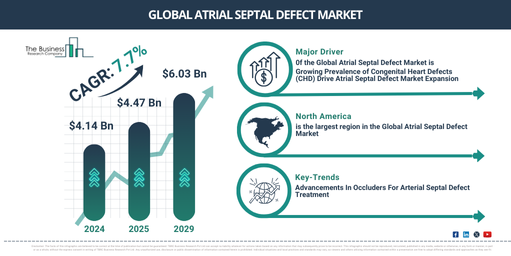
    The market size for atrial septal defects has seen a robust growth in the past few years. The market is projected to go from $4.14 billion in 2024 to $4.47 billion in 2025, registering a compound annual growth rate (CAGR) of 8.0%. Multiple factors have contributed to this growth during the historic period, including an increase in the incidence of congenital heart disease, augmented funding for R&D related to ASD treatments, heightened awareness about congenital heart defects among parents and healthcare professionals, raised frequency of pediatric surgeries, authorization of novel ASD closure devices and therapies by regulatory authorities such as the FDA and the enlargement of healthcare facilities.

    The market size of Atrial Septal Defect (ASD) is projected to experience a robust increase in the coming years. Its value is anticipated to reach $6.03 billion by 2029, with a compound annual growth rate (CAGR) of 7.7%. The expansion during the forecasted timeframe can be tied to factors such as a rise in the utilization of telemedicine for pre and post-surgery care, advancement in tailored treatment pathways built on genetic and phenotypic information, a consistent rise in worldwide healthcare expenditure, particularly within emerging markets, an aging demographic contributing to a rise in late-stage diagnoses of congenital heart anomalies. It also includes international alignment of medical device regulations that enhance global market penetration, and the execution of local and global health schemes aiming at early detection and management of congenital heart diseases. Key trends discerned during this period include the development of innovative, less invasive ASD closure apparatuses, the application of artificial intelligence (AI) and machine learning for superior diagnostics and personalized treatment strategies, the incorporation of biodegradable and bioresorbable resources in device production, AI-propelled devices for instant monitoring and decision-making support during ASD procedures, and the uptake of remote tracking technologies for patient recovery and early detection of complications.

    Download a free sample to assess the report’s scope and structure:

    https://www.thebusinessresearchcompany.com/sample.aspx?id=16345&type=smp

    What Are the Primary Drivers Supporting the Market Growth of the Atrial Septal Defect Market?

    The projected increase in congenital heart defects (CHD) incidents is likely to fuel the atrial septal defect market’s expansion. Such defects are structural anomalies in the heart, present from birth. There’s a noticeable rise in the number of individuals being diagnosed with these birth-present heart structure anomalies. Treatment of atrial septal defect proves pivotal in managing congenital heart defects by rectifying irregular blood circulation between the heart’s chambers, enhancing overall heart functionality, and mitigating related complications. As cited by The Australian Institute of Health and Welfare, a national agency of Australia, in June 2024 about 65,000 children and adults in Australia are living with congenital heart disease. There were around 5,900 hospital admissions in 2020–21 due to congenital heart disease being the main diagnosis, with 79 infants under one year old succumbing to the disease. This accounted for 7.8% of all infant fatality. Hence, the rising occurrences of congenital heart defects is expected to steer the atrial septal defect market onwards.

    Which Primary Segments of the Atrial Septal Defect Market Are Driving Growth and Industry Transformations?

    The atrial septal defect market covered in this report is segmented –

    1) By Treatment Procedure: Surgical Closure, Transcatheter Closure, Hybrid Procedures, Medication Therapy

    2) By Diagnosis: Chest X-Ray, Electrocardiogram, Cardiac Catheterization, Transesophageal Echocardiography, Pulse Oximetry

    3) By Product Type: Medical Devices, Pharmaceutical Products

    4) By Age Group: Pediatric, Adult

    5) By End-User: Hospitals, Ambulatory Surgical Centers, Cardiac Clinics, Other End-Users

    Subsegments:

    1) By Surgical Closure: Open Heart Surgery (Traditional Surgical Closure), Minimally Invasive Surgical Closure, Patches (Pericardial, Synthetic) For Asd Closure

    2) By Transcatheter Closure: Device-Based Closure (Amplatzer Septal Occluder), Transcatheter Plug Closure Techniques, Catheter-Based Asd Repair For Adult And Pediatric Patients

    3) By Hybrid Procedures: Combination Of Surgical And Transcatheter Techniques, Minimally Invasive Hybrid Procedures, Hybrid Closure For Complex Or Large Asds

    4) By Medication Therapy: Anticoagulant Therapy (To Prevent Stroke), Diuretics (For Managing Symptoms), Antihypertensive Drugs (For Managing Associated Conditions), Off-Label Use Of Other Medications

    Request customized data on this market:

    https://www.thebusinessresearchcompany.com/customise?id=16345&type=smp

    Which Regions Are Key Players in the Growth of the Atrial Septal Defect Market?

    North America was the largest region in the atrial septal defect market in 2023. Asia-Pacific is expected to be the fastest-growing region in the forecast period. The regions covered in the atrial septal defect market report are Asia-Pacific, Western Europe, Eastern Europe, North America, South America, Middle East, Africa.

    Which Cutting-Edge Market Trends Are Expected to Drive the Atrial Septal Defect Market’s Growth?

    The major players in the arterial septal defect market are striving to develop innovative devices and gain approval for them to expand their applications and accessibility. Acquiring device approval, generally from a regulatory authority or relevant body, is essential for the lawful manufacture, sale, or use of a device within a specific market or for a certain goal. For example, in March 2024, Occlutech GmbH, a prominent provider of minimally invasive cardiac devices based in Sweden, reported that the United States Food and Drug Administration (FDA) had granted device approval for its Occlutech ASD Occluder and Occlutech Pistol Pusher, used for treating atrial septal defects (ASD). This green signal from the FDA is a major breakthrough for the company in their ongoing efforts to improve global healthcare. The Occlutech ASD Occluder has been engineered to serve as a lifelong aid for patients with echocardiography-confirmed defects. It incorporates a self-expandable nitinol device featuring flexible discs that attach to both sides of the patient’s atrial septum, using the Occlutech Pistol Pusher. Post this approval, Occlutech will initiate its commercialization process in the US, exclusively in collaboration with B. Braun Interventional Systems.

    View the full report here:

    https://www.thebusinessresearchcompany.com/report/atrial-septal-defect-global-market-report

    What Parameters Are Used to Define the Atrial Septal Defect Market?

    An atrial septal defect (ASD) refers to a congenital heart defect characterized by an abnormal opening in the septum, the wall separating the heart’s two upper chambers (atria). This opening allows oxygen-rich blood from the left atrium to mix with oxygen-poor blood in the right atrium, which can lead to increased blood flow to the lungs and over time cause complications like pulmonary hypertension and heart failure.

    Purchase the full report and get a swift delivery:

    https://www.thebusinessresearchcompany.com/purchaseoptions.aspx?id=16345

    About The Business Research Company:

    With over 15000+ reports from 27 industries covering 60+ geographies, The Business Research Company has built a reputation for offering comprehensive, data-rich research and insights. Armed with 1,500,000 datasets, the optimistic contribution of in-depth secondary research, and unique insights from industry leaders, you can get the information you need to stay ahead in the game.

    Get in touch with us:

    The Business Research Company: https://www.thebusinessresearchcompany.com/

    Americas +1 3156230293

    Asia +44 2071930708

    Europe +44 2071930708

    Email us at info@tbrc.info

    Follow us on:

    LinkedIn: https://in.linkedin.com/company/the-business-research-company

    YouTube: https://www.youtube.com/channel/UC24_fI0rV8cR5DxlCpgmyFQ

    Global Market Model: https://www.thebusinessresearchcompany.com/global-market-model
  • Key Developments and Trends Steering the Atorvastatin Market Forward: Revolutionizing Atorvastatin Advancements In Formulation For Enhanced Cardiovascular Care

    Key Developments and Trends Steering the Atorvastatin Market Forward: Revolutionizing Atorvastatin Advancements In Formulation For Enhanced Cardiovascular Care

    Discover trends, market shifts, and competitive outlooks for the atorvastatin industry through 2025-2034 with The Business Research Company’s reliable data and in-depth research

    What is the Anticipated CAGR of the Atorvastatin Market, and What Factors Will Drive It?

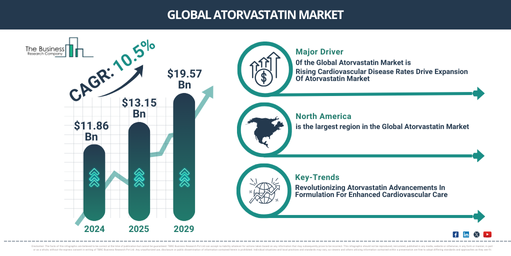
    In recent times, the market for atorvastatin has witnessed substantial growth. The market, which is projected to surge from $11.86 billion in 2024 to $13.15 billion in 2025, is set to experience a Compound Annual Growth Rate (CAGR) of 10.8%. The historic period’s expansion can be ascribed to factors such as heightened healthcare spending, a global rise in metabolic disorders and obesity, inactive lifestyles, and poor eating habits prevalent in many societies. Other contributing factors include a deficiency of physical activity and exercise, as well as a heightened worldwide emphasis on preventive healthcare and wellness.

    In the coming years, we anticipate a swift surge in the size of the atorvastatin sector, reaching a value of $19.57 billion in 2029 with a 10.5% compound annual growth rate (CAGR). This growth during the projected period is primarily due to the rising occurrence of cardiovascular conditions, elevated cholesterol levels, an ageing demographic that is more prone to heart ailments, heightened cognizance about cholesterol management and testing initiatives, and the available of atorvastatin as a generic drug at competitive rates. The forecast period is expected to see key trends such as an increase in the level of investment for R&D of innovative atorvastatin formulations, the incorporation of green chemistry in production methods, a shift towards individualized treatment and pharmacogenomics-grounded therapy, digital health technologies integration, and new atorvastatin formulations.

    Download a free sample to assess the report’s scope and structure:

    https://www.thebusinessresearchcompany.com/sample.aspx?id=16344&type=smp

    How Are Key Drivers in the Industry Acting as Catalysts for the Growth of the Atorvastatin Market?

    The escalating cases of cardiovascular diseases (CVDs), which cover varying disorders of the heart and blood vessels, are anticipated to boost the expansion of the atorvastatin market. The hike in the prevalence of CVDs can be traced back to lifestyle modifications, demographic changes, and environmental influences. Atorvastatin plays a crucial role in minimizing the risk of significant cardiovascular occurrences such as heart attacks and strokes by tackling these fundamental factors. Its extensive application in patients with high cholesterol and other CVDs risk elements has notably curtailed the overall impact of cardiovascular diseases. For instance, as per the American Heart Association, a nonprofit organization in the US, there was a minor surge in the total cardiovascular deaths in January 2024, hitting 931,578, a subtle increase of 3,000 fatalities in comparison to the preceding year’s number of 928,741. Consequently, the rising incidence of cardiovascular diseases is catalyzing the expansion of the atorvastatin market.

    Which Segments in the Atorvastatin Offer the Most Growth?

    The atorvastatin market covered in this report is segmented –

    1) By Type: Chemical Synthesis, Biocatalysis

    2) By Therapeutic Treatment: Cardiovascular Disorders, Obesity, Inflammatory Disorders, Other Therapeutic Treatments

    3) By Application: Hospital Pharmacy, Retail Pharmacy, Online Pharmacy

    Subsegments:

    1) By Chemical Synthesis: Traditional Chemical Synthesis Of Atorvastatin, Semi-Synthetic Atorvastatin Production, Large-Scale Chemical Synthesis For Commercial Production

    2) By Biocatalysis: Enzyme-Catalyzed Synthesis Of Atorvastatin, Biocatalytic Pathways For Efficient Production, Green Chemistry Approaches In Atorvastatin Manufacturing, Biocatalysis For Higher Yield And Purity

    Request customized data on this market:

    https://www.thebusinessresearchcompany.com/customise?id=16344&type=smp

    What Are the Fastest-Growing Geographies in the Atorvastatin Market?

    North America was the largest region in the atorvastatin market in 2024. Asia-Pacific is expected to be the fastest-growing region in the forecast period. The regions covered in the atorvastatin market report are Asia-Pacific, Western Europe, Eastern Europe, North America, South America, Middle East, Africa.

    What Are the Key Market Trends in the Atorvastatin Market Over the Coming Years?

    Leading corporations in the atorvastatin market are prioritizing the development of innovative products like ready-made liquid oral suspensions that can enhance treatment of high cholesterol and certain stroke or heart disease risk factors. A ready-made liquid oral suspension is a pharmaceutical solution that makes administering medications simpler, especially for individuals who struggle with consuming solid dosage forms. In June 2023, for example, the US-based pharmaceutical company CMP Pharma, Inc. introduced Atorvaliq (atorvastatin calcium) Oral Suspension, 20mg/5mL, approved by the Food and Drug Administration (FDA). Atorvaliq is geared towards a unique patient group that needs atorvastatin but has trouble swallowing tablets. Through its availability, healthcare professionals and suitable patients are offered a convenient, safe, and FDA-approved liquid formulation option.

    View the full report here:

    https://www.thebusinessresearchcompany.com/report/atorvastatin-global-market-report

    What Are the Key Elements That Define the Atorvastatin Market?

    Atorvastatin is a statin medication used to prevent cardiovascular disease in high-risk individuals and to treat abnormal lipid levels. It is an essential medication in managing high cholesterol and reducing the risk of cardiovascular diseases, making it a cornerstone in preventing and treating heart disease.

    Purchase the full report and get a swift delivery:

    https://www.thebusinessresearchcompany.com/purchaseoptions.aspx?id=16344

    About The Business Research Company:

    With over 15000+ reports from 27 industries covering 60+ geographies, The Business Research Company has built a reputation for offering comprehensive, data-rich research and insights. Armed with 1,500,000 datasets, the optimistic contribution of in-depth secondary research, and unique insights from industry leaders, you can get the information you need to stay ahead in the game.

    Get in touch with us:

    The Business Research Company: https://www.thebusinessresearchcompany.com/

    Americas +1 3156230293

    Asia +44 2071930708

    Europe +44 2071930708

    Email us at info@tbrc.info

    Follow us on:

    LinkedIn: https://in.linkedin.com/company/the-business-research-company

    YouTube: https://www.youtube.com/channel/UC24_fI0rV8cR5DxlCpgmyFQ

    Global Market Model: https://www.thebusinessresearchcompany.com/global-market-model
  • Top Trends Driving Innovation and Change in the Atherectomy Devices Market: Innovative Atherectomy Peripheral Platform Catheters Shaping The Atherectomy Devices Market

    Top Trends Driving Innovation and Change in the Atherectomy Devices Market: Innovative Atherectomy Peripheral Platform Catheters Shaping The Atherectomy Devices Market

    Discover trends, market shifts, and competitive outlooks for the atherectomy devices industry through 2025-2034 with The Business Research Company’s reliable data and in-depth research

    How Has The Atherectomy Devices Market Size Shifted, And What Is the Outlook Through 2034?

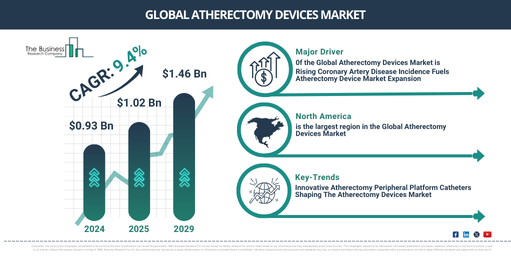
    Recent years have seen a robust growth in the market size of atherectomy devices, which is projected to increase from $0.93 billion in 2024 to $1.02 billion in 2025 at a compound annual growth rate (CAGR) of 9.8%. Factors contributing to this growth during the historic period include a surge in cardiovascular diseases, an ageing population, escalating obesity figures, enhanced funding and investment towards cardiovascular research and healthcare facilities, and heightened awareness about minimally invasive procedures.

    The market size for atherectomy devices is projected to experience substantial growth in the coming years, surging to $1.46 billion in 2029 at a Compound Annual Growth Rate (CAGR) of 9.4%. This anticipated growth within the forecast period is linked to factors such as increasing diabetes rates, a rise in diseases related to lifestyle, the expanding availability of reimbursement for atherectomy system costs, an increase in disposable income, and a heightened demand for atherectomy procedures. Key trends expected in the forecast period consist of ongoing enhancements in atherectomy device technology, the incorporation of sophisticated imaging technologies, a focus on care that centers around the patient, the application of robotic systems, along with the employment of real-time data analytics and machine learning.

    Download a free sample to assess the report’s scope and structure:

    https://www.thebusinessresearchcompany.com/sample.aspx?id=15728&type=smp

    What External and Internal Drivers Are Contributing to the Growth of the Atherectomy Devices Market?

    The growth of the atherectomy devices market is expected to be spurred by the increasing prevalence of coronary artery disease (CAD). Known for its characteristic narrowing or blockage of coronary arteries due to plaque accumulation, coronary artery disease impairs blood flow to the heart. A global surge in the senior population, elevated sedentary behaviours, rising stress and mental health problems, and an uptake in unhealthy food consumption are contributing to the pervasiveness of CAD. Directional coronary atherectomy is a less intrusive procedure targeting the removal of blockages from coronary arteries, improving heart muscle blood supply and reducing pain. For example, the Singapore Heart Foundation (SHF), a non-profit organization based in Singapore, reported that total cardiovascular disease-related deaths reached 8,311 in 2023, which was an increase from 7,762 in 2021. Furthermore, in 2023, atherosclerosis was responsible for 60% of these deaths, a slight increase from 59% in 2022. Thus, the ever-increasing prevalence of coronary artery disease is fuelling the growth of the atherectomy devices market.

    What Segment Types Define the Atherectomy Devices Market Structure?

    The atherectomy devices market covered in this report is segmented –

    1) By Product: Rotational Atherectomy Devices, Orbital Atherectomy Devices, Directional Atherectomy Devices, Other Products

    2) By Application: Peripheral Vascular Applications, Cardiovascular Applications, Neurovascular Applications

    3) By End User: Hospitals And Surgical Centers, Ambulatory Care Centers, Other End Users

    Subsegments:

    1) By Rotational Atherectomy Devices: Coronary Rotational Atherectomy Devices, Peripheral Rotational Atherectomy Devices

    2) By Orbital Atherectomy Devices: Coronary Orbital Atherectomy Devices, Peripheral Orbital Atherectomy Devices

    3) By Directional Atherectomy Devices: Coronary Directional Atherectomy Devices, Peripheral Directional Atherectomy Devices

    4) By Other Products: Laser Atherectomy Devices, Excimer Laser Atherectomy Systems

    Request customized data on this market:

    https://www.thebusinessresearchcompany.com/customise?id=15728&type=smp

    Which Geographic Areas Hold the Strongest Growth Potential in the Atherectomy Devices Market?

    North America was the largest region in the atherectomy devices market in 2023. Asia-Pacific is expected to be the fastest-growing region in the forecast period. The regions covered in the atherectomy devices market report are Asia-Pacific, Western Europe, Eastern Europe, North America, South America, Middle East and Africa.

    What Key Trends Are Shaping the Future of the Atherectomy Devices Market?

    Leading corporations in the atherectomy devices market are pioneering novel products, including atherectomy peripheral platform-based catheters, to earn a competitive advantage. The application of such catheters, which are medical instruments used to treat peripheral artery disease by traveling through the bloodstream to alleviate arterial obstructions in the legs, is increasing. For example, Cardio Flow, an American medical device manufacturing company, introduced the FreedomFlow, a cutting-edge orbital atherectomy peripheral platform, in October 2023. Using a unique mechanism to get rid of plaque blockages in the leg arteries, FreedomFlow system leverages a distinctive catheter-based layout using the principles of angular momentum physics and features a spiral geometric design with five diamond-covered spheres that keep constant touch with the vessel wall during both forward and backward movement.

    View the full report here:

    https://www.thebusinessresearchcompany.com/report/atherectomy-devices-global-market-report

    What Is the Definition of the Atherectomy Devices Market?

    Atherectomy devices are specialized medical instruments used in the procedure of atherectomy, a minimally invasive surgical technique to remove atherosclerotic plaque from blood vessels. Atherectomy devices are crucial in managing arterial blockages, offering a precise and minimally invasive solution to restore blood flow and alleviate symptoms associated with peripheral artery disease (PAD) and coronary artery disease (CAD).

    Purchase the full report and get a swift delivery:

    https://www.thebusinessresearchcompany.com/purchaseoptions.aspx?id=15728

    About The Business Research Company:

    With over 15000+ reports from 27 industries covering 60+ geographies, The Business Research Company has built a reputation for offering comprehensive, data-rich research and insights. Armed with 1,500,000 datasets, the optimistic contribution of in-depth secondary research, and unique insights from industry leaders, you can get the information you need to stay ahead in the game.

    Get in touch with us:

    The Business Research Company: https://www.thebusinessresearchcompany.com/

    Americas +1 3156230293

    Asia +44 2071930708

    Europe +44 2071930708

    Email us at info@tbrc.info

    Follow us on:

    LinkedIn: https://in.linkedin.com/company/the-business-research-company

    YouTube: https://www.youtube.com/channel/UC24_fI0rV8cR5DxlCpgmyFQ

    Global Market Model: https://www.thebusinessresearchcompany.com/global-market-model