Blog

  • Global Montelukast Sodium Market Trends: Regional Breakdowns and Strategic Insights

    Global Montelukast Sodium Market Trends: Regional Breakdowns and Strategic Insights

    Discover trends, market shifts, and competitive outlooks for the montelukast sodium industry through 2025-2034 with The Business Research Company’s reliable data and in-depth research

    What is the Projected CAGR for the Montelukast Sodium Market Size from 2025 to 2034?

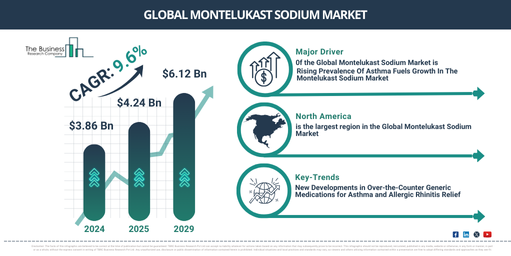
    In recent times, the montelukast sodium market has seen substantial growth. It is projected to expand from a size of $3.86 billion in 2024, to a much larger $4.24 billion in 2025, indicating a compound annual growth rate (CAGR) of 9.9%. Factors that have fueled this growth in the historic period include the rise in respiratory diseases, an increase in the aging population, the elevation of air pollution, enhanced awareness and education about the drug, and the growth of emerging markets.

    The market size of montelukast sodium is expected to witness substantial growth in the coming years, inflating to a worth of $6.12 billion in 2029 with a compound annual growth rate (CAGR) of 9.6%. The surge during the forecast period can be credited to factors such as regulatory approvals and product launches, clinical research, patent expirations, regulatory modifications, and doctor prescribing behaviours. Some major trends projected during the forecast period encompass heightened competition from generic drugs, a move towards combination treatments, growth in emerging markets, emphasis on use in children, and adoption of digital health technologies.

    Download a free sample to assess the report’s scope and structure:

    https://www.thebusinessresearchcompany.com/sample.aspx?id=16123&type=smp

    What External and Internal Drivers Are Contributing to the Growth of the Montelukast Sodium Market?

    The escalating incidences of asthma are slated to boost the advancement of the montelukast sodium market. Characterized by inflammation and constriction of airways, asthma is a long-term respiratory disorder which triggers frequent episodes of wheezing, breathlessness, tightness in the chest, and coughing bouts. The augmenting cases of asthma can be attributed to factors like environmental pollution, exposure to allergens, genetic factors, urbanization, alterations in lifestyle, and respiratory infections. Montelukast sodium is utilized in asthma treatment since it acts as a leukotriene receptor adversary, thereby aiding in the prevention and management of asthma symptoms by obstructing the action of leukotrienes responsible for airway inflammation and constriction. For instance, data from the American Lung Association, a voluntary health establishment based in the US, pointed out that in 2022, around 44.2 million Americans or 13.5% of the populace had been diagnosed with asthma by medical professionals. Consequently, the rising occurrences of asthma are fueling the expansion of the montelukast sodium market.

    Which Key Market Segments Comprise the Montelukast Sodium Market and Drive Its Revenue Growth?

    The montelukast sodium market covered in this report is segmented –

    1) By Product: Crystal-like, Form-less Or Amorphous

    2) By Dosage Form: Tablets, Oral Solutions

    3) By Application: Bronchospasm, Allergic Coryza, Asthma, Urticaria, Other Applications

    Subsegments:

    1) By Crystal-Like: Monohydrate Crystal, Anhydrous Crystal, Spherical Crystals, Needle-Like Crystals, Polycrystalline Montelukast Sodium

    2) By Form-Less Or Amorphous: Amorphous Powder, Amorphous Granules, Non-Crystalline Montelukast Sodium

    Request customized data on this market:

    https://www.thebusinessresearchcompany.com/customise?id=16123&type=smp

    Which Geographic Areas Hold the Strongest Growth Potential in the Montelukast Sodium Market?

    North America was the largest region in the montelukast sodium market in 2023. Asia-Pacific is expected to be the fastest-growing region in the forecast period. The regions covered in the montelukast sodium market report are Asia-Pacific, Western Europe, Eastern Europe, North America, South America, Middle East, Africa.

    Which Cutting-Edge Market Trends Are Expected to Drive the Montelukast Sodium Market’s Growth?

    To offer more suitable treatments for individuals managing asthma and allergic rhinitis, key players in the montelukast sodium market are introducing new drugs, including over-the-counter generic medication. Over-the-counter (OTC) generic treatments are drugs accessible without a prescription, typically located in pharmacies or retail outlets. For example, in July 2022, Fexofenadine HCL 180 mg and Pseudoephedrine HCl 240 mg were launched in the US by Dr. Reddy’s Laboratories, a pharmaceutical company based in India. This medication is intended for temporary relief from colds or allergies-induced nasal and sinus congestion. It is equivalent to Allegra-D 24 HR and combines an antihistamine with a nasal decongestant to relieve symptoms like sneezing, runny nose, itchy eyes, and throat. It comes in 5, 10, and 15-count pack sizes and provides a high-quality, cost-effective solution for those looking for relief from upper respiratory discomfort.

    View the full report here:

    https://www.thebusinessresearchcompany.com/report/montelukast-sodium-global-market-report

    How Is the Montelukast Sodium Market Conceptually Defined?

    Montelukast sodium is a leukotriene receptor antagonist, meaning it works by blocking the action of leukotrienes that cause asthma symptoms and allergic reactions. It is used to manage and prevent symptoms of asthma and to relieve seasonal and perennial allergic rhinitis. Montelukast is typically administered orally in tablet form.

    Purchase the full report and get a swift delivery:

    https://www.thebusinessresearchcompany.com/purchaseoptions.aspx?id=16123

    About The Business Research Company:

    With over 15000+ reports from 27 industries covering 60+ geographies, The Business Research Company has built a reputation for offering comprehensive, data-rich research and insights. Armed with 1,500,000 datasets, the optimistic contribution of in-depth secondary research, and unique insights from industry leaders, you can get the information you need to stay ahead in the game.

    Get in touch with us:

    The Business Research Company: https://www.thebusinessresearchcompany.com/

    Americas +1 3156230293

    Asia +44 2071930708

    Europe +44 2071930708

    Email us at info@tbrc.info

    Follow us on:

    LinkedIn: https://in.linkedin.com/company/the-business-research-company

    YouTube: https://www.youtube.com/channel/UC24_fI0rV8cR5DxlCpgmyFQ

    Global Market Model: https://www.thebusinessresearchcompany.com/global-market-model
  • Monkey Pox Treatment Market in Focus: Forecasting Growth Drivers, Scaling Potential, and Global Opportunities

    Discover trends, market shifts, and competitive outlooks for the monkey pox treatment industry through 2025-2034 with The Business Research Company’s reliable data and in-depth research

    What is the Anticipated CAGR of the Monkey Pox Treatment Market, and What Factors Will Drive It?

    The market size for the treatment of monkey pox has seen a significant surge in the last few years. The projections show an increase from $0.09 billion in 2024, to $0.1 billion in 2025, with a compound annual growth rate (CAGR) of 13.6%. This impressive growth in the historical period can be traced back to factors such as an increase in outbreaks in endemic areas, heightened awareness about zoonotic transmission, the legacy of smallpox eradication, public health campaigns, and the emergence of cases in humans.

    Forecasted to witness a swift expansion over the coming years, the market size for monkey pox treatment is predicted to reach $0.17 billion in 2029, registering an impressive compound annual growth rate (CAGR) of 13.3%. Various factors such as increased globalization, travel activities, governmental funding and backing, investment in the biotech and pharmaceutical sectors, public health surveillance measures, and regulatory authorizations can be attributed to this projected growth. Expected future trends encompass development of antiviral drugs, incorporation of smallpox vaccines, use of monoclonal antibodies, combined therapy strategies, and intense research on long-term immunity.

    Download a free sample to assess the report’s scope and structure:

    https://www.thebusinessresearchcompany.com/sample.aspx?id=18818&type=smp

    Which Primay Drivers Are Accelerating Growth in the Monkey Pox Treatment Market?

    The escalating occurrence of zoonotic infection is anticipated to fuel the expansion of the monkeypox treatment market. A zoonotic infection refers to a disease that passes from animals to humans via contact with infected environments or carriers. Increases in human-animal interactions, which bring people and animals into closer proximity, heighten the risks of zoonotic infections. Additionally, climate change amplifies this risk by enlarging the range of disease vectors and spreading pathogens to previously unaffected regions. Monkeypox treatments are utilized to control zoonotic mpox, focusing on the virus and relieving symptoms in both humans and potentially diseased animals. For example, as highlighted in a report by the UK Health Security Agency, a UK government body, in August 2024, there were 3,732 confirmed mpox cases in the UK, marking an increase of 21 from the 3,753 cases in 2023. Hence, the escalating occurence of zoonotic infection propels the monkeypox treatment market.

    How Is the Monkey Pox Treatment Market Segmented?

    The monkey pox treatment market covered in this report is segmented –

    1) By Treatment Type: Prophylactic Vaccines, Therapeutics

    2) By Dosage Forms: Solid, Liquid, Semi Solid

    3) By Route Of Administration: Oral, Topical, Parenteral

    4) By Distribution Channel: Retail Pharmacies, Hospital Pharmacies, Online Pharmacies

    Subsegments:

    1) By Prophylactic Vaccines: Vaccinia-Based Vaccines, Modified Vaccinia Ankara (MVA) Vaccines, Other Vaccines (Recombinant Vaccines)

    2) By Therapeutics: Antiviral Agents (Tecovirimat, Brincidofovir), Immune Modulators, Supportive Care Treatments

    Request customized data on this market:

    https://www.thebusinessresearchcompany.com/customise?id=18818&type=smp

    Which Regions Are Key Players in the Growth of the Monkey Pox Treatment Market?

    North America was the largest region in the monkey pox treatment market in 2023. Asia-Pacific is expected to be the fastest-growing region in the forecast period. The regions covered in the monkey pox treatment market report are Asia-Pacific, Western Europe, Eastern Europe, North America, South America, Middle East, Africa.

    Which Emerging Trends that Are Influencing the Monkey Pox Treatment Industry Evolution?

    Leading firms in the monkeypox treatment arena are concentrating on remote monitoring and teletherapy options like virtual care in order to improve accessibility, streamline patient care, and enhance overall results. Monkeypox treatment via virtual care offers remote consultations, assessment of symptoms, and care plans for individuals either at risk or already infected, thereby easing the access to care while also lessening the need for physical visits. For example, in August 2022, Folx Health, a healthcare corporation based in the US, launched Monkeypox Care, an online primary care service targeting individuals who are either at risk or already afflicted by monkeypox. This comprehensive approach incorporates education, counseling, symptom assessment, and referrals. It is aimed at reaching individuals living in care deserts — regions with inadequate healthcare access, ensuring quality information and referrals are obtainable by everyone, irrespective of their location.

    View the full report here:

    https://www.thebusinessresearchcompany.com/report/monkey-pox-treatment-global-market-report

    How Is the Monkey Pox Treatment Market Defined and What Are Its Core Parameters?

    Monkeypox treatment refers to the medical interventions and therapies used to manage and alleviate the symptoms of monkeypox, a viral disease caused by the monkeypox virus. It encompasses a range of therapeutic and supportive approaches aimed at reducing the severity of the disease and improving patient outcomes.

    Purchase the full report and get a swift delivery:

    https://www.thebusinessresearchcompany.com/purchaseoptions.aspx?id=18818

    About The Business Research Company:

    With over 15000+ reports from 27 industries covering 60+ geographies, The Business Research Company has built a reputation for offering comprehensive, data-rich research and insights. Armed with 1,500,000 datasets, the optimistic contribution of in-depth secondary research, and unique insights from industry leaders, you can get the information you need to stay ahead in the game.

    Get in touch with us:

    The Business Research Company: https://www.thebusinessresearchcompany.com/

    Americas +1 3156230293

    Asia +44 2071930708

    Europe +44 2071930708

    Email us at info@tbrc.info

    Follow us on:

    LinkedIn: https://in.linkedin.com/company/the-business-research-company

    YouTube: https://www.youtube.com/channel/UC24_fI0rV8cR5DxlCpgmyFQ

    Global Market Model: https://www.thebusinessresearchcompany.com/global-market-model
  • Strong CAGR to Propel in the Monkey Pox Testing Market and Beyond upto $1.81 Billion by 2029

    Strong CAGR to Propel in the Monkey Pox Testing Market and Beyond upto $1.81 Billion by 2029

    Discover trends, market shifts, and competitive outlooks for the monkey pox testing industry through 2025-2034 with The Business Research Company’s reliable data and in-depth research

    What Are the Key Milestones in the Monkey Pox Testing Market’s Growth Trajectory From 2025 To 2034?

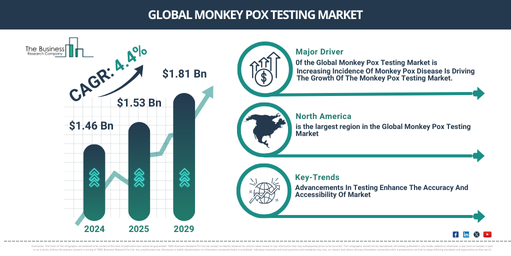
    In the past few years, the monkey pox testing market has experienced consistent growth, with its value expected to rise from $1.46 billion in 2024 to $1.53 billion in 2025, marking a 4.8% compound annual growth rate (CAGR). This prior growth can be credited to factors such as heightened governmental funding and initiatives, surging demand for quick testing solutions, the extension of testing capacity, escalating research and development efforts, and broadened public awareness campaigns.

    In the coming years, the monkey pox testing market is predicted to witness consistent growth, expanding to a market size of $1.81 billion in 2029 with a compound annual growth rate (CAGR) of 4.4%. This projected growth during the forecasted period can be credited to factors such as an increase in healthcare spending, development of point-of-care (POC) tests, growing popularity of at-home testing kits, focusing on affordability and accessibility, and betterment of healthcare infrastructure. The upcoming trend forecast includes integrating testing with surveillance systems, incorporation with digital health tools, technological progression, assimilation into public health systems, and advancements in diagnostic studies.

    Download a free sample to assess the report’s scope and structure:

    https://www.thebusinessresearchcompany.com/sample.aspx?id=18817&type=smp

    Which Factors and External Forces Are Driving Demand in the Monkey Pox Testing Market?

    The escalating occurrence of the monkey pox virus is predicted to stimulate the expansion of the monkey pox testing market in the future. Monkeypox, an infrequent viral infection caused by the monkeypox virus – a part of the orthodox virus genus closely related to the smallpox virus, is increasingly prevalent due to enhanced human-to-human transmission, worldwide travel, and diminished immunity from halted smallpox vaccination initiatives. Monkeypox testing plays an essential role in recognizing infected persons promptly, enabling immediate medical intervention and quarantine to curtail the disease’s further diffusion. It also aids in monitoring outbreaks and unravelling the virus’s transmission dynamics. For instance, the European Centre for Disease Prevention and Control (ECDC), a governmental agency based in Sweden, reported in May 2022 that from January to April 2022, there were 1,152 probable monkeypox incidences, resulting in 55 fatalities and a case-fatality rate of 4.8%, dispersed across 54 health zones in 14 provinces. Furthermore, compared to the same timeframe in 2021, there is an upsurge of 138 likely cases and 14 deaths, correlating to a higher case-fatality rate of 10.1%. Hence, the escalating occurrence of the monkey pox disease is propelling the augmentation of the monkey pox testing market.

    Which Primary Segments of the Monkey Pox Testing Market Are Driving Growth and Industry Transformations?

    The monkey pox testing market covered in this report is segmented –

    1) By Technology: Polymerase Chain Reaction (PCR), Lateral Flow Assay (LFA), Other Technologies

    2) By Mode: Laboratory Testing, Point Of Care Testing

    3) By End-Use: Hospitals And Clinics, Diagnostic Laboratories, Other End-Uses

    Subsegments:

    1) By Polymerase Chain Reaction (PCR): Real-Time PCR (qPCR), Reverse Transcription PCR (RT-PCR), Multiplex PCR

    2) By Lateral Flow Assay (LFA): Immunochromatographic Lateral Flow Assays, Rapid Antigen Detection Kits

    3) By Other Technologies: ELISA (Enzyme-Linked Immunosorbent Assay), CRISPR-based Testing, Serological Tests (Antibody Detection), Nucleic Acid Sequence-Based Amplification (NASBA)

    Request customized data on this market:

    https://www.thebusinessresearchcompany.com/customise?id=18817&type=smp

    What Are the Fastest-Growing Geographies in the Monkey Pox Testing Market?

    North America was the largest region in the monkey pox testing market in 2024. Asia-Pacific is expected to be the fastest-growing region in the forecast period. The regions covered in the monkey pox testing market report are Asia-Pacific, Western Europe, Eastern Europe, North America, South America, Middle East, Africa.

    What Key Trends Are Shaping the Future of the Monkey Pox Testing Market?

    Leading corporations in the monkey pox testing sector are committed to creating enhanced diagnostic solutions, like saliva-based monkey pox tests, to improve precision, usability, and access. Saliva-based testing for monkey pox involves utilizing saliva specimens to identify the occurrence of the monkeypox virus. For example, Flow Health, a US-based medical lab, in July 2022, inaugurated a saliva-based PCR test for monkeypox, revolutionizing the way testing is done by presenting a simpler, non-invasive alternative for virus identification. This groundbreaking test has high accuracy and specificity and quickly amplifies genetic material. It also offers flexibility for a range of uses, permits measurement of virus quantities, and makes pathogen detection direct and sample collection straightforward. One of its main benefits is the capability to test individuals before noticeable lesions emerge, which is vital for early diagnosis and limiting virus spread.

    View the full report here:

    https://www.thebusinessresearchcompany.com/report/monkey-pox-testing-global-market-report

    What Parameters Are Used to Define the Monkey Pox Testing Market?

    Monkeypox testing refers to the diagnostic process used to detect the presence of the monkeypox virus in an individual. This testing is crucial for identifying and confirming cases of monkeypox, a viral zoonotic disease that can be transmitted from animals to humans and between humans.

    Purchase the full report and get a swift delivery:

    https://www.thebusinessresearchcompany.com/purchaseoptions.aspx?id=18817

    About The Business Research Company:

    With over 15000+ reports from 27 industries covering 60+ geographies, The Business Research Company has built a reputation for offering comprehensive, data-rich research and insights. Armed with 1,500,000 datasets, the optimistic contribution of in-depth secondary research, and unique insights from industry leaders, you can get the information you need to stay ahead in the game.

    Get in touch with us:

    The Business Research Company: https://www.thebusinessresearchcompany.com/

    Americas +1 3156230293

    Asia +44 2071930708

    Europe +44 2071930708

    Email us at info@tbrc.info

    Follow us on:

    LinkedIn: https://in.linkedin.com/company/the-business-research-company

    YouTube: https://www.youtube.com/channel/UC24_fI0rV8cR5DxlCpgmyFQ

    Global Market Model: https://www.thebusinessresearchcompany.com/global-market-model
  • Molecular Weight Marker Market Forecast Reaching $1.38 Billion by 2029 at 12.2% CAGR

    Molecular Weight Marker Market Forecast Reaching $1.38 Billion by 2029 at 12.2% CAGR

    Discover trends, market shifts, and competitive outlooks for the molecular weight marker industry through 2025-2034 with The Business Research Company’s reliable data and in-depth research

    #How Has the Molecular Weight Marker Market Growth Performance Trended Historically, And What Lies Ahead?3

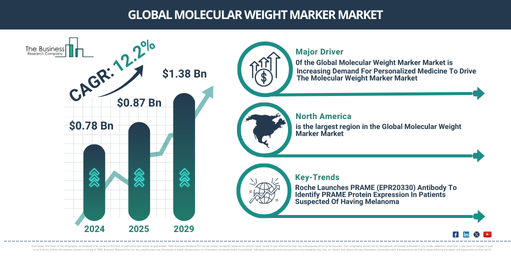
    The rapid expansion of the molecular weight marker market has been notable in recent years. With projections indicating a growth from $0.78 billion in 2024 to $0.87 billion in the next year, the market boasts a compound annual growth rate (CAGR) of 12.6%. The noteworthy growth recorded in the historic period can be credited to increased research and development initiatives, the widening scopes of genomics and proteomics, a surge in biotechnology applications, and the launch of high-resolution molecular weight markers.

    In the forthcoming years, the market size of molecular weight markers is projected to experience considerable growth, reaching a value of approximately $1.38 billion in 2029, with a compound annual growth rate (CAGR) of about 12.2%. The forecasted growth can be attributed to several factors, such as the continuous developments in molecular biology methods, the burgeoning biopharmaceutical sector’s focus on biologics and biosimilars, increased government funding, the development of research infrastructure in emerging countries, and a growing focus on personalized medicine. The prediction period forecasts several trends, including technological advancements in molecular biology, the introduction of high-resolution molecular weight markers, and the emergence of more accurate and user-friendly molecular weight markers.

    Download a free sample to assess the report’s scope and structure:

    https://www.thebusinessresearchcompany.com/sample.aspx?id=16485&type=smp

    What Are the Core Growth Drivers Propelling the Molecular Weight Marker Market Forward?

    A rise in the implementation of bespoke medical approaches is likely to boost the expansion of the molecular weight marker market. Bespoke medicine pertains to a medical belief that targets the customization of medical treatments and strategies based on individual patient’s needs. This trend is fueled by the fast-paced development of omics technology, genetic advancements, integrating data, and a growing understanding of the importance of patient-specific medications and preventative measures. Molecular weight markers provide a robust base for augmenting bespoke medicine, as they permit comprehensive proteomic examination, aid in the detection of biomarkers, enhance the understanding and development of drugs, and contribute to the development of personalized therapeutic procedures. For instance, the Personalized Medicine Coalition, a non-profit organization based in the US, reported that the FDA granted approval to 16 new bespoke therapies for patients with uncommon diseases in 2023, indicating a rise from six in 2022. As such, the acceleration in bespoke medical implementation is likely to fuel the expansion of the molecular weight marker market.

    Which Key Market Segments Comprise the Molecular Weight Marker Market and Drive Its Revenue Growth?

    The molecular weight marker market covered in this report is segmented –

    1) By Product: DNA Markers, Protein Markers, RNA Markers

    2) By Marker Type: Prestained Markers, Unstained Markers, Specialty Markers

    3) By Application: Nucleic Acid Application, Proteomics Application

    4) By End User: Academic Research Institutes, Pharmaceutical And Biotechnology Companies, Contract Research Organizations, Other End-Users

    Subsegments:

    1) By DNA Markers: Gene-Specific Markers, Fragment Length Markers, Plasmid DNA Markers

    2) By Protein Markers: Pre-Stained Protein Markers, Unstained Protein Markers, Recombinant Protein Markers

    3) By RNA Markers: mRNA Markers, Total RNA Markers, rRNA Markers

    Request customized data on this market:

    https://www.thebusinessresearchcompany.com/customise?id=16485&type=smp

    Which Geographic Areas Hold the Strongest Growth Potential in the Molecular Weight Marker Market?

    North America was the largest region in the molecular weight marker market in 2023. Asia-Pacific is expected to be the fastest-growing region in the forecast period. The regions covered in the molecular weight marker market report are Asia-Pacific, Western Europe, Eastern Europe, North America, South America, Middle East, Africa.

    What Are the Current Market Growth and Trends in the Molecular Weight Marker Industry?

    The primary focus for major players in the molecular weight markers market is the development of innovative products like monoclonal primary antibodies, allowing them to maintain market superiority. A monoclonal primary antibody is an antibody originating from a single cell clone, producing antibodies that attach to the same specific region on a target molecule. In October 2022, for example, F. Hoffmann-La Roche AG, a Swiss pharmaceutical company, introduced the PRAME (EPR20330) antibody to detect PRAME protein expression in individuals potentially suffering from melanoma. This groundbreaking antibody is designed specifically to identify PRAME protein expression in these patients, a critical step in diagnosing and monitoring melanoma – a dangerous variant of skin cancer. As a result of this breakthrough, diagnostic accuracy is improved, offering the possibility for more personalized treatment plans, thereby enhancing melanoma management and patient outcomes.

    View the full report here:

    https://www.thebusinessresearchcompany.com/report/molecular-weight-marker-global-market-report

    How Is the Molecular Weight Marker Market Conceptually Defined?

    A molecular weight marker is a set of molecules of known sizes used as a reference to estimate the size of other molecules separated by techniques such as gel electrophoresis. These markers are crucial for determining the molecular weight of proteins, nucleic acids, or other macromolecules in a sample. Molecular weight markers are essential tools in molecular biology and biochemistry, providing a reliable means to estimate the size of macromolecules during electrophoresis.

    Purchase the full report and get a swift delivery:

    https://www.thebusinessresearchcompany.com/purchaseoptions.aspx?id=16485

    About The Business Research Company:

    With over 15000+ reports from 27 industries covering 60+ geographies, The Business Research Company has built a reputation for offering comprehensive, data-rich research and insights. Armed with 1,500,000 datasets, the optimistic contribution of in-depth secondary research, and unique insights from industry leaders, you can get the information you need to stay ahead in the game.

    Get in touch with us:

    The Business Research Company: https://www.thebusinessresearchcompany.com/

    Americas +1 3156230293

    Asia +44 2071930708

    Europe +44 2071930708

    Email us at info@tbrc.info

    Follow us on:

    LinkedIn: https://in.linkedin.com/company/the-business-research-company

    YouTube: https://www.youtube.com/channel/UC24_fI0rV8cR5DxlCpgmyFQ

    Global Market Model: https://www.thebusinessresearchcompany.com/global-market-model
  • Key Factors Fueling the Growth of the Mobile Cardiac Telemetry Systems Market in 2025: Rising Cardiovascular Disease Incidence Drives Growth In Mobile Cardiac Telemetry Systems Market

    Key Factors Fueling the Growth of the Mobile Cardiac Telemetry Systems Market in 2025: Rising Cardiovascular Disease Incidence Drives Growth In Mobile Cardiac Telemetry Systems Market

    Discover trends, market shifts, and competitive outlooks for the mobile cardiac telemetry systems industry through 2025-2034 with The Business Research Company’s reliable data and in-depth research

    What Are the Projected Market Size and Growth Rates for the Mobile Cardiac Telemetry Systems Market From 2025 To 2029?

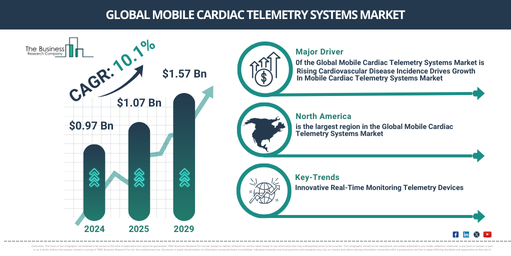
    The market size for mobile cardiac telemetry systems has recently witnessed a swift expansion. It is projected to rise from $0.97 billion in 2024 to $1.07 billion in 2025, portraying a compound annual growth rate (CAGR) of 10.4%. Factors contributing to the growth in the historic period include escalating healthcare costs, regulatory authorizations, increased patient desire for convenience, inflation in healthcare expenses, and enhancements in wireless technologies.

    The market for mobile cardiac telemetry systems is forecasted to witness significant expansion in the coming years, reaching a size of $1.57 billion by 2029 with a compound annual growth rate (CAGR) of 10.1%. The surge during the forecast period is linked to factors such as an increasing ageing population, supportive healthcare policies, a rise in cardiovascular disease cases, and amplified focus on early diagnosis and awareness. Key trends predicted for the forecast period encompass incorporating AI and machine learning, robust data protection, telemedicine collaboration, individualized medicine, and innovations in wearable technology.

    Download a free sample to assess the report’s scope and structure:

    https://www.thebusinessresearchcompany.com/sample.aspx?id=18674&type=smp

    What Are the Primary Drivers Supporting the Market Growth of the Mobile Cardiac Telemetry Systems Market?

    The escalation in cardiovascular disease cases is projected to fuel the expansion of the mobile cardiac telemetry systems market. Cardiovascular diseases encompass a variety of diseases impacting the heart and blood vessels, such as coronary artery disease, heart failure, arrhythmias, and hypertension, culminating in severe health hazards like heart attacks, strokes, and other cardiovascular incidents. Increased risk factors such as inactive lifestyles, unhealthy diets, obesity, and elder demographics are causing a rise in cardiovascular disease rates. Mobile cardiac telemetry systems offer constant, instantaneous surveillance and prompt detection of cardiac arrhythmias in cardiovascular disease patients. For example, the American Heart Association, a US-based philanthropic organization, reported a minor increase in the total cardiovascular sector death toll in January 2024, amounting to 931,578, a slight increase of 3,000 fatalities from the prior year’s total of 928,741. Consequently, the surging incidence of cardiovascular disease is steering the growth of the mobile cardiac telemetry systems market.

    How Is the Mobile Cardiac Telemetry Systems Market Segmented?

    The mobile cardiac telemetry systems market covered in this report is segmented –

    1) By Product Type: Multiple Lead Mobile Cardiac Telemetry Systems, Mobile Cardiac Telemetry Patch

    2) By Diseases: Cardiovascular Diseases, Angina Pectoris, Atherosclerosis, Heart Failure, Other Diseases

    3) By End-Use: Hospitals, Cardiac Centers, Home Care Settings, Other End-Uses

    Subsegments:

    1) By Multiple Lead Mobile Cardiac Telemetry Systems: Wired Multiple Lead Systems Or Wireless Multiple Lead Systems

    2) By Mobile Cardiac Telemetry Patch: Adhesive Patches Or Disposable Patches Or Reusable Patches

    Request customized data on this market:

    https://www.thebusinessresearchcompany.com/customise?id=18674&type=smp

    Which Regions Are Key Players in the Growth of the Mobile Cardiac Telemetry Systems Market?

    North America was the largest region in the mobile cardiac telemetry systems market in 2024. The regions covered in the mobile cardiac telemetry systems market report are Asia-Pacific, Western Europe, Eastern Europe, North America, South America, Middle East, Africa.

    What Long-Term Trends Are Transforming the Competitive Landscape of the Mobile Cardiac Telemetry Systems Market?

    In the microscope accessories market, leading corporations are introducing innovative ideas such as mobile cardiac telemetry (MCT) gadgets to increase diagnostic accuracy, enhance patient supervision, and supply immediate data for improved healthcare decision-making, ultimately incorporating superior imaging technologies and distant monitoring functions for personalized and efficient medical services. Mobile cardiac telemetry (MCT) devices are wearable, portable devices that offer constant real-time heart activity monitoring, sending data to healthcare professionals for distant analysis. For instance, ZOLL Medical Corporation, an American medical device and software developer for emergency aid, launched the new ZOLL Atrial Fibrillation (AF) Management System in March 2022. The ZOLL Arrhythmia Management System (AMS) is a thorough mobile cardiac telemetry device designed to track patients for arrhythmias and other cardiovascular issues. Here’s a breakdown of the system’s essential components and functionalities.

    View the full report here:

    https://www.thebusinessresearchcompany.com/report/mobile-cardiac-telemetry-systems-global-market-report

    How Is the Mobile Cardiac Telemetry Systems Market Defined and What Are Its Core Parameters?

    Mobile cardiac telemetry systems are advanced cardiac monitoring devices used to detect and record abnormal heart rhythms in real-time. They continuously monitor a patient’s heart activity and automatically transmit data to a central monitoring center. This allows for immediate analysis and timely intervention by healthcare professionals. MCT systems are typically used for diagnosing and managing arrhythmias and other cardiac conditions.

    Purchase the full report and get a swift delivery:

    https://www.thebusinessresearchcompany.com/purchaseoptions.aspx?id=18674

    About The Business Research Company:

    With over 15000+ reports from 27 industries covering 60+ geographies, The Business Research Company has built a reputation for offering comprehensive, data-rich research and insights. Armed with 1,500,000 datasets, the optimistic contribution of in-depth secondary research, and unique insights from industry leaders, you can get the information you need to stay ahead in the game.

    Get in touch with us:

    The Business Research Company: https://www.thebusinessresearchcompany.com/

    Americas +1 3156230293

    Asia +44 2071930708

    Europe +44 2071930708

    Email us at info@tbrc.info

    Follow us on:

    LinkedIn: https://in.linkedin.com/company/the-business-research-company

    YouTube: https://www.youtube.com/channel/UC24_fI0rV8cR5DxlCpgmyFQ

    Global Market Model: https://www.thebusinessresearchcompany.com/global-market-model
  • Top Trends Driving Innovation and Change in the Mitral Valve Disease Market: Advancing Mitral Valve Disease Care With Innovative Treatment Technologies

    Top Trends Driving Innovation and Change in the Mitral Valve Disease Market: Advancing Mitral Valve Disease Care With Innovative Treatment Technologies

    Discover trends, market shifts, and competitive outlooks for the mitral valve disease industry through 2025-2034 with The Business Research Company’s reliable data and in-depth research

    How Has The Mitral Valve Disease Market Growth Evolved From 2024 To 2025, And What’s Ahead?

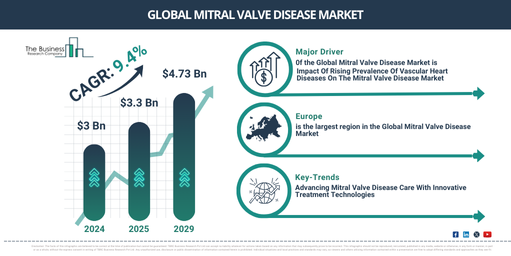
    The market for mitral valve disease has witnessed robust expansion in the past few years. It is set to rise from a size of $3 billion in 2024 to reach $3.3 billion in 2025, with a compound annual growth rate (CAGR) of 9.8%. The significant growth in the previous period can be ascribed to factors such as initiatives to educate patients, favourable reimbursement policies and insurance coverage, heightened healthcare spending, increased awareness and screening activities, and an expanding market presence.

    The market size for mitral valve disease is predicted to experience significant expansion in the coming years, reaching a value of $4.73 billion in 2029 with a compound annual growth rate (CAGR) of 9.4%. The predicted growth during the forecast period is likely due to an increase in the incidences of mitral valve disease, the rise in acceptance of minimally invasive procedures, significant advancements in heart valve surgery, an upswing in venture capital investments, as well as heightened interest from manufacturers. Key trends during this forecast period are likely to encompass technological enhancements, developments in transcatheter technologies, and the continuous evolution of surgical procedure technology.

    Download a free sample to assess the report’s scope and structure:

    https://www.thebusinessresearchcompany.com/sample.aspx?id=16480&type=smp

    What Are the Core Market Drivers Propelling Growth in the Mitral Valve Disease Industry?

    The growth of the mitral valve disease market is anticipated to be fueled by the escalating incidence of vascular heart diseases. These heart diseases, which include conditions impacting the blood vessels serving the heart or inside the heart, are increasing due to a combination of demographic shifts, lifestyle choices, environmental influences, medical conditions, and genetic elements. Vascular heart diseases like ischemic heart disease and hypertension have the potential to indirectly trigger mitral valve disease by affecting the heart’s structure and functioning, which in turn can lead to conditions that impact the mitral valve. As an illustration, data from a National Health Survey carried out by the Australia-based government agency, the Australian Institute of Health and Welfare, showed that the death rate from cardiovascular disease per 100,000 population in Australia elevated from 143.7 in 2021 to 148.2 in 2022 for males, according to the Australian Bureau of Statistics 2020-21. Consequently, the surge in vascular heart diseases is propelling the mitral valve disease market.

    What Segment Types Define the Mitral Valve Disease Market Structure?

    The mitral valve disease market covered in this report is segmented –

    1) By Treatment Type: Mitral Valve Repair, Mitral Valve Replacement, Cardiac Resynchronization Therapy, Mitral Valve Therapeutics

    2) By Indication: Mitral Valve Stenosis, Mitral Valve Prolapse, Mitral Valve Regurgitation

    3) By End-User: Hospitals, Ambulatory Surgical Centers, Other End-Users

    Subsegments:

    1) By Mitral Valve Repair: Surgical Repair, Minimally Invasive Repair, Percutaneous Mitral Valve Repair

    2) By Mitral Valve Replacement: Mechanical Valve Replacement, Biological Valve Replacement, Transcatheter Mitral Valve Replacement (TMVR)

    3) By Cardiac Resynchronization Therapy: Pacemaker Therapy, Implantable Cardioverter-Defibrillators (ICD), Biventricular Pacing

    4) By Mitral Valve Therapeutics: Pharmacological Treatments, Anticoagulation Therapy, Mitral Valve Repair Devices

    Request customized data on this market:

    https://www.thebusinessresearchcompany.com/customise?id=16480&type=smp

    Which Regions Are Driving the Next Phase of the Mitral Valve Disease Market Growth?

    Europe was the largest region in the mitral valve disease market in 2024. Asia-Pacific is expected to be the fastest-growing region in the forecast period. The regions covered in the mitral valve disease market report are Asia-Pacific, Western Europe, Eastern Europe, North America, South America, Middle East, Africa.

    What Are the Key Market Trends in the Mitral Valve Disease Market Over the Coming Years?

    Key players in the mitral valve disease market are innovating stented tissue valves to meet the rising demand for less invasive treatment methods. These valves are engineered to deliver lasting and robust performance, providing patients with an alternative to conventional surgical procedures. For example, Medtronic, a healthcare company based in Ireland, unveiled the Avalus Ultra valve in April 2024. This sophisticated surgical aortic tissue valve is specifically designed to improve implantation and ongoing patient management. The Avalus Ultra, which builds on ten years of clinical experience with its predecessor, the Avalus valve, boasts a low valve profile for simplified implantation, a PEEK base frame for consistent roundness, and an industry-leading Effective Orifice Area (EOA) for possibly enhanced blood flow. Moreover, it consists of a radiopaque coil for unambiguous visibility in potential future valve-in-valve interventions.

    View the full report here:

    https://www.thebusinessresearchcompany.com/report/mitral-valve-disease-global-market-report

    What Is the Definition of the Mitral Valve Disease Market?

    Mitral valve disease is a disorder impacting the mitral valve, which controls blood movement between the heart’s left atrium and left ventricle. It can result in the valve becoming narrowed or leaky, disrupting normal blood flow and causing issues like breathlessness, tiredness, and abnormal heart rhythms. The primary aim of managing mitral valve disease is to ensure proper blood flow through the heart and to prevent complications.

    Purchase the full report and get a swift delivery:

    https://www.thebusinessresearchcompany.com/purchaseoptions.aspx?id=16480

    About The Business Research Company:

    With over 15000+ reports from 27 industries covering 60+ geographies, The Business Research Company has built a reputation for offering comprehensive, data-rich research and insights. Armed with 1,500,000 datasets, the optimistic contribution of in-depth secondary research, and unique insights from industry leaders, you can get the information you need to stay ahead in the game.

    Get in touch with us:

    The Business Research Company: https://www.thebusinessresearchcompany.com/

    Americas +1 3156230293

    Asia +44 2071930708

    Europe +44 2071930708

    Email us at info@tbrc.info

    Follow us on:

    LinkedIn: https://in.linkedin.com/company/the-business-research-company

    YouTube: https://www.youtube.com/channel/UC24_fI0rV8cR5DxlCpgmyFQ

    Global Market Model: https://www.thebusinessresearchcompany.com/global-market-model
  • Minimally Invasive Spine Surgery Devices Market 2025-2034: Key Highlights, Growth Dynamics, and Emerging Trends

    Minimally Invasive Spine Surgery Devices Market 2025-2034: Key Highlights, Growth Dynamics, and Emerging Trends

    Discover trends, market shifts, and competitive outlooks for the minimally invasive spine surgery devices industry through 2025-2034 with The Business Research Company’s reliable data and in-depth research

    What Is the Current and Projected Market Size of the Minimally Invasive Spine Surgery Devices Market Through 2034?

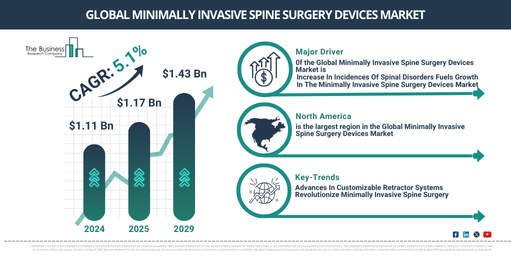
    In the recent past, the market size for devices used in minimally invasive spine surgery has seen a significant increase. The market, which was valued at $1.11 billion in 2024, is projected to surge to $1.17 billion in 2025, indicating a compound annual growth rate (CAGR) of 5.5%. This growth during the historic period is primarily due to factors such as the rising patient preference for minimal invasive procedures, increasing validation from clinical trials regarding safety and effectiveness, pressure on healthcare systems to reduce costs, enhanced training programs, educational initiatives, and a shift in surgical framework.

    The market for minimally invasive spine surgery devices is expected to witness a significant surge in its size in the upcoming years. It’s projected to reach a value of $1.43 billion by 2029, growing with a compound annual growth rate (CAGR) of 5.1%. The predicted growth in the forecast period can be attributed to initiatives like healthcare digitization, adoption of Electronic Health Records (EHRs), investigation into regenerative medicine methods, evolving healthcare compensation policies, and expanded cooperation between device manufacturers. Featured trends of the forecast period comprise of advancements in surgical tools, imaging platforms, creation of biocompatible materials and implants, progress in personalized medicine and genetic testing, incorporation of remote monitoring technologies and telemedical platforms, along with integration of VR and AR technologies.

    Download a free sample to assess the report’s scope and structure:

    https://www.thebusinessresearchcompany.com/sample.aspx?id=16738&type=smp

    Which Factors and External Forces Are Driving Demand in the Minimally Invasive Spine Surgery Devices Market?

    The surge in cases of spinal disorders is predicted to boost the expansion of the minimally invasive spine surgery devices market. Spinal disorders, such as herniated discs, spinal stenosis, and scoliosis, which cause pain, stiffness, or neurological symptoms, are the conditions that impact the spine. The escalating prevalence of these disorders is spurred by numerous contributing factors, including aging demographics, inactive lifestyles, recurring stress injuries, and degenerative alterations in the structure of the spine. The usage of minimally invasive spine surgery devices in the treatment of spinal disorders is beneficial in reducing tissue harm, curbing recovery periods, and lessening subsequent operative pain as opposed to conventional open surgery. For example, the National Spinal Cord Injury Statistical Center, a section of the University of Alabama at Birmingham (UAB) in the United States, projected that approximately 305,000 people in the US would have traumatic spinal cord injury (tSCI) in 2024, with estimates spanning from 257,000 to 388,000 individuals. In contrast, the approximated count in 2023 was nearly 302,000 persons, with a range from 255,000 to 383,000 individuals. Thus, the surge in spinal disorder cases is propelling the expansion of the minimally invasive spine surgery devices market.

    Which Primary Segments of the Minimally Invasive Spine Surgery Devices Market Are Driving Growth and Industry Transformations?

    The minimally invasive spine surgery devices market covered in this report is segmented –

    1) By Product: Cervical Fusion Devices, Spine Biologics, Vertebral Compression Fracture Treatment Devices, Non-fusion Devices, Spine Bone Stimulators, Spinal Decompression Devices

    2) By Treatment: Disk Herniation, Degenerative Spinal Disease, Spinal Stenosis, Other Treatments

    3) By Procedure: Discectomy, Laminotomy, Foraminotomy, Facetectomy, Corpectomy

    4) By Application: Fusion Surgery, Non-Fusion Surgery

    5) By End User: Ambulatory Surgical Centers (ASCs), Hospitals

    Subsegments:

    1) By Cervical Fusion Devices: Anterior Cervical Discectomy And Fusion (ACDF) Devices, Posterior Cervical Fusion Devices, Cervical Spinal Plates, Cervical Screws And Rod Systems

    2) By Spine Biologics: Bone Grafts And Bone Substitutes, Growth Factors And Stem Cells, Demineralized Bone Matrix (DBM), Synthetic Bone Grafts, Platelet-Rich Plasma (PRP), Osteobiologics For Spinal Fusion

    3) By Vertebral Compression Fracture Treatment Devices: Vertebroplasty And Kyphoplasty Kits, Balloon Kyphoplasty Devices, Bone Cement For Vertebroplasty, Percutaneous Spinal Fracture Repair Devices

    4) By Non-Fusion Devices: Dynamic Stabilization Systems, Artificial Discs (Lumbar And Cervical), Motion Preservation Devices, Total Disc Replacement Devices, Posterior Dynamic Stabilization Systems

    5) By Spine Bone Stimulators: Non-Invasive Spine Bone Stimulators, Invasive Spine Bone Stimulators, Electromagnetic Bone Stimulators, Ultrasound Bone Stimulators, Pulsed Electromagnetic Field (PEMF) Devices

    6) By Spinal Decompression Devices: Minimally Invasive Spinal Decompression Systems, Spinal Traction Devices, Percutaneous Discectomy Devices, Spinal Decompression Surgery Instruments, Spinal Distraction Devices

    Request customized data on this market:

    https://www.thebusinessresearchcompany.com/customise?id=16738&type=smp

    What Are the Fastest-Growing Geographies in the Minimally Invasive Spine Surgery Devices Market?

    North America was the largest region in the minimally invasive spine surgery devices market in 2023. The regions covered in the minimally invasive spine surgery devices market report are Asia-Pacific, Western Europe, Eastern Europe, North America, South America, Middle East, Africa.

    What Key Trends Are Shaping the Future of the Minimally Invasive Spine Surgery Devices Market?

    Key players in the minimally invasive spine surgery devices market are prioritizing the advancement of products, including retractor systems with customization features to augment surgical accuracy and enhance patient results. These customizable retractor systems in minimally invasive spine surgery provide refined access and improved visibility, thereby minimizing tissue damage and shortening the recuperation time. For example, Orthofix Medical Inc., a US-based medical device company, introduced two novel retractor systems specifically designed for minimally invasive spine procedures in April 2023. The Lattus Lateral Access System boasts simple usage, versatile blade retraction and is compatible with Orthofix’s WaveForm L and Regatta NanoMetalene devices. The Fathom Pedicle-Based Retractor System comes with three active telescoping blade fixations, enabling precise customization while improving visibility and causing minimal tissue disruption. These systems are proficient in enhancing surgical workflows and catering to individual patient anatomy.

    View the full report here:

    https://www.thebusinessresearchcompany.com/report/minimally-invasive-spine-surgery-devices-global-market-report

    What Parameters Are Used to Define the Minimally Invasive Spine Surgery Devices Market?

    Minimally invasive spine surgery devices are specialized tools and instruments designed for performing spinal surgeries with minimal incisions. These devices are used to treat various spinal conditions offering reduced trauma to surrounding tissues. The purpose of these devices is to facilitate quicker recovery, less postoperative pain, and shorter hospital stays compared to traditional open spine surgery methods.

    Purchase the full report and get a swift delivery:

    https://www.thebusinessresearchcompany.com/purchaseoptions.aspx?id=16738

    About The Business Research Company:

    With over 15000+ reports from 27 industries covering 60+ geographies, The Business Research Company has built a reputation for offering comprehensive, data-rich research and insights. Armed with 1,500,000 datasets, the optimistic contribution of in-depth secondary research, and unique insights from industry leaders, you can get the information you need to stay ahead in the game.

    Get in touch with us:

    The Business Research Company: https://www.thebusinessresearchcompany.com/

    Americas +1 3156230293

    Asia +44 2071930708

    Europe +44 2071930708

    Email us at info@tbrc.info

    Follow us on:

    LinkedIn: https://in.linkedin.com/company/the-business-research-company

    YouTube: https://www.youtube.com/channel/UC24_fI0rV8cR5DxlCpgmyFQ

    Global Market Model: https://www.thebusinessresearchcompany.com/global-market-model
  • Minimally Invasive Glaucoma Surgery (MIGS) Devices Growth Trajectory: Key Forecasts and Strategic Insights

    Minimally Invasive Glaucoma Surgery (MIGS) Devices Growth Trajectory: Key Forecasts and Strategic Insights

    Discover trends, market shifts, and competitive outlooks for the minimally invasive glaucoma surgery (migs) devices industry through 2025-2034 with The Business Research Company’s reliable data and in-depth research

    What is the Anticipated CAGR of the Minimally Invasive Glaucoma Surgery (MIGS) Devices Market, and What Factors Will Drive It?

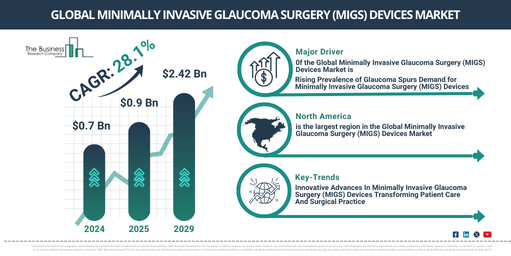
    In recent years, the market size for minimally invasive glaucoma surgery (MIGS) devices has seen significant expansion. Its growth is projected to rise from $0.7 billion in 2024 to $0.9 billion in 2025, with a compound annual growth rate (CAGR) of 28.3%. The historic growth of this market can be traced back to factors such as heightened awareness towards curbing blindness, increased investment in healthcare infrastructure, heightened patient understanding regarding state-of-the-art vision correction treatments, as well as increased government initiatives in this area.

    The market size for minimally invasive glaucoma surgery (MIGS) devices is expected to experience tremendous growth in the upcoming years, expanding to $2.42 billion by 2029 with a compound annual growth rate (CAGR) of 28.1%. Factors contributing to the growth during the forecast period include an increased occurrence of eye disorders such as glaucoma, an aging population, advancements in the healthcare infrastructure, and a rising demand for safer and more effective treatment options. Significant trends predicted for the forecast period encompass the adoption and advancement of MIGS devices, the invention of innovative minimally intrusive glaucoma surgery equipment, the development of sophisticated implantable devices, and progress made in ophthalmic technology.

    Download a free sample to assess the report’s scope and structure:

    https://www.thebusinessresearchcompany.com/sample.aspx?id=15863&type=smp

    Which Major Market Drivers Are Expected to Boost the Growth Potential of the Minimally Invasive Glaucoma Surgery (MIGS) Devices Market?

    The escalation in the occurrence of eye disorders is projected to drive the expansion of the market for minimally invasive glaucoma surgery (MIGS) devices in the future. Eye disorders, which include a wide variety of conditions that compromise eyes and sight, are becoming more prevalent due to shifts in lifestyle, environmental factors, and an aging population. MIGS devices are groundbreaking instruments employed in tackling numerous eye diseases, primarily targeting the reduction of intraocular pressure (IOP) to hinder or manage the progression of glaucoma. For example, the National Eye Institute, a government agency based in the US, predicts that around 2.2 million Americans will either be totally or partially vision impaired by 2030. Thus, the escalating occurrence of eye disorders spurs the growth of the minimally invasive glaucoma surgery (MIGS) devices market.

    Which Segments in the Minimally Invasive Glaucoma Surgery (MIGS) Devices Offer the Most Growth?

    The minimally invasive glaucoma surgery (MIGS) devices market covered in this report is segmented –

    1) By Product: Valves, Glaucoma Drainage Implant, Glaucoma Tube Shunts, Stents, Other Products

    2) By Surgery: Glaucoma In Conjunction With Cataract, Stand Alone Glaucoma

    3) By Target: Trabecular Meshwork, Suprachoroidal Space, Other Targets

    4) By Distribution Channel: Direct Tender, Retail Sales

    5) By End User: Ophthalmology Clinics, Ambulatory Surgery Centers (ASCS), Other End Users

    Subsegments:

    1) By Valves: Micro Shunt Valves, Non-penetrating Valves

    2) By Glaucoma Drainage Implant: Scleral Drainage Implants, Subconjunctival Drainage Implants

    3) By Glaucoma Tube Shunts: Ahmed Tube Shunt, Baerveldt Tube Shunt

    4) By Stents: Ab-Interno Stents, Ab-Externo Stents

    5) By Other Products: Cyclodestructive Devices, Trabecular Bypass Devices

    Request customized data on this market:

    https://www.thebusinessresearchcompany.com/customise?id=15863&type=smp

    Which Areas Are Leading Regions in the Minimally Invasive Glaucoma Surgery (MIGS) Devices Market Expansion Across the Globe?

    North America was the largest region in the minimally invasive glaucoma surgery (MIGS) devices market in 2024. Asia-Pacific is expected to be the fastest-growing region in the forecast period. The regions covered in the minimally invasive glaucoma surgery (MIGS) devices market report are Asia-Pacific, Western Europe, Eastern Europe, North America, South America, Middle East and Africa.

    What Are the Most Significant Market Trends in the Minimally Invasive Glaucoma Surgery (MIGS) Devices Market?

    Leading enterprises in the minimally invasive glaucoma surgery (MIGS) devices market are concentrating on creating revolutionary items like stent injectable systems to fulfill voids in glaucoma treatment and enhance patient results. A stent injectable system is a MIGS device that is implanted through an injection-like process using a specialized delivery mechanism often used in minimally invasive surgeries to treat conditions such as blocked or narrowed blood vessels. For example, in August 2022, Glaukos Corporation, an ophthalmic medical technology firm based in the US, obtained 510(k) clearance from the U.S. Food and Drug Administration (FDA) for the iStent Infinite Trabecular Micro-Bypass System. The iStent Infinite, an innovative three-stent injectable system, is designed to provide constant, round-the-clock intraocular pressure (IOP) management for patients suffering from primary open-angle glaucoma (POAG) who are not able to control IOP with prior medication and surgical treatment.

    View the full report here:

    https://www.thebusinessresearchcompany.com/report/minimally-invasive-glaucoma-surgery-migs-devices-global-market-report

    What Are the Key Elements That Define the Minimally Invasive Glaucoma Surgery (MIGS) Devices Market?

    Minimally invasive glaucoma surgery (MIGS) devices are medical instruments designed to lower intraocular pressure (IOP) in patients with glaucoma through less invasive surgical techniques compared to traditional glaucoma surgeries. These devices aim to reduce the risk of complications, shorten recovery time, and improve patient outcomes by offering a safer and less invasive option for patients needing surgical intervention to manage their condition.

    Purchase the full report and get a swift delivery:

    https://www.thebusinessresearchcompany.com/purchaseoptions.aspx?id=15863

    About The Business Research Company:

    With over 15000+ reports from 27 industries covering 60+ geographies, The Business Research Company has built a reputation for offering comprehensive, data-rich research and insights. Armed with 1,500,000 datasets, the optimistic contribution of in-depth secondary research, and unique insights from industry leaders, you can get the information you need to stay ahead in the game.

    Get in touch with us:

    The Business Research Company: https://www.thebusinessresearchcompany.com/

    Americas +1 3156230293

    Asia +44 2071930708

    Europe +44 2071930708

    Email us at info@tbrc.info

    Follow us on:

    LinkedIn: https://in.linkedin.com/company/the-business-research-company

    YouTube: https://www.youtube.com/channel/UC24_fI0rV8cR5DxlCpgmyFQ

    Global Market Model: https://www.thebusinessresearchcompany.com/global-market-model
  • Next-Gen Mineral Supplements : Market Forecast, Transformation, and Long-Term Trajectories

    Next-Gen Mineral Supplements : Market Forecast, Transformation, and Long-Term Trajectories

    Discover trends, market shifts, and competitive outlooks for the mineral supplements industry through 2025-2034 with The Business Research Company’s reliable data and in-depth research

    What Are the Key Milestones in the Mineral Supplements Market’s Growth Trajectory From 2025 To 2034?

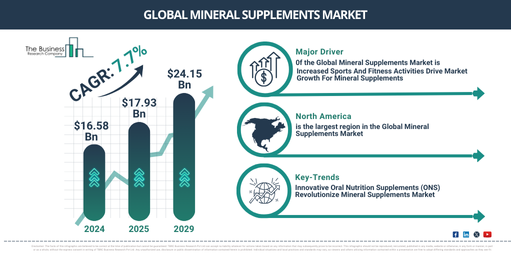
    In the past few years, there has been a substantial growth in the market size of mineral supplements. It is projected to expand from $16.58 billion in 2024 to $17.93 billion in 2025 at a Compound Annual Growth Rate (CAGR) of 8.1%. This notable growth during the historic period can be credited to the heightened attention towards health and wellness, an increase in the prevalence of mineral deficiencies, an aging demographic, a surge in interest towards preventive healthcare, and the modification of dietary habits and lifestyles.

    The mineral supplement industry is projected to experience robust growth in the coming years, expanding to a market size of $24.15 billion in 2029 with a compound annual growth rate (CAGR) of 7.7%. This expansion during the forecast period can be attributed to factors such as the surge in personalized nutrition, rising demand for organic and natural products, increase in disposable income in emerging markets, and the focus on transparent product labeling and traceability. Consumers’ growing interest in sustainable and ethically sourced products also contributes to this growth. Key trends expected during the forecast period involve a shift towards plant-based mineral supplements, the development of mineral formulations catering to specific demographic groups, innovative delivery formats like gummies and dissolvable tablets, the development of custom mineral supplement solutions to cater to individual requirements, and elevated focus on ingredients backed by scientific evidence and research.

    Download a free sample to assess the report’s scope and structure:

    https://www.thebusinessresearchcompany.com/sample.aspx?id=15609&type=smp

    What Are the Core Growth Drivers Propelling the Mineral Supplements Market Forward?

    The surge in sports and fitness activities is projected to propel the mineral supplement market. These activities, which vary in physical intensity, strive to enhance health, physical fitness, and sports performance. The rise in these activities can be attributed to increased health awareness, easy access to health facilities, and societal focus on well-being. Mineral supplements are a fantastic addition to a balanced diet as they cater to the amplified mineral requirements of athletes and fitness buffs involved in intense or long-term physical activities. For example, as per the Sports and Fitness Industry Association (SFIA), a non-profit organization based in the US, in February 2023, 77.6% of all Americans, which equates to 236.9 million individuals, were involved in a minimum of one sports activity in the 2022 calendar year, reflecting a 1.9% boost from 2021. In addition, Pickleball’s popularity has skyrocketed, making it the fastest-growing sport in America. The participation nearly doubled in 2022, showing an 85.7% increment year-over-year and an impressive growth of 158.6% over three years. Consequently, the escalation in sports and fitness activities is fuelling the growth of the mineral supplements market.

    Which Key Market Segments Comprise the Mineral Supplements Market and Drive Its Revenue Growth?

    The mineral supplements market covered in this report is segmented –

    1) By Product: Calcium, Magnesium, Iron, Potassium, Zinc, Chromium, Selenium, Other Products

    2) By Formulation: Capsule, Tablet, Powder, Liquid Or Gel, Other Formulations

    3) By Sales Channel: Pharmacies And Drug Stores, Supermarkets And Hypermarkets, Online Channels

    4) By Application: General Health, Bone And Joint Health, Gastrointestinal Health, Immunity, Other Applications

    5) By End Use: Adults, Geriatric, Pregnant Women, Children, Infants

    Subsegments:

    1) By Calcium: Calcium Carbonate, Calcium Citrate, Calcium Gluconate, Calcium Lactate

    2) By Magnesium: Magnesium Citrate, Magnesium Oxide, Magnesium Glycinate, Magnesium Sulfate

    3) By Iron: Ferrous Sulfate, Ferrous Fumarate, Ferrous Gluconate, Iron Polysaccharide Complex

    4) By Potassium: Potassium Chloride, Potassium Citrate, Potassium Gluconate

    5) By Zinc: Zinc Gluconate, Zinc Sulfate, Zinc Picolinate, Zinc Acetate

    6) By Chromium: Chromium Picolinate, Chromium Chloride, Chromium Nicotinate

    7) By Selenium: Selenium Methionine, Sodium Selenite, Selenomethionine

    8) By Other Products: Manganese Supplements, Copper Supplements, Iodine Supplements, Phosphorus Supplements

    Request customized data on this market:

    https://www.thebusinessresearchcompany.com/customise?id=15609&type=smp

    Which Geographic Areas Hold the Strongest Growth Potential in the Mineral Supplements Market?

    North America was the largest region in the mineral supplements market in 2024. The regions covered in the mineral supplements market report are Asia-Pacific, Western Europe, Eastern Europe, North America, South America, Middle East, Africa.

    What Are the Current Market Growth and Trends in the Mineral Supplements Industry?

    In the mineral supplements market, firms are investing in the creation of novel oral nutrition supplements (ONS) to cater to the changing needs and tastes of consumers. ONS, or oral liquid supplements, are specially formulated dietary products intended for those struggling to meet their nutritional needs. For example, Arla Foods Ingredients, a Denmark-based supplier of ingredients for infant nutrition, medical applications, and sports nutrition, launched juice-style ONS, a fresh approach to enhancing protein content in medical nutrition, in May 2023. The ONS juice-style beverages from Arla Foods Ingredients stand out as a unique dietary beverage that provides 7% more protein without compromising taste or texture. They contain Lacprodan BLG-100, a pure beta-lactoglobulin with an impressive nutritional composition. The innovative solution is devoid of fat, and the inclusion of BLG-100 ensures minimal viscosity and product stability throughout its shelf life. It is less astringent than conventional ONS juice-style products, resulting in a more palatable texture, which promotes dietary adherence in the medical field.

    View the full report here:

    https://www.thebusinessresearchcompany.com/report/mineral-supplements-global-market-report

    How Is the Mineral Supplements Market Conceptually Defined?

    Mineral supplements are ingestible substances containing essential minerals, such as calcium, iron, and zInc., aimed at fulfilling dietary requirements that may not be met through regular food intake. The uses of these supplements include supporting bone health, aiding in metabolism, and replenishing mineral deficiencies in the body. It can support overall health and address specific deficiencies.

    Purchase the full report and get a swift delivery:

    https://www.thebusinessresearchcompany.com/purchaseoptions.aspx?id=15609

    About The Business Research Company:

    With over 15000+ reports from 27 industries covering 60+ geographies, The Business Research Company has built a reputation for offering comprehensive, data-rich research and insights. Armed with 1,500,000 datasets, the optimistic contribution of in-depth secondary research, and unique insights from industry leaders, you can get the information you need to stay ahead in the game.

    Get in touch with us:

    The Business Research Company: https://www.thebusinessresearchcompany.com/

    Americas +1 3156230293

    Asia +44 2071930708

    Europe +44 2071930708

    Email us at info@tbrc.info

    Follow us on:

    LinkedIn: https://in.linkedin.com/company/the-business-research-company

    YouTube: https://www.youtube.com/channel/UC24_fI0rV8cR5DxlCpgmyFQ

    Global Market Model: https://www.thebusinessresearchcompany.com/global-market-model

  • MicroRNA Market Outlook 2025: Mapping Growth, Innovation, and Regional Shifts

    MicroRNA Market Outlook 2025: Mapping Growth, Innovation, and Regional Shifts

    Discover trends, market shifts, and competitive outlooks for the microrna industry through 2025-2034 with The Business Research Company’s reliable data and in-depth research

    What Are the Key Projections for the CAGR of the MicroRNA Market Size From 2025 to 2034?

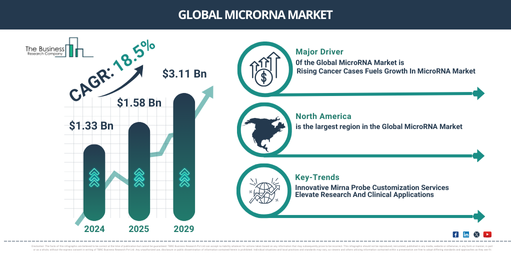
    The market size of microrna has seen significant expansion in the past few years. The market is projected to inflate from $1.33 billion in 2024 to $1.58 billion in 2025, demonstrating a compound annual growth rate (CAGR) of 18.9%. The substantial growth during the historical period is ascribed to factors such as the discovery of microRNAs, RNA interference (RNAi), genome sequencing projects, research in computational biology and bioinformatics, and studies on extracellular vehicles (EVs).

    In the coming years, there’s a forecast of swift expansion in the microrna market size, projected to hit $3.11 billion by 2029, boasting a compound annual growth rate (CAGR) of 18.5%. Key factors contributing to this growth during the forecasted period include clinical translation, regulatory systems and networks, microRNA-centered therapies, therapeutic potential, and discovery of biomarkers. Significant trends projected during the forecasted period include advancements in technology, bioinformatics and data interpretation, cross-species conservation, microbe interactions, and functional mechanisms.

    Download a free sample to assess the report’s scope and structure:

    https://www.thebusinessresearchcompany.com/sample.aspx?id=15608&type=smp

    What Are the Core Market Drivers Propelling Growth in the MicroRNA Industry?

    The rise in cancer instances is projected to fuel the expansion of the microRNA market. Characterized by uncontrolled growth and proliferation of cells, cancer often results in malignant tumors that can infiltrate nearby tissues and metastasize to far-off organs, leading to considerable health threats. An aging populace, lifestyle preferences such as smoking and a lackluster diet, environmental toxins, and better detection techniques resulting in earlier diagnoses, all fuel the increasing prevalence of cancer. Conventional cancer treatments are augmented with microRNA to enhance drug receptivity and boost results. Moreover, miRNAs function as diagnostic and prognostic biomarkers, aiding in demarcating cancer varieties, projecting disease development, and tracking treatment reactions. To illustrate, the US’s National Cancer Institute reported approximately 20 million new cases and 9.7 million cancer-related fatalities annually in 2022, as of May 2024. Forecasts also suggest around 15.3 million deaths and 29.9 million novel instances per annum by 2040. Consequently, the escalating count of cancer instances serves as a key driver for the microRNA market’s growth.

    What Segment Types Define the MicroRNA Market Structure?

    The microrna market covered in this report is segmented –

    1) By Products: Instruments, Consumables

    2) By Assay Type: Immunoassay, Next Generation Sequencing, miRNA Arrays, Polymerase Chain Reaction (PCR) Based Arrays

    3) By Application: Cancer, Infectious Diseases, Immunological Disorder, Cardiovascular Disease, Neurological Disease, Other Applications

    4) By End User: Academic And Research Institutes, Biopharmaceutical Companies, Diagnostic Centers, Clinical Research Organizations

    Subsegments:

    1) By Instruments: Qpcr Systems (Quantitative Pcr), Microarray Platforms, Next-Generation Sequencing (Ngs) Systems, Real-Time Pcr Instruments, Microrna Analyzers

    2) By Consumables: Microrna Kits ( Extraction Kits, Detection Kits), Pcr Reagents, Primers And Probes, Microarrays And Chips, Rna Sequencing Kits

    Request customized data on this market:

    https://www.thebusinessresearchcompany.com/customise?id=15608&type=smp

    Which Regions Are Driving the Next Phase of the MicroRNA Market Growth?

    North America was the largest region in the microRNA market in 2024. Asia-Pacific is expected to be the fastest-growing region in the forecast period. The regions covered in the MicroRNA market report are Asia-Pacific, Western Europe, Eastern Europe, North America, South America, Middle East, Africa.

    What Are the Key Market Trends in the MicroRNA Market Over the Coming Years?

    Top companies in the microRNA marketplace are majorly focusing their efforts on the development of sophisticated solutions like MiRNA probe personalization services. Such services are crucial to cater to the unique requirements of researchers and clinicians, to boost MiRNA detection accuracy and to support a broad spectrum of applications. The provision of MiRNA probe personalization services entails specialized services by biotech and molecular biology firms to create and deliver customized probes exclusive to certain microRNAs (miRNAs) for diverse research and clinical uses. For example, in September 2023, Taiwanese biotech firm Abnova Corporation rolled out enhanced services for personalizing miRNA probes. Alongside, the company also unveiled a fresh line of cataloged miRNA probes to fulfill the varied needs of academic, industrial, and research bodies undertaking miRNA study. These probes are instrumental in discovering and accurately pinpointing miRNAs, small non-coding RNA molecules critical for multiple biological functions. Abnova’s probe personalization services guarantee high specificity with minimal cross-reactivity, making them appropriate for examining limited miRNA content samples.

    View the full report here:

    https://www.thebusinessresearchcompany.com/report/microrna-global-market-report

    What Is the Definition of the MicroRNA Market?

    MicroRNAs are small, non-coding RNA molecules, typically about 20-22 nucleotides in length, used to regulate gene expression. They function by binding to complementary sequences on messenger RNA (mRNA) molecules, usually resulting in gene silencing through translational repression or target degradation.

    Purchase the full report and get a swift delivery:

    https://www.thebusinessresearchcompany.com/purchaseoptions.aspx?id=15608

    About The Business Research Company:

    With over 15000+ reports from 27 industries covering 60+ geographies, The Business Research Company has built a reputation for offering comprehensive, data-rich research and insights. Armed with 1,500,000 datasets, the optimistic contribution of in-depth secondary research, and unique insights from industry leaders, you can get the information you need to stay ahead in the game.

    Get in touch with us:

    The Business Research Company: https://www.thebusinessresearchcompany.com/

    Americas +1 3156230293

    Asia +44 2071930708

    Europe +44 2071930708

    Email us at info@tbrc.info

    Follow us on:

    LinkedIn: https://in.linkedin.com/company/the-business-research-company

    YouTube: https://www.youtube.com/channel/UC24_fI0rV8cR5DxlCpgmyFQ

    Global Market Model: https://www.thebusinessresearchcompany.com/global-market-model