Blog

  • Key Developments and Trends Steering the Vasomotor Menopausal Symptoms (VMS) Treatment Market Forward: Increasing The Emphasis On Drug Approvals To Provide Better Treatment Options

    Key Developments and Trends Steering the Vasomotor Menopausal Symptoms (VMS) Treatment Market Forward: Increasing The Emphasis On Drug Approvals To Provide Better Treatment Options

    Discover trends, market shifts, and competitive outlooks for the vasomotor menopausal symptoms (vms) treatment industry through 2025-2034 with The Business Research Company’s reliable data and in-depth research

    What Is the Estimated Market Size of the Vasomotor Menopausal Symptoms (VMS) Treatment Market In 2029?

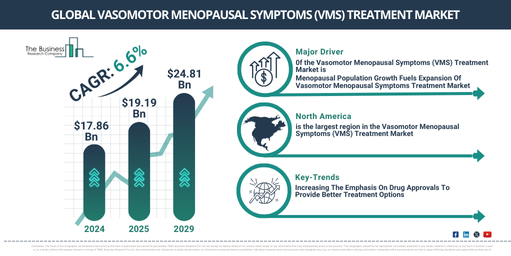
    The market for the treatment of vasomotor menopausal symptoms (VMS) has witnessed significant growth recently. The market size is projected to increase from $17.86 billion in 2024 to $19.19 billion in 2025, marking a compound annual growth rate (CAGR) of 7.5%. Factors such as hormone replacement therapy (HRT), awareness about menopause, advancements in pharmaceuticals, and consumer demand have contributed to this growth in the historical period.

    Over the coming years, the treatment market for vasomotor menopausal symptoms (VMS) is predicted to experience significant growth. Its value is expected to reach $24.81 billion in 2029, with a compound annual growth rate (CAGR) of 6.6%. This projected growth during the forecast period can be credited to factors such as personalized medication, innovations in non-hormonal treatments, dietary and nutritional intervention strategies, and the integration of telemedicine and digital health. The forecast period will also see prime market trends like natural and alternative treatments, botanical and herbal solutions, menopause support forums, and cognitive behavioral therapy (cbt).

    Download a free sample to assess the report’s scope and structure:

    https://www.thebusinessresearchcompany.com/sample.aspx?id=13051&type=smp

    How Are Key Drivers in the Industry Acting as Catalysts for the Growth of the Vasomotor Menopausal Symptoms (VMS) Treatment Market?

    The surge in the population of menopausal women is set to drive the vasomotor menopausal symptom’s treatment market’s expansion. Menopause, a biological process that signifies the end of a woman’s fertility period, is a critical period in every woman’s life, happening between the ages of 45 and 55, with most women experiencing it around the age of 51. The growth in the number of women at this stage, needing management of symptoms like hot flashes and vaginal dryness, is a significant factor pushing the vasomotor menopausal symptoms (VMS) treatment market’s growth. As estimated by the US-based Cuyuna Regional Medical Center in November 2022, by 2025, 1.1 billion women globally are expected to be in menopause, owing to increased life expectancy. They also projected a 1.6% annual increase in the menopausal population until 2060. Hence, the rising population of menopausal women is spurring the growth of the vasomotor menopausal symptom’s treatment market. Furthermore, governmental health initiatives focused on menopausal women are anticipated to further the growth of the vasomotor menopausal symptom’s treatment market. These initiatives consist of funding for studies on menopausal transition, disease prevention, and research related to pharmacological, clinical, and epidemiological aspects. They form part of a comprehensive strategy focusing on numerous women’s health issues. To illustrate, the January 2023 report from the Government of New South Wales in Australia mentioned a government dedication of $40.3 million from 2022-2023 to 2025-2026 to initiate up to 16 new programs for women suffering from severe menopausal symptoms. Consequently, these governmental health initiatives for menopausal women are steering the growth of the vasomotor menopausal symptoms’ treatment market.

    Which Segments in the Vasomotor Menopausal Symptoms (VMS) Treatment Offer the Most Growth?

    The vasomotor menopausal symptoms (VMS) treatment market covered in this report is segmented –

    1) By Drug Class: Antidepressants, Fluoxetine, Paroxetine, Sertraline, Hormone Therapy, Anticonvulsant, Phenytoin, Phenobarbital, Other Drug Classes

    2) By Distribution Channel: Hospital Pharmacy, Retail Pharmacy, Online Pharmacy, Other Distribution Channels

    3) By End-User: Hospitals, Specialty Clinics, Homecare, Other End-Users

    Subsegments:

    1) By Antidepressants: SSRIs (Selective Serotonin Reuptake Inhibitors), SNRIs (Serotonin-Norepinephrine Reuptake Inhibitors), TCAs (Tricyclic Antidepressants), MAOIs (Monoamine Oxidase Inhibitors), Atypical Antidepressants

    2) By Fluoxetine: Depression, Obsessive-Compulsive Disorder (OCD), Panic Disorder, Generalized Anxiety Disorder (GAD), Post-Traumatic Stress Disorder (PTSD), Social Anxiety Disorder, Premenstrual Dysphoric Disorder (PMDD)

    3) By Paroxetine: Depression, Obsessive-Compulsive Disorder (OCD), Panic Disorder, Generalized Anxiety Disorder (GAD), Post-Traumatic Stress Disorder (PTSD), Social Anxiety Disorder, Premenstrual Dysphoric Disorder (PMDD)

    4) Sertraline: Depression, Obsessive-Compulsive Disorder (OCD), Panic Disorder, Post-Traumatic Stress Disorder (PTSD), Social Anxiety Disorder, Premenstrual Dysphoric Disorder (PMDD)

    5) Hormone Therapy: Estrogen Replacement Therapy (ERT), Progestin Therapy, Combined Hormonal Therapy (CHT), Testosterone Replacement Therapy (TRT)

    6) Anticonvulsant: Hydantoins, Barbiturates, Benzodiazepines, Valproates, Succinimides, Carboxylic Acid Derivatives

    7) Phenytoin: Hydantoins

    8) Phenobarbital: Barbiturates

    9) Other Drug Classes: Antibiotics, Analgesics, Antidiabetics, Antihypertensives, Anticoagulants, Immunosuppressants, Antipsychotics, Antihistamines

    Request customized data on this market:

    https://www.thebusinessresearchcompany.com/customise?id=13051&type=smp

    What Are the Fastest-Growing Geographies in the Vasomotor Menopausal Symptoms (VMS) Treatment Market?

    North America was the largest region in the vasomotor menopausal symptoms (VMS) treatment market in 2024. The regions covered in vasomotor menopausal symptoms (VMS) treatment market report are Asia-Pacific, Western Europe, Eastern Europe, North America, South America, Middle East and Africa.

    What Are the Current Market Growth and Trends in the Vasomotor Menopausal Symptoms (VMS) Treatment Industry?

    Major firms in the vasomotor menopausal symptoms treatment market, such as Veozah, are advancing their products and securing approvals to deliver fresh treatment solutions and address patients’ unmet medical requirements. The licensing of novel menopause drugs offers enhanced effectiveness and safety compared to currently available treatments. For example, in May 2023, the FDA, a federal agency based in the US, granted approval to Japan’s Astellas Pharma Inc for their product, Veozah (fezolinetant) 45 mg to be taken once daily. This drug is used for treating mild to severe menopausal vasomotor symptoms (VMS), making it the first nonhormonal neurokinin 3 (NK3) receptor antagonist approved for this uses. It’s a hormone-free treatment that interferes with a brain pathway that manages these symptoms. It offers an additional treatment option for women experiencing these symptoms, especially those who cannot or choose not to undergo hormone therapy. The approval of Veozah underlines its promising future as a new drug for managing menopausal symptoms.

    View the full report here:

    https://www.thebusinessresearchcompany.com/report/vasomotor-menopausal-symptoms-vms-treatment-global-market-report

    What Are the Key Elements That Define the Vasomotor Menopausal Symptoms (VMS) Treatment Market?

    Vasomotor menopausal symptoms (VMS) treatment refers to the medical interventions and therapies used to alleviate or manage the various symptoms associated with menopause. Women experience the symptoms of VMS during menopause, which include hot flashes and night sweats. The treatment works by balancing hormone levels in the body and altering neurotransmitters in the brain.

    Purchase the full report and get a swift delivery:

    https://www.thebusinessresearchcompany.com/purchaseoptions.aspx?id=13051

    About The Business Research Company:

    With over 15000+ reports from 27 industries covering 60+ geographies, The Business Research Company has built a reputation for offering comprehensive, data-rich research and insights. Armed with 1,500,000 datasets, the optimistic contribution of in-depth secondary research, and unique insights from industry leaders, you can get the information you need to stay ahead in the game.

    Get in touch with us:

    The Business Research Company: https://www.thebusinessresearchcompany.com/

    Americas +1 3156230293

    Asia +44 2071930708

    Europe +44 2071930708

    Email us at info@tbrc.info

    Follow us on:

    LinkedIn: https://in.linkedin.com/company/the-business-research-company

    YouTube: https://www.youtube.com/channel/UC24_fI0rV8cR5DxlCpgmyFQ

    Global Market Model: https://www.thebusinessresearchcompany.com/global-market-model
  • Market Trends Influencing Strategic Decisions in the Vascular Closure Devices Industry:  Advancements In Vascular Closure Devices

    Market Trends Influencing Strategic Decisions in the Vascular Closure Devices Industry: Advancements In Vascular Closure Devices

    Discover trends, market shifts, and competitive outlooks for the vascular closure devices industry through 2025-2034 with The Business Research Company’s reliable data and in-depth research

    How Fast Is The Vascular Closure Devices Market Expected to Grow Between 2025 And 2029?

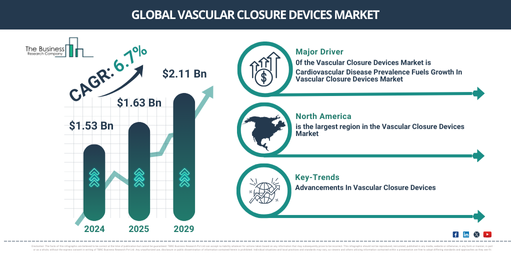
    The market for vascular closure devices has seen a robust increase in size over the previous years. The growth is projected to rise from $1.53 billion in 2024 to $1.63 billion in 2025, representing a compound annual growth rate (CAGR) of 6.4%. This substantial growth during the historical period can be tied to an increase in minimally invasive procedures, the aging demographic, patient inclination towards quicker recovery periods, a rise in catheterization lab processes, and a heightened focus on outpatient care.

    The market for vascular closure devices is projected to undergo significant expansion in the upcoming years, surging to a value of $2.11 billion by 2029 with a compound annual growth rate (CAGR) of 6.7%. The anticipated expansion during the forecast period can be credited to several factors such as the expansion of ambulatory surgery centers, movement towards same-day discharge, focus on patient-centric methods, the drive to contain healthcare costs, and a rising occurrence of cardiovascular diseases. Key trends expected to emerge during this period encompass the uptake of percutaneous coronary intervention, worldwide cooperation in medical research, remote patient care, synergy with imaging technologies, and technological advancements in device design.

    Download a free sample to assess the report’s scope and structure:

    https://www.thebusinessresearchcompany.com/sample.aspx?id=13201&type=smp

    What Are the Major Market Drivers Behind the Rising Adoption of Vascular Closure Devices Market?

    The rise in cardiovascular diseases is forecasted to propel the vascular closure devices market’s expansion. Cardiovascular disease, which affects the heart or blood vessels or disrupts blood flow to the heart, is often treated with vascular closure devices. These devices, which can quickly seal off the femoral artery and reduce the risk of post-surgery bleeding, are an alternative to traditional mechanical compression. For example, the Singapore Immigration and Checkpoints Authority reported an increase in deaths from heart and hypertensive diseases from 6,238 in 2021 to 6,884 in 2022. Thus, the vascular closure devices market growth is expected to be fueled by the increasing prevalence of cardiovascular diseases. Vascular Closure Devices Market Driver: The Rise In Obesity Could Fuel The Growth Of The Vascular Closure Devices Market

    Which Key Market Segments Comprise the Vascular Closure Devices Market and Drive Its Revenue Growth?

    The vascular closure devices market covered in this report is segmented –

    1) By Type: Passive Approximators, Active Approximators, External Hemostatic Devices

    2) By Access: Femoral Access, Radial Access

    3) By End User: Acute Care Facilities, Hospitals, Clinics, Other End Users

    Subsegments:

    1) By Passive Approximators: Suture-Based Devices, Fibrin Sealants

    2) By Active Approximators: Mechanical Devices, Expanding Devices

    3) By External Hemostatic Devices: Compression Bandages, Adjustable Hemostatic Devices

    Request customized data on this market:

    https://www.thebusinessresearchcompany.com/customise?id=13201&type=smp

    Which Areas Are Leading Regions in the Vascular Closure Devices Market Expansion Across the Globe?

    North America was the largest region in the vascular closure devices market in 2024. Asia Pacific is expected to be the fastest-growing region in the forecast period. The regions covered in the vascular closure devices market report are Asia-Pacific, Western Europe, Eastern Europe, North America, South America, Middle East, Africa

    What Are the Strategic Trends Steering theVascular Closure Devices Market Direction?

    Leading firms in the sector of vascular closure devices are concentrating on introducing innovations such as the unique collapsible disc technology, intending to augment patient results, cut down recovery durations, and boost the total effectiveness and simplicity of vascular procedures. This inventive collapsible disc technology incorporates a style enabling a disc to be collapsed and expanded effortlessly for optimal storage and transport. This technology provides increased convenience and adaptability in multiple applications like sporting goods, outdoor equipment, or packaging solutions. For example, Haemonetics Corporation, a medical technology firm based in the US, launched VASCADE MVP XL in June 2024. VASCADE MVP XL, a mid-bore vascular closure product, incorporates 58% additional collagen and a bigger disc than its predecessor, the VASCADE MVP system. The purpose of this design is to offer a more sturdy closure solution, enabling quicker recuperation and enhanced patient results.

    View the full report here:

    https://www.thebusinessresearchcompany.com/report/vascular-closure-devices-global-market-report

    How Is the Vascular Closure Devices Market Conceptually Defined?

    A vascular closure device is a medical device that seals the entry point in an artery after a catheterization procedure. These devices are designed to accelerate the natural healing process and minimize the risk of bleeding, hematoma formation, or other complications at the access site.

    Purchase the full report and get a swift delivery:

    https://www.thebusinessresearchcompany.com/purchaseoptions.aspx?id=13201

    About The Business Research Company:

    With over 15000+ reports from 27 industries covering 60+ geographies, The Business Research Company has built a reputation for offering comprehensive, data-rich research and insights. Armed with 1,500,000 datasets, the optimistic contribution of in-depth secondary research, and unique insights from industry leaders, you can get the information you need to stay ahead in the game.

    Get in touch with us:

    The Business Research Company: https://www.thebusinessresearchcompany.com/

    Americas +1 3156230293

    Asia +44 2071930708

    Europe +44 2071930708

    Email us at info@tbrc.info

    Follow us on:

    LinkedIn: https://in.linkedin.com/company/the-business-research-company

    YouTube: https://www.youtube.com/channel/UC24_fI0rV8cR5DxlCpgmyFQ

    Global Market Model: https://www.thebusinessresearchcompany.com/global-market-model
  • Top Trends Driving Innovation and Change in the Vascular Access Devices Market: Innovative Vascular Access Devices Revolutionize Care with TipTracker Technology

    Top Trends Driving Innovation and Change in the Vascular Access Devices Market: Innovative Vascular Access Devices Revolutionize Care with TipTracker Technology

    Discover trends, market shifts, and competitive outlooks for the vascular access devices industry through 2025-2034 with The Business Research Company’s reliable data and in-depth research

    What Are the Key Projections for the CAGR of the Vascular Access Devices Market Size From 2025 to 2034?

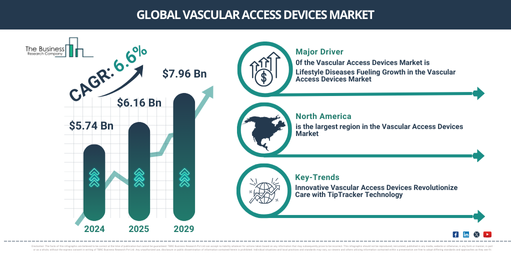
    The market size of vascular access devices has seen robust growth in the past few years. The market, which was valued at $5.74 billion in 2024, is predicted to rise to $6.16 billion in 2025, indicating a compound annual growth rate (CAGR) of 7.2%. The substantial growth experienced in the historic period is a result of increasing chronic diseases, an aging population, the expansion of healthcare infrastructure, a climb in surgical procedures, and advances in awareness and training.

    The market for vascular access devices is projected to witness robust expansion in the coming years, expected to reach a valuation of $7.96 billion by 2029 with a compound annual growth rate (CAGR) of 6.6%. The anticipated growth during the forecast period can be ascribed to advancements in the field of material science, the increasing prevalence of ambulatory care, healthcare globalization, telemedicine and remote healthcare, with a concentrated effort on controlling infections. Key trends forecasted for this period include a heightened focus on preventing infections and adopting antimicrobial technologies, a rising demand for specialized vascular access devices, increased emphasis on training and education for healthcare professionals, and combined initiatives for new product development and market proliferation.

    Download a free sample to assess the report’s scope and structure:

    https://www.thebusinessresearchcompany.com/sample.aspx?id=13554&type=smp

    What External and Internal Drivers Are Contributing to the Growth of the Vascular Access Devices Market?

    The vascular access devices market’s growth is anticipated to be fueled by the increasing incidence of lifestyle illnesses. These non-communicable or chronic illnesses, also known as lifestyle diseases, are usually the result of unhealthy behaviors and lifestyle choices, not infectious pathogens. Continuous treatment and care are often required for these diseases, making vascular access devices crucial for delivering medications and therapies safely and effectively. For example, the World Health Organization, based in Switzerland, reported in September 2022 that 41 million deaths, or 74% of total deaths, were due to non-communicable or chronic diseases. These included 17.9 million from cardiovascular diseases, 9.3 million from cancer, 4.1 million from chronic respiratory diseases, and 2.0 million from diabetes. Consequently, the rising incidence of lifestyle illnesses is propelling the growth of the vascular access devices market.

    What Segment Types Define the Vascular Access Devices Market Structure?

    The vascular access devices market covered in this report is segmented –

    1) By Device Type: Central Vascular Access Devices, Peripheral Vascular Access Devices

    2) By Application: Drug Administration, Fluid And Nutrition Administration, Blood Transfusion, Diagnostics And Testing

    3) By End User: Hospitals, Clinics, Ambulatory Care Centers, Other End Users

    Subsegments:

    1) By Central Vascular Access Devices: Central Venous Catheters (CVC), Peripherally Inserted Central Catheters (PICC), Implantable Ports

    2) By Peripheral Vascular Access Devices: Peripheral IV Catheters, Midline Catheters, Butterfly Needles

    Request customized data on this market:

    https://www.thebusinessresearchcompany.com/customise?id=13554&type=smp

    Which Geographic Areas Hold the Strongest Growth Potential in the Vascular Access Devices Market?

    North America was the largest region in the vascular access devices market in 2024. Asia-Pacific is expected to be the fastest-growing region in the forecast period. The regions covered in the vascular access devices market report are Asia-Pacific, Western Europe, Eastern Europe, North America, South America, Middle East, Africa.

    What Long-Term Trends Are Transforming the Competitive Landscape of the Vascular Access Devices Market?

    Key players in the vascular access devices market are shifting their focus towards the creation of more efficient devices using innovative technologies like TipTracker to maintain their competitive advantage. TipTracker Technology offers a real-time visual navigation system that traces the catheter pathway on a color display and assists in verifying the final tip position. For example, in May 2023, Teleflex Incorporated, a medical device manufacturer based in the US, introduced two new devices, VPS Rhythm and DLX Device, which are equipped with TipTracker technology. This rules out the necessity for confirmatory X-rays and simplifies the peripherally inserted central catheter (PICC) insertion procedure. It also guarantees better PICC access to the superior vena cava (SVC) for a successful insertion. The introduction of VPS Rhythm and DLX Device enhances patient care, offers more treatment alternatives, increases efficiency, and promotes medical advancements.

    View the full report here:

    https://www.thebusinessresearchcompany.com/report/vascular-access-devices-global-market-report

    What Is the Definition of the Vascular Access Devices Market?

    Vascular access devices (VADs) are medical devices that provide access to the bloodstream for a number of tasks, including giving drugs, administering fluids or blood products, or performing diagnostic tests. These devices are used to avoid the need for repeated needle punctures in patients, making it more convenient for both healthcare providers and patients.

    Purchase the full report and get a swift delivery:

    https://www.thebusinessresearchcompany.com/purchaseoptions.aspx?id=13554

    About The Business Research Company:

    With over 15000+ reports from 27 industries covering 60+ geographies, The Business Research Company has built a reputation for offering comprehensive, data-rich research and insights. Armed with 1,500,000 datasets, the optimistic contribution of in-depth secondary research, and unique insights from industry leaders, you can get the information you need to stay ahead in the game.

    Get in touch with us:

    The Business Research Company: https://www.thebusinessresearchcompany.com/

    Americas +1 3156230293

    Asia +44 2071930708

    Europe +44 2071930708

    Email us at info@tbrc.info

    Follow us on:

    LinkedIn: https://in.linkedin.com/company/the-business-research-company

    YouTube: https://www.youtube.com/channel/UC24_fI0rV8cR5DxlCpgmyFQ

    Global Market Model: https://www.thebusinessresearchcompany.com/global-market-model
  • Uterine Fibroid Embolization DeviceMarket Overview 2025–2034: CAGR Trends, Long-Term Growth Paths, and Business Implications

    Uterine Fibroid Embolization DeviceMarket Overview 2025–2034: CAGR Trends, Long-Term Growth Paths, and Business Implications

    Discover trends, market shifts, and competitive outlooks for the uterine fibroid embolization device industry through 2025-2034 with The Business Research Company’s reliable data and in-depth research

    How Has the Uterine Fibroid Embolization Device Market Growth Performance Trended Historically, And What Lies Ahead?

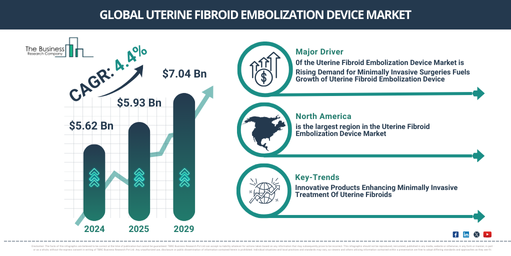
    The market size for uterine fibroid embolization devices has shown robust growth in the past few years. It is projected to increase from $5.62 billion in 2024 to $5.93 billion in 2025, exhibiting a compound annual growth rate (CAGR) of 5.6%. The substantial market growth in the prior period can be credited to the surge in the occurrence of uterine fibroids, the preference for non-invasive alternatives, initiatives to raise awareness and education, focus on the health of women, transition to outpatient procedures, and training programs for physicians.

    The market for uterine fibroid embolization devices is anticipated to experience consistent expansion in the approaching years, culminating in a value of $7.04 billion by 2029, reflecting a compound annual growth rate (CAGR) of 4.4%. This projected growth can be linked to the rising public awareness about non-invasive treatments, the global proliferation of health care services, increased female health initiatives, integration with multi-disciplinary care, and outpatient service expansion. The period under forecast is likely to be defined by trends such as the heightened implementation of minimally invasive procedures, developments in embolic agents, customized treatment strategies, emphasis on outpatient ufe procedures, the incorporation of imaging technologies, and studies pertaining to bioresorbable embolic agents.

    Download a free sample to assess the report’s scope and structure:

    https://www.thebusinessresearchcompany.com/sample.aspx?id=13551&type=smp

    What Are the Primary Drivers Supporting the Market Growth of the Uterine Fibroid Embolization Device Market?

    The surge in minimally invasive surgeries is predicted to bolster the uterine fibroid embolization device market. These type of surgeries involve the use of the natural body openings or small incisions to reach and treat the internal structures, tissues, or organs with the aim to reduce the trauma inflicted on the patient’s body. Uterine fibroid embolization devices are key instruments empowering these minimally invasive surgeries to efficiently cure uterine fibroids. Created with meticulous precision, these devices minimize invasiveness by employing small incisions and minimize disruption to nearby tissues. They help address the growing need for less invasive medical procedures, thus enhancing patient outcomes. For example, The Aesthetic Society, a US-based body dedicated to plastic surgery and cosmetic medicine, stated in August 2023 that aesthetic procedures worth more than $11.8 billion were undertaken by Americans, marking a rise of 2% from the preceding year. As such, the mounting demand for minimally invasive surgeries is fostering the expansion of the uterine fibroid embolization device market. The uterine fibroid embolization devices market is expected to be driven by a growing aging population. The term aging population refers to the ratio of individuals aged 65 and over within a population group. Uterine fibroid embolization devices assist in tackling symptomatic fibroids among the elderly, offering a less invasive solution to surgery, and mitigating symptoms such as excessive bleeding and pelvic discomfort. For example, the Switzerland-based intergovernmental body, World Health Organization, reported in October 2022 that the population segment aged 60 and above had soared to 1.4 billion in 2022. It is predicted that by 2050, the global population of individuals aged 60 and above will double to 2.1 billion. Hence, the swelling aging population is leading to the expansion of the uterine fibroid embolization devices market.

    Which Primary Segments of the Uterine Fibroid Embolization Device Market Are Driving Growth and Industry Transformations?

    The uterine fibroid embolization device market covered in this report is segmented –

    1) By Technology: Surgical Techniques, Laparoscopic Techniques, Ablation Techniques, Embolization Techniques

    2) By Mode Of Treatment: Invasive Treatment, Minimally Invasive Treatment, Non-Invasive Treatment

    3) By End User: Hospitals, Clinics, Ambulatory Surgical Center

    Subsegments:

    1) By Surgical Techniques: Open Surgery, Myomectomy

    2) By Laparoscopic Techniques: Laparoscopic Myomectomy, Laparoscopic Hysterectomy

    3) By Ablation Techniques: Radiofrequency Ablation, Microwave Ablation, Cryoablation

    4) By Embolization Techniques: Transcatheter Arterial Embolization (TAE), Uterine Artery Embolization (UAE)

    Request customized data on this market:

    https://www.thebusinessresearchcompany.com/customise?id=13551&type=smp

    Which Regions Are Key Players in the Growth of the Uterine Fibroid Embolization Device Market?

    North America was the largest region in the uterine fibroid embolization device market in 2024. The regions covered in the uterine fibroid embolization device market report are Asia-Pacific, Western Europe, Eastern Europe, North America, South America, Middle East, Africa.

    What Are the Most Significant Market Trends in the Uterine Fibroid Embolization Device Market?

    In the uterine fibroid embolization device market, leading corporations such as Medtronic Private Limited are innovating and crafting products like the TruClear system. They aim to fulfil the increasing demand for less intrusive solutions for uterine fibroids. The TruClear technology enhances the security and effectiveness of uterine fibroid treatments. The system operates mechanically in its function as a hysteroscopic tissue remover for intrauterine abnormalities (IUA). This flexible catheter makes its way into the uterus via the cervix. In November 2022, the India-based industrial medical equipment manufacturer, Medtronic Private Limited, introduced the TruClear system. This system provides a reliable and efficient treatment for IUA. Furthermore, the compact catheter, equipped with a circulating nitinol wire loop, consistent inflow and outflow, incorporated suction, and high-definition imaging, has improved the accuracy and safety of treating uterine fibroids.

    View the full report here:

    https://www.thebusinessresearchcompany.com/report/uterine-fibroid-embolization-device-global-market-report

    What Parameters Are Used to Define the Uterine Fibroid Embolization Device Market?

    A uterine fibroid embolization device is a medical device that is used to treat noncancerous tumors using a minimally invasive process. Uterine fibroids are noncancerous growths of the uterus. This device restricts blood supply to uterine fibroids, causing them to shrink and eventually disappear.

    Purchase the full report and get a swift delivery:

    https://www.thebusinessresearchcompany.com/purchaseoptions.aspx?id=13551

    About The Business Research Company:

    With over 15000+ reports from 27 industries covering 60+ geographies, The Business Research Company has built a reputation for offering comprehensive, data-rich research and insights. Armed with 1,500,000 datasets, the optimistic contribution of in-depth secondary research, and unique insights from industry leaders, you can get the information you need to stay ahead in the game.

    Get in touch with us:

    The Business Research Company: https://www.thebusinessresearchcompany.com/

    Americas +1 3156230293

    Asia +44 2071930708

    Europe +44 2071930708

    Email us at info@tbrc.info

    Follow us on:

    LinkedIn: https://in.linkedin.com/company/the-business-research-company

    YouTube: https://www.youtube.com/channel/UC24_fI0rV8cR5DxlCpgmyFQ

    Global Market Model: https://www.thebusinessresearchcompany.com/global-market-model
  • Strong CAGR to Propel in the Urothelial Carcinoma Treatment Market and Beyond upto $6.22 Billion by 2029

    Strong CAGR to Propel in the Urothelial Carcinoma Treatment Market and Beyond upto $6.22 Billion by 2029

    Discover trends, market shifts, and competitive outlooks for the urothelial carcinoma treatment industry through 2025-2034 with The Business Research Company’s reliable data and in-depth research

    How Has The Urothelial Carcinoma Treatment Market Growth Evolved From 2024 To 2025, And What’s Ahead?

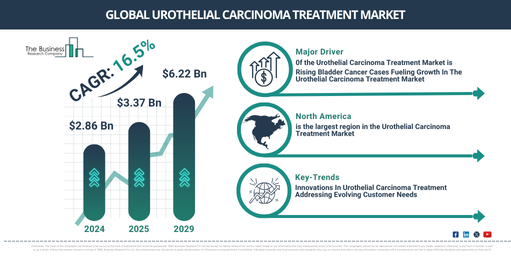
    The market for urothelial carcinoma treatment has experienced swift expansion recently. The market, valued at $2.86 billion in 2024, is projected to increase to $3.37 billion in 2025, indicating a compound annual growth rate (CAGR) of 18.0%. This notable growth during the historic period is due to several factors, including the surge in urothelial carcinoma instances, heightened awareness of this type of cancer, amplified accessibility to healthcare services, and escalating disposable income.

    The market for treatment of urothelial carcinoma is anticipated to experience a substantial expansion in the forthcoming years. It’s predicted to reach $6.22 billion by 2029, with a compound annual growth rate (CAGR) of 16.5%. Factors contributing to this growth during the projected period include an aging population, increasing demand for personalized medication, elevated governmental assistance for research and treatment of urothelial carcinoma, and robust investments in the treatment of urothelial carcinoma. Trends expected to dominate the forecast period involve therapies driven by biomarkers, pre-surgical (neoadjuvant) and post-surgical (adjuvant) approaches, liquid biopsies, minimally invasive procedures, development of chemotherapy, and the adoption of digital health technologies.

    Download a free sample to assess the report’s scope and structure:

    https://www.thebusinessresearchcompany.com/sample.aspx?id=12947&type=smp

    Which Primay Drivers Are Accelerating Growth in the Urothelial Carcinoma Treatment Market?

    The projected rise in bladder cancer is anticipated to bolster the urothelial carcinoma treatment market’s expansion. Bladder cancer, a common form of cancer impacting the cells of the urinary bladder, often necessitates an array of treatment possibilities that patients and healthcare providers seek out. Research into bladder cancer offers crucial insights into urothelial carcinoma and promotes interdisciplinary therapeutic strategies for enhanced patient outcomes. As reported by the US-based National Library of Medicine – a medical library managed by the US federal government – in September 2023, the forecasted annual incidence of new bladder cancer cases is set to climb to 991,000 by 2040. This signifies a 72.8% surge compared to 2020 figures. Annual fatalities owing to bladder cancer are also anticipated to touch 397,000, showing an uptick of 86.6%. Ergo, this increase in bladder cancer will fuel the urothelial carcinoma treatment market. Boosted Demand for Chemotherapy Propelling Urothelial Carcinoma Treatment Market Growth

    Which Primary Segments of the Urothelial Carcinoma Treatment Market Are Driving Growth and Industry Transformations?

    The urothelial carcinoma treatment market covered in this report is segmented –

    1) By Type: Non-Invasive Urothelial Carcinoma Treatment, Invasive Urothelial Carcinoma Treatment

    2) By Treatment: Immunotherapy, Radiotherapy, Chemotherapy

    3) By Cancer Type: Bladder Cancer, Urethral Cancer, Ureteric And Renal Pelvic Cancer

    4) By End-Users: Hospitals, Homecare, Specialty Centers, Other End-Users

    Subsegments:

    1) By Non-Invasive Urothelial Carcinoma Treatment: Intravesical Therapy, Immunotherapy, Chemotherapy

    2) By Invasive Urothelial Carcinoma Treatment: Radical Cystectomy, Chemotherapy, Radiation Therapy, Targeted Therapy

    Request customized data on this market:

    https://www.thebusinessresearchcompany.com/customise?id=12947&type=smp

    Which Regions Are Key Players in the Growth of the Urothelial Carcinoma Treatment Market?

    North America was the largest region in the urothelial carcinoma treatment market in 2024. The regions covered in urothelial carcinoma treatment market report are Asia-Pacific, Western Europe, Eastern Europe, North America, South America, Middle East and Africa.

    Which Technological Trends Are Reshaping the Urothelial Carcinoma Treatment Industry Dynamics?

    Significant players in the urothelial carcinoma treatment market are focusing on introducing groundbreaking products to heighten their competitive prowess and cater to the changing demands of consumers. For example, Nonacus Limited, a UK-based healthcare product manufacturer, launched a revolutionary non-invasive bladder cancer detection test- GALEAS Bladder, in March 2023. GALEAS Bladder represents a major leap in bladder cancer diagnosis, offering patients a quick, accurate, and efficient molecular biomarker-based triage solution, thereby simplifying the diagnostic process and minimizing the need for invasive procedures such as cystoscopies. The product, developed together with the University of Birmingham, UK, has been thoroughly tested on over 600 patient samples from three clinical cohorts in the UK. This meticulous evaluation has underscored the excellent performance of GALEAS Bladder, which exhibits an impressive diagnostic accuracy (sensitivity above 90%, specificity over 85%) across different bladder cancer grades and stages.

    View the full report here:

    https://www.thebusinessresearchcompany.com/report/urothelial-carcinoma-treatment-global-market-report

    What Parameters Are Used to Define the Urothelial Carcinoma Treatment Market?

    Urothelial carcinoma is a type of cancer that originates in the urothelial cells lining the inside of the urinary system, including the bladder, ureters (tubes connecting the kidneys to the bladder) and renal pelvis (the part of the kidney that collects urine). Urothelial carcinoma treatments, such as surgical interventions and intravenous therapies, control urothelial carcinoma disease, improve patient outcomes and enhance quality of life.

    Purchase the full report and get a swift delivery:

    https://www.thebusinessresearchcompany.com/purchaseoptions.aspx?id=12947

    About The Business Research Company:

    With over 15000+ reports from 27 industries covering 60+ geographies, The Business Research Company has built a reputation for offering comprehensive, data-rich research and insights. Armed with 1,500,000 datasets, the optimistic contribution of in-depth secondary research, and unique insights from industry leaders, you can get the information you need to stay ahead in the game.

    Get in touch with us:

    The Business Research Company: https://www.thebusinessresearchcompany.com/

    Americas +1 3156230293

    Asia +44 2071930708

    Europe +44 2071930708

    Email us at info@tbrc.info

    Follow us on:

    LinkedIn: https://in.linkedin.com/company/the-business-research-company

    YouTube: https://www.youtube.com/channel/UC24_fI0rV8cR5DxlCpgmyFQ

    Global Market Model: https://www.thebusinessresearchcompany.com/global-market-model
  • Urology Surgical Instruments Market Valuation Expected To Reach $20.56 Billion By 2029, Growing At A Rate Of 9.6%

    Urology Surgical Instruments Market Valuation Expected To Reach $20.56 Billion By 2029, Growing At A Rate Of 9.6%

    Discover trends, market shifts, and competitive outlooks for the urology surgical instruments industry through 2025-2034 with The Business Research Company’s reliable data and in-depth research

    What is the Projected CAGR for the Urology Surgical Instruments Market Size from 2025 to 2034?

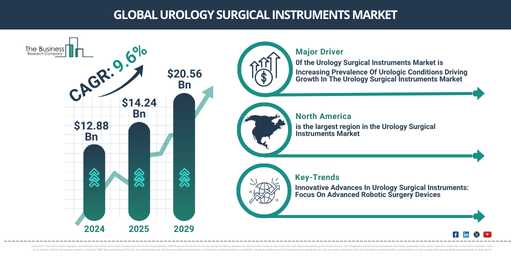
    The market size for urology surgical instruments has significantly increased in the past few years. It is projected to expand from $12.88 billion in 2024 to $14.24 billion in 2025, with a compound annual growth rate (CAGR) of 10.6%. The historic period’s growth can be linked to the rising prevalence of urologic disorders, an escalating aging population, the enlargement of healthcare infrastructure, and enhanced awareness and screenings.

    Strong expansion is predicted in the coming years for the market size of urology surgical instruments, with projections showing an increase to $20.56 billion in 2029, achieving a compound annual growth rate (CAGR) of 9.6%. Factors such as the use of minimally invasive procedures, increased spending on healthcare, advancements in telemedicine, remote surgeries, and personalized medicine in urology are anticipated to drive the growth during the forecast period. Furthermore, significant trends likely to emerge within the forecast period entail the application of 3D printing in producing surgical instruments, technological progressions, the incorporation of artificial intelligence in surgical methods, and the push for sustainable instrument production.

    Download a free sample to assess the report’s scope and structure:

    https://www.thebusinessresearchcompany.com/sample.aspx?id=13015&type=smp

    Which Factors and External Forces Are Driving Demand in the Urology Surgical Instruments Market?

    The urology surgical instruments market is anticipated to grow due to an increase in the number of urologic conditions. Such conditions, which affect either the reproductive or urinary tract systems in men and women, include common diseases such as kidney stones, urinary tract infections, bladder control, and prostate problems. Urologists often employ urology surgical instruments to properly diagnose and treat these conditions. The Cancer Facts and Figures 2023 report, published by the American Cancer Society, revealed that in the US, approximately 82,290 new bladder cancer cases were reported, leading to 16,710 deaths the same year. Hence, the increasing occurrence of urologic conditions is responsible for fueling the demand in the urology surgical instruments market.

    Urology Surgical Instruments Market Driver: Acceleration of Market Growth Due to Increased Healthcare Expenditure


    Which Segments in the Urology Surgical Instruments Offer the Most Growth?

    The urology surgical instruments market covered in this report is segmented –

    1) By Product Type: Urology Endoscopes, Endovision Systems, Peripheral Systems, Urology Consumables And Accessories, Other Product Types

    2) By Disease Type: Kidney Diseases, Pelvic Organ Prolapse, Urological Cancer And BPH, Other Diseases

    3) By End User: Hospitals And Clinics, Dialysis Centers, Other End Users

    Subsegments:

    1) By Urology Endoscopes: Rigid Endoscopes, Flexible Endoscopes

    2) By Endovision Systems: Imaging Systems, Visualization Systems

    3) By Peripheral Systems: Urology Surgical Instruments, Urology Diagnostic Instruments

    4) By Urology Consumables and Accessories: Biopsy Forceps, Scissors, Electrodes

    5) By Other Product Types: Catheters, Guidewires, Other Specialized Instruments

    Request customized data on this market:

    https://www.thebusinessresearchcompany.com/customise?id=13015&type=smp

    What Are the Fastest-Growing Geographies in the Urology Surgical Instruments Market?

    North America was the largest region in the urology surgical instruments market in 2024. Asia Pacific is expected to be the fastest-growing region in the forecast period. The regions covered in urology surgical instruments market report are Asia-Pacific, Western Europe, Eastern Europe, North America, South America, Middle East and Africa.

    Which Cutting-Edge Market Trends Are Expected to Drive theUrology Surgical Instruments Market’s Growth?

    Primary businesses operating in the urology surgical instrument market are concentrating on producing new creative products, like advanced robotic surgical devices, to bolster their market presence. These advanced surgical devices are specialized and inventive tools utilized for minimally invasive operations, surgical robotics, and other cutting-edge surgical methods. For example, University Hospital, a principal academic medical center based in the US, launched a single-port robotic surgery for treating urological cancer and additional urological conditions in March 2023. This single-port robotic surgical method for urologic cancer is a progression of laparoscopic surgery, which is traditionally conducted through small incisions in the abdomen. The single-port approach innovates this process by permitting surgical tools to be inserted through a single two-inch incision. The state-of-the-art robotic technology from Intuitive facilitates the entry of surgical instruments into the body simultaneously before they are maneuvered to their designated locations within the abdominal cavity.

    View the full report here:

    https://www.thebusinessresearchcompany.com/report/urology-surgical-instruments-global-market-report

    What Are the Key Elements That Define the Urology Surgical Instruments Market?

    Urology surgical instruments refer to specialized equipment that urologists use to identify and treat diseases of the male reproductive system and urinary tract. These instruments are designed to be precise, durable and easy to use during the procedures.

    Purchase the full report and get a swift delivery:

    https://www.thebusinessresearchcompany.com/purchaseoptions.aspx?id=13015

    About The Business Research Company:

    With over 15000+ reports from 27 industries covering 60+ geographies, The Business Research Company has built a reputation for offering comprehensive, data-rich research and insights. Armed with 1,500,000 datasets, the optimistic contribution of in-depth secondary research, and unique insights from industry leaders, you can get the information you need to stay ahead in the game.

    Get in touch with us:

    The Business Research Company: https://www.thebusinessresearchcompany.com/

    Americas +1 3156230293

    Asia +44 2071930708

    Europe +44 2071930708

    Email us at info@tbrc.info

    Follow us on:

    LinkedIn: https://in.linkedin.com/company/the-business-research-company

    YouTube: https://www.youtube.com/channel/UC24_fI0rV8cR5DxlCpgmyFQ

    Global Market Model: https://www.thebusinessresearchcompany.com/global-market-model
  • Urinary Tract Cancer Market Forecast Reaching $7.74 Billion by 2029 at 18.9% CAGR

    Urinary Tract Cancer Market Forecast Reaching $7.74 Billion by 2029 at 18.9% CAGR

    Discover trends, market shifts, and competitive outlooks for the urinary tract cancer industry through 2025-2034 with The Business Research Company’s reliable data and in-depth research

    What Is the Current and Projected Market Size of the Urinary Tract Cancer Market Through 2034?

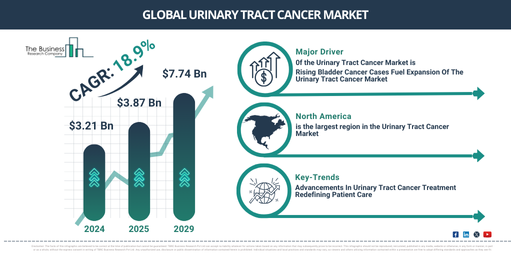
    There has been a significant growth in the market size of urinary tract cancer in the past few years. The market is expected to expand from $3.21 billion in 2024, hitting $3.87 billion in 2025. This increase represents a Compound Annual Growth Rate (CAGR) of 20.6%. Factors contributing to the growth during the historic period include advancements in diagnostic technology, development of pharmaceuticals, heightened awareness leading to early detection, and precision medicine.

    The market size for urinary tract cancer is predicted to witness a considerable expansion in the coming years, with an estimate of reaching $7.74 billion by 2029, moving at a compound annual growth rate (CAGR) of 18.9%. The surge in this projection period might be due to advancements in immunotherapy, telemedicine, remote monitoring, research on biomarkers, and adjuvant therapies. Significant trends in the anticipation period may contain worldwide collaboration, enhancements in palliative care, extensive programs for survivorship, and patient-focused care.

    Download a free sample to assess the report’s scope and structure:

    https://www.thebusinessresearchcompany.com/sample.aspx?id=13059&type=smp

    Which Major Market Drivers Are Expected to Boost the Growth Potential of the Urinary Tract Cancer Market?

    The urinary tract cancer market is set to witness significant growth due to the increasing incidence of bladder cancer. Bladder cancer, a type of cancer that forms in the tissues of the urinary bladder – an organ situated in the pelvis that holds urine generated by the kidneys – causes a rise in demand for diagnostic and screening methods, as well as treatments, for patients with urinary tract cancer. For instance, the American Cancer Society Inc., a US-based cancer awareness organization, suggested in a January 2023 report that the projected number of urinary system cancer occurrences rose to 168,560 in the year, marking a 2.66% increase from 164,190 incidences in 2022 in the US alone. As a result, the expanding occurrence of bladder cancer is expected to fuel the urinary tract cancer market’s growth.

    The Urinary Tract Cancer Market is being propelled by the Rising Incidence of Urinary Tract Infections


    Which Key Market Segments Comprise the Urinary Tract Cancer Market and Drive Its Revenue Growth?

    The urinary tract cancer market covered in this report is segmented –

    1) By Cancer Type: Bladder Cancer, Urethral Cancer, Ureteric And Renal Pelvic Cancer

    2) By Treatment: Chemotherapy, Intravesical Therapy, Radiation Therapy, Surgery

    3) By Diagnostic Techniques: Cystoscopy, Transurethral Resection Of The Tumor, Imaging Tests, Urine Analyses, Other Diagnostic Techniques

    4) By Distribution Channel: Retail Pharmacy, Online Pharmacy

    Subsegments:

    1) By Bladder Cancer: Transitional Cell Carcinoma, Squamous Cell Carcinoma, Adenocarcinoma, Other Types

    2) By Urethral Cancer: Urethral Carcinoma, Other Urethral Tumors

    3) By Ureteric And Renal Pelvic Cancer: Ureteric Cancer, Renal Pelvic Cancer, Other Types

    Request customized data on this market:

    https://www.thebusinessresearchcompany.com/customise?id=13059&type=smp

    Which Areas Are Leading Regions in the Urinary Tract Cancer Market Expansion Across the Globe?

    North America was the largest region in the urinary tract cancer market in 2024. The regions covered in urinary tract cancer market report are Asia-Pacific, Western Europe, Eastern Europe, North America, South America, Middle East and Africa.

    What Are the Key Market Trends in theUrinary Tract Cancer Market Over the Coming Years?

    Several dominant organizations in the urinary tract cancer market are shifting their attention towards improving treatment methods with an aim to offer more efficient and customized solutions and thereby, gain a superior market standing. These enhanced techniques in urinary tract cancer treatment focus on precision, utilizing the body’s immunity, bettering surgical approaches and adapting treatments to fit the specific requirements of individual patients. For instance, in October 2022, an American healthcare system, UC San Diego Health, launched an innovative treatment for patients suffering from low-grade upper tract urothelial cancer (LG-UTUC), a slightly rare form of urinary system cancer. This sophisticated treatment serves as an alternative approach to the traditional practice of complete kidney removal, possibly saving patients from future needs of dialysis or kidney transplants. The novel therapy involves the delivery of a drug named Jelmyto through a number of injections consisting of mitomycin, a popular chemotherapy agent, blended with a sterile hydrogel. The delivery of this medicine is facilitated through guided injections, making it possible for precision targeting of the tumor within the urinary system.

    View the full report here:

    https://www.thebusinessresearchcompany.com/report/urinary-tract-cancer-global-market-report

    How Is the Urinary Tract Cancer Market Conceptually Defined?

    Urinary tract cancer refers to malignancies that develop in the kidneys, bladder, ureters, or urethra, often causing symptoms like blood in the urine and pain. The preventive steps such as stopping smoking, avoiding hazardous substances and promptly treating urine infections may help minimize the risk of getting urinary tract cancer.

    Purchase the full report and get a swift delivery:

    https://www.thebusinessresearchcompany.com/purchaseoptions.aspx?id=13059

    About The Business Research Company:

    With over 15000+ reports from 27 industries covering 60+ geographies, The Business Research Company has built a reputation for offering comprehensive, data-rich research and insights. Armed with 1,500,000 datasets, the optimistic contribution of in-depth secondary research, and unique insights from industry leaders, you can get the information you need to stay ahead in the game.

    Get in touch with us:

    The Business Research Company: https://www.thebusinessresearchcompany.com/

    Americas +1 3156230293

    Asia +44 2071930708

    Europe +44 2071930708

    Email us at info@tbrc.info

    Follow us on:

    LinkedIn: https://in.linkedin.com/company/the-business-research-company

    YouTube: https://www.youtube.com/channel/UC24_fI0rV8cR5DxlCpgmyFQ

    Global Market Model: https://www.thebusinessresearchcompany.com/global-market-model
  • $17.39 Billion Forecast for Urinary Incontinence Market by 2029, Backed by Demand and Innovation

    $17.39 Billion Forecast for Urinary Incontinence Market by 2029, Backed by Demand and Innovation

    Discover trends, market shifts, and competitive outlooks for the urinary incontinence industry through 2025-2034 with The Business Research Company’s reliable data and in-depth research

    What is the Anticipated CAGR of the Urinary Incontinence Market, and What Factors Will Drive It?

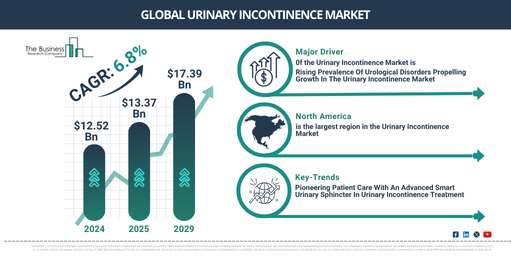
    Recent years have witnessed significant growth in the urinary incontinence market size. It is anticipated to expand from $12.52 billion in 2024 to $13.37 billion in 2025, with a compound annual growth rate (CAGR) of 6.8%. Factors like the aging population, increased awareness and prevalence of urinary incontinence, improved access to healthcare services, and growing disposable incomes have contributed to the growth in the previous years.

    In the following years, the urinary incontinence market size is predicted to witness a significant rise. By 2029, it is forecasted to reach $17.39 billion, with a compound annual growth rate (CAGR) of 6.8%. The elevation during the forecast period is likely due to an increased instances of co-existing diseases, lifestyle aspects, public health strategies, and expanding healthcare costs. Medical progressions, novel technologies, non-invasive therapies, digital and mobile health, innovative product blueprints, and patient-focused care are the major trends anticipated during the forecast period.

    Download a free sample to assess the report’s scope and structure:

    https://www.thebusinessresearchcompany.com/sample.aspx?id=12946&type=smp

    What Are the Core Growth Drivers Propelling the Urinary Incontinence Market Forward?

    The urinary incontinence market is expected to expand due to the increasing occurrence of urological disorders. Urological disorders encompass various medical conditions that impact the urinary system and male reproductive organs, such as the kidneys, bladder, ureters, urethra and male reproductive organs including the prostate and testes. The escalating occurrence of these disorders, especially urinary incontinence, amplifies the need for products and treatments to manage these conditions. Enhancements in awareness, diagnosis, medical innovation and healthcare infrastructure also contribute to this growth. As highlighted by a report from the American Cancer Society Inc., an US-based organization dedicated to cancer awareness, there was a growth of 1.1% from 81,400 in 2020 to 82,290 estimated urinary bladder cancer cases in January 2023. As a result, the increasing prevalence of urological disorders is expected to stimulate the growth of the urinary incontinence market. The growth of the urinary incontinence market is also anticipated to accelerate due to the surge in demand for minimally invasive operations. Such operations employ advanced instruments and technology to limit the size and quantity of incisions made on the patient’s body. This increase in demand for minimally invasive procedures plays a pivotal role in urinary incontinence management and is seen as an effective, patient-centric treatment option. Patients and healthcare providers are increasingly opting for these techniques to manage the condition as it minimizes disruption to the patient’s everyday life and overall health. As per reports by Intuitive Surgical Inc., a US-based company specializing in robotic products, there was an 18% increase in surgeries using Vinci surgical systems – from approximately 1,594,000 in 2021 to 1,875,000 in 2022. Hence, the uptick in demand for minimally invasive operations is expected to propel the growth of the urinary incontinence market.

    What Segment Types Define the Urinary Incontinence Market Structure?

    The urinary incontinence market covered in this report is segmented –

    1) By Type: Urge Incontinence, Stress Incontinence, Overflow Incontinence, Functional Incontinence

    2) By Treatment Type: Medication, Devices, Other Treatments

    3) By Route Of Administration: Oral, Parenteral, Other Routes Of Administrations

    4) By Diagnosis: Physical Exam, Pad Test, Urodynamic Testing, Cystoscopy, Stress Test, Ultrasound, Urine Samples

    5) By End-Users: Hospitals, Specialty Clinics, Homecare, Other End-Users

    Subsegments:

    1) By Urge Incontinence: Overactive Bladder, Urinary Urgency

    2) By Stress Incontinence: Involuntary Leakage During Physical Activity, Coughing Or Sneezing

    3) By Overflow Incontinence: Chronic Urinary Retention, Frequent Or Constant Dribbling

    4) By Functional Incontinence: Cognitive Impairment, Physical Limitations

    Request customized data on this market:

    https://www.thebusinessresearchcompany.com/customise?id=12946&type=smp

    Which Geographic Areas Hold the Strongest Growth Potential in the Urinary Incontinence Market?

    North America was the largest region in the urinary incontinence market in 2024. The regions covered in urinary incontinence market report are Asia-Pacific, Western Europe, Eastern Europe, North America, South America, Middle East and Africa.

    Which Emerging Trends that Are Influencing theUrinary Incontinence Industry Evolution?

    Leading firms in the urinary incontinence sector are actively adopting cutting-edge technologies and innovative methods to improve patient treatment and outcomes. For example, in July 2023, UroMems SAS, a biotech firm based in France, successfully implanted the UroActive intelligent, automated artificial urinary sphincter (AUS) in a female patient for treating stress urinary incontinence (SUI) in women. This revolutionary UroActive contrivance is powered by a myoelectrical mechanical system (MEMS) developed specifically to cater to the unfulfilled requirement for a concrete treatment for SUI in females. The procedure was carried out with the help of a robot at La Pitié-Salpêtrière University Hospital in Paris, having received the necessary regulatory approvals from the French counterpart of the FDA. The adjustable and intelligent features of UroActive, along with its minimally invasive manner, aim to enhance the quality of life for patients.

    View the full report here:

    https://www.thebusinessresearchcompany.com/report/urinary-incontinence-global-market-report

    What Is the Definition of the Urinary Incontinence Market?

    Urinary incontinence is a medical condition characterized by the unintentional loss of urine, ranging from occasional leaks to a complete inability to control urination. Weakened pelvic floor muscles, hormonal changes, obesity, neurological conditions, urinary tract infections, medications and pregnancy can cause urinary incontinence.

    Purchase the full report and get a swift delivery:

    https://www.thebusinessresearchcompany.com/purchaseoptions.aspx?id=12946

    About The Business Research Company:

    With over 15000+ reports from 27 industries covering 60+ geographies, The Business Research Company has built a reputation for offering comprehensive, data-rich research and insights. Armed with 1,500,000 datasets, the optimistic contribution of in-depth secondary research, and unique insights from industry leaders, you can get the information you need to stay ahead in the game.

    Get in touch with us:

    The Business Research Company: https://www.thebusinessresearchcompany.com/

    Americas +1 3156230293

    Asia +44 2071930708

    Europe +44 2071930708

    Email us at info@tbrc.info

    Follow us on:

    LinkedIn: https://in.linkedin.com/company/the-business-research-company

    YouTube: https://www.youtube.com/channel/UC24_fI0rV8cR5DxlCpgmyFQ

    Global Market Model: https://www.thebusinessresearchcompany.com/global-market-model
  • Global Urgent Care Apps Market Projected to Reach $17.08 Billion by 2029 at a CAGR of 39.4%

    Global Urgent Care Apps Market Projected to Reach $17.08 Billion by 2029 at a CAGR of 39.4%

    Discover trends, market shifts, and competitive outlooks for the urgent care apps industry through 2025-2034 with The Business Research Company’s reliable data and in-depth research

    What Are the Key Milestones in the Urgent Care Apps Market’s Growth Trajectory From 2025 To 2034?

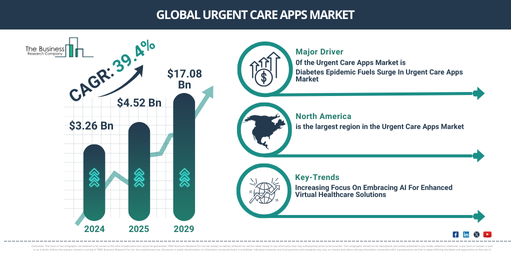
    The expansion of the urgent care apps market has been substantial in the last few years. It is projected to rise from $3.26 billion in 2024 to $4.52 billion in 2025, with a compound annual growth rate (CAGR) of 38.9%. The significant growth during the historical period can be associated with the rise in the usage of smartphones, increased healthcare expenditure, wide availability of internet, and heightened incidence of accidents.

    In the coming years, the size of the urgent care apps market is anticipated to expand significantly, reaching a value of $17.08 billion in 2029, underlining a compound annual growth rate (CAGR) of 39.4%. This anticipated growth in the specified forecast period can be accredited to several factors such as the burgeoning demand for advanced computational solutions, increased need for telehealth and telemedicine services, the adoption of mHealth applications, a rise in chronic disease prevalence, and an enhanced emphasis on data privacy and protection. Some crucial trends that could shape the market in the forecast period encompass technological progression, product innovation, improvement in solutions, strategic collaborations, and the amalgamation of technologies into smartphones.

    Download a free sample to assess the report’s scope and structure:

    https://www.thebusinessresearchcompany.com/sample.aspx?id=14216&type=smp

    What are the Fundamental Drivers and Innovations Shaping the Urgent Care Apps Market?

    The escalating trend of chronic ailments, including diabetes, is projected to push forward the expansion of the urgent care apps market. Chronic diseases are defined as medical conditions that typically persist for a period of three months or more, often requiring continuous monitoring and care. Diabetes, a chronic metabolic disease, manifests through heightened blood glucose levels, which over time can cause critical harm to the heart, blood vessels, and other organs. Urgent care apps can be a crucial tool for diabetics in managing their health more efficiently, enhancing their living standards, and lessening the load on the healthcare system. These applications assist diabetics in cataloging and keeping track of their symptoms, enabling them to discern patterns and developments in their health. For instance, data from the National Institutes of Health, a government agency in the U.S., in January 2023, forecasted that by 2035, nearly 35.66% of adults over the age of 50 would suffer from at least one chronic ailment. This number is predicted to climb to 47.81% by 2050. Therefore, the surge in chronic disease prevalence, such as diabetes, acts as a catalyst fueling the growth of the urgent care app market.

    How Is the Urgent Care Apps Market Segmented?

    The urgent care apps market covered in this report is segmented –

    1) By Type: Pre-Hospital Emergency Care And Triaging Apps, In-Hospital Communication And Collaboration Apps, Post-Hospital Apps

    2) By Technology: Phone-Based Apps, Web-Based Apps, Wearable Patient Centric Apps

    3) By Clinical Area: Trauma, Stroke, Cardiac Conditions, Other Clinical Areas

    Subsegments:

    1) By Pre-Hospital Emergency Care And Triaging Apps: Symptom Checker Apps, Triage Apps, Remote Patient Monitoring Apps

    2) By In-Hospital Communication And Collaboration Apps: Secure Messaging Apps, Team Collaboration Tools, Patient Management Systems

    3) By Post-Hospital Apps: Follow-Up Care Apps, Medication Management Apps, Telehealth Apps

    Request customized data on this market:

    https://www.thebusinessresearchcompany.com/customise?id=14216&type=smp

    Which Regions Are Driving the Next Phase of the Urgent Care Apps Market Growth?

    North America was the largest region in the urgent care apps market in 2024. Asia-Pacific is expected to be the fastest-growing region in the forecast period. The regions covered in the urgent care apps market report are Asia-Pacific, Western Europe, Eastern Europe, North America, South America, Middle East, Africa.

    What Key Trends Are Shaping the Future of the Urgent Care Apps Market?

    The primary participants in the urgent care apps industry, such as Cedars-Sinai, are amplifying their efforts to incorporate advanced technologies like the Cedars-Sinai Connect app and AI-led urgent care apps into their portfolio to further their market position. The Cedars-Sinai Connect app is an innovative digital health platform that utilizes artificial intelligence (AI) to provide users with direct and simple access to healthcare services. Users can use these platforms to locate the nearest urgent care facilities and gain knowledge about critical and emergency healthcare conditions. In 2023, Cedars-Sinai, a US-based medical and health science center, launched its AI-driven app known as Cedars-Sinai Connect, which provides a range of virtual healthcare solutions for various clinical cases. This app includes services like same-day primary visits and 24/7 virtual availability to medical professionals for immediate care. Users can seek treatment for a variety of issues, including type 2 diabetes, headaches, common colds, anxiety, wellness check-ups, and specialist recommendations using the app. The app prompts both new and existing patients to enter their symptoms and medical history via a structured process, and after assessment, the app forwards the data to a medical professional for review, facilitating video communication between the patient and healthcare provider.

    View the full report here:

    https://www.thebusinessresearchcompany.com/report/urgent-care-apps-global-market-report

    How Is the Urgent Care Apps Market Defined and What Are Its Core Parameters?

    Urgent care apps refer to digital health applications that enable users to locate and map the closest urgent care facilities, obtain information on urgent and emergency conditions, and get healthcare services quickly and conveniently. These apps are designed to increase patient safety, facilitate access to care, and support the provision of more effective and efficient healthcare.

    Purchase the full report and get a swift delivery:

    https://www.thebusinessresearchcompany.com/purchaseoptions.aspx?id=14216

    About The Business Research Company:

    With over 15000+ reports from 27 industries covering 60+ geographies, The Business Research Company has built a reputation for offering comprehensive, data-rich research and insights. Armed with 1,500,000 datasets, the optimistic contribution of in-depth secondary research, and unique insights from industry leaders, you can get the information you need to stay ahead in the game.

    Get in touch with us:

    The Business Research Company: https://www.thebusinessresearchcompany.com/

    Americas +1 3156230293

    Asia +44 2071930708

    Europe +44 2071930708

    Email us at info@tbrc.info

    Follow us on:

    LinkedIn: https://in.linkedin.com/company/the-business-research-company

    YouTube: https://www.youtube.com/channel/UC24_fI0rV8cR5DxlCpgmyFQ

    Global Market Model: https://www.thebusinessresearchcompany.com/global-market-model
  • Emerging Growth Drivers in the Ultrasound Transducer Market Landscape: Impact Of Rising Cardiovascular And Respiratory Disorders On The Ultrasound Transducer Market

    Emerging Growth Drivers in the Ultrasound Transducer Market Landscape: Impact Of Rising Cardiovascular And Respiratory Disorders On The Ultrasound Transducer Market

    Discover trends, market shifts, and competitive outlooks for the ultrasound transducer industry through 2025-2034 with The Business Research Company’s reliable data and in-depth research

    What Are the Key Projections for the CAGR of the Ultrasound Transducer Market Size From 2025 to 2034?

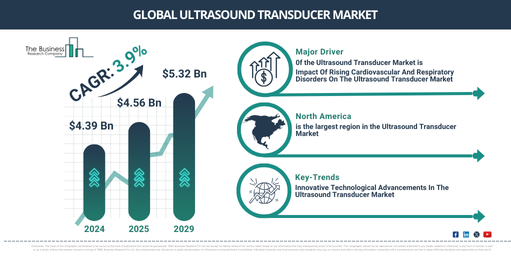
    In the past few years, the ultrasound transducer market has seen a consistent increase in size. It is projected to expand from $4.39 billion in 2024 up to $4.56 billion in 2025, demonstrating a compound annual growth rate (CAGR) of 3.7%. This growth during the historic period has been driven by factors such as the escalating demand for diagnostic imaging, an increase in chronic diseases, broadened usage areas in obstetrics and gynecology, a rising geriatric population, and the evolution of worldwide healthcare infrastructure.

    In the coming years, the ultrasound transducer market is projected to steadily increase in size. The market is anticipated to reach $5.32 billion by 2029, growing at a compound annual growth rate (CAGR) of 3.9%. The factors contributing to growth during this forecast period include the growing adoption of telemedicine services, emphasis on point-of-care diagnostics, greater accessibility in developing areas, expanding applications in interventional procedures, and customization for specific medical specialties. The major trends to look out for in this period are the reduction in size of transducer technology, growth in the field of point-of-care ultrasound (POCUS), creation of high-frequency transducers, incorporation of artificial intelligence (AI), improvements in transducer materials, and the emergence of wireless and cable-free transducer connections.

    Download a free sample to assess the report’s scope and structure:

    https://www.thebusinessresearchcompany.com/sample.aspx?id=13549&type=smp

    Which Primay Drivers Are Accelerating Growth in the Ultrasound Transducer Market?

    The escalation in cardiovascular and respiratory disorders is anticipated to energize the expansion of the ultrasound transducer market. These disorders, which impact the cardiovascular system (comprising the heart and blood vessels) and the respiratory system (lungs and airways), are routinely diagnosed and managed using ultrasound transducers. These devices are vital for imaging and evaluating the properties and actions of the heart, blood vessels, lungs, and related organs. For example, data released by the British Heart Foundation in September 2024 revealed that around 7.6 million people in the UK are afflicted with heart and circulatory conditions, with about 4 million men and 3.6 million women suffering from these diseases. These diseases account for approximately 27% of all UK deaths, equal to over 170,000 deaths per year or around 480 deaths per day, amounting to one death every three minutes. In March 2024, the Centers for Disease Control and Prevention reported that the number of tuberculosis cases increased from 8,320 in 2022 to 9,615 in 2023, an increase of 1,295 cases. Therefore, the growth in cardiovascular and respiratory disorders is catalyzing the expansion of the ultrasound transducer market.

    Ultrasound Transducer Market Driver: Higher Rate of Ultrasound Diagnostic Procedures Leaves Positive Impact on Ultrasound Transducer Market


    Which Primary Segments of the Ultrasound Transducer Market Are Driving Growth and Industry Transformations?

    The ultrasound transducer market covered in this report is segmented –

    1) By Product: Linear, Convex, Phased array, Endocavitary, Continuous wave Doppler, Other Products

    2) By Application: Cardiovascular, General Imaging, Musculoskeletal, Obstetrics (OB) And Gynecology (GYN), Vascular, Other Applications

    3) By End User: Hospitals, Diagnostic Centers, Ambulatory Surgical Centers, Clinics

    Subsegments:

    1) By Linear: High-Frequency Linear Transducers, Low-Frequency Linear Transducers

    2) By Convex: Microconvex Transducers, Full-Range Convex Transducers

    3) By Phased Array: Small Footprint Phased Array Transducers, Full-Sector Phased Array Transducers

    4) By Endocavitary: Vaginal Endocavitary Transducers, Rectal Endocavitary Transducers

    5) By Continuous Wave Doppler: Pedoff-Type Continuous Wave Doppler Transducers, Immersion Doppler Transducers

    6) By Other Products: 3D Or 4D Transducers, Intravascular Ultrasound (IVUS) Transducers

    Request customized data on this market:

    https://www.thebusinessresearchcompany.com/customise?id=13549&type=smp

    Which Regions Are Key Players in the Growth of the Ultrasound Transducer Market?

    North America was the largest region in the ultrasound transducer market in 2024. Asia-Pacific is expected to be the fastest-growing region in the forecast period. The regions covered in the ultrasound transducer market report are Asia-Pacific, Western Europe, Eastern Europe, North America, South America, Middle East, Africa.

    Which Technological Trends Are Reshaping the Ultrasound Transducer Industry Dynamics?

    Leading corporations in the ultrasound transducer market are introducing groundbreaking products with novel technology, including the TEX20 Series, aimed at fulfilling the requirements of medical professionals in high-pressure settings like critical care and emergency medicine. The point-of-care ultrasound system, TEX20 Series, can assist clinicians in enhancing patient care in these demanding scenarios. For example, Mindray Global, a medical device firm from China, launched the TEX20 Series, a point-of-care ultrasound system, in June 2022. This system boasts several cutting-edge technologies that offer exceptional image quality, enhanced clinical confidence, and workflow efficiency. The highly technologically advanced Mindray TEX20 series significantly improves clinical outcomes and tailors treatment around the patient with its features like ZST, AI-powered Smart Tools, information integration system, ergonomic design, wireless transducer, advanced imaging modes, high-frequency imaging and its portability.

    View the full report here:

    https://www.thebusinessresearchcompany.com/report/ultrasound-transducer-global-market-report

    What Parameters Are Used to Define the Ultrasound Transducer Market?

    An ultrasonic transducer is a device that utilizes the piezoelectric phenomenon to transform electrical energy into mechanical (sound) energy and vice versa for generating and detecting ultrasound waves in medical imaging. It is responsible for producing and catching ultrasound waves, comprising the ultrasound machine’s handheld component. It is an essential component of ultrasound machines, which are widely used in healthcare for visualizing the body’s internal structures.

    Purchase the full report and get a swift delivery:

    https://www.thebusinessresearchcompany.com/purchaseoptions.aspx?id=13549

    About The Business Research Company:

    With over 15000+ reports from 27 industries covering 60+ geographies, The Business Research Company has built a reputation for offering comprehensive, data-rich research and insights. Armed with 1,500,000 datasets, the optimistic contribution of in-depth secondary research, and unique insights from industry leaders, you can get the information you need to stay ahead in the game.

    Get in touch with us:

    The Business Research Company: https://www.thebusinessresearchcompany.com/

    Americas +1 3156230293

    Asia +44 2071930708

    Europe +44 2071930708

    Email us at info@tbrc.info

    Follow us on:

    LinkedIn: https://in.linkedin.com/company/the-business-research-company

    YouTube: https://www.youtube.com/channel/UC24_fI0rV8cR5DxlCpgmyFQ

    Global Market Model: https://www.thebusinessresearchcompany.com/global-market-model