Blog

  • From Insight to Impact: Strategic Growth Mapping in the Artificial Intelligence In Life Sciences Market

    From Insight to Impact: Strategic Growth Mapping in the Artificial Intelligence In Life Sciences Market

    Discover trends, market shifts, and competitive outlooks for the artificial intelligence in life sciences industry through 2025-2034 with The Business Research Company’s reliable data and in-depth research

    How Has the Artificial Intelligence In Life Sciences Market Growth Performance Trended Historically, And What Lies Ahead?

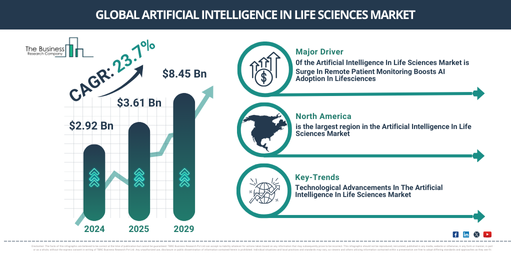
    Over the past few years, the market size of artificial intelligence within the life sciences sector has seen substantial expansion. Projections suggest an increase from $2.92 billion in 2024 to $3.61 billion in 2025, marking a compound annual growth rate (CAGR) of 23.7%. Factors such as a rise in clinical trials, enhanced adoption of AI in research and development, along with growing focus on precision medicine and personalized drug development have contributed to this historic growth.

    In the upcoming years, the market size of artificial intelligence in life sciences is predicted to witness tremendous growth, escalating to $8.45 billion by 2029, with a CAGR of 23.7%. The surge in growth during the forecast period can be linked to a growing interest in real-time remote patient monitoring systems, a rising demand for AI in discovering new drugs, and the broadening acceptance of AI in medical imaging analysis. Foresight for this period suggests key trends to comprise strategic collaborations, innovation in products, advancement in technology, investments, and research and development projects.

    Download a free sample to assess the report’s scope and structure:

    https://www.thebusinessresearchcompany.com/sample.aspx?id=13587&type=smp

    What are the Fundamental Drivers and Innovations Shaping the Artificial Intelligence In Life Sciences Market?

    The escalating curiosity in real-time remote patient monitoring (RPM) technologies is expected to fuel the advancement of artificial intelligence in the life sciences sector. Remote patient monitoring system is a technologically advanced healthcare solution planned to supervise patients’ health beyond conventional healthcare environments. AI plays a pivotal role in the life sciences by offering continuous, personalized, and data-driven findings that facilitate proactive health management. For instance, as per a survey in August 2023 by Livelink, an American digital healthcare firm, the application of remote patient monitoring (RPM) by clinicians surged by 20% in 2021 to 81% in 2022, an overall increase of 305%. Consequently, the rising curiosity in real-time remote patient monitoring (RPM) tools is contributing to the expansion of artificial intelligence in the life sciences sector.

    How Is the Artificial Intelligence In Life Sciences Market Segmented?

    The artificial intelligence in life sciences market covered in this report is segmented –

    1) By Offering: Software, Hardware, Services

    2) By Deployment: On-Premises, Cloud-Based

    3) By Application: Drug Discovery, Medical Diagnosis, Biotechnology, Clinical Trails, Precision And Personalized Medicine, Patient Monitoring

    Subsegments:

    1) By Software: Drug Discovery Software, Genomic Analysis Software, Clinical Trial Management Software, Personalized Medicine Software, Laboratory Information Management Systems (LIMS)

    2) By Hardware: AI-Enabled Laboratory Equipment, Robotics And Automation Systems, Imaging Devices And Equipment, Sensor Technologies

    3) By Services: Consulting Services, Data Analytics Services, Research And Development Services, Implementation And Integration Services, Training And Support Services

    Request customized data on this market:

    https://www.thebusinessresearchcompany.com/customise?id=13587&type=smp

    Which Regions Are Driving the Next Phase of the Artificial Intelligence In Life Sciences Market Growth?

    North America was the largest region in the Artificial Intelligence In Life Sciences market in 2024. Asia-Pacific is expected to be the fastest-growing region in the forecast period. The regions covered in the artificial intelligence in life sciences market report are Asia-Pacific, Western Europe, Eastern Europe, North America, South America, Middle East, Africa.

    What Key Trends Are Shaping the Future of the Artificial Intelligence In Life Sciences Market?

    Prominent firms in the life sciences artificial intelligence market are striving to maintain their market position through the advancement of innovative technology products, such as drug discovery software. Drug discovery software is a type of computer application aimed at aiding biotech and pharmaceutical researchers in the discovery of novel drugs. For example, in December 2023, Merck, a scientific and technology company based in Germany, introduced AIDDISON, a revolutionary drug discovery software. It is the first-ever software that links virtual molecule design to actual manufacturability utilizing generative AI, machine learning, and computer-supported drug design. AIDDISON can effectively pin down potential drug candidates from a plethora of possibilities while taking into account essential characteristics like non-toxicity and solubility. The software demonstrates a significant application of artificial intelligence in the sphere of life sciences by bridging the gap between virtual molecular design and actual manufacturability.

    View the full report here:

    https://www.thebusinessresearchcompany.com/report/artificial-intelligence-in-life-sciences-global-market-report

    How Is the Artificial Intelligence In Life Sciences Market Defined and What Are Its Core Parameters?

    Artificial intelligence (AI) in life sciences refers to the application of AI technologies and techniques in various domains within the life sciences industry. The integration of AI in life sciences aims to enhance and expedite processes, improve decision-making, and generate valuable insights from complex data sets.

    Purchase the full report and get a swift delivery:

    https://www.thebusinessresearchcompany.com/purchaseoptions.aspx?id=13587

    About The Business Research Company:

    With over 15000+ reports from 27 industries covering 60+ geographies, The Business Research Company has built a reputation for offering comprehensive, data-rich research and insights. Armed with 1,500,000 datasets, the optimistic contribution of in-depth secondary research, and unique insights from industry leaders, you can get the information you need to stay ahead in the game.

    Get in touch with us:

    The Business Research Company: https://www.thebusinessresearchcompany.com/

    Americas +1 3156230293

    Asia +44 2071930708

    Europe +44 2071930708

    Email us at info@tbrc.info

    Follow us on:

    LinkedIn: https://in.linkedin.com/company/the-business-research-company

    YouTube: https://www.youtube.com/channel/UC24_fI0rV8cR5DxlCpgmyFQ

    Global Market Model: https://www.thebusinessresearchcompany.com/global-market-model
  • Major Drivers Propelling the Growth oh theArtificial Intelligence (AI) In Respiratory Diseases Market Forward: AI Revolutionizing Respiratory Health Addressing The Impact Of Growing Environmental Pollution

    Major Drivers Propelling the Growth oh theArtificial Intelligence (AI) In Respiratory Diseases Market Forward: AI Revolutionizing Respiratory Health Addressing The Impact Of Growing Environmental Pollution

    Discover trends, market shifts, and competitive outlooks for the artificial intelligence (ai) in respiratory diseases industry through 2025-2034 with The Business Research Company’s reliable data and in-depth research

    What Is the Current and Projected Market Size of the Artificial Intelligence (AI) In Respiratory Diseases Market Through 2034?

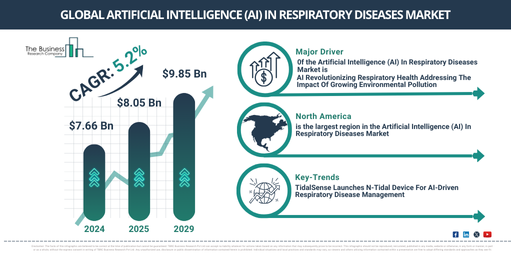
    The market size for artificial intelligence (AI) applications in respiratory diseases has seen substantial growth in the last few years. The market is projected to expand from $7.66 billion in 2024 to $8.05 billion in 2025, achieving a compound annual growth rate (CAGR) of 5.1%. This growth in previous years can be traced back to factors such as stricter government rules, increasing awareness about the environment, a rise in the elderly population, emergence of patient-focused healthcare methods, and the expansion of healthcare infrastructure.

    The market size of artificial intelligence (AI) in respiratory diseases is anticipated to experience robust growth in the coming years. It is projected to attain a value of $9.85 billion by 2029, with a compound annual growth rate (CAGR) of 5.2%. The predicted growth during the forecast period can be linked with the rising prevalence of respiratory diseases, the escalating needs for early detection and diagnosis, increasing environmental pollution, heightened spending on healthcare, and ongoing research and development initiatives. Key trends expected within the forecast period encompass technology advancements, drug discovery and development, personalized treatment plans, telemedicine and remote patient monitoring.

    Download a free sample to assess the report’s scope and structure:

    https://www.thebusinessresearchcompany.com/sample.aspx?id=13792&type=smp

    Which Major Market Drivers Are Expected to Boost the Growth Potential of the Artificial Intelligence (AI) In Respiratory Diseases Market?

    The rise of environmental pollution is anticipated to spur the growth of artificial intelligence (AI) in the respiratory disease domain. The term environmental pollution pertains to any substance or form of energy added to the environment at a quicker pace than its harmless dispersion or storage. AI exhibits promise in substantially diminishing the repercussions of environmental pollution on respiratory wellness, through real-time surveillance, customized risk evaluations, informed decision making, and breakthrough solutions dedicated to individuals as well as communities. For instance, as reported by the US Energy Information Administration, a government agency based in the US, the CO2 emission in 2021 racked up to 35.72 billion metric tons, escalating to 38.50 billion metric tons in 2022 in June 2024. Consequently, the mounting environmental pollution is fuelling the growth of AI applications in the respiratory disease sector.

    Which Key Market Segments Comprise the Artificial Intelligence (AI) In Respiratory Diseases Market and Drive Its Revenue Growth?

    The artificial intelligence (AI) in respiratory diseases market covered in this report is segmented –

    1) By Imaging Type: Magnetic Resonance Imaging (MRI), Computed Tomography (CT) Scan, Electronic Patient-Reported Outcomes (ePRO)

    2) By Indication: Chronic Obstructive Pulmonary Disease, Interstitial Lung Disease, Pulmonary Infection

    3) By End Use: Hospital, Diagnostic Centers, Ambulatory Surgical Centers, Other End-Users

    Subsegments:

    1) By Magnetic Resonance Imaging (MRI): Lung Imaging, Thoracic Imaging, Cardiopulmonary Imaging

    2) By Computed Tomography (CT) Scan: High-Resolution CT (HRCT), Low-Dose CT, Thoracic CT

    3) By Electronic Patient-Reported Outcomes (ePRO): Symptom Tracking, Medication Adherence Monitoring, Quality Of Life Assessments

    Request customized data on this market:

    https://www.thebusinessresearchcompany.com/customise?id=13792&type=smp

    Which Areas Are Leading Regions in the Artificial Intelligence (AI) In Respiratory Diseases Market Expansion Across the Globe?

    North America was the largest region in the artificial Intelligence (AI) in respiratory diseases market in 2024. Asia-Pacific is expected to be the fastest-growing region in the forecast period. The regions covered in the artificial intelligence (AI) in respiratory diseases market report are Asia-Pacific, Western Europe, Eastern Europe, North America, South America, Middle East, Africa.

    What Are the Key Market Trends in the Artificial Intelligence (AI) In Respiratory Diseases Market Over the Coming Years?

    Leading firms operating in the respiratory diseases market are focusing on Artificial Intelligence (AI) to devise innovative tools like N-Tidal devices that can track tidal breathing in patients. These devices measure the airflow during normal respiratory activity, which assists in evaluating lung performance. TidalSense, a British respiratory technology firm, introduced an N-Tidal regulated AI system for diagnosing and managing Chronic Obstructive Pulmonary Disease (COPD) in August 2023. This distinctive technology merges the CO2 sensor data from N-Tidal with an AI platform to identify alterations in lung performance. This aims to significantly enhance COPD’s diagnosis and management. Clinical research has confirmed the system’s superior accuracy, promising to revolutionize the diagnosis process for respiratory conditions. This development indicates a meaningful advancement in incorporating AI in assessing respiratory diseases, as it offers an easier and more efficient substitute for traditional diagnostic procedures.

    View the full report here:

    https://www.thebusinessresearchcompany.com/report/artificial-intelligence-ai-in-respiratory-diseases-global-market-report

    How Is the Artificial Intelligence (AI) In Respiratory Diseases Market Conceptually Defined?

    Artificial intelligence (AI) in respiratory diseases refers to the use of AI and machine learning techniques to aid clinicians in the diagnosis, management, and treatment of various respiratory conditions. It has numerous potential applications in pulmonary medicine, including image analysis, predictive modeling, and disease management.

    Purchase the full report and get a swift delivery:

    https://www.thebusinessresearchcompany.com/purchaseoptions.aspx?id=13792

    About The Business Research Company:

    With over 15000+ reports from 27 industries covering 60+ geographies, The Business Research Company has built a reputation for offering comprehensive, data-rich research and insights. Armed with 1,500,000 datasets, the optimistic contribution of in-depth secondary research, and unique insights from industry leaders, you can get the information you need to stay ahead in the game.

    Get in touch with us:

    The Business Research Company: https://www.thebusinessresearchcompany.com/

    Americas +1 3156230293

    Asia +44 2071930708

    Europe +44 2071930708

    Email us at info@tbrc.info

    Follow us on:

    LinkedIn: https://in.linkedin.com/company/the-business-research-company

    YouTube: https://www.youtube.com/channel/UC24_fI0rV8cR5DxlCpgmyFQ

    Global Market Model: https://www.thebusinessresearchcompany.com/global-market-model
  • Artificial Intelligence (AI) In Biopharmaceuticals Growth Trajectory: Key Forecasts and Strategic Insights

    Artificial Intelligence (AI) In Biopharmaceuticals Growth Trajectory: Key Forecasts and Strategic Insights

    Discover trends, market shifts, and competitive outlooks for the artificial intelligence (ai) in biopharmaceuticals industry through 2025-2034 with The Business Research Company’s reliable data and in-depth research

    How Has The Artificial Intelligence (AI) In Biopharmaceuticals Market Growth Evolved From 2024 To 2025, And What’s Ahead?

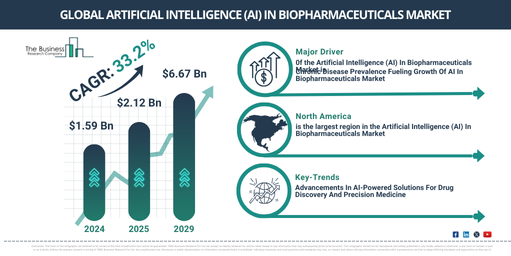
    The market size of artificial intelligence (AI) in biopharmaceuticals has seen a significant surge in the past years. It is forecasted to increase from $1.59 billion in 2024 to $2.12 billion in 2025, with a compound annual growth rate (CAGR) of 33.1%. The growth experienced during the historic period is credited to the progression in computational capabilities, a boom in biomedical data, the rise of precision medicine paradigm, as well as support and guidance from regulatory authorities.

    Expectations are high for a significant expansion of the artificial intelligence (AI) in biopharmaceuticals market in the coming years. The market is predicted to reach $6.67 billion in 2029, reflecting a compound annual growth rate (CAGR) of 33.2%. This growth projection for the period is based on several factors, such as improvements in computational biology, multi-modal data integration, the merger of ai and life sciences, enhanced regulatory support and frameworks, and the adoption of principled AI. Key trends for the forecast period consist of the incorporation of multi-omics data, AI-enabled drug design and discovery, explainable AI and regulatory compliance, technological progression, regulatory advancements, and an array of emerging opportunities.

    Download a free sample to assess the report’s scope and structure:

    https://www.thebusinessresearchcompany.com/sample.aspx?id=14251&type=smp

    Which Factors and External Forces Are Driving Demand in the Artificial Intelligence (AI) In Biopharmaceuticals Market?

    The surge in chronic illnesses is predicted to fuel the expansion of the artificial intelligence (AI) in the biopharmaceutical industry going forward. Chronic diseases, typically characterized by slow progression over years or potentially throughout an individual’s lifetime, are often resultant of lifestyle characteristics, an advancing aging demographic, genetic tendencies, and environmental contributors. AI, within the realm of biopharmaceuticals, has seen an upward trend in its usage for managing these chronic ailments, owing to its capacity to process large quantities of diverse data, spot trends and provide bespoke treatment plans. For example, the Department of Health and Human Services registered an 11 percent rise in newly reported chronic hepatitis B cases in November 2023, compared to 2021. Hence, the escalating occurrence of chronic diseases is propelling the growth of artificial intelligence (AI) in the biopharmaceutical sector.

    Which Segments in the Artificial Intelligence (AI) In Biopharmaceuticals Offer the Most Growth?

    The artificial intelligence (AI) in biopharmaceuticals market covered in this report is segmented –

    1) By Offering: Hardware, Software, Services

    2) By Deployment: Cloud, On-Premises

    3) By Technology: Machine Learning, Natural Language Processing, Deep Learning, Other Technologies

    4) By Application: Business Process And Supply Chain, Drug Discovery, Medical Imaging And Diagnostics, Precision Medicine

    5) By End-Users: Manufacturers, Contract Research Organizations, Academic And Government Research Institutes

    Subsegments:

    1) By Hardware: High-Performance Computing Systems, AI-Enabled Laboratory Equipment, Data Storage Solutions

    2) By Software: Drug Discovery Platforms, Clinical Trial Management Software, Predictive Analytics Tools, Natural Language Processing Solutions

    3) By Services: Consulting Services, Implementation And Integration Services, Data Management And Analytics Services, Training And Support Services

    Request customized data on this market:

    https://www.thebusinessresearchcompany.com/customise?id=14251&type=smp

    What Are the Fastest-Growing Geographies in the Artificial Intelligence (AI) In Biopharmaceuticals Market?

    North America was the largest region in the artificial intelligence (AI) in biopharmaceuticals market in 2024. Asia-Pacific is expected to be the fastest-growing region in the forecast period. The regions covered in the artificial intelligence (AI) in biopharmaceuticals market report are Asia-Pacific, Western Europe, Eastern Europe, North America, South America, Middle East, Africa.

    Which Cutting-Edge Market Trends Are Expected to Drive the Artificial Intelligence (AI) In Biopharmaceuticals Market’s Growth?

    Key players in the biopharmaceutical artificial intelligence (AI) sector are concentrating on creating pioneering advancements like AI-powered target and lead identification suite solutions to expedite the process of drug discovery and precision medicine. They are transforming life sciences firms with their groundbreaking methods for producing new drugs and customizing treatments for individual patients. For example, US-based cloud computing service provider Google LLC launched two AI-powered tools known as target and lead identification suites in May 2023, which are meant to assist researchers in predicting and understanding protein structures – a crucial aspect of drug development. Moreover, the suite will enable scientists to input, preserve, scrutinize, and disseminate large volumes of genomic data, which is essential for precision medicine. These tools aim to expedite the drug discovery process, cut costs, and accelerate the introduction of new treatments to the market. They offer efficient data management, precise predictions of protein structures, and superior genomic analysis abilities – hoping to revolutionize drug development processes and enhance patient results.

    View the full report here:

    https://www.thebusinessresearchcompany.com/report/artificial-intelligence-ai-in-biopharmaceuticals-global-market-report

    What Are the Key Elements That Define the Artificial Intelligence (AI) In Biopharmaceuticals Market?

    Artificial intelligence (AI) in biopharmaceuticals refers to applying various AI techniques to analyze complex biological data and improve various aspects of drug discovery, development, and delivery within the pharmaceutical industry. AI in biopharmaceuticals holds great promise for revolutionizing drug discovery, development, and delivery processes by accelerating timelines, reducing costs, and improving the efficiency and effectiveness of treatments.

    Purchase the full report and get a swift delivery:

    https://www.thebusinessresearchcompany.com/purchaseoptions.aspx?id=14251

    About The Business Research Company:

    With over 15000+ reports from 27 industries covering 60+ geographies, The Business Research Company has built a reputation for offering comprehensive, data-rich research and insights. Armed with 1,500,000 datasets, the optimistic contribution of in-depth secondary research, and unique insights from industry leaders, you can get the information you need to stay ahead in the game.

    Get in touch with us:

    The Business Research Company: https://www.thebusinessresearchcompany.com/

    Americas +1 3156230293

    Asia +44 2071930708

    Europe +44 2071930708

    Email us at info@tbrc.info

    Follow us on:

    LinkedIn: https://in.linkedin.com/company/the-business-research-company

    YouTube: https://www.youtube.com/channel/UC24_fI0rV8cR5DxlCpgmyFQ

    Global Market Model: https://www.thebusinessresearchcompany.com/global-market-model
  • Next-Gen Artificial Intelligence (AI) In Animal Health : Market Forecast, Transformation, and Long-Term Trajectories

    Next-Gen Artificial Intelligence (AI) In Animal Health : Market Forecast, Transformation, and Long-Term Trajectories

    Discover trends, market shifts, and competitive outlooks for the artificial intelligence (ai) in animal health industry through 2025-2034 with The Business Research Company’s reliable data and in-depth research

    What is the Projected CAGR for the Artificial Intelligence (AI) In Animal Health Market Size from 2025 to 2034?

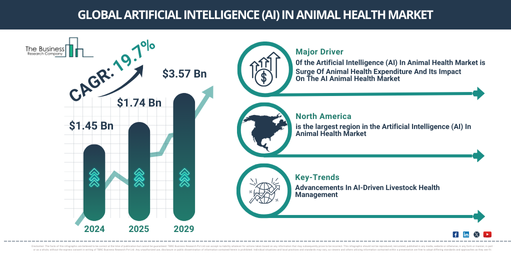
    In recent years, there has been a swift expansion in the market size of Artificial Intelligence (AI) in the field of animal health. The market, which is worth $1.45 billion in 2024, is projected to increase to $1.74 billion in 2025, with a Compound Annual Growth Rate (CAGR) of 19.8%. The significant growth experienced during the historic period is due to factors such as the rise in AI applications, the availability of AI-centered solutions, major initiatives taken by key companies, increased spending on animals, and the inclusion of AI in veterinary diagnostics.

    Expectations are set for the artificial intelligence (AI) in the animal health market size to witness substantial expansion in the coming years. The market size is predicted to escalate to $3.57 billion in 2029, increasing at a compound annual growth rate (CAGR) of 19.7%. The growth during the projected period can be attributed to the precision management in livestock and veterinary healthcare, innovative solutions backed up by data-informed insights, early detection of diseases and identification of anomalies through remote monitoring and diagnosis, as well as an emphasis on proactive healthcare and custom-tailored medicine. Key trends in the forecast period include advancements in veterinary diagnostics, the growing acceptance of AI technologies, improved disease detection and monitoring, and an increasing focus on animal welfare and conservation.

    Download a free sample to assess the report’s scope and structure:

    https://www.thebusinessresearchcompany.com/sample.aspx?id=14250&type=smp

    Which Major Market Drivers Are Expected to Boost the Growth Potential of the Artificial Intelligence (AI) In Animal Health Market?

    The upswing in spending on animal health is predicted to spur the expansion of the artificial intelligence (AI) in animal health market. This type of spending refers to the comprehensive sum directed towards preservation and enhancement of animal well-being. Rising investment in animal health is attributed to growing awareness, the escalating trend of treating pets as family members, and the need for sophisticated veterinary care services, inclusive of ground-breaking technologies like artificial intelligence. Pet owners with larger disposable income can avail of AI-backed telehealth services and remote supervision solutions, enabling consistent supervision of their pets’ health and online veterinary consultations. For instance, data from the American Pet Products Association disclosed that Americans splurged $136.8 billion on pet health in 2022, marking a 10.68% surge from the preceding year’s $123.6 billion. Furthermore, veterinary care services accounted for $35.9 billion of this total. Hence, the surge in animal health expenditure is fuelling the expansion of the artificial intelligence (AI) in the animal health market.

    Which Key Market Segments Comprise the Artificial Intelligence (AI) In Animal Health Market and Drive Its Revenue Growth?

    The artificial intelligence (AI) in animal health market covered in this report is segmented –

    1) By Solution: Hardware, Software And Services

    2) By Technology: Machine Learning, Natural Language Processing (NLP), Computer Vision, Other Technologies

    3) By Animal Type: Companion Animals, Production Animals

    4) By Application: Diagnostics, Identification, Tracking, And Monitoring, Other Applications

    5) By End-Use: Veterinary Clinics And Hospitals, Research Institutions, Farms And Livestock Producers

    Subsegments:

    1) By Hardware: Diagnostic Devices, Wearable Health Monitoring Devices, Automated Feeding Systems

    2) By Software And Services: AI-Powered Diagnostic Tools, Predictive Analytics Software, Health Management Platforms, Consulting Services, Implementation And Integration Services, Maintenance And Support Services, Training And Educational Programs

    Request customized data on this market:

    https://www.thebusinessresearchcompany.com/customise?id=14250&type=smp

    Which Areas Are Leading Regions in the Artificial Intelligence (AI) In Animal Health Market Expansion Across the Globe?

    North America was the largest region in the artificial intelligence (AI) in animal health market in 2024. Asia-Pacific is expected to be the fastest-growing region in the forecast period. The regions covered in the artificial intelligence (AI) in animal health market report are Asia-Pacific, Western Europe, Eastern Europe, North America, South America, Middle East, Africa.

    What Are the Key Market Trends in the Artificial Intelligence (AI) In Animal Health Market Over the Coming Years?

    Prominent firms in the AI animal health market are innovating with advanced technologies like AI-based cattle feed solutions to optimize livestock nutrition and farming operations. This tech aims to increase the overall effectiveness of livestock agriculture by customizing feeding schedules to meet the unique needs of each animal or group, factoring in criteria like animal age, weight, health, and dietary needs. For instance, in January 2024, Precision Livestock Technologies, a U.S. company specializing in livestock feeding and health software as well as hardware, launched the inaugural system using AI to anticipate cattle food intake and provide feeding recommendations. The system creates daily comprehensive feeding forecasts using a wide array of data collected from PLT’s machine vision bunk management system and auxiliary data sources. The system considers variables such as feeding pace, feeding times, feeding cycles, cattle behavior, ration type, climatic conditions, and many more.

    View the full report here:

    https://www.thebusinessresearchcompany.com/report/artificial-intelligence-ai-in-animal-health-global-market-report

    How Is the Artificial Intelligence (AI) In Animal Health Market Conceptually Defined?

    Artificial intelligence (AI) in animal health refers to the application of advanced computational techniques to analyze, interpret, and improve various aspects of animal healthcare. This involves the use of algorithms, machine learning, and data analytics to process large sets of data related to animal health and well-being.

    Purchase the full report and get a swift delivery:

    https://www.thebusinessresearchcompany.com/purchaseoptions.aspx?id=14250

    About The Business Research Company:

    With over 15000+ reports from 27 industries covering 60+ geographies, The Business Research Company has built a reputation for offering comprehensive, data-rich research and insights. Armed with 1,500,000 datasets, the optimistic contribution of in-depth secondary research, and unique insights from industry leaders, you can get the information you need to stay ahead in the game.

    Get in touch with us:

    The Business Research Company: https://www.thebusinessresearchcompany.com/

    Americas +1 3156230293

    Asia +44 2071930708

    Europe +44 2071930708

    Email us at info@tbrc.info

    Follow us on:

    LinkedIn: https://in.linkedin.com/company/the-business-research-company

    YouTube: https://www.youtube.com/channel/UC24_fI0rV8cR5DxlCpgmyFQ

    Global Market Model: https://www.thebusinessresearchcompany.com/global-market-model
  • $5.83 Billion Forecast for Artificial Disc Market by 2029, Backed by Demand and Innovation

    $5.83 Billion Forecast for Artificial Disc Market by 2029, Backed by Demand and Innovation

    Discover trends, market shifts, and competitive outlooks for the artificial disc industry through 2025-2034 with The Business Research Company’s reliable data and in-depth research

    What is the Projected CAGR for the Artificial Disc Market Size from 2025 to 2034?

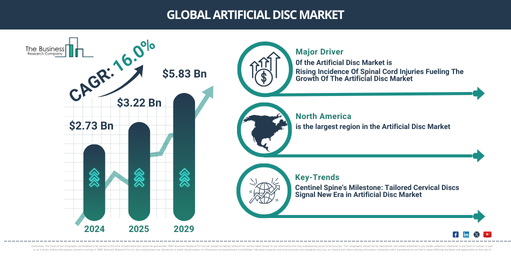
    In recent times, the artificial disc market has expanded swiftly. Its size will increase from $2.73 billion in 2024 to $3.22 billion in 2025, experiencing a compound annual growth rate (CAGR) of 17.9%. The past growth can be accredited to factors such as cost-effectiveness, ease of access to healthcare, patient inclination towards motion preservation, stipulated regulatory approval and standards, proven clinical efficacy and successful long-term results, and advancements in material sciences.

    In the coming years, the artificial disc market is predicted to experience swift expansion, reaching $5.83 billion in 2029 with a compound annual growth rate (CAGR) of 16.0%. This expected surge during the forecast period is due to factors such as a competitive industry environment, the efficiency of healthcare costs, positive clinical outcomes, a predilection for motion preservation, and an uptick in minimally invasive procedures. Key trends over this period encompass patient-focused care and cooperative decision making, innovation in surgical procedures, introduction of regenerative medicine methodologies, broadening the scope for application, and the assimilation of high-tech imaging techniques.

    Download a free sample to assess the report’s scope and structure:

    https://www.thebusinessresearchcompany.com/sample.aspx?id=13283&type=smp

    What Are the Core Growth Drivers Propelling the Artificial Disc Market Forward?

    The increase in cases of spinal cord injuries is anticipated to encourage the growth of the artificial disc market. Spinal cord injuries encompass any trauma, damage, or injury inflicted on the spine components, such as the bones (vertebrae), intervertebral discs, ligaments, muscles, nerves, and other support structures. Artificial discs prove advantageous in such instances as they present a surgical substitute to spinal fusion, reestablish normal movement, reduce discogenic back pain, enhance flexibility, and avoid potential side effects of fusion surgery. For instance, a study published in the Journal of Global Health in July 2024, revealed the presence of scoliosis, in an examination of over 2 million youngsters, with a higher incidence in females. This increase in spinal cord injuries is, thereby, boosting the artificial disc market’s growth.

    Growth Impetus of Artificial Disc Market: The Escalating Demand for Minimal Surgical Procedures Fuels the Artificial Disc Market Growth


    What Segment Types Define the Artificial Disc Market Structure?

    The artificial disc market covered in this report is segmented –

    1) By Type: Cervical Disc, Artificial Disc, Lumbar

    2) By Material: Metal And Plastic, Metal

    3) By Indication: Spinal Trauma, Degenerative Spine Disease

    4) By End User: Hospitals, Specialty Clinics

    Subsegments:

    1) By Cervical Disc: Single-Level Cervical Discs, Multi-Level Cervical Discs

    2) By Lumbar Disc: Single-Level Lumbar Discs, Multi-Level Lumbar Discs

    3) By Artificial Disc: Total Disc Replacement, Semi-Constrained Disc Implants, Motion-Preserving Disc Implants

    Request customized data on this market:

    https://www.thebusinessresearchcompany.com/customise?id=13283&type=smp

    Which Geographic Areas Hold the Strongest Growth Potential in the Artificial Disc Market?

    North America was the largest region in the artificial disc market in 2024. Asia-Pacific is expected to be the fastest-growing region in the forecast period. The regions covered in the artificial disc market report are Asia-Pacific, Western Europe, Eastern Europe, North America, South America, Middle East, Africa

    Which Emerging Trends that Are Influencing the Artificial Disc Industry Evolution?

    Key players in the artificial disc market are striving to innovate new artificial disc such as cervical total disc replacement system to advance patient results, increase flexibility, minimize pain, and fulfill the escalating need for less invasive surgical remedies that maintain the spine’s natural movement while effectively handling degenerative disc issues. A cervical total disc replacement system is a medical tool employed in spinal surgery to supplant a deteriorated or damaged intervertebral disc in the cervical (neck) region of the spine. For example, Centinel Spine, LLC, a medical device firm headquartered in the US, unveiled its FDA-certified cervical total disc replacement system in December 2022. This system consists of the Prodisc C Vivo and Prodisc C SK devices and belongs to Centinel Spine’s wider Match-the-Disc platform. This platform provides surgeons with the option to choose the most fitting implant based on each patient’s unique anatomy. It offers a range of implant choices designed to cater to diverse anatomical requirements, thus bolstering the surgeon’s ability to align the disc with each patient’s specific needs.

    View the full report here:

    https://www.thebusinessresearchcompany.com/report/artificial-disc-global-market-report

    What Is the Definition of the Artificial Disc Market?

    An artificial disc is a medical device used in spinal surgery to replace a damaged or degenerated natural intervertebral disc in the spine. These soft, cushion-like structures between the vertebrae act as shock absorbers, providing flexibility and support to the spine.

    Purchase the full report and get a swift delivery:

    https://www.thebusinessresearchcompany.com/purchaseoptions.aspx?id=13283

    About The Business Research Company:

    With over 15000+ reports from 27 industries covering 60+ geographies, The Business Research Company has built a reputation for offering comprehensive, data-rich research and insights. Armed with 1,500,000 datasets, the optimistic contribution of in-depth secondary research, and unique insights from industry leaders, you can get the information you need to stay ahead in the game.

    Get in touch with us:

    The Business Research Company: https://www.thebusinessresearchcompany.com/

    Americas +1 3156230293

    Asia +44 2071930708

    Europe +44 2071930708

    Email us at info@tbrc.info

    Follow us on:

    LinkedIn: https://in.linkedin.com/company/the-business-research-company

    YouTube: https://www.youtube.com/channel/UC24_fI0rV8cR5DxlCpgmyFQ

    Global Market Model: https://www.thebusinessresearchcompany.com/global-market-model
  • Global AR/VR Medical Simulation Market Projected to Reach $8.38 Billion by 2029 at a CAGR of 20%

    Global AR/VR Medical Simulation Market Projected to Reach $8.38 Billion by 2029 at a CAGR of 20%

    Discover trends, market shifts, and competitive outlooks for the ar/vr medical simulation industry through 2025-2034 with The Business Research Company’s reliable data and in-depth research

    What Is the Current and Projected Market Size of the AR/VR Medical Simulation Market Through 2034?

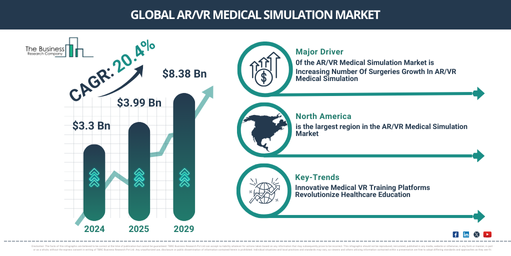
    In the last few years, the size of the AR/VR medical simulation market has increased dramatically. It is anticipated to ascend from $3.3 billion in 2024 to $3.99 billion in 2025, with a compound annual growth rate (CAGR) of 20.8%. The unprecedented growth during the historical period can be credited to elements such as the focus on resuscitation learning, a heightened demand for minimally invasive surgical operations, the rise in remote healthcare offerings, increased training in pediatric critical care, a surge in demand for healthcare facilities, and the increased utilization of medical simulators.

    The market size of AR/VR medical simulation is projected to skyrocket in the forthcoming years, reaching a staggering $8.38 billion by 2029 with a Compound Annual Growth Rate (CAGR) of 20.4%. Factors contributing to this projected growth in the forecast period include the escalating demand for solutions in medical training, inflated healthcare spending, population increase, escalating cases of chronic diseases, with attention on patient safety and high-quality care. The anticipated trend during the forecast period involves computer-based simulations, enhancements in graphics and processing power, virtual reality (VR) in surgical simulations, medical imaging technologies, miniaturization and mobility, as well as technological advancements in surgical tools.

    Download a free sample to assess the report’s scope and structure:

    https://www.thebusinessresearchcompany.com/sample.aspx?id=15117&type=smp

    What are the Fundamental Drivers and Innovations Shaping the AR/VR Medical Simulation Market?

    The AR/VR medical simulation market’s growth is likely to be driven by an increase in surgical procedures. These surgeries, performed by a surgeon to treat a disease or condition in a patient, are growing in number due to several factors, including an ageing population, advancements in medical technology, and the rising incidence of chronic diseases. In surgeries, augmented reality (AR) and virtual reality (VR) medical simulations improve training, boost surgical outcomes, and enhance patient care by offering a safe and efficient platform for learning, skill development, and pre-surgery planning. For instance, data from the Aesthetic Society, an American organization specializing in plastic surgery and cosmetic medicine, showed a 2.9% growth in the total number of surgical procedures from 2022 to 2023, and a 10.2% increase from 2019 to 2023. Hence, the rising number of surgeries is fuelling the expansion of the AR/VR medical simulation market.

    How Is the AR/VR Medical Simulation Market Segmented?

    The AR/VR medical simulation market covered in this report is segmented –

    1) By Product And Service: Medical Simulation Anatomical Models, Web Based Simulation, Medical Simulation Software, Simulation Training Services

    2) By Application: Medical Education, Patient Care Management, Other Applications

    3) By End-Users: Hospitals And Healthcare Institutions, Medical Schools And Universities, Military Organizations, Other End-Users

    Subsegments:

    1) By Medical Simulation Anatomical Models: Physical Models, AR Or VR Models

    2) By Web-Based Simulation: Online Training Platforms, Virtual Learning Modules

    3) By Medical Simulation Software: Patient Simulation Software, Surgical Simulation Software, Scenario-Based Training Software

    4) By Simulation Training Services: Instructor-Led Training, Remote Simulation Training, Technical Support And Maintenance

    Request customized data on this market:

    https://www.thebusinessresearchcompany.com/customise?id=15117&type=smp

    Which Regions Are Driving the Next Phase of the AR/VR Medical Simulation Market Growth?

    North America was the largest region in the AR/VR medical simulation market in 2024. Asia-Pacific is expected to be the fastest growing region in the forecast period. The regions covered in the AR/VR medical simulation market report are Asia-Pacific, Western Europe, Eastern Europe, North America, South America, Middle East, Africa.

    What Key Trends Are Shaping the Future of the AR/VR Medical Simulation Market?

    Leading businesses in the AR/VR medical simulation market are concentrating their efforts on creating innovative products, such as medical virtual reality (VR) training platforms, to maintain a competitive advantage. A digital system that utilizes VR technology to simulate medical scenarios, tasks, and settings for medical education, training, and competency development is referred to as a medical VR training platform. For example, ORamaVR Inc., a Swiss firm that specializes in medical VR training methods, introduced MAGES SDK in March 2022. This is the world’s first ultra-realistic VR creator tool specifically designed for fast surgical training and assessment, allowing any organization or company to create their own custom medical VR training or teaching simulation. Users can create VR psychomotor simulation prototypes of medical procedures with virtually zero coding, making it an excellent tool for speedy VR simulation development. The platform also supports multiple users at a time, with one active user instructor and a large audience of observers, and has been successfully tested for cooperative mode with a minimum of 20 users from different countries and using different headsets.

    View the full report here:

    https://www.thebusinessresearchcompany.com/report/ar-or-vr-medical-simulation-global-market-report

    How Is the AR/VR Medical Simulation Market Defined and What Are Its Core Parameters?

    AR/VR medical simulation involves the use of immersive technologies to create realistic virtual environments and scenarios for medical education and training. These simulations, by giving hands-on experience as well as opportunities for repetition and feedback, can increase clinical skills, information retention, confidence, and ultimately patient outcomes.

    Purchase the full report and get a swift delivery:

    https://www.thebusinessresearchcompany.com/purchaseoptions.aspx?id=15117

    About The Business Research Company:

    With over 15000+ reports from 27 industries covering 60+ geographies, The Business Research Company has built a reputation for offering comprehensive, data-rich research and insights. Armed with 1,500,000 datasets, the optimistic contribution of in-depth secondary research, and unique insights from industry leaders, you can get the information you need to stay ahead in the game.

    Get in touch with us:

    The Business Research Company: https://www.thebusinessresearchcompany.com/

    Americas +1 3156230293

    Asia +44 2071930708

    Europe +44 2071930708

    Email us at info@tbrc.info

    Follow us on:

    LinkedIn: https://in.linkedin.com/company/the-business-research-company

    YouTube: https://www.youtube.com/channel/UC24_fI0rV8cR5DxlCpgmyFQ

    Global Market Model: https://www.thebusinessresearchcompany.com/global-market-model

  • Critical Market Drivers Shaping the Outlook for Appendiceal Cancer Treatment Market from 2025-2034: Clinical Trials Advancements Fueling Growth In The Appendiceal Cancer Treatment Market

    Critical Market Drivers Shaping the Outlook for Appendiceal Cancer Treatment Market from 2025-2034: Clinical Trials Advancements Fueling Growth In The Appendiceal Cancer Treatment Market

    Discover trends, market shifts, and competitive outlooks for the appendiceal cancer treatment industry through 2025-2034 with The Business Research Company’s reliable data and in-depth research

    How Has The Appendiceal Cancer Treatment Market Growth Evolved From 2024 To 2025, And What’s Ahead?

    There has been robust growth in the appendiceal cancer treatment market size in the past few years. The projected growth predicts a trajectory from $3.98 billion in 2024 to $4.21 billion in 2025 with a compound annual growth rate (CAGR) of 5.7%. Factors contributing to this growth during the historical period include advancements in clinical research and trials, improvements in diagnostics, collaborations and multidisciplinary strategies, government support and funding, as well as increasing awareness and education.

    The market size for treating appendiceal cancer is projected to witness a robust growth in the upcoming years, escalating to $5.18 billion by 2029 with a compound annual growth rate (CAGR) of 5.3%. This increment during the prediction period can be credited to the progress in immunotherapy, customized therapies, genomic medicine, regulatory confirmations, and patient-focused care. Significant trends anticipated during this period involve breakthroughs in immunotherapy, precision medicine and the identification of biomarkers, amalgamated therapies, advancements in digital health technology, and evidence from the real world aiding data-informed decision making.

    Download a free sample to assess the report’s scope and structure:

    https://www.thebusinessresearchcompany.com/sample.aspx?id=13204&type=smp

    What Are the Core Growth Drivers Propelling the Appendiceal Cancer Treatment Market Forward?

    The appendiceal cancer treatment market is projected to grow due to the rise in the number of clinical trials. Clinical trials represent crucial human biomedical or behavioural research studies that address specific questions about biomedical or behavioural interventions. These trials are particularly focusing on novel medications as well as existing treatments which require further investigation and comparative studies. Such trials are key to expanding our knowledge of appendiceal cancer and honing more effective, tailored treatment strategies. For example, Xtalks, a Canada-based digital healthcare company, reported in May 2023 that there were 452,604 registered clinical trials worldwide on ClinicalTrials.gov, with 64,838 actively seeking participants. This is a significant jump from the over 365,000 registered trials in early 2021. Hence, the rise in clinical trials is stimulating the expansion of the appendiceal cancer market.

    Appendiceal Cancer Treatment Market Driver: The Appendiceal Cancer Treatment Market Is Likely To Expand Due To Increased Healthcare Spending


    What Segment Types Define the Appendiceal Cancer Treatment Market Structure?

    The appendiceal cancer treatment market covered in this report is segmented –

    1) By Type: Colonic-Type Adenocarcinoma, Mucinous Adenocarcinoma Of Appendix, Goblet Cell Adenocarcinoma, Neuroendocrine Carcinoma, Other Types

    2) By Treatment: Surgery, Chemotherapy, Radiation Therapy, Other Treatments

    3) By Route Of Administration: Oral, Intravenous, Other Routes Of Administration

    4) By End User: Hospitals, Cancer Research Institutes, Other End Users

    Subsegments:

    1) By Colonic-Type Adenocarcinoma: Stage I, Stage II, Stage III, Stage IV

    2) By Mucinous Adenocarcinoma Of Appendix: Low-Grade Mucinous Adenocarcinoma, High-Grade Mucinous Adenocarcinoma

    3) By Goblet Cell Adenocarcinoma: Mixed Type, Pure Goblet Cell Carcinoma

    4) By Neuroendocrine Carcinoma: Well-Differentiated Neuroendocrine Tumors, Poorly Differentiated Neuroendocrine Carcinomas

    5) By Other Types: Sarcomas, Lymphomas, Appendix Carcinoid Tumors

    Request customized data on this market:

    https://www.thebusinessresearchcompany.com/customise?id=13204&type=smp

    Which Geographic Areas Hold the Strongest Growth Potential in the Appendiceal Cancer Treatment Market?

    North America was the largest region in the appendiceal cancer treatment market in 2024. Asia-Pacific is expected to be the fastest-growing region in the forecast period. The regions covered in the appendiceal cancer treatment market report are Asia-Pacific, Western Europe, Eastern Europe, North America, South America, Middle East, Africa

    Which Emerging Trends that Are Influencing the Appendiceal Cancer Treatment Industry Evolution?

    Leading firms in the appendiceal cancer treatment market are advancing with breakthrough technologies such as digital health solutions, AI-enabled diagnostic instruments, personalized treatment modalities, and telehealth facilities that augment patient engagement and optimize healthcare services. The sphere of digital health solutions includes technologies that utilize digital tools to boost the quality of healthcare provision, incorporating telehealth, mobile health applications, and remote patient surveillance systems. For instance, in October 2024, CancerX, a biotechnology or health organization based in the U.S., initiated the 2025 Accelerator Program. The emphasis in the 2025 cohort will be predominantly geared towards pediatric oncology, reserving two spots (from a total of fifteen) for startups innovating within this sector. The collaboration with KidsX is aimed at capitalizing on the capabilities of over 30 children’s hospitals to enhance recovery results for young patients.

    View the full report here:

    https://www.thebusinessresearchcompany.com/report/appendiceal-cancer-treatment-global-market-report

    What Is the Definition of the Appendiceal Cancer Treatment Market?

    Appendiceal cancer treatment refers to the medical interventions and therapies employed to manage and address cancer originating in the appendix, a small organ attached to the beginning of the large intestine. It is essential for managing rare type of cancer and improving affected individuals’ prognosis and quality of life.

    Purchase the full report and get a swift delivery:

    https://www.thebusinessresearchcompany.com/purchaseoptions.aspx?id=13204

    About The Business Research Company:

    With over 15000+ reports from 27 industries covering 60+ geographies, The Business Research Company has built a reputation for offering comprehensive, data-rich research and insights. Armed with 1,500,000 datasets, the optimistic contribution of in-depth secondary research, and unique insights from industry leaders, you can get the information you need to stay ahead in the game.

    Get in touch with us:

    The Business Research Company: https://www.thebusinessresearchcompany.com/

    Americas +1 3156230293

    Asia +44 2071930708

    Europe +44 2071930708

    Email us at info@tbrc.info

    Follow us on:

    LinkedIn: https://in.linkedin.com/company/the-business-research-company

    YouTube: https://www.youtube.com/channel/UC24_fI0rV8cR5DxlCpgmyFQ

    Global Market Model: https://www.thebusinessresearchcompany.com/global-market-model
  • Anaplastic Astrocytoma Market Valuation Expected To Reach $0.62 Billion By 2029, Growing At A Rate Of 7%

    Anaplastic Astrocytoma Market Valuation Expected To Reach $0.62 Billion By 2029, Growing At A Rate Of 7%

    Discover trends, market shifts, and competitive outlooks for the anaplastic astrocytoma industry through 2025-2034 with The Business Research Company’s reliable data and in-depth research

    What Are the Projected Market Size and Growth Rates for the Anaplastic Astrocytoma Market From 2025 To 2029?

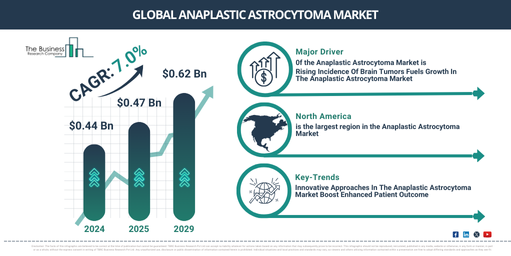
    Significant growth has been observed in the anaplastic astrocytoma market size in the past few years. This market is projected to expand from $0.44 billion in 2024 to $0.47 billion in 2025, with a compound annual growth rate (CAGR) of 7.8%. The increase during the historical duration is due to factors like rising adoption of targeted therapies, increased patient advocacy and awareness, expansion of clinical trials, health policy and funding, and government initiatives.

    The market size for anaplastic astrocytoma is predicted to witness robust expansion in the coming years. The market is anticipated to reach a value of $0.62 billion by 2029, growing at a compound annual growth rate (CAGR) of 7.0%. The growth during the projected period can be credited to the escalation in research and development activities, the rising demand for personalized medicine, expanding investments, increasing disease awareness, and a rise in stress and depression levels. Notable trends during the prediction period encompass progress in neurosurgery, advancements in radiation therapy, clinical trials and research, the implementation of telemedicine and remote monitoring technologies, advancements in imaging techniques, and developments in biotechnology and drug creation.

    Download a free sample to assess the report’s scope and structure:

    https://www.thebusinessresearchcompany.com/sample.aspx?id=12874&type=smp

    Which Factors and External Forces Are Driving Demand in the Anaplastic Astrocytoma Market?

    The increasing occurrence of primary malignant and non-malignant brain tumours is expected to accelerate the expansion of the anaplastic astrocytoma market. These tumours in the brain can be identified as either malignant (cancerous and invasive) or benign (non-cancerous and non-invasive), each with varying levels of severity and capability to spread. Anaplastic astrocytoma treatment is designed to remove both the tumour and any affected surrounding tissue whilst maintaining brain function. As per the American Society of Clinical Oncology (ASCO), a non-profit organisation based in the US, around 24,810 adults, with 14,280 males and 10,530 females, in the US are projected to be diagnosed with primary cancerous tumours in the brain and spinal cord in March 2023. Hence, the increasing occurrences of primary malignant and non-malignant brain tumours is anticipated to fuel the growth of the anaplastic astrocytoma market.

    Anaplastic Astrocytoma Market Driver: Expansion of the Anaplastic Astrocytoma Market Fuelled by Government Funding


    Which Segments in the Anaplastic Astrocytoma Offer the Most Growth?

    The anaplastic astrocytoma market covered in this report is segmented –

    1) By Disease Type: Grade I, Grade II, Grade III, Grade IV

    2) By Treatment Type: Surgery, Chemotherapy, Radiation

    3) By Treatment Phase: Pre-Registration Phase, Clinical Trial Phase

    4) By End-User: Hospitals And Clinics, Retail Pharmacy, Online Pharmacy

    Subsegments:

    1) By Grade I: Pilocytic Astrocytoma

    2) By Grade II: Diffuse Astrocytoma, Oligodendroglioma

    3) By Grade III: Anaplastic Astrocytoma, Anaplastic Oligodendroglioma

    4) By Grade IV: Glioblastoma Multiforme (GBM), Primary Glioblastoma, Secondary Glioblastoma

    Request customized data on this market:

    https://www.thebusinessresearchcompany.com/customise?id=12874&type=smp

    What Are the Fastest-Growing Geographies in the Anaplastic Astrocytoma Market?

    North America was the largest region in the anaplastic astrocytoma market in 2024. Asia-Pacific is expected to be the fastest-growing region in the forecast period. The regions covered in anaplastic astrocytoma market report are Asia-Pacific, Western Europe, Eastern Europe, North America, South America, Middle East and Africa.

    Which Cutting-Edge Market Trends Are Expected to Drive the Anaplastic Astrocytoma Market’s Growth?

    Leading businesses in the anaplastic astrocytoma market are pioneering new treatment methods to increase effectiveness, reduce adverse effects, and boost patient results. For example, in June 2022, the U.S. Food and Drug Administration, an American federal agency, endorsed a novel treatment combination of the oral medications dabrafenib (Tafinlar) and trametinib (Mekinist) for advanced BRAF V600E mutation brain tumors on a fast-track basis. This sanction covers adult and pediatric patients with high- and low-grade gliomas which have developed post prior treatment. The BRAF V600E mutation is common in a range of glioma types, inclusive of low-grade gliomas, pleomorphic xanthoastrocytomas (PXA), gangliogliomas, and pilocytic astrocytoma. The approval was guided by the clinical studies for the Tafinlar-Mekinist combination therapy which conveyed tumor reduction benefits for both adult and pediatric glioma patients. The response rates noted were 33% in high-grade glioma patients, 50% in low-grade glioma patients, and 25% in pediatric glioma patients.

    View the full report here:

    https://www.thebusinessresearchcompany.com/report/anaplastic-astrocytoma-global-market-report

    What Are the Key Elements That Define the Anaplastic Astrocytoma Market?

    Anaplastic astrocytoma is a rare, malignant brain tumor that arises from astrocytes, the supportive cells in the nervous system. Anaplastic astrocytoma can cause neurological symptoms such as headaches, seizures, changes in behavior and motor deficits that are treated with a combination of surgery, radiation therapy and chemotherapies.

    Purchase the full report and get a swift delivery:

    https://www.thebusinessresearchcompany.com/purchaseoptions.aspx?id=12874

    About The Business Research Company:

    With over 15000+ reports from 27 industries covering 60+ geographies, The Business Research Company has built a reputation for offering comprehensive, data-rich research and insights. Armed with 1,500,000 datasets, the optimistic contribution of in-depth secondary research, and unique insights from industry leaders, you can get the information you need to stay ahead in the game.

    Get in touch with us:

    The Business Research Company: https://www.thebusinessresearchcompany.com/

    Americas +1 3156230293

    Asia +44 2071930708

    Europe +44 2071930708

    Email us at info@tbrc.info

    Follow us on:

    LinkedIn: https://in.linkedin.com/company/the-business-research-company

    YouTube: https://www.youtube.com/channel/UC24_fI0rV8cR5DxlCpgmyFQ

    Global Market Model: https://www.thebusinessresearchcompany.com/global-market-model
  • Ambient Intelligence Market Forecast 2025–2034: Trends Reshaping Demand, Investment, and Innovation

    Ambient Intelligence Market Forecast 2025–2034: Trends Reshaping Demand, Investment, and Innovation

    Discover trends, market shifts, and competitive outlooks for the ambulatory healthcare information technology (it) industry through 2025-2034 with The Business Research Company’s reliable data and in-depth research

    How Has The Ambulatory Healthcare Information Technology (IT) Market Growth Evolved From 2024 To 2025, And What’s Ahead?

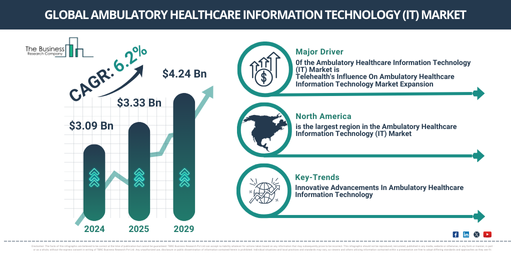
    In recent times, the ambulatory healthcare information technology (IT) market has seen robust growth. The size of this market is forecasted to expand from $3.09 billion in 2024 to $3.33 billion in 2025, presenting a compound annual growth rate (CAGR) of 7.9%. Factors such as the COVID-19 impact, government mandates and support for healthcare IT infrastructure, and an increase in healthcare spending are driving growth during this historic period.

    Expectations are that the market size for ambulatory healthcare information technology (IT) will experience considerable growth in the coming years. By 2029, it could reach up to $4.24 billion, growing at a compound annual growth rate (CAGR) of 6.2%. This predicted growth in the forecast period can be credited to factors like increased emphasis on telehealth, adherence to medical reforms and regulations, a rising demand for instantaneous patient data, and efficient healthcare processes. The forecast period is set to witness trends such as a surge in technological progression, escalated use of big data, and heightened adoption of healthcare IT solutions.

    Download a free sample to assess the report’s scope and structure:

    https://www.thebusinessresearchcompany.com/sample.aspx?id=13781&type=smp

    What Are the Primary Drivers Supporting the Market Growth of the Ambulatory Healthcare Information Technology (IT) Market?

    The escalating emphasis on telehealth is anticipated to drive the expansion of the ambulatory healthcare information technology (IT) market. Telehealth is defined as the provision of healthcare services, like consultations, diagnosis, monitoring, and treatments through telecommunication technology. By integrating ambulatory healthcare IT systems with telehealth platforms, this enables seamless virtual consultations, appointment arrangement, electronic prescriptions, and secure communication, thereby ensuring a smooth experience for both patients and healthcare providers. For instance, data from the National Center for Biotechnology Information, a United States government entity, revealed in May 2022 that the use of telemedicine significantly skyrocketed, with a 230% increase in total call volume, and 198% rise in first-time callers. Additionally, the number of successfully resolved consultations amplified by 235%, while referrals to other specialists rose by 190%. As a result, the escalating emphasis on telehealth is fueling the expansion of the ambulatory healthcare information technology (IT) market.

    Which Primary Segments of the Ambulatory Healthcare Information Technology (IT) Market Are Driving Growth and Industry Transformations?

    The ambulatory healthcare information technology (IT) market covered in this report is segmented –

    1) By Type: Ambulatory Services, Primary Care Offices, Outpatient Departments, Emergency Departments, Surgical Specialty, Medical Specialty, Other Types

    2) By Modality: Hospital Affiliated, Freestanding

    3) By Surgery Type: Ophthalmology, Orthopedics, Gastroenterology, Pain Management, Other Surgery Types

    4) By Application: Laceration Treatment, Bone Fracture Treatment, Emergency Care Service, Trauma Treatment

    Subsegments:

    1) By Ambulatory Services: Telehealth Services, Home Health Care, Rehabilitation Services

    2) By Primary Care Offices: Family Medicine, Internal Medicine, Pediatrics

    3) By Outpatient Departments: Urgent Care, Diagnostic Imaging, Lab Services

    4) By Emergency Departments: Level I Trauma Centers, Community Emergency Departments

    5) By Surgical Specialty: Orthopedic Surgery, Cardiothoracic Surgery, Neurological Surgery

    6) By Medical Specialty: Oncology, Endocrinology, Gastroenterology

    7) By Other Types: Palliative Care, Integrative Medicine, Specialty Clinics

    Request customized data on this market:

    https://www.thebusinessresearchcompany.com/customise?id=13781&type=smp

    Which Regions Are Key Players in the Growth of the Ambulatory Healthcare Information Technology (IT) Market?

    North America was the largest region in the ambulatory healthcare information technology (IT) market in 2024. Asia-Pacific is expected to be the fastest-growing region in the forecast period. The regions covered in the ambulatory healthcare information technology (IT) market report are Asia-Pacific, Western Europe, Eastern Europe, North America, South America, Middle East, Africa.

    What Are the Most Significant Market Trends in the Ambulatory Healthcare Information Technology (IT) Market?

    Mainstream enterprises in the ambulatory healthcare IT sector are prioritizing technologically superior products like ambulatory cloud EHR software to improve usability, value-based care, and the patient’s experience. This software refers to electronic health record solutions based in the cloud for outpatient care, providing manageable, flexible, and secure administration of patient records and clinical procedures. For instance, eClinicalWorks, a firm headquartered in the U.S. that provides cloud-based electronic health record software for ambulatory care, introduced an advanced EHR software version, V12, in October 2022. The V12 version offers improved application performance, 40% faster. It includes a module for pre-visit planning and offers improved accessibility with click reductions and new drug management displays. A floating toolbar offers easy access to vital workflow elements such as patient data, a virtual assistant, and crucial documents.

    View the full report here:

    https://www.thebusinessresearchcompany.com/report/ambulatory-healthcare-information-technology-it-global-market-report

    What Parameters Are Used to Define the Ambulatory Healthcare Information Technology (IT) Market?

    Ambulatory healthcare information technology (IT) refers to the application of information technology, specifically within the outpatient setting. It is used to improve medical care, lower costs, increase efficiency, reduce errors, and enhance patient satisfaction.

    Purchase the full report and get a swift delivery:

    https://www.thebusinessresearchcompany.com/purchaseoptions.aspx?id=13781

    About The Business Research Company:

    With over 15000+ reports from 27 industries covering 60+ geographies, The Business Research Company has built a reputation for offering comprehensive, data-rich research and insights. Armed with 1,500,000 datasets, the optimistic contribution of in-depth secondary research, and unique insights from industry leaders, you can get the information you need to stay ahead in the game.

    Get in touch with us:

    The Business Research Company: https://www.thebusinessresearchcompany.com/

    Americas +1 3156230293

    Asia +44 2071930708

    Europe +44 2071930708

    Email us at info@tbrc.info

    Follow us on:

    LinkedIn: https://in.linkedin.com/company/the-business-research-company

    YouTube: https://www.youtube.com/channel/UC24_fI0rV8cR5DxlCpgmyFQ

    Global Market Model: https://www.thebusinessresearchcompany.com/global-market-model
  • Alpha-1 Antitrypsin Deficiency Augmentation Therapy Market Outlook 2025–2034: Identifying Growth Drivers, Technology Trends, and Policy Impact

    Alpha-1 Antitrypsin Deficiency Augmentation Therapy Market Outlook 2025–2034: Identifying Growth Drivers, Technology Trends, and Policy Impact

    Discover trends, market shifts, and competitive outlooks for the alpha-1 antitrypsin deficiency augmentation therapy industry through 2025-2034 with The Business Research Company’s reliable data and in-depth research

    What Are the Key Milestones in the Alpha-1 Antitrypsin Deficiency Augmentation Therapy Market’s Growth Trajectory From 2025 To 2034?

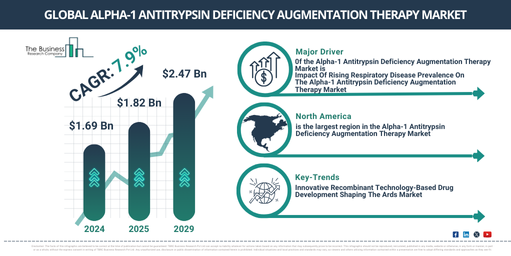
    The market size of alpha-1 antitrypsin deficiency augmentation therapy has witnessed robust growth in the past few years. It is projected to expand from $1.69 billion in 2024 to $1.82 billion in 2025, with a compound annual growth rate (CAGR) of 7.3%. The substantial growth during the historic period can be associated with better diagnosis techniques, awareness drives, clinical studies, and an increasing aging population.

    The market for alpha-1 antitrypsin deficiency augmentation therapy is projected to see a substantial increase in the coming years, reaching a size of $2.47 billion in the year 2029 at a compound annual growth rate (CAGR) of 7.9%. The significant growth anticipated within the forecast period is largely due to advancements in telehealth and remote monitoring, precision medicine, and gene therapy. The forecast period is expected to witness key trends like long-term safety and efficacy data, patient-focused care models, tele-rehabilitation initiatives, and customized dosing schemes.

    Download a free sample to assess the report’s scope and structure:

    https://www.thebusinessresearchcompany.com/sample.aspx?id=13006&type=smp

    What Are the Core Market Drivers Propelling Growth in the Alpha-1 Antitrypsin Deficiency Augmentation Therapy Industry?

    The growth of the alpha-1 antitrypsin deficiency augmentation therapy market is being pushed by an uptick in respiratory diseases. Disorders impairing the lungs and respiratory system contribute to breathing disruptions and reduced lung functionality, which are addressed through this therapy. The therapy enhances the necessary proteins in individuals suffering from alpha-1 antitrypsin deficiency, restoring the balance in the lungs, providing protection against excessive neutrophil elastase activity and curbing inflammation. The Centers for Disease Control and Prevention noted in March 2023 that there were 8,300 cases of tuberculosis in the US in 2022, up from 7,874 in 2021. As such, the escalating number of respiratory ailments is further propelling the growth of the alpha-1 antitrypsin deficiency augmentation therapy market. The alpha-1 antitrypsin deficiency augmentation therapy market is also set to grow due to the rise in the number of clinical trials, a critical component in the development and approval of new drugs and therapies for AATD. These trials, whether biomedical or behavioral, aim to answer critical questions regarding new and existing interventions. The growing interest in crafting new treatments for AATD is evident in the mounting number of clinical studies, increasing the probability of better, more efficient therapies entering the market. Remarkably, a May 2023 report by Canada’s Xtalks disclosed that over 452,604 clinical trials had been registered on ClinicalTrials.gov, highlighting a significant increase from the early 2021 tally of over 365,000 registered trials. Consequently, the uptrend in the number of clinical trials boosts the growth of the alpha-1 antitrypsin deficiency augmentation therapy market.

    How Is the Alpha-1 Antitrypsin Deficiency Augmentation Therapy Market Segmented?

    The alpha-1 antitrypsin deficiency augmentation therapy market covered in this report is segmented –

    1) By Product Type: Glassia, Aralast NP, Prolastin C, Zemaira And Respreeza

    2) By Route Of Administration: Oral, Injection, Inhalation

    3) By End User: Hospitals, Specialty Clinics, Other End Users

    Request customized data on this market:

    https://www.thebusinessresearchcompany.com/customise?id=13006&type=smp

    Which Regions Are Driving the Next Phase of the Alpha-1 Antitrypsin Deficiency Augmentation Therapy Market Growth?

    North America was the largest region in the alpha-1 antitrypsin deficiency augmentation therapy market in 2024. The regions covered in alpha-1 antitrypsin deficiency augmentation therapy market report are Asia-Pacific, Western Europe, Eastern Europe, North America, South America, Middle East and Africa.

    What Key Market Trends and Innovations Are Shaping the Future of the Alpha-1 Antitrypsin Deficiency Augmentation Therapy Industry?

    Leading corporations in the acute respiratory distress syndrome (ARDS) market are striving to create innovative therapies, such as drugs developed with recombinant technology, to maintain their market dominance. This technique involves altering the DNA of living organisms to produce specific proteins and is used for manufacturing therapeutic pharmaceutical products. For example, in March 2022, the biotech firm Inhibrx Inc., based in the US, revealed that their product, INBRX-101, was granted orphan drug status by the U.S. Food and Drug Administration (FDA) for the treatment of alpha-1 antitrypsin deficiency (AATD). INBRX-101, a recombinant human AAT-Fc fusion protein, with the possibility of a once-monthly dose, aims to safely achieve and sustain the AAT levels found in healthy individuals.

    View the full report here:

    https://www.thebusinessresearchcompany.com/report/alpha-1-antitrypsin-deficiency-augmentation-therapy-global-market-report

    How Is the Alpha-1 Antitrypsin Deficiency Augmentation Therapy Market Defined and What Are Its Core Parameters?

    Alpha-1 antitrypsin deficiency augmentation therapy is a medical treatment that involves infusing purified alpha-1 antitrypsin protein into individuals with deficient levels to protect the lungs from damage caused by an imbalance of protease and antiprotease enzymes. It aims to slow the progression of emphysema and improve lung function in affected patients.

    Purchase the full report and get a swift delivery:

    https://www.thebusinessresearchcompany.com/purchaseoptions.aspx?id=13006

    About The Business Research Company:

    With over 15000+ reports from 27 industries covering 60+ geographies, The Business Research Company has built a reputation for offering comprehensive, data-rich research and insights. Armed with 1,500,000 datasets, the optimistic contribution of in-depth secondary research, and unique insights from industry leaders, you can get the information you need to stay ahead in the game.

    Get in touch with us:

    The Business Research Company: https://www.thebusinessresearchcompany.com/

    Americas +1 3156230293

    Asia +44 2071930708

    Europe +44 2071930708

    Email us at info@tbrc.info

    Follow us on:

    LinkedIn: https://in.linkedin.com/company/the-business-research-company

    YouTube: https://www.youtube.com/channel/UC24_fI0rV8cR5DxlCpgmyFQ

    Global Market Model: https://www.thebusinessresearchcompany.com/global-market-model