Blog

  • Nucleic Acid Extraction Instruments And Reagents Market Size Forecast: How The Industry Is Expected To Grow From 2026 To 2030

    Nucleic Acid Extraction Instruments And Reagents Market Size Forecast: How The Industry Is Expected To Grow From 2026 To 2030

    Backed by market attractiveness analysis, total addressable market sizing, company benchmarking matrices, interactive Excel dashboards, wider supply chain intelligence, emerging startup coverage, and detailed product-level insights, The Business Research Company’s 2026 market reports are designed to offer research that is more actionable and strategically valuable than ever.

    Nucleic Acid Extraction Instruments And Reagents Market Size Forecast: How Big Could The Market Get By 2030?

    The nucleic acid extraction instruments and reagents market size has experienced rapid growth in recent years. This market is projected to expand from $4.97 billion in 2025 to $5.54 billion in 2026, demonstrating a compound annual growth rate (CAGR) of 11.5%. Historically, this expansion can be linked to factors such as the rise in molecular diagnostics testing, broader application of PCR-based techniques, increased research in genomics and proteomics, a growing embrace of automated laboratory workflows, and the widespread availability of standardized extraction kits.

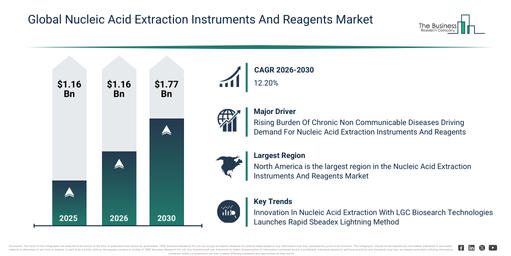
    The nucleic acid extraction instruments and reagents market size is anticipated to experience substantial expansion in the coming years. By 2030, this market is forecasted to reach $8.78 billion, achieving a compound annual growth rate (CAGR) of 12.2%. This projected growth during the forecast period stems from several factors, including the rising need for personalized medicine, broader infectious disease testing, increased financial commitments to genomics research, the growing uptake of fully automated laboratory systems, and a greater emphasis on quick diagnostic results. Key developments anticipated in this period encompass the greater embrace of automated extraction systems, an escalating requirement for high-throughput nucleic acid processing, the expanded application of magnetic bead-based extraction techniques, the proliferation of integrated sample-to-result platforms, and a heightened emphasis on the precision and consistency of extraction processes.

    Get A Free Sample Report With In-Depth Market Insights:

    https://thebusinessresearchcompany.com/sample_request?id=66857741&type=smp&name=Nucleic%20Acid%20Extraction%20Instruments%20And%20Reagents%20Market%20Report%202026&utm_source=Blogs&utm_medium=Paid&utm_campaign=Sep_PR

    Nucleic Acid Extraction Instruments And Reagents Market Growth Factors: What’s Supporting Expansion?

    The expanding occurrence of chronic non-communicable diseases (NCDs) is anticipated to drive the demand within the nucleic acid extraction instruments and reagents market. These NCDs encompass enduring health conditions such as cardiovascular ailments, various cancers, chronic respiratory illnesses, and diabetes, which progress gradually and contribute significantly to global disease burden and mortality. Nucleic acid extraction instruments and reagents play a vital role by enabling molecular diagnostics, genetic testing, biomarker analysis, pharmacogenomic profiling, and disease monitoring, all crucial for better comprehension and treatment of these chronic conditions. For example, data from the American Heart Association, a US-based non-profit organization, indicated in January 2024 that the age-adjusted mortality rate from cardiovascular disease rose to 233.3 per 100,000 in 2024, marking a 4.0% increase from 224.4 per 100,000 recorded in 2023. Consequently, the growing prevalence of chronic non-communicable diseases is a key factor boosting the nucleic acid extraction instruments and reagents market.

    Nucleic Acid Extraction Instruments And Reagents Market Segment Analysis: What Are The Core Market Categories?

    The nucleic acid extraction instruments and reagents market covered in this report is segmented –

    1) By Type: Instruments, Spin Columns, Beads Or Magnetic Beads, Automated Nucleic Acid Extraction Systems, Extraction Kits And Reagents And Consumables, Other Types

    2) By Extraction Type: DNA Extraction, DNA Or RNA Extraction, RNA Extraction

    3) By Method: Solution-Based Methods, Solid-Phase-Based Methods

    4) By End User: Academic Research Institutes, Hospitals And Diagnostic Centers, Pharmaceutical And Biotechnology Industry, Contract Research Organizations (CROs), Other End Users

    Subsegments:

    1) By Instruments: Manual Extraction Instruments, Automated Extraction Instruments, Specialized Nucleic Acid Extractors

    2) By Spin Columns: Standard, High-Throughput, Specialized

    3) By Beads Or Magnetic Beads: Silica-Based Beads, Magnetic Beads For DNA Or RNA Extraction, Functionalized Beads For Nucleic Acid Binding

    4) By Automated Nucleic Acid Extraction Systems: Fully Automated Systems, Semi-Automated Systems

    5) By Extraction Kits And Reagents And Consumables: DNA Extraction Kits, RNA Extraction Kits, Reagents For Nucleic Acid Purification, Consumables

    6) By Other Types: Specialized Extraction Methods, Hybrid Methods

    Nucleic Acid Extraction Instruments And Reagents Market Industry Trends: What’s Reshaping Demand?

    Leading companies in the nucleic acid extraction instruments and reagents market are concentrating on developing novel solutions, such as nucleic acid extraction systems, to highlight their commitment to innovation and meeting particular market demands. These systems encompass a suite of laboratory tools and technologies engineered to isolate and purify nucleic acids (DNA and RNA) from various biological specimens, including blood, tissues, cells, and other bodily fluids. As an illustration, in January 2024, LGC Biosearch Technologies, a UK-based biotechnology firm, introduced the sbeadex Lightning nucleic acid extraction method, which transforms DNA purification by enabling high-purity extraction from plant and animal samples in just 5 minutes. This groundbreaking technique streamlines the conventional five-step process into three steps: bind, wash, and elute, leading to a time saving of up to 40 minutes per sample and boosting throughput by as much as tenfold. The resulting extracted DNA generally achieves high purity, with 260/280 ratios between 1.7 and 2, making it suitable for applications such as PCR and next-generation sequencing (NGS).

    Nucleic Acid Extraction Instruments And Reagents Market Competitive Overview And Top Companies

    Major companies operating in the nucleic acid extraction instruments and reagents market are Thermo Fisher Scientific Inc., F Hoffmann-La Roche Ltd., Merck Group, Corning Incorporated, Agilent Technologies Inc., PerkinElmer, Beckman Coulter, Bio-Rad Laboratories Inc., Qiagen NV, Eppendorf AG, LGC Biosearch Technologies, Promega Corporation, RBC Bioscience Corp., Takara Bio Inc., Meridian Bioscience, Bioneer Corporation, Macherey-Nagel, New England Biolabs, Miltenyi Biotec, Omega Bio-tek, BioVision Inc., Norgen Biotek Corp., Biosan Laboratories Inc., G-Biosciences, ADS Biotec Inc., BioChain Institute Inc., Lucigen Corporation

    View The Full Nucleic Acid Extraction Instruments And Reagents Market Report:

    https://thebusinessresearchcompany.com/report/nucleic-acid-extraction-instruments-and-reagents-global-market-report?utm_source=Blogs&utm_medium=Paid&utm_campaign=Sep_PR

    Nucleic Acid Extraction Instruments And Reagents Market Leading Geography: Which Region Contributes The Most Revenue?

    North America was the largest region in the nucleic acid extraction instruments and reagents market in 2025. The regions covered in the nucleic acid extraction instruments and reagents market report are Asia-Pacific, South East Asia, Western Europe, Eastern Europe, North America, South America, Middle East, Africa.

    Reach Out To Our Team:

    The Business Research Company: https://www.thebusinessresearchcompany.com/

    Americas: +1 310-496-7795

    Asia: +44 7882 955267 & +91 8897263534

    Europe: +44 7882 955267

    Email us at: marketing@tbrc.info

    Follow us on:

    LinkedIn: https://in.linkedin.com/company/the-business-research-company

    YouTube: https://www.youtube.com/channel/UC24_fI0rV8cR5DxlCpgmyFQ

    Global Market Model: https://www.thebusinessresearchcompany.com/global-market-model

  • Nucleic Acid Based Gene Therapy Market Reaches $1.44 Billion In 2026: Forecast And Growth Opportunities

    Nucleic Acid Based Gene Therapy Market Reaches $1.44 Billion In 2026: Forecast And Growth Opportunities

    Featuring market attractiveness scoring, total addressable market sizing, company benchmarking matrices, interactive Excel dashboards, deeper supply chain intelligence, emerging startup tracking, and granular product-level insights, The Business Research Company’s 2026 market reports are built to deliver research that is both more actionable and more strategically valuable.

    Nucleic Acid Based Gene Therapy Market Revenue Outlook: What CAGR Lies Ahead Through 2030?

    The nucleic acid based gene therapy market has demonstrated significant growth in recent years. This market is projected to expand from $0.88 billion in 2025 to $0.97 billion in 2026, achieving a compound annual growth rate (CAGR) of 10.2%. Historically, this expansion has been driven by several factors, including advancements in molecular biology research, a deeper understanding of genetic disease mechanisms, the expansion of clinical trials for gene therapies, rising investment in biotechnology research, and early regulatory approvals for nucleic acid therapies.

    The nucleic acid based gene therapy market is anticipated to undergo substantial expansion in the forthcoming years. It will grow to $1.44 billion in 2030 at a compound annual growth rate (CAGR) of 10.4%. This growth over the projected period can be attributed to several factors, including the increasing integration of CRISPR-based treatments, a growing demand for therapies addressing rare diseases, the expansion of facilities for gene therapy manufacturing, an intensifying focus on personalized oncology treatments, and an uptick in public and private funding directed towards genetic medicine. Noteworthy trends for the forecast period encompass a rising adoption of RNA-based therapeutics, increased utilization of both viral and non-viral gene delivery systems, a stronger emphasis on targeted gene editing technologies, the broadening availability of personalized genetic therapies, and an enhanced focus on precision medicine applications.

    Get A Free Sample Report With In-Depth Market Insights:

    https://thebusinessresearchcompany.com/sample_request?id=82028704&type=smp&name=Nucleic%20Acid%20Based%20Gene%20Therapy%20Market%20Report%202026&utm_source=Blogs&utm_medium=Paid&utm_campaign=Sep_PR

    Nucleic Acid Based Gene Therapy Market Demand Drivers: What’s Powering Industry Growth?

    The future expansion of the nucleic acid based gene therapy market is anticipated to be driven by increasing financial backing from governments and private enterprises. This financial backing encompasses monetary investments, grants, or subsidies originating from public or private entities, aimed at advancing the research, development, and market availability of these treatments. The surge in financial aid stems from a heightened global focus on finding remedies for rare and genetic ailments that currently have no effective cures. Government funding specifically accelerates advancements in nucleic-acid–based gene therapy by providing critical resources for research, clinical trials, and infrastructure, which directly fosters innovation and the development of practical treatments. For example, in July 2023, the U.S. National Institutes of Health, a U.S.-based federal health research agency, allocated over $140 million to expedite genome editing methods, including CRISPR and other nucleic acid technologies, for rare neurological and blood disorders. This represents a substantial rise from the $92 million in annual funding provided in 2022. Consequently, the growing financial support from governments and companies is propelling the growth of the nucleic acid based gene therapy market.

    Nucleic Acid Based Gene Therapy Market Segment Breakdown: Which Categories Lead On Revenue?

    The nucleic acid based gene therapy market covered in this report is segmented –

    1) By Technology: Anti-Sence and Anti-Gene, Short Inhibitory Sequences, Gene Transfer Therapy, Nucleoside Analogs, Ribozymes, Aptamers, Other Technologies

    2) By Application: Oncology, Muscular Dystrophy/ Muscular Disorders, Rare Diseases

    3) By End User: Hospitals And Clinics, Academic And Research Institutes

    Subsegments:

    1) By Anti-Sense And Anti-Gene: Oligonucleotide Therapeutics, Peptide Nucleic Acids (PNA), Morpholino Oligomers (MO)

    2) By Short Inhibitory Sequences (siRNA): Synthetic siRNA, Encapsulation/Delivery Systems for siRNA, Target-specific siRNA Therapies

    3) By Gene Transfer Therapy: Viral Vectors (Adenovirus, Lentivirus, Retrovirus, AAV), Non-Viral Vectors (Liposomes, Electroporation, Gene Gun)

    4) By Nucleoside Analogs: Purine Analogs, Pyrimidine Analogs

    5) By Ribozymes: Trans-Splicing Ribozymes, Hammerhead Ribozymes

    6) By Aptamers: RNA Aptamers, DNA Aptamers, Small Molecule Binding Aptamers

    7) By Other Technologies: CRISPR-based Gene Editing, Zinc Finger Nucleases (ZFN), Transcription Activator-Like Effector Nucleases (TALENs)

    Nucleic Acid Based Gene Therapy Market Innovation Trends: What Developments Are Reshaping The Industry?

    Major companies operating in the nucleic acid-based gene therapy market are focusing on personalized, autologous stem-cell therapies, such as genetically modified hematopoietic stem-cell infusions, to treat rare inherited diseases. Autologous therapies refer to treatments in which a patient’s own stem cells are removed, genetically corrected and re-infused to restore the missing biochemical function. For instance, in March 2024, Orchard Therapeutics, a US-based company that offers pharmaceuticals announced Lenmeldy (atidarsagene autotemcel) approved by the U.S. Food and Drug Administration for children with metachromatic leukodystrophy (MLD). Lenmeldy uses the patient’s own hematopoietic stem cells that have been genetically modified to express a functional ARSA gene, enabling enzyme restoration in the nervous system. This regulatory success underscores how companies can commercialize complex, autologous gene therapies despite high manufacturing costs.

    Nucleic Acid Based Gene Therapy Market Competitive Landscape: Which Companies Lead The Industry?

    Major companies operating in the nucleic acid based gene therapy market are Celsion Corporation, Wave Life Sciences, Imugene Ltd., Caperna LLC, Phylogica Limited, Protagonist Therapeutics Inc., Benitec Biopharma Ltd., EGEN, BioMedica, Transgene SA, Copernicus Therapeutics Inc., 4D Molecular Therapeutics Inc., Abeona Therapeutics Inc., Alnylam Pharmaceuticals Inc., Amgen Inc., Beam Therapeutics Inc., BioNTech SE, Bluebird Bio Inc., CRISPR Therapeutics AG, Editas Medicine Inc., Genevant Sciences Inc., Homology Medicines Inc., Intellia Therapeutics Inc., Ionis Pharmaceuticals Inc., MaxCyte Inc., Moderna Inc., Novartis International AG, Orchard Therapeutics plc, Precision BioSciences Inc., REGENXBIO Inc.

    View The Full Nucleic Acid Based Gene Therapy Market Report:

    https://thebusinessresearchcompany.com/report/nucleic-acid-based-gene-therapy-global-market-report?utm_source=Blogs&utm_medium=Paid&utm_campaign=Sep_PR

    Nucleic Acid Based Gene Therapy Market Regional Outlook: Where Is Opportunity Concentrated?

    North America was the largest region in the nucleic acid-based gene therapy market in 2025. Western Europe was the second-largest region in the nucleic acid-based gene therapy market report. The regions covered in the nucleic acid based gene therapy market report are Asia-Pacific, South East Asia, Western Europe, Eastern Europe, North America, South America, Middle East, Africa.

    Reach Out To Our Team:

    The Business Research Company: https://www.thebusinessresearchcompany.com/

    Americas: +1 310-496-7795

    Asia: +44 7882 955267 & +91 8897263534

    Europe: +44 7882 955267

    Email us at: marketing@tbrc.info

    Follow us on:

    LinkedIn: https://in.linkedin.com/company/the-business-research-company

    YouTube: https://www.youtube.com/channel/UC24_fI0rV8cR5DxlCpgmyFQ

    Global Market Model: https://www.thebusinessresearchcompany.com/global-market-model

  • Nucleic Acid Amplification Testing Market Growth In 2026: Market Size, Key Drivers And Future Outlook

    Nucleic Acid Amplification Testing Market Growth In 2026: Market Size, Key Drivers And Future Outlook

    Built to provide research that’s more actionable and strategically valuable, The Business Research Company’s 2026 market reports include market attractiveness analysis, total addressable market sizing, company benchmarking matrices, interactive Excel dashboards, broader supply chain intelligence, emerging startup tracking, and in-depth product insights.

    Nucleic Acid Amplification Testing Market Growth Analysis: How Will Revenue Trend Over The Forecast Period?

    The nucleic acid amplification testing market has seen significant expansion in recent times. Its value is expected to rise from $11.03 billion in 2025 to $12.7 billion in 2026, registering a compound annual growth rate (CAGR) of 15.2%. The historical increase in this market can be attributed to several factors including infectious disease outbreaks, the proliferation of clinical laboratories, the widespread adoption of PCR technology, various public health screening initiatives, and a decrease in assay expenses.

    The nucleic acid amplification testing market is projected to experience swift expansion in the coming years. It will grow to $22.1 billion in 2030 at a compound annual growth rate (CAGR) of 14.8%. This anticipated growth can be attributed to several factors such as the advancements in personalized medicine, the escalating demand for rapid diagnostic solutions, the expansion into emerging markets, ongoing technological miniaturization, and the regulatory approvals granted for novel assays. Furthermore, major developments expected during this period include the proliferation of rapid point-of-care molecular testing, the broadened application of multiplex and syndromic panels, an increase in the adoption of isothermal amplification techniques, the rise of home-based and decentralized testing options, and a heightened focus on early disease detection.

    Get A Free Sample Report With In-Depth Market Insights:

    https://thebusinessresearchcompany.com/sample_request?id=39655874&type=smp&name=Nucleic%20Acid%20Amplification%20Testing%20Market%20Report%202026&utm_source=Blogs&utm_medium=Paid&utm_campaign=Sep_PR

    Nucleic Acid Amplification Testing Market Growth Drivers: What’s Behind The Acceleration?

    The escalating occurrence of infectious diseases is anticipated to propel the expansion of the nucleic acid amplification testing market moving forward. These diseases are conditions originating from organisms that can transmit between individuals, either directly or indirectly, through various avenues such as physical contact, airborne particles, tainted food or water, or vector-borne spread by insects. The surge in infectious diseases is attributed to factors like antibiotic resistance, climate change, alterations in human behavior, and agricultural practices. Nucleic acid amplification testing (NAAT) plays a crucial role by swiftly and precisely identifying infectious pathogens, thus enabling prompt diagnosis and treatment, which effectively assists in curbing disease dissemination. For instance, in October 2023, the Public Health Agency of Canada, a Canada-based government agency, disclosed that during the 2022–2023 season, 4,216 hospitalizations related to influenza were reported by participating provinces and territories. Hence, the increasing incidence of infectious diseases significantly drives the growth of the nucleic acid amplification testing market.

    Nucleic Acid Amplification Testing Market Segmentation: How Does The Market Break Down By Category?

    The nucleic acid amplification testing market covered in this report is segmented –

    1) By Type: Target Amplification Systems, Probe Amplification Systems, Signal Amplification Systems

    2) By Amplification Method: Consumables, Instruments Or Systems

    3) By Technology: Polymerase Chain Reaction (PCR) Tests, Isothermal Nucleic Acid Amplification Technology (INAAT) Tests, Ligase Chain Reaction (LCR) Tests

    4) By Application: Infectious Disease Testing, Oncology Testing, Genetic And Mitochondrial Disease Testing, Other Applications

    5) By End-Use: Hospitals, Diagnostic Laboratories, Biotechnology Companies, Other End-Users

    Subsegments:

    1) By Target Amplification Systems: Polymerase Chain Reaction (PCR), Real-Time PCR (qPCR), Reverse Transcription PCR (RT-PCR), Nested PCR, Multiplex PCR, LAMP (Loop-Mediated Isothermal Amplification),

    2) By Probe Amplification Systems: Nucleic Acid Sequence-Based Amplification (NASBA), Hybridization-Based Amplification, Branch Chain Amplification (BCA), Strand Displacement Amplification (SDA),

    3) By Signal Amplification Systems: Enzyme-Linked Signal Amplification, Fluorescent Signal Amplification, Chemiluminescent Signal Amplification, Electrochemical Signal Amplification, Magnetic Particle-Based Signal Amplification

    Nucleic Acid Amplification Testing Market Trends: What’s Defining The Industry’s Next Phase?

    Companies operating in the nucleic acid amplification testing market are prioritizing the development of innovative solutions, such as in vitro diagnostics (IVD) assays, to screen donated blood for CMV using nucleic acid amplification technology (NAT) in accordance with the IVDR. An IVD (in vitro diagnostic) assay refers to a test conducted on biological samples to detect diseases, conditions, or infections outside the body within a laboratory setting. For instance, in June 2024, GFE, a Germany-based company, launched the PoET CMV. This PoET CMV, an IVD assay, is specifically designed for the swift and accurate detection of cytomegalovirus (CMV) infections. Its notable features include high sensitivity and specificity, enabling early diagnosis and effective management of CMV in transplant recipients and individuals with weakened immune systems. The assay leverages advanced molecular techniques to deliver reliable results quickly, thereby supporting timely clinical decision-making.

    Nucleic Acid Amplification Testing Market Competitive Landscape: Who Leads The Industry?

    Major companies operating in the nucleic acid amplification testing market are F. Hoffmann-La Roche Ltd., Thermo Fisher Scientific Inc., Abbott Laboratories, Merck KGaA, Siemens Healthineers, Becton Dickinson and Company, Laboratory Corporation of America Holdings, Quest Diagnostics, Agilent Technologies Inc., Grifols S.A., Hologic Inc., bioMerieux SA, QuidelOrtho Corporation, Bio-Rad Laboratories Inc., Cepheid Inc., GenScript Biotech Corporation, ARUP Laboratories, BGI Group, Promega Corporation, Meridian Bioscience Inc., Takara Bio Inc., Eiken Chemical Co. Ltd., New England Biolabs Inc., TwistDx Limited, Bioneer Corporation

    View The Full Nucleic Acid Amplification Testing Market Report:

    https://thebusinessresearchcompany.com/report/nucleic-acid-amplification-testing-global-market-report?utm_source=Blogs&utm_medium=Paid&utm_campaign=Sep_PR

    Nucleic Acid Amplification Testing Market Geographic Landscape: Which Region Leads Industry Growth?

    North America was the largest region in the nucleic acid amplification testing (NAAT) market in 2025. Asia-Pacific is expected to be the fastest-growing region in the forecast period. The regions covered in the nucleic acid amplification testing market report are Asia-Pacific, South East Asia, Western Europe, Eastern Europe, North America, South America, Middle East, Africa.

    Reach Out To Our Team:

    The Business Research Company: https://www.thebusinessresearchcompany.com/

    Americas: +1 310-496-7795

    Asia: +44 7882 955267 & +91 8897263534

    Europe: +44 7882 955267

    Email us at: marketing@tbrc.info

    Follow us on:

    LinkedIn: https://in.linkedin.com/company/the-business-research-company

    YouTube: https://www.youtube.com/channel/UC24_fI0rV8cR5DxlCpgmyFQ

    Global Market Model: https://www.thebusinessresearchcompany.com/global-market-model

  • Nuclear Reactor Market Size And Forecast 2026–2030: Trends Driving Industry Expansion

    Nuclear Reactor Market Size And Forecast 2026–2030: Trends Driving Industry Expansion

    Backed by market attractiveness analysis, total addressable market sizing, company benchmarking matrices, interactive Excel dashboards, wider supply chain intelligence, emerging startup coverage, and detailed product-level insights, The Business Research Company’s 2026 market reports are designed to offer research that is more actionable and strategically valuable than ever.

    Nuclear Reactor Market Forecast: What Value Will The Market Reach By 2030?

    The nuclear reactor market has experienced robust expansion over recent years. It is projected to expand from $29.42 billion in 2025 to $31.08 billion in 2026, demonstrating a compound annual growth rate (CAGR) of 5.6%. This historical growth can be attributed to factors such as limited nuclear infrastructure in emerging economies, a continued reliance on conventional pressurized water reactors (pwr), growing electricity demand in developed countries, substantial capital investment requirements, and early-stage research into advanced reactors.

    The nuclear reactor market is anticipated to experience robust expansion over the coming years. Its valuation is projected to reach $38.54 billion by 2030, demonstrating a compound annual growth rate (CAGR) of 5.5%. This growth during the forecast period is propelled by factors such as the development of advanced gas-cooled reactors (AGR) and fast neutron reactors (FBR), an increase in nuclear desalination initiatives, the embrace of micro modular reactors (MMR), governmental support for clean energy, and a growing need for medical isotopes and research applications. Key developments expected during this period include a greater uptake of small modular reactors (SMRs), heightened attention to nuclear safety and regulatory adherence, an expansion in medical isotope production uses, the growth of nuclear-powered desalination projects, and increased capital directed towards next-generation nuclear reactor innovations.

    Get A Free Sample Report With In-Depth Market Insights:

    https://thebusinessresearchcompany.com/sample_request?id=78666343&type=smp&name=Nuclear%20Reactor%20Market%20Report%202026&utm_source=Blogs&utm_medium=Paid&utm_campaign=Sep_PR

    Nuclear Reactor Market Growth Factors Behind Sustained Expansion

    The increasing significance of energy transition initiatives is anticipated to propel the growth of the nuclear reactor market going forward. These initiatives encompass strategies and technologies aimed at shifting away from fossil fuel-based energy systems toward sustainable, low-carbon alternatives, with nuclear energy holding a key position. Energy transition efforts are gaining importance as they contribute to reducing reliance on fossil fuels, thereby mitigating climate change impacts and promoting sustainability. Consequently, nuclear reactors are boosting the energy transition by providing reliable, low-carbon electricity that supports cleaner energy systems and enhances energy security through reduced dependence on fossil fuels. For instance, in August 2024, according to the World Nuclear Association, a UK-based nuclear power organization, global nuclear electricity generation rose to 2,602 terawatt-hours (TWh) in 2023, up from 2,544 TWh in 2022, marking a growth of approximately 2.3%. Therefore, the increasing importance of energy transition initiatives is driving growth in the nuclear reactor market.

    Nuclear Reactor Market Segment Trends And Revenue Contributors

    The nuclear reactor market covered in this report is segmented –

    1) By Product Type: Pressurized Water Reactor (PWR), Advanced Gas-Cooled Reactor, Boiling Water Reactor (BWR), Pressurized Heavy Water Reactor (PHWR), Fast Neutron Reactor (FBR), Micro Modular Reactor, Other Product Types

    2) By Equipment: Island Equipment, Auxiliary Equipment

    3) By Application: Electricity Generation, Desalination, Medical Isotope Production, Research And Development

    4) By End User: Utility Companies, Government And Defense Organizations, Research Institutes And Universities, Industrial Companies

    Subsegments:

    1) By Pressurized Water Reactor (PWR): Small Modular Pressurized Water Reactor (PWR), Large Commercial Pressurized Water Reactor (PWR), Naval Nuclear Reactor, Generation III+ Pressurized Water Reactor (PWR)

    2) By Advanced Gas-Cooled Reactor: Advanced Gas-Cooled Reactor (AGR) With Graphite Moderator, Advanced Gas-Cooled Reactor (AGR) With High-Temperature Operation, Advanced Gas-Cooled Reactor (AGR) With On-Line Refueling, Next-Generation Advanced Gas-Cooled Reactor (AGR) Designs

    3) By Boiling Water Reactor (BWR): Standard Boiling Water Reactor (BWR), Advanced Boiling Water Reactor (ABWR), Economic Simplified Boiling Water Reactor (ESBWR), Natural Circulation Boiling Water Reactor (BWR)

    4) By Pressurized Heavy Water Reactor (PHWR): Canada Deuterium Uranium (CANDU) Reactor, Advanced Canada Deuterium Uranium (CANDU) Reactor (ACR), Indian Pressurized Heavy Water Reactor (PHWR), Pressurized Heavy Water Reactor (PHWR) With Thorium Fuel Cycle

    5) By Fast Neutron Reactor (FBR): Sodium-Cooled Fast Reactor (SFR), Lead-Cooled Fast Reactor (LFR), Gas-Cooled Fast Reactor (GFR), Molten Salt Fast Reactor (MSFR)

    6) By Micro Modular Reactor: Gas-Cooled Micro Reactor, Liquid Metal-Cooled Micro Reactor, Solid Core Micro Reactor, Mobile Micro Reactor

    7) By Other Product Types: Molten Salt Reactor (MSR), High-Temperature Gas Reactor (HTGR), Traveling Wave Reactor (TWR), Integral Fast Reactor (IFR)

    Nuclear Reactor Market Industry Trends Fueling Future Revenue Growth

    Leading companies within the nuclear reactor sector are concentrating on developing small modular reactors (SMRs) to improve scalability, adaptability, and cost-efficiency. Small modular reactors (SMRs) constitute a modern generation of compact nuclear reactors engineered to offer enhanced safety attributes, reduced initial capital costs, and simpler deployment compared to traditional large-scale reactors. For instance, in October 2024, Deep Atomic AG, a nuclear technology firm based in Switzerland, revealed the introduction of MK60, a small modular reactor (SMR), which falls under the category of compact nuclear reactors. It employs pressurized light water reactor technology and is specifically designed to deliver both electrical power and cooling solutions for data centers. This reactor is capable of generating up to 60 megawatts of electricity alongside an additional 60 megawatts of cooling capacity, thereby integrating established nuclear technology with the particular demands of modern data centers.

    Nuclear Reactor Market Company Landscape And Competitive Strategy

    Major companies operating in the nuclear reactor market are GE Vernova Group, Rosatom Renewable Energy JSC, Toshiba Corporation, Larsen & Toubro Limited, Rolls-Royce Holdings Plc, Shanghai Electric, Dongfang Electric Corp. Ltd., KHNP CO. LTD., Framatome, Mitsubishi Heavy Industries (MHI), BWX Technologies Inc., Babcock & Wilcox Enterprises Inc., TerraPower LLC., Holtec International, X Energy LLC., Terrestrial Energy, Doosan Heavy Industries & Construction, NuScale Power LLC., Oklo Inc., AREVA NP.

    View The Full Nuclear Reactor Market Report:

    https://thebusinessresearchcompany.com/report/nuclear-reactor-global-market-report?utm_source=Blogs&utm_medium=Paid&utm_campaign=Sep_PR

    Nuclear Reactor Market Largest Region: Which Geography Holds The Biggest Share?

    Asia-Pacific was the largest region in the nuclear reactor market in 2025. Europe is expected to be the fastest-growing region in the forecast period. The regions covered in the nuclear reactor market report are Asia-Pacific, South East Asia, Western Europe, Eastern Europe, North America, South America, Middle East, Africa.

    Reach Out To Our Team:

    The Business Research Company: https://www.thebusinessresearchcompany.com/

    Americas: +1 310-496-7795

    Asia: +44 7882 955267 & +91 8897263534

    Europe: +44 7882 955267

    Email us at: marketing@tbrc.info

    Follow us on:

    LinkedIn: https://in.linkedin.com/company/the-business-research-company

    YouTube: https://www.youtube.com/channel/UC24_fI0rV8cR5DxlCpgmyFQ

    Global Market Model: https://www.thebusinessresearchcompany.com/global-market-model

  • Nuclear Radiation Scanner Market 2026 Outlook: Market Size, CAGR And Key Growth Opportunities

    Nuclear Radiation Scanner Market 2026 Outlook: Market Size, CAGR And Key Growth Opportunities

    Featuring market attractiveness scoring, total addressable market sizing, company benchmarking matrices, interactive Excel dashboards, deeper supply chain intelligence, emerging startup tracking, and granular product-level insights, The Business Research Company’s 2026 market reports are built to deliver research that is both more actionable and more strategically valuable.

    Nuclear Radiation Scanner Market Size Outlook: How Quickly Will Revenue Expand Through 2030?

    The nuclear radiation scanner market size has shown robust expansion in recent years. It is anticipated to grow from $1.34 billion in 2025 to $1.45 billion in 2026, demonstrating a compound annual growth rate (CAGR) of 8.0%. The increase observed during the historical period is attributable to factors such as limited radiation detection technologies, a reliance on fixed monitoring systems, a rise in nuclear power installations, increasing safety concerns within hospitals and research institutes, and the growth of defense and security monitoring programs.

    The nuclear radiation scanner market is anticipated to experience robust expansion over the coming years. Projections indicate its value will reach $1.95 billion by 2030, exhibiting a compound annual growth rate (CAGR) of 7.7%. This anticipated growth is largely fueled by the advancement of portable and handheld scanner innovations, the incorporation of IoT and cloud-based monitoring solutions, the increasing use of AI-driven radiation analysis, the broader deployment of nuclear energy and medical imaging technologies, and stricter government regulations alongside enhanced safety protocols. Key trends during this projection period encompass a surging demand for portable and handheld radiation scanners, the embrace of sophisticated scintillation and semiconductor detector technologies, their integration into nuclear safety and environmental monitoring frameworks, a heightened emphasis on defense, security, and homeland safety uses, and an expanding application in research institutions and for healthcare radiation surveillance.

    Get A Free Sample Report With In-Depth Market Insights:

    https://thebusinessresearchcompany.com/sample_request?id=70261988&type=smp&name=Nuclear%20Radiation%20Scanner%20Market%20Report%202026&utm_source=Blogs&utm_medium=Paid&utm_campaign=Sep_PR

    Nuclear Radiation Scanner Market Demand Drivers Opening New Revenue Streams

    An anticipated increase in nuclear power generation is projected to stimulate the growth of the nuclear radiation scanner market in the upcoming years. Nuclear power is energy generated from controlled nuclear reactions, primarily through fission, to produce electricity. The rise in nuclear power generation is due to the increasing demand for low-carbon energy sources, as it offers a reliable and large-scale alternative to fossil fuels and helps minimize greenhouse gas emissions. Nuclear radiation scanners are vital in nuclear power generation for ensuring the safety of personnel and the environment by detecting and monitoring radiation levels, preventing harmful exposure, and maintaining regulatory compliance. For instance, in February 2025, a report published by the European Commission, a Belgium-based executive body, stated that the 13 European Union nuclear electricity generating nations produced a total of 619,601 gigawatt hours (GWh) in 2023, marking a 1.7% rise compared to the output in 2022. Therefore, the growing volume of nuclear power generation will propel the expansion of the nuclear radiation scanner market.

    Nuclear Radiation Scanner Market Segment Analysis Spotlighting Growth Areas

    The nuclear radiation scanner market covered in this report is segmented –

    1) By Product Type: Portable Scanners, Fixed Scanners, Handheld Scanners

    2) By Technology: Geiger-Muller Counters, Scintillation Detectors, Semiconductor Detectors, Others Technologies

    3) By Distribution Channel: Direct Sales, Online Sales, Distributors And Resellers, Aftermarket Services

    4) By End-User: Hospitals, Research Institutes, Nuclear Power Plants, Defense And Security Agencies, Other End Users

    Subsegments:

    1) By Portable Scanners: Backpack Radiation Detectors, Vehicle-Mounted Radiation Detectors, Portable Radiation Portal Monitors

    2) By Fixed Scanners: Fixed Radiation Portal Monitors, Area Radiation Monitors, Continuous Emission Monitoring Systems

    3) By Handheld Scanners: Handheld Gamma Spectrometers, Handheld Geiger Counters, Personal Radiation Detectors

    Nuclear Radiation Scanner Market Trends Powering Strategic Industry Growth

    Leading companies in the nuclear radiation scanner market are concentrating on developing advanced solutions, such as software tools, to achieve greater task accuracy and consistency. Software tools are digital programs or applications crafted to perform specific functions, enhance productivity, or assist in the creation and management of other software or systems. For instance, in June 2023, the International Atomic Energy Agency, an Austria-based center for nuclear cooperation, developed the Mobile-Integrated Nuclear Security Network, a software tool designed to provide real-time radiation data. This ensures effective nuclear security by supplying live radiation data for high-traffic locations like border crossings, seaports, and airports. The tool empowers decision-makers to visualize radiation data and make informed choices to safeguard the public in the event of a potential nuclear or radioactive material occurrence. A crucial characteristic of M-INSN is its vendor-neutral design. This allows it to be integrated with any detection equipment and provides administrators immediate access to radiation data and the precise positions of users, including radiation experts and security officers. Furthermore, an interactive map illustrating the equipment’s status is regularly updated, furnishing vital information for monitoring nuclear security activities.

    Nuclear Radiation Scanner Market Key Players Shaping Industry Direction

    Major companies operating in the nuclear radiation scanner market are Bruker Corporation, HORIBA Ltd, LANDAUER INC, Canon Electron Tubes And Devices Co Ltd, Atomtex Co, Berkeley Nucleonics Corporation, Rotem Industries Ltd, LND Inc, AMPTEK Inc, Radiation Monitoring Devices Inc, Mediso Ltd, Advacam s r o, Arktis Radiation Detectors Ltd, CapeSym Inc, M C TEC B V, Radiation Detection Technologies Inc, US Nuclear Corp, John Caunt Scientific Ltd, ELSE NUCLEAR S r l, Mirion Technologies Inc, Canberra Industries Inc, Thermo Fisher Scientific Radiation Detection

    View The Full Nuclear Radiation Scanner Market Report:

    https://thebusinessresearchcompany.com/report/nuclear-radiation-scanner-global-market-report?utm_source=Blogs&utm_medium=Paid&utm_campaign=Sep_PR

    Nuclear Radiation Scanner Market Regional Analysis: Which Geography Leads On Revenue?

    North America was the largest region in the nuclear radiation scanner market in 2025. Asia-Pacific is expected to be the fastest-growing region in the forecast period. The regions covered in the nuclear radiation scanner market report are Asia-Pacific, South East Asia, Western Europe, Eastern Europe, North America, South America, Middle East, Africa.

    Reach Out To Our Team:

    The Business Research Company: https://www.thebusinessresearchcompany.com/

    Americas: +1 310-496-7795

    Asia: +44 7882 955267 & +91 8897263534

    Europe: +44 7882 955267

    Email us at: marketing@tbrc.info

    Follow us on:

    LinkedIn: https://in.linkedin.com/company/the-business-research-company

    YouTube: https://www.youtube.com/channel/UC24_fI0rV8cR5DxlCpgmyFQ

    Global Market Model: https://www.thebusinessresearchcompany.com/global-market-model
  • Nuclear Medicine Equipment Market Size Growth: From $2.97 Billion In 2026 To $3.67 Billion By 2030

    Nuclear Medicine Equipment Market Size Growth: From $2.97 Billion In 2026 To $3.67 Billion By 2030

    Built to provide research that’s more actionable and strategically valuable, The Business Research Company’s 2026 market reports include market attractiveness analysis, total addressable market sizing, company benchmarking matrices, interactive Excel dashboards, broader supply chain intelligence, emerging startup tracking, and in-depth product insights.

    Nuclear Medicine Equipment Market Size, Value And Growth Trajectory Through 2030

    The nuclear medicine equipment market has demonstrated robust growth in its size over recent years. It is projected to expand from $2.81 billion in 2025 to $2.97 billion in 2026, achieving a compound annual growth rate (CAGR) of 5.7%. Historically, this expansion can be ascribed to factors like the increasing aging population, a rise in cancer prevalence, the greater embrace of diagnostic imaging, improvements in hospital infrastructure, and governmental financial support for nuclear medicine.

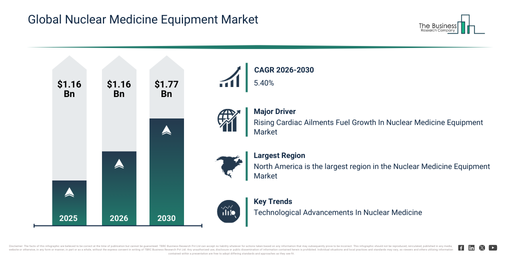
    The nuclear medicine equipment market is projected to experience robust expansion over the next few years. It is anticipated to reach $3.67 billion in 2030, exhibiting a compound annual growth rate (CAGR) of 5.4%. This growth during the forecast period is attributable to factors such as increased theranostics adoption, escalating demand for precision medicine, technological advancements in hybrid imaging, the rising burden of cardiovascular diseases, and the expansion of imaging centers within emerging markets. Major trends for the forecast period encompass advanced hybrid imaging systems, broadened theranostics applications, a greater embrace of personalized nuclear diagnostics, an enhanced focus on radiation dose optimization, and an increasing demand for outpatient nuclear imaging services.

    Get A Free Sample Report With In-Depth Market Insights:

    https://thebusinessresearchcompany.com/sample_request?id=42569884&type=smp&name=Nuclear%20Medicine%20Equipment%20Market%20Report%202026&utm_source=Blogs&utm_medium=Paid&utm_campaign=Sep_PR

    Nuclear Medicine Equipment Market Growth Backed By Core Demand Fundamentals

    The future expansion of the nuclear medicine equipment market is anticipated to be driven by the rising incidence of cardiac ailments. These conditions, also referred to as heart or cardiovascular diseases, encompass a wide array of disorders that impact the heart and blood vessels, potentially affecting heart function, structure, or the flow of blood. The widespread occurrence of cardiac ailments stems from factors such as an aging demographic, lifestyle choices including poor diet and insufficient exercise, exposure to environmental factors, and enhancements in diagnostic tools leading to improved detection rates. Nuclear medicine equipment plays a crucial role in managing cardiac ailments by delivering precise imaging and diagnostic insights, which are essential for early discovery, accurate disease staging, and efficient monitoring. For instance, in January 2024, data from the British Heart Foundation, a UK-based cardiovascular research charity, indicated that approximately 7.6 million people in the UK suffer from heart and circulatory diseases, comprising around 4 million males and 3.6 million females. These conditions account for about 27% of all deaths in the UK, totaling over 170,000 deaths annually, which averages roughly 480 deaths per day, equivalent to one death every three minutes. Consequently, the increasing prevalence of cardiac ailments is a key factor propelling the growth of the nuclear medicine equipment market.

    Nuclear Medicine Equipment Market Segment Performance And Emerging Opportunities

    The nuclear medicine equipment market covered in this report is segmented –

    1) By Product: Single Photon Emission Computed Tomography, Hybrid Positron Emission Tomography, Planar Scintigraphy

    2) By Application: Oncology, Cardiology, Neurology, Other Applications

    3) By End User: Hospitals, Imaging Centers, Academic And Research Institutes, Other End Users

    Subsegments:

    1) By Single Photon Emission Computed Tomography: Standalone SPECT Systems, Hybrid SPECT Or CT Systems

    2) By Hybrid Positron Emission Tomography: PET Or CT Systems, PET Or MRI Systems

    3) By Planar Scintigraphy: Cardiac Imaging Systems, Bone Scintigraphy Systems, Thyroid Imaging Systems

    Nuclear Medicine Equipment Market Growth Trends Reshaping The Competitive Landscape

    Leading companies in the nuclear medicine equipment market are concentrating on developing sophisticated products, such as PET/CT scanners, to deliver exceptionally detailed, functional imagery of the body’s metabolic activities. A PET/CT scanner is an advanced diagnostic imaging tool utilized in nuclear medicine, which integrates two distinct technologies: positron emission tomography (PET) and computed tomography (CT). This combined-modality scanner offers both functional and anatomical imaging within one session, thereby enabling physicians to identify and diagnose a range of conditions with greater precision. For instance, an example of this trend is the launch of the Biograph Trinion PET/CT scanner by Siemens Healthineers, a Germany-based healthcare firm, in June 2024. This PET scanner features an innovative, scalable axial field-of-view design, facilitating technological enhancements on-site without requiring expensive room modifications or interrupting operational flow. It incorporates a lutetium oxyorthosilicate (LSO) crystal detector, delivering high spatial resolution and an exceptionally fast time-of-flight performance of 239 picoseconds, which improves the detection of small lesions and provides sufficient sensitivity up to 128 cps/kBq. Consequently, this allows for quicker scans while simultaneously lowering patient radiation exposure. Furthermore, the Biograph Trinion is equipped with a novel air-cooled digital detector, streamlining installation in contrast to conventional water-cooled setups.

    Nuclear Medicine Equipment Market Competitive Analysis Of Leading Industry Participants

    Major companies operating in the nuclear medicine equipment market are Fujifilm Holdings Corporation, Koninklijke Philips N.V., General Electric Company, Shimadzu Corporation, Mallinckrodt Pharmaceuticals, Curium Pharma, Cardinal Health Inc., Canon Medical Systems Corporation, Digirad Corporation, TTG Imaging Solutions, Biodex Medical Systems Inc., Spectrum Dynamics Medical, Mediso Ltd., Cyclopharm Limited, Siemens Healthineers AG, Capintec Inc., Toshiba Medical Systems Corporation, Elysia-Raytest, DDD-Diagnostic A/S, MILabs B.V.

    View The Full Nuclear Medicine Equipment Market Report:

    https://thebusinessresearchcompany.com/report/nuclear-medicine-equipment-global-market-report?utm_source=Blogs&utm_medium=Paid&utm_campaign=Sep_PR

    Nuclear Medicine Equipment Market Geographic Spread And Regional Opportunities

    North America was the largest region in the nuclear medicine equipment market in 2025. Asia-Pacific is expected to be the fastest-growing region in the forecast period. The regions covered in the nuclear medicine equipment market report are Asia-Pacific, South East Asia, Western Europe, Eastern Europe, North America, South America, Middle East, Africa.

    Reach Out To Our Team:

    The Business Research Company: https://www.thebusinessresearchcompany.com/

    Americas: +1 310-496-7795

    Asia: +44 7882 955267 & +91 8897263534

    Europe: +44 7882 955267

    Email us at: marketing@tbrc.info

    Follow us on:

    LinkedIn: https://in.linkedin.com/company/the-business-research-company

    YouTube: https://www.youtube.com/channel/UC24_fI0rV8cR5DxlCpgmyFQ

    Global Market Model: https://www.thebusinessresearchcompany.com/global-market-model
  • Nuclear Medicine Diagnostics Market Analysis 2026: Market Size, Growth Trends And Industry Outlook

    Nuclear Medicine Diagnostics Market Analysis 2026: Market Size, Growth Trends And Industry Outlook

    Backed by market attractiveness analysis, total addressable market sizing, company benchmarking matrices, interactive Excel dashboards, wider supply chain intelligence, emerging startup coverage, and detailed product-level insights, The Business Research Company’s 2026 market reports are designed to offer research that is more actionable and strategically valuable than ever.

    Nuclear Medicine Diagnostics Market CAGR Outlook And Future Development

    The nuclear medicine diagnostics market has seen substantial expansion recently. This market is projected to expand from $7.88 billion in 2025 to $8.84 billion in 2026, demonstrating a compound annual growth rate (CAGR) of 12.2%. Historically, this growth has been driven by factors such as the greater adoption of radioactive tracers in diagnostics, the proliferation of hospital-based nuclear medicine facilities, a heightened need for functional imaging, the widespread presence of technetium-based radiopharmaceuticals, and an increase in clinical research within nuclear medicine.

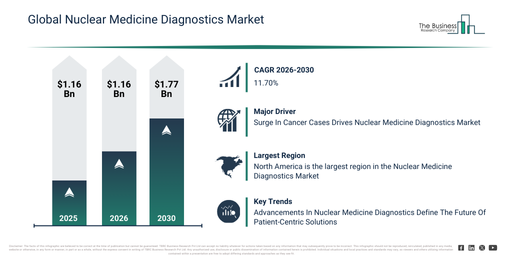
    The nuclear medicine diagnostics market size is anticipated to expand rapidly in the coming years. It is projected to grow to $13.77 billion in 2030 at a compound annual growth rate (CAGR) of 11.7%. The expansion during the forecast period can be attributed to several factors, including increasing investments in theranostics, the rising adoption of precision oncology diagnostics, the expansion of PET imaging infrastructure, a growing focus on targeted radiopharmaceutical development, and increasing regulatory support for nuclear diagnostics. Significant trends for the forecast period encompass the increasing adoption of PET-based diagnostic radiopharmaceuticals, a rising demand for personalized nuclear diagnostics, the growing integration of imaging and therapeutic applications, the expansion of oncology-focused nuclear medicine procedures, and an enhanced focus on short-half-life radiotracers.

    Get A Free Sample Report With In-Depth Market Insights:

    https://thebusinessresearchcompany.com/sample_request?id=86114242&type=smp&name=Nuclear%20Medicine%20Diagnostics%20Market%20Report%202026&utm_source=Blogs&utm_medium=Paid&utm_campaign=Sep_PR

    Nuclear Medicine Diagnostics Market Growth Catalysts And Demand Drivers

    The rising occurrence of cancer is anticipated to fuel the expansion of the nuclear medicine diagnostics market moving forward. Cancer is defined as a collection of diseases characterized by the uncontrolled multiplication and spread of abnormal cells within the body, which can aggregate into a mass or lump known as a tumor. The growth in cancer prevalence stems from the global aging population, as cancer incidence significantly increases with age, coupled with improved healthcare extending life expectancy. Nuclear medicine diagnostics are employed in the detection, staging, and monitoring of various cancer types, containing radioactive substances that specialized cameras can detect to create detailed images of the internal structures and functions of organs and tissues. For instance, in May 2025, data from the National Cancer Institute, a US-based intergovernmental organization, indicated that in 2022, nearly 20 million people were diagnosed with cancer and 9.7 million died from it, with projections for 2050 showing these figures climbing to 33 million new cases and 18.2 million deaths annually. Therefore, the increasing number of cancer cases is driving the growth of the nuclear medicine diagnostics market.

    Nuclear Medicine Diagnostics Market Segment Landscape And Growth Outlook

    The nuclear medicine diagnostics market covered in this report is segmented –

    1) By Type: SPECT Radiopharmaceuticals, PET Radiopharmaceuticals

    2) By Application: Cardiology, Thyroid, Neurology, Oncology, Other Applications

    3) By End-User: Hospitals And Diagnostic Centers, Research Institutes

    Subsegments:

    1) By SPECT Radiopharmaceuticals: Technetium-99m-Based Radiopharmaceuticals, Iodine-123-Based Radiopharmaceuticals, Thallium-201-Based Radiopharmaceuticals, Other SPECT Radiopharmaceuticals

    2) By PET Radiopharmaceuticals: Fluorine-18-Based Radiopharmaceuticals, Carbon-11-Based Radiopharmaceuticals, Gallium-68-Based Radiopharmaceuticals, Other PET Radiopharmaceuticals

    Nuclear Medicine Diagnostics Market Trends Shaping Long-Term Demand

    Leading companies in the nuclear medicine diagnostics market are concentrating on introducing sophisticated solutions, such as advanced medical technologies, to achieve a competitive advantage. Advanced medical technologies represent cutting-edge innovations in the medical field, designed to enhance patient outcomes, improve the standard of care, and promote better health. For example, in August 2023, Gleneagles Hospital, a Malaysia-based entity offering medical and healthcare services, unveiled its Nuclear Medicine Unit. This nuclear medicine unit is a specialized department within a hospital or medical center, furnished with the most current technology and staffed by highly trained experts. This facility’s objective is to enable the early detection, accurate diagnosis, and effective treatment of conditions using nuclear medicine imaging techniques.

    Nuclear Medicine Diagnostics Market Leading Companies And Competitive Benchmarking

    Major companies operating in the nuclear medicine diagnostics market are Siemens AG, Bayer Aktiengesellschaft, Novartis AG, GE Healthcare Technologies Inc., Perkin Elmer Inc., Mallinckrodt Pharmaceuticals, Bracco Diagnostics Inc., Lantheus Holdings Inc., IBA Radiopharma Solutions, Curium SAS, Eckert & Ziegler Strahlen- und Medizintechnik AG, Advanced Accelerator Applications, Telix Pharmaceuticals Limited, Nordion (Canada) Inc., NorthStar Medical Technologies LLC, SHINE Medical Technologies LLC, Navidea Biopharmaceuticals Inc., Cyclopharm Limited, Isologic Innovative Radiopharmaceuticals, Clarity Pharmaceuticals Limited, Actinium Pharmaceuticals Inc., Jubilant DraxImage Inc., PharmaLogic Holdings Corp, Institute of Isotopes Co Ltd., Theragnostics Ltd., Eczacibasi-Monrol Nuclear Products Co.

    View The Full Nuclear Medicine Diagnostics Market Report:

    https://thebusinessresearchcompany.com/report/nuclear-medicine-diagnostics-global-market-report?utm_source=Blogs&utm_medium=Paid&utm_campaign=Sep_PR

    Nuclear Medicine Diagnostics Market Top Region By Revenue And Market Share

    North America was the largest region in the nuclear medicine diagnostics market in 2025. The regions covered in the nuclear medicine diagnostics market report are Asia-Pacific, South East Asia, Western Europe, Eastern Europe, North America, South America, Middle East, Africa.

    Reach Out To Our Team:

    The Business Research Company: https://www.thebusinessresearchcompany.com/

    Americas: +1 310-496-7795

    Asia: +44 7882 955267 & +91 8897263534

    Europe: +44 7882 955267

    Email us at: marketing@tbrc.info

    Follow us on:

    LinkedIn: https://in.linkedin.com/company/the-business-research-company

    YouTube: https://www.youtube.com/channel/UC24_fI0rV8cR5DxlCpgmyFQ

    Global Market Model: https://www.thebusinessresearchcompany.com/global-market-model
  • Nuclear Imaging Devices And Equipment Market Forecast To 2030: Starting From $4.71 Billion In 2026

    Nuclear Imaging Devices And Equipment Market Forecast To 2030: Starting From $4.71 Billion In 2026

    Featuring market attractiveness scoring, total addressable market sizing, company benchmarking matrices, interactive Excel dashboards, deeper supply chain intelligence, emerging startup tracking, and granular product-level insights, The Business Research Company’s 2026 market reports are built to deliver research that is both more actionable and more strategically valuable.

    Nuclear Imaging Devices And Equipment Market Set To Climb From $4.13 Billion In 2026 To $4.71 Billion By 2030

    The nuclear imaging devices and equipment market has experienced consistent expansion in recent years. It is anticipated to grow from $4 billion in 2025 to $4.13 billion in 2026, demonstrating a compound annual growth rate (CAGR) of 3.3%. This historical market growth can be attributed to several factors, including the increasing occurrence of chronic diseases, the expansion of nuclear medicine departments in hospitals, improved availability of radiotracers, the implementation of advanced diagnostic imaging protocols, and a heightened demand for early disease detection.

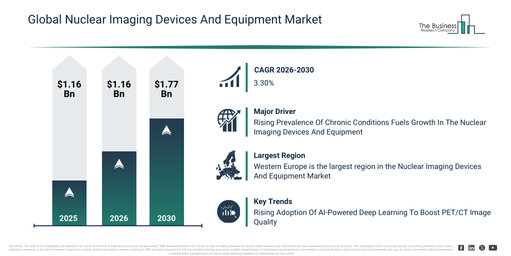
    The market for nuclear imaging devices and equipment is projected to experience consistent growth over the coming years. It is forecast to grow to $4.71 billion in 2030 at a compound annual growth rate (CAGR) of 3.3%. This expansion during the forecast period is expected due to heightened investments in precise diagnostics, the increasing acceptance of hybrid imaging technologies, the broadening of nuclear cardiology and oncology imaging, a rising emphasis on low-dose imaging solutions, and the growing incorporation of AI-driven diagnostics. Prominent trends for this period encompass the increased uptake of hybrid PET/CT and SPECT/CT systems, a surging demand for advanced oncology imaging, the deeper integration of AI in image reconstruction, the widening scope of molecular imaging applications, and a stronger focus on diagnostic accuracy and workflow efficiency.

    Get A Free Sample Report With In-Depth Market Insights:

    https://thebusinessresearchcompany.com/sample_request?id=63334532&type=smp&name=Nuclear%20Imaging%20Devices%20And%20Equipment%20Market%20Report%202026&utm_source=Blogs&utm_medium=Paid&utm_campaign=Sep_PR

    Nuclear Imaging Devices And Equipment Market Opportunity Drivers: What’s Unlocking New Revenue Potential?

    The nuclear imaging devices and equipment market is expected to expand going forward, driven by the increasing occurrence of chronic conditions. Chronic conditions, also referred to as chronic diseases, are long-lasting medical ailments that persist for an extended duration, typically three months or more. Nuclear imaging devices and equipment play a vital role in the diagnosis and monitoring of these diseases by providing crucial insights into their progression, the effectiveness of treatments, and overall patient management. For instance, in February 2024, the World Health Organization, a Switzerland-based intergovernmental organization, projected over 35 million new cancer cases by 2050, indicating a 77% increase compared to the estimated 20 million cases in 2022. Therefore, the growing prevalence of chronic conditions is propelling the growth of the nuclear imaging devices and equipment market.

    Nuclear Imaging Devices And Equipment Market Breakdown By Product Type And Application

    The nuclear imaging devices and equipment market covered in this report is segmented –

    1) By Product Type: SPECT Systems, PET Systems, Planar Scintigraphy Systems

    2) By Application: Oncology, Cardiology, Neurology, Other Applications

    3) By End-User: Hospitals, Imaging Centers, Academic & Research Institutes, Other End-Users

    Subsegments:

    1) By SPECT Systems: Single-Photon Emission Computed Tomography (SPECT) Cameras, Hybrid SPECT/CT Systems, SPECT Probes

    2) By PET Systems: Positron Emission Tomography (PET) Scanners, Hybrid PET/CT Systems, PET Probes

    3) By Planar Scintigraphy Systems: Gamma Cameras, Dual-Head Gamma Cameras, Single-Head Gamma Cameras

    Nuclear Imaging Devices And Equipment Market Innovation Trends Shaping Future Development

    Major companies operating in the nuclear imaging devices and equipment market are progressively concentrating on deep learning-based image processing solutions to boost diagnostic precision, lesion identification, and operational efficiency. Deep learning, a subset of artificial intelligence, leverages neural networks trained with extensive datasets to improve image reconstruction, minimize noise, and facilitate accurate quantitative measurements. For instance, in May 2023, GE HealthCare, a U.S.-based medical technology corporation, obtained U.S. FDA 510(k) clearance for its Precision DL software, specifically optimized for its Omni Legend PET/CT system. This AI-driven solution provides, on average, an 11 % enhancement in contrast recovery, a 23 % greater contrast-to-noise ratio, a 42 % rise in the detectability of small low-contrast lesions, and a 14 % increase in quantitative accuracy, thereby aiding in earlier diagnosis and more assured clinical judgments.

    Nuclear Imaging Devices And Equipment Market Industry Leaders And Competitive Landscape

    Major companies operating in the nuclear imaging devices and equipment market are Siemens Healthineers AG, GE Healthcare, Koninklijke Philips N.V., Canon Medical Systems Corporation, Neusoft Medical Systems Co Ltd, Mediso Medical Imaging Systems Ltd, Digirad Corporation, CMR Naviscan Corporation, Shimadzu Corporation, Toshiba Medical Systems Corporation, DDD Diagnostics A/S, MILabs B.V., MR Solutions Ltd, SurgicEye GmbH, United Imaging Healthcare, Positron Corporation, Spectrum Dynamics Medical, Berthold Technologies GmbH & Co KG, Gamma Medica Inc, Cubresa Inc, PerkinElmer Inc

    View The Full Nuclear Imaging Devices And Equipment Market Report:

    https://thebusinessresearchcompany.com/report/nuclear-imaging-devices-and-equipment-global-market-report?utm_source=Blogs&utm_medium=Paid&utm_campaign=Sep_PR

    Nuclear Imaging Devices And Equipment Market Regional Analysis And Top Geography

    Western Europe was the largest region in nuclear imaging devices and equipment market in 2025. North America was the second-largest region in nuclear imaging devices and equipment market. The regions covered in the nuclear imaging devices and equipment market report are Asia-Pacific, South East Asia, Western Europe, Eastern Europe, North America, South America, Middle East, Africa.

    Reach Out To Our Team:

    The Business Research Company: https://www.thebusinessresearchcompany.com/

    Americas: +1 310-496-7795

    Asia: +44 7882 955267 & +91 8897263534

    Europe: +44 7882 955267

    Email us at: marketing@tbrc.info

    Follow us on:

    LinkedIn: https://in.linkedin.com/company/the-business-research-company

    YouTube: https://www.youtube.com/channel/UC24_fI0rV8cR5DxlCpgmyFQ

    Global Market Model: https://www.thebusinessresearchcompany.com/global-market-model
  • Novel spectrometry Market Size In 2026 And Beyond: Understanding Future Growth Potential

    Novel spectrometry Market Size In 2026 And Beyond: Understanding Future Growth Potential

    Built to provide research that’s more actionable and strategically valuable, The Business Research Company’s 2026 market reports include market attractiveness analysis, total addressable market sizing, company benchmarking matrices, interactive Excel dashboards, broader supply chain intelligence, emerging startup tracking, and in-depth product insights.

    Novel spectrometry Market Forecast: Value Set To Climb From $5.15 Billion To $6.97 Billion

    The novel spectrometry market has seen robust growth in its size over recent years. This market is projected to expand from $4.76 billion in 2025 to $5.15 billion in 2026, exhibiting a compound annual growth rate (CAGR) of 8.2%. The growth observed in prior periods can be attributed to the expansion of pharmaceutical quality control, an increase in environmental monitoring regulations, the utilization of mass spectrometry in forensic science, greater demands for food safety testing, and investments made in academic and research laboratories.

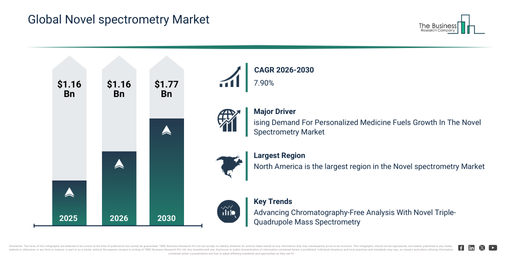
    The novel spectrometry market is anticipated to experience substantial growth in the next few years. The market size is projected to reach $6.97 billion by 2030, demonstrating a compound annual growth rate (CAGR) of 7.9%. This expansion during the forecast period is driven by factors such as the increasing automation of analytical laboratories, the growing demand for portable spectrometry devices, advancements in personalized medicine research, the broadening of industrial process analytics, and increased funding for advanced material science. Key developments during this period are expected to include AI-enhanced spectral data interpretation, the integration of spectrometry systems into smart factories, the emergence of connected and remote spectrometry platforms, cloud-based spectral data management, and analytical spectrometry influenced by precision medicine.

    Get A Free Sample Report With In-Depth Market Insights:

    https://thebusinessresearchcompany.com/sample_request?id=46480253&type=smp&name=Novel%20spectrometry%20Market%20Report%202026&utm_source=Blogs&utm_medium=Paid&utm_campaign=Sep_PR

    Novel spectrometry Market Growth Momentum: What Factors Are Shaping Demand?

    The rising demand for personalized medicine is projected to fuel the expansion of the novel spectrometry market in the foreseeable future. Personalized medicine defines a healthcare method where treatments and strategies are specifically tailored to individual patients, taking into account their unique genetic makeup, environmental factors, and lifestyle choices. The escalating need for personalized medicine stems from breakthroughs in genomics, which facilitate more precise therapeutic interventions and enhance patient outcomes, as these customized treatments result in more effective and targeted care. Novel spectrometry plays a crucial role in boosting personalized medicine by enabling accurate biomarker analysis and the development of bespoke treatment plans, thereby improving the precision and success of individualized therapies. For instance, in February 2024, according to the Personalized Medicine Coalition, a US-based non-profit organization, the U.S. Food and Drug Administration (FDA) approved 16 new personalized treatments for rare diseases in 2023, marking a considerable rise from the 6 approvals granted in 2022. Therefore, the growing demand for personalized medicine is actively driving the growth of the novel spectrometry market.

    Novel spectrometry Market Segment Analysis And Revenue Potential

    The novel spectrometry market covered in this report is segmented –

    1) By Type Of Spectrometers: Atomic Absorption Spectrometer, Mass Spectrometer, Near Infrared Spectrometer, Nuclear Magnetic Resonance Spectrometer, Raman Spectrometer, X-Ray Fluorescence Spectrometer

    2) By Company Size: Small, Mid-Sized, Large

    3) By End-User: Agriculture Or Pesticide Testing, Environmental Analysis, Food Biotechnology, Forensic Analysis, Pharmaceutical Analysis, Other End Users

    Subsegments:

    1) By Atomic Absorption Spectrometer: Flame Atomic Absorption Spectrometers (FAAS), Graphite Furnace Atomic Absorption Spectrometers (GFAAS), Hydride Generation Atomic Absorption Spectrometers

    2) By Mass Spectrometer: Quadrupole Mass Spectrometers, Time-Of-Flight Mass Spectrometers (TOF-MS), Ion Trap Mass Spectrometers, Orbitrap Mass Spectrometers

    3) By Near Infrared Spectrometer: Dispersive Near Infrared Spectrometers, Fourier Transform Near Infrared Spectrometers (FT-NIR), NIR Spectrometers for Industrial Applications

    4) By Nuclear Magnetic Resonance Spectrometer: High-Field NMR Spectrometers, Low-Field NMR Spectrometers, Portable NMR Spectrometers

    5) By Raman Spectrometer: Dispersive Raman Spectrometers, FT-Raman Spectrometers, Portable Raman Spectrometers

    6) By X-Ray Fluorescence Spectrometer: Energy Dispersive X-Ray Fluorescence (EDXRF) Spectrometers, Wavelength Dispersive X-Ray Fluorescence (WDXRF) Spectrometers, Portable X-Ray Fluorescence Spectrometers

    Novel spectrometry Market Trends Redefining Industry Growth

    Major companies within the novel spectrometry market are focusing on developing advanced spectroscopy solutions, such as innovative triple-quadrupole mass spectrometers, to improve analytical capabilities and enhance sensitivity and accuracy in analyzing complex samples. Novel triple-quadrupole mass spectrometers refer to upgraded versions of triple-quadrupole mass spectrometers, engineered to offer improved performance for quantitative and qualitative analysis. For instance, in June 2023, Bruker Corporation, a US-based manufacturer of scientific instruments, launched the EVOQ DART-TQ+, a novel triple-quadrupole mass spectrometer designed for chromatography-free mass spectrometry, aimed at applied market segments like food and beverage, forensic toxicology, industrial, and environmental analysis. This system features a fully integrated direct analysis in real time (DART) ionization technique source, enabling simplified and efficient routine analysis without the need for complex gas or liquid chromatography, while also meeting the demand for cost-effective and environmentally sustainable workflows.

    Novel spectrometry Market Key Participants And Competitive Landscape

    Major companies operating in the novel spectrometry market are Thermo Fisher Scientific Inc., Danaher Corporation, Agilent Technologies Inc., Teledyne Photon Instruments, PerkinElmer Inc., LECO Corporation, Endress+Hauser Group, Shimadzu Corporation, Waters Corporation, Bruker Corporation, Horiba Ltd., FLIR Systems Inc., Sciex, JEOL Ltd., Oxford Instruments plc, Rigaku Corporation, Peak Scientific Instruments Ltd., Nanalysis Corp., Scion Instruments, Hiden Analytical Ltd., Labman Automation Ltd., Advion Inc., Exciton Inc., SRI Instruments

    View The Full Novel spectrometry Market Report:

    https://thebusinessresearchcompany.com/report/novel-spectrometry-global-market-report?utm_source=Blogs&utm_medium=Paid&utm_campaign=Sep_PR

    Novel spectrometry Market Geographic Analysis: Where Is Demand Rising Fastest?

    North America was the largest region in the novel spectrometry market in 2025. The regions covered in the novel spectrometry market report are Asia-Pacific, South East Asia, Western Europe, Eastern Europe, North America, South America, Middle East, Africa.

    Reach Out To Our Team:

    The Business Research Company: https://www.thebusinessresearchcompany.com/

    Americas: +1 310-496-7795

    Asia: +44 7882 955267 & +91 8897263534

    Europe: +44 7882 955267

    Email us at: marketing@tbrc.info

    Follow us on:

    LinkedIn: https://in.linkedin.com/company/the-business-research-company

    YouTube: https://www.youtube.com/channel/UC24_fI0rV8cR5DxlCpgmyFQ

    Global Market Model: https://www.thebusinessresearchcompany.com/global-market-model
  • Novel Drug Delivery Systems Market Reaches $187.53 Billion In 2026: Key Developments Shaping Expansion

    Novel Drug Delivery Systems Market Reaches $187.53 Billion In 2026: Key Developments Shaping Expansion

    Backed by market attractiveness analysis, total addressable market sizing, company benchmarking matrices, interactive Excel dashboards, wider supply chain intelligence, emerging startup coverage, and detailed product-level insights, The Business Research Company’s 2026 market reports are designed to offer research that is more actionable and strategically valuable than ever.

    Novel Drug Delivery Systems Market Revenue Growth On Track For A 9.7% CAGR Through 2030

    The market size for novel drug delivery systems has experienced significant growth recently. It is set to increase from $117.66 billion in 2025 to $129.45 billion in 2026, achieving a compound annual growth rate (CAGR) of 10.0%. This historical growth can be linked to the rising prevalence of chronic illnesses, the shortcomings of conventional drug delivery methods, the expanding scope of oncology and biologics pipelines, increased healthcare spending, and advancements in polymer and nanotechnology.

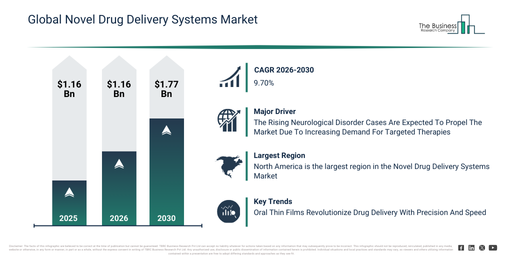
    The novel drug delivery systems market size is anticipated to undergo significant expansion in the coming years. It is projected to reach $187.53 billion in 2030, exhibiting a compound annual growth rate (CAGR) of 9.7%. This growth over the forecast period can be attributed to a rise in personalized and precision medicine, an increasing need for targeted cancer treatments, heightened investment in pharmaceutical research and development, the expanding scope of biologics and biosimilars, and supportive regulations for advanced drug delivery technologies. Prominent trends expected during this period include the wider application of targeted and personalized drug delivery, growing acceptance of lipid and polymeric nanoparticles, an increase in long-acting and controlled release formulations, a stronger focus on non-invasive and patient-centric delivery methods, and accelerated research and development in combination and hybrid novel drug delivery systems platforms.

    Get A Free Sample Report With In-Depth Market Insights:

    https://thebusinessresearchcompany.com/sample_request?id=79029085&type=smp&name=Novel%20Drug%20Delivery%20Systems%20Market%20Report%202026&utm_source=Blogs&utm_medium=Paid&utm_campaign=Sep_PR

    Novel Drug Delivery Systems Market Expansion Drivers: What’s Shaping Future Growth?

    The increasing prevalence of neurological disorders is projected to boost the growth of the novel drug delivery systems market moving forward. A neurological disorder such as stroke is defined as a medical condition characterized by the sudden loss of neurological function, occurring when the brain’s blood supply is disrupted, either by a blockage (ischemic stroke) or a ruptured blood vessel (hemorrhagic stroke), resulting in brain tissue damage and potentially enduring cognitive, sensory, or motor impairments. The rising occurrence of neurological disorders is primarily influenced by factors such as an aging populace, a greater prevalence of lifestyle-related conditions like hypertension, diabetes, and obesity, and heightened exposure to chronic stress and environmental risk factors. Novel drug delivery systems assist in managing these disorders by enabling targeted and controlled delivery of therapeutic agents across the blood-brain barrier. For example, in November 2024, figures from the National Health Service (NHS) England, a UK-based healthcare system, revealed that stroke admissions in England increased to 111,137 in 2023/24, with the 50–59 age group showing the sharpest rise at 12,533 cases. Therefore, the growing number of neurological disorder cases is propelling the expansion of the novel drug delivery systems market.

    Novel Drug Delivery Systems Market Segmentation And Category Overview

    The novel drug delivery systems market covered in this report is segmented –

    1) By Formulation Type: Liposomes, Nanoparticles, Microspheres, Hydrogels, Dendrimers

    2) By Mode Of Novel Drug Delivery System (NDDS): Targeted Drug Delivery Systems, Controlled Drug Delivery Systems, Modulated Drug Delivery Systems

    3) By Route: Oral Drug Delivery Systems, Injectable Drug Delivery Systems, Pulmonary Drug Delivery Systems, Transdermal Drug Delivery Systems, Other Routes

    4) By Therapeutic Area: Cancer, Cardiovascular Diseases, Neurological Disorders, Infectious Diseases, Autoimmune Diseases

    5) By End-User: Hospital, Specialty Clinics, Research Centers, Other End-Users

    Subsegments:

    1) By Liposomes: PEGylated Liposomes, Cationic Liposomes, Stealth Liposomes, Immunoliposomes

    2) By Nanoparticles: Polymeric Nanoparticles, Lipid Nanoparticles, Metallic Nanoparticles, Nanocrystals

    3) By Microspheres: Biodegradable Microspheres, Magnetic Microspheres, Radioactive Microspheres, Mucoadhesive Microspheres

    4) By Hydrogels: Thermosensitive Hydrogels, Ph-Responsive Hydrogels, Injectable Hydrogels, Smart Hydrogels

    5) By Dendrimers: PAMAM Dendrimers, PPI Dendrimers, Pegylated Dendrimers, Hybrid Dendrimers

    Novel Drug Delivery Systems Market Strategic Trends: What Defines The Next Growth Phase?

    Leading companies in the novel drug delivery systems market are concentrating on developing inventive solutions, such as oral thin films, to improve patient adherence and therapeutic efficacy. An oral thin film is a drug delivery mechanism composed of a rapidly dissolving film strip applied in the oral cavity, engineered to release medication directly into the bloodstream via the mucosal membrane. For instance, in February 2024, CD Formulation, a US-based pharmaceutical formulation company, launched Oral Thin Film Technology. This product allows for quick drug absorption by bypassing gastrointestinal and liver metabolism, making it particularly suitable for patients with swallowing difficulties. It also supports accurate dosing and a faster onset of action, thereby enhancing treatment precision and convenience across diverse therapeutic applications.

    Novel Drug Delivery Systems Market Top Companies Driving Competitive Growth

    Major companies operating in the novel drug delivery systems market are Pfizer Inc, Johnson And Johnson, F Hoffmann La Roche AG, Merck And Co Inc, AbbVie Inc, Bayer AG, Sanofi SA, Bristol Myers Squibb Company, AstraZeneca PLC, Novartis AG, GlaxoSmithKline PLC, Takeda Pharmaceutical Company Limited, Eli Lilly And Company, Gilead Sciences, Amgen Inc, Teva Pharmaceutical Industries Ltd, Otsuka Pharmaceutical Co Ltd, Regeneron Pharmaceuticals, Samyang Holdings Corporation, Galen Limited, Catalent Inc, Evonik Industries AG

    View The Full Novel Drug Delivery Systems Market Report:

    https://thebusinessresearchcompany.com/report/novel-drug-delivery-systems-global-market-report?utm_source=Blogs&utm_medium=Paid&utm_campaign=Sep_PR

    Novel Drug Delivery Systems Market Global Footprint: Which Region Leads The Market?

    North America was the largest region in the novel drug delivery systems market in 2025. Asia-Pacific is expected to be the fastest-growing region in the forecast period. The regions covered in the novel drug delivery systems market report are Asia-Pacific, South East Asia, Western Europe, Eastern Europe, North America, South America, Middle East, Africa.

    Reach Out To Our Team:

    The Business Research Company: https://www.thebusinessresearchcompany.com/

    Americas: +1 310-496-7795

    Asia: +44 7882 955267 & +91 8897263534

    Europe: +44 7882 955267

    Email us at: marketing@tbrc.info

    Follow us on:

    LinkedIn: https://in.linkedin.com/company/the-business-research-company

    YouTube: https://www.youtube.com/channel/UC24_fI0rV8cR5DxlCpgmyFQ

    Global Market Model: https://www.thebusinessresearchcompany.com/global-market-model