Blog

  • Cell-Free DNA (cfDNA) Blood Collection Tube Market Growth Forecast: Market Size, Key Trends And Emerging Opportunities Through 2030

    Cell-Free DNA (cfDNA) Blood Collection Tube Market Growth Forecast: Market Size, Key Trends And Emerging Opportunities Through 2030

    Built to provide research that’s more actionable and strategically valuable, The Business Research Company’s 2026 market reports include market attractiveness analysis, total addressable market sizing, company benchmarking matrices, interactive Excel dashboards, broader supply chain intelligence, emerging startup tracking, and in-depth product insights.

    Cell-Free DNA (cfDNA) Blood Collection Tube Market Size Outlook: How Quickly Will Revenue Expand Through 2030?

    The market for cell-free dna (cfdna) blood collection tubes has seen significant growth in recent years. This market is set to expand from $1.33 billion in 2025 to $1.51 billion in 2026, achieving a compound annual growth rate (CAGR) of 13.6%. The historical expansion of this market can be attributed to factors like the increasing demand for prenatal testing, advancements in cancer diagnostics, the wider adoption of cfDNA in research, improvements in laboratory automation, and the continuous expansion of diagnostic centers.

    The cell-free dna (cfdna) blood collection tube market is anticipated to experience substantial expansion in the coming years. Its valuation is projected to reach $2.49 billion by 2030, demonstrating a compound annual growth rate (CAGR) of 13.3%. This expansion during the forecast period is fueled by several factors, including advancements in blood tube preservatives, the incorporation of AI diagnostics, the increasing size of the liquid biopsy market, a rise in clinical trial activity, and growing interest in developing regions. Key developments expected within this period involve improved sample preservation, connectivity with liquid biopsy platforms, standardized approaches for blood collection, automated sample handling, and designs for highly stable tubes.

    Get A Free Sample Report With In-Depth Market Insights:

    https://thebusinessresearchcompany.com/sample_request?id=59273187&type=smp&name=Cell-Free%20DNA%20%28cfDNA%29%20Blood%20Collection%20Tube%20Market%20Report%202026&utm_source=Blogs&utm_medium=Paid&utm_campaign=Sep_PR

    Cell-Free DNA (cfDNA) Blood Collection Tube Market Expansion Drivers: What’s Shaping Future Growth?

    A rise in respiratory illnesses is anticipated to propel the expansion of the cell-free DNA (cfDNA) blood collection tube market in the coming years. These conditions involve the lungs and respiratory system, hindering effective breathing and oxygen/carbon dioxide exchange. The rising incidence of such disorders is significantly linked to air pollution, which inflames airways, diminishes lung capacity, and heightens the risk of ailments such as asthma, bronchitis, and chronic obstructive pulmonary disease (COPD). Cell-free DNA (cfDNA) blood collection tubes offer a method to manage respiratory conditions by identifying genetic mutations, tracking disease advancement, and evaluating treatment efficacy via a straightforward blood test, thus decreasing the necessity for intrusive lung biopsies. As an illustration, in December 2024, data from the Centers for Disease Control and Prevention, a US-based government agency, indicated that approximately 17,000 to 34,000 hospitalizations resulted from respiratory syncytial virus (RSV) between October 1 and November 30, 2024. Consequently, the growing occurrence of respiratory disorders is fueling the growth of the cell-free DNA (cfDNA) blood collection tube market.

    Cell-Free DNA (cfDNA) Blood Collection Tube Market Segment Performance And Emerging Opportunities

    The cell-free dna (cfdna) blood collection tube market covered in this report is segmented –

    1) By Type: 5ml, 10ml

    2) By Sample Type: Plasma, Serum, Whole Blood

    3) By Application: In Vitro Diagnostics, Scientific Research

    4) By End-User: Diagnostic Laboratories, Hospitals Or Clinical Centers, Genetic Diagnostic Labs, Cancer Research Centers, Research And Development Institutions, Conventional Diagnostic Centers

    Subsegments:

    1) By 5 mL: Single Use Tube, Vacuum Blood Collection Tube, Gel Separator Tube

    2) By 10 mL: Double Draw Tube, High Volume Collection Tube, Anticoagulant Treated Tube

    Cell-Free DNA (cfDNA) Blood Collection Tube Market Strategic Trends: What Defines The Next Growth Phase?

    Leading companies in the cell-free DNA (cfDNA) blood collection tube market are prioritizing the automation of cfDNA extraction to boost workflow efficiency. This automation involves employing sophisticated robotic instruments and standardized protocols to isolate cell-free DNA from blood samples with minimal manual involvement, thereby enhancing efficiency, accuracy, and consistency, while also reducing turnaround time and potential human error. For example, in September 2023, Yourgene Health plc, a UK-based molecular diagnostics company, introduced the MagBench Automated DNA Extraction Instrument and Kit. This offering provides a fast, simple, and cost-efficient bench-top robotic solution specifically optimized for cell-free DNA extraction within non-invasive prenatal testing (NIPT) workflows. The launch aims to strengthen automation in NIPT workflows by delivering increased throughput, reproducibility, and reliability in cfDNA extraction, simultaneously decreasing hands-on time and operational costs.

    Cell-Free DNA (cfDNA) Blood Collection Tube Market Competitive Landscape: Which Companies Lead The Industry?

    Major companies operating in the cell-free dna (cfdna) blood collection tube market are Roche Holding AG, Thermo Fisher Scientific Inc., Becton Dickinson (BD), Qiagen N.V., SARSTEDT AG & Co. KG, Guangzhou Improve Medical Technology, Streck Inc., DiaCarta Inc., Zymo Research Corporation, Biomatrica Inc., PreAnalytiX GmbH, Beijing Cowin Bioscience Co.Ltd., Norgen Biotek Corporation, Nonacus Limited, Guangdong Ardent Biomed Co. Ltd, MagBio Genomics Inc., VanGenes, BEAVER, Hebei Xinle Science & Technology Co. Ltd., Nasmed Diagnostics Pvt. Ltd.

    View The Full Cell-Free DNA (cfDNA) Blood Collection Tube Market Report:

    https://thebusinessresearchcompany.com/report/cell-free-dna-cfdna-blood-collection-tube-global-market-report?utm_source=Blogs&utm_medium=Paid&utm_campaign=Sep_PR

    Cell-Free DNA (cfDNA) Blood Collection Tube Market Regional Outlook: Where Is Opportunity Concentrated?

    North America was the largest region in the cell-free DNA (cfDNA) blood collection tube market in 2025. Asia-Pacific is expected to be the fastest-growing region in the forecast period. The regions covered in the cell-free dna (cfdna) blood collection tube market report are Asia-Pacific, South East Asia, Western Europe, Eastern Europe, North America, South America, Middle East, Africa.

    Reach Out To Our Team:

    The Business Research Company: https://www.thebusinessresearchcompany.com/

    Americas: +1 310-496-7795

    Asia: +44 7882 955267 & +91 8897263534

    Europe: +44 7882 955267

    Email us at: marketing@tbrc.info

    Follow us on:

    LinkedIn: https://in.linkedin.com/company/the-business-research-company

    YouTube: https://www.youtube.com/channel/UC24_fI0rV8cR5DxlCpgmyFQ

    Global Market Model: https://www.thebusinessresearchcompany.com/global-market-model

  • Cell Processing Instruments Market CAGR Forecast Through 2030: Key Trends Shaping Industry Expansion

    Cell Processing Instruments Market CAGR Forecast Through 2030: Key Trends Shaping Industry Expansion

    Backed by market attractiveness analysis, total addressable market sizing, company benchmarking matrices, interactive Excel dashboards, wider supply chain intelligence, emerging startup coverage, and detailed product-level insights, The Business Research Company’s 2026 market reports are designed to offer research that is more actionable and strategically valuable than ever.

    Cell Surface Marker Detection Market Size, Value And Growth Trajectory Through 2030

    The cell surface marker detection market size has seen rapid expansion in recent years. It is anticipated to expand from $6.39 billion in 2025 to $7.11 billion in 2026, advancing at a compound annual growth rate (CAGR) of 11.2%. The past growth in this market can be attributed to an increase in biomedical research activities, the broadening of pharmaceutical drug discovery programs, the greater use of flow cytometry in diagnostics, growing investments within life sciences research, and the more widespread availability of laboratory automation.

    The cell surface marker detection market is projected to experience swift expansion in the coming years. Its size is anticipated to reach $10.81 billion by 2030, exhibiting a compound annual growth rate (CAGR) of 11.0%. This expansion during the forecast period is fueled by factors such as the greater adoption of precision medicine techniques, a surge in demand for single-cell analysis, the proliferation of translational research projects, the increasing application of AI-assisted cell analysis, and heightened investments in advanced diagnostic facilities. Key trends anticipated within the same period encompass the growing integration of high-throughput flow cytometry systems, an escalating need for sophisticated reagents and kits, wider deployment of automated cell analysis platforms, the broadening scope of marker-based precision diagnostics, and a sharper emphasis on multiparameter cell profiling.

    Get A Free Sample Report With In-Depth Market Insights:

    https://thebusinessresearchcompany.com/sample_request?id=24363828&type=smp&name=Cell%20Surface%20Marker%20Detection%20Market%20Report%202026&utm_source=Blogs&utm_medium=Paid&utm_campaign=Sep_PR

    Cell Surface Marker Detection Market Development Factors: What’s Supporting Demand?

    The growing prevalence of cancer is anticipated to drive the expansion of the cell surface marker detection market in the future. Cancer is characterized by the uncontrolled proliferation of certain cells, which can then spread to other regions of the body. Factors such as the embrace of Western lifestyles, inadequate dietary practices, regular consumption of non-vegetarian food, chemical contamination, and insufficient physical activity have collectively led to a global surge in cancer diagnoses. Cell surface marker detection aids cancer cells by offering point-of-care predictions of how patients will respond to various cancer medications, consequently escalating its demand. For example, data from February 2024 by the World Health Organization, an international organization based in Switzerland focused on global health policy and public health programs, projects more than 35 million new cancer diagnoses by 2050. This represents a significant 77% rise from the estimated 20 million cases recorded in 2022. Consequently, the escalating occurrence of oncology diseases is a key driver for the expansion of the cell surface marker detection market.

    Cell Surface Marker Detection Market Segment Landscape And Growth Outlook

    The cell surface marker detection market covered in this report is segmented –

    1) By Product: Flow Cytometry, Reagents And Kits

    2) By Application: Disease Diagnosis, Diseases Identification, Research For Drug Discovery, Cytological Academic Research

    3) By End-Users: Pharmaceutical And Biotechnology Companies, Hospitals And Clinical Testing Laboratories, Academic And Research Institutes, Other End Users

    Subsegments:

    1) By Flow Cytometry: Benchtop Flow Cytometers, Portable Flow Cytometers, High-Throughput Flow Cytometers

    2) By Reagents And Kits: Antibodies And Conjugates, Staining Kits, Calibration And Control Kits

    Cell Surface Marker Detection Market Transformation Trends: What Innovations Are Driving Change?

    Leading firms within the cell surface marker detection market are allocating resources to cutting-edge technologies, including novel fluorescent dyes and antibodies. This investment aims to boost multicolour flow cytometry capabilities, thereby refining the precision and effectiveness of immunological studies and diagnostic procedures. Bio-Rad has broadened its StarBright Violet Dye series by incorporating 29 thoroughly validated antibodies linked to diverse StarBright Violet Dyes. This development improves the capacity to identify and examine numerous cell surface markers in both human and animal research using multicolour flow cytometry. As an illustration, in May 2024, Bio-Rad Laboratories, Inc., a US-based firm specializing in the creation and production of advanced technological products, introduced three new StarBright Red Dyes: StarBright Red 715, 775, and 815. This addition expands their current range of fluorescent dyes, which now offers a total of 32 choices compatible with various lasers, specifically tailored for conventional and full-spectrum flow cytometry uses. Furthermore, these dyes show very little background interference when contrasted with conventional cyanine tandem dyes and possess sufficient stability to be fixed in formalin or alcohol-based solutions without any loss of signal quality.

    Cell Surface Marker Detection Market Competitive Landscape: Who Leads The Industry?

    Major companies operating in the cell surface marker detection market are Thermo Fisher Scientific Inc, Beckman Coulter Inc, Bio-Rad Laboratories Inc, Becton Dickinson and Company, BD Biosciences, Agilent Inc, Sigma-Aldrich, Qiagen NV, Abcam PLC, GenScript Biotech, BioLegend, Cell Signaling Technology Inc, Merck KGaA, Bio-Techne Corporation, Affymetrix, Danaher Corporation, Miltenyi Biotec, R&D Systems, Siemens Healthineers, F Hoffmann-La Roche Ltd, Sartorius, Sysmex Corporation, Nihon Kohden Corporation, Diasorin SpA, Janssen Diagnostics

    View The Full Cell Surface Marker Detection Market Report:

    https://thebusinessresearchcompany.com/report/cell-surface-marker-detection-global-market-report?utm_source=Blogs&utm_medium=Paid&utm_campaign=Sep_PR

    Cell Surface Marker Detection Market Geographic Landscape: Which Region Leads Industry Growth?

    North America was the largest region in the cell surface marker detection market in 2025. Asia-Pacific is expected to be the fastest-growing region in the forecast period. The regions covered in the cell surface marker detection market report are Asia-Pacific, South East Asia, Western Europe, Eastern Europe, North America, South America, Middle East, Africa.

    Reach Out To Our Team:

    The Business Research Company: https://www.thebusinessresearchcompany.com/

    Americas: +1 310-496-7795

    Asia: +44 7882 955267 & +91 8897263534

    Europe: +44 7882 955267

    Email us at: marketing@tbrc.info

    Follow us on:

    LinkedIn: https://in.linkedin.com/company/the-business-research-company

    YouTube: https://www.youtube.com/channel/UC24_fI0rV8cR5DxlCpgmyFQ

    Global Market Model: https://www.thebusinessresearchcompany.com/global-market-model

  • Cell Processing Instruments Market To Witness 7.7% CAGR Growth Through 2030: Key Industry Drivers

    Cell Processing Instruments Market To Witness 7.7% CAGR Growth Through 2030: Key Industry Drivers

    Featuring market attractiveness scoring, total addressable market sizing, company benchmarking matrices, interactive Excel dashboards, deeper supply chain intelligence, emerging startup tracking, and granular product-level insights, The Business Research Company’s 2026 market reports are built to deliver research that is both more actionable and more strategically valuable.

    Cell Processing Instruments Market CAGR Outlook And Future Development

    The cell processing instruments market has shown robust expansion in recent years. Its valuation is anticipated to rise from $6.95 billion in 2025 to $7.51 billion in 2026, reflecting a compound annual growth rate (CAGR) of 8.1%. The growth observed in prior periods stemmed from factors such as constrained automation in cell processing, a reliance on manual cell counting and separation techniques, increasing academic and research endeavors, a heightened need for accurate cell analysis, and the introduction of flow cytometry technologies.

    The cell processing instruments market is set to observe significant expansion over the next few years. It is projected to increase to $10.1 billion in 2030, growing at a compound annual growth rate (CAGR) of 7.7%. This expansion during the forecast period can be ascribed to the progression of integrated cell processing platforms, increasing investments in cell therapy and regenerative medicine, the adoption of digital and automated imaging systems, a rise in contract research and manufacturing activities, and advancements in live cell analysis and high-content screening. Noteworthy trends expected in this period include an escalating demand for automated cell processing systems, the broader uptake of flow cytometry and high-content imaging, growth in cell therapy and regenerative medicine applications, an emphasis on standardization and regulatory adherence, and the integration of multi-functional cell analysis platforms.

    Get A Free Sample Report With In-Depth Market Insights:

    https://thebusinessresearchcompany.com/sample_request?id=95949961&type=smp&name=Cell%20Processing%20Instruments%20Market%20Report%202026&utm_source=Blogs&utm_medium=Paid&utm_campaign=Sep_PR

    Cell Processing Instruments Market Industry Drivers: What’s Behind The Revenue Growth?

    Future expansion of the cell processing instruments market is anticipated, driven by the rising investment in biopharmaceutical research. This research involves the scientific investigation and creation of therapeutic products originating from biological sources or engineered to replicate biological molecules, intended for disease diagnosis, prevention, or treatment. The surge in biopharmaceutical research investment stems from an escalating need for novel therapies to tackle the growing prevalence of chronic diseases and unmet medical requirements, thereby stimulating more extensive research and development endeavors for precise and potent treatments. Cell processing instruments facilitate biopharmaceutical research by providing capabilities for efficient, standardized, and scalable cell manipulation, consequently speeding up the creation and manufacturing of sophisticated cell-based therapies. For example, reports from the BioIndustry Association (BIA), a UK-based trade association, indicated that in January 2025, the UK biotech sector achieved significant growth in 2024, attracting £3.5 billion (approximately $ 4.4 billion) in investment, marking a notable 94% increase compared to the prior year. Consequently, the growing financial commitment to biopharmaceutical research is propelling the expansion of the cell processing instruments market.

    Cell Processing Instruments Market Breakdown By Product Type And Application

    The cell processing instruments market covered in this report is segmented –

    1) By Type: Cell Counters, Cell Imaging Systems, Flow Cytometers, Cell Separator Systems, Automated Cell Processing Systems, Other Instruments

    2) By Application: Cell Isolation Or Separation, Cell Imaging And Counting, Cell Viability And Proliferation, Other Applications

    3) By End-Use: Pharmaceutical And Biotechnology Companies, Contract Research Organizations (CROs) And Contract Manufacturing Organizations (CMOs), Academic And Research Institutes, Other End-Uses

    Subsegments:

    1) By Cell Counters: Manual Cell Counters, Automated Cell Counters, Digital Cell Counters

    2) By Cell Imaging Systems: Brightfield Imaging Systems, Fluorescence Imaging Systems, High-Content Imaging Systems, Live Cell Imaging Systems

    3) By Flow Cytometers: Analog Flow Cytometers, Digital Flow Cytometers, Benchtop Flow Cytometers, Clinical Flow Cytometers

    4) By Cell Separator Systems: Magnetic-Activated Cell Sorting (MACS) Systems, Fluorescence-Activated Cell Sorting (FACS) Systems, Centrifugal Elutriation Systems

    5) By Automated Cell Processing Systems: Cell Expansion Systems, Cell Washing And Concentration Systems, Cell Harvesting Systems, Integrated Cell Processing Platforms

    6) By Other Instruments: Cell Disruption Systems, Cell Viability Analyzers, Centrifuges For Cell Processing, Cell Freezing And Thawing Systems

    #Cell Processing Instruments Market Growth Trends: What’s Shaping The Future Outlook?

    Leading companies in the cell processing instruments market are concentrating on devising innovative methods, such as multi-channel asynchronous processing, to elevate workflow efficiency and adaptability in cell therapy development. Multi-channel asynchronous processing defines a system’s capacity to execute multiple distinct workflows simultaneously on separate channels, thereby enabling various processes to operate concurrently without one waiting for another to conclude. For example, in June 2023, Singleron Biotechnologies GmbH, a biotechnology firm based in Germany, introduced two new instruments, Python Junior and Matrix NEO, designed to improve and standardize the single-cell analysis workflow. Python Junior simplifies the dissociation of solid tissues into high-quality single-cell suspensions utilizing dual independent channels and a blend of mechanical and enzymatic processing, whereas Matrix NEO allows for high-throughput, fully automated single-cell library preparation, encompassing chip priming, cell partitioning, lysis, and nucleic acid capture across four channels, thus catering to diverse applications and throughput requirements in both research and clinical contexts.

    Cell Processing Instruments Market Company Landscape And Competitive Strategy

    Major companies operating in the cell processing instruments market are Thermo Fisher Scientific Inc., Danaher Corporation, Merck KGaA, Becton Dickinson and Company, Avantor Inc., Agilent Technologies Inc., Sartorius AG, Revvity Inc., Bio-Rad Laboratories Inc., Eppendorf SE, Tecan Group Ltd., Bio-Techne Corporation, STEMCELL Technologies Inc., Miltenyi Biotec B.V. & Co. KG, Takara Bio Inc., 10x Genomics Inc., Promega Corporation, Esco Lifesciences Group Ltd., NanoCellect Biomedical Inc., InGeneron Inc.

    View The Full Cell Processing Instruments Market Report:

    https://thebusinessresearchcompany.com/report/cell-processing-instruments-global-market-report?utm_source=Blogs&utm_medium=Paid&utm_campaign=Sep_PR

    Cell Processing Instruments Market Largest Region: Which Geography Holds The Biggest Share?

    North America was the largest region in the cell processing instruments market in 2025. Asia-Pacific is expected to be the fastest-growing region in the forecast period. The regions covered in the cell processing instruments market report are Asia-Pacific, South East Asia, Western Europe, Eastern Europe, North America, South America, Middle East, Africa.

    Reach Out To Our Team:

    The Business Research Company: https://www.thebusinessresearchcompany.com/

    Americas: +1 310-496-7795

    Asia: +44 7882 955267 & +91 8897263534

    Europe: +44 7882 955267

    Email us at: marketing@tbrc.info

    Follow us on:

    LinkedIn: https://in.linkedin.com/company/the-business-research-company

    YouTube: https://www.youtube.com/channel/UC24_fI0rV8cR5DxlCpgmyFQ

    Global Market Model: https://www.thebusinessresearchcompany.com/global-market-model
  • Asthma Spacers Market Size Reaches $2.12 Billion In 2026: What Is Driving Growth?

    Asthma Spacers Market Size Reaches $2.12 Billion In 2026: What Is Driving Growth?

    Featuring market attractiveness scoring, total addressable market sizing, company benchmarking matrices, interactive Excel dashboards, deeper supply chain intelligence, emerging startup tracking, and granular product-level insights, The Business Research Company’s 2026 market reports are built to deliver research that is both more actionable and more strategically valuable.

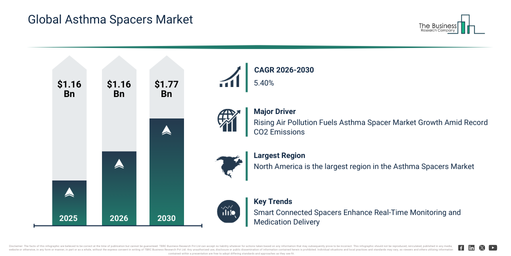
    Asthma Spacers Market Growth From $2.12 Billion In 2026 To $2.61 Billion By 2030 At A CAGR Of 5.4%

    The asthma spacers market size has experienced strong growth in recent years. It is anticipated to expand from $1.99 billion in 2025 to $2.12 billion in 2026, exhibiting a compound annual growth rate (CAGR) of 6.1%. This historical growth can be attributed to several factors, including an increase in asthma prevalence among both children and adults, the widespread application of MDIs in chronic respiratory care, an early clinical emphasis on optimizing inhaler technique, the expansion of home-based respiratory therapy, and enhanced hospital recommendations for spacer-assisted dosing.

    The asthma spacers market is projected to experience substantial expansion in the coming years. Its size is anticipated to reach $2.61 billion by 2030, exhibiting a compound annual growth rate (CAGR) of 5.4%. This projected growth during the forecast period is fueled by several factors, including the increasing need for patient-compliant inhalation devices, the broadening of preventive asthma management initiatives, a rising inclination towards homecare and tele-respiratory support solutions, advancements in spacer chamber materials and valve designs, and the expanded integration of spacers within emerging healthcare markets. Key trends anticipated during this period encompass a greater preference for asthma spacers to enhance the effectiveness of inhaler medication delivery, the wider adoption of child-friendly spacer designs featuring ergonomic and user-safe characteristics, an increasing deployment of compact and portable spacer devices for home-based care and personal management, the continued advancement of anti-static and transparent spacer chambers for improved dose accuracy, and the expanding availability of product variations designed for preventive, rescue, and combined applications.

    Get A Free Sample Report With In-Depth Market Insights:

    https://thebusinessresearchcompany.com/sample_request?id=23113159&type=smp&name=Asthma%20Spacers%20Market%20Report%202026&utm_source=Blogs&utm_medium=Paid&utm_campaign=Sep_PR

    Asthma Spacers Market Growth Momentum: What Factors Are Shaping Demand?

    The anticipated increase in air pollution is projected to boost the expansion of the asthma spacer market in the future. Air pollution is defined as the presence of noxious elements in the atmosphere that adversely affect human well-being, ecological systems, and the overall standard of living. This issue represents a major environmental and public health concern, stemming from both natural occurrences and human-induced actions, encompassing numerous detrimental agents impacting human health and ecosystems. During times of elevated air pollution, asthma spacers can serve as a preventive tool, as they decrease the quantity of pollutants entering the airways during inhaler use, thereby diminishing the likelihood of asthma symptoms deteriorating due to airborne irritants. For example, reports from March 2024 by the International Energy Agency (IEA), an independent intergovernmental body based in France, indicated that in 2023, worldwide energy-related carbon dioxide (CO2) emissions saw an increase of 1.1%, amounting to 410 million metric tons (Mt CO2) as opposed to 321 million metric tons recorded in 2022. This led to a record high of over 37.4 metric tons in 2023, up from 36.8 billion metric tons in 2022. Consequently, the escalating air pollution is set to drive the expansion of the asthma spacer market.

    Asthma Spacers Market Segmentation: How Does The Market Break Down By Category?

    The asthma spacers market covered in this report is segmented –

    1) By Product: Aerochamber, Optichamber, Volumatic, Inspirease, Other Products

    2) By Distribution Channels: E-commerce Channels, Retail Pharmacies, Hospital Pharmacies, Other Distribution Channels

    3) By Application: Preventive Use, Rescue Use, Combined Use

    4) By End-Use: Homecare Settings, Hospitals And Clinics, Other End-Users

    Subsegments:

    1) By Aerochamber: Aerochamber Plus, Aerochamber Flow-Vu

    2) By Optichamber: Optichamber Diamond, Optichamber Standard

    3) By Volumatic: Volumatic Spacer, Volumatic Plus

    4) By Inspirease: Inspirease Spacer Device

    5) By Other Products: Babyhaler, Funhaler

    Asthma Spacers Market Trends Redefining Industry Growth

    Leading companies within the asthma spacer market are concentrating on developing smart, interconnected spacers, including digital monitoring valved holding chambers which track inhaler usage and give feedback to patients and clinicians regarding adherence and technique. A digital monitoring valved holding chamber is a spacer apparatus fitted with embedded sensors that log each actuation, observe breathing patterns, and relay real-time usage data to mobile or clinical platforms to enhance adherence and dosing accuracy. For example, in May 2023, the Allergy Foundation of South Africa, a non-profit organization located in South Africa, unveiled the AfriSpacer, an inexpensive, reusable asthma spacer that incorporates a design to reduce aerosol speed for greater lung deposition, a washable construction encompassing its one-way valve, and a build focused on affordability to aid patients in settings with scarce resources.

    Asthma Spacers Market Key Players Shaping Industry Direction

    Major companies operating in the asthma spacers market are Trudell Medical International, PARI GmbH, Koninklijke Philips NV, Medical Developments International Ltd, Teleflex Incorporated, Monaghan Medical Corporation, Clement Clarke International Ltd, Rossmax International Ltd, Visiomed Group Ltd, Laboratoire ProtecSom, Koo Medical Equipment, AGPMED, SunMed Holdings LLC, Bird HealthCare Pty Ltd, Allied Healthcare Products Inc, Drive DeVilbiss Healthcare, Vyaire Medical Inc, Luckys Pharma, Mediacare Equipments Pvt Ltd, Asia Connection Co Ltd

    View The Full Asthma Spacers Market Report:

    https://thebusinessresearchcompany.com/report/asthma-spacers-global-market-report?utm_source=Blogs&utm_medium=Paid&utm_campaign=Sep_PR

    Asthma Spacers Market Regional Analysis: Which Geography Leads On Revenue?

    North America was the largest region in the asthma spacers market in 2025. Asia-Pacific is expected to be the fastest-growing region in the forecast period. The regions covered in the asthma spacers market report are Asia-Pacific, South East Asia, Western Europe, Eastern Europe, North America, South America, Middle East, Africa.

    Reach Out To Our Team:

    The Business Research Company: https://www.thebusinessresearchcompany.com/

    Americas: +1 310-496-7795

    Asia: +44 7882 955267 & +91 8897263534

    Europe: +44 7882 955267

    Email us at: marketing@tbrc.info

    Follow us on:

    LinkedIn: https://in.linkedin.com/company/the-business-research-company

    YouTube: https://www.youtube.com/channel/UC24_fI0rV8cR5DxlCpgmyFQ

    Global Market Model: https://www.thebusinessresearchcompany.com/global-market-model

  • Cell Free Tumor Deoxyribonucleic Acid (DNA) Detection Market Projected For Strong Expansion Through 2030: Key Trends And Future Outlook

    Cell Free Tumor Deoxyribonucleic Acid (DNA) Detection Market Projected For Strong Expansion Through 2030: Key Trends And Future Outlook

    Built to provide research that’s more actionable and strategically valuable, The Business Research Company’s 2026 market reports include market attractiveness analysis, total addressable market sizing, company benchmarking matrices, interactive Excel dashboards, broader supply chain intelligence, emerging startup tracking, and in-depth product insights.

    Cell Free Tumor Deoxyribonucleic Acid (DNA) Detection Market Set To Climb From $3.02 Billion In 2026 To $5.64 Billion By 2030

    The cell free tumor deoxyribonucleic acid (dna) detection market size has seen rapid growth in recent years. It is anticipated to increase from $2.58 billion in 2025 to $3.02 billion in 2026, at a compound annual growth rate (CAGR) of 17.2%. This historical growth can be attributed to the rising prevalence of cancer, continuous advancements in molecular diagnostics, an increasing demand for non-invasive testing, the widespread adoption of PCR and NGS techniques, and a surge in clinical research studies.

    The cell free tumor deoxyribonucleic acid (dna) detection market size is anticipated to experience rapid expansion in the coming years. It is forecast to grow to $5.64 billion in 2030, achieving a compound annual growth rate (CAGR) of 16.9%. This growth throughout the forecast period can be attributed to the broadening application of precision medicine, advancements in ctDNA analysis technology, the incorporation of AI-based diagnostic tools, increasing healthcare investments in developing economies, and the expansion of early cancer detection programs. Major developments expected in this period include the widespread adoption of liquid biopsy, integration with genomic data platforms, real-time tumor monitoring capabilities, non-invasive methods for cancer diagnostics, and sophisticated ctdna detection technologies.

    Get A Free Sample Report With In-Depth Market Insights:

    https://thebusinessresearchcompany.com/sample_request?id=75222632&type=smp&name=Cell%20Free%20Tumor%20Deoxyribonucleic%20Acid%20%28DNA%29%20Detection%20Market%20Report%202026&utm_source=Blogs&utm_medium=Paid&utm_campaign=Sep_PR

    Cell Free Tumor Deoxyribonucleic Acid (DNA) Detection Market Growth Factors: What’s Supporting Expansion?

    The expanding need for personalized medicine is anticipated to fuel the expansion of the cell free tumor deoxyribonucleic acid (DNA) detection market in the future. Personalized medicine defines a healthcare method where treatment and preventive actions are customized to an individual’s distinct genetic composition, way of life, and surroundings. The rising uptake of personalized medicine is largely attributable to progress in genomics, which facilitates precise identification of genetic differences and bespoke therapies for patients. Cell free tumor deoxyribonucleic acid (DNA) detection improves personalized medicine by offering non-invasive, real-time understanding of a patient’s tumor genetics. This capability enables medical professionals to customize therapies according to specific mutation profiles, track treatment efficacy, and identify disease recurrence at an early stage, thereby enhancing patient results and the accuracy of cancer treatment. For example, in February 2024, the U.S. Food and Drug Administration (FDA) sanctioned 26 novel personalized medicines in 2023, a notable rise from the 12 approved in 2022, as reported by the US-based nonprofit, Personalized Medicine Coalition (PMC). Consequently, the growing demand for personalized medicine is propelling the development of the cell free tumor deoxyribonucleic acid (DNA) detection market.

    Cell Free Tumor Deoxyribonucleic Acid (DNA) Detection Market Segment Analysis And Revenue Potential

    The cell free tumor deoxyribonucleic acid (dna) detection market covered in this report is segmented –

    1) By Technology: Polymerase Chain Reaction (PCR), Next-Generation Sequencing (NGS), Digital Polymerase Chain Reaction (dPCR)

    2) By Source: Plasma, Serum, Urine

    3) By Application: Oncology, Non-Invasive Prenatal Testing, Transplantation, Other Applications

    4) By End-User: Hospitals, Diagnostic Laboratories, Academic And Research Institutes, Other End-Users

    Subsegments:

    1) By Polymerase Chain Reaction (PCR): Real-Time Polymerase Chain Reaction (qPCR), Multiplex Polymerase Chain Reaction (PCR), Allele-Specific Polymerase Chain Reaction (PCR), High-Resolution Melting (HRM) Analysis, Beaming Polymerase Chain Reaction (PCR)

    2) By Next-Generation Sequencing (NGS): Whole Genome Sequencing (WGS), Whole Exome Sequencing (WES), Targeted Gene Panels, Ribonucleic Acid Sequencing (RNA-seq), Methylation Sequencing

    3) By Digital Polymerase Chain Reaction (dPCR): Droplet Digital Polymerase Chain Reaction (ddPCR), Chip-Based Digital Polymerase Chain Reaction (PCR), Nanofluidic Digital Polymerase Chain Reaction (PCR)

    Cell Free Tumor Deoxyribonucleic Acid (DNA) Detection Market Industry Trends: What’s Reshaping Demand?

    Leading firms within the cell free tumor deoxyribonucleic acid (DNA) detection market are concentrating on creating sophisticated offerings, including library preparation kits, aimed at boosting the accuracy, sensitivity, and pace of cancer diagnostics. These library preparation kits are essentially reagent sets designed to prepare DNA or RNA samples for sequencing, a process achieved by fragmenting, tagging, and amplifying the samples to ensure precise analysis. As an illustration, in February 2024, Twist Bioscience Corporation, a biotechnology firm based in the US, introduced its cfDNA Library Preparation Kit, which was developed to improve the sensitivity and exactness of liquid biopsy uses. This kit facilitates the creation of high-conversion cfDNA libraries for next-generation sequencing on Illumina platforms, thereby effectively overcoming difficulties presented by cfDNA samples that are low in quantity or degraded. This advancement aims to bolster the dependability and efficiency of liquid biopsy tests, facilitating earlier and more precise cancer detection, alongside enhanced monitoring of treatment efficacy.

    Cell Free Tumor Deoxyribonucleic Acid (DNA) Detection Market Key Players Shaping Industry Direction

    Major companies operating in the cell free tumor deoxyribonucleic acid (dna) detection market are F. Hoffmann-La Roche AG, Thermo Fisher Scientific Inc., Labcorp Holdings Inc., Illumina Inc., Sysmex Inostics Inc., Bio-Rad Laboratories Inc., QIAGEN N.V., Natera Inc., Guardant Health Inc., Invitae Corporation, Foundation Medicine Inc, Adaptive Biotechnologies Corporation, Freenome Holdings Inc., Grail Inc., Biodesix Inc, Personal Genome Diagnostics Inc., Agena Bioscience Inc., Menarini Silicon Biosystems SpA, Exosome Diagnostics Inc., Lucence Health Inc.

    View The Full Cell Free Tumor Deoxyribonucleic Acid (DNA) Detection Market Report:

    https://thebusinessresearchcompany.com/report/cell-free-tumor-deoxyribonucleic-acid-dna-detection-global-market-report?utm_source=Blogs&utm_medium=Paid&utm_campaign=Sep_PR

    Cell Free Tumor Deoxyribonucleic Acid (DNA) Detection Market Regional Analysis: Which Geography Leads On Revenue?

    North America was the largest region in the cell free tumor deoxyribonucleic acid (DNA) detection market in 2025. Asia-Pacific is expected to be the fastest-growing region in the forecast period. The regions covered in the cell free tumor deoxyribonucleic acid (dna) detection market report are Asia-Pacific, South East Asia, Western Europe, Eastern Europe, North America, South America, Middle East, Africa.

    Reach Out To Our Team:

    The Business Research Company: https://www.thebusinessresearchcompany.com/

    Americas: +1 310-496-7795

    Asia: +44 7882 955267 & +91 8897263534

    Europe: +44 7882 955267

    Email us at: marketing@tbrc.info

    Follow us on:

    LinkedIn: https://in.linkedin.com/company/the-business-research-company

    YouTube: https://www.youtube.com/channel/UC24_fI0rV8cR5DxlCpgmyFQ

    Global Market Model: https://www.thebusinessresearchcompany.com/global-market-model

  • Cell Culture Plates Market Outlook 2026–2030: Growth Trends, Market Dynamics And Emerging Opportunities

    Cell Culture Plates Market Outlook 2026–2030: Growth Trends, Market Dynamics And Emerging Opportunities

    Backed by market attractiveness analysis, total addressable market sizing, company benchmarking matrices, interactive Excel dashboards, wider supply chain intelligence, emerging startup coverage, and detailed product-level insights, The Business Research Company’s 2026 market reports are designed to offer research that is more actionable and strategically valuable than ever.

    Cell Culture Plates Market Forecast: Value Set To Climb From $2.44 Billion To $3.09 Billion

    The cell culture plates market size has seen substantial growth recently. It is anticipated to expand from $2.29 billion in 2025 to $2.44 billion in 2026, achieving a compound annual growth rate (CAGR) of 6.2%. The historical increase in this market can be attributed to the broadening of biomedical research initiatives, the increased adoption of in vitro testing models, a rise in pharmaceutical R&D expenditure, the growing use of cell-based assays, and the availability of standardized laboratory consumables.

    The cell culture plates market is expected to demonstrate significant expansion over the next few years. It is projected to achieve a value of $3.09 billion by 2030, advancing at a compound annual growth rate (CAGR) of 6.1%. This anticipated growth within the forecast period stems from factors such as the increasing need for advanced cell culture models, growing investments in regenerative medicine research, the expansion of biopharmaceutical manufacturing, the rising embrace of automated lab workflows, and a greater emphasis on precision medicine research. Dominant trends during this period are foreseen to include a surge in the adoption of high-throughput cell culture plates, increased utilization of 3D cell culture systems, an escalating demand for coated culture surfaces, the diversification of plates for organoid and stem cell research, and a heightened focus on ensuring reproducibility in cell-based assays.

    Get A Free Sample Report With In-Depth Market Insights:

    https://thebusinessresearchcompany.com/sample_request?id=16321216&type=smp&name=Cell%20Culture%20Plates%20Market%20Report%202026&utm_source=Blogs&utm_medium=Paid&utm_campaign=Sep_PR

    Cell Culture Plates Market Demand Drivers: What’s Powering Industry Growth?

    The growth of the cell culture plates market is anticipated to be driven by the increasing incidence of chronic illnesses. These conditions are defined as health issues persisting for at least a year, requiring ongoing medical attention, limiting daily functions, or a combination of these factors. In research and development, cell culture plates are utilized to bring together various cell types within integrated, self-organizing systems, facilitating the study of disease progression, offering optimal environments for cell cultivation, evaluating novel therapies, and appraising drug efficacy. As an illustration, figures from June 2024 reported by the National Health Service, a UK-based government entity, indicated that 3,615,330 individuals registered with a general practitioner (GP) were diagnosed with non-diabetic hyperglycemia or pre-diabetes (a condition characterized by higher-than-normal blood sugar levels, though not at diabetic levels) in 2023. This represents an 18% increase compared to 3,065,825 cases recorded in 2022. Consequently, the expanding occurrence of chronic diseases is fueling the expansion of the cell culture plate market.

    Cell Culture Plates Market Segmentation And Category Overview

    The cell culture plates market covered in this report is segmented –

    1) By Type: Standard Cell Culture Plates, Coated Cell Culture Plates, Specialty Cell Culture Plates

    2) By Material: Polystyrene, Glass, Other Materials

    3) By Surface: Treated, Untreated

    4) By Application: Drug Discovery And Development, Biopharmaceutical Production, Tissue Engineering And Regenerative Medicine, Other Applications

    5) By End-User: Research Institutes, Pharmaceutical And Biotechnology, Diagnostic Laboratories

    Subsegments:

    1) By Standard Cell Culture Plates: 6-Well Plates, 12-Well Plates, 24-Well Plates, 48-Well Plates, 96-Well Plates, 384-Well Plates

    2) By Coated Cell Culture Plates: Collagen-Coated Plates, Poly-D-Lysine-Coated Plates, Fibronectin-Coated Plates

    3) By Specialty Cell Culture Plates: 3D Cell Culture Plates, Microplates For High-Throughput Screening, Plates For Stem Cell Culture, Plates For Organoid Culture

    Cell Culture Plates Market Innovation Trends: What Developments Are Reshaping The Industry?

    Major companies operating in the cell culture plate market are focused on developing advanced products such as 3D Cell Culture Plates to strengthen their position in the market. 3D cell culture plates meet the demand for advanced, physiologically relevant models, significantly contributing to the cell culture plates market across diverse research and development applications. For instance, in May 2024, TheWell Bioscience, a US-based biotechnology research company, launched VitroPrime Spread-Attach Plates. The VitroPrime Spread-Attach Plates are designed for hydrogel-based 3D and 2D cell culture, offering superior hydrogel spreading and adherence to enhance cell attachment. These plates ensure homogenous gel distribution, minimize edge effects, and promote rapid cell growth for high-throughput applications.

    Cell Culture Plates Market Competitive Analysis Of Leading Industry Participants

    Major companies operating in the cell culture plates market are Thermo Fisher Scientific Inc., Corning Inc., Merck KGaA, Lonza Group AG, Sartorius AG, Eppendorf AG, Greiner Bio-One International GmbH, Sarstedt AG & Co., TPP Techno Plastic Products AG, Sumitomo Bakelite Co. Ltd., USA Scientific Inc., Himedia Laboratories Pvt. Ltd., Porvair PLC, Brand GmbH & Co. KG, Stemcell Technologies Inc., MatTek Corporation, Celltreat Scientific Products, Crystalgen Inc., Jet Bio-Filtration Co. Ltd., Zhejiang Sorfa Life Science Research Co. Ltd., Wuxi NEST Biotechnology Co. Ltd., Cellvis

    View The Full Cell Culture Plates Market Report:

    https://thebusinessresearchcompany.com/report/cell-culture-plates-global-market-report?utm_source=Blogs&utm_medium=Paid&utm_campaign=Sep_PR

    Cell Culture Plates Market Geographic Spread And Regional Opportunities

    North America was the largest region in the cell culture plates market in 2025. The regions covered in the cell culture plates market report are Asia-Pacific, South East Asia, Western Europe, Eastern Europe, North America, South America, Middle East, Africa.

    Reach Out To Our Team:

    The Business Research Company: https://www.thebusinessresearchcompany.com/

    Americas: +1 310-496-7795

    Asia: +44 7882 955267 & +91 8897263534

    Europe: +44 7882 955267

    Email us at: marketing@tbrc.info

    Follow us on:

    LinkedIn: https://in.linkedin.com/company/the-business-research-company

    YouTube: https://www.youtube.com/channel/UC24_fI0rV8cR5DxlCpgmyFQ

    Global Market Model: https://www.thebusinessresearchcompany.com/global-market-model

  • Cell Culture Media Storage Containers Market Growth Outlook From $3.32 Billion In 2026 To $5.51 Billion By 2030

    Cell Culture Media Storage Containers Market Growth Outlook From $3.32 Billion In 2026 To $5.51 Billion By 2030

    Featuring market attractiveness scoring, total addressable market sizing, company benchmarking matrices, interactive Excel dashboards, deeper supply chain intelligence, emerging startup tracking, and granular product-level insights, The Business Research Company’s 2026 market reports are built to deliver research that is both more actionable and more strategically valuable.

    Cell Culture Media Storage Containers Market Revenue Growth On Track For A 13.5% CAGR Through 2030

    The market size for cell culture media storage containers has expanded swiftly in recent years. It is anticipated to increase from $2.88 billion in 2025 to $3.32 billion in 2026, exhibiting a compound annual growth rate (CAGR) of 15.1%. Factors contributing to this growth in the past include an increase in cell-based research activities, the expansion of biopharmaceutical production, the rising utilization of in vitro testing methods, greater investment in academic life sciences research, and the increasing embrace of tissue culture techniques.

    The cell culture media storage containers market is projected to experience substantial growth over the next few years. It is forecast to reach $5.51 billion in 2030, driven by a compound annual growth rate of 13.5%. This expansion in the forecast period can be attributed to several factors, including the increasing demand for biologics and biosimilars, the broadening of regenerative medicine research, greater outsourcing to CROs and CMOs, an intensifying focus on scalable cell culture processes, and heightened investment in advanced laboratory infrastructure. Significant trends anticipated during this period involve a rising need for sterile and contamination-free media storage, the growing adoption of single-use cell culture storage solutions, a preference for highly durable and leak-proof containers, an expansion of media storage requirements within biopharmaceutical manufacturing, and the increasing standardization of storage containers across various laboratories.

    Get A Free Sample Report With In-Depth Market Insights:

    https://thebusinessresearchcompany.com/sample_request?id=15335339&type=smp&name=Cell%20Culture%20Media%20Storage%20Containers%20Market%20Report%202026&utm_source=Blogs&utm_medium=Paid&utm_campaign=Sep_PR

    Cell Culture Media Storage Containers Market Growth Drivers: What’s Behind The Acceleration?

    The increasing emphasis on personalized medicine is projected to boost the cell culture media storage containers market going forward. Personalized medicine, also known as precision medicine, is a medical strategy that customizes treatment and healthcare approaches based on each patient’s unique characteristics. This growing focus on personalized medicine arises from the necessity for more targeted and effective treatments, coupled with advancements in genomics and precision healthcare technologies. Cell culture media storage containers are instrumental in personalized medicine formulation for sustaining and safeguarding cell cultures, thus enabling the production of patient-specific therapies and tailored treatments. For instance, in February 2024, the Personalized Medicine Coalition, a US-based organization promoting the adoption of personalized medicine, noted that the U.S. Food and Drug Administration approved 16 new personalized treatments for rare disease patients, an increase from 6 in 2022. Therefore, the rising focus on personalized medicine is propelling the growth of the cell culture media storage containers market.

    Cell Culture Media Storage Containers Market Segment Outlook: Which Categories Are Growing Fastest?

    The cell culture media storage containers market covered in this report is segmented –

    1) By Product: Storage Bag, Storage Bottle, Storage Bin And Drum

    2) By Application: Biopharmaceutical Production, Tissue Engineering, Diagnostic, Regenerative Medicine

    3) By End Use: Pharmaceutical And Biotechnology Companies, Contract Research Organizations And Contract Manufacturing Organizations, Academic And Research Institutes

    Subsegments:

    1) By Storage Bag: Single-Use Storage Bags, Biopharmaceutical Storage Bags, Sterile Storage Bags

    2) By Storage Bottle: Polycarbonate Storage Bottles, Plastic Storage Bottles, Glass Storage Bottles

    3) By Storage Bin And Drum: Plastic Storage Bins, Metal Storage Drums, Food-Grade Storage Bins

    Cell Culture Media Storage Containers Market Trends: What’s Defining The Industry’s Next Phase?

    Companies operating significantly in the cell culture media storage containers market are prioritizing the development of cutting-edge solutions like next-generation single-use mixing technologies. These advancements aim to enhance media uniformity, boost sterility, and support more efficient bioprocessing workflows. Next-generation single-use mixing technologies are characterized as contact-free, magnetically driven systems built to ensure uniform and contamination-free blending of cell culture media, buffers, and other process liquids. For example, in April 2024, Cytiva, a US-based technology firm, launched its Xcellerex Magnetic Mixer at Interphex. This solution is engineered to provide scalable, efficient, and contamination-free mixing, assisting biomanufacturers in maintaining consistent media quality and optimizing both upstream and downstream processing performance. This innovation offers greater operational flexibility and aligns with the industry’s increasing move towards single-use bioprocessing technologies.

    Cell Culture Media Storage Containers Market Leading Companies And Competitive Benchmarking

    Major companies operating in the cell culture media storage containers market are Merck KGaA, Thermo Fisher Scientific Inc, FUJIFILM Holdings Corporation, Becton Dickinson and Company, Corning Incorporated, Avantor Inc, Danaher Life Sciences LLC, Lonza Group AG, Sartorius AG, Bio-Rad Laboratories Inc, Eppendorf AG, STEMCELL Technologies Inc, Greiner Bio-One International GmbH, SARSTEDT AG & Co KG, Cole-Parmer Instrument Company LLC, BioLife Solutions Inc, DWK Life Sciences, MP Biomedicals LLC, HiMedia Laboratories Pvt Ltd, OriGen Biomedical Inc, ThermoGenesis Holdings Inc, CELLTREAT Scientific Products, TPP Techno Plastic Products AG

    View The Full Cell Culture Media Storage Containers Market Report:

    https://thebusinessresearchcompany.com/report/cell-culture-media-storage-containers-global-market-report?utm_source=Blogs&utm_medium=Paid&utm_campaign=Sep_PR

    Cell Culture Media Storage Containers Market Top Region By Revenue And Market Share

    North America was the largest region in the cell culture media storage containers market in 2025. Asia-Pacific is expected to be the fastest-growing region in the forecast period. The regions covered in the cell culture media storage containers market report are Asia-Pacific, South East Asia, Western Europe, Eastern Europe, North America, South America, Middle East, Africa.

    Reach Out To Our Team:

    The Business Research Company: https://www.thebusinessresearchcompany.com/

    Americas: +1 310-496-7795

    Asia: +44 7882 955267 & +91 8897263534

    Europe: +44 7882 955267

    Email us at: marketing@tbrc.info

    Follow us on:

    LinkedIn: https://in.linkedin.com/company/the-business-research-company

    YouTube: https://www.youtube.com/channel/UC24_fI0rV8cR5DxlCpgmyFQ

    Global Market Model: https://www.thebusinessresearchcompany.com/global-market-model
  • Assistive Technology Market Valued At $49.07 Billion In 2026: Key Trends And Growth Drivers

    Assistive Technology Market Valued At $49.07 Billion In 2026: Key Trends And Growth Drivers

    Built to provide research that’s more actionable and strategically valuable, The Business Research Company’s 2026 market reports include market attractiveness analysis, total addressable market sizing, company benchmarking matrices, interactive Excel dashboards, broader supply chain intelligence, emerging startup tracking, and in-depth product insights.

    Assistive Technology Market Expansion Outlook: What Revenue Opportunities Are Ahead?

    The assistive technology market has experienced substantial growth in recent years. It is projected to expand from $31.16 billion in 2025 to $34.21 billion in 2026, at a compound annual growth rate (CAGR) of 9.8%. Historically, the expansion of this market can be attributed to factors such as limited awareness of assistive technologies, the high cost of devices, inadequate distribution channels, a growing aging population, and a reliance on manual assistive aids.

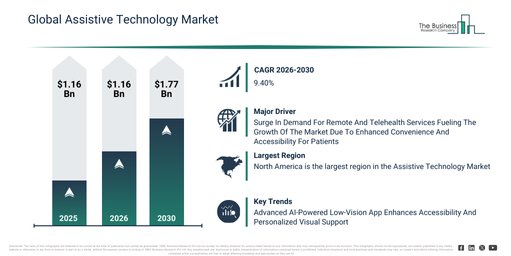
    The assistive technology market size is anticipated to experience substantial growth over the next few years. This market is set to expand to $49.07 billion in 2030, achieving a compound annual growth rate (CAGR) of 9.4%. The expansion during the forecast period is attributable to breakthroughs in AI-powered assistive robotics, the development of AR/VR-based rehabilitation tools, increased support from government and non-governmental organizations, the proliferation of smart home and connected devices, and growing investment in mobile assistive applications. Prominent trends for the forecast period include the increasing adoption of wearable assistive devices, a rising demand for home care and remote assistance solutions, the integration of mobile applications for disability support, a growing emphasis on cognitive and sensory assistance tools, and the expansion of inclusive educational and employment programs.

    Get A Free Sample Report With In-Depth Market Insights:

    https://thebusinessresearchcompany.com/sample_request?id=55663092&type=smp&name=Assistive%20Technology%20Market%20Report%202026&utm_source=Blogs&utm_medium=Paid&utm_campaign=Sep_PR

    Assistive Technology Market Expansion Drivers: What’s Shaping Future Growth?

    The assistive technology market is anticipated to expand moving forward, driven by the increasing need for remote and telehealth services. These services provide healthcare and medical consultations to patients through digital communication technologies, removing the requirement for in-person visits. The heightened demand for remote and telehealth arises from their convenience, as they allow patients to receive care from their homes, thereby cutting down travel time and enhancing prompt medical consultations. Assistive technology plays a crucial role in improving remote and telehealth services by enabling patients with disabilities or impairments to effectively communicate, access medical information, and smoothly engage in virtual consultations. For instance, in December 2023, data from the National Health Service, a UK-based government department, indicated 33.6 million registered individuals using the NHS App, with monthly logins seeing a 54% increase over the past year, rising from 16.8 million to 25.8 million. Consequently, the growing demand for remote and telehealth services is propelling the growth of the assistive technology market.

    Assistive Technology Market Segment Trends And Revenue Contributors

    The assistive technology market covered in this report is segmented –

    1) By Product Type: Mobility Impairment Devices, Visual Impairment Devices, Hearing Impairment Devices, Other Product Types

    2) By Technology Type: Assistive Robotics, Wearable Technology, Smart Home Devices, Mobile Applications, Augmented And Virtual Reality

    3) By Distribution Channel: Online Retailers, Specialty Assistive Technology Stores, Hospitals And Clinics, Government Agencies And Non-Governmental Organizations (NGOs)

    4) By Application: Mobility Assistance, Communication Assistance, Sensory Assistance, Cognitive Assistance, Environmental Control

    5) By End-User: Home Care, Educational Institutions, Healthcare Facilities, Employment Settings, Community Centers

    Subsegments:

    1) By Mobility Impairment Devices: Wheelchairs, Mobility Scooters, Walkers And Rollators, Canes And Crutches, Stair Lifts

    2) By Visual Impairment Devices: Screen Readers, Braille Displays, Magnifiers, Video Magnifiers, Text-To-Speech Devices

    3) By Hearing Impairment Devices: Hearing Aids, Cochlear Implants, Personal Amplifiers, Hearing Loops, Alerting Devices

    4) By Other Product Types: Speech Generating Devices, Adaptive Switches, Environmental Control Systems, Cognitive Aids, Assistive Software

    Assistive Technology Market Strategic Trends: What Defines The Next Growth Phase?

    Leading companies within the assistive technology market are dedicated to developing cutting-edge solutions, such as low-vision assistive applications, to boost accessibility and offer tailored visual assistance. A low-vision assistive app functions as a smartphone program that aids visually impaired individuals in increasing clarity and customizing their visual interaction with their environment. As an illustration, in September 2023, ReBokeh Vision Technologies, Inc., a US-based assistive tech company, unveiled ReBokeh Plus, an enhanced iteration of its AI-powered smartphone app. This application allows users to customize how they view their surroundings by applying real-time video filters specifically designed for their personal needs. Engineered for those with moderate vision impairment, ReBokeh’s technology modifies elements like contrast and sharpness to improve visual clarity. The updated Plus version introduces sophisticated customization features, granting users even greater adaptability. This breakthrough highlights the company’s commitment to enabling individuals with vision challenges to experience the world with more comfort and independence.

    Assistive Technology Market Competitive Analysis Of Leading Industry Participants

    Major companies operating in the assistive technology market are Apple Inc, Stryker Corporation, ResMed Inc, Sonova Holding AG, William Demant Holding A/S, GN Store Nord A/S, Cochlear Limited, Invacare Corporation, MED-EL Medical Electronics GmbH, Drive DeVilbiss Healthcare Inc, OrCam Technologies Ltd, 3Play Media Inc, HumanWare Group Inc, Freedom Scientific Inc, Karma Medical Products Co. Ltd, Enabling Devices LLC, Ossenberg GmbH, ZYGO-USA, Tobii Dynavox AB, Tobii Technology AB, Prentke Romich Company, AbleNet Inc

    View The Full Assistive Technology Market Report:

    https://thebusinessresearchcompany.com/report/assistive-technology-global-market-report?utm_source=Blogs&utm_medium=Paid&utm_campaign=Sep_PR

    Assistive Technology Market Geographic Spread And Regional Opportunities

    North America was the largest region in the assistive technology market in 2025. Asia-Pacific is expected to be the fastest-growing region in the forecast period. The regions covered in the assistive technology market report are Asia-Pacific, South East Asia, Western Europe, Eastern Europe, North America, South America, Middle East, Africa.

    Reach Out To Our Team:

    The Business Research Company: https://www.thebusinessresearchcompany.com/

    Americas: +1 310-496-7795

    Asia: +44 7882 955267 & +91 8897263534

    Europe: +44 7882 955267

    Email us at: marketing@tbrc.info

    Follow us on:

    LinkedIn: https://in.linkedin.com/company/the-business-research-company

    YouTube: https://www.youtube.com/channel/UC24_fI0rV8cR5DxlCpgmyFQ

    Global Market Model: https://www.thebusinessresearchcompany.com/global-market-model
  • Cell Culture Consumables And Equipment Market Forecast To Reach $25.49 Billion By 2030: Key Growth Drivers And Industry Trends

    Cell Culture Consumables And Equipment Market Forecast To Reach $25.49 Billion By 2030: Key Growth Drivers And Industry Trends

    Built to provide research that’s more actionable and strategically valuable, The Business Research Company’s 2026 market reports include market attractiveness analysis, total addressable market sizing, company benchmarking matrices, interactive Excel dashboards, broader supply chain intelligence, emerging startup tracking, and in-depth product insights.

    Cell Culture Consumables And Equipment Market Value Growth And Long-Term Outlook

    The cell culture consumables and equipment market has experienced significant expansion in recent years. It is anticipated to increase from $14.69 billion in 2025 to $16.05 billion in 2026, demonstrating a compound annual growth rate (CAGR) of 9.3%. The expansion observed historically can be credited to factors such as limited availability of specialized cell culture instruments, reliance on conventional culture media, growing academic and industrial research activities, rising vaccine and biologics development, and increasing awareness of regenerative medicine potential.

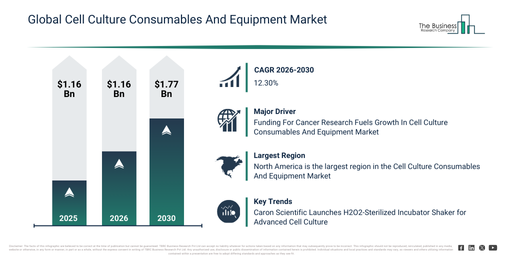
    The cell culture consumables and equipment market is projected to experience significant expansion in the coming years. This market is forecast to reach $25.49 billion by 2030, exhibiting a compound annual growth rate (CAGR) of 12.3%. The anticipated growth during this period is driven by factors such as advancements in bioreactors and automated incubators, increased investment in stem cell and gene therapy research, the expansion of the biotechnology and pharmaceutical industries, the embrace of high-throughput screening technologies, and the integration of smart and automated laboratory equipment. Key trends anticipated for the forecast period encompass a growing demand for sophisticated cell culture consumables, the broadening scope of stem cell and regenerative medicine research, a greater adoption of automated cell culture instruments, an increase in drug screening and development applications, and an emphasis on high-quality culture media and reagents.

    Get A Free Sample Report With In-Depth Market Insights:

    https://thebusinessresearchcompany.com/sample_request?id=12091438&type=smp&name=Cell%20Culture%20Consumables%20And%20Equipment%20Market%20Report%202026&utm_source=Blogs&utm_medium=Paid&utm_campaign=Sep_PR

    Cell Culture Consumables And Equipment Market Growth Factors Behind Sustained Expansion

    The cell culture consumables and equipment market is expected to experience growth, propelled by an increase in funding for cancer research. This allocation of financial resources, crucial for supporting various projects and initiatives, plays a significant role in the development, advancement, and accessibility of cell culture consumables and equipment. For instance, in September 2023, the National Cancer Institute, a US-based government agency, received a budget of $7.3 billion from the United States Congress for fiscal year 2023, which represents a $408 million increase compared to 2022. Consequently, enhanced financial backing for cancer research is a key factor driving the expansion of the cell culture consumables and equipment market.

    Cell Culture Consumables And Equipment Market Segment Landscape: Which Areas Lead Development?

    The cell culture consumables and equipment market covered in this report is segmented –

    1) By Product: Consumables, Instruments

    2) By Application: Vaccination, Toxicity Testing, Cancer Research, Drug Screening And Development, Recombinant Products, Stem Cell Technology, Regenerative Medicine, Other Applications

    3) By End User: Industrial, Biotechnology, Agriculture, Other End Users

    Subsegments:

    1) By Consumables: Culture Media, Cell Culture Reagents, Serum And Supplements, Cell Culture Vials And Flasks, Culture Plates And Dishes, Pipettes And Pipette Tips

    2) By Instruments: Cell Culture Incubators, Bioreactors, Centrifuges, Microscopes, Cell Counters, Shakers And Stirring Systems

    Cell Culture Consumables And Equipment Market Industry Trends Fueling Future Revenue Growth

    Leading companies in the Cell Culture Consumables And Equipment market are concentrating on developing innovative products, such as in-unit dry hydrogen-peroxide fogging sterilization, to significantly reduce contamination risk and downtime in GMP cell culture production. This dry H2O2 fogging sterilization method is a decontamination technique that employs vapor-phase hydrogen peroxide without condensation, ensuring effective sterilization without water pooling. In March 2025, Caron Scientific, a US-based provider of environmental testing, controlled-environment incubators, and bioprocess equipment, launched its 7406 Series Incubator Shaker. This system offers the highest single-chamber capacity in its class while maintaining a compact, vertical footprint, and delivers precisely controlled temperature (20 °C–60 °C), CO2 (0–20%), humidity (ambient to 90%) and shaking parameters (adjustable RPM and orbit). Its integrated dry H2O2 decontamination cycle, continuously monitored by a humidity sensor and electronic control, actively prevents condensation and allows for immediate reuse post-sterilization, representing a first in incubator-shaker design. These combined features make it optimally suited for high-throughput, GMP-compliant biologics production, providing improved operational efficiency and robust contamination control.

    Cell Culture Consumables And Equipment Market Industry Leaders And Competitive Landscape

    Major companies operating in the cell culture consumables and equipment market are Becton Dickinson and Company, Corning Inc., Danaher Corporation, Eppendorf AG, HiMedia Laboratories Private Limited, Lonza Group AG, Merck KGAA, Promocell GmbH, Sartorius AG, Thermo Fisher Scientific Inc., Irvine Scientific Sales Company Inc., CellGenix GmbH, InVitria Inc., Cytiva, Bio-Techne Corporation, GenScript Biotech Corporation, Gedeon Richter Plc., Hetero Drugs Limited, Intas Pharmaceuticals Ltd., LG Chem Ltd., Lupin Limited, Bio-Rad Laboratories Inc., Illumina Inc., Qiagen NV, F. Hoffmann-La Roche Ltd, Norgen Biotek Corporation, Tecan Group Ltd.

    View The Full Cell Culture Consumables And Equipment Market Report:

    https://thebusinessresearchcompany.com/report/cell-culture-consumables-and-equipment-global-market-report?utm_source=Blogs&utm_medium=Paid&utm_campaign=Sep_PR

    Cell Culture Consumables And Equipment Market Regional Analysis And Top Geography

    North America was the largest region in the cell culture consumables and equipment market in 2025. Western Europe was the second-largest region in the global cell culture consumables and equipment market share. The regions covered in the cell culture consumables and equipment market report are Asia-Pacific, South East Asia, Western Europe, Eastern Europe, North America, South America, Middle East, Africa.

    Reach Out To Our Team:

    The Business Research Company: https://www.thebusinessresearchcompany.com/

    Americas: +1 310-496-7795

    Asia: +44 7882 955267 & +91 8897263534

    Europe: +44 7882 955267

    Email us at: marketing@tbrc.info

    Follow us on:

    LinkedIn: https://in.linkedin.com/company/the-business-research-company

    YouTube: https://www.youtube.com/channel/UC24_fI0rV8cR5DxlCpgmyFQ

    Global Market Model: https://www.thebusinessresearchcompany.com/global-market-model
  • Cell Counting Market Research 2026: Market Size, Trends, Segments And Growth Forecast

    Cell Counting Market Research 2026: Market Size, Trends, Segments And Growth Forecast

    Backed by market attractiveness analysis, total addressable market sizing, company benchmarking matrices, interactive Excel dashboards, wider supply chain intelligence, emerging startup coverage, and detailed product-level insights, The Business Research Company’s 2026 market reports are designed to offer research that is more actionable and strategically valuable than ever.

    Cell Counting Market Poised To Hit $17.83 Billion By 2030 With A 9.3% CAGR

    The cell counting market has experienced significant expansion in recent years. Its valuation is expected to rise from $11.39 billion in 2025 to $12.49 billion in 2026, demonstrating a compound annual growth rate (CAGR) of 9.7%. This growth witnessed in the past can be ascribed to the broadening of life sciences research activities, an increasing reliance on cell culture techniques, greater investments in pharmaceutical research, enhanced academic research funding, and the widespread integration of laboratory automation.

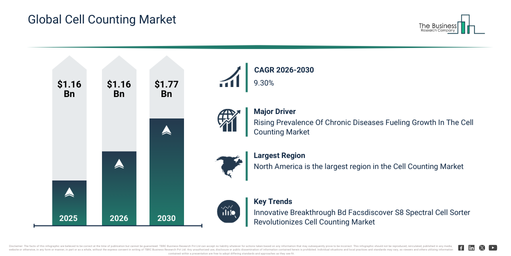
    The cell counting market size is expected to witness substantial growth in the upcoming years. It is forecast to reach $17.83 billion in 2030, growing at a compound annual growth rate (CAGR) of 9.3%. This anticipated expansion over the forecast period is attributed to the increasing demand for cell-based therapies, the rising adoption of precision diagnostics, the expansion of biotechnology research pipelines, the growing utilization of AI-enabled laboratory analytics, and an increasing focus on standardized laboratory workflows. Key trends during this period include the rising adoption of automated cell counting systems, an increase in the use of flow cytometry-based cell analysis, growing demand for high-throughput cell counting, the expansion of cell-based research applications, and an enhanced focus on data accuracy and reproducibility.

    Get A Free Sample Report With In-Depth Market Insights:

    https://thebusinessresearchcompany.com/sample_request?id=61066428&type=smp&name=Cell%20Counting%20Market%20Report%202026&utm_source=Blogs&utm_medium=Paid&utm_campaign=Sep_PR

    Cell Counting Market Demand Drivers Opening New Revenue Streams

    The increasing incidence of chronic diseases is anticipated to drive the expansion of the cell counting market in the forthcoming years. Chronic diseases are characterized as conditions lasting a year or more, requiring continuous medical care, impeding daily activities, or both. These ailments often feature complex etiologies, multiple risk factors, lengthy incubation periods, extended illness, and result in reduced function or impairment. Cell counting provides an essential diagnostic, monitoring, and therapeutic approach for chronic illnesses. It aids healthcare professionals in identifying and tracking shifts in cell counts, which can provide critical data concerning disease advancement and treatment efficacy. For instance, in June 2024, according to the National Health Service, a UK-based government department, 3,615,330 individuals registered with a general practitioner (GP) were diagnosed with non-diabetic hyperglycemia or pre-diabetes (a condition with elevated blood sugar levels, not high enough to be classified as diabetes) in 2023, representing an 18% increase from 3,065,825 cases in 2022. Hence, the growing prevalence of chronic diseases is propelling the cell counting market.

    Cell Counting Market Segments: Where Is Growth Concentrated?

    The cell counting market covered in this report is segmented –

    1) By Consumables And Accessories: Media, Sera And Reagents, Assay Kits, Microplates

    2) By Product: Multi-Mode Readers, Cell Counters, Automated Cell Counters, Hemocytometers, Manual Cell Counters, Flow Cytometers

    3) By Application: Research Applications, Clinical And Diagnostic Applications, Industrial Applications

    4) By End-User: Hospitals And Diagnostic, Research Institutions, Pharmaceutical And Biotechnology Companies, Other End-Users

    Subsegments:

    1) By Media: Cell Culture Media, Specialized Growth Media

    2) By Sera and Reagents: Fetal Bovine Serum (FBS), Human Serum, Reagents for Cell Viability

    3) By Assay Kits: Cell Counting Kits, Apoptosis Detection Kits

    4) By Microplates: 96-Well Plates, 384-Well Plates, Specialized Cell Culture Plates

    Cell Counting Market Trends Powering Strategic Industry Growth

    Leading companies in the cell counting market are concentrating on innovative products such as the BD FACSDiscover S8 spectral cell sorter to better satisfy the requirements of their existing clientele. Spectral cell sorting represents a revolutionary method that categorizes cells based on their visual attributes by merging advanced spectral flow cytometry with high-speed imaging technologies. Unlike traditional flow cytometry, which identifies specific fluorescent bands, spectral flow cytometry gathers the entire spectrum of signals generated by sample arrangements, facilitating multi-parameter sorting. For example, in May 2023, Becton, Dickinson, and Company, a US-based firm producing medical devices, instrument systems, and reagents, launched the BD FACSDiscover S8 Cell Sorter. This device introduces two transformative technologies that enable researchers to uncover previously undetectable information about cells during standard flow cytometry investigations. With BD CellView Image Technology, researchers can examine comprehensive microscopic images of individual cells and sort them rapidly based on visual criteria to validate findings in real time. Furthermore, BD SpectralFX Technology allows researchers to conduct high-parameter studies using full-spectrum cell sorting and experience enhanced performance, thanks to a new flexible optical architecture and system-aware algorithms. The integration of these advancements within the BD FACSDiscover S8 Cell Sorter broadens the capabilities of researchers, holding the potential to revolutionize research and cell-based therapy development in various areas, including drug discovery, immuno-oncology, and genomics.

    Cell Counting Market Key Participants And Competitive Landscape

    Major companies operating in the cell counting market are Thermo Fisher Scientific Inc., Merck KGaA, PerkinElmer Inc., Bio-Rad Laboratories Inc., Danaher Corporation, Olympus Corporation, HORIBA Ltd., Logos Biosystems Inc., Becton Dickinson and Company, GE Healthcare, Agilent Technologies Inc., BioTek Instruments Inc., DeNovix Inc., Sysmex Corporation, Nexcelom Bioscience LLC, Beckman Coulter Inc., Roche Diagnostics International Ltd., Miltenyi Biotec GmbH, AccuBioTech Co. Ltd., ChemoMetec A/S, Countstar Microscopy Systems, Luminex Corporation, NanoEnTek Inc., Partec GmbH, Advanced Instruments Inc., Analytik Jena AG, Integra Biosciences AG, Meridian Bioscience Inc., Promega Corporation, Sartorius AG

    View The Full Cell Counting Market Report:

    https://thebusinessresearchcompany.com/report/cell-counting-global-market-report?utm_source=Blogs&utm_medium=Paid&utm_campaign=Sep_PR

    Cell Counting Market Geographic Analysis: Where Is Demand Rising Fastest?

    North America was the largest region in the cell counting market in 2025. Asia-Pacific is expected to be the fastest-growing region in the forecast period. The regions covered in the cell counting market report are Asia-Pacific, South East Asia, Western Europe, Eastern Europe, North America, South America, Middle East, Africa.

    Reach Out To Our Team:

    The Business Research Company: https://www.thebusinessresearchcompany.com/

    Americas: +1 310-496-7795

    Asia: +44 7882 955267 & +91 8897263534

    Europe: +44 7882 955267

    Email us at: marketing@tbrc.info

    Follow us on:

    LinkedIn: https://in.linkedin.com/company/the-business-research-company

    YouTube: https://www.youtube.com/channel/UC24_fI0rV8cR5DxlCpgmyFQ

    Global Market Model: https://www.thebusinessresearchcompany.com/global-market-model