Blog

  • 5 Takeaways From The Surgical Hooks Market Overview 2024

    5 Takeaways From The Surgical Hooks Market Overview 2024

    The Business Research Company’s global market reports are now updated with the latest market sizing information for the year 2024 and forecasted to 2033

    According to The Business Research Company’s Surgical Hooks Global Market Report 2023, the surgical hooks market is expected to show promising growth in the forecast period.

    The surgical hooks market has experienced significant growth in recent years, driven by increasing demand for advanced surgical procedures and technological advancements. This report provides a comprehensive analysis of the market size, growth forecasts, key drivers, trends, major players, and regional insights.

    Current Market Size and Growth

    • 2023 Market Size: $0.78 billion
    • 2024 Market Size (Projected): $0.86 billion
    • CAGR: 10.7%

    Key Growth Drivers

    • Rising Obesity Rates: Increased obesity rates contribute to a higher incidence of surgeries related to weight management and obesity-related conditions.
    • Aging Population: The growing aging population requires more surgical interventions, boosting demand for surgical hooks.
    • Demand for Minimally Invasive Surgeries: The rise in minimally invasive procedures drives the need for specialized instruments like surgical hooks.
    • Surge in Healthcare Expenditure: Increased healthcare spending supports the acquisition of advanced surgical tools and technologies.
    • Adoption of Outpatient Surgeries: The shift towards outpatient surgical procedures enhances the demand for surgical hooks.

    View More On The Surgical Hooks Market Report 2024 –

    https://www.thebusinessresearchcompany.com/report/surgical-hooks-global-market-report

    Future Market Growth and Trends

    The surgical hooks market is expected to continue its rapid growth trajectory, driven by several emerging trends and advancements.

    Forecasted Growth (2024-2028)

    • CAGR: 11.0%
    • 2028 Market Size (Projected): $1.31 billion

    Growth Drivers

    • Increasing Surgical Procedures: A rise in the number of surgeries, including elective and reconstructive procedures, is expected to drive demand for surgical hooks.
    • Higher Incidence of Chronic Diseases: Growing prevalence of chronic diseases increases the need for surgical interventions.
    • Advancements in Robotic Surgery: The integration of robotics in surgery is enhancing precision and efficiency, leading to greater demand for advanced surgical hooks.
    • Technological Advancements: Innovations in surgical hook design and materials contribute to market growth.
    • Expansion in Emerging Markets: Growing healthcare infrastructure in emerging markets is expanding the reach of surgical hooks.
    • Focus on Precision and Ergonomics: Emphasis on improving surgical outcomes through precision and ergonomic design drives the development of advanced surgical hooks.

    Major Trends

    • Technological Advancements: Ongoing innovations in surgical hook materials and designs enhance performance and usability.
    • Integration of Smart Technologies: The incorporation of smart technologies is improving the functionality and effectiveness of surgical hooks.
    • Advancements in Surgical Hook Materials: New materials and coatings are being developed to improve the durability and performance of surgical hooks.
    • Expansion in Emerging Markets: Increased healthcare investments in emerging markets are creating new opportunities for surgical hook manufacturers.
    • Emphasis on Precision and Ergonomics: Designing hooks with improved precision and ergonomic features is becoming a key focus.

    Impact of Minimally Invasive Surgeries

    The increasing prevalence of minimally invasive surgeries is a major driver for the surgical hooks market.

    Example: ISAPS Report

    • International Society of Aesthetic Plastic Surgery (2023): A 19.3% increase in cosmetic procedures globally in 2021 reflects the growing trend towards minimally invasive techniques, which rely on precise surgical instruments like hooks.

    Major Players in the Global Market

    The surgical hooks market is competitive, with several leading companies driving innovation and expanding their product offerings.

    Leading Companies

    • Johnson & Johnson
    • Medtronic plc
    • Smith & Nephew plc
    • MORIA SA
    • Sklar Surgical Instruments
    • Pelican Feminine Healthcare Ltd.
    • Thompson Surgical Instruments Inc.
    • BOSS Instruments Ltd.
    • Timesco Healthcare Ltd
    • TeDan Surgical Innovations
    • Inami & Co. Ltd.
    • Aygun Surgical Instruments
    • Eastern Surgical Company

    Innovations and Strategic Investments

    Strategic investments and innovations are enhancing the capabilities and market presence of leading companies.

    Example: Surgical Instruments Group Holdings Ltd.

    • January 2024: Surgical Instruments Group Holdings Ltd. plans to establish a healthcare device manufacturing facility in Hyderabad, investing Rs.231.5 crore ($27.7 million). This facility will produce general surgical instruments, microsurgical tools, and minimally invasive devices, with plans to expand into robotic medical devices.

    Example: STERIS Acquisition of BD Assets

    • August 2023: STERIS plc acquired surgical instrumentation assets from BD, expanding its product offerings in orthopedic, general surgery, and other surgical procedures.

    Regional Insights

    Regional dynamics highlight North America as a leading market, with significant growth potential in other regions.

    Regional Market Leaders

    • North America: The largest region in the surgical hooks market in 2023, driven by advanced healthcare infrastructure and high demand for surgical procedures.
    • Asia-Pacific: Expected to be the fastest-growing region in the forecast period due to increasing healthcare investments and rising demand for surgical procedures.

    Conclusion

    The surgical hooks market is set for continued growth, driven by rising demand for minimally invasive surgeries, technological advancements, and expanding healthcare infrastructure. Innovations in surgical hook design and materials, along with strategic investments and mergers, are shaping the future of the market. With a competitive landscape featuring major players and dynamic regional markets, the surgical hooks market presents significant opportunities for growth and development.

    Request A Sample Of The Global Surgical Hooks Market Report 2024:
    https://www.thebusinessresearchcompany.com/sample_request?id=17268&type=smp

  • How Is The Surgical Energy Instruments Market Expected To Grow Through 2024-2033

    How Is The Surgical Energy Instruments Market Expected To Grow Through 2024-2033

    The Business Research Company’s global market reports are now updated with the latest market sizing information for the year 2024 and forecasted to 2033

    According to The Business Research Company’s Surgical Energy Instruments Global Market Report 2023, the surgical energy instruments market is expected to show promising growth in the forecast period.

    The surgical energy instruments market has seen rapid growth in recent years, fueled by advancements in technology and an increasing demand for various surgical procedures. This report provides an in-depth analysis of the market size, growth forecasts, drivers, trends, major players, and regional insights.

    Current Market Size and Growth

    • 2023 Market Size: $4.19 billion
    • 2024 Market Size (Projected): $4.68 billion
    • CAGR: 11.7%

    Key Growth Drivers

    • Increasing Surgical Procedures: The rise in the number and complexity of surgical procedures is a significant factor driving market growth.
    • Aging Population: An aging population is leading to more surgeries related to age-related conditions, boosting demand for surgical energy instruments.
    • Healthcare Infrastructure Development: Expansion and modernization of healthcare facilities contribute to the increased adoption of advanced surgical instruments.
    • Regulatory Environment: Favorable regulatory policies and guidelines facilitate market growth by ensuring safety and efficacy standards.
    • Healthcare Expenditures: Rising healthcare expenditures support the acquisition of advanced surgical energy instruments.
    • Market Consolidation: Mergers and acquisitions among key players are leading to increased market consolidation and innovation.

    View More On The Surgical Energy Instruments Market Report 2024 –

    https://www.thebusinessresearchcompany.com/report/surgical-energy-instruments-global-market-report

    Future Market Growth and Trends

    The surgical energy instruments market is projected to experience continued rapid growth over the next few years, driven by several emerging trends and technological advancements.

    Forecasted Growth (2024-2028)

    • CAGR: 11.8%
    • 2028 Market Size (Projected): $7.31 billion

    Growth Drivers

    • Minimally Invasive Techniques: The shift towards minimally invasive surgical techniques is driving demand for advanced energy instruments that support precision and efficiency.
    • Emerging Market Expansion: Growth in emerging markets is expanding the customer base for surgical energy instruments.
    • Patient Safety Focus: Increased focus on patient safety is leading to the development and adoption of advanced, safer energy devices.
    • Integration of Robotics: The integration of robotic systems in surgery enhances precision and efficiency, driving demand for compatible energy instruments.
    • Smart Technology Integration: The incorporation of smart technologies, such as wireless power transmission and AI, is enhancing the functionality of surgical energy instruments.
    • Sustainability Initiatives: Growing emphasis on sustainability is leading to the development of eco-friendly surgical energy devices.

    Major Trends

    • Wireless Power Transmission: Innovations in wireless power transmission are enhancing the flexibility and convenience of surgical energy instruments.
    • AI and Machine Learning: AI and machine learning technologies are being integrated to improve device performance and predict surgical outcomes.
    • Energy-Efficient Devices: Development of energy-efficient devices aims to reduce energy consumption while maintaining high performance.
    • Customized Energy Profiles: Tailoring energy profiles to specific surgical needs is improving the efficacy and safety of procedures.
    • Smart Sensors: Advanced sensors are providing real-time feedback and enhancing the precision of surgical instruments.
    • Bioelectronic Medicine: The integration of bioelectronic medicine is opening new possibilities for surgical energy devices.

    Impact of Elective Cosmetic and Reconstructive Surgeries

    The rise in elective cosmetic and reconstructive surgeries is a major driver for the surgical energy instruments market.

    Example: UK Cosmetic Surgery Trends

    • British Association of Aesthetic Plastic Surgeons (2023): There was a 102% increase in cosmetic procedures performed in the UK in 2022 compared to the previous year. This surge reflects the growing demand for advanced surgical energy instruments used in these procedures.

    Major Players in the Global Market

    The surgical energy instruments market is competitive, with several key players leading in innovation and market presence.

    Leading Companies

    • Johnson & Johnson Pvt Ltd
    • Medtronic Plc
    • Stryker Corporation
    • Boston Scientific Corporation
    • EKF Diagnostics Holdings plc
    • Symmetry Surgical Inc.
    • Bovie Medical Corporation
    • LiNA Medical USA
    • Erbe Elektromedizin GmbH
    • Megadyne Medical Products Inc.
    • BOWA-electronic GmbH & Co. KG
    • Elmed Medical Systems Ltd.
    • Encision Inc.

    Innovations and Technological Advances

    Technological innovation is a key focus area, with major companies developing advanced surgical energy platforms to enhance precision and efficiency.

    Example: Olympus ESG-410 Surgical Energy Platform

    • Olympus Corporation: In January 2024, Olympus launched the ESG-410 Surgical Energy Platform, which supports conventional monopolar and bipolar applications and includes ultrasonic dissection and hybrid energy capabilities. This versatile platform is designed for various specialties and features multiple ports for diverse surgical needs.

    Strategic Partnerships and Mergers

    Mergers and acquisitions are shaping the market landscape, allowing companies to expand their product offerings and strengthen their market position.

    Example: Aspen Surgical’s Acquisition of Symmetry Surgical

    • Aspen Surgical Products Inc.: In October 2022, Aspen Surgical acquired Symmetry Surgical Inc., enhancing its portfolio of surgical products and expanding its market presence in the surgical energy instruments segment.

    Regional Insights

    Regional dynamics reveal North America as the leading region in the surgical energy instruments market, with significant growth potential in other regions.

    Regional Market Leaders

    • North America: The largest region in the surgical energy instruments market in 2023, driven by advanced healthcare infrastructure and high demand for surgical procedures.

    Conclusion

    The surgical energy instruments market is poised for rapid growth, driven by increasing demand for various surgical procedures, advancements in technology, and a focus on patient safety. Innovations in energy-efficient devices, smart technology, and robotic integration are shaping the future of the market. With a competitive landscape featuring major players and ongoing strategic developments, the market offers significant opportunities for growth and advancement in surgical energy technologies.

    Request A Sample Of The Global Surgical Energy Instruments Market Report 2024:
    https://www.thebusinessresearchcompany.com/sample_request?id=17267&type=smp

  • Future Growth Forecast For The Surgical Cutting Tool Global Market 2024-2033

    Future Growth Forecast For The Surgical Cutting Tool Global Market 2024-2033

    The Business Research Company’s global market reports provide comprehensive analysis on the various markets in 27 industries across 60 geographies.

    The surgical cutting tool market has experienced robust growth in recent years, driven by various factors, including the increasing demand for surgical procedures and advancements in surgical technologies. This analysis provides a comprehensive overview of the current market size, growth forecasts, key drivers, emerging trends, and major players influencing the market’s future.

    Current Market Size and Growth

    • 2023 Market Size: $12.50 billion
    • 2024 Market Size (Projected): $13.39 billion
    • CAGR: 7.2%

    Key Growth Drivers

    • Age-Related Conditions: The rising prevalence of age-related conditions requiring surgical interventions is a significant factor driving market growth.
    • Patient Safety and Infection Control: There is a growing emphasis on ensuring patient safety and infection control during surgical procedures, leading to increased demand for high-quality surgical cutting tools.
    • Medical Tourism: The expansion of medical tourism, particularly in emerging markets, has boosted the demand for advanced surgical tools.
    • Surgeon Training and Skill Development: A growing focus on enhancing the skills of surgeons through training programs is contributing to the adoption of advanced surgical cutting tools.
    • Evidence-Based Surgical Practices: Rising awareness and adoption of evidence-based surgical practices are driving the need for precision surgical tools.

    View More On The Surgical Cutting Tool Market Report 2024 –
    https://www.thebusinessresearchcompany.com/report/surgical-cutting-tool-global-market-report

    Future Market Growth and Trends

    The surgical cutting tool market is poised for strong growth over the next few years, with advancements in technology and a focus on improving surgical outcomes being key drivers.

    Forecasted Growth (2024-2028)

    • CAGR: 7.3%
    • 2028 Market Size (Projected): $17.79 billion

    Growth Drivers

    • Personalized Surgical Procedures: There is an increasing emphasis on personalized surgical procedures, which require specialized cutting tools for precise and tailored interventions.
    • Augmented Reality (AR) and Virtual Reality (VR): The use of AR and VR in surgical planning is expected to enhance precision and improve patient outcomes, driving demand for advanced surgical tools.
    • Eco-Friendly Tools: The development of eco-friendly and recyclable surgical cutting tools is gaining traction as sustainability becomes a focus in the healthcare industry.
    • Minimizing Surgical Complications: A growing focus on minimizing surgical complications is driving the adoption of advanced cutting tools that reduce risks and improve outcomes.

    Emerging Trends

    • Material Science Advancements: Continuous improvements in material science are leading to the development of more durable and effective surgical cutting tools.
    • Tool Coatings and Surface Treatments: Enhancements in tool coatings and surface treatments are improving the performance and longevity of surgical instruments.
    • CAD and CAM Technologies: The adoption of computer-aided design (CAD) and computer-aided manufacturing (CAM) technologies is revolutionizing the production of surgical tools, allowing for greater precision and customization.
    • New Surgical Techniques: The emergence of new surgical techniques is driving the need for specialized cutting tools designed to support these innovative procedures.
    • R&D Investment: Increasing investment in research and development is leading to the creation of cutting-edge surgical tools that meet the evolving needs of healthcare providers.

    Impact of Rising Demand for Surgical Procedures

    The growing demand for surgical procedures is a significant driver of the surgical cutting tool market.

    Example: UK Cosmetic Surgery Trends

    • British Association of Aesthetic Plastic Surgeons (2023): The number of cosmetic surgery procedures in the UK increased by 102% from 2021 to 2022, with men accounting for 7% of all procedures, reflecting a 118% rise from the previous year. This surge in demand highlights the growing need for advanced surgical tools to support a wide range of procedures.

    Major Players in the Global Market

    The surgical cutting tool market is highly competitive, with several key players leading the way in innovation and market expansion.

    Leading Companies

    • Medtronic plc
    • Stryker Corporation
    • Olympus Corporation
    • Terumo Corporation
    • Arthrex Inc
    • Kennametal
    • Lisi Medical SA
    • Intech Medical SAS
    • Paragon Medical Inc
    • Medicon de
    • Kebomed A/s
    • Astura Medical
    • Adler Ortho Spa
    • Nebula Surgical Pvt Ltd
    • MEDGAL Sp z o.o
    • Marle Group

    Innovations and Technological Advances

    Technological advancements are a key focus for companies in the surgical cutting tool market, with innovations aimed at enhancing surgical precision and patient outcomes.

    Example: Ethicon’s ECHELON LINEAR Cutter

    • Ethicon Inc.: In May 2024, Ethicon launched the ECHELON LINEAR Cutter, a surgical stapler cutter that combines 3D-stapling technology with gripping surface technology (GST). This device is designed to reduce surgical risks and improve patient outcomes by providing exceptional staple line integrity across a broad range of tissue thicknesses, addressing serious complications such as anastomotic leaks in colorectal surgery.

    Strategic Partnerships and Mergers

    Mergers and acquisitions are shaping the competitive landscape, allowing companies to expand their product offerings and enter new market segments.

    Example: Sandvik’s Acquisition of Sphinx Tools

    • Sandvik AB: In August 2022, Sandvik acquired Sphinx Tools Ltd., a precision tool manufacturing company, to expand its product portfolio in the high-growth microtools market and enter the surgical cutting tools segment. This acquisition strengthens Sandvik’s strategic position in the round tools market.

    Regional Insights

    The market’s regional dynamics reveal Asia-Pacific as the leading region in 2023, with significant growth potential driven by increasing healthcare investments and rising demand for advanced surgical procedures.

    Regional Market Leaders

    • Asia-Pacific: The largest region in the surgical cutting tools market in 2023, fueled by rapid healthcare infrastructure development, rising medical tourism, and a growing aging population.

    Conclusion

    The surgical cutting tool market is set for continued growth, driven by rising demand for surgical procedures, advancements in technology, and increasing focus on patient safety and surgical precision. With ongoing innovations in material science, tool design, and surgical techniques, the market offers significant opportunities for companies to expand their product offerings and improve surgical outcomes worldwide

    Request A Sample Of The Global Surgical Cutting Tool Market Report 2024:
    https://www.thebusinessresearchcompany.com/sample_request?id=17266&type=smp

  • Growth Trajectory Of The Strep Throat Treatment Market 2024-2033

    Growth Trajectory Of The Strep Throat Treatment Market 2024-2033

    The Business Research Company’s global market reports are now updated with the latest market sizing information for the year 2024 and forecasted to 2033

    The strep throat treatment market has demonstrated significant growth, driven by various factors influencing the healthcare landscape. From $1.97 billion in 2023, the market is projected to expand to $2.08 billion in 2024, reflecting a compound annual growth rate (CAGR) of 5.8%.

    Market Growth Drivers

    • Rising Prevalence of Streptococcal Infections: Increased incidence of strep throat infections boosts demand for effective treatments.
    • Increased Awareness and Diagnosis: Greater awareness and improved diagnostic methods lead to more cases being identified and treated.
    • Antibiotic Accessibility: Improved access to antibiotics helps in managing and treating infections efficiently.
    • Healthcare Infrastructure and Government Initiatives: Enhanced healthcare infrastructure and government health initiatives support market growth.
    • Economic Growth and Pediatric Population: Economic development and a growing pediatric population contribute to increased healthcare spending on strep throat treatments.

    Growth Forecast

    The strep throat treatment market is expected to reach $2.62 billion by 2028, with a CAGR of 6%.

    View More On The Strep Throat Treatment Market Report 2024 –

    https://www.thebusinessresearchcompany.com/report/strep-throat-treatment-global-market-report

    Future Growth Factors

    • Emerging Antibiotic Resistance: The need for new treatment options due to rising antibiotic resistance drives market expansion.
    • Telemedicine Adoption: Increasing use of telemedicine facilitates remote diagnosis and treatment, boosting market growth.
    • Global Health Initiatives: International health initiatives aim to improve infection control and treatment accessibility.
    • Aging Population: Although strep throat predominantly affects children, an aging population still impacts market dynamics through overall healthcare needs.
    • Healthcare Access in Developing Regions: Expanding healthcare access in emerging markets enhances treatment availability.
    • Pharmaceutical R&D Investments: Continued investment in pharmaceutical research and development leads to innovation and new product offerings.

    Emerging Trends

    • Telemedicine Integration: Growing adoption of telemedicine for diagnosing and managing strep throat.
    • Rapid Diagnostic Test Innovation: Advances in rapid diagnostic tests improve early detection and treatment.
    • AI and Machine Learning: Integration of AI and machine learning for better diagnostic accuracy and treatment plans.
    • Antibiotic Development: Ongoing development of new antibiotics to address resistant strains.
    • Biotechnology Advances: Innovations in biotechnology contribute to more effective treatments.
    • Wearable Health Technology: Emerging wearable tech to monitor symptoms and treatment adherence.
    • E-Pharmacies and Digital Health: Growth in e-pharmacies and digital health solutions for convenient access to medications.

    Key Market Driver: Rising Incidence of Bacterial Infections

    The increasing incidence of bacterial infections, including strep throat, drives the demand for effective treatment solutions. Factors contributing to the rise in bacterial infections include:

    • Antibiotic Overuse: Overuse of antibiotics leads to resistance and persistent infections.
    • Global Travel and Urbanization: Enhanced global mobility and urban environments contribute to the spread of infections.
    • Poor Hygiene and Healthcare-Associated Infections: Inadequate hygiene practices and infections acquired in healthcare settings further exacerbate the issue.

    Key Statistics

    • UK Office for Health Improvement and Disparities Report (June 2023): Reported 4,622 cases of scarlet fever due to Group A Streptococcus, significantly higher than previous years. This increase underscores the need for effective strep throat treatments.

    Major Players in the Market

    Prominent companies in the strep throat treatment market include:

    • Pfizer Inc.
    • Johnson & Johnson
    • Merck & Co. Inc.
    • AbbVie Inc.
    • Bayer AG
    • Sanofi SA
    • Eli Lilly and Company
    • Amgen Inc.
    • Novo Nordisk A/S
    • Biogen Inc.
    • Vertex Pharmaceuticals
    • Eisai Co. Ltd.
    • Mylan N.V

    Innovative Treatments and Trends

    Advanced Lozenges and Sprays:

    • Mucinex InstaSoothe (November 2021): Launched a new line of products for sore throat relief during cold and flu season. The product line includes lozenges and sprays with active ingredients like hexylresorcinol and benzocaine for temporary relief.

    Digital Health and Diagnostics:

    • BD and Scanwell Health Acquisition (December 2021): Becton Dickinson acquired Scanwell Health to enhance its digital at-home diagnostic capabilities. The acquisition supports the development of smartphone-enabled tests for strep throat and other infections.

    Market Segmentation

    The strep throat treatment market is segmented as follows:

    1. By Treatment Type:
      • Antibiotics
      • Pain Relievers
      • Other Treatment Types
    2. By Diagnosis:
      • Antibody Test
      • Physical Examination
      • Throat Culture
      • Other Diagnostics
    3. By Route of Administration:
      • Oral
      • Topical
      • Injectable
    4. By Disease Type:
      • Acute Strep Throat
      • Pharyngitis
      • Tonsillitis
      • Laryngitis
      • Other Disease Types
    5. By End-Users:
      • Hospitals
      • Specialty Clinics
      • Diagnostic Laboratories
      • Other End-Users

    Regional Insights

    North America

    • Largest Market in 2023: North America holds the largest market share due to advanced healthcare infrastructure and high awareness levels.

    Asia-Pacific

    • Fastest-Growing Region: Asia-Pacific is expected to experience the fastest growth due to increasing healthcare access and rising incidence of strep throat infections.

    Request A Sample Of The Global Strep Throat Treatment Market Report 2024:

    https://www.thebusinessresearchcompany.com/sample_request?id=17263&type=smp

  • Spasmodic Dysphonia Treatment Market Forecast 2024: Forecast Market Size, Drivers And Key Segments

    Spasmodic Dysphonia Treatment Market Forecast 2024: Forecast Market Size, Drivers And Key Segments

    The Business Research Company’s global market reports are now updated with the latest market sizing information for the year 2024 and forecasted to 2033

    The spasmodic dysphonia treatment market has seen steady growth, expanding from $13.19 billion in 2023 to an anticipated $13.79 billion in 2024, representing a compound annual growth rate (CAGR) of 4.6%.

    Growth Drivers

    • Increased Awareness and Diagnosis:Enhanced recognition and diagnosis of spasmodic dysphonia contribute to market growth.
    • Use of Alternative Therapies:Rising use of alternative and complementary therapies for spasmodic dysphonia.
    • Expansion of Clinical Trials:Growth in clinical trials for new treatments and therapies.
    • Healthcare Policies and Public Health Initiatives:Influence of policies and initiatives aimed at improving patient care and treatment options.

    Growth Forecast

    The market is projected to reach $16.58 billion by 2028, with a CAGR of 4.7%.

    Future Growth Factors

    • Increased Awareness of Neurological Disorders: Growing awareness and understanding of neurological conditions drive market demand.
    • Demand for Non-Surgical Treatments: Rising preference for non-invasive treatment options.
    • Prevalence of Vocal Disorders: Increasing prevalence of vocal disorders that require treatment.
    • Personalized Medicine Approaches: Growing adoption of personalized treatment plans tailored to individual patient needs.
    • Telemedicine and Remote Consultations: Expansion of telemedicine services enhances access to treatment and consultations.

    View More On The Spasmodic Dysphonia Treatment Market Report 2024 – https://www.thebusinessresearchcompany.com/report/spasmodic-dysphonia-treatment-global-market-report

    Emerging Trends

    • Technological Advancements: Innovations in treatment technologies, including AI and machine learning.
    • Remote Work and Telehealth Integration: Increasing use of remote work and telehealth for managing and treating spasmodic dysphonia.
    • Blockchain Technology: Utilization of blockchain for secure and efficient management of patient data and treatment records.

    Key Market Driver: Increased Research and Development Activities

    R&D activities play a critical role in advancing the spasmodic dysphonia treatment market. Increased investment in R&D leads to the development of innovative therapies and improved treatment outcomes. For instance:

    • UK Government Investment (April 2024):The UK’s investment in R&D increased by 10.5%, reaching £15.5 billion, which supports advancements in treatments for conditions like spasmodic dysphonia.

    Major Players

    Key companies in the spasmodic dysphonia treatment market include:

    • Johnson & Johnson Services Inc.
    • AbbVie Inc.
    • Mylan
    • Eisai Co. Ltd
    • GALDERMA
    • HUGEL Inc.
    • Suneva Medical
    • Healis Therapeutics
    • Medytox
    • ATGC Co. Ltd.
    • Metabiologics Inc.

    Innovative Treatments and Trends

    Botulinum Toxin Formulations:

    • Hugel Inc. (March 2024):Launched Letybo, a new FDA-approved botulinum toxin formulation for spasmodic dysphonia. The formulation is designed for faster onset and prolonged effects, with reduced adverse reactions.

    Merger and Acquisition:

    • Healis Therapeutics Acquisition (February 2022):Acquired a key botulinum toxin patent from AbbVie Inc. to enhance its treatment portfolio and market position.

    Market Segmentation

    The spasmodic dysphonia treatment market is segmented as follows:

    1. By Type:
      • Drugs
      • Preventive Vaccines
      • Oxygen Therapy
    2. By Treatment:
      • Therapy
      • Direct Microlaryngoscopy
      • Pulse Dye Laser
      • Botox Injections or Injection Laryngoplasty
      • Minimally Invasive Approaches
      • Surgery
      • Voice Therapy
      • Laryngeal Desensitization
      • Respiratory Re-training
      • Other Treatments
    3. By Route of Administration:
      • Oral
      • Parenteral
      • Other Routes
    4. By Distribution Channel:
      • Hospital Pharmacy
      • Online Pharmacy
      • Retail Pharmacy
    5. By End User:
      • Hospitals
      • Homecare
      • Specialty Clinics
      • Other End Users

    Regional Insights

    Asia-Pacific

    • Largest Region (2023):Asia-Pacific was the largest market in 2023, driven by increasing healthcare access and rising awareness of spasmodic dysphonia.

    Request A Sample Of The Global Spasmodic Dysphonia Treatment Market Report 2024:
    https://www.thebusinessresearchcompany.com/sample_request?id=17261&type=smp

  • Global Rheumatology Therapeutics Market Analysis: Estimated Market Size And Growth Rate

    Global Rheumatology Therapeutics Market Analysis: Estimated Market Size And Growth Rate

    The Business Research Company’s global market reports are now updated with the latest market sizing information for the year 2024 and forecasted to 2033

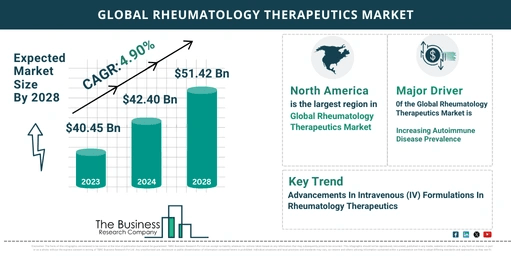
    The rheumatology therapeutics market is on a steady growth trajectory, driven by increasing prevalence of autoimmune diseases, advancements in treatment options, and expanding healthcare access. Here’s an in-depth look at the market dynamics, projections, and key trends shaping the industry.

    Current Market Size and Growth

    • 2023 Market Size: $40.45 billion
    • 2024 Market Size (Projected): $42.40 billion
    • CAGR: 4.8%

    Key Growth Drivers

    • Rising Prevalence of Rheumatologic Disorders: Increased incidence of autoimmune diseases drives demand for therapeutics.
    • Aging Population: Global aging population contributes to higher prevalence of rheumatologic conditions.
    • Growing Awareness: Increased awareness about treatment options and advancements in biological therapies.
    • Expansion of Healthcare Access: Improved access to healthcare in emerging markets boosts market growth.

    View More On The Rheumatology Therapeutics Market Report 2024 –
    https://www.thebusinessresearchcompany.com/report/rheumatology-therapeutics-global-market-report

    Future Market Growth and Trends

    The rheumatology therapeutics market is expected to continue growing steadily, supported by various factors.

    Forecasted Growth (2024-2028)

    • CAGR: 4.9%
    • 2028 Market Size (Projected): $51.42 billion

    Growth Drivers

    • Shift Towards Personalized Medicine: Adoption of personalized medicine approaches tailored to individual patient needs.
    • Rising Adoption of Biosimilars: Increased use of biosimilars in rheumatology to enhance treatment options.
    • Investment in Research and Development: Higher R&D investments lead to the development of innovative therapies.
    • Integration of Digital Health Technologies: Digital tools and telemedicine enhance patient monitoring and treatment management.
    • Regulatory Approvals for Novel Therapies: New therapies receive regulatory approvals, expanding treatment options.

    Major Trends

    • Telemedicine and Remote Monitoring Solutions: Growth in telehealth and remote patient monitoring for managing rheumatologic conditions.
    • Expansion of Targeted Therapies: Development of targeted therapies for specific rheumatic conditions.
    • Patient-Centric Care Models: Emphasis on care models that prioritize patient needs and outcomes.
    • Biologic Treatments Beyond Monoclonal Antibodies: Expansion of biologic treatments to include newer therapeutic options.
    • Value-Based Pricing Models: Adoption of pricing models focused on the value delivered by treatments.

    Market Driver: Increasing Autoimmune Disease Prevalence

    The growing prevalence of autoimmune diseases is a significant driver for the rheumatology therapeutics market.

    Key Statistics

    • June 2024: According to the Australian Institute of Health and Welfare, approximately 514,000 people in Australia were estimated to have rheumatoid arthritis in 2022, accounting for 2.0% of the total population and 16% of the burden for all musculoskeletal conditions.

    Major Players in the Global Market

    Leading companies in the rheumatology therapeutics market are driving innovation and expanding their market presence.

    Key Companies

    • Pfizer Inc.
    • Johnson & Johnson
    • Roche Holding AG
    • Merck & Co. Inc.
    • AbbVie Inc.
    • Sanofi SA
    • Janssen Biotech
    • Regeneron Pharmaceuticals Inc.
    • Biogen Inc.
    • Vertex Pharmaceuticals
    • UCB S.A.
    • Galapagos NV (GLPG)
    • Genentech Inc.

    Innovations and Strategic Investments

    Key players are focusing on advancements and strategic acquisitions to strengthen their market positions.

    Example: Novartis AG

    • October 2023: Announced FDA approval for Cosentyx, an intravenous (IV) formulation for treating psoriatic arthritis, ankylosing spondylitis, and non-radiographic axial spondyloarthritis. This formulation targets interleukin-17A (IL-17A) and is the only non-TNF-alpha IV treatment available for these conditions.

    Example: Alfasigma S.p.A.

    • February 2024: Acquired Jyseleca (filgotinib) from Galapagos NV for $184.54 million. This acquisition expands Alfasigma’s product portfolio in gastrointestinal and rheumatological treatments and enhances its presence in European markets.

    Market Segmentation

    The rheumatology therapeutics market is segmented into various categories:

    1. By Drug Class:
      • Disease Modifying Anti-Rheumatic Drugs (DMARDs)
      • Nonsteroidal Anti-Inflammatory Drugs (NSAIDs)
      • Corticosteroids
      • Uric Acid Drugs
      • Other Drug Classes
    2. By Distribution Channel:
      • Hospital Pharmacy
      • Retail Pharmacy
      • Online Pharmacy
    3. By Disease Indication:
      • Rheumatoid Arthritis
      • Osteoarthritis
      • Gout
      • Psoriatic Arthritis
      • Ankylosing Spondylitis
      • Other Disease Indications

    Regional Insights

    Regional dynamics highlight North America as the largest market, with significant growth potential in other regions.

    Regional Market Leaders

    • North America: The largest region in the rheumatology therapeutics market in 2023, driven by advanced healthcare infrastructure and high treatment adoption rates.
    • Asia-Pacific: Expected to be the fastest-growing region during the forecast period due to expanding healthcare infrastructure and rising prevalence of rheumatologic disorders.

    Request A Sample Of The Global Rheumatology Therapeutics Market Report 2024:
    https://www.thebusinessresearchcompany.com/sample_request?id=17246&type=smp

  • Global Remote Cardiac Monitoring Market Report 2024 – Top Market Trends And Opportunities

    Global Remote Cardiac Monitoring Market Report 2024 – Top Market Trends And Opportunities

    The Business Research Company’s market reports offer an in-depth analysis on the market’s growth potential, major drivers, key trends and more.

    The remote cardiac monitoring market is experiencing rapid growth, driven by advances in technology, increasing prevalence of cardiovascular diseases, and rising consumer interest in wearable health tech. Here’s a detailed look at the current state of the market, its growth prospects, and emerging trends.

    Current Market Size and Growth

    • 2023 Market Size: $5.08 billion
    • 2024 Market Size (Projected): $6.21 billion
    • CAGR: 22.2%

    Key Growth Drivers

    • Increasing Prevalence of Cardiovascular Diseases: The rising incidence of conditions such as coronary artery disease, heart failure, and arrhythmias.
    • Global Increase in Elderly Population: Aging populations contribute to higher rates of cardiovascular conditions.
    • Favorable Regulatory Approvals: Supportive regulatory environments facilitate market growth.
    • Growing Awareness About Preventive Healthcare: Increased focus on preventive measures drives demand for remote monitoring.
    • Investment in Health-Tech Startups: Significant funding and investment in innovative health-tech solutions.

    Read More On The Remote Cardiac Monitoring Market Report 2024 – https://www.thebusinessresearchcompany.com/report/remote-cardiac-monitoring-global-market-report

    Future Market Growth and Trends

    The remote cardiac monitoring market is expected to continue its exponential growth, driven by various factors.

    Forecasted Growth (2024-2028)

    • CAGR: 22.4%
    • 2028 Market Size (Projected): $13.92 billion

    Growth Drivers

    • Increasing Healthcare Infrastructure: Expansion of healthcare facilities and services.
    • Awareness in Emerging Economies: Growing awareness and adoption in developing regions.
    • Rise of Telehealth Services: Continued growth of telehealth platforms and remote monitoring solutions.
    • Consumer Interest in Wearable Health Tech: Increased demand for wearable devices that monitor heart health.
    • Efforts to Reduce Healthcare Costs: Minimizing hospital readmissions through remote monitoring solutions.

    Major Trends

    • Integration of AI and Machine Learning: Enhanced analytics and predictive capabilities through AI and machine learning.
    • Data Security and Privacy Enhancements: Improved measures to protect patient data.
    • Personalized Monitoring Solutions: Development of tailored monitoring solutions based on individual patient needs.
    • Cloud-Based Platforms for Data Storage: Increased use of cloud technology for data storage and analytics.
    • Technological Advancements: Continuous innovation in monitoring technologies.

    Market Driver: Rising Prevalence of Cardiovascular Diseases

    The growing incidence of cardiovascular diseases is a major driver for the remote cardiac monitoring market.

    Key Statistics

    • August 2022: A report by the American College of Cardiology projected significant increases in cardiovascular risk factors in the US by 2060, with diabetes rising by 39.3% to 55 million individuals and stroke cases increasing by 33.8% to 15 million.

    Major Players in the Global Market

    Leading companies are driving innovation and expanding their market presence through advanced technologies and strategic acquisitions.

    Key Companies

    • Abbott Laboratories
    • Honeywell International Inc.
    • Medtronic Plc
    • Koninklijke Philips N.V.
    • GE Healthcare
    • ZOLL Medical Corporation
    • Boston Scientific Corporation
    • Alivecor Inc.
    • Bardy Diagnostics Inc.
    • ChroniSense Medical Ltd.
    • Ejenta Inc.
    • Cardiomo Care Inc.
    • Vitls Inc.

    Innovations and Strategic Investments

    Key players are investing in advanced technologies and acquiring complementary businesses to enhance their market position.

    Example: Royal Philips

    • December 2022: Launched the Ultrasound Compact System 5000 Series, offering premium diagnostic quality with portability and real-time remote consultations through Collaboration Live telemedicine software.

    Example: PrepMD RMS LLC

    • September 2022: Acquired LindaCare Inc., expanding its remote cardiac monitoring technology and software solutions. This acquisition strengthens PrepMD’s position in delivering advanced cardiac clinical solutions.

    Market Segmentation

    The remote cardiac monitoring market is segmented into several categories:

    1. By Type:
      • Devices
      • Software
      • Services
    2. By Indication:
      • Bradycardia
      • Tachycardia
      • Atrial and Ventricular Fibrillation
      • Other Indications
    3. By End User:
      • Hospitals and Clinics
      • Emergency Settings
      • Homecare Settings
      • Other End Users

    Regional Insights

    Regional dynamics highlight significant growth opportunities across various regions.

    Regional Market Leaders

    • North America: The largest market for remote cardiac monitoring in 2023, driven by advanced healthcare infrastructure and high adoption rates.
    • Asia-Pacific: Expected to be the fastest-growing region due to expanding healthcare infrastructure and increasing awareness.

    Request for A Sample Of The Global Remote Cardiac Monitoring Market Report:
    https://www.thebusinessresearchcompany.com/sample_request?id=17243&type=smp

  • Powered Surgical Handpieces Market Growth Analysis Till 2033 By The Business Research Company

    Powered Surgical Handpieces Market Growth Analysis Till 2033 By The Business Research Company

    The Business Research Company’s market reports offer an in-depth analysis on the market’s growth potential, major drivers, key trends and more.

    The powered surgical handpieces market has demonstrated steady growth, with projections indicating a rise from $2.09 billion in 2023 to $2.17 billion in 2024, reflecting a compound annual growth rate (CAGR) of 3.6%. This growth is driven by several key factors, including demographic shifts and advancements in medical technology.

    Key Drivers of Market Growth

    • Aging Population: The increasing elderly population necessitates more surgical interventions.
    • Rising Surgical Incidences: Higher rates of orthopedic, ENT, neurosurgical, and reconstructive surgeries are contributing to market expansion.
    • Adoption of Minimally Invasive Procedures: The preference for less invasive surgeries and arthroscopy is boosting demand.
    • Health Consciousness and Disposable Income: Growing health awareness and higher disposable income are encouraging more elective surgeries.
    • Technological Advancements: Enhanced features in powered surgical staplers are improving surgical precision and efficiency.

    Read More On The Powered Surgical Handpieces Market Report 2024 –
    https://www.thebusinessresearchcompany.com/report/powered-surgical-handpieces-global-market-report

    Growth Forecast

    Looking ahead, the powered surgical handpieces market is expected to grow to $2.51 billion by 2028, with a CAGR of 3.7%. This forecast is supported by:

    • Increased Surgical Volume: More global surgeries are driving the demand for advanced surgical tools.
    • Healthcare Spending: Rising investments in healthcare infrastructure contribute to market growth.
    • Geriatric Population: An aging population requires more surgical procedures.
    • Lifestyle and Chronic Disorders: The increasing burden of lifestyle-related diseases and chronic conditions necessitates more surgical interventions.

    Emerging Trends

    • Technological Innovations: Advances in imaging, navigation, and surgical techniques are shaping the future of the market.
    • Medical Tourism: Growing accessibility and international travel for medical procedures are expanding market reach.
    • Single-Use Instruments: There is a trend towards disposable powered instruments to enhance safety and convenience.

    Market Drivers: Impact of Surgical Procedure Growth

    The rise in surgical procedures is a major driver for the powered surgical handpieces market. With longer life expectancies and advances in robotic-assisted surgeries, patients are more inclined to undergo surgeries with reduced recovery times. Powered handpieces provide surgeons with precision and reduce fatigue, leading to improved outcomes. For example, Australia’s elective surgery admissions increased by 18% from 2021 to 2022, highlighting the growing demand for surgical interventions.

    Major Market Players

    Several key companies are influential in the powered surgical handpieces market:

    • Johnson & Johnson Services Inc.
    • 3M Company
    • Medtronic plc
    • Stryker Corporation
    • Braun
    • NSK Ltd
    • Zimmer Biomet Holdings Inc.
    • Smith & Nephew plc
    • Arthrex Inc.
    • CONMED Corporation

    These companies are driving innovation and competition in the market.

    Market Trends: Advanced Staplers for Precision

    The development of advanced surgical staplers is enhancing surgical efficiency and patient outcomes. For instance, Ethicon’s ECHELON 3000 Stapler offers improved access and control with features like powered firing and real-time feedback. These advancements are enabling surgeons to perform with greater precision and efficiency.

    Recent Developments: Acquisition in the Market

    In a significant market move, Teleflex Incorporated acquired Standard Bariatrics Inc. for $170 million in September 2022. This acquisition enhances Teleflex’s capabilities in powered stapling technology for bariatric surgery, underscoring the ongoing consolidation and innovation within the industry.

    Market Segmentation

    The powered surgical handpieces market is segmented as follows:

    1. By Type: Electric-Powered, Battery-Powered, Pneumatic-Powered
    2. By Application: Orthopedic, ENT, Cardiothoracic, Neurology, Other Applications
    3. By Distribution Channel: Online, Offline

    Regional Insights

    In 2023, North America was the largest market for powered surgical handpieces, reflecting its advanced healthcare infrastructure and high demand for surgical innovations.

    Conclusion

    The powered surgical handpieces market is on a positive trajectory, driven by demographic changes, technological advancements, and increasing healthcare needs. As the market evolves, continued innovation and strategic acquisitions will play a crucial role in shaping its future growth.

    Request for A Sample Of The Global Powered Surgical Handpieces Market Report:
    https://www.thebusinessresearchcompany.com/sample_request?id=17235&type=smp

  • Key Trends And Drivers In The Patient Derived Xenograft (PDX) Models Market 2024

    Key Trends And Drivers In The Patient Derived Xenograft (PDX) Models Market 2024

    The Business Research Company’s market reports offer an in-depth analysis on the market’s growth potential, major drivers, key trends and more.

    The patient derived xenograft (PDX) models market is experiencing rapid growth, driven by significant advancements in personalized medicine and cancer research. As we look toward the future, this market is expected to continue its upward trajectory, with a compound annual growth rate (CAGR) of 16% from 2023 to 2024. Here’s an overview of the key factors shaping this dynamic market.

    Market Overview

    • Current Market Size: Valued at $0.35 billion in 2023.
    • Growth Projection: Expected to reach $0.4 billion by 2024.
    • CAGR: 16% from 2023 to 2024.

    Historical Growth Drivers

    Several factors have contributed to the robust growth of the PDX models market:

    • Research & Development Investments: Increased funding for innovative cancer research.
    • Regulatory Support: Favorable regulations promoting PDX model usage.
    • Partnerships and Collaborations: Enhanced research through strategic alliances.
    • Rising Cancer Incidence: Growing number of cancer cases fueling research needs.
    • Expansion of Contract Research Organizations (CROs): More CROs supporting PDX model research.

    Future Growth Forecast

    • Market Size by 2028: Projected to grow to $0.74 billion.
    • Forecast CAGR: 16.1% from 2024 to 2028.

    Read More On The Patient Derived Xenograft (PDX) Models Market Report 2024 –
    https://www.thebusinessresearchcompany.com/report/patient-derived-xenograft-pdx-models-global-market-report

    Key Growth Drivers for the Forecast Period:

    • Demand for Personalized Medicine: Increasing need for tailored treatments.
    • Humanized PDX Models: Rising interest in models that better replicate human diseases.
    • Cancer Incidence: Growing cancer rates driving research.
    • Precision Oncology: Focus on targeted cancer therapies.
    • Increased R&D Investments: Boost in funding for cancer research initiatives.

    Major Trends Influencing Growth

    1. Technological Developments: Advances in PDX models and bioluminescence imaging.
    2. Humanized PDX Models: Growing demand for more representative models.
    3. Collaborative Research Initiatives: Increased joint research efforts.
    4. Investment in Cancer Research: Rising funding for innovative cancer treatments.
    5. Focus on Immuno-Oncology: Emphasis on developing new immunotherapy options.

    Market Driver: Personalized Medicine

    The demand for personalized medicine is a major driver for the PDX models market. Personalized medicine tailors treatment to individual genetic profiles, improving treatment efficacy. PDX models support this approach by:

    • Testing Individual Tumors: Predicting patient-specific responses to treatments.
    • Advancements in Genomics: Enabling more precise and personalized healthcare.

    Example: The FDA approved 16 new personalized treatments for rare diseases in 2023, a significant increase from previous years, highlighting the growing focus on tailored therapies.

    Key Market Players

    Several major companies are leading the PDX models market, including:

    • Laboratory Corporation of America Holdings
    • WuXi AppTec Co. Ltd.
    • Charles River Laboratories International Inc.
    • The Jackson Laboratory
    • Inotiv Inc

    These players are actively developing innovative solutions to meet the rising demand for PDX models.

    Trend: Advancements in PDX Models and Bioluminescence Imaging

    Innovations in PDX models and bioluminescence imaging are enhancing research capabilities. In vivo bioluminescence imaging allows for:

    • Real-Time Monitoring: Non-invasive tracking of tumor growth and treatment responses.
    • Enhanced Preclinical Research: Improving drug development and targeted therapy evaluations.

    Example: In March 2024, InVitro Research Solutions launched a model using bioluminescence imaging for glioblastoma research, improving the study of this aggressive brain cancer.

    Recent Market Developments

    • Merger and Acquisition: In November 2021, Inotiv Inc. acquired Envigo RMS Holding Corp. for $271 million, strengthening its research services and model offerings.

    Market Segmentation

    The PDX models market is segmented into:

    1. Type: Mice Models, Rat Models
    2. Technique: Heterotopic, Orthotropic Implantation
    3. Tumor Type: Gastrointestinal, Lung, Hematological, Gynecological, Respiratory, Urological, Other
    4. Application: Preclinical Drug Development, Precision Medicine, Co-Clinical Trials, Basic Cancer Research
    5. End-User: Academic and Research Organizations, CROs, Pharmaceutical and Biotechnological Companies, Others

    Regional Insights

    • North America: The largest market in 2023.
    • Asia-Pacific: Expected to be the fastest-growing region in the forecast period.

    The patient derived xenograft (PDX) models market is set for continued growth, driven by technological advancements, increasing cancer research, and a shift towards personalized medicine. These trends will likely shape the future landscape of cancer research and treatment.

    Request for A Sample Of The Global Patient Derived Xenograft (PDX) Models Market Report:
    https://www.thebusinessresearchcompany.com/sample_request?id=17226&type=smp

  • Global Ophthalmic Workstations Market Report 2024 – Top Market Trends And Opportunities

    Global Ophthalmic Workstations Market Report 2024 – Top Market Trends And Opportunities

    The Business Research Company’s market reports offer an in-depth analysis on the market’s growth potential, major drivers, key trends and more.

    The ophthalmic workstations market has experienced substantial growth in recent years and is set to continue expanding. This growth is driven by a range of factors including increasing eye disorders and advancements in technology. As we approach 2024 and beyond, the market is expected to reach new heights. Here’s an overview of the current landscape and future projections.

    Market Overview

    • Current Market Size: $58.91 billion in 2023.
    • Growth Projection: Expected to reach $62.64 billion by 2024.
    • CAGR: 6.3% from 2023 to 2024.

    Historical Growth Drivers

    Several factors have contributed to the recent growth in the ophthalmic workstations market:

    • Aging Population: Increased number of elderly individuals requiring eye care.
    • Prevalence of Eye Disorders: Higher incidence of cataracts, glaucoma, and diabetic retinopathy.
    • Healthcare Spending: Increased expenditure on healthcare in emerging markets.
    • Ambulatory Surgery Centers: Growth in centers offering specialized eye care.
    • Digital Device Usage: Rise in eye strain and related disorders due to increased screen time.

    Future Growth Forecast

    • Market Size by 2028: Projected to grow to $80.56 billion.
    • Forecast CAGR: 6.5% from 2024 to 2028.

    Read More On The Ophthalmic Workstations Market Report 2024 – https://www.thebusinessresearchcompany.com/report/ophthalmic-workstations-global-market-report

    Key Growth Drivers for the Forecast Period:

    • Elderly Demographic: Ongoing increase in the elderly population.
    • Vision Impairment Reduction Efforts: Expanded international initiatives.
    • Personalized Treatments: Growth in treatments based on genetic and biometric data.
    • Awareness of Eye Exams: Increased focus on the importance of regular eye check-ups.
    • Market Penetration: Greater adoption of ophthalmic workstations in untapped regions.

    Major Trends Influencing Growth

    1. AI-Driven Analysis: Enhanced diagnostic accuracy and personalized treatment plans.
    2. Telemedicine and Remote Consultations: Growth in virtual eye care services.
    3. Advanced Imaging Techniques: Improvements in 3D and 4D imaging.
    4. Robotic Technology: Incorporation of robotics for precision in procedures.

    Market Driver: Increasing Prevalence of Eye Disorders

    The rising prevalence of eye disorders is a key factor driving the ophthalmic workstations market. Eye disorders, including conditions like cataracts and glaucoma, are becoming more common due to environmental factors, lifestyle changes, and increased use of contact lenses.

    Example: According to the Centers for Disease Control and Prevention, over 3.4 million Americans aged 40 and older were blind or visually impaired in 2023, a number expected to double by 2030.

    Key Market Players

    Several major companies are prominent in the ophthalmic workstations market:

    • Bausch + Lomb Incorporated
    • Carl Zeiss Meditec AG
    • RODENSTOCK Instruments
    • Topcon Corporation
    • NIDEK CO. LTD.

    These companies are leading advancements and innovations in ophthalmic workstations.

    Trend: Enhanced Ergonomic Comfort

    Recent developments in ophthalmic workstations focus on improving ergonomic comfort for practitioners. Configurable setups allow for customization of instrument positioning based on hand dominance, enhancing comfort and operational efficiency.

    Example: In May 2024, Rexxam Co., Ltd. launched the WorkStation OZY, featuring customizable setups for both right- and left-hand use and various ergonomic options. This versatile unit aims to improve comfort and efficiency in eye care practices.

    Recent Market Developments

    • Merger and Acquisition: In January 2024, Vision Innovation Partners acquired Bucks-Mont Eye Associates. This acquisition enhances their capability to offer a wide range of eye care services and supports growth in the ophthalmic workstations market.

    Market Segmentation

    The ophthalmic workstations market is segmented into:

    1. Type: Electric, Manual
    2. Product Type: Single Function Workstation, Multifunction Workstation
    3. Application: Hospitals, Clinics, Other Applications

    Regional Insights

    • North America: The largest market for ophthalmic workstations in 2023.
    • Asia-Pacific: Expected to experience significant growth in the forecast period.

    The ophthalmic workstations market is poised for continued growth driven by technological advancements, increasing prevalence of eye disorders, and a focus on personalized and efficient eye care. As the market evolves, innovations and expanded access will likely play key roles in shaping its future.

    Request for A Sample Of The Global Ophthalmic Workstations Market Report:
    https://www.thebusinessresearchcompany.com/sample_request?id=17217&type=smp