Blog

  • Veterinary Excipients Market Report 2024: Market Size, Drivers, And Trends

    Veterinary Excipients Market Report 2024: Market Size, Drivers, And Trends

    The Business Research Company’s global market reports are now updated with the latest market sizing information for the year 2024 and forecasted to 2033

    Strong Recent Growth
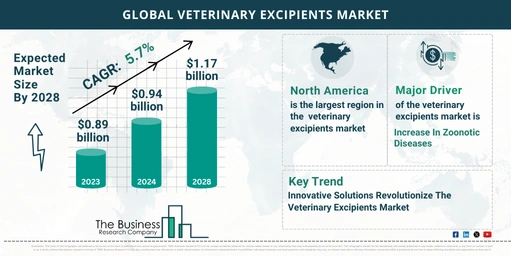
    The veterinary excipients market has experienced robust growth in recent years. The market size is set to increase from $0.89 billion in 2023 to $0.94 billion in 2024, reflecting a compound annual growth rate (CAGR) of 5.4%. This growth can be attributed to:

    • Increased Pet Ownership: More people are owning pets, leading to higher demand for veterinary products.
    • Advancements in Veterinary Medicine: Technological improvements enhance the quality and range of veterinary treatments.
    • Rising Demand for Animal Protein: Increased consumption of animal protein fuels the need for effective animal health solutions.
    • Increased Pet Healthcare Expenditure: Growing spending on pet health drives demand for advanced veterinary products.
    • Expansion of Animal Healthcare Infrastructure: More facilities and resources dedicated to animal health boost the market.

    Future Growth Projections
    Looking ahead, the veterinary excipients market is expected to grow to $1.18 billion by 2028, with a CAGR of 5.7%. Key drivers for this growth include:

    • Increased Focus on Animal Welfare: Rising awareness and concern for animal well-being propel market expansion.
    • Rise in Pet Insurance Coverage: More pet owners are investing in insurance, increasing demand for veterinary care.
    • Growing Prevalence of Zoonotic Diseases: Increased incidence of diseases that spread from animals to humans fuels market growth.
    • Expansion of Veterinary Pharmaceuticals: Growth in the veterinary pharmaceuticals sector boosts demand for excipients.
    • Emergence of Novel Excipients: Innovative excipients cater to new veterinary applications and needs.

    View More On The Veterinary Excipients Market Report 2024 – https://www.thebusinessresearchcompany.com/report/veterinary-excipients-global-market-report

    Major Trends in the Market
    Several significant trends are shaping the veterinary excipients market:

    • Personalized Medicine for Animals: Tailoring treatments to individual animal needs enhances efficacy.
    • Adoption of Natural and Organic Excipients: Growing preference for natural ingredients drives innovation in excipients.
    • Integration of Digital Health Solutions: Digital technologies are being incorporated into veterinary care.
    • Innovation in Veterinary Health: Ongoing advancements lead to more effective and safer veterinary products.
    • Technological Advancements: New technologies improve the formulation and effectiveness of veterinary medications.

    Impact of Zoonotic Diseases
    Zoonotic diseases, which can be transmitted from animals to humans, are a major factor driving market growth. Factors contributing to the rise of zoonotic diseases include:

    • Habitat Encroachment: Increased human activity in wildlife areas.
    • Climate Change: Altered weather patterns affect disease spread.
    • Intensive Farming: High-density farming conditions increase disease risk.
    • Wildlife Trade and Deforestation: Disruption of natural habitats promotes disease transmission.
    • Poor Sanitation and Ecosystem Changes: These factors exacerbate the spread of diseases.

    For example, a significant increase in West Nile virus infections in 2022 highlighted the need for effective veterinary solutions. Veterinary excipients play a crucial role in ensuring the stability and efficacy of medications used to combat these diseases.

    Innovative Solutions Revolutionizing the Market
    Major companies are driving innovation in the veterinary excipients market with new products:

    • VitiPure Excipients: Clariant introduced VitiPure excipients in October 2023, designed for enhanced stability and solubility of APIs. These include high-purity excipients like VitiPure O 80 Superior, known for its minimal impurities and suitability for delicate formulations such as mRNA vaccines.

    Key Acquisitions and Market Expansion

    • Domes Pharma Group and SentrX Animal Care: In August 2023, Domes Pharma Group acquired SentrX Animal Care Inc., expanding its portfolio in veterinary ophthalmology and strengthening its presence in North America. This acquisition illustrates the strategic moves companies are making to enhance their market position and capabilities.

    Market Segmentation
    The veterinary excipients market is segmented into:

    • Chemical Groups: Polymers, Alcohols, Lipids, Mineral Salts, Other Chemical Groups
    • Animal Types: Companion Animals, Production Animals
    • Functionality: Fillers, Binders, Disintegrants, Glidants, Lubricants, Bulking Agents, Buffering Agents, Tonicity Adjusting Agents, Preservatives, Other Functionalities
    • Applications: Biologics, Pharmaceuticals, Medicated Feed Additives

    Regional Insights

    • North America: Was the largest market region in 2023.
    • Asia-Pacific: Expected to be the fastest-growing region in the forecast period.

    As the veterinary excipients market continues to evolve, it will be driven by innovations, increasing focus on animal health, and the growing need for effective solutions in veterinary care.

    Request A Sample Of The Global Veterinary Excipients Market Report 2024:
    https://www.thebusinessresearchcompany.com/sample_request?id=15954&type=smp
  • Growth Trajectory Of The Allogeneic Cell Therapy Market 2024-2033

    Growth Trajectory Of The Allogeneic Cell Therapy Market 2024-2033

    The Business Research Company’s global market reports are now updated with the latest market sizing information for the year 2024 and forecasted to 2033

    The allogeneic cell therapy market is experiencing rapid growth, driven by increased demand for advanced medical treatments and technological innovations. Here’s an overview of the current market trends, major players, and future outlook.

    Market Overview and Growth

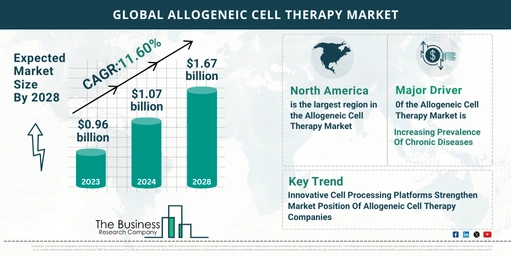
    • Current Market Size: The allogeneic cell therapy market was valued at $0.97 billion in 2023.
    • Short-Term Forecast: Expected to grow to $1.08 billion in 2024, with a compound annual growth rate (CAGR) of 11.3%.
    • Long-Term Forecast: Projected to reach $1.67 billion by 2028, driven by a CAGR of 11.6%.

    Drivers of Growth:

    • Increased Demand: Rising need for advanced treatments and novel therapies.
    • Clinical Trials: Growing number of clinical trials and increasing patient populations.
    • Income Levels: Higher income levels contribute to greater healthcare expenditure.

    Factors Influencing Growth

    • Tailored Treatments: Enhanced focus on personalized donor cell selection and genetic modifications.
    • Population Growth: Increasing global population and burden of chronic diseases.
    • Collaborations: Growing number of collaborations for biosimilar development and novel therapies.

    View More On The Allogeneic Cell Therapy Market Report 2024 – https://www.thebusinessresearchcompany.com/report/allogeneic-cell-therapy-global-market-report

    Impact of Chronic Diseases

    • Prevalence: Chronic diseases are on the rise due to lifestyle changes, environmental factors, and genetic predispositions.
    • Therapeutic Potential: Allogeneic cell therapy offers significant promise for treating chronic illnesses by repairing or replacing dysfunctional cells with healthy donor cells.
    • Future Projections: By 2050, the number of people over 50 suffering from chronic illnesses in the US is expected to nearly double, reaching 142.66 million.

    Major Players and Innovations

    Key Companies:

    • Novartis AG
    • Bristol Myers Squibb Company
    • Takeda Pharmaceutical Company Limited
    • Bluebird Bio Inc.
    • Poseida Therapeutics Inc.
    • Fate Therapeutics Inc.
    • Fortress Biotech Inc.
    • Sorrento Therapeutics Inc.
    • Eureka Therapeutics Inc.
    • Juno Therapeutics Inc.

    Recent Developments:

    • Innovative Platforms: Companies are developing advanced cell processing platforms. For instance, Getinge’s partnership with CellRev led to the launch of Livit ACE, a cutting-edge platform for continuous cell processing. This platform features advanced automation and bioprocessing technologies that improve efficiency and scalability in cell production.
    • Strategic Acquisitions: In November 2021, Takeda acquired GammaDelta Therapeutics to enhance its cell therapy and immuno-oncology capabilities, focusing on gamma-delta T cell therapies.

    Market Segmentation

    • By Type:
      • Stem Cell Therapies
      • Non-Stem Cell Therapies
    • By Therapeutic Area:
      • Hematological Disorders
      • Dermatological Disorders
      • Other Therapeutic Areas
    • By End User:
      • Hospitals
      • Specialty Clinics
      • Research Organizations

    Regional Insights

    • North America: Largest market in 2023 due to advanced healthcare infrastructure and high adoption rates.
    • Asia-Pacific: Expected to be the fastest-growing region in the forecast period, driven by increasing healthcare investments and expanding patient populations.

    Conclusion

    The allogeneic cell therapy market is poised for significant growth, fueled by advancements in technology, rising chronic disease prevalence, and increased demand for innovative treatments. With major companies investing in new platforms and strategic acquisitions, the market is set to expand rapidly, offering promising opportunities for both existing players and new entrants.

    Request A Sample Of The Global Allogeneic Cell Therapy Market Report 2024:
    https://www.thebusinessresearchcompany.com/sample_request?id=15976&type=smp

  • Growth Trajectory Of The Cell Separation Technologies Market 2024-2033

    Growth Trajectory Of The Cell Separation Technologies Market 2024-2033

    The Business Research Company’s global market reports are now updated with the latest market sizing information for the year 2024 and forecasted to 2033

    The cell separation technologies market has been on a rapid growth trajectory, driven by various factors ranging from advancements in medical research to increased funding. This blog explores the key trends, growth drivers, and market dynamics shaping this sector.

    Market Growth and Projections

    • Current and Future Market Size:
      • 2023: $8.64 billion
      • 2024: $10.07 billion
      • 2028: Expected to reach $18.69 billion
    • Compound Annual Growth Rate (CAGR):
      • 2023-2024: 16.5%
      • Forecast Period (2024-2028): 16.7%
    • Key Growth Drivers:
      • Rising investments in regenerative medicine research
      • Expansion in cancer diagnostics and treatment
      • Increasing prevalence of chronic diseases
      • Emergence of novel cell separation techniques
      • Supportive regulatory environment for cell therapy

    View More On The Cell Separation Technologies Market Report 2024 – https://www.thebusinessresearchcompany.com/report/cell-separation-technologies-global-market-report

    Key Market Trends

    • Artificial Intelligence and Machine Learning Integration: Enhancing precision and efficiency in cell separation.
    • Microfluidic-based Platforms: Offering more refined and versatile separation techniques.
    • Point-of-Care Devices: Developing portable and user-friendly cell separation tools.
    • Label-Free Separation Techniques: Improving the purity and accuracy of cell isolation.
    • Single-Cell Isolation Technologies: Allowing detailed analysis of individual cells.
    • Expansion in Regenerative Medicine and Stem Cell Research: Driving demand for advanced cell separation solutions.
    • Novel Cell Sorting Methods: Introducing innovative approaches to enhance cell separation capabilities.

    Impact of Chronic Diseases

    • Prevalence and Impact: Chronic diseases such as cancer, heart disease, diabetes, and arthritis are on the rise, significantly impacting the need for advanced cell separation technologies.
    • Market Influence: The increasing prevalence of chronic diseases, partly due to lifestyle and genetic factors, is driving demand for technologies that can isolate relevant cell types for better treatment solutions.
    • Future Projections: The number of individuals aged 50 and older with at least one chronic illness is projected to nearly double by 2050, further fueling the need for efficient cell separation solutions.

    Technological Innovations

    • Automated Cell Isolation Technology:
      • Example: Thermo Fisher Scientific’s Gibco CTS DynaCellect Magnetic Separation System, launched in October 2022, offers a precise, scalable, and flexible solution for cell isolation and therapy development.
    • Recent Acquisitions:
      • Gamma Biosciences and BioMagnetic Solutions: Acquired in January 2021, this acquisition aims to advance next-generation cell selection technologies, reflecting the ongoing innovation in the sector.

    Market Segmentation

    • By Product:
      • Instruments
      • Consumables
      • Reagents
    • By Technology:
      • Gradient Centrifugation
      • Surface Markers Separation
      • Fluorescence Activated Cell Sorting
      • Magnetic Cell Sorting
      • Filtration Based Separation
    • By Application:
      • Stem Cell Research
      • Immunology
      • Neuroscience
      • Cancer Research
      • Other Applications
    • By End-User:
      • Biotechnology and Pharmaceutical Companies
      • Hospitals and Diagnostic Laboratories
      • Academic and Research Institutes
      • Other End-Users

    Regional Insights

    • North America: Dominated the cell separation technologies market in 2023.
    • Asia-Pacific: Expected to be the fastest-growing region in the forecast period due to increased investment and growing healthcare infrastructure.

    Conclusion

    The cell separation technologies market is set to experience significant growth, driven by advances in medical research, increasing prevalence of chronic diseases, and technological innovations. With a focus on precision, automation, and novel techniques, the sector is poised for continued expansion, promising enhanced treatment options and improved patient outcomes.

    Request A Sample Of The Global Cell Separation Technologies Market Report 2024:
    https://www.thebusinessresearchcompany.com/sample_request?id=16013&type=smp

  • Carcinoembryonic Antigen Market Growth Analysis Till 2033 By The Business Research Company

    Carcinoembryonic Antigen Market Growth Analysis Till 2033 By The Business Research Company

    The Business Research Company’s market reports offer an in-depth analysis on the market’s growth potential, major drivers, key trends and more.

    The carcinoembryonic antigen (CEA) market has seen significant growth recently, and the trend is set to continue. The market’s expansion is driven by various factors including increasing cancer incidence and advancements in diagnostic technologies.

    Rapid Growth in Market Size

    • Current Market Size: The CEA market grew from $1.07 billion in 2023 to $1.22 billion in 2024.
    • Growth Rate: This represents a compound annual growth rate (CAGR) of 13.3%.
    • Historic Drivers: Growth has been fueled by global cancer prevalence, an aging population, awareness campaigns, improved healthcare infrastructure, and favorable reimbursement policies.

    Future Projections

    • Forecast Growth: The market is expected to reach $2.02 billion by 2028.
    • Future CAGR: This growth reflects a CAGR of 13.5%.
    • Future Drivers: The expansion is anticipated due to a heightened focus on early detection and prevention, expanding cancer screening programs, increasing patient demand for personalized medicine, and the rise in minimally invasive diagnostic procedures.

    Read More On The Carcinoembryonic Antigen Market Report 2024 – https://www.thebusinessresearchcompany.com/report/carcinoembryonic-antigen-global-market-report

    Key Market Trends

    • Personalized Medicine: Increased adoption is transforming treatment approaches.
    • Technological Advancements: Innovations in diagnostic platforms are improving accuracy.
    • AI and Big Data: Integration with artificial intelligence and big data is enhancing diagnostic capabilities.
    • Collaborations: Strategic partnerships and collaborations are on the rise.
    • Regulatory Changes: Evolving regulatory approvals and reimbursement policies are shaping the market.

    Increasing Incidence of Cancer

    • Rising Cases: The increase in global cancer incidence is a significant growth driver for the CEA market.
    • Statistical Insight: The World Health Organization projects around 35 million new cancer cases by 2050, up from 20 million in 2022.
    • Role of CEA: Carcinoembryonic antigen is crucial for monitoring disease progression and treatment effectiveness in cancer patients.

    Major Companies and Innovations

    • Key Players: Leading companies include F. Hoffmann-La Roche Ltd., Thermo Fisher Scientific Inc., Abbott Laboratories, and Merck KGaA among others.
    • Innovations: Companies are developing advanced tumor marker tests. For example, Boditech Med’s ichroma Tumor triple-M diagnostic kit, launched in October 2021, measures PSA, AFP, and CEA simultaneously, offering rapid and cost-effective cancer diagnostics.

    Strategic Acquisitions

    • Danaher Corporation: In December 2023, Danaher acquired Abcam Limited to enhance its life sciences and diagnostics portfolio.
    • Abcam’s Role: Abcam provides recombinant human CEA proteins, contributing to advancements in research and diagnostic capabilities.

    Market Segmentation

    • By Test Type: Molecular Tests, Serology Tests
    • By Gender: Male, Female
    • By Application: Includes Gastrointestinal Cancer, Colorectal Cancer, Pancreatic Cancer, Breast Cancer, Lung Cancer, Thyroid Cancer, Ovarian Cancer, and Other Applications
    • By End User: Hospitals, Diagnostic Centers, Cancer Centers, Research and Academic Institutes

    Regional Insights

    • Current Leading Region: North America was the largest market in 2023.
    • Future Growth: Asia-Pacific is expected to be the fastest-growing region during the forecast period.

    The carcinoembryonic antigen market is set for continued growth driven by advancements in technology, increasing cancer rates, and a shift towards more personalized and minimally invasive diagnostic approaches.

    Request for A Sample Of The Global Carcinoembryonic Antigen Market Report:
    https://www.thebusinessresearchcompany.com/sample_request?id=16011&type=smp

  • Top 5 Insights From The Canine Arthritis Treatment Market Report 2024

    Top 5 Insights From The Canine Arthritis Treatment Market Report 2024

    The Business Research Company’s global market reports are now updated with the latest market sizing information for the year 2024 and forecasted to 2033

    According to The Business Research Company’s Canine Arthritis Treatment Global Market Report 2024, the canine arthritis treatment market is expected to show promising growth in the forecast period.

    The canine arthritis treatment market has demonstrated robust growth in recent years, reflecting increased awareness and advancements in veterinary care. Here’s an overview of current trends, future projections, and key factors influencing the market.

    Market Growth Overview

    • Current Market Size: In 2023, the canine arthritis treatment market was valued at $2.33 billion.
    • Annual Growth: The market is expected to grow to $2.35 billion in 2024, achieving a compound annual growth rate (CAGR) of 5.3%.
    • Historic Drivers: Growth has been driven by the aging pet population, increased awareness among pet owners, preventive care focus, higher disposable incomes, and rising veterinary expenditures.

    Future Market Projections

    • Forecast Growth: By 2028, the market is anticipated to reach $2.90 billion, reflecting a CAGR of 5.5%.
    • Forecast Drivers: Key factors include increased pet insurance coverage, growing arthritis cases, rising pet ownership, demand for minimally invasive procedures, and higher prevalence of canine arthritis.
    • Major Trends: Innovations in treatment, advancements in veterinary medicine, demand for advanced therapies, and integration of technology are shaping the market.

    View More On The Canine Arthritis Treatment Market Report 2024 – https://www.thebusinessresearchcompany.com/report/canine-arthritis-treatment-global-market-report

    Rising Pet Ownership Rates

    • Impact on Market: Growing pet ownership is a significant driver for the canine arthritis treatment market. Factors contributing to this rise include lifestyle changes, the humanization of pets, and higher disposable incomes.
    • Pet Ownership Statistics: As of October 2023, 66% of U.S. households own pets, equating to approximately 86.9 million households. This surge in pet ownership boosts demand for effective arthritis treatments to enhance the quality of life for pets.

    Key Market Players

    • Major Companies: The market includes leading companies such as Merck & Co. Inc., Bayer AG, Eli Lilly and Company, Zoetis Inc., and Elanco Animal Health Incorporated, among others.
    • Innovations and Acquisitions: Companies are investing in innovative treatments and acquisitions to strengthen their market positions. For example, Elanco’s acquisition of Kindred Biosciences Inc. for $444 million aims to boost innovation and research in biologics and monoclonal antibodies.

    Innovative Treatment Solutions

    • New Treatments: The market is seeing the development of advanced treatments such as bedinvetmab injections, which target nerve growth factor (NGF) to alleviate pain associated with osteoarthritis (OA) in dogs.
    • FDA Approval: In May 2023, Zoetis Inc. received FDA approval for Librela, the first monoclonal antibody injection for canine OA pain management, administered monthly for long-term relief.

    Market Segmentation

    1. By Treatment Type: The market is segmented into drugs, supplements, surgical procedures, and other treatment types.
    2. By Route of Administration: Treatments are administered orally, parenterally, or through other routes.
    3. By Arthritis Type: Includes osteoarthritis, rheumatoid arthritis, osteochondrosis, and traumatic arthritis.
    4. By Distribution Channels: Treatments are available through veterinary clinics and hospitals, retail pharmacies, and online pharmacies.

    Regional Insights

    • Current Leading Region: North America was the largest market for canine arthritis treatments in 2023.
    • Future Growth: The Asia-Pacific region is expected to be the fastest-growing market segment in the forecast period.

    As the canine arthritis treatment market continues to expand, driven by innovation, rising pet ownership, and increased demand for advanced therapies, it remains a dynamic field with promising opportunities for growth and development.

    Request A Sample Of The Global Canine Arthritis Treatment Market Report 2024:
    https://www.thebusinessresearchcompany.com/sample_request?id=16007&type=smp

  • What’s The Growth Forecast For Calcium Gluconate Market Through 2024-2033?

    What’s The Growth Forecast For Calcium Gluconate Market Through 2024-2033?

    The Business Research Company’s global market reports provide comprehensive analysis on the various markets in 27 industries across 60 geographies. 

    Market Growth Overview

    • Current Market Size: The calcium gluconate market reached $101.97 billion in 2023.
    • Annual Growth: It is projected to grow to $110.12 billion by 2024, reflecting an 8% compound annual growth rate (CAGR).
    • Historical Growth Drivers:
      • Economic growth and industrialization
      • Increased use in functional foods
      • Rising demand for pharmaceuticals and dietary supplements
      • Growing awareness of calcium deficiency
      • Supportive regulatory environment for food additives

    Future Projections

    • Long-Term Growth: The market is expected to reach $150.62 billion by 2028, with a CAGR of 8.1%.
    • Key Growth Drivers:
      • Aging population and increased health awareness
      • Expansion in the food and beverage industry
      • Growth in digital marketing and e-commerce
      • Shift toward natural and organic products
      • Urbanization and emerging markets

    View More On The Calcium Gluconate Market Report 2024 – https://www.thebusinessresearchcompany.com/report/calcium-gluconate-global-market-report

    Trends Shaping the Market

    • Healthcare R&D: Focus on sustainable sourcing and production
    • Medical Integration: Increased use in medical treatments
    • Customized Formulations: Tailored for specific health needs
    • Technological Advancements: Innovations in manufacturing processes

    Impact of Osteoporosis on Market Growth

    • Rising Incidence: Osteoporosis contributes significantly to health issues, driven by sedentary lifestyles and inadequate calcium intake.
    • Market Influence:
      • Calcium gluconate helps in managing osteoporosis by supplementing dietary calcium.
      • In Australia (2023), osteoporosis led to 2,366 deaths and 9,500 hospitalizations, highlighting its impact on healthcare.
      • This growing incidence fuels demand for calcium gluconate.

    Key Players and Innovations

    • Major Companies:
      • Merck & Co. Inc.
      • Thermo Fisher Scientific Inc.
      • Abbott Laboratories
      • Novartis AG
      • Eli Lilly and Company
      • And many others
    • Recent Developments:
      • Amneal Pharmaceuticals Inc.: Received FDA approval for a calcium gluconate injection in September 2023, enhancing treatment options for acute symptomatic hypocalcemia.

    Strategic Acquisitions

    • Azelis Group: Acquired Spectrum Chemicals and Nortons Exim in April 2021, expanding its footprint in India and access to emerging markets. Spectrum Chemicals supplies calcium gluconate anhydrous powder.

    Market Segmentation

    • By Form: Liquid, Tablet, Powder, Gel
    • By Grade: Pharmaceutical Grade, Food Grade
    • By Application:
      • Food and Beverage Manufacturers
      • Pharmaceutical
      • Nutraceutical
      • Cosmetic and Personal Care
      • Other Applications
    • By End Use:
      • Emulsifier
      • Bulking Agent
      • Thickening Agent

    Regional Insights

    • Leading Region: Europe was the largest market in 2023.
    • Fastest Growing: Asia-Pacific is expected to experience the most rapid growth during the forecast period.

    The calcium gluconate market is poised for robust growth driven by increasing health consciousness, innovative product developments, and a focus on addressing calcium deficiencies.

    Request A Sample Of The Global Calcium Gluconate Market Report 2024:
    https://www.thebusinessresearchcompany.com/sample_request?id=16005&type=smp

  • Biofuel Enzymes Market Report 2024: Market Size, Drivers, And Trends

    Biofuel Enzymes Market Report 2024: Market Size, Drivers, And Trends

    The Business Research Company’s global market reports are now updated with the latest market sizing information for the year 2024 and forecasted to 2033

    Market Overview

    The biofuel enzymes market has experienced robust growth in recent years, driven by a surge in demand for renewable energy sources and biofuel products. The market size is expected to grow from $1.60 billion in 2023 to $1.73 billion in 2024, reflecting a compound annual growth rate (CAGR) of 8.5%. This growth trajectory highlights the increasing consumer awareness of biodiesel additives, the rising demand for bio-based ethanol and biodiesel, and the broader shift towards renewable and sustainable energy solutions. Fuel-efficient automobiles and biofuels are becoming more integral, contributing to this upward trend.

    Future Growth Projections

    Looking ahead, the biofuel enzymes market is anticipated to reach $2.43 billion by 2028, with a CAGR of 8.8%. This forecasted growth is fueled by several factors including heightened demand for biodiesel, stringent environmental regulations, and a general transition towards biofuels. Key trends shaping this period include government mandates, advancements in enzyme technology, and increased strategic partnerships and acquisitions. Technological innovations in enzymatic production are also set to play a pivotal role in driving market expansion.

    View More On The Biofuel Enzymes Market Report 2024 – https://www.thebusinessresearchcompany.com/report/biofuel-enzymes-global-market-report

    Rising Demand for Biodiesel
    The burgeoning demand for biodiesel is a primary driver of the biofuel enzyme market. Biodiesel, derived from renewable biological sources such as vegetable oils and animal fats, addresses environmental concerns and supports sustainability. Government policies and incentives further bolster this demand. Biofuel enzymes enhance biodiesel production by improving efficiency, yield, and feedstock compatibility. For instance, the UK Department for Transport reported an increase in biodiesel availability from 1,329 million liters in 2021 to 1,500 million liters in 2022, underscoring the growing market for biodiesel and, by extension, biofuel enzymes.

    Major Companies and Innovations
    Several key players are instrumental in shaping the biofuel enzyme market. Prominent companies include BASF SE, AB Enzymes GmbH, Koninklijke DSM N.V., Novozymes A/S, and many others. These companies are at the forefront of developing advanced enzyme technologies. For example, Fermbox Bio Pvt. Ltd. launched EN3ZYME in May 2024, a sophisticated enzyme cocktail designed to enhance the efficiency of converting pretreated agricultural residues into fermentable sugars. This innovation is crucial for second-generation ethanol production and biomanufacturing, offering high stability and performance.

    Strategic Acquisitions
    Strategic acquisitions are another significant trend in the market. In December 2023, Versalis acquired DSM N.V.’s Proesa technology, which is pivotal for producing enzymes for second-generation ethanol. This acquisition allows Versalis to leverage DSM’s expertise in enzyme technology, further strengthening its position in sustainable bioethanol production.

    Market Segmentation
    The biofuel enzymes market is segmented into various categories:

    1. By Type: Amylases, Cellulases, Proteases, Lipases, and Other Types
    2. By Source: Microorganisms, Plants, and Animals
    3. By Reaction Type: Hydrolase, Lyase, and Other Reaction Types
    4. By Application: Biodiesel, Starch-Based Ethanol, Sugar-Based Ethanol, and Other Applications

    North America led the market in 2023, reflecting its advanced infrastructure and strong demand for biofuel enzymes.

    Conclusion

    The biofuel enzymes market is poised for significant growth, driven by increasing demand for biodiesel, advancements in enzyme technology, and strategic industry moves. As the sector continues to evolve, innovations and regulatory support will be critical in shaping the future of biofuel production and its environmental impact.

    Request A Sample Of The Global Biofuel Enzymes Market Report 2024:
    https://www.thebusinessresearchcompany.com/sample_request?id=15994&type=smp

  • Understand How The Blood Brain Barrier Technologies Market Is Poised To Grow Through 2024-2033

    Understand How The Blood Brain Barrier Technologies Market Is Poised To Grow Through 2024-2033

    The Business Research Company’s global market reports are now updated with the latest market sizing information for the year 2024 and forecasted to 2033

    As per The Business Research Company’s Blood Brain Barrier Technologies Global Market Report 2024, the blood brain barrier technologies market is expected to show significant growth in the forecast period.

    Exponential Growth and Market Size

    • Recent Growth: The blood-brain barrier (BBB) technologies market has seen remarkable expansion, growing from $1.23 billion in 2023 to $1.57 billion in 2024. This represents a compound annual growth rate (CAGR) of 27.8%.
    • Historical Drivers: The growth has been fueled by a shift towards patient-centric drug development, increased research funding, heightened disease awareness, a rise in neurological disorders, and innovations in drug delivery systems.

    Future Projections

    • Expected Growth: The market is projected to reach $4.20 billion by 2028, maintaining a CAGR of 27.9%.
    • Forecast Drivers: Key factors include a focus on orphan drugs and rare neurological disorders, growing central nervous system (CNS) burden, increasing neurological disease incidence, an aging population, advancements in biomarker discovery, and robust healthcare infrastructure.
    • Trends to Watch: Anticipated trends include advancements in nanotechnology, rising research funding, expanded CNS disorder treatments, non-invasive delivery methods, novel drug delivery systems, enhanced pharmaceutical-biotech collaborations, and increased regulatory support.

    View More On The Blood Brain Barrier Technologies Market Report 2024 – https://www.thebusinessresearchcompany.com/report/blood-brain-barrier-technologies-global-market-report

    Impact of Neurological Disease Incidence

    • Rising Prevalence: The incidence of neurological diseases is on the rise due to an aging population, better diagnostic techniques, and lifestyle changes such as obesity and sedentary behavior.
    • Technological Role: Blood-brain barrier technologies are crucial for enhancing drug delivery to the brain, addressing one of the main challenges in treating neurological disorders. For example, the incidence of Parkinson’s disease in the U.S. saw a 50% increase from 2021 to 2022, underscoring the need for effective BBB technologies.

    Leading Companies and Innovations

    • Key Players: Major companies in this sector include Pfizer Inc., Johnson & Johnson, F. Hoffmann-La Roche Ltd., Merck & Co. Inc., and others.
    • Technological Advances: Companies are focused on innovative, patented technologies to improve drug delivery to the brain. For instance, BioArctic AB received a patent in 2022 for a technology enhancing biopharmaceutical transport across the BBB.

    Strategic Developments

    • Eli Lilly and Prevail Therapeutics: In January 2021, Eli Lilly acquired Prevail Therapeutics to enhance its capabilities in neuroscience drug development. This acquisition aims to advance gene therapy programs and develop treatments for neurodegenerative diseases.

    Market Segmentation

    • By Technology:
      • Bispecific Antibody Receptor-Mediated Transcytosis (RMT)
      • Trojan Horse Approach
      • Increasing Permeability
      • Passive Diffusion
      • Other Technologies
    • By Application:
      • Alzheimer’s Disease
      • Epilepsy
      • Parkinson’s Disease
      • Multiple Sclerosis
      • Hunter’s Syndrome
      • Brain Cancer
      • Other Applications
    • By End-User:
      • Hospitals
      • Surgical Centers
      • Research Institutes
      • Other End-Users

    Regional Insights

    • North America: In 2023, North America was the largest market for blood-brain barrier technologies, reflecting strong regional investment and research infrastructure.

    The blood-brain barrier technologies market is evolving rapidly, driven by technological advancements and increasing neurological disease incidence. As the market continues to expand, innovations in drug delivery and strategic acquisitions will play crucial roles in shaping its future trajectory.

    Request A Sample Of The Global Blood Brain Barrier Technologies Market Report 2024:
    https://www.thebusinessresearchcompany.com/sample_request?id=16000&type=smp

  • How Is The Biological Sample Collection Kits Market Expected To Grow Through 2024-2033

    How Is The Biological Sample Collection Kits Market Expected To Grow Through 2024-2033

    The Business Research Company’s global market reports are now updated with the latest market sizing information for the year 2024 and forecasted to 2033

    According to The Business Research Company’s Biological Sample Collection Kits Global Market Report 2024, the biological sample collection kits market is expected to show promising growth in the forecast period.

    The biological sample collection kits market has experienced substantial growth in recent years and is set for continued expansion. The market size surged from $9.09 billion in 2023 to $10.20 billion in 2024, reflecting a compound annual growth rate (CAGR) of 12.2%. This growth is driven by several factors, including heightened disease screening awareness, a rise in home healthcare, an aging population, and an increased focus on preventive medicine. The expansion of infectious disease testing also plays a significant role.

    Future Growth Projections

    Looking ahead, the market is expected to reach $16.23 billion by 2028, maintaining a CAGR of 12.3%. This anticipated growth is attributed to several trends:

    • Point-of-Care Testing: Increasing preference for immediate test results.
    • Chronic Diseases: Higher incidence rates of chronic conditions.
    • Remote Patient Monitoring: Rising demand for monitoring patients from a distance.
    • Preventive Healthcare: Growing emphasis on health maintenance.
    • Infectious Diseases Awareness: Increased public knowledge about infections.

    Key trends for the future include advancements in point-of-care testing, microfluidics, personalized medicine, and technological innovations.

    View More On The Biological Sample Collection Kits Market Report 2024 – https://www.thebusinessresearchcompany.com/report/biological-sample-collection-kits-global-market-report

     Impact of Infectious Diseases

    The rise in infectious diseases significantly impacts the biological sample collection kits market. Infectious diseases, caused by pathogens like bacteria and viruses, are increasing due to global travel, urbanization, antimicrobial resistance, and environmental changes. Biological sample collection kits are essential for diagnosing, monitoring, and researching these diseases. For example, the CDC reported a 5.9% rise in tuberculosis (TB) cases in the U.S. in 2022, highlighting the growing need for efficient diagnostic tools.

    Innovations Enhancing Market Growth

    Innovation is a key driver of market growth. Companies are developing advanced products like personalized diagnostic test kits, tailored to individual health profiles. For instance, Cue Health’s at-home diagnostic test kits, launched in March 2023, offer a convenient solution for private and secure sample collection. Results are processed by a CLIA-certified lab and delivered through the Cue Health App.

    Strategic Partnerships and Market Expansion

    Strategic partnerships also play a crucial role in market development. In May 2022, Babson Diagnostics Inc. and Becton, Dickinson, and Company expanded their partnership to improve diagnostic blood collection in retail settings. This collaboration aims to deliver laboratory-quality results from small-volume capillary blood samples, enhancing accessibility and efficiency.

    Market Segmentation and Regional Insights

    The biological sample collection kits market is segmented as follows:

    • By Product: Swabs, Viral Transport Media, Blood Collection Kits, Other Products
    • By Application: Diagnostics, Research
    • By End-Use: Hospitals and Clinics, Homecare, Diagnostics Centers, Other End-Uses

    In 2023, North America was the largest market region. However, the Asia-Pacific region is projected to experience the fastest growth in the coming years, driven by increasing healthcare needs and technological advancements.

    Conclusion

    The biological sample collection kits market is on a strong upward trajectory, fueled by innovations, increased disease screening, and strategic partnerships. With ongoing advancements and a rising focus on personalized and preventive healthcare, the market is well-positioned for continued growth and development.

    Request A Sample Of The Global Biological Sample Collection Kits Market Report 2024:
    https://www.thebusinessresearchcompany.com/sample_request?id=15995&type=smp

  • Key Trends And Drivers In The Biodefense Market 2024

    Key Trends And Drivers In The Biodefense Market 2024

    The Business Research Company’s market reports offer an in-depth analysis on the market’s growth potential, major drivers, key trends and more.

    Introduction
    The biodefense market has experienced significant growth in recent years, driven by increased investments and advancements in technology. This blog delves into the current trends, factors driving growth, and future projections for the biodefense sector.

    Current Market Growth

    • 2023-2024 Expansion: The biodefense market grew from $17.01 billion in 2023 to an expected $18.55 billion in 2024, reflecting a robust compound annual growth rate (CAGR) of 9.1%.
    • Key Drivers: This growth is fueled by increased government investment, strengthened regulatory frameworks, enhanced collaboration between various sectors, and rising geopolitical tensions.

    Future Market Projections

    • Growth Forecast: By 2028, the market is anticipated to reach $26.38 billion, with a CAGR of 9.2%.
    • Drivers of Future Growth: Continued emergence of new infectious diseases, breakthroughs in biotechnology, and increased international collaboration are key factors.
    • Major Trends: Innovations such as AI-driven predictive modeling, telehealth integration, and next-generation vaccines are expected to shape the future of biodefense.

    Read More On The Biodefense Market Report 2024 – https://www.thebusinessresearchcompany.com/report/biodefense-global-market-report

    Impact of Emerging Infectious Diseases

    • Increased Market Demand: The recurring threat of infectious diseases drives demand for enhanced biodefense measures.
    • Case Example: The World Health Organization estimated around 10.6 million cases of tuberculosis in 2022, highlighting the critical need for improved biodefense strategies.

    Innovations in Biodefense Technologies

    • Nasal Vaccines: Companies like Bharat Biotech are developing nasal COVID-19 vaccines, which offer easier administration and potential for improved immune responses.
    • Example: The iNCOVACC Nasal COVID-19 vaccine, launched in January 2023, represents a significant advancement in biodefense technology.

    Acquisitions and Strategic Developments

    • Emergent BioSolutions Inc.: In September 2022, this company acquired worldwide rights for TEMBEXA, an antiviral drug for smallpox, demonstrating a strong commitment to enhancing global health preparedness.
    • Significance: This acquisition underscores the growing focus on addressing critical biothreats and improving response capabilities.

    Market Segmentation

    • By Type: Includes anthrax, smallpox, botulism, radiation or nuclear threats, and other types.
    • By Biothreat Detection Device: Features samplers, detectors, identifiers, assays, and other devices.
    • By Application: Covers hospitals, clinics, ambulatory care centers, and other applications.

    Regional Insights

    • Current Leader: North America was the largest market region in 2023.
    • Future Growth: Asia-Pacific is expected to be the fastest-growing region in the forecast period.

    Conclusion
    The biodefense market is on a strong growth trajectory, driven by advancements in technology, increased investment, and a heightened focus on emerging biological threats. As the sector continues to evolve, innovations in detection, treatment, and prevention will play a crucial role in shaping its future.

    Request for A Sample Of The Global Biodefense Market Report:
    https://www.thebusinessresearchcompany.com/sample_request?id=15993&type=smp