Blog

  • What Is The Forecast Growth Rate For The Hepato-Pancreatico-Biliary (HPB) Surgeries Surgical Devices Market?

    What Is The Forecast Growth Rate For The Hepato-Pancreatico-Biliary (HPB) Surgeries Surgical Devices Market?

    The Business Research Company’s market reports offer an in-depth analysis on the market’s growth potential, major drivers, key trends and more.

    The hepatic-pancreatic-biliary (HPB) surgical device market has witnessed robust growth in recent years, driven by several key factors.

    Market Growth and Forecast

    The market size for HPB surgical devices has shown strong expansion, growing from $4.85 billion in 2023 to $5.25 billion in 2024, with a compound annual growth rate (CAGR) of 8.2%. Looking ahead, it is projected to reach $6.83 billion by 2028, growing at a CAGR of 6.8%. This growth is fueled by:

    • Aging population and associated health issues
    • Global expansion of healthcare infrastructure
    • Rise in minimally invasive surgeries
    • Regulatory approvals and standardization
    • Increasing demand for ambulatory surgical centers

    Major Trends in HPB Surgical Devices

    In the forecast period, the HPB surgical device market is anticipated to see several significant trends:

    • Remote Surgical Platforms: Advancements enabling surgeons to perform procedures from distant locations.
    • Nanotechnology in Surgical Devices: Development of nano-sized materials enhancing device precision and effectiveness.
    • Patient-Specific Implants: Customized implants tailored to individual patient anatomy.
    • Smart Surgical Instruments: Integration of sensors and data analytics to improve surgical outcomes.
    • Augmented Reality (AR) in Surgical Planning: AR technology aiding surgeons in pre-operative planning and intraoperative guidance.

    Read More On The Hepato-Pancreatico-Biliary (HPB) Surgeries Surgical Devices Market Report 2024 – https://www.thebusinessresearchcompany.com/report/hepato-pancreatico-biliary-hpb-surgeries-surgical-devices-global-market-report

    Medical Tourism’s Impact on the Market

    Rising medical tourism is poised to drive further growth in the HPB surgical device market. This practice involves individuals seeking medical treatments abroad for various reasons, including cost-effectiveness, advanced technology availability, and shorter wait times. The use of HPB surgical devices in medical tourism facilitates access to specialized surgeries for liver, pancreas, and bile duct conditions. For instance, the number of Americans traveling abroad for medical care has increased significantly, underscoring the global demand for high-quality surgical interventions.

    Key Players in the Market

    Several prominent companies are actively contributing to the HPB surgical device market:

    • Cardinal Health Inc.
    • Johnson & Johnson Services Ltd.
    • General Electric Company
    • Medtronic Plc
    • KARL STORZ SE & Co. KG
    • FUJIFILM Holdings Corporation
    • BD CooperSurgical Inc.
    • Koninklijke Philips N.V.
    • Terumo Corporation
    • Smith & Nephew plc
    • Steris Plc
    • W.L. Gore & Associates Inc.
    • Cook Medical Inc.
    • CONMED Corporation
    • Richard Wolf GmbH

    Innovative Advancements in HPB Surgical Devices

    Leading companies are focusing on innovation to gain a competitive edge:

    • Robotic-Assisted Surgical Staplers: Devices like Intuitive Surgical Inc.’s SureForm incorporate SmartFire technology for enhanced surgical precision.
    • Imaging Technology Advancements: GE Healthcare’s acquisition of Bk Medical Holding Company Inc. highlights efforts to expand imaging capabilities in HPB surgeries.

    Market Segmentation

    The HPB surgical device market is segmented by:

    1. Product Types:
      • Electrosurgery Instruments
      • Endoscopes
      • Hand Instruments
      • Access Instruments
      • Stents
      • Energy/Vessel Sealing Devices
      • Visualization and Robotic Surgical Systems
      • Surgical Suture and Stapler Devices
      • Fluid Management Systems
    2. Indications:
      • Liver Cancer
      • Pancreatic Cancer
      • Gall Stones
      • Bile Duct Cancer
      • Cirrhosis
      • Pancreatitis
      • Cholecystitis
    3. End Users:
      • Hospitals
      • Specialty Clinics
      • Trauma Centers
      • Ambulatory Surgical Centers

    Regional Insights
    North America dominated the HPB surgical device market in 2023, while Asia-Pacific is anticipated to exhibit the highest growth rate through the forecast period. This regional diversity underscores the global nature of market expansion and innovation in HPB surgical devices.

    In conclusion, the hepatic-pancreatic-biliary (HPB) surgical device market is on a trajectory of substantial growth, driven by technological advancements, demographic trends, and the increasing prevalence of HPB-related disorders. As innovation continues and medical tourism expands, the market is expected to evolve significantly, offering new opportunities for healthcare providers and device manufacturers alike.

    Request for A Sample Of The Global Hepato-Pancreatico-Biliary (HPB) Surgeries Surgical Devices Market Report:
    https://www.thebusinessresearchcompany.com/sample_request?id=13856&type=smp

  • Eyelid Scrub Market Growth Analysis Till 2033 By The Business Research Company

    Eyelid Scrub Market Growth Analysis Till 2033 By The Business Research Company

    The Business Research Company’s market reports offer an in-depth analysis on the market’s growth potential, major drivers, key trends and more.

    The eyelid scrub market has experienced robust growth, driven by increasing awareness of ocular health and rising incidence of eye conditions globally. Factors such as aging populations, prolonged screen time, allergies, and expanding e-commerce platforms have contributed to this growth.

    Forecasted Growth and Major Trends

    • Market Growth Trajectory: Expected to reach $4.88 billion by 2028, growing at a CAGR of 7.2%.
    • Key Drivers: Increasing eye health awareness, rising digital eye strain, and higher disposable incomes.
    • Trends: Innovative delivery formats, personalized hygiene solutions, expanded product lines, professional partnerships, and global market expansion.

    Major Companies and Market Players
    Key companies driving innovation and market expansion include Johnson & Johnson’s, Allergan, Alcon AG, and others, focusing on product diversification and strategic partnerships to capture market share.

    Product Innovation With Allergy Eyelid Cleansers

    • Innovative Products: OCuSOFT Lid Scrub allergy eyelid cleanser designed to address seasonal allergies.
    • Benefits: Removes oil, debris, and pollen, soothes irritation, and moisturizes inflamed eyelids.
    • Ingredients: Green tea extract, tea tree oil, and PHNG-2 for effective relief.

    CS Pharmaceuticals Enhances Ophthalmic Portfolio

    • Strategic Acquisition: Acquired AxeroVision to bolster its ophthalmology portfolio with AXR-270, targeting dry eye disease.
    • Impact: Strengthens capabilities in developing novel therapies and eye scrubs for eye health management.

    Read More On The Eyelid Scrub Market Report 2024 – https://www.thebusinessresearchcompany.com/report/eyelid-scrub-global-market-report

    Market Segmentation

    1. By Product:
      • Pre-Moistened Scrubs
      • Spray Scrubs
      • Dry Pad Scrubs
    2. By Distribution Channel:
      • Online Pharmacies
      • Retail Pharmacies
      • Hospital Pharmacies
      • Eye Health Clinics
    3. By Application:
      • Allergies
      • Dry Eyes
      • Eye Health
      • Minor Eye Irritation

    Regional Insights
    North America dominated the market in 2023, driven by strong healthcare infrastructure and high consumer awareness of eye health.

    In conclusion, the eyelid scrub market is poised for substantial growth, fueled by increasing eye health awareness, technological advancements in product offerings, and strategic expansions by key market players. Innovations in allergy eyelid cleansers and strategic acquisitions in the ophthalmic sector are shaping the market’s trajectory towards a more diversified and consumer-centric future.

    Request for A Sample Of The Global Eyelid Scrub Market Report:
    https://www.thebusinessresearchcompany.com/sample_request?id=13959&type=smp

  • Overview Of The Electro-medical and Electrotherapeutic Apparatus Market 2024-2033: Growth And Major Players Analysis

    Overview Of The Electro-medical and Electrotherapeutic Apparatus Market 2024-2033: Growth And Major Players Analysis

    The Business Research Company’s global market reports are now updated with the latest market sizing information for the year 2024 and forecasted to 2033

    The electro-medical and electrotherapeutic apparatus market has experienced robust growth in recent years, driven by various factors influencing both historic and forecast periods:

    • Historic Growth: The market size grew from $55.89 billion in 2023 to $60.16 billion in 2024, with a CAGR of 7.7%. This growth was fueled by:
      • Increasing sports injuries
      • Improved healthcare infrastructure
      • Demand for technologically sophisticated devices
      • Focus on less invasive treatments
      • Rapid development of home healthcare infrastructure
    • Forecast Growth: Expected to reach $77.23 billion by 2028, growing at a CAGR of 6.4%. Key drivers include:
      • Aging population
      • Demand for innovative medical devices
      • Impact of domestic tariffs and trade routes
      • Growth in healthcare infrastructure
      • Rise in home healthcare

    View More On The Electro-medical and Electrotherapeutic Apparatus Market Report 2024 – https://www.thebusinessresearchcompany.com/report/electro-medical-and-electrotherapeutic-apparatus-global-market-report

    Role of Electro-Medical and Electrotherapeutic Apparatus in Chronic Disease Management
    The prevalence of chronic diseases continues to rise, making electro-medical and electrotherapeutic apparatus crucial in disease management:

    • These apparatus provide symptomatic relief and improve functional outcomes.
    • They support long-term disease management strategies.
    • By 2050, chronic illness is expected to affect 99.5% of the population, up from 71.522 million in 2020.

    Technological Innovations Driving Market Growth
    Major trends shaping the market’s future include:

    • Advancements in therapeutic devices
    • Increasing adoption of electromedical devices
    • Research and development investments
    • Collaborations and partnerships to enhance product offerings

    Leading Companies in the Market
    Key players driving innovation and market growth include:

    • Johnson & Johnson Services Inc.
    • Abbott Laboratories
    • Medtronic plc
    • Siemens Healthineers AG
    • Koninklijke Philips N.V.
    • Stryker Corporation
    • General Electric Company (GE) Healthcare
    • Baxter International Inc.
    • Boston Scientific Inc.
    • Zimmer Biomet

    Technological Advancements Redefining Standards
    Innovative products like the WellnessPro Infinity are setting new benchmarks in the electrotherapy segment:

    • WellnessPro Infinity: Launched by Electromedical Technologies Inc., this device offers advanced pain relief through various electrotherapy modalities.
    • Designed to be user-friendly with unprecedented accuracy, it targets both acute and chronic pain conditions.

    Strategic Acquisitions and Market Expansion
    Strategic moves by industry leaders, such as Philips’ acquisition of BioTelemetry Inc., highlight efforts to broaden healthcare technology portfolios:

    • The acquisition enhances Philips’ capabilities in patient care management solutions across hospital and home settings.
    • It underscores the company’s commitment to integrated healthcare delivery.

    Market Segmentation
    The electro-medical and electrotherapeutic apparatus market is segmented by:

    1. Product Type: Diagnostic Equipment, Therapeutic Equipment, Surgical Devices, Patient Assistive Devices, Other Products
    2. Distribution Channel: Direct Tender, Retail Sales
    3. Application: Cardiology, Neurology, Oncology, Orthopedics, Gynecology, Urology, Other Applications
    4. End-User: Hospitals, Ambulatory Surgical Centers, Specialty Clinics, Diagnostic Centers, Homecare Settings

    Regional Insights

    • North America: Largest market in 2023
    • Asia-Pacific: Fastest-growing region, poised for significant expansion in the forecast period

    Conclusion
    The electro-medical and electrotherapeutic apparatus market is thriving on technological advancements, strategic expansions, and rising healthcare needs. With a strong foundation in chronic disease management and innovative product developments, the market is set to achieve substantial growth globally, driven by evolving healthcare infrastructures and demographic shifts.

    Request A Sample Of The Global Electro-medical and Electrotherapeutic Apparatus Market Report 2024:
    https://www.thebusinessresearchcompany.com/sample_request?id=13846&type=smp

  • How Is The Denosumab Market Expected To Grow Through 2024-2033

    How Is The Denosumab Market Expected To Grow Through 2024-2033

    The Business Research Company’s global market reports are now updated with the latest market sizing information for the year 2024 and forecasted to 2033

    According to The Business Research Company’s Denosumab Global Market Report 2024, the denosumab market is expected to show promising growth in the forecast period.

    Denosumab Market: Rapid Growth and Future Projections
    The denosumab market has witnessed rapid expansion in recent years, driven by a combination of factors including clinical advancements, regulatory milestones, and increasing awareness of bone health. In 2023, the market size reached $2.89 billion and is projected to grow to $3.27 billion in 2024, reflecting a robust compound annual growth rate (CAGR) of 13.2%.

    Factors Driving Historical Growth

    • Clinical Trials and Research Advancements: Extensive research efforts and successful clinical trials have expanded denosumab’s applications.
    • FDA Approvals and Regulatory Milestones: Regulatory approvals for new indications have facilitated market expansion.
    • Growing Awareness of Bone Health: Increased public awareness campaigns have highlighted the importance of managing bone health.

    Projected Growth and Market Trends
    The denosumab market is poised for continued growth, expected to reach $5.06 billion by 2028 with a CAGR of 11.5%. This growth is anticipated due to rising incidences of bone-related conditions and advancements in cancer therapies and biosimilar development.

    View More On The Denosumab Market Report 2024 – https://www.thebusinessresearchcompany.com/report/denosumab-global-market-report

    Trends Shaping the Future

    • Strategic Collaborations and Partnerships: Companies are forming strategic alliances to enhance market penetration and product development.
    • Integration with Digital Health Solutions: Incorporation of digital health technologies to improve patient outcomes and treatment adherence.
    • Expanded Indications and Clinical Applications: Exploration of denosumab in new therapeutic areas to broaden its market reach.
    • Advancements in Biosimilar Development: Development of biosimilars to enhance affordability and accessibility of denosumab treatments.

    Denosumab Market Growth Fueled By Rising Osteoporosis Prevalence
    The increasing prevalence of osteoporosis globally is a significant driver for the denosumab market. Osteoporosis, characterized by reduced bone density and increased fracture risk, affects a growing number of individuals worldwide.

    • According to the Australian Institute of Health and Welfare (AIHW), osteoporosis contributed to significant mortality and hospitalizations, underscoring its impact on healthcare systems.
    • Denosumab’s mechanism in halting bone resorption via RANK ligand inhibition makes it pivotal in osteoporosis management.

    Key Players and Market Landscape
    Several major companies dominate the denosumab market, including Johnson & Johnson, Novartis, and Amgen, among others. These companies are pivotal in driving innovation and market expansion through strategic initiatives.

    • Johnson & Johnson: Known for its pioneering efforts in biopharmaceuticals and healthcare solutions.
    • Novartis and Amgen: Leaders in biotechnology with extensive portfolios in bone health and oncology treatments.

    Emphasis On First-Line Denosumab Treatments For Osteoporosis
    Market leaders are focusing on introducing first-line treatments for osteoporosis to gain competitive advantage and meet growing healthcare demands.

    • Boan Biotech’s Boyoubei: Approved as a denosumab biosimilar, positioning it as a cost-effective first-line treatment option globally.
    • Treatment Guidelines: Recommendations for denosumab use in reducing fracture risks across various patient demographics.

    Regional Insights and Market Segmentation
    The denosumab market is segmented by drug classification, type, and end-users, catering to diverse healthcare needs globally.

    • Drug Classification: Includes Prolia, Xgeva, and other variants tailored for specific therapeutic indications.
    • End-Users: Encompasses hospitals, specialty clinics, and homecare settings, reflecting diverse treatment settings.
    • Regional Dynamics: North America leads the market, while Asia-Pacific shows promising growth potential, driven by rising healthcare investments and demographic shifts.

    Future Outlook
    The denosumab market’s trajectory indicates sustained growth propelled by technological advancements, strategic partnerships, and expanding therapeutic applications. As companies innovate and expand their market footprint, the focus remains on improving patient outcomes and addressing global healthcare challenges.

    Request A Sample Of The Global Denosumab Market Report 2024:
    https://www.thebusinessresearchcompany.com/sample_request?id=13835&type=smp

  • Future Growth Forecast For The Deep Brain Stimulation Systems Global Market 2024-2033

    Future Growth Forecast For The Deep Brain Stimulation Systems Global Market 2024-2033

    The Business Research Company’s global market reports provide comprehensive analysis on the various markets in 27 industries across 60 geographies.

    Market Size and Growth Dynamics
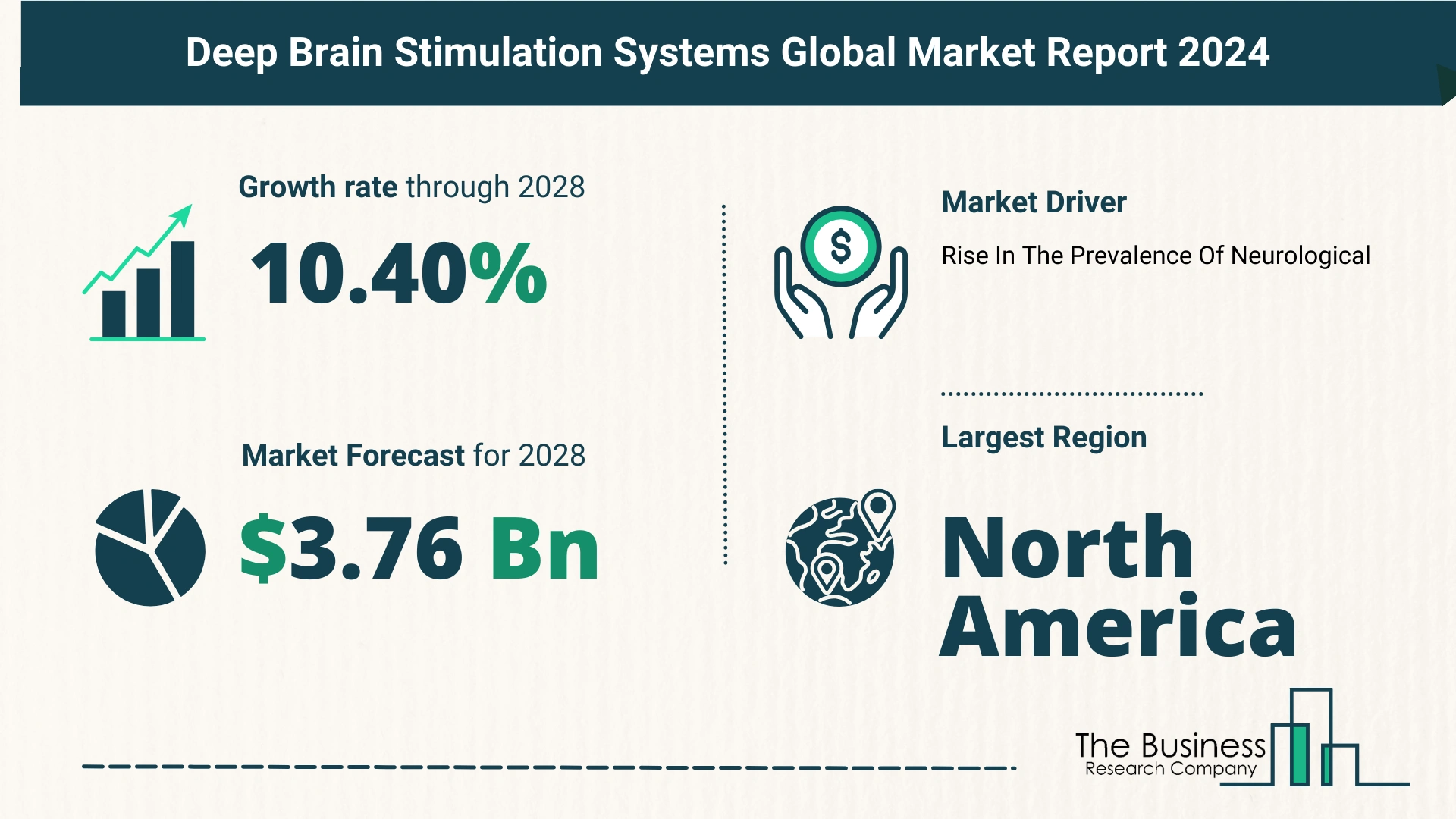
    The deep brain stimulation systems market has witnessed rapid expansion, growing from $2.28 billion in 2023 to $2.53 billion in 2024 at a CAGR of 11.1%. Looking ahead, it is projected to reach $3.76 billion by 2028, with a CAGR of 10.4%. This growth trajectory is fueled by:

    • Rising demand for minimally invasive surgeries
    • Increasing prevalence of neurological disorders globally
    • Technological advancements in deep brain stimulation devices

    Drivers of Market Expansion
    Increasing Prevalence of Neurological Disorders
    Neurological disorders such as Parkinson’s disease and epilepsy are becoming more prevalent worldwide. For example, in the US alone, the number of annual Parkinson’s disease diagnoses has surged by 50%, emphasizing the need for effective treatment options like deep brain stimulation systems.

    Advancements in Technology
    Innovations in deep brain stimulation technology, including miniaturization, advanced materials, and wireless connectivity, are enhancing treatment efficacy and patient convenience.

    View More On The Deep Brain Stimulation Systems Market Report 2024 – https://www.thebusinessresearchcompany.com/report/deep-brain-stimulation-systems-global-market-report

    Major Players and Innovations
    Innovative Product Launches
    Abbott Laboratories recently introduced the Liberta RC DBS system, the world’s smallest rechargeable device with remote programming capabilities. This innovation enhances patient care by allowing remote adjustments without frequent clinic visits.

    Strategic Partnerships
    Aster Medcity’s collaboration with Medtronic plc aims to expand advanced DBS programs for Parkinson’s patients in India, underscoring regional growth opportunities and enhanced treatment accessibility.

    Market Segmentation
    The market is segmented based on:

    1. Product Types: Single Channel, Dual Channel
    2. Applications: Parkinson’s Disease, Essential Tremor, Epilepsy, and more
    3. End-users: Hospitals, Ambulatory Surgical Centers, Neurological Clinics

    Regional Insights
    North America dominated the market in 2023, driven by advanced healthcare infrastructure and high disease prevalence. Asia-Pacific is poised to witness the fastest growth, fueled by increasing healthcare investments and rising awareness of neurostimulation therapies.

    Conclusion
    The deep brain stimulation systems market is experiencing robust growth, driven by technological advancements, increasing neurological disorder prevalence, and strategic innovations by key players. As demand rises for minimally invasive treatment options, the market’s expansion into new regions and applications is expected to continue, offering significant opportunities for stakeholders across the healthcare sector.

    Request A Sample Of The Global Deep Brain Stimulation Systems Market Report 2024:
    https://www.thebusinessresearchcompany.com/sample_request?id=13834&type=smp

  • 5 Key Insights On The Cannabis Capsule Market 2024

    5 Key Insights On The Cannabis Capsule Market 2024

    The Business Research Company’s global market reports are now updated with the latest market sizing information for the year 2024 and forecasted to 2033

    As per The Business Research Company’s Cannabis Capsule Global Market Report 2024, the cannabis capsule market is expected to show significant growth in the forecast period.

    The cannabis capsule market has experienced exponential growth in recent years, driven by advancements in research and development, increased medical requirements, and expanding legalization efforts. From $31.96 billion in 2023, the market is expected to reach $38.75 billion in 2024, growing at a compound annual growth rate (CAGR) of 21.3%.

    Rapid Growth Expected Through 2028
    The market is projected to continue its rapid expansion, reaching $79.20 billion by 2028, with a CAGR of 19.6%. This growth is fueled by increasing neurological disorders, broader legalization, and evolving consumer preferences. Key trends in this period include:

    • Product Innovations: Companies are focusing on developing new formulations and delivery methods.
    • Strategic Partnerships: Collaborations to enhance distribution channels and market reach.
    • Technological Advancements: Utilizing advanced extraction and formulation technologies.

    View More On The Cannabis Capsule Market Report 2024 – https://www.thebusinessresearchcompany.com/report/cannabis-capsule-global-market-report

    Major Drivers: Addressing Neurological Disorders
    The rising prevalence of neurological disorders, such as Alzheimer’s disease, is a significant driver for the cannabis capsule market. Compounds like cannabidiol (CBD) have shown potential benefits in preventing social recognition memory deficits associated with Alzheimer’s disease. The increase in neurological disorders, expected to nearly triple to 14 million Americans by 2060, is a crucial factor propelling market growth.

    Key Players Driving Innovation
    Leading companies in the cannabis capsule market include GW Pharmaceuticals PLC, Trulieve Cannabis Corp., and Green Thumb Industries Inc. These players are at the forefront of product development and market expansion efforts.

    Increasing Focus On Chronic Pain Relief
    Companies are increasingly focusing on innovative solutions tailored for chronic pain relief. For example, Holistic Industries launched CANNACEUTICA, the first oral cannabis capsule specifically formulated and studied for chronic pain management. This product aims to provide an alternative to opioids with clear dosing guidelines.

    KD Pharma Group’s Strategic Expansion
    The acquisition of Trigal Pharma by KD Pharma Group highlights strategic expansions in cannabinoid leadership. This move is expected to accelerate growth and innovation in the cannabis capsule segment, leveraging Trigal’s expertise in CBD capsules.

    Market Segmentation
    The cannabis capsule market is segmented based on type, compound, and end-user:

    1. By Type: High Tetrahydrocannabinol Capsules, Tetrahydrocannabinol Or Cannabinol Balance Capsule, High Cannabinol Capsules
    2. By Compound: Tetrahydrocannabinol (THC)-Dominant, Cannabidiol (CBD)-Dominant
    3. By End User: Hospital Pharmacies, Retail Pharmacies, Drug Stores, Online Sales

    Regional Insights: Dominance of North America
    In 2023, North America emerged as the largest region in the cannabis capsule market, driven by progressive legalization measures and increasing consumer acceptance of medical cannabis products.

    Conclusion
    The cannabis capsule market is poised for significant growth driven by increasing medical applications, legalization trends, and innovations in product development. With a robust CAGR projected through 2028 and major players driving advancements, the market is set to expand its footprint globally, addressing diverse medical needs and consumer preferences.

    Request A Sample Of The Global Cannabis Capsule Market Report 2024:
    https://www.thebusinessresearchcompany.com/sample_request?id=13818&type=smp

  • Comprehensive Analysis On Size, Share, And Drivers Of The Speech Impairment Market

    Comprehensive Analysis On Size, Share, And Drivers Of The Speech Impairment Market

    The Business Research Company’s global market reports provide comprehensive analysis on the various markets in 27 industries across 60 geographies.

     Market Expansion Overview

    • 2023 Market Size: $9.34 billion
    • 2024 Market Size: $10.03 billion
    • CAGR: 7.4%

    The speech impairment market has experienced robust growth recently, driven by a rising geriatric population, increased awareness of cognitive health and speech connections, lifestyle changes, advances in artificial intelligence (AI), and an aging population.

    Future Market Projections

    • 2028 Market Size: $12.73 billion
    • CAGR: 6.1%

    Continued growth is expected due to increased awareness about speech impairments, rising incidence of speech disorders, the rise of mobile health applications, adoption of augmentative and alternative communication (AAC) devices, and demand for speech therapy and pathology services. Key trends include advancements in speech recognition, healthcare-technology collaborations, home-based interventions, and speech-to-text innovations.

    View More On The Speech Impairment Market Report 2024 – https://www.thebusinessresearchcompany.com/report/speech-impairment-global-market-report

    Focus on Early Detection and Advanced Solutions

    • Rising Incidence of Speech Disorders: Significant increases in diagnoses among children post-pandemic

    The increasing incidence of speech disorders is propelling market growth. Effective diagnostic tools, therapies, and assistive technologies are in high demand. For example, Contemporary Pediatrics reported a 136% increase in speech disorder diagnoses among infants and children aged 0-2 in 2022 compared to pre-pandemic levels, with children aged 3-5 seeing a 107% increase.

    Key Market Players

    • Major Companies: Google LLC, Microsoft Corporation, The International Business Machines Corporation, LifePoint Health, Sunnova Holding AG, Open Text Corporation, Nuance Communications Inc., Reliant Rehabilitation, Therapy Solutions Inc., Benchmark Physical Therapy Institute, Tobii Dynamo, Humanos Corporation, Pitmatics, Nongraphical, Capela Group, Read Speaker, John McGivney Children’s Centre, Rehabilitation Associates Inc., Able Net Inc., Saltillo Corporation, Lumen Vox LLC, Assistive Ware, Speak AI, Cognition

    Speech Recognition Apps: Transforming Communication

    • Innovative Technology Example: Violet app by Violet (June 2021)

    Companies are leveraging speech recognition apps to aid communication for individuals with speech impairments. The Violet app, launched by an Israeli startup, uses patented automatic speech recognition (ASR) technology to understand non-standard speech and convert it into text and voice output, specifically catering to individuals with motor-speech disabilities, aging voices, and accents.

    Expansion Through Acquisitions

    • Notable Acquisition: Rethink First acquires Total Therapy (January 2022)

    Rethink First expanded its behavioral health technology portfolio by acquiring Total Therapy, enhancing its offerings in speech, occupational, and physical therapy markets. This acquisition enables Rethink First to provide a comprehensive suite of solutions for its customers.

    Market Segmentation

    • By Type: Speech Disorder, Language Disorder, Apraxia, Autism Spectrum Disorder (ASD), Other Types
    • By Age: Pediatrics, Adults, Elderly
    • By End-User: Specialty Clinics, Rehabilitation Centers, Speech Therapy Centers, Bilingual Classes, Hospitals, Community Health Centers

    Regional Insights

    • Largest Market in 2023: North America
    • Fastest-Growing Region: Asia-Pacific (forecast period)

    The speech impairment market is segmented by type, age, and end-user, with North America leading in market size in 2023. Asia-Pacific is anticipated to be the fastest-growing region due to increasing awareness and adoption of advanced therapies and technologies.

    Request A Sample Of The Global Speech Impairment Market Report 2024:
    https://www.thebusinessresearchcompany.com/sample_request?id=13935&type=smp

  • Key Insights On The Smart Portable Rehabilitation Devices Market 2024 – Size, Driver, And Major Players

    Key Insights On The Smart Portable Rehabilitation Devices Market 2024 – Size, Driver, And Major Players

    The Business Research Company’s global market reports are now updated with the latest market sizing information for the year 2024 and forecasted to 2033

    As per The Business Research Company’s Smart Portable Rehabilitation Devices Global Market Report 2024, the smart portable rehabilitation devices market is expected to show significant growth in the forecast period.

    Market Expansion Overview

    • 2023 Market Size: $2.49 billion
    • 2024 Market Size: $2.88 billion
    • CAGR: 15.6%

    The smart portable rehabilitation devices market has experienced substantial growth recently, driven by increasing disability cases, the adoption of virtual reality (VR) technology in healthcare, and the rising use of VR for patient treatment.

    Future Market Projections

    • 2028 Market Size: $5.08 billion
    • CAGR: 15.3%

    The market is poised for rapid growth, fueled by an aging population, higher prevalence of non-communicable diseases, supportive virtual rehabilitation policies, and a stronger focus on patient-centric healthcare. Trends include product innovations, technological advancements, and improved internet connectivity.

    View More On The Smart Portable Rehabilitation Devices Market Report 2024 – https://www.thebusinessresearchcompany.com/report/smart-portable-rehabilitation-devices-global-market-report

    Geriatric Population Impact

    • Geriatric Population Growth: Expected to reach 2.1 billion by 2050

    The increasing elderly population drives market expansion. Smart portable rehabilitation devices help senior citizens maintain independence by enabling health monitoring and self-paced rehabilitation. WHO data indicates a rise from 1.4 billion individuals aged 60 and over in 2022 to 2.1 billion by 2050.

    Key Market Players

    • Major Companies: Medline Industries Inc., Invacare Corporation, Caremax Rehabilitation Equipment Ltd, Hinge Health, Drive Devilbiss Healthcare, Kinova Robotics, GF Health Products Inc., Dynatronics Corporation, Bioness Inc., Motion Composites, MindMaze, Neofect, Hocoma, Tyromotion, Myomo Inc., Esko Bionics, AlterG, ReWalk Robotics, LiteGait, suitX, Rifton Equipment, InnoMotion, Reha Technology AG, Rex Bionics, Kinestica, Ankon Medical Technologies, DyCare, Bionik Laboratories.

    Strategic Partnerships

    • Example Partnership: Manipal Hospitals and ConnectedLife (March 2022)

    Companies are forming strategic partnerships to enhance market competitiveness. Manipal Hospitals partnered with ConnectedLife to use Fitbit wearable technology for post-surgery rehabilitation. This collaboration enables remote monitoring and patient guidance, using devices to track vital signs and recovery metrics.

    Mergers and Acquisitions

    • Notable Merger: DIH Technology and Aurora Technology Acquisition Corp. (December 2022)

    The merger of DIH Technology and Aurora Technology Acquisition Corp. aims to revolutionize rehabilitation devices by integrating robotics, augmented reality, virtual reality, and AI, leading to more effective and personalized treatment plans.

    Market Segmentation

    • By Type: Daily Living Aids, Mobility Equipment, Exercise Equipment, Body Support Devices
    • By Rehabilitation Type: Passive Rehabilitation, Active-Assistive Rehabilitation
    • By End-User: Hospitals and Clinics, Rehabilitation Centers, Physiotherapy Centers, Other End-Users

    Regional Insights

    • Largest Market in 2023: North America

    The smart portable rehabilitation devices market is segmented by type, rehabilitation type, and end-user, with North America leading in market size as of 2023. The region’s advanced healthcare infrastructure and high adoption rate of new technologies contribute to its dominant market position.

    Request A Sample Of The Global Smart Portable Rehabilitation Devices Market Report 2024:
    https://www.thebusinessresearchcompany.com/sample_request?id=13934&type=smp

  • Global Healthcare Cybersecurity Market Overview 2024: Size, Drivers, And Trends

    Global Healthcare Cybersecurity Market Overview 2024: Size, Drivers, And Trends

    The Business Research Company’s global market reports provide comprehensive analysis on the various markets in 27 industries across 60 geographies.

     Impressive Historical Growth

    • Market Size: Increased from $20.59 billion in 2023 to $23.86 billion in 2024.
    • CAGR: 15.9%.
    • Key Drivers:
      • Increased cyberattacks.
      • Growing concerns about security and privacy.
      • Collaboration between public and private sectors to strengthen cybersecurity.
      • Highly developed medical and healthcare infrastructure.
      • Emergence of digital technologies.

    Strong Future Outlook

    • Expected Growth: Projected to reach $42.59 billion by 2028.
    • CAGR: 15.6%.
    • Key Drivers:
      • Increasing investments in cybersecurity by healthcare organizations and government initiatives.
      • Rising demand for advanced cybersecurity solutions and privacy.
      • Increased frequency and complexity of cyber threats.
      • Rising security and regulatory compliance-related issues.
      • Increasing network vulnerabilities.

    View More On The Healthcare Cybersecurity Market Report 2024 – https://www.thebusinessresearchcompany.com/report/healthcare-cybersecurity-global-market-report

    Key Trends Shaping the Future

    • Trends:
      • Growth in adoption of IoT and connected devices.
      • Increased usage of cloud-based healthcare solutions.
      • Growing use of healthcare IT solutions in outpatient care facilities.
      • Rise in adoption of connected devices and smartphones.
      • Adoption of 5G technology.
      • Increased digitalization and adoption of Electronic Health Records (EHRs).
      • Use of wireless medical devices and telemedicine.

    Rise of Cybersecurity Needs Due to Increasing Cyber Threats

    • Increasing Cyberattacks:
      • Cyberattacks are malicious attempts to disrupt, damage, or gain unauthorized access to computer systems, networks, or devices.
      • Motivated by financial incentives, cybercriminals seek to steal sensitive financial information, conduct ransom attacks, or engage in other activities to monetize their attacks.
    • Importance of Healthcare Cybersecurity:
      • Essential for protecting sensitive patient data, ensuring continuity of care, and safeguarding healthcare systems.
      • Protects against data breaches, financial loss, and compromised patient safety.
    • Statistics: According to Check Point Software Technologies Ltd., in the first nine months of 2023, there was a 3% increase in the global average of weekly cyberattacks compared to 2022, with the healthcare sector experiencing an 11% rise, averaging 1,613 incidents weekly.

    Major Players in the Healthcare Cybersecurity Market

    • Key Companies:
      • Microsoft Corporation
      • Intel Corporation
      • International Business Machines Corporation
      • Cisco Systems Inc.
      • Broadcom Inc.
      • Thales Group
      • Palo Alto Networks Inc.
      • Juniper Networks Inc.
      • Fortinet Inc.
      • Gen Digital Inc.
      • Splunk Inc.
      • Check Point Software Technologies Ltd.
      • Trend Micro Inc.
      • CrowdStrike Holdings Inc.

    Advancements in Healthcare Cybersecurity with Medical IoT Security Solutions

    • IoT Security Solutions:
      • Strategies and technologies designed to protect connected medical devices and systems from cyber threats and unauthorized access.
    • Example: In December 2022, Palo Alto Networks Inc. launched Medical IoT Security, a zero-trust security system for healthcare devices featuring automatic discovery, segmentation, policy enforcement, and advanced threat protection. The solution leverages machine learning to identify threats, secure interactions, and integrate seamlessly with healthcare systems, ensuring rapid deployment and flexible architecture compatibility.

    Strategic Acquisitions to Strengthen Cybersecurity Offerings

    • Forescout Technologies: Acquired CyberMDX in October 2022 to enhance its cybersecurity offerings in healthcare.
      • Objective: Integrate CyberMDX’s expertise in the Internet of Medical Things (IoMT) to provide a holistic security solution across IT, IoT, OT, and IoMT domains against evolving threats.
      • CyberMDX: US-based healthcare cybersecurity provider.

    Market Segmentation

    • By Solution:
      • Identity and Access Management
      • Risk and Compliance Management
      • Antivirus and Antimalware
      • Distributed Denial of Service (DDoS) Mitigation
      • Security Information and Event Management
      • Intrusion Detection System/Intrusion Prevention System
      • Other Solutions.
    • By Security:
      • Network Security
      • Endpoint Security
      • Application Security
      • Content Security.
    • By Threat:
      • Malware
      • Distributed Denial of Service (DDoS) Threats
      • Advanced Persistent Threat
      • Spyware
      • Lost or Stolen Devices
      • Other Threats.
    • By End User:
      • Pharma and Chemicals
      • Medical Devices
      • Health Insurance
      • Hospitals
      • Other End Users.

    Regional Insights

    • Largest Region (2023): North America.
    • Fastest-Growing Region (Forecast Period): Asia-Pacific.

    Request A Sample Of The Global Healthcare Cybersecurity Market Report 2024:
    https://www.thebusinessresearchcompany.com/sample_request?id=13964&type=smp

  • Global Artificial Tears Market Key Insights 2024-2033

    Global Artificial Tears Market Key Insights 2024-2033

    The Business Research Company’s global market reports are now updated with the latest market sizing information for the year 2024 and forecasted to 2033

    According to The Business Research Company’s Artificial Tears Global Market Report 2024, the artificial tears market is expected to show promising growth in the forecast period.

    The artificial tears market has shown significant growth and is poised for further expansion in the coming years. Here’s an in-depth look at the key factors driving this growth, major trends, and notable industry developments.

    Market Growth Overview

    Strong Historic Growth

    • Market size in 2023: $3.32 billion
    • Projected market size in 2024: $3.55 billion
    • CAGR: 6.7%

    Factors driving growth:

    • Aging population
    • Prolonged screen time
    • Increased healthcare expenditure
    • Shift from prescription to over-the-counter (OTC) products
    • Regulatory changes

    Future Market Projections

    Continued Expansion

    • Projected market size in 2028: $4.55 billion
    • CAGR: 6.4%

    Growth drivers:

    • Increasing prevalence of dry eye syndrome
    • Growth in contact lens usage
    • Global urbanization
    • Rising pollution levels
    • E-commerce growth

    Major trends:

    • Technological advancements
    • AI and tech integration
    • Partnerships with healthcare providers
    • Use of natural ingredients
    • Advances in product formulation
    • Advanced drug delivery systems
    • Sustainable and eco-friendly products

    View More On The Artificial Tears Market Report 2024 – https://www.thebusinessresearchcompany.com/report/artificial-tears-global-market-report

    Impact of Dry Eye Disease Prevalence

    Increasing Dry Eye Cases

    • Dry eye disease is becoming more common, necessitating the use of artificial tears.
    • Dry eye disease causes discomfort due to insufficient or poor-quality tear production.
    • Artificial tears help alleviate symptoms by supplementing natural tear production.

    Survey Insights:

    • In a 2022 survey by Macquarie University, 13% of individuals aged 50+ showed clinical signs of dry eye disease.
    • Eyes On Eyecare reported a rise in prescription treatments for dry eye from 5.8% in 2021 to 7.56% in 2022.

    Key Players in the Market

    Major Companies

    • Pfizer Inc.
    • Johnson & Johnson
    • AbbVie Inc.
    • Novartis AG
    • Abbott Laboratories
    • Otsuka Pharmaceutical Co. Ltd.
    • Alcon
    • Bausch Health Companies Inc.
    • Sun Pharmaceutical Industries Ltd.
    • Reddy’s Laboratories
    • Santen Pharmaceutical Co. Ltd.
    • Lupin Limited
    • Rohto Pharmaceutical Co. Ltd.
    • Prestige Consumer Healthcare Inc.
    • Thea Pharma Inc.
    • OPTIMA pharma GmbH
    • Velocity Pharma LLC

    Technological Innovations

    HydroBoost and PureFlow Bottle Technology

    • Companies are incorporating technologies like HydroBoost and PureFlow to enhance product efficacy and user convenience.
    • Example:In April 2021, Alcon launched Systane Hydration Multi-Dose Preservative-Free Lubricant Eye Drops with HydroBoost Technology and PureFlow bottle for better hydration and sterility.

    Strategic Acquisitions

    Bausch + Lomb’s Acquisition of Blink

    • In July 2023, Bausch + Lomb acquired Blink products from Johnson & Johnson for $106.5 million.
    • This acquisition aims to expand Bausch + Lomb’s OTC eye care portfolio, providing consumers with more comprehensive eye care solutions.

    Market Segmentation

    Types of Artificial Tears

    • Glycerin Tears
    • Cellulose Tears
    • Oil-Based Emulsion Tears
    • Polyethylene Glycol-based Tears
    • Sodium Hyaluronate Based Artificial Tears
    • Propylene Glycol-based Tears

    Dosage Forms

    • Suspensions
    • Solution
    • Ointment
    • Emulsion
    • Gel
    • Spray

    Indications

    • Dry Eye Syndrome
    • Allergies
    • Infections
    • UV and Blue Light Protection
    • Contact Lens Moisture Retention
    • Other Indications

    Distribution Channels

    • Retail Pharmacies
    • Hospital Pharmacies
    • Online Pharmacies
    • Ophthalmic Stores

    Regional Insights

    Geographic Trends

    • North America was the largest region in the artificial tears market in 2023.
    • Asia-Pacific is expected to be the fastest-growing region during the forecast period.

    With the increasing prevalence of dry eye syndrome and ongoing technological advancements, the artificial tears market is set to witness robust growth, offering improved solutions for those suffering from dry eye conditions.

    Request A Sample Of The Global Artificial Tears Market Report 2024:
    https://www.thebusinessresearchcompany.com/sample_request?id=13799&type=smp