Blog

  • Schizophrenia Drugs Market Growth Is Accelerating As Industry Transformation Continues

    Schizophrenia Drugs Market Growth Is Accelerating As Industry Transformation Continues

    Through market attractiveness analysis, total addressable market evaluation, company benchmarking matrices, interactive Excel dashboards, expanded supply chain intelligence, emerging startup coverage, and detailed product insights, The Business Research Company’s 2026 market reports provide more actionable and strategically valuable research.

    Schizophrenia Drugs Market Expansion Outlook: What Revenue Opportunities Lie Ahead?

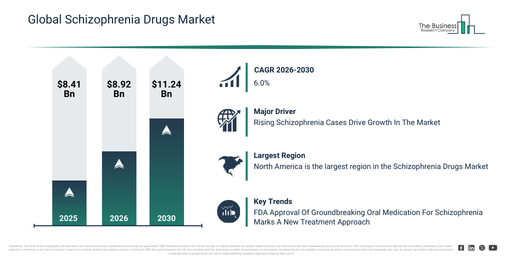
    The schizophrenia drugs market has experienced significant expansion in recent years, with its size projected to increase from $8.41 billion in 2025 to $8.92 billion in 2026, reflecting a compound annual growth rate (CAGR) of 6.0%. During the historic period, this growth was driven by a rise in schizophrenia diagnoses, broader use of atypical antipsychotics, the development of more psychiatric hospitals, heightened public awareness of mental health issues, and an uptick in the availability of generic medications.

    Strong expansion is anticipated in the schizophrenia drugs market over the coming years. By 2030, the market is projected to reach $11.24 billion, reflecting a compound annual growth rate (CAGR) of 6.0%. Several factors are expected to fuel this growth during the forecast period, including a rising mental health burden, the expansion of injectable therapies, improved access to psychiatric care, the integration of digital mental health solutions, and increased healthcare funding. Key trends shaping the forecast period involve a growing preference for second and third-generation antipsychotics, broader uptake of long-acting injectable treatments, a stronger emphasis on chronic disease management, the widening reach of community-based mental health services, and a heightened focus on medication adherence.

    Download A Free Sample Report For Comprehensive Market Insights:

    https://www.thebusinessresearchcompany.com/sample.aspx?id=20948&type=smp&utm_source=BlogsPR&utm_medium=Paid&utm_campaign=Jul_PR

    Schizophrenia Drugs Market Expansion Drivers: What Is Shaping Future Growth?

    The anticipated increase in schizophrenia cases is expected to fuel expansion in the market for schizophrenia drugs moving forward. This long-term mental disorder is characterized by disruptions in thought processes, perceptions, emotional regulation, and behavior, often manifesting as hallucinations and delusions. Contributing factors to the growing incidence include genetic vulnerabilities, environmental pressures, substance misuse, and imbalances in brain chemistry. Medications for schizophrenia are employed to manage symptoms effectively, thereby lessening the disorder’s interference with patients’ daily routines and enhancing overall therapeutic results. As an example, in February 2024, the National Library of Medicine, a biomedical library based in the United States, reported that the prevalence of schizophrenia and related psychotic disorders among the U.S. population fell between 0.25% and 0.64%. Moreover, in January 2024, the British Columbia Schizophrenia Society, a Canadian nonprofit organization, noted that schizophrenia significantly contributes to mental health hospitalizations, accounting for 19.9% of general hospital admissions and 30.9% of psychiatric hospital stays. Consequently, the rising number of schizophrenia cases is set to drive the growth of the schizophrenia drugs market.

    Schizophrenia Drugs Market Categorization By Product Type And Application

    The schizophrenia drugs market covered in this report is segmented –

    1) By Therapeutic Class: Second Generation, Third Generation, Other Therapeutic Classes

    2) By Treatment: Oral, Injectable

    3) By Distribution Channel: Hospital Pharmacies, Retail Pharmacies, Online Pharmacies, Other Distribution Channels

    Subsegments:

    1) By Second Generation: Risperidone, Olanzapine, Quetiapine, Aripiprazole, Paliperidone, Ziprasidone, Others

    2) By Third Generation: Brexpiprazole, Cariprazine, Others

    3) By Other Therapeutic Classes: First-Generation Antipsychotics, Combination Therapies, Others

    Schizophrenia Drugs Market Strategic Trends: What Is Defining The Next Phase Of Growth?

    Leading market participants in the schizophrenia drugs sector are committed to creating cutting-edge offerings, particularly oral schizophrenia medications, aimed at improving patient care and treatment results. Oral therapies for schizophrenia are ingested pills that address the condition’s manifestations, frequently relying on antipsychotics that help regulate mood, cognition, and perception. As an example, in September 2024, Bristol Myers Squibb, an American biopharmaceutical firm, revealed that the U.S. Food and Drug Administration (FDA) had authorized Cobenfy, a groundbreaking oral treatment for adult schizophrenia. This innovative pharmaceutical merges xanomeline with trospium chloride, representing a substantial shift from conventional antipsychotics by acting on cholinergic receptors rather than dopamine receptors. Such a novel method holds promise for alleviating signs like hallucinations and confused thinking, while also minimizing typical adverse effects tied to older antipsychotics, making Cobenfy a compelling option in the schizophrenia therapeutic field.

    Schizophrenia Drugs Market Company Landscape And Strategic Competition

    Major companies operating in the schizophrenia drugs market are Pfizer Inc., Johnson & Johnson Services Inc., Merck & Co., Novartis AG, Sanofi S.A., Bristol Myers Squibb, AstraZeneca PLC, Eli Lilly and Company, F. Hoffmann-La Roche Ltd., Teva Pharmaceutical Industries Ltd., UCB S.A., Sun Pharmaceutical Industries Ltd., AbbVie Inc., H. Lundbeck A/S, Cipla Ltd., Lupin Limited, Alkermes plc, Vanda Pharmaceuticals Inc., Sumitomo Pharma Co. Ltd., Mylan NV, Otsuka Pharmaceutical Co. Ltd., Reviva Pharmaceuticals Holdings Inc., Lifegenix, Flagship Biotech International Pvt. Ltd.

    Access The Complete Schizophrenia Drugs Market Report:

    https://www.thebusinessresearchcompany.com/report/schizophrenia-drugs-global-market-report?utm_source=BlogsPR&utm_medium=Paid&utm_campaign=Jul_PR

    Schizophrenia Drugs Market Regional Distribution: Which Areas Drive Market Expansion?

    North America was the largest region in the schizophrenia drugs market in 2025. Asia-Pacific is expected to be the fastest-growing region in the forecast period. The regions covered in the schizophrenia drugs market report are Asia-Pacific, South East Asia, Western Europe, Eastern Europe, North America, South America, Middle East, Africa.

    Get in touch with us:

    The Business Research Company: https://www.thebusinessresearchcompany.com/?utm_source=BlogsPR&utm_medium=Paid&utm_campaign=home_page_test

    Americas: +1 310-496-7795

    Asia: +44 7882 955267 & +91 8897263534

    Europe: +44 7882 955267

    Email us at: marketing@tbrc.info

    Follow us on:

    LinkedIn: https://in.linkedin.com/company/the-business-research-company

    YouTube: https://www.youtube.com/channel/UC24_fI0rV8cR5DxlCpgmyFQ

    Global Market Model: https://www.thebusinessresearchcompany.com/global-market-model
  • Scar Treatment Market Outlook Highlights The Next Major Growth Opportunities

    Scar Treatment Market Outlook Highlights The Next Major Growth Opportunities

    Delivering more actionable and strategically valuable research, The Business Research Company’s 2026 market reports feature market attractiveness analysis, total addressable market evaluation, company benchmarking matrices, interactive Excel dashboards, expanded supply chain intelligence, emerging startup coverage, and detailed product insights.

    Scar Treatment Market Growth Potential: How Will Market Size Change Through 2030?

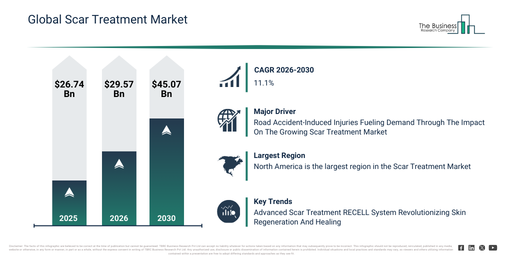
    The scar treatment market has experienced strong expansion in recent years. Projected to rise from $26.74 billion in 2025 to $29.57 billion in 2026, this growth reflects a compound annual growth rate (CAGR) of 10.6%. Factors driving the historical period include a higher prevalence of acne and surgical interventions, heightened consciousness about cosmetic appearance, a surge in dermatology and aesthetic clinic numbers, the widespread availability of both topical remedies and laser-based options, along with urbanization and lifestyle-linked skin injuries.

    The scar treatment market is projected to experience robust expansion in the coming years, reaching an estimated $45.07 billion by 2030 with a compound annual growth rate (CAGR) of 11.1%. This forecasted growth is driven by factors such as progress in laser and regenerative technologies, increased medical tourism for cosmetic procedures, higher disposable incomes in developing nations, growing demand for tailored scar management options, and the broadening of e-commerce distribution channels. Key trends influencing this period include a rising preference for minimally invasive scar treatments, greater adoption of laser and energy-based therapies, an increased focus on combination therapy approaches, expanded use of injectable and dermal filler-based solutions, and the emergence of over-the-counter and at-home scar care products.

    Download A Free Sample Report For Comprehensive Market Insights:

    https://www.thebusinessresearchcompany.com/sample.aspx?id=10572&type=smp&utm_source=BlogsPR&utm_medium=Paid&utm_campaign=Jul_PR

    Scar Treatment Market Development Factors: Which Trends Are Supporting Demand?

    The upward trend in road traffic accidents is anticipated to accelerate the expansion of the scar treatment market in the coming period. Such accidents are defined as events involving at least one vehicle on a public roadway where one or more individuals sustain injuries or lose their lives. When the skin suffers accidental burns, abrasions, scrapes, or cuts, the body undergoes a natural healing process and tissue replacement that often leads to scarring. Specialized scar treatments, which target the damaged skin layers and deliver visible improvements, can substantially diminish the appearance of these marks. For example, Transport Canada, a government agency based in Canada, reported in May 2025 that motor vehicle fatalities in 2023 reached 1,964, reflecting a 1.7% rise from the 1,931 deaths recorded in 2022. Consequently, the growing frequency of road accidents is fueling the advancement of the scar treatment market.

    Scar Treatment Market Segment Analysis And Revenue Opportunities

    The scar treatment market covered in this report is segmented –

    1) By Scar Type: Atrophic Scars, Hypertrophic And Keloid Scars, Contracture Scars, Other Scar Types

    2) By Treatment Type: Topical, Laser, Surface, Surgical, Injectable

    3) By End User: Hospitals, Clinics, Pharmacies and Drug Store, E-commerce

    Subsegments:

    1) By Atrophic Scars: Acne Scars, Surgical Scars, Other Atrophic Scars

    2) By Hypertrophic And Keloid Scars: Hypertrophic Scars, Keloid Scars

    3) By Contracture Scars: Post-Burn Contracture Scars, Other Contracture Scars

    4) By Other Scar Types: Stretch Marks, Other Types of Scars

    Scar Treatment Market Transformation Trends: Which Innovations Are Driving Change?

    Leading industry players in the scar treatment space are directing their efforts toward advanced innovations like the RECELL System, which is designed to speed up skin regeneration, enhance the healing of scars, and deliver customized treatment approaches. This regenerative medicine device works by taking a minute piece of the patient’s own skin and processing it into a suspension of skin cells, thereby encouraging quicker healing and minimizing scar formation in cases involving burns and wounds. A notable example occurred in June 2023, when the U.S. Food and Drug Administration granted approval to AVITA Medical—an American medical device firm—for using the RECELL System on full-thickness skin defects, thereby extending its application beyond thermal burn injuries alone. This clearance now permits the treatment of serious wound categories such as traumatic injuries, surgical excisions, and resections related to skin cancer. With its Spray-On Skin technology, the system can be applied immediately at the care site, which lessens the dependency on donor skin grafts and helps avoid complications frequently linked to conventional autografting, including pain, infection, and prolonged healing periods.

    Scar Treatment Market Leading Players Shaping Industry Direction

    Major companies operating in the scar treatment market are Smith & Nephew plc, Lumenis Ltd, Merz Pharmaceuticals GmbH, Sonoma Pharmaceuticals Inc, Cynosure LLC, Avita Medical Limited, Mölnlycke Health Care AB, Sientra Inc, Sisram Medical Ltd, Scarguard Labs LLC, Scar Heal Inc, Syneron Medical Ltd, Beijing Toplaser Technology Co Ltd, Suneva Medical Inc, Stratpharma AG, Galderma Laboratories LP, Acelity LP Inc, Advanced Medical Solutions Group plc, Apyx Medical Corporation, Cutera Inc, Derma Sciences Inc, Ellipse AS, EndyMed Medical Ltd, Erchonia Corporation, Fotona doo, InMode Ltd, Lutronic Corporation

    Access The Complete Scar Treatment Market Report:

    https://www.thebusinessresearchcompany.com/report/scar-treatment-global-market-report?utm_source=BlogsPR&utm_medium=Paid&utm_campaign=Jul_PR

    Scar Treatment Market Leading Geography: Which Region Generates The Most Revenue?

    North America was the largest region in the scar treatment market in 2025. Asia-Pacific is expected to be the fastest-growing region in the global scar treatment market report during the forecast period. The regions covered in the scar treatment market report are Asia-Pacific, South East Asia, Western Europe, Eastern Europe, North America, South America, Middle East, Africa.

    Get in touch with us:

    The Business Research Company: https://www.thebusinessresearchcompany.com/?utm_source=BlogsPR&utm_medium=Paid&utm_campaign=home_page_test

    Americas: +1 310-496-7795

    Asia: +44 7882 955267 & +91 8897263534

    Europe: +44 7882 955267

    Email us at: marketing@tbrc.info

    Follow us on:

    LinkedIn: https://in.linkedin.com/company/the-business-research-company

    YouTube: https://www.youtube.com/channel/UC24_fI0rV8cR5DxlCpgmyFQ

    Global Market Model: https://www.thebusinessresearchcompany.com/global-market-model
  • Sustained Release Excipients Market Expansion Is Opening New Pathways For Strategic Investment

    Sustained Release Excipients Market Expansion Is Opening New Pathways For Strategic Investment

    Delivering more actionable and strategically valuable research, The Business Research Company’s 2026 market reports feature market attractiveness analysis, total addressable market evaluation, company benchmarking matrices, interactive Excel dashboards, expanded supply chain intelligence, emerging startup coverage, and detailed product insights.

    Sustained Release Excipients Market Expansion Outlook: What Revenue Opportunities Lie Ahead?

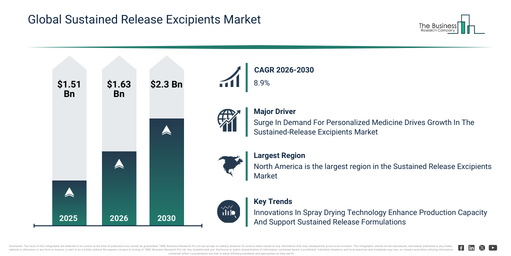
    The market for sustained release excipients has seen robust expansion over the past few years. Its value is projected to climb from $1.51 billion in 2025 to $1.63 billion in 2026, reflecting a compound annual growth rate (CAGR) of 8.2%. During the historic period, this growth has been driven by several factors, including rising rates of chronic diseases, a greater adoption of modified release tablets, progress in polymer chemistry, increased production of generic drugs, and wider regulatory acceptance of sustained release formulations.

    The sustained release excipients market is projected to experience significant expansion over the coming years. By 2030, its value is anticipated to reach $2.3 billion, reflecting a compound annual growth rate (CAGR) of 8.9%. This upward trajectory during the forecast period is driven by several factors, including a heightened need for long-acting injectables, the expansion of biologics and specialty pharmaceuticals, increased funding for drug delivery research and development, a shift toward patient-focused formulations, and the growth of pharmaceutical production in emerging economies. Key developments shaping the market include a growing preference for controlled drug release systems, wider application of polymers in sustained release products, greater uptake of oral sustained release dosage forms, advancements in microencapsulation and coacervation techniques, and an emphasis on improving patient adherence while lowering dosing frequency.

    Download A Free Sample Report For Comprehensive Market Insights:

    https://www.thebusinessresearchcompany.com/sample.aspx?id=10822&type=smp&utm_source=BlogsPR&utm_medium=Paid&utm_campaign=Jul_PR

    Sustained Release Excipients Market Demand Drivers: What Is Fueling Industry Growth?

    The increasing need for tailored therapeutic approaches is anticipated to boost expansion within the sustained-release excipients market in the coming period. This method, known as personalized medicine or individualized care, involves healthcare providers examining a patient’s distinct genetic makeup, proteins, and other biological characteristics to design and implement specifically customized treatment through precision-based techniques. Sustained-release excipients are integral to this field, as they facilitate the creation of drug delivery systems that are specifically adapted to the unique requirements of each person. For example, data from the Personalised Medicine Coalition, a healthcare organization located in the United States, indicates that in February 2024, the number of newly approved personalized treatments for rare diseases by the FDA reached 16 in 2023, a significant increase from the 6 recorded in 2022. Consequently, the rising demand for individualized medicine is fueling the onward development of the sustained-release excipients market.

    Sustained Release Excipients Market Segment Analysis Highlighting Growth Areas

    The sustained release excipients market covered in this report is segmented –

    1) By Product: Gelatin, Polymers, Minerals, Chitosan

    2) By Route of Administration: Oral, Intramuscular, Subcutaneous, Transdermal, Vaginal, Ophthalmic, Intravenous, Other Routes of Administration

    3) By Technology: Targeted Delivery, Micro Encapsulation, Wurster Technique, Transdermal, Implants, Coacervation

    Subsegments:

    1) By Gelatin: Type A Gelatin, Type B Gelatin

    2) By Polymers: Natural Polymers, Synthetic Polymers

    3) By Minerals: Calcium Compounds, Magnesium Compounds, Other Mineral Excipients

    4) By Chitosan: Low Molecular Weight Chitosan, High Molecular Weight Chitosan

    Sustained Release Excipients Market Innovation Trends: Which Developments Are Transforming The Industry?

    Leading players in the sustained release excipients sector are prioritizing the creation of sophisticated solutions, particularly multifunctional polymer platforms, aimed at improving drug formulation efficiency, shortening delivery timelines, and enabling controlled-release mechanisms. These platforms serve as excipients capable of facilitating immediate, delayed, and sustained drug release while maintaining compatibility with formulation techniques such as hot melt extrusion and solubility-enhancing spray drying. A case in point is September 2024, when Evonik—a Germany-based company—commenced operations at a new spray drying facility located at its Darmstadt site, dedicated to EUDRAGIT polymers. This facility boosts production capacity, cuts delivery durations, and is seamlessly incorporated into existing production networks. It relies on green electricity and steam sourced from local waste incineration, achieving an annual reduction in CO2 emissions exceeding 1,000 tons. Adhering to IPEC-GMP pharmaceutical guidelines and directly linked to the production of aqueous dispersions, the facility lessens transportation needs and optimizes supply chain flow. The polymers produced here enable immediate, delayed, and sustained release formulations, thereby bolstering Evonik’s status as a global center for oral drug delivery solutions and reinforcing its capacity to efficiently support innovative pharmaceutical development.

    Sustained Release Excipients Market Leading Companies: Who Holds Significant Market Presence?

    Major companies operating in the sustained release excipients market are BASF SE, Ashland Global Holdings Inc, Colorcon Inc, Evonik Industries AG, Lubrizol Corporation, Merck KGaA, Roquette Freres, Shin Etsu Chemical Co Ltd, JRS Pharma GmbH Co KG, SPI Pharma Inc, Croda International Plc, Lonza Group AG, Chemische Fabrik Budenheim KG, Asahi Kasei Corporation, DuPont de Nemours Inc, Dow Chemical Company, Eastman Chemical Company, Gattefosse SAS, Balchem Corporation, Associated British Foods plc, Ransom Naturals Ltd, Cellulose Solutions Private Limited

    Access The Complete Sustained Release Excipients Market Report:

    https://www.thebusinessresearchcompany.com/report/sustained-release-excipients-global-market-report?utm_source=BlogsPR&utm_medium=Paid&utm_campaign=Jul_PR

    Sustained Release Excipients Market Geographic Analysis: Where Is Demand Growing The Fastest?

    North America was the largest region in the global sustained release excipients market in 2025. Asia-Pacific is expected to be the fastest-growing region in the forecast period. The regions covered in the sustained release excipients market report are Asia-Pacific, South East Asia, Western Europe, Eastern Europe, North America, South America, Middle East, Africa.

    Get in touch with us:

    The Business Research Company: https://www.thebusinessresearchcompany.com/?utm_source=BlogsPR&utm_medium=Paid&utm_campaign=home_page_test

    Americas: +1 310-496-7795

    Asia: +44 7882 955267 & +91 8897263534

    Europe: +44 7882 955267

    Email us at: marketing@tbrc.info

    Follow us on:

    LinkedIn: https://in.linkedin.com/company/the-business-research-company

    YouTube: https://www.youtube.com/channel/UC24_fI0rV8cR5DxlCpgmyFQ

    Global Market Model: https://www.thebusinessresearchcompany.com/global-market-model
  • Sulfonamide Market Trends Are Creating New Opportunities For Industry Leaders

    Sulfonamide Market Trends Are Creating New Opportunities For Industry Leaders

    Enhanced with market attractiveness analysis, total addressable market evaluation, company benchmarking matrices, interactive Excel dashboards, expanded supply chain intelligence, emerging startup coverage, and detailed product insights, The Business Research Company’s 2026 market reports deliver more actionable and strategically valuable research.

    Sulfonamide Market Growth Potential: How Will Market Size Change Through 2030?

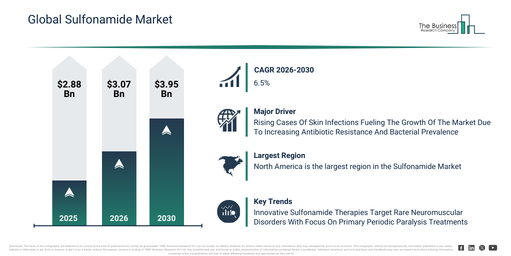
    The sulfonamide market has experienced robust expansion in recent years, with projections indicating an increase from $2.88 billion in 2025 to $3.07 billion in 2026, reflecting a compound annual growth rate (CAGR) of 6.5%. This historical growth has been driven by factors such as the early development of antibiotics, their broad-spectrum effectiveness, the management of hospital-acquired infections, the production of generic medications, and their application in treating burns.

    The sulfonamide market is anticipated to experience robust expansion over the coming years, with projections indicating a rise to $3.95 billion by 2030, reflecting a compound annual growth rate (CAGR) of 6.5%. This forecasted growth is driven by factors such as antibiotic stewardship initiatives, increasing demand for combination therapies, the widening availability of generic products, a rising burden of infectious diseases, and improved healthcare access. Major developments shaping this period include the sustained application of sulfonamides in combination antibiotic regimens, their heightened usage in healthcare environments with limited resources, the proliferation of generic sulfonamide formulations, their role in dermatological treatments and burn care, and a growing emphasis on cost-effective antimicrobial solutions.

    Download A Free Sample Report For Comprehensive Market Insights:

    https://www.thebusinessresearchcompany.com/sample.aspx?id=24411&type=smp&utm_source=BlogsPR&utm_medium=Paid&utm_campaign=Jul_PR

    Sulfonamide Market Growth Drivers: What Factors Are Accelerating Expansion?

    The sulfonamide market is expected to expand due to a growing incidence of skin infections. These infections result from bacteria, viruses, fungi, or parasites that invade the skin, causing redness, swelling, pain, itching, or pus. Their rising prevalence is linked to antibiotic-resistant bacteria, which complicate treatment and facilitate the spread of common infections. By inhibiting bacterial growth and folic acid synthesis, sulfonamides effectively address various susceptible bacteria responsible for these conditions. For example, in February 2025, the American Academy of Dermatology, a U.S.-based nonprofit, reported that about 50 million Americans experience acne annually, making it the nation’s most common skin disorder. Hence, the sulfonamide market is being propelled by this increased prevalence of skin infections.

    Sulfonamide Market Segment Performance And Strategic Opportunities

    The sulfonamide market covered in this report is segmented –

    1) By Product Type: Oral Sulfonamides, Topical Sulfonamides, Injectable Sulfonamides

    2) By Chemical Structure: Sulfanilamide, Sulfacetamide, Sulfamethoxazole

    3) By Application: Antibacterial, Antifungal, Antiviral, Diuretics, Antidiabetic, Other Applications

    4) By End-User: Hospitals, Clinics, Research Laboratories, Other End Users

    Subsegments:

    1) By Oral Sulfonamides: Sulfamethoxazole, Sulfisoxazole, Sulfadiazine, Sulfalene

    2) By Topical Sulfonamides: Sulfacetamide Sodium, Silver Sulfadiazine, Sulfamylon, Sulfadiazine Cream

    3) By Injectable Sulfonamides: Sulfamethoxazole, Sulfadiazine Sodium, Sulfamethoxypyridazine

    Sulfonamide Market Trends: What Is Shaping Future Industry Growth?

    Major players within the sulfonamide market are actively working on creating cutting-edge solutions, including therapies for primary periodic paralysis (PPP), in order to broaden the clinical uses of sulfonamide-based drugs and tackle unmet requirements in uncommon neuromuscular disorders. Primary periodic paralysis (PPP) therapies are designed to address a set of rare, inherited neuromuscular conditions that manifest as recurrent attacks of muscle weakness or paralysis, often triggered by changes in blood potassium levels. A concrete example occurred in May 2024, when the UK-based pharmaceutical firm Cycle Pharmaceuticals Limited launched ORMALVITM (dichlorphenamide) as a treatment for patients with hypokalemic periodic paralysis (HypoPP), hyperkalemic periodic paralysis (HyperPP), and related disorders. This medication, which has received FDA approval, provides a targeted option for individuals dealing with these genetic conditions, which involve episodes of muscle weakness or paralysis linked to potassium level variations. Notably, this product introduction highlights Cycle’s commitment to patient-centered care, with an emphasis on improving treatment accessibility and adherence via customized support services.

    Sulfonamide Market Key Players: Which Companies Shape Industry Competition?

    Major companies operating in the sulfonamide market are Abbott Laboratories, Novartis AG, Teva Pharmaceutical Industries Limited, Intas Pharmaceuticals Limited, Cadila Pharmaceuticals Limited, Amneal Pharmaceuticals LLC, Lupin Limited, Bimeda Holdings PLC, Virchow Laboratories Limited, Hebei Veyong Bio-Chemical Co. Ltd., Interchemie Werken De Adelaar B.V., AdvaCare Pharma, VetOne, Zydus Cadila Healthcare Limited, Sun Pharmaceutical Industries Limited, Aurobindo Pharma Limited, Cipla Limited, Alkem Laboratories Limited, Torrent Pharmaceuticals Limited, Alembic Pharmaceuticals Limited, Glenmark Pharmaceuticals Limited, Hikma Pharmaceuticals PLC, Mylan N.V. (Viatris), Wockhardt Limited, Pfizer Inc.

    Access The Complete Sulfonamide Market Report:

    https://www.thebusinessresearchcompany.com/report/sulfonamide-global-market-report?utm_source=BlogsPR&utm_medium=Paid&utm_campaign=Jul_PR

    Sulfonamide Market Global Footprint: Which Region Holds Market Leadership?

    North America was the largest region in the sulfonamide market in 2025. Asia-Pacific is expected to be the fastest-growing region in the forecast period. The regions covered in the sulfonamide market report are Asia-Pacific, South East Asia, Western Europe, Eastern Europe, North America, South America, Middle East, Africa.

    Get in touch with us:

    The Business Research Company: https://www.thebusinessresearchcompany.com/?utm_source=BlogsPR&utm_medium=Paid&utm_campaign=home_page_test

    Americas: +1 310-496-7795

    Asia: +44 7882 955267 & +91 8897263534

    Europe: +44 7882 955267

    Email us at: marketing@tbrc.info

    Follow us on:

    LinkedIn: https://in.linkedin.com/company/the-business-research-company

    YouTube: https://www.youtube.com/channel/UC24_fI0rV8cR5DxlCpgmyFQ

    Global Market Model: https://www.thebusinessresearchcompany.com/global-market-model
  • Subcutaneous Immunoglobulin (SCIG) Market Growth Is Reshaping Competitive Advantage Across The Industry

    Subcutaneous Immunoglobulin (SCIG) Market Growth Is Reshaping Competitive Advantage Across The Industry

    Through market attractiveness analysis, total addressable market evaluation, company benchmarking matrices, interactive Excel dashboards, expanded supply chain intelligence, emerging startup coverage, and detailed product insights, The Business Research Company’s 2026 market reports provide more actionable and strategically valuable research.

    Subcutaneous Immunoglobulin (SCIG) Market Value Analysis: What Growth Is Expected Over The Forecast Period?

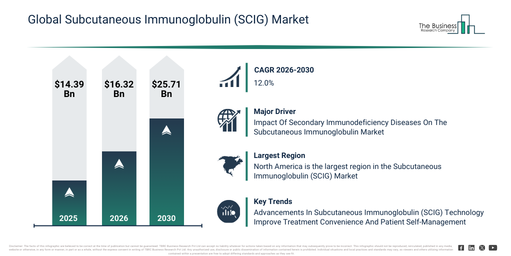
    The market for subcutaneous immunoglobulin (SCIG) has experienced substantial expansion in recent years. Its value is projected to rise from $14.39 billion in 2025 to $16.32 billion in 2026, reflecting a compound annual growth rate (CAGR) of 13.4%. Historical growth has been driven by a higher diagnosis rate of primary immunodeficiency disorders, the drawbacks associated with intravenous immunoglobulin therapy, a growing demand for sustained immune assistance, an enhanced safety record for SCIG, and an increasing patient inclination toward receiving care at home.

    Over the coming years, the subcutaneous immunoglobulin (SCIG) market is poised for substantial expansion, with projections indicating a climb to $25.71 billion by 2030, driven by a compound annual growth rate (CAGR) of 12.0%. This forecasted growth is fueled by factors such as the broadening of SCIG applications beyond immunodeficiency conditions, a heightened emphasis on homecare therapies within the healthcare sector, advancements in infusion device technology, a rising incidence of autoimmune and neurological disorders, and an increasing preference for patient-focused treatment approaches. Key developments shaping the market include a notable transition from intravenous immunoglobulin (IVIG) to SCIG treatments, growing adoption of immunoglobulin therapy administered at home, a heightened inclination toward self-administration devices, the expanding use of SCIG in managing chronic immune disorders, and an elevated demand for long-term immune replacement solutions.

    Download A Free Sample Report For Comprehensive Market Insights:

    https://www.thebusinessresearchcompany.com/sample.aspx?id=15935&type=smp&utm_source=BlogsPR&utm_medium=Paid&utm_campaign=Jul_PR

    Subcutaneous Immunoglobulin (SCIG) Market Growth Factors Supporting Long-Term Expansion

    The rising occurrence of secondary immunodeficiency conditions is anticipated to boost expansion within the subcutaneous immunoglobulin market. Such conditions involve a weakened or compromised immune system stemming from causes external to the immune system itself. Contributing factors to their increased prevalence include aging demographics, the administration of immunosuppressive therapies, and exposure to environmental pollutants. Subcutaneous immunoglobulin treatment supplies antibodies that reinforce a compromised immune response, proving particularly useful in managing chronic illnesses like HIV or autoimmune diseases, thereby reducing infection risk and supporting immune function throughout therapy. For example, data from October 2024 from HIV i-Base, a UK-based activist organization focused on treatment, revealed that in 2023 there was a 36% uptick in new HIV diagnoses among heterosexual men—rising from 445 in 2022 to 605—and a 30% increase among heterosexual women, climbing from 602 in 2022 to 780. Consequently, this growing frequency of secondary immunodeficiency diseases is accelerating the subcutaneous immunoglobulin market’s development.

    An escalating prevalence of neurological disorders is predicted to fuel the forward momentum of the subcutaneous immunoglobulin market. These conditions encompass abnormalities of the nervous system affecting the brain, spinal cord, or peripheral nerves—examples include acute spinal cord injuries, Alzheimer’s dementia, ALS, ataxia, and brain tumors—and involve structural, biochemical, or electrical irregularities. Their increasing occurrence stems from influences such as an aging population, environmental contaminants, hereditary factors, and shifts in lifestyle habits. Subcutaneous immunoglobulin therapy aids in managing these disorders by delivering antibodies that modulate immune activity, reduce inflammatory processes, and stabilize neuromuscular junctions, potentially decelerating disease advancement while alleviating symptoms. As an illustration, in March 2023 the Alzheimer’s Association, a non-profit voluntary health organization based in the US, reported that 6.7 million Americans aged 65 years or older are currently affected by Alzheimer’s dementia, with forecasts indicating this number could reach 13.8 million by 2060. Hence, the expanding number of neurological conditions is a key driver propelling the subcutaneous immunoglobulin market.

    Subcutaneous Immunoglobulin (SCIG) Market Segment Landscape And Growth Potential

    The subcutaneous immunoglobulin (scig) market covered in this report is segmented –

    1) By Product Type: Immunoglobulin A (IgA), Immunoglobulin G (IgG)

    2) By Application: Primary Immunodeficiency Disorders, Autoimmune Diseases, Neurological Disorders, Other Applications

    3) By End-Use: Clinics, Hospitals, Homecare, Other End-Uses

    Subsegments:

    1) By Immunoglobulin A (IgA): IgA1, IgA2

    2) By Immunoglobulin G (IgG): IgG1, IgG2, IgG3, IgG4

    Subcutaneous Immunoglobulin (SCIG) Market Industry Trends Shaping Future Revenue Growth

    Key industry players in the subcutaneous immunoglobulin (SCIG) sector are directing their efforts toward the creation of innovative products, specifically prefilled and ready-to-use formulations, aimed at streamlining treatment, enabling at-home self-administration, and elevating the patient experience overall. These ready-to-use SCIG preparations are standardized, premeasured immunoglobulin solutions intended for delivery beneath the skin, offering individuals suffering from primary immunodeficiency and related immunological conditions a simpler way to manage their therapy away from hospitals or clinics. As an example, in April 2023, Hizentra’s new 50 mL / 10 g prefilled syringe received approval from the U.S. Food and Drug Administration (FDA). This patient-friendly, ready-to-administer option facilitates easier home-based infusions and contributes to better adherence to prescribed treatment regimens.

    Subcutaneous Immunoglobulin (SCIG) Market Competitive Landscape: Who Are The Leading Companies?

    Major companies operating in the subcutaneous immunoglobulin (scig) market are CSL Behring, Grifols S.A., Octapharma AG, Kedrion Biopharma, LFB Group, Biotest AG, Bio Products Laboratory Ltd., ADMA Biologics Inc., Kamada Pharmaceuticals, Takeda Pharmaceutical Company Limited, Baxter International Inc., Bharat Serums and Vaccines Limited, Emergent BioSolutions Inc., Pfizer Inc., Johnson & Johnson, Lonza Group, Argenx SE, CinnaGen Co., Intas Pharmaceuticals Ltd., Dr. Reddy’s Laboratories Ltd.

    Access The Complete Subcutaneous Immunoglobulin (SCIG) Market Report:

    https://www.thebusinessresearchcompany.com/report/subcutaneous-immunoglobulin-scig-global-market-report?utm_source=BlogsPR&utm_medium=Paid&utm_campaign=Jul_PR

    Subcutaneous Immunoglobulin (SCIG) Market Regional Distribution: Which Areas Drive Market Expansion?

    North America was the largest region in the subcutaneous immunoglobulin market in 2025. Asia-Pacific is expected to be the fastest-growing region in the forecast period. The regions covered in the subcutaneous immunoglobulin (scig) market report are Asia-Pacific, South East Asia, Western Europe, Eastern Europe, North America, South America, Middle East, Africa.

    Get in touch with us:

    The Business Research Company: https://www.thebusinessresearchcompany.com/?utm_source=BlogsPR&utm_medium=Paid&utm_campaign=home_page_test

    Americas: +1 310-496-7795

    Asia: +44 7882 955267 & +91 8897263534

    Europe: +44 7882 955267

    Email us at: marketing@tbrc.info

    Follow us on:

    LinkedIn: https://in.linkedin.com/company/the-business-research-company

    YouTube: https://www.youtube.com/channel/UC24_fI0rV8cR5DxlCpgmyFQ

    Global Market Model: https://www.thebusinessresearchcompany.com/global-market-model
  • Subcutaneous Drug Delivery Devices Market Forecast Signals New Revenue Opportunities Through 2030

    Subcutaneous Drug Delivery Devices Market Forecast Signals New Revenue Opportunities Through 2030

    Delivering more actionable and strategically valuable research, The Business Research Company’s 2026 market reports feature market attractiveness analysis, total addressable market evaluation, company benchmarking matrices, interactive Excel dashboards, expanded supply chain intelligence, emerging startup coverage, and detailed product insights.

    Subcutaneous Drug Delivery Devices Market Size Forecast: How Large Could The Market Become By 2030?

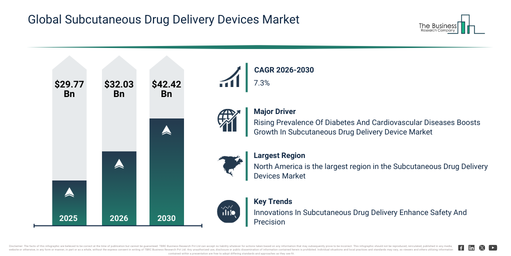
    The subcutaneous drug delivery devices market has seen robust expansion in recent years. Its value is projected to rise from $29.77 billion in 2025 to $32.03 billion in 2026, reflecting a compound annual growth rate (CAGR) of 7.6%. Several factors drove this growth in the historical period, including the increasing incidence of diabetes and chronic illnesses, a higher adoption rate of insulin pens and pen needles, enhanced hospital and clinic infrastructure, restricted access to sophisticated delivery technologies, and greater awareness regarding subcutaneous drug administration.

    The subcutaneous drug delivery devices market is anticipated to experience robust expansion over the coming years, projected to reach $42.42 billion by 2030, advancing at a compound annual growth rate (CAGR) of 7.3%. This forecasted growth is driven by several factors, including the expansion of biologics and oncology therapies, the increased use of smart auto-injectors, the broadening of homecare settings, innovations in implantable pump technologies, and a growing demand for patient-focused drug delivery solutions. Key developments in the market encompass the widespread uptake of auto-injectors and smart injection devices, a shift toward home-based and self-administration treatment approaches, a heightened preference for minimally invasive delivery techniques, the extension of delivery applications for biologics and biosimilars, and enhanced patient adherence driven by ergonomic device designs.

    Download A Free Sample Report For Comprehensive Market Insights:

    https://www.thebusinessresearchcompany.com/sample.aspx?id=19723&type=smp&utm_source=BlogsPR&utm_medium=Paid&utm_campaign=Jul_PR

    Subcutaneous Drug Delivery Devices Market Demand Drivers Creating New Revenue Opportunities

    The market for subcutaneous drug delivery devices is anticipated to expand due to the rising occurrence of diabetes and cardiovascular diseases (CVD). Factors such as aging populations, poor dietary habits, sedentary lifestyles, obesity, socioeconomic disparities, stress, environmental influences, and restricted access to preventive care are fueling the growing prevalence of these conditions. These devices are employed in diabetes management to deliver insulin and other medications for glycemic control, while in cardiovascular disease care, they administer drugs like anticoagulants or lipid-lowering agents, providing a practical and regulated approach to managing these long-term illnesses. For example, the Centers for Disease Control and Prevention, a federal agency based in the United States, reported in October 2024 that cardiovascular disease claimed 919,032 lives in 2023, accounting for roughly one out of every three deaths. Consequently, this increasing incidence of diabetes and CVD is fueling growth in the subcutaneous drug delivery devices sector.

    Subcutaneous Drug Delivery Devices Market Categorization By Product Type And Application

    The subcutaneous drug delivery devices market covered in this report is segmented –

    1) By Product Type: Insulin Pens, Pen Needles, Injector Pens, Auto-Injectors, Implantable Pumps

    2) By Application: Diabetes, Fertility, Oncology

    3) By End-User: Hospitals And Clinics, Homecare Settings, Ambulatory Surgical Centers

    Subsegments:

    1) By Insulin Pens: Disposable Insulin Pens, Reusable Insulin Pens

    2) By Pen Needles: Standard Pen Needles, Safety Pen Needles

    3) By Injector Pens: Disposable Injector Pens, Reusable Injector Pens

    4) By Auto-Injectors: Manual Auto-Injectors, Smart Auto-Injectors

    5) By Implantable Pumps: Insulin Pumps, Drug Infusion Pumps

    Subcutaneous Drug Delivery Devices Market Trends Driving Strategic Industry Expansion

    Leading players in the subcutaneous drug delivery devices industry are prioritizing the creation of cutting-edge solutions, such as compact digital liquid flow sensors, to improve the security and accuracy of drug administration under the skin by delivering tailored, reliable flow sensors suitable for high-volume injectors. These miniature digital liquid flow sensors are small instruments that exactly gauge the flow speed of fluids in small-scale uses, offering digital outputs for exact monitoring and command. For example, in May 2024, Sensirion AG, a Swiss firm specializing in environmental and flow sensing technologies, introduced the SLD3x series sensor platform. This sensor range includes highly precise digital liquid flow sensors with adaptable features, enabling exact flow measurement, obstruction detection, real-time air bubble recognition, and fluid temperature surveillance. These tiny sensors are perfect for the mass production of medical devices, guaranteeing correct dosing and better patient safety during subcutaneous drug delivery.

    Subcutaneous Drug Delivery Devices Market Company Landscape And Strategic Competition

    Major companies operating in the subcutaneous drug delivery devices market are Pfizer Inc., Sanofi S.A., Roche Holdings Inc., Medtronic plc, Eli Lilly and Company, Amgen Inc., Novo Nordisk A/S, Becton Dickinson and Company, West Pharmaceutical Services Inc., Gerresheimer AG, Insulet Corporation, SHL Medical AG, Tandem Diabetes Care Inc., Ypsomed Holding AG, Nemera, Elcam Medical Ltd., Owen Mumford Ltd., Haselmeier GmbH, Sensile Medical AG, Enable Injections Inc., Unilife Corporation, PharmaJet, Oval Medical Technologies Ltd.

    Access The Complete Subcutaneous Drug Delivery Devices Market Report:

    https://www.thebusinessresearchcompany.com/report/subcutaneous-drug-delivery-devices-global-market-report?utm_source=BlogsPR&utm_medium=Paid&utm_campaign=Jul_PR

    Subcutaneous Drug Delivery Devices Market Leading Geography: Which Region Generates The Most Revenue?

    North America was the largest region in the subcutaneous drug delivery devices market in 2025. Asia-Pacific is expected to be the fastest-growing region in the market going forward. The regions covered in the subcutaneous drug delivery devices market report are Asia-Pacific, South East Asia, Western Europe, Eastern Europe, North America, South America, Middle East, Africa.

    Get in touch with us:

    The Business Research Company: https://www.thebusinessresearchcompany.com/?utm_source=BlogsPR&utm_medium=Paid&utm_campaign=home_page_test

    Americas: +1 310-496-7795

    Asia: +44 7882 955267 & +91 8897263534

    Europe: +44 7882 955267

    Email us at: marketing@tbrc.info

    Follow us on:

    LinkedIn: https://in.linkedin.com/company/the-business-research-company

    YouTube: https://www.youtube.com/channel/UC24_fI0rV8cR5DxlCpgmyFQ

    Global Market Model: https://www.thebusinessresearchcompany.com/global-market-model
  • Stress Supplements Market Growth Is Accelerating As Industry Transformation Continues

    Stress Supplements Market Growth Is Accelerating As Industry Transformation Continues

    Enhanced with market attractiveness analysis, total addressable market evaluation, company benchmarking matrices, interactive Excel dashboards, expanded supply chain intelligence, emerging startup coverage, and detailed product insights, The Business Research Company’s 2026 market reports deliver more actionable and strategically valuable research.

    Stress Supplements Market Revenue Outlook: What CAGR Is Expected Through 2030?

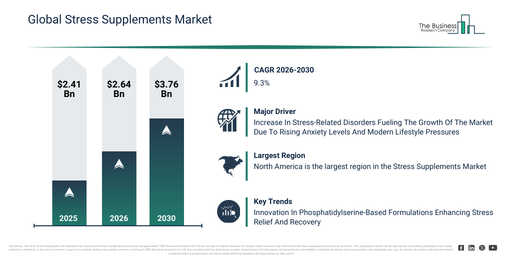
    The stress supplements market has seen robust expansion over recent years, with projections indicating an increase from $2.41 billion in 2025 to $2.64 billion in 2026, reflecting a compound annual growth rate (CAGR) of 9.4%. This historical growth has been driven by growing recognition of the importance of mental health management, escalating stress levels associated with urban lifestyles, a rise in the consumption of dietary supplements, broader adoption of herbal and nutraceutical products, and enhanced accessibility to stress management solutions.

    The stress supplements market is poised for substantial expansion over the coming years, with projections indicating it will reach $3.76 billion by 2030, driven by a compound annual growth rate (CAGR) of 9.3%. This anticipated growth during the forecast period is fueled by a rising appetite for comprehensive wellness approaches, a heightened emphasis on preventive mental health strategies, the broadening scope of customized nutrition services, the increasing prevalence of online supplement sales, and ongoing advancements in functional ingredient combinations. Key shaping forces in this period encompass a growing preference for natural and adaptogenic components, a shift toward individualized stress management options, the proliferation of clean-label formulations, an intensified spotlight on mood and cognitive performance, and the rise of direct-to-consumer supplement businesses.

    Download A Free Sample Report For Comprehensive Market Insights:

    https://www.thebusinessresearchcompany.com/sample.aspx?id=30413&type=smp&utm_source=BlogsPR&utm_medium=Paid&utm_campaign=Jul_PR

    Stress Supplements Market Expansion Supported By Key Demand Factors

    The anticipated expansion of the stress supplements market is being driven by the growing prevalence of stress-related disorders. These conditions, which encompass psychological or physical issues stemming from sustained or intense stress, impact both emotional health and physiological functions. Their rise is attributed to mounting workplace demands and the rapid pace of contemporary lifestyles. Stress supplements play a role in managing such disorders by assisting in the regulation of cortisol levels, alleviating anxiety, and fostering mental calmness. As an example, a report from the American Psychiatric Association, a US professional body for psychiatrists, indicated in May 2024 that 43% of adults reported feeling anxious, up from 37% in 2023 and 32% in 2022. Consequently, the increasing occurrence of stress-related disorders is fueling growth in the stress supplements market.

    Stress Supplements Market Segment Analysis And Revenue Opportunities

    The stress supplements market covered in this report is segmented –

    1) By Formulation Type: Tablets, Capsules, Powders, Liquids, Chewable

    2) By Type: Rhodiola Rosea Supplement, Melatonin Supplement, Vitamin D Supplement, Ashwagandha Supplement, L-Theanine Supplement, B-Complex Vitamins Supplement, Magnesium Supplement, Other Types

    3) By Purpose Of Use: Stress Reduction, Sleep Support, Anxiety Relief, Enhanced Mood, Cognitive Function Improvement

    4) By Distribution Channel: Online Retail, Pharmacies, Supermarkets And Hypermarkets, Specialty Stores

    5) By Application: Children, Adults

    Subsegments:

    1) By Tablets: Multivitamin Tablets, Herbal Extract Tablets, Adaptogen Tablets, Amino Acid Tablets, Mineral-Enriched Tablets

    2) By Capsules: Softgel Capsules, Hard Gelatin Capsules, Herbal Blend Capsules, Omega-3 Or Fatty Acid Capsules, Probiotic Capsules

    3) By Powders: Protein-Based Powders With Stress Relief Ingredients, Herbal Adaptogen Powders, Functional Beverage Mix Powders, Nootropic Powders, Collagen With Relaxation Additives

    4) By Liquids: Herbal Tinctures, Vitamin And Mineral Liquid Blends, Botanical Extract Tonics, Ready-To-Drink Relaxation Beverages, Functional Shots

    5) By Chewable: Gummies, Effervescent Chewable, Lozenges, Functional Candies, Flavored Nutraceutical Chews

    Stress Supplements Market Growth Trends Influencing Competitive Dynamics

    Major players within the stress supplements sector are prioritizing the creation of advanced formulations that incorporate phosphatidylserine to control cortisol levels, accelerate recovery, and support mental wellness through the use of natural and functional components. As a phospholipid, phosphatidylserine plays a critical role in preserving healthy brain function and mitigating stress by regulating cortisol production. A notable example occurred in July 2025, when KA-EX, a food and beverage firm headquartered in Switzerland, introduced its quick-acting cortisol stress reduction drink in the United States, representing a significant advancement in the stress supplements arena. This product has become popular among consumers, particularly athletes and those with active lifestyles, due to its demonstrated ability to lower cortisol levels by 36% within two days, thereby facilitating stress relief, better sleep, and increased vitality. Its composition, featuring phosphatidylserine, amino acids, and anti-inflammatory elements, is designed to bolster mental health and stress control. The beverage is presented in a patented dual-chamber bottle that ensures ingredient stability until the point of use. Through this U.S. launch, KA-EX solidifies its status as a scientifically grounded option in the stress supplements market, attracting individuals looking for effective approaches to stress management and enhanced overall recuperation.

    Stress Supplements Market Leading Players Shaping Industry Direction

    Major companies operating in the stress supplements market are Bayer AG, Sanofi S.A., GlaxoSmithKline plc, Glanbia plc, Amway Corporation, Nature’s Bounty Inc., GNC Holdings LLC, Dabur India Limited, Alkermes plc, Patanjali Ayurveda, NOW Health Group Inc., The Himalaya Drug Company, Nutramax Laboratories Consumer Care Inc, Jarrow Formulas Inc., Nature’s Way Products LLC, Swanson Health Products Inc., BioGaia AB, Bluebonnet Nutrition Corporation, Allergy Research Group, KA-EX

    Access The Complete Stress Supplements Market Report:

    https://www.thebusinessresearchcompany.com/report/global-stress-supplements-market-report?utm_source=BlogsPR&utm_medium=Paid&utm_campaign=Jul_PR

    Stress Supplements Market Regional Outlook: Where Are The Largest Opportunities Located?

    North America was the largest region in the stress supplements market in 2025. Asia-Pacific is expected to be the fastest-growing region in the forecast period. The regions covered in the stress supplements market report are Asia-Pacific, South East Asia, Western Europe, Eastern Europe, North America, South America, Middle East, Africa.

    Get in touch with us:

    The Business Research Company: https://www.thebusinessresearchcompany.com/?utm_source=BlogsPR&utm_medium=Paid&utm_campaign=home_page_test

    Americas: +1 310-496-7795

    Asia: +44 7882 955267 & +91 8897263534

    Europe: +44 7882 955267

    Email us at: marketing@tbrc.info

    Follow us on:

    LinkedIn: https://in.linkedin.com/company/the-business-research-company

    YouTube: https://www.youtube.com/channel/UC24_fI0rV8cR5DxlCpgmyFQ

    Global Market Model: https://www.thebusinessresearchcompany.com/global-market-model
  • Strabismus Treatment Apparatus Market Outlook Highlights The Next Major Growth Opportunities

    Strabismus Treatment Apparatus Market Outlook Highlights The Next Major Growth Opportunities

    Through market attractiveness analysis, total addressable market evaluation, company benchmarking matrices, interactive Excel dashboards, expanded supply chain intelligence, emerging startup coverage, and detailed product insights, The Business Research Company’s 2026 market reports provide more actionable and strategically valuable research.

    Strabismus Treatment Apparatus Market Growth Analysis: How Will Revenue Expand During The Forecast Period?

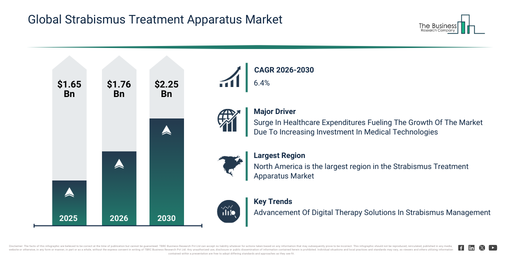
    The strabismus treatment apparatus market has experienced significant expansion over the past few years, with its value rising from $1.65 billion in 2025 to an estimated $1.76 billion in 2026, reflecting a compound annual growth rate (CAGR) of 6.3%. This historic growth has been largely driven by factors such as the implementation of early childhood eye screening programs, the continued use of traditional patch therapy, the prevalence of hospital-based ophthalmology care, an increase in pediatric eye disorders, and wider adoption of orthoptic therapy.

    The strabismus treatment device sector is projected to experience significant expansion over the coming years, reaching a valuation of $2.25 billion by 2030 with a compound annual growth rate (CAGR) of 6.4%. This forecasted growth is driven by advancements in digital therapy, the increasing adoption of home-based vision corrections, greater screen time exposure, a rising pediatric demographic, and the broader reach of tele-ophthalmology services. Among the notable developments shaping this period are the proliferation of vision therapy tools, the integration of digital and virtual reality therapeutic approaches, a higher incidence of pediatric strabismus diagnoses, the spread of at-home treatment modalities, and a heightened emphasis on non-surgical care options.

    Download A Free Sample Report For Comprehensive Market Insights:

    https://www.thebusinessresearchcompany.com/sample.aspx?id=24410&type=smp&utm_source=BlogsPR&utm_medium=Paid&utm_campaign=Jul_PR

    Strabismus Treatment Apparatus Market Growth Drivers And Industry Catalysts

    The anticipated increase in healthcare spending is expected to propel the strabismus treatment apparatus market forward in the years ahead. Healthcare expenditures represent the total amount of money allocated to medical services, goods, and public health initiatives by individuals, organizations, or governments within a defined timeframe. This growth in spending is largely fueled by the rising incidence of chronic diseases, which demand extended, resource-heavy management and significantly contribute to overall healthcare costs. These expenditures support the strabismus treatment apparatus sector by enabling the creation and availability of cutting-edge diagnostic and therapeutic tools, allowing patients to access effective, minimally invasive treatment options through both public and private healthcare systems. A report published in May 2024 by the Office for National Statistics, a UK governmental body, indicated that overall healthcare spending increased by 5.6% in 2023, up from 2.8% in 2022. Consequently, rising healthcare expenditures are fostering expansion within the strabismus treatment apparatus market.

    Strabismus Treatment Apparatus Market Segmentation And Category Breakdown

    The strabismus treatment apparatus market covered in this report is segmented –

    1) By Product Type: Prism Glasses, Eye Patches, Vision Therapy Software, Adjustable Sutures, Other Products

    2) By Age Group: Pediatric, Adult

    3) By End-User: Hospitals, Outpatient Clinics, Home Healthcare Settings

    Subsegments:

    1) By Prism Glasses: Fresnel Prism Glasses, Ground-in Prism Glasses, Clip-on Prisms

    2) By Eye Patches: Adhesive Eye Patches, Reusable Fabric Eye Patches, Pediatric Eye Patches, Orthoptic Training Patches

    3) By Vision Therapy Software: Home-Based Vision Therapy Software, Clinic-Based Vision Therapy Software, Gamified Vision Therapy Programs, VR-Based Vision Therapy Solutions

    4) By Adjustable Sutures: Sliding Noose Technique Sutures, Bow Tie Technique Sutures, Post-Operative Adjustable Sutures

    5) By Other Products: Occlusion Glasses, Eye Exercise Equipment, Electronic Eye-Tracking Devices

    Strabismus Treatment Apparatus Market Trends Influencing Long-Term Demand

    Leading players in the strabismus treatment apparatus market are actively adopting eye-tracking-based digital therapy to improve treatment precision, boost patient involvement, and enable better monitoring of visual outcomes. By utilizing high-speed sensors, these eye-tracking technologies capture and analyze eye movements in real time, which facilitates adaptive visual stimulation, trains binocular alignment, and automates progress evaluation. A notable example occurred in March 2024, when NovaSight, an Israeli ophthalmic medical device firm, released one-year follow-up findings for CureSight—their eye-tracking digital therapy system aimed at treating amblyopia linked to mild strabismus. This system uses dynamic modulation of image sharpness to encourage usage of the weaker eye, provides constant tracking of visual acuity improvements, and offers remote reporting tools for clinicians. Ultimately, the CureSight system enhances therapy compliance, boosts treatment accuracy, and supports better long-term choices in pediatric vision care.

    Strabismus Treatment Apparatus Market Competitive Analysis Of Major Industry Participants

    Major companies operating in the strabismus treatment apparatus market are EssilorLuxottica Société Anonyme, NovaSight Ltd., Vivid Vision Inc., Metrovision SAS, RevitalVision Ltd., CooperVision Inc., HOYA Vision Care Company, ZEISS Vision Care, Essilor Instruments USA, Bernell Corporation, Good-Lite Company, Stereo Optical Company Inc., Richmond Products Inc., Oculus Optikgeräte GmbH, Vision Science Labs, RightEye Vision Therapy Solutions, Orthoptika, Amblyoplay, Visionary Tool & Technologies, Optelec US Inc., Rehacom GmbH, HTS Vision Therapy, NeuroVision Technologies, Insight Instruments Inc., Optovue Incorporated

    Access The Complete Strabismus Treatment Apparatus Market Report:

    https://www.thebusinessresearchcompany.com/report/strabismus-treatment-apparatus-global-market-report?utm_source=BlogsPR&utm_medium=Paid&utm_campaign=Jul_PR

    Strabismus Treatment Apparatus Market Geographic Landscape: Which Region Dominates Industry Growth?

    North America was the largest region in the strabismus treatment apparatus market in 2025. Asia-Pacific is expected to be the fastest-growing region in the forecast period. The regions covered in the strabismus treatment apparatus market report are Asia-Pacific, South East Asia, Western Europe, Eastern Europe, North America, South America, Middle East, Africa.

    Get in touch with us:

    The Business Research Company: https://www.thebusinessresearchcompany.com/?utm_source=BlogsPR&utm_medium=Paid&utm_campaign=home_page_test

    Americas: +1 310-496-7795

    Asia: +44 7882 955267 & +91 8897263534

    Europe: +44 7882 955267

    Email us at: marketing@tbrc.info

    Follow us on:

    LinkedIn: https://in.linkedin.com/company/the-business-research-company

    YouTube: https://www.youtube.com/channel/UC24_fI0rV8cR5DxlCpgmyFQ

    Global Market Model: https://www.thebusinessresearchcompany.com/global-market-model
  • Sterile Injectables CDMO Market Trends And Growth Drivers Point To Strong Future Potential

    Sterile Injectables CDMO Market Trends And Growth Drivers Point To Strong Future Potential

    Delivering more actionable and strategically valuable research, The Business Research Company’s 2026 market reports feature market attractiveness analysis, total addressable market evaluation, company benchmarking matrices, interactive Excel dashboards, expanded supply chain intelligence, emerging startup coverage, and detailed product insights.

    Sterile Injectables CDMO Market Forecast: What Market Value Is Expected By 2030?

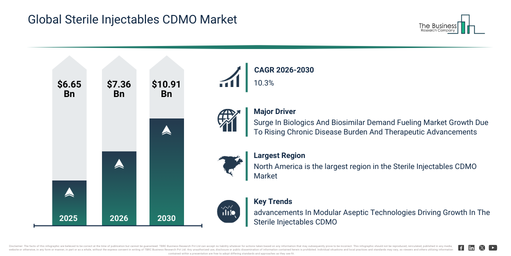
    The market for sterile injectables CDMO has experienced significant expansion in recent years. Valued at $6.65 billion in 2025, it is projected to reach $7.36 billion by 2026, reflecting a compound annual growth rate (CAGR) of 10.7%. This historical growth has been driven by factors such as the limited availability of CDMO infrastructure dedicated to sterile injectables, a rising demand for small molecule injectables, a heavy dependence on internal formulation development, heightened regulatory oversight concerning sterile manufacturing, and an increase in global pharmaceutical output.

    The market for sterile injectable CDMOs is anticipated to experience significant expansion in the coming years. By 2030, its value is projected to reach $10.91 billion, driven by a compound annual growth rate (CAGR) of 10.3%. Key factors fueling this growth during the forecast period include the scaling up of large molecule biologic manufacturing, a heightened need for cell and gene therapies, the implementation of cutting-edge aseptic processing methods, growing reliance on CDMO outsourcing, and increased requirements for specialized packaging and cold chain storage. Major developments shaping this period encompass a heightened demand for contract production of sterile injectables, an expansion of quality assurance through analytical and testing services, increased output of monoclonal antibodies, peptides, and cell/gene therapies, broader use of lyophilized, emulsion, and reconstitutable injectable formats, and the convergence of formulation development with packaging and storage capabilities.

    Download A Free Sample Report For Comprehensive Market Insights:

    https://www.thebusinessresearchcompany.com/sample.aspx?id=25912&type=smp&utm_source=BlogsPR&utm_medium=Paid&utm_campaign=Jul_PR

    Sterile Injectables CDMO Market Opportunity Drivers: What Is Creating New Revenue Potential?

    The market for sterile injectable CDMOs is anticipated to experience growth as a direct result of the rising demand for biologics and biosimilars. Biologics are therapeutic agents derived from living cells or organisms, engineered to specifically address disease mechanisms, whereas biosimilars are highly similar versions of already approved biologics, matching them in quality, safety, and efficacy. This growing preference for biologics and biosimilars is fueled by the increasing prevalence of chronic and complex illnesses, as these advanced treatments provide more precise and effective therapeutic alternatives compared to conventional drugs. Consequently, the heightened demand for these therapies leads to a greater dependence on sterile injectable CDMO services, given that such treatments are frequently delivered through injections and necessitate rigorously maintained sterile environments for safety, quality, and regulatory compliance. In February 2025, the Center for Biosimilars, a nonprofit research organization based in the United States, reported that the country spent an estimated US $324 billion on biologic medicines in 2023, which accounted for roughly 45% of the total prescription drug spending. Hence, the escalating demand for biologics and biosimilars is a key factor propelling the expansion of the sterile injectables CDMO market.

    Sterile Injectables CDMO Market Segment Outlook: Which Categories Are Expanding The Fastest?

    The sterile injectables cdmo market covered in this report is segmented –

    1) By Type: Small Molecule, Large Molecule

    2) By Service: Formulation Development, Analytical And Testing Services, Manufacturing, Packaging, Storage, Other Services

    3) By Route Of Administration: Subcutaneous (SC), Intravenous (IV), Intramuscular (IM), Other Routes Of Administration

    4) By Therapeutic Area: Oncology, Cardiovascular Diseases, Central Nervous System Diseases, Infectious Disorders, Musculoskeletal Diseases, Hormonal Diseases, Other Therapeutic Areas

    5) By End-User: Pharmaceutical Companies, Biopharmaceutical Companies, Research Institutes, Other End-Users

    Subsegments:

    1) By Small Molecule: Solutions, Suspensions, Lyophilized Injectables, Emulsions, Reconstitutable Powders

    2) By Large Molecule: Monoclonal Antibodies (mAbs), Peptides And Proteins, Vaccines, Cell And Gene Therapies, Insulins And Biosimilars

    Sterile Injectables CDMO Market Innovation Trends Driving Future Development

    Key players in the sterile injectables CDMO market are prioritizing the development of advanced solutions, including modular aseptic filling platforms, to improve adaptability and efficiency in sterile drug manufacturing. These platforms consist of flexible, isolator-based filling systems built from interchangeable modules, enabling CDMOs to seamlessly transition between vial, syringe, or cartridge formats. This design reduces changeover time, cuts down on product waste, and effectively accommodates small- to mid-scale batches for both clinical and commercial sterile injectables. For example, in February 2025, Recipharm AB, a contract development and manufacturing organization based in Sweden, introduced a fully operational modular sterile filling system at its facility in Wasserburg, Germany. This system is tailored for aseptic filling of small to mid-scale batches ranging from 500 to 50,000 units, achieves minimal product loss of less than 500 milliliters, supports interchangeable filling modules, and facilitates the efficient handling of high-value biologics within a completely enclosed isolator environment.

    Sterile Injectables CDMO Market Key Companies And Competitive Benchmarking

    Major companies operating in the sterile injectables cdmo market are Pfizer Inc., Thermo Fisher Scientific Inc., Boehringer Ingelheim, Fresenius Kabi AG, Lonza Group Ltd., Catalent Inc., Samsung Biologics Co. Ltd., Fareva SA, Recipharm AB, PCI Pharma Services, Vetter Pharma, Delpharm, Kindeva Drug Delivery LP, Ajinomoto Bio-Pharma Services, Cenexi, Grand River Aseptic Manufacturing Inc., INCOG BioPharma Services, Aurigene Pharmaceutical Services, Jubilant HollisterStier LLC, Symbiosis Pharmaceutical Services Ltd., Afton Scientific Corp., Amaran Biotechnology Inc.

    Access The Complete Sterile Injectables CDMO Market Report:

    https://www.thebusinessresearchcompany.com/report/sterile-injectables-cdmo-global-market-report?utm_source=BlogsPR&utm_medium=Paid&utm_campaign=Jul_PR

    Sterile Injectables CDMO Market Largest Region: Which Geography Holds The Highest Market Share?

    North America was the largest region in the sterile injectables CDMO market in 2025. Asia-Pacific is expected to be the fastest-growing region in the forecast period. The regions covered in the sterile injectables cdmo market report are Asia-Pacific, South East Asia, Western Europe, Eastern Europe, North America, South America, Middle East, Africa.

    Get in touch with us:

    The Business Research Company: https://www.thebusinessresearchcompany.com/?utm_source=BlogsPR&utm_medium=Paid&utm_campaign=home_page_test

    Americas: +1 310-496-7795

    Asia: +44 7882 955267 & +91 8897263534

    Europe: +44 7882 955267

    Email us at: marketing@tbrc.info

    Follow us on:

    LinkedIn: https://in.linkedin.com/company/the-business-research-company

    YouTube: https://www.youtube.com/channel/UC24_fI0rV8cR5DxlCpgmyFQ

    Global Market Model: https://www.thebusinessresearchcompany.com/global-market-model
  • Stem Cell Therapy Market Expansion Is Reshaping Competitive Dynamics Across The Industry

    Stem Cell Therapy Market Expansion Is Reshaping Competitive Dynamics Across The Industry

    Enhanced with market attractiveness analysis, total addressable market evaluation, company benchmarking matrices, interactive Excel dashboards, expanded supply chain intelligence, emerging startup coverage, and detailed product insights, The Business Research Company’s 2026 market reports deliver more actionable and strategically valuable research.

    Stem Cell Therapy Market Size Outlook: How Fast Will Revenue Grow Through 2030?

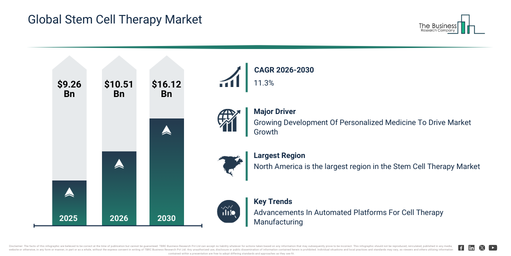
    The stem cell therapy market has experienced significant expansion over the last several years, with projections indicating an increase from $9.26 billion in 2025 to $10.51 billion in 2026, reflecting a compound annual growth rate of 13.5%. This historical growth has been driven by factors such as the constrained efficacy of traditional therapies, a rising incidence of chronic and degenerative conditions, heightened investment in academic and clinical research, early achievements in bone marrow transplantation, and a growing recognition of regenerative medicine’s potential.

    The market for stem cell therapy is projected to experience robust expansion over the coming years. By 2030, its value is anticipated to reach $16.12 billion, reflecting a compound annual growth rate (CAGR) of 11.3%. This forecasted growth is fueled by several factors: the widening range of therapeutic uses beyond hematology, enhanced clinical outcomes achieved through combination therapies, increased financial commitments from biotechnology companies, growing endorsement by regulatory bodies, and a rising appetite for personalized medical approaches. Key developments shaping this period include the broadening of cell-derived regenerative treatments, a heightened preference for autologous stem cell interventions, a surge in clinical trials targeting multisystem disorders, progress in the infrastructure supporting stem cell storage, and the deepening incorporation of stem cell methods within oncology care.

    Download A Free Sample Report For Comprehensive Market Insights:

    https://www.thebusinessresearchcompany.com/sample.aspx?id=3399&type=smp&utm_source=BlogsPR&utm_medium=Paid&utm_campaign=Jul_PR

    Stem Cell Therapy Market Growth Momentum: Which Factors Are Influencing Demand?

    The growing advancement of tailored medical therapies is anticipated to accelerate expansion within the stem cell therapy sector moving forward. Customized healthcare, often referred to as precision medicine, represents a methodology for medical practice and patient care that accounts for individual differences in genetic makeup, environmental factors, and lifestyle choices when designing treatment protocols. This approach adapts stem cell interventions to each patient according to their distinct genetic information and medical history, which improves therapeutic outcomes, minimizes unwanted side effects, and places primary importance on patient health. This focus on the individual, combined with careful patient selection, enhanced clinical studies, and broader market reach, is projected to render stem cell therapies more desirable and stimulate industry advancement. As an example, in February 2024, data from the Personalized Medicine Coalition, an American non-profit organization, indicated that the FDA approved sixteen novel individualized treatments in 2023 for patients with rare diseases, a notable increase from the six approved in 2022. Those newly authorized customized therapies for 2023 encompassed seven cancer medications and three additional drugs targeting other illnesses and conditions. Consequently, the ongoing expansion of individualized medical approaches is fueling growth within the stem cell therapy market.

    Stem Cell Therapy Market Segment Landscape: Which Areas Lead Market Development?

    The stem cell therapy market covered in this report is segmented –

    1) By Type: Allogeneic Stem Cell Therapy, Autologous Stem Cell Therapy

    2) By Cell Source: Adult Stem Cells, Induced Pluripotent Stem Cells, Embryonic Stem Cells

    3) By Application: Musculoskeletal Disorders and Wounds & Injuries, Cancer, Autoimmune Disorders, Others

    4) By End-Users: Hospitals And Clinics, Research Centers, Others

    Stem Cell Therapy Market Trends Reshaping Industry Growth

    Leading players in the stem cell therapy market are prioritizing the creation of advanced automated manufacturing solutions, including end-to-end microfluidic-based cell processing platforms, aimed at enhancing scalability, consistency, and efficiency within cell therapy production. These integrated automated systems leverage microfluidic technology to execute all critical stages of cell therapy manufacturing within a single, enclosed, precise, and scalable framework. For example, in March 2025, Limula SA, a Swiss cell therapy technology firm, introduced LimONE, which is tailored to streamline the production of both autologous and allogeneic cell therapies. By combining automated cell enrichment, bioprocessing, and final product formulation into one modular system, LimONE facilitates standardized, scalable, and cost-effective manufacturing of cell therapies. The system reduces process variability and supports continuous, closed-loop production, thereby enhancing manufacturing dependability and fostering broader clinical and commercial adoption of stem cell and other cell-based therapies.

    Stem Cell Therapy Market Industry Leaders And Market Competition

    Major companies operating in the stem cell therapy market are Fujifilm Holding Corporation, Thermo Fisher Scientific Inc., Takara Bio Inc., MEDIPOST Co. Ltd., Astellas Pharma Inc., Catalent Inc., Pharmicell Co. Ltd., JCR Pharmaceuticals Co. Ltd., Stemedica Cell Technologies Inc., Pluristem Technologies Ltd, Becton Dickinson Private Limited, Stem Cell Technologies India Pvt. Ltd, Cordlife India Pvt. Ltd, Lifecell International Pvt. Ltd, Stemcyte India Therapeutics Private Limited, Stempeutics Research Private Limited, Anterogen Co. Ltd, Tonghua Dongbao Pharmaceutical Co, China Biologic Products Holdings Inc, Cellerix, Cellgenix, NSgene, Tigenix, Renuron Group, Smart Cells, Genenta Science, Amsterdam Molecular Therapeutics (AMT), Ark Therapeutics, Arthrogen Bv, Diamyd Medical Ab, Oxford Biomedica, Transgene, Oncoarendi Therapeutics, Celon Pharma, Osiris Therapeutics, Capricortherapeutics, Cellular Dynamics, Discgenics, Takeda Pharmaceuticals, Kolon Tissue Gene, Athersys, Cyro-Cell International, Geron Corporation, Mesoblast Ltd, Astrom Biosciences Inc, Invitrogen, Cytori Therapeutics Inc, Nuvasive Inc, Aldagen Inc, Caladrius Biosciences Inc, Biogen Sa, Gamida Cell Ltd, Hisun Pharma, Novartis

    Access The Complete Stem Cell Therapy Market Report:

    https://www.thebusinessresearchcompany.com/report/stem-cells-therapy-global-market-report?utm_source=BlogsPR&utm_medium=Paid&utm_campaign=Jul_PR

    Stem Cell Therapy Market Regional Analysis: Which Region Leads By Revenue?

    North America was the largest region in the stem cell therapy market in 2025. The Middle East is expected to be the fastest-growing region in the global stem cell therapy market during the forecast period. The regions covered in the stem cell therapy market report are Asia-Pacific, South East Asia, Western Europe, Eastern Europe, North America, South America, Middle East, Africa.

    Get in touch with us:

    The Business Research Company: https://www.thebusinessresearchcompany.com/?utm_source=BlogsPR&utm_medium=Paid&utm_campaign=home_page_test

    Americas: +1 310-496-7795

    Asia: +44 7882 955267 & +91 8897263534

    Europe: +44 7882 955267

    Email us at: marketing@tbrc.info

    Follow us on:

    LinkedIn: https://in.linkedin.com/company/the-business-research-company

    YouTube: https://www.youtube.com/channel/UC24_fI0rV8cR5DxlCpgmyFQ

    Global Market Model: https://www.thebusinessresearchcompany.com/global-market-model