Blog

  • Pharmaceutical Chemicals Market Forecast Signals New Revenue Opportunities Through 2030

    Pharmaceutical Chemicals Market Forecast Signals New Revenue Opportunities Through 2030

    Through market attractiveness analysis, total addressable market evaluation, company benchmarking matrices, interactive Excel dashboards, expanded supply chain intelligence, emerging startup coverage, and detailed product insights, The Business Research Company’s 2026 market reports provide more actionable and strategically valuable research.

    Pharmaceutical Chemicals Market Forecast: What Market Value Is Expected By 2030?

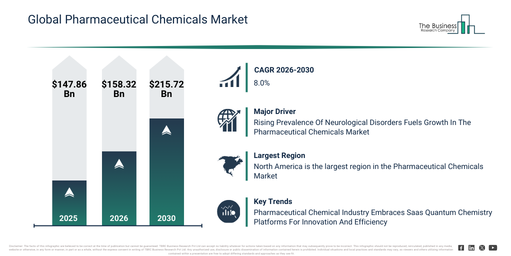
    The pharmaceutical chemicals market experienced robust expansion in recent times, with projections indicating growth from $147.86 billion in 2025 to $158.32 billion in 2026, reflecting a compound annual growth rate (CAGR) of 7.1%. This historical upswing can be linked to several factors, including a rising incidence of chronic conditions, increased pharmaceutical manufacturing worldwide, progress in synthetic chemistry techniques, a broader scope of generic drug production, and enhanced funding directed toward research and development activities.

    The pharmaceutical chemicals market is anticipated to experience robust expansion over the coming years. By 2030, it is projected to reach a value of $215.72 billion, reflecting a compound annual growth rate (CAGR) of 8.0%. This growth during the forecast period is driven by factors such as the increasing adoption of precision medicine, a rising need for biologics and complex therapies, progress in biocatalysis and enzyme technologies, expansion of the pharmaceutical sector in emerging markets, and heightened investments in green and sustainable chemical processes. Key trends shaping this period include a greater emphasis on green chemistry and sustainable synthesis, a growing requirement for high-purity pharmaceutical chemicals, the broadening of contract manufacturing and outsourcing, the incorporation of advanced analytical and quality control instruments, and the creation of novel drug precursors and specialty chemicals.

    Download A Free Sample Report For Comprehensive Market Insights:

    https://www.thebusinessresearchcompany.com/sample.aspx?id=13013&type=smp&utm_source=BlogsPR&utm_medium=Paid&utm_campaign=Jul_PR

    #Pharmaceutical Chemicals Market Growth Factors: Which Forces Are Supporting Market Expansion?

    The rising incidence of neurological disorders is anticipated to drive expansion in the pharmaceutical chemicals market. A neurological disorder impacts both the central and peripheral nervous systems, encompassing the brain, spinal cord, and nerves throughout the body. Pharmaceutical chemicals are employed in the development and production of drugs targeting these disorders, aiding in the management of pain and movement conditions. For example, the 2023 Alzheimer’s Disease Facts and Figures report from the Alzheimer’s Association—a U.S.-based nonprofit dedicated to Alzheimer’s care and support—indicates that approximately 6 million Americans were living with Alzheimer’s in 2023, with projections suggesting this number could climb to nearly 13 million by 2030. Additionally, the costs associated with Alzheimer’s and other dementias are expected to reach $345 billion in 2023 and could soar to $1 trillion by 2050. Consequently, the growing prevalence of neurological disorders is a key factor fueling the pharmaceutical chemicals market’s growth.

    Pharmaceutical Chemicals Market Segment Outlook: Which Categories Are Expanding The Fastest?

    The pharmaceutical chemicals market covered in this report is segmented –

    1) By Product Type: Solvents, Reagents Or Catalysts, KSMs Or Intermediates, Building Blocks For APIs Or Advanced Intermediates

    2) By Drug Type: Proprietary, Non-Proprietary

    3) By Application: Cardiovascular Disease, Neurological Disease, Oncological Disease, Respiratory Disease, Gastrointestinal Disease, Musculoskeletal Disease

    Subsegments:

    1) By Solvents: Organic Solvents, Inorganic Solvents, Aqueous Solvents

    2) By Reagents or Catalysts: Organic Reagents, Inorganic Reagents, Biocatalysts

    3) By KSMs or Intermediates: Key Starting Materials (KSMs), Pharmaceutical Intermediates

    4) By Building Blocks for APIs or Advanced Intermediates: Simple Building Blocks, Complex Building Blocks

    Pharmaceutical Chemicals Market Industry Trends: What Changes Are Reshaping Demand?

    Major pharmaceutical chemical companies are leveraging emerging next-generation technologies—including software-as-a-service (SaaS) quantum chemistry platforms—to sustain their competitive edge in the rapidly evolving pharmaceutical landscape. Quantum chemistry platforms delivered via the SaaS model function as cloud-based services, providing subscribers with on-demand access to specialized quantum chemistry software and computational resources. A notable example occurred in April 2023, when QC Ware Corp, a US-based developer of quantum computing solutions, unveiled Promethium, a SaaS quantum chemistry platform designed specifically to expedite discovery in the pharmaceutical, chemical, and materials sectors through an advanced quantum chemistry toolset powered by H100 or A100 Tensor Core processors. This Promethium toolset enables the rapid calculation of chemical systems containing roughly 100 atoms, delivering results in seconds rather than the minutes or hours typically required by conventional algorithms.

    Pharmaceutical Chemicals Market Key Companies And Competitive Benchmarking

    Major companies operating in the pharmaceutical chemicals market are BASF SE, The Dow Chemical Company, Abbott Laboratories, Johnson Matthey PLC, Evonik Industries AG, Eastman Chemical Company, Koninklijke DSM N.V, Lanxess AG, Albemarle Corporation, Lonza Group AG, Clariant AG, W. R. Grace and Co, Jubilant Life Sciences Ltd., Sumitomo Seika Chemicals Co Ltd., Borregaard ASA, WeylChem International GmbH, Vertellus Holdings LLC, CABB Group GmbH, Dishman Carbogen Amcis Ltd., Hikal Ltd., Porton Fine Chemicals Ltd., Denisco Chemicals Pvt Ltd., CHEMADA Industries Ltd., Valaji Pharma Chem, Syntor Fine Chemicals Ltd., Kenko Corporation

    Access The Complete Pharmaceutical Chemicals Market Report:

    https://www.thebusinessresearchcompany.com/report/pharmaceutical-chemicals-global-market-report?utm_source=BlogsPR&utm_medium=Paid&utm_campaign=Jul_PR

    Pharmaceutical Chemicals Market Regional Analysis: Which Region Leads By Revenue?

    North America was the largest region in the pharmaceutical chemicals market in 2025. Asia Pacific is expected to be the fastest-growing region in the forecast period. The regions covered in the pharmaceutical chemicals market report are Asia-Pacific, South East Asia, Western Europe, Eastern Europe, North America, South America, Middle East, Africa.

    Get in touch with us:

    The Business Research Company: https://www.thebusinessresearchcompany.com/?utm_source=BlogsPR&utm_medium=Paid&utm_campaign=home_page_test

    Americas: +1 310-496-7795

    Asia: +44 7882 955267 & +91 8897263534

    Europe: +44 7882 955267

    Email us at: marketing@tbrc.info

    Follow us on:

    LinkedIn: https://in.linkedin.com/company/the-business-research-company

    YouTube: https://www.youtube.com/channel/UC24_fI0rV8cR5DxlCpgmyFQ

    Global Market Model: https://www.thebusinessresearchcompany.com/global-market-model
  • Pharmaceutical Cartridges Market Growth Is Accelerating As Industry Transformation Continues

    Pharmaceutical Cartridges Market Growth Is Accelerating As Industry Transformation Continues

    Delivering more actionable and strategically valuable research, The Business Research Company’s 2026 market reports feature market attractiveness analysis, total addressable market evaluation, company benchmarking matrices, interactive Excel dashboards, expanded supply chain intelligence, emerging startup coverage, and detailed product insights.

    Pharmaceutical Cartridges Market Size Outlook: How Fast Will Revenue Grow Through 2030?

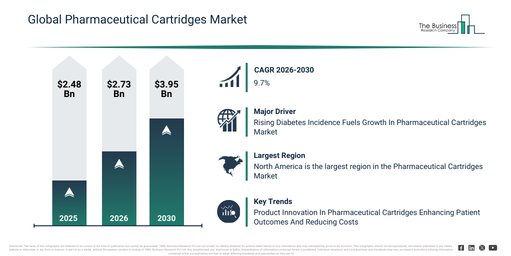
    The pharmaceutical cartridges market has experienced robust expansion in recent years, with projections indicating a rise from $2.48 billion in 2025 to $2.73 billion in 2026, representing a compound annual growth rate (CAGR) of 10.0%. This historical growth has been driven by factors such as the dependence on traditional large-volume cartridges, the constrained supply of pre-filled dual-chamber systems, a surge in the adoption of injectable medications, enhanced pharmaceutical production capabilities, and the early embrace of pen injector devices.

    The pharmaceutical cartridges market is projected to experience significant expansion in the coming years. By 2030, it is forecast to reach $3.95 billion with a compound annual growth rate (CAGR) of 9.7%. This anticipated growth during the forecast period is primarily driven by the advancement of wearable injectors and smart delivery systems, enhanced customization of dual-chamber cartridges, a rise in the launch of biologics and specialty drugs, increased preference for pre-filled large-volume cartridges, and the growing incorporation of digital monitoring into injectors. Key trends shaping the future include a heightened demand for pre-filled and dual-chamber cartridges, the proliferation of wearable and autoinjector drug delivery systems, wider use of glass and plastic cartridge materials, expanded applications in dental anesthesia and pen injectors, and a focus on developing customizable cartridges to address specialized pharmaceutical requirements.

    Download A Free Sample Report For Comprehensive Market Insights:

    https://www.thebusinessresearchcompany.com/sample.aspx?id=19647&type=smp&utm_source=BlogsPR&utm_medium=Paid&utm_campaign=Jul_PR

    Pharmaceutical Cartridges Market Demand Drivers: What Is Fueling Industry Growth?

    The growing prevalence of diabetes is anticipated to boost the pharmaceutical cartridges market in the foreseeable future. Diabetes is a long-term health condition where the body fails to regulate blood sugar (glucose) effectively, due to either insufficient insulin production or an inability to use insulin properly. This rise in diabetes cases is fueled by factors like higher obesity rates, inactive lifestyles, poor dietary habits, aging populations, and hereditary influences. Pharmaceutical cartridges play a key role in diabetes care by enabling accurate insulin dosing for effective and stable blood glucose management. For example, the National Health Service (NHS), a UK government body, reported in June 2024 that cases of non-diabetic hyperglycemia (or pre-diabetes) among those under 40 jumped by nearly 25% between 2022 and 2023, climbing from 173,166 to 216,440. Consequently, the increasing frequency of diabetes is fueling expansion in the pharmaceutical cartridges market.

    Pharmaceutical Cartridges Market Segment Landscape: Which Areas Lead Market Development?

    The pharmaceutical cartridges market covered in this report is segmented –

    1) By Type: Dual Chamber Cartridges, Large-Volume Cartridges

    2) By Material Type: Glass Cartridges, Plastic Cartridges

    3) By Application: Dental Anesthesia, Pen Injectors, Autoinjectors, Wearable Injectors

    4) By End Use: Pharmaceuticals, Biotechnology, Research Organizations, Other End Uses

    Subsegments:

    1) By Dual Chamber Cartridges: Pre-filled Dual Chamber Cartridges, Customizable Dual Chamber Cartridges

    2) By Large-Volume Cartridges: Pre-filled Large-Volume Cartridges, Non-Prefilled Large-Volume Cartridges

    Pharmaceutical Cartridges Market Innovation Trends: Which Developments Are Transforming The Industry?

    Key industry players in the pharmaceutical cartridges sector are increasingly concentrating on the creation of novel products—particularly sophisticated self-administration systems—designed to allow patients to handle large volumes of biologic drugs at home, thereby boosting ease of use and cutting healthcare expenses. These systems empower individuals to self-administer medications, especially injectables, without needing professional support, leveraging cutting-edge features like prefilled and preloaded cartridges. A notable example occurred in July 2024, when SCHOTT Pharma AG & Co. KGaA, a German healthcare firm, launched cartriQ RTU cartridges—10-ml ready-to-use units tailored for the storage and delivery of highly sensitive biologics used in treating ailments such as cancer and cardiovascular diseases. This prefilled and preloaded system streamlines at-home self-administration for patients, delivering greater convenience and lowering medical costs. Engineered as a large-format solution, it specifically safeguards biologics, which are transforming how numerous severe conditions are addressed.

    Pharmaceutical Cartridges Market Industry Leaders And Market Competition

    Major companies operating in the pharmaceutical cartridges market are Merck KGaA, Becton Dickinson and Company (BD), Baxter Healthcare Corporation, Clariant AG, Terumo Corporation, Catalent Inc., Sigma-Aldrich Corporation, Nipro Corporation, Schott AG, West Pharmaceutical Services Inc., Gerresheimer AG, Vetter Pharma International GmbH, Dätwyler Holding Inc., Stevanato Group S.p.A., groninger and Co. gmbh, Shandong Medicinal Glass Co. Ltd., Ypsomed AG, SGD Pharma, Consort Medical plc

    Access The Complete Pharmaceutical Cartridges Market Report:

    https://www.thebusinessresearchcompany.com/report/pharmaceutical-cartridges-global-market-report?utm_source=BlogsPR&utm_medium=Paid&utm_campaign=Jul_PR

    Pharmaceutical Cartridges Market Geographic Distribution And Regional Opportunities

    North America was the largest region in the pharmaceutical cartridges market in 2025. Asia-Pacific is expected to be the fastest-growing region in the forecast period. The regions covered in the pharmaceutical cartridges market report are Asia-Pacific, South East Asia, Western Europe, Eastern Europe, North America, South America, Middle East, Africa.

    Get in touch with us:

    The Business Research Company: https://www.thebusinessresearchcompany.com/?utm_source=BlogsPR&utm_medium=Paid&utm_campaign=home_page_test

    Americas: +1 310-496-7795

    Asia: +44 7882 955267 & +91 8897263534

    Europe: +44 7882 955267

    Email us at: marketing@tbrc.info

    Follow us on:

    LinkedIn: https://in.linkedin.com/company/the-business-research-company

    YouTube: https://www.youtube.com/channel/UC24_fI0rV8cR5DxlCpgmyFQ

    Global Market Model: https://www.thebusinessresearchcompany.com/global-market-model
  • Pharmaceutical API Manufacturing Market Outlook Highlights The Next Major Growth Opportunities

    Pharmaceutical API Manufacturing Market Outlook Highlights The Next Major Growth Opportunities

    Enhanced with market attractiveness analysis, total addressable market evaluation, company benchmarking matrices, interactive Excel dashboards, expanded supply chain intelligence, emerging startup coverage, and detailed product insights, The Business Research Company’s 2026 market reports deliver more actionable and strategically valuable research.

    Pharmaceutical API Manufacturing Market Size, Value And Growth Trends Through 2030

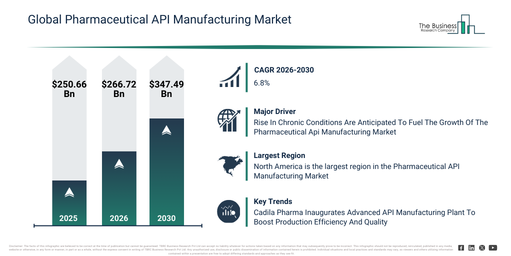
    The pharmaceutical API manufacturing sector has experienced robust expansion over the past few years. Its market value is projected to increase from $250.66 billion in 2025 to $266.72 billion in 2026, reflecting a compound annual growth rate (CAGR) of 6.4%. This historical growth has been driven by several factors: a scarcity of cutting-edge API production facilities, dependence on conventional batch processing methods, an expanding pipeline of pharmaceutical products, a rising incidence of chronic and lifestyle-related diseases, and the implementation of standardized quality management frameworks.

    The pharmaceutical API manufacturing market is anticipated to experience robust expansion over the coming years. By 2030, it is projected to reach a value of $347.49 billion, driven by a compound annual growth rate (CAGR) of 6.8%. This upward trajectory during the forecast period is fueled by advancements in biologics and complex molecules, the broadening adoption of continuous manufacturing methods, heightened investment in research and development for specialty active pharmaceutical ingredients, an increasing need for personalized and targeted treatments, and more stringent regulatory oversight and compliance requirements. Key trends shaping the market include a growing desire for high-purity chemical and biological APIs, a surge in contract manufacturing and outsourcing services, an intensified emphasis on quality assurance and regulatory adherence, the development of specialized APIs for targeted therapies, and the implementation of continuous manufacturing and process improvement strategies.

    Download A Free Sample Report For Comprehensive Market Insights:

    https://www.thebusinessresearchcompany.com/sample.aspx?id=2467&type=smp&utm_source=BlogsPR&utm_medium=Paid&utm_campaign=Jul_PR

    Pharmaceutical API Manufacturing Market Growth Drivers: What Factors Are Accelerating Expansion?

    The growing prevalence of long-term health issues is set to accelerate the expansion of the pharmaceutical API manufacturing market. Chronic conditions, often referred to as chronic diseases, are health problems that persist for prolonged durations, frequently lasting a lifetime, and are usually not fully curable. The active pharmaceutical ingredient (API) plays a crucial role in determining the quality, efficacy, and safety of medications. The production of pharmaceutical APIs is essential for creating key drugs used to manage such chronic ailments. For example, in January 2023, the Centers for Disease Control and Prevention (CDC), a U.S. federal agency, reported that 76.4% of American adults—approximately 194 million people—had at least one chronic condition in 2023, with prevalence rates of 59.5% among young adults, 78.4% among middle-aged adults, and 93.0% among older adults. Consequently, the increase in chronic conditions is fueling the growth of the pharmaceutical API manufacturing market.

    Pharmaceutical API Manufacturing Market Segments: Where Are The Largest Growth Opportunities?

    The pharmaceutical api manufacturing market covered in this report is segmented –

    1) By Therapy Area: Cardiovascular Disorders, Metabolic Disorders, Neurological Disorders, Oncology, Musculoskeletal Disorders, Other Therapeutic Uses

    2) By API Type: Chemical API, Biological API

    3) By Drug Type: Prescription Drugs, Over-The-Counter (OTC) Drugs

    Subsegments:

    1) By Cardiovascular Disorders: Hypertension Treatments, Cholesterol Management, Anticoagulants

    2) By Metabolic Disorders: Diabetes Medications, Obesity Management, Hormonal Therapies

    3) By Neurological Disorders: Antiepileptics, Antidepressants, Neurodegenerative Disease Treatments

    4) By Oncology: Chemotherapeutics, Targeted Therapies, Immunotherapies

    5) By Musculoskeletal Disorders: Pain Management Medications, Osteoporosis Treatments, Anti-inflammatory Drugs

    6) By Other Therapeutic Uses: Infectious Disease Treatments, Respiratory Disorder Medications, Gastrointestinal Disorder Treatments

    Pharmaceutical API Manufacturing Market Trends: What Is Shaping Future Industry Growth?

    Major players in the pharmaceutical API manufacturing sector are concentrating on creating cutting-edge solutions, including API production facilities, to boost operational efficiency, meet regulatory standards, and elevate product quality. An API manufacturing plant is a dedicated facility where active pharmaceutical ingredients—the biologically active substances essential for drug formulation—are produced. As an example, in November 2023, Cadila Pharma, an Indian pharmaceutical firm, launched a new facility for manufacturing Active Pharmaceutical Ingredients. This advanced plant incorporates sophisticated Distributed Control System (DCS) automation technology, designed to increase production efficiency and guarantee high purity levels in the APIs. This move underscores Cadila’s dedication to addressing the rising worldwide demand for high-quality pharmaceuticals, generating employment in the local area, and supporting its broader goal of driving innovation across multiple therapeutic fields.

    Pharmaceutical API Manufacturing Market Major Participants And Competitive Dynamics

    Major companies operating in the pharmaceutical api manufacturing market are Pfizer Inc, Sanofi S.A, Teva Pharmaceutical Industries Ltd., Aurobindo Pharma, Dr. Reddy’s Laboratories, BASF SE, Sun Pharmaceutical Industries Ltd, Novartis AG, Lupin Ltd, Cipla Inc., Arlak Biotech, Healthkind Labs Pvt. Ltd, SwisscheM Healthcare Pvt. Ltd, Apikos Pharma, Kolaz Biotech, CStone Pharma, CARsgen Therapeutics, JW Therapeutics, BeiGene, Takeda Pharmaceuticals, Astellas Pharma Inc, Otsuka Pharmaceutical Co Ltd, Legend Biotech Co, Zai Lab, Daiichi Pharmaceutical, Sankyo, GlaxoSmithKline (GSK), AstraZeneca, Abbott Laboratories, Roche Holding AG, Merck & Co, Boehringer Ingelheim, Zentiva, Microgen, Geropharm, Valenta, NovaMedica, Veropharm, Celon Pharma, SynBio, Generium, Skopinpharm, ALMEDIS, Biocad, Farmacol, Polpharma, BioVectra, Celgene Corporation, Kashiv Pharma, Cambrex, Eli Lilly and Company, Bristol-Myers Squibb Company, Apotex, Gilead Sciences, AbbVie Inc, Hisun USA Inc, AMEGA Biotech, BioMarin Pharmaceutical, Ferring Pharmaceuticals, Wavelength Pharmaceuticals, SAUDIBIO, Tabuk Pharmaceuticals, Bayer, Adcock Ingram, Johnson & Johnson, Aspen

    Access The Complete Pharmaceutical API Manufacturing Market Report:

    https://www.thebusinessresearchcompany.com/report/pharmaceutical-api-manufacturing-global-market-report?utm_source=BlogsPR&utm_medium=Paid&utm_campaign=Jul_PR

    Pharmaceutical API Manufacturing Market Largest Region By Revenue And Market Share

    North America was the largest region in the pharmaceutical API manufacturing market in 2025. The Middle East is expected to be the fastest-growing region in the global pharmaceutical API manufacturing market share during the forecast period. The regions covered in the pharmaceutical api manufacturing market report are Asia-Pacific, South East Asia, Western Europe, Eastern Europe, North America, South America, Middle East, Africa.

    Get in touch with us:

    The Business Research Company: https://www.thebusinessresearchcompany.com/?utm_source=BlogsPR&utm_medium=Paid&utm_campaign=home_page_test

    Americas: +1 310-496-7795

    Asia: +44 7882 955267 & +91 8897263534

    Europe: +44 7882 955267

    Email us at: marketing@tbrc.info

    Follow us on:

    LinkedIn: https://in.linkedin.com/company/the-business-research-company

    YouTube: https://www.youtube.com/channel/UC24_fI0rV8cR5DxlCpgmyFQ

    Global Market Model: https://www.thebusinessresearchcompany.com/global-market-model
  • Pharma Grade Cellulose Powder Market Trends And Growth Drivers Point To Strong Future Potential

    Pharma Grade Cellulose Powder Market Trends And Growth Drivers Point To Strong Future Potential

    Through market attractiveness analysis, total addressable market evaluation, company benchmarking matrices, interactive Excel dashboards, expanded supply chain intelligence, emerging startup coverage, and detailed product insights, The Business Research Company’s 2026 market reports provide more actionable and strategically valuable research.

    Pharma Grade Cellulose Powder Market CAGR Analysis And Future Market Development

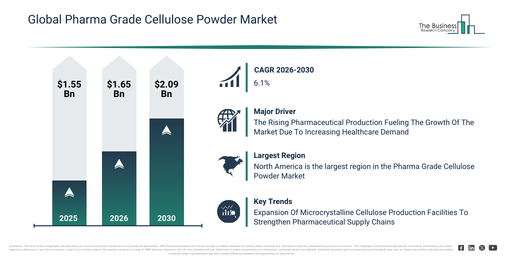
    The market for pharma grade cellulose powder has experienced robust expansion in recent years. Valued at $1.55 billion in 2025, it is projected to reach $1.65 billion by 2026, reflecting a compound annual growth rate (CAGR) of 6.1%. This historic growth has been driven by several factors, including the rising prevalence of oral drug formulations, the extensive utilization of cellulose as an excipient, the scaling up of pharmaceutical production, an increasing need for formulation stability, and the regulatory endorsement of cellulose-based excipients.

    The pharmaceutical-grade cellulose powder market is projected to experience robust expansion in the coming years, reaching an estimated $2.09 billion by 2030 with a compound annual growth rate of 6.1%. This anticipated growth during the forecast period is driven by factors such as the rising use of cellulose in nutraceuticals, an increased preference for clean-label excipients, the broadening of generic drug portfolios, innovations in excipient engineering, and a greater push toward sustainability. Key developments shaping the forecast period include a growing demand for plant-derived pharmaceutical excipients, heightened utilization in solid oral dosage forms, a surge in the adoption of microcrystalline cellulose, the expansion of multifunctional cellulose-based excipients, and an intensified emphasis on sustainable sourcing of these materials.

    Download A Free Sample Report For Comprehensive Market Insights:

    https://www.thebusinessresearchcompany.com/sample.aspx?id=24373&type=smp&utm_source=BlogsPR&utm_medium=Paid&utm_campaign=Jul_PR

    Pharma Grade Cellulose Powder Market Growth Factors Supporting Long-Term Expansion

    The anticipated growth in pharmaceutical manufacturing is set to advance the market for pharma-grade cellulose powder in the coming years. This manufacturing process encompasses the creation of medicines through the formulation, synthesis, and quality testing of active ingredients and excipients, prioritizing safety, efficacy, and adherence to regulatory standards. A surge in chronic diseases, which demand ongoing and prolonged medication for proper management, is fueling higher levels of pharmaceutical production. Within this context, pharma-grade cellulose powder serves as a crucial binder, filler, and stabilizer, preserving tablet structure and guaranteeing consistent distribution of active compounds. As an illustration, data from June 2023 released by the European Federation of Pharmaceutical Industries and Associations (EFPIA), a trade body based in Belgium representing Europe’s pharmaceutical sector, indicated that total pharmaceutical output in Europe reached $422,803 million (€390,000 million) in 2023, compared to $393,857 million (€363,300 million) in 2022. Consequently, the expansion of pharmaceutical production is propelling the pharma-grade cellulose powder market forward.

    Pharma Grade Cellulose Powder Market Segment Analysis: What Are The Major Market Categories?

    The pharma grade cellulose powder market covered in this report is segmented –

    1) By Product Type: Microcrystalline Cellulose (MCC), Carboxymethyl Cellulose (CMC), Hydroxypropyl Methylcellulose (HPMC), Hydroxypropyl Cellulose (HPC)

    2) By Functionality: Binding Agent, Thickening Agent, Stabilizer, Disintegrant, Coating Agent

    3) By Application: Pharmaceuticals, Nutraceuticals, Cosmetics, Other Applications

    4) By End-User: Contract Research Organizations (CROs), Pharmaceutical and Biotechnology Companies, Academic And Research Institutions, Manufacturers Of Dietary Supplements, Food And Beverage Industries

    Subsegments:

    1) By Microcrystalline Cellulose: Powder, Granules

    2) By Carboxymethyl Cellulose (CMC): Sodium Carboxymethyl Cellulose (CMC), Calcium Carboxymethyl Cellulose (CMC), Other Carboxymethyl Cellulose (CMC) Variants

    3) By Hydroxypropyl Methylcellulose (HPMC): Low Viscosity Hydroxypropyl Methylcellulose (HPMC), Medium Viscosity Hydroxypropyl Methylcellulose (HPMC), High Viscosity Hydroxypropyl Methylcellulose (HPMC)

    4) By Hydroxypropyl Cellulose: Low Substitution Hydroxypropyl Cellulose (HPC), High Substitution Hydroxypropyl Cellulose (HPC)

    Pharma Grade Cellulose Powder Market Industry Trends Shaping Future Revenue Growth

    Key players in the pharma-grade cellulose powder market are prioritizing the establishment of new microcrystalline cellulose facilities as a strategy to boost production capacity and reinforce their supply chain capabilities for pharmaceutical excipients. Such a facility is a specialized plant where purified cellulose undergoes controlled chemical and mechanical processes to yield uniform, fine-grade particles intended for pharmaceutical applications. As an example, in September 2023, Nitika Pharmaceuticals Specialties, an excipient manufacturer based in India, launched Tabcell, the country’s largest microcrystalline cellulose (MCC) production plant, located in Nagpur. This facility, featuring advanced technology and an installed capacity of 1200 metric tons, was inaugurated by Union Minister Nitin Gadkari and represents a major achievement under the Indian government’s Production Linked Incentive (PLI) scheme for excipients. The new plant enhances Nitika Pharma’s standing as a global frontrunner in pharmaceutical excipients, catering to both domestic demand and exports to over 92 countries, while simultaneously advancing the “Make in India” campaign and creating substantial employment opportunities.

    Pharma Grade Cellulose Powder Market Leading Companies Driving Competitive Growth

    Major companies operating in the pharma grade cellulose powder market are Roquette Frères, Ashland Global, JRS Pharma, DFE Pharma, Sigachi Industries Ltd., Accent Microcell Ltd., FMC Corporation, Dow Chemical Company, Shin-Etsu Chemical Co. Ltd., Colorcon, Nippon Paper Industries Co. Ltd., Rayonier Advanced Materials, Lotte Fine Chemical, Mingtai Chemical Co. Ltd., Weifang Lude Chemical Co. Ltd., Shandong Head Co. Ltd., Zhejiang Kehong Chemical Co. Ltd., Anhui Sunhere Pharmaceutical Excipients Co. Ltd., Maple Biotech Pvt. Ltd., Ankit Pulps & Boards Pvt. Ltd.

    Access The Complete Pharma Grade Cellulose Powder Market Report:

    https://www.thebusinessresearchcompany.com/report/pharma-grade-cellulose-powder-global-market-report?utm_source=BlogsPR&utm_medium=Paid&utm_campaign=Jul_PR

    Pharma Grade Cellulose Powder Market Regional Analysis And Leading Geography

    North America was the largest region in the pharma-grade cellulose powder market in 2025. The regions covered in the pharma grade cellulose powder market report are Asia-Pacific, South East Asia, Western Europe, Eastern Europe, North America, South America, Middle East, Africa.

    Get in touch with us:

    The Business Research Company: https://www.thebusinessresearchcompany.com/?utm_source=BlogsPR&utm_medium=Paid&utm_campaign=home_page_test

    Americas: +1 310-496-7795

    Asia: +44 7882 955267 & +91 8897263534

    Europe: +44 7882 955267

    Email us at: marketing@tbrc.info

    Follow us on:

    LinkedIn: https://in.linkedin.com/company/the-business-research-company

    YouTube: https://www.youtube.com/channel/UC24_fI0rV8cR5DxlCpgmyFQ

    Global Market Model: https://www.thebusinessresearchcompany.com/global-market-model
  • Pharma Grade Calcium Sulphate Market Expansion Is Reshaping Competitive Dynamics Across The Industry

    Pharma Grade Calcium Sulphate Market Expansion Is Reshaping Competitive Dynamics Across The Industry

    Delivering more actionable and strategically valuable research, The Business Research Company’s 2026 market reports feature market attractiveness analysis, total addressable market evaluation, company benchmarking matrices, interactive Excel dashboards, expanded supply chain intelligence, emerging startup coverage, and detailed product insights.

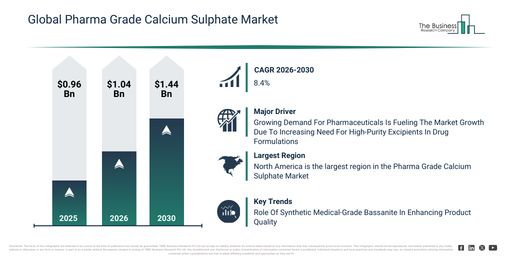
    Pharma Grade Calcium Sulphate Market Expansion From $1.04 Billion In 2026 To $1.44 Billion In 2030

    The market for pharma-grade calcium sulphate has seen notable expansion over the past few years. Its valuation is projected to rise from $0.96 billion in 2025 to $1.04 billion in 2026, reflecting a compound annual growth rate (CAGR) of 8.5%. This historic growth is driven by factors such as the expansion of pharmaceutical manufacturing, a higher demand for solid dosage formats, increased production of generic medications, greater utilization of calcium-based excipients, and a regulatory focus on excipient quality standards.

    During the upcoming years, the market for pharmaceutical-grade calcium sulphate is anticipated to experience considerable expansion. By 2030, its value is projected to reach $1.44 billion, reflecting a compound annual growth rate (CAGR) of 8.4%. This forecasted growth is driven by factors such as rising global drug production, a greater reliance on high-performance excipients, an increasing need for consistent formulation quality, the expansion of nutraceutical manufacturing, and ongoing improvements in excipient processing. Key trends shaping this period include a heightened demand for high-purity pharmaceutical excipients, more widespread application in tablet and capsule formulations, greater adoption in calcium supplement production, an increase in quality-controlled excipient manufacturing, and a stronger emphasis on materials that comply with regulatory standards.

    Download A Free Sample Report For Comprehensive Market Insights:

    https://www.thebusinessresearchcompany.com/sample.aspx?id=24372&type=smp&utm_source=BlogsPR&utm_medium=Paid&utm_campaign=Jul_PR

    Pharma Grade Calcium Sulphate Market Demand Drivers Creating New Revenue Opportunities

    The expanding demand for pharmaceutical products is set to drive the pharma grade calcium sulphate market forward. Pharmaceuticals encompass drugs and medications created, manufactured, and applied to diagnose, treat, or prevent illnesses in humans and animals. This rising demand largely stems from the increasing prevalence of chronic diseases, which require more individuals to rely on long-term treatments for managing conditions like diabetes, cardiovascular ailments, and cancer. By acting as a high-purity excipient, pharma grade calcium sulphate improves drug formulations by ensuring consistent tablet hardness, stability, and controlled release of active ingredients. For example, in April 2024, Eurostat, an official statistical agency of the European Union based in Luxembourg, reported that EU imports of medicinal and pharmaceutical products grew by 6.1% in 2023, reaching $137.4 billion (€119 billion) compared to the prior year. Over the same timeframe, EU exports totaled $319.2 billion (€277 billion), creating a trade surplus of $182.0 billion (€158 billion). Consequently, the increasing demand for pharmaceuticals is fueling growth in the pharma grade calcium sulphate market.

    Pharma Grade Calcium Sulphate Market Segment Breakdown: Which Categories Generate The Most Revenue?

    The pharma grade calcium sulphate market covered in this report is segmented –

    1) By Type: Calcium Sulphate Dihydrate, Calcium Sulphate Hemihydrate, Calcium Sulphate Anhydrite

    2) By Application: Pharmaceutical Excipients, Binders In Tablet Formulations, Calcium Supplements, Diagnostic Agents

    3) By Distribution Channel: Direct Distribution, Online Distribution, Wholesale Distribution, Retail Distribution

    Subsegments:

    1) By Calcium Sulphate Dihydrate: Fine Powder, Granular Form, Micronized Grade

    2) By Calcium Sulphate Hemihydrate: Alpha Hemihydrate, Beta Hemihydrate, High Purity Hemihydrate

    3) By Calcium Sulphate Anhydrite: Natural Anhydrite, Synthetic Anhydrite, High-Density Anhydrite

    Pharma Grade Calcium Sulphate Market Trends Driving Strategic Industry Expansion

    Key industry players in the pharma-grade calcium sulphate market are concentrating on developing novel products through the use of synthetic medical-grade bassanite, aimed at improving both the purity and consistency of calcium sulphate offerings. This synthetic medical-grade bassanite, a high-purity, partially dehydrated form of calcium sulphate (CaSO₄·0.5H₂O), facilitates the production of pharma-grade calcium sulphate by supplying a consistent, contaminant-free source that adheres to stringent regulatory criteria for medical and pharmaceutical applications. For example, in February 2025, Sree Chitra Tirunal Institute for Medical Sciences & Technology, a medical institute headquartered in India, introduced Caspro and Bonyx, two innovative drug-eluting bone graft products crafted from synthetic medical-grade bassanite to guarantee high purity, biocompatibility, and controlled drug delivery in advanced orthopedic settings. Caspro is a self-setting, moldable bone cement derived from calcium sulfate hemihydrate strengthened with phosphate ions, making it suitable for filling bone defects and enabling drug delivery directly at the implantation site for over 21 days. Bonyx comprises osteoconductive bioceramic beads that can be vacuum-loaded with antibiotics or other medications in liquid form, allowing for sustained drug release exceeding 30 days. These offerings mark a considerable advancement in localized therapy for bone infections and regeneration, showcasing how pharma-grade calcium sulfate can be applied in next-generation biomedical solutions that comply with rigorous global standards.

    Pharma Grade Calcium Sulphate Market Key Players And Strategic Industry Positioning

    Major companies operating in the pharma grade calcium sulphate market are Thermo Fisher Scientific Inc., Merck KGaA, Honeywell International Inc., Avantor Inc., Spectrum Chemical Manufacturing Corp., MP Biomedicals LLC, Anhui Sunhere Pharmaceutical Excipients, Huzhou Zhanwang Pharmaceutical Co. Ltd., Loba Chemie Pvt. Ltd., SRL Chemical, GFS Chemicals Inc., American Elements, Junsei Chemical Co. Ltd., Tokyo Chemical Industry Co. Ltd., Fagron N.V., Mallinckrodt Pharmaceuticals, Ashland Global Holdings Inc., JRS Pharma, DFE Pharma, Roquette Frères

    Access The Complete Pharma Grade Calcium Sulphate Market Report:

    https://www.thebusinessresearchcompany.com/report/pharma-grade-calcium-sulphate-global-market-report?utm_source=BlogsPR&utm_medium=Paid&utm_campaign=Jul_PR

    Pharma Grade Calcium Sulphate Market Geographic Analysis: Where Is Demand Growing The Fastest?

    North America was the largest region in the pharma grade calcium sulphate market in 2025. Asia-Pacific is expected to be the fastest-growing region in the forecast period. The regions covered in the pharma grade calcium sulphate market report are Asia-Pacific, South East Asia, Western Europe, Eastern Europe, North America, South America, Middle East, Africa.

    Get in touch with us:

    The Business Research Company: https://www.thebusinessresearchcompany.com/?utm_source=BlogsPR&utm_medium=Paid&utm_campaign=home_page_test

    Americas: +1 310-496-7795

    Asia: +44 7882 955267 & +91 8897263534

    Europe: +44 7882 955267

    Email us at: marketing@tbrc.info

    Follow us on:

    LinkedIn: https://in.linkedin.com/company/the-business-research-company

    YouTube: https://www.youtube.com/channel/UC24_fI0rV8cR5DxlCpgmyFQ

    Global Market Model: https://www.thebusinessresearchcompany.com/global-market-model

  • Pharma 5.0 Market Forecast Reveals Where Future Industry Value Will Be Created

    Pharma 5.0 Market Forecast Reveals Where Future Industry Value Will Be Created

    Enhanced with market attractiveness analysis, total addressable market evaluation, company benchmarking matrices, interactive Excel dashboards, expanded supply chain intelligence, emerging startup coverage, and detailed product insights, The Business Research Company’s 2026 market reports deliver more actionable and strategically valuable research.

    Pharma 5.0 Market Forecast Highlighting Growth From $83.12 Billion To $104.32 Billion

    The pharmaceutical 5.0 market experienced significant expansion over the past few years, with projections indicating a rise from $78.31 billion in 2025 to $83.12 billion in 2026, reflecting a compound annual growth rate (CAGR) of 6.1%. This historical growth has been driven by dependence on conventional pharmaceutical research and development methods, minimal incorporation of digital technologies, a heightened need for tailored treatment options, a stronger regulatory emphasis on patient results, and investments in traditional manufacturing approaches.

    The market for pharma 5.0 is projected to experience robust expansion during the upcoming years. By 2030, its value is anticipated to climb to $104.32 billion, reflecting a compound annual growth rate (CAGR) of 5.8%. Several factors are driving this growth in the forecast period, including the implementation of AI-powered drug discovery platforms, the broadening of cloud-based healthcare services, the incorporation of robotic process automation and digital twins into manufacturing processes, the rising uptake of genomic sequencing and pharmacogenomics, and the strengthening of partnerships between pharmaceutical companies and digital health startups. Key emerging trends in this period involve the seamless incorporation of patient-centric digital health tools, the advancement of precision medicine and individualized treatment approaches, the widespread use of smart manufacturing and automation within the pharma sector, the growth of remote patient monitoring and virtual healthcare systems, and the enhanced application of predictive analytics for drug development and clinical experimentation.

    Download A Free Sample Report For Comprehensive Market Insights:

    https://www.thebusinessresearchcompany.com/sample.aspx?id=27377&type=smp&utm_source=BlogsPR&utm_medium=Paid&utm_campaign=Jul_PR

    Pharma 5.0 Market Expansion Supported By Key Demand Factors

    The expansion of the pharmacy 5.0 market is anticipated to be fueled by the rise in digital health technologies. These technologies encompass a wide array of tools and solutions that leverage digital platforms, software, and devices to aid healthcare delivery, enhance patient outcomes, and boost health system efficiency. This growth is driven by an escalating need for remote healthcare options that offer convenient, real-time access to medical services. Pharma 5.0 supports digital health technologies through the seamless integration of AI-powered insights, personalized medicine, and automated workflows, collectively improving patient monitoring, treatment precision, and healthcare delivery efficiency. For example, in October 2024, data from the Kaiser Family Foundation (KFF), a US-based nonprofit health policy organization, revealed that telehealth usage among Medicare beneficiaries varied notably across demographic groups: 27% of urban residents and 19% of rural residents utilized telehealth services. By race and ethnicity, usage rates were 31% among Asian/Pacific Islander beneficiaries, 30% among Hispanic beneficiaries, 26% among Black beneficiaries, 25% among American Indian/Alaska Native beneficiaries, and 24% among non-Hispanic White beneficiaries, indicating sustained adoption of digital healthcare solutions. Consequently, the surge in digital health technologies is propelling the growth of the pharmacy 5.0 market.

    Pharma 5.0 Market Segmentation: How Is The Market Structured Across Key Categories?

    The pharma 5.0 market covered in this report is segmented –

    1) By Type: Personalized Medicine Platforms, Digital Therapeutics, Artificial Intelligence-Driven Drug Discovery, Smart Manufacturing, Artificial Intelligence-Based Diagnostics

    2) By Technology: Cloud Computing, Artificial Intelligence (AI), Machine Learning (ML), Internet of Things (IoT), Robotic Process Automation (RPA)

    3) By Deployment Mode: On-Premise, Cloud-Based

    4) By Therapeutic Area: Cardiovascular Diseases, Oncology, Infectious Diseases, Neurology, Other Therapeutic Areas

    5) By End-User: Pharmaceutical And Biotech Companies, Healthcare Providers, Contract Research Organizations (CROs), Research Institutes

    Subsegments:

    1) By Personalized Medicine Platforms: Genomic Sequencing, Biomarker Identification, Pharmacogenomics, Patient Data Integration, Precision Drug Formulation

    2) By Digital Therapeutics: Mobile Health Applications, Cognitive Behavioral Therapy (CBT) Tools, Chronic Disease Management Software, Remote Monitoring Devices

    3) By Artificial Intelligence-Driven Drug Discovery: Target Identification, Molecule Screening, Predictive Toxicology, Drug Repurposing, Clinical Trial Optimization

    4) By Smart Manufacturing (Digital Twins and Automation): Process Automation, Digital Twin Simulation, Predictive Maintenance, Quality Control Systems, Robotics In Manufacturing

    5) By Artificial Intelligence-Based Diagnostics: Medical Imaging Analysis, Genomic Data Interpretation, Predictive Risk Modeling, Diagnostic Decision Support Systems

    Pharma 5.0 Market Growth Trends Influencing Competitive Dynamics

    Key players in the pharma 5.0 market are prioritizing the creation of innovative solutions, including generative AI cloud offerings, to speed up drug discovery, refine clinical trial processes, customize therapeutic regimens, and boost overall operational effectiveness. These generative AI cloud services are cloud-based systems that leverage AI models to produce fresh content, insights, or solutions by analyzing patterns within existing datasets. As an example, in March 2023, NVIDIA Corporation, a tech firm headquartered in the United States, unveiled BioNeMo Cloud, a groundbreaking generative AI platform aimed at transforming life sciences research and development. This new service was crafted in partnership with leading biotechnology and pharmaceutical companies such as Amgen and AstraZeneca, delivering advanced AI models intended to expedite drug discovery. BioNeMo Cloud provides researchers with large language models (LLMs) specifically customized for biomolecular data, facilitating the fast forecasting of protein structures, molecular interactions, and potential new drug candidates.

    Pharma 5.0 Market Competitive Landscape And Leading Companies

    Major companies operating in the pharma 5.0 market are Pfizer Incorporated, Johnson & Johnson, Roche Holding AG, Sanofi S.A., Bristol Myers Squibb Company, AstraZeneca Plc, Novartis AG, GSK Plc, Eli Lilly and Company, Ericsson AB, Merck KGaA, Moderna Inc., BioNTech SE, Teva Pharmaceuticals Industries Ltd., Rockwell Automation Inc., Sun Pharmaceutical Industries Ltd., 3D Systems Corporation, XtalPi Inc., Insilico Medicine Inc.

    Access The Complete Pharma 5.0 Market Report:

    https://www.thebusinessresearchcompany.com/report/pharma-50-global-market-report?utm_source=BlogsPR&utm_medium=Paid&utm_campaign=Jul_PR

    Pharma 5.0 Market Global Footprint: Which Region Holds Market Leadership?

    North America was the largest region in the pharma 5.0 market in 2025. Asia-Pacific is expected to be the fastest-growing region in the forecast period. The regions covered in the pharma 5.0 market report are Asia-Pacific, South East Asia, Western Europe, Eastern Europe, North America, South America, Middle East, Africa.

    Get in touch with us:

    The Business Research Company: https://www.thebusinessresearchcompany.com/?utm_source=BlogsPR&utm_medium=Paid&utm_campaign=home_page_test

    Americas: +1 310-496-7795

    Asia: +44 7882 955267 & +91 8897263534

    Europe: +44 7882 955267

    Email us at: marketing@tbrc.info

    Follow us on:

    LinkedIn: https://in.linkedin.com/company/the-business-research-company

    YouTube: https://www.youtube.com/channel/UC24_fI0rV8cR5DxlCpgmyFQ

    Global Market Model: https://www.thebusinessresearchcompany.com/global-market-model

  • Pharma 4.0 Market Growth Through 2030 Creates New Strategic Opportunities

    Pharma 4.0 Market Growth Through 2030 Creates New Strategic Opportunities

    Through market attractiveness analysis, total addressable market evaluation, company benchmarking matrices, interactive Excel dashboards, expanded supply chain intelligence, emerging startup coverage, and detailed product insights, The Business Research Company’s 2026 market reports provide more actionable and strategically valuable research.

    Pharma 4.0 Market Revenue Growth Supported By A CAGR Of 50.01% Through 2030

    The pharmaceutical 4.0 market has experienced rapid expansion over the past few years. Projections indicate an increase from $21.68 billion in 2025 to $26.19 billion in 2026, reflecting a compound annual growth rate (CAGR) of 20.8%. This historical growth has been driven by factors such as manufacturing inefficiencies, heightened regulatory oversight, elevated drug production expenses, regular product recalls, and disjointed pharmaceutical IT infrastructures.

    Over the next several years, the Pharma 4.0 market is projected to experience rapid expansion. By 2030, its value is anticipated to reach $50.01 billion, reflecting a compound annual growth rate (CAGR) of 17.6%. This forecasted growth is driven by several key factors, including the increasing demand for personalized medicines, the adoption of continuous manufacturing approaches, the expansion of digital regulatory frameworks, a heightened need for resilient pharmaceutical supply chains, and growing investments in smart factory initiatives. Significant trends shaping this period encompass real-time quality oversight and continuous production processes, compliance automation driven by data integrity regulations, enhanced visibility and traceability within smart supply chains, the enablement of customized and small-batch drug manufacturing, and the digital upskilling of the workforce alongside greater human-machine collaboration.

    Download A Free Sample Report For Comprehensive Market Insights:

    https://www.thebusinessresearchcompany.com/sample.aspx?id=14772&type=smp&utm_source=BlogsPR&utm_medium=Paid&utm_campaign=Jul_PR

    Pharma 4.0 Market Growth Drivers And Industry Catalysts

    The anticipated growth of the Pharma 4.0 market is being driven by the increasing adoption of telemedicine and remote patient monitoring (RPM). Telemedicine involves using digital communication tools to provide medical consultations, while RPM uses connected devices to continuously gather and transmit patient health data. The uptake of these technologies is fueled by improvements in digital infrastructure, a rising need for convenient healthcare access, and the growing incidence of chronic diseases that require ongoing oversight. Pharma 4.0 greatly benefits from these developments, as they facilitate real-time patient data collection, support customized treatment strategies, and boost pharmaceutical innovation through deeper patient insights. For example, in April 2023, FAIR Health Inc., a US-based nonprofit, reported that national telehealth usage rose by 7.3% in 2023, climbing from 5.5% of medical claim lines in December 2022 to 5.9% in January 2023. Consequently, the expansion of telemedicine and RPM is fueling the Pharma 4.0 market’s growth.

    Pharma 4.0 Market Driver: The Growing Demand For Personalized Medicines Driving Market Growth Due To Advances In Genomics And Tailored Treatments

    Progress in the Pharma 4.0 market is being propelled by the rising demand for personalized medicines. This medical approach customizes disease prevention, diagnosis, and treatment based on an individual’s genetic profile, lifestyle, and environmental factors. The growth in demand for such tailored therapies is largely due to breakthroughs in genomics and molecular biology, which allow treatments to be specifically designed for a person’s genetic composition, enhancing effectiveness and minimizing adverse effects. Pharma 4.0 supports personalized medicine by incorporating advanced digital tools, real-time data analysis, and automated manufacturing processes, enabling drug development, production, and delivery to be adapted to each patient’s unique requirements. For instance, in February 2024, the Personalized Medicine Coalition, a US-based nonprofit, noted that the FDA approved 16 new personalized therapies for rare diseases in 2023, a significant increase from the six approvals in 2022. Thus, the increasing appetite for personalized medicines is driving the expansion of the Pharma 4.0 market.

    Pharma 4.0 Market Segmentation Trends And Revenue Drivers

    The pharma 4.0 market covered in this report is segmented –

    1) By Component: Hardware, Software, Services

    2) By Technology: Cloud Computing, Artificial Intelligence (Al), Big Data Analytics, Internet of Things (IoT)

    3) By Application: Drug Discovery And Development, Clinical Trials, Manufacturing

    4) By End-User: Pharmaceutical Companies, Biotechnology Companies, Contract Research Organizations (CROs) And Contract Manufacturing Organizations (CMOs)

    Subsegments:

    1) By Hardware: Sensors, Industrial Robots, PLC (Programmable Logic Controllers), IoT Devices, SCADA (Supervisory Control And Data Acquisition) Systems, Other Automation Equipment

    2) By Software: Enterprise Resource Planning (ERP) Software, Manufacturing Execution Systems (MES), Lab Information Management Systems (LIMS), Supply Chain Management Software, Predictive Maintenance Software, Data Analytics And Artificial Intelligence (AI) Software, Cloud-based Solutions, Cybersecurity Software

    3) By Services: Consulting Services, Integration And Implementation Services, Managed Services, Training And Support Services, Maintenance And Repair Services

    Pharma 4.0 Market Trends Influencing Long-Term Demand

    Major players within the pharma 4.0 sector are advancing competitive edge through the creation of cloud-enabled drug discovery platforms, exemplified by StarDrop. This particular platform operates as a cloud-based solution hosted on remote servers and accessible via the internet, enabling researchers and pharmaceutical firms to perform drug discovery tasks—such as compound screening, molecular modeling, and data analysis—within a virtual environment. A notable development occurred in October 2023 when Optibrium Ltd., a UK-based biotechnology research company, unveiled a cloud-hosted iteration of its well-known StarDrop platform. Designed to improve user accessibility and reduce overall ownership costs, the platform preserves all the functionality and interactivity found in the desktop version. It grants users the ability to access StarDrop from any device connected to the internet, thereby offering enhanced flexibility for researchers operating remotely or across various sites. This cloud infrastructure is deployed on Amazon Web Services (AWS) and is backed by Optibrium’s ISO 27001-accredited information security system, guaranteeing advanced data protection—including encryption for secure data transfer and firewall safeguards.

    Pharma 4.0 Market Industry Leaders: Which Organizations Are Driving Competition?

    Major companies operating in the pharma 4.0 market are Alphabet Inc, Microsoft Corporation, Pfizer Inc, Johnson & Johnson, Amazon Web Services Inc, Roche Holding AG, International Business Machines Corporation, Merck & Co. Inc, Cisco Systems Inc, Bristol Myers Squibb Company, Oracle Corporation, AstraZeneca PLC, Novartis International AG, GlaxoSmithKline plc, Honeywell International Inc, Fujitsu Limited, ABB Ltd, Siemens Healthineers, GE Healthcare, SAS Institute Inc, Optum Inc, POLARISqb, Syntekabio, Optibrium

    Access The Complete Pharma 4.0 Market Report:

    https://www.thebusinessresearchcompany.com/report/pharma-4-0-global-market-report?utm_source=BlogsPR&utm_medium=Paid&utm_campaign=Jul_PR

    Pharma 4.0 Market Regional Distribution: Which Areas Drive Market Expansion?

    North America was the largest region in the pharma 4.0 market in 2025. Europe is expected to be the fastest-growing region in the forecast period. The regions covered in the pharma 4.0 market report are Asia-Pacific, South East Asia, Western Europe, Eastern Europe, North America, South America, Middle East, Africa.

    Get in touch with us:

    The Business Research Company: https://www.thebusinessresearchcompany.com/?utm_source=BlogsPR&utm_medium=Paid&utm_campaign=home_page_test

    Americas: +1 310-496-7795

    Asia: +44 7882 955267 & +91 8897263534

    Europe: +44 7882 955267

    Email us at: marketing@tbrc.info

    Follow us on:

    LinkedIn: https://in.linkedin.com/company/the-business-research-company

    YouTube: https://www.youtube.com/channel/UC24_fI0rV8cR5DxlCpgmyFQ

    Global Market Model: https://www.thebusinessresearchcompany.com/global-market-model
  • Pertussis Vaccine Market Size Projected To Increase From $5.81 Billion To $6.82 Billion During The Forecast Period

    Pertussis Vaccine Market Size Projected To Increase From $5.81 Billion To $6.82 Billion During The Forecast Period

    Delivering more actionable and strategically valuable research, The Business Research Company’s 2026 market reports feature market attractiveness analysis, total addressable market evaluation, company benchmarking matrices, interactive Excel dashboards, expanded supply chain intelligence, emerging startup coverage, and detailed product insights.

    Pertussis Vaccine Market Value Expansion And Long-Term Growth Outlook

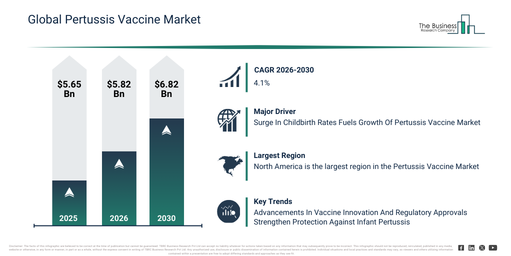
    The size of the pertussis vaccine market has experienced consistent expansion in recent times. From $5.65 billion in 2025, it is projected to reach $5.82 billion by 2026, reflecting a compound annual growth rate (CAGR) of 2.9%. Factors driving historical growth include extensive immunization coverage among children, government-sponsored nationwide vaccination initiatives, past episodes of whooping cough outbreaks, the integration of the pertussis vaccine into standard immunization protocols, and the accessibility of whole-cell vaccines.

    The pertussis vaccine market is anticipated to experience consistent expansion over the coming years, projected to reach $6.82 billion by 2030, reflecting a compound annual growth rate (CAGR) of 4.1%. This forecasted growth is driven by factors such as heightened awareness regarding adult pertussis vaccination, increased recommendations for maternal immunization, improvements in vaccine safety and effectiveness, broader healthcare access in developing nations, and the advancement of combination vaccine formulations. Key trends shaping this period include the growing preference for acellular pertussis vaccines, a heightened emphasis on booster immunization programs, the development of more combined vaccines containing pertussis elements, expanded vaccination efforts targeting adults and pregnant women, and reinforced government-led immunization campaigns.

    Download A Free Sample Report For Comprehensive Market Insights:

    https://www.thebusinessresearchcompany.com/sample.aspx?id=13023&type=smp&utm_source=BlogsPR&utm_medium=Paid&utm_campaign=Jul_PR

    Pertussis Vaccine Market Opportunity Drivers: What Is Creating New Revenue Potential?

    The growth of the pertussis vaccine market is being propelled forward by an increase in childbirth rates. Childbirth refers to the process of delivering a baby, signaling the end of a pregnancy where a fetus develops inside the mother’s womb and the start of a new life outside it. This vaccine is mainly administered to children as it shields them from whooping cough and other serious, potentially fatal illnesses. As an example, a January 2023 report from the Centers for Disease Control and Prevention, a U.S.-based national public health agency, revealed that registered births in the United States rose by 1% to 3,664,292 compared to the previous year, 2022. Consequently, the rising number of childbirths is fueling expansion in the pertussis vaccine market.

    Pertussis Vaccine Market Segment Analysis Highlighting Growth Areas

    The pertussis vaccine market covered in this report is segmented –

    1) By Product Type: DTaP (Diphtheria, Tetanus and Acellular Pertussis) Vaccine, Tdap (Tetanus, Diphtheria and Pertussis) Vaccine

    2) By Vaccine Type: Whole-Cell Vaccine, Acellular Vaccine

    3) By Application: Children, Adults, Infants

    4) By End-User: Vaccination Centers, Hospitals, Clinics

    Subsegments:

    1) By DTaP (Diphtheria, Tetanus, And Acellular Pertussis) Vaccine: Pediatric DTaP Vaccine, Combination Vaccines With DTaP

    2) By Tdap (Tetanus, Diphtheria, And Pertussis) Vaccine: Adolescent Tdap Vaccine, Adult Tdap Vaccine

    Pertussis Vaccine Market Innovation Trends Driving Future Development

    Leading players in the pertussis vaccine industry are concentrating on the creation of cutting-edge immunization strategies and obtaining official approvals to improve protection for both mothers and their newborns against whooping cough. These initiatives seek to boost vaccine availability, extend authorized usage during pregnancy, and decrease pertussis-related illness rates in infants. For example, in January 2023, Sanofi S.A., a biopharmaceutical firm headquartered in France, secured approval from the U.S. FDA for an expanded application of its Adacel (Tdap) vaccine during the third trimester of pregnancy. This move allows maternal vaccination to safeguard infants under two months old—the group most vulnerable to severe pertussis. By immunizing pregnant individuals, healthcare providers can ensure that protective antibodies are transferred to the baby prior to delivery, offering early-life defense against pertussis and filling the immunity gap until the infant’s own vaccinations begin.Leading companies in the pertussis vaccine market are prioritizing the development of advanced immunization methods and obtaining regulatory clearances to improve protection for both mothers and infants against whooping cough. These strategies aim to increase vaccine accessibility, broaden recommended usage during pregnancy, and lower pertussis-related health complications among newborns. For instance, in January 2023, Sanofi S.A., a biopharmaceutical company based in France, received U.S. FDA approval to extend the use of its Adacel (Tdap) vaccine during the third trimester of pregnancy, allowing maternal immunization to protect infants under two months old who face the greatest risk of severe pertussis infection. This approval empowers healthcare providers to vaccinate pregnant individuals, facilitating the transfer of protective antibodies to the baby before birth. Consequently, infants gain early immunity against pertussis, closing the protection gap until they can receive their own vaccinations.

    Pertussis Vaccine Market Leading Companies: Who Holds Significant Market Presence?

    Major companies operating in the pertussis vaccine market are Pfizer Inc., Merck & Co. Inc., GlaxoSmithKline plc, Sanofi Pasteur SA, CSL Limited, Serum Institute of India, Biological E. Limited, Bharat Biotech International Limited, Panacea Biotec Limited, PT Bio Farma, Walvax Biotechnology Co. Ltd., Beijing Minhai Biotechnology Co. Ltd., Wuhan Institute of Biological Products, Changchun Changsheng Life Sciences, Changsheng Bio-Technology Co. Ltd., Chiron Corporation, Sinovac Biotech Ltd., Takeda Pharmaceutical Company, Novartis AG, Johnson & Johnson

    Access The Complete Pertussis Vaccine Market Report:

    https://www.thebusinessresearchcompany.com/report/pertussis-vaccine-global-market-report?utm_source=BlogsPR&utm_medium=Paid&utm_campaign=Jul_PR

    Pertussis Vaccine Market Leading Geography: Which Region Generates The Most Revenue?

    North America was the largest region in the pertussis vaccine market in 2025. The regions covered in the pertussis vaccine market report are Asia-Pacific, South East Asia, Western Europe, Eastern Europe, North America, South America, Middle East, Africa.

    Get in touch with us:

    The Business Research Company: https://www.thebusinessresearchcompany.com/?utm_source=BlogsPR&utm_medium=Paid&utm_campaign=home_page_test

    Americas: +1 310-496-7795

    Asia: +44 7882 955267 & +91 8897263534

    Europe: +44 7882 955267

    Email us at: marketing@tbrc.info

    Follow us on:

    LinkedIn: https://in.linkedin.com/company/the-business-research-company

    YouTube: https://www.youtube.com/channel/UC24_fI0rV8cR5DxlCpgmyFQ

    Global Market Model: https://www.thebusinessresearchcompany.com/global-market-model
  • Personalized Vitamins Market Growth Outlook Reveals A CAGR Of 13.3% And A Market Value Of $12.17 Billion By 2030

    Personalized Vitamins Market Growth Outlook Reveals A CAGR Of 13.3% And A Market Value Of $12.17 Billion By 2030

    Enhanced with market attractiveness analysis, total addressable market evaluation, company benchmarking matrices, interactive Excel dashboards, expanded supply chain intelligence, emerging startup coverage, and detailed product insights, The Business Research Company’s 2026 market reports deliver more actionable and strategically valuable research.

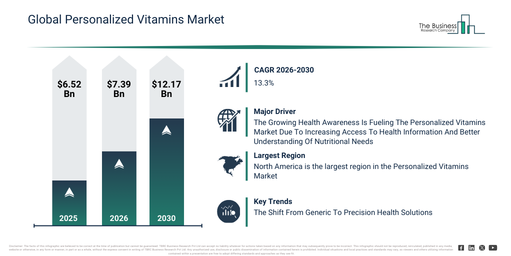
    Personalized Vitamins Market Expected To Reach $12.17 Billion By 2030 At 13.3% CAGR

    The personalized vitamins sector has experienced swift expansion in recent years, with market figures rising from $6.52 billion in 2025 to an anticipated $7.39 billion by 2026, reflecting a compound annual growth rate (CAGR) of 13.3%. This historical growth has been driven by several factors, including an increase in chronic health conditions, the broadening of nutraceutical markets, a surge in online supplement transactions, heightened awareness of health among consumers, and greater access to individualized health evaluations.

    The personalized vitamins market is projected to experience strong expansion over the coming years. By 2030, its value is anticipated to reach $12.17 billion, driven by a compound annual growth rate (CAGR) of 13.3%. This forward momentum is fueled by progress in data-driven nutrition, a higher prevalence of lifestyle-related health conditions, the emergence of direct-to-consumer healthcare models, a growing appetite for tailored wellness offerings, and the widening reach of digital health platforms. Key developments shaping this future include a rise in vitamin formulations based on individual health profiles, heightened demand for supplements targeting specific diseases, increased popularity of gummy and chewable formats, growth in e-commerce distribution networks, and a stronger emphasis on products supporting immune function and energy levels.

    Download A Free Sample Report For Comprehensive Market Insights:

    https://www.thebusinessresearchcompany.com/sample.aspx?id=24368&type=smp&utm_source=BlogsPR&utm_medium=Paid&utm_campaign=Jul_PR

    Personalized Vitamins Market Growth Momentum: Which Factors Are Influencing Demand?

    The personalized vitamins market is anticipated to experience growth in the coming period, fueled by rising health awareness. Health awareness denotes the level of knowledge individuals possess regarding the preservation and enhancement of their health, covering aspects like routine medical checkups, balanced nutrition, physical activity, hygiene practices, and illness prevention. This heightened awareness is largely a result of the widespread availability of health-related information via digital channels, which empowers people to gain a deeper insight into health threats, preventive strategies, and beneficial lifestyle habits. Personalized vitamins contribute to this awareness by motivating individuals to comprehend their specific nutritional requirements and to choose wisely for their overall wellness. For example, as reported in June 2024 by the International Food Information Council (IFIC), a United States-based nonprofit entity, the percentage of Americans adhering to a particular diet or eating plan over the preceding year continues to be high at 54%. A significant number of individuals are prioritizing increased protein consumption, with interest rising from 59% in 2022 to 67% in 2023, and further to 71% in 2024. Furthermore, nearly half of consumers aim to incorporate more fresh foods into their diets, often perceived as the healthiest choices. Consequently, the expansion of the personalized vitamins market is being driven by this growing health consciousness.

    Personalized Vitamins Market Segment Performance And Strategic Opportunities

    The personalized vitamins market covered in this report is segmented –

    1) By Type: Wellness Supplements, Disease-Based Supplements

    2) By Dosage Form: Tablets, Capsules, Powders, Gummies Or Chewable, Liquids, Softgels

    3) By Distribution Channel: Supermarkets Or Hypermarkets, Specialty Stores, Retail Pharmacies, Online Pharmacies And E-commerce

    4) By End-Use: Direct-To-Consumer, Wellness And fitness Centers, Hospitals And Clinics, Other End Uses

    Subsegments:

    1) By Wellness Supplements: Energy And Vitality Support, Weight Management, Skin, Hair And Nail Health, Cognitive Health, Digestive Health, Immune Support, Anti-Aging

    2) By Disease-Based Supplements: Cardiovascular Health, Diabetes Management, Bone And Joint Health, Mental Health Support, Hormonal Balance, Allergies And Asthma Support, Vision Health

    Personalized Vitamins Market Trends Reshaping Industry Growth

    Major players in the personalized vitamins industry are concentrating on advancing offerings that leverage genomic-based customization to create bespoke supplement plans. This form of personalization examines a person’s DNA to identify their specific nutritional requirements, which allows businesses to provide more accurate and efficient health-related products. A case in point is GenoPalate Inc., a nutritional genomics company from the US, which introduced GenoVit in January 2023, a personalized supplement range crafted with DNA analysis. GenoVit develops individualized vitamin mixtures adapted to each person’s genetic profile, age, sex, and present eating habits. The process also involves a home DNA test that assesses a user’s nutritional demands to supply evidence-based, tailored nutrition. These supplements are designed to eliminate uncertainty, assisting people in reaching their precise nutrient goals and promoting general health. This product launch aligns with GenoPalate’s objective of delivering targeted, affordable health alternatives that move away from generic, one-size-fits-all approaches.

    Personalized Vitamins Market Key Players: Which Companies Shape Industry Competition?

    Major companies operating in the personalized vitamins market are Viome Life Sciences Inc., Vitagene Inc., VitaminLab Inc., Persona Nutrition, InsideTracker, Rootine Inc., Nutrigenomix Inc., Nourished, Tespo Inc., Elo Health Inc., Vous Vitamin LLC, Vitl Ltd., Genetic Direction LLC, GX Sciences LLC, Habit Food Personalized LLC, Care Of, Baze, Atlas Biomed, Gainful, DNAfit

    Access The Complete Personalized Vitamins Market Report:

    https://www.thebusinessresearchcompany.com/report/personalized-vitamins-global-market-report?utm_source=BlogsPR&utm_medium=Paid&utm_campaign=Jul_PR

    Personalized Vitamins Market Regional Outlook: Where Are The Largest Opportunities Located?

    North America was the largest region in the personalized vitamins market in 2025. Asia-Pacific is expected to be the fastest-growing region in the forecast period. The regions covered in the personalized vitamins market report are Asia-Pacific, South East Asia, Western Europe, Eastern Europe, North America, South America, Middle East, Africa.

    Get in touch with us:

    The Business Research Company: https://www.thebusinessresearchcompany.com/?utm_source=BlogsPR&utm_medium=Paid&utm_campaign=home_page_test

    Americas: +1 310-496-7795

    Asia: +44 7882 955267 & +91 8897263534

    Europe: +44 7882 955267

    Email us at: marketing@tbrc.info

    Follow us on:

    LinkedIn: https://in.linkedin.com/company/the-business-research-company

    YouTube: https://www.youtube.com/channel/UC24_fI0rV8cR5DxlCpgmyFQ

    Global Market Model: https://www.thebusinessresearchcompany.com/global-market-model
  • Personalized Vitamin Products Market Forecast Highlights Expansion From $12.33 Billion To $20.5 Billion Through 2030

    Personalized Vitamin Products Market Forecast Highlights Expansion From $12.33 Billion To $20.5 Billion Through 2030

    Through market attractiveness analysis, total addressable market evaluation, company benchmarking matrices, interactive Excel dashboards, expanded supply chain intelligence, emerging startup coverage, and detailed product insights, The Business Research Company’s 2026 market reports provide more actionable and strategically valuable research.

    Personalized Vitamin Products Market Size And Revenue Forecast Through 2030

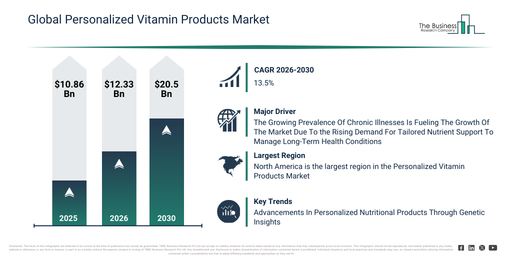
    The market for personalized vitamin products experienced significant expansion in recent years, with projections showing an increase from $10.86 billion in 2025 to $12.33 billion in 2026, achieving a compound annual growth rate (CAGR) of 13.6%. This historical growth has been driven by heightened awareness of health and wellness, a growing frequency of nutrient deficiencies, broader consumption of dietary supplements, more widespread adoption of online health questionnaires, and the rise of preventive healthcare initiatives.

    The personalized vitamin products market is anticipated to undergo rapid expansion in the coming years, with projections showing it climbing to $20.5 billion by 2030, driven by a compound annual growth rate (CAGR) of 13.5%. This forecasted growth is fueled by developments in nutrigenomics, a heightened consumer desire for tailored healthcare solutions, the expansion of digital diagnostic tools, a growing emphasis on personalized wellness, and the emergence of AI-powered nutrition platforms. Key trends shaping the market during this period include a greater adoption of vitamin customization based on DNA and biomarkers, the increased appeal of subscription-based personalized vitamin services, the enhanced utilization of digital health assessments for vitamin planning, an uptick in direct-to-consumer customized nutrition platforms, and a stronger focus on preventive and wellness-oriented vitamin regimens.

    Download A Free Sample Report For Comprehensive Market Insights:

    https://www.thebusinessresearchcompany.com/sample.aspx?id=24367&type=smp&utm_source=BlogsPR&utm_medium=Paid&utm_campaign=Jul_PR

    Personalized Vitamin Products Market Expansion Drivers: What Is Shaping Future Growth?

    The increasing incidence of chronic diseases is set to boost the expansion of the personalized vitamin products market in the coming years. These chronic conditions are long-lasting health issues that require ongoing medical attention and lifestyle modifications. Their rise is largely fueled by sedentary habits, with extended periods of sitting and low physical activity heightening the risks of ailments like heart disease and diabetes. Personalized vitamin products aid in managing such conditions by addressing specific nutritional deficiencies, which can alleviate symptoms and enhance overall well-being. This customized approach strengthens the immune system and supports existing treatment plans for improved health outcomes. For example, in June 2024, the National Health Service—a UK government body—reported that 3,615,330 individuals registered with a general practitioner had been diagnosed with non-diabetic hyperglycemia or pre-diabetes in 2023, a condition marked by elevated blood sugar levels not yet reaching diabetes thresholds. This represented an 18% increase from the 3,065,825 cases recorded in 2022. Consequently, the rising prevalence of chronic illnesses is fueling growth in the personalized vitamin market.

    Personalized Vitamin Products Market Segment Landscape And Growth Potential

    The personalized vitamin products market covered in this report is segmented –

    1) By Product Type: Active Measurement, Standard Measurement

    2) By Application: Standard Supplements, Disease-Based

    3) By End-User: Direct-To-Consumer, Wellness And Fitness Centers, Hospitals And Clinics, Other End-Users

    Subsegments:

    1) By Active Measurement: DNA-Based Vitamin Recommendations, Blood Biomarker Testing, Microbiome Analysis, Wearable Device Data Integration, Urine Or Saliva Testing-Based Personalization

    2) By Standard Measurement: Lifestyle And Diet-Based Questionnaires, Age And Gender-Based Formulas, Health Goal-Oriented Formulations, General Wellness Packages, Subscription Box Models With Standard Personalization

    Personalized Vitamin Products Market Strategic Trends: What Is Defining The Next Phase Of Growth?

    Major players in the personalized vitamin market are placing significant emphasis on creating innovative offerings, particularly science-backed nutritional products, designed to provide targeted health advantages and strengthen their market position through innovation and customization. A science-backed nutritional product refers to a supplement or food item developed using research and clinical studies to confirm its effectiveness and health-promoting properties. For example, in April 2023, LifeDNA, a personalized health and wellness firm based in the United States, launched groundbreaking DNA-based New Chapter vitamin and supplement recommendations. Through the analysis of data obtained from a non-invasive DNA test, LifeDNA leverages nutrigenomics to supply users with tailored reports and daily nutritional guidance, which includes personalized New Chapter vitamin and supplement suggestions aligned with their individual genetic makeup. This approach enables people to establish a wellness regimen that addresses their distinct dietary requirements.

    Personalized Vitamin Products Market Competitive Landscape: Who Are The Leading Companies?

    Major companies operating in the personalized vitamin products market are Persona Nutrition, Rootine, VitaminLab, Nourished, Vous Vitamin LLC, LemonBox, Vitamins & Me, Nutrafill, Hum Nutrition Inc., Metagenics Inc., Viome Life Sciences Inc., LifeDNA, EverlyWell Inc., Bayer AG, Nestlé Health Science, Amway Corporation, Blackmores Limited, Abbott Laboratories, Herbalife Nutrition Ltd., Glanbia plc

    Access The Complete Personalized Vitamin Products Market Report:

    https://www.thebusinessresearchcompany.com/report/personalized-vitamin-products-global-market-report?utm_source=BlogsPR&utm_medium=Paid&utm_campaign=Jul_PR

    Personalized Vitamin Products Market Geographic Landscape: Which Region Dominates Industry Growth?

    North America was the largest region in the personalized vitamin products market in 2025. Asia-Pacific is expected to be the fastest-growing region in the forecast period. The regions covered in the personalized vitamin products market report are Asia-Pacific, South East Asia, Western Europe, Eastern Europe, North America, South America, Middle East, Africa.

    Get in touch with us:

    The Business Research Company: https://www.thebusinessresearchcompany.com/?utm_source=BlogsPR&utm_medium=Paid&utm_campaign=home_page_test

    Americas: +1 310-496-7795

    Asia: +44 7882 955267 & +91 8897263534

    Europe: +44 7882 955267

    Email us at: marketing@tbrc.info

    Follow us on:

    LinkedIn: https://in.linkedin.com/company/the-business-research-company

    YouTube: https://www.youtube.com/channel/UC24_fI0rV8cR5DxlCpgmyFQ

    Global Market Model: https://www.thebusinessresearchcompany.com/global-market-model