Blog

  • Gastrointestinal Over-The-Counter (OTC) Drugs Market Growth Is Reshaping Competitive Advantage Across The Industry

    Gastrointestinal Over-The-Counter (OTC) Drugs Market Growth Is Reshaping Competitive Advantage Across The Industry

    Delivering more actionable and strategically valuable research, The Business Research Company’s 2026 market reports feature market attractiveness analysis, total addressable market evaluation, company benchmarking matrices, interactive Excel dashboards, expanded supply chain intelligence, emerging startup coverage, and detailed product insights.

    Gastrointestinal Over-The-Counter (OTC) Drugs Market Value Expansion And Long-Term Growth Outlook

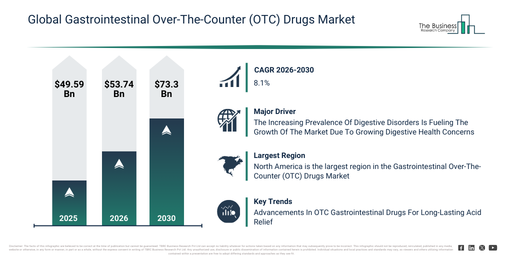
    The market for gastrointestinal over-the-counter (OTC) medications has experienced significant expansion in recent years. Projected to rise from $49.59 billion in 2025 to $53.74 billion in 2026, it reflects a compound annual growth rate (CAGR) of 8.4%. This historical growth has been driven by factors such as the high prevalence of digestive disorders, increased availability of OTC treatments, the broadening footprint of pharmacy retail chains, evolving urban lifestyles, and changes in dietary habits.

    The gastrointestinal over-the-counter (OTC) drugs market is projected to experience robust expansion in the coming years, with an anticipated market value reaching $73.3 billion by 2030, representing a compound annual growth rate (CAGR) of 8.1%. This forecasted growth is driven by several key factors, including an increasing adoption of preventive digestive care, the rapid expansion of e-commerce platforms, rising consumer demand for clean-label OTC products, the effects of an aging population, and heightened awareness surrounding digestive health. Notable trends shaping the future landscape include a growing tendency toward self-medication for digestive issues, an escalating preference for fast-acting OTC relief solutions, a greater integration of combination gastrointestinal products, the broadening reach of online pharmacy sales, and an increasing inclination toward herbal and enzyme-based alternatives.

    Download A Free Sample Report For Comprehensive Market Insights:

    https://www.thebusinessresearchcompany.com/sample.aspx?id=24547&type=smp&utm_source=BlogsPR&utm_medium=Paid&utm_campaign=Jul_PR

    Gastrointestinal Over-The-Counter (OTC) Drugs Market Opportunity Drivers: What Is Creating New Revenue Potential?

    The growing occurrence of digestive ailments is anticipated to fuel the expansion of the gastrointestinal over-the-counter drugs market in the coming period. Digestive ailments encompass various conditions impacting the gastrointestinal system, such as the stomach, intestines, and related organs. This rise is primarily attributed to increased consumption of processed, low-fiber foods that disrupt gut health and hinder proper digestion. OTC gastrointestinal medications alleviate symptoms of these disorders by lowering stomach acid, controlling bowel movements, and improving gut health. They deliver fast, accessible relief for common issues like acid reflux, constipation, and indigestion. For example, in December 2023, data from IBD Registry Ltd., a UK non-profit, showed that the number of individuals with inflammatory bowel disease (IBD) surpassed 5,300, reflecting an increase of over 3,000 members compared to 2022. Thus, the escalating prevalence of digestive disorders is propelling the gastrointestinal OTC drugs market forward.

    Gastrointestinal Over-The-Counter (OTC) Drugs Market Segmentation And Category Breakdown

    The gastrointestinal over-the-counter (otc) drugs market covered in this report is segmented –

    1) By Product: Antacid, Laxatives, Anti-Diarrheal, Anti-Emetics, Other Products

    2) By Formulation: Tablets, Capsules, Liquids, Other Formulations

    3) By Indications: Heartburn, Diarrhoea, Constipation, Gastroesophageal Reflux Disease (GERD), Nausea, Vomiting, Motion Sickness, Other Indications

    4) By Distribution Channel: Hospital Pharmacy, Retail Pharmacy, Online Pharmacy, Other Distribution Channels

    5) By End-Users: Hospitals, Clinics, Home Healthcare, Other End-Users

    Subsegments:

    1) By Antacid: Proton Pump Inhibitors (PPIs), H2-Receptor Antagonists, Calcium Carbonate, Magnesium Hydroxide, Sodium Bicarbonate, Combination Antacids

    2) By Laxatives: Bulk-Forming Laxatives, Stimulant Laxatives, Osmotic Laxatives, Stool Softeners, Lubricant Laxatives

    3) By Anti-Diarrheal: Loperamide, Bismuth Subsalicylate, Probiotics, Electrolyte Solutions

    4) By Anti-Emetics: Antihistamines, Bismuth Subsalicylate, Phosphorated Carbohydrate Solution, Ginger Supplements

    5) By Other Products: Digestive Enzymes, Simethicone, Herbal Remedies, Activated Charcoal

    Gastrointestinal Over-The-Counter (OTC) Drugs Market Innovation Trends Driving Future Development

    Leading players in the gastrointestinal OTC drugs market are increasingly prioritizing the development of innovative products, like over-the-counter proton pump inhibitors (PPIs), designed to deliver potent and sustained relief for acid-related conditions. These nonprescription PPIs work by suppressing stomach acid production and are widely used to manage issues including frequent heartburn, gastroesophageal reflux disease (GERD), and gastric ulcers. A notable example occurred in March 2025, when Eisai Co., Ltd., a Japanese pharmaceutical firm, secured regulatory approval in Japan to transition its Pariet S (rabeprazole sodium 10 mg) from prescription-only to OTC availability, marking the country’s first OTC PPI featuring the identical active ingredient and dosage as its prescription counterpart. Pariet S is intended for alleviating stomach discomfort, heartburn, and bloating, providing around-the-clock relief through a single daily dose in an easy-to-swallow tablet, and it aims to meet the rising demand for effective gastric acid therapies driven by evolving lifestyles and demographic shifts.

    Gastrointestinal Over-The-Counter (OTC) Drugs Market Competitive Analysis Of Major Industry Participants

    Major companies operating in the gastrointestinal over-the-counter (otc) drugs market are Pfizer Inc., Procter & Gamble Co., Johnson & Johnson, Merck & Co. Inc., Bayer AG, Novartis AG, Sanofi S.A., AstraZeneca plc, Abbott Laboratories, GlaxoSmithKline plc, Takeda Pharmaceutical Company Limited, Teva Pharmaceutical Industries Ltd., Reckitt Benckiser Group plc, Boehringer Ingelheim GmbH, Haleon plc, Sandoz AG, Bausch Health Companies Inc., Sun Pharmaceutical Industries Ltd., Perrigo Company plc, Dr. Reddy’s Laboratories Ltd.

    Access The Complete Gastrointestinal Over-The-Counter (OTC) Drugs Market Report:

    https://www.thebusinessresearchcompany.com/report/gastrointestinal-over-the-counter-otc-drugs-global-market-report?utm_source=BlogsPR&utm_medium=Paid&utm_campaign=Jul_PR

    Gastrointestinal Over-The-Counter (OTC) Drugs Market Regional Outlook: Where Are The Largest Opportunities Located?

    North America was the largest region in the gastrointestinal over-the-counter (OTC) drugs market in 2025. Asia-Pacific is expected to be the fastest-growing region in the forecast period. The regions covered in the gastrointestinal over-the-counter (otc) drugs market report are Asia-Pacific, South East Asia, Western Europe, Eastern Europe, North America, South America, Middle East, Africa.

    Get in touch with us:

    The Business Research Company: https://www.thebusinessresearchcompany.com/?utm_source=BlogsPR&utm_medium=Paid&utm_campaign=home_page_test

    Americas: +1 310-496-7795

    Asia: +44 7882 955267 & +91 8897263534

    Europe: +44 7882 955267

    Email us at: marketing@tbrc.info

    Follow us on:

    LinkedIn: https://in.linkedin.com/company/the-business-research-company

    YouTube: https://www.youtube.com/channel/UC24_fI0rV8cR5DxlCpgmyFQ

    Global Market Model: https://www.thebusinessresearchcompany.com/global-market-model
  • Gastroesophageal Reflux Disease Therapeutics Market Forecast Signals New Revenue Opportunities Through 2030

    Gastroesophageal Reflux Disease Therapeutics Market Forecast Signals New Revenue Opportunities Through 2030

    Enhanced with market attractiveness analysis, total addressable market evaluation, company benchmarking matrices, interactive Excel dashboards, expanded supply chain intelligence, emerging startup coverage, and detailed product insights, The Business Research Company’s 2026 market reports deliver more actionable and strategically valuable research.

    Gastroesophageal Reflux Disease Therapeutics Market Expected To Reach $8.38 Billion By 2030 At 6.9% CAGR

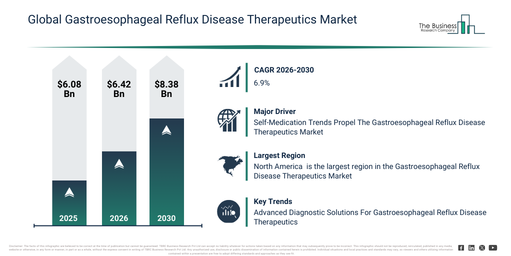
    The market for gastroesophageal reflux disease therapeutics has experienced robust expansion in recent years. Its value is projected to rise from $6.08 billion in 2025 to $6.42 billion in 2026, reflecting a compound annual growth rate (CAGR) of 5.6%. This historical growth has been driven by factors such as the increasing incidence of GERD, widespread use of proton pump inhibitors, heightened awareness regarding digestive health, the growth of hospital pharmacies, and the expanding elderly population.

    The gastroesophageal reflux disease therapeutics market is anticipated to experience substantial expansion in the coming years. By 2030, its value is projected to reach $8.38 billion, reflecting a compound annual growth rate (CAGR) of 6.9%. This forecasted growth is driven by factors such as advancements in drug formulations, the rise of e-pharmacies, the growing use of telemedicine for gastrointestinal care, increased investment in precision medicine, and a rising preference for minimally invasive treatments. Key trends shaping this period include the emergence of personalized approaches to GERD management, the creation of innovative drug delivery systems, a growing demand for over-the-counter GERD medications, an intensified emphasis on gut health and microbiome balance, and the incorporation of remote patient monitoring with telehealth services.

    Download A Free Sample Report For Comprehensive Market Insights:

    https://www.thebusinessresearchcompany.com/sample.aspx?id=12058&type=smp&utm_source=BlogsPR&utm_medium=Paid&utm_campaign=Jul_PR

    Gastroesophageal Reflux Disease Therapeutics Market Growth Momentum: Which Factors Are Influencing Demand?

    Self-medication practices are playing a major role in expanding the gastroesophageal reflux disease therapeutics market. This approach involves the use of drugs or other substances to manage a medical condition without seeking guidance from a healthcare professional. It is particularly effective in helping individuals identify and avoid trigger foods, manage stress, and quit smoking, all of which can lead to a notable improvement in GERD symptoms. As an example, in July 2024, the Proprietary Association of Great Britain (PAGB), a trade association based in the UK, reported that 64 million UK residents experienced at least one self-treatable condition in 2023. During this period, the proportion of cases where GP advice encouraged a shift to over-the-counter self-care rose from 58% in 2023 to 75% in 2024, while consumer confidence in using such medications climbed to 89%, an 8-point increase from the prior year. Consequently, the growing preference for self-medication is fueling the expansion of the gastroesophageal reflux disease therapeutics market.

    Gastroesophageal Reflux Disease Therapeutics Market Segment Outlook: Which Categories Are Expanding The Fastest?

    The gastroesophageal reflux disease therapeutics market covered in this report is segmented –

    1) By Type: Branded, Generic

    2) By Drug Class: Antacids, Proton Pump Inhibitors, Histamine Blockers, Pro-Kinetic Agents, Other Drugs Class

    3) By Distribution Channel: Hospital Pharmacy, Drug Stores, General Stores, Supermarkets

    Subsegments:

    1) By Branded: Proton Pump Inhibitors (PPIs), H2-Receptor Antagonists, Antacids, Coating Agents

    2) By Generic: Generic Proton Pump Inhibitors (PPIs), Generic H2-Receptor Antagonists, Generic Antacids, Generic Coating Agents

    Gastroesophageal Reflux Disease Therapeutics Market Trends Reshaping Industry Growth

    Within the gastroesophageal reflux disease therapeutics market, key players are focusing on creating innovative solutions, particularly wireless pH-capsule reflux testing systems designed for diagnosing and tracking GERD and related issues. For example, in April 2023, Laborie Medical Technologies Corp., a US-based medical testing equipment manufacturer, introduced the alpHaONE system. This wireless pH-capsule reflux testing device is specifically tailored to diagnose GERD, offering up to 96 hours of data monitoring to ensure precise and dependable results. The alpHaONE stands out with its ergonomic and compact design, featuring large, easy-to-press buttons and a fail-safe capsule delivery system engineered to protect the patient’s esophagus.

    Gastroesophageal Reflux Disease Therapeutics Market Key Companies And Competitive Benchmarking

    Major companies operating in the gastroesophageal reflux disease therapeutics market are Pfizer Inc., Johnson and Johnson, Novartis AG, Sanofi S.A., AstraZeneca plc, GlaxoSmithKline plc, Eisai Co. Ltd., Takeda Pharmaceutical Company Limited, Teva Pharmaceutical Industries, Dr. Reddy’s Laboratories Ltd., Amneal Pharmaceuticals LLC, CHEPLAPHARM Arzneimittel GmbH, Daewoong Pharmaceutical Co. Ltd, Ironwood Pharmaceuticals Inc., Sebela Pharmaceuticals Inc., Camber Pharmaceuticals Inc., Sun Pharmaceutical Industries Ltd., RaQualia Pharma Inc, TWi Pharmaceuticals Inc., Astellas Pharma Inc., SFJ Pharmaceuticals Group, Boehringer Ingelheim International GmbH, Cadila Pharmaceuticals Limited

    Access The Complete Gastroesophageal Reflux Disease Therapeutics Market Report:

    https://www.thebusinessresearchcompany.com/report/gastroesophageal-reflux-disease-therapeutics-global-market-report?utm_source=BlogsPR&utm_medium=Paid&utm_campaign=Jul_PR

    Gastroesophageal Reflux Disease Therapeutics Market Geographic Landscape: Which Region Dominates Industry Growth?

    North America was the largest region in the gastroesophageal reflux disease therapeutics market in 2025. Asia-Pacific is expected to be the fastest-growing region in the forecast period. The regions covered in the gastroesophageal reflux disease therapeutics market report are Asia-Pacific, South East Asia, Western Europe, Eastern Europe, North America, South America, Middle East, Africa.

    Get in touch with us:

    The Business Research Company: https://www.thebusinessresearchcompany.com/?utm_source=BlogsPR&utm_medium=Paid&utm_campaign=home_page_test

    Americas: +1 310-496-7795

    Asia: +44 7882 955267 & +91 8897263534

    Europe: +44 7882 955267

    Email us at: marketing@tbrc.info

    Follow us on:

    LinkedIn: https://in.linkedin.com/company/the-business-research-company

    YouTube: https://www.youtube.com/channel/UC24_fI0rV8cR5DxlCpgmyFQ

    Global Market Model: https://www.thebusinessresearchcompany.com/global-market-model
  • Gastric Cancer Therapy Market Growth Is Accelerating As Industry Transformation Continues

    Gastric Cancer Therapy Market Growth Is Accelerating As Industry Transformation Continues

    Through market attractiveness analysis, total addressable market evaluation, company benchmarking matrices, interactive Excel dashboards, expanded supply chain intelligence, emerging startup coverage, and detailed product insights, The Business Research Company’s 2026 market reports provide more actionable and strategically valuable research.

    Gastric Cancer Therapy Market Size And Revenue Forecast Through 2030

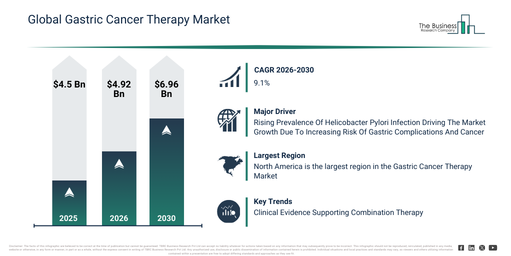
    The gastric cancer treatment market has experienced robust expansion over recent years. Valued at $4.5 billion in 2025, it is projected to reach $4.92 billion by 2026, reflecting a compound annual growth rate (CAGR) of 9.3%. This historical growth has been driven by factors such as the scarcity of targeted therapies, a heavy dependence on traditional chemotherapy and surgical interventions, a rising incidence of gastric cancer, the ongoing development of oncology facilities in hospitals, and heightened awareness surrounding early detection initiatives.

    The gastric cancer therapy market is anticipated to experience substantial growth in the coming years, with its value projected to reach $6.96 billion by 2030, expanding at a compound annual growth rate (CAGR) of 9.1%. This forecasted growth is driven by factors such as the development of novel immunotherapies and checkpoint inhibitors, a rising focus on precision medicine, the expansion of outpatient oncology services, increased funding for gastric cancer research, and the integration of digital health tools for patient monitoring. Key trends shaping this period include a growing emphasis on targeted and personalized therapies, the increasing use of combination treatment strategies, the expansion of early detection and screening initiatives, broader availability of home care and ambulatory treatment options, and a heightened focus on reducing side effects while enhancing patient quality of life.

    Download A Free Sample Report For Comprehensive Market Insights:

    https://www.thebusinessresearchcompany.com/sample.aspx?id=25767&type=smp&utm_source=BlogsPR&utm_medium=Paid&utm_campaign=Jul_PR

    Gastric Cancer Therapy Market Expansion Drivers: What Is Shaping Future Growth?

    The growing incidence of helicobacter pylori infection is anticipated to drive expansion in the gastric cancer therapy market moving forward. As a bacterial infection primarily impacting the stomach lining, helicobacter pylori is a major contributor to chronic gastritis and gastric cancer. Its prevalence is on the rise mainly due to poor sanitation, where inadequate hygiene and contaminated food or water enable its transmission through oral-oral or fecal-oral routes. Gastric cancer therapy is employed to lower the risk of stomach cancer linked to this infection by addressing the infection itself, reducing gastric inflammation and cellular harm, and halting the development of chronic gastritis and atrophic changes that may result in malignant transformation of the stomach lining. A November 2024 report from the Government of Canada, a federal administration based in Canada, indicated that as of January 2023, the recurrence rate of H. pylori infection can reach as high as 19%, though this figure varies by geographic area and age group. Consequently, the increasing prevalence of helicobacter pylori infection is fueling growth in the gastric cancer therapy market.

    Gastric Cancer Therapy Market Segment Landscape: Which Areas Lead Market Development?

    The gastric cancer therapy market covered in this report is segmented –

    1) By Therapy Type: Chemotherapy, Targeted Therapy, Immunotherapy, Radiation Therapy, Surgery

    2) By Drug Class: Cytotoxic Agents, Monoclonal Antibodies, Tyrosine Kinase Inhibitors, Checkpoint Inhibitors, Miscellaneous Agents

    3) By Administration Route: Oral, Intravenous, Intramuscular, Subcutaneous

    4) By Stage of Disease: Early Stage, Locally Advanced Stage, Metastatic Stage

    5) By End User: Hospitals, Oncology Clinics, Ambulatory Surgical Centers, Research Institutions, Home Care Settings

    Subsegments:

    1) By Chemotherapy: Neoadjuvant Chemotherapy (NAC), Adjuvant Chemotherapy (AC), Palliative Chemotherapy (PC), Combination Chemotherapy, Monotherapy

    2) By Targeted Therapy: Human Epidermal Growth Factor Receptor 2 (HER2) Targeted Therapy, Vascular Endothelial Growth Factor (VEGF) Inhibitors, Fibroblast Growth Factor Receptor (FGFR) Inhibitors, Mesenchymal-Epithelial Transition (MET) Inhibitors, Claudin 18 Isoform 2 Inhibitors

    3) By Immunotherapy: Immune Checkpoint Inhibitors, Cancer Vaccines, Adoptive Cell Transfer, Cytokine Therapy, Combination Immunotherapy

    4) By Radiation Therapy: External Beam Radiation Therapy (EBRT), Intensity-Modulated Radiation Therapy (IMRT), Three-Dimensional Conformal Radiation Therapy (3D-CRT), Brachytherapy

    5) By Surgery: Endoscopic Mucosal Resection (EMR), Endoscopic Submucosal Dissection (ESD), Subtotal Gastrectomy, Total Gastrectomy, Lymphadenectomy

    Gastric Cancer Therapy Market Strategic Trends: What Is Defining The Next Phase Of Growth?

    Major players in the gastric cancer therapy market are concentrating on the creation of novel treatments, particularly combination therapies, aimed at boosting treatment effectiveness and enhancing patient results. Combination therapy refers to the simultaneous application of multiple treatment modalities—such as chemotherapy, targeted therapy, or immunotherapy—to amplify overall efficacy. A notable example occurred in December 2024, when BeOne Medicines Ltd., a Chinese pharmaceutical firm previously called BeiGene, secured U.S. Food and Drug Administration (FDA) approval for Tevimbra (tislelizumab-jsgr) paired with platinum- and fluoropyrimidine-based chemotherapy. This regimen is indicated for the first-line management of adults suffering from unresectable or metastatic HER2-negative gastric or gastroesophageal junction (G/GEJ) adenocarcinoma where tumor PD-L1 expression is at least 1%. The approval was grounded in findings from the Phase 3 RATIONALE-305 trial, which revealed that the combined treatment extended median overall survival to 15.0 months, versus 12.9 months with chemotherapy alone, thereby cutting the risk of death by 20%. This achievement underscores an escalating focus among leading pharmaceutical entities on investing in advanced, multimodal therapeutic strategies that merge immunotherapy with standard chemotherapy approaches to elevate clinical results, slow disease advancement, and boost survival prospects for individuals facing advanced gastric cancer.

    Gastric Cancer Therapy Market Industry Leaders And Market Competition

    Major companies operating in the gastric cancer therapy market are Pfizer Inc., F. Hoffmann-La Roche Ltd., Merck & Co. Inc., Sanofi S.A., Bristol-Myers Squibb Company, AstraZeneca PLC, Novartis AG, Eli Lilly and Company, Amgen Inc., Astellas Pharma Inc., Jiangsu Hengrui Pharmaceuticals Co. Ltd., BeiGene Ltd., Celltrion Healthcare Co. Ltd., Hutchison MediPharma Limited, Shanghai Henlius Biotech Inc.

    Access The Complete Gastric Cancer Therapy Market Report:

    https://www.thebusinessresearchcompany.com/report/gastric-cancer-therapy-global-market-report?utm_source=BlogsPR&utm_medium=Paid&utm_campaign=Jul_PR

    Gastric Cancer Therapy Market Largest Region: Which Geography Holds The Highest Market Share?

    North America was the largest region in the gastric cancer therapy market in 2025. Asia-Pacific is expected to be the fastest-growing region in the forecast period. The regions covered in the gastric cancer therapy market report are Asia-Pacific, South East Asia, Western Europe, Eastern Europe, North America, South America, Middle East, Africa.

    Get in touch with us:

    The Business Research Company: https://www.thebusinessresearchcompany.com/?utm_source=BlogsPR&utm_medium=Paid&utm_campaign=home_page_test

    Americas: +1 310-496-7795

    Asia: +44 7882 955267 & +91 8897263534

    Europe: +44 7882 955267

    Email us at: marketing@tbrc.info

    Follow us on:

    LinkedIn: https://in.linkedin.com/company/the-business-research-company

    YouTube: https://www.youtube.com/channel/UC24_fI0rV8cR5DxlCpgmyFQ

    Global Market Model: https://www.thebusinessresearchcompany.com/global-market-model
  • Gastric Cancer Drugs Market Outlook Highlights The Next Major Growth Opportunities

    Gastric Cancer Drugs Market Outlook Highlights The Next Major Growth Opportunities

    Delivering more actionable and strategically valuable research, The Business Research Company’s 2026 market reports feature market attractiveness analysis, total addressable market evaluation, company benchmarking matrices, interactive Excel dashboards, expanded supply chain intelligence, emerging startup coverage, and detailed product insights.

    Gastric Cancer Drugs Market Growth From $5.38 Billion In 2026 To $8.14 Billion By 2030 At A CAGR Of 10.9%

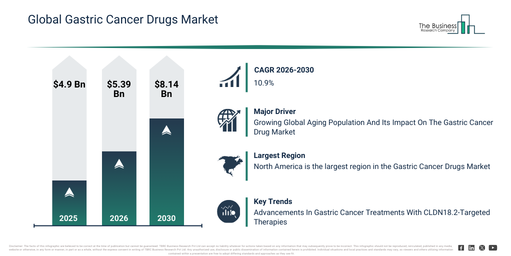
    The market for gastric cancer therapeutics has recorded significant expansion over recent years, with its valuation increasing from $4.9 billion in 2025 to an anticipated $5.39 billion in 2026, reflecting a compound annual growth rate of 9.9%. A number of factors drove this growth during the historical period, including the rising incidence of gastric cancer, insufficient public knowledge about early detection methods, a continued dependence on traditional chemotherapy approaches, a growing preference for treatment within hospital settings, and the considerable expense associated with branded pharmaceutical products.

    The market for gastric cancer drugs is anticipated to experience rapid expansion in the coming years, reaching a projected value of $8.14 billion by 2030, driven by a compound annual growth rate (CAGR) of 10.9%. This forecast period’s growth is fueled by improvements in targeted therapies, a rising uptake of immunotherapies, broader application of precision medicine, the creation of both oral and injectable drug forms, and increased financial support from governments and private entities for cancer research. Key developments shaping this period include the emergence of customized treatments for gastric cancer, the innovation of targeted drug delivery mechanisms, a greater emphasis on combining multiple treatment approaches, the growth of chemotherapy services offered outside hospital settings, and an enhanced focus on supportive care and managing patient symptoms.

    Download A Free Sample Report For Comprehensive Market Insights:

    https://www.thebusinessresearchcompany.com/sample.aspx?id=2603&type=smp&utm_source=BlogsPR&utm_medium=Paid&utm_campaign=Jul_PR

    Gastric Cancer Drugs Market Development Factors: Which Trends Are Supporting Demand?

    The anticipated expansion of the gastric cancer drug market is expected to be driven forward by the rising number of older individuals worldwide. An aging population describes a demographic scenario where a substantial portion of a country or region’s inhabitants are elderly, generally those aged 65 and above. This trend is brought about by a consistent extension of life expectancy alongside a decline in birth rates, leading to a larger share of seniors relative to the overall populace. Elderly patients often have a reduced ability to endure certain cancer therapies, like surgical procedures or chemotherapy. Consequently, there arises a demand for more customized treatment options, including pharmaceutical agents, that cater to the distinct requirements and tolerance levels of older patients. As an illustration, in July 2024, data from the UK Parliament’s House of Commons Library, a governmental body in the United Kingdom, showed that in 2022, 12.7 million people in the UK were aged 65 or over, which made up 19% of the total population. That figure is forecasted to increase to 22.1 million by 2072, representing 27% of the population. As a result, the gastric cancer drug market is predicted to undergo growth in the coming period, fueled by the expanding elderly population.

    Gastric Cancer Drugs Market Segments: Where Are The Largest Growth Opportunities?

    The gastric cancer drugs market covered in this report is segmented –

    1) By Type: Imatinib, Trastuzumab, Other Types

    2) By Route of Administration: Oral, Parenteral

    3) By End User: Hospitals, Clinics, Cancer Speciality Centers

    Subsegments:

    1) By Imatinib: Oral Formulations, Injectable Formulations, Combination Therapies

    2) By Trastuzumab: Monotherapy, Combination Therapy With Chemotherapy, Biosimilars Of Trastuzumab

    3) By Other Types: Chemotherapy Agents, Targeted Therapy Agents, Immunotherapy Agents, Supportive Care Medications

    Gastric Cancer Drugs Market Transformation Trends: Which Innovations Are Driving Change?

    Many pharmaceutical firms in the gastric cancer drugs sector are concentrating on creating advanced products, such as therapies aimed at CLDN18.2, to boost treatment effectiveness and deliver more customized patient options. CLDN18.2-focused therapy involves treatments that zero in on claudin 18.2 (CLDN18.2), a protein predominantly found on certain epithelial tissues like the gastric lining. As an example, in October 2024, Astellas Pharma Inc., headquartered in Japan, secured approval from the US Food and Drug Administration (FDA)—an agency devoted to safeguarding public health—for VYLOY (zolbetuximab). This drug, VYLOY (zolbetuximab), stands as the first CLDN18.2-directed treatment specifically designed for advanced gastric and gastroesophageal junction cancer cases where the tumors are CLDN18.2 positive. It is given alongside chemotherapy regimens built on fluoropyrimidine and platinum. The indication covers adults diagnosed with locally advanced, non-surgical, negative gastric or gastroesophageal junction adenocarcinoma.

    Gastric Cancer Drugs Market Major Participants And Competitive Dynamics

    Major companies operating in the gastric cancer drugs market are F. Hoffmann-La Roche, Eli Lilly and Company, Jiangsu HengRui Medicine, Biocon, Sanofi, PV Pharma Healthcare (India), Novartis Oncology, Arlak Biotech (India), CStone Pharma (China), CARsgen Therapeutics (China), JW Therapeutics (China), BeiGene (China), Takeda Pharmaceuticals (Japan), Astellas Pharma Inc. (Japan), Daiichi Sankyo, AstraZeneca plc, GlaxoSmithKline plc, Biocad, Bristol-Myers Squibb, Celon Pharma, Celltrion Inc., Merck & Co. Inc., Pfizer Inc., Sandoz AG (Novartis), Eurofarma Laboratórios S.A., TUTEUR Argentina / Pierre Fabre Group, Johnson & Johnson, Teva Pharmaceutical Industries Ltd., Mylan Laboratories, Gilead Sciences, BMS

    Access The Complete Gastric Cancer Drugs Market Report:

    https://www.thebusinessresearchcompany.com/report/gastric-cancer-drugs-global-market-report?utm_source=BlogsPR&utm_medium=Paid&utm_campaign=Jul_PR

    Gastric Cancer Drugs Market Regional Analysis: Which Region Leads By Revenue?

    North America was the largest region in the gastric cancer drugs market in 2025. Middle East is expected to be the largest growing region in the global gastric cancer drugs market share during the forecast period. The regions covered in the gastric cancer drugs market report are Asia-Pacific, South East Asia, Western Europe, Eastern Europe, North America, South America, Middle East, Africa.

    Get in touch with us:

    The Business Research Company: https://www.thebusinessresearchcompany.com/?utm_source=BlogsPR&utm_medium=Paid&utm_campaign=home_page_test

    Americas: +1 310-496-7795

    Asia: +44 7882 955267 & +91 8897263534

    Europe: +44 7882 955267

    Email us at: marketing@tbrc.info

    Follow us on:

    LinkedIn: https://in.linkedin.com/company/the-business-research-company

    YouTube: https://www.youtube.com/channel/UC24_fI0rV8cR5DxlCpgmyFQ

    Global Market Model: https://www.thebusinessresearchcompany.com/global-market-model
  • Gastric Antisecretory Drug Market Trends And Growth Drivers Point To Strong Future Potential

    Gastric Antisecretory Drug Market Trends And Growth Drivers Point To Strong Future Potential

    Enhanced with market attractiveness analysis, total addressable market evaluation, company benchmarking matrices, interactive Excel dashboards, expanded supply chain intelligence, emerging startup coverage, and detailed product insights, The Business Research Company’s 2026 market reports deliver more actionable and strategically valuable research.

    Gastric Antisecretory Drug Market Expansion Outlook: What Revenue Opportunities Lie Ahead?

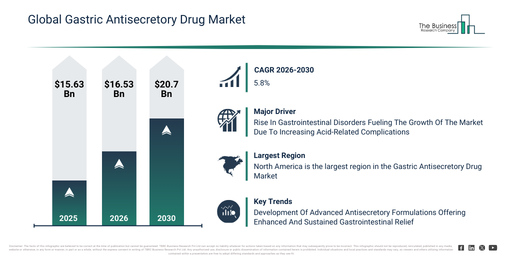
    The gastric antisecretory drug market has experienced robust expansion in recent years, with projections indicating an increase from $15.63 billion in 2025 to $16.53 billion in 2026, reflecting a compound annual growth rate (CAGR) of 5.7%. This historical growth has been driven by several factors, including a high prevalence of acid-related disorders, a rise in diagnoses of gastroesophageal reflux disease, the expansion of hospital pharmacies, the widespread utilization of H2 receptor antagonists, and growing trends toward self-medication.

    The gastric antisecretory drug market is anticipated to experience robust growth in the coming years, with projections indicating a rise to $20.7 billion by 2030, achieving a compound annual growth rate (CAGR) of 5.8%. This expansion during the forecast period can be explained by several factors, including the rising number of elderly individuals, a higher prevalence of stress-induced gastric issues, the widening scope of over-the-counter pharmaceutical markets, growing public awareness about healthcare, and progress in formulating safer medications intended for extended use. Noteworthy trends shaping the forecast period encompass the growing reliance on proton pump inhibitors, a heightened demand for sustained acid suppression, a preference shift toward oral drug formats, broader accessibility of over-the-counter products, and an intensified emphasis on developing therapies that ensure long-term safety.

    Download A Free Sample Report For Comprehensive Market Insights:

    https://www.thebusinessresearchcompany.com/sample.aspx?id=24222&type=smp&utm_source=BlogsPR&utm_medium=Paid&utm_campaign=Jul_PR

    Gastric Antisecretory Drug Market Industry Drivers: What Is Driving Revenue Growth?

    The growth of the gastric antisecretory drug market is expected to be driven by the rising frequency of gastrointestinal disorders in the years ahead. These disorders impact the digestive system, encompassing the stomach, intestines, and related organs, manifesting through signs like discomfort, bloating, and irregular bowel habits. poor dietary practices—characterized by high consumption of processed foods and low fiber intake—are a key factor behind the increase in such conditions, as they disrupt gut microbiota balance and digestion. Since excessive stomach acid may erode the protective lining of the gastrointestinal tract, causing irritation or damage, antisecretory drugs are necessary to reduce acid production and avert these issues. For example, a June 2025 report from the Turkish Journal of Gastroenterology, based in Turkey, noted that 6.9 million people globally currently suffer from inflammatory bowel disease (IBD). Consequently, the escalating prevalence of gastrointestinal disorders is set to accelerate the expansion of the gastric antisecretory drug market.

    Gastric Antisecretory Drug Market Segment Analysis: What Are The Major Market Categories?

    The gastric antisecretory drug market covered in this report is segmented –

    1) By Drug Class: Proton Pump Inhibitors (PPIs), H2 Receptor Antagonists, Antacids, Prostaglandin Analogs

    2) By Route Of Administration: Oral, Intravenous

    3) By Distribution Channel: Hospital Pharmacies, Retail Pharmacies, Online Pharmacies, Other Distribution Channels

    4) By Application: Gastroesophageal Reflux Disease, Peptic Ulcer Disease, Zollinger-Ellison Syndrome, Other Applications

    Subsegments:

    1) By Proton Pump Inhibitors (PPIs): Omeprazole, Esomeprazole, Lansoprazole, Pantoprazole, Rabeprazole, Dexlansoprazole

    2) By H2 Receptor Antagonists: Ranitidine, Famotidine, Cimetidine, Nizatidine

    3) By Antacids: Magnesium Hydroxide, Calcium Carbonate, Aluminum Hydroxide, Sodium Bicarbonate, Combination Antacids

    4) By Prostaglandin Analogs: Misoprostol, Enprostil

    Gastric Antisecretory Drug Market Growth Trends: What Is Influencing The Future Outlook?

    Major players within the gastric antisecretory drug sector are concentrating their efforts on creating advanced solutions, particularly antisecretory compounds, designed to deliver extended relief from symptoms. These compounds function by acting upon specific cellular pathways or receptors to diminish or block the production of bodily fluids, with a primary focus on gastric acid secretion. As an illustrative example, in June 2024, Akums Drugs and Pharmaceuticals—a pharmaceutical firm based in India—introduced Rabeprazole + Levosulpiride SR Capsules, a novel formulation aimed at gastrointestinal patients. This preparation uniquely pairs rabeprazole sodium, a powerful antisecretory agent that specifically inhibits the H?/K? ATPase enzyme in gastric parietal cells, with levosulpiride, which is recognized for its central antidopaminergic and antiemetic properties. Each capsule contains 40 mg of enteric-coated rabeprazole and 75 mg of sustained-release levosulpiride, ensuring both targeted and prolonged therapeutic activity. The dual mechanism it employs simultaneously tackles acid suppression and the regulation of gastrointestinal motility.

    Gastric Antisecretory Drug Market Leading Companies Driving Competitive Growth

    Major companies operating in the gastric antisecretory drug market are Pfizer Inc., Bayer AG, AstraZeneca plc, Takeda Pharmaceutical Company Ltd., Sun Pharmaceutical Industries, Dr. Reddy’s Laboratories, Chemo Biological, Spansules Pharmatech Pvt. Ltd., Phoenix Biologicals Pvt. Ltd., Centurion Remedies Private Limited, Solitaire Pharmacia Pvt. Ltd., Shreeji Pharma International, Estrellas Life Sciences Private Limited, 3s Corporation, Actiza Pharmaceutical Private Limited, Lark Laboratories, Cytonova Labs International Private Limited, Luckys Pharma Lab Pvt. Ltd., Lexicare Pharma Pvt. Ltd., Mustcure Healthcare LLP

    Access The Complete Gastric Antisecretory Drug Market Report:

    https://www.thebusinessresearchcompany.com/report/gastric-antisecretory-drug-global-market-report?utm_source=BlogsPR&utm_medium=Paid&utm_campaign=Jul_PR

    Gastric Antisecretory Drug Market Geographic Distribution And Regional Opportunities

    North America was the largest region in the gastric antisecretory drug market in 2025. Asia-Pacific is expected to be the fastest-growing region in the forecast period. The regions covered in the gastric antisecretory drug market report are Asia-Pacific, South East Asia, Western Europe, Eastern Europe, North America, South America, Middle East, Africa.

    Get in touch with us:

    The Business Research Company: https://www.thebusinessresearchcompany.com/?utm_source=BlogsPR&utm_medium=Paid&utm_campaign=home_page_test

    Americas: +1 310-496-7795

    Asia: +44 7882 955267 & +91 8897263534

    Europe: +44 7882 955267

    Email us at: marketing@tbrc.info

    Follow us on:

    LinkedIn: https://in.linkedin.com/company/the-business-research-company

    YouTube: https://www.youtube.com/channel/UC24_fI0rV8cR5DxlCpgmyFQ

    Global Market Model: https://www.thebusinessresearchcompany.com/global-market-model
  • Ganciclovir Market Expansion Is Reshaping Competitive Dynamics Across The Industry

    Ganciclovir Market Expansion Is Reshaping Competitive Dynamics Across The Industry

    Through market attractiveness analysis, total addressable market evaluation, company benchmarking matrices, interactive Excel dashboards, expanded supply chain intelligence, emerging startup coverage, and detailed product insights, The Business Research Company’s 2026 market reports provide more actionable and strategically valuable research.

    Ganciclovir Market Growth Potential: How Will Market Size Change Through 2030?

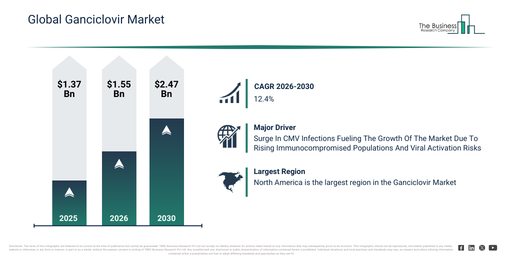
    The ganciclovir market has experienced rapid expansion over recent years, increasing from $1.37 billion in 2025 to a projected $1.55 billion in 2026, marking a compound annual growth rate (CAGR) of 12.7%. This historical growth has been driven by factors such as the rising number of organ transplants, the prevalence of HIV, approvals for antiviral medications, infection control measures in hospitals, and the use of immunosuppressive therapies.

    Forecast for the ganciclovir market points toward swift expansion in the years ahead, reaching a projected size of $2.47 billion by 2030, fueled by a compound annual growth rate (CAGR) of 12.4%. Key factors behind this predicted surge include an uptick in transplant procedures, heightened focus on tracking antiviral resistance, advancements in viral diagnostic methods, ongoing growth of hospital pharmacy services, and climbing demand for specialized antiviral treatments. On the trend front, notable developments encompass greater usage among immunocompromised patients, expanded application of cytomegalovirus (CMV) prevention therapies, wider acceptance of injectable antivirals, bolstering of transplant care initiatives, and the strengthening of hospital-based antiviral management programs.

    Download A Free Sample Report For Comprehensive Market Insights:

    https://www.thebusinessresearchcompany.com/sample.aspx?id=24545&type=smp&utm_source=BlogsPR&utm_medium=Paid&utm_campaign=Jul_PR

    #Ganciclovir Market Growth Factors: Which Forces Are Supporting Market Expansion?

    The rising incidences of cytomegalovirus (CMV) infections are expected to propel the growth of the ganciclovir market going forward. Cytomegalovirus (CMV) infections, caused by a common herpesvirus, can remain dormant and reactivate in immunocompromised individuals, resulting in serious complications such as retinitis, pneumonia, and gastrointestinal disorders, particularly in transplant recipients and patients with HIV/AIDS. The increase in CMV infections is driven by the growing number of immunocompromised individuals, as they have weakened immune defenses that increase susceptibility to viral activation and spread. Ganciclovir highlights the critical need for effective antiviral therapy, emphasizing its role in managing the rising incidences of CMV infections among immunocompromised individuals. For instance, in January 2025, according to the Centers for Disease Control and Prevention, a US-based government agency, 1 in 3 children in the U.S. is infected with cytomegalovirus (CMV) by age 5, and over half of the adults by age 40. Therefore, the rising incidences of cytomegalovirus (CMV) infections are driving the growth of the ganciclovir market.

    Ganciclovir Market Driver: Increasing Healthcare Expenditure Driving Market Growth Through Enhanced Access To Antiviral Treatments

    The rise in healthcare expenditure is going to propel the growth of the ganciclovir market going forward. Healthcare expenditure is the overall spending on medical services, treatments, and public health by individuals, insurers, and governments. Rising healthcare expenditure is due to advanced medical technologies, as these innovations often involve high development and implementation costs, require specialized training and equipment, and lead to increasing use of expensive diagnostic and treatment procedures. Healthcare expenditure supports ganciclovir use by enabling broader access to antiviral treatments for managing cytomegalovirus (CMV) infections, especially in immunocompromised patients. For instance, in May 2024, the Office for National Statistics, a UK-based government department, reported that in 2024, the UK’s healthcare expenditure reached approximately $421.32 billion (£317 billion), reflecting a 6.5% increase compared to 2023. Therefore, the rise in healthcare expenditure is driving the growth of the ganciclovir market.

    Ganciclovir Market Driver: Rising Number Of Organ Transplants Driving The Market Growth Due To Expanded Donor Eligibility Criteria

    The rising number of organ transplants is expected to propel the growth of the ganciclovir market going forward. Organ transplants refer to surgical procedures in which a diseased or failing organ is replaced with a healthy organ from either a deceased or living donor to restore normal function. The increasing number of organ transplants is driven by advances in donation after circulatory death procedures and expanded donor eligibility criteria, as medical improvements have made it clinically feasible to successfully transplant organs from donors who were previously considered unsuitable, thereby increasing the available donor pool. Growing organ transplants support increased use of antiviral medications that prevent cytomegalovirus infections in immunosuppressed transplant recipients who are vulnerable to life-threatening viral complications. For instance, in January 2025, according to the Organ Procurement and Transplantation Network, a US-based non-profit organization, there was a modest rise in kidney transplants, reaching 27,759 in 2024, an increase of 1.6 percent compared to 2023. In contrast, the number of heart transplants remained nearly the same, with 4,572 procedures in 2024 compared to 4,545 in 2023. Therefore, the rising number of organ transplants is driving the growth of the ganciclovir market.

    Ganciclovir Market Segment Breakdown: Which Categories Generate The Most Revenue?

    The ganciclovir market covered in this report is segmented –

    1) By Type: Injection, Oral

    2) By Dosage Form: Tablets, Intravenous (IV) Solution, Ophthalmic Gel

    3) By Distribution Channel: Hospital Pharmacies, Retail Pharmacies, Online Pharmacies

    4) By Application: Cytomegalovirus (CMV) Retinitis, Cytomegalovirus (CMV) Prevention In Organ Transplant Patients

    Subsegments:

    1) By Injection: Lyophilized Powder for Injection, Premixed IV Bags, Intravitreal Injection

    2) By Oral: Capsules, Oral Solution

    Ganciclovir Market Key Players And Strategic Industry Positioning

    Major companies operating in the ganciclovir market are Roche Holding AG, Teva Pharmaceutical Industries Ltd., Fresenius Kabi AG, Dr. Reddy’s Laboratories Ltd., Cipla Ltd., Fareva Group, Zydus Lifesciences Ltd., Natco Pharma Ltd., Ajanta Pharma Ltd., Micro Labs Ltd., Taj Pharmaceuticals Ltd., Sunways Pvt. Ltd., Accord Healthcare Ltd., AdvaCare Pharma USA, Trifarma S.p.A., Actiza Pharmaceutical Pvt. Ltd., Bakul Group of Companies, Doctor Wonder Healthcare Pvt. Ltd., Sujalam Chemicals, Aetos Pharma Pvt. Ltd.

    Access The Complete Ganciclovir Market Report:

    https://www.thebusinessresearchcompany.com/report/ganciclovir-global-market-report?utm_source=BlogsPR&utm_medium=Paid&utm_campaign=Jul_PR

    Ganciclovir Market Largest Region By Revenue And Market Share

    North America was the largest region in the ganciclovir market in 2025. Asia-Pacific is expected to be the fastest-growing region in the forecast period. The regions covered in the ganciclovir market report are Asia-Pacific, South East Asia, Western Europe, Eastern Europe, North America, South America, Middle East, Africa.

    Get in touch with us:

    The Business Research Company: https://www.thebusinessresearchcompany.com/?utm_source=BlogsPR&utm_medium=Paid&utm_campaign=home_page_test

    Americas: +1 310-496-7795

    Asia: +44 7882 955267 & +91 8897263534

    Europe: +44 7882 955267

    Email us at: marketing@tbrc.info

    Follow us on:

    LinkedIn: https://in.linkedin.com/company/the-business-research-company

    YouTube: https://www.youtube.com/channel/UC24_fI0rV8cR5DxlCpgmyFQ

    Global Market Model: https://www.thebusinessresearchcompany.com/global-market-model
  • Gamma Delta T Cell Cancer Therapy Market Forecast Reveals Where Future Industry Value Will Be Created

    Gamma Delta T Cell Cancer Therapy Market Forecast Reveals Where Future Industry Value Will Be Created

    Delivering more actionable and strategically valuable research, The Business Research Company’s 2026 market reports feature market attractiveness analysis, total addressable market evaluation, company benchmarking matrices, interactive Excel dashboards, expanded supply chain intelligence, emerging startup coverage, and detailed product insights.

    Gamma Delta T Cell Cancer Therapy Market Value Analysis: What Growth Is Expected Over The Forecast Period?

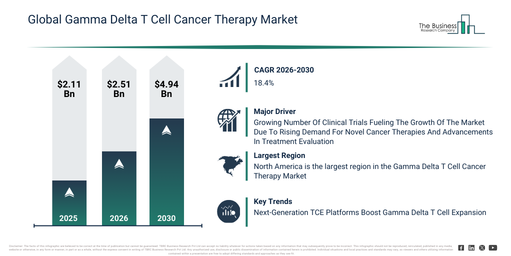
    The market for gamma delta T cell cancer therapies has seen substantial expansion in recent years. Projections indicate it will rise from $2.11 billion in 2025 to $2.51 billion in 2026, reflecting a compound annual growth rate (CAGR) of 19.0%. Historical growth has been driven by the restricted supply of gamma delta T cell treatments, a continued dependence on traditional chemotherapy and monoclonal antibodies, an expanding population of oncology patients, a surge in clinical trials focused on adoptive cell therapy, and heightened awareness regarding the advantages of immunotherapy.

    In the coming years, the gamma delta T cell cancer therapy market is anticipated to experience swift expansion. By 2030, its value is projected to reach $4.94 billion, driven by a compound annual growth rate (CAGR) of 18.4%. This forecasted growth is fueled by several factors, including progress in chimeric antigen receptor T cell treatments, the broadening use of cytokine and checkpoint inhibitor combination therapies, heightened investment in personalized oncology, the creation of fully human monoclonal antibodies, and the incorporation of AI-based patient monitoring and treatment optimization. Key trends shaping the forecast period encompass the growing utilization of gamma delta T cell-based adoptive cell therapies, an uptick in the development of combination immunotherapies, a focus on addressing rare and treatment-resistant cancers, the expansion of personalized and precision oncology initiatives, and the merging of immune checkpoint inhibition with cell therapy approaches.

    Download A Free Sample Report For Comprehensive Market Insights:

    https://www.thebusinessresearchcompany.com/sample.aspx?id=27290&type=smp&utm_source=BlogsPR&utm_medium=Paid&utm_campaign=Jul_PR

    Gamma Delta T Cell Cancer Therapy Market Demand Drivers: What Is Fueling Industry Growth?

    The expansion of clinical trial activity is anticipated to fuel progress in the gamma delta T cell cancer therapy market. Clinical trials represent systematic investigations carried out with human participants to assess the safety, effectiveness, and possible adverse reactions associated with medical treatments, drugs, or interventions. A surge in these trials is being driven by a heightened need for innovative therapies designed to tackle unfulfilled medical requirements and enhance patient outcomes. Through the validation of safety and effectiveness, acceleration of regulatory clearances, and facilitation of refined treatment strategies, clinical trials propel the evolution of gamma delta T cell cancer therapy. They enhance treatment results by supplying essential data that fosters innovation and broader clinical use. As an illustration, in December 2024, data from the Association of the British Pharmaceutical Industry (ABPI), a UK-based organization, showed that the number of industry-led clinical trials initiated in the United Kingdom rose from 411 in 2022 to 426 in 2023. Consequently, the increasing volume of clinical trials is propelling the gamma delta T cell cancer therapy market forward.

    Gamma Delta T Cell Cancer Therapy Market Segmentation: How Is The Market Structured Across Key Categories?

    The gamma delta t cell cancer therapy market covered in this report is segmented –

    1) By Therapy Type: Cytokine Therapy, Monoclonal Antibodies, Combination Therapies

    2) By Cancer Type: Leukemia, Lymphoma, Solid Tumors, Certain Rare Cancers

    3) By Stage Of Cancer: Early Stage, Advanced Stage, Relapsed Or Refractory

    4) By Mechanism Of Action: Activation Of T Cells, Inhibition Of Tumor Microenvironment, Targeting Tumor Antigens, Enhancing Immune Checkpoint Inhibition

    5) By End User: Hospitals, Specialized Clinics, Research Institutions, Pharmaceutical Companies

    Subsegments:

    1) By Cytokine Therapy: Interleukin Based Therapy, Interferon Based Therapy, Tumor Necrosis Factor Therapy, Colony Stimulating Factor Therapy, Transforming Growth Factor Therapy

    2) By Monoclonal Antibodies: Naked Monoclonal Antibodies, Conjugated Monoclonal Antibodies, Bispecific Monoclonal Antibodies, Humanized Monoclonal Antibodies, Fully Human Monoclonal Antibodies

    3) By Combination Therapies: Monoclonal Antibodies And Cytokines Combination, Checkpoint Inhibitors And Cell Therapy Combination, Chemotherapy And Immunotherapy Combination, Radiation Therapy And Immunotherapy Combination

    Gamma Delta T Cell Cancer Therapy Market Innovation Trends: Which Developments Are Transforming The Industry?

    Leading firms in the gamma delta T cell cancer therapy space are concentrating on creating novel offerings, such as gamma delta (?d) T cell engager (TCE) platforms, to boost effectiveness, refine targeting, and decrease off-tumor toxicity. These platforms are engineered immunotherapies meant to guide and stimulate ?d T cells, enabling them to precisely identify and destroy cancer cells by forming a link with tumor-associated antigens. For example, in March 2025, IN8bio Inc., a biotechnology company based in the US, introduced the INB 600, an advanced ?d TCE platform aimed at tackling both cancer and autoimmune conditions. The platform’s primary candidate, INB 619, specifically focuses on CD19 and has demonstrated the ability to expand ?d T cells by up to 450 times in preclinical trials, resulting in substantial B-cell reduction. This approach utilizes the inherent traits of gamma delta T cells, which naturally attack malignant cells, and integrates them with engineered engagers to augment their cancer-killing potential. The TCE platform is crafted to address shortcomings of conventional immunotherapies, enhancing precision, lessening systemic adverse effects, and broadening the spectrum of cancers that can be treated.

    Gamma Delta T Cell Cancer Therapy Market Competitive Landscape And Leading Companies

    Major companies operating in the gamma delta t cell cancer therapy market are IN8bio Inc., American Gene Technologies International Inc., Adicet Bio Inc., LAVA Therapeutics N.V., Acepodia Inc., TC BioPharm (Holdings) plc, Century Therapeutics Inc., CytoMed Therapeutics Ltd., Appia Bio Inc., ImCheck Therapeutics S.A.S., JY BioMed Inc., Luminary Therapeutics Inc.

    Access The Complete Gamma Delta T Cell Cancer Therapy Market Report:

    https://www.thebusinessresearchcompany.com/report/gamma-delta-t-cell-cancer-therapy-global-market-report?utm_source=BlogsPR&utm_medium=Paid&utm_campaign=Jul_PR

    Gamma Delta T Cell Cancer Therapy Market Regional Analysis And Leading Geography

    North America was the largest region in the gamma delta T cell cancer therapy market in 2025. Asia-Pacific is expected to be the fastest-growing region in the forecast period. The regions covered in the gamma delta t cell cancer therapy market report are Asia-Pacific, South East Asia, Western Europe, Eastern Europe, North America, South America, Middle East, Africa.

    Get in touch with us:

    The Business Research Company: https://www.thebusinessresearchcompany.com/?utm_source=BlogsPR&utm_medium=Paid&utm_campaign=home_page_test

    Americas: +1 310-496-7795

    Asia: +44 7882 955267 & +91 8897263534

    Europe: +44 7882 955267

    Email us at: marketing@tbrc.info

    Follow us on:

    LinkedIn: https://in.linkedin.com/company/the-business-research-company

    YouTube: https://www.youtube.com/channel/UC24_fI0rV8cR5DxlCpgmyFQ

    Global Market Model: https://www.thebusinessresearchcompany.com/global-market-model
  • Galantamine Hydrobromide Market Growth Through 2030 Creates New Strategic Opportunities

    Galantamine Hydrobromide Market Growth Through 2030 Creates New Strategic Opportunities

    Enhanced with market attractiveness analysis, total addressable market evaluation, company benchmarking matrices, interactive Excel dashboards, expanded supply chain intelligence, emerging startup coverage, and detailed product insights, The Business Research Company’s 2026 market reports deliver more actionable and strategically valuable research.

    Galantamine Hydrobromide Market Size Forecast: How Large Could The Market Become By 2030?

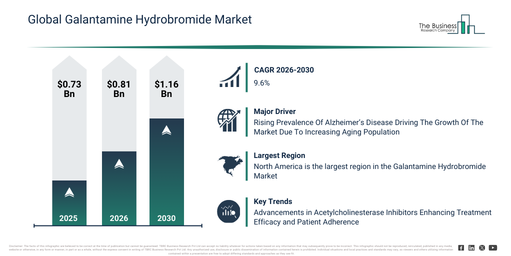
    The galantamine hydrobromide market has experienced robust expansion in recent years, with projections indicating an increase from $0.73 billion in 2025 to $0.81 billion in 2026, reflecting a compound annual growth rate (CAGR) of 9.8%. This historic growth has been largely driven by the aging global population, early regulatory approvals for Alzheimer’s treatment, a shortage of curative options for dementia, the growth of long-term care facilities, and a rise in diagnosed cognitive disorders.

    The market for galantamine hydrobromide is anticipated to experience robust expansion over the coming years. By 2030, its value is projected to reach $1.16 billion, reflecting a compound annual growth rate (CAGR) of 9.6%. This forecasted growth is driven by factors such as the increasing incidence of Alzheimer’s disease, a growing elderly population, a heightened need for therapies that manage symptoms, the expansion of dementia care provided at home, and continuous research into neurodegenerative conditions. Key developments shaping this period include the sustained application of the drug in managing Alzheimer’s, a rising demand for treatments that enhance cognitive function, the development of extended-release versions, greater utilization within geriatric healthcare settings, and an intensified emphasis on addressing neurodegenerative disorders.

    Download A Free Sample Report For Comprehensive Market Insights:

    https://www.thebusinessresearchcompany.com/sample.aspx?id=23404&type=smp&utm_source=BlogsPR&utm_medium=Paid&utm_campaign=Jul_PR

    Galantamine Hydrobromide Market Growth Drivers: What Factors Are Accelerating Expansion?

    The anticipated growth of the galantamine hydrobromide market is being propelled by the rising incidence of Alzheimer’s disease throughout the forecast period. This condition is a progressive neurodegenerative disorder marked by memory impairment, cognitive deterioration, and alterations in behavior, frequently resulting in an inability to manage routine activities. A growing elderly population is driving up Alzheimer’s prevalence, as advancing age—combined with accumulated brain changes and hereditary predispositions—substantially heightens the risk of developing the disease. To address diminishing neurotransmitter function, galantamine hydrobromide is administered in Alzheimer’s cases to elevate acetylcholine levels through the inhibition of its breakdown, thereby helping to decelerate cognitive decline and enhance memory. According to the Centers for Disease Control and Prevention, a federal agency in the United States, the number of individuals living with Alzheimer’s is projected to climb from 6.9 million to approximately 14 million by 2060, as reported in August 2024. Consequently, the increasing prevalence of Alzheimer’s disease is fueling the expansion of the galantamine hydrobromide market.

    Galantamine Hydrobromide Market Segmentation Trends And Revenue Drivers

    The galantamine hydrobromide market covered in this report is segmented –

    1) By Product Type: Tablet, Capsule, Oral Solution

    2) By Application: Alzheimer’s Disease Treatment, Cognitive Enhancements, Other Applications

    3) By End-User: Hospitals, Research Institutions, Homecare Settings, Long-term Care Facilities

    Subsegments:

    1) By Tablet: Immediate-Release Tablets, Extended-Release Tablets

    2) By Capsule: Hard Gelatin Capsules, Soft Gelatin Capsules

    3) By Oral Solution: Ready-to-Use Oral Solution, Concentrated Oral Solution

    Galantamine Hydrobromide Market Trends: What Is Shaping Future Industry Growth?

    Key industry players in the galantamine hydrobromide market are prioritizing the creation of innovative therapies, particularly next-generation acetylcholinesterase inhibitors (AChEIs), to boost treatment effectiveness, minimize adverse effects, and improve patient compliance. These advanced AChEIs are specifically engineered to improve cognitive performance in neurodegenerative disorders by increasing drug availability and lowering unwanted reactions. A notable example occurred in July 2024 when Alpha Cognition Inc., a Canadian biopharmaceutical firm, received FDA approval for ALPHA-1062, marketed as Zunveyl. This drug is a prodrug of galantamine, an established AChEI, and is indicated for mild to moderate Alzheimer’s disease. ALPHA-1062 offers enhanced safety and superior bioavailability relative to conventional galantamine versions. It functions by being absorbed in the small intestine as an inactive compound, thereby avoiding premature interaction with acetylcholinesterase in the gastrointestinal system. This is accomplished through the addition of a benzyl ester, which lowers local nerve overexcitation, decreases gastrointestinal discomfort, and improves systemic availability. Following metabolism in the liver, ALPHA-1062 becomes active and delivers galantamine to the brain via the bloodstream.

    Galantamine Hydrobromide Market Industry Leaders: Which Organizations Are Driving Competition?

    Major companies operating in the galantamine hydrobromide market are Teva Pharmaceutical Industries Ltd., Sandoz International GmbH, Ajinomoto Co. Inc., Sun Pharmaceutical Industries Ltd., Aurobindo Pharma Limited, Dr. Reddy’s Laboratories Ltd., Jubilant Pharmova Limited, Cohance Lifesciences Limited, Indena S.p.A., ScinoPharm Taiwan Ltd., Estechpharma Co. Ltd.?, Nortec Química S.A., Metrochem API Private Limited, Sanochemia Pharmazeutika AG, Pellets Pharma Limited, Midas Pharma GmbH, Jubilant Generics?, Capital Farma, Wuhan Shiji Pharmaceutical Co. Ltd., Credo Life Sciences Pvt. Ltd.

    Access The Complete Galantamine Hydrobromide Market Report:

    https://www.thebusinessresearchcompany.com/report/galantamine-hydrobromide-global-market-report?utm_source=BlogsPR&utm_medium=Paid&utm_campaign=Jul_PR

    Galantamine Hydrobromide Market Geographic Analysis: Where Is Demand Growing The Fastest?

    North America was the largest region in the galantamine hydrobromide market in 2025. Asia-Pacific is expected to be the fastest-growing region in the forecast period. The regions covered in the galantamine hydrobromide market report are Asia-Pacific, South East Asia, Western Europe, Eastern Europe, North America, South America, Middle East, Africa.

    Get in touch with us:

    The Business Research Company: https://www.thebusinessresearchcompany.com/?utm_source=BlogsPR&utm_medium=Paid&utm_campaign=home_page_test

    Americas: +1 310-496-7795

    Asia: +44 7882 955267 & +91 8897263534

    Europe: +44 7882 955267

    Email us at: marketing@tbrc.info

    Follow us on:

    LinkedIn: https://in.linkedin.com/company/the-business-research-company

    YouTube: https://www.youtube.com/channel/UC24_fI0rV8cR5DxlCpgmyFQ

    Global Market Model: https://www.thebusinessresearchcompany.com/global-market-model
  • Gabapentin Market Size Projected To Increase From $3.26 Billion To $4.45 Billion During The Forecast Period

    Gabapentin Market Size Projected To Increase From $3.26 Billion To $4.45 Billion During The Forecast Period

    Through market attractiveness analysis, total addressable market evaluation, company benchmarking matrices, interactive Excel dashboards, expanded supply chain intelligence, emerging startup coverage, and detailed product insights, The Business Research Company’s 2026 market reports provide more actionable and strategically valuable research.

    Gabapentin Market Revenue Outlook: What CAGR Is Expected Through 2030?

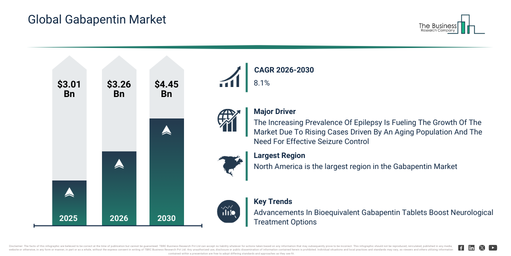
    The gabapentin market has experienced significant expansion in recent years, with its value projected to rise from $3.01 billion in 2025 to $3.26 billion in 2026, reflecting a compound annual growth rate (CAGR) of 8.4%. This historical growth has been driven by several key factors, including the widespread adoption of epilepsy treatments, the increasing prevalence of neuropathic pain, the accessibility of generic drugs, established physician prescribing habits, and the growing burden of chronic diseases.

    The gabapentin sector is projected to experience robust expansion in the coming years, with its valuation reaching an estimated $4.45 billion by 2030, reflecting a compound annual growth rate (CAGR) of 8.1%. This upward trajectory during the forecast period is primarily driven by factors such as an aging demographic, the increasing prevalence of diabetic neuropathy, greater market penetration of generic alternatives, a heightened focus on outpatient pain management approaches, and the growing utilization of telemedicine for prescription services. Key developments shaping this period include a rising application of the drug in treating neuropathic pain, a surging preference for generic versions, the broadening of chronic pain treatment initiatives, the proliferation of oral solid dosage forms, and a notable uptick in prescriptions targeting neurological conditions.

    Download A Free Sample Report For Comprehensive Market Insights:

    https://www.thebusinessresearchcompany.com/sample.aspx?id=24544&type=smp&utm_source=BlogsPR&utm_medium=Paid&utm_campaign=Jul_PR

    Gabapentin Market Growth Factors Supporting Long-Term Expansion

    The rising frequency of epilepsy cases is anticipated to fuel the expansion of the gabapentin market in the coming period. Epilepsy is a neurological condition marked by recurring seizures resulting from abnormal electrical activity within the brain. This condition is becoming more common, largely due to the expanding older population, since aging elevates the likelihood of neurological disorders that trigger seizures. Gabapentin manages epilepsy by calming irregular nerve activity in the brain and reducing signals that lead to seizures. It functions by targeting calcium channels to aid in preventing seizure episodes. As an example, in February 2024, the World Health Organization (WHO), an intergovernmental organization based in Switzerland, reported that approximately 50 million people globally have epilepsy, with nearly 80% of those affected residing in low- and middle-income countries, and up to 70% could achieve seizure freedom with proper diagnosis and treatment. Each year, around 5 million individuals are newly diagnosed with epilepsy worldwide; this rate is about 49 per 100,000 in high-income nations, whereas in low- and middle-income countries it can reach as high as 139 per 100,000. Consequently, the growing prevalence of epilepsy is propelling the gabapentin market forward.

    Gabapentin Market Segment Analysis Highlighting Growth Areas

    The gabapentin market covered in this report is segmented –

    1) By Type: Generic, Branded

    2) By Dosage Form: Tablet, Capsule, Oral Solution

    3) By Distribution Channel: Hospital Pharmacies, Retail Pharmacies, Online Pharmacies, Other Distribution Channels

    4) By Application: Epilepsy, Neuropathic Pain, Restless Legs Syndrome, Other Applications

    Subsegments:

    1) By Generic: Gabapentin Immediate Release (IR), Gabapentin Extended Release (ER), Gabapentin Capsules, Gabapentin Tablets, Gabapentin Oral Solution

    2) By Branded: Neurontin, Gralise, Horizant, Other Branded Formulations

    Gabapentin Market Industry Trends Shaping Future Revenue Growth

    Key players in the gabapentin market are concentrating on the creation of sophisticated formulations, including bioequivalent tablets, aimed at improving therapeutic effectiveness and broadening treatment possibilities for neurological disorders. These bioequivalent tablets are generic medications that deliver an identical quantity of the active substance into the bloodstream at the same rate and efficiency as the original branded product, ensuring comparable safety and therapeutic outcomes. For example, in March 2024, Strides Pharma Science Limited, a pharmaceutical firm based in India, introduced Gabapentin Tablets USP in 600 mg and 800 mg strengths, which secured approval from the United States Food & Drug Administration (USFDA) to broaden its neurology offerings in the American market. This novel gabapentin formulation boasts increased bioavailability, accurate dosing, and patient-friendly administration, facilitating more uniform therapeutic results, enhanced symptom management, and increased ease for sustained treatment. The 600 mg Gabapentin Tablets USP present adaptable therapeutic applications, delivering effective control over various neurological conditions like neuropathic pain and partial seizures through dependable dosing and established clinical effectiveness.

    Gabapentin Market Leading Companies: Who Holds Significant Market Presence?

    Major companies operating in the gabapentin market are Pfizer Inc., Teva Pharmaceutical Industries Ltd., Mylan Inc., Apotex Inc., Sun Pharmaceutical Industries Ltd., Aurobindo Pharma Limited, Cipla Limited, Lupin Limited, Zydus Lifesciences Limited, Glenmark Pharmaceuticals Limited, Torrent Pharmaceuticals Ltd., Ipca Laboratories Private Limited, Granules India Limited, Medley Pharmaceuticals Limited, Wockhardt Limited, Epic Pharma LLC, Healing Pharma India Pvt. Ltd., Rochem International Inc., Accord Healthcare Limited, Strides Pharma Science Limited, Ascend Laboratories LLC

    Access The Complete Gabapentin Market Report:

    https://www.thebusinessresearchcompany.com/report/gabapentin-global-market-report?utm_source=BlogsPR&utm_medium=Paid&utm_campaign=Jul_PR

    Gabapentin Market Global Footprint: Which Region Holds Market Leadership?

    North America was the largest region in the gabapentin market in 2025. Asia-Pacific is expected to be the fastest-growing region in the forecast period. The regions covered in the gabapentin market report are Asia-Pacific, South East Asia, Western Europe, Eastern Europe, North America, South America, Middle East, Africa.

    Get in touch with us:

    The Business Research Company: https://www.thebusinessresearchcompany.com/?utm_source=BlogsPR&utm_medium=Paid&utm_campaign=home_page_test

    Americas: +1 310-496-7795

    Asia: +44 7882 955267 & +91 8897263534

    Europe: +44 7882 955267

    Email us at: marketing@tbrc.info

    Follow us on:

    LinkedIn: https://in.linkedin.com/company/the-business-research-company

    YouTube: https://www.youtube.com/channel/UC24_fI0rV8cR5DxlCpgmyFQ

    Global Market Model: https://www.thebusinessresearchcompany.com/global-market-model
  • G Protein-Coupled Receptors (GPCR) Structure-Based Drug Design Market Growth Outlook Reveals A CAGR Of 13% And A Market Value Of $4.88 Billion By 2030

    G Protein-Coupled Receptors (GPCR) Structure-Based Drug Design Market Growth Outlook Reveals A CAGR Of 13% And A Market Value Of $4.88 Billion By 2030

    Delivering more actionable and strategically valuable research, The Business Research Company’s 2026 market reports feature market attractiveness analysis, total addressable market evaluation, company benchmarking matrices, interactive Excel dashboards, expanded supply chain intelligence, emerging startup coverage, and detailed product insights.

    G Protein-Coupled Receptors (GPCR) Structure-Based Drug Design Market Growth Analysis: How Will Revenue Expand During The Forecast Period?

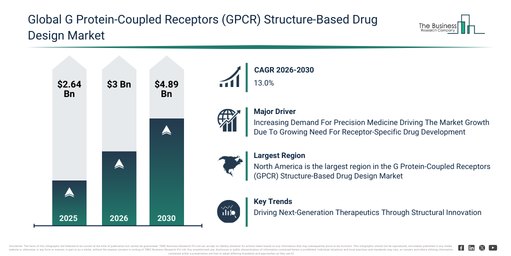
    The market for structure-based drug design targeting G protein-coupled receptors (GPCR) has experienced rapid expansion in recent years. Projections indicate that it will rise from $2.64 billion in 2025 to $3 billion in 2026, representing a compound annual growth rate (CAGR) of 13.3%. Historical growth has been driven by advancements in GPCR crystallography methods, heightened investment in pharmaceutical research and development, access to high-resolution receptor structures, an improved comprehension of GPCR signaling pathways, and the broadening of small molecule drug discovery frameworks.

    The market for structure-based drug design targeting G protein-coupled receptors (GPCRs) is anticipated to experience rapid expansion over the coming years. By 2030, its value is projected to reach $4.89 billion, reflecting a compound annual growth rate (CAGR) of 13.0%. This forecasted growth is driven by several factors, including the growing use of AI-assisted molecular design, a heightened emphasis on precision medicine in drug development, the broadening of GPCR targets within oncology and neurology, increased funding for next-generation structural biology tools, and a rising need for highly selective therapeutic agents. Key trends shaping this period involve the more frequent application of structure-guided ligand optimization, the growing utilization of cryo-electron microscopy for GPCR analysis, the deeper integration of computational modeling into drug discovery processes, the expansion of allosteric modulator development, and a stronger focus on improving receptor selectivity.

    Download A Free Sample Report For Comprehensive Market Insights:

    https://www.thebusinessresearchcompany.com/sample.aspx?id=28229&type=smp&utm_source=BlogsPR&utm_medium=Paid&utm_campaign=Jul_PR

    G Protein-Coupled Receptors (GPCR) Structure-Based Drug Design Market Demand Drivers Creating New Revenue Opportunities

    The growth of the G protein-coupled receptors (GPCR) structure-based drug design market is anticipated to be fueled by a rising need for precision medicine. These treatment strategies utilize specific biological markers to tailor therapies according to individual patient characteristics and disease profiles. The increasing preference for precision medicine is attributed to its better effectiveness and fewer adverse effects relative to conventional treatments, as healthcare systems adopt a stronger focus on personalized approaches that address distinct molecular pathways instead of broad-spectrum interventions. This heightened emphasis on precision medicine directly boosts the adoption of GPCR structure-based drug design platforms, as pharmaceutical companies depend more on advanced computational tools to pinpoint and refine receptor-specific compounds that achieve the molecular accuracy required for personalized therapies. As an example, the Personalized Medicine Coalition, a US non-profit, reported that in February 2024, the FDA sanctioned 16 new personalized treatments for rare diseases in 2023, a notable jump from six approvals in 2022. Of these newly authorized drugs, seven are for cancer, while three target other illnesses and conditions. Consequently, the growing demand for precision medicine is propelling expansion in the GPCR structure-based drug design market.

    G Protein-Coupled Receptors (GPCR) Structure-Based Drug Design Market Segment Performance And Strategic Opportunities

    The g protein-coupled receptors (gpcr) structure-based drug design market covered in this report is segmented –

    1) By Drug Type: Small Molecule Drugs, Biologics, Peptides, Other Drug Types

    2) By Technology: X-Ray Crystallography, Cryo-Electron Microscopy, Computational Modeling, Nuclear Magnetic Resonance Spectroscopy, Other Technologies

    3) By Application: Oncology, Cardiovascular Diseases, Neurological Disorders, Metabolic Disorders, Other Applications

    4) By End-User: Pharmaceutical Companies, Biotechnology Companies, Academic And Research Institutes, Other End-Users

    Subsegments:

    1) By Small Molecule Drugs: Agonists, Antagonists, Allosteric Modulators, Enzyme Inhibitors

    2) By Biologics: Monoclonal Antibodies, Therapeutic Proteins, Vaccines, Fusion Proteins

    3) By Peptides: Linear Peptides, Cyclic Peptides, Modified Peptides, Peptidomimetics

    4) By Other Drug Types: Nucleic Acid Based Drugs, Cell Based Therapies, Gene Therapies, Conjugated Drugs

    G Protein-Coupled Receptors (GPCR) Structure-Based Drug Design Market Trends Driving Strategic Industry Expansion

    Major pharmaceutical firms in the G-protein coupled receptor (GPCR) structure-based drug design market are placing significant emphasis on developing advanced solutions like structure-based drug design platforms to expedite the creation of new drugs and enhance therapeutic precision. These platforms combine computational modeling and experimental methods, leveraging the three-dimensional (3D) configuration of target proteins to refine and select drug candidates, ultimately enabling the identification of more accurate, effective, and safer treatments. A notable example occurred in January 2025, when Septerna Inc., a US-based pharmaceutical enterprise, unveiled fresh efforts to expand its Native Complex Platform, supported by the $100 million Series A funding previously acquired. By preserving the natural structure and dynamic behavior of GPCRs outside the cell environment, this platform facilitates structure-based drug design tailored to these receptors. It aids in building a pipeline of GPCR-focused therapies aimed at previously inaccessible targets across diverse therapeutic fields, while also establishing a scalable framework for industrialized drug discovery, the incorporation of novel screening techniques, and the exploration of new GPCR modulation mechanisms. Furthermore, the platform creates avenues for systematically examining the complete GPCR superfamily, thereby broadening the scope of potential therapeutic applications.

    G Protein-Coupled Receptors (GPCR) Structure-Based Drug Design Market Key Players: Which Companies Shape Industry Competition?

    Major companies operating in the g protein-coupled receptors (gpcr) structure-based drug design market are F. Hoffmann-La Roche Ltd., Pfizer Inc., Sanofi S.A., AstraZeneca plc, Thermo Fisher Scientific Inc., Boehringer Ingelheim International GmbH, WuXi AppTec Co. Ltd., Charles River Laboratories International Inc., Evotec SE, Acadia Pharmaceuticals Inc., Promega Corporation, Domain Therapeutics SA, Schrödinger Inc., Kallyope Inc., Domainex Ltd., Structure Therapeutics Inc., Creative Biolabs Inc., InterAx Biotech Inc., Abalone Bio Inc., Octant Inc.

    Access The Complete G Protein-Coupled Receptors (GPCR) Structure-Based Drug Design Market Report:

    https://www.thebusinessresearchcompany.com/report/g-protein-coupled-receptors-gpcr-structure-based-drug-design-global-market-report?utm_source=BlogsPR&utm_medium=Paid&utm_campaign=Jul_PR

    G Protein-Coupled Receptors (GPCR) Structure-Based Drug Design Market Regional Distribution: Which Areas Drive Market Expansion?

    North America was the largest region in the G protein-coupled receptors (GPCR) structure-based drug design market in 2025. The regions covered in the g protein-coupled receptors (gpcr) structure-based drug design market report are Asia-Pacific, South East Asia, Western Europe, Eastern Europe, North America, South America, Middle East, Africa.

    Get in touch with us:

    The Business Research Company: https://www.thebusinessresearchcompany.com/?utm_source=BlogsPR&utm_medium=Paid&utm_campaign=home_page_test

    Americas: +1 310-496-7795

    Asia: +44 7882 955267 & +91 8897263534

    Europe: +44 7882 955267

    Email us at: marketing@tbrc.info

    Follow us on:

    LinkedIn: https://in.linkedin.com/company/the-business-research-company

    YouTube: https://www.youtube.com/channel/UC24_fI0rV8cR5DxlCpgmyFQ

    Global Market Model: https://www.thebusinessresearchcompany.com/global-market-model