Blog

  • Capecitabine Market Forecast Reveals Where Future Industry Value Will Be Created

    Capecitabine Market Forecast Reveals Where Future Industry Value Will Be Created

    Enhanced with market attractiveness analysis, total addressable market evaluation, company benchmarking matrices, interactive Excel dashboards, expanded supply chain intelligence, emerging startup coverage, and detailed product insights, The Business Research Company’s 2026 market reports deliver more actionable and strategically valuable research.

    Capecitabine Market Size Forecast: How Large Could The Market Become By 2030?

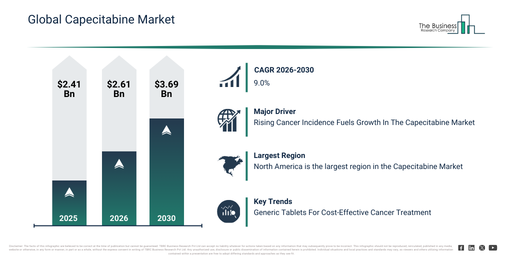
    The capecitabine market has experienced robust expansion in recent years, with its value projected to rise from $2.41 billion in 2025 to $2.61 billion in 2026, reflecting a compound annual growth rate (CAGR) of 8.4%. This historical growth has been driven by several factors, including a higher prevalence of breast and colorectal cancers, greater public awareness of oral chemotherapy options, regulatory approvals for capecitabine, enhanced hospital and oncology infrastructure, and an increased availability of generic versions of the drug.

    The capecitabine market is anticipated to experience significant expansion over the coming years, with projections indicating it will reach a value of $3.69 billion by 2030, representing a compound annual growth rate (CAGR) of 9.0%. Several factors are driving this forecasted growth, including a higher demand for personalized medicine, progress made in drug delivery technologies, greater funding directed toward oncology research, the rise of home-based cancer treatment options, and an increased uptake of combination therapies. Key developments shaping the market during this period involve the shift toward oral chemotherapy, a focus on individualized cancer care strategies, the creation of novel combination treatments, the establishment of more oncology treatment facilities, and a heightened emphasis on managing metastatic cancer.

    Download A Free Sample Report For Comprehensive Market Insights:

    https://www.thebusinessresearchcompany.com/sample.aspx?id=12240&type=smp&utm_source=BlogsPR&utm_medium=Paid&utm_campaign=Jul_PR

    Capecitabine Market Expansion Supported By Key Demand Factors

    The market for capecitabine is anticipated to expand in the coming years due to the rising prevalence of cancer. This disease encompasses a wide range of conditions characterized by the uncontrolled growth of abnormal cells that invade nearby tissues or spread to other parts of the body. Capecitabine serves as a chemotherapy drug in cancer management; within the tumor, it undergoes enzymatic conversion into the antimetabolite fluorouracil, which hampers DNA synthesis and curbs the expansion of tumor tissue. As an illustration, data from May 2024 released by the National Cancer Institute, a U.S. government body, reveals that cancer remains a primary global cause of mortality, with 20 million new diagnoses and 9.7 million deaths recorded in 2022. Projections indicate that by 2040, these figures could climb to 29.9 million new cases and 15.3 million deaths. Consequently, the growing frequency of cancer is fueling the expansion of the capecitabine market.

    Capecitabine Market Segment Landscape: Which Areas Lead Market Development?

    The capecitabine market covered in this report is segmented –

    1) By Drug Type: Branded, Generic

    2) By Drug Formulation: Tablets

    3) By Distribution Channel: Hospital Pharmacy, Online Pharmacy, Retail Pharmacy

    4) By Application: Colon Cancer, Rectal Cancer, Breast Cancer, Gastric Cancer, Other Applications

    5) By End-Users: Hospitals, Homecare, Specialty Centers, Other End-Users

    Subsegments:

    1) By Branded: Specific Brand Names, Market Share Of Leading Brands

    2) By Generic: Different Manufacturers Producing Generics, Pricing Variations Among Generics, Regulatory Approvals

    Capecitabine Market Growth Trends Influencing Competitive Dynamics

    Leading enterprises in the capecitabine sector are prioritizing the creation of novel pharmaceuticals, including dispersible tablets, to enhance patient adherence and secure a market advantage. A dispersible tablet represents a drug formulation that quickly breaks down in liquid, facilitating easier intake. As an example, in August 2024, Camber Pharmaceuticals, a pharmaceutical firm headquartered in the United States, introduced Generic Xeloda (Capecitabine Tablets, USP) effective August 28, 2024. This oral chemotherapeutic agent targets diverse cancers, such as breast and colorectal malignancies, through hindering DNA synthesis within cancerous cells. The debut of Generic Xeloda™ underscores Camber’s dedication to supplying superior, economically viable substitutes for branded medications, thereby improving patient availability to essential cancer treatments. This product release fits into the company’s overarching plan to broaden its portfolio and address rising market needs.

    Capecitabine Market Industry Leaders And Market Competition

    Major companies operating in the capecitabine market are Teva Pharmaceuticals Inc., Mylan N.V., Hikma Pharmaceuticals PLC, Cipla Limited, Dr. Reddy’s Laboratories Ltd., Sun Pharmaceutical Industries Limited, Fresenius SE & Co. KGaA, Accord Healthcare Ltd., Jiangsu Hengrui Medicine Co. Ltd., Hetero Drugs Limited, Novartis AG, Intas Pharmaceuticals Limited, Aurobindo Pharma Limited, Lupin Pharmaceuticals Inc., Alkem Laboratories Ltd., Bayer AG, Pfizer Inc., Merck & Co. Inc., Roche Holding AG, Zydus Lifesciences Limited, Torrent Pharmaceuticals Ltd., Glenmark Pharmaceuticals Limited

    Access The Complete Capecitabine Market Report:

    https://www.thebusinessresearchcompany.com/report/capecitabine-global-market-report?utm_source=BlogsPR&utm_medium=Paid&utm_campaign=Jul_PR

    Capecitabine Market Regional Distribution: Which Areas Drive Market Expansion?

    North America was the largest region in the capecitabine market in 2025. The regions covered in the capecitabine market report are Asia-Pacific, South East Asia, Western Europe, Eastern Europe, North America, South America, Middle East, Africa.

    Get in touch with us:

    The Business Research Company: https://www.thebusinessresearchcompany.com/?utm_source=BlogsPR&utm_medium=Paid&utm_campaign=home_page_test

    Americas: +1 310-496-7795

    Asia: +44 7882 955267 & +91 8897263534

    Europe: +44 7882 955267

    Email us at: marketing@tbrc.info

    Follow us on:

    LinkedIn: https://in.linkedin.com/company/the-business-research-company

    YouTube: https://www.youtube.com/channel/UC24_fI0rV8cR5DxlCpgmyFQ

    Global Market Model: https://www.thebusinessresearchcompany.com/global-market-model
  • Cannabis Products Market Growth Through 2030 Creates New Strategic Opportunities

    Cannabis Products Market Growth Through 2030 Creates New Strategic Opportunities

    Through market attractiveness analysis, total addressable market evaluation, company benchmarking matrices, interactive Excel dashboards, expanded supply chain intelligence, emerging startup coverage, and detailed product insights, The Business Research Company’s 2026 market reports provide more actionable and strategically valuable research.

    Cannabis Products Market Revenue Outlook: What CAGR Is Expected Through 2030?

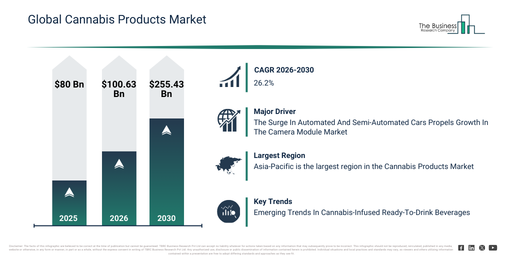
    The market for cannabis products has experienced remarkable expansion in recent times. Valued at $80 billion in 2025, it is projected to reach $100.63 billion by 2026, reflecting a compound annual growth rate (CAGR) of 25.8%. This historic surge can be explained by several factors, including efforts to legalize medical use, a growing understanding of its therapeutic advantages, a larger number of patients seeking relief from chronic pain, early acceptance in North America, and the broadening of networks of authorized dispensaries.

    The cannabis products market is forecasted for exponential expansion in the coming years, reaching a value of $255.43 billion by 2030, with a compound annual growth rate (CAGR) of 26.2%. This anticipated growth during the forecast period is driven by the legalization of recreational use in new geographic areas, a rising consumer preference for edibles and beverages, enhanced extraction and formulation technologies, growing participation from mainstream consumer goods firms, and the increasing integration of cannabis into wellness and lifestyle markets. Key trends shaping the forecast period include product premiumization with strain-specific options, a growing need for non-smokable cannabis formats, the emergence of wellness-focused and functional cannabis products, heightened emphasis on consistent quality and lab testing, and brand distinction achieved through packaging and flavor innovation.

    Download A Free Sample Report For Comprehensive Market Insights:

    https://www.thebusinessresearchcompany.com/sample.aspx?id=2533&type=smp&utm_source=BlogsPR&utm_medium=Paid&utm_campaign=Jul_PR

    Cannabis Products Market Growth Drivers And Industry Catalysts

    The growing appeal of automated and semi-automated vehicles is a major factor driving the expansion of the camera module market. These advanced cars are equipped with an Autonomous Driving System (ADS) that relies on artificial intelligence, integrated cameras, and additional software to either handle all driving responsibilities or offer specific assistance, such as active steering, braking, and acceleration, depending on road conditions and environmental factors. Camera modules play a crucial role in automotive camera systems, forming a key element of the ADS by delivering high-definition visuals that process data for self-driving operations. For example, as reported by Zipdo, a German meeting management and productivity software firm, in June 2023, approximately 8 million semi-autonomous or fully autonomous vehicles are projected to be sold globally by 2026. Consequently, the increasing popularity of automated and semi-automated cars is anticipated to boost the camera module market in the years ahead.

    Cannabis Products Market Segments: Where Are The Largest Growth Opportunities?

    The cannabis products market covered in this report is segmented –

    1) By Product Type: Flower, Concentrates, Other Product Types

    2) By Usage: Medical, Recreational

    3) By Compound: THC-Dominant, CBD-Dominant, Balanced THC And CBD

    4) By Route Of Administration: Oral Solutions And Capsules, Smoking, Vaporizers, Topicals, Other Route Of Administrations

    Subsegments:

    1) By Flower: Dried Flower, Pre-Rolls, Fresh Flower

    2) By Concentrates: Oils, Wax And Shatter, Hash And Rosin, Vape Cartridges

    3) By Other Product Types: Edibles, Beverages, Tinctures And Topicals, Capsules And Pills

    Cannabis Products Market Trends Influencing Long-Term Demand

    Major players in the cannabis products market are placing significant emphasis on developing novel formulations, particularly functional beverages infused with cannabinoids, aimed at improving convenience, absorption rates, and overall user enjoyment. These cannabinoid-enriched functional drinks are pre-packaged beverages created to deliver targeted health or therapeutic advantages by incorporating cannabis compounds. A notable example occurred in January 2024, when Aurora, a Canadian cannabis enterprise, introduced a new cannabis-infused ready-to-drink (RTD) beverage as part of its latest medical product lineup. This drink employs accurate cannabinoid measurement alongside functional components to ensure steady therapeutic outcomes, appealing to both patients and consumers interested in alternative intake methods outside traditional cannabis forms. Through this expansion into RTD beverages, Aurora seeks to capitalize on the rising demand within the medical and wellness cannabis sector, while setting its product range apart with convenient, pre-prepared consumption options.

    Cannabis Products Market Major Participants And Competitive Dynamics

    Major companies operating in the cannabis products market are Medical Marijuana Inc., Tilray Inc., Canopy Growth Corporation, LivWell Enlightened Health LLC, Organigram Holdings Inc., Aphria Inc., Aurora Cannabis Inc., Medicine Man Technologies Inc., MedMen Enterprises Inc., Stenocare A/S, Cronos Group Inc., The Valens Company Inc., Jushi Holdings Inc., Columbia Care Inc., VIVO Cannabis Inc., Terra Tech Corp., United Cannabis Corporation, Tikun Olam Ltd., Noya Inc., Wayland Group Corp., Cannabis Sativa Inc., ABcann Medicinals Inc., CanniMed Therapeutics Inc., Lexaria Bioscience Corp., Cannabis Science Inc.

    Access The Complete Cannabis Products Market Report:

    https://www.thebusinessresearchcompany.com/report/cannabis-products-global-market-report?utm_source=BlogsPR&utm_medium=Paid&utm_campaign=Jul_PR

    Cannabis Products Market Leading Geography: Which Region Generates The Most Revenue?

    Asia-Pacific was the largest region in the camera module market in 2025 and is also expected to be the fastest-growing region in the forecast period. The regions covered in the cannabis products market report are Asia-Pacific, South East Asia, Western Europe, Eastern Europe, North America, South America, Middle East, Africa.

    Get in touch with us:

    The Business Research Company: https://www.thebusinessresearchcompany.com/?utm_source=BlogsPR&utm_medium=Paid&utm_campaign=home_page_test

    Americas: +1 310-496-7795

    Asia: +44 7882 955267 & +91 8897263534

    Europe: +44 7882 955267

    Email us at: marketing@tbrc.info

    Follow us on:

    LinkedIn: https://in.linkedin.com/company/the-business-research-company

    YouTube: https://www.youtube.com/channel/UC24_fI0rV8cR5DxlCpgmyFQ

    Global Market Model: https://www.thebusinessresearchcompany.com/global-market-model
  • Cannabis Capsule Market Size Projected To Increase From $55.59 Billion To $108.48 Billion During The Forecast Period

    Cannabis Capsule Market Size Projected To Increase From $55.59 Billion To $108.48 Billion During The Forecast Period

    Delivering more actionable and strategically valuable research, The Business Research Company’s 2026 market reports feature market attractiveness analysis, total addressable market evaluation, company benchmarking matrices, interactive Excel dashboards, expanded supply chain intelligence, emerging startup coverage, and detailed product insights.

    Cannabis Capsule Market Growth Analysis: How Will Revenue Expand During The Forecast Period?

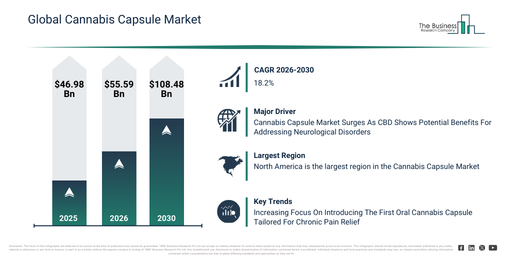
    The market for cannabis capsules has experienced swift expansion in recent times. Projected to rise from $46.98 billion in 2025 to $55.59 billion in 2026, this growth reflects a compound annual growth rate (CAGR) of 18.3%. Several factors have driven this historical upswing, including heightened awareness surrounding the medical advantages of cannabis, legalization efforts in specific areas, a growing inclination toward alternative treatment methods, an increasing prevalence of chronic pain and nausea cases, and technological improvements in how capsules are formulated.

    The cannabis capsule market is projected to experience substantial growth over the coming years, with its valuation anticipated to reach $108.48 billion by 2030, reflecting a compound annual growth rate (CAGR) of 18.2%. This expansion during the forecast period can be attributed to several key factors, including the broadening of legal cannabis markets across the globe, the advancement of targeted cannabinoid therapies, progress in encapsulation technologies, heightened use in hospital and retail pharmacy settings, and an increasing consumer preference for wellness-oriented cannabis products. Among the significant trends shaping this period are the rise of personalized cannabinoid therapy, improvements in drug delivery systems, greater acceptance of medical cannabis, expansion of online pharmacies and e-commerce platforms, and ongoing efforts to achieve regulatory standardization across various regions.

    Download A Free Sample Report For Comprehensive Market Insights:

    https://www.thebusinessresearchcompany.com/sample.aspx?id=13818&type=smp&utm_source=BlogsPR&utm_medium=Paid&utm_campaign=Jul_PR

    Cannabis Capsule Market Opportunity Drivers: What Is Creating New Revenue Potential?

    The cannabis capsule market is anticipated to experience growth due to the rising prevalence of neurological disorders in the coming years. These disorders impact the central and peripheral nervous systems, encompassing the brain and nerves throughout the spinal cord and body. Cannabis capsules, particularly those containing cannabidiol (CBD), are thought to offer therapeutic benefits for such conditions by helping to prevent social recognition memory impairments linked to Alzheimer’s disease, for example. As reported by the World Federation of Neurology, an organization based in the UK, over 40% of the global population currently suffers from a neurological condition as of October 2023, with this figure expected to nearly double by 2050. Consequently, the growing incidence of neurological disorders is fueling expansion in the cannabis capsule market.

    Cannabis Capsule Market Segment Analysis: What Are The Major Market Categories?

    The cannabis capsule market covered in this report is segmented –

    1) By Type: High Tetrahydrocannabinol Capsules, Tetrahydrocannabinol Or Cannabinol Balance Capsule, High Cannabinol Capsules

    2) By Compound: Tetrahydrocannabinol (THC)-Dominant, Cannabidiol (CBD)-Dominant

    3) By End User: Hospital Pharmacies, Retail Pharmacies, Drug Stores, Online Sales

    Subsegments:

    1) By High Tetrahydrocannabinol Capsules: Full-Spectrum Capsules, Isolate Capsules

    2) By Tetrahydrocannabinol Or Cannabinol Balance Capsule: Ratio Capsules, Blend Capsules

    3) By High Cannabinol Capsules: Full-Spectrum CBN Capsules, Isolate CBN Capsules

    Cannabis Capsule Market Innovation Trends Driving Future Development

    Leading firms in the cannabis capsule sector are actively developing new products, including oral cannabis capsules, to secure a market advantage. These capsules deliver cannabis compounds, like oil or decarboxylated flower, in a convenient pill format. A relevant example occurred in January 2023, when Holistic Industries, an organic medical cannabis company based in the US, unveiled CANNACEUTICA. This marked the debut of an oral cannabis capsule in the USA, designed with dosing instructions specifically created and tested for individuals dealing with chronic pain. As an innovative substitute for opioids, it provides evidence-based support and straightforward dosage recommendations. Each bottle includes an Easy Dose Chart and clear guidelines to help consumers determine their ideal amount, with a suggested initial dose of 2.5 milligrams of THC.

    Cannabis Capsule Market Leading Companies Driving Competitive Growth

    Major companies operating in the cannabis capsule market are GW Pharmaceuticals PLC, Trulieve Cannabis Corp., Green Thumb Industries Inc., Tilray Inc., Columbia Care Inc., Aphria Inc., Curaleaf Holdings Inc., Canopy Growth Corporation, Cresco Labs Inc., Aurora Cannabis Inc., Organigram Holdings Inc., Harvest Health & Recreation Inc., Cronos Group Inc., TerrAscend Corp., Vireo Health International Inc., Charlotte’s Web Holdings Inc., The Valens Company Inc., Acreage Holdings Inc., Neptune Wellness Solutions Inc., CannTrust Holdings Inc., Valens Company Inc., HEXO Corp., Cann Group Limited, Plus Products Inc., Heritage Cannabis Holdings Corp., PharmaCielo Ltd., MediPharm Labs Corp., Sundial Growers Inc., MedReleaf Corp., Wana Brands

    Access The Complete Cannabis Capsule Market Report:

    https://www.thebusinessresearchcompany.com/report/cannabis-capsule-global-market-report?utm_source=BlogsPR&utm_medium=Paid&utm_campaign=Jul_PR

    Cannabis Capsule Market Regional Outlook: Where Are The Largest Opportunities Located?

    North America was the largest region in the cannabis capsule market in 2025. The regions covered in the cannabis capsule market report are Asia-Pacific, South East Asia, Western Europe, Eastern Europe, North America, South America, Middle East, Africa.

    Get in touch with us:

    The Business Research Company: https://www.thebusinessresearchcompany.com/?utm_source=BlogsPR&utm_medium=Paid&utm_campaign=home_page_test

    Americas: +1 310-496-7795

    Asia: +44 7882 955267 & +91 8897263534

    Europe: +44 7882 955267

    Email us at: marketing@tbrc.info

    Follow us on:

    LinkedIn: https://in.linkedin.com/company/the-business-research-company

    YouTube: https://www.youtube.com/channel/UC24_fI0rV8cR5DxlCpgmyFQ

    Global Market Model: https://www.thebusinessresearchcompany.com/global-market-model
  • Epilepsy Drugs Market Expansion Is Reshaping Competitive Dynamics Across The Industry

    Epilepsy Drugs Market Expansion Is Reshaping Competitive Dynamics Across The Industry

    Through market attractiveness analysis, total addressable market evaluation, company benchmarking matrices, interactive Excel dashboards, expanded supply chain intelligence, emerging startup coverage, and detailed product insights, The Business Research Company’s 2026 market reports provide more actionable and strategically valuable research.

    Epilepsy Drugs Market Size And Revenue Forecast Through 2030

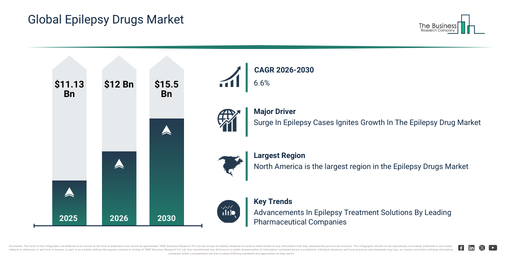
    The epilepsy drugs market has seen substantial expansion in recent times. Valued at $11.13 billion in 2025, it is projected to reach $12 billion by 2026, reflecting a compound annual growth rate (CAGR) of 7.8%. Several factors drove this historical growth, including the persistent prevalence of epilepsy across all age demographics, the well-established clinical application of first-generation antiepileptic medications, the broadening of neurology care services, the accessibility of cost-effective generic antiseizure drugs, and a rising number of diagnosed seizure disorders.

    The market for epilepsy drugs is anticipated to experience considerable expansion over the coming years, with projections indicating it will reach $15.5 billion by 2030, driven by a compound annual growth rate of 6.6%. This upward trend in the forecast period is fueled by factors such as the increasing worldwide prevalence of epilepsy, a higher uptake of modern antiepileptic medications, enhanced understanding of epilepsy management strategies, improved availability of neurological healthcare across emerging economies, and a growing need for medications with superior safety and tolerability. Key developments expected in this timeframe involve a persistent demand for broad-spectrum antiepileptic drugs, a rising utilization of second- and third-generation anti-epileptics, an intensified emphasis on therapies that ensure long-term seizure control, a growing preference for oral formulations of antiepileptic agents, and an ongoing reliance on combination drug therapies as a standard approach for managing epilepsy.

    Download A Free Sample Report For Comprehensive Market Insights:

    https://www.thebusinessresearchcompany.com/sample.aspx?id=15564&type=smp&utm_source=BlogsPR&utm_medium=Paid&utm_campaign=Jul_PR

    #Epilepsy Drugs Market Growth Factors: Which Forces Are Supporting Market Expansion?

    The expected growth of the epilepsy drug market is being driven by the increasing prevalence of epilepsy. This neurological condition is marked by recurring seizures that vary in intensity and effect on daily activities. Older adults and individuals who have survived traumatic brain injuries, strokes, brain tumors, or other neurological disorders face a heightened risk of developing epilepsy. These medications function by stabilizing the brain’s electrical activity, thereby decreasing both the frequency and severity of seizures, which aids in better management and control of the condition. For example, in February 2024, the World Health Organization, a US-based national agency, reported that approximately 5 million people worldwide are diagnosed with epilepsy each year. In high-income countries, there are about 49 new cases per 100,000 people annually, whereas in low- and middle-income countries, this rate can reach up to 139 cases per 100,000. Consequently, the rising number of individuals affected by epilepsy is fueling the expansion of the epilepsy drug market.

    Epilepsy Drugs Market Segment Outlook: Which Categories Are Expanding The Fastest?

    The epilepsy drugs market covered in this report is segmented –

    1) By Seizure Type: Focal Seizures, Generalized Seizures

    2) By Generation Type: First Generation Anti-Epileptics, Second Generation Anti-Epileptics, Third Generation Anti-Epileptics

    3) By Route Of Administration: Oral, Intravenous, Intra-Muscular

    4) By Distribution Channel: Drug Stores And Retail Pharmacies, Hospital Pharmacies

    Subsegments:

    1) By Focal Seizures: Simple Focal Seizures, Complex Focal Seizures

    2) By Generalized Seizures: Tonic-Clonic Seizures (Grand Mal), Absence Seizures (Petit Mal), Myoclonic Seizures, Tonic Seizures, Atonic Seizures

    Epilepsy Drugs Market Industry Trends: What Changes Are Reshaping Demand?

    Leading pharmaceutical players within the epilepsy market are concentrating their efforts on pioneering innovative therapies aimed at improving seizure management and elevating patients’ quality of life. Such cutting-edge epilepsy solutions encompass novel drug formulations, advanced neurostimulation techniques, precision medicine strategies customized for individual needs, gene therapies, and emerging technologies like closed-loop systems for detecting and responding to seizures. As an example, in January 2024, Akumentis Healthcare, a pharmaceutical firm headquartered in India, introduced Clasepi, a prescription cannabidiol (CBD) medication specifically developed to address seizures in patients aged one year and older with Lennox-Gastaut Syndrome (LGS), Dravet Syndrome, or Tuberous Sclerosis Complex (TSC). This drug received approval from the Drug Controller General of India (DCGI) and has shown effectiveness in curbing seizure activity, especially in situations where standard anti-seizure medications have failed to produce results.

    Epilepsy Drugs Market Key Companies And Competitive Benchmarking

    Major companies operating in the epilepsy drugs market are Pfizer Inc, SK Biopharmaceuticals, Sanofi, Abbott Laboratories, Novartis AG, GlaxoSmithKline plc, H. Lundbeck, Viatris, Otsuka America Pharmaceutical Inc, Bausch Health Companies Inc, UCB S.A, Sun Pharmaceutical Industries Ltd, Eisai Co Ltd, Sumitomo Pharma Co Ltd, Jazz Pharmaceuticals plc, Dr. Reddy’s Laboratories Ltd, Angelini S.p.a, Amneal Pharmaceuticals, Alkem Laboratories, Sunovion Pharmaceuticals Inc, Upsher-Smith, Zogenix, Neurelis Inc

    Access The Complete Epilepsy Drugs Market Report:

    https://www.thebusinessresearchcompany.com/report/epilepsy-drugs-global-market-report?utm_source=BlogsPR&utm_medium=Paid&utm_campaign=Jul_PR

    Epilepsy Drugs Market Regional Distribution: Which Areas Drive Market Expansion?

    North America was the largest region in the epilepsy drugs market in 2025. The regions covered in the epilepsy drugs market report are Asia-Pacific, South East Asia, Western Europe, Eastern Europe, North America, South America, Middle East, Africa.

    Get in touch with us:

    The Business Research Company: https://www.thebusinessresearchcompany.com/?utm_source=BlogsPR&utm_medium=Paid&utm_campaign=home_page_test

    Americas: +1 310-496-7795

    Asia: +44 7882 955267 & +91 8897263534

    Europe: +44 7882 955267

    Email us at: marketing@tbrc.info

    Follow us on:

    LinkedIn: https://in.linkedin.com/company/the-business-research-company

    YouTube: https://www.youtube.com/channel/UC24_fI0rV8cR5DxlCpgmyFQ

    Global Market Model: https://www.thebusinessresearchcompany.com/global-market-model
  • Enzyme Replacement Therapy Market Forecast Highlights Expansion From $13.42 Billion To $19.28 Billion Through 2030

    Enzyme Replacement Therapy Market Forecast Highlights Expansion From $13.42 Billion To $19.28 Billion Through 2030

    Enhanced with market attractiveness analysis, total addressable market evaluation, company benchmarking matrices, interactive Excel dashboards, expanded supply chain intelligence, emerging startup coverage, and detailed product insights, The Business Research Company’s 2026 market reports deliver more actionable and strategically valuable research.

    Enzyme Replacement Therapy Market Size Forecast: How Large Could The Market Become By 2030?

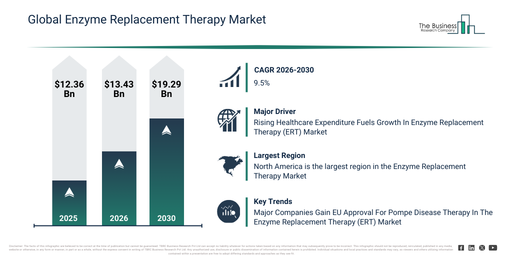
    The enzyme replacement therapy market has experienced robust expansion over the past few years, with projections indicating a rise from $12.36 billion in 2025 to $13.43 billion in 2026, reflecting a compound annual growth rate (CAGR) of 8.6%. This historical growth has been largely driven by several key factors: the escalating incidence of lysosomal storage disorders, significant progress in recombinant DNA technology, heightened awareness surrounding rare diseases, improved hospital infrastructure, and supportive government policies aimed at treating rare conditions.

    The enzyme replacement therapy market is projected to experience robust growth over the coming years, reaching $19.29 billion by 2030 with a compound annual growth rate (CAGR) of 9.5%. This anticipated expansion in the forecast period is driven by the broadening scope of precision medicine, the creation of advanced enzyme formulations, a higher uptake of home infusion therapies, the incorporation of digital health technologies, and an increase in partnerships between biotechnology firms and research organizations. Key developments shaping this period include the rise of customized enzyme replacement treatments, the broadening of initiatives targeting rare diseases, the advancement of enzymes with prolonged activity, the implementation of less invasive delivery methods, and the use of real-world evidence to refine therapeutic approaches.

    Download A Free Sample Report For Comprehensive Market Insights:

    https://www.thebusinessresearchcompany.com/sample.aspx?id=10512&type=smp&utm_source=BlogsPR&utm_medium=Paid&utm_campaign=Jul_PR

    Enzyme Replacement Therapy Market Expansion Supported By Key Demand Factors

    The anticipated growth of the enzyme replacement therapy (ERT) market is being driven by increasing healthcare spending. This spending encompasses all financial resources allocated to healthcare services, associated goods, and related activities within a given system or economy over a set timeframe. Such expenditures are crucial for ERT because these specialized and often costly treatments require significant investment in research and development, as well as clinical trials and testing. As an example, the Centers for Medicare & Medicaid Services (CMS), a federal agency in the US, reported that in June 2025, National Health Expenditure (NHE) rose by 7.5% to $4.9 trillion in 2023, equating to $14,570 per person and representing 17.6% of the Gross Domestic Product (GDP). Additionally, hospital expenditures saw a 10.4% increase to $1,519.7 billion in 2023, a faster pace compared to the 3.2% growth recorded in 2022. Consequently, the upward trend in healthcare spending is fueling the expansion of the enzyme replacement therapy (ERT) market.

    Enzyme Replacement Therapy Market Segmentation: How Is The Market Structured Across Key Categories?

    The enzyme replacement therapy market covered in this report is segmented –

    1) By Enzyme Type: Agalsidase Alfa, Agalsidase Beta, Galsulfase, Other Enzyme Types

    2) By Route Of Administration: Oral, Parenteral

    3) By Application: Gaucher Disease, Pompe Disease, Fabry Disease, Other Applications

    4) By End-Users: Hospitals, Infusion Centers, Other End-Users

    Enzyme Replacement Therapy Market Growth Trends Influencing Competitive Dynamics

    Key players in the enzyme replacement therapy (ERT) market are prioritizing the development of novel treatment options and securing regulatory approvals for Pompe disease therapies to address the unmet needs of patients with late-onset Pompe disease. For example, in June 2023, Amicus Therapeutics, a biotechnology firm based in the United States, received approval and introduced a new Pompe disease therapy in the European Union, driven by clinical evidence, the potential market demand, and regulatory encouragement. This therapy, combining Pombiliti (cipaglucosidase alfa) with Opfolda (miglustat), serves as an enzyme replacement treatment specifically designed for adults suffering from late-onset Pompe disease.

    Enzyme Replacement Therapy Market Competitive Landscape And Leading Companies

    Major companies operating in the enzyme replacement therapy market are Biomarin Pharmaceutical Inc., Leadiant Biosciences Inc., Pfizer Inc., Sanofi S.A., AbbVie Inc., Alexion Pharmaceuticals Inc., Recordati Rare Diseases Inc., JCR Pharmaceuticals Co. Ltd., Horizon Pharma Public Limited Company, Protalix Biotherapeutics Ltd., Amicus Therapeutics Inc., AstraZeneca plc, Novartis AG, Roche Holding AG, GlaxoSmithKline plc, Merck & Co. Inc., Eli Lilly and Company, Bristol-Myers Squibb Company, Retrophin Inc., Abeona Therapeutics Inc., Orchard Therapeutics plc, Ultragenyx Pharmaceutical Inc.

    Access The Complete Enzyme Replacement Therapy Market Report:

    https://www.thebusinessresearchcompany.com/report/enzyme-replacement-therapy-global-market-report?utm_source=BlogsPR&utm_medium=Paid&utm_campaign=Jul_PR

    Enzyme Replacement Therapy Market Regional Analysis: Which Region Leads By Revenue?

    North America was the largest region in the enzyme replacement therapy market in 2025. Asia-Pacific is expected to be the fastest-growing region in the global enzyme replacement therapy market report during the forecast period. The regions covered in the enzyme replacement therapy market report are Asia-Pacific, South East Asia, Western Europe, Eastern Europe, North America, South America, Middle East, Africa.

    Get in touch with us:

    The Business Research Company: https://www.thebusinessresearchcompany.com/?utm_source=BlogsPR&utm_medium=Paid&utm_campaign=home_page_test

    Americas: +1 310-496-7795

    Asia: +44 7882 955267 & +91 8897263534

    Europe: +44 7882 955267

    Email us at: marketing@tbrc.info

    Follow us on:

    LinkedIn: https://in.linkedin.com/company/the-business-research-company

    YouTube: https://www.youtube.com/channel/UC24_fI0rV8cR5DxlCpgmyFQ

    Global Market Model: https://www.thebusinessresearchcompany.com/global-market-model
  • Enzyme Inhibitor Market Expected To Reach $232.05 Billion By 2030 As Growth Accelerates At 4.4% CAGR

    Enzyme Inhibitor Market Expected To Reach $232.05 Billion By 2030 As Growth Accelerates At 4.4% CAGR

    Through market attractiveness analysis, total addressable market evaluation, company benchmarking matrices, interactive Excel dashboards, expanded supply chain intelligence, emerging startup coverage, and detailed product insights, The Business Research Company’s 2026 market reports provide more actionable and strategically valuable research.

    Enzyme Inhibitor Market Revenue Outlook: What CAGR Is Expected Through 2030?

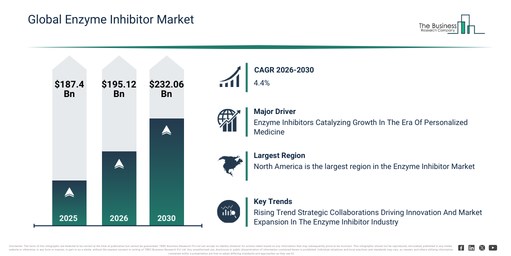
    The enzyme inhibitor market has experienced consistent expansion in recent years, with projections indicating an increase from $187.4 billion in 2025 to $195.12 billion in 2026, reflecting a compound annual growth rate (CAGR) of 4.1%. This historical growth has been driven by factors such as the rising incidence of chronic diseases, heightened investment in pharmaceutical research and development, robust demand for proton pump inhibitors and statins, a growing elderly demographic, and the broader availability of generic enzyme inhibitor medications.

    The size of the enzyme inhibitor market is predicted to experience consistent growth over the coming years. By 2030, it is projected to reach $232.06 billion, reflecting a compound annual growth rate (CAGR) of 4.4%. This anticipated expansion during the forecast period is driven by progress in precision medicine, a growing number of oncology drug pipelines, heightened investments in the biotechnology sector, an increased need for personalized treatment approaches, and broader usage in industries outside of pharmaceuticals. Key developments shaping this period include the growing embrace of targeted enzyme inhibitor therapies, the greater incorporation of these inhibitors in managing chronic diseases, enhanced research efforts focused on creating safer and more selective inhibitors, a broader application of enzyme inhibitors beyond therapeutic uses, and a notable shift towards employing combination drug strategies.

    Download A Free Sample Report For Comprehensive Market Insights:

    https://www.thebusinessresearchcompany.com/sample.aspx?id=6728&type=smp&utm_source=BlogsPR&utm_medium=Paid&utm_campaign=Jul_PR

    Enzyme Inhibitor Market Growth Drivers And Industry Catalysts

    The enzyme inhibitor market is anticipated to experience growth over the coming years, fueled by a rising demand for personalized medicine. This healthcare approach, also known as precision medicine, customizes treatment based on an individual’s unique genetic profile, environment, and lifestyle. Its increasing adoption is propelled by progress in targeted therapies, precise diagnostics, and drug development, where enzyme inhibitors are essential as they are specifically designed for particular patients or disease subtypes. To illustrate, in February 2024, the Personalised Medicine Coalition, a US-based hospital and healthcare organization, reported that in 2023, the FDA approved 16 new personalized treatments for rare disease patients, compared to just 6 in 2022. As a result, the growing need for personalized medicine is accelerating the expansion of the enzyme inhibitor market.

    Enzyme Inhibitor Market Segmentation Trends And Revenue Drivers

    The enzyme inhibitor market covered in this report is segmented –

    1) By Type: Proton Pump Inhibitors (PPIs), Protease Inhibitors, Reverse Transcriptase Inhibitors, Aromatase Inhibitors, Kinase Inhibitors, Neuraminidase Inhibitors, Statins, Other Types

    2) By Disease Indication: Chronic Obstructive Pulmonary Disorders, Cardiovascular Disease, Gastrointestinal Disorders, Arthritis, Inflammatory Diseases, Other Disease Indications

    3) By Application: Chemotherapy, Antibiotics, Pesticides, Cardiovascular Treatments, Other Applications

    4) By End User: Pharmaceutical, Biotechnology, Food And Beverage, Other End Users

    Subsegments:

    1) By Proton Pump Inhibitors (PPIs): Omeprazole, Esomeprazole, Lansoprazole, Pantoprazole, Rabeprazole

    2) By Protease Inhibitors: Ritonavir, Lopinavir, Atazanavir, Saquinavir, Darunavir

    3) By Reverse Transcriptase Inhibitors: NRTIs (Nucleoside Reverse Transcriptase Inhibitors), NNRTIs (Non-Nucleoside Reverse Transcriptase Inhibitors)

    4) By Aromatase Inhibitors: Anastrozole, Letrozole, Exemestane

    5) By Kinase Inhibitors: BCR-ABL Inhibitors, EGFR Inhibitors, ALK Inhibitors, MEK Inhibitors

    6) By Neuraminidase Inhibitors: Oseltamivir, Zanamivir, Peramivir

    7) By Statins: Atorvastatin, Simvastatin, Rosuvastatin, Lovastatin

    8) By Other Types: Antifolates, Phosphodiesterase Inhibitors, Cyclooxygenase Inhibitors

    Enzyme Inhibitor Market Trends Influencing Long-Term Demand

    Key players in the enzyme inhibitor market are prioritizing innovative therapeutic strategies, including selective kinase inhibitors, to enhance treatment options and clinical results for a wide range of diseases. Jaypirca (pirtobrutinib) is a highly selective, non-covalent Bruton’s tyrosine kinase (BTK) inhibitor that has received FDA approval for use in adult patients with relapsed or refractory mantle cell lymphoma following at least two prior lines of systemic therapy. As an example, in January 2023, Loxo Oncology at Lilly, the oncology division of the US-based pharmaceutical company Eli Lilly and Company, introduced Jaypirca tablets. This drug is the first and only non-covalent (reversible) BTK inhibitor to gain approval from the Food and Drug Administration, a US health regulatory body. This milestone marks a notable leap forward for MCL patients who face limited options after falling back on existing therapies. By offering a fresh method of attacking the BTK pathway, Jaypirca may enhance outcomes for this specific group.

    Enzyme Inhibitor Market Industry Leaders: Which Organizations Are Driving Competition?

    Major companies operating in the enzyme inhibitor market are Abbott Laboratories, Amgen Inc., AstraZeneca plc, Bayer AG, F. Hoffmann-La Roche AG, Pfizer Inc., Takeda Pharmaceutical Company, Merck and Co. Inc., Eli Lilly and Company, Bristol-Myers Squibb Company, Cipla USA Inc., AbbVie Inc., Teva Pharmaceutical Industries Ltd., Janssen Pharmaceuticals, Acellera Ltd., BioSolveIT GmbH, Cresset BioMolecular Discovery Ltd., Dotmatics Limited, Inte:Ligand GmbH, LeadIT, Chemical Computing Group Inc.

    Access The Complete Enzyme Inhibitor Market Report:

    https://www.thebusinessresearchcompany.com/report/enzyme-inhibitor-global-market-report?utm_source=BlogsPR&utm_medium=Paid&utm_campaign=Jul_PR

    Enzyme Inhibitor Market Geographic Distribution And Regional Opportunities

    North America was the largest region in the enzyme inhibitor market in 2025. Asia-Pacific is expected to be the fastest-growing region in the forecast period. The regions covered in the enzyme inhibitor market report are Asia-Pacific, South East Asia, Western Europe, Eastern Europe, North America, South America, Middle East, Africa.

    Get in touch with us:

    The Business Research Company: https://www.thebusinessresearchcompany.com/?utm_source=BlogsPR&utm_medium=Paid&utm_campaign=home_page_test

    Americas: +1 310-496-7795

    Asia: +44 7882 955267 & +91 8897263534

    Europe: +44 7882 955267

    Email us at: marketing@tbrc.info

    Follow us on:

    LinkedIn: https://in.linkedin.com/company/the-business-research-company

    YouTube: https://www.youtube.com/channel/UC24_fI0rV8cR5DxlCpgmyFQ

    Global Market Model: https://www.thebusinessresearchcompany.com/global-market-model
  • Environmental Biotechnology Market Set To Grow From $18.38 Billion In 2026 To $34.68 Billion By 2030 At A CAGR Of 17.2%

    Environmental Biotechnology Market Set To Grow From $18.38 Billion In 2026 To $34.68 Billion By 2030 At A CAGR Of 17.2%

    Delivering more actionable and strategically valuable research, The Business Research Company’s 2026 market reports feature market attractiveness analysis, total addressable market evaluation, company benchmarking matrices, interactive Excel dashboards, expanded supply chain intelligence, emerging startup coverage, and detailed product insights.

    Environmental Biotechnology Market Growth Analysis: How Will Revenue Expand During The Forecast Period?

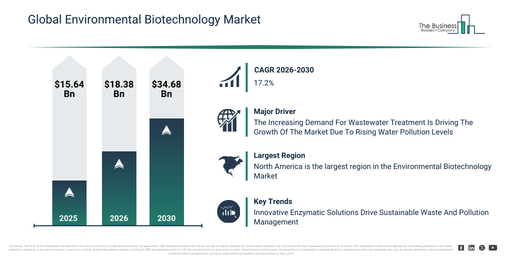
    The environmental biotechnology market has experienced robust expansion in recent years, with its value projected to increase from $15.64 billion in 2025 to $18.38 billion in 2026, reflecting a compound annual growth rate (CAGR) of 17.5%. Historical growth has been driven by several factors, including limited understanding of environmental biotechnology options, continued dependence on traditional chemical methods, rising volumes of industrial wastewater, insufficient regulatory structures governing microbial use, and gradual uptake in the agriculture and waste management sectors.

    The environmental biotechnology market is projected to experience rapid expansion over the coming years, reaching an estimated value of $34.68 billion by 2030, driven by a compound annual growth rate (CAGR) of 17.2%. This forecasted growth is fueled by key developments such as advancements in microbial consortia and enzyme formulations, enhanced government incentives promoting sustainable practices, stricter environmental regulations focused on wastewater and soil treatment, broader industrial and agricultural bioremediation applications, and increased investment in genetically engineered microorganisms. Notable trends shaping the market include a rising preference for microbial blends in waste treatment, expanded use of enzymes for pollution control, greater implementation of nutrient-based bioremediation strategies, increased focus on soil and water bioremediation solutions, and a growing emphasis on genetically engineered microorganisms to address environmental challenges.

    Download A Free Sample Report For Comprehensive Market Insights:

    https://www.thebusinessresearchcompany.com/sample.aspx?id=25762&type=smp&utm_source=BlogsPR&utm_medium=Paid&utm_campaign=Jul_PR

    Environmental Biotechnology Market Opportunity Drivers: What Is Creating New Revenue Potential?

    Rising demand for wastewater treatment is anticipated to drive growth in the environmental biotechnology sector in the coming years. This treatment process involves removing contaminants, pollutants, and harmful substances from used or dirty water, ensuring it is safe for environmental release or reuse. This growing demand largely stems from escalating water pollution levels, which endanger public health, ecosystems, and the availability of clean water. Environmental biotechnology leverages biological processes and organisms to enhance wastewater treatment by efficiently breaking down pollutants, reducing hazardous waste, and promoting cleaner water discharge. For example, as per a 2024 report published by the American Society of Civil Engineers, a US-based professional body, the estimated annual investment shortfall for water infrastructure—covering drinking water, wastewater, and stormwater—stood at $99 billion in 2025, up from $81 billion in the previous year. Consequently, the increasing need for wastewater treatment is fueling market expansion in environmental biotechnology.

    Environmental Biotechnology Market Segment Analysis Highlighting Growth Areas

    The environmental biotechnology market covered in this report is segmented –

    1) By Product: Microbial Blends, Nutrients, Enzymes, Microbes

    2) By Technology: Cell-Based Assays, Nanobiotechnology, Fermentation, Deoxyribonucleic Acid (DNA) Sequencing, Polymerase Chain Reaction Technology, Other Technologies

    3) By Application: Wastewater Treatment, Bioremediation, Other Applications

    4) By End User: Agriculture, Water Treatment, Energy, Waste Management, Food And Beverage, Pharmaceuticals

    Subsegments:

    1) By Microbial Blends: Bioaugmentation Blends, Bioremediation Microbial Consortia, Waste Decomposition Microbial Mixes, Odor Control Microbial Formulations

    2) By Nutrients: Nitrogen Supplements, Phosphorus Additives, Trace Mineral Blends, Carbon Source Additives

    3) By Enzymes: Waste Degrading Enzymes, Oil And Grease-Degrading Enzymes, Sludge Reduction Enzymes, Odor Control Enzymes

    4) By Microbes: Bacteria, Fungi, Algae, Genetically Engineered Microorganisms

    Environmental Biotechnology Market Innovation Trends Driving Future Development

    Key players within the environmental biotechnology sector are concentrating their efforts on creating advanced innovations, among them enzyme-based biocatalysts, to improve both the effectiveness and eco-friendliness of pollution management and waste handling systems. These particular biocatalysts, derived from biological molecules, speed up chemical reactions, making it possible to achieve quicker and more efficient outcomes in environmental tasks like breaking down waste and eliminating harmful contaminants. Take November 2024 as an example: Novonesis A/S, a biotechnology firm headquartered in Denmark, unveiled Eversa Advance. This enzymatic biosolution was designed to boost the efficiency and sustainability of processing biodiesel feedstocks, specifically targeting materials that contain as much as 20% free fatty acids. With this novel offering, biodiesel manufacturers can now handle waste-derived feedstocks without relying on acid esterification, reducing their pretreatment operational expenses by up to 45% and consequently minimizing equipment degradation and downtime. By offering greater feedstock adaptability, this innovation enhances plant profitability and encourages a more eco-friendly approach to biodiesel production.

    Environmental Biotechnology Market Leading Companies: Who Holds Significant Market Presence?

    Major companies operating in the environmental biotechnology market are BASF SE, Dow Chemical Company, Evonik Industries AG, Ecolab Inc., DuPont de Nemours Inc., Suez SA, Novonesis A/S, Ginkgo Bioworks Holdings Inc., Praj Industries Limited, Genomatica Inc., LanzaTech Global Inc., Biorem Inc., Green Biologics Ltd., Veolia Environnement S.A.

    Access The Complete Environmental Biotechnology Market Report:

    https://www.thebusinessresearchcompany.com/report/environmental-biotechnology-global-market-report?utm_source=BlogsPR&utm_medium=Paid&utm_campaign=Jul_PR

    Environmental Biotechnology Market Largest Region By Revenue And Market Share

    North America was the largest region in the environmental biotechnology market in 2025. The regions covered in the environmental biotechnology market report are Asia-Pacific, South East Asia, Western Europe, Eastern Europe, North America, South America, Middle East, Africa.

    Get in touch with us:

    The Business Research Company: https://www.thebusinessresearchcompany.com/?utm_source=BlogsPR&utm_medium=Paid&utm_campaign=home_page_test

    Americas: +1 310-496-7795

    Asia: +44 7882 955267 & +91 8897263534

    Europe: +44 7882 955267

    Email us at: marketing@tbrc.info

    Follow us on:

    LinkedIn: https://in.linkedin.com/company/the-business-research-company

    YouTube: https://www.youtube.com/channel/UC24_fI0rV8cR5DxlCpgmyFQ

    Global Market Model: https://www.thebusinessresearchcompany.com/global-market-model
  • Enteral Feeding Formula Market Opportunities Are Emerging Beyond Traditional Growth Areas

    Enteral Feeding Formula Market Opportunities Are Emerging Beyond Traditional Growth Areas

    Enhanced with market attractiveness analysis, total addressable market evaluation, company benchmarking matrices, interactive Excel dashboards, expanded supply chain intelligence, emerging startup coverage, and detailed product insights, The Business Research Company’s 2026 market reports deliver more actionable and strategically valuable research.

    Enteral Feeding Formula Market Forecast: What Market Value Is Expected By 2030?

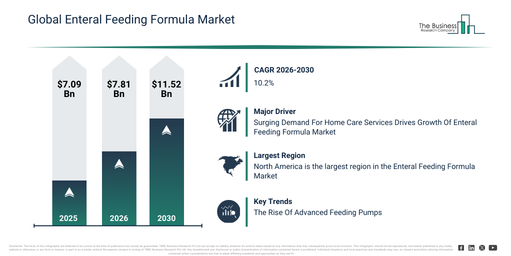
    The enteral feeding formula market has experienced swift expansion in recent times, with its valuation climbing from $7.09 billion in 2025 to $7.81 billion in 2026, achieving a compound annual growth rate (CAGR) of 10.1%. This surge during the historical phase was driven by a higher number of ICU admissions, a growing incidence of chronic conditions, an expanding elderly demographic, improved hospital infrastructure, and enhanced recognition of the importance of clinical nutrition.

    The enteral feeding formula market is projected to experience substantial expansion over the coming years, reaching an estimated $11.52 billion by 2030, driven by a compound annual growth rate (CAGR) of 10.2%. This anticipated growth during the forecast period is fueled by several key factors, including the expansion of home healthcare nutrition, a rise in the prevalence of cancer and neurological disorders, a growing demand for tailored nutritional solutions, technological advancements in feeding tubes and pumps, and improved healthcare accessibility in developing regions. Notable trends shaping this period encompass a heightened focus on disease-specific enteral formulas, a greater emphasis on high-protein and specialized nutrition, increased adoption of pediatric enteral nutrition, broader utilization of enteral feeding within home care environments, and ongoing innovations aimed at enhancing taste, texture, and patient tolerance.

    Download A Free Sample Report For Comprehensive Market Insights:

    https://www.thebusinessresearchcompany.com/sample.aspx?id=7744&type=smp&utm_source=BlogsPR&utm_medium=Paid&utm_campaign=Jul_PR

    Enteral Feeding Formula Market Growth Momentum: Which Factors Are Influencing Demand?

    The market for enteral feeding formulas is anticipated to be driven forward by a rising need for home care services. These services encompass a broad spectrum of assistance provided to individuals who require help with daily tasks while preferring to stay in their own homes. In home settings, enteral feeding is being utilized more frequently for patients needing extended nutritional support. As an example, data from November 2024 released by the U.S. Bureau of Labor Statistics—a federal agency in the United States—revealed that in May 2023, New York had 60 home health and personal care aide positions per 1,000 people, a rate 2.5 times greater than the national figure of 24 per 1,000. Consequently, this growing demand for home-based care is set to fuel expansion in the enteral feeding formula market.

    Enteral Feeding Formula Market Segment Performance And Strategic Opportunities

    The enteral feeding formula market covered in this report is segmented –

    1) By Product: Standard Formulas, Disease-Specific Formulas

    2) By Stage: Adults, Pediatrics

    3) By Application: Oncology, Gastroenterology, Neurology, Diabetes, Critical Care, Other Applications

    4) By End User: Hospitals, Long-Term Care Facilities

    Subsegments:

    1) By Standard Formulas: Polymer-Based Formulas, Oligomeric Formulas, High-Protein Formulas

    2) By Disease-Specific Formulas: Diabetic Formulas, Renal Formulas, Pulmonary Formulas, Oncology Formulas

    Enteral Feeding Formula Market Trends Reshaping Industry Growth

    Key players in the enteral feeding formulas market are actively innovating with advanced products, including specialized enteral feeding pumps, to strengthen their market offerings. An enteral feeding pump is a medical device that delivers liquid nutrition directly to a patient’s stomach or intestines via a feeding tube, allowing for accurate and controlled nutrient administration for those unable to eat orally. In September 2023, Cardinal Health, a US-based healthcare firm, introduced the Kangaroo OMNI enteral feeding pump, which is designed to give patients personalized feeding options with portability and versatility for managing thick formulas and hydration across different settings. This pump features enhanced water resistance for cleaning under running water and includes compatible accessories like a pole clamp and table stand, while also offering multilingual screen display in 19 languages.

    Enteral Feeding Formula Market Key Players: Which Companies Shape Industry Competition?

    Major companies operating in the enteral feeding formula market are Abbott Laboratories, Nestlé S.A., Danone S.A., Fresenius Kabi AG, B. Braun Melsungen AG, Meiji Holdings Co. Ltd., Real Food Blends, Ajinomoto Cambrooke Inc., Otsuka Pharmaceutical Co. Ltd., Medtrition Inc., Nutri-Force Nutrition, Global Health Product Inc., VICTUS, Kate Farms, Baxter International Inc., Perrigo Nutritionals LLC, Reckitt Benckiser Group plc, Bio-Serv Inc., Nutrabalace Ltd., Med-Diet Laboratories Inc., Precision Foods-Kent Corporation, SimplyThick LLC, Vitaflow LLC

    Access The Complete Enteral Feeding Formula Market Report:

    https://www.thebusinessresearchcompany.com/report/enteral-feeding-formula-global-market-report?utm_source=BlogsPR&utm_medium=Paid&utm_campaign=Jul_PR

    Enteral Feeding Formula Market Regional Analysis And Leading Geography

    North America was the largest region in the enteral feeding formula market in 2025. Asia-Pacific is expected to be the fastest-growing region in the forecast period. The regions covered in the enteral feeding formula market report are Asia-Pacific, South East Asia, Western Europe, Eastern Europe, North America, South America, Middle East, Africa.

    Get in touch with us:

    The Business Research Company: https://www.thebusinessresearchcompany.com/?utm_source=BlogsPR&utm_medium=Paid&utm_campaign=home_page_test

    Americas: +1 310-496-7795

    Asia: +44 7882 955267 & +91 8897263534

    Europe: +44 7882 955267

    Email us at: marketing@tbrc.info

    Follow us on:

    LinkedIn: https://in.linkedin.com/company/the-business-research-company

    YouTube: https://www.youtube.com/channel/UC24_fI0rV8cR5DxlCpgmyFQ

    Global Market Model: https://www.thebusinessresearchcompany.com/global-market-model
  • Entecavir Market Expansion Is Opening New Pathways For Strategic Investment

    Entecavir Market Expansion Is Opening New Pathways For Strategic Investment

    Through market attractiveness analysis, total addressable market evaluation, company benchmarking matrices, interactive Excel dashboards, expanded supply chain intelligence, emerging startup coverage, and detailed product insights, The Business Research Company’s 2026 market reports provide more actionable and strategically valuable research.

    Entecavir Market Size Outlook: How Fast Will Revenue Grow Through 2030?

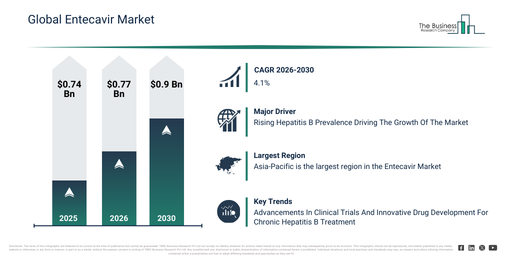
    The entecavir market has experienced consistent expansion over recent years, with projections indicating an increase from $0.74 billion in 2025 to $0.77 billion in 2026, reflecting a compound annual growth rate (CAGR) of 4.2%. This historical growth is largely driven by the widespread prevalence of hepatitis B worldwide, the clinical effectiveness of nucleoside analogs, the broadening of antiviral treatment protocols, enhanced diagnosis rates for hepatitis B, and the growing burden of liver diseases.

    The market for entecavir is projected to experience consistent expansion over the coming years, reaching a valuation of $0.9 billion by 2030 with a compound annual growth rate (CAGR) of 4.1%. This anticipated growth during the forecast period is driven by factors such as the enlargement of the chronic hepatitis B patient population, improved accessibility to antiviral treatments in emerging economies, a greater emphasis on long-term viral suppression strategies, the broadening of public health initiatives targeting hepatitis, and an uptick in demand for cost-effective generic options. Key developments shaping this period involve the rising utilization of prolonged antiviral therapy, a heightened focus on managing chronic hepatitis B, increased preference for oral antiviral drugs, wider availability of generic entecavir, and more thorough tracking of viral load suppression.

    Download A Free Sample Report For Comprehensive Market Insights:

    https://www.thebusinessresearchcompany.com/sample.aspx?id=21183&type=smp&utm_source=BlogsPR&utm_medium=Paid&utm_campaign=Jul_PR

    Entecavir Market Expansion Drivers: What Is Shaping Future Growth?

    The growing incidence of hepatitis B is anticipated to drive expansion in the entecavir market in the future. Hepatitis B is a viral liver infection characterized by symptoms such as jaundice, fatigue, and abdominal pain, and if not addressed, it may progress to chronic liver disease or liver cancer. This rise in cases is linked to causes like unprotected sexual activity, needle sharing, transmission from mother to child during birth, and inadequate vaccination coverage in some areas. Entecavir functions by suppressing the replication of hepatitis B virus (HBV) DNA, thereby lowering viral load and protecting the liver from damage. For example, in August 2025, the Centers for Disease Control and Prevention, a US government agency, reported that in 2023, non-Hispanic Asian/Pacific Islander individuals experienced a rate of newly reported chronic hepatitis B cases nearly ten times greater than that of non-Hispanic White individuals. Consequently, the increasing prevalence of hepatitis B is fueling growth in the entecavir market.

    Increased healthcare spending is set to boost the entecavir market going forward, as healthcare expenditure encompasses all financial resources dedicated to medical products and services aimed at preserving and enhancing public health. This spending is climbing due to an aging population that demands more frequent medical attention and long-term care services. Higher healthcare expenditure supports entecavir adoption by enabling broader access to hepatitis B treatments through greater national investment in antiviral drugs and chronic disease management. In April 2025, the Office for National Statistics, a UK government agency, noted that between 2023 and 2024, total healthcare spending grew by 6.5% in nominal terms and by 2.4% after adjusting for inflation. Thus, rising healthcare expenditure is expected to drive the entecavir market forward.

    Entecavir Market Segment Landscape And Growth Potential

    The entecavir market covered in this report is segmented –

    1) By Product Type: Tablets, Oral Solution

    2) By Application: Hepatitis B Treatment, Liver Transplantation, Other Applications

    3) By Distribution Channel: Hospital Pharmacies, Retail Pharmacies, Online Pharmacies

    Subsegments:

    1) By Tablets: Standard Dose Tablets, High Dose Tablets

    2) By Oral Solution: Ready-to-Use Liquid Solution, Powder For Oral Solution

    Entecavir Market Strategic Trends: What Is Defining The Next Phase Of Growth?

    Key players in the entecavir market are concentrating on the development of innovative therapies through clinical trials to boost treatment effectiveness and improve outcomes for chronic hepatitis B patients, with a focus on minimizing drug resistance and achieving durable long-term viral suppression. These clinical investigations are designed to rigorously assess new drugs, therapies, or treatments for their safety, efficacy, and potential adverse effects in human subjects. A notable example is the phase 2 trial for ALG-000184, initiated by Aligos Therapeutics Inc., a US-based biotechnology firm, in October 2024, aimed at treating hepatitis B. As a capsid assembly modulator, ALG-000184 operates by interfering with the construction of the viral capsid, which is the protective casing for the virus’s genetic material. The ongoing fourth stage of this study is now evaluating the sustained effects of ALG-000184 (administered at 300 mg), either by itself or paired with the established antiviral entecavir, in individuals living with chronic hepatitis B. Findings indicated that combining ALG-000184 with entecavir led to considerably greater decreases in viral load compared to using entecavir alone, while ALG-000184 showed comparable efficacy whether taken with entecavir or not. Viral suppression remained steady throughout the trial period in both HBeAg-positive and HBeAg-negative patient groups.

    Entecavir Market Competitive Landscape: Who Are The Leading Companies?

    Major companies operating in the entecavir market are Bristol-Myers Squibb Company, GSK plc, Teva Pharmaceutical Industries Ltd., Qingfeng Pharmaceutical Group, Aurobindo Pharma Ltd., ScinoPharm Taiwan Ltd., Dr. Reddy’s Laboratories Ltd., Cipla Inc., Zhejiang Huahai Pharmaceuticals Co. Ltd., Qianjin Group, Genix Pharma Ltd., Dawnrays Pharmaceutical Holidings Ltd., Zhejiang Ausun Pharmaceutical Co. Ltd., Hunan Warrant Chiral Pharmaceutical Co. Ltd., Camber Pharmaceuticals Inc., Century Pharmaceuticals Ltd., Aligos Therapeutics Inc. , HRV Global Life Sceince, Solco Healthcare LLC, Accela ChemBio Inc.

    Access The Complete Entecavir Market Report:

    https://www.thebusinessresearchcompany.com/report/entecavir-global-market-report?utm_source=BlogsPR&utm_medium=Paid&utm_campaign=Jul_PR

    Entecavir Market Geographic Analysis: Where Is Demand Growing The Fastest?

    Asia-Pacific was the largest region in the entecavir market in 2025. North America is expected to be the fastest-growing region in the forecast period. The regions covered in the entecavir market report are Asia-Pacific, South East Asia, Western Europe, Eastern Europe, North America, South America, Middle East, Africa.

    Get in touch with us:

    The Business Research Company: https://www.thebusinessresearchcompany.com/?utm_source=BlogsPR&utm_medium=Paid&utm_campaign=home_page_test

    Americas: +1 310-496-7795

    Asia: +44 7882 955267 & +91 8897263534

    Europe: +44 7882 955267

    Email us at: marketing@tbrc.info

    Follow us on:

    LinkedIn: https://in.linkedin.com/company/the-business-research-company

    YouTube: https://www.youtube.com/channel/UC24_fI0rV8cR5DxlCpgmyFQ

    Global Market Model: https://www.thebusinessresearchcompany.com/global-market-model
  • Ensartinib Market Trends Are Creating New Opportunities For Industry Leaders

    Ensartinib Market Trends Are Creating New Opportunities For Industry Leaders

    Delivering more actionable and strategically valuable research, The Business Research Company’s 2026 market reports feature market attractiveness analysis, total addressable market evaluation, company benchmarking matrices, interactive Excel dashboards, expanded supply chain intelligence, emerging startup coverage, and detailed product insights.

    Ensartinib Market Size, Value And Growth Trends Through 2030

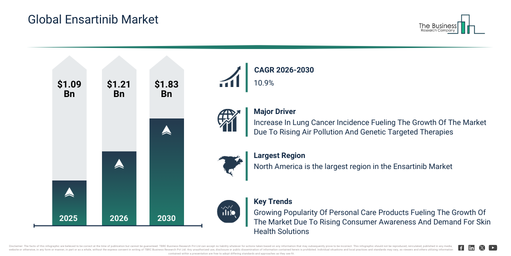
    The size of the ensartinib market has experienced swift expansion over recent years. Projected figures indicate it will rise from $1.09 billion in 2025 to $1.21 billion in 2026, reflecting a compound annual growth rate (CAGR) of 11.2%. This historic growth has been driven by several factors, including the growing prevalence of ALK-positive lung cancer, the constraints posed by first-generation ALK inhibitors, the broader establishment of oncology specialty clinics, increased availability of molecular diagnostic testing, and heightened awareness surrounding targeted cancer treatments.

    The market for ensartinib is projected to experience significant growth over the coming years, with a forecasted increase to $1.83 billion by 2030, reflecting a compound annual growth rate (CAGR) of 10.9%. This anticipated expansion is driven by the broader implementation of biomarker-based therapeutic strategies, the rising number of approvals for oncology drugs that target specific genetic mutations, and heightened demand for second- and third-line cancer treatments. Additionally, growing investments in precision medicine research and a stronger emphasis on enhancing patient survival rates are fueling this upward trajectory. Key trends shaping the market include the growing adoption of next-generation ALK inhibitors, a greater focus on precision oncology methods, the expanding application of targeted therapies in cases of resistant non-small cell lung cancer (NSCLC), the evolution of personalized cancer care plans, and more rigorous monitoring of clinical outcomes in treatment settings.

    Download A Free Sample Report For Comprehensive Market Insights:

    https://www.thebusinessresearchcompany.com/sample.aspx?id=28213&type=smp&utm_source=BlogsPR&utm_medium=Paid&utm_campaign=Jul_PR

    Ensartinib Market Development Factors: Which Trends Are Supporting Demand?

    The rising prevalence of lung cancer is set to drive the growth of the ensartinib market in the coming period. Lung cancer is a condition characterized by the uncontrollable proliferation of abnormal cells in the lungs, frequently resulting in tumors that disrupt normal respiratory function and can metastasize to other areas of the body. This increase in lung cancer cases is largely attributed to extended exposure to air pollution, especially fine particulate matter that gradually damages lung tissue. Ensartinib functions to treat lung cancer by inhibiting the aberrant activity of the ALK gene, thereby managing tumor progression in individuals with ALK-positive non-small cell lung cancer. As an example, data from the Centers for Disease Control and Prevention, a U.S.-based government agency, revealed in June 2025 that new lung cancer cases in the United States climbed from 218,893 in 2022 to 238,340 in 2023. Consequently, the growing incidence of lung cancer is fueling the expansion of the ensartinib market.

    The growth of the ensartinib market is anticipated to be propelled forward by rising healthcare expenditure. Healthcare expenditure encompasses the total funds allocated by individuals, organizations, or governments toward medical services, public health initiatives, medications, and other endeavors designed to preserve or enhance health. This spending is on the rise because an aging population demands more frequent and specialized medical attention, which pushes overall healthcare costs higher. Healthcare expenditure facilitates the use of ensartinib by financing access to advanced cancer therapies and ensuring their availability within medical institutions. For illustration, the American Medical Association, a U.S.-based professional organization and lobbying entity for physicians and medical students, reported in April 2025 that U.S. health spending grew by 7.5% in 2023, reaching $4.9 trillion, or $14,570 per person—a substantial increase from the 4.6% growth observed in 2022. Thus, the escalation in healthcare expenditure is driving the advancement of the ensartinib market.

    Ensartinib Market Categorization By Product Type And Application

    The ensartinib market covered in this report is segmented –

    1) By Drug Type: Oral, Injectable

    2) By Patient Demographics: Pediatric Patients, Adult Patients, Geriatric Patients

    3) By Indication: Non-Small Cell Lung Cancer (NSCLC), Other Lung Cancers, Potential New Indications

    4) By Treatment Line: First-Line Treatment, Second-Line Treatment, Third-Line And Beyond Treatment

    5) By End-User: Hospitals, Specialty Clinics, Other End-Users

    Subsegments:

    1) By Oral: Capsules, Tablets, Liquid Formulations, Powder For Oral Suspension

    2) By Injectable: Vials, Prefilled Syringes, Lyophilized Powder, Solution For Injection

    Ensartinib Market Transformation Trends: Which Innovations Are Driving Change?

    Key players in the ensartinib sector are directing their efforts toward securing regulatory clearances in order to expand patient reach in major world markets and to obtain label extensions for further ALK-positive NSCLC uses. Such approvals represent official permissions granted by regulatory bodies, enabling a medication like ensartinib to be sold and prescribed following successful demonstration of its safety, effectiveness, and quality. A case in point is Xcovery Holdings, Inc., a US-based biopharmaceutical firm, which gained FDA approval in December 2024 for ensartinib (marketed as Ensacove), indicated for adult patients with anaplastic lymphoma kinase (ALK)-positive locally advanced or metastatic non-small cell lung cancer (NSCLC) who have not previously received an ALK inhibitor. The phase 3 eXALT3 trial served as the basis for this authorization, where ensartinib demonstrated a notable progression-free survival advantage over crizotinib (with medians of 25.8 versus 12.7 months), even though overall survival rates were comparable across the two arms. As a second-generation ALK inhibitor, ensartinib is engineered to counteract resistance and attack abnormal ALK proteins; its frequently reported side effects comprise rash, muscle pain, constipation, cough, pruritus, nausea, edema, pyrexia, and fatigue.

    Ensartinib Market Company Landscape And Strategic Competition

    Major companies operating in the ensartinib market are Xcovery Holdings Inc., Betta Pharmaceuticals Co. Ltd.

    Access The Complete Ensartinib Market Report:

    https://www.thebusinessresearchcompany.com/report/ensartinib-global-market-report?utm_source=BlogsPR&utm_medium=Paid&utm_campaign=Jul_PR

    Ensartinib Market Global Footprint: Which Region Holds Market Leadership?

    North America was the largest region in the ensartinib market in 2025. Asia-Pacific is expected to be the fastest-growing region in the forecast period. The regions covered in the ensartinib market report are Asia-Pacific, South East Asia, Western Europe, Eastern Europe, North America, South America, Middle East, Africa.

    Get in touch with us:

    The Business Research Company: https://www.thebusinessresearchcompany.com/?utm_source=BlogsPR&utm_medium=Paid&utm_campaign=home_page_test

    Americas: +1 310-496-7795

    Asia: +44 7882 955267 & +91 8897263534

    Europe: +44 7882 955267

    Email us at: marketing@tbrc.info

    Follow us on:

    LinkedIn: https://in.linkedin.com/company/the-business-research-company

    YouTube: https://www.youtube.com/channel/UC24_fI0rV8cR5DxlCpgmyFQ

    Global Market Model: https://www.thebusinessresearchcompany.com/global-market-model