Blog

  • Antidepressants Market Expected To Reach $20.54 Billion By 2030 As Growth Accelerates At 2.8% CAGR

    Antidepressants Market Expected To Reach $20.54 Billion By 2030 As Growth Accelerates At 2.8% CAGR

    Delivering more actionable and strategically valuable research, The Business Research Company’s 2026 market reports feature market attractiveness analysis, total addressable market evaluation, company benchmarking matrices, interactive Excel dashboards, expanded supply chain intelligence, emerging startup coverage, and detailed product insights.

    Antidepressants Market Growth From $18.36 Billion In 2026 To $20.54 Billion By 2030 At A CAGR Of 2.8%

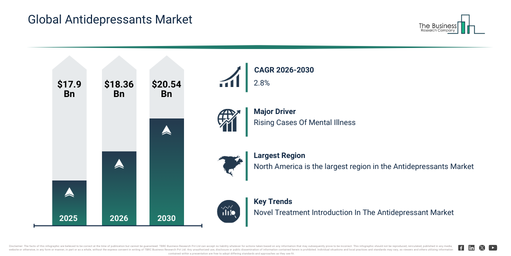
    The antidepressants market has experienced consistent growth in recent years, expanding from $17.9 billion in 2025 to an estimated $18.36 billion in 2026, reflecting a compound annual growth rate (CAGR) of 2.6%. This historical expansion has been driven by several key factors, including the increasing prevalence of depression, heightened awareness surrounding mental health issues, the introduction of SSRI medications, improvements in healthcare infrastructure, and greater investment in research and development within the field of psychopharmacology.

    The market for antidepressants is projected to experience consistent expansion over the coming years. By 2030, its value is anticipated to reach $20.54 billion, reflecting a compound annual growth rate (CAGR) of 2.8%. This forecasted growth is driven by factors such as progress in precision medicine, the incorporation of artificial intelligence into mental health diagnostics, the growing use of digital therapeutics, the broadening of telemedicine services, and an increased need for antidepressants among both pediatric and geriatric populations. Key developments shaping this period include the emergence of tailored antidepressant treatments, the expansion of telepsychiatry and remote mental health support, the use of mobile health applications for tracking mood, heightened public awareness of mental health conditions, and a greater focus on treating depression in elderly and young patients.

    Download A Free Sample Report For Comprehensive Market Insights:

    https://www.thebusinessresearchcompany.com/sample.aspx?id=2881&type=smp&utm_source=BlogsPR&utm_medium=Paid&utm_campaign=Jul_PR

    Antidepressants Market Development Factors: Which Trends Are Supporting Demand?

    The anticipated rise in mental health disorders is expected to drive growth in the antidepressants market moving forward. A mental illness refers to a condition that affects how an individual thinks, feels, behaves, or perceives their reality. These conditions often emerge from significant distress or challenges in functioning effectively within social, occupational, or family settings. Antidepressants represent a class of drugs designed to address a range of mental health issues, such as depression, anxiety, and mood disorders, by enhancing the levels of specific brain chemicals responsible for regulating emotional states. For example, data from October 2025 published by the Care Quality Commission (CQC), an independent regulator of health and adult social care in England, revealed that in the 2024/25 period, an average of 453,930 new referrals were made each month to secondary mental health services, marking a 15% increase compared to the 2022/23 figures. Consequently, this growing prevalence of mental illness is set to fuel demand within the antidepressants market.

    Antidepressants Market Segment Analysis Highlighting Growth Areas

    The antidepressants market covered in this report is segmented –

    1) By Product: Selective Serotonin Reuptake Inhibitor (SSRI), Serotonin-norepinephrine Reuptake Inhibitor (SNRI), Tricyclic Antidepressant (TCA), Monoamine Oxidase Inhibitor (MAOI)

    2) By Drug Class: Monoamine Oxidase Inhibitors, Serotonin Antagonist And Reuptake Inhibitors, Serotonin-Norepinephrine Reuptake Inhibitors, Selective Serotonin Reuptake Inhibitors, Tricyclic Antidepressants

    3) By Depressive Disorder: Major Depressive Disorder, Obsessive-Compulsive Disorder, Generalized Anxiety Disorder, Panic Disorder

    Subsegments:

    1) By Selective Serotonin Reuptake Inhibitor (SSRI): Fluoxetine, Sertraline, Escitalopram, Paroxetine, Citalopram

    2) By Serotonin-norepinephrine Reuptake Inhibitor (SNRI): Venlafaxine, Duloxetine, Desvenlafaxine

    3) By Tricyclic Antidepressant (TCA): Amitriptyline, Nortriptyline, Imipramine, Doxepin

    4) By Monoamine Oxidase Inhibitor (MAOI): Phenelzine, Tranylcypromine, Isocarboxazid

    Antidepressants Market Transformation Trends: Which Innovations Are Driving Change?

    Key players in the antidepressant sector are intensifying efforts to launch new treatments like ZURZUVAE (zuranolone) for postpartum depression (PPD) in order to boost their market revenues. Postpartum depression (PPD) refers to a form of depression that emerges following childbirth, representing a serious mental health issue for both new mothers and fathers. For example, in August 2023, Biogen Inc., a US-based biotechnology firm, alongside Sage Therapeutics, Inc., a US-based biopharmaceutical company, introduced ZURZUVAE (zuranolone)—a 50 mg oral medication tailored for postpartum depression (PPD) in women. This development constitutes a notable breakthrough, tackling the frequently overlooked and insufficiently treated nature of PPD. As an oral therapy mainly applied to postpartum depression (PPD), ZURZUVAE (zuranolone) holds the distinction of being the first and only FDA-approved drug specifically created for this condition.

    Antidepressants Market Leading Companies: Who Holds Significant Market Presence?

    Major companies operating in the antidepressants market are Pfizer Inc., Johnson & Johnson Services Inc., F. Hoffmann-La Roche Ltd., Merck & Co. Inc., AbbVie Inc., Novartis AG, Sanofi S.A., Bristol Myers Squibb Company, Abbott Laboratories, AstraZeneca plc, GlaxoSmithKline plc, Takeda Pharmaceutical Co. Ltd., Eli Lilly and Company, Boehringer Ingelheim GmbH, H. Lundbeck AS, Teva Pharmaceutical Industries Ltd., Otsuka Pharmaceutical Co., Mylan N.V, Sun Pharmaceuticals Pvt. Ltd., Servier Laboratories, Sumitomo Dainippon Pharma Co., Aurobindo Pharma Limited, Dr. Reddy’s Laboratories Ltd., Hikma Pharmaceuticals plc, Allergan plc, Alkermes plc, Egis Pharmaceuticals plc, Forest Laboratories Inc.

    Access The Complete Antidepressants Market Report:

    https://www.thebusinessresearchcompany.com/report/antidepressant-global-market-report?utm_source=BlogsPR&utm_medium=Paid&utm_campaign=Jul_PR

    Antidepressants Market Geographic Distribution And Regional Opportunities

    North America was the largest region in the antidepressants market in 2025. Middle East is expected to be the largest growing region in the global antidepressants market during the forecast period. The regions covered in the antidepressants market report are Asia-Pacific, South East Asia, Western Europe, Eastern Europe, North America, South America, Middle East, Africa.

    Get in touch with us:

    The Business Research Company: https://www.thebusinessresearchcompany.com/?utm_source=BlogsPR&utm_medium=Paid&utm_campaign=home_page_test

    Americas: +1 310-496-7795

    Asia: +44 7882 955267 & +91 8897263534

    Europe: +44 7882 955267

    Email us at: marketing@tbrc.info

    Follow us on:

    LinkedIn: https://in.linkedin.com/company/the-business-research-company

    YouTube: https://www.youtube.com/channel/UC24_fI0rV8cR5DxlCpgmyFQ

    Global Market Model: https://www.thebusinessresearchcompany.com/global-market-model
  • Anti-D Immunoglobulin Market Set To Grow From $2.76 Billion In 2026 To $3.55 Billion By 2030 At A CAGR Of 6.5%

    Anti-D Immunoglobulin Market Set To Grow From $2.76 Billion In 2026 To $3.55 Billion By 2030 At A CAGR Of 6.5%

    Enhanced with market attractiveness analysis, total addressable market evaluation, company benchmarking matrices, interactive Excel dashboards, expanded supply chain intelligence, emerging startup coverage, and detailed product insights, The Business Research Company’s 2026 market reports deliver more actionable and strategically valuable research.

    Anti-D Immunoglobulin Market Expansion Outlook: What Revenue Opportunities Lie Ahead?

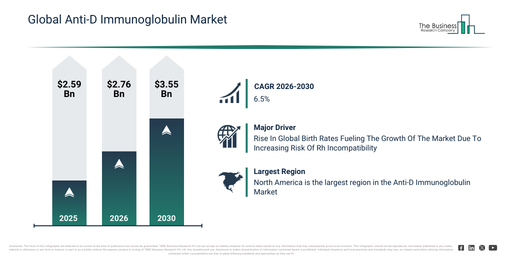
    The anti-D immunoglobulin market has experienced robust growth over the past few years, with projections indicating an increase from $2.59 billion in 2025 to $2.76 billion in 2026, reflecting a compound annual growth rate (CAGR) of 6.6%. This expansion during the historical period has been driven by several key factors, including the limited availability of plasma donors, the dependence on manual methods for antibody extraction, a heightened understanding of hemolytic disease, growing utilization in hospitals and clinical settings, and the widespread adoption of intramuscular administration techniques.

    The anti-D immunoglobulin market is projected to experience robust growth over the coming years, with expectations of reaching $3.55 billion by 2030, reflecting a compound annual growth rate (CAGR) of 6.5%. This anticipated expansion during the forecast period is driven by several key factors, including the development of intravenous formulations, the advancement of automated plasma fractionation technologies, an uptick in antenatal screening initiatives, the strengthening of global blood bank infrastructure, and the growth of personalized immunoglobulin therapies. Notable trends shaping this phase include a heightened demand for anti-D immunoglobulin in the management of hemolytic disease, a greater adoption of pre-filled syringes and single-use vials, the expansion of both antenatal and postnatal prophylaxis programs, a rise in distribution channels through hospitals and blood banks, and an amplified focus on safety, purity, and regulatory adherence.

    Download A Free Sample Report For Comprehensive Market Insights:

    https://www.thebusinessresearchcompany.com/sample.aspx?id=25694&type=smp&utm_source=BlogsPR&utm_medium=Paid&utm_campaign=Jul_PR

    Anti-D Immunoglobulin Market Industry Drivers: What Is Driving Revenue Growth?

    The anticipated increase in birth rates is expected to drive future growth in the anti-D immunoglobulin market. Birth rates, defined as the number of live births recorded per 1,000 individuals in a population each year, are rising due to limited access to education and family planning services, which leads to higher fertility rates and larger families. This immunoglobulin assists in managing birth rates by preventing Rh incompatibility during pregnancy, thereby lowering the likelihood of hemolytic disease in newborns and promoting improved outcomes in subsequent pregnancies. As an example, the Centers for Disease Control and Prevention, a US government agency, reported in April 2025 that there were 3,622,673 births in 2024, marking a 1% rise from 2023. Consequently, elevated birth rates are fueling the expansion of the anti-D immunoglobulin market.

    Anti-D Immunoglobulin Market Driver: Expansion Of Healthcare Infrastructure Fueling The Growth Of The Market Due To Improved Access To Maternal Care Services

    Future growth in the anti-D immunoglobulin market is anticipated to be driven by the ongoing expansion of healthcare infrastructure. This term encompasses the network of facilities, equipment, personnel, and support systems required to deliver medical services to a population. The expansion is being spurred by a growing global population, which increases the demand for medical care and necessitates more hospitals, clinics, and related resources. Enhanced healthcare infrastructure improves access to maternal care, facilitating better screening and the timely administration of anti-D immunoglobulin to prevent hemolytic disease in newborns. For instance, in May 2023, the Department of Health and Social Care, a UK government department, declared plans to allocate over $27 billion (£20 billion) for constructing new hospital facilities. Under the New Hospital Programme, two hospitals have been completed, five are under construction, and more than 20 are scheduled to begin or finish by the end of 2023. Thus, the broadening healthcare infrastructure is propelling the anti-D immunoglobulin market forward.

    Anti-D Immunoglobulin Market Driver: Expansion Of Prenatal And Antenatal Screening Programs Fueling The Growth Of The Market Due To Improved Maternal-Fetal Risk Management

    The growth of the anti-D immunoglobulin market is expected to be propelled by the expansion of prenatal and antenatal screening programs moving forward. These screening programs involve testing pregnant women for blood group compatibility and fetal RhD genotype to prevent hemolytic disease in the fetus and newborn. Their expansion is being driven by the adoption of noninvasive prenatal testing (NIPT) using cell-free fetal DNA, which enables precise determination of fetal RhD status. Such programs support the effective use of anti-D immunoglobulin by identifying Rh-negative mothers early in pregnancy, monitoring for potential sensitization events, and ensuring timely intervention to prevent Rh incompatibility, thereby safeguarding both maternal and fetal health. As a case in point, the World Health Organization (WHO), a Switzerland-based international public health agency, estimated in July 2025 that around 1.2 million pregnant women were living with HIV in 2023, with approximately 84% receiving antiretroviral medicines to prevent mother-to-child transmission. Therefore, the widening of prenatal and antenatal screening initiatives is driving the anti-D immunoglobulin market’s growth.

    Anti-D Immunoglobulin Market Segment Performance And Strategic Opportunities

    The anti-d immunoglobulin market covered in this report is segmented –

    1) By Product Type: Intramuscular Anti-D Immunoglobulin, Intravenous Anti-D Immunoglobulin

    2) By Distribution Channel: Hospital Pharmacies, Retail Pharmacies, Online Pharmacies, Other Distribution Channel

    3) By Application: Hemolytic Disease Of The Newborn, Immune Thrombocytopenic Purpura, Antenatal And Postnatal Prophylaxis, Other Applications

    4) By End-User: Hospitals, Clinics, Blood Banks, Research Laboratories

    Subsegments:

    1) By Intramuscular Anti-D Immunoglobulin: Standard Dose, High Dose, Pre-Filled Syringes, Vials

    2) By Intravenous Anti-D Immunoglobulin: Lyophilized Powder, Liquid Formulation, Single-Use Vials, Multi-Dose Vials

    Anti-D Immunoglobulin Market Key Players: Which Companies Shape Industry Competition?

    Major companies operating in the anti-d immunoglobulin market are CSL Behring, Octapharma AG, Kedrion Biopharma Inc., Biotest AG, Sanquin, Bharat Serums and Vaccines Limited, Intas Pharmaceuticals Ltd., Zydus Lifesciences Limited, Emergent BioSolutions Inc., Kamada Pharmaceuticals, Saol Therapeutics Inc., Avin Darou, Sichuan Yuanda Shuyang Pharmaceutical Co. Ltd., Taj Pharmaceuticals Limited, Aetos Pharma Private Limited, PV Pharma Healthcare Pvt. Ltd., Grifols S.A., Takeda Pharmaceutical Company Limited, LFB Biomedicaments, China Biologic Products Holdings Inc., Shanghai RAAS Blood Products Co. Ltd., Hualan Biological Engineering Inc., CBPO (Shandong Taibang Biological Products Co. Ltd.), Bio Products Laboratory (BPL), Instituto Grifols S.A., HemaCare Corporation, KM Biologics Co. Ltd., National Bioproducts Institute (NBI), GC Pharma (Green Cross Corporation), SK Plasma Co. Ltd.

    Access The Complete Anti-D Immunoglobulin Market Report:

    https://www.thebusinessresearchcompany.com/report/anti-d-immunoglobulin-global-market-report?utm_source=BlogsPR&utm_medium=Paid&utm_campaign=Jul_PR

    Anti-D Immunoglobulin Market Largest Region By Revenue And Market Share

    North America was the largest region in the anti-D immunoglobulin market in 2025. Asia-Pacific is expected to be the fastest-growing region in the forecast period. The regions covered in the anti-d immunoglobulin market report are Asia-Pacific, South East Asia, Western Europe, Eastern Europe, North America, South America, Middle East, Africa.

    Get in touch with us:

    The Business Research Company: https://www.thebusinessresearchcompany.com/?utm_source=BlogsPR&utm_medium=Paid&utm_campaign=home_page_test

    Americas: +1 310-496-7795

    Asia: +44 7882 955267 & +91 8897263534

    Europe: +44 7882 955267

    Email us at: marketing@tbrc.info

    Follow us on:

    LinkedIn: https://in.linkedin.com/company/the-business-research-company

    YouTube: https://www.youtube.com/channel/UC24_fI0rV8cR5DxlCpgmyFQ

    Global Market Model: https://www.thebusinessresearchcompany.com/global-market-model
  • Anticonvulsants Market Opportunities Are Emerging Beyond Traditional Growth Areas

    Anticonvulsants Market Opportunities Are Emerging Beyond Traditional Growth Areas

    Through market attractiveness analysis, total addressable market evaluation, company benchmarking matrices, interactive Excel dashboards, expanded supply chain intelligence, emerging startup coverage, and detailed product insights, The Business Research Company’s 2026 market reports provide more actionable and strategically valuable research.

    Anticonvulsants Market Growth Potential: How Will Market Size Change Through 2030?

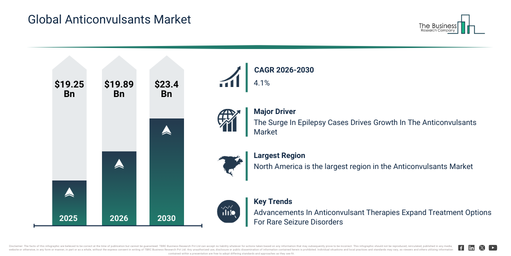
    The anticonvulsants market has experienced consistent expansion over the past few years. Projections indicate an increase from $19.25 billion in 2025 to $19.89 billion in 2026, reflecting a compound annual growth rate (CAGR) of 3.3%. This historic growth has been driven by factors such as a higher incidence of epilepsy, greater recognition of nerve pain, constrained access to generic anticonvulsants, progress in neuropharmacology, and government-supported healthcare programs.

    Over the coming years, the anticonvulsants market is projected to experience consistent expansion. By 2030, it is anticipated to reach $23.4 billion, reflecting a compound annual growth rate (CAGR) of 4.1%. This projected growth is driven by several key factors, including the rising implementation of precision medicine, an expanding elderly demographic, the proliferation of outpatient care settings, increased investment in research and development for combination therapies, and the incorporation of digital health tools into epilepsy management. Among the most notable developments shaping this period are the advent of tailored anticonvulsant treatments, innovation in drug delivery mechanisms, a growing number of geriatric patients with epilepsy, the widening scope of outpatient neurology services, and a greater reliance on combined therapeutic approaches.

    Download A Free Sample Report For Comprehensive Market Insights:

    https://www.thebusinessresearchcompany.com/sample.aspx?id=10682&type=smp&utm_source=BlogsPR&utm_medium=Paid&utm_campaign=Jul_PR

    #Anticonvulsants Market Growth Factors: Which Forces Are Supporting Market Expansion?

    The anticipated expansion of the anticonvulsants market is being driven by the increasing frequency of epilepsy cases globally. Epilepsy, a widespread neurological condition, commonly triggers seizures and is classified as a chronic, non-communicable brain disorder impacting individuals across all age groups. Anticonvulsants, which are pharmaceutical agents designed to manage seizures in epilepsy patients, function by inhibiting irregular electrical activity in the brain responsible for these episodes, though they do not provide a definitive cure. As an example, data from the World Health Organization, a Switzerland-headquartered United Nations public health body, released in February 2023, indicates that approximately 5 million people worldwide receive an epilepsy diagnosis annually. In high-income nations, about 49 per 100,000 individuals are diagnosed with epilepsy each year, whereas this figure rises to as many as 139 per 100,000 in low- and middle-income countries. Consequently, the growing prevalence of epilepsy is fueling the momentum of the anticonvulsants market.

    Anticonvulsants Market Segment Landscape And Growth Potential

    The anticonvulsants market covered in this report is segmented –

    1) By Type: Pyrimidinediones, Benzodiazepines, Fructose Derivatives, Aromatic Allylic Alcohols, Valproylamides, Carboxamides, Bromides, Other Types

    2) By Drug Generation: First Generation, Second Generation, Third Generation

    3) By Dosage: Capsule, Tablet, Cream, Liquid, Rectal Gel, Other Dosages

    4) By Application: Migraine, Epilepsy, Neuropathic Pain, Anxiety, Fibromyalgia, Bipolar Disorder, Borderline Personality Disorder

    5) By End-User: Hospitals, Clinics, Other End-Users

    Subsegments:

    1) By Pyrimidinediones: Stiripentol

    2) By Benzodiazepines: Clonazepam, Diazepam, Lorazepam

    3) By Fructose Derivatives: S-licarbazepine, Other Fructose Derivatives

    4) By Aromatic Allylic Alcohols: Felbamate, Other Aromatic Allylic Alcohols

    5) By Valproylamides: Valproic Acid, Divalproex Sodium

    6) By Carboxamides: Lamotrigine, Other Carboxamides

    7) By Bromides: Potassium Bromide, Sodium Bromide

    8) By Other Types: Topiramate, Zonisamide, Ethosuximide

    Anticonvulsants Market Industry Trends: What Changes Are Reshaping Demand?

    Key industry players in the anticonvulsants market are prioritizing the development of cutting-edge drug therapies and pursuing regulatory approvals to tackle unmet requirements in seizure management while enhancing their market standing. These emerging anticonvulsant treatments are intended to improve therapeutic outcomes for patients dealing with seizures resulting from rare and severe conditions. An example is the approval granted in March 2024 by the Medicines and Healthcare products Regulatory Agency (MHRA), the UK’s national regulatory body, for ganaxolone (Ztalmy) as the inaugural anti-seizure drug designed to manage seizures associated with cyclin-dependent kinase-like 5 (CDKL5) deficiency disorder. As a neuroactive steroid, ganaxolone introduces a novel treatment avenue for this challenging form of epileptic encephalopathy, specifically addressing difficult-to-manage seizures and meeting a significant unmet requirement for those affected.

    Anticonvulsants Market Competitive Landscape: Who Are The Leading Companies?

    Major companies operating in the anticonvulsants market are Eisai Co Ltd., GlaxoSmithKline plc, Pfizer Inc., Johnson & Johnson Services Inc., Novartis AG, Jazz Pharmaceuticals Inc., UCB SA, Teva Pharmaceutical Industries Ltd., Sunovion Pharmaceuticals Inc., Sanofi SA, Zydus Lifesciences Ltd., Lupin Limited, Ratiopharm Group, AbbVie Inc., Sun Pharmaceutical Industries Ltd., Cipla Limited, Mylan N.V., Aurobindo Pharma Limited, Dr. Reddy’s Laboratories Ltd., Torrent Pharmaceuticals Ltd., Hikma Pharmaceuticals plc, Glenmark Pharmaceuticals Limited, Laurus Labs Limited, Recordati S.p.A., Neurocrine Biosciences Inc.

    Access The Complete Anticonvulsants Market Report:

    https://www.thebusinessresearchcompany.com/report/anticonvulsants-global-market-report?utm_source=BlogsPR&utm_medium=Paid&utm_campaign=Jul_PR

    Anticonvulsants Market Regional Analysis And Leading Geography

    North America was the largest region in the anticonvulsants market in 2025. Asia-Pacific is expected to be the fastest-growing region in the global anticonvulsants market report during the forecast period. The regions covered in the anticonvulsants market report are Asia-Pacific, South East Asia, Western Europe, Eastern Europe, North America, South America, Middle East, Africa.

    Get in touch with us:

    The Business Research Company: https://www.thebusinessresearchcompany.com/?utm_source=BlogsPR&utm_medium=Paid&utm_campaign=home_page_test

    Americas: +1 310-496-7795

    Asia: +44 7882 955267 & +91 8897263534

    Europe: +44 7882 955267

    Email us at: marketing@tbrc.info

    Follow us on:

    LinkedIn: https://in.linkedin.com/company/the-business-research-company

    YouTube: https://www.youtube.com/channel/UC24_fI0rV8cR5DxlCpgmyFQ

    Global Market Model: https://www.thebusinessresearchcompany.com/global-market-model
  • Anticoccidial Drugs Market Expansion Is Opening New Pathways For Strategic Investment

    Anticoccidial Drugs Market Expansion Is Opening New Pathways For Strategic Investment

    Delivering more actionable and strategically valuable research, The Business Research Company’s 2026 market reports feature market attractiveness analysis, total addressable market evaluation, company benchmarking matrices, interactive Excel dashboards, expanded supply chain intelligence, emerging startup coverage, and detailed product insights.

    Anticoccidial Drugs Market Value Analysis: What Growth Is Expected Over The Forecast Period?

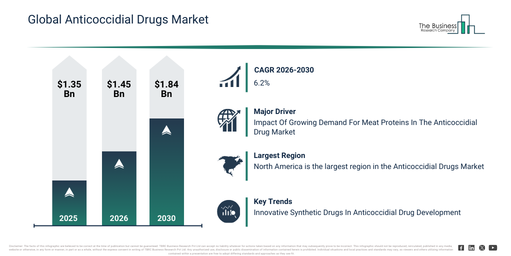
    Recent years have seen significant expansion in the anticoccidial drugs market, which is projected to increase from $1.35 billion in 2025 to $1.45 billion in 2026, reflecting a compound annual growth rate (CAGR) of 6.9%. This past growth has been driven by factors such as the elevated occurrence of coccidiosis in poultry, a constrained selection of effective drug classes, a surge in demand for livestock products, reliance on conventional farming approaches, and growing recognition of the importance of animal health management.

    The anticoccidial drugs market is projected to experience substantial growth over the coming years, with an anticipated increase to $1.84 billion by 2030, reflecting a compound annual growth rate of 6.2%. This expansion during the forecast period is driven by advancements in drug delivery systems, the intensification of poultry farming operations, the widening availability of veterinary services in developing regions, enhanced governmental backing for animal health initiatives, and rising global consumption of meat and poultry products. Key developments shaping the market landscape include the creation of innovative anticoccidial drug formulations, a heightened emphasis on managing poultry health, a growing preference for combination therapies, the broadening of veterinary pharmaceutical supply networks, and stricter adherence to regulatory standards for veterinary medications.

    Download A Free Sample Report For Comprehensive Market Insights:

    https://www.thebusinessresearchcompany.com/sample.aspx?id=15723&type=smp&utm_source=BlogsPR&utm_medium=Paid&utm_campaign=Jul_PR

    Anticoccidial Drugs Market Demand Drivers: What Is Fueling Industry Growth?

    The increasing consumption of meat proteins is anticipated to boost the anticoccidial drug market in the coming period. Meat proteins, naturally occurring in animal tissues, supply essential amino acids needed for various physiological processes. This heightened demand stems from factors like population expansion, higher disposable incomes, urban development, and evolving dietary habits favoring protein-rich options. Anticcocidial drugs serve as critical components in contemporary animal husbandry, aiding in preserving animal health and productivity to enable farmers to meet surging meat protein needs effectively and sustainably. By October 2025, Meat and Livestock Australia Limited—an Australian nonprofit—reported that in 2024, the nation’s red meat and livestock exports saw a 3.2% year-over-year increase, hitting a value of $19.5 billion. Consequently, the rising appetite for meat proteins is fueling expansion in the anticoccidial drug market.

    Anticoccidial Drugs Market Driver: Poultry Farming Surge Drives Anticoccidial Drug Market Growth

    An uptick in poultry farming is set to accelerate growth within the anticoccidial drug market moving forward. Poultry farming involves raising domesticated fowl, including chickens, turkeys, ducks, and geese, for meat, eggs, and feather production. This growth in poultry operations is driven by greater protein demand, advancements in farming methods, and an increase in global trade. Anticcocidial drugs are frequently incorporated into poultry feed or water as a precautionary approach, shielding birds from coccidiosis during their early, most susceptible growth phases. In April 2024, as reported by the USDA Economic Research Service—a US government agency—the number of chickens sold in 2023 reached 178 million, representing a 4% rise from the prior year, with turkey numbers also climbing by 4%. Thus, the expansion of poultry farming is propelling the anticoccidial drug market forward.

    Anticoccidial Drugs Market Categorization By Product Type And Application

    The anticoccidial drugs market covered in this report is segmented –

    1) By Drug Class: Ionophore, Antibiotic, Sulphonamides, Chemical Derivative, Other Drug Classes

    2) By Drug Action: Coccidiostatic, Coccidiocidal

    3) By Application: Poultry, Swine, Fish, Cattle, Companion Animals

    4) By Distribution Channel: Veterinary Hospitals, Retail Pharmacy, Other Distribution Channels

    Subsegments:

    1) By Ionophore: Monensin, Lasalocid, Salinomycin

    2) By Antibiotic: Tylosin, Lincomycin, Bacitracin

    3) By Sulphonamides: Sulfadimethoxine, Sulfaquinoxaline

    4) By Chemical Derivative: Diclazuril, Clopidol

    5) By Other Drug Classes: Amprolium, Robenidine

    Anticoccidial Drugs Market Innovation Trends: Which Developments Are Transforming The Industry?

    Leading industry players in the anticoccidial drugs market prioritize the creation of advanced solutions, including synthetic coccidiostats, to improve effectiveness, reduce the risk of resistance, and tackle evolving issues in poultry and livestock management. A synthetic coccidiostat is a chemically formulated substance that prevents or manages coccidiosis by stopping the growth and reproduction of coccidia parasites within animals. As an example, in March 2023, Zoetis, an animal health firm headquartered in the US, introduced Avi-Deccox, a newly developed synthetic coccidiostat aimed at managing coccidiosis in broiler chickens. This formulation is specifically directed at the pathogens Eimeria acervulina and Eimeria tenella, which are responsible for substantial financial setbacks in poultry operations. The product utilizes decoquinate as its key component, much like its earlier version, Deccox. By utilizing an alternative mechanism of action, Avi-Deccox counteracts the growing problem of resistance associated with the routine use of ionophores in poultry farming, delivering a more potent short-term knock-down impact.

    Anticoccidial Drugs Market Company Landscape And Strategic Competition

    Major companies operating in the anticoccidial drugs market are Zoetis Inc., Elanco Animal Health Incorporated, Huvepharma AD, Phibro Animal Health Corporation, Ceva Santé Animale S.A., Boehringer Ingelheim International GmbH, Merck & Co. Inc, Bayer AG, Virbac S.A., Vetoquinol SA, Intas Pharmaceuticals Ltd, Alpharma BVBA, Kepro B.V., Kemin Industries Inc., Tianjin Ringpu Bio-Technology Co. Ltd., Hester Biosciences Limited, Biovet S.A., HIPRA, Impextraco NV, Lallemand Animal Nutrition

    Access The Complete Anticoccidial Drugs Market Report:

    https://www.thebusinessresearchcompany.com/report/anticoccidial-drugs-global-market-report?utm_source=BlogsPR&utm_medium=Paid&utm_campaign=Jul_PR

    Anticoccidial Drugs Market Geographic Analysis: Where Is Demand Growing The Fastest?

    North America was the largest region in the anticoccidial drugs market in 2025. Asia-Pacific is expected to be the fastest-growing region in the forecast period. The regions covered in the anticoccidial drugs market report are Asia-Pacific, South East Asia, Western Europe, Eastern Europe, North America, South America, Middle East, Africa.

    Get in touch with us:

    The Business Research Company: https://www.thebusinessresearchcompany.com/?utm_source=BlogsPR&utm_medium=Paid&utm_campaign=home_page_test

    Americas: +1 310-496-7795

    Asia: +44 7882 955267 & +91 8897263534

    Europe: +44 7882 955267

    Email us at: marketing@tbrc.info

    Follow us on:

    LinkedIn: https://in.linkedin.com/company/the-business-research-company

    YouTube: https://www.youtube.com/channel/UC24_fI0rV8cR5DxlCpgmyFQ

    Global Market Model: https://www.thebusinessresearchcompany.com/global-market-model
  • Anticoagulants Market Trends Are Creating New Opportunities For Industry Leaders

    Anticoagulants Market Trends Are Creating New Opportunities For Industry Leaders

    Enhanced with market attractiveness analysis, total addressable market evaluation, company benchmarking matrices, interactive Excel dashboards, expanded supply chain intelligence, emerging startup coverage, and detailed product insights, The Business Research Company’s 2026 market reports deliver more actionable and strategically valuable research.

    Anticoagulants Market Size Forecast: How Large Could The Market Become By 2030?

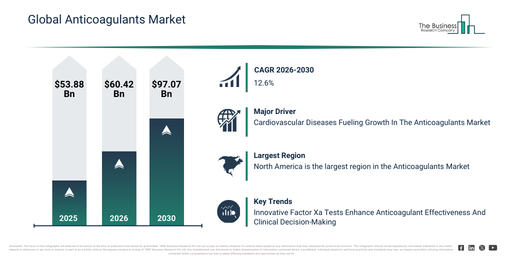
    The anticoagulants market has experienced substantial expansion in recent years, with an expected increase from $53.88 billion in 2025 to $60.42 billion in 2026, reflecting a compound annual growth rate (CAGR) of 12.1%. This historic growth has been driven by several factors, including a high prevalence of cardiovascular diseases, a rising incidence of venous thromboembolism, the established use of warfarin, an increase in hospital-based treatments, and growing awareness around stroke prevention.

    The market for anticoagulants is projected to experience significant expansion in the coming years, reaching an estimated $97.07 billion by 2030 with a compound annual growth rate (CAGR) of 12.6%. This upward trajectory during the forecast period is driven by factors such as the rising prevalence of atrial fibrillation, the wider utilization of factor Xa inhibitors, enhanced safety profiles of novel oral anticoagulants (NOACs), an increase in outpatient anticoagulation management, and greater adoption in emerging economies. Key developments shaping this period include a growing preference for direct oral anticoagulants, a transition from injectable to oral treatment options, the heightened use of long-term anticoagulation therapy, an intensified emphasis on patient adherence and safety, and the expanded application of these drugs in preventive cardiovascular care.

    Download A Free Sample Report For Comprehensive Market Insights:

    https://www.thebusinessresearchcompany.com/sample.aspx?id=5230&type=smp&utm_source=BlogsPR&utm_medium=Paid&utm_campaign=Jul_PR

    Anticoagulants Market Growth Drivers: What Factors Are Accelerating Expansion?

    The rising prevalence of cardiovascular diseases is a major contributor to the anticipated expansion of the anticoagulants market in the years ahead. Cardiovascular diseases (CVDs) refer to a range of disorders affecting the heart and blood vessels. These conditions remain the leading cause of death worldwide, with low- and middle-income nations bearing the burden of three-quarters of all CVD-related fatalities. Direct oral anticoagulants, a form of anticoagulation pharmacotherapy, are employed to reduce thrombosis across various cardiovascular scenarios. As an illustration, in September 2025, data from the British Heart Foundation, a charitable organization in the UK, revealed that over 7.6 million people across the United Kingdom—including more than 4 million men and over 3.6 million women—are currently living with cardiovascular disease. Further projections suggest that, fueled by an aging population and enhanced survival rates, the number of those affected could increase by roughly 1 million by 2030 and by approximately 2 million by 2040. Consequently, the growing incidence of cardiovascular diseases is a driving force behind the expansion of the anticoagulants market.

    Anticoagulants Market Segment Analysis And Revenue Opportunities

    The anticoagulants market covered in this report is segmented –

    1) By Drug Class: Factor Xa Inhibitor, Heparin And LMWH, Vitamin K Antagonist, Other Drug Classes

    2) By Route Of Administration: Oral Anticoagulant, Injectable Anticoagulant

    3) By Distribution Channel: Hospital Pharmacy, Retail Pharmacy, Online Pharmacy

    4) By Application: Venous Thromboembolism, Atrial Fibrillation Or Flutter, Coronary Artery Disease, Other Applications

    5) By End User: Hospitals, Homecare, Specialty Centers, Other End-Users

    Subsegments:

    1) By Factor Xa Inhibitor: Rivaroxaban, Apixaban, Edoxaban, Betrixaban

    2) By Heparin And LMWH (Low Molecular Weight Heparin): Unfractionated Heparin, Enoxaparin, Dalteparin, Tinzaparin

    3) By Vitamin K Antagonist: Warfarin, Acenocoumarol, Phenprocoumon

    4) By Other Drug Classes: Direct Thrombin Inhibitors, Novel Oral Anticoagulants (NOACs)

    Anticoagulants Market Trends: What Is Shaping Future Industry Growth?

    Key players in the anticoagulants market are prioritizing the creation of advanced solutions, such as factor Xa inhibitor assays, to address the increasing need for testing driven by the broader adoption of direct oral anticoagulants in treating stroke and other critical cardiovascular disorders. These Factor Xa Inhibitor Tests serve as diagnostic tools that assess how well anticoagulant drugs target factor Xa to prevent clot formation, offering insights into their effectiveness and safety across diverse medical scenarios. A notable example is from February 2024, when F. Hoffmann-La Roche Ltd., a biotechnology firm based in Switzerland, introduced coagulation tests for apixaban, edoxaban, and rivaroxaban. Designed with Roche’s innovative reagent cassette system, these new tests deliver consistent, high-quality results alongside efficient sample handling, and they incorporate standardization and automation to refine laboratory workflows. Their significance lies in assisting clinical judgments for patients on direct oral anticoagulants for stroke prevention, thereby addressing the worldwide demand for reliable diagnostics in managing serious conditions like coronary artery disease and peripheral arterial disease.

    Anticoagulants Market Leading Players Shaping Industry Direction

    Major companies operating in the anticoagulants market are GlaxoSmithKline plc, Leo Pharma A/S, Amphastar Pharmaceuticals Inc., Bayer AG, Boehringer Ingelheim International GmbH, Daiichi Sankyo Company Limited, Eisai Co. Ltd., Mylan N.V., Pfizer Inc., Sanofi S.A., Apotex Inc., Aspen Pharmacare Holdings Limited, AstraZeneca plc, Bristol-Myers Squibb Company, Dr. Reddy’s Laboratories Ltd., Fresenius Kabi AG, Hikma Pharmaceuticals plc, Johnson & Johnson, Lupin Limited, Mitsubishi Tanabe Pharma Corporation, Natco Pharma Limited, Novartis International AG, Portola Pharmaceuticals Inc., Strides Pharma Science Limited, Sun Pharmaceutical Industries Limited, Teva Pharmaceutical Industries Limited, Torrent Pharmaceuticals Limited, and Zydus Cadila Healthcare Limited.

    Access The Complete Anticoagulants Market Report:

    https://www.thebusinessresearchcompany.com/report/anticoagulant-global-market-report?utm_source=BlogsPR&utm_medium=Paid&utm_campaign=Jul_PR

    Anticoagulants Market Global Footprint: Which Region Holds Market Leadership?

    North America was the largest region in the anticoagulants market in 2025. The regions covered in the anticoagulants market report are Asia-Pacific, South East Asia, Western Europe, Eastern Europe, North America, South America, Middle East, Africa.

    Get in touch with us:

    The Business Research Company: https://www.thebusinessresearchcompany.com/?utm_source=BlogsPR&utm_medium=Paid&utm_campaign=home_page_test

    Americas: +1 310-496-7795

    Asia: +44 7882 955267 & +91 8897263534

    Europe: +44 7882 955267

    Email us at: marketing@tbrc.info

    Follow us on:

    LinkedIn: https://in.linkedin.com/company/the-business-research-company

    YouTube: https://www.youtube.com/channel/UC24_fI0rV8cR5DxlCpgmyFQ

    Global Market Model: https://www.thebusinessresearchcompany.com/global-market-model
  • Anticoagulant Reversal Drugs Market Growth Is Reshaping Competitive Advantage Across The Industry

    Anticoagulant Reversal Drugs Market Growth Is Reshaping Competitive Advantage Across The Industry

    Through market attractiveness analysis, total addressable market evaluation, company benchmarking matrices, interactive Excel dashboards, expanded supply chain intelligence, emerging startup coverage, and detailed product insights, The Business Research Company’s 2026 market reports provide more actionable and strategically valuable research.

    Anticoagulant Reversal Drugs Market Revenue Outlook: What CAGR Is Expected Through 2030?

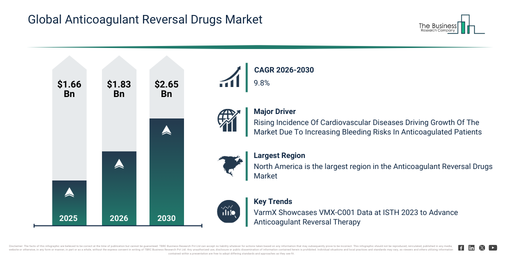
    The market for anticoagulant reversal drugs has experienced robust expansion in recent times. Its value is projected to rise from $1.66 billion in 2025 to $1.83 billion in 2026, reflecting a compound annual growth rate (CAGR) of 9.9%. This historical growth was driven by factors such as a greater adoption of anticoagulant medications, a higher frequency of bleeding emergencies, the regulatory approval of reversal agents, the broadening of emergency healthcare facilities, and an increase in the number of surgical interventions.

    The anticoagulant reversal drugs market is projected to experience robust expansion over the coming years, reaching $2.65 billion by 2030, driven by a compound annual growth rate (CAGR) of 9.8%. This forecasted growth is fueled by factors such as the heightened utilization of direct oral anticoagulants, a growing elderly demographic, the proliferation of trauma care centers, a heightened need for fast-acting reversal agents, and the enhancement of emergency response systems. Key trends shaping this period include the expanded application of emergency reversal treatments, a surge in the adoption of DOAC reversal agents, rising demand within critical care environments, the broadening of hospital-based emergency protocols, and an intensified emphasis on the rapid management of hemostasis.

    Download A Free Sample Report For Comprehensive Market Insights:

    https://www.thebusinessresearchcompany.com/sample.aspx?id=23308&type=smp&utm_source=BlogsPR&utm_medium=Paid&utm_campaign=Jul_PR

    Anticoagulant Reversal Drugs Market Growth Factors Supporting Long-Term Expansion

    The anticipated expansion of the anticoagulant reversal drugs market is expected to be fueled by the growing prevalence of cardiovascular diseases. Cardiovascular diseases (CVDs) encompass a range of conditions impacting the heart and blood vessels, such as coronary artery disease, stroke, and heart failure. The rise in these diseases is largely attributed to unhealthy lifestyle choices, including increased consumption of processed foods, lack of physical activity, and elevated stress levels, which collectively contribute to obesity, hypertension, and diabetes. To address the danger of excessive bleeding, anticoagulant reversal drugs become necessary for managing cardiovascular diseases, as patients on blood thinners for issues like atrial fibrillation or deep vein thrombosis face life-threatening hemorrhages that demand swift reversal to normalize blood clotting. By way of illustration, data from December 2024 provided by the Office for Health Improvement and Disparities—a government department in the UK—revealed that in England, 1,879,000 individuals (3%) had a general practice (GP) diagnosis of coronary heart disease (CHD) by the end of the fiscal year March 2023. Moreover, rates of heart failure admissions vary more significantly across local authorities compared to CHD, featuring a fourfold difference between areas, which reaches up to 396.5 admissions per 100,000 people in Hounslow. Consequently, the upward trend in cardiovascular disease incidence is propelling the growth of the anticoagulant reversal drugs market.

    Anticoagulant Reversal Drugs Market Segmentation And Category Breakdown

    The anticoagulant reversal drugs market covered in this report is segmented –

    1) By Product Type: Prothrombin Complex Concentrates, Phytonadione (Vitamin K), Andexanet Alfa, Idarucizumab, Protamine, Other Product Types

    2) By Route of Administration: Injectable, Oral

    3) By Distribution Channel: Hospital Pharmacy, Retail Pharmacy

    4) By Application: Direct Oral Anticoagulant (DOAC) Reversal, Warfarin Reversal, Heparin And Low-Molecular-Weight Heparin (LMWH) Reversal, Other Applications

    Subsegments:

    1) By Prothrombin Complex Concentrates (PCCs): 3-Factor PCC, 4-Factor PCC, Activated PCC (aPCC)

    2) By Phytonadione (Vitamin K): Oral Vitamin K, Intravenous (IV) Vitamin K, Subcutaneous (SC) Vitamin K

    3) By Andexanet Alfa: Reversal of Factor Xa Inhibitors (Apixaban, Rivaroxaban), Off-label Usage In Other Anticoagulants

    4) By Idarucizumab: Reversal of Dabigatran-induced Anticoagulation, Emergency Surgical Reversal

    5) By Protamine: Protamine Sulfate For Heparin Reversal, Protamine Variants For Low Molecular Weight Heparin (LMWH) Reversal

    6) By Other Product Types: Recombinant Factor VIIa (rFVIIa), Fresh Frozen Plasma (FFP), Desmopressin (DDAVP), Activated Charcoal (For DOAC Reversal)

    Anticoagulant Reversal Drugs Market Industry Trends Shaping Future Revenue Growth

    Key players in the anticoagulant reversal drugs market are prioritizing innovative therapeutic approaches, including the development of targeted reversal agents for direct oral anticoagulants (DOACs), aimed at enhancing patient safety and enabling controlled anticoagulation management. These Targeted Anticoagulant Reversal Agents facilitate the rapid restoration of normal coagulation, allow for precise monitoring through surrogate endpoints, and improve clinical care for patients at risk of bleeding or those needing urgent interventions. As an example, in June 2023, VarmX, a biotechnology firm based in the United States, unveiled two abstracts at the International Society on Thrombosis and Haemostasis (ISTH) Congress held in Montreal, revealing early data on its lead compound, VMX-C001. The findings highlighted the compound’s promise as a DOAC reversal agent and emphasized the utility of dRVVT and dPT assays in sensitively tracking FXa inhibitor activity, thereby supporting further clinical advancement and confirming surrogate endpoints for ongoing research.

    Anticoagulant Reversal Drugs Market Competitive Analysis Of Major Industry Participants

    Major companies operating in the anticoagulant reversal drugs market are Pfizer Inc., Bristol-Myers Squibb Company, AstraZeneca PLC, Takeda Pharmaceutical Company Limited, Boehringer Ingelheim International GmbH, CSL Behring LLC, Octapharma AG, Daiichi Sankyo Company Limited, Portola Pharmaceuticals Inc., Amphastar Pharmaceuticals Inc., Teva Pharmaceutical Industries Ltd., Amneal Pharmaceuticals LLC, AMAG Pharmaceuticals Inc., Glenmark Pharmaceuticals Inc. USA, Dr. Reddy’s Laboratories Ltd., Transo-Pharm USA LLC, Join Hub Pharma, Baxter International Inc., Grifols S.A., Kedrion Biopharma Inc.

    Access The Complete Anticoagulant Reversal Drugs Market Report:

    https://www.thebusinessresearchcompany.com/report/anticoagulant-reversal-drugs-global-market-report?utm_source=BlogsPR&utm_medium=Paid&utm_campaign=Jul_PR

    Anticoagulant Reversal Drugs Market Regional Distribution: Which Areas Drive Market Expansion?

    North America was the largest region in the anticoagulant reversal drugs market in 2025. The regions covered in the anticoagulant reversal drugs market report are Asia-Pacific, South East Asia, Western Europe, Eastern Europe, North America, South America, Middle East, Africa.

    Get in touch with us:

    The Business Research Company: https://www.thebusinessresearchcompany.com/?utm_source=BlogsPR&utm_medium=Paid&utm_campaign=home_page_test

    Americas: +1 310-496-7795

    Asia: +44 7882 955267 & +91 8897263534

    Europe: +44 7882 955267

    Email us at: marketing@tbrc.info

    Follow us on:

    LinkedIn: https://in.linkedin.com/company/the-business-research-company

    YouTube: https://www.youtube.com/channel/UC24_fI0rV8cR5DxlCpgmyFQ

    Global Market Model: https://www.thebusinessresearchcompany.com/global-market-model
  • Anticholinergic Drugs Market Forecast Signals New Revenue Opportunities Through 2030

    Anticholinergic Drugs Market Forecast Signals New Revenue Opportunities Through 2030

    Delivering more actionable and strategically valuable research, The Business Research Company’s 2026 market reports feature market attractiveness analysis, total addressable market evaluation, company benchmarking matrices, interactive Excel dashboards, expanded supply chain intelligence, emerging startup coverage, and detailed product insights.

    Anticholinergic Drugs Market Growth Analysis: How Will Revenue Expand During The Forecast Period?

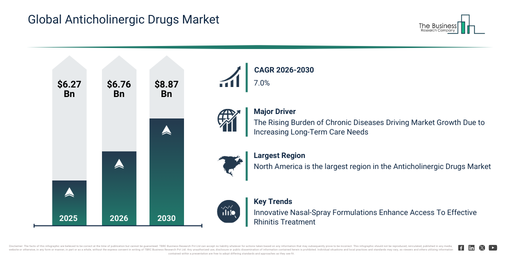
    The market for anticholinergic drugs has experienced significant expansion in recent years. Projections indicate an increase from $6.27 billion in 2025 to $6.76 billion in 2026, reflecting a compound annual growth rate (CAGR) of 7.8%. This growth during the historical period can be explained by factors such as the higher incidence of neurological conditions, a growing elderly demographic, broader hospital infrastructure, advances in pharmaceutical research, and an elevated need for therapies addressing muscle spasms.

    The anticholinergic drugs market is projected to experience robust expansion over the coming years, reaching a valuation of $8.87 billion by 2030, with a compound annual growth rate (CAGR) of 7.0%. Several key factors are anticipated to drive this growth during the forecast period, including innovations in drug formulations, the rising preference for parenteral administration, heightened awareness surrounding treatments for overactive bladder, the increasing role of online pharmacy platforms, and progress in therapeutics for chronic obstructive pulmonary disease. Meanwhile, noteworthy trends shaping this period encompass the emergence of novel anticholinergic therapies, the expanding elderly demographic and its related health conditions, the growing prevalence of neurological and muscular disorders, the broadening of both hospital and retail pharmacy networks, and a greater utilization of oral and parenteral drug delivery methods.

    Download A Free Sample Report For Comprehensive Market Insights:

    https://www.thebusinessresearchcompany.com/sample.aspx?id=16340&type=smp&utm_source=BlogsPR&utm_medium=Paid&utm_campaign=Jul_PR

    Anticholinergic Drugs Market Demand Drivers Creating New Revenue Opportunities

    The anticipated expansion of the anticholinergic drugs market is being driven forward by the growing prevalence of chronic diseases. These conditions are long-term health issues that demand continuous care and oversight, often impairing daily activities and diminishing overall well-being. Their increasing frequency stems from shifts in lifestyle habits, hereditary influences, and heightened contact with environmental contaminants like pollutants, chemicals, and toxins. Anticholinergic medications play a pivotal role in managing these diseases by curbing excessive cholinergic activity within the body, which aids in symptom control and enhances patient outcomes. For example, data from the U.S. Centers for Disease Control and Prevention (CDC), a national public health organization based in the United States, revealed that in April 2024, 76.4% of American adults—approximately 194 million individuals—had at least one chronic condition in 2023, while 51.4% (around 130 million people) were dealing with multiple such conditions. Hence, the escalating incidence of chronic diseases is fueling the market growth for anticholinergic drugs.

    Anticholinergic Drugs Market Segment Outlook: Which Categories Are Expanding The Fastest?

    The anticholinergic drugs market covered in this report is segmented –

    1) By Type: Synthetic Compounds, Natural, Semi-Synthetic Compounds

    2) By Route Of Administration: Parental, Oral, Topical

    3) By Application: Overactive Bladder, Parkinson Disease, Chronic Obstructive Pulmonary Disease, Muscle Spasms, Irritable Bowel Syndrome

    4) By Distribution Channel: Hospital Pharmacies, Retail Pharmacies, Online Pharmacies

    Subsegments:

    1) By Synthetic Compounds: Muscarinic Receptor Antagonists, Nicotinic Receptor Antagonists, Long-Acting Synthetic Anticholinergics, Short-Acting Synthetic Anticholinergics

    2) By Natural: Belladonna Alkaloids, Scopolamine (Hyoscine), Plant-Derived Anticholinergic Extracts

    3) By Semi-Synthetic Compounds: Atropine-Derived Semi-Synthetic Anticholinergics, Scopolamine-Modified Semi-Synthetic Compounds, Quaternary Ammonium Semi-Synthetic Anticholinergics

    Anticholinergic Drugs Market Trends Driving Strategic Industry Expansion

    Major players in the anticholinergic drugs market are concentrating on the development of novel solutions, such as enhanced generic nasal-spray formulations, aimed at improving treatment efficacy and broadening patient accessibility. These advanced generic nasal-spray versions represent improved iterations of pre-existing nasal medications, designed to administer drugs with greater efficiency and consistency, thereby leading to better therapeutic outcomes for patients. For example, in July 2025, Lupin Ltd, a pharmaceutical firm based in India, introduced Ipratropium Bromide Nasal Spray to the United States market as a generic alternative to the branded nasal formulation, offered in 0.03% and 0.06% concentrations. This product contains the anticholinergic agent ipratropium bromide, prepared as a nasal solution that acts by blocking muscarinic receptors within the nasal mucosa to curb excessive secretions. It is indicated for both adult and pediatric patients suffering from allergic and non-allergic rhinitis or rhinorrhea, provides a more convenient method of administration compared to intramuscular or systemic anticholinergic therapies, and improves patient access through a more affordable generic option.

    Anticholinergic Drugs Market Key Companies And Competitive Benchmarking

    Major companies operating in the anticholinergic drugs market are Pfizer Inc., Abbvie Inc., Sanofi SA, AstraZeneca plc, Novartis AG, Glaxosmithkline plc, Boehringer Ingelheim International GmbH, Astellas Pharma Inc., Sun Pharmaceutical Industries Ltd., Macleods Pharmaceuticals Ltd., Perrigo Company plc, Aurobindo Pharma Limited, Torrent Pharmaceuticals Ltd., Hikma Pharmaceuticals plc, Endo International plc, Lupin Limited, Glenmark Pharmaceuticals Ltd., Alkem Laboratories Limited, Indivior plc, Hisamitsu Pharmaceutical Co. Inc., Viatris Inc.

    Access The Complete Anticholinergic Drugs Market Report:

    https://www.thebusinessresearchcompany.com/report/anticholinergic-drugs-global-market-report?utm_source=BlogsPR&utm_medium=Paid&utm_campaign=Jul_PR

    Anticholinergic Drugs Market Leading Geography: Which Region Generates The Most Revenue?

    North America was the largest region in the anticholinergic drugs market in 2025. Asia- Pacific is expected to be the fastest-growing region in the forecast period. The regions covered in the anticholinergic drugs market report are Asia-Pacific, South East Asia, Western Europe, Eastern Europe, North America, South America, Middle East, Africa.

    Get in touch with us:

    The Business Research Company: https://www.thebusinessresearchcompany.com/?utm_source=BlogsPR&utm_medium=Paid&utm_campaign=home_page_test

    Americas: +1 310-496-7795

    Asia: +44 7882 955267 & +91 8897263534

    Europe: +44 7882 955267

    Email us at: marketing@tbrc.info

    Follow us on:

    LinkedIn: https://in.linkedin.com/company/the-business-research-company

    YouTube: https://www.youtube.com/channel/UC24_fI0rV8cR5DxlCpgmyFQ

    Global Market Model: https://www.thebusinessresearchcompany.com/global-market-model
  • Anti-CD20 Monoclonal Antibodies Market Growth Is Accelerating As Industry Transformation Continues

    Anti-CD20 Monoclonal Antibodies Market Growth Is Accelerating As Industry Transformation Continues

    Enhanced with market attractiveness analysis, total addressable market evaluation, company benchmarking matrices, interactive Excel dashboards, expanded supply chain intelligence, emerging startup coverage, and detailed product insights, The Business Research Company’s 2026 market reports deliver more actionable and strategically valuable research.

    Anti-CD20 Monoclonal Antibodies Market Forecast: What Market Value Is Expected By 2030?

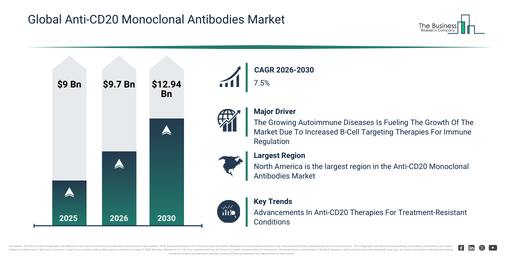
    The market for anti-CD20 monoclonal antibodies has experienced robust expansion over recent years. Projections indicate it will rise from $9 billion in 2025 to $9.7 billion in 2026, achieving a compound annual growth rate (CAGR) of 7.8%. This historic growth has been driven by several factors, including the approval and extensive adoption of rituximab, an increasing prevalence of non-Hodgkin’s lymphoma and chronic lymphocytic leukemia, heightened recognition of targeted therapeutic approaches, the accessibility of hospital pharmacy distribution networks, and a broadening range of intravenous administration pathways.

    The market for anti-cd20 monoclonal antibodies is anticipated to demonstrate significant growth over the next several years, reaching $12.94 billion by 2030 at a compound annual growth rate of 7.5%. This forecasted expansion is driven by the emergence of obinutuzumab and ofatumumab biosimilars, broader adoption of subcutaneous formulations, increased research and academic funding, the growth of ambulatory care centers, and rising demand for anti-cd20 therapies across multiple autoimmune conditions. During the forecast period, major trends will include greater use of monoclonal antibody treatments for B-cell malignancies, the creation of biosimilars and next-generation anti-cd20 antibodies, expanded subcutaneous and patient-friendly administration methods, a heightened emphasis on personalized and targeted immunotherapy, and an upsurge in clinical trials and research activities in both autoimmune and oncology indications.

    Download A Free Sample Report For Comprehensive Market Insights:

    https://www.thebusinessresearchcompany.com/sample.aspx?id=25693&type=smp&utm_source=BlogsPR&utm_medium=Paid&utm_campaign=Jul_PR

    Anti-CD20 Monoclonal Antibodies Market Expansion Supported By Key Demand Factors

    The anticipated increase in autoimmune conditions is set to drive forward the anti-CD20 monoclonal antibodies market. These disorders arise when the immune system mistakenly targets the body’s own cells as foreign and mounts an assault against them. Their prevalence is climbing due to heightened exposure to environmental contaminants, which can disrupt immune regulation and provoke attacks on bodily tissues. Anti-CD20 monoclonal antibodies address autoimmune diseases by removing B cells responsible for generating autoantibodies and triggering inflammation. This therapy aids in modulating immune responses and alleviating disease manifestations. As an example, in February 2024, Arthritis Australia, a non-profit entity based in Australia, reported that an estimated 562,378 Australians will be affected by rheumatoid arthritis (RA) in 2025, representing 14% of all arthritis cases that year. By 2040, this figure is projected to surge by 33% to 748,721 individuals, marking an increase of 186,343 Australians living with RA relative to 2025. Consequently, the rising incidence of autoimmune diseases is fueling expansion in the anti-CD20 monoclonal antibodies market.

    Anti-CD20 Monoclonal Antibodies Market Segment Landscape: Which Areas Lead Market Development?

    The anti-cd20 monoclonal antibodies market covered in this report is segmented –

    1) By Product Type: Rituximab, Obinutuzumab, Ofatumumab, Other Product Types

    2) By Route Of Administration: Intravenous, Subcutaneous

    3) By Distribution Channel: Hospital Pharmacies, Retail Pharmacies, Online Pharmacies

    4) By Application: Non-Hodgkin’s Lymphoma (NHL), Chronic Lymphocytic Leukemia (Cll), Rheumatoid Arthritis, Multiple Sclerosis, Pemphigus Vulgaris, Other Applications

    5) By End-User: Hospitals, Surgical Centers and Diagnostic Centers, Maternity Centers, Ambulatory Care Centers, Research And Academia, Other End-Users

    Subsegments:

    1) By Rituximab: Rituxan, Truxima, Ruxience, Reditux

    2) By Obinutuzumab: Gazyva, Biosimilar Candidates

    3) By Ofatumumab: Arzerra, Kesimpta

    4) By Other Product Types: Ublituximab, Veltuzumab, Ocrelizumab, Mosunetuzumab

    Anti-CD20 Monoclonal Antibodies Market Growth Trends Influencing Competitive Dynamics

    Key players within the anti-CD20 monoclonal antibody sector are concentrating on creating next-generation therapies like obinutuzumab to better address resistant or recurrent B-cell malignancies. Obinutuzumab, a humanized type II anti-CD20 monoclonal antibody, is engineered to identify and eliminate CD20-positive B cells that are involved in specific blood cancers and autoimmune conditions. As an illustration, in March 2025, Roche—a biopharmaceutical firm headquartered in Switzerland—revealed that the US Food and Drug Administration (FDA) had accepted a supplemental Biologics License Application (sBLA) for Gazyva/Gazyvaro (obinutuzumab) aimed at treating lupus nephritis. This decision is based on favorable findings from the Phase III REGENCY study, where obinutuzumab combined with conventional therapy resulted in a higher complete renal response (CRR) compared to conventional therapy alone. This development positions Gazyva/Gazyvaro as the only anti-CD20 monoclonal antibody to show this kind of advantage in lupus nephritis, a serious kidney inflammation brought on by lupus that may progress to kidney failure.

    Anti-CD20 Monoclonal Antibodies Market Industry Leaders And Market Competition

    Major companies operating in the anti-cd20 monoclonal antibodies market are F. Hoffmann-La Roche Ltd., Novartis AG, Biogen Idec, TG Therapeutics, Celltrion Inc., Shanghai Henlius Biotech Inc., Innovent Biologics, Dr. Reddy’s Laboratories Ltd., Genmab A/S, AbbVie Inc., Pfizer Inc., Teva Pharmaceutical Industries Ltd., Chugai Pharmaceutical Co. Ltd., Sanofi SA, Bristol-Myers Squibb Company, Samsung Bioepis, Sandoz International GmbH, Amneal Pharmaceuticals LLC, Viatris Inc., Intas Pharmaceuticals Ltd., Lupin Limited, Zydus Lifesciences Ltd., Aurobindo Pharma Ltd., Biocon Biologics Ltd., Fresenius Kabi AG, Sun Pharmaceutical Industries Ltd., Hetero Biopharma Ltd., Reliance Life Sciences Pvt. Ltd., Adello Biologics, Mabion SA, mAbxience, Probiomed S.A. de C.V., Prestige Biopharma Ltd., CinnaGen Co., JHL Biotech Inc., Amgen Biologics Pvt. Ltd.

    Access The Complete Anti-CD20 Monoclonal Antibodies Market Report:

    https://www.thebusinessresearchcompany.com/report/anti-cd20-monoclonal-antibodies-global-market-report?utm_source=BlogsPR&utm_medium=Paid&utm_campaign=Jul_PR

    Anti-CD20 Monoclonal Antibodies Market Regional Outlook: Where Are The Largest Opportunities Located?

    North America was the largest region in the Anti-CD20 monoclonal antibodies market in 2025. Asia-Pacific is expected to be the fastest-growing region in the forecast period. The regions covered in the anti-cd20 monoclonal antibodies market report are Asia-Pacific, South East Asia, Western Europe, Eastern Europe, North America, South America, Middle East, Africa.

    Get in touch with us:

    The Business Research Company: https://www.thebusinessresearchcompany.com/?utm_source=BlogsPR&utm_medium=Paid&utm_campaign=home_page_test

    Americas: +1 310-496-7795

    Asia: +44 7882 955267 & +91 8897263534

    Europe: +44 7882 955267

    Email us at: marketing@tbrc.info

    Follow us on:

    LinkedIn: https://in.linkedin.com/company/the-business-research-company

    YouTube: https://www.youtube.com/channel/UC24_fI0rV8cR5DxlCpgmyFQ

    Global Market Model: https://www.thebusinessresearchcompany.com/global-market-model
  • Anti-Cancer MAbS Market Outlook Highlights The Next Major Growth Opportunities

    Anti-Cancer MAbS Market Outlook Highlights The Next Major Growth Opportunities

    Through market attractiveness analysis, total addressable market evaluation, company benchmarking matrices, interactive Excel dashboards, expanded supply chain intelligence, emerging startup coverage, and detailed product insights, The Business Research Company’s 2026 market reports provide more actionable and strategically valuable research.

    Anti-Cancer MAbS Market Size Outlook: How Fast Will Revenue Grow Through 2030?

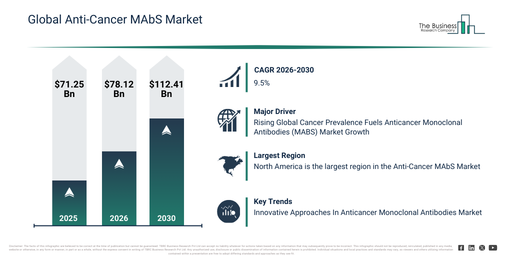
    The market for anti-cancer monoclonal antibodies has experienced robust expansion in recent years. Its value is projected to rise from $71.25 billion in 2025 to $78.12 billion in 2026, reflecting a compound annual growth rate (CAGR) of 9.6%. This historical growth has been driven by factors such as the increasing global prevalence of cancer, the demonstrated clinical effectiveness of mAbs, substantial investment in oncology research and development, the approval of biologic therapies by regulatory bodies, and improvements in survival rates achieved through cancer treatment.

    The market for anti-cancer monoclonal antibodies is anticipated to experience robust expansion over the coming years, reaching a projected value of $112.41 billion by 2030, which corresponds to a compound annual growth rate (CAGR) of 9.5%. This forecasted growth is driven by several key factors, including the increasing adoption of personalized cancer treatments, the broader availability of biosimilar mAbs, heightened healthcare spending specifically for oncology, continuous progress in antibody engineering technologies, and enhanced access to biologic therapies. Prominent trends shaping this period involve a growing preference for targeted immunotherapies, the wider utilization of humanized and bispecific antibody formats, greater integration of combination cancer therapies, a heightened emphasis on precision oncology approaches, and the ongoing improvement of scalable manufacturing processes for these antibodies.

    Download A Free Sample Report For Comprehensive Market Insights:

    https://www.thebusinessresearchcompany.com/sample.aspx?id=9041&type=smp&utm_source=BlogsPR&utm_medium=Paid&utm_campaign=Jul_PR

    Anti-Cancer MAbS Market Growth Drivers And Industry Catalysts

    The global rise in cancer incidence is anticipated to fuel the expansion of the anticancer monoclonal antibodies market moving forward. Cancer encompasses a range of disorders marked by uncontrolled cell proliferation that can invade and damage healthy tissues. This growing prevalence is driven by factors such as aging populations, shifts in lifestyle, environmental exposures, and improved diagnostic technologies that enhance detection rates. Anticancer monoclonal antibodies (mAbs) are engineered to target specific proteins on cancer cells, employing genetically modified versions of natural immune antibodies to identify and eliminate these cells; hence, a higher cancer prevalence boosts demand for the anticancer mAbs market. For example, as reported in February 2024 by the World Health Organization (WHO), a United Nations agency based in Switzerland, new cancer cases are expected to surpass 35 million by 2050, reflecting a 77% increase from the estimated 20 million cases recorded in 2022. Consequently, the worldwide surge in cancer prevalence is accelerating growth within the anticancer mAbs market.

    Anti-Cancer MAbS Market Segments: Where Are The Largest Growth Opportunities?

    The anti-cancer mabs market covered in this report is segmented –

    1) By Type: Murine Antibodies, Chimeric Antibodies, Humanized Antibodies, Other Types

    2) By Application: Blood Cancer, Breast Cancer, Lung Cancer, Melanoma, Colorectal Cancer, Liver Cancer, Other Applications

    3) By End User: Hospitals, Research Institutes, Other End Users

    Subsegments:

    1) By Murine Antibodies: Murine IgG, Murine IgM, Other Murine Isotypes

    2) By Chimeric Antibodies: Chimeric IgG, Chimeric IgM, Other Chimeric Isotypes

    3) By Humanized Antibodies: Humanized IgG, Humanized IgM, Other Humanized Isotypes

    4) By Other Types: Fully Human Antibodies, Bispecific Antibodies, Conjugated Antibodies, Other Novel Formats

    Anti-Cancer MAbS Market Trends Influencing Long-Term Demand

    Leading players in the anti-cancer monoclonal antibodies (mAbs) market are concentrating on creating advanced approaches, including early-phase clinical trials, to progress new therapeutic candidates and boost their market edge. Clinical trials are organized research efforts using human subjects to assess safety, dosage, and treatment effectiveness of novel medical interventions like targeted antibodies and radioimmunotherapies. As an example, in April 2023, Y-mAbs Therapeutics Inc., a clinical biopharmaceutical company based in the US, initiated a Phase I clinical trial exploring GD2-SADA, a pre-targeted radioimmunotherapy aimed at GD2-positive solid tumors such as small cell lung cancer, sarcoma, and malignant melanoma. This therapy employs a two-step process: first, the SADA protein binds selectively to tumor cells expressing GD2; then, the radioactive ligand 177Lu-DOTA is administered, attaching to the SADA protein to provide focused radiation. The goal is to achieve maximum tumor cell damage while reducing radiation exposure to healthy tissue.

    Anti-Cancer MAbS Market Major Participants And Competitive Dynamics

    Major companies operating in the anti-cancer mabs market are Amgen Inc., Bristol Myers Squibb Company, Eli Lilly and Company, F. Hoffmann-La Roche Ltd., GlaxoSmithKline plc, Johnson & Johnson, Novartis AG, Merck & Co. Inc., Spectrum Pharmaceuticals Inc., AstraZeneca plc., Pfizer Inc., Gilead Sciences Inc., Bayer HealthCare, ImmunoGen Inc., Genentech Inc., AbbVie Inc., Takeda Pharmaceuticals, Seattle Genetics, Regeneron Pharmaceuticals, Celgene, Ipsen, Daiichi Sankyo, ADC Therapeutics, MacroGenics Inc., Zymeworks Inc.

    Access The Complete Anti-Cancer MAbS Market Report:

    https://www.thebusinessresearchcompany.com/report/anti-cancer-mabs-global-market-report?utm_source=BlogsPR&utm_medium=Paid&utm_campaign=Jul_PR

    Anti-Cancer MAbS Market Geographic Landscape: Which Region Dominates Industry Growth?

    North America was the largest region in the anti-cancer MAbS market in 2025. Asia-Pacific is expected to be the fastest-growing region in the anti-cancer MAbS market during the forecast period. The regions covered in the anti-cancer mabs market report are Asia-Pacific, South East Asia, Western Europe, Eastern Europe, North America, South America, Middle East, Africa.

    Get in touch with us:

    The Business Research Company: https://www.thebusinessresearchcompany.com/?utm_source=BlogsPR&utm_medium=Paid&utm_campaign=home_page_test

    Americas: +1 310-496-7795

    Asia: +44 7882 955267 & +91 8897263534

    Europe: +44 7882 955267

    Email us at: marketing@tbrc.info

    Follow us on:

    LinkedIn: https://in.linkedin.com/company/the-business-research-company

    YouTube: https://www.youtube.com/channel/UC24_fI0rV8cR5DxlCpgmyFQ

    Global Market Model: https://www.thebusinessresearchcompany.com/global-market-model
  • Antibody Fragments Market Trends And Growth Drivers Point To Strong Future Potential

    Antibody Fragments Market Trends And Growth Drivers Point To Strong Future Potential

    Delivering more actionable and strategically valuable research, The Business Research Company’s 2026 market reports feature market attractiveness analysis, total addressable market evaluation, company benchmarking matrices, interactive Excel dashboards, expanded supply chain intelligence, emerging startup coverage, and detailed product insights.

    Antibody Fragments Market Size, Value And Growth Trends Through 2030

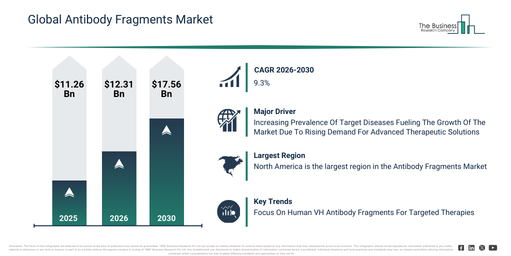
    The antibody fragments market has experienced robust expansion in recent times. Projected to rise from $11.26 billion in 2025 to $12.31 billion in 2026, this growth reflects a compound annual growth rate (CAGR) of 9.3%. Historic progress was driven by improvements in monoclonal antibody technologies, the clinical effectiveness of antibody-based treatments, heightened activity in cancer biologics research, broader application of diagnostic antibodies, and greater funding allocated to biologics research and development.

    The antibody fragments market is poised for substantial expansion over the coming years, with projections indicating it will reach $17.56 billion by 2030, representing a compound annual growth rate (CAGR) of 9.3%. This anticipated growth during the forecast period is driven by factors such as the rise of targeted cancer therapies, the broadening of antibody fragment pipelines, a heightened need for precision biologics, their growing application in companion diagnostics, and progress in recombinant antibody engineering. Key trends shaping this period encompass the increasing preference for fragment-based biologics, their expanded utilization in oncology and targeted treatments, a higher demand for high-penetration antibody formats, widening diagnostic uses, and an intensified emphasis on therapies with reduced immunogenicity.

    Download A Free Sample Report For Comprehensive Market Insights:

    https://www.thebusinessresearchcompany.com/sample.aspx?id=23307&type=smp&utm_source=BlogsPR&utm_medium=Paid&utm_campaign=Jul_PR

    Antibody Fragments Market Opportunity Drivers: What Is Creating New Revenue Potential?

    The growing frequency of target diseases is anticipated to fuel the expansion of the antibody fragments market moving forward. These target conditions refer to specific illnesses or health disorders that a medication, treatment, or research initiative aims to prevent, manage, or cure. Key examples of such diseases include cancer, infectious diseases, and bacterial infections. This rise in prevalence is largely driven by unhealthy lifestyles and pollution, which compromise the body’s natural defenses and contribute to chronic health issues. Antibody fragments offer highly precise, targeted, and adaptable solutions for managing a wide range of diseases, often resulting in fewer side effects compared to conventional approaches. Their capacity to be tailored and engineered for particular targets enhances their value as a crucial tool in contemporary healthcare. As an example, in January 2025, a report from the American Cancer Society, a US-based nonprofit, projected that the United States would see 2,041,910 new cancer cases and 618,120 cancer deaths in 2025, up from 2,001,140 cases and 611,720 deaths in 2024. Consequently, the escalating occurrence of target diseases is propelling the antibody fragments market forward.

    Antibody Fragments Market Segment Analysis: What Are The Major Market Categories?

    The antibody fragments market covered in this report is segmented –

    1) By Type: F(ab) Fragments, F(ab’)2 Fragments, Single-Chain Variable Fragments (scFvs), Single Domain Antibody Fragments (sdAbs), Other Types

    2) By Specificity: Monoclonal Antibody, Polyclonal Antibody

    3) By Delivery Method: Intravenous (IV), Subcutaneous (SC)

    4) By Application: Cancer, Immunodeficiencies, Other Applications

    5) By End User: Pharmaceutical Companies, Biotechnology Companies, Research Institutions, Diagnostic Laboratories, Contract Research Organizations (CROs)

    Subsegments:

    1) By F(ab) Fragments: Recombinant F(ab) Fragments, Enzymatically Derived F(ab) Fragments

    2) By F(ab’)2 Fragments: Pepsin-Derived F(ab’)2 Fragments, Recombinant F(ab’)2 Fragments

    3) By Single-Chain Variable Fragments (scFvs): Bacterial-Produced Single-Chain Variable Fragments (scFvs), Mammalian Cell-Produced Single-Chain Variable Fragments (scFvs), Yeast-Produced Single-Chain Variable Fragments (scFvs)

    4) By Single Domain Antibody Fragments (sdAbs): Camelid-Derived Single Domain Antibody Fragments (sdAbs), Shark-Derived Single Domain Antibody Fragments (sdAbs), Synthetic Single Domain Antibody Fragments (sdAbs)

    5) By Other Types: Bispecific Antibody Fragments, Multispecific Antibody Fragments, Fusion Protein Antibody Fragments

    Antibody Fragments Market Innovation Trends Driving Future Development

    Key players within the antibody fragments market are placing significant emphasis on advancing clinical trials to create novel solutions, particularly human VH antibody fragments, with the goal of boosting targeted therapy efficacy while minimizing immunogenicity when addressing cancers, autoimmune conditions, and infectious diseases. A human VH antibody fragment represents the variable domain derived from a human antibody’s heavy chain, uniquely capable of binding antigens on its own. It facilitates the formation of antibody fragments by acting as the critical antigen-binding region, frequently utilized independently or linked with other molecules to construct compact, stable, high-affinity antibodies for therapeutic or diagnostic applications. As an example, in May 2024, Zai Lab Limited, a pharmaceutical firm based in China, launched a global Phase 2 clinical trial to assess the effectiveness and safety of ZL-1102. ZL-1102 is an innovative human VH antibody fragment, also referred to as a Humabody, specifically targeting IL-17. It is being formulated as a topical treatment for mild-to-moderate chronic plaque psoriasis, aiming to enhance treatment accuracy and simultaneously reduce systemic side effects as well as immunogenic reactions.

    Antibody Fragments Market Leading Companies Driving Competitive Growth

    Major companies operating in the antibody fragments market are Pfizer Inc., Johnson & Johnson Services Inc., F. Hoffmann-La Roche AG, AbbVie Inc., Sanofi S.A., AstraZeneca PLC, Novartis AG, GSK plc, Eli Lilly and Company, Amgen Inc., Boehringer Ingelheim International GmbH, Regeneron Pharmaceuticals Inc., Biogen Inc., UCB S.A., Bio-Rad Laboratories Inc., Genmab A/S, WuXi Biologics Co. Ltd., Abcam plc, MacroGenics Inc., Harbour BioMed, Creative Biolabs Inc.

    Access The Complete Antibody Fragments Market Report:

    https://www.thebusinessresearchcompany.com/report/antibody-fragments-global-market-report?utm_source=BlogsPR&utm_medium=Paid&utm_campaign=Jul_PR

    Antibody Fragments Market Largest Region: Which Geography Holds The Highest Market Share?

    North America was the largest region in the antibody fragments market in 2025. Asia-Pacific is expected to be the fastest-growing region in the forecast period. The regions covered in the antibody fragments market report are Asia-Pacific, South East Asia, Western Europe, Eastern Europe, North America, South America, Middle East, Africa.

    Get in touch with us:

    The Business Research Company: https://www.thebusinessresearchcompany.com/?utm_source=BlogsPR&utm_medium=Paid&utm_campaign=home_page_test

    Americas: +1 310-496-7795

    Asia: +44 7882 955267 & +91 8897263534

    Europe: +44 7882 955267

    Email us at: marketing@tbrc.info

    Follow us on:

    LinkedIn: https://in.linkedin.com/company/the-business-research-company

    YouTube: https://www.youtube.com/channel/UC24_fI0rV8cR5DxlCpgmyFQ

    Global Market Model: https://www.thebusinessresearchcompany.com/global-market-model