Tag: CAGR

  • Gastrointestinal Cancer Market: Developments Driving Growth

    Gastrointestinal Cancer Market: Developments Driving Growth

    The Business Research Company’s 2026 market reports feature enhanced tools like market attractiveness analysis, TAM assessment, and company scoring matrices, along with interactive dashboards, deeper supply chain insights, and startup coverage strengthening the depth, usability, and strategic value of insights.

    What Changes In Market Value Are Expected For The Gastrointestinal Cancer Market Over The 2026–2030 Period?

    The gastrointestinal cancer market has experienced rapid growth in recent years. It is forecast to expand from $27.05 billion in 2025 to $30.33 billion in 2026, achieving a compound annual growth rate (CAGR) of 12.1%. This historical growth can be linked to several factors, including the increasing occurrence of gastrointestinal cancers, the development of diagnostic imaging technologies, greater public awareness for prompt cancer detection, progress in oncology drug creation, and improved accessibility to cancer care facilities.

    The gastrointestinal cancer market is projected to experience substantial expansion in the coming years. It is set to reach $47.4 billion by 2030, exhibiting a compound annual growth rate (CAGR) of 11.8%. This anticipated growth during the forecast period is primarily driven by factors such as greater investments in personalized oncology, the increasing embrace of biomarker-based diagnostics, the broadening of immuno-oncology pipelines, the expanding application of minimally invasive diagnostics, and a rise in healthcare spending allocated to cancer treatment. Key trends anticipated during the same period encompass the growing acceptance of targeted GI cancer therapies, an uptick in the utilization of molecular diagnostics, an intensified focus on immunotherapy combinations, the broadening of early cancer screening initiatives, and the improved incorporation of precision medicine.

    Access Your Free Sample Report For In-Depth Market Analysis:

    https://www.thebusinessresearchcompany.com/report/gastrointestinal-cancer-global-market-report

    Which Major Drivers Are Influencing The Expansion Of The Gastrointestinal Cancer Market?

    The increasing embrace of targeted therapies is projected to fuel the expansion of the gastrointestinal cancer market moving forward. These treatments function by precisely hindering cancer cell proliferation through interaction with specific molecular targets, thereby minimizing harm to normal, healthy cells. Targeted therapies are designed to intervene in particular molecular pathways or genetic mutations that drive disease, especially in cancer. Unlike conventional treatments such as chemotherapy, which attack both healthy and diseased cells indiscriminately, targeted therapies concentrate on the distinct characteristics of a patient’s condition. For gastrointestinal (GI) cancer, these therapies act on specific genes or proteins that regulate tumor growth, offering precise and effective treatment. This yields superior outcomes with fewer side effects compared to traditional chemotherapy. For instance, in July 2023, as reported by the American Society of Gene & Cell Therapy (ASGCT), a US-based professional membership organization, and Citeline, a US-based provider of drugs and devices, the number of gene therapies in Phase II stood at 247 at the end of quarter one (Q1) 2023, subsequently rising by 5% to reach 260 by the end of quarter two (Q2). Thus, the growing adoption of targeted therapies is indeed propelling the growth of the gastrointestinal cancer market.

    Which Segment Types Are Examined In The Gastrointestinal Cancer Market Segment Study?

    The gastrointestinal cancer market covered in this report is segmented –

    1) By Cancer Type: Colorectal Cancer, Stomach Cancer, Esophageal Cancer, Pancreatic Cancer, Liver Cancer, Other Cancer Types

    2) By Diagnostics: Endoscopy, Biopsy, Molecular Diagnostics, Imaging, Other Diagnostics

    3) By Treatment: Chemotherapy, Immunotherapy, Targeted Therapy, Radiation Therapy, Surgery, Other Treatments

    4) By End-User: Hospitals, Oncology Centers, Research Institutes, Diagnostic Laboratories, Other End-Users

    Subsegments:

    1) By Colorectal Cancer: Colon Cancer, Rectal Cancer, Recurrent Colorectal Cancer, Metastatic Colorectal Cancer

    2) By Stomach Cancer: Adenocarcinoma, Gastrointestinal Stromal Tumors (GIST), Lymphoma, Carcinoid Tumors

    3) By Esophageal Cancer: Adenocarcinoma, Squamous Cell Carcinoma, Small Cell Carcinoma, Other Rare Esophageal Tumors

    4) By Pancreatic Cancer: Exocrine Pancreatic Cancer, Endocrine (Neuroendocrine) Pancreatic Tumors, Metastatic Pancreatic Cancer, Resectable Or Unresectable Tumors

    5) By Liver Cancer: Hepatocellular Carcinoma (HCC), Intrahepatic Cholangiocarcinoma, Hepatoblastoma, Secondary (Metastatic) Liver Cancer

    6) By Other Cancer Types: Small Intestine Cancer, Anal Cancer, Gallbladder Cancer, Gastrointestinal Carcinoid Tumor

    Which Trends Are Shaping The Gastrointestinal Cancer Market?

    Leading companies in the gastrointestinal cancer market are concentrating on developing advanced solutions, such as monoclonal antibody treatment, to enhance patient survival rates and mitigate treatment-related adverse effects. Monoclonal antibody treatment involves the use of laboratory-produced antibodies designed to precisely identify and attach to cancer cells, thereby assisting the immune system in targeting and eliminating them. For instance, in September 2024, Astellas Pharma Inc., a Japan-based pharmaceutical company, launched VYLOY (zolbetuximab) in combination with fluoropyrimidine- and platinum-containing chemotherapy, following approval from the European Commission. This therapy is intended as a first-line treatment for adults diagnosed with locally advanced unresectable or metastatic HER2-negative gastric or gastroesophageal junction (GEJ) adenocarcinoma whose tumors express claudin 18.2 (CLDN18.2). This approval positions VYLOY as the inaugural and sole therapy available in the European Union that targets CLDN18.2, a biomarker found in approximately 38% of these patients, supported by encouraging clinical trial data from the SPOTLIGHT and GLOW studies.

    Which Players Are Part Of The Competitive Landscape Of The Gastrointestinal Cancer Market?

    Major companies operating in the gastrointestinal cancer market are Pfizer Inc., Johnson & Johnson, Roche Holding AG, Merck & Co. Inc., Bayer AG, Sanofi S.A., Bristol-Myers Squibb Company, AstraZeneca PLC, Novartis AG, GlaxoSmithKline plc, Takeda Pharmaceutical Company Limited, Eli Lilly and Company, Amgen Inc., Ipsen Biopharmaceuticals Inc., Exelixis Inc., BeiGene Ltd., Boehringer Ingelheim International GmbH, Zai Lab Limited, Taiho Pharmaceutical Co. Ltd

    Get The Full Gastrointestinal Cancer Market Report:

    https://www.thebusinessresearchcompany.com/report/gastrointestinal-cancer-global-market-report

    Which Region Leads The Gastrointestinal Cancer Market In Terms Of Market Share?

    North America was the largest region in the gastrointestinal cancer market in 2025. Asia-Pacific is expected to be the fastest-growing region in the forecast period. The regions covered in the gastrointestinal cancer market report are Asia-Pacific, South East Asia, Western Europe, Eastern Europe, North America, South America, Middle East, Africa.

    Request A Customized Gastrointestinal Cancer Market Report For Competitive Insights:

    https://www.thebusinessresearchcompany.com/report/gastrointestinal-cancer-global-market-report

    Browse Through More Reports Similar to the Global Gastrointestinal Cancer Market 2026, By The Business Research Company

    Colorectal Cancer Molecular Diagnostics Market Report 2026

    https://www.thebusinessresearchcompany.com/report/colorectal-cancer-molecular-diagnostics-global-market-report

    Gastric Cancer Drugs Market Report 2026

    https://www.thebusinessresearchcompany.com/report/gastric-cancer-drugs-global-market-report

    Colorectal Cancer Drugs Market Report 2026

    https://www.thebusinessresearchcompany.com/report/colorectal-cancer-drugs-global-market-report

    Get in touch with us:

    The Business Research Company: https://www.thebusinessresearchcompany.com/

    Americas +1 310-496-7795

    Asia +44 7882 955267 & +91 8897263534

    Europe +44 7882 955267

    Email us at info@tbrc.info

    Follow us on:

    LinkedIn: https://in.linkedin.com/company/the-business-research-company

    YouTube: https://www.youtube.com/channel/UC24_fI0rV8cR5DxlCpgmyFQ

    Global Market Model: https://www.thebusinessresearchcompany.com/global-market-model

  • DNA Read/Write/Edit Market Growing Due to Rising Genetic Disorder Prevalence

    DNA Read/Write/Edit Market Growing Due to Rising Genetic Disorder Prevalence

    The Business Research Company’s 2026 market reports feature enhanced tools like market attractiveness analysis, TAM assessment, and company scoring matrices, along with interactive dashboards, deeper supply chain insights, and startup coverage strengthening the depth, usability, and strategic value of insights.

    How Does The Market Size Of The Deoxyribonucleic Acid (DNA) Read, Write And Edit Market Compare Between 2026 And 2030?

    The deoxyribonucleic acid (dna) read, write and edit market size has shown rapid expansion in recent years. It is forecast to grow from $10.18 billion in 2025 to $11.97 billion in 2026, at a compound annual growth rate (CAGR) of 17.5%. This growth observed in the past can be credited to progress in next-generation sequencing technologies, the broadening of academic genomics research, enhanced availability of gene editing tools, an increase in biotechnology funding, and the early adoption of CRISPR-based methods.

    The deoxyribonucleic acid (dna) read, write and edit market is anticipated to experience significant expansion in the coming years. This market is projected to reach $22.58 billion by 2030, exhibiting a compound annual growth rate (CAGR) of 17.2%. This projected growth is driven by several factors, including the increasing clinical integration of gene therapies, a growing need for synthetic biology solutions, the broadening of genomics applications in agriculture and industry, augmented investment in genomic data analytics, and a rise in regulatory clearances for gene editing advancements. Key trends expected during this period encompass greater automation in DNA sequencing and synthesis, the wider acceptance of precise gene editing methods, the broadening scope of synthetic biology applications, an uptick in the utilization of AI-powered genomic analysis, and a sharpened focus on developable genetic engineering platforms.

    Access Your Free Sample Report For In-Depth Market Analysis:

    https://www.thebusinessresearchcompany.com/report/deoxyribonucleic-acid-dna-read-write-and-edit-global-market-report

    What Key Factors Are Shaping The Deoxyribonucleic Acid (DNA) Read, Write And Edit Market Landscape?

    The expanding occurrence of genetic disorders is anticipated to propel the future growth of the deoxyribonucleic acid (DNA) read, write and edit market. Genetic disorders are defined as medical conditions resulting from anomalies in an individual’s deoxyribonucleic acid, which can be inherited from either parent or arise from new mutations. The rise in these conditions is often attributed to increasing parental age, as older parents carry a greater risk of transmitting genetic mutations to their offspring. Deoxyribonucleic acid (DNA) reading, writing, and editing technologies provide a solution to genetic disorders by enabling the accurate identification, correction, and modification of disease-causing genes. These advancements lead to improved healthcare outcomes by allowing for targeted therapies, decreasing the likelihood of inherited conditions, and fostering personalized medicine for affected individuals. For example, in May 2024, the National Health Service, a UK-based government department, stated that 17,000 people live with sickle cell disease, an inherited genetic blood disorder, and about 250 new cases are diagnosed each year. Hence, the increasing prevalence of genetic disorders is a key driver for the expansion of the deoxyribonucleic acid (DNA) read, write and edit market.

    Which Segments Define The Deoxyribonucleic Acid (DNA) Read, Write And Edit Market Segment Structure?

    The deoxyribonucleic acid (dna) read, write and edit market covered in this report is segmented –

    1) By Types: Kits And Reagents, Cell Line Engineering, Animal Models, Services

    2) By Technology: Clustered Regularly Interspaced Short Palindromic Repeats (CRISPR), Transcription Activator-Like Effector Nucleases (Talen), Zinc Finger Nucleases, Other Technologies

    3) By Delivery Mode: Viral Vectors, Non-Viral Vectors, Electroporation, Microinjection

    4) By Application: Gene Therapy, Diagnostics, Biotechnology, Agricultural, Synthetic Biology

    5) By End Users: Pharmaceutical And Biotechnology Companies, Academic And Research Institutes, Clinical Research Organizations

    Subsegments:

    1) By Kits And Reagents: Deoxyribonucleic Acid Kits (DNA Kits), Ribonucleic Acid Kits (RNA Kits), Protein Assay Kits (PA Kits), Gene Editing Reagents (GER), Polymerase Chain Reaction Reagents (PCR Reagents)

    2) By Cell Line Engineering: Stable Cell Lines (SCL), Transient Cell Lines (TCL), Hybridoma Cell Lines (HCL), Reporter Cell Lines (RCL), Primary Cell Lines (PCL)

    3) By Animal Models: Transgenic Animals (TA), Knockout Animals (KA), Humanized Animals (HA), Xenograft Models (XM), Inbred Strains (IS)

    4) By Services: Custom Gene Editing (CGE), Cell Line Development (CLD), Animal Model Development (AMD), Analytical Testing Services (ATS), Consulting Services (CS)

    What Market Trends Are Affecting The Deoxyribonucleic Acid (DNA) Read, Write And Edit Market?

    Leading companies within the deoxyribonucleic acid (DNA) read, write, and edit market are focusing on creating advanced solutions, particularly cell-free synthetic DNA manufacturing platforms. These platforms are designed to accelerate the timeline from design to production for DNA templates used in mRNA vaccines, gene therapies, and other nucleic-acid medicines. Cell-free DNA production involves synthesizing long, linear, NGS-verified DNA sequences outside of living cells, utilizing enzymatic and synthetic biology workflows. Key benefits include rapid turnaround (achieved in days rather than weeks), high per-base accuracy, scalability without the constraints of master-cell-bank bottlenecks, and direct compatibility with in vitro transcription (IVT) and downstream RNA workflows. Unlike traditional plasmid-based or cell-cultured DNA production, which demands cloning, bacterial propagation, and extensive purification, cell-free approaches remove the need for cloning steps, minimize contamination risk, and shorten the overall timeline from sequence design to GMP-ready material. For example, in January 2024, GSK Plc, a UK-based pharmaceuticals company, collaborated with Elegen Corporation, a US-based biotechnology company, to integrate Elegen’s ENFINIA cell-free DNA platform into its vaccine and medicine development efforts. This platform can generate long, high-fidelity linear DNA with NGS-verified clonal quality in approximately seven business days and provides IVT-ready DNA suitable for mRNA and RNA therapeutics. This capability enables faster antigen or vector optimization, reduces reliance on bacterial cell culture, and facilitates easier GMP translation. The partnership highlights accelerated R&D processes, a shorter path to clinic, and a more cost-effective supply of early-stage and clinical materials. Elegen’s cell-free DNA is being applied across various fields, from rapid vaccine prototyping to personalized cancer vaccines and gene-editing payloads.

    Who Are The Established Players Within The Deoxyribonucleic Acid (DNA) Read, Write And Edit Market?

    Major companies operating in the deoxyribonucleic acid (dna) read, write and edit market are Roche Holding AG, Bayer AG, Thermo Fisher Scientific Inc., Danaher Corporation, Agilent Technologies Inc., MGI Tech, Bio-Rad Laboratories Inc., BGI Group, Ginkgo Bioworks, Oxford Nanopore Technologies, Twist Bioscience Corporation, New England Biolabs, GenScript Biotech Corporation, Pacific Biosciences, Beam Therapeutics Inc., Prime Medicine, Editas Medicine Inc., Cellectis S.A., 3Billion Inc., CRISPR Therapeutics AG

    Get The Full Deoxyribonucleic Acid (DNA) Read, Write And Edit Market Report:

    https://www.thebusinessresearchcompany.com/report/deoxyribonucleic-acid-dna-read-write-and-edit-global-market-report

    Which Region Leads The Deoxyribonucleic Acid (DNA) Read, Write And Edit Market In Overall Market Size?

    North America was the largest region in the deoxyribonucleic acid (DNA) read, write and edit market in 2025. Asia-Pacific is expected to be the fastest-growing region in the forecast period. The regions covered in the deoxyribonucleic acid (dna) read, write and edit market report are Asia-Pacific, South East Asia, Western Europe, Eastern Europe, North America, South America, Middle East, Africa.

    Request A Customized Deoxyribonucleic Acid (DNA) Read, Write And Edit Market Report For Competitive Insights:

    https://www.thebusinessresearchcompany.com/report/deoxyribonucleic-acid-dna-read-write-and-edit-global-market-report

    Browse Through More Reports Similar to the Global Deoxyribonucleic Acid (DNA) Read, Write And Edit Market 2026, By The Business Research Company

    Hospital Lighting Market Report 2026

    https://www.thebusinessresearchcompany.com/report/hospital-lighting-global-market-report

    Decorative Lighting Market Report 2026

    https://www.thebusinessresearchcompany.com/report/decorative-lighting-global-market-report

    Interior Lighting Market Report 2026

    https://www.thebusinessresearchcompany.com/report/interior-lighting-global-market-report

    Get in touch with us:

    The Business Research Company: https://www.thebusinessresearchcompany.com/

    Americas +1 310-496-7795

    Asia +44 7882 955267 & +91 8897263534

    Europe +44 7882 955267

    Email us at info@tbrc.info

    Follow us on:

    LinkedIn: https://in.linkedin.com/company/the-business-research-company

    YouTube: https://www.youtube.com/channel/UC24_fI0rV8cR5DxlCpgmyFQ

    Global Market Model: https://www.thebusinessresearchcompany.com/global-market-model

  • Global cell lysis and disruption market analysis (2026–2030)

    Global cell lysis and disruption market analysis (2026–2030)

    The Business Research Company’s 2026 market reports feature enhanced tools like market attractiveness analysis, TAM assessment, and company scoring matrices, along with interactive dashboards, deeper supply chain insights, and startup coverage strengthening the depth, usability, and strategic value of insights.

    How Much Growth In Market Value Is Expected For The Cell Lysis And Disruption Market Between 2026 And 2030?

    The cell lysis and disruption market size has experienced significant growth in recent years. This market is expected to expand from $5.34 billion in 2025 to $5.8 billion in 2026, exhibiting a compound annual growth rate (CAGR) of 8.7%. The expansion observed in the past can be linked to the broadening of molecular biology research activities, the increased utilization of recombinant protein production, the rise in academic life sciences research, the surging adoption of microbial fermentation processes, and the accessibility of advanced laboratory instruments.

    The cell lysis and disruption market size is forecast to demonstrate significant growth in the upcoming years, with projections indicating it will reach $8.02 billion by 2030, exhibiting a compound annual growth rate (CAGR) of 8.4%. This anticipated expansion during the forecast period is fueled by an increasing demand for biologics manufacturing, growing investments in cell and gene therapy research, the broadening of proteomics and genomics studies, a heightened emphasis on automation within laboratories, and the expanded adoption of high-throughput screening platforms. Key trends anticipated in this period include the rising adoption of mechanical cell disruption systems, an increased use of high-purity lysis reagents, a growing requirement for scalable cell processing solutions, the expansion of automated sample preparation workflows, and an enhanced focus on achieving both yield and reproducibility.

    Access Your Free Sample Report For In-Depth Market Analysis:

    https://www.thebusinessresearchcompany.com/report/cell-lysis-and-disruption-global-market-report

    What Major Factors Are Driving The Cell Lysis And Disruption Market Forward?

    An escalating emphasis on personalized medicine is projected to propel the expansion of the cell lysis and disruption market moving forward. This medical strategy involves customizing treatment and care based on the distinct traits, like genetic makeup and lifestyle, of individual patients. The need for personalized medicine is growing due to progress in genomic technologies, which facilitate more accurate identification of genetic variations responsible for diseases, thus enabling specific and highly effective treatments. This increasing need for personalized medicine necessitates cell lysis and disruption, as these procedures are crucial for obtaining Deoxyribonucleic Acid (DNA), Ribonucleic Acid (RNA), and proteins from patient samples, which is vital for the molecular analysis needed to formulate customized therapies. For instance, in February 2024, according to the Personalized Medicine Coalition, a US-based nonprofit organization and the U.S. Food and Drug Administration (USFDA), a US-based regulatory authority, approved 16 new personalized treatments for rare disease patients in 2023, a significant increase from 6 personalized treatments in 2022. Consequently, the heightened attention on personalized medicine will stimulate the growth of the cell lysis and disruption market.

    How Is The Cell Lysis And Disruption Market Broken Down By Segment Categories?

    The cell lysis and disruption market covered in this report is segmented –

    1) By Product: Reagents And Consumables, Instruments

    2) By Cell Type: Bacteria Cells, Mammalian Cells, Plant Cells, Yeast Or Fungi Or Algae

    3) By Application: Cell Organelle Isolation, Protein Isolation, Downstream Processing, Nucleic Acid Isolation

    4) By End-Use: Pharmaceutical And Biotechnology Companies, Academic And Research Institutes, Other End-Users

    Subsegments:

    1) By Reagents And Consumables: Enzymes, Detergent Solutions, Kits And Reagents

    2) By Instruments: Homogenizers, Sonicator, Microfluidizer, Other Instruments

    Which Trends Are Impacting The Progress Of The Cell Lysis And Disruption Market?

    Leading companies operating within the cell lysis and disruption market are directing their efforts toward developing advanced solutions, such as single-cell microfluidic platforms, to enhance the capabilities and efficiency of single-cell analysis for researchers engaged in microbial genomics. A single-cell microfluidic platform is defined as a miniaturized device that accurately isolates, manipulates, and analyzes individual cells by managing minute fluid volumes within microchannels, thereby facilitating high-throughput and automated single-cell studies. As an illustration, in January 2024, Atrandi Biosciences Inc., a biotechnology firm located in Lithuania, launched its Flux platform along with the Single-Microbe DNA Barcoding Kit. These specific products leverage semi-permeable capsule (SPC) technology, which permits the efficient isolation and lysis of individual microbial cells while simultaneously upholding the integrity of subsequent reactions. This innovative platform provides high-throughput functionalities, enabling precise microbial genome quantification and DNA sequencing, which is essential for advancing microbial genomics and single-cell analysis. Ultimately, these solutions are engineered to streamline and improve workflows, making high-resolution, single-cell analysis more accessible and effective for researchers across various scientific domains.

    Which Players Are Present In The Cell Lysis And Disruption Market Space?

    Major companies operating in the cell lysis and disruption market are F. Hoffmann-La Roche Ltd., Thermo Fisher Scientific Inc., Merck KGaA, Becton Dickinson and Company (BD), Agilent Technologies Inc., Bio-Rad Laboratories Inc., Qiagen N.V., Eppendorf AG, Miltenyi Biotec GmbH, Takara Bio Inc., Promega Corporation, New England Biolabs Inc., Covaris LLC, Microfluidics International Corp., Claremont BioSolutions LLC, Qsonica LLC, Zymo Research Corp., BioVision Inc., Beckman Coulter Inc., Sartorius AG, PerkinElmer Inc.

    Get The Full Cell Lysis And Disruption Market Report:

    https://www.thebusinessresearchcompany.com/report/cell-lysis-and-disruption-global-market-report

    Which Region Represents The Largest Share Of The Cell Lysis And Disruption Market?

    North America was the largest region in the cell lysis and disruption market in 2025. Asia-Pacific is expected to be the fastest-growing region in the forecast period. The regions covered in the cell lysis and disruption market report are Asia-Pacific, South East Asia, Western Europe, Eastern Europe, North America, South America, Middle East, Africa.

    Request A Customized Cell Lysis And Disruption Market Report For Competitive Insights:

    https://www.thebusinessresearchcompany.com/report/cell-lysis-and-disruption-global-market-report

    Browse Through More Reports Similar to the Global Cell Lysis And Disruption Market 2026, By The Business Research Company

    Cell Harvesting Market Report 2026

    https://www.thebusinessresearchcompany.com/report/cell-harvesting-global-market-report

    Cell Separation Technologies Market Report 2026

    https://www.thebusinessresearchcompany.com/report/cell-separation-technologies-global-market-report

    Cell Therapy Technologies Market Report 2026

    https://www.thebusinessresearchcompany.com/report/cell-therapy-technologies-global-market-report

    Get in touch with us:

    The Business Research Company: https://www.thebusinessresearchcompany.com/

    Americas +1 310-496-7795

    Asia +44 7882 955267 & +91 8897263534

    Europe +44 7882 955267

    Email us at info@tbrc.info

    Follow us on:

    LinkedIn: https://in.linkedin.com/company/the-business-research-company

    YouTube: https://www.youtube.com/channel/UC24_fI0rV8cR5DxlCpgmyFQ

    Global Market Model: https://www.thebusinessresearchcompany.com/global-market-model

  • Alcohol Wipes Market: Trends and Expansion Outlook

    Alcohol Wipes Market: Trends and Expansion Outlook

    The Business Research Company’s 2026 market reports feature enhanced tools like market attractiveness analysis, TAM assessment, and company scoring matrices, along with interactive dashboards, deeper supply chain insights, and startup coverage strengthening the depth, usability, and strategic value of insights.

    How Is The Market Size Of The Alcohol Wipes Market Expected To Change From 2026 To 2030?

    The alcohol wipes market has shown robust expansion in recent years. Its value is anticipated to rise from $0.99 billion in 2025 to $1.08 billion in 2026, achieving a compound annual growth rate (CAGR) of 9.3%. The historic growth is primarily due to a heightened understanding of infection control measures, the widespread application of disinfectants in healthcare, the broadening of personal hygiene practices, the expansion of hospital and clinical facilities, and the increasing acceptance of pre-moistened wipes.

    The alcohol wipes market size is anticipated to undergo significant expansion in the next few years. It is expected to reach $1.53 billion by 2030, exhibiting a compound annual growth rate (CAGR) of 9.0%. The projected growth is attributable to an escalating demand for preventive healthcare hygiene products, an amplified focus on surface disinfection standards, the expansion of home healthcare services, a rising preference for convenient hygiene solutions, and the increasing creation of eco-friendly wipe materials. Prominent trends for this period encompass a growing demand for single-use hygiene products, the increasing adoption of medical-grade disinfectant wipes, broader utilization of alcohol wipes in healthcare environments, the proliferation of portable and travel hygiene solutions, and an intensified focus on skin-safe disinfectant formulations.

    Access Your Free Sample Report For In-Depth Market Analysis:

    https://www.thebusinessresearchcompany.com/report/alcohol-wipes-global-market-report

    What Factors Are Contributing To The Growth Of The Alcohol Wipes Market?

    The anticipated expansion of the alcohol wipes market is closely linked to the rising occurrence of infectious diseases. These diseases are health conditions resulting from pathogenic microorganisms, capable of spreading among individuals or via environmental contact. Urbanization significantly contributes to the increased spread of infectious diseases, given that crowded urban environments foster greater proximity among people, thus quickening communal transmission. Alcohol wipes play a crucial role in preventing infectious diseases by effectively eradicating or neutralizing detrimental microorganisms like bacteria, viruses, and fungi. Their high concentration of isopropyl or ethyl alcohol (typically 60–90%) works by disrupting microbial cell membranes, thereby leading to the destruction of these pathogens. As an illustration, data from the Centers for Disease Control and Prevention, a US-based government agency, indicated in March 2024 that tuberculosis, an infectious disease, saw its case count climb from 8,320 in 2022 to 9,615 in 2023, representing an increase of 1,295 cases. Consequently, the growing frequency of infectious diseases is a key factor propelling the expansion of the alcohol wipes market.

    What Segment Categories Shape The Alcohol Wipes Market Segment Landscape?

    The alcohol wipes market covered in this report is segmented –

    1) By Product Form: Pre-Moistened Wipes, Dry Wipes

    2) By Fabric Material: Natural, Synthetic

    3) By Formulation Type: Isopropyl Alcohol Wipes, Ethyl Alcohol Wipes, Hydrogen Peroxide Wipe

    4) By Distribution Channels: Supermarkets And Hypermarkets, Convenience Stores, Specialty Stores, Online, Other Distribution Channels

    5) By End-Use: Personal And Household, Commercial

    Subsegments:

    1) By Pre-Moistened Wipes: Isopropyl Alcohol Wipes, Ethanol-Based Wipes, Benzalkonium Chloride Wipes, Multi-Surface Disinfecting Wipes, Skin Antiseptic Wipes, Equipment Cleaning Wipes, Medical Use Wipes, Personal Hygiene Wipes

    2) By Dry Wipes: Nonwoven Fabric Dry Wipes, Cotton-Based Dry Wipes, Spunlace Dry Wipes, Airlaid Dry Wipes, Refillable Alcohol Dry Wipes, Multipurpose Dry Sheets, Industrial Cleaning Dry Wipes, Medical-Grade Dry Wipes

    What Trends Are Shaping The Future Of The Alcohol Wipes Market?

    Leading companies in the alcohol wipes market are concentrating on integrating skin-friendly, clean, and wellness-focused innovations, such as botanical infused sanitizing wipes, to enhance user comfort, skin safety, and convenience, alongside effective disinfection. These botanical infused sanitizing wipes merge alcohol-based germ protection with skincare ingredients to offer both sanitization and hydration. For instance, in July 2025, Noshinku, Inc., a US-based personal care brand, launched noshinku nourishing travel hand sanitizing wipes. These botanical infused wipes are designed to sanitize hands while simultaneously moisturizing and soothing the skin during travel or daily activities, featuring pharma grade sugar cane alcohol as the antiseptic agent combined with hydrating aloe, green tea, and oat extracts. This formulation is free from dyes, parabens, artificial fragrances, and harsh antiseptics, provided in compact, travel friendly packaging for on-the-go hygiene. This product significantly improves user experience by providing effective germ protection together with gentle skincare benefits, thereby expanding the appeal of the alcohol wipes market among wellness-oriented consumers.

    Who Are The Companies Operating Across The Alcohol Wipes Market Value Chain?

    Major companies operating in the alcohol wipes market are Cardinal Health Inc., Medline Industries, Kimberly-Clark Worldwide Inc., Reckitt Benckiser, The Clorox Company, Unicharm, Diversey Holdings, Hartmann Group, Gojo Industries, Kirkland Signature, GAMA Healthcare Ltd., Diamond Wipes International Inc., Pal International Ltd., Zogics, High-Tech Conversions, GermX, Robinson Healthcare Ltd., Clarisan Ltd., Hocleans

    Get The Full Alcohol Wipes Market Report:

    https://www.thebusinessresearchcompany.com/report/alcohol-wipes-global-market-report

    Which Region Represents The Largest Share Of The Alcohol Wipes Market?

    North America was the largest region in the alcohol wipes market in 2025. Asia-Pacific is expected to be the fastest-growing region in the forecast period. The regions covered in the alcohol wipes market report are Asia-Pacific, South East Asia, Western Europe, Eastern Europe, North America, South America, Middle East, Africa.

    Request A Customized Alcohol Wipes Market Report For Competitive Insights:

    https://www.thebusinessresearchcompany.com/report/alcohol-wipes-global-market-report

    Browse Through More Reports Similar to the Global Alcohol Wipes Market 2026, By The Business Research Company

    Alcoholic Beverage Packaging Market Report 2026

    https://www.thebusinessresearchcompany.com/report/alcoholic-beverage-packaging-global-market-report

    Isopropyl Alcohol Market Report 2026

    https://www.thebusinessresearchcompany.com/report/isopropyl-alcohol-global-market-report

    Alcohol Excipients Market Report 2026

    https://www.thebusinessresearchcompany.com/report/alcohol-excipients-global-market-report

    Get in touch with us:

    The Business Research Company: https://www.thebusinessresearchcompany.com/

    Americas +1 310-496-7795

    Asia +44 7882 955267 & +91 8897263534

    Europe +44 7882 955267

    Email us at info@tbrc.info

    Follow us on:

    LinkedIn: https://in.linkedin.com/company/the-business-research-company

    YouTube: https://www.youtube.com/channel/UC24_fI0rV8cR5DxlCpgmyFQ

    Global Market Model: https://www.thebusinessresearchcompany.com/global-market-model
  • Affinity Chromatography Market (2026–2030): Long-Term Industry Outlook

    Affinity Chromatography Market (2026–2030): Long-Term Industry Outlook

    The Business Research Company’s 2026 market reports feature enhanced tools like market attractiveness analysis, TAM assessment, and company scoring matrices, along with interactive dashboards, deeper supply chain insights, and startup coverage strengthening the depth, usability, and strategic value of insights.

    How Large Will The Affinity Chromatography Market Be By 2030 Compared To Its 2026 Market Size?

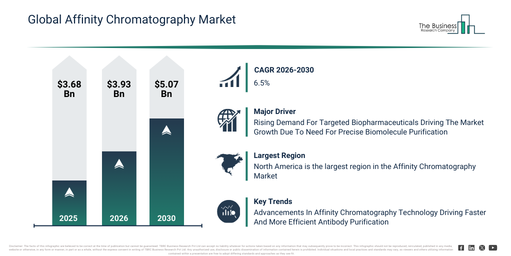
    The affinity chromatography market size has experienced substantial growth in recent years. It is forecast to increase from $3.68 billion in 2025 to $3.93 billion in 2026, at a compound annual growth rate (CAGR) of 6.8%. Historically, this growth has been fueled by the expansion of biopharmaceutical manufacturing activities, growing research into recombinant proteins, the wider adoption of affinity-based separation methods, the proliferation of academic and research institutions, and the availability of advanced chromatography materials.

    The affinity chromatography market is projected to experience robust expansion over the coming years. By 2030, its valuation is set to reach $5.07 billion, exhibiting a compound annual growth rate (CAGR) of 6.5%. This anticipated growth during the forecast period stems from factors such as a heightened demand for monoclonal antibodies, increased capital deployment in biologics development, the broadening scope of personalized medicine research, an intensifying focus on optimizing downstream processes, and the greater uptake of single-use chromatography systems. Key developments expected in the forecast timeframe encompass the wider application of high-specificity purification methods, a surge in the acceptance of protein-based therapeutics, an escalating need for pre-packed chromatography columns, the expansion of biopharmaceutical research initiatives, and an amplified emphasis on ensuring process scalability and reproducibility.

    Access Your Free Sample Report For In-Depth Market Analysis:

    https://www.thebusinessresearchcompany.com/report/affinity-chromatography-global-market-report

    Which Key Drivers Are Affecting The Affinity Chromatography Market Development?

    The increasing requirement for biopharmaceuticals is projected to boost the growth of the affinity chromatography market in the coming period. Biopharmaceuticals are medical products derived from biological entities such as living organisms or cells, employed for treating, preventing, or diagnosing ailments. The heightened demand for biopharmaceuticals arises primarily because they provide very targeted and efficient treatments for complicated diseases like cancer and autoimmune disorders, improving patient outcomes in situations where traditional drugs frequently fall short. The affinity chromatography method facilitates the precise and effective purification of intricate biomolecules, including antibodies and proteins, which is essential for manufacturing high-quality biopharmaceutical items. For instance, in July 2025, according to Sartorius, a Germany-based international life science technology company, global sales of biopharmaceutical drugs increased by about 9% to reach USD 458 billion in 2024, an increase from the preceding year, constituting 41% of the overall pharmaceutical market compared with 40% in 2023. Thus, the escalating demand for biopharmaceuticals will stimulate the expansion of the affinity chromatography market.

    What Segment Categories Shape The Affinity Chromatography Market Segment Landscape?

    The affinity chromatography market covered in this report is segmented –

    1) By Product: Resins Or Gels, Columns, Magnetic Beads, Reagents And Consumables, Accessories

    2) By Technique: Immobilized Metal Affinity Chromatography, Protein A Or G Or L Affinity Chromatography, Bio-Specific Affinity Chromatography, Other Techniques

    3) By Application: Biomolecule Purification, Chromatographic Separation

    4) By End User: Pharmaceutical And Biotechnology Companies, Research Institutes, Academic Institutions

    Subsegments:

    1) By Resins Or Gels: Agarose-Based resins, Polystyrene-Based resins, Silica-Based resins, Sepharose-Based gels, Dextran-Based resins, Cellulose-Based resins

    2) By Columns: Pre-Packed Columns, Empty Columns, Mini-Spin Columns, Gravity Flow Columns, High-Performance Columns

    3) By Magnetic Beads: Streptavidin-Coated Beads, Protein A Or G Or L-Coated Beads, Ni-NTA Magnetic Beads, Glutathione Magnetic Beads, Custom Ligand-Conjugated Beads

    4) By Reagents And Consumables: Ligands, Elution Buffers, Binding Buffers, Wash Buffers, Coupling Reagents

    5) By Accessories: Tubing And Connectors, Frits And Filters, Column Holders, Sample Loops, Flow Restrictors

    What Trends Are Transforming The Affinity Chromatography Market?

    Major companies engaged in the affinity chromatography market are concentrating on developing advanced solutions, such as next-generation affinity chromatography units, aimed at achieving fast, flexible, and efficient antibody purification in laboratory settings. These units represent a significant advancement in purification systems, offering enhanced specificity, scalability, and automation, often incorporating novel ligands and improved resin materials to meet the evolving demands of biopharmaceutical research and production. For instance, in October 2024, Sartorius, a Germany-based pharmaceutical company, introduced the Sartobind Rapid A Lab, a protein A unit. This affinity chromatography unit features the fastest Protein A matrix available, delivering exceptional productivity and transforming antibody purification. Designed for research scientists, it provides a plug-and-play system suitable for benchtop purification and rapid cycling without requiring buffer degassing. Its membrane resists blocking and maintains consistent backpressure, allowing reliable use with syringes, pumps, or chromatography systems for up to 100 purification cycles. Over its consumable lifetime, it achieves up to 17 times higher antibody yields than traditional resin columns.

    Who Are The Companies Operating Across The Affinity Chromatography Market Value Chain?

    Major companies operating in the affinity chromatography market are Thermo Fisher Scientific, Merck KGaA, GE Healthcare Life Sciences, MilliporeSigma, Lonza Group Ltd., Agilent Technologies, Cytiva, Sartorius AG, Tosoh Bioscience, Waters Corporation, Bio-Rad Laboratories, Pall Corporation, Promega Corporation, Biotage, KNAUER Wissenschaftliche Geräte GmbH, BioWorks Inc., BIA Separation, JNC Corporation

    Get The Full Affinity Chromatography Market Report:

    https://www.thebusinessresearchcompany.com/report/affinity-chromatography-global-market-report

    Which Region Is The Leading Market For The Affinity Chromatography Market?

    North America was the largest region in the affinity chromatography market in 2025. The regions covered in the affinity chromatography market report are Asia-Pacific, South East Asia, Western Europe, Eastern Europe, North America, South America, Middle East, Africa.

    Request A Customized Affinity Chromatography Market Report For Competitive Insights:

    https://www.thebusinessresearchcompany.com/report/affinity-chromatography-global-market-report

    Browse Through More Reports Similar to the Global Affinity Chromatography Market 2026, By The Business Research Company

    Liquid Chromatography Instruments Market Report 2026

    https://www.thebusinessresearchcompany.com/report/liquid-chromatography-instruments-global-market-report

    High Performance Liquid Chromatography Market Report 2026

    https://www.thebusinessresearchcompany.com/report/high-performance-liquid-chromatography-global-market-report

    Nutraceutical Excipients Market Report 2026

    https://www.thebusinessresearchcompany.com/report/nutraceutical-excipients-global-market-report

    Get in touch with us:

    The Business Research Company: https://www.thebusinessresearchcompany.com/

    Americas +1 310-496-7795

    Asia +44 7882 955267 & +91 8897263534

    Europe +44 7882 955267

    Email us at info@tbrc.info

    Follow us on:

    LinkedIn: https://in.linkedin.com/company/the-business-research-company

    YouTube: https://www.youtube.com/channel/UC24_fI0rV8cR5DxlCpgmyFQ

    Global Market Model: https://www.thebusinessresearchcompany.com/global-market-model

  • Global At-Home Genetic Testing Market to Hit $8.28B by 2030 at 15.5% CAGR

    Global At-Home Genetic Testing Market to Hit $8.28B by 2030 at 15.5% CAGR

    The Business Research Company’s 2026 market reports feature enhanced tools like market attractiveness analysis, TAM assessment, and company scoring matrices, along with interactive dashboards, deeper supply chain insights, and startup coverage strengthening the depth, usability, and strategic value of insights.

    What Is The Projected Increase In Market Value Of The At-Home Genetic Testing Market During 2026–2030?

    The size of the at-home genetic testing market has seen swift growth recently. Its valuation is projected to rise from $4.02 billion in 2025 to $4.66 billion in 2026, demonstrating a compound annual growth rate (CAGR) of 15.8%. Historically, this expansion has been driven by factors such as a heightened consumer desire for customized health information, a reduction in the expenses associated with genetic sequencing, the proliferation of online health platforms, a greater understanding of the dangers posed by inherited diseases, and the widespread availability of convenient home sampling solutions.

    The market for at-home genetic testing is projected to experience swift expansion over the coming years, reaching a valuation of $8.29 billion by 2030, driven by a compound annual growth rate (CAGR) of 15.5%. This anticipated expansion is primarily due to several factors, including the increasing incorporation of genetic information into digital health platforms, a heightened demand for preventative health options, the broadening scope of customized nutrition and fitness programs, clearer regulatory guidelines for direct-to-consumer testing, and ongoing progress in genomic data analysis. Key trends emerging within this period involve a greater uptake of direct-to-consumer genetic health kits, an increasing interest in ancestry and ethnic background analysis, the expanding application of pharmacogenomic tests, the proliferation of tailored wellness information, and a reinforced emphasis on data confidentiality and user consent.

    Access Your Free Sample Report For In-Depth Market Analysis:

    https://www.thebusinessresearchcompany.com/report/at-home-genetic-testing-global-market-report

    Which Major Drivers Are Influencing The Expansion Of The At-Home Genetic Testing Market?

    Increased acceptance of telehealth is anticipated to stimulate expansion within the at-home genetic testing market in the future. Telehealth involves utilizing digital communication and information tools, including computers, smartphones, and video conferencing, to deliver and oversee healthcare services from a distance. The rising uptake of telehealth stems from its ease of use and capacity to enhance healthcare accessibility, particularly for individuals residing in remote, rural, or inadequately served regions. At-home genetic testing complements telehealth by supplying customized genetic data, which healthcare professionals can leverage during online consultations. Such information enables doctors to customize treatment strategies, oversee long-term illnesses, and deliver accurate health advice remotely. An example of this trend is seen in November 2025, where data from the Australian Bureau of Statistics (ABS), an Australia-based government statistical agency, indicated that 22.5% of Australians utilized telehealth services during 2024–25. Of those who engaged in a telehealth consultation, 90.3% stated they would opt for telehealth once more if available, marking an increase from 89.2% in 2023–24, which signals growing approval and sustained integration. Consequently, the increased use of telehealth fuels the expansion of the at-home genetic testing market.

    What Are The Main Segments Within The At-Home Genetic Testing Market Segment Structure?

    The at-home genetic testing market covered in this report is segmented –

    1) By Test Type: Ancestry Testing, Health And Wellness Testing, Disease Risk Assessment, Carrier Testing, Other Test Types

    2) By Sample Type: Saliva, Blood, Cheek Swab, Urine, Other Specimens

    3) By Technology: Next-Generation Sequencing, Polymerase Chain Reaction, Microarray, Other Technologies

    4) By Application: Personal Use, Clinical Use, Research Use, Pharmaceutical Use, Nutritional Use

    5) By Distribution Channel: Online Platforms, Retail Pharmacies, Other Distribution Channels

    Subsegments:

    1) By Ancestry Testing: Ethnicity Estimation, Genetic Heritage Mapping, Migration Pattern Analysis, Deep Ancestry Tracing

    2) By Health And Wellness Testing: Nutrigenomics, Fitness and Exercise Response, Sleep Pattern Analysis, Stress and Behavioral Traits, Skin and Aging Traits

    3) By Disease Risk Assessment: Cardiovascular Disease Risk, Cancer Risk Assessment, Neurological Disorder Risk, Autoimmune Disease Risk, Metabolic Disorder Risk

    4) By Carrier Testing: Cystic Fibrosis Carrier Screening, Tay-Sachs Disease Screening, Sickle Cell Anemia Carrier Testing, Thalassemia Carrier Testing, Fragile X Syndrome Screening

    5) By Other Test Types: Pharmacogenomics (Drug Response), Prenatal Genetic Testing, Pediatric Genetic Testing, Rare Disease Screening, Behavioral Trait Testing

    Which Trends Are Shaping The At-Home Genetic Testing Market?

    Major companies in the at-home genetic testing market are increasingly concentrating on integrating innovative solutions, such as health membership models, to deliver continuous, personalized preventive care. These health membership models are subscription-based programs that provide ongoing access to services like advanced genetic testing, regular biomarker monitoring, and virtual clinician consultations, thereby helping users continuously track health risks and receive personalized prevention plans. For instance, in November 2023, 23andMe, a US-based personal genomics company, launched 23andMe+ Total Health, a membership program that offers clinical-grade exome sequencing for over 100 medically relevant genes linked to more than 55 health conditions, biannual testing for 55+ blood biomarkers, and virtual consultations with genetics-trained clinicians. This service is designed to support personalized prevention planning by integrating advanced genetic insights with ongoing monitoring and telehealth support, effectively evolving at-home genetic testing from a one-time product into a continuous preventive health service.

    Who Are The Companies Participating In The At-Home Genetic Testing Market?

    Major companies operating in the at-home genetic testing market are AncestryDNA, LetsGetChecked, Helix OpCo LLC, Everlywell Inc., Genos Inc., Vitagene Inc., Orig3n Inc., Mapmygenome India Limited, CircleDNA, EasyDNA Limited, African Ancestry Inc., Futura Genetics Ltd., Living DNA Ltd., Nebula Genomics Inc., TellmeGen S.L., Xcode Life Sciences Pvt Ltd., Color Health Inc., MyHeritage Ltd, FamilyTreeDNA (Gene By Gene Ltd), Color Genomics Inc, DNAfit, Pathway Genomics Inc.

    Get The Full At-Home Genetic Testing Market Report:

    https://www.thebusinessresearchcompany.com/report/at-home-genetic-testing-global-market-report

    Which Region Holds The Highest Market Share In The At-Home Genetic Testing Market?

    North America was the largest region in the at-home genetic testing market in 2025. Asia-Pacific is expected to be the fastest-growing region in the forecast period. The regions covered in the at-home genetic testing market report are Asia-Pacific, South East Asia, Western Europe, Eastern Europe, North America, South America, Middle East, Africa.

    Request A Customized At-Home Genetic Testing Market Report For Competitive Insights:

    https://www.thebusinessresearchcompany.com/report/at-home-genetic-testing-global-market-report

    Browse Through More Reports Similar to the Global At-Home Genetic Testing Market 2026, By The Business Research Company

    Prenatal And Newborn Genetic Testing Market Report 2026

    https://www.thebusinessresearchcompany.com/report/prenatal-and-newborn-genetic-testing-global-market-report

    Molecular Breeding Market Report 2026

    https://www.thebusinessresearchcompany.com/report/molecular-breeding-global-market-report

    Genetic Testing Services Market Report 2026

    https://www.thebusinessresearchcompany.com/report/genetic-testing-services-global-market-report

    Get in touch with us:

    The Business Research Company: https://www.thebusinessresearchcompany.com/

    Americas +1 310-496-7795

    Asia +44 7882 955267 & +91 8897263534

    Europe +44 7882 955267

    Email us at info@tbrc.info

    Follow us on:

    LinkedIn: https://in.linkedin.com/company/the-business-research-company

    YouTube: https://www.youtube.com/channel/UC24_fI0rV8cR5DxlCpgmyFQ

    Global Market Model: https://www.thebusinessresearchcompany.com/global-market-model

  • Dental Diamond Burs Market Growth Analysis 2026–2030 Highlighting Innovation And Competitive Landscape

    Dental Diamond Burs Market Growth Analysis 2026–2030 Highlighting Innovation And Competitive Landscape

    The Business Research Company’s 2026 market reports feature enhanced tools like market attractiveness analysis, TAM assessment, and company scoring matrices, along with interactive dashboards, deeper supply chain insights, and startup coverage strengthening the depth, usability, and strategic value of insights.

    How Much Will The Market Value Of The Dental Diamond Burs Market Grow Between 2026 And 2030?

    The dental diamond burs market has observed significant growth in recent years. This market is anticipated to expand from $2.07 billion in 2025 to $2.18 billion in 2026, demonstrating a compound annual growth rate (CAGR) of 5.4%. In the past, this growth was primarily driven by factors such as the reliance on conventional rotary instruments, the limited availability of high-quality diamond burs, an increase in dental procedures, the adoption of traditional dental techniques, and the proliferation of private dental clinics.

    The dental diamond burs market size is projected to experience substantial growth in the upcoming years, with expectations to reach $2.66 billion by 2030, demonstrating a compound annual growth rate (CAGR) of 5.1%. This anticipated expansion can be attributed to several factors, including advancements in electrolytic co-deposition and micro brazing technologies, the increasing number of dental implant and orthodontic procedures, a rise in the adoption of minimally invasive surgeries, growing investments in dental clinic infrastructure, and a concentrated focus on research and development for high-performance burs. Key trends expected within this forecast period involve a rising demand for high-precision dental instruments, broader adoption of advanced coating and deposition technologies, continued growth in minimally invasive dental procedures, the expansion of dental implant and orthodontic procedures, and an emphasis on the longevity and durability of dental burs.

    Access Your Free Sample Report For In-Depth Market Analysis:

    https://www.thebusinessresearchcompany.com/sample.aspx?id=27270&type=smp

    What Key Factors Are Shaping The Dental Diamond Burs Market Landscape?

    The growing incidence of dental diseases is anticipated to drive the expansion of the dental diamond burs market in the future. These conditions affect teeth and surrounding oral structures, often stemming from bacterial accumulation, poor oral hygiene, or other factors. The rise in dental diseases is attributed to increased intake of sugary and processed foods, which foster detrimental oral bacteria, leading to more instances of tooth decay and gum infections. Dental diamond burs aid in preventing these diseases by enabling precise removal of decayed tooth material, thereby minimizing residual bacteria and reducing the likelihood of subsequent infections or oral issues. For instance, in August 2024, according to the National Health Service (NHS), a publicly funded healthcare system in the UK, England recorded around 34 million dental treatment courses in 2023/24, marking a 4.3% increase from the previous year, while total dental activity units grew by 3.4% to reach 73 million. Consequently, the increasing occurrence of dental diseases is propelling the growth of the dental diamond burs market.

    Which Segments Define The Dental Diamond Burs Market Segment Structure?

    The dental diamond burs market covered in this report is segmented –

    1) By Technology: Electrolytic Co-Deposition, Micro Brazing, Chemical Vapor Deposition, Sintering, Other Technologies

    2) By Application: Oral Surgery, Implantology, Orthodontics, Cavity Preparation, Other Applications

    3) By End User: Dental Clinics, Hospitals

    Subsegments:

    1) By Electrolytic Co-Deposition: Nickel Matrix Co-Deposition, Cobalt Matrix Co-Deposition, Hybrid Metal Matrix Co-Deposition

    2) By Micro Brazing: Silver-Based Brazing, Copper-Based Brazing, Alloy Composite Brazing

    3) By Chemical Vapor Deposition (CVD): Low-Pressure CVD, Plasma-Enhanced CVD, Hot-Filament CVD

    4) By Sintering: High-Temperature Sintering, Pressure-Assisted Sintering, Spark Plasma Sintering

    5) By Other Technologies: Laser Welding, Galvanic Bonding, Hybrid Bonding Methods

    What Market Trends Are Affecting The Dental Diamond Burs Market?

    Major companies operating in the dental diamond burs market are focusing on developing advanced solutions, such as pre-sterilized, single-patient-use rotary burs, to improve clinical efficiency and infection control in dental practices. A pre-sterilized single-use diamond bur eliminates the need for cleaning, sterilization, and processing between patients while maintaining the cutting performance of traditional multi-use burs. For instance, in February 2024, Kerr Dental, a US-based manufacturer of dental products, launched the SimpliCut pre-sterilized single-patient-use diamond burs rotary line. It offers pre-sterilized, individually packaged diamond burs that support hygienic, contamination-free use right out of the box. They are available in multiple shapes and color-coded grit levels, enabling easy selection and uninterrupted workflow. Designed for high-speed cutting and reliability, these burs assist dental professionals in performing complex restorations with improved precision and safety.

    Who Are The Established Players Within The Dental Diamond Burs Market?

    Major companies operating in the dental diamond burs market are Dentsply Sirona Inc., Kerr Dental, COLTENE Holding AG, SHOFU Inc., HuFriedyGroup, MANI Inc., Bien-Air Dental, Komet USA LLC, JOTA AG, M.D.T Ltd., Prima Dental Group, Microcopy Dental, Eagle Dental Burs, Tri Hawk Inc., Diatech Diamond Instruments, DFS-DIAMON GmbH, Lasco Diamond Products Inc., Johnson Promident, MICRODONT, Tangshan UMG Medical Instrument Co. Ltd.

    Get The Full Dental Diamond Burs Market Report:

    https://www.thebusinessresearchcompany.com/report/dental-diamond-burs-global-market-report

    Which Region Has The Greatest Market Share In The Dental Diamond Burs Market?

    North America was the largest region in the dental diamond burs market in 2025. Asia-Pacific is expected to be the fastest-growing region in the forecast period. The regions covered in the dental diamond burs market report are Asia-Pacific, South East Asia, Western Europe, Eastern Europe, North America, South America, Middle East, Africa.

    Request A Customized Dental Diamond Burs Market Report For Competitive Insights:

    https://www.thebusinessresearchcompany.com/customise?id=27270&type=smp

    Browse Through More Reports Similar to the Global Dental Diamond Burs Market 2026, By The Business Research Company

    Variable Life Insurance Market Report 2026

    https://www.thebusinessresearchcompany.com/report/variable-life-insurance-global-market-report

    Term Life Insurance Market 2026

    https://www.thebusinessresearchcompany.com/report/term-life-insurance-market

    Term Life Insurance Market 2026

    https://www.thebusinessresearchcompany.com/report/term-life-insurance-market

    Get in touch with us:

    The Business Research Company: https://www.thebusinessresearchcompany.com/

    Americas +1 310-496-7795

    Asia +44 7882 955267 & +91 8897263534

    Europe +44 7882 955267

    Email us at info@tbrc.info

    Follow us on:

    LinkedIn: https://in.linkedin.com/company/the-business-research-company

    YouTube: https://www.youtube.com/channel/UC24_fI0rV8cR5DxlCpgmyFQ

    Global Market Model: https://www.thebusinessresearchcompany.com/global-market-model

  • Digestible Sensor Market Overview 2026–2030 With Insights On Industry Developments

    Digestible Sensor Market Overview 2026–2030 With Insights On Industry Developments

    The Business Research Company’s 2026 market reports feature enhanced tools like market attractiveness analysis, TAM assessment, and company scoring matrices, along with interactive dashboards, deeper supply chain insights, and startup coverage strengthening the depth, usability, and strategic value of insights.

    What Is The Forecasted Market Size Trajectory Of The Digestible Sensor Market From 2026 To 2030?

    The digestible sensor market size has experienced rapid growth in recent years. It is anticipated to expand from $1.37 billion in 2025 to $1.56 billion in 2026, showing a compound annual growth rate (CAGR) of 14.0%. The past growth can be ascribed to several factors, including the limited availability of ingestible sensor technologies, a reliance on conventional diagnostic methods, increasing awareness of GI health, the early adoption of capsule endoscopy, and growing research and development in bioelectronic interfaces.

    The digestible sensor market is poised for significant expansion over the coming years. Projections indicate its value will reach $2.6 billion by 2030, demonstrating a compound annual growth rate (CAGR) of 13.7%. This anticipated growth during the forecast period is driven by factors such as progress in wireless communication and MEMS technologies, their incorporation into digital health platforms, the proliferation of personalized medicine programs, an increasing need for real-time patient observation, and the expansion of home healthcare and telemedicine services. Key trends shaping the market within this period encompass the growing uptake of ingestible sensors for gastrointestinal health tracking, the embedding of sensors within medication adherence strategies, the broadened utility of smart capsule endoscopy, the increasing deployment of electrochemical and gas sensing innovations, and the development of customized patient monitoring systems.

    Access Your Free Sample Report For In-Depth Market Analysis:

    https://www.thebusinessresearchcompany.com/sample.aspx?id=27275&type=smp

    What Major Factors Are Driving The Digestible Sensor Market Forward?

    The rising requirement for remote health monitoring is set to advance the expansion of the digestible sensor market in the foreseeable future. Remote health monitoring involves employing technology to oversee and manage patient well-being beyond conventional clinical environments, usually remotely. This surge in remote health monitoring stems from individuals favoring customized, real-time health services from their residences and seeking economical alternatives to standard in-person consultations. Digestible sensors aid remote health monitoring by enabling continuous tracking of internal physiological indicators, such as gastrointestinal activity, and supplying physicians with critical information on a patient’s digestive tract, thereby facilitating the prompt identification of conditions like infections or illnesses without intrusive procedures. For instance, in August 2025, a data-snapshot from the Office of Inspector General, U.S. Department of Health & Human Services (OIG), revealed that in 2024, Medicare disbursements for remote patient monitoring surpassed US $536 million (representing a 31 % rise from 2023), approximately 1 million beneficiaries utilized RPM services (a 27 % increase from 2023), and roughly 4,600 medical facilities regularly invoiced for RPM. Consequently, the increasing need for remote health monitoring is stimulating the growth of the digestible sensor market.

    How Are Segments Identified Within The Digestible Sensor Market Segment Framework?

    The digestible sensor market covered in this report is segmented –

    1) By Type: Capsule Sensors, Wearable Sensors, Ingestible Sensors, Implantable Sensors

    2) By Distribution Channel: Online Retail, Pharmacies, Hospitals And Clinics, Direct Sales

    3) By Technology: Microelectromechanical Systems (MEMS), Wireless Communication Technologies, Optical Sensors, Bioelectronic Interfaces

    4) By Application: Medical Diagnostics, Drug Delivery, Patient Monitoring, Sports And Fitness, Other Applications

    5) By End-User: Healthcare Providers, Research Institutions, Pharmaceutical Companies, Individual Consumers

    Subsegments:

    1) By Capsule Sensors: pH Monitoring Capsules, Temperature Monitoring Capsules, Pressure Sensing Capsules, Smart Capsule Endoscopy, Drug Delivery Capsules With Sensors

    2) By Wearable Sensors: Patch-Based External Receivers, Gastrointestinal Motility Trackers, Bio-Signal Monitoring Wearables, Wearable Adherence Trackers

    3) By Ingestible Sensors: Vital Sign Monitoring Sensors, Drug Adherence Monitoring Sensors, Imaging Sensors, Gas Sensing Sensors, Electrochemical Sensors

    4) By Implantable Sensors: GI Electrophysiology Sensors, pH And Enzyme Sensors, Neuromodulation Devices, Metabolic Sensors

    Which Trends Are Impacting The Progress Of The Digestible Sensor Market?

    Major companies in the digestible sensor market are concentrating on advanced solutions such as multi-parameter sensors to enhance diagnostic accuracy, expand their application scope, and improve real-time health monitoring capabilities. Multi-parameter sensors refer to devices designed to simultaneously measure multiple physical or chemical parameters from their environment or subject, combining various sensing technologies into one compact unit. For instance, in May 2025, the Interuniversity Microelectronics Centre, a Belgium-based non-profit research organization, introduced a highly miniaturized ingestible sensor for gut health monitoring. This highly miniaturized ingestible sensor measures just 2.1 cm in length and 0.75 cm in diameter. The capsule is about three times smaller than traditional endoscopic capsules, enabling easier swallowing and improved patient comfort. It integrates multiple sensors, including oxidation-reduction potential (ORP), pH, and temperature, to provide real-time biochemical data from the gastrointestinal tract. Powered by low-energy electronics and a compact battery, the capsule records readings every 20 seconds throughout the entire digestive journey. With wireless data transmission and a biocompatible casing, the device enables continuous, noninvasive analysis of internal gut conditions, offering significant potential for early diagnosis of inflammation, oxidative stress, and microbiome imbalances.

    Who Are The Companies Competing Within The Digestible Sensor Market?

    Major companies operating in the digestible sensor market are Medtronic plc, Koninklijke Philips N.V., Otsuka Pharmaceutical Co Ltd, Olympus Corporation, Sencure B.V., Millar Inc., Check-Cap Ltd, Proteus Digital Health Inc., CapsoVision Inc., Atmo Biosciences, IntroMedic Co Ltd, BodyCAP S.A.S., Capsule Technologies Inc., etectRx Inc., Motus GI Inc., SmartPill Corporation, JINSHAN Science & Technology Group Co Ltd, MC10, Medtronic GI Solutions, Proteus GI Technologies

    Get The Full Digestible Sensor Market Report:

    https://www.thebusinessresearchcompany.com/report/digestible-sensor-global-market-report

    Which Region Has The Greatest Market Share In The Digestible Sensor Market?

    North America was the largest region in the digestible sensor market in 2025. Asia-Pacific is expected to be the fastest-growing region in the forecast period. The regions covered in the digestible sensor market report are Asia-Pacific, South East Asia, Western Europe, Eastern Europe, North America, South America, Middle East, Africa.

    Request A Customized Digestible Sensor Market Report For Competitive Insights:

    https://www.thebusinessresearchcompany.com/customise?id=27275&type=smp

    Browse Through More Reports Similar to the Global Digestible Sensor Market 2026, By The Business Research Company

    Precast Construction Market Report 2026

    https://www.thebusinessresearchcompany.com/report/precast-construction-global-market-report

    Wood Based Panel Market Report 2026

    https://www.thebusinessresearchcompany.com/report/wood-based-panel-global-market-report

    Precast Concrete Market 2026

    https://www.thebusinessresearchcompany.com/report/precast-concrete-market

    Get in touch with us:

    The Business Research Company: https://www.thebusinessresearchcompany.com/

    Americas +1 310-496-7795

    Asia +44 7882 955267 & +91 8897263534

    Europe +44 7882 955267

    Email us at info@tbrc.info

    Follow us on:

    LinkedIn: https://in.linkedin.com/company/the-business-research-company

    YouTube: https://www.youtube.com/channel/UC24_fI0rV8cR5DxlCpgmyFQ

    Global Market Model: https://www.thebusinessresearchcompany.com/global-market-model

  • Connected Wearable Patches Market Developments And Opportunities Across 2026–2030

    Connected Wearable Patches Market Developments And Opportunities Across 2026–2030

    The Business Research Company’s 2026 market reports feature enhanced tools like market attractiveness analysis, TAM assessment, and company scoring matrices, along with interactive dashboards, deeper supply chain insights, and startup coverage strengthening the depth, usability, and strategic value of insights.

    How Much Will The Market Value Of The Connected Wearable Patches Market Grow Between 2026 And 2030?

    The market for connected wearable patches has experienced substantial expansion in recent years. Its valuation is projected to rise from $6.42 billion in 2025 to $7.32 billion in 2026, reflecting a compound annual growth rate (CAGR) of 14.1%. This historical growth can be ascribed to several factors, including the initial limited embrace of connected wearable technologies, a continued dependence on traditional monitoring equipment, the growing occurrence of chronic conditions, early-stage clinical studies utilizing wearable patches, and an increasing understanding of patient-focused healthcare.

    The market size for connected wearable patches is projected to undergo rapid expansion over the next few years, with an anticipated rise to $12.26 billion by 2030, reflecting a compound annual growth rate (CAGR) of 13.8%. This growth during the forecast period is attributable to advancements in sensor miniaturization and connectivity, their integration with smartphones and cloud platforms, an escalating demand for continuous glucose and cardiac monitoring, the broadening of sports and wellness tracking applications, and increased regulatory approvals alongside healthcare reimbursement policies. Significant trends expected in this period include the development of remote patient monitoring and telehealth solutions, a growing embrace of non-invasive glucose monitoring technologies, the increasing application of wearable patches in fitness and sports performance, an expansion of transdermal drug delivery uses, and a heightened emphasis on data accuracy, sensor reliability, and patient safety.

    Access Your Free Sample Report For In-Depth Market Analysis:

    https://www.thebusinessresearchcompany.com/sample.aspx?id=25725&type=smp

    What Primary Drivers Are Shaping The Connected Wearable Patches Market?

    The rising awareness of fitness and wellness is projected to accelerate the expansion of the connected wearable patches market. This awareness refers to understanding the significance of regular physical activity and healthy lifestyle practices for overall well-being. The growth in fitness and wellness awareness is attributed to increasing concerns about chronic diseases, encouraging individuals to adopt healthier lifestyles for improved long-term health. Connected wearable patches aid in fostering fitness and wellness awareness by continuously monitoring vital health metrics, offering real-time feedback, and motivating users to stay active and maintain healthier routines. For example, in June 2024, data from the International Food Information Council (IFIC), a US-based non-profit organization, revealed that the percentage of Americans who followed a specific diet or eating pattern over the past year remained high at 54%. Most individuals are striving to increase their protein intake, with interest rising from 59% in 2022 to 67% in 2023, and further to 71% in 2024. Additionally, around half of consumers are seeking to consume more fresh foods, which are widely considered the healthiest food options. Thus, the increasing fitness and wellness awareness is propelling the growth of the connected wearable patches market.

    How Are Segments Identified Within The Connected Wearable Patches Market Segment Framework?

    The connected wearable patches market covered in this report is segmented –

    1) By Type: Glucose Monitoring Patches, Cardiac Monitoring Patches, Electromyography (EMG) Patches, Transdermal Drug Delivery Patches, Electroencephalography (EEG) Patches, Other Types

    2) By Sensor Technology: Electrocardiography (ECG), Photoplethysmography (PPG), Accelerometry, Gyroscope, Temperature Sensing

    3) By Distribution Channel: Online Stores, Pharmacies, Specialty Stores, Other Distribution Channels

    4) By Application: Remote Patient Monitoring, Fitness And Wellness Monitoring, Drug Delivery, Sports And Performance Monitoring, Other Applications

    5) By End User: Hospitals, Home Care, Fitness Centers, Research Institutions, Other End-Users

    Subsegments:

    1) By Glucose Monitoring Patches: Continuous Glucose Monitoring (CGM) Patches, Flash Glucose Monitoring (FGM) Patches, Non-Invasive Glucose Monitoring Patches, Adhesive Enzyme-Based Glucose Patches

    2) By Cardiac Monitoring Patches: Electrocardiography Monitoring Patches, Arrhythmia Detection Patches, Remote Cardiac Telemetry Patches, Holter Monitoring Patches

    3) By Electromyography (EMG) Patches: Surface Electromyography Patches, Wireless Electromyography Sensor Patches, Multi-channel Electromyography Patches, Rehabilitation Monitoring Electromyography Patches

    4) By Transdermal Drug Delivery Patches: Nicotine Delivery Patches, Hormone Replacement Therapy (HRT) Patches, Pain Management Patches (e.g., Fentanyl), Neurological Drug Delivery Patches, Anti-hypertensive Patches

    5) By Electroencephalography (EEG) Patches: Sleep Monitoring Electroencephalography Patches, Seizure Detection Electroencephalography Patches, Brain-Computer Interface (BCI) Patches, Cognitive Performance Monitoring Patches

    6) By Other Types: Hydration Monitoring Patches, Temperature Monitoring Patches, Sweat Analysis Patches, Oxygen Saturation (SpO2) Monitoring Patches, Respiratory Rate Monitoring Patches

    What Trends Are Affecting The Growth Of The Connected Wearable Patches Market?

    Leading companies in the connected wearable patches market are concentrating on advanced technologies, such as sweat-sensing biopatch platforms, to deliver real-time, customized hydration insights for industrial workers. Such a biopatch integrates multiple biosensors to instantly detect fluid and electrolyte loss, body temperature, and movement patterns, thereby enabling proactive hydration and heat stress management. For instance, in April 2024, Epicore Biosystems, a US-based digital health company, launched Connected Hydration and a mobile application. This cutting-edge wearable patch system is designed to help industrial personnel prevent dehydration and heat-related injuries through immediate data feedback. This sophisticated solution features a flexible, non-rechargeable biopatch with a 1,000-hour battery life, real-time dehydration alerts via haptic feedback, and an associated mobile application for tracking fluid intake and biometric trends. Its robust design is certified for hazardous environments and incorporates machine learning trained on over 420,000 field data points.

    Who Are The Companies Competing Within The Connected Wearable Patches Market?

    Major companies operating in the connected wearable patches market are Abbott Laboratories, Medtronic plc, Koninklijke Philips NV, GE HealthCare Technologies Inc, ZOLL Medical Corporation, Dexcom Inc, Insulet Corporation, MicroPort Scientific Corporation, iRhythm Technologies Inc, Linxens Holding SAS, Biotricity Inc, Blue Spark Technologies Inc, Epicore Biosystems Inc, Cardiac Insight Inc, Delsys Incorporated, G Tech Medical Inc, Leaf Healthcare Inc, VivaLNK Inc, BioIntelliSense Inc, MC10 Inc, LifeSignals Group Inc, Preventice Solutions Inc

    Get The Full Connected Wearable Patches Market Report:

    https://www.thebusinessresearchcompany.com/report/connected-wearable-patches-global-market-report

    Where Is The Connected Wearable Patches Market Most Concentrated Geographically?

    North America was the largest region in the connected wearable patches market in 2025. Asia-Pacific is expected to be the fastest-growing region in the forecast period. The regions covered in the connected wearable patches market report are Asia-Pacific, South East Asia, Western Europe, Eastern Europe, North America, South America, Middle East, Africa.

    Request A Customized Connected Wearable Patches Market Report For Competitive Insights:

    https://www.thebusinessresearchcompany.com/customise?id=25725&type=smp

    Browse Through More Reports Similar to the Global Connected Wearable Patches Market 2026, By The Business Research Company

    Medical Device Technologies Market Report 2026

    https://www.thebusinessresearchcompany.com/report/medical-device-technologies-global-market-report

    Medical Devices Reimbursement Market Report 2026

    https://www.thebusinessresearchcompany.com/report/medical-devices-reimbursement-global-market-report

    Medical Device Contract Research Organization Market Report 2026

    https://www.thebusinessresearchcompany.com/report/medical-device-contract-research-organization-global-market-report

    Get in touch with us:

    The Business Research Company: https://www.thebusinessresearchcompany.com/

    Americas +1 310-496-7795

    Asia +44 7882 955267 & +91 8897263534

    Europe +44 7882 955267

    Email us at info@tbrc.info

    Follow us on:

    LinkedIn: https://in.linkedin.com/company/the-business-research-company

    YouTube: https://www.youtube.com/channel/UC24_fI0rV8cR5DxlCpgmyFQ

    Global Market Model: https://www.thebusinessresearchcompany.com/global-market-model

  • Arthroscopic Orthopedic Surgery Instrument Market Forecast 2026–2030 Providing Long-Term Insights

    Arthroscopic Orthopedic Surgery Instrument Market Forecast 2026–2030 Providing Long-Term Insights

    The Business Research Company’s 2026 market reports feature enhanced tools like market attractiveness analysis, TAM assessment, and company scoring matrices, along with interactive dashboards, deeper supply chain insights, and startup coverage strengthening the depth, usability, and strategic value of insights.

    How Large Will The Arthroscopic Orthopedic Surgery Instrument Market Be By 2030 Compared To Its 2026 Market Size?

    The arthroscopic orthopedic surgery instrument market has experienced substantial growth in recent years. It is projected to increase from $4.16 billion in 2025 to $4.37 billion in 2026, at a compound annual growth rate (CAGR) of 5.1%. The historical expansion can be attributed to the limited availability of specialized arthroscopic instruments, a reliance on traditional open surgery, an increasing prevalence of orthopedic disorders, the early adoption of knee and shoulder surgeries, and the development of hospital and orthopedic clinic infrastructure.

    The arthroscopic orthopedic surgery instrument market is projected to experience consistent expansion over the upcoming years. It is anticipated to reach $5.26 billion by 2030, exhibiting a compound annual growth rate (CAGR) of 4.7%. This expansion during the forecast period is driven by factors such as advancements in flexible and intelligent instruments, the increasing adoption of single-use and disposable devices, the proliferation of ambulatory surgical centers (ASCs), a growing need for multi-joint arthroscopic procedures, and the incorporation of AI and digital imaging into surgical processes. Key developments expected in this period include a greater embrace of minimally invasive surgical techniques, a rising need for both reusable and single-use instruments, the widening application of arthroscopic procedures across various joints, the incorporation of advanced imaging and navigation technologies, and an intensified focus on instrument design for precision and ergonomics.

    Access Your Free Sample Report For In-Depth Market Analysis:

    https://www.thebusinessresearchcompany.com/sample.aspx?id=24468&type=smp

    Which Key Drivers Are Affecting The Arthroscopic Orthopedic Surgery Instrument Market Development?

    The expanding occurrence of musculoskeletal disorders is anticipated to stimulate the future expansion of the arthroscopic orthopedic surgery instrument market. These disorders encompass conditions affecting muscles, bones, joints, tendons, and ligaments, leading to pain or restricted movement. The increase in their prevalence is linked to the global aging population, as individuals naturally experience joint degeneration and reduced bone density over time. Arthroscopic orthopedic surgery instruments facilitate the treatment of musculoskeletal disorders by enabling minimally invasive procedures, reducing tissue damage, and promoting faster recovery. They also improve surgical precision, which leads to enhanced patient outcomes and greater efficiency in orthopedic care. For instance, in January 2024, according to the Office for Health Improvement and Disparities, a UK-based government department, the prevalence of long-term musculoskeletal (MSK) conditions in people aged 16 and over who self-reported was 18.4% in 2023, an increase from 17.6% in 2022. Thus, the rising prevalence of musculoskeletal disorders is a significant factor driving the growth of the arthroscopic orthopedic surgery instrument market.

    What Segment Categories Shape The Arthroscopic Orthopedic Surgery Instrument Market Segment Landscape?

    The arthroscopic orthopedic surgery instrument market covered in this report is segmented –

    1) By Type: Arthroscopic Shavers, Arthroscopic Scissors, Arthroscopic Probe, Arthroscopic Graspers, Arthroscopic Scalpels, Arthroscopic Cannulas

    2) By Product Design: Rigid Instruments, Flexible Instruments, Reusable Instruments, Single-Use Instruments

    3) By Application: Knee Surgery, Shoulder Surgery, Hip Surgery, Ankle Surgery, Elbow Surgery

    4) By End-User: Hospitals, Ambulatory Surgical Centers (ASCs), Orthopedic Clinics

    Subsegments:

    1) By Arthroscopic Shavers: Blade Shavers, Burr Shavers, Handpiece Shavers, Disposable Shavers, Reusable Shavers

    2) By Arthroscopic Scissors: Straight Scissors, Curved Scissors, Hook Scissors, Micro Scissors

    3) By Arthroscopic Probe: Straight Probes, Angled Probes, Calibrated Probes, Hook Probes

    4) By Arthroscopic Graspers: Straight Graspers, Curved Graspers, Rotating Graspers, Alligator Graspers, Punch Graspers

    5) By Arthroscopic Scalpels: Retractable Scalpels, Disposable Scalpels, Reusable Scalpels, Mini Scalpels

    6) By Arthroscopic Cannulas: Slotted Cannulas, Threaded Cannulas, Smooth Cannulas, Metal Cannulas, Plastic Cannulas

    What Trends Are Transforming The Arthroscopic Orthopedic Surgery Instrument Market?

    Major companies operating in the arthroscopic orthopedic surgery instrument market are concentrating on developing advanced innovations, such as minimally invasive techniques that offer faster recovery, with the goal of improving surgical precision, enhancing patient outcomes, and decreasing overall healthcare expenditures. Minimally invasive techniques for quicker recovery refer to surgical approaches that utilize small incisions and specialized tools to minimize tissue damage, leading to less discomfort, shorter hospital stays, and a more rapid return to daily routines. For instance, in January 2024, Arthrex, a US-based company focused on minimally invasive surgical technology, launched TheNanoExperience.com, an online platform designed with patients in mind. This procedure aims to alleviate pain and accelerate the healing process, allowing individuals to resume activities sooner. The platform also provides detailed videos, testimonials, and explanations of procedures to assist patients in making informed decisions about their care.

    Who Are The Companies Operating Across The Arthroscopic Orthopedic Surgery Instrument Market Value Chain?

    Major companies operating in the arthroscopic orthopedic surgery instrument market are Johnson and Johnson, Medtronic plc, Stryker Corporation, Zimmer Biomet Holdings Inc, Smith and Nephew plc, Arthrex Inc, Karl Storz SE and Co KG, Integra LifeSciences Holdings Corporation, CONMED Corporation, B Braun Melsungen AG, Gauthier Biomedical Inc, Sklar Surgical Instruments Inc, Medicon eG, Millennium Surgical Corp, Rudolf Medical GmbH and Co KG, Devesh Meditech Pvt Ltd, GPC Medical Ltd, Olympus Medical Systems, Surgical Holdings Ltd, Smiths Medical

    Get The Full Arthroscopic Orthopedic Surgery Instrument Market Report:

    https://www.thebusinessresearchcompany.com/report/arthroscopic-orthopedic-surgery-instrument-global-market-report

    Which Region Is The Leading Market For The Arthroscopic Orthopedic Surgery Instrument Market?

    North America was the largest region in the arthroscopic orthopedic surgery instruments market in 2025. Asia-Pacific is expected to be the fastest-growing region in the forecast period. The regions covered in the arthroscopic orthopedic surgery instrument market report are Asia-Pacific, South East Asia, Western Europe, Eastern Europe, North America, South America, Middle East, Africa.

    Request A Customized Arthroscopic Orthopedic Surgery Instrument Market Report For Competitive Insights:

    https://www.thebusinessresearchcompany.com/customise?id=24468&type=smp

    Browse Through More Reports Similar to the Global Arthroscopic Orthopedic Surgery Instrument Market 2026, By The Business Research Company

    Open Surgery Instruments Market Report 2026

    https://www.thebusinessresearchcompany.com/report/open-surgery-instruments-global-market-report

    Orthopedic Devices Market Report 2026

    https://www.thebusinessresearchcompany.com/report/orthopedic-devices-global-market-report

    Hand Held Surgical Instruments Market Report 2026

    https://www.thebusinessresearchcompany.com/report/hand-held-surgical-instruments-global-market-report

    Get in touch with us:

    The Business Research Company: https://www.thebusinessresearchcompany.com/

    Americas +1 310-496-7795

    Asia +44 7882 955267 & +91 8897263534

    Europe +44 7882 955267

    Email us at info@tbrc.info

    Follow us on:

    LinkedIn: https://in.linkedin.com/company/the-business-research-company

    YouTube: https://www.youtube.com/channel/UC24_fI0rV8cR5DxlCpgmyFQ

    Global Market Model: https://www.thebusinessresearchcompany.com/global-market-model