Tag: Fibroblast Activation Protein Inhibitor Market Analysis

  • 2025 Analysis: Opportunities and Risks in the Evolving Fibroblast Activation Protein Inhibitors Market

    2025 Analysis: Opportunities and Risks in the Evolving Fibroblast Activation Protein Inhibitors Market

    Claim your 30% discount on Global Market Reports with code ONLINE30. Limited time only.

    What Are the Latest Market Insights for the Fibroblast Activation Protein Inhibitors Industry?

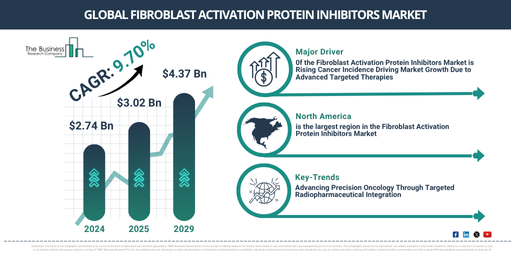
    In recent years, the market size for inhibitors of the fibroblast activation protein has seen robust growth. The market value is projected to increase from $2.74 billion in 2024 to $3.02 billion in 2025, indicating a compound annual growth rate (CAGR) of 10.0%. This growth in the historic period is due to multiple factors including an enhanced emphasis on personalized medicine, amplified investment towards oncology-based drug innovation, surging development of drugs based on biomarkers, escalated cooperation amongst biotech companies, and a surging interest in tumor stroma as a potential therapeutic target.

    The market for fibroblast activation protein inhibitors is anticipated to experience significant expansion in the years to come, reaching a size of $4.37 billion in 2029 with a CAGR of 9.7%. The projected growth within this timeframe can be credited to the burgeoning pipeline of fibroblast activation protein inhibitors, broader use in non-cancerous diseases, an escalated embrace of combination therapies, increased government support for cancer research, and heightened interest by pharmaceutical firms. Key trends within the projected period include progress in targeted drug delivery systems, production of the next wave of fibroblast inhibitors, innovation in supportive diagnostic tools, progression in immunotherapy combinations, and creation of oral formulations to increase compliance.

    Download The Free Sample Report Here:

    https://www.thebusinessresearchcompany.com/sample.aspx?id=24536&type=smp

    What Forces Are Driving The Growth Of The Fibroblast Activation Protein Inhibitors Industry?

    Rising instances of cancer are projected to boost the fibroblast activation protein inhibitors market’s expansion in the future. Cancer is a condition marked by unregulated abnormal cell growth with the potential to invade and spread to different body parts. It can originate in a variety of tissues and organs, and is classified based on the originating cell or tissue type. This surge in cancer prevalence is linked to an aging population, alterations in lifestyle, environmental influences, and superior detection techniques. Fibroblast activation protein inhibitors are employed in cancer treatment to target and interfere with tumor-supporting fibroblasts, thereby improving diagnostic imaging and therapeutic delivery. For example, Macmillan Cancer Support, a UK charity supporting cancer patients, reported in August 2024 that over 3 million people were living with cancer in that year in the UK. This figure is predicted to climb to 3.5 million by 2025, 4 million by 2030, and 5.3 million by 2040. As such, the surge in cancer cases is fuelling the expansion of the fibroblast activation protein inhibitors market.

    What Is The Overview Of Market Segmentation In The Fibroblast Activation Protein Inhibitors Industry?

    The fibroblast activation protein inhibitors market covered in this report is segmented –

    1) By Type: Small Molecule Inhibitors, Monoclonal Antibodies, Peptide Inhibitors

    2) By Indication: Interstitial Cystitis, Crohn’s, Irritable Bowel, Chronic Prostatitis, Other Indications

    3) By Route Of Administration: Oral, Intravenous, Subcutaneous

    4) By Distribution Channel: Hospital Pharmacy, Online Pharmacy, Retail Pharmacy

    5) By End User: Hospitals, Homecare, Specialty Clinics, Other End Users

    Subsegments:

    1) By Small Molecule Inhibitors: Kinase Inhibitors, Protease Inhibitors, Multi-Targeted Agents

    2) By Monoclonal Antibodies: Humanized Antibodies, Fully Human Antibodies, Bispecific Antibodies

    3) By Peptide Inhibitors: Synthetic Peptides, Natural Peptide Derivatives, Peptide-Based Conjugates

    What Future Market Trends Are Projected For The Fibroblast Activation Protein Inhibitors Industry?

    Primary businesses in the fibroblast activation protein inhibitors sector are concentrating their efforts on fusing FAP with SAR chelator technology. This integration would aid in refining the delivery of targeted radiopharmaceuticals, enhancing diagnostic imaging precision, and augmenting the effectiveness of cancer treatments. Through utilizing distinctive molecules that attach tightly to radioactive metals, the SAR chelator technology enables the analysis of structural changes impacting performance. Its principal application lies in steering radioactive medicines precisely towards cancer cells for therapeutic treatments or imaging purposes. For instance, in December 2024, Clarity Pharmaceuticals, a company based in Australia and specializing in radiopharmaceuticals, introduced its groundbreaking, optimized, fibroblast activation protein (FAP) targeted radiopharmaceutical, devised specifically for precision oncology applications. This progression broadens Clarity’s product portfolio, promising a highly specific treatment method for high FAP expression cancers, potentially amplifying diagnostic precision and therapeutic results. This innovation highlights Clarity’s dedication to progress in personalized cancer care, through radiopharmaceuticals.

    Who Are The Primary Players Operating Across The Global Fibroblast Activation Protein Inhibitors Market?

    Major companies operating in the fibroblast activation protein inhibitors market are Roche Ltd., Bristol-Myers Squibb Company, AstraZeneca plc, Novartis AG, Teva Pharmaceutical Industries Ltd., Jazz Pharmaceuticals Inc., Prestige Consumer Healthcare Inc., SOFIE Biosciences Inc., Molecular Partners, FibroGen Inc., Elicio Therapeutics Inc., Huya Bioscience International, Agios Pharmaceuticals Inc., MedChemExpress, Boster Biological Technology, Nordic Nanovector, Ferronova, InvivoChem, PsiOxus Therapeutics, Angion Biomedica Corp.

    Get The Full Report Here:

    https://www.thebusinessresearchcompany.com/report/fibroblast-activation-protein-inhibitors-global-market-report

    Which Region Offers The Most Growth Potential For The Fibroblast Activation Protein Inhibitors Market Through 2029?

    North America was the largest region in the fibroblast activation protein inhibitors market in 2024. The regions covered in the fibroblast activation protein inhibitors market report are Asia-Pacific, Western Europe, Eastern Europe, North America, South America, Middle East, Africa.

    Request For A Customized Report:

    https://www.thebusinessresearchcompany.com/customise?id=24536&type=smp

    About The Business Research Company:

    With over 15000+ reports from 27 industries covering 60+ geographies, The Business Research Company has built a reputation for offering comprehensive, data-rich research and insights. Armed with 1,500,000 datasets, the optimistic contribution of in-depth secondary research, and unique insights from industry leaders, you can get the information you need to stay ahead in the game.

    Get in touch with us:

    The Business Research Company: https://www.thebusinessresearchcompany.com/

    Americas +1 310-496-7795

    Asia +44 7882 955267 & +91 8897263534

    Europe +44 7882 955267

    Email us at info@tbrc.info

    Follow us on:

    LinkedIn: https://in.linkedin.com/company/the-business-research-company

    YouTube: https://www.youtube.com/channel/UC24_fI0rV8cR5DxlCpgmyFQ

    Global Market Model: https://www.thebusinessresearchcompany.com/global-market-model
  • Market Analysis on Fibroblast Activation Protein Inhibitors Industry – Insights for Corporate Strategy and R&D

    Market Analysis on Fibroblast Activation Protein Inhibitors Industry – Insights for Corporate Strategy and R&D

    Claim your 30% discount on Global Market Reports with code ONLINE30. Limited time only.

    What Is the Forecast for the Fibroblast Activation Protein Inhibitors Market from 2024 to 2025?

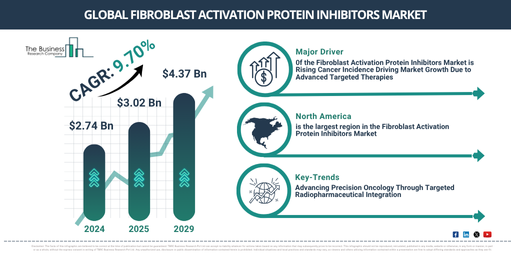
    The market for fibroblast activation protein inhibitors has seen robust growth in the past few years. The market size is anticipated to rise from $2.74 billion in 2024 to $3.02 billion in 2025, recording a compound annual growth rate (CAGR) of 10.0%. The impressive growth during the historic period owes to the amplified interest in personalized medicine, escalated investment towards oncology drug discovery, the surge in biomarker-based drug development, increased collaboration among biotech companies, and the mounting interest in targeting tumor stroma for therapy.

    What Is the Projected Market Size of the Fibroblast Activation Protein Inhibitors Market?

    Anticipated to see robust expansion in the upcoming years, the fibroblast activation protein inhibitors market is set to enlarge to $4.37 billion in 2029, boasting a compound annual growth rate of 9.7%. Reflecting elements like boosted pipeline of fibroblast activation protein inhibitors, increased adoption in non-oncology diseases, a rise in combination therapies utilization, enhanced cancer research funding by governments, and burgeoning interest from pharmaceutical firms. Trends anticipated during this predicted period include progress in targeted drug delivery systems, the formulation of next-generation fibroblast inhibitors, breakthroughs in companion diagnostic tools, advancements in immunotherapy combinations, and the creation of oral formulations for better compliance.

    Download The Free Sample Report Here:

    https://www.thebusinessresearchcompany.com/sample.aspx?id=24536&type=smp

    Who are the Major Competitors in the Fibroblast Activation Protein Inhibitors Market Outlook?

    Major companies operating in the fibroblast activation protein inhibitors market are Roche Ltd., Bristol-Myers Squibb Company, AstraZeneca plc, Novartis AG, Teva Pharmaceutical Industries Ltd., Jazz Pharmaceuticals Inc., Prestige Consumer Healthcare Inc., SOFIE Biosciences Inc., Molecular Partners, FibroGen Inc., Elicio Therapeutics Inc., Huya Bioscience International, Agios Pharmaceuticals Inc., MedChemExpress, Boster Biological Technology, Nordic Nanovector, Ferronova, InvivoChem, PsiOxus Therapeutics, Angion Biomedica Corp.

    What Is Fueling Growth in the Fibroblast Activation Protein Inhibitors Market?

    The escalating rates of cancer are anticipated to fuel the expansion of the fibroblast activation protein inhibitors market in the future. Characterized by the unregulated divide of abnormal cells that have the potential to invade and disperse to other body regions, cancer arises from different tissues and organs and is distinguished by the cell or tissue it initiates from. Other contributors to the climbing rates of cancer include aging demographics, lifestyle modifications, environmental triggers, and enhanced discovery techniques. Fibroblast activation protein inhibitors come into play in the cancer treatment, as they aim to break down tumor-supporting fibroblasts, thereby escalating the efficiency of diagnostic imaging and therapy delivery. As an example, data from Macmillan Cancer Support, a charitable organization in the UK dedicated to assisting cancer patients, reported in August 2024, that more than 3 million people in the UK were living with cancer in 2024. These figures are estimated to reach 3.5 million by 2025, 4 million by 2030, and 5.3 million by 2040. Consequently, the growing prevalence of cancer is promoting the growth of the fibroblast activation protein inhibitors market.

    Request For A Customized Report:

    https://www.thebusinessresearchcompany.com/customise?id=24536&type=smp

    Which Fibroblast Activation Protein Inhibitors Market Segments Are Growing the Fastest?

    The fibroblast activation protein inhibitors market covered in this report is segmented –

    1) By Type: Small Molecule Inhibitors, Monoclonal Antibodies, Peptide Inhibitors

    2) By Indication: Interstitial Cystitis, Crohn’s, Irritable Bowel, Chronic Prostatitis, Other Indications

    3) By Route Of Administration: Oral, Intravenous, Subcutaneous

    4) By Distribution Channel: Hospital Pharmacy, Online Pharmacy, Retail Pharmacy

    5) By End User: Hospitals, Homecare, Specialty Clinics, Other End Users

    Subsegments:

    1) By Small Molecule Inhibitors: Kinase Inhibitors, Protease Inhibitors, Multi-Targeted Agents

    2) By Monoclonal Antibodies: Humanized Antibodies, Fully Human Antibodies, Bispecific Antibodies

    3) By Peptide Inhibitors: Synthetic Peptides, Natural Peptide Derivatives, Peptide-Based Conjugates

    Which Industry Trends Are Shaping the Future of the Fibroblast Activation Protein Inhibitors Market?

    Leading corporations in the fibroblast activation protein inhibitors market are turning their focus towards the amalgamation of SAR chelator technology and FAP to augment targeted radiopharmaceutical delivery, refine the precision of diagnostic imaging, and elevate the effectiveness of cancer treatments. Special molecules that securely bind radioactive metals are utilized in SAR chelator technology, providing a means for scientists to observe the influence of structural changes on performance. It serves primarily to guide radioactive medications precisely to cancer cells for imaging or therapeutic purposes. To exemplify, Clarity Pharmaceuticals, a radiopharmaceutical firm based in Australia, in December 2024, introduced its innovative optimized fibroblast activation protein (FAP)-targeted radiopharmaceutical, a pioneering therapy fashioned specifically for precision oncology uses. This breakthrough widens Clarity’s pipeline by providing a treatment process that specifically targets cancers with increased FAP expression, promising an enhancement in diagnostic accuracy and therapeutic outcomes. This inventive development illustrates Clarity’s dedication to pushing forward the field of radiopharmaceuticals for personalized cancer treatments.

    Access The Full Report Here:

    https://www.thebusinessresearchcompany.com/report/fibroblast-activation-protein-inhibitors-global-market-report

    Which Countries Are Leading the Fibroblast Activation Protein Inhibitors Market?

    North America was the largest region in the fibroblast activation protein inhibitors market in 2024. The regions covered in the fibroblast activation protein inhibitors market report are Asia-Pacific, Western Europe, Eastern Europe, North America, South America, Middle East, Africa.

    Purchase The Full Report Today:

    https://www.thebusinessresearchcompany.com/purchaseoptions.aspx?id=24536

    This Report Delivers Insight On:

    1. How big is the fibroblast activation protein inhibitors market, and how is it changing globally?

    2. Who are the major companies in the fibroblast activation protein inhibitors market, and how are they performing?

    3. What are the key opportunities and risks in the fibroblast activation protein inhibitors market right now?

    4. Which products or customer segments are growing the most in the fibroblast activation protein inhibitors market?

    5. What factors are helping or slowing down the growth of the fibroblast activation protein inhibitors market?

    About The Business Research Company:

    With over 15000+ reports from 27 industries covering 60+ geographies, The Business Research Company has built a reputation for offering comprehensive, data-rich research and insights. Armed with 1,500,000 datasets, the optimistic contribution of in-depth secondary research, and unique insights from industry leaders, you can get the information you need to stay ahead in the game.

    Get in touch with us:

    The Business Research Company: https://www.thebusinessresearchcompany.com/

    Americas +1 3156230293

    Asia +44 2071930708

    Europe +44 2071930708

    Email us at info@tbrc.info

    Follow us on:

    LinkedIn: https://in.linkedin.com/company/the-business-research-company

    YouTube: https://www.youtube.com/channel/UC24_fI0rV8cR5DxlCpgmyFQ

    Global Market Model: https://www.thebusinessresearchcompany.com/global-market-model