Tag: Forecast 2033

  • Affinity Chromatography Forecast Report – Designed for Decision Makers and Product Teams

    Affinity Chromatography Forecast Report – Designed for Decision Makers and Product Teams

    Claim your 30% discount on Global Market Reports with code ONLINE30. Limited time only.

    What Is the Growth Rate of the Affinity Chromatography Market?

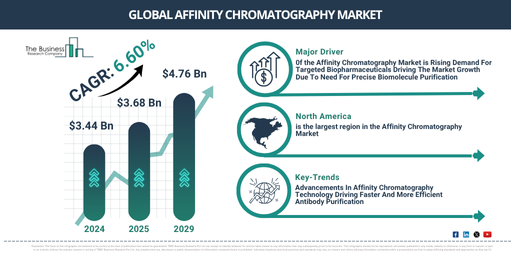
    The market size of affinity chromatography has experienced robust growth in the past few years. The market is projected to expand from a worth of $3.44 billion in 2024 to approximately $3.68 billion in 2025, representing a compound annual growth rate (CAGR) of 7.0%. The historical growth can be attributed to factors including the rising demand for protein purification, the increasing development of personalized medicine, growing investments in academic and industrial r&d, heightened adoption of monoclonal antibodies, and progress in proteomics and genomics research.

    What Growth Rate Is Forecasted for the Affinity Chromatography Market by 2029?

    Expectations are high for substantial growth in the efficacy chromatography market within the upcoming years, with a forecast of a $4.76 billion value in 2029 and a compound annual growth rate of 6.6%. This growth over the forecast period is believed to be driven by the expansion of the biopharmaceutical industry, the rising demand for gene and cell therapies, the increase in biosimilar production, a heightened focus on continuous bioprocessing, and elevated regulatory standards for biological purity. Key trends projected for this forecast period include the integration of single-use technologies, a transition towards automation and high-throughput screening, the invention of new ligands and resins, utilisation in diagnostics and biomarker identification, and extending into non-biopharmaceutical sectors.

    Download The Free Sample Report Here:

    https://www.thebusinessresearchcompany.com/sample.aspx?id=24455&type=smp

    Which Key Companies Are Shaping the Future of the Affinity Chromatography Market?

    Major companies operating in the affinity chromatography market are Thermo Fisher Scientific, Merck KGaA, Asahi Kasei Medical Co. Ltd., GE Healthcare Life Sciences, MilliporeSigma, Lonza Group Ltd., Agilent Technologies, Cytiva, Sartorius AG, Tosoh Bioscience, Waters Corporation, Bio-Rad Laboratories, Pall Corporation, Promega Corporation, Biotage, Horizon Discovery, KNAUER Wissenschaftliche Geräte GmbH, BioWorks Inc., BIA Separation, JNC Corporation

    Which Factors Are Driving Demand in the Affinity Chromatography Industry?

    The affinity chromatography market is poised for growth, driven by the escalating demand for biopharmaceuticals. Derived from biological elements such as cells or living organisms, biopharmaceuticals are instrumental in the prevention, treatment, and diagnosis of diseases. Their rising popularity is attributed to their powerful and focused treatment approach towards complex disorders including cancer and autoimmune diseases, which often prove to be more effective than conventional drugs. The purification of intricate biomolecules like proteins and antibodies crucial for the production of superior biopharmaceutical products is made possible through affinity chromatography. For instance, a report from the UK’s Department for Science, Innovation, and Technology in July 2024 recognized the U.S. as a forerunner in biopharmaceuticals, with firms allocating about $96 billion to R&D in 2023, making up over 20% of their overall sales. The sector has a significant economic influence, including $25 billion in exports and $26 billion in research and development from predominantly overseas-owned firms in 2022. Thus, the burgeoning demand for biopharmaceuticals is set to drive the expansion of the affinity chromatography market.

    Request For A Customized Report:

    https://www.thebusinessresearchcompany.com/customise?id=24455&type=smp

    How Is the Affinity Chromatography Market Segmented by Several Divisions?

    The affinity chromatography market covered in this report is segmented –

    1) By Product: Resins Or Gels, Columns, Magnetic Beads, Reagents And Consumables, Accessories

    2) By Technique: Immobilized Metal Affinity Chromatography, Protein A Or G Or L Affinity Chromatography, Bio-Specific Affinity Chromatography, Other Techniques

    3) By Application: Biomolecule Purification, Chromatographic Separation

    4) By End User: Pharmaceutical And Biotechnology Companies, Research Institutes, Academic Institutions

    Subsegments:

    1) By Resins Or Gels: Agarose-Based resins, Polystyrene-Based resins, Silica-Based resins, Sepharose-Based gels, Dextran-Based resins, Cellulose-Based resins

    2) By Columns: Pre-Packed Columns, Empty Columns, Mini-Spin Columns, Gravity Flow Columns, High-Performance Columns

    3) By Magnetic Beads: Streptavidin-Coated Beads, Protein A Or G Or L-Coated Beads, Ni-NTA Magnetic Beads, Glutathione Magnetic Beads, Custom Ligand-Conjugated Beads

    4) By Reagents And Consumables: Ligands, Elution Buffers, Binding Buffers, Wash Buffers, Coupling Reagents

    5) By Accessories: Tubing And Connectors, Frits And Filters, Column Holders, Sample Loops, Flow Restrictors

    What are the Emerging Market Trends Driving the Growth of the Affinity Chromatography Industry?

    Big players in the affinity chromatography market are concentrating on advancing their products by offering next-generation equipment for enhancing speed, flexibility, and efficacy of antibody purification within lab environments. These advanced systems are a significant step up in purification technology, providing greater specificity, scalability, and automated functions, often with innovative ligands and improved resin materials, adequately addressing the pressing requirements of biopharmaceutical research and production. For example, in October 2024, the German pharmaceutical firm Sartorius launched the Sartobind Rapid A Lab, a protein A unit. This affinity chromatography unit provides the swiftest Protein A matrix, thus enormously boosting productivity and transforming antibody purification processes. Intended for research scientists, this plug-and-play system is ideal for benchtop purification and quick cycle execution, eliminating the need for buffer degassing. Its membrane prevents blockages and sustains constant backpressure, assuring dependable usage with syringes, pumps, or chromatography platforms for up to a hundred purification cycles. In comparison to conventional resin columns, the Sartobind Rapid A Lab delivers up to 17 times greater antibody yields throughout its consumable lifecycle.

    Access The Full Report Here:

    https://www.thebusinessresearchcompany.com/report/affinity-chromatography-global-market-report

    Which Regions Are Driving Growth in the Affinity Chromatography Market?

    North America was the largest region in the affinity chromatography market in 2024. The regions covered in the affinity chromatography market report are Asia-Pacific, Western Europe, Eastern Europe, North America, South America, Middle East, Africa.

    Purchase The Full Report Today:

    https://www.thebusinessresearchcompany.com/purchaseoptions.aspx?id=24455

    This Report Delivers Insight On:

    1. How big is the affinity chromatography market, and how is it changing globally?

    2. Who are the major companies in the affinity chromatography market, and how are they performing?

    3. What are the key opportunities and risks in the affinity chromatography market right now?

    4. Which products or customer segments are growing the most in the affinity chromatography market?

    5. What factors are helping or slowing down the growth of the affinity chromatography market?

    About The Business Research Company:

    With over 15000+ reports from 27 industries covering 60+ geographies, The Business Research Company has built a reputation for offering comprehensive, data-rich research and insights. Armed with 1,500,000 datasets, the optimistic contribution of in-depth secondary research, and unique insights from industry leaders, you can get the information you need to stay ahead in the game.

    Get in touch with us:

    The Business Research Company: https://www.thebusinessresearchcompany.com/

    Americas +1 3156230293

    Asia +44 2071930708

    Europe +44 2071930708

    Email us at info@tbrc.info

    Follow us on:

    LinkedIn: https://in.linkedin.com/company/the-business-research-company

    YouTube: https://www.youtube.com/channel/UC24_fI0rV8cR5DxlCpgmyFQ

    Global Market Model: https://www.thebusinessresearchcompany.com/global-market-model
  • Computer-Aided Detection Market Trends Report 2025 – For Business Development and Strategy Teams

    Computer-Aided Detection Market Trends Report 2025 – For Business Development and Strategy Teams

    Claim your 30% discount on Global Market Reports with code ONLINE30. Limited time only.

    What Is the Forecast for the Computer-Aided Detection Market Growth in 2025?

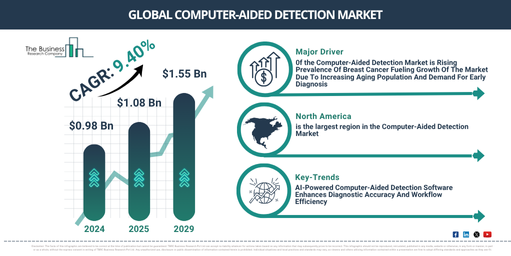
    In the last couple of years, there has been a robust growth in the size of the computer-aided detection market. The market value, which is projected to be $0.98 billion in 2024 will surge to roughly $1.08 billion by 2025, indicating a compound annual growth rate (CAGR) of 9.7%. Several factors accounted for the growth during the historic period such as the rise in cancer cases, increased application of medical imaging methods, a growing deficit of radiologists, government-led screening initiatives, and a heightened interest in early diagnosis.

    What Is the Forecast for the Computer-Aided Detection Market Size Through 2029?

    Anticipations show a robust expansion of the computer-aided detection market in the upcoming years, with a projection to reach $1.55 billion by 2029 at a compound annual growth rate (CAGR) of 9.4%. This expected growth during the prediction period could be due to the expanding elderly population, growing volume of imaging data, increasing telehealth and remote diagnostics services, the escalating importance of precision medicine, and improvements in the healthcare infrastructure. Key trends predicted for this period comprise integration of deeper learning, provision of real-time decision support, adoption of cloud-based CAD platforms, progress in multimodal CAD systems, and the incorporation of natural language processing.

    Download The Free Sample Report Here:

    https://www.thebusinessresearchcompany.com/sample.aspx?id=24507&type=smp

    What are the Key Market Players in Computer-Aided Detection Market and How They’re Evolving?

    Major companies operating in the computer-aided detection market are Hitachi Ltd., International Business Machines Corporation (IBM), Fujifilm Holdings Corporation, Siemens Healthineers AG, Koninklijke Philips N.V., GE Healthcare Technologies Inc., Hologic Inc., Canon Medical Systems Corporation, Agfa-Gevaert NV, Carestream Health Inc., ESAOTE S.p.A., Aidoc Medical Ltd., Median Technologies S.A., iCAD Inc., Riverain Technologies LLC, Nano-X Imaging Ltd., Zebra Medical Vision Ltd., CureMetrix Inc., EDDA Technology Inc., THERAPIXEL S.A.S.

    What Are the Primary Growth Drivers in the Computer-Aided Detection Market?

    The surge in breast cancer incidence is presumed to spur the expansion of the computer-aided detection market. Breast cancer is characterized as a harmful growth originating in the breast cells, generally in the ducts or lobules, and if not identified and treated promptly, it can metastasize to adjacent tissues or other body areas. A notable factor in the rise of breast cancer rates is lifestyle modifications such as increased obesity leading to higher estrogen levels, subsequently promoting cancer development. Computer-aided detection (CAD) augments a breast cancer diagnosis, scrutinizing radiological images to uncover possible irregularities thus enabling a more accurate and earlier detection. It assists radiographers in identifying tumors that might otherwise be missed, thereby enhancing screening accuracy. For example, in October 2024, the American Cancer Society, a US cancer organization, reported that new cases of invasive breast cancer among American women had escalated to roughly 310,720. Similarly, ductal carcinoma in situ (DCIS) diagnoses had risen to 56,500. Moreover, in October 2022, according to the American Cancer Society, an approximate 287,850 new invasive breast cancer cases and 51,400 DCIS cases were identified in women throughout the United States. Hence, the escalating occurrence of breast cancer is propelling the expansion of the computer-aided detection market.

    Request For A Customized Report:

    https://www.thebusinessresearchcompany.com/customise?id=24507&type=smp

    What Are the Leading Segments in the Global Computer-Aided Detection Industry?

    The computer-aided detection market covered in this report is segmented –

    1) By Product: Mammography, Ultrasound Imaging, Magnetic Resonance Imaging, Tomosynthesis, Computed Tomography, Other Products

    2) By Application: Tuberculosis, Breast Cancer, Lung Cancer, Colon Cancer, Prostate Cancer, Liver Cancer, Bone Cancer, Neurological Indications

    3) By End-User: Hospitals, Clinics, Diagnostic Centres, Other End-Users

    Subsegments:

    1) By Mammography: Full-Field Digital Mammography (FFDM), Screen-Film Mammography (SFM), Three-Dimensional (3D) Mammography

    2) By Ultrasound Imaging: Automated Breast Ultrasound (ABUS), Handheld Ultrasound, Doppler Ultrasound, Elastography

    3) By Magnetic Resonance Imaging: Breast Magnetic Resonance Imaging (MRI), Brain Magnetic Resonance Imaging (MRI), Abdominal Magnetic Resonance Imaging (MRI), Musculoskeletal Magnetic Resonance Imaging (MRI)

    4) By Tomosynthesis: Breast Tomosynthesis, Chest Tomosynthesis, Orthopedic Tomosynthesis

    5) By Computed Tomography: Chest Computed Tomography (CT), Abdominal Computed Tomography (CT), Brain Computed Tomography (CT), Cardiac Computed Tomography (CT)

    6) By Other Products: Nuclear Medicine, X-Ray Imaging, Optical Imaging, Thermography

    What Are the Key Market Trends in the Computer-Aided Detection Industry?

    Leading companies in the computer-aided detection market are making strides in creating innovative solutions, which include artificial intelligence (AI)-driven computer-aided detection (CADe) software. These advancements aim to boost diagnostic accuracy, simplify image interpretation, and foster the swift identification of diseases. The AI-powered CADe software utilizes artificial intelligence to scrutinize medical images for any irregularities, thereby increasing diagnostic exactitude and assisting in early discovery of conditions like cancer. For example, in March 2025, Align Technology, Inc., a Switzerland-based digital orthodontics and restorative dentistry company, unveiled Align X-ray Insights for analysing dental radiographs. This solution employs AI to improve dental image analysis for more precise diagnostic results. It enhances workflow productivity by offering real-time findings directly in the existing imaging systems. The software is intended to aid dental professionals in the EU and UK in delivering accurate and prompt patient care.

    Access The Full Report Here:

    https://www.thebusinessresearchcompany.com/report/computer-aided-detection-global-market-report

    What Is the Regional Outlook for the Computer-Aided Detection Market?

    North America was the largest region in the computer-aided detection market in 2024. Asia-Pacific is expected to be the fastest-growing region in the forecast period. The regions covered in the computer-aided detection market report are Asia-Pacific, Western Europe, Eastern Europe, North America, South America, Middle East, Africa.

    Purchase The Full Report Today:

    https://www.thebusinessresearchcompany.com/purchaseoptions.aspx?id=24507

    This Report Delivers Insight On:

    1. How big is the computer-aided detection market, and how is it changing globally?

    2. Who are the major companies in the computer-aided detection market, and how are they performing?

    3. What are the key opportunities and risks in the computer-aided detection market right now?

    4. Which products or customer segments are growing the most in the computer-aided detection market?

    5. What factors are helping or slowing down the growth of the computer-aided detection market?

    About The Business Research Company:

    With over 15000+ reports from 27 industries covering 60+ geographies, The Business Research Company has built a reputation for offering comprehensive, data-rich research and insights. Armed with 1,500,000 datasets, the optimistic contribution of in-depth secondary research, and unique insights from industry leaders, you can get the information you need to stay ahead in the game.

    Get in touch with us:

    The Business Research Company: https://www.thebusinessresearchcompany.com/

    Americas +1 3156230293

    Asia +44 2071930708

    Europe +44 2071930708

    Email us at info@tbrc.info

    Follow us on:

    LinkedIn: https://in.linkedin.com/company/the-business-research-company

    YouTube: https://www.youtube.com/channel/UC24_fI0rV8cR5DxlCpgmyFQ

    Global Market Model: https://www.thebusinessresearchcompany.com/global-market-model
  • Cerebral Infarction Treatment Market to Reach $15.54 Billion by 2029 | Key Drivers and Future Outlook

    Cerebral Infarction Treatment Market to Reach $15.54 Billion by 2029 | Key Drivers and Future Outlook

    Claim your 30% discount on Global Market Reports with code ONLINE30. Limited time only.

    What Is the Growth Rate of the Cerebral Infarction Treatment Market?

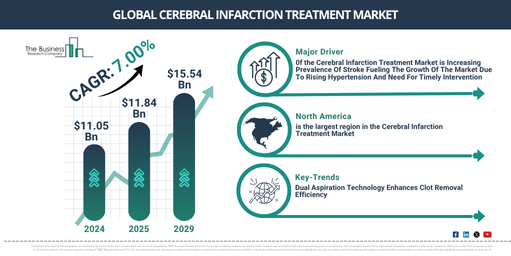
    The market for treating cerebral infarction has seen robust growth in the past few years. The market size is projected to increase from $11.05 billion in 2024 to $11.84 billion in 2025, demonstrating a compound annual growth rate (CAGR) of 7.2%. This growth during the historic period can be credited to several factors such as the increased expenditure on healthcare, a surge in hospital admissions, heightened instances of minimally invasive procedures to treat stroke, increased demand for mechanical thrombectomy devices, and an upswing in clinical trials.

    What Growth Rate Is Forecasted for the Cerebral Infarction Treatment Market by 2029?

    The market for cerebral infarction treatment is set to experience robust expansion in the coming years, expected to reach $15.54 billion by 2029 with a compound annual growth rate (CAGR) of 7.0%. Factors contributing to this predicted growth during the forecast period include the growing elderly population, increased stroke occurrences, rising cases of cerebrovascular diseases, escalating cardiovascular disease prevalence, and a rise in cerebral infarction incidents. Foreseen trends during this period consist of the integration of telemedicine, the use of wearable devices for health monitoring, advancements in neuroimaging techniques, surgeries assisted by robotics, drug delivery using nanotechnology, and the implementation of virtual rehabilitation platforms.

    Download The Free Sample Report Here:

    https://www.thebusinessresearchcompany.com/sample.aspx?id=24500&type=smp

    Which Key Companies Are Shaping the Future of the Cerebral Infarction Treatment Market?

    Major companies operating in the cerebral infarction treatment market are Pfizer Inc., Johnson & Johnson, F. Hoffmann-La Roche AG, Bayer AG, Sanofi S.A., AstraZeneca plc, Abbott Laboratories, Novartis AG, Medtronic plc, Amgen Inc., Siemens Healthineers, Becton, Dickinson and Company, Stryker Corporation, Boston Scientific Corporation, Daiichi Sankyo Company Limited, Penumbra Inc., Terumo Corporation, phenox GmbH, Boehringer Ingelheim International GmbH, Imperative Care Inc., Acandis GmbH & Co. KG, Reflow Medical Inc., Lumosa Therapeutics Inc., Insera Therapeutics Inc., Q’Apel Medical Inc.

    Which Factors Are Driving Demand in the Cerebral Infarction Treatment Industry?

    The cerebral infarction treatment market is predicted to see a significant surge owing to the escalating rates of stroke incidents. Stroke occurs when the supply of blood to the brain is interrupted or hindered, causing a deficiency of oxygen and nutrients, which are crucial for brain cells. The surge in stroke prevalence is primarily influenced by the rising cases of hypertension, which causes damage to blood vessels due to elevated blood pressure. The therapies used in treating cerebral infarction considerably elevate the efficacy of stroke care by re-establishing the brain’s blood flow, minimizing the resultant disability and permanent damage. By initiating treatments in a timely manner, these therapies improve the probability of effective recovery and ease patient management. For instance, in September 2024, it was reported by the Stroke Foundation, a non-profit organization based in Australia, that in 2023, there were 45,785 stroke incidents in Australia, with a significant rise to 72,000 projected cases by 2050. Thus, the escalating incidence of stroke is stimulating the growth of the cerebral infarction treatment market.

    Request For A Customized Report:

    https://www.thebusinessresearchcompany.com/customise?id=24500&type=smp

    How Is the Cerebral Infarction Treatment Market Segmented by Several Divisions?

    The cerebral infarction treatment market covered in this report is segmented –

    1) By Treatment Type: Medication, Surgical Interventions, Rehabilitation Therapies

    2) By Diagnostic Tools: Computed Tomography Scan, Magnetic Resonance Imaging, Angiography, Doppler Ultrasound

    3) By Application: Ischemic Stroke, Transient Ischemic Attack, Large Artery Stroke, Small Vessel Stroke

    4) By End-User: Hospitals, Specialized Stroke Centers, Ambulatory Surgical Centers, Home Care Providers

    Subsegments:

    1) By Medication: Antiplatelet Drugs, Anticoagulants, Thrombolytics, Statins, Antihypertensives

    2) By Surgical Interventions: Mechanical Thrombectomy, Carotid Endarterectomy, Decompressive Craniectomy, Stent Placement, Angioplasty

    3) By Rehabilitation: Physical Therapy, Occupational Therapy, Speech and Language Therapy, Cognitive Rehabilitation, Psychological Counseling

    What are the Emerging Market Trends Driving the Growth of the Cerebral Infarction Treatment Industry?

    Prominent firms in the cerebral infarction treatment sector are focusing on devising highly modern solutions, for example, dual aspiration technology, to expedite treatment times for patients afflicted with acute ischemic stroke. Dual aspiration technology is an approach that deploys two catheters concurrently to augment clot removal efficacy during stroke procedures. For instance, Imperative Care, a medical technology firm based in the US, unveiled Zoom DuoPort in May 2025. This cutting-edge stroke treatment technology is designed to offer advanced stroke treatment. It facilitates dual aspiration, which allows two catheters to function simultaneously using a single vacuum source. It augments physician control, offers real-time procedural insights, and enhances the proficiency of mechanical thrombectomy in managing acute ischemic stroke.

    Access The Full Report Here:

    https://www.thebusinessresearchcompany.com/report/cerebral-infarction-treatment-global-market-report

    Which Regions Are Driving Growth in the Cerebral Infarction Treatment Market?

    North America was the largest region in the cerebral infarction treatment market in 2024. The regions covered in the cerebral infarction treatment market report are Asia-Pacific, Western Europe, Eastern Europe, North America, South America, Middle East, Africa.

    Purchase The Full Report Today:

    https://www.thebusinessresearchcompany.com/purchaseoptions.aspx?id=24500

    This Report Delivers Insight On:

    1. How big is the cerebral infarction treatment market, and how is it changing globally?

    2. Who are the major companies in the cerebral infarction treatment market, and how are they performing?

    3. What are the key opportunities and risks in the cerebral infarction treatment market right now?

    4. Which products or customer segments are growing the most in the cerebral infarction treatment market?

    5. What factors are helping or slowing down the growth of the cerebral infarction treatment market?

    About The Business Research Company:

    With over 15000+ reports from 27 industries covering 60+ geographies, The Business Research Company has built a reputation for offering comprehensive, data-rich research and insights. Armed with 1,500,000 datasets, the optimistic contribution of in-depth secondary research, and unique insights from industry leaders, you can get the information you need to stay ahead in the game.

    Get in touch with us:

    The Business Research Company: https://www.thebusinessresearchcompany.com/

    Americas +1 3156230293

    Asia +44 2071930708

    Europe +44 2071930708

    Email us at info@tbrc.info

    Follow us on:

    LinkedIn: https://in.linkedin.com/company/the-business-research-company

    YouTube: https://www.youtube.com/channel/UC24_fI0rV8cR5DxlCpgmyFQ

    Global Market Model: https://www.thebusinessresearchcompany.com/global-market-model
  • Cell Lysis And Disruption Industry Insights 2025 – Market Forecast for Executives and Planners

    Cell Lysis And Disruption Industry Insights 2025 – Market Forecast for Executives and Planners

    Claim your 30% discount on Global Market Reports with code ONLINE30. Limited time only.

    How Has the Cell Lysis And Disruption Market Size Changed, over the years?

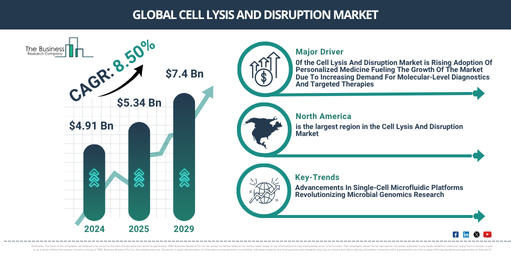
    The market size for cell lysis and disruption has seen significant growth in the past few years. The market is predicted to expand from $4.91 billion in 2024 to $5.34 billion in 2025, with a compound annual growth rate (CAGR) of 8.8%. The prominent growth in the historical period is due to the expansion of biopharmaceutical research and development activities, a rise in outsourcing of bioprocessing to CDMOs, a growing necessity for efficient upstream processing in biomanufacturing, an increased investment in gene therapy research, and an uptick in clinical trials involving viral vectors.

    How Much Will the Cell Lysis And Disruption Market Be Worth in 2029?

    In the coming years, the market for cell lysis and disruption is predicted to experience robust growth. It’s projected to increase to $7.4 billion by 2029, providing an 8.5% compound annual growth rate (CAGR). This upcoming growth can be linked to the expansion of genomics, transcriptomics, and proteomics, an increase in single-cell analysis applications, more funding for academic and research institutes, an escalating global incidence of infectious diseases, as well as cancer and chronic diseases. The major emerging trends during this period will involve the creation of more sophisticated lysis methods, automated sample preparation processes, the incorporation of lysis tools into lab-on-chip devices, high-yield cell lysis systems, and improved buffer formulas for selective lysis.

    Download The Free Sample Report Here:

    https://www.thebusinessresearchcompany.com/sample.aspx?id=24498&type=smp

    Which is the Largest Company in the Cell Lysis And Disruption Market?

    Major companies operating in the cell lysis and disruption market are F. Hoffmann-La Roche Ltd., Thermo Fisher Scientific Inc., Danaher Corporation, Merck KGaA, Becton Dickinson and Company (BD), Agilent Technologies Inc., IDEX Corporation, Bio-Rad Laboratories Inc., Qiagen N.V., Eppendorf AG, Miltenyi Biotec GmbH, Takara Bio Inc., Promega Corporation, New England Biolabs Inc., Cell Signaling Technology Inc., Covaris LLC, Microfluidics International Corp., Parr Instrument Company, Pion Inc., Analytik Ltd., Claremont BioSolutions LLC, Qsonica LLC

    What Are the Main Market Drivers in the Cell Lysis And Disruption Industry?

    The ongoing shift towards personalized medicine is anticipated to fuel the growth of the cell lysis and disruption market in the future. Personalized medicine is a healthcare strategy that customizes treatment and care based on individual traits, including genetics and lifestyle, of every patient. The desire for personalized medicine is increasing due to technological advancements in genomics, which allow for the accurate detection of genetic variations causing diseases, and consequently, the provision of more targeted and effective treatments. The burgeoning need for personalized medicine underpins cell lysis and disruption, as these processes are indispensable in obtaining DNA, RNA and proteins from patient specimens, making possible the molecular analysis needed to formulate tailored treatments. For instance, in February 2024, the Personalized Medicine Coalition, a nonprofit organization based in the US and the U.S. Food and Drug Administration (USFDA), a US-based regulatory body, sanctioned 16 new personalized treatments for patients suffering from rare diseases in 2023, a substantial hike from 6 personalized treatments in 2022. Thus, the intensified emphasis on personalized medicine is set to stimulate the growth of the cell lysis and disruption market.

    Request For A Customized Report:

    https://www.thebusinessresearchcompany.com/customise?id=24498&type=smp

    How Is the Cell Lysis And Disruption Market Segments Structured?

    The cell lysis and disruption market covered in this report is segmented –

    1) By Product: Reagents And Consumables, Instruments

    2) By Cell Type: Bacteria Cells, Mammalian Cells, Plant Cells, Yeast Or Fungi Or Algae

    3) By Application: Cell Organelle Isolation, Protein Isolation, Downstream Processing, Nucleic Acid Isolation

    4) By End-Use: Pharmaceutical And Biotechnology Companies, Academic And Research Institutes, Other End-Users

    Subsegments:

    1) By Reagents And Consumables: Enzymes, Detergent Solutions, Kits And Reagents

    2) By Instruments: Homogenizers, Sonicator, Microfluidizer, Other Instruments

    What Strategic Trends Are Transforming the Cell Lysis And Disruption Market?

    Top firms in the cell lysis and disruption market are concentrating on creating sophisticated solutions like single-cell microfluidic platforms to improve the competency and abilities of single-cell studies for microbial genomic researchers. The single-cell microfluidic platforms are small-scale gadgets that accurately separate, handle, and scrutinize individual cells by managing miniscule volumes of fluid in microchannels, facilitating automated and high-throughput single-cell investigations. For example, Atrandi Biosciences Inc., a biotech business in Lithuania, debuted their Flux platform and the Single-Microbe DNA Barcoding Kit in January 2024. These products employ semi-permeable capsule (SPC) technology, thereby ensuring the efficient segregation and breakdown of singular microbial cells while safeguarding the stability of subsequent reactions. This inventive platform provides high-throughput capacities, enabling exact quantification of microbial genome and DNA sequencing, crucial for the progress of microbial genomics and single-cell analysis. The solutions aim to simplify and boost workflows, making high-resolution, single-cell analysis more convenient and efficient for researchers across different scientific fields.

    Access The Full Report Here:

    https://www.thebusinessresearchcompany.com/report/cell-lysis-and-disruption-global-market-report

    Which Global Regions Offer the Highest Growth in the Cell Lysis And Disruption Market?

    North America was the largest region in the cell lysis and disruption market in 2024. Asia-Pacific is expected to be the fastest-growing region in the forecast period. The regions covered in the cell lysis and disruption market report are Asia-Pacific, Western Europe, Eastern Europe, North America, South America, Middle East, Africa.

    Purchase The Full Report Today:

    https://www.thebusinessresearchcompany.com/purchaseoptions.aspx?id=24498

    This Report Delivers Insight On:

    1. How big is the cell lysis and disruption market, and how is it changing globally?

    2. Who are the major companies in the cell lysis and disruption market, and how are they performing?

    3. What are the key opportunities and risks in the cell lysis and disruption market right now?

    4. Which products or customer segments are growing the most in the cell lysis and disruption market?

    5. What factors are helping or slowing down the growth of the cell lysis and disruption market?

    About The Business Research Company:

    With over 15000+ reports from 27 industries covering 60+ geographies, The Business Research Company has built a reputation for offering comprehensive, data-rich research and insights. Armed with 1,500,000 datasets, the optimistic contribution of in-depth secondary research, and unique insights from industry leaders, you can get the information you need to stay ahead in the game.

    Get in touch with us:

    The Business Research Company: https://www.thebusinessresearchcompany.com/

    Americas +1 3156230293

    Asia +44 2071930708

    Europe +44 2071930708

    Email us at info@tbrc.info

    Follow us on:

    LinkedIn: https://in.linkedin.com/company/the-business-research-company

    YouTube: https://www.youtube.com/channel/UC24_fI0rV8cR5DxlCpgmyFQ

    Global Market Model: https://www.thebusinessresearchcompany.com/global-market-model
  • Market Analysis on Catecholamines Industry – Insights for Corporate Strategy and R&D

    Market Analysis on Catecholamines Industry – Insights for Corporate Strategy and R&D

    Claim your 30% discount on Global Market Reports with code ONLINE30. Limited time only.

    What Is the Forecast for the Catecholamines Market from 2024 to 2025?

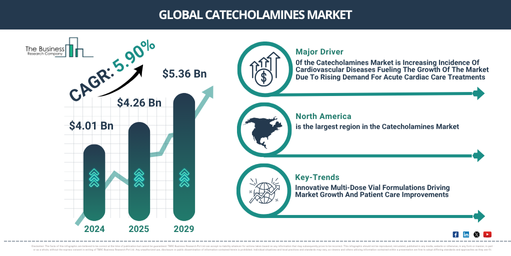
    In recent years, there has been a substantial increase in the market size for catecholamines. This market is set to expand from $4.01 billion in 2024 to $4.26 billion in 2025, reflecting a compound annual growth rate (CAGR) of 6.3%. Factors contributing to the growth during the historical period include a higher incidence of heart attacks, an increase in cases of Parkinson’s disease, an escalating demand for emergency medication, a growing awareness of critical care drugs, and an upswing in the number of surgical procedures.

    What Is the Projected Market Size of the Catecholamines Market?

    The market for catecholamines is predicted to experience substantial growth in the coming years, escalating to a value of $5.36 billion by 2029 at a compounded annual growth rate of 5.9%. Factors contributing to this projected growth include increased funding towards critical care research, a rise in the elderly population suffering from chronic illnesses, a surge in pharmaceutical R&D focussed on modulating neurotransmitters, developments in telemedicine-led emergency care, and the use of artificial intelligence in critical care decision-making. Noteworthy trends for the forecast period encompass progress in drug formulation and the production of synthetic and longer-acting catecholamines, advancements in auto-injector and prefilled syringe technologies, the adoption of 3D printing for tailored injectables, and the creation of extended-release catecholamine formulations.

    Download The Free Sample Report Here:

    https://www.thebusinessresearchcompany.com/sample.aspx?id=24496&type=smp

    Who are the Major Competitors in the Catecholamines Market Outlook?

    Major companies operating in the catecholamines market are Pfizer Inc., Fresenius Kabi USA LLC, Teva Pharmaceutical Industries Limited, Baxter International Inc., Amneal Pharmaceuticals Inc., Glenmark Pharmaceuticals Limited, Amphastar Pharmaceuticals Inc., ARS Pharmaceuticals Inc., Breckenridge Pharmaceutical Inc., Long Grove Pharmaceuticals LLC, Midas Pharma GmbH, Otto Chemie Private Limited, Central Drug House (P) Ltd., Kanto Chemical Co. Inc., Bowmed Ibisqus Limited, Lexicare Pharma Private Limited, Alice Pharma Private Limited, Junsei Chemical Co. Ltd., Adamis Pharmaceuticals Corporation, Nevakar Injectables Inc.

    What Is Fueling Growth in the Catecholamines Market?

    The catecholamines market is projected to expand owing to the escalating occurrence of cardiovascular diseases. These diseases encompass a range of disorders impacting the heart and blood vessels, such as heart failure, coronary artery disease, and stroke. The upsurge in these diseases is primarily due to physical inactive lifestyle which leads to obesity, hypertension and poor heart health – all risk factors for cardiovascular diseases. Considering their effects on the adrenergic receptors, catecholamines have significant roles in the management of these diseases. Their functions include boosting cardiac output, blood pressure regulation, improving the blood flow to important organs and providing a stable hemodynamic state in urgent conditions like heart failure. They also aid in short-term compensation for ailing heart functionalities. For instance, the Australian Institute of Health and Welfare reported in December 2023 that there was an increase in CHD certified deaths in Australia, rising from 14,100 in 2021 to 14,900 in 2022. Hence, the catecholamines market growth is being fuelled by the rising prevalence of cardiovascular diseases.

    Request For A Customized Report:

    https://www.thebusinessresearchcompany.com/customise?id=24496&type=smp

    Which Catecholamines Market Segments Are Growing the Fastest?

    The catecholamines market covered in this report is segmented –

    1) By Type: Epinephrine, Norepinephrine, Dopamine

    2) By Indication: Anaphylaxis, Cardiac arrest, Shock, Acute Asthma, Hypertension, Other Indications

    3) By Formulation Type: Syrups, Injectables, Tablets, Inhalants

    4) By Distribution Channel: Hospital Pharmacy, Online Pharmacy, Retail Pharmacy

    5) By End-User: Hospitals And Clinics, Pharmaceutical Companies, Research Institutions, Emergency Medical Services

    Subsegments:

    1) By Epinephrine: Auto-Injectors, Prefilled Syringes, Vials And Ampoules

    2) By Norepinephrine: Concentrated Solution For Dilution, Ready-To-Use Formulations, Combination Therapies

    3) By Dopamine: Dopamine Hydrochloride Injection, Dopamine Infusion Concentrates, Pediatric And Adult-Specific Formulations

    Which Industry Trends Are Shaping the Future of the Catecholamines Market?

    Leading businesses in the catecholamines market are concentrating on the development of novel formulations like multi-dose vials to increase dosing adaptability, boost patient adherence, minimize medication wastage, and simplify management in critical care environments. Multi-dose vials are containers conceived to store multiple doses of a drug, permitting repeated usage without contamination risks. These vials aid in reducing packing waste, decreasing treatment expenditures, and offering practical dosing alternatives for healthcare professionals and patients. For example, in May 2025, Fresenius Kabi AG, a pharmaceutical company based in Germany, introduced Epinephrine Injection, USP, in 30 mg per 30 mL multi-dose vials, signaling a critical broadening of their injectable range in the U.S. healthcare market. This particular formulation is intended for the urgent treatment of allergic responses, inclusive of anaphylaxis, in both adults and children patients, and to raise the mean arterial blood pressure in adult patients experiencing hypotension tied to septic shock.

    Access The Full Report Here:

    https://www.thebusinessresearchcompany.com/report/catecholamines-global-market-report

    Which Countries Are Leading the Catecholamines Market?

    North America was the largest region in the catecholamines market in 2024. Asia-Pacific is expected to be the fastest-growing region in the forecast period. The regions covered in the catecholamines market report are Asia-Pacific, Western Europe, Eastern Europe, North America, South America, Middle East, Africa.

    Purchase The Full Report Today:

    https://www.thebusinessresearchcompany.com/purchaseoptions.aspx?id=24496

    This Report Delivers Insight On:

    1. How big is the catecholamines market, and how is it changing globally?

    2. Who are the major companies in the catecholamines market, and how are they performing?

    3. What are the key opportunities and risks in the catecholamines market right now?

    4. Which products or customer segments are growing the most in the catecholamines market?

    5. What factors are helping or slowing down the growth of the catecholamines market?

    About The Business Research Company:

    With over 15000+ reports from 27 industries covering 60+ geographies, The Business Research Company has built a reputation for offering comprehensive, data-rich research and insights. Armed with 1,500,000 datasets, the optimistic contribution of in-depth secondary research, and unique insights from industry leaders, you can get the information you need to stay ahead in the game.

    Get in touch with us:

    The Business Research Company: https://www.thebusinessresearchcompany.com/

    Americas +1 3156230293

    Asia +44 2071930708

    Europe +44 2071930708

    Email us at info@tbrc.info

    Follow us on:

    LinkedIn: https://in.linkedin.com/company/the-business-research-company

    YouTube: https://www.youtube.com/channel/UC24_fI0rV8cR5DxlCpgmyFQ

    Global Market Model: https://www.thebusinessresearchcompany.com/global-market-model