Tag: home healthcare software market forecast

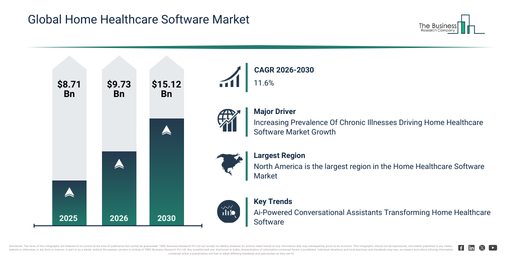
  • Home Healthcare Software Market Set To Grow From $9.73 Billion In 2026 To $15.12 Billion By 2030 At A CAGR Of 11.6%

    Home Healthcare Software Market Set To Grow From $9.73 Billion In 2026 To $15.12 Billion By 2030 At A CAGR Of 11.6%

    Through market attractiveness analysis, total addressable market evaluation, company benchmarking matrices, interactive Excel dashboards, expanded supply chain intelligence, emerging startup coverage, and detailed product insights, The Business Research Company’s 2026 market reports provide more actionable and strategically valuable research.

    Home Healthcare Software Market Value Expansion And Long-Term Growth Outlook

    The global market for home healthcare software has experienced substantial expansion lately, with projections indicating continued robust growth. Forecasts suggest a climb from $8.71 billion in 2025 to $9.73 billion by 2026, reflecting a compound annual growth rate (CAGR) of 11.7%. Factors contributing to this upward trajectory during the past years include a heightened preference for care delivered at home, the increasing digitalization of patient health information, a growing imperative for seamless care coordination across healthcare providers, the proliferation of homecare agencies, and the integration of foundational telehealth technologies.

    The home healthcare software sector is poised for significant expansion in the coming years, projecting a reach of $15.12 billion by 2030, fueled by a compound annual growth rate of 11.6%. This upward trajectory is anticipated due to several key factors, including the growing prevalence of managing chronic conditions within patients’ residences, an escalating demand for immediate access to patient information, the proliferation of cloud-based healthcare solutions, a heightened emphasis on optimizing the operational efficiency of homecare providers, and an increasing regulatory focus on the precision of data and its subsequent reporting. Emerging trends expected to shape this market during the forecast period encompass the broader implementation of integrated care coordination systems, a surge in the adoption of telehealth and virtual care strategies, a greater focus on streamlining workflows and appointment scheduling, advancements in data-informed patient tracking and reporting, and the expansion of automated solutions for compliance and billing within the homecare industry.

    Download A Free Sample Report For Comprehensive Market Insights:

    https://www.thebusinessresearchcompany.com/sample.aspx?id=15199&type=smp

    Home Healthcare Software Market Opportunity Drivers: What Is Creating New Revenue Potential?

    The escalating incidence of long-term health conditions is poised to be a significant catalyst for expansion within the home healthcare software sector. These persistent ailments, defined by their duration exceeding a year and the resultant need for ongoing medical attention, limitations in daily routines, or both, are becoming more common due to factors such as an aging populace, detrimental lifestyle choices, increased urbanization, genetic predispositions, advancements in disease detection and management, and shifts in dietary patterns. Home healthcare software plays a crucial role in managing these chronic conditions by facilitating remote patient monitoring, enabling healthcare professionals to track patient progress effectively, and ensuring that treatment regimens are consistently followed. As an illustration, U.S. adults reported a substantial burden of chronic conditions in 2023, with approximately 194 million (76.4%) having at least one. This prevalence was noted at 59.5% for young adults, rising to 78.4% for those in midlife, and reaching 93.0% among older adults, according to data from the Centers for Disease Control and Prevention (CDC) in April 2025. Consequently, the growing prevalence of chronic illnesses is a primary driver for the home healthcare software market’s advancement.

    Home Healthcare Software Market Segment Analysis And Revenue Opportunities

    The home healthcare software market covered in this report is segmented –

    1) By Product: Clinical Management Systems, Hospice Systems, Agency Software Systems, Tele-Health Systems

    2) By Usage: Clinical Homecare Systems, Non-Clinical Homecare Systems

    3) By Delivery Mode: Web-Based Software, On-Premises Software, Cloud-Based Software

    4) By End User: Hospice Agencies, Homecare Agencies, Private Duty, Other End Users

    Subsegments:

    1) By Clinical Management Systems: Electronic Health Records (EHR), Patient Scheduling And Workflow Management, Care Plan Management, Clinical Decision Support

    2) By Hospice Systems: Hospice Care Management, Palliative Care Documentation, Hospice Billing And Reporting

    3) By Agency Software Systems: Home Care Agency Management, Billing And Scheduling Software, Employee Management And Compliance, Patient And Family Communication Tools

    4) By Tele-Health Systems: Telemedicine Platforms, Remote Patient Monitoring, Video Consultation Software, Telehealth Reporting And Analytics

    Home Healthcare Software Market Innovation Trends Driving Future Development

    Leading enterprises within the home healthcare software sector are prioritizing the creation of cutting-edge tools, including AI-driven dialogue agents, intended to boost patient involvement, optimize care synchronization, and bolster the operational effectiveness of home care providers. An AI-powered conversational assistant represents a software program or platform that leverages artificial intelligence, specifically natural language processing and machine learning techniques, to comprehend, interpret, and converse with human input naturally. As an illustration, in June 2025, AlayaCare, a Canadian firm specializing in cloud-based solutions for home and community care, introduced Layla, an AI-powered assistant engineered for the home care environment. Layla facilitates extensive data retrieval across care itineraries, patient charts, visit documentation, and appointment schedules; it provides mobile-centric assistance for field caregivers; it ensures a secure, HIPAA-compliant framework; and it offers reliable clinical expertise for precise medical advice. By empowering quicker, more secure decision-making and decreasing the burden of administrative tasks, Layla serves as a prime example of the evolved landscape of home healthcare software.

    Home Healthcare Software Market Leading Players Shaping Industry Direction

    Major companies operating in the home healthcare software market are Mckesson Corporation, DarioHealth Corp., Koninklijke Philips N.V., GE HealthCare Technologies Inc., B. Braun SE, Cerner Corporation, ResMed Inc., NextGen Healthcare Information System LLC, Medical Information Technology Inc. (Meditech), Homecare Homebase LLC, AlayaCare USA Inc., Omada Health Inc., Loyal Healthcare LLC, Casamba Home & Hospice, Axxess Technology Solutions Inc., Delta Health Technologies Inc., Family First Inc., KanTime Inc., ClearCare Inc. (WellSky), Thornberry Ltd., Centex AxisCare LLC, Alora Healthcare Systems Inc., Carallel LLC, HomeHero Inc.

    Access The Complete Home Healthcare Software Market Report:

    https://www.thebusinessresearchcompany.com/report/home-healthcare-software-global-market-report

    Home Healthcare Software Market Geographic Distribution And Regional Opportunities

    North Americawas the largest region in the home healthcare software market in 2025. Asia-Pacificis expected to be the fastest-growing region in the forecast period. The regions covered in the home healthcare software market report are Asia-Pacific, South East Asia, Western Europe, Eastern Europe, North America, South America, Middle East, Africa.

    Get in touch with us:

    The Business Research Company: https://www.thebusinessresearchcompany.com/

    Americas: +1 310-496-7795

    Asia: +44 7882 955267 & +91 8897263534

    Europe: +44 7882 955267

    Email us at: marketing@tbrc.info

    Follow us on:

    LinkedIn: https://in.linkedin.com/company/the-business-research-company

    YouTube: https://www.youtube.com/channel/UC24_fI0rV8cR5DxlCpgmyFQ

    Global Market Model: https://www.thebusinessresearchcompany.com/global-market-model
  • Home Healthcare Software Market to Reach $15.12B by 2030

    Home Healthcare Software Market to Reach $15.12B by 2030

    The Business Research Company’s 2026 market reports feature enhanced tools like market attractiveness analysis, TAM assessment, and company scoring matrices, along with interactive dashboards, deeper supply chain insights, and startup coverage strengthening the depth, usability, and strategic value of insights.

    What Is The Anticipated Rise In Market Value Of The Home Healthcare Software Market During The Forecast Period?

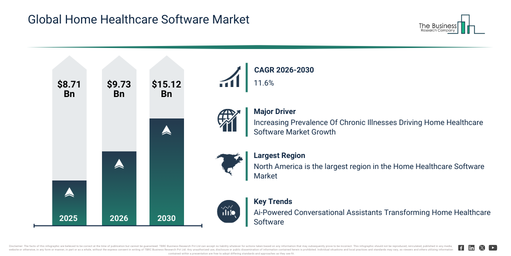
    The home healthcare software market has witnessed rapid growth in recent years. It is anticipated to expand from $8.71 billion in 2025 to $9.73 billion in 2026, achieving a compound annual growth rate (CAGR) of 11.7%. This historic growth can be ascribed to several factors, including the increasing demand for home-based care services, the rising digitization of patient records, a greater need for care coordination among providers, the expansion of homecare agencies, and the adoption of basic telehealth solutions.

    The home healthcare software market size is projected for significant expansion over the coming years. It is anticipated to reach $15.12 billion by 2030, exhibiting a compound annual growth rate (CAGR) of 11.6%. This growth during the forecast period is driven by factors such as enhanced home-based chronic disease management, the growing demand for instant patient data access, the proliferation of cloud-based healthcare systems, a heightened emphasis on operational efficiency within homecare agencies, and increased regulatory focus on data precision and reporting. Key trends observed during this period involve the broadening of integrated care coordination platforms, the increasing integration of telehealth and virtual care management, a concentrated effort on refining workflow and scheduling, advancements in data-driven patient monitoring and reporting, and the expansion of automated compliance and billing processes in homecare settings.

    Access Your Free Sample Report For In-Depth Market Analysis:

    https://www.thebusinessresearchcompany.com/report/home-healthcare-software-global-market-report

    Which Important Drivers Are Guiding The Home Healthcare Software Market Growth?

    The rising occurrence of chronic conditions is anticipated to drive the expansion of the home healthcare software market in the future. These conditions are defined as health issues persisting for at least a year, requiring ongoing medical attention, limiting daily functions, or a combination of both. Their growing prevalence is attributed to factors such as an aging demographic, poor lifestyle choices, urban development, genetic susceptibilities, enhanced disease diagnosis and management, and shifts in dietary patterns. Home healthcare software plays a crucial role in managing chronic illnesses by allowing medical professionals to remotely observe patients’ health, monitor their recovery, and confirm compliance with prescribed treatments. For example, data from April 2025, provided by the U.S. federal agency, the Centers for Disease Control and Prevention (CDC), indicated that in 2023, roughly 194 million U.S. adults, amounting to 76.4%, reported suffering from at least one chronic ailment. The incidence was recorded at 59.5% for young adults, 78.4% for midlife adults, and 93.0% for older adults. Consequently, the rising incidence of chronic illnesses is a key driver for the expansion of the home healthcare software market.

    Which Segment Classifications Are Used In The Home Healthcare Software Market Segment Analysis?

    The home healthcare software market covered in this report is segmented –

    1) By Product: Clinical Management Systems, Hospice Systems, Agency Software Systems, Tele-Health Systems

    2) By Usage: Clinical Homecare Systems, Non-Clinical Homecare Systems

    3) By Delivery Mode: Web-Based Software, On-Premises Software, Cloud-Based Software

    4) By End User: Hospice Agencies, Homecare Agencies, Private Duty, Other End Users

    Subsegments:

    1) By Clinical Management Systems: Electronic Health Records (EHR), Patient Scheduling And Workflow Management, Care Plan Management, Clinical Decision Support

    2) By Hospice Systems: Hospice Care Management, Palliative Care Documentation, Hospice Billing And Reporting

    3) By Agency Software Systems: Home Care Agency Management, Billing And Scheduling Software, Employee Management And Compliance, Patient And Family Communication Tools

    4) By Tele-Health Systems: Telemedicine Platforms, Remote Patient Monitoring, Video Consultation Software, Telehealth Reporting And Analytics

    What Trends Are Influencing The Evolution Of The Home Healthcare Software Market?

    Leading companies in the home healthcare software market are prioritizing the development of innovative solutions, such as AI-powered conversational assistants, to improve patient engagement, streamline care coordination, and enhance operational efficiency for home healthcare providers. An AI-powered conversational assistant is a software application or system that utilizes artificial intelligence, particularly natural language processing (NLP) and machine learning, to understand, interpret, and respond to human language in a conversational manner. For instance, in June 2025, AlayaCare, a Canada-based provider of cloud-based home and community care solutions, launched Layla, an AI-powered assistant designed specifically for home care. Layla offers comprehensive data access across care plans, client records, visit notes, and schedules; provides mobile-first support for caregivers on the go; ensures a secure, HIPAA-compliant infrastructure; and delivers trusted clinical knowledge for accurate medical guidance. By enabling faster, safer decisions and reducing administrative workload, Layla exemplifies the next generation of home healthcare software solutions.

    Which Firms Are Contributing To The Home Healthcare Software Market Ecosystem?

    Major companies operating in the home healthcare software market are Mckesson Corporation, DarioHealth Corp., Koninklijke Philips N.V., GE HealthCare Technologies Inc., B. Braun SE, Cerner Corporation, ResMed Inc., NextGen Healthcare Information System LLC, Medical Information Technology Inc. (Meditech), Homecare Homebase LLC, AlayaCare USA Inc., Omada Health Inc., Loyal Healthcare LLC, Casamba Home & Hospice, Axxess Technology Solutions Inc., Delta Health Technologies Inc., Family First Inc., KanTime Inc., ClearCare Inc. (WellSky), Thornberry Ltd., Centex AxisCare LLC, Alora Healthcare Systems Inc., Carallel LLC, HomeHero Inc.

    Get The Full Home Healthcare Software Market Report:

    https://www.thebusinessresearchcompany.com/report/home-healthcare-software-global-market-report

    Where Is The Home Healthcare Software Market Primarily Concentrated By Region?

    North America was the largest region in the home healthcare software market in 2025. Asia-Pacific is expected to be the fastest-growing region in the forecast period. The regions covered in the home healthcare software market report are Asia-Pacific, South East Asia, Western Europe, Eastern Europe, North America, South America, Middle East, Africa.

    Request A Customized Home Healthcare Software Market Report For Competitive Insights:

    https://www.thebusinessresearchcompany.com/report/home-healthcare-software-global-market-report

    Browse Through More Reports Similar to the Global Home Healthcare Software Market 2026, By The Business Research Company

    Healthcare Software As A Service Market Report 2026

    https://www.thebusinessresearchcompany.com/report/healthcare-software-as-a-service-global-market-report

    Home Healthcare Market Report 2026

    https://www.thebusinessresearchcompany.com/report/home-healthcare-global-market-report

    Medical Software Market Report 2026

    https://www.thebusinessresearchcompany.com/report/medical-software-global-market-report

    Get in touch with us:

    The Business Research Company: https://www.thebusinessresearchcompany.com/

    Americas +1 310-496-7795

    Asia +44 7882 955267 & +91 8897263534

    Europe +44 7882 955267

    Email us at info@tbrc.info

    Follow us on:

    LinkedIn: https://in.linkedin.com/company/the-business-research-company

    YouTube: https://www.youtube.com/channel/UC24_fI0rV8cR5DxlCpgmyFQ

    Global Market Model: https://www.thebusinessresearchcompany.com/global-market-model

  • An Important Factor Driving the Home Healthcare Software Market Is the Increasing Prevalence Of Chronic Illnesses Driving Home Healthcare Software Market Growth

    An Important Factor Driving the Home Healthcare Software Market Is the Increasing Prevalence Of Chronic Illnesses Driving Home Healthcare Software Market Growth

    The Business Research Company’s 2026 market reports include new capabilities such as market attractiveness scoring and analysis, total addressable market analysis, company scoring matrix, interactive excel data dashboard, improved supply chain analysis, upcoming startups in the market, and overview of key products, aimed at improving the depth, usability, and strategic value of the insights delivered.

    What Market Value Is Anticipated For The Home Healthcare Software Market Over The Period 2026–2030?

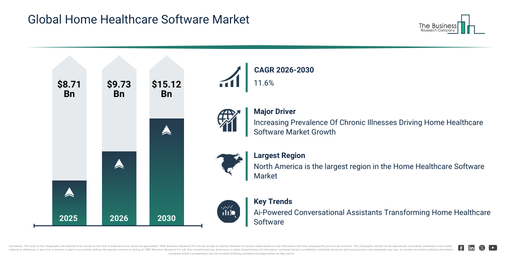
    The home healthcare software market has experienced substantial growth in recent years. It is projected to expand from $8.71 billion in 2025 to $9.73 billion in 2026, exhibiting a compound annual growth rate (CAGR) of 11.7%. The market’s growth in the historic period can be attributed to the rising demand for home-based care services, the increasing digitization of patient records, the growing need for care coordination among providers, the expansion of homecare agencies, and the adoption of basic telehealth solutions.

    The home healthcare software market size is anticipated to experience rapid expansion in the coming years. It is projected to grow to $15.12 billion in 2030, achieving a compound annual growth rate (CAGR) of 11.6%. This growth during the forecast period can be attributed to the increasing management of chronic diseases at home, a rising need for real-time patient data access, the expansion of cloud-based healthcare platforms, a growing focus on operational efficiency in homecare agencies, and an increasing regulatory emphasis on data accuracy and reporting. Major trends expected in the forecast period include the expansion of integrated care coordination platforms, the rising adoption of telehealth and virtual care management, an increasing focus on workflow and scheduling optimization, growth in data-driven patient monitoring and reporting, and the expansion of compliance and billing automation in homecare.

    Download the Free Sample Report to Explore Key Market Insights:

    https://www.thebusinessresearchcompany.com/sample.aspx?id=15199&type=smp

    Which Economic Or Industry Drivers Are Impacting The Home Healthcare Software Market?

    The escalating incidence of chronic diseases is projected to stimulate the expansion of the home healthcare software market moving forward. Chronic illnesses are defined as conditions lasting a year or more, necessitating continuous medical care, restricting daily functions, or both. The rising prevalence of these conditions stems from an aging global population, unhealthy lifestyle patterns, increased urbanization, genetic predispositions, advancements in disease management and diagnosis, and evolving food systems. Home healthcare software plays a crucial role in managing chronic illnesses by enabling medical professionals to remotely track patients’ health status, monitor their progress, and ensure compliance with their treatment plans. As an illustration, according to information from April 2025 provided by the Centers for Disease Control and Prevention (CDC), a US-based federal agency, in 2023, approximately 194 million U.S. adults, or 76.4%, reported experiencing at least one chronic condition. This prevalence stood at 59.5% for young adults, 78.4% for midlife adults, and 93.0% for older adults. Therefore, the increasing prevalence of chronic illnesses is a significant driver behind the growth of the home healthcare software market.

    How Is The Home Healthcare Software Market Divided Into Its Major Segments?

    The home healthcare software market covered in this report is segmented –

    1) By Product: Clinical Management Systems, Hospice Systems, Agency Software Systems, Tele-Health Systems

    2) By Usage: Clinical Homecare Systems, Non-Clinical Homecare Systems

    3) By Delivery Mode: Web-Based Software, On-Premises Software, Cloud-Based Software

    4) By End User: Hospice Agencies, Homecare Agencies, Private Duty, Other End Users

    Subsegments:

    1) By Clinical Management Systems: Electronic Health Records (EHR), Patient Scheduling And Workflow Management, Care Plan Management, Clinical Decision Support

    2) By Hospice Systems: Hospice Care Management, Palliative Care Documentation, Hospice Billing And Reporting

    3) By Agency Software Systems: Home Care Agency Management, Billing And Scheduling Software, Employee Management And Compliance, Patient And Family Communication Tools

    4) By Tele-Health Systems: Telemedicine Platforms, Remote Patient Monitoring, Video Consultation Software, Telehealth Reporting And Analytics

    Which Trends Are Impacting The Growth Of The Home Healthcare Software Market?

    Prominent companies operating within the home healthcare software market are concentrating on creating innovative solutions, including AI-powered conversational assistants, to boost patient engagement, optimize care coordination, and improve operational efficiency for home healthcare providers. An AI-powered conversational assistant functions as a software application or system that utilizes artificial intelligence, specifically natural language processing and machine learning, to comprehend, interpret, and respond to human language in a conversational manner. For instance, in June 2025, AlayaCare, a Canada-based provider of cloud-based home and community care solutions, launched Layla, an AI-powered assistant tailored for home care. Layla delivers extensive data access across care plans, client records, visit notes, and schedules; offers mobile-first support for caregivers on the go; ensures a secure, HIPAA-compliant infrastructure; and provides trusted clinical knowledge for precise medical guidance. By facilitating quicker, safer decisions and reducing administrative burdens, Layla exemplifies the next evolution of home healthcare software solutions.

    Who Are The Prominent Organizations Shaping The Home Healthcare Software Market?

    Major companies operating in the home healthcare software market are Mckesson Corporation, DarioHealth Corp., Koninklijke Philips N.V., GE HealthCare Technologies Inc., B. Braun SE, Cerner Corporation, ResMed Inc., NextGen Healthcare Information System LLC, Medical Information Technology Inc. (Meditech), Homecare Homebase LLC, AlayaCare USA Inc., Omada Health Inc., Loyal Healthcare LLC, Casamba Home & Hospice, Axxess Technology Solutions Inc., Delta Health Technologies Inc., Family First Inc., KanTime Inc., ClearCare Inc. (WellSky), Thornberry Ltd., Centex AxisCare LLC, Alora Healthcare Systems Inc., Carallel LLC, HomeHero Inc.

    Read the full home healthcare software market report here:

    https://www.thebusinessresearchcompany.com/report/home-healthcare-software-global-market-report

    What Are The Top-Performing Regions Within The Home Healthcare Software Market?

    North America was the largest region in the home healthcare software market in 2025. Asia-Pacific is expected to be the fastest-growing region in the forecast period. The regions covered in the home healthcare software market report are Asia-Pacific, South East Asia, Western Europe, Eastern Europe, North America, South America, Middle East, Africa.

    Request A Tailored Home Healthcare Software Market Research Report For Competitive Advantage:

    https://www.thebusinessresearchcompany.com/customise?id=15199&type=smp

    Browse Through More Reports Similar to the Global Home Healthcare Software Market 2026, By The Business Research Company

    Home Healthcare Global Market Report

    https://www.thebusinessresearchcompany.com/report/home-healthcare-global-market-report

    Medical Software Global Market Report

    https://www.thebusinessresearchcompany.com/report/medical-software-global-market-report

    Healthcare Software As A Service Global Market Report

    https://www.thebusinessresearchcompany.com/report/healthcare-software-as-a-service-global-market-report

    Get in touch with us:

    The Business Research Company: https://www.thebusinessresearchcompany.com/

    Americas +1 310-496-7795

    Asia +44 7882 955267 & +91 8897263534

    Europe +44 7882 955267

    Email us at info@tbrc.info

    Follow us on:

    LinkedIn: https://in.linkedin.com/company/the-business-research-company

    YouTube: https://www.youtube.com/channel/UC24_fI0rV8cR5DxlCpgmyFQ

    Global Market Model: https://www.thebusinessresearchcompany.com/global-market-model
  • Home Healthcare Software Market 2026–2030: Emerging Trends and Forecast Opportunities

    Home Healthcare Software Market 2026–2030: Emerging Trends and Forecast Opportunities

    Uncover key drivers, emerging technologies, and competitive movements shaping the home healthcare software market from 2026–2035 with trusted insights from The Business Research Company

    Across 2026–2030, what is the expected market valuation path of the Home Healthcare Software Market?

    The home healthcare software market size has seen swift expansion recently. It is projected to increase from $8.71 billion in 2025 to $9.73 billion in 2026, exhibiting a compound annual growth rate (CAGR) of 11.7%. The market’s past growth can be attributed to several factors including a heightened demand for home-based care services, the increasing digitalization of patient records, a growing requirement for care coordination among providers, the expansion of homecare agencies, and the adoption of basic telehealth solutions.

    The home healthcare software market is anticipated to experience substantial expansion over the upcoming years. This market is projected to reach $15.12 billion by 2030, demonstrating a compound annual growth rate (CAGR) of 11.6%. This projected growth is driven by several factors, including the rising management of chronic diseases within home settings, the growing demand for immediate access to patient data, the proliferation of cloud-based platforms in healthcare, an intensified focus on operational effectiveness within homecare agencies, and heightened regulatory attention on the precision and reporting of data. Key trends anticipated during this period encompass the development of integrated platforms for care coordination, the increasing uptake of telehealth and virtual care management solutions, a sharpened focus on refining workflow and scheduling processes, an increase in data-centric patient monitoring and reporting, and the broader implementation of compliance and billing automation within homecare services.

    Access Your Free Sample Report for In-Depth Market Insights:

    https://www.thebusinessresearchcompany.com/sample.aspx?id=15199&type=smp

    Which Drivers Are Supporting The Rise Of The Home Healthcare Software Market?

    The rising occurrence of chronic illnesses is anticipated to drive expansion in the home healthcare software market moving ahead. These conditions are defined as health issues persisting for at least a year, requiring ongoing medical attention, limiting daily functions, or a combination of these factors. Several factors contribute to the growing incidence of chronic illnesses, including an aging demographic, poor lifestyle choices, increased urbanization, genetic predispositions, advancements in disease management and diagnosis, and shifts in dietary patterns. Home healthcare software facilitates the management of chronic conditions by allowing healthcare professionals to remotely supervise patient health, monitor their recovery, and confirm compliance with prescribed treatment regimens. As an example, the Centers for Disease Control and Prevention (CDC), a US-based federal agency, reported in April 2025 that in 2023, roughly 194 million U.S. adults, equating to 76.4%, indicated suffering from at least one chronic condition. The prevalence stood at 59.5% for young adults, 78.4% for midlife adults, and 93.0% for older adults. Consequently, the increasing prevalence of chronic illnesses is fueling the expansion of the home healthcare software market.

    What Segments Are Identified Within The Structure Of The Home Healthcare Software Market?

    The home healthcare software market covered in this report is segmented –

    1) By Product: Clinical Management Systems, Hospice Systems, Agency Software Systems, Tele-Health Systems

    2) By Usage: Clinical Homecare Systems, Non-Clinical Homecare Systems

    3) By Delivery Mode: Web-Based Software, On-Premises Software, Cloud-Based Software

    4) By End User: Hospice Agencies, Homecare Agencies, Private Duty, Other End Users

    Subsegments:

    1) By Clinical Management Systems: Electronic Health Records (EHR), Patient Scheduling And Workflow Management, Care Plan Management, Clinical Decision Support

    2) By Hospice Systems: Hospice Care Management, Palliative Care Documentation, Hospice Billing And Reporting

    3) By Agency Software Systems: Home Care Agency Management, Billing And Scheduling Software, Employee Management And Compliance, Patient And Family Communication Tools

    4) By Tele-Health Systems: Telemedicine Platforms, Remote Patient Monitoring, Video Consultation Software, Telehealth Reporting And Analytics

    Which Market Trends Are Opening Growth Opportunities In The Home Healthcare Software Market?

    Major companies within the home healthcare software market are concentrating on creating innovative solutions, such as AI-powered conversational assistants, to enhance patient engagement, streamline care coordination, and improve operational efficiency for home healthcare providers. An AI-powered conversational assistant is a software application or system that leverages artificial intelligence, particularly natural language processing and machine learning, to understand, interpret, and respond to human language in a conversational manner. For instance, in June 2025, AlayaCare, a Canada-based provider of cloud-based home and community care solutions, launched Layla, an AI-powered assistant designed specifically for home care. Layla provides comprehensive data access across care plans, client records, visit notes, and schedules; offers mobile-first support for caregivers on the move; boasts a secure, HIPAA-compliant infrastructure; and integrates trusted clinical knowledge for accurate medical guidance. By enabling faster, safer decisions and reducing administrative workload, Layla serves as an example of the next generation of home healthcare software solutions.

    Which Leading Companies Dominate The Home Healthcare Software Market Share?

    Major companies operating in the home healthcare software market are Mckesson Corporation, DarioHealth Corp., Koninklijke Philips N.V., GE HealthCare Technologies Inc., B. Braun SE, Cerner Corporation, ResMed Inc., NextGen Healthcare Information System LLC, Medical Information Technology Inc. (Meditech), Homecare Homebase LLC, AlayaCare USA Inc., Omada Health Inc., Loyal Healthcare LLC, Casamba Home & Hospice, Axxess Technology Solutions Inc., Delta Health Technologies Inc., Family First Inc., KanTime Inc., ClearCare Inc. (WellSky), Thornberry Ltd., Centex AxisCare LLC, Alora Healthcare Systems Inc., Carallel LLC, HomeHero Inc.

    Access The Complete Report For Deeper Market Insights:

    https://www.thebusinessresearchcompany.com/report/home-healthcare-software-global-market-report

    Which Region Is Anticipated To See The Fastest Growth In The Home Healthcare Software Market?

    North America was the largest region in the home healthcare software market in 2025. Asia-Pacific is expected to be the fastest-growing region in the forecast period. The regions covered in the home healthcare software market report are Asia-Pacific, South East Asia, Western Europe, Eastern Europe, North America, South America, Middle East, Africa.

    Request Your Customized Home Healthcare Software Market Research Report for Competitive Advantage:

    https://www.thebusinessresearchcompany.com/customise?id=15199&type=smp

    Browse Through More Reports Similar to the Global Home Healthcare Software Market 2026, By The Business Research Company

    Healthcare Software As A Service Market Report 2026

    https://www.thebusinessresearchcompany.com/report/healthcare-software-as-a-service-global-market-report

    Home Healthcare Market Report 2026

    https://www.thebusinessresearchcompany.com/report/home-healthcare-global-market-report

    Medical Software Market Report 2026

    https://www.thebusinessresearchcompany.com/report/medical-software-global-market-report

    Get in touch with us:

    The Business Research Company: https://www.thebusinessresearchcompany.com/

    Americas +1 310-496-7795

    Asia +44 7882 955267 & +91 8897263534

    Europe +44 7882 955267

    Email us at info@tbrc.info

    Follow us on:

    LinkedIn: https://in.linkedin.com/company/the-business-research-company

    YouTube: https://www.youtube.com/channel/UC24_fI0rV8cR5DxlCpgmyFQ

    Global Market Model: https://www.thebusinessresearchcompany.com/global-market-model

  • Which Emerging Trends Are Driving The Home Healthcare Software Market Toward $13.56 Billion By 2029?

    Which Emerging Trends Are Driving The Home Healthcare Software Market Toward $13.56 Billion By 2029?

    Claim your 20% discount on Global Market Reports with code ONLINE20. Limited time only.

    What CAGR And Valuation Are Anticipated For The Home Healthcare Software Market?

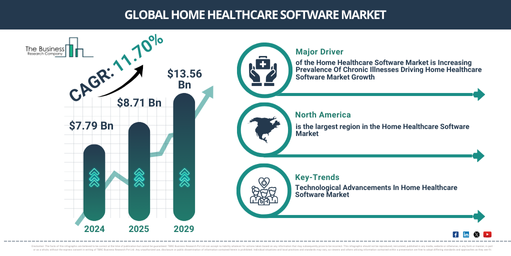
    The market for home healthcare software has experienced rapid expansion in recent years. The sector is projected to surge from $7.79 billion in 2024 to $8.71 billion in 2025, with a compound annual growth rate (CAGR) of 11.7%. The historic growth pattern is linked to the rising occurrences of chronic diseases, government advocacy and incentive schemes for homecare providers, a shift towards reliance on cloud-based solutions within home healthcare software, incorporation of telehealth capabilities, and swift digital transformation.

    Predictions reveal a fast-paced expansion of the home healthcare software market in the forthcoming years. It’s projected to reach $13.56 billion by 2029, growing at a compound annual growth rate (CAGR) of 11.7%. Factors contributing to this growth incorporate the commitment to healthcare standards and safety, the growing emphasis on mental health and wellness facets of home healthcare software, and the increasing center on patient-specific healthcare responses. Key trends during this period include the rise of innovative technologies like the Internet of Things (IoT), artificial intelligence (AI) and virtual reality (VR), the shift towards mobile solutions in home healthcare, the surge in telehealth, and remote monitoring adoption, the utilization of fast healthcare interoperability resources (FHIR), and AI-enabled chatbots and virtual assistants to bolster patient interaction.

    Get A Free Sample Of The Report:

    https://www.thebusinessresearchcompany.com/sample.aspx?id=15199&type=smp

    What Core Drivers Are Expected To Influence The Home Healthcare Software Market?

    The surge in chronic diseases is anticipated to fuel the expansion of the home healthcare software market. Long-term illnesses require ongoing medical treatment and often hinder daily activities, making them an increasingly prevalent issue due to factors like aging demographics, unhealthy living habits, urban development, genetic factors, advancements in disease diagnosis and management, and modifications in food systems. Home healthcare software plays a crucial role in managing chronic diseases by allowing healthcare providers to remotely oversee their patients’ health, keep tabs on their progress, and ensure compliance with treatment protocols. For example, in February 2024, Preventing Chronic Disease revealed that approximately 129 million U.S. citizens suffer from one or more serious chronic health problems, including heart disease, cancer, diabetes, obesity, and hypertension. The number of Americans managing multiple health conditions is growing; 42% are dealing with two or more chronic illnesses, while 12% are coping with five or more. These chronic diseases exert a significant strain on the U.S. healthcare system, consuming around 90% of the yearly $4.1 trillion healthcare expenses for the treatment and management of chronic and mental health conditions. Hence, the escalating prevalence of chronic diseases is catalyzing the rise of the home healthcare software market.

    What Are The Main Segment Classifications In The Home Healthcare Software Market?

    The home healthcare softwaremarket covered in this report is segmented –

    1) By Product: Clinical Management Systems; Hospice Systems; Agency Software Systems; Tele-Health Systems

    2) By Usage: Clinical Homecare Systems; Non-Clinical Homecare Systems

    3) By Delivery Mode: Web-Based Software; On-Premises Software; Cloud-Based Software

    4) By End User: Hospice Agencies; Homecare Agencies; Private Duty; Other End Users

    Subsegments:

    1) By Clinical Management Systems: Electronic Health Records (EHR); Patient Scheduling And Workflow Management; Care Plan Management; Clinical Decision Support

    2) By Hospice Systems: Hospice Care Management; Palliative Care Documentation; Hospice Billing And Reporting

    3) By Agency Software Systems: Home Care Agency Management; Billing And Scheduling Software; Employee Management And Compliance; Patient And Family Communication Tools

    4) By Tele-Health Systems: Telemedicine Platforms; Remote Patient Monitoring; Video Consultation Software; Telehealth Reporting And Analytics

    How Are Industry Trends Steering The Expansion Of The Home Healthcare Software Market?

    Foremost businesses in the home healthcare software realm are integrating innovative products with artificial intelligence (AI) to maintain a superior standing in the market. These artificial intelligence-infused home healthcare software products include offerings like Home Smart Clinic solutions. These solutions are virtual care tools that provide families with the ability to conduct remote consultations and physical examinations with doctors, mirroring an in-clinic experience from their homes. For example, in September 2022, the U.S. virtual care company, TytoCare, introduced a Home Smart Clinic solution which empowers clinicians to perform physical exams remotely, thereby delivering accessible and superior quality virtual care at home. This package encompasses a portable medical evaluation device coupled with AI-backed support software, which guides patients through an assortment of medical check-ups such as auditory, pulmonary, and throat exams. All of this is done while being securely linked with an off-site physician. This solution has received accolades for its potential in decreasing overall care costs, rerouting emergency room visits, promoting utilization of primary care, and notably enhancing patient results.

    Which Companies Are Contributing Significantly To The Home Healthcare Software Market Growth?

    Major companies operating in the home healthcare software market report are Mckesson Corporation; DarioHealth Corp.; Koninklijke Philips N.V.; GE HealthCare Technologies Inc.; B. Braun SE; Cerner Corporation; ResMed Inc.; NextGen Healthcare Information System LLC; Medical Information Technology Inc. (Meditech); Homecare Homebase LLC; AlayaCare USA Inc.; Omada Health Inc.; Loyal Healthcare LLC; Casamba Home & Hospice; Axxess Technology Solutions Inc.; Delta Health Technologies Inc.; Family First Inc.; KanTime Inc.; ClearCare Inc. (WellSky); Thornberry Ltd.; Centex AxisCare LLC; Alora Healthcare Systems Inc.; Carallel LLC; HomeHero Inc.

    Access The Complete Report Here:

    https://www.thebusinessresearchcompany.com/report/home-healthcare-software-global-market-report

    Which Region Holds The Greatest Opportunity For Home Healthcare Software Market Expansion?

    North America was the largest region in the home healthcare software market in 2024. Asia-Pacific is expected to be the fastest-growing region in the forecast period. The regions covered in the home healthcare software market report are Asia-Pacific, Western Europe, Eastern Europe, North America, South America, Middle East, Africa.

    Customize Your Report Here:

    https://www.thebusinessresearchcompany.com/customise?id=15199&type=smp

    Browse Through More Reports Similar to the Global Home Healthcare Software Market 2025, By The Business Research Company

    Home Healthcare Global Market Report 2025

    https://www.thebusinessresearchcompany.com/report/home-healthcare-global-market-report

    Home Healthcare Equipment Global Market Report 2025

    https://www.thebusinessresearchcompany.com/report/home-healthcare-equipment-global-market-report

    Pediatric Home Healthcare Global Market Report 2025

    https://www.thebusinessresearchcompany.com/report/pediatric-home-healthcare-global-market-report

    About The Business Research Company:

    With over 15000+ reports from 27 industries covering 60+ geographies, The Business Research Company has built a reputation for offering comprehensive, data-rich research and insights. Armed with 1,500,000 datasets, the optimistic contribution of in-depth secondary research, and unique insights from industry leaders, you can get the information you need to stay ahead in the game.

    Get in touch with us:

    The Business Research Company: https://www.thebusinessresearchcompany.com/

    Americas +1 310-496-7795

    Asia +44 7882 955267 & +91 8897263534

    Europe +44 7882 955267

    Email us at info@tbrc.info

    Follow us on:

    LinkedIn: https://in.linkedin.com/company/the-business-research-company

    YouTube: https://www.youtube.com/channel/UC24_fI0rV8cR5DxlCpgmyFQ

    Global Market Model: https://www.thebusinessresearchcompany.com/global-market-model
  • Home Healthcare Software Market Forecast: What to Expect by 2029

    Home Healthcare Software Market Forecast: What to Expect by 2029

    Unlock Global Insights – Save 20% on Market Reports with Code ONLINE20

    What Is The Predicted Market Size Trajectory For The Home Healthcare Software Market From 2025 To 2034?

    The home healthcare software market has witnessed rapid growth in recent years. This market is expected to expand from $7.79 billion in 2024 to $8.71 billion in 2025, achieving a compound annual growth rate (CAGR) of 11.7%. The historical growth of this market can be attributed to the rising prevalence of chronic diseases, various government initiatives and incentive plans for homecare providers, the adoption of cloud-based solutions in home healthcare software, the integration of telehealth capabilities, and rapid digital transformation.

    The home healthcare software market is set to expand rapidly in the coming years, with projections indicating it will reach $13.56 billion in 2029, exhibiting a compound annual growth rate (CAGR) of 11.7%. This growth over the forecast period is primarily fueled by a strong emphasis on security measures and compliance with healthcare standards, a rising focus on mental health and wellness features within home healthcare software, and an increasing commitment to patient-centric healthcare solutions. Significant trends anticipated during this period include the emergence of new technologies such as the Internet of Things (IoT), artificial intelligence (AI), and virtual reality (VR), a growing inclination towards mobile solutions in home healthcare, increased adoption of telehealth and remote monitoring services, the incorporation of Fast Healthcare Interoperability Resources (FHIR), and the deployment of AI-powered chatbots and virtual assistants to enhance patient engagement.

    Unlock Your Free Sample Report for Exclusive Market Data:

    https://www.thebusinessresearchcompany.com/sample.aspx?id=15199&type=smp

    Which Drivers Are Supporting Growth Of The Home Healthcare Software Market?

    The expanding occurrence of chronic diseases is anticipated to drive the advancement of the home healthcare software market in the future. These long-term health issues endure for a year or more, often requiring ongoing medical attention, limiting daily functions, or a combination of these factors. Several factors contribute to the rising incidence of chronic conditions, including an older population, poor lifestyle choices, urban expansion, hereditary susceptibility, enhanced disease detection and treatment, and shifts in dietary patterns. Home healthcare software aids in the management of chronic diseases by allowing medical professionals to remotely oversee patient well-being, observe their improvement, and confirm their compliance with prescribed therapies. For example, in February 2024, Preventing Chronic Disease indicated that approximately 129 million individuals in the U.S. are affected by at least one major chronic health condition, like heart disease, cancer, diabetes, obesity, or hypertension. Additionally, a growing proportion of Americans are coping with multiple ailments; 42% have two or more chronic diseases, and 12% contend with five or more. These persistent health problems impose a substantial strain on the U.S. healthcare system, as roughly 90% of the $4.1 trillion in yearly healthcare expenditures is allocated to addressing and managing chronic and mental health issues. Consequently, the expanding occurrence of chronic illnesses is a key factor fueling the expansion of the home healthcare software market.

    What Are The Major Segment Categories Driving The Home Healthcare Software Market Growth?

    The home healthcare softwaremarket covered in this report is segmented –

    1) By Product: Clinical Management Systems; Hospice Systems; Agency Software Systems; Tele-Health Systems

    2) By Usage: Clinical Homecare Systems; Non-Clinical Homecare Systems

    3) By Delivery Mode: Web-Based Software; On-Premises Software; Cloud-Based Software

    4) By End User: Hospice Agencies; Homecare Agencies; Private Duty; Other End Users

    Subsegments:

    1) By Clinical Management Systems: Electronic Health Records (EHR); Patient Scheduling And Workflow Management; Care Plan Management; Clinical Decision Support

    2) By Hospice Systems: Hospice Care Management; Palliative Care Documentation; Hospice Billing And Reporting

    3) By Agency Software Systems: Home Care Agency Management; Billing And Scheduling Software; Employee Management And Compliance; Patient And Family Communication Tools

    4) By Tele-Health Systems: Telemedicine Platforms; Remote Patient Monitoring; Video Consultation Software; Telehealth Reporting And Analytics

    How Are Emerging Market Trends Shaping The Home Healthcare Software Industry Landscape?

    Major companies within the home healthcare software market are incorporating artificial intelligence (AI) into innovative products like Home Smart Clinic solutions to secure a competitive advantage. The Home Smart Clinic solution operates as a virtual care device, allowing families to conduct remote physical examinations with a doctor, effectively replicating in-clinic exams to receive immediate responses from their homes. As an illustration, in September 2022, TytoCare, a US-based virtual care company, unveiled a Home Smart Clinic solution designed to facilitate remote physical exams by clinicians, offering accessible and high-quality virtual care from home. This solution consists of a handheld medical exam device and AI-powered support software that assists patients through various medical exams, such as ear, chest, and throat exams, while maintaining a secure connection to a remote physician. Furthermore, this solution is acknowledged for its contributions to reducing the total cost of care, lessening emergency department visits, increasing primary care utilization, and significantly enhancing patient outcomes.

    Which Leading Players Are Enhancing Their Home Healthcare Software Market Presence Worldwide?

    Major companies operating in the home healthcare software market report are Mckesson Corporation; DarioHealth Corp.; Koninklijke Philips N.V.; GE HealthCare Technologies Inc.; B. Braun SE; Cerner Corporation; ResMed Inc.; NextGen Healthcare Information System LLC; Medical Information Technology Inc. (Meditech); Homecare Homebase LLC; AlayaCare USA Inc.; Omada Health Inc.; Loyal Healthcare LLC; Casamba Home & Hospice; Axxess Technology Solutions Inc.; Delta Health Technologies Inc.; Family First Inc.; KanTime Inc.; ClearCare Inc. (WellSky); Thornberry Ltd.; Centex AxisCare LLC; Alora Healthcare Systems Inc.; Carallel LLC; HomeHero Inc.

    Download The Full Report For Exclusive Market Findings:

    https://www.thebusinessresearchcompany.com/report/home-healthcare-software-global-market-report

    Which Regional Markets Are Contributing Most To The Home Healthcare Software Industry Expansion?

    North America was the largest region in the home healthcare software market in 2024. Asia-Pacific is expected to be the fastest-growing region in the forecast period. The regions covered in the home healthcare software market report are Asia-Pacific, Western Europe, Eastern Europe, North America, South America, Middle East, Africa.

    Request A Customized Version Of The Home Healthcare Software Market Report:

    https://www.thebusinessresearchcompany.com/customise?id=15199&type=smp

    Browse Through More Reports Similar to the Global Home Healthcare Software Market 2025, By The Business Research Company

    Home Healthcare Global Market Report 2025

    https://www.thebusinessresearchcompany.com/report/home-healthcare-global-market-report

    Home Healthcare Equipment Global Market Report 2025

    https://www.thebusinessresearchcompany.com/report/home-healthcare-equipment-global-market-report

    Pediatric Home Healthcare Global Market Report 2025

    https://www.thebusinessresearchcompany.com/report/pediatric-home-healthcare-global-market-report

    Get in touch with us:

    The Business Research Company: https://www.thebusinessresearchcompany.com/

    Americas +1 310-496-7795

    Asia +44 7882 955267 & +91 8897263534

    Europe +44 7882 955267

    Email us at info@tbrc.info

    Follow us on:

    LinkedIn: https://in.linkedin.com/company/the-business-research-company

    YouTube: https://www.youtube.com/channel/UC24_fI0rV8cR5DxlCpgmyFQ

    Global Market Model: https://www.thebusinessresearchcompany.com/global-market-model
  • Home Healthcare Software Market Outlook 2025: Mapping Growth, Innovation, and Regional Shifts

    Home Healthcare Software Market Outlook 2025: Mapping Growth, Innovation, and Regional Shifts

    Claim your 30% discount on Global Market Reports with code ONLINE30. Limited time only.

    What Are the Key Milestones in the Home Healthcare Software Market’s Growth Trajectory From 2025 To 2034?

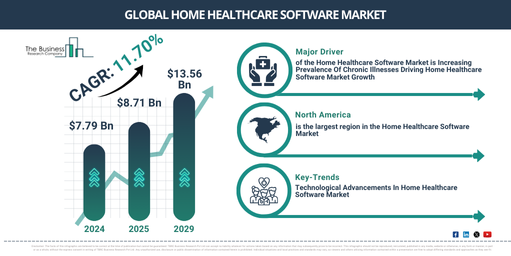
    In recent times, the market size of home healthcare software has experienced a significant boom. It is projected to expand from $7.79 billion in 2024 to $8.71 billion in 2025, with a compound annual growth rate (CAGR) of 11.7%. This growth during the past period is tied to a rise in chronic disease cases, governmental strategies and incentive schemes for homecare providers, the shift towards cloud-based home healthcare software solutions, the integration of telehealth features, and swift digital transformation.

    In the coming years, the home healthcare software market is set to experience a surge in growth, with projections suggesting a leap to $13.56 billion in 2029, boasting a compound annual growth rate (CAGR) of 11.7%. This predicted growth during the forecast period can be traced back to a rise in security measures, adherence to healthcare standards, a heightened emphasis on mental health and wellness facets embedded in home healthcare software, and the escalating focus on healthcare solutions centered on patients. During the forecast period, significant trends are set to emerge, including the introduction of cutting-edge technologies such as the Internet of Things (IoT), Artificial Intelligence (AI), and Virtual Reality (VR). Other key trends include the shift towards mobile solutions in home healthcare, the growing use of telehealth and remote monitoring, the adoption of speedy healthcare interoperability resources (FHIR), and the utilization of AI-driven chatbots and virtual assistants to bolster patient engagement.

    Download a free sample to assess the report’s scope and structure:

    https://www.thebusinessresearchcompany.com/sample.aspx?id=15199&type=smp

    What External and Internal Drivers Are Contributing to the Growth of theHome Healthcare Software Market?

    The surge in chronic health conditions is projected to stimulate the expansion of the home healthcare software market. These enduring diseases, which require ongoing medical attention or limit daily activities for a year or more, are becoming more prevalent due to factors such as the aging populace, unhealthy lifestyle practices, urbanization, genetic susceptibility, improved disease detection and management, and alterations in food systems. Home healthcare software aids in the management of such chronic diseases by providing healthcare providers the ability to monitor patients’ health from a distance, keep a check on their advancements, and ensure they adhere to treatment protocols. For example, as reported by Preventing Chronic Disease in February 2024, nearly 129 million U.S. residents are living with at least one significant chronic health issue like heart disease, cancer, diabetes, obesity, or hypertension. There is also a growing proportion of Americans managing multiple conditions simultaneously; 42% are grappling with two or more chronic diseases, while 12% are dealing with five or more. These numerous chronic conditions impose a significant strain on the U.S. healthcare system, with roughly 90% of the $4.1 trillion annual healthcare expenses allocated towards the treatment and managing of chronic and mental health conditions. Consequently, the growing incidence of chronic health issues is fueling the rise of the home healthcare software market.

    What Segment Types Define the Home Healthcare Software Market Structure?

    The home healthcare softwaremarket covered in this report is segmented –

    1) By Product: Clinical Management Systems; Hospice Systems; Agency Software Systems; Tele-Health Systems

    2) By Usage: Clinical Homecare Systems; Non-Clinical Homecare Systems

    3) By Delivery Mode: Web-Based Software; On-Premises Software; Cloud-Based Software

    4) By End User: Hospice Agencies; Homecare Agencies; Private Duty; Other End Users

    Subsegments:

    1) By Clinical Management Systems: Electronic Health Records (EHR); Patient Scheduling And Workflow Management; Care Plan Management; Clinical Decision Support

    2) By Hospice Systems: Hospice Care Management; Palliative Care Documentation; Hospice Billing And Reporting

    3) By Agency Software Systems: Home Care Agency Management; Billing And Scheduling Software; Employee Management And Compliance; Patient And Family Communication Tools

    4) By Tele-Health Systems: Telemedicine Platforms; Remote Patient Monitoring; Video Consultation Software; Telehealth Reporting And Analytics

    Request customized data on this market:

    https://www.thebusinessresearchcompany.com/customise?id=15199&type=smp

    Which Geographic Areas Hold the Strongest Growth Potential in the Home Healthcare Software Market?

    North America was the largest region in the home healthcare software market in 2024. Asia-Pacific is expected to be the fastest-growing region in the forecast period. The regions covered in the home healthcare software market report are Asia-Pacific, Western Europe, Eastern Europe, North America, South America, Middle East, Africa.

    What Long-Term Trends Are Transforming the Competitive Landscape of the Home Healthcare Software Market?

    Key players in the home healthcare software market are adopting advanced technologies like artificial intelligence (AI) and integrating them into their products like Home Smart Clinic solutions for a competitive edge. This solution is a cutting-edge virtual care device that empowers families to conduct remote physical examinations with physicians, replicating the experience of an in-clinic exam from their homes. For example, TytoCare, a virtual care company based in the US, in September 2022, launched their Home Smart Clinic solution. This solution supports clinicians conducting remote physical exams, providing high-quality, accessible virtual care from home. The solution includes an AI-enhanced portable medical examination device paired with supporting software, guiding patients through different medical exams such as ear, chest, and throat, all while securely connected to a remote doctor. This solution is appreciated for its ability to decrease the overall cost of care, diverting visits to the emergency department, boosting primary care utilization, and notably enhancing patient outcomes.

    View the full report here:

    https://www.thebusinessresearchcompany.com/report/home-healthcare-software-global-market-report

    What Is the Definition of the Home Healthcare Software Market?

    Home healthcare software refers to a type of software application designed to support healthcare providers in delivering medical care and services to patients at home. This software enables healthcare professionals to manage patient information, track health status, schedule appointments, and communicate with patients remotely. It also helps coordinate care between different healthcare providers and ensures that patients receive the appropriate level of care at home.

    Purchase the full report and get a swift delivery:

    https://www.thebusinessresearchcompany.com/purchaseoptions.aspx?id=15199

    About The Business Research Company:

    With over 15000+ reports from 27 industries covering 60+ geographies, The Business Research Company has built a reputation for offering comprehensive, data-rich research and insights. Armed with 1,500,000 datasets, the optimistic contribution of in-depth secondary research, and unique insights from industry leaders, you can get the information you need to stay ahead in the game.

    Get in touch with us:

    The Business Research Company: https://www.thebusinessresearchcompany.com/

    Americas +1 310-496-7795

    Europe +44 7882 955267

    Asia & Others +44 7882 955267 & +91 8897263534

    Email us at info@tbrc.info

    Follow us on:

    LinkedIn: https://in.linkedin.com/company/the-business-research-company

    YouTube: https://www.youtube.com/channel/UC24_fI0rV8cR5DxlCpgmyFQ

    Global Market Model: https://www.thebusinessresearchcompany.com/global-market-model

  • Home Healthcare SoftwareMarket Overview 2025–2034: CAGR Trends, Long-Term Growth Paths, and Business Implications

    Home Healthcare SoftwareMarket Overview 2025–2034: CAGR Trends, Long-Term Growth Paths, and Business Implications

    Discover trends, market shifts, and competitive outlooks for the home healthcare software industry through 2025-2034 with The Business Research Company’s reliable data and in-depth research

    How Has The Home Healthcare Software Market Growth Evolved From 2024 To 2025, And What’s Ahead?

    In recent years, the market size for home healthcare software has seen a swift expansion. It’s predicted to rise from $7.79 billion in 2024 to $8.77 billion in 2025, marking a compound annual growth rate (CAGR) of 12.6%. The significant growth during the historic period can be traced back to the escalating prevalence of chronic illnesses, government-led initiatives and incentive schemes for homecare service providers. Additionally, the shift towards cloud-based home healthcare software solutions, the incorporation of telehealth features, and quick digital transformation contribute to this market growth.

    In the forthcoming years, a swift expansion is anticipated in the market of home healthcare software, ascending to $13.93 billion in 2029, with a compound annual growth rate (CAGR) of 12.3%. This expected surge during the forecast period can be accounted to the growing emphasis on abiding by healthcare standards and security protocols, rising focus on mental health and wellness components in home healthcare software, and increasing prioritization of patient-centric healthcare solutions. The major trends observed during this period encompass the advent of breakthrough technologies such as the Internet of Things (IoT), artificial intelligence (AI), and virtual reality (VR), progress towards mobile solutions in home healthcare, amplified adoption of telehealth and remote patient monitoring, incorporation of fast healthcare interoperability resources (FHIR), and the utilization of AI-driven chatbots and virtual assistants to boost patient participation.

    Download a free sample to assess the report’s scope and structure:

    https://www.thebusinessresearchcompany.com/sample.aspx?id=15199&type=smp

    What Are the Primary Drivers Supporting the Market Growth of the Home Healthcare Software Market?

    The escalating instances of chronic diseases are projected to spur the expansion of the home healthcare software market. Chronic diseases are those that persist for a year or more, necessitating continuous medical attention, or hindering daily activities, or both. The rise in chronic diseases can be attributed to factors like aging population, unhealthy lifestyles, urbanization, genetic predisposition, enhanced disease management and diagnosis, and alterations in food systems. Home healthcare software aids chronic disease management by allowing healthcare professionals to supervise patients’ health remotely, keep track of their progress, and ensure adherence to treatment regimes. For instance, it was reported by Preventing Chronic Disease in February 2024 that approximately 129 million individuals in the U.S. are living with at least one major chronic health condition, such as heart disease, cancer, diabetes, obesity, or hypertension. An increasing number of Americans are also dealing with multiple conditions; 42% have to manage two or more chronic diseases, while 12% are grappling with five or more. These chronic health issues exert a significant strain on the U.S. healthcare system, consuming nearly 90% of the $4.1 trillion annual healthcare expenditure on the treatment and management of chronic and mental health conditions. Hence, the escalation in chronic diseases prevalence is fueling the growth of the home healthcare software market.

    Which Primary Segments of the Home Healthcare Software Market Are Driving Growth and Industry Transformations?

    The home healthcare software market covered in this report is segmented –

    1) By Product: Clinical Management Systems, Hospice Systems, Agency Software Systems, Tele-Health Systems

    2) By Usage: Clinical Homecare Systems, Non-Clinical Homecare Systems

    3) By Delivery Mode: Web-Based Software, On-Premises Software, Cloud-Based Software

    4) By End User: Hospice Agencies, Homecare Agencies, Private Duty, Other End Users

    Subsegments:

    1) By Clinical Management Systems: Electronic Health Records (EHR), Patient Scheduling And Workflow Management, Care Plan Management, Clinical Decision Support

    2) By Hospice Systems: Hospice Care Management, Palliative Care Documentation, Hospice Billing And Reporting

    3) By Agency Software Systems: Home Care Agency Management, Billing And Scheduling Software, Employee Management And Compliance, Patient And Family Communication Tools

    4) By Tele-Health Systems: Telemedicine Platforms, Remote Patient Monitoring, Video Consultation Software, Telehealth Reporting And Analytics

    Request customized data on this market:

    https://www.thebusinessresearchcompany.com/customise?id=15199&type=smp

    Which Regions Are Key Players in the Growth of the Home Healthcare Software Market?

    North America was the largest region in the home healthcare software market in 2024. Asia-Pacific is expected to be the fastest-growing region in the forecast period. The regions covered in the home healthcare software market report are Asia-Pacific, Western Europe, Eastern Europe, North America, South America, Middle East, Africa.

    What Are the Most Significant Market Trends in the Home Healthcare Software Market?

    Leading firms in the home healthcare software market are incorporating innovative products that include artificial intelligence (AI), such as Home Smart Clinic solutions. These solutions offer a competitive edge in the market by enabling families to have remote physical exams with doctors from their homes, emulating the experience of in-clinic check-ups for instant responses. For example, TytoCare, a virtual care company based in the US, introduced a Home Smart Clinic solution in September 2022. This solution facilitates clinicians to conduct remote physical exams, providing accessible, top-quality virtual care from home. The package comprises a portable medical examination device and AI-backed support software to guide patients through a range of medical exams such as ear, chest, and throat checks, all while seamlessly connecting them with a remote physician. This solution is acclaimed for minimizing total healthcare costs, reducing emergency department visits, encouraging the use of primary care, and notably boosting patient outcomes.

    View the full report here:

    https://www.thebusinessresearchcompany.com/report/home-healthcare-software-global-market-report

    What Parameters Are Used to Define the Home Healthcare Software Market?

    Home healthcare software refers to a type of software application designed to support healthcare providers in delivering medical care and services to patients at home. This software enables healthcare professionals to manage patient information, track health status, schedule appointments, and communicate with patients remotely. It also helps coordinate care between different healthcare providers and ensures that patients receive the appropriate level of care at home.

    Purchase the full report and get a swift delivery:

    https://www.thebusinessresearchcompany.com/purchaseoptions.aspx?id=15199

    About The Business Research Company:

    With over 15000+ reports from 27 industries covering 60+ geographies, The Business Research Company has built a reputation for offering comprehensive, data-rich research and insights. Armed with 1,500,000 datasets, the optimistic contribution of in-depth secondary research, and unique insights from industry leaders, you can get the information you need to stay ahead in the game.

    Get in touch with us:

    The Business Research Company: https://www.thebusinessresearchcompany.com/

    Americas +1 3156230293

    Asia +44 2071930708

    Europe +44 2071930708

    Email us at info@tbrc.info

    Follow us on:

    LinkedIn: https://in.linkedin.com/company/the-business-research-company

    YouTube: https://www.youtube.com/channel/UC24_fI0rV8cR5DxlCpgmyFQ

    Global Market Model: https://www.thebusinessresearchcompany.com/global-market-model

  • Unlocking Opportunities in the Home Healthcare Software Market: Key Trends, Market Growth, and Forecast Insights

    Unlocking Opportunities in the Home Healthcare Software Market: Key Trends, Market Growth, and Forecast Insights

    2025 Market Reports Update: Market Size Forecasts to 2034, Key Trends, Leading Players, and Top Regions – Get Ahead of the Competition Today!

    What Major Innovations Are Driving the Accelerated Growth of the Home Healthcare Software Market?

    The surge in chronic diseases is anticipated to fuel the expansion of the home healthcare software market in the future. Chronic diseases are long-term issues, lasting a year or longer, requiring ongoing healthcare, inhibiting routine activities or both. Several factors contribute to the growing rate of chronic diseases, including an aging population, unhealthy lifestyle choices, urbanization, genetic factors, advancements in disease management and diagnosis, and alterations in food systems. By allowing healthcare professionals to oversee patients’ health remotely, track their progress, and ensure compliance with treatment regimens, Home healthcare software plays a key role in managing chronic diseases. For instance, in February 2024, Preventing Chronic Disease stated that nearly 129 million people in the U.S. were dealing with at least one severe chronic health condition, such as heart disease, cancer, diabetes, obesity, or hypertension. Additionally, an increasing number of Americans are dealing with multiple diseases; 42% are grappling with two or more chronic illnesses, while 12% are battling five or more. This multitude of chronic diseases significantly strains the U.S. healthcare system, with roughly 90% of the $4.1 trillion yearly healthcare expenditure being used for the treatment and management of chronic and mental health diseases. Therefore, the growing rise of chronic illnesses is propelling the expansion of the home healthcare software market.

    Get Your Free Sample Report Now – Explore Exclusive Market Insights:

    https://www.thebusinessresearchcompany.com/sample.aspx?id=15199&type=smp

    #How Does the ProjectedHome Healthcare Software Market Growth Compare Over the Forecast Period?

    The market size of home healthcare software has seen a fast-paced growth recently. It is projected to rise from $7.79 billion in 2024 to $8.77 billion in 2025, marking a compound annual growth rate (CAGR) of 12.6%. The significant growth during the historic phase can be attributed to factors such as the rising incidence of chronic illnesses, government initiatives and incentive schemes for home health care providers, a shift to cloud-based solutions within the home healthcare software sector, incorporation of telehealth features, and swift digital transformation.

    Over the next few years, we will observe a significant expansion in the home healthcare software market, which is predicted to reach $13.93 billion in 2029, with a compound annual growth rate (CAGR) of 12.3%. The growth anticipated in this period can be linked to the increased emphasis on safety provisions and alignment with healthcare standards, an escalated focus on wellness and mental health features in home healthcare software, and a growing concentration on patient-centered healthcare options. Factors set to influence major trends in the forecast period encompass the advent of new technologies such as the Internet of Things (IoT), artificial intelligence (AI), and virtual reality (VR), a shift towards mobile solutions in home healthcare, a surge in adoption of telehealth and remote monitoring, embracing quick healthcare interoperability resources (FHIR), and the use of AI-powered chatbots and virtual assistants to amplify patient engagement.

    You can Directly Purchase the Report Here:

    https://www.thebusinessresearchcompany.com/purchaseoptions.aspx?id=15199

    What Are the Most Significant Market Trends Transforming the Home Healthcare Software Market?

    Leading entities in the home healthcare software market are focusing on integrating AI into their offerings to stay competitive, creating innovative solutions such as the Home Smart Clinic. This virtual healthcare tool allows households to perform remote medical examinations under a doctor’s guidance, emulating the experience of an in-clinic exam for immediate evaluations from the comfort of their homes. For example, in September 2022, TytoCare, a virtual healthcare firm based in the US, introduced the Home Smart Clinic solution to aid clinicians in conducting remote medical examinations, thus enhancing accessibility and the quality of virtual care provided at home. This solution comprises a portable medical exam device, along with AI-driven support software instructing patients through various medical exams such as those of the ear, throat, and chest, all while securely linked to a remote physician. The Home Smart Clinic solution has gained recognition for decreasing overall healthcare costs, steering clear of emergency department visits, promoting primary care usage, and dramatically enhancing patient results.

    What Are the Top Market Players Propelling the Growth of theHome Healthcare Software Industry?

    Major companies operating in the home healthcare software market report are Mckesson Corporation; DarioHealth Corp.; Koninklijke Philips N.V.; GE HealthCare Technologies Inc.; B. Braun SE; Cerner Corporation; ResMed Inc.; NextGen Healthcare Information System LLC; Medical Information Technology Inc. (Meditech); Homecare Homebase LLC; AlayaCare USA Inc.; Omada Health Inc.; Loyal Healthcare LLC; Casamba Home & Hospice; Axxess Technology Solutions Inc.; Delta Health Technologies Inc.; Family First Inc.; KanTime Inc.; ClearCare Inc. (WellSky); Thornberry Ltd.; Centex AxisCare LLC; Alora Healthcare Systems Inc.; Carallel LLC; HomeHero Inc.

    Order Your Report Now For A Swift Delivery:

    https://www.thebusinessresearchcompany.com/report/home-healthcare-software-global-market-report

    Which Primary Segments of the Home Healthcare Software Market Are Driving Growth and Industry Transformations?

    The home healthcare software market covered in this report is segmented –

    1) By Product: Clinical Management Systems, Hospice Systems, Agency Software Systems, Tele-Health Systems

    2) By Usage: Clinical Homecare Systems, Non-Clinical Homecare Systems

    3) By Delivery Mode: Web-Based Software, On-Premises Software, Cloud-Based Software

    4) By End User: Hospice Agencies, Homecare Agencies, Private Duty, Other End Users

    Subsegments:

    1) By Clinical Management Systems: Electronic Health Records (EHR), Patient Scheduling And Workflow Management, Care Plan Management, Clinical Decision Support

    2) By Hospice Systems: Hospice Care Management, Palliative Care Documentation, Hospice Billing And Reporting

    3) By Agency Software Systems: Home Care Agency Management, Billing And Scheduling Software, Employee Management And Compliance, Patient And Family Communication Tools

    4) By Tele-Health Systems: Telemedicine Platforms, Remote Patient Monitoring, Video Consultation Software, Telehealth Reporting And Analytics

    Gain Exclusive Market Insights—Customize Your Research Report Today for Fast Delivery!

    https://www.thebusinessresearchcompany.com/customise?id=15199&type=smp

    Which Regions Are Key Players in the Growth of the #What Major Innovations Are Driving the Accelerated Growth of the Home Healthcare Software Market?# Market?

    North America was the largest region in the home healthcare software market in 2024. Asia-Pacific is expected to be the fastest-growing region in the forecast period. The regions covered in the home healthcare software market report are Asia-Pacific, Western Europe, Eastern Europe, North America, South America, Middle East, Africa.

    Browse Through More Reports Similar to the Global Home Healthcare Software Market 2025, By The Business Research Company:

    Home Healthcare Equipment Global Market Report 2024

    https://www.thebusinessresearchcompany.com/report/home-healthcare-equipment-global-market-report

    Home Healthcare Global Market Report 2024

    https://www.thebusinessresearchcompany.com/report/home-healthcare-global-market-report

    Middleware Software Global Market Report 2024

    https://www.thebusinessresearchcompany.com/report/middleware-software-global-market-report

    About The Business Research Company:

    With over 15000+ reports from 27 industries covering 60+ geographies, The Business Research Company has built a reputation for offering comprehensive, data-rich research and insights. Armed with 1,500,000 datasets, the optimistic contribution of in-depth secondary research, and unique insights from industry leaders, you can get the information you need to stay ahead in the game.

    Contact us at:

    The Business Research Company: https://www.thebusinessresearchcompany.com/

    Americas +1 3156230293

    Asia +44 2071930708

    Europe +44 2071930708

    Email us at info@tbrc.info

    Follow us on:

    LinkedIn: https://in.linkedin.com/company/the-business-research-company

    YouTube: https://www.youtube.com/channel/UC24_fI0rV8cR5DxlCpgmyFQ

    Global Market Model: https://www.thebusinessresearchcompany.com/global-market-model

    Found this article helpful? Share it on: