Tag: non-hormonal contraceptives market size

  • Non-Hormonal Contraceptives Market Forecast To Reach $35.8 Billion By 2030: Key Growth Drivers And Industry Trends

    Non-Hormonal Contraceptives Market Forecast To Reach $35.8 Billion By 2030: Key Growth Drivers And Industry Trends

    Built to provide research that’s more actionable and strategically valuable, The Business Research Company’s 2026 market reports include market attractiveness analysis, total addressable market sizing, company benchmarking matrices, interactive Excel dashboards, broader supply chain intelligence, emerging startup tracking, and in-depth product insights.

    Non-Hormonal Contraceptives Market Forecast: What Value Will The Market Reach By 2030?

    The non-hormonal contraceptives market has seen significant expansion in recent years. Its valuation is predicted to rise from $25.47 billion in 2025 to $27.32 billion in 2026, advancing at a compound annual growth rate (CAGR) of 7.3%. The drivers behind its past growth include the initial limited availability of non-hormonal contraceptive methods, a historical reliance on surgical sterilization, increasing awareness surrounding reproductive health, the proliferation of female healthcare initiatives, and the adoption of barrier devices in clinical environments.

    The non-hormonal contraceptives market is projected to experience substantial expansion over the upcoming years. This market is forecast to reach $35.8 billion by 2030, exhibiting a compound annual growth rate (CAGR) of 7.0%. This anticipated growth during the forecast timeframe is largely driven by factors such as the creation of sophisticated non-hormonal devices, an increasing call for reversible and less invasive sterilization options, the broadening scope of family planning initiatives, greater recognition of safety and compliance requirements, and the incorporation of intelligent contraceptive monitoring systems. Key trends anticipated during this period encompass a growing inclination towards non-hormonal birth control solutions, a wider uptake of barrier and mechanical contraceptives, enhanced understanding of reversible sterilization alternatives, the proliferation of minimally invasive contraceptive technologies, and a strong emphasis on ensuring safety, adherence, and a patient-focused design.

    Get A Free Sample Report With In-Depth Market Insights:

    https://thebusinessresearchcompany.com/sample_request?id=36061957&type=smp&name=Non-Hormonal%20Contraceptives%20Market%20Report%202026&utm_source=Blogs&utm_medium=Paid&utm_campaign=Oct_PR

    Non-Hormonal Contraceptives Market Opportunity Drivers: What’s Unlocking New Revenue Potential?

    The increasing incidence of sexually transmitted diseases is projected to drive the expansion of the non-hormonal contraceptives market in the future. These infections, known as STDs, are primarily transmitted via sexual interaction and result from bacteria, viruses, or parasites. The rise in sexually transmitted diseases is largely due to reduced condom use, which elevates the risk of infection during unprotected sexual activity. Non-hormonal contraceptives, such as male and female condoms, play a crucial role in preventing STD transmission by acting as a physical barrier that stops the transfer of bodily fluids during sexual encounters. For example, the Minnesota Department of Health (MDH), a US-based state health agency, reported in April 2025 that the percentage of HIV cases among males aged 35 to 39 rose from 10% in 2023 to 17% in 2024. Consequently, the increasing occurrence of sexually transmitted diseases is fueling the expansion of the non-hormonal contraceptives market.

    Non-Hormonal Contraceptives Market Segment Performance And Emerging Opportunities

    The non-hormonal contraceptives market covered in this report is segmented –

    1) By Type: Devices, Sterilization, Other Product Types

    2) By Mechanism Of Action: Antagonist, Agonist, Inhibitor, Modulator

    3) By Route of Administration: Intramuscular, Intravaginal, Intravenous, Oral, Subcutaneous, Topical, Transdermal, Other Route Of Administrations

    4) By Purpose Of Therapy: Treatment Of Disease, Management Of Symptoms

    5) By Target Indication: Bacterial Vaginosis, Contraception, Endometriosis, Postmenopausal Osteoporosis, Uterine Fibroids, Vaginitis, Other Target Indications

    Subsegments:

    1) By Devices: Surgical Instruments, Ligation Clips, Tubal Rings

    2) By Sterilization: Permanent Sterilization, Reversible Sterilization, Mechanical Sterilization Devices

    3) By Other Product Types: Non-Surgical Barrier Devices, Implantable Plugs, Intrauterine Permanent Devices

    Non-Hormonal Contraceptives Market Innovation Trends Shaping Future Development

    Key players in the non-hormonal contraceptives market are directing their efforts towards creating advanced solutions, like preloaded intrauterine device delivery systems, to streamline insertion processes, increase user comfort, and boost clinical effectiveness. A preloaded intrauterine device (IUD) delivery system is characterized as a pre-constructed, immediately usable device where the intrauterine device and its inserter are combined into one unit. This design aims to simplify the insertion procedure, shorten preparation time, and decrease the potential for contamination or errors during handling. For example, in September 2024, CooperSurgical Inc., a US-based medical device and fertility company, launched the Paragard Single-Handed Inserter. This innovation is intended to improve insertion efficacy and overall patient comfort during the application of non-hormonal preloaded intrauterine devices. This product delivers highly effective, long-lasting birth control, offering over 99% effectiveness for up to 10 years by stopping sperm from fertilizing an egg. Its primary advantages include prompt and reversible contraception, its suitability as a hormone-free alternative, and requiring little maintenance after placement.

    Non-Hormonal Contraceptives Market Key Players: Which Companies Lead Industry Competition?

    Major companies operating in the non-hormonal contraceptives market are Church & Dwight Co., Okamoto Industries, CooperSurgical Inc., PSI India Pvt Ltd., Karex Berhad, Fuji Latex Co. Ltd., PREGNA INTERNATIONAL LTD., Cupid Limited, Global Protection Corp., SMB Corporation of India, HLL Lifecare Limited, Contraline Inc.

    View The Full Non-Hormonal Contraceptives Market Report:

    https://thebusinessresearchcompany.com/report/non-hormonal-contraceptives-global-market-report?utm_source=Blogs&utm_medium=Paid&utm_campaign=Oct_PR

    Non-Hormonal Contraceptives Market Geographic Landscape: Which Region Dominates Industry Growth?

    North America was the largest region in the non-hormonal contraceptives market in 2025. Asia-Pacific is expected to be the fastest-growing region in the forecast period. The regions covered in the non-hormonal contraceptives market report are Asia-Pacific, South East Asia, Western Europe, Eastern Europe, North America, South America, Middle East, Africa.

    Reach Out To Our Team:

    The Business Research Company: https://www.thebusinessresearchcompany.com/

    Americas: +1 310-496-7795

    Asia: +44 7882 955267 & +91 8897263534

    Europe: +44 7882 955267

    Email us at: marketing@tbrc.info

    Follow us on:

    LinkedIn: https://in.linkedin.com/company/the-business-research-company

    YouTube: https://www.youtube.com/channel/UC24_fI0rV8cR5DxlCpgmyFQ

    Global Market Model: https://www.thebusinessresearchcompany.com/global-market-model
  • Non-Hormonal Contraceptives Market Growth Is Reshaping Competitive Advantage Across The Industry

    Non-Hormonal Contraceptives Market Growth Is Reshaping Competitive Advantage Across The Industry

    Through market attractiveness analysis, total addressable market evaluation, company benchmarking matrices, interactive Excel dashboards, expanded supply chain intelligence, emerging startup coverage, and detailed product insights, The Business Research Company’s 2026 market reports provide more actionable and strategically valuable research.

    Non-Hormonal Contraceptives Market Size And Revenue Forecast Through 2030

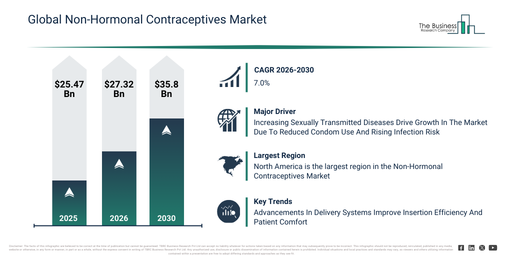
    The market size for non-hormonal contraceptives has demonstrated robust growth over recent years. Specifically, it is projected to expand from $25.47 billion in 2025 to $27.32 billion in 2026, reflecting a compound annual growth rate (CAGR) of 7.3%. This historical growth has been driven by factors such as the restricted accessibility of non-hormonal contraceptive options, a dependence on surgical sterilization procedures, heightened awareness surrounding reproductive health, an upsurge in female healthcare initiatives, and the increasing utilization of barrier devices within clinical settings.

    The non-hormonal contraceptives market is projected to experience robust expansion in the coming years, reaching an estimated $35.8 billion by 2030 with a compound annual growth rate (CAGR) of 7.0%. This anticipated growth during the forecast period stems from several key factors, including the creation of more sophisticated non-hormonal devices, a higher demand for sterilization procedures that are both reversible and minimally invasive, broader implementation of family planning initiatives, growing consciousness regarding adherence to safety and compliance norms, and the incorporation of smart monitoring systems within contraceptive technologies. Additionally, significant trends influencing this timeframe feature a growing inclination toward non-hormonal birth control methods, an increased uptake of barrier-based and mechanical tools, heightened awareness surrounding reversible sterilization choices, a broader availability of minimally invasive contraceptive instruments, and an intensified emphasis on ensuring safety, adhering to regulations, and designing with patient needs at the forefront.

    Download A Free Sample Report For Comprehensive Market Insights:

    https://www.thebusinessresearchcompany.com/sample.aspx?id=25849&type=smp&utm_source=BlogsPR&utm_medium=Paid&utm_campaign=Jul_PR

    Non-Hormonal Contraceptives Market Growth Factors Supporting Long-Term Expansion

    The rising incidence of sexually transmitted diseases is anticipated to accelerate the expansion of the non-hormonal contraceptives market in the coming period. Sexually transmitted diseases (STDs) are infections primarily spread through sexual contact, triggered by bacteria, viruses, or parasites. This increase in STDs is largely driven by reduced condom use, which heightens the infection risk during unprotected sexual encounters. Non-hormonal contraceptives, such as male and female condoms, act as a physical barrier that blocks the transfer of bodily fluids during sex, thereby lowering the risk of STD transmission. As an example, in April 2025, the Minnesota Department of Health (MDH), a state health agency in the US, reported that HIV cases among men aged 35 to 39 rose from 10% in 2023 to 17% in 2024. Consequently, the escalating prevalence of sexually transmitted diseases is fueling the growth of the non-hormonal contraceptives market.

    Non-Hormonal Contraceptives Market Segment Analysis Highlighting Growth Areas

    The non-hormonal contraceptives market covered in this report is segmented –

    1) By Type: Devices, Sterilization, Other Product Types

    2) By Mechanism Of Action: Antagonist, Agonist, Inhibitor, Modulator

    3) By Route of Administration: Intramuscular, Intravaginal, Intravenous, Oral, Subcutaneous, Topical, Transdermal, Other Route Of Administrations

    4) By Purpose Of Therapy: Treatment Of Disease, Management Of Symptoms

    5) By Target Indication: Bacterial Vaginosis, Contraception, Endometriosis, Postmenopausal Osteoporosis, Uterine Fibroids, Vaginitis, Other Target Indications

    Subsegments:

    1) By Devices: Surgical Instruments, Ligation Clips, Tubal Rings

    2) By Sterilization: Permanent Sterilization, Reversible Sterilization, Mechanical Sterilization Devices

    3) By Other Product Types: Non-Surgical Barrier Devices, Implantable Plugs, Intrauterine Permanent Devices

    Non-Hormonal Contraceptives Market Industry Trends Shaping Future Revenue Growth

    Key players in the non-hormonal contraceptives market are concentrating on creating advanced products, including preloaded intrauterine device delivery systems, to simplify fitting processes, boost user convenience, and enhance clinical effectiveness. A preloaded intrauterine device (IUD) delivery system is a factory-assembled, immediately usable tool that combines the IUD and its inserter within one component, intended to make the insertion smoother, cut down on preparation time, and lower the likelihood of contamination or errors during handling. As an example, in September 2024, CooperSurgical Inc., a medical device and fertility firm headquartered in the United States, unveiled the Paragard Single-Handed Inserter, which is designed to improve insertion speed and patient comfort when placing non-hormonal preloaded intrauterine devices. This system delivers more than 99% effectiveness as a long-term contraceptive solution, lasting up to ten years, by stopping sperm from reaching an egg. Its key advantages involve immediate and reversible protection, being free of hormones, and requiring little upkeep after placement.

    Non-Hormonal Contraceptives Market Leading Companies: Who Holds Significant Market Presence?

    Major companies operating in the non-hormonal contraceptives market are Church & Dwight Co., Okamoto Industries, CooperSurgical Inc., PSI India Pvt Ltd., Karex Berhad, Fuji Latex Co. Ltd., PREGNA INTERNATIONAL LTD., Cupid Limited, Global Protection Corp., SMB Corporation of India, HLL Lifecare Limited, Contraline Inc.

    Access The Complete Non-Hormonal Contraceptives Market Report:

    https://www.thebusinessresearchcompany.com/report/non-hormonal-contraceptives-global-market-report?utm_source=BlogsPR&utm_medium=Paid&utm_campaign=Jul_PR

    Non-Hormonal Contraceptives Market Geographic Distribution And Regional Opportunities

    North America was the largest region in the non-hormonal contraceptives market in 2025. Asia-Pacific is expected to be the fastest-growing region in the forecast period. The regions covered in the non-hormonal contraceptives market report are Asia-Pacific, South East Asia, Western Europe, Eastern Europe, North America, South America, Middle East, Africa.

    Get in touch with us:

    The Business Research Company: https://www.thebusinessresearchcompany.com/?utm_source=BlogsPR&utm_medium=Paid&utm_campaign=home_page_test

    Americas: +1 310-496-7795

    Asia: +44 7882 955267 & +91 8897263534

    Europe: +44 7882 955267

    Email us at: marketing@tbrc.info

    Follow us on:

    LinkedIn: https://in.linkedin.com/company/the-business-research-company

    YouTube: https://www.youtube.com/channel/UC24_fI0rV8cR5DxlCpgmyFQ

    Global Market Model: https://www.thebusinessresearchcompany.com/global-market-model

  • Increasing Sexually Transmitted Diseases Drive Growth In The Market Due To Reduced Condom Use And Rising Infection Risk Is Supporting Development Across The Non-Hormonal Contraceptives Market

    Increasing Sexually Transmitted Diseases Drive Growth In The Market Due To Reduced Condom Use And Rising Infection Risk Is Supporting Development Across The Non-Hormonal Contraceptives Market

    The Business Research Company’s 2026 market reports feature advanced enhancements such as market attractiveness analysis, total addressable market evaluation, company benchmarking matrices, interactive Excel dashboards, expanded supply chain intelligence, emerging startup coverage, and detailed product insights, delivering more actionable and strategically valuable research.

    What Is The Forecasted Rise In Market Size Of The Non-Hormonal Contraceptives Market During The Forecast Period?

    The non-hormonal contraceptives market size has shown significant growth over recent years. It is anticipated to expand from $25.47 billion in 2025 to $27.32 billion in 2026, achieving a compound annual growth rate (CAGR) of 7.3%. The market’s historical expansion can be attributed to several factors, including the initial limited availability of non-hormonal contraceptive methods, a past reliance on surgical sterilization, increasing awareness regarding reproductive health, a rise in female healthcare initiatives, and the adoption of barrier devices in clinics.

    The non-hormonal contraceptives market is anticipated to experience substantial expansion over the upcoming years. This market is projected to reach $35.8 billion in 2030, exhibiting a compound annual growth rate (CAGR) of 7.0%. This anticipated growth during the forecast period is driven by factors such as the creation of sophisticated non-hormonal devices, a growing need for reversible and less invasive sterilization methods, the expansion of family planning initiatives, heightened awareness regarding safety and regulatory adherence, and the incorporation of intelligent contraceptive monitoring systems. Key trends expected within this period encompass an increasing inclination towards non-hormonal contraception, a broader uptake of barrier and mechanical devices, enhanced knowledge concerning reversible sterilization choices, the wider availability of minimally invasive contraceptive solutions, and a strong emphasis on ensuring safety, regulatory compliance, and designs centered around patient needs.

    Download A Free Sample Report For Comprehensive Market Insights:

    https://www.thebusinessresearchcompany.com/sample.aspx?id=25849&type=smp

    What Primary Factors Are Fueling The Expansion Of The Non-Hormonal Contraceptives Market?

    The increasing occurrence of sexually transmitted infections is anticipated to boost the expansion of the non-hormonal contraceptives market in the future. These infections, known as STDs, are primarily transmitted through sexual interaction and result from bacteria, viruses, or parasites. A significant factor contributing to the rise in sexually transmitted diseases is reduced condom utilization, which elevates the probability of contracting an infection during sexual activity without protection. Non-hormonal birth control methods, such as male and female condoms, are effective in preventing the spread of sexually transmitted diseases. They achieve this by creating a physical obstruction that stops the transfer of bodily fluids during sex. For example, data released in April 2025 by the Minnesota Department of Health (MDH), a US-based state health agency, indicated that among males aged 35 to 39, the percentage of HIV cases grew from 10% in 2023 to 17% in 2024. Consequently, the escalating occurrence of sexually transmitted diseases is fueling the expansion of the non-hormonal contraceptives market.

    What Segment Categories Are Evaluated In The Non-Hormonal Contraceptives Market Study?

    The non-hormonal contraceptives market covered in this report is segmented –

    1) By Type: Devices, Sterilization, Other Product Types

    2) By Mechanism Of Action: Antagonist, Agonist, Inhibitor, Modulator

    3) By Route of Administration: Intramuscular, Intravaginal, Intravenous, Oral, Subcutaneous, Topical, Transdermal, Other Route Of Administrations

    4) By Purpose Of Therapy: Treatment Of Disease, Management Of Symptoms

    5) By Target Indication: Bacterial Vaginosis, Contraception, Endometriosis, Postmenopausal Osteoporosis, Uterine Fibroids, Vaginitis, Other Target Indications

    Subsegments:

    1) By Devices: Surgical Instruments, Ligation Clips, Tubal Rings

    2) By Sterilization: Permanent Sterilization, Reversible Sterilization, Mechanical Sterilization Devices

    3) By Other Product Types: Non-Surgical Barrier Devices, Implantable Plugs, Intrauterine Permanent Devices

    What Trends Are Affecting The Growth Of The Non-Hormonal Contraceptives Market?

    Companies engaged in the non-hormonal contraceptives market are concentrating on developing novel solutions, such as preloaded intrauterine device delivery systems, to simplify insertion procedures, enhance user convenience, and improve clinical efficiency. A preloaded intrauterine device (IUD) delivery system is characterized as a pre-assembled, ready-to-use device that integrates the preloaded intrauterine device and its inserter into a single unit, designed to streamline the insertion process, reduce setup time, and minimize the risk of contamination or handling errors. For instance, in September 2024, CooperSurgical Inc., a US-based medical device and fertility company, launched the Paragard Single-Handed Inserter, aimed at improving insertion efficiency and patient comfort during non-hormonal preloaded intrauterine device placement. This product offers over 99% effective, long-term birth control for up to 10 years by preventing sperm from fertilizing an egg. Key benefits include immediate and reversible contraception, suitability for hormone-free users, and low maintenance after insertion.

    Who Are The Leading Firms Participating In The Non-Hormonal Contraceptives Market?

    Major companies operating in the non-hormonal contraceptives market are Church & Dwight Co., Okamoto Industries, CooperSurgical Inc., PSI India Pvt Ltd., Karex Berhad, Fuji Latex Co. Ltd., PREGNA INTERNATIONAL LTD., Cupid Limited, Global Protection Corp., SMB Corporation of India, HLL Lifecare Limited, Contraline Inc.

    Access The Complete Non-Hormonal Contraceptives Market Report:

    https://www.thebusinessresearchcompany.com/report/non-hormonal-contraceptives-global-market-report

    Which Region Is The Primary Market For The Non-Hormonal Contraceptives Market?

    North America was the largest region in the non-hormonal contraceptives market in 2025. Asia-Pacific is expected to be the fastest-growing region in the forecast period. The regions covered in the non-hormonal contraceptives market report are Asia-Pacific, South East Asia, Western Europe, Eastern Europe, North America, South America, Middle East, Africa.

    Access Non-Hormonal Contraceptives Market Report for Deeper Competitive Insights

    https://www.thebusinessresearchcompany.com/sample.aspx?id=25849&type=smp

    Browse Through More Reports Similar to the Global Non-Hormonal Contraceptives Market 2026, By The Business Research Company

    Hormonal Contraceptives Market Report 2026

    https://www.thebusinessresearchcompany.com/report/hormonal-contraceptives-global-market-report

    Contraceptives Market Report 2026

    https://www.thebusinessresearchcompany.com/report/contraceptives-global-market-report

    Oral Contraceptive Pills Market Report 2026

    https://www.thebusinessresearchcompany.com/report/oral-contraceptive-pills-global-market-report

    Get in touch with us:

    The Business Research Company: https://www.thebusinessresearchcompany.com/

    Americas: +1 310-496-7795

    Asia: +44 7882 955267 & +91 8897263534

    Europe: +44 7882 955267

    Email us at: marketing@tbrc.info

    Follow us on:

    LinkedIn: https://in.linkedin.com/company/the-business-research-company

    YouTube: https://www.youtube.com/channel/UC24_fI0rV8cR5DxlCpgmyFQ

    Global Market Model: https://www.thebusinessresearchcompany.com/global-market-model
  • Non-Hormonal Contraceptives Market Forecast With Insights On Demand And Industry Growth

    Non-Hormonal Contraceptives Market Forecast With Insights On Demand And Industry Growth

    The Business Research Company’s 2026 market reports feature enhanced tools like market attractiveness analysis, TAM assessment, and company scoring matrices, along with interactive dashboards, deeper supply chain insights, and startup coverage strengthening the depth, usability, and strategic value of insights.

    What Level Of Market Value Growth Is Predicted For The Non-Hormonal Contraceptives Market From 2026 To 2030?

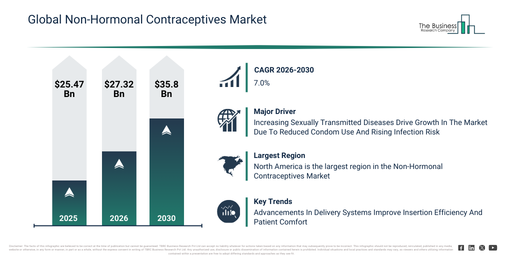
    The non-hormonal contraceptives market has experienced robust expansion in recent years. It is projected to grow from $25.47 billion in 2025 to $27.32 billion in 2026, demonstrating a compound annual growth rate (CAGR) of 7.3%. Historically, the market’s growth can be attributed to elements such as the limited availability of non-hormonal contraceptive methods, a reliance on surgical sterilization, increasing awareness of reproductive health, a rise in female healthcare initiatives, and the adoption of barrier devices in clinics.

    The non-hormonal contraceptives market size is projected to experience substantial growth over the next few years. It is forecast to expand to $35.8 billion by 2030, achieving a compound annual growth rate (CAGR) of 7.0%. This anticipated growth can be attributed to several factors, including the development of advanced non-hormonal devices, a rising demand for reversible and minimally invasive sterilization procedures, the expansion of family planning programs, increasing awareness of safety and compliance standards, and the integration of smart contraceptive monitoring systems. Prominent trends observed during this forecast period include a growing preference for non-hormonal contraceptive methods, the increasing adoption of barrier and mechanical devices, greater awareness regarding reversible sterilization options, the expansion of minimally invasive contraceptive devices, and a strong focus on safety, compliance, and patient-centric design.

    Access Your Free Sample Report For In-Depth Market Analysis:

    https://www.thebusinessresearchcompany.com/sample.aspx?id=25849&type=smp

    Which Strong Drivers Are Impacting The Non-Hormonal Contraceptives Market Growth?

    The increasing incidence of sexually transmitted diseases is anticipated to boost the non-hormonal contraceptives market’s expansion. Sexually transmitted diseases (STDs) are infections primarily transmitted via sexual contact, caused by various agents like bacteria, viruses, or parasites. The rise in STDs is significantly linked to reduced condom use, which elevates the risk of infection during unprotected sexual activity. Non-hormonal birth control methods, such as male and female condoms, aid in preventing STD transmission by acting as a physical barrier that stops the transfer of bodily fluids during sex. As an illustration, the Minnesota Department of Health (MDH), a US-based state health agency, reported in April 2025 that the percentage of HIV cases in males aged 35 to 39 saw a rise from 10% in 2023 to 17% in 2024. Consequently, the escalating occurrence of sexually transmitted diseases is fueling the expansion of the non-hormonal contraceptives market.

    How Are Different Segments Classified In The Non-Hormonal Contraceptives Market Segment Analysis?

    The non-hormonal contraceptives market covered in this report is segmented –

    1) By Type: Devices, Sterilization, Other Product Types

    2) By Mechanism Of Action: Antagonist, Agonist, Inhibitor, Modulator

    3) By Route of Administration: Intramuscular, Intravaginal, Intravenous, Oral, Subcutaneous, Topical, Transdermal, Other Route Of Administrations

    4) By Purpose Of Therapy: Treatment Of Disease, Management Of Symptoms

    5) By Target Indication: Bacterial Vaginosis, Contraception, Endometriosis, Postmenopausal Osteoporosis, Uterine Fibroids, Vaginitis, Other Target Indications

    Subsegments:

    1) By Devices: Surgical Instruments, Ligation Clips, Tubal Rings

    2) By Sterilization: Permanent Sterilization, Reversible Sterilization, Mechanical Sterilization Devices

    3) By Other Product Types: Non-Surgical Barrier Devices, Implantable Plugs, Intrauterine Permanent Devices

    Which Trends Are Contributing To Changes In The Non-Hormonal Contraceptives Market?

    Leading companies in the non-hormonal contraceptives market are dedicated to developing innovative solutions, such as preloaded intrauterine device delivery systems, to streamline insertion, enhance user convenience, and improve clinical efficiency. A preloaded intrauterine device (IUD) delivery system is a pre-assembled, ready-to-use device that integrates the preloaded IUD and its inserter into a single unit, specifically designed to simplify the insertion process, reduce setup time, and minimize the risk of contamination or handling errors. For instance, in September 2024, CooperSurgical Inc., a US-based medical device and fertility company, launched the Paragard Single-Handed Inserter, aiming to boost insertion efficiency and patient comfort during non-hormonal preloaded intrauterine device placement. This device offers over 99% effective, long-term birth control for up to 10 years by preventing sperm from fertilizing an egg. Its key benefits include immediate and reversible contraception, hormone-free suitability, and low maintenance once inserted.

    Who Are The Companies Driving Activity In The Non-Hormonal Contraceptives Market?

    Major companies operating in the non-hormonal contraceptives market are Church & Dwight Co., Okamoto Industries, CooperSurgical Inc., PSI India Pvt Ltd., Karex Berhad, Fuji Latex Co. Ltd., PREGNA INTERNATIONAL LTD., Cupid Limited, Global Protection Corp., SMB Corporation of India, HLL Lifecare Limited, Contraline Inc.

    Get The Full Non-Hormonal Contraceptives Market Report:

    https://www.thebusinessresearchcompany.com/report/non-hormonal-contraceptives-global-market-report

    Which Region Is The Top Contributor To The Non-Hormonal Contraceptives Market By Share?

    North America was the largest region in the non-hormonal contraceptives market in 2025. Asia-Pacific is expected to be the fastest-growing region in the forecast period. The regions covered in the non-hormonal contraceptives market report are Asia-Pacific, South East Asia, Western Europe, Eastern Europe, North America, South America, Middle East, Africa.

    Request A Customized Non-Hormonal Contraceptives Market Report For Competitive Insights:

    https://www.thebusinessresearchcompany.com/report/non-hormonal-contraceptives-global-market-report

    Browse Through More Reports Similar to the Global Non-Hormonal Contraceptives Market 2026, By The Business Research Company

    Hormonal Contraceptives Market Report 2026

    https://www.thebusinessresearchcompany.com/report/hormonal-contraceptives-global-market-report

    Contraceptives Market Report 2026

    https://www.thebusinessresearchcompany.com/report/contraceptives-global-market-report

    Oral Contraceptive Pills Market Report 2026

    https://www.thebusinessresearchcompany.com/report/oral-contraceptive-pills-global-market-report

    Get in touch with us:

    The Business Research Company: https://www.thebusinessresearchcompany.com/

    Americas +1 310-496-7795

    Asia +44 7882 955267 & +91 8897263534

    Europe +44 7882 955267

    Email us at: marketing@tbrc.info

    Follow us on:

    LinkedIn: https://in.linkedin.com/company/the-business-research-company

    YouTube: https://www.youtube.com/channel/UC24_fI0rV8cR5DxlCpgmyFQ

    Global Market Model: https://www.thebusinessresearchcompany.com/global-market-model

  • Global Non-Hormonal Contraceptives Market Analysis for 2026–2030 with Strategic Business Insights

    Global Non-Hormonal Contraceptives Market Analysis for 2026–2030 with Strategic Business Insights

    The Business Research Company’s 2026 market reports include new capabilities such as market attractiveness scoring and analysis, total addressable market analysis, company scoring matrix, interactive excel data dashboard, improved supply chain analysis, upcoming startups in the market, and overview of key products, aimed at improving the depth, usability, and strategic value of the insights delivered.

    What Is The Forecasted Market Value Of The Non-Hormonal Contraceptives Market Across 2026–2030?

    The non-hormonal contraceptives market has seen robust expansion in recent years. Its value is anticipated to rise from $25.47 billion in 2025 to $27.32 billion in 2026, advancing at a compound annual growth rate (CAGR) of 7.3%. The historical increase in this market can be linked to the previously limited supply of non-hormonal contraceptive options, a reliance on surgical sterilization, an increasing understanding of reproductive health, more initiatives focused on female healthcare, and the greater adoption of barrier devices in clinical environments.

    The non-hormonal contraceptives market size is anticipated to undergo significant expansion over the next few years. It is projected to grow to $35.8 billion in 2030, achieving a compound annual growth rate (CAGR) of 7.0%. This growth throughout the forecast period can be attributed to the advancement of sophisticated non-hormonal devices, increasing demand for reversible and minimally invasive sterilization, the broadening of family planning initiatives, greater awareness of safety and compliance standards, and the integration of smart contraceptive monitoring systems. Prominent trends for the forecast period include a rising preference for non-hormonal contraceptive methods, a growing adoption of barrier and mechanical devices, increased awareness about reversible sterilization choices, the expansion of minimally invasive contraceptive devices, and a strong focus on safety, compliance, and patient-centric design.

    Download the Free Sample Report to Explore Key Market Insights:

    https://www.thebusinessresearchcompany.com/sample.aspx?id=25849&type=smp

    What Major Growth Drivers Are Shaping The Outlook Of The Non-Hormonal Contraceptives Market?

    The increasing incidence of sexually transmitted diseases is projected to drive the growth of the non-hormonal contraceptives market in the future. Sexually transmitted diseases (STDs) are infections primarily disseminated through sexual contact, caused by bacteria, viruses, or parasites. The surge in these diseases largely stems from a decrease in condom utilization, thereby heightening the chance of infection during unprotected sexual encounters. Non-hormonal contraceptives, which encompass male and female condoms, play a crucial role in preventing the transmission of sexually transmitted diseases by forming a physical barrier that hinders the exchange of bodily fluids during sexual activity. For instance, in April 2025, data from the Minnesota Department of Health (MDH), a US-based state health agency, revealed that the percentage of HIV cases among males aged 35 to 39 climbed from 10% in 2023 to 17% in 2024. Thus, the escalating prevalence of sexually transmitted diseases is a key factor propelling the expansion of the non-hormonal contraceptives market.

    What Segmentation Levels Are Considered In The Non-Hormonal Contraceptives Market?

    The non-hormonal contraceptives market covered in this report is segmented –

    1) By Type: Devices, Sterilization, Other Product Types

    2) By Mechanism Of Action: Antagonist, Agonist, Inhibitor, Modulator

    3) By Route of Administration: Intramuscular, Intravaginal, Intravenous, Oral, Subcutaneous, Topical, Transdermal, Other Route Of Administrations

    4) By Purpose Of Therapy: Treatment Of Disease, Management Of Symptoms

    5) By Target Indication: Bacterial Vaginosis, Contraception, Endometriosis, Postmenopausal Osteoporosis, Uterine Fibroids, Vaginitis, Other Target Indications

    Subsegments:

    1) By Devices: Surgical Instruments, Ligation Clips, Tubal Rings

    2) By Sterilization: Permanent Sterilization, Reversible Sterilization, Mechanical Sterilization Devices

    3) By Other Product Types: Non-Surgical Barrier Devices, Implantable Plugs, Intrauterine Permanent Devices

    What Trends Are Projected To Affect The Non-Hormonal Contraceptives Market?

    Leading companies within the non-hormonal contraceptives market are concentrating on creating advanced solutions, particularly preloaded intrauterine device delivery systems, with the aim of streamlining insertion processes, boosting user convenience, and optimizing clinical effectiveness. Such a system, a preloaded intrauterine device (IUD) delivery system, denotes a device that is pre-assembled and ready for use, combining the preloaded intrauterine device with its inserter in one unit. This design serves to make the insertion process more efficient, cut down on preparation time, and lessen the chance of contamination or errors during handling. As an illustration, in September 2024, CooperSurgical Inc., a medical device and fertility company based in the US, unveiled its Paragard Single-Handed Inserter. This product is intended to improve insertion efficiency and increase patient comfort specifically during the placement of non-hormonal preloaded intrauterine devices. The Paragard inserter provides highly effective, long-term birth control, being over 99% effective for up to 10 years by inhibiting sperm from fertilizing an egg. Its primary advantages encompass immediate and reversible contraception, its suitability as a hormone-free option, and requiring minimal maintenance after insertion.

    Which Leading Firms Are Contributing To The Growth Of The Non-Hormonal Contraceptives Market?

    Major companies operating in the non-hormonal contraceptives market are Church & Dwight Co., Okamoto Industries, CooperSurgical Inc., PSI India Pvt Ltd., Karex Berhad, Fuji Latex Co. Ltd., PREGNA INTERNATIONAL LTD., Cupid Limited, Global Protection Corp., SMB Corporation of India, HLL Lifecare Limited, Contraline Inc.

    Read the full non-hormonal contraceptives market report here:

    https://www.thebusinessresearchcompany.com/report/non-hormonal-contraceptives-global-market-report

    Which Regions Are Projected To Dominate The Non-Hormonal Contraceptives Market In The Coming Years?

    North America was the largest region in the non-hormonal contraceptives market in 2025. Asia-Pacific is expected to be the fastest-growing region in the forecast period. The regions covered in the non-hormonal contraceptives market report are Asia-Pacific, South East Asia, Western Europe, Eastern Europe, North America, South America, Middle East, Africa.

    Request A Tailored Non-Hormonal Contraceptives Market Research Report For Competitive Advantage:

    https://www.thebusinessresearchcompany.com/customise?id=25849&type=smp

    Browse Through More Reports Similar to the Global Non-Hormonal Contraceptives Market 2026, By The Business Research Company

    Hormonal Contraceptives Market Report 2026

    https://www.thebusinessresearchcompany.com/report/hormonal-contraceptives-global-market-report

    Contraceptives Market Report 2026

    https://www.thebusinessresearchcompany.com/report/contraceptives-global-market-report

    Oral Contraceptive Pills Market Report 2026

    https://www.thebusinessresearchcompany.com/report/oral-contraceptive-pills-global-market-report

    Get in touch with us:

    The Business Research Company: https://www.thebusinessresearchcompany.com/

    Americas +1 310-496-7795

    Asia +44 7882 955267 & +91 8897263534

    Europe +44 7882 955267

    Email us at info@tbrc.info

    Follow us on:

    LinkedIn: https://in.linkedin.com/company/the-business-research-company

    YouTube: https://www.youtube.com/channel/UC24_fI0rV8cR5DxlCpgmyFQ

    Global Market Model: https://www.thebusinessresearchcompany.com/global-market-model
  • Global Non-Hormonal Contraceptives Market Report 2026–2035: Key Forecasts and Growth Areas

    Global Non-Hormonal Contraceptives Market Report 2026–2035: Key Forecasts and Growth Areas

    Uncover key drivers, emerging technologies, and competitive movements shaping the non-hormonal contraceptives market from 2026–2035 with trusted insights from The Business Research Company

    What level of growth is expected in the Non-Hormonal Contraceptives Market between 2026 and 2030?

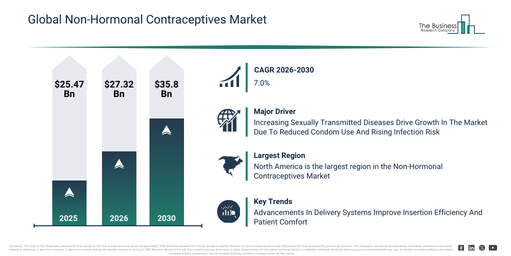
    The non-hormonal contraceptives market has seen substantial growth in recent years. It is forecast to increase from $25.47 billion in 2025 to $27.32 billion in 2026, exhibiting a compound annual growth rate (CAGR) of 7.3%. Historically, this market expansion can be linked to the limited availability of non-hormonal contraceptive methods, a dependence on surgical sterilization, increasing awareness of reproductive health, rising female healthcare initiatives, and the adoption of barrier devices in clinics.

    The non-hormonal contraceptives market is projected to experience substantial expansion in the coming years, reaching $35.8 billion by 2030, driven by a compound annual growth rate (CAGR) of 7.0%. This anticipated growth during the forecast period is fueled by several factors, including the creation of sophisticated non-hormonal devices, an increasing call for reversible and less invasive sterilization methods, the broadening of family planning initiatives, enhanced understanding of safety and compliance protocols, and the incorporation of intelligent contraceptive monitoring systems. Key trends anticipated within this period involve a heightened inclination towards non-hormonal contraceptive options, greater uptake of barrier and mechanical devices, improved understanding of reversible sterilization choices, the wider availability of minimally invasive contraceptive devices, and an emphasis on ensuring safety, adherence, and designs centered on the patient.

    Access Your Free Sample Report for In-Depth Market Insights:

    https://www.thebusinessresearchcompany.com/sample.aspx?id=25849&type=smp

    Which Drivers Are Expected To Impact The Non-Hormonal Contraceptives Market During The Forecast Period?

    The increasing incidence of sexually transmitted diseases is projected to boost the expansion of the non-hormonal contraceptives market. Sexually transmitted diseases (STDs) are infections primarily transmitted through sexual contact, caused by bacteria, viruses, or parasites. The surge in sexually transmitted diseases is largely attributed to a decrease in condom usage, thereby elevating the likelihood of infection during unprotected sex. Non-hormonal contraceptives, which include male and female condoms, help prevent the spread of sexually transmitted diseases by establishing a physical barrier that stops the exchange of bodily fluids during sexual activity. For instance, in April 2025, according to the Minnesota Department of Health (MDH), a US-based state health agency, the percentage of HIV cases among males aged 35 to 39 grew from 10% in 2023 to 17% in 2024. Therefore, the rising prevalence of sexually transmitted diseases is fueling the growth of the non-hormonal contraceptives market.

    How Is The Non-Hormonal Contraceptives Market Divided Into Segments?

    The non-hormonal contraceptives market covered in this report is segmented –

    1) By Type: Devices, Sterilization, Other Product Types

    2) By Mechanism Of Action: Antagonist, Agonist, Inhibitor, Modulator

    3) By Route of Administration: Intramuscular, Intravaginal, Intravenous, Oral, Subcutaneous, Topical, Transdermal, Other Route Of Administrations

    4) By Purpose Of Therapy: Treatment Of Disease, Management Of Symptoms

    5) By Target Indication: Bacterial Vaginosis, Contraception, Endometriosis, Postmenopausal Osteoporosis, Uterine Fibroids, Vaginitis, Other Target Indications

    Subsegments:

    1) By Devices: Surgical Instruments, Ligation Clips, Tubal Rings

    2) By Sterilization: Permanent Sterilization, Reversible Sterilization, Mechanical Sterilization Devices

    3) By Other Product Types: Non-Surgical Barrier Devices, Implantable Plugs, Intrauterine Permanent Devices

    How Are Emerging Trends Affecting The Progression Of The Non-Hormonal Contraceptives Market?

    Leading companies in the non-hormonal contraceptives market are prioritizing the creation of novel solutions, such as preloaded intrauterine device delivery systems, to simplify insertion, increase user convenience, and enhance clinical effectiveness. A preloaded intrauterine device (IUD) delivery system is a pre-assembled, ready-to-use device that incorporates the preloaded intrauterine device and its inserter into a single unit, designed to optimize the insertion process, cut down on setup time, and mitigate the risk of contamination or errors during handling. For instance, in September 2024, CooperSurgical Inc., a US-based medical device and fertility organization, unveiled the Paragard Single-Handed Inserter, aimed at improving insertion efficiency and patient comfort during the placement of non-hormonal preloaded intrauterine devices. This device offers over 99% effective, long-term birth control for up to 10 years by preventing sperm from fertilizing an egg. Notable advantages include immediate and reversible contraception, suitability for hormone-free needs, and minimal maintenance once in place.

    Which Key Players Are Driving Competition In The Non-Hormonal Contraceptives Market?

    Major companies operating in the non-hormonal contraceptives market are Church & Dwight Co., Okamoto Industries, CooperSurgical Inc., PSI India Pvt Ltd., Karex Berhad, Fuji Latex Co. Ltd., PREGNA INTERNATIONAL LTD., Cupid Limited, Global Protection Corp., SMB Corporation of India, HLL Lifecare Limited, Contraline Inc.

    Access The Complete Report For Deeper Market Insights:

    https://www.thebusinessresearchcompany.com/report/non-hormonal-contraceptives-global-market-report

    Which Region Is Projected To Lead The Non-Hormonal Contraceptives Market During The Forecast Period?

    North America was the largest region in the non-hormonal contraceptives market in 2025. Asia-Pacific is expected to be the fastest-growing region in the forecast period. The regions covered in the non-hormonal contraceptives market report are Asia-Pacific, South East Asia, Western Europe, Eastern Europe, North America, South America, Middle East, Africa.

    Request Your Customized Non-Hormonal Contraceptives Market Research Report for Competitive Advantage:

    https://www.thebusinessresearchcompany.com/customise?id=25849&type=smp

    Browse Through More Reports Similar to the Global Non-Hormonal Contraceptives Market 2026, By The Business Research Company

    Hormonal Contraceptives Market Report 2026

    https://www.thebusinessresearchcompany.com/report/hormonal-contraceptives-global-market-report

    Contraceptives Market Report 2026

    https://www.thebusinessresearchcompany.com/report/contraceptives-global-market-report

    Oral Contraceptive Pills Market Report 2026

    https://www.thebusinessresearchcompany.com/report/oral-contraceptive-pills-global-market-report

    Get in touch with us:

    The Business Research Company: https://www.thebusinessresearchcompany.com/

    Americas +1 310-496-7795

    Asia +44 7882 955267 & +91 8897263534

    Europe +44 7882 955267

    Email us at info@tbrc.info

    Follow us on:

    LinkedIn: https://in.linkedin.com/company/the-business-research-company

    YouTube: https://www.youtube.com/channel/UC24_fI0rV8cR5DxlCpgmyFQ

    Global Market Model: https://www.thebusinessresearchcompany.com/global-market-model

  • Non-Hormonal Contraceptives Market Expansion Outlook: $33.48 Billion by 2029 Forecast

    Non-Hormonal Contraceptives Market Expansion Outlook: $33.48 Billion by 2029 Forecast

    Unlock Global Insights – Save 20% on Market Reports with Code ONLINE20

    What Is The Predicted Market Size Trajectory For The Non-Hormonal Contraceptives Market From 2025 To 2034?

    The non-hormonal contraceptives market size has witnessed substantial expansion in recent years. It is anticipated to grow from $23.73 billion in 2024 to $25.47 billion in 2025, exhibiting a compound annual growth rate (CAGR) of 7.3%. The market’s past growth can be attributed to increasing support for women’s health initiatives, the expanding availability of over-the-counter non-hormonal contraceptive options, a heightened emphasis on male contraceptive product development, a surge in demand for fertility-awareness-based contraceptive solutions, and a rising number of product approvals and launches within the non-hormonal sector.

    The market for non-hormonal contraceptives is projected to experience substantial expansion over the upcoming years. Its valuation is anticipated to reach $33.48 billion by 2029, exhibiting a compound annual growth rate (CAGR) of 7.1%. This projected expansion during the forecast period stems from factors such as a growing demand for hormone-free birth control options, heightened recognition of adverse effects linked to hormonal contraceptives, a burgeoning inclination towards natural and chemical-free contraception, an escalating incidence of sexually transmitted infections, and a greater emphasis on reproductive health among women. Key trends anticipated within this period encompass progress in biomaterials utilized for non-hormonal contraceptive devices, innovation propelled by technology in barrier contraceptive designs, the incorporation of intelligent tracking functionalities into fertility-awareness approaches, developments in drug-free contraceptive gels and films, and the emergence of technology-supported tools for self-administering contraceptive devices.

    Unlock Your Free Sample Report for Exclusive Market Data:

    https://www.thebusinessresearchcompany.com/sample.aspx?id=25849&type=smp

    What Are The Emerging Market Drivers Creating New Opportunities In The Non-Hormonal Contraceptives Industry?

    The anticipated expansion of the non-hormonal contraceptives market is linked to the increasing incidence of sexually transmitted diseases. Infections known as sexually transmitted diseases (STDs) primarily transmit through sexual contact and originate from bacteria, viruses, or parasites. A primary factor contributing to the rise in sexually transmitted diseases is reduced condom use, which heightens the risk of infection during sexual activity without protection. Non-hormonal contraceptive methods, such as male and female condoms, aid in preventing the spread of sexually transmitted diseases by forming a physical barrier that stops the transfer of bodily fluids during intercourse. An illustrative example is from April 2025, when data from the Minnesota Department of Health (MDH), a US-based state health agency, showed that the percentage of HIV cases among males aged 35 to 39 rose from 10% in 2023 to 17% in 2024. Consequently, the increasing occurrence of sexually transmitted diseases is a key factor propelling the expansion of the non-hormonal contraceptives market.

    What Are The Major Segments Identified In The Non-Hormonal Contraceptives Market?

    The non-hormonal contraceptives market covered in this report is segmented –

    1) By Type: Devices, Sterilization, Other Product Types

    2) By Mechanism Of Action: Antagonist, Agonist, Inhibitor, Modulator

    3) By Route of Administration: Intramuscular, Intravaginal, Intravenous, Oral, Subcutaneous, Topical, Transdermal, Other Route Of Administrations

    4) By Purpose Of Therapy: Treatment Of Disease, Management Of Symptoms

    5) By Target Indication: Bacterial Vaginosis, Contraception, Endometriosis, Postmenopausal Osteoporosis, Uterine Fibroids, Vaginitis, Other Target Indications

    Subsegments:

    1) By Devices: Surgical Instruments, Ligation Clips, Tubal Rings

    2) By Sterilization: Permanent Sterilization, Reversible Sterilization, Mechanical Sterilization Devices

    3) By Other Product Types: Non-Surgical Barrier Devices, Implantable Plugs, Intrauterine Permanent Devices

    Which Competitive Trends Are Defining The Non-Hormonal Contraceptives Market Structure?

    Major companies operating in the non-hormonal contraceptives market are prioritizing the development of innovative solutions, such as preloaded intrauterine device delivery systems, to streamline insertion procedures, enhance user convenience, and improve clinical efficiency. A preloaded intrauterine device (IUD) delivery system is characterized as a pre-assembled, ready-to-use device that integrates the preloaded intrauterine device and its inserter into a single unit, intended to simplify the insertion process, reduce setup time, and minimize the risk of contamination or handling errors. For example, in September 2024, CooperSurgical Inc., a US-based medical device and fertility company, launched the Paragard Single-Handed Inserter, designed to boost insertion efficiency and patient comfort during non-hormonal preloaded intrauterine device placement. It offers over 99% effective, long-term birth control for up to 10 years by preventing sperm from fertilizing an egg. Its key advantages encompass immediate and reversible contraception, hormone-free suitability, and low maintenance once inserted.

    Which Key Market Players Are Investing In Expansion And Innovation Of Non-Hormonal Contraceptives Market?

    Major companies operating in the non-hormonal contraceptives market are Bayer AG., Church & Dwight Co., Mankind Pharma Limited, Okamoto Industries, CooperSurgical Inc., PSI India Pvt Ltd., Karex Berhad, Natural Cycles Nordic AB, Fuji Latex Co. Ltd., PREGNA INTERNATIONAL LTD., Cupid Limited, Veru Inc., Evofem Biosciences Inc., Daré Bioscience Inc., Global Protection Corp., SMB Corporation of India, HLL Lifecare Limited, YourChoice Therapeutics Inc., Cirqle Biomedical Contraception ApS, Eppin Pharma Inc., Contraline Inc., Linepharma International Ltd.

    Download The Full Report For Exclusive Market Findings:

    https://www.thebusinessresearchcompany.com/report/non-hormonal-contraceptives-global-market-report

    How Do Regional Market Performances Compare Within The Non-Hormonal Contraceptives Industry?

    North America was the largest region in the non-hormonal contraceptives market in 2024. Asia-Pacific is expected to be the fastest-growing region in the forecast period. The regions covered in the non-hormonal contraceptives market report are Asia-Pacific, Western Europe, Eastern Europe, North America, South America, Middle East, Africa.

    Request A Customized Version Of The Non-Hormonal Contraceptives Market Report:

    https://www.thebusinessresearchcompany.com/customise?id=25849&type=smp

    Browse Through More Reports Similar to the Global Non-Hormonal Contraceptives Market 2025, By The Business Research Company

    Hormonal Contraceptives Global Market Report 2025

    https://www.thebusinessresearchcompany.com/report/hormonal-contraceptives-global-market-report

    Contraceptives Global Market Report 2025

    https://www.thebusinessresearchcompany.com/report/contraceptives-global-market-report

    Oral Contraceptive Pills Global Market Report 2025

    https://www.thebusinessresearchcompany.com/report/oral-contraceptive-pills-global-market-report

    Get in touch with us:

    The Business Research Company: https://www.thebusinessresearchcompany.com/

    Americas +1 310-496-7795

    Asia +44 7882 955267 & +91 8897263534

    Europe +44 7882 955267

    Email us at info@tbrc.info

    Follow us on:

    LinkedIn: https://in.linkedin.com/company/the-business-research-company

    YouTube: https://www.youtube.com/channel/UC24_fI0rV8cR5DxlCpgmyFQ

    Global Market Model: https://www.thebusinessresearchcompany.com/global-market-model

  • Latest Market Developments in Non-Hormonal Contraceptives Industry: Forecast 2025–2029

    Claim your 30% discount on Global Market Reports with code ONLINE30. Limited time only.

    Claim your 30% discount on Global Market Reports with code ONLINE30. Limited time only.

    How Much Is the Global Non-Hormonal Contraceptives Market Valued at Present and by 2029?

    The market for non-hormonal contraceptives has seen a significant expansion in recent years. It is projected to rise from a worth of $23.73 billion in 2024 to $25.47 billion in 2025, reflecting a compound annual growth rate (CAGR) of 7.3%. The robust growth observed over the historical period is largely due to factors such as increased emphasis on women’s health programs, greater access to non-prescription non-hormonal contraceptives, heightened attention towards the development of male contraceptive products, a surge in demand for fertilityawareness-based contraceptive methods, and an upswing in the approval and launching of products in the non-hormonal arena.

    Over the coming years, the non-hormonal contraceptives market size is set to experience considerable expansion. Expectations indicate that it will reach $33.48 billion by 2029, growing at a compound annual growth rate (CAGR) of 7.1%. This projected increase for the forecast period is tied to factors like the rising demand for non-hormone-based birth control options, increased awareness around the adverse effects of hormonal contraceptives, growing interest in natural, non-chemical contraceptive methods, the escalating occurrence of sexually transmitted diseases, and heightened reproductive health consciousness among women. The forecast period is also likely to experience trends such as biomaterial advancements for non-hormonal contraceptive devices, technology-enhanced innovation in barrier contraceptive design, the incorporation of smart tracking attributes with fertility-awareness methods, advances in contraceptive gels and films without medications, as well as technologically facilitated self-use tools for contraceptive devices.

    Download The Free Sample Report Here:

    https://www.thebusinessresearchcompany.com/sample.aspx?id=25849&type=smp

    #What Drivers Are Influencing Growth In The Non-Hormonal Contraceptives Market?

    The rise in sexually transmitted diseases (STDs) is set to fuel the expansion of the non-hormonal contraceptives industry. STDs, primarily transmitted through sexual activity and triggered by bacteria, viruses, or parasites, are on the rise and this is largely down to less use of condoms, thereby increasing the risk of infection during unprotected sex. Non-hormonal contraceptives, such as male and female condoms, greatly reduce the spread of sexually transmitted diseases by acting as a physical barrier to stop the transfer of bodily fluids during sexual intercourse. As an example, in April 2025, the Minnesota Department of Health (MDH), a US health authority at the state level, revealed that the percentage of HIV cases among men aged 35 to 39 rose from 10% in 2023 to 17% in 2024. Hence, the rising incidence of sexually transmitted diseases is fuelling the growth of the non-hormonal contraceptives market.

    What Are The Main Segments Identified In The Non-Hormonal Contraceptives Market Research?

    The non-hormonal contraceptives market covered in this report is segmented –

    1) By Type: Devices, Sterilization, Other Product Types

    2) By Mechanism Of Action: Antagonist, Agonist, Inhibitor, Modulator

    3) By Route of Administration: Intramuscular, Intravaginal, Intravenous, Oral, Subcutaneous, Topical, Transdermal, Other Route Of Administrations

    4) By Purpose Of Therapy: Treatment Of Disease, Management Of Symptoms

    5) By Target Indication: Bacterial Vaginosis, Contraception, Endometriosis, Postmenopausal Osteoporosis, Uterine Fibroids, Vaginitis, Other Target Indications

    Subsegments:

    1) By Devices: Surgical Instruments, Ligation Clips, Tubal Rings

    2) By Sterilization: Permanent Sterilization, Reversible Sterilization, Mechanical Sterilization Devices

    3) By Other Product Types: Non-Surgical Barrier Devices, Implantable Plugs, Intrauterine Permanent Devices

    What Future Market Trends Are Projected For The Non-Hormonal Contraceptives Industry?

    Leading firms in the non-hormonal contraceptives market are centering their attention on creating innovative strategies like preloaded intrauterine device delivery systems. These are aimed at simplifying insertion procedures, increasing user-friendly features, and boosting clinical efficiency. A preloaded intrauterine device (IUD) delivery system is typically a ready-to-use, pre-assembled device combining the preloaded intrauterine device and its inserter. This integrated single unit is designed to make the insertion process smoother, reduce the setup duration, and decrease the chances of contamination or operational errors. For example, CooperSurgical Inc., an American medical device and fertility firm, launched the Paragard Single-Handed Inserter in September 2024. This product was developed with the objective of improving insertion efficiency and patient comfort during non-hormonal preloaded intrauterine device implantation. It provides over 99% effective, long-lasting birth control for up to a decade by preventing sperm from fertilizing an egg. The primary advantages include instant and reversible birth control, compatibility with a hormone-free regimen, and minimal maintenance after being inserted.

    Which Companies Play A Key Role In The Development Of The Non-Hormonal Contraceptives Market?

    Major companies operating in the non-hormonal contraceptives market are Bayer AG., Church & Dwight Co., Mankind Pharma Limited, Okamoto Industries, CooperSurgical Inc., PSI India Pvt Ltd., Karex Berhad, Natural Cycles Nordic AB, Fuji Latex Co. Ltd., PREGNA INTERNATIONAL LTD., Cupid Limited, Veru Inc., Evofem Biosciences Inc., Daré Bioscience Inc., Global Protection Corp., SMB Corporation of India, HLL Lifecare Limited, YourChoice Therapeutics Inc., Cirqle Biomedical Contraception ApS, Eppin Pharma Inc., Contraline Inc., Linepharma International Ltd.

    Get The Full Report Here:

    https://www.thebusinessresearchcompany.com/report/non-hormonal-contraceptives-global-market-report

    What Are The Key Regional Developments Shaping The Non-Hormonal Contraceptives Market?

    North America was the largest region in the non-hormonal contraceptives market in 2024. Asia-Pacific is expected to be the fastest-growing region in the forecast period. The regions covered in the non-hormonal contraceptives market report are Asia-Pacific, Western Europe, Eastern Europe, North America, South America, Middle East, Africa.

    Request For A Customized Report:

    https://www.thebusinessresearchcompany.com/customise?id=25849&type=smp

    About The Business Research Company:

    With over 15000+ reports from 27 industries covering 60+ geographies, The Business Research Company has built a reputation for offering comprehensive, data-rich research and insights. Armed with 1,500,000 datasets, the optimistic contribution of in-depth secondary research, and unique insights from industry leaders, you can get the information you need to stay ahead in the game.

    Get in touch with us:

    The Business Research Company: https://www.thebusinessresearchcompany.com/

    Americas +1 310-496-7795

    Asia +44 7882 955267 & +91 8897263534

    Europe +44 7882 955267

    Email us at info@tbrc.info

    Follow us on:

    LinkedIn: https://in.linkedin.com/company/the-business-research-company

    YouTube: https://www.youtube.com/channel/UC24_fI0rV8cR5DxlCpgmyFQ

    Global Market Model: https://www.thebusinessresearchcompany.com/global-market-model