Tag: Price

  • Melatonin Market Forecast Signals New Revenue Opportunities Through 2030

    Melatonin Market Forecast Signals New Revenue Opportunities Through 2030

    Delivering more actionable and strategically valuable research, The Business Research Company’s 2026 market reports feature market attractiveness analysis, total addressable market evaluation, company benchmarking matrices, interactive Excel dashboards, expanded supply chain intelligence, emerging startup coverage, and detailed product insights.

    Melatonin Market Size Forecast: How Large Could The Market Become By 2030?

    The melatonin market has shown significant growth in recent years. It is anticipated to expand from $2.03 billion in 2025 to $2.2 billion in 2026, at a compound annual growth rate (CAGR) of 8.3%. This historical growth can be linked to several factors, including increasing prevalence of sleep disorders, rising stress and lifestyle imbalance, expansion of dietary supplement consumption, greater awareness of circadian rhythm health, and availability of otc melatonin products.

    The melatonin market is projected to experience substantial expansion in the coming years. Its valuation is anticipated to reach $2.99 billion by 2030, driven by a compound annual growth rate (CAGR) of 7.9%. This growth during the forecast period is primarily attributable to several factors, including the escalating demand for tailored sleep solutions, a heightened emphasis on mental wellness, the expansion of e-commerce channels for supplement sales, increasing acceptance of preventive healthcare practices, and enhanced research efforts in sleep health. Key trends shaping the market during this period encompass a rising demand for natural sleep aids, the increasing uptake of over-the-counter (OTC) sleep supplements, a developing preference for solutions that are non-habit forming, the availability of diverse dosage formats, and a greater concentration on circadian health.

    Download A Free Sample Report For Comprehensive Market Insights:

    https://www.thebusinessresearchcompany.com/sample.aspx?id=24603&type=smp

    Melatonin Market Growth Momentum: Which Factors Are Influencing Demand?

    The increasing incidence of insomnia is projected to fuel the expansion of the melatonin market in the foreseeable future. Insomnia, a sleep condition, is defined by struggles with initiating sleep, maintaining sleep, or premature waking without the ability to return to sleep, even when sleep is available. The number of insomnia sufferers is increasing, attributed to factors such as elevated stress levels, prolonged screen exposure, inconsistent sleep routines, an aging demographic, and the expanding occurrence of chronic illnesses. Melatonin proves beneficial for insomnia by assisting in the regulation of the body’s sleep-wake cycle, thereby facilitating easier sleep onset and maintenance, particularly when circadian rhythms are disturbed. For example, in April 2024, data from Oxford University Press, a publishing firm based in the UK, indicated that in 2024, about 19.5% of adult females and 14.0% of adult males in the Americas experienced insomnia, amounting to approximately 123 million individuals. Consequently, the rising occurrence of insomnia is a primary driver behind the expansion of the melatonin market.

    Melatonin Market Segment Analysis And Revenue Opportunities

    The melatonin market covered in this report is segmented –

    1) By Source Type: Natural Melatonin, Synthetic Melatonin

    2) By Product Type: Tablets, Capsules, Liquid Solutions, Gummies, Sublingual Tablets

    3) By Treatment Type: Dietary Supplements, Pharmaceuticals

    4) By Application: Insomnia Treatment, Jet Lag Management, Sleep Disorders, Stress Relief, Circadian Rhythm Regulation

    5) By Distribution Channel: Online Retailers, Pharmacies, Health Food Stores, Supermarkets, Hypermarkets, Specialty Stores

    Subsegments:

    1) By Natural Melatonin: Plant-Based Melatonin, Animal-Based Melatonin

    2) By Synthetic Melatonin: Prescription-Based Synthetic Melatonin, Over-the-Counter (OTC) Synthetic Melatonin

    Melatonin Market Trends Reshaping Industry Growth

    Major companies in the melatonin market are concentrating on developing innovative technologies, such as three-in-one tablet-in-capsule technology, to improve controlled release, enhance absorption efficiency, and provide prolonged sleep support for better consumer outcomes. This three-in-one tablet-in-capsule technology integrates three tablets within a single capsule to release ingredients at different times, thereby boosting how the body absorbs them and making treatment more efficient and convenient. For instance, in September 2023, Ritual, a US-based wellness company, launched a new melatonin supplement that features its innovative BioSeries technology, a three-phase release system within a single capsule, delivering melatonin in stages to align with the body’s natural sleep-wake cycle. This method improves sleep quality by facilitating quicker sleep onset, maintaining restful sleep, and ensuring a refreshed feeling upon waking.

    Melatonin Market Leading Players Shaping Industry Direction

    Major companies operating in the melatonin market are Church and Dwight Co Inc, Herbalife Nutrition Ltd, Zenith Nutrition, Amway Corporation, Aurobindo Pharma, Aspen Holdings, Nu Skin Enterprises Inc, GNC Holdings LLC, Pharmavite LLC, Jamieson Wellness Inc, Rexall Sundown Inc, Natures Way Brands LLC, Schiff Nutrition International, Natrol LLC, Solgar Inc, Biotics Research Corporation, Herbaland Naturals Inc, Lactonova Nutripharm Pvt Ltd, Prime Health Ltd, Nestle Health Science, Bayer Consumer Health, Abbott Nutrition

    Access The Complete Melatonin Market Report:

    https://www.thebusinessresearchcompany.com/report/melatonin-global-market-report

    Melatonin Market Largest Region: Which Geography Holds The Highest Market Share?

    North Americawas the largest region in the melatonin market in 2025. Asia-Pacificis expected to be the fastest-growing region in the forecast period. The regions covered in the melatonin market report are Asia-Pacific, South East Asia, Western Europe, Eastern Europe, North America, South America, Middle East, Africa.

    Get in touch with us:

    The Business Research Company: https://www.thebusinessresearchcompany.com/

    Americas: +1 310-496-7795

    Asia: +44 7882 955267 & +91 8897263534

    Europe: +44 7882 955267

    Email us at: marketing@tbrc.info

    Follow us on:

    LinkedIn: https://in.linkedin.com/company/the-business-research-company

    YouTube: https://www.youtube.com/channel/UC24_fI0rV8cR5DxlCpgmyFQ

    Global Market Model: https://www.thebusinessresearchcompany.com/global-market-model

  • Neglected Tropical Disease Treatment Market Outlook Highlights The Next Major Growth Opportunities

    Neglected Tropical Disease Treatment Market Outlook Highlights The Next Major Growth Opportunities

    Through market attractiveness analysis, total addressable market evaluation, company benchmarking matrices, interactive Excel dashboards, expanded supply chain intelligence, emerging startup coverage, and detailed product insights, The Business Research Company’s 2026 market reports provide more actionable and strategically valuable research.

    Neglected Tropical Disease Treatment Market Value Expansion And Long-Term Growth Outlook

    The market dedicated to treating neglected tropical diseases has witnessed robust expansion lately. Projections indicate a rise from $3.57 billion in 2025 to $3.8 billion in 2026, reflecting a compound annual growth rate of 6.3%. Factors contributing to this upswing during the past period include the persistent presence of these diseases in tropical areas, the backing received from international health entities, the broadening scope of treatment initiatives funded by donors, the accessibility of affordable generic medications, and heightened public health consciousness campaigns.

    The global market for treating neglected tropical diseases is poised for substantial expansion in the upcoming years, projecting a valuation of $4.79 billion by 2030, driven by a compound annual growth rate of 6.0%. This anticipated growth stems from amplified funding for eradication initiatives, a broader embrace of holistic disease management strategies, advancements in the creation of new antiparasitic medications, burgeoning collaborations between public and private sectors, and a heightened commitment to extending healthcare services to underserved, remote areas. Key developments shaping this market trajectory include a greater utilization of multi-drug treatment regimens, a significant push towards programs focused on the early identification of diseases, increased reliance on mass drug administration techniques, the scaling up of community-level treatment frameworks, and a strengthened focus on making treatments readily available.

    Download A Free Sample Report For Comprehensive Market Insights:

    https://www.thebusinessresearchcompany.com/sample.aspx?id=24616&type=smp

    Neglected Tropical Disease Treatment Market Growth Drivers: What Factors Are Accelerating Expansion?

    The increasing incidence of infectious illnesses is anticipated to boost the market for neglected tropical disease treatments. Infectious diseases, caused by detrimental microorganisms like bacteria, viruses, fungi, or parasites, can spread between individuals directly or indirectly. This heightened occurrence of such infections is exacerbated by global travel, which facilitates swift cross-border transmission of pathogens. Treatments for neglected tropical diseases contribute to managing infectious diseases by offering focused interventions that curb and eradicate their spread, thereby enhancing public health, particularly in vulnerable populations, by lessening disease impact and averting lasting impairments. As an illustration, by February 2024, the UK Health Security Agency reported that tuberculosis cases in England climbed to 4,850 in 2023, a 10.7% rise from the 4,380 cases recorded in 2022, underscoring the influence of rising infectious disease rates on the neglected tropical disease treatment market.

    The bolstering of healthcare infrastructure is foreseen to be a significant driver for the expansion of the neglected tropical disease treatment market. Healthcare infrastructure encompasses the essential components like medical facilities, equipment, organizational systems, and human resources necessary for providing populace medical attention. This development in healthcare infrastructure is fueled by population increase, as growing communities necessitate more hospitals, clinics, and medical centers to cater to escalating healthcare needs. Medical antibacterial curtains play a role in strengthening healthcare infrastructure by minimizing infection transmission, fostering safer environments for patients, and assisting hospitals in upholding superior sanitary practices. For example, in 2024, the American Hospital Association noted that the United States maintained a total of 6,120 hospitals, an increase from the 6,093 facilities present in 2022, demonstrating the growth in medical establishments that supports the neglected tropical disease treatment market.

    Neglected Tropical Disease Treatment Market Segments: Where Are The Largest Growth Opportunities?

    The neglected tropical disease treatment market covered in this report is segmented –

    1) By Drug Class: Anti-Parasite, Antifungal, Antibiotics, Other Drugs Class

    2) By Disease Type: Leishmaniasis, Schistosomiasis, Lymphatic Filariasis, Chagas Disease, African Trypanosomiasis, Other Disease Types

    3) By Route of Administration: Oral, Parenteral

    4) By Distribution Channel: Hospital Pharmacy, Retail Pharmacy, Online Pharmacy

    5) By End User: Hospital, Specialty Clinics, Homecare Settings, Other End Users

    Subsegments:

    1) By Anti-Parasite: Anthelmintics, Antiprotozoals, Antimalarials, Ectoparasiticides

    2) By Antifungal: Azoles, Polyenes, Allylamines, Echinocandins

    3) By Antibiotics: Tetracyclines, Macrolides, Rifamycins, Sulfonamides

    4) By Other Drug Classes: Antivirals, Corticosteroids, Combination Therapies, Supportive Treatments

    Neglected Tropical Disease Treatment Market Trends: What Is Shaping Future Industry Growth?

    The key players within the market for treating neglected tropical diseases are actively pursuing the creation of novel treatments, specifically all-oral, field-deployable medications, with the aim of making administration easier, enhancing safety, and broadening availability in areas with limited resources. These all-oral therapies, exemplified by treatments for human African trypanosomiasis, utilize oral small-molecule drugs administered over a brief period, thereby increasing treatment accessibility, decreasing hospital stays, and mitigating logistical hurdles when contrasted with conventional injectable medications. A case in point is Sanofi S.A., a global pharmaceutical firm headquartered in France, which launched Fexinidazole Winthrop in December 2023, an oral therapy co-developed with non-profit entities. Fexinidazole, a nitro-based small molecule, is designed as a successor to older treatment plans that necessitated intravenous administration or inpatient care. Its oral form, along with a straightforward dosage regimen and a good safety record, renders it appropriate for all phases of specific sleeping sickness varieties, thereby extending treatment options in distant regions. Moreover, Fexinidazole offers a more convenient alternative to established treatments like melarsoprol and eflornithine, which are administered by injection, demand intricate patient observation, and present greater toxicity or operational complexities.

    Neglected Tropical Disease Treatment Market Major Participants And Competitive Dynamics

    Major companies operating in the neglected tropical disease treatment market are Pfizer Inc, Johnson And Johnson, Merck And Co Inc, AbbVie Inc, Bayer AG, Novartis AG, Sanofi SA, AstraZeneca PLC, Abbott Laboratories, GlaxoSmithKline plc, Takeda Pharmaceutical Company Limited, Astellas Pharma Inc, Eisai Co Ltd, Shionogi And Co Ltd, Dr Reddys Laboratories Ltd, Cipla Ltd, Gilead Sciences Inc, Bristol Myers Squibb Company, Teva Pharmaceutical Industries Ltd, Sun Pharmaceutical Industries Ltd, Lupin Limited, Alvogen

    Access The Complete Neglected Tropical Disease Treatment Market Report:

    https://www.thebusinessresearchcompany.com/report/neglected-tropical-disease-treatment-global-market-report

    Neglected Tropical Disease Treatment Market Global Footprint: Which Region Holds Market Leadership?

    Asia-Pacificwas the largest region in the neglected tropical disease treatment market in 2025. The regions covered in the neglected tropical disease treatment market report are Asia-Pacific, South East Asia, Western Europe, Eastern Europe, North America, South America, Middle East, Africa.

    Get in touch with us:

    The Business Research Company: https://www.thebusinessresearchcompany.com/

    Americas: +1 310-496-7795

    Asia: +44 7882 955267 & +91 8897263534

    Europe: +44 7882 955267

    Email us at: marketing@tbrc.info

    Follow us on:

    LinkedIn: https://in.linkedin.com/company/the-business-research-company

    YouTube: https://www.youtube.com/channel/UC24_fI0rV8cR5DxlCpgmyFQ

    Global Market Model: https://www.thebusinessresearchcompany.com/global-market-model

  • Catastrophic Antiphospholipid Syndrome Market Outlook Highlights The Next Major Growth Opportunities

    Catastrophic Antiphospholipid Syndrome Market Outlook Highlights The Next Major Growth Opportunities

    Through market attractiveness analysis, total addressable market evaluation, company benchmarking matrices, interactive Excel dashboards, expanded supply chain intelligence, emerging startup coverage, and detailed product insights, The Business Research Company’s 2026 market reports provide more actionable and strategically valuable research.

    Catastrophic Antiphospholipid Syndrome Market Forecast Highlighting Growth From $4.6 Billion To $6.8 Billion

    The market for catastrophic antiphospholipid syndrome has experienced considerable expansion lately, projecting a rise from $4.16 billion in 2025 to $4.6 billion in 2026, demonstrating a compound annual growth rate of 10.6%. This historical growth trajectory has been fueled by a confluence of factors, including enhanced diagnostic capabilities for antiphospholipid antibodies, a broader acceptance of anticoagulant treatments, a greater prevalence of reporting on uncommon autoimmune disorders, the augmentation of intensive care facilities within hospitals, and an increased application of plasmapheresis in critical care scenarios.

    The global market for catastrophic antiphospholipid syndrome is poised for substantial expansion over the upcoming years, projecting a reach of $6.8 billion by the year 2030 with a compound annual growth rate of 10.3%. This anticipated growth trajectory is fueled by several key factors including intensified research efforts focused on complement inhibitors, a heightened demand for sophisticated biologic treatments tailored to specific patient needs, an increasing number of clinical trials dedicated to rare diseases, the expanding application of precision diagnostic tools, and a rise in collaborative initiatives among specialized healthcare facilities. Furthermore, the forecast period is characterized by significant market trends such as the broadening application of precision immunotherapy strategies, a greater adoption of combined therapeutic regimens, an intensified emphasis on achieving early and swift diagnoses, growing clinical understanding and recognition of uncommon autoimmune conditions, and the ongoing development of novel, biologically targeted therapies.

    Download A Free Sample Report For Comprehensive Market Insights:

    https://www.thebusinessresearchcompany.com/sample.aspx?id=25718&type=smp

    #Catastrophic Antiphospholipid Syndrome Market Growth Drivers And Industry Catalysts

    The escalating occurrence of autoimmune diseases is anticipated to fuel the expansion of the catastrophic antiphospholipid syndrome market in the future. Autoimmune diseases arise when the immune system mistakenly attacks the body’s own healthy cells and tissues, leading to conditions characterized by such self-targeting responses. A contributing factor to the rise in autoimmune disorders is increased exposure to environmental toxins, which can disrupt the immune system’s normal functioning and trigger aberrant immune reactions. These autoimmune disorders can precipitate catastrophic antiphospholipid syndrome by stimulating the production of antiphospholipid antibodies, ultimately resulting in widespread blood clotting and failure of multiple organs. For example, by June 2023, Crohn’s and Colitis Foundation of Canada reported that Canada had 322,600 individuals living with inflammatory bowel disease, with projections indicating this number could reach 470,000 by 2035, alongside an increase in annual new cases from 11,000 to 14,000. Consequently, the growing prevalence of autoimmune diseases serves as a significant driver for the catastrophic antiphospholipid syndrome market.

    Catastrophic Antiphospholipid Syndrome Market Driver: Impact Of Rising Healthcare Expenditure On The Growth Of The Market Due To Enhanced Access To Advanced Treatments And Diagnostics

    Heightened spending on healthcare is poised to stimulate growth within the catastrophic antiphospholipid syndrome market moving forward. Healthcare expenditure encompasses the complete financial outlays for medical services, products, and public health initiatives by individuals, governments, and organizations. This spending is on the rise, driven by an aging global population which typically requires more frequent and comprehensive medical care. Increased healthcare budgets facilitate improved patient outcomes for those with catastrophic antiphospholipid syndrome by ensuring access to sophisticated diagnostic tools, intensive medical support, and life-saving interventions such as anticoagulation treatments, immunosuppressive therapies, and plasmapheresis procedures. For instance, as of June 2025, data from the Centers for Medicare & Medicaid Services indicated that in 2023, national health expenditures in the United States climbed by 7.5%, reaching $4.9 trillion, equating to an average of $14,570 per capita and representing 17.6% of the Gross Domestic Product. Medicare spending, specifically, saw an increase of 8.1%, totaling $1,029.8 billion, which constituted 21% of the aggregate national health expenditures. Therefore, augmented healthcare spending is a key factor propelling the catastrophic antiphospholipid syndrome market forward.

    Catastrophic Antiphospholipid Syndrome Market Driver: Impact Of Rising Clinical Trials On The Growth Of The Market Due To Advancements In Treatment Development And Evidence- Based Practice

    An increase in the number of clinical trials is expected to drive the expansion of the catastrophic antiphospholipid syndrome market in the coming period. Clinical trials are essential research endeavors involving human participants to rigorously assess the safety, efficacy, and potential adverse effects of new medical treatments or interventions. The rise in these trials is largely attributed to a growing demand for personalized and innovative therapies that necessitate thorough evaluation for both safety and effectiveness. Through the examination of novel treatment strategies, the refinement of existing therapeutic approaches, and the establishment of evidence-based clinical guidelines, clinical trials contribute to a better understanding, diagnosis, and management of catastrophic antiphospholipid syndrome. Illustratively, by December 2024, the Association of the British Pharmaceutical Industry (ABPI) in the UK reported that pharmaceutical industry-initiated trials in the United Kingdom had increased for a second consecutive year, growing from 411 in 2022 to 426 in 2023. Consequently, the increasing volume of clinical trials is a significant impetus behind the growth of the catastrophic antiphospholipid syndrome market.

    Catastrophic Antiphospholipid Syndrome Market Segment Breakdown: Which Categories Generate The Most Revenue?

    The catastrophic antiphospholipid syndrome market covered in this report is segmented –

    1) By Treatment: Anticoagulants, Immunosuppressive Therapy, Plasma Exchange Therapy (Plasmapheresis), Intravenous Immunoglobulin (IVIG), Other Treatments

    2) By Route Of Administration: Oral, Parenteral

    3) By Diagnostic Tools: Blood Testing, Imaging Techniques, Autoantibody Profiling And Coagulation Assays

    4) By End-User: Hospitals, Specialty Clinics, Tertiary Care And Critical Care Centers, Other End-Users

    Subsegments:

    1) By Anticoagulants: Heparin, Low Molecular Weight Heparin (LMWH), Warfarin, Direct Oral Anticoagulants (DOACs), Fondaparinux

    2) By Immunosuppressive Therapy: Corticosteroids, Cyclophosphamide, Azathioprine, Mycophenolate Mofetil, Methotrexate

    3) By Plasma Exchange Therapy (Plasmapheresis): Therapeutic Plasma Exchange (TPE), Double Filtration Plasmapheresis (Dfpp), Centrifugal Plasmapheresis, Membrane-Based Plasmapheresis

    4) By Intravenous Immunoglobulin (IVIG): Standard Intravenous Immunoglobulin (Ivig), High-Dose Intravenous Immunoglobulin (IVIG), Liquid Intravenous Immunoglobulin (IVIG), Lyophilized Intravenous Immunoglobulin (IVIG)

    5) By Other Treatments: Monoclonal Antibodies, Complement Inhibitors, Antiplatelet Agents, Anti-Tumor Necrosis Factor (Tnf) Agents, Organ Support Therapies

    Catastrophic Antiphospholipid Syndrome Market Key Players And Strategic Industry Positioning

    Major companies operating in the catastrophic antiphospholipid syndrome market are Pfizer Inc, F Hoffmann La Roche Ltd, Merck KGaA, Bayer AG, Sanofi SA, Bristol Myers Squibb Company, AstraZeneca PLC, Novartis AG, Fresenius Kabi AG, Eli Lilly And Company, Boehringer Ingelheim International GmbH, Apotex Inc, Dr Reddys Laboratories Ltd, Hikma Pharmaceuticals PLC, Aspen Pharmacare Holdings Limited, Zydus Lifesciences Limited, LEO Pharma AS, Kedrion Biopharma Inc, Amphastar Pharmaceuticals Inc, CSL Behring, Grifols SA, Octapharma AG, Baxter International Inc

    Access The Complete Catastrophic Antiphospholipid Syndrome Market Report:

    https://www.thebusinessresearchcompany.com/report/catastrophic-antiphospholipid-syndrome-global-market-report

    Catastrophic Antiphospholipid Syndrome Market Regional Analysis And Leading Geography

    North Americawas the largest region in the catastrophic antiphospholipid syndrome market in 2025. Asia-Pacificis expected to be the fastest-growing region in the forecast period. The regions covered in the catastrophic antiphospholipid syndrome market report are Asia-Pacific, South East Asia, Western Europe, Eastern Europe, North America, South America, Middle East, Africa.

    Get in touch with us:

    The Business Research Company: https://www.thebusinessresearchcompany.com/

    Americas: +1 310-496-7795

    Asia: +44 7882 955267 & +91 8897263534

    Europe: +44 7882 955267

    Email us at: marketing@tbrc.info

    Follow us on:

    LinkedIn: https://in.linkedin.com/company/the-business-research-company

    YouTube: https://www.youtube.com/channel/UC24_fI0rV8cR5DxlCpgmyFQ

    Global Market Model: https://www.thebusinessresearchcompany.com/global-market-model
  • Anhydrous Lactose Market Opportunities Are Emerging Beyond Traditional Growth Areas

    Anhydrous Lactose Market Opportunities Are Emerging Beyond Traditional Growth Areas

    Through market attractiveness analysis, total addressable market evaluation, company benchmarking matrices, interactive Excel dashboards, expanded supply chain intelligence, emerging startup coverage, and detailed product insights, The Business Research Company’s 2026 market reports provide more actionable and strategically valuable research.

    Anhydrous Lactose Market Revenue Outlook: What CAGR Is Expected Through 2030?

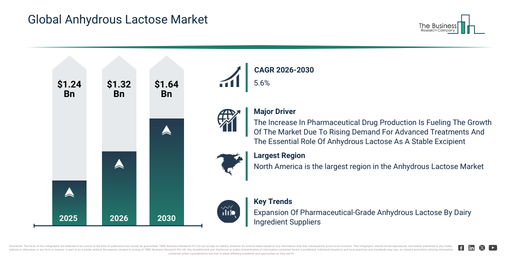
    The market for anhydrous lactose experienced robust expansion recently and is projected to continue its upward trajectory, moving from $1.24 billion in 2025 to $1.32 billion in 2026, reflecting a compound annual growth rate of 6.0%. This historical expansion was fueled by an increase in the production of solid oral dosage forms, the growing output of generic medications, a greater reliance on lactose as an excipient, expanding pharmaceutical manufacturing capabilities, and the establishment of uniform quality standards for excipients.

    The market for anhydrous lactose is poised for substantial expansion in the coming years, projected to reach $1.64 billion by 2030, exhibiting a compound annual growth rate of 5.6%. This anticipated growth is fueled by several key factors, including a heightened need for excipients offering superior stability, the burgeoning expansion of biopharmaceutical manufacturing operations, a concentrated effort towards implementing sophisticated drug formulation methodologies, the increasing prevalence of contract manufacturing organizations, and a growing regulatory imperative for enhanced traceability of excipients. Throughout the forecast period, significant trends are expected to shape the landscape, such as the escalating utilization of anhydrous lactose in drug formulations that are susceptible to moisture, a surge in demand for lactose suitable for direct compression processes, a heightened emphasis on refining powder flow characteristics, the broadening scope of applications for pharmaceutical-grade excipients, and advancements in the quality control measures employed during lactose production.

    Download A Free Sample Report For Comprehensive Market Insights:

    https://www.thebusinessresearchcompany.com/sample.aspx?id=24461&type=smp

    #Anhydrous Lactose Market Growth Factors: Which Forces Are Supporting Market Expansion?

    The expansion of the anhydrous lactose market is anticipated to be fueled by the escalating volume of pharmaceutical drug manufacturing. This process, concerning the methodical creation of medications under rigorous quality assurance, is on the rise due to an increasing elderly demographic requiring sophisticated interventions for chronic disease management. Anhydrous lactose, a crucial ingredient in this sector, functions effectively as a filler and binder, its desiccated form crucial for preserving tablet and capsule integrity and prolonging shelf life, thereby ensuring reliable medication efficacy. Evidence from the European Federation of Pharmaceutical Industries and Associations (EFPIA) in June 2023 indicated a rise in European pharmaceutical production from €363,300 million ($393,857 million) in 2022 to €390,000 million ($422,803 million) in 2023, underscoring the direct correlation between enhanced drug output and the heightened demand for anhydrous lactose.

    Anhydrous Lactose Market Segment Outlook: Which Categories Are Expanding The Fastest?

    The anhydrous lactose market covered in this report is segmented –

    1) By Product Type: Edible Lactose, Pharmaceutical Lactose, Technical Lactose

    2) By Form: Powder, Granules, Tablets

    3) By Distribution Channel: Online Retail, Supermarkets Or Hypermarkets, Specialty Stores, Pharmacies

    4) By Application: Pharmaceutical Excipients, Lyophilized Products, Formula For Baby Food, Other Applications

    5) By End-User: Food Industry, Pharmaceutical Industry, Animal Feed Industry, Cosmetic Industry, Other End-Users

    Subsegments:

    1) By Edible Lactose: Infant Formula, Baked Goods, Confectionery, Dairy Products, Dietary Supplements

    2) By Pharmaceutical Lactose: Direct Compression Grade, Inhalation Grade, Granulation Grade, Spray-Dried Lactose

    3) By Technical Lactose: Animal Feed, Industrial Fermentation, Bioplastics, Cosmetics And Personal Care Products

    Anhydrous Lactose Market Industry Trends: What Changes Are Reshaping Demand?

    In the anhydrous lactose market, leading enterprises are prioritizing the creation of novel offerings, specifically pharmaceutical-grade lactose designed for oral solid dosage forms, in response to the escalating needs within tablet and capsule manufacturing. This pharmaceutical-grade lactose represents a meticulously purified form, manufactured to meet stringent pharmacopeial benchmarks like those set by USP and Ph. Eur., distinguishing it from edible-grade lactose which falls short of the regulatory, purity, and particle-size specifications essential for pharmaceutical use. As an illustration, Lactalis Ingredients, a French dairy ingredient provider, inaugurated its Lactalis Ingredients Pharma division in October 2023, unveiling the Lactalpha collection of milled and sifted pharmaceutical-grade lactose monohydrate in 50, 100, and 150 mesh sizes; this Lactalpha lactose is engineered to deliver dependable flow properties, excellent compressibility, and uniform results in the production of tablets and capsules. The strategic expansion into the pharmaceutical lactose sector mirrors a broader industry movement where dairy ingredient producers are broadening their scope to include premium pharmaceutical excipients, thereby supplying materials that are not only stable and compliant with regulations but also exhibit superior performance characteristics.

    Anhydrous Lactose Market Key Companies And Competitive Benchmarking

    Major companies operating in the anhydrous lactose market are Kerry Group, Sigma-Aldrich, Fagron Group, Spectrum Chemical Mfg. Corp., DFE Pharma, Wako Pure Chemical Industries Ltd., Anshul Life Sciences, Salius Pharma Pvt. Ltd., SimSon Pharma Limited, MEGGLE GmbH & Co. KG, VIVAN Life Science, Aurora Industry Co. Ltd, Glentham Life Sciences Limited, Lactalis Ingredients, Colorchem Industries Ltd., Jiangsu Dawning Pharmaceutical Co. Ltd., International Ingredients & Excipients Pvt. Ltd., Fengchen Group Co. Ltd, Xi’an Harmonious Natural Biotechnology Co. Ltd., Hexon Laboratories Private Limited

    Access The Complete Anhydrous Lactose Market Report:

    https://www.thebusinessresearchcompany.com/report/anhydrous-lactose-global-market-report

    #Anhydrous Lactose Market Largest Region: Which Geography Holds The Highest Market Share?

    North Americawas the largest region in the anhydrous lactose market in 2025. Asia-Pacificis expected to be the fastest-growing region in the forecast period. The regions covered in the anhydrous lactose market report are Asia-Pacific, South East Asia, Western Europe, Eastern Europe, North America, South America, Middle East, Africa.

    Get in touch with us:

    The Business Research Company: https://www.thebusinessresearchcompany.com/

    Americas: +1 310-496-7795

    Asia: +44 7882 955267 & +91 8897263534

    Europe: +44 7882 955267

    Email us at: marketing@tbrc.info

    Follow us on:

    LinkedIn: https://in.linkedin.com/company/the-business-research-company

    YouTube: https://www.youtube.com/channel/UC24_fI0rV8cR5DxlCpgmyFQ

    Global Market Model: https://www.thebusinessresearchcompany.com/global-market-model

  • Catastrophic Antiphospholipid Syndrome Market Outlook Highlights The Next Major Growth Opportunities

    Catastrophic Antiphospholipid Syndrome Market Outlook Highlights The Next Major Growth Opportunities

    Through market attractiveness analysis, total addressable market evaluation, company benchmarking matrices, interactive Excel dashboards, expanded supply chain intelligence, emerging startup coverage, and detailed product insights, The Business Research Company’s 2026 market reports provide more actionable and strategically valuable research.

    Catastrophic Antiphospholipid Syndrome Market Forecast Highlighting Growth From $4.6 Billion To $6.8 Billion

    The market for catastrophic antiphospholipid syndrome has experienced considerable expansion lately, projecting a rise from $4.16 billion in 2025 to $4.6 billion in 2026, demonstrating a compound annual growth rate of 10.6%. This historical growth trajectory has been fueled by a confluence of factors, including enhanced diagnostic capabilities for antiphospholipid antibodies, a broader acceptance of anticoagulant treatments, a greater prevalence of reporting on uncommon autoimmune disorders, the augmentation of intensive care facilities within hospitals, and an increased application of plasmapheresis in critical care scenarios.

    The global market for catastrophic antiphospholipid syndrome is poised for substantial expansion over the upcoming years, projecting a reach of $6.8 billion by the year 2030 with a compound annual growth rate of 10.3%. This anticipated growth trajectory is fueled by several key factors including intensified research efforts focused on complement inhibitors, a heightened demand for sophisticated biologic treatments tailored to specific patient needs, an increasing number of clinical trials dedicated to rare diseases, the expanding application of precision diagnostic tools, and a rise in collaborative initiatives among specialized healthcare facilities. Furthermore, the forecast period is characterized by significant market trends such as the broadening application of precision immunotherapy strategies, a greater adoption of combined therapeutic regimens, an intensified emphasis on achieving early and swift diagnoses, growing clinical understanding and recognition of uncommon autoimmune conditions, and the ongoing development of novel, biologically targeted therapies.

    Download A Free Sample Report For Comprehensive Market Insights:

    https://www.thebusinessresearchcompany.com/sample.aspx?id=25718&type=smp

    #Catastrophic Antiphospholipid Syndrome Market Growth Drivers And Industry Catalysts

    The escalating occurrence of autoimmune diseases is anticipated to fuel the expansion of the catastrophic antiphospholipid syndrome market in the future. Autoimmune diseases arise when the immune system mistakenly attacks the body’s own healthy cells and tissues, leading to conditions characterized by such self-targeting responses. A contributing factor to the rise in autoimmune disorders is increased exposure to environmental toxins, which can disrupt the immune system’s normal functioning and trigger aberrant immune reactions. These autoimmune disorders can precipitate catastrophic antiphospholipid syndrome by stimulating the production of antiphospholipid antibodies, ultimately resulting in widespread blood clotting and failure of multiple organs. For example, by June 2023, Crohn’s and Colitis Foundation of Canada reported that Canada had 322,600 individuals living with inflammatory bowel disease, with projections indicating this number could reach 470,000 by 2035, alongside an increase in annual new cases from 11,000 to 14,000. Consequently, the growing prevalence of autoimmune diseases serves as a significant driver for the catastrophic antiphospholipid syndrome market.

    Catastrophic Antiphospholipid Syndrome Market Driver: Impact Of Rising Healthcare Expenditure On The Growth Of The Market Due To Enhanced Access To Advanced Treatments And Diagnostics

    Heightened spending on healthcare is poised to stimulate growth within the catastrophic antiphospholipid syndrome market moving forward. Healthcare expenditure encompasses the complete financial outlays for medical services, products, and public health initiatives by individuals, governments, and organizations. This spending is on the rise, driven by an aging global population which typically requires more frequent and comprehensive medical care. Increased healthcare budgets facilitate improved patient outcomes for those with catastrophic antiphospholipid syndrome by ensuring access to sophisticated diagnostic tools, intensive medical support, and life-saving interventions such as anticoagulation treatments, immunosuppressive therapies, and plasmapheresis procedures. For instance, as of June 2025, data from the Centers for Medicare & Medicaid Services indicated that in 2023, national health expenditures in the United States climbed by 7.5%, reaching $4.9 trillion, equating to an average of $14,570 per capita and representing 17.6% of the Gross Domestic Product. Medicare spending, specifically, saw an increase of 8.1%, totaling $1,029.8 billion, which constituted 21% of the aggregate national health expenditures. Therefore, augmented healthcare spending is a key factor propelling the catastrophic antiphospholipid syndrome market forward.

    Catastrophic Antiphospholipid Syndrome Market Driver: Impact Of Rising Clinical Trials On The Growth Of The Market Due To Advancements In Treatment Development And Evidence- Based Practice

    An increase in the number of clinical trials is expected to drive the expansion of the catastrophic antiphospholipid syndrome market in the coming period. Clinical trials are essential research endeavors involving human participants to rigorously assess the safety, efficacy, and potential adverse effects of new medical treatments or interventions. The rise in these trials is largely attributed to a growing demand for personalized and innovative therapies that necessitate thorough evaluation for both safety and effectiveness. Through the examination of novel treatment strategies, the refinement of existing therapeutic approaches, and the establishment of evidence-based clinical guidelines, clinical trials contribute to a better understanding, diagnosis, and management of catastrophic antiphospholipid syndrome. Illustratively, by December 2024, the Association of the British Pharmaceutical Industry (ABPI) in the UK reported that pharmaceutical industry-initiated trials in the United Kingdom had increased for a second consecutive year, growing from 411 in 2022 to 426 in 2023. Consequently, the increasing volume of clinical trials is a significant impetus behind the growth of the catastrophic antiphospholipid syndrome market.

    Catastrophic Antiphospholipid Syndrome Market Segment Breakdown: Which Categories Generate The Most Revenue?

    The catastrophic antiphospholipid syndrome market covered in this report is segmented –

    1) By Treatment: Anticoagulants, Immunosuppressive Therapy, Plasma Exchange Therapy (Plasmapheresis), Intravenous Immunoglobulin (IVIG), Other Treatments

    2) By Route Of Administration: Oral, Parenteral

    3) By Diagnostic Tools: Blood Testing, Imaging Techniques, Autoantibody Profiling And Coagulation Assays

    4) By End-User: Hospitals, Specialty Clinics, Tertiary Care And Critical Care Centers, Other End-Users

    Subsegments:

    1) By Anticoagulants: Heparin, Low Molecular Weight Heparin (LMWH), Warfarin, Direct Oral Anticoagulants (DOACs), Fondaparinux

    2) By Immunosuppressive Therapy: Corticosteroids, Cyclophosphamide, Azathioprine, Mycophenolate Mofetil, Methotrexate

    3) By Plasma Exchange Therapy (Plasmapheresis): Therapeutic Plasma Exchange (TPE), Double Filtration Plasmapheresis (Dfpp), Centrifugal Plasmapheresis, Membrane-Based Plasmapheresis

    4) By Intravenous Immunoglobulin (IVIG): Standard Intravenous Immunoglobulin (Ivig), High-Dose Intravenous Immunoglobulin (IVIG), Liquid Intravenous Immunoglobulin (IVIG), Lyophilized Intravenous Immunoglobulin (IVIG)

    5) By Other Treatments: Monoclonal Antibodies, Complement Inhibitors, Antiplatelet Agents, Anti-Tumor Necrosis Factor (Tnf) Agents, Organ Support Therapies

    Catastrophic Antiphospholipid Syndrome Market Key Players And Strategic Industry Positioning

    Major companies operating in the catastrophic antiphospholipid syndrome market are Pfizer Inc, F Hoffmann La Roche Ltd, Merck KGaA, Bayer AG, Sanofi SA, Bristol Myers Squibb Company, AstraZeneca PLC, Novartis AG, Fresenius Kabi AG, Eli Lilly And Company, Boehringer Ingelheim International GmbH, Apotex Inc, Dr Reddys Laboratories Ltd, Hikma Pharmaceuticals PLC, Aspen Pharmacare Holdings Limited, Zydus Lifesciences Limited, LEO Pharma AS, Kedrion Biopharma Inc, Amphastar Pharmaceuticals Inc, CSL Behring, Grifols SA, Octapharma AG, Baxter International Inc

    Access The Complete Catastrophic Antiphospholipid Syndrome Market Report:

    https://www.thebusinessresearchcompany.com/report/catastrophic-antiphospholipid-syndrome-global-market-report

    Catastrophic Antiphospholipid Syndrome Market Regional Analysis And Leading Geography

    North Americawas the largest region in the catastrophic antiphospholipid syndrome market in 2025. Asia-Pacificis expected to be the fastest-growing region in the forecast period. The regions covered in the catastrophic antiphospholipid syndrome market report are Asia-Pacific, South East Asia, Western Europe, Eastern Europe, North America, South America, Middle East, Africa.

    Get in touch with us:

    The Business Research Company: https://www.thebusinessresearchcompany.com/

    Americas: +1 310-496-7795

    Asia: +44 7882 955267 & +91 8897263534

    Europe: +44 7882 955267

    Email us at: marketing@tbrc.info

    Follow us on:

    LinkedIn: https://in.linkedin.com/company/the-business-research-company

    YouTube: https://www.youtube.com/channel/UC24_fI0rV8cR5DxlCpgmyFQ

    Global Market Model: https://www.thebusinessresearchcompany.com/global-market-model

  • Anhydrous Lactose Market Opportunities Are Emerging Beyond Traditional Growth Areas

    Anhydrous Lactose Market Opportunities Are Emerging Beyond Traditional Growth Areas

    Through market attractiveness analysis, total addressable market evaluation, company benchmarking matrices, interactive Excel dashboards, expanded supply chain intelligence, emerging startup coverage, and detailed product insights, The Business Research Company’s 2026 market reports provide more actionable and strategically valuable research.

    Anhydrous Lactose Market Revenue Outlook: What CAGR Is Expected Through 2030?

    The market for anhydrous lactose experienced robust expansion recently and is projected to continue its upward trajectory, moving from $1.24 billion in 2025 to $1.32 billion in 2026, reflecting a compound annual growth rate of 6.0%. This historical expansion was fueled by an increase in the production of solid oral dosage forms, the growing output of generic medications, a greater reliance on lactose as an excipient, expanding pharmaceutical manufacturing capabilities, and the establishment of uniform quality standards for excipients.

    The market for anhydrous lactose is poised for substantial expansion in the coming years, projected to reach $1.64 billion by 2030, exhibiting a compound annual growth rate of 5.6%. This anticipated growth is fueled by several key factors, including a heightened need for excipients offering superior stability, the burgeoning expansion of biopharmaceutical manufacturing operations, a concentrated effort towards implementing sophisticated drug formulation methodologies, the increasing prevalence of contract manufacturing organizations, and a growing regulatory imperative for enhanced traceability of excipients. Throughout the forecast period, significant trends are expected to shape the landscape, such as the escalating utilization of anhydrous lactose in drug formulations that are susceptible to moisture, a surge in demand for lactose suitable for direct compression processes, a heightened emphasis on refining powder flow characteristics, the broadening scope of applications for pharmaceutical-grade excipients, and advancements in the quality control measures employed during lactose production.

    Download A Free Sample Report For Comprehensive Market Insights:

    https://www.thebusinessresearchcompany.com/sample.aspx?id=24461&type=smp

    #Anhydrous Lactose Market Growth Factors: Which Forces Are Supporting Market Expansion?

    The expansion of the anhydrous lactose market is anticipated to be fueled by the escalating volume of pharmaceutical drug manufacturing. This process, concerning the methodical creation of medications under rigorous quality assurance, is on the rise due to an increasing elderly demographic requiring sophisticated interventions for chronic disease management. Anhydrous lactose, a crucial ingredient in this sector, functions effectively as a filler and binder, its desiccated form crucial for preserving tablet and capsule integrity and prolonging shelf life, thereby ensuring reliable medication efficacy. Evidence from the European Federation of Pharmaceutical Industries and Associations (EFPIA) in June 2023 indicated a rise in European pharmaceutical production from €363,300 million ($393,857 million) in 2022 to €390,000 million ($422,803 million) in 2023, underscoring the direct correlation between enhanced drug output and the heightened demand for anhydrous lactose.

    Anhydrous Lactose Market Segment Outlook: Which Categories Are Expanding The Fastest?

    The anhydrous lactose market covered in this report is segmented –

    1) By Product Type: Edible Lactose, Pharmaceutical Lactose, Technical Lactose

    2) By Form: Powder, Granules, Tablets

    3) By Distribution Channel: Online Retail, Supermarkets Or Hypermarkets, Specialty Stores, Pharmacies

    4) By Application: Pharmaceutical Excipients, Lyophilized Products, Formula For Baby Food, Other Applications

    5) By End-User: Food Industry, Pharmaceutical Industry, Animal Feed Industry, Cosmetic Industry, Other End-Users

    Subsegments:

    1) By Edible Lactose: Infant Formula, Baked Goods, Confectionery, Dairy Products, Dietary Supplements

    2) By Pharmaceutical Lactose: Direct Compression Grade, Inhalation Grade, Granulation Grade, Spray-Dried Lactose

    3) By Technical Lactose: Animal Feed, Industrial Fermentation, Bioplastics, Cosmetics And Personal Care Products

    Anhydrous Lactose Market Industry Trends: What Changes Are Reshaping Demand?

    In the anhydrous lactose market, leading enterprises are prioritizing the creation of novel offerings, specifically pharmaceutical-grade lactose designed for oral solid dosage forms, in response to the escalating needs within tablet and capsule manufacturing. This pharmaceutical-grade lactose represents a meticulously purified form, manufactured to meet stringent pharmacopeial benchmarks like those set by USP and Ph. Eur., distinguishing it from edible-grade lactose which falls short of the regulatory, purity, and particle-size specifications essential for pharmaceutical use. As an illustration, Lactalis Ingredients, a French dairy ingredient provider, inaugurated its Lactalis Ingredients Pharma division in October 2023, unveiling the Lactalpha collection of milled and sifted pharmaceutical-grade lactose monohydrate in 50, 100, and 150 mesh sizes; this Lactalpha lactose is engineered to deliver dependable flow properties, excellent compressibility, and uniform results in the production of tablets and capsules. The strategic expansion into the pharmaceutical lactose sector mirrors a broader industry movement where dairy ingredient producers are broadening their scope to include premium pharmaceutical excipients, thereby supplying materials that are not only stable and compliant with regulations but also exhibit superior performance characteristics.

    Anhydrous Lactose Market Key Companies And Competitive Benchmarking

    Major companies operating in the anhydrous lactose market are Kerry Group, Sigma-Aldrich, Fagron Group, Spectrum Chemical Mfg. Corp., DFE Pharma, Wako Pure Chemical Industries Ltd., Anshul Life Sciences, Salius Pharma Pvt. Ltd., SimSon Pharma Limited, MEGGLE GmbH & Co. KG, VIVAN Life Science, Aurora Industry Co. Ltd, Glentham Life Sciences Limited, Lactalis Ingredients, Colorchem Industries Ltd., Jiangsu Dawning Pharmaceutical Co. Ltd., International Ingredients & Excipients Pvt. Ltd., Fengchen Group Co. Ltd, Xi’an Harmonious Natural Biotechnology Co. Ltd., Hexon Laboratories Private Limited

    Access The Complete Anhydrous Lactose Market Report:

    https://www.thebusinessresearchcompany.com/report/anhydrous-lactose-global-market-report

    #Anhydrous Lactose Market Largest Region: Which Geography Holds The Highest Market Share?

    North Americawas the largest region in the anhydrous lactose market in 2025. Asia-Pacificis expected to be the fastest-growing region in the forecast period. The regions covered in the anhydrous lactose market report are Asia-Pacific, South East Asia, Western Europe, Eastern Europe, North America, South America, Middle East, Africa.

    Get in touch with us:

    The Business Research Company: https://www.thebusinessresearchcompany.com/

    Americas: +1 310-496-7795

    Asia: +44 7882 955267 & +91 8897263534

    Europe: +44 7882 955267

    Email us at: marketing@tbrc.info

    Follow us on:

    LinkedIn: https://in.linkedin.com/company/the-business-research-company

    YouTube: https://www.youtube.com/channel/UC24_fI0rV8cR5DxlCpgmyFQ

    Global Market Model: https://www.thebusinessresearchcompany.com/global-market-model

  • Healthcare Mobility Solutions Market Trends Are Creating New Opportunities For Industry Leaders

    Healthcare Mobility Solutions Market Trends Are Creating New Opportunities For Industry Leaders

    Delivering more actionable and strategically valuable research, The Business Research Company’s 2026 market reports feature market attractiveness analysis, total addressable market evaluation, company benchmarking matrices, interactive Excel dashboards, expanded supply chain intelligence, emerging startup coverage, and detailed product insights.

    Healthcare Mobility Solutions Market Revenue Growth Supported By A CAGR Of 782.8% Through 2030

    The realm of healthcare mobility solutions has witnessed considerable expansion recently. Projected to surge from $236.15 billion in 2025 to $300.62 billion by 2026, this market is experiencing a robust compound annual growth rate of 27.3%. Factors contributing to this impressive expansion during the preceding period include the heightened use of smartphones within the healthcare sector, a broader embrace of telehealth platforms, the proliferation of remote patient care methodologies, a mounting need for immediate health information, and an intensified emphasis on care models that prioritize the patient.

    The realm of healthcare mobility solutions is poised for substantial expansion, projecting to reach an impressive $782.8 billion by the year 2030, exhibiting a compound annual growth rate of 27.0%. This significant upswing during the projected period is underpinned by several key drivers, including augmented investments channeled into connected care environments, a burgeoning demand for mobile diagnostic tools powered by artificial intelligence, the broadening scope of virtual care services, a heightened uptake of secure mobile management frameworks, and an intensified emphasis on ongoing health surveillance. Anticipated pivotal developments throughout this timeframe are set to encompass a greater prevalence of mobile health applications, a wider deployment of remote patient monitoring systems, increased utilization of secure enterprise mobility platforms, expanded integration of wearable health devices, and a more pronounced focus on fostering patient engagement.

    Download A Free Sample Report For Comprehensive Market Insights:

    https://www.thebusinessresearchcompany.com/sample.aspx?id=7077&type=smp

    Healthcare Mobility Solutions Market Growth Drivers: What Factors Are Accelerating Expansion?

    The expanding adoption of digital technologies and the widespread integration of intelligent devices within the healthcare industry are poised to significantly boost the trajectory of the healthcare mobility solutions market. The healthcare domain has increasingly prioritized digital innovations aimed at enhancing health information accessibility and transforming the patient journey within hospital settings. Mobile health (mHealth) encompasses a range of technologies, including health applications on smartphones, smart device integrations for smartphones, wearable and wireless gadgets, portable imaging systems, and micro-sensor technologies. These healthcare mobility solutions empower healthcare organizations by enabling efficient staff management, comprehensive patient data handling, and optimized nursing operations. Reflecting this trend, a January 2025 report from Deloitte Touche Tohmatsu Limited indicated that approximately 70% of surveyed individuals consider investments in digital tools and platforms essential, with 60% focusing on foundational technologies like Electronic Medical Records (EMRs) and Enterprise Resource Planning (ERP), and nearly 90% of C-suite executives anticipating an acceleration in digital technology assimilation during 2025. Consequently, the burgeoning digitalization and the heightened utilization of smart devices across the healthcare landscape are anticipated catalysts for the expansion of the healthcare mobility solutions market.

    Healthcare Mobility Solutions Market Segment Outlook: Which Categories Are Expanding The Fastest?

    The healthcare mobility solutions market covered in this report is segmented –

    1) By Product type: Mobile Devices, Mobile Applications, Enterprise mobility platforms, Other Product Types

    2) By Applications: Enterprise Solutions, mHealth Applications, Other Applications

    3) By End User: Payers, Providers, Hospitals, Laboratories, Patients, Other End-Users

    Subsegments:

    1) By Mobile Devices: Smartphones, Tablets, Wearable Devices

    2) By Mobile Applications: Patient Engagement Apps, Clinical Workflow Apps, Telehealth Apps

    3) By Enterprise Mobility Platforms: Mobile Device Management (MDM) Solutions, Mobile Application Management (MAM) Solutions

    4) By Other Product Types: Mobile Health (MHealth) Solutions, Remote Patient Monitoring Devices

    Healthcare Mobility Solutions Market Trends: What Is Shaping Future Industry Growth?

    Leading entities within the healthcare mobile-device management sector are prioritizing the creation of novel solutions, exemplified by AI-driven conversational assistants designed for managing device fleets, with the aim of minimizing operational interruptions and enhancing IT support efficiency in healthcare facilities. Such an AI-powered conversational assistant functions as an artificial intelligence mechanism that leverages natural spoken language instructions and incorporates device telemetry data to independently diagnose, oversee, and rectify device-related problems. As of October 2025, SOTI Inc., a Canadian firm specializing in comprehensive mobile-device management and enterprise mobility services, introduced Stella, an AI assistant integrated into its SOTI ONE Platform. This offering encompasses real-time diagnostic assistance for mobile devices within healthcare settings via voice or chat functionalities; analytical displays that monitor key performance indicators like battery life, network connectivity, and overall device performance, complete with proactive notifications; built-in security measures such as geographical boundaries, authentication via QR codes or NFC technology, and access limitations based on user roles to safeguard patient information; and smooth integration capabilities with platforms like ServiceNow, facilitating remote device management, log extraction, and quicker problem resolution. This introduction signifies a progression towards the self-governing and intelligent administration of essential devices in healthcare, empowering IT departments to dedicate more resources to refining patient care delivery rather than engaging in manual problem-solving.

    Healthcare Mobility Solutions Market Key Companies And Competitive Benchmarking

    Major companies operating in the healthcare mobility solutions market are Oracle Corporation, SAP SE, McKesson Corporation, Cerner Corporation, Zebra Technologies, Philips Healthcare, AT&T Inc., Cisco Systems Inc., Omron Corporation, Airstrip Technologies Inc., IBM Corporation, Wipro Limited, Microsoft Inc., Honeywell International Inc., Qualcomm Inc., Verizon Communications Inc., General Electric Company, Netsmart Technologies Inc., Datamation Systems, Pioneer Solution, emocha Mobile Health, MEDITECH Plc, GreatCall Inc., Pager Inc., Barcoding Inc., Onyx Ltd., AngelEye Health, Eddy Co., Pluto Health Inc., Solutionize Global Ltd., 1uphealth Inc., Apple Inc., Medtronic Inc., Siemens AG

    Access The Complete Healthcare Mobility Solutions Market Report:

    https://www.thebusinessresearchcompany.com/report/healthcare-mobility-solutions-global-market-report

    Healthcare Mobility Solutions Market Largest Region By Revenue And Market Share

    North Americawas the largest region in the healthcare mobility solutions market in 2025. Asia-Pacificis expected to be the fastest growing region in the forecast period. The regions covered in the healthcare mobility solutions market report are Asia-Pacific, South East Asia, Western Europe, Eastern Europe, North America, South America, Middle East, Africa.

    Get in touch with us:

    The Business Research Company: https://www.thebusinessresearchcompany.com/

    Americas: +1 310-496-7795

    Asia: +44 7882 955267 & +91 8897263534

    Europe: +44 7882 955267

    Email us at: marketing@tbrc.info

    Follow us on:

    LinkedIn: https://in.linkedin.com/company/the-business-research-company

    YouTube: https://www.youtube.com/channel/UC24_fI0rV8cR5DxlCpgmyFQ

    Global Market Model: https://www.thebusinessresearchcompany.com/global-market-model

  • Digital Health And Wellness Market Trends Are Creating New Opportunities For Industry Leaders

    Digital Health And Wellness Market Trends Are Creating New Opportunities For Industry Leaders

    Enhanced with market attractiveness analysis, total addressable market evaluation, company benchmarking matrices, interactive Excel dashboards, expanded supply chain intelligence, emerging startup coverage, and detailed product insights, The Business Research Company’s 2026 market reports deliver more actionable and strategically valuable research.

    Digital Health And Wellness Market Size, Value And Growth Trends Through 2030

    In the digital health and wellness sector, a remarkable expansion has been witnessed lately. Projections indicate a significant increase, with the market poised to elevate from $563.53 billion in 2025 to $697.1 billion in 2026, demonstrating a substantial compound annual growth rate (CAGR) of 23.7%. The surge observed during the past period is largely attributable to the widespread availability of smartphones, a growing inclination towards health-conscious lifestyles among consumers, the enhancement of internet access, a notable uptick in the utilization of mobile applications, and a heightened emphasis on proactive health management.

    The digital health and wellness sector is poised for substantial expansion over the upcoming years, with projections indicating it will reach a valuation of $1614.76 billion by 2030, driven by a compound annual growth rate of 23.4%. This anticipated surge is largely fueled by several key factors, including the escalating incorporation of AI-powered health analytics, heightened investment in digital therapeutic solutions, the proliferation of healthcare accessible from home, an intensified emphasis on managing well-being through data, and greater acceptance among older demographics. Furthermore, significant trends shaping this period encompass a growing preference for wearable health gadgets, increased utilization of telemedicine services, a heightened need for remote patient monitoring capabilities, the broadening appeal of mental health and wellness applications, and a more pronounced focus on personalized health information.

    Download A Free Sample Report For Comprehensive Market Insights:

    https://www.thebusinessresearchcompany.com/sample.aspx?id=24520&type=smp

    Digital Health And Wellness Market Growth Drivers: What Factors Are Accelerating Expansion?

    The increasing incidence of long-term health conditions is anticipated to be a significant catalyst for the expansion of the digital health and wellness sector. These enduring ailments, characterized by gradual onset and prolonged duration, necessitate ongoing medical attention. Factors such as sedentary habits, including extended periods of sitting and insufficient exercise, contribute to the heightened risk of developing conditions like cardiovascular issues and diabetes, thereby fueling the rise in chronic diseases. Digital tools in health and wellness prove instrumental in managing these persistent conditions by facilitating constant oversight and customized treatment strategies, empowering individuals to actively monitor their well-being. Through remote consultations and timely interventions, these technologies help decrease the need for in-person hospital visits, ultimately enhancing life quality. Illustratively, in the UK, the National Health Service reported that in 2023, a total of 3,615,330 individuals registered with a general practitioner had been identified with non-diabetic hyperglycemia or pre-diabetes, representing an 18% surge from the 3,065,825 cases recorded in 2022. Consequently, the escalating burden of chronic illnesses is directly correlating with the market expansion of digital health and wellness solutions.

    Digital Health And Wellness Market Segment Analysis And Revenue Opportunities

    The digital health and wellness market covered in this report is segmented –

    1) By Type: Software, Service, Hardware

    2) By Consumer Health Devices: Wearable Devices, Smart Health Monitors, Mobile Health Applications, Remote Patient Monitoring Devices, Fitness Trackers

    3) By Digital Therapeutics: Prescription Digital Therapeutics, Behavioral Intervention Apps, Chronic Disease Management Software, Mental Health Support Programs, Substance Abuse Treatment Tools

    4) By Application: Clinics, Hospitals, Ambulatory Surgery Centres, Home Care Settings, Other Applications

    5) By End-User: Healthcare Providers, Patients, Payers, Other End-Users

    Subsegments:

    1) By Software: mHealth Apps, Population Health Management, Electronic Health Records (EHR), Clinical Decision Support Systems (CDSS)

    2) By Service: Health Coaching Services, Digital Therapeutics Support Services, Remote Monitoring Services, Virtual Care Services

    3) By Hardware: Telemedicine Kiosks, Diagnostic Devices, Smart Medical Devices, Mobile Health Devices

    Digital Health And Wellness Market Trends: What Is Shaping Future Industry Growth?

    Leading players within the digital health and wellness sector are actively pursuing innovations in healthcare delivery, specifically through the creation of digital health and wellness platforms, aiming to improve health supervision and patient results. Such a platform represents an integrated solution that utilizes technologies like mobile applications, wearable devices, and sophisticated data analysis to bolster health surveillance, manage chronic conditions, and promote general wellness. As an illustration, during February 2023, Albertsons Companies Inc., a prominent US grocery retailer, introduced Sincerely Health, an all-encompassing digital health and wellness platform. This groundbreaking offering is intended to enable consumers to proactively manage their health by providing tailored health assessments, tools for tracking physical activity and personal objectives, advice on diet and lifestyle choices, and a loyalty program that rewards healthy habits. Furthermore, Sincerely Health incorporates pharmacy services and virtual doctor appointments, thereby establishing a user-friendly and readily available method for health management.

    Digital Health And Wellness Market Leading Players Shaping Industry Direction

    Major companies operating in the digital health and wellness market are Apple Inc., Google LLC, Samsung Electronics Co. Ltd., Microsoft Corporation, International Business Machines Corporation, Siemens Healthineers AG, Philips Healthcare, GE HealthCare Technologies Inc., Cerner Corporation, Garmin International Inc., Drägerwerk AG & Co. KGaA, ResMed Inc., Epic Systems Corporation, Teladoc Health, Masimo Corp., Athenahealth Inc., Veradigm, Johnson & Johnson Health and Wellness Solutions Inc., Headspace Inc., Fitbit Inc., Omada Health, Virgin Pulse Inc., WellDoc Inc., Vivify Health Inc

    Access The Complete Digital Health And Wellness Market Report:

    https://www.thebusinessresearchcompany.com/report/digital-health-and-wellness-global-market-report

    Digital Health And Wellness Market Regional Outlook: Where Are The Largest Opportunities Located?

    North Americawas the largest region in the digital health and wellness market in 2025. Asia-Pacificis expected to be the fastest-growing region in the forecast period. The regions covered in the digital health and wellness market report are Asia-Pacific, South East Asia, Western Europe, Eastern Europe, North America, South America, Middle East, Africa.

    Get in touch with us:

    The Business Research Company: https://www.thebusinessresearchcompany.com/

    Americas: +1 310-496-7795

    Asia: +44 7882 955267 & +91 8897263534

    Europe: +44 7882 955267

    Email us at: marketing@tbrc.info

    Follow us on:

    LinkedIn: https://in.linkedin.com/company/the-business-research-company

    YouTube: https://www.youtube.com/channel/UC24_fI0rV8cR5DxlCpgmyFQ

    Global Market Model: https://www.thebusinessresearchcompany.com/global-market-model