Tag: robotic-assisted eye surgery market

  • Robotic-Assisted Eye Surgery Market To Witness 13.7% CAGR Growth Through 2030: Key Industry Drivers

    Robotic-Assisted Eye Surgery Market To Witness 13.7% CAGR Growth Through 2030: Key Industry Drivers

    Featuring market attractiveness scoring, total addressable market sizing, company benchmarking matrices, interactive Excel dashboards, deeper supply chain intelligence, emerging startup tracking, and granular product-level insights, The Business Research Company’s 2026 market reports are built to deliver research that is both more actionable and more strategically valuable.

    Robotic-Assisted Eye Surgery Market Poised To Hit $2.66 Billion By 2030 With A 13.7% CAGR

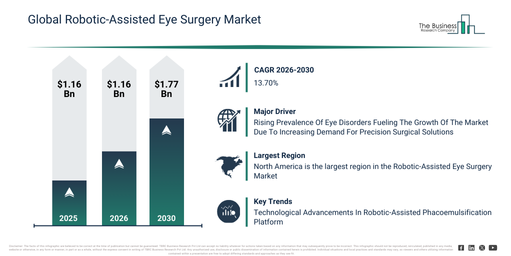
    The robotic-assisted eye surgery market has seen swift expansion in recent years. This market is projected to expand from $1.39 billion in 2025 to $1.59 billion in 2026, demonstrating a compound annual growth rate (CAGR) of 14.4%. Historically, this expansion can be linked to several factors, including the constraints inherent in manual microsurgical techniques, the escalating incidence of cataract and retinal disorders, the proliferation of specialized eye care centers, surgeons’ growing need for more precise instrumentation, and the progressive integration of computer-assisted ophthalmic systems.

    The robotic-assisted eye surgery market is projected to experience swift expansion in the coming years. By 2030, this market is anticipated to reach $2.66 billion, demonstrating a compound annual growth rate (CAGR) of 13.7%. This anticipated growth during the forecast period stems from several factors, including developments in AI-powered robotic systems, a rise in the elderly population suffering from eye conditions, the proliferation of ambulatory surgical centers, heightened investment in ophthalmic robotics research and development, and greater acceptance of robot-assisted operations among surgeons. Key trends observed within the forecast timeframe encompass the increasing embrace of minimally invasive eye procedures, a heightened desire for highly precise and consistent surgical results, the expanding application of robotic aid in intricate retinal and corneal operations, the enlargement of training and skill improvement initiatives for medical professionals, and an intensified emphasis on patient well-being and minimizing surgical inconsistencies.

    Get A Free Sample Report With In-Depth Market Insights:

    https://thebusinessresearchcompany.com/sample_request?id=18896984&type=smp&name=Robotic-Assisted%20Eye%20Surgery%20Market%20Report%202026&utm_source=Blogs&utm_medium=Paid&utm_campaign=Oct_PR

    Robotic-Assisted Eye Surgery Market Growth Factors Behind Sustained Expansion

    The rising occurrence of eye disorders is projected to boost the expansion of the robotic-assisted eye surgery market in the coming years. Eye disorders are medical conditions that impact the structure or function of the eye, potentially leading to vision impairment or blindness. The increasing incidence of these disorders is attributed to elevated screen time, which contributes to digital eye strain, dry eyes, and blurred vision from extended screen exposure without adequate breaks. Robot-assisted eye surgery provides solutions for various eye disorders by enhancing surgical precision, minimizing human error, and enabling minimally invasive procedures, which results in improved patient outcomes and faster recovery times. For example, in May 2024, the Centers for Disease Control and Prevention, a US-based government agency, reported that 20.5 million people aged 40 and older in the United States, representing 17.2% of that age group, were expected to have cataracts in at least one eye in 2024. This figure is predicted to surpass 30 million by 2028. Therefore, the increasing prevalence of eye disorders is a key driver for the growth of the robotic-assisted eye surgery market.

    Robotic-Assisted Eye Surgery Market Segments: Where Is Growth Concentrated?

    The robotic-assisted eye surgery market covered in this report is segmented –

    1) By Type: Robotic Systems, Instruments And Accessories, Software And Services

    2) By Surgery Type: Cataract Surgery, Retinal Surgery, Corneal Surgery, Glaucoma Surgery, Refractive Surgery, Other Surgery Types

    3) By Technology: Telerobotics, Haptic Feedback Systems, Image-Guided Systems, Artificial Intelligent (AI)-Driven Robotic Systems, Other Technologies

    4) By Application: Anterior Segment Procedures, Posterior Segment Procedures, Corneal Procedures, Other Applications

    5) By End-User: Hospitals, Ambulatory Surgical Centers (ASCs), Specialized Eye Clinics, Research And Academic Institutes

    Subsegments:

    1) By Robotic Systems: Fully Automated Systems, Semi-Automated Systems

    2) By Instruments And Accessories: Surgical Instruments, Robotic Controllers, Visualization Systems

    3) By Software And Services: Robotic Surgery Software, Maintenance And Upgrades, Training And Support

    Robotic-Assisted Eye Surgery Market Industry Trends Fueling Future Revenue Growth

    Leading companies in the robotic-assisted eye surgery market are concentrating on developing innovative solutions, such as robotic-assisted phacoemulsification platforms, with the goal of improving surgical accuracy, reducing complication rates, and achieving better patient outcomes. A robotic-assisted phacoemulsification platform specifically describes a surgical system that leverages robotic technology to assist doctors in performing cataract removal surgery with enhanced precision. For instance, in May 2024, ForSight Robotics, an Israel-based provider of robotic surgery platforms, unveiled the ORYOM surgical robotics platform, designed to execute a complete, remote robotic cataract procedure. The ORYOM surgical robotics platform features a miniature robotic hand equipped with 14 degrees of freedom and hybrid kinematics, enabling outstanding maneuverability within the eye. It integrates artificial intelligence, advanced imaging, and compact mechanical components to support accurate and consistent surgical performance. The incorporation of stereoscopic imaging enhances depth perception and delivers real-time visual feedback, thereby helping surgeons attain high precision. Additionally, the platform employs machine learning to adapt and improve its functionalities with each procedure performed.

    Robotic-Assisted Eye Surgery Market Company Landscape And Competitive Strategy

    Major companies operating in the robotic-assisted eye surgery market are Johnson & Johnson, ZEISS Group, Alcon Inc., Intuitive Surgical Operations Inc., Bausch + Lomb Corp., Leica Microsystems, Lumenis Ltd., Topcon Healthcare, IRIDEX Corp., ForSight Robotics Ltd., Prasad Netralaya, Haag‑Streit Group, Nidek Co. Ltd., Ophthorobotics AG, Preceyes BV, Horizon Surgical Systems, AcuSurgical, LENSAR Inc., Ziemer Ophthalmic Systems AG, STAAR Surgical Company, Optovue, Glaukos Corporation, Eyenuk, AcuFocus, Avedro Inc., Aeon Astron Europe BV, Omega Ophthalmics

    View The Full Robotic-Assisted Eye Surgery Market Report:

    https://thebusinessresearchcompany.com/report/robotic-assisted-eye-surgery-global-market-report?utm_source=Blogs&utm_medium=Paid&utm_campaign=Oct_PR

    Robotic-Assisted Eye Surgery Market Largest Region: Which Geography Holds The Biggest Share?

    North America was the largest region in the robotic-assisted eye surgery market in 2025. Asia-Pacific is expected to be the fastest-growing region in the forecast period. The regions covered in the robotic-assisted eye surgery market report are Asia-Pacific, South East Asia, Western Europe, Eastern Europe, North America, South America, Middle East, Africa.

    Reach Out To Our Team:

    The Business Research Company: https://www.thebusinessresearchcompany.com/

    Americas: +1 310-496-7795

    Asia: +44 7882 955267 & +91 8897263534

    Europe: +44 7882 955267

    Email us at: marketing@tbrc.info

    Follow us on:

    LinkedIn: https://in.linkedin.com/company/the-business-research-company

    YouTube: https://www.youtube.com/channel/UC24_fI0rV8cR5DxlCpgmyFQ

    Global Market Model: https://www.thebusinessresearchcompany.com/global-market-model
  • Technological Advancements In Robotic-Assisted Phacoemulsification Platform Is Playing A Role In Shaping The Robotic-Assisted Eye Surgery Market

    Technological Advancements In Robotic-Assisted Phacoemulsification Platform Is Playing A Role In Shaping The Robotic-Assisted Eye Surgery Market

    The Business Research Company’s 2026 market reports feature enhanced tools like market attractiveness analysis, TAM assessment, and company scoring matrices, along with interactive dashboards, deeper supply chain insights, and startup coverage strengthening the depth, usability, and strategic value of insights.

    How Much Growth In Market Value Is Expected For The Robotic-Assisted Eye Surgery Market Between 2026 And 2030?

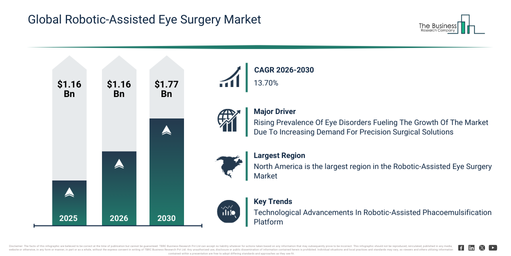
    The robotic-assisted eye surgery market has experienced rapid expansion in recent years. It is projected to increase from $1.39 billion in 2025 to $1.59 billion in 2026, at a compound annual growth rate (CAGR) of 14.4%. The historic growth in this sector is due to factors such as the limitations inherent in manual microsurgical techniques, the rising incidence of cataract and retinal disorders, the proliferation of specialized eye care centers, the increasing demand among surgeons for more precise instruments, and the progressive adoption of computer-assisted ophthalmic systems.

    The robotic-assisted eye surgery market is set for substantial expansion in the coming years. It is projected to achieve a value of $2.66 billion by 2030, exhibiting a compound annual growth rate (CAGR) of 13.7%. This projected growth is driven by various factors such as progress in AI-powered robotic systems, an expanding elderly demographic experiencing eye disorders, the proliferation of ambulatory surgical centers, increasing financial commitments to ophthalmic robotics research and development, and a broader acceptance of robot-assisted operations among surgeons. Significant trends anticipated during this period involve the increasing adoption of minimally invasive ophthalmic procedures, a rising demand for highly precise and stable surgical outcomes, the expanded application of robotic assistance in intricate retinal and corneal surgeries, the development of more training and skill enhancement programs for surgeons, and an elevated focus on patient safety alongside a reduction in surgical variability.

    Access Your Free Sample Report For In-Depth Market Analysis:

    https://www.thebusinessresearchcompany.com/report/robotic-assisted-eye-surgery-global-market-report

    Which Key Factors Are Driving The Robotic-Assisted Eye Surgery Market Growth?

    The escalating occurrence of eye disorders is projected to propel the expansion of the robotic-assisted eye surgery market in the coming years. Eye disorders refer to health conditions that impact the structure or function of the eye, potentially causing vision problems or blindness. The increasing incidence of eye disorders is primarily fueled by extended screen time, which contributes to digital eye strain, dry eyes, and blurred vision when screens are viewed for long durations without adequate breaks. Robot-assisted eye surgery offers solutions for diverse eye disorders by enhancing surgical precision, minimizing human error, and facilitating minimally invasive procedures, which leads to improved patient outcomes and faster recovery times. For instance, in May 2024, according to the Centers for Disease Control and Prevention, 20.5 million people aged 40 and older in the United States, representing 17.2% of that age group, were expected to have cataracts in at least one eye in 2024. This number is projected to grow to over 30 million by 2028. Therefore, the rising prevalence of eye disorders is a significant driver for the growth of the robotic-assisted eye surgery market.

    What Are The Main Segments Within The Robotic-Assisted Eye Surgery Market Segment Structure?

    The robotic-assisted eye surgery market covered in this report is segmented –

    1) By Type: Robotic Systems, Instruments And Accessories, Software And Services

    2) By Surgery Type: Cataract Surgery, Retinal Surgery, Corneal Surgery, Glaucoma Surgery, Refractive Surgery, Other Surgery Types

    3) By Technology: Telerobotics, Haptic Feedback Systems, Image-Guided Systems, Artificial Intelligent (AI)-Driven Robotic Systems, Other Technologies

    4) By Application: Anterior Segment Procedures, Posterior Segment Procedures, Corneal Procedures, Other Applications

    5) By End-User: Hospitals, Ambulatory Surgical Centers (ASCs), Specialized Eye Clinics, Research And Academic Institutes

    Subsegments:

    1) By Robotic Systems: Fully Automated Systems, Semi-Automated Systems

    2) By Instruments And Accessories: Surgical Instruments, Robotic Controllers, Visualization Systems

    3) By Software And Services: Robotic Surgery Software, Maintenance And Upgrades, Training And Support

    Which Trends Are Guiding The Direction Of The Robotic-Assisted Eye Surgery Market?

    Leading companies within the robotic-assisted eye surgery market are concentrating on developing sophisticated solutions, such as robotic-assisted phacoemulsification platforms, to heighten surgical accuracy, decrease complication rates, and enhance patient outcomes. A robotic-assisted phacoemulsification platform refers to a surgical system that employs robotic technology to assist physicians in performing cataract removal surgery with greater exactness. For instance, in May 2024, ForSight Robotics, an Israel-based provider of robotic surgery platforms, introduced the ORYOM surgical robotics platform for executing a complete, remote robotic cataract procedure. The ORYOM surgical robotics platform is fitted with a miniature robotic hand offering 14 degrees of freedom and hybrid kinematics, which allows for excellent maneuverability inside the eye. It combines artificial intelligence, advanced imaging, and compact mechanical components to facilitate precise and consistent surgical performance. The application of stereoscopic imaging improves depth perception and provides immediate visual feedback, aiding surgeons in achieving superior precision. The platform additionally leverages machine learning to adapt and refine its capabilities with each surgical procedure performed.

    Who Are The Companies Participating In The Robotic-Assisted Eye Surgery Market?

    Major companies operating in the robotic-assisted eye surgery market are Johnson & Johnson, ZEISS Group, Alcon Inc., Intuitive Surgical Operations Inc., Bausch + Lomb Corp., Leica Microsystems, Lumenis Ltd., Topcon Healthcare, IRIDEX Corp., ForSight Robotics Ltd., Prasad Netralaya, Haag-Streit Group, Nidek Co. Ltd., Ophthorobotics AG, Preceyes BV, Horizon Surgical Systems, AcuSurgical, LENSAR Inc., Ziemer Ophthalmic Systems AG, STAAR Surgical Company, Optovue, Glaukos Corporation, Eyenuk, AcuFocus, Avedro Inc., Aeon Astron Europe BV, Omega Ophthalmics

    Get The Full Robotic-Assisted Eye Surgery Market Report:

    https://www.thebusinessresearchcompany.com/report/robotic-assisted-eye-surgery-global-market-report

    Which Region Holds The Highest Market Share In The Robotic-Assisted Eye Surgery Market?

    North America was the largest region in the robotic-assisted eye surgery market in 2025. Asia-Pacific is expected to be the fastest-growing region in the forecast period. The regions covered in the robotic-assisted eye surgery market report are Asia-Pacific, South East Asia, Western Europe, Eastern Europe, North America, South America, Middle East, Africa.

    Request A Customized Robotic-Assisted Eye Surgery Market Report For Competitive Insights:

    https://www.thebusinessresearchcompany.com/report/robotic-assisted-eye-surgery-global-market-report

    Browse Through More Reports Similar to the Global Robotic-Assisted Eye Surgery Market 2026, By The Business Research Company

    Bearing Steel Market Report 2026

    https://www.thebusinessresearchcompany.com/report/bearing-steel-global-market-report

    Mounted Bearing Market Report 2026

    https://www.thebusinessresearchcompany.com/report/mounted-bearing-global-market-report

    Automotive Elastomers Market Report 2026

    https://www.thebusinessresearchcompany.com/report/automotive-elastomers-global-market-report

    Get in touch with us:

    The Business Research Company: https://www.thebusinessresearchcompany.com/

    Americas +1 310-496-7795

    Asia +44 7882 955267 & +91 8897263534

    Europe +44 7882 955267

    Email us at info@tbrc.info

    Follow us on:

    LinkedIn: https://in.linkedin.com/company/the-business-research-company

    YouTube: https://www.youtube.com/channel/UC24_fI0rV8cR5DxlCpgmyFQ

    Global Market Model: https://www.thebusinessresearchcompany.com/global-market-model

  • Robotic-Assisted Eye Surgery Market Insights Highlighting Opportunities and Drivers Supporting Growth to 2030

    Robotic-Assisted Eye Surgery Market Insights Highlighting Opportunities and Drivers Supporting Growth to 2030

    The Business Research Company’s 2026 market reports include new capabilities such as market attractiveness scoring and analysis, total addressable market analysis, company scoring matrix, interactive excel data dashboard, improved supply chain analysis, upcoming startups in the market, and overview of key products, aimed at improving the depth, usability, and strategic value of the insights delivered.

    What Is The Market Size Of The Robotic-Assisted Eye Surgery Market In 2026 And What Value Is Projected For 2030?

    The robotic-assisted eye surgery market has shown significant growth recently, with its size anticipated to expand from $1.39 billion in 2025 to $1.59 billion in 2026, exhibiting a compound annual growth rate (CAGR) of 14.4%. The historical development of this market is attributable to several factors, including the constraints of manual microsurgical techniques, the increasing prevalence of cataract and retinal disorders, the expansion of specialized eye care centers, surgeons’ rising need for enhanced precision tools, and the gradual adoption of computer-assisted ophthalmic systems.

    The robotic-assisted eye surgery market is poised for substantial growth, with projections indicating it will reach $2.66 billion in 2030, exhibiting a compound annual growth rate (CAGR) of 13.7%. This expansion can be attributed to factors such as advancements in AI-driven robotic systems, an increasing aging population suffering from eye disorders, the broadening presence of ambulatory surgical centers, heightened investments in ophthalmic robotics research and development, and a wider acceptance of robot-assisted procedures among surgeons. Notable trends expected during this forecast period include the rising adoption of minimally invasive ophthalmic procedures, an increasing demand for highly precise and stable surgical outcomes, the expanding application of robotic assistance in complex retinal and corneal surgeries, the development of more training and skill enhancement programs for surgeons, and an elevated focus on patient safety alongside reduced surgical variability.

    Download the Free Sample Report to Explore Key Market Insights:

    https://www.thebusinessresearchcompany.com/sample.aspx?id=27410&type=smp

    Which Growth Drivers Are Contributing To The Progress Of The Robotic-Assisted Eye Surgery Market?

    The rising incidence of eye conditions is anticipated to fuel the expansion of the robotic-assisted eye surgery market. Eye disorders are medical conditions that affect the structure or function of the eye, potentially leading to vision problems or blindness. The increasing prevalence of these disorders is largely driven by extended screen time, which contributes to digital eye strain, dry eyes, and blurred vision due to prolonged screen exposure without sufficient breaks. Robot-assisted eye surgery provides a crucial advancement by enhancing surgical precision, reducing human error, and enabling minimally invasive procedures, which ultimately leads to improved patient outcomes and faster recovery times. For instance, in May 2024, the Centers for Disease Control and Prevention, a US-based government agency, reported that 20.5 million people aged 40 and older in the United States, representing 17.2% of that age group, were expected to have cataracts in at least one eye in 2024. This number is projected to grow to over 30 million by 2028. Therefore, the increasing prevalence of eye disorders is a significant factor driving the growth of the robotic-assisted eye surgery market.

    What Are The Key Segments Of The Robotic-Assisted Eye Surgery Market?

    The robotic-assisted eye surgery market covered in this report is segmented –

    1) By Type: Robotic Systems, Instruments And Accessories, Software And Services

    2) By Surgery Type: Cataract Surgery, Retinal Surgery, Corneal Surgery, Glaucoma Surgery, Refractive Surgery, Other Surgery Types

    3) By Technology: Telerobotics, Haptic Feedback Systems, Image-Guided Systems, Artificial Intelligent (AI)-Driven Robotic Systems, Other Technologies

    4) By Application: Anterior Segment Procedures, Posterior Segment Procedures, Corneal Procedures, Other Applications

    5) By End-User: Hospitals, Ambulatory Surgical Centers (ASCs), Specialized Eye Clinics, Research And Academic Institutes

    Subsegments:

    1) By Robotic Systems: Fully Automated Systems, Semi-Automated Systems

    2) By Instruments And Accessories: Surgical Instruments, Robotic Controllers, Visualization Systems

    3) By Software And Services: Robotic Surgery Software, Maintenance And Upgrades, Training And Support

    What Key Trends Are Influencing The Development Of The Robotic-Assisted Eye Surgery Market?

    Companies active in the robotic-assisted eye surgery market are concentrating on creating sophisticated solutions, like robotic-assisted phacoemulsification platforms, with the aim of boosting surgical accuracy, lowering complication percentages, and elevating patient results. Such a platform denotes a surgical apparatus employing robotic technology to aid physicians in executing cataract extraction procedures with greater exactitude. An example is the launch by ForSight Robotics, an Israel-based supplier of robotic surgery platforms, of its ORYOM surgical robotics platform in May 2024, designed for conducting entire, remote robotic cataract procedures. The ORYOM surgical robotics platform comes fitted with a tiny robotic hand possessing 14 degrees of freedom and hybrid kinematics, enabling outstanding flexibility within the eye. It integrates artificial intelligence, sophisticated imaging, and small mechanical parts to facilitate precise and reliable surgical execution. Stereoscopic imaging utilization improves depth perception and offers live visual input, assisting surgeons in attaining significant precision. Furthermore, the platform employs machine learning to adjust and refine its functionalities following every procedure undertaken.

    Who Are The Leading Companies Operating In The Robotic-Assisted Eye Surgery Market?

    Major companies operating in the robotic-assisted eye surgery market are Johnson & Johnson, ZEISS Group, Alcon Inc., Intuitive Surgical Operations Inc., Bausch + Lomb Corp., Leica Microsystems, Lumenis Ltd., Topcon Healthcare, IRIDEX Corp., ForSight Robotics Ltd., Prasad Netralaya, Haag-Streit Group, Nidek Co. Ltd., Ophthorobotics AG, Preceyes BV, Horizon Surgical Systems, AcuSurgical, LENSAR Inc., Ziemer Ophthalmic Systems AG, STAAR Surgical Company, Optovue, Glaukos Corporation, Eyenuk, AcuFocus, Avedro Inc., Aeon Astron Europe BV, Omega Ophthalmics

    Read the full robotic-assisted eye surgery market report here:

    https://www.thebusinessresearchcompany.com/report/robotic-assisted-eye-surgery-global-market-report

    What Are The Leading Geographic Regions In The Robotic-Assisted Eye Surgery Market?

    North America was the largest region in the robotic-assisted eye surgery market in 2025. Asia-Pacific is expected to be the fastest-growing region in the forecast period. The regions covered in the robotic-assisted eye surgery market report are Asia-Pacific, South East Asia, Western Europe, Eastern Europe, North America, South America, Middle East, Africa.

    Request A Tailored Robotic-Assisted Eye Surgery Market Research Report For Competitive Advantage:

    https://www.thebusinessresearchcompany.com/customise?id=27410&type=smp

    Browse Through More Reports Similar to the Global Robotic-Assisted Eye Surgery Market 2026, By The Business Research Company

    Bearing Steel Market Report 2026

    https://www.thebusinessresearchcompany.com/report/bearing-steel-global-market-report

    Mounted Bearing Market Report 2026

    https://www.thebusinessresearchcompany.com/report/mounted-bearing-global-market-report

    Automotive Elastomers Market Report 2026

    https://www.thebusinessresearchcompany.com/report/automotive-elastomers-global-market-report

    Get in touch with us:

    The Business Research Company: https://www.thebusinessresearchcompany.com/

    Americas +1 310-496-7795

    Asia +44 7882 955267 & +91 8897263534

    Europe +44 7882 955267

    Email us at info@tbrc.info

    Follow us on:

    LinkedIn: https://in.linkedin.com/company/the-business-research-company

    YouTube: https://www.youtube.com/channel/UC24_fI0rV8cR5DxlCpgmyFQ

    Global Market Model: https://www.thebusinessresearchcompany.com/global-market-model
  • Robotic-Assisted Eye Surgery Market 2026–2030: Forecast, Innovation, and Competitive Trends

    Robotic-Assisted Eye Surgery Market 2026–2030: Forecast, Innovation, and Competitive Trends

    Uncover key drivers, emerging technologies, and competitive movements shaping the workstation graphics processing unit (gpu) market from 2026–2035 with trusted insights from The Business Research Company

    What level of growth is expected in the Robotic-Assisted Eye Surgery Market between 2026 and 2030?

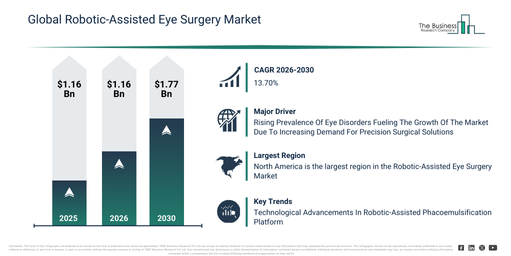
    The market size for robotic-assisted eye surgery has expanded quickly in recent years. It is anticipated to increase from $1.39 billion in 2025 to $1.59 billion in 2026, achieving a compound annual growth rate (CAGR) of 14.4%. The expansion observed in the past can be linked to several factors, including the constraints of manual microsurgical methods, the increasing occurrence of cataract and retinal conditions, the proliferation of specialized eye care facilities, a rising demand from surgeons for more precise instruments, and the phased integration of computer-assisted ophthalmic systems.

    The market for robotic-assisted eye surgery is projected to experience swift expansion over the coming years. This market is anticipated to reach $2.66 billion by 2030, exhibiting a compound annual growth rate (CAGR) of 13.7%. Several factors are expected to fuel this expansion during the forecast period, including innovations in AI-powered robotic technologies, a rising elderly demographic suffering from eye conditions, the proliferation of ambulatory surgical facilities, increased funding for ophthalmic robotics research and development, and greater surgeon adoption of robot-assisted operations. Key trends characterizing this period encompass a surge in the embrace of less invasive ophthalmic techniques, a growing requirement for highly accurate and consistent surgical results, the increasing application of robotic aid in intricate retinal and corneal operations, the broadening of training and professional development initiatives for medical practitioners, and an elevated emphasis on patient security alongside a reduction in surgical inconsistencies.

    Access Your Free Sample Report for In-Depth Market Insights:

    https://www.thebusinessresearchcompany.com/sample.aspx?id=27410&type=smp

    Which Drivers Are Expected To Impact The Robotic-Assisted Eye Surgery Market During The Forecast Period?

    The escalating occurrence of eye disorders is anticipated to propel the expansion of the robotic-assisted eye surgery market moving forward. Eye disorders are medical conditions that impact the structure or function of the eye, potentially leading to vision problems or blindness. The rising incidence of these conditions is fueled by increased screen time, which results in digital eye strain, dry eyes, and blurred vision from extended screen exposure without sufficient breaks. Robot-assisted eye surgery addresses various eye disorders by enhancing surgical precision, minimizing human error, and enabling minimally invasive procedures, thereby leading to improved patient outcomes and faster recovery times. For instance, in May 2024, the Centers for Disease Control and Prevention, a US-based government agency, indicated that 20.5 million people aged 40 and older in the United States, representing 17.2% of that age group, were expected to have cataracts in at least one eye in 2024. This figure is projected to exceed 30 million by 2028. Therefore, the growing prevalence of eye disorders is driving the growth of the robotic-assisted eye surgery market.

    How Is The Robotic-Assisted Eye Surgery Market Divided Into Segments?

    The robotic-assisted eye surgery market covered in this report is segmented –

    1) By Type: Robotic Systems, Instruments And Accessories, Software And Services

    2) By Surgery Type: Cataract Surgery, Retinal Surgery, Corneal Surgery, Glaucoma Surgery, Refractive Surgery, Other Surgery Types

    3) By Technology: Telerobotics, Haptic Feedback Systems, Image-Guided Systems, Artificial Intelligent (AI)-Driven Robotic Systems, Other Technologies

    4) By Application: Anterior Segment Procedures, Posterior Segment Procedures, Corneal Procedures, Other Applications

    5) By End-User: Hospitals, Ambulatory Surgical Centers (ASCs), Specialized Eye Clinics, Research And Academic Institutes

    Subsegments:

    1) By Robotic Systems: Fully Automated Systems, Semi-Automated Systems

    2) By Instruments And Accessories: Surgical Instruments, Robotic Controllers, Visualization Systems

    3) By Software And Services: Robotic Surgery Software, Maintenance And Upgrades, Training And Support

    What Industry Trends Are Transforming The Robotic-Assisted Eye Surgery Market?

    Leading companies within the robotic-assisted eye surgery market are concentrating on developing advanced solutions, such as robotic-assisted phacoemulsification platforms, to enhance surgical precision, reduce complication rates, and improve patient outcomes. A robotic-assisted phacoemulsification platform refers to a surgical system that employs robotic technology to assist doctors in performing cataract removal surgery with greater accuracy. For example, in May 2024, ForSight Robotics, an Israel-based provider of robotic surgery platforms, introduced the ORYOM surgical robotics platform, designed to execute a complete, remote robotic cataract procedure. The ORYOM surgical robotics platform comes equipped with a miniature robotic hand featuring 14 degrees of freedom and hybrid kinematics, allowing for superior maneuverability inside the eye. It integrates artificial intelligence, advanced imaging, and compact mechanical components to support accurate and consistent surgical performance. The incorporation of stereoscopic imaging enhances depth perception and provides real-time visual feedback, aiding surgeons in achieving high precision. Additionally, the platform utilizes machine learning to adapt and improve its capabilities with each procedure performed.

    Which Key Market Players Are Investing In Expansion And Innovation Within The Robotic-Assisted Eye Surgery Market?

    Major companies operating in the robotic-assisted eye surgery market are Johnson & Johnson, ZEISS Group, Alcon Inc., Intuitive Surgical Operations Inc., Bausch + Lomb Corp., Leica Microsystems, Lumenis Ltd., Topcon Healthcare, IRIDEX Corp., ForSight Robotics Ltd., Prasad Netralaya, Haag‑Streit Group, Nidek Co. Ltd., Ophthorobotics AG, Preceyes BV, Horizon Surgical Systems, AcuSurgical, LENSAR Inc., Ziemer Ophthalmic Systems AG, STAAR Surgical Company, Optovue, Glaukos Corporation, Eyenuk, AcuFocus, Avedro Inc., Aeon Astron Europe BV, Omega Ophthalmics

    Access The Complete Report For Deeper Market Insights:

    https://www.thebusinessresearchcompany.com/report/robotic-assisted-eye-surgery-global-market-report

    Which Geographic Areas Are Emerging As Strong Markets For The Robotic-Assisted Eye Surgery Market?

    North America was the largest region in the robotic-assisted eye surgery market in 2025. Asia-Pacific is expected to be the fastest-growing region in the forecast period. The regions covered in the robotic-assisted eye surgery market report are Asia-Pacific, South East Asia, Western Europe, Eastern Europe, North America, South America, Middle East, Africa.

    Request Your Customized Robotic-Assisted Eye Surgery Market Research Report for Competitive Advantage:

    https://www.thebusinessresearchcompany.com/customise?id=27410&type=smp

    Browse Through More Reports Similar to the Global Robotic-Assisted Eye Surgery Market 2026, By The Business Research Company

    Bearing Steel Global Market Report 2026

    https://www.thebusinessresearchcompany.com/report/bearing-steel-global-market-report

    Mounted Bearing Global Market Report 2026

    https://www.thebusinessresearchcompany.com/report/mounted-bearing-global-market-report

    Automotive Elastomers Global Market Report 2026

    https://www.thebusinessresearchcompany.com/report/automotive-elastomers-global-market-report

    Get in touch with us:

    The Business Research Company: https://www.thebusinessresearchcompany.com/

    Americas +1 310-496-7795

    Asia +44 7882 955267 & +91 8897263534

    Europe +44 7882 955267

    Email us at info@tbrc.info

    Follow us on:

    LinkedIn: https://in.linkedin.com/company/the-business-research-company

  • Robotic-Assisted Eye Surgery Market – Opportunities, Share, Growth and Competitive Analysis and Forecast 2029

    Robotic-Assisted Eye Surgery Market – Opportunities, Share, Growth and Competitive Analysis and Forecast 2029

    Uncover key drivers, emerging technologies, and competitive movements shaping the robotic-assisted eye surgery market from 2025–2034 with trusted insights from The Business Research Company

    How Is The Robotic-Assisted Eye Surgery Market Expected To Grow In Terms Of Size?

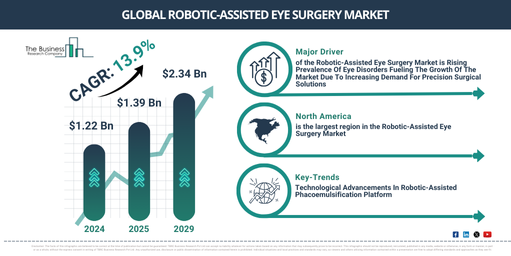
    The robotic-assisted eye surgery market has seen significant expansion in recent years. It is anticipated to grow from $1.22 billion in 2024 to $1.39 billion in 2025, achieving a compound annual growth rate (CAGR) of 14.2%. This historical growth can be linked to a rising need for precision in ophthalmic procedures, an increasing prevalence of age-related eye diseases, enhanced awareness of robotic applications in surgery, the proliferation of private ophthalmic clinics, and growing healthcare expenditure in developed economies.

    The robotic-assisted eye surgery market is projected to experience substantial expansion over the coming years. By 2029, its valuation is anticipated to reach $2.34 billion, achieving a compound annual growth rate (CAGR) of 13.9%. This anticipated growth is driven by several factors, including a rising prevalence of diabetic and hypertensive eye conditions, a growing inclination towards outpatient robotic surgical procedures, the expanding presence of robotic systems in developing nations, the establishment of more ophthalmology centers in rural areas, and increased funding for robotic surgery training initiatives. Key trends during this period encompass advancements in microsurgical robotics technology, the creation of AI-driven tools for surgical assistance, heightened investment in research and development focused on precision ophthalmology, the emergence of novel compact and mobile robotic platforms, and the progression of autonomous and remote-controlled eye surgery systems.

    Get A Free Sample Of The Report:

    https://www.thebusinessresearchcompany.com/sample.aspx?id=27410&type=smp

    What Are The Primary Factors Supporting The Robotic-Assisted Eye Surgery Market Expansion?

    The forward momentum of the robotic-assisted eye surgery market is anticipated to be driven by the rising occurrence of eye disorders. These conditions are defined as ailments impacting the eye’s structure or functionality, which can result in impaired vision or total blindness. The growing incidence of eye disorders is fueled by extended screen time, a factor contributing to digital eye strain, dryness, and visual blurriness from continuous screen exposure without sufficient rest. Robotic assistance in eye surgery offers a solution for numerous eye disorders by boosting surgical accuracy, minimizing human mistakes, and facilitating less invasive interventions, thereby leading to better patient results and quicker recuperation. As an illustration, data from May 2024, provided by the US government agency, the Centers for Disease Control and Prevention, indicated that 20.5 million individuals aged 40 and above in the United States, constituting 17.2% of that demographic, were anticipated to have cataracts in at least one eye in 2024. This figure is forecasted to exceed 30 million by 2028. Consequently, the expanding occurrence of eye disorders is fueling the expansion of the robotic-assisted eye surgery market.

    Which Segmentation Categories Are Highlighted In The Robotic-Assisted Eye Surgery Market Analysis?

    The robotic-assisted eye surgery market covered in this report is segmented

    1) By Type: Robotic Systems, Instruments And Accessories, Software And Services

    2) By Surgery Type: Cataract Surgery, Retinal Surgery, Corneal Surgery, Glaucoma Surgery, Refractive Surgery, Other Surgery Types

    3) By Technology: Telerobotics, Haptic Feedback Systems, Image-Guided Systems, Artificial Intelligent (AI)-Driven Robotic Systems, Other Technologies

    4) By Application: Anterior Segment Procedures, Posterior Segment Procedures, Corneal Procedures, Other Applications

    5) By End-User: Hospitals, Ambulatory Surgical Centers (ASCs), Specialized Eye Clinics, Research And Academic Institutes

    Subsegments:

    1) By Robotic Systems: Fully Automated Systems, Semi-Automated Systems

    2) By Instruments And Accessories: Surgical Instruments, Robotic Controllers, Visualization Systems

    3) By Software And Services: Robotic Surgery Software, Maintenance And Upgrades, Training And Support

    Which Market Trends Are Expected To Define The Future Of The Robotic-Assisted Eye Surgery Market?

    Leading companies in the robotic-assisted eye surgery market are concentrating on developing advanced solutions, including robotic-assisted phacoemulsification platforms, to enhance surgical precision, reduce complication rates, and improve patient outcomes. A robotic-assisted phacoemulsification platform is a surgical system that employs robotic technology to assist doctors in performing cataract removal surgery more precisely. For instance, in May 2024, ForSight Robotics, an Israel-based provider of robotic surgery platforms, introduced the ORYOM surgical robotics platform, designed to execute a complete, remote robotic cataract procedure. The ORYOM surgical robotics platform features a miniature robotic hand with 14 degrees of freedom and hybrid kinematics, allowing for superior maneuverability inside the eye. It combines artificial intelligence, advanced imaging, and compact mechanical components to support accurate and consistent surgical performance. The use of stereoscopic imaging enhances depth perception and provides real-time visual feedback, helping surgeons achieve high precision. The platform also utilizes machine learning to adapt and improve its capabilities with each procedure performed.

    Which Organizations Are At The Forefront Of The Robotic-Assisted Eye Surgery Market?

    Major companies operating in the robotic-assisted eye surgery market are Johnson & Johnson, Medtronic Plc, Stryker Corp., ZEISS Group, Alcon Inc., Intuitive Surgical Operations Inc., Bausch + Lomb Corp., Leica Microsystems, Lumenis Ltd., Lumibird Medical, Topcon Healthcare, IRIDEX Corp., ForSight Robotics Ltd., Aaren Scientific Inc., Hansen Medical, Prasad Netralaya, Haag-Streit Group, Nidek Co. Ltd., Ophthorobotics AG, and Preceyes BV.

    Access The Complete Report Here:

    https://www.thebusinessresearchcompany.com/report/robotic-assisted-eye-surgery-global-market-report

    Which Geographic Regions Are Creating Strong Demand In The Robotic-Assisted Eye Surgery Market?

    North America was the largest region in the robotic-assisted eye surgery market in 2024. Asia-Pacific is expected to be the fastest-growing region in the forecast period. The regions covered in the robotic-assisted eye surgery market report are Asia-Pacific, Western Europe, Eastern Europe, North America, South America, Middle East, Africa.

    Customize Your Report Here:

    https://www.thebusinessresearchcompany.com/customise?id=27410&type=smp

    Browse Through More Reports Similar to the Global Robotic-Assisted Eye Surgery Market 2025, By The Business Research Company

    Construction Elastomers Global Market Report 2025

    https://www.thebusinessresearchcompany.com/report/construction-elastomers-global-market-report

    Mounted Bearing Global Market Report 2025

    https://www.thebusinessresearchcompany.com/report/mounted-bearing-global-market-report

    Automotive Elastomers Global Market Report 2025

    https://www.thebusinessresearchcompany.com/report/automotive-elastomers-global-market-report

    About The Business Research Company:

    With over 15000+ reports from 27 industries covering 60+ geographies, The Business Research Company has built a reputation for offering comprehensive, data-rich research and insights. Armed with 1,500,000 datasets, the optimistic contribution of in-depth secondary research, and unique insights from industry leaders, you can get the information you need to stay ahead in the game.

    Get in touch with us:

    The Business Research Company: https://www.thebusinessresearchcompany.com/

    Americas +1 310-496-7795

    Asia +44 7882 955267 & +91 8897263534

    Europe +44 7882 955267

    Email us at info@tbrc.info

    Follow us on:

    LinkedIn: https://in.linkedin.com/company/the-business-research-company

    YouTube: https://www.youtube.com/channel/UC24_fI0rV8cR5DxlCpgmyFQ

    Global Market Model: https://www.thebusinessresearchcompany.com/global-market-model

  • Global Robotic-Assisted Eye Surgery Market Analysis 2025–2029: Opportunities for Strategic Growth

    Global Robotic-Assisted Eye Surgery Market Analysis 2025–2029: Opportunities for Strategic Growth

    Unlock Global Insights – Save 20% on Market Reports with Code ONLINE20

    How Much Was The Robotic-Assisted Eye Surgery Market Worth In 2025, And What Is Its Anticipated Value By 2029?

    The robotic-assisted eye surgery market has shown rapid expansion in recent years. Its valuation is set to climb from $1.22 billion in 2024 to $1.39 billion in 2025, achieving a compound annual growth rate (CAGR) of 14.2%. The historical increase in this market can be attributed to an elevated need for precision in ophthalmic procedures, a rising prevalence of age-related eye conditions, increased recognition of robotic applications in surgery, the proliferation of private ophthalmic clinics, and augmented healthcare expenditure in developed economies.

    The robotic-assisted eye surgery market is expected to experience significant expansion in the coming years. Its size is projected to reach $2.34 billion by 2029, demonstrating a compound annual growth rate (CAGR) of 13.9%. This growth throughout the forecast period can be attributed to the increasing prevalence of diabetic and hypertensive eye conditions, a growing preference for outpatient robotic surgeries, the enhanced availability of robotic systems in developing nations, the expansion of ophthalmology centers into rural regions, and greater investments in robotic surgery training initiatives. Major trends anticipated in this period include technological advancements in microsurgical robotics, the development of AI-powered surgical assistance tools, increased investment in research and development for precision ophthalmology, the introduction of innovative compact and mobile robotic platforms, and the creation of autonomous and remote-controlled eye surgery systems.

    Unlock Your Free Sample Report for Exclusive Market Data:

    https://www.thebusinessresearchcompany.com/sample.aspx?id=27410&type=smp

    What Are The Drivers Pushing New Developments In The Robotic-Assisted Eye Surgery Market?

    The increasing prevalence of eye disorders is expected to propel the growth of the robotic-assisted eye surgery market going forward. Eye disorders refer to medical conditions that affect the structure or function of the eye, potentially leading to vision problems or blindness. The rising prevalence of eye disorders is driven by increasing screen time, which leads to digital eye strain, dry eyes, and blurred vision due to prolonged exposure to screens without adequate breaks. Robot-assisted eye surgery helps address various eye disorders by enhancing surgical precision, reducing human error, and enabling minimally invasive procedures, which leads to improved patient outcomes and faster recovery times. For instance, in May 2024, according to the Centers for Disease Control and Prevention, a US-based government agency, 20.5 million people aged 40 and older in the United States, representing 17.2% of that age group, were expected to have cataracts in at least one eye in 2024. This number is projected to grow to over 30 million by 2028. Therefore, the increasing prevalence of eye disorders is driving the growth of the robotic-assisted eye surgery market.

    How Is The Robotic-Assisted Eye Surgery Market Classified Into Different Segments?

    The robotic-assisted eye surgery market covered in this report is segmented

    1) By Type: Robotic Systems, Instruments And Accessories, Software And Services

    2) By Surgery Type: Cataract Surgery, Retinal Surgery, Corneal Surgery, Glaucoma Surgery, Refractive Surgery, Other Surgery Types

    3) By Technology: Telerobotics, Haptic Feedback Systems, Image-Guided Systems, Artificial Intelligent (AI)-Driven Robotic Systems, Other Technologies

    4) By Application: Anterior Segment Procedures, Posterior Segment Procedures, Corneal Procedures, Other Applications

    5) By End-User: Hospitals, Ambulatory Surgical Centers (ASCs), Specialized Eye Clinics, Research And Academic Institutes

    Subsegments:

    1) By Robotic Systems: Fully Automated Systems, Semi-Automated Systems

    2) By Instruments And Accessories: Surgical Instruments, Robotic Controllers, Visualization Systems

    3) By Software And Services: Robotic Surgery Software, Maintenance And Upgrades, Training And Support

    What Are The Latest Industry Trends Transforming The Robotic-Assisted Eye Surgery Market?

    Prominent companies within the robotic-assisted eye surgery market are concentrating on developing sophisticated solutions, such as robotic-assisted phacoemulsification platforms, to boost surgical precision, lower complication rates, and enhance patient outcomes. A robotic-assisted phacoemulsification platform refers to a surgical system that employs robotic technology to aid doctors in performing cataract removal surgery with increased accuracy. For instance, in May 2024, ForSight Robotics, an Israel-based provider of robotic surgery platforms, introduced the ORYOM surgical robotics platform, designed to execute a complete, remote robotic cataract procedure. The ORYOM surgical robotics platform features a miniature robotic hand equipped with 14 degrees of freedom and hybrid kinematics, enabling superior maneuverability within the eye. It integrates artificial intelligence, advanced imaging, and compact mechanical components to support accurate and consistent surgical performance. Stereoscopic imaging is utilized to improve depth perception and offer real-time visual feedback, helping surgeons achieve high precision. The platform additionally leverages machine learning to adapt and refine its capabilities with each subsequent procedure performed.

    Who Are The Top Performing Companies In The Robotic-Assisted Eye Surgery Market In Recent Years?

    Major companies operating in the robotic-assisted eye surgery market are Johnson & Johnson, Medtronic Plc, Stryker Corp., ZEISS Group, Alcon Inc., Intuitive Surgical Operations Inc., Bausch + Lomb Corp., Leica Microsystems, Lumenis Ltd., Lumibird Medical, Topcon Healthcare, IRIDEX Corp., ForSight Robotics Ltd., Aaren Scientific Inc., Hansen Medical, Prasad Netralaya, Haag-Streit Group, Nidek Co. Ltd., Ophthorobotics AG, and Preceyes BV.

    Download The Full Report For Exclusive Market Findings:

    https://www.thebusinessresearchcompany.com/report/robotic-assisted-eye-surgery-global-market-report

    Which Region Currently Holds The Largest Share Of The Robotic-Assisted Eye Surgery Market?

    North America was the largest region in the robotic-assisted eye surgery market in 2024. Asia-Pacific is expected to be the fastest-growing region in the forecast period. The regions covered in the robotic-assisted eye surgery market report are Asia-Pacific, Western Europe, Eastern Europe, North America, South America, Middle East, Africa.

    Request A Customized Version Of The Robotic-Assisted Eye Surgery Market Report:

    https://www.thebusinessresearchcompany.com/customise?id=27410&type=smp

    Browse Through More Reports Similar to the Global Robotic-Assisted Eye Surgery Market 2025, By The Business Research Company

    Construction Elastomers Global Market Report 2025

    https://www.thebusinessresearchcompany.com/report/construction-elastomers-global-market-report

    Bearing Steel Global Market Report 2025

    https://www.thebusinessresearchcompany.com/report/bearing-steel-global-market-report

    Mounted Bearing Global Market Report 2025

    https://www.thebusinessresearchcompany.com/report/mounted-bearing-global-market-report

    Get in touch with us:

    The Business Research Company: https://www.thebusinessresearchcompany.com/

    Americas +1 310-496-7795

    Asia +44 7882 955267 & +91 8897263534

    Europe +44 7882 955267

    Email us at info@tbrc.info

    Follow us on:

    LinkedIn: https://in.linkedin.com/company/the-business-research-company

    YouTube: https://www.youtube.com/channel/UC24_fI0rV8cR5DxlCpgmyFQ

    Global Market Model: https://www.thebusinessresearchcompany.com/global-market-model
  • 2025–2029 Robotic-Assisted Eye Surgery Market Outlook: Regional Trends and Growth Forecast

    2025–2029 Robotic-Assisted Eye Surgery Market Outlook: Regional Trends and Growth Forecast

    Claim your 30% discount on Global Market Reports with code ONLINE30. Limited time only.

    Claim your 30% discount on Global Market Reports with code ONLINE30. Limited time only.

    What Are the Forecasted Growth Rate and Market Size of the Robotic-Assisted Eye Surgery Market?

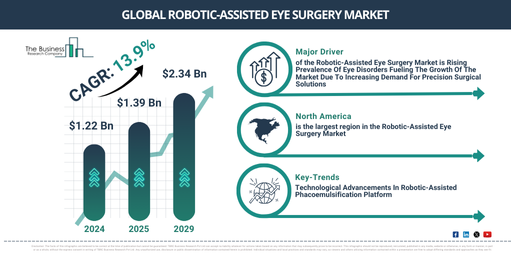
    The market for robotic-assisted eye surgeries has experienced fast-paced expansion in recent times. The market, which is projected to surge from $1.22 billion in 2024 to $1.39 billion in 2025, is estimated to display a compound annual growth rate (CAGR) of 14.2%. The notable growth in the preceding period can be credited to the escalating requirement for accuracy in eye-related procedures, an increase in age-related eye ailments, expanding knowledge of robotic competences in the realm of surgery, proliferation of private eye clinics and ballooning health spending in advanced economies.

    The market for robotic-assisted eye surgeries is projected to proliferate in the coming years, accelerating to a value of $2.34 billion in 2029 with a CAGR of 13.9%. This surge during the anticipated period is linked to a rising number of eye conditions related to diabetes and hypertension, growing inclination towards ambulatory robotic surgeries, enhanced access to robotic systems in developing countries, expansion of ophthalmology clinics in rural areas and escalating investment in training programs for robotic surgeries. Key trends to watch over the forecast period encompass technological innovation in microsurgical robotics, creation of AI-enabled surgical assistance instruments, augmented investing in research and development for high-precision ophthalmologic operations, the advent of compact, portable robotic platforms, and the rise of independent and remotely-operated eye surgery systems.

    Download The Free Sample Report Here:

    https://www.thebusinessresearchcompany.com/sample.aspx?id=27410&type=smp

    Which Factor Is Shaping The Future Of The Robotic-Assisted Eye Surgery Market?

    The surge in the number of eye-related ailments is predicted to push the robotic-assisted eye surgery market’s expansion in the future. Eye dysfunctions, which can compromise the eye’s structure or functionality and potentially lead to vision complications or blindness, are becoming more common. This trend is influenced by the increase in screen usage, which can result in digital eye fatigue, dry eyes, and fuzzy vision from prolonged screen exposure without adequate rest periods. Robotic-assisted eye procedures can help manage these disorders by increasing surgical accuracy, minimizing human mistakes, and facilitating minor invasive surgeries. These factors contribute to better patient results and quicker recovery periods. For example, in May 2024, the Centers for Disease Control and Prevention, a US government body, reported that 20.5 million people aged 40 and above in the United States, or 17.2% of this demographic, were anticipated to have cataracts in one or both eyes in 2024. This figure is predicted to increase to over 30 million by 2028. Hence, the surge in the incidence of eye disorders is promoting the expansion of the robotic-assisted eye surgery market.

    What Is The Segment-Wise Breakdown Of The Robotic-Assisted Eye Surgery Market?

    The robotic-assisted eye surgery market covered in this report is segmented

    1) By Type: Robotic Systems, Instruments And Accessories, Software And Services

    2) By Surgery Type: Cataract Surgery, Retinal Surgery, Corneal Surgery, Glaucoma Surgery, Refractive Surgery, Other Surgery Types

    3) By Technology: Telerobotics, Haptic Feedback Systems, Image-Guided Systems, Artificial Intelligent (AI)-Driven Robotic Systems, Other Technologies

    4) By Application: Anterior Segment Procedures, Posterior Segment Procedures, Corneal Procedures, Other Applications

    5) By End-User: Hospitals, Ambulatory Surgical Centers (ASCs), Specialized Eye Clinics, Research And Academic Institutes

    Subsegments:

    1) By Robotic Systems: Fully Automated Systems, Semi-Automated Systems

    2) By Instruments And Accessories: Surgical Instruments, Robotic Controllers, Visualization Systems

    3) By Software And Services: Robotic Surgery Software, Maintenance And Upgrades, Training And Support

    Which Trends Are Redefining The Future Landscape Of The Robotic-Assisted Eye Surgery Industry?

    Top firms in the robotic-assisted eye surgery sector are prioritizing the development of cutting-edge solutions like robotic-assisted phacoemulsification platforms. These advancements aim to maximize surgical accuracy, minimize complications, and optimize patient results. In simple terms, a robotic-assisted phacoemulsification platform is a surgical system equipped with robotics to facilitate highly precise cataract removal procedures. Take, for example, ForSight Robotics, an innovative robotic surgery platform company from Israel, unveiled the ORYOM surgical robotics platform in May 2024. This platform is capable of conducting comprehensive, remotely operated robotic cataract procedures. The ORYOM surgical robotics platform has a small robotic hand with 14 degrees of freedom and hybrid kinematics for exceptional eye maneuverability. It utilizes artificial intelligence, advanced imaging, and compact mechanical parts for supporting consistent and accurate surgical performance. The incorporation of stereoscopic imaging enhances depth awareness and offers real-time visual feedback, enabling surgeons to achieve maximum precision. Moreover, the platform employs machine learning to refine its performance with each operation performed.

    Which Companies Hold The Largest Market Share In The Robotic-Assisted Eye Surgery Sector?

    Major companies operating in the robotic-assisted eye surgery market are Johnson & Johnson, Medtronic Plc, Stryker Corp., ZEISS Group, Alcon Inc., Intuitive Surgical Operations Inc., Bausch + Lomb Corp., Leica Microsystems, Lumenis Ltd., Lumibird Medical, Topcon Healthcare, IRIDEX Corp., ForSight Robotics Ltd., Aaren Scientific Inc., Hansen Medical, Prasad Netralaya, Haag-Streit Group, Nidek Co. Ltd., Ophthorobotics AG, and Preceyes BV.

    Get The Full Report Here:

    https://www.thebusinessresearchcompany.com/report/robotic-assisted-eye-surgery-global-market-report

    How Does Regional Performance Compare Across The Robotic-Assisted Eye Surgery Industry?

    North America was the largest region in the robotic-assisted eye surgery market in 2024. Asia-Pacific is expected to be the fastest-growing region in the forecast period. The regions covered in the robotic-assisted eye surgery market report are Asia-Pacific, Western Europe, Eastern Europe, North America, South America, Middle East, Africa.

    Request For A Customized Report:

    https://www.thebusinessresearchcompany.com/customise?id=27410&type=smp

    About The Business Research Company:

    With over 15000+ reports from 27 industries covering 60+ geographies, The Business Research Company has built a reputation for offering comprehensive, data-rich research and insights. Armed with 1,500,000 datasets, the optimistic contribution of in-depth secondary research, and unique insights from industry leaders, you can get the information you need to stay ahead in the game.

    Get in touch with us:

    The Business Research Company: https://www.thebusinessresearchcompany.com/

    Americas +1 310-496-7795

    Asia +44 7882 955267 & +91 8897263534

    Europe +44 7882 955267

    Email us at info@tbrc.info

    Follow us on:

    LinkedIn: https://in.linkedin.com/company/the-business-research-company

    YouTube: https://www.youtube.com/channel/UC24_fI0rV8cR5DxlCpgmyFQ

    Global Market Model: https://www.thebusinessresearchcompany.com/global-market-model