Year: 2024

  • Future Growth Forecast For The Next Generation Sequencing Global Market 2024-2033

    Future Growth Forecast For The Next Generation Sequencing Global Market 2024-2033

    The Business Research Company’s global market reports provide comprehensive analysis on the various markets in 27 industries across 60 geographies.


    The next generation sequencing (NGS) market has witnessed a remarkable surge in recent years, with its size escalating from $10.44 billion in 2023 to $11.83 billion in 2024, marking a significant compound annual growth rate (CAGR) of 13.3%. Several factors have propelled this growth:

    1. Increased Healthcare Expenditure
    2. Rapid Technological Advances
    3. Emerging Markets Growth
    4. Rise in Funding
    5. Growing Elderly Population

    Charting the Future

    Looking ahead, the growth trajectory appears even more promising. By 2028, the market is projected to soar to $19.75 billion, exhibiting a CAGR of 13.7%. Key drivers of this forecasted expansion include:

    1. Aging Population
    2. Enhanced Healthcare Access
    3. Surging Prevalence of Chronic Diseases
    4. Rising Demand Due to COVID-19

    Embracing Transformative Trends

    In the upcoming years, the NGS market is poised to witness transformative trends that will reshape its landscape:

    1. Integration of Artificial Intelligence
    2. Cost-Effective Study of Rare Diseases
    3. Expansion into Newborn Screening
    4. Utilization of Big Data Technologies

    View More On The Next Generation Sequencing Market Report 2024 – https://www.thebusinessresearchcompany.com/report/next-generation-sequencing-global-market-report

    Rising Incidence Of Chronic Diseases Drives Growth In The Next-Generation Sequencing Market

    The Chronic Disease Conundrum

    The prevalence of chronic diseases such as cancer, AIDS, and thalassemia has surged globally, fueling the demand for next-generation sequencing. Factors contributing to this rise include:

    1. Aging Population
    2. Shifts in Social Behavior

    NGS: A Versatile Tool

    Next-generation sequencing serves as a versatile tool for researchers and clinicians, aiding in the identification of biomarkers crucial for treatment decisions, especially in cancer studies.

    Market Leaders

    Major players dominating the NGS market include Illumina, Inc., Thermo Fisher Scientific Inc., QIAGEN, and others, contributing significantly to market growth.

    Innovative Technologies Driving Growth In The Next Generation Sequencing Market

    Pioneering Innovations

    Leading companies are spearheading innovations such as the AVENIO Edge System, aimed at enhancing profitability and efficiency in the market.

    The AVENIO Edge System

    This automated system streamlines sample preparation, target enrichment, and data processing, offering high-quality sequencing results with minimal hands-on time.

    Market Segmentation

    Product Segmentation

    The NGS market encompasses instruments, reagents and kits, and software, catering to diverse needs within the industry.

    Technology Segmentation

    Technological advancements have led to the emergence of various sequencing methods, including sequencing by synthesis, ion semiconductor sequencing, and nanopore sequencing, among others.

    Application Segmentation

    NGS finds applications in diagnostics, drug discovery, and other sectors, reflecting its versatility and relevance across multiple domains.

    Regional Insights

    North America Dominance

    In 2023, North America emerged as the largest region in the NGS market, underscoring the region’s pivotal role in driving market growth.

    In conclusion, the next-generation sequencing market is on an upward trajectory, fueled by technological innovations, rising healthcare needs, and the imperative for precision medicine. With transformative trends and pioneering technologies, the future of NGS holds immense promise in revolutionizing healthcare delivery and research worldwide.

    Request A Sample Of The Global Next Generation Sequencing Market Report 2024:
    https://www.thebusinessresearchcompany.com/sample_request?id=3990&type=smp

  • Key Insights On The Neurology Devices Market 2024 – Size, Driver, And Major Players

    Key Insights On The Neurology Devices Market 2024 – Size, Driver, And Major Players

    The Business Research Company’s global market reports are now updated with the latest market sizing information for the year 2024 and forecasted to 2033

    As per The Business Research Company’s Neurology Devices Global Market Report 2024, the neurology devices market is expected to show significant growth in the forecast period.

    Favorable Government Initiatives: A Catalyst for Market Expansion

    • Government policies, regulations, and programs fostering safety, quality, and advancement of medical devices.
    • Impact on neurology device market: Influencing regulations, funding R&D, providing financial incentives, expanding telemedicine, promoting public health awareness, improving healthcare infrastructure.

    FDA’s Total Product Life Cycle Advisory Programme Expansion

    • Example: FDA’s extension to include neurological and physical medicine devices.
    • Goal: Expedite technological advancements.
    • Planned expansion by Q1 2025: Enrolling more devices under the program.

    Advancements In Implantable Wireless Brain Devices Transforming Neurology Treatment

    Neuromodulation Devices: Innovating Neurological Treatment

    • Research focus: Implantable wireless brain devices for neurological and psychiatric diseases.
    • Components: Wireless neuromodulator, antennas, integrated circuits, ceramic lid, feedthrough.
    • Applications: Treating depression, traumatic brain injury, stress, bipolar disorders by manipulating brain signals.

    Breakthrough Innovation: Medtronic’s SenSight Directional Lead System

    • FDA Approval: Received in June 2021.
    • Features: Industry’s first directional lead for deep brain stimulation (DBS).
    • Target Conditions: Parkinson’s disease, dystonia, essential tremor, medically refractory epilepsy.

    View More On The Neurology Devices Market Report 2024 – https://www.thebusinessresearchcompany.com/report/neurology-devices-global-market-report

    Segmentation and Market Dynamics

    Market Segmentation Overview

    • Types: Cerebrospinal Fluid Management (CSF) Devices, Interventional Neurology Devices, Neurosurgery Devices, Neurostimulation Devices.
    • Expenditure Types: Public, Private.
    • Products: Instruments/Equipment, Disposables.
    • End Users: Hospitals And Clinics, Diagnostic Laboratories, Other End Users.

    Regional Leadership: North America’s Market Dominance

    • North America: Largest region in the global neurology devices market in 2023.
    • Factors: Advanced healthcare infrastructure, high R&D investments, favorable government initiatives.

    Conclusion:

    The neurology devices market is poised for significant growth driven by technological innovations, increasing awareness of neurological disorders, and favorable government initiatives. Investments in neuromodulation devices and wireless brain implants are reshaping treatment paradigms, offering hope for millions suffering from neurological conditions. With segmentation facilitating targeted solutions and regions like North America leading the charge, the future of neurology devices looks promising, promising improved patient outcomes and enhanced quality of life.

    Request A Sample Of The Global Neurology Devices Market Report 2024:
    https://www.thebusinessresearchcompany.com/sample_request?id=1977&type=smp

  • What Is The Forecast Growth Rate For The Nebulizers Market?

    What Is The Forecast Growth Rate For The Nebulizers Market?

    The Business Research Company’s market reports offer an in-depth analysis on the market’s growth potential, major drivers, key trends and more.

    The nebulizers market has experienced significant expansion in recent years, with projections indicating continued growth in the foreseeable future.

    Current Market Status and Projections

    • The nebulizers market size surged from $1.16 billion in 2023 to $1.25 billion in 2024, boasting a compound annual growth rate (CAGR) of 7.8%.
    • Factors driving this growth include increased incidence of chronic respiratory diseases and rising healthcare expenditure, particularly in emerging economies.
    • The market is expected to continue its robust growth trajectory, reaching $1.72 billion in 2028 at a CAGR of 8.2%.
    • Projected growth drivers for this period include an aging population, demand for home healthcare devices, increased acceptance of mesh nebulizers, the global COVID-19 pandemic, and lifestyle factors such as tobacco and alcohol consumption.

    Rising Geriatric Population Fuels Demand For Respiratory Care Devices And Nebulizers

    • The aging global population is anticipated to drive the usage of respiratory care devices, including nebulizers.
    • By 2050, the world’s population aged 60 years and older is expected to reach 2 billion, up from 900 million, according to the World Health Organization (WHO).
    • Elderly individuals are more vulnerable to respiratory diseases, such as COPD, sleep apnea, and COVID-19, due to factors like declining immune function.
    • This demographic shift is poised to significantly contribute to the growth of the nebulizers market.

    Read More On The Nebulizers Market Report 2024 – https://www.thebusinessresearchcompany.com/report/nebulizers-global-market-report

    Strategic Partnerships In The Nebulizers Market To Enhance Healthcare Access And Support

    • Major companies in the nebulizers market are forming partnerships to bolster their market presence and enhance profitability.
    • For instance, in April 2021, the Asthma and Allergy Foundation of America partnered with Omron Healthcare Co. Ltd to provide support, advocacy, and education for individuals with asthma and allergies.
    • These partnerships also aim to improve access to respiratory medical treatments, particularly in underserved regions lacking high-quality healthcare services.
    • Omron Healthcare Co. Ltd, a Japanese healthcare company, exemplifies this approach to strategic collaboration.

    Market Segmentation

    The nebulizers market is segmented based on several key factors:

    1. Type:
      • Pneumatic Nebulizer
      • Ultrasonic Nebulizer
      • Mesh Nebulizer
    2. Portability:
      • Portable Nebulizer
      • Tabletop Nebulizer
    3. Application:
      • COPD
      • Cystic Fibrosis
      • Asthma
      • Other Applications
    4. End Use:
      • Hospitals and Clinics
      • Emergency Centers
      • Home Healthcare

    Regional Insights

    • North America emerged as the largest region in the nebulizers market in 2023.

    Conclusion

    The nebulizers market is witnessing substantial growth, driven by various factors such as the aging population, increased prevalence of respiratory diseases, and technological advancements. Strategic partnerships and market segmentation further contribute to the market’s expansion and accessibility. As the demand for respiratory care devices continues to rise, the nebulizers market presents significant opportunities for companies to innovate and address evolving healthcare needs.

    With a promising outlook, stakeholders in the nebulizers market are poised to navigate and capitalize on this burgeoning sector, ultimately contributing to improved respiratory health outcomes worldwide.

    Request for A Sample Of The Global Nebulizers Market Report:
    https://www.thebusinessresearchcompany.com/sample_request?id=3790&type=smp

  • Overview Of The Molecular Diagnostics Devices And Equipment Market 2024-2033: Growth And Major Players Analysis

    Overview Of The Molecular Diagnostics Devices And Equipment Market 2024-2033: Growth And Major Players Analysis

    The Business Research Company’s global market reports are now updated with the latest market sizing information for the year 2024 and forecasted to 2033

    Explosive Growth Trajectory

    • Rapid expansion from $31.26 billion in 2023 to $34.73 billion in 2024.
    • CAGR of 11.1% credited to various factors such as funding surge and technological advancements.

    Future Projections

    • Projected to surge to $48.38 billion by 2028 at a CAGR of 8.6%.
    • Driven by escalating bacterial and viral epidemics, aging population, and COVID-19 demand.

    Trends Shaping the Market

    • Automation in molecular diagnostics.
    • Integration of artificial intelligence.
    • Growing demand for rare disease diagnosis.
    • Adoption of big data and next-generation sequencing.
    • Emergence of point-of-care molecular diagnostics (POC mdx).

    View More On The Molecular Diagnostics Devices And Equipment Market Report 2024 – https://www.thebusinessresearchcompany.com/report/molecular-diagnostics-devices-and-equipment-global-market-report

    Driving Forces For Growth

    1. Rise in Disease Epidemics
    • Increase in bacterial and viral epidemics necessitates advanced diagnostic methods.
    • Government funding supports key players to develop sophisticated diagnostic devices.
    • Example: Melioidosis declared as a multistate epidemic, prompting the development of specialized diagnostic tests.
    1. Advancements In Automation And Nanotechnology
    • Focus on developing automated solutions to enhance productivity and consistency.
    • Nanotechnology-based tests for oral cancer biomarker detection.
    • Example: Roche’s cobas connection modules (CCM) improve workflow efficiency.
    1. Biofire Diagnostics’ Breakthrough
    • FDA authorization for BioFire Respiratory Panel 2.1 for simultaneous detection of respiratory viruses and bacteria.
    • Highlights the industry’s commitment to innovation and addressing healthcare needs.

    Market Segmentation

    1. By Product
    • Instruments
    • Reagents and Consumables
    • Software
    1. By Technology
    • DNA Sequencing
    • Polymerase Chain Reaction
    • Isothermal Nucleic Acid Amplification Technology
    • Transcription Mediated Amplification (TMA)
    • In situ Hybridization
    • Microarrays
    • Mass Spectrometry
    • Other Technologies
    1. By Application
    • Cancer
    • Pharmacogenomics
    • Genetic Testing
    • Infectious Disease
    • Prenatal
    • Other Applications
    1. By End User
    • Diagnostic Laboratories
    • Hospitals
    • Other End Users

    Regional Dominance

    • Asia-Pacific leads the global market in 2023.
    • Reflects the region’s growing healthcare infrastructure and investment in diagnostics.

    Conclusion: A Promising Path Ahead

    • The molecular diagnostics devices and equipment market exhibits robust growth prospects driven by technological innovations, increasing healthcare access, and the urgent need for accurate disease diagnosis. With automation, nanotechnology, and breakthrough products like the BioFire Respiratory Panel 2.1, the industry is poised to make significant strides in improving global healthcare outcomes.

    Request A Sample Of The Global Molecular Diagnostics Devices And Equipment Market Report 2024:

    https://www.thebusinessresearchcompany.com/sample_request?id=2595&type=smp

  • Top 5 Insights From The Non Contact Infrared Thermometers Market Report 2024

    Top 5 Insights From The Non Contact Infrared Thermometers Market Report 2024

    The Business Research Company’s global market reports are now updated with the latest market sizing information for the year 2024 and forecasted to 2033

    According to The Business Research Company’s Non Contact Infrared Thermometers Global Market Report 2024, the non contact infrared thermometers market is expected to show promising growth in the forecast period.

    Introduction:

    The market for non-contact infrared thermometers has seen remarkable growth in recent years, driven by various factors including technological advancements, increased healthcare expenditure, and the impact of the COVID-19 pandemic.

    Market Growth Dynamics:

    • Historical Growth: The market size surged from $0.33 billion in 2023 to $0.36 billion in 2024, exhibiting a Compound Annual Growth Rate (CAGR) of 8.1%.
    • Forecasted Growth: Anticipated to reach $0.51 billion in 2028, with a CAGR of 9.2%, attributed to factors like the rise in online pharmacies and technological innovations.

    Impact of COVID-19:

    The COVID-19 pandemic has been a significant catalyst for the increased demand for non-contact infrared thermometers.

    • Surge in Demand: Fever being a primary symptom, the need for frequent and accurate temperature checks has surged, driving up the demand for infrared thermometers.
    • Efficiency: These devices offer fast and precise temperature readings, making them essential in areas with large gatherings where temperature screening is crucial.

    View More On The Non Contact Infrared Thermometers Market Report 2024 – https://www.thebusinessresearchcompany.com/report/non-contact-infrared-thermometers-global-market-report

    Trends in the Market:

    • Bluetooth Integration: A key trend involves integrating Bluetooth functionality into infrared thermometers, allowing for better tracking and management of temperature data.
    • Government Collaboration: Collaborating with governments to ramp up production and reach a broader customer base is becoming prevalent.
    • Online Presence: Listing products on online channels is becoming increasingly important for boosting sales and revenue.

    Enhanced Connectivity with Bluetooth-Based Thermometers:

    Bluetooth-enabled infrared thermometers are emerging as a significant trend, offering enhanced connectivity and data management capabilities.

    • Real-Time Data: These thermometers can connect to smartphones via Bluetooth, allowing users to monitor and store temperature data conveniently.
    • Location Tracking: The integration of Bluetooth enables location tracking, facilitating better management of temperature data in various settings.
    • Convenience: Users can evaluate temperature readings directly on their smartphones and share data with healthcare providers if necessary.

    Market Segmentation:

    The non-contact infrared thermometers market is segmented based on product type, distribution channel, and application.

    1. Product Type:
      • Forehead
      • In-Ear
      • Multifunction
    2. Distribution Channel:
      • Hospital Pharmacy
      • Retail Pharmacy
      • Online Sales
    3. Application:
      • Veterinary
      • Medical

    Regional Insights:

    North America emerged as the largest region in the non-contact infrared thermometers market in 2023.

    Key Players:

    Several prominent companies operate in the non-contact infrared thermometers market, including:

    • Helen of Troy Limited
    • Omron Healthcare Inc.
    • Microlife Corporation
    • Beurer
    • Exergen Corporation
    • A&D Medical
    • Braun Healthcare
    • And many more.

    Conclusion:

    The non-contact infrared thermometers market is poised for significant growth driven by factors such as technological advancements, increased healthcare awareness, and the ongoing impact of the COVID-19 pandemic. The integration of Bluetooth functionality and collaboration with governments are expected to further propel market expansion, ensuring these devices continue to play a crucial role in public health and safety measures.

    Request A Sample Of The Global Non Contact Infrared Thermometers Market Report 2024:
    https://www.thebusinessresearchcompany.com/sample_request?id=3277&type=smp

  • Key Trends And Drivers In The Nuclear Imaging Devices And Equipment Market 2024

    Key Trends And Drivers In The Nuclear Imaging Devices And Equipment Market 2024

    The Business Research Company’s market reports offer an in-depth analysis on the market’s growth potential, major drivers, key trends and more.

    Rising Prevalence of Chronic Conditions Fuels Growth

    • Chronic diseases drive market expansion
    • Insights from nuclear imaging vital for disease management
    • WHO statistics highlight chronic disease impact

    All-Digital PET or CT System Elevating Medical Imaging Standards

    • Innovation drives accuracy in medical imaging
    • GE Healthcare introduces Omni Legend for enhanced diagnostics
    • Benefits of all-digital PET or CT systems

    Mediso Ltd. Acquires Bartec Technologies Ltd.

    • Acquisition aims at portfolio expansion and global reach
    • Mediso strengthens market position through acquisition

    Market Segmentation and Regional Analysis

    • Segmentation by product type, application, and end-user
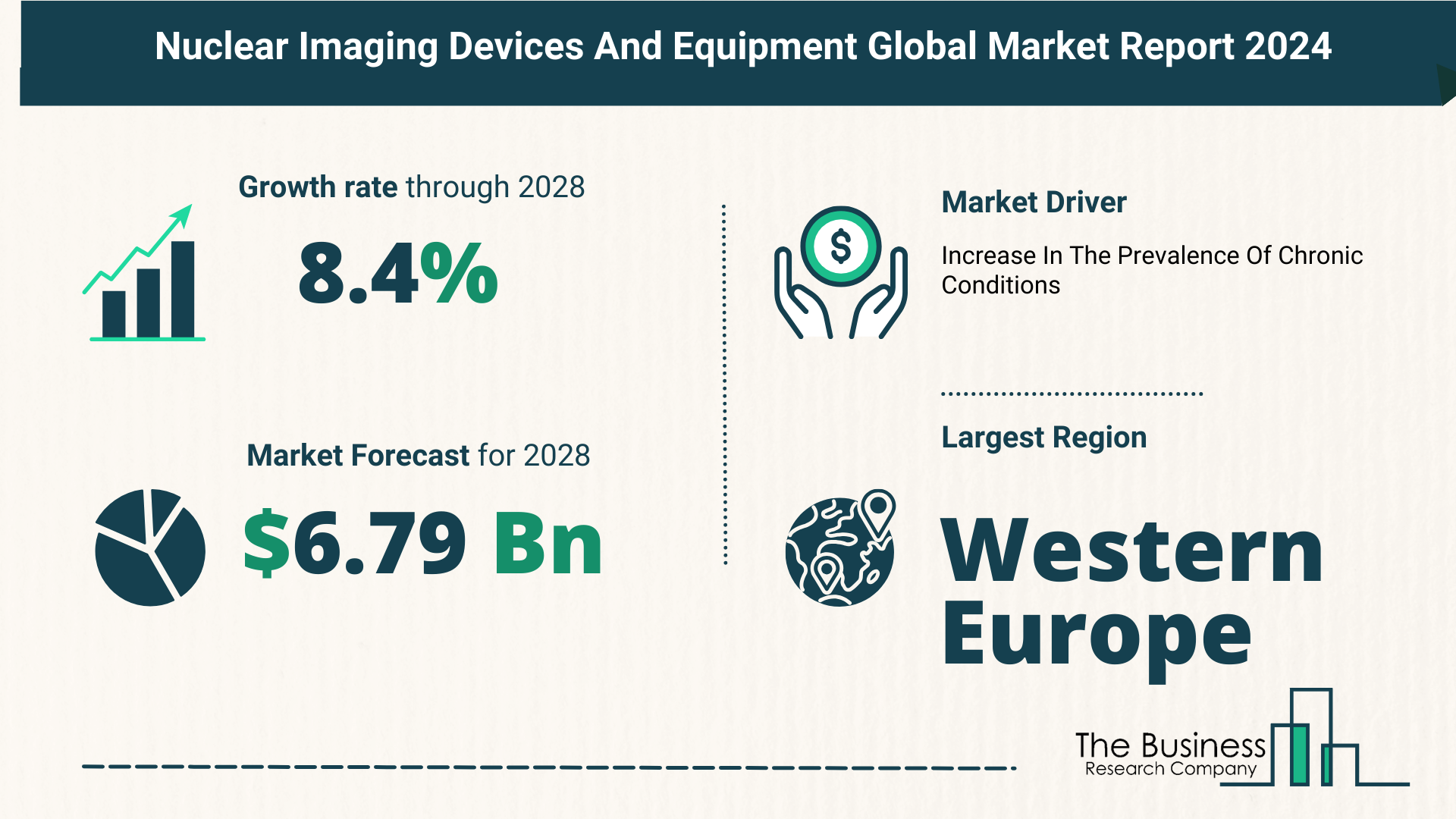
    • Western Europe leads nuclear imaging devices and equipment market

    The nuclear imaging devices and equipment market has witnessed remarkable growth in recent years, with significant projections for the future.

    Read More On The Nuclear Imaging Devices And Equipment Market Report 2024 – https://www.thebusinessresearchcompany.com/report/nuclear-imaging-devices-and-equipment-global-market-report

    Rising Prevalence of Chronic Conditions Fuels Growth

    The increasing prevalence of chronic conditions, including cardiovascular diseases, cancer, chronic respiratory diseases, and diabetes, is a key driver for market expansion. Nuclear imaging devices and equipment play a crucial role in diagnosing and monitoring these conditions, providing valuable insights into disease progression and treatment efficacy.

    All-Digital PET or CT System Elevating Medical Imaging Standards

    Major companies are focusing on product innovation to enhance accuracy in medical imaging systems. The introduction of all-digital PET or CT systems, such as GE Healthcare’s Omni Legend, signifies a significant advancement in diagnostic capabilities. These systems combine the power of PET and CT imaging in a digital format, promising higher resolution and sensitivity.

    Mediso Ltd. Acquires Bartec Technologies Ltd.

    In a strategic move to expand its nuclear medicine imaging equipment portfolio and global reach, Mediso Ltd. acquired Bartec Technologies Ltd. This acquisition strengthens Mediso’s market position and provides access to new expertise and markets.

    Market Segmentation and Regional Analysis

    The nuclear imaging devices and equipment market is segmented by product type, application, and end-user. Major segments include SPECT Systems, PET Systems, Planar Scintigraphy Systems, with applications in Oncology, Cardiology, Neurology, and other fields. End-users primarily include hospitals, imaging centers, and academic & research institutes.

    Western Europe Leads Market Growth

    Western Europe emerged as the largest region in the nuclear imaging devices and equipment market in 2023. With increasing healthcare expenditure and technological advancements, the region continues to drive market growth.

    In conclusion, the nuclear imaging devices and equipment market is poised for substantial growth, fueled by the rising prevalence of chronic conditions, technological innovations, strategic acquisitions, and regional market dynamics. As major players focus on product innovation and expansion strategies, the market is expected to witness continued expansion in the coming years.

    Request for A Sample Of The Global Nuclear Imaging Devices And Equipment Market Report:
    https://www.thebusinessresearchcompany.com/sample_request?id=2399&type=smp

  • Growth Trajectory Of The Operating Room Equipment Market 2024-2033

    Growth Trajectory Of The Operating Room Equipment Market 2024-2033

    The Business Research Company’s global market reports are now updated with the latest market sizing information for the year 2024 and forecasted to 2033

    Introduction 

    The operating room equipment market has witnessed robust growth in recent years, with significant projections for the future. Let’s delve into the key drivers, trends, and major players shaping this dynamic landscape.

    Market Growth and Projections

    • The market size soared from $17.13 billion in 2023 to $18.33 billion in 2024, with a CAGR of 7.0%.
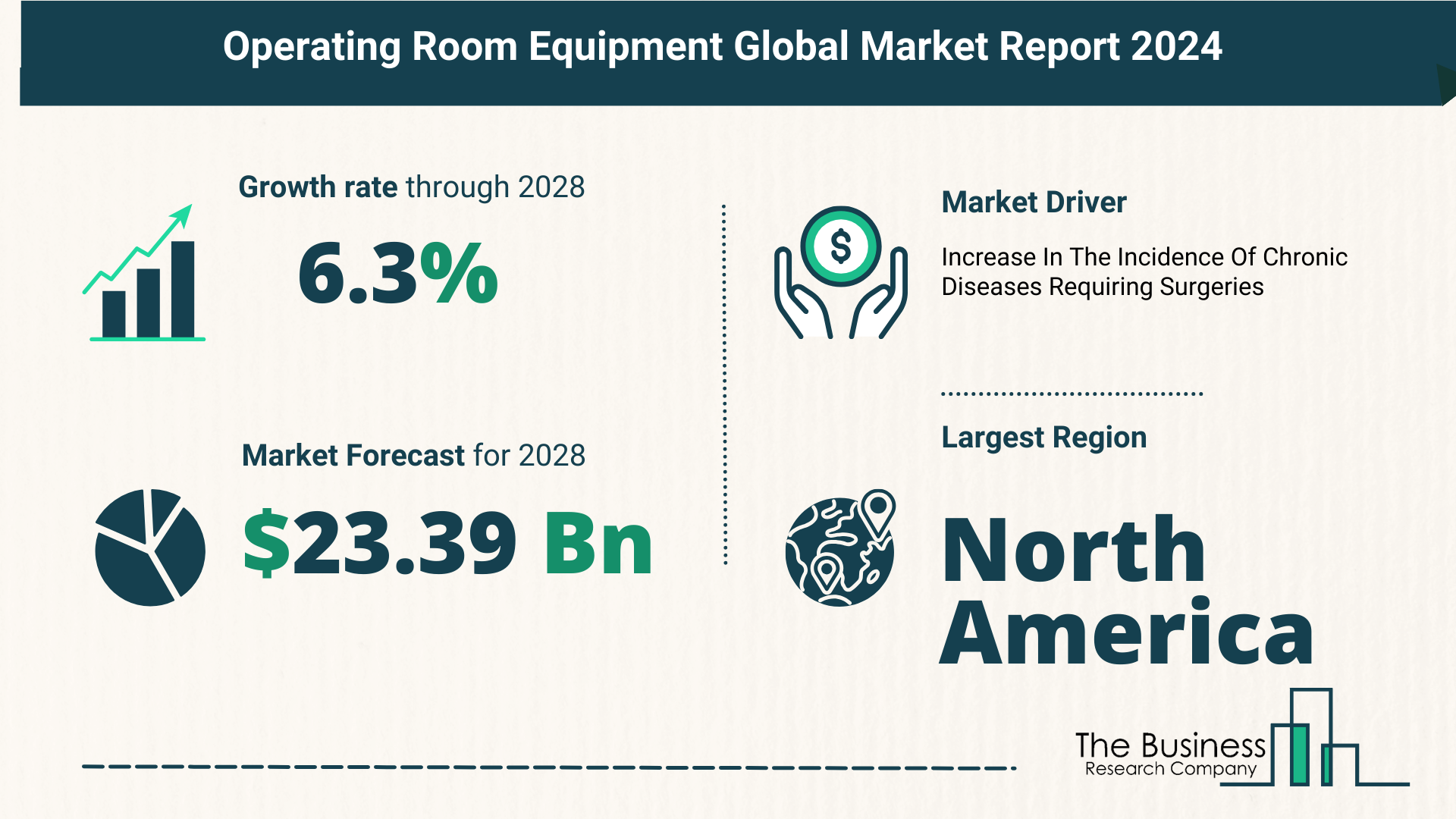
    • Projected to reach $23.39 billion by 2028, boasting a CAGR of 6.3%.
    • Factors driving this growth include economic expansion, demand for minimally invasive surgeries, and government healthcare initiatives.

    Key Trends Shaping the Future

    • Customized MPMS development.
    • Implementation of EPAD technology in neuromonitoring devices.
    • Next-generation ultrasonic surgical devices.
    • Multi-modal surgical devices.
    • Adoption of pay-per-use models for operational cost reduction.

    Rising Incidence of Chronic Diseases

    • Increasing prevalence of chronic diseases necessitates surgical interventions.
    • Advanced operating room equipment crucial for precise surgical procedures.
    • Chronic diseases account for a significant portion of global fatalities, propelling market growth.

    View More On The Operating Room Equipment Market Report 2024 – https://www.thebusinessresearchcompany.com/report/operating-room-equipment-global-market-report

    Major Players in the Market

    • Medtronic PLC
    • Olympus Corporation
    • General Electric Company
    • Stryker Corporation
    • Koninklijke Philips N.V.
    • And many more…

    Hybrid Operating Rooms: A Game-Changer

    • Emerging trend offering advanced medical imaging systems.
    • Supports high-quality interventional imaging and minimally invasive surgeries.
    • Reduces healthcare expenditure, enhances patient safety, and minimizes surgery time.

    Baxter’s Acquisition of Hillrom

    • Baxter’s acquisition of Hillrom for $15 billion in December 2021.
    • Unites two leading MedTech organizations to transform healthcare.
    • Hillrom, a US-based medical technology provider, strengthens Baxter’s global footprint.

    Market Segmentation

    • Types: Anesthesia Devices, Endoscopes, Operating room Lights, Operating Tables, Electrosurgical Devices, Surgical Imaging Devices, Patient Monitors.
    • Applications: Cardiovascular Surgery, Thoracic Surgery, Neurosurgery, and Others.
    • End Users: Hospitals, Outpatient Facilities, and Ambulatory Surgery Centers.

    Regional Insights

    • North America led the global operating room equipment market in 2023.

    Conclusion 

    The operating room equipment market is poised for remarkable growth driven by technological advancements, rising chronic disease incidences, and strategic industry collaborations. As healthcare continues to evolve, innovative solutions offered by operating room equipment pave the way for enhanced patient outcomes and revolutionized surgical practices worldwide.

    Request A Sample Of The Global Operating Room Equipment Market Report 2024:
    https://www.thebusinessresearchcompany.com/sample_request?id=3804&type=smp

  • Top 5 Insights From The Microbiome Market Report 2024

    Top 5 Insights From The Microbiome Market Report 2024

    The Business Research Company’s global market reports are now updated with the latest market sizing information for the year 2024 and forecasted to 2033

    According to The Business Research Company’s Microbiome Global Market Report 2024, the microbiome market is expected to show promising growth in the forecast period.

    Understanding the Growth Trajectory

    • The microbiome market size has witnessed exponential growth in recent years.
    • Expected growth from $0.57 billion in 2023 to $0.69 billion in 2024 at a CAGR of 20.2%.
    • Forecasted to reach $1.24 billion in 2028 with a CAGR of 16.0%.

    Rationale Behind the Surge

    • Increased need for immunology.
    • Rising collaborations and government initiatives.
    • Growth in healthcare expenditure and facilities.

    Inflammatory Bowel Disease (IBD) Fuels Growth In The Microbiome Market

    • IBD prevalence drives market growth.
    • Focus on microbiome’s role in IBD spurs research, diagnostics, and therapies.
    • Seres Therapeutics, Enterome Bioscience, and others are leading players.

    View More On The Microbiome Market Report 2024 – https://www.thebusinessresearchcompany.com/report/microbiomes-global-market-report

    Rising Technological Advancements Propel Innovation In The Microbiome Market

    • Technological improvements drive market trends.
    • Seed’s Daily Synbiotic showcases advancements.
    • Genomics, proteomics, and metabolomics lead the way in technology.

    Novozymes Strengthens Its Human Health Portfolio With The Acquisition Of Microbiome Labs

    • Acquisition of Microbiome Labs enhances Novozymes’ Human Health platform.
    • Access to patented solutions and healthcare professional network.

    Segmentation Insights

    • Microbiome market segmented by type, product, technology, and end-use.
    • Types include bacteria, archaea, viruses, and others.
    • Products range from therapeutics to diagnostics.
    • Technologies encompass genomics, proteomics, and metabolomics.
    • End-uses span infectious diseases, gastrointestinal disorders, cancers, and more.

    North America Leads the Way

    • North America dominates the microbiome market.
    • Pioneering advancements and substantial market share.

    Conclusion: Embracing the Microbiome Revolution
    The microbiome market is on an upward trajectory, driven by various factors such as technological advancements, increasing prevalence of diseases like IBD, and strategic collaborations. As companies continue to innovate and invest in research, the potential for microbiome-based solutions to revolutionize healthcare is immense. With the market poised for substantial growth, stakeholders must capitalize on emerging opportunities to shape the future of healthcare through microbiome interventions.

    Request A Sample Of The Global Microbiome Market Report 2024:
    https://www.thebusinessresearchcompany.com/sample_request?id=3397&type=smp

  • Microbiology Diagnostic Devices And Equipment Global Market Outlook 2024-2033: Size And Growth Rate Analysis

    Microbiology Diagnostic Devices And Equipment Global Market Outlook 2024-2033: Size And Growth Rate Analysis

    The Business Research Company’s global market reports provide comprehensive analysis on the various markets in 27 industries across 60 geographies.

    Understanding Market Dynamics
    The microbiology diagnostic devices and equipment market has experienced remarkable growth in recent years. In 2023, it reached a valuation of $4.49 billion, with projections indicating further expansion to $5.02 billion in 2024, boasting a Compound Annual Growth Rate (CAGR) of 11.8%. This growth trajectory is underpinned by several key factors:

    1. Increased Healthcare Expenditure
    • Rising investments in healthcare infrastructure globally.
    • Growing emphasis on disease prevention and management.
    1. Emerging Markets Growth
    • Expanding healthcare access in developing regions.
    • Greater adoption of diagnostic technologies.
    1. Rapid Technological Advances
    • Innovation driving the development of more efficient diagnostic tools.
    • Integration of digital solutions for enhanced accuracy and speed.
    1. Aging Population
    • Demographic shifts leading to higher demand for healthcare services.
    • Increased susceptibility to infectious diseases among the elderly.
    1. Emergence of Novel Pathogenic Infestations
    • Ongoing challenges posed by new infectious agents.
    • Urgent need for advanced diagnostic solutions to combat emerging threats.

    View More On The Microbiology Diagnostic Devices And Equipment Market Report 2024 – https://www.thebusinessresearchcompany.com/report/microbiology-diagnostic-devices-and-equipment-global-market-report

    Riding the Wave of Growth: Future Projections
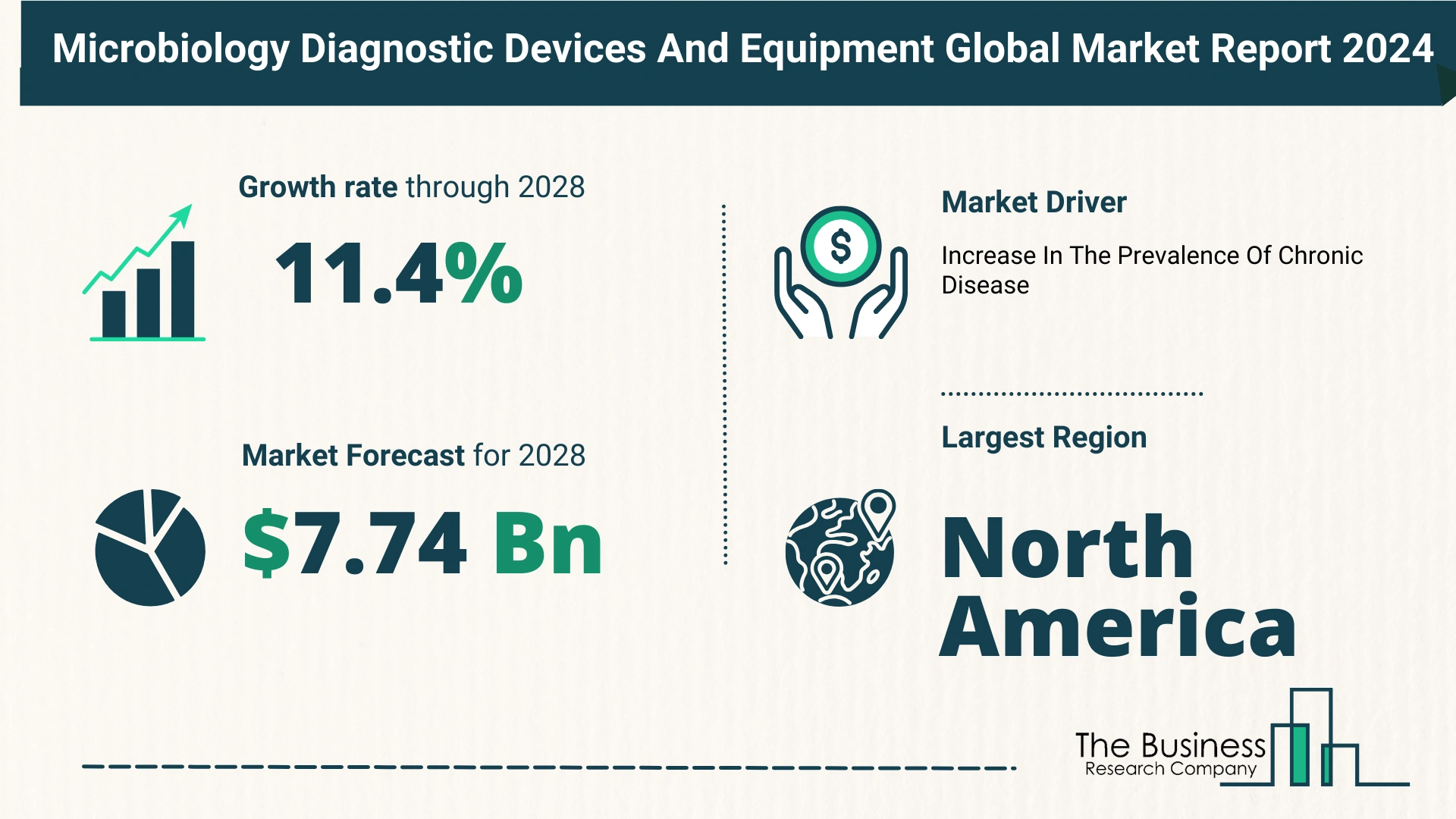
    Looking ahead, the microbiology diagnostic devices and equipment market is poised for continued expansion. By 2028, it is forecasted to soar to $7.74 billion, with a CAGR of 11.4%. Several factors will fuel this growth:

    1. Rise in Funding
    • Increased investments in medical devices and technology.
    • Funding support for research and development endeavors.
    1. Aging Population
    • Continued demographic shifts driving healthcare demand.
    • Heightened focus on geriatric healthcare needs.
    1. Increase in Healthcare Access
    • Efforts to improve healthcare infrastructure worldwide.
    • Greater emphasis on preventive care and early diagnosis.
    1. Rise of Bacterial and Viral Epidemics
    • Growing prevalence of infectious diseases.
    • Demand for robust diagnostic solutions to address public health challenges.
    1. Major Trends Shaping the Landscape
    • Adoption of predictive diagnostics for proactive healthcare management.
    • Automation revolutionizing microbiology diagnostics processes.
    • Next-generation microbial testing enhancing accuracy and efficiency.
    • Increasing mergers and acquisitions driving market consolidation.

    Spotlight on Key Drivers: Industry Insights
    Surge In Funding And Investments Accelerates Growth In The Microbiology Diagnostic Devices Market

    • Increased confidence in microbiology diagnostic devices fueled by rising investments.
    • Notable investments in digital health technologies and AI augment market growth.
    • Leading companies like Danaher, Abbott Laboratories, and Thermo Fisher Scientific driving innovation.

    Next-Generation Sequencing Revolutionizes Microbiology Diagnostic Devices Market

    • Next-Generation Sequencing (NGS) technologies offer cost-effective and sensitive solutions.
    • Partnerships like BioMérieux and Illumina pave the way for advanced diagnostic services.
    • Modern NGS technologies such as Illumina sequencing and Roche 454 sequencing are leading the charge.

    DCN Dx Bolsters Its Point-Of-Use Testing Capabilities With Acquisition Of Biomed Diagnostics

    • Strategic acquisitions enhancing companies’ market presence and offerings.
    • DCN Dx’s acquisition of Biomed Diagnostics strengthens its position in point-of-use testing.
    • Market segmentation facilitates targeted approaches for varied end-users and needs.

    Conclusion: Charting the Course Ahead
    As North America takes the lead in the microbiology diagnostics devices and equipment market, global players are gearing up to capitalize on burgeoning opportunities. With a blend of innovation, strategic partnerships, and market segmentation, the industry is poised to address evolving healthcare needs and navigate the complexities of infectious disease management. As stakeholders continue to invest in cutting-edge technologies and expand their reach, the journey towards comprehensive microbiology diagnostics solutions accelerates, promising brighter prospects for healthcare worldwide.

    Request A Sample Of The Global Microbiology Diagnostic Devices And Equipment Market Report 2024:
    https://www.thebusinessresearchcompany.com/sample_request?id=3408&type=smp

  • Key Insights On The Medication Adherence Market 2024 – Size, Driver, And Major Players

    Key Insights On The Medication Adherence Market 2024 – Size, Driver, And Major Players

    The Business Research Company’s global market reports are now updated with the latest market sizing information for the year 2024 and forecasted to 2033

    As per The Business Research Company’s Medication Adherence Global Market Report 2024, the medication adherence market is expected to show significant growth in the forecast period.

    The medication adherence market has witnessed exponential growth in recent years, evolving into a vital sector within healthcare. Understanding its trajectory offers insights into the dynamics shaping its expansion.

    • A Rapidly Growing Market: From $3.54 billion in 2023 to an estimated $3.96 billion in 2024, marking a remarkable compound annual growth rate (CAGR) of 11.9%.
    • Factors Driving Growth: Several factors contribute to this surge, including the aging population, economic growth in emerging markets, increased healthcare spending, and the rising incidence of cardiovascular diseases.
    • Future Projections: The market is poised for further expansion, with expectations to reach $6.08 billion by 2028, driven by the prevalence of chronic diseases, technological advancements, and shifting healthcare paradigms.

    Meeting the Challenge of Non-Adherence
    Understanding the Need
    Non-adherence to prescribed medications poses significant challenges within healthcare systems worldwide. Addressing this issue not only improves patient outcomes but also presents opportunities for market growth.

    • The Cost of Non-Adherence: Poor adherence costs billions annually in various regions, emphasizing the urgency for effective solutions.
    • Driving Demand: The necessity to combat non-adherence fuels the demand for medication adherence solutions, creating a conducive environment for market expansion.

    View More On The Medication Adherence Market Report 2024 – https://www.thebusinessresearchcompany.com/report/medication-adherence-global-market-report

    Innovations Shaping the Landscape
    Emerging Trends
    Innovation serves as a catalyst for growth within the medication adherence market, introducing transformative solutions that redefine patient care and management.

    • Cloud-Based Solutions: Leveraging cloud technology enhances accessibility and data management, optimizing medication adherence practices.
    • Gamification Strategies: Tailoring solutions for specific demographics, such as children, fosters engagement and compliance through interactive platforms.
    • Wearable and Ingestible Technology: Integration of sensors and biosensors revolutionizes monitoring, offering real-time insights into patient adherence behaviors.
    • Collaborative Endeavors: Partnerships and collaborations drive innovation, fostering the development of comprehensive medication adherence ecosystems.

    Strategic Imperatives: Market Expansions and Partnerships
    Seizing Opportunities
    Strategic initiatives, including partnerships and expansions, play a pivotal role in shaping the medication adherence market landscape, unlocking new avenues for growth and outreach.

    • Partnership Ventures: Collaborative efforts between industry leaders aim to enhance patient care and expand market reach, exemplifying a proactive approach towards addressing healthcare challenges.
    • Geographic Expansion: Venturing into untapped regions presents opportunities for market penetration and diversification, catering to evolving healthcare needs globally.

    Segmentation Insights: Understanding Market Dynamics
    Diverse Segments
    Segmentation offers a nuanced understanding of the medication adherence market, highlighting varied applications and opportunities for innovation.

    • Types of Solutions: Hardware-centric and software-centric solutions cater to diverse needs, reflecting the evolving technological landscape.
    • Targeted Medications: Addressing specific therapeutic areas, including cardiovascular, central nervous system, and oncology, underscores the market’s adaptability and specialization.
    • Applications Across Settings: From hospitals to retail pharmacies, the application of medication adherence solutions spans various healthcare environments, catering to distinct patient demographics and needs.

    Regional Perspectives: North America Leading the Charge
    Market Dynamics
    North America emerges as a key player in the medication adherence market, setting precedents for innovation and adoption within the industry.

    • Dominant Presence: North America holds the largest share in the medication adherence market, driven by technological advancements, robust healthcare infrastructure, and proactive regulatory frameworks.
    • Pioneering Initiatives: The region’s leadership role extends to strategic initiatives and partnerships, setting benchmarks for global market expansion and collaboration.

    Conclusion: Navigating a Dynamic Landscape
    The medication adherence market continues to evolve, propelled by technological innovation, strategic collaborations, and a growing imperative to address healthcare challenges. Understanding its intricacies provides valuable insights into shaping future strategies and fostering meaningful advancements in patient care.

    Request A Sample Of The Global Medication Adherence Market Report 2024:
    https://www.thebusinessresearchcompany.com/sample_request?id=4012&type=smp