Month: June 2025

  • Strong CAGR to Propel in the Cholangiocarcinoma Market and Beyond upto $1.02 Billion by 2029

    Strong CAGR to Propel in the Cholangiocarcinoma Market and Beyond upto $1.02 Billion by 2029

    Our market reports now include the latest updates on global tariffs, trade impacts, and evolving supply chain dynamics.

    How Has The Cholangiocarcinoma Market Growth Evolved From 2024 To 2025, And What’s Ahead?

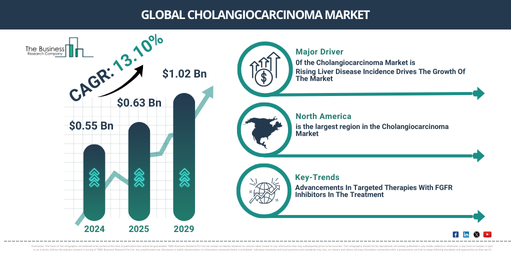
    In recent times, the cholangiocarcinoma market has experienced rapid growth. The market, which is currently worth $0.55 billion in 2024, is predicted to increase to $0.63 billion by 2025 at a compounded annual growth rate (CAGR) of 13.4%. The observed growth during the historical period is due to an increase in occurrences of liver and bile duct cancers, heightened awareness of uncommon cancers, an emphasis on tailor-made treatment strategies, the emergence of immunotherapy methods, and an ageing population.

    Anticipated swift expansion is forecasted for the cholangiocarcinoma market in the forthcoming years. By 2029, it should reach $1.02 billion, with a compound annual growth rate (CAGR) of 13.1%. Factors contributing to this growth during the projected period include the increasing acceptance of precision medicine, escalating healthcare spending, a surge in genetic testing prevalence, and a rising trend in retail pharmacies. Major market trends for this period comprise enhancements in diagnostic procedures, clinical trial expansions, AI incorporation into diagnostics, advancements in drug delivery strategies as well as escalating clinical trials and drug development.

    Download a free sample to assess the report’s scope and structure:

    https://www.thebusinessresearchcompany.com/sample.aspx?id=21139&type=smp

    Which Primay Drivers Are Accelerating Growth in the Cholangiocarcinoma Market?

    The growing occurrence of liver disease is projected to stimulate the expansion of the cholangiocarcinoma market in the future. The term ‘liver disease’ encompasses any disorder that compromises the standard functionality or physical attributes of the liver, with examples including hepatitis, cirrhosis, fatty liver disease, and liver cancer. The escalating prevalence of liver disease can be attributed to increased exposure to risk factors such as obesity, diabetes, excessive alcohol intake, and infections associated with viral hepatitis. Liver disease, specifically long-term inflammation and cirrhosis, amplifies the chances of developing cholangiocarcinoma by inciting bile duct damage and malignant cellular changes. As an example, in December 2024, the Office for Health Improvement and Disparities, a governmental body based in the UK, reported that in 2023, premature fatalities due to alcoholic liver disease grew by 3.6% to 5,984, ascending from 5,776 in 2022. As such, the mounting incidence of liver disease is the driving force behind the growing cholangiocarcinoma market.

    Which Primary Segments of the Cholangiocarcinoma Market Are Driving Growth and Industry Transformations?

    The cholangiocarcinoma market covered in this report is segmented –

    1) By Cancer: Intrahepatic Cholangiocarcinoma, Extrahepatic Cholangiocarcinoma

    2) By Product: Capecitabine, 5-Fluorouracil, Oxaliplatin, Gemcitabine, Cisplatin

    3) By Therapy: Targeted Drug Therapy, Chemotherapy, Immunotherapy

    4) By Route Of Administration: Oral, Subcutaneous, Intravenous

    5) By Distribution Channel: Hospital Pharmacies, Retail Pharmacies, E-Commerce

    Subsegments:

    1) By Intrahepatic Cholangiocarcinoma: Peripheral Intrahepatic Cholangiocarcinoma, Mass-Forming Intrahepatic Cholangiocarcinoma

    2) By Extrahepatic Cholangiocarcinoma: Perihilar Cholangiocarcinoma, Distal Cholangiocarcinoma

    Request customized data on this market:

    https://www.thebusinessresearchcompany.com/customise?id=21139&type=smp

    Which Regions Are Key Players in the Growth of the #Which Primay Drivers Are Accelerating Growth in the Cholangiocarcinoma Market?# Market?

    North America was the largest region in the cholangiocarcinoma market in 2024. The regions covered in the cholangiocarcinoma market report are Asia-Pacific, Western Europe, Eastern Europe, North America, South America, Middle East, Africa.

    Which Technological Trends Are Reshaping the Cholangiocarcinoma Industry Dynamics?

    Leading firms in the cholangiocarcinoma domain are concentrating their efforts on the invention of innovative treatments like targeted therapies to enhance patient care outcomes. Targeted therapies are essentially medical treatments that zero in on specific molecules, proteins, or genes that are critical to cancer cell propagation. The ultimate goal of these treatments is to put a halt to the growth of tumors, minimize side effects, and boost treatment results by disrupting the pathways that facilitate the proliferation of cancer. Example of such an innovative treatment is LYTGOBI (futibatinib) that was released in August 2023 by Taiho Pharmaceutical Co. Ltd., a Japan-based pharmaceutical conglomerate. LYTGOBI, an FGFR inhibitor, is utilized for dealing with non-operable biliary tract cancer with FGFR2 gene fusions. Its primary function is to inhibit FGFR signaling, selectively and irreversibly, consequently slowing down tumor progression and elevating patient outcomes in cholangiocarcinoma (iCCA) cases that are chemotherapy-resistant.

    View the full report here:

    https://www.thebusinessresearchcompany.com/report/cholangiocarcinoma-global-market-report

    What Parameters Are Used to Define the Cholangiocarcinoma Market?

    Cholangiocarcinoma is a malignant tumor that arises from the bile ducts, which carry bile from the liver to the small intestine. It is characterized by uncontrolled growth of abnormal cells, leading to bile duct obstruction and liver dysfunction. Symptoms often include jaundice, abdominal pain, weight loss, and fatigue. Early diagnosis and treatment are crucial for better prognosis and management.

    Purchase the full report and get a swift delivery:

    https://www.thebusinessresearchcompany.com/purchaseoptions.aspx?id=21139

    About The Business Research Company:

    With over 15000+ reports from 27 industries covering 60+ geographies, The Business Research Company has built a reputation for offering comprehensive, data-rich research and insights. Armed with 1,500,000 datasets, the optimistic contribution of in-depth secondary research, and unique insights from industry leaders, you can get the information you need to stay ahead in the game.

    Get in touch with us:

    The Business Research Company: https://www.thebusinessresearchcompany.com/

    Americas +1 3156230293

    Asia +44 2071930708

    Europe +44 2071930708

    Email us at info@tbrc.info

    Follow us on:

    LinkedIn: https://in.linkedin.com/company/the-business-research-company

    YouTube: https://www.youtube.com/channel/UC24_fI0rV8cR5DxlCpgmyFQ

    Global Market Model: https://www.thebusinessresearchcompany.com/global-market-model

  • From Insight to Impact: Strategic Growth Mapping in the Scleroderma Diagnostics And Therapeutics Market

    From Insight to Impact: Strategic Growth Mapping in the Scleroderma Diagnostics And Therapeutics Market

    Get 30% off on our Global Market Reports with code ONLINE30 – Hurry, limited time offer!

    How Fast Is The Scleroderma Diagnostics And Therapeutics Market Expected to Grow Between 2025 And 2029?

    The market for scleroderma diagnostics and therapeutics has experienced robust growth in the past few years. The market is predicted to increase from $2.71 billion in 2024 to $2.95 billion in 2025, with a compound annual growth rate (CAGR) of 8.8%. Factors contributing to this growth during the historical period include the identification of antinuclear antibodies, implementation of pulmonary function tests, heightened awareness about autoimmune diseases, creation of funding programs for rare diseases, and broadening of clinical trial networks.

    Anticipations are high for substantial growth in the market size for scleroderma diagnostics and therapeutics in the coming years. Projections estimate it will reach $4.10 billion by 2029, with a compound annual growth rate (CAGR) of 8.5%. The forecast period’s growth can be linked to advances in precision medicine, innovative biologic therapies, broader stem cell research, improved drug delivery systems, and regulatory endorsement for orphan drugs. Key trends driving this period include AI-enabled diagnostic algorithms, next-gen sequencing for genetic profiling, nanotech-facilitated drug delivery, wearable biosensors for real-time surveillance, and 3D bioprinting for tissue repair.

    Download a free sample to assess the report’s scope and structure:

    https://www.thebusinessresearchcompany.com/sample.aspx?id=23509&type=smp

    What are the Fundamental Drivers and Innovations Shaping the Scleroderma Diagnostics And Therapeutics Market?

    The growth of the scleroderma diagnostics and therapeutics market is anticipated to be fueled by the increasing incidences of autoimmune diseases. Autoimmune diseases are health conditions in which a person’s immune system erroneously attacks their healthy cells. The upswing in autoimmune diseases can be attributed to genetic predispositions that affect immune system activity and cause abnormalities in connective tissues. Scleroderma diagnostics and therapeutics help manage these autoimmune diseases by facilitating early detection and tailoring treatment strategies specific to a patient’s requirements. This not only enhances the efficacy of clinical decisions but also significantly improves patient outcomes and quality of life. For example, Australian Institute of Health and Welfare, an Australian government agency, reported in June 2024 that 514,000 (2.0%) individuals had rheumatoid arthritis in 2022, accounting for 2.0% of total disease burden and 16% of the musculoskeletal condition burden in 2023. It was also noted that 1,322 deaths occurred in 2022 (5.1 deaths per 100,000 population), representing 0.7% of all deaths. Consequently, the escalating incidences of autoimmune diseases are catalyzing the growth of the scleroderma diagnostics and therapeutics market.

    How Is the Scleroderma Diagnostics And Therapeutics Market Segmented?

    The scleroderma diagnostics and therapeutics market covered in this report is segmented –

    1) By Drug Type: Corticosteroids, Immunosuppressive Agents, Endothelin Receptor Antagonists, Calcium Channel Blockers, Phosphodiesterase Type 5 (PDE-5) Inhibitors, Chelating Agents, Prostacyclin Analogues, Other Drug Types

    2) By Diagnostic Test Type: Blood Tests, Imaging Techniques, Skin Biopsy, Pulmonary Function Tests, Electrocardiogram And Echocardiogram

    3) By Indication: Systemic Scleroderma, Localized Scleroderma

    4) By Route Of Administration: Oral, Injectable, Topical

    5) By End-User: Hospitals, Diagnostic Centers, Private Laboratories, Government Laboratories, Other End-Users

    Subsegments:

    1) By Corticosteroids: Prednisone, Methylprednisolone, Dexamethasone

    2) By Immunosuppressive Agents: Methotrexate, Mycophenolate Mofetil, Azathioprine, Cyclophosphamide

    3) By Endothelin Receptor Antagonists: Bosentan, Ambrisentan, Macitentan

    4) By Calcium Channel Blockers: Nifedipine, Amlodipine, Diltiazem

    5) By Phosphodiesterase Type 5 Inhibitors (Pde-5) Inhibitors: Sildenafil, Tadalafil, Vardenafil

    6) By Chelating Agents: D-Penicillamine, Deferoxamine

    7) By Prostacyclin Analogues: Epoprostenol, Iloprost, Treprostinil

    8) By Other Drug Types: Rituximab (Monoclonal Antibody), Abatacept (T-Cell Modulator), Tocilizumab (Il-6 Inhibitor)

    Request customized data on this market:

    https://www.thebusinessresearchcompany.com/customise?id=23509&type=smp

    Which Regions Are Driving the Next Phase of the Scleroderma Diagnostics And Therapeutics Market Growth?

    North America was the largest region in the scleroderma diagnostics and therapeutics market in 2024. Asia-Pacific is expected to be the fastest-growing region in the forecast period. The regions covered in the scleroderma diagnostics and therapeutics market report are Asia-Pacific, Western Europe, Eastern Europe, North America, South America, Middle East, Africa.

    What Key Trends Are Shaping the Future of the Scleroderma Diagnostics And Therapeutics Market?

    Leading enterprises in the scleroderma diagnostics and therapeutics industry are emphasizing the development of advanced diagnostic methods such as the fully human CD19 CAR T-cell therapy for better disease control and patient results. The fully human CD19 CAR T-cell therapy is an immunotherapy where a patient’s own T cells, an immune cell type, are genetically manipulated to carry a chimeric antigen receptor (CAR) that targets CD19, a protein found on B cells. Take for example, in October 2023, Kyverna Therapeutics Inc., an American biopharmaceutical firm, procured FDA approval for its KYV-101 Investigational New Drug (IND) application, a fully human CD19 CAR T-cell therapy, paving the path for a Phase 1/2 clinical trial for the treatment of diffuse cutaneous systemic sclerosis (scleroderma). The forthcoming KYSA-5 trial is intended to evaluate the safety and effectiveness of KYV-101, targeted specifically at B cells contributing to the advancement of autoimmune diseases. The therapy aims to reset the immune system to enhance the prognosis for patients suffering from scleroderma.

    View the full report here:

    https://www.thebusinessresearchcompany.com/report/scleroderma-diagnostics-and-therapeutics-global-market-report

    How Is the Scleroderma Diagnostics And Therapeutics Market Defined and What Are Its Core Parameters?

    Scleroderma diagnostics and therapeutics involve advanced testing methods and targeted treatments designed to detect and manage scleroderma, a chronic autoimmune disorder characterized by the hardening and tightening of the skin and connective tissues. These methods help detect symptoms such as Raynaud’s phenomenon, skin thickening, and internal organ involvement.

    Purchase the full report and get a swift delivery:

    https://www.thebusinessresearchcompany.com/purchaseoptions.aspx?id=23509

    About The Business Research Company:

    With over 15000+ reports from 27 industries covering 60+ geographies, The Business Research Company has built a reputation for offering comprehensive, data-rich research and insights. Armed with 1,500,000 datasets, the optimistic contribution of in-depth secondary research, and unique insights from industry leaders, you can get the information you need to stay ahead in the game.

    Get in touch with us:

    The Business Research Company: https://www.thebusinessresearchcompany.com/

    Americas +1 3156230293

    Asia +44 2071930708

    Europe +44 2071930708

    Email us at info@tbrc.info

    Follow us on:

    LinkedIn: https://in.linkedin.com/company/the-business-research-company

    YouTube: https://www.youtube.com/channel/UC24_fI0rV8cR5DxlCpgmyFQ

    Global Market Model: https://www.thebusinessresearchcompany.com/global-market-model
  • Chlamydia Market Valuation Expected To Reach $4.53 Billion By 2029, Growing At A Rate Of 8.8%

    Our market reports now include the latest updates on global tariffs, trade impacts, and evolving supply chain dynamics.

    What is the Projected CAGR for the Chlamydia Market Size from 2025 to 2034?

    The market for chlamydia has shown robust growth in the past few years. The projected growth is from $2.97 billion in 2024 to $3.23 billion in 2025 which equates to a compound annual growth rate (CAGR) of 9.1%. The historical growth can be linked to heightened sexual health education initiatives, increased demand for swift diagnostic tests, a surge in the need for cost-effective and scalable STI diagnostics, the burgeoning growth of telemedicine, and an amplified focus on precision medicine.

    Predictions show that the chlamydia market size will experience substantial growth in the upcoming years, reaching $4.53 billion by 2029, with a compound annual growth rate (CAGR) of 8.8%. This expected growth during the forecast period can be linked to the rising incidence of chlamydia, heightened public awareness, an increase in point-of-care testing options, growing sexually transmitted diseases prevalence, and amplified investment in research and development. Notable trends for the forecast period encompass a move towards point-of-care testing, advancements in molecular diagnostic techniques, a shift towards preventative healthcare, the inclusion of artificial intelligence (AI) in diagnostic procedures, and the creation of high-throughput screening platforms.

    Download a free sample to assess the report’s scope and structure:

    https://www.thebusinessresearchcompany.com/sample.aspx?id=21138&type=smp

    Which Factors and External Forces Are Driving Demand in the Chlamydia Market?

    The growth of the chlamydia market is likely to be driven by the escalating prevalence of sexually transmitted diseases (STDs). STDs, which include illnesses such as chlamydia, gonorrhea, and HIV, are infections transferable through sexual activities. The climbing rates of STDs can be accredited to factors including reduced use of condoms, insufficient awareness, inadequate healthcare access, and the popularity of dating apps leading to multiple sexual partners. Chlamydia treatments help curb the distribution of STDs by eradicating the infection, circumventing complications, and minimizing the transmission risk to sexual partners. For example, the US registered more than 2.5 million syphilis, gonorrhea, and chlamydia cases in 2022, as per the National Association of County and City Health Officials, a non-profit organization based in the US. These numbers included an 80% increase in syphilis cases and an astonishing 937% rise in congenital syphilis cases. As a result, 3,755 congenital syphilis cases were documented, which is an escalation by 31% from 2021 to 2022. Hence, the mounting occurrence of STDs propels the chlamydia market growth. Telemedicine Services Augmentation Accelerating Market Growth

    Which Segments in the Chlamydia Offer the Most Growth?

    The chlamydia market covered in this report is segmented –

    1) By Test Type: Culture Tests, Nucleic Acid Amplification Test (NAAT), Direct Fluorescent Antibody Test, Serology Tests, Other Test Types

    2) By Route Of Administration: Oral, Injectable, Other Routes Of Administration

    3) By End User: Hospitals, Diagnostic Centers, Ambulatory Surgical Centers, Other End Users

    Subsegments:

    1) By Culture Tests: Urethral Swab Culture, Endocervical Swab Culture, Urine Culture Test, Conjunctival Swab Culture

    2) By Nucleic Acid Amplification Test (NAAT): PCR (Polymerase Chain Reaction), Transcription-Mediated Amplification (TMA), Strand Displacement Amplification (SDA), Loop-Mediated Isothermal Amplification (LAMP)

    3) By Direct Fluorescent Antibody Test: DFA Test For Urogenital Chlamydia, DFA Test For Ocular Chlamydia, DFA For Respiratory Chlamydia Detection

    4) By Serology Tests: Enzyme-Linked Immunosorbent Assay (ELISA), Immunofluorescence Assay (IFA), Western Blot

    5) By Other Test Types: Immunochromatographic Rapid Test, Lateral Flow Immunoassay, Hybrid Capture Test (HCT)

    Request customized data on this market:

    https://www.thebusinessresearchcompany.com/customise?id=21138&type=smp

    What Are the Fastest-Growing Geographies in the #Which Factors and External Forces Are Driving Demand in the Chlamydia Market?# Market?

    North America was the largest region in the chlamydia market in 2024. Asia-Pacific is expected to be the fastest-growing region in the forecast period. The regions covered in the chlamydia market report are Asia-Pacific, Western Europe, Eastern Europe, North America, South America, Middle East, Africa.

    Which Cutting-Edge Market Trends Are Expected to Drive theChlamydia Market’s Growth?

    Leading corporations in the chlamydia market are shifting their focus towards the creation of entirely automatic devices to increase diagnostic precision, diminish the likelihood of human errors, and heighten the efficacy of testing. An entirely automatic device is one that operates tasks without the need for human intervention, usually utilising sensors, control systems, and artificial intelligence for autonomous functioning. For example, in May 2022, the US-based medical device firm, BD (Becton, Dickinson and Company), introduced the BD COR MX/PX System. The BD CTGCTV2 molecular assay is the inaugural test available on this new platform. This solitary test can identify the top three non-viral sexually transmitted infections (STIs)—chlamydia trachomatis (CT), neisseria gonorrhoeae (GC), and trichomonas vaginalis (TV). These STIs can have multiple adverse health impacts, such as complications in pregnancy and a raised risk of HIV.

    View the full report here:

    https://www.thebusinessresearchcompany.com/report/chlamydia-global-market-report

    What Are the Key Elements That Define the Chlamydia Market?

    Chlamydia is a common sexually transmitted infection (STI) caused by Chlamydia trachomatis, often asymptomatic but potentially leading to complications like infertility and pelvic inflammatory disease. It is easily treatable with antibiotics, and prevention includes safe sex practices and regular STI screenings.

    Purchase the full report and get a swift delivery:

    https://www.thebusinessresearchcompany.com/purchaseoptions.aspx?id=21138

    About The Business Research Company:

    With over 15000+ reports from 27 industries covering 60+ geographies, The Business Research Company has built a reputation for offering comprehensive, data-rich research and insights. Armed with 1,500,000 datasets, the optimistic contribution of in-depth secondary research, and unique insights from industry leaders, you can get the information you need to stay ahead in the game.

    Get in touch with us:

    The Business Research Company: https://www.thebusinessresearchcompany.com/

    Americas +1 3156230293

    Asia +44 2071930708

    Europe +44 2071930708

    Email us at info@tbrc.info

    Follow us on:

    LinkedIn: https://in.linkedin.com/company/the-business-research-company

    YouTube: https://www.youtube.com/channel/UC24_fI0rV8cR5DxlCpgmyFQ

    Global Market Model: https://www.thebusinessresearchcompany.com/global-market-model
  • Chikungunya Market Forecast Reaching $0.93 Billion by 2029 at 9.4% CAGR

    Chikungunya Market Forecast Reaching $0.93 Billion by 2029 at 9.4% CAGR

    Our market reports now include the latest updates on global tariffs, trade impacts, and evolving supply chain dynamics.

    What Is the Current and Projected Market Size of the Chikungunya Market Through 2034?

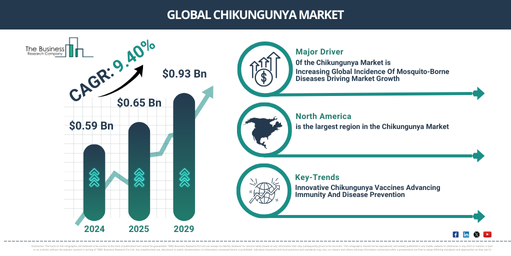
    In recent times, the market size of chikungunya has seen substantial growth. It is predicted to expand from $0.59 billion in 2024 to $0.65 billion in 2025, reflecting a compound annual growth rate (CAGR) of 9.8%. The growth in the preceding period is due to several factors including an increase in healthcare expenditures per person, a rise in the occurrence of new and recurring infectious diseases, growth in disposable income, changes in climate, and heightened awareness about mosquito-borne diseases.

    The market size for chikungunya is projected to experience substantial growth in the coming years, reaching $0.93 billion by 2029 with a compound annual growth rate (CAGR) of 9.4%. This predicted growth during the forecast period is mainly due to numerous factors including an increase in global clinical trials, a surging elderly population, an escalating demand for immunization, and growing initiatives by both government and non-government bodies. Moreover, increased government investments and positive policies also play a key role. Key trends in the forecast period comprise improvements in biotechnology in relation to vaccine development, unexplored opportunities in the vaccine field, use of CRISPR and AI for cutting-edge solutions, fostering partnerships among pharmaceutical giants, and incorporation of telemedicine services.

    Download a free sample to assess the report’s scope and structure:

    https://www.thebusinessresearchcompany.com/sample.aspx?id=21137&type=smp

    Which Major Market Drivers Are Expected to Boost the Growth Potential of the Chikungunya Market?

    The escalating occurrence of diseases transmitted by mosquitoes is predicted to significantly boost chikungunya market growth. Human infection with mosquito-borne diseases such as chikungunya, dengue, and zika virus happens via infected aedes mosquitoes and these diseases pose major global public health issues. Factors like climate change, urbanization, deforestation, accumulation of stagnant water, inadequate measures to control vectors, increased worldwide travel, and resistance to insecticides are contributing to the growing global incidence of these diseases. Chikungunya treatments aid patients by relieving symptoms like fever, joint pain, and inflammation, boosting overall comfort and mobility, reducing the likelihood of complications, and promoting recovery with hydration, pain management, and supportive care. For example, the UK Health Security Agency reported that from January to June 2024, dengue cases among returning travelers in England, Wales, and Northern Ireland increased by 201% to 473, compared to 157 cases during the same period in 2023. Hence, the rising global occurrence of mosquito-borne diseases is propelling chikungunya market expansion.

    Which Key Market Segments Comprise the Chikungunya Market and Drive Its Revenue Growth?

    The chikungunya market covered in this report is segmented –

    1) By Type: Antiviral Drugs, Herbal And Complementary Treatments, Supportive Care, Vaccines

    2) By Product Form: Liquid Form, Powder, Solid Form

    3) By Disease Stage: Acute, Chronic, Post-Infection

    4) By Sales Channel: Hospital Pharmacies, Online Pharmacies, Retail Pharmacies, Supermarkets

    5) By End User: Caregivers, Healthcare Professionals, Patients

    Subsegments:

    1) By Antiviral Drugs: Nucleoside Analogues, Protease Inhibitors

    2) By Herbal And Complementary Treatments: Ayurvedic Remedies, Homeopathic Treatments, Traditional Chinese Medicine

    3) By Supportive Care: Pain Relievers (NSAIDs, Acetaminophen), Fluid Therapy, Physiotherapy

    4) By Vaccines: Live-Attenuated Vaccines, Inactivated Vaccines, mRNA-Based Vaccines

    Request customized data on this market:

    https://www.thebusinessresearchcompany.com/customise?id=21137&type=smp

    Which Areas Are Leading Regions in the Chikungunya Market Expansion Across the Globe?

    North America was the largest region in the chikungunya market in 2024. Asia-Pacific is expected to be the fastest-growing region in the forecast period. The regions covered in the chikungunya market report are Asia-Pacific, Western Europe, Eastern Europe, North America, South America, Middle East, Africa.

    What Are the Key Market Trends in theChikungunya Market Over the Coming Years?

    Leading businesses in the chikungunya market are striving to produce innovative vaccines that enhance immunity, prevent epidemics, and respond to the increasing global health risk posed by chikungunya virus infections. A live attenuated chikungunya vaccine is such an example, which uses a mild version of the chikungunya virus to invoke an immune response without causing the disease and offers prolonged protection. In November 2023, an example of this was revealed when Valneva SE, a biotechnology firm based in France, announced the approval of IXCHIQ, a live attenuated chikungunya vaccine by the FDA, an agency affiliated with the US government. This approval was granted under the fast-track approval based on anti-CHIKV neutralizing antibody titers, with continued approval subject to verification of clinical benefit in additional studies. Additionally, Valneva obtained a Priority Review Voucher (PRV) from the FDA, which the company plans to capitalize on to fund its research and development projects. Administered as a single-dose muscle injection, Ixchiq comprises a live, weakened form of the chikungunya virus, which can cause symptoms similar to those of the chikungunya disease in recipients.

    View the full report here:

    https://www.thebusinessresearchcompany.com/report/chikungunya-global-market-report

    How Is the Chikungunya Market Conceptually Defined?

    Chikungunya (CHIKV) is a viral infection caused by the chikungunya virus, primarily transmitted to humans through the bites of infected Aedes aegypti and Aedes albopictus mosquitoes. The virus causes fever, joint pain, headache, rash, and muscle pain, significantly impacting the quality of life of affected individuals.

    Purchase the full report and get a swift delivery:

    https://www.thebusinessresearchcompany.com/purchaseoptions.aspx?id=21137

    About The Business Research Company:

    With over 15000+ reports from 27 industries covering 60+ geographies, The Business Research Company has built a reputation for offering comprehensive, data-rich research and insights. Armed with 1,500,000 datasets, the optimistic contribution of in-depth secondary research, and unique insights from industry leaders, you can get the information you need to stay ahead in the game.

    Get in touch with us:

    The Business Research Company: https://www.thebusinessresearchcompany.com/

    Americas +1 3156230293

    Asia +44 2071930708

    Europe +44 2071930708

    Email us at info@tbrc.info

    Follow us on:

    LinkedIn: https://in.linkedin.com/company/the-business-research-company

    YouTube: https://www.youtube.com/channel/UC24_fI0rV8cR5DxlCpgmyFQ

    Global Market Model: https://www.thebusinessresearchcompany.com/global-market-model

  • $3.19 Billion Forecast for Cerebral Amyloid Angiopathy Treatment Market by 2029, Backed by Demand and Innovation

    $3.19 Billion Forecast for Cerebral Amyloid Angiopathy Treatment Market by 2029, Backed by Demand and Innovation

    Our market reports now include the latest updates on global tariffs, trade impacts, and evolving supply chain dynamics.

    What is the Anticipated CAGR of the Cerebral Amyloid Angiopathy Treatment Market, and What Factors Will Drive It?

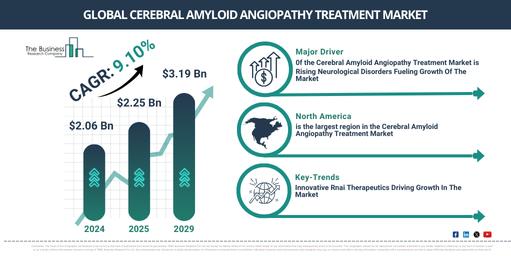
    In the recent past, the cerebral amyloid angiopathy treatment market has witnessed significant expansion. The market, which is poised to grow from $2.06 billion in 2024 to $2.25 billion in 2025, projects a compound annual growth rate of 9.4%. Factors contributing to the growth during the historic period include a surge in the aging populace, heightened awareness of cerebrovascular illnesses, escalating incidences of intracerebral hemorrhage, increased government funding dedicated to studying neurological conditions, reliance on symptomatic management methods, and the widespread use of MRI and neuroimaging for diagnostic purposes.

    The market for cerebral amyloid angiopathy treatments is projected to experience robust growth in the near future, with its valuation predicted to reach $3.19 billion by 2029, growing at a compound annual growth rate (CAGR) of 9.1%. This boost during the forecasting period can be recognized due to various factors including the rise of personalized medicine usage, advancements in biomarker-based detection techniques, escalating research geared towards neuroinflammation therapies, substantial investments in the development of neurological drugs, a growing inclination towards minimally invasive treatment procedures, and augmented funding for studies related to neurological disorders. Future trends expected to influence growth during this period encompasses the exploration of combination treatments, enhancements in MRI and PET imaging techniques, growth of the healthcare infrastructure in budding markets, invention of minimally invasive therapies, cooperation amongst pharmaceutical and biotech companies, and incorporation of wearable technology for monitoring purposes.

    Download a free sample to assess the report’s scope and structure:

    https://www.thebusinessresearchcompany.com/sample.aspx?id=21136&type=smp

    What Are the Core Growth Drivers Propelling the Cerebral Amyloid Angiopathy Treatment Market Forward?

    The expected rise in neurological disorders is anticipated to drive the growth of the market for cerebral amyloid angiopathy treatments. Neurological disorders include medical conditions that impact the brain, spinal cord or nerves, resulting in impairments in movement, sensation, cognition or other physiological functions. Factors such as an aging demographic, lifestyle factors, environmental triggers, genetic likelihood, and enhanced diagnostic proficiency have contributed to the increasing occurrence of such disorders. Treatments for cerebral amyloid angiopathy help to manage these neurological conditions by reducing the buildup of amyloid in blood vessels, improving cerebral blood flow, and decreasing the danger of cognitive deterioration and complications from stroke. For example, data from the Alzheimer’s Association, a US non-profit voluntary health organization, in March 2023 shows that approximately 6.7 million Americans aged 65 or older live with Alzheimer’s dementia, with forecasts predicting this will rise to 13.8 million by 2060. As such, the growing incidence of neurological disorders is fuelling the growth of the cerebral amyloid angiopathy treatment market. The Market’s Growth is Being Driven by Increased Healthcare Spending

    What Segment Types Define the Cerebral Amyloid Angiopathy Treatment Market Structure?

    The cerebral amyloid angiopathy treatment market covered in this report is segmented –

    1) By Type: Medication, Therapeutic Procedures, Surgery, Supportive Care

    2) By Route Of Administration: Oral, Intravenous, Intramuscular

    3) By Patient Type: Geriatric, Adult, Pediatric

    4) By End User: Hospitals, Clinics, Homecare Settings

    Subsegments:

    1) By Medication: Antihypertensive Drugs, Antiplatelet Drugs, Statins, Monoclonal Antibodies, Anti-amyloid Agents

    2) By Therapeutic Procedures: Plasma Exchange, Gene Therapy, Immunotherapy

    3) By Surgery: Cranial Decompression Surgery, Surgical Drainage Of Hematomas, Vascular Reconstruction Surgery

    4) By Supportive Care: Cognitive Rehabilitation, Physical Therapy, Pain Management, Nutritional Support

    Request customized data on this market:

    https://www.thebusinessresearchcompany.com/customise?id=21136&type=smp

    Which Geographic Areas Hold the Strongest Growth Potential in the Cerebral Amyloid Angiopathy Treatment Market?

    North America was the largest region in the Largest cerebral amyloid angiopathy treatment market in 2024. The regions covered in the cerebral amyloid angiopathy treatment market report are Asia-Pacific, Western Europe, Eastern Europe, North America, South America, Middle East, Africa.

    Which Emerging Trends that Are Influencing theCerebral Amyloid Angiopathy Treatment Industry Evolution?

    Key players in the cerebral amyloid angiopathy treatment market are directing their efforts towards the creation of novel products like RNAi therapeutics that aim to regulate gene expression related to the disease and lessen the accumulation of amyloid in cerebral vessels. RNAi therapeutics is a group of drugs that use RNA interference (RNAi) to mute certain genes to stop the generation of proteins that cause disease. As an illustration, in July 2023, Alnylam Pharmaceuticals Inc., a pharmaceutical organization based in the US, intends to commence the multiple-dose phase of its ALN-APP clinical trial in certain approved areas. This trial for ALN-APP has been outlined to evaluate the safety and effectiveness of treatments based on RNAi in reducing amyloid precursor proteins (APP), which are vital players in the formation of amyloid plaque in the brain. The trial’s goal, by muting the gene that produces these proteins, is to verify if ALN-APP is capable of preventing or possibly reversing the advancement of cerebral amyloid angiopathy (CAA).

    View the full report here:

    https://www.thebusinessresearchcompany.com/report/cerebral-amyloid-angiopathy-treatment-global-market-report

    What Is the Definition of the Cerebral Amyloid Angiopathy Treatment Market?

    Cerebral amyloid angiopathy (CAA) treatment refers to the medical and therapeutic interventions aimed at managing and mitigating the effects of CAA, a neurological condition characterized by the accumulation of amyloid-beta proteins in the walls of cerebral blood vessels. This condition increases the risk of brain hemorrhages, cognitive decline, and dementia.

    Purchase the full report and get a swift delivery:

    https://www.thebusinessresearchcompany.com/purchaseoptions.aspx?id=21136

    About The Business Research Company:

    With over 15000+ reports from 27 industries covering 60+ geographies, The Business Research Company has built a reputation for offering comprehensive, data-rich research and insights. Armed with 1,500,000 datasets, the optimistic contribution of in-depth secondary research, and unique insights from industry leaders, you can get the information you need to stay ahead in the game.

    Get in touch with us:

    The Business Research Company: https://www.thebusinessresearchcompany.com/

    Americas +1 3156230293

    Asia +44 2071930708

    Europe +44 2071930708

    Email us at info@tbrc.info

    Follow us on:

    LinkedIn: https://in.linkedin.com/company/the-business-research-company

    YouTube: https://www.youtube.com/channel/UC24_fI0rV8cR5DxlCpgmyFQ

    Global Market Model: https://www.thebusinessresearchcompany.com/global-market-model

  • Global Cerebral Adrenoleukodystrophy (CALD) Market Projected to Reach $13.05 Billion by 2029 at a CAGR of 14.6%

    Our market reports now include the latest updates on global tariffs, trade impacts, and evolving supply chain dynamics.

    What Are the Key Milestones in the Cerebral Adrenoleukodystrophy (CALD) Market’s Growth Trajectory From 2025 To 2034?

    The market size of cerebral adrenoleukodystrophy (CALD) has surged swiftly in the past years. Its growth is projected to escalate from $6.58 billion in 2024 to $7.56 billion in 2025, displaying a compound annual growth rate (CAGR) of 14.9%. The expansion during the historic period can be credited to an increased understanding of rare diseases, the rise in newborn screening schemes, an amplified emphasis on neurodegenerative disorders, the introduction of Lorenzo’s oil, studies on peroxisomal disorders, advocacy by patient encouragement groups, and the enhancement of healthcare infrastructure.

    Expectations are high for a swift expansion of the cerebral adrenoleukodystrophy (CALD) market in the upcoming years. Its growth is projected to reach a market value of $13.05 billion by 2029, with a compound annual growth rate (CAGR) of 14.6%. Multiple factors contribute to this growth expectation for the forecast period, including the advent of gene therapy options, the advancement of newborn screening methods, the progression of focused drug delivery frameworks, increased investments in the research of rare diseases, a surge in the use of digital health instruments, increasing demand for personalized therapies, partnerships between biotech and pharmaceutical firms, and improved awareness achieved through worldwide advocacy campaigns. Significant trends anticipated within the forecast period comprise gene modification through clustered regularly interspaced short palindromic repeats (CRISPR), AI-facilitated diagnostic algorithms, state-of-the-art neuroimaging methods, next-level sequencing improvements, nanomedicine targeting the brain, wearable devices for neuro-monitoring, digital twin modeling for treatment strategy, cloud-based sharing of genomic information, VR for training caregivers and utilization of blockchain for secure management of patient data.

    Download a free sample to assess the report’s scope and structure:

    https://www.thebusinessresearchcompany.com/sample.aspx?id=21135&type=smp

    What are the Fundamental Drivers and Innovations Shaping the Cerebral Adrenoleukodystrophy (CALD) Market?

    The anticipated increase in healthcare expenditure is predicted to boost the cerebral adrenoleukodystrophy (CALD) market’s expansion. This surge in healthcare expenditure is fuelled by the aging population, chronic illnesses, advancements in medicine, increasing drug costs, and wider health coverage. This spending stimulates the CALD market by encouraging the development of new diagnostic tools, funding forward-thinking treatments like gene therapy and stem cell transplant, and enhancing patient access to specialized care and early intervention. For example, in December 2024, the Centers for Medicare and Medicaid Services (CMS), a US-based federal agency, reported that national health expenditures (NHE) saw a 7.5% increase in 2023, surpassing the 6.1% growth of the gross domestic product (GDP). From 2023 to 2032, the average annual growth rate of NHE is forecasted to be 5.6%, raising the healthcare spending percentage of GDP from 17.3% in 2022 to 19.7% in 2032. Thus, the escalating healthcare expenditure is acting as a catalyst for the expansion of the cerebral adrenoleukodystrophy (CALD) market.

    How Is the Cerebral Adrenoleukodystrophy (CALD) Market Segmented?

    The cerebral adrenoleukodystrophy (CALD) market covered in this report is segmented –

    1) By Type Of Treatment: Dietary Management, Medications, Stem Cell Therapy

    2) By Patient Age Group: Adults, Children, Infants, Teens

    3) By End User: Healthcare Facilities, Patients And Caregivers, Pharmaceutical Companies

    Subsegments:

    1) By Dietary Management: Lorenzo’s Oil, Omega-3 Fatty Acids, Fatty Acid Supplements

    2) By Medications: Corticosteroids, Antioxidants, Anti-inflammatory Drugs

    3) By Stem Cell Therapy: Hematopoietic Stem Cell Transplantation (HSCT), Gene Therapy

    Request customized data on this market:

    https://www.thebusinessresearchcompany.com/customise?id=21135&type=smp

    Which Regions Are Driving the Next Phase of the Cerebral Adrenoleukodystrophy (CALD) Market Growth?

    North America was the largest region in the cerebral adrenoleukodystrophy (CALD) market in 2024. The regions covered in the cerebral adrenoleukodystrophy (CALD) market report are Asia-Pacific, Western Europe, Eastern Europe, North America, South America, Middle East, Africa.

    What Key Trends Are Shaping the Future of the Cerebral Adrenoleukodystrophy (CALD) Market?

    Key players in the cerebral adrenoleukdystrophy (CALD) market are channeling their efforts into the discovery of innovative therapies like gene therapies. The goal is to create more efficient, enduring solutions to delay disease advancement, enhance patient results, and potentially supply curative treatments for this uncommon and deadly disease. Gene therapy, a medical procedure and treatment method, manipulates or substitutes defective genes within an individual’s cells to treat or potentially cure diseases. For example, in September 2022, Bluebird Bio Inc., a US biotech firm, secured rapid approval from the United States Food and Drug Administration (FDA) for Skysona (elivaldogene autotemcel). This granted usage of the treatment to slow neurologic dysfunction progression in boys aged 4-17 suffering from early, active cerebral adrenoleukodystrophy (CALD). The therapy, delivered once, employs ex-vivo transduction with the Lenti-D lentiviral vector (LVV) to introduce additional working copies of the ABCD1 gene into a patient’s hematopoietic stem cells (HSCs). This added gene lets patients generate the ALD protein (ALDP) which then aids in the on-site breakdown of extremely long-chain fatty acids (VLCFAs). It is thought this could slow, or maybe even halt, further inflammation and demyelination.

    View the full report here:

    https://www.thebusinessresearchcompany.com/report/cerebral-adrenoleukodystrophy-cald-global-market-report

    How Is the Cerebral Adrenoleukodystrophy (CALD) Market Defined and What Are Its Core Parameters?

    Cerebral adrenoleukodystrophy (CALD) is a rare, progressive neurological disorder that primarily affects males and is caused by mutations in the ABCD1 gene. It is characterized by the accumulation of very long-chain fatty acids in the brain, which destroys myelin, the protective covering of nerve cells. Cerebral adrenoleukodystrophy (CALD) is a form of adrenoleukodystrophy (ALD) that involves the brain and spinal cord, causing symptoms such as cognitive decline, behavioral changes, and motor dysfunction.

    Purchase the full report and get a swift delivery:

    https://www.thebusinessresearchcompany.com/purchaseoptions.aspx?id=21135

    About The Business Research Company:

    With over 15000+ reports from 27 industries covering 60+ geographies, The Business Research Company has built a reputation for offering comprehensive, data-rich research and insights. Armed with 1,500,000 datasets, the optimistic contribution of in-depth secondary research, and unique insights from industry leaders, you can get the information you need to stay ahead in the game.

    Get in touch with us:

    The Business Research Company: https://www.thebusinessresearchcompany.com/

    Americas +1 3156230293

    Asia +44 2071930708

    Europe +44 2071930708

    Email us at info@tbrc.info

    Follow us on:

    LinkedIn: https://in.linkedin.com/company/the-business-research-company

    YouTube: https://www.youtube.com/channel/UC24_fI0rV8cR5DxlCpgmyFQ

    Global Market Model: https://www.thebusinessresearchcompany.com/global-market-model

  • Central Nervous System (CNS) Lymphoma Market Forecast 2025–2034: Trends Reshaping Demand, Investment, and Innovation

    Central Nervous System (CNS) Lymphoma Market Forecast 2025–2034: Trends Reshaping Demand, Investment, and Innovation

    Our market reports now include the latest updates on global tariffs, trade impacts, and evolving supply chain dynamics.

    How Has The Central Nervous System Lymphoma Treatment Market Size Shifted, And What Is the Outlook Through 2034?

    The market for central nervous system lymphoma treatments has significantly expanded in the past few years. Its size is projected to escalate from $1.19 billion in 2024 to $1.28 billion in 2025, with a compound annual growth rate (CAGR) of 7.2%. The previous growth can be credited to factors such as the rising incidence of central nervous system (CNS) lymphoma, increased utilization of targeted therapies, and the expansion of cancer awareness initiatives. Additional contributing factors include heightened healthcare spending, advancements in immunotherapy, the advent of high-dose chemotherapy, an increase in clinical trial activities, and better access to specialized healthcare services.

    The market for central nervous system lymphoma treatment is predicted to significantly expand in the subsequent years, escalating to a projected $1.67 billion by 2029, courtesy of an annual growth rate (CAGR) of 6.9%. The forthcoming period of expansion can be linked to several factors such as increased demand for customized treatment plans, a focused approach toward early disease detection, rising investment in cancer-related research, the emergence of innovative drug delivery systems, improvement of healthcare infrastructure in developing regions, increasing incidence of auto-immune diseases, and the creation of treatment plans that combine therapies. Further contributing are increased access to biosimilar drugs and wider acceptance of telemedicine in cancer care. The advancements to look out for during the predicted phase of growth include precision medicine, the integration of artificial intelligence into diagnostics, the use of liquid biopsies for tracking progress, adoption of nanotechnology in drug delivery, improvements in imaging technologies and development of bispecific antibodies. With the utilization of gene-editing systems such as CRISPR, implementation of wearable health tracking devices and the expansion of telehealth platforms for oncology care, the market is set to see substantial growth.

    Download a free sample to assess the report’s scope and structure:

    https://www.thebusinessresearchcompany.com/sample.aspx?id=21134&type=smp

    What Are the Primary Drivers Supporting the Market Growth of the Central Nervous System Lymphoma Treatment Market?

    The swift expansion of the pharmaceutical industry is anticipated to accelerate the central nervous system lymphoma treatment market’s growth. The pharmaceutical industry, centred around drug research, development, manufacturing, and distribution, fuels this growth. Factors such as medical research advancements, aging population, widespread healthcare access, rising chronic diseases, global health crises, regulatory aid, and increased healthcare expenditure, drive the pharmaceutical industry’s growth. This expansion leads to advancements in the central nervous system lymphoma treatment market by catalyzing innovation in targeted therapies, boosting diagnostic capabilities, and raising funds for research and development for rare cancers. For example, in June 2024, the European Federation of Pharmaceutical Industries and Associations (EFPIA) reported that total pharmaceutical production in Europe was up to $4,17,300 million (€390,000 million) in 2023, a rise from $3,88,141 million (€363,300 million) in 2022. Therefore, the swift expansion of the pharmaceutical industry incites the growth of the central nervous system lymphoma treatment market. Driving Market Expansion Through Personalized Medicine Innovations

    Which Primary Segments of the Central Nervous System Lymphoma Treatment Market Are Driving Growth and Industry Transformations?

    The central nervous system lymphoma treatment market covered in this report is segmented –

    1) By Treatment Type: Chemotherapy, Radiation Therapy, Targeted Therapy, Corticosteroids, Immunotherapy

    2) By Route Of Administration: Intravenous, Oral, Intrathecal

    3) By Distribution Channel: Direct Sales, Third-Party Distributors

    4) By End User: Hospitals, Clinics, Ambulatory Surgical Centers

    Subsegments:

    1) By Chemotherapy: High-Dose Methotrexate, Temozolomide, Rituximab-Based Regimens, Carmustine, Cytarabine

    2) By Radiation Therapy: Whole Brain Radiation Therapy (WBRT), Stereotactic Radiosurgery (SRS), Brachytherapy

    3) By Targeted Therapy: Monoclonal Antibodies, Tyrosine Kinase Inhibitors, B-Cell Antigen Inhibitors, PI3K Inhibitors

    4) By Corticosteroids: Dexamethasone, Prednisone, Methylprednisolone

    5) By Immunotherapy: Checkpoint Inhibitors, Chimeric Antigen Receptor T-Cell (CAR-T) Therapy, Monoclonal Antibodies, Immune Modulators

    Request customized data on this market:

    https://www.thebusinessresearchcompany.com/customise?id=21134&type=smp

    Which Regions Are Key Players in the Growth of the #What Are the Primary Drivers Supporting the Market Growth of the Central Nervous System Lymphoma Treatment Market?# Market?

    North America was the largest region in the central nervous system lymphoma treatment market in 2024. Asia-Pacific is expected to be the fastest-growing region in the forecast period. The regions covered in the central nervous system lymphoma treatment market report are Asia-Pacific, Western Europe, Eastern Europe, North America, South America, Middle East, Africa.

    What Are the Most Significant Market Trends in the Central Nervous System Lymphoma Treatment Market?

    Big-name corporations in the central nervous system lymphoma market are concentrating on creating unique therapies, like chimeric antigen receptor (CAR) T-cell therapy, to boost the efficacy of treatments, offer bespoke therapies, and promote better patient outcomes, particularly for those with recurring or stubborn cases. CAR T-cell therapy, an immunological treatment, alters a patient’s T-cells allowing them to identify and combat cancer cells more efficiently. For instance, in June 2024, Kite Pharma, an American pharmaceutical firm, alongside Dana-Farber Cancer Institute, a prominent American cancer therapy center, introduced Yescarta (axicabtagene ciloleucel), a treatment found to be well-tolerated by patients with either primary or secondary central nervous system lymphoma that is relapsed or refractory (R/R). This CAR T-cell therapy involves gathering a patient’s T-cells, altering them to target cancer cells, and reintroducing them into the body. These altered T-cells play a crucial role in exterminating lymphoma cells, including those in the central nervous system, particularly in recurrent or tough-to-treat situations.

    View the full report here:

    https://www.thebusinessresearchcompany.com/report/central-nervous-system-lymphoma-treatment-global-market-report

    What Parameters Are Used to Define the Central Nervous System Lymphoma Treatment Market?

    Central nervous system (CNS) lymphoma treatment refers to the medical approaches to managing and treating primary or secondary lymphoma affecting the brain, spinal cord, or cerebrospinal fluid (CSF). Treatment typically includes high-dose methotrexate-based chemotherapy, often combined with other drugs, immunotherapy, radiation therapy, and autologous stem cell transplantation (ASCT). Central nervous system (CNS) lymphoma treatment aims to eliminate cancer cells while preserving neurological function and preventing relapse. Treatment plans are tailored based on the patient’s age, overall health, and disease severity.

    Purchase the full report and get a swift delivery:

    https://www.thebusinessresearchcompany.com/purchaseoptions.aspx?id=21134

    About The Business Research Company:

    With over 15000+ reports from 27 industries covering 60+ geographies, The Business Research Company has built a reputation for offering comprehensive, data-rich research and insights. Armed with 1,500,000 datasets, the optimistic contribution of in-depth secondary research, and unique insights from industry leaders, you can get the information you need to stay ahead in the game.

    Get in touch with us:

    The Business Research Company: https://www.thebusinessresearchcompany.com/

    Americas +1 3156230293

    Asia +44 2071930708

    Europe +44 2071930708

    Email us at info@tbrc.info

    Follow us on:

    LinkedIn: https://in.linkedin.com/company/the-business-research-company

    YouTube: https://www.youtube.com/channel/UC24_fI0rV8cR5DxlCpgmyFQ

    Global Market Model: https://www.thebusinessresearchcompany.com/global-market-model

  • Major Trends and Emerging Patterns in the Eosinophilic Asthma Market: Advancements In Targeted Therapies For Severe Asthma Management

    Major Trends and Emerging Patterns in the Eosinophilic Asthma Market: Advancements In Targeted Therapies For Severe Asthma Management

    Our market reports now include the latest updates on global tariffs, trade impacts, and evolving supply chain dynamics.

    What Are the Key Projections for the CAGR of the Eosinophilic Asthma Market Size From 2025 to 2034?

    The market size for eosinophilic asthma has seen substantial growth in recent times. It is set to rise from $2.69 billion in 2024 to $3.17 billion in 2025, with a compound annual growth rate (CAGR) of 17.7%. The expansion during the historic period can be linked to the increase in pollution, a decrease in population immunity, a surge in the occurrence of eosinophilic asthma, a rise in allergens and respiratory conditions, an increase in healthcare spending, and an elevation in research and development activities.

    In the upcoming years, the eosinophilic asthma market is set to experience accelerated growth. It is predicted to expand to a worth of $6.01 billion by 2029, displaying a compound annual growth rate (CAGR) of 17.4%. This growth over the projection period can be linked to several factors, including the rising prevalence of respiratory illnesses, greater awareness and diagnosis rates, broadening applications for monoclonal antibodies, increased healthcare infrastructure investment, and an upsurge in bespoke medical approaches. Noteworthy trends for this forecasted period encompass the establishment of targeted biologics, advancement in diagnostic tools, tailored treatment methods, bolstered drug delivery systems, merging with digital health technologies, and augmented clinical trials for new therapies.

    Download a free sample to assess the report’s scope and structure:

    https://www.thebusinessresearchcompany.com/sample.aspx?id=21184&type=smp

    What Are the Primary Drivers Supporting the Market Growth of the Eosinophilic Asthma Market?

    The growth of the eosinophilic asthma market is propelled by increasing smoking habits. The term ‘smoking habits’ encompasses regular usage and patterns of tobacco consumption, including the frequency, context, and duration of smoking, which are generally influenced by psychological, social, and environmental factors. The increase in smoking habits can be attributed to factors such as elevated stress levels, targeted advertising campaigns by tobacco manufacturers, lack of understanding of health-related risks, and the social acceptance of smoking in specific cultures. Eosinophilic asthma treatment reduces airway inflammation and improves lung function, which can promote smoking cessation by easing the respiratory complications that often compel patients to keep smoking. For example, in December 2023, the National Health Service, a UK-based government agency, reported an estimated 408,700 hospital admissions due to smoking in 2022–23, which is an increase of 4.8% from 389,800 in 2021–22. Hence, the escalating smoking rates contribute towards the growth of the eosinophilic asthma market.

    Which Primary Segments of the Eosinophilic Asthma Market Are Driving Growth and Industry Transformations?

    The eosinophilic asthma market covered in this report is segmented –

    1) By Disease: Severe Eoisnophilic Asthma, Mild To Moderate Eosinophilic Asthma

    2) By Treatment: Biologics, Bronchodilators, Corticosteroids, Immunomodulators, Other Treatments

    3) By End User: Hospitals, Clinics, Other End Users

    Subsegments:

    1) By Severe Eosinophilic Asthma: Refractory Eosinophilic Asthma, Late-Onset Eosinophilic Asthma

    2) By Mild To Moderate Eosinophilic Asthma: Early-Onset Eosinophilic Asthma, Intermittent Eosinophilic Asthma

    Request customized data on this market:

    https://www.thebusinessresearchcompany.com/customise?id=21184&type=smp

    Which Regions Are Key Players in the Growth of the What Are the Primary Drivers Supporting the Market Growth of the Eosinophilic Asthma Market? Market?

    North America was the largest region in the eosinophilic asthma market in 2024. Asia-Pacific is expected to be the fastest-growing region in the forecast period. The regions covered in the eosinophilic asthma market report are Asia-Pacific, Western Europe, Eastern Europe, North America, South America, Middle East, Africa.

    What Are the Most Significant Market Trends in the Eosinophilic Asthma Market?

    Key players in the eosinophilic asthma market are focusing on the creation of novel drugs to specifically target immune pathways, reduce inflammation, and better the results of patient treatment through individualized treatments. One such method involves the use of monoclonal antibodies, which are essentially laboratory-created molecules that replicate the immune system’s ability to combat harmful viruses and bacteria. The creation of these antibodies involves merging a specific antibody-producing cell with a cancer cell, thus allowing for the mass production of identical antibodies. For example, in August 2024, AstraZeneca plc, a biopharmaceutical firm based in the UK, made public the approval of Fasenra by the China’s National Medical Products Association for the treatment of severe eosinophilic asthma. The condition, severe eosinophilic asthma, is distinguished by high eosinophil counts which can trigger inflammation and an exacerbation of asthma symptoms. Fasenra, a monoclonal antibody, aims to target and eliminate eosinophils using a distinctive mechanism. By latching onto the IL-5 receptor on eosinophils, Fasenra can boost the immune system’s capability and lower eosinophil levels in blood and tissue. The treatment regimen starts with a loading phase before transitioning to maintenance doses. Generally, patients receive injections every four weeks for the first three doses, with the frequency reducing to every eight weeks subsequently.

    View the full report here:

    https://www.thebusinessresearchcompany.com/report/eosinophilic-asthma-global-market-report

    What Parameters Are Used to Define the Eosinophilic Asthma Market?

    Eosinophilic asthma is a form of asthma where high eosinophil counts, a specific white blood cell type, cause airway inflammation. This condition results in severe symptoms such as breathing issues and recurring flare-ups, with limited effectiveness from standard treatments such as inhaled steroids.

    Purchase the full report and get a swift delivery:

    https://www.thebusinessresearchcompany.com/purchaseoptions.aspx?id=21184

    About The Business Research Company:

    With over 15000+ reports from 27 industries covering 60+ geographies, The Business Research Company has built a reputation for offering comprehensive, data-rich research and insights. Armed with 1,500,000 datasets, the optimistic contribution of in-depth secondary research, and unique insights from industry leaders, you can get the information you need to stay ahead in the game.

    Get in touch with us:

    The Business Research Company: https://www.thebusinessresearchcompany.com/

    Americas +1 3156230293

    Asia +44 2071930708

    Europe +44 2071930708

    Email us at info@tbrc.info

    Follow us on:

    LinkedIn: https://in.linkedin.com/company/the-business-research-company

    YouTube: https://www.youtube.com/channel/UC24_fI0rV8cR5DxlCpgmyFQ

    Global Market Model: https://www.thebusinessresearchcompany.com/global-market-model

  • Central Nervous System (CNS) Lymphoma Market 2025-2034: Key Highlights, Growth Dynamics, and Emerging Trends

    Central Nervous System (CNS) Lymphoma Market 2025-2034: Key Highlights, Growth Dynamics, and Emerging Trends

    Our market reports now include the latest updates on global tariffs, trade impacts, and evolving supply chain dynamics.

    How Has the Central Nervous System (CNS) Lymphoma Market Growth Performance Trended Historically, And What Lies Ahead?

    The market size for central nervous system (CNS) lymphoma has experienced substantial growth in recent times. From $1.44 billion in 2024, it is expected to expand to $1.54 billion in 2025, with a compound annual growth rate (CAGR) of 7.0%. Numerous factors have led to the growth observed during the historical period, including heightened awareness and improved diagnosis, an uptick in lymphoma cases, an increase in clinical trials, greater funding for cancer research, and the escalating use of biomarkers for specialized therapies.

    The market size for central nervous system (CNS) lymphoma is projected to exhibit substantial growth in the coming years, skyrocketing to $1.99 billion in 2029 with a 6.6% compound annual growth rate (CAGR). The surge in the forecast period could be attributed to several factors like the increasing adoption of immunotherapy, a heightened focus on specific treatments, a rise in CNS lymphoma prevalence, improved patient access to healthcare, and government efforts and initiatives. Key trends within this forecast period comprise the incorporation of artificial intelligence in diagnostic procedures, evolving next-generation monoclonal antibodies, a lean towards less invasive treatments, breakthroughs in precision medicine, and advancements in diagnostic technologies.

    Download a free sample to assess the report’s scope and structure:

    https://www.thebusinessresearchcompany.com/sample.aspx?id=21133&type=smp

    How Are Key Drivers in the Industry Acting as Catalysts for the Growth of the Central Nervous System (CNS) Lymphoma Market?

    The surge in cases of psychological disorders is foreseen to drive the growth of the central nervous system (CNS) lymphoma market. Psychological disorders, characterized by disrupted thoughts, feelings, and actions, create distress or impairment. Factors such as stress, social isolation, economic strain, genes, drug misuse, and digital overusage are triggering the prevalence of these disorders. Advances in CNS lymphoma enhance the research in neuro-oncology, fostering a deeper understanding of cerebral inflammation, immune interactions, and the blood-brain barrier. This, in turn, aids in devising improved treatments for cancer and psychological disorders alike. For instance, it was reported in 2024 by the National Alliance On Mental Illness, a U.S. organization, that psychosis spectrum and mood disorders caused almost 600,000 hospitalizations annually among the U.S. population aged 18-44. Thus, the growing episodes of psychological disorders are contributing to the expansion of the CNS lymphoma market. Moreover, the escalating prevalence of neurological disorders is anticipated to fuel the growth of the CNS lymphoma market. These disorders, affecting the nervous system including the brain, spinal cord, and nerves, is on the rise due to factors such as genetic influences, infections, injuries, toxins, autoimmune reactions, and decay. The CNS lymphoma field aids in gaining insights about brain functionality, immune reaction, and neuroinflammation, thereby facilitating enhanced diagnosis and treatments for neurological disorder patients. For example, the European Brain Council, a Belgium-based non-profit organization, stated in April 2022 that over 600 neurological diseases and nearly 300 psychiatric conditions exist, globally affecting millions, including 65 million epilepsy patients. In Europe, dementia affects 10.5 million people, with future projections estimating the number to increase to 18.7 million by 2050. Consequently, the growing prevalence of neurological disorders is projected to stimulate the expansion of the CNS lymphoma market.

    Which Segments in the Central Nervous System (CNS) Lymphoma Offer the Most Growth?

    The central nervous system (CNS) lymphoma market covered in this report is segmented –

    1) By Class Of Drugs: Monoclonal antibodies, Chemotherapeutic Agents, Corticosteroids

    2) By Treatment: Chemotherapy, Radiation Therapy, Steroid Therapy, Targeted Therapy

    3) By Application: Hospitals, Clinics, Ambulatory Surgical Services, Other Applications

    Subsegments:

    1) By Monoclonal Antibodies: Anti-CD20 Monoclonal Antibodies, Anti-PD-1 Monoclonal Antibodies, Other Targeted Monoclonal Antibodies

    2) By Chemotherapeutic Agents: Alkylating Agents, Antimetabolites, Topoisomerase Inhibitors

    3) By Corticosteroids: Dexamethasone, Prednisolone, Methylprednisolone

    Request customized data on this market:

    https://www.thebusinessresearchcompany.com/customise?id=21133&type=smp

    What Are the Fastest-Growing Geographies in the #How Are Key Drivers in the Industry Acting as Catalysts for the Growth of the Central Nervous System (CNS) Lymphoma Market?# Market?

    North America was the largest region in the central nervous system (CNS) lymphoma market in 2024. Asia-Pacific is expected to be the fastest-growing region in the forecast period. The regions covered in the central nervous system (CNS) lymphoma market report are Asia-Pacific, Western Europe, Eastern Europe, North America, South America, Middle East, Africa.

    What Are the Current Market Growth and Trends in the Central Nervous System (CNS) Lymphoma Industry?

    Leading firms in the central nervous system (CNS) lymphoma market are currently aiming on the development of novel therapies like Tirabrutinib for treating primary central nervous system (CNS) lymphoma. Tirabrutinib is a specifically designed Bruton’s tyrosine kinase (BTK) inhibitor, made to treat B-cell malignancies, prominently primary central nervous system lymphoma (PCNSL), by directly targeting the pathways essential for the survival and multiplication of cancer cells. The prestigious American-based pharmaceutical company, ONO Pharma Inc., announced in March 2023 that tirabrutinib (ONO-4059) has been accorded the label of an orphan drug by the U.S. Food and Drug Administration (FDA) for the treatment of primary central nervous system lymphoma (PCNSL). Presently, under examination in the phase 2 PROSPECT study (NCT04947319), tirabrutinib is an intense, selective BTK inhibitor that targets the proliferation and survival of B-cells. It manages the proliferation and activation of cellular entities via the B-cell receptor, thereby aiding survival, differentiation, and clonal proliferation of B-cells.

    View the full report here:

    https://www.thebusinessresearchcompany.com/report/central-nervous-system-cns-lymphoma-global-market-report

    What Are the Key Elements That Define the Central Nervous System (CNS) Lymphoma Market?

    Central nervous system (CNS) lymphoma is a rare and aggressive type of lymphoma that originates in the brain or spinal cord. Its treatment aims to target and shrink cancerous cells in the CNS, alleviate symptoms, and improve survival rates through a combination of medications, targeted therapies, and focused high-energy treatments.

    Purchase the full report and get a swift delivery:

    https://www.thebusinessresearchcompany.com/purchaseoptions.aspx?id=21133

    About The Business Research Company:

    With over 15000+ reports from 27 industries covering 60+ geographies, The Business Research Company has built a reputation for offering comprehensive, data-rich research and insights. Armed with 1,500,000 datasets, the optimistic contribution of in-depth secondary research, and unique insights from industry leaders, you can get the information you need to stay ahead in the game.

    Get in touch with us:

    The Business Research Company: https://www.thebusinessresearchcompany.com/

    Americas +1 3156230293

    Asia +44 2071930708

    Europe +44 2071930708

    Email us at info@tbrc.info

    Follow us on:

    LinkedIn: https://in.linkedin.com/company/the-business-research-company

    YouTube: https://www.youtube.com/channel/UC24_fI0rV8cR5DxlCpgmyFQ

    Global Market Model: https://www.thebusinessresearchcompany.com/global-market-model

  • Key Developments and Trends Steering the Entecavir Market Forward: Advancements In Clinical Trials And Innovative Drug Development For Chronic Hepatitis B Treatment

    Key Developments and Trends Steering the Entecavir Market Forward: Advancements In Clinical Trials And Innovative Drug Development For Chronic Hepatitis B Treatment

    Our market reports now include the latest updates on global tariffs, trade impacts, and evolving supply chain dynamics.

    How Has The Entecavir Market Growth Evolved From 2024 To 2025, And What’s Ahead?

    The entecavir market has seen robust growth in recent years. The market is projected to expand from a size of $0.71 billion in 2024 to $0.75 billion in 2025, reflecting a compound annual growth rate (CAGR) of 4.9%. This upsurge during the historic phase can be ascribed to factors such as the rising occurrences of Hepatitis B, heightened awareness about liver-associated conditions, the growing focus on tailored treatment approaches, the trend of procuring medications online, and increased accessibility of entecavir.

    It is projected that the entecavir market will experience robust growth in the coming years, expanding to a value of $0.89 billion in 2029, with a compound annual growth rate (CAGR) of 4.5%. This market expansion in the forecast period can be accredited to escalating initiatives to battle liver diseases, the growing uptake of digital healthcare solutions, enhanced healthcare infrastructure, increasing health insurance coverage, and a burgeoning demand for antiviral medications. The forecast period is also expected to see several significant trends such as the incorporation of genetic testing, utilization of advanced diagnostic tools, advancements in personalized medicine, the preference for combination therapies, and the evolution of monitoring techniques.

    Download a free sample to assess the report’s scope and structure:

    https://www.thebusinessresearchcompany.com/sample.aspx?id=21183&type=smp

    How Are Key Drivers in the Industry Acting as Catalysts for the Growth of the Entecavir Market?

    The surge in liver diseases is anticipated to fuel the entecavir market’s growth. Liver conditions, spanning from infections and genetic disorders to lifestyle-related problems such as fatty liver, hepatitis, cirrhosis, and liver cancer, hamper liver function. The rising instances of liver diseases are attributable to factors like viral hepatitis (HBV and HCV), escalating obesity rates, alcohol misuse, and metabolic disorders. Entecavir, an antiviral drug, aids patients suffering from liver diseases by effectively curtailing the proliferation of the hepatitis B virus. This results in reduced viral load, enhanced liver function, and decreased risk of cirrhosis and liver cancer. It is particularly helpful in managing chronic hepatitis B infections and preventing additional liver damage. For example, Cancer Council Victoria, a US-based non-profit, reported in June 2024 that 617 Victorians were diagnosed with liver cancer in 2022. The same source stated that 419 of these patients were male and 198 female, accounting for 67.9% and 32.1% of the total Victorian liver cancer diagnoses, respectively. The Liver Foundation, an Australian non-profit, stated in 2025 that each year, around 3,000 individuals are diagnosed with Hepatocellular carcinoma (HCC). Consequently, the growing instances of liver diseases are pushing the entecavir market growth. Expanding Hepatitis B prevalence is set to spur the entecavir market’s growth. Hepatitis B is a viral infection that impacts the liver, leading to symptoms like jaundice, fatigue, and abdominal pain. If left untreated, it can progress to chronic liver disease or liver cancer. The increase in hepatitis B cases can be attributed to unprotected sexual contact, needle sharing, transmission from mother to child during delivery, and insufficient vaccination coverage in certain areas. Entecavir aids in combating hepatitis B by inhibiting the replication of the hepatitis B virus (HBV) DNA, lessening viral load, and preventing liver damage. For instance, the UK Health Security Agency reported in January 2025 that in 2022, around 270,000 individuals, or 0.6% of the population, were living with hepatitis B. This figure is projected to double by 2030 among diagnosed cases. Therefore, the increasing prevalence of hepatitis B is fueling the growth of the entecavir market.

    Which Segments in the Entecavir Offer the Most Growth?

    The entecavir market covered in this report is segmented –

    1) By Product Type: Tablets, Oral Solution

    2) By Application: Hepatitis B Treatment, Liver Transplantation, Other Applications

    3) By Distribution Channel: Hospital Pharmacies, Retail Pharmacies, Online Pharmacies

    Subsegments:

    1) By Tablets: Standard Dose Tablets, High Dose Tablets

    2) By Oral Solution: Ready-to-Use Liquid Solution, Powder For Oral Solution

    Request customized data on this market:

    https://www.thebusinessresearchcompany.com/customise?id=21183&type=smp

    What Are the Fastest-Growing Geographies in the How Are Key Drivers in the Industry Acting as Catalysts for the Growth of the Entecavir Market? Market?

    Asia-Pacific was the largest region in the entecavir market in 2024. North America is expected to be the fastest-growing region in the forecast period. The regions covered in the entecavir market report are Asia-Pacific, Western Europe, Eastern Europe, North America, South America, Middle East, Africa.

    What Are the Current Market Growth and Trends in the Entecavir Industry?

    Major players in the entecavir market are advancing innovative medications through clinical research to improve therapeutic outcomes for chronic hepatitis B patients, potentially improving long-term virus control and minimizing resistance. For example, Aligos Therapeutics Inc., a biotech firm in the United States, is in the second phase of clinical trials for ALG-000184, a capsid assembly modulator treatment for hepatitis B, in October 2024. Such a treatment interferes with the formation of the virus’s protective shell, known as the capsid. The fourth phase of the trial is currently evaluating the long-term impact of ALG-000184 (300 mg), either alone or used in tandem with the approved antiviral entecavir (marketed as Baraclude, also available in generics), on chronic hepatitis B patients. The combination of ALG-000184 and entecavir led to more substantial decreases in viral load than entecavir on its own, with ALG-000184 showing comparable effectiveness whether used with entecavir or not. The virus’s suppression remained consistent throughout the study, in both HBeAg-positive and HBeAg-negative patients.

    View the full report here:

    https://www.thebusinessresearchcompany.com/report/entecavir-global-market-report

    What Are the Key Elements That Define the Entecavir Market?

    Entecavir is an antiviral drug prescribed for managing chronic hepatitis B. It functions by blocking the replication of the hepatitis B virus, thereby lowering the viral load. This helps reduce the chances of severe liver damage and complications such as cirrhosis or liver cancer.

    Purchase the full report and get a swift delivery:

    https://www.thebusinessresearchcompany.com/purchaseoptions.aspx?id=21183

    About The Business Research Company:

    With over 15000+ reports from 27 industries covering 60+ geographies, The Business Research Company has built a reputation for offering comprehensive, data-rich research and insights. Armed with 1,500,000 datasets, the optimistic contribution of in-depth secondary research, and unique insights from industry leaders, you can get the information you need to stay ahead in the game.

    Get in touch with us:

    The Business Research Company: https://www.thebusinessresearchcompany.com/

    Americas +1 3156230293

    Asia +44 2071930708

    Europe +44 2071930708

    Email us at info@tbrc.info

    Follow us on:

    LinkedIn: https://in.linkedin.com/company/the-business-research-company

    YouTube: https://www.youtube.com/channel/UC24_fI0rV8cR5DxlCpgmyFQ

    Global Market Model: https://www.thebusinessresearchcompany.com/global-market-model